



Short hairstyles for round faces over 50 work when they create direction, not just less hair. A cut that ends at the cheek can widen the face in a second; a cut that sweeps diagonally, lifts at the crown, or narrows at the nape does the opposite without looking fussy.
Hair changes after 50 can make this easier to solve and harder to guess. The crown may feel a little finer, the temples may sit flatter, and the back may hold more bulk than the front. That’s why a blunt, one-length shape often feels oddly heavy, while a pixie, bob, or cropped shag with some movement suddenly looks alive.
The good cuts are not about hiding your face. They frame it.
Why These Short Styles Earn Their Keep
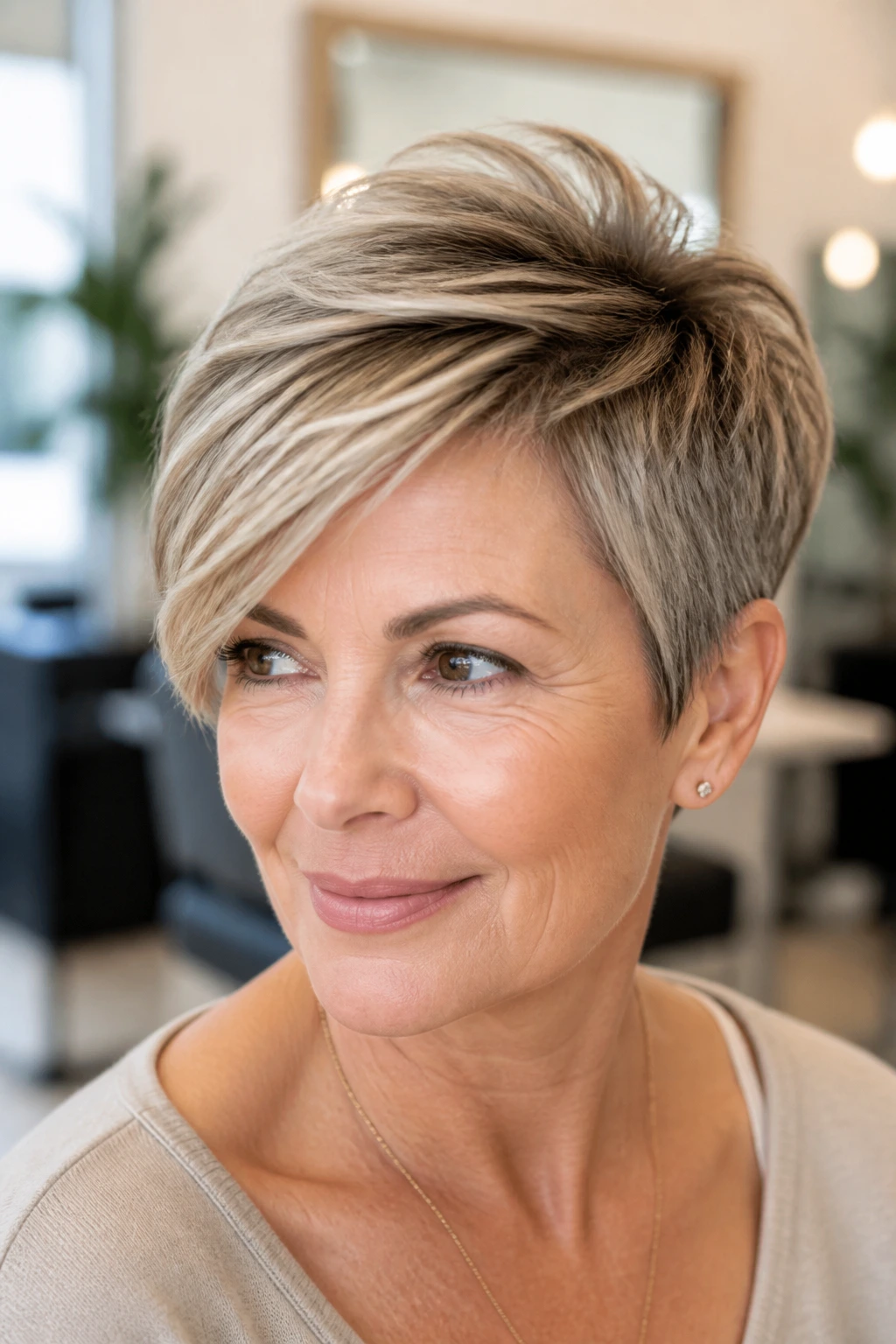
- Crown lift: These shapes pull the eye upward, which is a faster fix than shaving off another half-inch at the nape.
- Cheek softening: Side-swept fringe and diagonal lines break up the widest part of a round face instead of parking right on top of it.
- Low-fuss options: Several of these cuts air-dry well with mousse or cream, which matters when a round brush feels like a small chore.
- Glasses-friendly shapes: Clean temples and tucked sides keep frames from fighting the haircut.
- Works with changing hair: Fine, silver, wavy, and thick textures all have room here; the right cut can use the hair you have instead of trying to bully it into something else.
What Short Hairstyles for Round Faces Over 50 Need From the Cut Line
A round face does not need the hair to disappear. It needs the line to move.
The main trick is simple: keep the widest point of the cut away from the widest point of the face. That usually means avoiding blunt ends that land exactly at cheek level unless there’s a strong angle or a lot of texture breaking them up. A short style should feel like it narrows as it goes down, or opens up on one side, or rises at the crown. One of those motions is enough. Two is better.
Height at the Crown
A little lift on top changes the whole read of the face. Even an inch or two of height at the crown makes the face look longer, especially if the sides stay closer to the head. That’s why so many of the best cuts here are pixies, bixies, or layered bobs with some root volume.
Keep the Widest Point Away From the Cheek
The cheek line is where short hair gets tricky. Ends that sit right there can make the face feel broader, especially if the hair is dense or the silhouette is round. A side-swept fringe, an angled bob, or a piecey crop moves the eye off that point and gives the face a little breathing room.
Texture Beats a Hard Edge
A sharp outline can look chic, but only when the cut has enough structure to support it. On most round faces, a bit of feathering, point-cutting, or soft layering is kinder than a stiff, boxed perimeter. The result is less helmet, more shape.
1. Side-Swept Pixie With Crown Lift
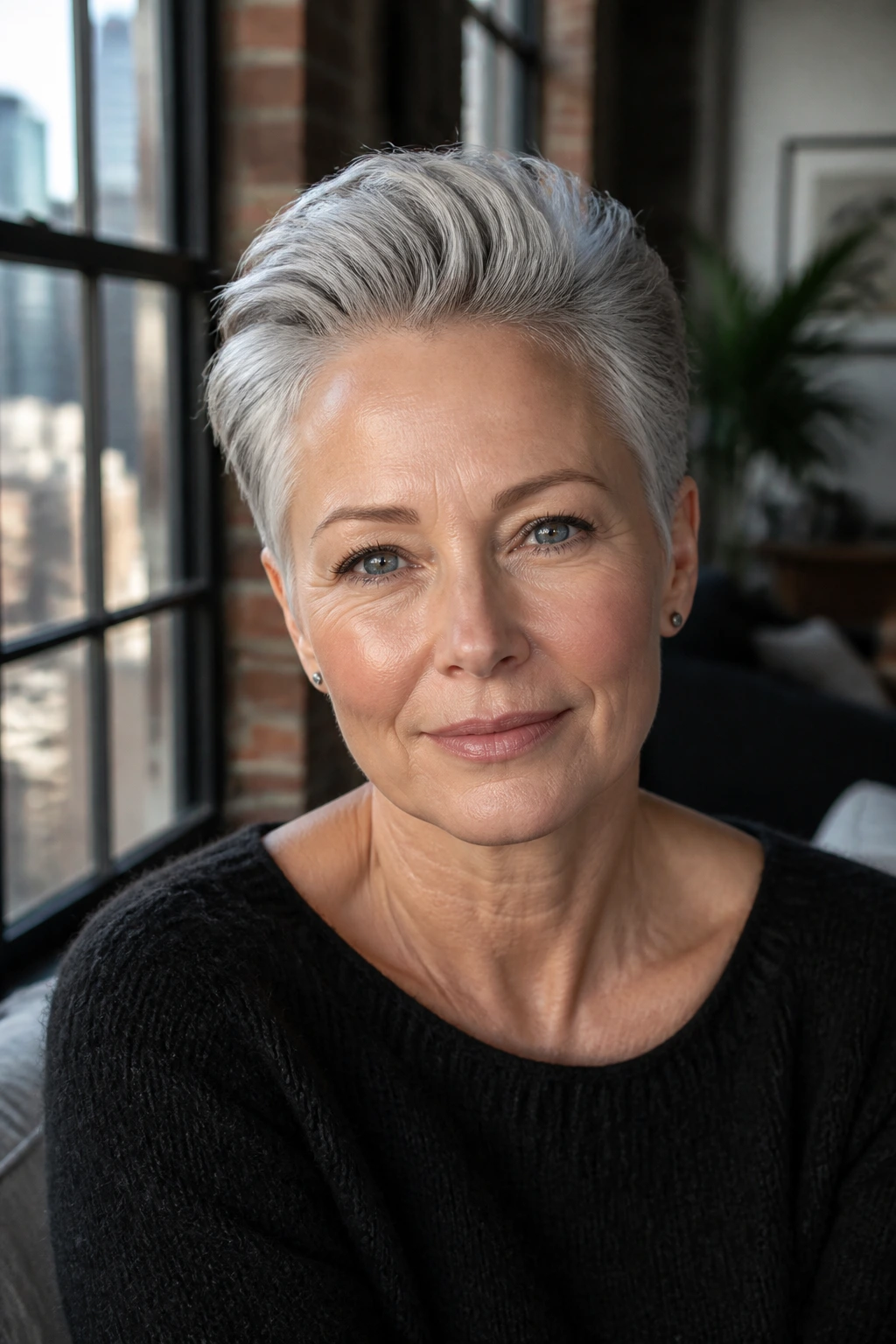
If I had to pick one cut that works hard for a round face with almost no drama, this would be it. The side-swept pixie with crown lift gives you height where you need it and keeps the sides close enough that the face doesn’t spread outward.
The fringe should travel diagonally, not straight across. That one choice changes everything. A long sweep from one temple to the opposite brow gives the eye a path to follow, which is the whole point. Keep the top pieces around 2½ to 3½ inches so they can be pushed up and over without collapsing.
The sides? Snug, but not shaved to the skin. There’s a difference. A tiny bit of softness around the ears keeps the cut from turning severe, especially if your hairline has softened a little or you wear glasses.
Best for: fine to medium hair that needs lift at the top.
Styling note: blow-dry the crown first, then direct the fringe across with a small round brush or your fingers.
One-liner: If the top goes flat, the whole shape loses its job.
2. Layered Long Pixie With Tapered Sides
Why it earns a spot
This is the version for someone who wants short hair but does not want to feel exposed. The longer top gives you movement, the tapered sides trim away width, and the back stays neat enough that the neckline looks clean instead of fuzzy by noon.
Ask for layers that are piecey, not choppy. There’s a difference there too. Choppy can mean every section looks separated in a harsh way; piecey means the cut has enough movement to avoid blockiness. Keep the front pieces the longest part so they can skim past the cheek rather than stopping on it.
- Top length: about 3 to 4 inches, enough to sweep and lift.
- Side length: close to the head, with a soft taper around the ear.
- Texture: works on straight, wavy, or lightly curly hair.
- Maintenance: trims every 4 to 6 weeks keep the shape from puffing out.
Tip: keep the longest pieces at the front, not the middle of the cheek. That small adjustment keeps the cut from widening the face.
3. Chin-Length A-Line Bob
Can a bob still look light on a round face? Absolutely, if the front is angled and the back isn’t bulky.
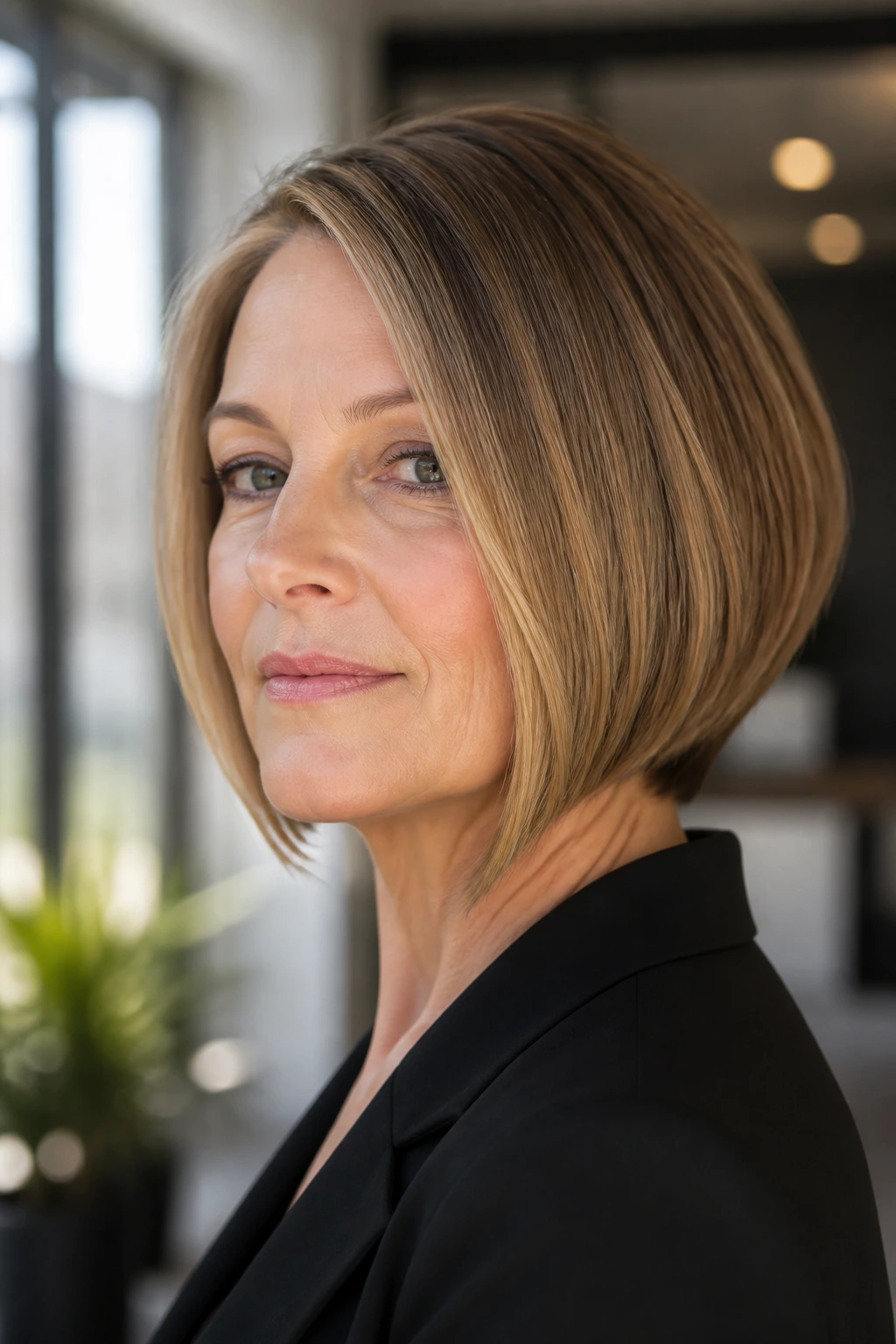
A chin-length A-line bob gives you the clean, sharp outline of a bob without the hard stop that can make the face feel wider. The back sits a little shorter, the front drifts past the chin, and the whole shape points downward instead of out. That is the part many people miss.
How to wear it
A soft side part keeps this cut from reading too symmetrical. Center parts can work, but on a round face they need some height at the crown and a bit of bend through the front pieces. Tucking one side behind the ear also helps. It opens the face and shows the jawline instead of hiding it under a curtain of hair.
This is one of the best short hairstyles for round faces over 50 if you want polish without stiffness. It looks smart with glasses, a blazer, and a little shine spray. It also grows out politely, which is not a small thing.
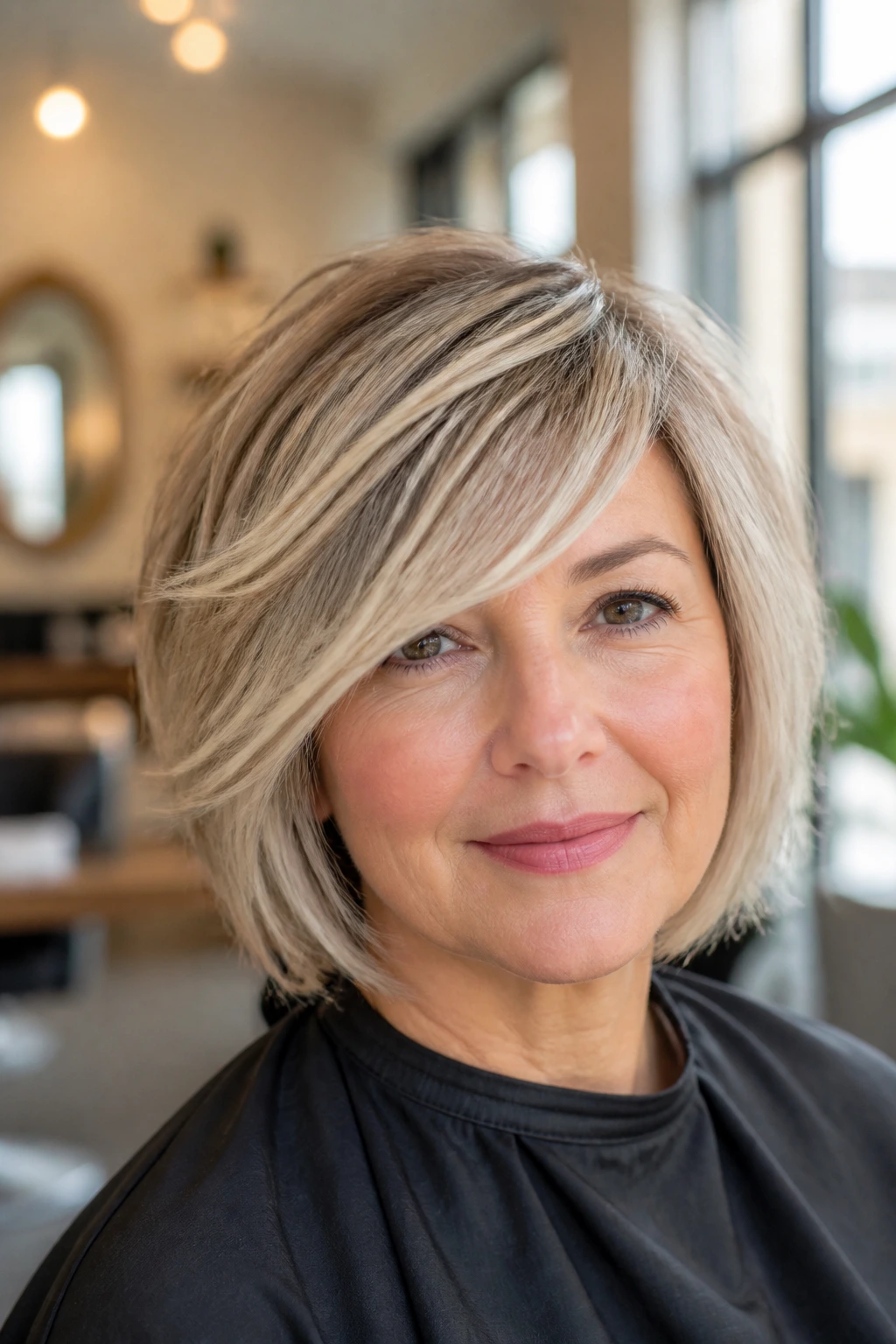
4. Feathered Bob With Side-Swept Bangs
If your hair tends to puff at the cheeks the minute it dries, feathering is your friend. A feathered bob breaks up the boxy feel that a blunt bob can create and gives the whole cut a little air.
The side-swept bangs do the face-shaping work. They soften the forehead, but more important, they create a diagonal line that draws the eye across the face instead of straight across it. Keep the fringe long enough to graze the brow or the outer corner of the eye. Short, heavy fringe is a different haircut. And usually the wrong one here.
- Ends: soft and mobile, not sliced into a hard line.
- Bangs: long, side-swept, and blended into the front layers.
- Best tool: a medium round brush or a paddle brush with a quick bend at the ends.
- Watch for: too much thinning at the bottom, which can make fine hair frizz out.
Pro tip: let the front cool in the direction you want it to sit. Hair remembers shape when it cools, and this cut lives or dies by that memory.
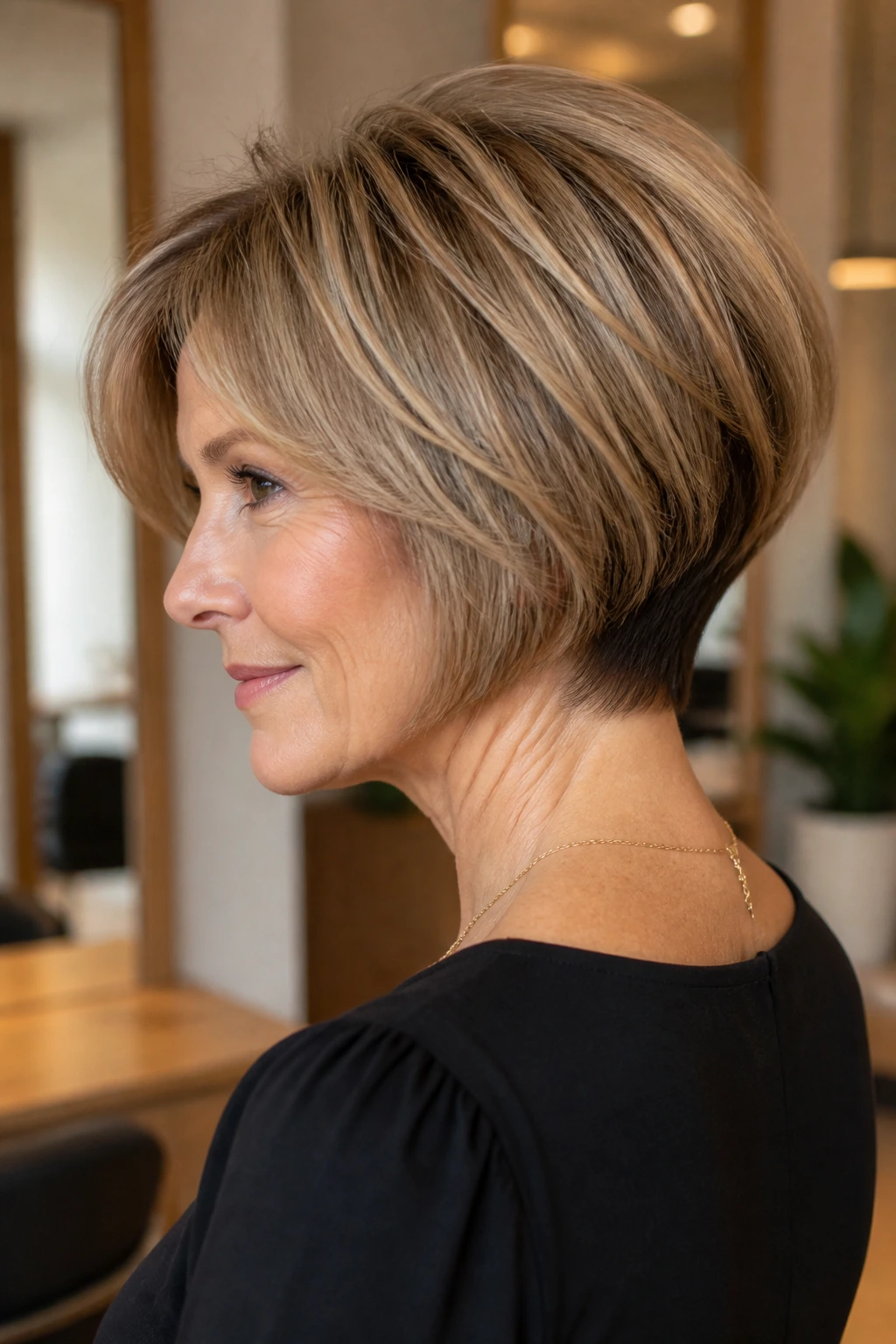
5. Stacked Bob With a Tapered Nape
The stacked bob is one of those cuts that looks smartest from the back. That matters more than people think, because the nape is where a lot of short hair starts to lose shape first.
A good stacked bob builds lift in the back and slides down toward the neck, which keeps the silhouette from going wide around the ears. On a round face, that’s the whole game. The back gives you structure; the front needs to stay soft enough that the cheeks don’t get boxed in. If the front is too short and too full, the cut can work against you.
This is a tidy, efficient shape for straight or slightly wavy hair. It likes a brush-dry finish and a clean neckline. It also does well with silver or salt-and-pepper hair because the architecture shows off the color changes in the layers.
A bad stacked bob feels too round. A good one feels lifted.
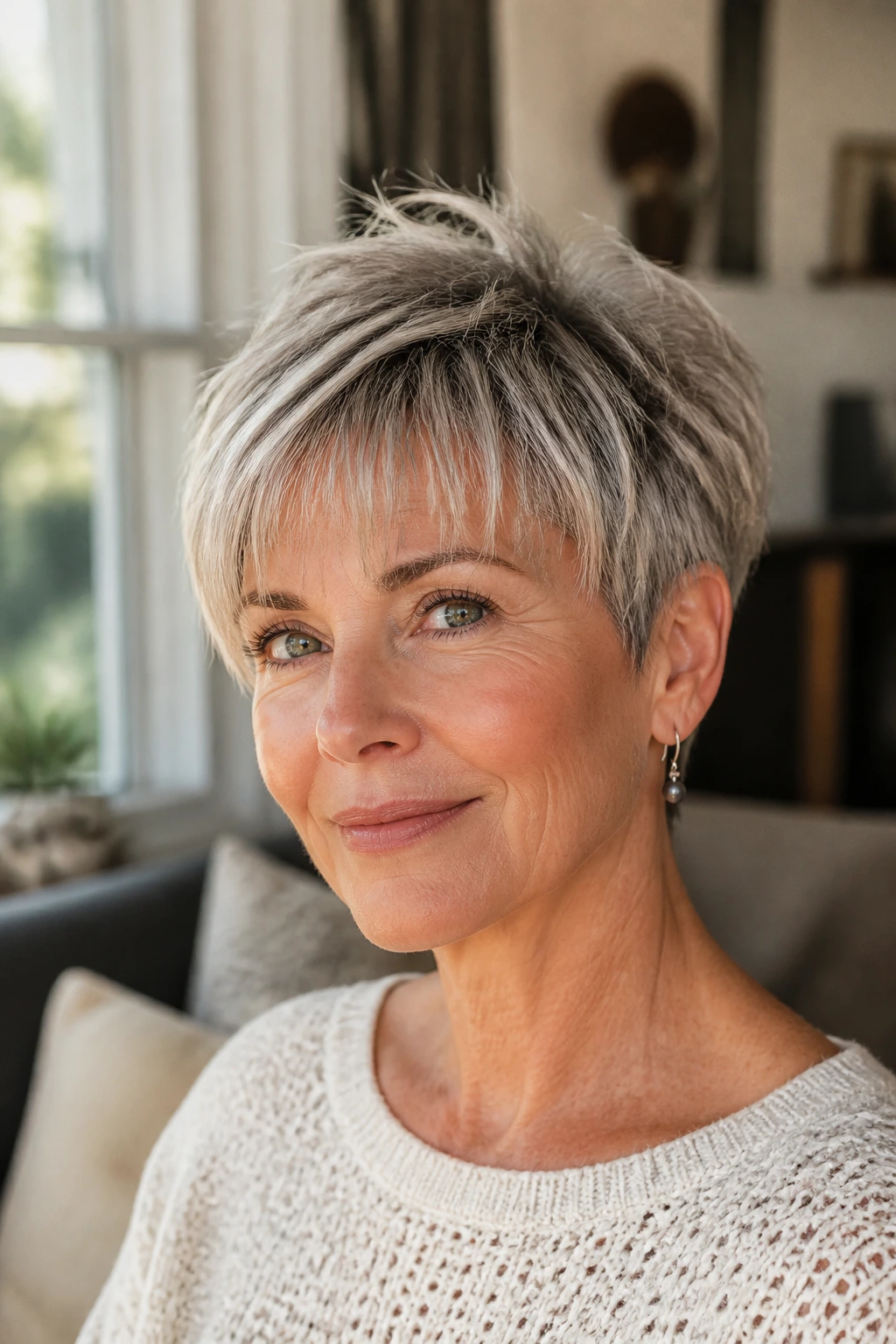
6. Textured Crop With Wispy Fringe
Unlike a neat pixie, this cut likes a little mess. That is the charm.
A textured crop with wispy fringe works because the ends are not trying to form one solid shape. They break apart a bit, which keeps the haircut from sitting like a helmet on the head. For round faces, that broken texture is helpful. It gives the face vertical movement and makes the forehead area feel lighter.
What makes it work
- The fringe should be thin enough to see skin through it.
- The crown needs a touch of lift, even if it’s only from root spray and a quick finger-dry.
- The sides should be close, but not bare.
- Matte paste is usually better than glossy cream here.
This is a smart choice for women who do not want to spend ten minutes arranging hair every morning. It also works well if your hair is naturally a little coarse or has a bit of bend. Keep the fringe airy, though. A heavy, straight-across crop can turn this into a blocky shape fast.
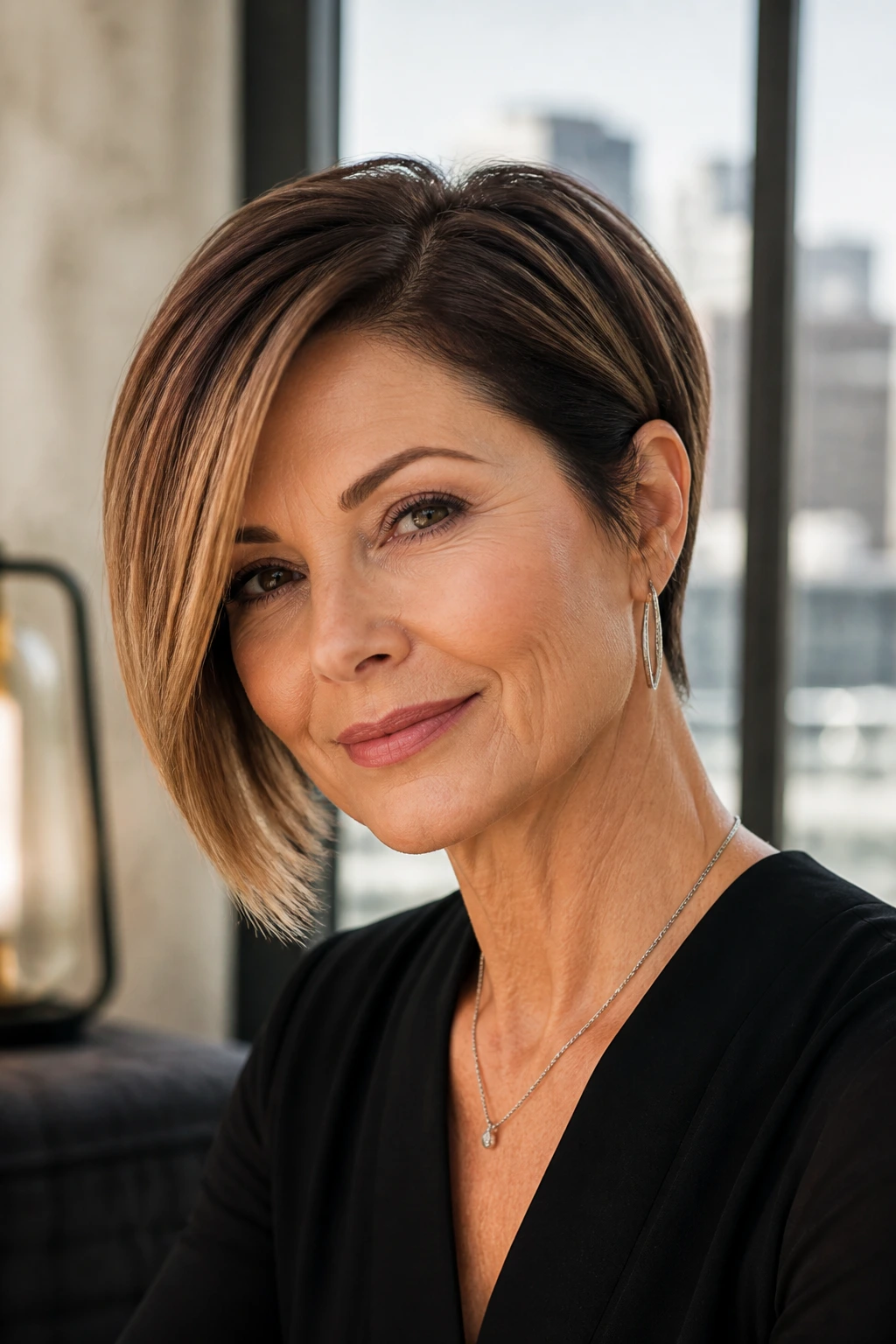
7. Asymmetrical Bob With a Deep Side Part
A deep side part can change the whole read of the face.
That is why the asymmetrical bob stays on so many good short-hair lists. One side is a touch longer, the part sits off-center, and the line drops diagonally across the face. Round faces need that diagonal. It interrupts the symmetry that makes a face feel wider.
The longer side should skim the jaw or land just below it. If it stops at the fullest part of the cheek, the asymmetry loses half its point. Keep the shorter side close to the head and the crown slightly lifted, and the shape feels intentional instead of lopsided.
This cut has a little attitude, but not in a loud way. It suits women who want a bob that looks sharper than the usual chin-length cut. It also works nicely with statement earrings, because the open side gives them room to show.
8. Soft Shaggy Pixie-Bob
The soft shaggy pixie-bob is the cut for someone who likes movement more than precision. It sits between a crop and a bob, which means you get enough length to tuck or sweep, but enough layers to keep the shape from going flat.
Wavy hair loves this. So does hair that has lost some density at the crown. The shaggy layers create a little lift without needing a full blowout, and the longer top pieces let the style move away from the cheeks. That movement matters. A still, rounded shape can make a round face look heavier than it is.
What to ask for
Ask for internal layers, not a lot of outer length removal. That keeps the perimeter from getting wispy in a bad way. The shape should feel light around the face and slightly longer at the front, with enough mass left in the back to hold the silhouette.
If your hair is fine, keep the layers modest. Too much slicing can make the cut collapse by lunchtime.
9. Slicked-Back Silver Pixie
Want something sharper than a fluffy crop? This is it.
A slicked-back pixie changes the whole conversation because it removes hair from the face entirely. That opens the brow, cheekbones, and jawline at once. On a round face, that open front can be a relief. It lets the face breathe instead of framing it in a circle of softness.
The trick is balance. Do not flatten the crown to the skull. Keep a little lift on top so the head still has some length. Use a light gel or cream on the sides, then brush the front back and slightly upward. The result should look controlled, not wet and tight.
Silver and salt-and-pepper hair look especially strong in this cut because the texture and color variation show up cleanly. Earrings help too. A pair of medium hoops or small drops looks better here than oversized pieces that fight the haircut.
10. Curly Crop With Lifted Crown
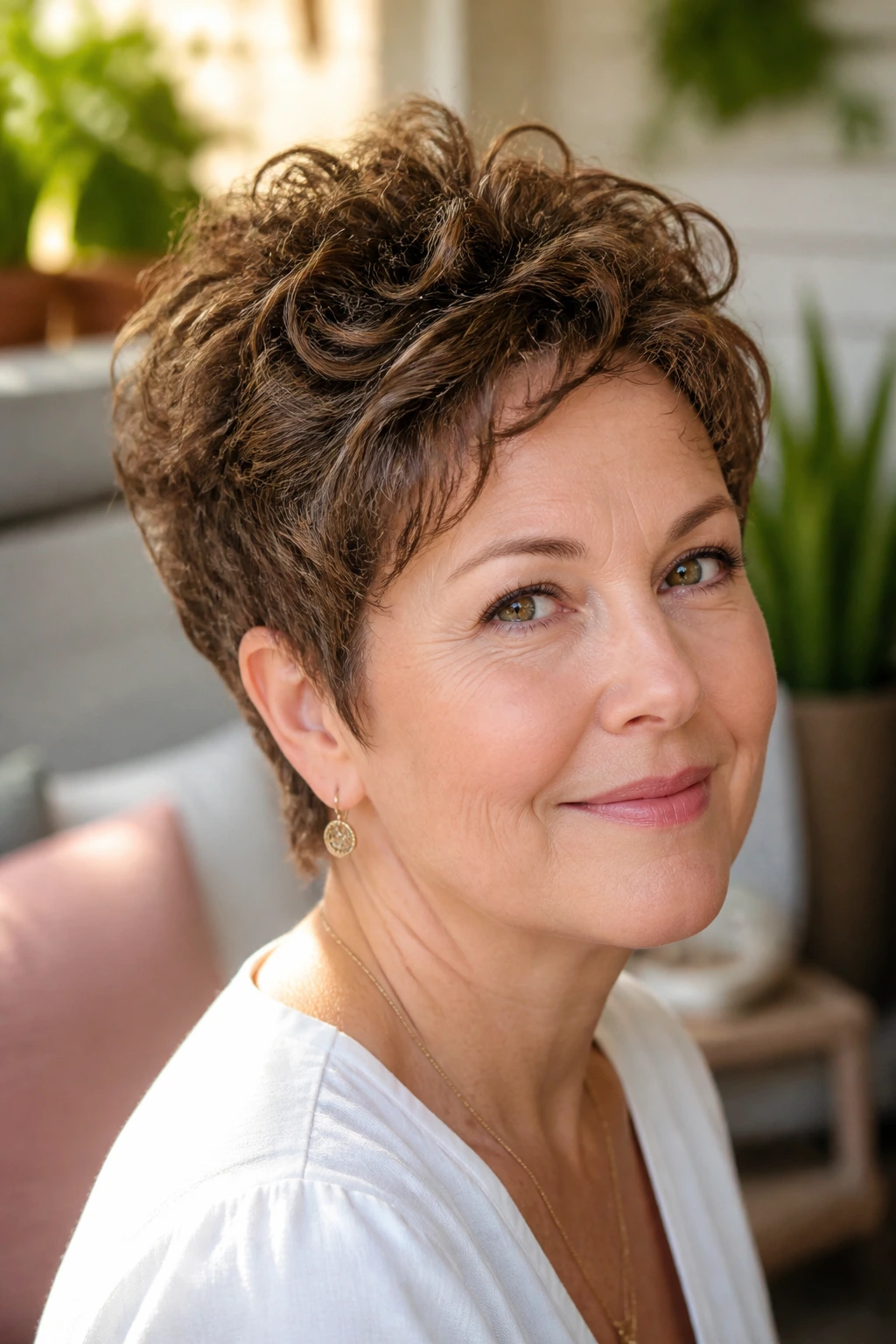
Curly hair at short lengths needs room to spring. It also needs a plan.
A curly crop with a lifted crown keeps the top a little longer so the curl pattern can rise instead of spreading sideways. That’s the key difference. If the curls are chopped too short all around, the shape can balloon at the cheeks and jaw. Leave the top with enough length to stack upward, and keep the sides closer to the head.
Best way to cut it
If your curls vary a lot from the back to the front, ask for the cut to be shaped with the natural curl pattern in mind. Dry cutting is ideal. Wet curls tell lies. They look longer, then jump up when they dry, and suddenly the cut sits in the wrong place.
Use a diffuser on low heat or let it air-dry with a curl cream. A tiny bit of root lift at the crown helps, but too much product will weigh the curls down and make the top collapse.
This is a strong option if you want texture to do the heavy lifting.
11. Wedge Cut With a Rounded Back
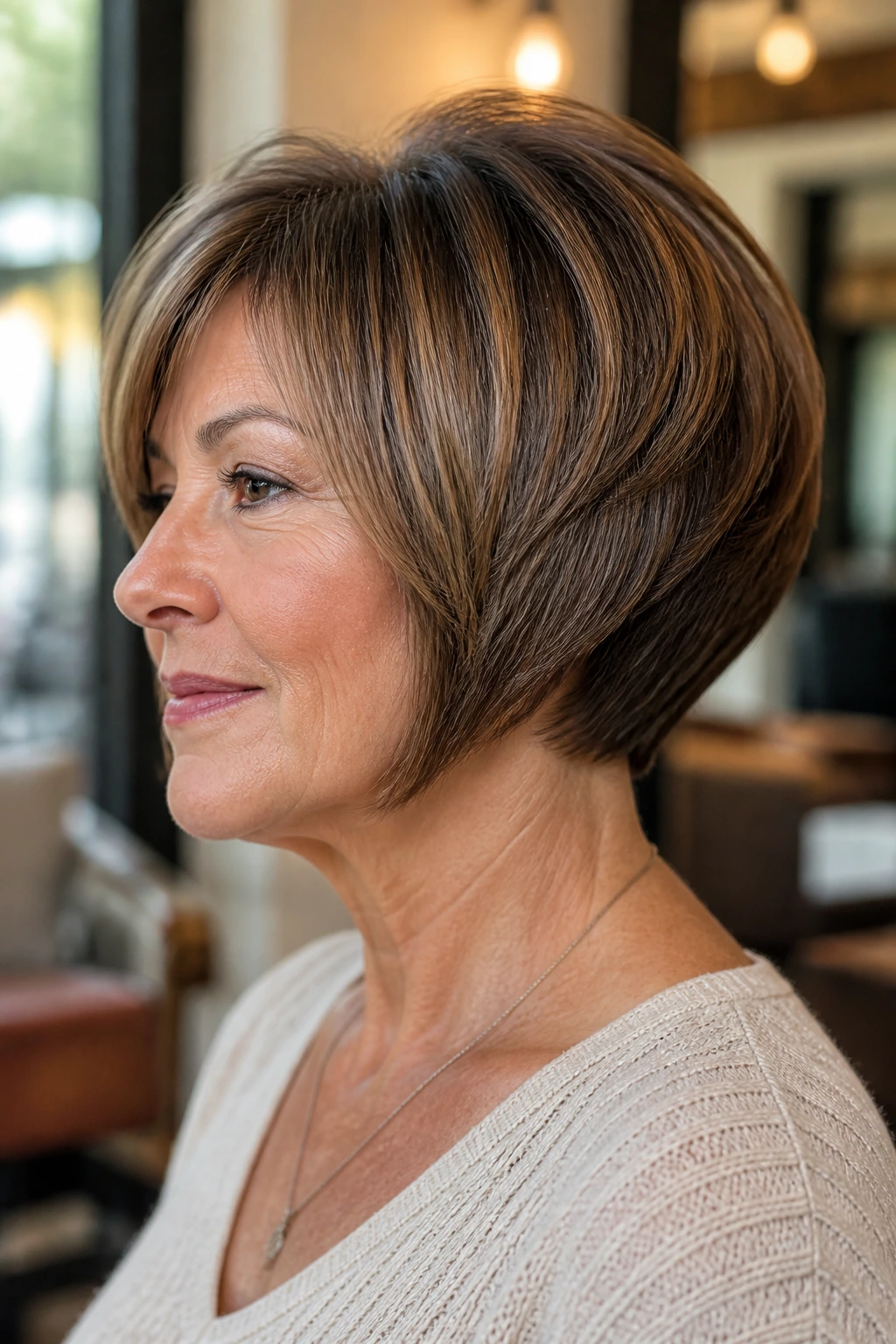
The wedge cut has a built-in shape, and that can be a blessing or a problem depending on how it’s handled.
Done well, it gives the back a neat curve and keeps the sides narrow enough that the face does not feel boxed in. The strongest version keeps the back rounded and the front a touch longer, which prevents the whole cut from sitting like a cap around the head. On round faces, that front length is the part that saves it.
This cut tends to shine on straight or coarse hair that likes structure. It can also look terrific on gray hair because the layers make the color shift from root to tip more visible. If the wedge is too full at the ears, though, the face can look wider. That’s the line to watch.
Ask your stylist to keep the perimeter clean and the sides slim. A wedge is supposed to be shaped, not puffed out.
12. Tapered Crop With Airy Bangs
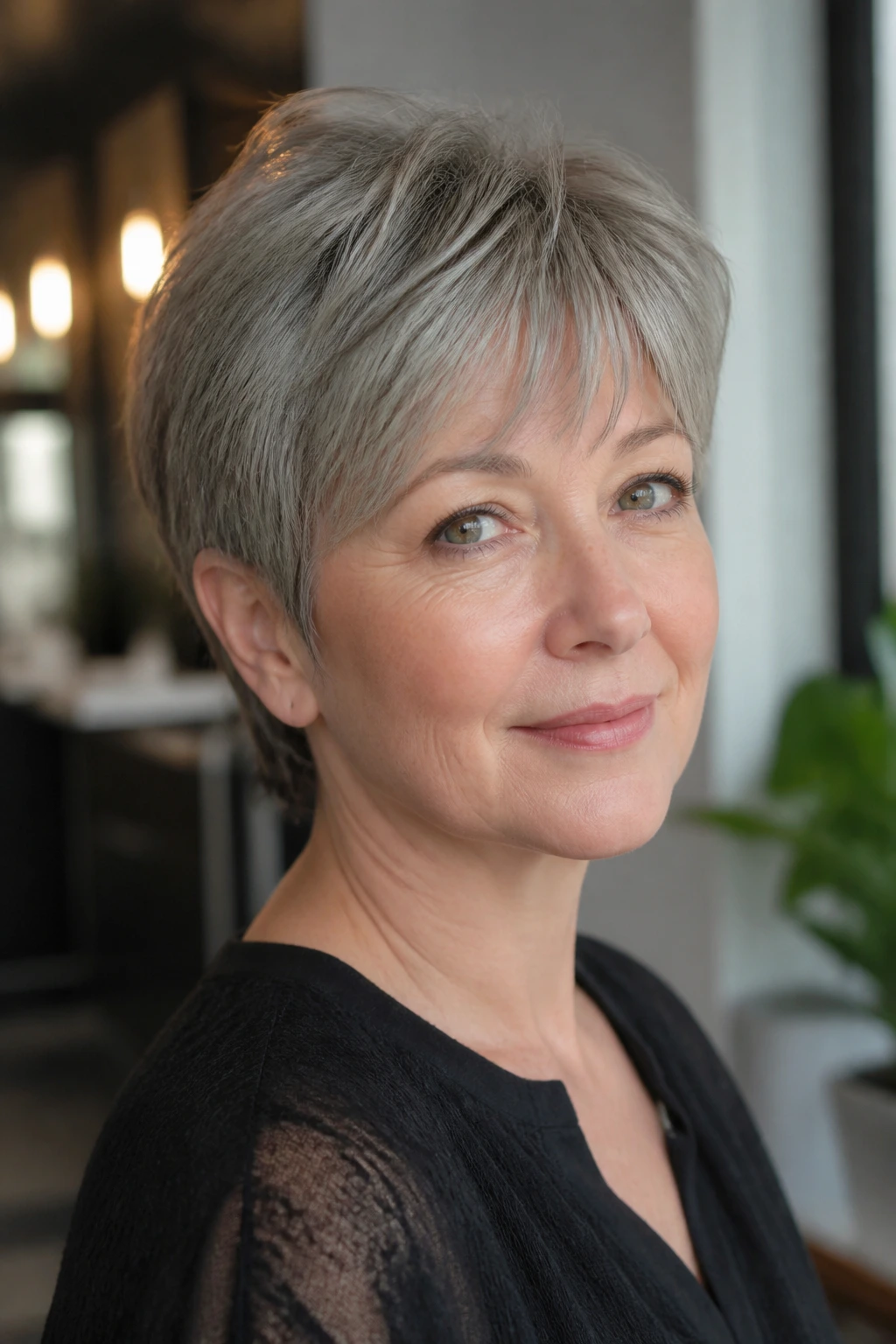
The tapered crop sits in that sweet spot between polished and easy. It is shorter than a bob, softer than a full pixie, and usually easier on fine hair than people expect.
The airy bangs matter more than the crop itself. They soften the forehead and create a little motion near the eyes, which keeps the face from reading too full. They should fall between the brow and the lash line, not straight across and not too short. A tiny bit of transparency in the fringe is the goal.
This style is especially good if you wear glasses. The taper around the temples keeps the frames from getting crowded, and the bangs can sit above or around the top rim without making your face feel chopped in half. It is also one of the better options for women who want a short cut that still looks neat by the end of a long day.
13. Bixie With Face-Framing Pieces
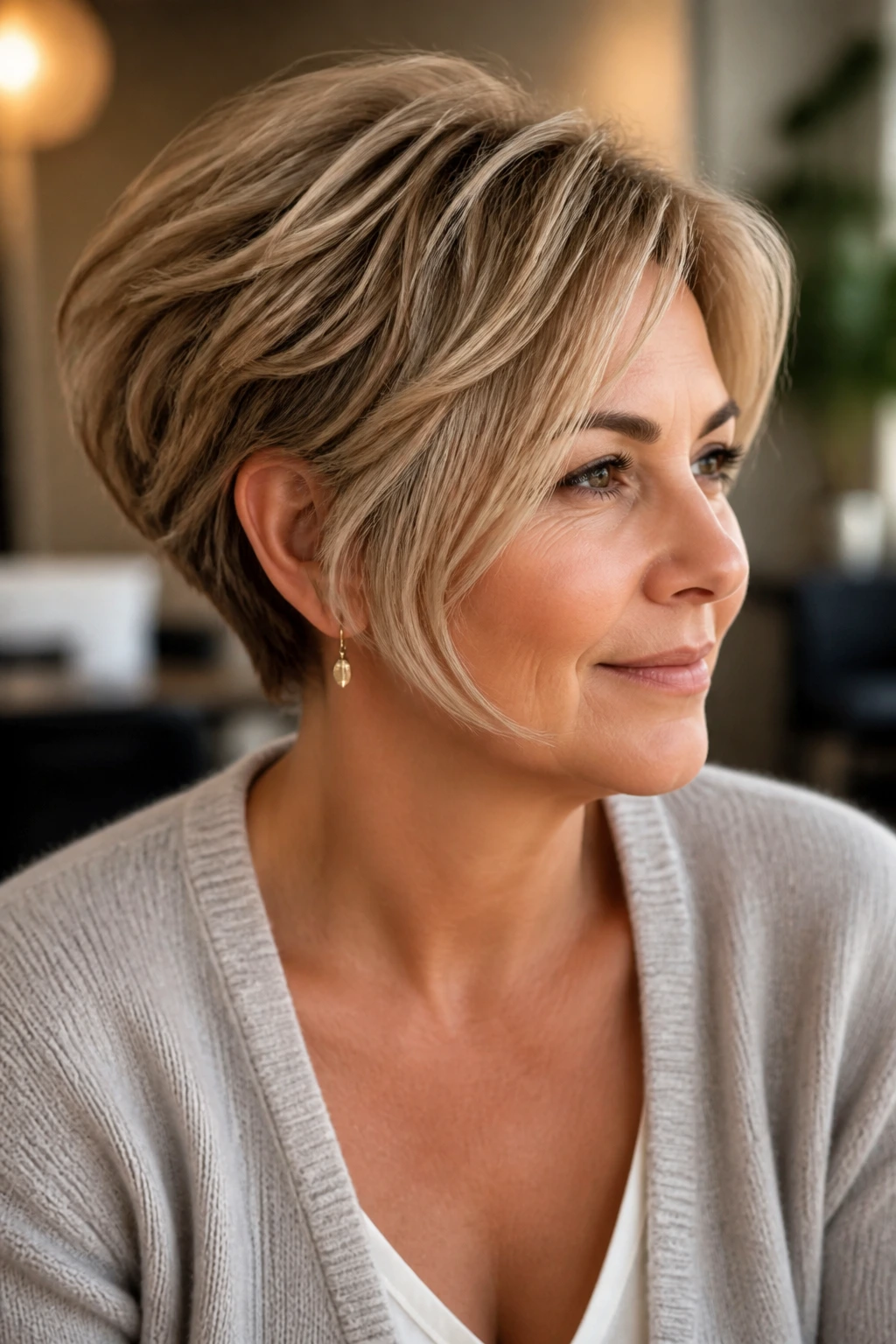
The bixie is for someone who wants short hair without feeling as if the scissors went too far.
It borrows the openness of a pixie and the softness of a bob. That means the back can stay tapered while the front pieces stay a little longer and skim the cheekbones. On a round face, those front pieces matter a lot. They create a kind of visual frame that narrows the middle of the face without making it severe.
Who it flatters
This cut works especially well if you’re not ready for a super-short crop but still want lift around the crown. It is friendly to fine hair because the shape can be built with layers instead of bulk. It’s also useful if your hair grows out unevenly, because the transitional length can survive a few extra weeks before the shape falls apart.
The bixie can be worn smooth or piecey. Smooth gives it a more polished read; piecey gives it a little edge. Both can work.
14. Tousled Micro Bob
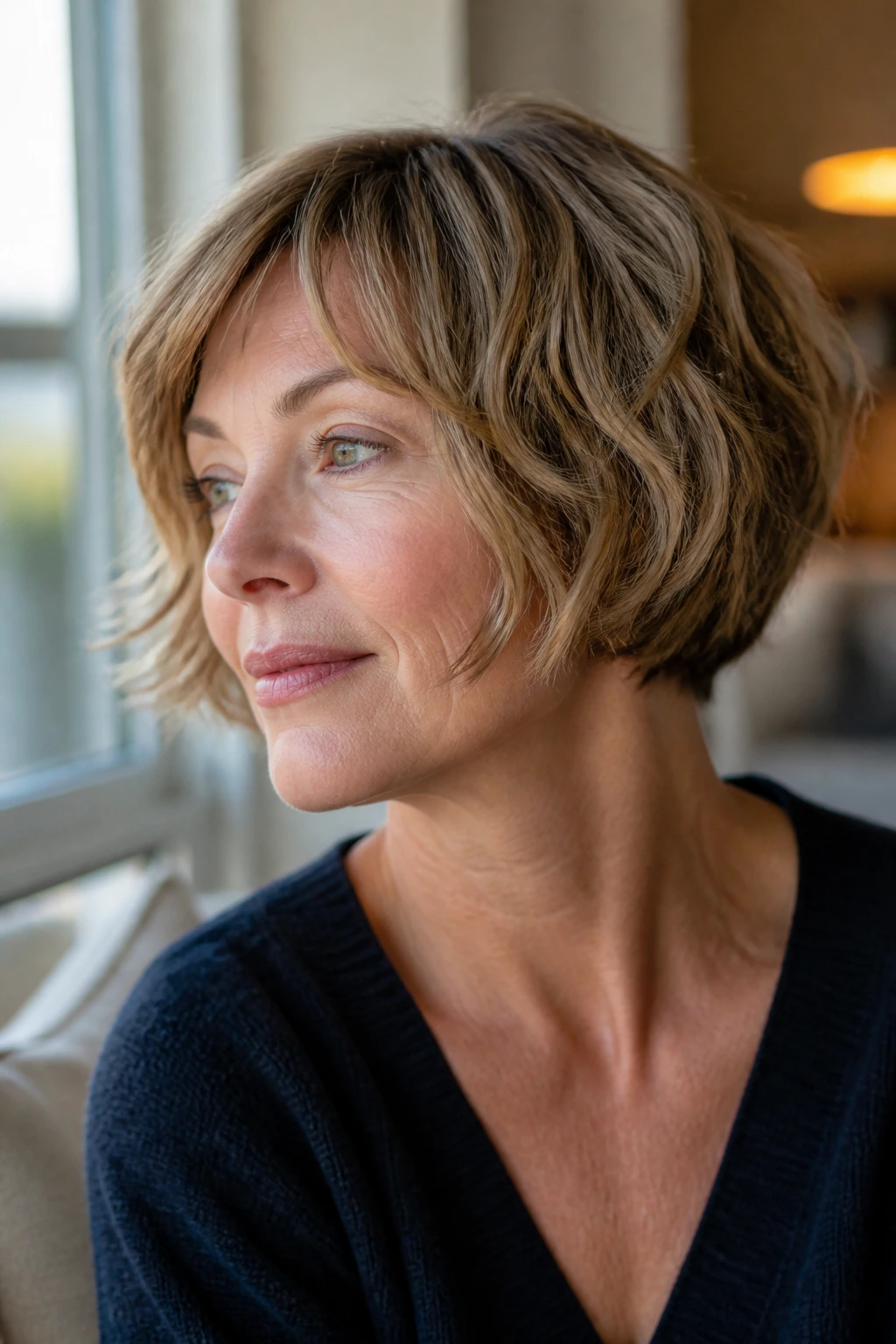
A micro bob is short enough to feel modern, but not so short that it loses the bob shape entirely. The tousled version softens it further and keeps it from feeling severe.
This is a good choice if your hair has some natural wave. Air-dry a micro bob and you get bend, texture, and a little bit of movement around the cheeks. That movement is the whole point. The cut should sit above the jaw, with choppy ends that refuse to form one hard line.
If your hair is pin-straight and resistant to bend, this one can be more work than it’s worth. But if there is any wave in there, the tousled micro bob can look easy in a way that a cleaner bob never does. A bit of texture cream, a scrunch, and you’re done.
15. Razor-Cut Bob With Movement
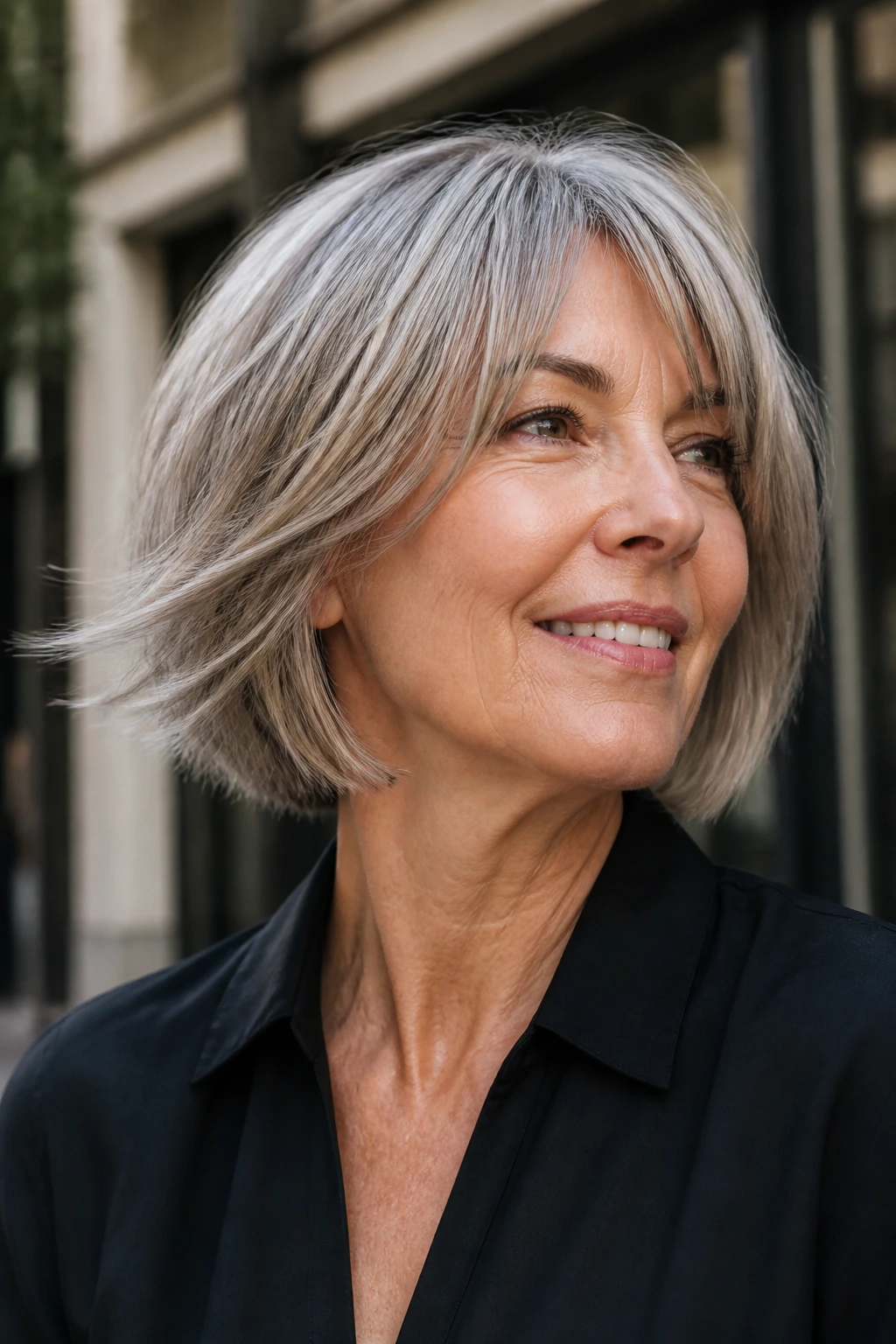
Razor work can be brilliant on thick hair, and it can be a mess on the wrong texture. So this cut needs a careful hand.
A razor-cut bob removes bulk and creates soft, airy ends that move instead of sitting in one solid block. On round faces, that movement helps because it keeps the perimeter from widening at the jaw. The shape should still feel controlled, though. If the razor work gets too wispy, the ends fray and the cut starts looking tired fast.
This is the cut I’d point to if your hair feels heavy and has enough density to hold a clean outline after thinning. It also works well with a side part and a little bend through the front. The result is less “perfect bob,” more “hair that swings when you turn your head.”
That swing matters. It keeps the cut from going flat and round.
16. Rounded Pixie-Bob
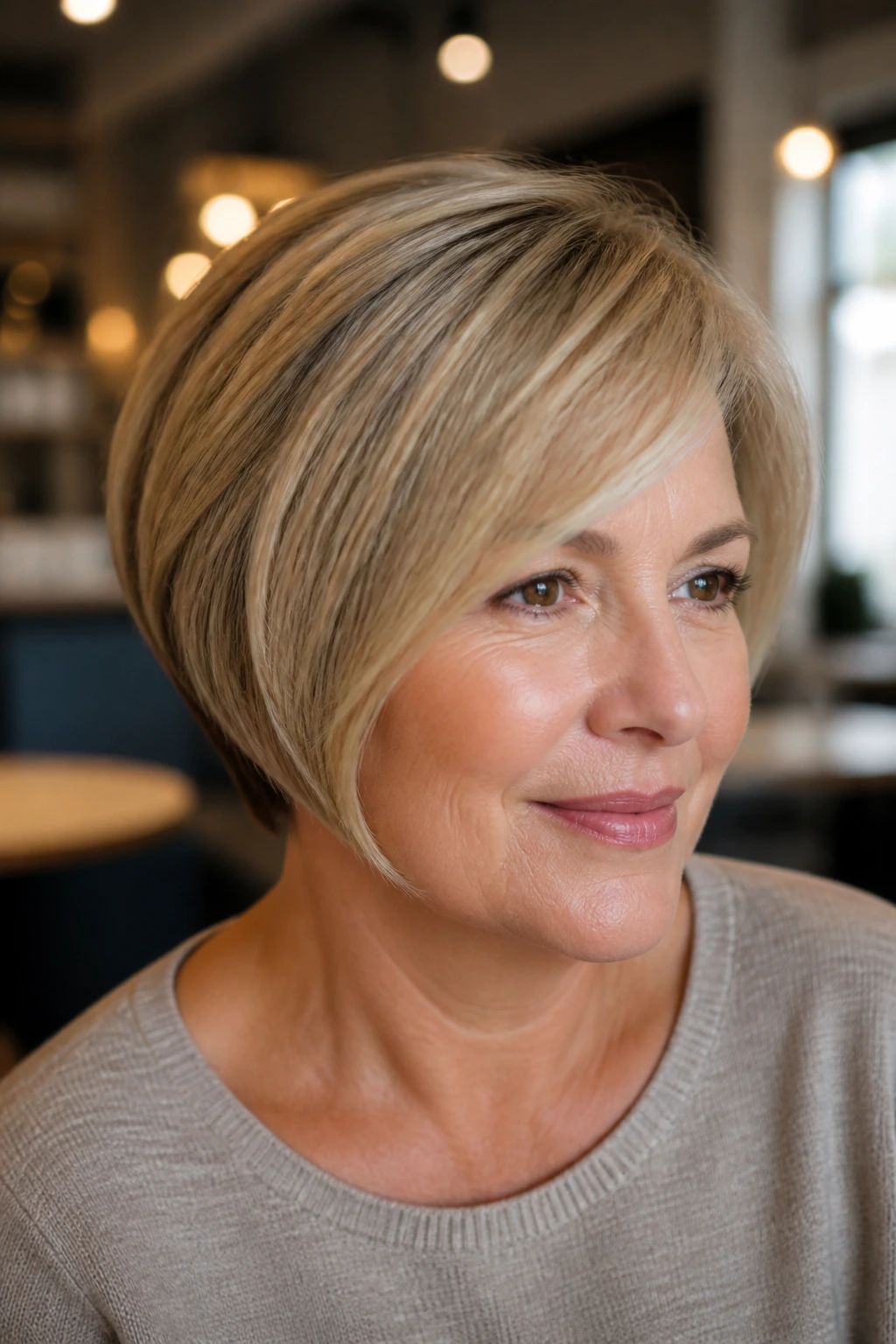
The rounded pixie-bob is a softer cousin of the classic bob. It gives you more shape than a pixie and less bulk than a full bob, which is why it suits so many round faces.
The back stays rounded and close, while the front keeps enough length to brush across the cheeks. That combination is useful. The shorter back lifts the silhouette, and the longer front stops the face from looking too open. If the sides get too full, though, the cut loses its balance, so the outline should stay tidy.
This is one of the more forgiving short hairstyles for round faces over 50 because it grows out into a decent shape. It also works nicely on hair that has a little wave but not enough for a shag. The trick is to keep the curve controlled, not puffed.
17. Soft Mohawk Pixie
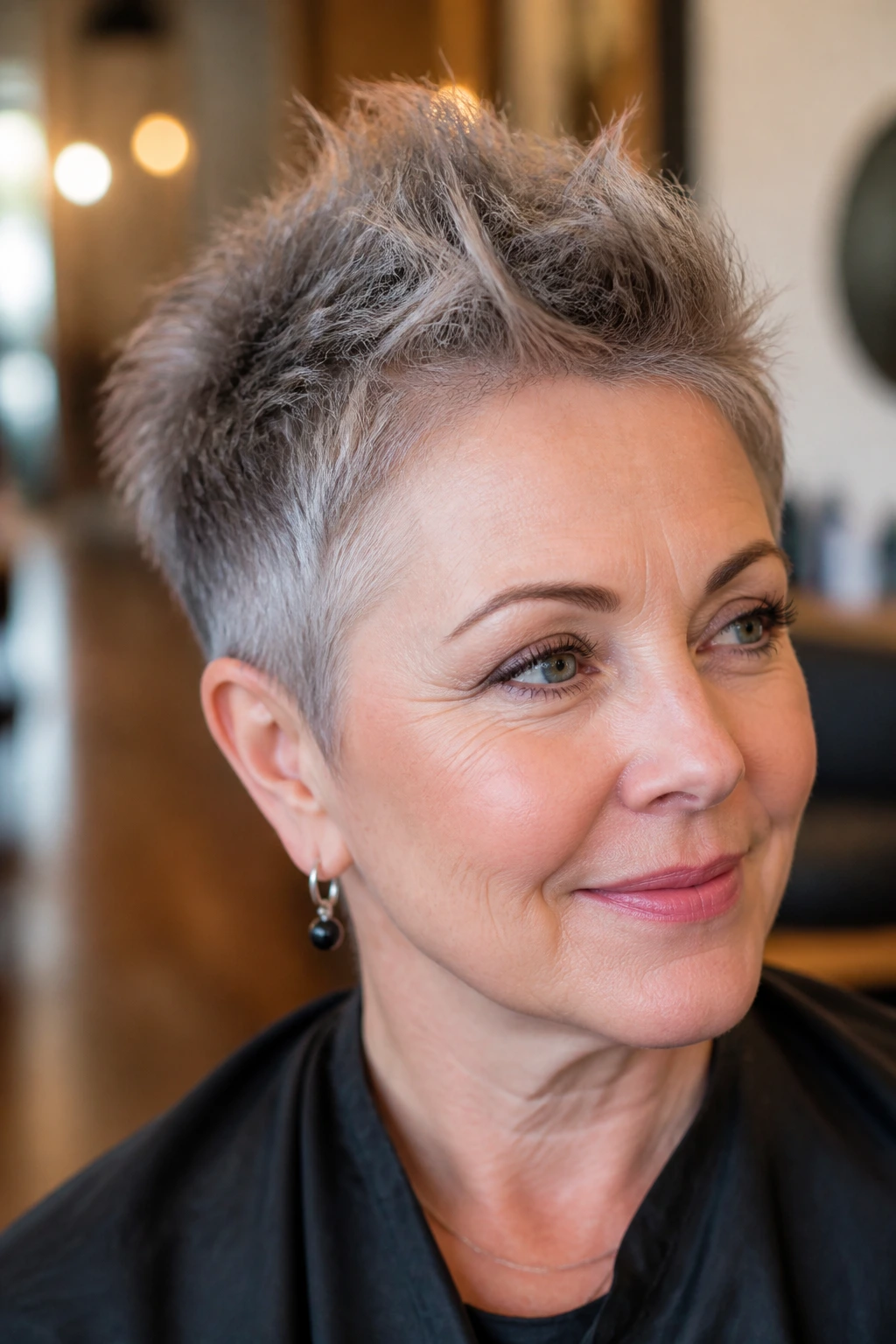
A soft mohawk pixie sounds bolder than it feels.
The height runs through the center of the head, with shorter sides that hug the temples. On a round face, that vertical line is useful because it lengthens the silhouette without relying on length at the jaw. The word “soft” matters here. You do not want a hard strip or anything punky unless that is your actual taste. You want lift, not defiance for its own sake.
This cut looks especially good when styled with a bit of paste or matte cream so the pieces stand apart. It shows off eyes, brows, and earrings, and it can be a smart choice for women who like a little edge but still want the face to look open rather than compressed.
If your hair is very fine, keep the center a touch longer so it has something to stand up with.
18. Ear-Length Tucked Bob
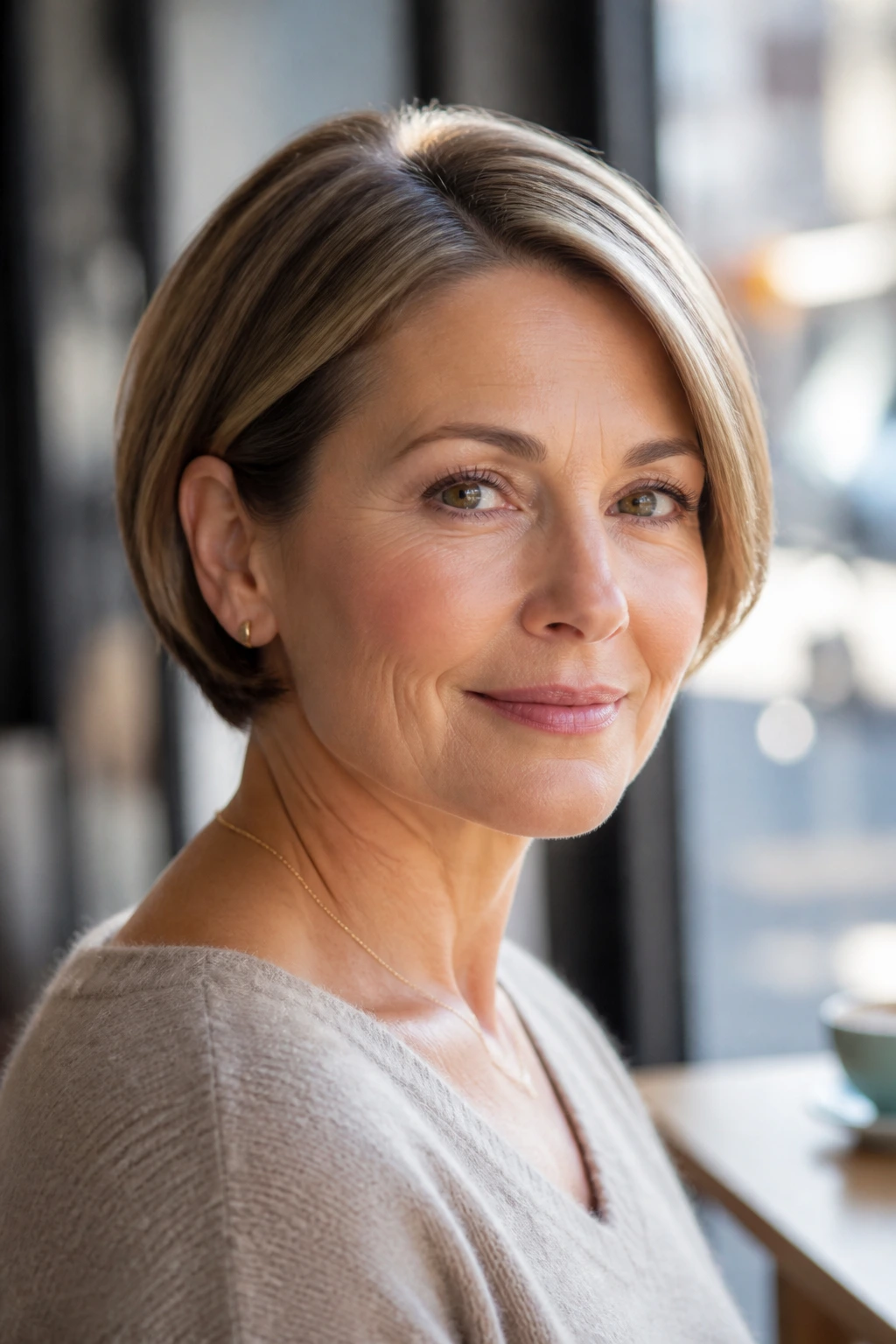
The ear-length tucked bob is a neat little shape that does more than people expect. Tucking the sides behind the ears opens the face, shows the neck, and lets the hair sit in a cleaner line around glasses or earrings.
The cut itself should not be too blunt at the sides. A slight bend or soft bevel keeps it from sitting like a shelf. The front can graze the cheekbone or drop a bit lower, but it should not stop right in the middle of the fullest cheek area. That’s the part that can make the face feel wider.
This cut is a strong pick for women who like simple styling. A side part, a tuck, a touch of serum on the ends. Done. It does not need much else, which is half the appeal. The shape is tidy enough for work and relaxed enough for weekends.
19. Curly Chin-Length Bob

Curly hair needs enough length to spring. Too short, and the curl can balloon. Too long, and the face gets swallowed. Chin length is the useful middle.
A curly chin-length bob gives the curls room to form shape while keeping the outline close enough to frame the face. On a round face, the key is not to let the sides spread too wide. Internal layers help here. They remove some weight without making the ends look ragged, and they let the curl stack upward instead of outward.
Cutting this shape dry or nearly dry is worth asking for if the salon does it. Curls change their mind once water leaves them. A good stylist will account for that and keep the shortest spring points in the right place.
This one can look lively, soft, and a little romantic without going full fluffy. That balance is harder to get than people think.
How to Style These Cuts for Everyday Wear
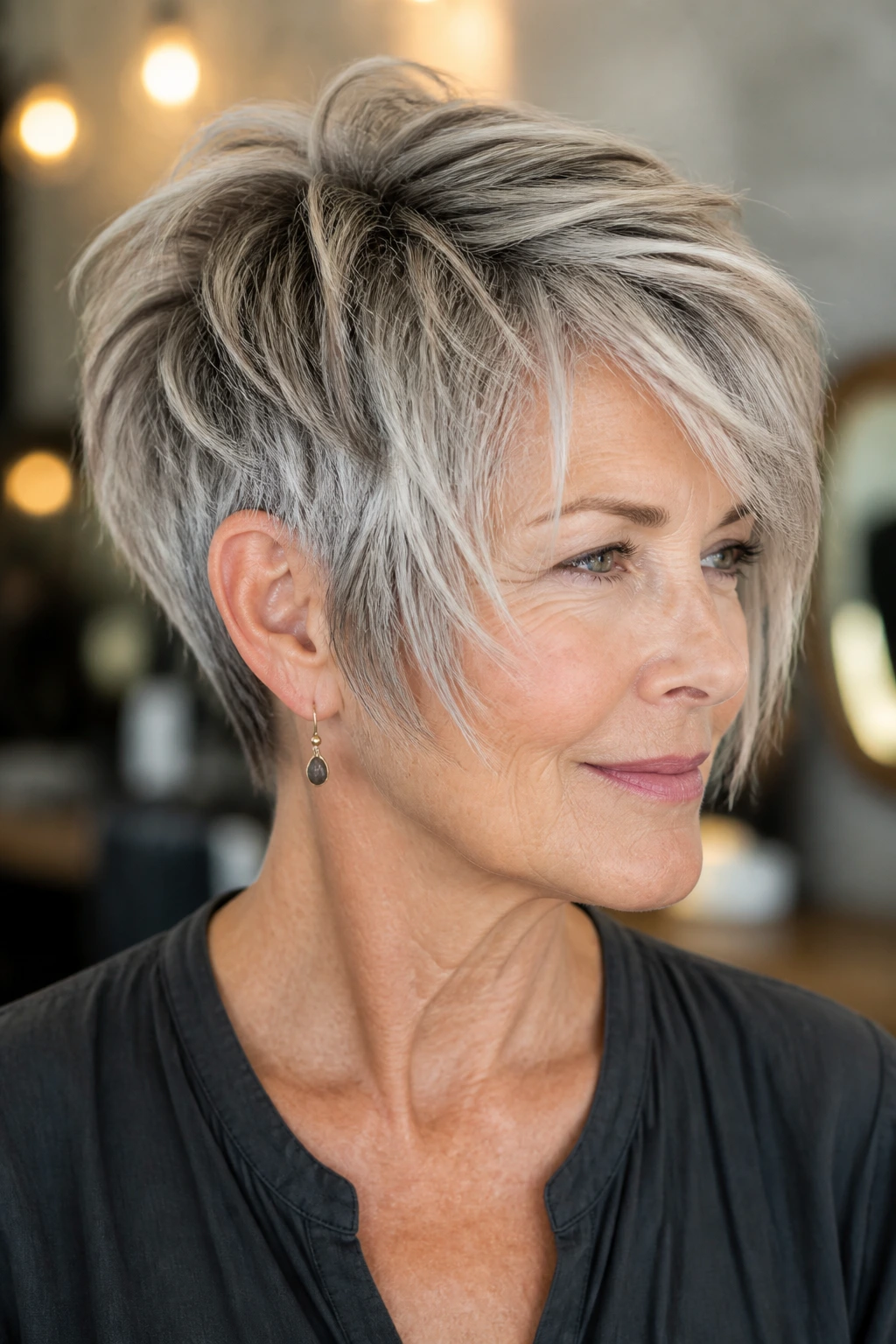
The best short cut should look planned before the flat iron touches it.
Shape: decide where the eye should land. If the cut has crown lift, push the roots up and back. If it relies on a side part, keep the part off-center and let the front fall diagonally across the face. A round face looks longer when the shape has direction.
Texture: use the least product that gets the job done. Pixies and crops usually want a root spray or a dab of matte paste. Bobs and bixies often look better with a lightweight cream or a little mousse through the mid-lengths. Too much smoothing product kills volume fast, and volume is half the point here.
Accessories: glasses, earrings, clips, and headbands all change the read of the haircut. Slim frames and medium hoops usually play nicest with short hair. Thick headbands can crowd the face if they sit right at cheek level.
Routine: most of these styles should take five to ten minutes, not half an hour. If a cut only looks good after a full blowout every morning, it probably isn’t the right cut for your actual life.
Essential Tools for Styling Short Hair at Home
- Blow dryer with a concentrator nozzle — directs air at the roots so you can build lift instead of blasting hair every which way.
- Small round brush, 1 to 1½ inches — useful for pixies, fringe, and short bobs that need bend at the ends.
- Vent brush or paddle brush — better for quick drying and smoothing when you do not want a polished blowout.
- Tail comb — helps create clean side parts and section off the crown without tearing at the hair.
- Sectioning clips — keep the top out of the way while you work the nape or sides.
- Lightweight mousse — gives shape to fine or wavy hair without making it stiff.
- Root-lift spray — useful at the crown and front hairline, especially for styles that need a little height.
- Texturizing paste or cream — best for piecing out pixies and shaggy crops.
- Flexible-hold hairspray — locks the shape without making the hair crunchy.
- Small flat iron, optional — handy for bending a front piece or taming a stubborn bang, but not required for every cut.
How Short Hairstyles for Round Faces Over 50 Work With Hair Texture and Glasses
Not every short cut should do the same job. Hair texture changes the rules, and glasses change them again.
Fine Hair
Fine hair usually needs lift at the crown and some structure through the front. Too many layers can make it collapse, so ask for internal shape rather than a choppy shell. Pixies, bixies, and tapered crops usually behave better than heavy bobs because they do not have to support as much length.
Thick Hair
Thick hair often needs weight removed from the inside, not from the ends. That keeps the perimeter clean while preventing the sides from ballooning out around the cheeks. Razor-cut bobs, stacked bobs, and rounded pixie-bobs can work well if the bulk is handled properly.
Wavy and Curly Hair
Waves and curls need enough length to show their shape. Too short, and the volume heads sideways. Curly crops, shaggy pixie-bobs, and chin-length curly bobs usually look best when the hair is cut with shrinkage in mind and dried in the direction you want it to live.
Glasses
Glasses sit right where a lot of bad bangs and side pieces want to land. Keep fringe long enough to clear the frame top, or soft enough to split around it. Tucked bobs, airy bangs, and side-swept pixies tend to cooperate best because they leave the temple area open.
Additional Styling Moves That Give Short Hair More Shape
Volume Boost: flip the crown in the opposite direction of your part while blow-drying, then switch it back at the end. That little reversal gives the roots some memory. A golf-ball-sized puff of mousse at the roots can help, but no more than that unless you want crunch.
Texture Boost: twist the ends of a bob or pixie with a tiny bit of paste once the hair is dry. The goal is not mess. The goal is separation. Short hair reads fuller when the ends look piecey instead of fused together.
Color Boost: a soft brightness around the temples or crown can change how a cut sits on the face. On silver or gray hair, a gloss can keep the color from looking dull and give the cut a cleaner edge. Color does not have to be dramatic to matter.
Make-It-Yours: if your hair is fine, keep the layers conservative and the product light. If it’s thick, ask for internal removal of bulk. If it’s curly, let the shape follow the curl pattern instead of forcing a straight-line perimeter. If you wear glasses, keep the sides cleaner so the frames have room.
Common Mistakes That Make a Round Face Look Wider
The first mistake is landing the shortest point of the cut right at cheek level. That is the visual equivalent of underlining the widest part of the face. Shift the front longer, raise the crown, or angle the line downward so the eye keeps moving.
The second mistake is too much width at the sides. This happens when thick hair is cut into a round shape without enough internal removal, or when a pixie is left bulky around the ears. The fix is simple in theory and worth repeating in practice: keep the silhouette narrower at the sides and fuller on top.
The third mistake is blunt bangs that stop dead across the forehead. On a round face, they can create a square, compressed look unless the rest of the cut has strong vertical lines. A side-swept fringe or airy bang usually works better.
The fourth mistake is product overload. Heavy cream, thick serum, or too much spray can flatten the crown and make the haircut sit in one broad shape. Use less than you think you need. Add product in layers if the hair asks for it.
The fifth mistake is choosing a cut that needs more styling time than you’re willing to give it. A gorgeous pixie that needs a round brush every morning is a poor deal if you never want to use a round brush. The right cut should fit your habits, not your fantasy routine.
Easy Variations and Adaptations to Try
Glass-First Version: keep the fringe longer and the temple area cleaner. This helps the haircut sit around frames instead of crashing into them. It works especially well with pixies, ear-length bobs, and airy crops.
Silver-Glow Version: ask for a cleaner outline and a little shine through the top layers. Silver hair shows shape beautifully when the edges are neat and the surface has a soft gloss. A dull finish can make even a good cut look sleepy.
Air-Dry Version: ask for softer internal layers, less perimeter weight, and a texture cream you can work through damp hair. This is a smart route if you don’t want to blow-dry every day. Wavy and curly hair usually do best with this approach.
Sleeker Evening Version: keep a bob or bixie smooth at the top, then tuck one side behind the ear and finish with a shine spray. The change is small, but it sharpens the whole face and makes earrings pull their weight.
Curl-Forward Version: for curly cuts, keep more length at the chin or crown and use a diffuser only until the hair is about 80 percent dry. That leaves the curls defined without puffing them out.
Maintenance, Trims, and Next-Day Refreshes

Short hair shows growth fast. That is the deal.
Pixies and cropped cuts usually need a trim every 4 to 6 weeks if you want the outline to stay sharp. Bobs can stretch a little longer, around 6 to 8 weeks, especially if the shape is angled or lightly layered. Curly cuts often survive 8 weeks or more, but only if the curl pattern still sits where the stylist placed it. Once the curl starts pulling the shape outward at the sides, it’s time.
At home, the best refresh is usually simple. Mist the front with water, rework the part, and hit the roots with a dryer for 30 seconds. Dry shampoo helps on day two, but put it at the crown and part line, not all over the ends. Too much product on short hair can make it look dusty instead of lived-in.
Nighttime matters too. A silk or satin pillowcase keeps the front from standing up in weird directions, and it’s especially useful for pixies and bangs. If the nape flips out in the morning, a quick pass with a brush and dryer is usually enough. Resist the urge to start over from scratch.
Frequently Asked Questions
What short haircut makes a round face look slimmer?
Cuts with crown lift, side parts, and diagonal front pieces usually do the most work. Pixies, asymmetrical bobs, and angled chin-length cuts tend to narrow the visual width better than blunt, even shapes.
Is a pixie cut a bad idea for a round face after 50?
Not if it has height on top and some softness around the sides. A flat, round pixie can widen the face, but a lifted, side-swept version often does the opposite and feels cleaner around the jaw.
Should a round face avoid blunt bangs?
Not always, but blunt bangs are the riskiest of the fringe options. If you want bangs, keep them longer, softer, or side-swept so they do not split the face into a wider block.
Will short hair make my hair look thinner?
It can, if the cut removes too much bulk or leaves the crown flat. A well-shaped crop or bob usually makes hair look fuller because the ends are not weighed down by length.
What if I wear glasses every day?
Choose a cut that leaves room at the temples and does not place heavy fringe right on top of the frames. Ear-length bobs, tapered crops, and side-swept pixies usually sit more comfortably with glasses.
How short can curly hair go without puffing out?
That depends on curl tightness, but many curly faces do best with enough length to let the curl stack instead of spread. Chin-length bobs, lifted crops, and shaggy pixie-bobs often give the best balance.
How often should I trim a short style?
Most pixies need trims every 4 to 6 weeks. Bobs can usually go 6 to 8 weeks, though thick or fast-growing hair may need a clean-up sooner around the neck and ears.
What if my haircut grows out in a weird way?
That usually means the perimeter was too blunt or the sides were too heavy. Ask your stylist for softer internal layers or a slightly longer front next time, and keep a closer eye on the nape between visits.
The Cut That Fits the Face You Actually Have
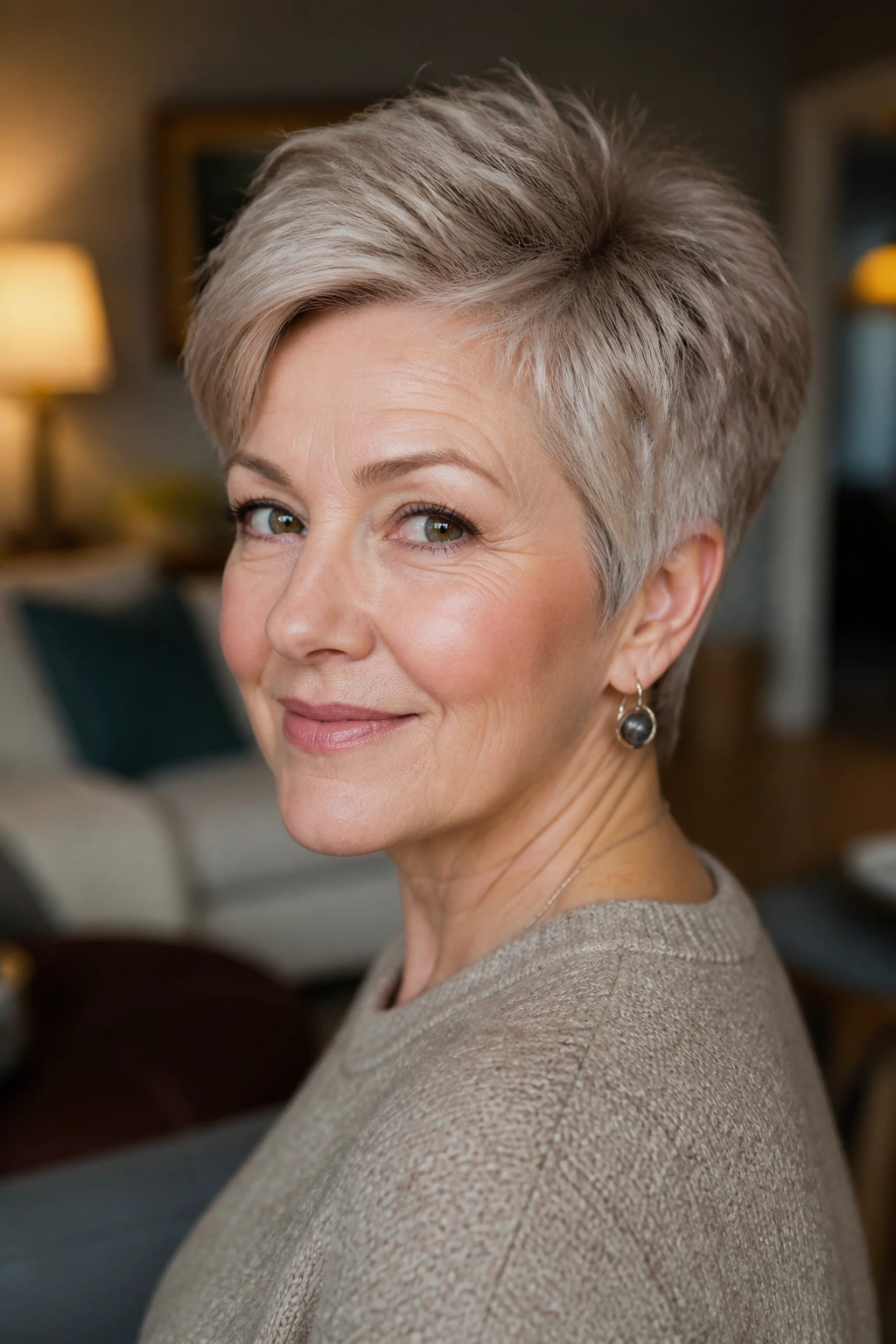
The right short style does not make a round face pretend to be another shape. It uses the shape you already have and gives it better lines. That might mean a lifted pixie, an angled bob, a softer shag, or a tucked crop that opens the cheeks instead of boxing them in.
A good haircut should make getting dressed feel easier. It should make glasses sit better, earrings matter more, and mornings go by faster. That is the whole point, really.
Bring a photo, yes, but bring a clear idea too: height at the crown, room at the cheeks, and a front edge that moves instead of stopping dead. Those three things will take you a long way.
