



A short haircut after 40 should never feel like a retreat. The best ones have shape, not stiffness. They skim the jaw, lift the crown, and leave enough softness around the face that you look awake before the first coffee even hits.
The phrase “short haircuts for women over 40” gets treated like a category, but hair does not read category labels. It reads texture. Density. Cowlicks. Gray strands that arrive with a wirier bend than the hair you had at thirty-two. A smart cut works with those details, which is why the good ones keep showing up in salons: a bob that lands at the cheekbone, a pixie that keeps height where the head needs it, a crop that still looks deliberate when it air-dries.
There’s also a practical truth people dance around. Short hair can be less work, but only if the cut is built for your hair. A blunt edge on fine hair can look thick. Too many internal layers on a wave can make the whole thing puff out like a triangle. And a bad fringe? You’ll know by lunch. The right shape solves more than one problem at once, and that’s why these 17 cuts keep earning their keep.
Why These Short Cuts Keep Getting Requested
-
Shape does the heavy lifting: These cuts keep their line even when you skip a full blowout, which matters when you want polish without a 20-minute styling session.
-
They handle changing texture well: Gray hair, finer strands, and stronger cowlicks all respond better to a cut that has a plan, not just length missing from the ends.
-
They grow out with less drama: A good short haircut should still look like a haircut at week five, not a haircut that has lost an argument.
-
They frame the face without fuss: The right length can open up the cheekbones, sharpen the jaw, or soften a stronger forehead line without needing heavy styling.
-
They work with real mornings: A cut that looks good with a quick rough-dry and a little cream is a better life decision than one that only behaves under salon lights.
-
They can be soft or sharp: Short does not mean severe. It can be airy, polished, edgy, or feathered, depending on the weight line and the finish.
1. French Bob with Blunt Ends and a Soft Bend
The French bob is the cut that makes people look like they know where the good bakeries are. It usually lands around the jaw, sometimes a touch higher, and the blunt edge gives it a crisp outline that feels deliberate. Add a slight bend through the mid-lengths, and it stops looking rigid. That bend matters. It keeps the style from turning into a block.
Why It Flatters So Many Faces
The jaw-length line draws attention right where you want it: cheekbones, lips, and eyes. It’s especially good if your hair is fine to medium, because the blunt perimeter creates the illusion of density. If your hair has a little natural wave, even better. You can rough-dry it, tuck one side behind the ear, and let the front pieces fall where they want.
Ask for the ends to be cut clean, not razor-thinned. Razor work can make the line fuzzy in a way that looks unfinished by week three. A small undercurve at the ends keeps it modern. Heavy bangs can make it feel editorial; a soft, eyebrow-skimming fringe makes it easier to live with.
Best for: straight or softly wavy hair, smaller faces, and anyone who wants a strong shape without a lot of layers.
Watch out for: very dense hair that balloons at the jaw unless the bulk is removed carefully.
Styling note: a 1-inch curling iron through just the top layer gives it that loose, Paris-in-a-hurry movement.
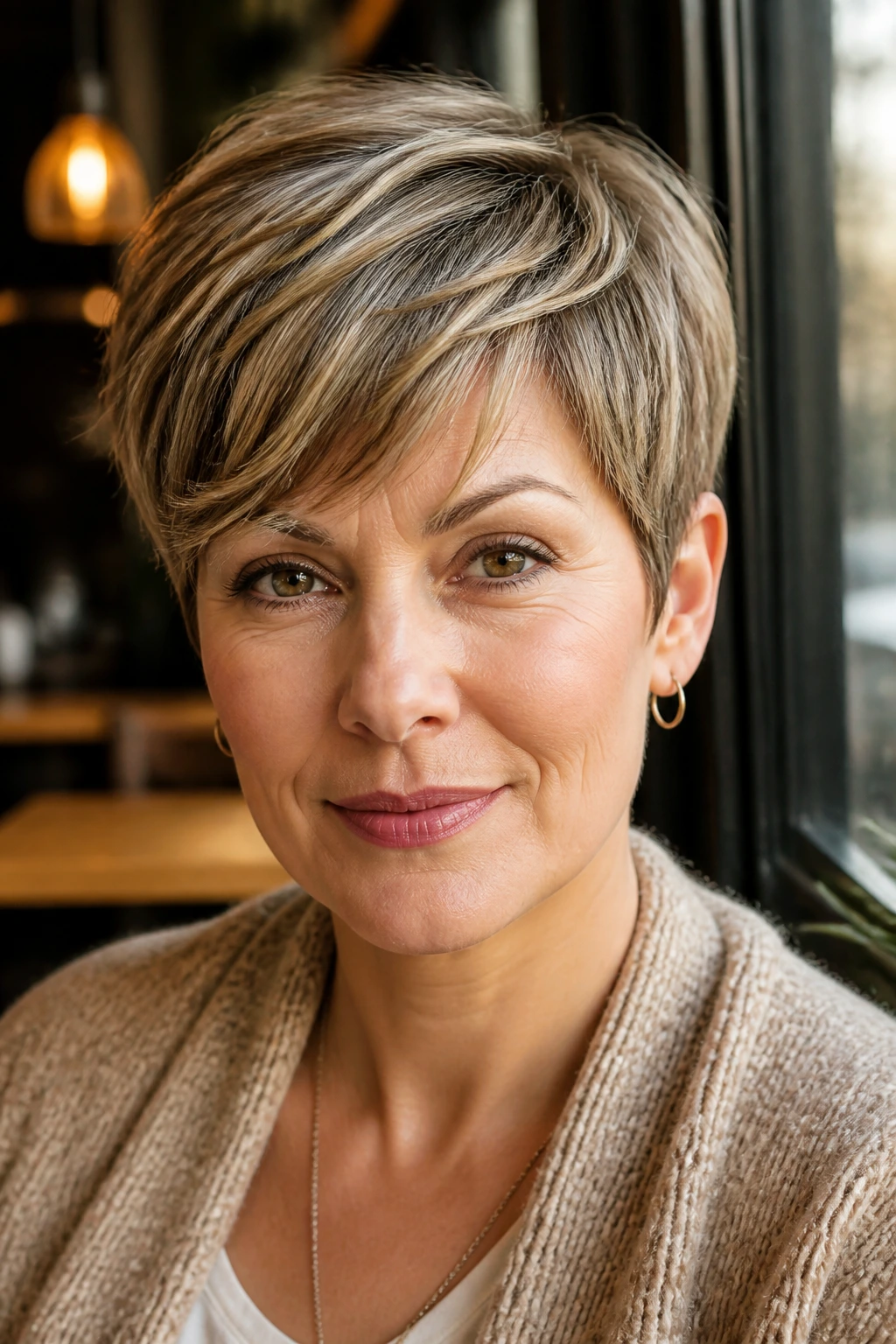
2. The Tapered Pixie That Keeps Lift at the Crown
A good pixie is not about taking everything off. It’s about leaving length where your face benefits from it and removing bulk where it fights the shape. The tapered pixie does exactly that. The nape is snug. The sides are close enough to feel neat. The top stays longer so you can push it up, sweep it over, or let it fall in a messy, piece-y way.
This cut is a gift for finer hair that needs presence. It can also be a relief if your hair takes forever to dry. A little mousse at the roots, a rough blow-dry, and you’re there. The secret is the crown. If the top is too short, the cut goes flat. If the top is too long without direction, it turns floppy. The sweet spot usually lives between 2 and 4 inches on top, depending on texture.
I like this shape when someone says they want short hair but do not want to look “too done.” It has edge, but it doesn’t scream for attention. And it grows out well if the taper is clean.
3. Collarbone Lob with Invisible Layers
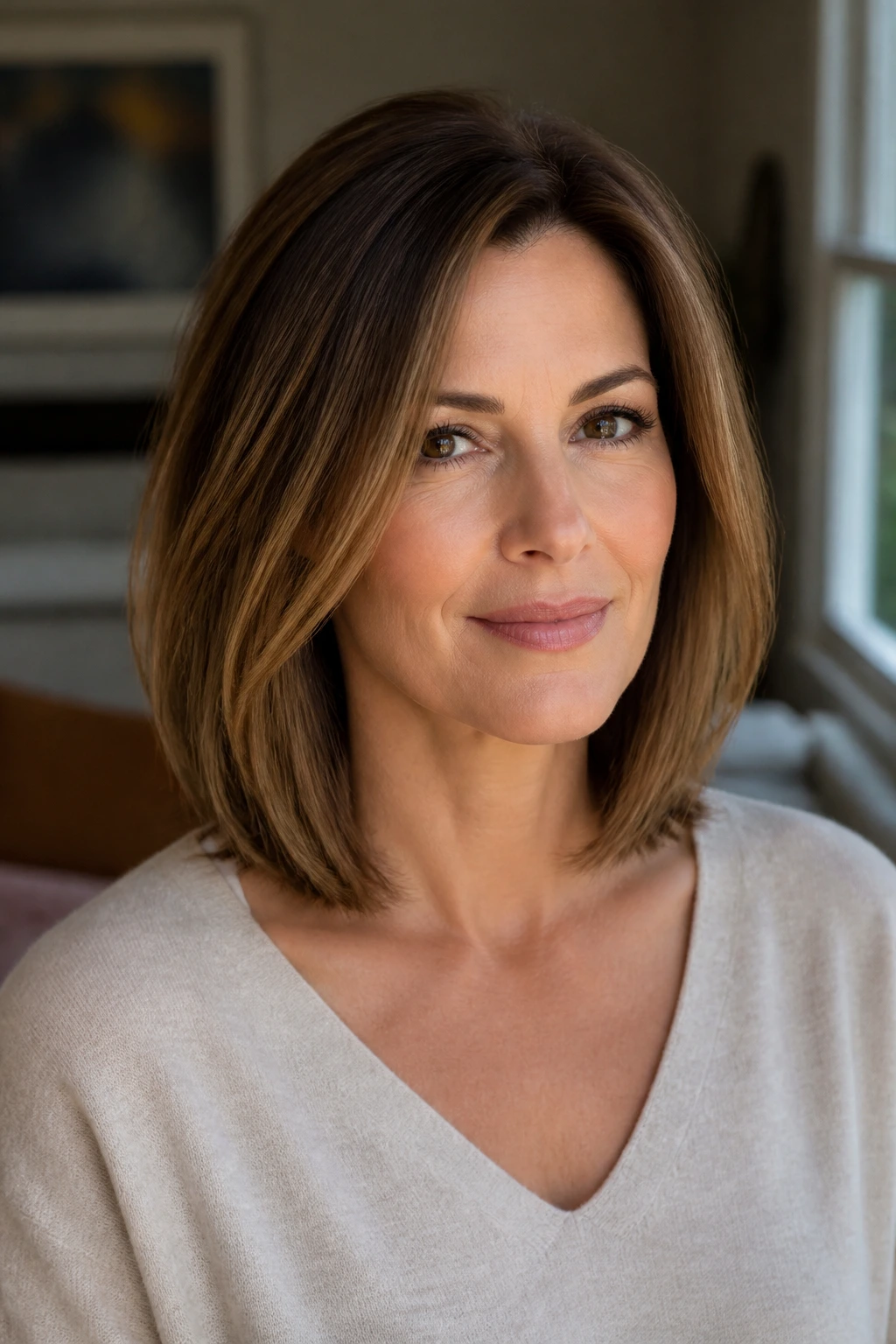
Is a lob technically short? Yes, if your shoulders are tired of fighting your hair. The collarbone-length cut is the safe-looking choice that is usually the smartest one. It gives you enough length to tuck behind the ears, enough weight to calm frizz, and enough room to pull into a low knot when you need a break from styling.
The “invisible layers” part is the trick. They’re there to stop the ends from feeling heavy, but they don’t break the outline into obvious steps. That means the cut still looks smooth when you wear it straight. If you like a middle part, this is one of the few lengths that can handle it without flattening out your face.
How to Wear It
A flat brush and a round brush both work here, which is one reason the cut stays popular. Use the flat brush for a smooth, tucked-under finish. Use the round brush if you want a gentle lift at the ends. A center part reads clean and modern; a side part gives a little more softness at the forehead.
This is the cut I suggest when someone wants movement but hates the upkeep of lots of layers. It behaves. Usually.
4. Chin-Length Blunt Bob With Clean Edges
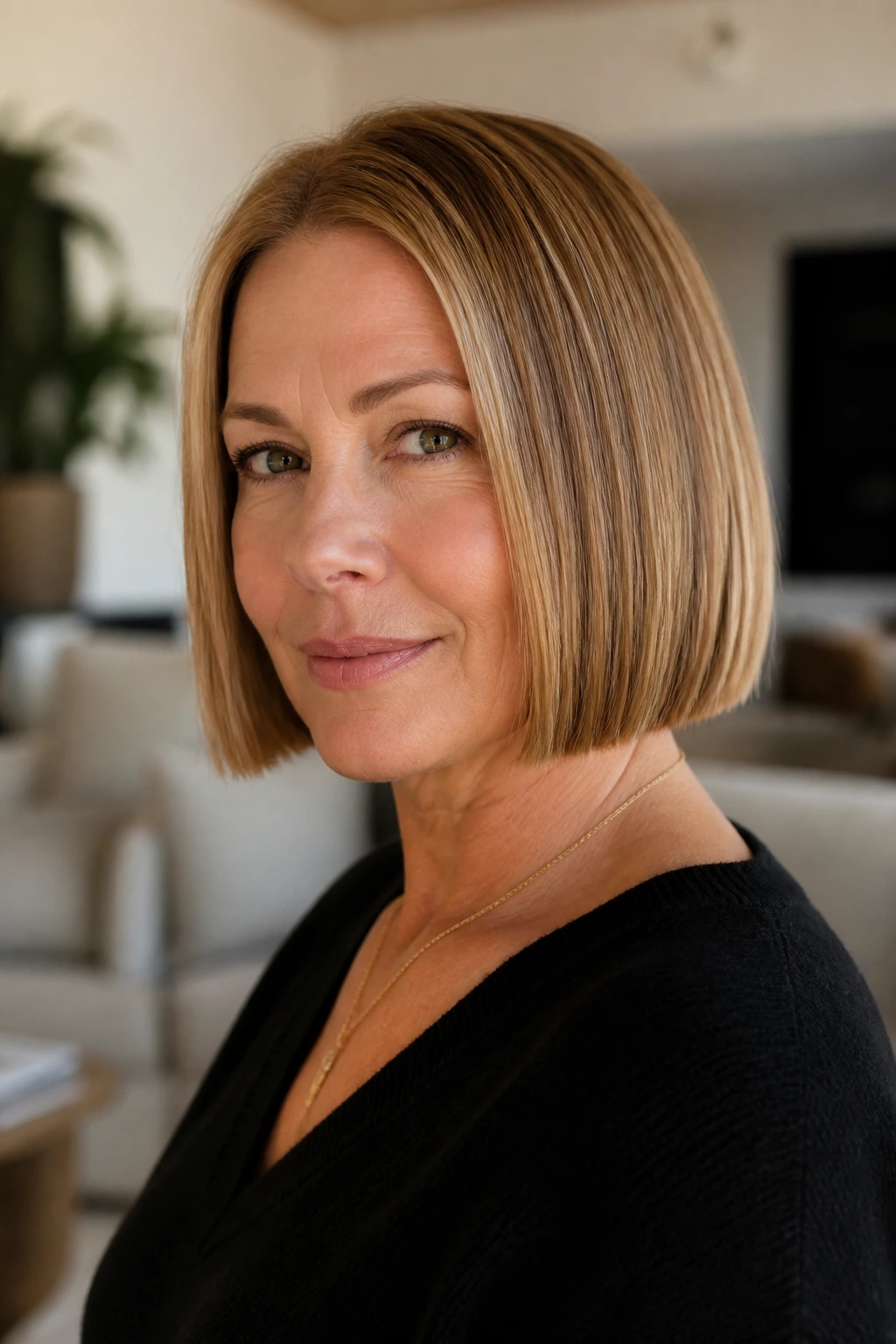
A chin-length blunt bob is blunt in the best possible way. The edges line up cleanly at the chin or just below it, and that straight line gives the whole style a little authority. There’s no mistaking the shape. It’s sharp. Not harsh. There’s a difference.
This one works especially well if your hair is straight or only mildly wavy. The blunt perimeter gives fine hair a thicker look, and the short length keeps heavy hair from collapsing into the neck. If your jawline is one of your best features, this cut puts a frame around it without making a fuss.
- Ask for a slight bevel at the ends: A tiny curve under keeps the bob from looking boxy.
- Keep the back only a touch shorter: That stops the cut from turning mushroom-like.
- Pair it with a side part if your face is rounder: The diagonal line adds length.
Skip aggressive thinning scissors here. They can make the perimeter fray and that ruins the whole point. The cut should look crisp, then move.
5. The Bixie That Lives Between a Bob and a Pixie
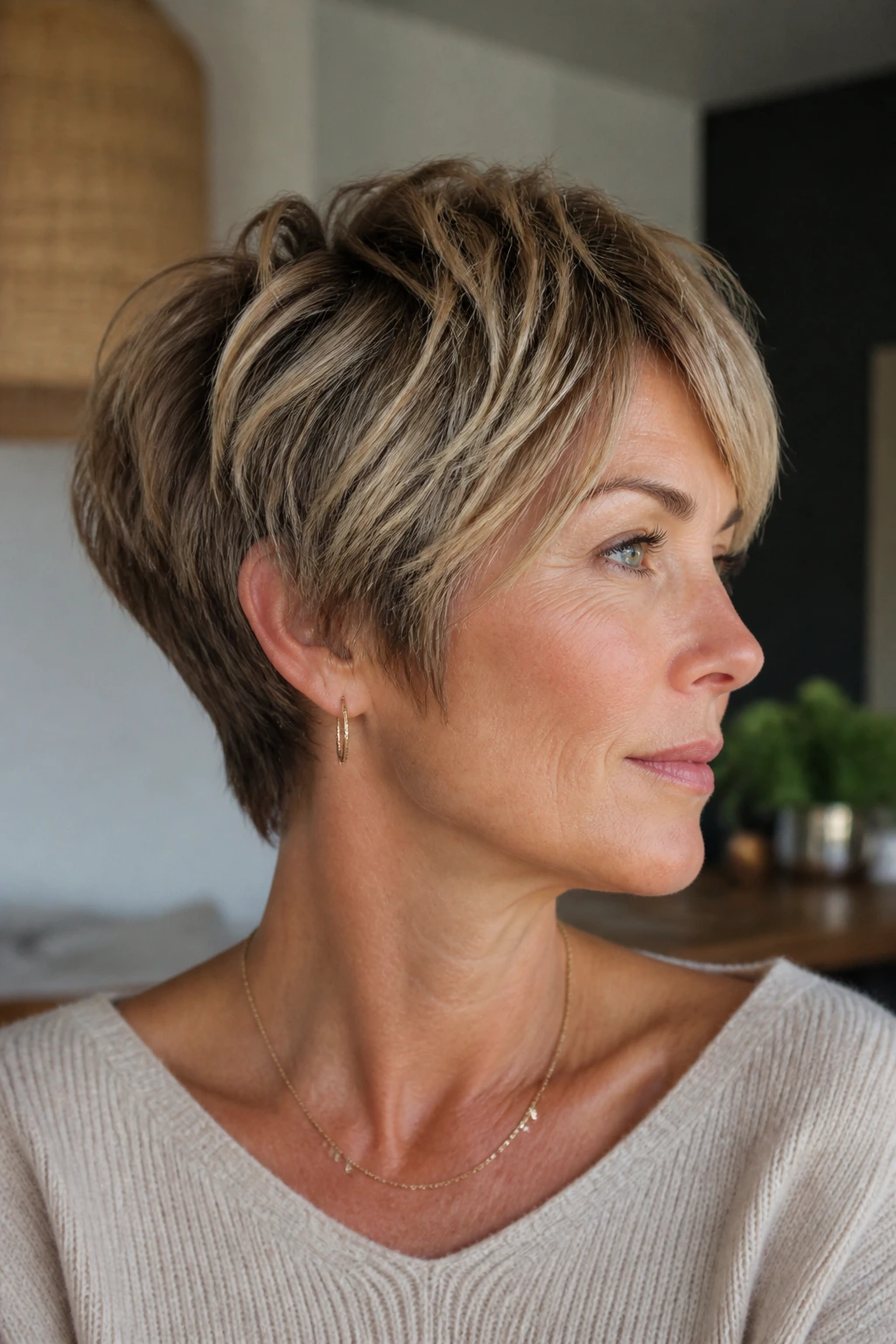
A bixie is what happens when a bob and a pixie stop arguing and decide to cooperate. It keeps more length than a classic pixie, especially around the ears and crown, but it has more texture and less weight than a bob. The result is a cut that feels light on the head and loose around the face.
This is one of my favorite options for women who like short hair but not a severe silhouette. It softens the transition around the cheekbone and nape, which helps if you’re nervous about going very short. The crown can be lifted with a root spray and a quick blast of heat, while the sides stay closer and flatter to the head. That contrast is what gives it personality.
Gray hair often looks especially good in a bixie because the texture shows. So does a bit of wave. A perfect blowout is not required. In fact, a little mess is part of the charm. Too polished and it starts to lose its shape.
6. Shaggy Crop with Curtain Bangs
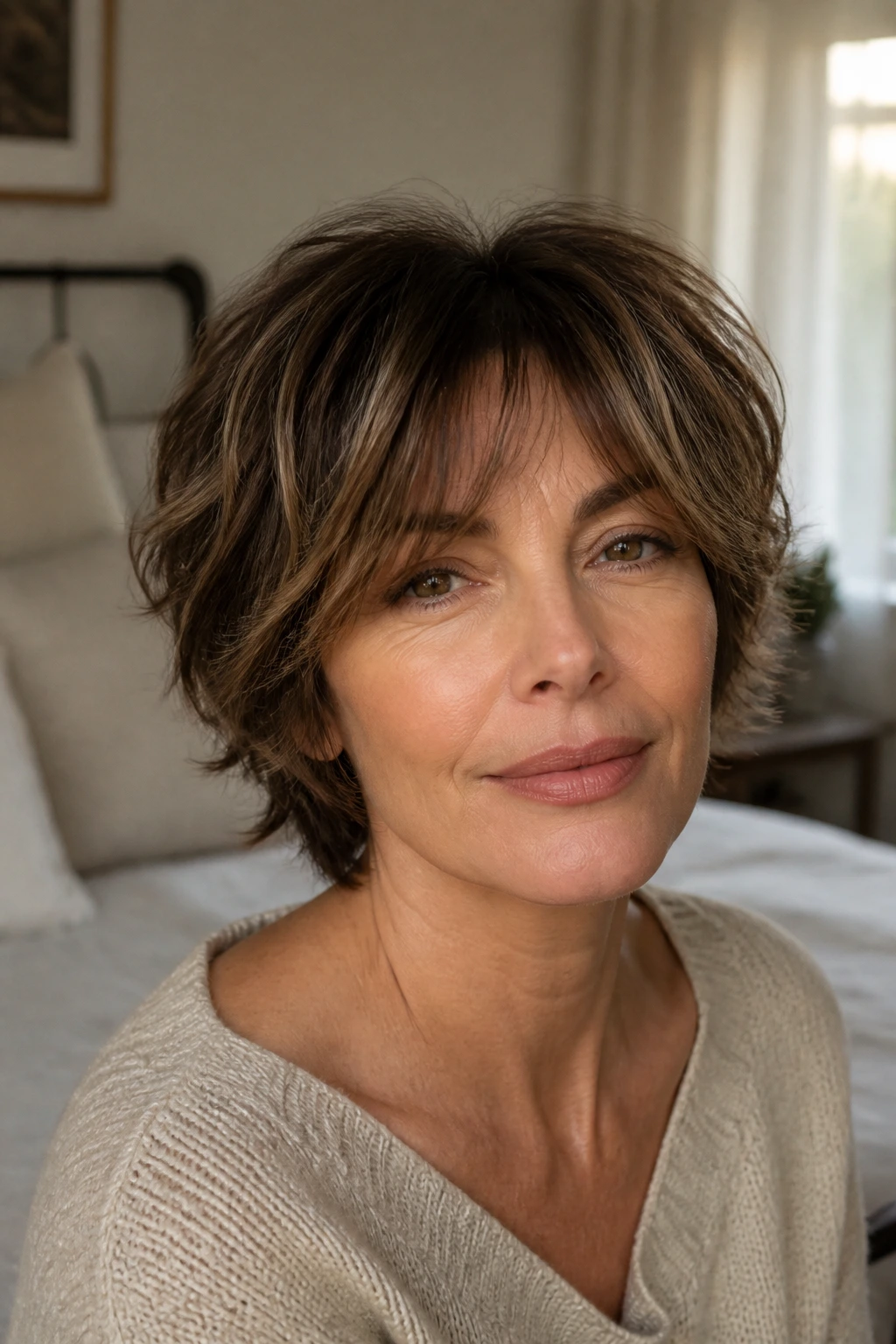
The shaggy crop is for people who want movement first and neatness second. It’s shorter than a lob, more layered than a bob, and usually finished with curtain bangs that part away from the face in a soft V. Those bangs matter because they break up the forehead line without closing the face in.
Why does this cut work so well on hair with a little bend? Because the layers are cut to follow natural motion instead of flattening it. On straight hair, it can be styled with a round brush and a dry texture spray. On wavy hair, a diffuser does most of the work. The shape should have swing, not puff.
Best for
- Hair that gets flat at the roots but puffy at the ends
- Faces that need softness around the temples
- Anyone who likes a piece-y, slightly undone finish
What to ask for
Ask for layers that start around the cheekbone, not too high. If they begin near the crown, the cut can lose its body fast. The curtain fringe should hit somewhere between the cheekbone and the top of the lip when dry.
7. Stacked Bob With a Clean Nape
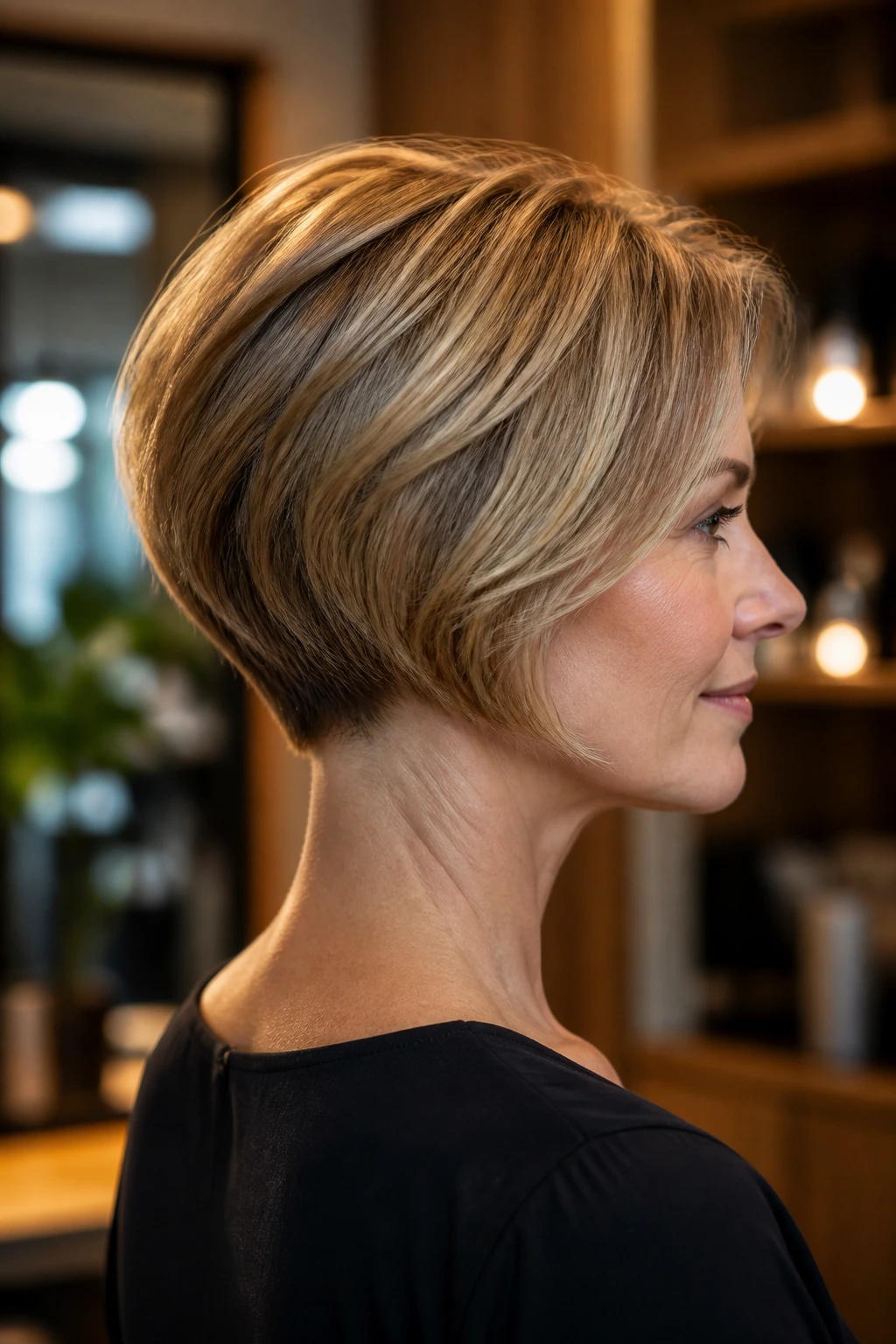
The stacked bob is a neat little machine. It builds weight in the back, then lets the layers fall forward toward the face. The nape is short and close, which keeps the silhouette tidy. Up top, the stacking creates lift. That’s the part people notice first when they turn their head.
This is a strong choice if your hair is straight and tends to collapse. The back structure gives it a fuller look without needing a ton of product. It’s also one of the better cuts for women who like a polished finish. The shape does not rely on texture tricks. It relies on good geometry.
Be honest with your stylist about how much time you’ll spend styling the back. A stacked bob looks best when the shape is visible from the side and back, and that usually means a quick round-brush pass or a blow-dry with the nozzle pointed down the shaft. If the back is cut too high, it can look dated. If it’s too soft, the stack disappears.
8. Asymmetrical Bob With a Side Part
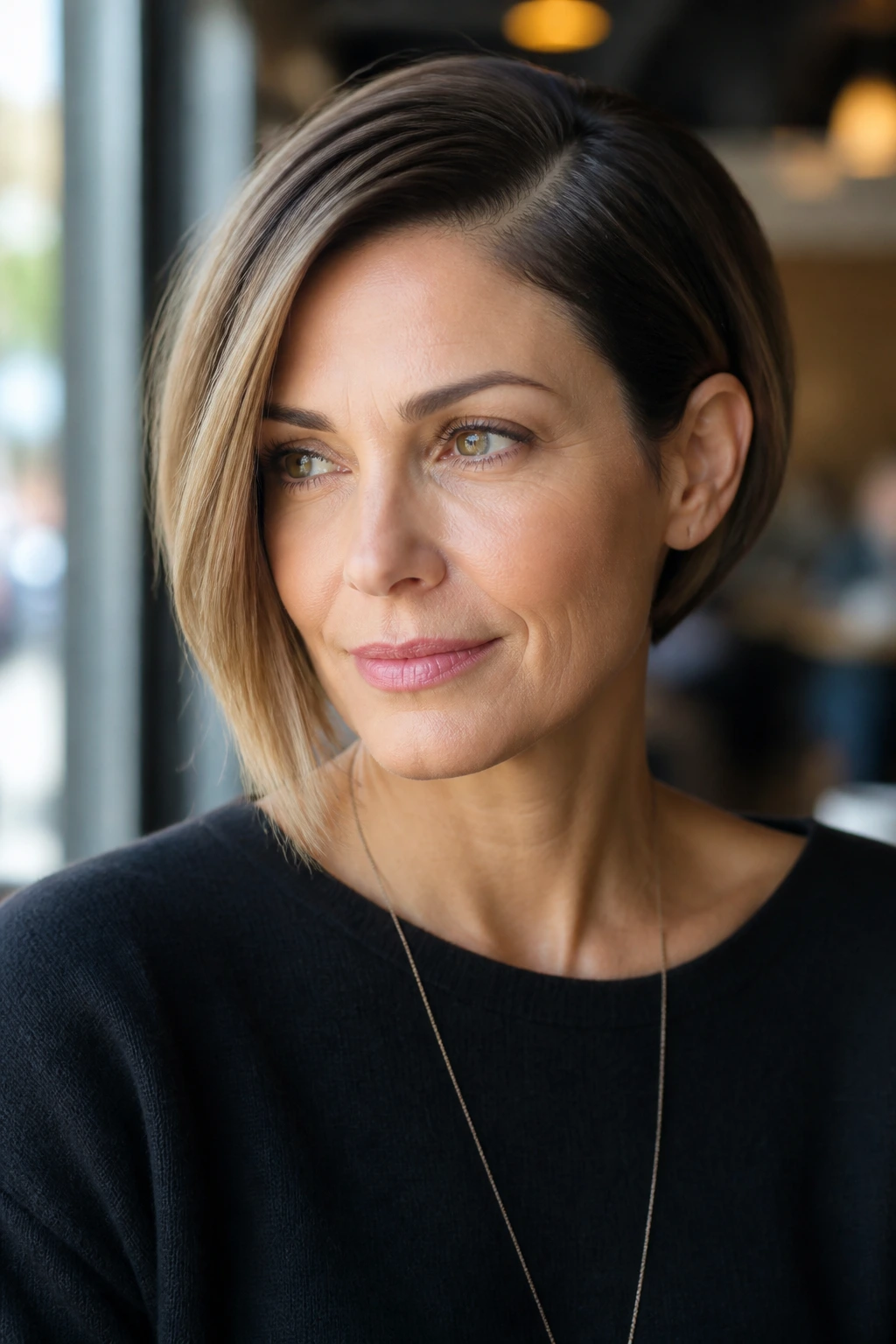
The asymmetrical bob has a little tension built into it, and that’s why it stays interesting. One side sits slightly longer than the other, sometimes by half an inch, sometimes by more. The difference does not need to shout. It just needs to be there enough to catch the eye.
A side part strengthens the effect because it gives the longer side a place to fall. This cut can soften a strong jaw or make a rounder face look a little longer. It also works well if one side of your hair grows in flatter than the other. That slight imbalance can suddenly become the point instead of a problem.
I like this cut when someone says they want something modern but not too playful. It has an edge, but it’s still wearable in a blazer, a T-shirt, or a more dressed-up setting. Keep the ends blunt if you want the contrast to feel clean. Add soft layers only if your hair is dense enough to need the relief.
9. Curly Rounded Bob That Lets the Curl Sit Up
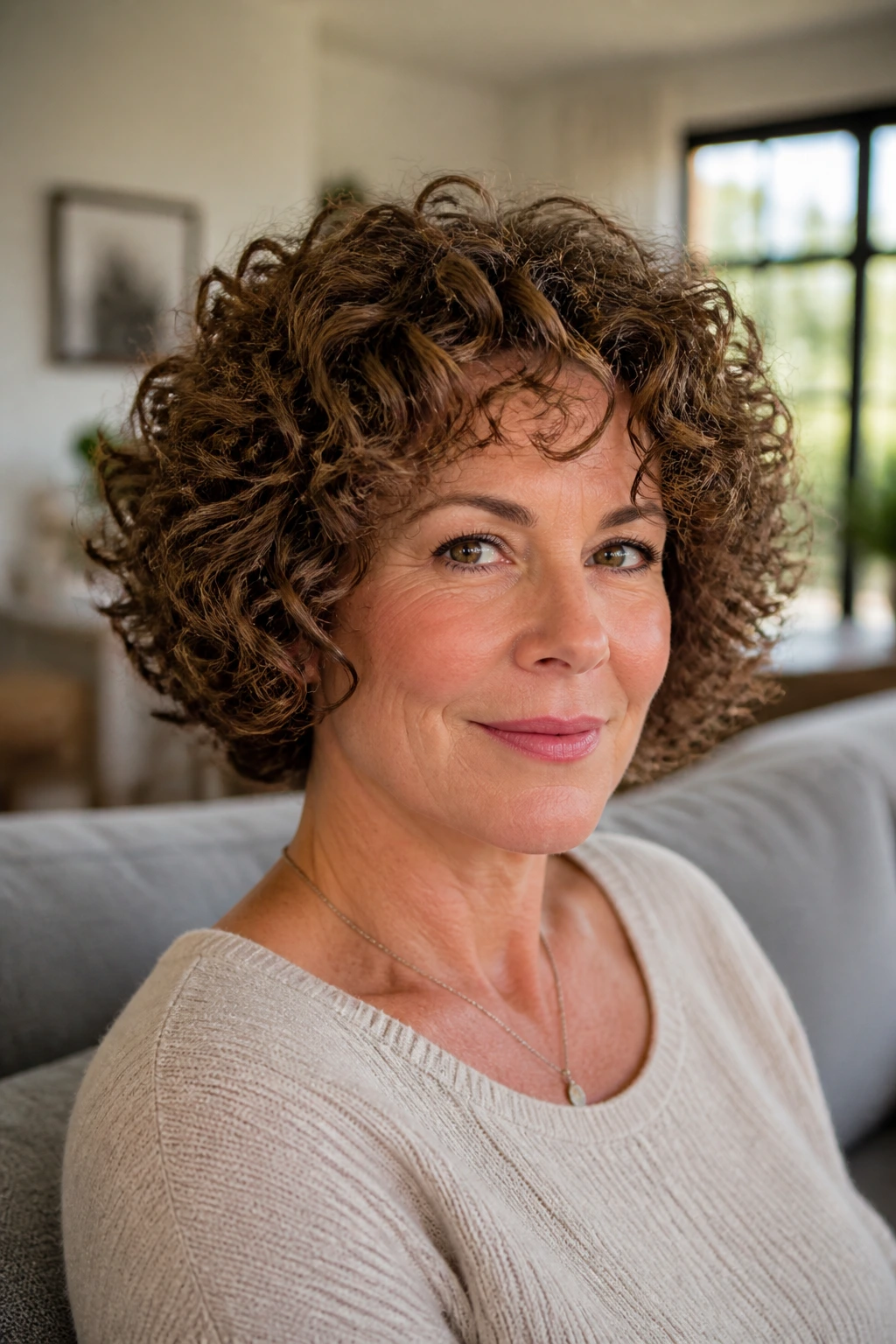
A curly bob goes wrong when it’s cut like straight hair. The shape needs room. It needs a little height and a little roundness, or the curl will spring up too wide at the sides and disappear at the bottom. A rounded bob solves that by letting the curls stack into a halo shape that feels balanced.
The best version usually lands around the chin or just below it, with the perimeter shaped to follow the curl pattern. Dry cutting helps, because it shows where the curls actually live. A wet cut can hide too much. Ask for enough length at the crown so the top doesn’t puff up too far away from the head.
- Use a curl cream, not a heavy butter: You want definition, not weighed-down ringlets.
- Diffusing should stop before the hair is fully dry: Leave a little moisture, then let the rest air-dry.
- Trim on a curl schedule, not a calendar alone: If the shape starts to widen at the sides, it’s time.
This is one of those cuts that looks better the less you fight it. That’s not laziness. That’s craft.
10. Feathered Crop With Side-Swept Bangs
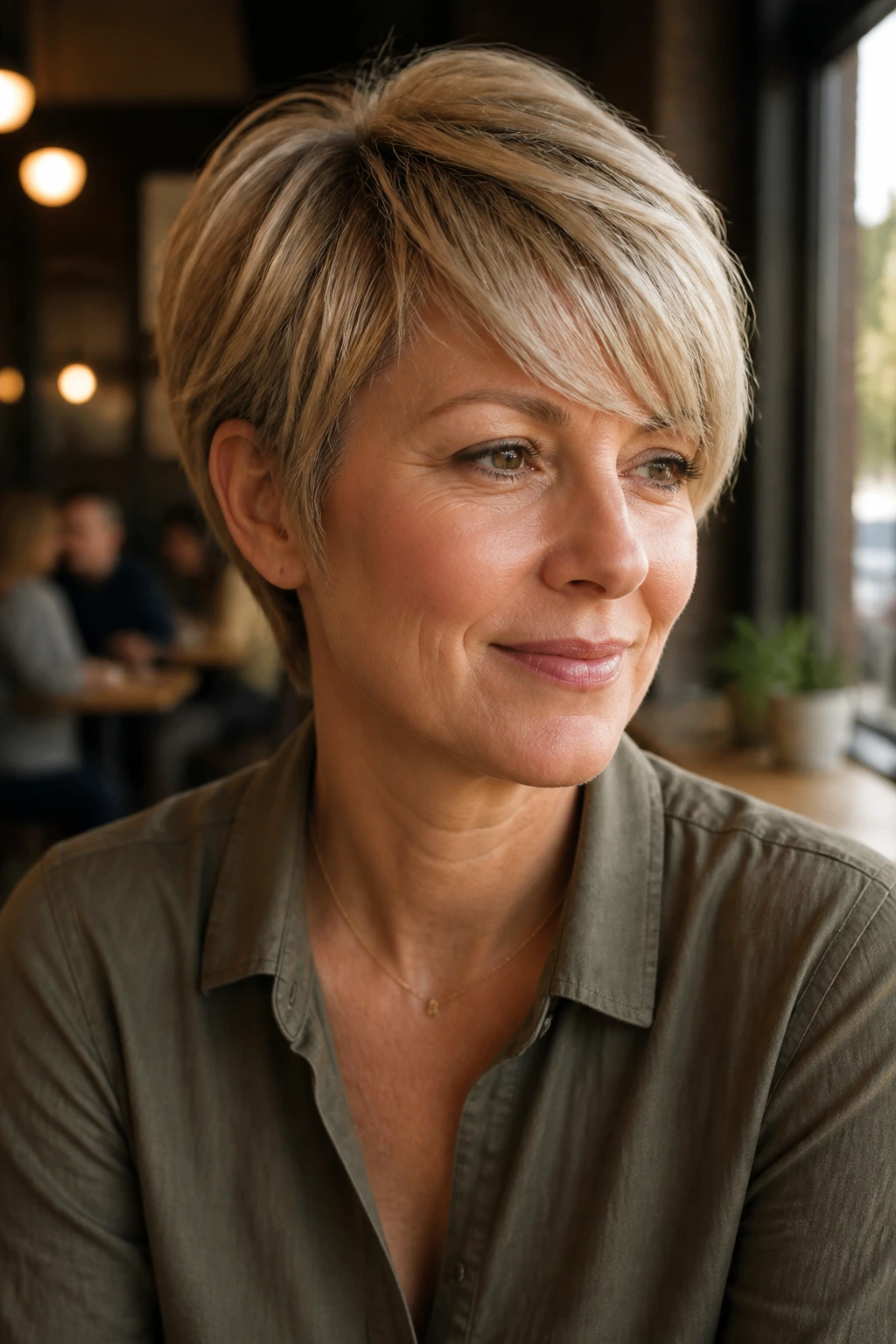
Feathering gets a bad reputation because people remember the over-layered cuts that looked fluffy in the wrong decade. Done well, feathering is just a way to remove weight softly. The ends move. The top keeps height. The bangs sweep across the forehead in a way that feels light instead of helmet-like.
This crop is useful if you want short hair but still want some face coverage. Side-swept bangs can soften forehead lines, break up a strong brow, or simply give you something to tuck behind one ear. The cut itself should stay close around the ears and nape so the bangs remain the focal point.
A round brush is your friend here, but only on the fringe and top section. Don’t try to make every piece obey. A little friction in the finish is what keeps it from looking too polished. If your hair is coarse, a light cream before blow-drying can keep the ends from fraying. If it’s fine, go lighter. Too much product and the whole shape collapses.
11. The Short Wolf Cut That Keeps Its Bite
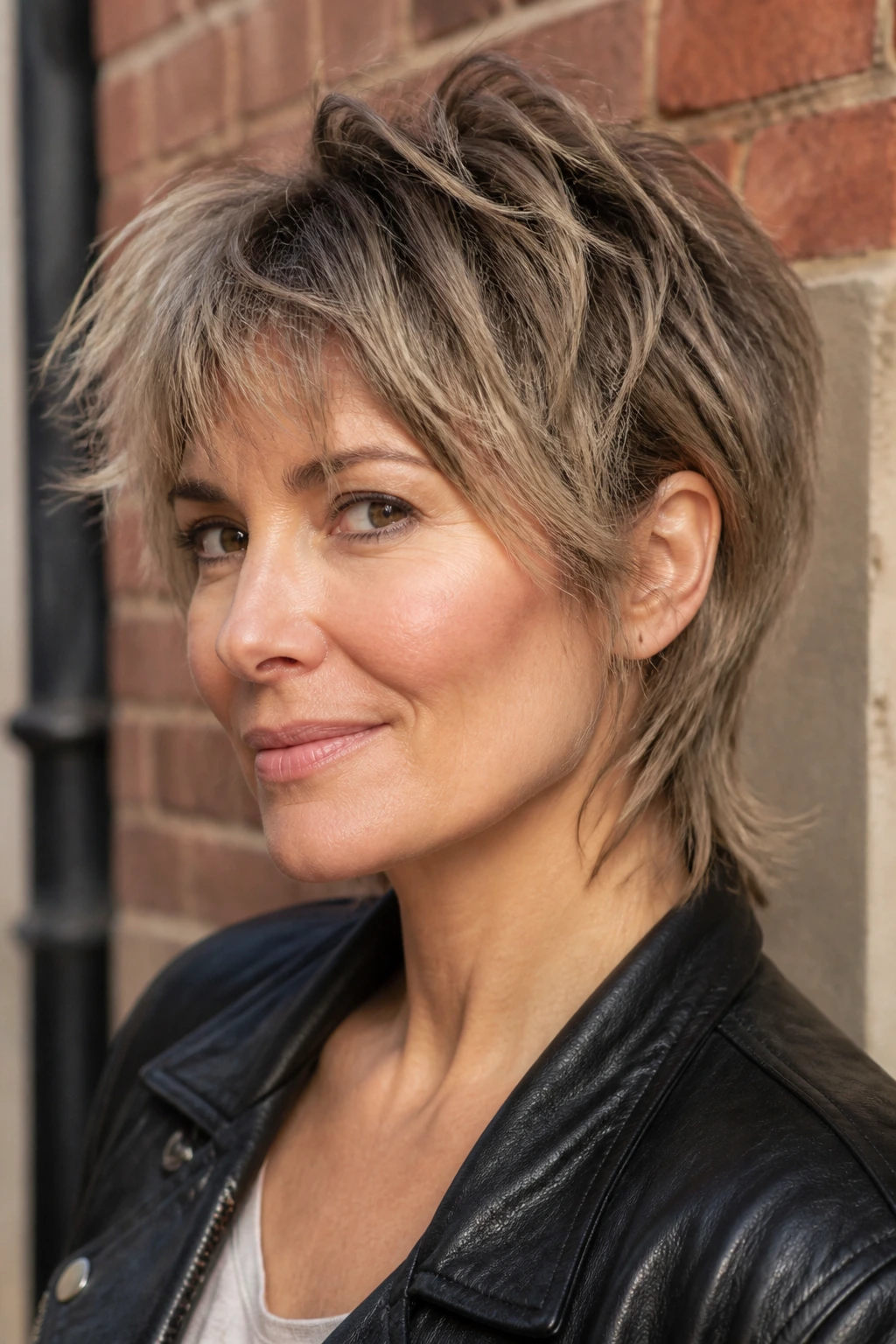
The short wolf cut is not for the faint of heart, and that is part of the fun. It blends shaggy layers, a bit of mullet-ish length in the back, and a textured crown. The result has movement from every angle. Nothing sits too neatly, which is exactly why it works for people who want energy in a haircut.
The trick is restraint. A good short wolf cut should feel airy, not ragged. The layers should be staggered so the silhouette stays flattering rather than lopsided. If your hair is thick, the layers can take out bulk fast. If it’s fine, the cut needs a gentler hand so it doesn’t go wispy and sparse.
Who this suits
- Wavy hair that likes a lived-in finish
- Dense hair that needs shape removal
- People who are bored by tidy, rounded bobs
What to watch for
The neck area should still have some structure. If the back gets too shredded, the grow-out can look messy in a way that feels accidental. Keep the fringe soft and the crown controlled. That balance is the whole cut.
12. Ear-Length Crop With Tucked Sides
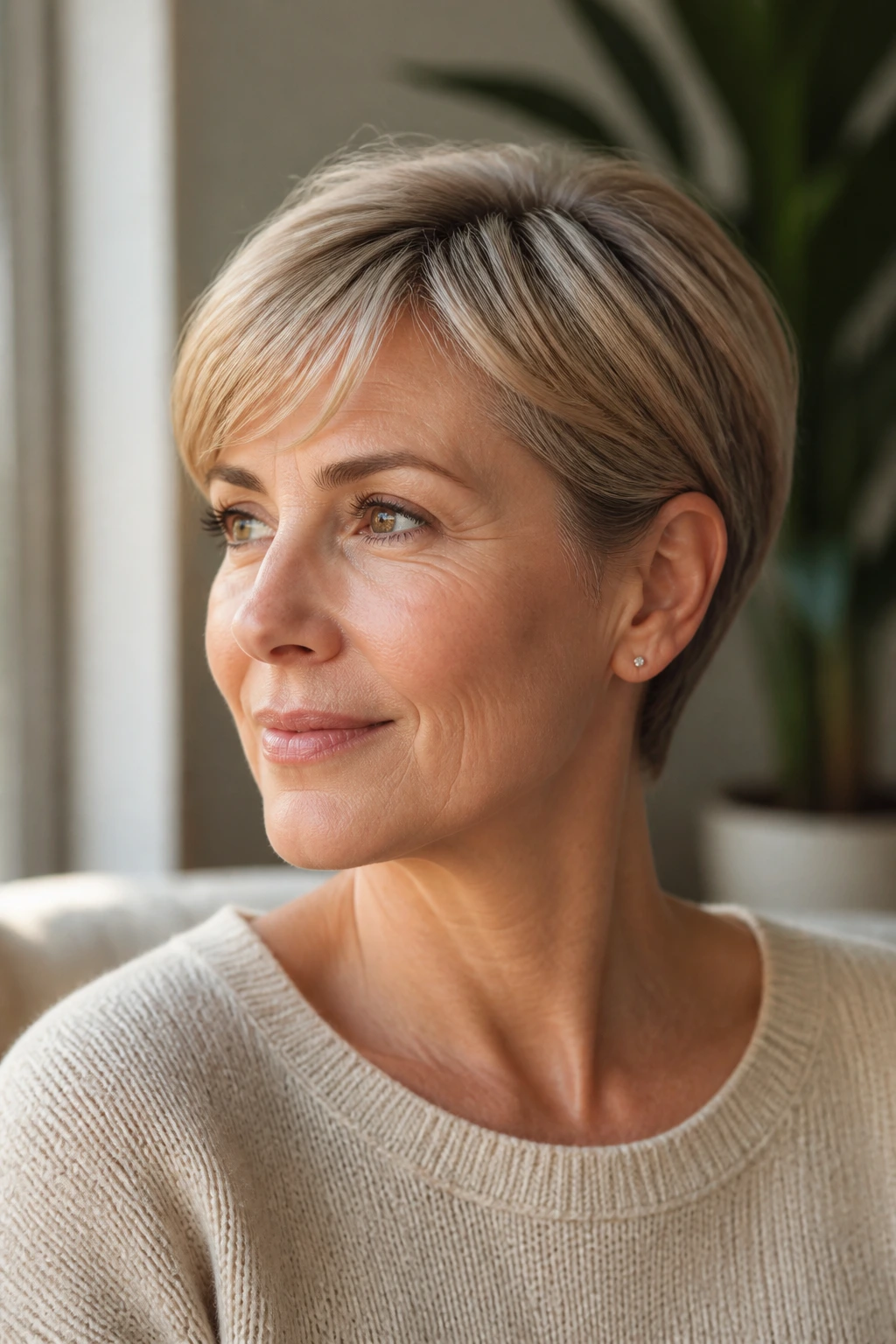
An ear-length crop is short enough to show your neck and ears, but long enough to keep a little softness around the face. The sides usually tuck behind the ear cleanly, which gives the cut a neat outline. It can feel almost like a grown-up version of a boyish crop, only with more shape at the top and more elegance around the cheek.
This style is especially good if your hairline is nice and if you like earrings. That sounds small, but it matters. The cut makes room for faces, not just hair. A small side part can keep it from feeling too severe. A bit of texture through the top keeps it from reading flat.
Here’s the catch: this cut shows every detail. Cowlick at the temple? You’ll see it. Cowlick at the crown? Also visible. That’s not a reason to avoid it. It’s a reason to ask for the top to be cut to work with those growth patterns. A tiny bit of paste through the ends is usually enough.
13. Undercut Pixie With Soft Top Length
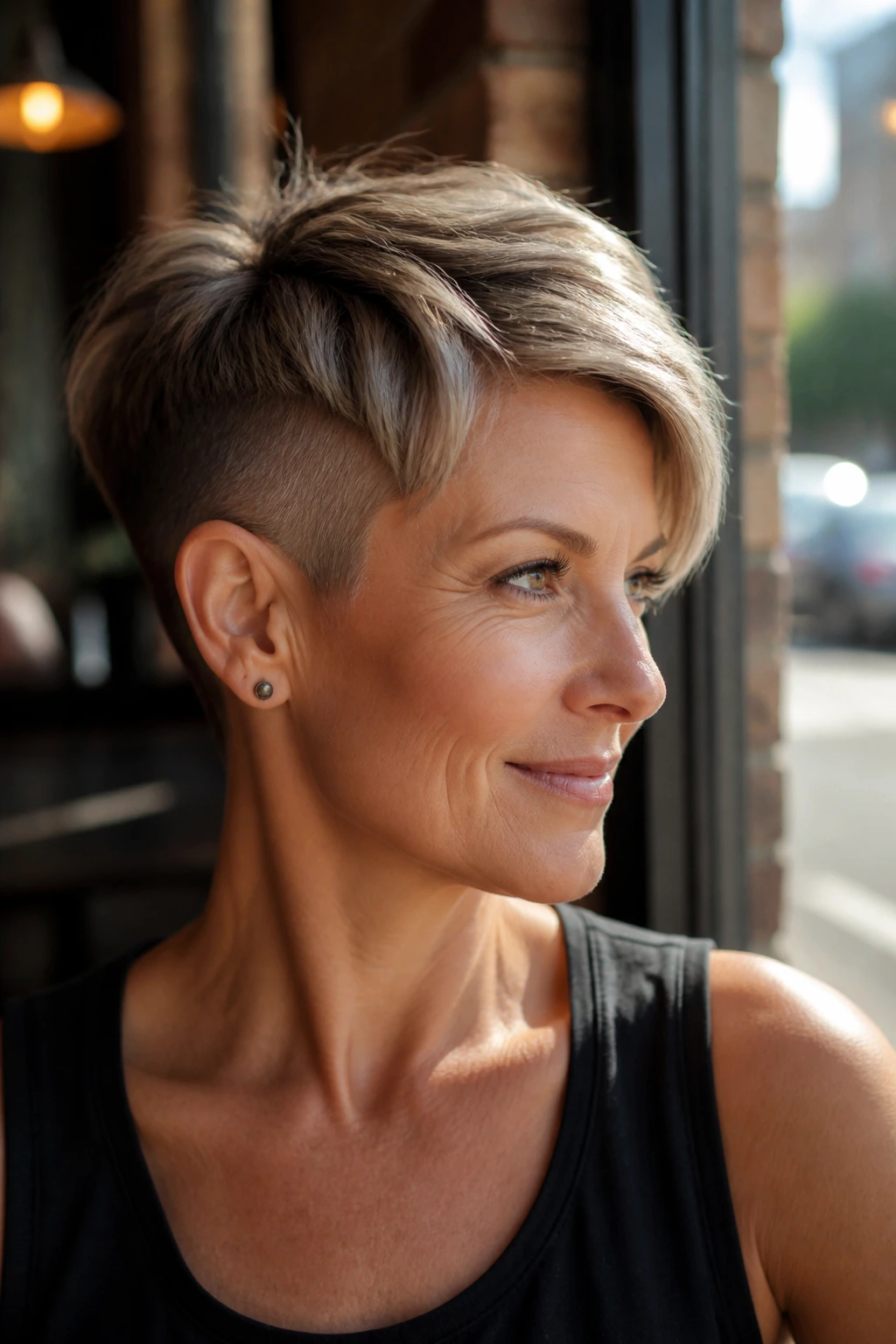
An undercut pixie can look sharp in a good way, especially if you want less bulk around the sides and nape. The shorter underlayer removes weight, while the top stays longer so you can sweep it forward, back, or off to one side. The contrast between the close sides and the softer top is what gives the cut its shape.
This is a smart option for thick hair. It takes the pressure off the bottom half of the head, which means the style sits closer and dries faster. If you have a strong natural wave, the top can be left a little longer to keep some movement. Straight hair can lean sleeker and more graphic.
Don’t ask for the undercut to be hidden unless you truly want that. The point is to use the difference in length as a styling tool. A small bit of pomade at the ends of the top layer can make the texture pop. Too much, and the whole thing goes greasy fast. Tiny amounts. Really tiny.
14. Graduated Bob With Face-Framing Pieces
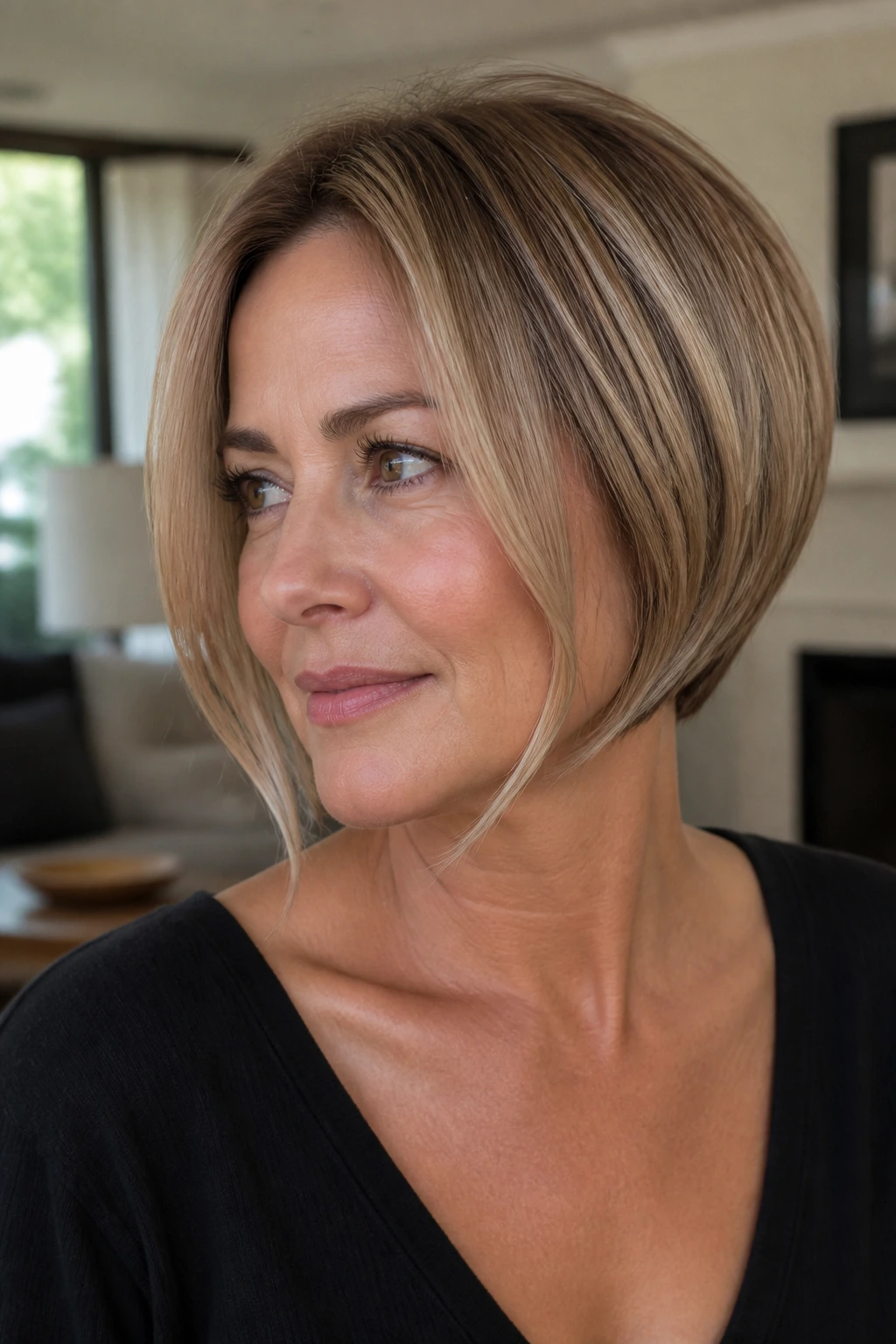
The graduated bob is about architecture. The back is shorter and builds upward. The front stays longer, often with two soft pieces falling around the jaw or cheekbone. That graduation gives the cut a clean slope, which can make the neck look longer and the face look more lifted.
It’s a strong cut for straight hair, but it also behaves nicely on hair with mild wave. The front pieces can be tucked, flipped, or left to graze the jaw. The back creates volume without obvious teasing. If your hair is thinning around the crown, this shape can create a better visual balance than a flat one-length bob.
How to wear it
A light root spray at the crown keeps the back from collapsing. Blow-dry the front pieces forward first, then sweep them back. That tiny change helps the front sit naturally. If the graduation is too steep, the style starts to feel dated. If it’s too shallow, the bob loses the lift that makes it worth wearing.
15. Pageboy-Inspired Cut With Modern Texture
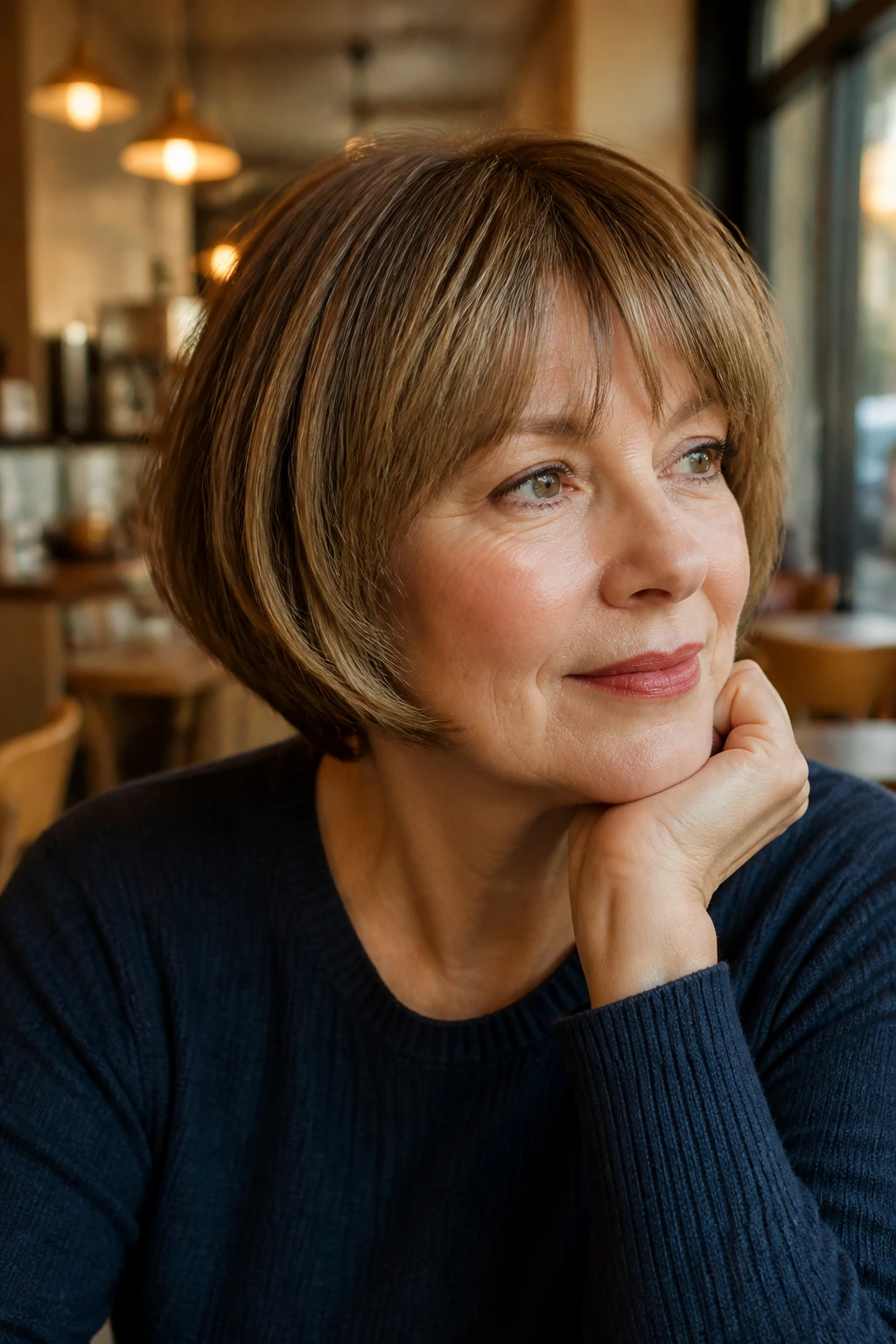
The pageboy used to mean one thing: a rounded shape, tucked under, with a heavy line. The modern version borrows the silhouette but loosens it up. The ends can be blunt or softly textured, the fringe can be longer, and the whole thing can sit a little more freely around the face.
This cut is a nice answer for someone who wants short hair that feels polished but not severe. It works especially well when the hair has a natural bend or a slight inward curve at the ends. If your hair flips out at the wrong spots, ask the stylist to check the nape and side sections carefully. That one detail can make or break the whole look.
A pageboy-inspired cut needs clean lines more than complicated styling. A flat brush, a blow-dryer, and a touch of smoothing cream usually do the job. If you like a glossy finish, this is one of the better cuts for it. It can look expensive in the plainest possible sense: neat, controlled, and not overworked.
16. Sculpted Crop That Gives Fine Hair More Presence
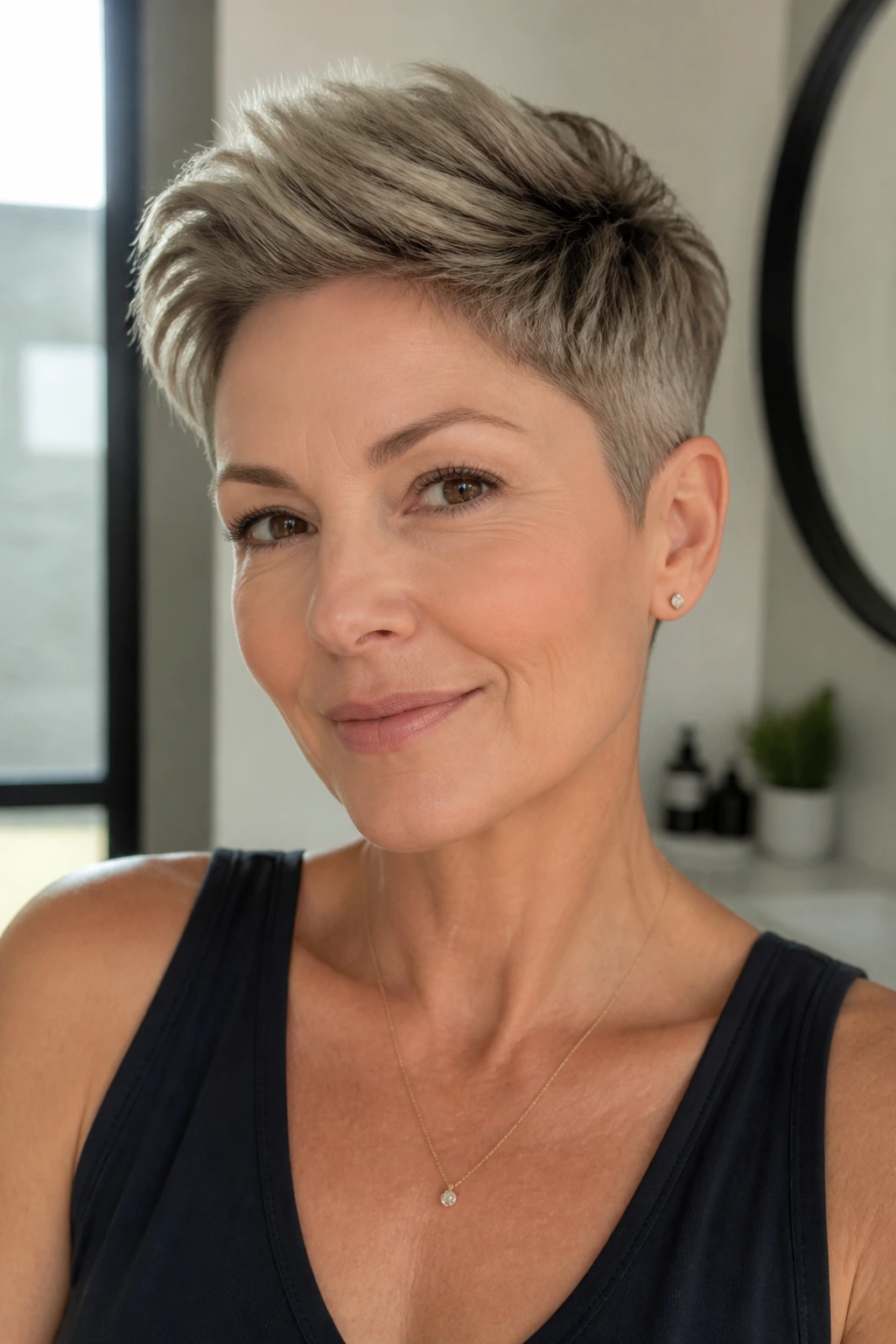
Fine hair often gets blamed for being “limp,” which is rude and usually wrong. The real issue is shape. A sculpted crop gives fine hair a better outline by keeping some length on top, removing bulk at the sides, and letting the cut itself create the impression of density.
The key is not to over-layer. Fine hair needs selective removal, not a thousand tiny snips that leave the ends see-through. The best sculpted crop has a clear edge around the ears and nape, with just enough texture through the top to stop it from lying flat. Mousse at the roots and a quick lift with your fingers are usually enough.
This is one of the most forgiving short cuts if you dislike spending time with hot tools. It can air-dry with a bit of bend and still look intentional. If you want more polish, a small round brush at the front gives you a little height without making the shape old-fashioned. The trick is restraint. Fine hair usually looks better with one clean idea than with five competing ones.
17. Textured Micro Bob With a Deep Side Part
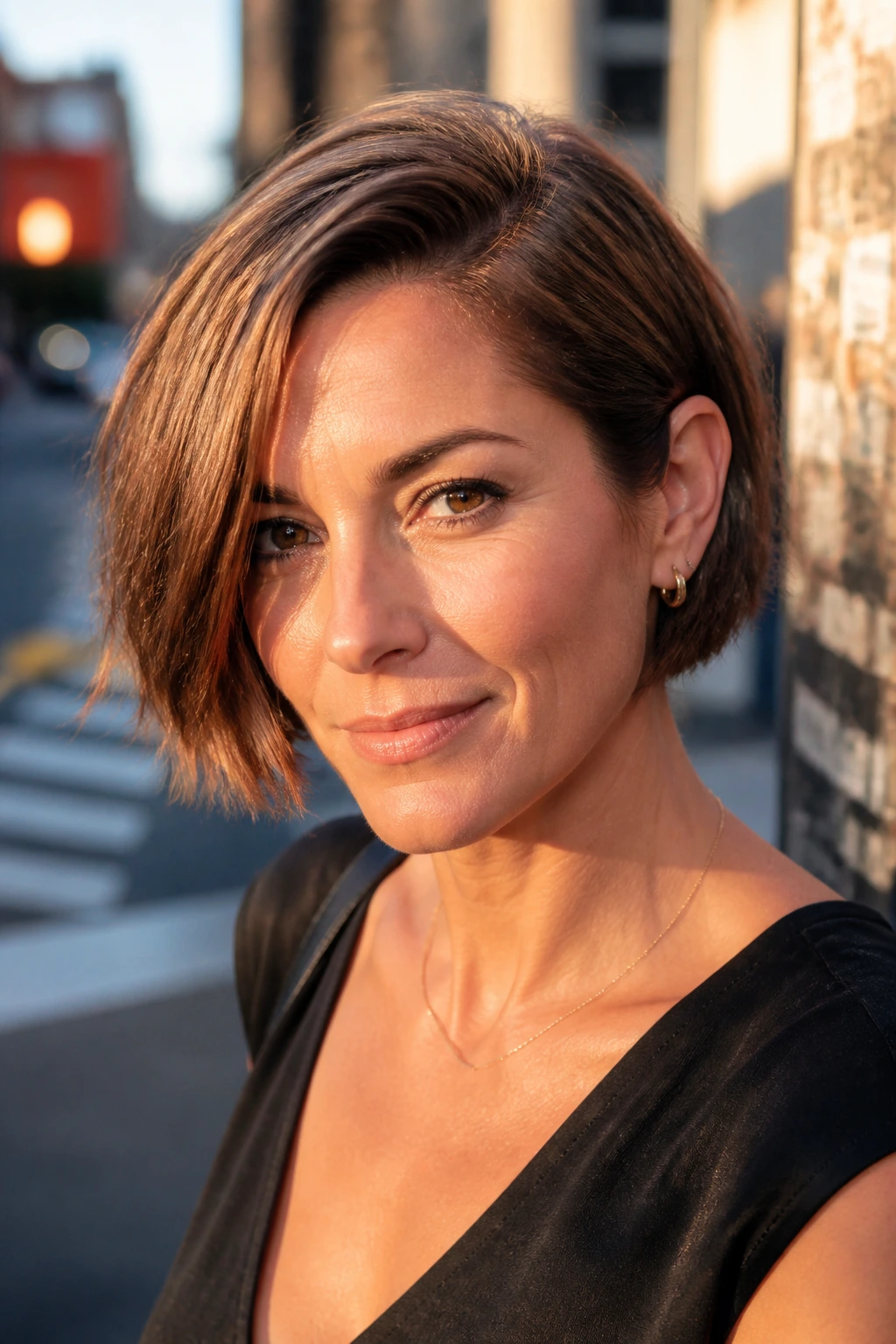
The micro bob sits just below the ears or at the base of the cheekbone, and the deep side part gives it drama without extra length. The texture keeps it from looking too boxy. The side part keeps it from looking too precious. Together, they make a short cut feel crisp and modern.
This is the boldest option in the group, but it is not as fussy as it sounds. On straight hair, the cut can look sharp with a simple blow-dry. On wavy hair, the texture gives it a little looseness that keeps it from feeling rigid. If your face is longer, the shorter length can balance it nicely by adding width at the cheek area.
A micro bob needs precision. The line around the face should be clean, and the back should be shaped so it doesn’t balloon at the collar. A little shine spray can make the ends look intentional. Without that clean finish, the cut can slide into helmet territory fast. That’s the line you do not want to cross.
What Makes a Short Haircut Work in Real Life
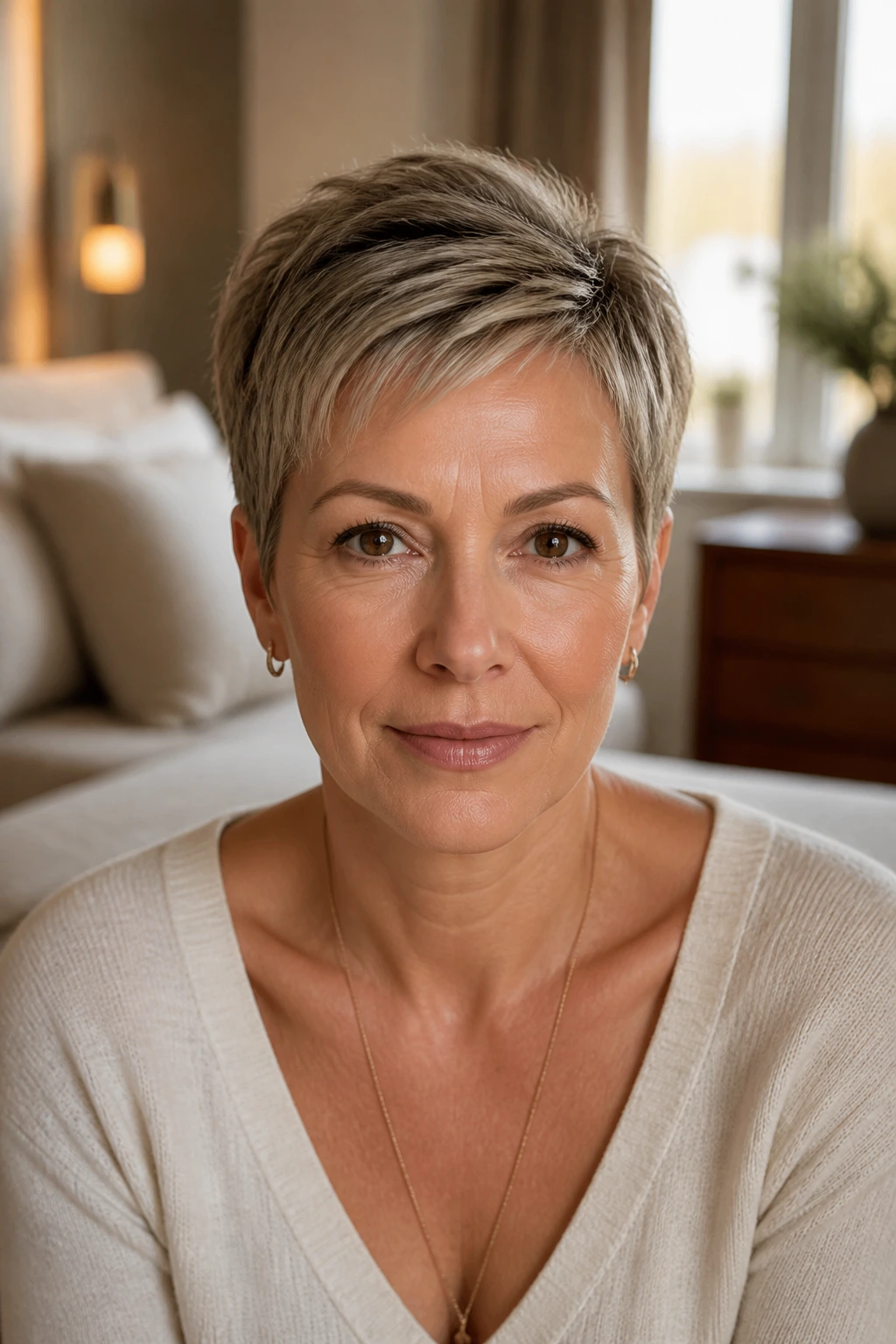
A short haircut succeeds or fails on three things: the outline, the weight placement, and the way it grows out. People focus on length, which is the least useful part to obsess over. Length changes every week. Shape is what you live with.
The outline is the first thing I check. If the cut has a clear perimeter — blunt, tapered, stacked, rounded, or feathered — it looks intentional even when it’s not freshly styled. Weight placement is next. Too much weight at the bottom makes short hair hang. Too much removal near the crown makes it frizz or spike up. The best short cuts move the weight around so the head shape looks balanced from front, side, and back.
Gray and silver hair add another wrinkle. They can reflect light beautifully, but they can also grow in with a coarser feel. That means a cut that worked five years ago may need different layering now. Not more product. Different scissors. A good stylist will talk about hairline, density, and growth pattern before they ever pick up shears.
The Tools and Products That Keep Short Hair Honest
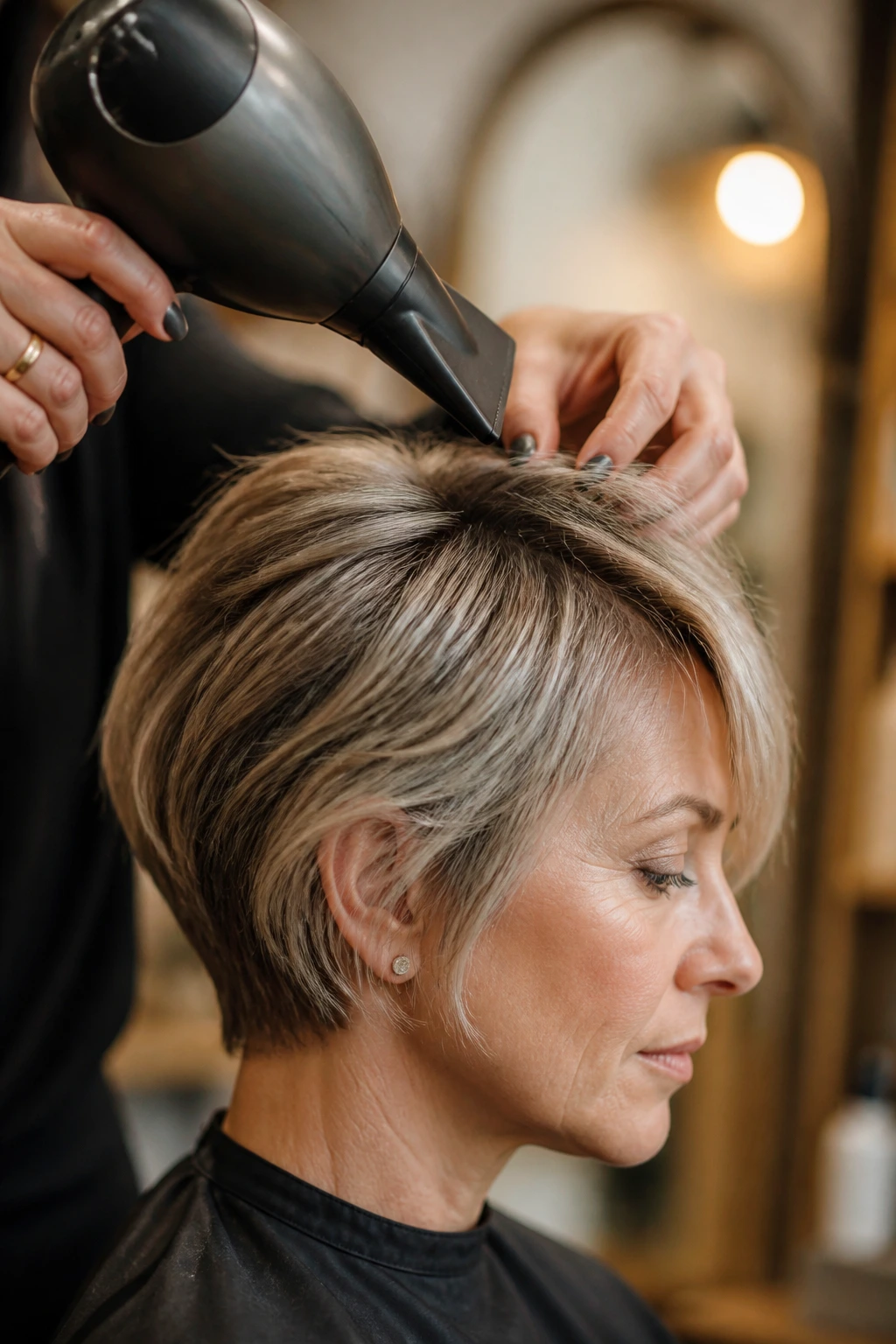
You do not need a bathroom shelf that looks like a salon back room. You need a few solid tools and the discipline not to pile on extra product when the cut is already doing the work.
- Hair dryer with a concentrator nozzle: Helps direct the cuticle and keeps the finish smoother, especially on bobs and pixies.
- Small round brush, 1 to 1.5 inches: Best for lifting the crown and curving the ends under on shorter shapes.
- Wide-tooth comb: Good for distributing product through curls or waves without stretching the shape too flat.
- Texturizing spray: Useful for bixies, shags, and crops that need a little separation, not stiffness.
- Light mousse or root foam: Gives fine hair more support at the base without coating the ends.
- Matte paste or light pomade: Controls edges, bangs, and pixie pieces; use a pea-sized amount first.
- Flat iron or 1-inch curling iron: Handy for smoothing a bob or adding a bend to the front pieces.
- Salon clips: Keep sections out of the way when you’re styling the crown or fringe.
- Hand mirror: Not glamorous, but essential for checking the nape and back line.
- Microfiber towel: Cuts down on frizz and keeps curls from puffing before styling even starts.
How to Ask for the Cut You Actually Want
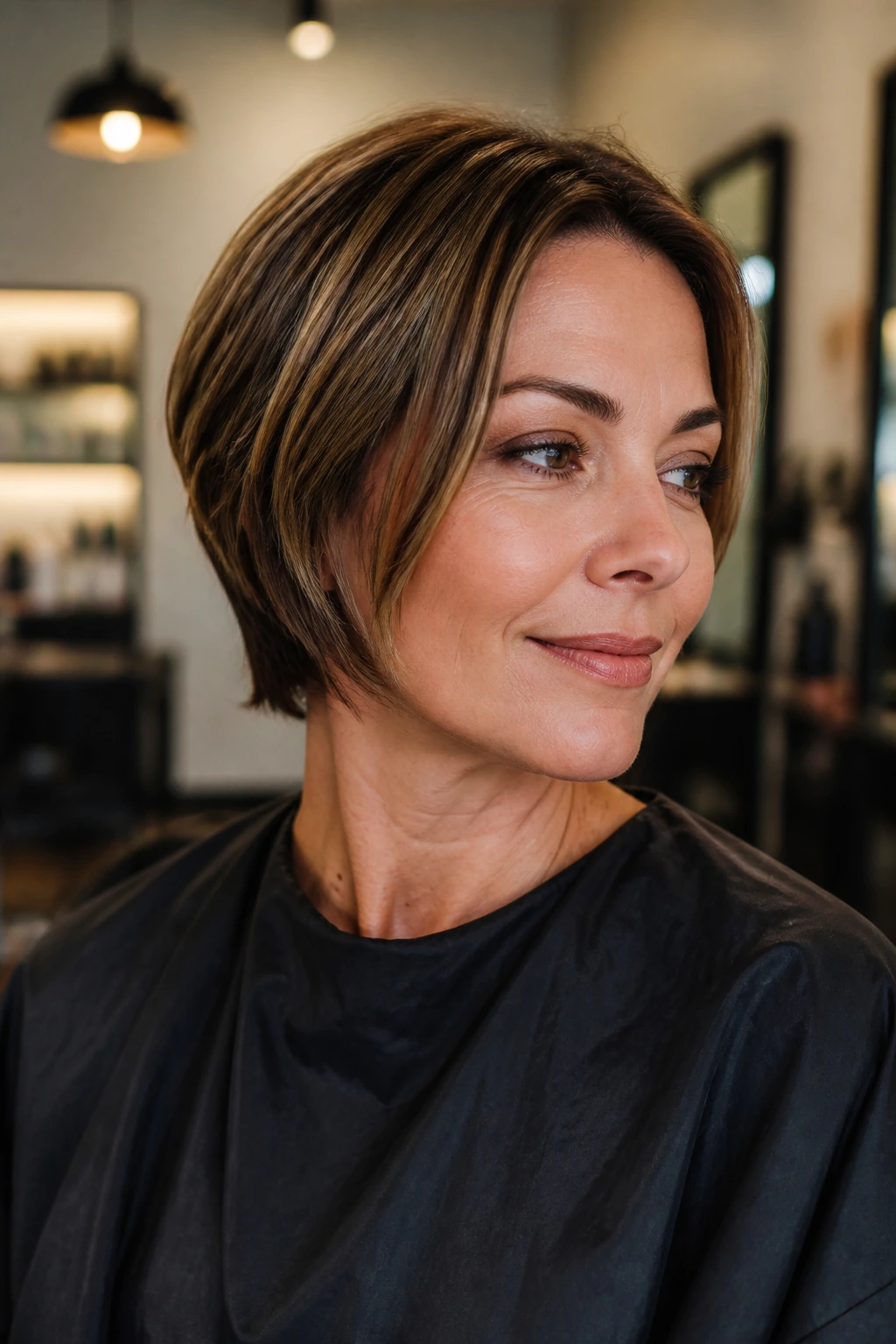
Bring photos, yes. But bring the right photos. One picture of a finished blowout and one picture of the cut air-dried will tell your stylist much more than five photos of people with similar hair colors. Haircuts live and die on texture.
Say where you want the length to land in plain words. “At the jaw,” “just below the ear,” “between chin and collarbone,” “short enough to tuck,” “long enough to pull back.” Those phrases are useful because they describe how the cut behaves, not just how it looks in a picture. If you wear glasses, say so. If your hair kicks out at the nape, say that too. If one side grows faster or flatter, mention it.
Talk about your daily style tolerance. A pixie cut that takes five minutes in the morning is a different request from one that needs a brush, a dryer, and two products before you leave the house. Also mention whether you want to see your ears, cover the forehead a little, or keep the neckline clean. Small details. Big difference.
How to Wear These Cuts Day to Day
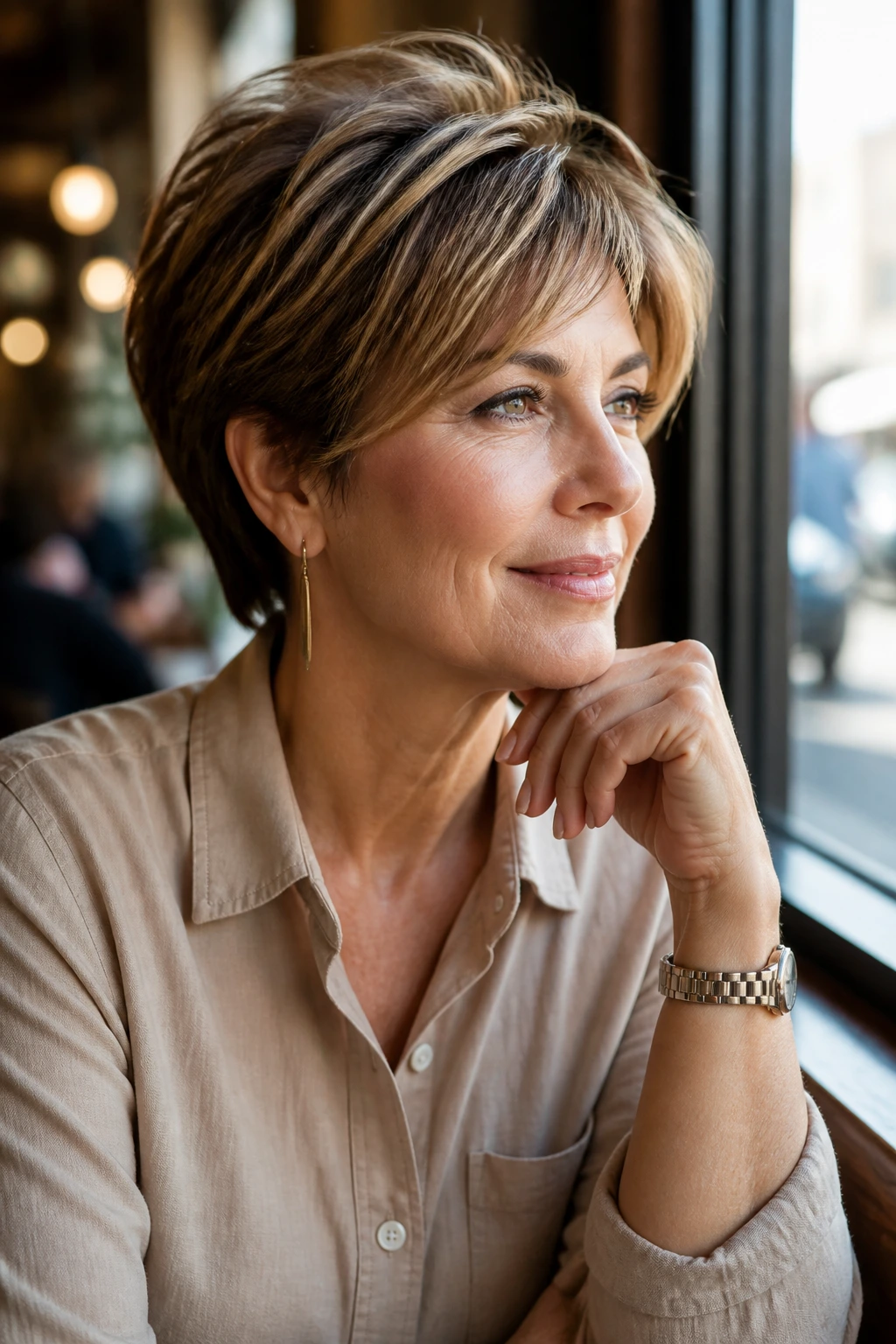
Shape: Choose where you want the eye to land first. A jaw-skimming bob draws focus low and neat; a pixie with crown height moves the focus upward; a shaggy crop sends it to texture and movement.
Texture: If your hair is straight, use a bend or a rough finish so the cut doesn’t look flat and severe. If it’s wavy or curly, protect the natural pattern and only refine the places that need direction.
Parting: A middle part can sharpen a face and lengthen the look, while a side part softens the forehead and gives more lift. Switch it once in a while. Hair remembers.
Finish: Matte paste reads modern on crops and pixies. Light serum or cream works better on bobs when you want the ends to look clean. A little shine near the front can make short hair look expensive without making it greasy.
Additional Tips and Styling Boosters
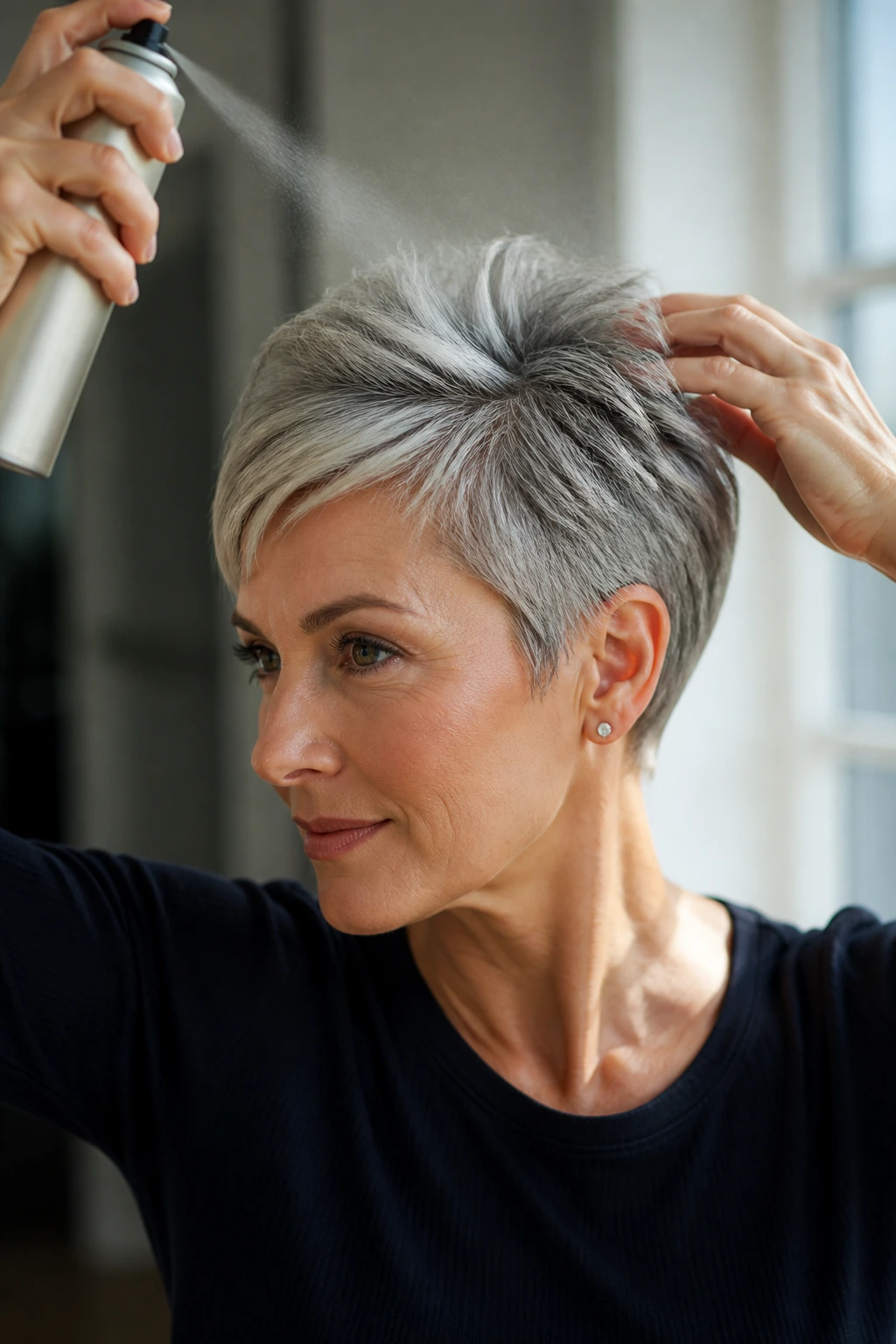
Texture Boost: A dry texture spray at the crown can save a flat pixie or bob, but use it on lifted sections, not the surface all over. The goal is separation, not grit.
Color Lift: Lighter pieces around the face can make a short cut look more dimensional, especially on gray or salt-and-pepper hair. A few fine highlights near the fringe often matter more than a full head of color.
Shortcut for Busy Mornings: If the back of your crop behaves and the front does not, spend your time on the front. Five minutes at the hairline does more than ten minutes trying to force the whole head into submission.
Make-It-Yours: Thick hair usually benefits from stronger weight removal at the interior. Fine hair needs cleaner lines and fewer layers. Curly hair wants room at the ends. Straight hair wants a little bend or lift so it doesn’t fall sheet-like.
My Favorite Finishing Move: Tuck one side behind the ear and leave the other loose. It sounds small. It changes everything.
Common Mistakes That Make Short Hair Look Off
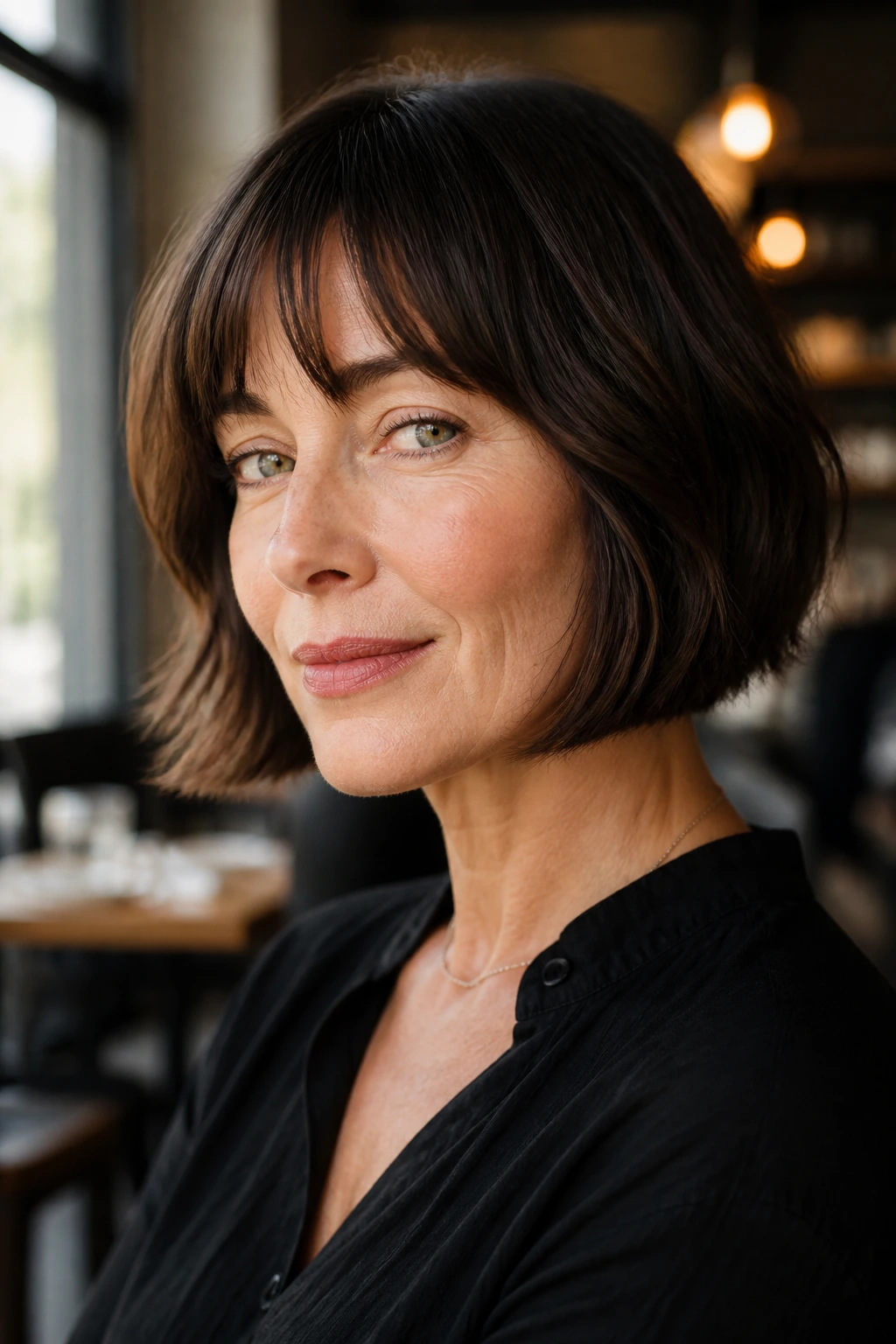
The biggest mistake is asking for “short” without naming the shape. Short can mean a blunt bob, a feathered crop, a pixie, or a shag, and those cuts behave nothing alike. If the stylist has to guess your style tolerance, you may leave with something technically cute and personally wrong.
Another one: over-thinning the ends. On medium or fine hair, heavy thinning can make the perimeter look wispy by week two. You’ll see it first in the mirror when the ends stop looking solid. The fix is to ask for soft weight removal in the interior, not shredded ends.
Ignoring growth patterns is a classic problem. Cowlicks around the crown or temple can kick a fringe out in stubborn directions. If that’s your hair, the answer is not more hairspray. It’s a cut that leaves enough length to redirect the growth.
And then there’s the heavy product trap. Short hair does not need a full palm of cream. Too much and the shape goes limp, flat, or greasy at the roots. Start with a pea-sized amount. Add more only where the hair actually needs it.
Growing It Out Without Losing Your Mind
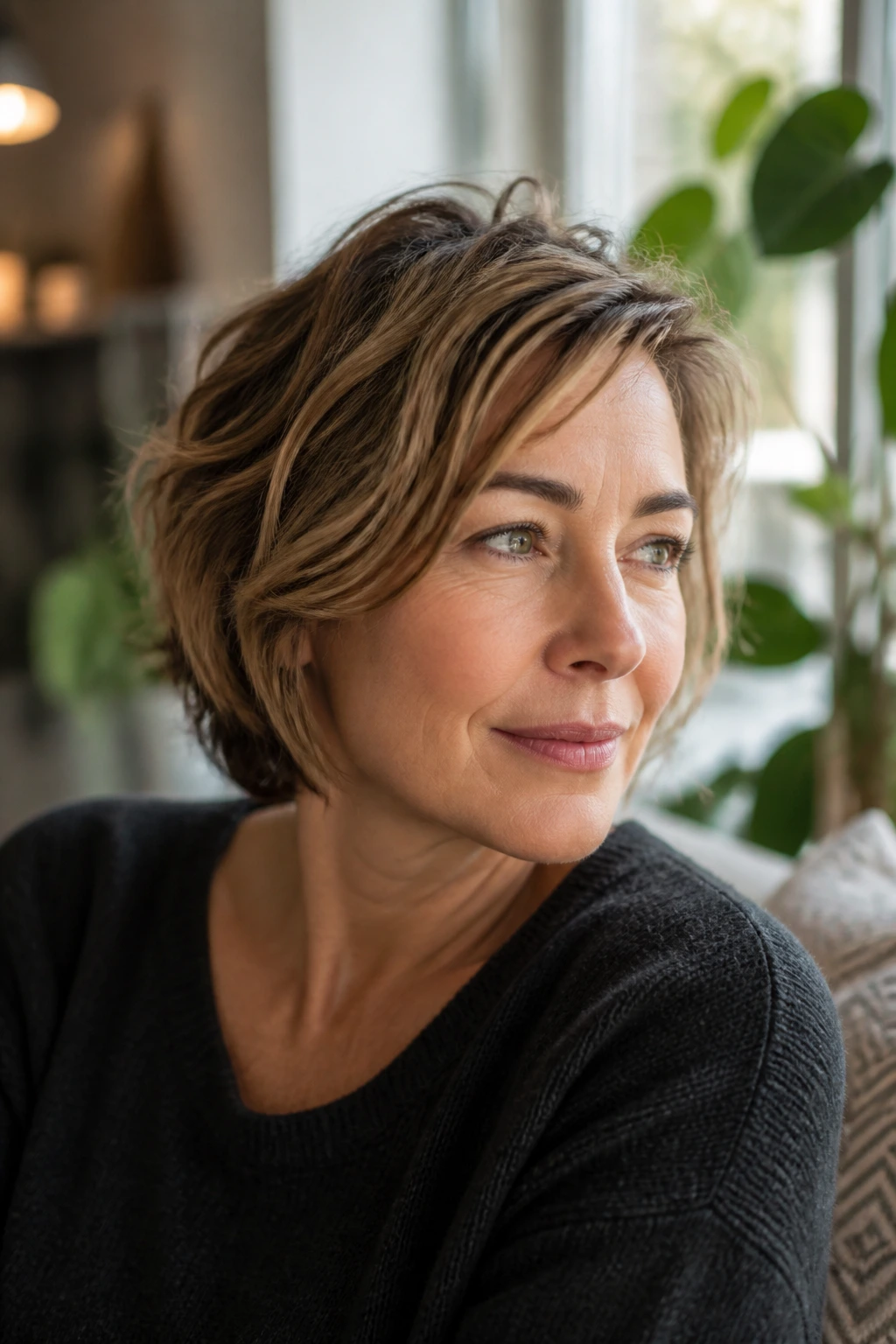
Short cuts need maintenance, but not every section needs the same attention. A pixie usually wants a trim every 4 to 6 weeks if you want to keep the shape tight. A bob can often go 6 to 8 weeks before it starts to lose its line. A shag or bixie may stretch a little longer because the texture hides growth better.
The fringe is the first thing that announces neglect. Bangs grow fast in the eye, even when the rest of the cut still looks fine. A quick bang trim between appointments can save the whole style. Some people do it at home. Some should not. If you have a cowlick right in the fringe, let a pro handle it.
Between appointments, the goal is not perfection. It’s keeping the balance. Dry shampoo at the roots can buy you a day or two, but don’t let it cake onto the scalp. A quick wash with focus on the nape and front hairline is often enough for short hair, and a tiny bit of heat at the fringe can reset the whole shape.
If you’re growing a pixie into a bob, resist the urge to “fix” every awkward phase with more layers. Awkward phases are part of the process. A blunt trim here, a small clean-up there, and the shape moves forward. You do not need to fight it every week.
Frequently Asked Questions About Short Haircuts for Women Over 40
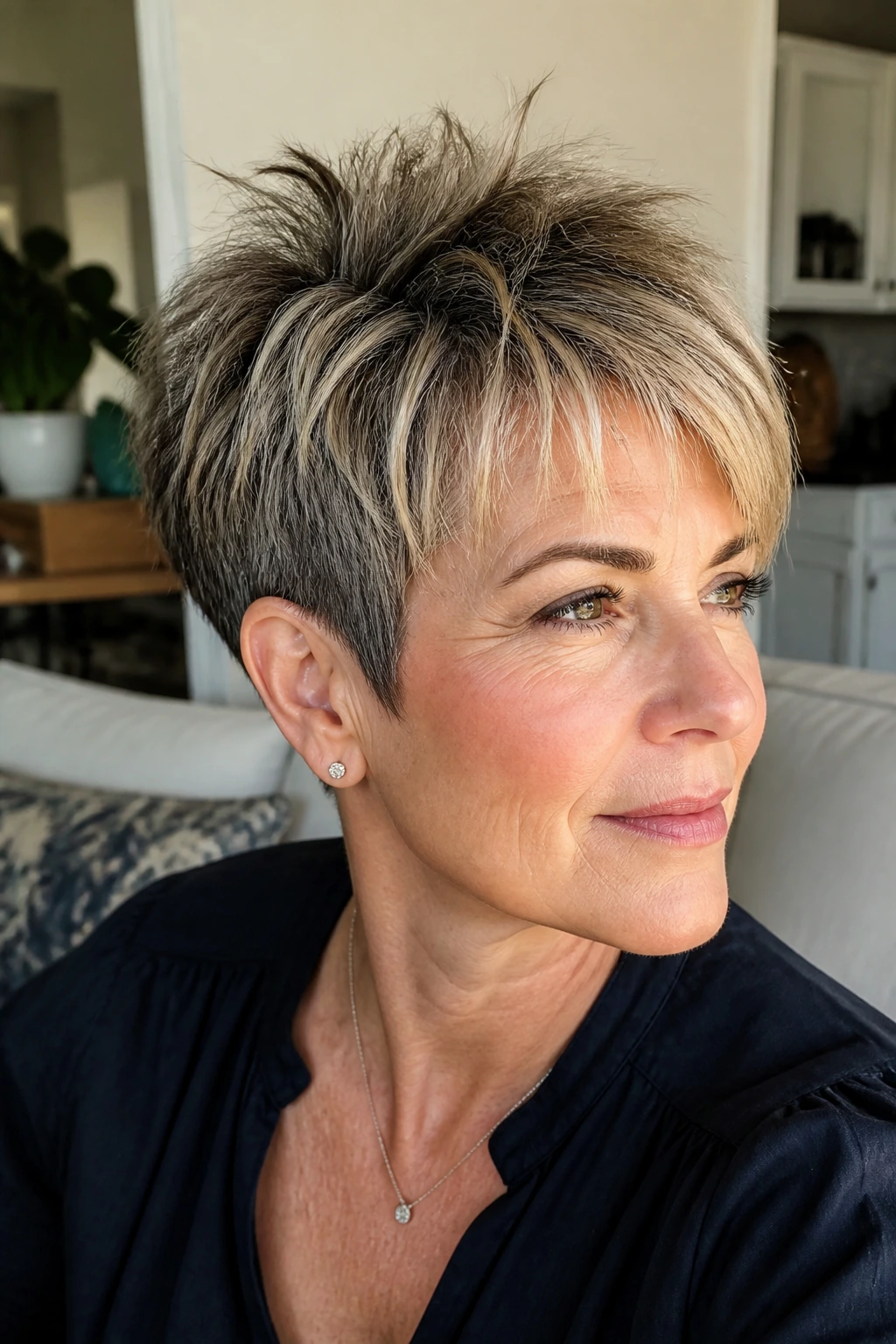
Will short hair make my face look older?
Not if the shape is right. A blunt bob, soft pixie, or textured crop can lift the face by showing the neck and opening the cheek area. What tends to age a cut is heaviness at the ends, flatness at the crown, or a fringe that lands in the wrong spot.
What short haircut is best for fine hair?
A blunt bob, sculpted crop, or bixie usually gives fine hair the most presence. These cuts keep a clear perimeter, which makes the hair look denser. Too many layers can make fine hair look see-through fast.
Should I avoid bangs after 40?
No. Bangs can be excellent if they suit your forehead, hairline, and styling habits. Curtain bangs, side-swept fringe, and soft eyebrow-skimming bangs all work better than heavy, stiff fringe on many faces.
Can curly hair go short without turning triangle-shaped?
Yes, but the cut has to respect the curl pattern. Rounded bobs, curly crops, and layered pixie-bobs usually work well because they keep the shape balanced. Dry cutting helps a lot because it shows where the curl lives.
How often should I trim a short haircut?
Most short cuts need a tidy-up every 4 to 8 weeks. Pixies and structured bobs sit on the shorter end of that range. Shags and textured crops can stretch a little longer if the grow-out is part of the style.
What if my hair is thinning at the crown?
A cut with crown lift and a shorter nape often helps more than length does. Ask for softness where the hair is sparse and shape where it needs support. A root mousse and a round brush at the top can make a visible difference, but the cut matters more than the products.
Is a deep side part still a good choice?
Yes, especially if you want lift or a little asymmetry. It can help a bob or crop feel fuller on one side and soften a strong forehead line. If your hair falls flat in the same place every day, switching the part can wake it up.
What should I bring to the salon besides photos?
Bring notes about your daily routine, the time you want to spend styling, and any trouble spots like cowlicks, flat spots, or frizz around the nape. Those details help the stylist choose a cut that works when you’re not standing under perfect lighting.
Short Hair, Right Shape
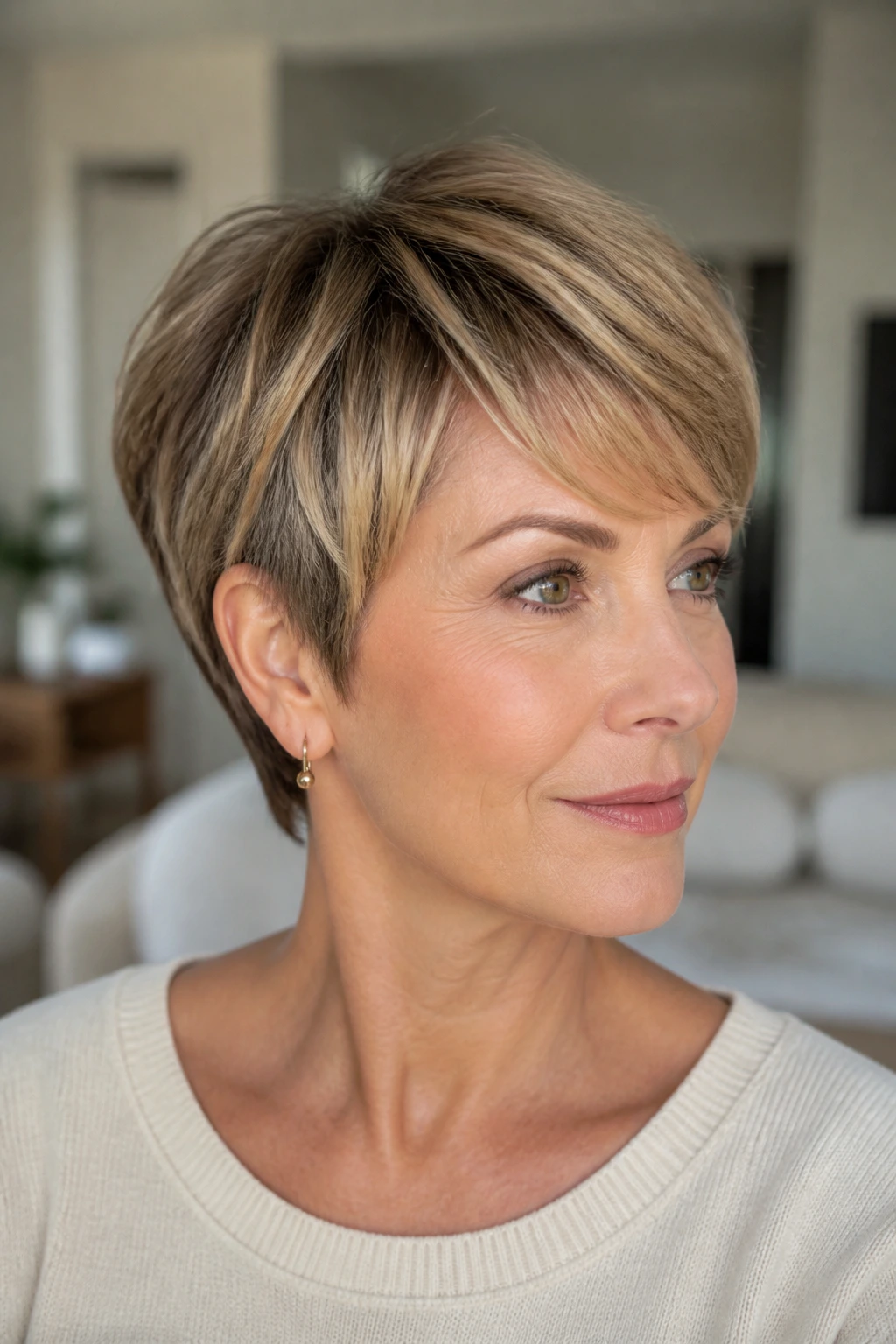
A good short haircut should feel like the best version of your hair, not a fight with it. The strongest cuts in this group share the same trait: they keep their shape when life gets busy. That is the real test. Not the salon mirror. The third morning after wash day, the windy school run, the quick tuck-behind-the-ear before a meeting.
Choose the cut that fits your texture first, then your face shape, then your appetite for styling. That order matters more than trends or labels. When the geometry is right, short hair stops being a project and starts being a relief.
