



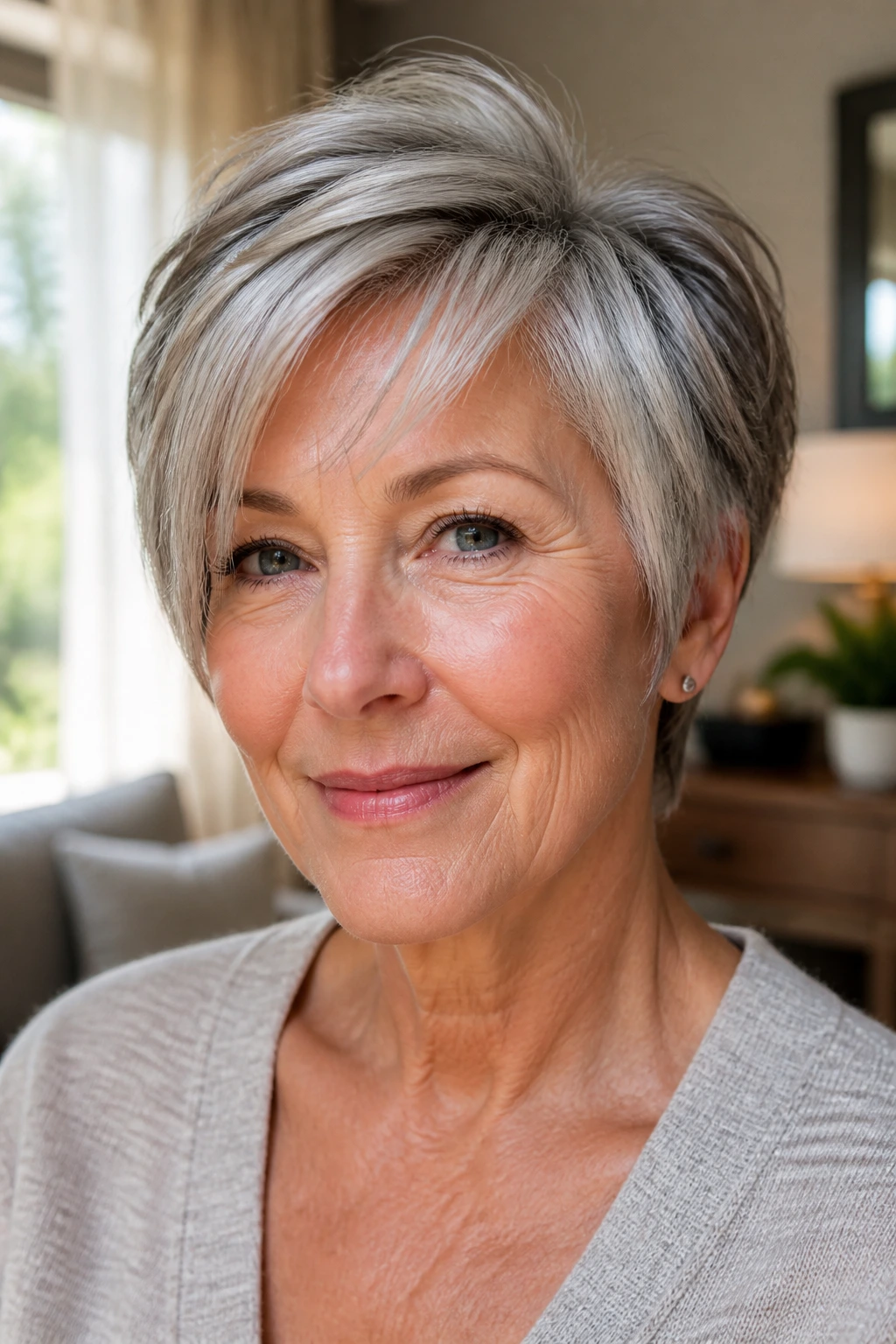
A short sassy haircut can do something a long, careful blowout often can’t: it gives the face a little lift and a little attitude at the same time. Done well, it makes silver strands look crisp, fine hair look fuller, and a plain T-shirt look like you meant to wear it that way. Done badly, it turns into a helmet, or a puff, or that awkward in-between shape that keeps reaching for a hair tie.
That’s why short sassy haircuts for older women have such staying power. They’re not about chasing youth. They’re about shape, movement, and a cut that still looks good when the humidity sneaks in or when you skip a full styling session. A smart short cut doesn’t fight your hair texture; it works with it. That’s the difference between a style that feels like maintenance and one that feels like relief.
The best versions have a little edge somewhere — a sharp nape, a cheekbone-skimming fringe, a choppy crown, a side part with lift. Nothing too stiff. Nothing too precious. Just enough structure to make the whole head read as fresh, not fussy.
Why These Cuts Keep Working
-
They open up the face fast: A clean nape, lifted crown, or side-swept fringe puts the focus back on your eyes and cheekbones instead of on heavy length dragging everything down.
-
They make thin hair look denser: Shorter ends don’t split into wisps the way long, aged hair often does, so the shape stays fuller from root to tip.
-
They behave better with gray hair: Silver and white strands can look wiry when they’re weighed down; a sharp crop or textured bob makes the texture look intentional.
-
They can be styled in under 10 minutes: Most of these cuts need a blow-dryer, a round brush or fingers, and a small amount of mousse or wax — not a drawer full of products.
-
They grow out with fewer sins: A good short cut can soften into a bob or a shaggy crop without that blunt, awkward stage that makes you want to cancel your next trim.
-
They give you room to show personality: Short hair is honest. If you want polish, it can look polished. If you want a little bite, it can do that too.
1. Choppy Pixie With Side-Swept Fringe
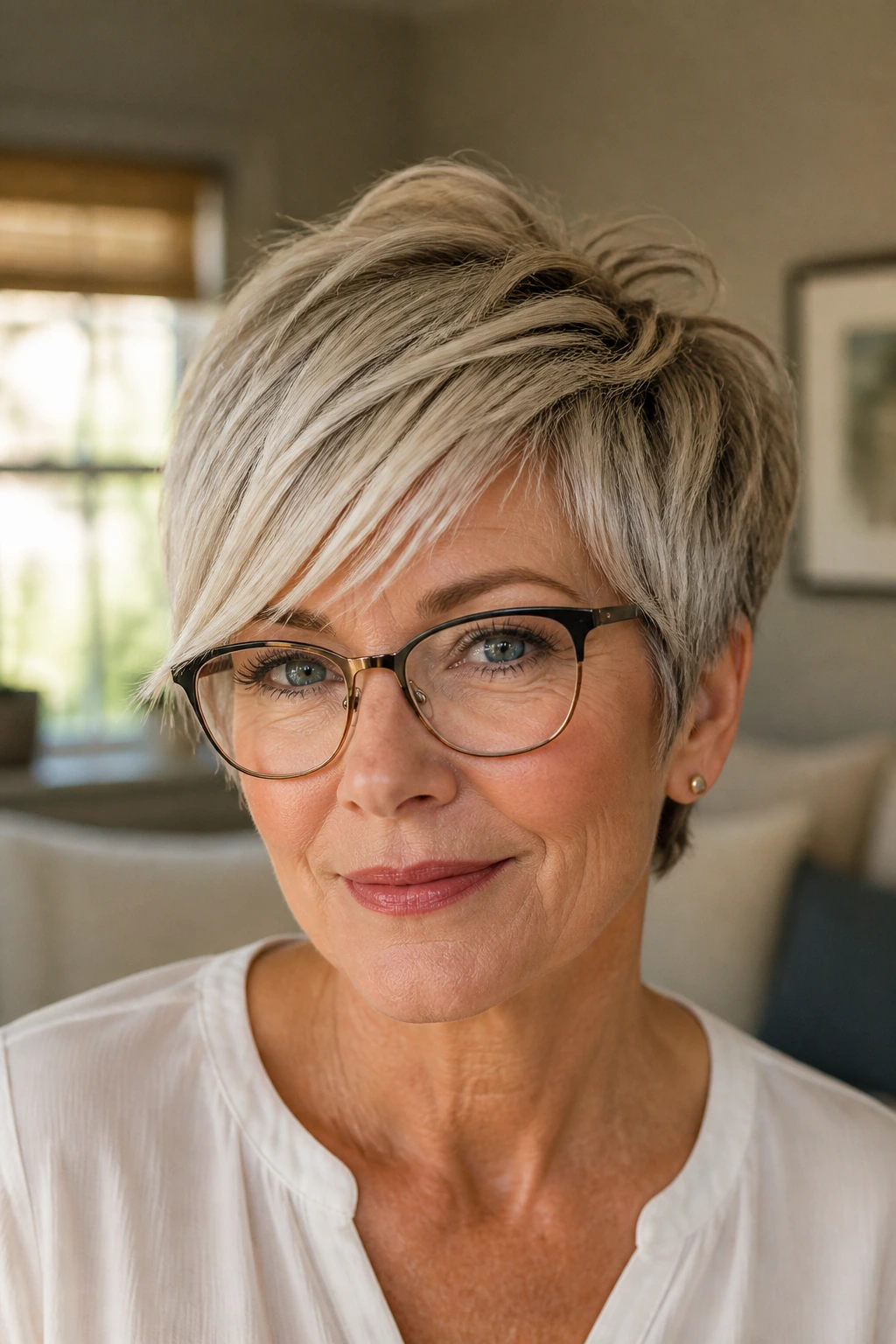
This is the short cut I recommend to people who want the neck bare, the crown lifted, and the forehead softened without hiding half the face. The choppy layers keep the top piecey instead of flat, and the side-swept fringe gives you a clean line that doesn’t feel severe.
The best version has a little air at the crown and a fringe that lands around the eyebrow or just below it. That length matters. Too short and the fringe can look blunt; too long and it starts dropping into the eyes in a way that feels tired, not chic. A pea-sized dab of styling cream or paste is enough — rub it between your palms, then pinch the ends and sweep the fringe over with your fingers.
Why it works on mature hair
Fine hair often loses lift first at the crown and temples. This cut solves both problems by keeping the top short enough to stand up, while the fringe redirects attention across the face instead of straight down the forehead.
It’s also kind to glasses. The side-swept front clears the frames, so you don’t get that crowded look around the eyes. If your hair grows in a cowlick near the front hairline, ask for the fringe to be cut dry or point-cut into the natural fall.
2. Tapered Bixie With Crown Lift
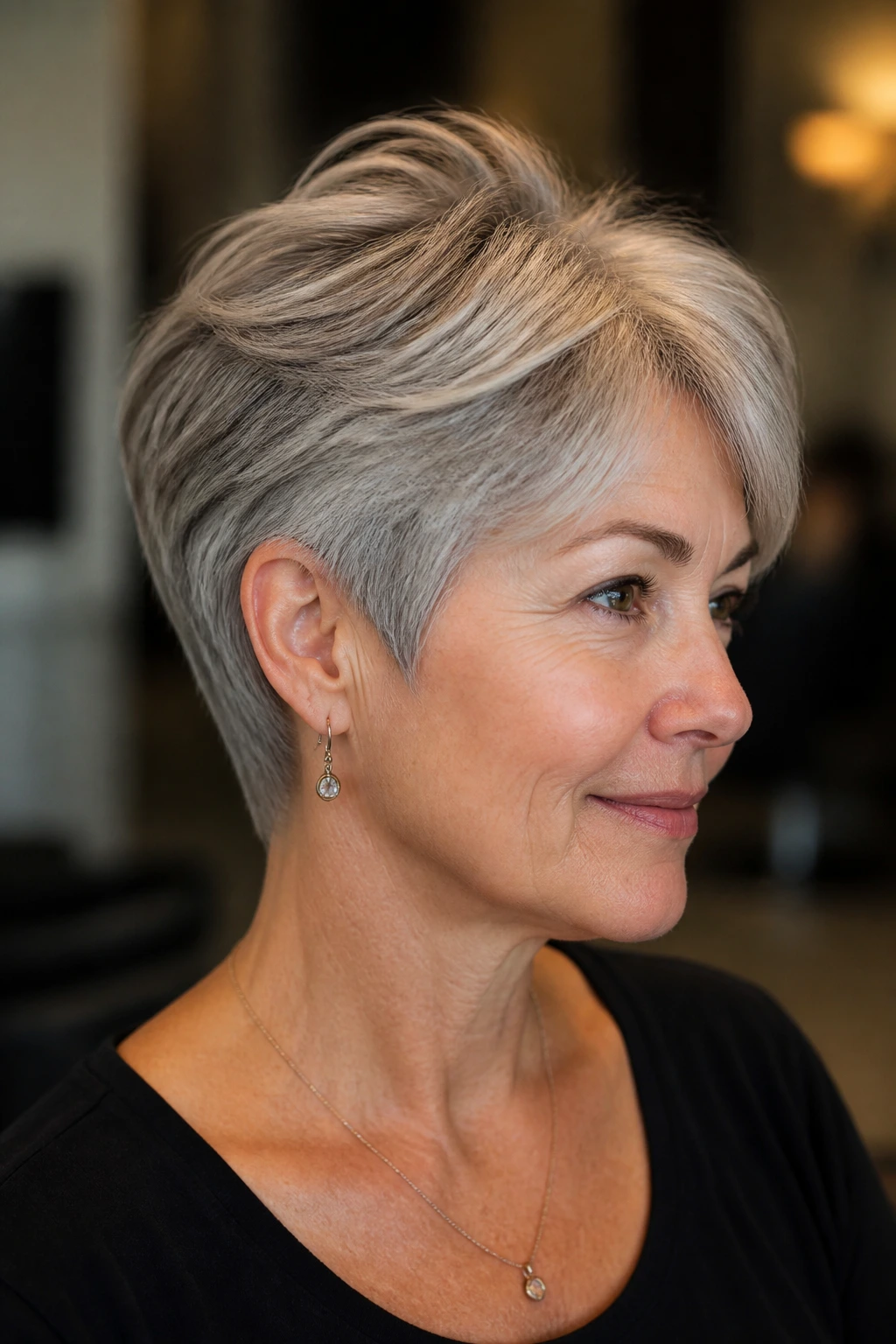
A bixie lives between a bob and a pixie, and that middle ground is why so many women keep coming back to it. The back stays neat and tapered, while the front keeps enough length to tuck behind the ear or sweep across the cheekbone.
This is one of the best short sassy haircuts for older women who want movement without going full pixie-short. It gives shape around the head without locking you into one flat silhouette. Ask for soft layers through the crown, not choppy chunks everywhere. You want lift, not a fuzzy halo.
Styling note
Blow-dry the crown first with a small round brush, then bend the front pieces away from the face with your fingers. A little root-lift spray at the part and a touch of wax on the ends are usually enough. If your hair is thick, a skilled stylist can remove bulk in the back so the cut doesn’t puff up like a triangle.
3. French Bob With Blunt Ends
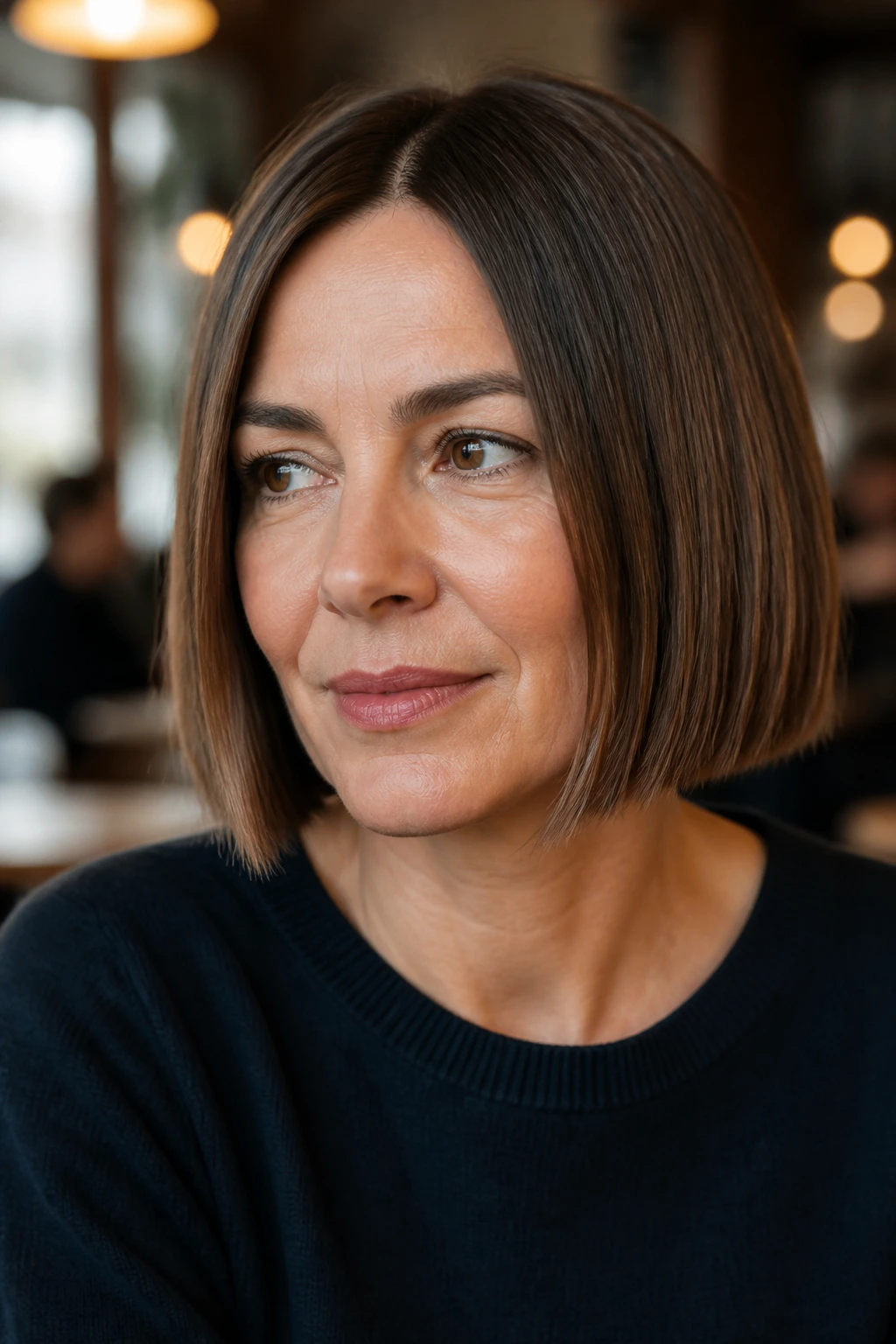
The French bob has bite. It sits around the jawline, often with a slight inward bend, and the blunt ends give it that clean, graphic edge that looks expensive even when the styling is plain.
What makes this cut work on older women is the line. A blunt bob gives the eye a place to stop, which makes the whole face look more structured. If you’ve got straight or slightly wavy hair, this cut can be a dream. If your hair is very curly, you can still borrow the shape, but the final length needs to account for shrinkage.
How to wear it
A center part makes it feel modern and sharp. A deep side part makes it softer and a little more dramatic. Either way, the key is keeping the ends tidy. I’d avoid heavy layering here; the whole point is the line, and too many layers can make the bob wobble.
4. Feathered Crop With Wispy Layers
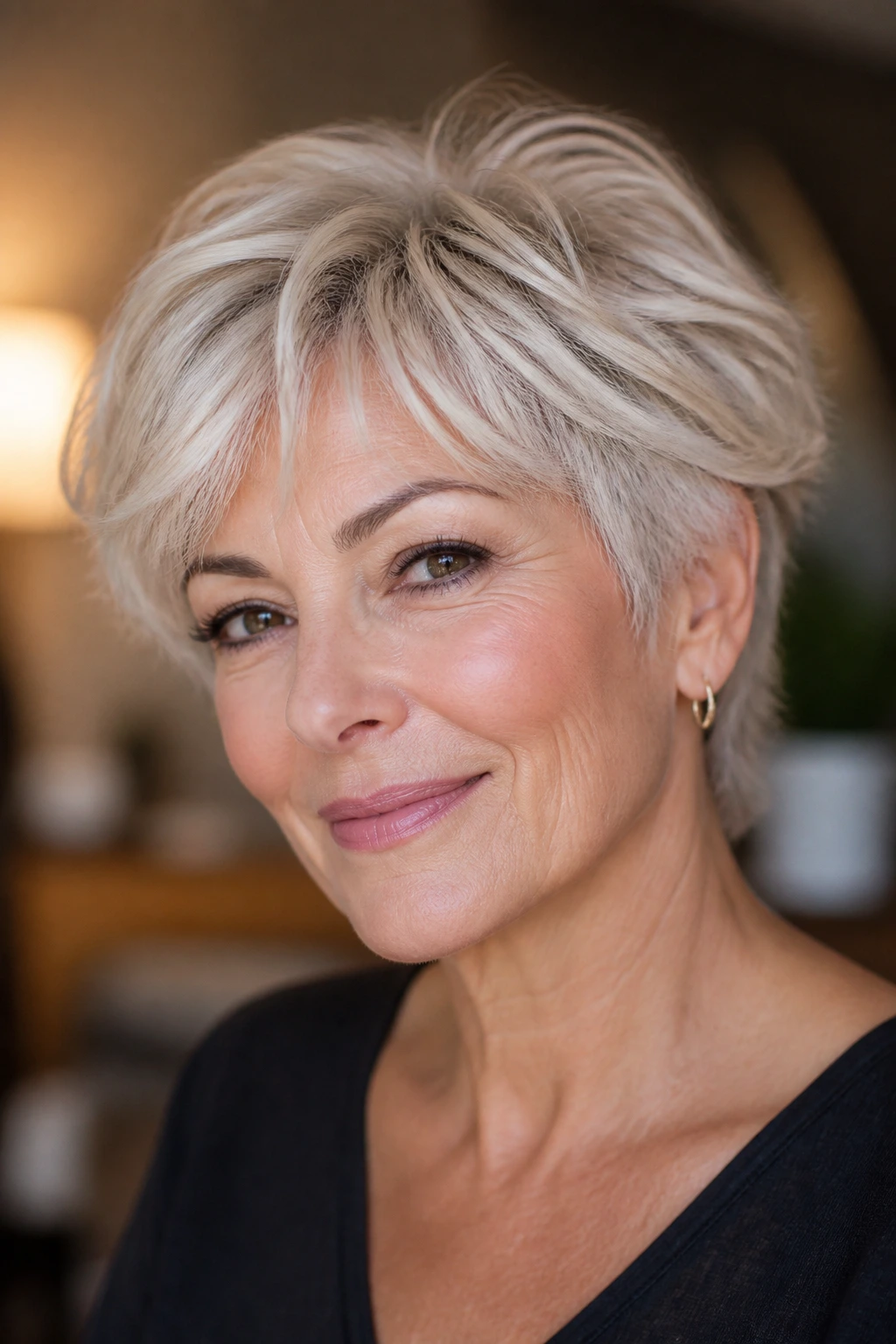
If you want soft edges instead of hard lines, a feathered crop is a smart move. The layers are cut to move away from the face, which gives the whole style a light, brushed-out look without turning frizzy. It’s especially kind to thinning hair because it builds shape without removing so much weight that the scalp starts peeking through.
This cut does best when the crown is left a little longer than the sides. That tiny difference in length creates the illusion of fullness. A small round brush and a medium-hold mousse will do more here than heavy serums ever will.
Best for
- Hair that falls flat by noon
- Women who want softness around the temples
- Anyone who hates a helmet shape
- Glasses wearers who want the frames to stay visible
The trick is to dry the roots first, then flick the ends out slightly with your brush or fingers. You’re not building curls. You’re giving the hair some lift and a little movement.
5. Textured Undercut Pixie
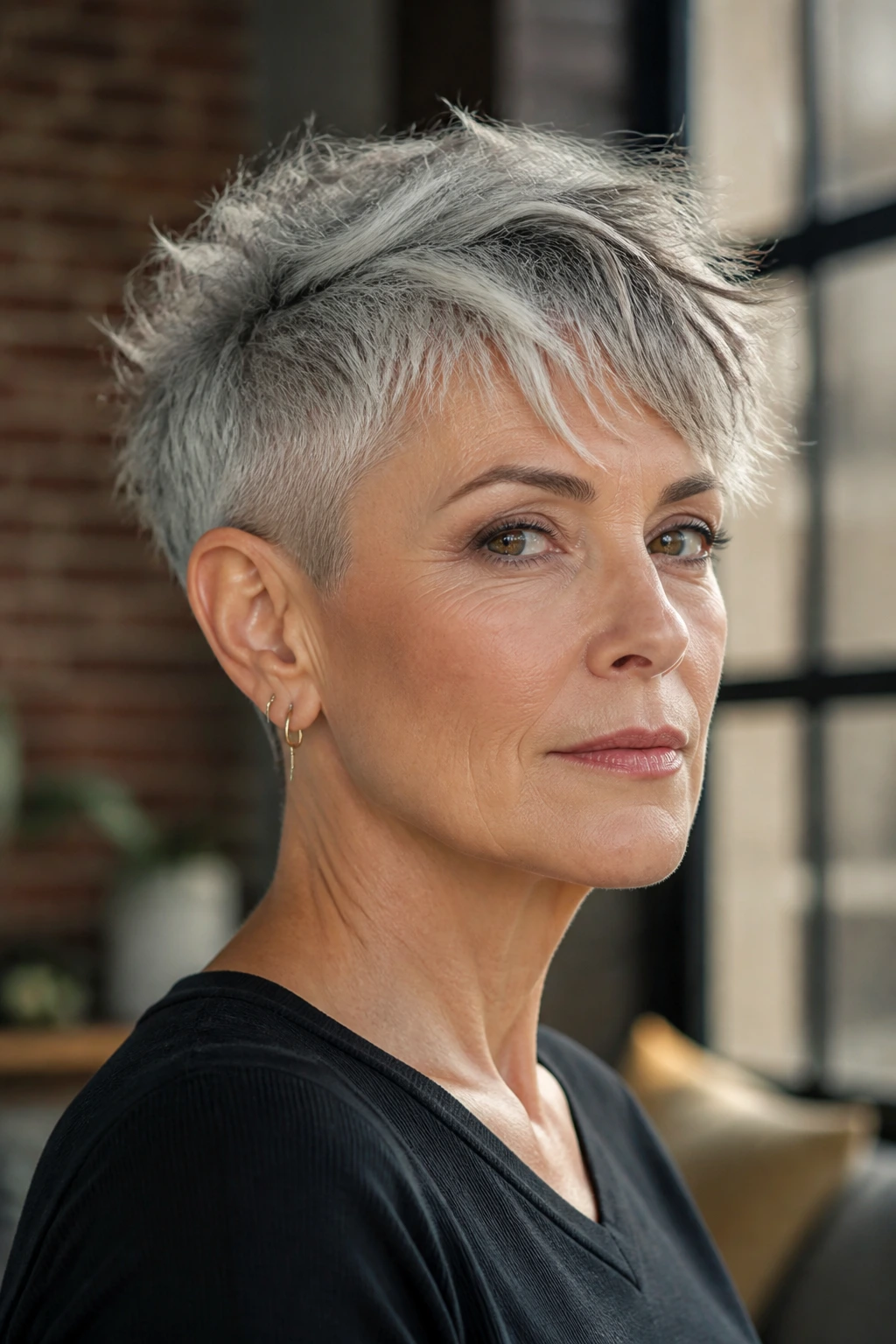
This one has attitude. The undercut removes bulk from the nape or sides, while the top stays longer and messier, which means you get a lean shape with some actual edge. It’s the cut you choose when you want short hair to look deliberate, not merely convenient.
It’s especially good for thick hair that swells at the sides and refuses to sit close to the head. Removing weight at the lower back and around the ears changes everything. The top can then be styled forward, up, or swept to one side depending on your mood.
A blunt opinion
Do not ask for this if you’re attached to softness all around the head. The undercut has presence. That’s the point. If you want a version that feels less severe, keep the undercut narrow and leave more length around the temples.
A little matte paste works better than shine here. Glossy product makes the texture collapse; matte product keeps the separation crisp.
6. Curly Crop With Soft Taper
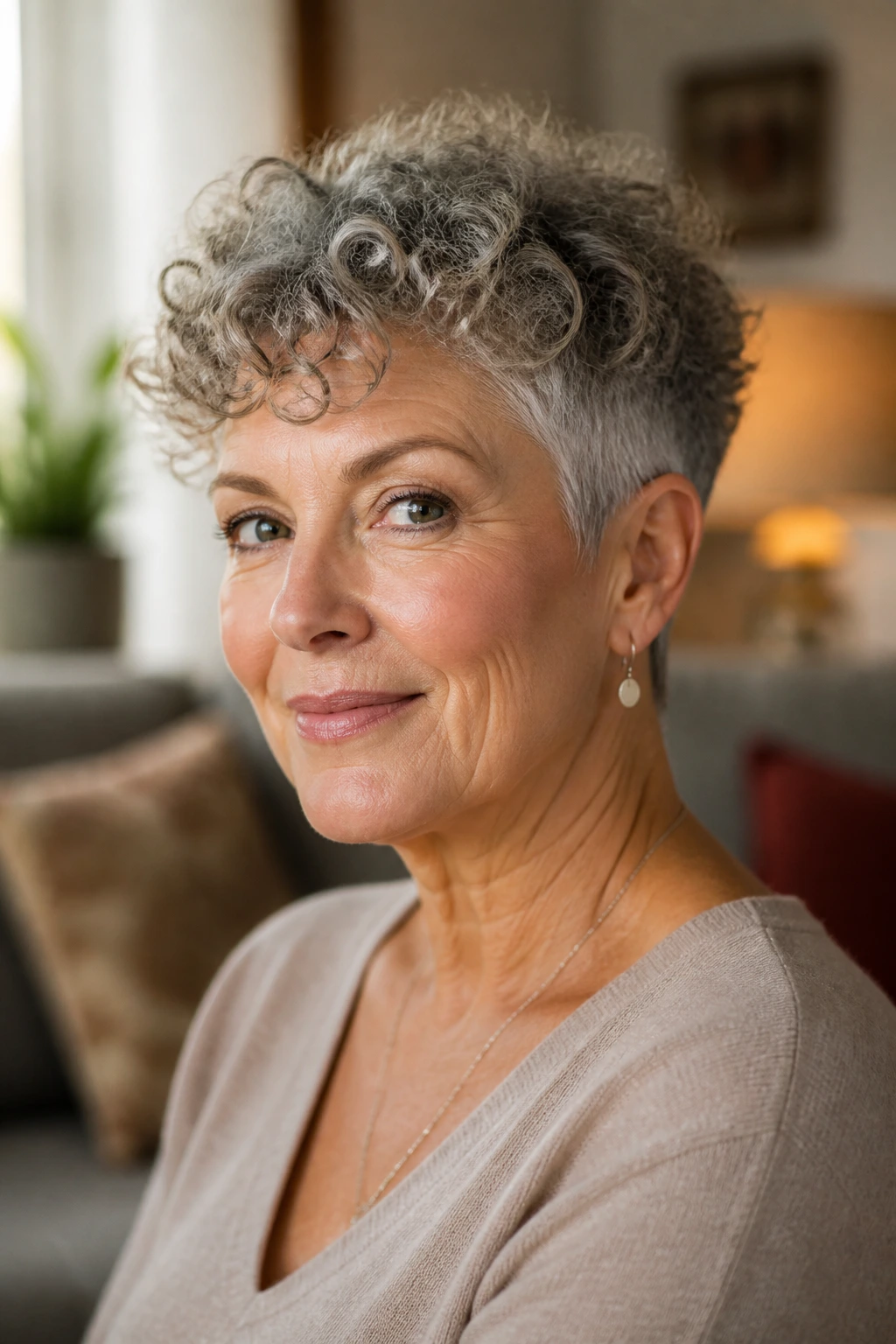
Curly hair deserves its own short shape, not a straight-hair haircut forced onto curls and then blamed for misbehaving. A curly crop keeps the sides and nape tidy while leaving enough length on top for the curls to spring instead of shrink into a puffball.
The best version follows the curl pattern. That means the cut should be shaped dry, or at least on hair that shows the real curl, not the stretched version. The taper around the sides keeps the silhouette clean, and the top holds the personality.
How to style it without fighting it
Work in leave-in conditioner first, then a curl cream or lightweight gel while the hair is damp. Use a diffuser on low heat if you want more lift, or let it air-dry and break the cast only when it’s fully dry. And yes, that crunchy phase can look strange. It’s supposed to.
This cut looks especially good when the curls are allowed to sit a little irregular. Too much symmetry makes curly crops lose their charm fast.
7. Asymmetrical Bob With a Deep Side Part
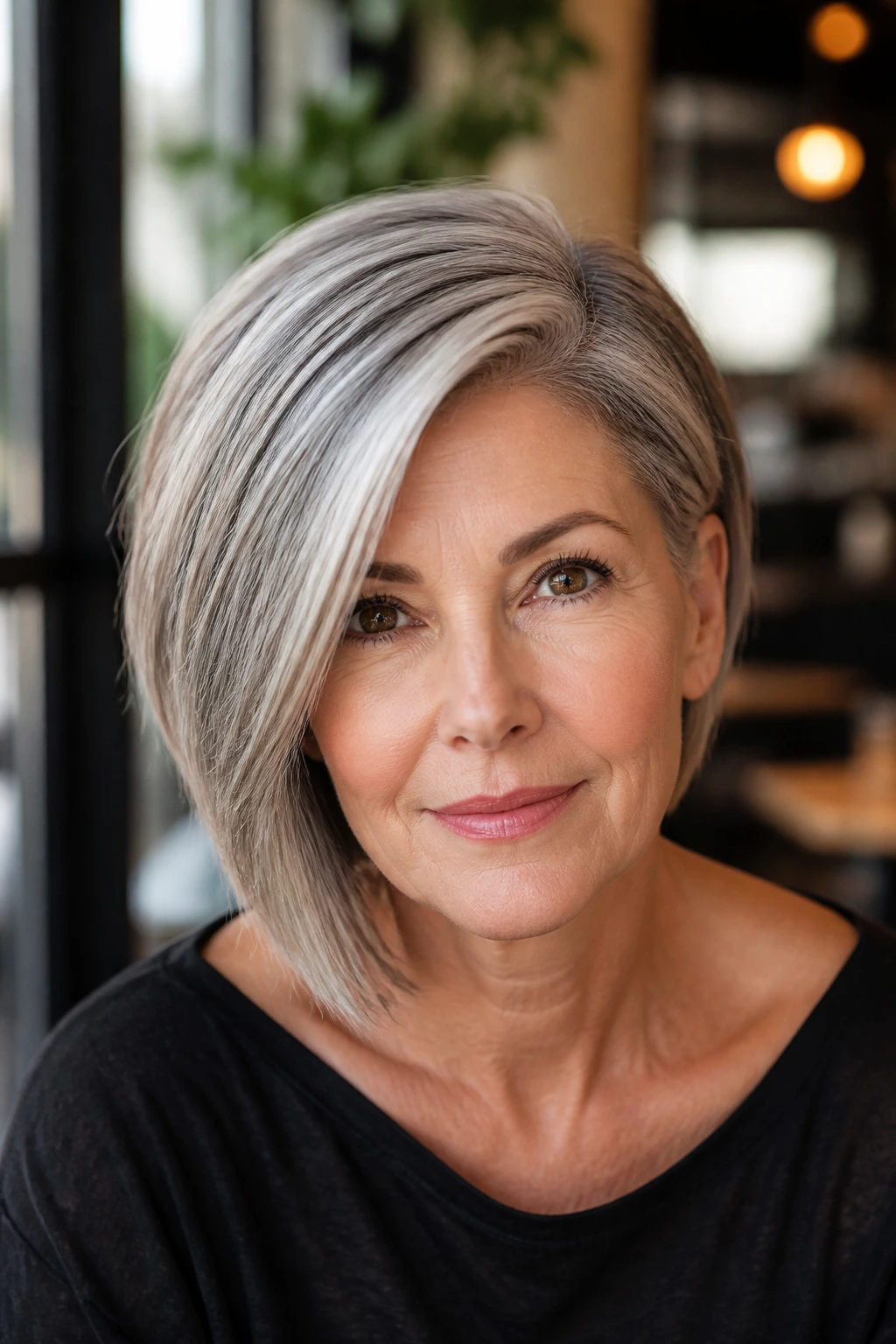
A little asymmetry goes a long way. One side sits just a touch longer, the part is pushed deep, and suddenly the bob has motion instead of stiffness. It’s a sharp choice for women who like structure but don’t want anything too safe.
The reason it works is simple: the deep side part creates volume where hair usually goes flat, while the longer side pulls the eye diagonally across the face. That diagonal line can soften a strong jaw, balance a rounder face, and make plain straight hair look intentional.
What to ask for
Tell your stylist you want one side longer by a small but visible amount — not a dramatic angle unless you really mean it. A difference of an inch or so is enough to get the effect without making the haircut hard to grow out.
This one looks best when the ends are slightly beveled, not razor-thinned into nothing. You want movement, not holes.
8. Jaw-Length Shag With Razored Layers
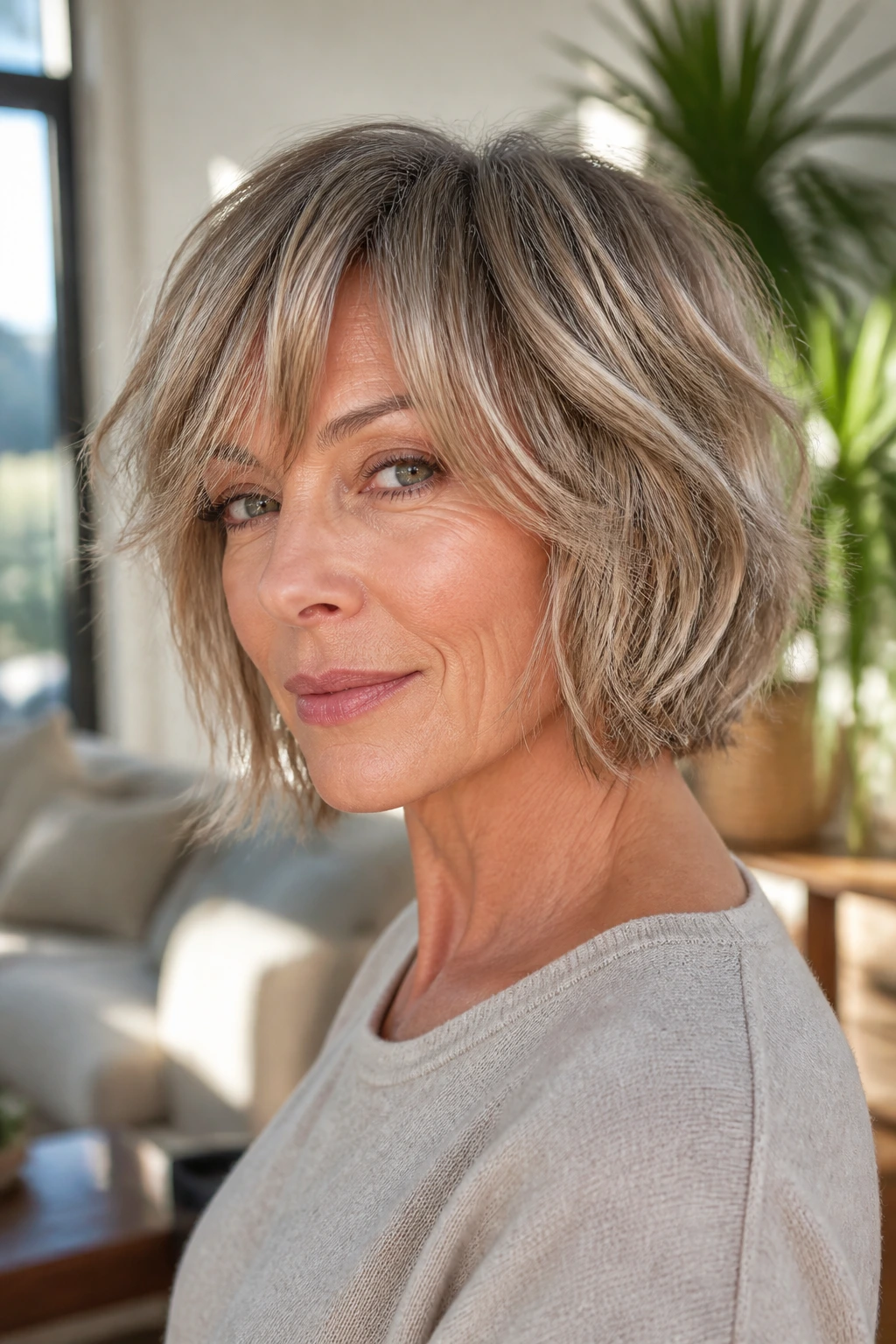
A shag at the jawline has a little bite and a lot of movement. The layers break up the outline, the ends stay airy, and the whole cut feels like it’s in motion even when you haven’t touched it yet. It’s a good answer for wavy hair that gets wide when it’s too long.
Razored layers can work here, but only if the stylist keeps the blade work controlled. Over-razoring turns the ends wispy in a bad way. What you want is softness around the perimeter and enough shape at the crown to keep the haircut from drooping.
Why people like this cut
It looks relaxed on purpose. Not sloppy. Relaxed.
If you’ve been wearing hair that’s one length for years, this cut can wake everything up. Scrunch in a touch of mousse, rough-dry it halfway, then let the rest air-dry. The uneven texture is the selling point. A shag that looks too polished loses its edge.
9. Razor Bob With Airy Ends
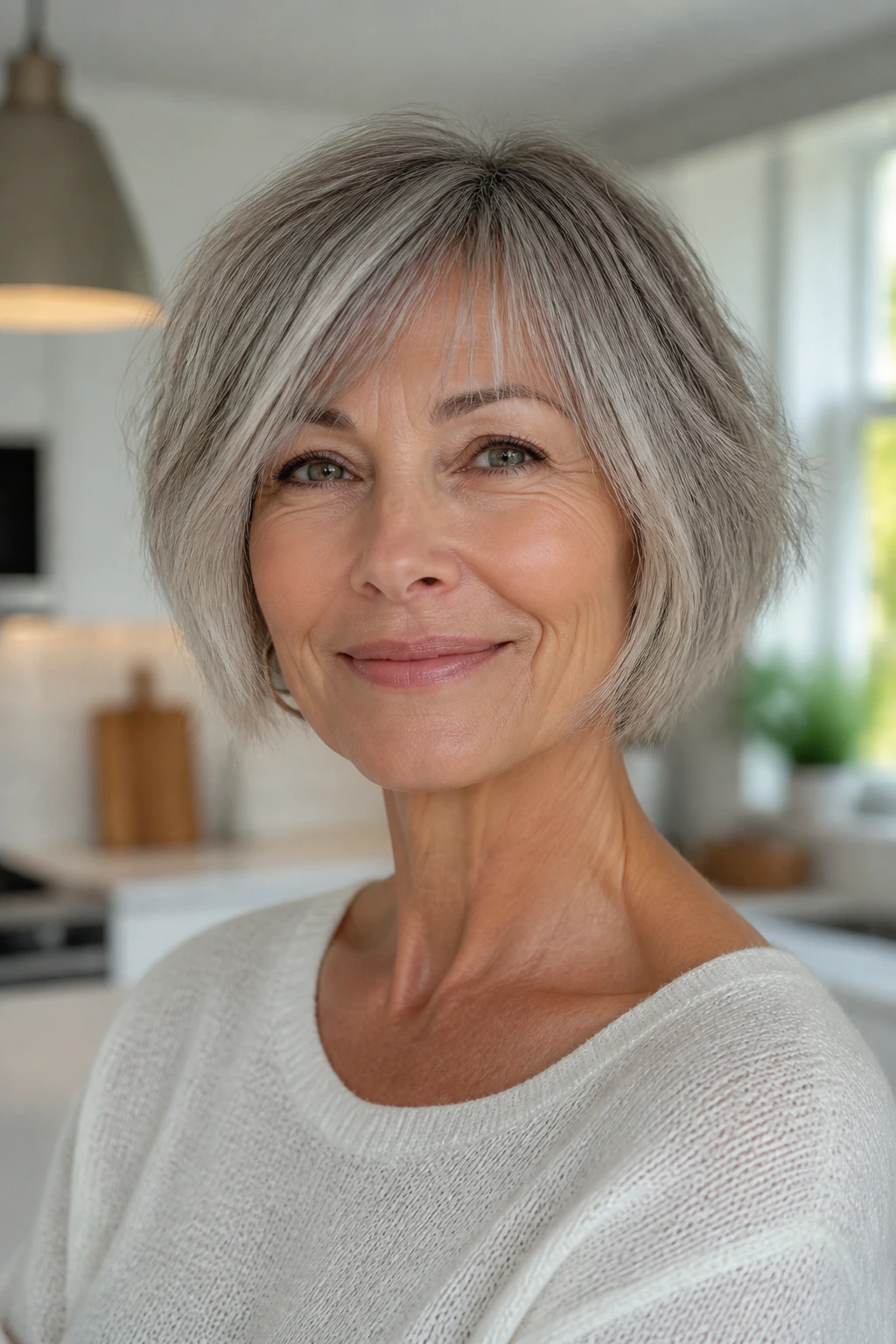
A razor bob has a lighter finish than a blunt bob, and that makes it a strong pick for women whose hair feels heavy when it hits the jaw. The ends are softened so they don’t sit like a shelf, and the line moves instead of hanging.
This cut is especially useful if your hair is straight and dense. A blunt edge on dense hair can look blocky fast. Razor-softened ends let the haircut breathe. The shape still reads as clean, but not stiff.
Styling cue
Use a smoothing cream through the mids and a quick pass with a flat brush or paddle brush while blow-drying. You do not need a lot of product. Too much and the airy ends turn greasy and limp.
I like this cut with a tuck behind one ear. It gives the bob a little asymmetry, which is exactly what keeps it from feeling too proper.
10. Side-Swept Ear-Length Crop
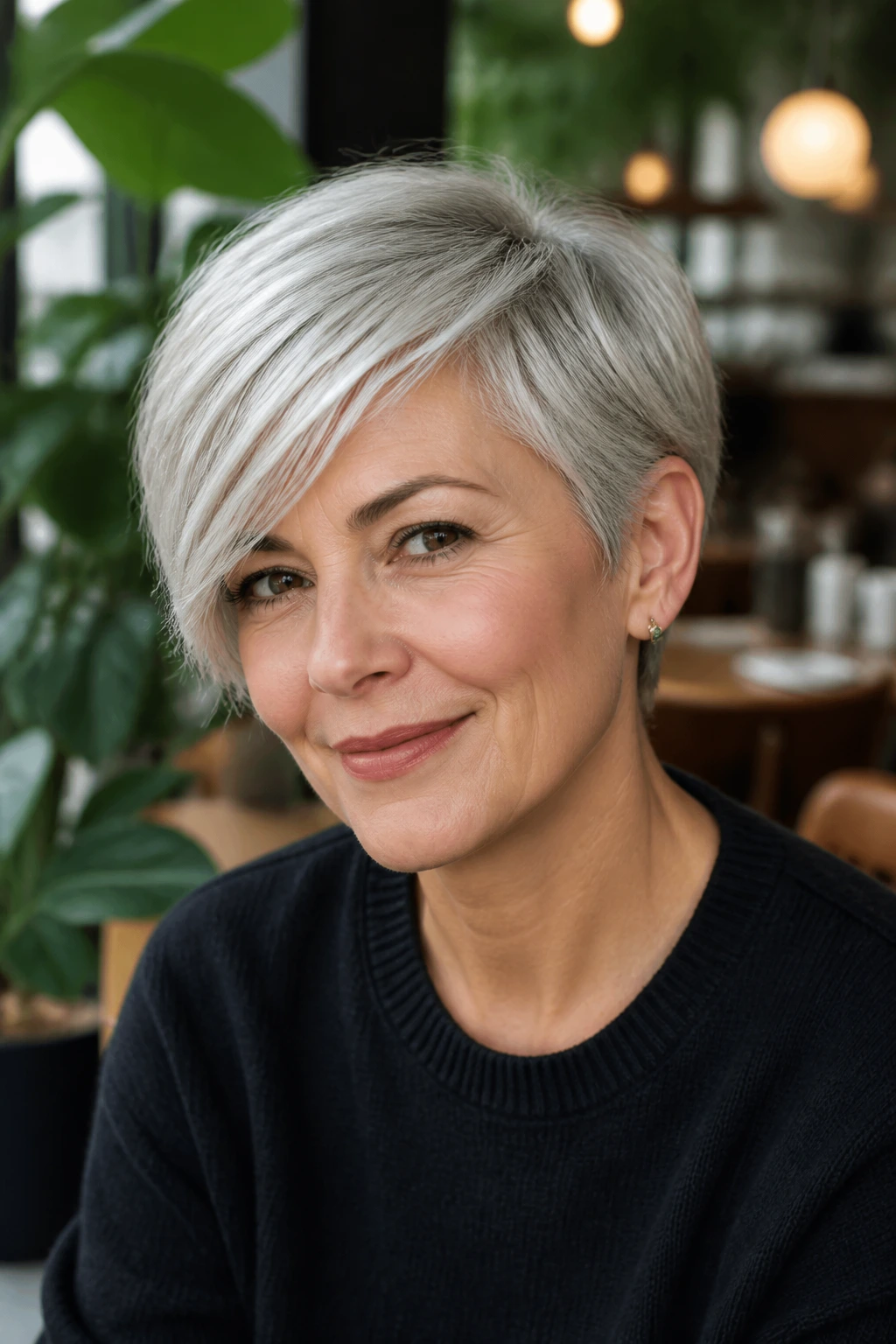
This is a neat little haircut with a surprising amount of personality. The sides stay just long enough to brush the tops of the ears, while the top layers sweep across the forehead and into the temple area. It’s tidy, but not severe.
If you wear earrings, this cut is a gift. It leaves space around the jaw and cheek so the jewelry has room to show. It also works very well for women with strong cheekbones or narrow faces, because the side sweep widens the upper half of the face in a flattering way.
A practical note
This isn’t the cut for someone who hates regular trims. Ear-length crops grow out fast, and once the sides start sitting over the ears, the shape changes. Keep the appointments on the shorter side if you want it to stay sharp.
A light mist of texturizing spray can keep the top from lying flat. Just don’t overdo it. A little grit looks stylish; too much looks dusty.
11. Modern Pageboy With a Soft Bend
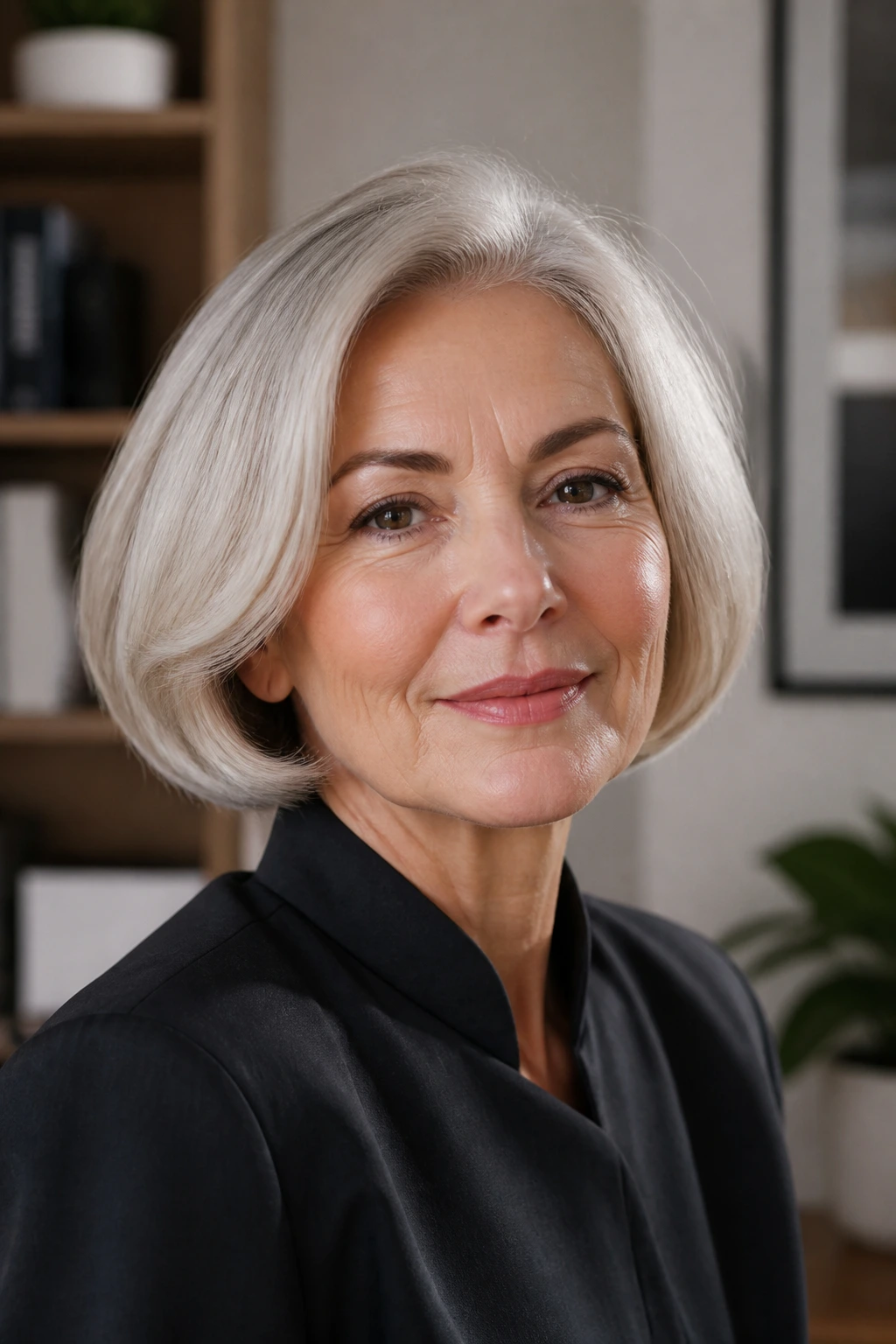
The pageboy has history, but the modern version is softer and easier to wear. Instead of a rigid bowl shape, the ends bend inward gently, and the interior layers create some lift so the whole cut feels current.
This is one of those styles that looks especially good on straight hair with a bit of body. The line around the jaw gives shape, while the soft bend keeps it from looking boxy. If your hair is naturally very fine, ask for interior layers that don’t steal too much density from the perimeter.
Where it shines
The pageboy is neat around the neckline, which makes it flattering with collared shirts, sweaters, and jackets that sit close to the neck. It has a clean frame. That’s the appeal.
You can wear it with a center part for a calmer look or with a slight side part if you want more lift. Either way, the ends should curve, not flip hard.
12. Micro-Bang Crop With Piecey Top
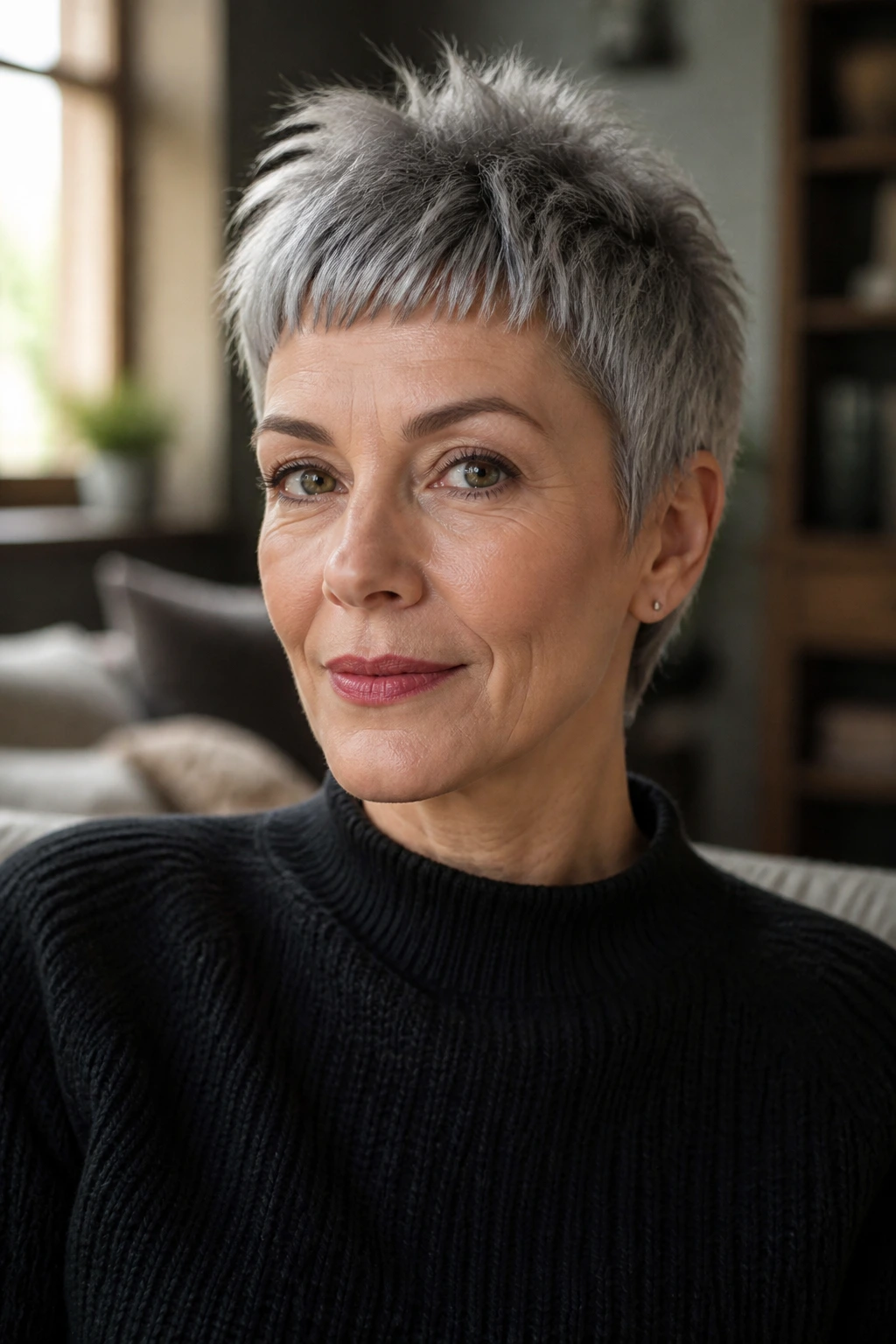
Micro-bangs are not for the shy. They’re a strong little line across the forehead, and paired with a piecey crop, they give the whole haircut a smart, slightly rebellious feel. The contrast between the short bangs and the messy top is what makes it work.
This cut suits women who like their hair to have a point of view. It can be fantastic on petite faces, angular features, or anyone who wants to show off brows and glasses. The top should stay textured so the bangs don’t look too severe by comparison.
How to keep it from going wrong
Micro-bangs need precision. If they’re cut too blunt or too wide, they can look harsh fast. Keep them narrow and softened at the edges. And yes, they need more frequent trims than the rest of the crop. Don’t argue with that part.
A tiny bit of pomade on the tips is enough. Too much product and the bangs separate into greasy spikes. Not the look.
13. Curved Bob With a Tucked Nape
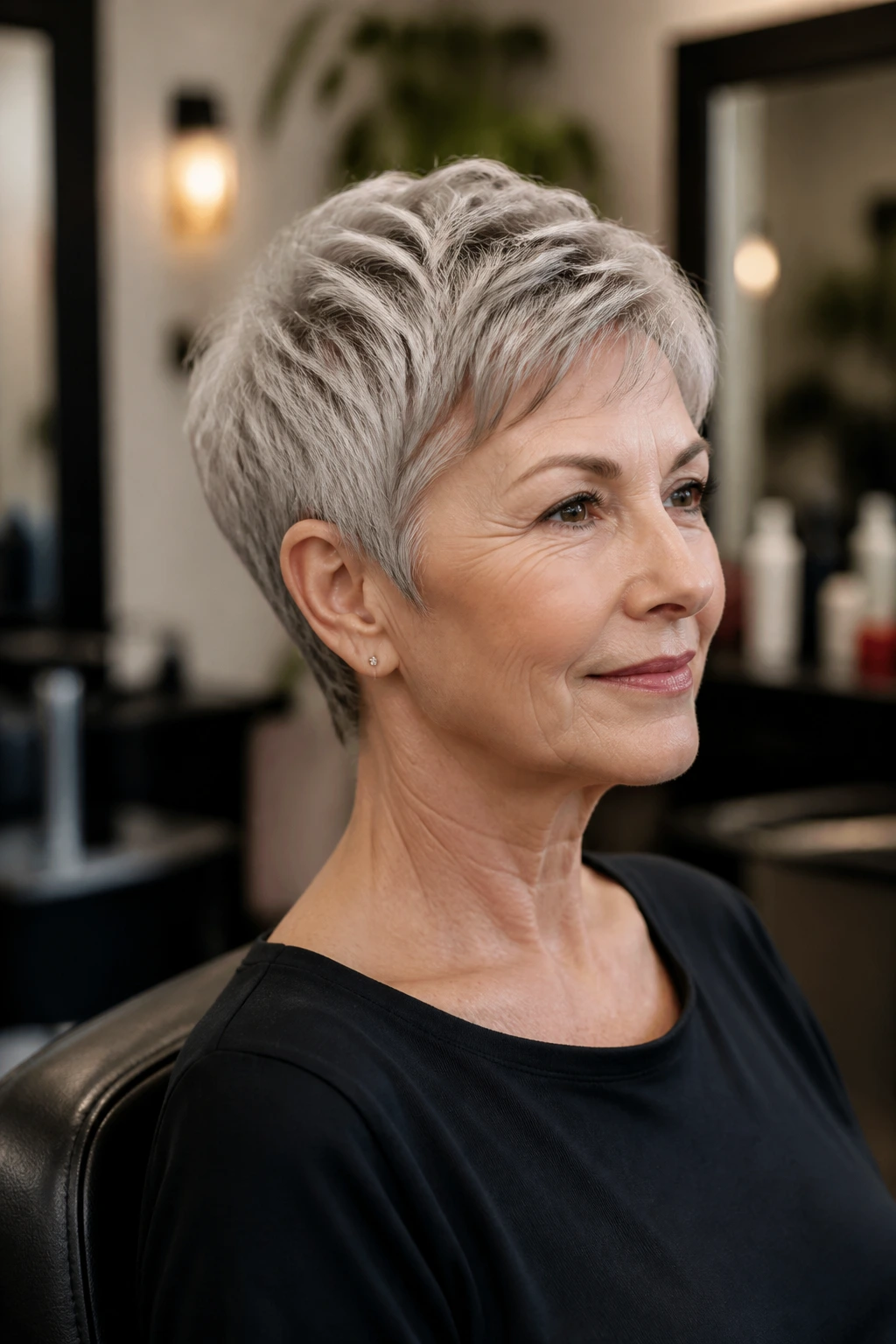
A curved bob hugs the head in the back and swings forward just enough at the sides to frame the face. That shape gives the haircut a neat, tailored feel without making it feel old-fashioned. It’s a clean line with a little softness built in.
This is an especially smart cut if you want the neck to look longer. The tucked nape clears the back of the head and gives a tidy finish under scarves, collars, and coats. The sides can be worn tucked behind the ears or left to graze the jaw.
What makes it work
The curve should follow the head, not stick out from it. If the back is too bulky, the whole thing loses elegance. If the front is too short, it starts looking like a helmet. The sweet spot is a soft arc that settles close to the head.
A round brush and a quick bend at the ends are usually enough. Don’t overstyle it. This haircut likes clean lines, not overworked curls.
14. Silver-First Tapered Cut
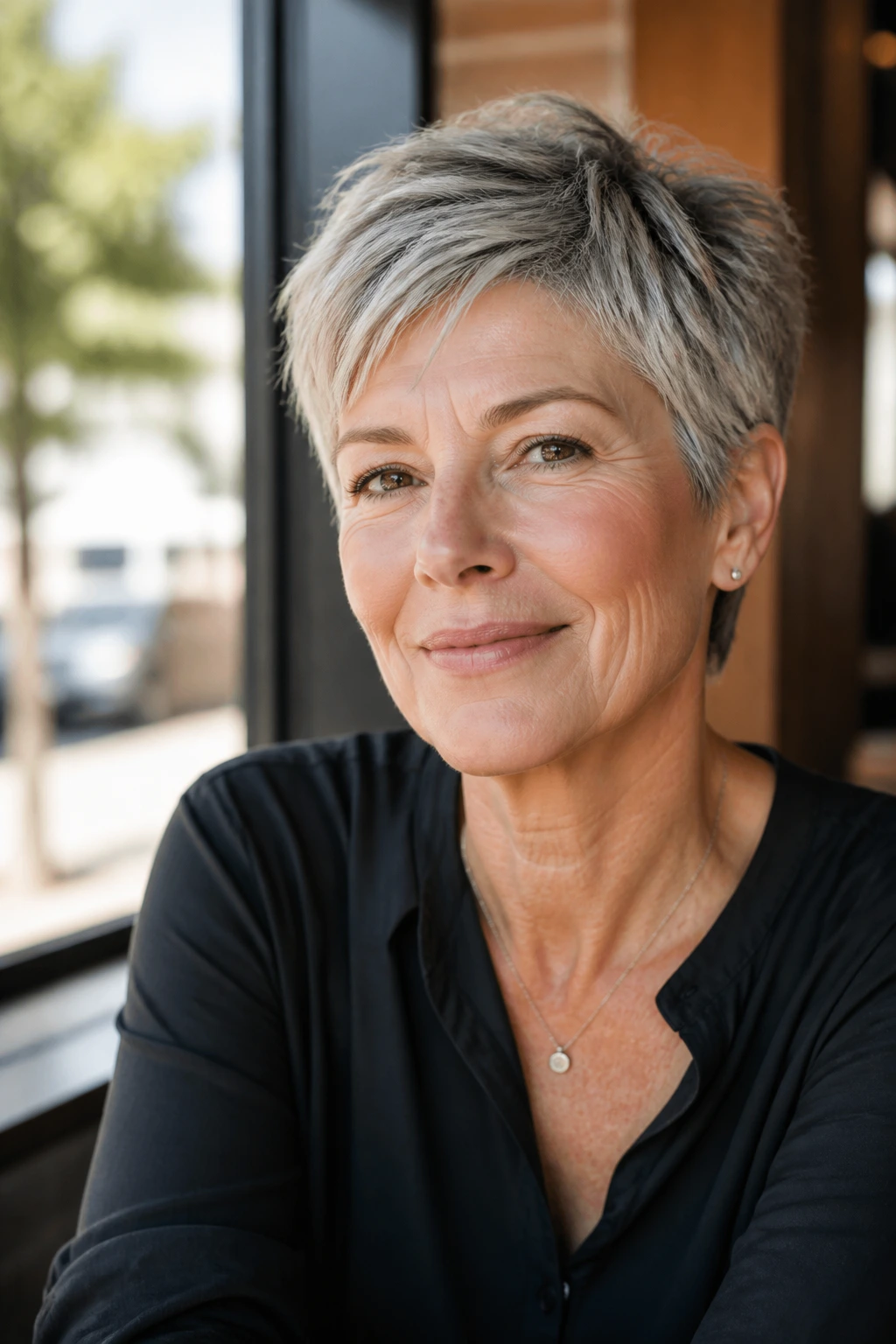
There’s something especially sharp about a cut designed to show off natural gray or white hair instead of hiding it. A tapered shape keeps the sides and nape neat, while the top holds enough length for the color to catch the light in clean sections.
The reason this works so well is simple: gray hair often has a different texture than pigmented hair. It can feel wirier, drier, or more prone to standing up. A tapered shape gives that texture a place to land, so it reads as texture, not chaos.
A styling choice that matters
Use a light glossing cream or serum, but only on the ends. Heavy oils can drag the top down and make silver hair look flat. A side part often makes this cut feel softer, though a center part can look bold if your face carries it well.
This is the kind of crop that can make the color look expensive without much effort. The cut does the work.
15. Rounded Crop With Lifted Crown
If your crown is starting to flatten, this is one of the smartest short options on the list. The sides stay close, the crown has some lift, and the overall shape reads as round and full rather than narrow or pasted down.
The trick is in the layering. You want enough internal length at the crown to push upward when you style it, but not so much that it collapses into a lump. It’s a balance, and a good stylist will know exactly where to leave the weight.
Who this suits
Women with fine hair, soft waves, or a cowlick at the back of the crown often do well here. The rounded shape can smooth out awkward growth patterns and make the head shape look more even.
A root-lift product at the crown and a quick blast of warm air from the dryer can change the whole silhouette. Small move. Big difference.
16. Chin-Length Bob With Layered Fringe
Chin length is one of those zones that flatters a lot of faces if the cut is handled with care. The bob sits near the jaw, the layered fringe keeps the front from feeling heavy, and the overall shape feels light enough to move.
This is a good choice if you want a little more hair around the face than a pixie gives you, but you still want a short, smart outline. Layered fringe is the key. It breaks up the forehead area and helps the bob blend into the face instead of sitting on top of it.
A nice detail
Ask for the fringe to be mobile. You want it to shift a little when you walk, not sit in a hard line like a curtain. That softness makes the whole haircut easier to wear every day.
If your hair flips outward at the ends, a light pass with a round brush and a cool shot from the dryer can calm it down without making the bob look flat.
17. Wedge Cut With Soft Stacking
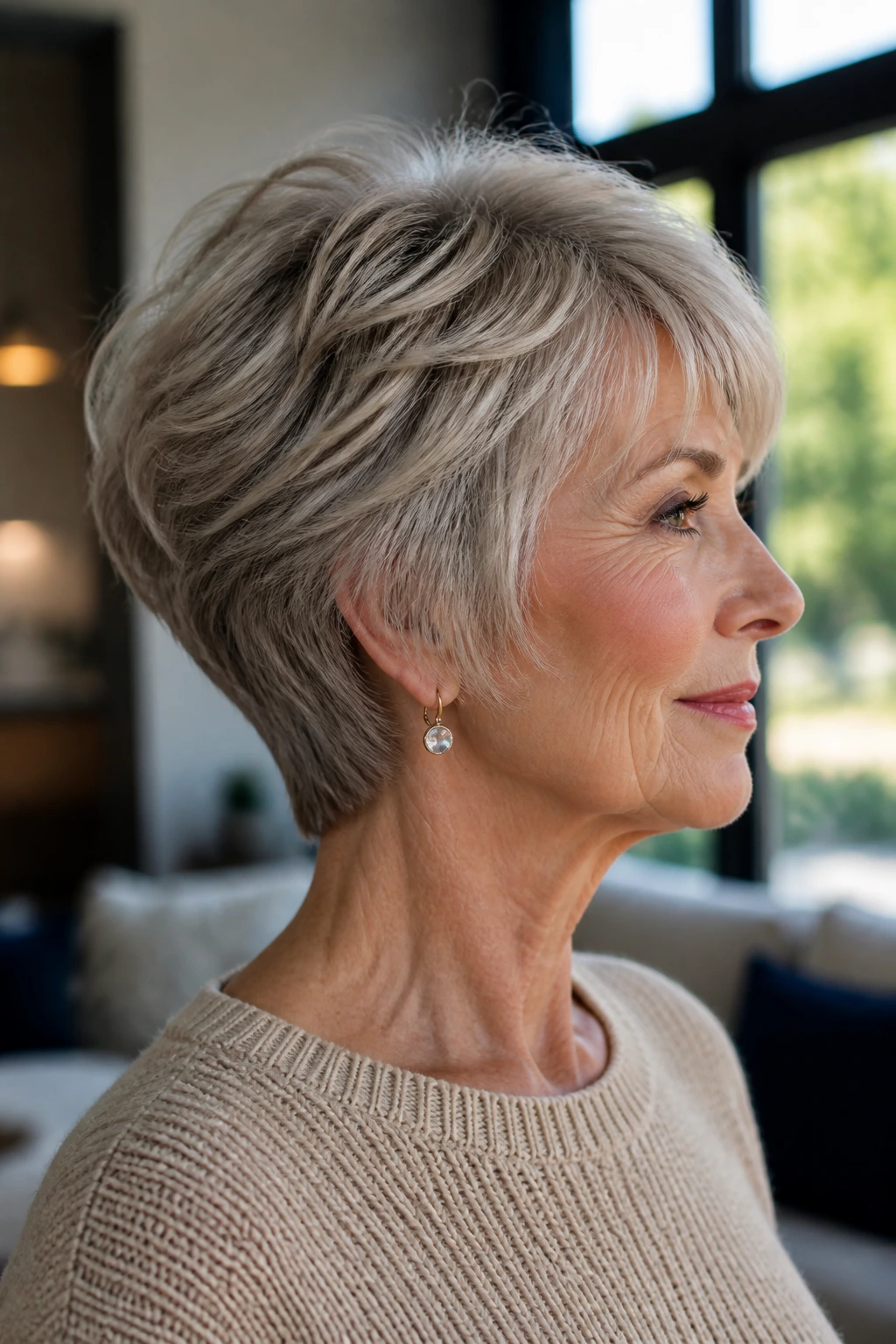
A wedge cut is still one of the best ways to build shape at the back without making the sides bulky. The stacking in the rear creates lift, while the front stays softer and a little longer, which keeps the haircut from feeling boxy.
This cut has real presence. It sits close to the head in the back, then opens slightly at the sides, so the neck looks longer and the profile gets a clean line. If you want short hair with obvious shape, not just short hair with less hair, this is one to keep in mind.
Best used when you want structure
The wedge asks for a bit of styling, but not much. Blow-dry the back first, using a brush to guide the curve, then smooth the sides into place. A little texturizing spray at the crown can keep the stacking from looking too helmet-like.
It’s a strong cut. That’s the appeal. It looks especially good with crisp earrings and a neat collar.
Why Short Hair Looks Better When the Shape Is Doing the Work
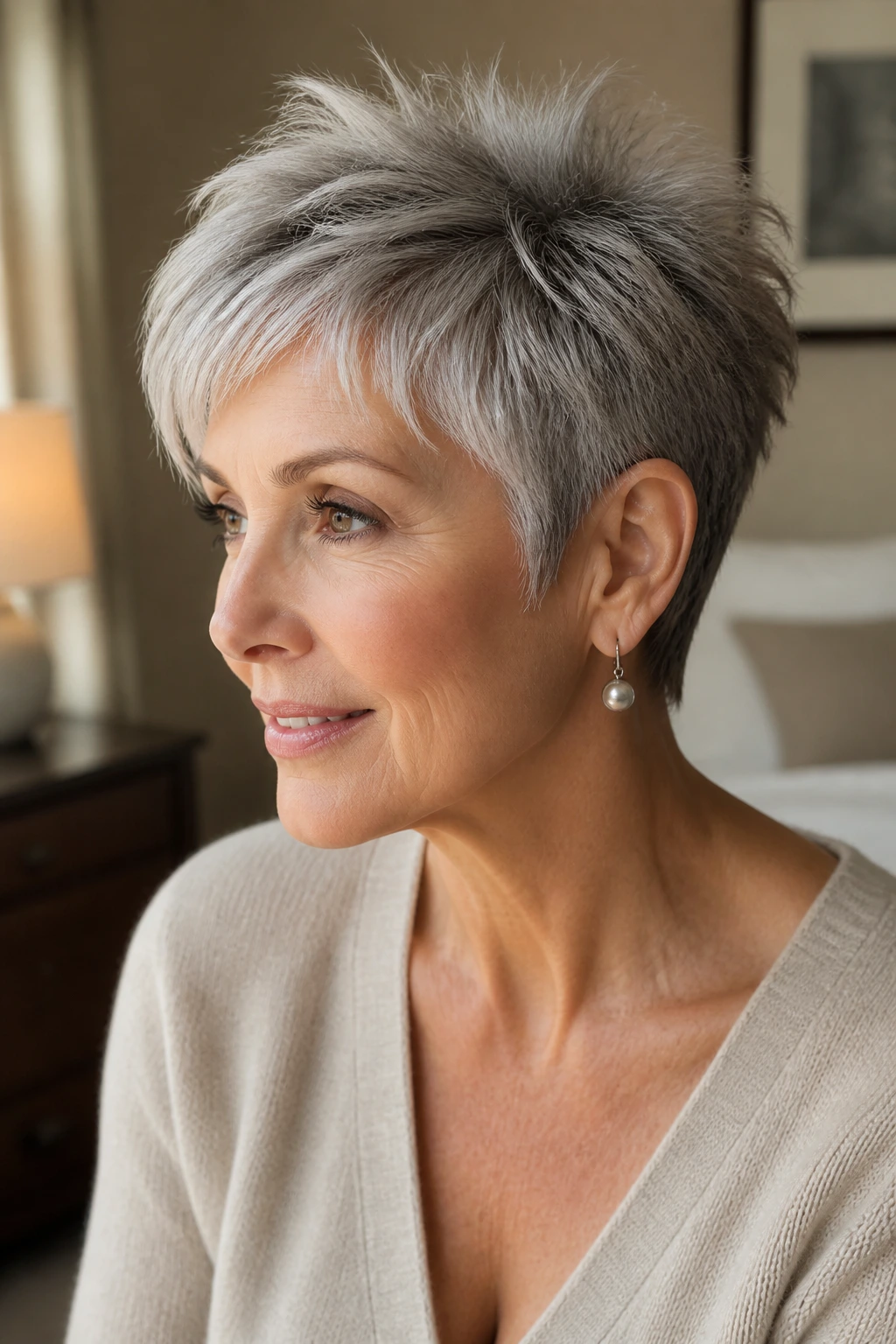
A lot of hair advice gets stuck on length, which is the wrong battle. Short hair works when the shape is doing something useful: lifting the crown, softening the jaw, opening the face, or removing bulk where the hair has started to fight back. Once those pieces are in place, the cut starts earning its keep.
Older hair often changes in ways people don’t expect. Some areas thin while others puff. Some strands get wirier. Some grow in flatter at the top and frizzier at the sides. A good short cut respects those changes instead of pretending they aren’t there. That’s why a pixie can look graceful on one woman and harsh on another; the detail lives in the angles, not the label.
I also like short cuts because they make gray hair look purposeful. Silver strands have a way of showing every blunt mistake. When the outline is clean and the layers are smart, the color looks crisp instead of accidental.
Essential Tools and Products for These Cuts
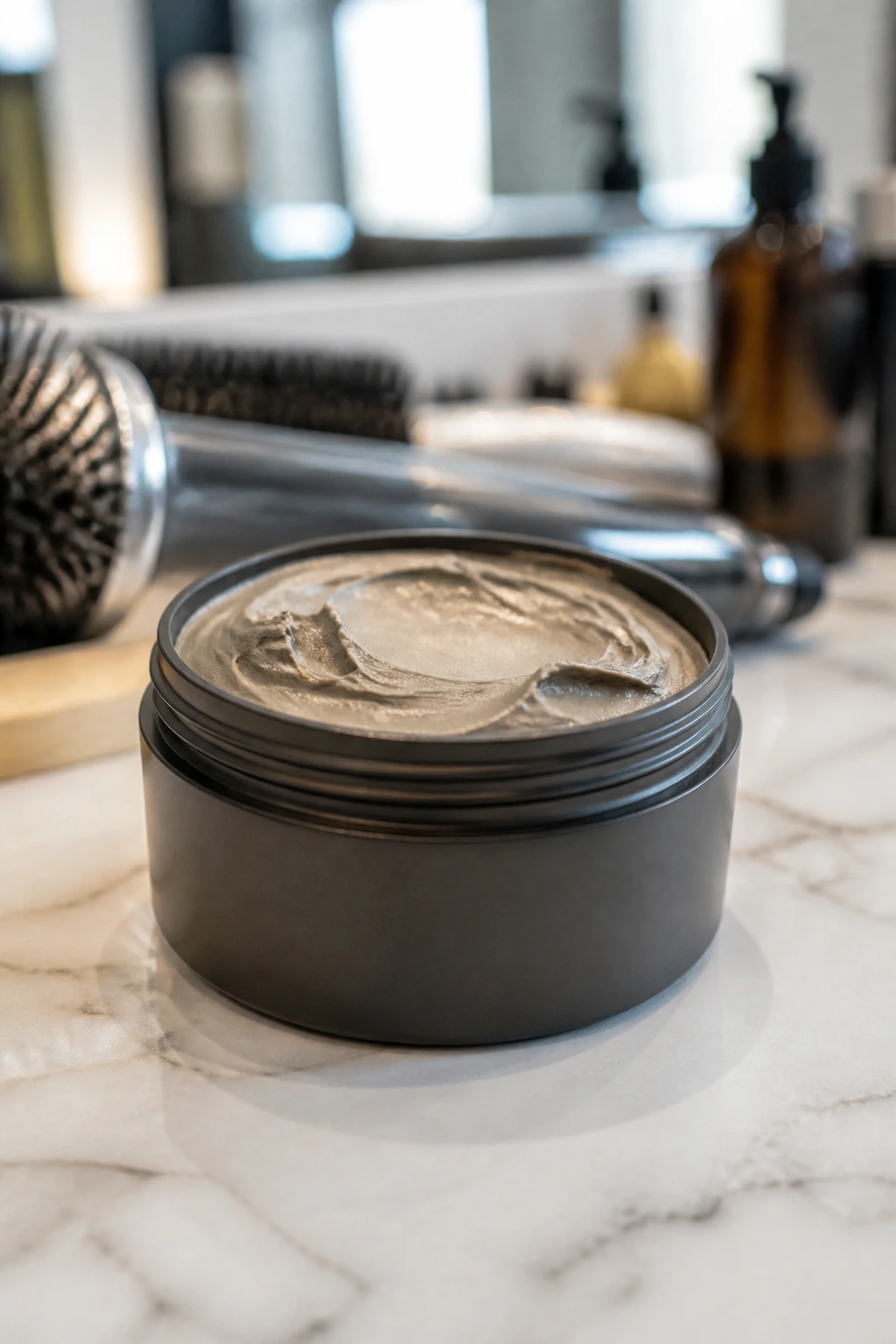
- A lightweight blow-dryer with a nozzle: The nozzle directs airflow to the roots and keeps the shape from frizzing out.
- A small round brush, around 1 to 1.5 inches: This is the fastest way to lift the crown and bend the ends under.
- A vent brush or paddle brush: Useful for quick drying on bob-length cuts and for smoothing without flattening.
- A matte paste or flexible wax: Best for pixies, bixies, and piecey crops when you want definition instead of shine.
- A root-lift mousse or spray: Helps fine hair stand up at the crown before drying.
- A smoothing cream or light serum: Handy for bob shapes that need a cleaner finish on the mids and ends.
- A tail comb: Makes parts cleaner and helps section the hair for better styling.
- Heat protectant: Necessary if you use a dryer, round brush, or flat iron more than once a week.
- A diffuser: A smart buy if your hair is wavy or curly and you want the shape to keep its bounce.
- Texturizing spray: Good for the piecey looks, but use a light hand or the cut can go dusty fast.
How to Choose the Cut That Fits Your Face and Hair
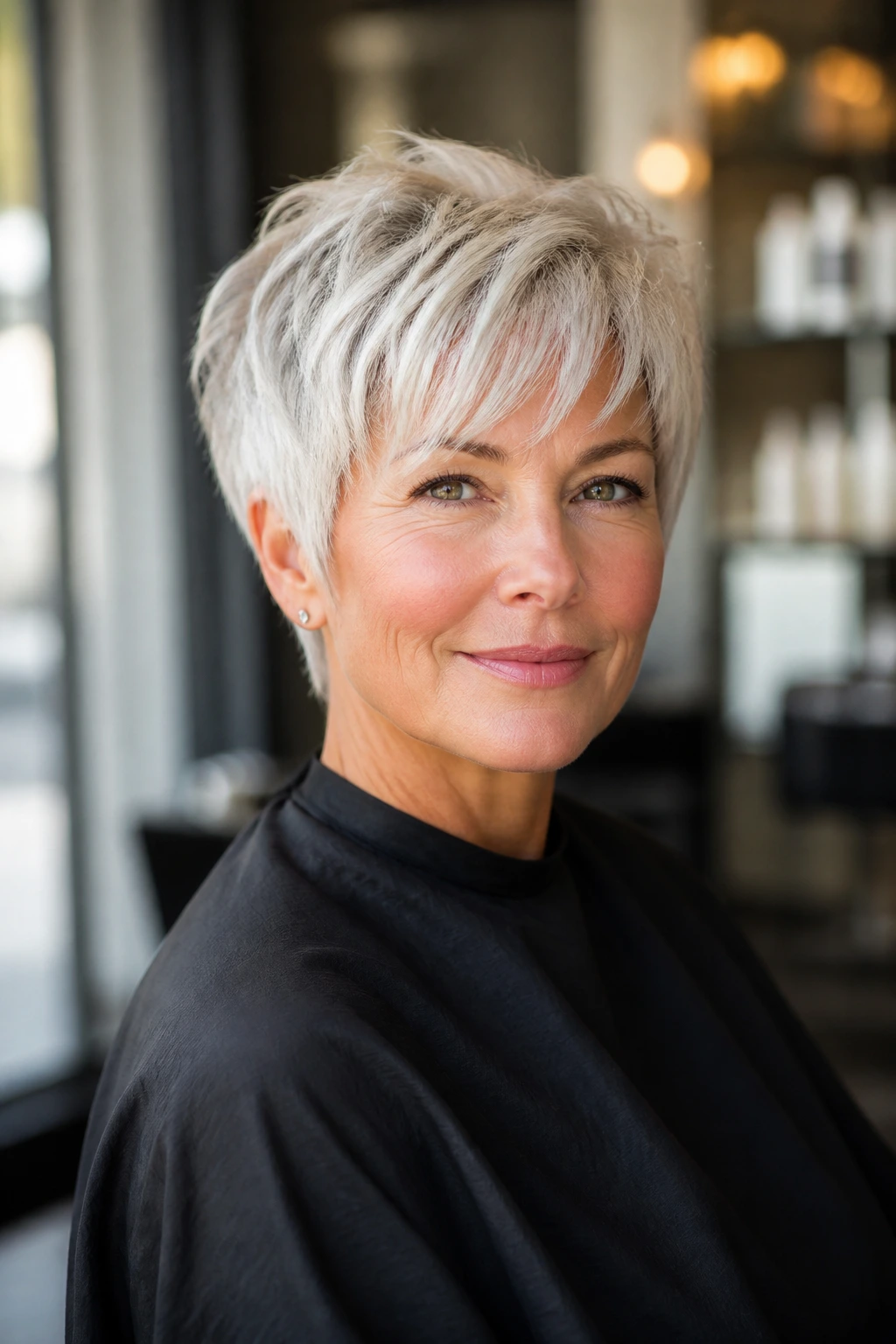
A flattering short cut starts with how your hair behaves when nobody is watching. Where does it fall flat? Where does it puff? Does the crown lift on its own, or does it need help? Those answers matter more than face-shape charts, which are useful only until they become dogma.
If your hair is fine, you usually want shape without too much thinning. Fine strands already have less bulk; if the stylist removes too much, the ends go see-through. If your hair is thick, bulk removal can be a gift, but only when it’s done with restraint. Over-thinning thick hair creates frizz and leaves the shape looking fuzzy after a few washes.
Bring photos, yes, but bring the right kind. Show the stylist the front, side, and back of the cut you like, then say which part you actually want: the fringe, the nape, the lift, the softness, the attitude. That keeps the conversation honest. A picture of a pixie is not enough if what you really want is the way the fringe falls.
How to Wear These Cuts Day to Day
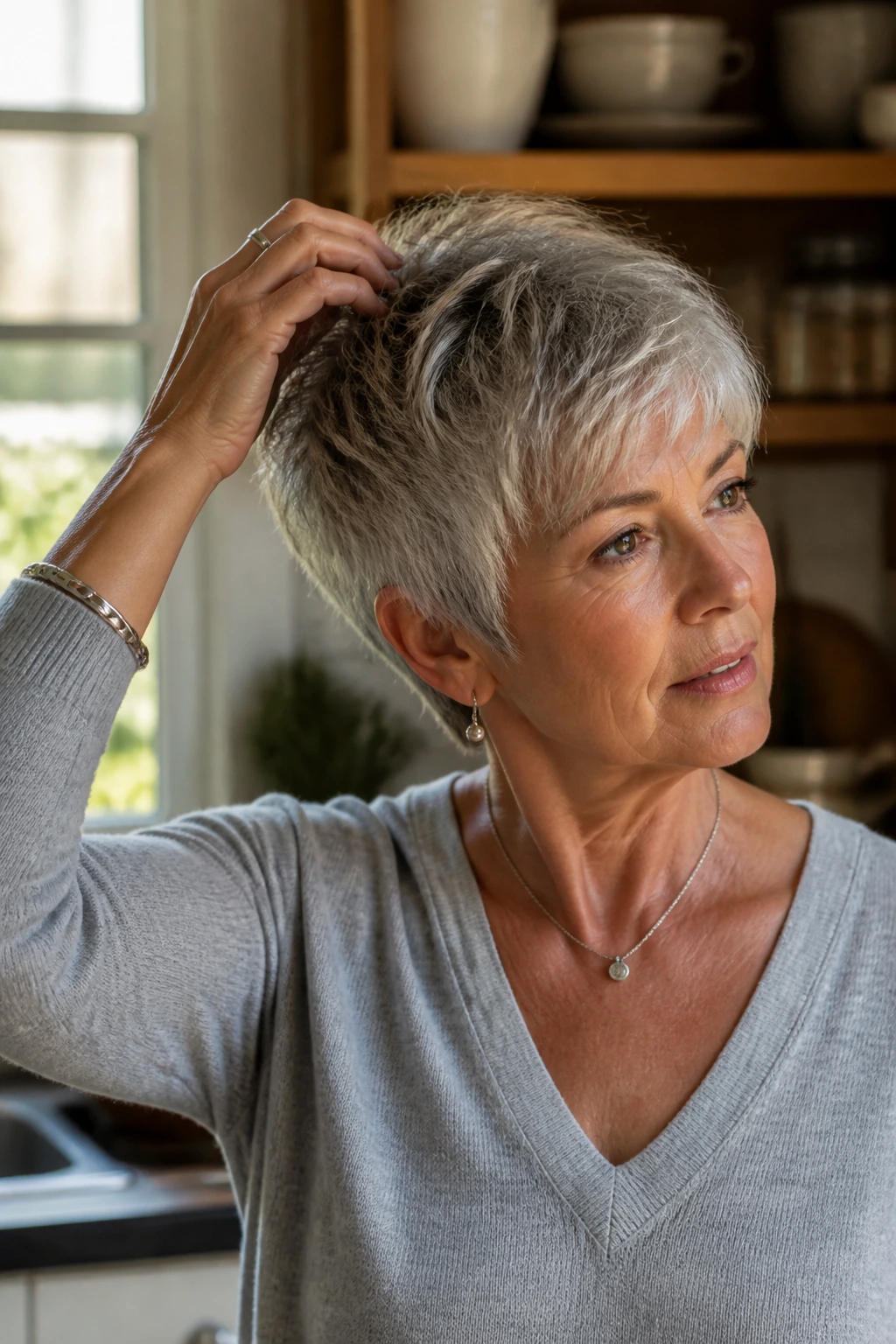
Volume: Start at the roots. A short cut lives or dies by the crown, especially on fine or aging hair that likes to sit close to the scalp. Dry the top first, not last, and lift the roots with your brush or fingers while the hair is still damp.
Texture: Use less product than you think. A dab of wax, a spray of texturizer, or a fingertip of styling cream is enough for most of these cuts. Heavy product weighs short hair down fast, and then all that clever shape disappears.
Finish: Decide whether you want crisp or soft and stick with it for the day. Crisp means cleaner parts, smoother ends, and a bit of shine. Soft means bent ends, airy layers, and finger-styled movement. Mixing the two without a plan usually looks muddled.
Accessories: Earrings, glasses, headbands, and clips matter more with short hair because there’s less fabric, so to speak, between the face and the rest of the outfit. A strong frame on the glasses or a good earring can make a simple crop feel finished.
Small Touches That Make the Cut Feel More Personal
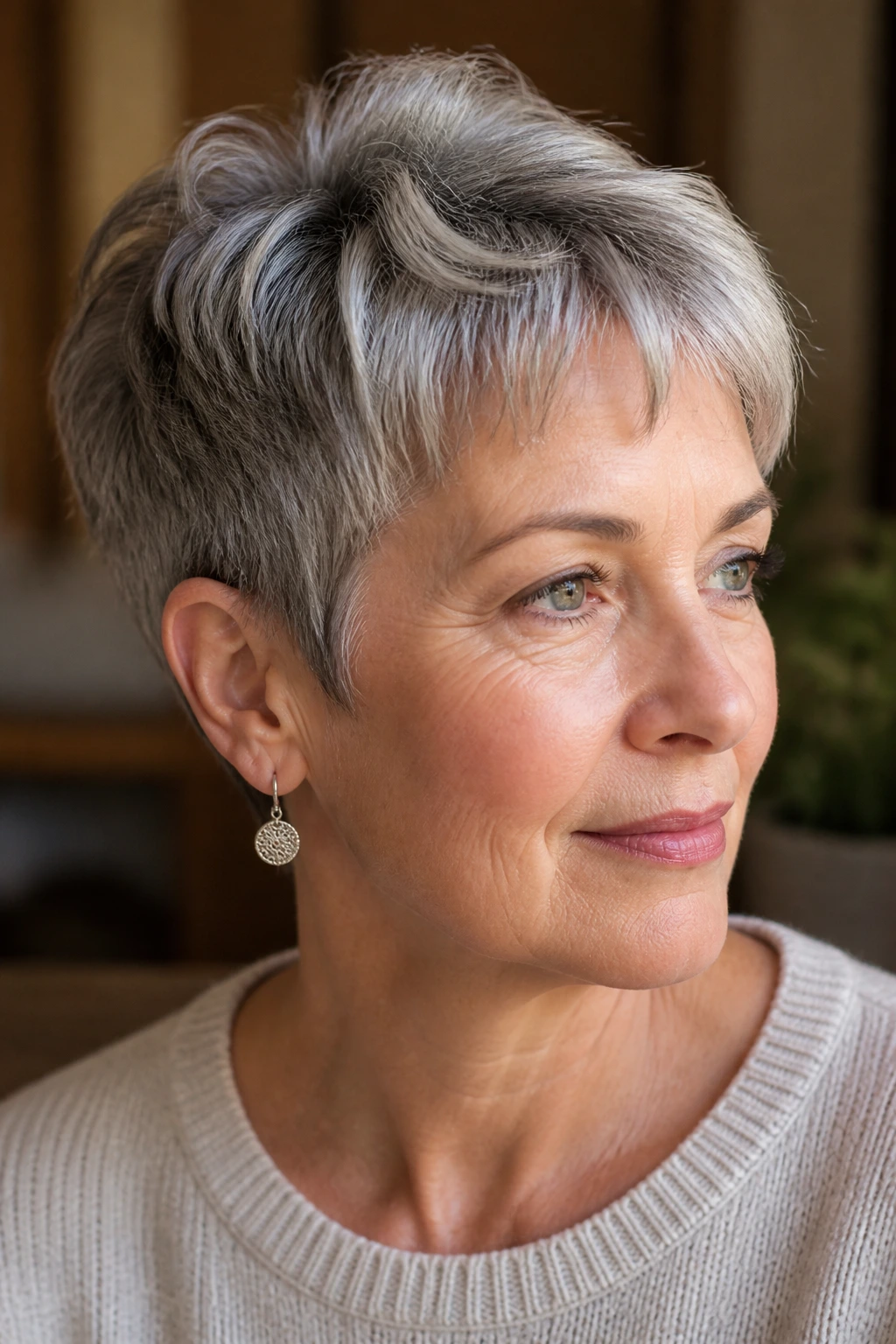
Gray Blending: A soft gloss or a few lowlights can add depth if silver hair feels one-note, but you don’t need to hide the gray to make the cut look rich. A clean shape plus healthy shine goes a long way.
Face-Framing Detail: If you want more softness, keep a little extra length around the cheekbone or temple instead of trying to fix everything with layers. One well-placed piece of hair can do more than three choppy sections.
Texture Match: Straight hair usually needs a bend or a bit of pieceiness so it doesn’t go flat. Wavy and curly hair often need a cleaner perimeter so the shape stays readable. Different hair, different job.
Accessory-Friendly Shape: If you wear glasses or love earrings, avoid a heavy side piece right where the frame sits. A small change around the temple can stop the cut from feeling crowded.
Common Mistakes That Make Short Hair Look Off
-
Too much thinning on fine hair: The cut looks wispy at first, then sparse at the ends after a few shampoos. Ask for shape, not damage control.
-
A fringe that ignores your cowlicks: If your bangs split open or kick sideways every morning, the cut will fight you. The fix is to work with the natural growth pattern, not against it.
-
Overloading the hair with product: Short styles go limp fast when paste, oil, and spray all show up at once. Start with a tiny amount and add only if you need it.
-
Leaving the nape overgrown: A short haircut starts looking shaggy in the back long before the front feels long. The neck line needs regular cleanup if you want the style to stay sharp.
-
Cutting the sides too close without balance on top: That’s how you get a head shape that looks pinched or top-heavy. The crown and side balance matter just as much as the length.
-
Choosing a shape that doesn’t match your styling habit: If you’ll never blow-dry, don’t choose a cut that depends on a round brush every morning. Be honest. The cut should fit the routine you’ll actually keep.
Variations and Adaptations to Try
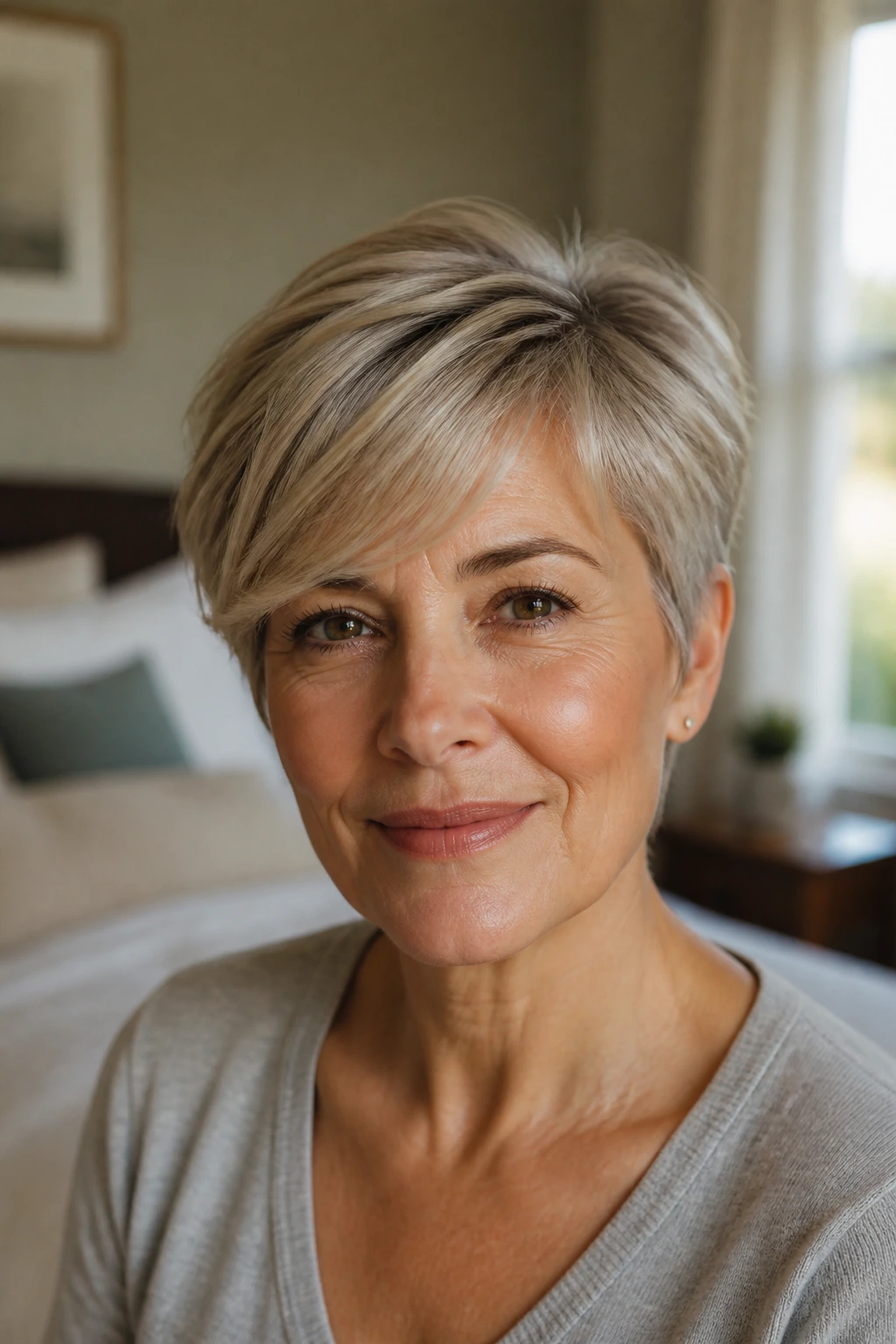
Soft Sweep Version: Keep the same short shape, but leave the front longer so it can be pushed across the forehead. This works well if you want a gentler look around the eyes.
Curly-Friendly Version: Ask for more length through the top and a cleaner taper at the sides. That keeps curls from stacking up into a mushroom shape.
Low-Maintenance Air-Dry Version: Choose layers that fall well on their own and avoid overly blunt lines that need daily heat to behave. This is a smart choice if your hair already has a workable bend.
Glasses-First Version: Keep the temple area slightly slimmer and the fringe lighter so the frames don’t fight with the haircut. It sounds small. It changes everything.
Bold Silver Version: Pair a crisp crop with a strong natural gray, pure white, or a cool gloss. The clean outline makes the color look deliberate, not neglected.
Rich Brown or Brunette Contrast: A soft shadow at the roots or a few deeper lowlights can add depth to short hair that looks flat under one solid color. The cut reads fuller when there’s some contrast in the strands.
Maintenance, Trims, and Grow-Out Guidance
Short hair needs a trim schedule, not wishful thinking. Pixies and bixies usually need cleanup every 4 to 6 weeks if you want the shape to stay crisp. Bobs, shags, and wedge cuts can often stretch to 6 to 8 weeks, sometimes a touch longer if the outline is forgiving.
Between appointments, keep the sides and nape neat. A neckline that grows out unevenly can make even a good haircut look sloppy. If your stylist offers a quick fringe or nape cleanup, it’s worth asking. Those small trims keep the whole style from tipping over into “I meant to get it cut soon.”
For washing, use a shampoo that doesn’t strip the hair into a squeaky, tangled mess. Short hair may dry faster, but it still needs moisture on the ends. A lightweight conditioner on the lower half of the hair is enough for many cuts, especially if the crown tends to flatten.
Sleep matters too. If your cut goes flat overnight, a satin pillowcase or a quick mist of water at the roots before styling can help the shape wake up faster. Not glamorous. Effective.
Frequently Asked Questions
What short haircut is best for fine hair?
A choppy pixie, tapered bixie, or feathered crop usually gives fine hair more body than a blunt cut with over-thinned ends. The trick is keeping enough weight at the perimeter so the hair doesn’t look see-through.
Can older women wear bangs with short hair?
Absolutely, but the type of fringe matters. Side-swept bangs and soft layered fringe are easier to live with than heavy, blunt bangs, especially if your hair has a cowlick or a strong part.
Is a pixie too severe for a round face?
Not if the top has lift and the sides aren’t cut too tight. A pixie with side-swept fringe or a bixie with longer front pieces can add diagonal lines that soften roundness.
What if my hair is curly and I want to go short?
Ask for the cut to be shaped around the curl pattern, not forced into a straight-line bob. Curly crops, tapered curls, and soft shags usually work better because they leave room for shrinkage and bounce.
How often do short styles need trimming?
Pixies can want a trim every 4 to 6 weeks, while short bobs and shags may hold shape for 6 to 8 weeks. Once the nape starts losing its line, the haircut can look grown out even if the top still feels manageable.
Can I still look soft with a short haircut?
Yes. Softness comes from fringe length, texture, and the curve around the face, not from keeping hair long. A blunt bob can feel softer than a fluffy layered style if the line is clean and the ends are bent under.
What should I tell the stylist if I wear glasses every day?
Say where the frame sits and ask for the temple area to stay clear. Short hair that crowds the glasses gets annoying fast, and a small adjustment around the ears usually fixes it.
How do I grow out a short cut without hating the in-between stage?
Keep the shape tidy while it grows by trimming the neck, edges, and fringe rather than letting everything go at once. A short cut grows better when it’s guided, not abandoned.
The Cut That Feels Like You
A good short haircut doesn’t try to hide age, texture, or personality. It gives those things a cleaner frame. That’s why the best short sassy haircuts for older women tend to look simple at first glance and smarter the longer you wear them.
The sweet spot is rarely the most dramatic option. It’s the cut that sits well on day two, clears your glasses, keeps a little lift at the crown, and still looks like you chose it on purpose when you’re in a hurry. That’s a good haircut. The rest is just length.
If you’re choosing one of these, start with the shape your hair already wants to make — then ask for a little more bite.
