



Gray hair looks for medium length hair over 50 work best when the cut stops trying to hide the silver and starts cooperating with it. That sounds obvious, but it’s the part so many people miss. Gray strands have their own texture, their own shine, their own stubborn little habits. Some go wiry at the temples. Some get drier at the ends. Some collect a soft smoke-colored sheen that looks expensive in daylight and oddly flat under bathroom lighting.
Medium length is the sweet spot because it gives gray hair room to move without dragging the face down. Too long, and the ends can look thin and tired. Too short, and you lose the little swing that makes silver look fresh rather than severe. Collarbone length, shoulder length, and long bob territory can do a lot of quiet heavy lifting here. They soften the jaw, keep the neck open, and give you enough hair to style without turning your morning into a project.
The really good looks in this category do one of two things: they either sharpen the silver with a clean line, or they soften it with bend, feathering, and shape. The flat, shapeless version is what ages people. Not gray hair itself. Gray hair with no plan.
Why This Collection Feels Fresh Instead of Fussy
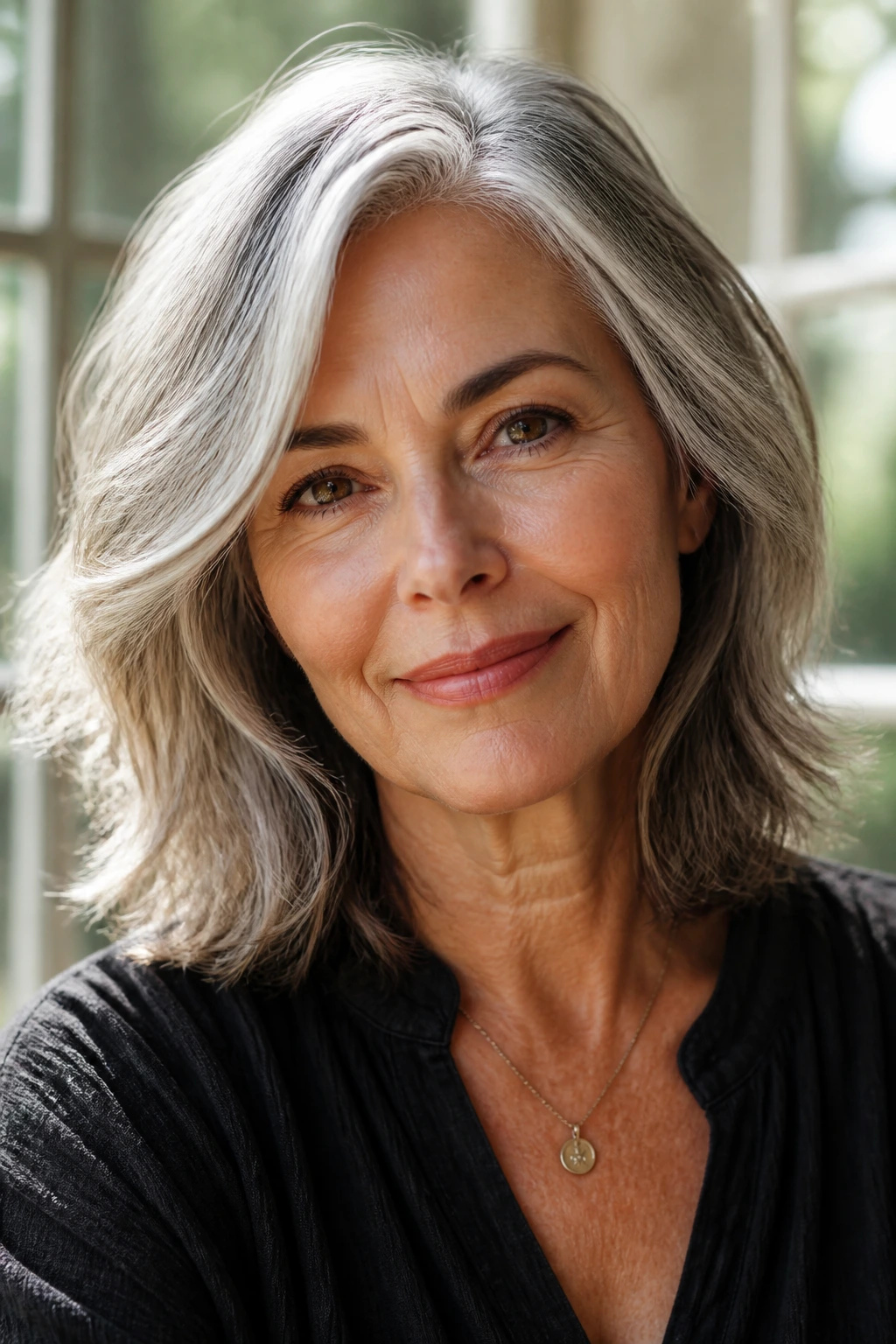
Shape first, color second: The best gray styles here use the cut to build movement, so the silver shows up with intention instead of hanging there like an afterthought.
Medium length is forgiving: Hair at the collarbone or shoulder can be tucked, waved, pinned, or blown smooth without needing a full salon set.
Grow-out stays kinder: Most of these looks hold their shape for weeks, which matters when you do not want a harsh line every time the roots come in.
Texture gets room to breathe: Gray strands often behave a little differently than pigmented hair, and these looks work with that change instead of fighting it.
You can adjust them fast: A round brush, a flat iron, or a curl wand changes the mood in minutes, which makes this length useful in real life, not just in photos.
Why Gray Hair and Medium Length Hair Work So Well After 50
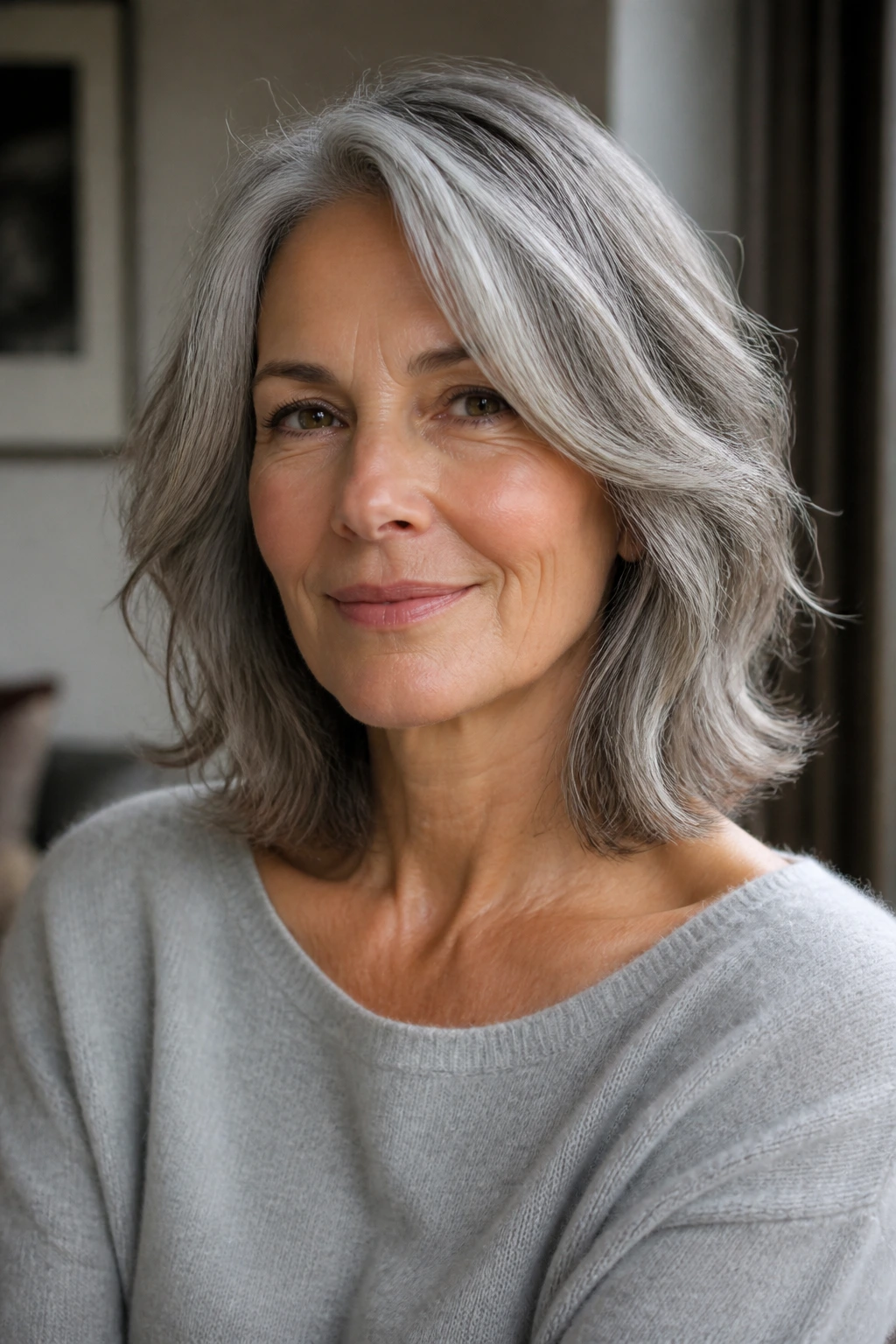
Gray hair and medium length hair have a good working relationship because each one balances the other’s weak spots. Gray can be dry, coarse, or slightly puffy at the ends. Medium length adds enough weight to keep that from turning into a halo. At the same time, gray brings brightness and contrast, which keeps a shoulder-length cut from looking flat the way some dark, one-length cuts can.
There’s also a face-shape piece here that gets ignored too often. Hair that lands around the collarbone can skim the jawline, soften the neck, and keep the whole silhouette from feeling boxy. That matters more after 50, when a cut that sits too high on the cheekbone can start to look hard, and one that hangs too low can pull everything downward. Medium length sits in the middle and behaves itself.
The other reason this pairing works is movement. Gray hair tends to show light differently, so every layer, bend, and flip-out end becomes part of the shape. A blunt line makes the shine look sleek. Feathering makes the silver look softer. Waves make salt-and-pepper color look dimensional instead of patchy. That’s the trick. Not hiding the gray. Giving it a better stage.
1. Soft Silver Lob with Internal Layers
A lob that lands just below the collarbone is one of those cuts that looks calm even when the hair itself isn’t. The internal layers remove bulk without turning the ends into wisps, so the shape keeps some swing. On gray hair, that matters because the color already brings brightness; you do not need the cut to add chaos.
Why it works on silver strands
The clean outer line keeps the style polished, while the hidden layers stop it from feeling heavy around the shoulders. If your gray hair puffs at the sides or flips out unpredictably, this cut reins it in without flattening it to the head. A quick blow-dry with a medium round brush is enough for many people.
- Ask for the longest layer to stay near the collarbone.
- Keep the front pieces a touch shorter so they sweep toward the face.
- Use a pea-sized amount of smoothing cream only on the mid-lengths and ends.
- Finish with a light gloss spray, not a sticky serum.
The best version of this lob looks expensive in daylight and still behaves when you tuck one side behind an ear. That little bit of movement is what keeps it from feeling stiff.
2. Feathered Shoulder-Length Cut with Side-Swept Bangs
Feathering beats bluntness when the goal is softness. A shoulder-length cut with side-swept bangs gives gray hair movement around the forehead, which is where a lot of people start worrying about heaviness after 50. The bangs do not need to be thick. In fact, the lighter they are, the better they blend.
This look works because the side-swept fringe breaks up the face without hiding it. If the temples are going lighter than the rest of the hair, the bang line softens that transition. It also plays well with glasses, which is no small thing. A fringe that sits too low fights with frames. A feathered one sits near the brow and behaves.
Style it with a vent brush while the bangs are still damp, and direct them away from the stronger side part. If you let them dry in the wrong direction, they will fight you for the rest of the day. Gray hair has memory, and not always the helpful kind.
3. Blunt Collarbone Cut with a Glassy Finish
Why does a blunt cut look so good on gray hair? Because a clean line makes the silver feel deliberate. It turns the color into the feature instead of letting the ends wander around and look sparse. If your hair is fine or medium-fine, this is one of the smartest medium-length choices you can make.
The key is precision. The line should skim the collarbone, not sit an inch above it. That tiny difference changes the whole feeling of the cut. Too short and it starts to act like a box. Too long and you lose the clean edge that makes the style work.
What to ask for at the salon
Keep the perimeter blunt, but ask for very light internal texturing only if your hair is thick enough to need it. Then style with a blow-dryer nozzle and a flat brush so the ends lay smooth. A finishing balm or a tiny bit of serum on the last two inches gives the cut that glassy surface people notice from across a room.
This is the look for someone who likes structure. Not stiffness. Structure. There’s a difference, and your stylist should know it.
4. Curly Gray Shag with Airy Fringe
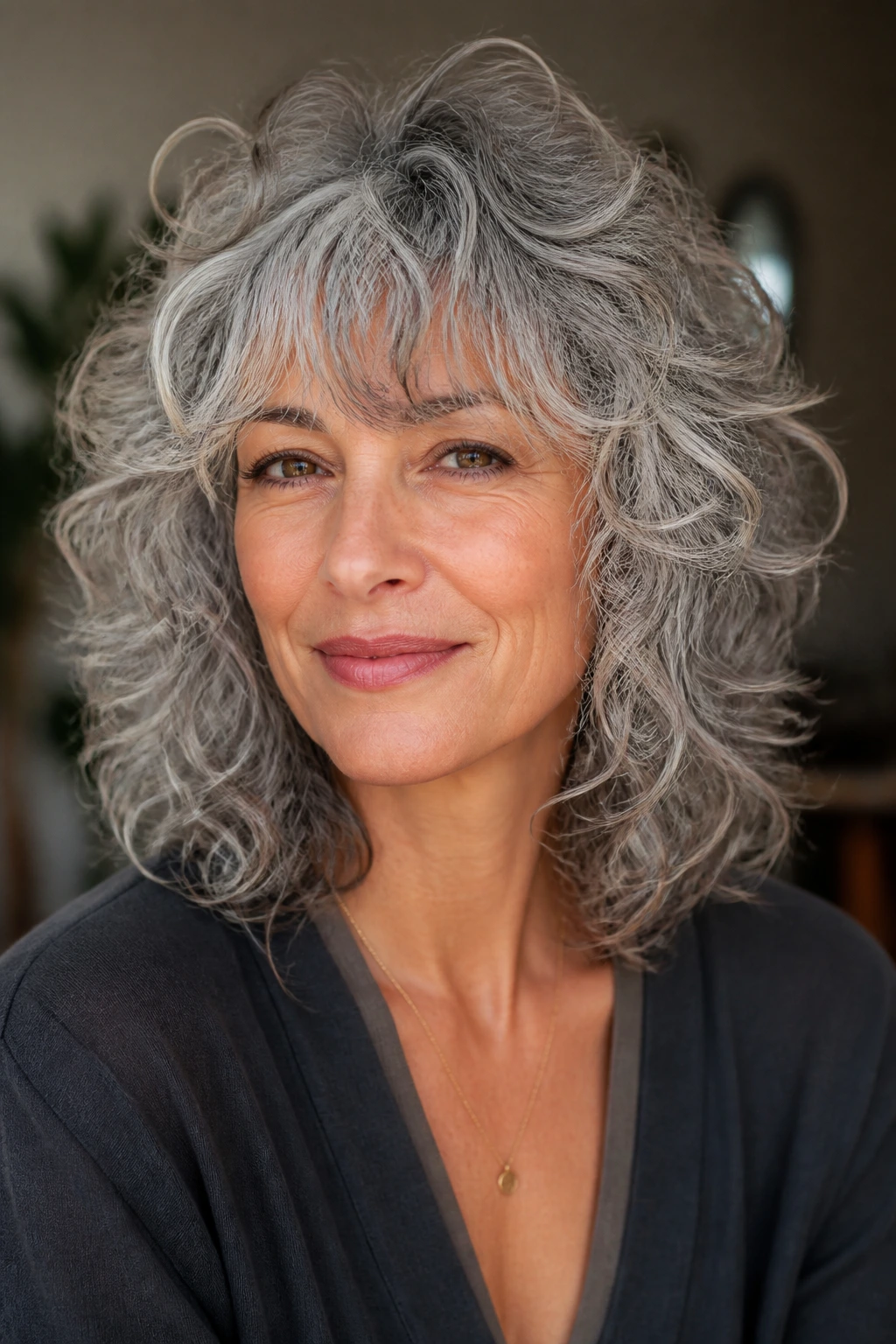
If your curls have gotten a little less predictable, a shag can be the fix that stops the whole shape from collapsing into a pyramid. Gray curls often come in drier and springier than the hair you had at 35, and a good shag gives them room to stack without crowding the face.
The airy fringe is the part that makes this feel current. It does not need to be blunt. A soft, broken fringe gives the forehead some coverage and keeps the style from looking too heavy at the top. That’s a common mistake with curly gray hair: too much weight at the crown and too much width at the bottom.
Best for: wavy to curly hair that wants definition without a perfect curl pattern.
Styling move: scrunch in leave-in conditioner, then diffuse on low heat until the roots are dry and the ends still have a little softness.
Watch for: overly short crown layers. They can make curls stick up in weird places.
This cut has a little attitude, which is part of the appeal. Gray hair does not have to be polite.
5. Deep-Side-Part Wavy Lob
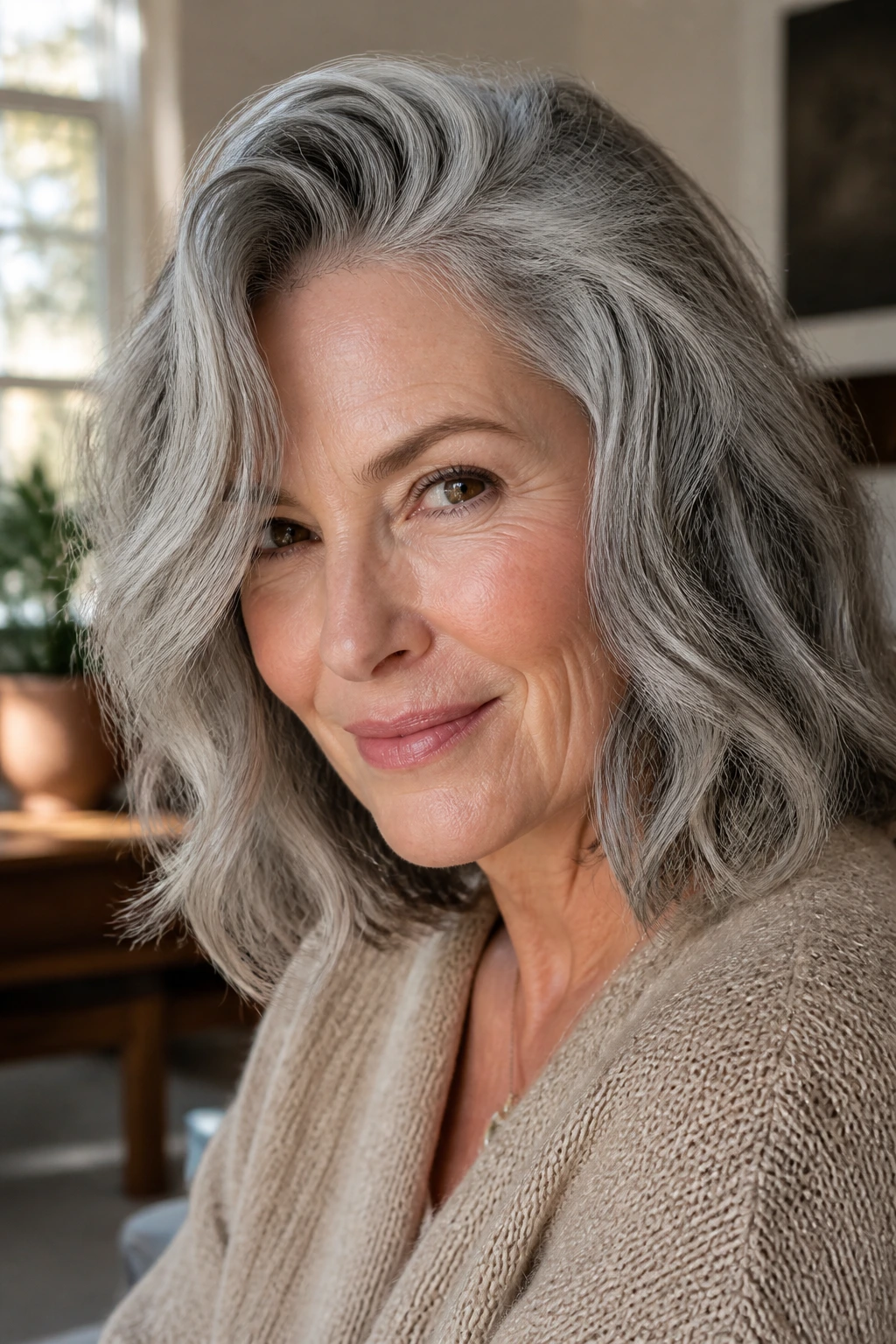
A deep side part changes the whole face before you even touch the rest of the hair. It gives instant lift at the root on the heavier side and creates a soft sweep across the forehead on the other. For medium-length gray hair, that asymmetry is useful because it breaks up any flatness around the crown.
Waves keep the style from looking too fixed. You want a bend, not a tight curl. A 1.25-inch curling iron or a flat iron wave technique does the job if you wrap away from the face and leave the ends out for a straighter finish. That little inconsistency is what makes it look lived-in instead of salon-stamped.
There’s also a practical bonus: this style grows out without getting ugly. The side part shifts a little, the waves loosen, and the lob still reads as intentional. That matters more than people admit. A cut that looks decent on day 1 and day 18 is worth more than a dramatic one that falls apart by Tuesday.
6. Collarbone Bob with Face-Framing Pieces
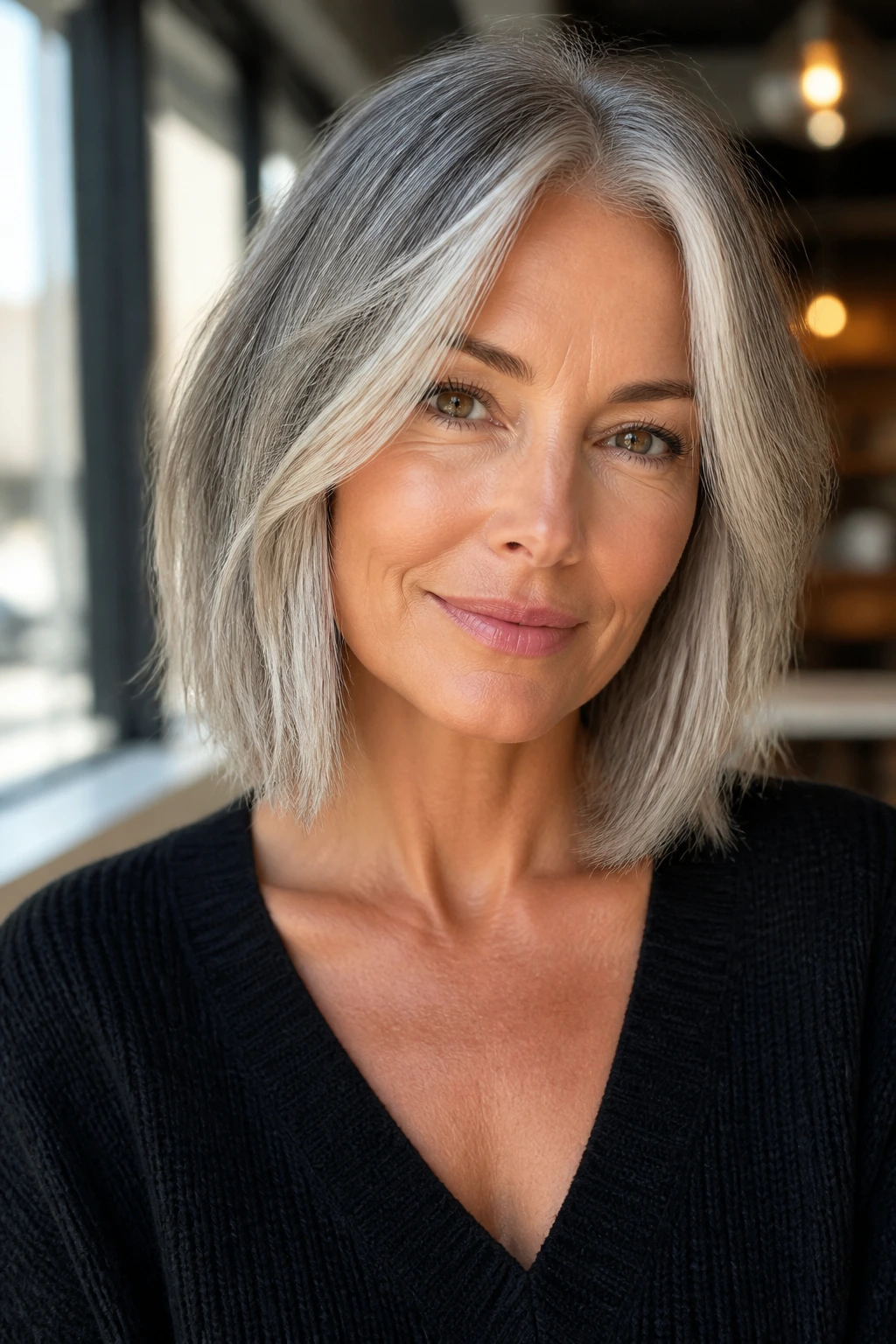
A collarbone bob is a nice compromise for anyone who wants some length but not the drag of long hair. The face-framing pieces matter here. They should start around the cheekbone or just below it and angle toward the collarbone, not fall like two random curtains.
This is one of those cuts that looks simple until you wear it for a week. Then you realize how much work the right length does. It can be tucked behind the ears for polish, left loose for softness, or bent slightly under at the ends if you want a neater outline. Gray hair often looks better when the ends are clean and a little lighter in feel, and this cut plays into that.
If your hair has a natural wave, let it show. Do not iron it to death. If it’s straight, a soft inward bend at the front pieces gives the face a frame and keeps the overall shape from feeling too flat. The whole point is easy structure, not perfection.
7. Layered Blowout with Full Movement
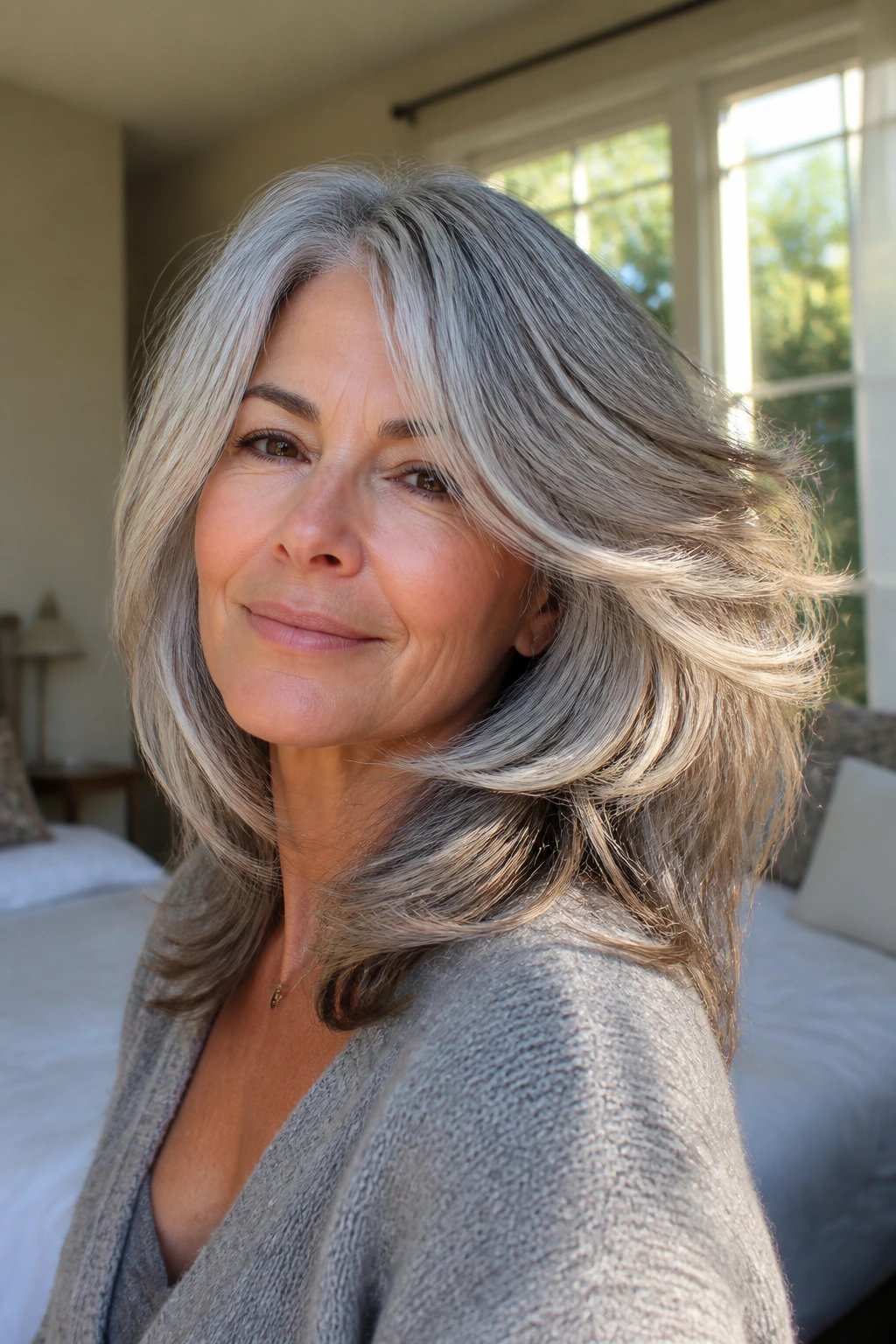
Some mornings call for hair that looks like it was styled on purpose, even if you only had ten minutes and one half-cooled cup of coffee. A layered blowout gives medium-length gray hair that kind of polished movement without locking it into one shape.
The layers should be long enough to keep the ends full. Short choppy layers can make gray hair frizzier, especially if it’s already coarse. Long layers, on the other hand, let the hair swing when you turn your head and keep the finish smooth around the shoulders.
- Use a round brush with a barrel close to 1.5 inches.
- Direct the roots up and away from the scalp for volume.
- Roll the ends under or out, depending on your face shape.
- Set the front pieces with clips while they cool so they hold their bend.
This look is especially useful if your gray hair tends to lie flat on day two. A quick blast at the roots brings it back to life fast.
8. Dimensional Salt-and-Pepper Layers with Lowlights
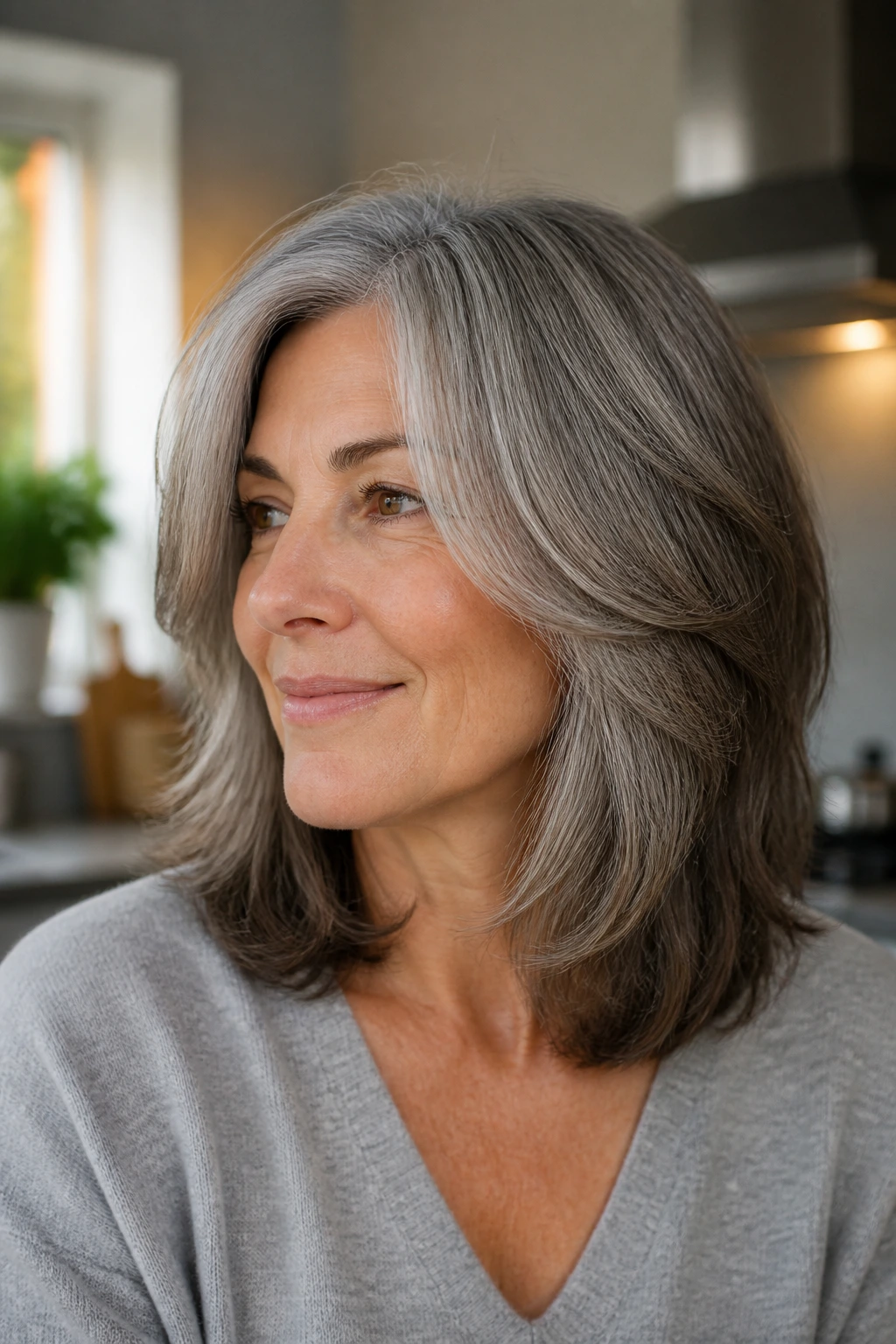
Gray hair that is still transitioning from dye often looks better when the color has a little depth. That’s where lowlights help. A few cooler, deeper strands placed under the top layer can keep the silver from reading as one flat sheet. The result is more like smoke and pewter than one solid block of gray.
This is a very good move for medium-length hair because the layers already create a natural place for color to live. A colorist can weave lowlights through the underside and around the back so the brightness on top stays clean. If the lowlights are too warm, though, the whole thing can turn muddy. Ask for ash-brown or cool beige tones if your natural gray leans silver.
How to use it
Wear the hair in loose bends or soft waves. The movement reveals the color variation and keeps the roots from looking harsh. Straightening it pin-straight can make the color placement less obvious, which defeats the point a little.
If you’re growing out dye, this is one of the easiest looks to wear. It buys you time. And time, in hair, is not a small thing.
9. Textured Mid-Length Cut with Piecey Ends
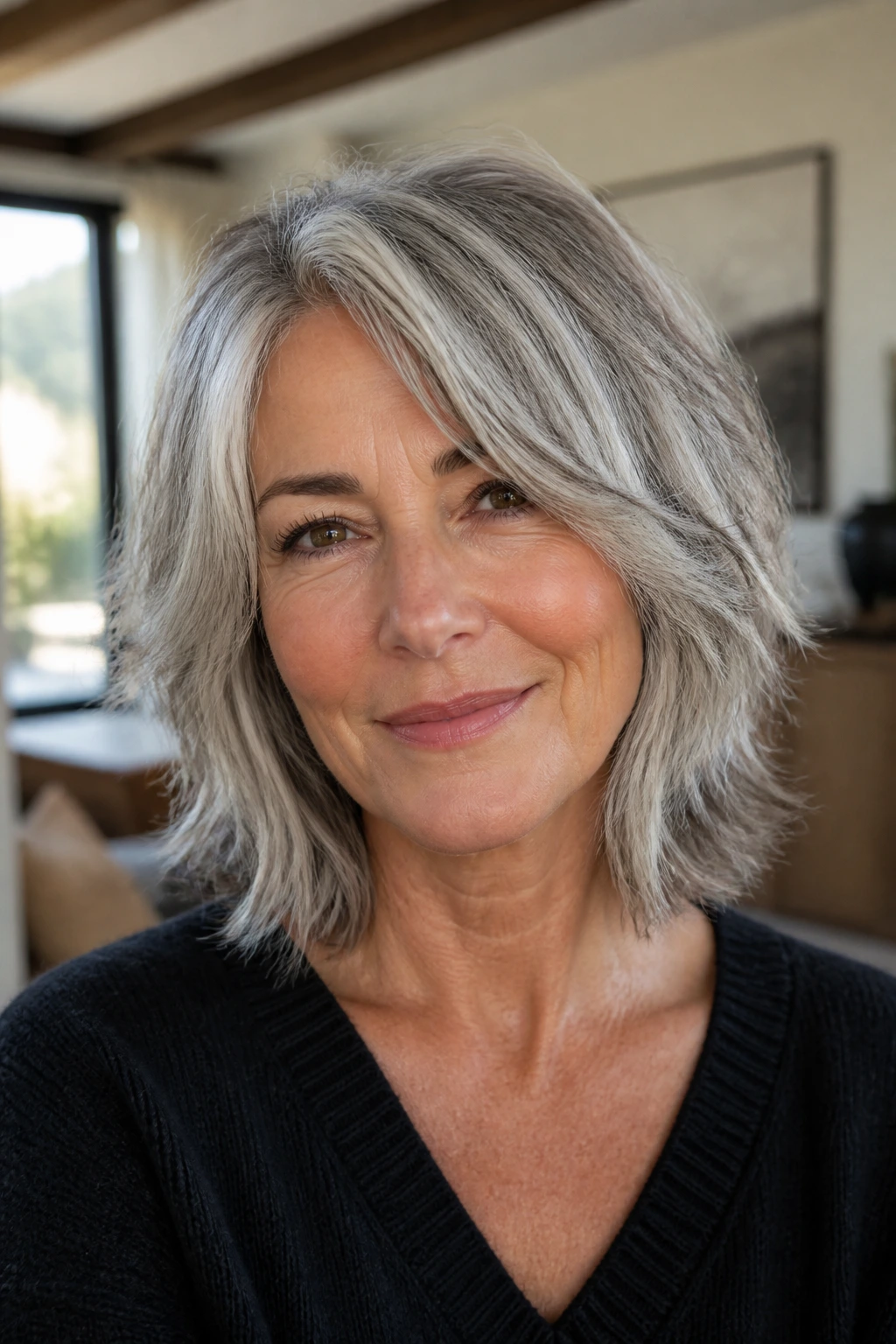
Not every gray style needs to be smooth and polished. Sometimes the best move is to let the ends look a little broken up. A textured mid-length cut with piecey ends gives silver hair an edge that keeps it from looking too serious.
This style is especially good if your hair is thick or has a little natural bend. The texture stops the weight from piling up at the bottom. It also makes the gray pieces catch light in different ways, which is where medium length shines. A uniform cut can make salt-and-pepper color look flat. Piecey ends add motion.
Use a small amount of matte paste or light wax on dry ends, then twist a few sections between your fingers. Not all of them. Just enough to create separation. Overdoing it will make the hair look crunchy, and nobody needs that.
The mood here is relaxed but not sloppy. That balance is hard to fake, which is why this look works.
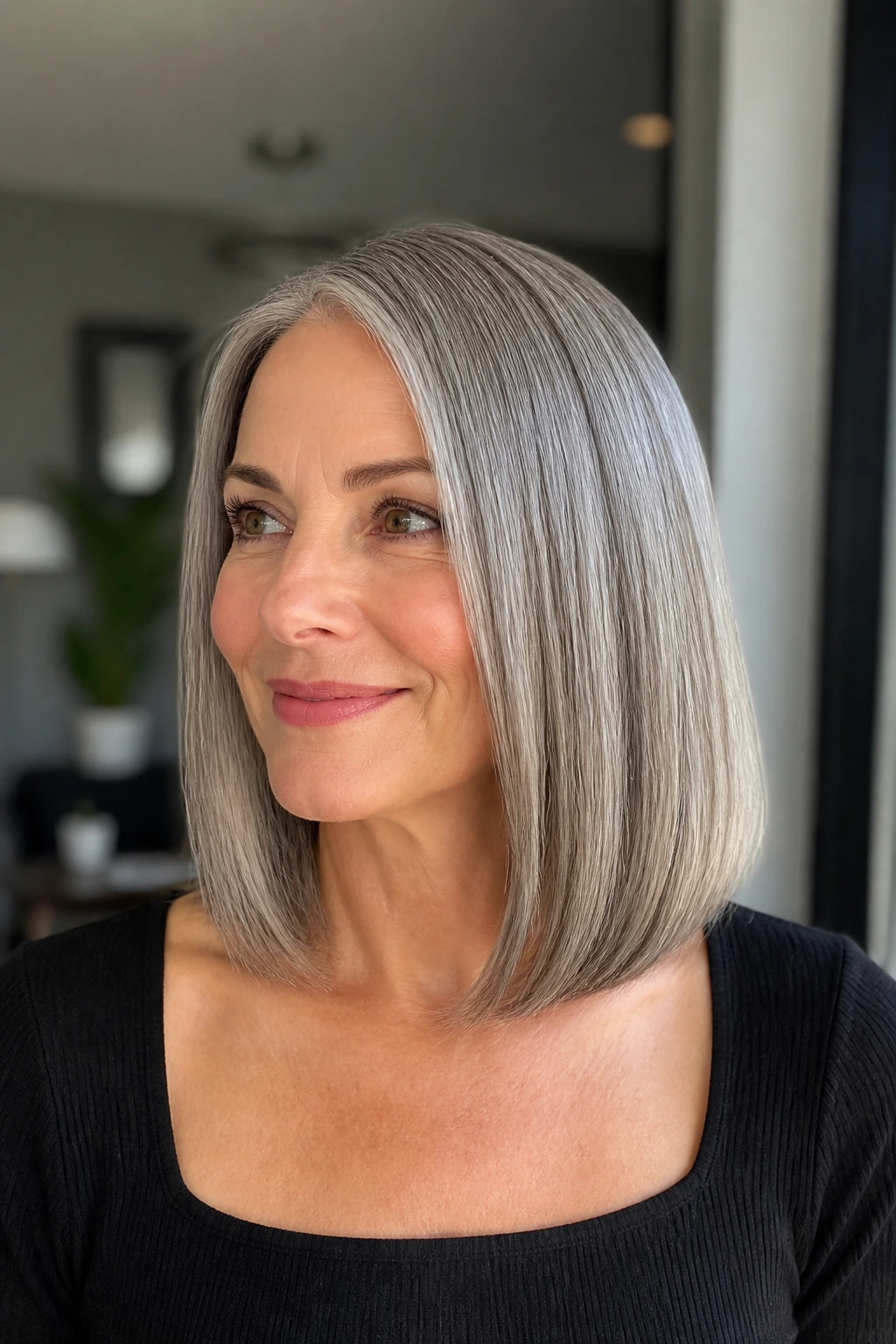
10. Sleek Center-Parted Silver Length
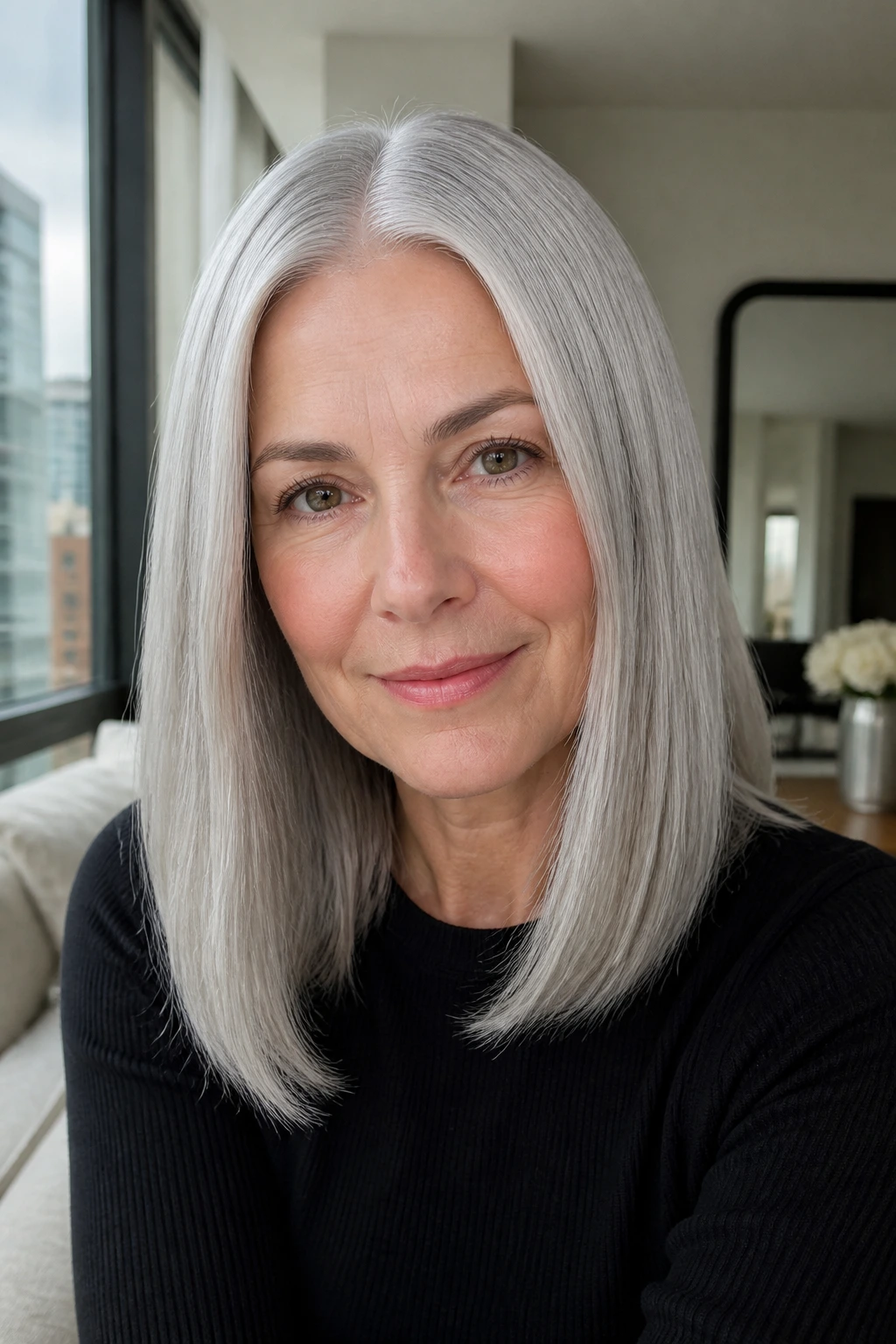
A center part on gray hair is bold in the quietest possible way. It creates a straight line that lets the silver shine instead of scattering attention all over the place. If your hair is naturally straight or only slightly wavy, this can look striking at shoulder length.
The trick is control. The middle part needs to be clean, and the hair should be smoothed with a brush or flat iron so the ends fall evenly. If one side flips out and the other stays flat, the whole point disappears. Gray hair can get a little fluffy at the surface, so a light anti-frizz cream before blow-drying helps more than people think.
This style is not for everyone. If your face shape already feels long, a center part can stretch it more. But on oval, heart, or angular faces, it can be elegant in a sharp, modern way. The silver hair does the talking here. Nothing else needs to shout.
11. Soft Curls Tucked Behind the Ear

Soft curls tucked behind the ear are one of those looks that feels casual even when it took actual effort. The hair sits at medium length, curls fall loosely around the cheekbones, and one side gets tucked back to show the jawline and the earring situation. That last part matters more than people admit. Silver hair and a good earring are old friends.
Use a 1.25-inch curling iron or a large hot brush to create bends rather than tight spirals. Then break the curls up with your fingers once they cool. Gray hair tends to hold a curl a bit differently from pigmented hair, so a light-hold spray is usually enough. Heavy hairspray makes it stiff fast.
This is a nice dinner-out look, but it also works for daytime because the tucked side keeps hair off the face. A small move. A big effect.
12. Asymmetrical Lob with a Clean Edge
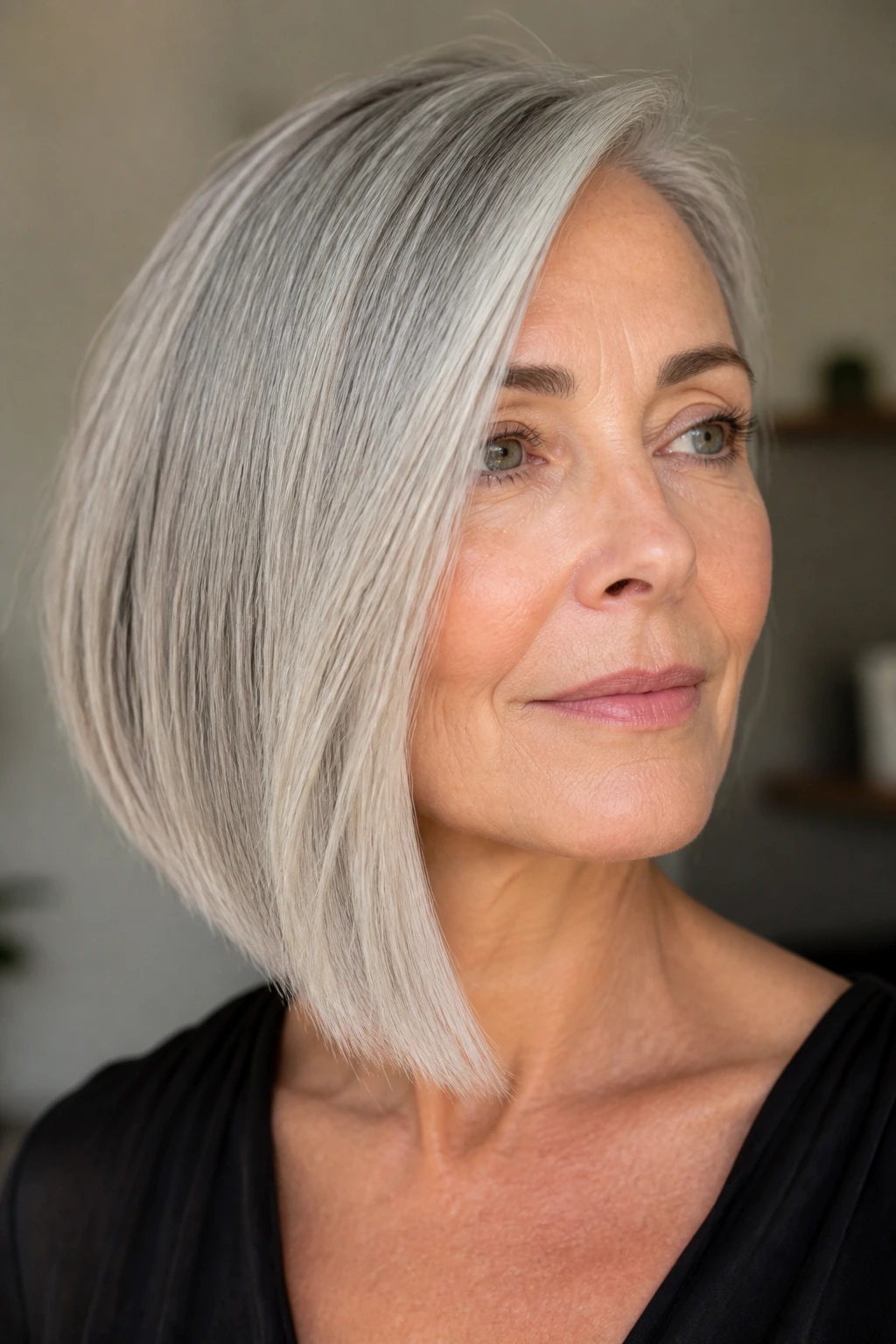
An asymmetrical lob has one thing going for it that a lot of medium-length styles don’t: instant interest. One side is a touch longer, the other side sits slightly higher, and the whole cut feels deliberate even when you haven’t styled it much.
What makes it different
The asymmetry draws the eye downward and sideways, which is useful if you want to soften a round face or add some sharpness to a softer jaw. It also gives gray hair a little visual tension. That’s a good thing. The eye follows the line, then notices the color.
Who it fits
It works best on straight or lightly wavy hair that can show the length difference clearly. If your hair is very curly, the asymmetry can disappear unless the cut is done with the curl pattern in mind. Ask your stylist to check it dry, not only wet.
How to wear it
Keep the surface smooth and the ends blunt enough to stay visible. A little bend at the front can soften the shape, but too much curl hides the whole point. This is a cut for people who like a modern outline without a lot of maintenance noise.
13. Wispy Bangs and Shoulder-Length Layers
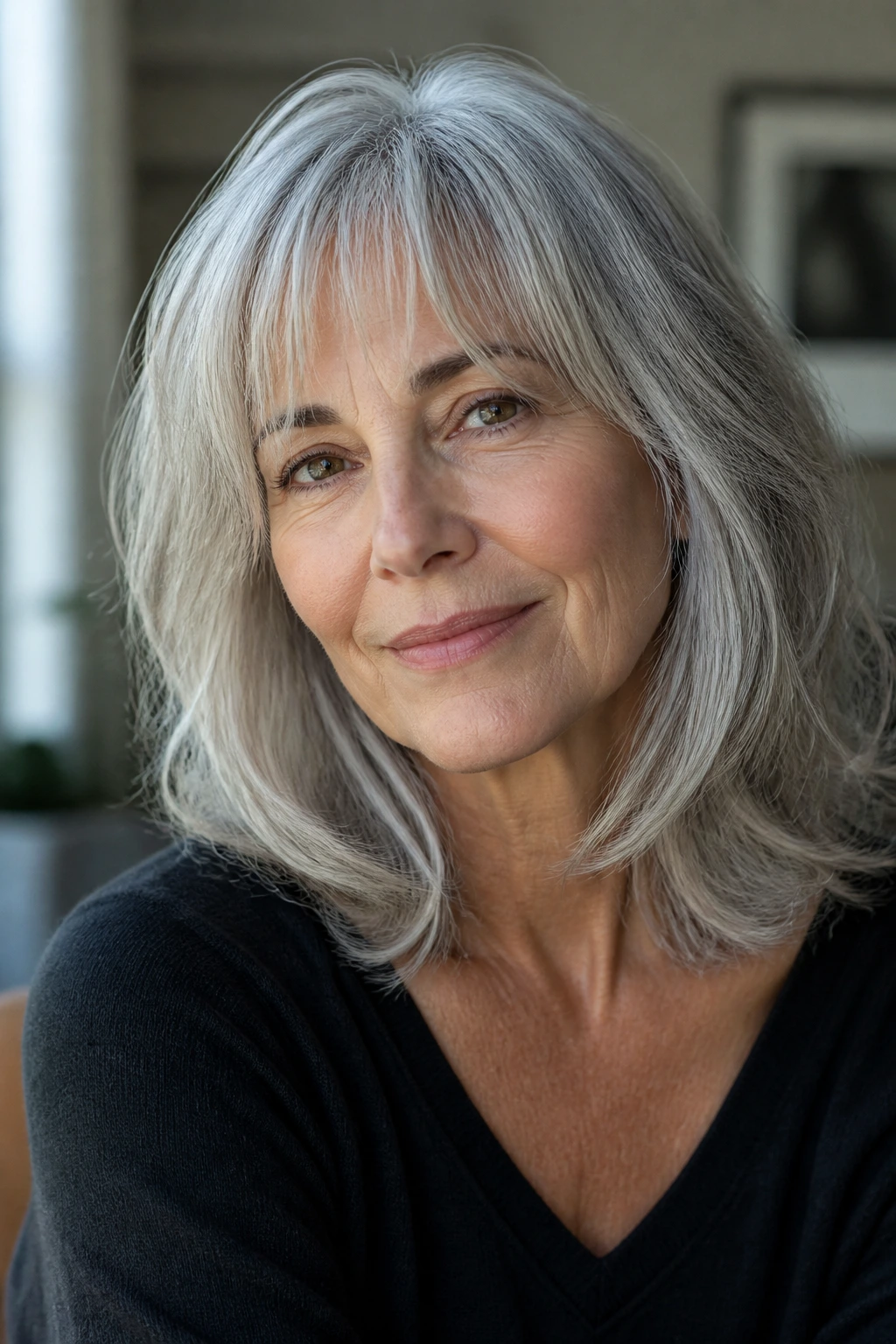
Wispy bangs are the opposite of heavy, helmet-like fringe, and that’s why they work so well with gray hair after 50. They skim the forehead instead of covering it, which keeps the face open. The layers at the shoulders keep the rest of the shape light enough that the bangs don’t feel isolated from the haircut.
This look is a smart choice if you want softness around the eyes without committing to a full fringe. It also grows out more gracefully than a blunt bang. The gap between trims can be a little longer before it starts to annoy you, which is always useful.
A few details make or break it: the bangs should be cut dry if your hair shrinks a lot, and they should blend into the side pieces rather than stop abruptly. If they look disconnected, the whole haircut can feel unfinished. If they melt into the rest of the layers, the style has that easy, lived-in feeling people pay attention to.
14. Defined Natural Curls with a Rounded Shape
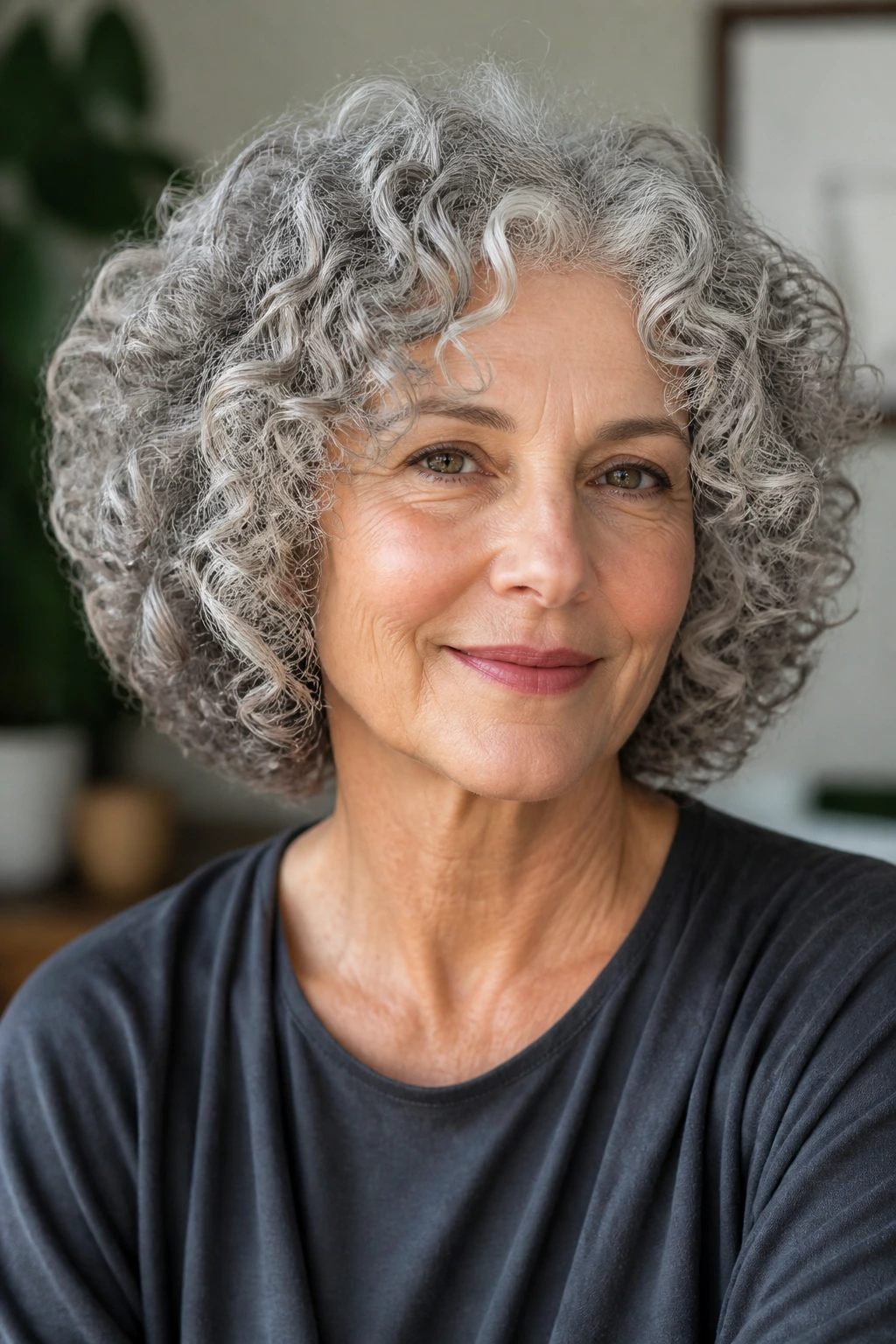
Can gray curls look soft without looking fuzzy? Yes, but the shape has to be right. A rounded cut keeps the curls from spreading wider than the face and helps the silver read as shine instead of frizz. Medium length is a nice middle ground here because it leaves enough weight for the curls to hang, not balloon.
The right products matter. A leave-in conditioner, a curl cream, and a little gel at the outer layer can make a huge difference. Work the product through soaking-wet hair, then scrunch gently with a microfiber towel or T-shirt. That part is boring, but it matters. Gray curls often need more moisture than people expect.
How to wear it
Diffuse on low heat or let it air-dry if you’ve got the patience. Once dry, separate only the biggest clumps with oiled hands. If you rake through too early, you’ll get puff. If you keep the shape rounded and the ends hydrated, the style looks soft and substantial at the same time.
15. Flip-Out Ends for a Polished Finish
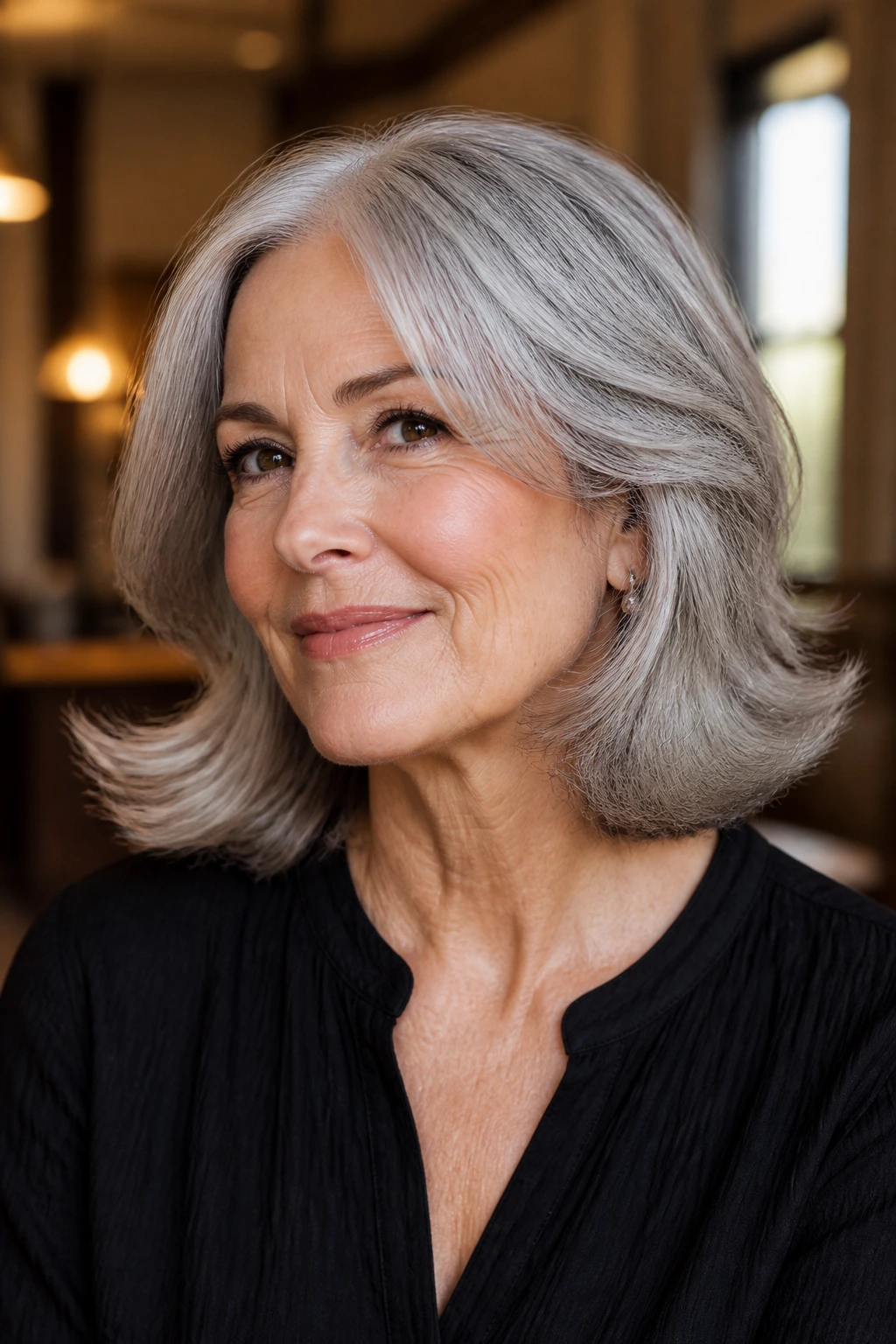
Flip-out ends are a small styling move, but they change the whole mood of a medium-length gray cut. Instead of curling under, the ends turn away from the neck and face, which keeps the shape open and a little lively. That matters if your hair has started to feel heavy or too obedient.
Unlike inward bends, which can sometimes make medium-length hair feel conservative, flipped ends create movement. They also work well with gray because the light catches the edge of the turn. You see the shape first, then the shine.
Use a round brush or a flat iron to flip the last inch or so outward. Not all the way through the section. Just the ends. Too much flip starts to look theatrical, and the style loses its restraint. This is best for someone who wants a polished everyday look with a little personality built in.
16. Tousled Beach Waves with a Lived-In Edge
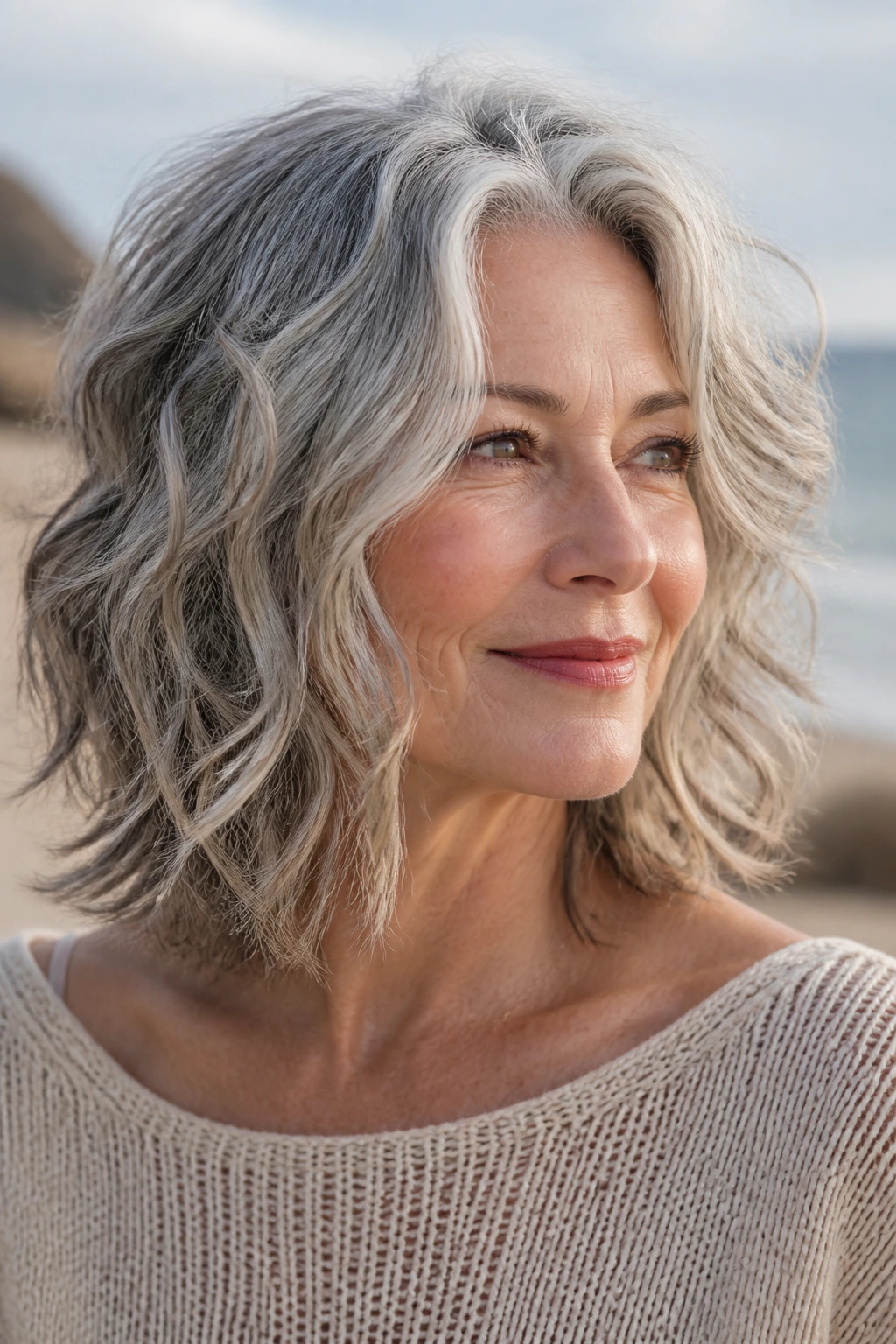
Gray hair can wear waves without looking overdone. The trick is to keep the wave loose and irregular, with a few straighter ends mixed in so it doesn’t read as pageant hair. Medium length is perfect for this because the weight keeps the wave from exploding outward.
This style works especially well on hair that’s in that awkward phase where it’s too flat for volume but too thick to sit neatly. A wave spray, a 1-inch iron, and a good finger-combing session can fix that quickly. Wrap sections in alternating directions, leave the last inch out, and let the roots stay a little imperfect.
The best thing about this look is how forgiving it is. Second-day hair often looks better than first-day hair. A little dry shampoo at the roots and a quick scrunch at the ends can bring it back without starting over.
17. Half-Up Twist with Loose Face Pieces
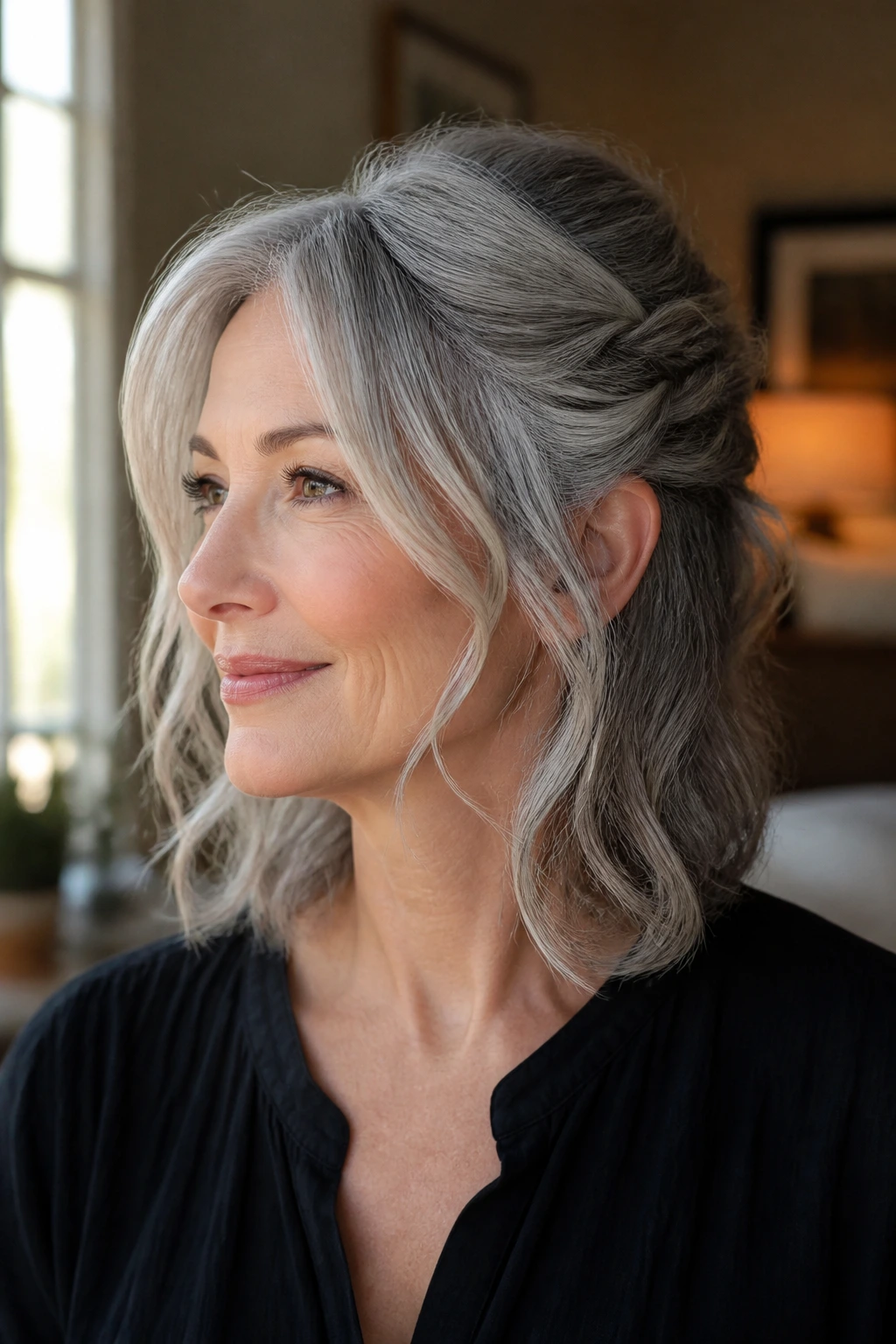
A half-up twist is the kind of style that quietly solves problems. It lifts the hair off the neck, keeps the medium-length layers from falling into your face, and still leaves enough gray silver softness around the front to feel feminine and relaxed. It’s a good event look, yes, but also a sensible weekday move when the ends are doing their own thing.
The face pieces are the key. Keep them loose and a little bent. If they’re too curled, the look turns fussy. If they’re too straight, the whole front can feel unfinished. A few pins and a mist of flexible spray are usually enough to hold the twist without making it crunchy.
This is one of the easiest ways to make medium-length gray hair look intentional when you don’t have time for a full style. It buys you control without hiding the length. Handy. Plain and simple.
What Makes Gray Hair Look Intentional at Medium Length
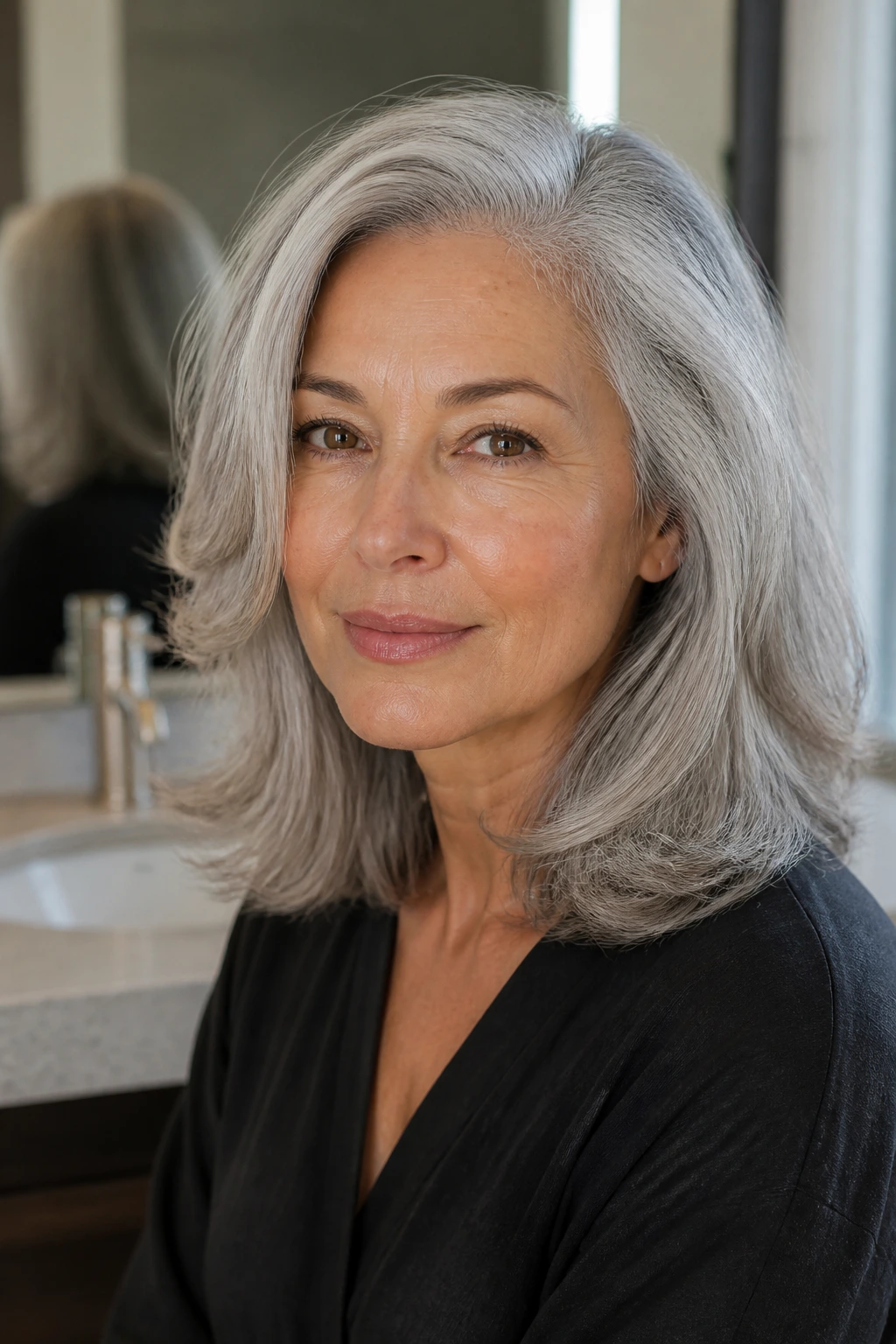
The difference between a flattering silver style and a dull one usually comes down to line, shine, and movement. Gray hair does not need more tricks. It needs a cut that knows what to do with the texture it already has. A clean perimeter, a few well-placed layers, and a finish that isn’t bone dry can change everything.
If your hair is fine, ask for shape without over-thinning the ends. If it’s thick, ask for internal weight removal so it doesn’t puff out at the sides. If it’s wavy or curly, ask for the cut to be done in a way that respects shrinkage. Those details sound small. They aren’t. They decide whether your hair sits where it should or fights you all morning.
And shine matters. Gray hair without moisture can look dusty fast, especially under indoor light. A decent leave-in, a light gloss, and a trim schedule that keeps the ends from fraying are often more useful than any dramatic color service.
Tools That Make Silver Hair Easier to Style
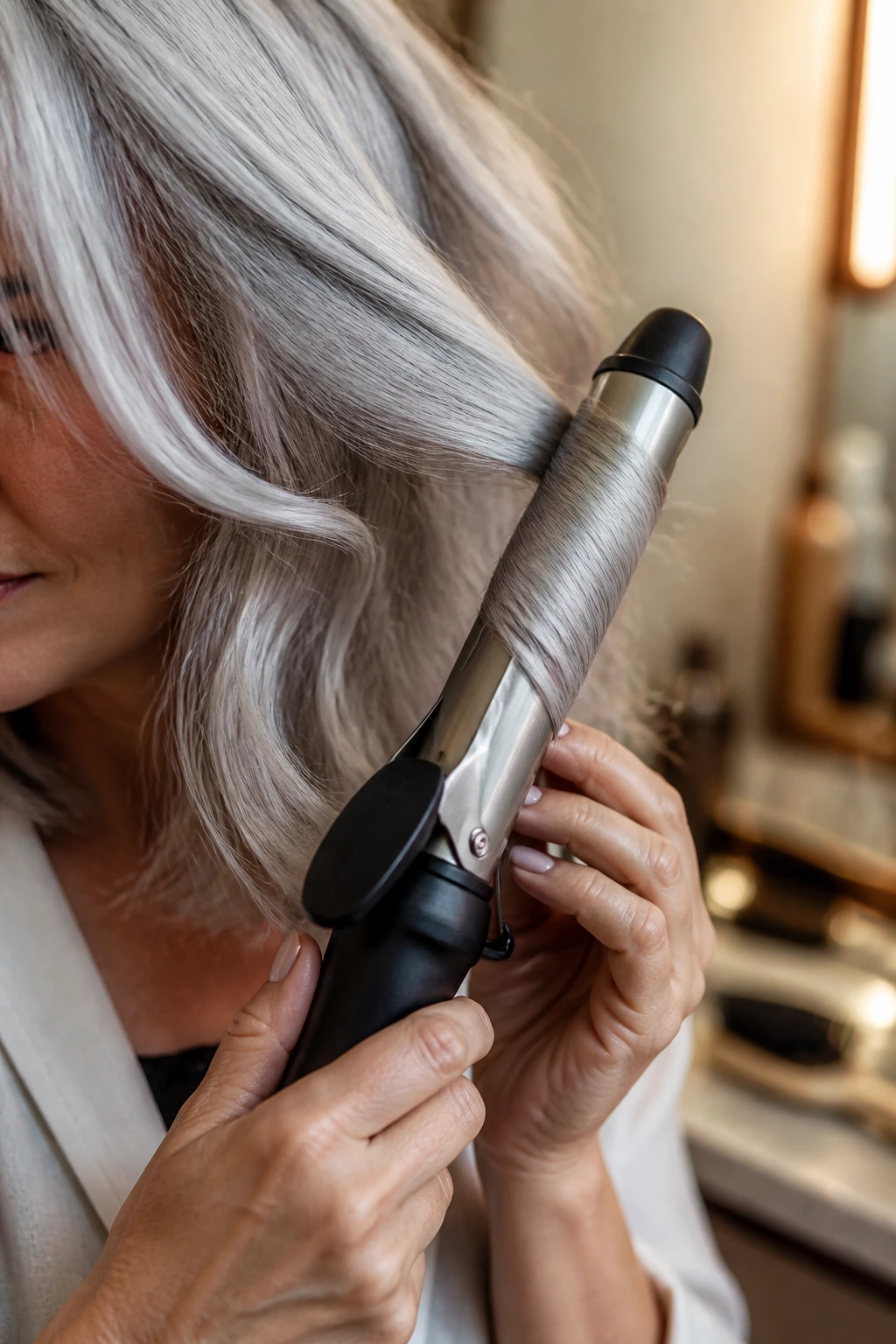
You do not need a drawer full of gadgets. You need a few tools that do their job without chewing up the hair.
- Blow dryer with a nozzle attachment: Directs the airflow so the cuticle lays flatter and the finish looks smoother.
- Medium round brush: Best for collarbone layers, bend at the ends, and root lift around the crown.
- Vent brush: Fast for bangs and rough-drying when you don’t want a full blowout.
- 1-inch curling iron or wand: Good for tighter waves and definition on medium-length silver hair.
- 1.25-inch curling iron or wand: Better for loose waves and soft bends that don’t look too curled.
- Flat iron with adjustable heat: Useful for sleek looks and flipping the ends out with a small wrist turn.
- Wide-tooth comb: Easier on damp curls and less likely to rough up fragile ends.
- Microfiber towel or soft T-shirt: Cuts down on friction, which helps gray hair stay smoother as it dries.
- Sectioning clips: Worth keeping around if your hair is thick or if you like a cleaner blow-dry.
- Lightweight finishing serum: Use a tiny amount on the last two inches, not at the roots.
Smart Product Choices for Gray Hair That Still Need to Look Bright
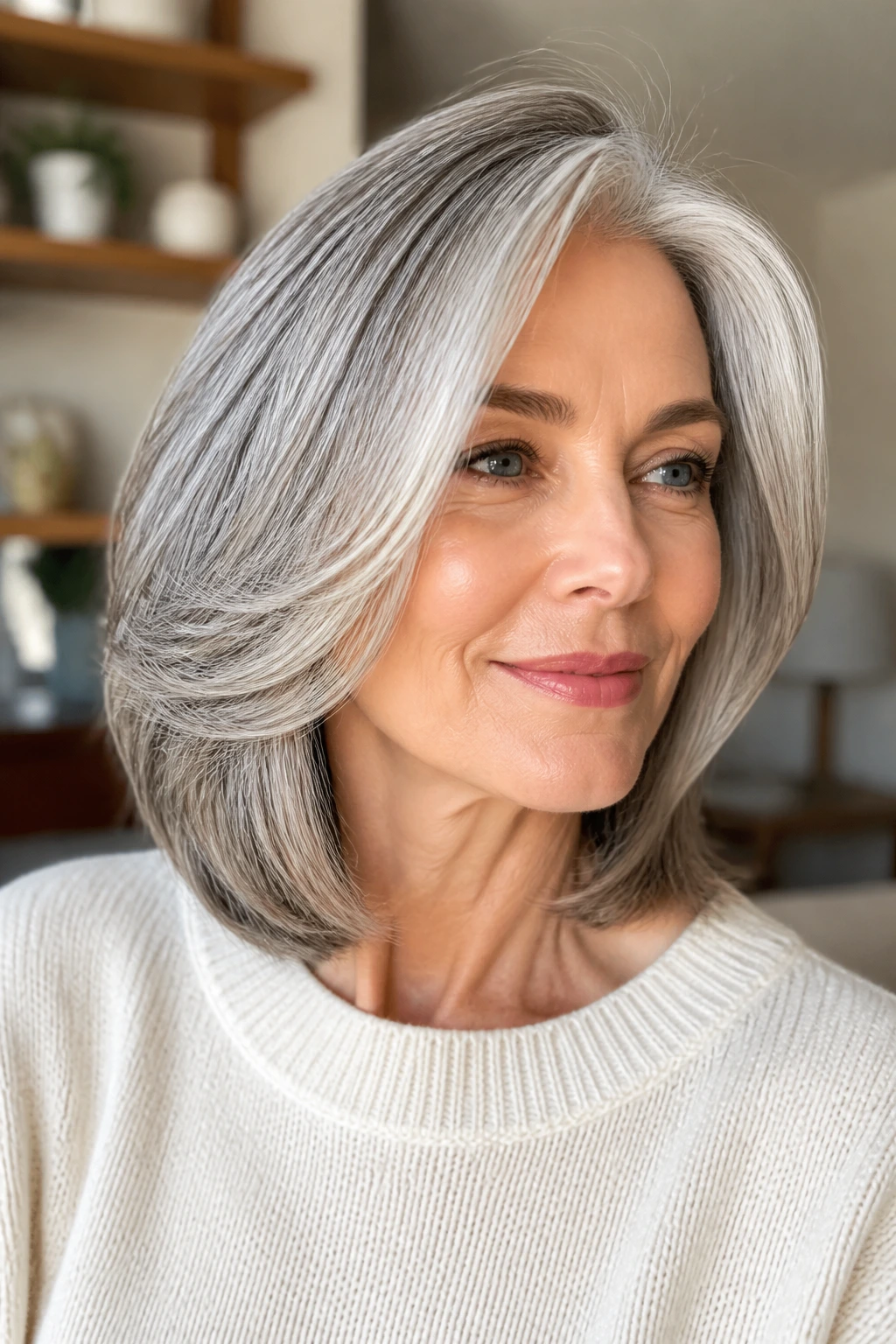
Gray hair does not love heavy products. That’s the first thing to remember. Thick oils, greasy creams, and waxy pomades can coat the strand and make silver look muddy by lunchtime. You want products that leave the hair clean, soft, and light enough to move.
Purple shampoo has its place, but it’s not a daily staple for most people. If your gray leans yellow from sun, hard water, or too much heat, use it once a week or every other week and watch the result. Too much and the hair can pick up a flat violet cast. No one needs that. A gentle, sulfate-free shampoo in between helps maintain the balance.
A good conditioner matters more than a fancy styling cream. Gray strands often need slip at the ends and a little moisture through the mids. Look for lightweight hydrators like glycerin, panthenol, or a small amount of ceramide support. If your hair is fine, keep the formula airy. If it’s coarse, you can go richer, but only on the lower half.
Heat protectant is not optional if you blow-dry or iron often. Gray hair shows damage fast because the surface texture is already more visible. Use a spray that can handle the tool you’re using, and let it dry before you touch it with heat. Damp hair plus an iron is where trouble starts.
How to Keep Gray Hair Shiny Between Salon Visits
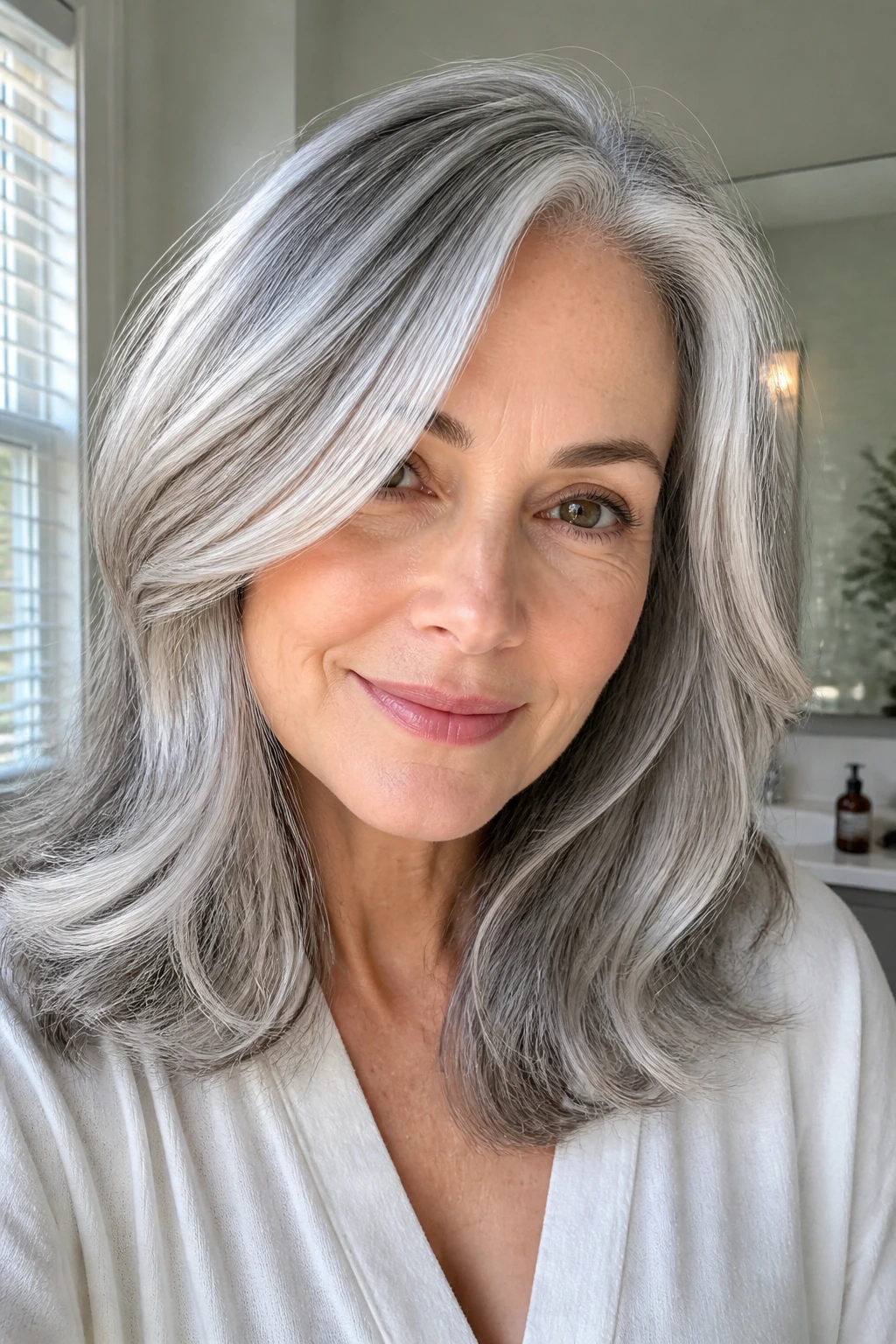
Gray hair asks for a little maintenance, but not the fussy kind. A trim every 6 to 8 weeks keeps the ends crisp and stops the shape from drifting into that tired, triangular place. If your hair grows fast or your style depends on a blunt line, trim closer to 5 or 6 weeks.
Washing every day usually isn’t necessary unless your scalp runs oily. Two or three washes a week is enough for many medium-length cuts, and dry shampoo can stretch the in-between days. Be picky about where you put it. Focus at the roots, wait a minute, then brush it through. If you spray the mids, the hair can feel dull and dusty.
A weekly mask or deep conditioner helps more than people expect. Gray hair often loses moisture faster than pigmented hair, and that dryness shows up as frizz around the crown or a rough feel on the ends. Keep masks on for 5 to 10 minutes, then rinse well. If the hair feels coated afterward, the formula is too heavy.
Hard water can leave gray hair looking smoky in a bad way. If your water is mineral-heavy, a clarifying wash once a month and a shower filter can make a visible difference. So can a monthly gloss or toning treatment if your hair tends to yellow.
What to Ask for at the Salon When You Want These Looks
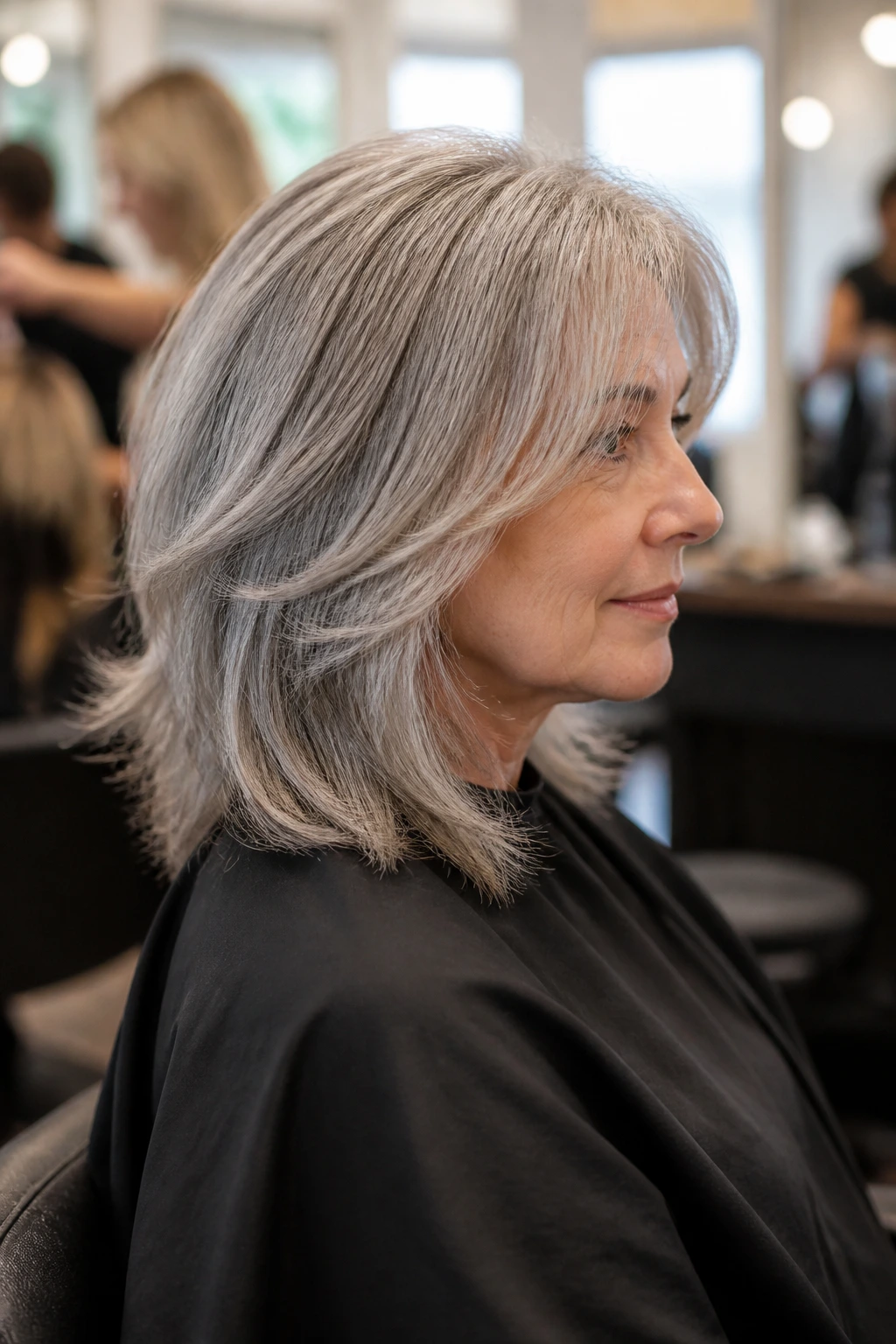
Bring the haircut idea, not only a photo. Photos are useful, but they do not tell your stylist how much weight you want removed or how your hair behaves when it dries. Say where you want the longest pieces to hit — collarbone, top of shoulder, just below the chin — and be specific about whether you want movement or a clean edge.
If your hair is fine, say you want shape without thinning. If it’s thick, ask for internal weight removal so the sides do not bulge. If you want bangs, talk about how much forehead you want covered and how often you’re willing to trim them. Bangs are not a small decision. They live in your eyes.
Color-wise, if you’re blending gray with dye, ask for lowlights that are close to your natural level and cooler rather than warmer. Warm colors can make silver look yellowed. A subtle gloss can also keep the finish looking intentional. That one service often makes more difference than a dramatic color correction.
Common Mistakes That Make Gray Hair Look Tired
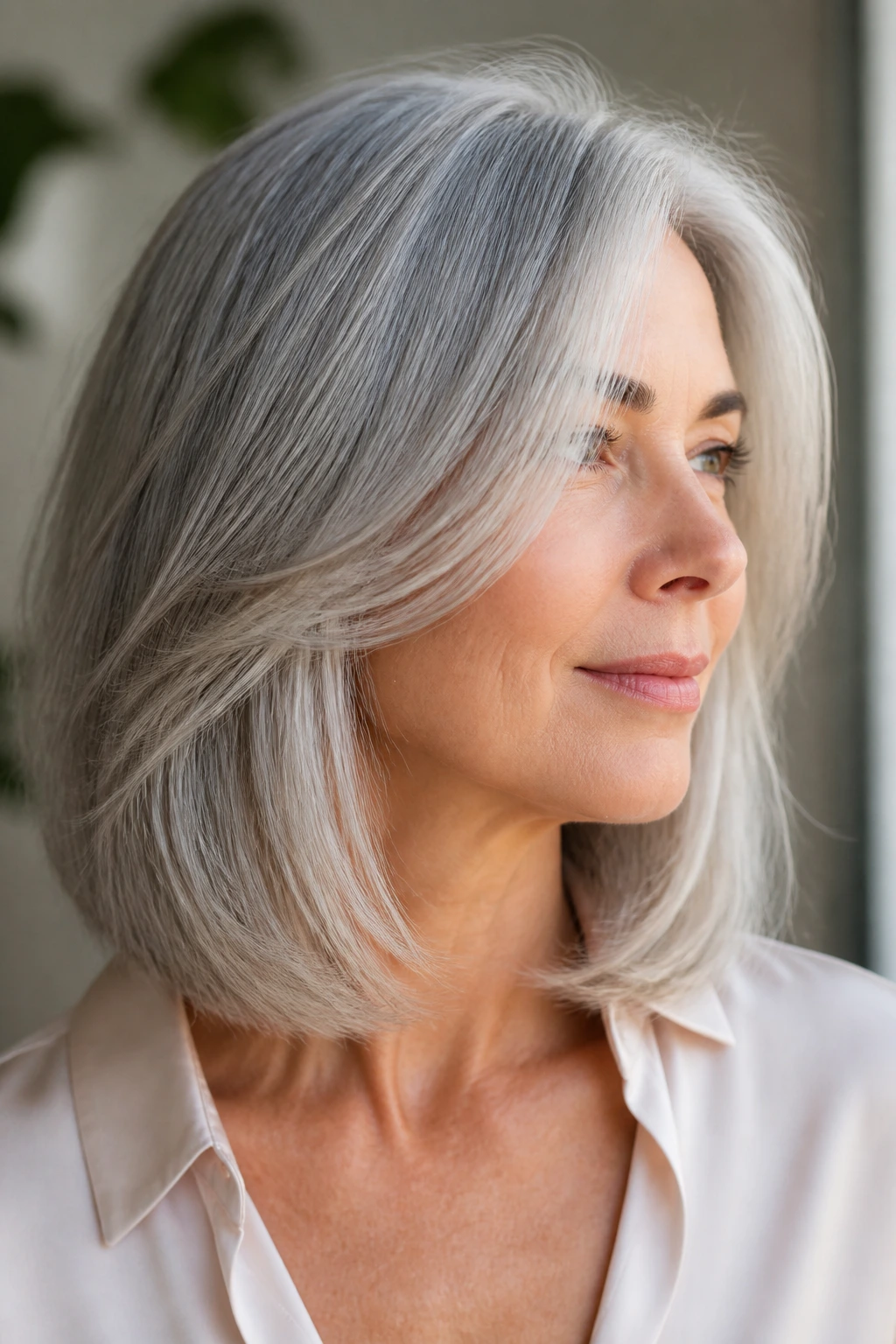
Overusing purple shampoo: Purple shampoo can turn gray hair dull or violet if it sits on too long. Use it sparingly, and follow it with a hydrating conditioner so the strand doesn’t feel squeaky and rough.
Letting the ends go wispy: Medium-length gray hair can lose shape when the ends get too thin. The fix is a trim before the perimeter starts fraying. Once the bottom edge thins out, the whole cut looks older fast.
Removing too much bulk with layers: If your stylist cuts heavy layers into fine gray hair, the result can be fluffy and uneven. Ask for long layers or internal shaping instead of a lot of short pieces.
Ignoring root lift: Flat roots make even a good cut look sleepy. A quick blow-dry at the crown, a root spray, or a roll brush can lift the shape enough to keep it from collapsing.
Using too much oil: Gray hair needs moisture, but a heavy hand with oil can make it look limp and darken the brightness. Start with a drop or two on damp ends and stop there.
Skipping heat protection: Gray strands show heat damage quickly. A flat iron on bare hair is a fast road to rough ends and a dull surface.
Variations and Alternatives to Try
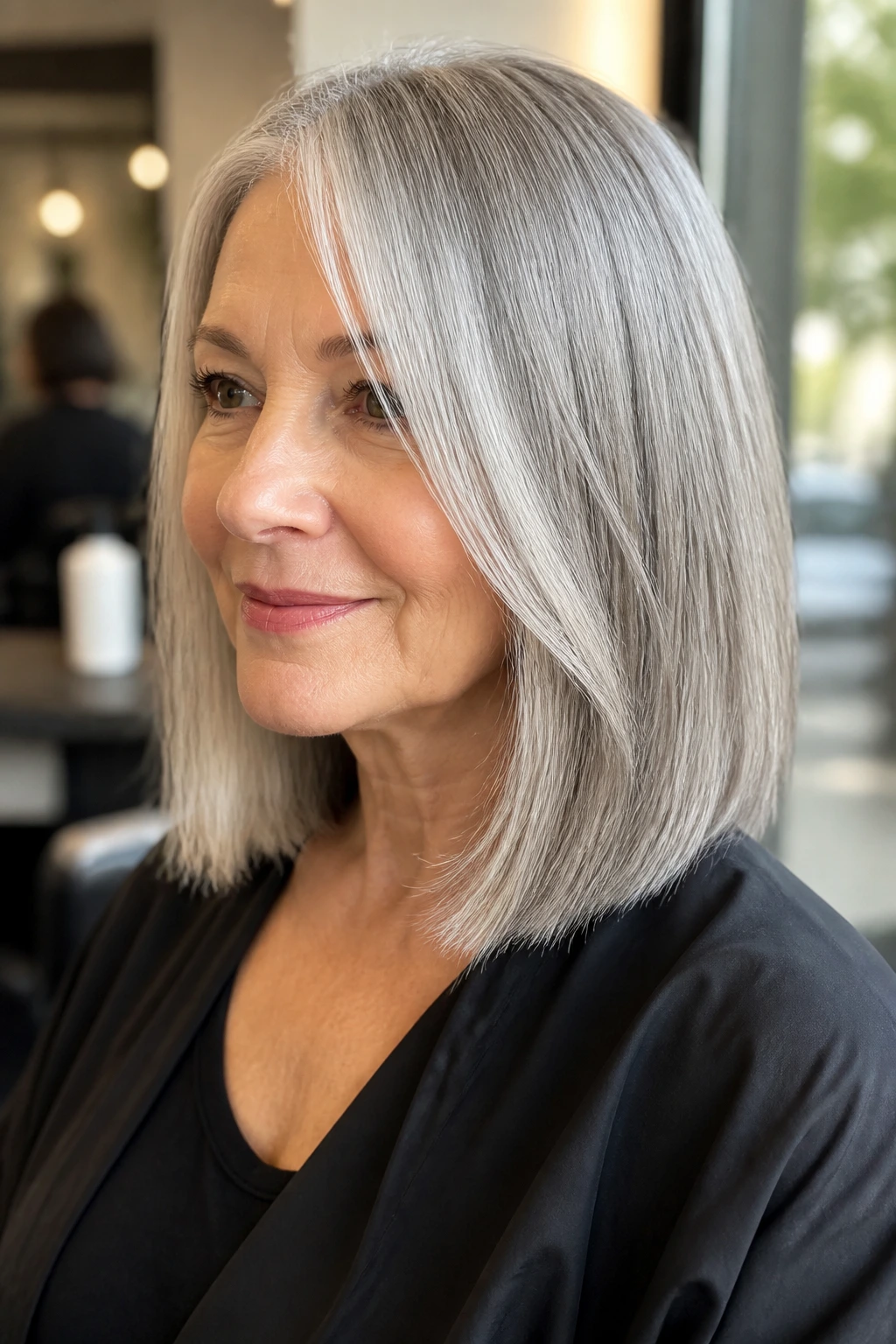
Fine-Hair Gray Lob: Keep the perimeter blunt and the layers minimal. This gives the illusion of thickness and stops fine gray strands from looking see-through at the ends.
Curly Silver Shape-Up: For curls that have gone drier with age, ask for a rounded cut and leave the top a little longer. That keeps the curls springy without widening the silhouette too much.
Salt-and-Pepper Blending Cut: If you’re still transitioning from dye, add subtle lowlights and keep the style in soft waves. The mixed movement hides the grow-out line and makes the color shift look smoother.
Low-Maintenance Air-Dry Style: Ask for shoulder-length layers that land well when dry naturally. This works for people who want a cut that behaves on its own with only a bit of cream and scrunching.
Sleek Silver Frame: If you love polish, choose a blunt collarbone cut with a center part. It takes a little more styling, but the payoff is a clean, strong line that shows off shine.
Soft Bangs Version: Add wispy bangs or a long side fringe if your face needs more softness around the eyes. Keep the fringe light so it blends instead of sitting like a separate piece.
How to Make These Looks Work in Real Life
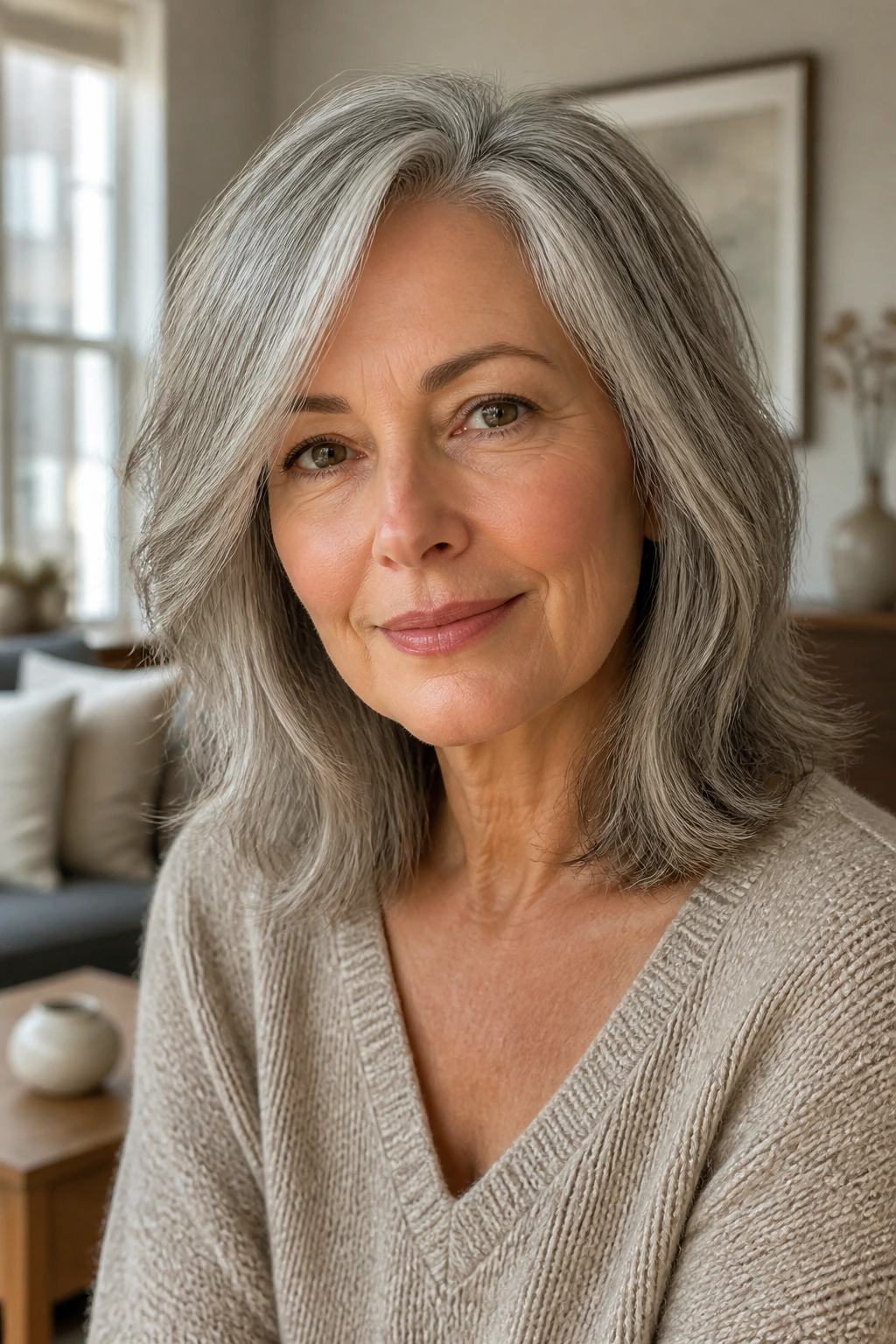
Presentation: Pick one feature and let it lead. If the cut is blunt, keep the finish smooth. If the cut is layered, let the movement show instead of ironing every bend out. Silver hair looks strongest when the styling matches the haircut instead of fighting it.
Daily wear: On normal days, a round brush at the front and a little smoothing cream on the mids is usually enough. You do not need a full blowout for every appointment, errand, or grocery run. Good medium-length gray hair should survive a messy morning and still look on purpose.
With glasses: Side-swept bangs, face-framing layers, and tucked-behind-the-ear styles work especially well here. They keep hair from crowding the frames and let the eyes stay open. A dense fringe can make the whole face look boxed in.
For events: Choose a style with one polished element — a sleek center part, a clean twist, or a deliberate wave pattern. That one controlled detail keeps gray hair looking crisp under indoor light, which can be unforgiving.
For low-effort days: Let the texture lead. A half-up twist, loose waves, or an air-dried shag can look better than overworked smooth hair if your strands already have body.
Make These Looks Work Even Better
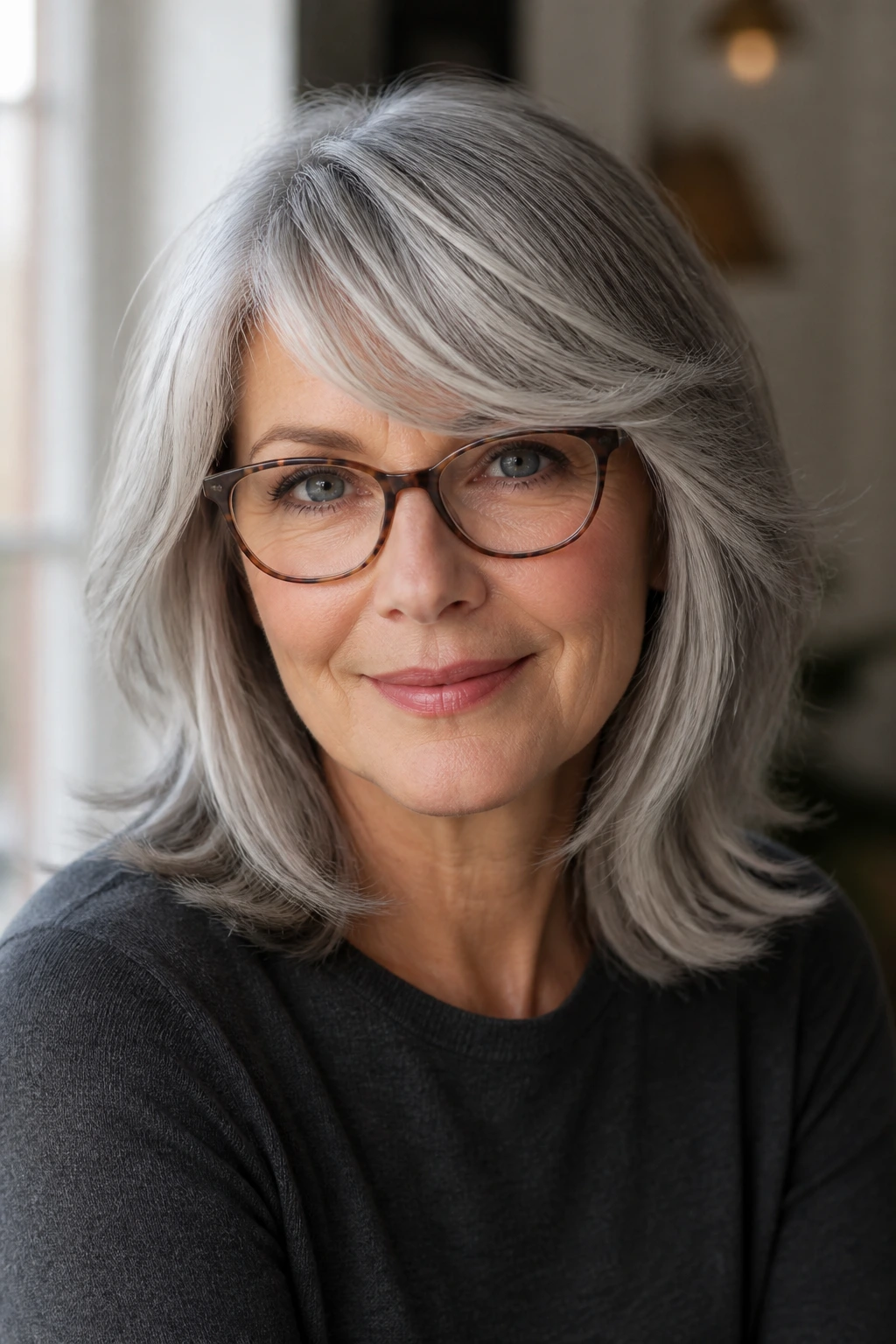
Color Control: If your gray has a yellow cast, use purple shampoo once a week and follow with a rich conditioner. If the color is already bright silver, skip the purple and use a glossing product instead so you do not overtone it.
Root Lift: A little mousse or root spray at the crown can stop medium-length hair from lying flat. Blow-dry the roots in the opposite direction first, then flip the part back where you want it.
Shape Memory: Clip front pieces while they cool after blow-drying. That tiny pause helps the bend stay longer and keeps the face frame from collapsing by lunch.
Texture Support: If your hair is wavy or curly, work with the natural pattern. A curl cream plus a touch of gel is often better than trying to force a blowout every day.
Make-it-yours: Fine hair usually wants blunt edges and fewer layers. Thick hair needs more internal removal. Curly hair wants shape and moisture. Straight hair can handle sleeker lines and a cleaner finish.
How to Keep Medium-Length Gray Hair Looking Fresh

Wash rhythm matters. Most medium-length gray hair does well with two to three washes a week, though an oily scalp may need more. On off days, dry shampoo at the roots and a brush through the mids can keep the shape from going soft. If your scalp gets itchy between washes, use a lighter shampoo rather than scrubbing harder.
A deep conditioner once a week helps the ends stay soft, especially if you heat-style often. Keep it on the mids and ends for 5 to 10 minutes. Skip the scalp unless the formula is very light. Too much product at the root can flatten the lift you worked for.
Trim schedules matter more than people think. A medium-length cut can drift from elegant to shaggy faster than a shorter style, simply because the shape has more room to wander. If you like a blunt edge, trim it more often. If you like softer layers, you can stretch the timing a bit, but don’t let the ends fray into see-through pieces.
Hard water, sun, and heat can dull gray hair, so a shower filter, UV spray, and heat protectant can all earn their keep. None of that is glamorous. It does work.
Frequently Asked Questions
Which gray hair look is easiest to maintain at medium length?
A collarbone lob with soft internal layers is usually the easiest to live with. It grows out in a kind way, needs less daily styling than a full blowout, and still keeps enough shape to look deliberate when you air-dry it.
Should gray hair over 50 be layered?
Usually, yes — but the kind of layers matters. Long internal layers add movement without making the ends stringy, while too many short layers can puff up coarse gray hair and thin out fine hair. The right amount depends on density and texture.
How often should I use purple shampoo on gray hair?
Once a week is plenty for most people. If your gray hair is very bright or dry, even every other week may be enough. Too much purple shampoo can leave the hair looking dull or lavender-toned instead of silver.
Can medium-length gray hair work if my hair is fine?
Absolutely, but keep the perimeter blunt and the layers minimal. Fine gray hair often looks fuller when it has a clear edge and a little root lift, not when it’s heavily thinned out.
What should I ask my stylist if I’m growing out dyed hair?
Ask for a cut that softens the transition line and color placement that blends rather than covers. Cool lowlights, subtle glossing, and face-framing layers can make the grow-out look planned instead of awkward.
Do bangs make gray hair harder to maintain?
They can, but only if you choose a heavy fringe that needs constant trimming. Side-swept or wispy bangs are easier because they blend more naturally and can be moved around as the hair grows.
How do I stop gray hair from looking frizzy at the sides?
Use a lightweight leave-in conditioner on damp hair, then smooth the surface with a round brush or diffuser instead of blasting it dry. Frizz often comes from dryness, rough towels, or too much heat, not from the cut alone.
Can I wear these looks without regular heat styling?
Yes. The layered lob, shag, and half-up twist all work with air-drying if your natural texture is decent. You may still want a little cream, a root lift at the crown, or a quick touch with a brush, but you do not need a full hot-tool routine every day.
Silver Hair That Knows What It’s Doing
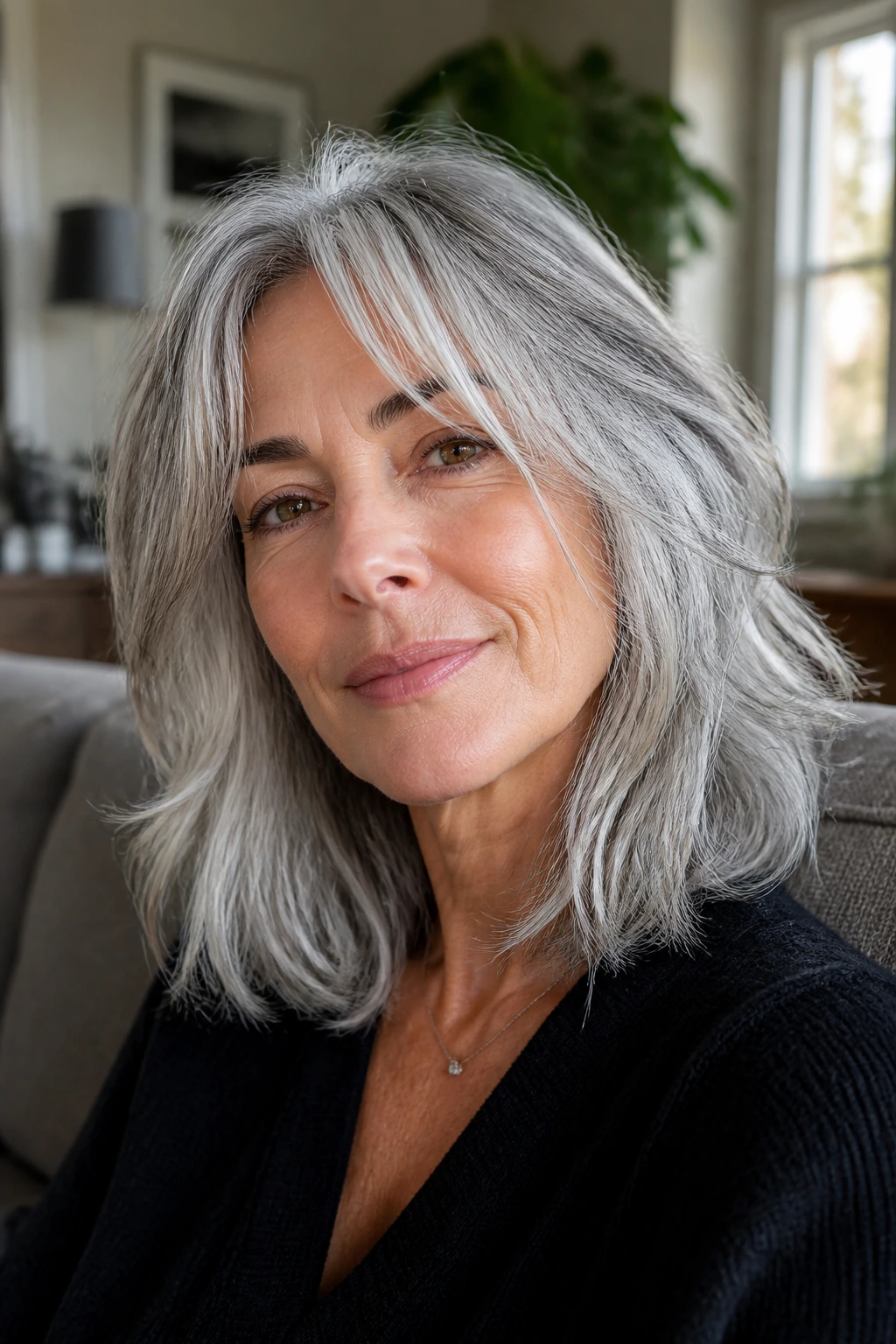
The nicest gray styles after 50 are not the loudest ones. They’re the cuts that let silver hair keep its texture, keep its shine, and keep its shape for more than a single good-hair day. That’s the real standard here. Not drama. Not hiding. Just a haircut that behaves.
Medium length gives you room to move, and gray hair gives you light to work with. Put those together with the right layers, the right edge, and a little moisture, and the result feels settled in the best way. Not old. Not trying too hard. Just good hair that knows where it belongs.
