



Long gray hair gets mishandled in two predictable ways. It’s either flattened until it looks tired, or it’s dressed up so hard that the silver loses its shape and turns into a sheet of shine with no body. The strongest gray hair looks for long hair do the opposite: they give the color room to move, keep the ends honest, and let the light hit in places that matter.
Gray strands have their own personality. They’re often drier, a touch wirier, and a little more stubborn about holding shape than pigmented hair, which means the old shortcuts don’t always land. Heavy oil near the roots? Flat. A harsh one-length cut on thin ends? See-through and sad. A braid pulled too tight? It can make the whole head look severe. But give the hair a bend, a part change, a soft frame around the face, or a glossy finish, and it starts to look deliberate in the best possible way.
That’s why long silver hair is fun. It gives you room to play. You can go polished, romantic, sharp, relaxed, or a little undone without losing the point of the color. A few of these looks need a good blow-dry. A few only need a brush, a pin, and five honest minutes. And a few are the sort of thing you can wear after a lazy morning and still look like you meant it.
Why These Gray Hair Looks Work So Well on Long Hair
- Movement matters: Long gray hair can read flat fast, so styles with bends, twists, braids, or layers stop it from looking like one solid block.
- Shine needs structure: Silver hair catches light beautifully when the surface is smooth, but it needs a cut or style that keeps the finish from looking limp.
- Texture becomes part of the style: A braid on coarse gray hair looks different from a braid on fine gray hair, and that’s a good thing if you lean into it.
- Long length gives you options: You can wear the same cut loose one day, half-up the next, and tucked or braided the day after.
- Grow-out looks cleaner here: If your roots are darker or your color has natural variation, long length gives the blend somewhere to live.
- Low effort can still look finished: A center part, a wrapped ponytail, or a tucked-behind-the-ear front section can do more than a pile of product ever will.
1. Soft Silver Waves That Brush the Collarbone
Soft waves are the first gray hair look for long hair I reach for when the ends need life but the whole head doesn’t need drama. The bend sits in that sweet spot between casual and polished, so the silver catches the light without turning stiff. It’s the sort of shape that makes long hair look present, not weighed down.
Why It Works
A 1.25- to 1.5-inch curling iron gives the wave enough body to show up on long lengths without creating little ringlets that fight the gray sheen. Leave the last inch or two straighter, and the whole style looks softer. That little break at the ends matters.
- Use a heat protectant with a light finish.
- Curl away from the face for the front pieces.
- Brush once after cooling if you want a looser bend.
- Finish with a mist of texture spray on the mid-lengths, not the roots.
Best move: keep the crown smooth and let the movement live from cheekbone to hemline.
2. Ultra-Sleek Glass Straight Lengths
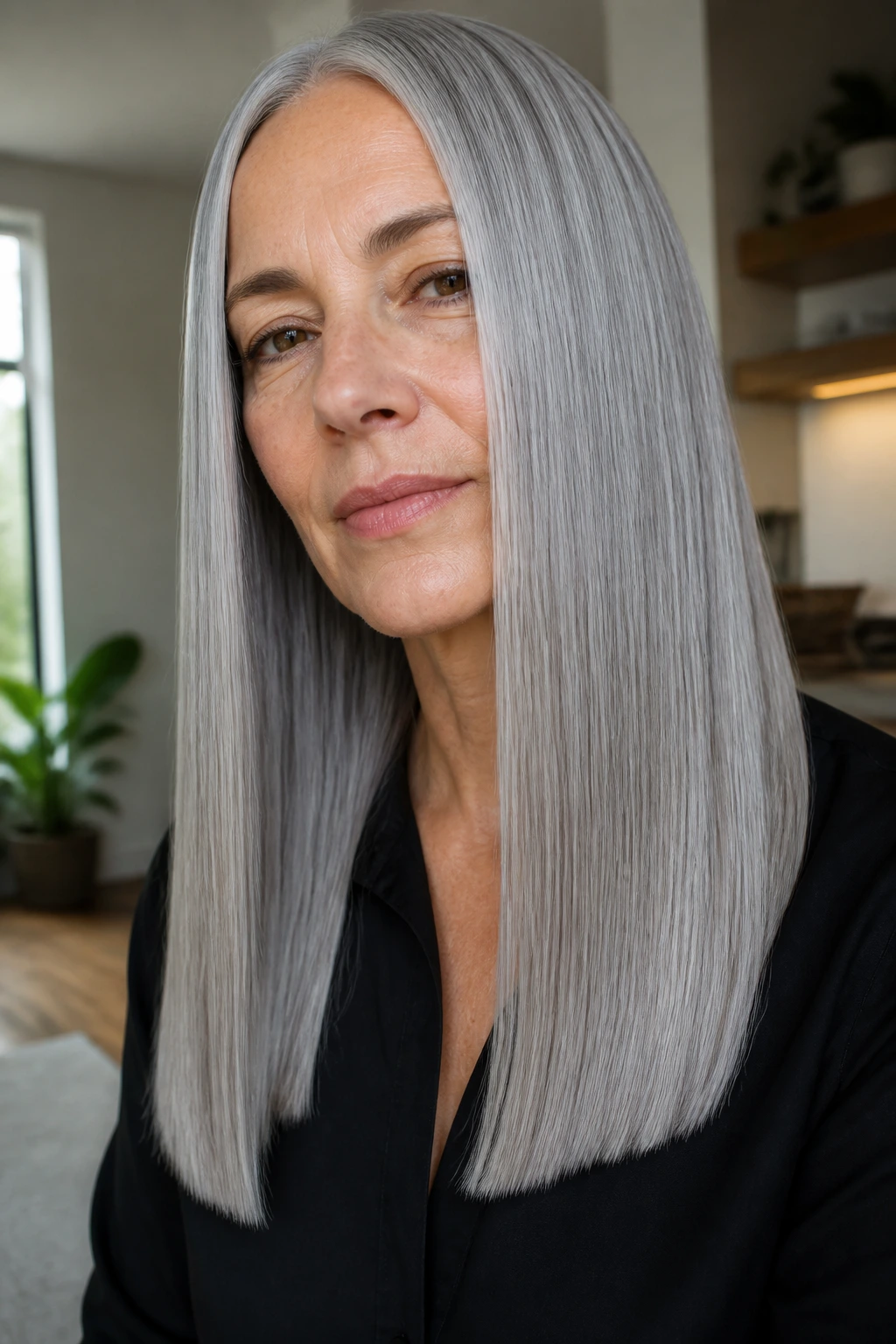
This one is blunt, shiny, and a little bit bossy. Long straight gray hair can look stunning when the cut is clean and the ends are thick enough to hold the line. The trick is not to flatten the life out of it; the trick is to make the surface look smooth enough that the silver almost mirrors the room.
The style works best when the hair is well trimmed and the ends aren’t splitting into wisps. A middle part makes the whole thing feel modern, but a deep side part can soften it if you want less severity. I like this look when the hair has a natural steel or pewter cast. It feels sharp.
3. Curtain Bangs and Long Gray Layers
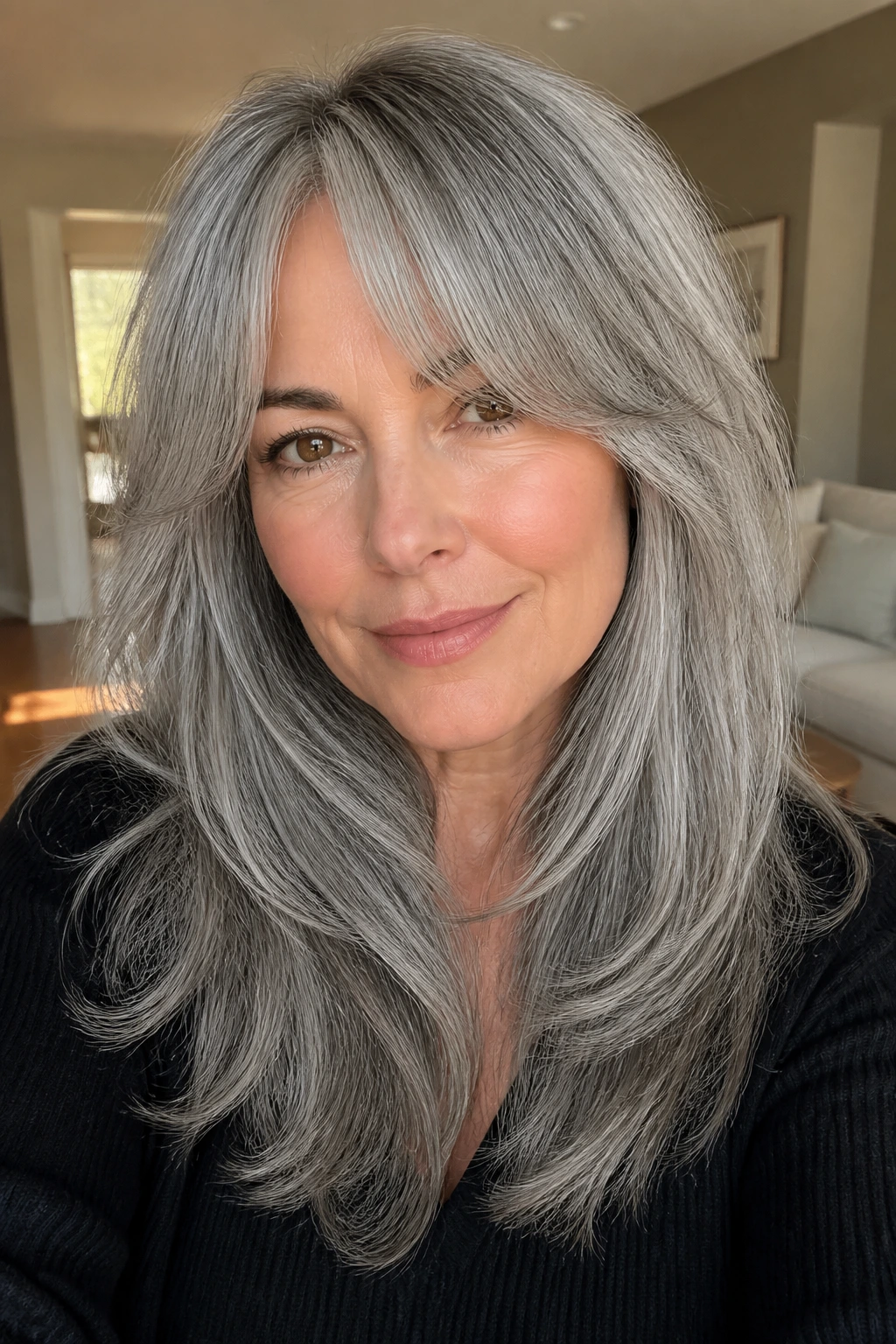
Curtain bangs do a nice job of breaking up long silver lengths that might otherwise hang straight down the sides of the face. They open the forehead, soften the cheek area, and give the rest of the hair somewhere to start. On gray hair, that matters because the color already asks for shape.
A good version keeps the bangs long enough to sweep back when you’re tired of them. The layers should be soft, not choppy enough to make the ends look thin. If your hair is fine, ask for face-framing pieces that start lower. If it’s thick, you can take more off around the front and still keep the ends full.
How to Wear It
Air-dry the bangs with a round brush or a velcro roller, then let the lengths fall in loose bends. It gives the whole cut a little movement without making the front too fussy.
4. Smoky Balayage With Dimensional Gray Ends
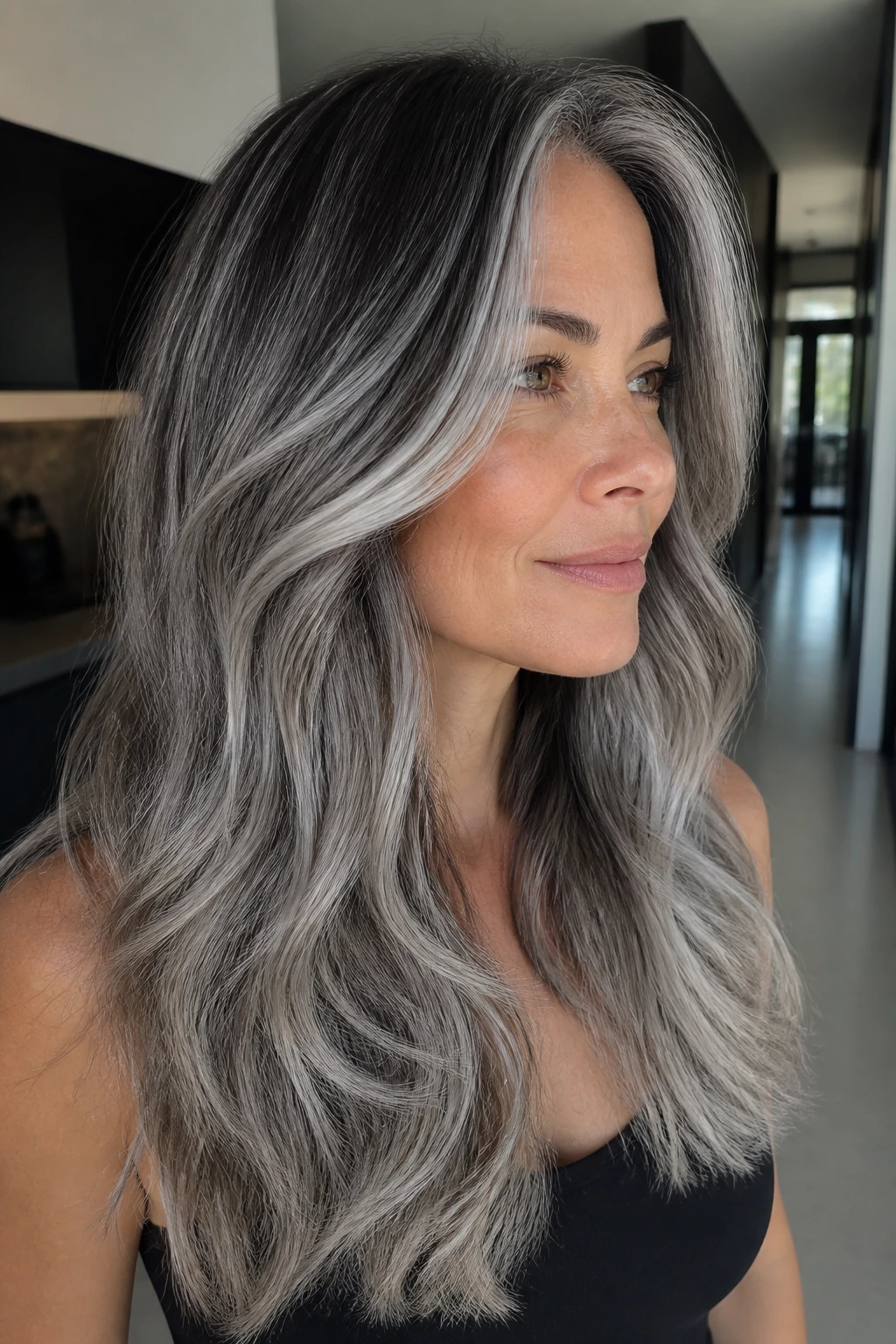
If your gray is mixed with darker strands, this is the look that keeps everything from reading like one flat color. Smoky balayage adds depth through the mids and lets the silver ends pop instead of disappear. It’s especially useful when grow-out is part of the plan and not something you want to fight every six weeks.
The key is restraint. Too many light pieces and the whole head starts looking stripey. Too little contrast and the color loses the lift that makes long hair interesting. The best versions have a soft root shadow, some cooler lowlights, and lighter pieces placed where the hair moves.
- Keep the brightest pieces around the face and outer lengths.
- Use cooler beige or ash tones instead of yellow-blonde tones.
- Ask for lowlights that sit one or two levels deeper than your base.
- Finish with a gloss so the blend stays smooth.
5. Half-Up Twist With Loose Side Pieces
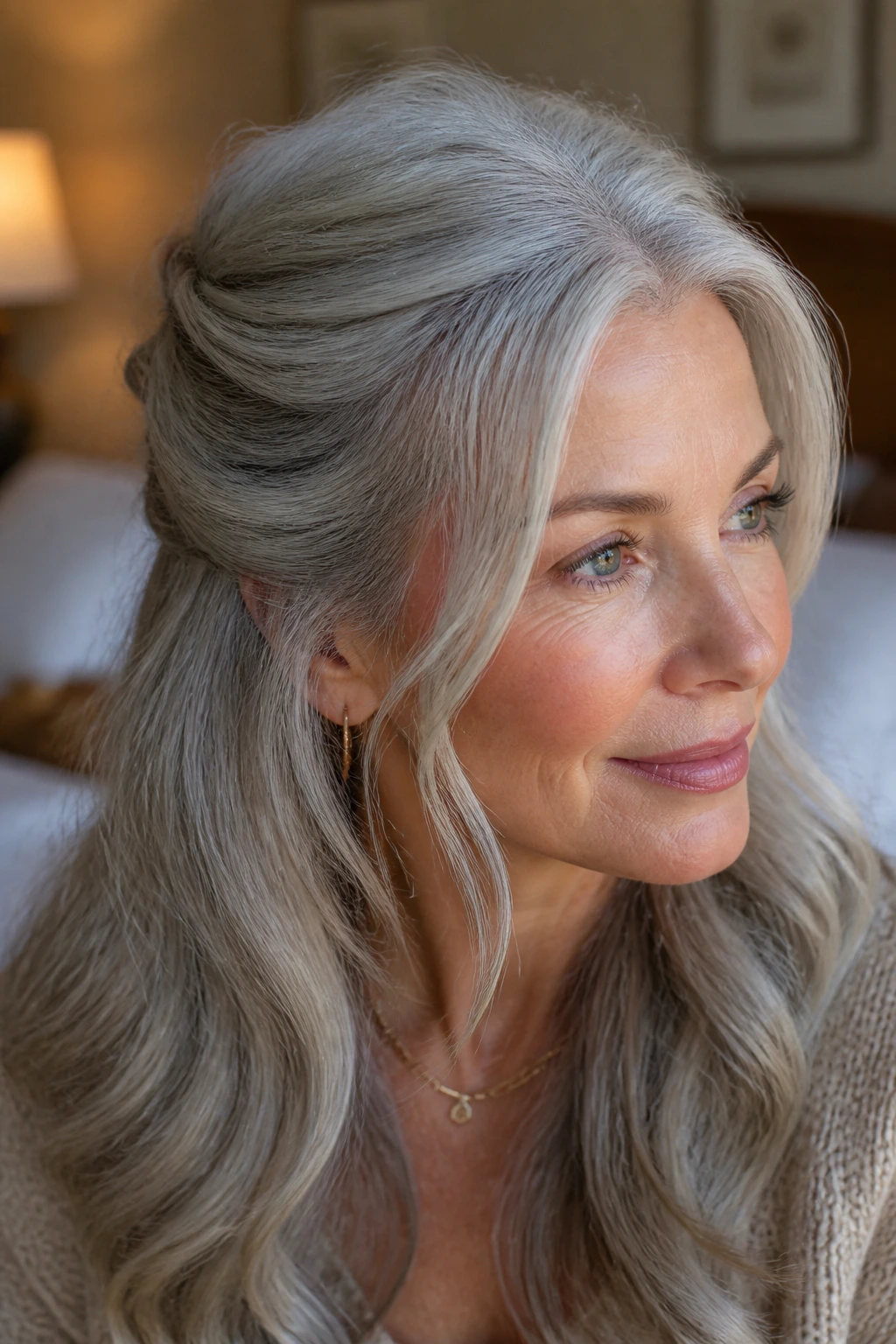
This is the style I’d hand to anyone who wants long gray hair to look finished without spending twenty minutes in front of a mirror. Pull the top half back, twist it once or twice, and leave the side pieces loose enough to frame the face. The gray stays visible, but the shape feels lighter.
It also fixes a very real problem: day-two roots. A half-up twist hides a little grease at the scalp, lifts the crown, and makes the ends look intentional instead of forgotten. If your hair is fine, keep the twist low and soft. If it’s thick, pin it a touch tighter so it doesn’t slide.
Small detail, big payoff: mist the loose pieces with a little water before twisting them back. They sit better and don’t puff out as much.
6. Low Sleek Ponytail With a Wrapped Base
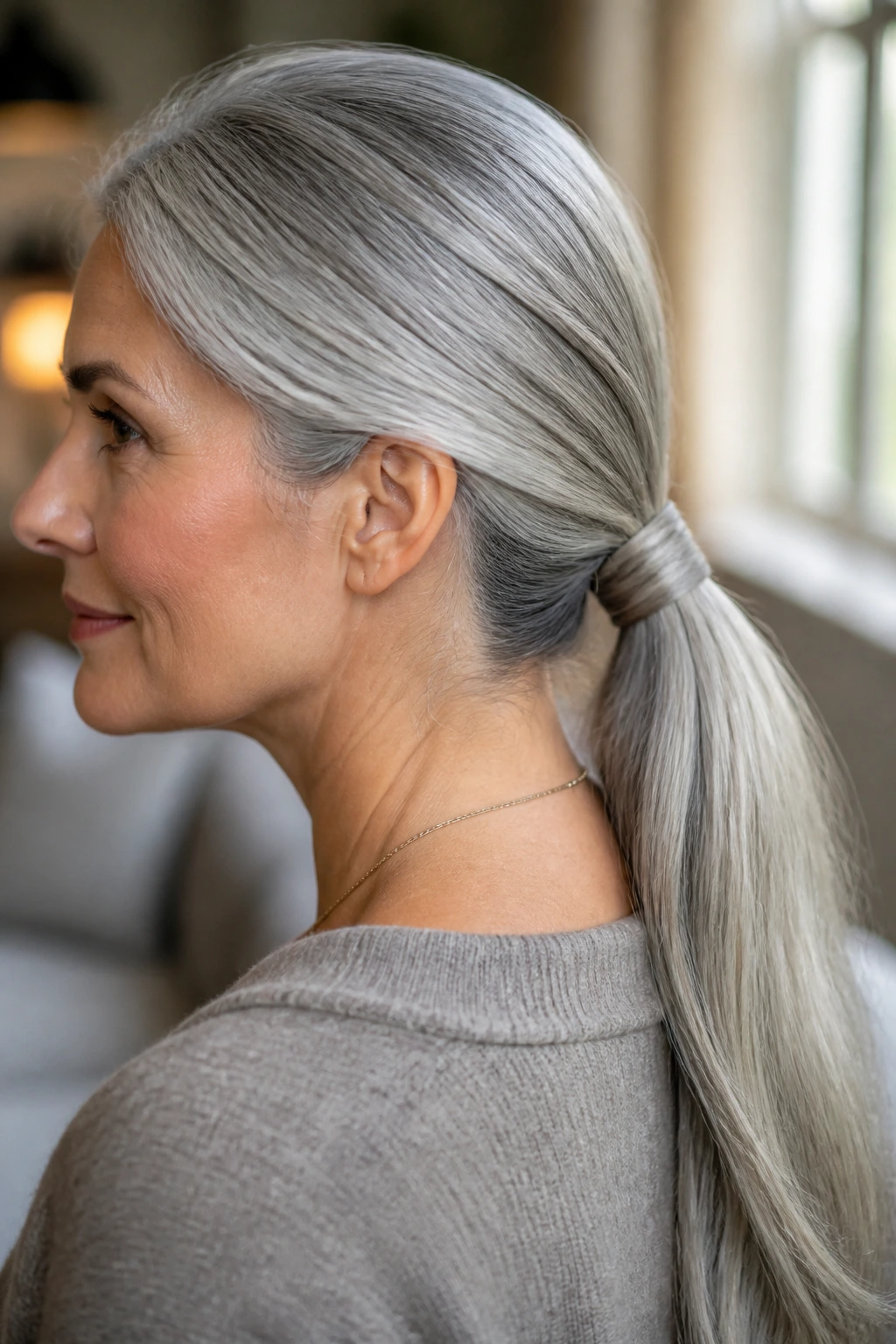
A low ponytail can look plain, or it can look razor-clean and expensive in the quiet way that matters. On long gray hair, the low sleek version is the better one. It shows off the silver line through the length and keeps the finish smooth at the scalp, where flyaways usually start misbehaving.
Use a brush, not your fingers, and smooth the hair toward the nape before you secure it. Wrap a small strand around the elastic so the whole thing looks deliberate. If your hair is coarse or frizzy, a pea-sized amount of smoothing cream at the temples is plenty. More than that and the roots can collapse.
This is one of those styles that looks best when it’s almost severe. Almost. Not stiff.
7. Long Gray Shag With Airy Ends
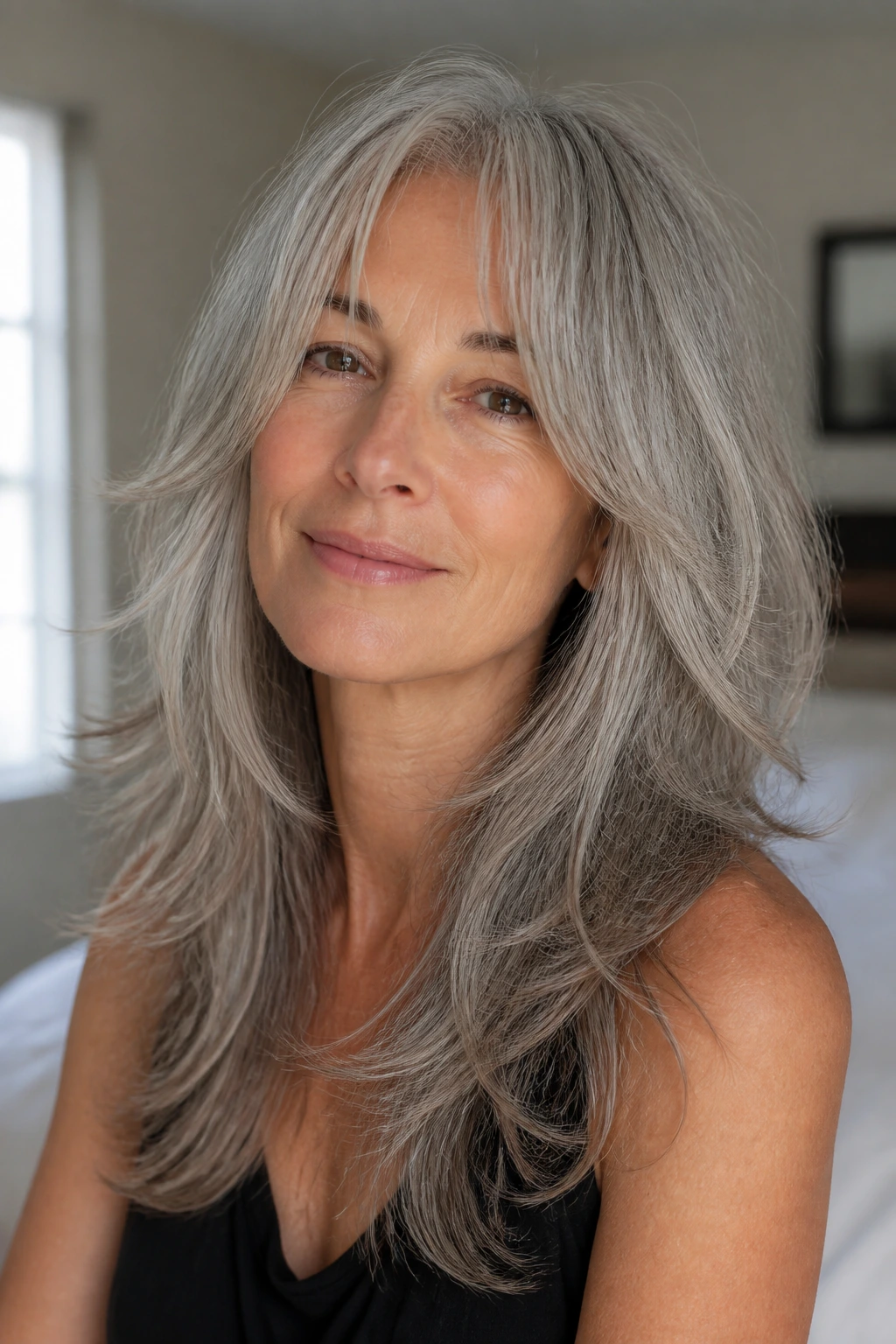
A shag gives long gray hair room to breathe. Instead of dragging the length down, the cut creates layers that kick up a little, break the outline, and keep the whole head from going heavy at the bottom. It’s especially good on wavy or dense hair that wants to swell out at the sides.
Best With
- medium to thick hair
- natural wave or bend
- people who like texture more than polish
- hair that gets frizzy if it’s overworked
The styling is simple. Scrunch in a light cream, rough-dry with your hands, then go back and pinch a few ends with texture spray. The point is not perfection. The point is shape.
8. Glossy Mermaid Curls on Long Silver Hair
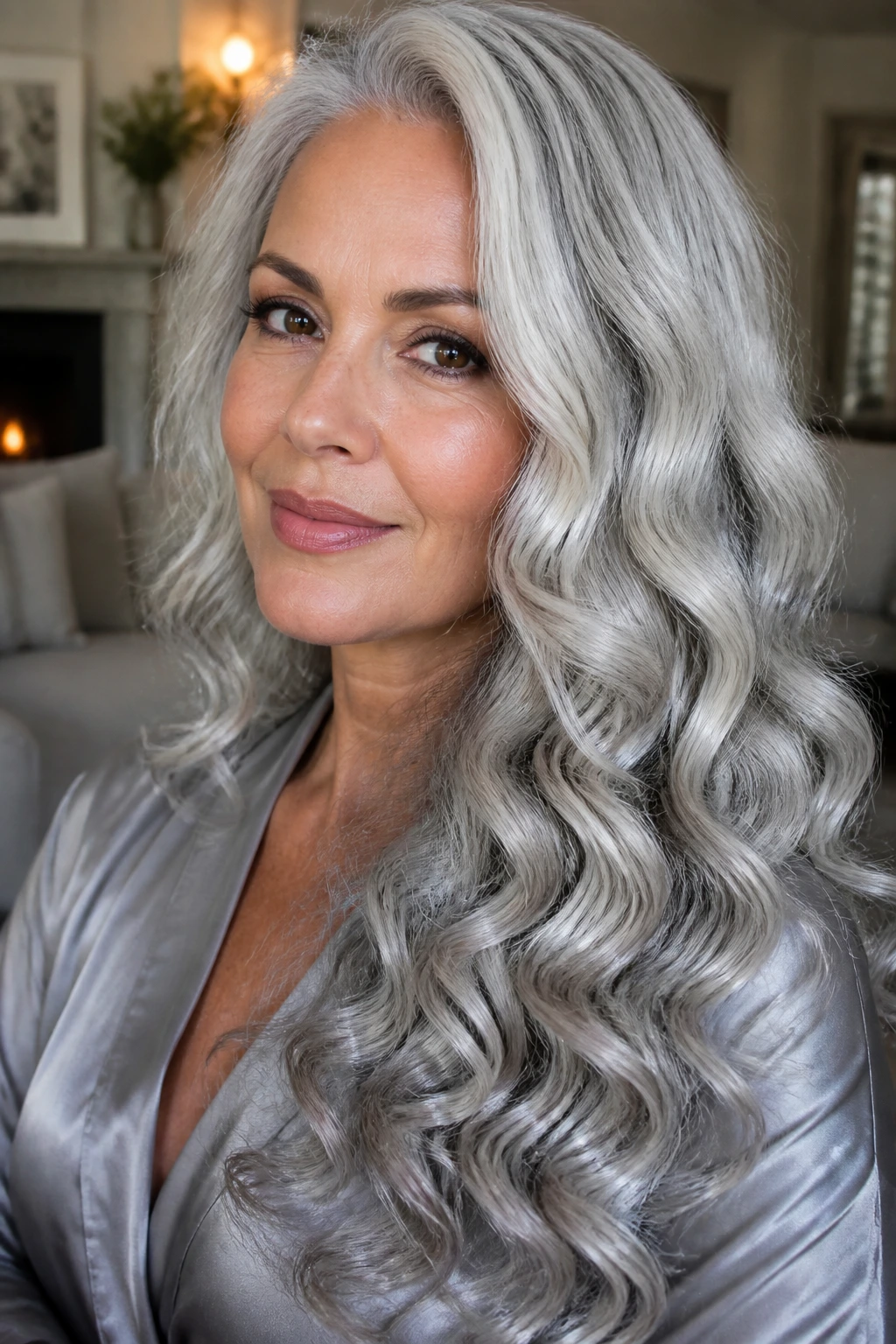
Mermaid curls work because the long length gives each curve room to show itself. On silver hair, that sweep of curl can look almost luminous when the finish is clean. I like this look for dressier moments because it has drama without needing accessories to do the heavy lifting.
The secret is to curl in consistent sections, then brush or finger-comb the curls once they’ve cooled. If you skip that second step, the style can look too set and a little dated. A shine spray on the mids and ends helps the silver read as glossy, not greasy. Keep it off the roots.
Pro move: clip the top layers up while you curl the lower half, then release them last. The crown keeps more lift that way.
9. Crown Braid With Soft Loose Lengths
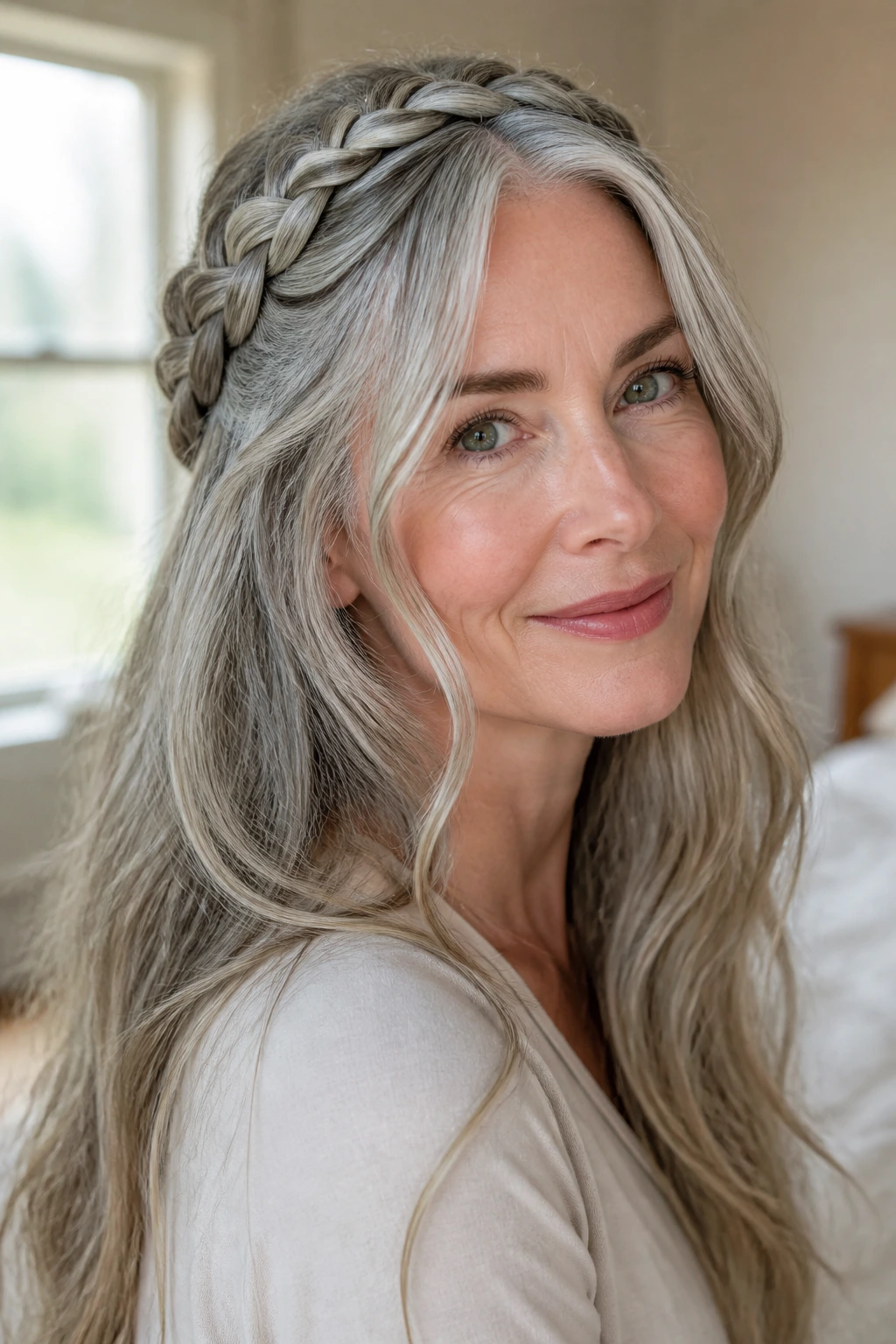
A crown braid gives long gray hair a frame. It draws the eye around the face and keeps the top from looking too plain, which is useful when the length is doing most of the visual work. Leave the rest of the hair loose and it stops the braid from feeling severe.
This is one of the better choices for second-day hair. Slight grit actually helps the braid hold, and the silver strands inside the weave show off the pattern better than dark hair often does. Pull the braid edges just a little wider with your fingers if you want a softer finish. Too tight, and it can look school-uniform stiff.
10. Deep Side-Part Waves With Root Lift
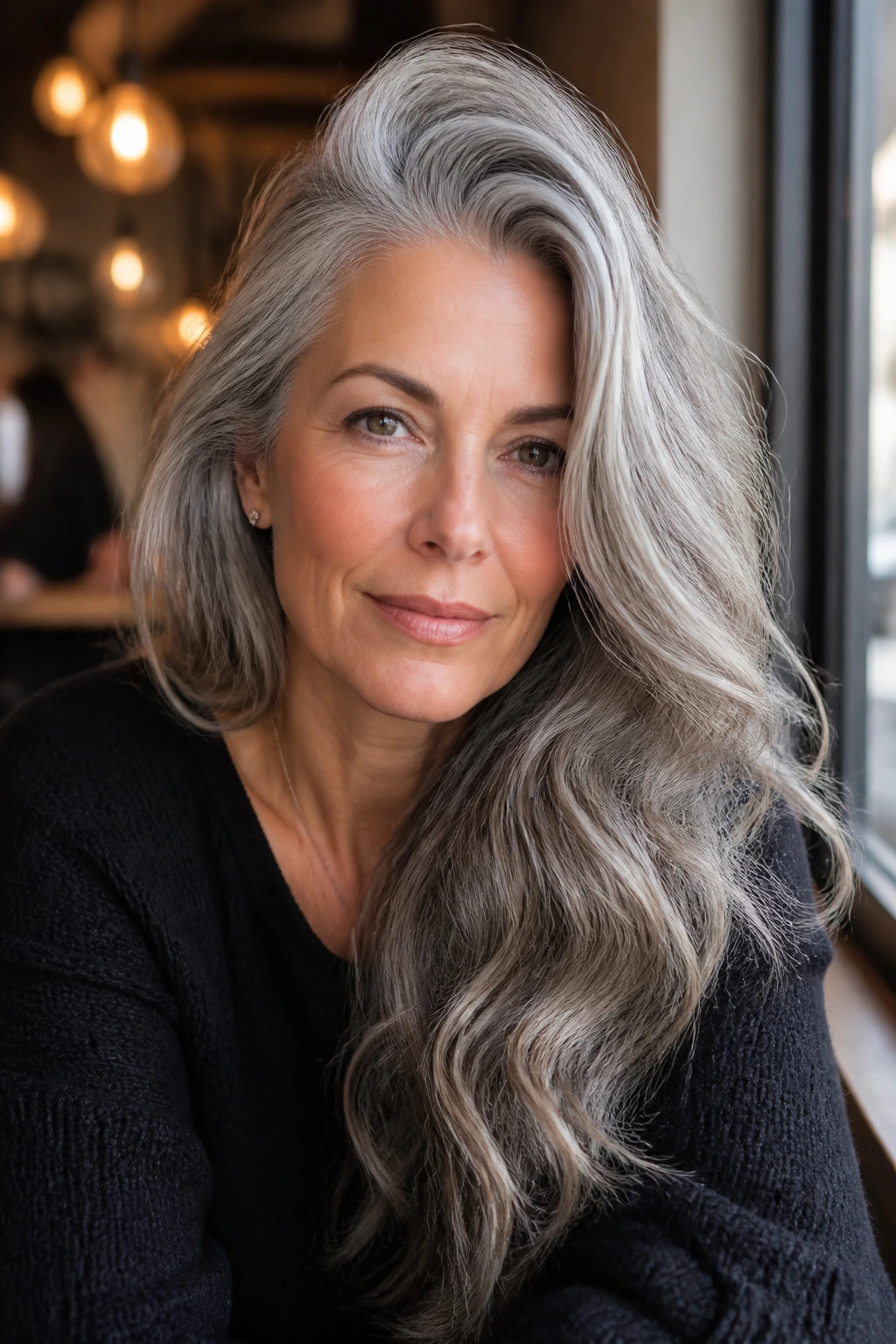
A deep side part changes the whole attitude of long gray hair. Suddenly the face has asymmetry, the crown gets height, and the lengths fall in a way that feels more dramatic than a standard center part. On silver hair, that extra lift keeps the style from sinking.
Use a root clip or a duckbill clip while the hair cools after blow-drying. That one small step gives you more volume than another half can of product ever will. Then set soft waves through the ends and sweep the heavier side over one shoulder. It’s a classic move for a reason.
The side part works especially well if one side of your face feels more open than the other. It gives you control without trying too hard.
11. Feathered Blowout Layers Around the Face
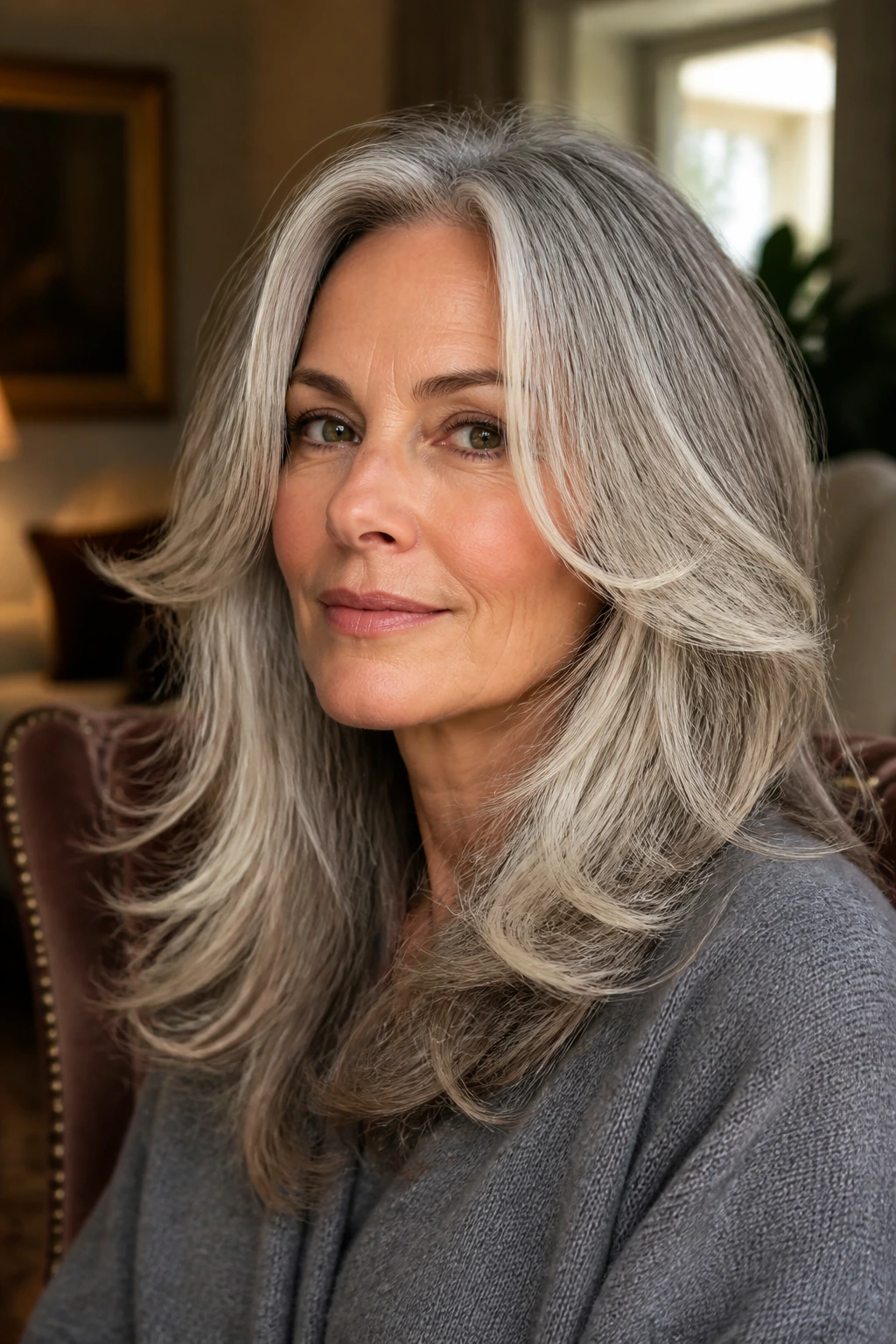
Feathered layers bring back a bit of swing. They flick away from the face, create movement at the cheekbones, and keep long gray hair from hanging straight down like a curtain. If the ends are a little thin, this shape helps them look airy instead of sparse.
A round brush and a medium heat setting are enough. Pull the brush down and out at the ends so the layers turn under just slightly, then finish with a cool shot to lock the shape. I like this look because it has that old salon-blowout feeling without needing the hair to be perfect. It’s polished, but not stiff.
12. Blunt Silver Length With a Clean Edge
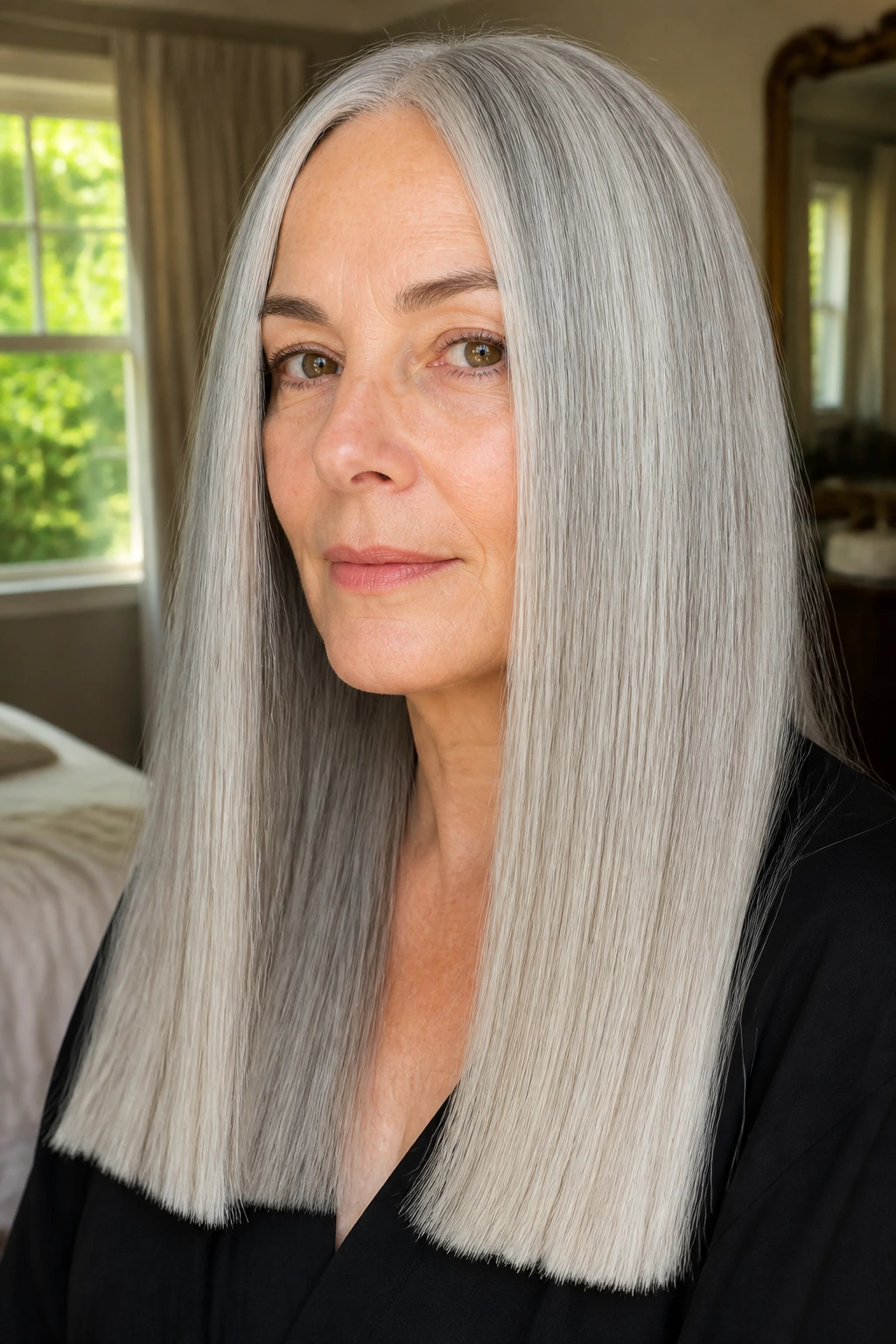
Blunt ends are a strong choice when the hair is thick enough to support them. The line makes the length look dense, and dense hair plus silver sheen can look striking in a very clean way. It’s one of the few cuts that can make long gray hair feel heavier in a good sense.
If the ends are wispy, though, this cut can work against you. A blunt edge only looks sharp when there’s enough weight at the perimeter. Keep the surface smooth with a light serum and regular trims, because the whole effect depends on the line staying intact.
No fluff here. Either the ends hold, or they don’t.
13. Boho Fishtail Braid Down the Back
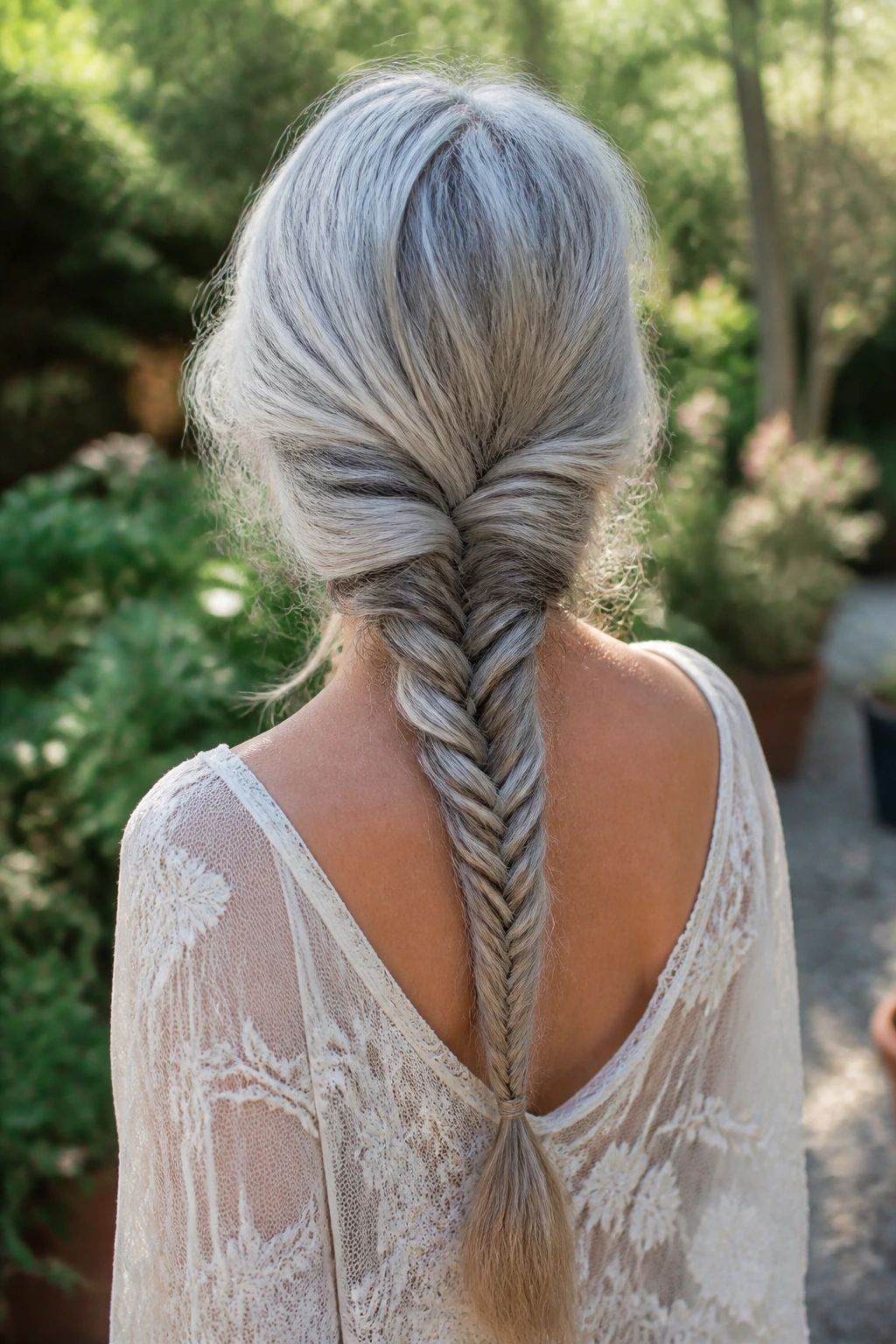
A fishtail braid gives long gray hair a lot of texture without much actual styling. The weave shows off the color shifts strand by strand, which is useful if your silver has brighter and duller sections mixed together. A loose fishtail looks relaxed; a tight one feels more graphic.
How to Wear It
- Start with brushed, detangled hair.
- Divide the length into two sections.
- Cross tiny outer pieces over to the opposite side.
- Tug the braid wider once it’s secured.
That last move matters. Without it, the braid can look skinny and severe on long hair. With it, the whole thing feels softer and more wearable.
14. Top Knot With a Long Tail Left Out
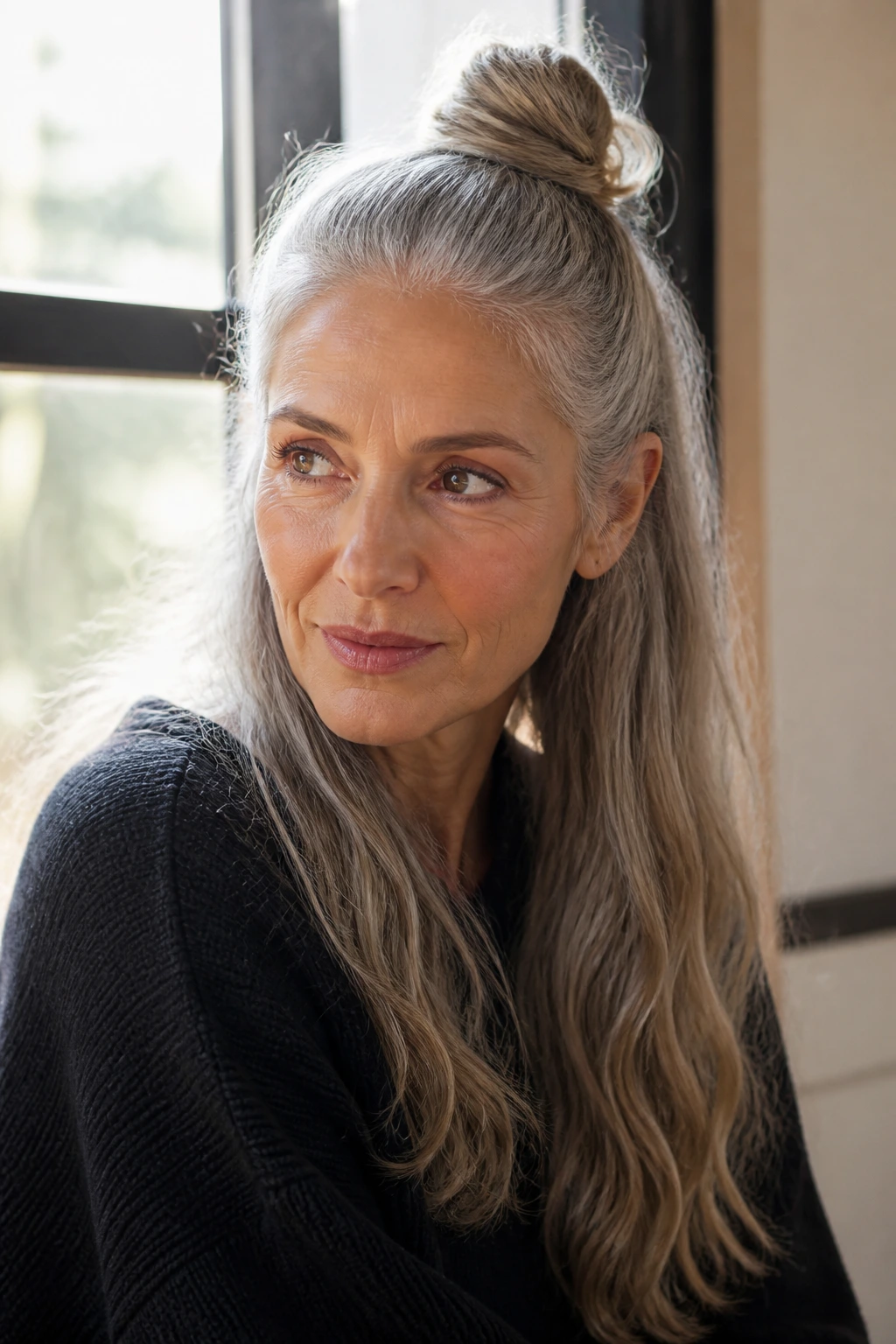
A top knot can be plain. A top knot with a long tail hanging free is different. It keeps the face lifted while letting the length stay visible, which is the whole point when you’ve worked to grow gray hair out long and want people to notice it.
Pull the knot high enough to clear the crown, but not so high that it feels like a gymnast’s bun. Let the tail stay straight, curled, or softly waved. Any of those works. The contrast between the compact knot and the loose tail is what makes the style interesting.
Use this one on heavy days. It feels lighter on the neck and still looks deliberate.
15. Rope Braid Ponytail With a Tight Finish
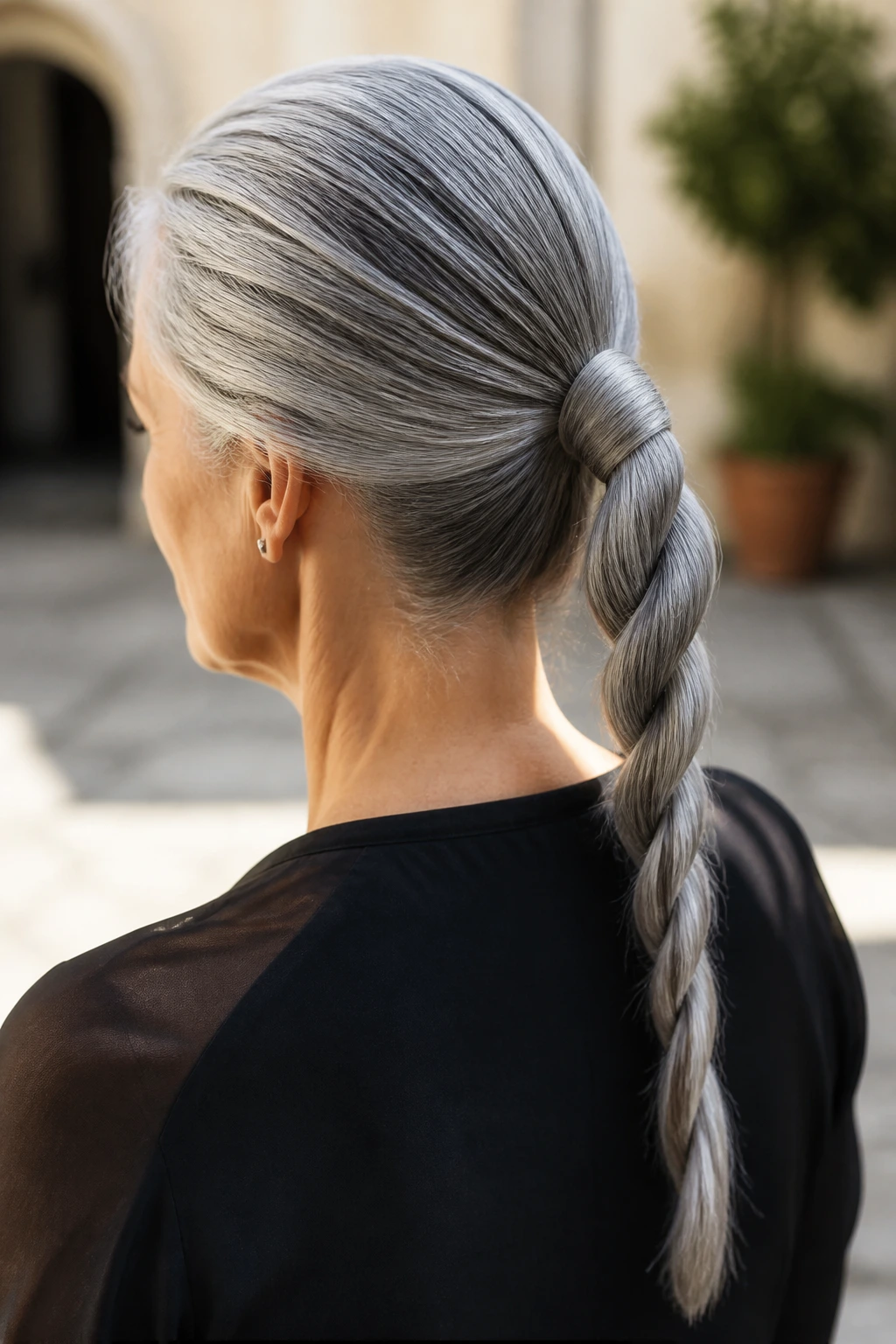
The rope braid ponytail is one of those styles that looks harder than it is. Twist two sections around each other, secure the base, and the length turns into a tidy line with enough texture to keep long gray hair from looking flat. It’s neat without being fussy.
This works best when you want movement but not loose pieces everywhere. The twists create a subtle pattern that shows up well in silver because the light catches the edges of the braid. If your hair slips, prep the length with a little dry texture spray before you start. That gives the sections something to grab.
16. Waterfall Braid Cascade Through the Crown
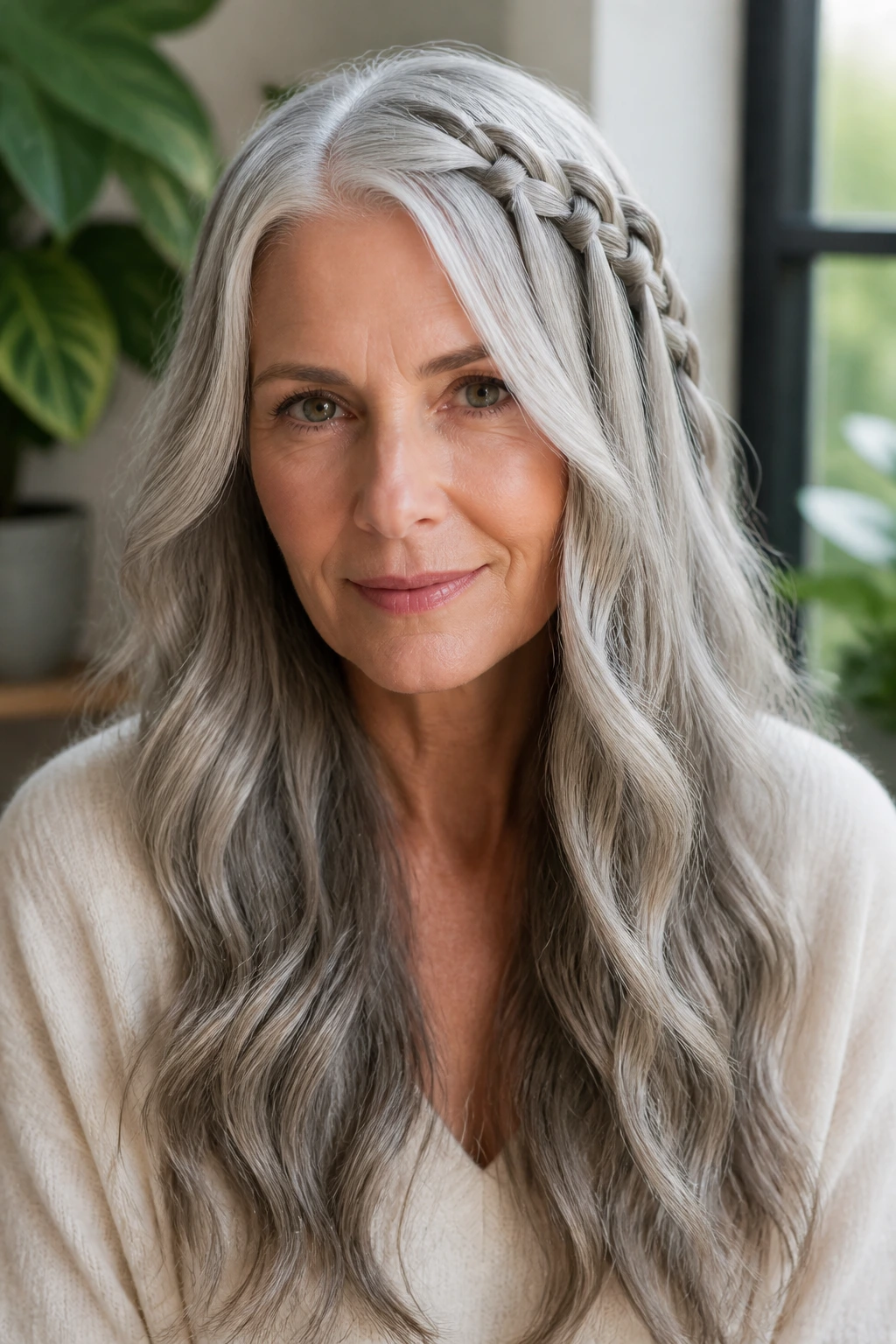
A waterfall braid is all about showing off the hair underneath. That makes it a smart choice for long gray hair, because the silver lengths become part of the design instead of just hanging there. The braid across the crown keeps the top organized while the rest falls free.
The style needs smoother hair than a chunky braid does. If the surface is frizzy, the cascade breaks apart before it looks intentional. Light serum on the outer layer and a fine-tooth comb for the parting usually fix that. It’s one of the prettiest options on long gray hair when the shine is there.
17. Wolf Cut With Gray Dimension and Texture
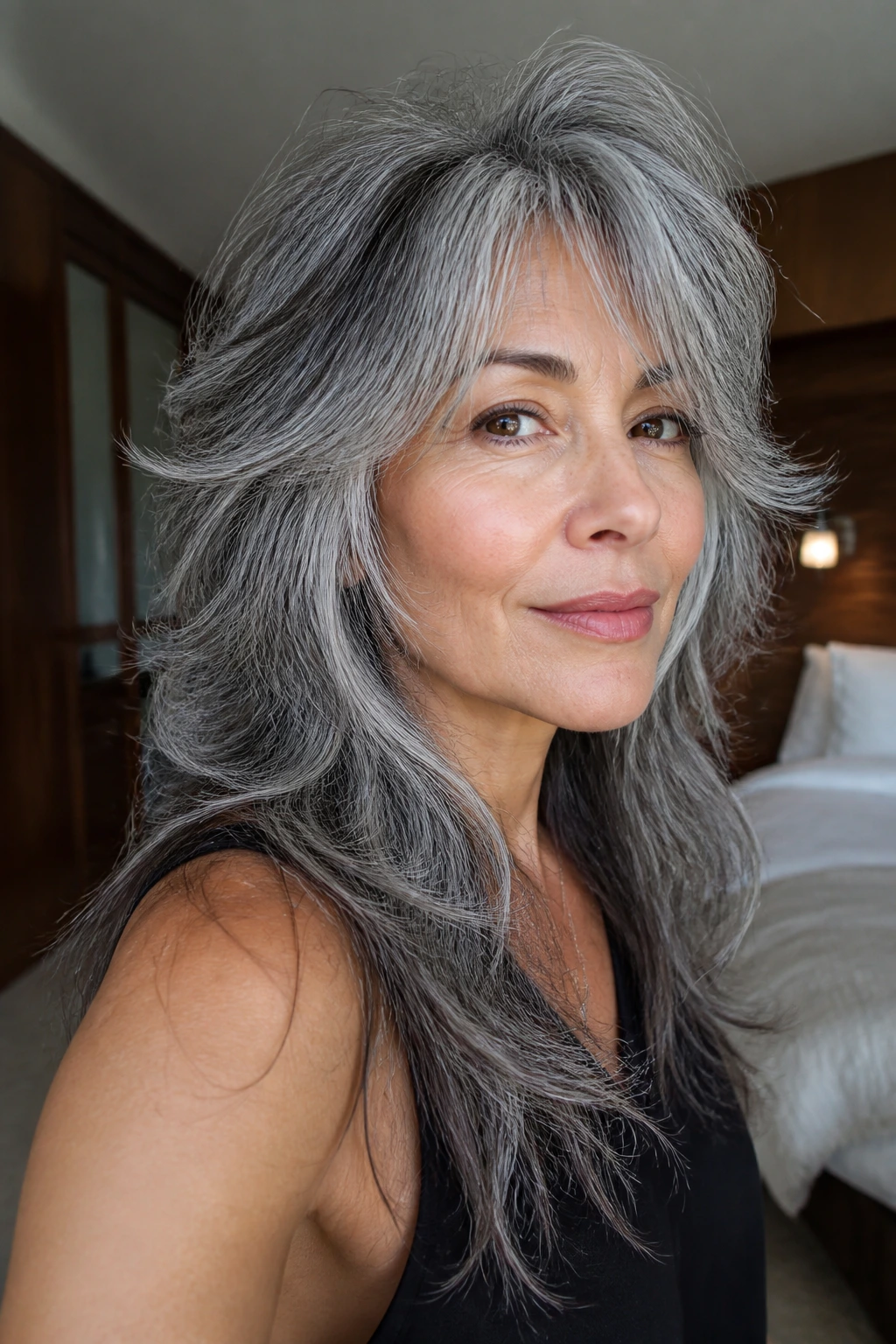
The wolf cut is for people who want long gray hair to feel a little wilder. Choppy layers, a loose fringe, and textured ends keep the silver from sitting politely in one place. It has a rougher edge than a shag, which is why it works on hair that wants body anyway.
What Makes It Different
Unlike a soft layered cut, the wolf cut leaves more obvious separation between the crown and the ends. That separation gives the shape attitude. It’s best when you like a piecey finish and don’t mind a little mess in the silhouette.
A curl cream or mousse is enough. Don’t overbrush it. The texture is the point.
18. Silver Ombré Ends That Fade Lightly
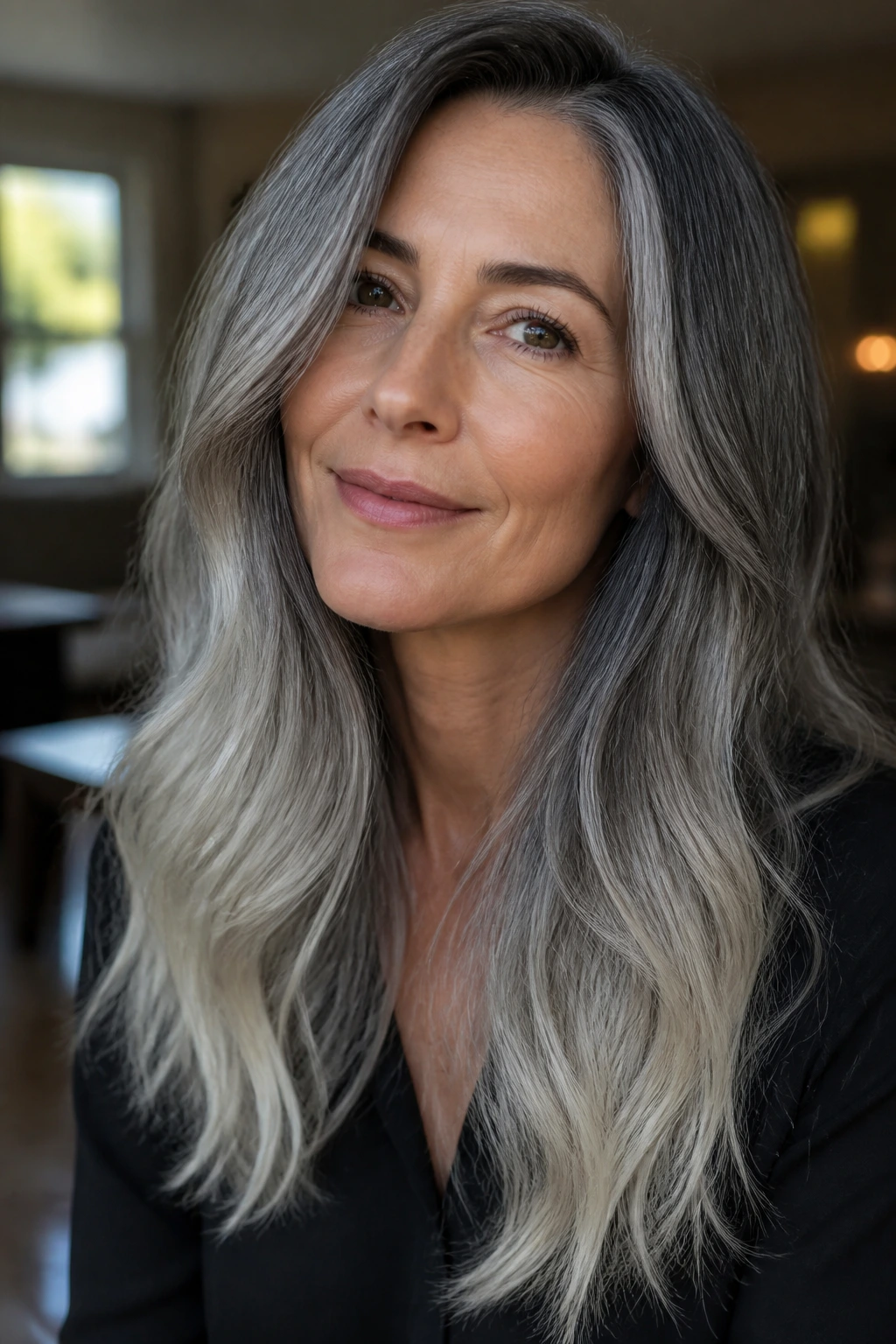
Silver ombré can look beautiful on long hair when the fade is soft, not stripey. The darker base gives the color structure, and the lighter ends lift the length so it doesn’t feel too heavy. It’s especially useful if you’re growing out dye and want the transition to feel smoother.
The important thing is the fade. If the shift from dark to light is harsh, the eye goes straight there and stays there. A blurred transition lets the whole length read as one continuous shape. It also buys you some grace between salon visits, which is never a bad thing.
19. Loose French Twist With Soft Ends
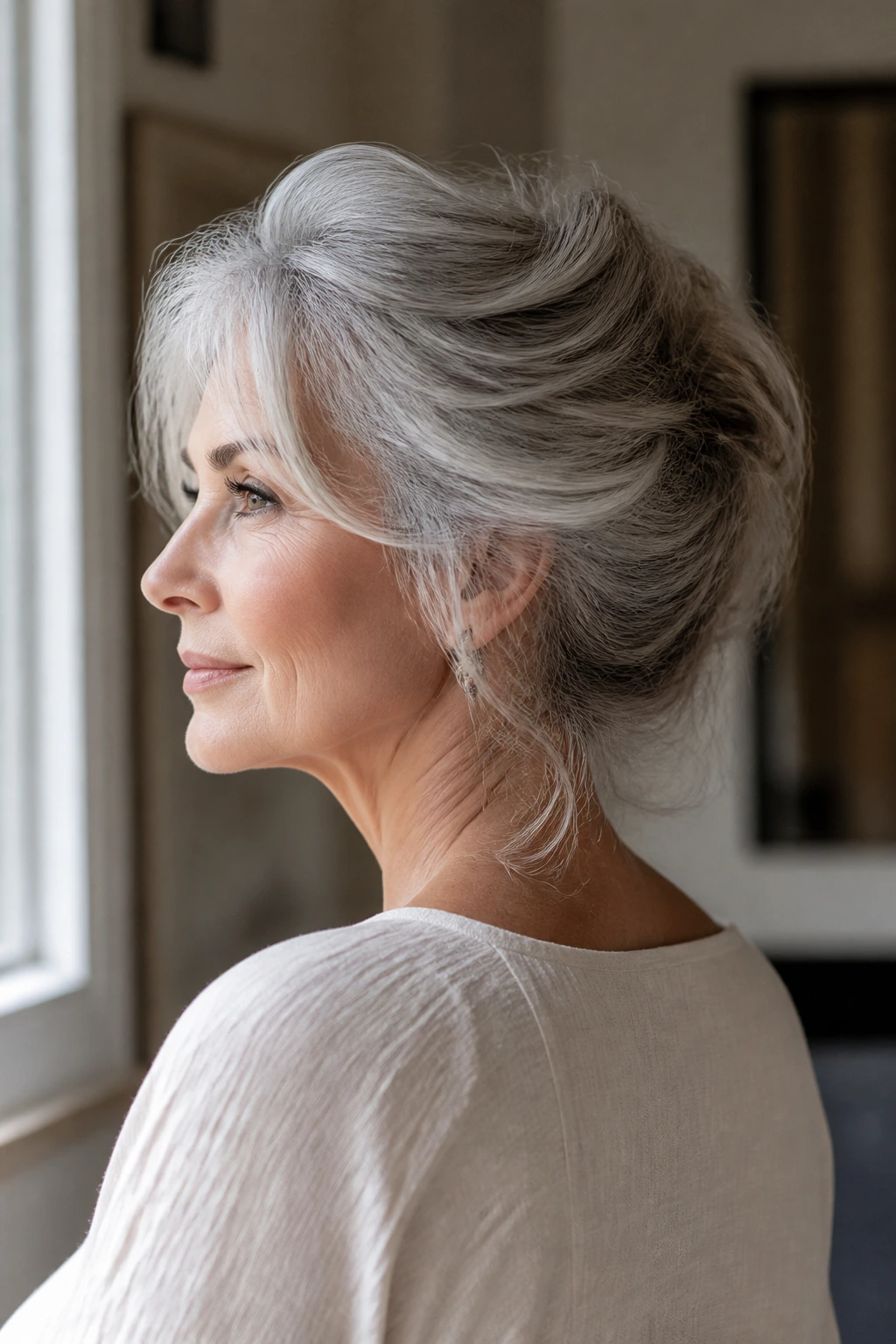
A French twist doesn’t need to be severe. In fact, on long gray hair, the softer version is usually better because it keeps the style from feeling dated. Leave a few ends loose or tuck them in only halfway, and the whole thing relaxes.
This is one of my favorite “dress up but not too much” looks. It works for dinners, events, or any day when you want your hair off your neck and still want the silver to look elegant. A few pins, a little smoothing cream, and a light mist of spray are enough.
Tip: pinch the twist loose at the center after pinning. It should look secure, not squashed.
20. Bubble Ponytail Stacked Down the Length
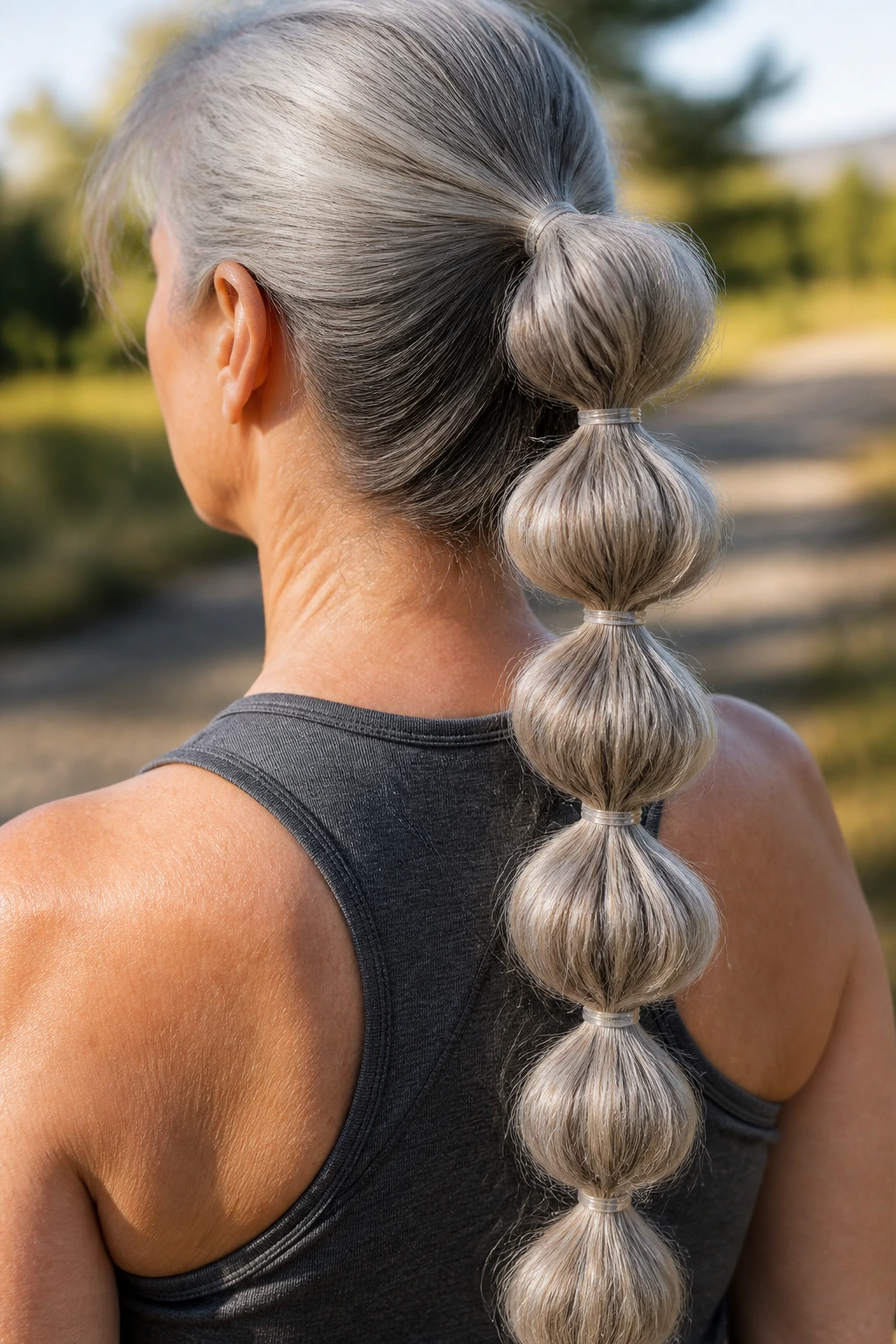
Bubble ponytails are fun because they turn the length into a series of shapes instead of one long drop. On gray hair, those rounded sections show light and shadow in a very clean way. It looks graphic, almost architectural, and that gives long hair some structure fast.
Use small clear elastics every 2 to 3 inches, then gently pull each section outward until it looks full but still connected. If your hair is very fine, tease each bubble lightly before you set the next elastic. If it’s thick, you may not need that at all. It’s a style that looks best when the bubbles aren’t perfectly equal.
21. Defined Natural Curls on Long Gray Hair
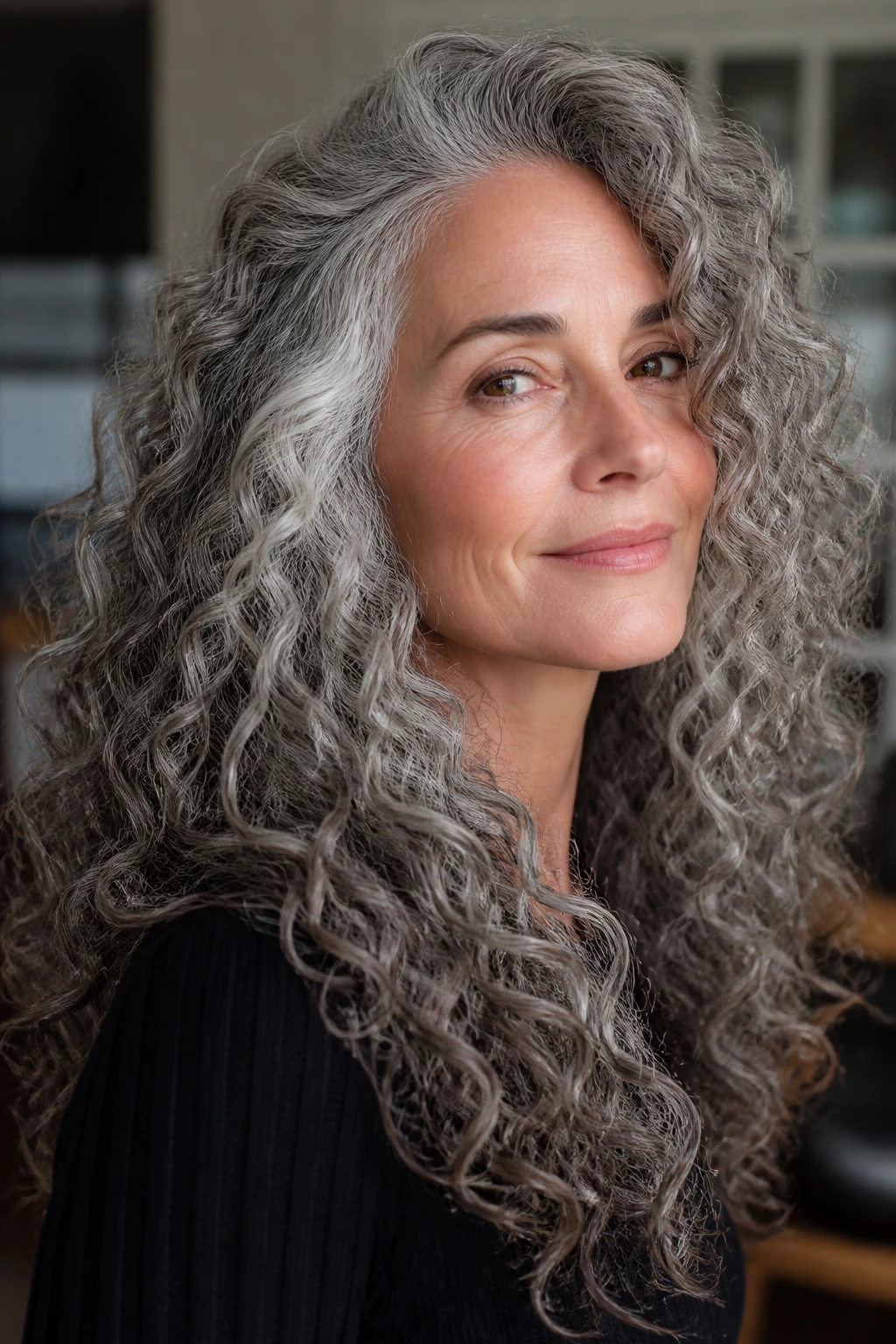
Natural curls on gray hair can look luminous when they’re defined instead of overhandled. The curl pattern does the visual work; your job is to keep the frizz in check and let the shape stay soft. Gray curls often have a little extra dry texture, which can actually help them hold form if you treat them gently.
Use leave-in conditioner on damp hair, then work in a curl cream or gel in small sections. Diffuse on low heat or let it air-dry if you have the patience. Once dry, break the cast lightly with your hands so the curls stay touchable. Heavy brushout is the enemy here.
The result should look springy, not crunchy.
22. Side-Swept Hollywood Waves
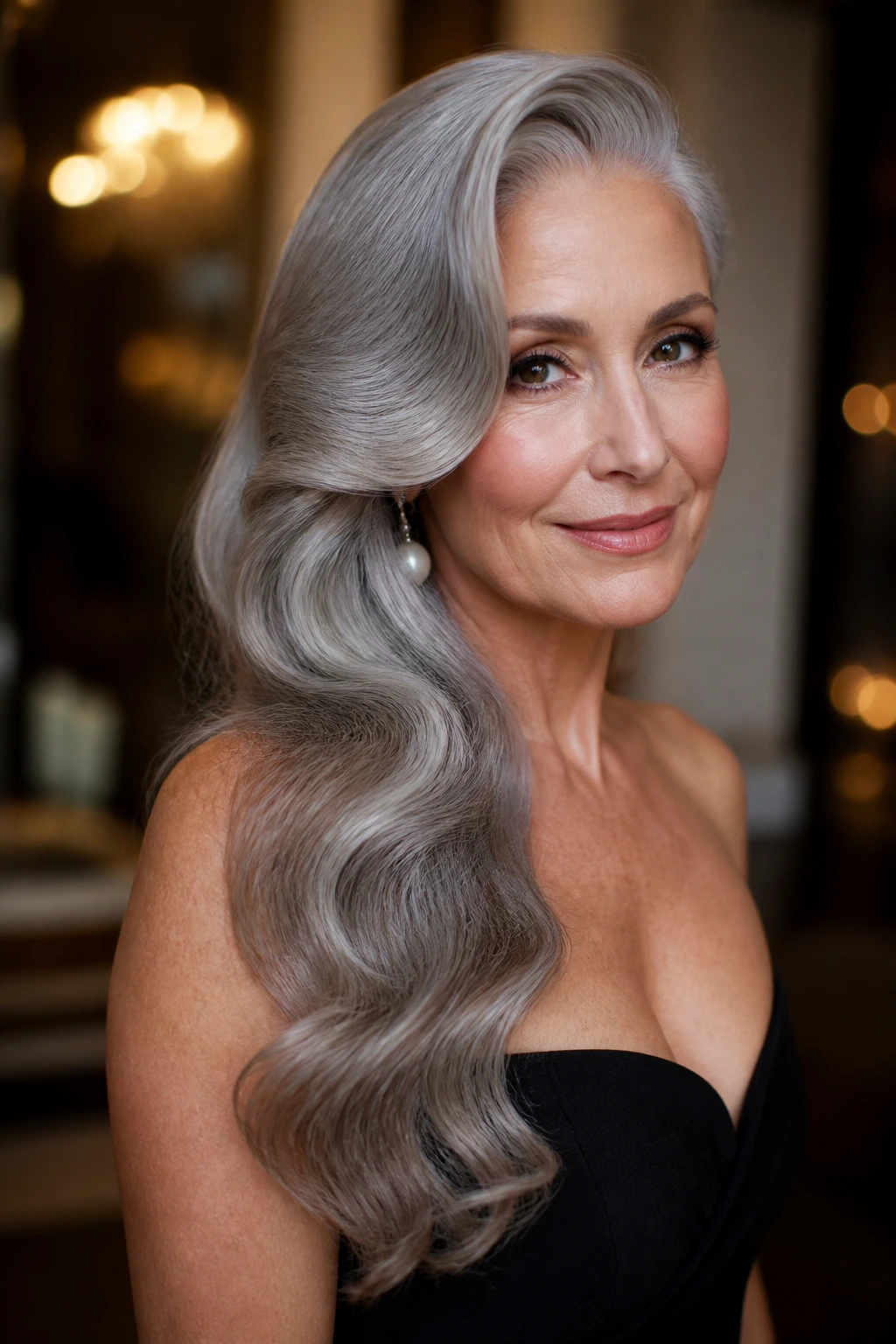
This is the formal version of long gray hair at its most dramatic. A deep side part, a smooth wave pattern, and one shoulder of hair carrying most of the movement give the silver a red-carpet feel without needing anything extra. It’s classic because the shape is doing the talking.
Pin-curl the waves while they cool if you want the set to last. That step feels old-fashioned, and it works. Brush the waves only after they’re cool, then spray lightly from a distance. A close spray coat can make silver hair look chalky, which is not the goal.
This look loves shine, but not stiffness. Big difference.
23. Braided Half-Crown With Free Falling Lengths
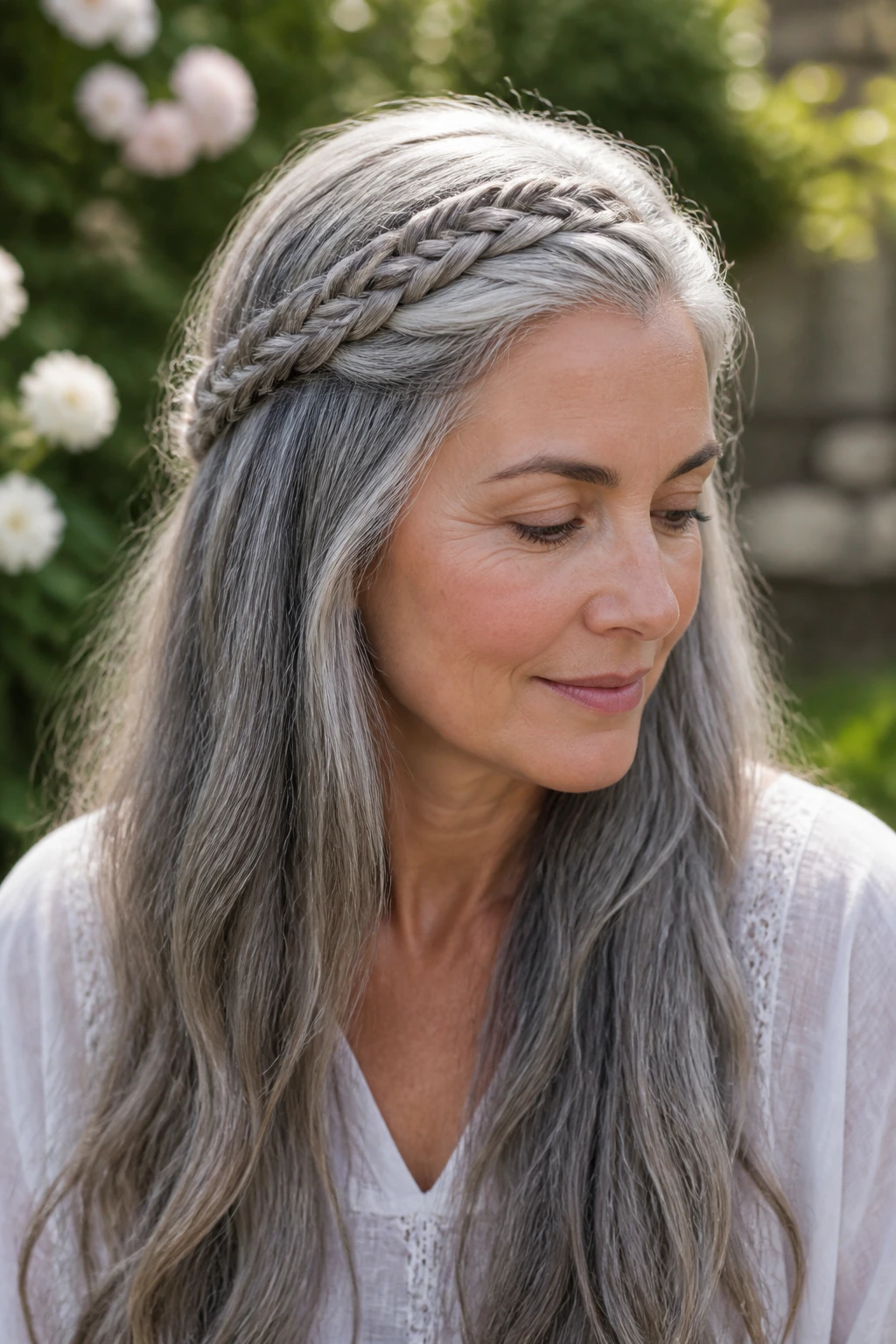
A half-crown braid gives you the prettiest part of a braid without committing the whole head to it. The top section gets control, the lengths stay visible, and the whole style works well when long gray hair needs structure but not a full updo. It’s romantic in a straightforward way.
Pull the braid from temple to temple and keep the tension even. If one side is tight and the other is loose, the shape looks lopsided fast. Once it’s secured, leave the back loose and add a little wave if the lengths need more body. A braid like this can make even day-two hair look chosen.
24. Long Layers With Ends Tucked Under
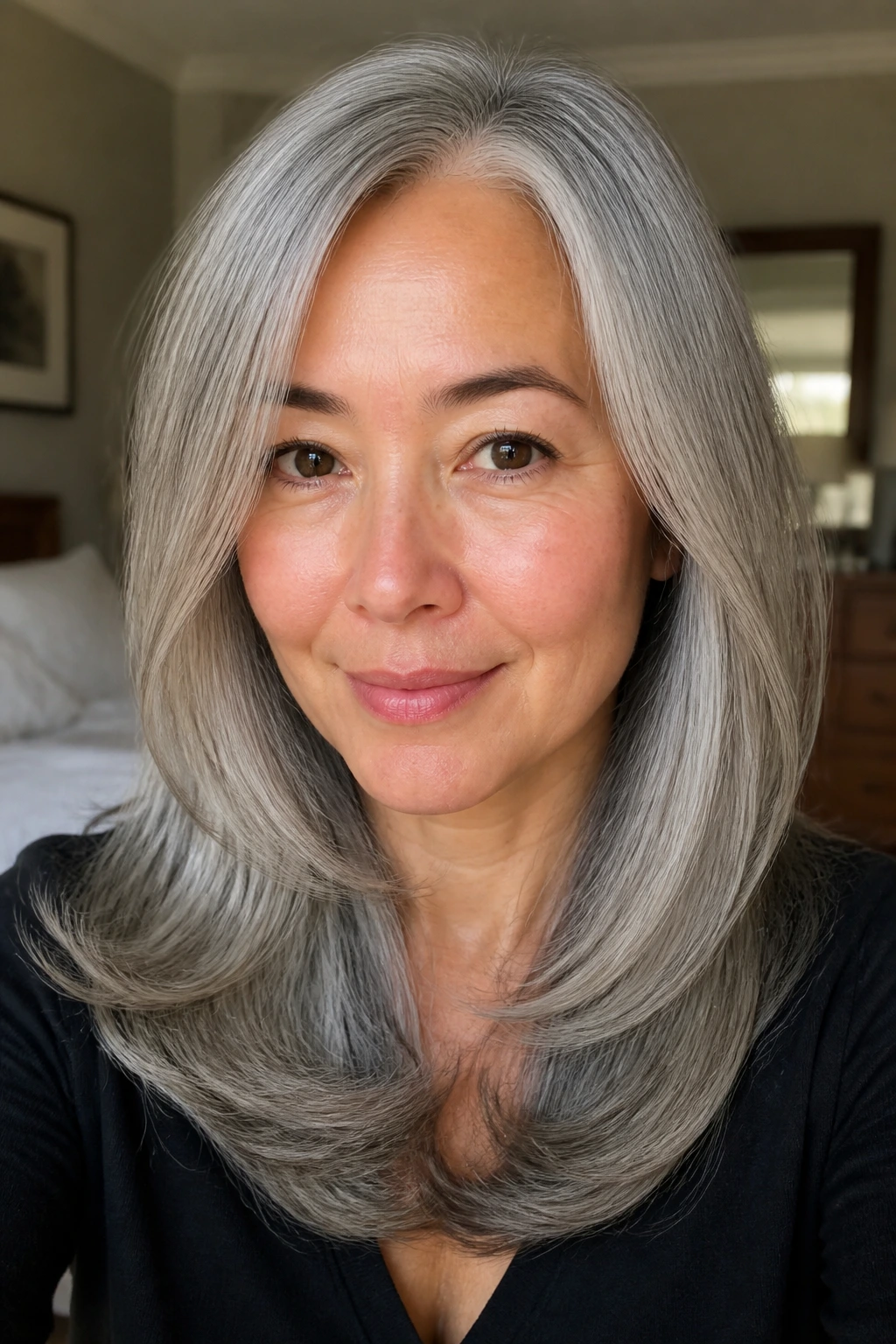
Sometimes the best move is less about drama and more about finishing the ends properly. Long layers with the tips tucked under give gray hair a neat edge that still moves when you walk. It’s a polished everyday look, especially if the hair feels a little puffy or dry at the bottom.
A round brush or blow-dry brush is enough. Pull the ends under just a bit, not into a hard curl. That tiny bend softens the outline and helps the lengths sit together instead of splitting apart. It’s a useful shape when you want the hair to look cared for without looking styled within an inch of its life.
25. Center-Part Sleek Tuck-Behind
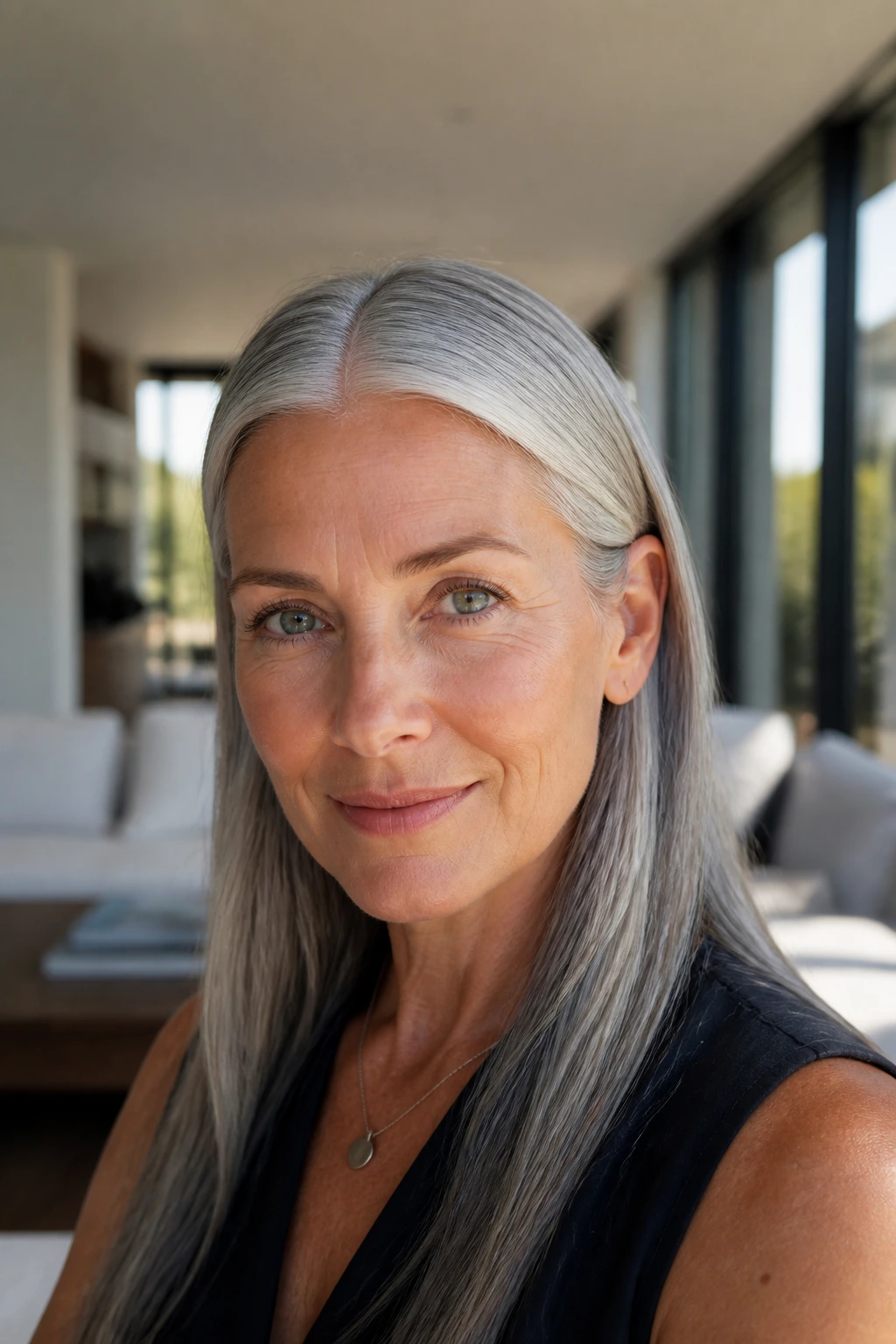
A middle part with the front sections tucked behind the ears is spare, clean, and better than it sounds. Long gray hair can look very modern when the face is open and the length falls straight behind the shoulders. It puts the focus on the color itself and any earrings or collar details you want to show off.
A light smoothing cream at the temples keeps flyaways down. Don’t drown the front in product or it will look oily by lunch. This look is best when the hair has been trimmed recently and the surface is smooth enough to hold a neat line. If the ends are dry, tuck the front but let the rest stay softly textured.
26. Claw-Clip Half-Up for Busy Days
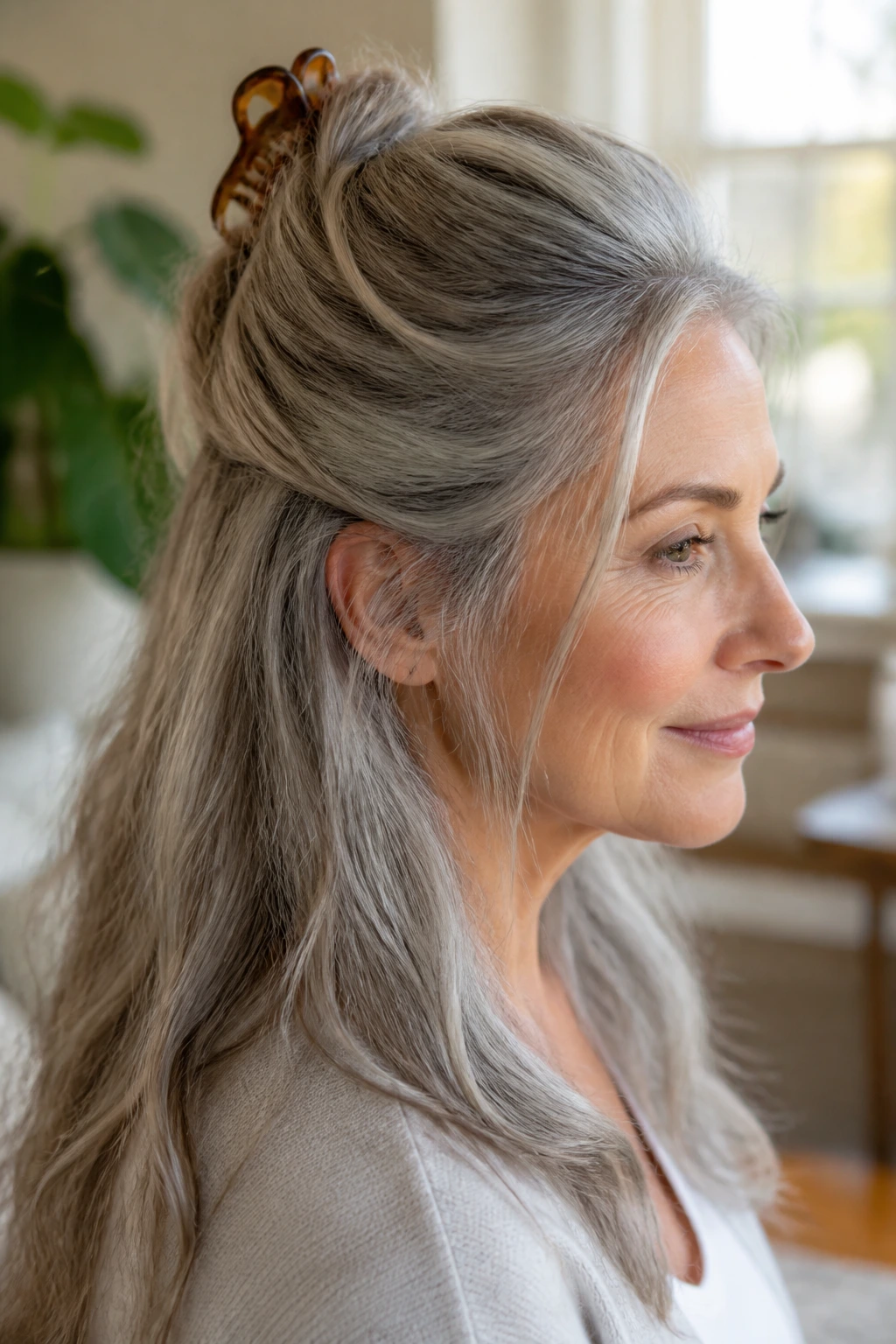
The claw-clip half-up is the low-maintenance answer that still looks put together. It lifts the top off the face, keeps the crown from going flat, and leaves enough length visible that the gray still reads as a feature. No one needs to know you spent forty seconds on it.
Twist the top section once, clip it, and loosen a few pieces around the temple. That little looseness saves the style from looking like a rushed fix. I like this one on hair that has a bit of wave or bend already, because the clip does half the work for you.
Practical. Fast. Better than a sloppy ponytail.
27. Bright Face-Framing Pieces and Soft Lowlights
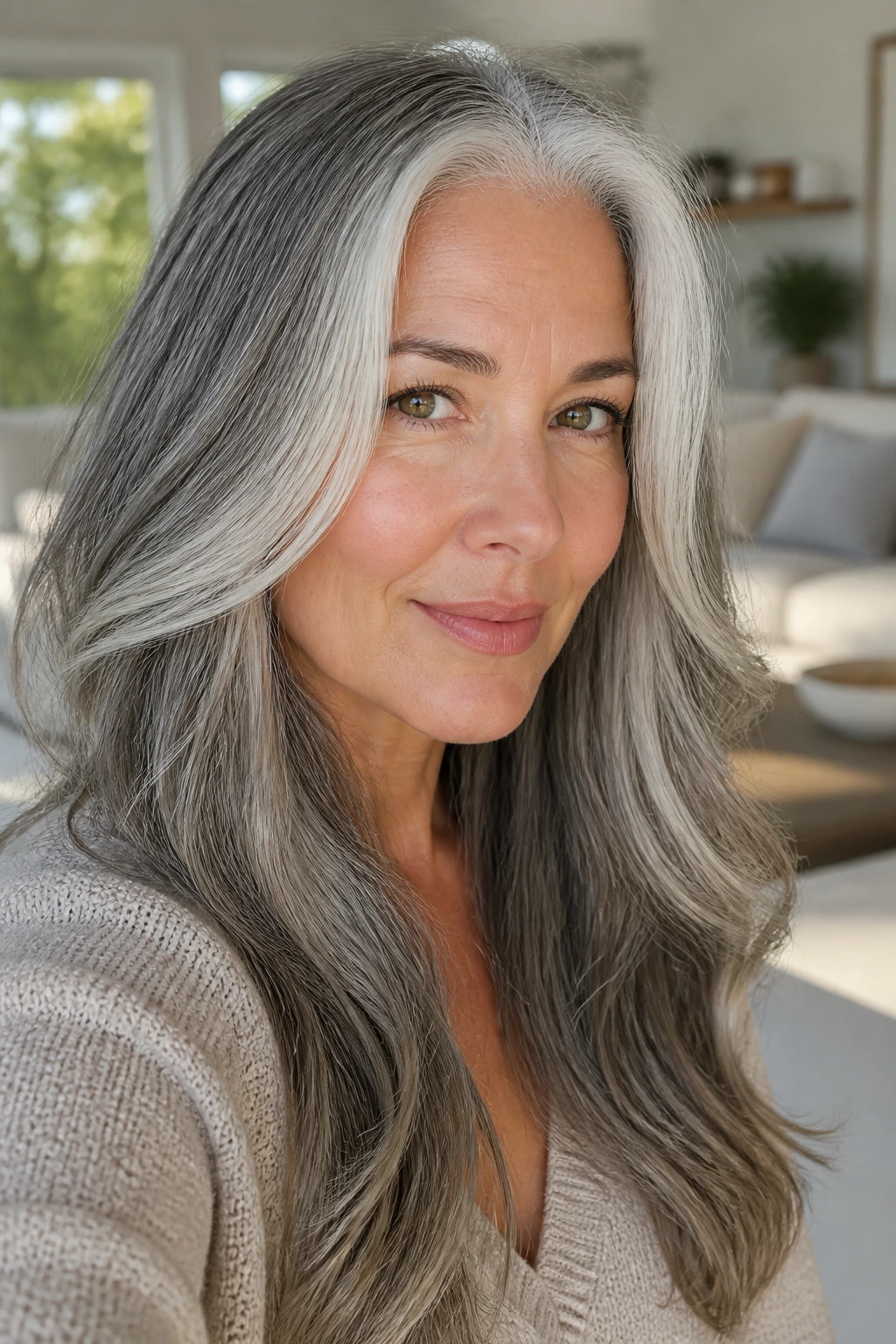
If your gray is coming in against darker hair, this color placement can make the whole head look fuller and more alive. Bright pieces near the face pull light upward, while soft lowlights through the back keep the length from looking washed out. It’s a smarter move than flooding the hair with too much lightness.
The key is balance. You want enough contrast to show shape, not so much that the color starts shouting. Face-framing pieces are especially useful if your skin tone looks better with brightness near the cheeks and temples. Lowlights give the rest of the length a place to rest.
This is not about hiding gray. It’s about steering it.
28. Messy Bun With Soft Tendrils
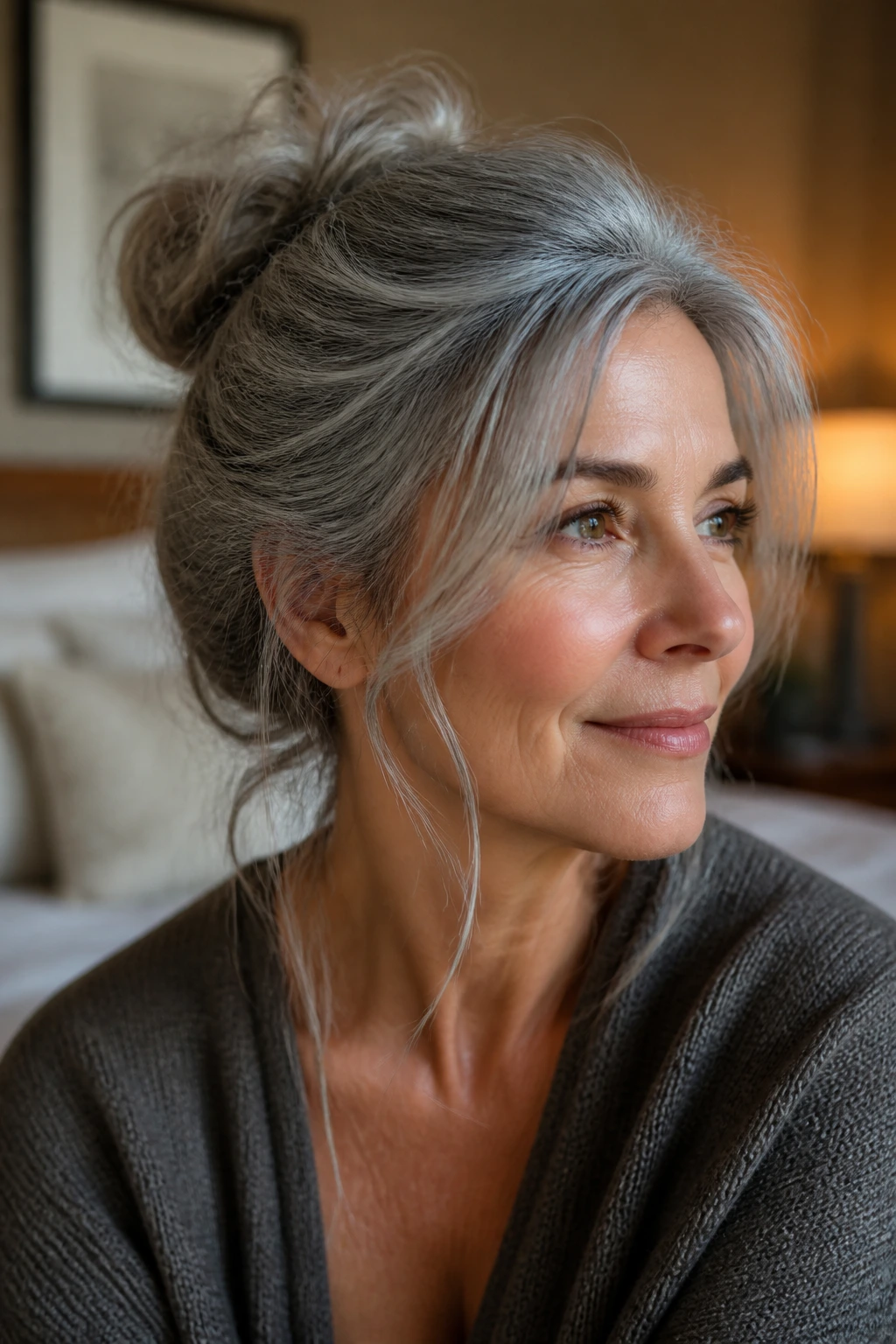
A messy bun can look like an accident or like a choice. The difference is in the looseness around the face and the way the crown sits. On long gray hair, the softer version is usually better because it lets the silver pieces spill around the knot instead of disappearing into it.
Pull out a few tendrils near the temples and at the nape. Then stop. Don’t keep fussing until the bun turns into a loose knot with no shape left. A little texture spray through the mids helps the bun hold without making it crunchy, and that matters when the goal is a relaxed finish.
29. Twisted Low Knot at the Nape
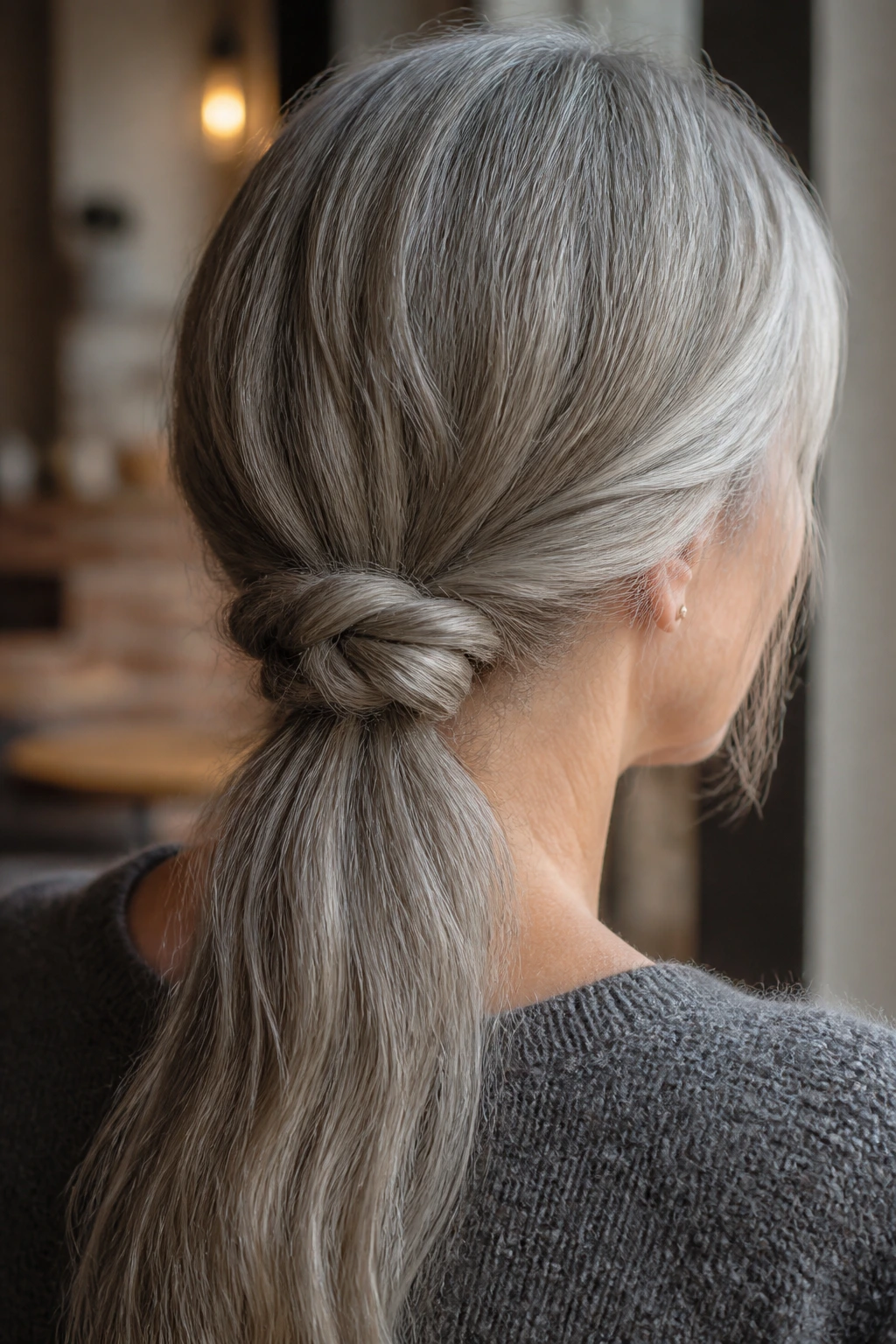
A low knot made from two twisted sections feels cleaner than a random bun and softer than a strict chignon. It sits neatly at the nape, which flatters long gray hair because the length is still visible above and below the knot. The shape is small, but it gives the style definition.
This is a good choice when you want your hair contained but not slicked flat. Twist each side back, join them low, and pin the knot so it feels secure. If you want a little softness, leave a few ends to fan out. If you want polish, tuck everything in neatly and smooth the top with a light cream.
30. Braided Pigtail Pair With a Clean Middle Part
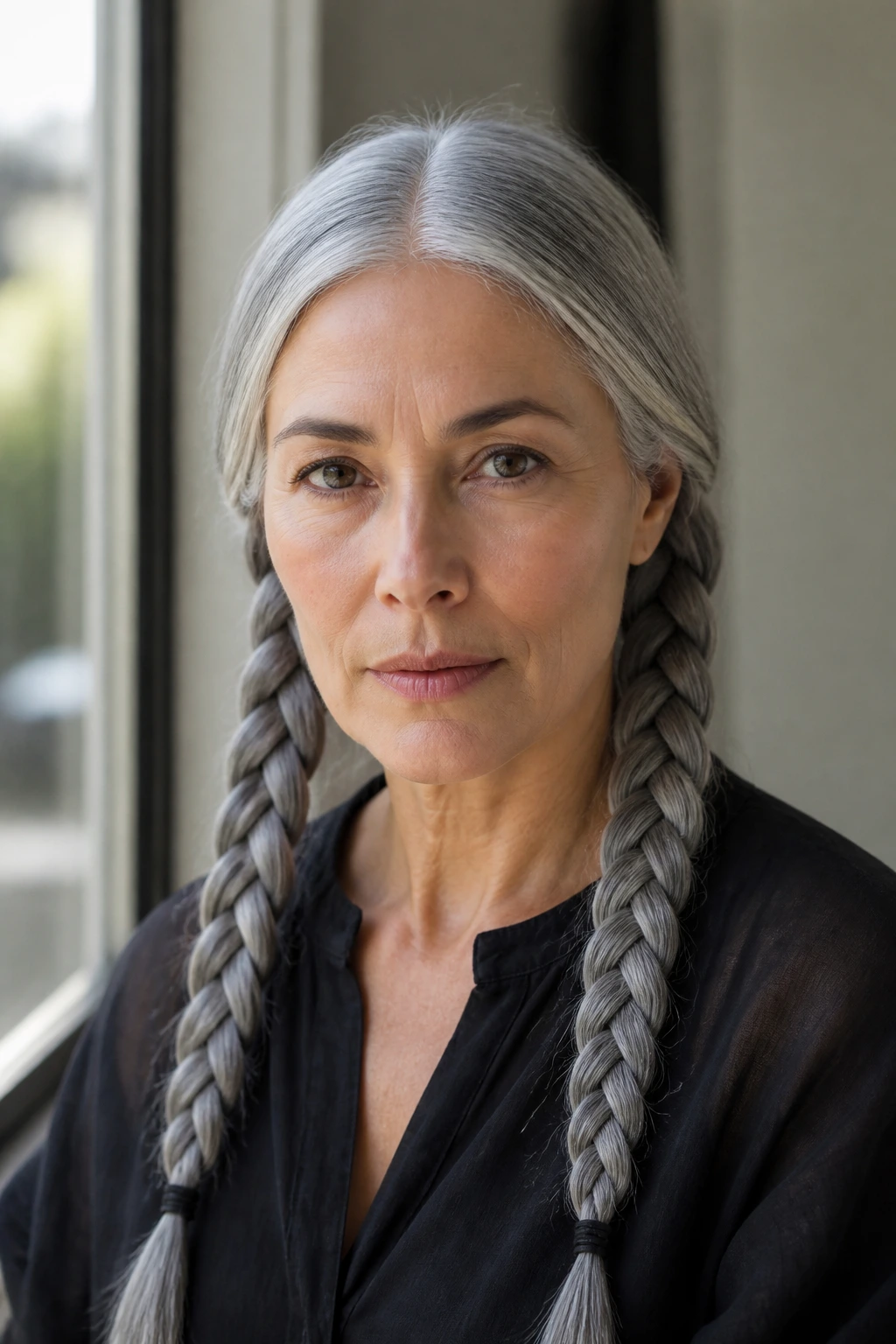
Braided pigtails on long gray hair can feel youthful, but they also read sharp and editorial if the part is clean and the braids are neat. The look works because it breaks the length into two lines instead of one. That makes the silver easier on the eye and keeps the style from feeling heavy.
Keep the braids low and symmetrical if you want a calmer finish. Pull them a little wider if you want more texture. I’d avoid over-accessorizing this one. The braid pattern and the color already do enough.
It’s a strong choice for windy days, travel days, or any day when loose hair is going to annoy you.
31. Scarf-Wrapped Lengths With a Silk Tie
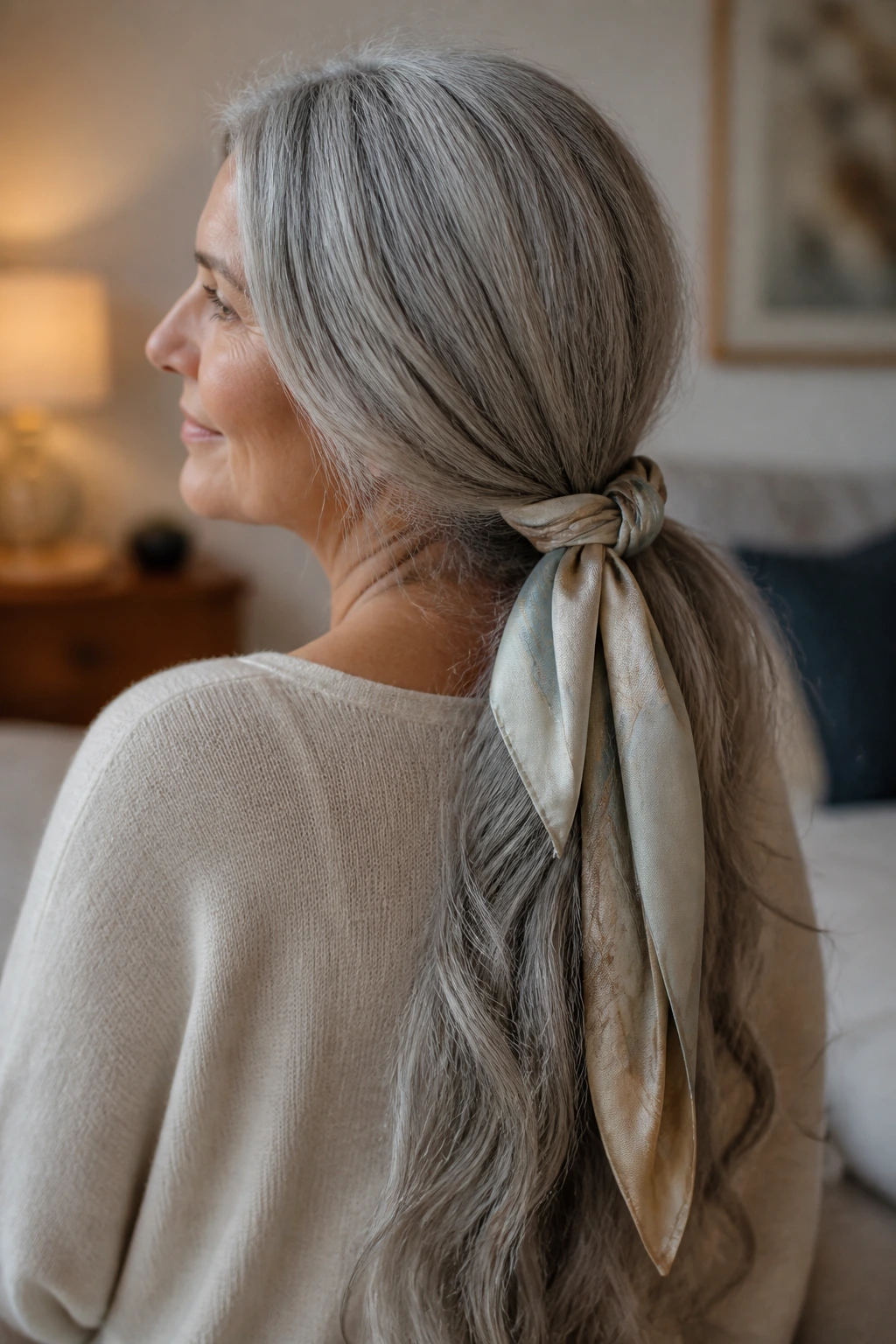
A scarf changes long gray hair fast. Wrap it around a low ponytail, a braid, or a loose section of hair and the whole style gets color, shape, and a little protection from friction. Silk is especially kind to silver hair, which tends to dry out faster than you’d like.
How to Use It
- Tie the scarf at the nape and let the ends fall.
- Wrap it around a braid for a more finished look.
- Choose a scarf with enough width to show up in the hair.
The best part is that the scarf can hide a plain base while making the length look intentional. That’s a useful trick on days when the ends need help.
32. Soft Straight Lengths With Wispy Ends
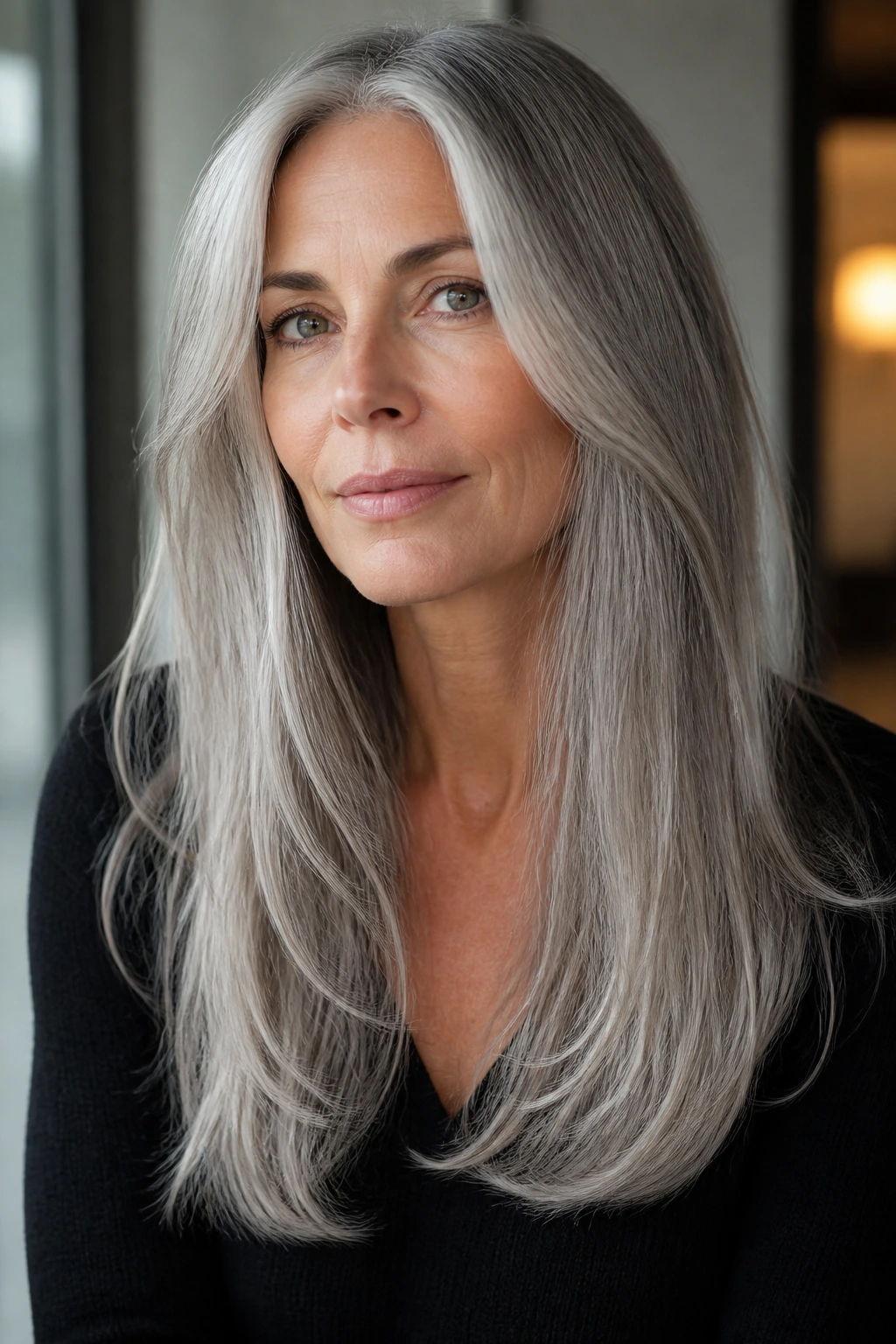
A soft straight look keeps long gray hair calm without making it stiff. The hair falls straight, but the ends have a tiny bend or flick so the whole style doesn’t feel severe. That little movement keeps silver hair from looking like it was ironed into submission.
This is the version I prefer when the hair is healthy but not thick enough for a blunt edge. Wispy ends can look lovely if they’re clean, not broken. Use a flat iron only if needed, then smooth a small amount of serum through the last few inches. Stop before the roots. Gray hair doesn’t need to be drenched to look sleek.
What Gives Long Gray Hair Shape, Shine, and Movement
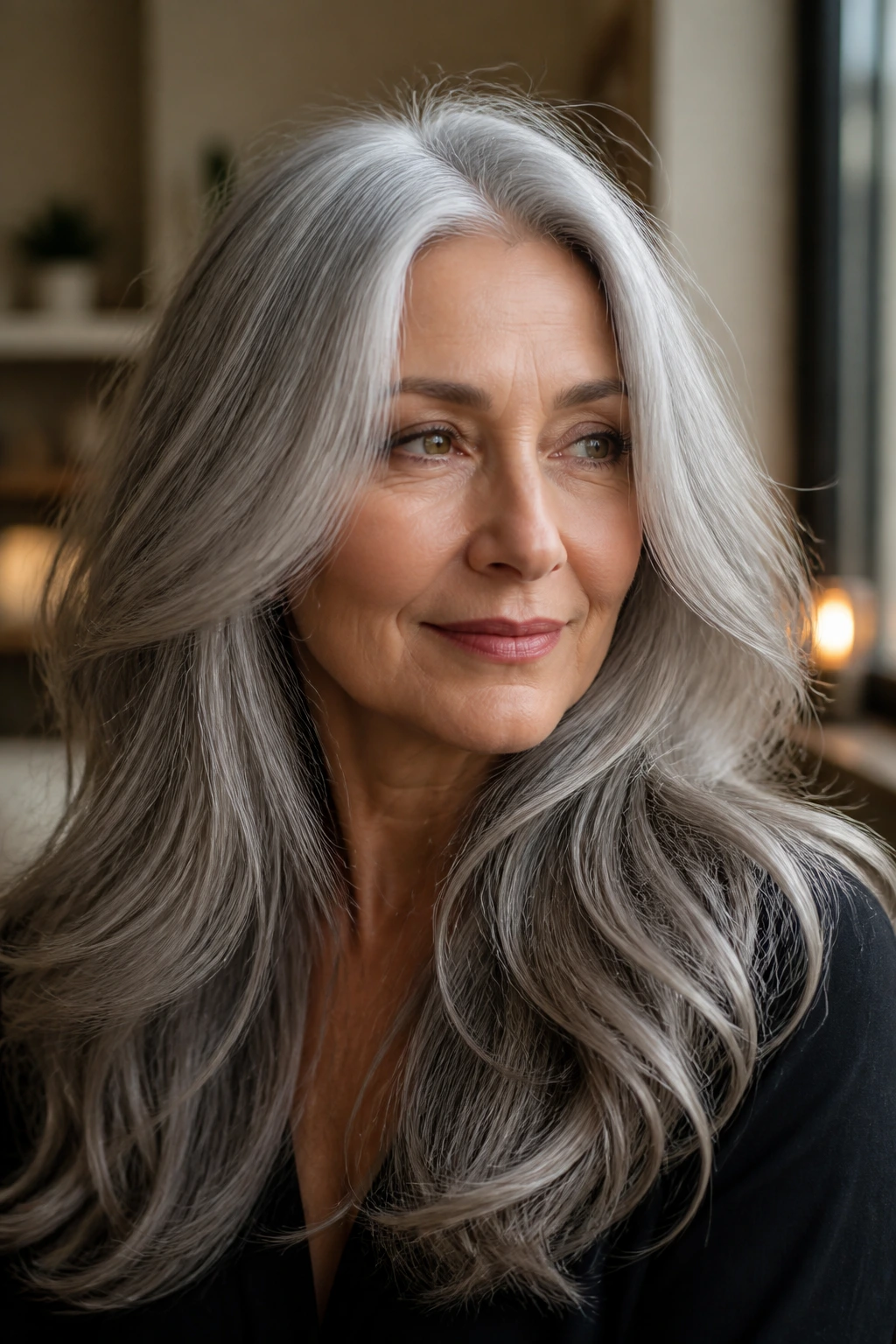
Gray hair changes the rules a little. It often grows with a different texture than the hair you had before, and that difference shows up most clearly on long lengths. The strands can feel rougher, they can frizz faster, and they can reflect light in a way that makes flat spots obvious. Which is why the cut or style matters so much.
A long silver length needs either a clean outline or visible movement. Sometimes both. A blunt perimeter can make thick gray hair look strong and deliberate, while layers and waves can keep finer hair from sagging at the ends. The wrong product load can dull everything down fast. The right finish makes the hair look like it has a pulse.
Hard water, sun exposure, and product buildup can all leave a yellow cast on silver strands. If your hair starts looking dingy, it’s not always the color’s fault. Sometimes it’s the water, sometimes it’s the styling paste, and sometimes it’s a conditioner that was meant for much richer hair than yours. A clarifying wash now and then clears the stage.
The shape rules I trust most
- Thick hair: layers, shags, waves, or braids keep the mass from getting heavy.
- Fine hair: blunt lines, smooth blowouts, and half-up styles usually hold better.
- Coarse hair: moisture plus a visible shape beats endless brushing.
- Naturally curly hair: definition matters more than uniformity.
Styling Tools That Earn Their Keep
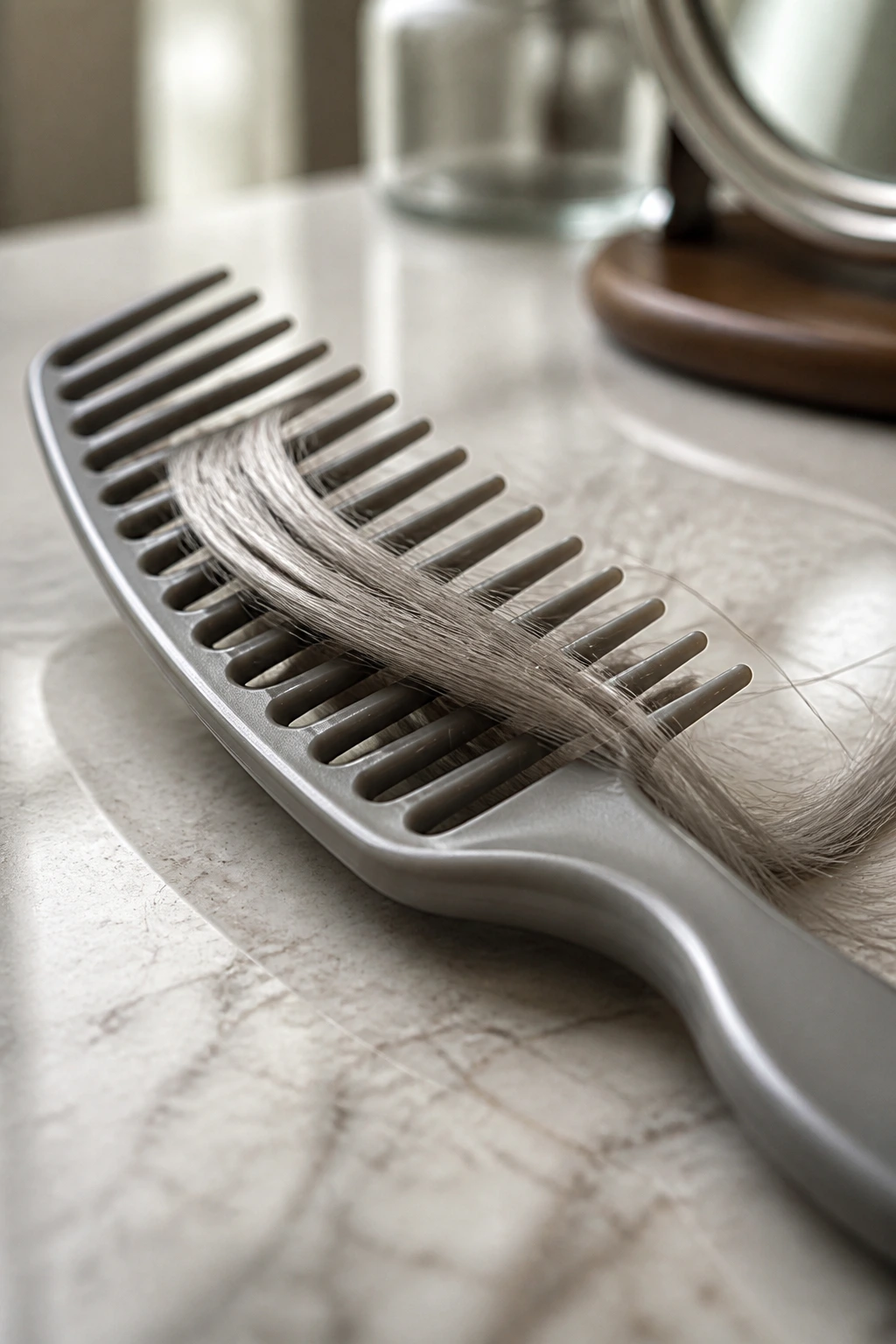
You do not need a drawer full of gadgets to style long gray hair well. You need the right few. That’s the whole game. A wide-tooth comb, a good brush, and one hot tool that you actually know how to use will beat ten random products every time.
- Wide-tooth comb: Best for detangling damp hair without ripping through fragile ends.
- Boar bristle or smoothing brush: Good for sleek ponytails and tuck-behind looks when you want the surface to lie down.
- Round brush, medium size: Useful for blowouts, face-framing bend, and tucked-under ends.
- 1.25-inch curling iron or wand: The sweet spot for soft waves on long lengths.
- Flat iron with rounded edges: Helps with straight looks and subtle bends at the end.
- Section clips: Keep hair out of the way while you curl, braid, or blow-dry.
- Heat protectant spray: Non-negotiable if you use hot tools at all.
- Purple shampoo: Helpful when silver hair starts to pull yellow, especially in hard water.
- Light serum or cream: Use on the mids and ends only; the roots usually do not need it.
- Dry shampoo: Handy for lifting the crown on day-two hair without adding grit everywhere.
How to Choose the Right Look for Your Texture and Face Shape
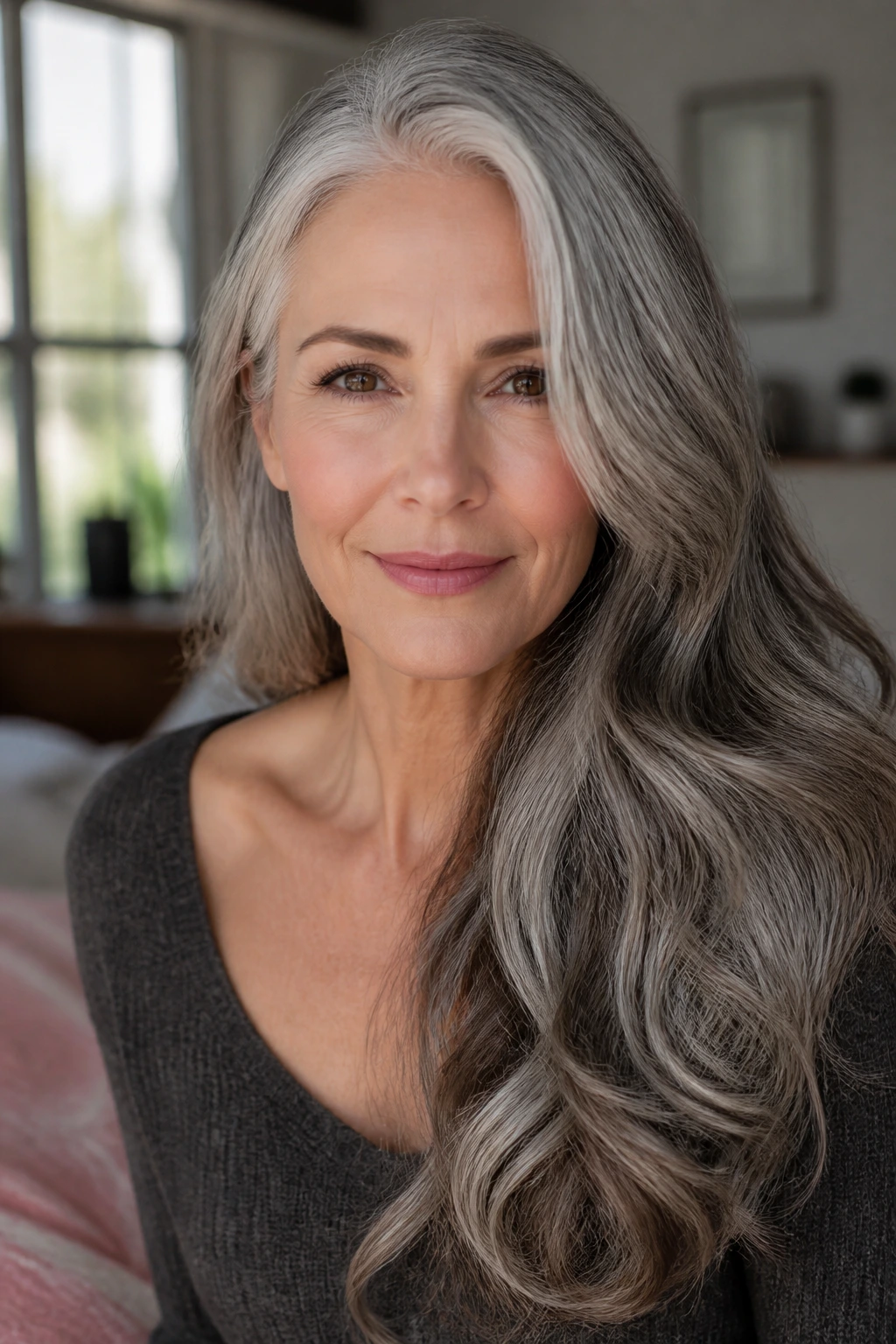
Not every gray hair look suits every head of hair. That’s the boring truth, but it saves a lot of frustration. The style that looks airy on one person can look sparse on another. The cut that gives fine silver hair life can make thick silver hair puff out like a bell.
If your hair is fine
Go for blunt edges, soft waves, half-up styles, and slicker shapes like the low ponytail or center-part tuck-behind. Fine hair gets swallowed by too many layers. Keep the outline clear and the movement controlled.
If your hair is thick
Shags, braids, bubble ponytails, and big waves usually work better. Thick gray hair wants release points. Leave the shape too solid and the whole look can feel bulky around the shoulders.
If your hair is curly or coily
Defined curls, braided styles, and pinned looks tend to hold up best. The goal is to show the pattern, not fight it. Moisture and shape matter more than forcing the hair into straightness.
If your face feels longer
Try side parts, curtain bangs, waves, or a half-up style that adds width. A tall crown plus long straight sides can make the face feel even longer, and not always in a flattering way.
If your face feels rounder
Long vertical lines, low ponytails, and face-framing layers can help. A high rounded bun or tight bubble style can accent width if that’s not what you want.
Small Styling Moves That Make a Big Difference
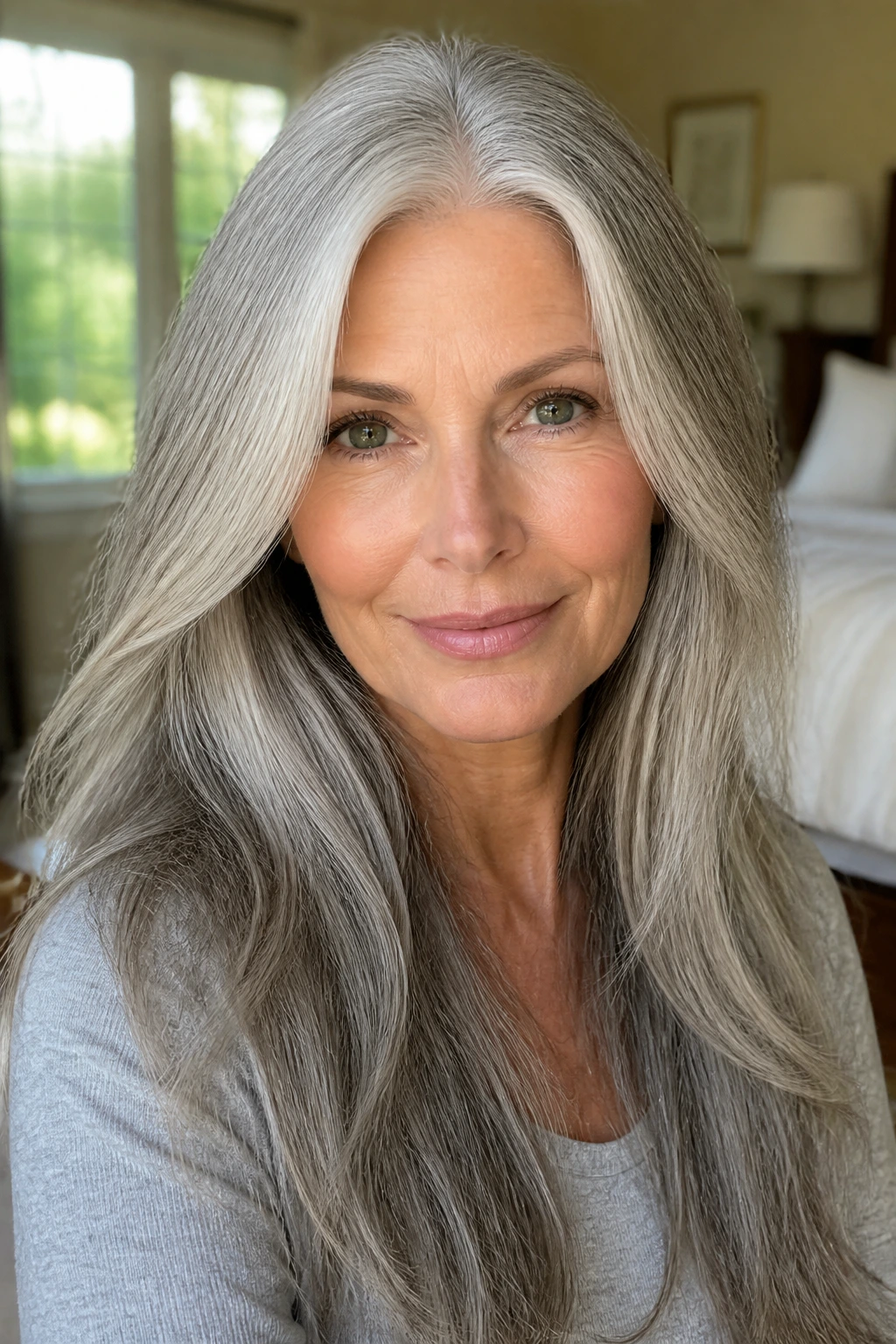
The difference between “nice hair” and “that looks good on you” is usually one or two small choices. Not ten. One or two. Gray hair especially rewards tiny adjustments because the color itself already has presence; it doesn’t need a lot of help to stand out.
Change the part. A middle part looks calm and clean. A deep side part adds lift and a little attitude. If your hair has gotten used to one split, move it a half inch at a time for a few days before switching fully.
Keep product off the roots. Long silver hair usually looks best when shine lives on the mids and ends, not at the scalp. A heavy serum near the roots makes the whole style collapse faster.
Use heat in sections, not in a rush. A 1-inch section curled properly once will look better than a bigger section rushed through twice. That’s especially true on drier gray strands, where repeated heat can make the surface look rough.
Let the hair cool before touching it. The shape sets while it cools. If you brush too early, you lose the bend and end up with frizz instead of movement.
Common Mistakes That Flatten Long Silver Hair
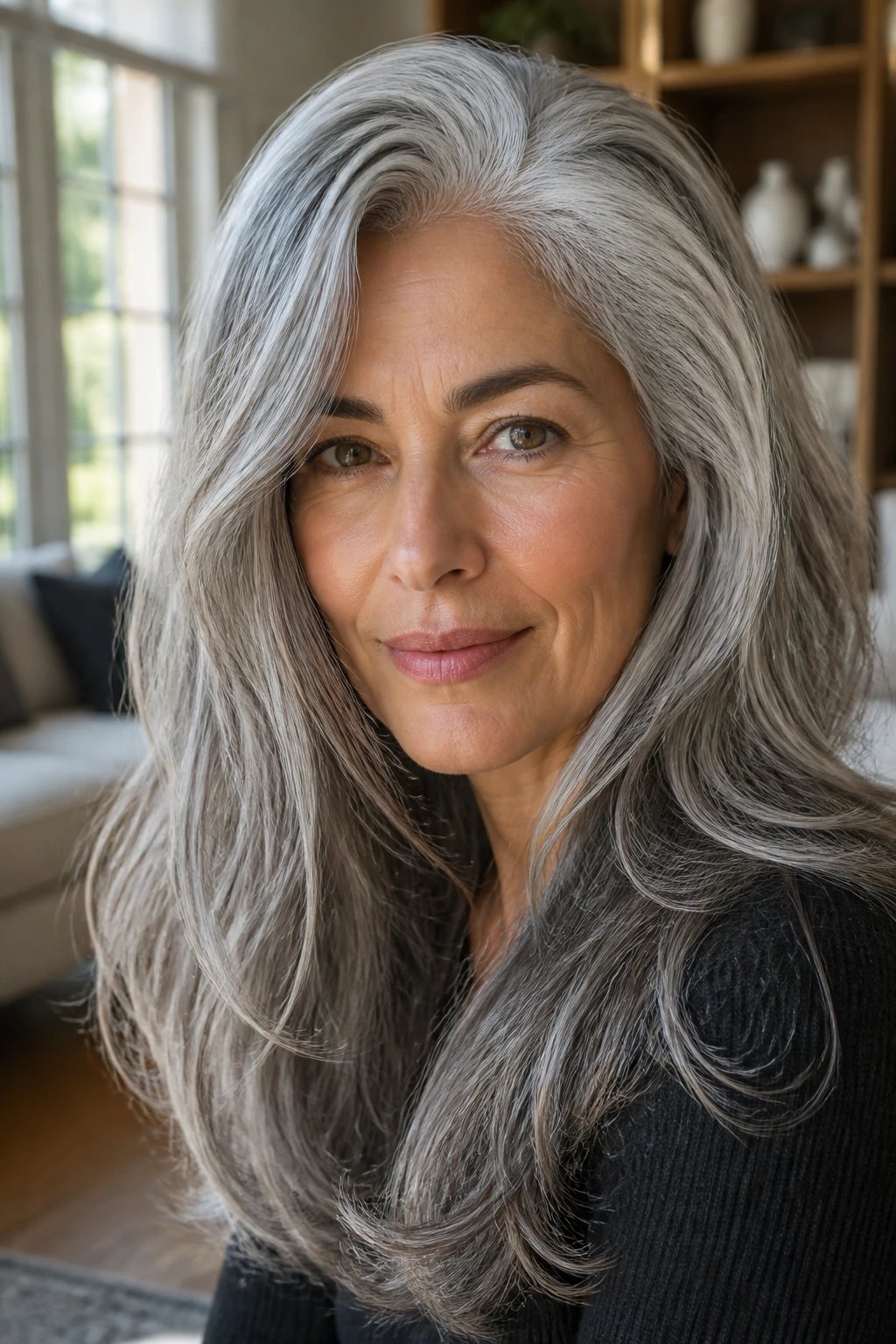
The first mistake is overloading the hair with purple shampoo. A little goes a long way. If you use it too often, the silver can look dull or take on a faint violet cast, especially on porous ends. Fix it by alternating with a gentle moisturizing shampoo and using the purple formula only when the tone starts to yellow.
Another one: too much oil at the scalp. Gray hair often needs moisture, yes, but the roots usually need less than the mids and ends. If the crown goes greasy by lunch, the answer is not “more product.” It’s moving the product lower down and using less of it.
Skipping trims is a big one too. Long gray hair can lose shape at the bottom faster than darker hair because wispy ends show up so clearly. If the ends look see-through, no styling trick will fully cover that. A trim every 8 to 12 weeks keeps the outline from fraying.
And then there’s the habit of brushing curls and waves after they’ve been set. That turns shape into fuzz. Use your fingers, a wide-tooth comb, or a soft brush only when the hair is cool and mostly dry.
Variations and Alternatives for Different Routines
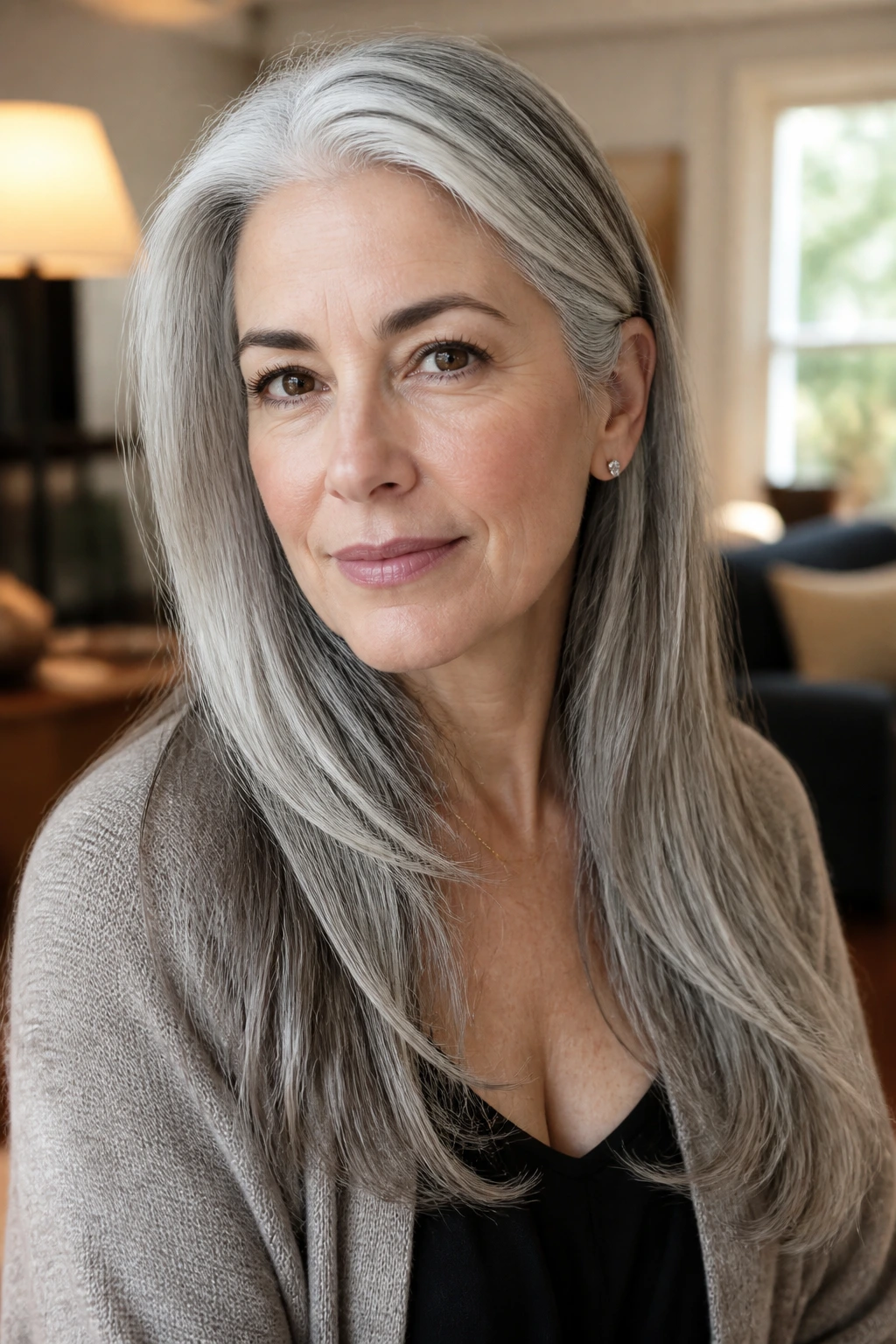
The Five-Minute Silver Routine: This version is built for days when the mirror gets two minutes, not twenty. A center part, a light serum on the ends, and one tucked-behind-the-ear side can make long gray hair look deliberate without heat.
The Soft-Volume Version: If flatness is the problem, swap the sleek styles for a root-lift spray, a round-brush blowout, or a loose wave pattern. Keep the crown light and the ends moving.
The Heat-Free Version: Braids, twists, scarf wraps, and a claw-clip half-up all work well if you want to skip hot tools. Hair that air-dries into a little texture usually holds these styles better than glassy hair does.
The Formal Version: Hollywood waves, a French twist, or a low sleek ponytail with a wrapped base are the cleanest options for dinners and events. They look finished without needing a lot of jewelry or fuss.
The Texture-Forward Version: Shags, wolf cuts, fishtail braids, and bubble ponytails lean into body and shape. They’re best when you want the hair to have personality instead of a perfectly smooth finish.
Tools and Products Worth Keeping Nearby
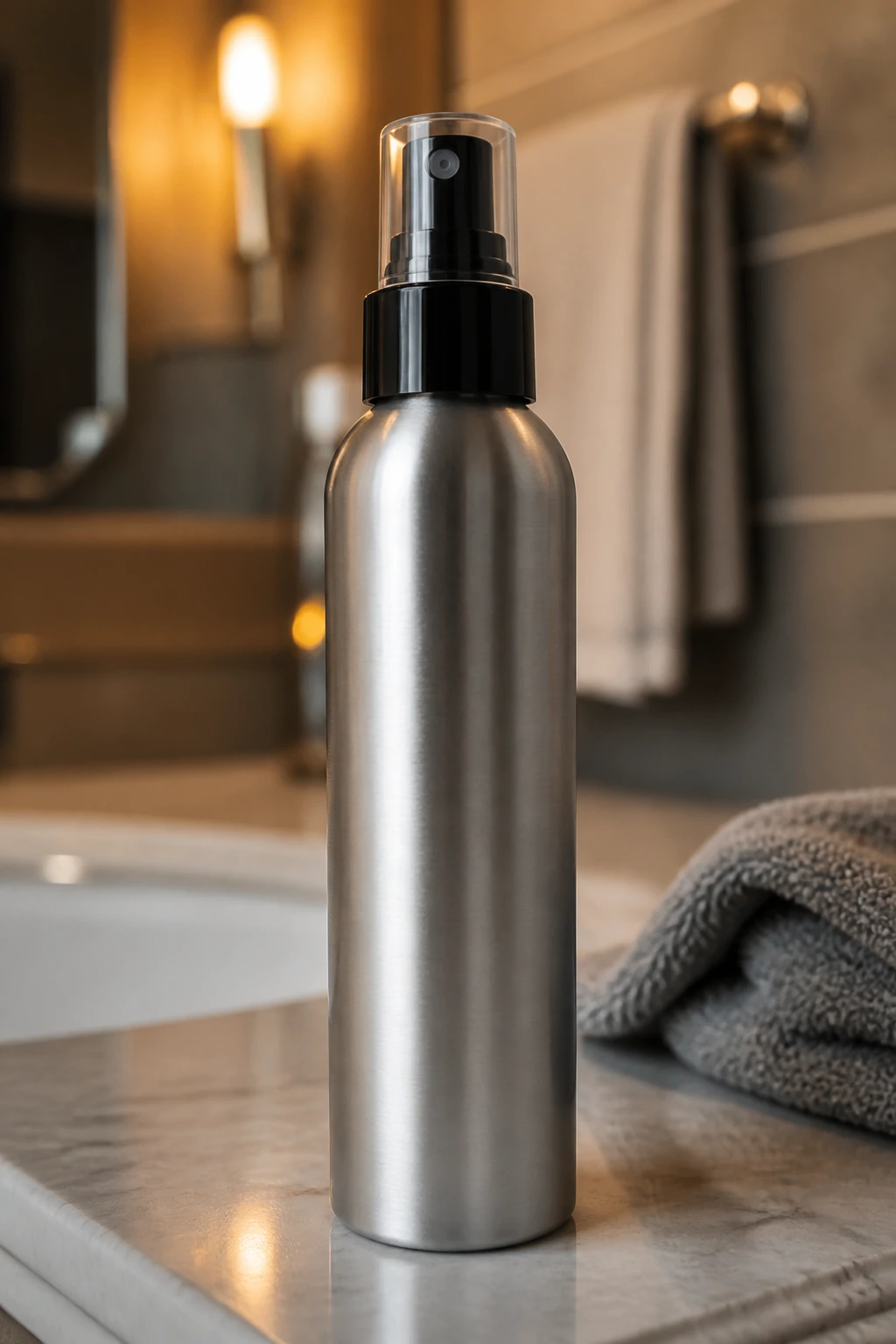
- Heat protectant spray: Use it every time you use a flat iron, curling iron, or blow dryer.
- Lightweight smoothing serum: Best for the last few inches of the hair.
- Purple shampoo: Helpful if gray or silver strands start to yellow.
- Clarifying or chelating shampoo: Useful when product buildup or hard water makes the hair look dull.
- Leave-in conditioner: Helps on damp hair before air-drying, especially if the ends feel rough.
- Texture spray: Good for waves, shags, braids, and ponytails that need grip.
- Silk scrunchies or clear elastics: Safer for long lengths than rough bands.
- Section clips: Make styling cleaner and faster.
- Microfiber towel: Cuts down on friction after washing.
- Silk pillowcase or bonnet: Keeps the ends smoother overnight.
Keeping Long Gray Hair Fresh Between Washes

Long gray hair usually doesn’t need daily washing, and washing too often can make it feel even drier than it already does. Two to three washes a week works well for many heads, but oily roots or heavy product use might push that up a bit. The goal is clean scalp, not squeaky lengths.
Use purple shampoo only when the tone starts to warm up. Once every one to two weeks is enough for many people, and porous ends often need it even less often than the rest of the hair. If you live with hard water, a clarifying or chelating shampoo every two to four weeks can help remove the mineral film that makes silver look cloudy.
At night, a loose braid, a silk scrunchie, or a silk pillowcase can save the ends. Gray hair shows friction faster, and the difference between smooth lengths and fuzzy lengths often comes down to sleep. A weekly deep-conditioning mask helps too, especially if you use heat or spend time outdoors.
Trim the ends every 8 to 12 weeks if you want the shape to stay clean. Stretch it much longer and long gray hair can start looking thin at the bottom, even when the thickness is still there.
Frequently Asked Questions
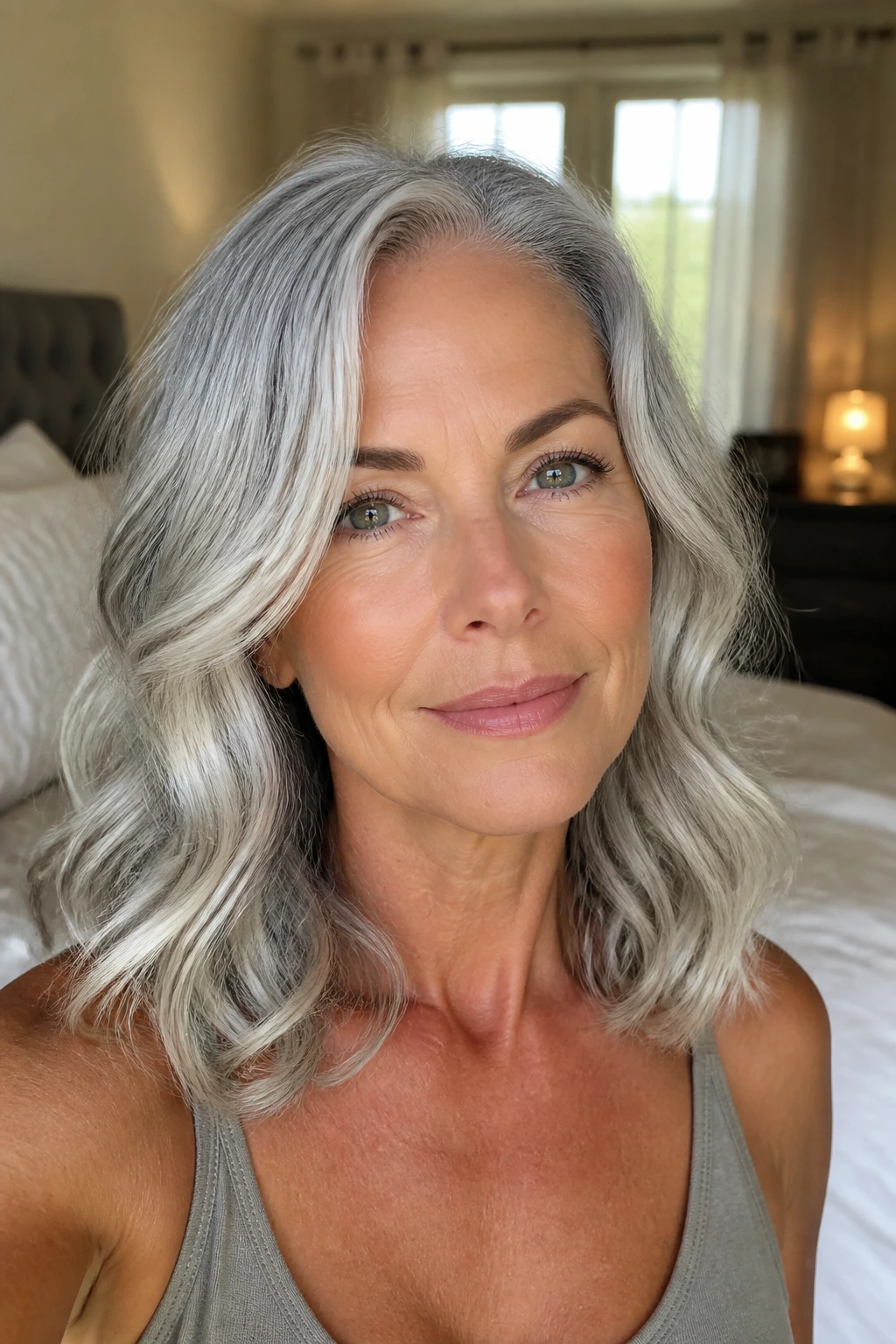
Does long gray hair need layers?
Not always. Layers help when the hair is thick, wavy, or heavy at the bottom, but very fine hair can lose too much density if the layers are too high. If you want movement without losing fullness, ask for soft face-framing pieces first.
Why does gray hair turn yellow?
Hard water, smoke, product buildup, sun exposure, and too much heat can all leave a yellow cast on silver strands. A clarifying wash, a UV-protective product, and occasional purple shampoo usually help more than piling on extra styling cream.
Can I wear gray hair straight without it looking flat?
Yes, but the ends need to stay clean and the crown needs a little lift. A smooth center part, tucked-behind-the-ear front sections, or a subtle bend at the ends keeps straight gray hair from looking pasted down.
What’s the easiest look if I have no time?
A claw-clip half-up or a low ponytail with a wrapped base is the quickest answer. Both give the hair shape in under a minute and work especially well when the roots are a little oily.
Do braids work on coarse silver hair?
They do, and coarse texture often helps the braid hold. Keep the tension even and use a small amount of leave-in or texture spray so the strands don’t frizz apart while you braid.
How often should I trim long gray hair?
Most long gray hair looks better with a trim every 8 to 12 weeks. That keeps the ends from fraying and keeps blunt cuts from turning wispy at the bottom.
Is purple shampoo safe for natural silver hair?
Yes, but it should be used carefully. If the hair is porous, the pigment can build up faster than you’d expect, so keep the contact time short and rinse well.
What style hides frizz best?
Soft waves, a low twist, a braid, or a textured bun usually hide frizz better than pin-straight styles. Sleek looks show every rough patch unless the finish is extremely smooth.
The Looks I’d Start With First
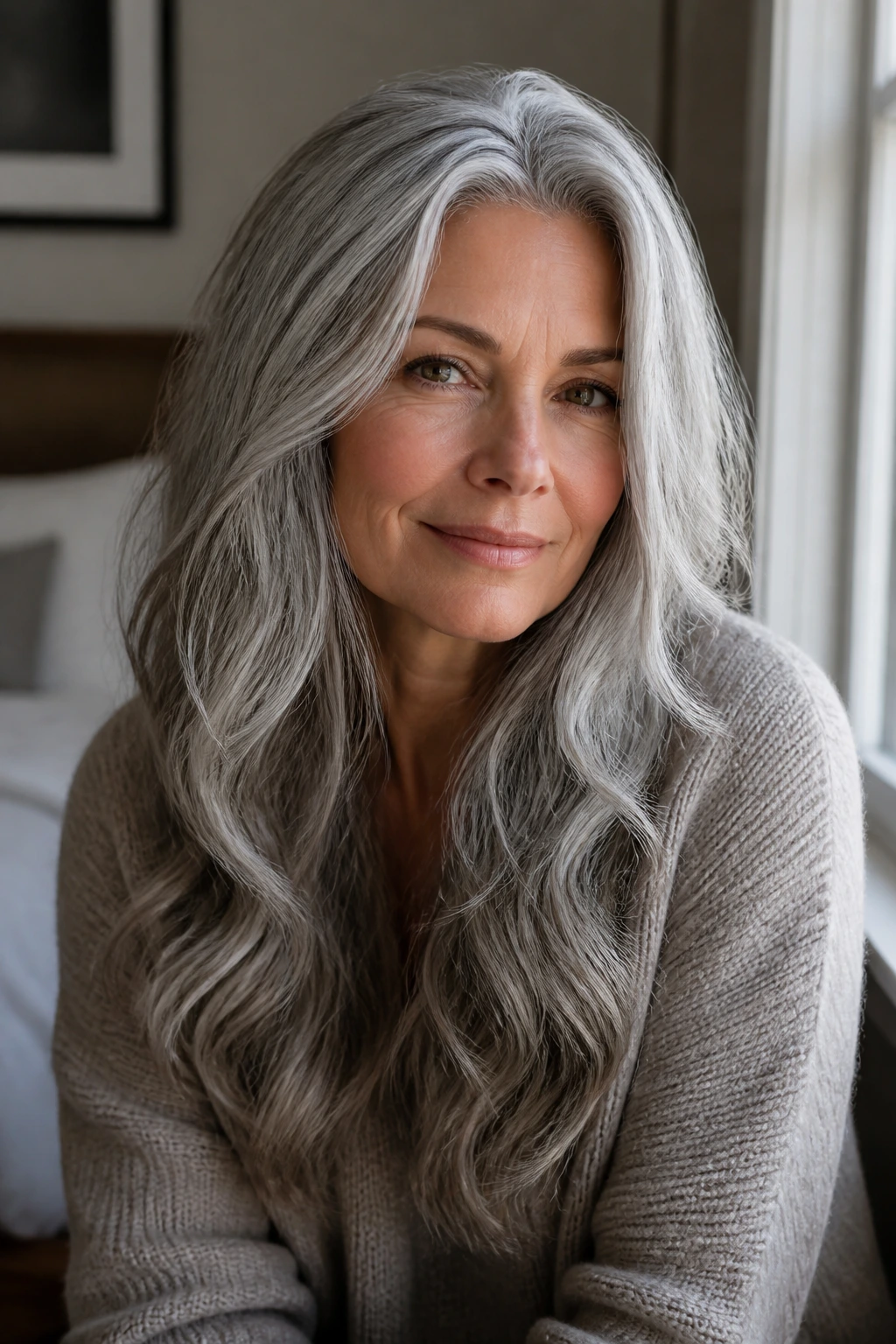
If I had to narrow all of this down to a short shortlist, I’d start with the styles that respect the hair instead of forcing it. Soft waves, a low sleek ponytail, curtain bangs with layers, and a loose braid cover most real-life situations without asking for a full salon session every time. Those shapes let long gray hair keep its shine and its movement, which is the whole point.
Silver hair can look severe when it’s ignored, and fussy when it’s overdone. The sweet spot is somewhere in the middle: enough shape to guide the eye, enough softness to keep the hair human, and enough shine to make the color do what it does best. Pick one look that matches your texture, then keep it simple for a few wears. The hair usually tells you the rest.
