



Gray hair looks for medium length hair work best when the cut gives the silver something to do. Left alone, gray can puff at the crown, blur at the ends, or swing heavy in the wrong places. Put the same strands at collarbone length with a clean line, soft bends, or a little crown lift, and the whole thing starts reading deliberate instead of accidental.
I keep coming back to medium length for one simple reason: it lets gray hair keep some weight while still moving. That matters more than people think. Once pigment drops out, the fiber often feels drier and a bit rougher, which means blunt edges can look sharper, layers can look airier, and heat styling shows up faster than it does on darker hair. You can work with that. You should work with that.
The sweet spot is this: enough length to tuck, twist, wave, braid, or smooth; not so much length that the ends go wispy and tired. Some of the best silver styles are polished. Some are messy on purpose. A few are barely styled at all, which is a relief if you hate standing in front of a mirror for half the morning. Medium length gives you room to pick your lane.
Gray Hair Looks for Medium Length Hair That Feel Intentional
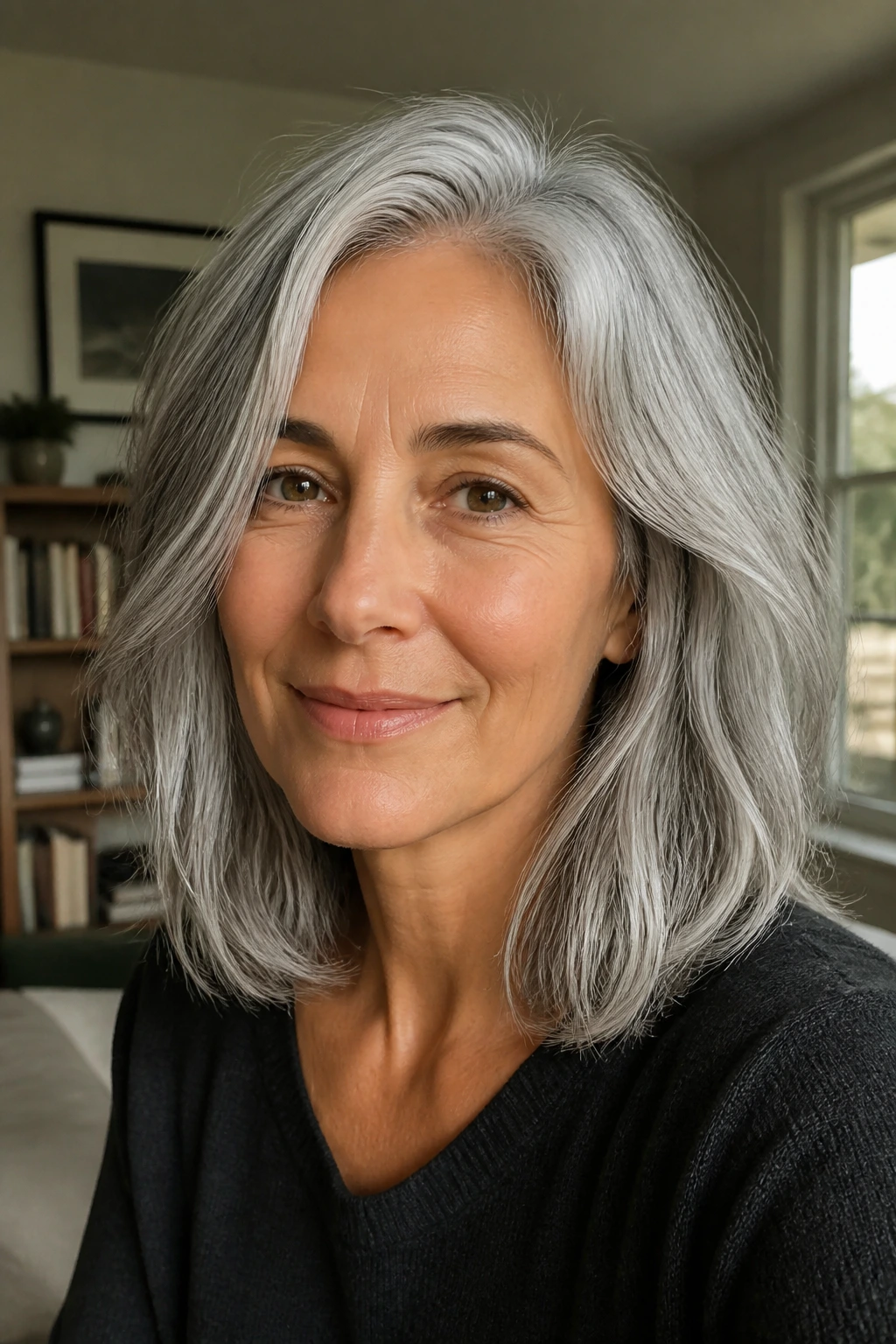
-
They keep the silver visible: A collarbone cut or a blunt midi lets the gray read as a design choice, not as a grow-out phase you haven’t finished yet.
-
They work with changing texture: Gray hair often gets coarser and a touch drier, so a medium cut gives it enough weight to avoid flyaway chaos without dragging the shape flat.
-
They grow out cleanly: A half-inch of regrowth looks tidy on a shoulder-length line far longer than it does on a severe, short crop.
-
They let you switch moods fast: Air-dried bends, a smooth blowout, a side part, a braid, a twist — the same cut can go in several directions.
-
They suit both fine and dense hair: The trick is choosing the right amount of layering, not chasing one universal cut that behaves the same on every head.
Why Medium Length Flatters Gray Hair So Well
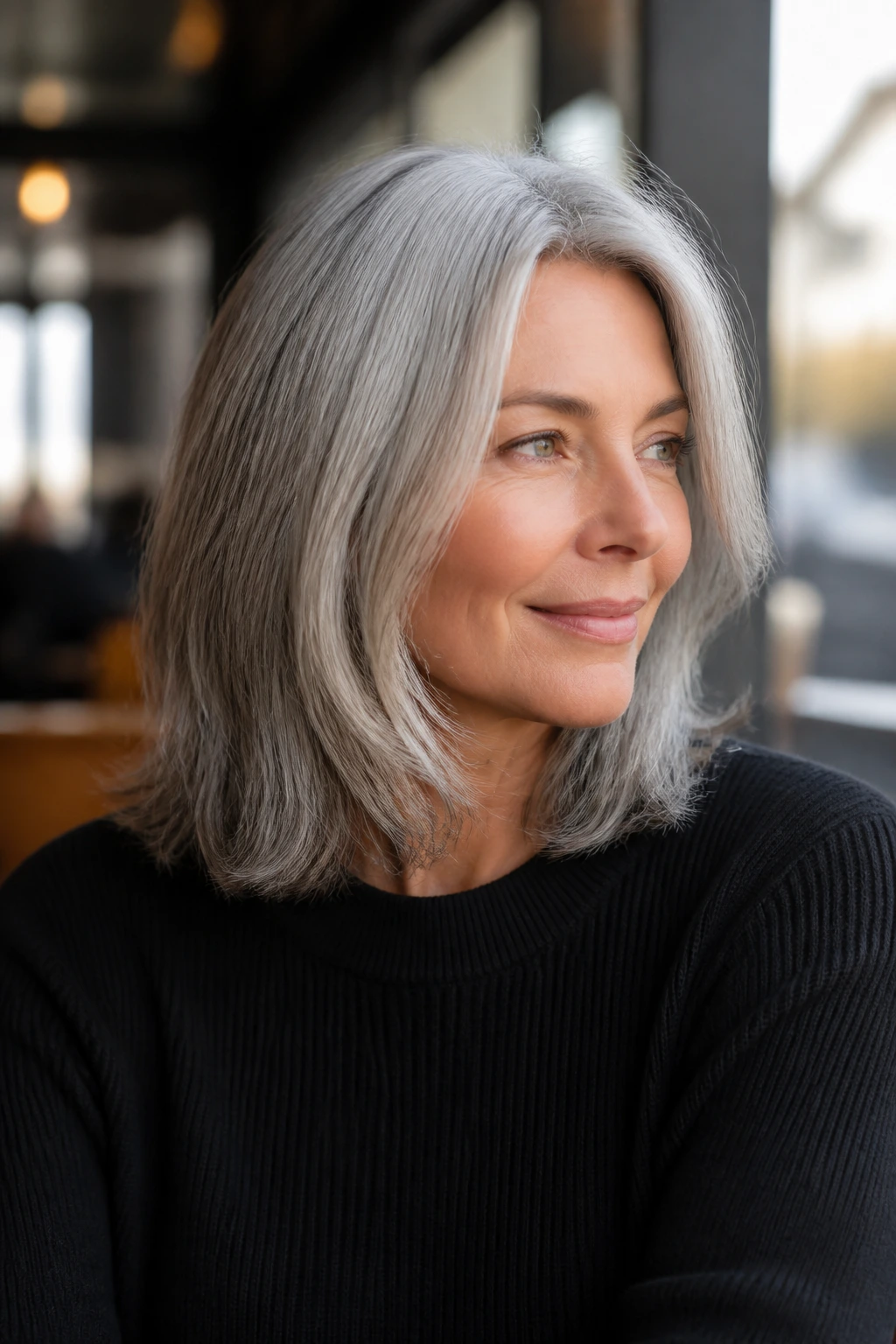
Medium length is the point where gray hair stops fighting its own texture. Too short, and coarse silver strands can flare out around the ears. Too long, and the ends start looking see-through, especially if the hair has been lightened, highlighted, or heat-styled for years. Collarbone-to-shoulder length keeps enough mass in the shape to hold a line.
Weight at the Ends
A little length does useful work. It tames puffiness, especially in hair that grows outward instead of downward. That extra weight also helps a blunt perimeter sit still on windy days, which is one of those tiny things that makes a haircut look expensive even when nothing about the haircut cost a fortune.
Movement Around the Jaw
Gray hair catches light differently, so movement matters more than shine alone. A soft bend near the jaw or cheekbone can keep the cut from feeling boxy. I like this range because it gives the face a little frame without forcing a dramatic style every single morning.
Grow-Out Without the Fuss
The best gray hair cuts are the ones that still look good four weeks after a trim. Medium length handles root grow-out, color transition, and slight unevenness better than most shorter shapes. If you’re transitioning from dyed hair, that matters even more; the line doesn’t scream for attention every time your roots appear.
Gray Hair Looks for Medium Length Hair That Work With Different Textures
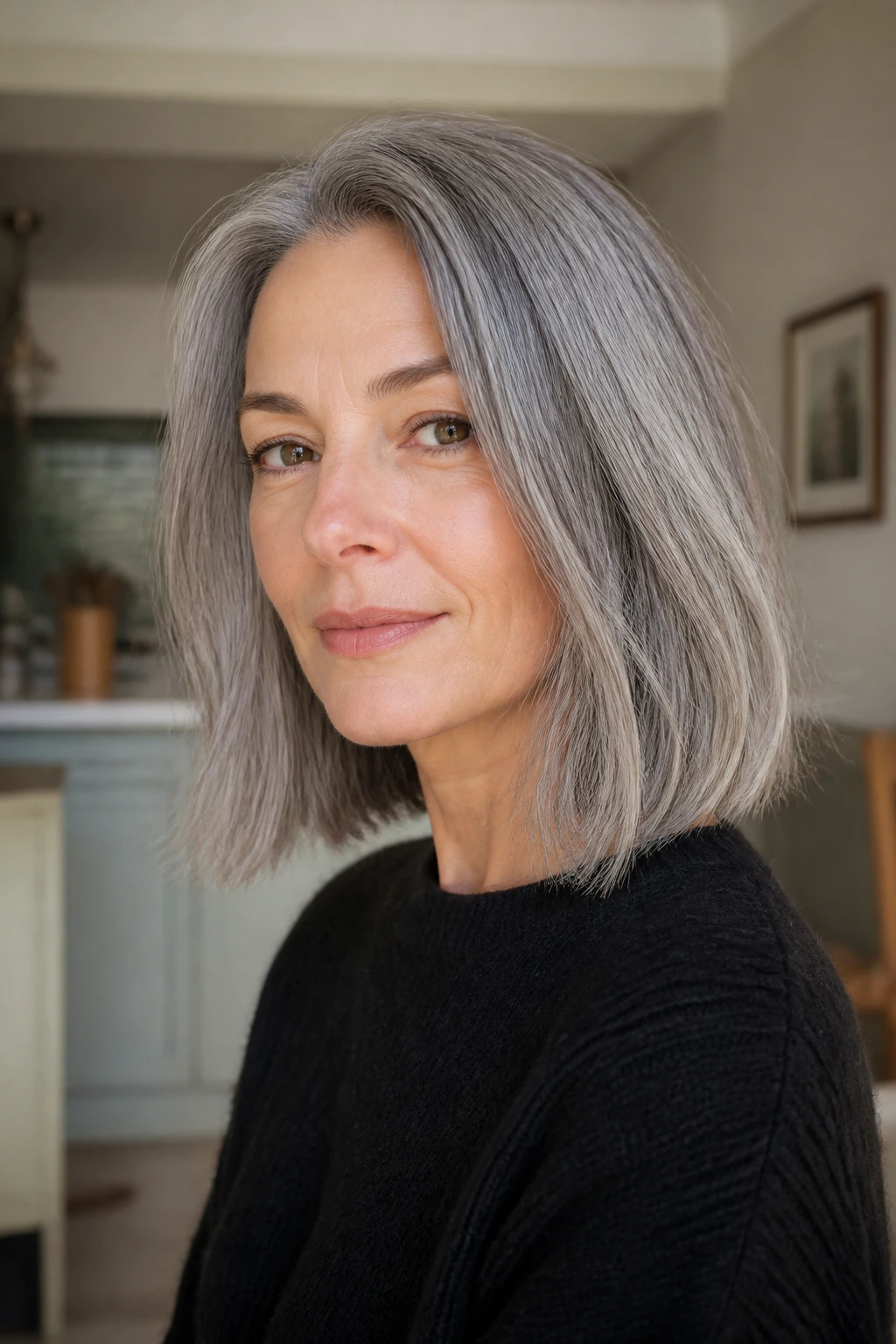
Fine gray hair usually needs structure more than layers. A blunt lob, a polished side part, or a soft bend through the ends gives it shape without eating away the fullness. If the cut gets too sliced up, the hair can look thin from the sides even when the density is fine.
Thick gray hair asks for a different approach. It can carry layers, razoring, and movement around the face, but it still needs enough interior weight removal to stop the triangle effect. If you’ve ever had a medium cut turn into a puffball at the shoulders, you know exactly what I mean.
Curly and wavy gray hair is where the fun starts. The shape can be gorgeous at medium length, but only if the cut respects the curl pattern. Rounded layers, not random choppy ones, keep the silhouette from expanding into a halo that’s all width and no definition.
1. Collarbone Lob With Soft Bends
A collarbone lob is the style I reach for when gray hair needs shape without drama. The length sits right where the shoulders stop helping and start interfering, so the cut keeps swing without getting swallowed by the neck or puffed out by the collar. Soft bends through the mid-lengths give silver strands a ribbon-like finish that looks clean, not stiff.
Best for: fine to medium hair that needs a little body and a little polish.
Ask for: a blunt-ish perimeter with just enough face-framing around the cheekbone to keep the line from feeling boxy.
Style it with: a 1.25-inch curling iron, heat protectant, and a light serum worked only through the ends.
A collarbone lob is also kind to grow-out. If you’re letting your natural gray come in, the length doesn’t demand perfect maintenance every three weeks. A quick bend with the iron and a side or center part is usually enough to make it look finished. Clean. Easy. No fuss.
2. Smoky Shag With Airy Crown Layers
The shag works on gray hair when you want movement first and neatness second. On medium length, the trick is to keep the crown light and the ends soft, not shredded. Gray strands already catch texture fast; too much razoring can make the top feel frayed instead of airy.
This is the cut for someone whose hair goes flat by lunch and refuses to stay there. A shag lifts the crown, opens space around the cheekbones, and keeps the ends from hanging in one blunt curtain. It’s especially good if your gray hair is wavy and you’d rather let it dry with mousse than stand there with a round brush.
How to style it
Work a palmful of mousse into damp roots, rough-dry the crown, and twist a few sections around your fingers while the hair is still warm. Don’t curl every strand. That ruins the point. The shag looks better when some pieces bend and others fall straighter, because that unevenness gives the cut life.
3. Curtain Bang Lob for a Gentle Frame
Want something that softens the face fast? Curtain bangs do a lot of heavy lifting. On gray hair, they take the attention off the forehead and bring it to the eyes and cheekbones, which is useful if the silver around your temples is brighter than the rest.
This look works especially well if your medium-length hair has some natural bend. The bangs should be long enough to split cleanly in the middle and sweep out toward the jaw. Too short, and the whole thing can feel fussy. Too dense, and they’ll sit like a shelf. The sweet spot is usually somewhere between the brow and the cheekbone, depending on how much lift your roots naturally have.
Styling note: blow the bangs forward first, then brush them off the face with a round brush so the ends curve away. That little outward flip keeps the fringe from sticking flat to the forehead.
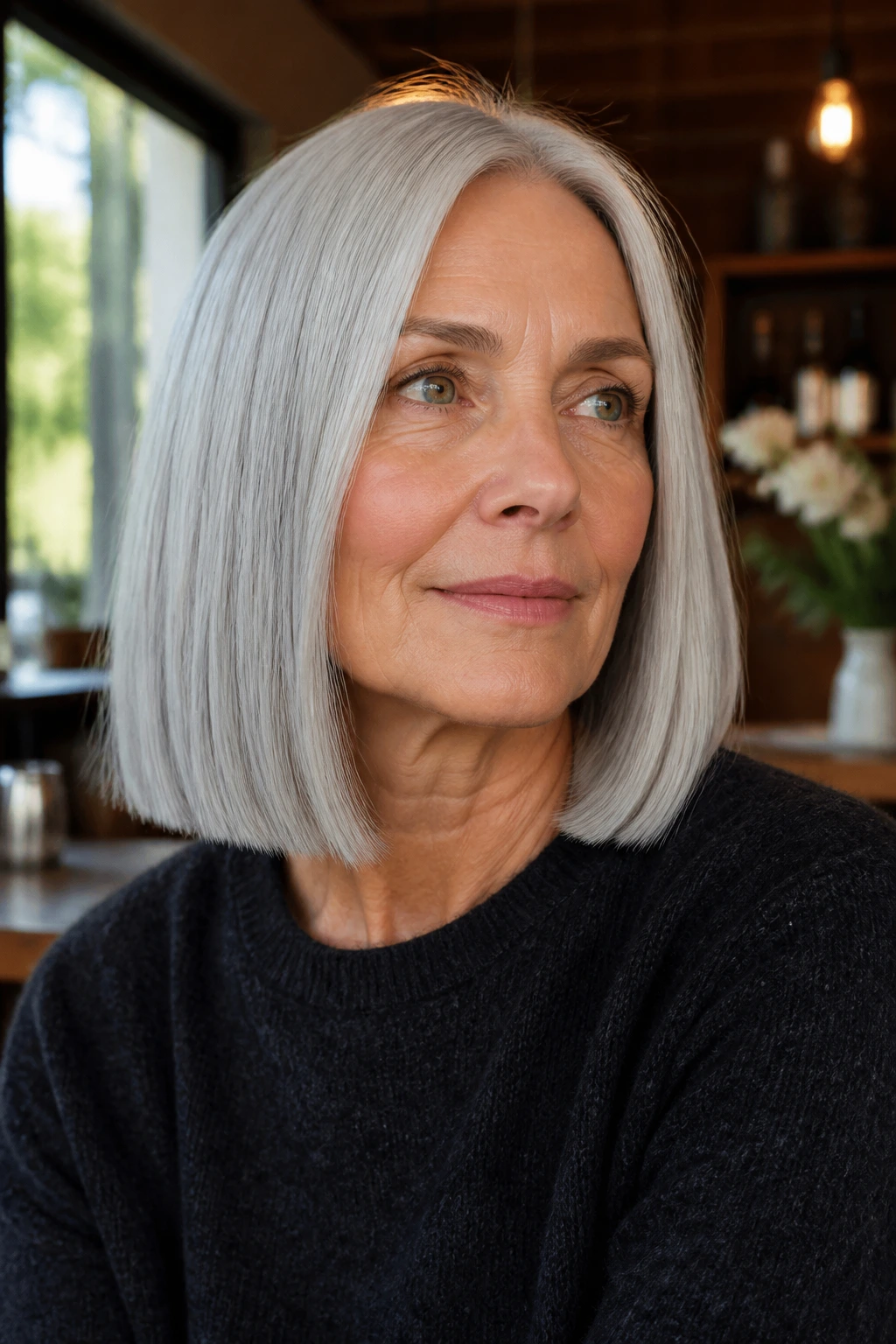
4. Blunt Silver Lob With Clean Ends
A blunt lob on silver hair has a sharpness I like. The color already gives you a graphic look, so the cut doesn’t need extra tricks. Keep the perimeter clean, cut the ends straight, and let the shine do the talking.
This style is especially strong on dense hair. The bulk supports the line, which means the cut can look deliberate even when you’re wearing a simple black sweater or a plain white shirt. And that’s the point: the haircut carries the outfit, not the other way around.
Ask for: a one-length or nearly one-length lob that hits at or just below the collarbone.
Style with: a flat iron on low to medium heat, a smoothing cream, and a cool shot at the end to keep the finish from puffing out.
If your hair is fine, don’t make the line too heavy. You want crisp, not limp. A blunt edge can look expensive; a sparse edge just looks tired.
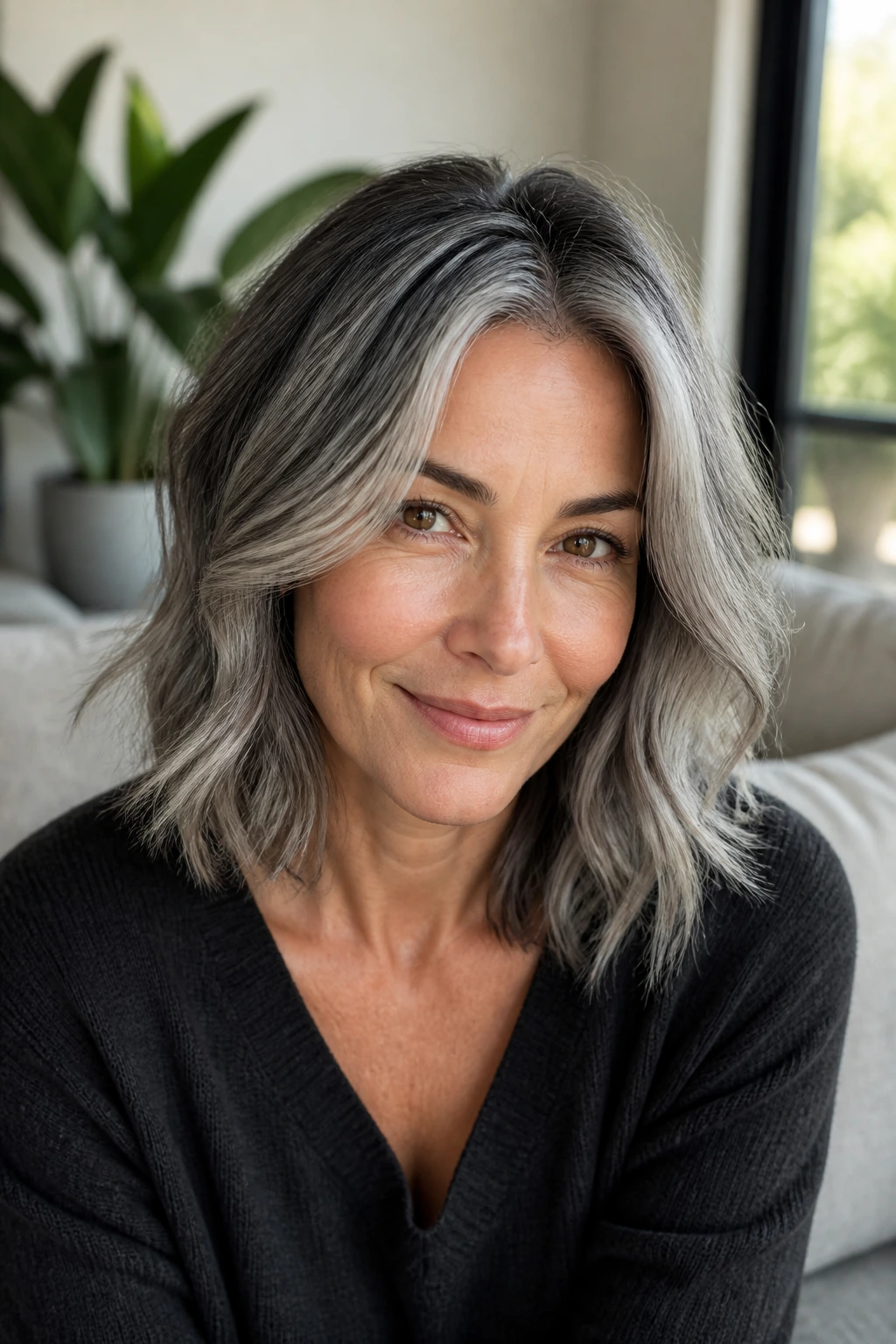
5. Salt-and-Pepper Balayage and Shadow Root
Not everyone wants a fully silver look, and that’s fine. A salt-and-pepper blend with a soft shadow root can make the transition look intentional while keeping dimension around the face and crown. The darker base helps the grays pop without looking stripey, which is a problem with some highlights that try too hard.
This is one of those styles that works because it respects the in-between stage. If your gray is patchy, or if you’ve got white at the temples and darker strands through the back, a shadow root can make the whole head look unified. You’re not hiding anything. You’re giving the contrast a cleaner line.
Keep the ends medium and healthy-looking. If the light pieces are dry or porous, they’ll read as frizzy before they read as dimensional. A gloss every few weeks can keep the blend from turning chalky.
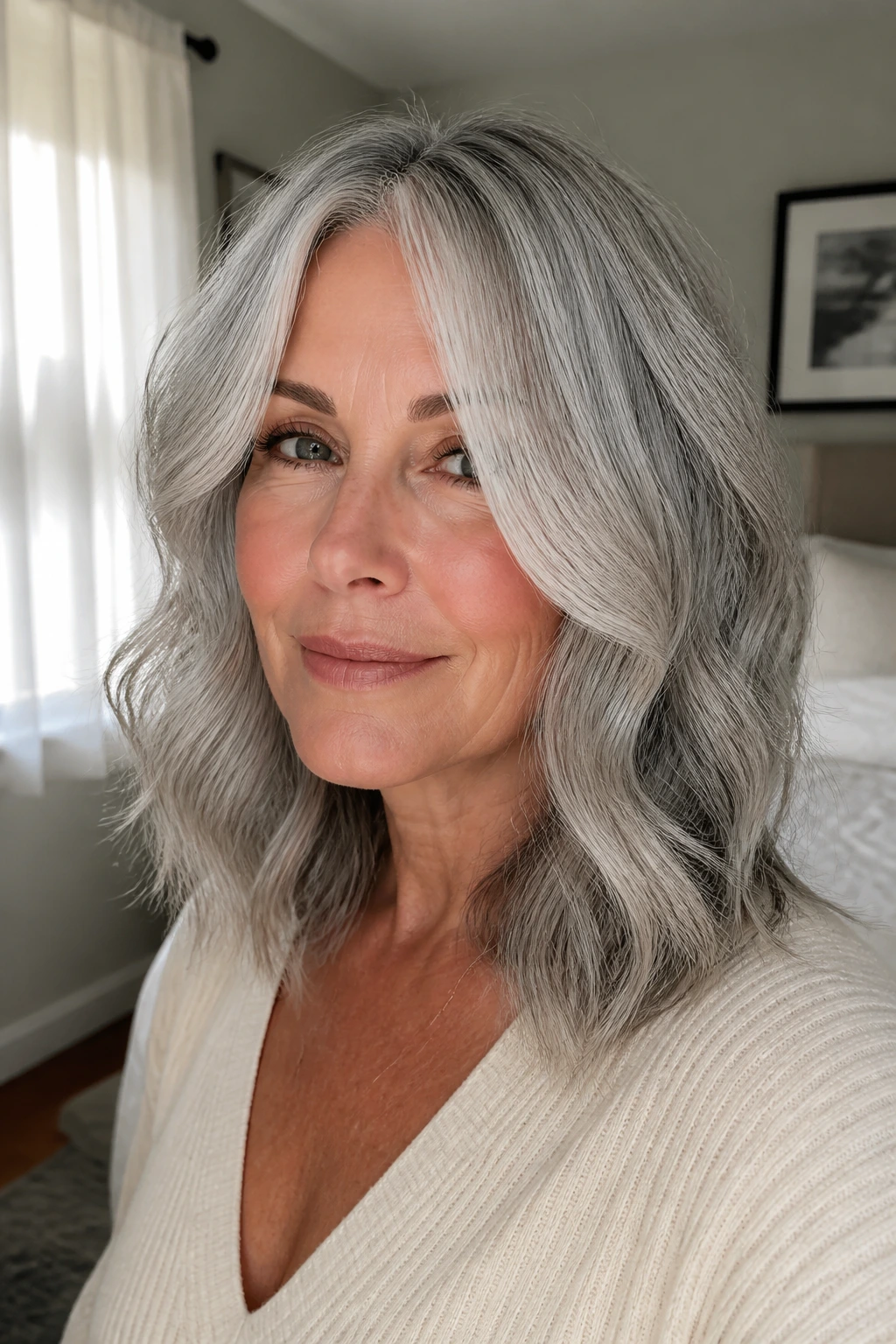
6. Face-Framing Layers With Loose Waves
A few careful layers around the face can change the whole mood of gray hair. They pull the eye up, soften the jaw, and make medium length feel lighter without stripping away too much weight. Loose waves finish the job by giving the silver strands movement that looks easy rather than overworked.
This is a strong option if your hair is somewhere between fine and medium density. You get enough shape to keep the cut from falling flat, but not so much layer disruption that the hair starts sticking out at odd angles. The layers should begin around the cheekbone or just below it. That keeps them useful instead of wispy.
How to use it
Wrap only the top half of each section around a curling iron, leaving the ends straighter. Gray hair often looks best when the bend is clear at the middle and relaxed at the bottom. Too much curl can make the cut age itself. A soft wave feels modern. A tight curl can feel forced.
7. Rounded Curly Lob With Lift at the Root

Curly gray hair needs shape, not a fight. A rounded lob keeps the silhouette balanced so the sides don’t balloon out while the top goes limp. The goal is a soft halo, not a triangle.
This cut works because it honors the curl pattern instead of chopping it into submission. The best version usually uses rounded layers that follow the head shape, with enough length to let the curl spring without shrinking all the way up. If your gray curls are dry, a medium length can help because there’s enough weight to stretch the curl slightly and keep the shape from floating too high.
Use a diffuser and stop touching the hair once it starts drying. Gray curls frizz fast when you rake through them too much. A little gel at the ends and a dab of cream through the mids can make the curl hold its shape without turning crunchy.
8. Razored Midi Cut With Piecey Ends
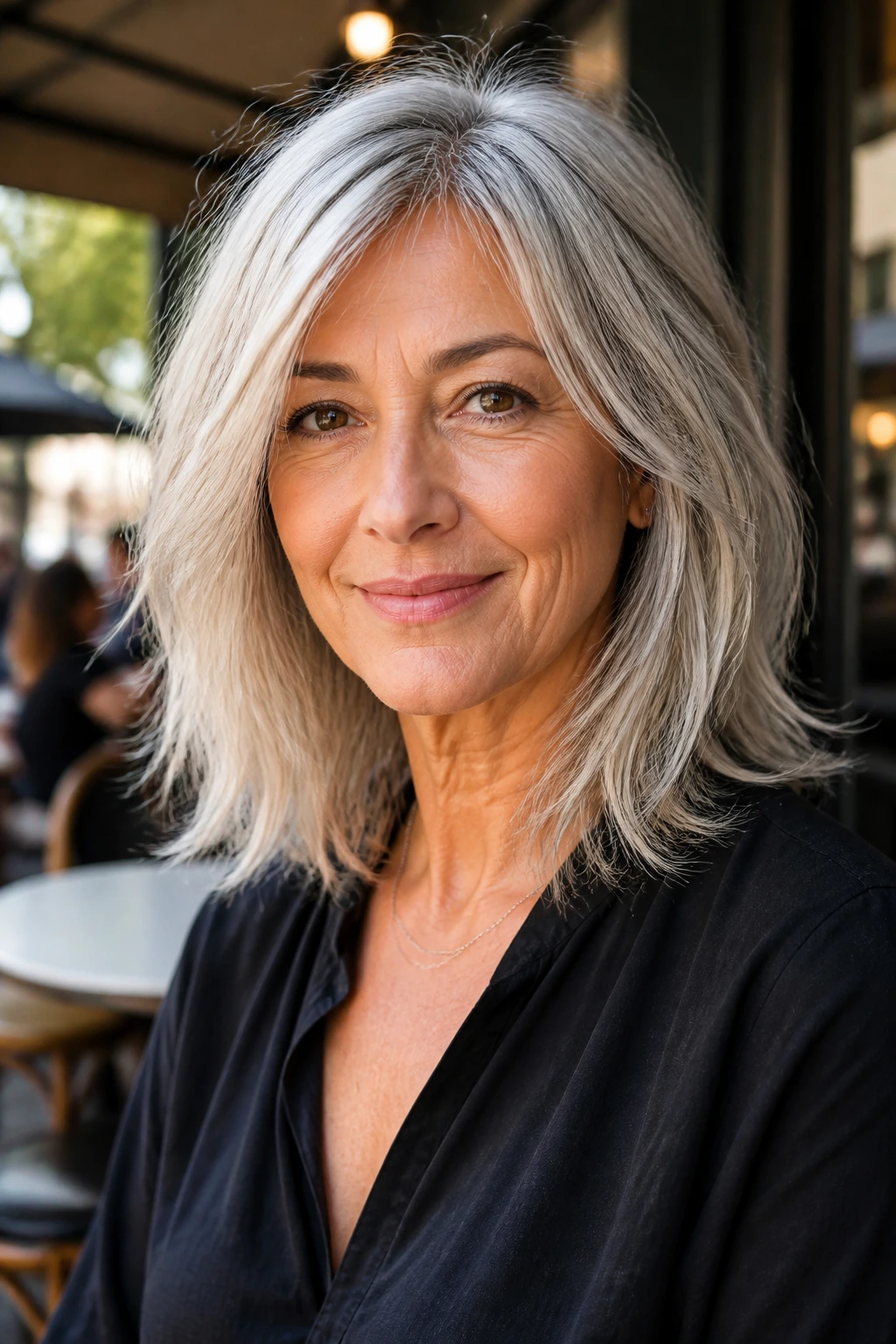
A razored midi cut brings movement to thick or coarse gray hair in a way blunt cuts sometimes can’t. The ends go lighter and a little piecey, which helps the cut avoid that heavy, blocky look some medium styles develop once the hair dries. It’s not a cut I’d hand to everyone, though. On very fine hair, razoring can steal too much shape.
This one is for someone who likes texture and doesn’t mind a bit of edge. The whole style feels relaxed, but not sloppy, if the layers are kept long enough to move with the jaw and collarbone. A touch of texture spray on dry hair helps separate the ends and keep the shape visible.
If your stylist uses a razor, ask them to stop short of thinning the outline too much. You want interior movement. You do not want the perimeter to vanish.
9. Choppy Shoulder-Length Bob With Texture
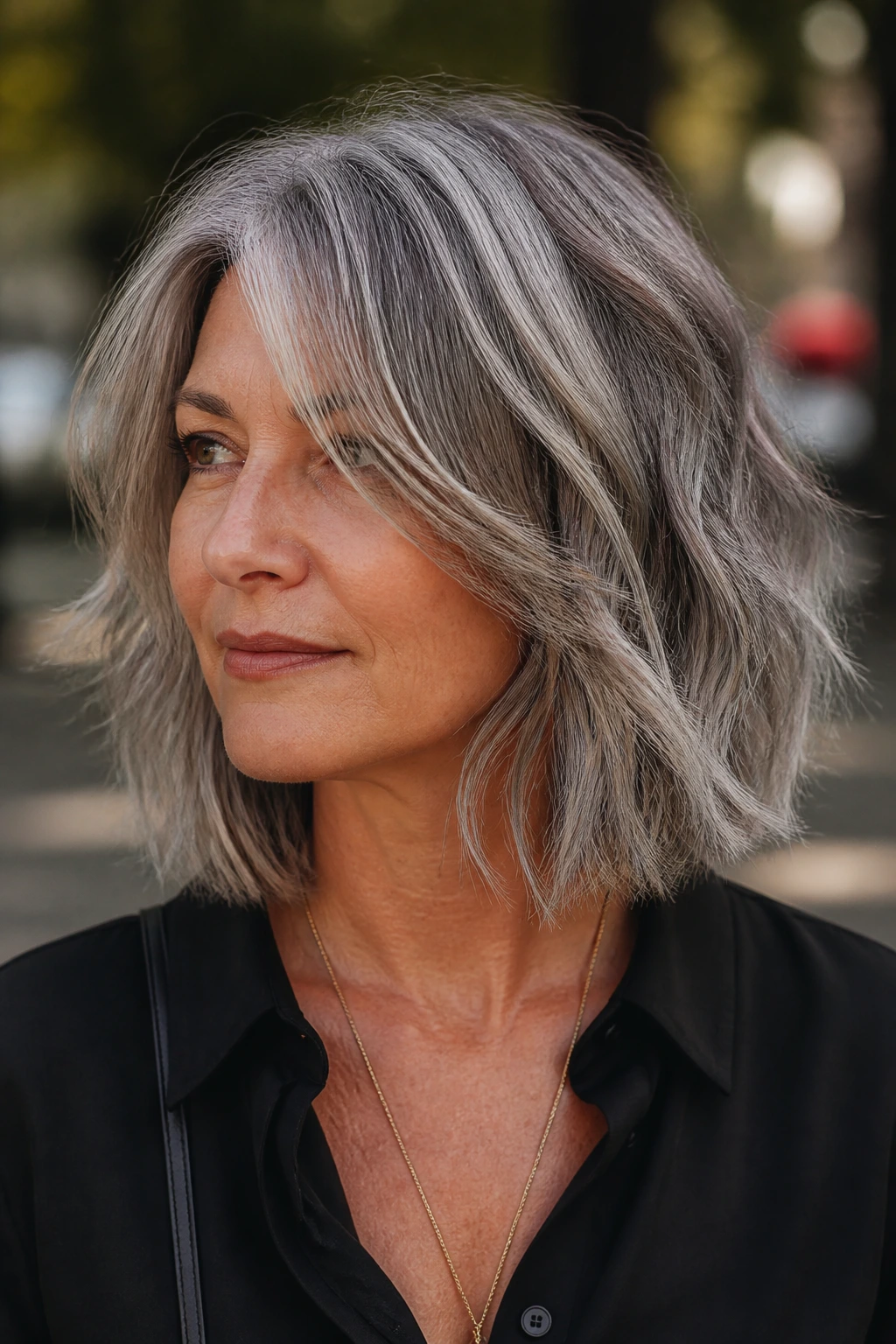
A choppy bob gives gray hair a little attitude. The cut sits at the shoulder, but the texture keeps it from looking too square. Tiny irregularities in the ends make the hair catch light in different places, which is useful when the color itself is already multi-tonal.
I like this style on hair that sits somewhere between straight and wavy. It gives you enough roughness to keep the movement, but not so much that you spend your whole life smoothing it down. A matte texture spray can help if your gray hair tends to look shiny in a flat, lifeless way rather than in a healthy way.
If you wear glasses, this cut can be especially good. The shoulder line doesn’t fight the frames, and the texture keeps the whole look from feeling too serious.
10. Tucked-Back Polished Midi With a Side Part
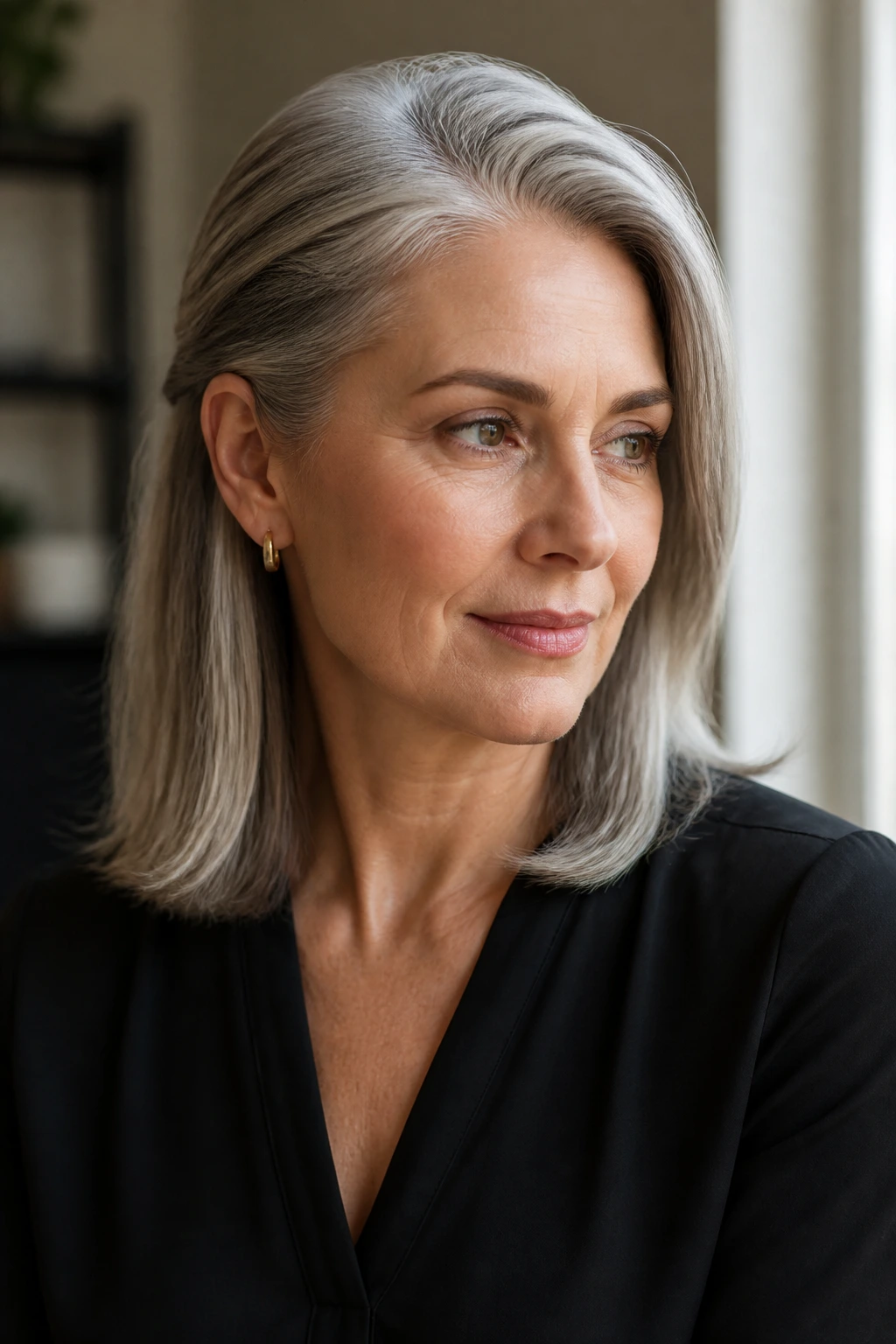
If you naturally tuck one side of your hair behind your ear, this style is already halfway there. The side part gives the medium-length cut a little lift at the crown, and the tucked side opens the face without requiring a whole new haircut every morning. Gray hair tends to shine when the part is clean and the finish is smooth.
The trick is restraint. Don’t pile on product. A small amount of smoothing cream through the mids and a light serum on the ends will give the hair enough control to stay neat while still moving if you turn your head. This is one of those looks that can go from office to dinner without a second round of styling.
If your hair is fine, keep the tuck loose. If it’s dense, flatten the side just a bit with a paddle brush before you pin it behind the ear. That makes the line look deliberate instead of accidental.
11. Half-Up Twist With Loose Length

A half-up twist is one of the cleanest ways to manage medium-length gray hair on a day when the ends need a break. It pulls some of the weight off the face, leaves enough length down to show the color, and works on hair that’s second-day or freshly washed. Gray hair often behaves better here because the texture gives the twist a little grip.
This is the style I’d choose for lunch, errands, or any day when you want the silver visible but don’t want to fight every strand into place. The twist can sit low and soft, or a little higher if you want more lift. Leave a few pieces around the temples so the look doesn’t feel too polished.
Use a small clip or a pair of pins, not a giant barrette that drags the shape backward. The whole point is to keep the front open and the length relaxed.
12. Braided Crown Accent on Gray Waves
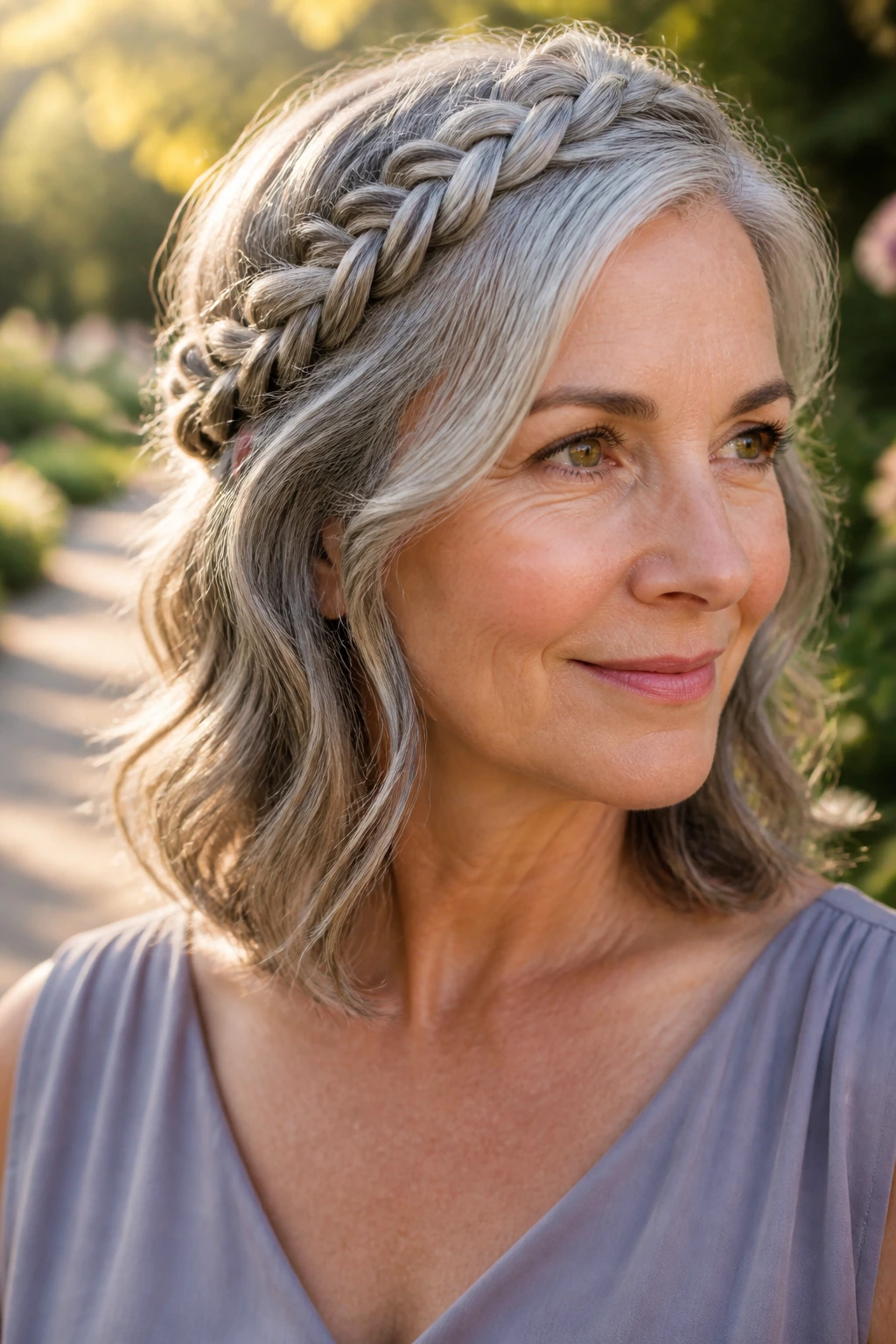
A braided crown accent can make medium-length gray hair look far more intricate than it actually is. You don’t need a full head of braids. A braid that starts near one temple and tucks back along the crown is enough to frame the silver and keep the top from collapsing flat.
This style is useful when the hair has some wave but not enough to hold a complicated updo. The braid adds structure, the loose lengths keep it from feeling stiff, and the silver strands woven through the plait make the detail easy to see. If your roots are growing in and you want the transition to blend, this is one of the nicest ways to do it.
A little dry texture spray before braiding helps the sections hold. Without that, gray hair can slip and the braid loosens too fast.
13. Wolf Cut Lite for Medium Length Hair

The full wolf cut can go too far on gray hair if the layers are aggressive. The lite version is more useful: enough shag energy to give the crown lift, enough length to keep the ends from fraying into nothing. It’s a good fit if you want edge but don’t want your hair to look like it was attacked with thinning shears.
This cut shines on wavy gray hair and on straight hair that needs a little body. The face framing should be softer than the back, and the disconnect between layers should be mild. That keeps the shape modern without making it hard to wear on an ordinary Tuesday.
Best for: someone who likes movement and doesn’t mind a bit of mess.
Style with: mousse at the roots, a diffuser or rough-dry finish, and a touch of pomade at the ends if they start to fly apart.
14. Stacked Inverted Bob for Extra Angle
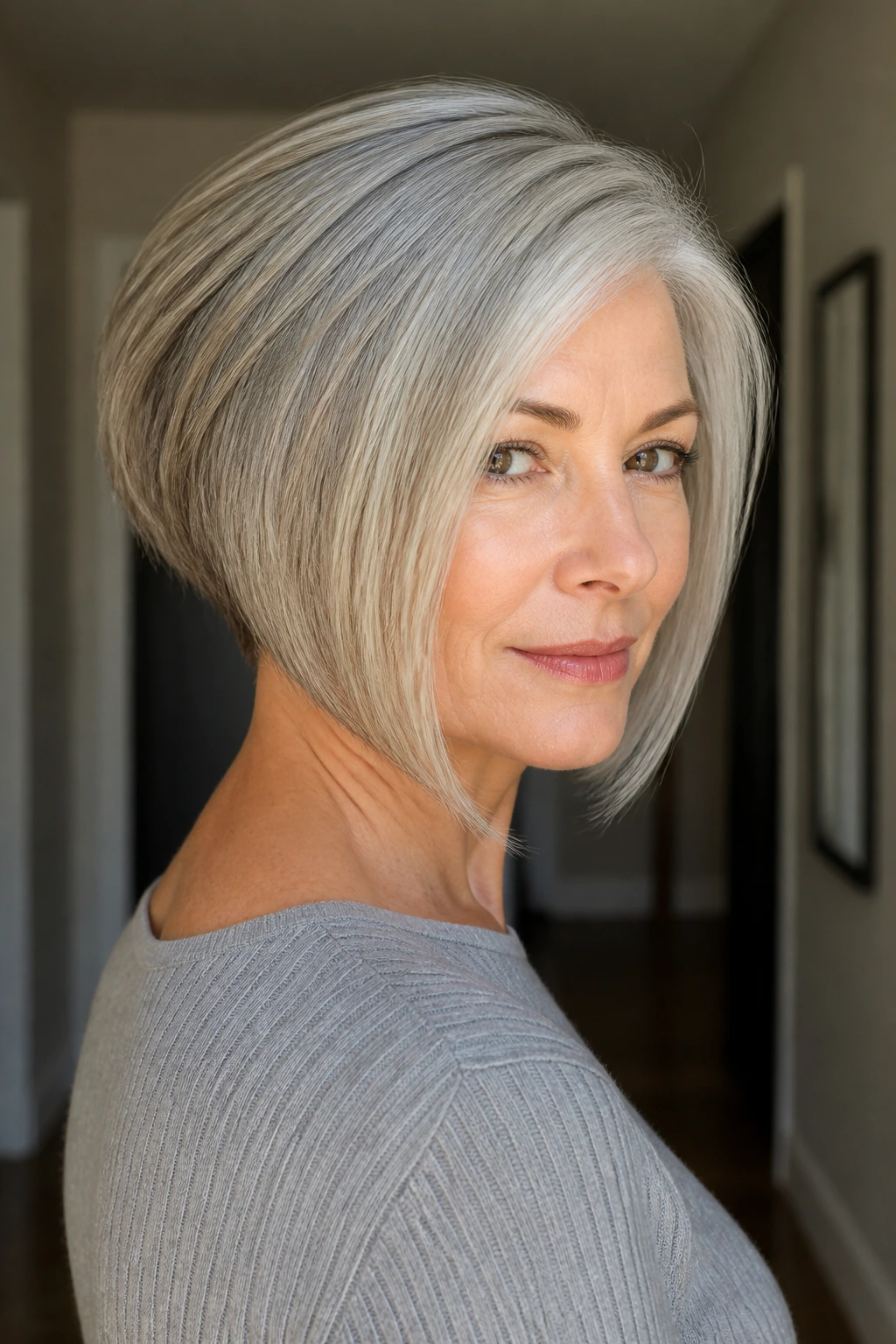
A stacked inverted bob gives gray hair a strong shape through the back and a longer line around the front. It looks especially sharp on medium-density hair that needs some lift at the crown and a little protection at the nape. The angle creates the feeling of movement even when the hair is straight.
This is a cut with opinions. It says what it is. Gray hair makes that honesty work because the silver reads as clean and reflective, not muddy. If your neck is one of the features you like to show off, the stacked back can leave it visible without pushing the cut into short-hair territory.
Be careful with over-stacking on fine hair. Too much removal in the back and the whole shape can collapse by noon. A good version keeps the angle visible but not severe.
15. Glossed One-Length Midi for Thick Hair
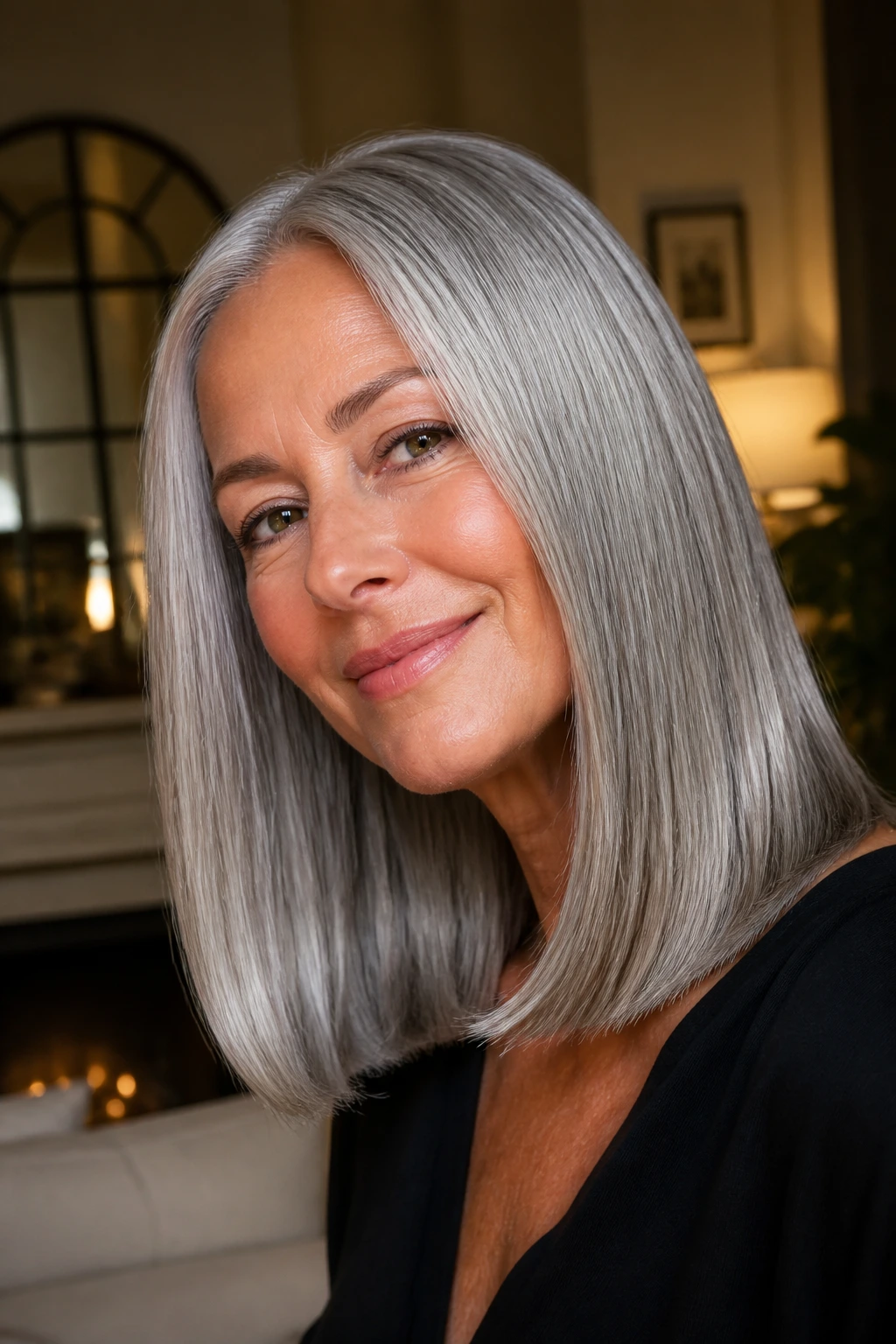
A one-length midi can be a gift for thick gray hair. Layers aren’t always the answer. Sometimes the answer is a strong line, healthy ends, and a gloss that makes the silver look like polished metal instead of dry paper. When the hair has enough density to support itself, one length can look cleaner than a lot of carving.
This cut is especially good if your gray strands feel coarse or resist styling. There’s less to manage, less to blow around, and fewer short pieces trying to escape the shape. The key is maintenance: regular trims keep the edge blunt, and a toning gloss keeps the color from turning dull or yellowed at the ends.
If you hate the feeling of hair that sticks out everywhere, this is a strong lane. It’s controlled, but not severe.
16. Deep Side-Part Wave With Old-Hollywood Bend
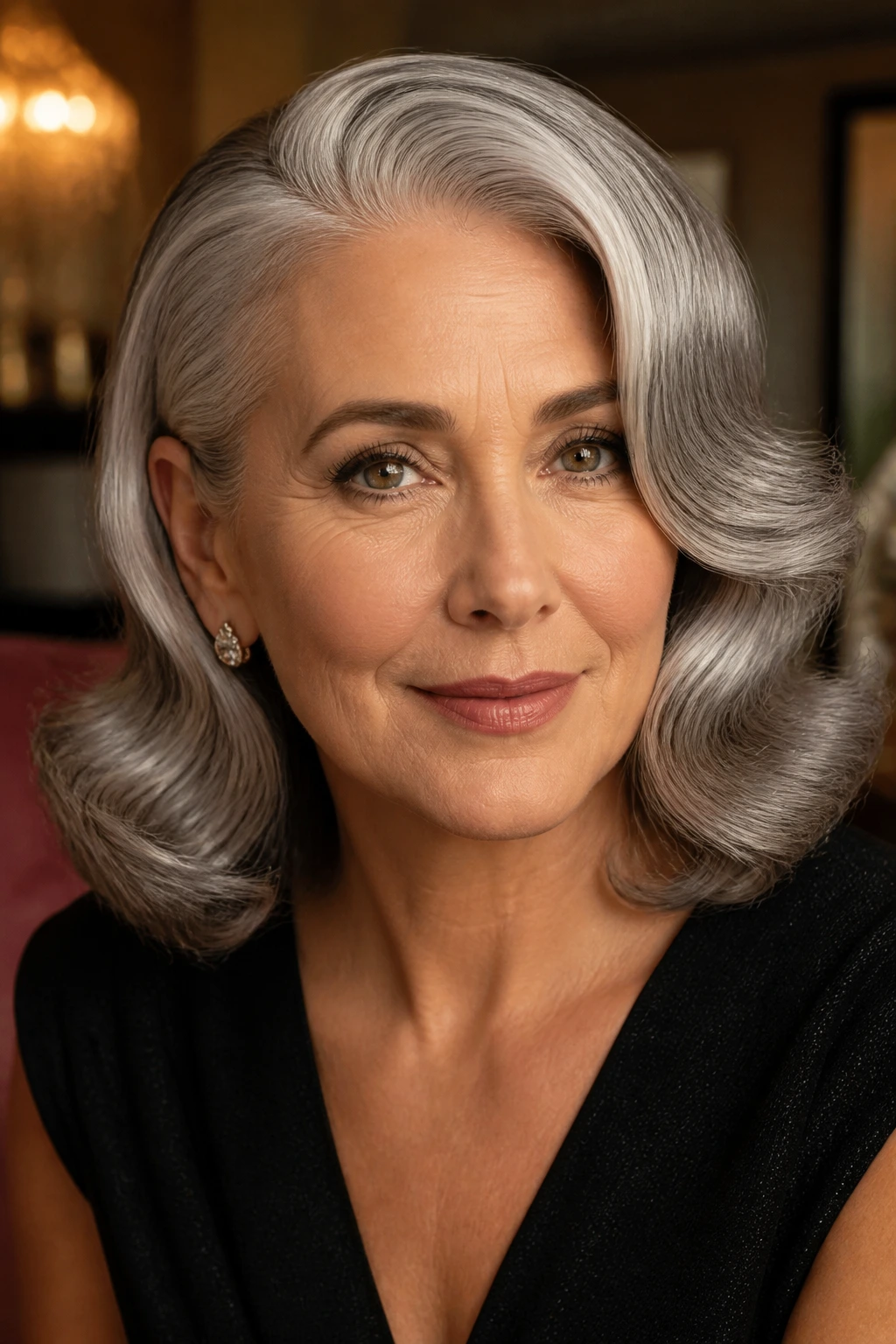
A deep side part changes the whole face in a second. On medium-length gray hair, it gives lift on one side and softness on the other, which is one of the easiest ways to make silver hair look dressed up without adding more length. The old-Hollywood wave finish is optional, but it does suit the cut.
This is the style for an evening out or any day you want a little drama without teasing the hair into a helmet. The wave should start around the cheekbone and roll down toward the jaw. Gray hair reflects that curve nicely, especially when the finish is glossy.
If your roots are flat, clip the top section while it cools after blow-drying. That one move can give you more lift than another whole round of styling.
17. Feathered Layers With Crown Volume
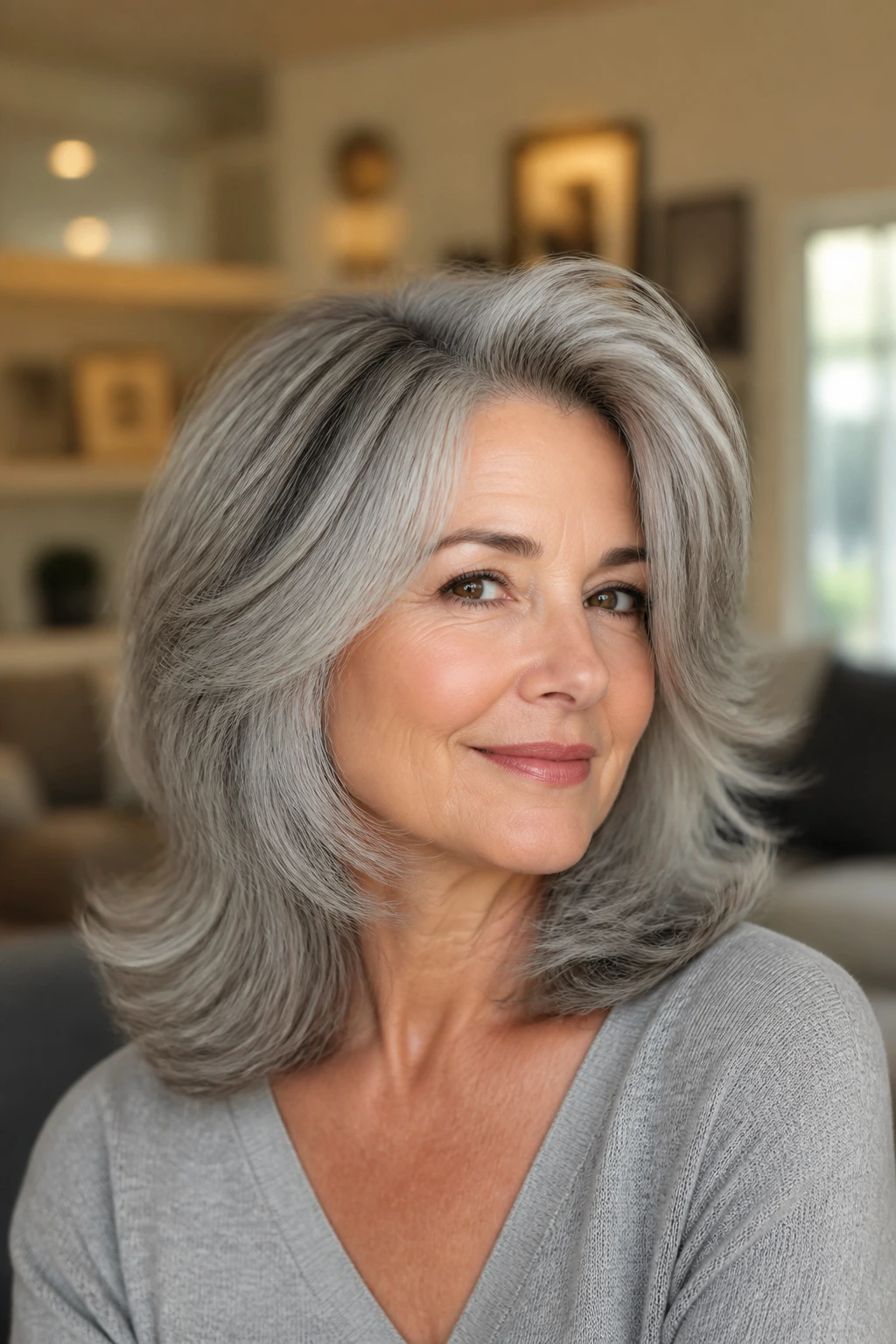
Feathered layers are useful when the top of the head goes flat but the ends still need weight. On gray hair, the feathering softens the cut enough to avoid a blocky shape, and the crown volume gives the style some lift where it matters most. It’s a very wearable look if you like a little polish but not a hard edge.
The best version of this cut keeps the layers long and connected. You want movement, not gaps. A round brush at the crown and a light mist of volumizing spray at the roots can make the lift last longer than people expect. The ends can stay smooth, which keeps the style from looking dated.
This one is especially kind to people who wear their hair tucked behind the ears part of the day. The feathering fills in the side line when you let it back down.
18. Spiral Curl Shape With Diffuser Set
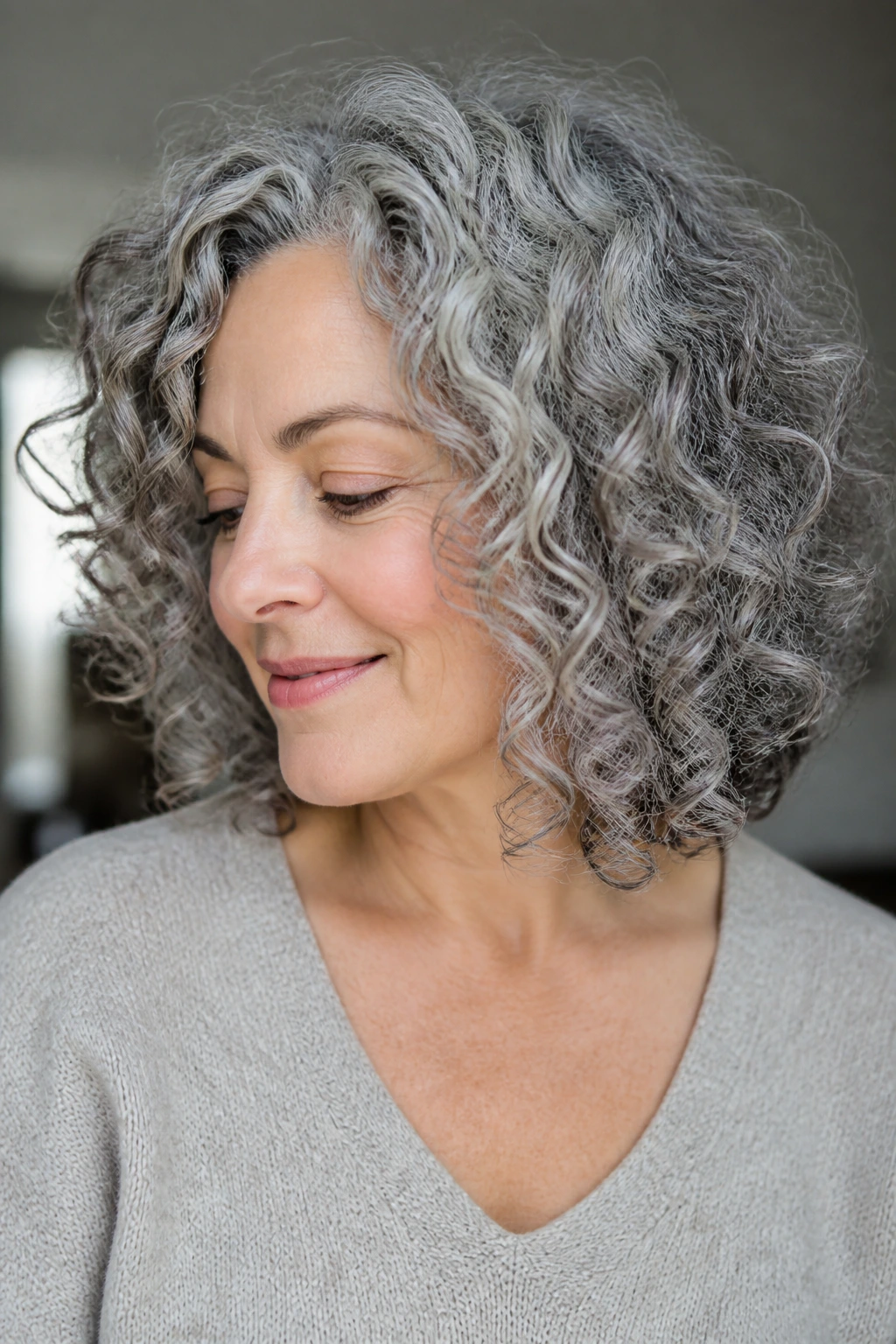
Gray spirals can look stunning at medium length when the shape is rounded and the product is light enough to let the curl breathe. The cut should follow the curl pattern, not fight it. If one side is tighter than the other, that’s fine. Straightening everything into submission is how curly gray hair loses its character.
The diffuser matters here. So does patience. Let the curls set with minimal touching, then scrunch out any crunch only when the hair is fully dry. If you brush gray curls once they’ve dried, they often expand into frizz faster than you can fix it.
What to watch for
Ask your stylist to cut the hair dry or mostly dry if possible. Curly gray hair shrinks differently from wet to dry, and medium length is exactly the place where a bad guess can change the whole silhouette. A good dry cut keeps the curls balanced around the jaw instead of stacking too much bulk at the sides.
19. Dimensional Charcoal Blend With Lowlights
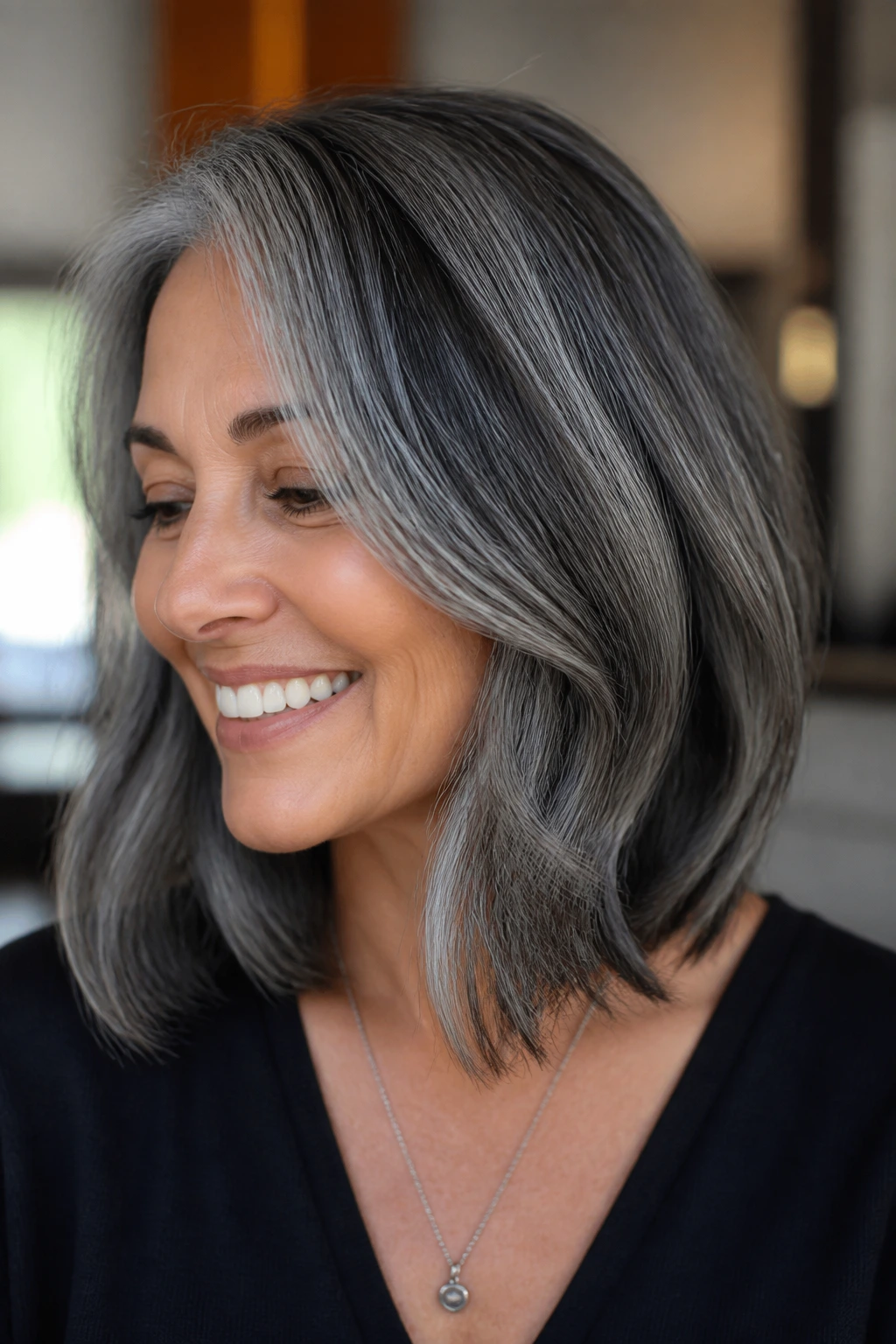
Gray hair does not have to go all the way to silver to look modern. A charcoal blend with lowlights can deepen the root area and make the lighter strands stand out more clearly. The contrast is useful if your natural grays are bright at the front but darker through the back, or if you want the transition to feel smoother.
This look works best when the lowlights stay soft and cool, not warm and muddy. Too much warmth can make gray hair look brassy. A subtle ash or charcoal tone keeps the dimension crisp. I like this option when someone wants movement but doesn’t want the whole head to read flat or washed out.
It’s also one of the easier choices for grow-out. The color shift is gentle, so you can stretch the time between salon visits without the line turning harsh.
20. Low Chignon With Soft Face Pieces
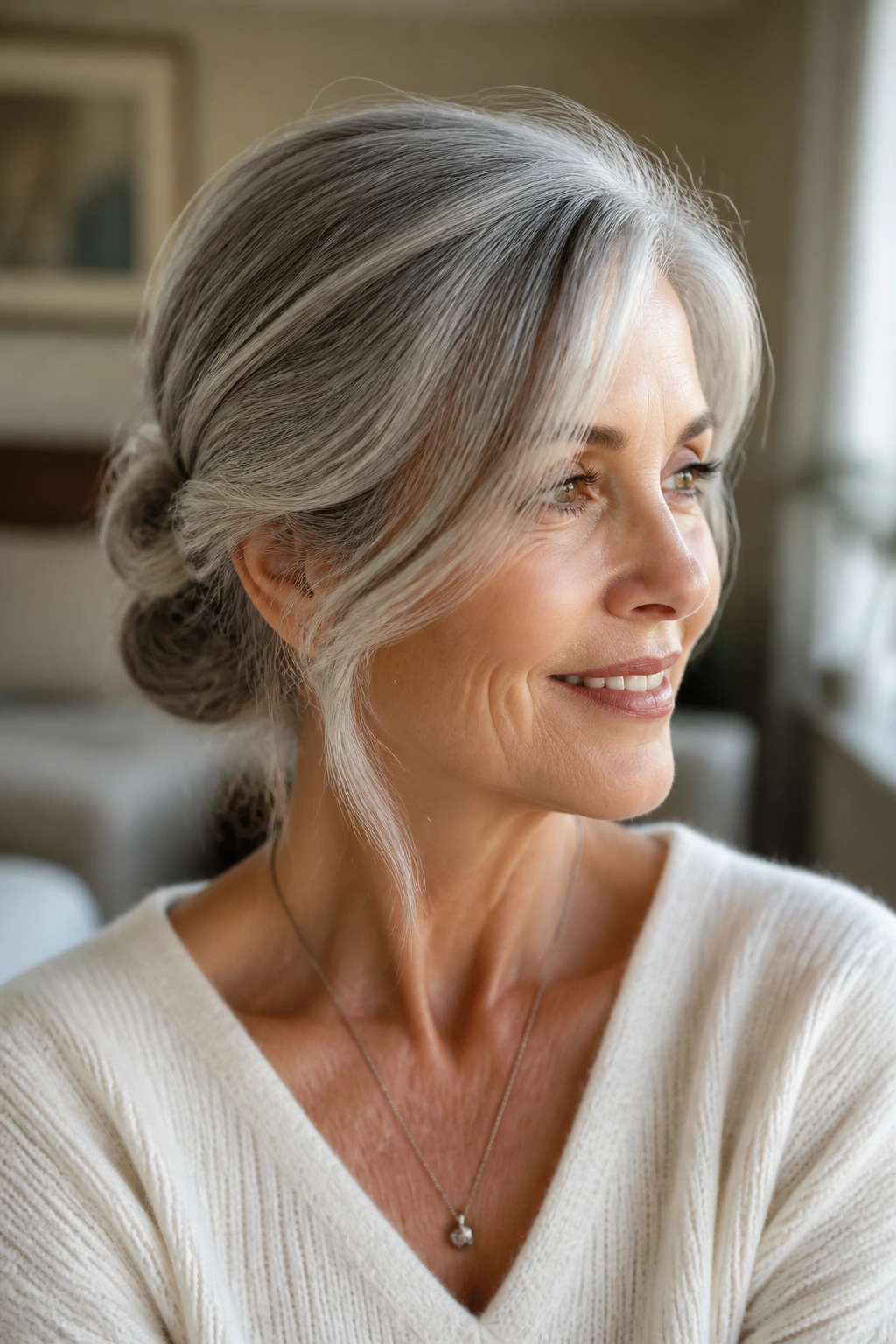
Medium length is long enough for a low chignon if the hair has some grip and the layers aren’t too short around the perimeter. That’s good news for gray hair, because the ends need a rest sometimes. Pulling the hair into a soft knot at the nape creates an elegant line without requiring the kind of length that only one in five people actually wants to maintain.
The face pieces matter more than the knot. Leave a couple of strands around the cheekbones and the temples so the style doesn’t look severe. Gray hair around the face can feel luminous when those pieces are lightly waved and not pinned too tightly.
Use a few bobby pins in an X pattern if the hair slips. One pin rarely holds enough. Two crossed pins almost always do.
21. Flip-Out Retro Ends on a Medium Cut
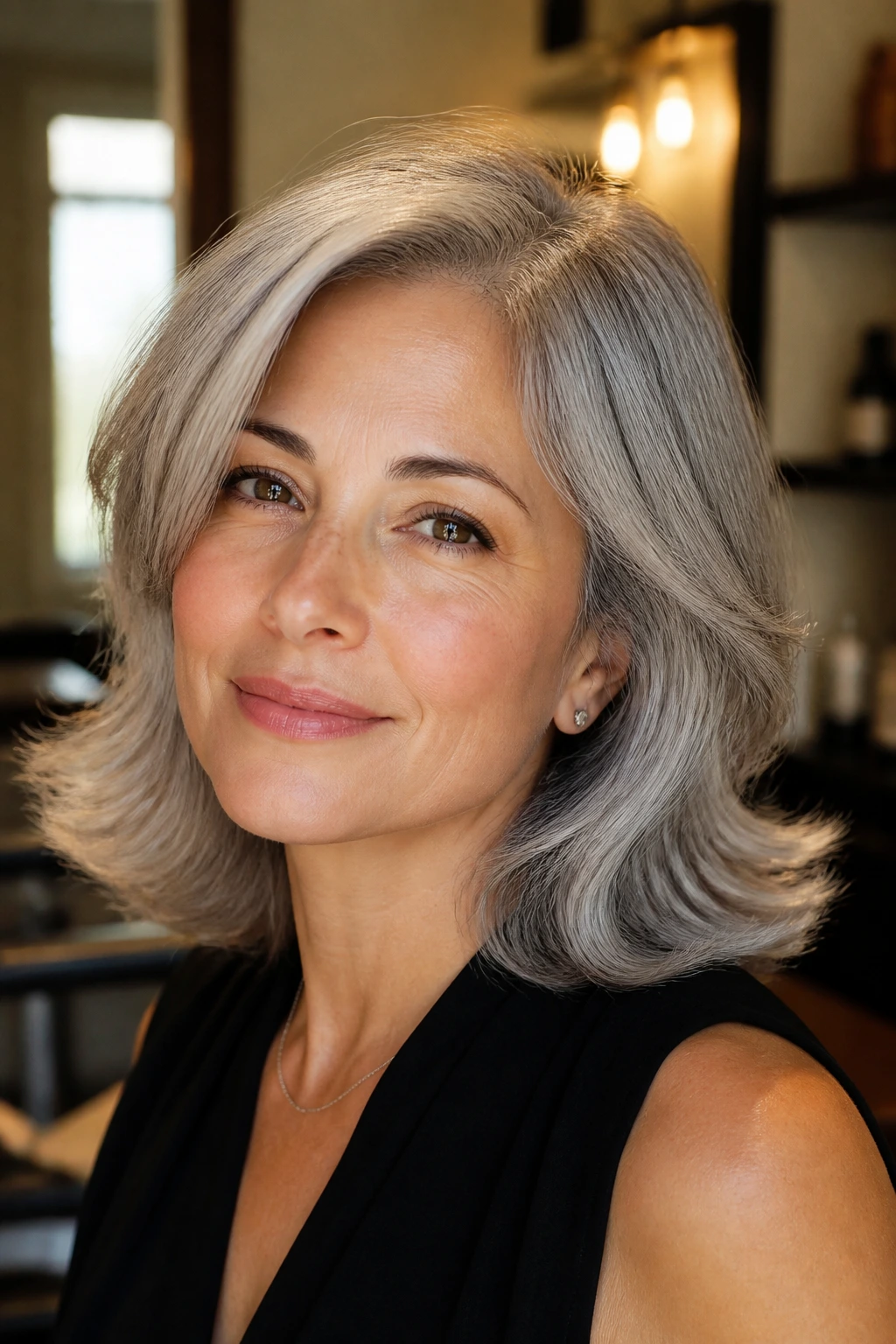
A flip-out finish is one of those styles that makes gray hair look playful instead of precious. The ends turn away from the neck just enough to show movement, and the medium length keeps the shape from going fully retro-cartoon. It works particularly well on straight or slightly wavy hair.
You can get this look with a round brush, a blow-dryer nozzle, or a flat iron if you prefer a quicker hand. The key is to flip the final inch of hair away from the face or out from the shoulders, not all at once from root to tip. That keeps the line from looking too old-school.
If your gray hair has a strong silver shine, this style picks it up at the ends and the curve. It’s an underrated way to make a simple cut feel more alive.
22. Airy Shoulder Cut With Micro-Fringe
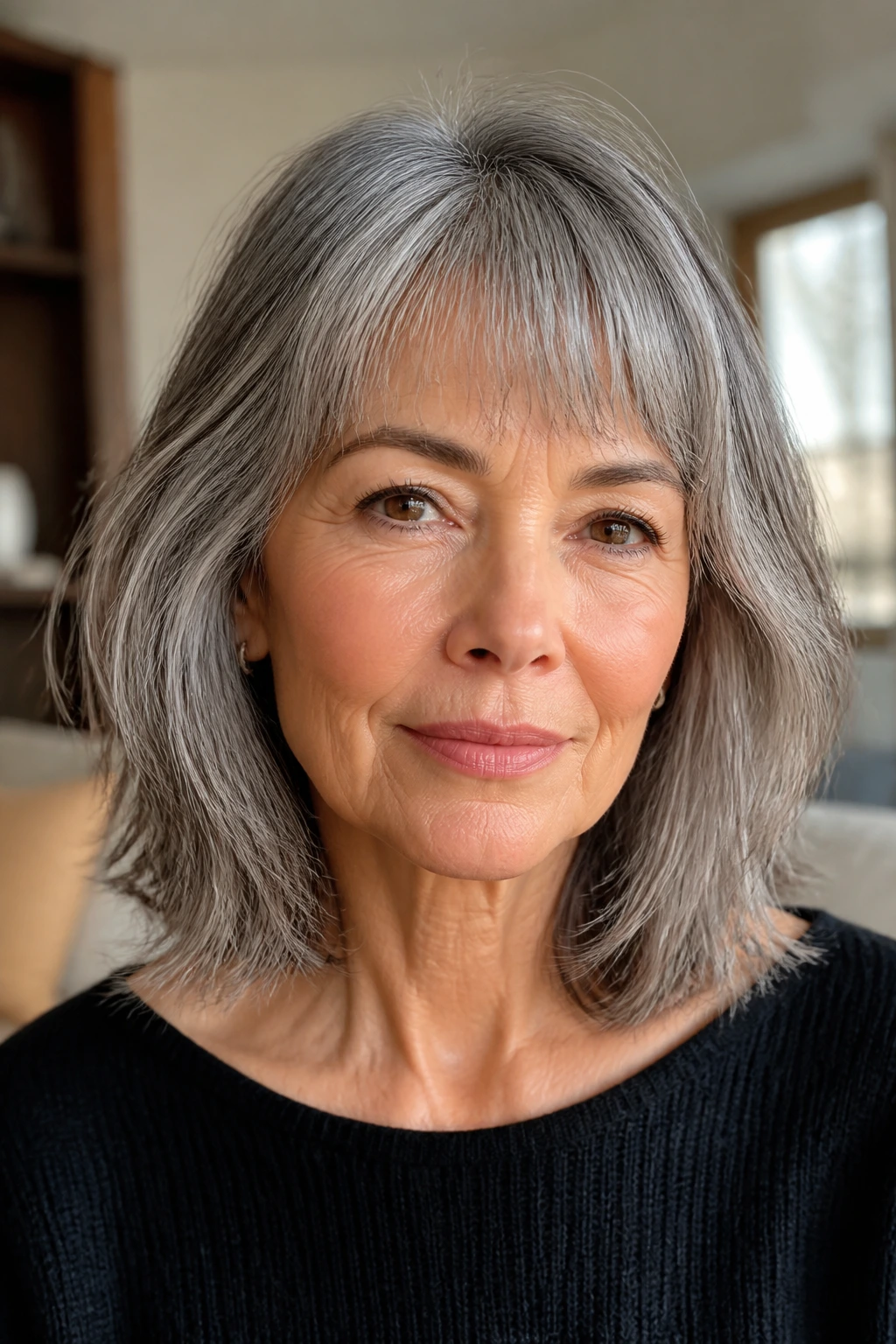
A micro-fringe is not for the timid, and I won’t pretend otherwise. On medium-length gray hair, though, it can look striking when the cut around it stays soft and the rest of the hair remains airy at the shoulders. The contrast between the tiny fringe and the looser body of the cut keeps the style from feeling costume-like.
This works best on straight to slightly wavy hair with decent density. If your hair is very fine, the fringe can dominate the face. If it’s very curly, the upkeep jumps a lot. The cut needs regular trimming because a micro-fringe loses its shape fast once it starts dipping below the brow line.
Used well, this look makes gray hair feel modern and a little sharp. Used lazily, it just looks like you forgot to book a trim.
23. Sleek Center-Part Midi With Glassy Finish
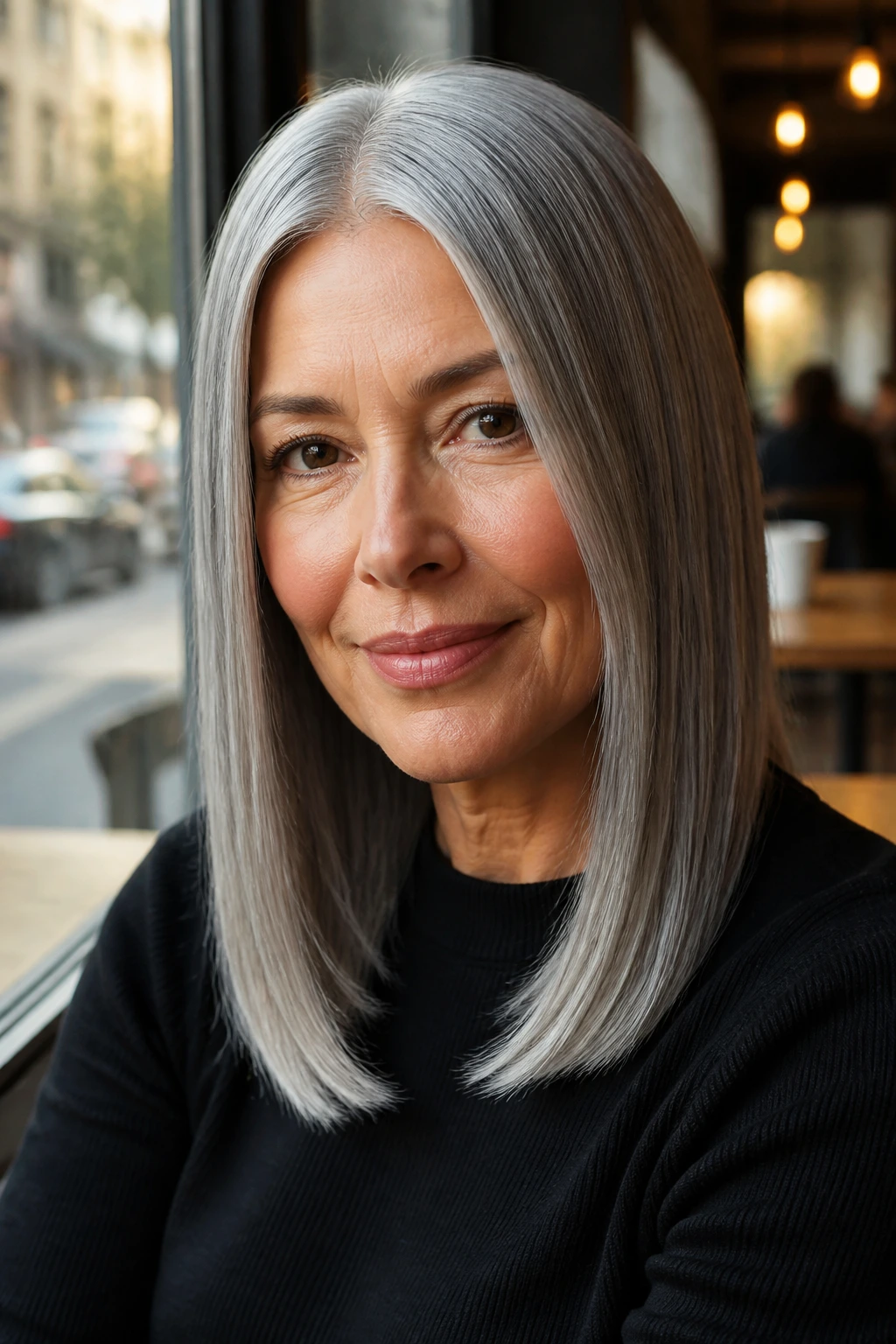
A sleek center-part midi is the quietest option in the group, and that’s exactly why it works. Gray hair already carries interest in the color itself, so the cut doesn’t need fireworks. A center part, straight line, and glassy finish make the silver read clean and controlled.
This style is especially useful if your hair is naturally straight or only slightly wavy. Blow it smooth with a nozzle, run a flat iron through only the sections that need help, and stop before the ends get crispy. Gray strands can show heat damage faster than darker hair, so a lower temperature with one careful pass is better than repeated blasting.
If you like simple clothes, strong lines, and a haircut that doesn’t ask for much, this one has real staying power.
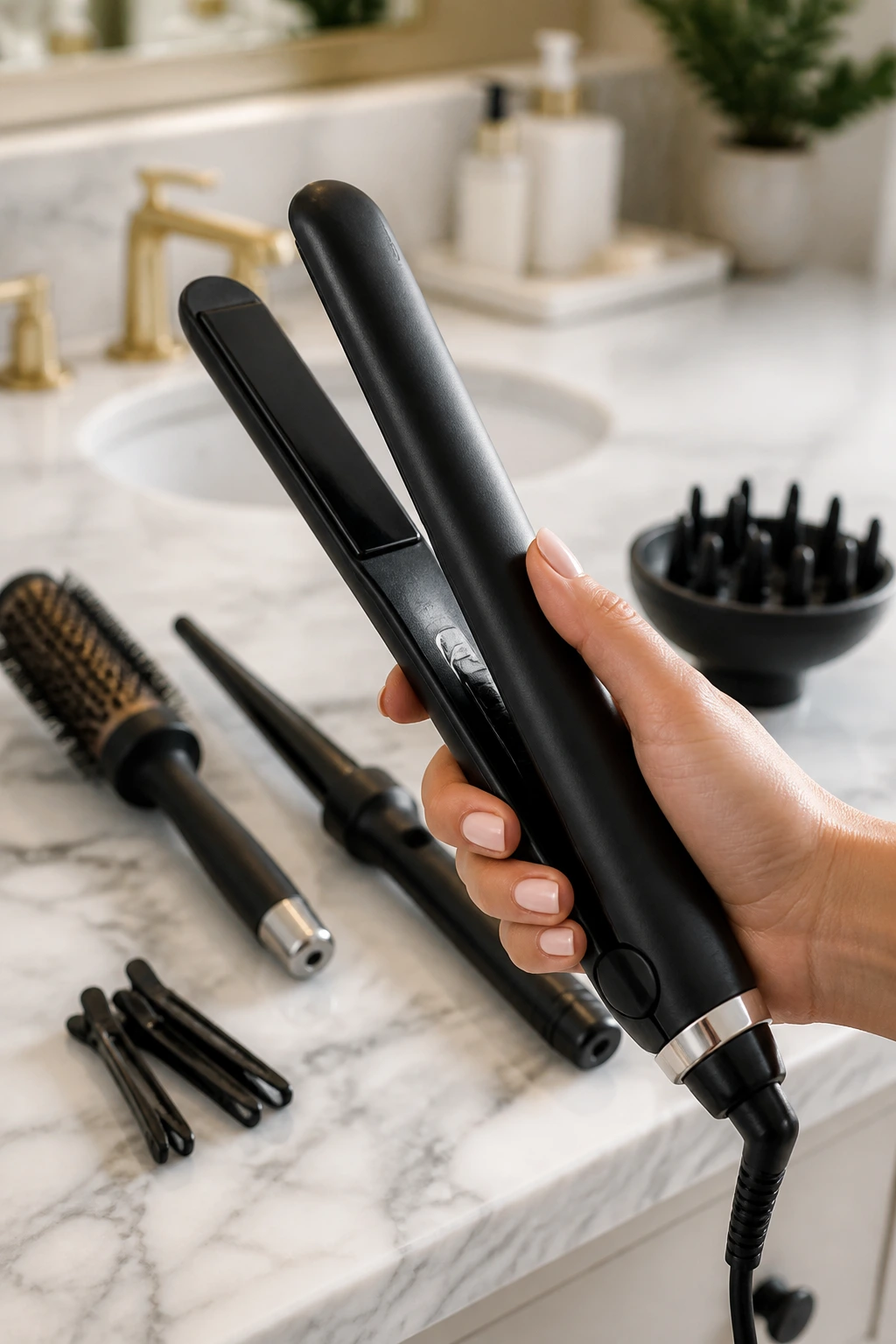
The Brushes, Clips, and Heat Tools That Make These Looks Easier
-
1-inch flat iron: Best for sleek finishes, flicked ends, and soft bends on shoulder-length hair. Smaller plates give you more control around the face.
-
1.25-inch curling iron or wand: Handy for lobs, loose waves, and collarbone bends. It’s the safest size for gray hair that needs movement, not ringlets.
-
Round brush, medium barrel: Good for blowouts, crown lift, and polishing the ends under or out. A ceramic barrel heats evenly and helps tame frizz.
-
Diffuser attachment: Non-negotiable if your gray hair is curly or wavy and you want the shape to hold without puffing out.
-
Duckbill or sectioning clips: Useful for setting crown volume, deep side parts, and roll-sets while the hair cools.
-
Wide-tooth comb: Better than a brush for detangling gray curls, wet hair, or dry hair that breaks easily.
-
Heat protectant spray: Use it every time you heat-style. Gray hair shows singed ends fast.
-
Lightweight serum or glossing cream: A tiny amount on the ends keeps medium-length silver hair from looking dry.
-
Root-lift spray or mousse: Helps the crown stay up on styles like the shag, feathered layers, and deep side parts.
-
Microfiber towel or old T-shirt: Cuts down on rough drying, which gray hair tends to punish with frizz.
How to Choose Products for Gray Hair Without Guessing
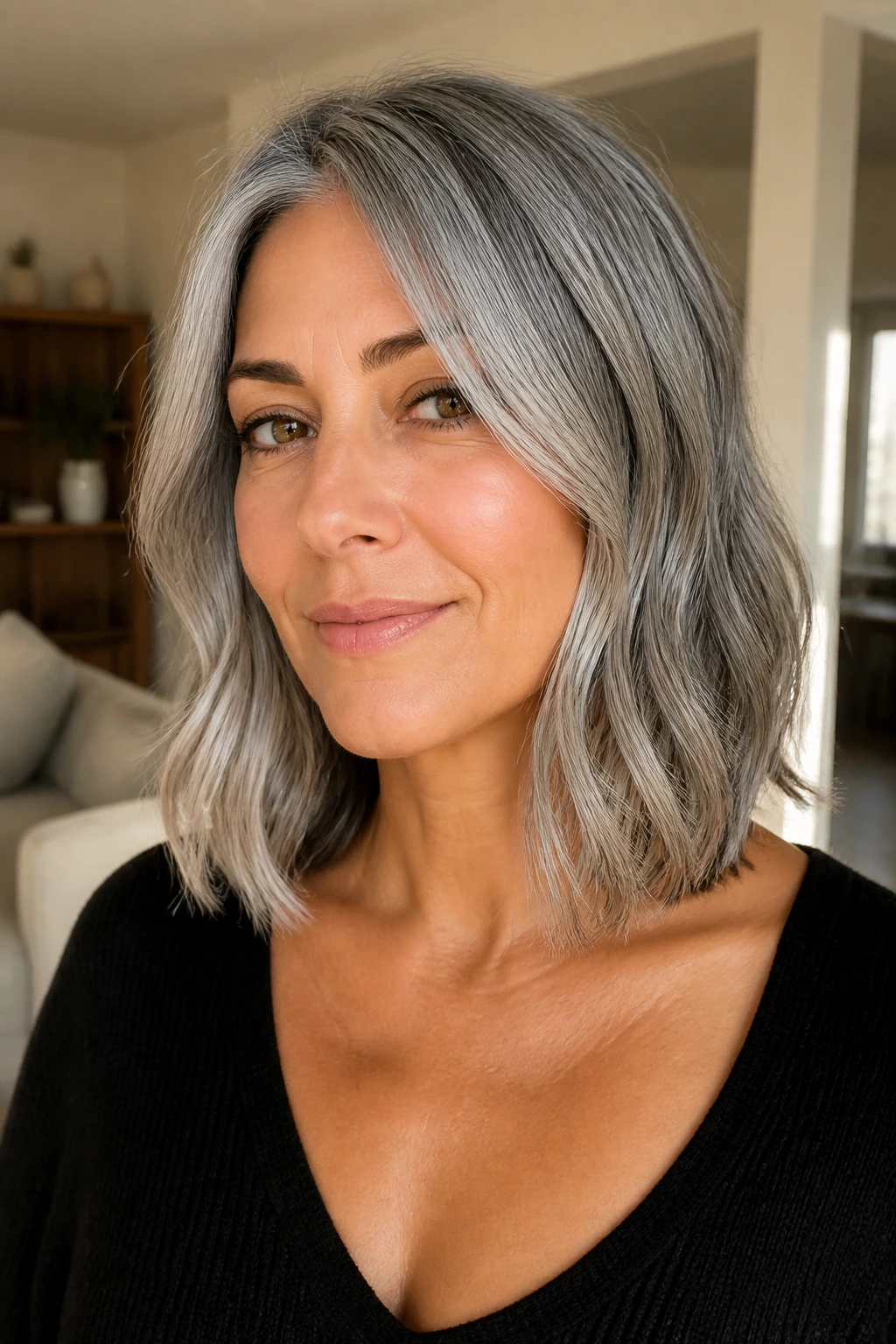
Gray hair usually does better with less product, not more. That’s the first rule I’d keep. A heavy cream that looks fine on brunette hair can make silver strands collapse into strings, especially at medium length where the shape already has enough weight. Start light, then add only what the hair asks for.
Purple shampoo has its place, but it’s not a daily cleanser. If your gray is picking up yellow from hard water, pollution, or sun exposure, a purple formula once a week can help neutralize that warmth. If the shade is already cool and clean, using it too often can leave the hair looking flat or slightly lilac at the ends. That’s when people start blaming the haircut, when the issue is really the cleanser.
For styling products, think by texture. Fine gray hair likes mousse, sprays, and soft hold creams. Coarse or dry gray hair likes leave-in conditioner, smoothing balm, and a touch of serum. If your hair is porous from lightening, look for products that say color-safe and heat-protective, then use them sparingly. Gray hair can be thirsty, but it does not need a whole jar of oil.
How to Wear These Styles With Clothes and Accessories
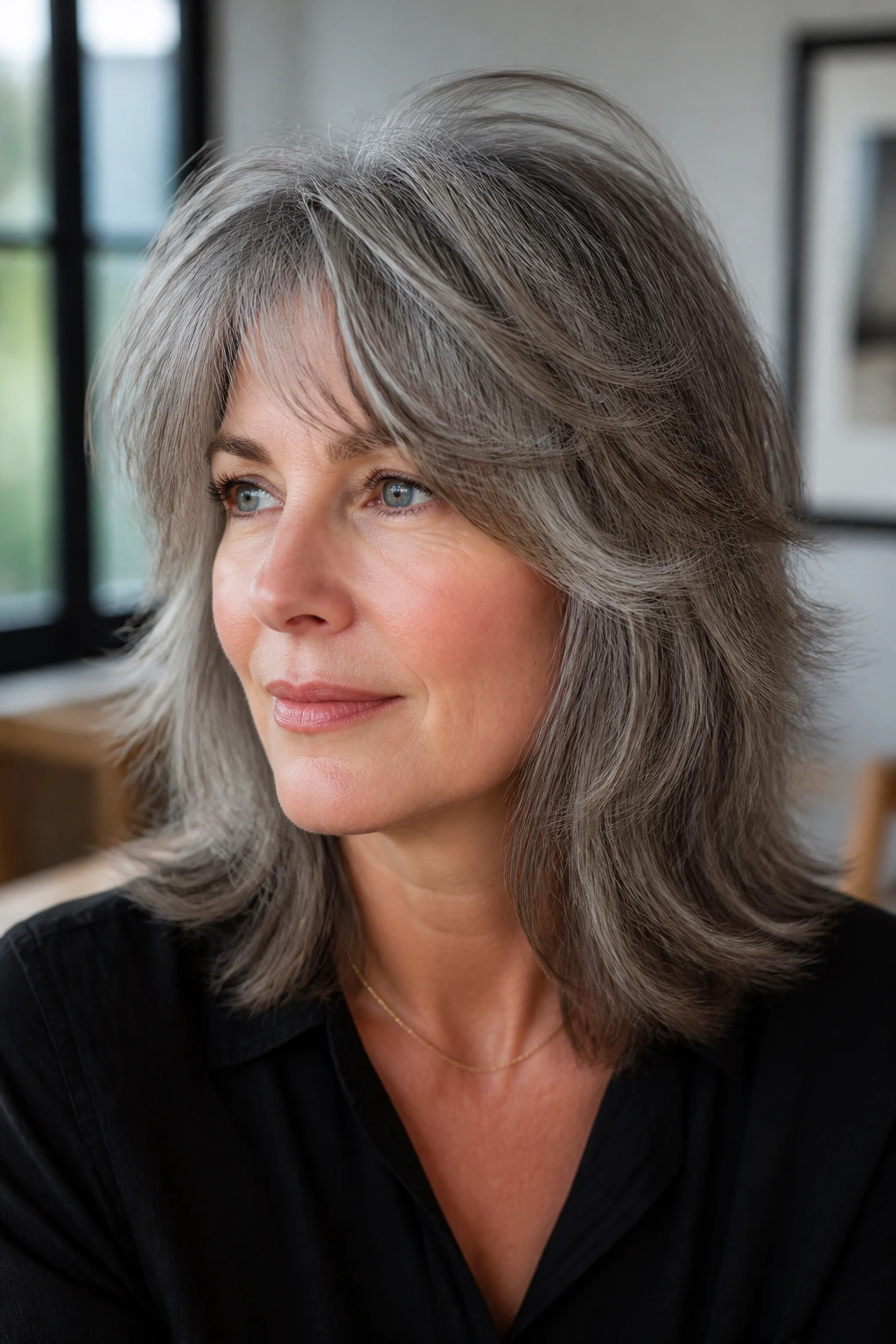
Presentation: Keep the finish deliberate. A blunt silver lob looks sharper with a clean center part and tucked ends; a shag or curly cut looks better with a little controlled mess so it doesn’t feel over-styled. The hair should look chosen, not wrestled into place.
Accompaniments: Medium-length gray hair plays nicely with hoop earrings, black or white necklines, and glasses that have a clear shape. If the cut has a strong line, simple clothing helps it stand out. If the hair is soft and wavy, a structured collar or a neat blazer keeps the whole look from drifting too casual.
Portions: Fine hair usually needs fewer layers and less product. Dense hair can take more internal removal, a little stronger bend, and a stronger perimeter. If your hair sits right at the shoulders, ask yourself whether you want the ends to flip, curve under, or stay straight; that one decision changes how the whole cut feels.
Beverage Pairing: A clean silver style looks best with a clean setting — think a plain espresso, iced tea, or sparkling water rather than a busy, oversized tote-and-scarf situation. Yes, the label sounds odd on a hair article. It still works as a reminder to keep the rest of the outfit as simple as the cut.
Extra Shine, Lift, and Texture Tricks

Gloss First: A clear or cool-toned gloss every 6 to 8 weeks can make gray hair look less dusty and more reflective. I prefer gloss over heavy color when the goal is shine, not coverage.
Part Shift: Moving your part by half an inch can add more lift than another round of teasing. Gray hair tends to settle into the same groove, and that groove can flatten the crown fast.
Texture Without Crunch: If you want movement, use mousse on damp hair and a dry texturizing spray only after the hair is fully set. Gray hair can look brittle when you overload it with powder.
Make-It-Yours: Fine hair usually needs root lift and a blunt perimeter; thick hair usually needs internal weight removal and a smoother outline. Curly hair wants moisture and shape. Straight hair wants clean lines and a polished finish.
Little Finish, Big Payoff: A cool shot from the dryer, even for ten seconds, helps the cuticle lie flatter. Gray hair reflects that change fast.
Gray Hair Habits That Flatten or Yellow the Hair
One mistake I see over and over is too many short layers on fine gray hair. The result is a halo at the sides and nothing at the ends. The fix is simpler than people want it to be: keep the perimeter stronger and let the movement happen higher up around the face or crown.
Another common problem is overusing purple shampoo. A violet cast sounds subtle until it isn’t. If the hair starts looking dull, chalky, or slightly muddy, back off and switch to a regular color-safe cleanser for a week or two.
Heat damage is the other big one. Gray strands show scorch marks, split ends, and dry frizz faster than darker hair, so high heat and repeated passes are a bad trade. Use a protectant, lower the temperature, and let the tool do more of the work in one slow pass.
People also ignore density. A style that looks airy on a thick head of hair can look stringy on a fine one. If the cut seems wrong, the problem might not be the style at all. It might be that the layers are fighting the texture.
Variations Worth Trying on Gray Hair
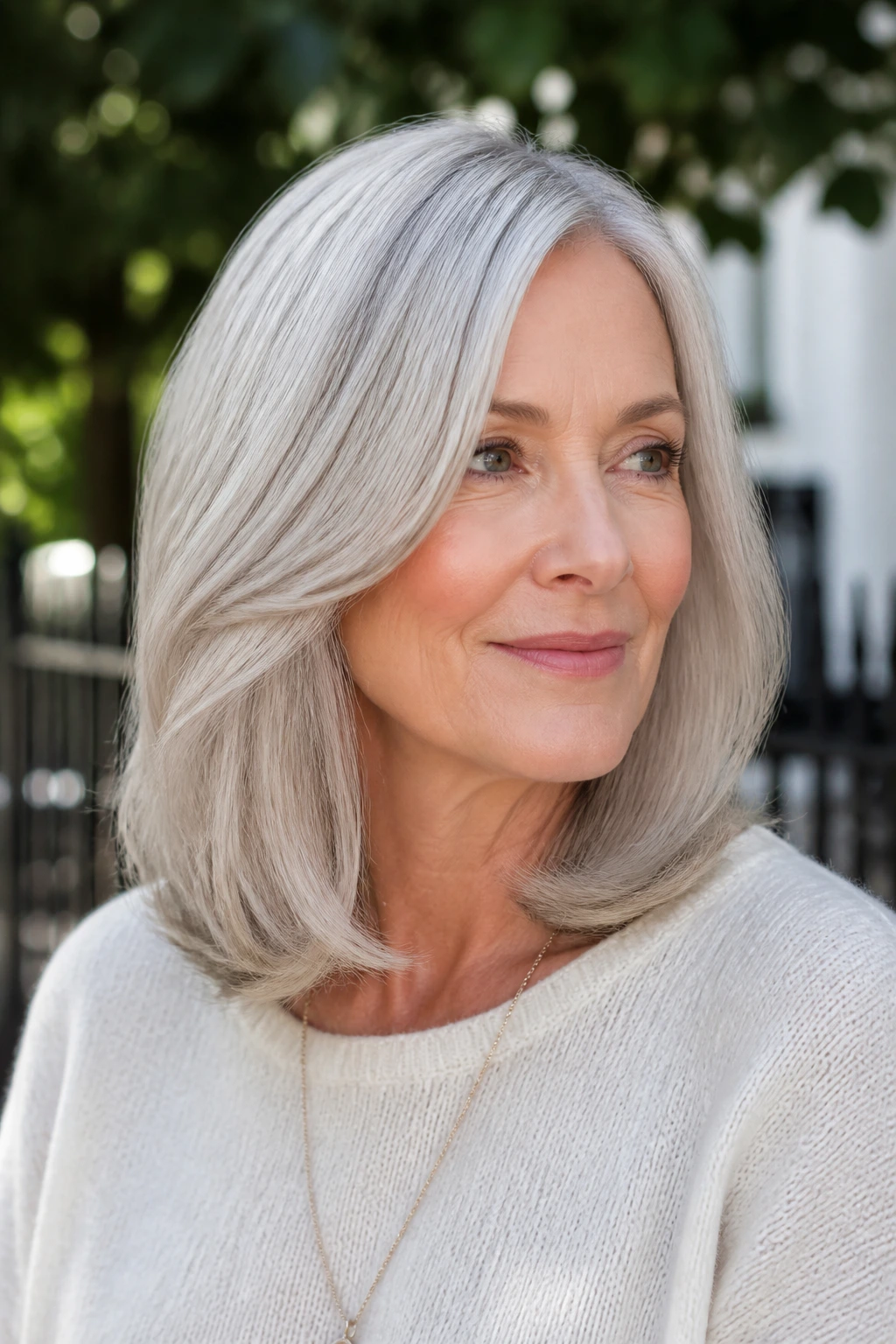
Champagne Silver: This version leans bright and polished, with a cool gloss and soft bends instead of heavy layers. It’s a good fit if your gray is already even and you want it to read luminous, not icy.
Salt-and-Pepper Depth: Keep darker lowlights through the back and under layers so the silver has something to contrast against. This helps medium-length hair look fuller, especially if the strands are finer than they used to be.
Curly Cloud: Rounded layers, a diffuser, and a moisture-first routine turn gray curls into a softer halo shape. This one works when you want volume without the puffball effect.
Fringe Frame: Curtain bangs, bottleneck bangs, or a long side fringe can soften the face and give the cut a little forward motion. It’s a smart way to freshen gray hair without changing the whole length.
Quiet Luxe Straight: A blunt midi, center part, and glassy finish keep the look pared back. There’s nothing flashy here, which is exactly why it lands so well on silver hair.
Keeping the Shape Fresh Between Washes
Medium-length gray hair tends to hold shape for a couple of days if you protect it at night. A satin pillowcase helps, and a loose clip or silk scrunchie can keep bends from flattening into the back of your head. If you sleep on one side, expect that side to lose a little lift. That’s normal.
Dry shampoo helps, but use it at the roots and keep the amount modest. Gray hair can show white cast if the spray is too heavy. If you need volume on day two or three, flip the hair, mist the roots lightly, and blast them with cool air for a few seconds.
Trims matter more than people want to admit. Every 6 to 10 weeks keeps the ends from fraying, especially on blunt mids, lobs, and polished styles. If the cut has bangs, that schedule gets tighter. Bangs can need a cleanup every 3 to 5 weeks, or they start swallowing the face.
A toning gloss or rinse every 4 to 8 weeks helps if the silver starts drifting warm. If your hair is naturally cool and shiny, you can stretch that longer.
Questions People Ask About Gray Hair and Medium Length
Does gray hair look better short or medium length?
Medium length gives gray hair more shape options than a very short cut and more control than long hair. Short can be sharp, but medium length usually keeps enough weight to stop coarse gray strands from puffing out.
Are layers good for gray hair?
Yes, but only the right kind. Fine gray hair usually wants long, soft layers or almost no layering at all, while thick or curly gray hair can handle more shape removal without losing fullness.
How do I keep gray hair from turning yellow?
Use a color-safe shampoo, limit purple shampoo to once a week or less if the hair is already cool, and keep heat protectant in the rotation. Hard water and too much heat are common culprits, so a clarifying wash now and then can help too.
What’s the best medium-length cut for fine gray hair?
A blunt lob or sleek midi usually works best. The clean line gives fine gray hair a fuller edge, and you can add lift with a side part or a small bend through the ends.
Can curly gray hair wear medium length without looking wide?
Absolutely, if the cut is rounded and the curls are shaped to follow the head, not fight it. Diffusing with control and using the right moisture level matters just as much as the cut.
Do bangs work on gray hair?
They do, but they need maintenance. Curtain bangs are the easiest place to start because they grow out better than a micro-fringe and don’t trap as much moisture on the forehead.
How often should I trim a medium gray haircut?
Most medium gray cuts stay neat with a trim every 6 to 10 weeks. If you have a blunt edge, polished bob, or fringe, lean toward the shorter end of that range.
What if my gray hair is both frizzy and flat?
That combo is common. Use a lightweight root product for lift, then smooth only the mids and ends with a small amount of serum. You want shape at the crown and control at the perimeter, not heavy product everywhere.
The Shape That Lets Silver Hair Speak

A good medium-length gray haircut does not try to hide the silver, and it doesn’t overwork it either. It gives the hair a line, a little movement, and enough structure to make the color feel chosen. That’s the part people notice first, even if they can’t name it.
Pick the version that matches your texture instead of fighting it. A blunt lob can look cleaner than a shag. A curl-friendly rounded cut can look far better than a straightened style you’ll resent by lunch. The cut should fit the hair you have, not the one you had five years ago.
And once the shape is right, the rest gets easier. Silver hair at medium length can be sleek, soft, edgy, airy, or polished — sometimes all in the same week. That’s a pretty useful range to have on your side.
