



Long choppy haircuts for thick hair work because they stop the weight from sitting in one heavy shelf at the bottom. Thick hair does not need more bulk. It needs somewhere to go. When the cut is wrong, the ends spread out like a broom. When the cut is right, the hair moves, bends, and settles instead of fighting you every time it dries.
A blunt cut can look expensive for about ten minutes. Then the density wakes up. The ends puff, the sides widen, and suddenly your hair has taken on a shape you never asked for. Choppy layers change that math. They break up the mass, let air move through the mid-lengths, and give the eye a place to land besides “wow, that’s a lot of hair.”
The trick is not to thin everything out until it feels wispy. That’s the lazy fix, and it usually backfires. The best versions keep a strong outline while carving movement into the inside and around the face. A good long choppy cut should look deliberate when you walk out of the salon and still look deliberate after a rough blow-dry, a humid commute, and one too many times flipping it behind your shoulder.
Why These 23 Cuts Work So Well on Dense Hair
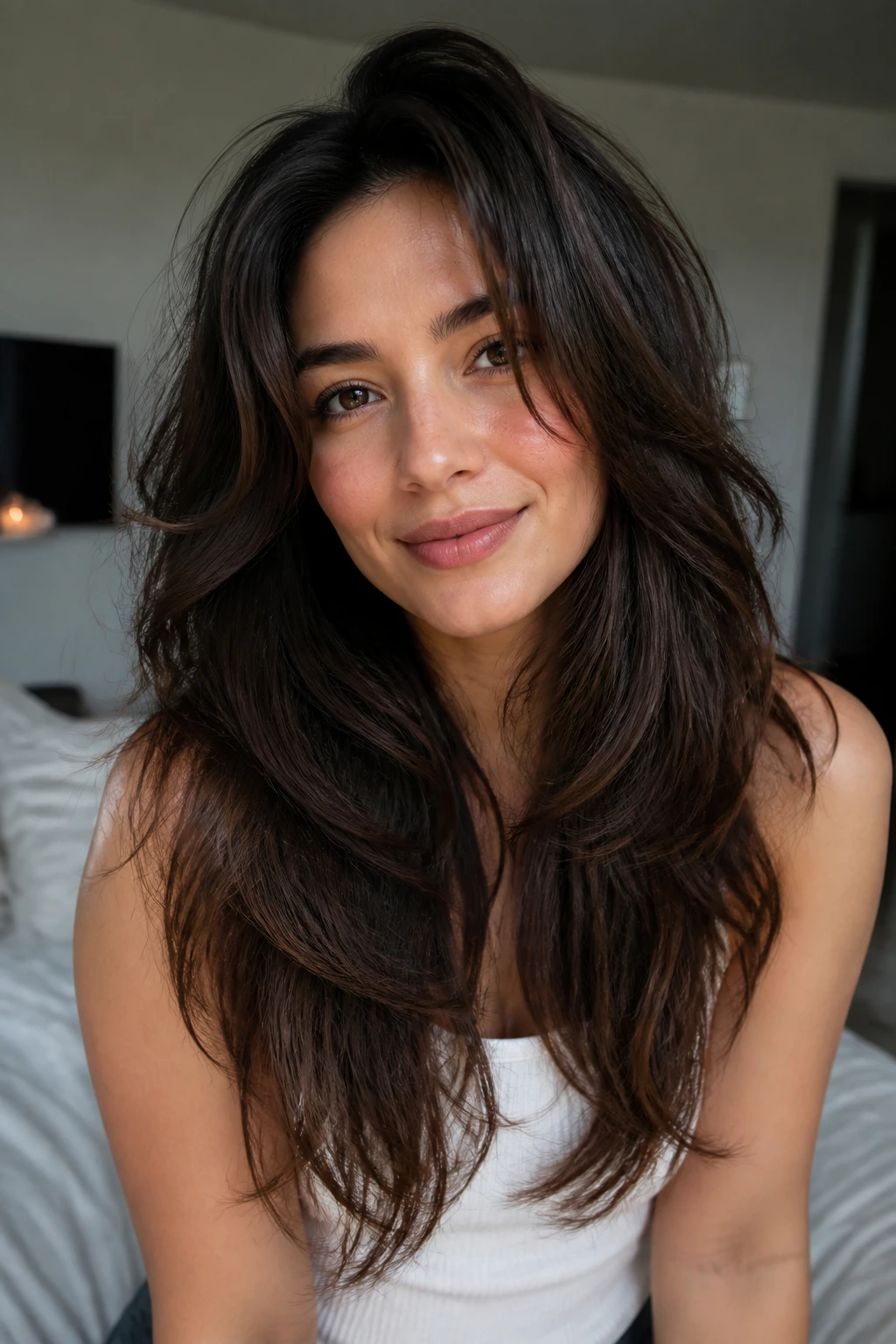
They remove weight where thick hair piles up. Most of these shapes take bulk out of the mid-lengths and crown, not the very bottom, which keeps the ends from turning into a thick block.
They keep the length visible. You still get the drama of long hair, but the layers keep the silhouette from reading as one heavy sheet.
They give you options on styling days. Some cuts want a blowout. Others look better air-dried with a little texture cream and a rough scrunch.
They help the face, not just the hair. Good layering can sharpen a jawline, soften a wide cheek area, or pull the eye upward without making the haircut look busy.
They grow out more gracefully. With the right layer map, you can push trims a bit longer before the whole shape starts to collapse.
1. Butterfly Layers That Keep the Length
Butterfly layers are the cleanest answer when you want long hair to move without losing that long curtain effect down your back. The shortest pieces live around the cheekbone or just below it, then they flow into longer lengths that stay intact. On thick hair, that higher face frame stops the front from sitting flat and heavy against the cheeks.
Why It Works on Dense Hair
The top layers lift the shape away from the scalp, which matters a lot when your hair has enough density to behave like a blanket. The longer bottom layers keep the haircut from looking chopped up. You get a split-screen effect: bounce around the face, weight at the bottom.
A good butterfly cut should still look soft when the hair is dry and a little messy. If it only looks good in a curled salon blowout, the layers are probably too short or too disconnected.
- Best for hair that’s long enough to fall past the shoulders.
- Strong on round and square faces because the face frame stretches the silhouette.
- Works well with round-brush styling or loose barrel curls.
- Ask for the shortest layer to hit the cheekbone, not the chin, if you want to avoid a wide triangle.
Pro tip: Keep the outer perimeter longer than you think. The magic is in the lifted top sections, not in chopping the bottom so high that the whole cut starts floating away from the body.
2. Razor-Cut Cascades for Extra Movement
A razor cut can be a gift on thick hair when it’s used with restraint. Done well, it slices through density and creates soft, separated ends that move instead of stacking up in a blunt wall. Done badly, it frays the hair and leaves the ends looking fuzzy. So yes, this one needs a stylist who knows where to use the blade and where to keep the shears.
Razor-cut cascades work best on straight to wavy hair that can hold a clean edge without looking shredded. The layers should fall in visible ribbons, especially when the hair is worn down and loose. It’s a good pick if your hair tends to feel too solid and you want the ends to appear lighter without sacrificing too much length.
The part I like most is the way it handles motion. Thick hair with a razor-cut finish doesn’t swing like one heavy curtain. It separates. That separation is the whole point.
If your hair is coarse, ask for the razor to stay away from the very ends. A little slicing through the interior is enough. You want movement, not a rough halo.
3. The Long Shag That Stops Thick Hair From Bulking Up
What happens when thick hair needs personality and not just weight removal? The long shag steps in. This cut builds texture through the crown and mid-lengths, then keeps the overall length long enough to avoid the mushroom effect that so many overly layered cuts create.
The shag works because it uses imbalance on purpose. The crown is a bit shorter, the face frame is a bit more broken, and the ends aren’t forced to sit in one straight line. Thick hair loves that kind of permission. It stops trying to sit in a perfect wall and starts falling in pieces.
How to Wear It
Air-dried shag layers can look expensive in that lived-in way people always pretend happened by accident. The trick is to use a lightweight mousse at the roots, scrunch a little cream through the ends, and let the hair dry with space around it. A diffuser helps if your hair bends or waves. If it’s straight, a bendy blow-dry with a large brush gives the shag shape without turning it into a puffball.
This cut is for someone who wants texture with a little attitude. Not chaos. Just enough bite to keep thick hair from looking too polished and too heavy at the same time.
4. U-Shaped Ends With Choppy Interior Layers
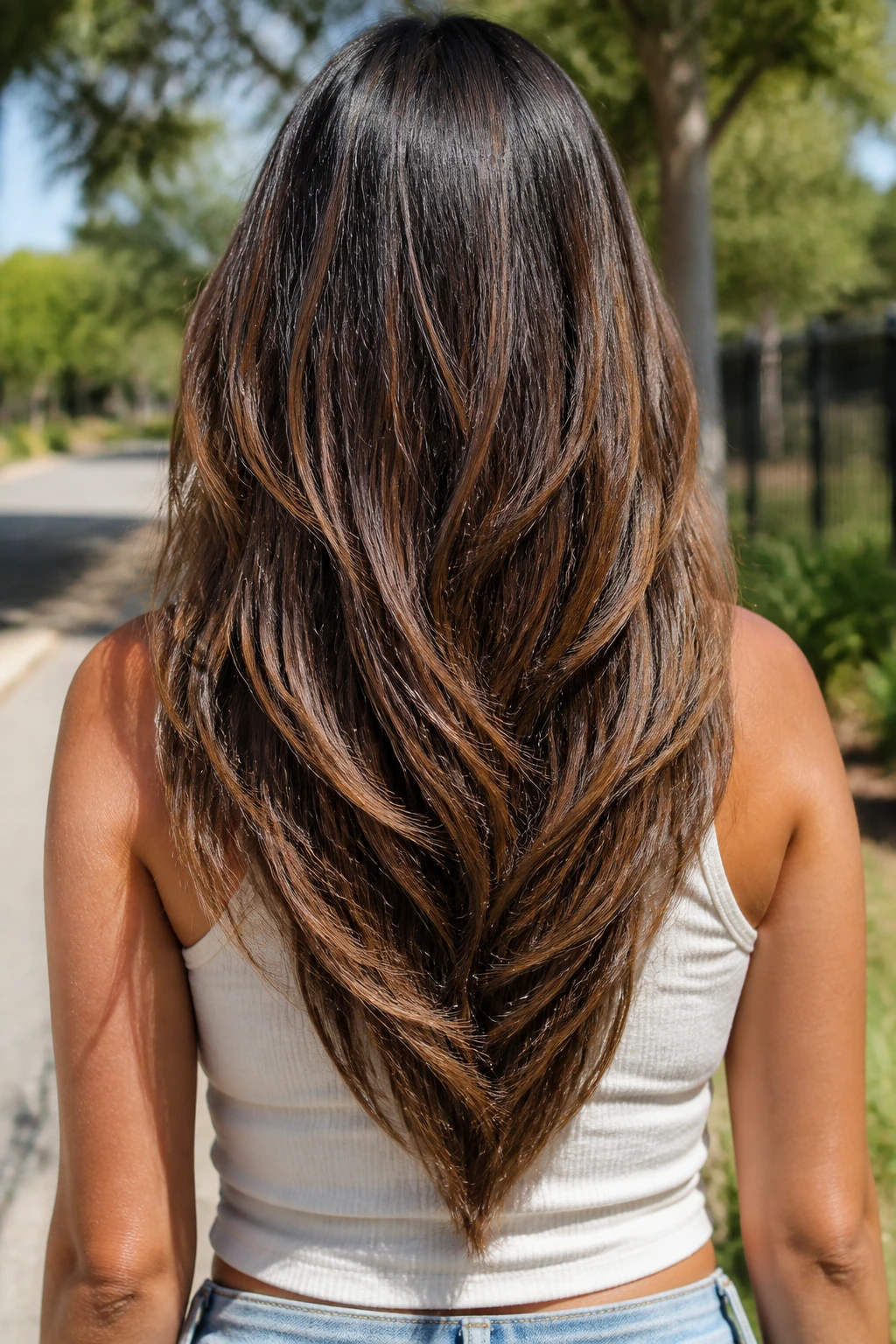
The U-shape is the quiet workhorse of long choppy cuts. From the back, the outline curves gently instead of ending in a blunt horizontal line. Inside that shape, the layers are broken up so the hair doesn’t sit like a solid slab.
That balance matters. Thick hair often needs an outline that feels full, not pointy. A U-shape keeps the bottom looking rich and continuous, while the internal layers take away the dull bulk that makes long hair feel wide at the sides.
You’ll see this cut especially well when the hair is worn down and tucked behind the shoulders. The shape shows from the back in a soft arc, then the layered interior gives the front some lift. It’s one of the most wearable long choppy haircuts for thick hair because it doesn’t scream “layered.” It just looks better.
Ask for the U to be subtle if you wear your hair straight most days. A deep U can flip out at the corners. A gentler curve usually sits cleaner.
5. A V-Cut That Lightens the Back
A V-cut gives thick hair a pointier, longer-looking back shape, which sounds dramatic until you see how much lighter it can make the whole head feel. The center back drops lower than the sides, so the silhouette narrows instead of spreading out wide at the hemline.
This cut can be a smart fix if your thick hair feels heavy from the nape down and you want the bottom to move more freely. The V shape draws the eye downward and makes the length feel intentional, not simply long for the sake of being long.
It’s not the best choice if you hate seeing a defined point in the back. Some people love that shape. Others prefer a softer curve because the V can look sharper when the hair is very straight. If your hair is wavy, the point can blur a little and look softer anyway.
The important part is the transition. The side layers should melt into the point rather than ending in a harsh shelf. If the layers are too short, you end up with a triangle instead of a V. That is a different animal entirely.
6. Curtain Bangs and Broken Layers at the Cheekbones
Curtain bangs do a lot of heavy lifting on thick hair. They split the front section down the middle, open around the face, and create a soft frame without locking you into a full fringe that needs constant trimming. Add broken layers at the cheekbones, and the whole cut starts moving around the face instead of sitting there.
This works especially well if your thick hair tends to widen around the cheeks or jaw. The fringe breaks up the width right where people usually notice it first. Then the longer pieces behind it slide into the rest of the cut so the transition feels smooth instead of obvious.
The shape is flattering because it gives the face a point of focus. Eyes, brows, cheekbones. That’s where the attention goes. Not the bulk of the hair.
If you wear glasses, curtain bangs can be a little tricky, but not impossible. Ask for them to open a touch wider in the middle and stay longer at the corners. That keeps them from landing in the frame line all day long.
7. Face-Framing Layers That Start Higher Than You Expect
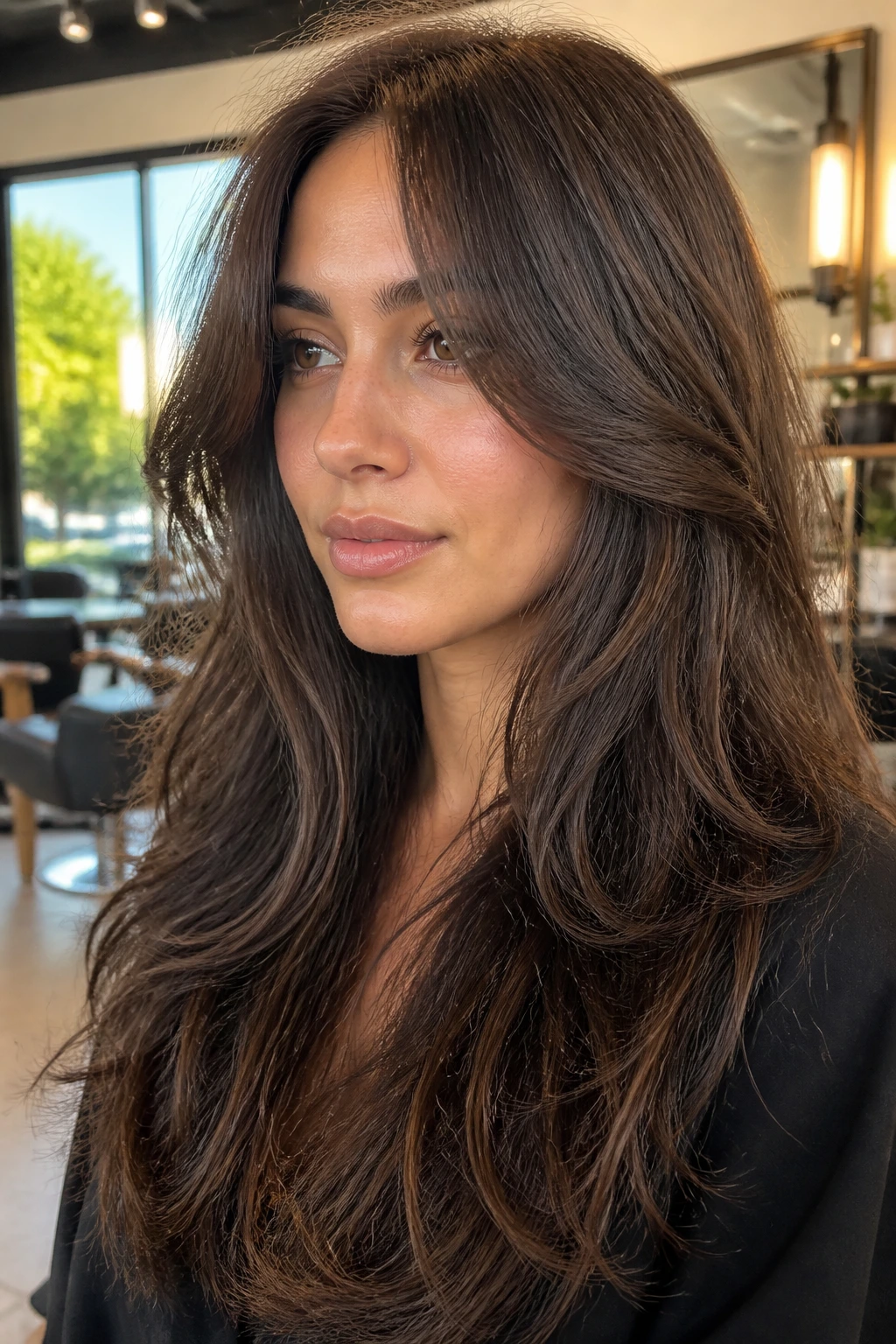
Most people ask for face-framing layers and stop there. That’s fine, but thick hair usually needs the shortest piece to start a bit higher than the average shoulder-length cut would suggest. If the first layer starts too low, the frame barely shows up. If it starts around the cheekbone or lip line, the front gets lift and shape without looking chopped.
The real value here is movement near the eyes and jaw. Long, dense hair can drag the face down if everything begins at the collarbone. A higher frame pulls the shape back up. It also helps the rest of the cut feel lighter because the eye sees staggered lengths instead of one long mass.
I like this cut for people who want to keep their hair mostly long but need a visible change. It’s not dramatic from the back. Up front, though, it makes a difference every single time the hair swings forward.
Best for
- Round faces that need a bit of vertical line
- Thick hair that looks flat around the front
- People who tuck their hair behind one ear a lot
- Blow-dry lovers who want the front pieces to flip softly away from the face
8. Invisible Layers for People Who Hate “Layered” Hair
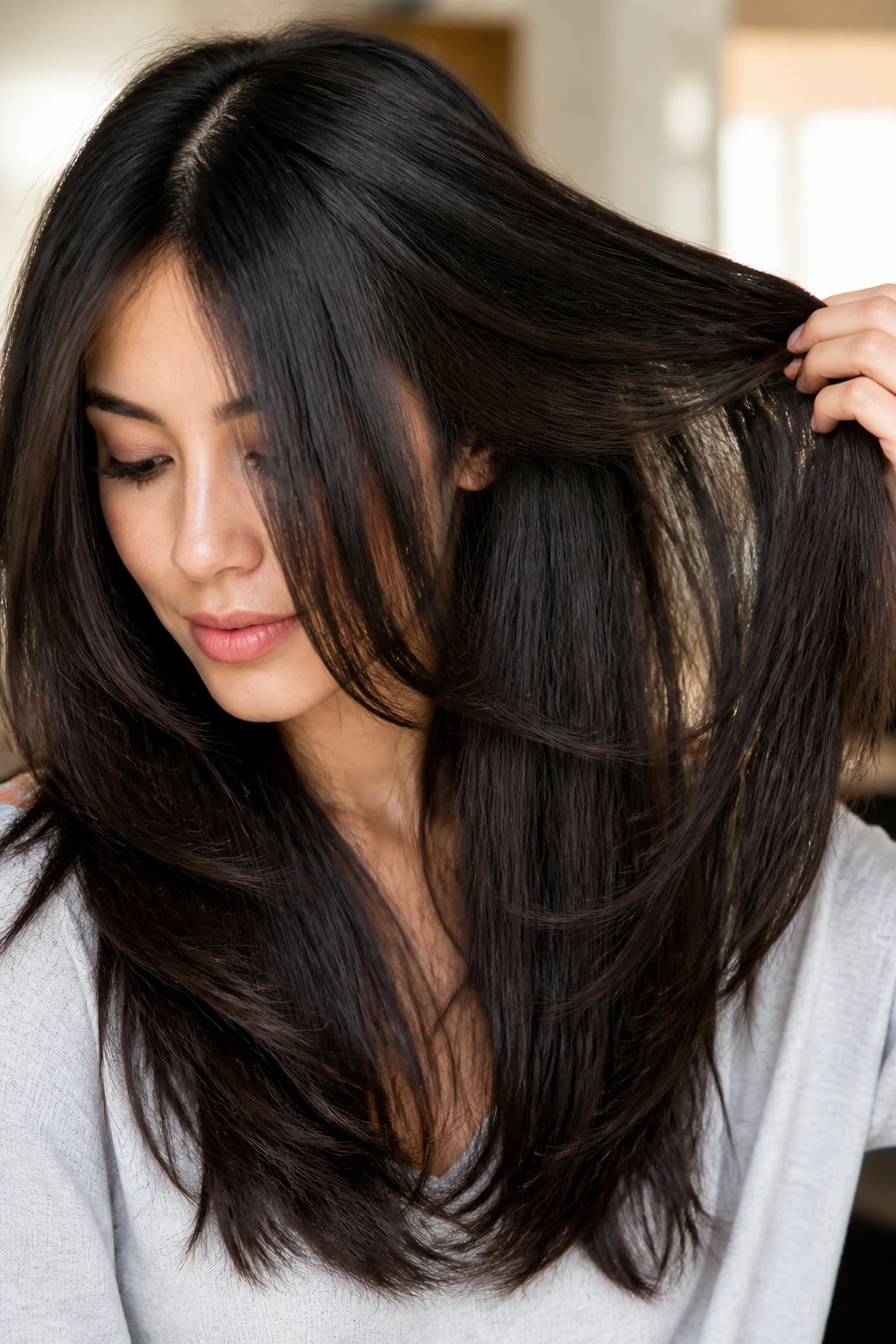
Invisible layers are the answer for anyone who wants movement but hates seeing obvious steps in the haircut. The layers live inside the shape, under the top veil of hair, so the cut keeps a smooth outer line while the inside loses weight. Thick hair often needs exactly that.
This is one of the sneakiest ways to make dense hair feel lighter. You don’t lose the long, polished surface. You lose the heaviness hidden underneath it. The result is cleaner than a shag and calmer than a wolf cut. Good for work. Good for people who air-dry. Good for anyone who wants the hair to stop punching out at the ends.
The best part is the grow-out. Since the top layer stays intact, the haircut doesn’t reveal its age as quickly. It stays neat longer, which matters if you don’t live in a salon chair.
If you’ve had layered hair before and thought, nope, too chopped up, this is probably the shape to try. It gives you movement without the obvious staircase effect.
9. A Long Wolf Cut With Soft Edges
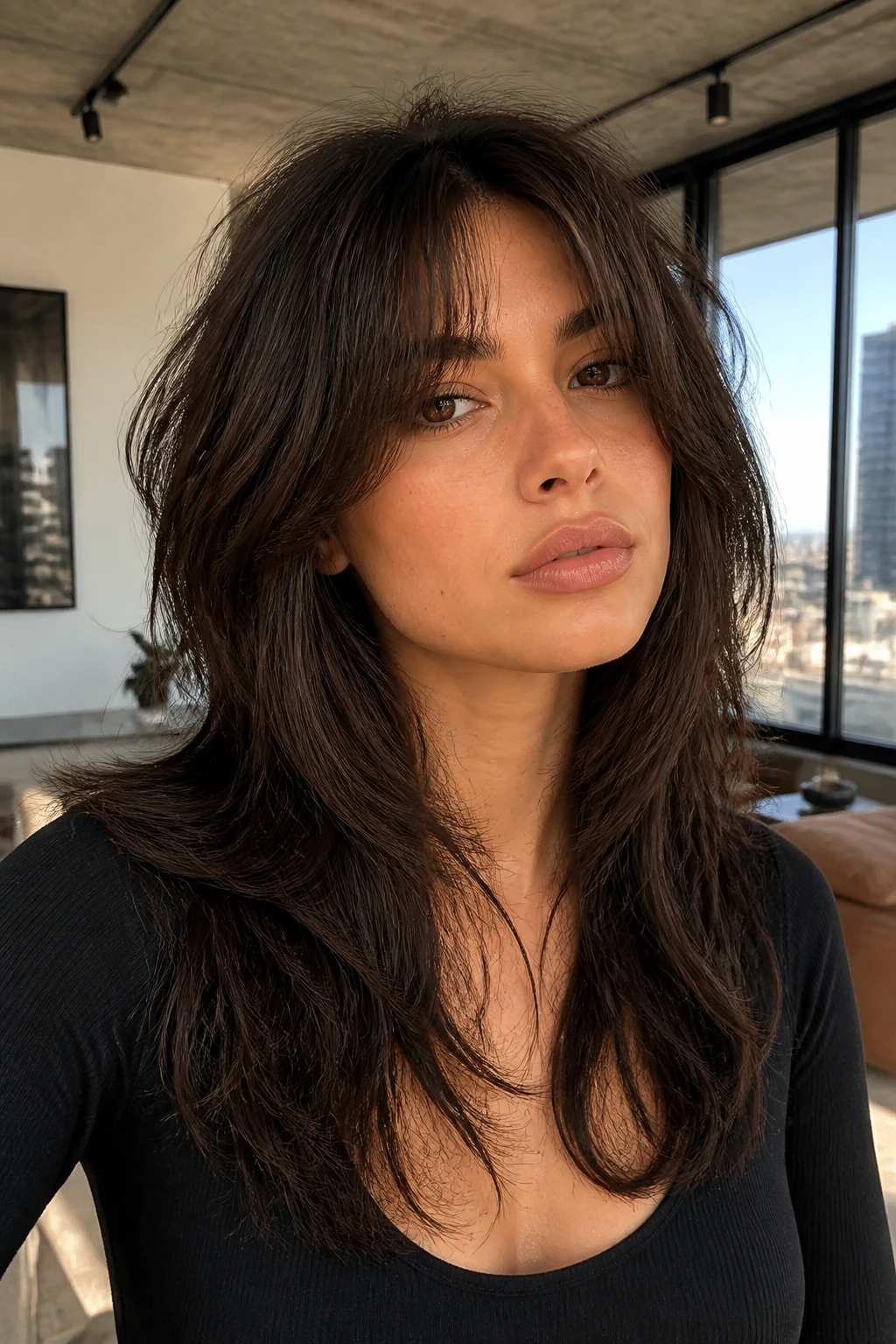
The long wolf cut is the bolder cousin in this group. It keeps the crown fuller, shreds up the mid-lengths, and lets the ends stay wispy enough to avoid heaviness. On thick hair, that can be a very useful mix if you like a little edge in the shape.
What makes it different from a standard shag is the attitude at the top. The crown has more lift. The layers are more obvious. The overall shape is less polished and more lived-in. That sounds casual, but it takes a careful hand. Too much carving and the cut starts looking dry. Too little, and thick hair swallows the whole thing.
The Science Behind It
Hair density is front-loaded in this kind of cut. The crown gets a lift, the sides get broken up, and the ends keep enough length to avoid a puffy halo. That means the hair can sit away from the head without exploding outward at the sides.
A long wolf cut makes sense if you like texture spray, loose bends, and a style that does not need perfect symmetry. If you want neatness, this is not your haircut. If you want movement with a little swagger, it absolutely earns its place.
10. Bottleneck Bangs With Airy Length
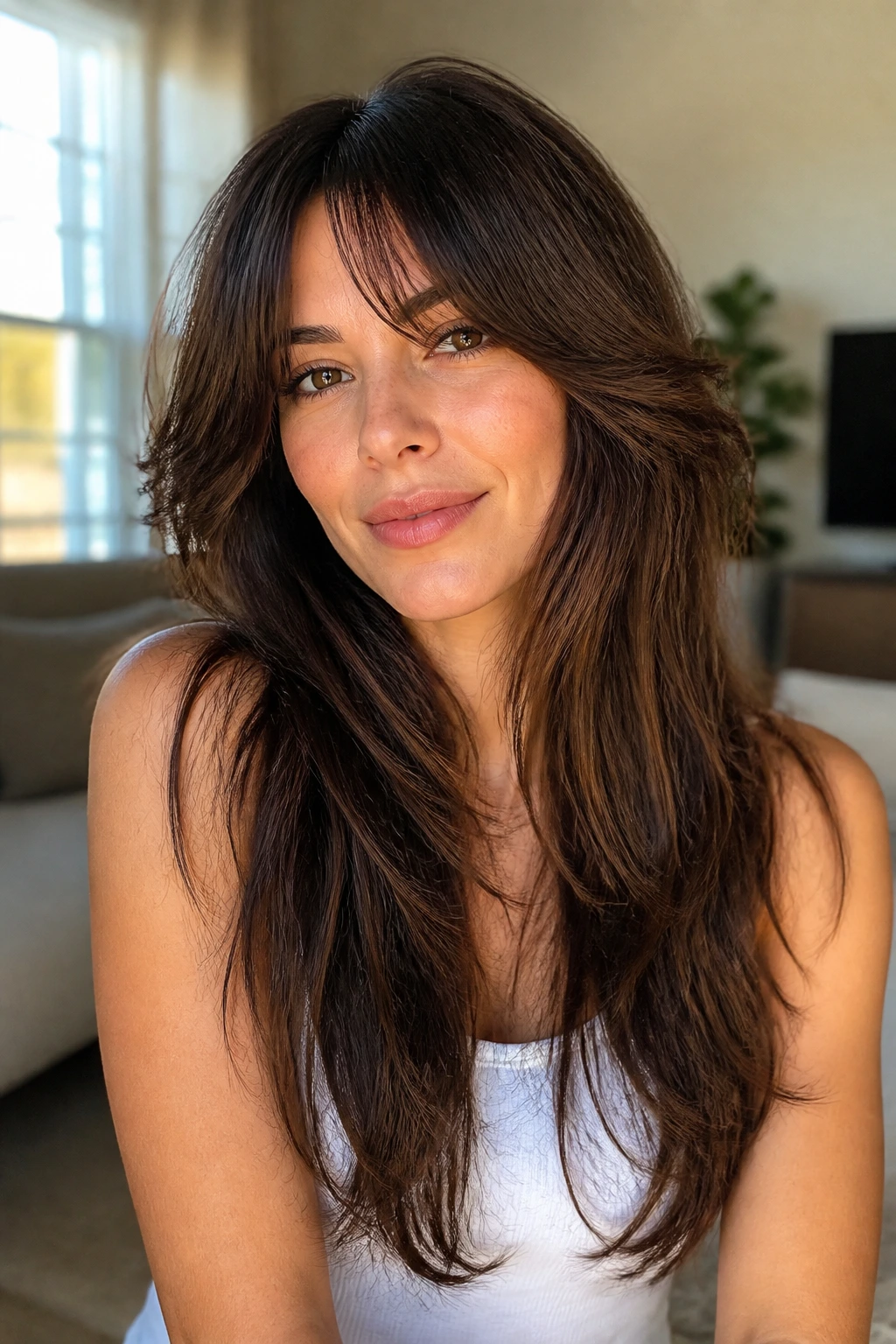
Bottleneck bangs are narrow at the top, then flare gently around the cheekbones. On thick hair, that shape works because it gives you fringe without dropping a heavy wall of hair across the forehead. The taper at the center keeps the bangs light. The wider sides connect them to the rest of the cut.
Paired with long choppy layers, the effect is soft but not sleepy. The bangs create a little architecture at the front, and the rest of the hair keeps moving around the shoulders. It’s a nice middle ground if curtain bangs feel too open and full fringe feels too much like maintenance.
This cut flatters people who want the eyes drawn upward without losing length. It also suits thick hair that can support a fringe without going limp by noon.
The styling part matters. Blow the center down first, then bend the sides away from the face with a round brush or a small flat iron curve. If you let them dry on their own in a random direction, they’ll split where they want and you may not love the result.
11. Sliced Layers That Fall in Clean Pieces
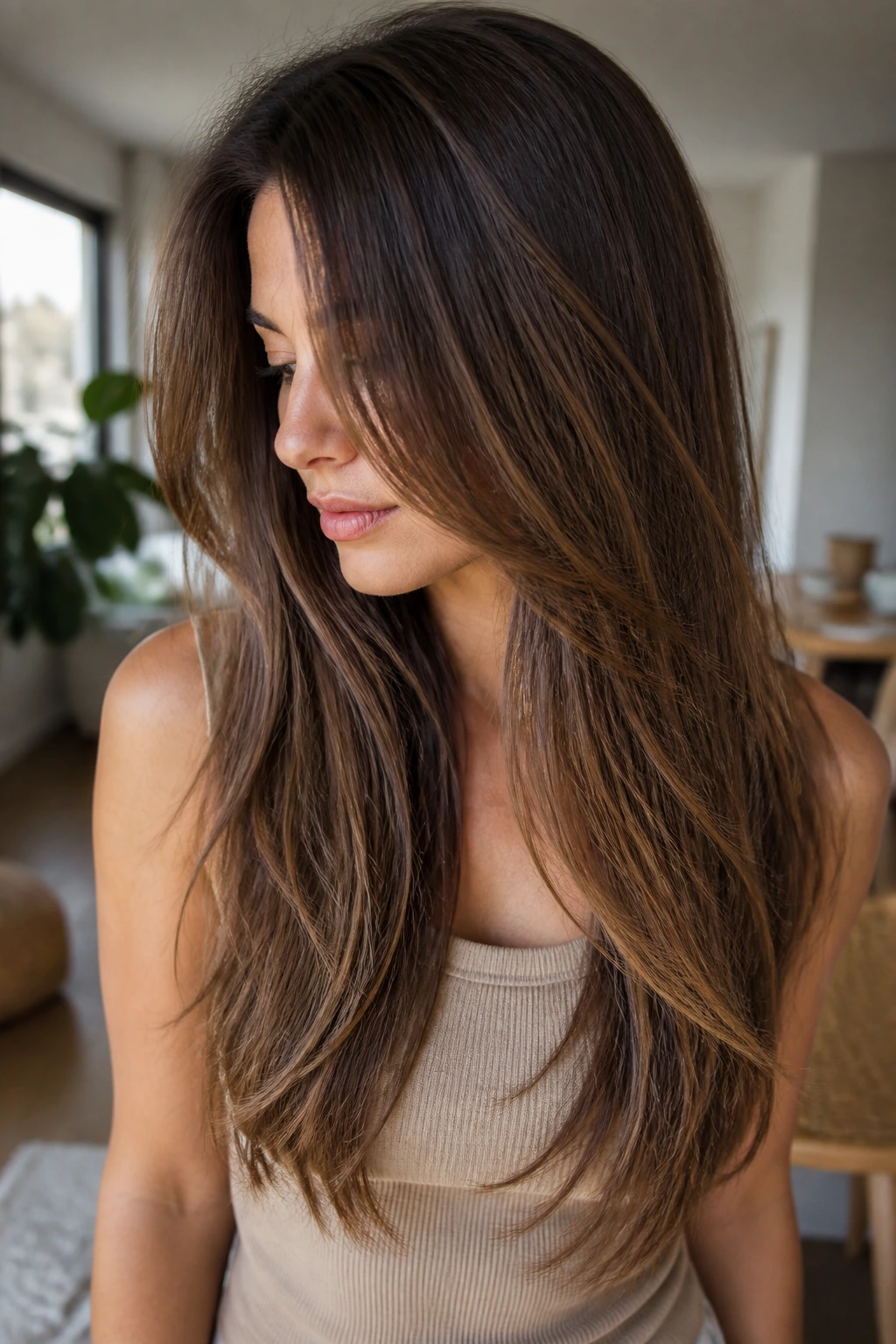
Sliced layers are cleaner than shaggy layers. The ends still move, but they fall in longer, more deliberate pieces instead of highly fractured sections. Thick straight hair is a great match because it usually holds the slice and shows the shape without extra effort.
The reason this style works is simple: dense hair can look heavy even when it’s healthy and shiny. Slicing through the interior removes enough mass for the hair to swing, but it leaves the length readable. You can still see the line. You just don’t get the brick-like finish.
What Makes It Different
Unlike very feathered cuts, sliced layers don’t rely on a lot of fraying at the ends. They create movement through long, controlled sections. That makes the haircut feel a little more tailored and a little less shaggy.
If your style leans clean and modern, this is a good place to land. The hair can be worn sleek, bent with a flat iron, or air-dried with a soft cream. It doesn’t demand a big styling routine. It just needs the structure to be cut into it properly.
12. Side-Swept Fringe and Uneven Ends
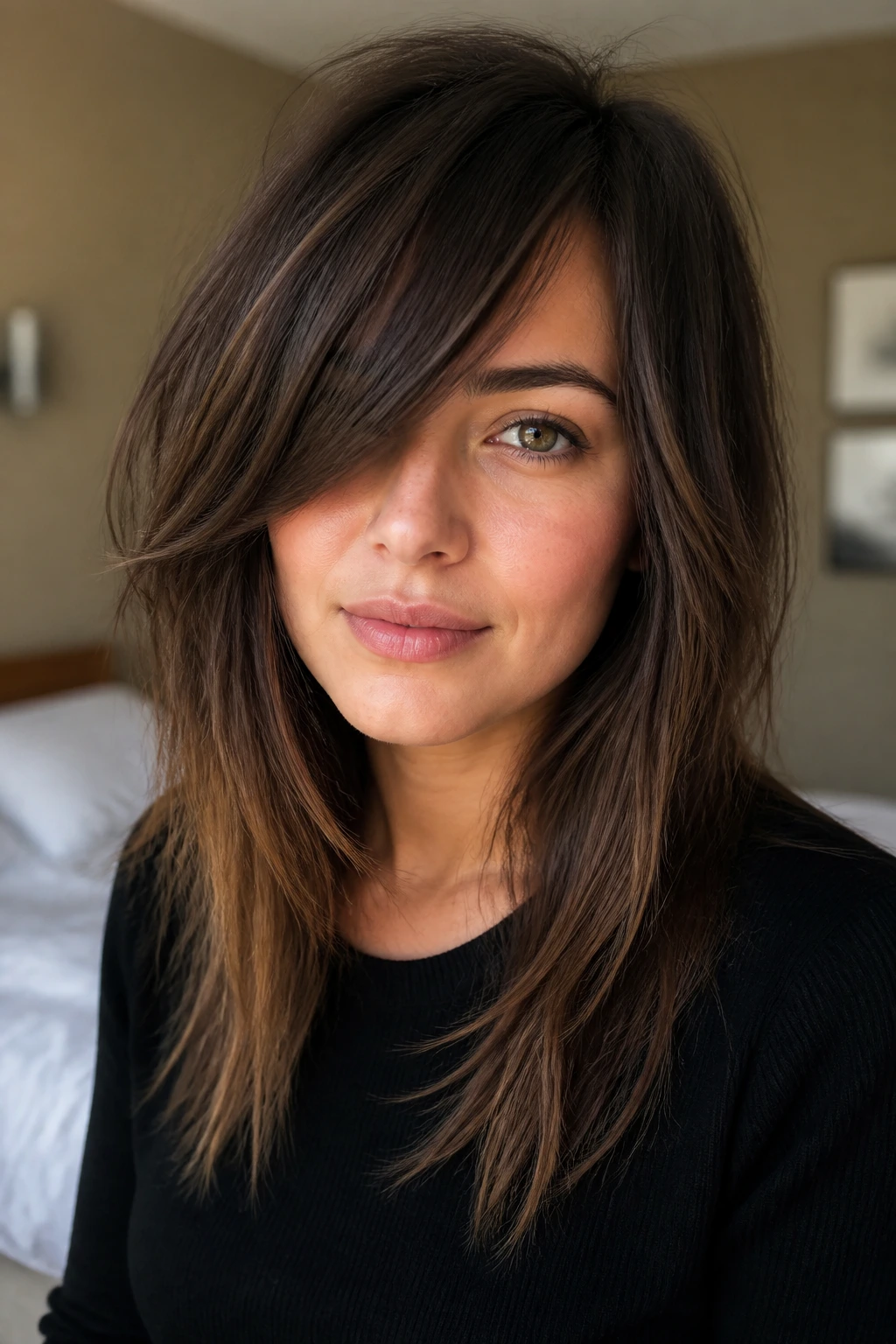
A side-swept fringe can change the whole balance of a long choppy cut. Thick hair often looks widest when everything is centered and symmetrical. Shift the fringe to one side, and the eye starts traveling diagonally instead of straight across. That small move softens the outline fast.
The uneven ends underneath keep the haircut from feeling too tidy. That matters. A side fringe with a blunt bottom can look old-fashioned in the wrong way. Add some broken ends and the cut feels lighter, more current, and less helmet-like.
I like this on hair that’s naturally full through the front. It gives you a way to clear one side of the face without committing to a long bang that needs daily attention. There’s also a nice little bonus: the part itself creates lift near the roots, which thick hair usually welcomes.
If your hair tends to collapse flat at the top, this cut can give it a bit of shape without a ton of product. A root spray and a rough blow-dry are usually enough.
13. The Deep Side Part That Changes Everything
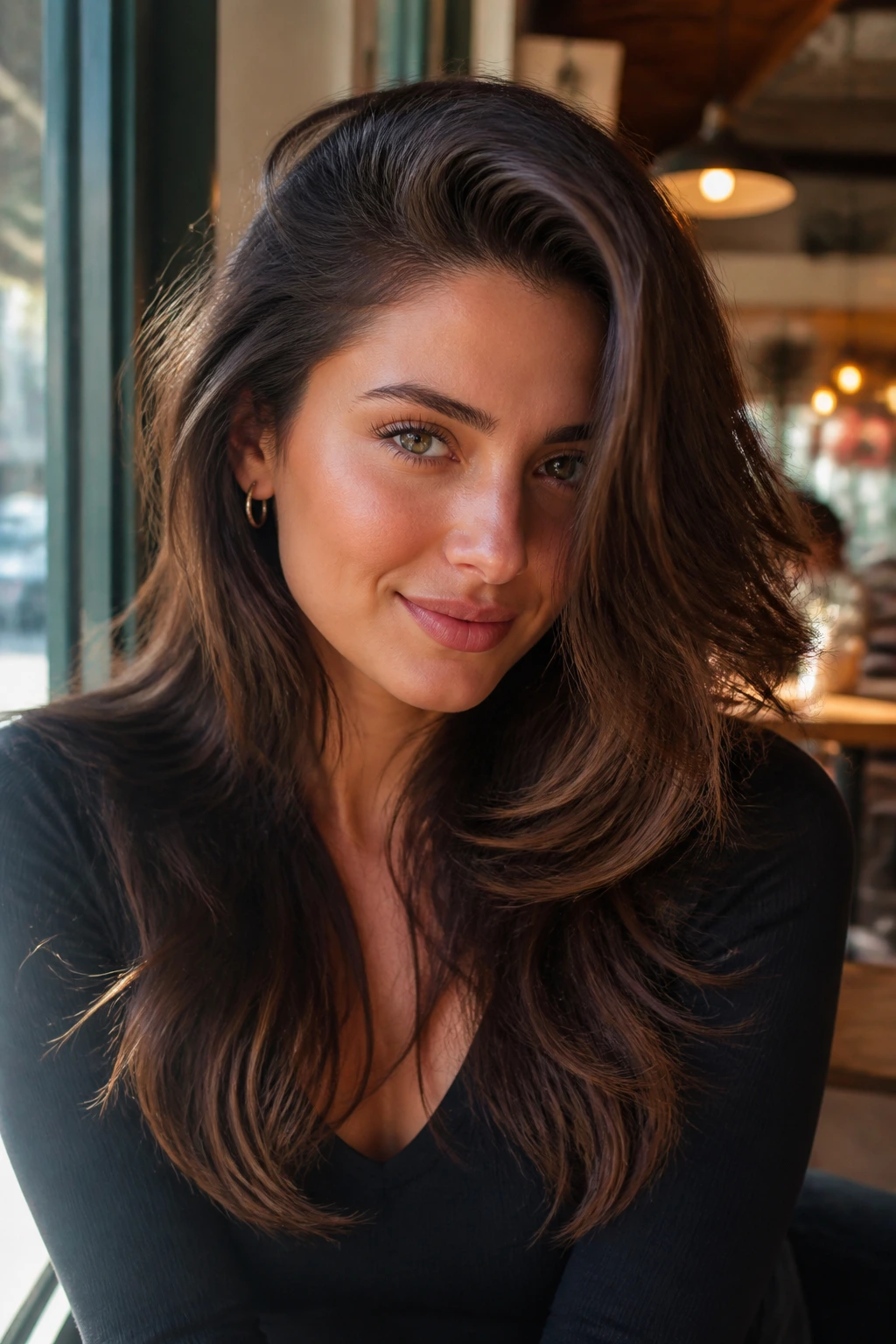
Sometimes the haircut is only half the story. A deep side part can make a long choppy cut feel sharper, slimmer, and more expensive-looking without changing the actual length. On thick hair, the part shifts weight to one side, which breaks up the width and adds a little drama.
That’s useful when the cut already has layers but still feels too even. Move the part, and the face frame suddenly behaves differently. One side gets a softer fall. The other side gets lift. The whole style stops reading as symmetrical bulk.
This is one of the easiest changes in the set, and it can rescue a haircut that feels too full around the temples or crown. No scissors needed. Just a comb and some willingness to change the habit line.
How to Wear It
Use the deep side part on clean, damp hair and direct the roots opposite the part while blow-drying for a few seconds. That gives the hair a bend that lasts longer than a dry comb-over. If you have cowlicks, don’t force the part too far. A slight shift can be enough.
14. Tapered Ends That Keep Thick Hair From Pyramiding
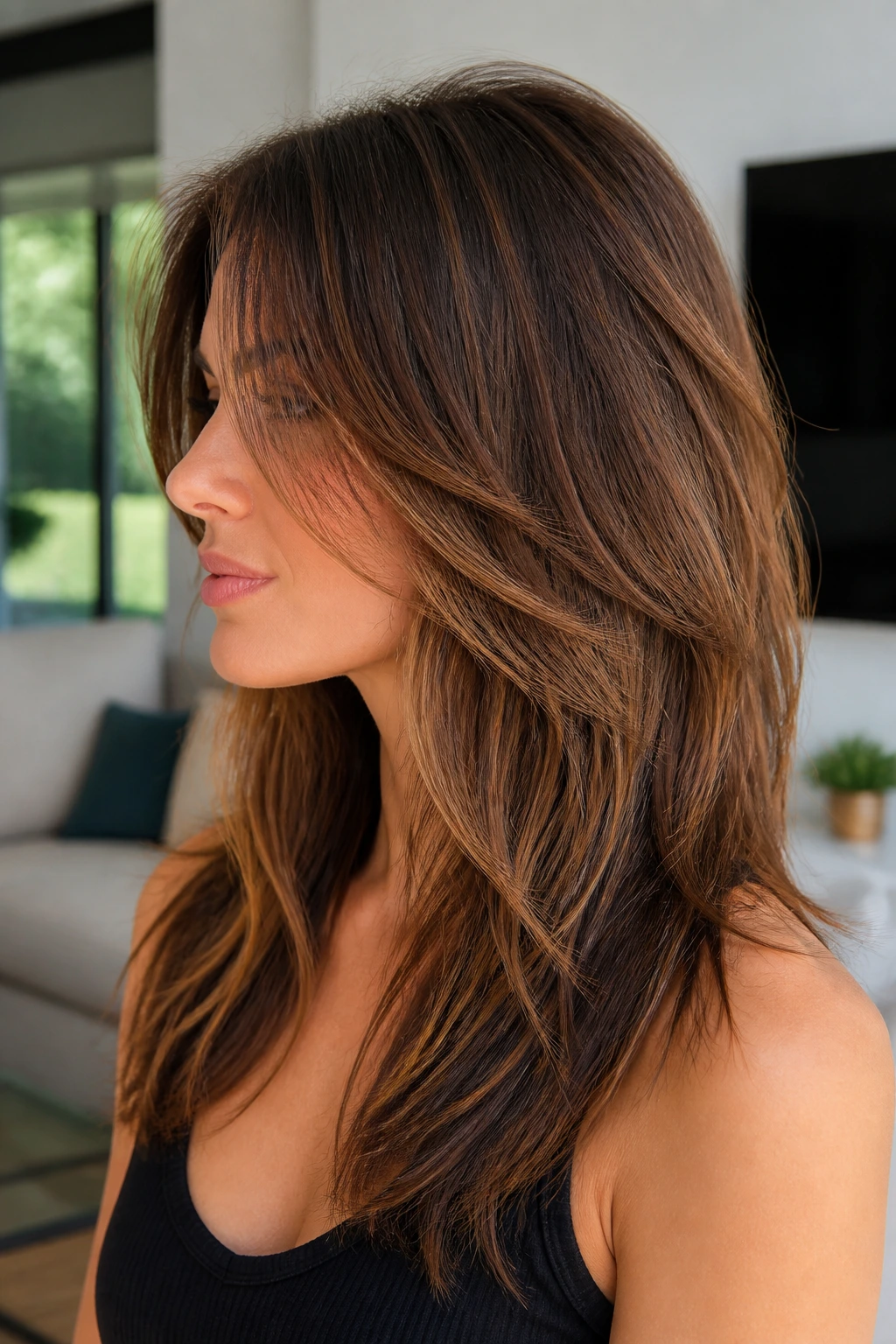
Pyramids are the enemy. Thick hair loves to do this thing where the bottom expands wider than the top, and the whole head starts looking top-heavy in reverse. Tapered ends fix that by slimming the perimeter in a controlled way, so the cut narrows gently instead of ending in a blunt shelf.
The beauty of a taper is that it can be subtle. You don’t need a dramatic shape change. You need the ends to release some of their weight. A stylist who point-cuts the bottom edge instead of chopping straight across can keep the shape soft without taking away the density you still want.
This cut is especially smart if you wear your hair long and loose most of the time. It keeps the silhouette from spreading out at the hemline, which is where thick hair often gives itself away. A small change there can make the whole style look lighter.
You can ask for the taper to be stronger around the sides and softer at the back if your hair tends to flare near the jawline. That’s a practical fix, not a trend trick.
15. Choppy Layers for Wavy Thick Hair

Wavy thick hair has a head start because the wave pattern already brings movement. Choppy layers make sure that movement doesn’t collapse into a wide, bulky shape. The layers should follow the way the waves naturally bend, not fight them. That’s the part many haircuts miss.
If you cut wavy thick hair too bluntly, the waves stack on top of each other and the shape gets boxy. If you remove too much, the waves split apart and the style frizzes out. The sweet spot is a cut that lets the waves clump while still removing enough internal weight for them to bounce.
What to Watch For
- Ask for the cut to respect your wave pattern, not flatten it.
- Keep the shortest layers away from the crown if your waves already lift there.
- Use a diffuser on low heat, then stop touching the hair.
- A pea-sized amount of cream through damp ends usually beats a heavy oil.
This one often looks best with a side or off-center part. It lets the waves fall in a softer line and keeps the whole shape from puffing straight out on both sides.
16. Choppy Layers for Straight Thick Hair
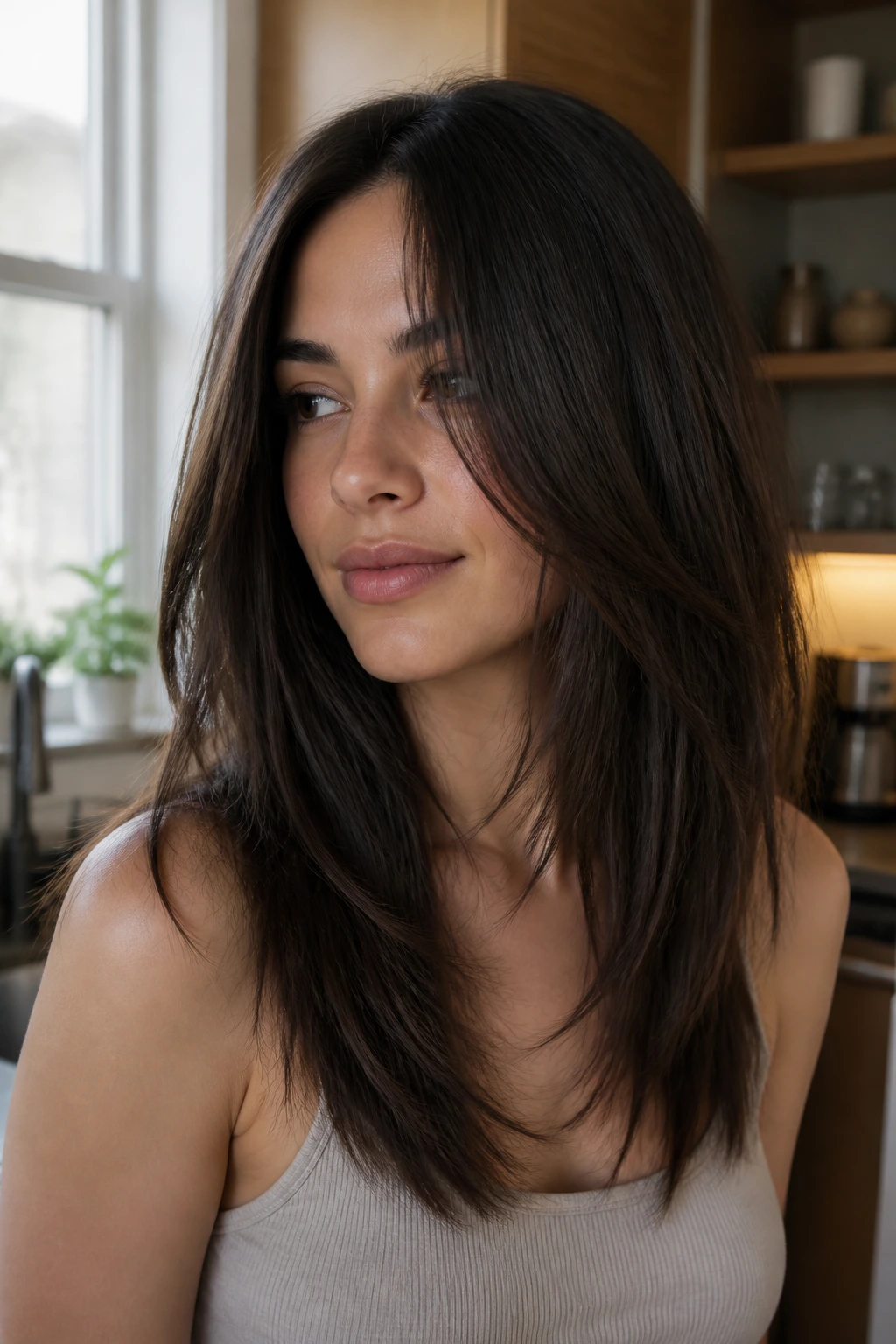
Straight thick hair is a different beast. It shows every line. Every corner. Every bad layer. That’s why choppy layers on straight hair need cleaner placement and a touch more planning. You want movement, not choppiness for its own sake.
This is where internal layers and sliced sections do their best work. The surface stays sleek, but the inside loses enough mass to let the hair bend and swing. If the cut is done well, straight hair stops acting like a board. It starts moving in longer, leaner pieces.
A center part can work here, but so can a soft side part if the face needs a little more shape. The important thing is not to overdo the texturizing. Straight thick hair can go from polished to stringy if too much weight gets removed in the wrong place.
If you heat-style straight thick hair, use a large round brush or a flat iron to add a small bend at the ends. That tiny curve keeps the cut from looking too rigid.
17. Choppy Layers for Curly Thick Hair

Curly thick hair needs the most respect in the room. It already has texture. It already has lift. What it does not need is a cut that tears up the curl clumps until the whole thing becomes a triangle of frizz. The right choppy layers should preserve the curls’ shape while taking away some of the bulk that collects underneath.
Dry cutting or cutting in the natural curl pattern is usually the safer move. Curly hair shrinks, and the shrinkage changes everything. If the layers are cut while the hair is stretched flat, the result can look shorter and choppier than planned once it dries.
The best version of this haircut keeps the curls stacked in visible groups. Some pieces sit higher around the face. Some fall longer in the back. The ends still look lived-in, but they don’t scatter into a frizzy cloud.
Use a diffuser, a light leave-in, and enough patience to let the curls set before you mess with them. That last part matters more than people admit. Curly thick hair usually needs less handling, not more.
18. Internal Debulking Without Losing the Outline
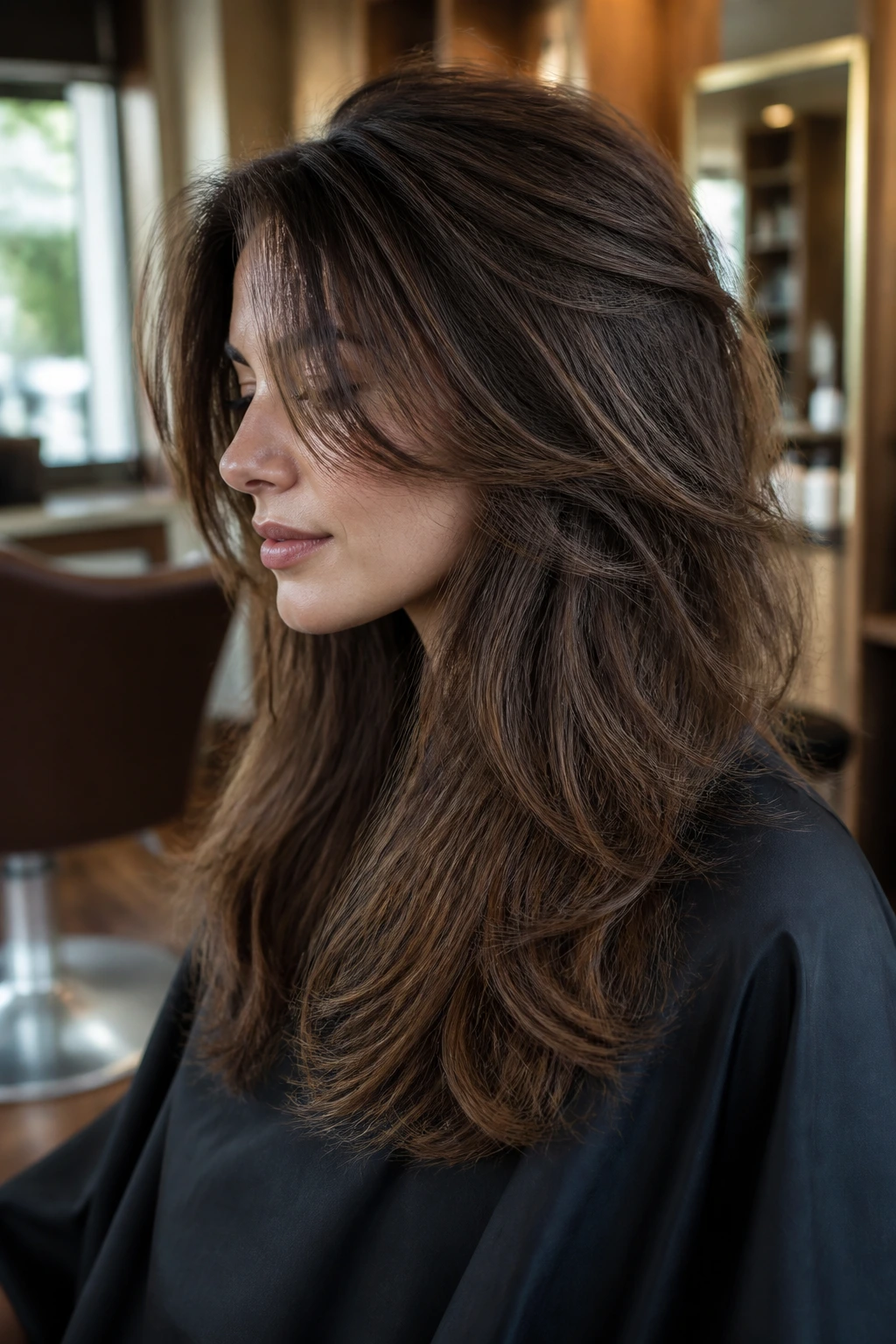
Internal debulking is for the person who likes the outside of the haircut to stay clean but wants the inside to feel less heavy. The stylist removes density from within the shape, usually with careful sectioning and controlled thinning or slide cutting. The outline stays mostly intact.
That’s different from a heavily layered cut. You are not building a shag. You are reducing the load inside the hair so the ends stop pushing outward. Thick hair that feels dense from root to tip can benefit from this more than from visible choppy layers.
Best Uses
- Hair that looks polished from the outside but feels packed inside
- Long styles that need less bulk at the nape
- People who like one-length looks but want easier movement
- Hair that dries too slowly because the inside traps so much water
The caution is obvious: too much internal thinning can leave the hair fuzzy or weak at the ends. That’s why this should be done by someone who understands density, not someone who thinks all thick hair wants aggressive texturizing. It usually doesn’t.
19. Blunt Ends Broken Up by Hidden Layers
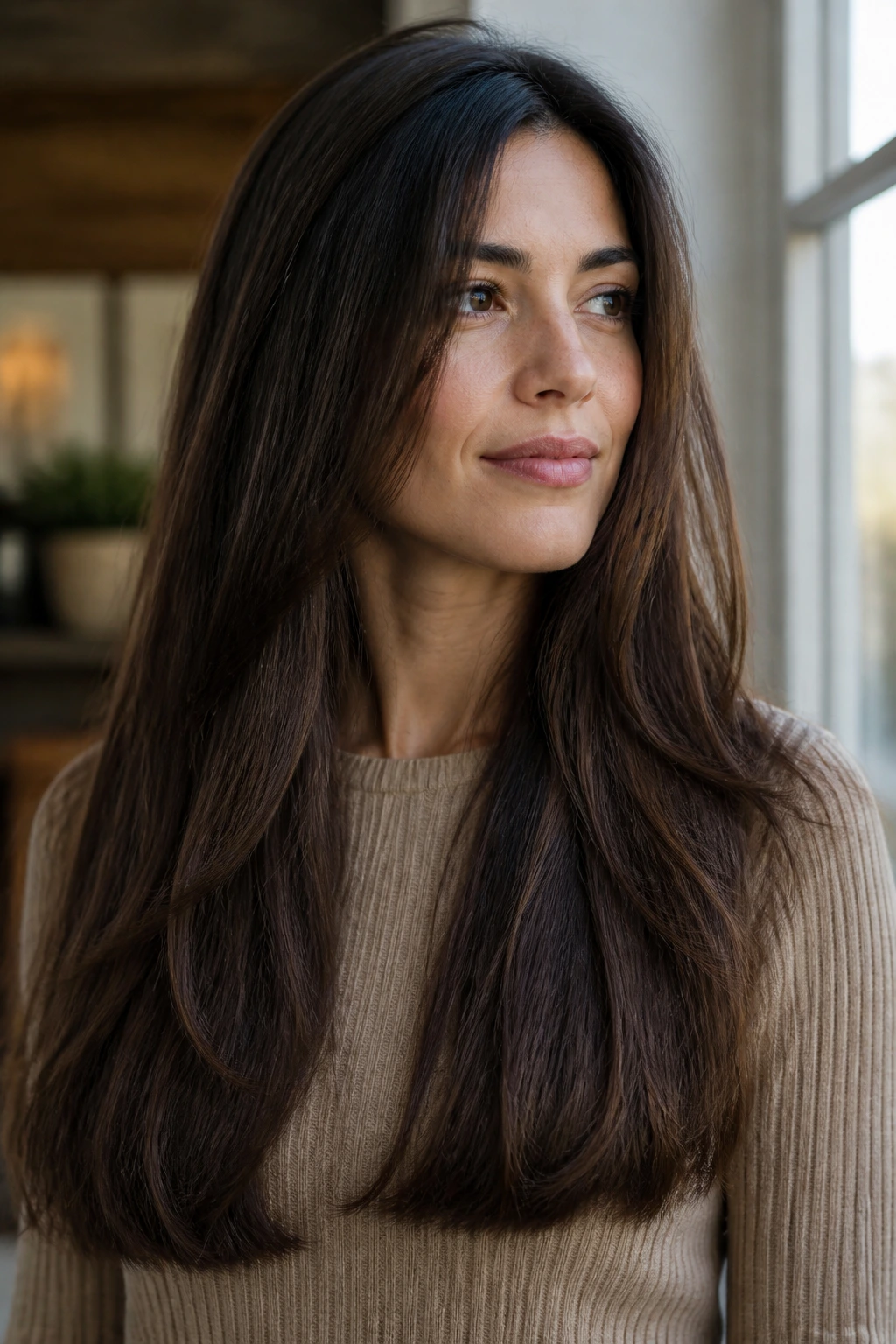
This is one of my favorite compromises. You keep a strong bottom line, but hidden layers under the top sections break up the mass so the hair doesn’t feel like a block. From the outside, it still reads as full and healthy. Up close, it moves.
That matters if you like the look of long, heavy hair but hate how much it can drag the face down. The blunt edge keeps the finish strong. The hidden layers keep the hair from becoming too heavy to wear loose.
There’s a nice polish to this cut. It doesn’t shout “layered.” It doesn’t go shaggy. It just feels a little lighter than a pure blunt cut and a little cleaner than a full choppy style. If your wardrobe leans simple and you want the hair to do the talking quietly, this is a smart choice.
Blow it smooth with a paddle brush for a neat finish, or bend the ends with a large iron if you want the layers to show more. The haircut can handle both.
20. Piecey Layers From Shoulder to Waist
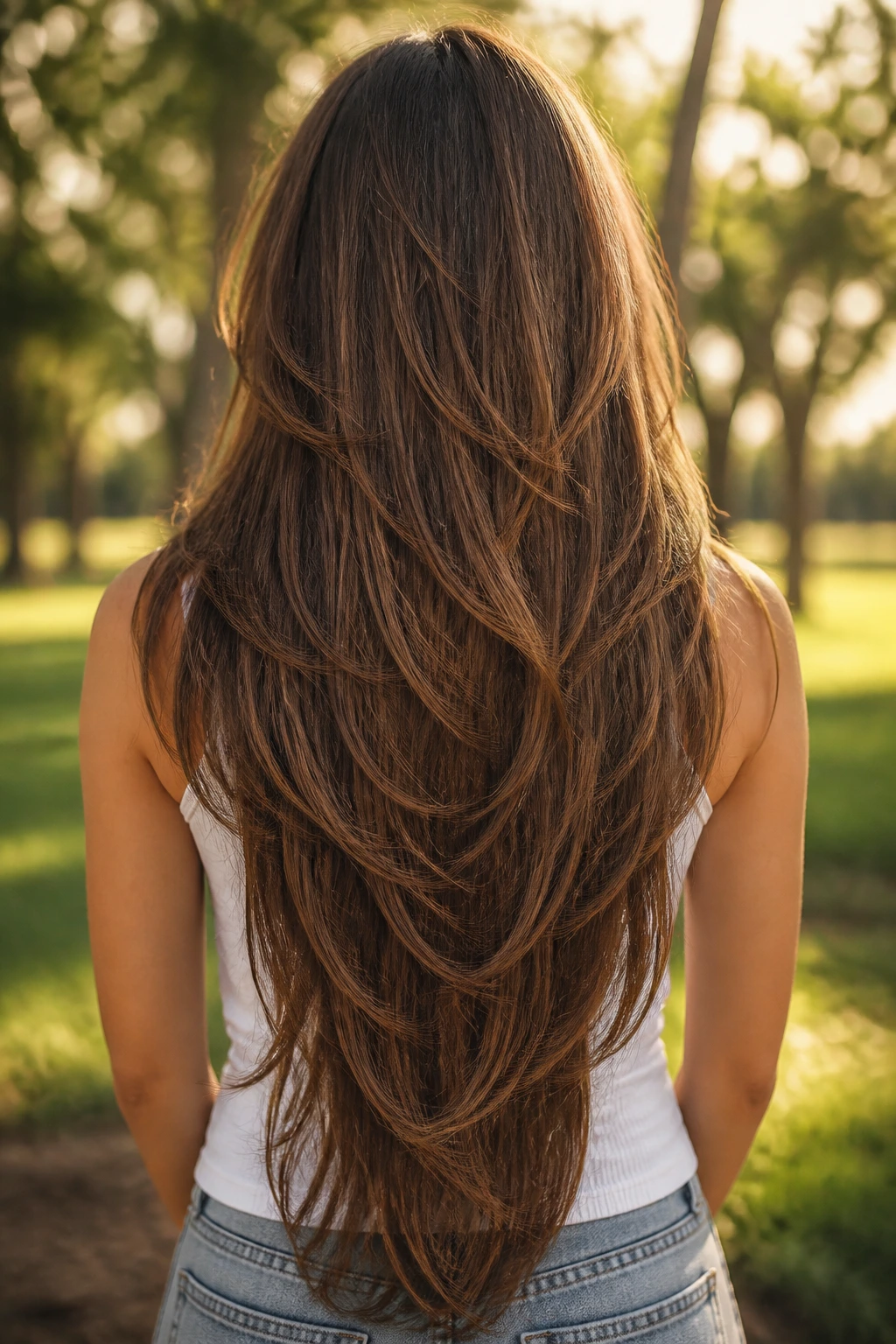
Very long thick hair can get lost in its own weight. Piecey layers help it breathe. The layers start lower, around the shoulders or upper chest, then continue downward in long, separated sections that keep the length dramatic without turning the bottom into one dense curtain.
This cut is useful for people who want to keep serious length. Not waist-length-for-the-sake-of-it length, but real length. The sort that sways when you walk. Long choppy layers make that possible because they take bulk out without chopping the whole shape apart.
A Good Fit For
- Hair that’s dense from root to tip
- People who want movement without short face layers
- Long hair that feels heavy in braids or ponytails
- Anyone who likes a center part and long curtain pieces
The styling on this one should stay soft. Think oversized curls, loose bends, or a natural wave with a little serum on the ends. If you polish it too much, the layers can disappear. If you rough it up too much, the long shape starts to look undefined.
21. An Arched Fringe With Long Texture
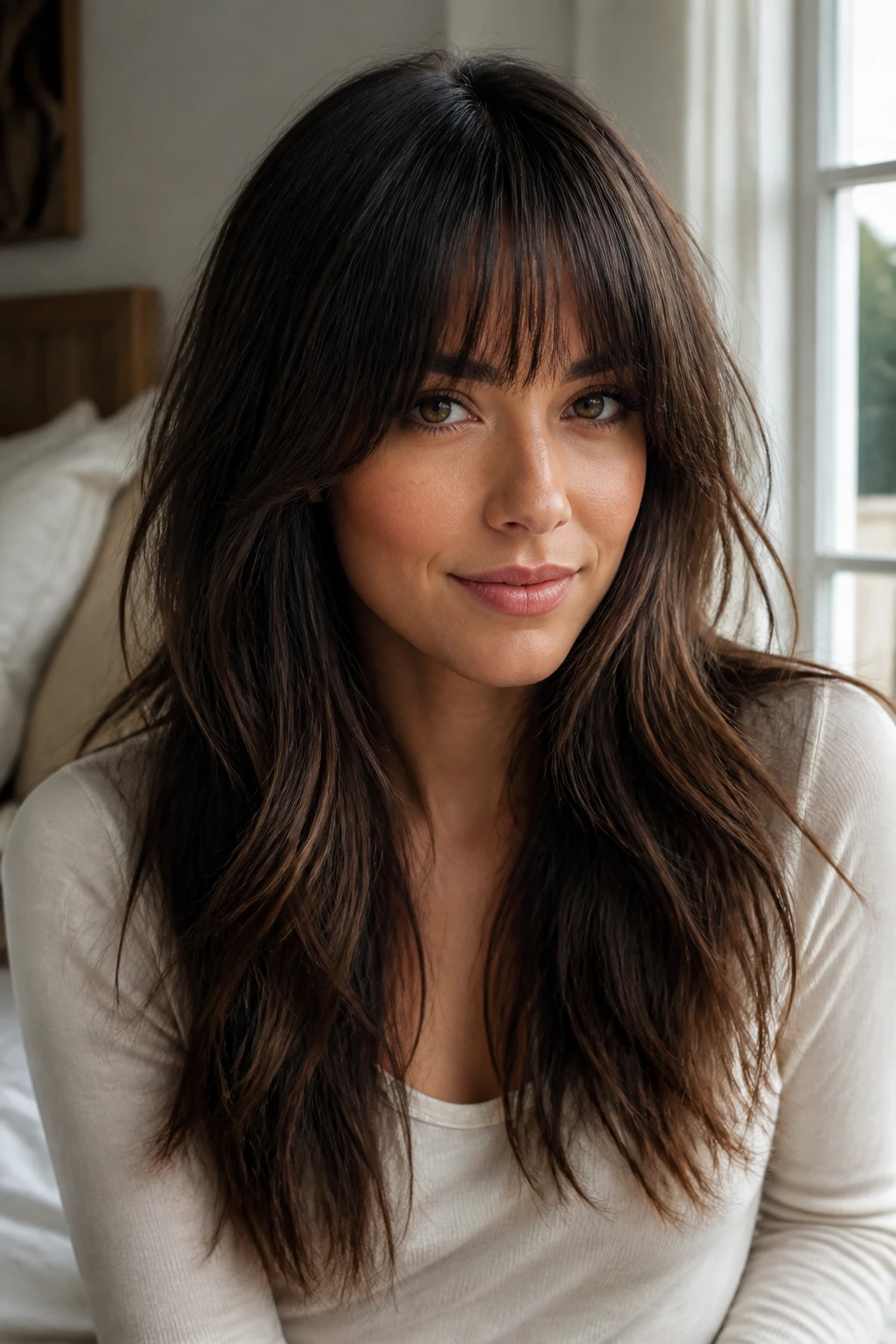
An arched fringe gives thick hair a cleaner front line than a straight-across bang. The center sits a little shorter, then the sides lengthen as they move outward. That arc opens the face and keeps the fringe from landing like a heavy shelf.
With long choppy layers behind it, the arched fringe becomes part of the haircut instead of a separate little object stuck on the front. That’s the trick. The texture in the fringe should echo the movement in the rest of the cut so the shape feels connected.
This style works especially well if your forehead is shorter or your features need a little softness around the top of the face. It also behaves nicely with glasses because the arch can be placed above the frame line.
If you wear it with a blowout, brush the center down first and then sweep the sides outward. If you air-dry, tuck the fringe into a soft clip for the first ten minutes so it doesn’t split weirdly while drying.
22. Octopus Layers for Thick Hair
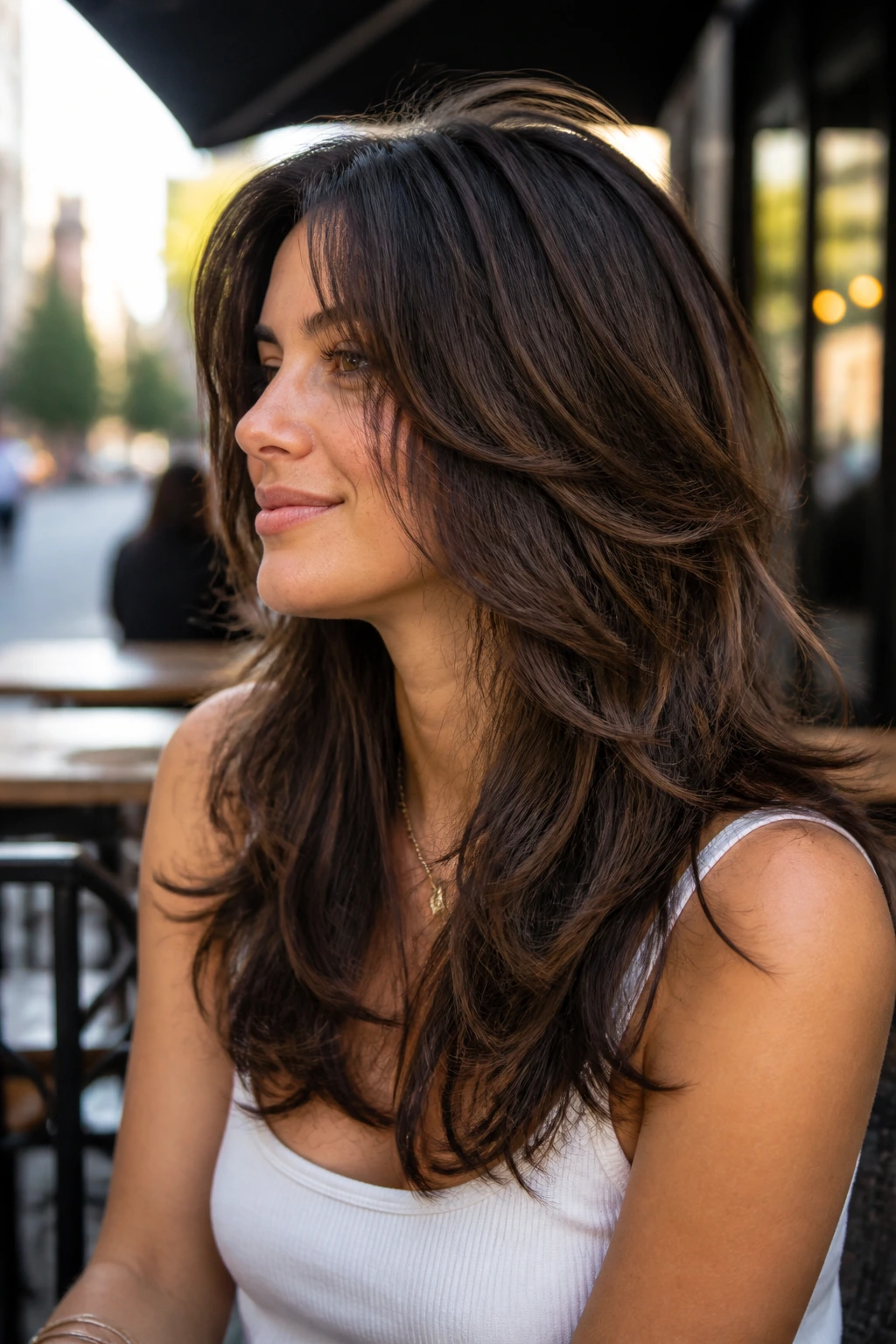
Octopus layers are the wild card. The crown gets volume, the mid-lengths get movement, and the ends stay light and separated, almost tentacle-like if you look at the silhouette from the side. On thick hair, the cut can be a smart way to keep body at the top without letting the bottom balloon.
This is not a quiet haircut. It has a little edge, and it knows it. The silhouette is softer than a wolf cut in some ways, but more deliberate in others. The layers are meant to fall in visible sections, not hide.
I like this cut for people who enjoy texture spray, bendy blowouts, and hair that looks a little different from the usual salon shape. It also suits thick hair that has a natural wave or bend, because the layers give the hair somewhere to break and separate.
If you want this look but don’t want it too dramatic, ask for a softer version with longer bottom pieces. That keeps the style wearable and stops it from going too editorial.
23. The Low-Maintenance Long Choppy Haircut That Air-Dries Well

Some cuts need work. This one should not. A low-maintenance long choppy haircut for thick hair uses moderate layers, a soft face frame, and a tapered bottom so the hair can dry with some shape even when you barely touch it. That’s the whole point.
The shape is usually built around your natural bend. If your hair waves, the layers should support that wave. If it’s straighter, the cut should still have enough internal movement to avoid the heavy curtain effect. Nothing here needs to be extreme. The magic is in moderation.
This is the version I’d hand to someone who wants thick hair to behave on a weekday morning without a full styling session. A little leave-in, a little scrunch, maybe a quick blow-dry at the roots if you’re feeling ambitious. That’s enough.
It’s also one of the easiest cuts to live with while growing it out. The layers are present, but they’re not so short that they collapse into awkward steps after six weeks. If you want the long-choppy look without babysitting it, this is the one to bookmark.
Why the Weight Line Matters More Than the Length
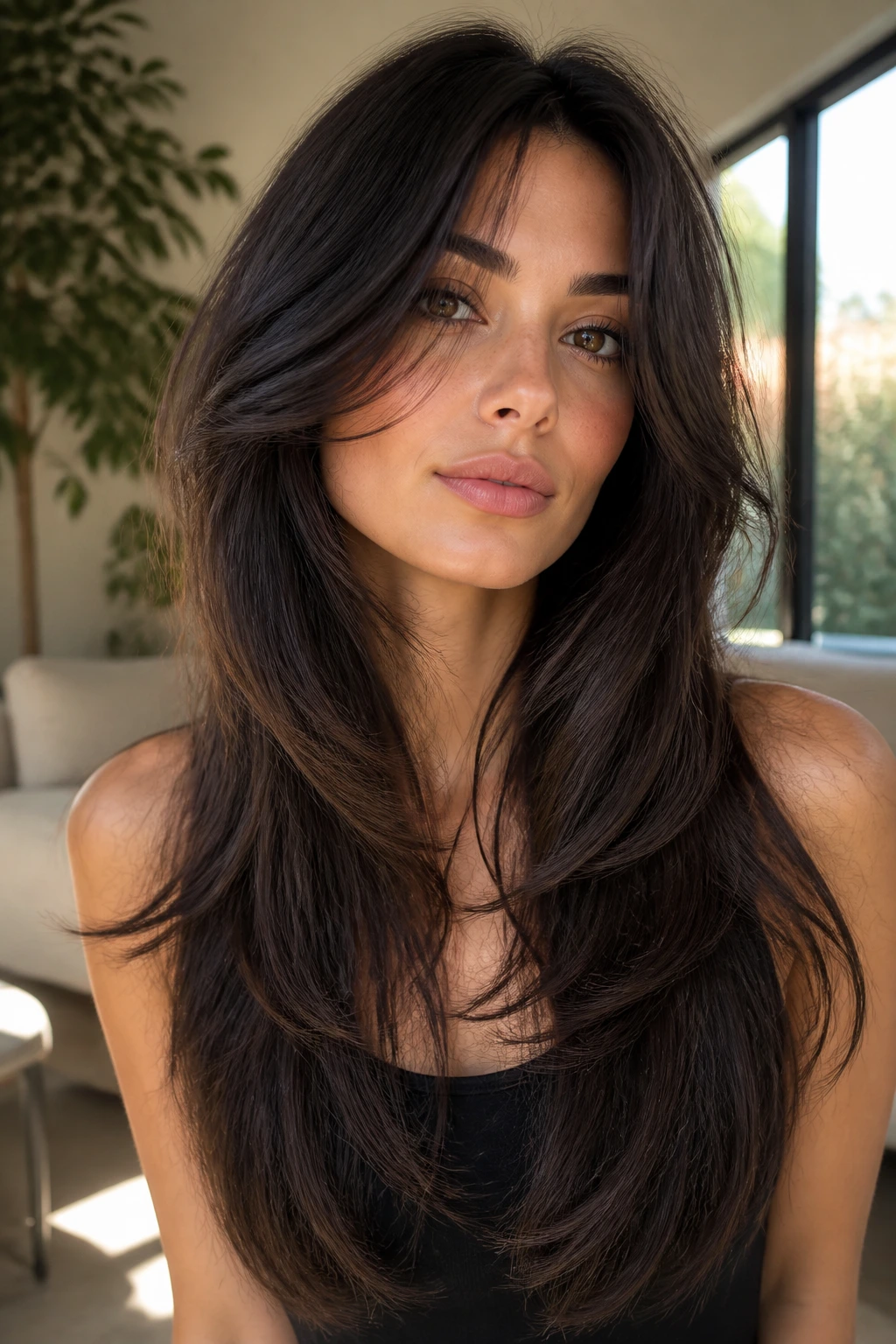
Thick hair can be long and still look heavy in the wrong places. That’s why the weight line matters so much. Where the hair is thickest, where the ends sit, and where the face frame begins all change how the cut moves. If those points are wrong, the length starts working against you.
A blunt hemline across dense hair can make the whole head look wider. A smarter cut shifts weight upward or inward so the bottom can hang without flaring. That’s why some of the best long choppy styles keep the perimeter fairly calm while doing the real work inside the haircut.
The Difference Between Layering and Thinning
Layering changes shape. Thinning removes bulk. Those are not the same thing, and thick hair needs both to be used with care. Too much thinning can leave the ends scrappy. Too many layers can leave the shape fractured. The sweet spot sits between the two.
A good stylist will look at your growth pattern, your part, and the way your hair sits when it dries. That’s the part clients often skip past, and it matters more than a reference photo alone. Two people can bring the same cut picture and get wildly different results if one has a bendy wave and the other has stubbornly straight, dense hair.
What to Bring to the Salon and What to Keep at Home
Bring photos, but bring better notes than “I want this vibe.” The photos should show the front, the side, and the back if you can get them. Thick hair changes shape from every angle, and the back is where bad layering loves to hide.
The salon conversation should include how often you style your hair, whether you air-dry, and whether your hair tends to puff up in humidity. Those details decide where the layers should start and how aggressive the texturizing should be. If you never heat-style, a cut that depends on a round brush is going to feel annoying fast.
What to bring to the chair and the bathroom shelf:
- Sectioning clips — useful if you style your own hair or want your stylist to show you where the layers sit.
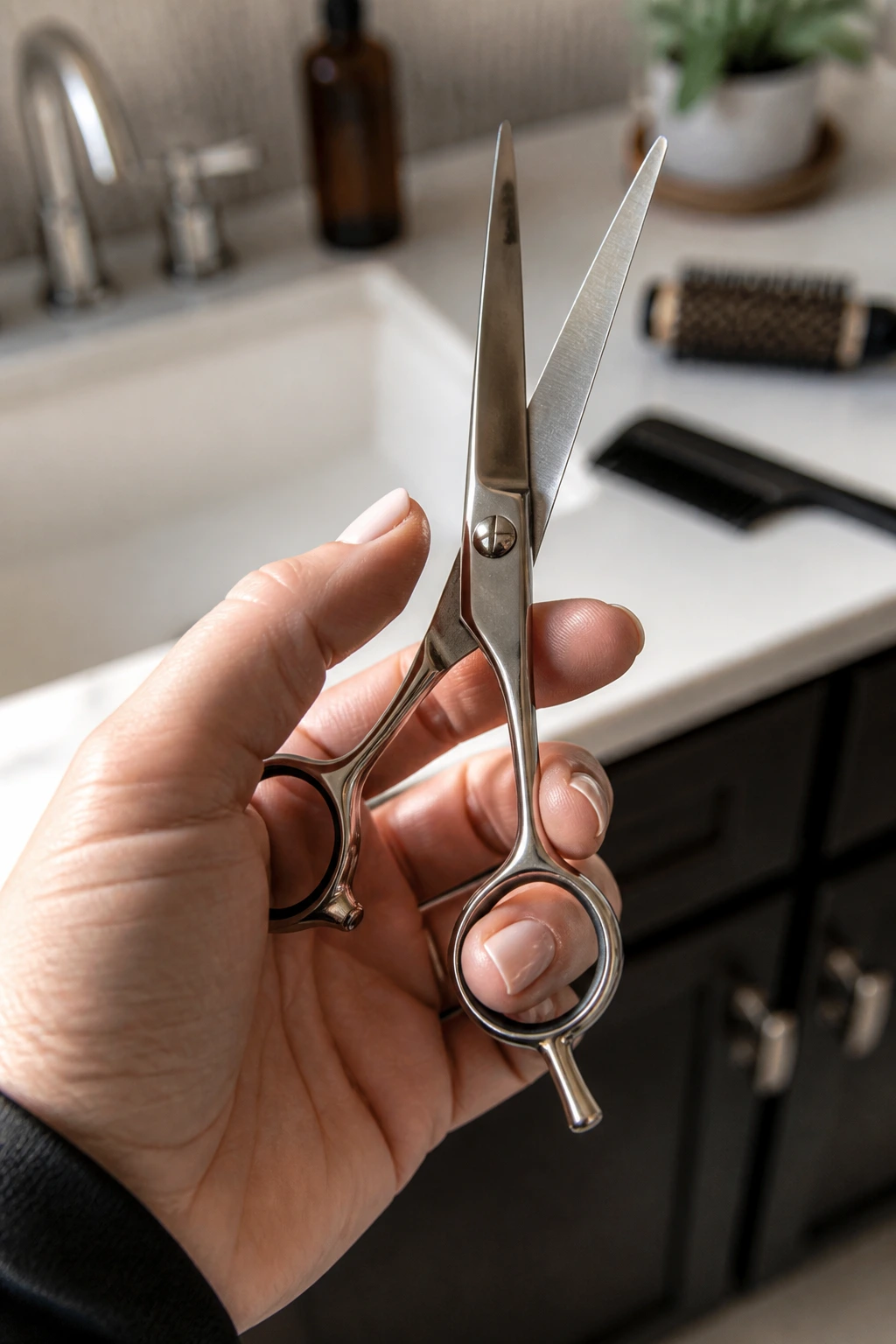
- Sharp haircutting shears — clean cuts matter on thick hair; dull blades make ends look chewed.
- Texturizing shears — good in the right hands, but not a toy. Ask how they’re being used.
- Tail comb — helps map the part and keep the face frame even.
- Wide-tooth comb — gentler on thick hair when it’s wet.
- Blow dryer with nozzle — the nozzle controls the air so the layers don’t lift in every direction.
- Round brush — a medium or large barrel is usually easier than something tiny.
- Diffuser — essential if your thick hair bends or curls.
- Heat protectant — if you use a hot tool, this is not optional.
- Light texture spray or mousse — gives choppy layers some grip without weighing them down.
- Light serum — a drop on the ends keeps separation from looking dry.
What to Ask Your Stylist Before They Cut Anything
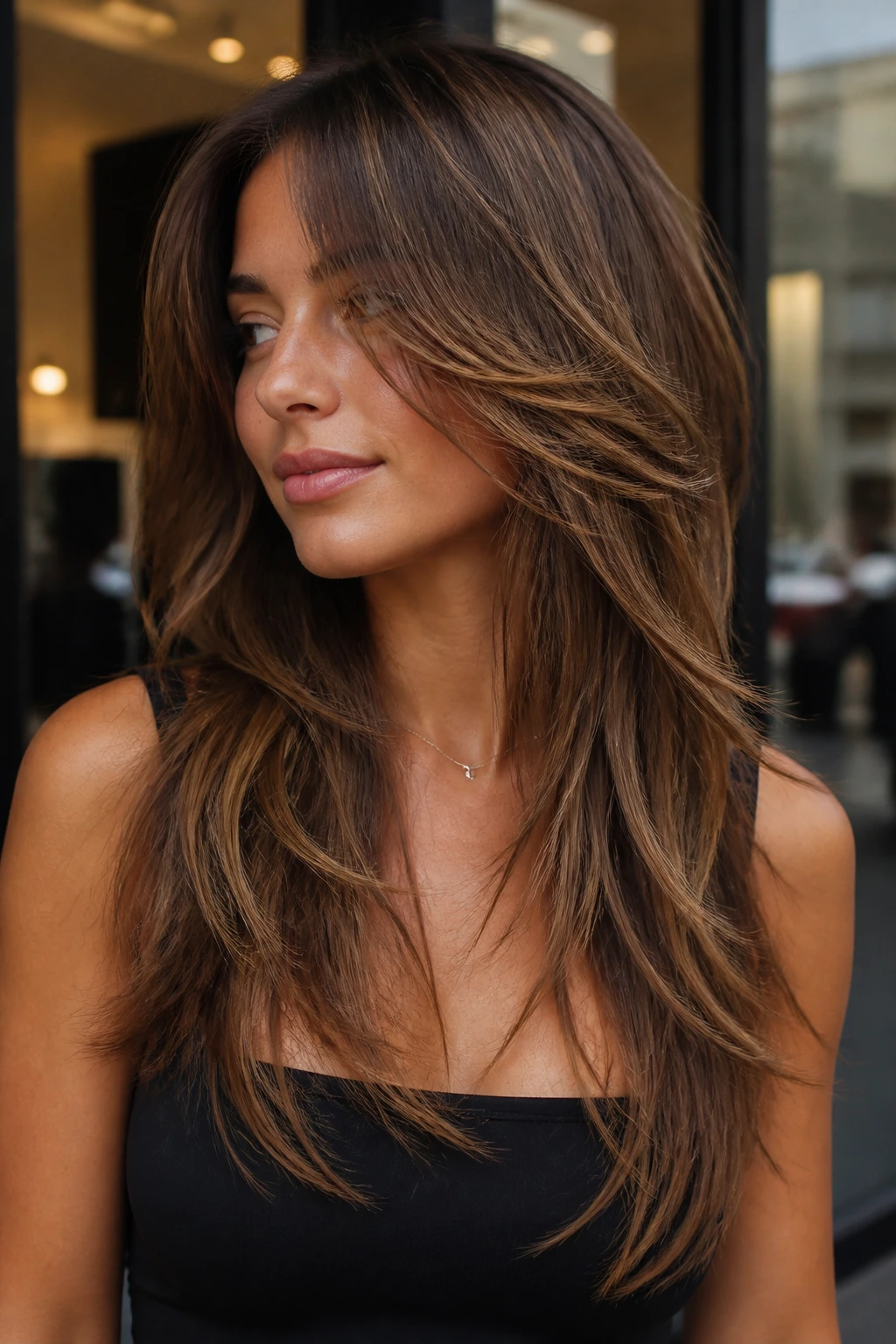
The best haircut conversation is boring in the best way. It sounds like measurements, habits, and annoyances. “My hair gets wide at the bottom.” “I air-dry four days a week.” “I like length, but I hate the triangle shape.” That kind of language helps more than fashionable words ever will.
Ask where the shortest layer will land. Ask whether the interior will be cut with shears or a razor. Ask how much weight is being removed around the sides versus the back. Thick hair responds differently depending on which zone gets changed, and you want to know that before the scissors open.
If you wear your hair up a lot, say so. If you never wear it up, say that too. Long choppy haircuts can be built around claw clips, low buns, ponytails, or around the idea that the hair will live down most of the time. Those are different cuts, even if the photo on the phone looks similar.
Four Questions Worth Asking
- Where will the shortest layer hit when the hair is dry?
- Are you using point cutting, slide cutting, or a razor?
- How will this look if I let it air-dry?
- What part of the haircut will I need to trim first when it grows out?
Small Styling Moves That Keep the Shape From Expanding
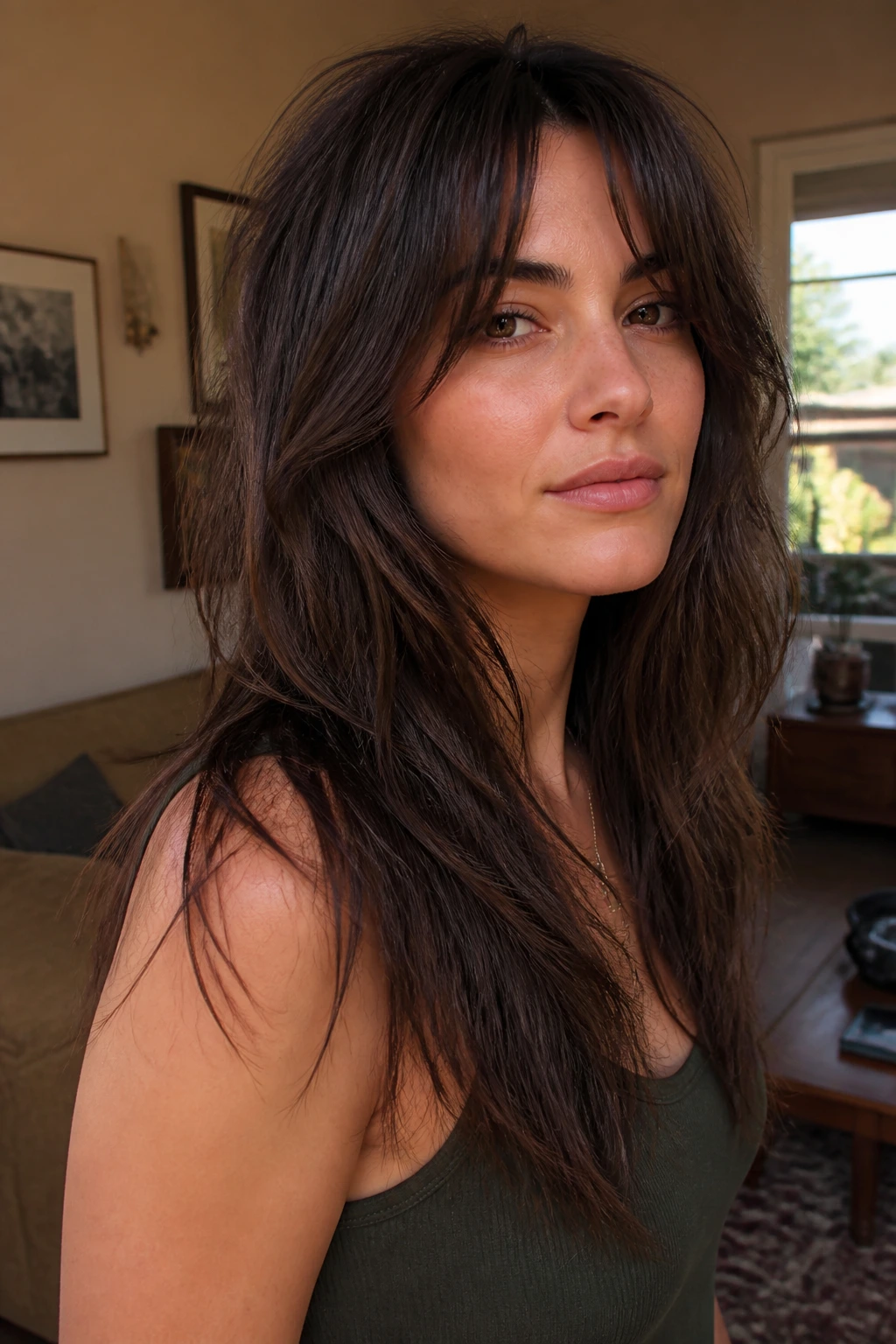
Root Lift: Blow-dry the roots in the opposite direction of your part for the first minute or two. Thick hair holds that bend longer than people expect, and it keeps the top from lying flat while the rest of the cut moves.
Frizz Control: Use a cream or leave-in on damp hair, not a heavy oil on dry hair. Thick hair usually needs slip while it’s wet; once it’s dry, too much product can separate the choppy pieces into greasy strings.
Speed Trick: Rough-dry until the hair is about 80 percent dry, then finish with a round brush or diffuser only where you want the shape to sit. Don’t spend fifteen minutes forcing every strand. The cut should help, not fight back.
Gloss Finish: One drop of serum rubbed between your palms can calm the ends after styling. Use more than that and you’ll flatten the movement you paid for at the salon.
The Mistakes That Turn Thick Hair Into a Triangle
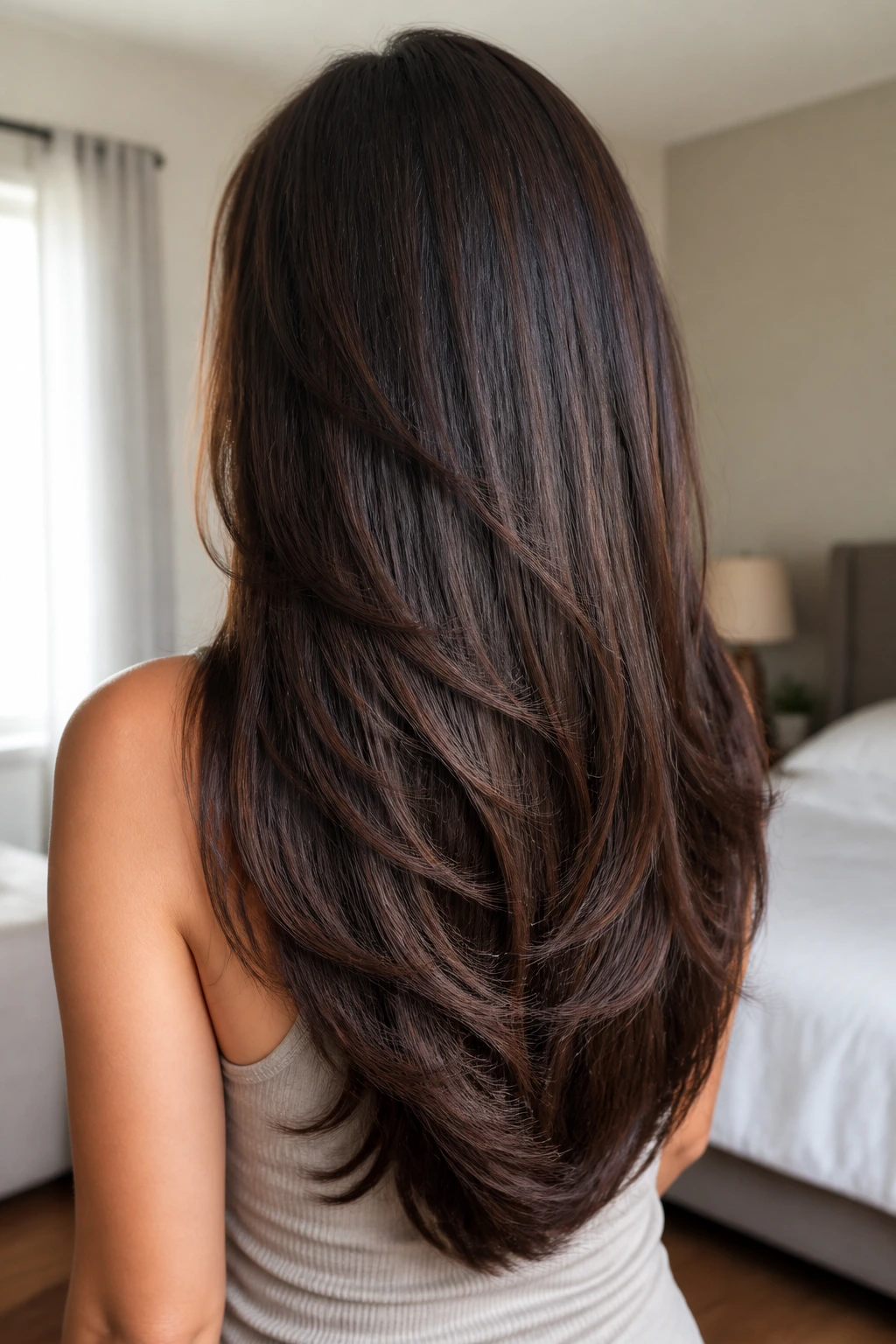
The most common mistake is asking for too many short layers near the bottom. That sounds like it will remove weight, but it often does the opposite. The hair flips outward at the ends and widens the silhouette. You wanted lightness. You got a shelf.
Another problem: over-thinning the interior. Thick hair can handle weight removal, but when the texture gets stripped too hard, the ends look see-through and frizzy. The fix is simple in theory and hard in practice—ask for controlled debulking, not aggressive thinning.
Cutting the bangs too short is another classic misstep. Thick hair shrinks as it dries, and bangs that look fine wet can jump a full half-inch or more once they set. If you want face-framing pieces, leave room for movement.
And then there’s the styling mismatch. A cut built for air-drying can look bad if you blow it smooth in the wrong direction. A polished blowout cut can look flat if you let it dry with no product and no parting plan. The cut and the routine have to agree.
Variations and Alternatives for Different Textures and Faces
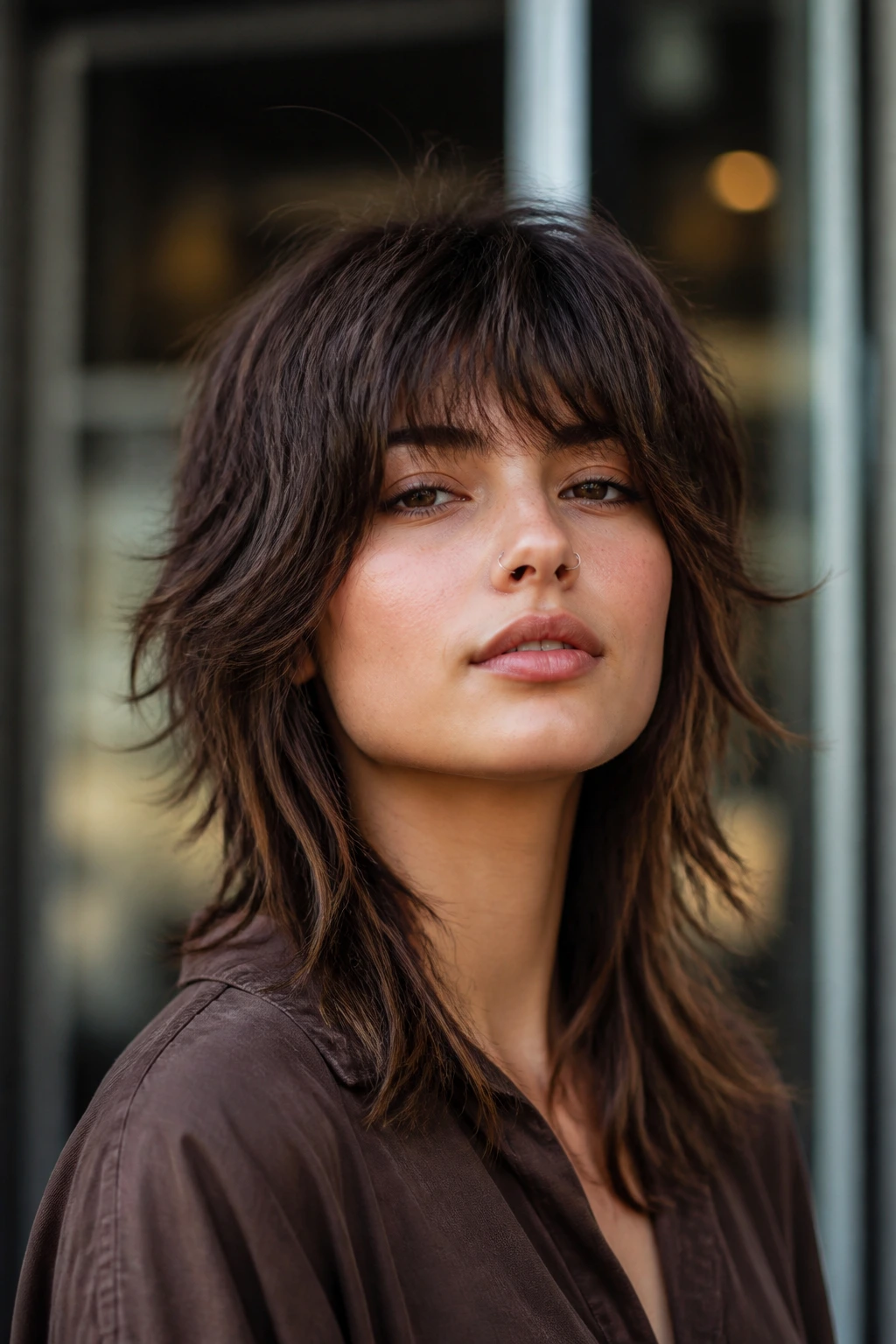
The Round-Face Softener: Keep the shortest face frame below the cheekbone and let the front pieces fall diagonally, not straight across. This keeps thick hair from adding width right where the face already has it.
The Square-Jaw Balancer: Choose longer curtain pieces and a rounded U-shape at the bottom. The soft curve takes the edge off a strong jaw without burying the hair in layers.
The Curl-Respecting Version: Cut the hair dry in its natural curl pattern and keep the layers long enough to preserve clumps. The goal is movement, not random frizz. If the curls are springy, they’ll show the shape better when the layers are not too short.
The Sleek Professional Version: Use invisible layers with a blunt or softly tapered perimeter. This keeps the haircut tidy for work but still prevents the dense, heavy block effect.
The Bold Editorial Version: Go for a wolf-cut or octopus-inspired shape with obvious separation and more lift around the crown. That version asks for styling effort, but it gives back a lot of movement.
The Grow-Out-Friendly Version: Keep the layer changes mild and concentrate the choppiness around the face and interior. It looks purposeful now and won’t turn into a mess six weeks later.
Keeping the Shape Between Trims
Thick hair can stretch a trim schedule farther than fine hair, but the shape tells on itself before the ends look bad. Once the layers start landing in the wrong place, the whole cut feels heavy again. That’s your signal, not split ends alone.
Most long choppy cuts on dense hair do well with trims every 8 to 12 weeks. If you wear bangs, the fringe may need attention sooner, sometimes every 3 to 4 weeks. If the cut uses a lot of face-framing, those pieces often show growth first because they sit right in your line of sight.
Sleeping on a silk or satin pillowcase helps the layers stay smoother, especially if your hair is waved or curly. If you wake up with the ends bent, mist them lightly, twist them in sections, and let them reset for a few minutes before you reach for heat. That little pause saves a lot of overstyling.
If the cut starts to feel heavy between appointments, don’t assume it needs a total redo. Often it only needs the front pieces refreshed and the weight line cleaned up. That’s cheaper, faster, and easier to live with than constantly chasing a new shape.
Questions People Ask Before They Commit
Will a choppy cut make my thick hair look thinner?
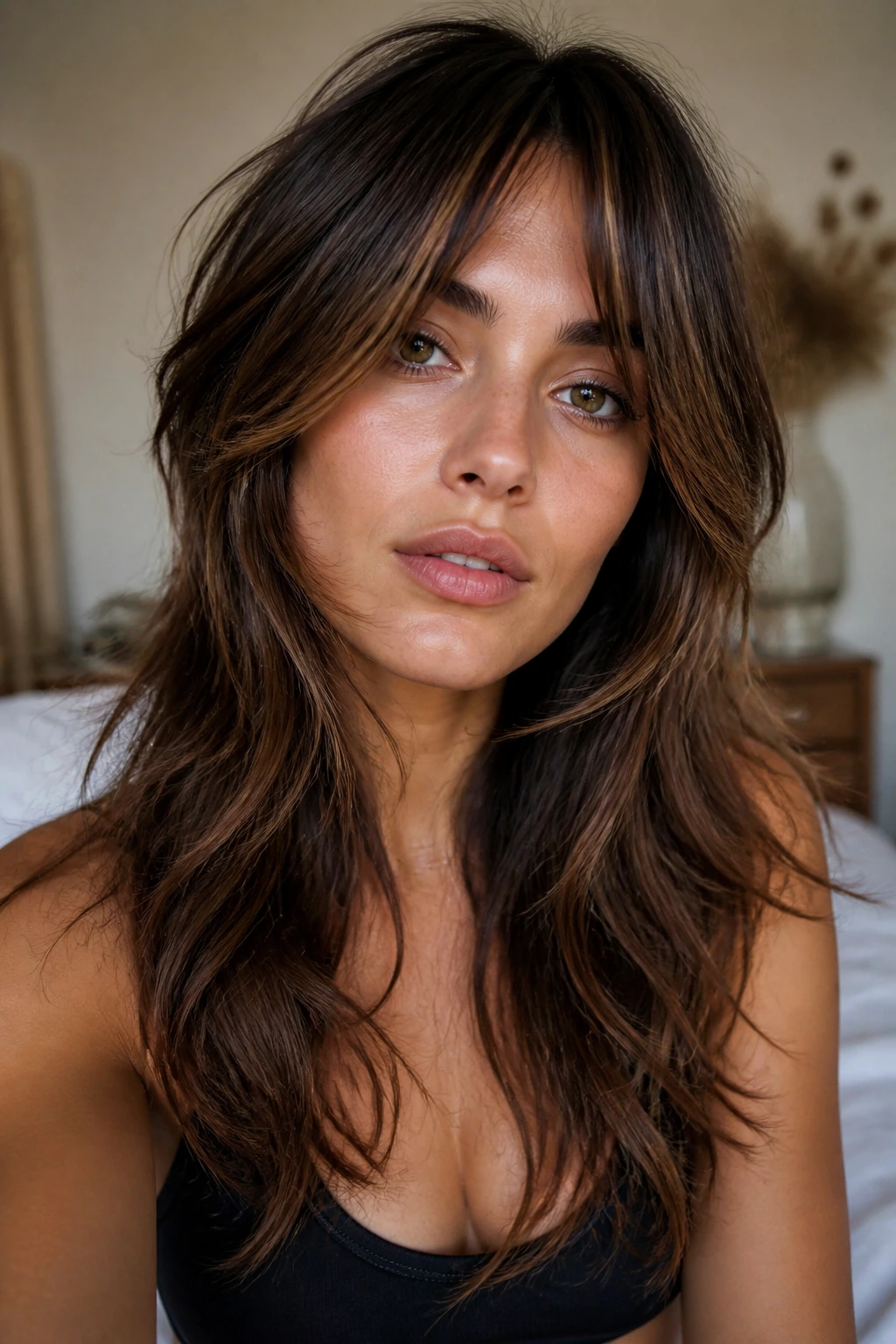
Not if it’s done well. The goal is to remove bulk and add movement, not to make the hair sparse. A good long choppy cut still looks full at the ends and around the perimeter.
Should thick hair be cut with shears or a razor?
Either can work. Straight or wavy thick hair can handle a razor in the right hands, while curly or coarse hair often does better with careful shear work and point cutting.
Can I keep my length and still get layers?
Yes. That’s the whole appeal of butterfly layers, invisible layers, and long shags with soft edges. The length stays, but the haircut stops acting like one heavy shape.
How do I stop the cut from puffing out at the sides?
Keep the strongest weight in the right places and don’t over-layer the bottom. Styling matters too. A smooth root blow-dry or a light cream can keep the shape closer to the head.
What if I hate obvious layers?
Ask for invisible layers or hidden debulking. You’ll get movement without the staircase effect that some layered cuts leave behind.
Do these styles work on curly hair?
They can, but the curl pattern has to lead. Cut too aggressively and the hair can frizz or spring upward. Cut in the natural curl shape and keep the layers long enough to hold clumps.
How often should I trim it?
Most people do well at 8 to 12 weeks. If the haircut includes bangs or a very specific face frame, you may want a small cleanup sooner.
What if my stylist keeps reaching for thinning shears?
Ask what problem they’re solving. If the answer is just “volume,” press for a more exact method. Bulk removal is useful; random thinning is not the same thing.
The Cut That Does Less Work for You
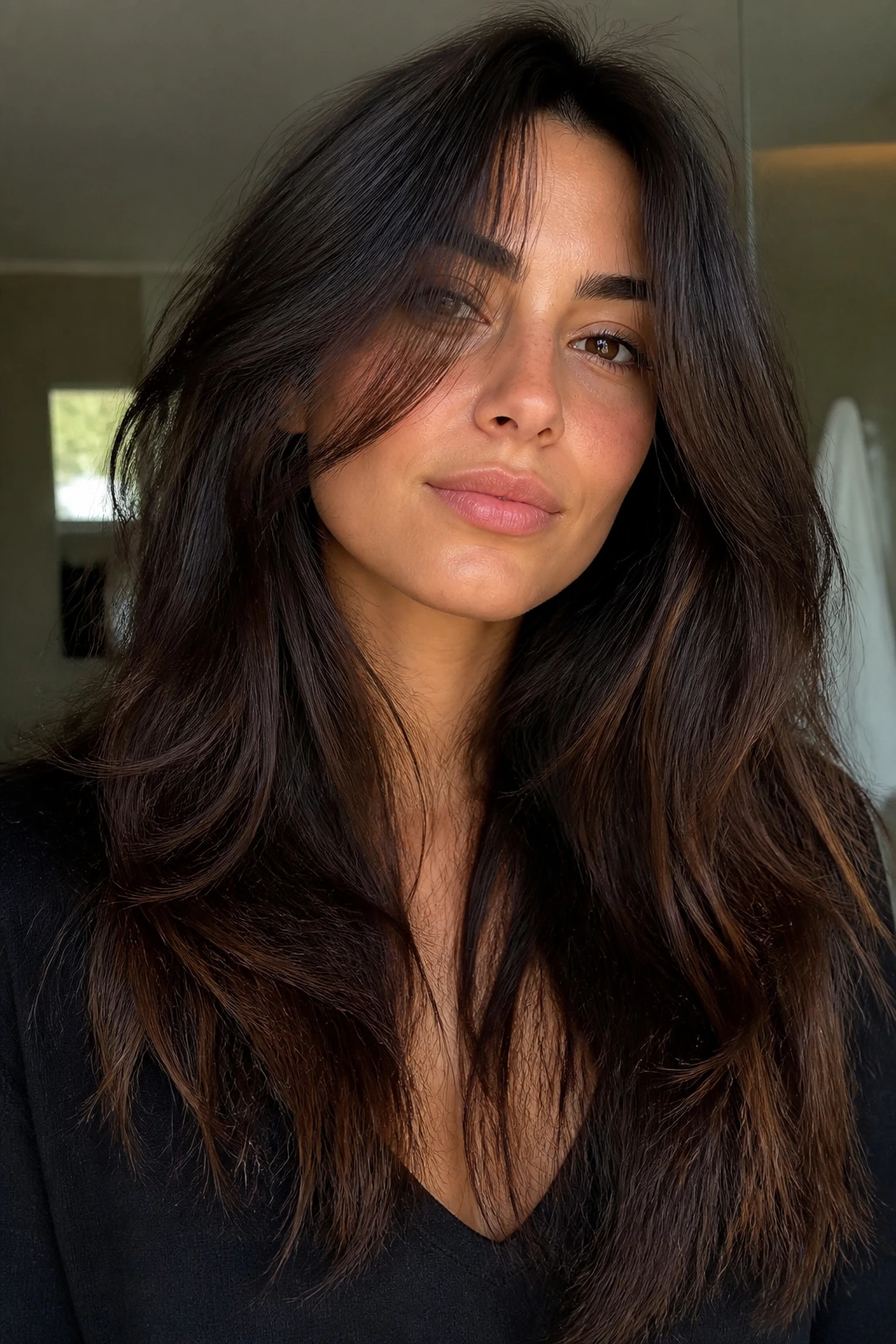
The best long choppy haircut for thick hair is the one that makes the hair feel lighter without making it look abandoned. That balance is the whole game. You want shape, not scraps. Movement, not chaos. Enough weight removed that the hair falls better, but not so much that you spend every morning fighting the ends back into place.
A good cut should change the way the hair behaves when you do almost nothing. That’s the real test. If it air-dries with a shape you can live with, if the front pieces do something useful, if the bottom no longer spreads out like a shelf, the cut is doing its job.
Pick the version that matches how you live, not the one that looks most dramatic in a photo. Thick hair responds best when the shape respects its density instead of arguing with it.
