



Thick hair after 40 can feel like a blessing and a negotiation. Left one-length and heavy, it can swing into a triangle by lunch. Cut with the right shape, though, and it falls in clean bends, keeps its swing, and doesn’t eat half your morning.
That’s the part people get wrong. Thick hair does not need to be “tamed” into submission. It needs weight removed in the right places, a perimeter that makes sense for your jawline and neck, and enough structure that it still looks like a haircut when you skip a full blowout. Gray strands, coarse texture, a little change in density at the temples — those details matter too. They change how a bob sits, how a fringe splits, and how much layering your hair can take before it starts puffing out like a bell.
The 25 haircuts below are built around that reality. Some are short and crisp. Some keep the length and trim the bulk. A few are deliberately soft around the face, because thick hair can look severe when every line is sharp. The trick is not taking off more hair. It’s taking it off in the right places.
Why These Haircuts Earn Their Keep
-
Weight comes off where thick hair stacks up: The best shapes remove bulk through the mid-lengths, nape, and interior, not by hacking at the top layer and hoping for the best.
-
They keep the ends from flaring out: A good perimeter matters more than people think; it’s the difference between a polished bob and a wide, boxy shape that turns outward at every corner.
-
They work with changing texture: Thick hair after 40 can be straighter at the crown, rougher through the ends, or a little more wiry in the grays. These cuts account for that instead of pretending every strand behaves the same.
-
They don’t demand a heroic styling routine: A smart cut should still have shape when you air-dry, and a better version should need only a quick brush or a few Velcro rollers.
-
They leave room for your face, not just your hair: Neckline, glasses, earrings, cheekbones, and forehead all matter. Thick hair can swallow those details if the cut is too heavy.
-
They grow out with less drama: When the structure is right, a six-week grow-out can still look intentional instead of shaggy in the bad sense.
1. Collarbone Lob with Invisible Layers
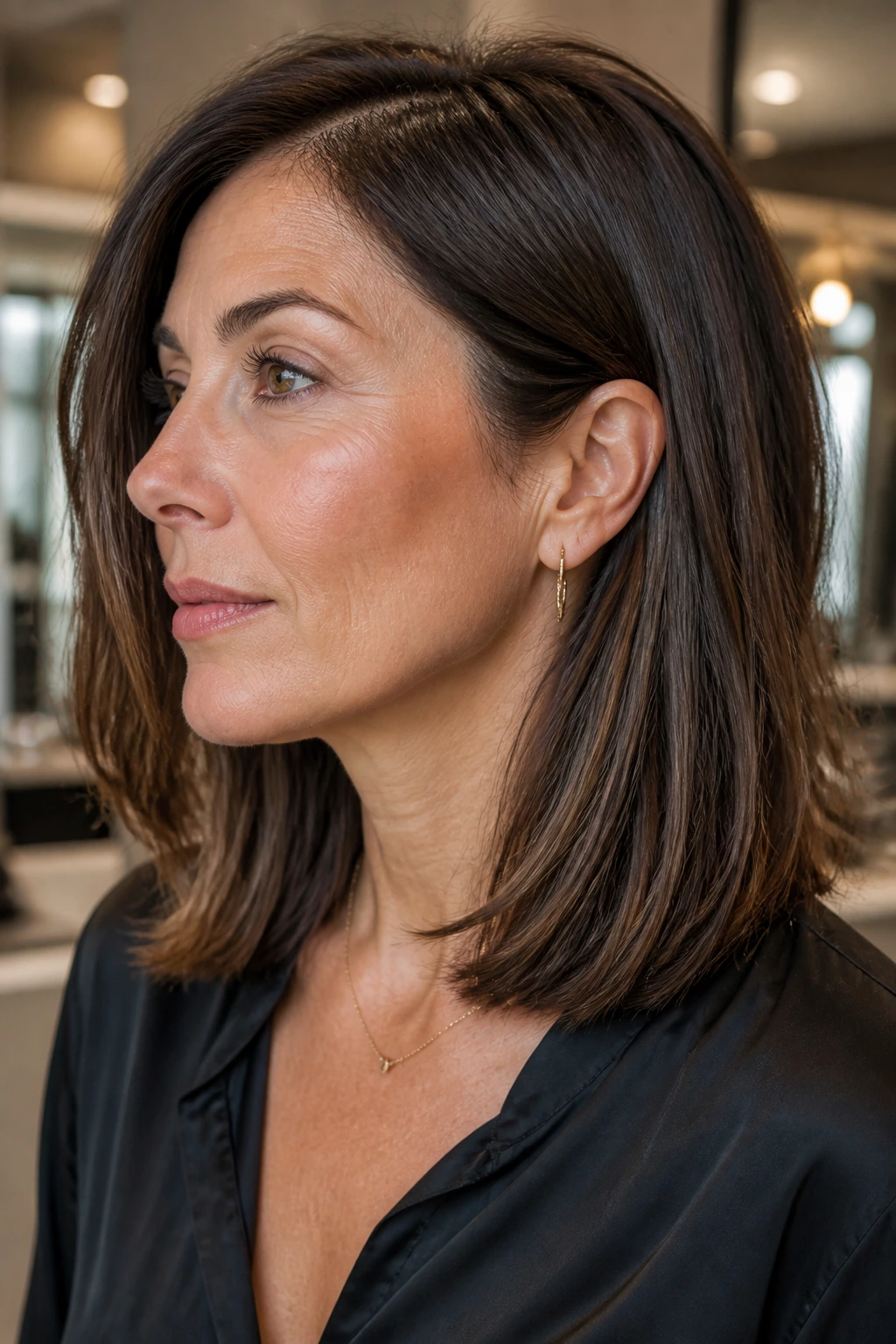
The collarbone lob is one of those cuts that looks plain on paper and expensive in real life. It sits long enough to tuck behind the ears or pull into a low knot, but short enough that thick hair doesn’t drag itself down into a blunt curtain. The secret is the invisible layering inside the shape: just enough weight removal to stop the ends from ballooning, not enough to leave choppy shelves.
Ask for the perimeter to hit right around the collarbone, with the shortest face-framing pieces landing below the cheekbone if you want a softer line. On thick hair, that extra inch matters. Too short and the whole cut can puff out near the jaw; too long and it starts acting like a blanket.
This is a good cut if you want movement without a lot of styling. A round brush at the ends, a side part, and a touch of cream through the mid-lengths is usually enough. If your hair bends naturally, even better. It will settle into that easy, low-slung shape that looks deliberate without looking overworked.
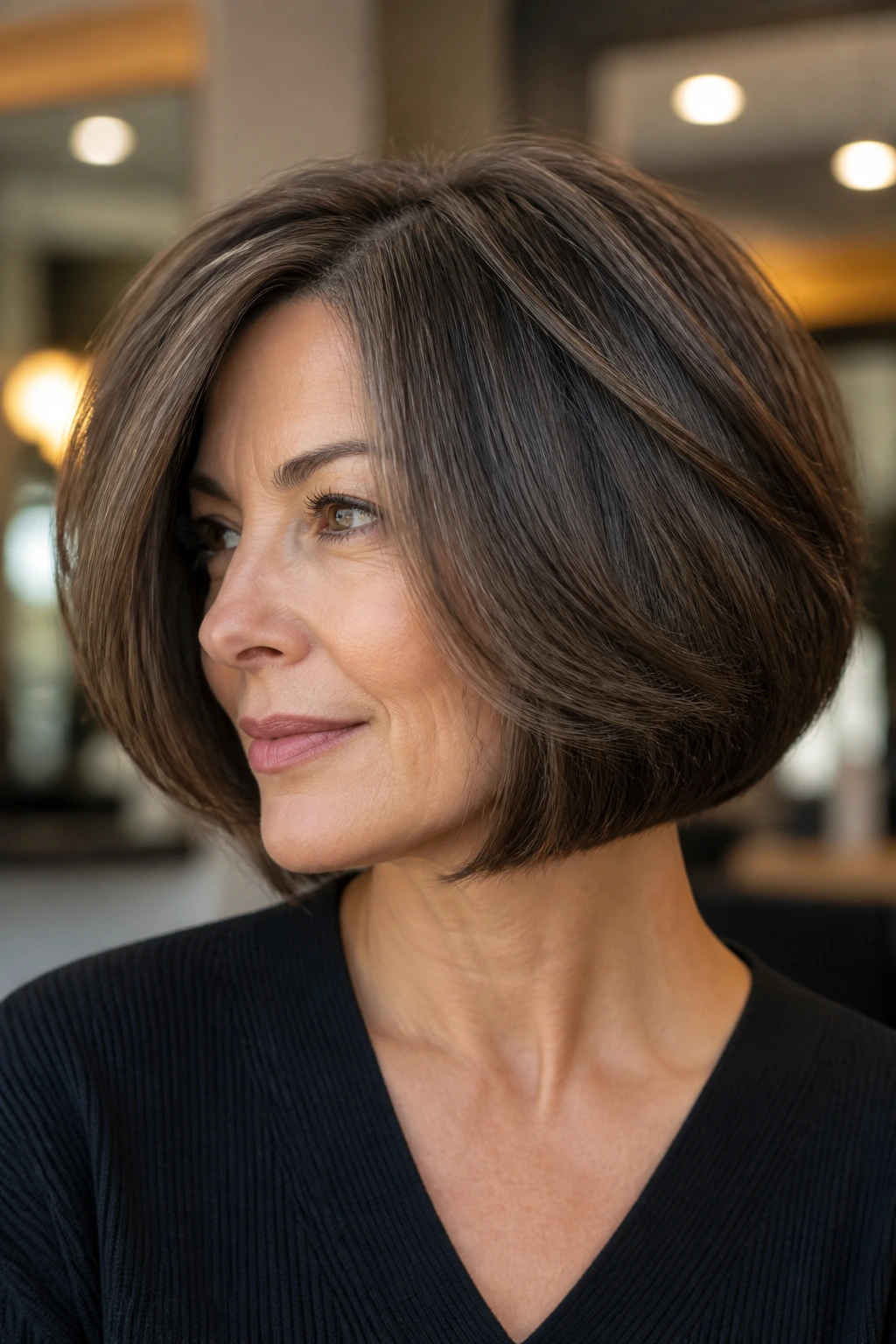
2. Chin-Length French Bob
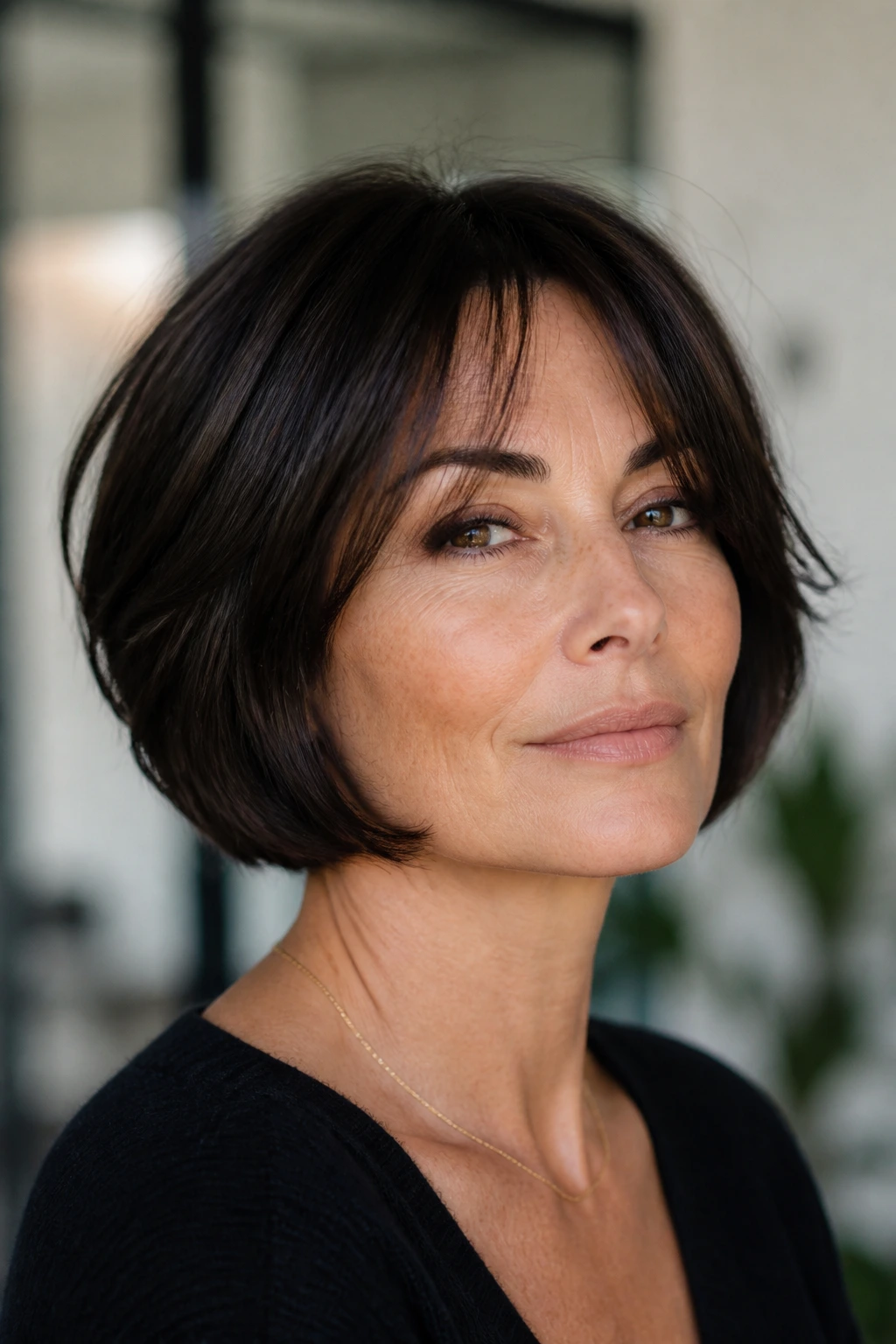
A chin-length French bob is not for the timid, and that’s part of its charm. Thick hair gives this cut body so it doesn’t collapse, which is exactly why it can look sharp instead of floppy. The line sits near the jaw, the ends are usually lightly beveled, and the whole thing has that crisp, cheekbone-skimming effect that can make your face look more open.
The catch? It has to be cut with precision. Thick hair will show every uneven corner at this length. If the ends are too heavy, the bob turns into a box; if they’re too thinned out, it frizzes at the edges. I prefer this shape when the stylist keeps the perimeter strong and uses only a little internal debulking near the nape.
This one suits people who like to wear lipstick, earrings, or a neat neckline. It brings the eye right up to the face. It also looks excellent with gray hair, because the clean shape and silvery texture can read as polished rather than severe.
3. Long Layers That Start Below the Collarbone
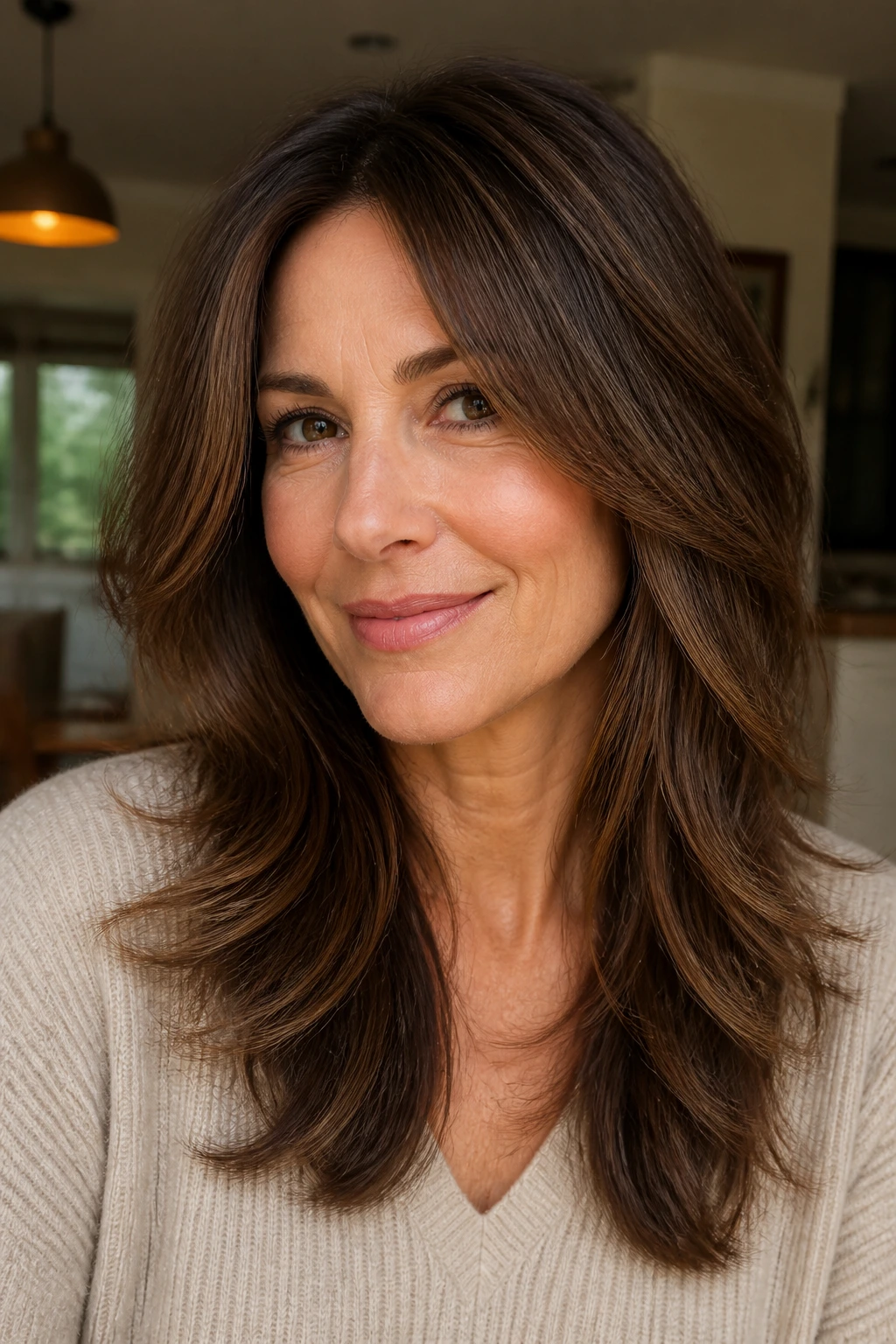
If you’re not ready to lose length, this is the safest smart move. Long layers that begin below the collarbone keep the bulk from forming a hard wall, but they don’t chew up the thickness that makes long hair feel full. The key is restraint. Layers starting too high can make thick hair fray at the sides and lose its weight where you still need it.
I like this cut for people who wear their hair up half the week. The front still falls softly around the face, and the back stays long enough for a ponytail that doesn’t look sad and thin at the ends. It also handles grow-out well, which matters when you don’t want to be in the salon every six weeks.
Ask for face-framing pieces that begin around the cheekbone or lower, depending on whether you want more softness or more coverage. If your hair is wavy, these layers will show up as bend and movement. If it’s straight, they’ll stop the whole length from looking like a single heavy slab.
4. Soft Shag with Curtain Bangs

The soft shag has more manners than the old-school version. It still gives you movement at the crown and air through the mid-lengths, but it avoids the ragged, over-thinned look that some shag cuts drift into. With thick hair, that matters. You want texture, not fuzz.
Curtain bangs are the part that makes this cut feel modern and wearable. They split the forehead, blend into the sides, and let thick hair frame the face without swallowing it. If you wear glasses, curtain bangs can be a lifesaver because they don’t sit in one heavy line across the brow.
This cut works best on hair with a little wave or bend. Straight, dense hair can do it too, but it usually needs a round brush or a quick bend with a hot tool. Ask for the bangs to start long enough to tuck into the side layers. Too short and they’ll fight the rest of the cut. Too wispy and they disappear into the bulk.
5. Angled Bob with Longer Front Corners
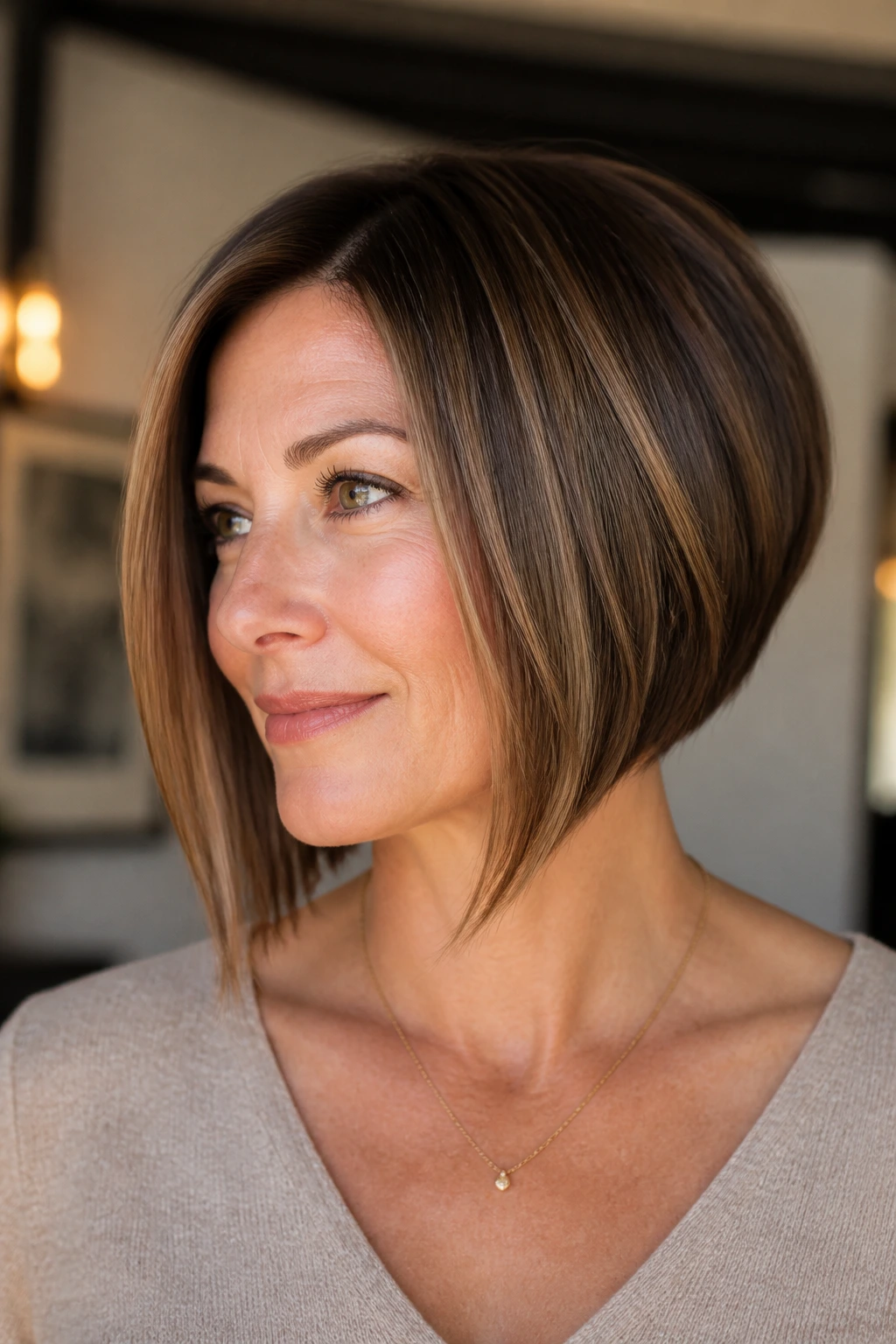
An angled bob gives thick hair a shape that feels intentional the second you turn your head. Shorter in the back, longer in the front, it pulls some of the weight off the nape and keeps the front pieces from poofing outward. The angle also does a little face work for you — it can lengthen the neck and soften a strong jaw.
This cut is especially good if your hair tends to grow into a pyramid. The longer front corners break up that wide silhouette. I’d ask for a subtle angle, not a steep one, unless you want a sharper, more dramatic line. With thick hair, a hard angle can look too geometric if the back is cut too high.
Styling is straightforward: blow-dry the front pieces with a round brush, then let the back sit flatter and cleaner. A touch of serum on the ends keeps the corners from flipping out. If your hair is coarse, this cut usually benefits from a little smoothing cream near the perimeter.
6. The Bixie with a Tapered Nape
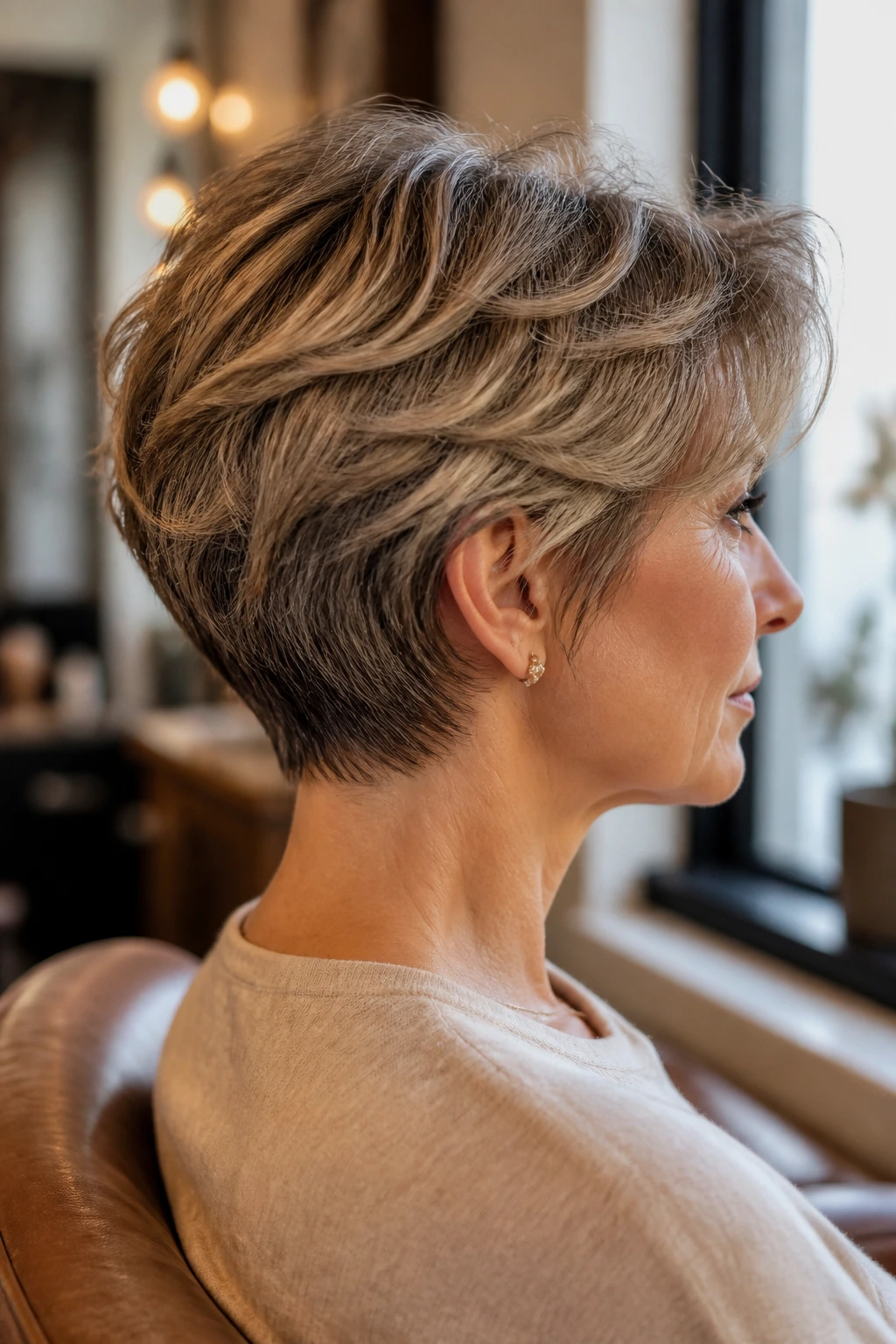
A bixie is the middle ground between a bob and a pixie, and thick hair makes it look fuller and more expensive than it sounds. The tapered nape is the part that saves it. Without that taper, thick hair can sit like a helmet at the back. With it, the cut hugs the neck and lets the top keep its shape.
This is a strong choice if you want shorter hair without going all the way into a close crop. It gives you movement at the crown, a little softness around the ears, and enough length on top to sweep the fringe to the side or forward. That flexibility is useful on days when you want to look styled without spending 20 minutes on it.
Ask for the sides to stay soft rather than shaved tight. Thick hair can get bulky around the ears if the shape is too abrupt. A small amount of paste or texture cream on dry hair is usually enough to define the pieces. It’s a cut that likes a bit of mess.
7. Shoulder-Length U-Shape

The shoulder-length U-shape is one of the most underrated cuts for thick hair over 40. From the front, the hair feels long and graceful. From the back, the U keeps the ends from hanging in a flat wall. That slight curve matters because thick hair often collects too much weight in a straight line.
This cut is good if you want length but don’t want the ends to feel blunt or heavy against your back. The U-shape also helps thick hair drape instead of flaring. On straight hair, it creates a cleaner fall. On wavy hair, it gives the wave somewhere to live instead of forcing it into a rigid outline.
I’d keep the face framing long and soft here. The point is not to carve a lot of layers into the front, just to avoid a blocky edge. If you wear your hair in a low ponytail or clip it up often, this shape stays useful even when you’re not fully styling it.
8. Rounded Midi Cut with Internal Weight Removal
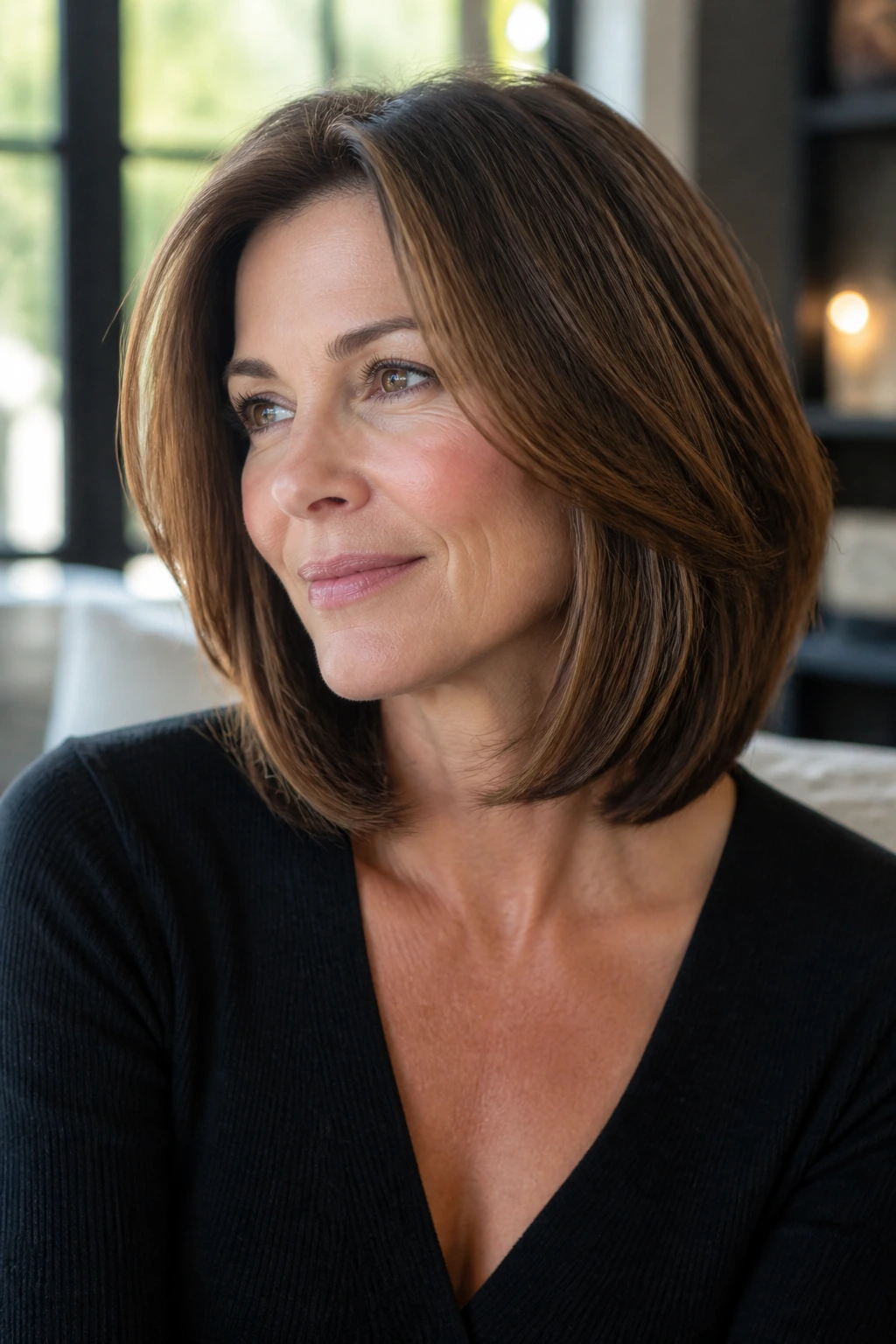
The rounded midi cut is what happens when someone cares about silhouette. The outline curves gently in instead of going straight down or kicking out at the sides. Thick hair loves this kind of structure because it needs direction. Otherwise it just expands.
Internal weight removal is the quiet hero here. That’s the part people don’t see in the mirror, but they feel it when the hair dries faster and the ends lie closer to the neck. The exterior can still look full. It just stops behaving like a shelf.
This cut is especially flattering if you like a blowout with a little body at the bottom. It gives you that round, smooth shape without the pudding-bowl effect. Ask your stylist not to over-layer the top. The magic here is hidden, not obvious.
9. Feathered Cut with Side-Swept Bangs
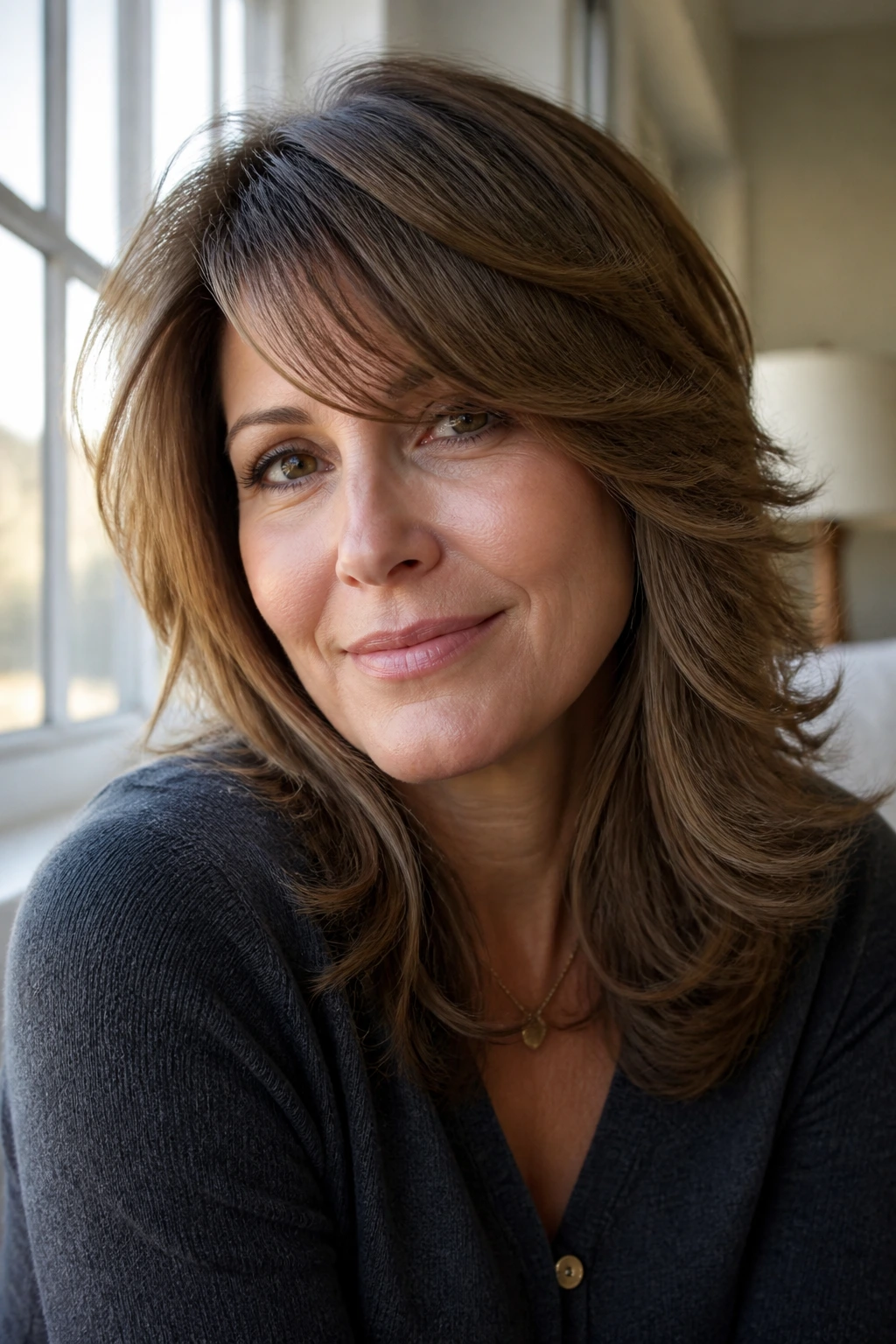
Feathering gets a bad reputation because it was overdone in a lot of loud, dated cuts. Done well, though, it’s one of the best ways to break up thick hair without making it look thin. The ends move. The face opens. The whole cut feels lighter.
Side-swept bangs help a lot here, especially if your forehead is on the shorter side or you wear glasses. They don’t divide the face in the same heavy way as a blunt fringe, and they’re easier to grow out if you change your mind. Thick hair gives the bangs enough substance that they still look like a real fringe, not a feathery afterthought.
This cut usually needs a blow-dryer and a round brush if you want the feathered shape to show. If you air-dry it, you’ll still get softness, but the outline may read a little more relaxed. That’s not a flaw. It’s just a different mood.
10. Curly Shoulder Cut with Dry-Cut Layers
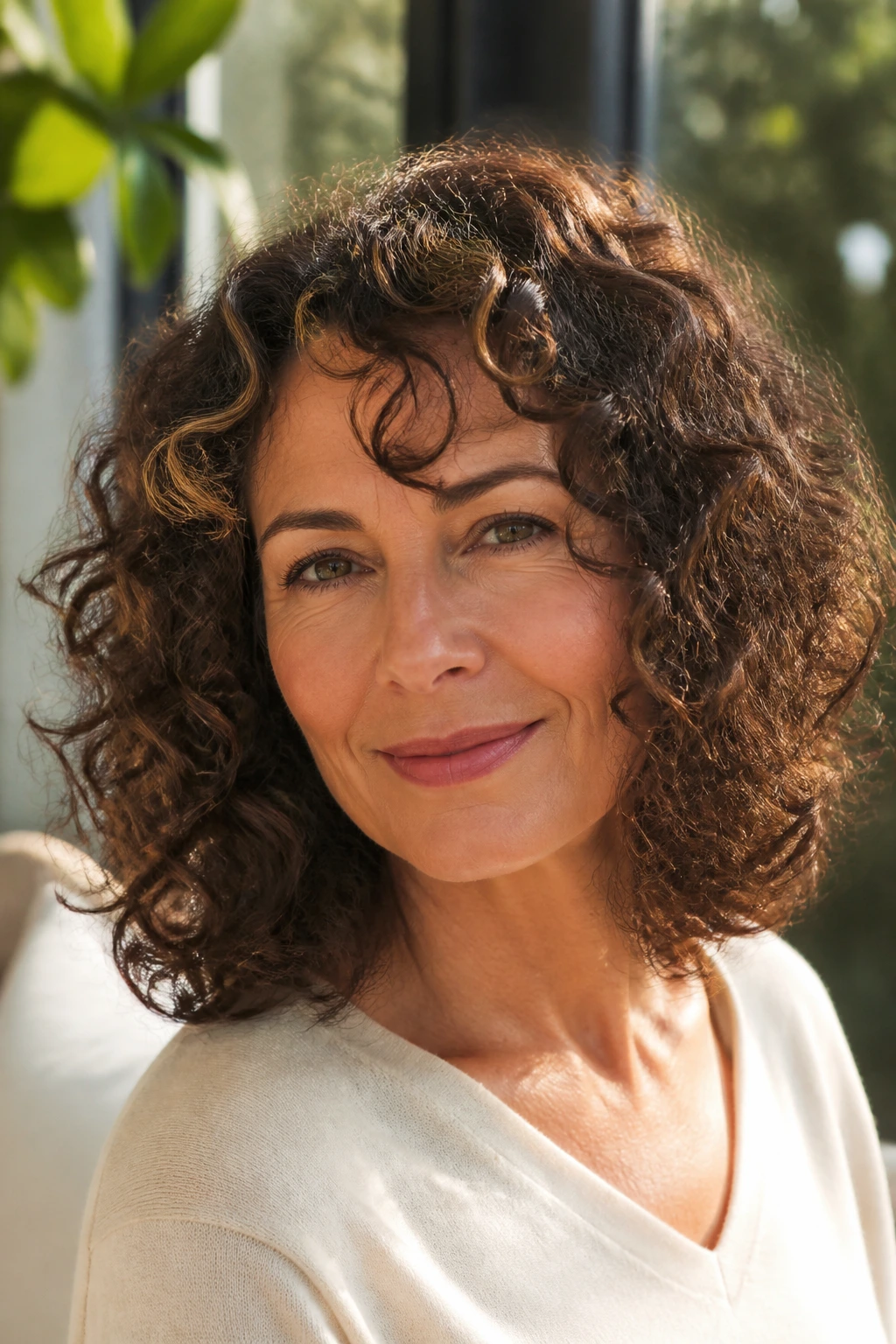
Curly thick hair should not be cut like straight hair. That’s the whole story. A dry-cut shoulder shape respects shrinkage, curl pattern, and how much volume sits on the outside of the curl rather than inside it. If you cut curls wet and hope for the best, you can end up with a shelf at the sides and a hollow back.
This cut works best when the layers are placed to support the curl, not steal its weight. Thick curls often need strategic shaping around the crown and under the chin so the silhouette doesn’t widen in a triangle. The shoulder length keeps enough weight for the curls to hang, which helps them look longer and smoother.
Ask for curl-by-curl or dry-cut work if your hair is strongly textured. And then keep the styling simple: leave-in conditioner, curl cream, a diffuser if you want lift, and no heavy brushing once the hair dries. The cut does most of the work. Good curls should not need constant negotiations.
11. Sleek Blunt Bob with a Hidden Undercut
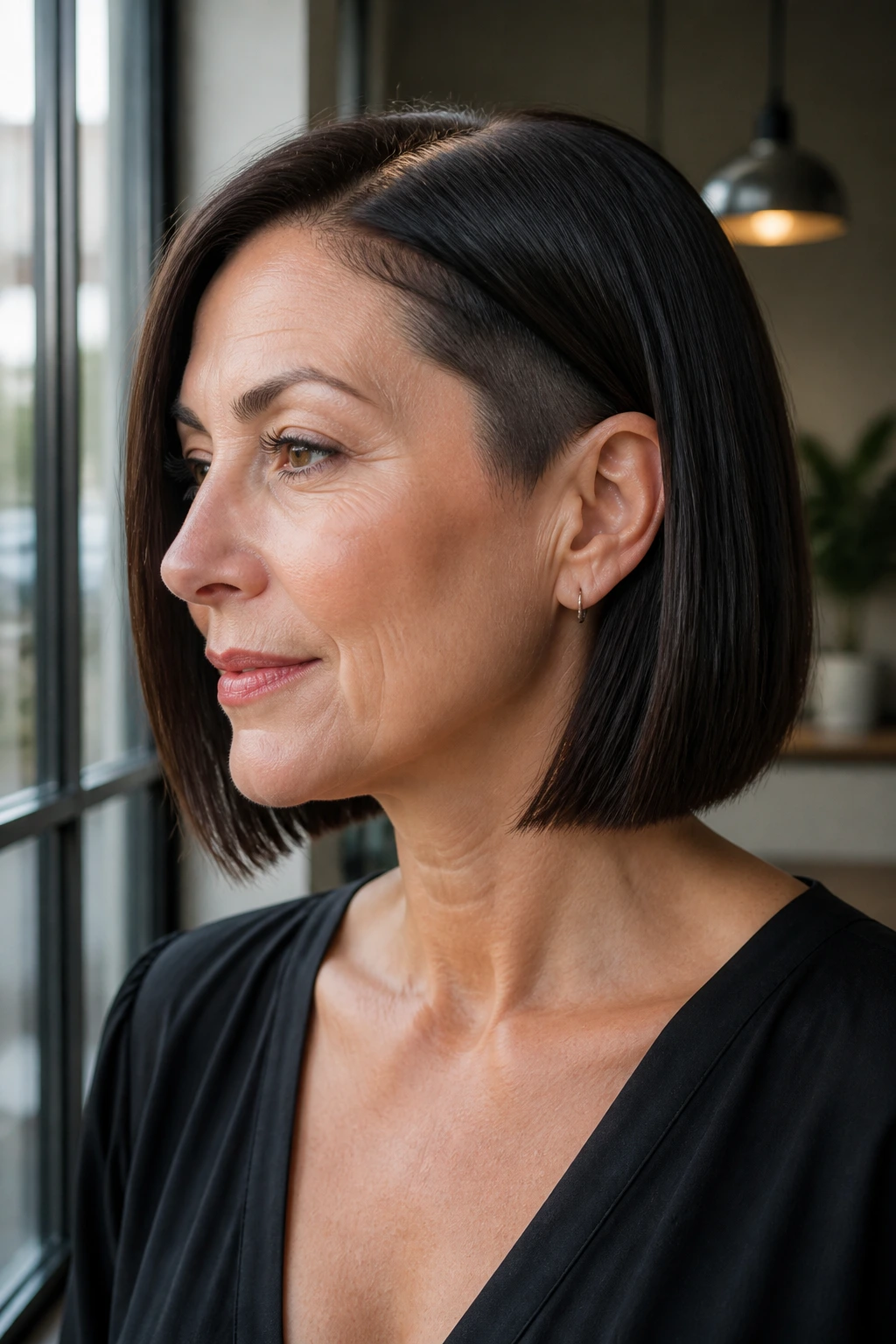
A blunt bob can be a dream on thick straight hair, but only if the bulk underneath is controlled. That’s where the hidden undercut comes in. It removes weight from the nape and lower interior while leaving the outer shape clean and strong. From the outside, you still get that glossy, sharp line. Inside, the hair behaves better.
This is a cut for people who like a polished finish. It suits thick hair that tends to puff outward at the bottom and also helps the bob sit closer to the jaw instead of floating away from it. The line feels modern, not fussy.
The upkeep is real, though. Hidden undercuts grow out faster than people expect, especially if your hair grows fast at the nape. If you like low-maintenance styles, this may be too much salon work. If you love a crisp bob and don’t mind trimming, it’s a strong choice.
12. Pixie with Lift at the Crown
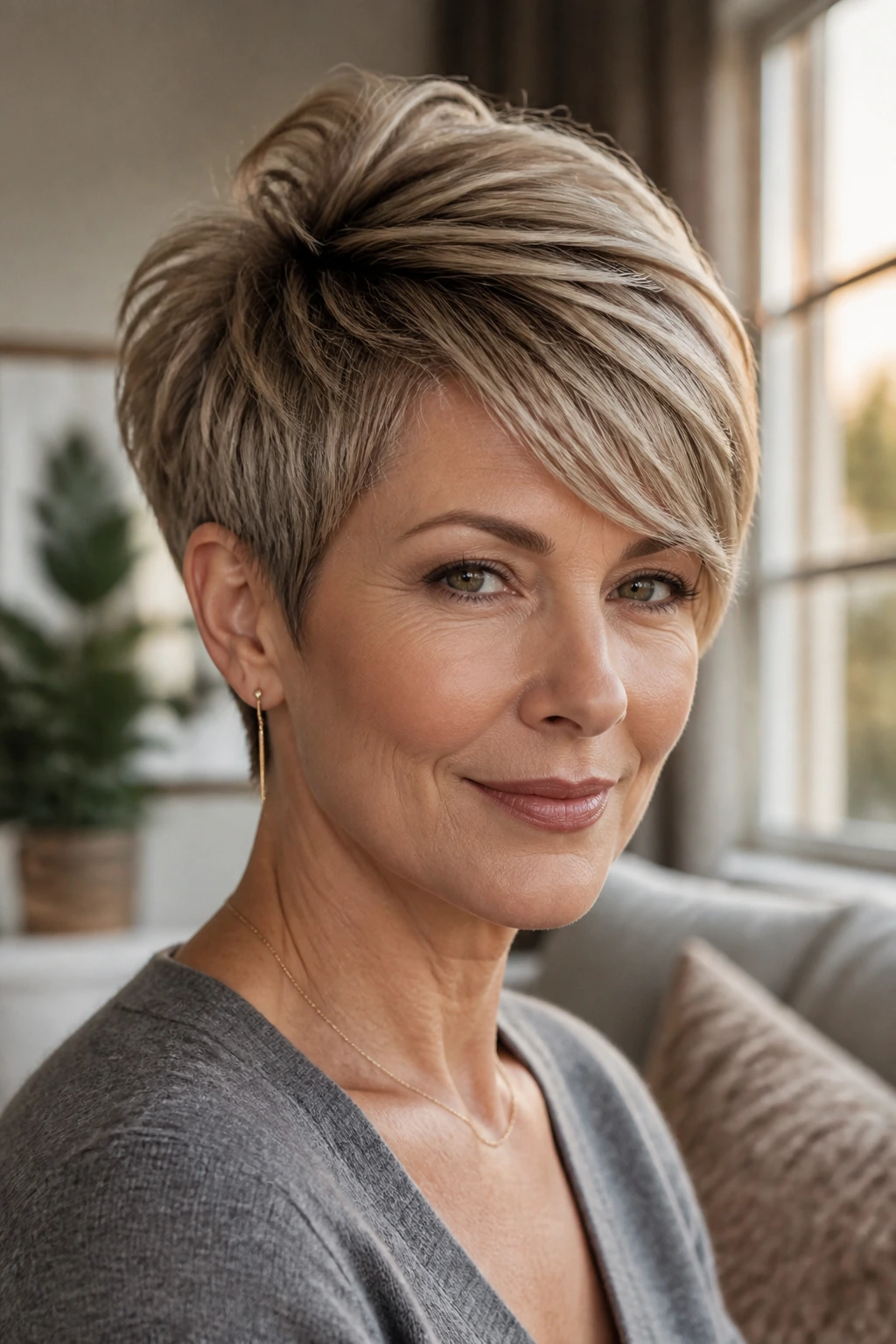
A pixie on thick hair can look elegant instead of severe when the crown is left a little longer. That lift gives the cut shape and keeps it from flattening against the scalp. Thick hair naturally holds structure, so a good pixie can feel almost architectural without looking stiff.
The sides and nape should be tapered enough to reduce bulk, but not shaved so close that the top looks disconnected. I like a pixie with enough length at the fringe to sweep to one side or tuck upward with a dab of paste. That little bit of control matters.
This cut is for someone who is done fighting with long drying time. It’s fast, light, and strong. It also puts the focus squarely on your face, which is either exactly what you want or absolutely not. There’s no middle ground here.
13. Long Hair with Bottleneck Bangs
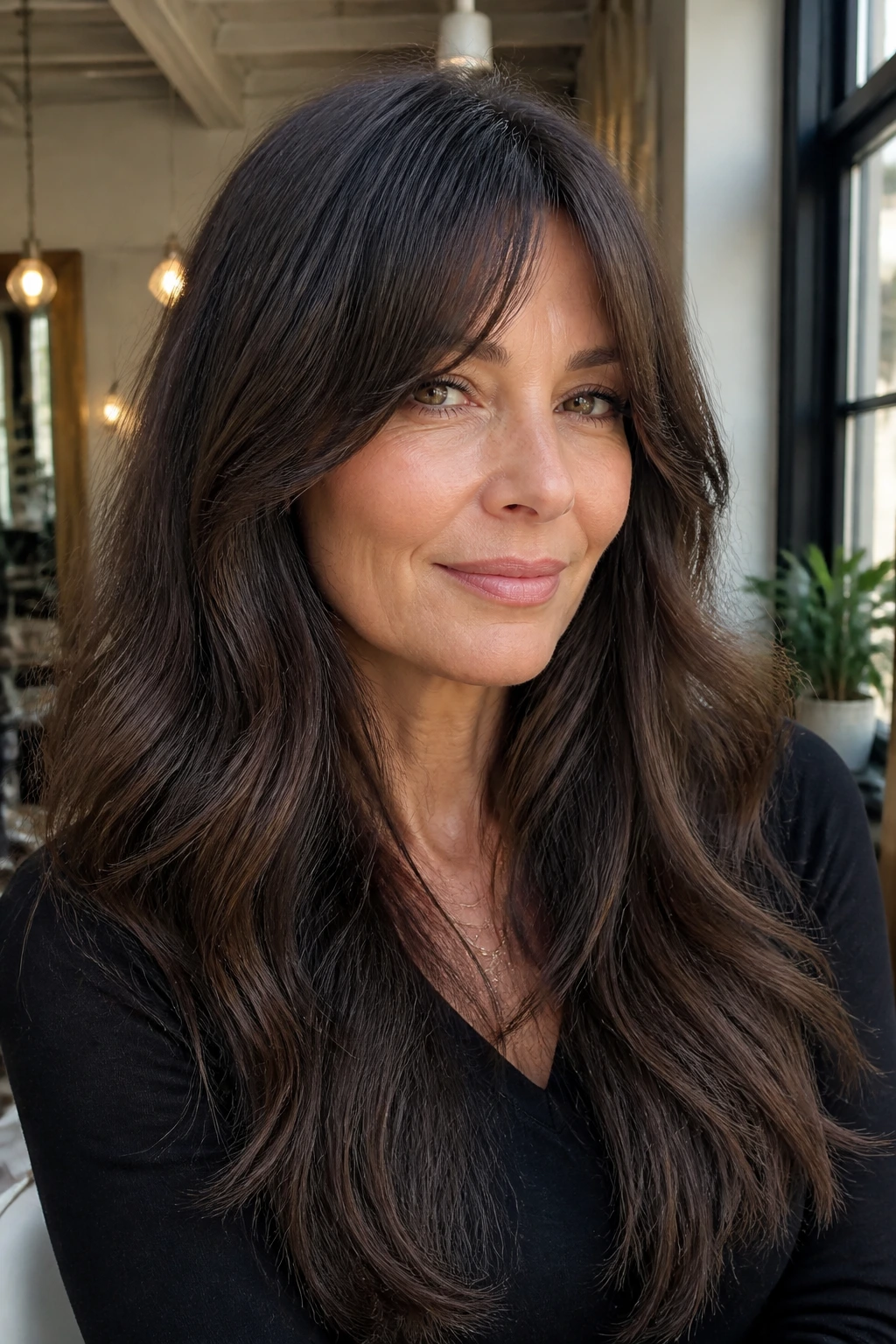
Long thick hair can look heavy fast, especially around the face. Bottleneck bangs fix that better than most fringe types because they start narrow at the center and widen as they blend into the sides. The result is soft, open, and less severe than a blunt bang.
This cut keeps the length you like while giving the front some shape. That matters when thick hair starts to feel like a single mass. The bangs break the wall, but they do it gently. Around the eyes and cheekbones, that softness reads well.
What Makes It Work
The best version keeps the bangs long enough to split and tuck. If they’re too short, they lose the point of the shape. If they’re too thick, they become a curtain.
This is a strong option if you like ponytails, braids, or loose waves. It gives you something to frame the face when the rest of the length is down and full. A small round brush or a few minutes with a flat brush is usually enough to make the fringe sit properly.
14. Textured Lob with a Deep Side Part
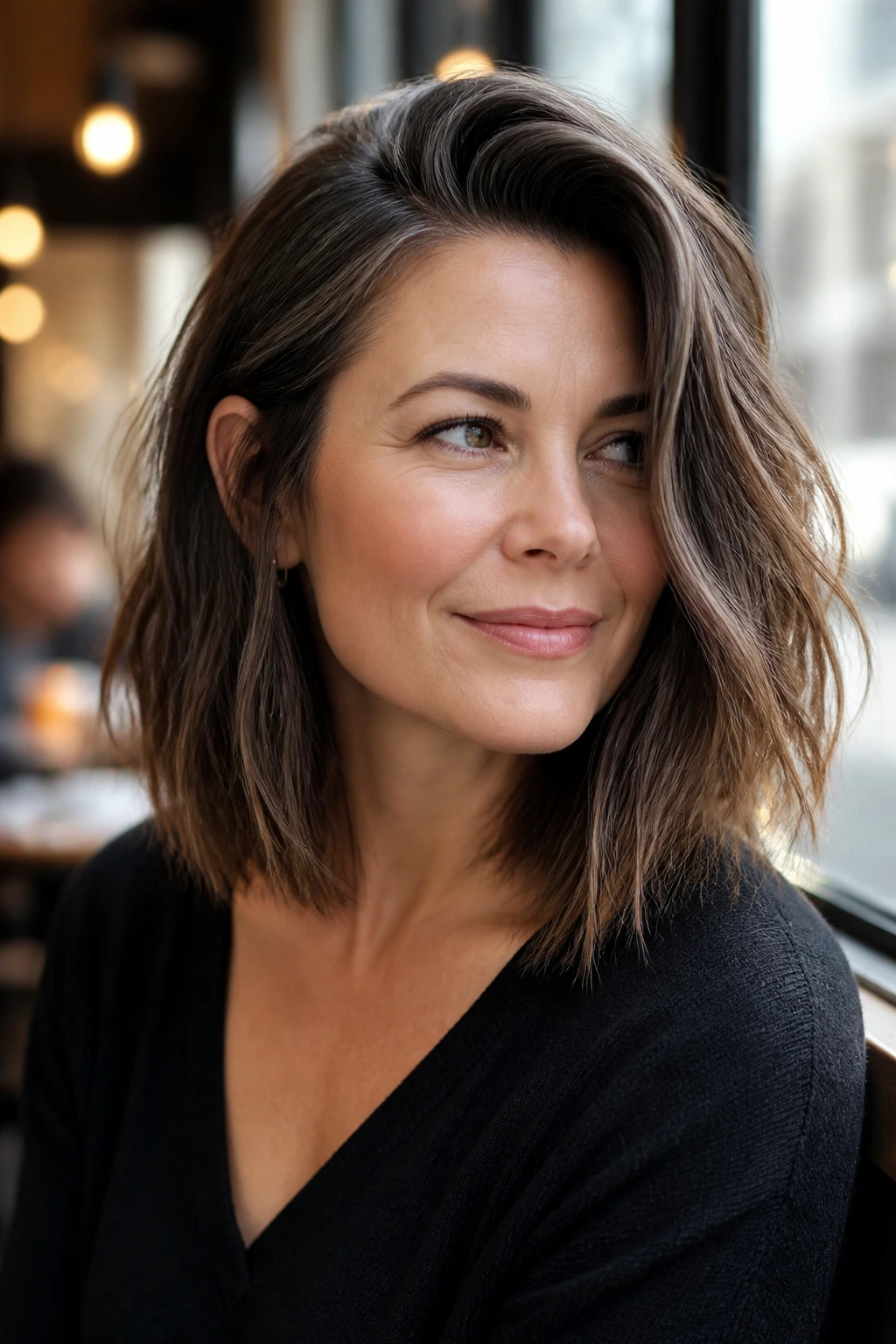
A deep side part can change thick hair fast. It adds lift at the roots, breaks up flatness, and gives the whole cut a little asymmetry without needing a dramatic haircut. On a textured lob, that part makes the shape feel less blocky and more alive.
The texture matters because thick hair can go heavy at the ends. A little point-cutting or slicing through the lower lengths keeps the lob from reading as a rectangle. You still want a strong line, just not a rigid one.
This is one of my favorite cuts for people who want subtle change. It doesn’t shout. It just behaves better. The deep part also works if one side of your hair lies flatter than the other, because it gives the roots a chance to lift and stay there.
15. Modern Wolf Cut, Softened
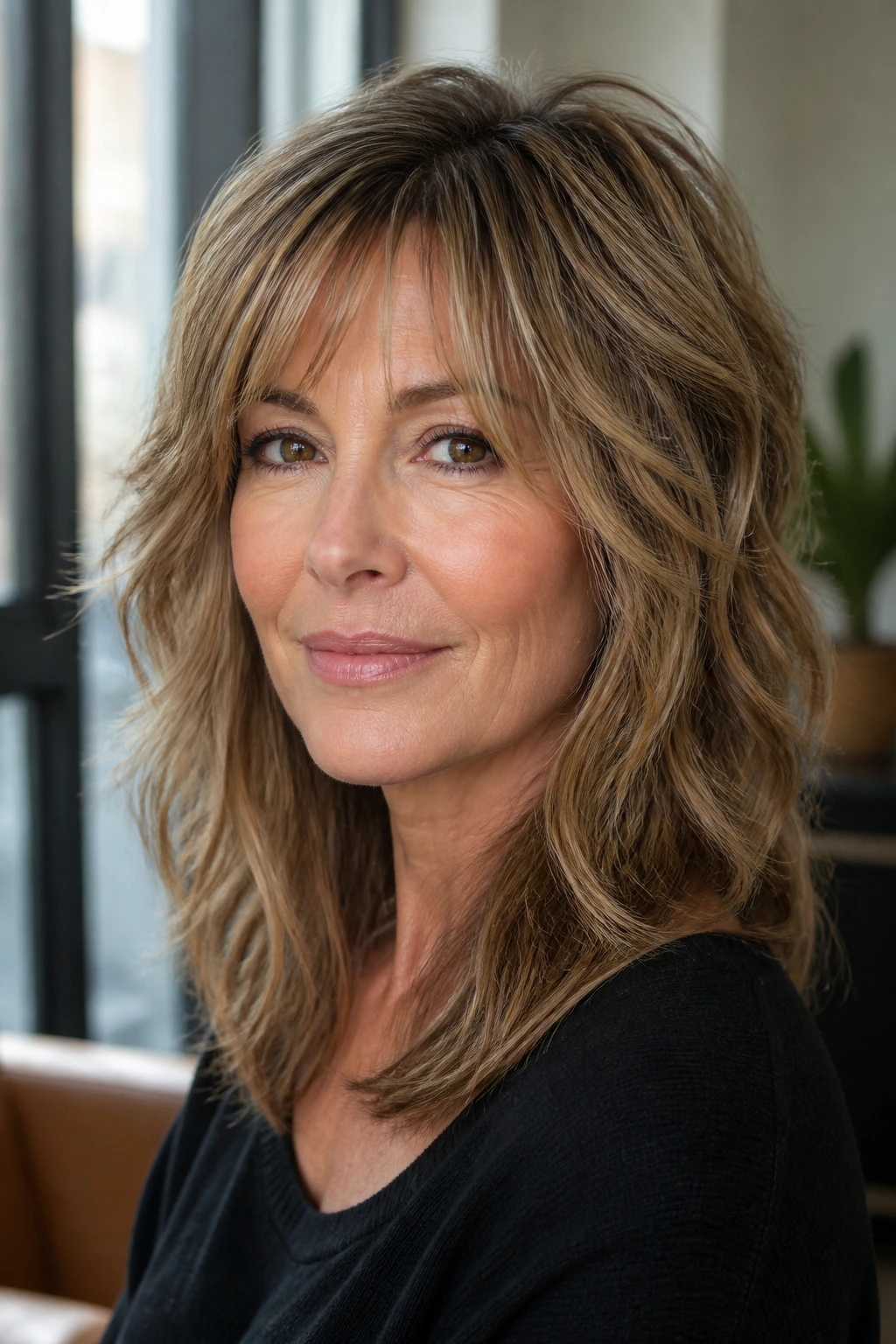
The wolf cut gets messy fast if it’s too aggressive, which is why the softened version makes more sense for thick hair over 40. You still get crown layers, cheekbone movement, and a little edge through the ends, but the shape is smoother and less choppy. It’s the difference between looking textured and looking like you fought with your scissors at home.
Thick hair gives this cut enough body to hold the layers without collapsing. If your hair has wave, it can air-dry into a shape with real personality. If it’s straighter, you’ll want some bend from a diffuser or curling iron to show the structure.
The softened wolf cut works best when the shortest layers are not cut too high. Keep the crown controlled, not spiky. That’s what makes the style feel wearable rather than costume-like.
16. Stacked Bob with a Clean Nape
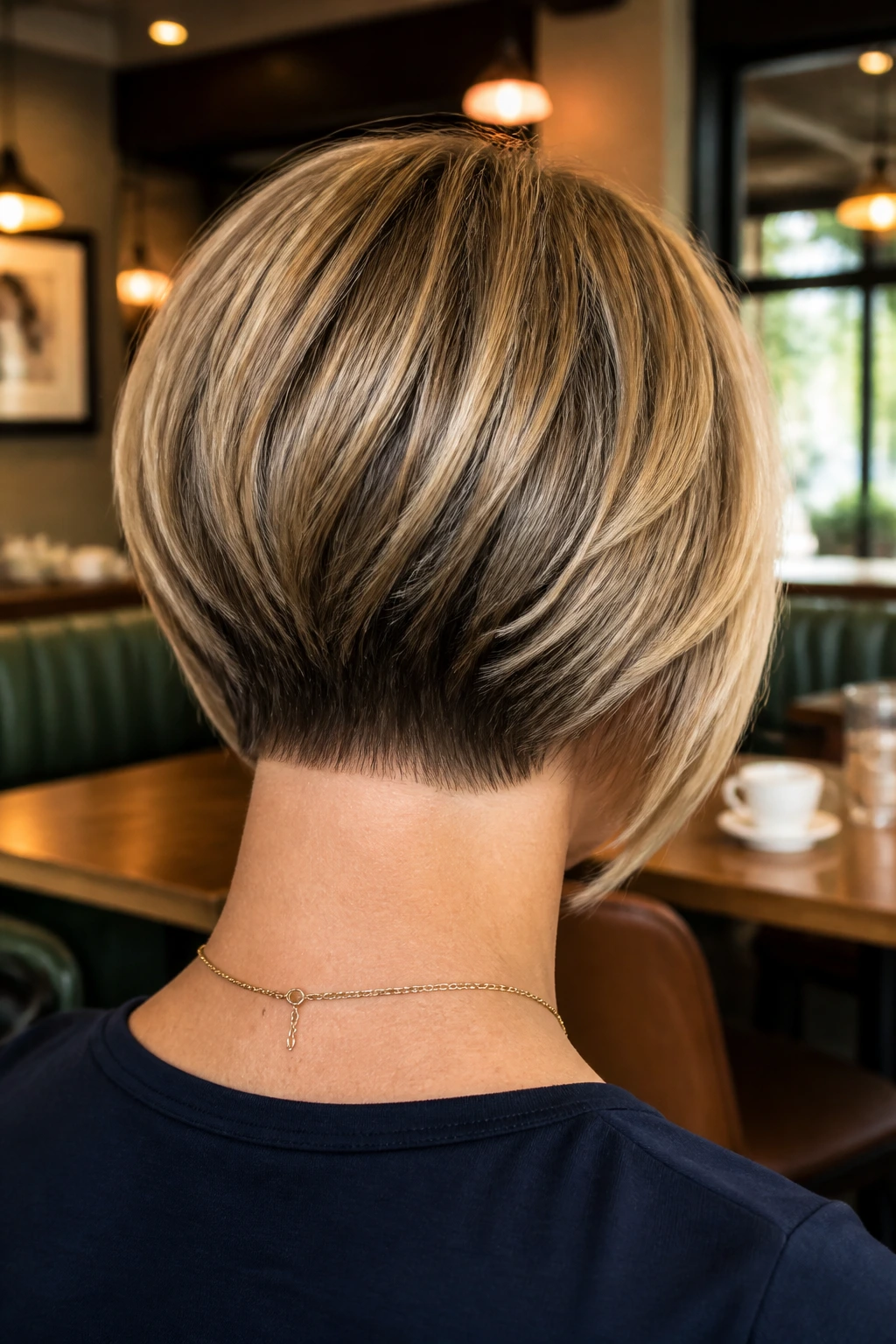
A stacked bob can be fantastic on thick hair because the shape builds itself into a curve at the back. The key is the nape. If it’s too bulky, the back balloons. If it’s too shaved down, the top can look disconnected. The clean version sits in the middle and does its job.
This cut creates lift without needing a lot of product. It’s a smart choice if your hair naturally wants volume but you want that volume in a tidy place. The front pieces should stay soft so the cut doesn’t feel too boxy around the face.
I’d recommend this one for anyone who likes a shorter bob but wants the neckline clear. It looks neat with turtlenecks, collared shirts, and earrings that need a little breathing room. It’s a practical cut with some backbone.
17. Razor-Textured Midlength for Wavy Hair
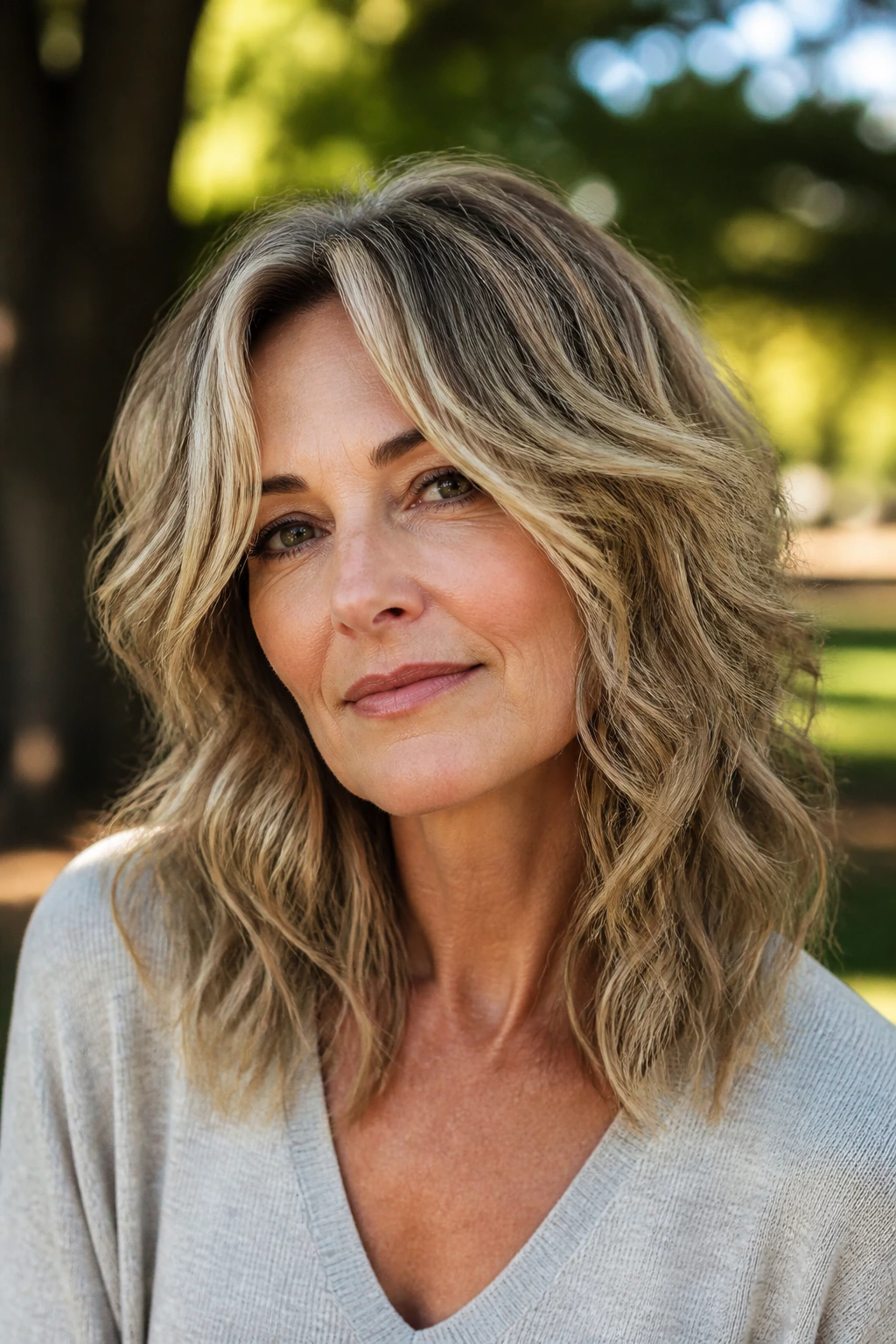
Razor texture can be lovely on wavy, thick hair when it’s done by someone who knows exactly how much to take off. The result is airier ends, less bulk, and a shape that bends instead of sitting in a block. If the razor goes too hard, though, you get frayed edges. That’s the line.
This cut works especially well if your waves are loose and your hair is dense through the middle. It lightens the shape without killing the body. That combination is harder to get than it sounds.
Ask for the texture to stay below the cheekbones and around the ends, not all over the crown. Thick hair does not need to be shredded everywhere. It needs a few smart cuts in the right zones. That’s a completely different thing.
18. Sliced Layers for Heavy, Straight Hair
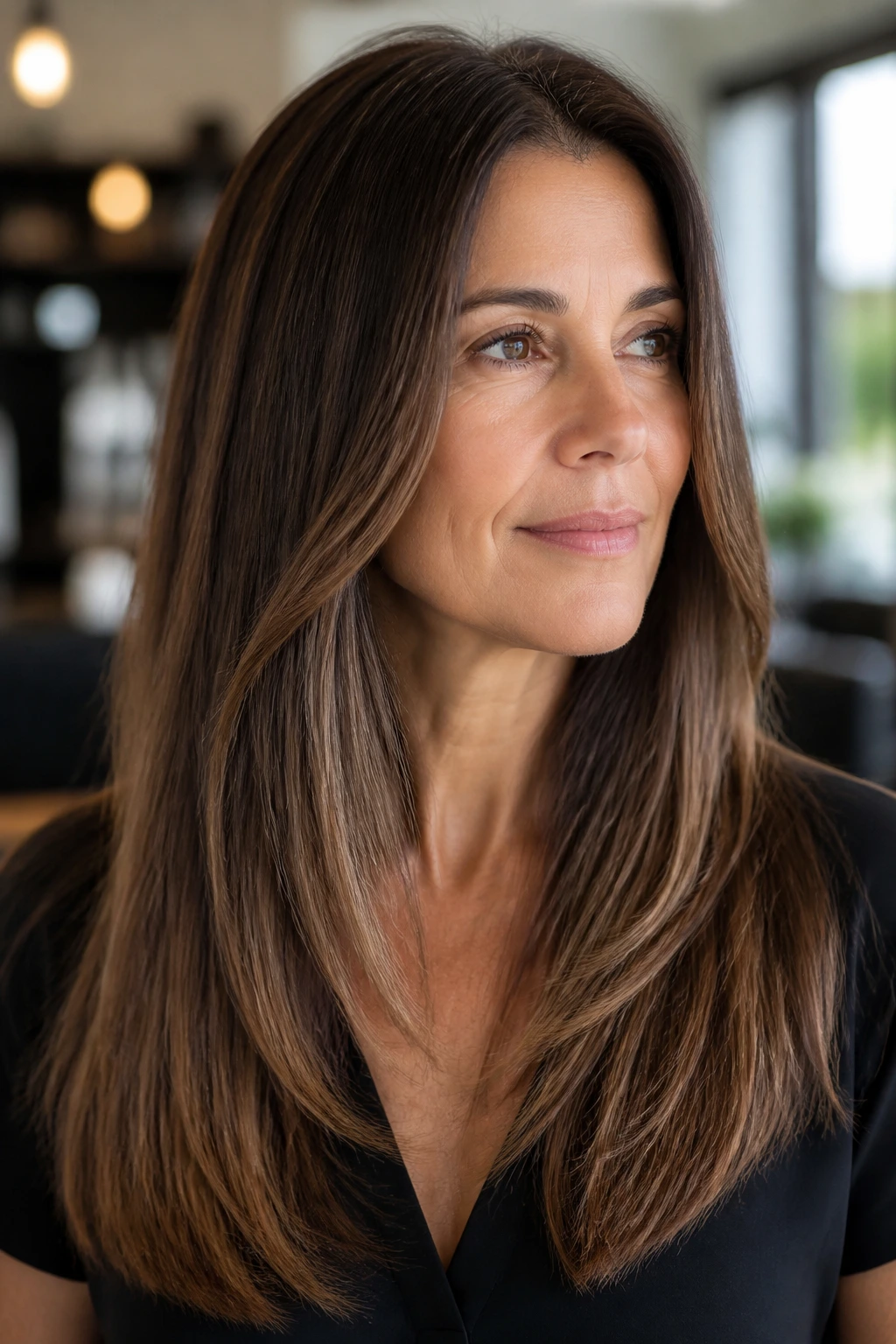
Heavy, straight hair can feel like a sheet. Sliced layers break that up without making the cut look obviously layered from the front. The movement is subtle, which is exactly what many people want. You keep the polish, but you lose some of the dead weight that makes the ends drag.
This cut is useful if your hair flips outward at the shoulders or sits flat at the root but thick through the ends. Slicing through the lower half lets the hair swing more naturally. It also helps a long style stay from looking too wide.
If your strands are coarse, ask for a light hand. Too much slicing can make the ends wispy and hard to control. The goal is a cleaner fall, not a shredded finish. There’s a difference, and it shows.
19. Rounded Crop with Longer Top
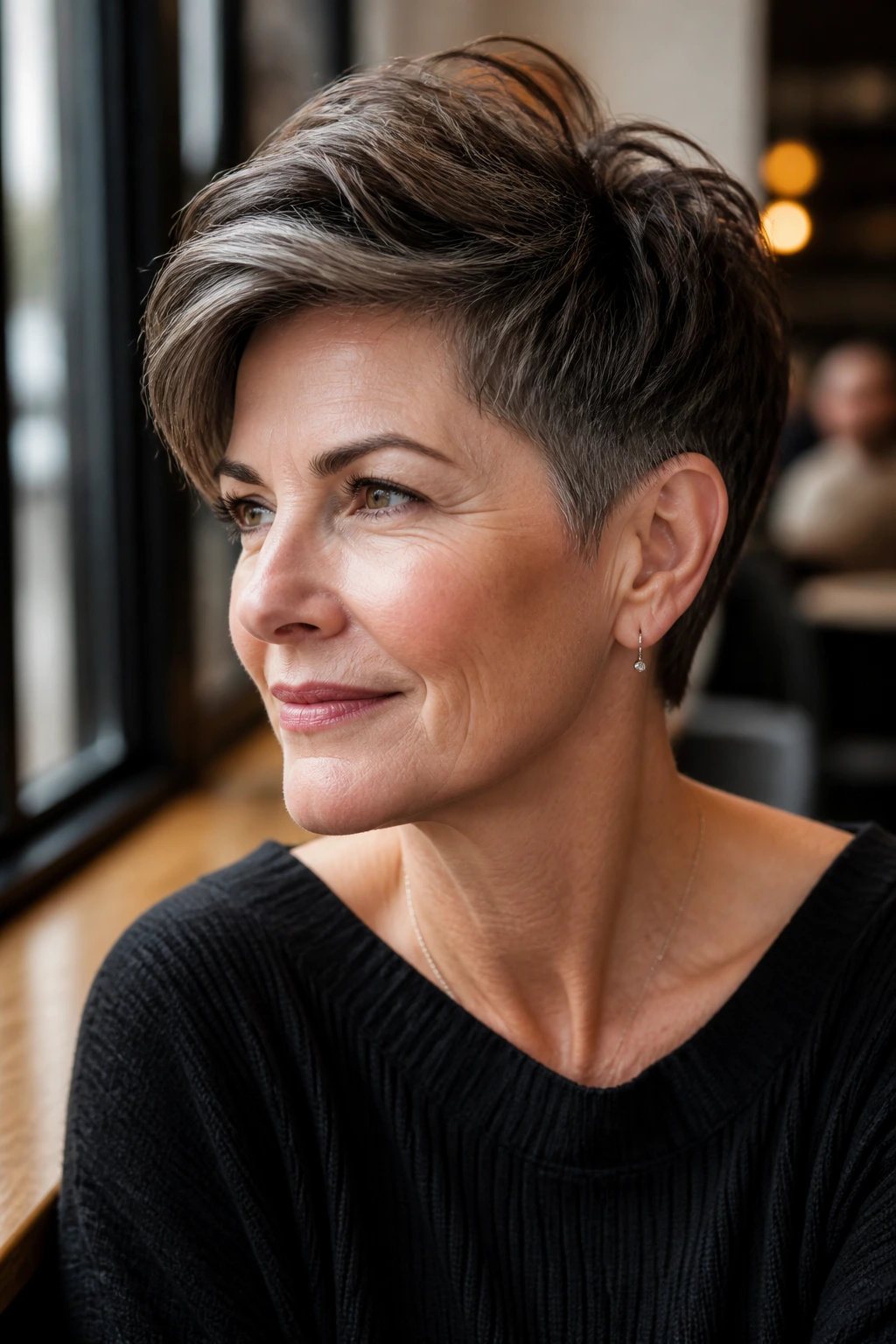
A rounded crop gives thick hair shape without making it feel severe. The sides and nape stay close enough to remove bulk, while the top remains longer so you can sweep it, fluff it, or smooth it down. That balance is what keeps the cut from turning into a helmet.
This is a good choice if you want short hair but still want options. You can wear it piecey, brushed forward, or lightly lifted at the crown. Thick hair holds those directions better than fine hair, which is part of why this cut can look so full.
It’s also friendly to glasses and strong brows. The shape frames the face without swallowing it. If you’re after a low-fuss cut with some personality, this sits in a very useful spot.
20. Collarbone Cut with Curtain Fringe
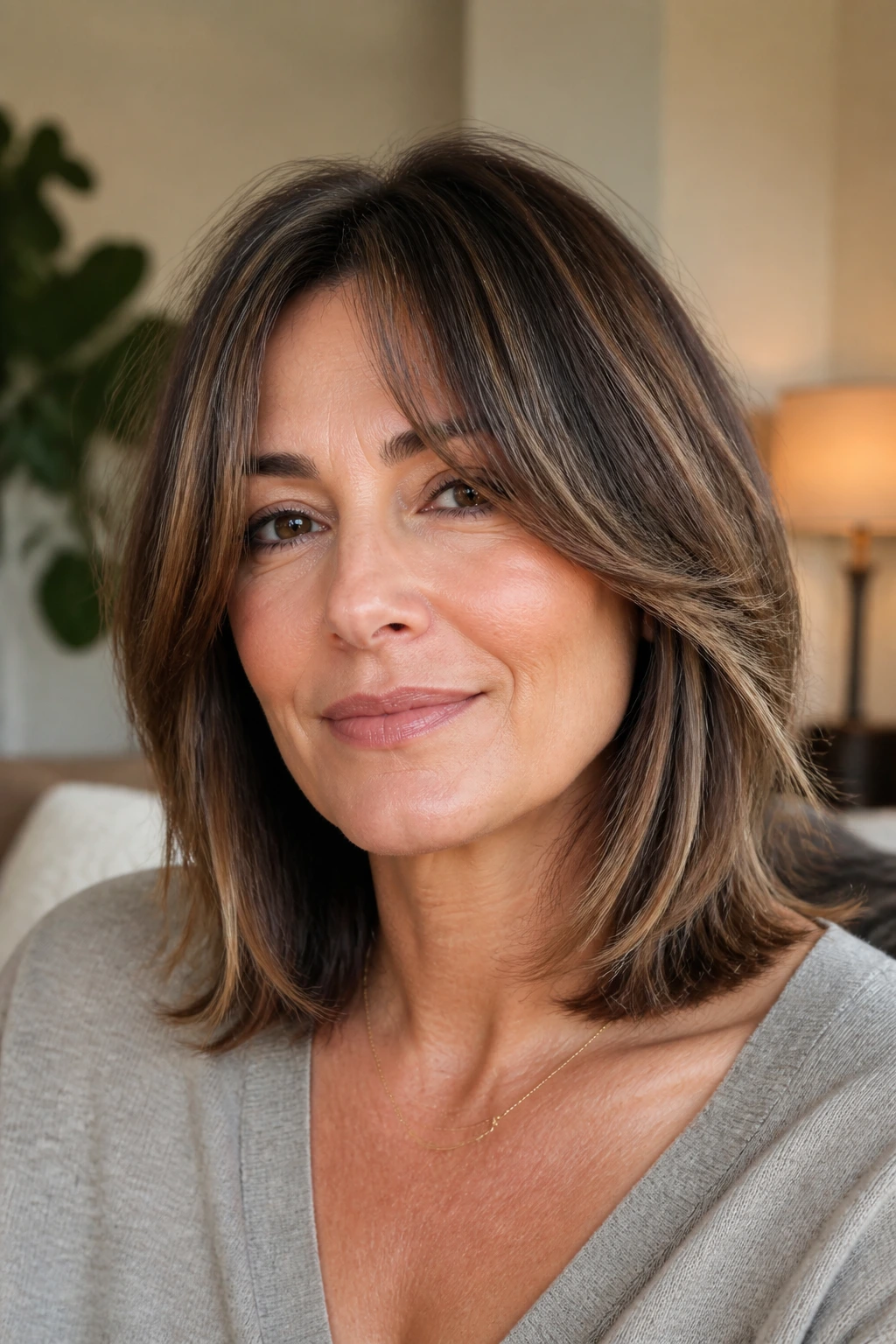
This is the cut for someone who wants softness around the face without giving up length. The collarbone length keeps the hair manageable, and the curtain fringe breaks up the density at the front. Thick hair can look a little stern when it’s all one long line; this fixes that.
The fringe should open gradually from the center rather than dropping like a curtain in the literal sense. That means the shortest pieces sit at or just below the brow, then blend into the cheekbone area. Done well, it softens the eyes and makes the whole style feel lighter.
I like this shape for people whose hair is full but not especially curly. It gives movement without needing layers all over the head. And if you change your mind about fringe later, curtain bangs are easier to grow out than most.
21. Layered Shaggy Lob for Air-Dry Days
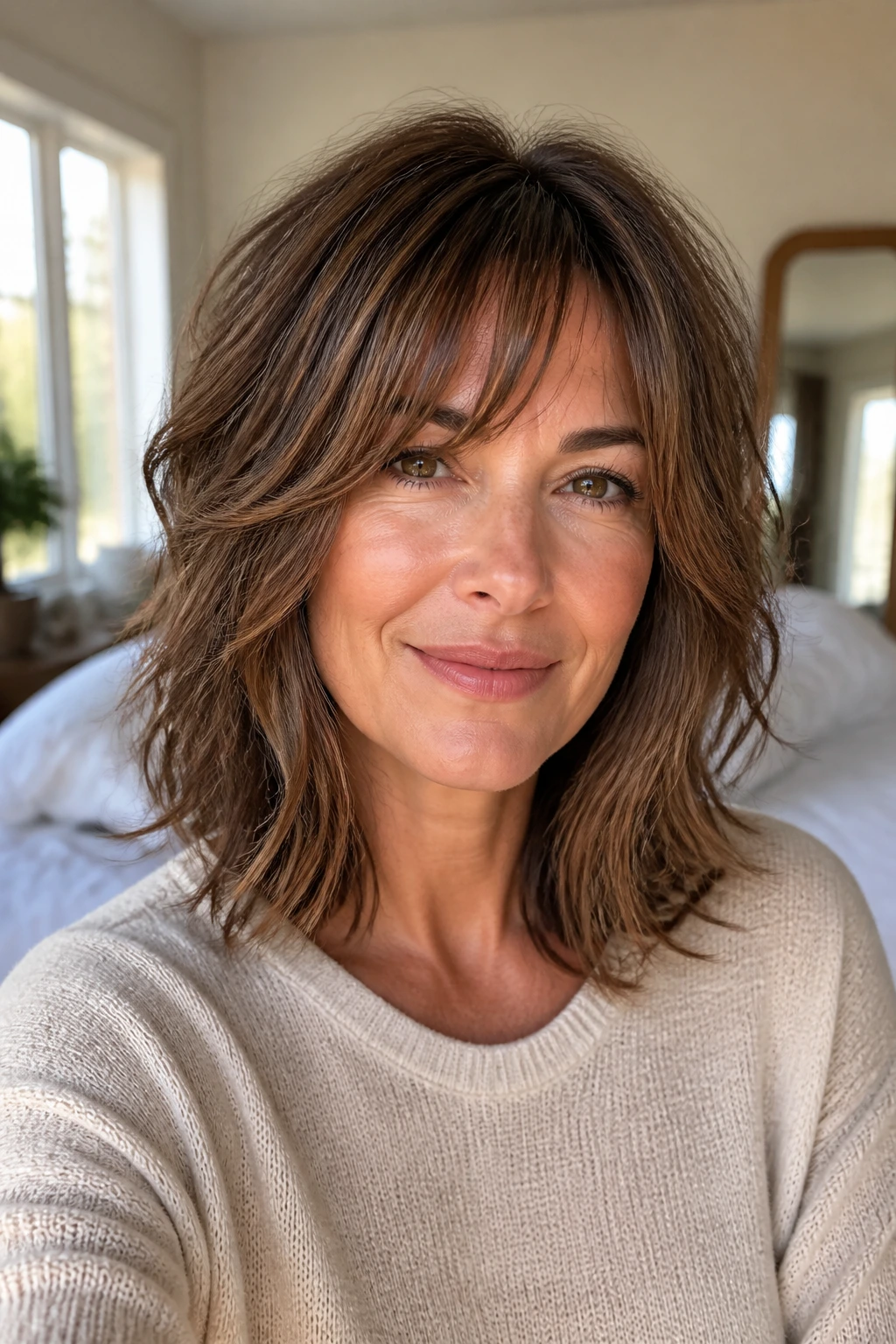
Air-dry hair needs a cut that already knows what it wants to do. A layered shaggy lob does that. It gives thick hair enough internal structure to settle into bends and loose waves without a long round-brush session. The edges stay soft, the length stays useful, and the hair doesn’t just hang there.
The trick is to keep the layers long enough that they support the shape instead of scattering it. Thick hair can go fluffy if the layers are too short or too high. A shaggy lob should feel relaxed, not frayed.
This cut is good if you live in a rush. A little leave-in, a scrunch, and a rough dry are often enough. If you prefer polished styling, you can still smooth it out. The shape just won’t demand that every day.
22. Jaw-Grazing Bob with Tucked Sides
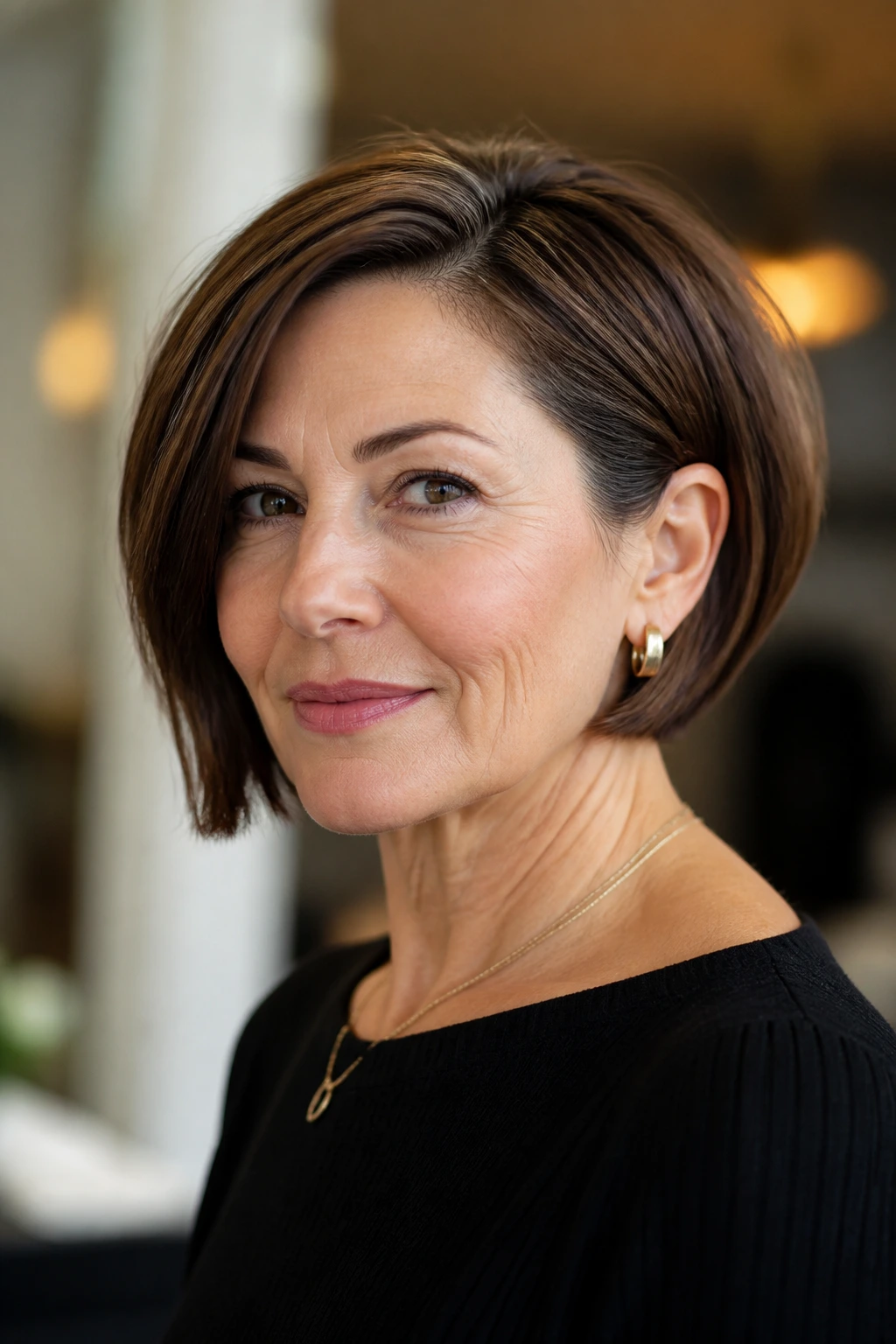
A jaw-grazing bob is sharp in the best way when the hair is thick enough to hold the line. The length highlights the jaw and gives you a cut that works with earrings, glasses, and a strong neckline. Tucked sides are the detail that makes it practical. You can slip it behind one ear and the whole style changes.
This cut needs balance. If the sides are too bulky, it widens the face. If the ends are over-thinned, the bob loses its clean edge. I’d keep the perimeter crisp and remove bulk mostly underneath.
It’s a good one if you like to change how you wear your hair during the day. Down and smooth in the morning, tucked later, maybe clipped on one side by evening. Short hair that still behaves like hair, not a fixed shape.
23. Shoulder-Length Cut with Invisible Layers

Invisible layers are for people who hate obvious layers. The outside looks nearly one-length, but the inside has been shaped to reduce weight and help the hair fall better. Thick hair needs that quiet engineering more than people realize.
This cut is especially useful if your hair feels heavy but you do not want the ends chopped up. It keeps length, keeps polish, and stops the whole style from turning into a solid wall. It’s also a useful choice if you wear your hair both straight and wavy, because the shape works in either state.
A good invisible-layer cut should never look choppy when it’s dry. If you see obvious holes in the outline, the layers are too high or too aggressive. This one should feel smooth first, lively second.
24. Modern Mixie with Soft Edges
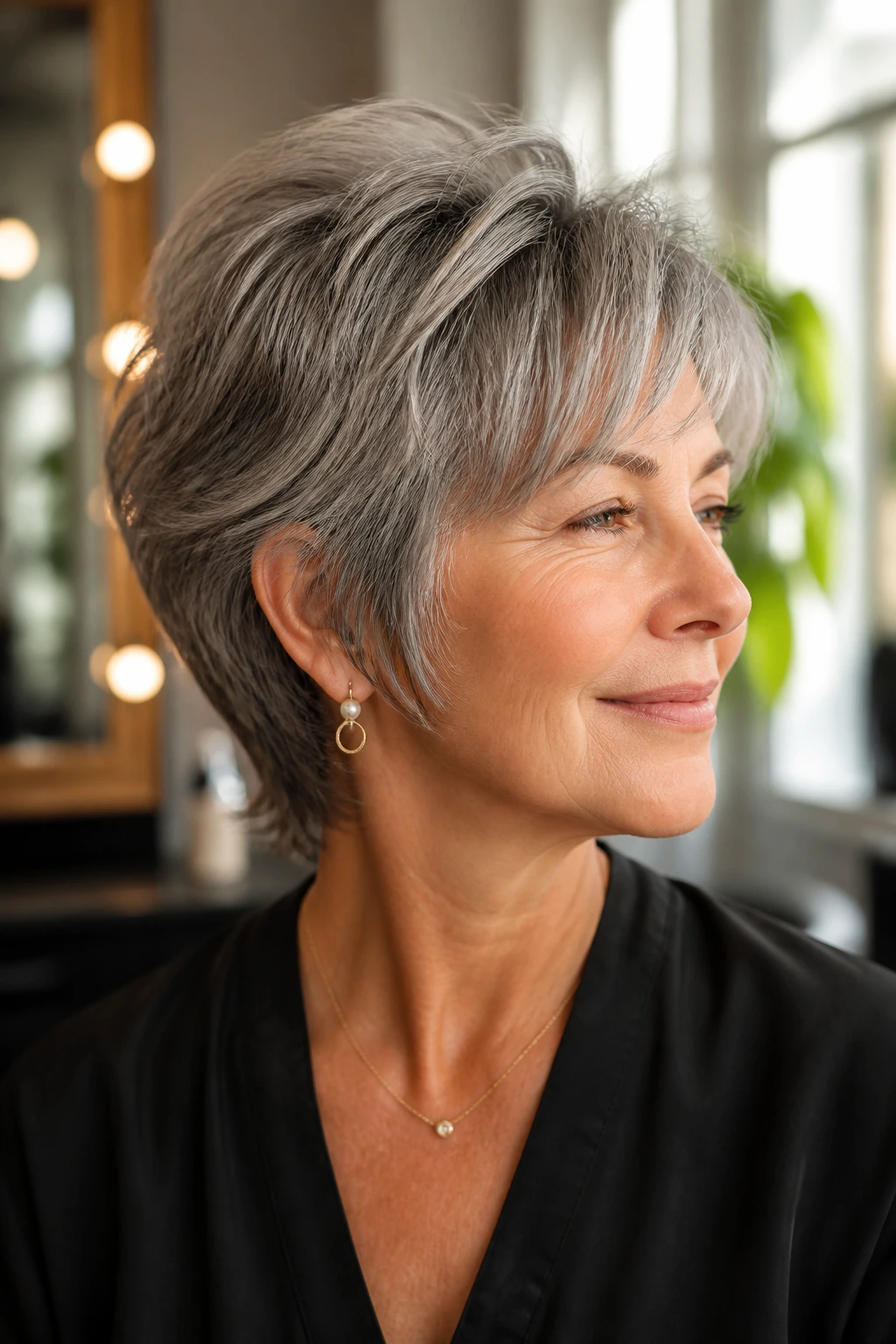
The mixie sits between a pixie and a mullet, but the soft-edged version is far more wearable than the name makes it sound. Thick hair is what makes it work. The crown keeps lift, the sides stay controlled, and the back has just enough length to feel intentional instead of accidentally grown out.
This cut suits people who want edge without a lot of fuss. It’s short enough to dry fast and long enough in spots to play with direction. Gray hair often looks especially good in this shape because the texture and movement become part of the style.
Ask for soft transitions, not hard disconnects. That’s the difference between modern and messy. The best mixie should move when you turn your head, not sit there like a graphic shape.
25. Polished Long Cut with Soft Face Ribbons
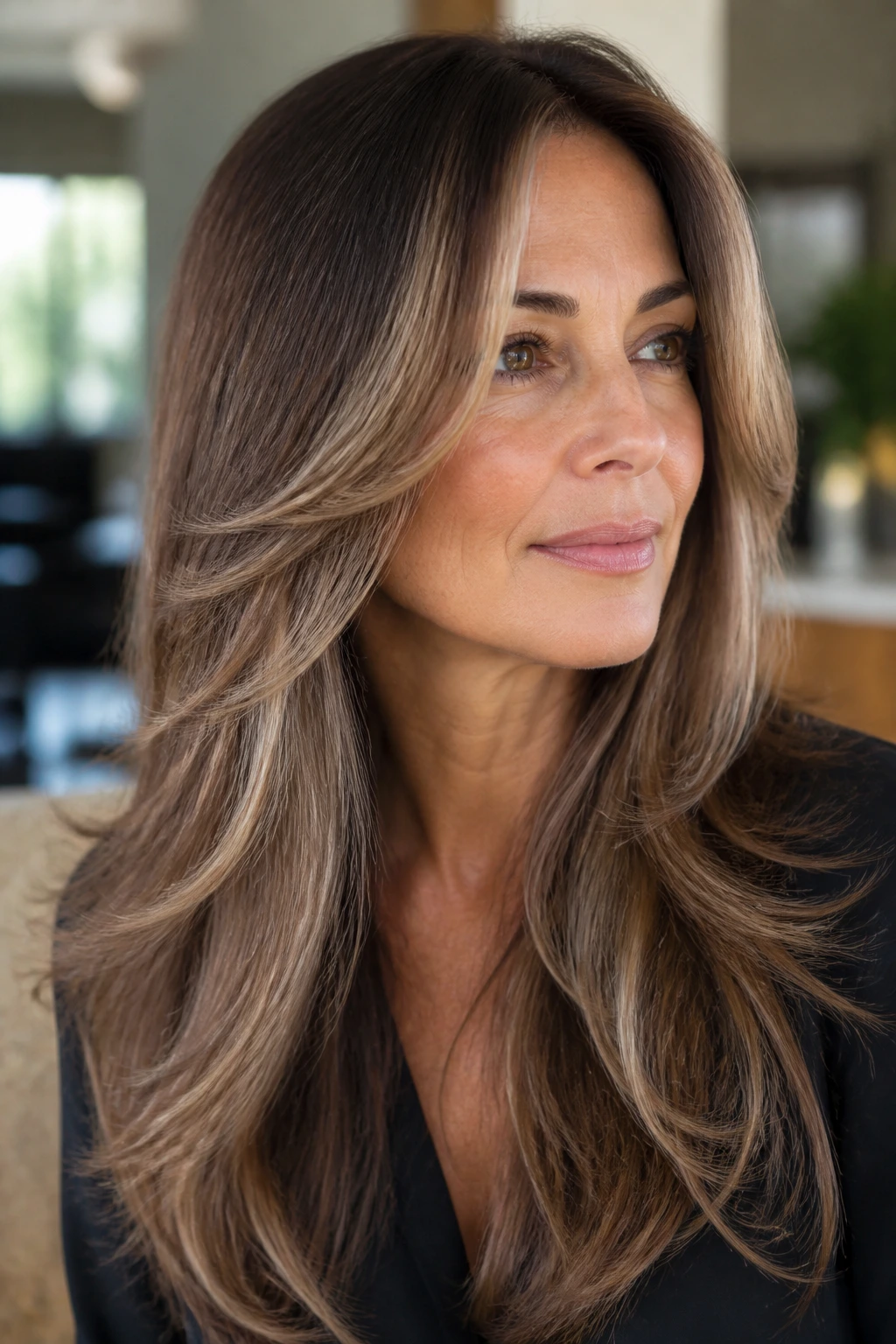
Keeping long hair after 40 is completely fair game if the cut respects the weight. A polished long cut does that by keeping the perimeter controlled and adding soft face ribbons that start around the cheekbone or lower. Thick hair can look lush in this length when it’s shaped, not left to grow wild.
The face ribbons matter more than a lot of people think. They stop the length from feeling too bottom-heavy and soften the line around the jaw. If you wear your hair wavy, these pieces catch movement. If you straighten it, they keep the front from looking severe.
This is the long-hair option for someone who still likes a little drama, just not the kind that comes from a tangled, overgrown shape. It needs trims, yes. But it rewards you with hair that still feels substantial and looks expensive when it’s down.
Why Thick Hair Needs the Right Geometry
Thick hair does not just mean “a lot of hair.” It means weight, direction, and resistance. Those three things decide whether a cut falls cleanly or puffs into a shape that fights your head. After 40, that becomes even more noticeable because hair can shift texture a little — grayer strands can feel drier, coarse sections can spring out, and the crown may not bend the way it used to.
The right haircut gives thick hair a map. That may sound dramatic, but it’s true. A blunt edge with no internal shape can create a wall. Too many short layers can create a halo of bulk. The sweet spot is usually some version of perimeter plus internal movement. The outline stays clear. The inside gets lighter.
Face shape matters, too, but not in the rigid way salon magazines like to pretend. A jaw-length bob can sharpen a round face. A collarbone lob can soften a long one. Curtain bangs can break up a strong forehead. But none of that works if the hair itself is cut badly. Thickness changes everything. That’s the part worth respecting.
How to Ask Your Stylist for the Right Version
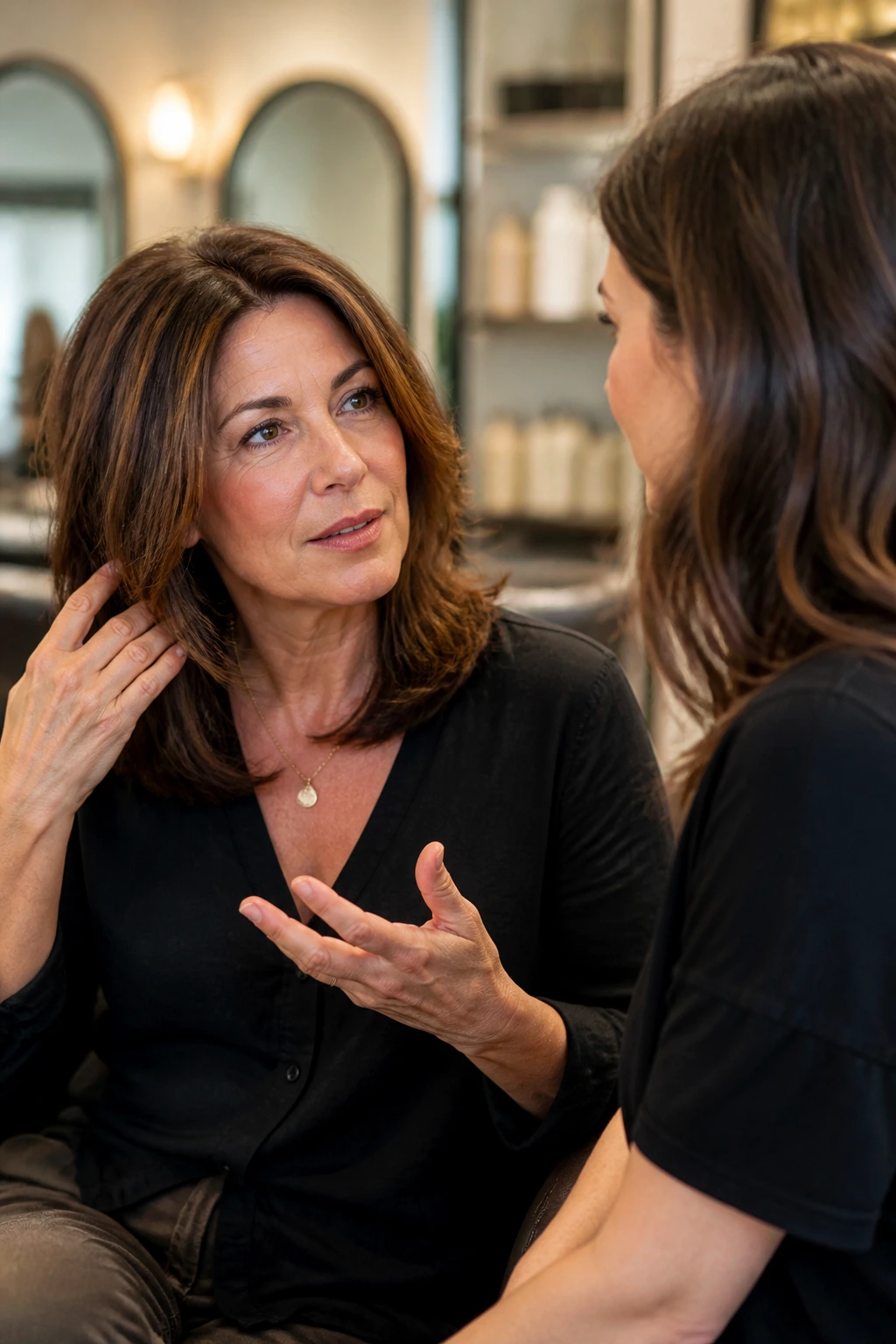
Bring photos, but bring the right photos. A picture of a cut you like is useful only if the model has similar density and texture. A fine-haired bob and a thick-haired bob are not the same haircut. They may look similar on Instagram. In the chair, they behave like different animals.
Say what you do with your hair on a normal Tuesday. Do you air-dry? Blow-dry with a brush? Wear it in a claw clip three days a week? That tells the stylist where to keep the weight and how much movement to build in. If you live in a ponytail, you probably do not want micro layers that fall out of everything.
Ask where the layers begin. Ask whether the cut uses point cutting, slide cutting, or internal debulking. Ask if the haircut will still look right after three weeks of grow-out. Those are better questions than “will it be easy?” because easy means different things to different people. For one person, easy is a five-minute blowout. For another, it means a cut that looks decent after sleep and dry shampoo.
And if you have curls, ask for a dry check before the final snip. Thick curly hair can lie to you when it’s wet. That’s not a mystery. It’s just curl physics.
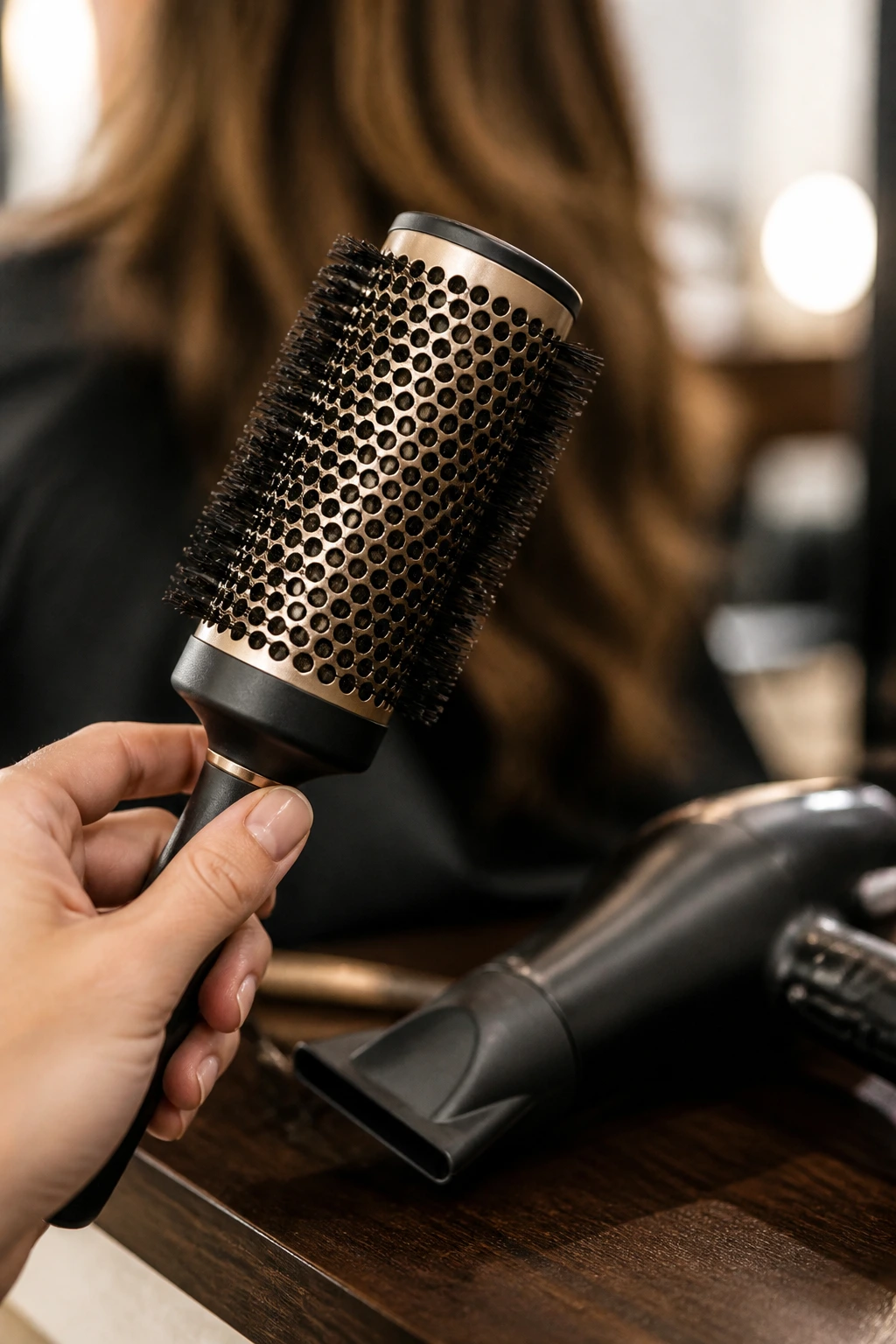
Tools That Make Thick Hair Easier to Style
-
1.5- to 2-inch round brush: Best for smoothing lob-length and shoulder-length cuts without making the ends look curled under too hard.
-
Blow dryer with a nozzle attachment: The nozzle keeps the air focused, which helps thick hair lie flatter and dry faster.
-
Root-lift spray or mousse: Useful for stacked bobs, side parts, and crown lift on thicker textures that want to drop.
-
Heat protectant: Non-negotiable if you use a flat iron, curling iron, or hot brush, especially on gray hair that can be drier.
-
Wide-tooth comb: Better than a brush for wet curls, shag cuts, and anything with soft layering.
-
Sectioning clips: Thick hair is hard to manage in one pile. Clips save time and make blow-drying less chaotic.
-
Light cream or serum: A small amount on the mids and ends keeps bob cuts and long layers from spreading out too much.
-
Diffuser: Worth it if you have waves or curls and want shape without breaking up the pattern.
How Thick-Hair Cuts Wear in Real Life

Presentation: The best version of each cut should sit with a clear outline, even if you only spend five minutes on it. A collarbone lob can be blown smooth and tucked behind one ear; a shag can be roughed up with cream and left to bend where it wants. The shape should still read as a haircut, not just hair.
Best Pairings: Shorter cuts tend to look sharp with earrings, open necklines, and glasses that have a little frame thickness. Longer layered cuts work well with sweaters, scarves, and shirts that add structure near the shoulders, because thick hair likes something to play against. If your hair is full around the jaw, a V-neck or scoop neck usually keeps the whole look lighter.
Styling Time: A bixie or pixie may take five to ten minutes once you learn where the pieces want to go. A bob usually lands in the 10-15 minute range with a brush and dryer. Long layers and shaggy cuts can be air-dried, but the finish improves a lot if you spend a few minutes shaping the front and smoothing the ends.
Best For: The clean bob crowd, the air-dry crowd, the “I want to look put together without touching it all day” crowd. Different tools, same goal: hair that behaves.
Small Tweaks That Change the Whole Shape
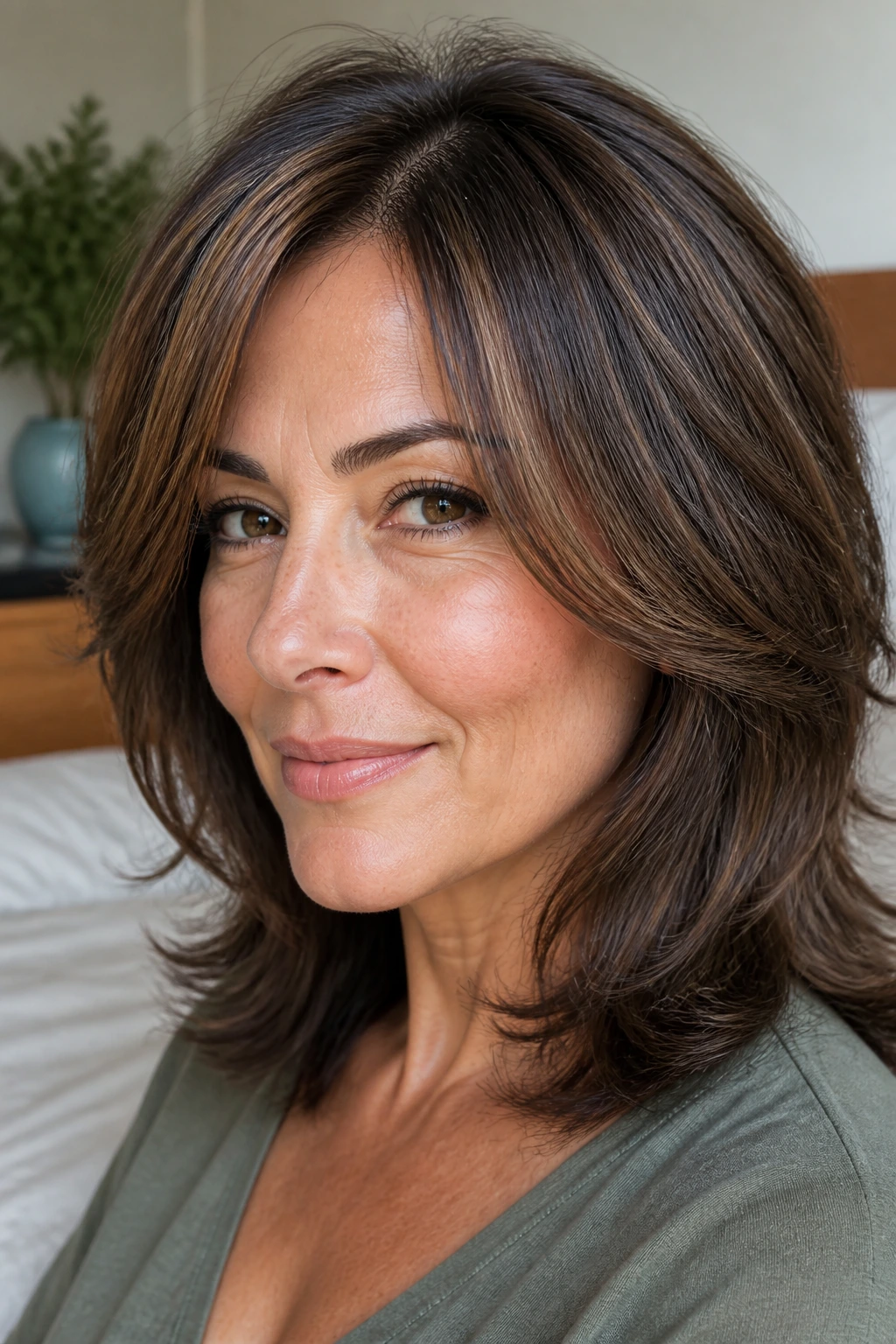
Face-Framing Upgrade: If a cut feels too heavy, move the shortest front pieces a little lower. Around the cheekbone is often the sweet spot for thick hair, because it softens the face without creating puff around the temples.
Bulk Relief: Ask for internal weight removal before you ask for more layers. Those are not the same thing. Bulk removal lightens the cut from the inside; more layers can sometimes add visual width if they’re placed badly.
Movement Boost: If your hair tends to sit flat at the crown, a deep side part or a lifted fringe can change the whole mood of the cut without taking off length. Small changes at the root travel farther than people expect.
Gray-Hair Friendly: Gray strands often feel coarser and look brighter, so cleaner lines and softer ends usually read better than heavy texturizing. A shape with motion lets the silver catch light in sections instead of forming one solid block.
Low-Maintenance Switch: If you hate hot tools, pick the cut with the most texture built in — the shag, the softened wolf, the curly midlength, or the layered lob. The less the shape relies on a perfect blowout, the easier it is to live with.
The Mistakes That Make Thick Hair Fight Back
-
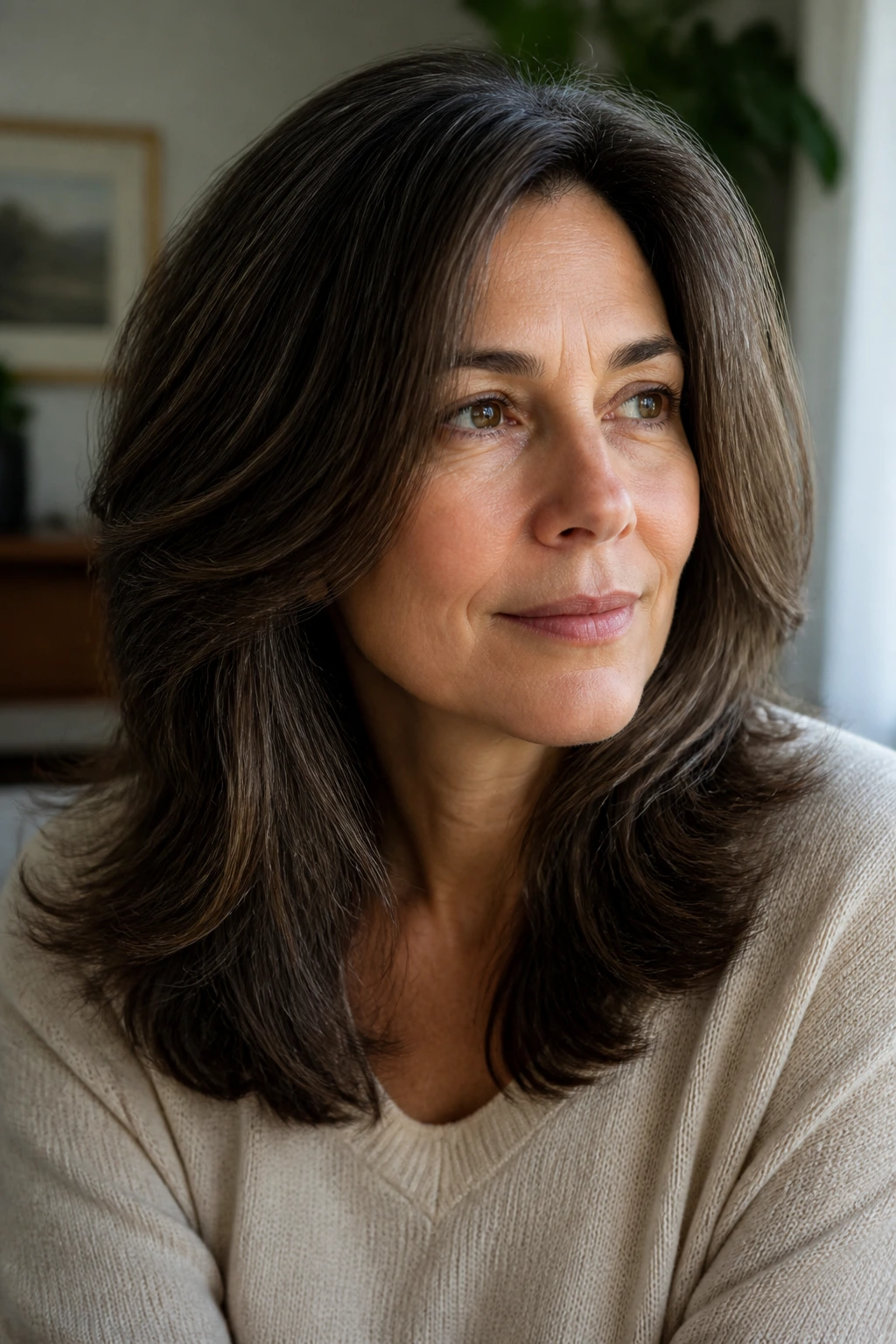
Too many short layers too high on the head: The symptom is a puffed-up crown and a wide triangle at the sides. The fix is to keep the shortest layers lower and let the interior carry the weight.
-
Over-thinning the ends: Hair feels wispy, but it also frizzes faster and loses its shape. A better move is to remove bulk from the interior, not strip the perimeter bare.
-
Choosing a blunt bob without checking the nape and jawline: Thick hair can flare outward if the cut is too boxed. Slight beveling or a subtle angle usually keeps the line closer to the face.
-
Ignoring your daily routine: A cut that needs a round brush every morning is a bad fit if you never use one. Be honest about how much styling you’ll do. It saves regret.
-
Cutting fringe too short on thick hair: Bangs that sit above the brow can spring up, separate, or get bulky fast. Leaving them a little longer gives you room to shape them.
-
Using the same cut for wet and dry hair expectations: Curly and wavy thick hair should be judged both ways. Wet hair lies; dry hair tells the truth.
Ways to Adapt These Cuts
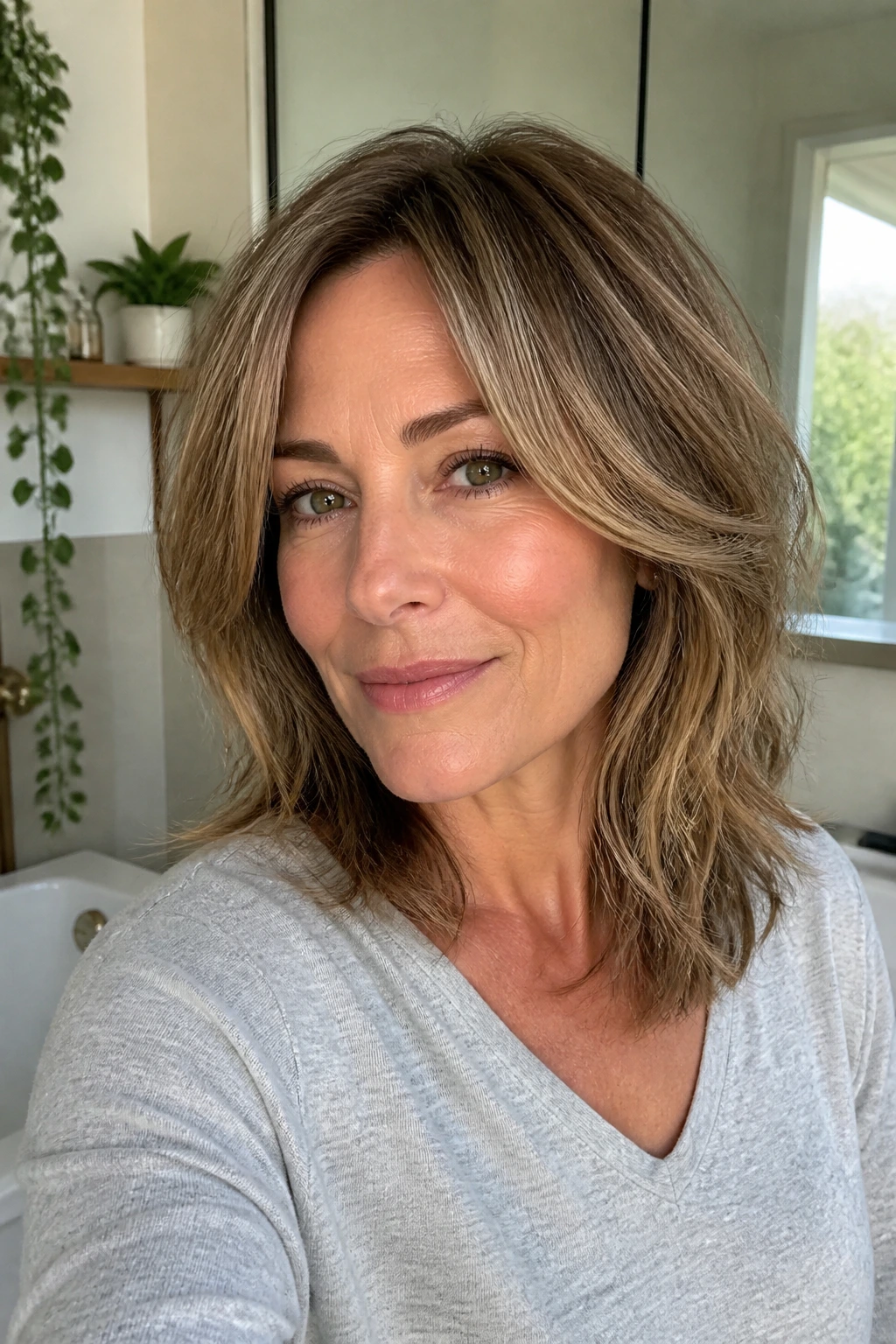
The Air-Dry Version: Choose the shaggy lob, the layered midi, or the soft wolf cut, then ask for layers that encourage bend rather than sharp, disconnected pieces. A little leave-in and a scrunch are usually enough.
The Glasses-Friendly Version: Curtain bangs, side-swept fringe, jaw-grazing bobs, and rounded crops keep the face open around the frames. Avoid bangs that sit too heavy across the brow line; they tend to compete with glasses.
The Curl-Friendly Version: Keep the cut longer in the front than you think you need, and ask for shaping that respects shrinkage. Dry cutting or curl-by-curl work makes a big difference when the curl pattern is dense.
The Gray-Texture Version: If gray strands have turned coarser, lean into cleaner outlines and softer interior movement. Very choppy texturizing can make silver hair look fuzzy instead of sleek.
The Low-Commitment Grow-Out Version: Collarbone lobs, shoulder-length U-shapes, and long layers are the safest bets if you want a cut that still looks decent two months later. They grow out instead of collapsing.
Keeping the Shape Between Trims
Thick hair usually needs a trim sooner than long hair ads suggest, but not every cut has the same schedule. Pixies and bixies often want a cleanup every 4-6 weeks because the nape and sides lose shape fast. Bobs can usually go 6-8 weeks. Shoulder-length layers and long cuts often stretch to 8-12 weeks if the ends stay healthy.
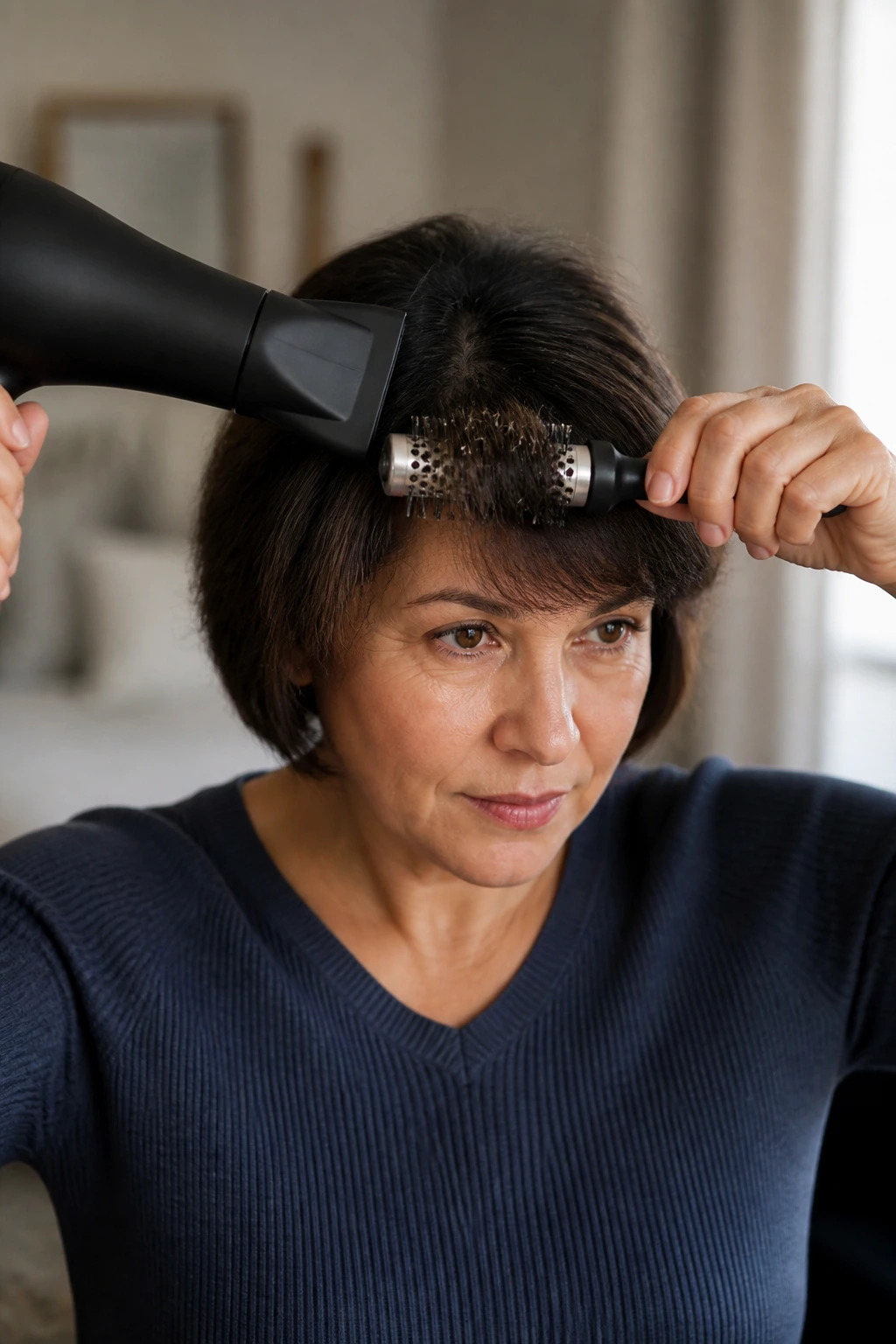
Between appointments, the fastest rescue is usually the front and crown. Bangs can be dried with a small round brush for 30 seconds. A bob that starts flipping out can be reset with a quick pass of the dryer and brush on the ends only. If your hair gets puffy overnight, a tiny bit of cream on the lower half and a satin pillowcase can make mornings less annoying.
Curly cuts need a different kind of upkeep. Don’t chase every frizz halo with heat. Refresh with water, a little curl cream, and finger-coiling a few front pieces if needed. Long thick hair benefits from regular dusting at the ends, because split ends make the whole shape look tired faster than most people expect.
The point is not perfection. It’s keeping the haircut inside the same family as the original shape. Small trims, small resets, less drama.
Frequently Asked Questions
What haircut makes thick hair look lighter without going short?
A collarbone lob with invisible layers or a shoulder-length U-shape usually does the job. Both remove bulk without sacrificing the feel of fullness that thick hair naturally has.
Will layers make thick hair frizzy?
They can if they’re cut too high or thinned too hard. The safer move is internal weight removal and long layers that begin below the cheekbone, which reduces bulk without scattering the ends.
Is a blunt bob good for thick hair over 40?
Yes, if the interior is controlled. A hidden undercut or subtle bevel keeps the bob from flaring out, which is the main problem thick hair creates at that length.
Can I wear bangs if my hair is thick and I wear glasses?
Absolutely. Curtain bangs and side-swept fringe usually work better than short blunt bangs because they leave space for the frames and grow out more gracefully.
What if my hair is thick but starting to thin at the crown?
Ask for shape that keeps fullness at the top without over-layering the crown. A deep side part, soft layering below the crown, and a cut with a clear perimeter usually help more than aggressive thinning.
How short can thick hair go before it becomes high-maintenance?
That depends on the shape, not just the length. A well-cut pixie or bixie can be easier than a shoulder-length cut that needs a lot of smoothing, but short hair usually needs more frequent trims.
Do I need thinning shears for thick hair?
Not necessarily, and too much of them can create fuzzy ends. A stylist with a good scissor technique can remove bulk more cleanly with layering, slide cutting, or internal shaping.
Which cuts work best if I want to air-dry most days?
The soft shag, layered lob, shaggy midi, and curly shoulder cut are strong choices. They have shape built into them, so they don’t depend on a perfect blowout to look finished.
The Shape That Does the Work
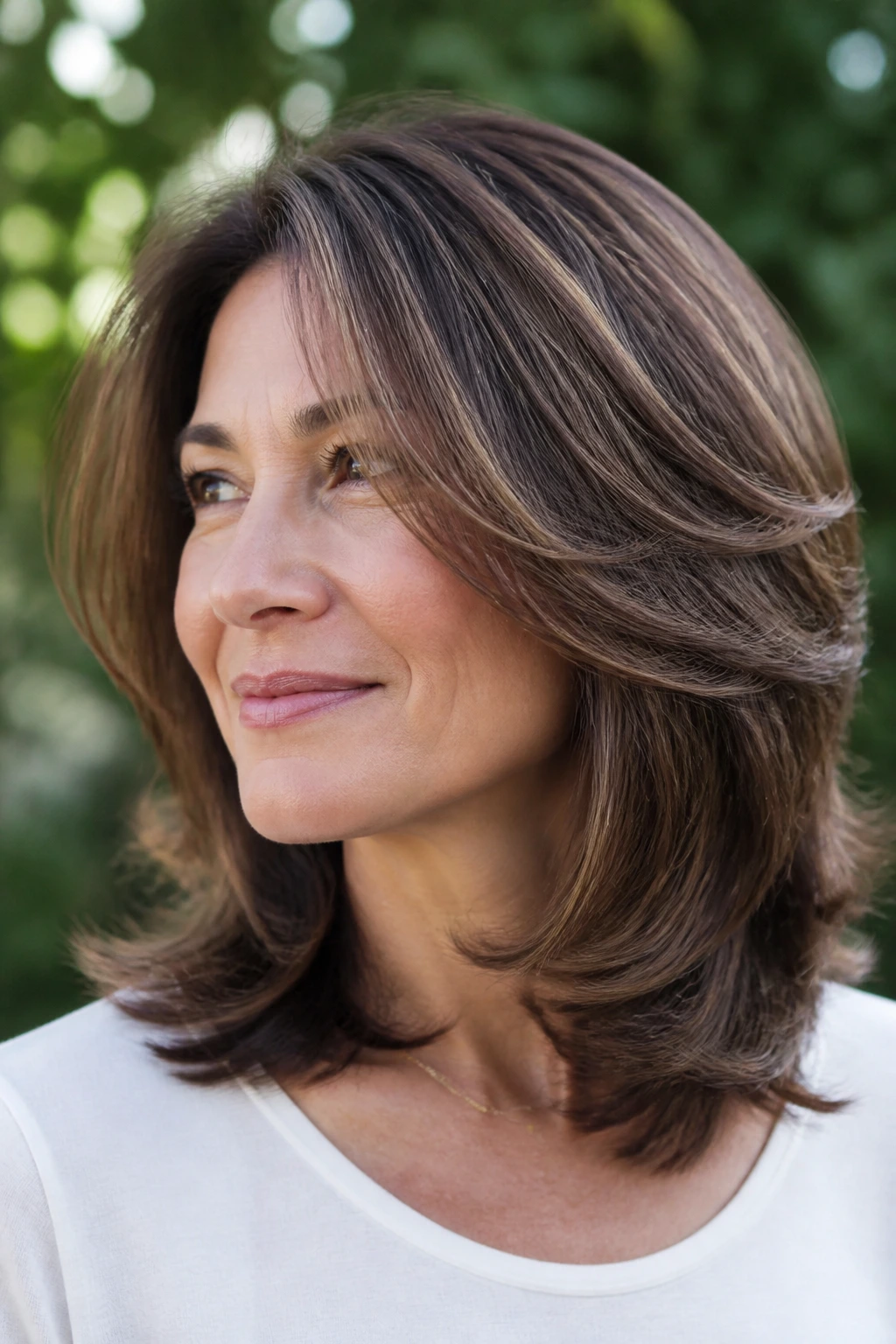
The best haircut for thick hair over 40 is not the shortest one, the trendiest one, or the one your friend swears changed her life. It’s the one that handles your density with a little intelligence. A good cut lets thick hair move, settle, and frame the face without spending all day asking for help.
That usually means clear lines, smart weight removal, and a shape that matches the way you actually live. If you air-dry, choose texture that can bend on its own. If you wear glasses, leave room around the front. If your hair has gone a little coarser or grayer, respect that and cut accordingly. Hair gets more interesting with time, not less.
Bring a few real photos, be honest about your routine, and ask where the bulk should come out. That’s where the good cuts start.
