



The best edgy long haircuts with layers for thick hair do one thing beautifully: they take weight out of the right places without turning the whole head into frizz. Thick hair does not need to be “tamed” so much as redistributed. When the layers are placed with a little nerve—around the crown, through the cheeks, or in a blunt-to-piecey perimeter—the haircut starts moving instead of sitting there like a heavy curtain.
That matters because thick hair has a habit of lying to the mirror. Freshly washed, it can look smooth and obedient; by lunch, the mids can balloon, the ends can puff, and the shape starts reading boxy. The fix is not “more layers” in the lazy sense. Too many short pieces in the wrong zone can make the silhouette wider, not lighter. The haircut has to respect where your hair actually swells.
Some of the cuts below are sharp and rebellious. Others are quieter but still have bite—a hard face frame, a blunt edge, a razored fringe, a heavy crown with air built underneath. The right one depends on how much length you want to keep, how much styling you’ll tolerate, and where your thick hair tends to fight back the hardest.
Why These Edgy Long Haircuts Work on Thick Hair
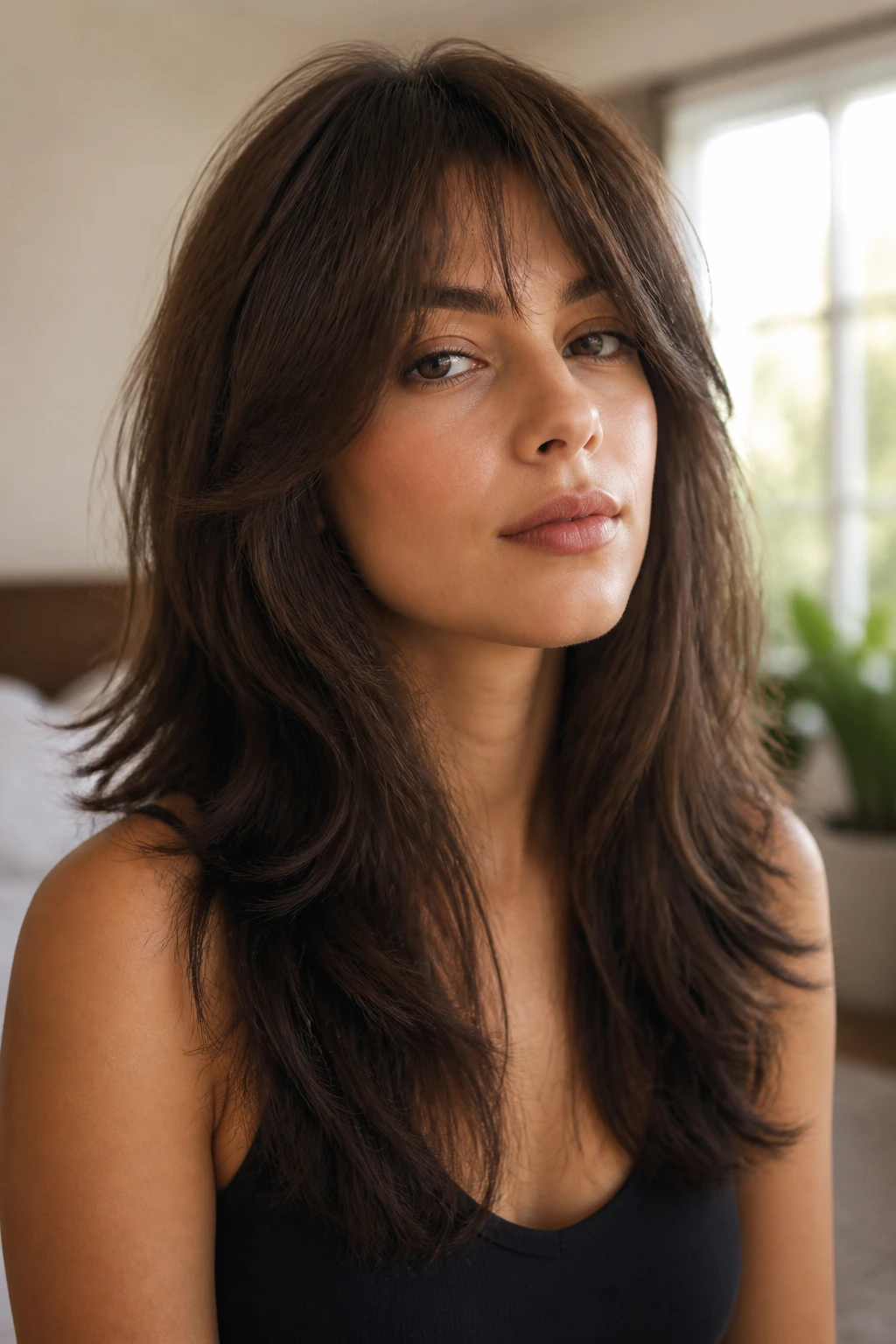
-
Bulk Comes Off Where It Matters: Dense hair needs weight removed from the crown, cheek area, or interior lengths—not chopped away at random—so the shape stops blooming outward at the mids.
-
The Edge Stays Visible: A blunt perimeter, a choppy fringe, or razor-soft ends keeps the haircut from reading like a routine trim when you wear it straight.
-
The Grow-Out Looks Intentional: Good layers keep their shape for weeks because the longest line still holds the haircut together when the shorter pieces start to settle.
-
Styling Gets Faster: Thick hair that used to demand a full blowout can often be rough-dried, bent at the front, and finished with texture spray in ten minutes.
-
The Same Cut Can Change Mood Fast: A center part, a deep side part, a loose wave, or a sleek stretch gives you a different attitude without changing the haircut itself.
The cuts below all solve the same problem from different angles. Some pull weight from the interior. Some make the front do the talking. Some keep the bottom line blunt so the haircut doesn’t collapse into wisps.
1. The Long Wolf Cut With Soft Razor Ends
The long wolf cut is the easiest place to start if you want shape with teeth. It keeps the length, but the crown layers sit high enough to break up that thick-hair helmet effect that shows up when the top is too heavy and the ends are too even.
Why It Works on Thick Hair
The wolf cut works because the shortest layers live near the crown and upper sides, while the perimeter stays long enough to hold the line. That means your hair can move at the top without losing the length you came in for. On straight or wavy thick hair, the soft razor ends make the whole cut look more lived-in and less blocky.
- Ask for the shortest layers to hit around the cheekbone or just above.
- Keep the ends lightly point-cut, not shredded.
- Use texture spray only on the mids and crown.
Best for: hair that puffs out at the sides but still has enough density to support some mess.
2. Butterfly Layers That Float Around the Face
Why does the butterfly cut keep showing up in thick-hair conversations? Because it cheats in a smart way. You keep the long bottom length, then build shorter front layers that open around the face and collarbone like a second haircut hiding on top of the first.
The effect is lighter without being thin. That is the part I like. Thick hair can look flat when it is all one length, but it can also look stringy if the layers are too aggressive. Butterfly layers sit in the middle: enough movement to catch the eye, enough weight left behind to keep the ends full.
If you wear your hair blown out or softly waved, this cut gives you a clean curve around the cheekbones. Ask for the shortest front layer to start around the chin if you want a gentle version, or closer to the cheekbone if you want more drama. The lower layers should still land in a strong line so the haircut does not collapse when you skip heat styling.
3. A Choppy Shag With Curtain Bangs
Picture thick hair that keeps falling into your collarbone and swallowing your face. The shag fixes that by breaking the shape into pieces, then curtain bangs do the rest of the work up front. It is messy on purpose, and thick hair has enough body to pull it off without going limp.
What Makes It Different
The shag’s edge comes from uneven texture, not from losing all its weight. The crown gets lifted, the front gets shorter, and the ends stay rough enough to move around instead of stacking into a blunt wall. Curtain bangs help because they split the face cleanly and stop the haircut from feeling too heavy around the eyes.
- Keep the bangs long enough to tuck behind the cheekbones.
- Ask for the ends to be point-cut, not sliced into tiny bits.
- Blow-dry the fringe first so it does not dry flat and awkward.
Worth knowing: on very coarse hair, a shag needs a light hand. Too many short layers can turn dense hair into a triangle with opinions.
4. The V-Cut That Keeps Length but Loses Bulk
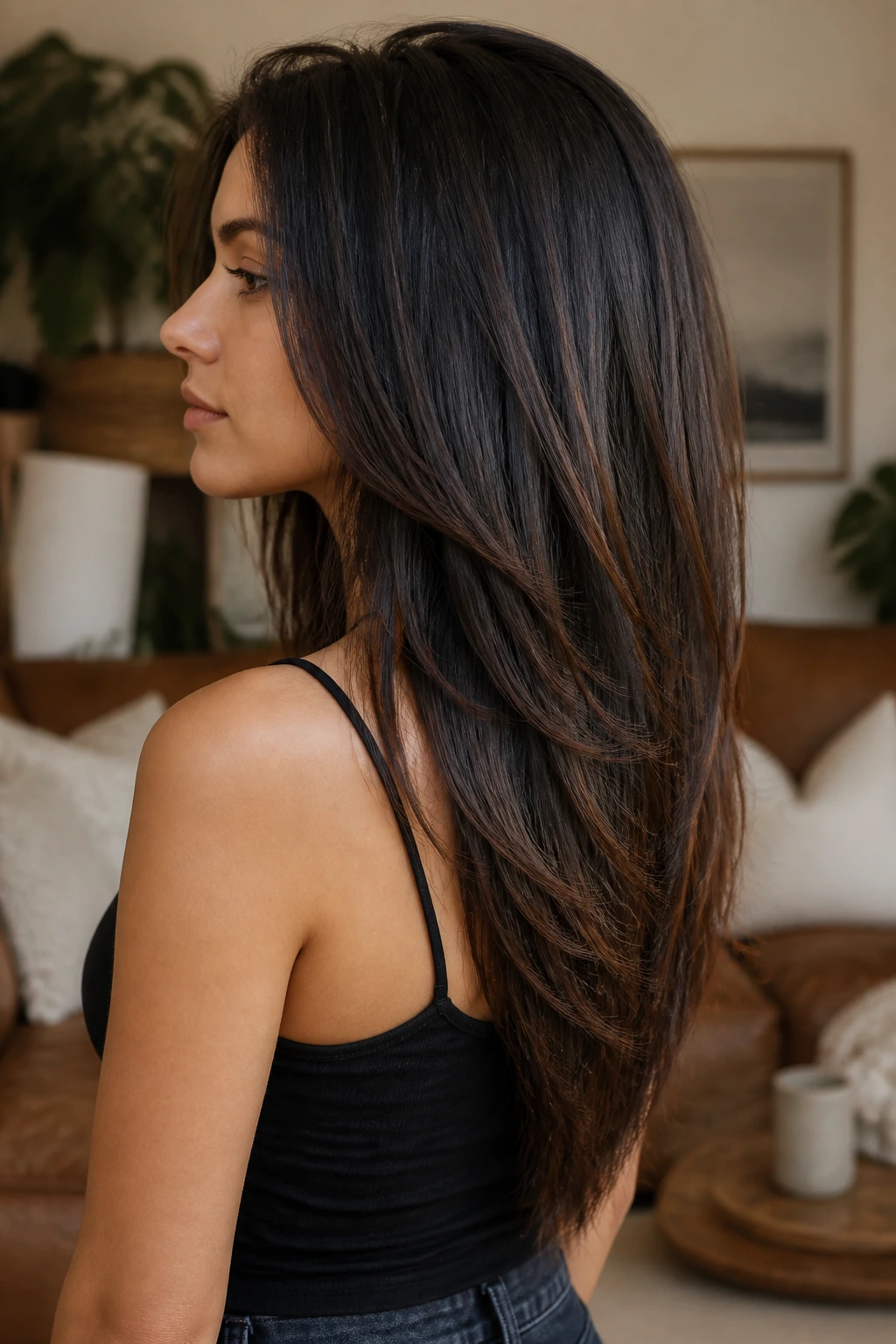
A V-cut is for the person who loves long hair but hates how much it weighs at the back. From behind, the outline drops into a point instead of a straight hem, which gives thick hair a direction it often lacks.
The shape is strong. That is the appeal. You can still braid it, still tie it into a long ponytail, still let it spill down your back, but the ends no longer look like one giant curtain. The diagonal sides draw the eye downward, which is helpful if your hair grows wide before it grows long.
I like this cut best when the layering is subtle through the interior and a little more visible around the front. If the point gets too sharp, the whole thing can feel theatrical in a bad way. Ask for the back to taper gradually, with the final point sitting somewhere between mid-back and waist depending on your length.
5. U-Shaped Layers With a Clean, Heavy Perimeter
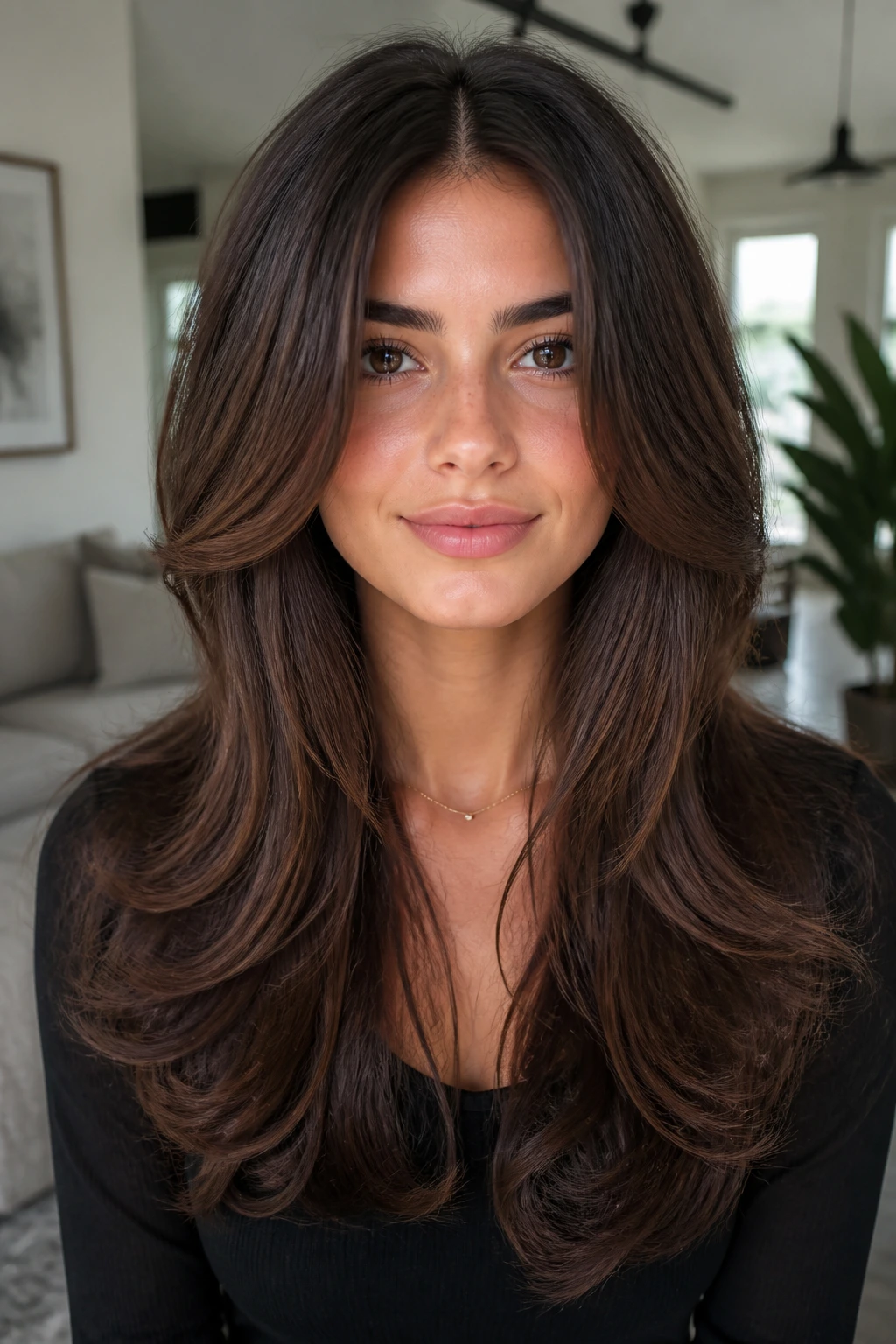
If a V-cut feels too sharp, the U-shape is its calmer sibling. The hemline curves gently instead of pointing down, so the haircut keeps a softer edge while still opening space through the interior layers.
That makes it a solid choice for thick hair that needs relief but not a dramatic personality shift. You get movement without losing the feeling that the hair is full. The perimeter stays clean, which helps when your ends are prone to frizz or when you want the haircut to look polished with almost no styling.
Ask for internal layers that start below the chin and stay long enough to disappear when the hair is straight. That is the trick. When the layers are too visible, thick hair starts to look chopped up. When they’re tucked inside the shape, the haircut feels lighter without looking busy.
6. Razor Layers and Bottleneck Bangs
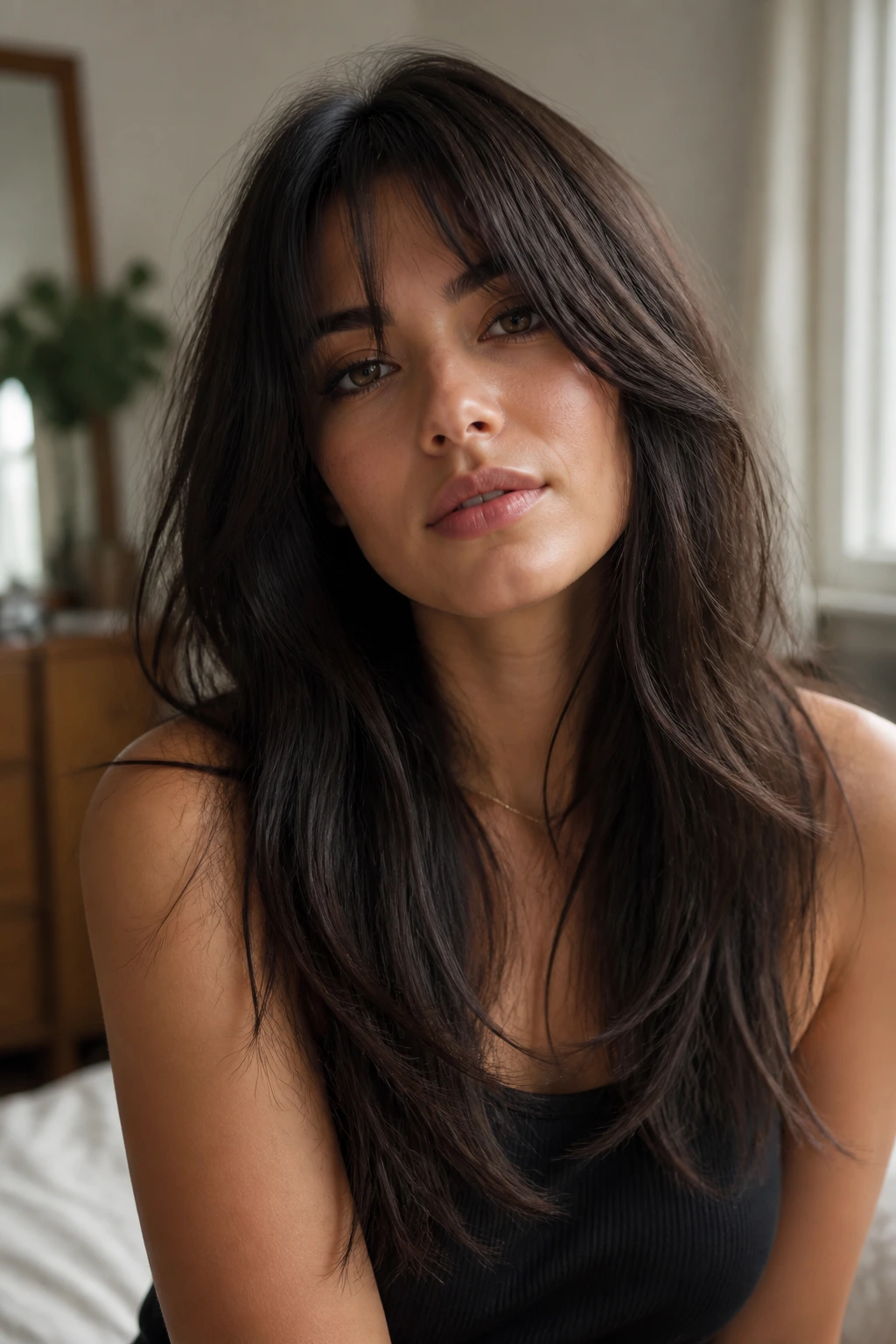
The razor cut is not for every texture, and I would never pretend otherwise. On thick straight-to-wavy hair, though, it can be a dream. It removes bulk fast and leaves a softer, more frayed edge that makes the whole haircut feel sharper.
Bottleneck bangs are the perfect partner here. They start narrower at the center, then widen as they sweep out toward the temples, so the front of the haircut opens rather than clinging to the face. On a dense head of hair, that opening matters. It keeps the haircut from sitting like a heavy frame around your cheeks.
If your hair frizzes the second it sees humidity, ask for a gentler razor finish or a scissor-based version. Not every thick head wants the same treatment. But when the texture can handle it, this is one of the cleanest ways to get edge without losing length.
7. The Octopus Cut for Big, Dense Hair
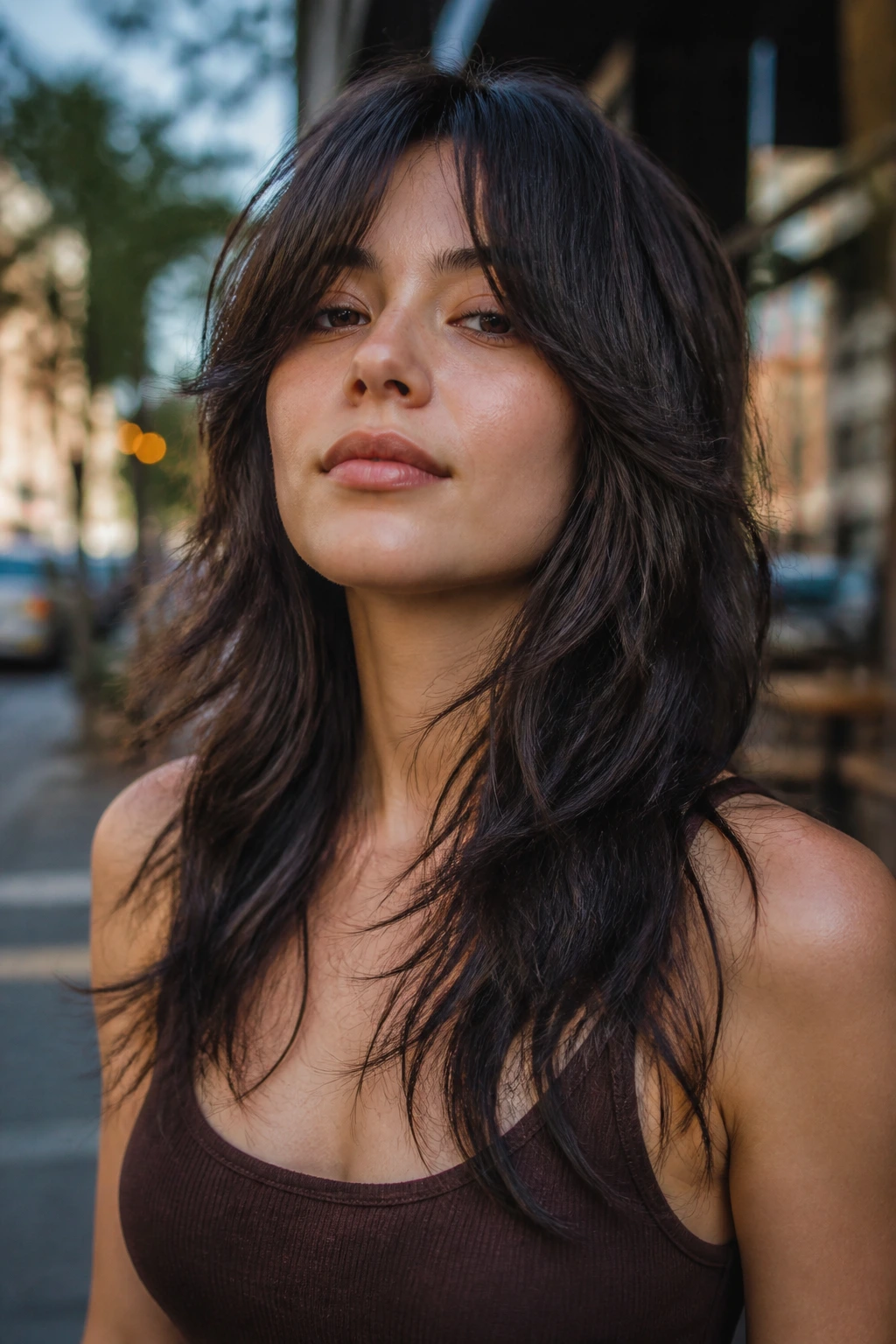
The octopus cut sounds odd until you see it move. Then it makes sense. The top stays fuller and more layered, while the ends are left lighter and more separated, which gives thick hair a wild, floating outline.
How to Keep It From Looking Like a Mushroom
The danger zone is the top. If the crown gets too short and the bottom gets too wispy, the whole thing can tilt into a mushroom shape. That is not the goal. The sweet spot is a rounded top layer that sits near the cheekbone or collarbone, then longer pieces beneath that still hold enough weight to swing.
- Keep the longest layers reaching the chest or lower.
- Ask for soft separation around the sides, not jagged clipping everywhere.
- Finish with a light texturizing spray, not a crunchy paste.
My take: this is one of the most interesting shapes for thick hair when you want something a little unruly but still controlled enough to wear every day.
8. Hime-Inspired Long Layers With a Sharp Edge
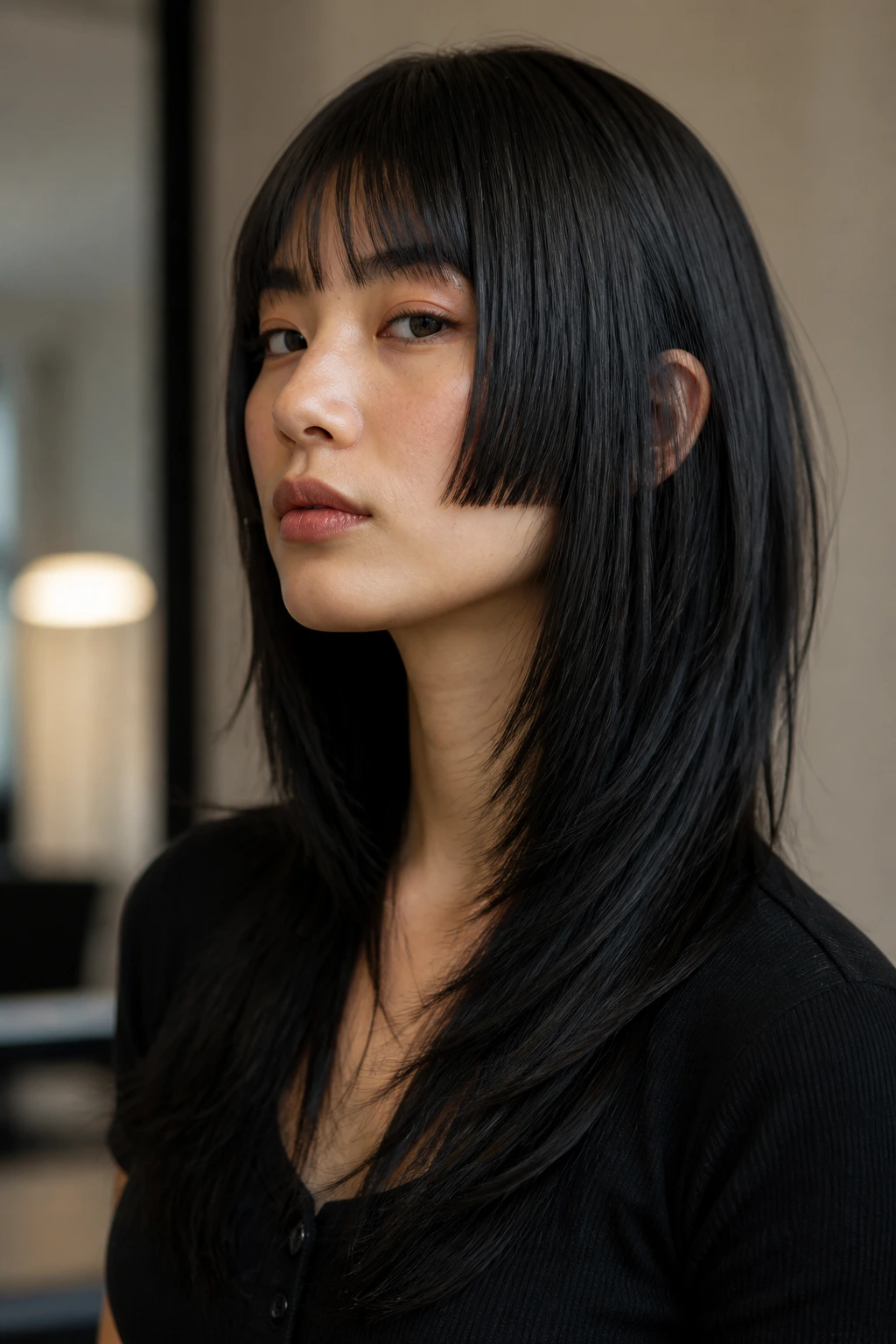
A hime-inspired cut gives you a hard line around the front with long length behind it, and that contrast is where the drama lives. Thick hair is useful here because the straight pieces at the sides sit with authority instead of looking flimsy.
What keeps it from feeling costume-like is the layering in the rest of the head. The back should still move. The side pieces should look deliberate, not accidental. If the whole cut is too uniform, it can feel like a wig. If the interior layers are soft and the side panels are crisp, it reads as edgy in a grown-up way.
This is a strong choice if you like a center part, straight styles, and a haircut that makes earrings and collars look sharper. It is not the most forgiving cut on a rushed air-dry morning, but it has presence. Plenty of it.
9. A Soft Mullet That Still Reads Feminine and Long
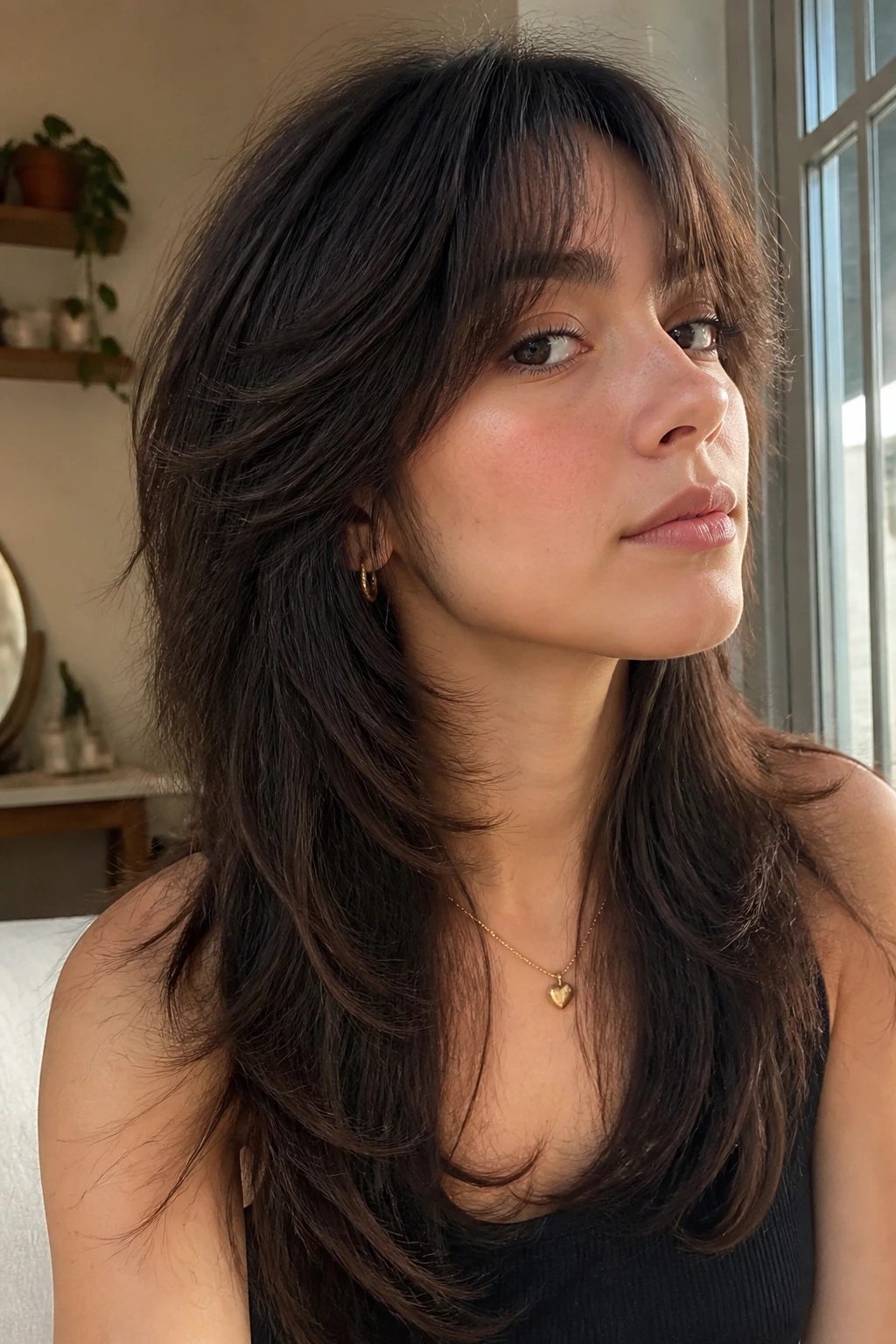
The soft mullet earns its place on this list because thick hair can support the short crown and longer back without collapsing into weirdness. The haircut lives on contrast: a bit shorter up top, a bit longer through the back, and face pieces that soften the whole thing.
I like this version better than a very harsh mullet for most people. Thick hair already brings enough weight. You do not need to over-exaggerate the difference between the front and back. Keep the layers feathered rather than choppy, and let the longest part stay long enough to move when you walk.
If your hair feels square from the side, this cut can fix it fast. It breaks up the blocky outline and gives the silhouette a little swing. The back should not be so short that it loses its long-hair identity. That balance is the whole point.
10. Face-Framing Layers With a Deep Side Part
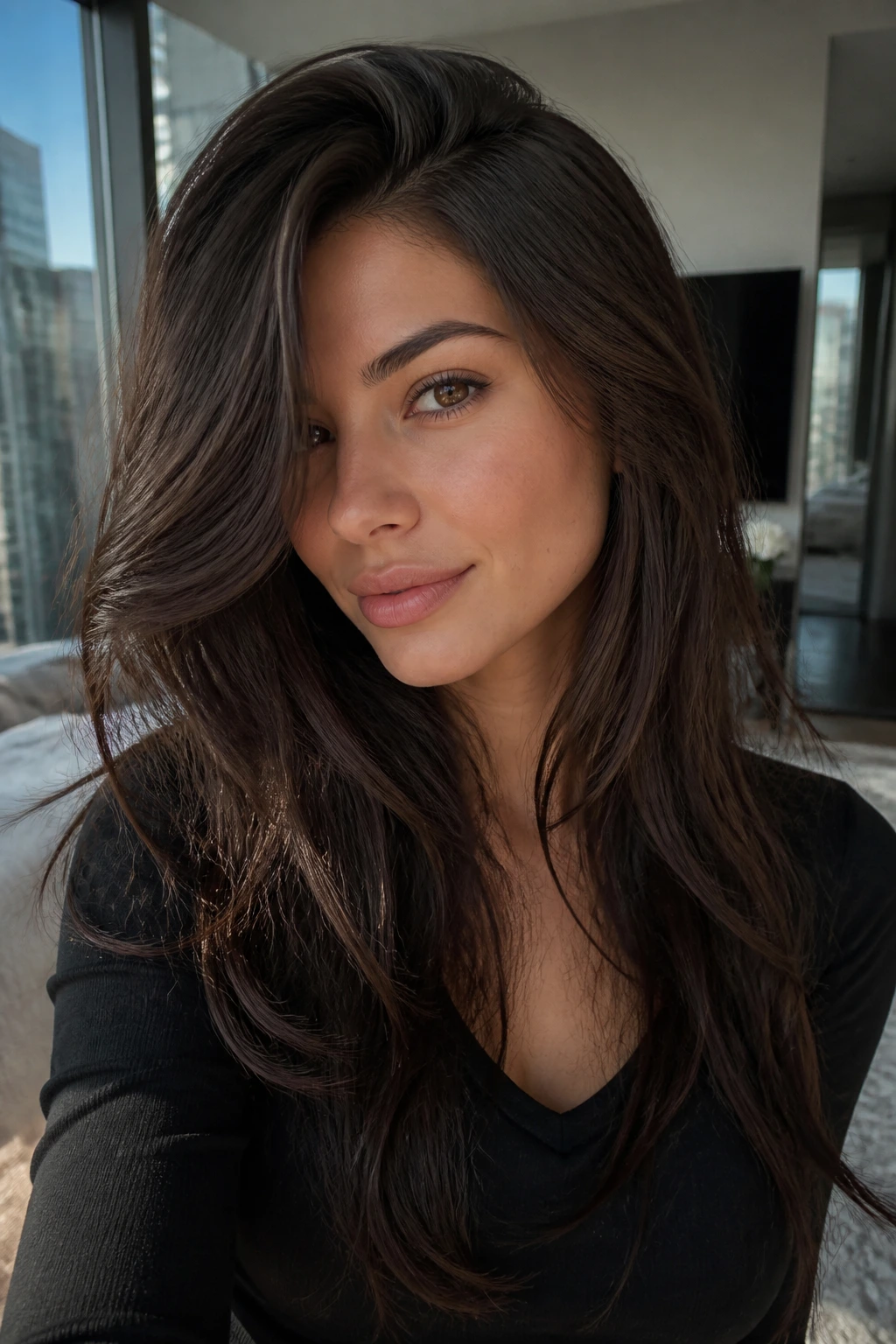
A deep side part changes everything. Seriously. Thick hair that looks broad and heavy in the center often looks instantly more sculpted when it’s swept off to one side, because the part moves volume instead of stacking it evenly across the head.
This version is less about chopping and more about directional force. The front layers should start lower—around the chin or collarbone—and then fall in a long sweep across one side of the face. The opposite side stays cleaner, which gives the cut a little swagger.
It’s a smart choice if you want edge without looking obviously layered from every angle. The haircut can still be long and polished, but the part gives it attitude. Wear it with a tuck behind one ear and the whole shape wakes up.
11. Invisible Layers That Keep the Ends Full
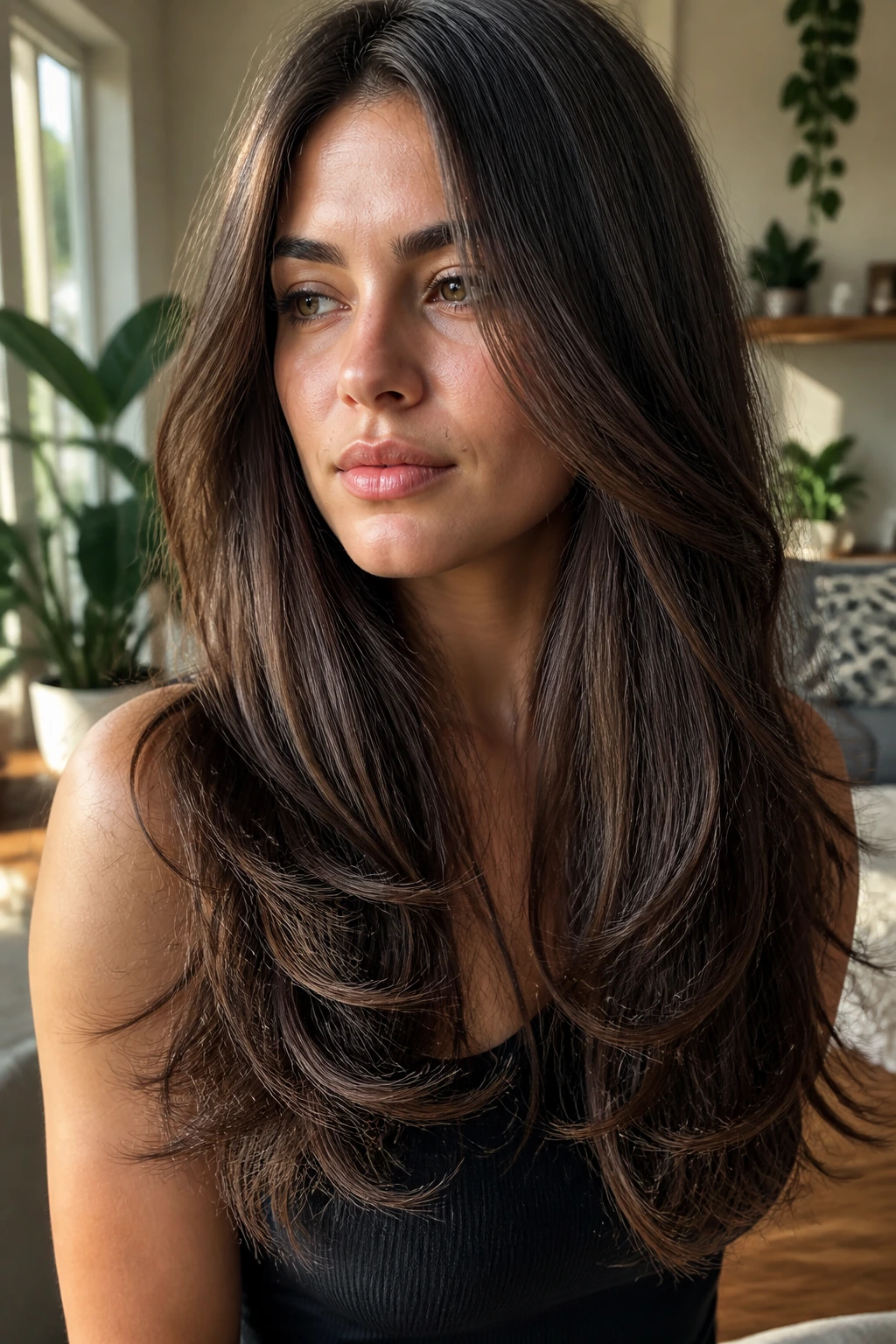
Invisible layers are a quiet trick, and on thick hair they can be the smartest trick in the room. The layers live inside the haircut, so the outer line still looks full and strong while the interior loses enough weight to stop the bulk from ballooning.
That is the beauty of this cut: you get movement without a choppy, stair-step outline. It’s ideal when you want long hair that still swings, not hair that announces every layer from across the room. The ends stay thick. The shape stays calm.
I especially like this for people who wear their hair straight and hate when the bottom looks chopped apart. Ask your stylist for internal graduation and a blunt or softly rounded perimeter. If they start hacking away at the outer edge, you will lose the whole point.
12. Long Piecey Layers With Micro Bangs
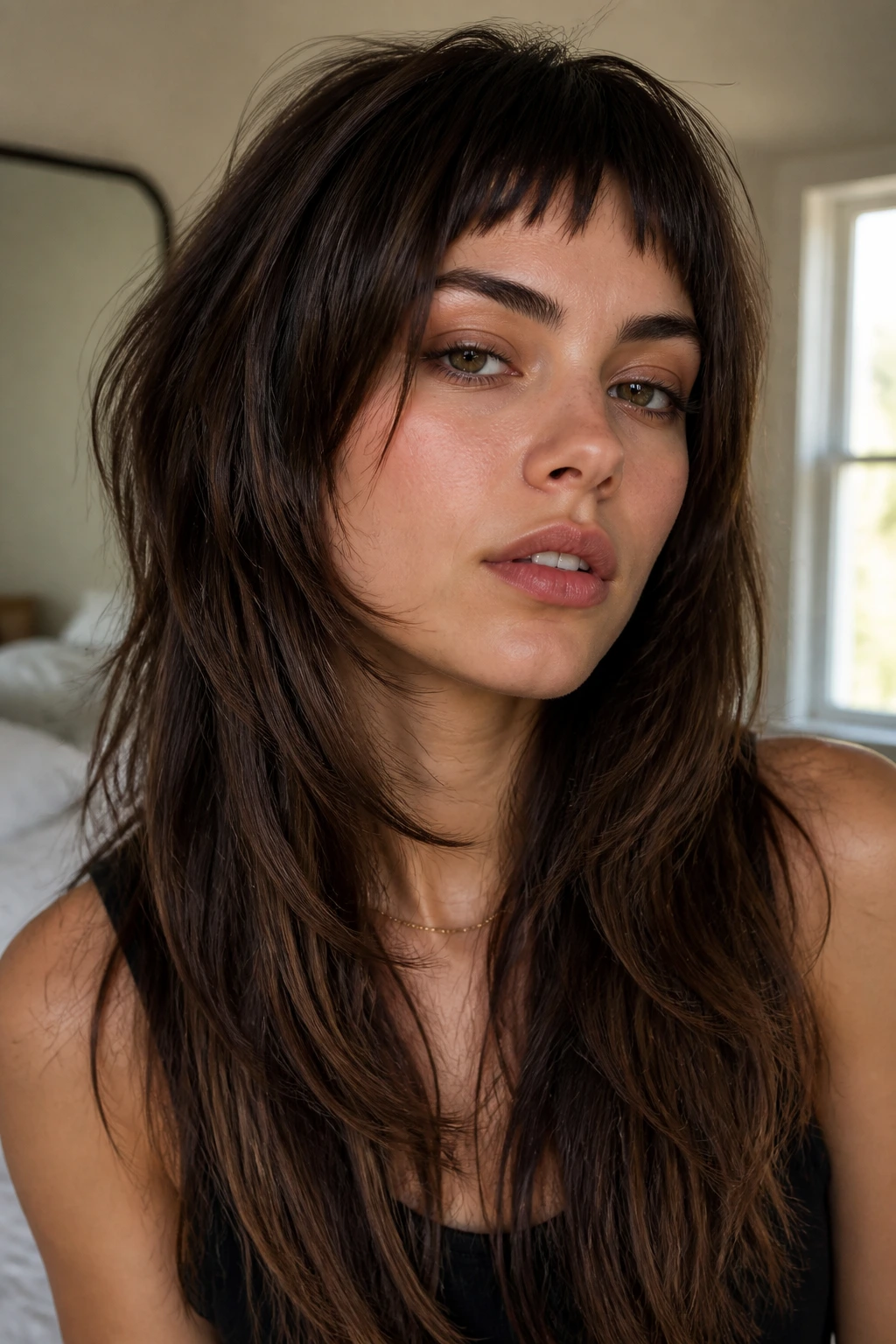
Micro bangs are a commitment. No polite way around it. But on thick hair, they can look fantastic because they give the haircut an immediate hit of attitude while the long layers keep the rest of the shape grounded.
The key is to keep the layers piecey, not fluffy. That means the front sections should separate cleanly, and the rest of the lengths should hold a little texture without turning fuzzy. Micro bangs work best when the forehead area is dry and precise, while the long layers carry the movement.
Where This Cut Succeeds
It sharpens the face fast. The tiny fringe makes the eyes look stronger, and the long lengths balance the short front. If you wear bold lipstick, glasses, or chunky earrings, the whole look snaps into place with almost no effort.
The catch is upkeep. Micro bangs need regular trims, and thick hair around the hairline can swell if it is cut too bluntly. Keep them lightly textured, not blocky.
13. A Feathered Cut With Brushed-Out Movement
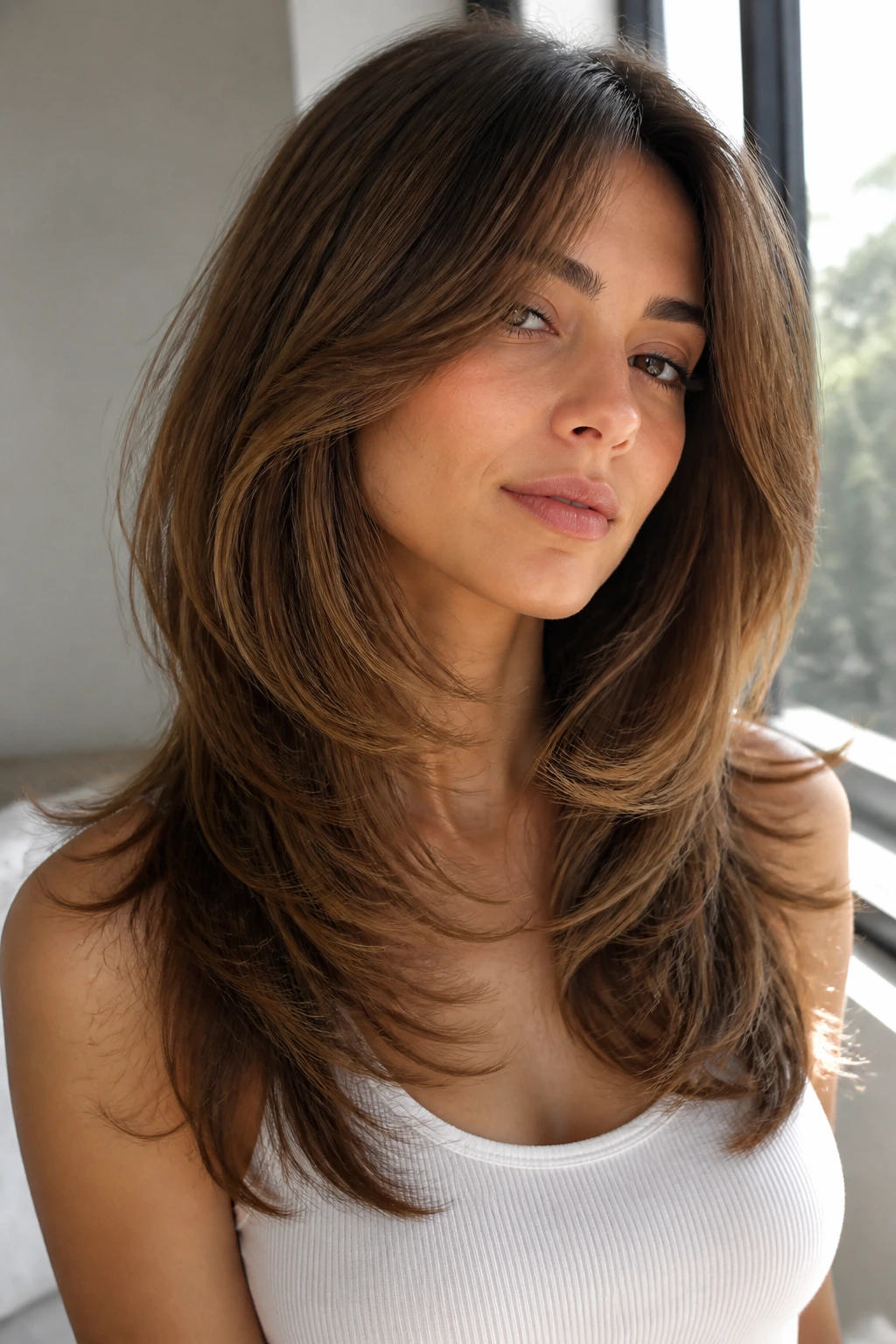
Feathering gets a bad reputation because people remember the overly blow-dried versions from old photos. That is not the point here. On thick hair, feathered layers can be a clean way to break up density and create a soft swing through the lengths.
The reason it works is simple: the hair does not all sit on one plane. The ends fan a little. The layers bend away from the face. When you brush them out with a round brush or a vent brush, the cut starts moving in a way that a blunt line never will.
If you want edge without jaggedness, this is a solid lane. It reads less rebellious than a shag and less geometric than a wolf cut, but it still has shape. I would choose it for thick hair that needs air and doesn’t want to look over-styled.
14. The Heavy Crown / Light Ends Layer Map
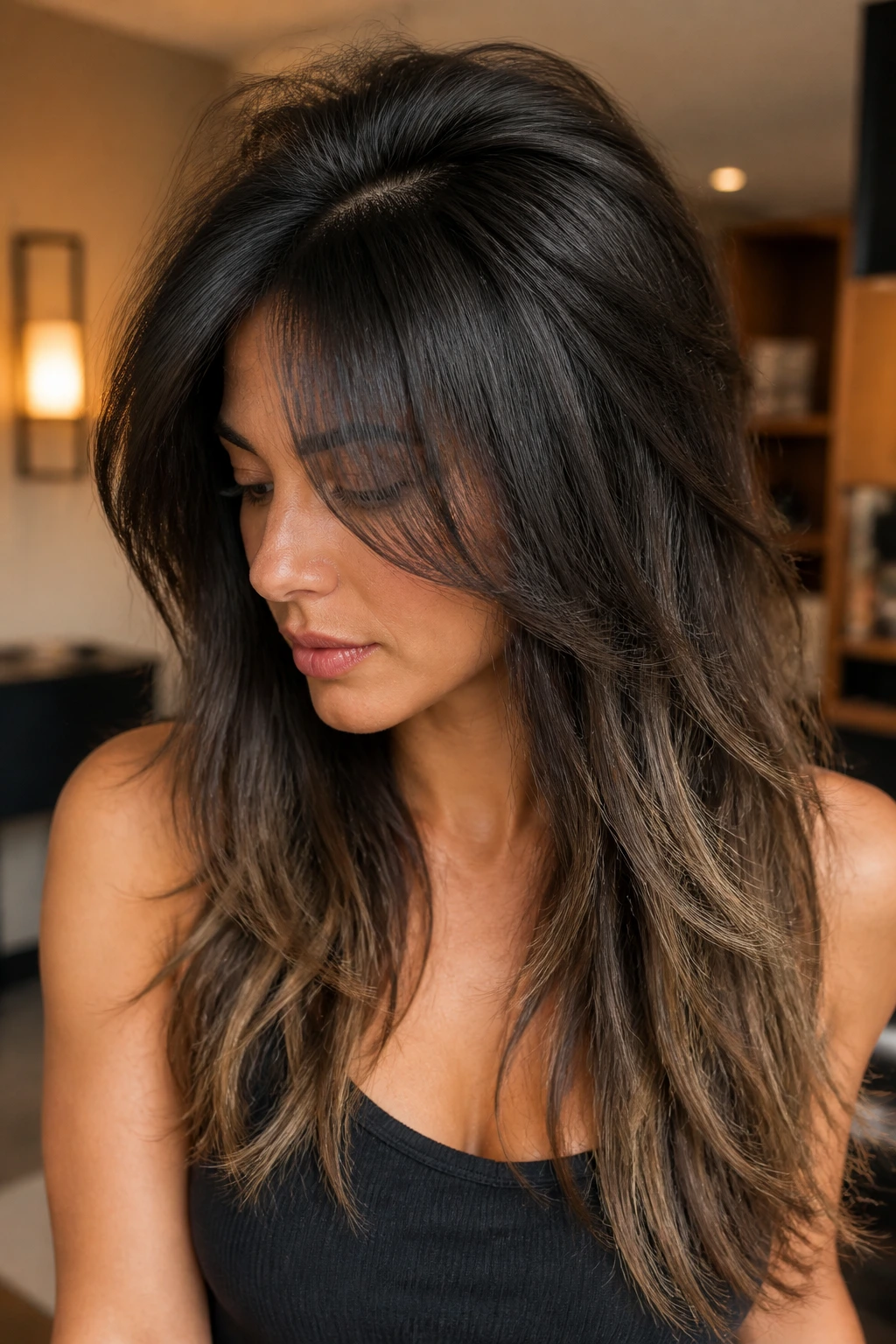
A lot of thick-haired people have the same complaint: the roots lie flat, then the mids puff, then the ends feel heavy. The fix is not to cut the ends to death. It is to redraw the weight map.
With this cut, the stylist takes more mass from the crown and upper interior, then leaves the ends fuller so the shape still lands cleanly. The result is a haircut that feels lighter at the top and steadier at the bottom. That matters more than people think. If the crown is too dense, the whole head tips into a helmet. If the ends are too thinned out, the hair starts looking stringy and wider at the mids.
Ask for a dry consult if possible, or at least make sure the stylist sees how your hair falls when it’s not blow-dried into obedience. Thick hair gives up a lot of its secrets once it’s dry.
15. Long Layers With a Blunt Bottom Line
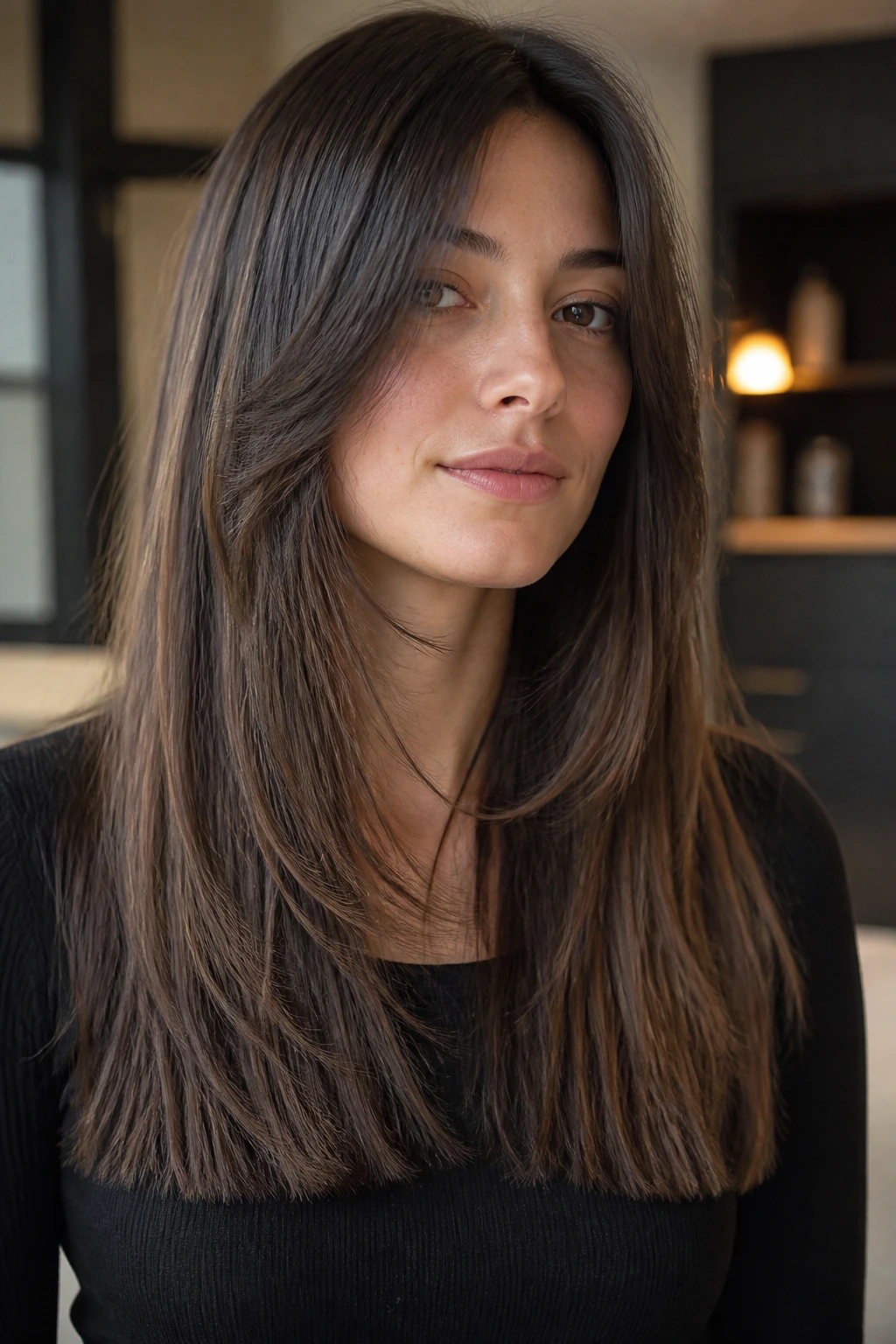
This is one of my favorite ways to keep thick hair edgy without going obvious. The bottom line stays blunt, which gives the haircut seriousness, while long interior layers bring the movement. It’s restraint with a little attitude.
That blunt hem is doing work. It stops the ends from looking thin, especially if your hair naturally sheds or frays at the bottom. The interior layers can then move around without exposing too much scalp or creating a see-through finish. You keep length. You keep body. You keep a line that still looks good even when you air-dry and leave the house.
If you hate the feeling of “too much haircut,” this is the one to try. It is less theatrical than a wolf cut and less airy than a shag, but it has enough edge to feel modern. Pair it with slightly bent front pieces and it wakes up fast.
16. A Rocker Cut With Chunky Front Pieces
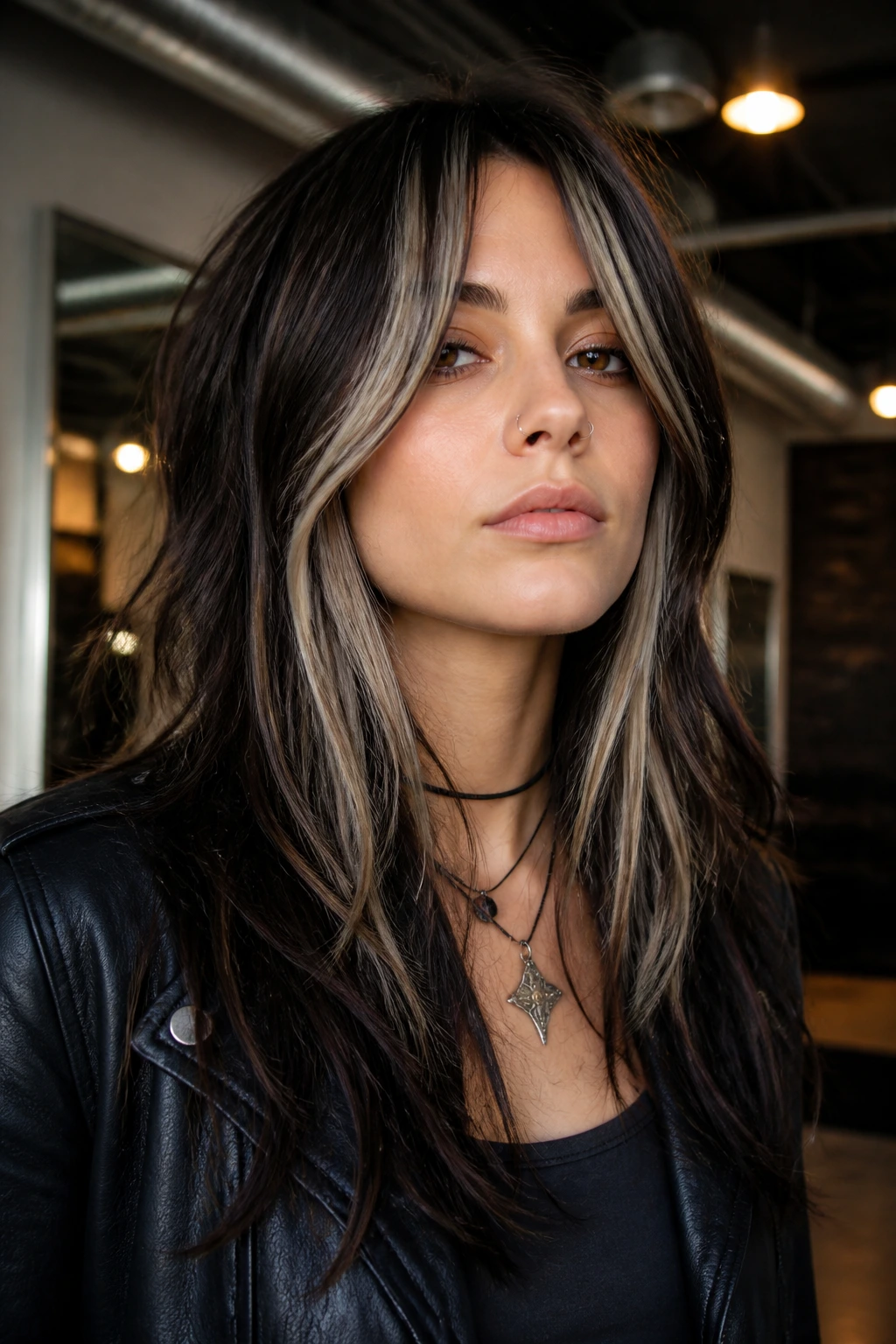
This cut has attitude from the first glance. The front pieces are chunkier, the layers are more visible, and the overall feel leans a little harder than a soft face-frame cut. Thick hair can handle that kind of shape better than most textures because the density keeps the cut from falling apart.
The best version has a strong front corner—usually somewhere between the cheekbone and collarbone—and longer layers that keep the back from turning into a solid wall. I like this shape when someone wants the haircut to say something before the outfit does.
What to Ask For
- A bold front piece on each side of the face.
- Long internal layers through the back.
- Point-cut ends so the shape does not look too boxy.
Small warning: if the front pieces are cut too short, they can start fighting ponytails and clips. That gets annoying fast.
17. Tapered Mermaid Layers That Won’t Drag You Down
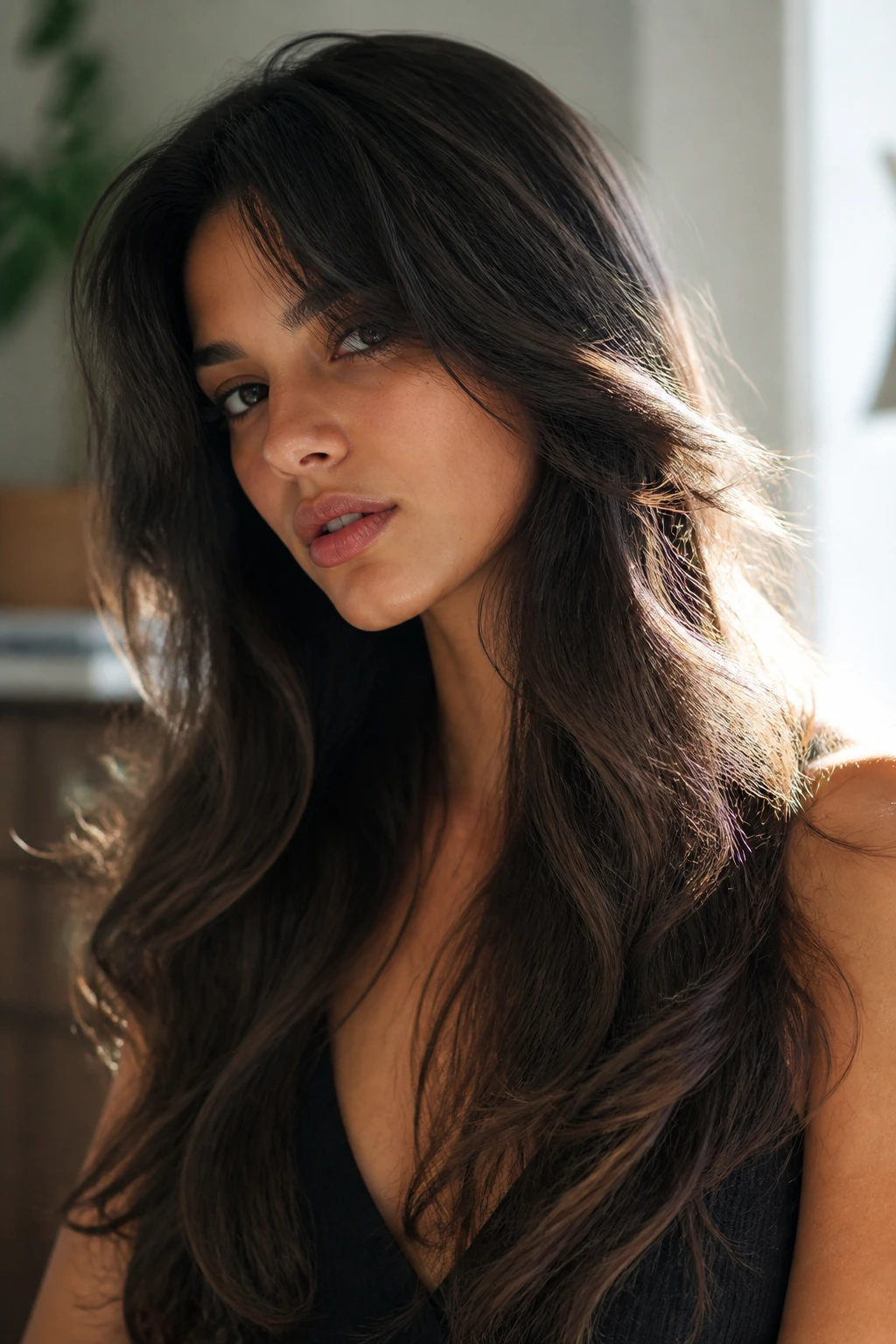
Mermaid-length hair can look gorgeous and still feel like a backpack by the time it reaches your waist. Thick hair makes that worse because every inch adds weight. Tapered mermaid layers solve the problem by letting the length stay, but taking out enough bulk that the hair can actually swing.
The best taper starts well below the shoulders—around the ribs or lower back, depending on your length. Anything shorter and you risk losing the long, dramatic line. The layers should feel almost invisible until the hair moves, which is exactly the point.
This cut is for people who want the drama of long hair without the dead-straight curtain effect. It looks especially good in loose waves, where the ends separate into pieces and the shape shows off from the back. If you like a slow-growing haircut that still looks intentional, this one has legs.
18. Long Layers With a Hidden Undercut
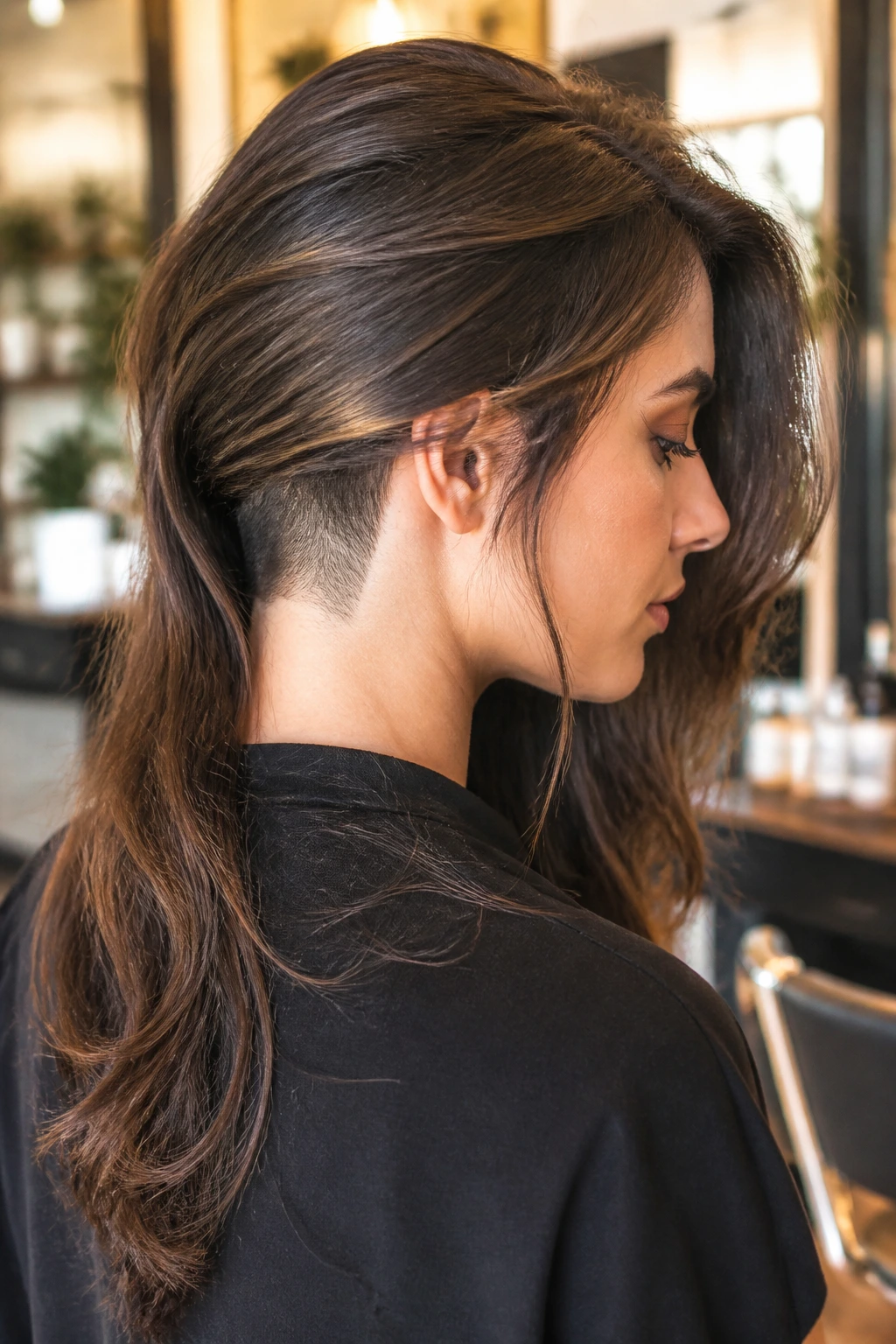
A hidden undercut is the blunt instrument of thick-hair cutting, and I mean that as a compliment. When the density is so heavy that even smart layering cannot stop the nape from swelling, an undercut can make the whole head behave.
The trick is keeping it hidden where you need it and only exposing it if you want that extra edge. A nape undercut can lighten the back, help ponytails sit flatter, and make the top layers fall cleaner. A behind-the-ear undercut can do something similar without removing length from the lower back.
When It Makes Sense
If your hair takes forever to dry, this can save real time. If your head gets hot from the bulk, it can be a relief. If you love thick hair but hate that heavy shelf it creates under the occipital bone, this is worth discussing with a stylist who actually understands dense hair.
Maintenance matters, though. The grow-out needs regular attention, or the hidden section starts announcing itself.
19. A Curved Layered Cut for Straight Thick Hair
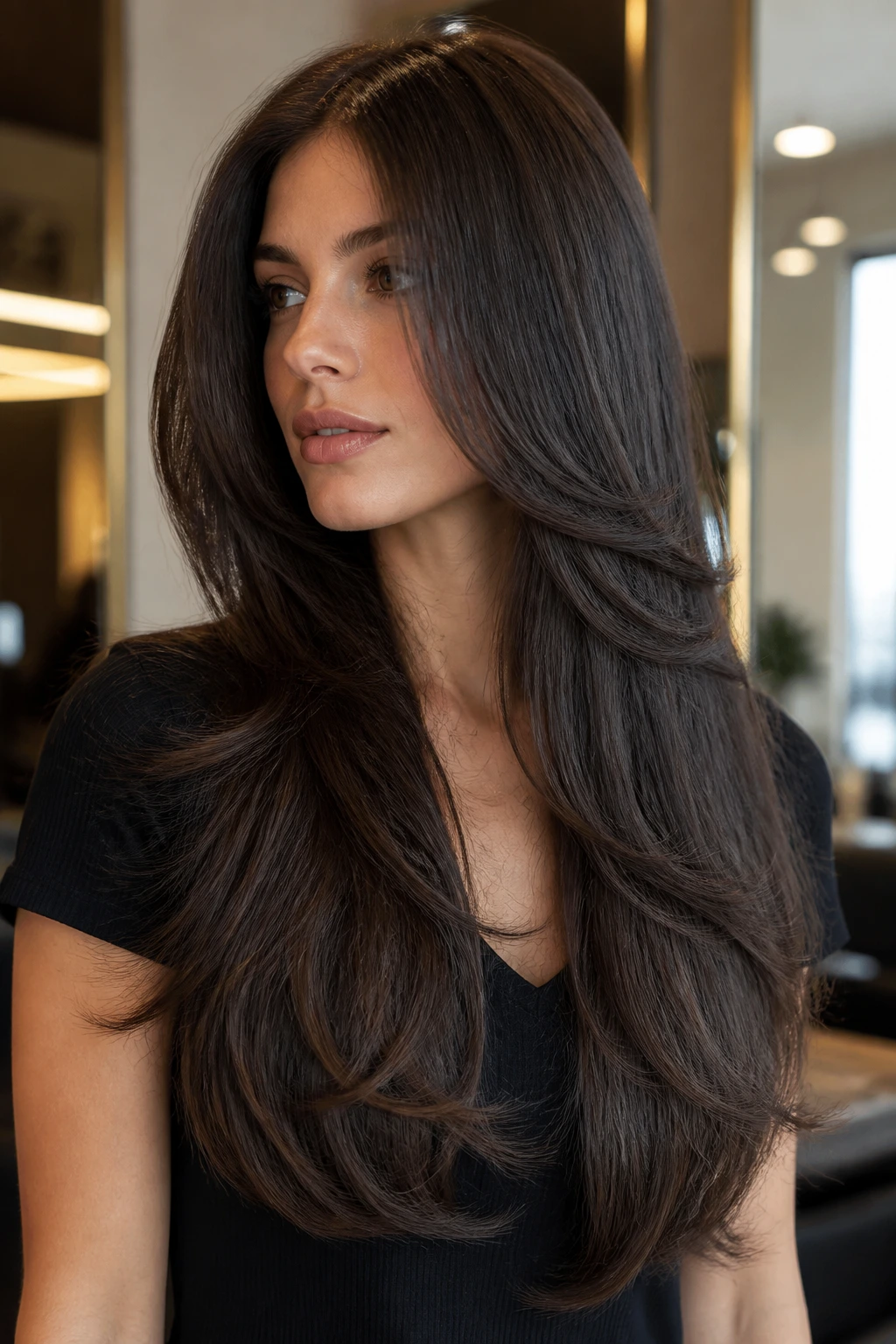
Straight thick hair shows everything. Every line. Every corner. Every blunt mistake. That is why a curved layered cut can look so good on it: the shape follows the head instead of fighting it.
The layers should arc gently around the shoulders and jawline, not land in hard shelves. The bottom line can stay full, but the interior should be broken up enough that the hair does not sit like a single block. I’d choose this for someone who wants polish with a little bite—clean enough for straight styling, loose enough to avoid looking severe.
- Keep the lowest layer long and continuous.
- Ask for soft graduation through the interior, not heavy texturizing at the ends.
- Use a flat iron only on the front pieces if you want a sharper outline.
This is one of those cuts that looks expensive in the plainest possible way: because the line is clean, not because it is fussy.
20. Long Shag Layers With a Rounded Fringe
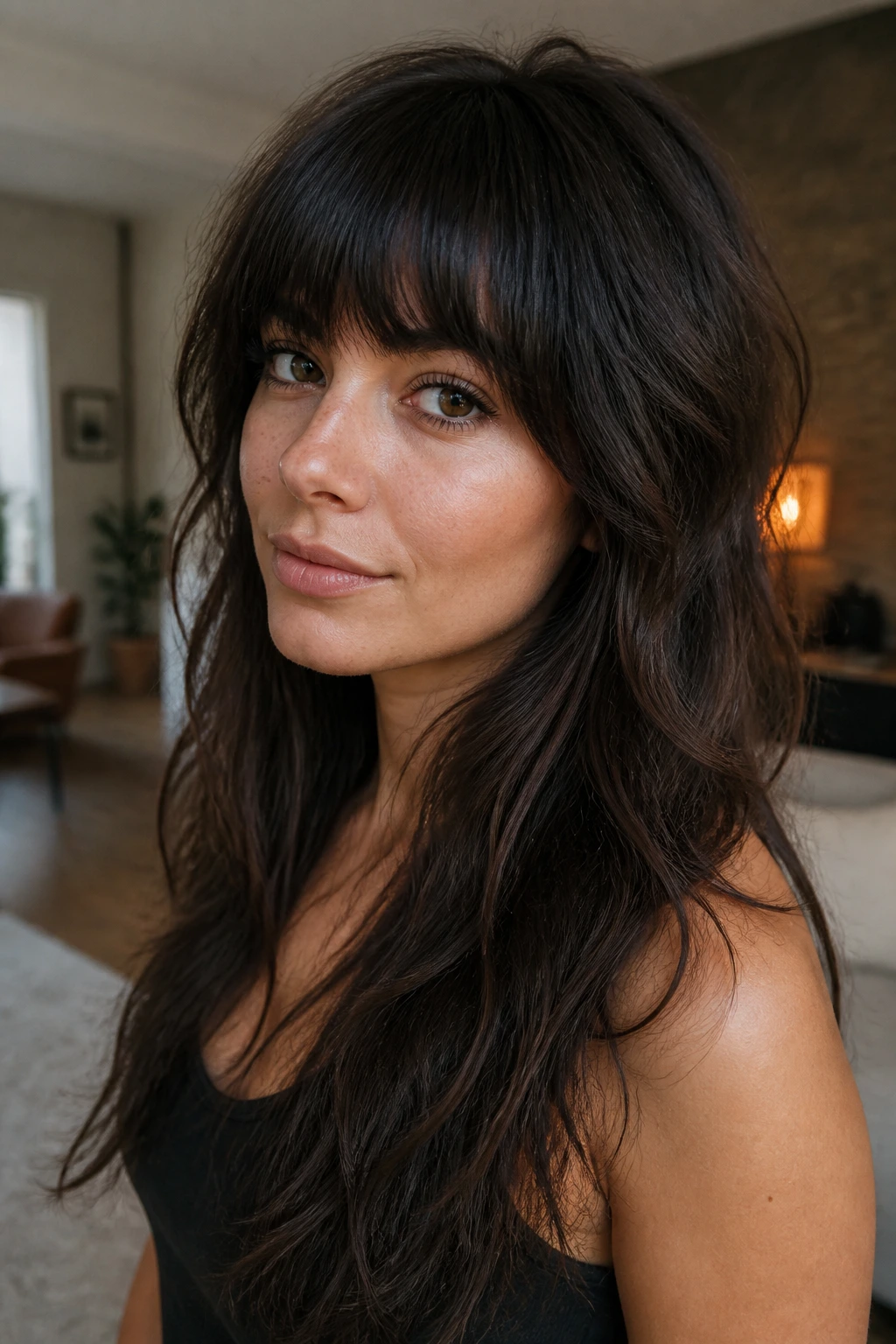
A rounded fringe softens the whole haircut. It keeps the forehead area from looking too chopped up, which matters when thick hair already brings enough visual weight. The long shag underneath adds the grit.
What I like about this shape is the contrast. The fringe curves. The layers don’t. That tension keeps the haircut from feeling flat. It also gives the face a frame without making the front look heavy or overbuilt.
This version is a nice middle ground if a full wolf cut feels too wild and a blunt fringe feels too severe. The fringe can be brushed aside, bent with a round brush, or left a little messy. The rest of the haircut should still hold enough texture to stay interesting once the fringe grows a touch.
21. The Blunt-Layer Hybrid for Maximum Edge
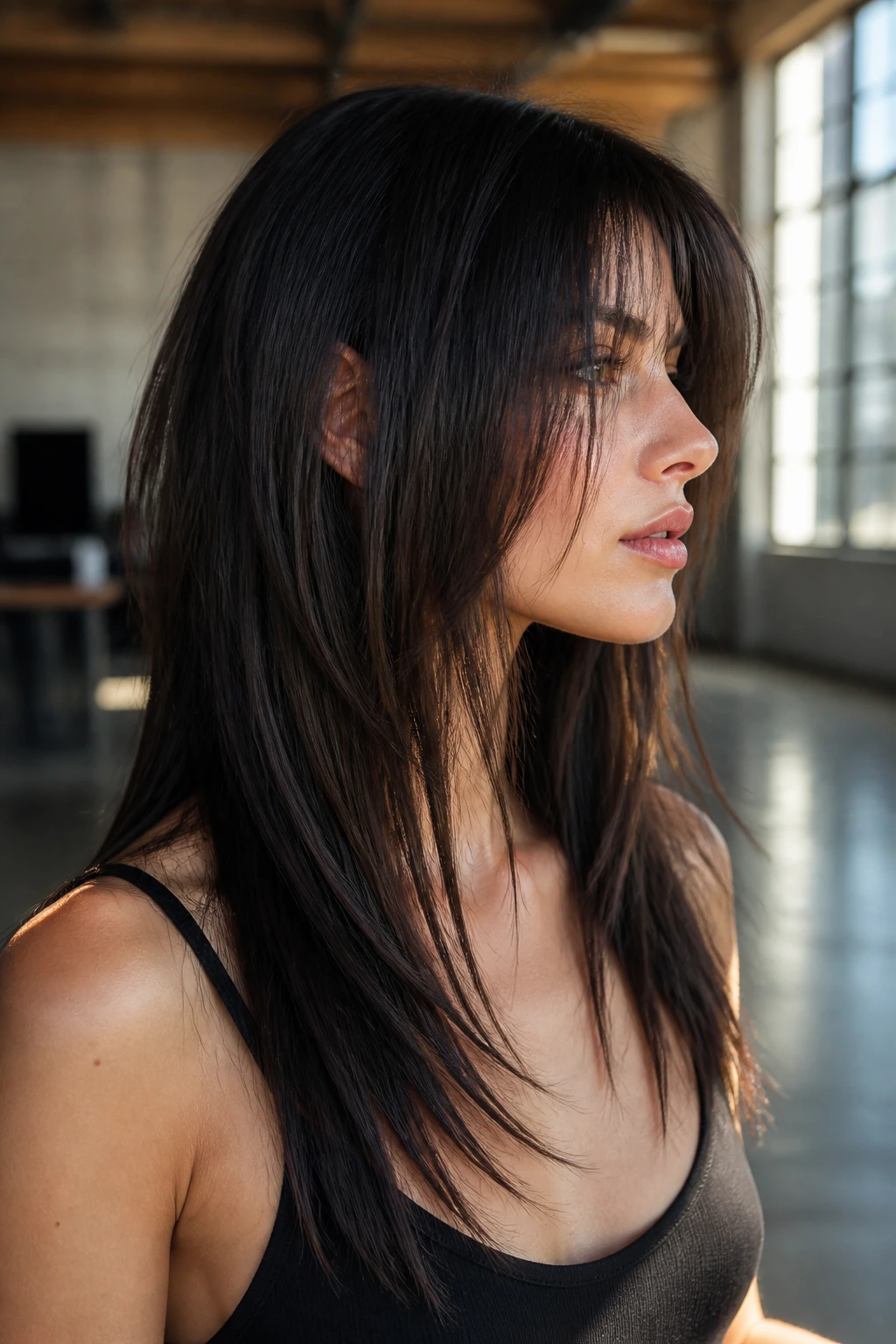
If you want the haircut to look sharp from across a room, this is the one. The perimeter stays blunt, the layers stay long and sparse, and the overall shape has enough restraint to keep thick hair from turning into fluff.
The beauty of a blunt-layer hybrid is that it gives you both discipline and movement. The bottom line still tells the eye where the haircut ends, while the internal layers keep the mids from feeling like a block. It’s a good solution when you want edgy long haircuts with layers for thick hair but don’t want to spend your life styling them.
I’d recommend this most for people who wear their hair down more than up, because the shape really shows when it moves. Pair it with a deep side part, soft bends, or a face frame around the cheekbone, and it suddenly has a lot more personality than the word “blunt” suggests.
Why Thick Hair Needs Smarter Layer Placement
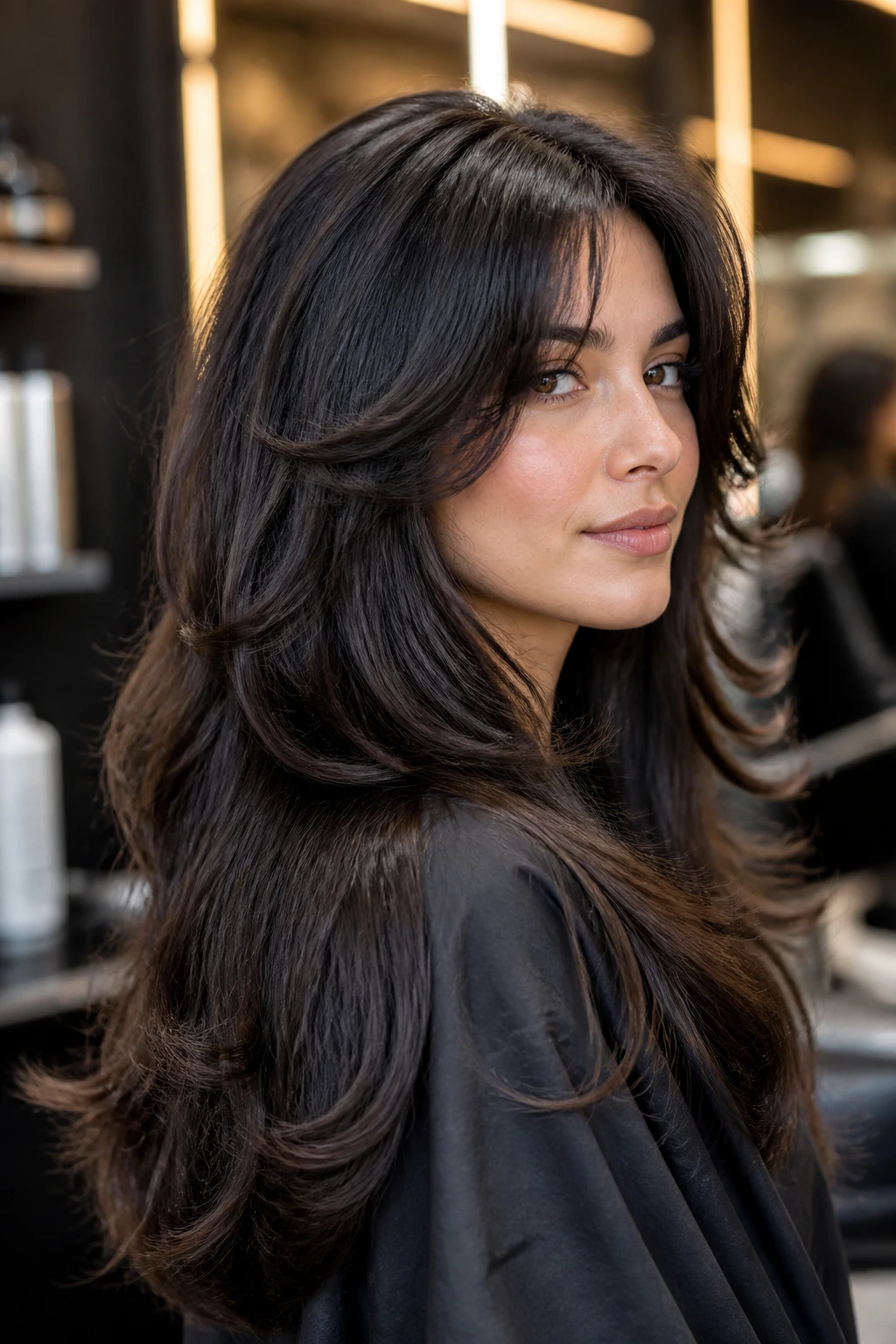
Thick hair is not the same thing as coarse hair, and dense hair is not the same as big-frizz hair. Those details matter because the cut has to answer the right problem. Some heads of hair are thick at the roots and sleek at the ends. Others swell in the mids. Some hold a shape for days. Some expand the second the humidity rises.
That is why random layering fails so often. A stylist can remove weight from the ends and leave the crown heavy, which makes the top puff. Or they can start the layers too high and make the bottom feel thin and ragged. Good layering changes the way the hair sits on the head; bad layering just makes the head look wider in a different place.
What works best on thick hair is placement. The shortest layer should live where the bulk actually starts to interfere with the silhouette. The longest layer should still support the outline. And the perimeter should be strong enough to anchor the whole thing. Thin the wrong zone, and the haircut gets fuzzy. Thin the right one, and it suddenly moves.
Essential Equipment for These Styles
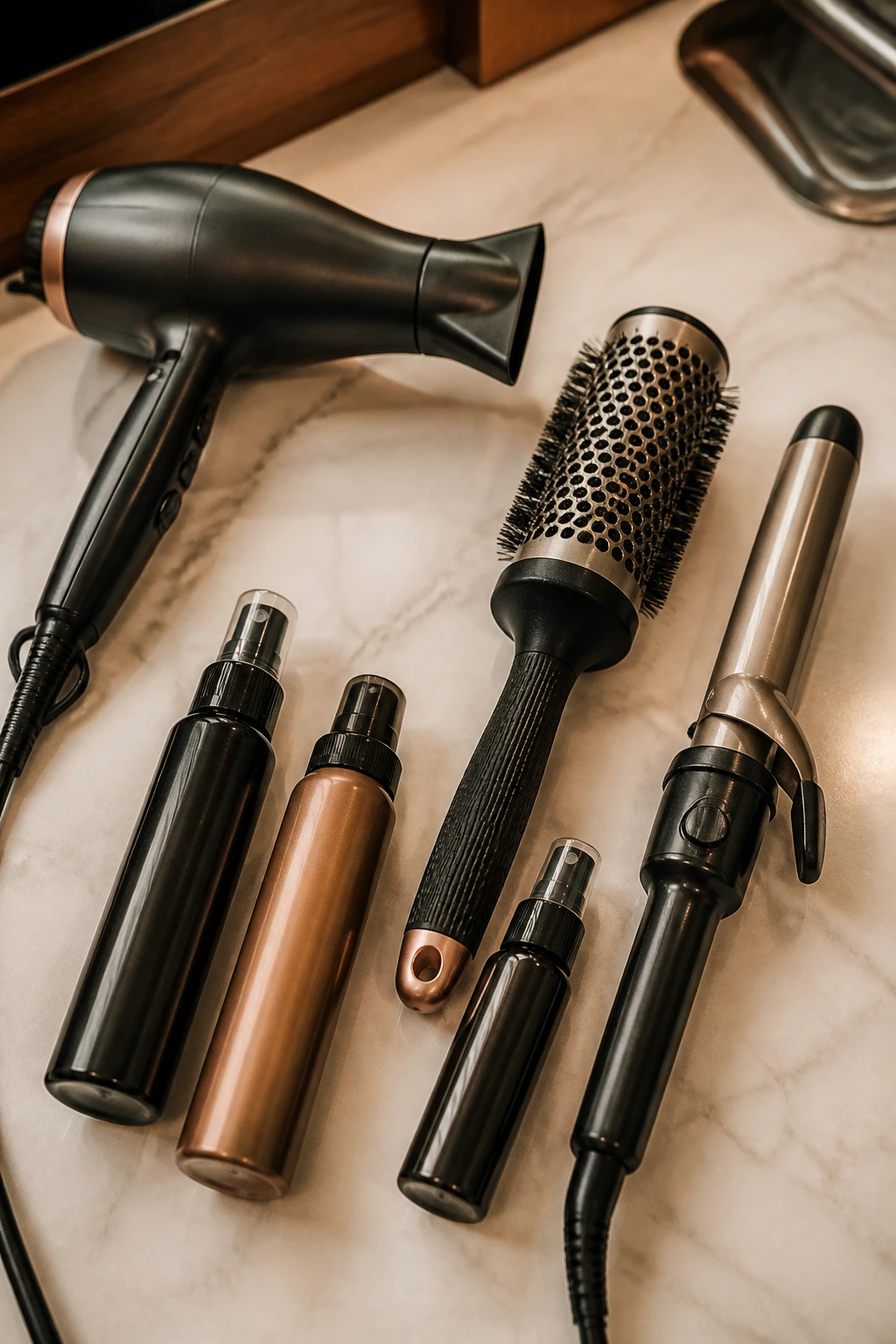
- Blow dryer with a nozzle attachment: Directs the airflow and keeps thick hair from puffing while it dries.
- 2- to 3-inch round brush: Useful for smoothing the front layers and bending the ends without overcurling everything.
- 1¼-inch curling iron or wand: A good size for loose bends on the face frame and lower layers.
- Heat protectant spray: Thick hair can fool you into thinking it’s safe from damage. It isn’t.
- Lightweight mousse: Gives lift at the roots without making the mids sticky.
- Texturizing spray: Best on the crown, front pieces, and a few random mids when you want that piecey finish.
- Wide-tooth comb: Helps detangle thick hair without creating a snag fest.
- Sectioning clips: Thick hair needs clean parts. There’s no way around it.
- Tail comb: Handy for pin-straight parts and controlled sectioning at the salon or at home.
- Microfiber towel or cotton T-shirt: Cuts down on frizz during the first dry.
- Silk pillowcase or bonnet: Helps preserve the shape overnight, especially if you wear your hair wavy.
- Light serum or cream: A pea-sized amount on the ends keeps the perimeter from feeling rough.
What to Tell Your Stylist Before the First Snip
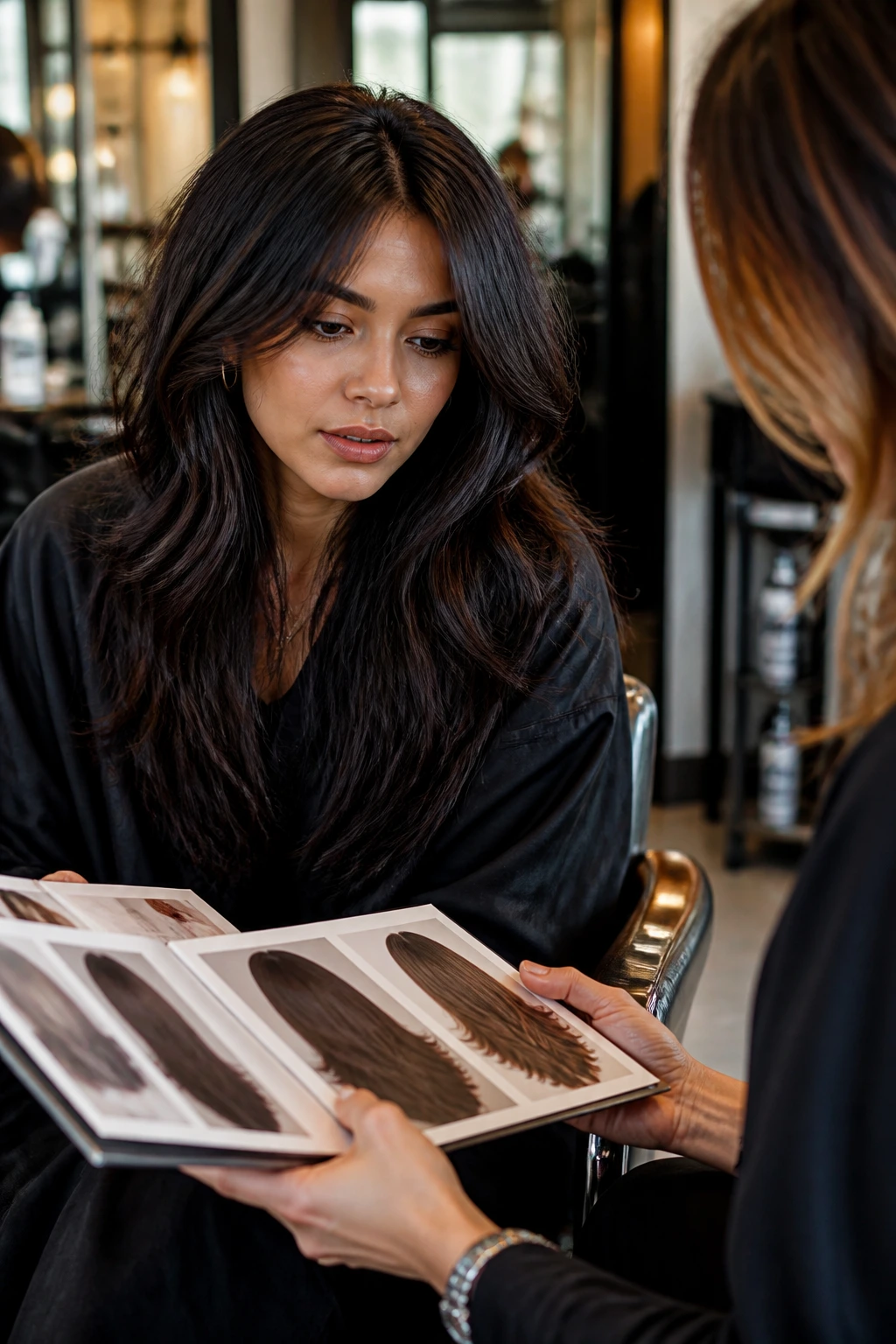
Bring more than one photo. One front view is not enough, because thick hair behaves differently from the front, back, and side. Show a picture of the outline you want, then another that shows the fringe or face frame you like. That makes the conversation much clearer.
Be blunt about where your hair bothers you. If the crown gets too round, say so. If the mids balloon, say that. If your hair goes flat at the roots but giant at the ends, say that too. A good stylist should hear “my hair is thick” and ask where the bulk actually lives.
Also say how you wear it. If you air-dry most days, a cut that depends on a perfect blowout will annoy you by Thursday. If you live in a ponytail, the front pieces need to be long enough to survive that. If you like to curl it, the layers should be placed to show bend, not to create too many little puffs.
One more thing: ask whether the stylist plans to remove weight with interior layering, point cutting, or a razor. That sounds technical because it is. The method changes the result. Thick hair can take more than one approach, but the right one depends on your texture, not their favorite tool.
How to Style Thick Layers So They Don’t Puff Out
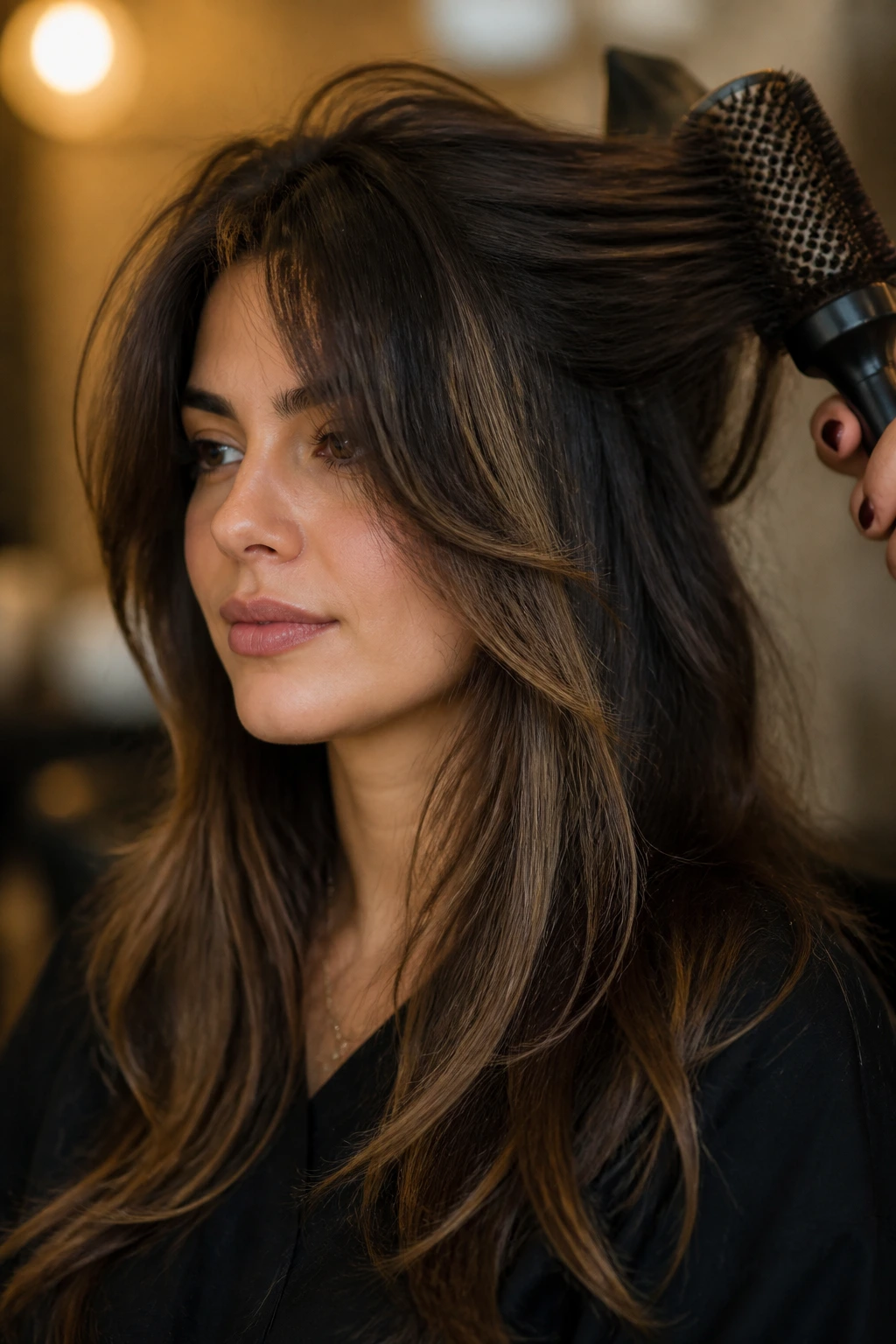
Start with hair that is damp, not dripping. Thick hair takes forever to dry, and if you let it air-dry too far before shaping, the ends can set in the wrong direction. Rough-dry the roots first until the hair is about 70 percent dry, then move in with a brush or your fingers.
Keep the volume where you want it. I like a little lift at the crown and the front pieces, but not a full-blown puff through the mids. That means root mousse at the base, then a lighter hand on the lengths. If you put too much product through the ends, they go greasy before the day is over.
Use heat on only the parts that need shape. The front layers usually do the most work, so bend those pieces with a round brush or curling iron and leave the rest looser. If you curl every inch of thick hair, the head gets wider. If you keep the lower layers straighter, the silhouette stays cleaner.
Finish with a dry texture spray, not a heavy wax. Spray a little at the crown and scrunch the mids with your hands. That gives the layers separation without sealing them into a shell.
Practical Tips for Getting the Most Out of It
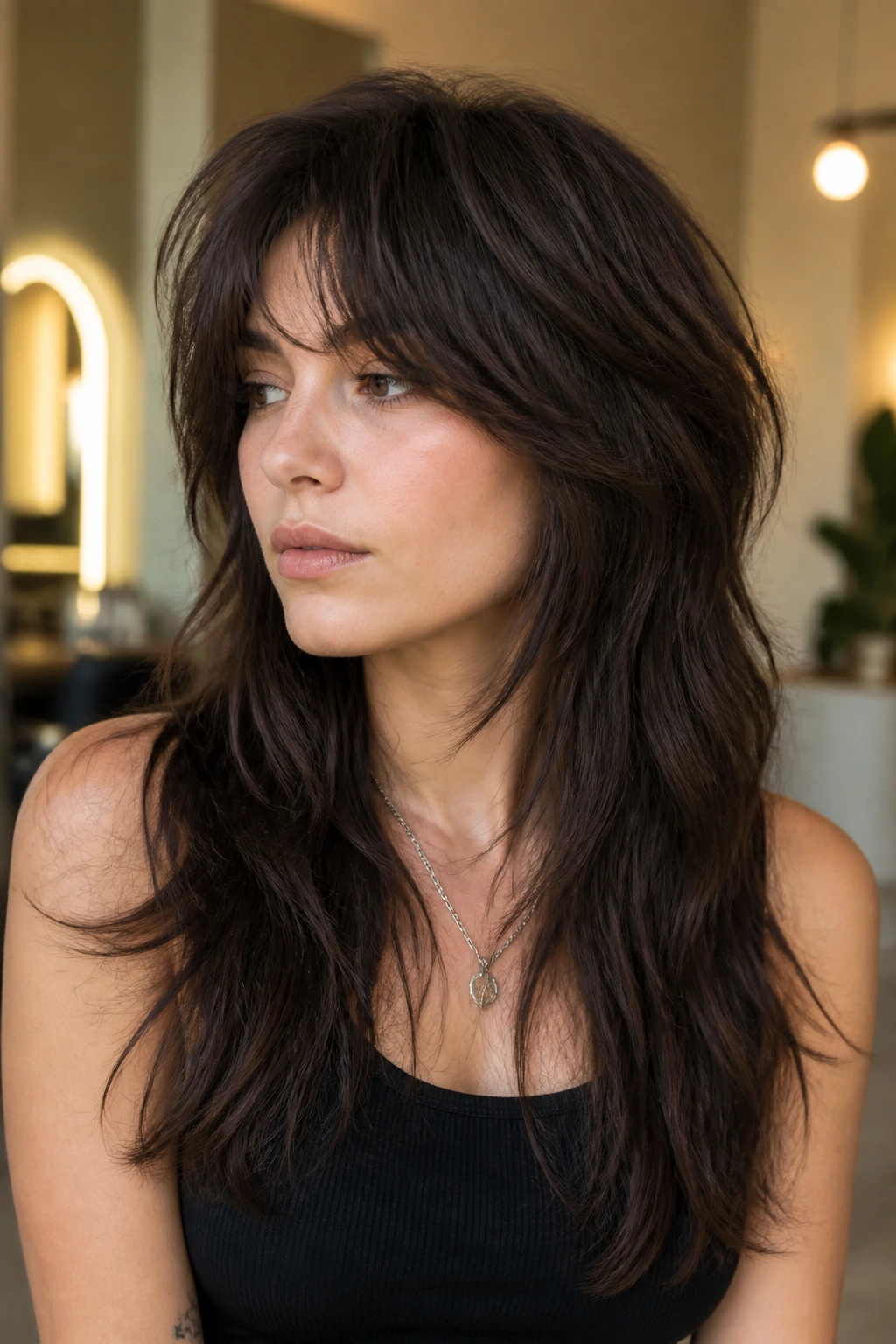
Choose one main problem to fix first: If your thick hair swells at the sides, pick a cut that removes weight there. If it feels dead at the roots, pick one that lifts the crown instead. Trying to solve every problem in one appointment usually ends in too many short pieces.
Bring a photo of a back view: Most people show the front only. Thick layered hair lives or dies in the back, especially if you want a V-shape, a blunt line, or a hidden undercut.
Keep the shortest layer honest: If the shortest face-framing piece is too short, you’ll spend weeks pushing it behind your ears. A good stylist should place it where it can still fall naturally.
Plan for your part: A center part and a deep side part make the same haircut behave differently. Pick the part you actually wear, not the one that looks best in one photo.
Don’t overdo the finishing product: Thick hair can handle more than fine hair, sure, but too much cream or oil kills movement fast. Start with half the amount you think you need. Then stop.
Common Mistakes That Make Thick Hair Look Wider
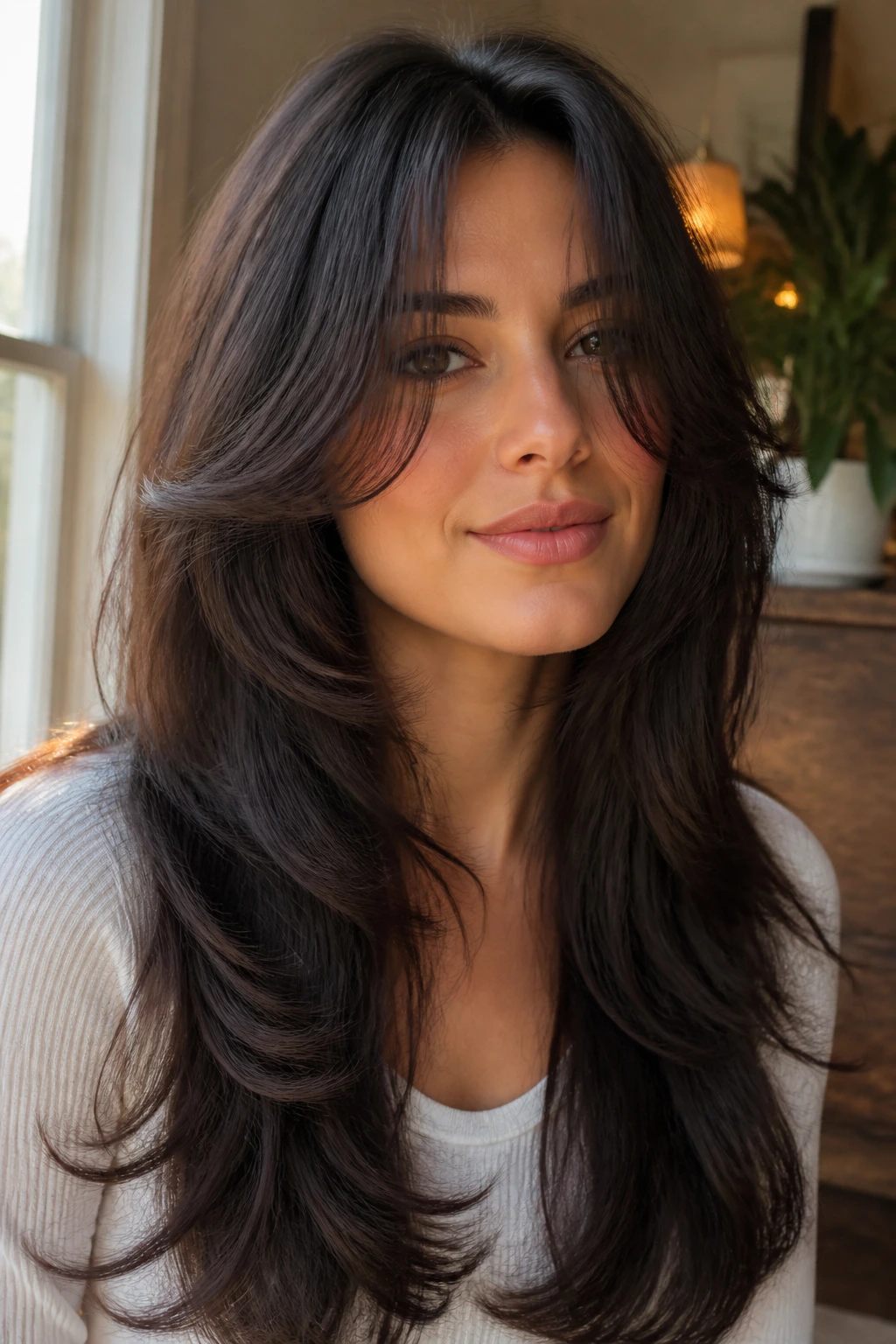
Starting the layers too high: When short layers begin near the top of the head, thick hair can balloon outward and create a mushroom shape. The fix is to keep the shortest pieces in a zone that actually needs relief, usually around the cheekbone, collarbone, or upper interior.
Over-thinning the ends: This is the mistake that makes thick hair look ragged instead of light. If the ends get chewed up too much, the perimeter loses its anchor and frizz shows up fast. Ask for interior removal, not a shredded hem.
Choosing bangs that are too short: Thick bangs can feel exciting in the chair and annoying a week later. If they sit too high, they fight cowlicks and puff at the edges. Keep them a touch longer than your first instinct wants.
Using heavy cream on every layer: Thick hair does not need a mask of product. Too much cream or oil at the mids makes the haircut collapse and separates the layers in a greasy way. Use a small amount only where the ends feel dry.
Skipping trims for too long: Long layered hair can go shapeless even when the length looks fine. The layers stop connecting, the fringe grows into your eyes, and the silhouette loses the edge you paid for. Trim on schedule or accept the grow-out phase with intention.
Variations and Adaptations to Try
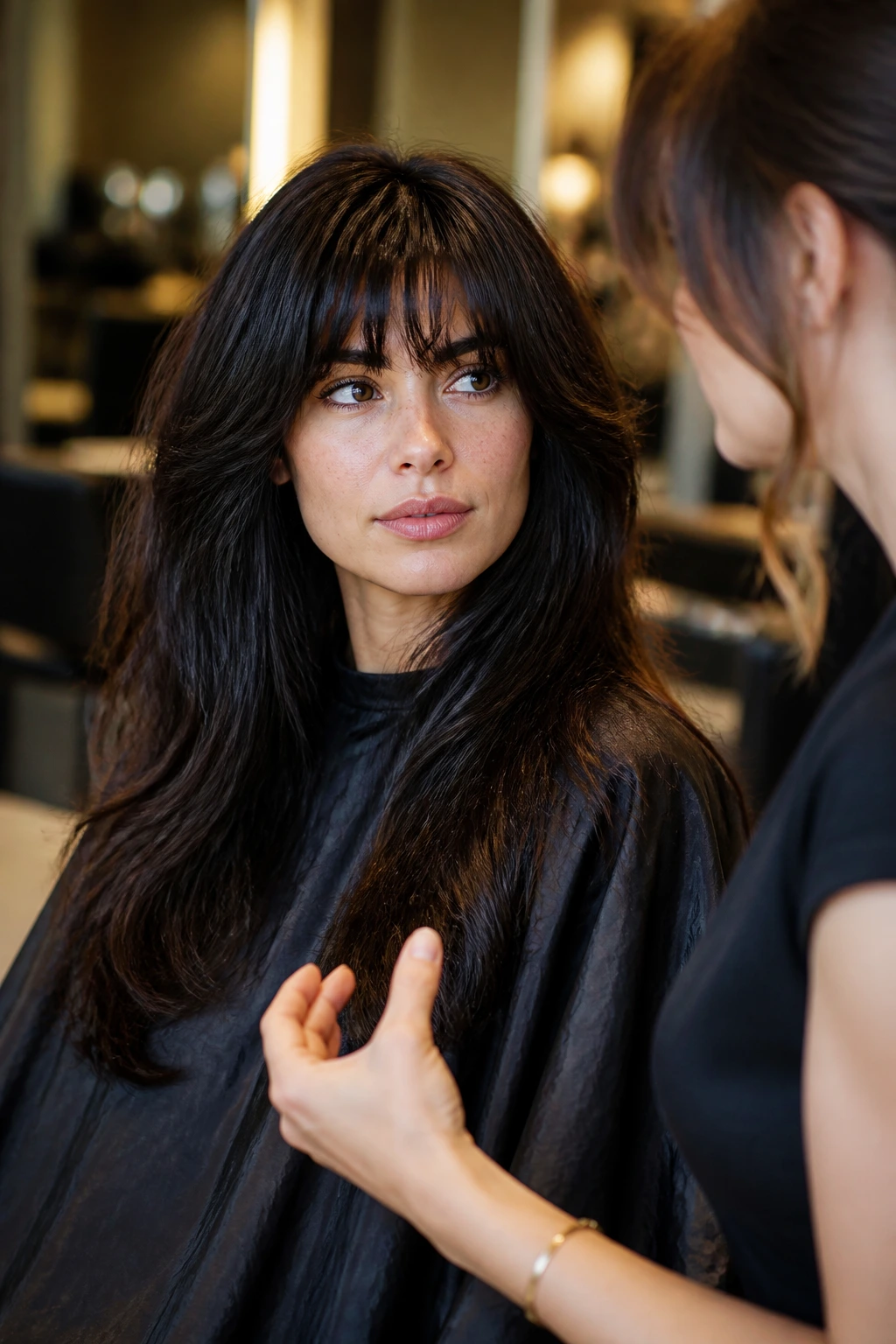
Curly-Texture Version: Keep the layers longer and let the shape be cut with the curl pattern in mind. Short layers on curly thick hair can shrink far more than expected, so the shortest pieces usually need to sit lower than they would on straight hair. This version works best when the stylist cuts it dry or nearly dry.
Office-Friendly Edge: Choose a blunt perimeter, invisible layers, and a soft face frame. You still get movement, but the haircut reads polished rather than punk. It’s the safest route if you need the style to hold up in a low-key setting.
Extra-Drama Fringe: Add micro bangs, bottleneck bangs, or a heavy curtain bang. The haircut changes fast with fringe alone, and thick hair gives the front enough body to support a strong statement.
Low-Maintenance Grow-Out: Go for a U-shape, a blunt bottom line, and long internal layers. This keeps the haircut from looking wrong after eight weeks because the shape stays intact even as the layers soften.
Heat-Free Version: Pick butterfly or invisible layers and let the hair air-dry with a light mousse. The hair should still move on its own, which is the whole point when you do not want to live with a curling iron.
Maintenance, Grow-Out, and Second-Day Hair
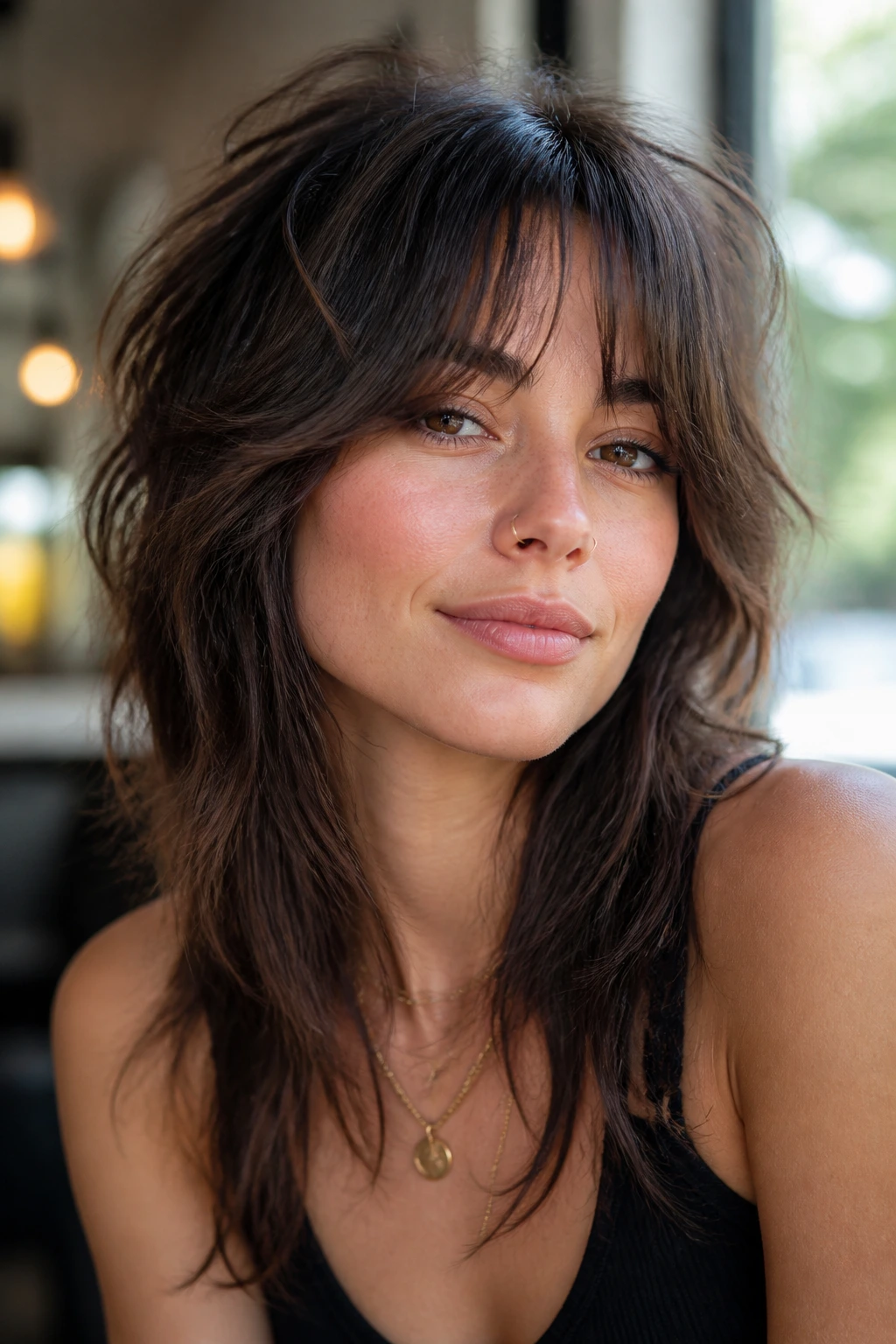
Most of these cuts hold their shape for about 8 to 12 weeks before they start losing the clean line or the fringe gets annoying. Micro bangs need earlier attention, usually every 3 to 4 weeks. Hidden undercuts need the most upkeep, because the short section grows out visibly faster than the long lengths around it.
Sleep matters more than people admit. Thick layered hair can mangle itself overnight if you go straight onto a rough cotton pillowcase. A silk pillowcase or bonnet cuts the friction, and a loose topknot keeps the front pieces from bending in weird ways. If your hair is wavy, you can mist the mids with water in the morning, twist a few face pieces, and revive the shape without starting over.
Second-day hair is often better than day one on these cuts. The layers settle. The texture stops screaming for attention. A little dry shampoo at the roots and a touch of texture spray near the crown are usually enough to bring it back. Keep the product off the ends unless they genuinely feel dry.
Frequently Asked Questions
Which layered haircut is best for very thick hair?
If you want the safest bet, start with invisible layers or a blunt-layer hybrid. They remove bulk without exposing too much of the interior, which keeps the haircut full instead of fluffy. If you want more attitude, the wolf cut and shag versions are the loudest choices.
Will layers make my thick hair look thinner?
Not if they’re cut well. The goal is to take weight out of the right zones while keeping the perimeter strong enough to hold density. Bad layers make hair look thin at the ends and bulky at the roots, which is the opposite of what you want.
Is a razor cut a bad idea for thick hair?
No, but it has to match the texture. Thick straight or wavy hair can take razor work beautifully because the tool softens the edge and removes bulk fast. Very frizzy or highly textured hair may do better with scissors and point cutting.
How often should I trim long layered hair?
Most long layered cuts benefit from a trim every 8 to 12 weeks. If you have micro bangs or a hidden undercut, expect to see the stylist more often. Waiting too long usually means the shape is gone before the length is.
Can I air-dry these cuts and still get the shape?
Yes, if you pick the right version. Butterfly layers, invisible layers, and soft shags tend to air-dry better than a heavily geometric cut. Use a small amount of mousse and keep the face frame separated while it dries.
What if my hair is thick but the strands are fine?
Then the cut needs to be lighter in the interior and more careful at the ends. Fine strands can fray if they’re overtexturized, even when there’s a lot of hair overall. Ask for movement without too much slicing.
Do I need bangs to make the haircut edgy?
No. A blunt perimeter, a deep side part, or a sharp face frame can carry the whole look. Bangs are a shortcut to attitude, not a requirement.
Can I still wear a ponytail with these cuts?
Yes, but the front pieces matter. If you know you live in ponytails, keep the shortest layers long enough to tuck and still fall out intentionally. Hidden undercuts and very short face pieces need the most thought here.
The Shape That Stays Interesting
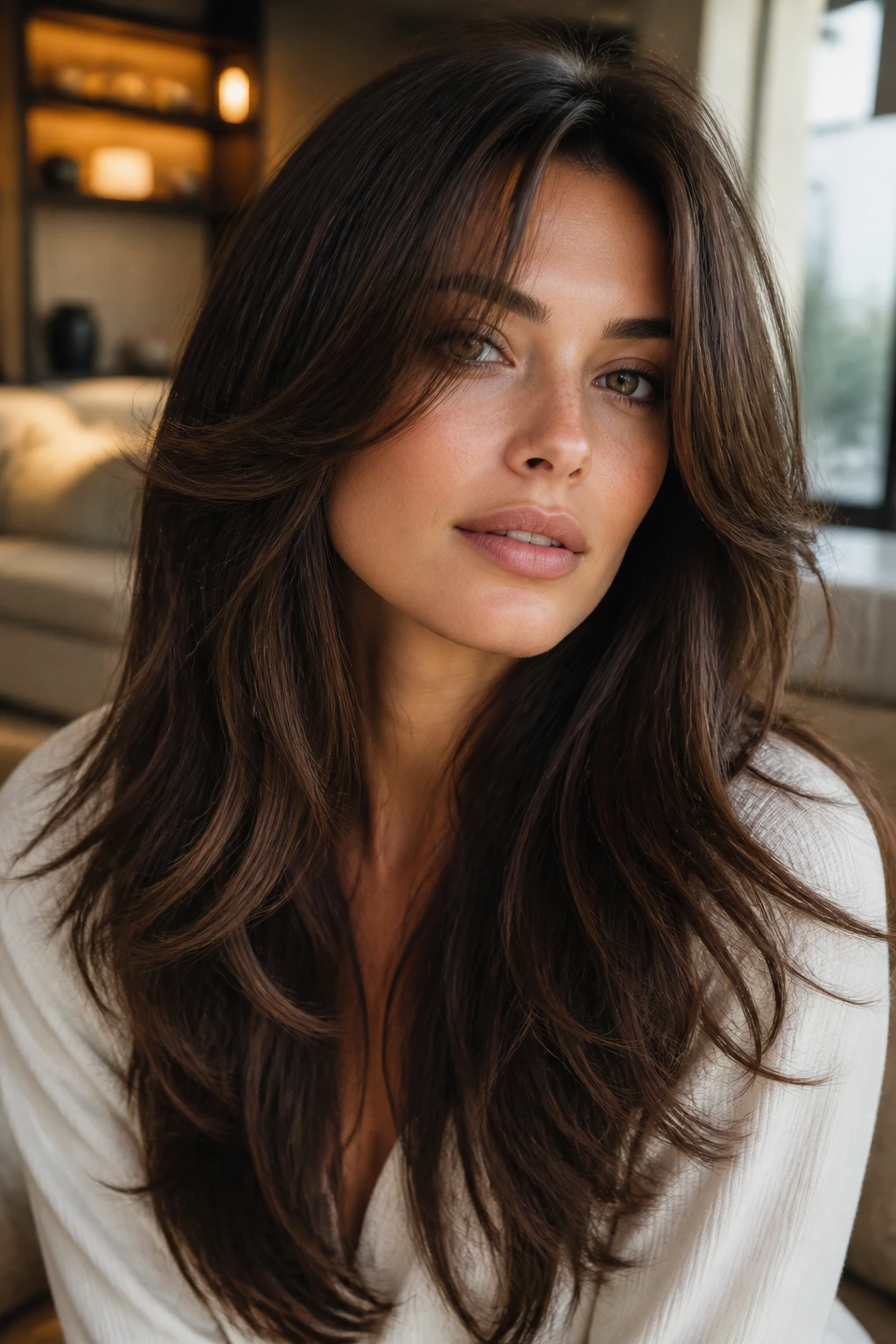
The best thick-hair layers are the ones that know where to stop. They remove bulk without stripping away the part people actually like: the fullness, the swing, the weight that makes long hair feel like a statement instead of a compromise.
If you pick one of these shapes, think about the part of your hair that annoys you most. That’s usually where the haircut should start. Crown too full? Face too swallowed? Ends too heavy? There’s a different cut for each of those problems, and the smartest one is the one that solves the right one first.
Bring a good photo, yes—but bring a real description too. Say where the puff happens. Say how much length you refuse to lose. Say whether you want the haircut to dry fast or look polished. That one conversation usually does more than ten glossy inspiration shots ever will.
