



Thick hair can look expensive right up until the ends start ballooning out like a bell. That is why medium length hairstyles for thick hair matter so much: the cut has to hold the weight, not fight it. Shoulder-skimming length is long enough for movement, short enough to stop the triangle shape that shows up when every strand sits on top of the next.
The best versions do two things at once. They take weight out of the places where thick hair builds bulk — usually the sides and the back under the crown — and leave enough density at the bottom so the hair still looks full, not wispy. That last part gets missed all the time.
I like medium length cuts on thick hair because they can be polished, airy, or a little messy without needing a heroic styling routine. A good lob or shag can dry in the shape you want, which is worth more than a perfect salon finish that falls apart after one humid walk outside. The cuts below cover straight, wavy, curly, and coily textures, because thick hair does not behave like one single thing.
Why These Medium Length Hairstyles Earn Their Keep
-
They remove bulk where it matters: The right internal layers keep thick hair from puffing out at the sides, especially around the cheekbones and jawline.
-
They keep the ends from looking thin: Medium length still gives you enough weight at the bottom so the haircut looks full, not straggly.
-
They’re easier to style on real mornings: Hair that lands around the collarbone or shoulders dries faster, takes shape faster, and needs fewer passes with a hot tool.
-
They work with your texture instead of against it: A good medium cut can let waves bend, curls spring, or straight hair swing instead of sitting in a solid block.
-
They grow out cleanly: When the layers are placed well, the cut usually still looks intentional a few weeks after the salon visit, not like you missed one.
-
They give you options: You can wear the same cut sleek, air-dried, clipped back, or with a bend from a round brush and it still looks like the same haircut.
Why Medium Length Cuts Calm Thick Hair Instead of Fighting It
Thick hair needs shape more than it needs length. That sounds obvious, but people ignore it all the time and then wonder why a long blunt cut feels heavy, hot, and hard to dry. The useful thing about medium length is that it lets the haircut carry some of the work. The weight sits closer to the head, so the style can move instead of hanging there like a curtain rod.
The sweet spot is usually somewhere between the collarbone and the top of the shoulders. That range gives thick hair enough length to show off shine and texture, but not so much length that every strand drags the rest flat. If your hair is coarse, it may need more internal removal. If it is dense but fine, it may need a cleaner perimeter line so the ends do not fray.
What stylists are actually trying to do
They are not just “taking off length.” They are placing layers where the bulk builds up — under the crown, around the sides, and sometimes just behind the ear. A few well-placed layers do more than a dramatic chop ever will. And yes, that means the worst thing you can do is ask for “thin it out everywhere.” That usually ends with fuzzy ends and a haircut that loses its shape in two weeks.
The part most people miss
A thick-haired haircut should look good from the side. Not just the front.
That is why collarbone lobs, shag layers, butterfly cuts, and rounded shapes keep showing up again and again. They keep the silhouette from turning boxy, which is the real enemy here. Boxy hair is what happens when the outside line is too blunt and the inside weight never gets touched.
1. The Collarbone Lob with Soft Interior Layers
This is the dependable one. A collarbone lob keeps thick hair long enough to pull back, but short enough that it does not drag itself into a heavy triangle by noon. The magic is in the interior layers, which should sit below the chin and above the shoulders so the surface still looks smooth.
Why It Works on Thick Hair
A one-length lob can look sharp, but on very dense hair it sometimes turns into a wall. Soft interior layers break that wall apart just enough to let the hair bend. The cut sits close to the collarbone, which is a useful length because it keeps the ends heavy enough to look full, yet not so long that the bulk stacks up at the bottom.
Ask for the layers to be hidden, not choppy. You want movement, not shelves. I prefer this cut on hair that you wear straight half the week and wavy the other half, because it behaves nicely in both versions.
- Best for: thick straight, wavy, or slightly curly hair that needs shape but not drama.
- Salon note: ask for layers that start near the collarbone, not up at the cheekbones.
- Styling note: a 1.25-inch round brush gives the ends a gentle inward turn.
- Watch for: over-texturizing, which makes the ends look puffy instead of polished.
Pro tip: If your hair flares out at the shoulders, have the stylist tuck a little weight out from the back panel only. That tiny adjustment can make the whole cut sit flatter.
2. Long Layered Shag
This is the cut for thick hair that wants movement and does not mind a little attitude. The long shag works because the layers are spread out enough to release bulk, but not so short that the haircut loses its medium-length feel. It has a lived-in shape that looks better after a little natural bend.
The key is balance. Short layers around the crown keep the top from collapsing, while longer pieces near the ends keep the haircut from going wispy. When thick hair wears this cut well, it has a soft, broken-up outline instead of one solid block from roots to ends. That matters a lot if your hair tends to sit flat at the crown but explode at the sides.
I like this one most on hair with natural wave or bend. Air-drying with a bit of mousse and a squeeze of diffuser time usually beats fighting it with a flat iron. And if you’re the type who hates a fussy blowout, good. This cut is happiest when it looks slightly undone.
3. Soft Butterfly Cut
Why does the butterfly cut work so well on thick hair? Because it gives you the feel of shorter layers without forcing you to give up length everywhere. The shorter face-framing layers fall away from the cheeks, while the longer bottom layers keep the haircut grounded. That split is useful when thick hair gets bulky through the mid-lengths.
The result is a shape that moves when you walk. It also keeps thick hair from stacking up in one heavy shelf at the shoulders. If your hair has a lot of density but you still want it to feel airy, this is one of the smartest cuts on the list.
How to style it
Blow-dry the front sections away from the face with a medium round brush, then let the rest dry with a soft bend. The top layers should flip back slightly, not curl into tight ringlets. If they are too short, the whole thing starts to look dated fast, so keep the shortest pieces around chin length at the very shortest.
4. Blunt Shoulder-Length Cut
This one is for the person who wants thick hair to look clean, strong, and controlled. A blunt shoulder-length cut makes a statement because it keeps the line solid. No airy shreds. No ragged ends. Just a dense, shiny perimeter that sits right on the shoulders or a touch above them.
That said, it has to be handled carefully. On very thick hair, a blunt edge can become boxy if the interior never gets relieved. A good stylist will remove weight underneath while leaving the visible line intact. That is the difference between sharp and bulky.
- Best for: straight or slightly wavy hair with dense volume.
- Salon note: ask for internal weight removal, not visible thinning.
- Styling note: a smoothing cream and a paddle brush give this cut its cleanest finish.
- Who should skip it: anyone who hates a solid outline or wants obvious movement through the lengths.
The blunt shoulder cut is my pick for people who like the look of expensive hair. It has that crisp, tailored feeling that does not need much decoration.
5. Face-Framing Layers with Curtain Bangs

If thick hair feels heavy around the face, curtain bangs and face-framing layers can make the whole head look lighter. The trick is to keep the shortest pieces at the cheekbones or just below, then let the layers fall softly into the rest of the cut. That way the front opens up without chopping the haircut into pieces.
Compared with a one-length lob, this shape gives you more motion around the eyes and jaw. It also works well if your hair is thick in the front but flatter in the back, because the curtain pieces bring attention forward. The style can be worn blown out, air-dried, or tucked behind the ears, which makes it practical rather than precious.
I’d use this on clients who want softness first and edge second. The bangs should blend, not sit like a separate haircut. If you can see a hard line, the pieces were cut too short or too blunt.
6. Angled Lob
An angled lob is one of the easiest ways to make thick hair feel lighter without sacrificing too much length in front. The back sits a little shorter, the front stays longer, and that small shift changes how the whole shape falls. Thick hair benefits from that tilt because it stops the ends from building a heavy shelf across the neck.
This is a cut that looks especially good when you turn your head. The front pieces skim the collarbone and frame the face, while the back hugs the nape more closely. That subtle angle also helps with drying time. Less bulk sitting on top of itself means less of that damp, stuck-together feeling thick hair gets after a wash.
Keep the angle gentle. If the front is too long and the back too short, the haircut starts to look severe. The sweet spot is a difference you can notice, not a dramatic wedge.
7. Wavy Mid-Length Layers
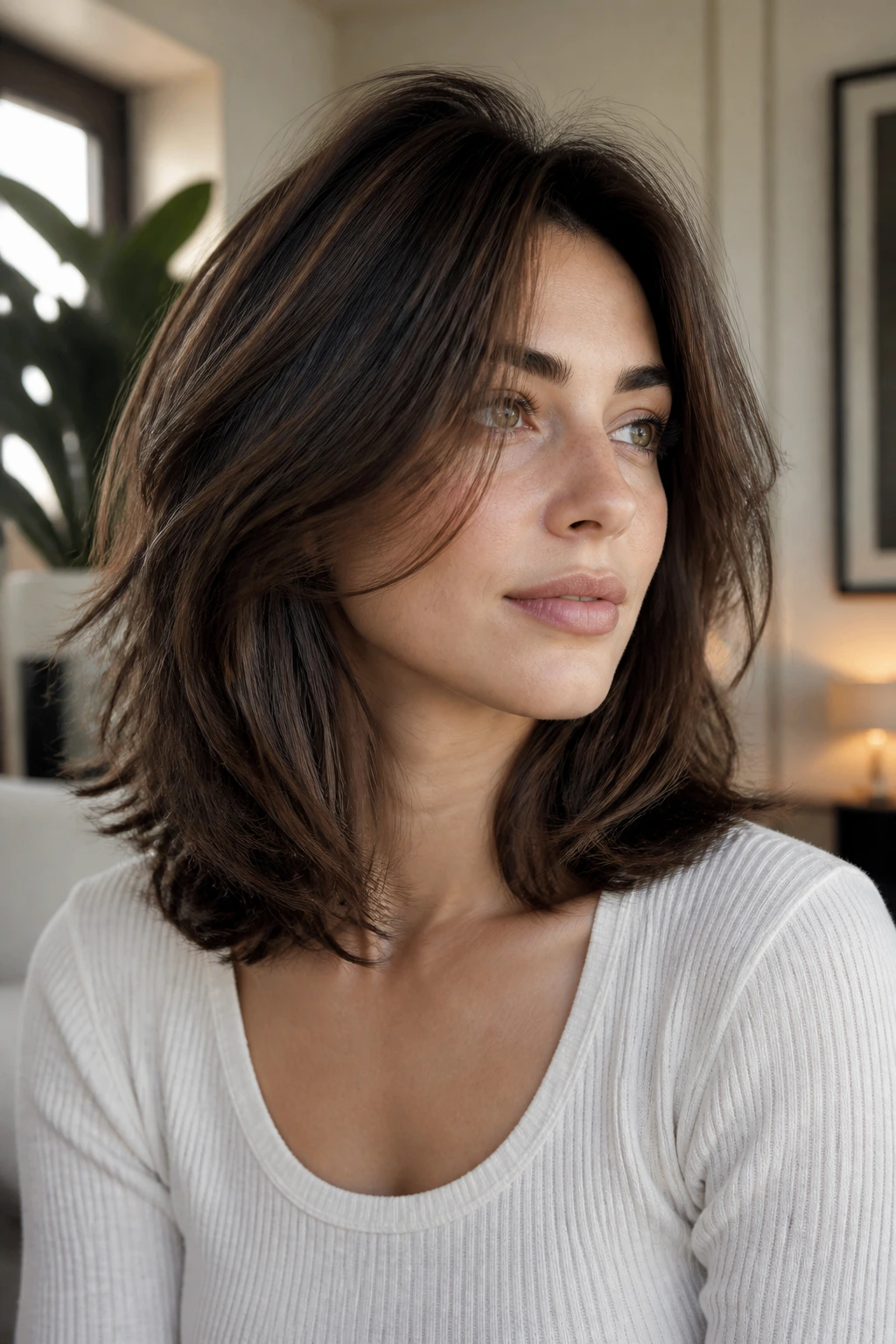
If your thick hair already wants to wave, do not bully it into a flat finish every day. Mid-length layers can let that wave pattern show up in a cleaner, more even way. The haircut takes some of the weight off the middle sections, which keeps the bend from collapsing under its own density.
The best version of this cut has layers that start around the mouth or chin and then stretch down toward the shoulders. That placement keeps the hair moving around the face while leaving enough length below for a full-looking outline. It is a good cut for someone who wants to air-dry often and only heat-style now and then.
A salt spray can make this haircut feel gritty, which I usually do not love on thick hair. A light mousse or a curl cream with slip is better. You want soft separation, not crunchy pieces.
8. Textured C-Cut
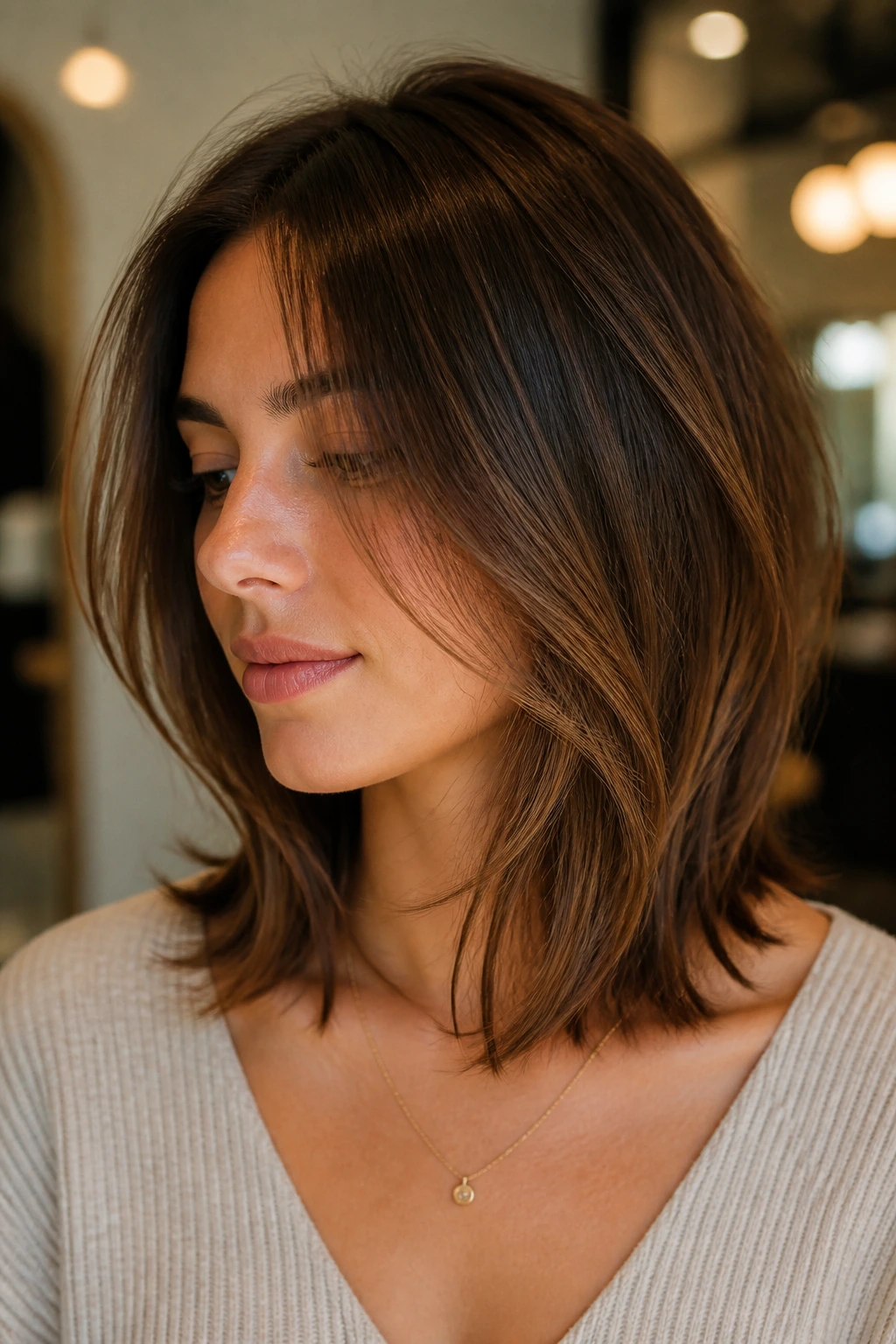
What makes a C-cut different from a regular layered haircut is the curve. The hair falls in a soft C-shape around the face and through the sides, which gives thick hair a rounder outline. That roundness matters because thick hair can easily look square when the layers are too blunt.
The shape works especially well if the front of your hair tends to flare outward while the back hangs straight. A C-cut softens that mismatch. It also keeps the face-framing sections from feeling disconnected, which happens a lot when people ask for “lots of layers” and get a mess instead.
How to use it
Blow-dry the front sections with a round brush that curves the hair under, then finish the rest with a paddle brush or a rough dry. The look should feel soft, not engineered. If you want movement without a lot of obvious texture, this is one of the cleanest options on the list.
9. Modern Wolf Cut
The wolf cut sounds aggressive because it is. A little. But on thick hair, that edge is exactly why it works. The shorter crown layers take weight off the top, the longer ends keep the shape grounded, and the whole thing ends up with a messy, cool outline that thick hair can wear better than fine hair ever could.
I like this cut when someone says they want movement but refuses to spend twenty minutes sectioning and curling every morning. Fair enough. The wolf cut looks best with some natural grit in it. Thick hair gives it the body it needs, so the layers do not disappear.
Keep the layers controlled, though. On medium length hair, a wolf cut should feel shaggy, not hacked. If the shortest pieces jump too high, the haircut starts to look disconnected instead of intentional.
10. Rounded Layered Cut
Some thick hair needs to stop fighting the sides and start leaning into a softer silhouette. A rounded layered cut does that by building a curve from the crown through the mid-lengths and back toward the ends. It works because thick hair already has the density to hold that shape — you just need to remove the right pieces.
This is one of my favorite choices for hair that dries with a natural bend but feels too bulky in a blunt line. The rounded outline keeps the haircut from flaring at the shoulders. It also looks good with a side part or a center part, which gives you some flexibility when you are bored.
The key is leaving enough weight at the bottom. If the ends get too thin, the round shape breaks apart and the whole style starts to feel airy in a bad way. Thick hair needs a little anchor.
11. Tousled Mid-Length Bob
A tousled mid-length bob gives thick hair movement without asking for perfect styling. The length usually lands somewhere between the jaw and the collarbone, and the texture is where the interest lives. Instead of a crisp line, you get bends, pieces, and a slightly broken surface that keeps the hair from feeling stiff.
Compared with a blunt bob, this version is less formal and less heavy. Thick hair can handle the shape because the texture keeps the perimeter from looking dense and square. If your hair already has some wave, this cut can look good with very little effort. If it is straighter, a few bends from a flat iron or curling iron are enough to wake it up.
Do not overload this cut with oil. The whole point is movement. Too much product and it collapses into a shiny lump by lunchtime.
12. Deep Side-Part Layers
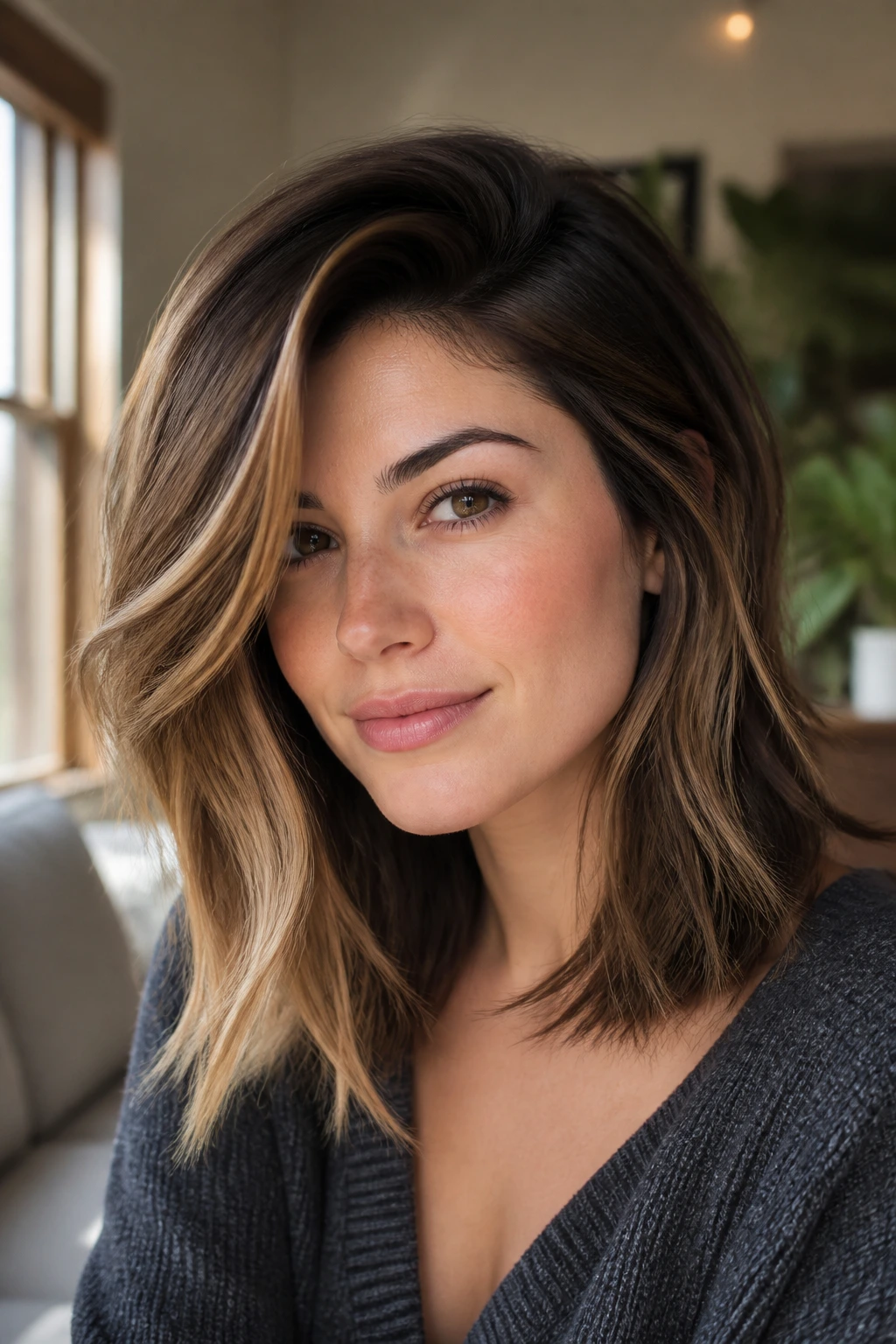
A deep side part changes how thick hair sits on the head more than people expect. It shifts weight away from the center, lifts the front, and creates a softer sweep across the forehead and cheek. Paired with layers, it gives medium length hair a little drama without needing a major cut change.
This is a smart move if your thick hair feels too wide through the crown or if you always wear the same center part and want something that looks different in five seconds. The side part also helps hide bulk on one side while giving the other side a bit of lift. That asymmetry can be flattering in a way that is more about shape than style.
The cut underneath can be simple. The part does the heavy lifting. Sometimes that is enough.
13. U-Shaped Cut
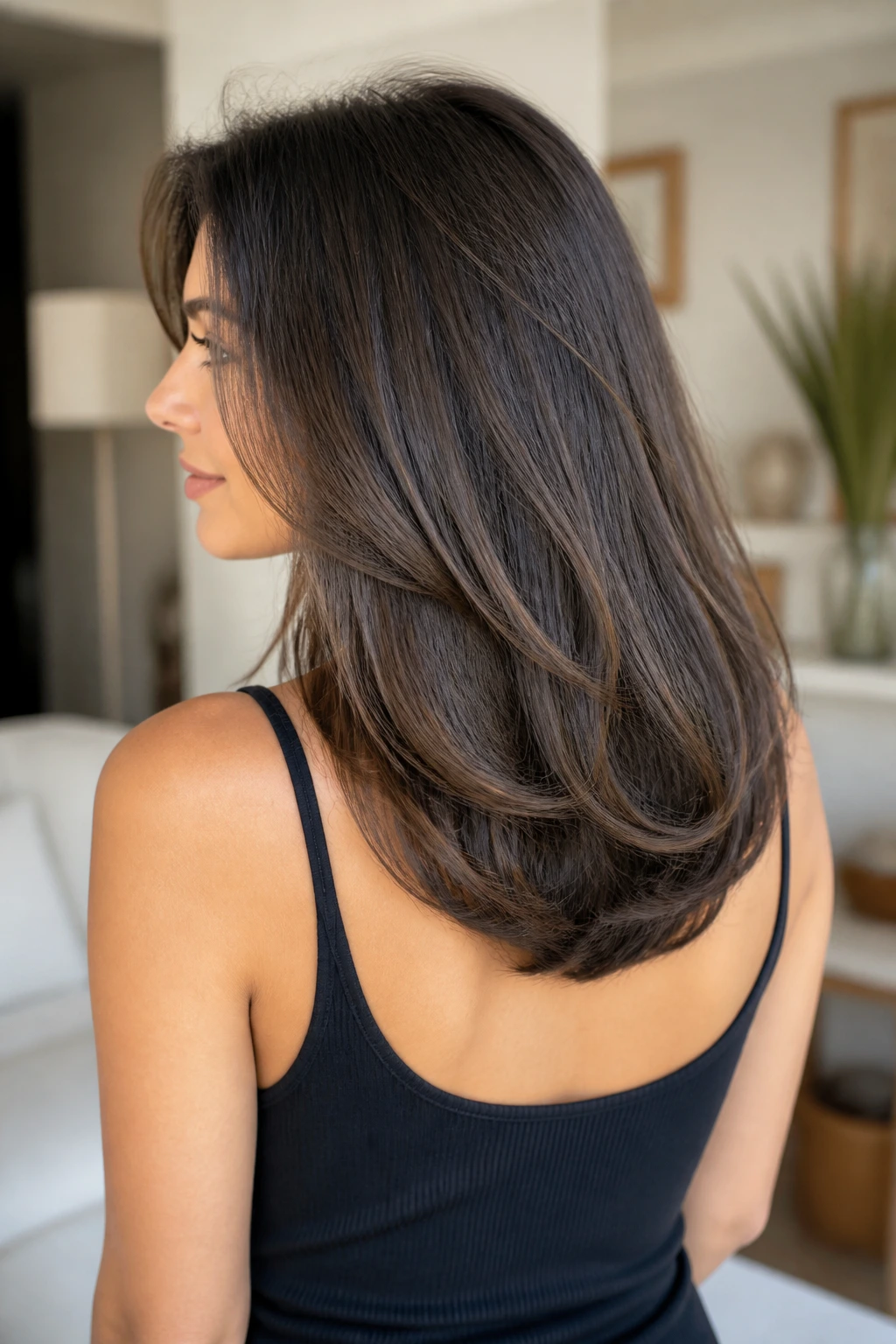
A U-shaped cut is one of those classic choices that still earns its place. The back keeps a gentle curve instead of a straight line, so the hair falls with more softness across thick lengths. That curve is useful because it prevents the lower edge from looking blunt and heavy, which can happen fast on dense hair.
The difference between a U-shape and a straight line is subtle until you style it. Then you notice the movement. The back swings a little more easily, the sides feel less blocky, and the whole haircut reads as lighter even when the actual length barely changes.
Best way to ask for it
Tell the stylist you want a visible curve at the back, but not a dramatic V. The outline should be easy to see when the hair is down, yet still smooth enough to tuck behind the shoulders. If you wear your hair up often, this shape also helps the front pieces fall in a softer frame instead of sticking out bluntly.
14. Razored Midi Cut
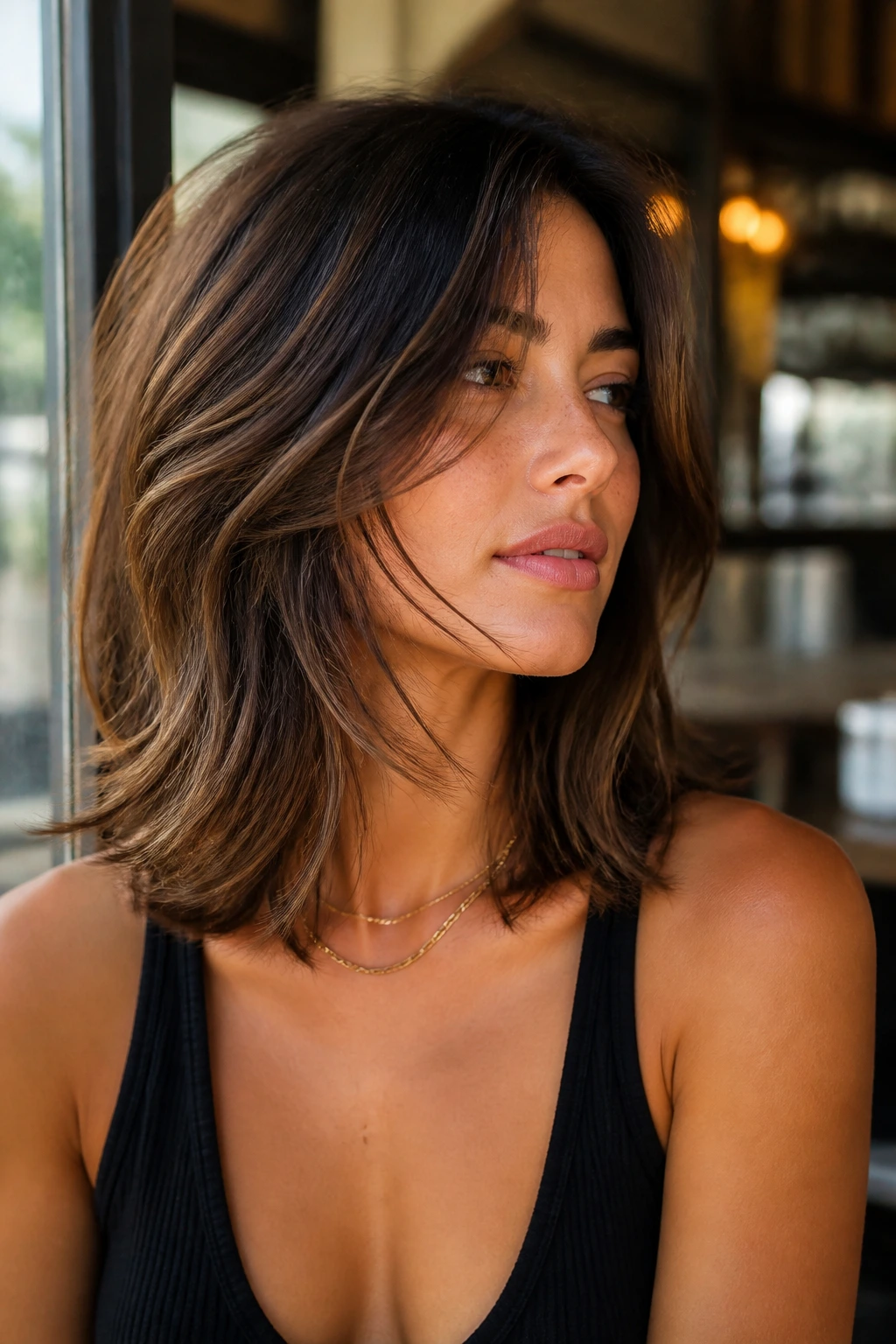
A razored midi cut can be a lifesaver on coarse thick hair, but only if it is done with restraint. The razor softens the edges and removes some of that stiff, heavy feeling that thick strands can get when cut bluntly. On the right hair, it creates a feathered finish that moves instead of clamping together.
The catch is obvious: too much razor work and the ends go frizzy. That is why this cut belongs in skilled hands. The best razored midi cuts keep the visible line clean while softening the interior and the edges just enough to break up bulk.
I like this shape for people who wear texture cream or a lightweight blowout lotion. It gives the style a little lift and makes the hair behave more casually. If your hair is very dry, though, be careful. A razor can expose the roughness faster than a scissor cut.
15. Shoulder-Length Flip

A shoulder-length flip is a happy medium between polished and playful. The ends turn outward slightly, which makes thick hair feel lighter and less buttoned-up. It also keeps the haircut from collapsing into a heavy wall, because the flipped ends create a little air at the perimeter.
This style works especially well if your hair has enough body to hold a bend after blow-drying. You do not need a perfect salon blowout. A rough dry, a medium round brush, and a cool shot at the ends usually do the job. The flip should look soft, not like a page from a retro catalog.
It is a good reminder that thick hair does not always need to be smoothed down. Sometimes it just needs direction.
16. Bouncy Blowout Layers
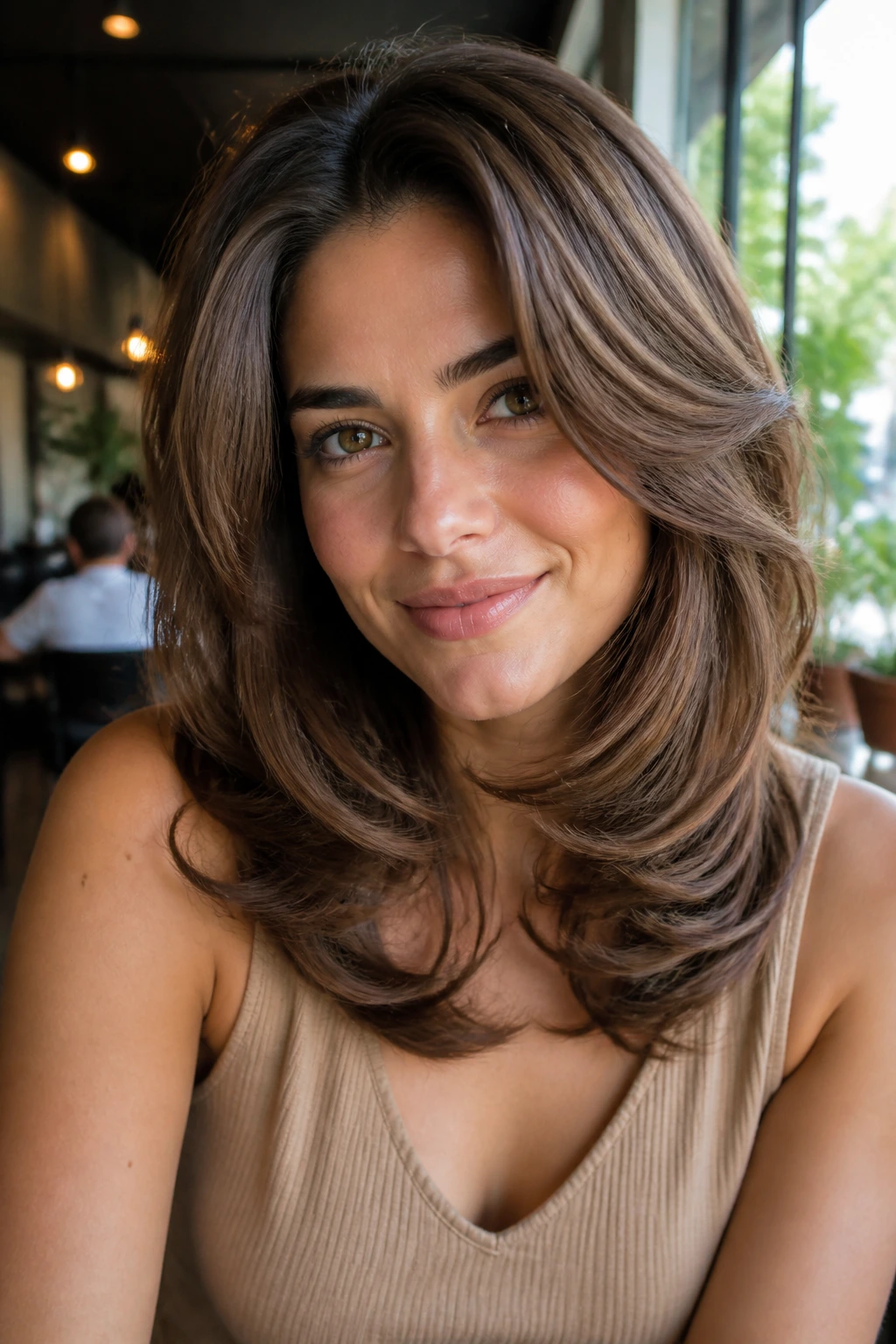
If you like hair that looks finished even when the rest of your outfit is a mess, this is the cut. Bouncy blowout layers are built to hold volume in the right places: lifted at the roots, curved through the mid-lengths, and soft at the ends. Thick hair is perfect for this because it has enough body to keep the shape from collapsing.
The layers should be long enough to move but not so short that they spring into a halo. When the cut is right, the hair flips under at the bottom and stays full at the crown. The look is smoother than a shag and softer than a blunt lob. That middle ground is where a lot of people land once they get tired of fighting their own hair.
This is the cut I’d suggest for anyone who already knows how to use a round brush. It rewards that effort. It also looks decent even on days when you don’t.
17. Low-Maintenance Coily Layers
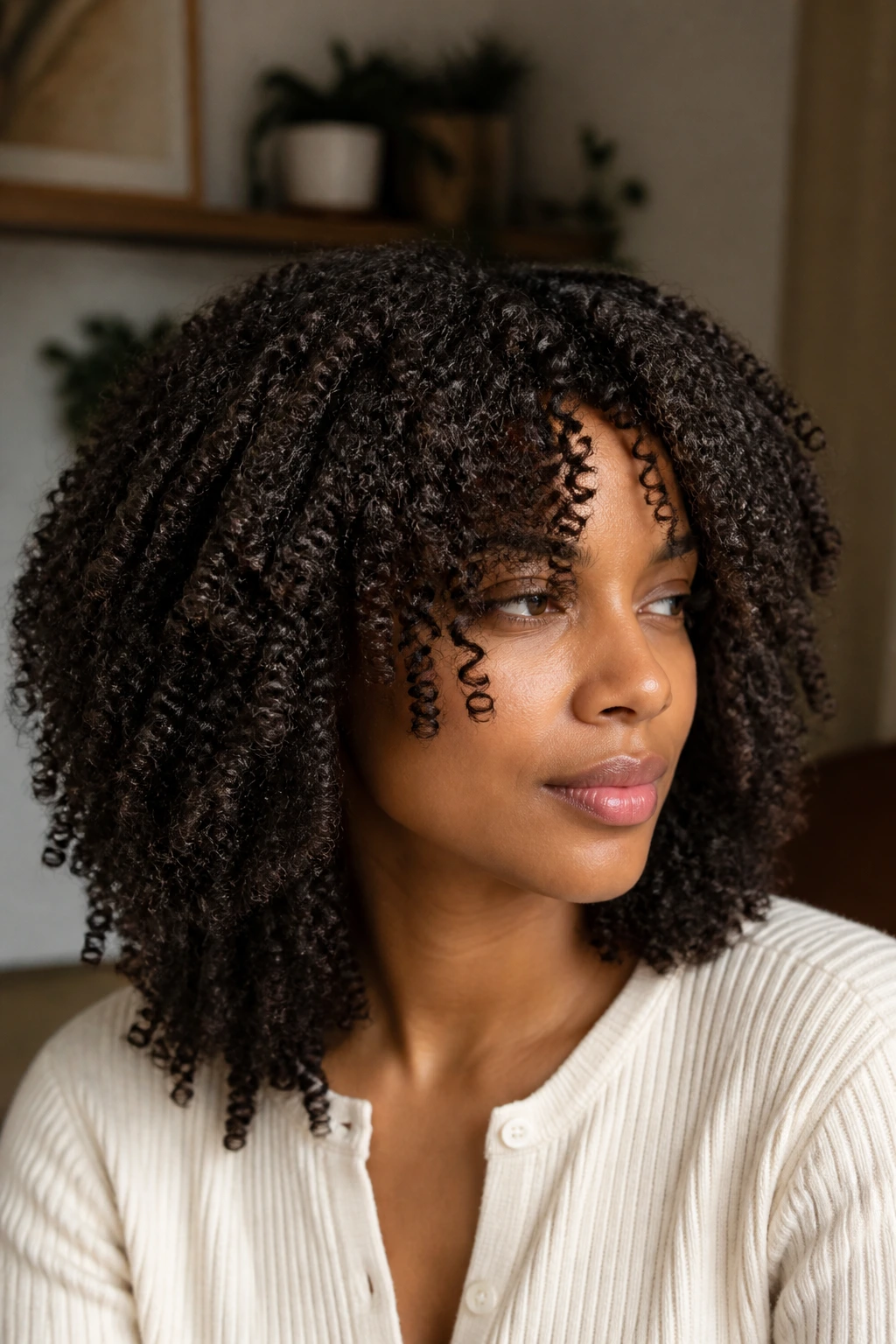
Coily thick hair needs medium length shapes that respect shrinkage and keep the silhouette balanced. Layers are still useful here, but they have to be placed with more care so the cut does not spring into a pyramid. The goal is shape around the head, not length at any cost.
A good coily cut keeps enough weight at the ends to show off the curl pattern, while opening up room around the face and crown. That means the layers should be distributed, not stacked all in one spot. If the top is too short, the shape can puff upward. If the bottom is too heavy, the curls collapse. Somewhere in the middle is where the haircut starts behaving.
I like this style with a leave-in, a cream, and a light gel layered over damp hair. The haircut does the structure work; the product just helps it hold.
18. Sleek Center-Part Lob
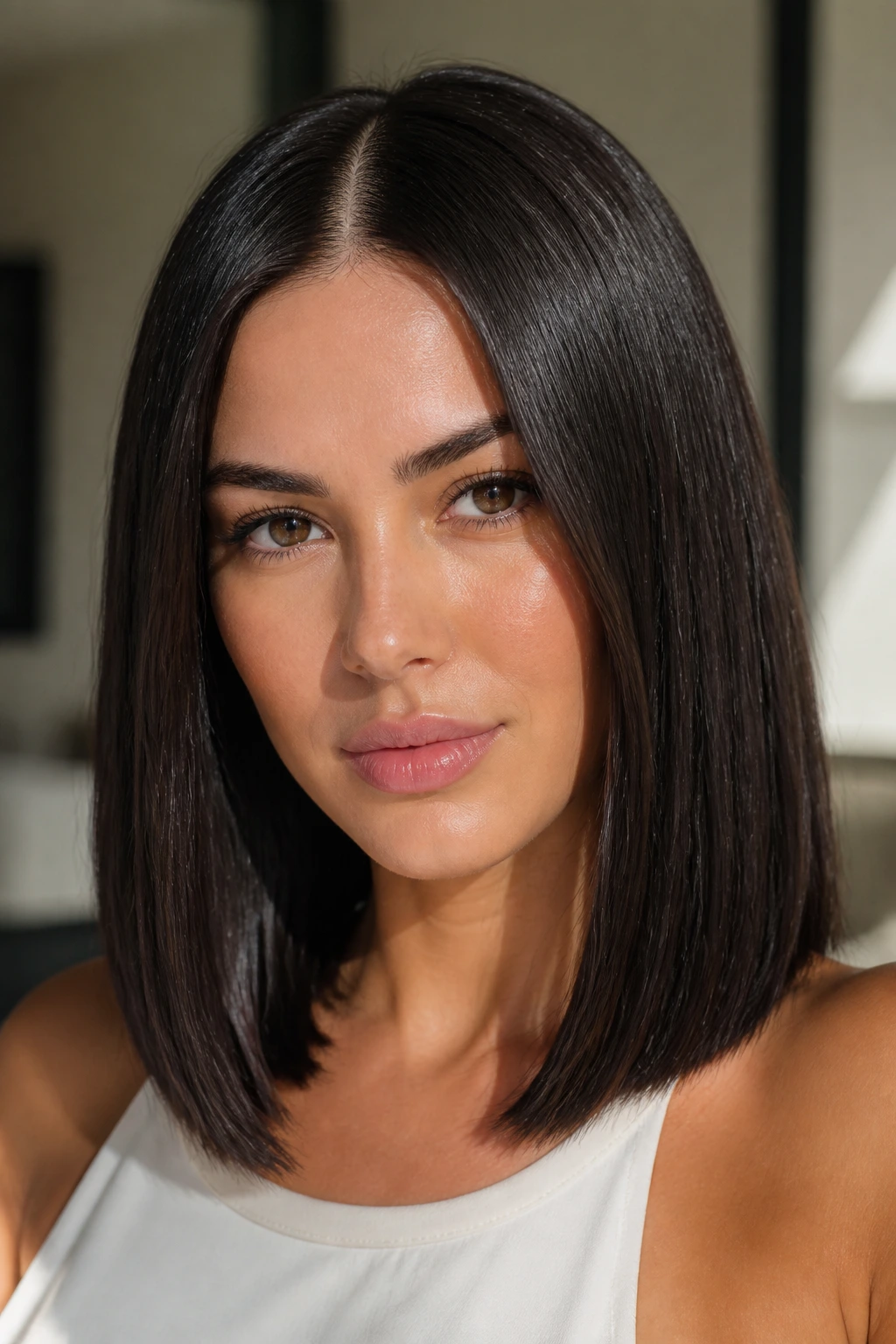
Not every thick-hair haircut needs texture. A sleek center-part lob can look sharp and expensive because it lets the density itself become the feature. The center part keeps things balanced, the lob length keeps the outline under control, and the smooth finish shows off shine instead of volume for its own sake.
This cut works best when the hair is naturally straight or can be blown out straight without a lot of fight. The ends should be clean, but not razor-thin. If they taper too much, the haircut starts to feel underfed. Thick hair needs enough body at the bottom to keep the line strong.
It is one of the easiest styles to dress up or down. Tucked behind the ears, it looks neat. Worn forward, it feels more deliberate. And if you are tired of chasing “big hair,” this is the calm version.
The Styling Logic Behind Thick Hair Shapes

The common thread in all these cuts is control. Not stiffness. Control.
Thick hair does best when the cut tells it where to sit. That usually means one of three things: a blunt edge that holds weight, internal layers that remove bulk, or a shaped outline that keeps the width from spreading too far. The haircut is doing the steering. Products just help the wheels turn.
What matters most when you sit in the chair
Bring photos that show the front and the side. A collarbone lob can look light from the front and boxy from the side if the internal weight stays untouched. A shag can look edgy in a picture and end up too short in real life. Side views save everyone some trouble.
A small thing that changes everything
Tell the stylist how you wear your hair on boring days.
Do you air-dry? Do you always blow it out? Do you clip it up after lunch? That answer matters more than the mood board, because thick hair changes shape depending on how it dries. If you live in ponytails, the cut needs to survive that. If you love smooth styles, the ends need to sit cleanly under the brush.
The Tools That Keep These Cuts in Shape

-
Sharp hair shears: Necessary if you trim at home or clean up split ends between salon visits. Dull scissors chew thick hair and leave ragged ends.
-
Wide-tooth comb: Best for detangling damp thick hair without stretching the curl pattern or breaking the surface.
-
Sectioning clips: Thick hair needs clean sections. If you try to dry or style it all at once, the underneath layers stay damp and the top goes frizzy.
-
1.25-inch round brush: A solid middle-ground brush for collarbone lobs, blowout layers, and shoulder-length flips.
-
Paddle brush: Useful for smoothing blunt cuts and sleek lobs where you want a flatter finish.
-
Blow dryer with nozzle: The nozzle matters. It directs air so the cut sits where you want it instead of puffing in every direction.
-
Heat protectant spray: Thick hair can handle heat, but the ends still get dry fast if you skip this.
-
Light mousse or styling foam: Good for wave, bounce, and root lift without the greasy feel some creams leave behind.
-
Smoothing cream or light oil: Handy for blunt cuts and sleek lobs, especially if your ends swell in humidity.
What to Ask For at the Salon
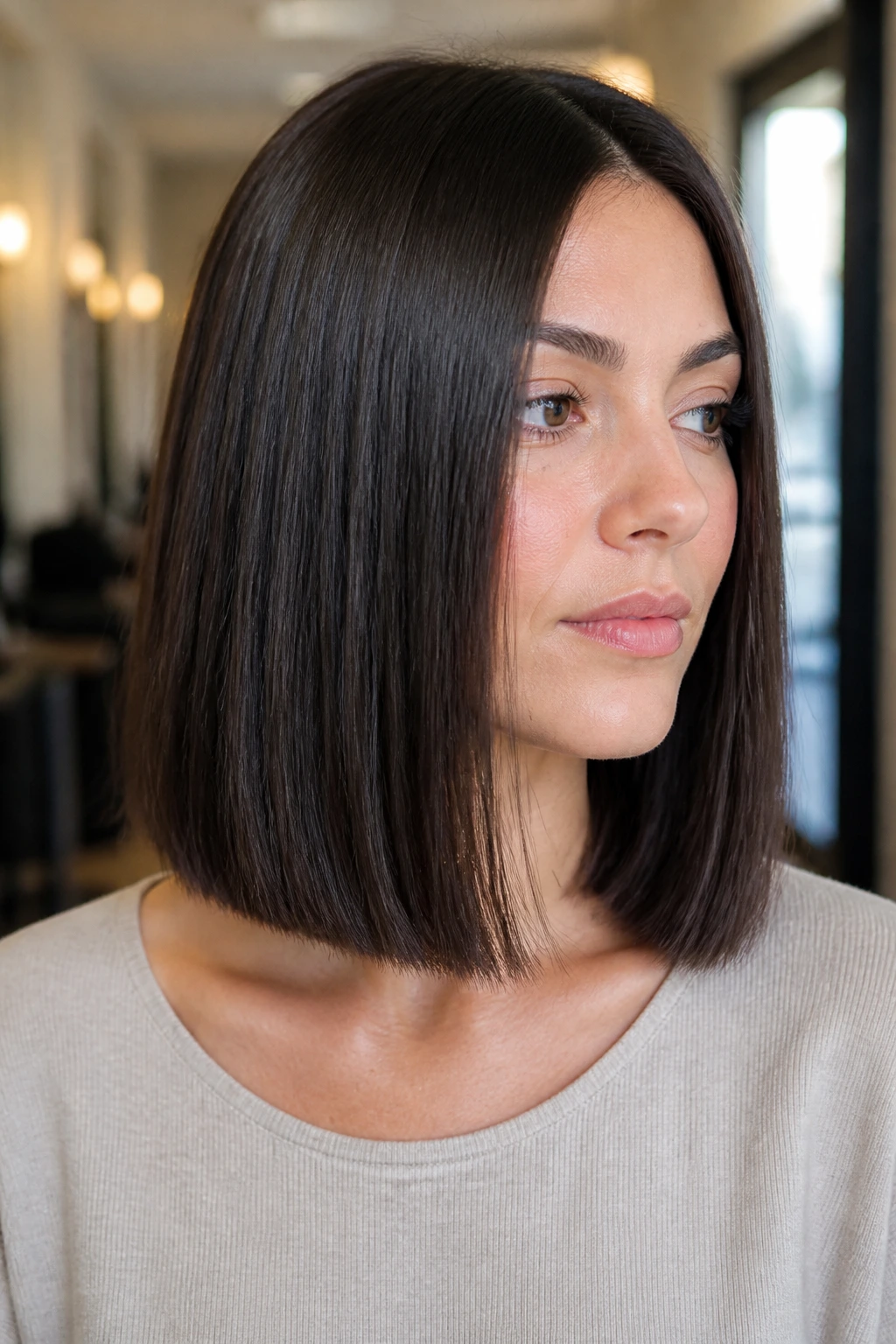
Thick hair appointments go better when the conversation is about shape, not just length. Say where the bulk lives. Say whether the sides puff out, whether the crown falls flat, or whether the ends look too heavy by the second day. That information helps a stylist place layers where they matter instead of guessing.
Ask about the cutting method, too. Point cutting softens ends. Slicing removes bulk with more glide. Thinning shears can be useful in small doses, but they are not a cure-all. I’m picky here for a reason: too much thinning on thick hair can leave ends fluffy and hard to style.
Bring one photo that shows the finish you want and one that shows the shape you do not want. That second photo is often more useful. It tells the stylist exactly where your line lives, and thick hair tends to reward that kind of clarity.
How to Get the Most Out of These Cuts on Busy Mornings

Rough-dry first: Get the roots about 80% dry before you reach for a brush. Thick hair behaves better when the shape is set early, not after it has already dried into its own idea of a style.
Use less product than you think: A pea-sized amount of cream can be enough for a lob; a quarter-size blob can flatten the crown fast. Start small. Add more only if the ends need it.
Cool-shot the ends: After you round-brush, hit the last inch of hair with cool air for 10 to 15 seconds. That step helps the bend stay put longer.
Refresh the second day, don’t rebuild it: Mist the mid-lengths lightly, scrunch or smooth with damp hands, and rework only the front pieces. Thick hair does not need a full restart every morning.
The Mistakes That Make Thick Hair Look Wider
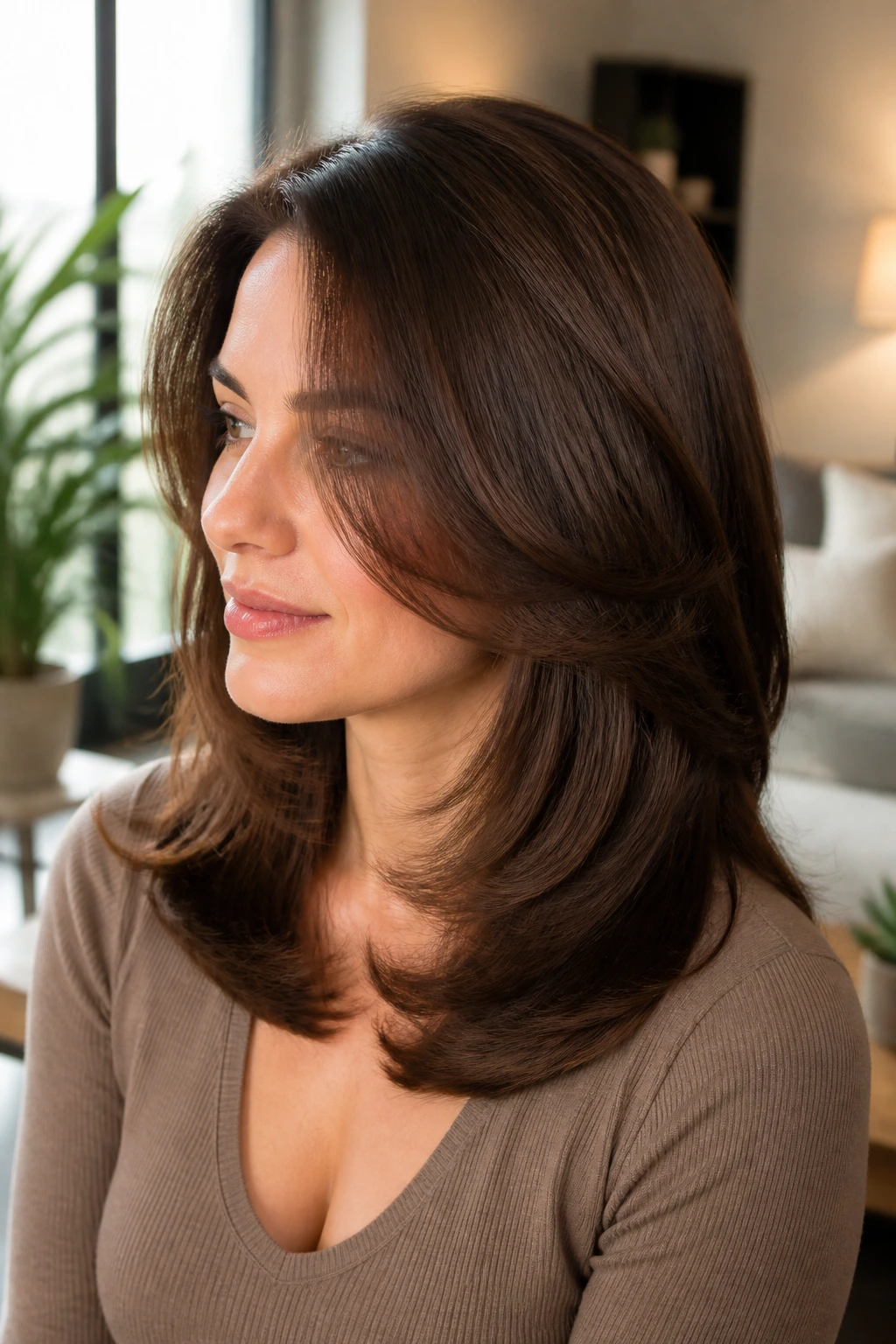
The first one is the blunt line with no internal weight removal. It sounds clean in theory, but on very dense hair it often turns into a shelf that sits straight out from the head. The fix is simple: keep the visible edge if you like it, but ask for internal shaping underneath.
The second mistake is layers that start too high. Short layers around the crown can be useful in a shag or wolf cut, but if they are cut too aggressively on the wrong texture, the hair puffs upward and eats the silhouette. If the top is already full, you do not need much height there.
A third problem is overloading thick hair with heavy creams and oils. The lengths look great for twenty minutes, then the roots collapse and the cut loses its shape. Use lighter products than your instincts suggest. Thick hair can carry more weight than fine hair, but not endless weight.
And one more: waiting too long between trims. Thick hair can hide split ends for a while, which is rude because the shape starts to drift before you notice the damage. Once the ends fray, the whole cut looks wider and less controlled.
Variations and Alternatives to Try

The Sleek Office Version: Keep the same medium length cut but blow it out straight with a paddle brush and a little smoothing cream. This works well if you need the haircut to look neat for several days in a row.
The Air-Dried Wave Version: Swap polished styling for mousse and scrunching on damp hair. This suits shag layers, C-cuts, and butterfly cuts because the natural bend shows off the shape.
The Curly-Control Version: Keep the shape medium length, but ask for curl-friendly layers that remove bulk without breaking the curl pattern. This is the best move for thick curly or coily hair that grows wide before it grows long.
The Grow-Out Friendly Version: Keep the perimeter blunt and the layers long. You lose some immediate movement, but the cut stays cleaner for longer between salon visits.
The High-Volume Blowout Version: Keep layers around the crown and face, then style with a round brush for lift. This is the one to choose if you like movement at the top and softness through the ends.
Keeping the Shape Between Salon Visits

Medium length thick hair can hold a haircut longer than people think, but only if you care for the outline. A trim every 8 to 12 weeks keeps the perimeter from fraying and stops the bulk from sinking into the bottom. If the cut is very layered or razored, aim closer to the 8-week side.
At night, use a loose silk scrunchie or leave the hair down if it tangles badly in buns. Thick hair often bends strangely when it is tied too tight while damp. That crease can be a pain to smooth out the next morning.
A satin pillowcase helps too. Not because it is magic. Because thick hair rubs against cotton and gets puffy at the ends. Less friction means less extra fluff on the sides.
For product buildup, rinse the scalp properly once every week or two with a clarifying shampoo if your hair feels coated. Thick hair can hide residue under the top layer, which makes the roots limp and the ends dry at the same time.
Frequently Asked Questions

Which medium length cut is best if my thick hair puffs out at the sides?
An angled lob, a collarbone lob with internal layers, or a soft C-cut usually handles that problem best. They reduce width through the sides while keeping enough weight at the bottom so the haircut still feels full.
Are layers always a good idea for thick hair?
No. Layers help when the bulk needs breaking up, but too many short layers can make thick hair feel wide and floaty. Long, controlled layers usually work better than aggressive chopping, especially if your hair is coarse.
What if I want my thick hair to look sleek, not textured?
Choose a blunt shoulder-length cut or a sleek center-part lob. Those shapes keep the line clean, and you can smooth the surface with a paddle brush and a light cream instead of relying on lots of layering.
Can thick hair work with bangs at medium length?
Yes, but the bang shape matters. Curtain bangs and longer face-framing pieces tend to sit better than short, dense bangs because they blend into the haircut and do not add more bulk at the forehead.
How often should I trim a medium length haircut on thick hair?
A trim every 8 to 12 weeks is the sweet spot for most people. If your hair is heavily layered or prone to split ends, stay closer to 8 weeks so the shape does not spread out.
What should I ask my stylist not to do?
Ask them not to thin the hair aggressively with thinning shears all over. On thick hair, that often leaves frayed ends and a fuzzy outline that takes work to smooth down.
Do these styles work on curly or coily hair too?
Yes, but the layers need to respect curl pattern and shrinkage. A coily cut should be shaped to the worn length, not the stretched length, or it can end up too short and too wide.
How do I keep thick hair from looking triangular after a blow-dry?
Dry the roots first, direct the ends inward, and avoid piling on heavy oil near the crown. If the haircut still flares, the issue is probably the cut itself — the sides may need internal weight removal.
The Shape That Makes Thick Hair Easier to Live With

Medium length is where thick hair often behaves best. Long enough to show movement, short enough to stay manageable, and flexible enough to wear sleek one day and undone the next. That is the real appeal of these cuts: they give density a shape instead of treating it like a problem to solve.
Pick the version that matches how you actually wear your hair, not the one that looks best in a perfect salon photo. Thick hair is happiest when the cut fits the way you live — air-dried, blown out, tucked behind the ears, thrown into a clip, all of it. Get the outline right, and the rest gets much easier.
