



Thick hair does not behave like a polite guest when it gets cropped short. It swells at the wrong places, flips out at the jaw, and turns a simple bob into a shape with opinions. That is exactly why short haircuts for thick hair on women need more thought than “take some off the ends.” The right cut changes the whole balance: where the weight sits, how the sides hug the face, and whether the back rounds neatly or sticks out like a shelf.
I’ve always thought thick hair looks its most expensive when the cut is doing real work. Not when it is buried under products. A clean perimeter, a smart internal layer, or a tight nape can make the difference between hair that feels heavy and hair that moves in one clean swing. The haircut matters more than the serum. More than the hot brush. Sometimes even more than the blow-dry.
What follows leans into that idea hard. Some of these cuts are sleek and blunt. Some are airy and choppy. A few are unapologetically short and sharp around the ears, which is where thick hair tends to bulk up first. And yes, there are curls, waves, fringe, and a few cuts that can survive a rough-dry on a busy morning without turning into a triangle by noon.
Why You’ll Love This Collection
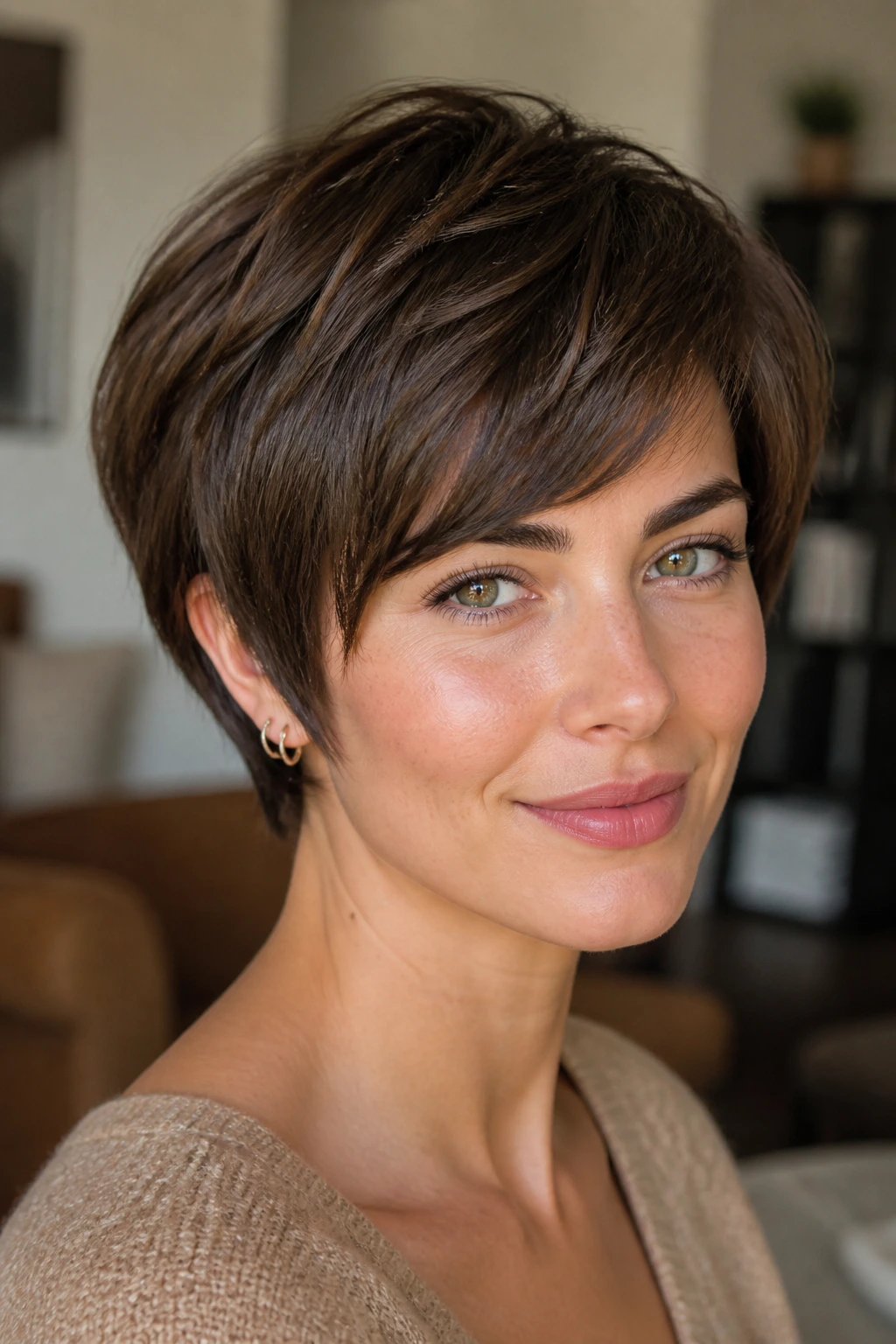
- Less bulk where it counts: These cuts remove or redirect weight at the nape, sides, and crown so thick hair stops swelling into a wide shape.
- Built for real movement: A good short cut on dense hair does not just sit there; it bends, tucks, and swings instead of puffing out at the edges.
- Easy to personalize: You can keep the outline blunt, add fringe, carve out the back, or soften the front without losing the shape.
- Works with different textures: Straight, wavy, and curly thick hair all fit here, as long as the length and layering are chosen with purpose.
- Better salon conversations: These examples give you concrete names and shapes to bring to your stylist, which is a lot easier than saying “short, but not too short.”
- Less daily wrestling: The right haircut cuts down on the round-brush battle because the hair is already set up to fall where you want it.
1. The Chin-Grazing Blunt Bob
A chin-length blunt bob is one of those cuts that looks almost severe in the best way. The line sits clean at the jaw, so thick hair stops ballooning below the face and starts behaving like a shape instead of a cloud. On straight hair, the edges look sharp and polished. On wavy hair, the bob gets a little bend and still keeps its outline.
Why it works: Thick hair has enough body to make a blunt edge look full without looking sparse, which is why this cut feels stronger than a wispy bob. The compact length keeps weight from dragging the shape down, and the blunt perimeter makes the hair appear denser at the ends rather than frayed.
A chin-grazing bob is especially useful if your hair grows out wide around the lower face. The cut pulls that bulk inward. Ask for a slight bevel at the ends if your hair is very thick; it helps the line sit against the neck instead of flaring out. If your hair has a stubborn cowlick at the crown, a center or soft off-center part usually gives the cleanest fall.
2. The Soft French Bob
The French bob is shorter, a little cheekier, and very good at making thick hair look deliberate instead of bulky. It usually lands somewhere between the cheekbone and the jaw, often with a soft fringe or a tiny bit of face-framing texture. The charm is in the looseness. It looks like it was cut with confidence and then left alone on purpose.
Why it works: Thick hair gives a French bob enough body that it does not collapse. The shorter length keeps the silhouette compact, and the soft edges stop it from feeling boxy around the cheeks.
If your hair is dense at the bottom, ask your stylist to keep the outline heavier than you think and let the softness come from the interior, not the perimeter. That is the trick. Too much thinning around the line can make the ends pop out in strange directions, which defeats the point. A little bend from a flat iron or round brush is often enough.
3. The Stacked Bob With a Tight Nape
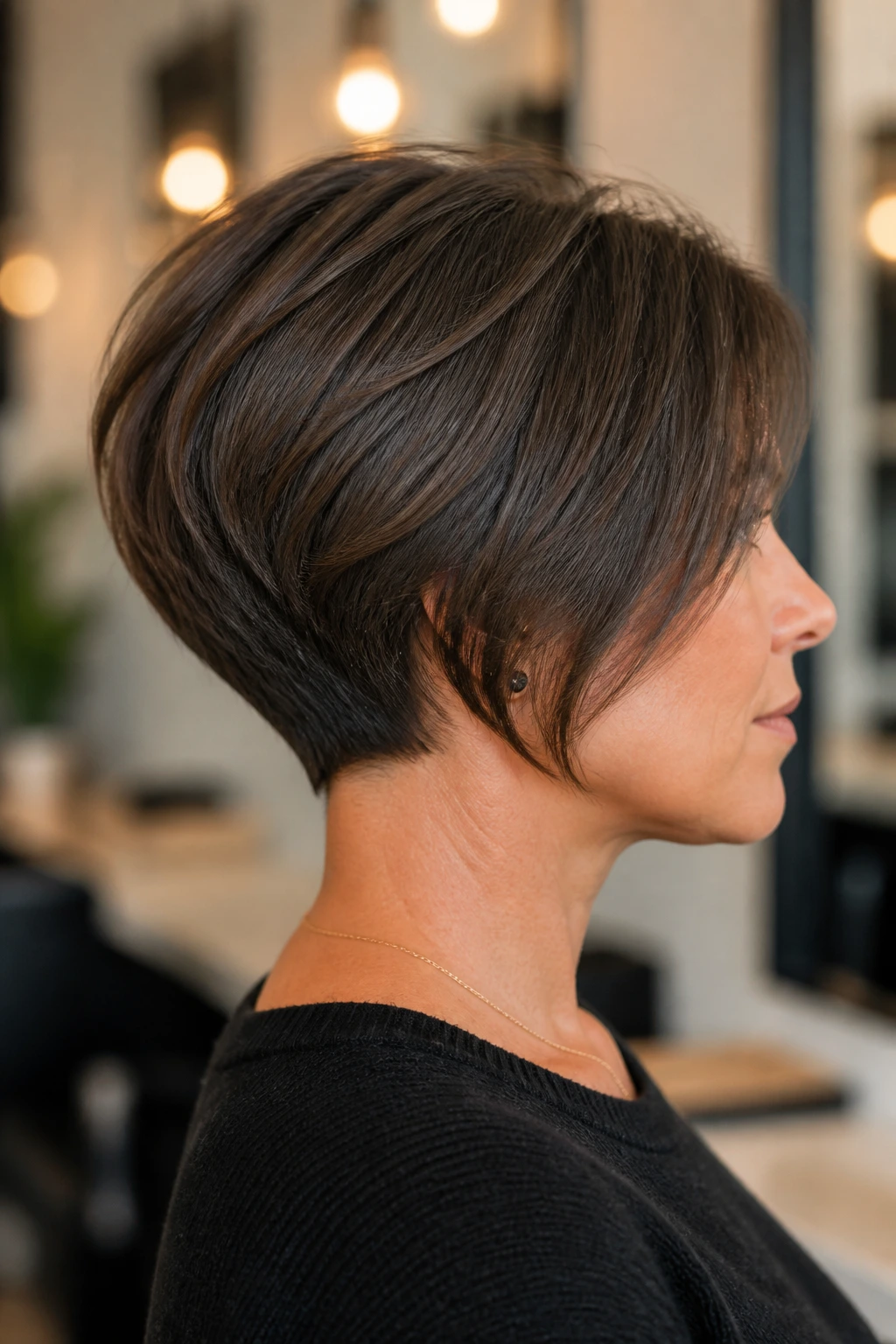
This is the cut for anyone who wants the back to lie flat instead of puffing out like a little helmet. A stacked bob uses graduated layers in the back to build shape and remove bulk at the nape while keeping the front longer and cleaner. Thick hair loves this structure because the layers are doing a job, not just decorating the haircut.
The result is tidy from the side and fuller at the crown, which gives the head a nice curve. That curve matters. Without it, thick hair can sit like a block. With it, the whole cut looks balanced and controlled.
Ask for the stack to be visible but not extreme unless you want a sharper, more fashion-forward shape. A heavy stack on very thick hair can look excellent, but it needs regular cleanup. If you like a bob that shows the neck and wears well with earrings, this one earns its keep.
4. The Asymmetrical Bob
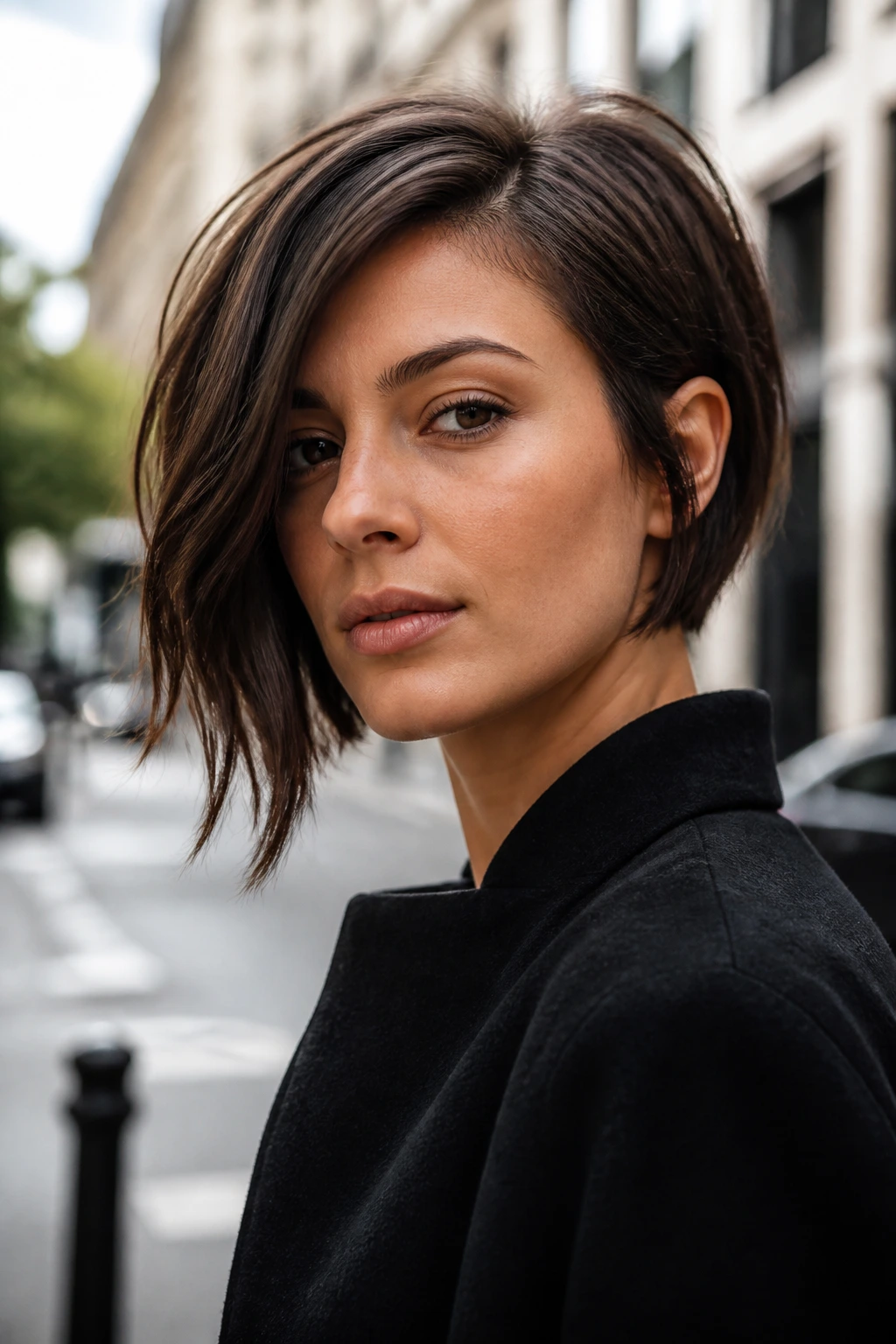
One side slightly longer than the other changes the whole mood of thick hair. The asymmetry breaks up bulk, especially if your hair naturally flips out on one side more than the other. It also gives the cut motion even when you wear it straight. A small length difference is enough; this does not need to be dramatic to work.
What I like about an asymmetrical bob on dense hair is the way it cheats the eye. The longer side pulls the weight downward in one clean direction, so the haircut feels intentional rather than wide. It is a nice option if you want something short but not sweet. A little edge goes a long way here.
Keep the shorter side close to the jaw and the longer side near the collarbone if you want an easier grow-out. If you push the contrast too far, the style can become more about the angle than the hair itself. A subtle asymmetry is easier to live with, and thick hair already brings enough presence.
5. The Bixie Cut
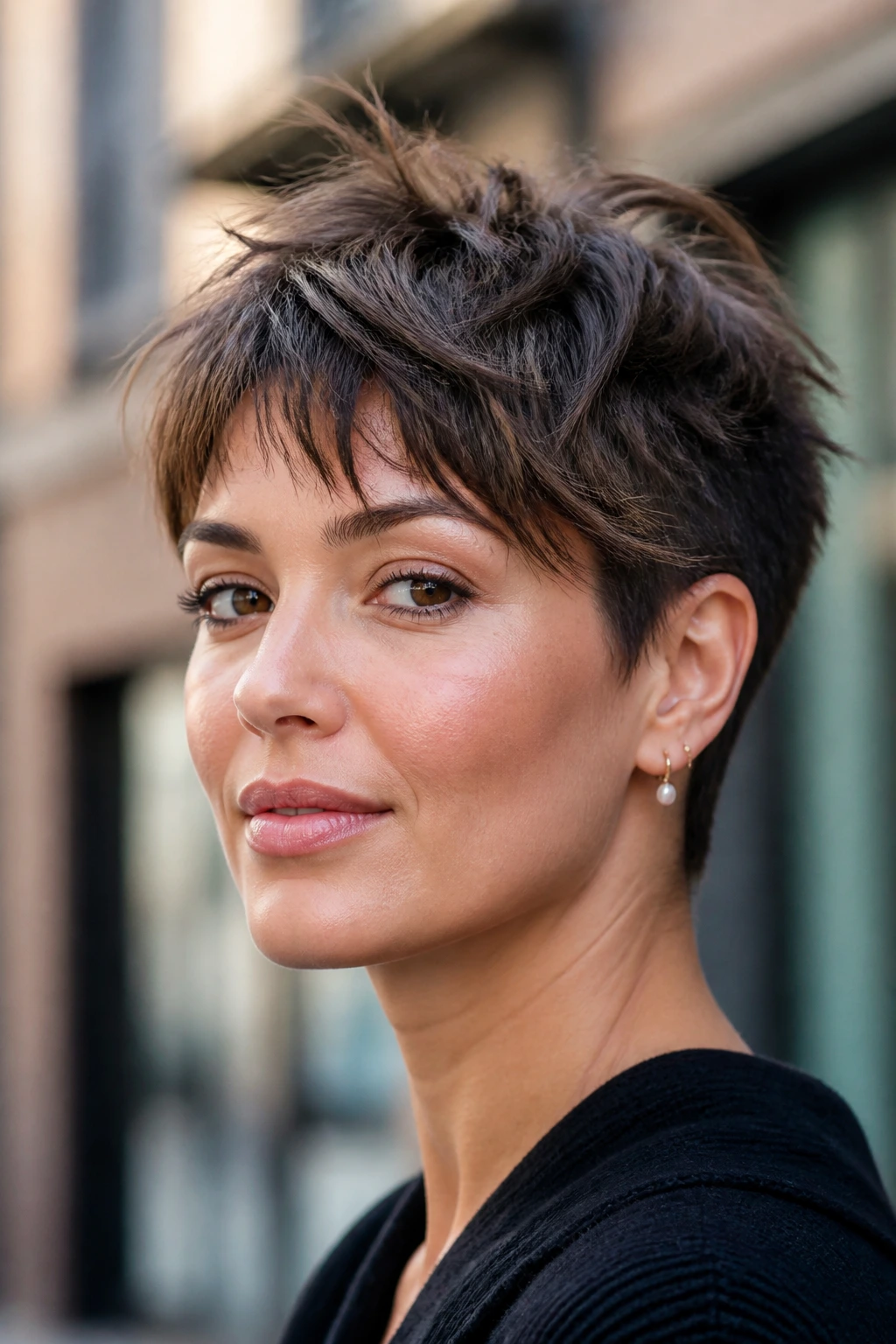
Half bob, half pixie, the bixie sits in that useful little middle zone where thick hair can lose weight without losing personality. It usually lands around the ears or just below them, with enough top length to sweep, tuck, or piece out with fingers. That balance matters. Thick hair often resists going fully pixie because the top can feel too bulky, while a bob can feel heavy. The bixie splits the difference.
Why It Fits Thick Hair So Well
The shorter sides and back keep the bulk under control, while the top layers give you room to shape the style without turning it into a flat cap. If your hair has a natural wave, this cut wakes it up fast. If it is straight, a small amount of texture cream or mousse keeps the top from reading too stiff.
A bixie works especially well for women who want short hair without committing to a full crop. You get ears showing, neck showing, and enough length in front to soften the face. Ask for soft edges around the hairline rather than a harsh chop. Thick hair can take that softness and still hold the shape.
6. The Classic Pixie Crop
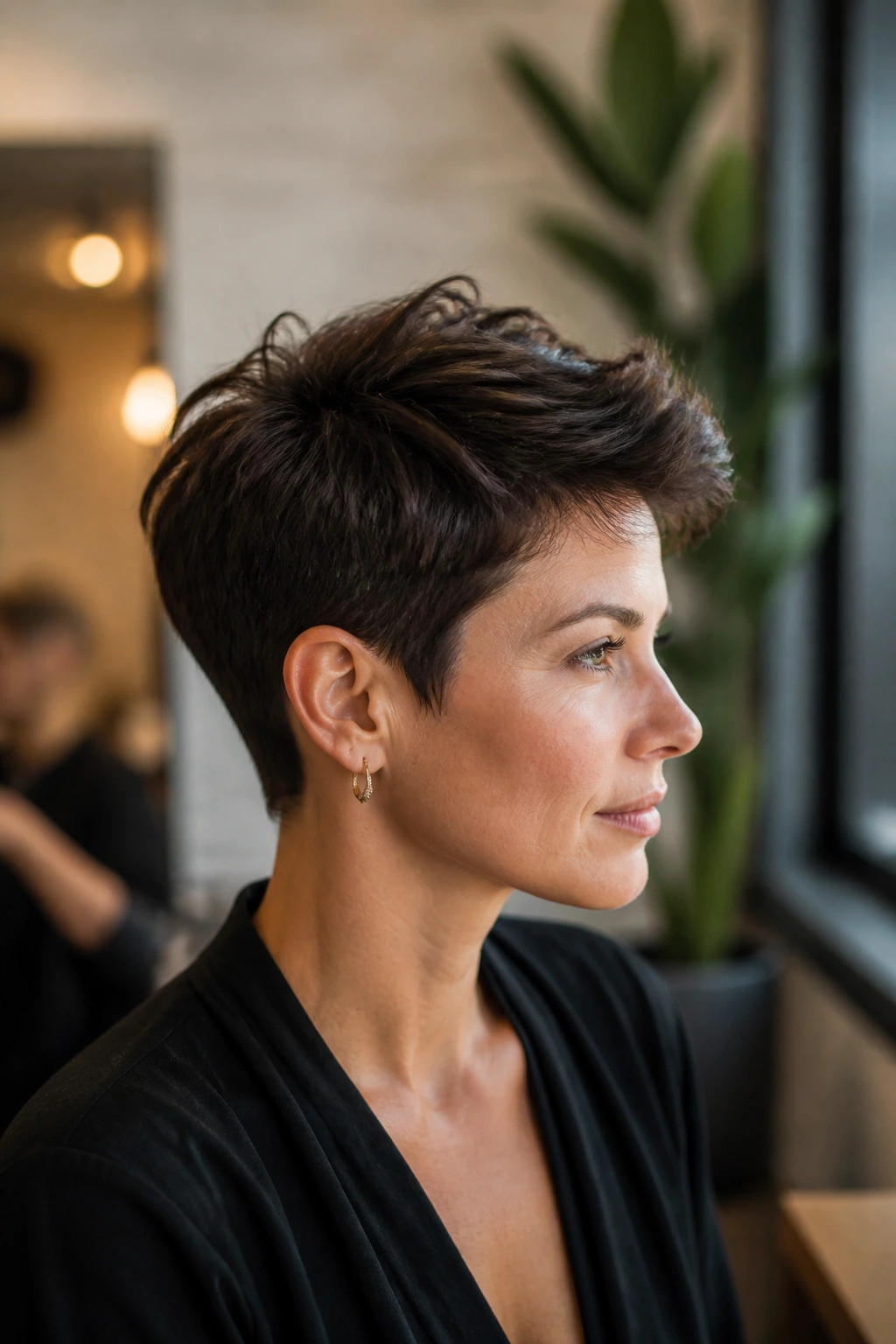
A classic pixie on thick hair has real presence. The short sides, tapered nape, and slightly longer top make the head shape look clean and compact. Dense hair can sometimes make a pixie look too puffy if it is cut without enough internal removal, so the shape has to be purposeful from the beginning.
This cut is at its best when the top is long enough to move, but not so long that it starts falling forward in one heavy sheet. A little lift at the front, a little snugness around the ears, and a neat nape are the parts that keep it from turning blunt in the wrong way. You can wear it smooth, messy, or brushed up with a little paste.
If your hair is thick and straight, a classic pixie can hold a lot of shape with almost no effort. If your hair waves, ask for a little extra length on top so the natural texture has somewhere to go.
7. The Long Pixie With Side-Swept Fringe
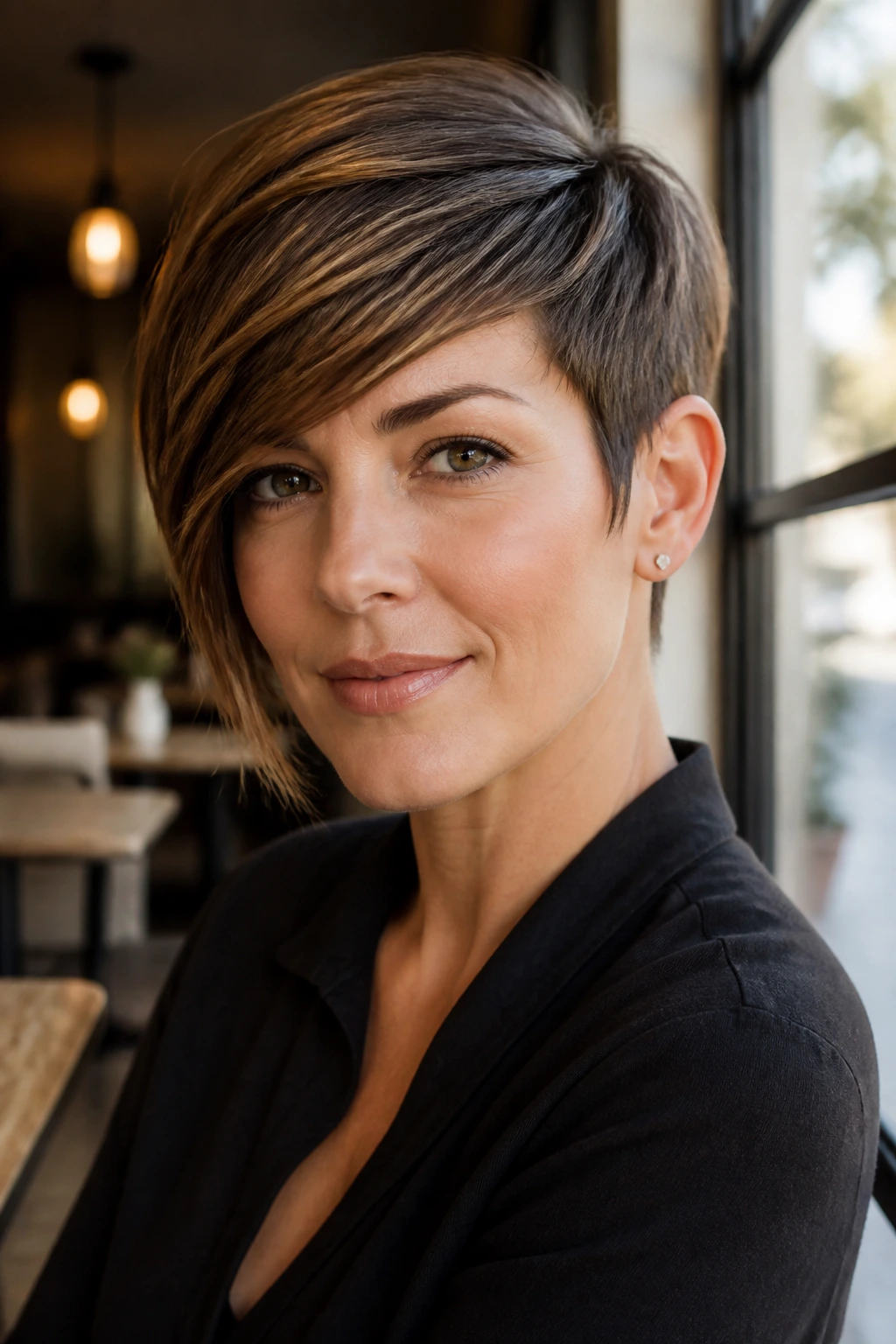
This is the pixie for anyone who wants short hair but still likes the feel of fringe moving across the face. The top stays longer, the sides stay close, and the side-swept bang softens the forehead and cheekbones. Thick hair benefits from that longer front section because it gives the cut a place to release weight instead of stacking it all up top.
The key is proportion. Keep the back and sides tidy so the top length looks deliberate rather than overgrown. A long pixie can get mushy fast if the sides are left too full. On the other hand, when it is cut correctly, it looks elegant without trying too hard.
This one is good if you want a short shape that still plays well with a blow-dryer brush. Sweep the fringe away from the face, set the crown with a small round brush, and the cut comes alive. No wrestling match required.
8. The Undercut Pixie
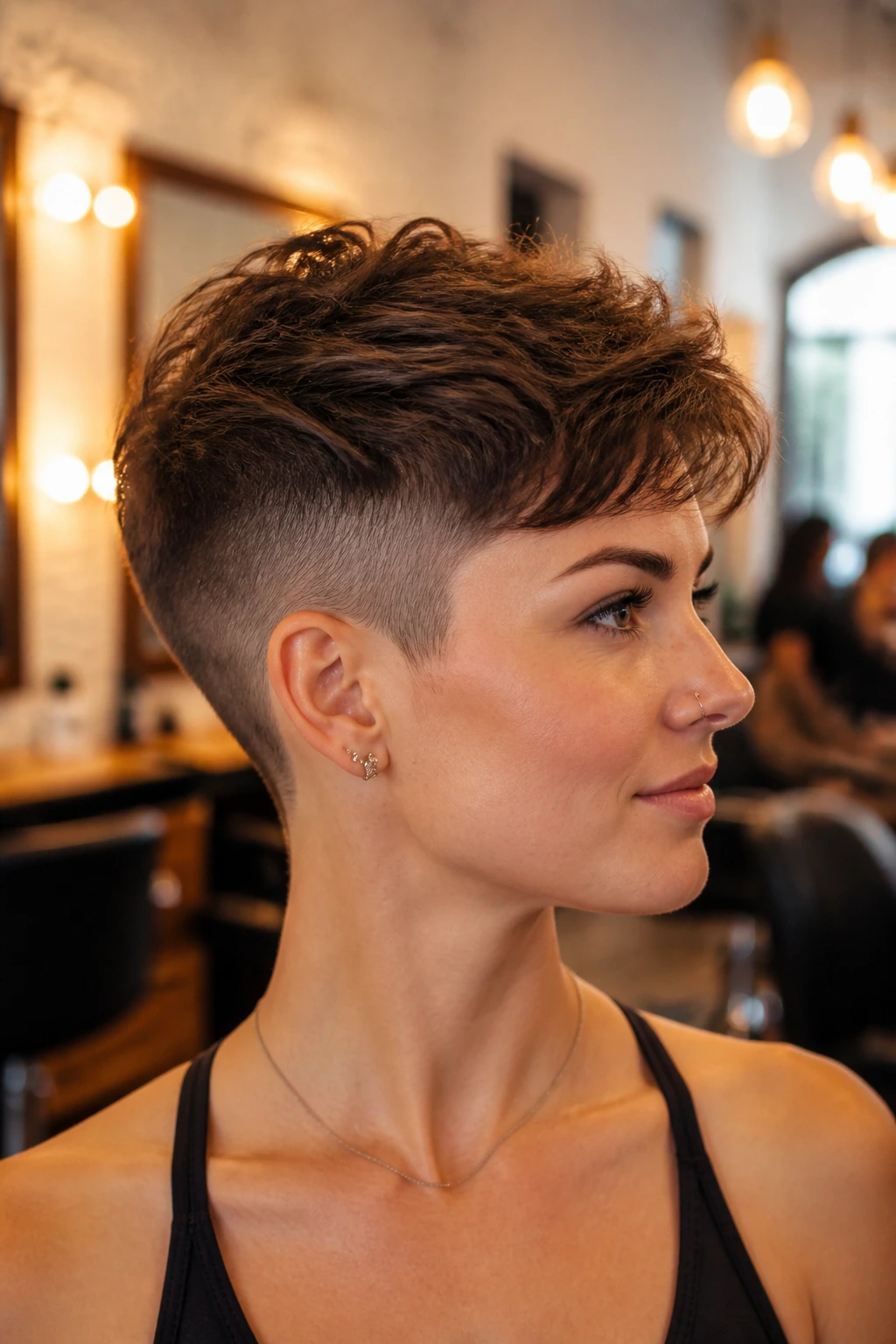
The undercut pixie is blunt about bulk. That is why it works. By taking the hair shorter or nearly clipped underneath, the cut removes the hidden weight that makes thick hair stand away from the head. The top can stay fuller and softer, which gives you styling freedom without all the puff underneath.
It is a smart choice if your hair is very dense at the nape or around the ears. Those spots are where thick hair can feel itchy, hot, and oddly stiff. An undercut solves that without making the whole style look severe. If you want to keep some softness, ask for a hidden undercut that sits just below the visible layer of hair.
A little warning: this cut grows out with a mind of its own. If you like a polished edge around the ear, you will need regular cleanups. If you are fine with a slightly lived-in finish, the undercut pixie is one of the easiest ways to make thick hair feel lighter.
9. The Shaggy Pixie
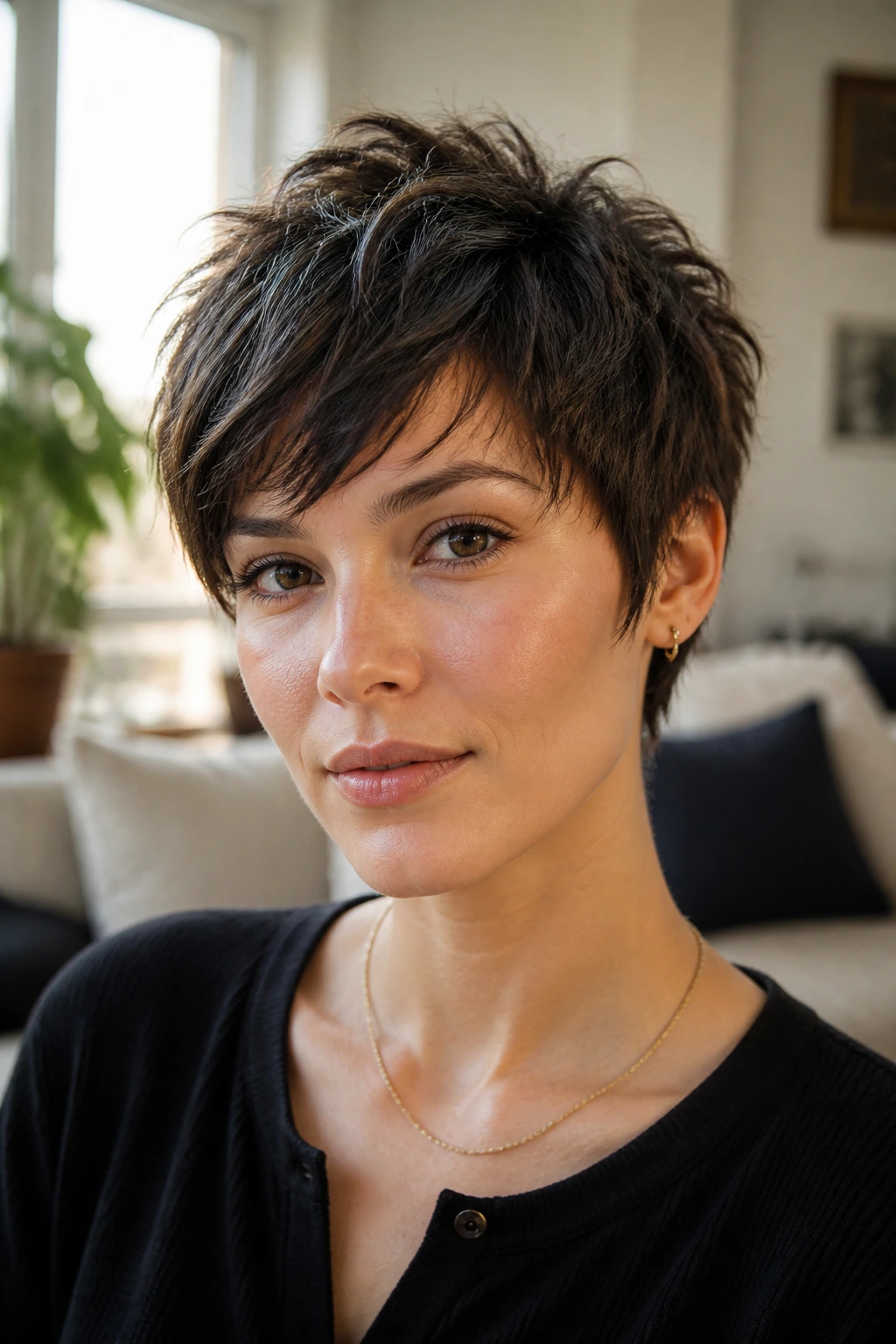
A shaggy pixie looks like it was cut for movement, not obedience. Short layers are scattered through the crown and sides, creating texture that stops thick hair from sitting in one heavy mass. The shape is messier on purpose, which is helpful if your hair tends to swell when humidity rises.
The best version keeps the silhouette close to the head while letting the top pieces fall in different directions. That broken-up finish gives thick hair a softer outline. It is especially good on wavy hair because the layers catch the wave pattern without needing much help.
Use a little mousse or lightweight cream, then scrunch and air-dry or diffuse. Do not pile on wax or oil at the root; that will make the short layers clump and show every bit of scalp in the wrong way. This cut wants a touch of separation, not slickness.
10. The Feathered Pixie
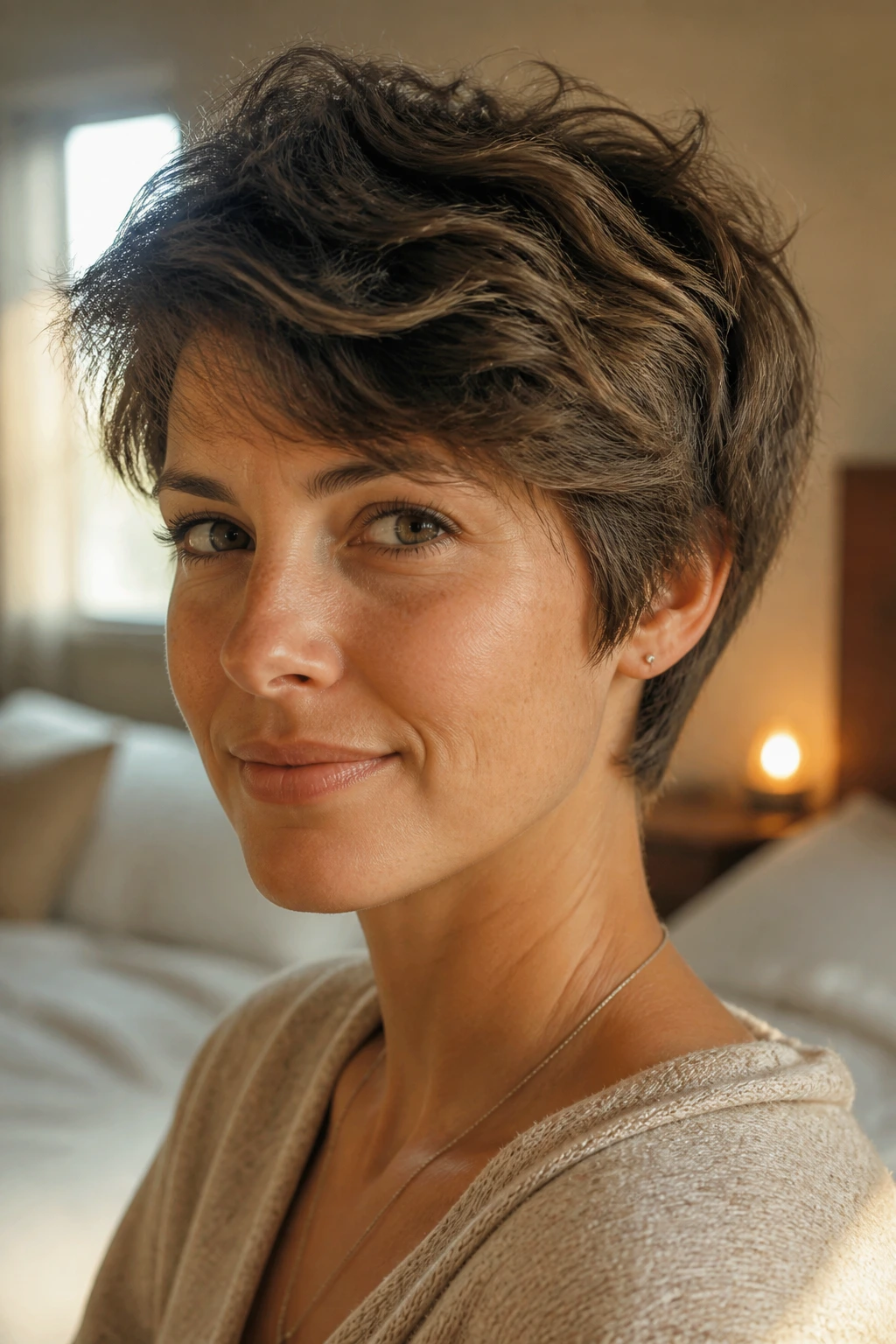
Feathering turns a thick pixie from compact to airy. The ends are softened so the hair can move instead of sitting like a solid block. It is a classic trick, and on dense hair it still earns its place because it removes the heavy, blunt feel that sometimes makes short cuts look too boxy.
What makes it different: The feathering happens in the shape, not just on the surface. That means the hair lightens visually without looking frayed. You still get body. You just lose the brick-like edge that thick hair can carry when it is cut too straight.
This cut looks especially nice with a side part or a soft fringe. It is not the most dramatic haircut on the list, but it is one of the easiest to wear if you want short hair that never feels overly styled. Good feathering should look natural, not chopped to bits.
11. The Textured Crop
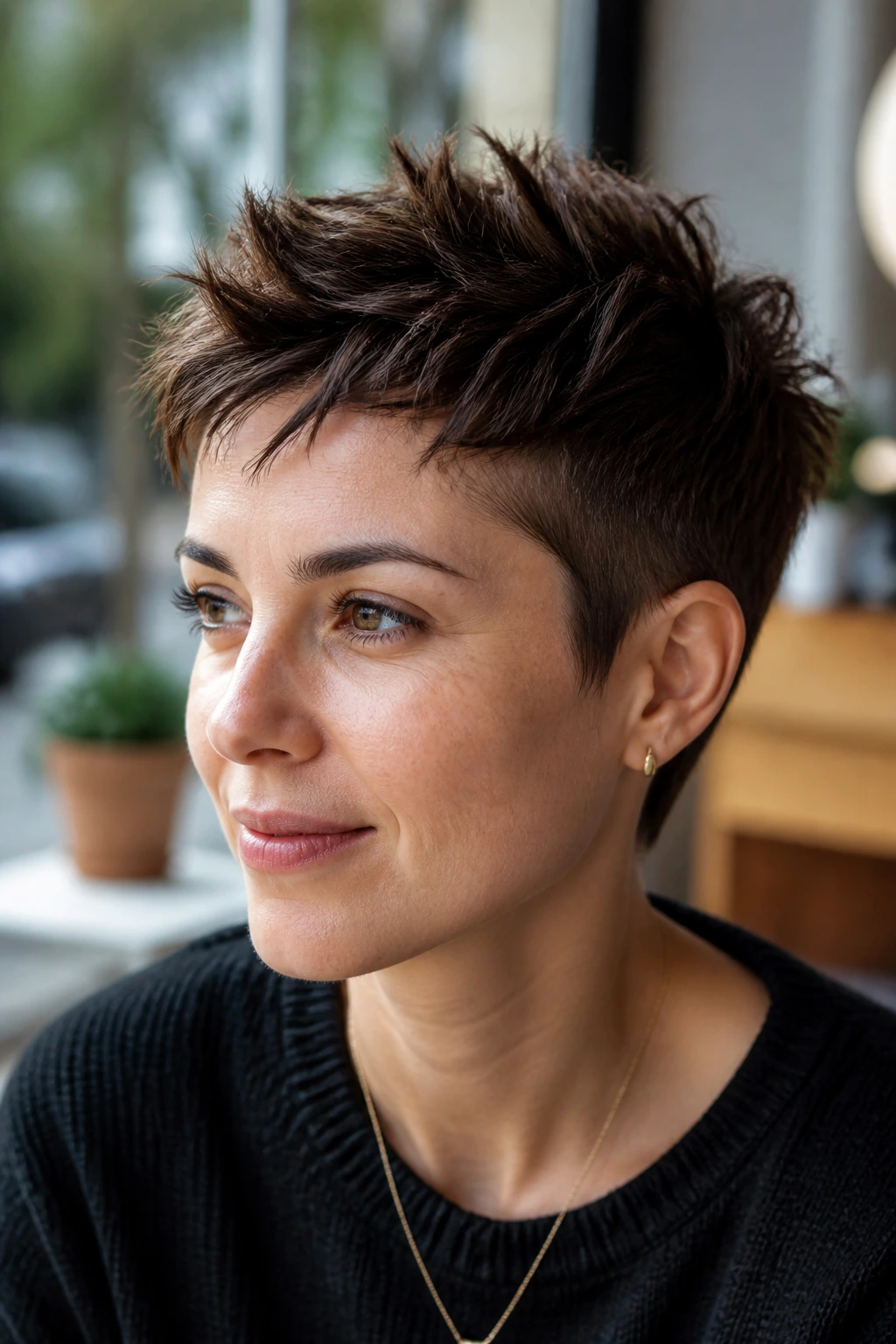
The textured crop is short, sharp, and a little rebellious. Think close sides, a layered top, and enough irregularity to stop thick hair from forming a neat dome. It is one of the best options when you want less hair on the head, not just a different outline.
This cut works because it breaks up density in small pieces. Instead of trying to make thick hair lie flat everywhere, it creates pockets of lift and separation. That makes styling fast. A bit of paste rubbed through the top and fringe is often enough.
If your hair is extremely dense, ask for internal texture rather than aggressive thinning at the ends. That keeps the top from getting stringy. A textured crop should still feel solid. Just not heavy.
12. The Curly Bob With Invisible Layers

Curly thick hair and a bob can be a beautiful match, but only if the cut respects the curl pattern. Invisible layers are cut so the shape reduces bulk without leaving obvious steps in the curl. The result is a bob that sits round and balanced instead of puffing out at the sides.
The length usually falls between the jaw and the shoulders, depending on curl shrinkage. Shorter than that can be fantastic, but it needs a stylist who cuts curly hair with the curl pattern in mind. Thick curls have memory. They remember every bad layer.
If your curls are springy or tight, ask for the bob to be shaped dry or mostly dry. That helps the stylist see how much the hair rises once it leaves the sink. The right curly bob should move like a cloud with a spine, not a helmet.
13. The Side-Part Power Bob
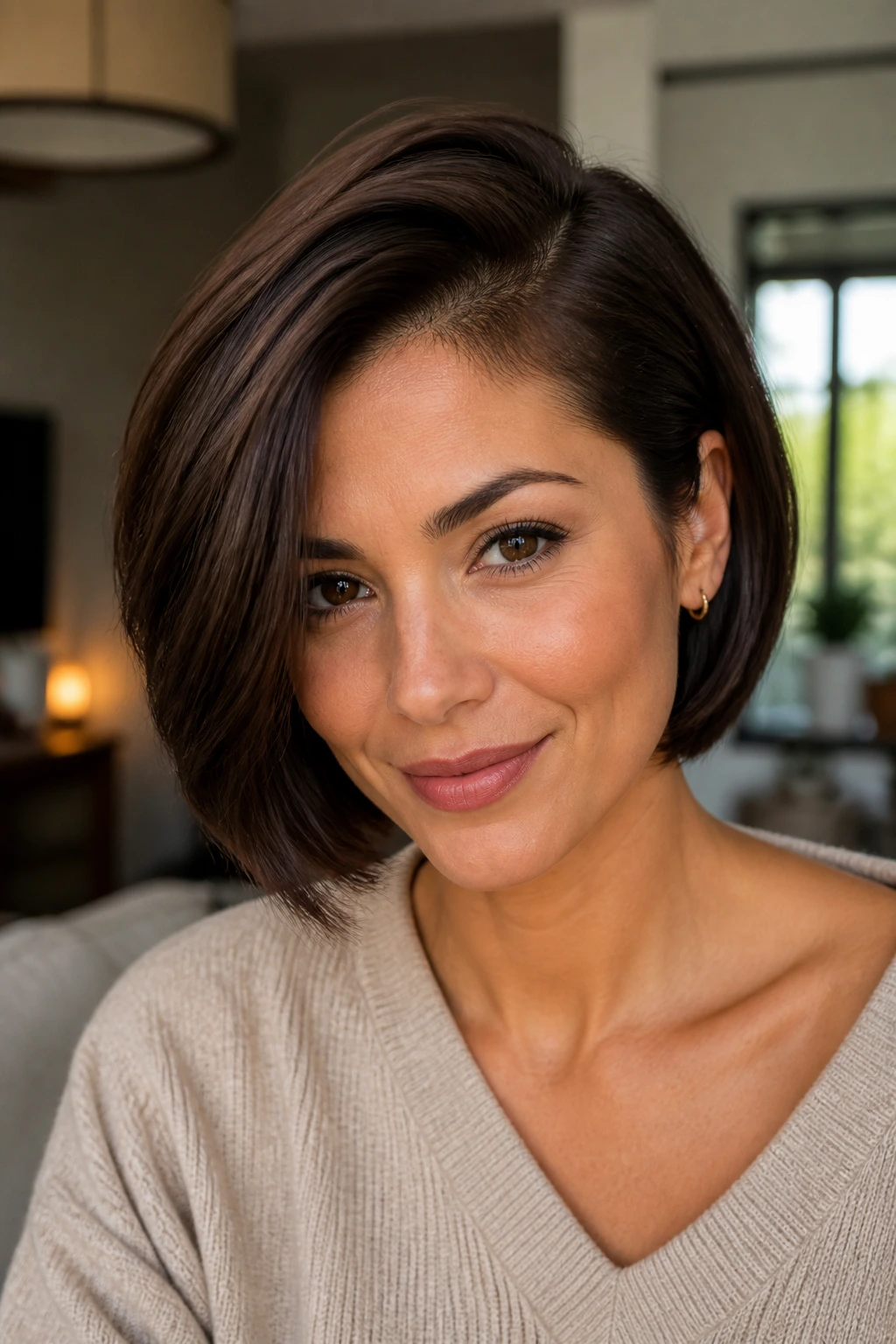
A deep side part gives thick hair an instant shift in energy. It pushes the weight to one side, creates lift at the crown, and makes a simple bob look richer around the face. The cut itself can stay fairly blunt, which is useful because thick hair already brings enough fullness.
What I like here is the contrast. One side gets more volume, the other side tucks in closer, and the imbalance makes the haircut feel alive. On straight thick hair, the part is almost the whole trick. On wavy hair, the side part works with the bend and creates a clean swoop.
If your face feels widest at the cheeks, this shape can help lengthen the line a bit. Use a root-lifting spray at the part and a blow dryer aimed upward for a few seconds. That little bit of lift does more than extra product ever will.
14. The A-Line Bob
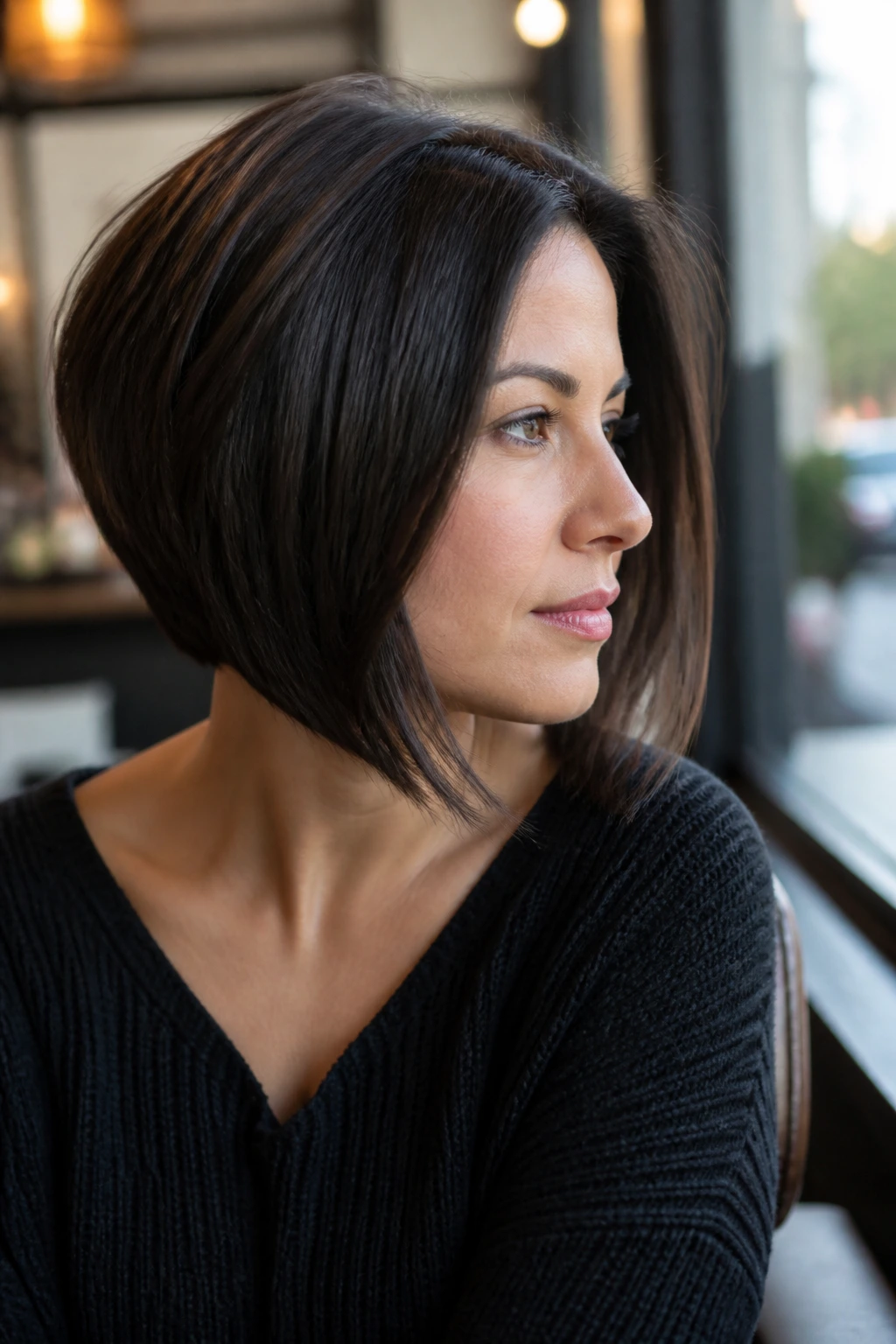
The A-line bob keeps the back shorter and the front longer, and that angled line is a gift for thick hair. It lowers bulk in the back of the head while giving the front a sharp frame. The cut looks crisp when it is freshly done and still behaves well as it grows out.
This shape is useful if your hair wants to triangle out at the shoulders. The front pieces guide the eye downward, which makes the head look slimmer. It is also a nice cut for women who like to tuck one side behind the ear and let the longer front section do its thing.
Ask for a clean diagonal, not a wild angle. On very thick hair, too much length difference can make the front drag while the back feels too short. A moderate A-line tends to wear better and style faster.
15. The Jaw-Length Box Bob
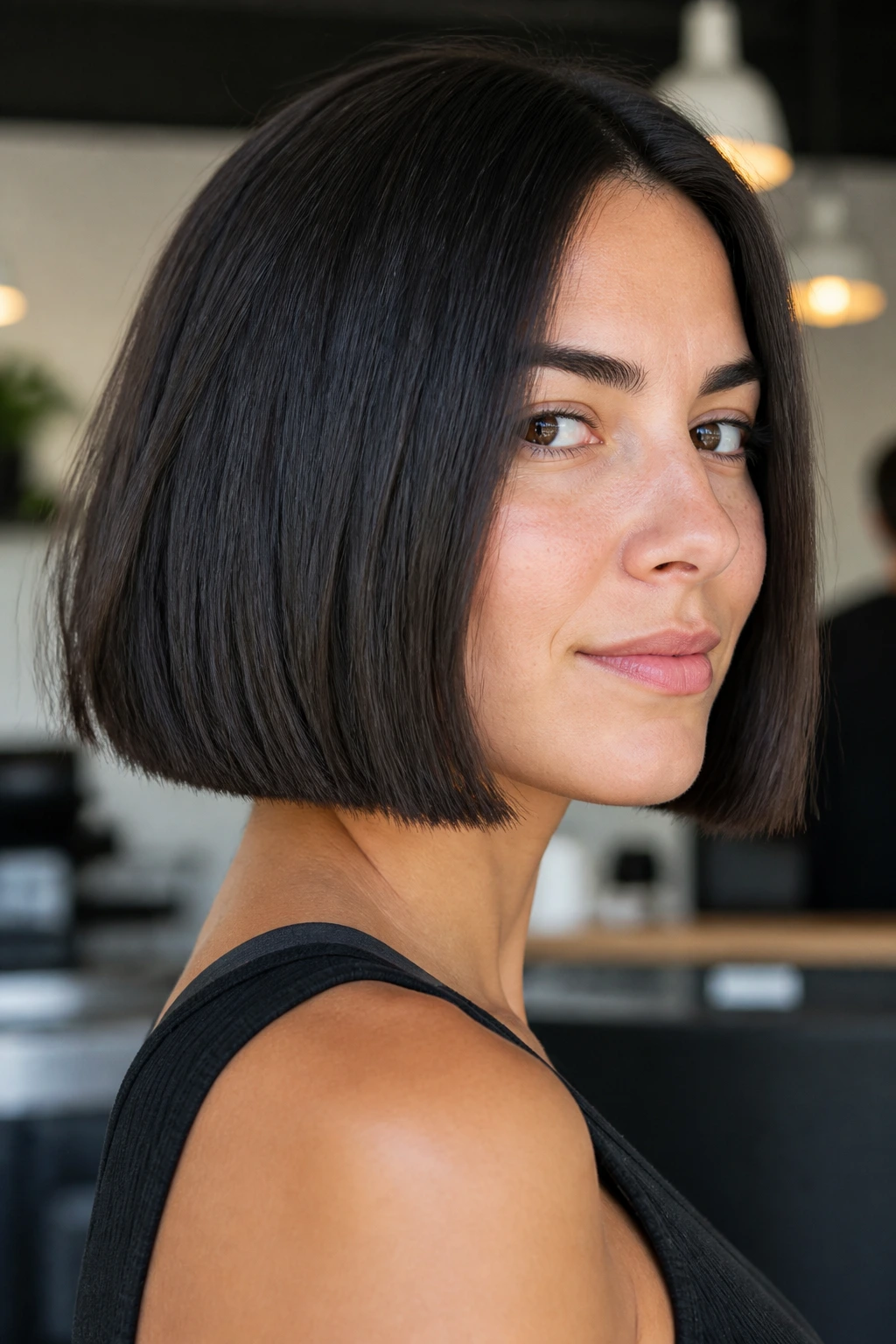
A box bob is blunt, even, and square through the ends. On thick hair, that squared-off finish can look expensive rather than heavy, because the density supports the line. The trick is keeping the length at the jaw so the bulk does not hang low and widen the neck.
This is a strong shape for straight hair, and it can work on wavy hair if you like a more structured look. It is not the softest cut on the list. That is the point. The box bob has presence, and thick hair gives it enough weight to hold the form.
If you want it to feel a little less rigid, ask for soft internal removal under the top layer. That keeps the outside line clean while stopping the whole cut from feeling too stiff around the ears.
16. The Bubble Bob
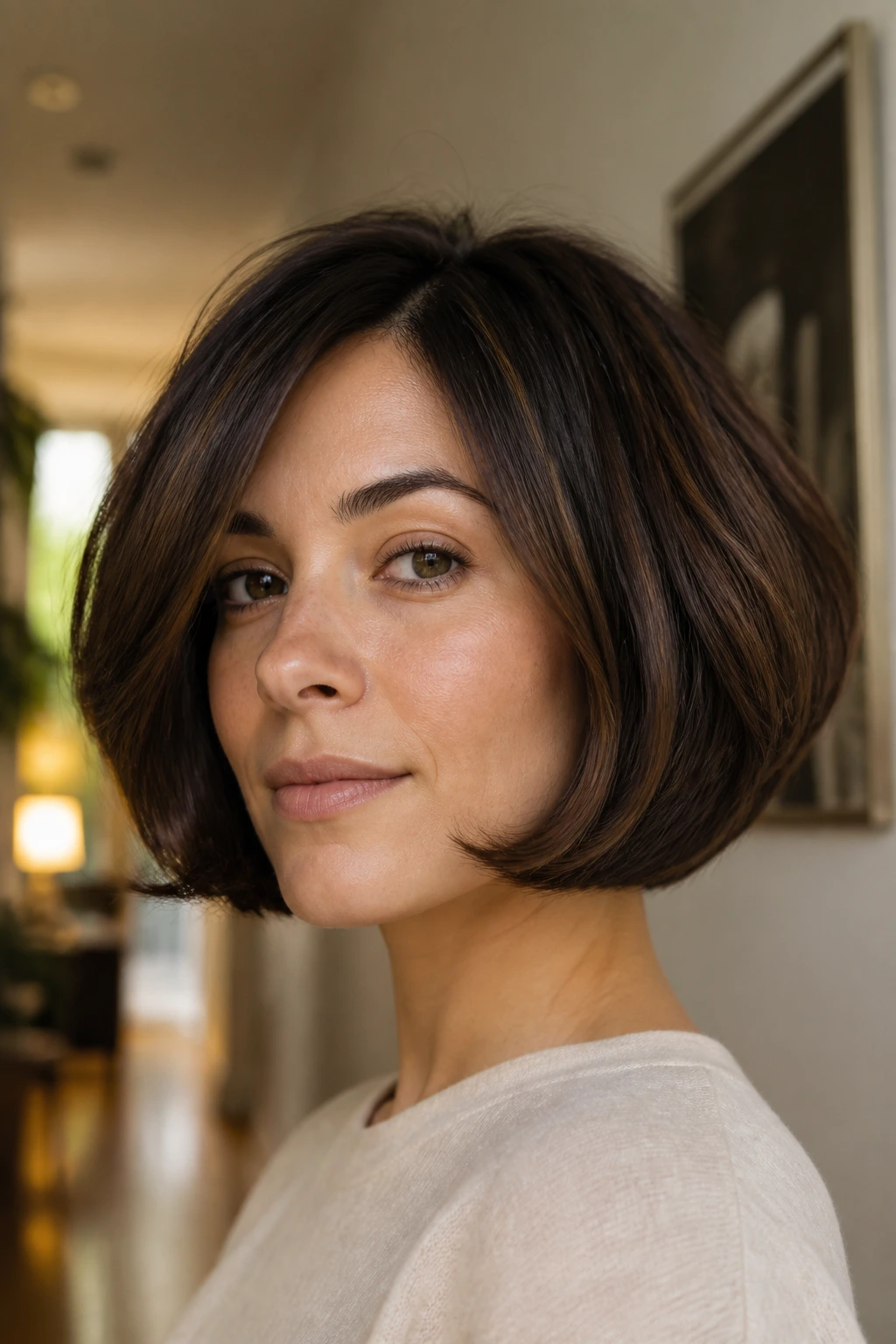
The bubble bob curves inward, which is exactly what thick hair often needs. Instead of widening at the ends, the shape tucks under and creates a rounded silhouette. On dense hair, that inward bend keeps the haircut from looking square or puffy.
You can wear this cut sleek or with a bit of natural texture. The important part is the outline. The perimeter should swing inward just enough to make the whole head look softly rounded. That shape is flattering if your hair tends to stick out at the jaw or neck.
A round brush or hot brush makes the bubble effect easier to see, but the cut should still have a shape on its own. If the styling disappears, the cut was not built well enough. Thick hair needs the curve cut in, not pasted on afterward.
17. The Micro Bob
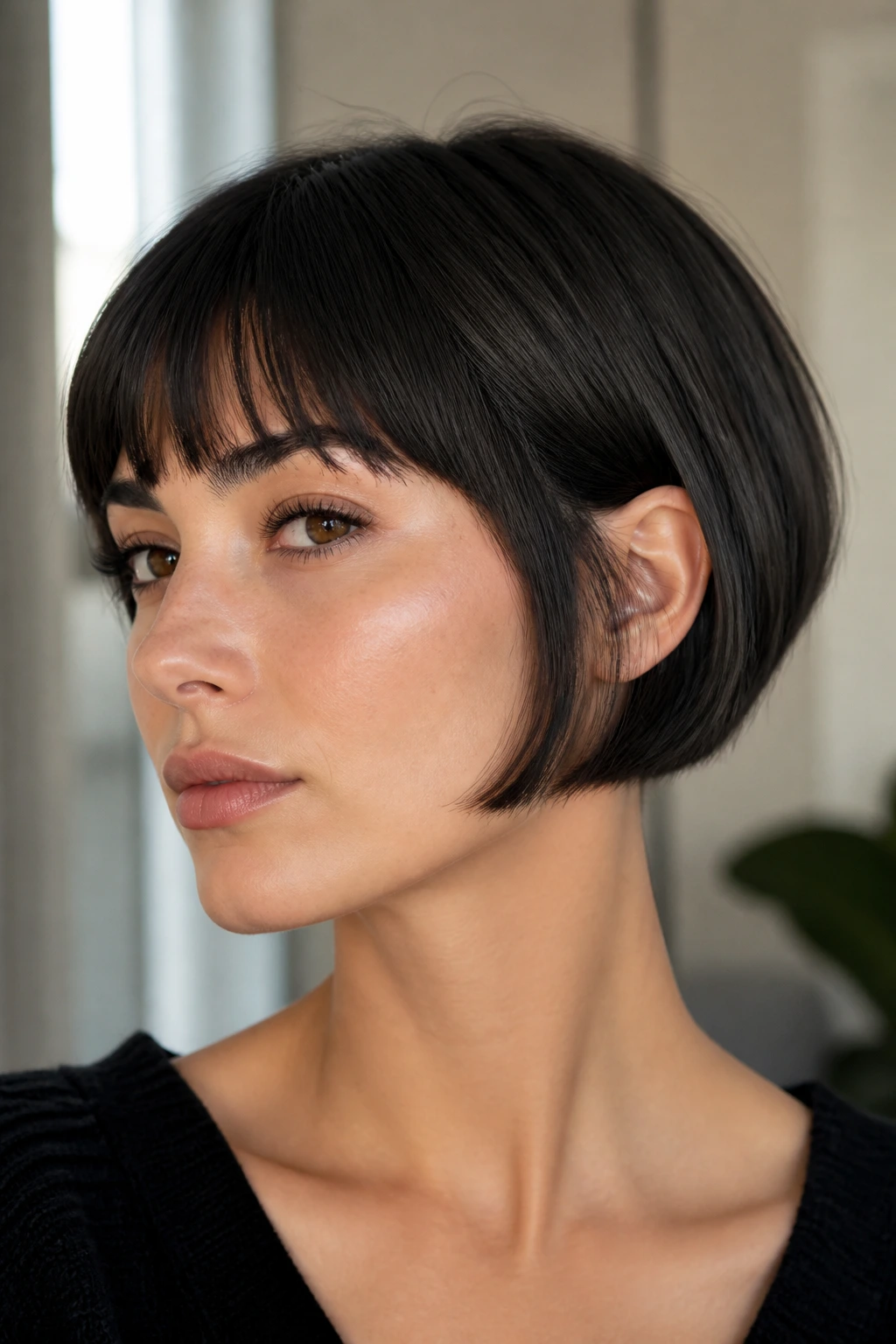
The micro bob sits high on the neck or just below the ears. It is tiny, sharp, and a little daring, which is why it can be so good on thick hair. The shorter length removes a lot of weight fast, and the line around the face becomes very clean.
This cut is not for someone who wants to hide the hair. It shows it off. That’s the charm. Thick hair gives a micro bob enough density that it does not look wispy or hollow, which is a problem some finer textures run into with this shape.
It needs a precise trim. If the line goes off even a little, the whole bob can start to feel lopsided. Keep the ends blunt and let the texture come from the natural body of the hair rather than from heavy layering.
18. The Curtain-Bang Bob
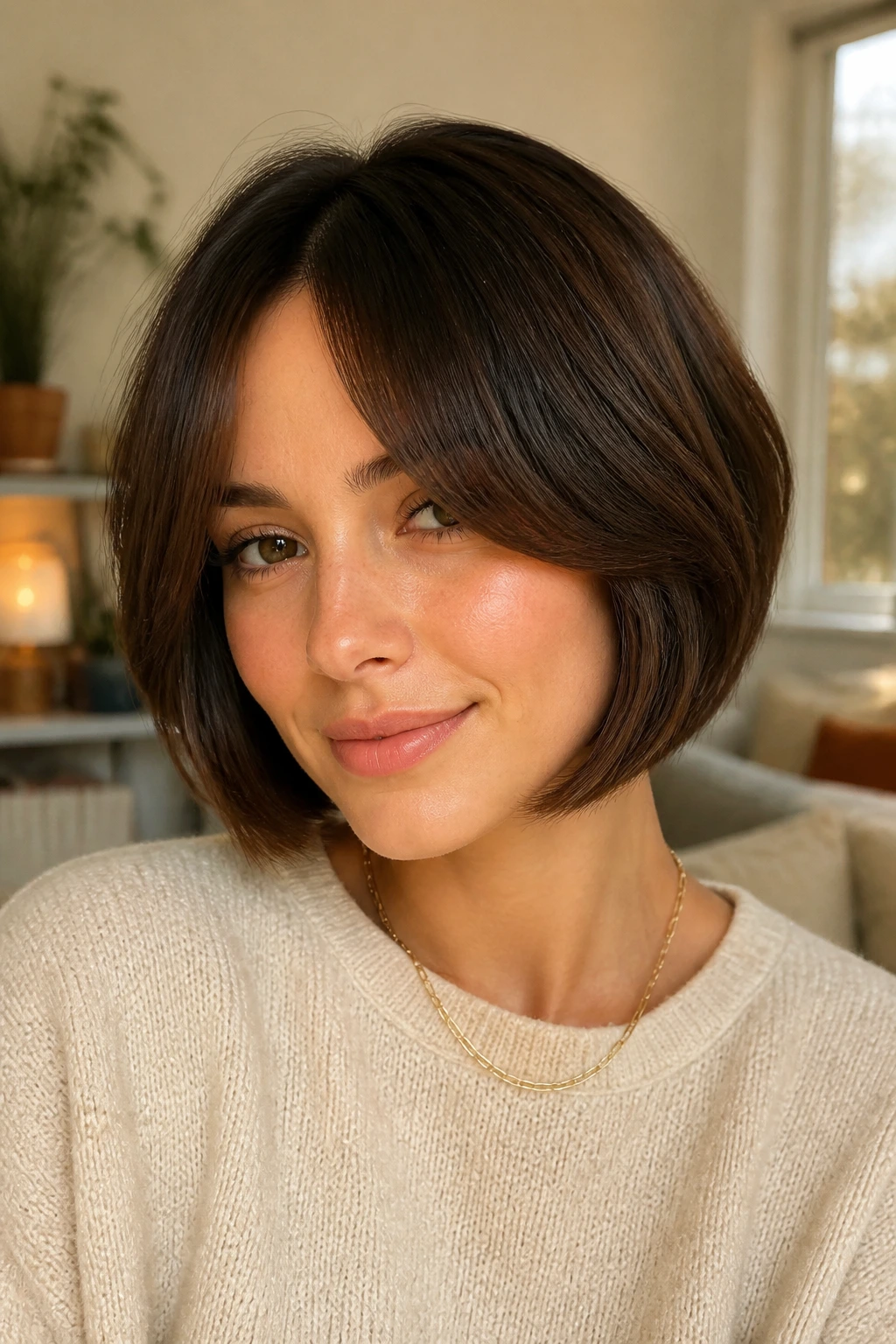
Curtain bangs can take the weight off the front of a short thick haircut in a very flattering way. They part in the middle or slightly off-center and skim the cheeks, which softens a bob without making it limp. Thick hair often gives curtain bangs enough fullness that they look intentional from the first day, not stringy.
This works especially well if you like some forehead coverage but do not want a heavy straight fringe. The bangs can blend into cheek-length layers, creating a face frame that opens and closes as you move. It is a forgiving shape. That matters.
If your hair grows forward at the crown, ask for the bangs to be cut with that growth pattern in mind. Otherwise, they will fight the part all day. A dry finish usually helps you see the fall more honestly.
19. The Short Wolf Cut
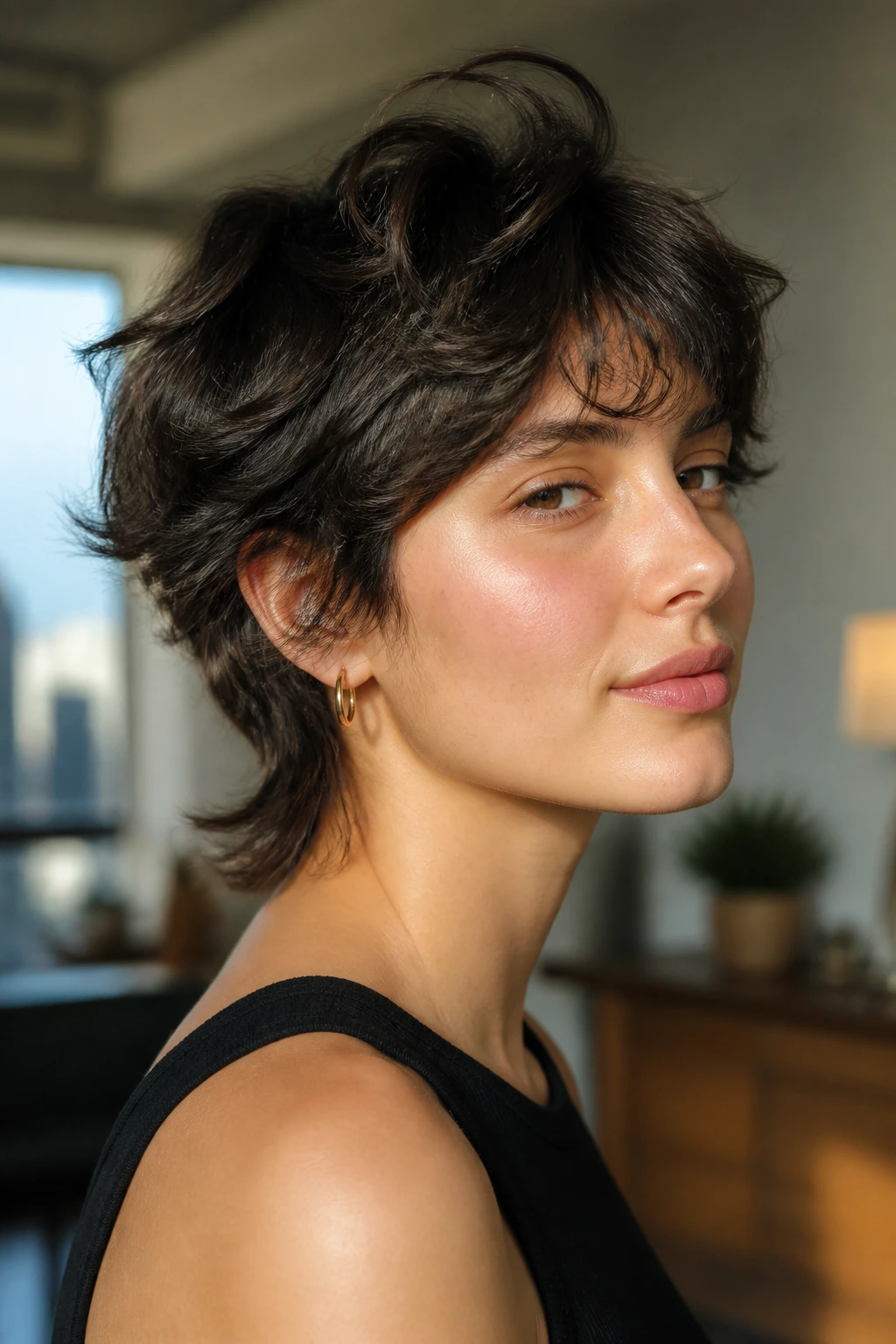
A short wolf cut is all about controlled chaos. Layers start around the crown and get piecey toward the ends, which reduces the bulk that thick hair carries so well and so stubbornly. The shape is rougher than a classic shag and usually a touch shorter around the top.
This cut makes sense if you want movement first and polish second. Thick hair can handle all that layering better than fine hair can, because there is enough density left over to keep the shape from going thin. The result is full, lively, and a little wild in the good way.
A wolf cut needs a stylist who knows when to stop. Too many layers, and thick hair can explode outward. Done well, though, it gives a short haircut that feels modern without needing a flat iron every time you touch it.
20. The Modern Mullet
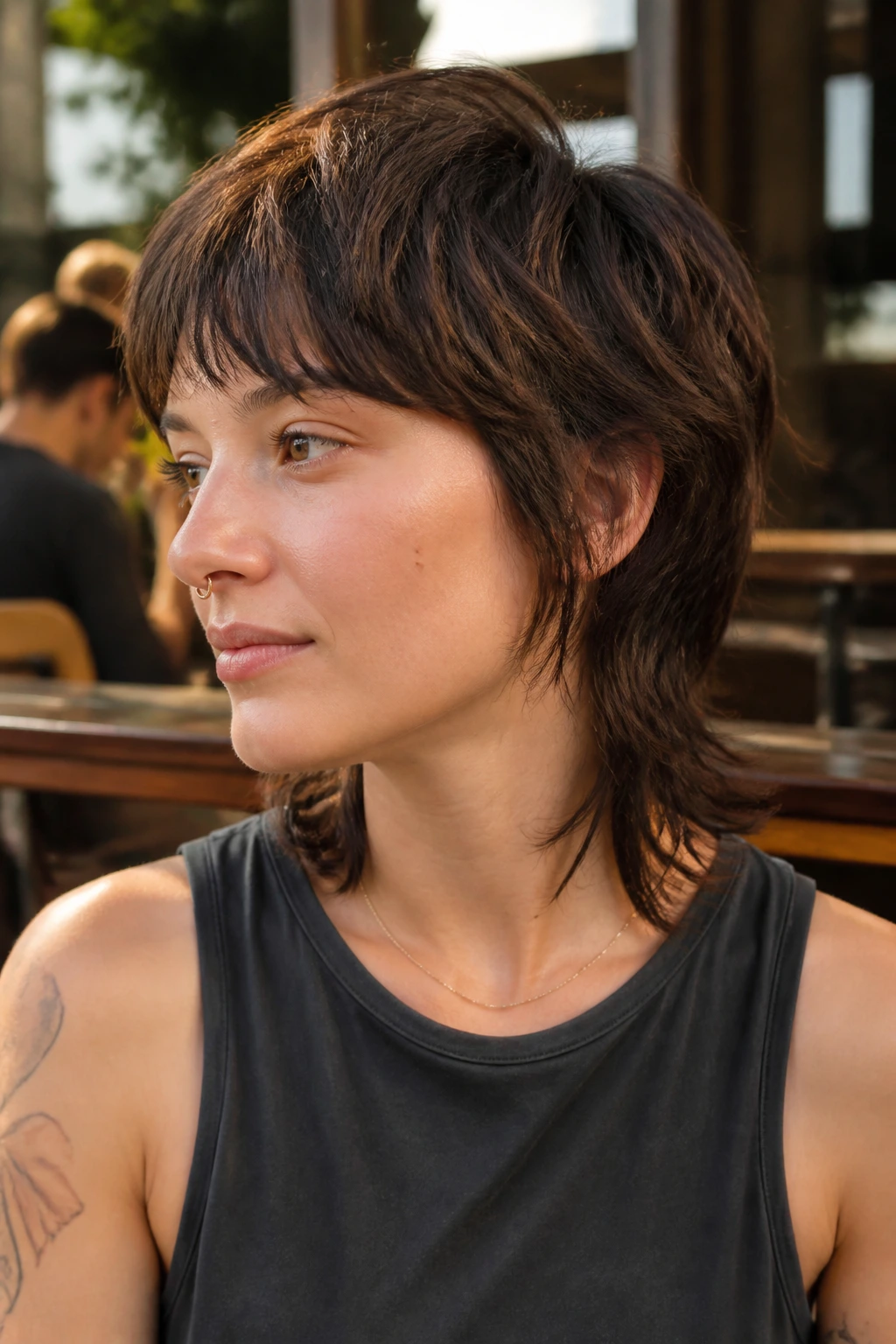
Yes, the mullet is still hanging around, and on thick hair it has a lot of sense. Shorter layers in front and at the crown keep the top light, while the back stays a little longer for movement. The modern version is softer than the old one, less football and more edge.
It works because thick hair can fill out the shape without making it bulky. The difference between a messy mullet and a good one is balance. Keep the top and sides controlled enough that the longer back reads as part of the design, not a separate section.
If you are nervous, start with a soft version that only has a subtle tail. That gives you the shape without the full commitment. Add more contrast later if you like the direction.
21. The Layered Crop With Choppy Ends
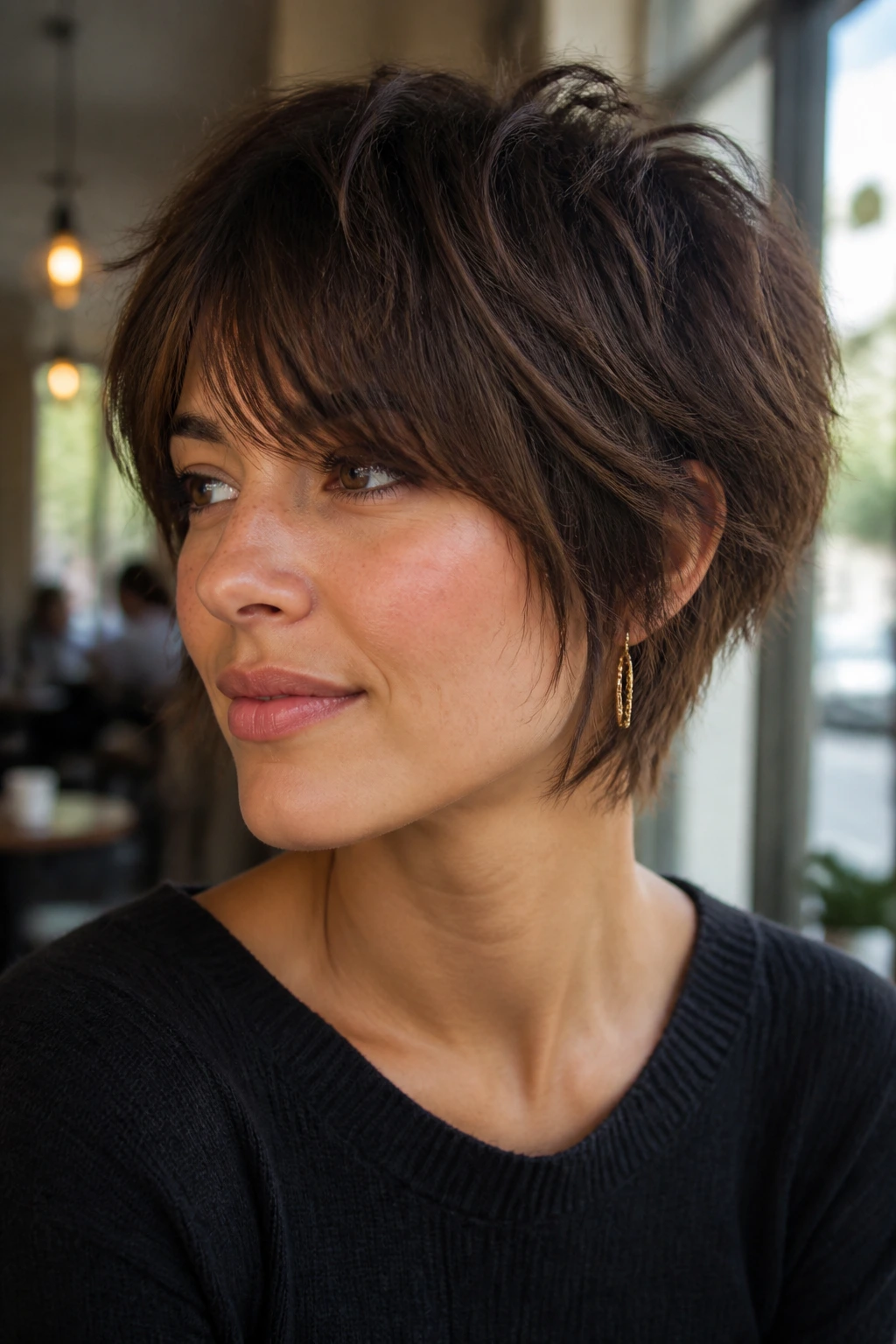
A layered crop with choppy ends is a short haircut that refuses to sit still. The choppiness breaks the outline just enough to keep thick hair from turning into a solid block. It is a useful cut if your hair feels heavy no matter what you do.
The key is in the ends. They should look textured, not shredded. There’s a difference. Choppy does not mean thin. It means the silhouette has little irregular shifts that help the cut move. Thick hair holds that kind of texture well, especially with a bit of matte paste.
This is also a forgiving grow-out. As the layers soften, the haircut still keeps its shape. If you want something a little messy, a little airy, and easier than a sleek bob, this is a strong candidate.
22. The Tapered Cut
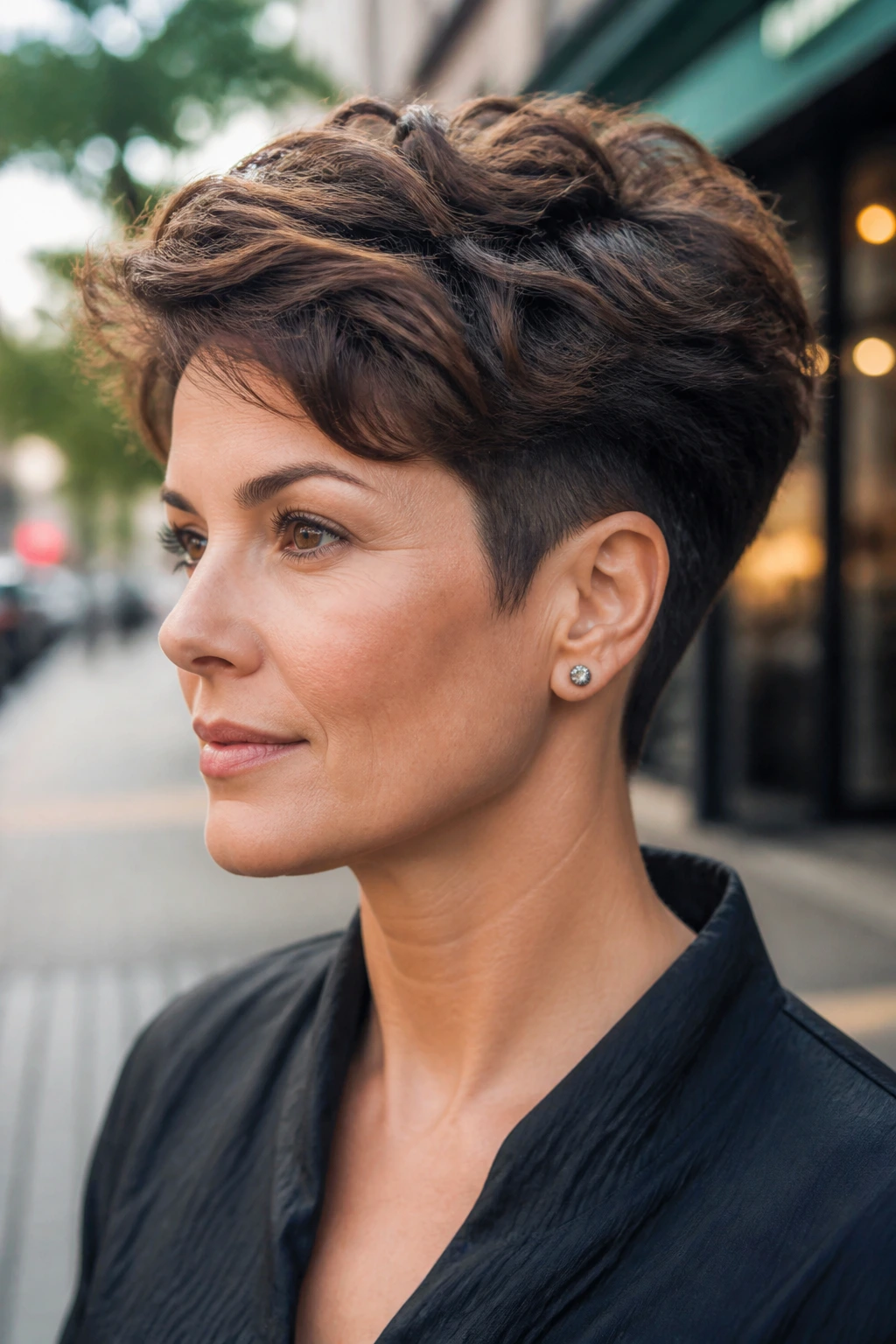
A tapered cut narrows from the top down through the sides and nape, which is a very clean way to deal with dense hair. It takes the bulk where the head needs it least and leaves the top with enough length to style. That taper gives the haircut a fitted look.
The shape is especially nice if you wear glasses or big earrings, because it leaves space around the ears and jaw. Thick hair often crowds those areas. A taper clears them out. Small thing, big difference.
Ask your stylist to keep the taper soft if you want flexibility. A harder taper feels sharper and more fashion-driven, while a softer one is easier to grow out and style on ordinary mornings.
23. The Tousled Crop
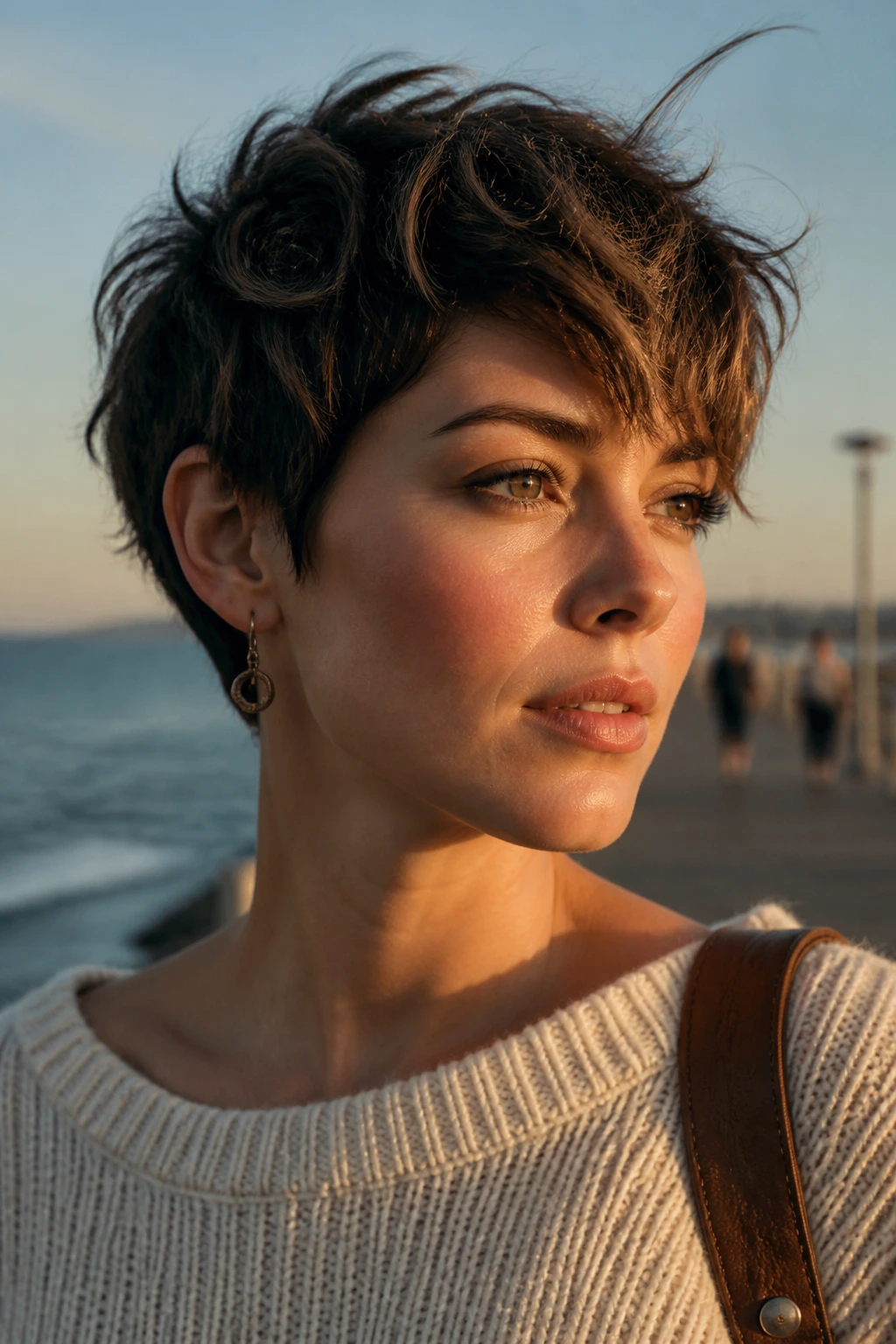
A tousled crop is for thick hair that likes to look a little undone. The length is short, but the cut keeps enough texture that you can push it around with your fingers and still end up with shape. It does not need to be smooth to look finished.
This style works best when the top has slight layers and the sides are not over-thinned. You want the hair to separate into pieces, not fray into static-looking wisps. A bit of sea-salt spray or styling foam can help, though too much will leave the hair crunchy fast.
If your hair dries with some natural bend, this cut is easy money. If it is very straight, use a flat brush and a few quick bends with a curling iron to give the ends some direction. No need to curl every strand. Just enough to keep the crop from sitting flat.
24. The Ear-Length Bob

An ear-length bob sits high enough to show the neck and the jaw cleanly, but not so high that it becomes a pixie. Thick hair benefits from this exact middle zone because the haircut stays compact while still feeling like a bob. The outline is usually simple, which is part of the appeal.
This cut is a little underrated. People assume thick hair needs more length to behave, but sometimes the opposite is true. A shorter bob can remove enough weight that the hair stops fighting the sides of the face. The result is crisp and practical.
It does need a tidy neckline. If the nape grows out too fast, the whole shape loses its sharpness. A small trim every few weeks keeps the line from blurring.
25. The Rounded Bob
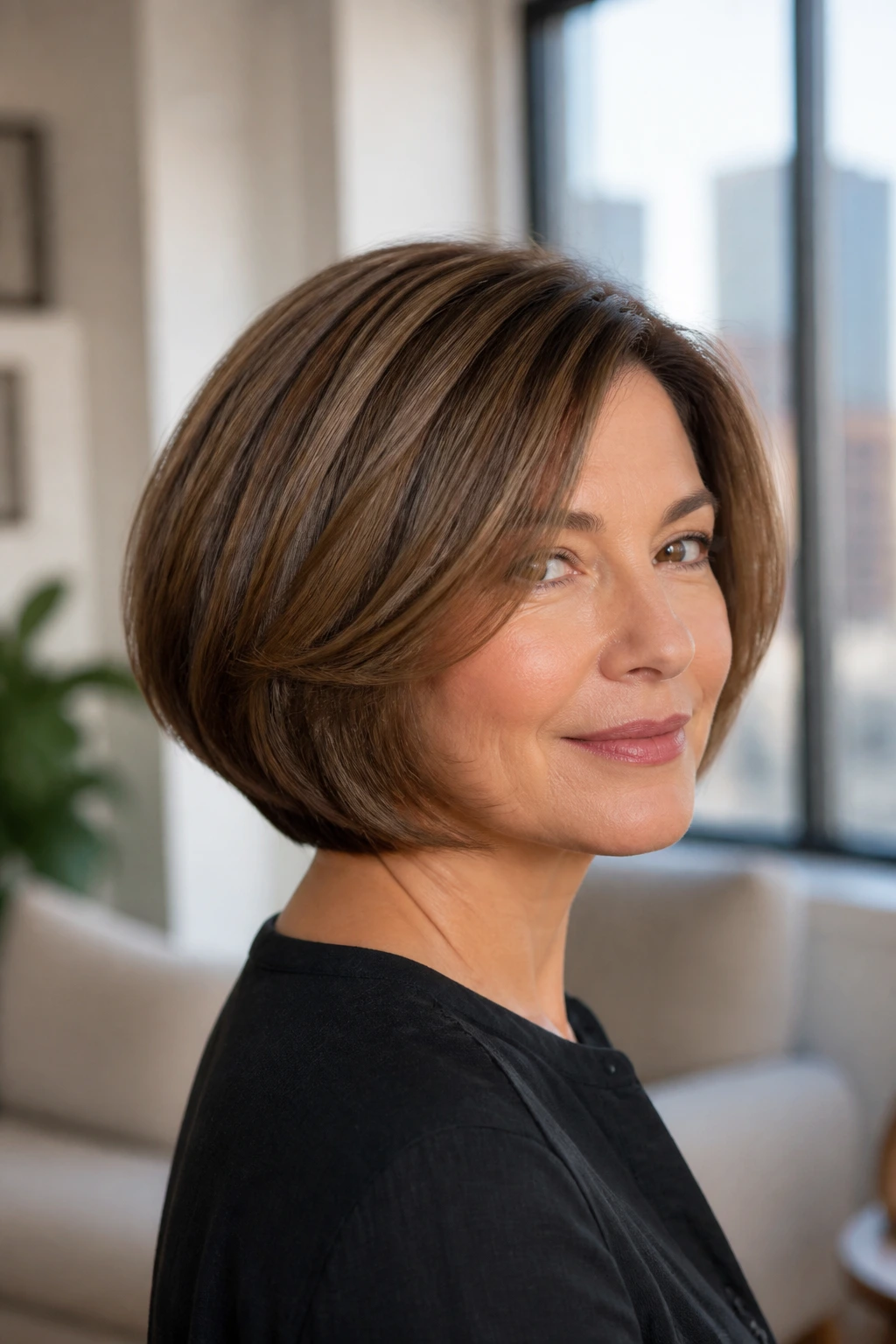
A rounded bob follows the curve of the head rather than sitting flat and square. That roundness helps thick hair look polished instead of wide. It is especially good if your hair has enough body to support a soft dome shape without looking helmet-like.
The trick is controlled layering. You want the interior to support the curve while the outer line stays clean. Too much texturizing on the surface and the shape starts collapsing in odd places. Thick hair usually needs less cutting on the ends than people think.
This cut looks lovely when blow-dried with a round brush and a little bend under the ends. It also grows out gracefully if the layers are balanced. A rounded bob is one of those shapes that can look expensive without being fussy.
26. The Piece-y Razor Bob
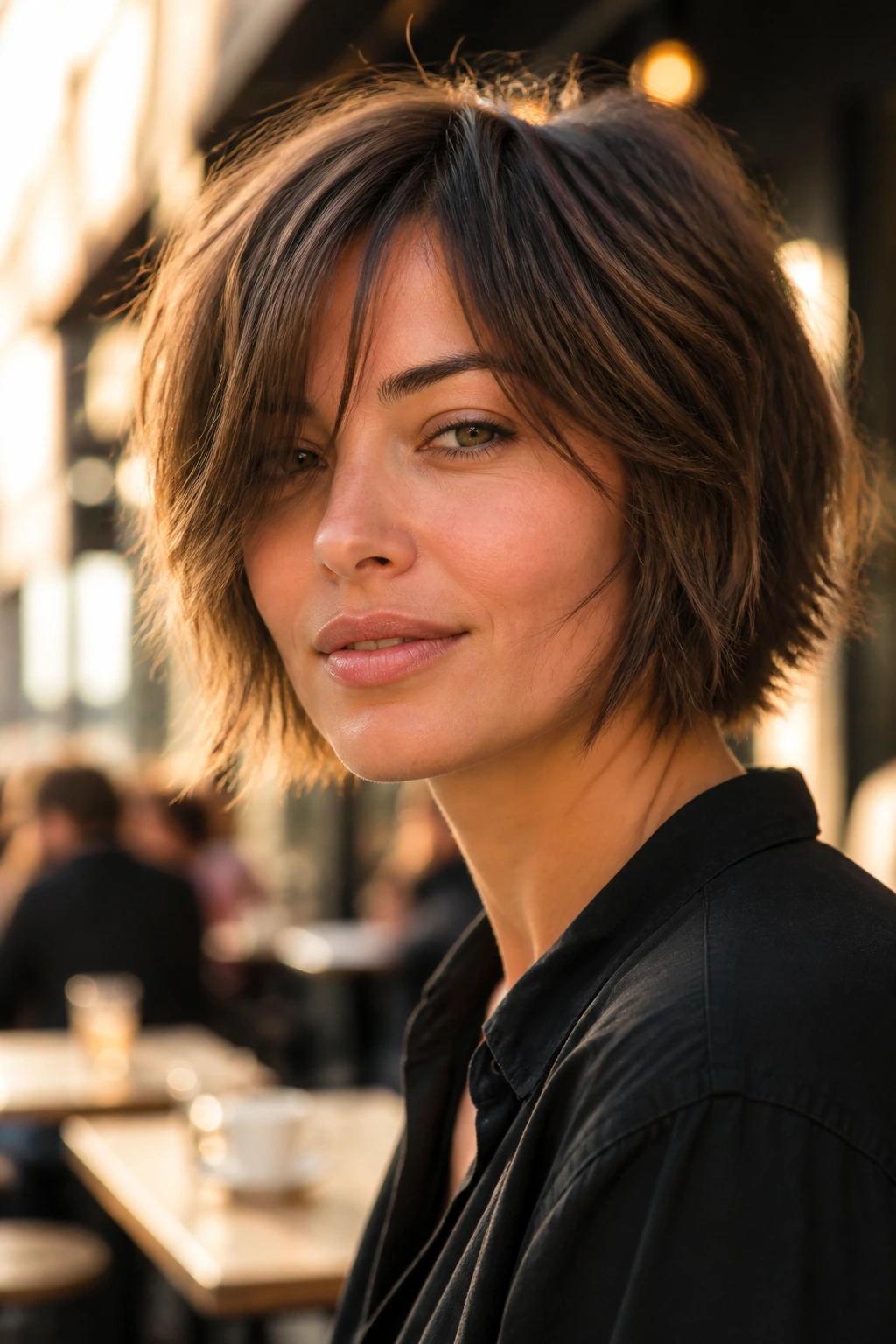
Razor cutting can give thick hair a lighter, more separated finish, and a piece-y bob uses that idea well. The ends move in little shards rather than one heavy line, which is useful if your hair tends to sit solidly across the jaw. The shape gets air without losing too much length.
This cut is good when you want edge. Not toughness. Edge. There’s a difference. The piece-y finish works best on hair that has some natural texture already, though straight hair can wear it too if you style the ends with a light cream and a bend from the brush.
Do not go overboard with thinning shears here. Razor texture should be controlled. If it is too shredded, thick hair can look frizzy at the bottom, and nobody wants that.
27. The Shingle Bob
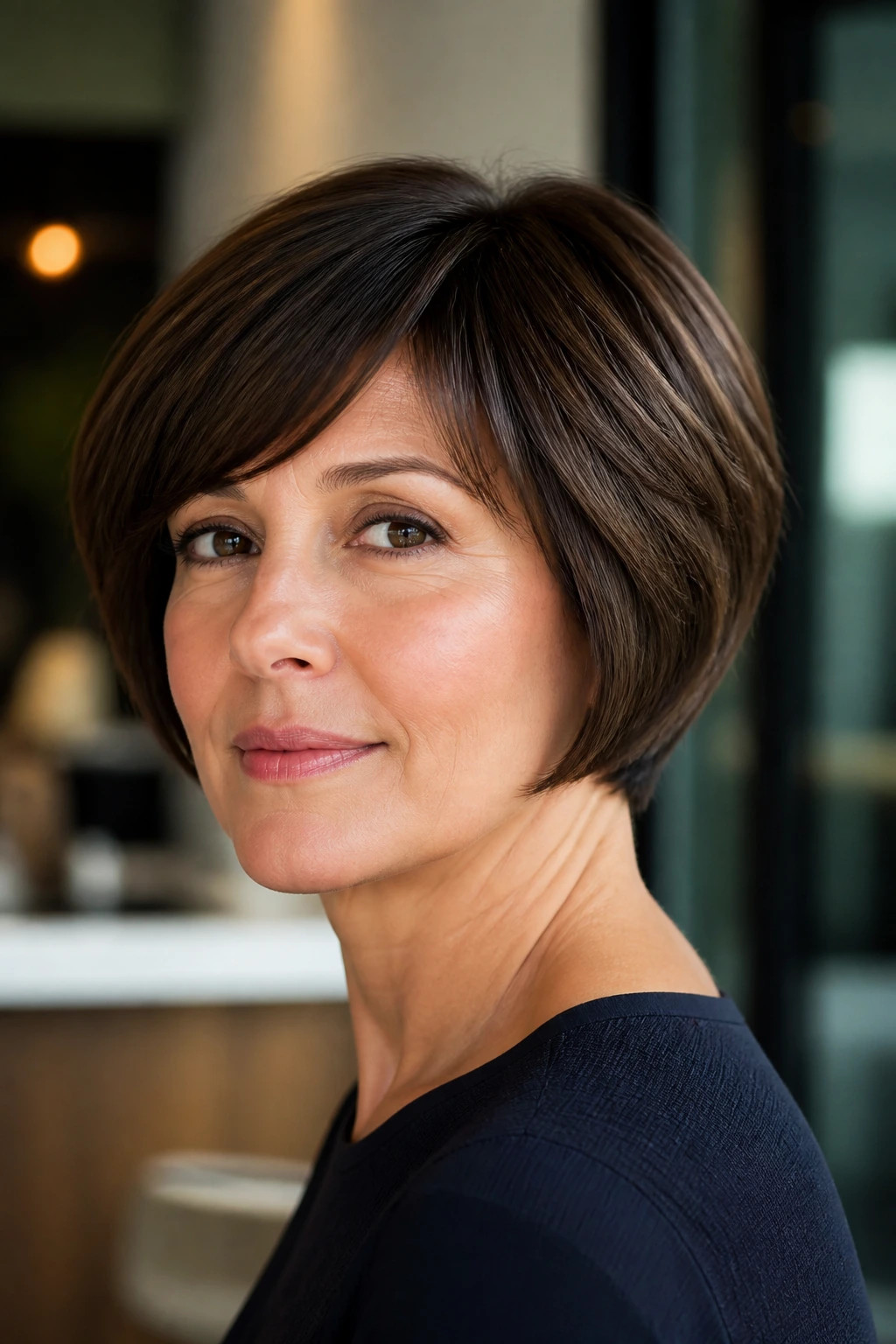
The shingle bob has a snug back, curved sides, and a bit of vintage attitude. On thick hair, that close fit keeps the nape under control while the side shape frames the face. It can feel sleek without being boring.
What makes it work is the close graduation near the neckline. The back should hug the head, not stick out from it. Thick hair with a shingle shape looks especially neat when the top layers are left just long enough to sweep smoothly into the back.
This is one for people who like a sharper finish and do not mind regular trims. The shape is clean, but it is not low-maintenance in the lazy sense. It is low-maintenance in the “I know exactly what I want” sense.
28. The Graduated Bob
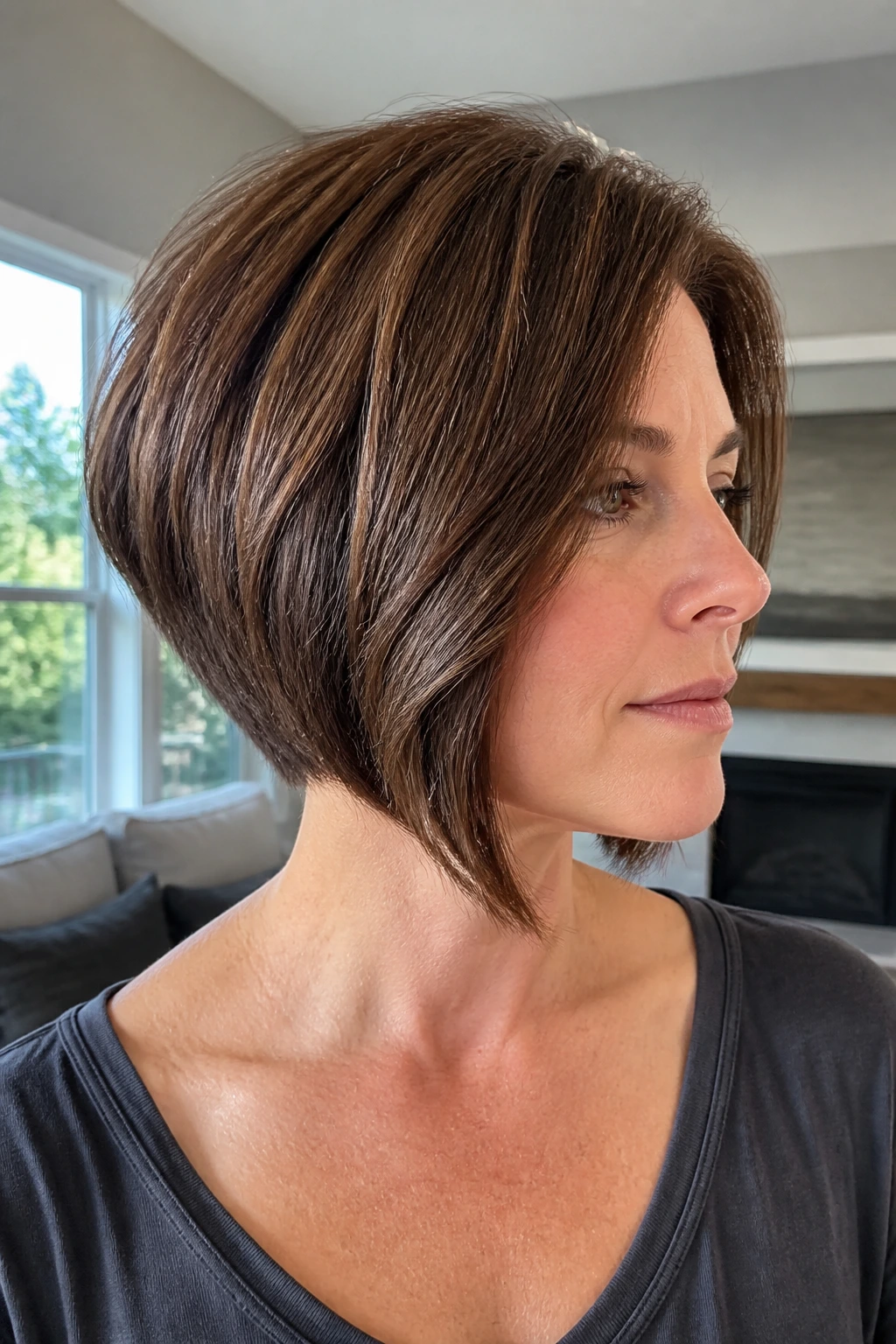
A graduated bob lifts at the back and slightly lengthens toward the front, creating a round, stacked shape that thick hair can wear beautifully. It reduces weight where the hair wants to flare out and builds a strong line from the side. That combination keeps the cut from looking bottom-heavy.
If your hair grows out wide at the crown, the graduation helps redirect the silhouette upward. It gives the cut some structure without making it look stiff. On very dense hair, this shape can be a lifesaver because it makes the back feel lighter without sacrificing fullness.
Ask for the graduation to be soft if you want a gentler grow-out. A sharper graduation gives more shape, but it also needs more maintenance. Thick hair always pays you back when the back is cut with intention.
29. The Soft Bowl Cut

The bowl cut has been cleaned up a lot, and the soft version is far more wearable than the blunt childhood memory most people carry around. Thick hair helps here because it keeps the shape from looking sparse. The curve around the head can look bold and fashion-forward when it is softened at the edges.
The modern version usually has a bit of texture around the perimeter and a more relaxed fringe. That stops the cut from feeling too exact. If your hair is very thick, a slight undercut or internal removal can keep the shape from ballooning at the sides.
This is not a timid haircut. It is a statement, even in soft form. If you like strong lines and do not mind people noticing your hair before they notice your shoes, it deserves a place on the list.
30. The Mohawk-Inspired Pixie
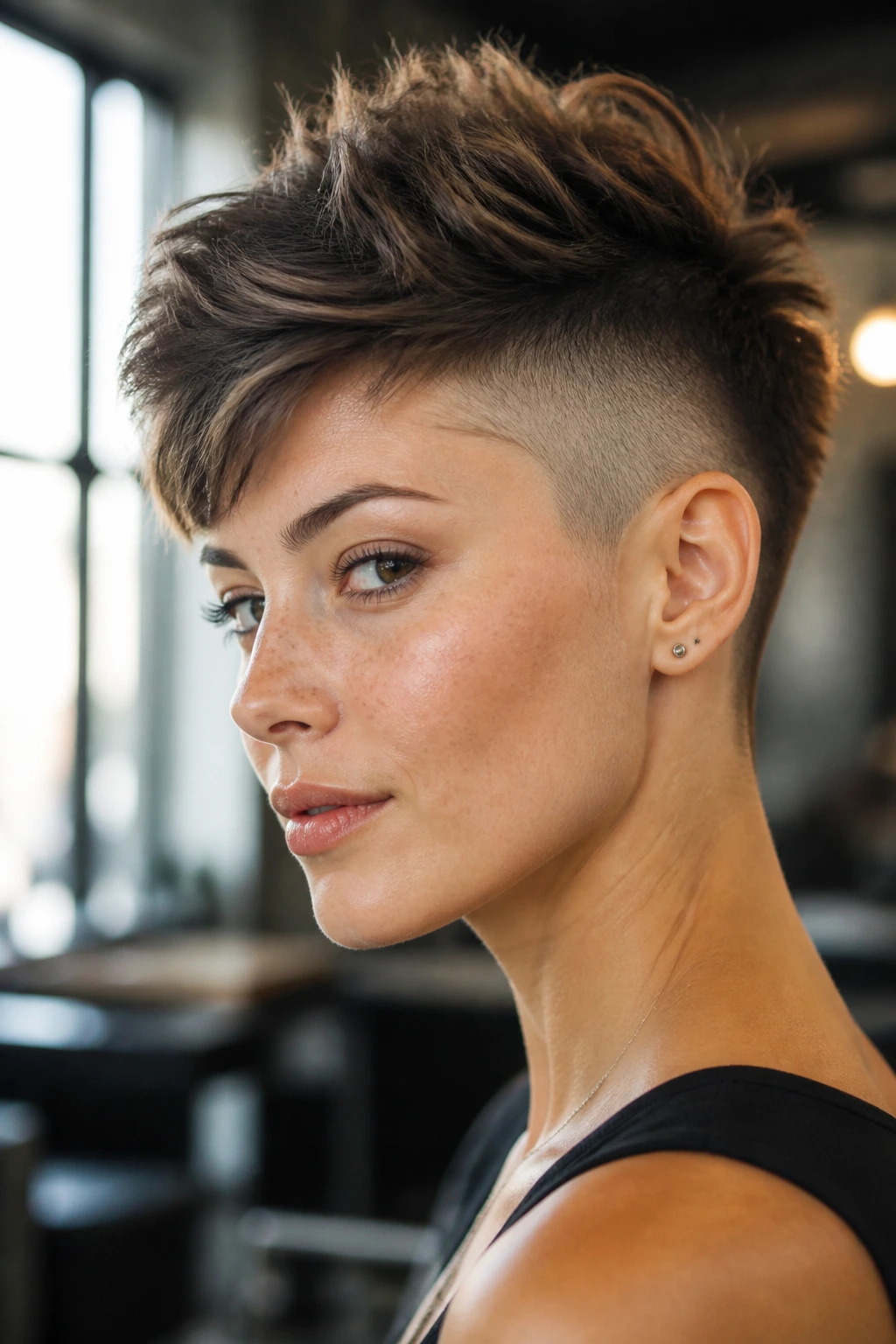
A mohawk-inspired pixie keeps the sides tight and leaves a longer strip through the center, which gives thick hair a dramatic shape without requiring full commitment to a shaved style. The center ridge can be brushed forward, spiked, or smoothed back depending on mood. On dense hair, that contrast is the whole point.
This cut works because it removes bulk from the sides where thick hair often feels widest. The top stays visible and playful. It is also one of the easiest ways to show off cheekbones, ears, and a strong neckline all at once.
If you are considering it, ask for a version that can be softened later. A little extra length in the top strip gives you options as it grows. You can always go sharper next time.
Why Thick Hair Needs Shape, Not Just Less Hair
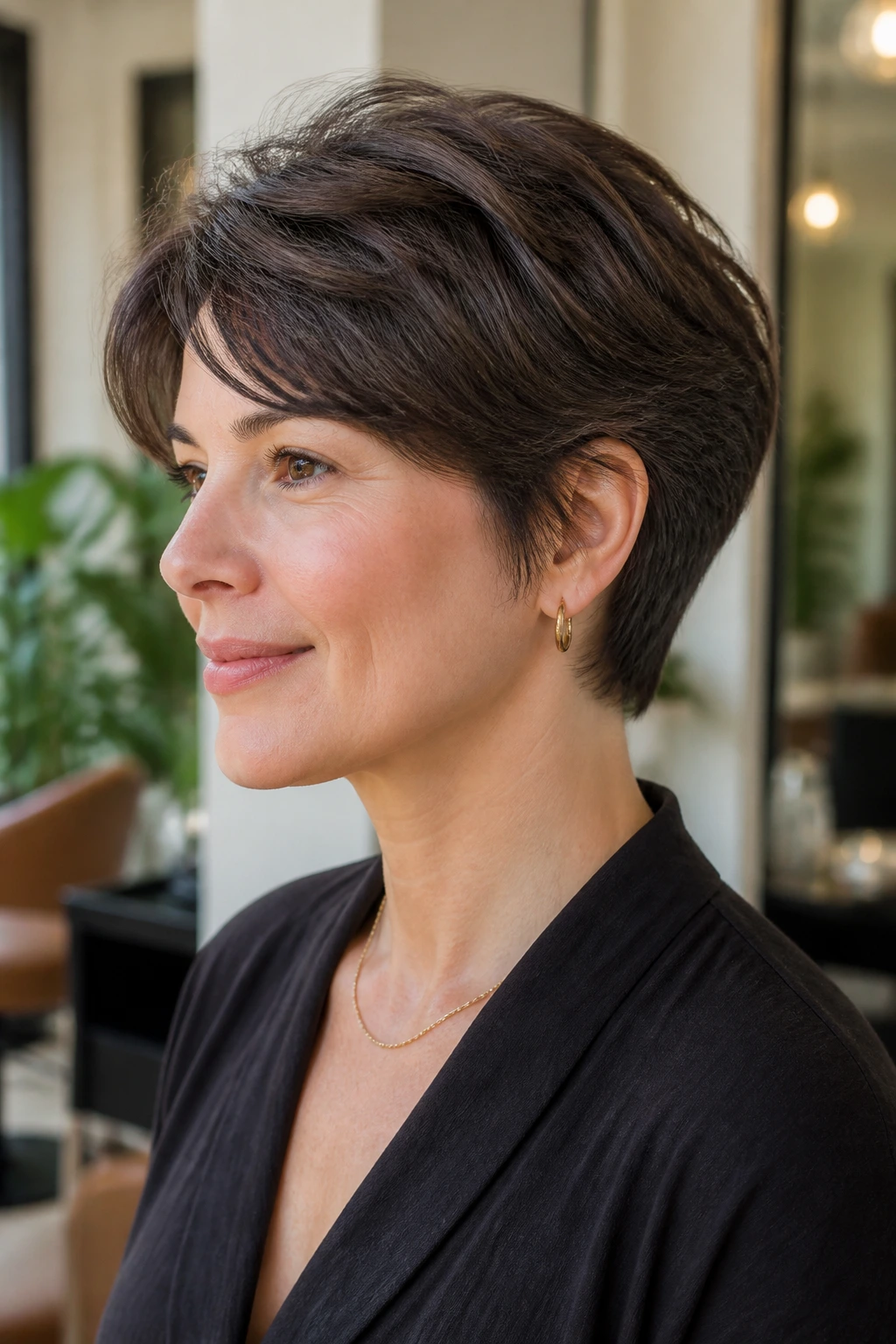
Thick hair does not improve just because it gets shorter. Sometimes it gets worse. Cut the wrong way, it can spring outward at the sides, sit heavy at the top, or flare at the neck like it is trying to escape the head altogether.
The thing that helps most is shape. A smart short haircut for thick hair changes where the weight sits. Blunt edges hold fullness. Graduation lifts the back. Interior layers take out the hidden bulk that makes the whole head feel hot and heavy. None of that is about “thinning” hair for the sake of it. It is about steering density.
That is why a stylist who understands thick hair will talk about the perimeter, the crown, and the nape as separate jobs. They are not cutting one uniform mass. They are solving a three-part problem. Once you start thinking that way, the haircut choices above make a lot more sense.
Essential Tools and Products for These Cuts
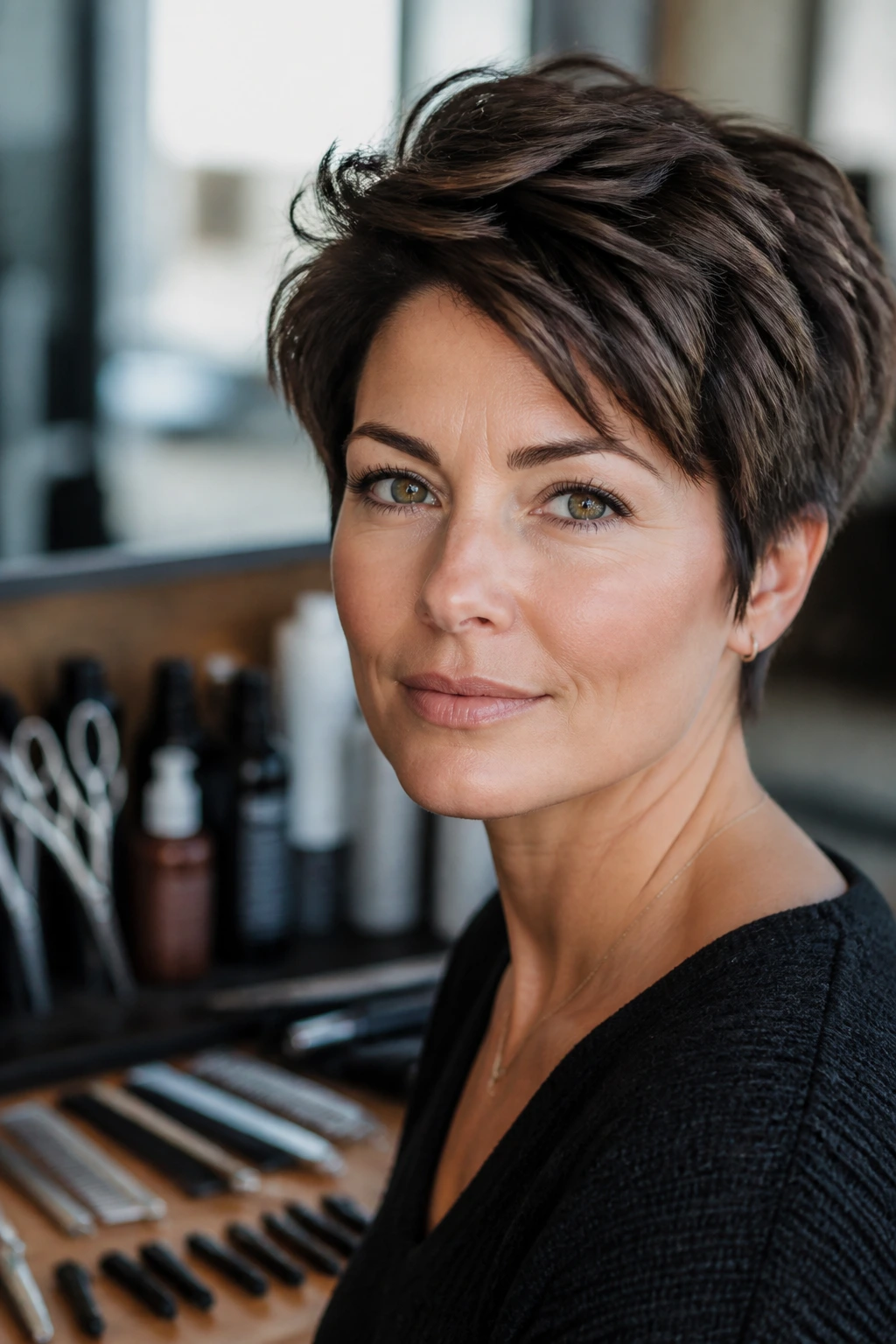
- Sharp haircutting shears: Dull shears chew thick hair and leave the ends frayed; the cut needs a clean edge.
- Tail comb: Useful for clean parts, sectioning, and checking whether a bob is even on both sides.
- Sectioning clips: Thick hair gets bulky fast, so clips keep the work area under control while you dry or style.
- Blow dryer with concentrator nozzle: The nozzle helps aim airflow at the roots, which matters when you want the hair to lie flat instead of puffing.
- Round brush in two sizes: A medium brush shapes bobs; a smaller one is easier around pixies and fringe.
- Root-lift mousse or spray: Keeps short thick hair from collapsing at the crown and gives the style some hold without grease.
- Light styling cream: Good for taming the ends of bobs and pixies without making them sticky.
- Matte paste or light pomade: Best for piece-y crops, pixies, and wolf cuts where separation matters.
- Diffuser attachment: Useful if your thick hair is wavy or curly and you want the shape to dry without blasting the curl pattern apart.
- Hand mirror: Essential for checking the back, because the nape is where thick hair most often misbehaves.
How to Talk to Your Stylist About Thick Hair
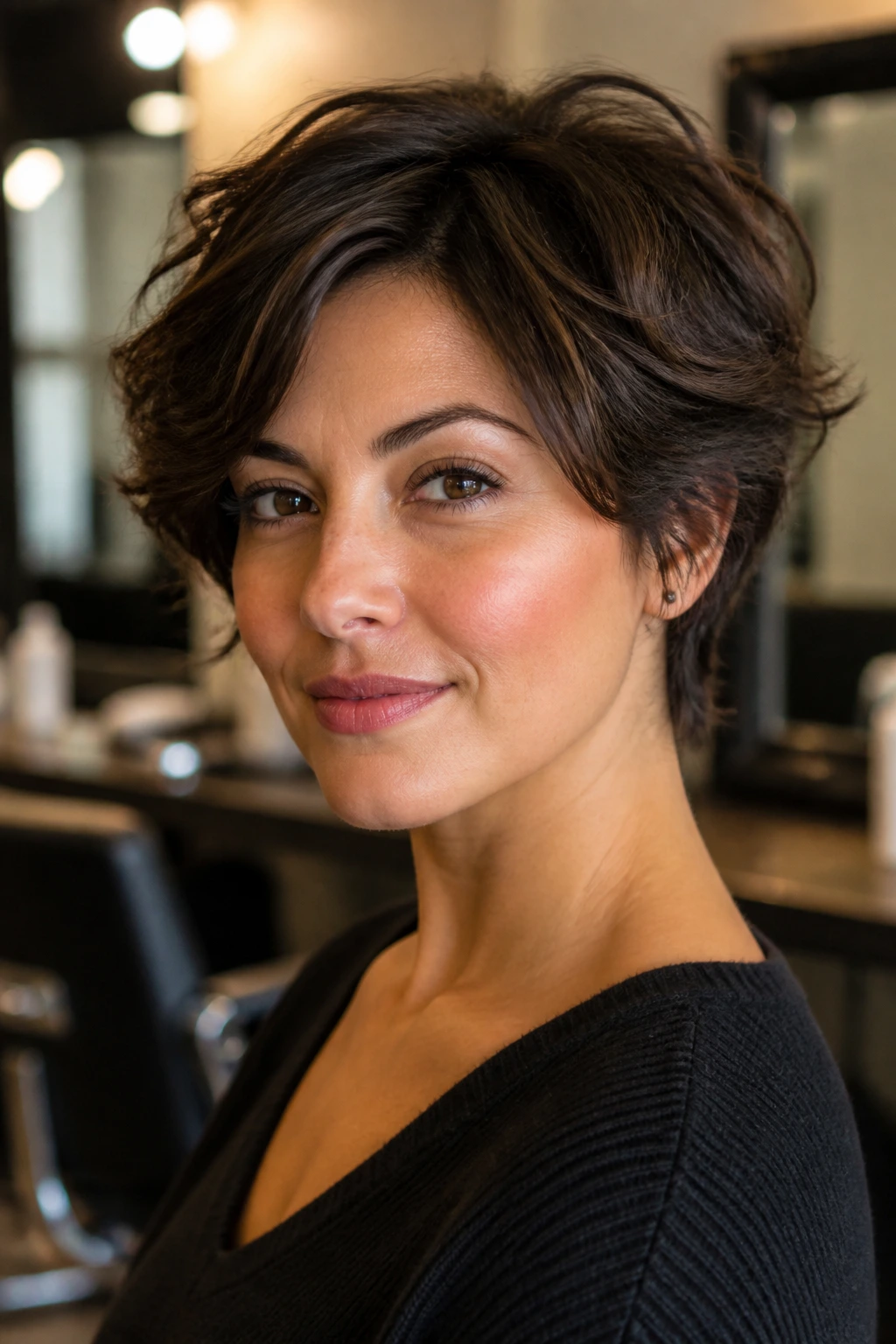
Bring names, not apologies. Say the shape you want, where you want the length to land, and where your hair usually gets bulky. “I want the back to sit close to my neck” tells a stylist more than “I want it shorter.” So does “my hair puffs out at the jawline” or “the crown goes flat unless it’s layered lightly.”
Photos help, but only if you point to the exact part you like. One bob may have a blunt edge, another may have a tight nape, and another may only be good because of the fringe. Thick hair changes the shape of a cut so much that two nearly identical photos can hide very different structures. Be picky.
Say whether you style your hair straight, air-dried, curled, or in a hurry. That one detail changes everything. A short cut that looks polished only with a 20-minute round-brush session is a poor fit if you actually live in five-minute land.
Ask about weight removal in the interior instead of only thinning the ends. That phrasing matters. A stylist who hears “thin it out” may reach for the wrong tool. A stylist who hears “reduce bulk without making the outline wispy” knows what job to do.
Styling Moves That Keep Thick Hair From Ballooning
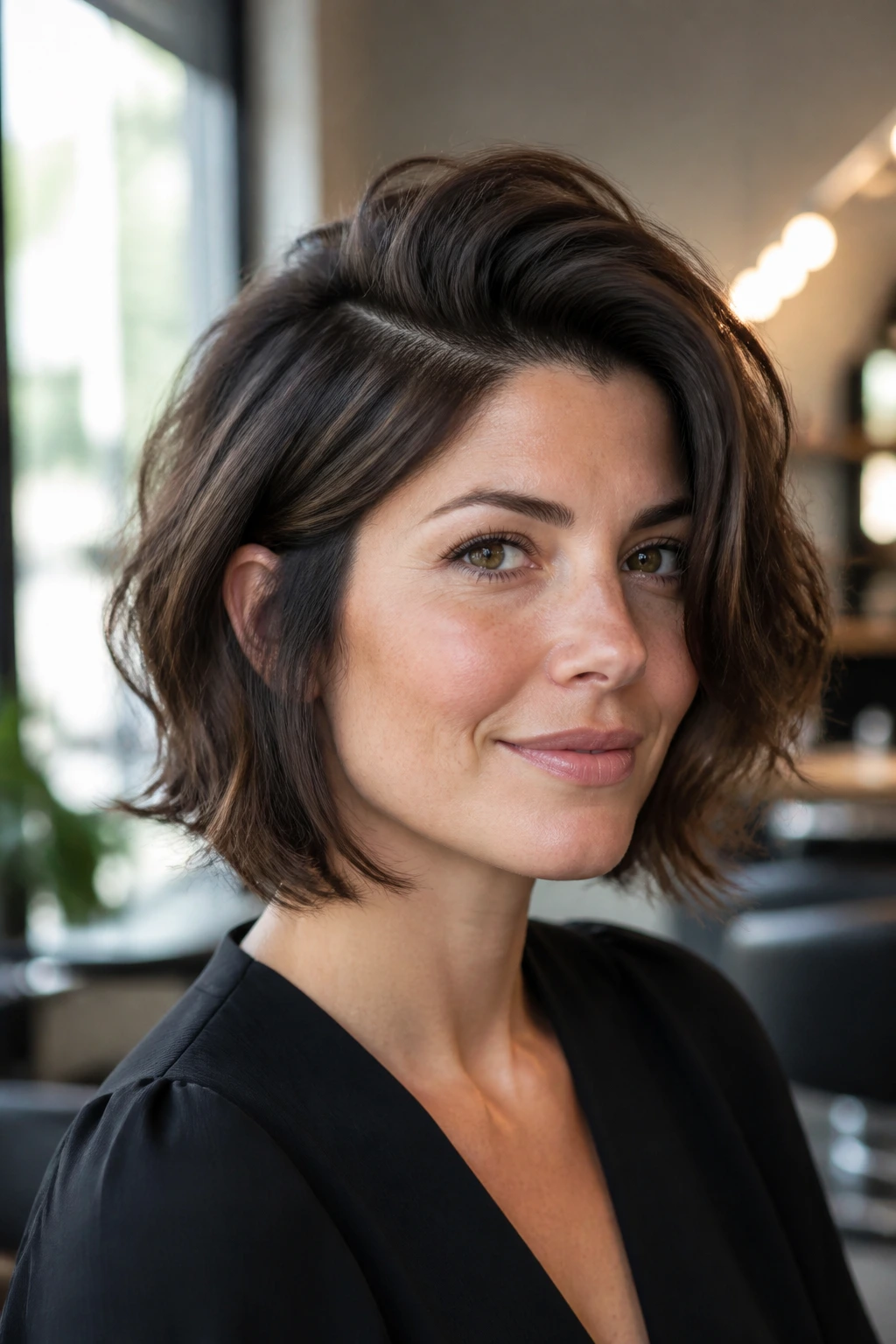
The first 80 percent happens at the root. If thick hair dries with no direction, it expands at the crown and sides before you have even picked up a brush. Rough-dry the roots until they are about 80 percent dry, then shape the final few minutes with a round brush, paddle brush, or your fingers. That one habit changes the whole silhouette.
Use less product than you think. Thick hair can swallow cream and paste, but too much makes short cuts collapse into clumps. Start with a pea-sized amount for pixies and a dime-sized amount for bobs, then add only if the ends still feel rough. The hair should move, not sit coated.
A side part can calm a wide-looking bob in seconds. A deep side part can also help the crown rise without teasing or sticky spray. If you want lift, aim the dryer at the roots in the opposite direction for a few seconds, then flip the hair back into place. Fast. Effective. No drama.
For curls and waves, a diffuser keeps the pattern from exploding while the cut sets. Use low heat and low speed. High heat tends to separate the outer layer too quickly, which is how thick short hair gets fuzzy at the edges.
Common Mistakes That Make Thick Hair Fight Back
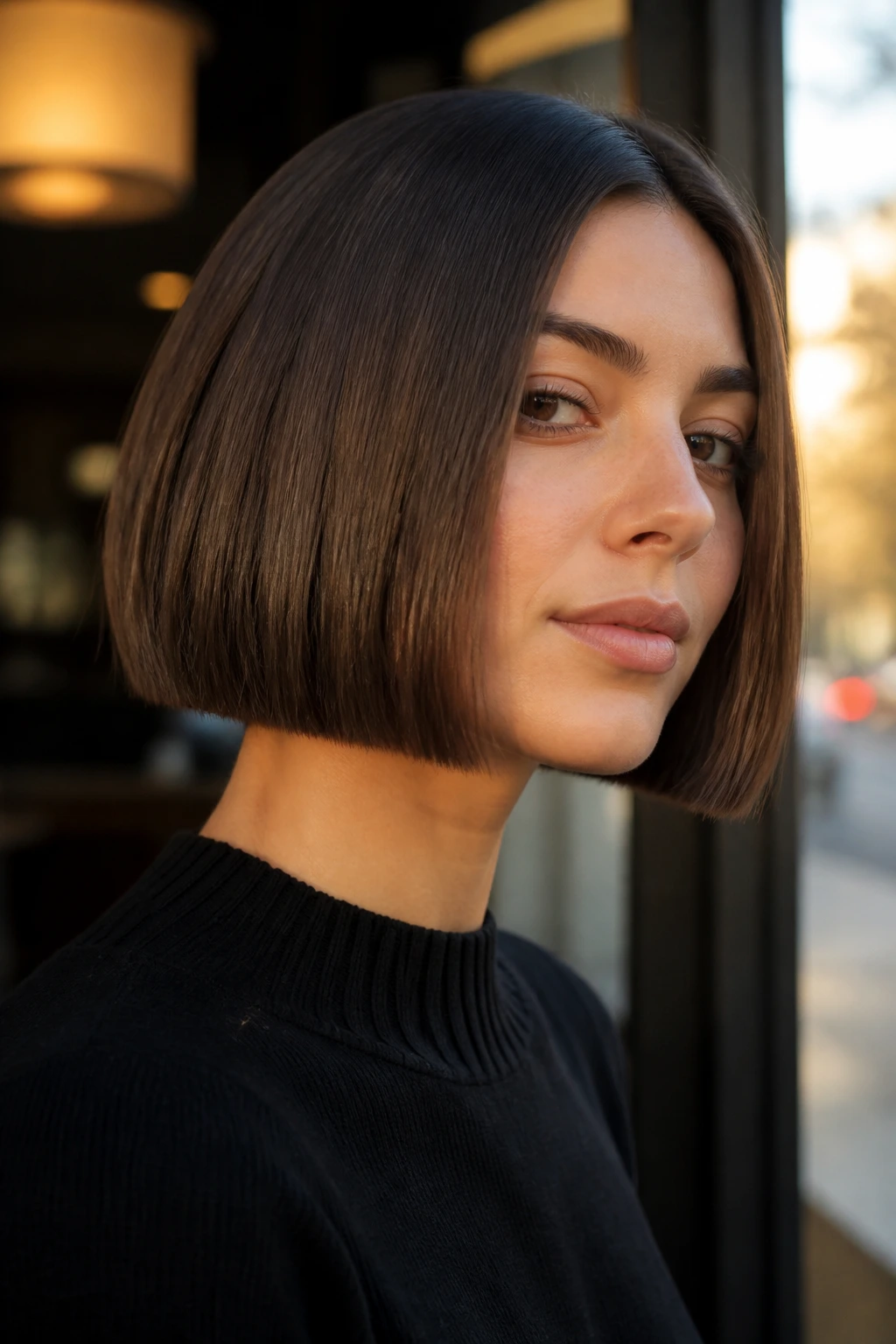
One mistake shows up everywhere: asking for “thinning” without a plan. Thick hair often needs bulk removed, yes, but not in random slashes through the ends. When the bottom gets too airy, the top still carries all the weight and the haircut starts to puff in strange places. The fix is interior shaping and a clear perimeter.
Another common problem is choosing a short cut that’s too layered for the texture. Fine layers on very dense hair can look feathered for about five minutes, then the whole style swells outward. If you want softness, ask for controlled layering or invisible layers, not a shredded finish.
Ignoring shrinkage is a classic mistake with wavy and curly thick hair. A bob that lands at the jaw when wet may sit several inches higher once it dries. That is how people end up with hair that feels unintentionally tiny. Cut curly hair dry or nearly dry when possible, and talk in terms of where the length sits after it settles.
Heavy oil at the root is another one. Thick short hair does not need to be slicked into submission. It needs direction. Keep rich serums on the ends only, or skip them entirely if the cut already has a neat finish.
Variations and Alternatives for Different Textures
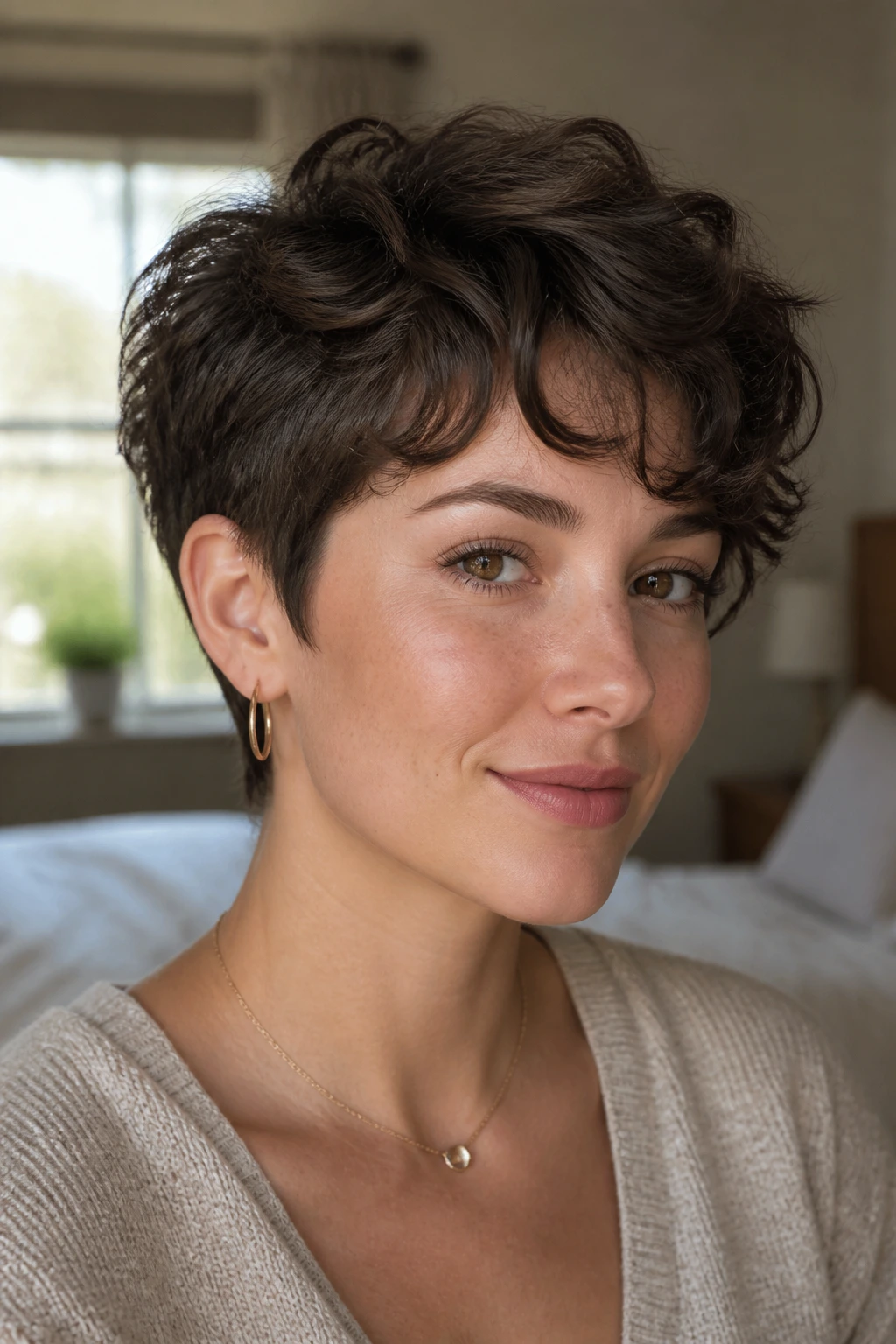
The Air-Dry Version: Ask for softer internal layers, a gentle perimeter, and less fringe density. This version works well if you want a bob or pixie that can dry on its own without a large styling session.
The Sleeker Version: Keep the edges blunt, the layers minimal, and the neckline tidy. This suits straight thick hair that already wants to lie smooth and only needs the shape trimmed into place.
The Curl-First Version: Cut the shape around the curl pattern rather than against it. A curl-first bob or crop respects shrinkage, keeps the outline round, and avoids the triangle effect that appears when curls are cut too conservatively.
The Fringe Shift: Add curtain bangs, side-swept bangs, or a micro fringe to redirect bulk away from the face. This is the easiest way to make a familiar bob feel new without changing the length much.
The Low-Maintenance Version: Keep the nape a touch longer, soften the sides, and avoid extreme undercuts. The shape still looks clean, but the grow-out is friendlier if you do not want constant trims.
How to Keep the Shape Fresh Between Salon Visits

Short thick hair shows growth faster than long hair does, especially around the neck and ears. Pixies usually need a cleanup every 4 to 6 weeks if you care about the outline. Bobs can stretch to 6 to 8 weeks, sometimes a little longer if the shape is blunt and not overly stacked. Fringe often needs its own trim sooner than the rest.
At home, the goal is not perfection. It is shape preservation. Dry the root first, smooth the perimeter second, and leave the ends a little piecey if the cut was meant to move. If the back starts kicking out, a quick pass with a flat iron or round brush on the underside can reset it in under five minutes.
Sleeping on thick short hair can rough up the outline, especially with a lot of texture. A silk pillowcase helps. So does a light mist of water at the crown in the morning, followed by a small amount of styling cream warmed between the fingers. Do not soak the whole head. You’re nudging the cut back into place, not starting over.
Frequently Asked Questions About Short Haircuts for Thick Hair on Women

Which short haircut is easiest to live with?
A chin-length blunt bob or a long pixie usually gives the least friction. Both keep enough structure to control thick hair without demanding a long styling routine every day.
Will layers make thick hair frizzy?
They can, if the layers are too short or too heavily thinned. Controlled internal layers usually help thick hair move better; the trouble comes when the ends are shredded and lose their weight.
Can curly thick hair wear a very short cut?
Yes, but the cut has to respect shrinkage. A dry cut or a curl-by-curl shaping session will keep the final result from sitting too high or too wide.
How often should I trim a short thick haircut?
Most short cuts need attention every 4 to 8 weeks depending on shape. Pixies and strong napes need trims sooner; blunt bobs can go a little longer before the outline blurs.
Is an undercut a good idea if my hair is very dense?
Usually, yes, especially if the nape or sides feel hot and bulky. The tradeoff is maintenance, because the shaved or clipped areas grow out fast and lose their clean line.
What if my hair puffs out at the sides after drying?
That usually means the cut is carrying too much bulk at the interior or the drying direction is wrong. Use a nozzle, aim the hair downward while drying, and ask your stylist about removing weight from the inside rather than the ends.
Are bangs a bad idea with thick hair?
Not at all. Thick hair can make bangs look full and polished, especially curtain bangs or side-swept fringe. The only thing to watch is density; if the fringe is too heavy, it can sit like a curtain across the whole face.
Can I wear a short cut if I do not style my hair much?
Yes, but choose a shape that works with your natural pattern. A textured crop, soft French bob, or long pixie tends to behave better with minimal effort than a super-sleek graduated bob.
The Cut That Fits Your Head
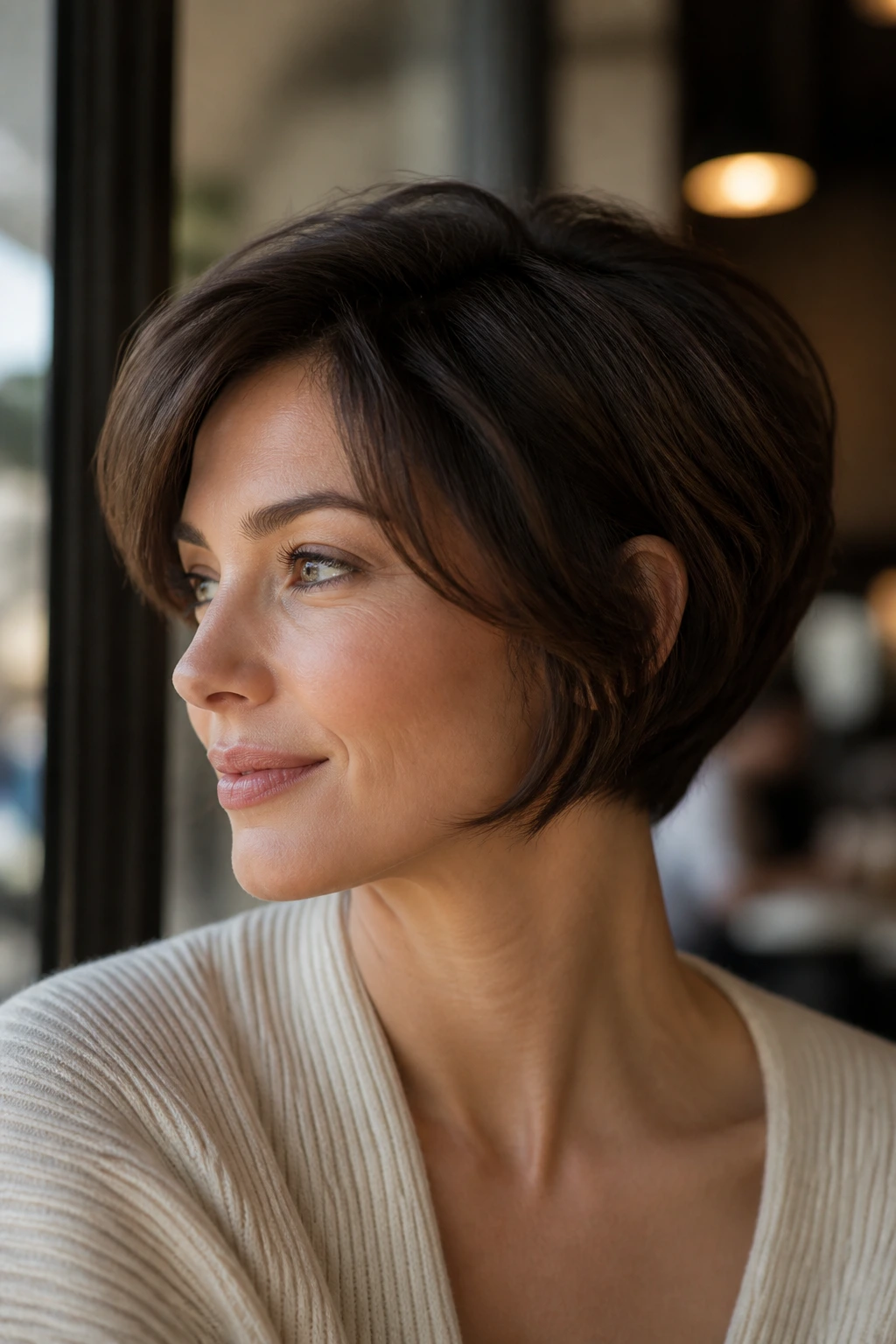
The best short haircut for thick hair is the one that gets the weight in the right place. That sounds almost too simple, but it is the whole game. A blunt bob, a shaggy pixie, a stacked back, a tiny undercut — each one solves a different version of the same problem: dense hair wanting to spread out instead of settle into shape.
Thick hair can look magnificent short. Crisp. Lively. Expensive, if you like that word and the look that usually comes with it. Pick the shape that respects your texture, your styling habits, and the way your hair grows around the ears and neckline, then keep the outline tidy enough to let the cut do its job.
