



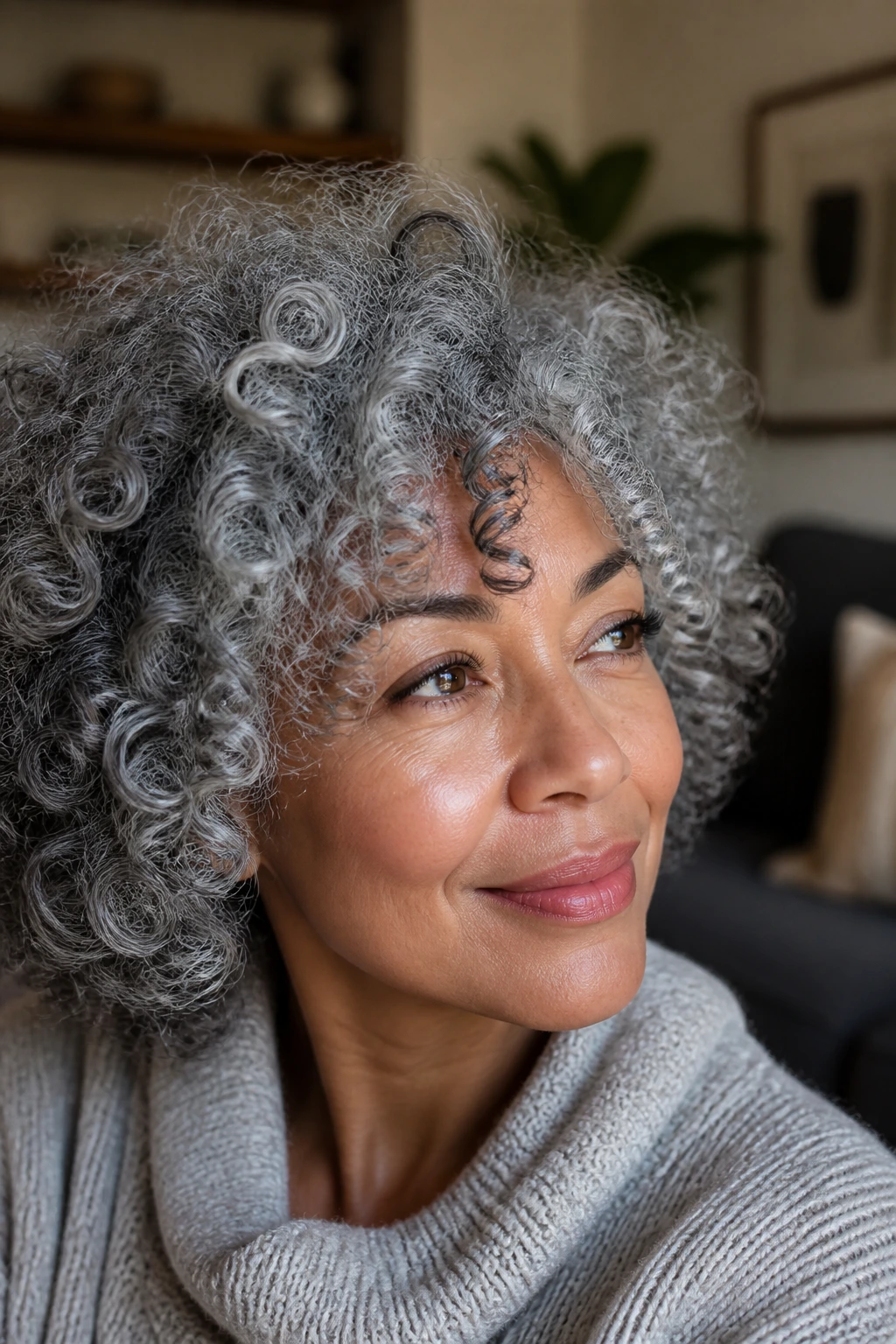
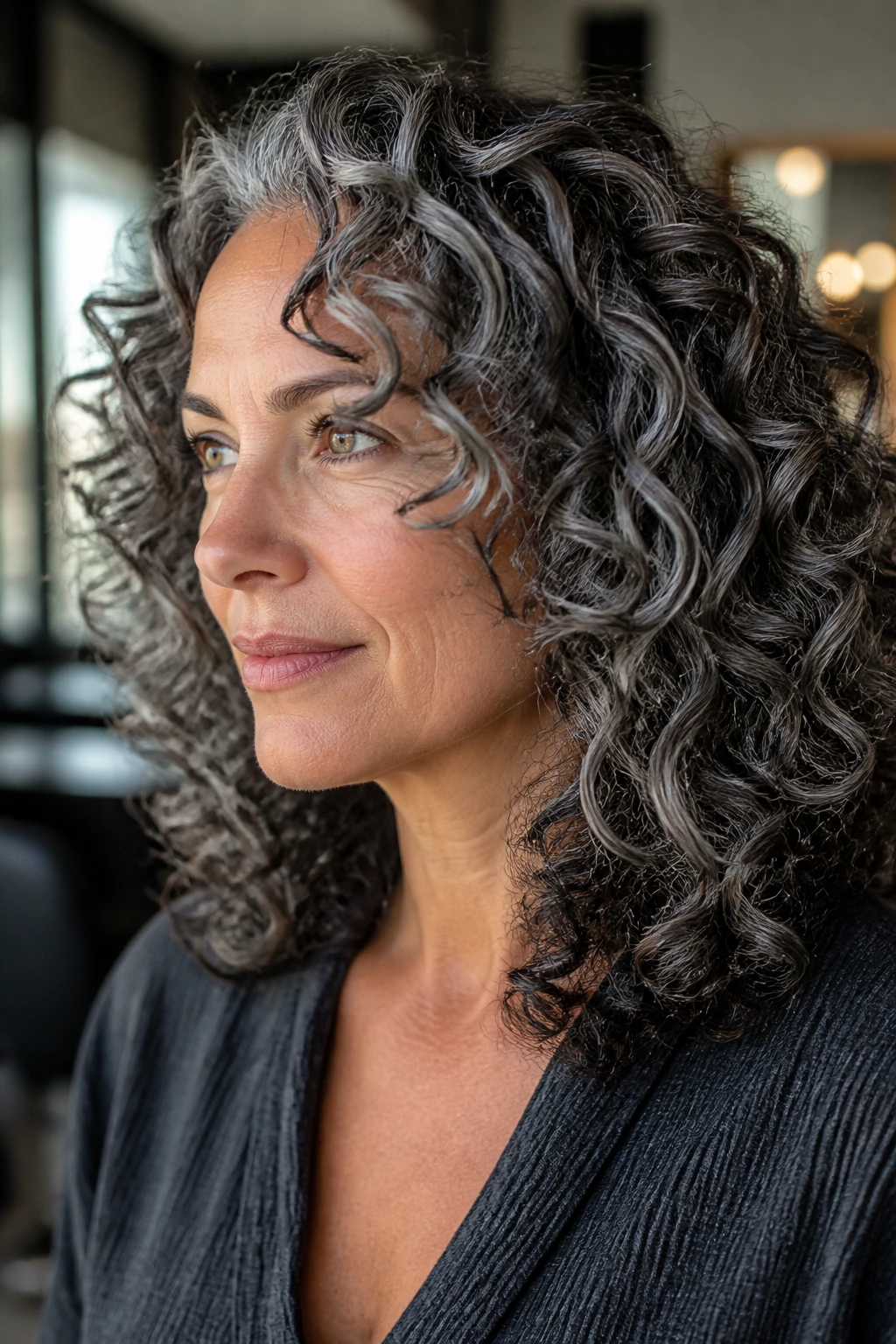
A silver curl can look smoky in one light and almost white in another. That shift is the reason gray on curly hair feels so different from gray on straight hair; the bend of a ringlet throws tiny shadows, and those shadows change the whole read of the color.
The best gray hair color ideas for curly hair lean into that movement instead of fighting it. A curl does not show shade in one flat sheet. It flashes it, hides it, then flashes it again two inches later — which is exactly why a narrow ribbon of silver can look richer on curls than a much wider panel on sleek hair.
Flat gray is where people get into trouble. Too much one-note color can make curls look dry or chalky, especially if the cut is heavy and the ends are already thirsty. The sweet spot is usually some mix of depth, shine, and placement that lets the curl pattern stay visible even when the light is low.
Why These Gray Looks Stand Out on Curls
-
Dimension First: Curly texture breaks gray into bands of light and shadow, so even a small silver panel can read bigger and more textured than the same placement on straight hair.
-
Soft Regrowth: Root smudges, shadow melts, and salt-and-pepper blends grow out with less of a hard line, which matters if you do not want a blunt stripe at the scalp.
-
Color Placement Matters More: On curls, a bright face frame or crown highlight often does more work than an allover lift, because the outer bends catch the eye first.
-
Easier to Personalize: You can go icy, smoky, pewter, lavender-gray, or charcoal without changing the whole shape of the look. That range is the fun part.
-
Better with the Right Cut: Layers, shags, and rounded bobs give gray color somewhere to move. Heavy one-length cuts can swallow the detail fast.
1. Silver Halo Balayage
A silver halo balayage wraps the outer canopy of the curls in soft light, so the color lands where people actually look first — around the face, crown, and upper bends. It has that moonlit feel without turning the whole head into a sheet of metal.
Why It Works on Curls
The trick is restraint. You paint the brightest silver on the outer layer and leave the interior a shade deeper, so each curl opens and closes like a little ribbon of contrast. On 2C to 3B hair, that contrast can make the whole style look fuller.
What to Ask For
- Hand-painted silver ribbons through the top third of the hair
- A soft root shadow, usually 1 to 2 levels deeper than the lightest pieces
- A cool toner with violet or blue-violet lean if your base runs yellow
- Extra brightness around the cheekbones and temples
Best tip: keep the pieces thin. Chunky silver strips can look stiff on curls, and thin ribbons blend much better when the hair moves.
2. Salt-and-Pepper Blend With Soft Layers
This is the shade that stops pretending gray has to be hidden. When the natural silver is left in the mix and the darker strands are softened with lowlights, the whole head reads intentional instead of half-grown-out.
That matters on curly hair because the texture already gives you movement. Add soft layers, and the gray threads stop sitting on top of the curls like a coat of paint. They weave through them.
If you like low maintenance, this is one of the sanest choices on the list. It grows out without a harsh line, and it usually looks better after a few weeks than on day one. Strange, but true.
3. Smoky Root Melt
Can a darker root make gray curls look richer? Absolutely. A smoky root melt keeps the scalp area a level or two deeper, then eases into ash, silver, or steel through the mids and ends.
How to Wear It
It works best when the transition is soft enough that you cannot point to the exact line where one color stops and the next begins. On curls, that blur matters. Harsh contrast near the scalp can make the top half look like a helmet.
Ask for a root shadow that is smudged for at least the first inch and a half. If your hair is coarse, your colorist may need to keep a bit more depth in the root zone so the texture still looks plush rather than washed out.
4. Pearl Gray Face Frame
A pearl gray face frame is for the person who wants brightness without committing to a full head of silver. Two or four curled pieces around the face, toned into a soft pearl-gray, can change the whole mood of the haircut.
I like this on bouncy shoulder-length cuts because the front pieces flick forward and catch light every time you move. The color looks polished, but not stiff. And the rest of the hair gets to stay darker, which gives the face frame somewhere to land.
If you wear glasses, this one is sneakily good. The curl and frame create enough lift near the eyes that the gray doesn’t disappear behind the lenses.
5. Mushroom Gray Curl Layers
Mushroom gray sits in that beautiful middle zone between cool silver and warm beige. It has enough ash to feel modern, but enough softness to keep curls from looking dry or over-processed.
This shade flatters layered curls because the ends usually take on a softer haze than the roots. That little difference is helpful. It stops the entire style from reading as one flat color block and gives the curls a soft, dusty depth that feels believable.
Best For
- Medium to dark brown bases
- Warm or olive skin tones
- Curls that are already layered or shagged
- Anyone who wants gray without an icy finish
6. Steel Ribbon Highlights
Steel ribbons are narrower and cooler than the usual highlight strip, and that’s exactly why they work. Instead of bright blonde pieces that fight the gray, these metallic ribbons sit inside the curl pattern and make the hair look denser.
Unlike chunky streaks, steel ribbons don’t steal the whole show. They flick in and out of view as the curls move, which gives the style a very nice stop-start rhythm. I find this look especially good on darker curly hair that needs a little light without losing its depth.
If you want the color to stay crisp, ask for a cool glaze every few weeks. Steel tones can drift warm faster than people expect, especially if the hair sees a lot of heat.
7. Frosted Money Piece
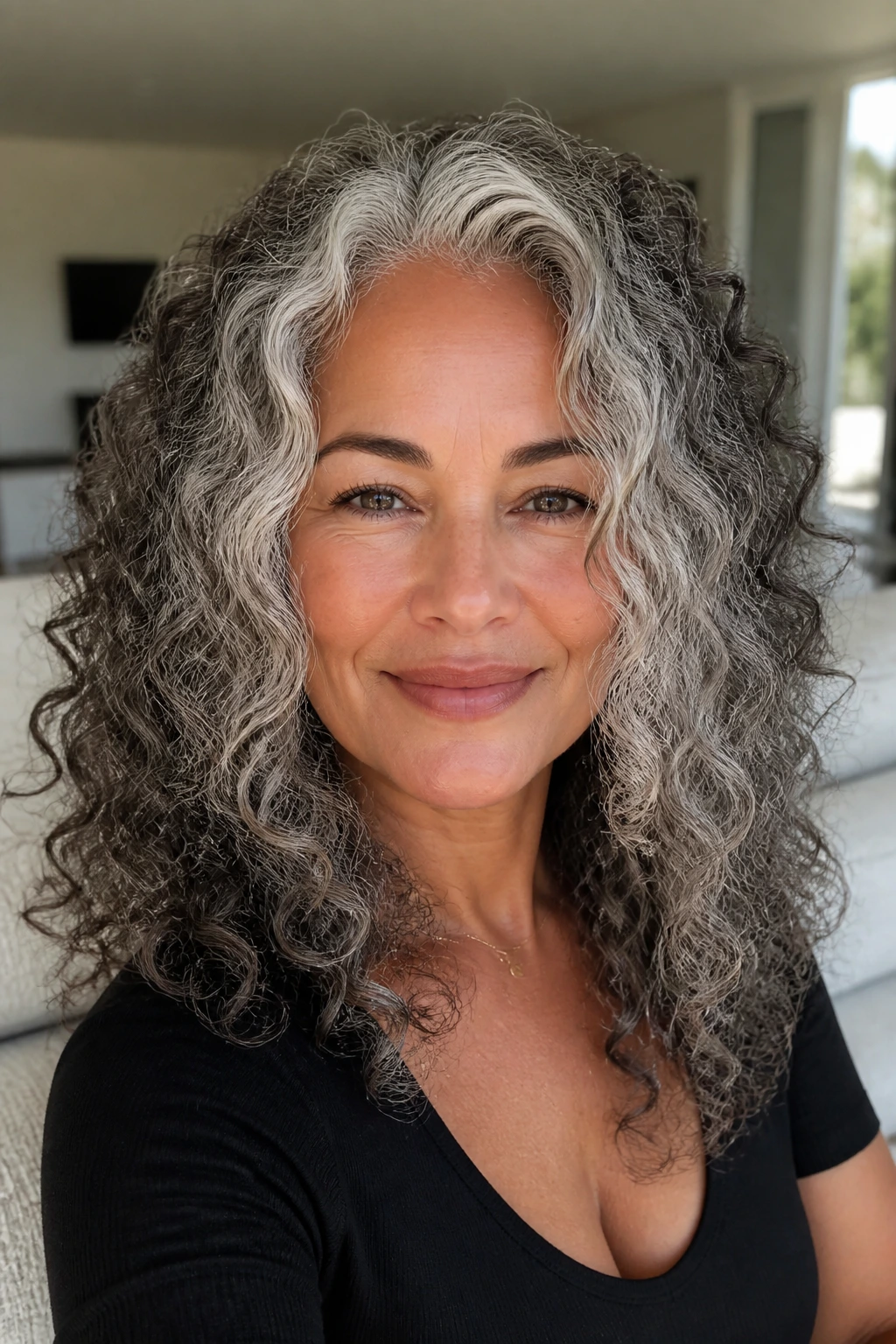
A frosted money piece is the bold front panel version of gray. You keep the rest of the curls deeper, then brighten the front two sections enough that they frame the face in a sharp, cool outline.
This is a good choice if you like contrast but do not want an allover platinum situation. The front pieces do the work. The rest can stay smoky, brown, or even nearly natural, which keeps upkeep reasonable.
The best frosted money pieces on curls do not look streaky. They look like the front of the hair got dipped into winter air. Clean, bright, and a little sharp at the edges.
8. Platinum Silver Glaze
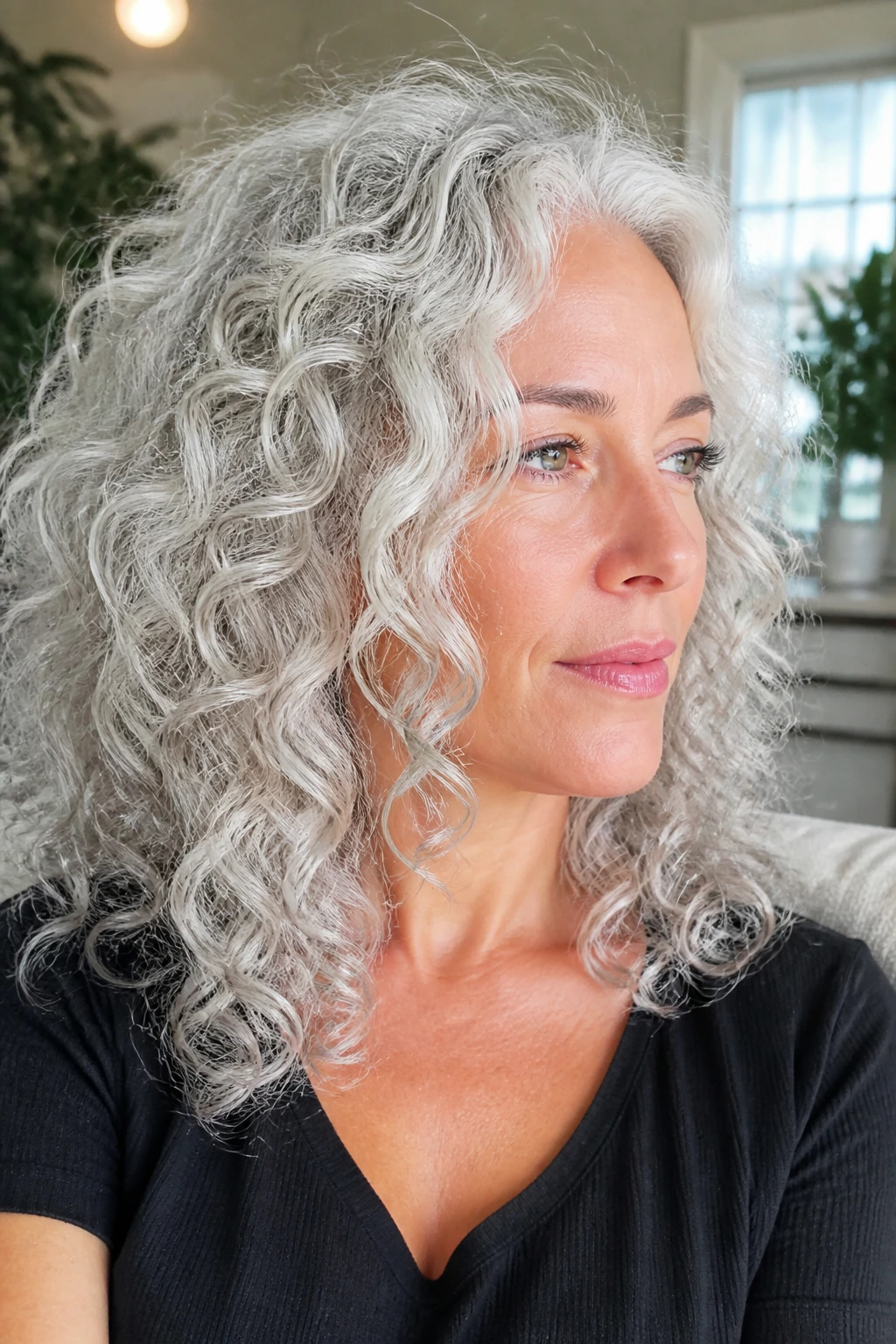
Platinum silver is what happens when the base is already light enough to support a near-white finish and the toner is doing the real heavy lifting. On curls, that glaze can look incredible because each bend catches the pale tone a little differently.
The catch is dryness. Platinum on curly hair needs a softer hand than people think. If the hair is porous, the glaze can grab too hard and turn the ends dull or violet-gray instead of bright silver.
Keep the root area slightly deeper if the curl pattern is loose. That tiny bit of depth stops the whole head from looking washed out, and it gives the platinum something to sit against.
9. Pewter Lowlights
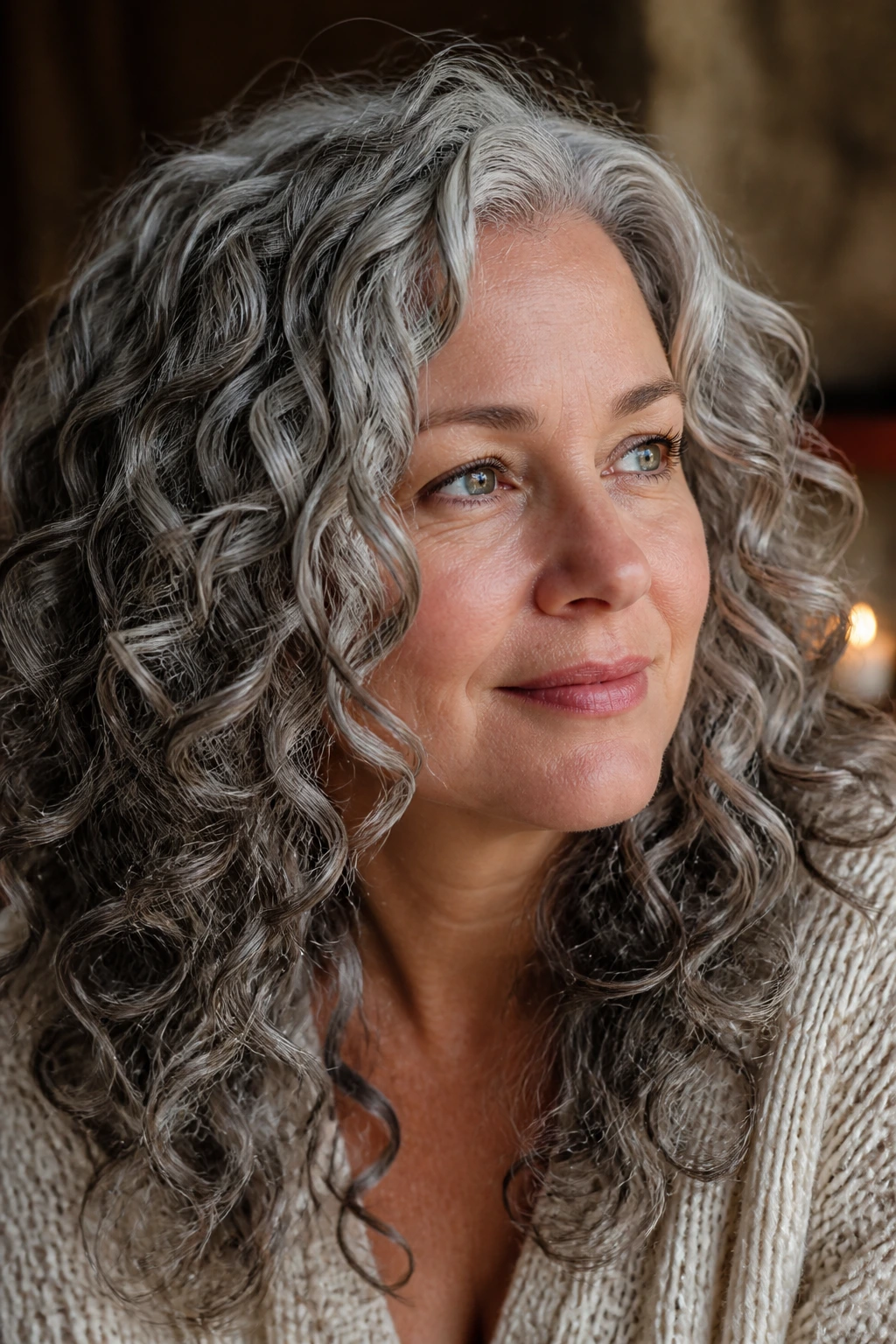
Why do some gray curls look rich while others look chalky? Lowlights. Pewter lowlights thread a deeper metallic tone through the curls so the lighter pieces have somewhere to sit.
This is one of my favorite fixes for hair that has already been lightened too much. A few darker ribbons can make the silver read as a choice instead of a correction. On looser curls, they also help define the shape of the ringlets.
Ask for lowlights that are cooler than your base but not so dark that they collapse the dimension. You want shadow, not stripe.
10. Ash Beige Gray
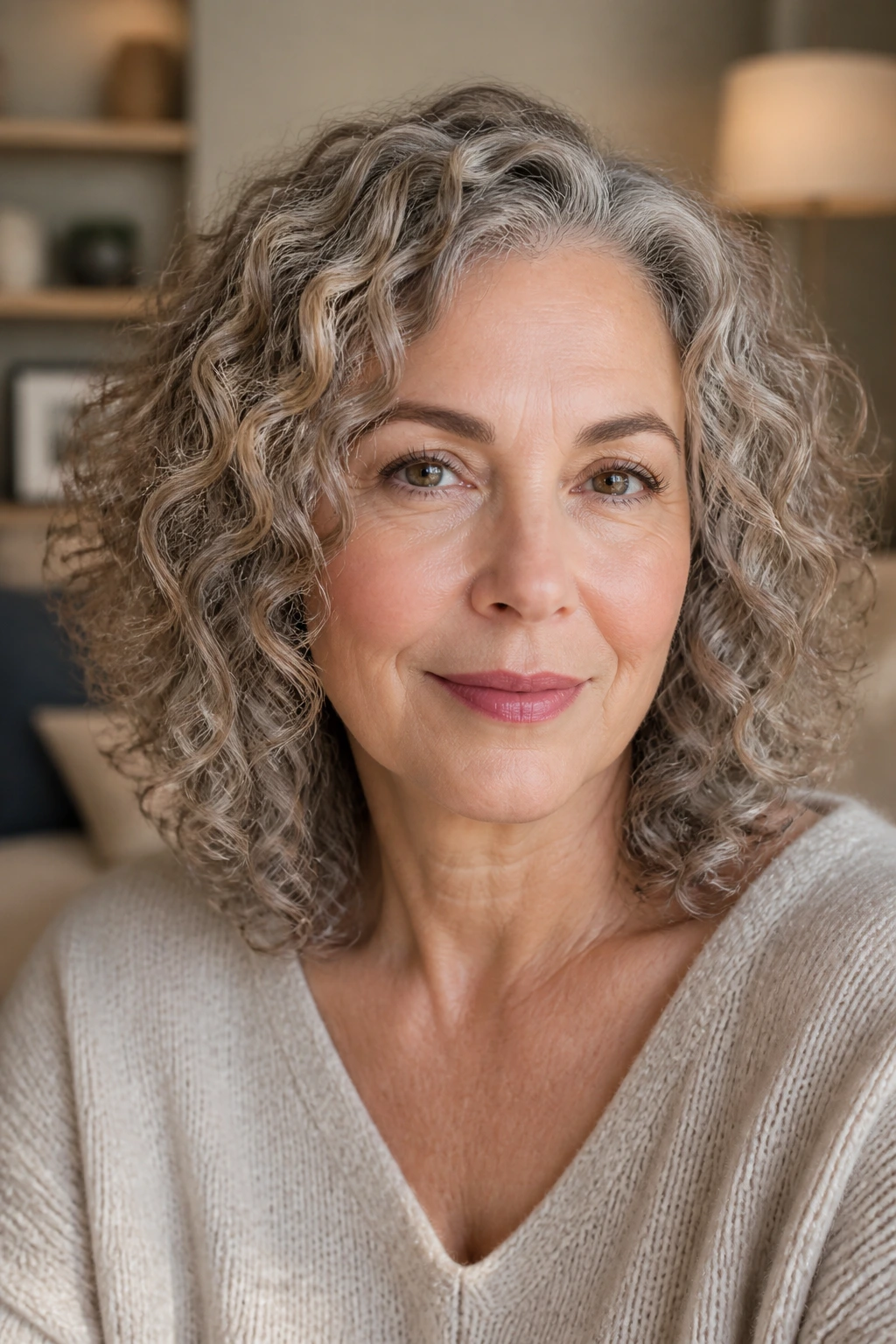
Ash beige gray is the sensible cousin in the gray family, and I mean that as a compliment. It keeps the crispness of ash, but the beige undertone softens the whole thing so it doesn’t go dusty.
On medium-brown curls, this shade can be a sweet spot. It works with skin that leans warm, cool, or somewhere awkward in the middle — which is most people, if we are being honest. The beige keeps the face from going flat, while the ash keeps the color looking grown-up and not straw-colored.
Quick Notes
- Looks best on 2B to 3A waves and curls
- Needs less frequent toning than icy silver
- Gains depth with a rounded cut and a little root shadow
- Plays well with neutral makeup and soft browns
11. Graphite Peekaboo Panels
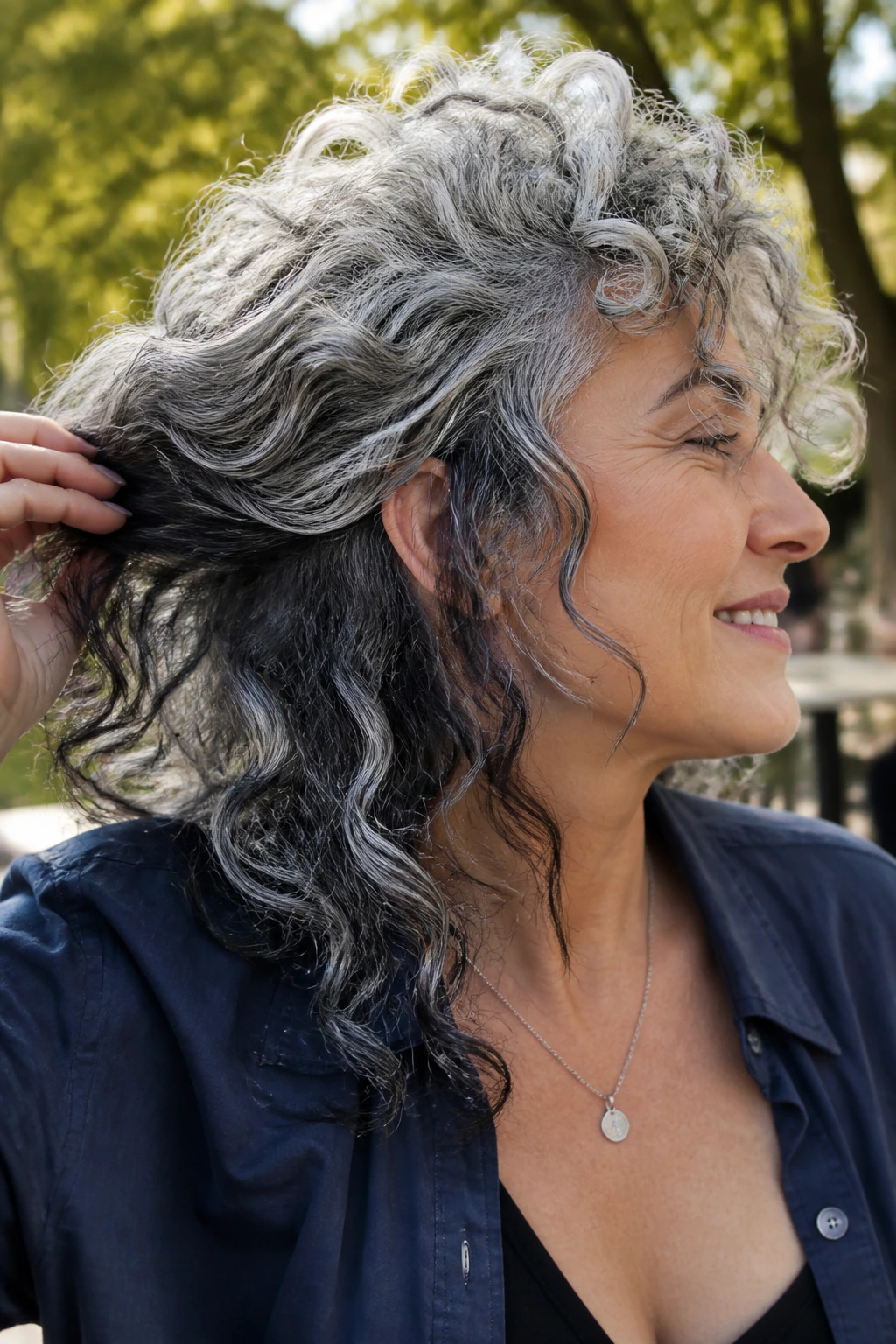
Graphite peekaboo panels live under the top layer, which means they show up when the hair shifts, flips, or gets pinned back. It is a nice way to do gray if you want the color to feel a little private.
On curls, hidden panels can be magic. The shape of the curl causes the darker silver to flash in unexpected places, so the look changes all day. That movement is half the appeal.
I especially like this on people who wear their hair half-up or clipped back a lot. The color becomes part of the styling instead of something you have to show off all the time.
12. Moonstone Lavender Gray
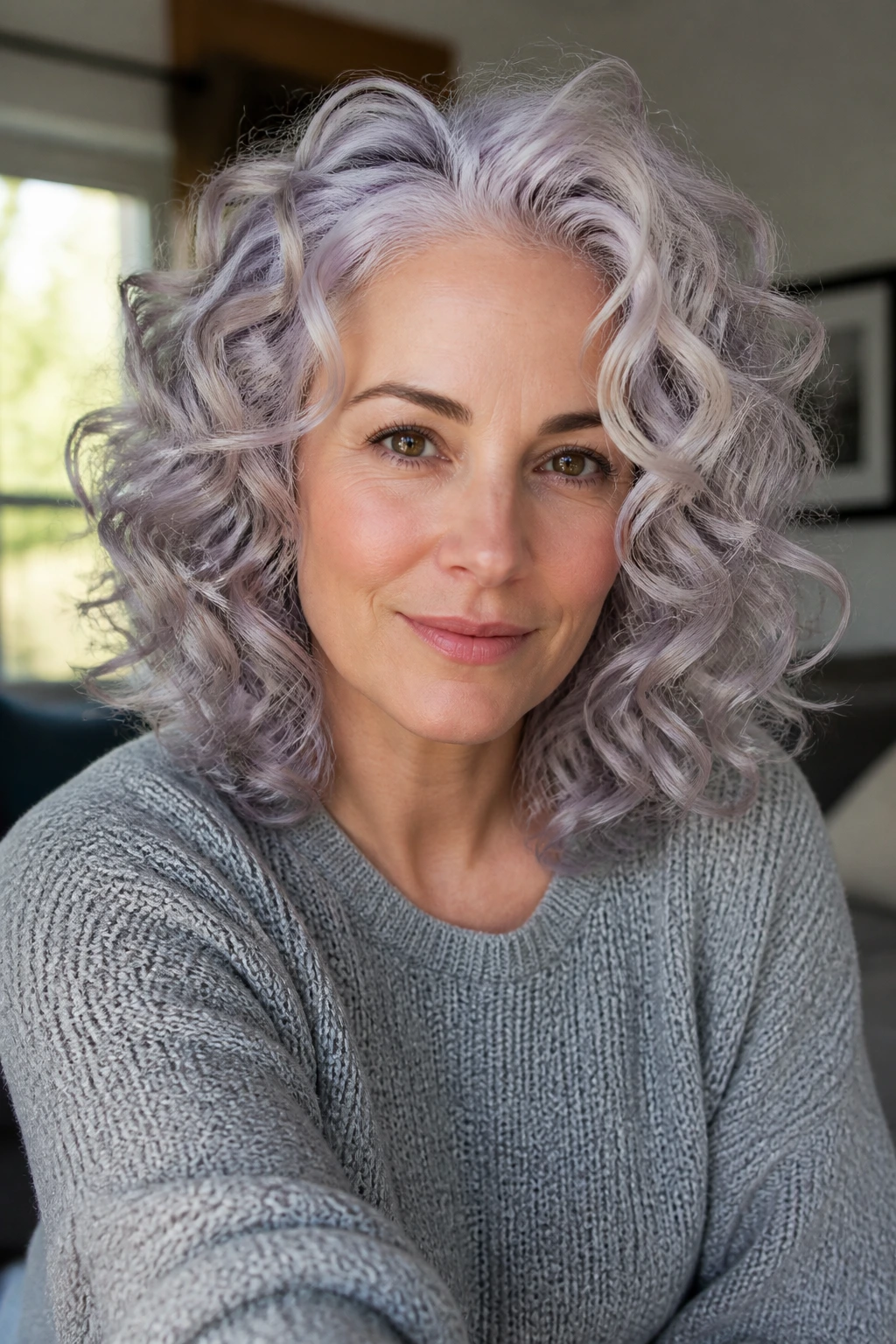
Moonstone lavender gray has a cool, soft sheen that sits somewhere between silver and a faded lilac. It is not loud. It just has a subtle violet cast that keeps the gray from going flat.
This shade is smart on curls that pull yellow after lightening. A gentle lavender tone can balance that warmth without making the hair look purple in daylight — assuming the toner is left on for the right amount of time. Too long, and the ends can go cloudy fast.
If you want the color to stay clean, use a violet conditioner sparingly. Once a week is usually enough. More than that, and the curl can start looking dull.
13. Champagne Smoke
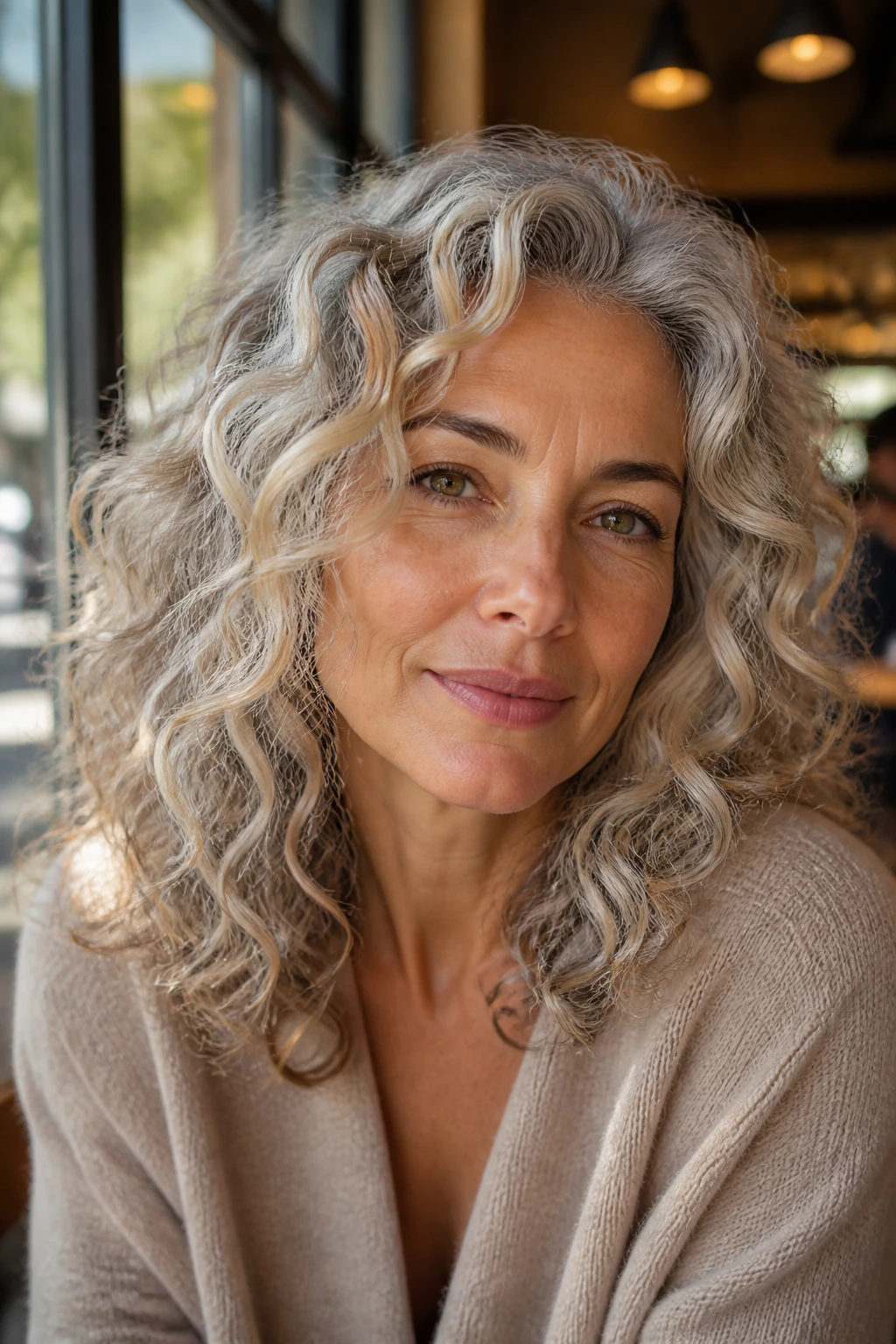
Champagne smoke is the warmer end of gray, and it suits curls that look too stark in icy tones. It keeps that metallic vibe, but the beige-gold softness stops the color from feeling frosty.
This works especially well if your skin has warmth or your wardrobe leans tan, cream, camel, or olive. The shade does not fight those tones. It sits beside them and looks intentional.
Why I Reach for It
Because curls already have texture, they do not need the highest-contrast silver to feel special. Champagne smoke gives you movement, shine, and a little warmth — a good trade if you want gray that reads expensive rather than severe.
14. Slate Ombré
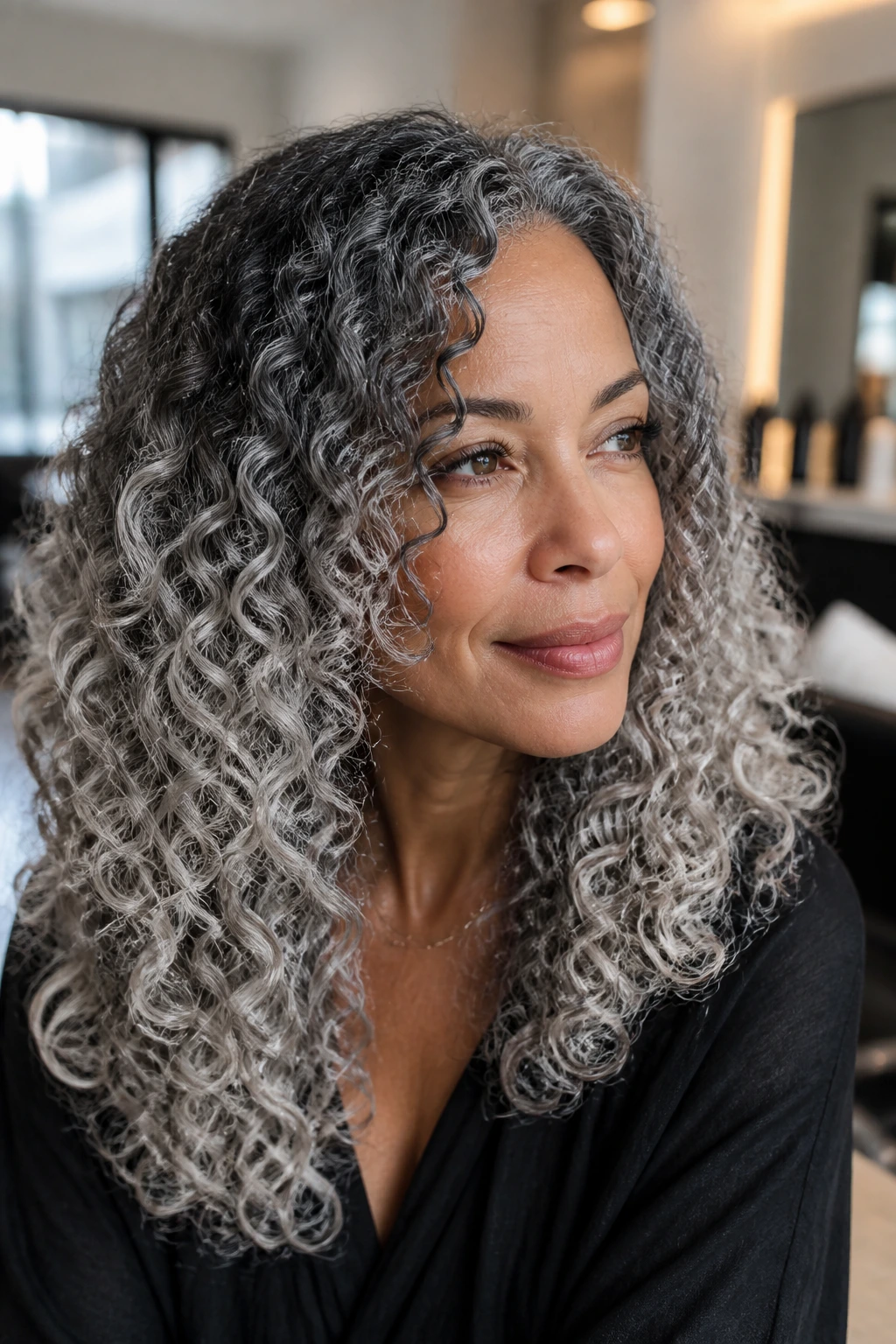
A slate ombré keeps the roots deep and lets the gray arrive slowly through the mid-lengths and ends. That gradual shift is a lifesaver on long curls because it gives the eye a place to travel.
The darker top also buys you a longer grow-out window. You are not staring at harsh regrowth every few weeks. Instead, the hair gets lighter where it naturally moves and frays, which is where ombré usually looks most believable anyway.
On dense curls, slate ombré can cut through some of the visual heaviness. It breaks the mass up without relying on a lot of bright pieces.
15. Silver Fox Blend
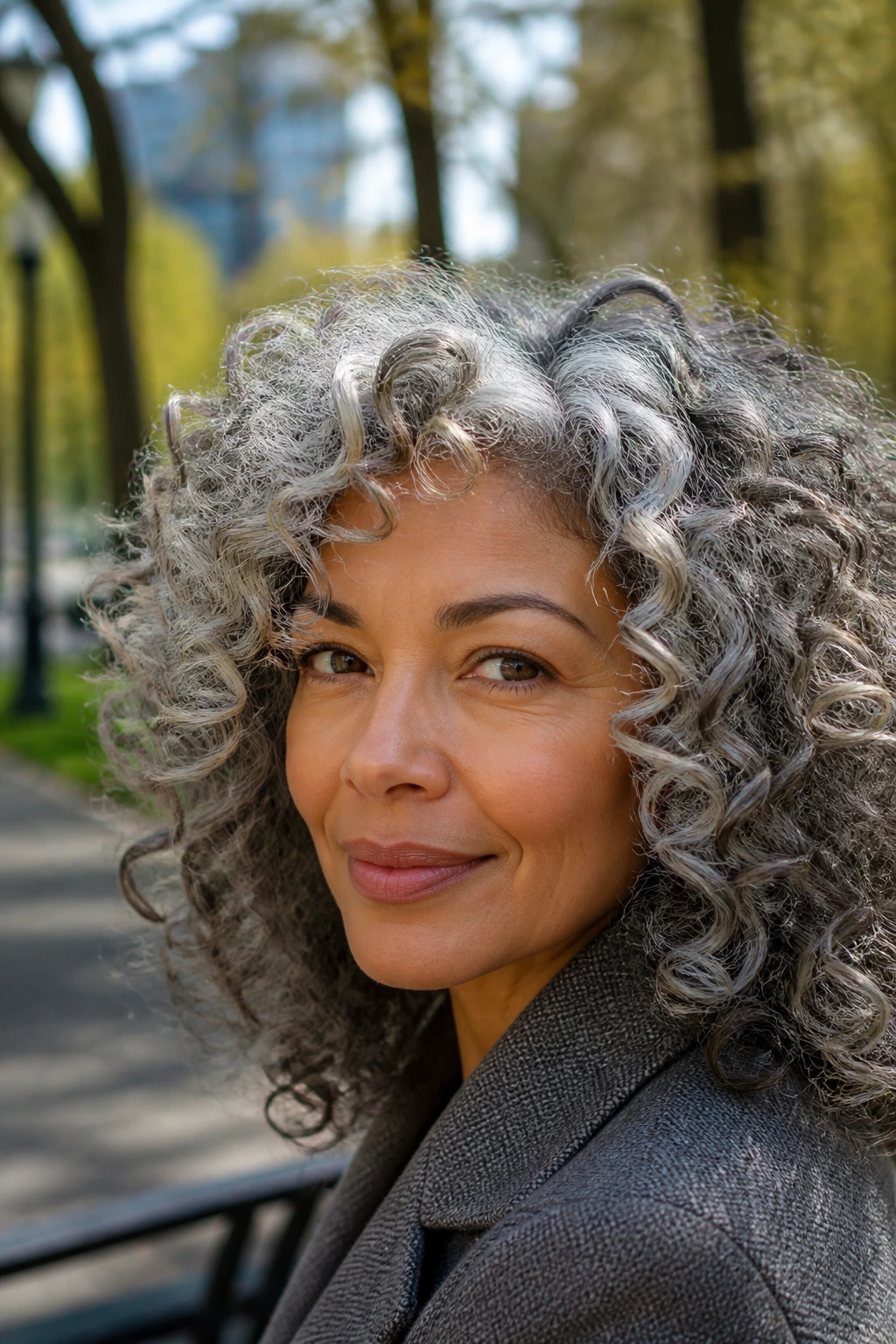
What if you stopped hiding the silver strands and built around them? That is the whole point of a silver fox blend. It mixes natural gray with darker lowlights and a few brighter threads so the hair looks deliberate from root to end.
How to Ask for It
Tell your colorist you want the natural gray left in place wherever possible, then ask for lowlights that are one or two levels deeper in the darker sections. The goal is not uniform color. It is a better pattern.
This is one of the smartest options for people who are already seeing gray growth and do not want to cover every inch. On curls, the blend looks alive. On straight hair, it can look plain. Texture makes the difference.
16. Icy Tips on Long Curls
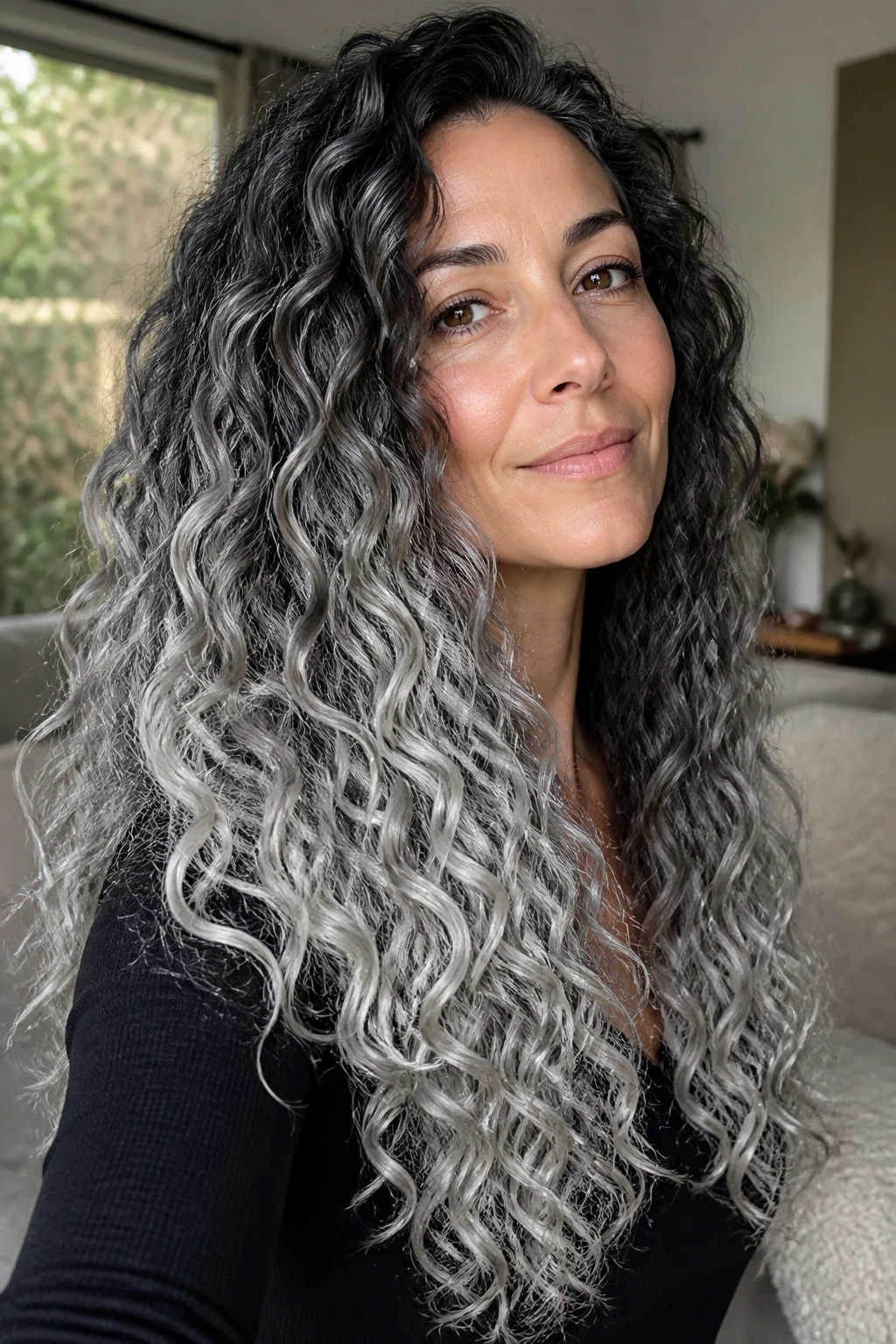
If your hair is long, icy tips can do a lot of visual work without requiring a full-head commitment. The color stays mostly at the ends, where the curl is oldest, driest, and already lighter in feel.
That makes the style practical. You get the silver payoff where the movement is strongest, and you leave the crown and roots in a safer, deeper shade. It is also less punishing if your hair has been colored before.
Watch For
- Ends that are already fragile
- Over-toning, which can turn the tips lilac
- Too much heat on the lightest pieces
- A blunt haircut that hides the color
A few long layers make this look much better. Without them, the icy ends can feel heavy.
17. Orchid Gray
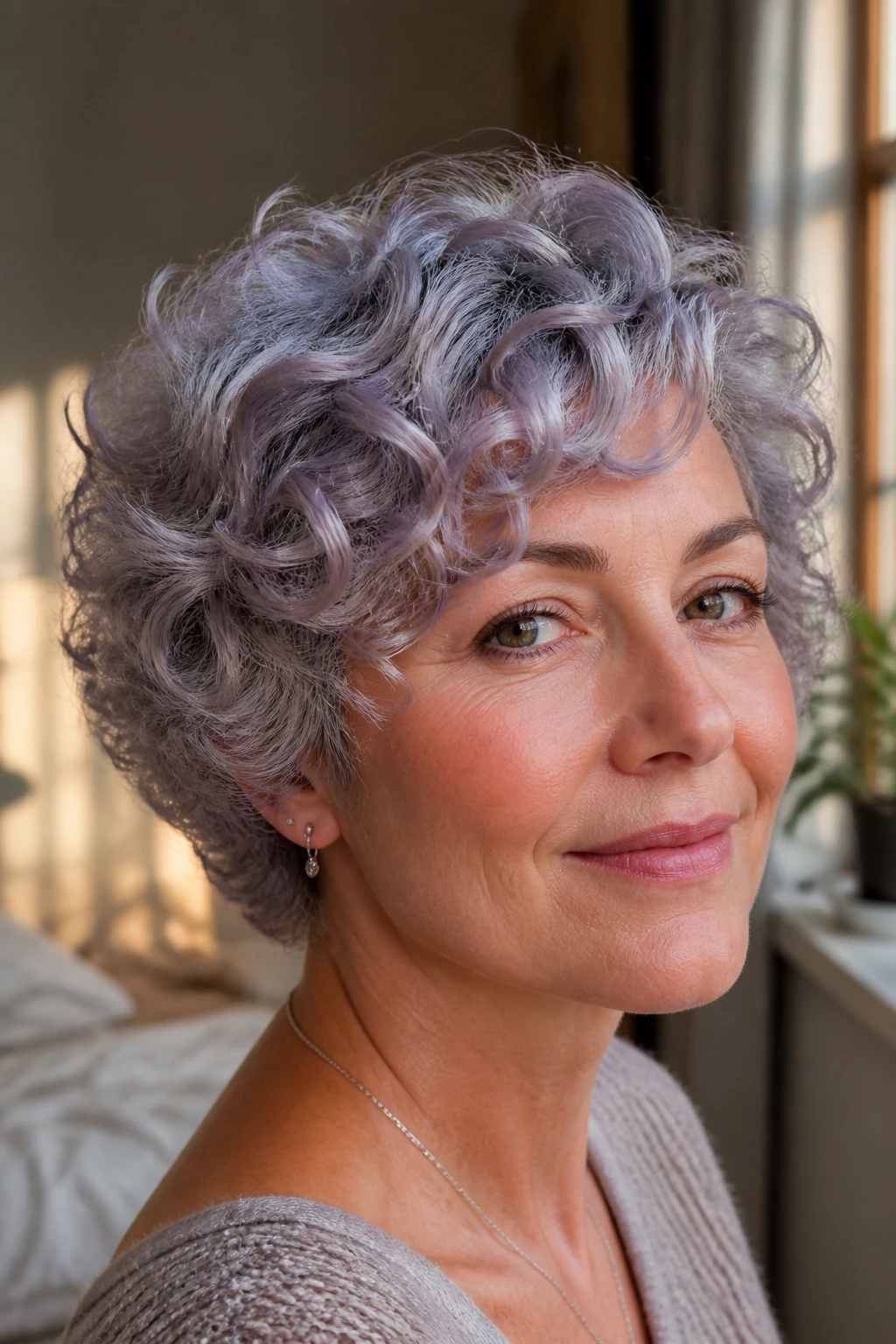
Orchid gray is for the person who likes the idea of silver but wants a little softness around it. The faint lavender note keeps the color from going cold in a harsh way, and on curls it can look almost misty.
This shade usually works best on pre-lightened hair that has enough health left to hold a pastel gloss. If the hair is fragile, the pastel can turn patchy fast. So the cut matters here, maybe even more than the color.
I like orchid gray on shorter curly cuts and layered shags. The movement shows the lilac note in flashes instead of a solid wash, which is much prettier in real life than it sounds on a swatch card.
18. Titanium Coil Highlights
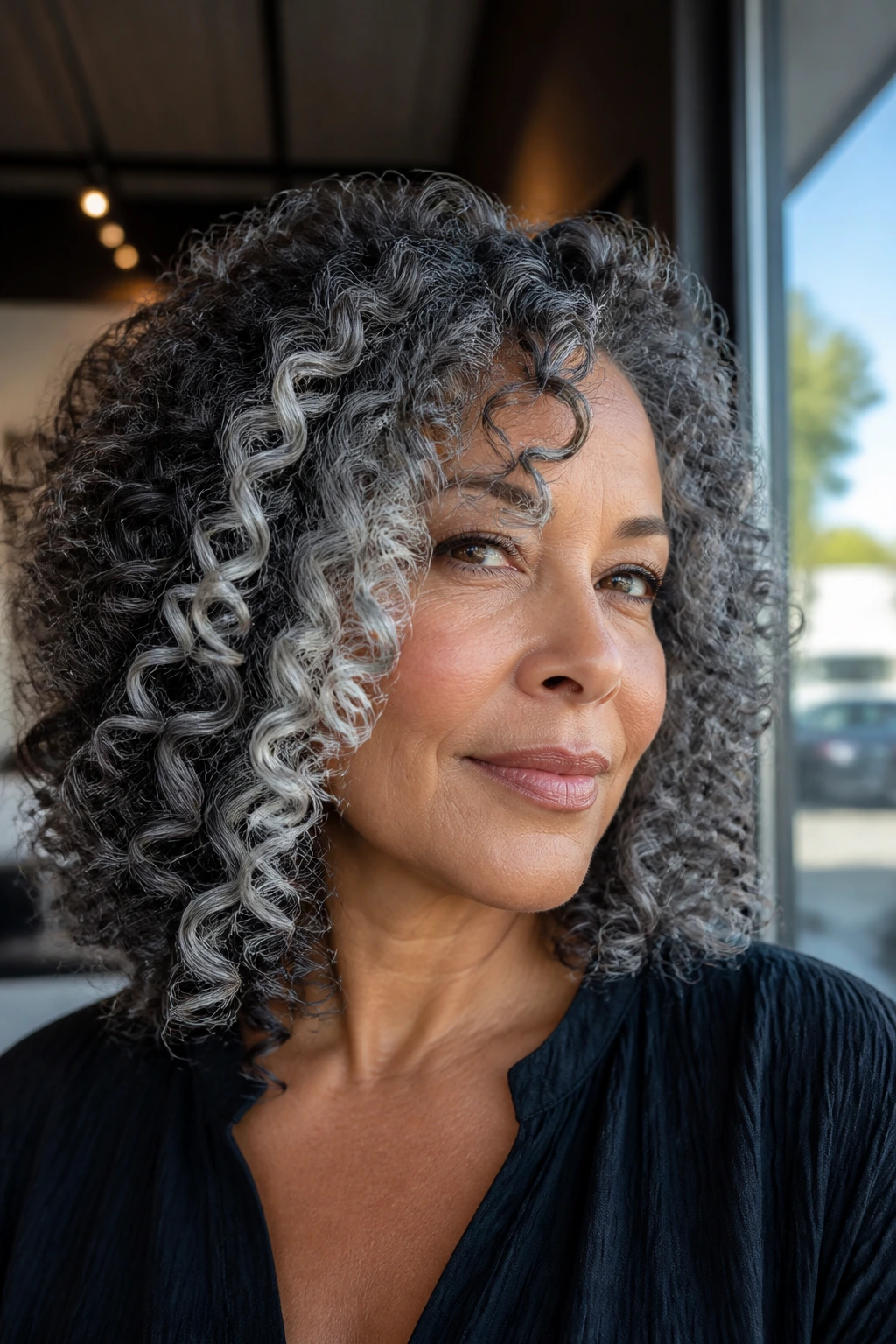
Titanium highlights are bolder and denser than the fine silver ribbons above. They are made to read on tighter coils, where tiny highlights can disappear if they are too timid.
Unlike airy babylights, titanium pieces hold their own inside a 3C or 4A pattern. They create visible contrast from a distance, which is useful when the curl shrinks up and hides smaller color work. If you have dense hair, this is the version that still shows up after the twist-out settles.
Ask for the highlights to be placed on the outer layer and around the face first. That keeps the look from getting muddy in the underlayers, where curls overlap and shade each other.
19. Dusty Rose Gray
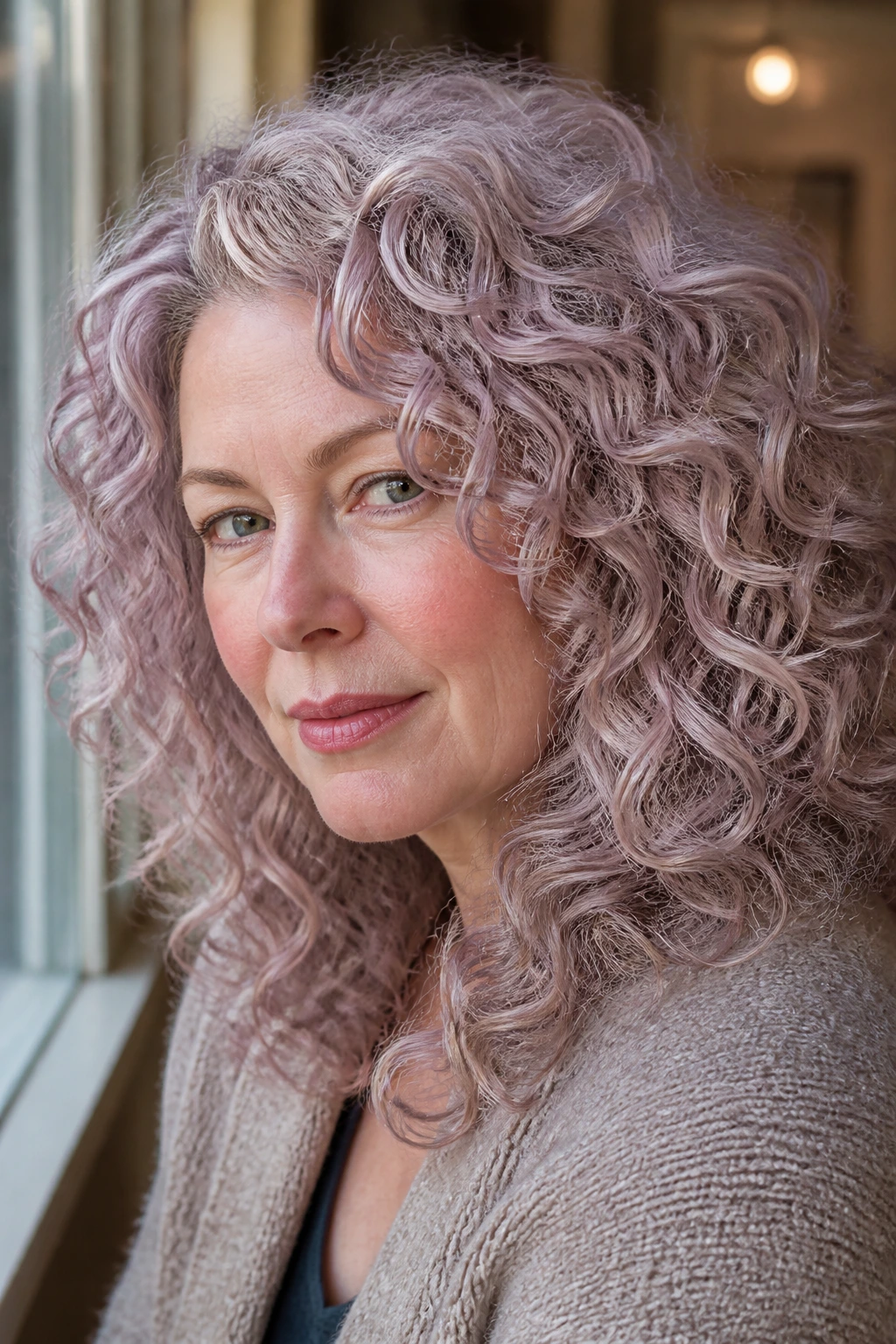
Dusty rose gray is one of those shades that sounds unusual and then ends up being strangely wearable. The pink note is muted enough that it does not scream pastel, but it keeps the gray from going flat and cold.
On curls, that slight rose undertone can be lovely because it softens the edges of the pattern. The whole style feels a little less metallic and a little more velvety. That matters if you do not want your hair to look like it belongs under showroom lights.
Best Pairing
Soft brows, warm blush, and neutral lips tend to keep this shade balanced. Go too cool in the makeup, and the rose note can fade out.
20. Charcoal Underlayer
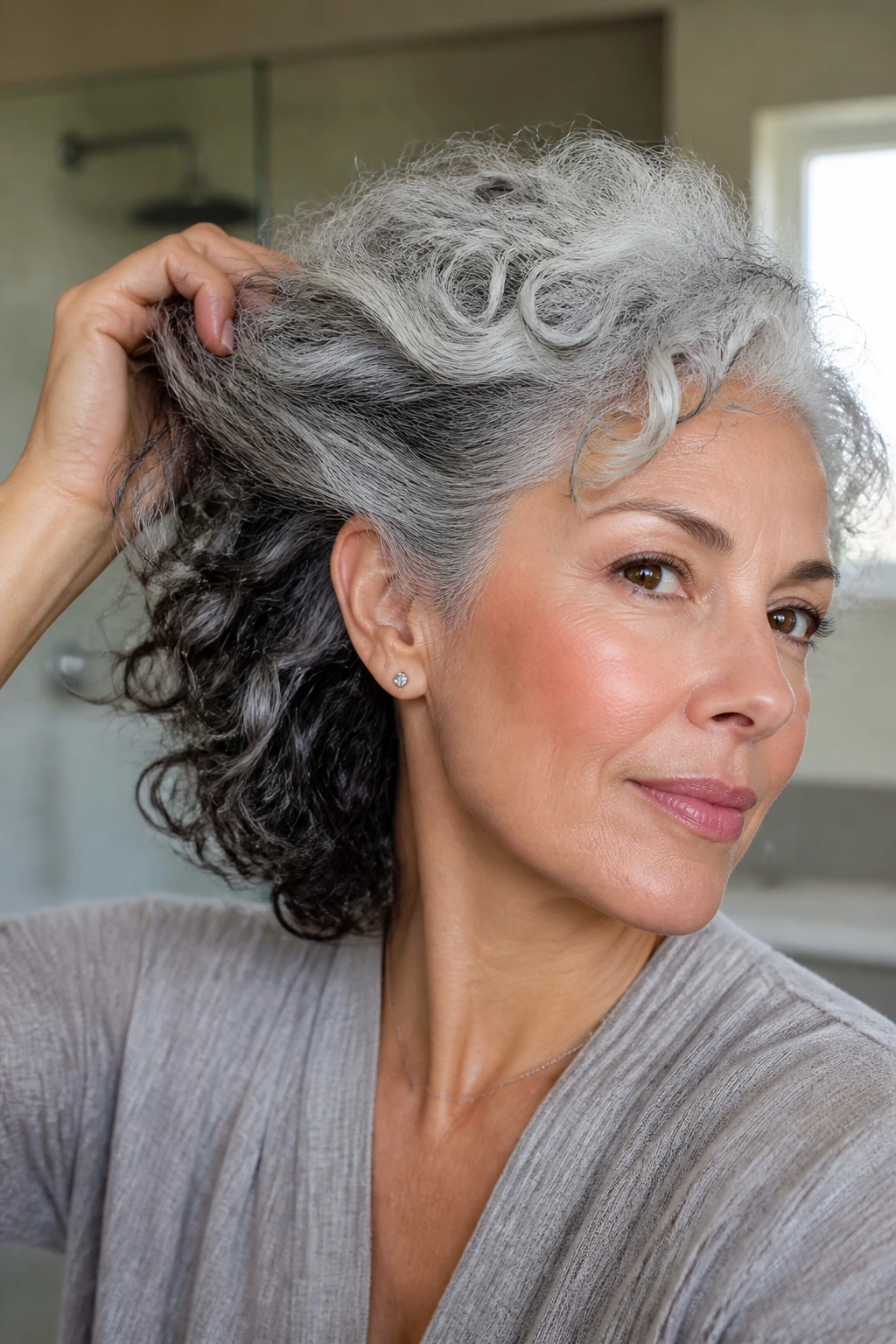
Charcoal underlayer color is made for people who like a little drama but do not want the top layer to become a maintenance monster. The darker silver sits underneath the curls, so it shows when the hair lifts, swings, or gets tucked back.
The payoff is subtle at first and louder when you style the hair up. I like that. It means the color has range. On curly hair, hidden depth like this can keep the top from looking too bright while still adding a serious amount of richness.
If your curls are thick, this is one of the cleaner ways to avoid visual bulk. The underlayer takes some of the weight out of the picture.
21. Granite Bob
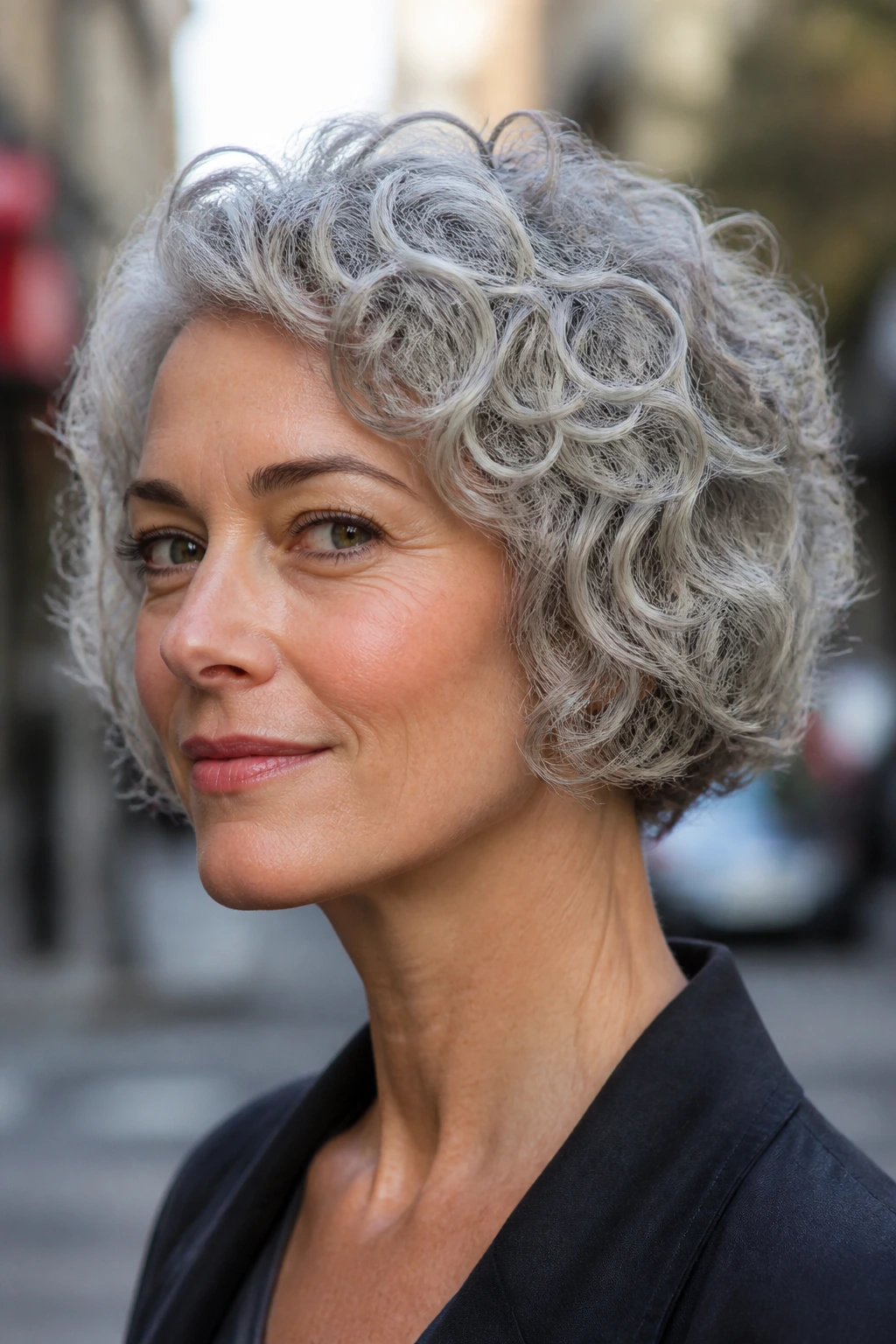
Can a short cut make gray feel cleaner? Absolutely. A granite bob gives gray hair a crisp shape to sit inside, and that shape makes the color read sharper from every angle.
What to Ask For
Ask for a bob that is blunt at the bottom but softened through the interior so the curls do not puff into a mushroom shape. Then layer in a cool granite tone — not pure silver, not dark charcoal, but somewhere in the middle.
This one is strong on jaw-length curls because the cut does half the styling work. You do not need a lot of extra color for the look to register. The outline does the talking.
22. Silver Veil Babylights
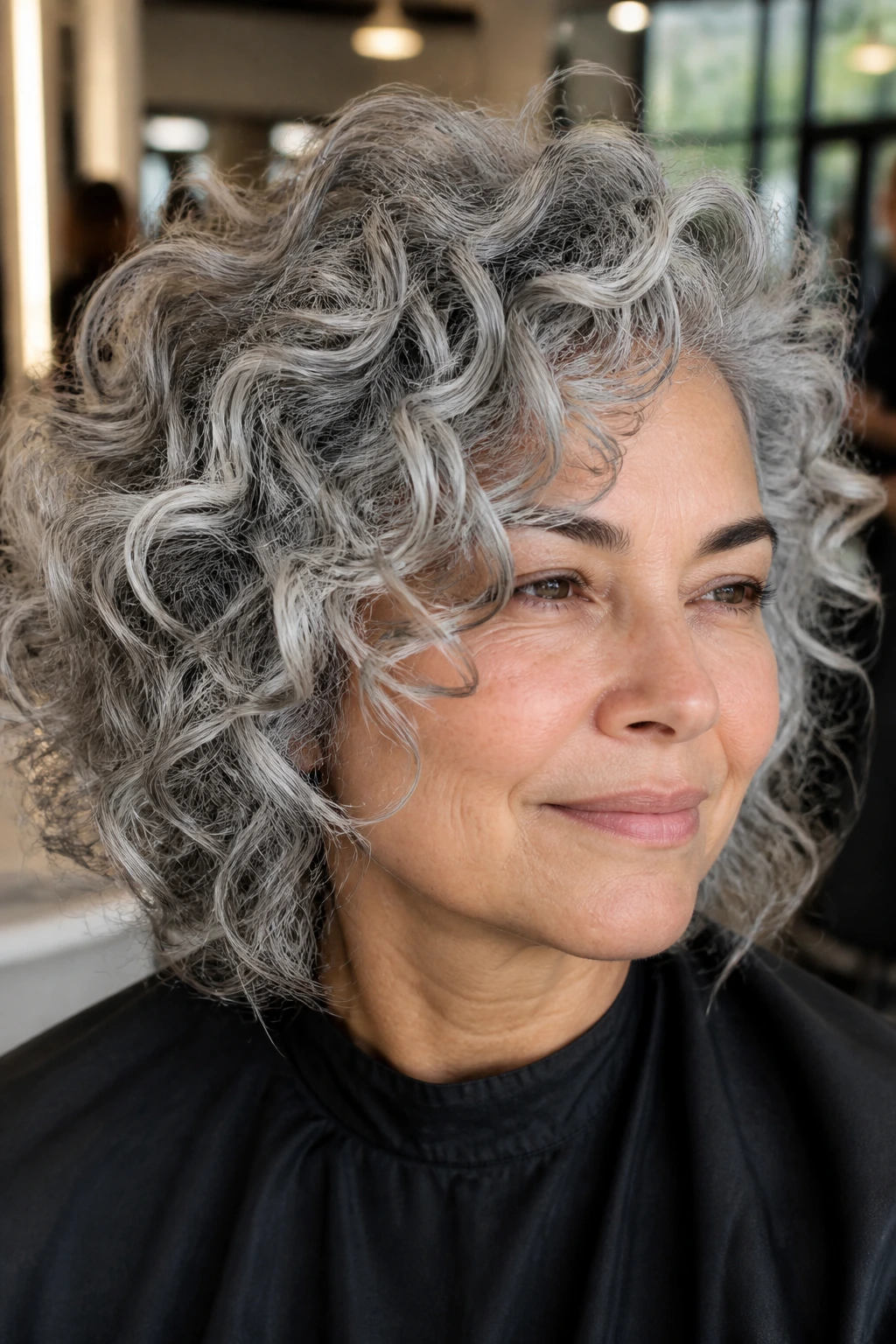
Silver veil babylights are tiny. Tiny enough to disappear if the light is bad, tiny enough to make the whole head look expensive if the placement is good.
The point is softness. Instead of obvious silver streaks, you get a haze of brightness woven through the curls. On loose spirals, that can make the entire style look more dimensional without turning the hair high-contrast.
This is a smart first step if you want gray but are nervous about a full commitment. It is also a nice correction if your previous highlights have gone too chunky. Ask for microfoils or hand-painted whisper-thin pieces so the pattern stays airy.
23. Storm Cloud Balayage
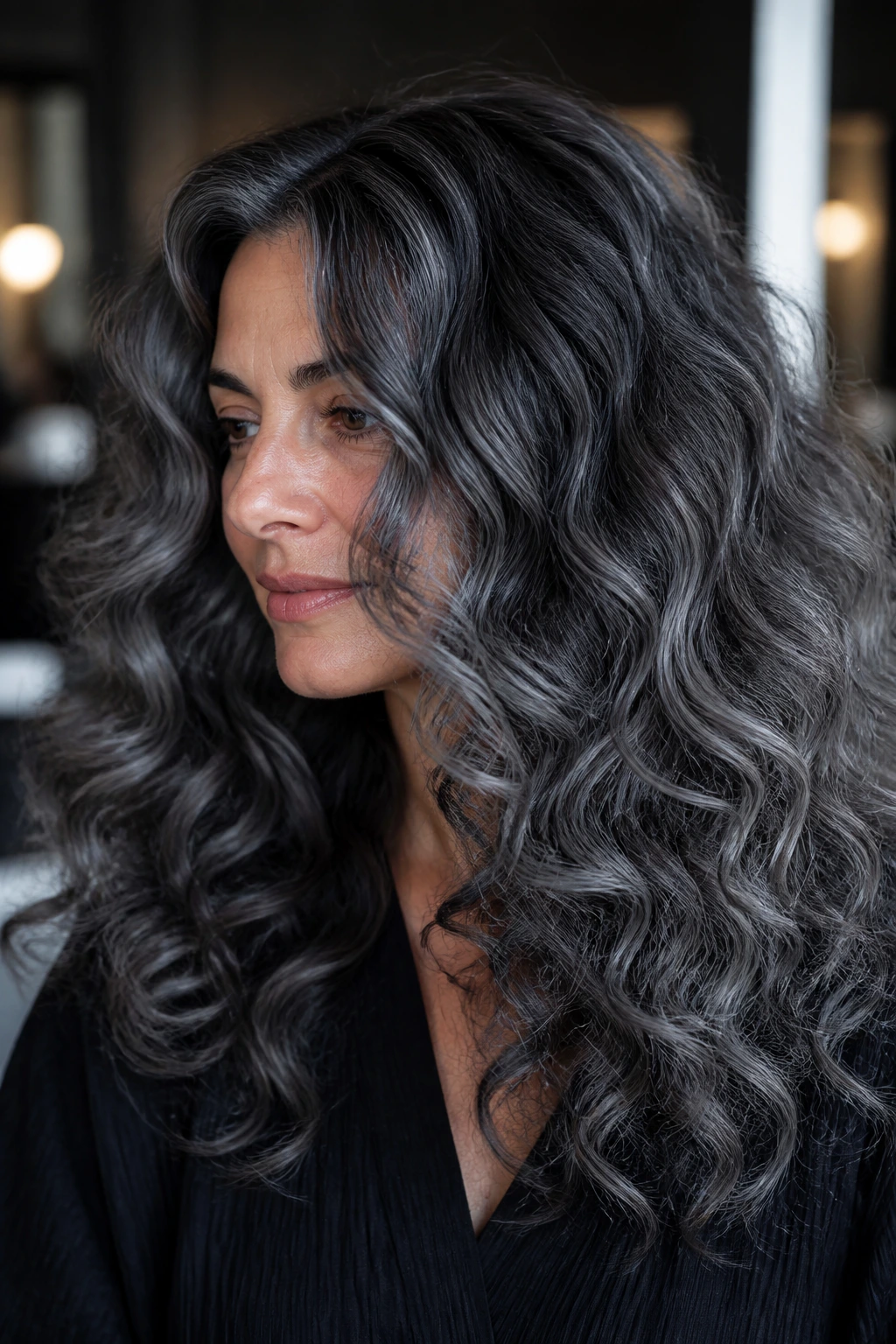
Storm cloud balayage is for darker curls that want mood, not sparkle. The shade moves between slate, charcoal, and smoky gray, and the effect is deeper than silver but still clearly gray.
Because the tones are richer, this look can be easier to wear on thick or coarse curls. The color does not vanish into the texture the way very pale silver sometimes does. It sits inside the curl and gives the whole head a darker, more dramatic feel.
A slightly deeper root shadow makes this even better. You want the gray to feel like weather rolling in, not bleach sitting on top of the hair.
24. White Smoke Full Glow
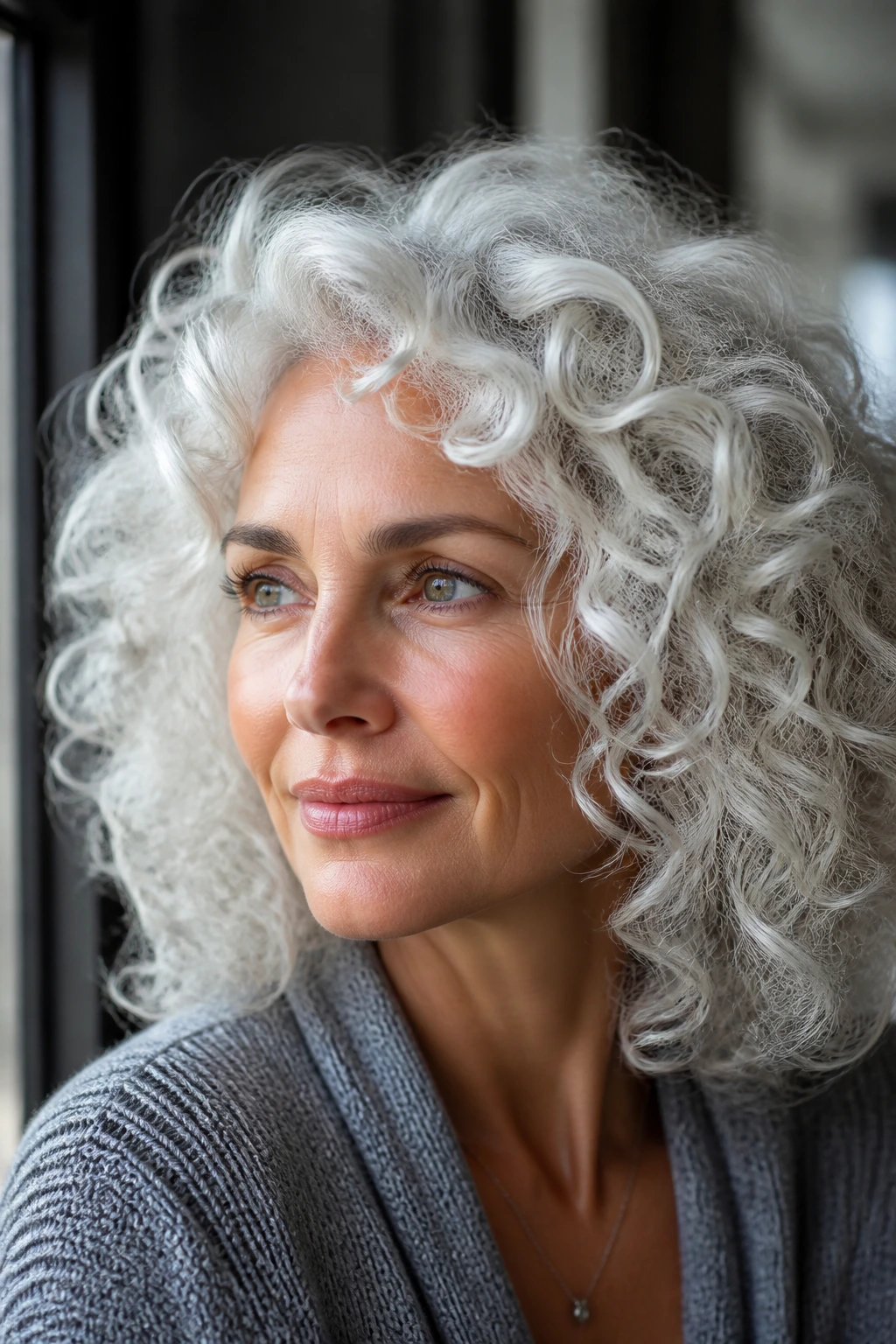
White smoke full glow is the brightest end of the spectrum. It is not icy in a sharp, glassy way; it is softer, like pale smoke against a dark window.
Unlike platinum, white smoke keeps a little veil of depth so the curls do not disappear into one flat brightness. That is especially helpful if your haircut has layers. Every bend still gets its own outline.
This shade asks for discipline. Heat protection, low-heat diffusing, and gentle shampoo matter more here than on darker grays, because any roughness shows fast. But when the hair is healthy enough to carry it, the effect is striking without feeling hard.
25. Espresso With Gray Frame
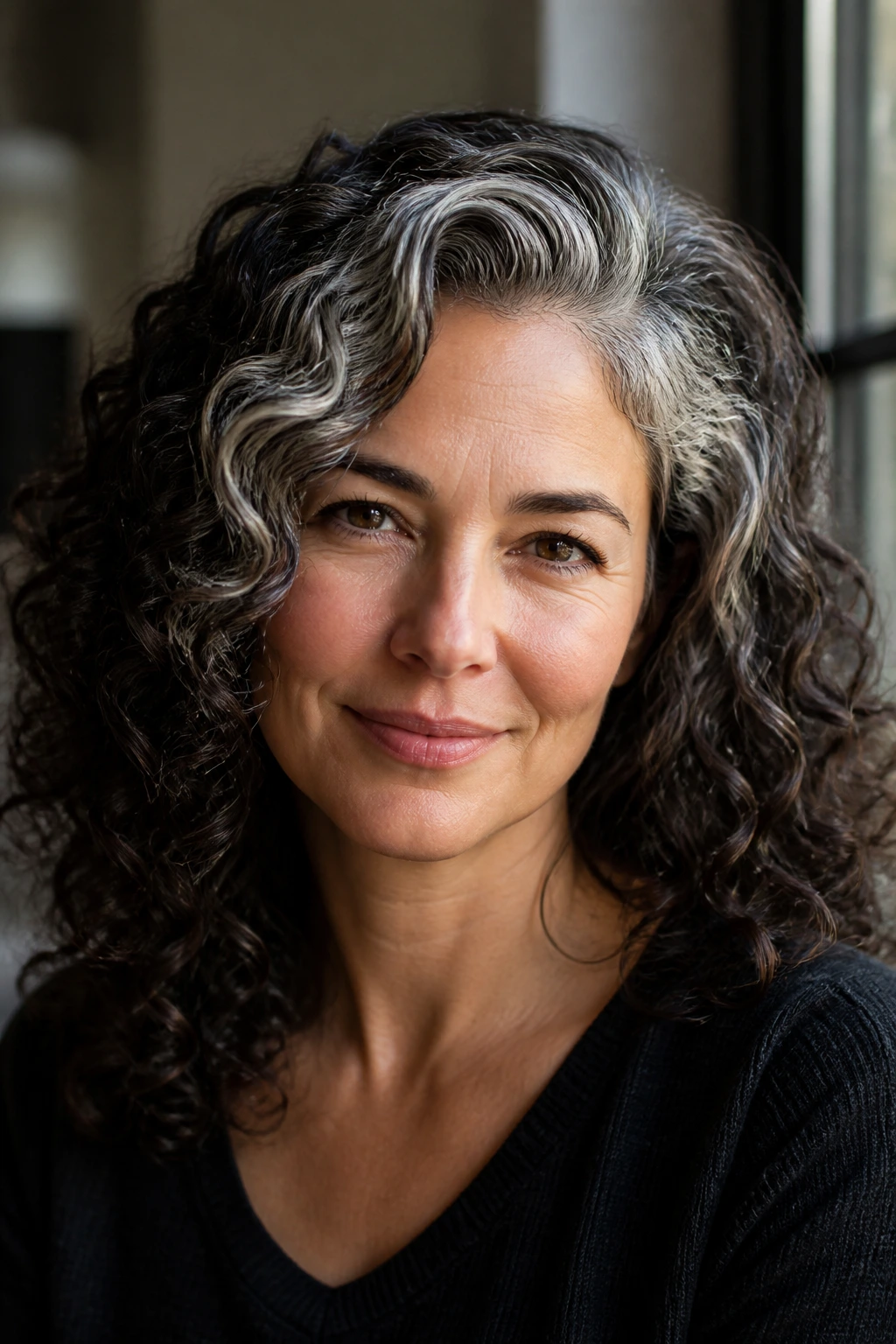
A deep espresso base with a gray frame is the contrast lover’s answer to silver curls. The dark body of the hair keeps the look grounded, while the gray around the front and crown gives you the bright edge.
I like this version because it avoids the trap of turning the entire head into a single bright mass. Curls need somewhere to hide in shadow. Espresso gives them that, and the gray frame keeps the face from disappearing.
Quick Notes
- Strong contrast, softer upkeep than allover silver
- Best when the front pieces are a shade or two lighter than the crown
- Works well on thick curls that need shape
- Looks especially good with a side part or swept-back styling
Why Curls Make Gray Look Layered Instead of Flat
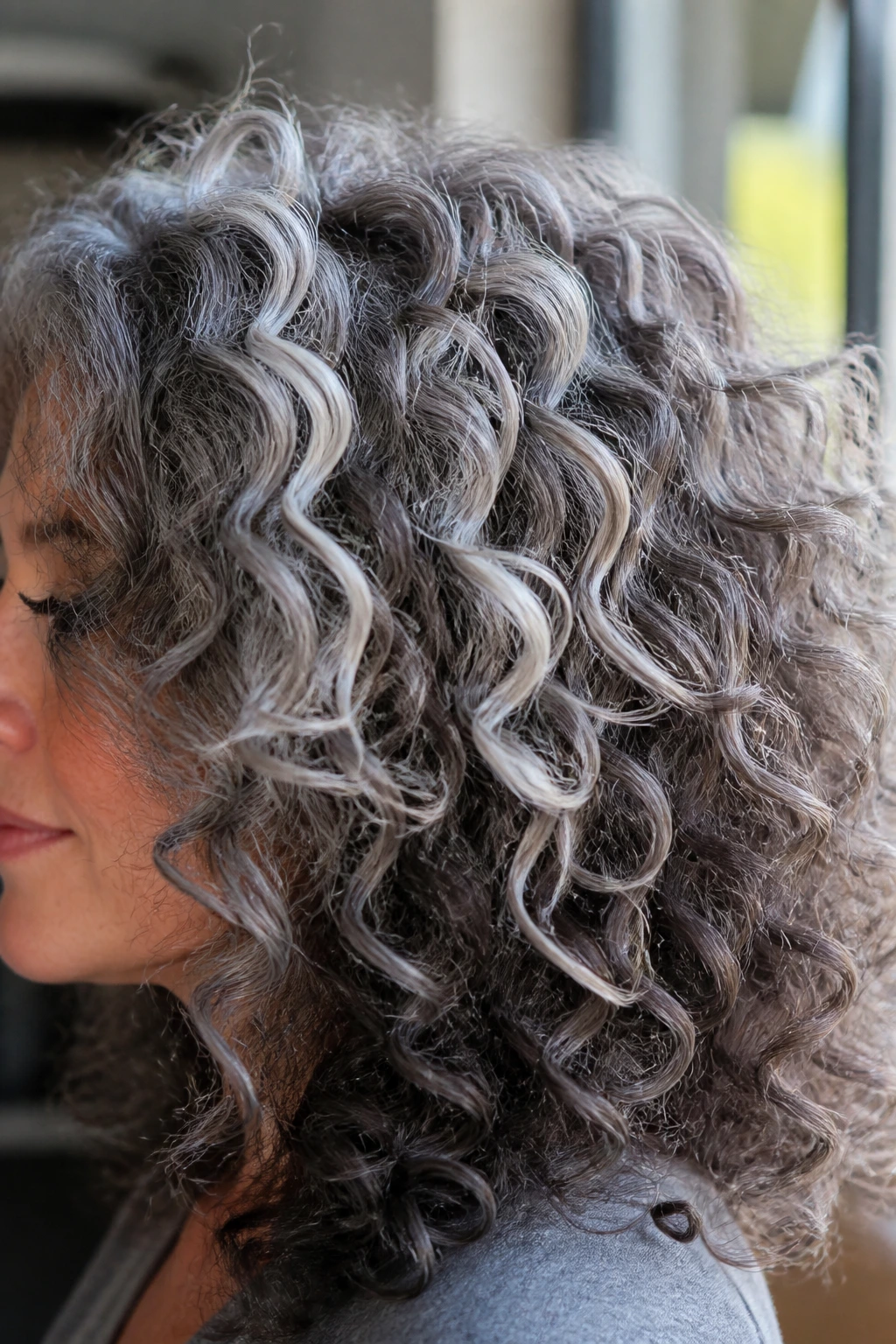
Curls change gray in a way straight hair cannot. A straight panel reflects light all at once, which means the color has to do all the work. Curls break that same color into pieces. One bend catches the silver, the next one hides it, and the next one turns it smoky again.
That is why placement matters so much. A few silver ribbons sitting on the outside of a curl pattern can look fuller than an allover application that ignores the haircut. If the layers are heavy, the gray can vanish in the bulk. If the layers are too thin, the color can look stripped out. The sweet spot sits in the middle.
Porosity also shows up faster on curly hair. Ends that have been lightened before can grab toner in a hurry, sometimes faster than the roots. That is why so many good gray looks keep the root a touch deeper. The shadow buys the hair some breathing room and keeps the finish from turning chalky.
What to Bring to a Gray Color Appointment
A good gray result usually starts before the cape goes on. Bring two or three reference photos shot in daylight, not filtered close-ups from a phone screen. Gray changes in indoor light, and you want to see what the shade does outside near a window.
- Reference photos: Bring curls that match your texture, not just your color goal. A shade on straight hair can behave differently once it bends.
- Hair history: Note previous box dye, henna, bleach, or keratin treatments. Gray work is far easier when the colorist knows what they’re dealing with.
- Maintenance limit: Be honest about how often you want to tone, gloss, or touch up roots. A full platinum silver is a bad match for someone who wants three quiet months between visits.
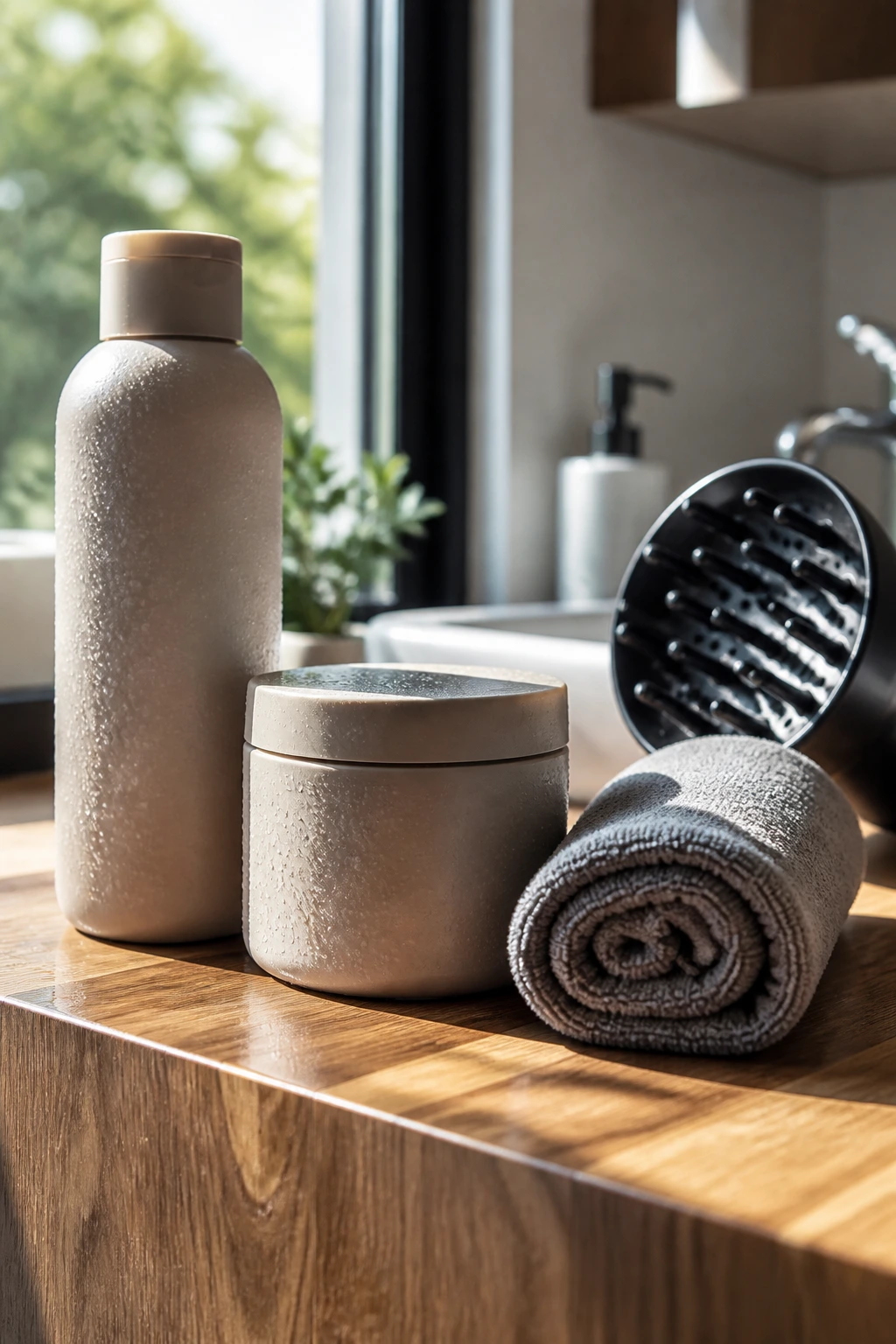
- Tool kit at home: Sulfate-free shampoo, a color-safe mask, a diffuser, and a microfiber towel all help the finish hold together.
- Photo of your hair in natural light: This matters more than people think. The same gray can read as cool, flat, or greenish depending on your baseline.
How to Pick the Right Silver, Smoke, or Pewter Shade
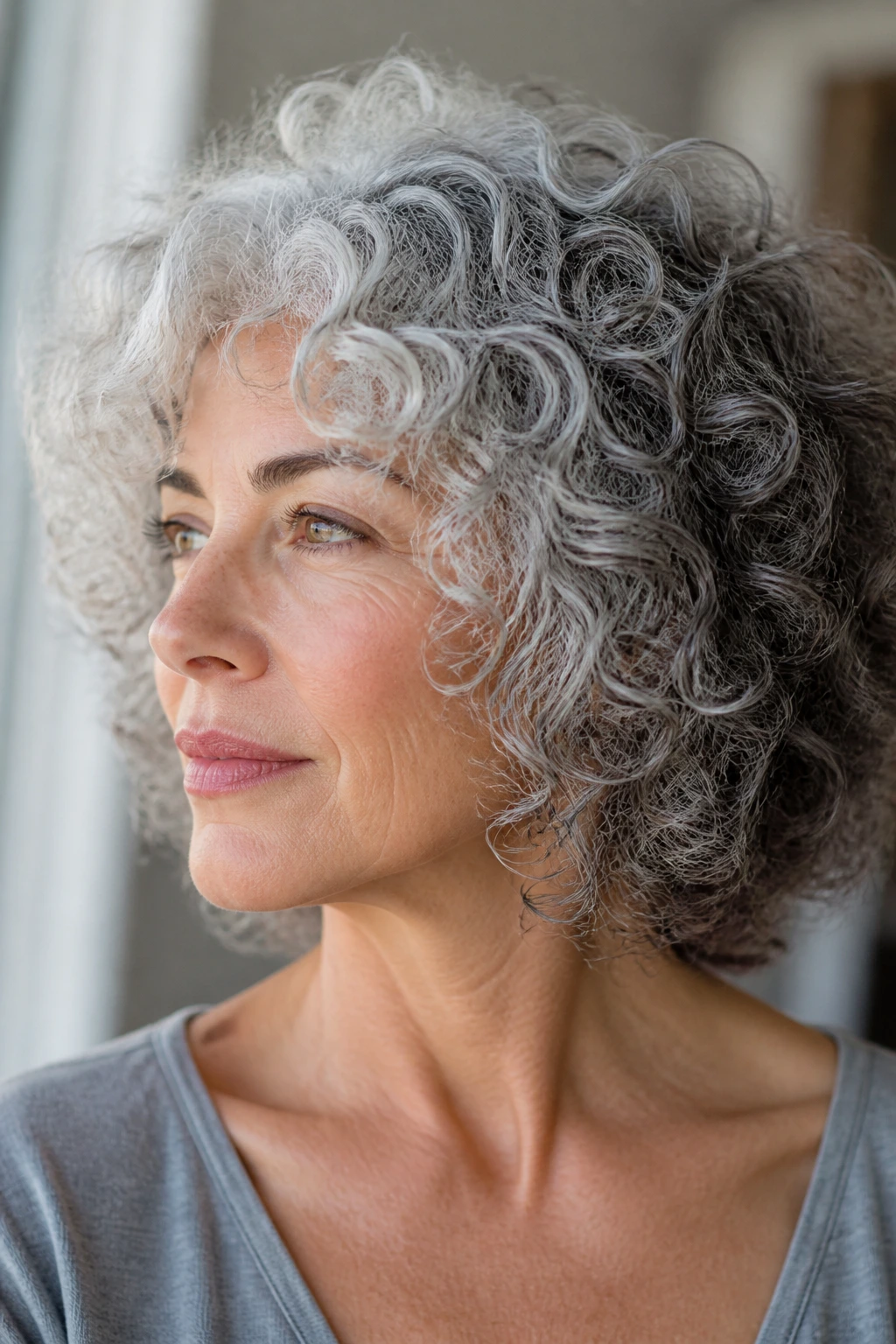
Cool silver is not the only gray worth wearing, and it is definitely not the only one that suits curls. If your skin leans cool, pearl, ice, and moonstone tones can look clean near the face. If your skin leans warm or olive, mushroom, champagne smoke, and pewter often sit better because they do not fight the undertone.
Match the Shade to the Base
Darker bases usually need more depth left behind in the root and underlayer. Lighter bases can carry platinum, white smoke, or orchid gray with less contrast. That is one of those boring-sounding rules that saves a lot of bad color.
Check It in Daylight
Always compare swatches near a window. In salon light, a gray can look flatter or brighter than it will in the real world. I would rather see a shade that looks slightly too soft in the chair than one that only works under fluorescent lights.
Think About Porosity
If your curls are porous, the most fragile pieces may pull more violet or khaki than the rest. A slightly warmer gray often ages better on that kind of hair than a pure icy tone.
How to Style Gray Curls So the Color Shows Up
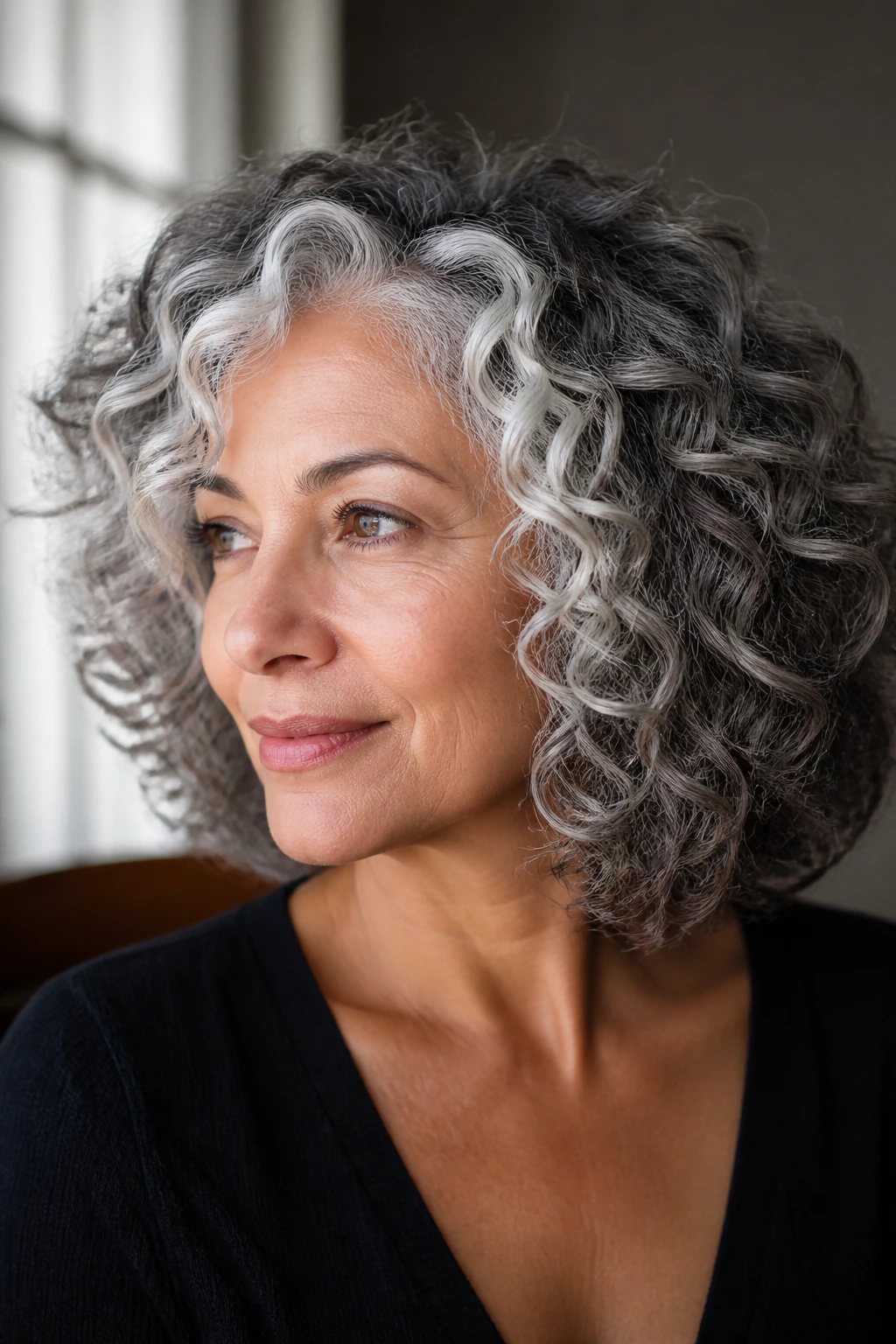
Gray on curly hair looks best when the shape stays open enough for the color to show. Heavy creams and oils can mute the shine, which is fine if the goal is softness, but not if you want the silver or pewter to read clearly.
Shape: A layered cut, a rounded bob, or a shag keeps the color moving. One-length curls can hide the placement, especially if the density is high.
Definition: Use enough gel or mousse to hold the curl clumps, then diffuse on low heat or air-dry until about 80 percent dry. If the hair is fully dry before you scrunch it, the pieces can frizz apart and the gray goes fuzzy.
Finish: Keep shine products light and targeted. A pea-sized amount of serum on the outer layer is usually enough. Too much on the mids and ends can make silver look greasy instead of reflective.
Day-to-Day: A side part or a soft off-center part often shows gray dimension better than a dead-center line. It sounds small. It is not.
Small Ways to Personalize the Shade
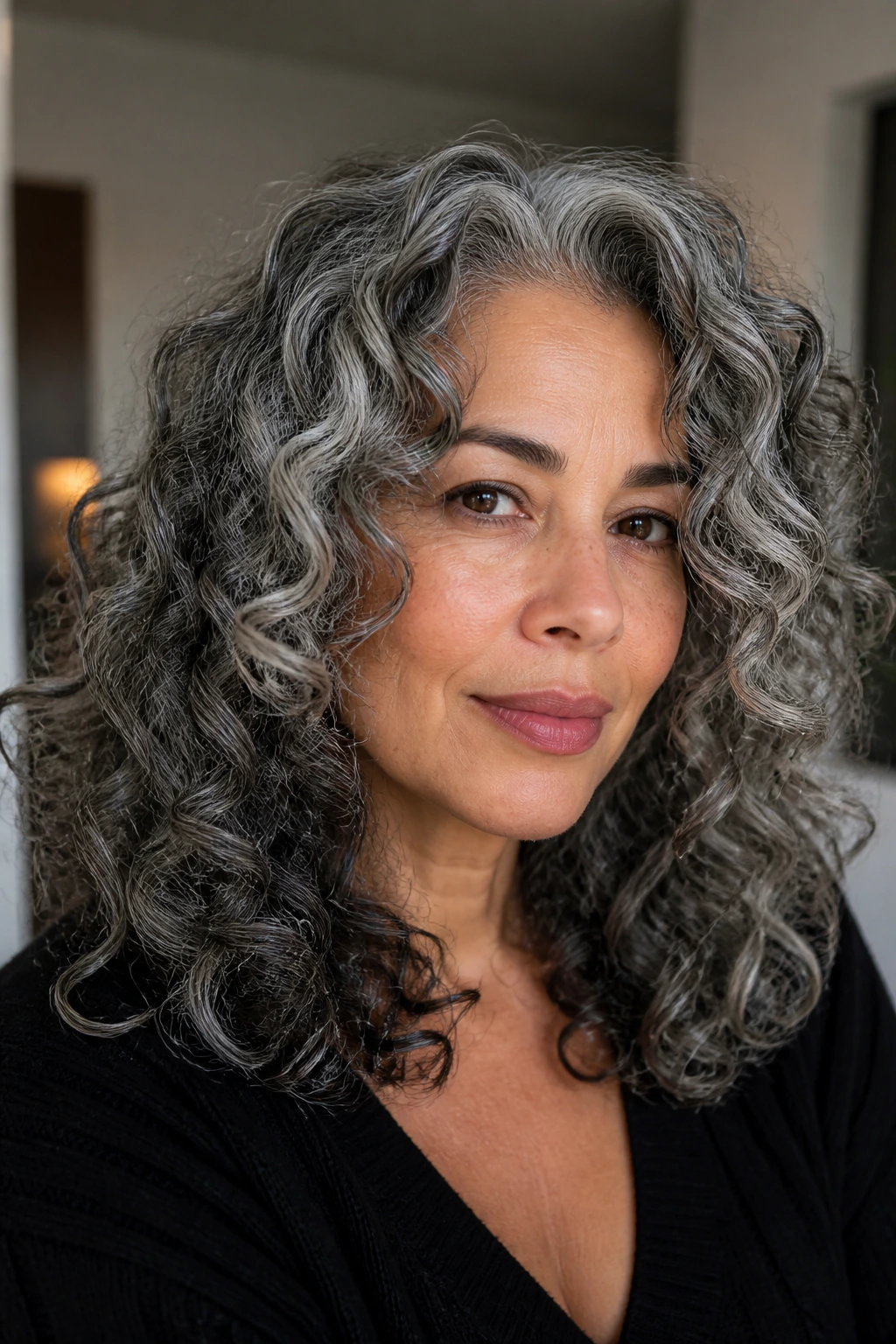
Glow Boost: A cool-toned gloss every few weeks can keep silver, pewter, or platinum from turning muddy. If your ends fade fast, ask for the gloss to be slightly lighter on the perimeter than at the root.
Customization: Want less upkeep? Keep the gray at the face frame, the crown, or the top layer only. Want more drama? Add graphite underlayers or brighter silver on the ends so the look changes when your hair moves.
Salon Script: Say you want dimension, not one flat block of gray. That single word tends to steer the appointment toward lowlights, root shadow, and better curl contrast.
Make-It-Yours: If you lean warm, try mushroom or champagne smoke. If you like cool makeup and dark brows, pearl, titanium, or orchid gray will usually feel more balanced. A little harmony between hair and face goes a long way.
Mistakes That Flatten Gray Curly Hair
-
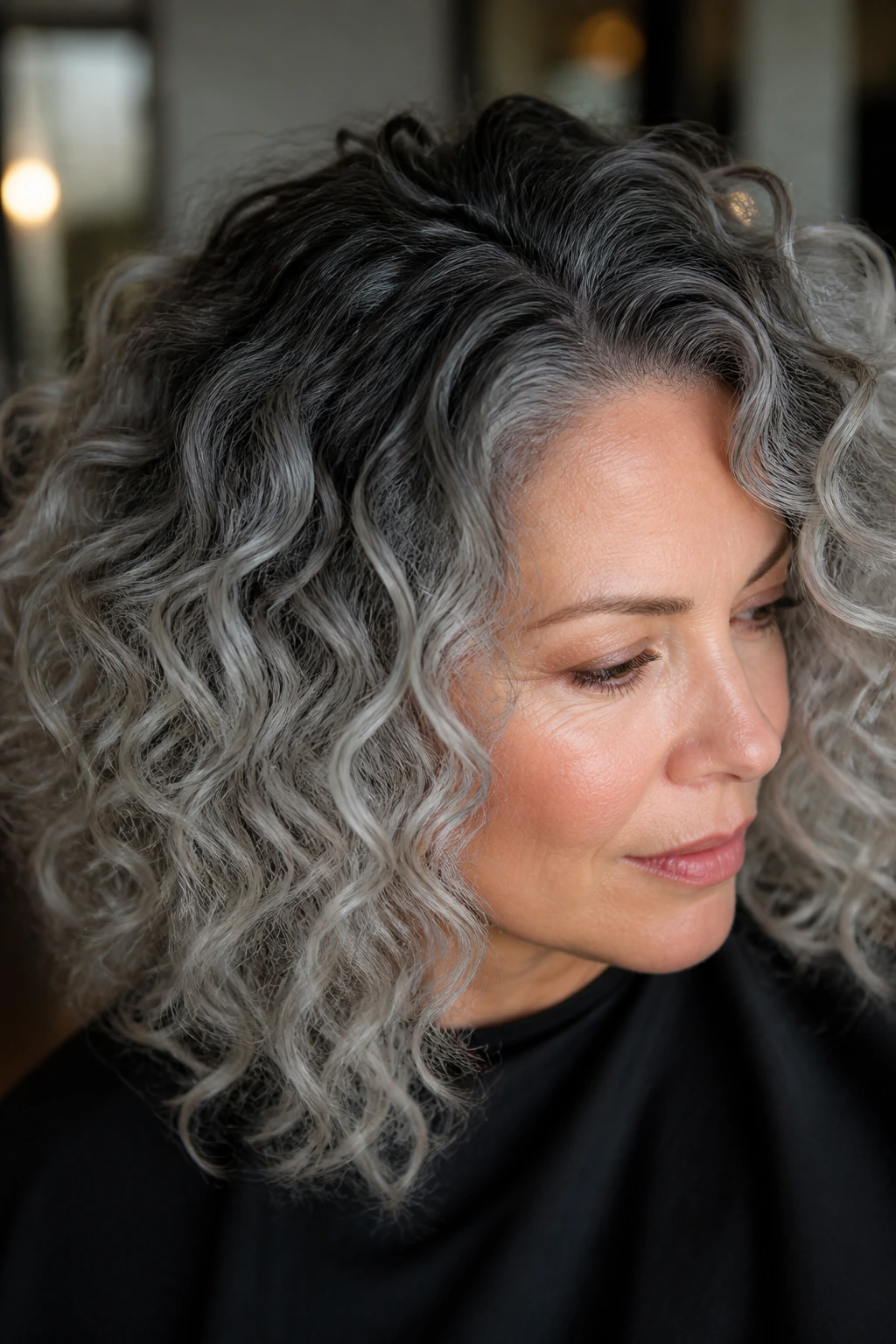
Going too light all over: A full silver head can look stunning on healthy curls, but on fragile hair it can turn dry and flat fast. Leave some depth near the root or underneath so the color has structure.
-
Ignoring porosity: Porous ends grab toner first, which can leave the tips purple, khaki, or smoky in a bad way. The fix is slower processing, strand tests, and a toner that matches the hair’s health, not just the goal photo.
-
Using purple shampoo like regular shampoo: Once or twice a week is enough for most gray curls. More than that can leave the hair dull and the curl rough.
-
Skipping the cut: Gray shade without shape can look like a color job floating on top of a heavy head of hair. Layers, shags, and rounded bobs help the dimension show.
-
Forgetting the grow-out plan: Sharp silver around the roots can become obvious fast on dark bases. A soft shadow root or blended balayage keeps the line from shouting at you every three weeks.
Ways to Adapt Gray Hair for Different Curl Patterns
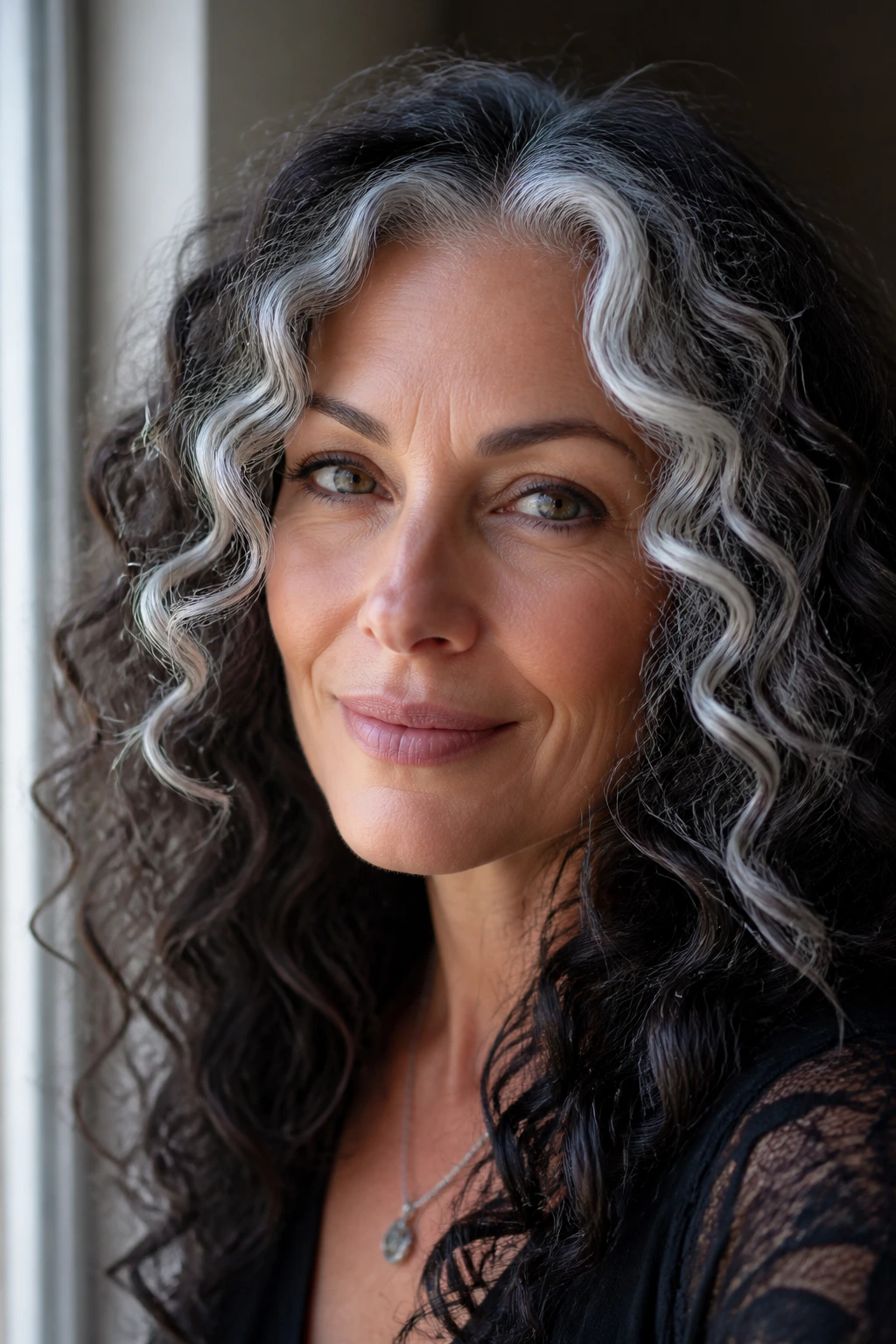
Low-Commitment Peekaboo Gray: If you are not ready for a visible allover change, keep the silver under the top layer and around the nape. It peeks through when the hair is clipped up or diffused with lift. That makes it a good starter option.
Warm Pewter Softening: For warm or olive skin, swap bright silver for mushroom, pewter, or champagne smoke. The color still reads gray, but it sits more naturally against the face.
High-Contrast Silver Fox: Keep the base deep espresso or charcoal and add brighter silver around the hairline and crown. This is the most graphic version on the list, and it looks strongest on dense curls.
Lavender-Fog Finish: If your hair lifts too yellow, add the faintest violet note instead of pushing straight to icy white. The result is softer, and it can blur a little over time without looking ugly.
First-Gray Blend: If you are blending natural grays instead of fully coloring, go for micro-lights and lowlights rather than heavy bleach. The goal is to refine the pattern, not erase it.
Keeping Gray Curls Bright Between Salon Visits
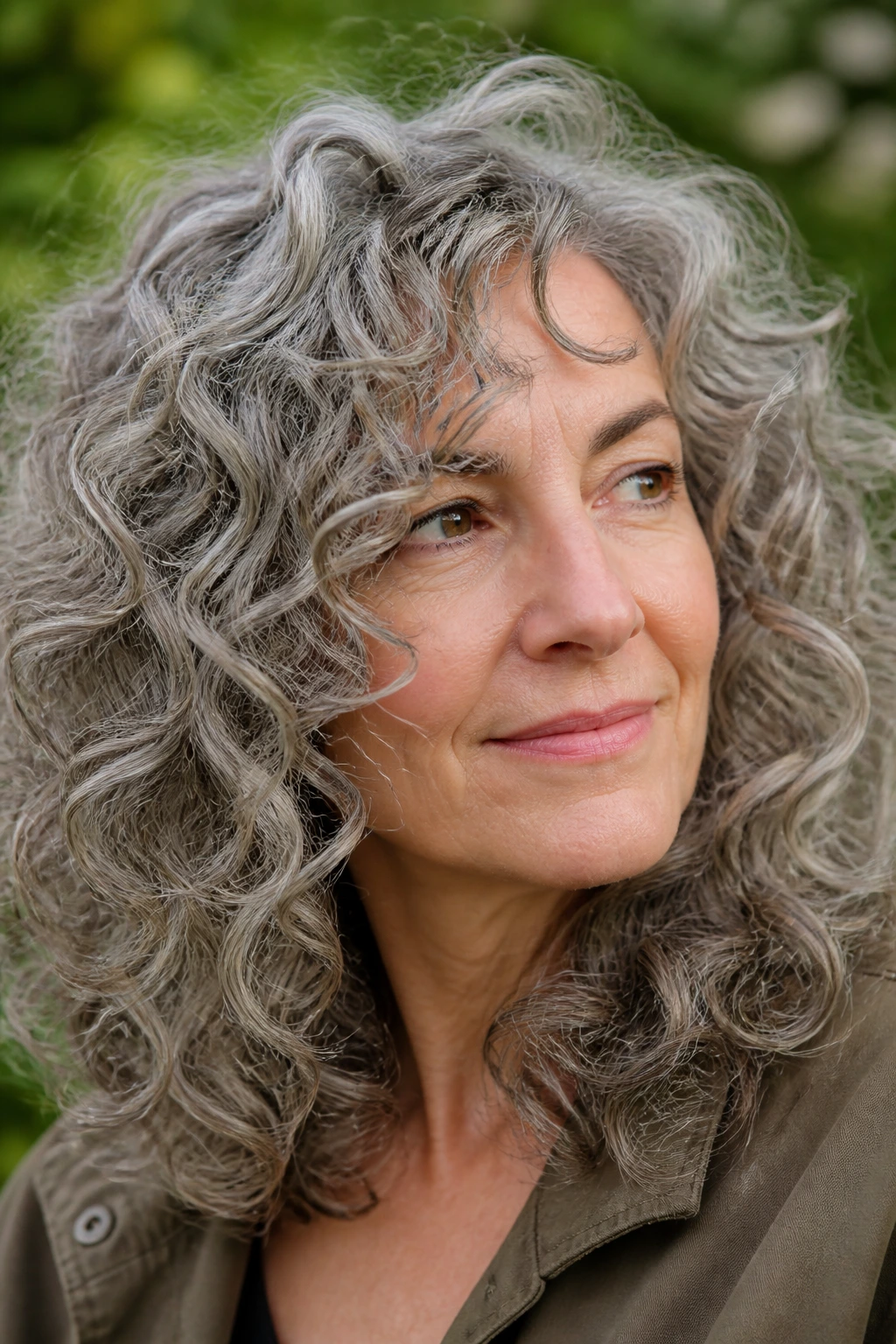
Gray curls ask for a little more care than dark natural hair, mostly because tone shows fade faster than people expect. A good starting rhythm is a gloss or toner refresh every 4 to 6 weeks for bright silver looks, and every 6 to 8 weeks for smoky or pewter shades. If your gray is more blended and less high-contrast, you can often stretch longer.
Wash less often if you can. Two or three times a week is plenty for most curly heads, and each wash should be followed by a conditioner or mask that leaves the hair soft but not coated. A heavy butter can mute silver fast, so use it sparingly on the ends only.
Purple shampoo is useful, but it is not a religion. Once a week for 3 to 5 minutes is enough for most people. If the hair starts looking lavender or dull, back off immediately and switch to a plain moisturizing cleanser for a week or two.
Heat is another quiet problem. Diffuse on low to medium heat, and use a protectant every time you blow-dry or refresh with a hot tool. Gray shows scorch marks and dryness faster than rich brunette does.
Hard water can also push gray toward yellow or dull green. If your shower water is mineral-heavy, a chelating shampoo once a month or a shower filter can make a visible difference. Small fix. Big payoff.
Sleep matters too. A satin pillowcase or bonnet keeps the curl clumps from fraying overnight, and frayed curls make silver look dusty by morning.
Gray Curl Questions People Ask
Will gray hair color make curly hair look thinner?
It can, if the shade is one flat tone from root to tip. Dimension is what keeps curls looking full, so lowlights, root shadow, or a few darker pieces usually solve the problem.
Can dark curly hair go gray without getting fried?
Usually, yes, but the route matters. Dark hair often needs staged lightening, bond support, and a color plan that leaves some depth behind so the curl pattern stays intact.
How often do silver curls need toning?
Bright silver may need refreshing every 4 to 6 weeks, while smoky gray can go longer. If the ends start to look lilac or flat, the toner is probably sitting too often or too long.
What if gray turns yellow or khaki?
That is usually toner fade, heat, or mineral buildup. Try a clarifying wash or a chelating shampoo first, then retone with a violet or beige-gray gloss instead of piling on more purple shampoo.
Is one gray shade easier to maintain than the others?
Yes. Salt-and-pepper blends, mushroom gray, and smoky root melts usually ask for less babysitting than platinum or white smoke. The more lifted the hair is, the more attention it needs.
Do tight coils show gray the same way loose curls do?
No, and that’s the whole point of choosing placement carefully. Tight coils often need bigger, more visible panels or brighter surface pieces so the color doesn’t disappear inside the texture.
Can I blend natural grays with dyed gray?
That is one of the smartest ways to wear gray on curls. Lowlights, a soft root shadow, and a few bright silver pieces can make the natural gray look planned instead of accidental.
Should I use purple shampoo every wash?
Usually not. Too much purple shampoo can leave the hair dull and thirsty. Once a week is a more reasonable starting point, especially on porous curls.
The Shade That Lets Curls Do the Talking
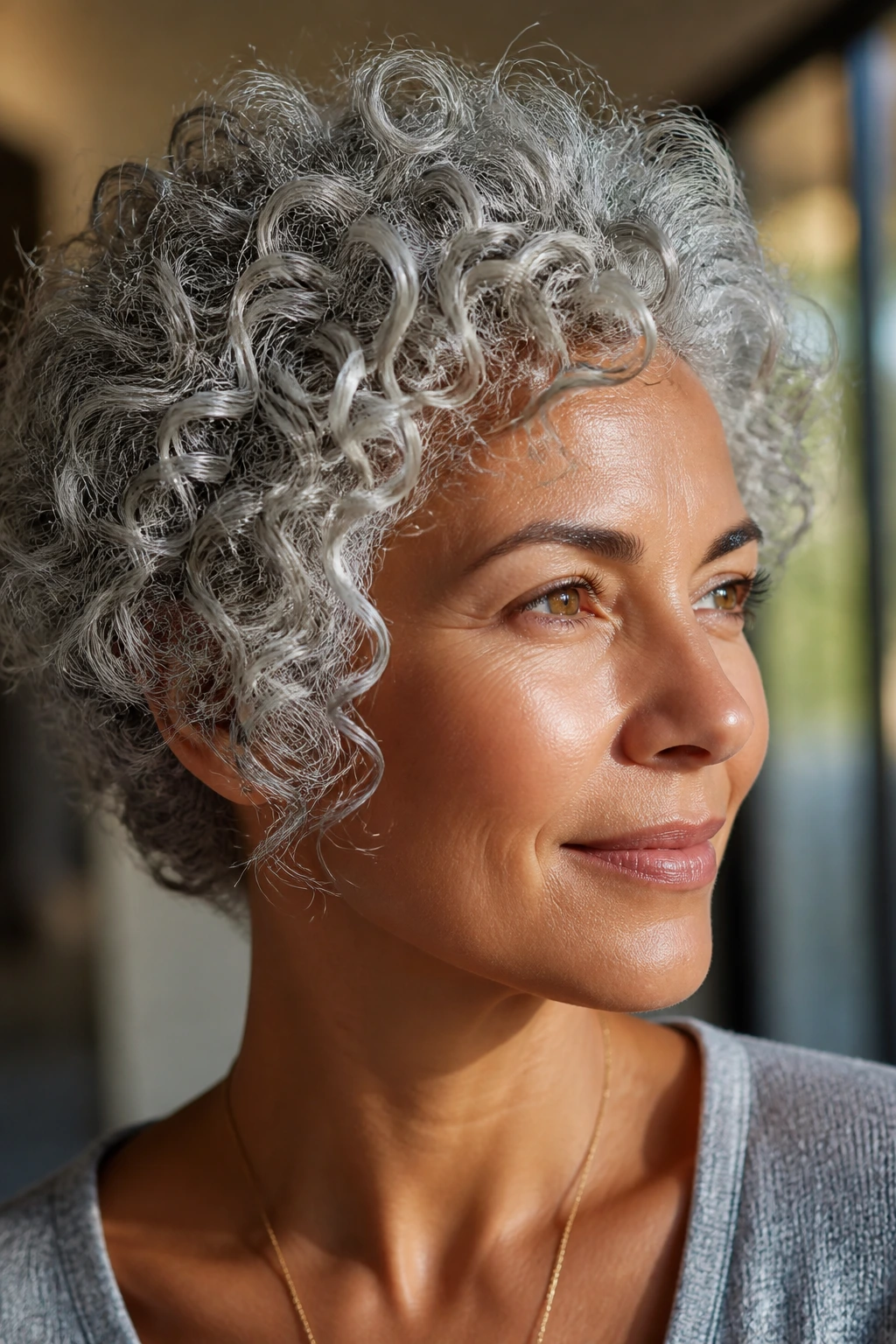
Gray hair on curls works when the color follows the hair’s shape instead of fighting it. A silver ribbon that catches the outer bend of a ringlet will always look richer than a flat sheet of color forced across every inch of the head.
If you are torn between looks, start with the one that keeps the most depth near the root. That single decision makes the grow-out easier, the curl pattern clearer, and the whole style a lot more wearable while it settles in.
