



Gray hair ideas for women over 70 work best when they give the hair a shape you can read from across the room. Silver strands catch light fast, but they also show every blunt edge, every flat crown, every bang cut too short and left to fend for itself. The color is not the problem. The silhouette usually is.
That’s why some gray styles look fresh and deliberate while others look like they were left to grow out and hope for the best. A clean line at the jaw, a little lift at the crown, soft movement around the temples — those details do more for gray hair than chasing some impossible “youthful” finish ever could. I care more about that honesty than polish for polish’s sake.
Some of these looks are short and crisp. Some keep more length and lean on layers, bends, and neat twists. All of them do one useful thing: they make silver hair look like it belongs exactly where it is.
Why Gray Hair Looks Best With Shape, Not Weight
Gray hair often feels different from pigmented hair. It can be drier, a little wirier, and more prone to looking bulky in one place and limp in another. That means the old habit of letting it grow long and hoping for the best usually backfires. The hair gets the length, but it loses the line.
Lift beats length. A bit of height at the crown does more for the face than an extra four inches hanging below the shoulders.
Soft edges matter. Gray hair shows a blunt perimeter fast, so feathered ends or a gentle bend around the jaw usually look kinder.
The neckline changes everything. If the hair covers the neck completely, the whole shape can feel heavy. Opening that area up gives the style room to breathe.
Glasses need cooperation. Frames and fringe can fight each other if the cut is too dense at the temples.
Shine shows more on silver. A clean outline reflects light better than a shapeless mass of hair, even when the cut itself is simple.
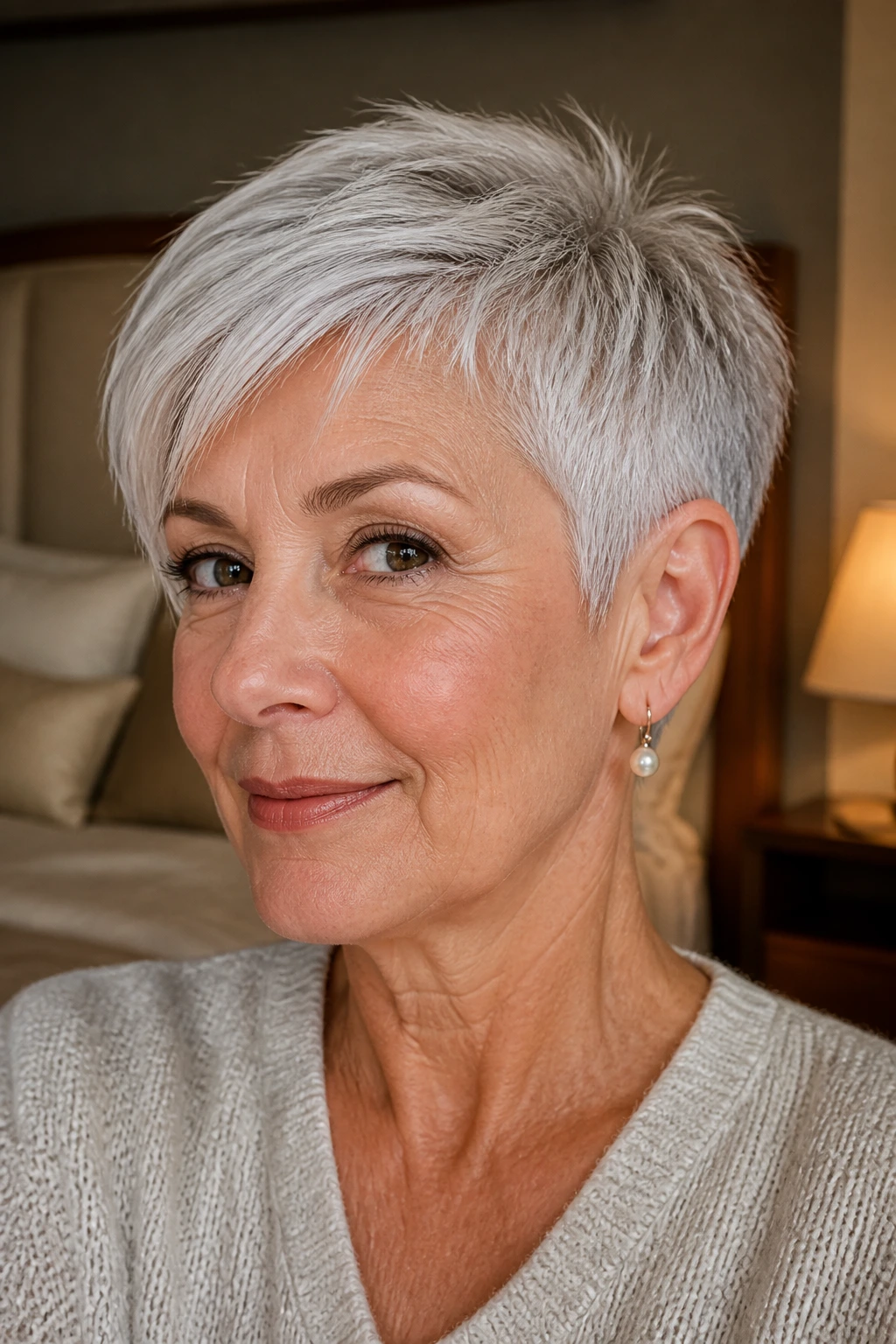
1. Feathered Pixie with Crown Lift
A feathered pixie is the cut that rescues hair that has started to sit a little too close to the scalp. Keep the sides neat, the nape clean, and the top airy, and the whole head reads lighter. Gray hair loves this because the texture becomes part of the style instead of something you have to wrestle down.
Why it works on silver hair
- The crown stays longer, which gives fine gray hair the lift it needs.
- Feathered sides soften the temple area without building a helmet shape.
- A short nape keeps the back tidy and makes earrings stand out.
A pea-sized bit of mousse at the roots and a quick rough-dry with your fingers is usually enough. If you want more polish, touch the top with a small round brush for 30 seconds and stop before it gets stiff.
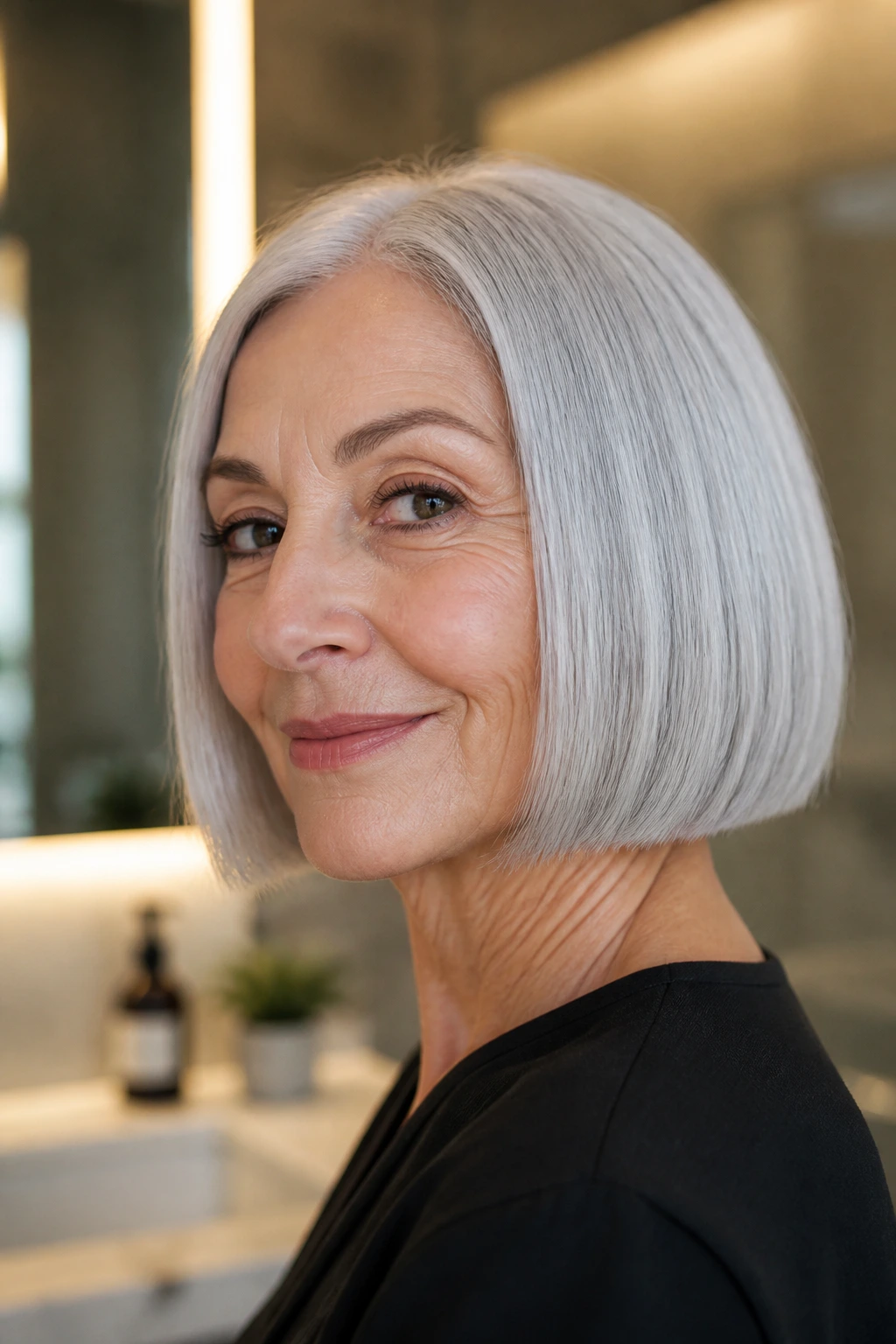
2. Chin-Length Silver Bob with Soft Ends
A chin-length bob is one of the cleanest shapes for gray hair after 70. It lands right where the jaw wants a frame, and that makes the face look organized without looking severe. Soft ends help a lot here. A little point-cutting or texturizing keeps the bob from turning blocky, especially if the hair is fine or naturally straight.
Tuck one side behind the ear and let the other side fall forward. That small asymmetry takes the starch out of the look. I also like this cut with a side part because it gives the crown a little extra lift without asking for a full blowout.
3. Layered Shag with Wispy Bangs
Can gray hair handle a shag after 70? Yes, if the layers stay soft and the bangs stay wispy. A shag is useful when the hair has wave or bend because it moves the bulk upward instead of letting it puff out at the sides. That makes the whole shape feel more alive.
How to style it
- Work a light mousse through damp hair from roots to ends.
- Diffuse until the roots are about 80% dry, then stop touching it.
- Break up the fringe with your fingertips instead of a brush.
This is a good cut for someone who wants texture without fuss. Gray strands can be stubborn, and a shag gives them a place to land.
4. Tapered Crop with Side-Swept Fringe
If the back of the head tends to widen and the temples thin out, a tapered crop fixes both problems at once. The nape is kept close, the top stays longer, and the fringe sweeps across the forehead instead of cutting it in half. That sweep gives the eye a path, which is why the style looks soft even though the structure is sharp.
- Ask for a short, clean nape.
- Keep the top long enough to bend with fingers.
- Avoid a heavy straight fringe if your hairline is sparse.
A dab of styling cream is enough. Too much product turns this into a sticky mess, and the whole point is to keep it airy.
5. Collarbone Lob with Face-Framing Pieces
Longer hair can still work after 70, but it needs boundaries. A collarbone lob gives length without dragging everything down, and the face-framing pieces keep the front from reading like one solid curtain. The cut looks especially good on silver hair that has a little wave, because the bend breaks up the line.
I like this one when someone wants to keep enough length for a low ponytail, a half-up twist, or a soft wave on the ends. Ask the stylist to keep the perimeter blunt enough to feel full, then add internal layering only where the hair needs movement. That balance matters.
6. Rounded Bob for Fine Gray Hair
A rounded bob is one of my favorite fixes for fine gray hair that has gone flat at the sides. The cut curves inward just enough to create the impression of fullness, especially when the ends are tucked slightly under with a round brush. It feels neat, not stiff.
The trick is not to over-thin it. Fine hair can lose too much body if the layers are cut too aggressively, and then the bob starts hanging in little wisps. A clean outline with a soft round finish gives you more volume than a heavily textured cut ever will.
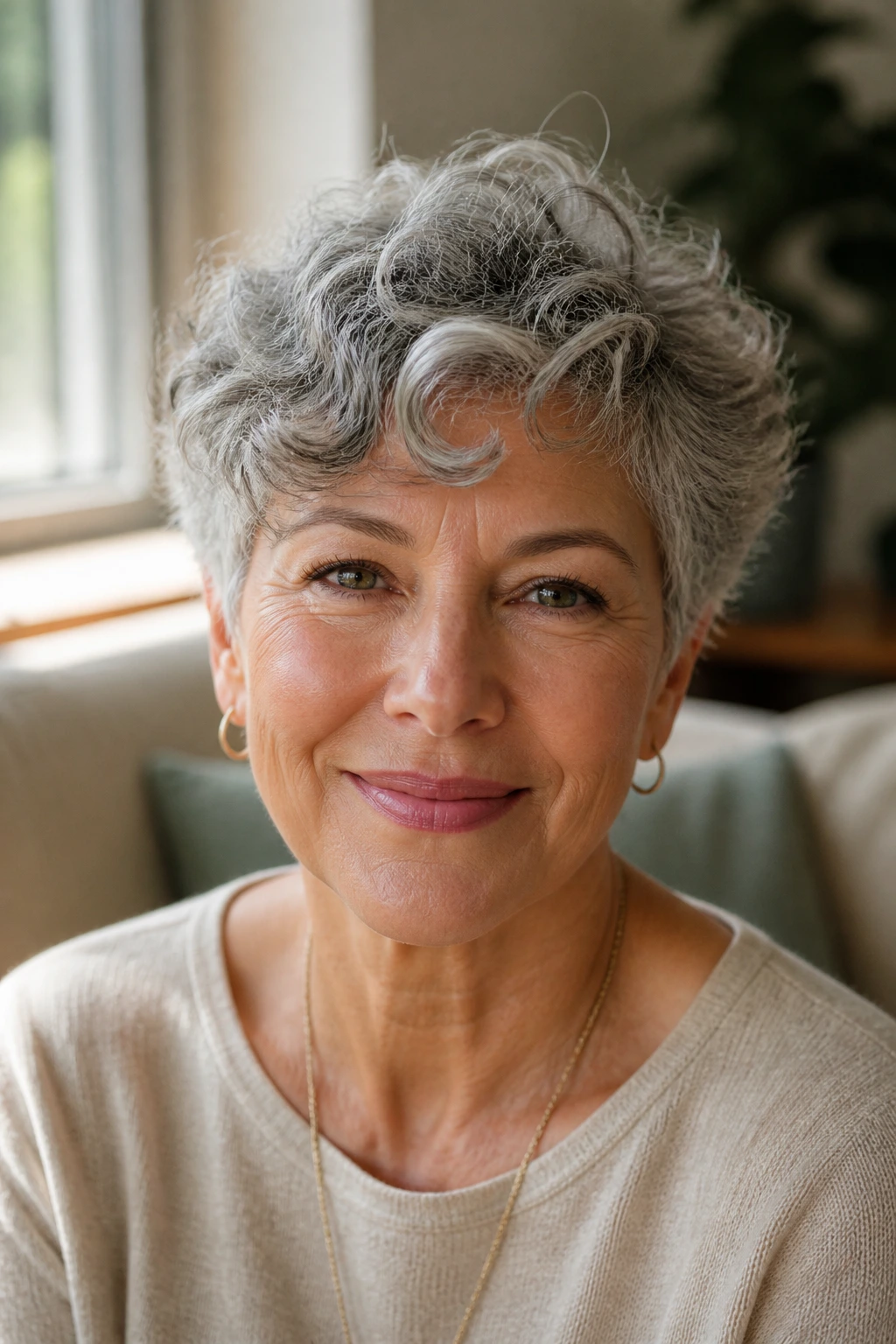
7. Soft Curly Crop with Moisture First
What if the hair has curls? Then shape should come after moisture, not before. A soft curly crop lets the texture do what it already wants to do, which is spring and bend and lift. Gray curls often need a little more hydration than dark curls, so the product choice matters as much as the cut.
Styling notes for curls
- Use a leave-in conditioner on soaking-wet hair.
- Scrunch in a light gel or curl cream.
- Diffuse on low heat, or air-dry without touching it.
The goal is not a perfect ringlet. It’s a controlled halo of curl with enough definition to keep the shape from puffing out at the sides.
8. Sleek Blunt Bob for Dense Silver Hair
Dense gray hair can carry a blunt bob better than almost any other texture. When there’s enough hair to support the line, that straight edge looks clean and intentional. It also makes the silver read brighter because the perimeter is so clear.
This cut works best when the stylist removes bulk from inside the shape instead of chewing up the ends. You want the bob to sit, not balloon. A quick pass with a flat brush or a blow-dryer nozzle keeps the finish smooth, and a drop of serum on the ends helps the shine without making the roots greasy.
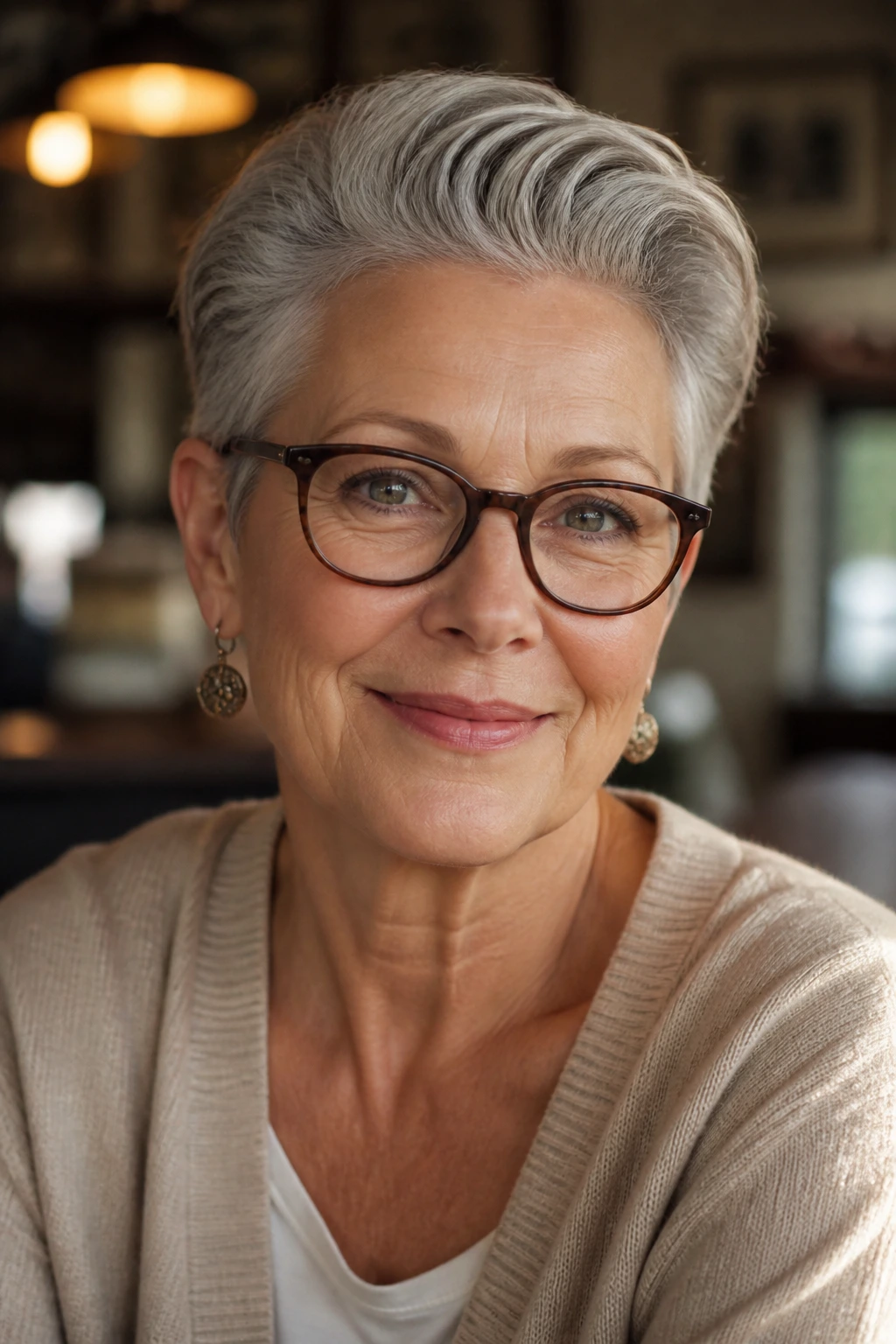
9. Brush-Back Pixie for Glasses Wearers
A brush-back pixie solves a problem that gets ignored too often: frames need room. When the top is brushed back and the sides are kept short around the ears, the glasses sit cleanly instead of colliding with the hair. The whole face opens up.
This is one of those styles that looks better than people expect. It’s neat, sure, but not harsh if the top has enough softness to move. Use a light pomade or styling cream and push the front up and back with your fingers. If the hair has a stubborn cowlick, a quick blow-dry in the opposite direction before styling usually settles it down.
10. Feathered Shoulder-Length Layers
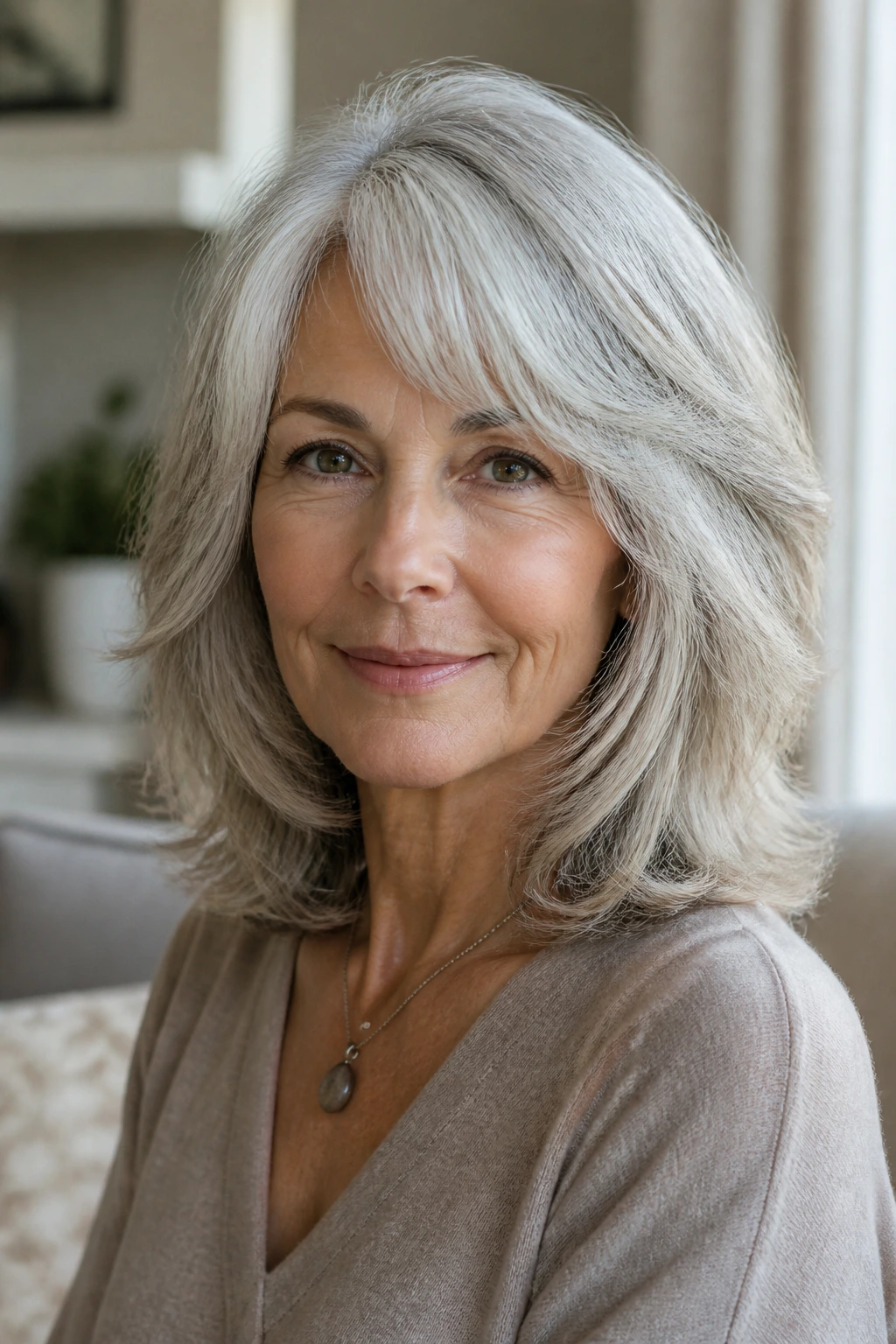
Shoulder-length gray hair needs movement or it starts to read as heavy. Feathered layers solve that by breaking up the mass without losing the length. The shape is especially useful if the hair is a little dry at the ends, because the feathering keeps the outline from looking blunt and tired.
I like this cut for women who want to pin it back, wear it loose, or tuck it behind one ear and go. It’s a forgiving length. Not too short, not too long, and easy to refresh with a round brush at the front only.
11. Short Wedge Cut with a Clean Nape
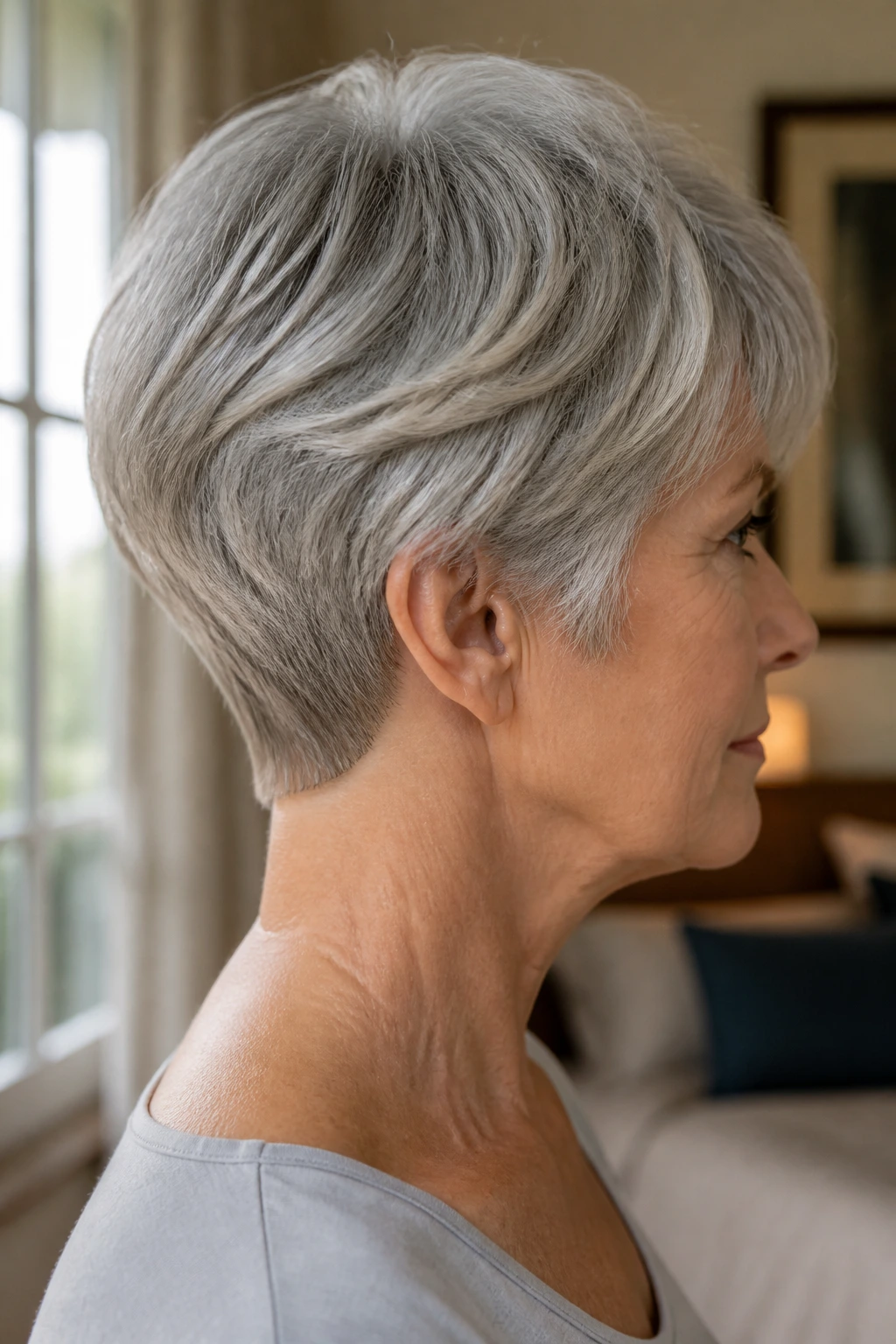
A wedge cut gives shape from the back forward, which is exactly why it flatters gray hair that has started to lose some top lift. The nape stays clean, the back curves neatly, and the crown gets a little built-in height. From the side, it looks crisp without feeling severe.
Why it holds up so well
- The stacked back keeps volume from collapsing.
- The clean nape makes the neckline look longer.
- The top can be styled with fingers, not a full salon blowout.
It is a practical choice when you want a cut that keeps its shape between visits. The wedge does the heavy lifting.
12. French Bob with a Light Fringe
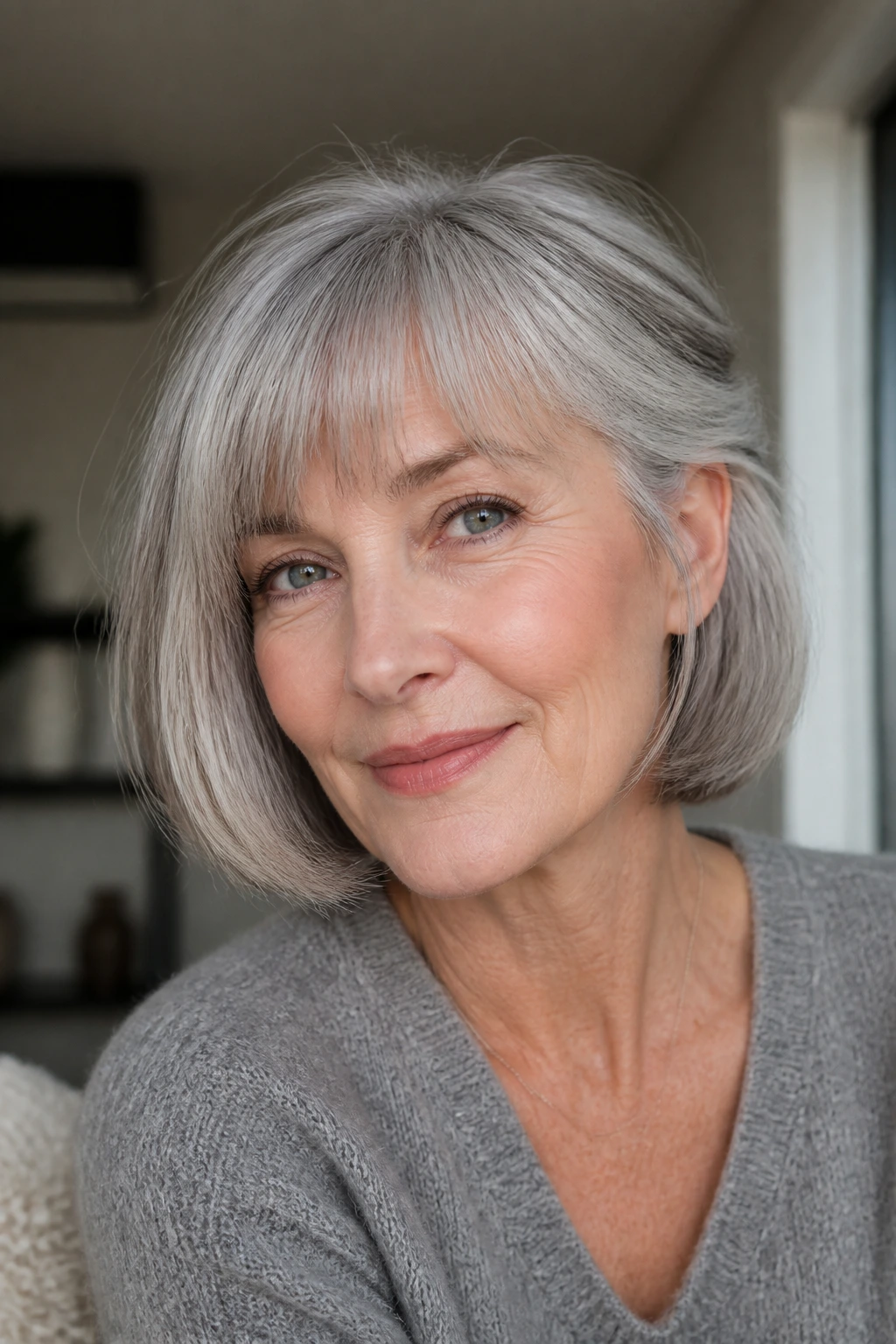
A French bob lands around the jaw and carries a soft little bend at the ends. Add a light fringe — not dense, not chopped — and the whole thing feels polished in a quiet way. Gray hair looks especially good in this shape because the line is short enough to stay lively.
The fringe should skim, not bury the forehead. That matters a lot if the hair is fine or if the face already has enough softness. I prefer this bob slightly imperfect, with one side tucked back and the other side moving forward. It keeps the style from looking too formal.
13. Silver Shag with Curtain Bangs
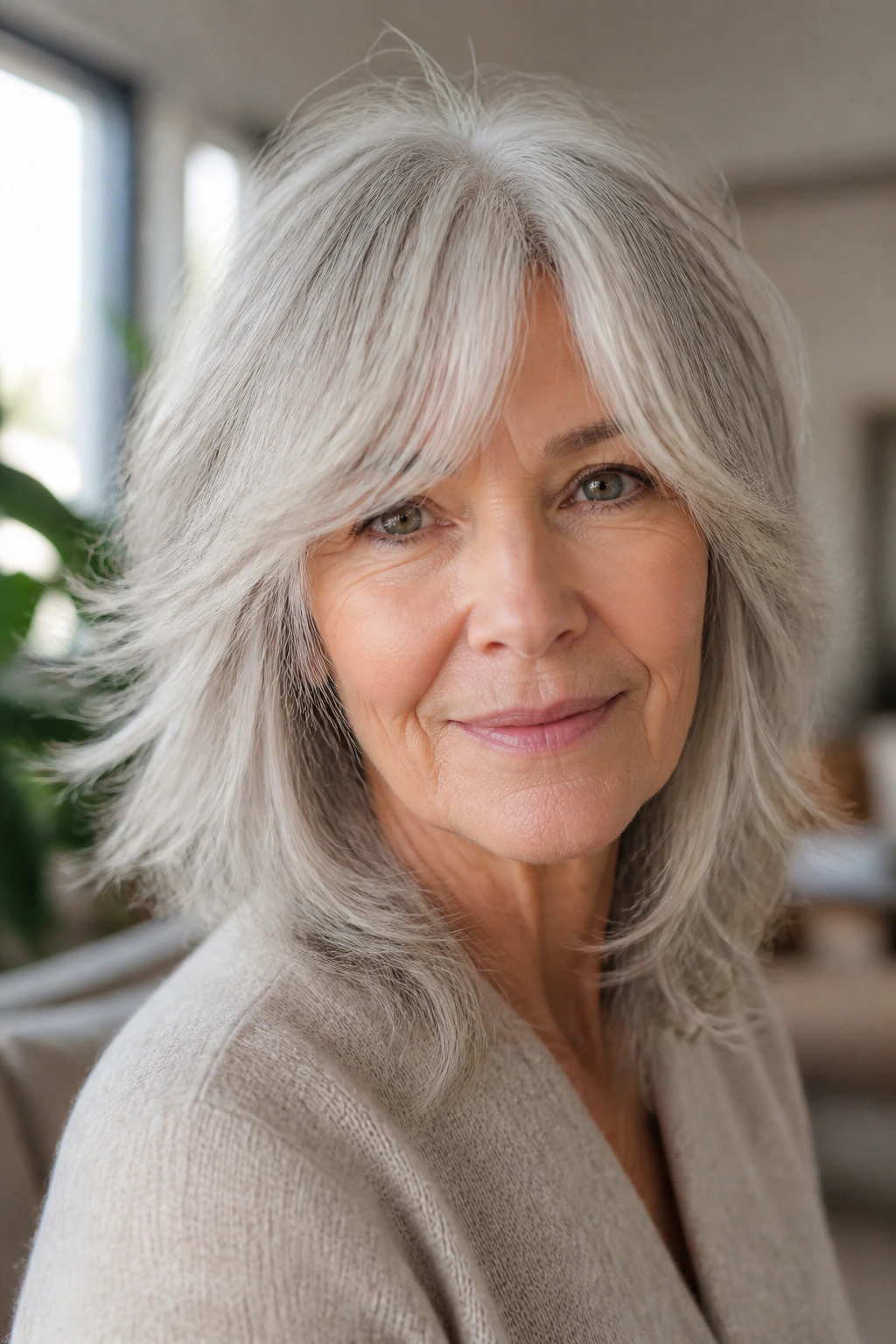
A silver shag with curtain bangs is the answer when you want movement but not chaos. The layers fall away from the face, and the curtain fringe opens in the middle so it doesn’t press down on the forehead. That opening is useful if the hairline is changing or if the glasses sit high on the bridge of the nose.
How to wear it
- Blow-dry the fringe first, splitting it from the center.
- Keep the layers soft around the cheekbones.
- Let the ends flick out a little instead of forcing them under.
This cut has personality. It’s relaxed, but not careless.
14. Natural Coil Crop with Defined Edges
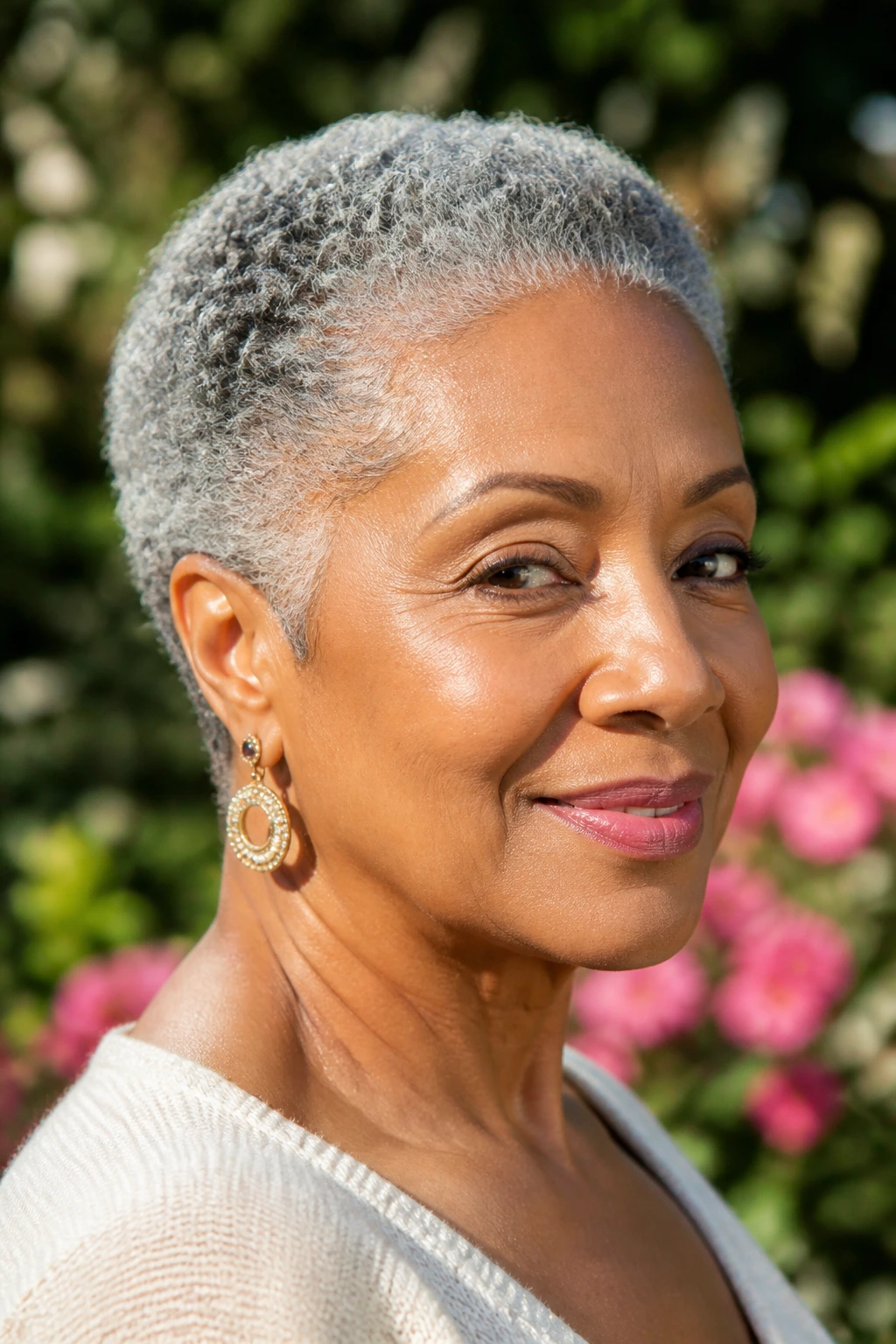
If the hair is coily, the cut has to respect shrinkage. A natural coil crop keeps the outline close to the head while leaving enough length for the curls to spring. Gray coils often need moisture and shape in equal measure, or they start to look fuzzy instead of defined.
Use a leave-in conditioner and a lightweight gel while the hair is still wet. Then let the coils set without combing them apart too much. The edges around the nape and temples should be clean, but the top can stay rounded and soft. That contrast is what makes the shape work.
15. Elegant Low Bun with Loose Face Pieces
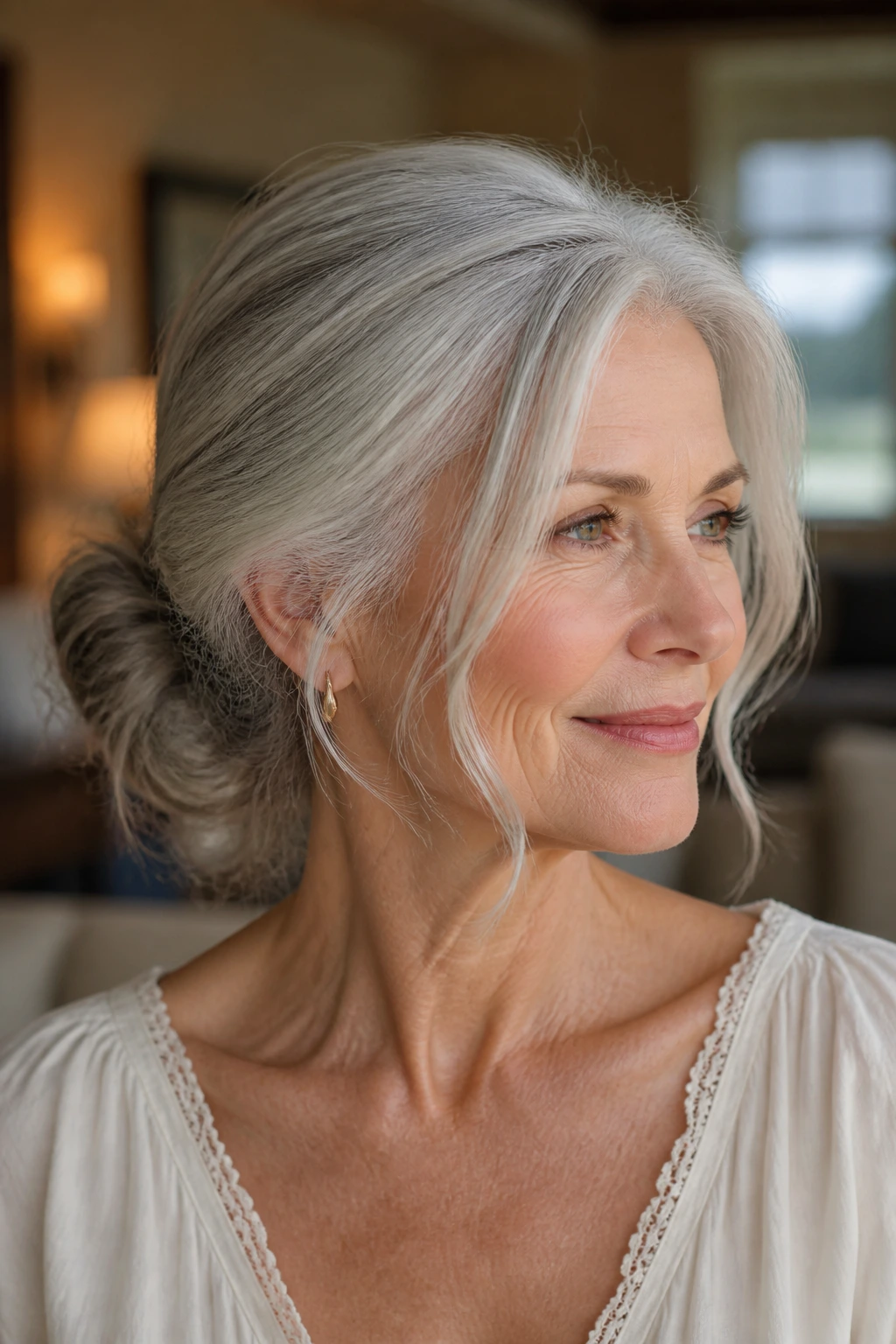
A low bun is not boring when it’s done with a little air around the face. Pull the hair back loosely, twist it at the nape, and leave a few silver pieces to soften the cheeks and temples. The style is useful for dressier days, but it also works for any time the hair feels too rough to wear down.
I like this look because it shows the hair’s color and texture without forcing it into a hard shape. A little smoothing cream near the hairline helps, but the bun itself should stay soft. Tightness is the enemy here.
16. Half-Up Twist for Longer Gray Hair
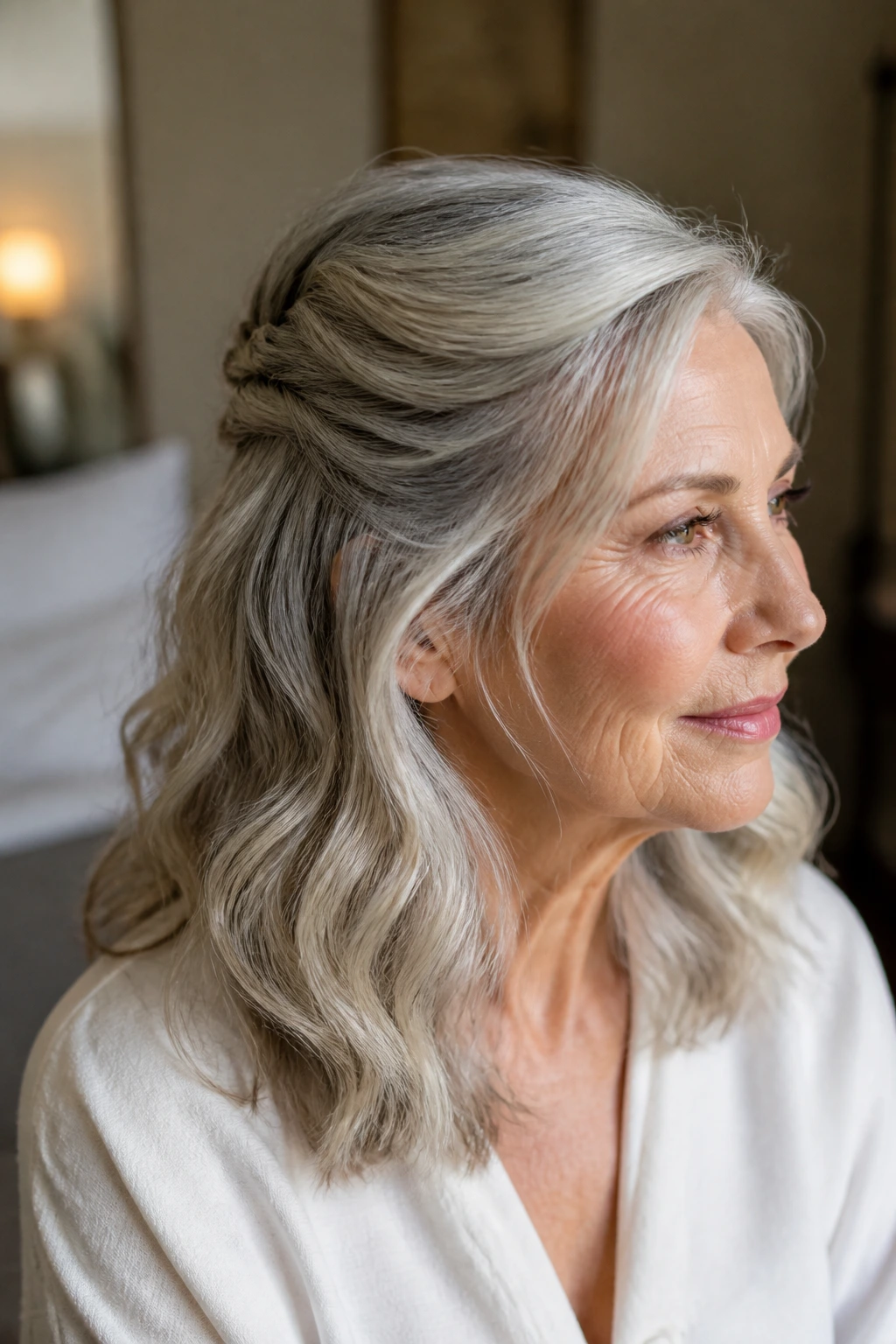
A half-up twist gives longer gray hair a lift without removing the length that makes it feel familiar. Pinning the top section back keeps the crown from collapsing, and the rest of the hair can fall in a soft sheet or a loose wave. It’s one of the easiest ways to make shoulder-length hair feel finished.
Best used when
- The crown feels flat by midday.
- The temples need a little break from the face.
- You want a neater look without pulling everything up.
A small clip or two bobby pins is usually enough. No tight elastic, no tugging, no overthinking.
17. Braided Crown on Soft Silver Length
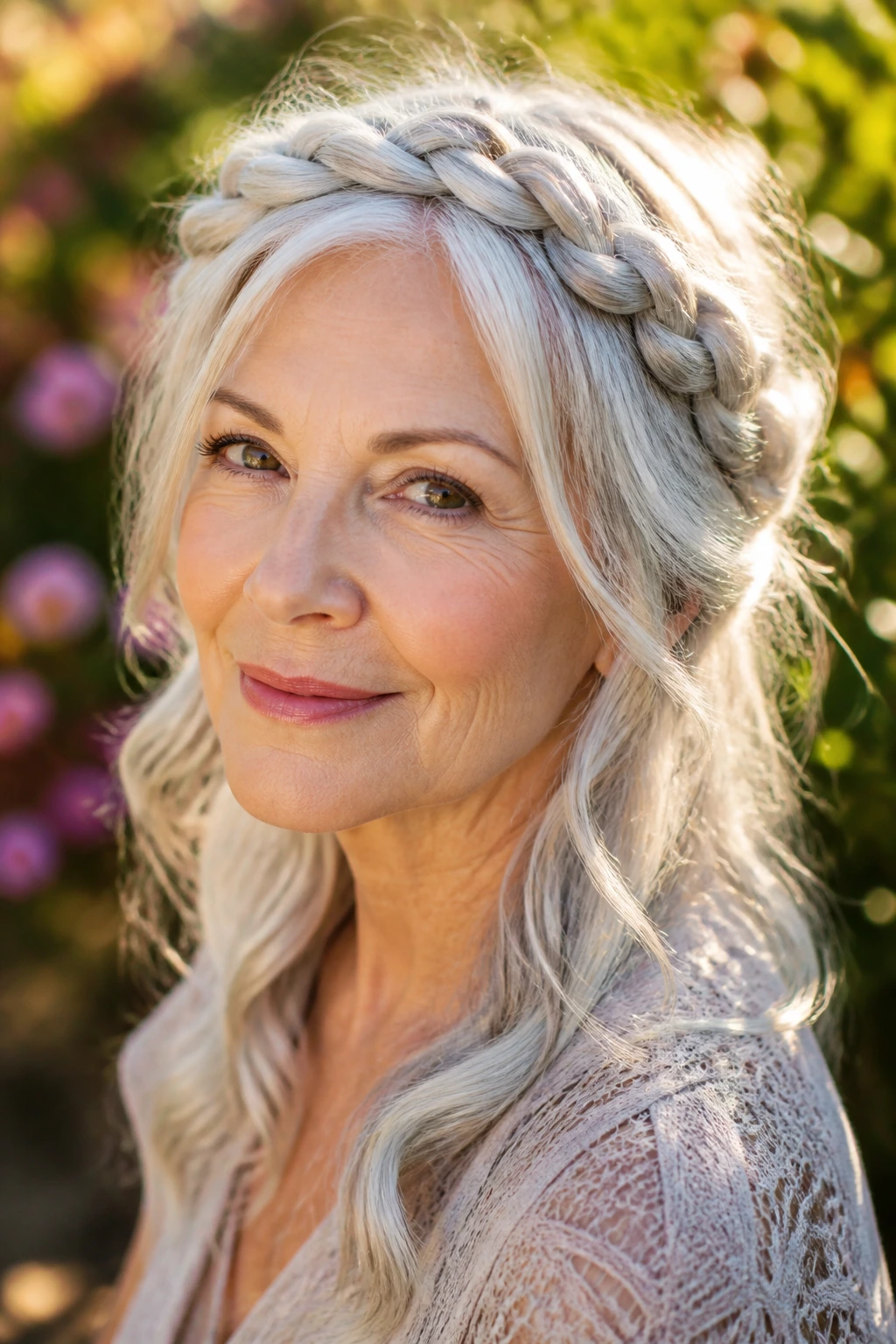
A braided crown reads special without looking fussy if you keep the braid loose. That matters on gray hair because too-tight braiding can expose the scalp in a way that feels harsh. A soft halo braid or crown braid gives the face a frame and keeps the hair off the neck.
This is one of those styles that looks better when it has a little mess in it. Pull a few strands free around the temples, and don’t worry if the braid isn’t perfectly even. The irregularity is part of the charm.
18. Tousled Wash-and-Go Lob
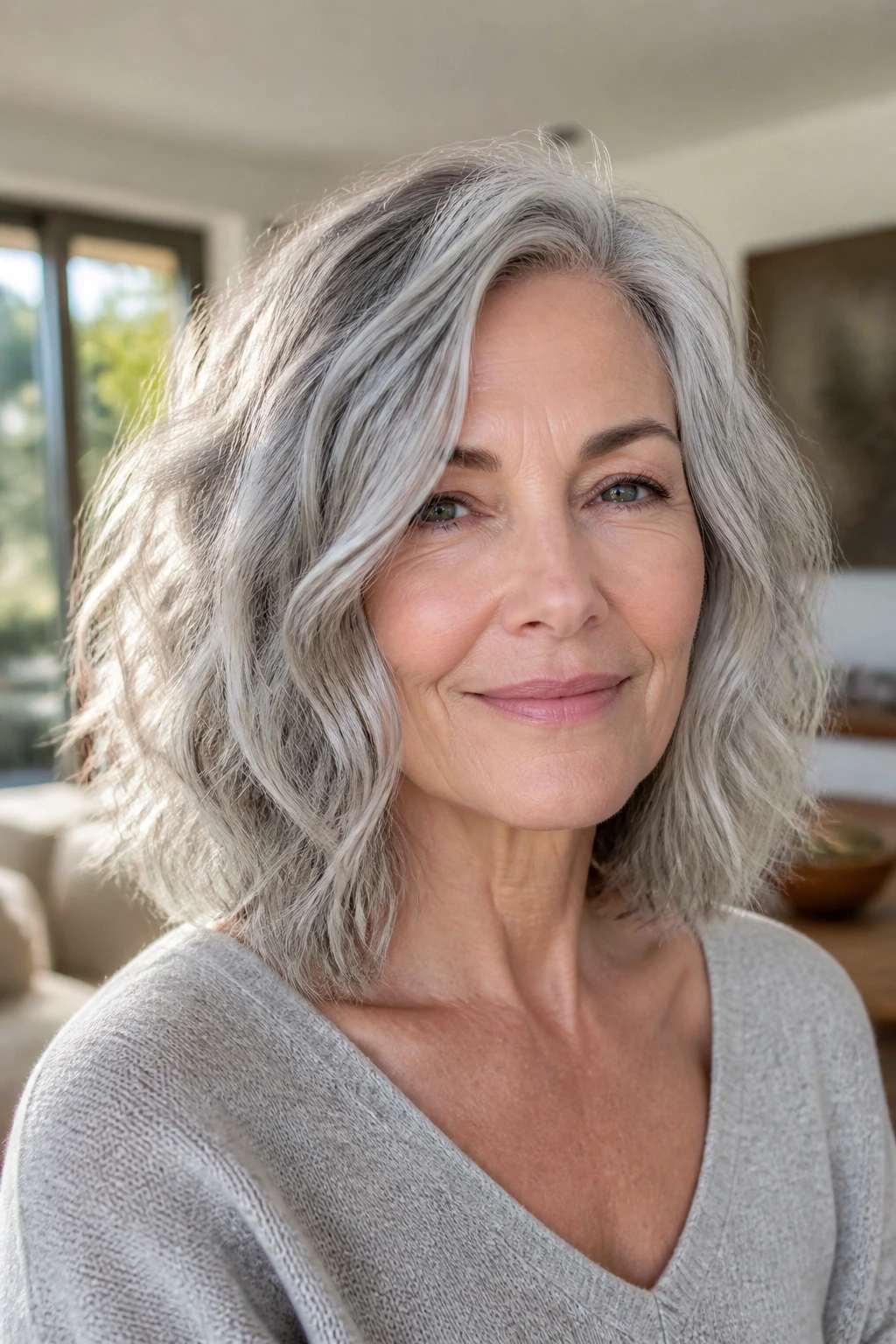
A tousled lob is for hair that already has some wave and doesn’t need constant intervention. Cut it at the collarbone, add soft layers, and let the hair dry with a little cream and a little patience. Gray hair likes this because the texture shows up without needing a lot of heat.
The best version looks slightly undone, not frizzy. Scrunch in product while the hair is damp, then let it dry in sections so the ends don’t clump. On day two, a bit of dry shampoo at the roots can bring the shape back without another full wash.
19. Deep Side-Part Bob with a Soft Sweep
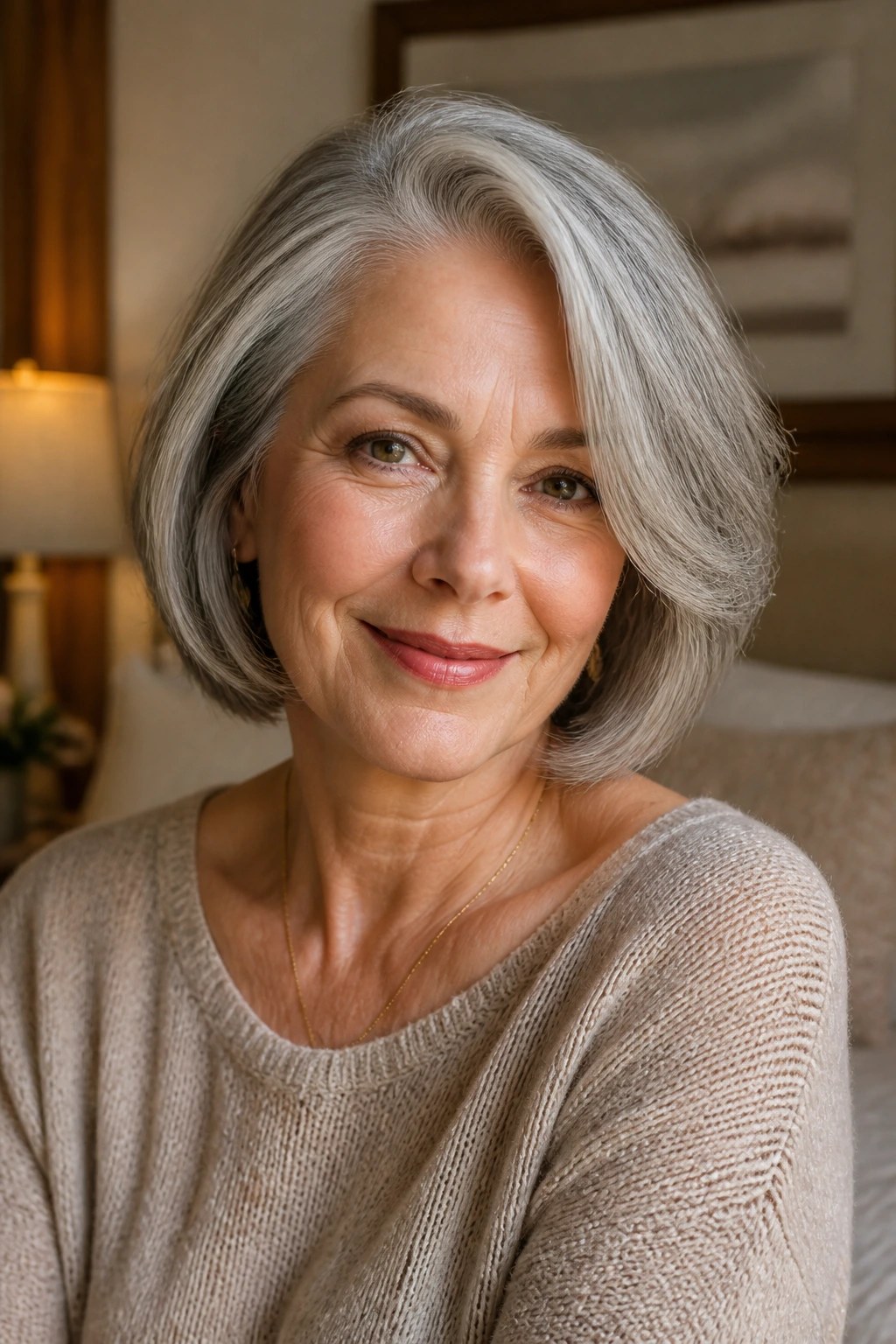
A deep side part changes the face faster than almost anything else. On gray hair, it can create instant lift where the hair wants to fall flat, and the soft sweep across the forehead adds shape without a blunt bang. I reach for this when someone wants a bob that feels a little more dramatic but not fussy.
The lower side should stay close while the top side gets a bit of height. That contrast is what gives the cut energy. If the hair tends to split in the middle on its own, this is a clean way to redirect it.
20. Textured Crop with Piecey Top Layers
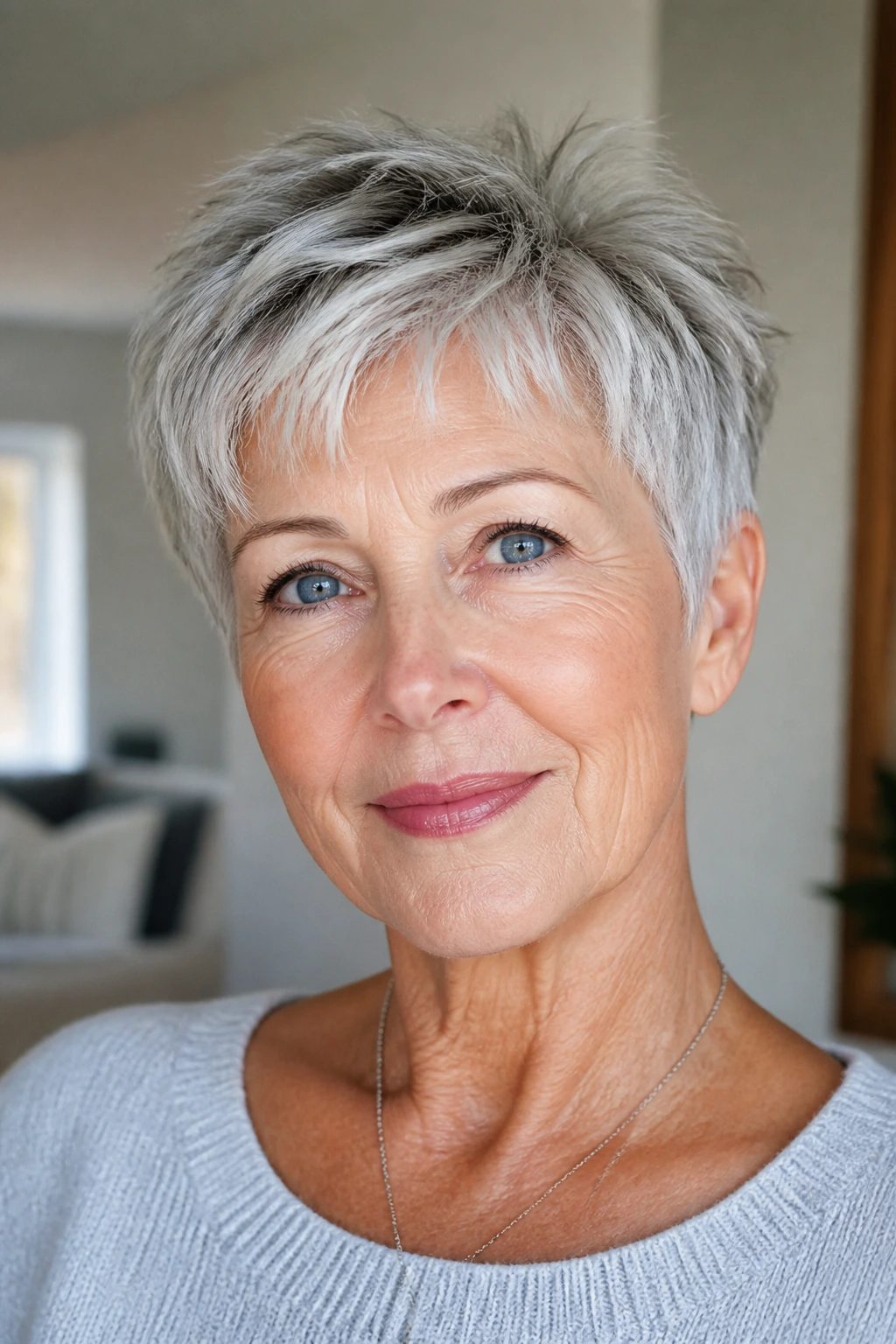
A textured crop is a good choice when the crown needs lift and the ends need relief. The piecey top layers create separation, which makes silver hair look lighter and more modern without going spiky. It is a useful cut for hair that grows in different directions or seems to swell in humidity.
Use a matte paste or a tiny bit of styling wax, then pinch the top pieces into place. Less is better here. If the product disappears into the hair and you can still move your fingers through it, you’ve used enough.
21. Long Silver Layers with Blunt Ends
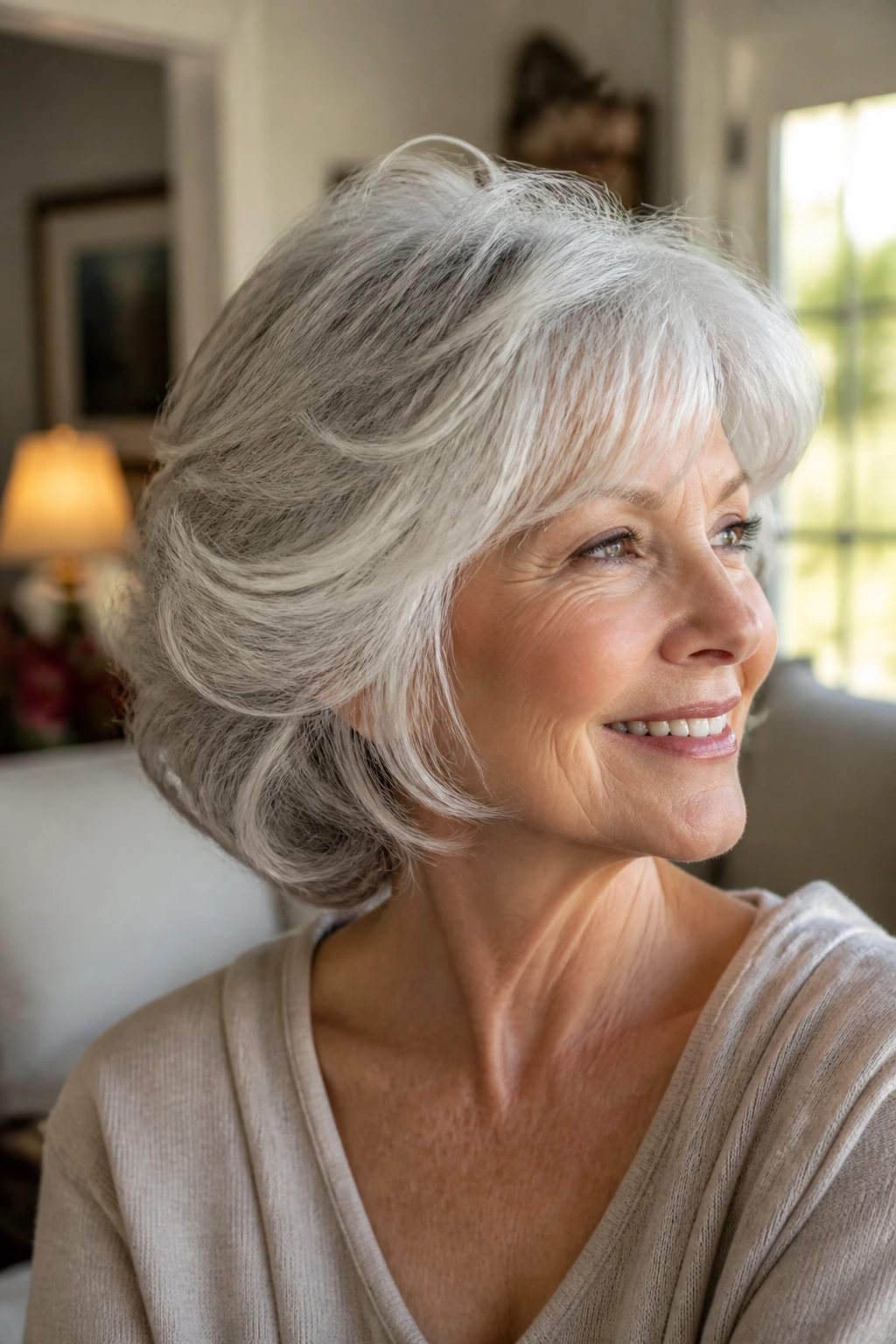
Long silver hair can look beautiful when the ends are kept blunt and the layers stay mostly around the face. The blunt perimeter keeps the length looking full, while the layers keep it from feeling like a curtain. This is the right answer for someone who does not want a short cut but still wants shape.
Why this version works
- The ends look thicker because the line is clean.
- Face-framing layers stop the hair from pulling everything down.
- A middle or soft off-center part keeps the style balanced.
A blow-dryer and a large round brush can make this shine, but you do not need to chase every piece into perfection. The silver looks better when it moves a little.
22. Soft Pageboy with Curved Under Shape
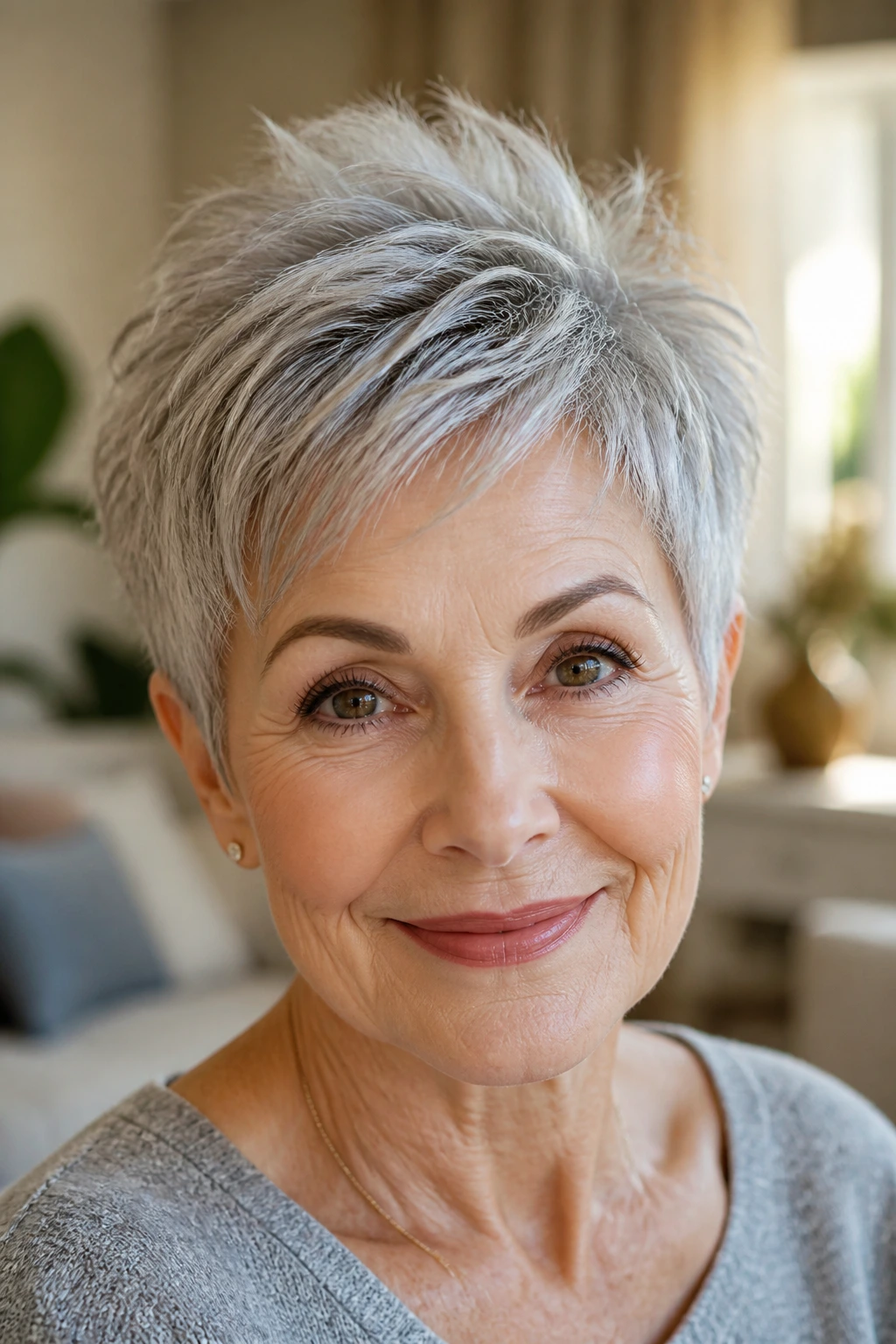
A pageboy sounds old-fashioned until you see the modern version. The ends curve under slightly, the top stays soft, and the whole cut follows the shape of the head instead of floating off it. Gray hair often looks especially neat in this silhouette because the outline is so clear.
It is a smart choice if you want something polished that still feels gentle. The curve at the ends softens the jaw, and the length around the ears can hide or reveal the side of the face depending on how you tuck it. Small changes. Big effect.
23. Twisted Chignon for Dressy Days
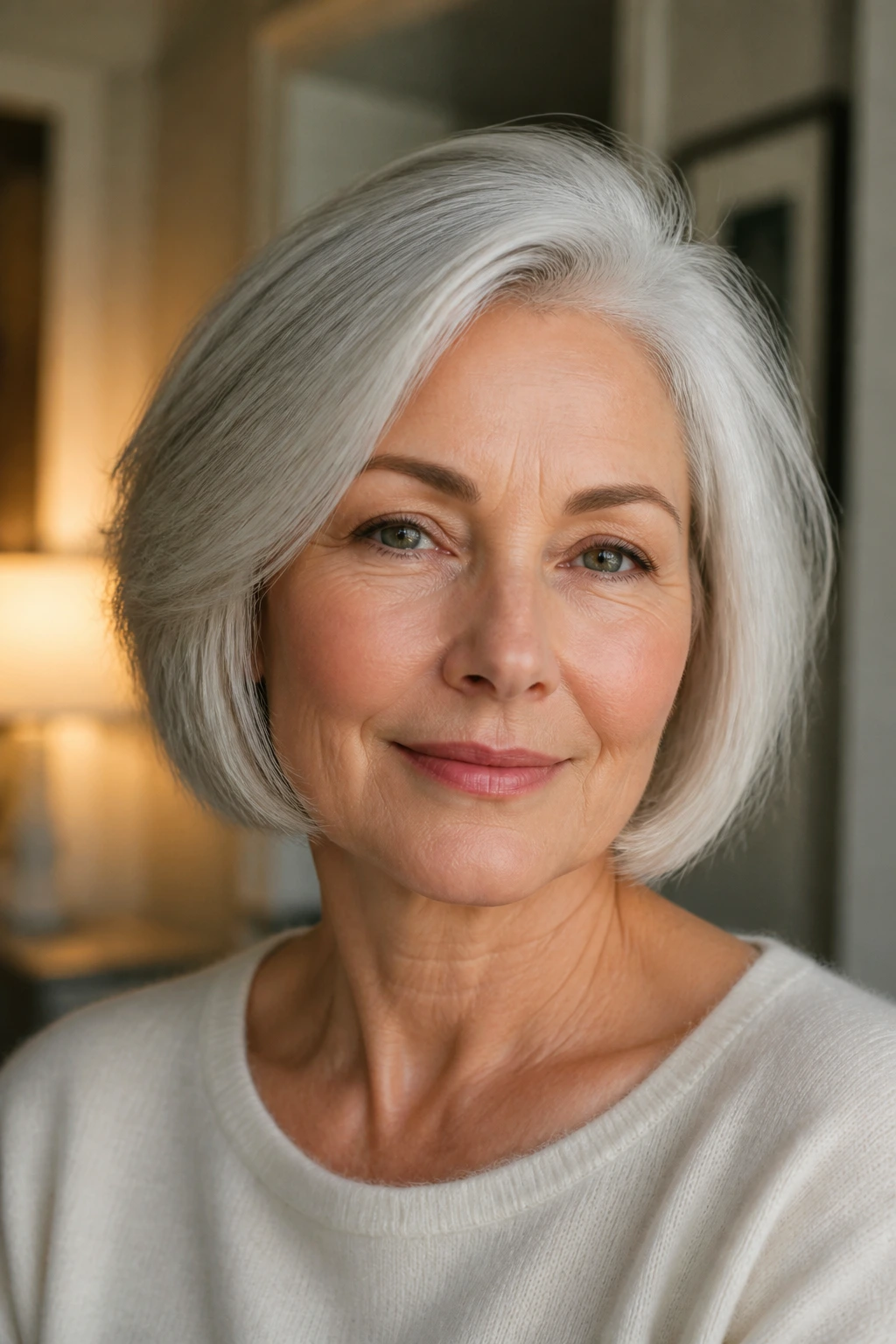
A twisted chignon is the kind of style that saves the day when hair feels a little unruly but you still want to look finished. Gather the hair low, twist two sections toward each other, and pin them at the nape. Leave the hairline soft, because a rigid updo on silver hair can look severe fast.
What helps it look right
- Keep the twists loose enough to show texture.
- Use hairpins instead of one tight elastic.
- Let a few face pieces fall free.
The chignon works because it shows off the gray without forcing it into a hard shell.
24. Neck-Length Cut with a Tucked Taper
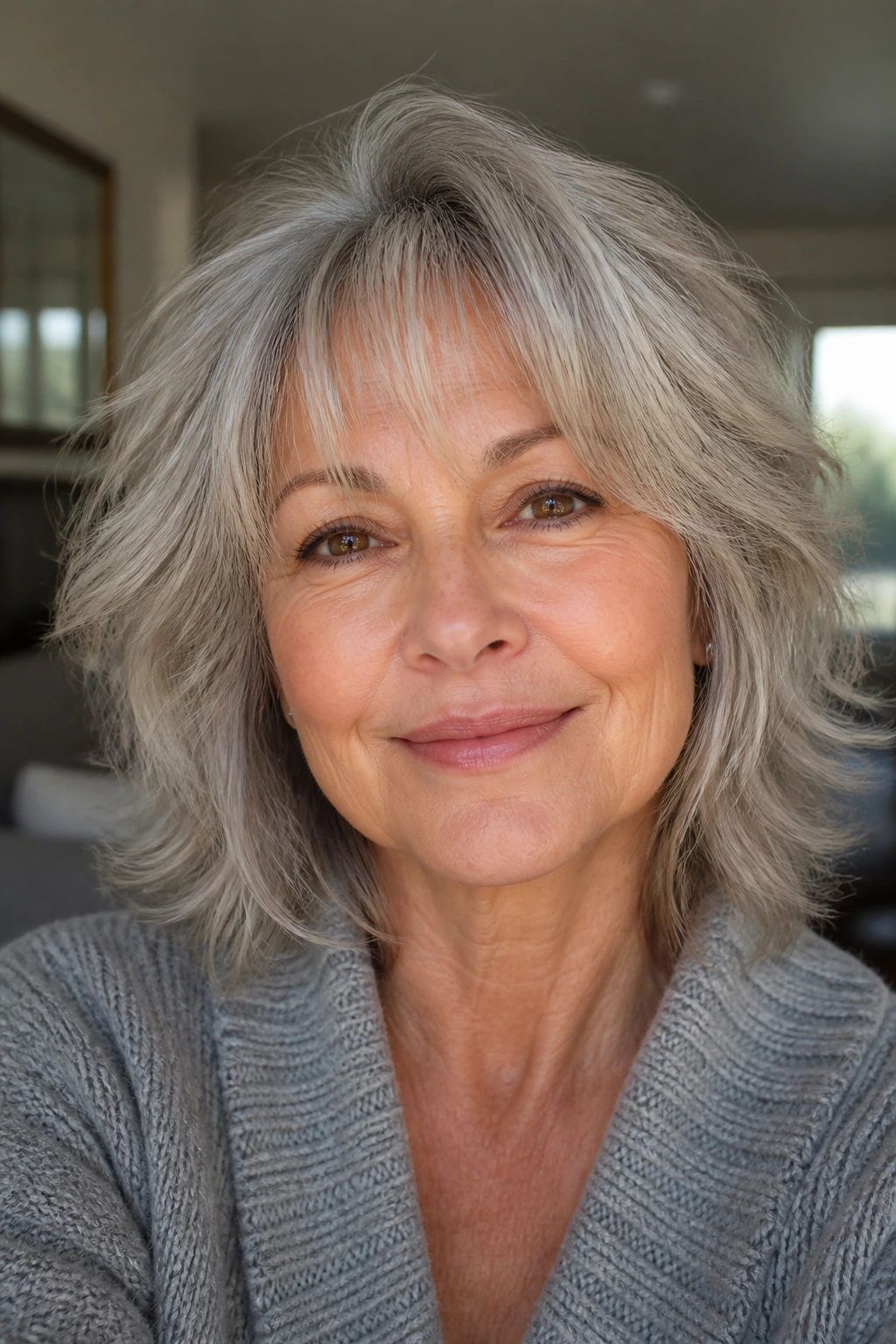
A neck-length cut sits in that useful middle place between short and midlength. It brushes the neck, tucks behind the ear well, and stays light enough to move. The taper at the nape gives the back some shape, which matters if hair tends to grow bulky there.
This cut is especially good when you want the neckline to stay visible under collars or scarves. It feels tidy without being severe. A little root spray at the crown can keep it from settling too close to the head.
25. Full Silvery Blowout with Rounded Volume
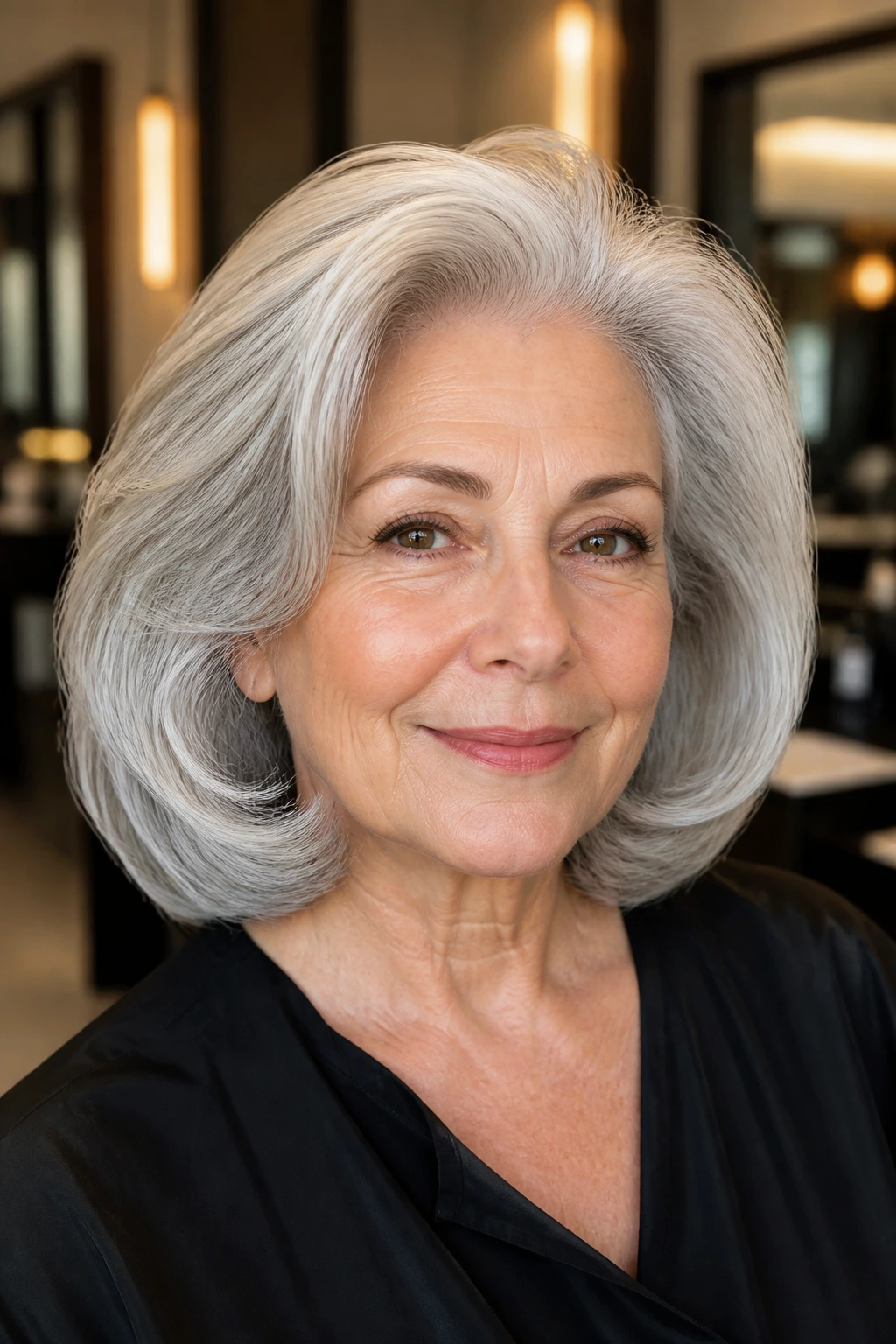
A blowout is not a cut, but it is absolutely one of the best gray hair ideas when you want the color to look deliberate. Round-brush the ends under, lift at the crown, and finish with the cool shot so the shape holds. The silver starts to shine once the cuticle lies flatter.
Quick outline for the finish
- Use a heat protectant on damp hair.
- Dry the roots first for lift.
- Roll the ends under with a medium brush.
- Cool the hair before touching it.
This style works for events, photos, and any day you want the hair to look more dressed than casual. It takes a little effort. It pays it back.
Why Gray Hair Likes a Little Engineering
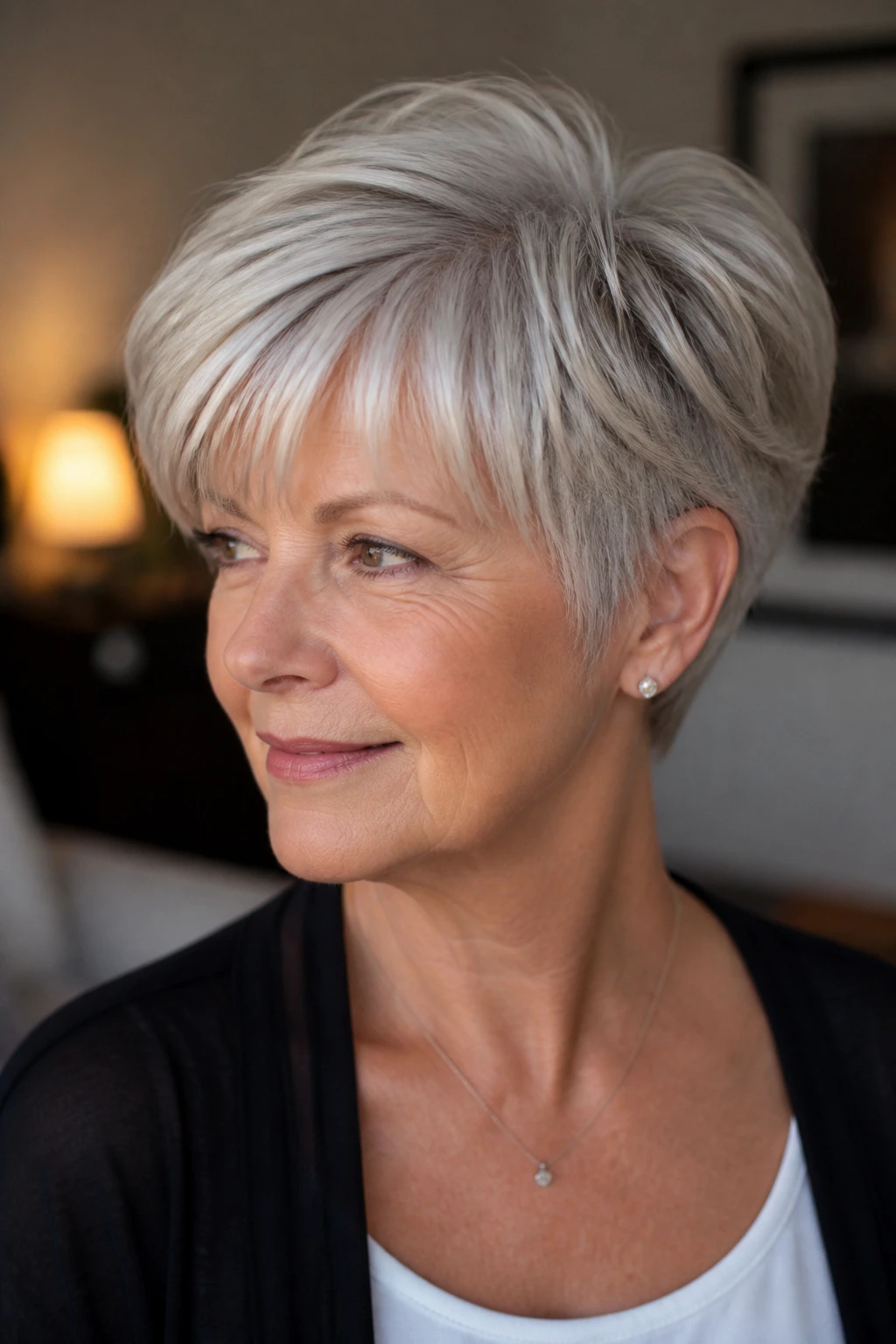
Gray hair looks best when the cut and the styling do a bit of structural work. That sounds fussy, but it isn’t. A crown that sits too flat can make even expensive hair look tired. A clean nape can make simple hair look sharp. A fringe that lands in the wrong place can wreck the whole face frame in one afternoon.
I prefer styles that do not need a full rebuild every morning. If the shape is right, you can refresh it with a quick mist of water, a dab of cream, or a five-minute blow-dry around the front. That’s the sweet spot. Enough shape to matter, not so much that you spend the day protecting it.
Gray hair also tends to look best when it is not overloaded with product. A little lift, a little control, and a clear outline usually beat shiny heaviness. Hair should move.
Essential Tools for Styling Gray Hair at Home
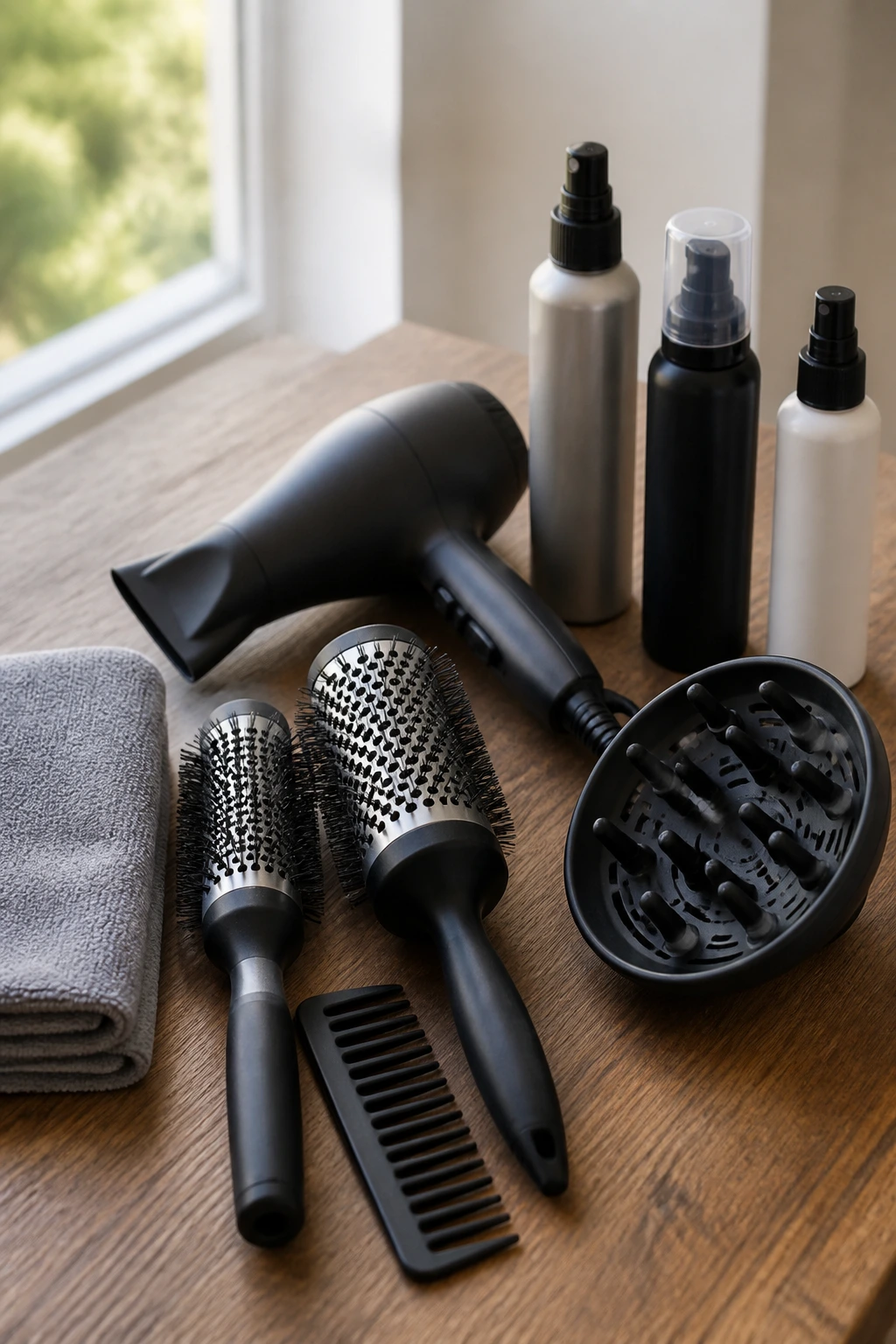
- 1-inch round brush: Best for pixies, bobs, and fringe work when you want lift at the roots.
- Medium round brush: Useful for lobs and shoulder-length layers because it bends the ends without puffing them out.
- Blow dryer with a nozzle: Directs air at the roots and helps the hair lie smoother.
- Diffuser attachment: A good pick for curls and waves that frizz when handled too much.
- Wide-tooth comb: Easier on dry, aging hair than a fine comb, especially after washing.
- Microfiber towel or cotton T-shirt: Cuts rough friction and helps prevent breakage.
- Heat protectant spray: Worth using before any hot brush, curling iron, or flat iron.
- Light mousse or root-lift foam: Better than heavy cream for fine or limp gray hair.
- Styling cream or leave-in conditioner: Useful for coarse, dry, or curly gray hair that needs slip.
- Purple shampoo: Helps with brassiness, but it should be used sparingly, not on every wash.
A few small clips and bobby pins are worth keeping nearby too. They make twists and half-up styles a lot easier, and they are kinder to the hands than tiny elastics.
Smart Shopping for Gray Hair Products and Finishers
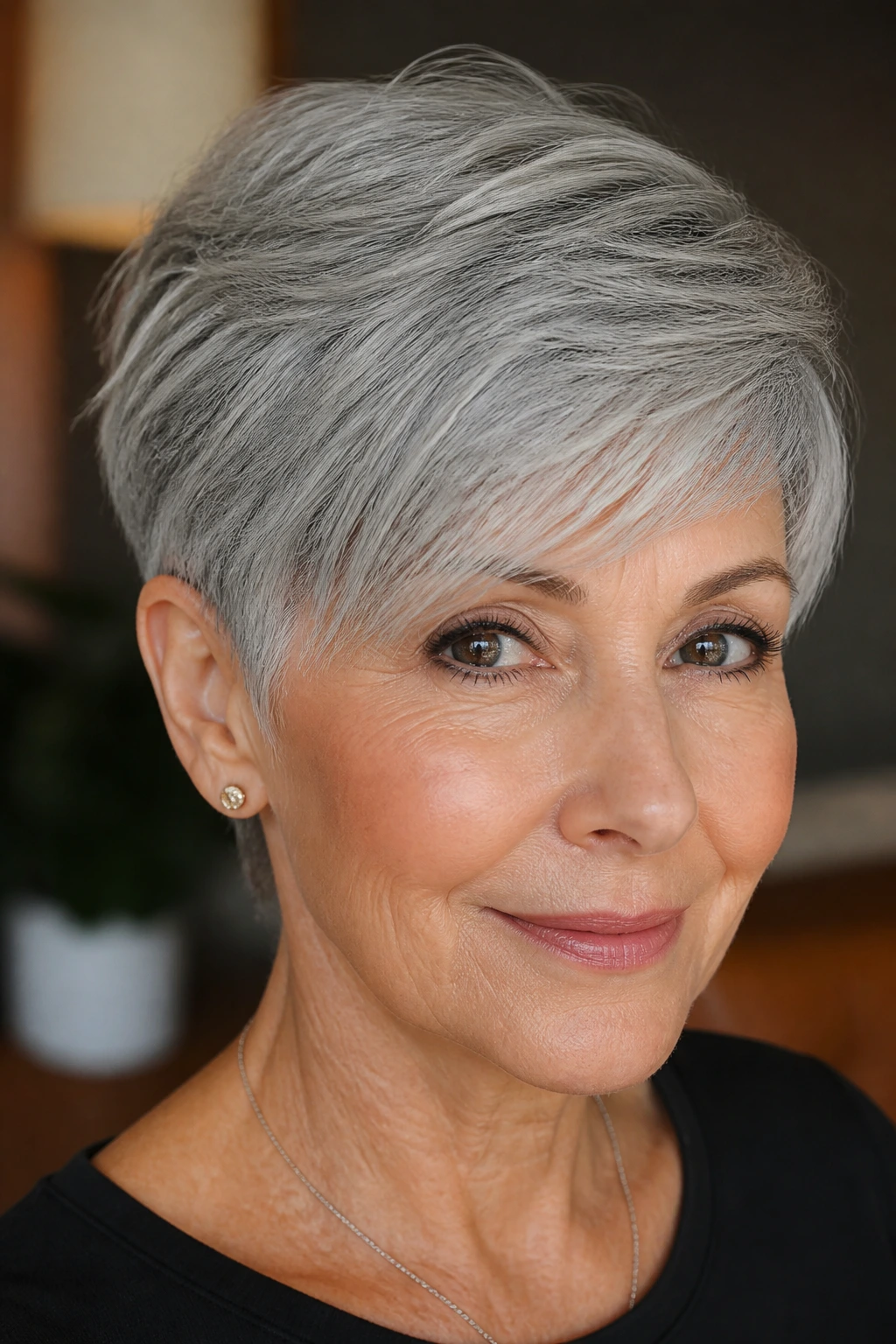
Gray hair does not need a crowded shelf. It needs the right few products used with some restraint. Start with shampoo and conditioner that match the texture, not the fantasy. Fine hair usually likes something light and clean-rinsing. Coarse gray hair often needs more slip, which is where a richer conditioner or leave-in cream earns its keep.
Purple shampoo has its place, but it can dry the hair if you use it too often. Once a week is enough for many people, and some only need it every other week. If the silver starts to look dull or slightly yellow, that’s the moment to bring it back in. Leave it on for the time on the bottle — usually 2 to 5 minutes — then rinse well. Longer is not better. Sometimes it just leaves a faint lavender cast on porous ends.
Look at the finishers too. A lightweight mousse gives volume without grease. A serum or shine cream can smooth the ends, but one pea-sized amount is usually enough for short hair. For longer styles, a small ribbon through the mid-lengths and ends is plenty. If the product sits at the roots and the crown falls in 20 minutes, it’s too heavy.
Hard water can also make gray hair look yellow or dull. If that’s a problem, a clarifying wash every 3 to 4 weeks helps clear the buildup. Keep the clarifier away from the daily routine, though. Use it like a reset button, not a shampoo replacement.
How to Wear These Gray Hair Ideas With Glasses and Jewelry
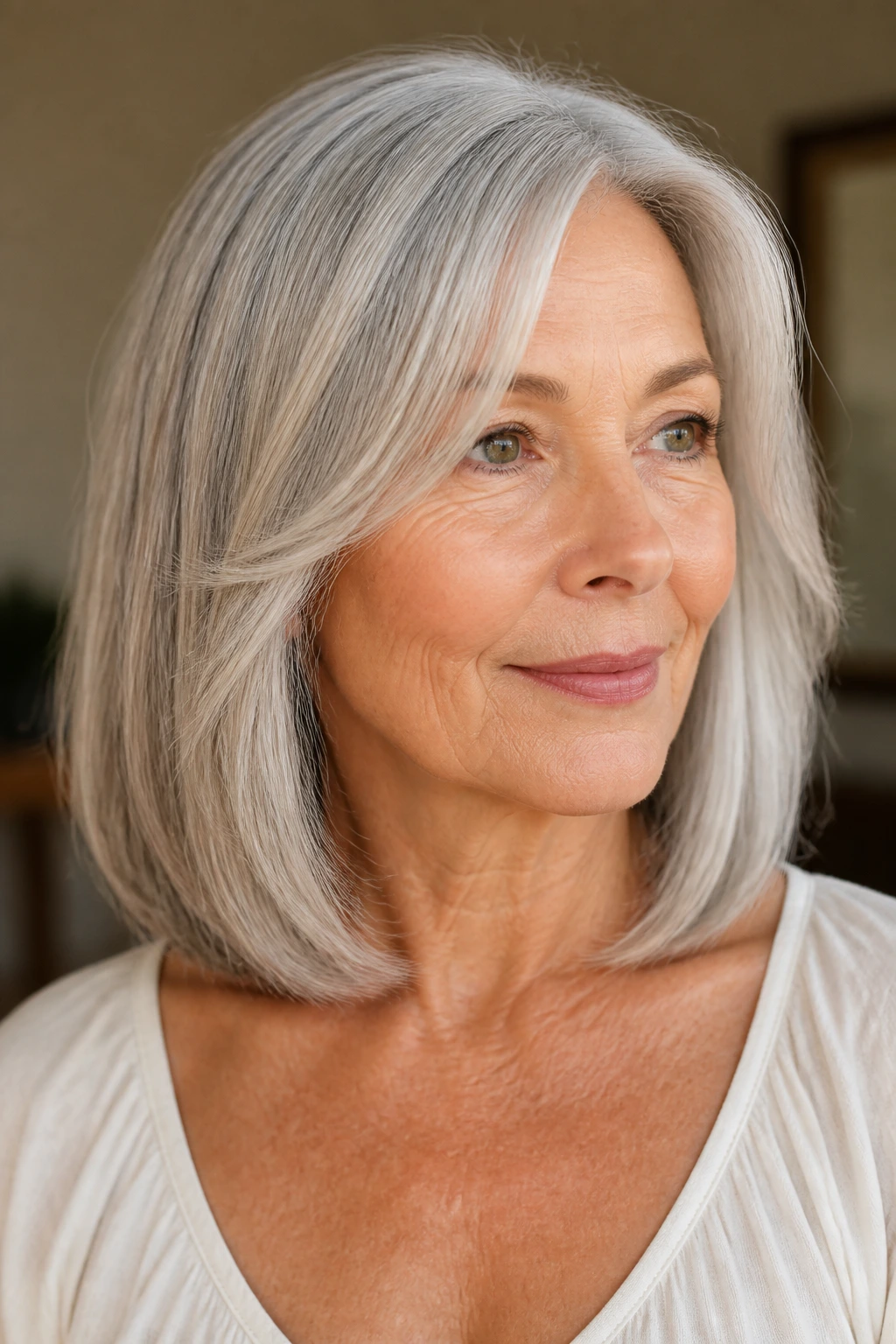
Glasses: Frame shape matters more than people admit. If the hair has bangs, let them skim above the frame or open in the middle so the lenses don’t look crowded. Pixies and brush-back crops are especially good here because they leave clean space around the temples.
Earrings: Short cuts make earrings show, which is one of the nicest side effects of a pixie or wedge. Small hoops, drop earrings, and polished studs stand out more when the hair is off the jaw. With longer styles, a tucked side or half-up twist keeps the jewelry visible instead of burying it.
Necklines: A bob or lob sits well with open necklines, while a short crop can carry a higher collar without looking boxed in. If you wear turtlenecks, a sleek bob or swept-back style keeps the neck from disappearing. If you love scoop necks, almost any of these shapes will sit nicely against them.
Occasion: A braided crown or low chignon feels dressier without needing a formal haircut. A shag, a wash-and-go lob, or a curly crop looks relaxed and lived-in. That contrast is useful. The hair should suit the clothes, not fight them.
Small Tweaks That Make Silver Hair Look Deliberate

Shine Boost: A pea-sized amount of serum on damp mid-lengths and ends can take gray hair from dry to polished. Keep it away from the roots unless the hair is very coarse.
Lift at the Crown: Blow-dry the root area in the opposite direction of the part for the first minute. It gives the top a little lift without teasing.
Softness at the Front: A slight bend toward the face around the first inch or two of hair softens cheekbones and jawlines. This matters more than a lot of people think.
Color Support: If the gray is getting dull, a clear gloss or silver-enhancing glaze every 6 to 8 weeks can brighten the finish without changing the cut. It’s especially useful on porous ends.
Make-It-Yours: Fine hair tends to look better with blunt edges and fewer layers. Thick hair usually needs interior debulking so the shape can sit properly. Curly hair wants moisture and room. Straight hair needs either a strong line or some bend so it doesn’t hang there like a curtain.
Common Gray Hair Mistakes That Flatten the Finish
- Too much length with no shape: Hair that drifts below the shoulders without layers often looks heavier than it feels. The fix is a cleaner perimeter or face-framing pieces that give the eye something to follow.
- Purple shampoo overuse: If the hair starts looking dull, chalky, or faintly lavender, you’ve gone too far. Back off and switch to a moisturizing shampoo for a wash or two.
- Heavy product at the roots: Oils and thick creams near the scalp flatten the crown fast. Keep finishers on the mids and ends unless the hair is coarse enough to drink them up.
- Bangs cut too short: Short, dense bangs can crowd the face and clash with glasses. A softer fringe that skims the forehead usually behaves better.
- Ignoring the nape and neckline: A tidy front with a bulky back looks unfinished from the side. Shorter cuts need the nape shaped regularly, and longer cuts need the ends trimmed before they fray.
- Blow-drying straight down from the crown: That habit removes lift fast. Aim the dryer at the roots from the side or upside down for a few seconds, then redirect once the shape is set.
Variations for Fine, Thick, Curly, and Straight Hair
The Fine-Hair Fix: Choose pixies, rounded bobs, or a short wedge with minimal layering. These shapes build the look of thickness without stealing volume from the top. Keep the finish light, because product can collapse fine silver hair in minutes.
The Thick-Hair Edit: Ask for interior debulking, not over-thinning at the ends. Dense gray hair looks better when it has a strong outline and a little movement inside the shape.
The Curl-First Version: Use the shag, the crop, or the lob, but let the curl pattern lead. Moisture comes first, then definition, then shape. Cutting curly gray hair too dry or too aggressively usually backfires.
The Glasses-Friendly Sweep: Side parts, brush-back pixies, and soft fringes give frames room. The hair should frame the face, not crowd the lenses.
The Low-Commitment Version: If you do not want a cut that needs frequent styling, lean into a neck-length taper, a lob, or a soft bob. Those shapes still look neat when the day gets long and the hair gets a little tired.
Keeping the Cut Fresh Between Salon Visits
Short pixies and crops usually need a trim every 4 to 6 weeks if you want the lines to stay clean. Bobs and wedges can usually go 6 to 8 weeks before they start losing their shape. Longer layers and lobs often hold for 8 to 12 weeks, especially if the perimeter is blunt enough to stay full.
Gray hair also likes a routine. A gentle wash schedule every 2 to 4 days works for many textures, though curly and dry hair can often go longer. Purple shampoo is best used only when the tone starts to drift yellow, not as a habit. If you wash too often or use too much pigment, the finish can turn dull.
At night, a silk pillowcase or satin bonnet helps more than most people expect. It keeps the fringe from kinking and cuts down on friction around the crown. If the ends feel rough between appointments, a tiny bit of leave-in on damp hair after a quick rinse can buy you another good day. Not glamorous. Useful.
Frequently Asked Questions About Gray Hair After 70
Which gray haircut gives the most lift at the crown?
A feathered pixie, a tapered crop, or a short wedge usually gives the best crown lift. These cuts remove weight where it flattens the head and keep length where it creates height.
Can long gray hair still look good after 70?
Yes, if it has shape. Long gray hair usually looks better with blunt ends, soft face-framing layers, or a regular blowout so it doesn’t fall into one heavy sheet.
Are bangs a bad idea with gray hair and glasses?
Not at all, but they need to be soft. Wispy bangs, curtain bangs, or a side-swept fringe tend to work better than thick straight bangs that crash into the frames.
How often should gray hair be trimmed?
Short cuts usually need attention every 4 to 6 weeks. Bobs and lobs can often go 6 to 8 weeks, while longer layered styles may last 8 to 12 weeks before the ends start to look tired.
Why does gray hair turn yellow?
Sun, smoke, hard water, and styling buildup can all leave the hair with a yellow or brassy cast. A clarifying wash and an occasional purple shampoo can help, but overusing pigment can make the hair look flat.
What if my gray hair is frizzy and dry?
Choose styles that work with movement instead of fighting it. A shag, a curly crop, or a soft lob with a leave-in cream usually behaves better than a blunt style that needs constant smoothing.
Is it better to air-dry or blow-dry gray hair?
Air-drying is easier on fragile hair, but a little blow-drying at the roots can improve shape fast. I usually favor a hybrid approach: rough-dry the roots, then let the mids and ends finish on their own if the texture allows it.
What if my hair keeps splitting in the middle and going flat?
A deep side part, root-lift spray, or a quick crown blow-dry often helps more than changing the whole cut. If the problem keeps coming back, the shape may need more internal layering or a shorter perimeter.
The Styles That Keep Silver Hair Looking Like It Means It
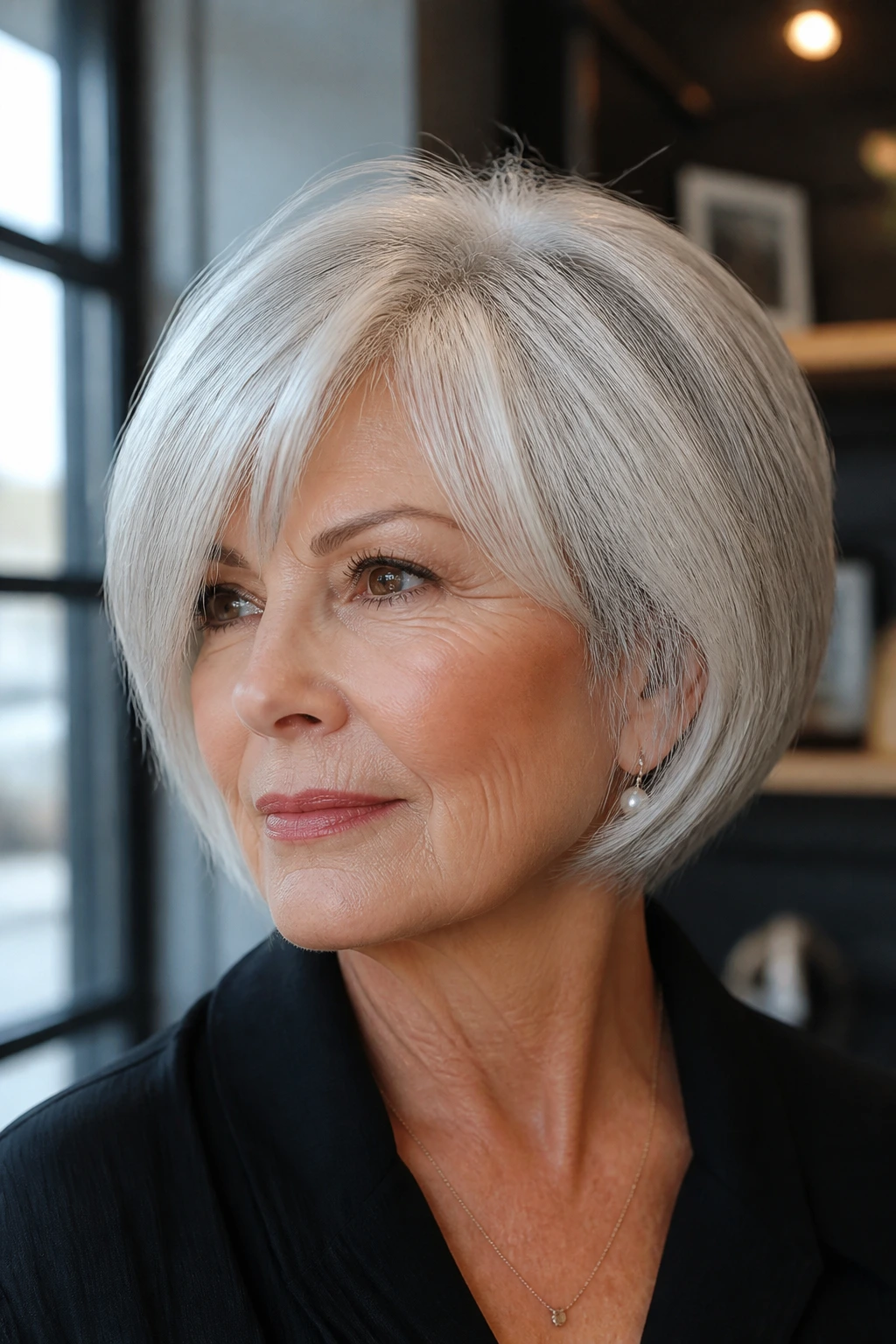
The best gray hair ideas for women over 70 do not hide the silver or apologize for the age. They give the hair a cleaner outline, a little lift, and a finish that looks chosen. That’s the difference between hair that sits there and hair that carries the face.
I like the styles that do one job well. A pixie that wakes up the crown. A bob that sits at the jaw and stays there. A lob with enough movement to feel soft. Those are the cuts that keep returning to the chair looking like they still have a pulse.
Pick the shape that matches your texture, your glasses, and the amount of time you want to spend in the bathroom. Then keep the outline clean, the product light, and the shine honest.
