



Shoulder-length gray hair can turn sharp or tired faster than people expect. The cut sits right in the line of sight, which means the color has to do a job: lift the face, keep the ends from looking dry, and give the shape some movement instead of letting it sit there in one flat sheet. That’s why shoulder length gray hair color ideas work best when they use depth, not just silver.
A collarbone-length lob gives you room for a shadow root, a bright money piece, a smoky glaze, or those little silver ribbons that flash when you turn your head. Too much of one tone and the hair starts to look heavy. Too little depth and the gray can drift into that soft, dusty zone that nobody asks for but everyone recognizes once it shows up.
I like gray best when it looks placed on purpose. Pearl near the face. Charcoal at the root. Pewter through the mid-lengths. The good versions feel like the haircut and the color are talking to each other instead of fighting for attention, and shoulder length is exactly the length where that conversation really shows.
Why These Gray Hair Ideas Work So Well at Shoulder Length
Shoulder-length hair shows dimension without swallowing it. On longer hair, silver can disappear into the length unless the placement is very deliberate. On a lob, the same silver sits closer to the face and the collarbone, so every ribbon of light has a job to do.
Regrowth looks softer here, too. A root shadow that might disappear in waist-length hair stays visible enough on shoulder-length cuts to blur the grow-out line. That’s a gift if you want gray hair that doesn’t demand a root appointment every few weeks.
The haircut does half the work. Blunt edges make graphite, slate, and pearl-gray tones look sharper. Soft layers let balayage, ombré, and face-framing pieces breathe a little. You can change the whole mood of the color without changing the base formula much at all.
Why it matters: gray hair is unforgiving when it’s flat. The shoulder-length cut gives you enough movement to keep the tone alive, but not so much length that the color gets lost in the ends.
1. Smoke-Soft Silver Balayage
Smoke-soft silver balayage is the look I reach for when someone wants gray that moves instead of sitting there like a painted sheet. On shoulder-length hair, the lighter pieces land right where the cut bends at the cheekbone and collarbone, so the silver flashes when you turn your head. It reads polished, but not stiff.
Why It Works
Ask for a level 6 or 7 root shadow with level 9 silver ribbons through the mid-lengths and ends. That depth at the root keeps the grow-out soft, and the brighter pieces stop the color from collapsing into one dull plane. If the cut has layers, the silver catches on the raised sections and gets a little extra lift.
I like this version for hair that needs movement but not drama. It’s softer than a full platinum shift, and it buys you time between salon visits. A neutral or slightly cool gloss every 6 to 8 weeks keeps the silver from turning chalky.
Best for: layered lobs, wavy textures, and anyone who wants gray that looks deliberate on day one and still looks decent when the roots start talking back.
2. Charcoal Root Melt
A charcoal root melt fixes one of the most common gray hair problems: the color loses shape when the root is too light. Keep the first inch and a half deep, then let the tone soften into smoky mids and cooler ends. On shoulder-length hair, that shadow gives the cut weight near the scalp and movement below it.
If you’ve got medium to dark hair, this one is a favorite because it doesn’t fight your natural depth. It works with it. The result is moody in a good way — less “dyed gray” and more “this hair has dimension and knows it.”
The maintenance is kinder than a brighter silver look. Regrowth blends into the root melt instead of drawing a hard line, so the shape stays clean for longer. That’s the part people notice first. Not the fade. The lack of a blunt stripe.
3. Pearl Gray Face-Framing Pieces
Why do some gray styles brighten the face while others make it look flat? Usually because the front sections were lifted higher than the rest. Pearl gray face-framing pieces solve that with a cleaner kind of brightness, especially on shoulder-length cuts where the front hair sits right beside the cheeks.
Ask for 1-inch face-framing sections around the hairline to be lifted to a pale blonde level, then toned to a pearly gray or silver-beige finish. Keep the back quieter with a shadow root or a soft neutral glaze so the front pieces do the actual lifting.
This is the kind of placement that looks expensive without shouting. If you wear glasses, side parts, or curtain bangs, the front pieces give the whole cut a clearer outline. On straight hair, they read crisp. On waves, they soften into little flashes of light. Either way, the face gets a frame, not a wash of color.
4. Mushroom Brown and Silver Blend
If your hair still carries some brown in it, mushroom gray is the gentlest way to move cooler without losing depth. The base stays taupe or cool beige-brown, while silver lowlights thread through the mids so the whole look feels mixed rather than painted.
Shoulder-length cuts are a sweet spot for this shade. The neutral tones shift in the light, and the silver pieces don’t have to fight a huge canvas. They just sit there and do their job. It’s a quieter look than full silver, and that’s exactly why it works.
I like mushroom gray for brunettes who want to test the gray waters without jumping straight into icy territory. It keeps warmth under control, but it doesn’t erase every trace of softness. The result is cool, grounded, and much less fussy than a full-on platinum route.
5. Icy Platinum Gray Lob
This is the loudest look in the set, and I mean that in the useful sense. A blunt lob lifted to pale blonde and glazed icy gray can look almost metallic, but only when the cut is clean and the ends are healthy. If the hair is frayed, the platinum reads dry before the color even gets a chance.
You need enough lift for this one to work. That usually means a pale yellow base before toner, then a cool silver or violet-based glaze to mute the warmth. Shoulder-length hair helps because the shape is short enough to show off the brightness but long enough to keep the look from feeling severe.
Plan on more upkeep here — toner every 4 to 6 weeks, purple shampoo used sparingly, and regular trims. The payoff is a crisp finish that makes the lob look sharp instead of fluffy. It’s not subtle. That’s the point.
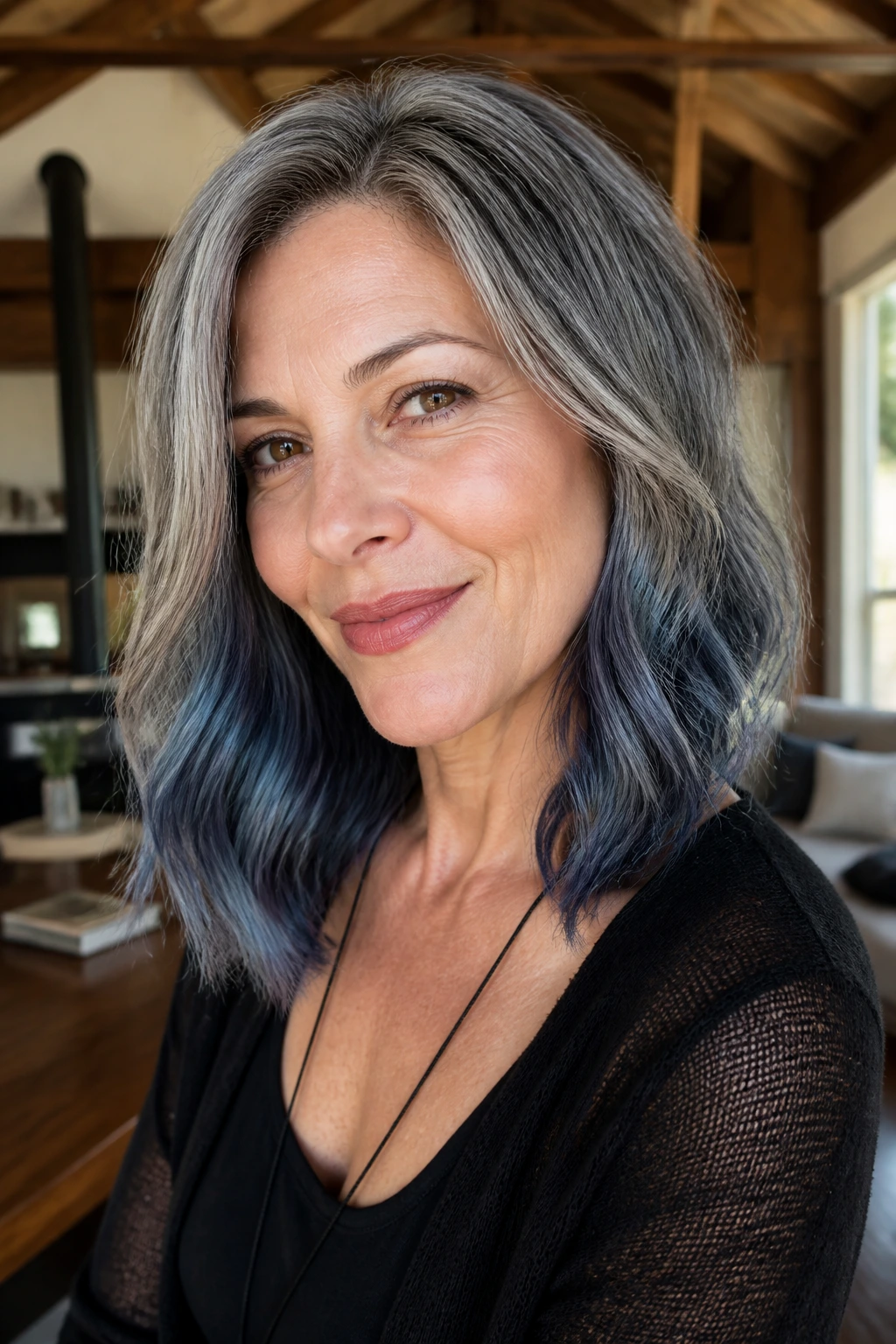
6. Steel Blue Smoky Ends
Steel blue smoky ends are for people who want gray with a little edge, not a costume-color look. The base stays darker and more neutral, while the last 2 to 3 inches pick up a blue-gray cast that reads cool without turning cartoonish.
Why the blue cast matters
- Keep the root closer to natural brown or charcoal so the color has some anchor.
- Place the steel tone only on the lower lengths and tips, where the bend of the cut can show it off.
- Use a blue-violet gloss, not a bright denim dye, if you want the finish to stay smoky.
On shoulder-length hair, this placement makes the whole cut feel deliberate. The darker top stops the look from floating away, and the smoky blue at the ends gives the hair a little bite. It’s especially good on waves, where the cool tone catches along each bend instead of sitting like a stripe.
7. Lavender-Silver Veil
Can gray hair wear a whisper of lilac without veering into pastel territory? Absolutely. Lavender-silver works when the violet is soft enough to feel like a tint rather than a statement. Think moonlight with a blush, not purple hair.
A pale silver base gets a gentle lavender glaze, usually through the mids and ends, so the finish stays cool but not severe. On shoulder-length hair, the color sits close to the face and moves enough to catch light without looking loud. That’s the trick. The tone should show itself slowly.
I’d keep the styling simple here. Loose bends or a smooth blowout are enough. Heavy, warm makeup can fight the softness, so this shade looks best when the skin, brows, and lips stay clean and calm. Let the hair be the part that does the talking.
8. Salt-and-Pepper Ribbon Highlights
If your hair already has natural gray, do not cover every streak. Work with them. Salt-and-pepper ribbon highlights weave the silver and darker strands together in soft slices so the result looks like your hair, only better arranged.
What to ask for
- Ribbon-like sections rather than chunky stripes.
- Soft placement around the temples and the top layers.
- A few brighter strands toward the ends so the color doesn’t bunch up at the root.
On shoulder-length cuts, this idea works because the movement keeps the contrast from looking stripy. The gray and dark pieces can shift around each other as the hair swings, which is the whole reason this style feels alive. It’s one of the least fussy ways to wear gray because the natural streaks do half the maintenance for you.
9. Graphite Gloss on Dark Hair
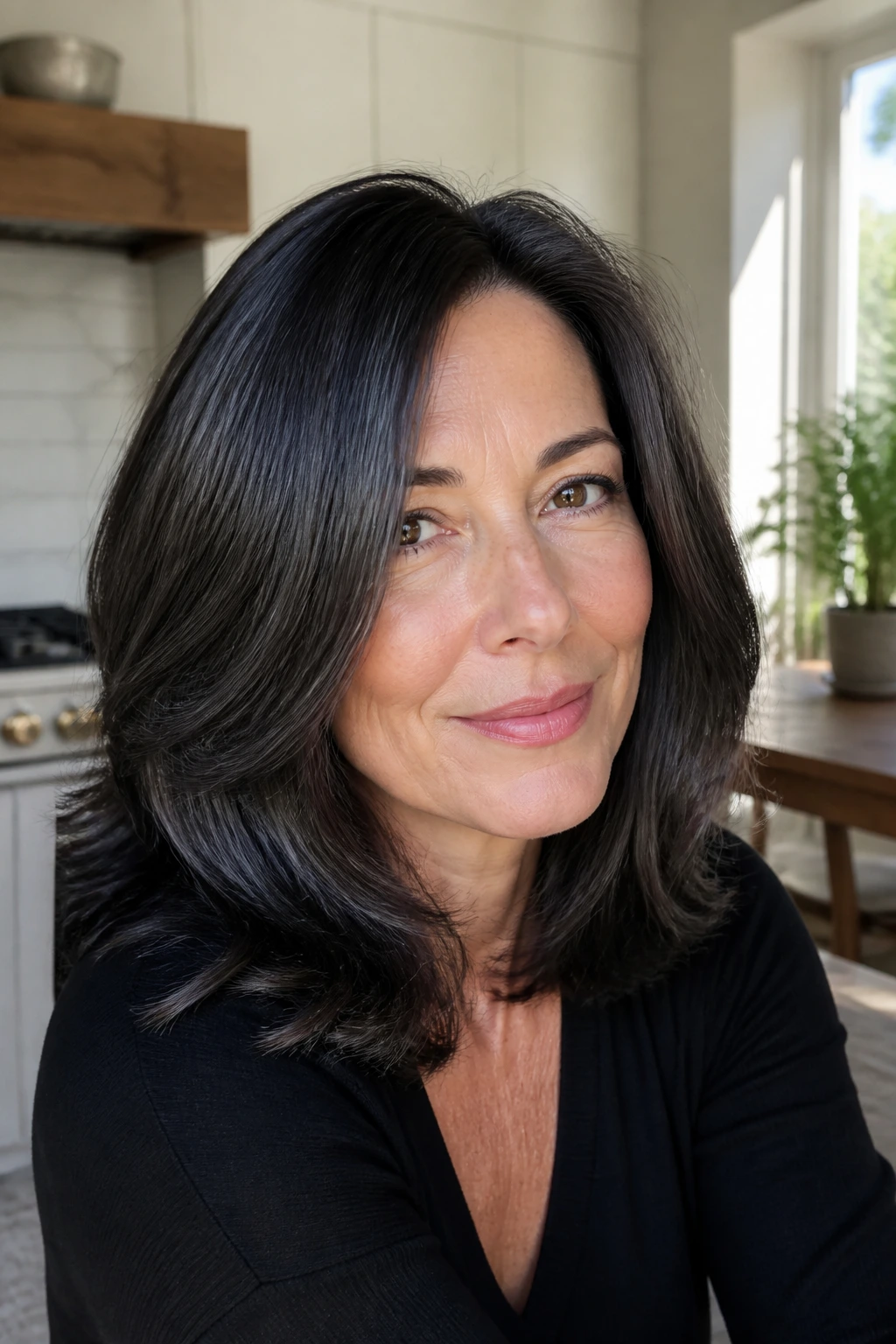
You do not need to bleach dark hair to the ceiling to get a gray mood. Graphite gloss keeps the base deep — almost black in some light — while a cool toner or shine glaze pushes the surface toward steel and slate.
The effect depends on shine. If the cuticle is rough, graphite can look muddy. If the hair is smooth, it looks sleek and reflective. That’s why this shade works so well on shoulder-length hair: the surface stays visible. You can actually see the tone shift as the hair moves.
This is a smart pick if you want subtle gray rather than obvious silver. It’s also one of the easiest ways to test a cool palette before going lighter. Keep the styling smooth, maybe with a loose bend at the ends, and the whole look feels cleaner than a full-coverage gray dye ever will.
10. Champagne Ash Gray
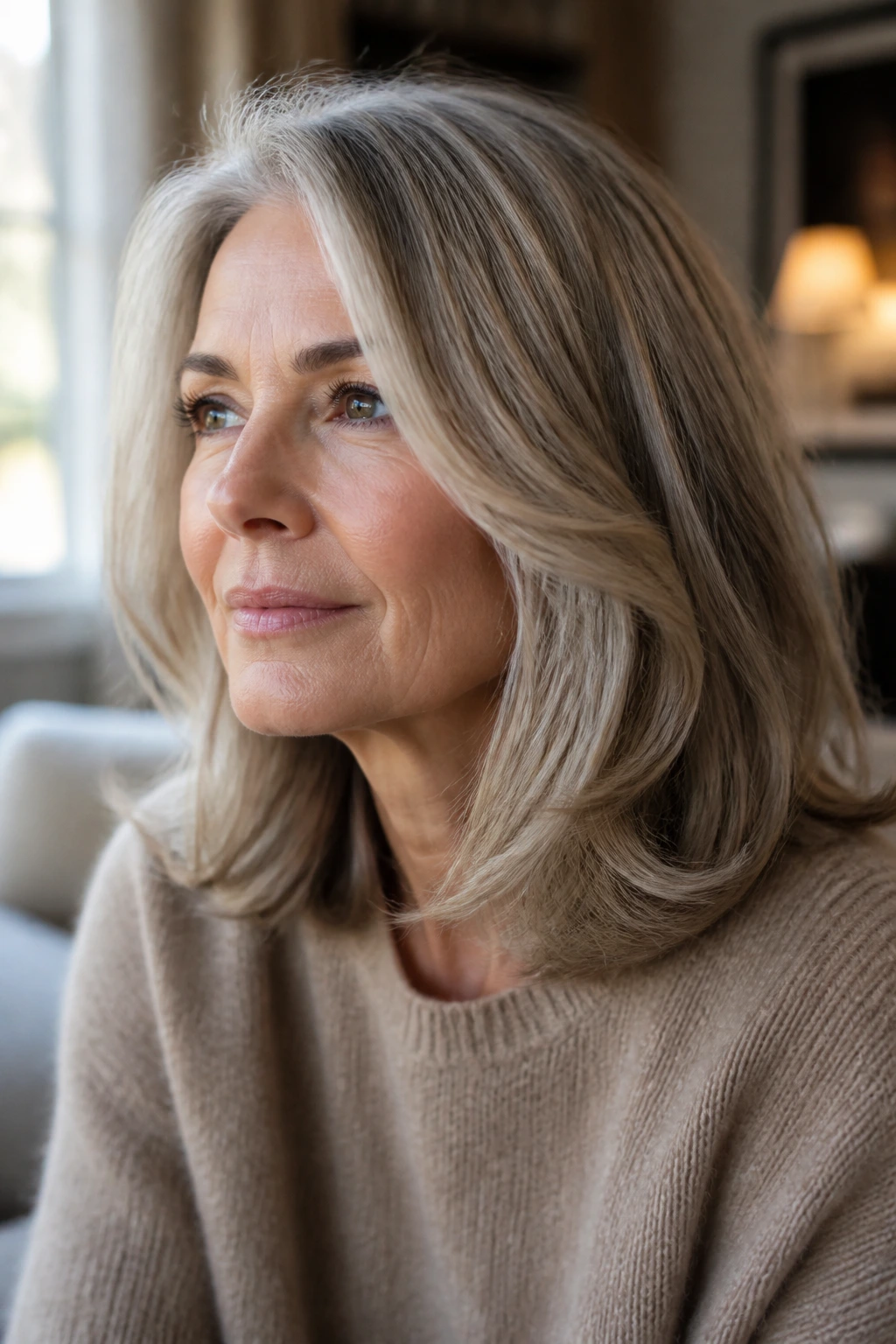
The prettiest gray I’ve seen on shoulder-length hair was not icy at all. It was champagne ash. That soft beige-gray mix keeps the color from going chalky and gives the face a little warmth back.
The formula sits between pearl and beige, with just enough cool tone to stay in the gray family. It’s a smart option if your skin runs warm or neutral and you don’t want the starkness of a blue-heavy toner. A soft blowout sells this shade better than a flat iron ever will. Too much smoothing can erase the beige notes that make it work.
Champagne ash gray also grows out kindly. The root can stay a touch deeper, which means the color doesn’t snap into a harsh line as soon as it starts to fade. That’s a nice thing to have on a shoulder-length cut, where the regrowth is easier to spot.
11. Moonstone Money Piece
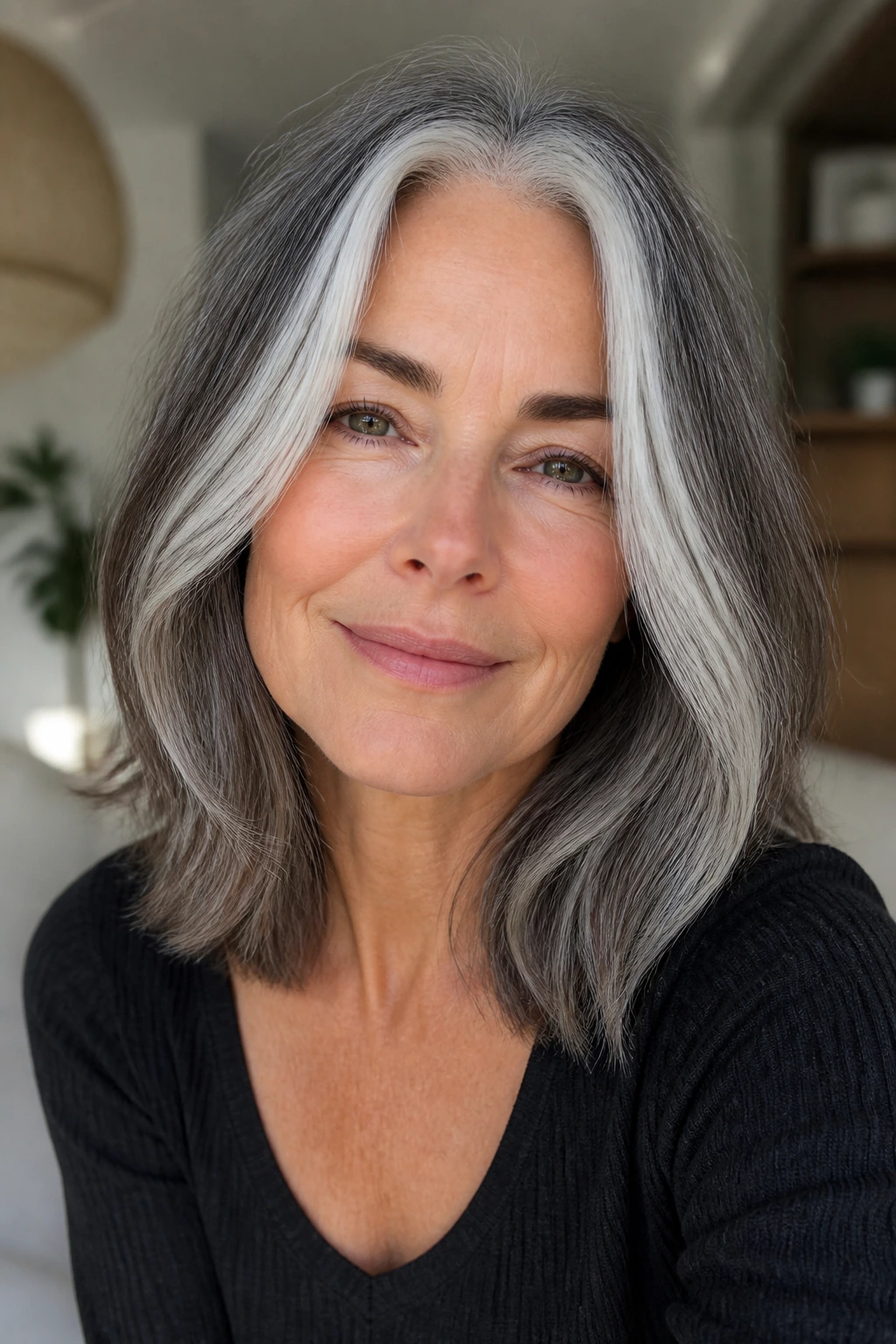
Need a gray look that shows up immediately? The money piece does the work. Brighten the front two sections to a cool silver or moonstone tone and keep the rest of the hair a shade or two deeper so the face gets the spotlight.
On shoulder-length hair, the front pieces fall right beside the eyes and cheeks, which makes the color read faster than it does on longer hair. That’s why this placement feels smart instead of flashy. It’s a small move with a big visual return. If you part your hair in the same place every day, it gets even better.
This one is especially good if you want a gray look but don’t want to commit to a full-head silver formula. The face frame gives you the payoff without requiring every strand to lighten. A blunt lob or a soft wave both work here.
12. Silver Ombre With Shadow Root
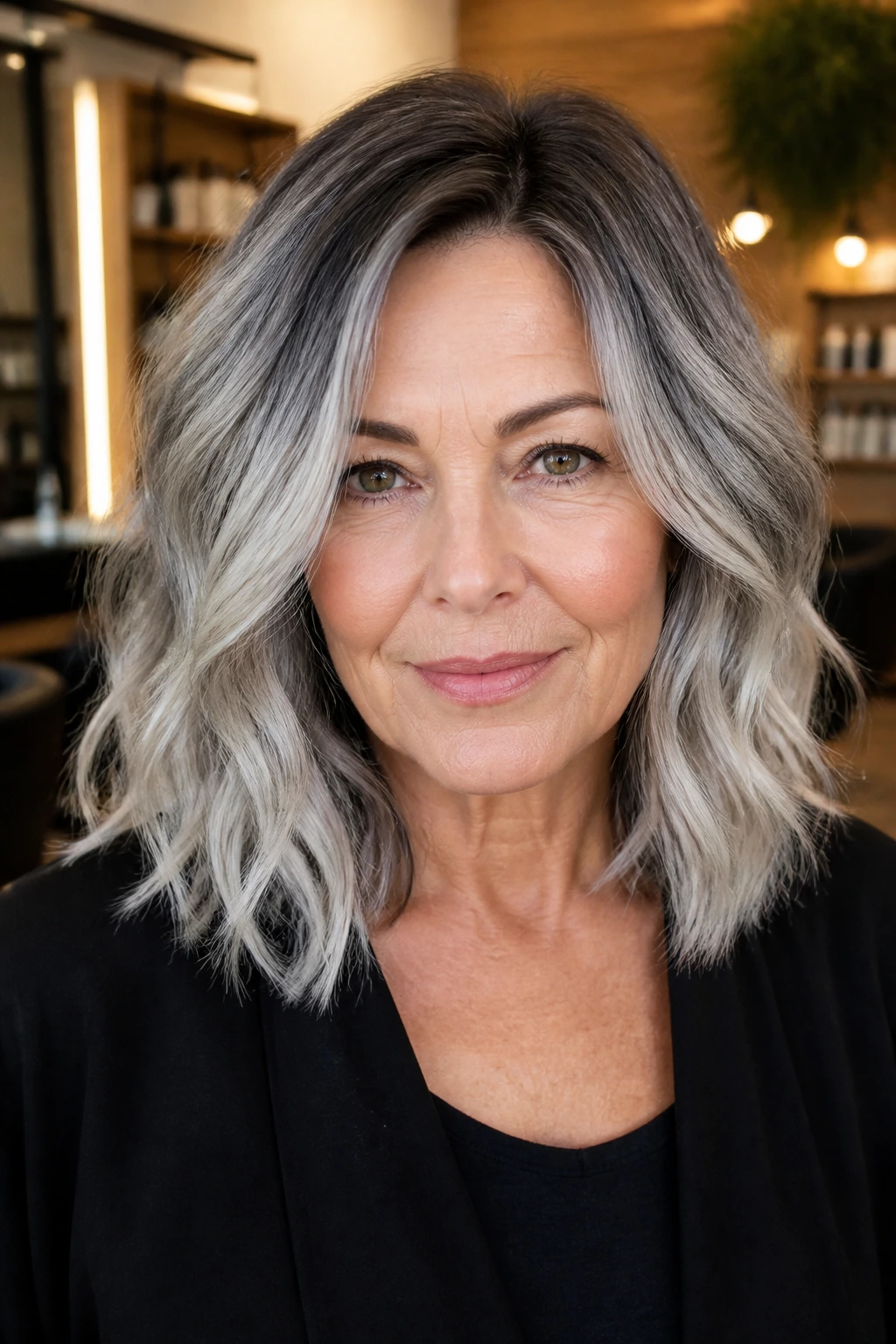
Silver ombre still works, but only when the root has enough depth to hold the look together. A soft shadow root melts into silver through the mid-lengths, then gets brightest around the last third of the hair.
That shorter transition is one reason shoulder-length hair suits this style so well. The color change doesn’t have to travel far to make sense, which keeps the ombre smoother and more modern. A hard line between dark and light would feel chopped. A slow shift feels intentional.
I like this more than a clean two-tone split because the gray starts before the ends, not after them. That tiny difference keeps the cut from looking like it was divided with a ruler. On a lob, that matters a lot.
13. Pewter Peekaboo Panels
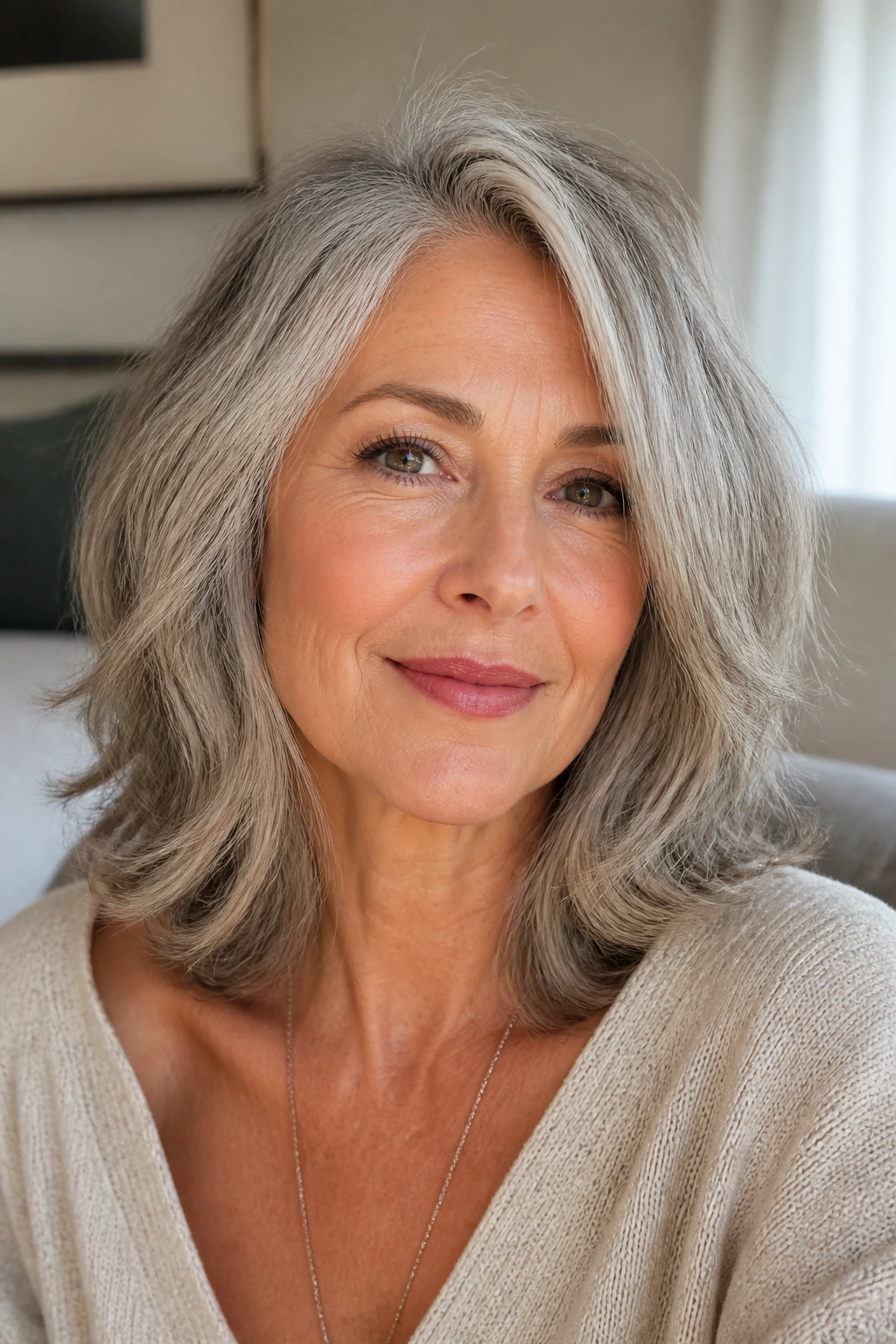
Pewter peekaboo panels are for anyone who likes a little surprise under the top layer. The visible hair stays softer — beige-gray, smoky brown, or a muted silver glaze — while the hidden panels underneath carry a deeper pewter tone.
The color shows when you tuck one side back, wear the hair half up, or let movement lift the top layers out of the way. On shoulder-length hair, that contrast has room to appear and disappear, which is exactly why the effect feels playful instead of loud.
This is one of those styles that looks different in every lighting situation. In low light, it reads subtle. In bright light, the hidden panels catch and shift. That range gives the cut a bit of surprise without forcing the whole head into a high-maintenance silver cycle.
14. Rose Quartz Gray
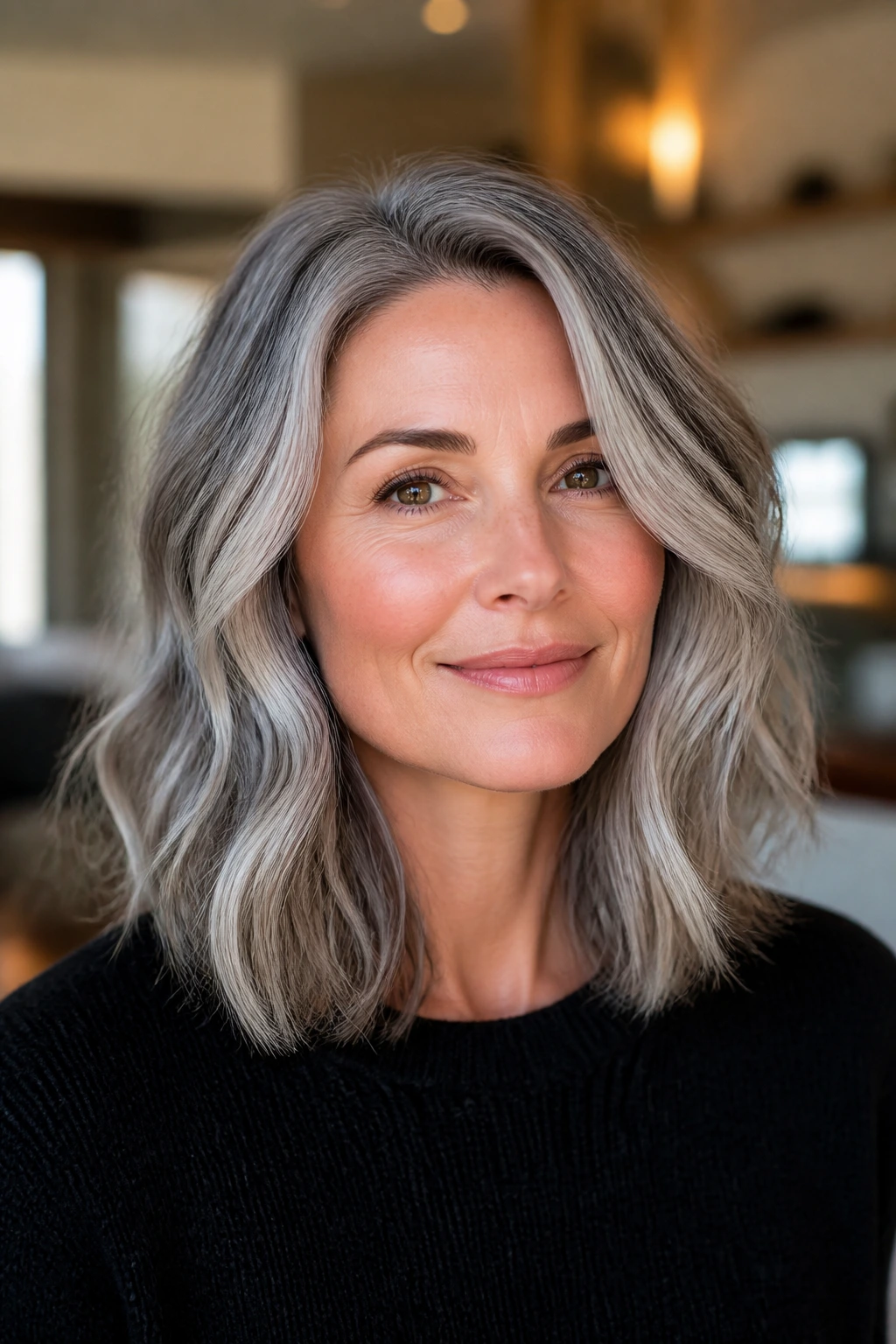
Gray does not have to stay cold, and rose quartz gray proves it. This look mixes silver with a faint blush tint, so the finish lands somewhere between cool metal and soft pink stone.
The pink should be so light you notice it after the fact, not during. On shoulder-length hair, that subtle warmth sits close to the face and keeps the gray from feeling flat. It flatters people who find pure silver too harsh, especially if their skin runs warm or peachy.
Keep the cut lightly layered so the color can move. A solid one-length shape can make the blush read a little heavy, while soft layers let it breathe. If you want gray with a softer edge, this is one of the prettiest places to start.
15. Frosted Ash Beige
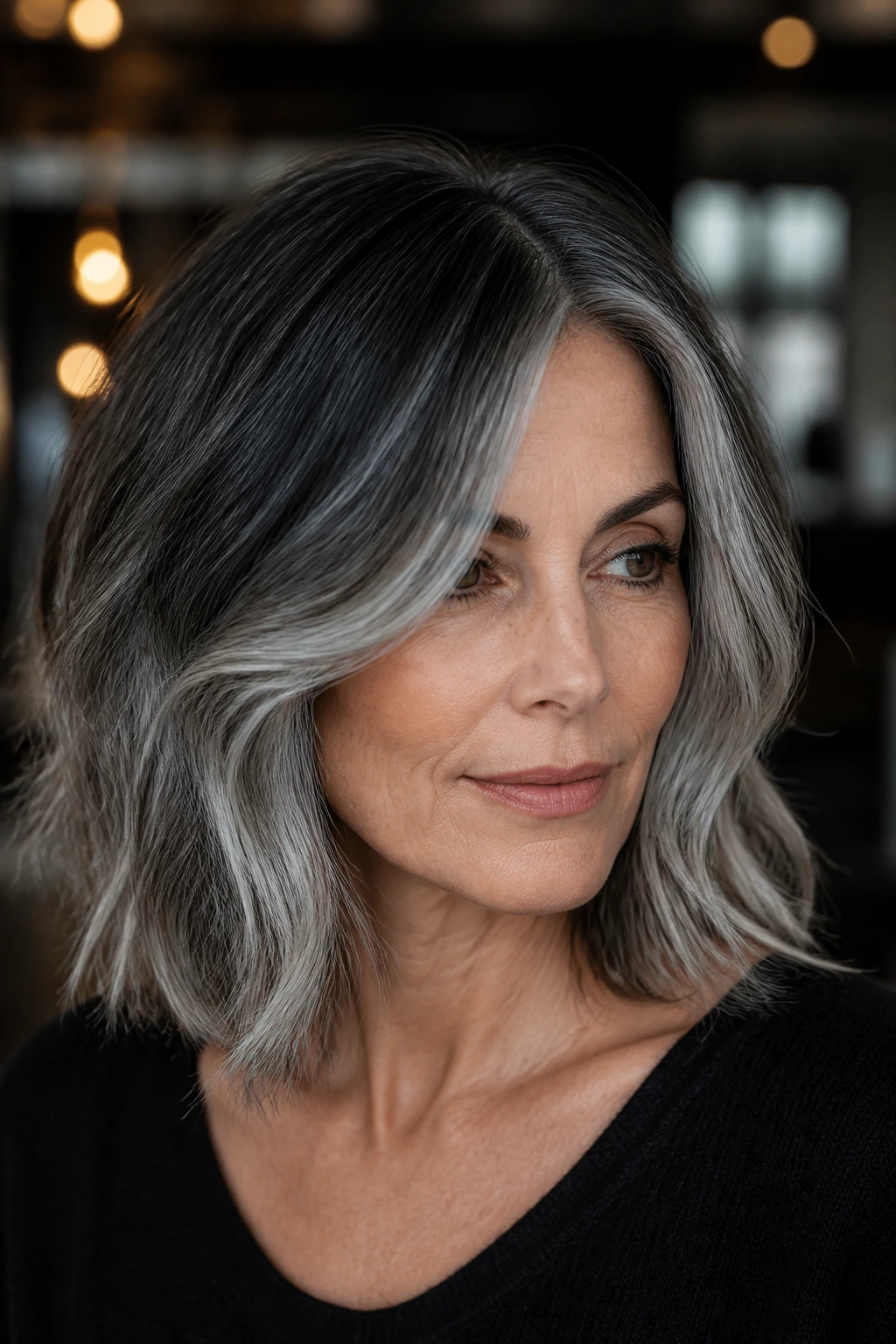
What if you want gray hair that whispers instead of shouts? Frosted ash beige is the answer.
Who it flatters
- Neutral and olive undertones that need a softer cool shade.
- Fine hair that benefits from dimension without chunky contrast.
- Anyone who wants a smoother grow-out with fewer harsh lines.
The shade sits between beige and ash, which sounds sleepy until you see it moving. On shoulder-length hair it looks clean and soft, with enough coolness to register as gray and enough beige to keep it from going chalky. Tell your colorist you want a muted finish, not an icy one. Those tiny wording changes matter more than people think.
16. Titanium Streaks Over Black Base
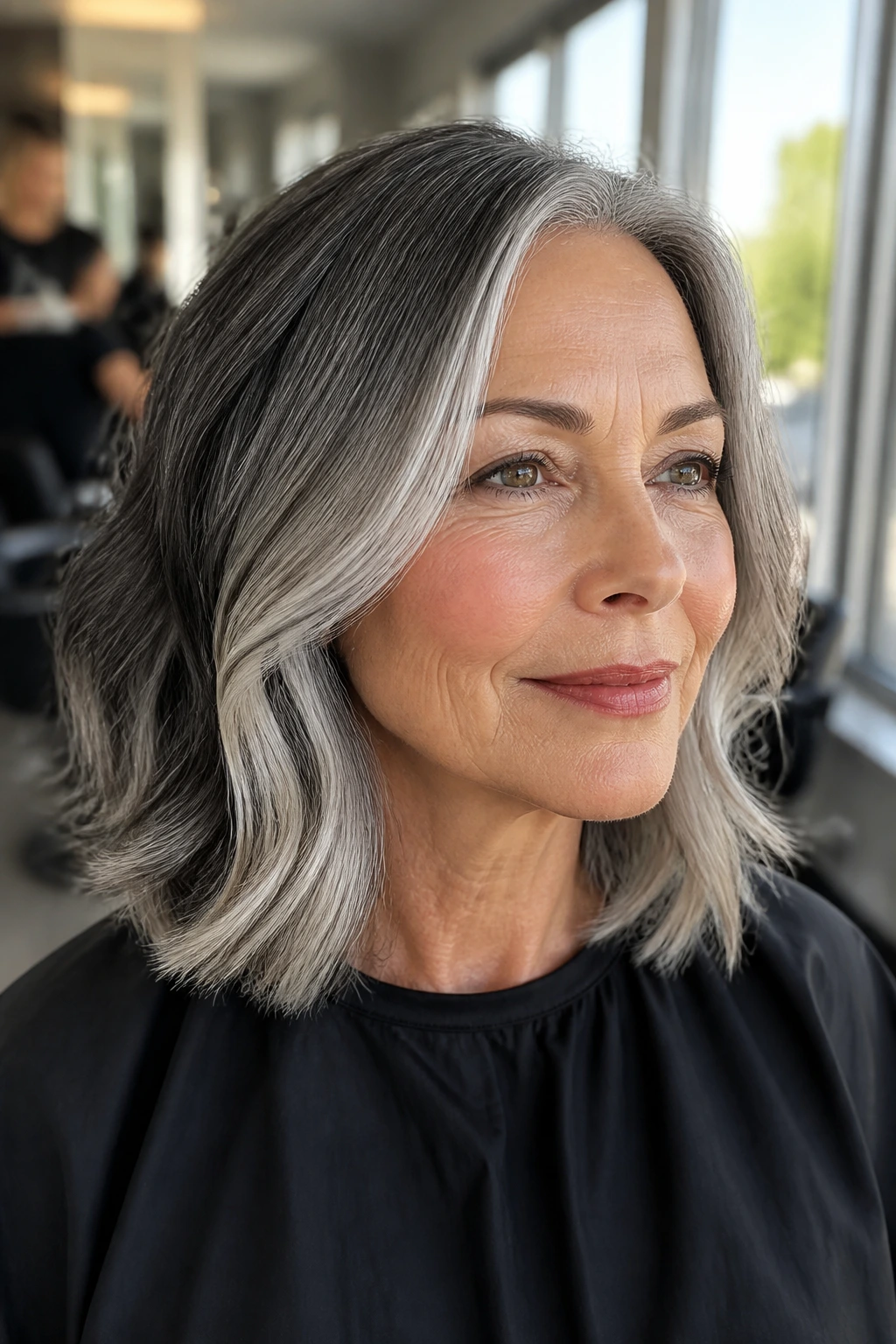
Chunky gray streaks are not the same thing as highlights, and titanium shows why. On a black or near-black base, slightly thicker silver-gray ribbons create a graphic contrast that feels clean, not messy.
Use sections that are a bit broader than baby highlights — think around 1/4 inch to 3/8 inch — so the streaks stay readable from root to end. Shoulder-length hair can carry that contrast better than long hair because the pieces don’t get swallowed by the weight of the length.
This is the boldest option in the mix. It works best if you like straight styles, a deep side part, or a polished wave that keeps the lines clear. If you want gray hair with some attitude, titanium streaks have it.
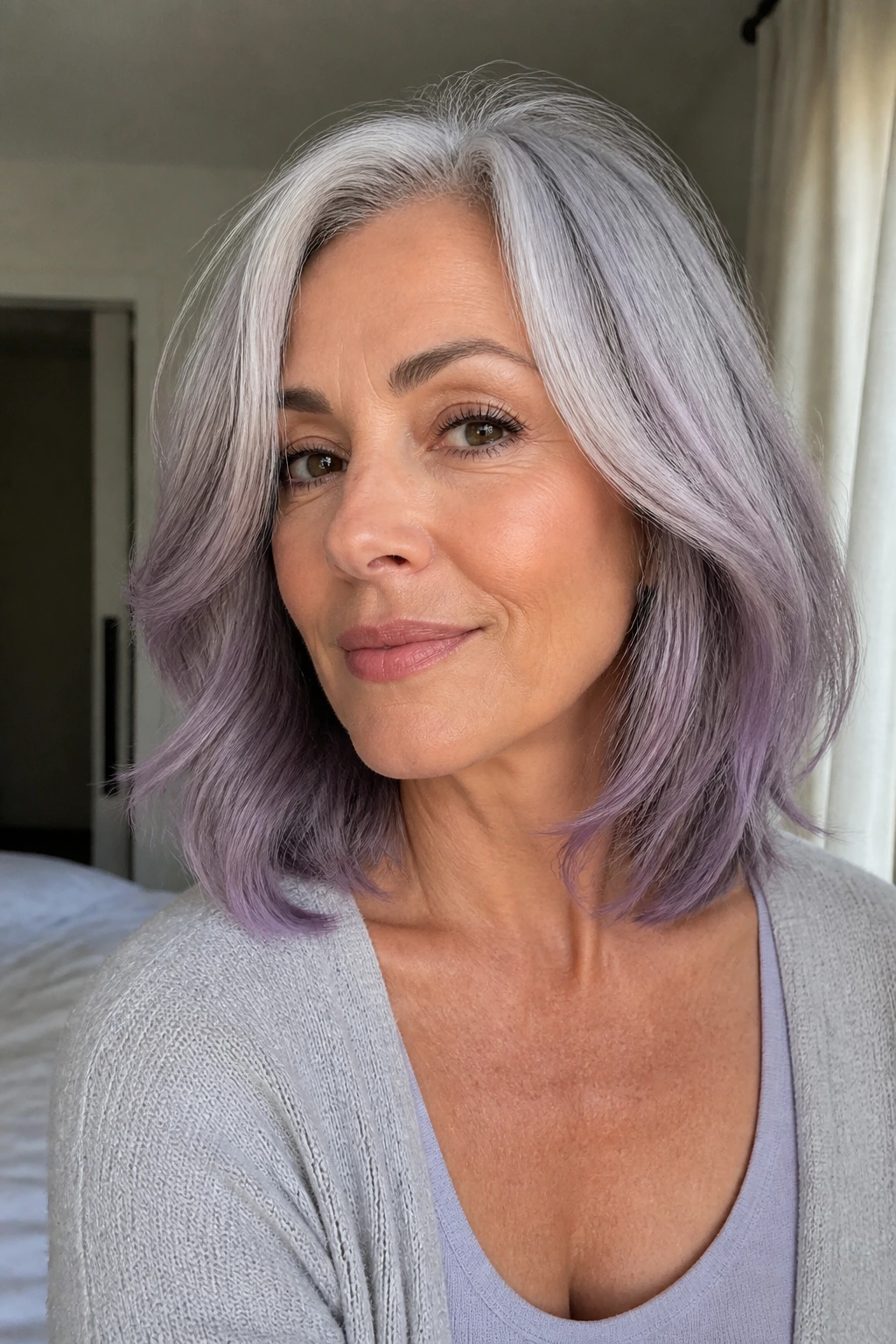
17. Smoky Lilac Melt
Some gray tones feel a little too serious. Smoky lilac fixes that without turning the hair into full pastel. Start with silver-gray at the top, then drift into muted lilac through the mids and ends so the color feels soft and cool rather than bright.
The trick is keeping the lilac dusty. If it gets too saturated, the whole thing starts reading violet instead of gray. On shoulder-length hair, the shift is easy to see but not overwhelming, which makes the whole look feel controlled.
I’d keep the haircut soft and layered here. That gives the color somewhere to move. A blunt edge can make the lilac feel more obvious than it should, and this shade works best when it stays a little misty.
18. Cloud Gray With Soft Layers
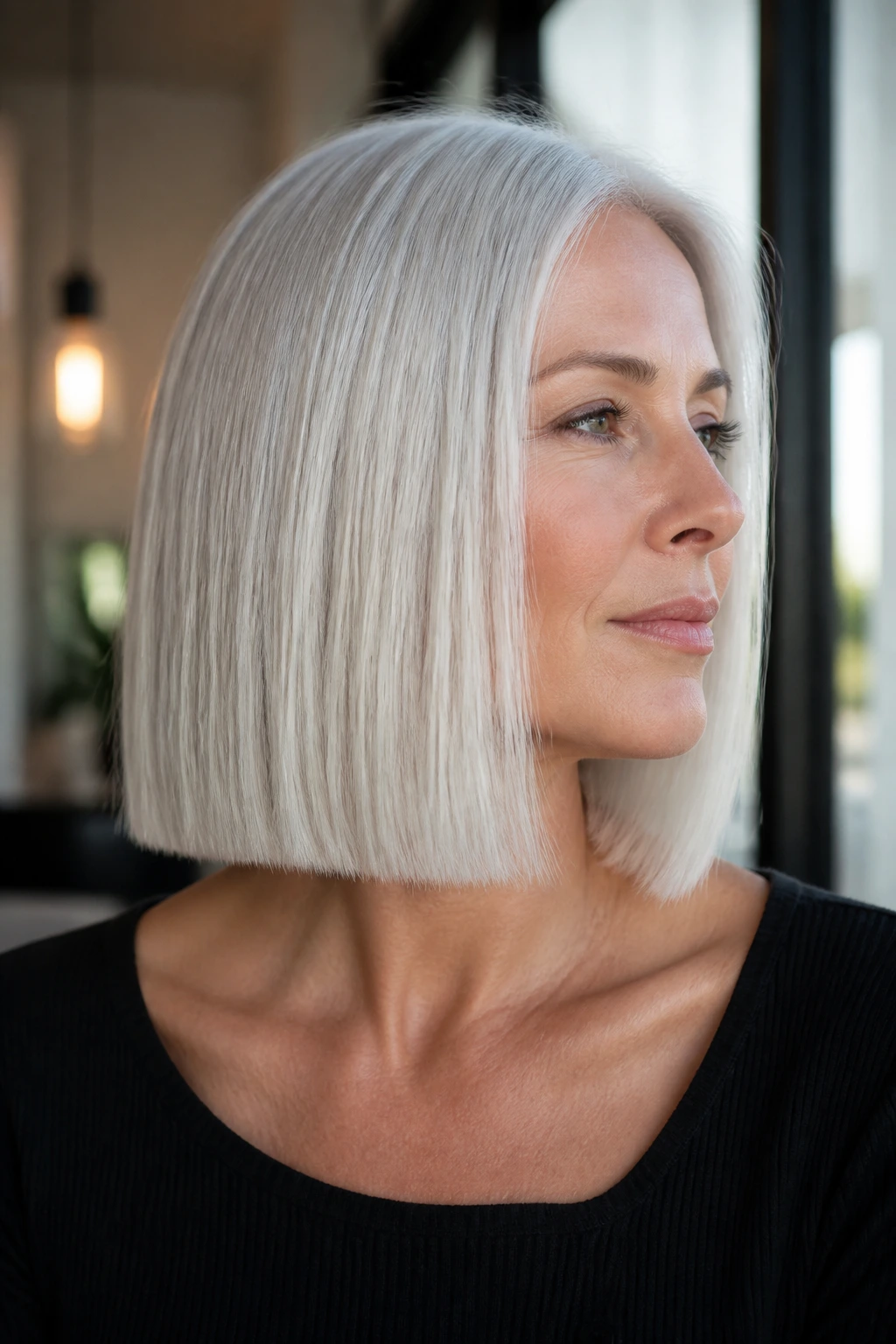
Cloud gray works when the haircut has enough movement to keep the tone from going heavy. Ask for soft layers and a diffused gray glaze that sits between pearl and smoke.
The point is not crisp contrast. The point is a misty surface that looks like the light changed when you turned your head. That’s why this shade is so good on shoulder-length hair: the color can be seen, but it never has to shout to be noticed.
This is one of the best gray ideas for fine hair. The layers create lift, and the soft gray keeps the hair from looking thin or chopped up. A 1-inch iron or a loose blowout bend can help the layers show without turning the style stiff.
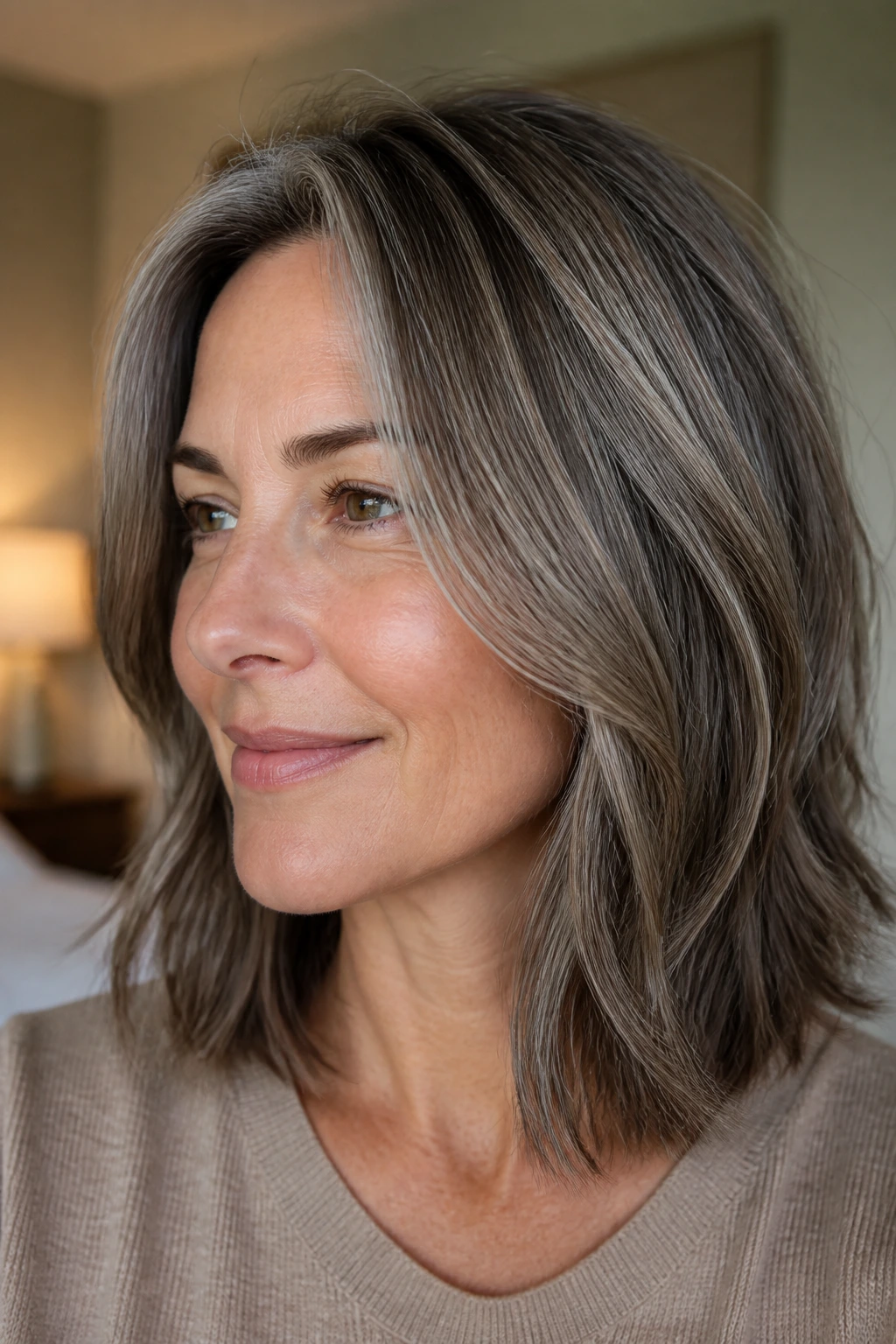
19. Ash Brown to Silver Sweep
If you want a transition look that doesn’t feel abrupt, ash brown to silver is the one to keep in the back pocket. The crown and root stay ash brown, then the silver sweeps in gradually through the mid-lengths and ends.
On shoulder-length hair, that slow shift gives you enough room to show the blend without dragging it down. The eye can follow the color change from top to bottom without tripping over a hard line. That’s what makes it feel polished.
It’s one of the friendliest looks for growing out dyed brunette hair. The cut keeps the transition visible, but the color change is soft enough that no one sees a block of brown meeting a block of silver. That’s a win.
20. Frosted Tips on Shoulder-Length Cuts
Frosted tips sound old-school until you see them on a clean shoulder-length cut. The trick is to keep the root darker and frost just the last 2 to 3 inches, where the color can catch light without taking over the whole head.
Why keeping the root darker helps
- It leaves the scalp area looking denser.
- It keeps the bright color from flooding the whole cut.
- It makes the trim look sharper when the ends are light.
This is a good choice if you want gray interest without a high-maintenance root touch-up. It’s also a sneaky way to test silver before committing to a full color shift. On wavy or layered shoulder-length hair, the frosted ends move around enough to feel fresh instead of dated.
21. Metallic Smoke With Curtain Bangs
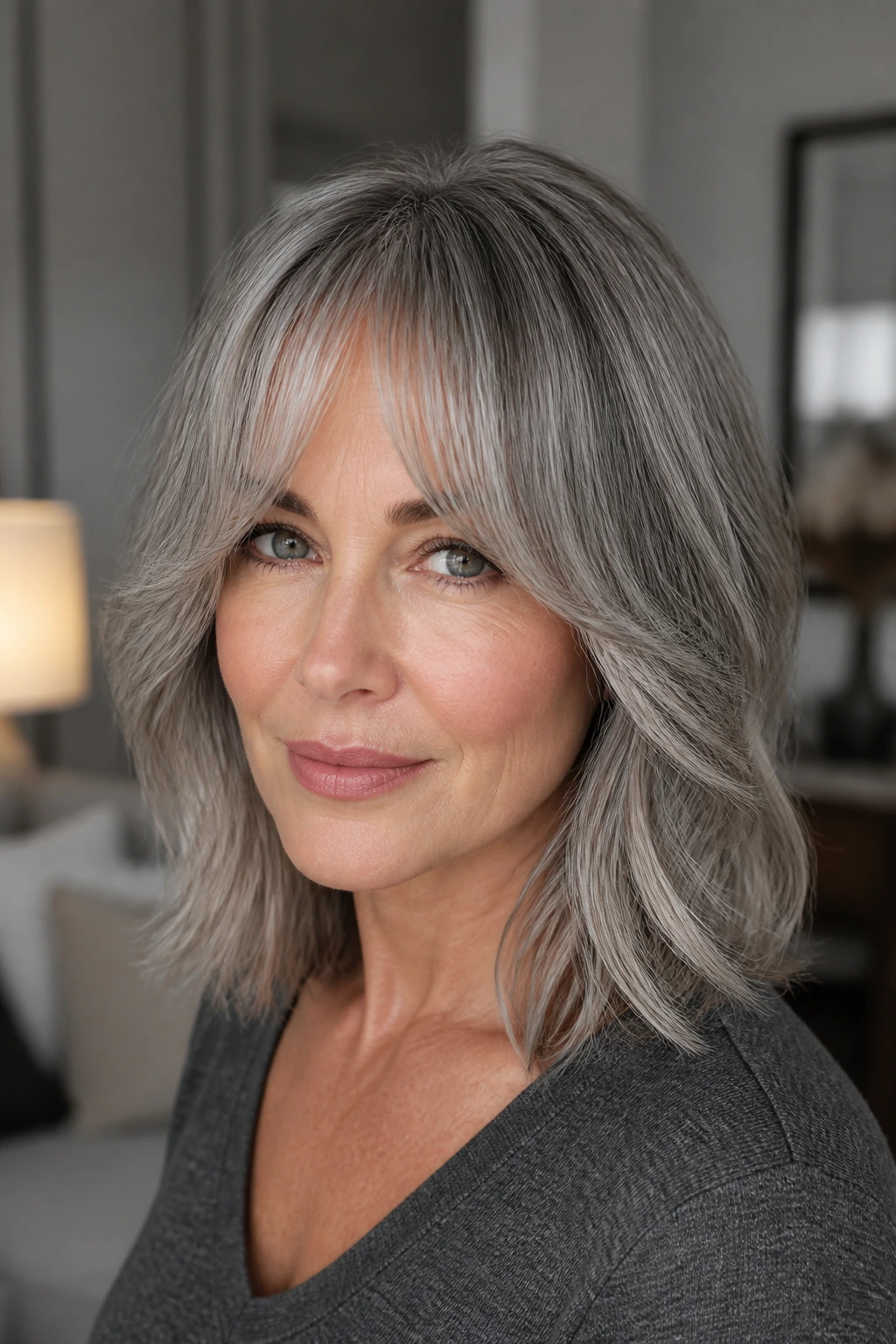
Curtain bangs change the whole math of gray hair. They put the light right in the front, which is useful when the color needs to do something fast.
Metallic smoke combines a cool silver-gray glaze through the lengths with slightly brighter bangs that fall around the cheekbones. That makes the color read softer near the face and deeper underneath, which is a nice balance on shoulder-length hair. The bangs frame the eyes; the lengths keep the style from feeling precious.
This works especially well if you wear your hair loose most days. The bangs show the tone immediately, and the rest of the cut keeps the look grounded. It’s a very clean way to wear gray without losing softness around the face.
22. Slate Gray Lob With Razor Ends
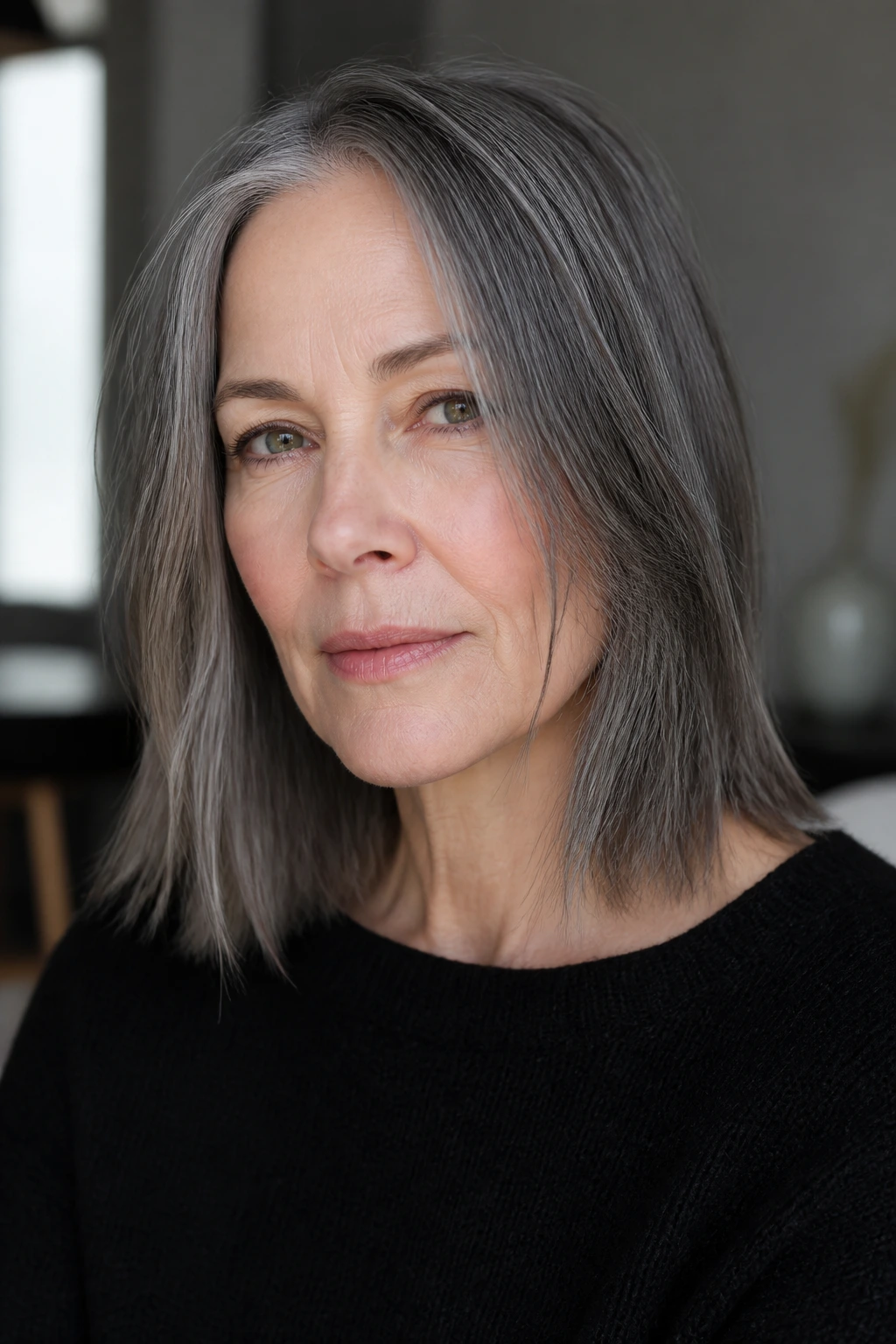
Slate gray is the most structured color in this bunch, and razor ends are the cut that makes it land. The tone sits darker than pearl, lighter than charcoal, with a cool slate finish that feels deliberate rather than soft.
A razor-cut lob gives the hair enough edge that the gray reads graphic, not muted. The ends move a little, but they don’t fluff out, which keeps the color looking precise. If you like a middle part, a sharp collarbone length, or a bit of movement without frizz, this one earns its place.
It’s the kind of gray that looks like it knows exactly what it is doing. That sounds dramatic, but it’s true. Some gray looks are meant to whisper. This one has a straight spine.
Why Shoulder-Length Gray Hair Loves Dimension
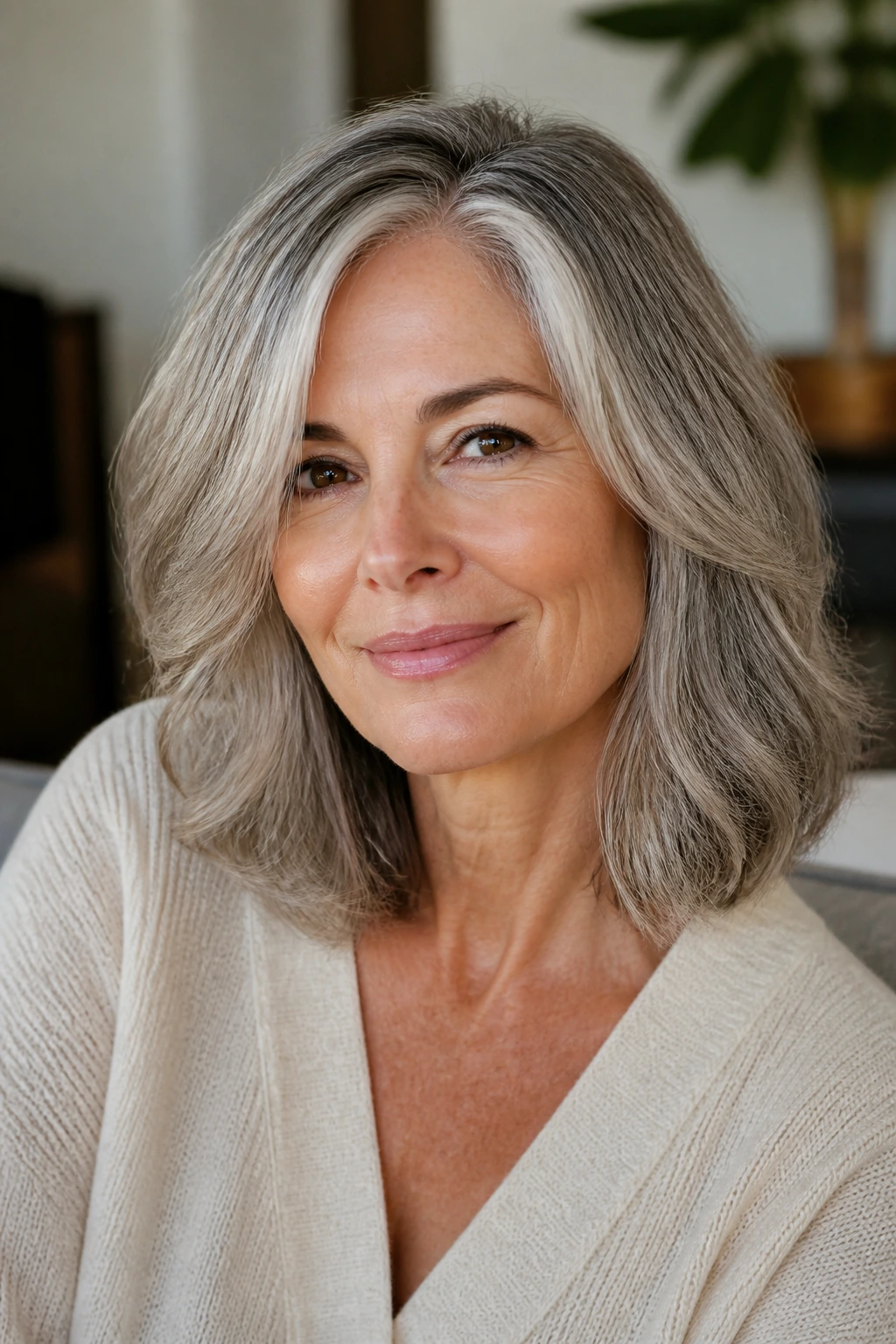
Shoulder-length gray hair looks best when the color has a little structure underneath it. A lob exposes enough of the hair to show the shift between root, mid-length, and ends, which means a small change in placement can change the whole read of the cut. That’s why a shadow root, a silver ribbon, or a face frame can do more here than on much longer hair.
Long hair can swallow tone. Very short cuts can make gray feel abrupt. Shoulder length sits in the middle and gives you the useful parts of both: movement, but also enough surface area to show depth. A blunt edge will sharpen graphite and slate. Soft layers will loosen balayage, mushroom gray, and champagne ash. Same color family. Very different mood.
My bias is simple. If someone wants gray hair that still feels wearable between appointments, this is the length I’d pick first. It gives you room to keep regrowth soft, room to trim off any dry ends, and room to change the tone later if you decide the silver needs more warmth or more bite.
Essential Tools for Gray Hair Color and Tone Maintenance
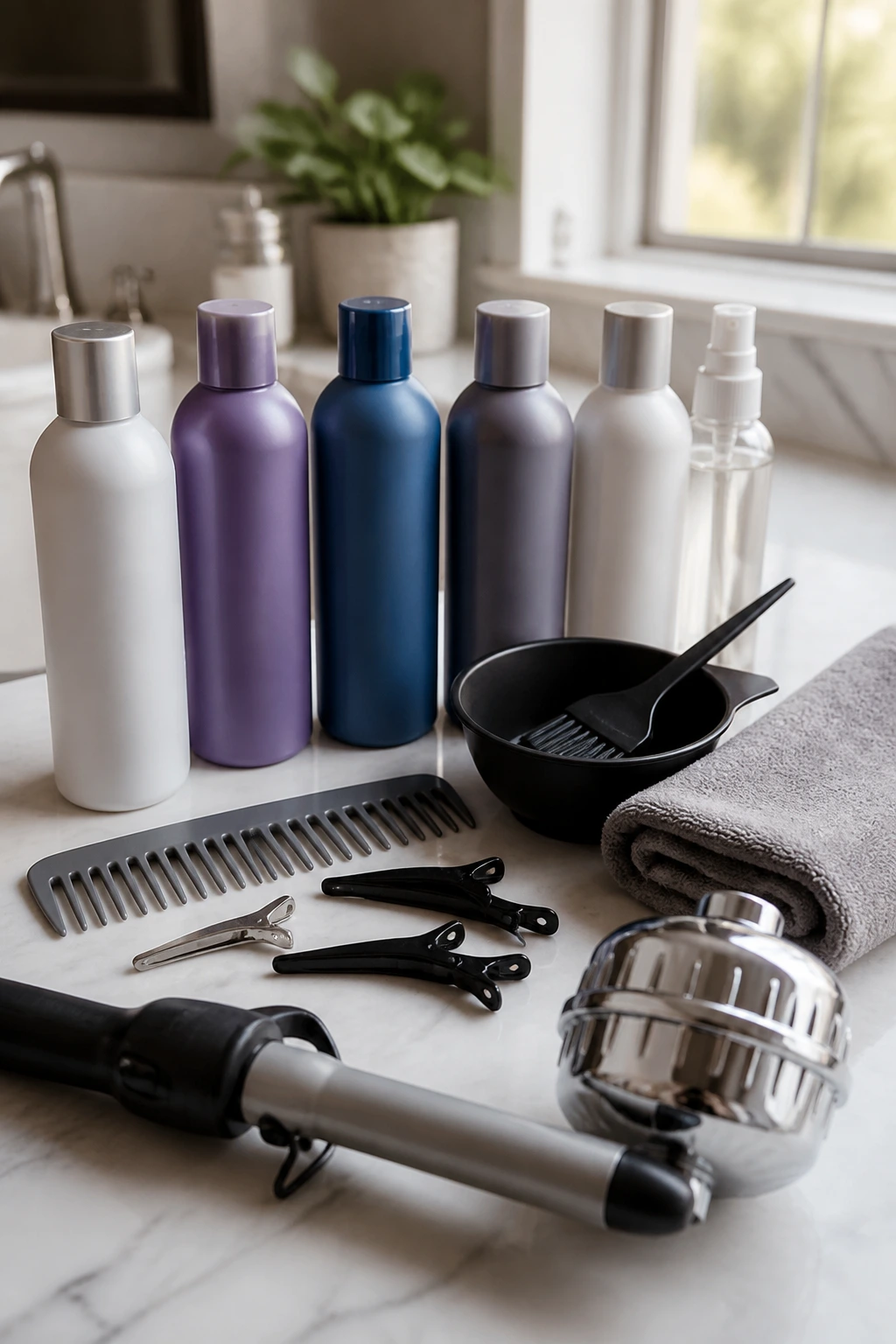
- Color-safe sulfate-free shampoo: Keeps silver, ash, and graphite tones from fading too fast.
- Purple shampoo: Good for pale blonde-based grays that start turning yellow at the ends.
- Blue shampoo: Better for darker gray or brunette blends that start looking orange.
- Demi-permanent gloss or toner: Useful for refreshing cool tone every 4 to 8 weeks without a harsh line.
- Color-safe conditioner: Keeps porous gray ends from feeling rough after washing.
- Heat protectant spray: Gray shows heat damage fast, so this is not optional if you use tools.
- Wide-tooth comb: Helps detangle without ripping the lighter, more porous pieces.
- Sectioning clips: Makes it easier to place masks, glosses, or at-home toners evenly.
- Tint brush and bowl: Handy if you’re doing a gloss or mask treatment at home.
- Microfiber towel or old T-shirt: Cuts down on friction that can rough up silver strands.
- 1-inch curling iron or wand: Useful for showing off ribbons, ombré, and face-framing pieces.
- Shower filter: Optional, but a smart buy if hard water keeps yellowing your silver.
How to Shop for Gray Toner, Gloss, and Color Masks
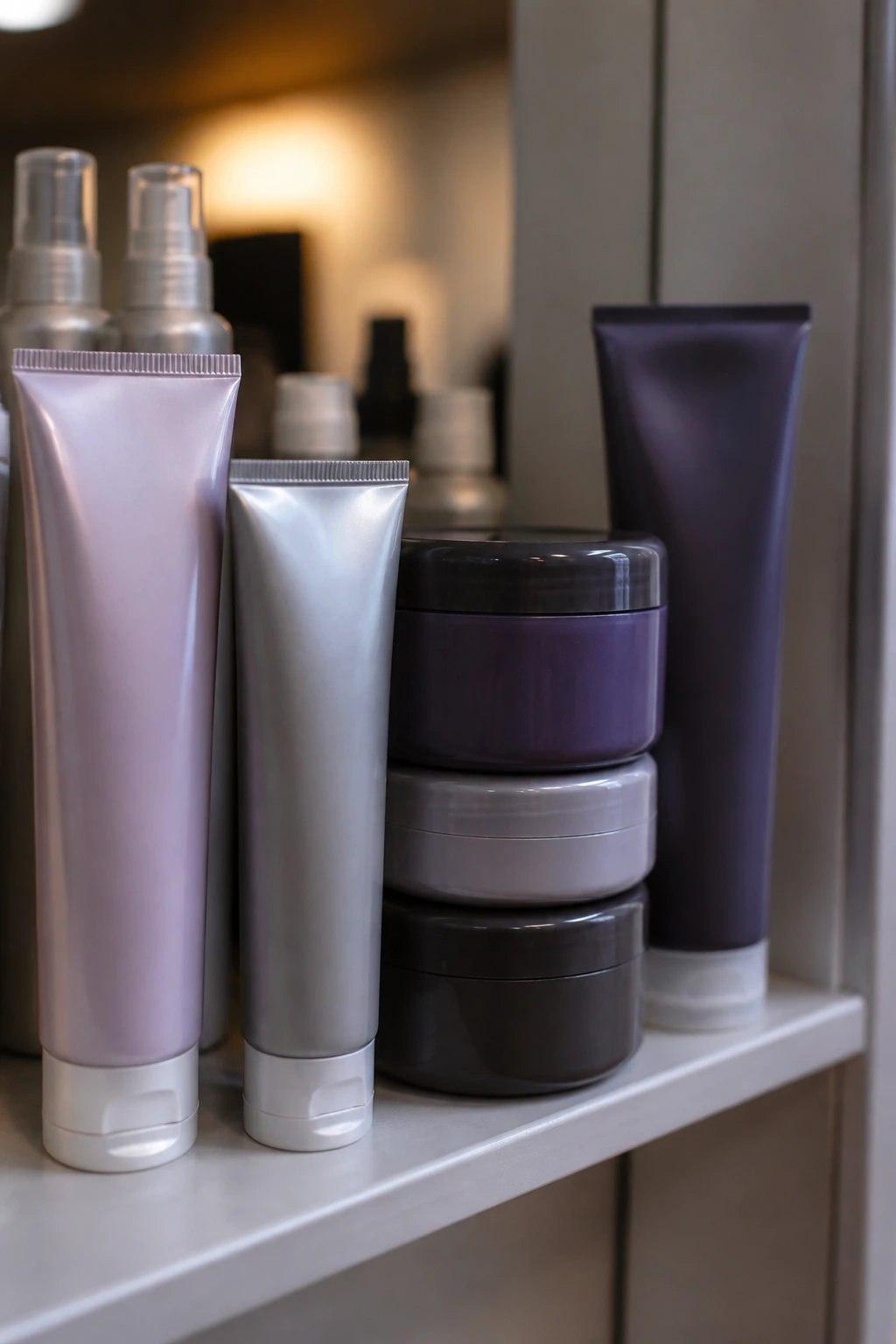
Gray hair products are not all doing the same thing, even when the packaging looks nearly identical. If the hair is lifted to pale yellow, a violet-based toner can push it toward pearl or soft silver. If the base still has orange in it, blue-violet pigments are usually safer. Beige-gray and champagne tones need a more neutral gloss, not an icy one that drags the hair too far cool.
When you’re reading labels, look at the pigment family more than the marketing name. A bottle called “silver” can be loaded with violet on one brand and blue on another. That matters. Porous hair grabs pigment fast, so a mask that looks harmless on the shelf can go muddy on damaged ends after one long leave-on session.
If you’re color shopping at home, I’d choose a demi-permanent gloss over a permanent gray dye almost every time. Glosses fade softer and are easier to course-correct. Permanent silver formulas can go flat in a hurry, especially if the hair was previously colored or highlighted. And if your water is hard, a monthly chelating shampoo can save you from that yellow veil that creeps in when you least want it.
How to Style Shoulder-Length Gray Hair So the Tone Shows
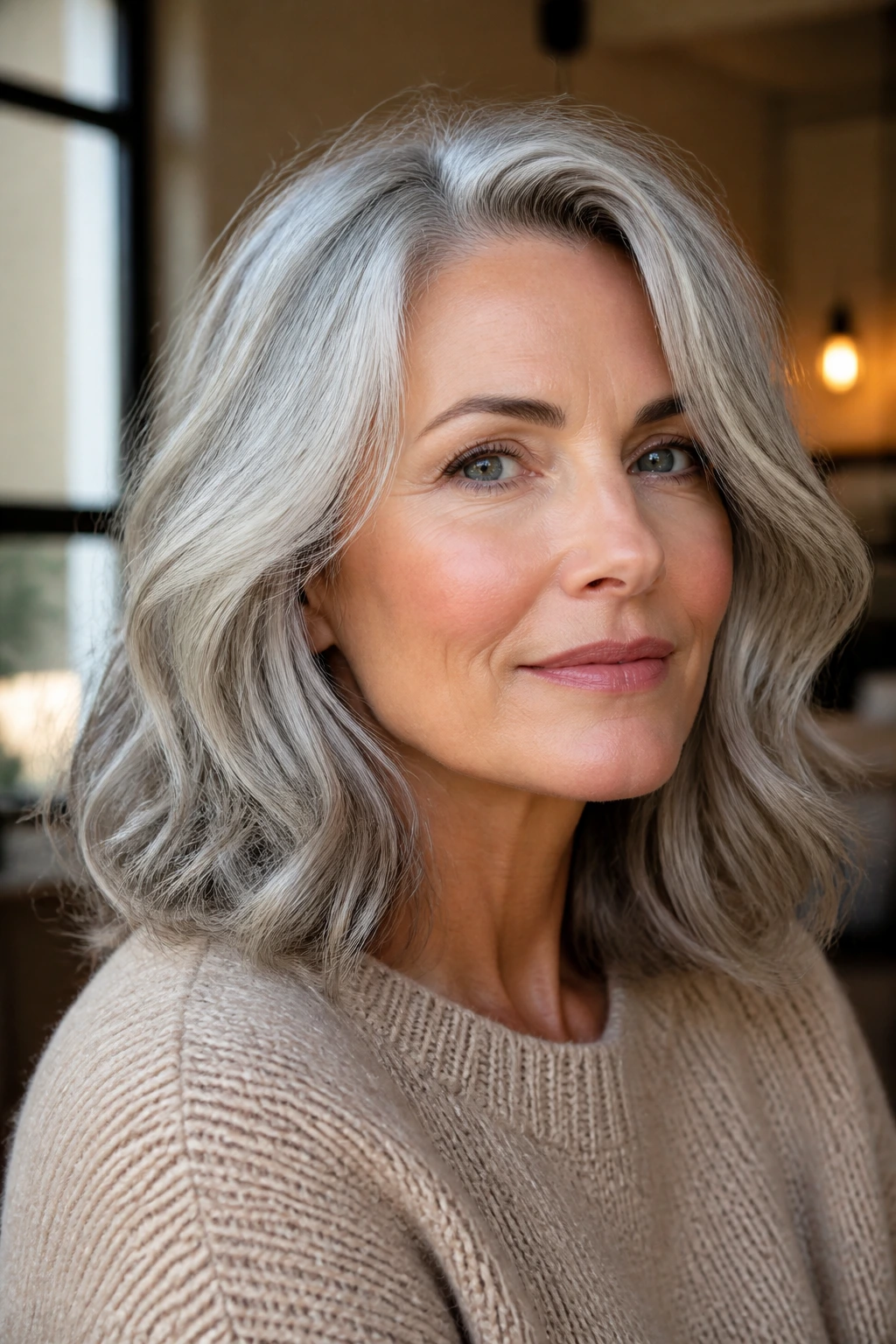
Parting: A center part makes pearl gray, slate, and graphite feel sharper. A soft off-center part gives balayage and money-piece placement a little more movement, which is often the better call if you’ve got face-framing brightness.
Texture: Loose bends show silver ribbons better than pin-straight hair, because the light catches the curve. A straight blowout works when the color is deeper — graphite, champagne ash, mushroom gray — and you want the surface to look sleek instead of airy.
Finish: Keep serum and oil to the last 2 or 3 inches only. Too much product makes cool gray look greasy, and greasy gray is one of those things you can spot from across a room. Use a lightweight spray or a pea-size cream, then stop.
Pairings: Black, white, denim, charcoal, and cool navy tend to make gray hair read cleaner. Warm camel or mustard can be lovely on the body, but if you want the hair tone to stand out, cooler clothes do more of the work. A strong brow and a clean lip also help the color read deliberate instead of washed out.
Shine and Tone Boosters That Keep Gray Crisp
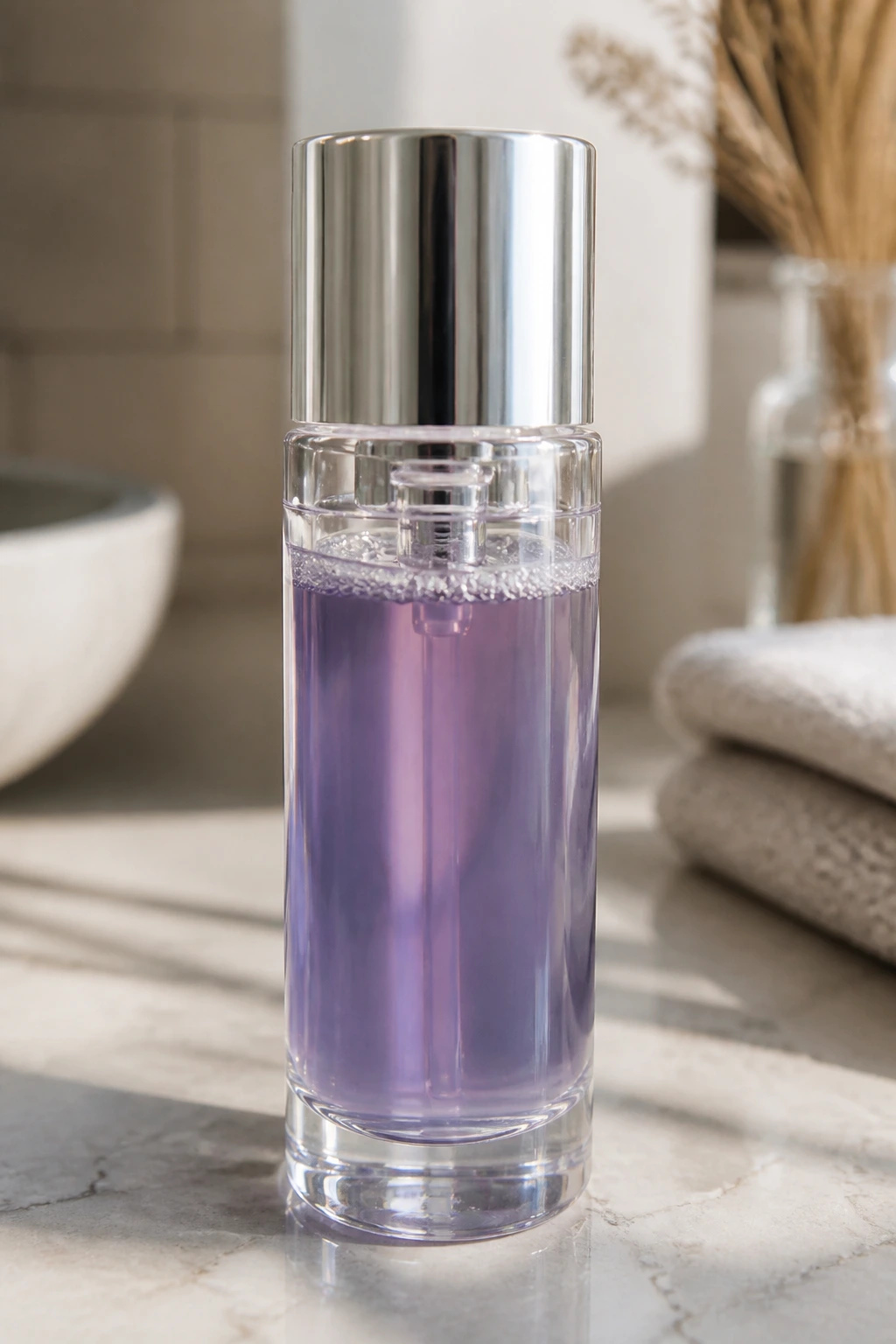
Gloss: A clear or cool-neutral gloss every 4 to 6 weeks keeps silver from turning flat. If the gray has beige in it, don’t force it icy with a violet-heavy gloss unless you want the tone to look colder than the cut was meant to be.
Shampoo timing: Use purple shampoo once a week on pale blonde-based gray, and blue shampoo only when darker gray starts leaning warm or orange. Leave it on for 1 to 3 minutes, not a full shower. More is not better here. That’s how silver ends up dusty.
Heat control: Keep hot tools under 375°F if your hair is fine or porous, and closer to 350°F if the ends feel dry. Gray color reflects light from the surface, so rough heat damage shows faster than people expect. A heat protectant before every blow-dry or curl is non-negotiable.
Water quality: Hard water can push gray toward yellow or greenish haze. A shower filter helps, and so does a clarifying or chelating wash once a month if the color starts to lose its clean edge.
Finish products: A tiny bit of lightweight oil on the last inch can make graphite, slate, and pearl gray look smoother. Use too much and you lose the crispness. That’s the tightrope with gray hair — shine helps, but drag does not.
Common Mistakes That Flatten Gray Hair Color
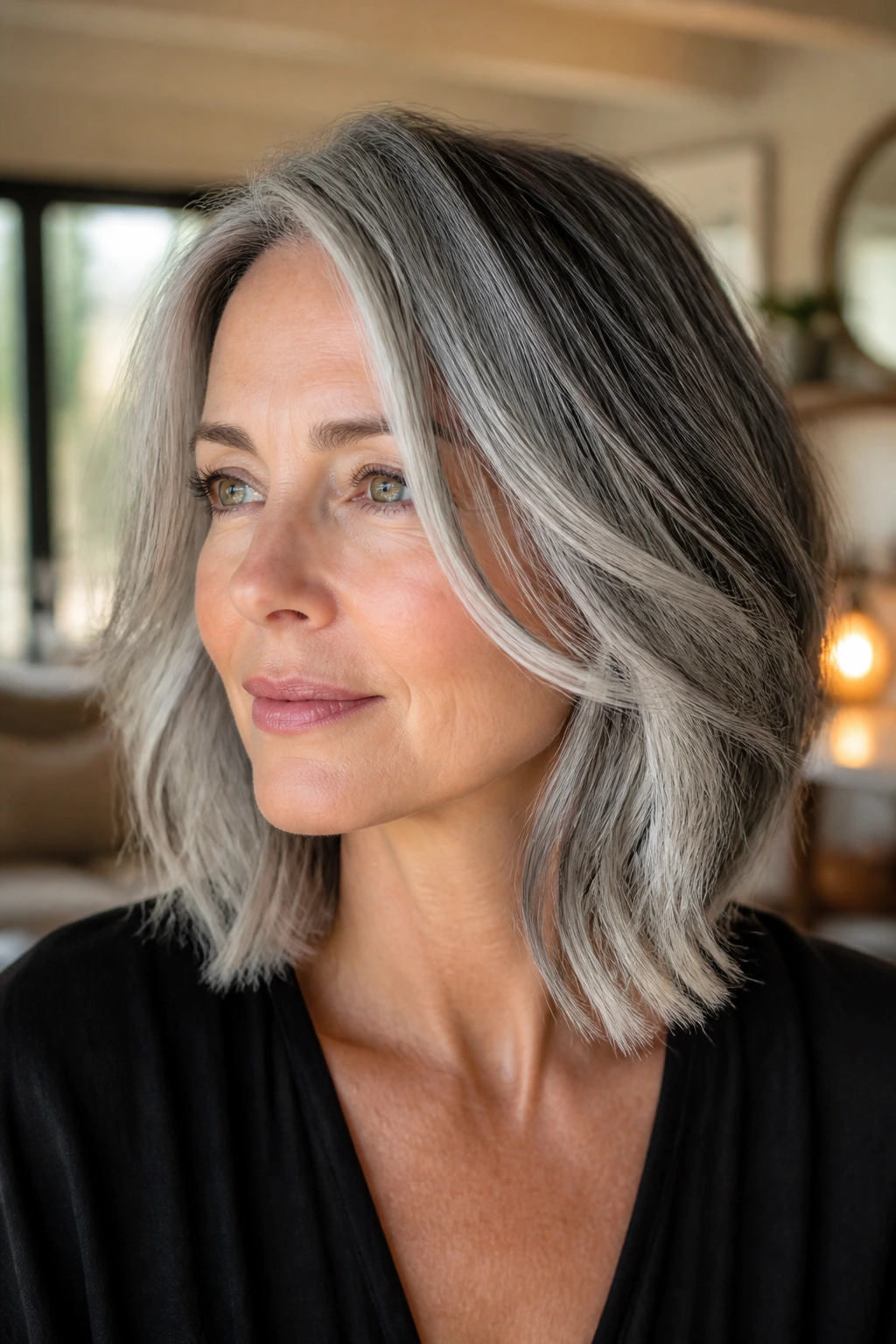
- Going too ash-heavy: If the gray starts looking green, dusty, or chalky, the toner was probably too cool for the base. Fix it with a beige or pearl gloss instead of more purple shampoo.
- Using purple shampoo every wash: Hair can pick up a dull lavender cast and feel dry at the ends. Use it weekly, then back off if the color starts looking muted.
- Leaving the root the same tone as the ends: A shoulder-length cut needs some depth near the scalp or the shape disappears. Keep the root one to two levels deeper for better definition.
- Ignoring porosity: Lightened ends grab pigment too fast and go muddy. Apply toner or mask to the mids and ends last, and watch the timing carefully.
- Skipping trims: Split ends make gray look tired before the color itself fades. Trim every 8 to 10 weeks if you want the ends to stay crisp.
Variations and Adaptations to Try
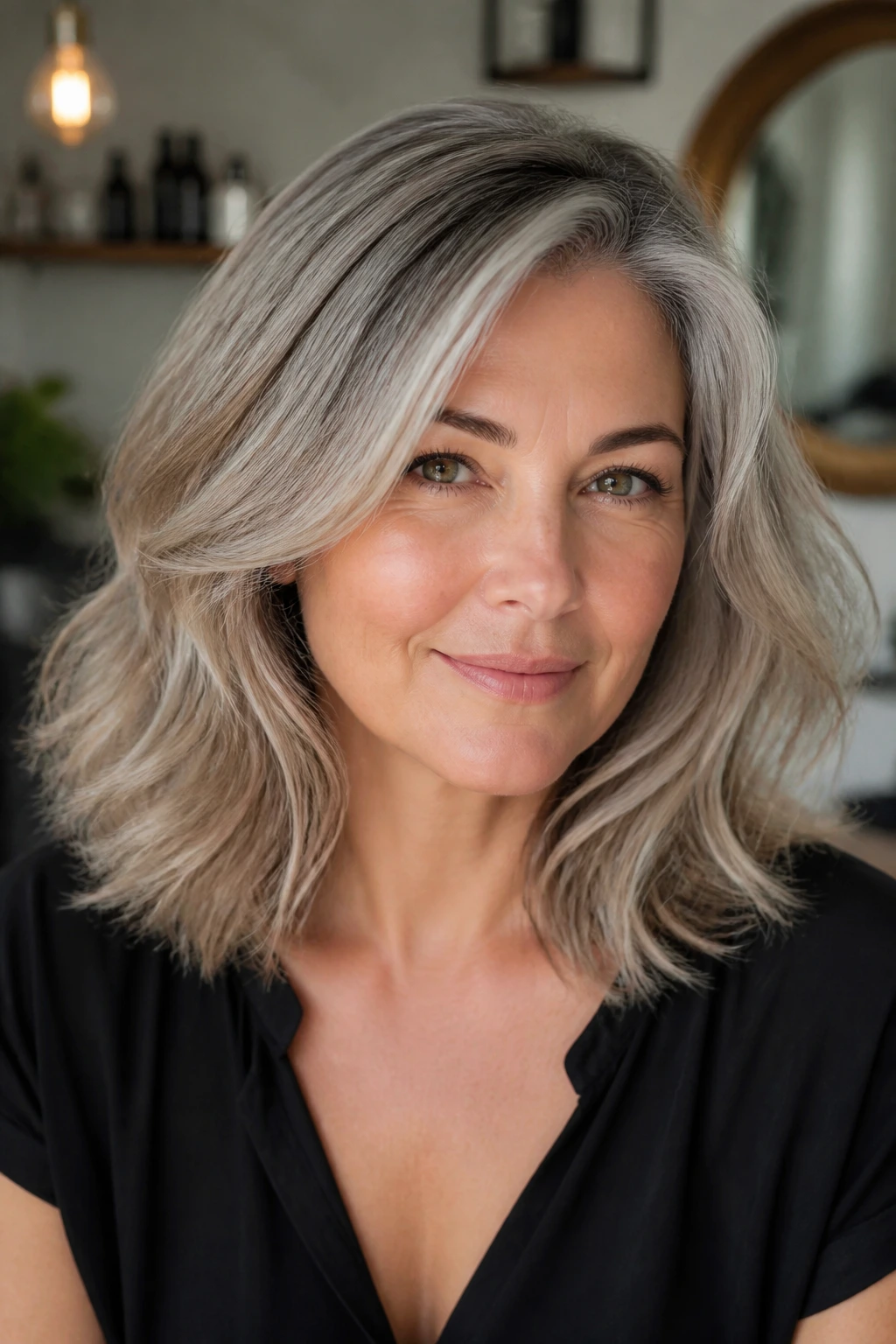
Soft Grow-Out Gray
Use a shadow root, lowlights, and soft balayage placement so the grow-out stays blurred. This is the easiest version to live with if you don’t want the salon every four weeks. It also works well on naturally dark hair that’s starting to gray at the temples.
High-Contrast Silver Frame
Brighten just the front pieces and the outer layers around the face, then keep the rest deeper and cooler. The contrast makes shoulder-length hair look sharper right away. It’s a good fit if you want the gray to read from across the room.
Warm-Cool Beige Blend
Mix ash with a little beige so the gray feels softer around warmer skin. This version is less icy than full silver and usually plays better with olive or peach undertones. It’s one of the nicest compromises if pure gray feels too hard.
Curly-Pattern Placement
Place the lighter pieces on the outer curve of curls rather than threading them evenly through every strand. That keeps the gray from disappearing into the coil pattern. On shoulder-length curly hair, the placement has to follow the curl clumps or the color gets lost.
Fine-Hair Float
Use thin babylights, a soft gloss, and a light root shadow so the hair looks airy, not see-through. Big blocks of silver can make fine hair look sparse. Tiny ribbons give you movement without exposing too much scalp.
Low-Maintenance Transition Gray
Keep the root closer to natural color and let the silver appear gradually through the mids and ends. This version is the one I’d suggest to anyone growing out old brunette dye. The transition is calmer, and the shoulder-length cut makes it look intentional.
Washing, Toning, and Appointment Timing
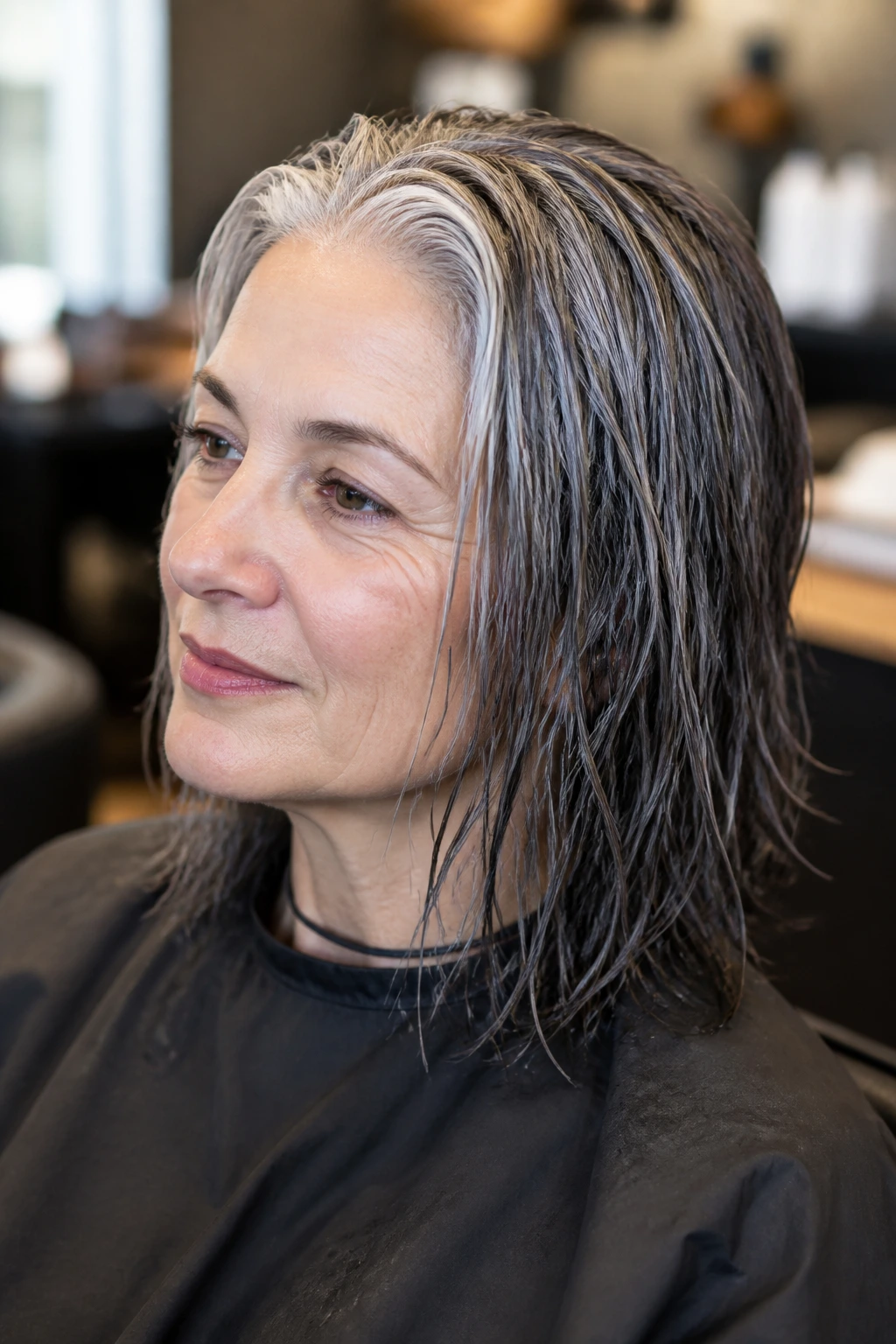
Wash gray or silver shoulder-length hair two to three times a week if you can. That keeps the tone from stripping too quickly, and it also gives the scalp a break. If the color was just done, waiting 48 hours before the first wash helps the toner settle.
Purple shampoo belongs in rotation, not in the driver’s seat. Use it once a week for pale blonde-based silver, and use blue shampoo every other week if the hair is darker and starts leaning warm. Leave it on for 1 to 3 minutes and rinse well. If the hair starts feeling squeaky or purple at the ends, you’re doing too much.
Glosses and toners are where the gray stays clean. Plan on a refresh every 4 to 6 weeks for icy silver or platinum-gray looks, and every 6 to 8 weeks for smoky blends like graphite, mushroom, or champagne ash. If you’re working with a shadow root, root retouches can often stretch to 6 to 10 weeks, sometimes longer if the grow-out is meant to stay soft.
Trims matter more than people think. Shoulder-length gray hair looks best when the ends are sharp, so I’d trim every 8 to 10 weeks if the cut is blunt, and every 10 to 12 weeks if it’s layered and moving well. Gray hair shows dryness sooner than darker shades, and split ends are rude. They steal the shine.
Gray Hair Questions People Ask Most
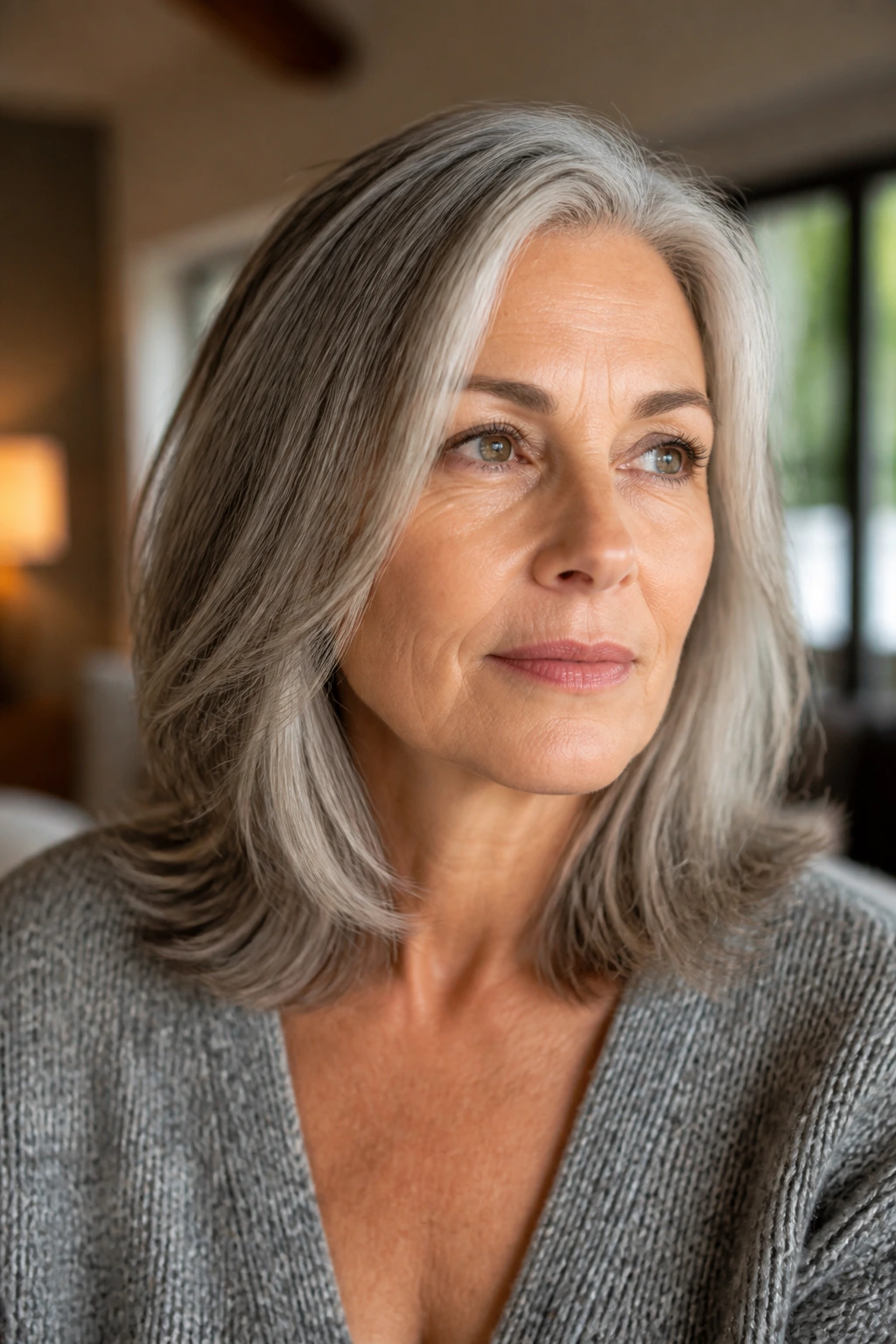
Can you get gray hair color without bleaching?
Sometimes, yes. Graphite, smoky brunette-gray, and soft shadow-root blends can work on darker hair without a full bleach job, especially if the goal is depth rather than pale silver. True platinum or icy pearl usually needs enough lift to get the hair to a very light blonde first.
What gray shade is easiest to maintain on shoulder-length hair?
Smoke-soft balayage and salt-and-pepper ribbon highlights are usually the easiest to live with. Both let the grow-out stay soft, which matters a lot at this length because the root line is easier to see than it is on longer hair.
How do I keep silver hair from turning yellow?
Use purple shampoo once a week, wash with lukewarm water, and keep heat styling under control. A clear or cool gloss every few weeks also helps keep the tone crisp. Hard water can yellow silver too, so a shower filter can make a real difference.
Will gray hair make my face look washed out?
It can, if the tone is too icy or the hair is one flat level from root to tip. Face-framing brightness, champagne ash, rose quartz gray, or a soft money piece usually fix that by putting a little life back near the skin.
Can curly or wavy shoulder-length hair wear gray well?
Yes, but the placement matters more. Light pieces should follow the curl pattern and sit where the coils naturally open up. If the color is painted too evenly, it can disappear into the texture or look patchy.
What if my gray starts looking green or muddy?
That usually means the toner was too cool, the shampoo was too pigmented, or hard water is interfering. A beige gloss, a chelating wash, and less purple shampoo usually pull it back before it gets worse.
Is shoulder-length hair better than long hair for gray color?
For most people, yes. Shoulder length shows dimension more clearly and makes the grow-out line softer. Long hair can swallow the contrast, while very short cuts can make gray feel abrupt. The lob sits in the middle and gives you the most usable range.
How often should I trim gray shoulder-length hair?
Every 8 to 10 weeks is a solid rhythm if the cut is blunt, and 10 to 12 weeks if it’s layered. Gray shows rough ends fast, and once the ends start looking frayed, the color loses its shine even if the tone is still good.
The Cleanest Kind of Cool
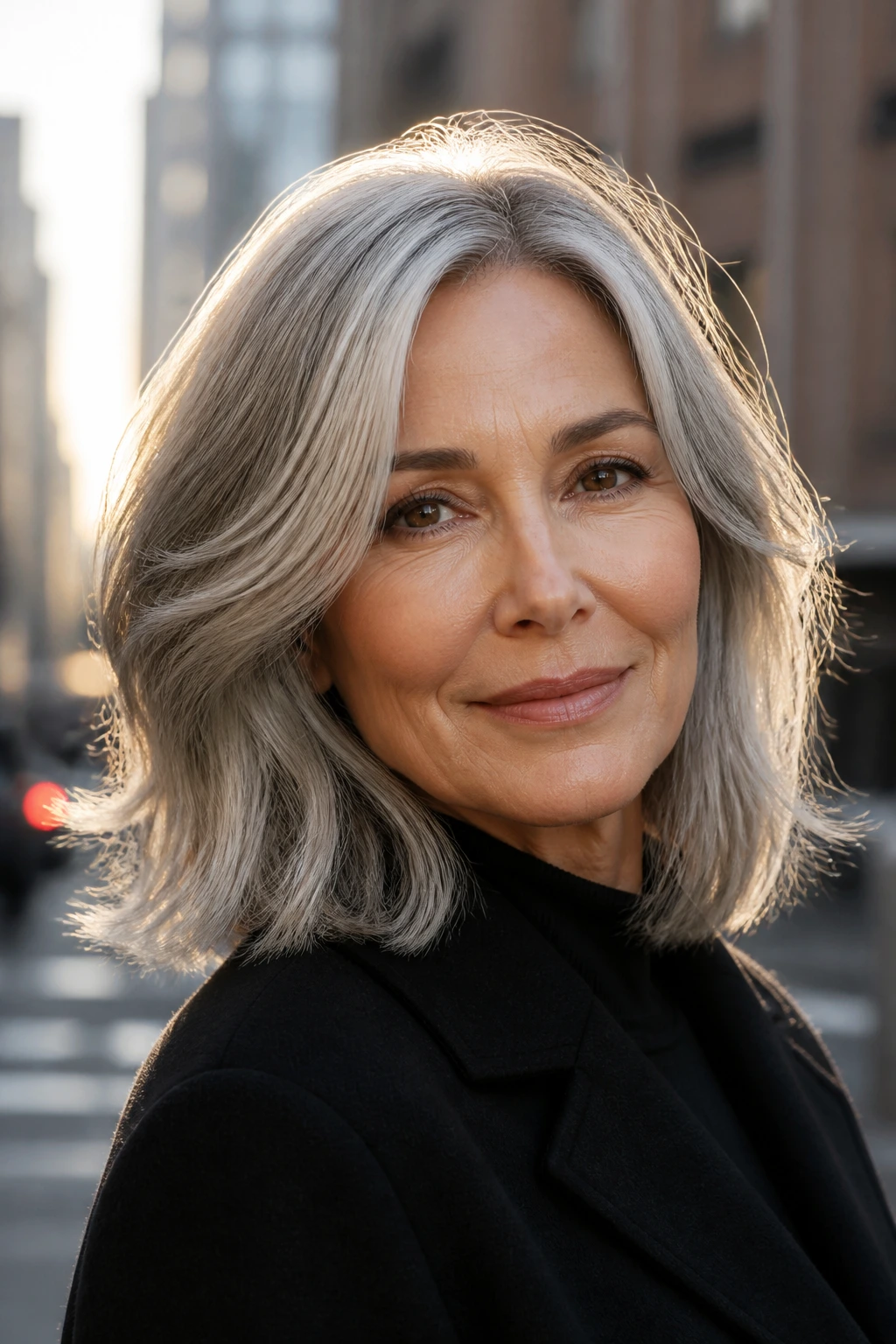
Gray at shoulder length works best when the color has a clear job. It can brighten the face, soften regrowth, sharpen a blunt edge, or make a layered lob move in a way flat color never could. The dull versions are almost always the ones that forget depth.
If you’re choosing between these shoulder-length gray hair color ideas, start with the one that fits your tolerance for upkeep. A smoke-soft balayage, a charcoal root melt, and a titanium streaked lob all live in the gray family, but they behave very differently once the roots start growing back. Pick the one you can wear comfortably at week six, not only on day one.
That’s the real trick. Keep depth at the root, place brightness where the hair actually bends, and let the cut do some of the work. The result feels deliberate, and that’s what makes shoulder-length gray hair look good long after the first salon day has passed.
