



Silver hair color ideas work best when they don’t all chase the same icy, cartoon-bright finish. The shades that hold up in real life have a little smoke in them. A little root depth. A little shadow under the shine.
That’s why silver can look crisp on a blunt bob, moody on long layers, and almost architectural on a short crop. It sits in a sweet spot between fashion color and natural gray, which is part of the appeal. When the tone is controlled and the placement is smart, silver reads modern instead of frosted-over.
The trick is choosing the right kind of silver for the cut, the base color, and the amount of upkeep you’re willing to live with. Some versions need a full bleach-and-tone appointment. Others work with highlights, a root melt, or just a gloss over pre-lightened hair. The 22 silver hair color ideas below lean into those differences instead of pretending one shade fits every head.
Why These Silver Shades Feel Fresh
-
Depth keeps silver from going flat: A darker root, a smoky midtone, or a graphite edge gives the color somewhere to land, so it doesn’t look like one sheet of metallic paint.
-
Cool tones read cleaner on the eye: Silver, ash, steel, and pewter remove the warmth that can make light hair look brassy or tired after a few washes.
-
Placement matters as much as tone: Face-framing pieces, ribbon highlights, and balayage each change how the silver moves around the face and through the cut.
-
There’s a version for every length: A pixie, bob, lob, and waist-length wave all take silver differently, which is why these ideas feel broad instead of locked to one haircut.
-
Grow-out can be part of the look: Some of the best silver styles keep the roots a little darker on purpose, so the line between new growth and color looks intentional, not messy.
-
The finish can be matte or reflective: Some silver shades look soft and smoky; others have a metallic flash when the light hits. That choice changes the whole mood.
1. Icy Silver Bob
This is the cleanest place to start if you want silver hair color ideas that look sharp instead of fussy. A blunt bob with an icy silver tone sits right on the edge between polished and slightly futuristic, and the straight hemline makes the color look even cooler.
The key is keeping the root a touch deeper than the mids and ends. If you bleach everything to the same level, the bob can lose shape fast. A subtle shadow root—something around a smoky level 7 or 8—gives the haircut a frame.
Why It Works
The bob’s short length keeps the tone from feeling overworked. You get the silver impact without needing a ton of product, and that matters because silver fades fast on porous hair. A glassy blow-dry or a flat iron pass makes the light bounce off the ends in a way that longer styles sometimes miss.
This is also one of the easiest silver looks to wear with clean makeup and sharp collars. It has a built-in edge. No extra styling drama needed.
2. Smoky Charcoal Silver Melt
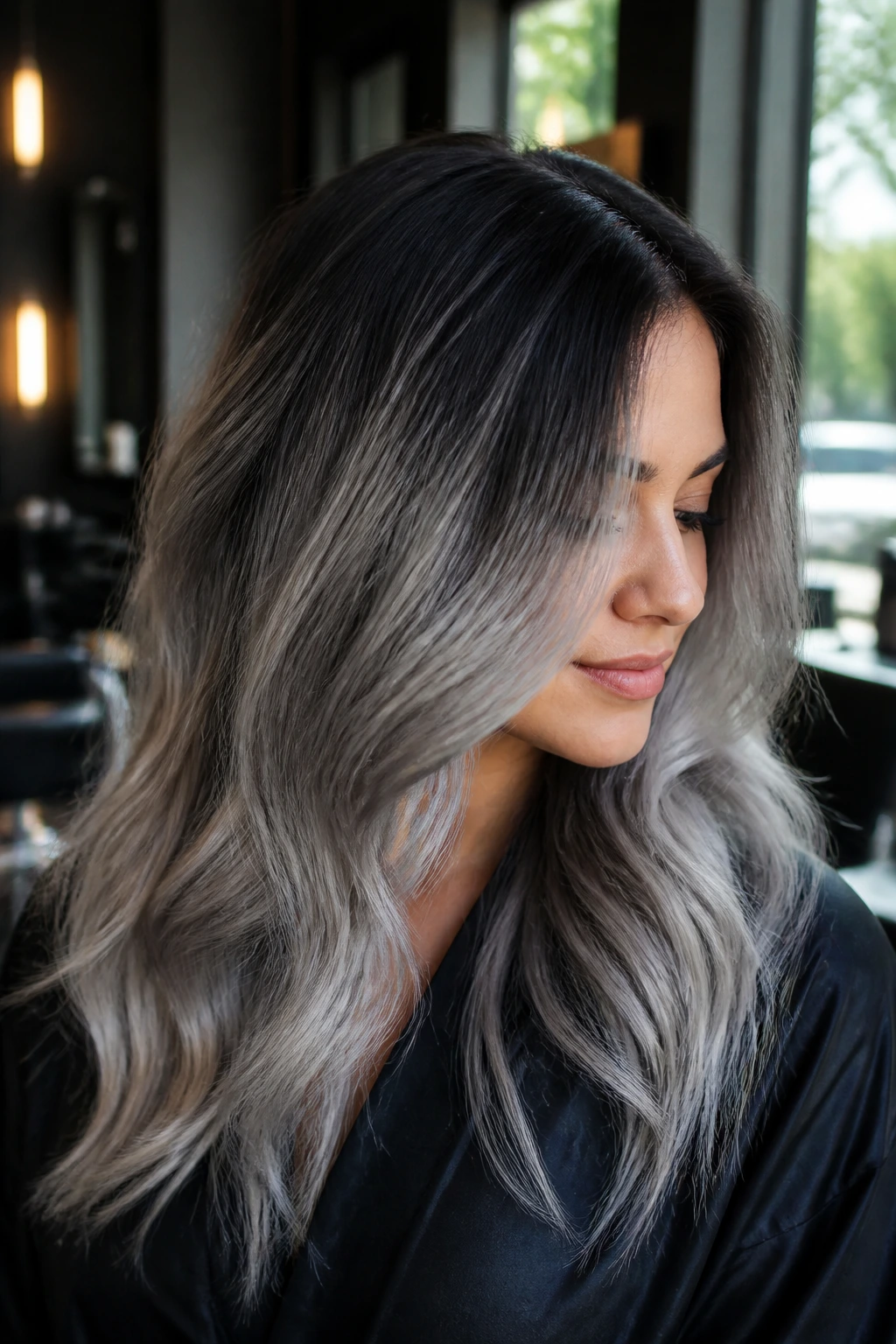
If icy silver feels too bright, this darker melt is the better move. The color starts near charcoal at the roots and drifts into a cool silver through the mid-lengths, which keeps the whole thing soft and moody instead of high-contrast.
It works especially well on medium and long hair where the transition has room to breathe. On a layered cut, the darker root and smoky midtone make the movement in the hair more visible, which is half the point.
What Makes It Different
Unlike a single-process silver, this one forgives grow-out. The root is meant to stay deeper. That means you can stretch your appointments a little farther without the style looking abandoned.
It also suits people who want silver hair color ideas but don’t want their hair to shout from across the room. The charcoal base takes the edge off the metallic finish. The result feels cooler, not louder.
3. Frosted Money Piece
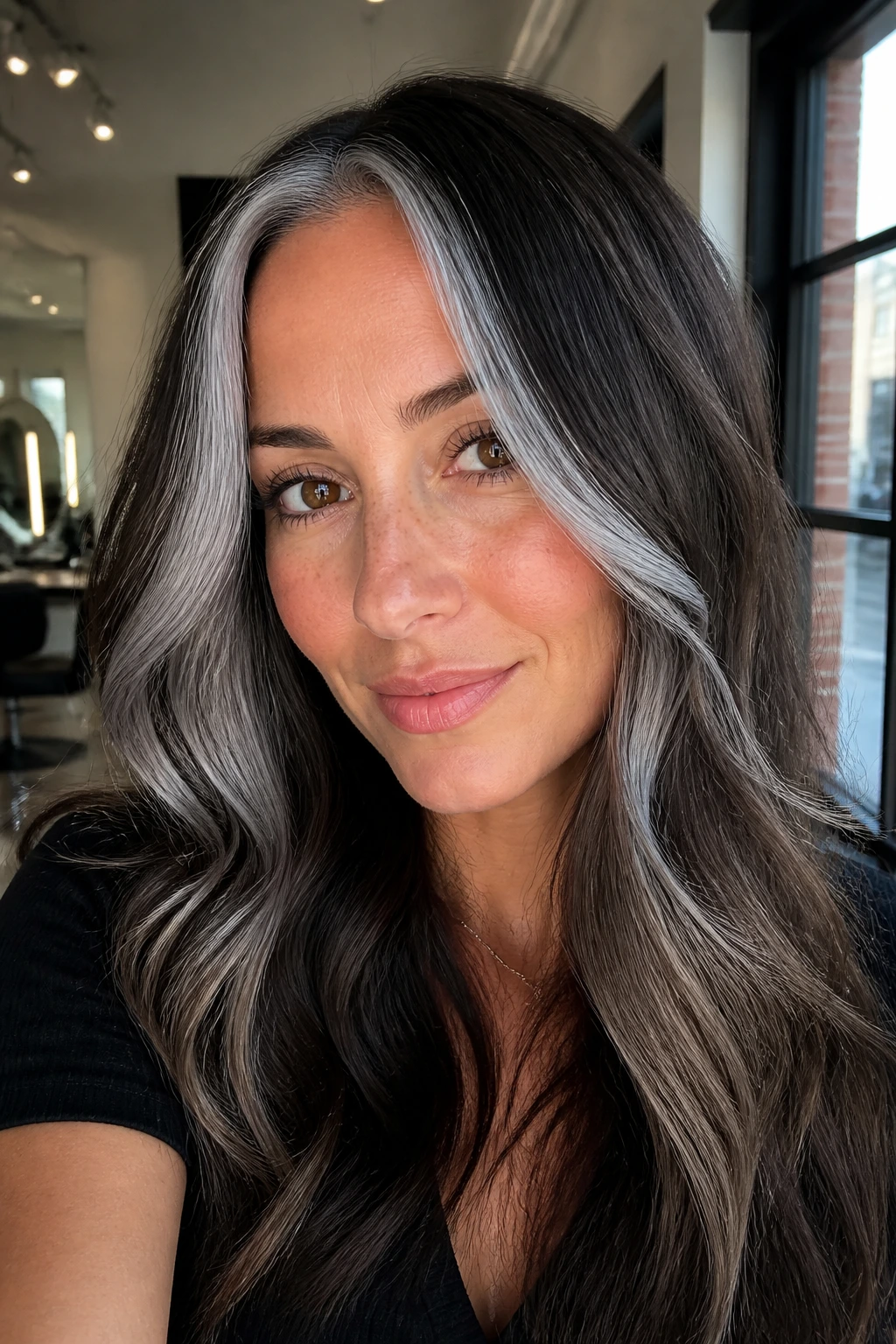
A frosted money piece is the quickest way to test silver without committing every strand. The front sections are lifted and toned to a bright silver-white, while the rest of the hair stays darker or softly dimensional.
This is the kind of look that changes the shape of your face fast. Light around the cheeks and temples pulls the eye forward. On a center part, it can make the hairline look cleaner; on a side part, it can soften a strong jaw or broaden a narrow face.
How to Wear It
Ask for silver pieces that sit just behind the hairline, not a thin stripe painted on top. You want width. You want those pieces to show when the hair moves, not only when it’s pinned back.
It’s also a smart option if your hair is naturally dark and you’re not ready for a full silver grow-out. You get the cool tone near the face, where it matters most, and the rest can stay lower maintenance.
4. Pearl Silver Lob
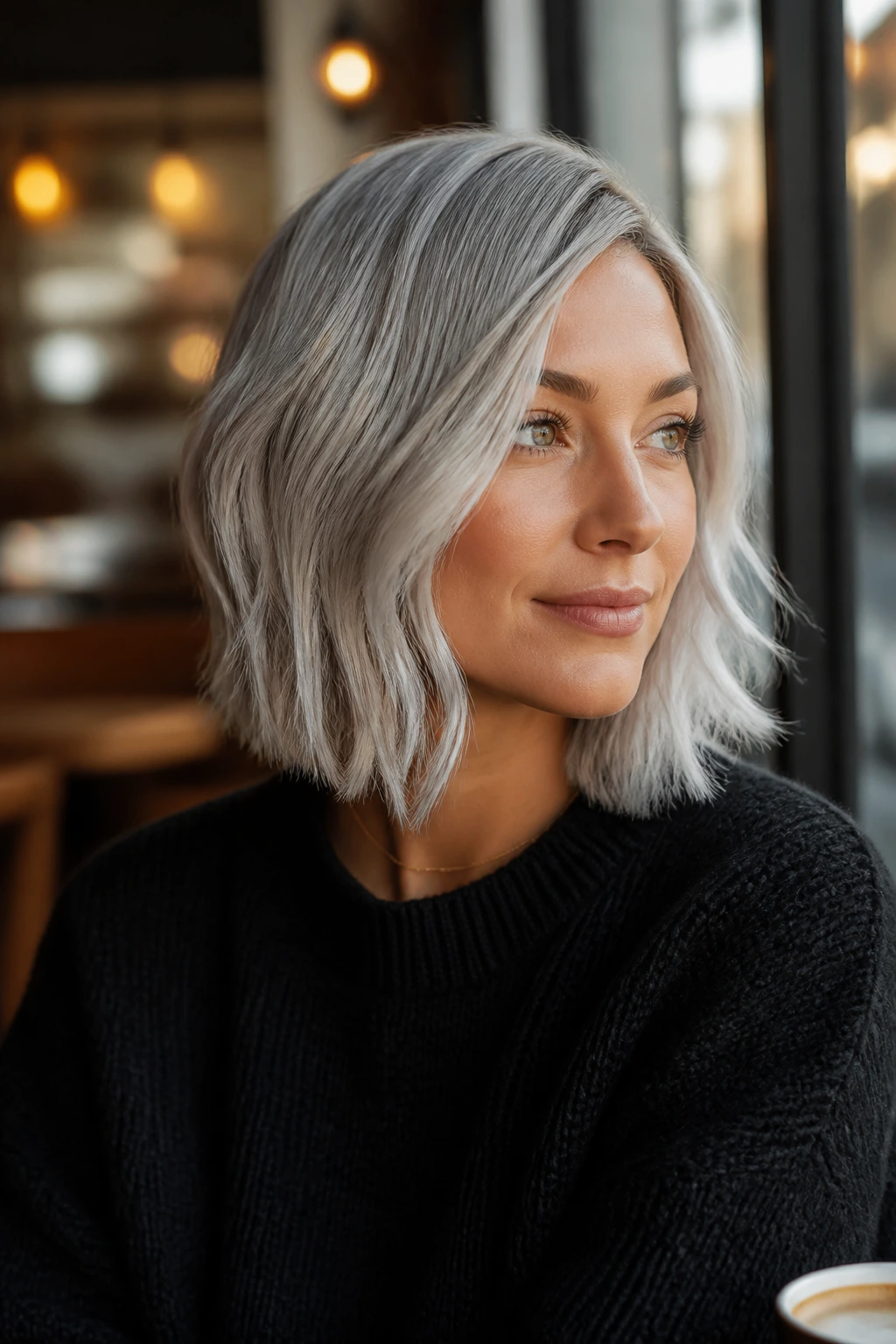
A lob gives silver room to look expensive without turning stiff. The pearl tone lands softer than icy platinum, with a cloudy sheen that reflects light in a gentler way. It’s less mirror, more satin.
The cut matters here. If the lob is one-length or only lightly layered, the pearl silver reads clean and deliberate. If it’s heavily textured, the tone can start to look scattered. That’s not bad, just different.
Pearl silver works especially well if your skin tone leans cool or neutral. The shine is there, but it doesn’t glare. You can wear it sleek, tucked behind the ears, or with loose bends and still keep that polished feel.
5. Silver Balayage on Dark Brown Hair
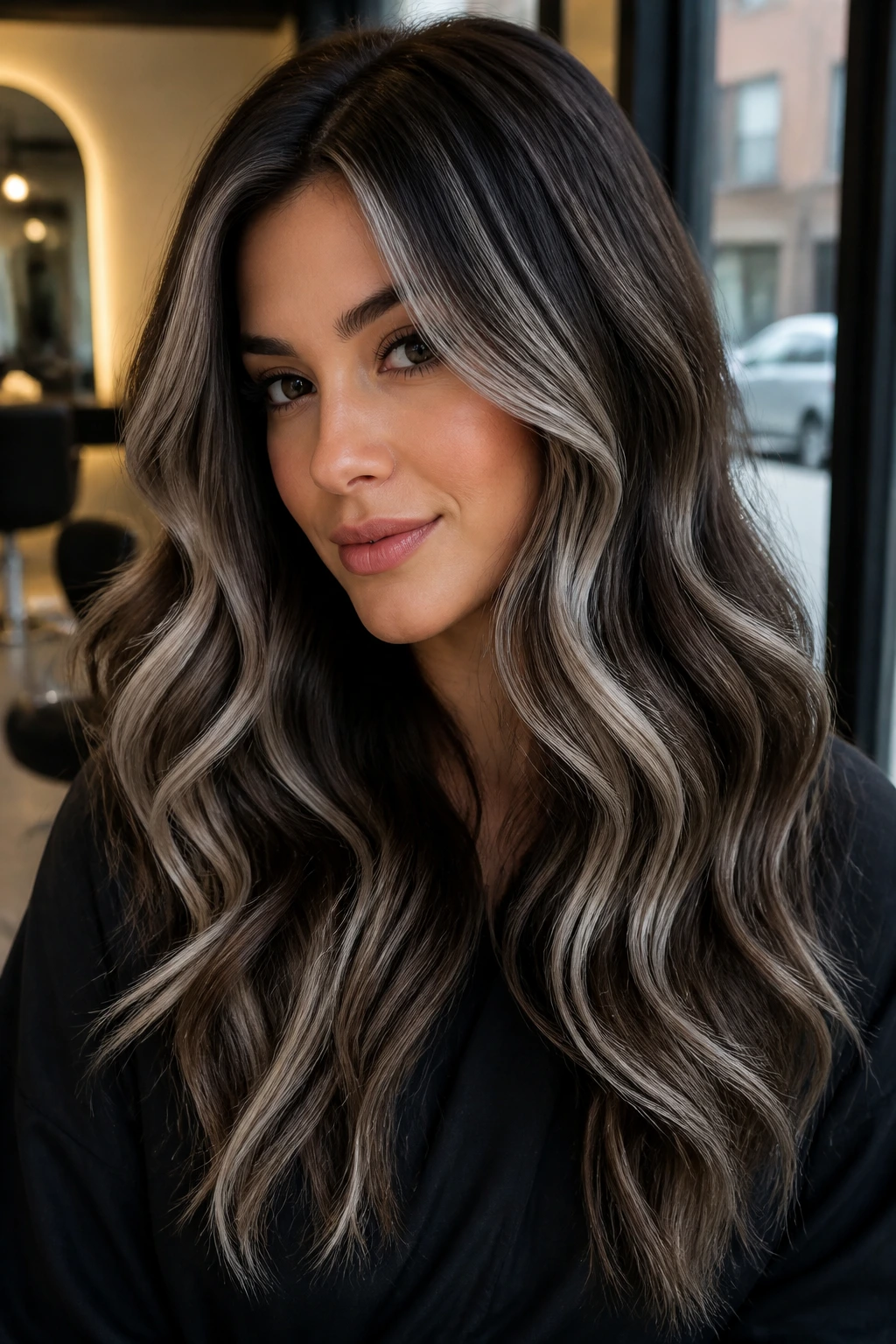
This is one of the most wearable silver hair color ideas if you don’t want to bleach your entire head to a pale blonde first. Silver balayage lets the darker brunette base stay visible, while hand-painted ribbons of silver lighten the surface and ends.
The contrast does the heavy lifting. Dark brown against silver is striking, but the hand-painted placement keeps it from looking stripey. Around the face and through the top layer, the lighter pieces catch movement and make the whole style look layered even when the haircut is simple.
The best part? The regrowth is easier. Because the brunette base stays intact, the grow-out looks like part of the plan instead of an emergency.
6. Chrome Pixie Cut
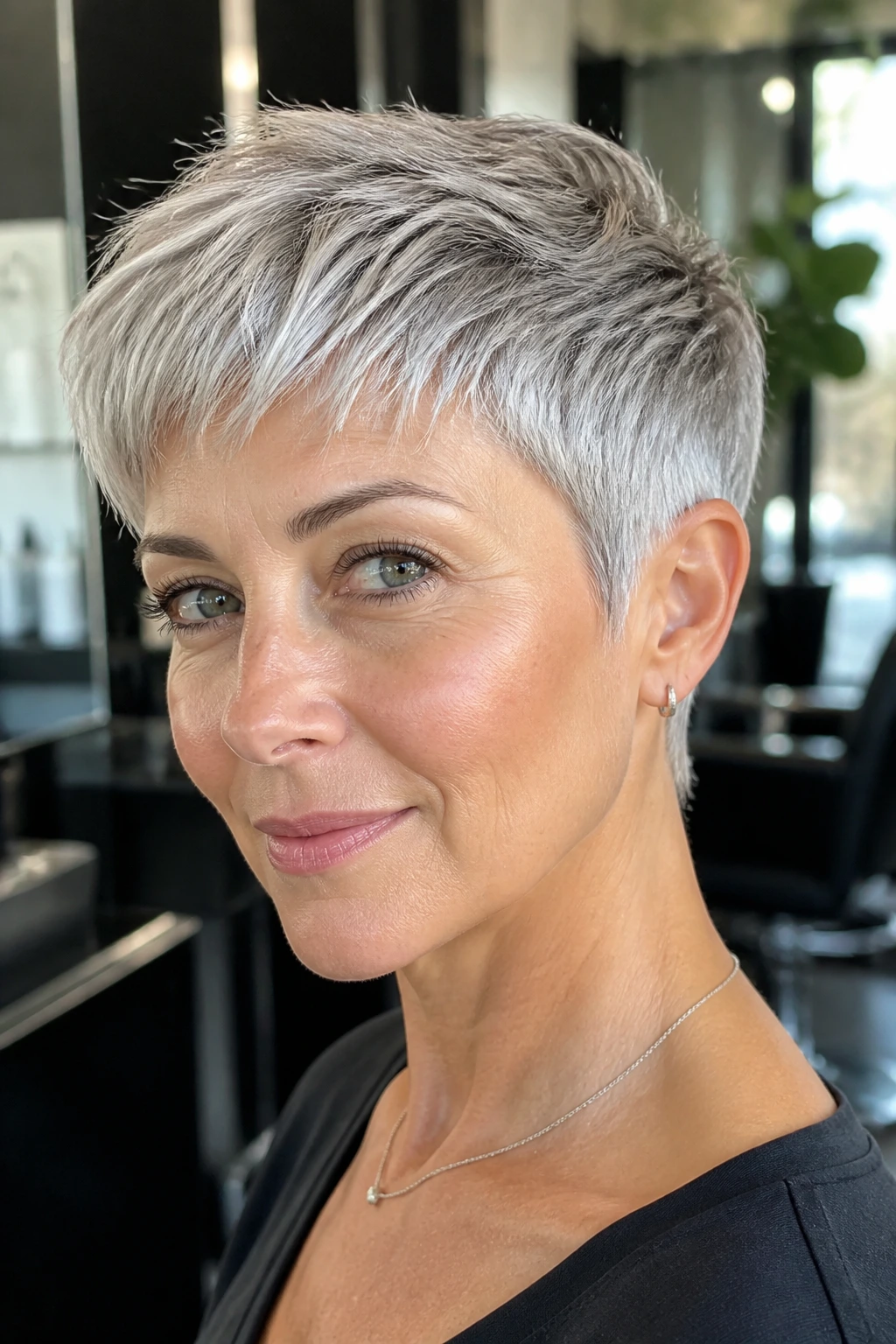
A pixie cut with chrome silver color has almost no wasted motion. Short sides, a bit of texture on top, and a hard reflective tone make the whole style feel crisp and deliberate.
What I like here is the way the color sharpens the cut. On a pixie, every millimeter shows. A chrome finish emphasizes that line, especially if the top is styled forward or slightly piecey. If the hair is too fluffy, the effect gets lost.
This look suits anyone who wants silver with attitude. It’s low on length, high on presence. And it grows out in a way that can still look stylish if the shape is maintained every few weeks.
7. Mushroom Silver Layers
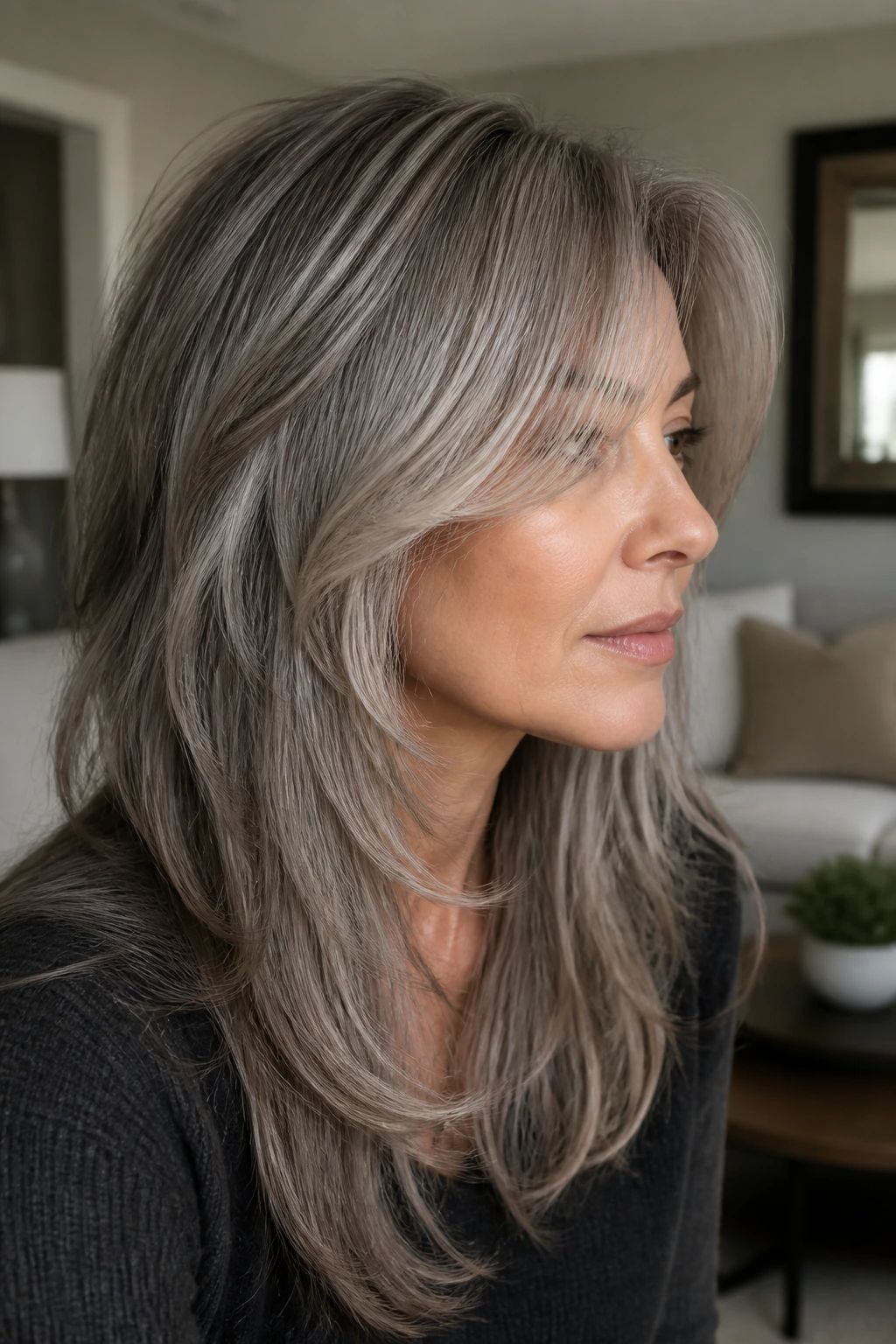
Mushroom silver sits in that interesting gray-beige corridor where cool and soft meet. The base carries a muted mushroom tone, then silver threads run through the layers so the color never turns flat or washed out.
This is a good choice if you want silver without the almost-white finish. The mushroom undertone keeps the color grounded. It’s especially nice on layered cuts because the cut creates little zones of shadow and shine, which the hue uses well.
On straight hair, mushroom silver can read sleek and tailored. On wavy hair, it gets a bit more earthy. Either way, it feels modern because it doesn’t try too hard to be icy.
8. Moonlit Silver Waves
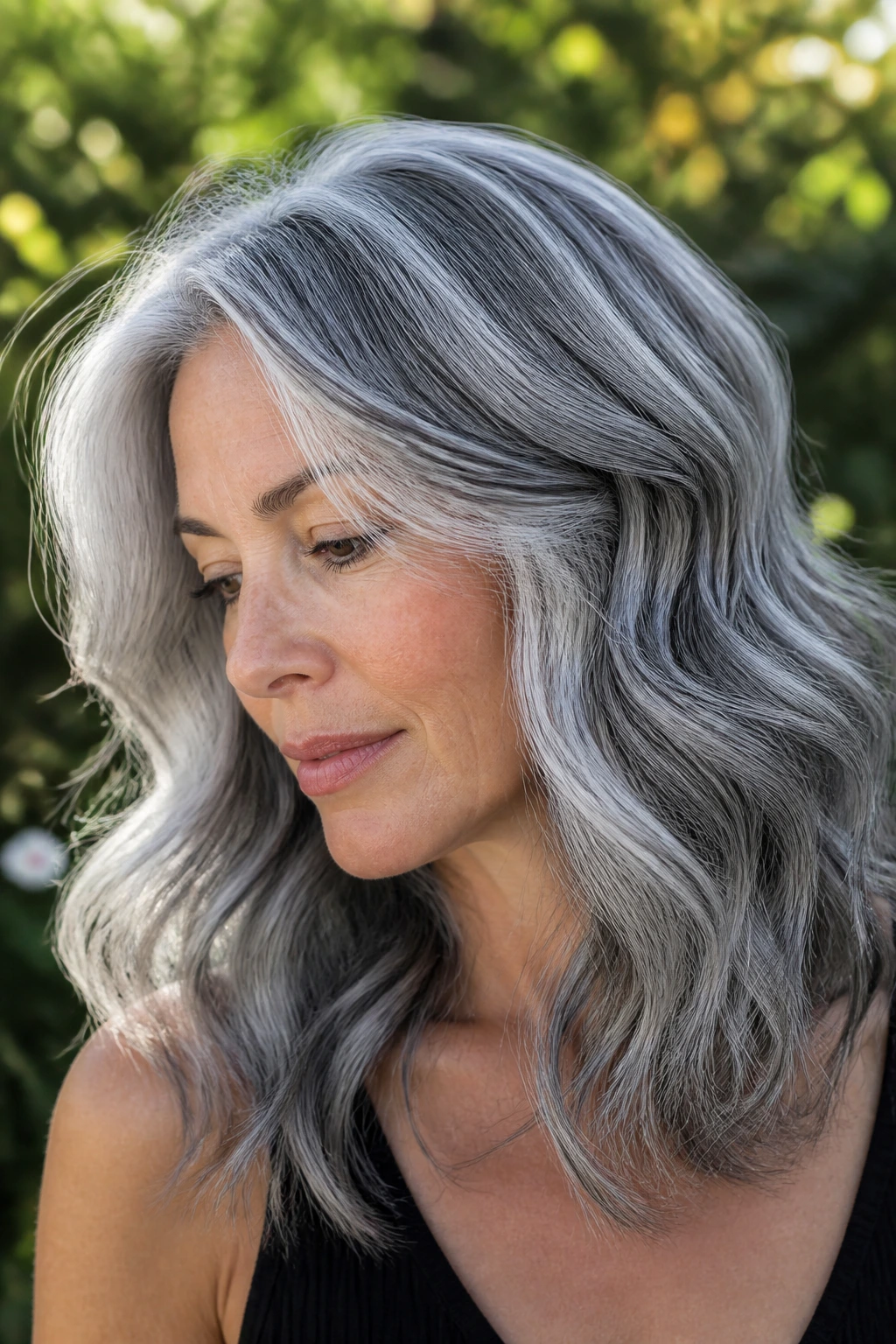
Moonlit silver is softer than chrome and cooler than pearl. Think reflective, misty, and a little dim around the edges. On waves, the dimension becomes the point: the bends catch light, the recesses go smoky, and the whole thing moves.
This style works because the color isn’t fighting the texture. Waves need room. If the silver is painted in broad ribbons and glossed to a pale ash tone, the hair looks like it has natural variation instead of one hard color block.
I’d choose this if you like silver hair color ideas that look expensive in motion, not just in photos. Loose barrel curls, air-dried waves, or a bend from a large iron all suit it.
9. Ash Silver with a Shadow Root
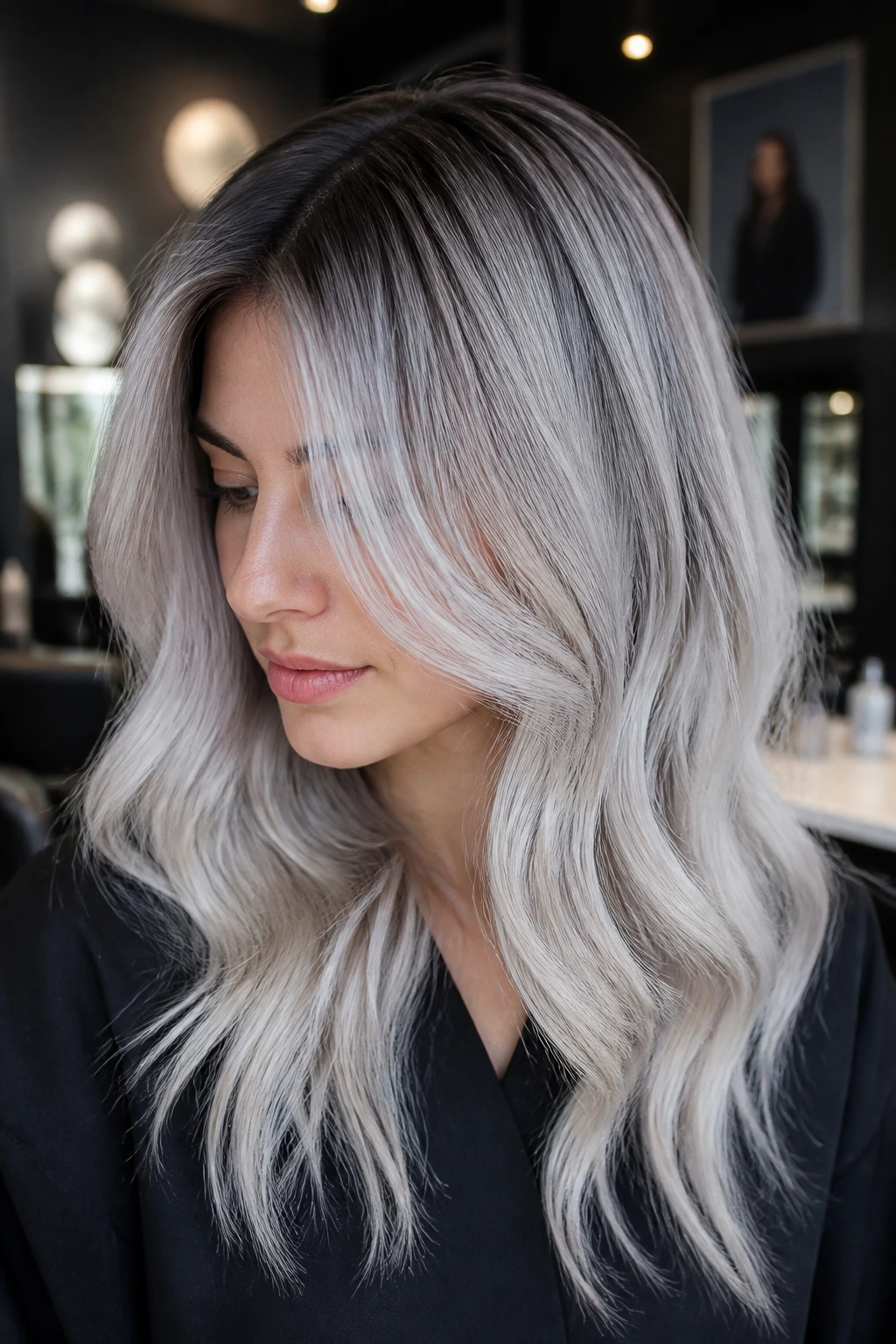
A shadow root is one of the smartest ways to wear silver if your hair grows fast or your base is darker than level 8. The root is intentionally deeper, and the silver begins a little lower, so the finish keeps some contrast and doesn’t look overprocessed.
The ash tone matters. Too much warmth and the whole thing skews beige or yellow. Too much violet and it can look chalky. Ash silver sits in the middle and gives you that cold, smoke-tinted finish that looks cleaner against most clothes and makeup.
This is a practical pick, too. You can stretch appointments a bit longer because the regrowth blends into the design rather than sitting on top of it like a mistake.
10. Metallic Silver Streaks
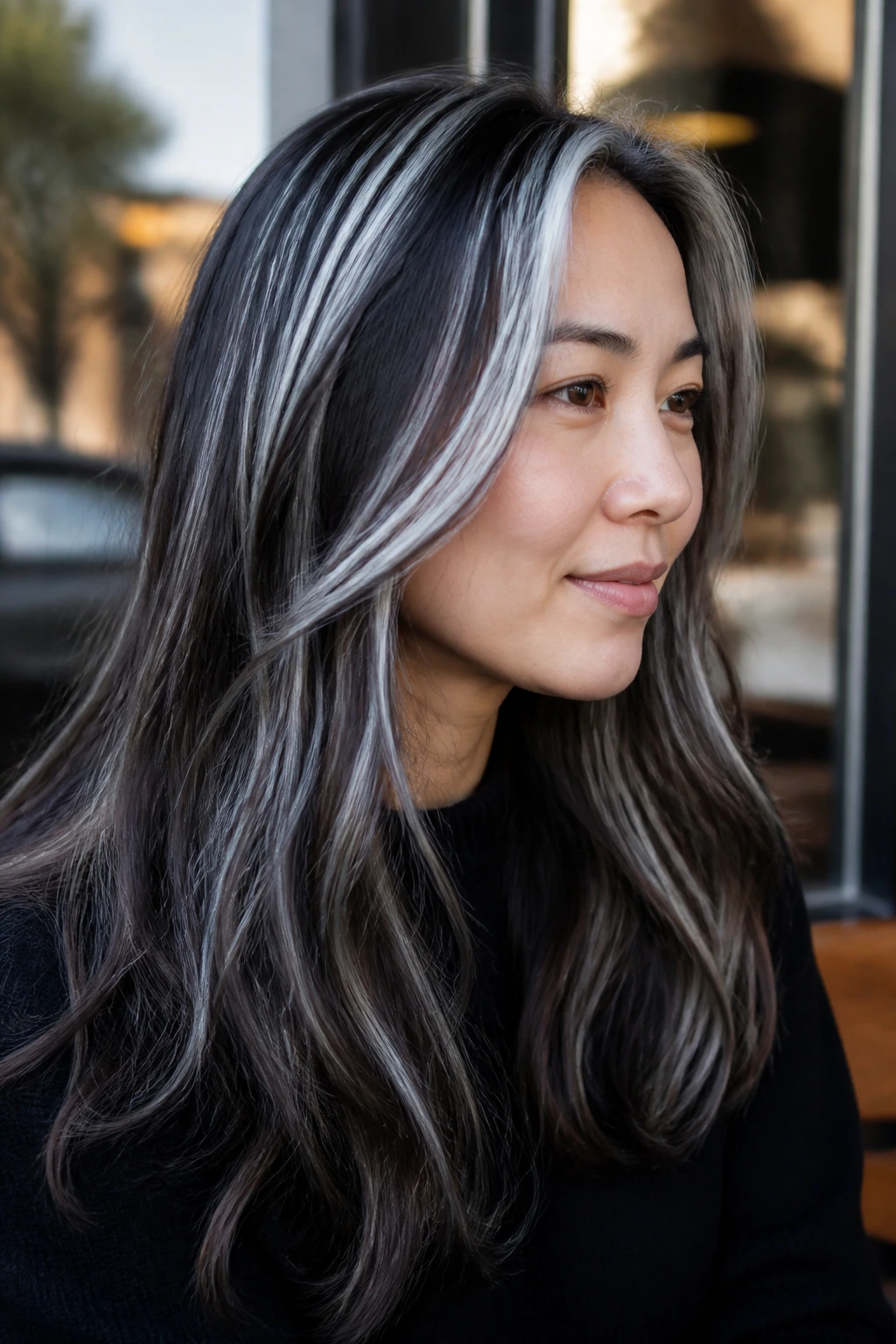
Metallic streaks are bolder than balayage and more controlled than full silver. They run in deliberate ribbons through darker hair, often with a few brighter pieces placed where the light naturally hits—around the part, near the crown, and through the front.
The effect is sleek, almost industrial. Not harsh. Just precise. On straight or softly waved hair, the streaks create a striped shine that looks different every time the hair moves.
This idea works well if you want silver hair color ideas that don’t erase your natural depth. The darker base stays visible, which keeps the silver from becoming too pale or too washed out. It’s also a nice choice for people who like their color to have structure rather than a soft blur.
11. Opal Silver Blend
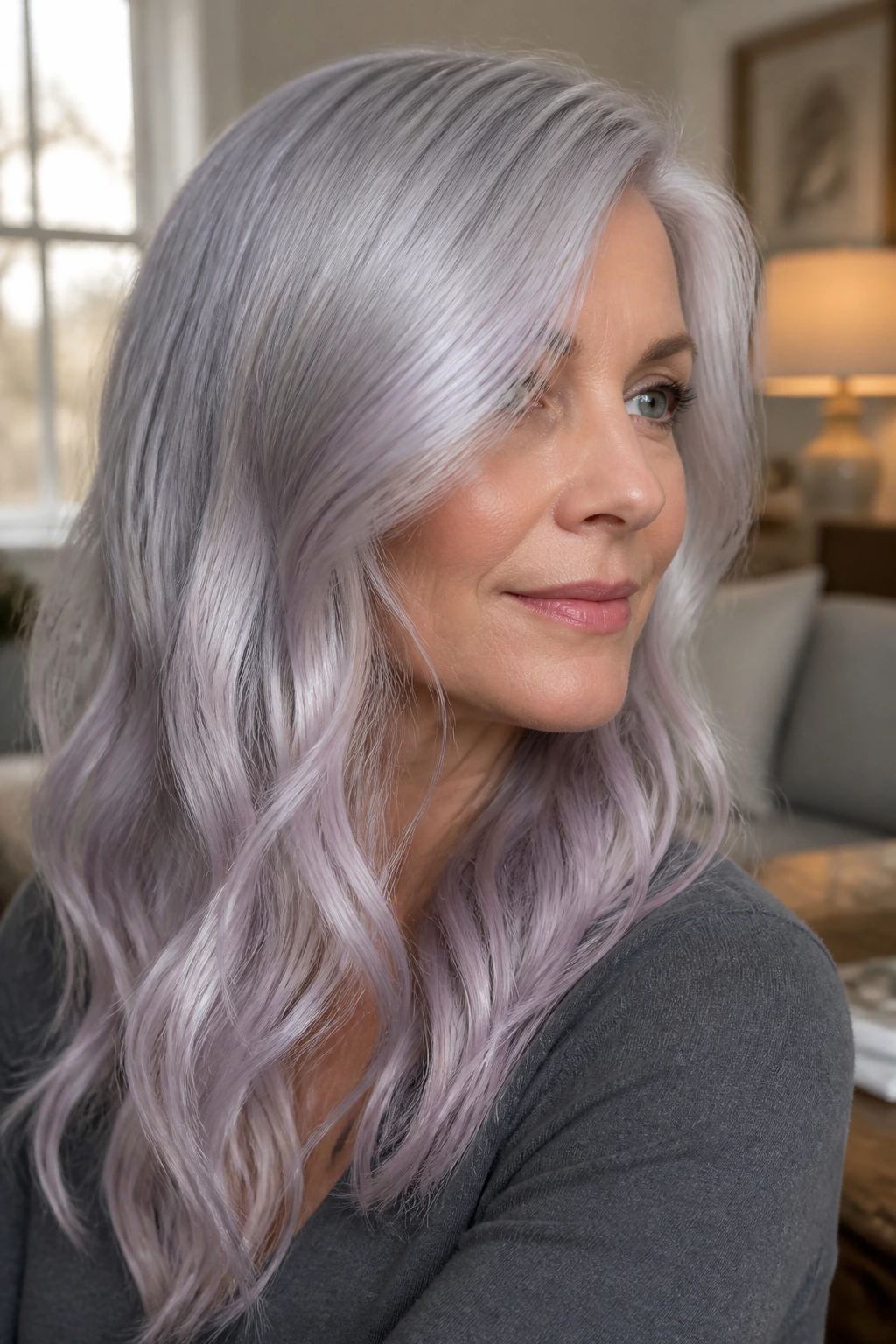
Opal silver is one of the prettiest ways to break up a flat metallic tone. The silver base stays cool, but tiny shifts of pearl, faint lilac, and soft steel give the hair that milky, shifting finish opal stones have.
This is not a loud pastel look. It’s subtle. The color changes when you move, and that’s where the appeal sits. Under indoor light, it can look almost smoky; outside, the pale iridescence shows more clearly.
It suits layered cuts, long bobs, and hair with a bit of bend. If the surface is too perfectly straight, some of the color play disappears. A loose wave or a light curl brings it back.
12. Graphite-to-Silver Ombré
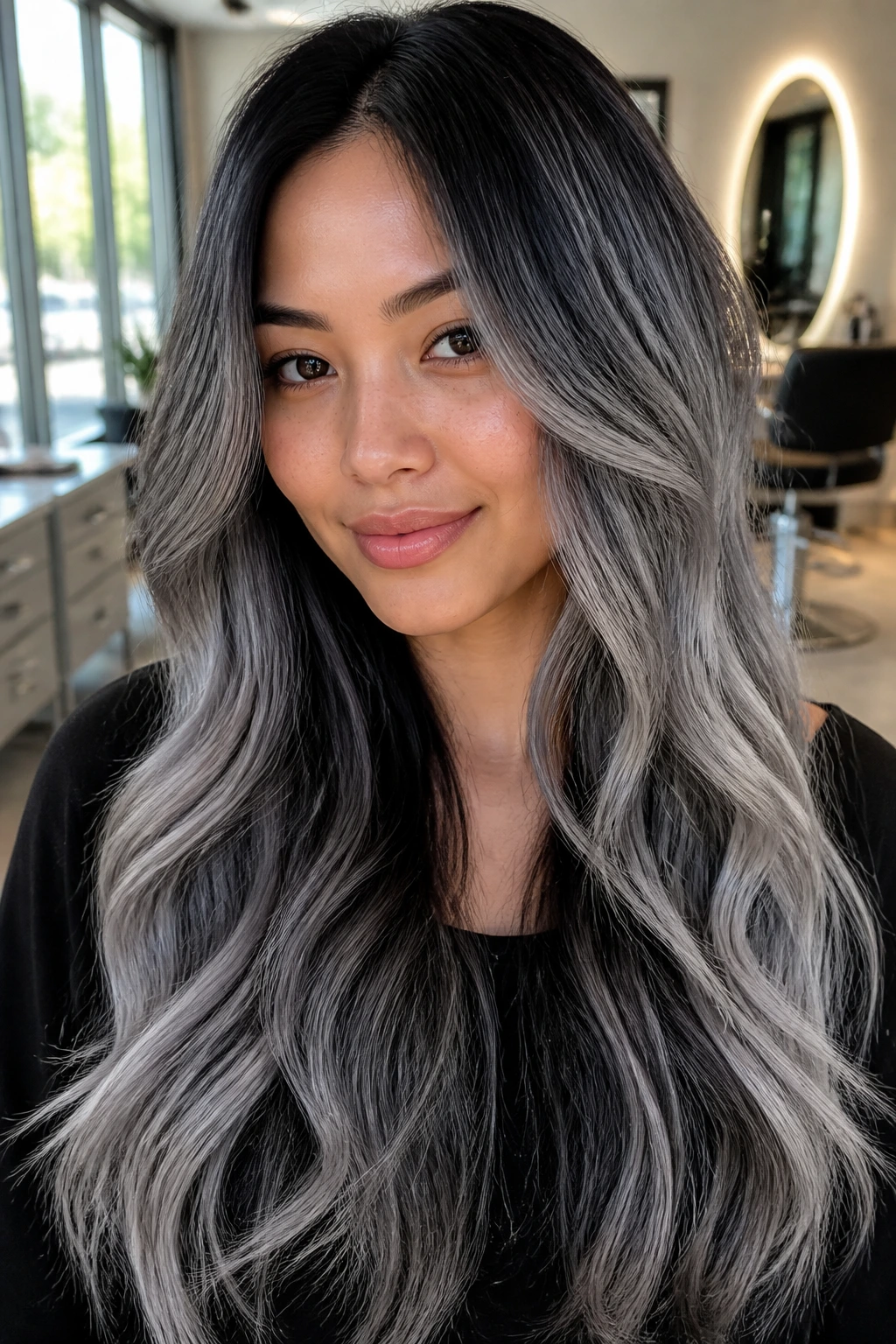
Graphite ombré gives you a dark, grounded root that softens into silver at the ends. There’s a reason this style keeps showing up in modern silver hair color ideas: it makes the transition look intentional from the first day to the last week before a touch-up.
The darker top gives the roots weight, which helps if your hair is thick or coarse. The silver ends brighten the shape and keep the cut from reading heavy. The contrast is strongest on layered long hair, where the transition can move from dark to pale without looking abrupt.
This is a good choice if you want the silver to feel cooler and a little more dramatic. It’s not delicate. It has a clear line, even when the blend is smooth.
13. Ribbon Highlights on Dark Blonde
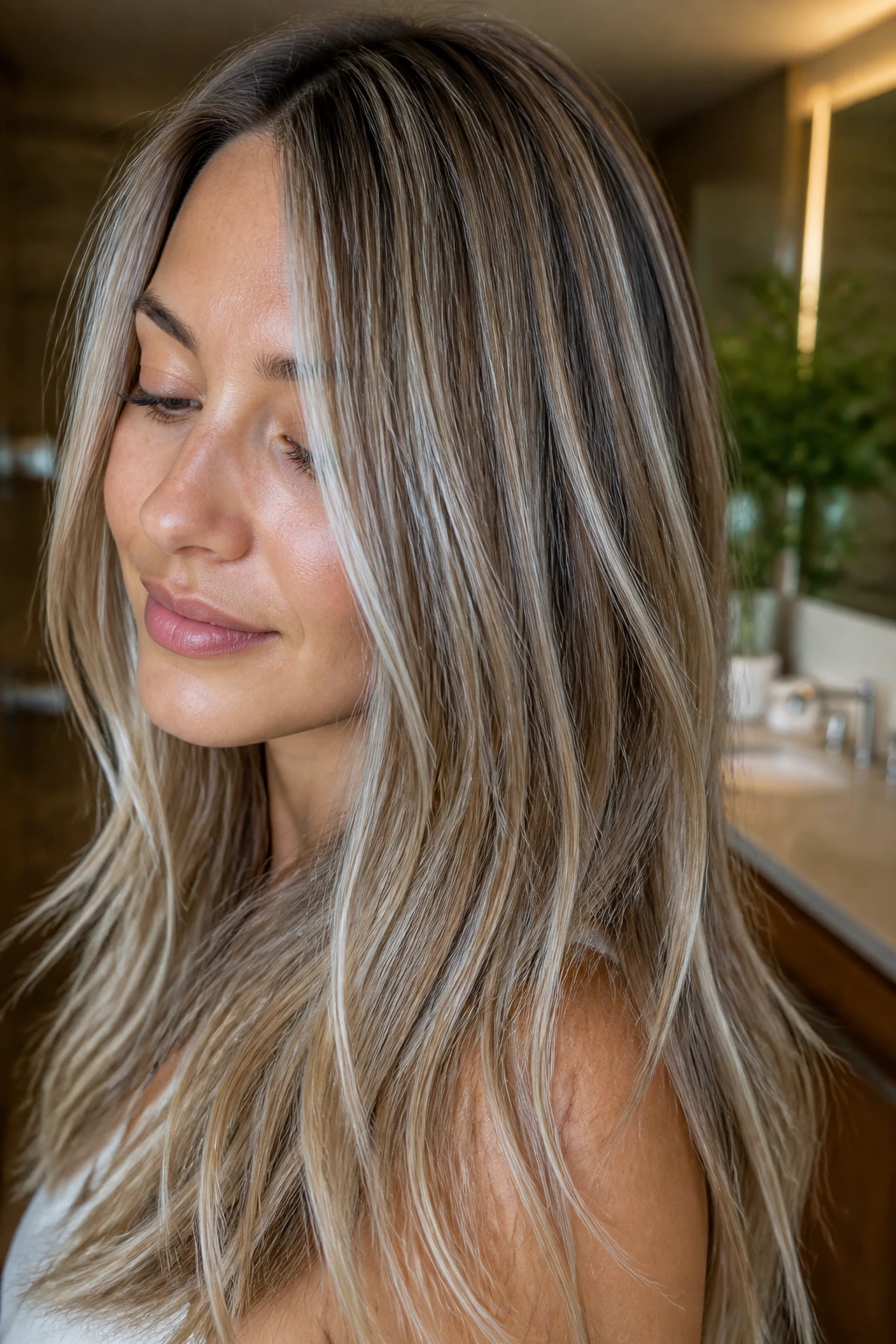
Ribbon highlights are the quiet cousin of balayage. Instead of broad swaths, the silver is woven through in thinner bands that look almost like threads running through the hair.
On dark blonde hair, this can look especially natural. The base gives the color warmth without turning brassy, and the silver ribbons cool the overall look down. The result isn’t all-over silver. It’s a dimensional blonde with a silvery sheen.
This is one of my favorite ideas for people who want to dip into silver without abandoning their natural depth. It grows out gently, and it still looks good when the highlights soften a bit.
14. Cool Beige Silver
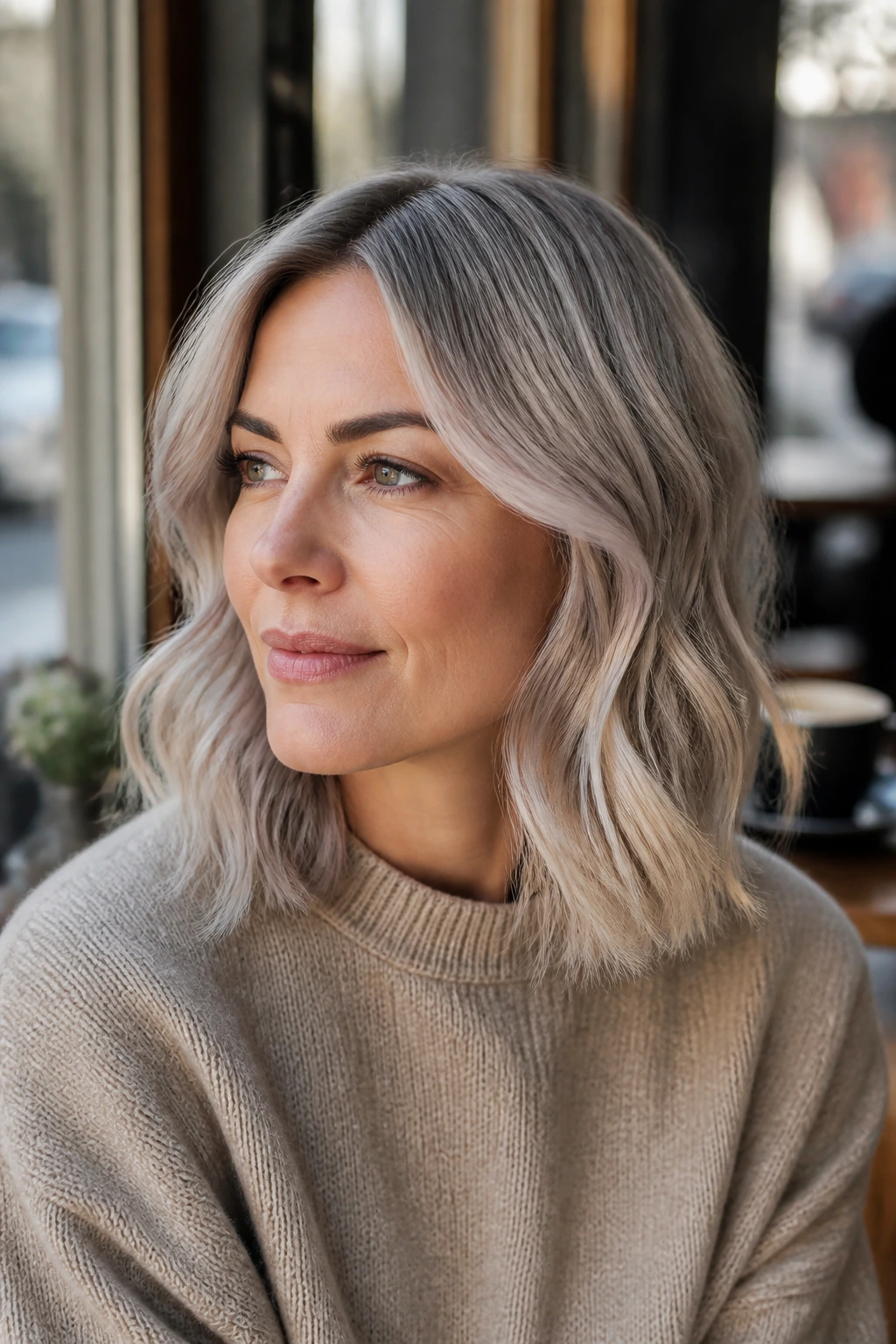
Cool beige silver sits between ash blonde and soft pewter. That edge between beige and silver keeps the shade wearable, especially if pure ice tones make your complexion look washed out.
The tone is quiet, but not dull. It has enough silver in it to read modern, and enough beige in the background to stop it from looking severe. On a shoulder-length cut, that balance can be especially flattering because the shape stays relaxed.
This color is a smart pick for anyone who wants a less metallic silver hair color idea without losing the cool finish. It’s the version people often ask about when they say they want silver, but they’re nervous about going too stark.
15. Steel Blue Silver
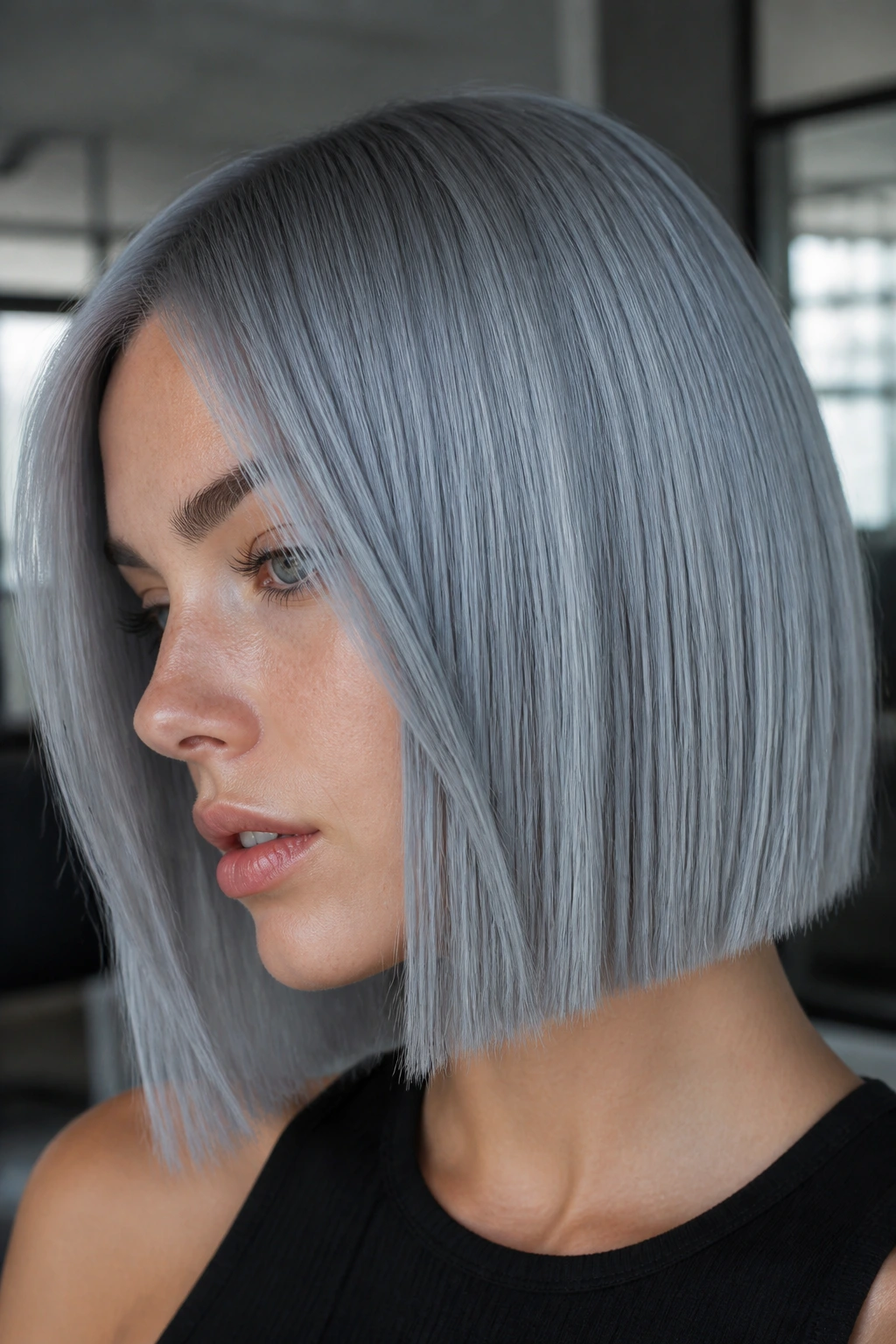
Steel blue silver leans cool in a very specific way. It’s not full blue. It’s a gray-silver with a steel cast that shows up most under natural light and gives the hair a colder, more graphic look.
This shade works best when the hair is lifted cleanly first. Any leftover yellow will muddy the blue note. Once the base is pale enough, the color can sit in that sweet zone where it flashes silver at one angle and blue-gray at another.
I like this on blunt cuts, sleek ponytails, and polished waves. It has a kind of disciplined shine. If you wear a lot of black, white, charcoal, or denim, the color locks right in.
16. Platinum Curtain Bangs
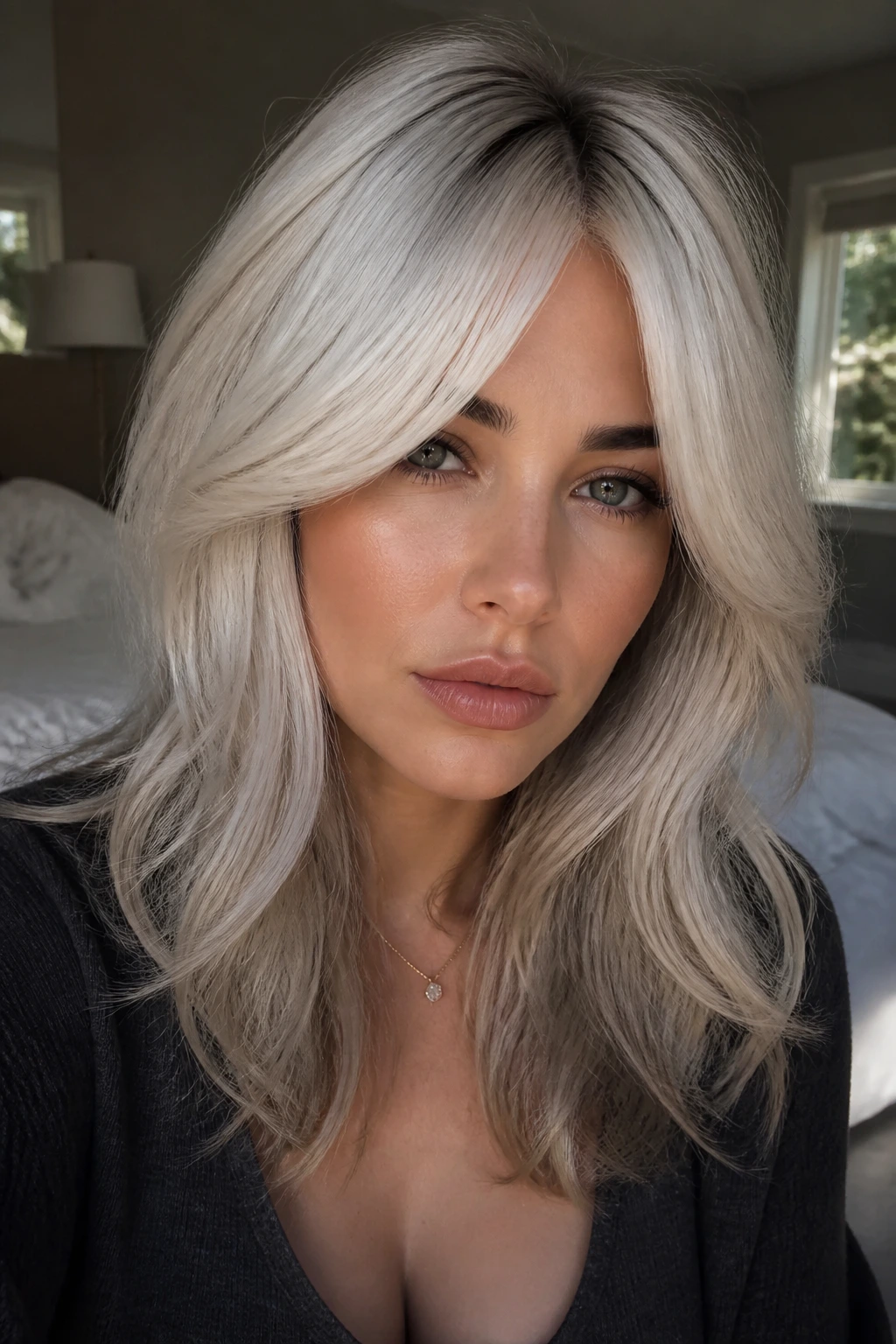
Curtain bangs change silver hair fast because they put the lightest pieces exactly where the face moves. When the bangs are platinum silver and the rest of the hair is softer or slightly darker, the cut gains contrast without needing a dramatic full-head transformation.
The trick is keeping the bangs clean and not too over-toned. If they go violet or blue, they can look dull against the face. A pale silver with a slight pearl finish usually reads best here.
This is a strong option if you want silver hair color ideas that feel current but don’t require the whole head to be a single tone. Curtain bangs soften the forehead and break up a blunt cut, which is useful if the rest of the look is very straight.
17. Lavender-Silver Glaze
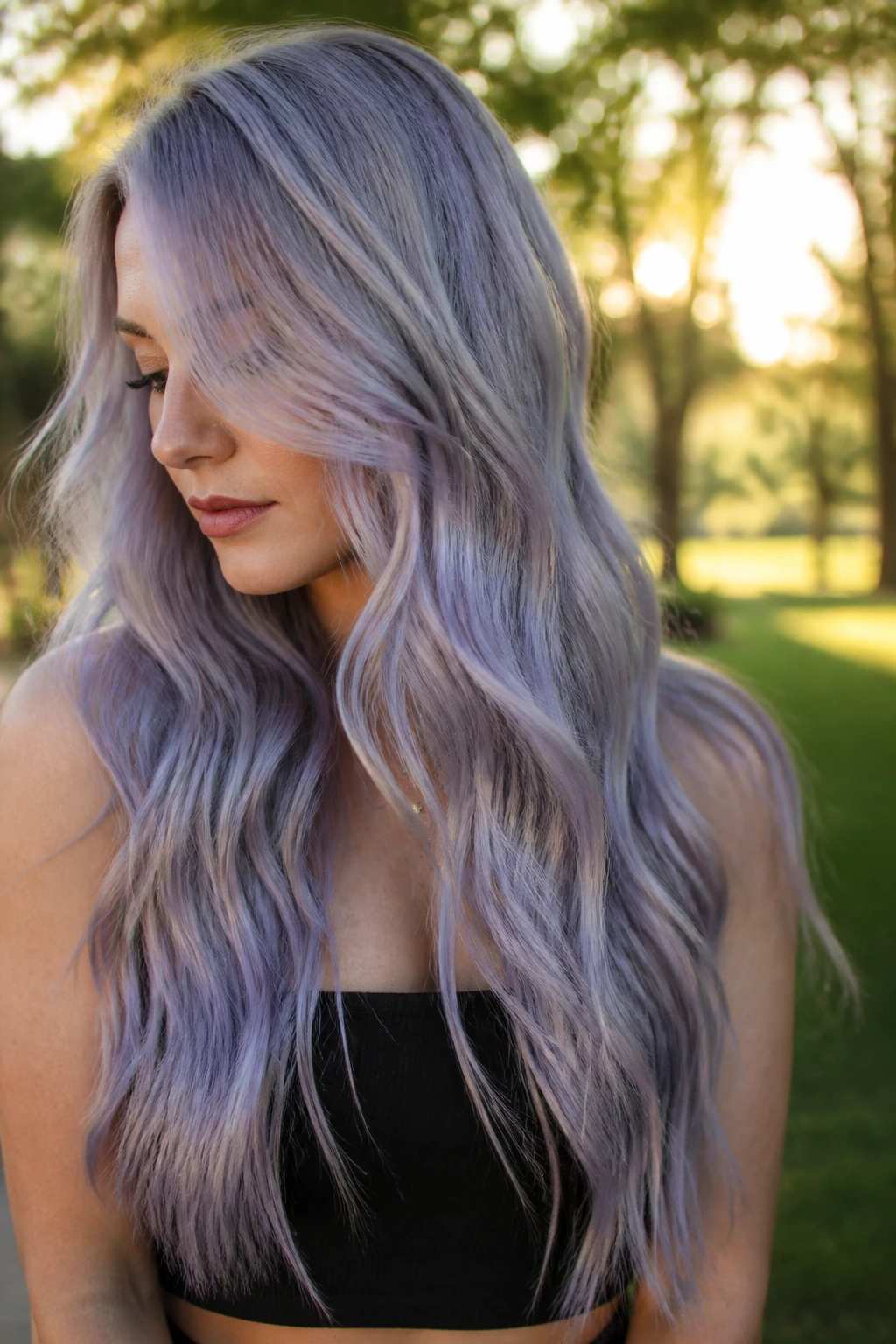
A lavender-silver glaze is for people who want the coolness of silver with a faint tint that keeps it from looking flat. The lavender should stay whisper-thin. You want the hair to read silver first, with a cool haze that appears in certain light.
This works especially well over pale blonde or pre-lightened hair. The glaze gives the color a softer edge and can make the finish look fresher between appointments. On long hair, the effect is almost cloudlike.
If you like hair color that feels a little dreamy but still clean, this is the one. It’s one of the more flexible silver hair color ideas because the lavender note can be very subtle or a bit more visible, depending on how brave you want to be.
18. Reverse Balayage Silver
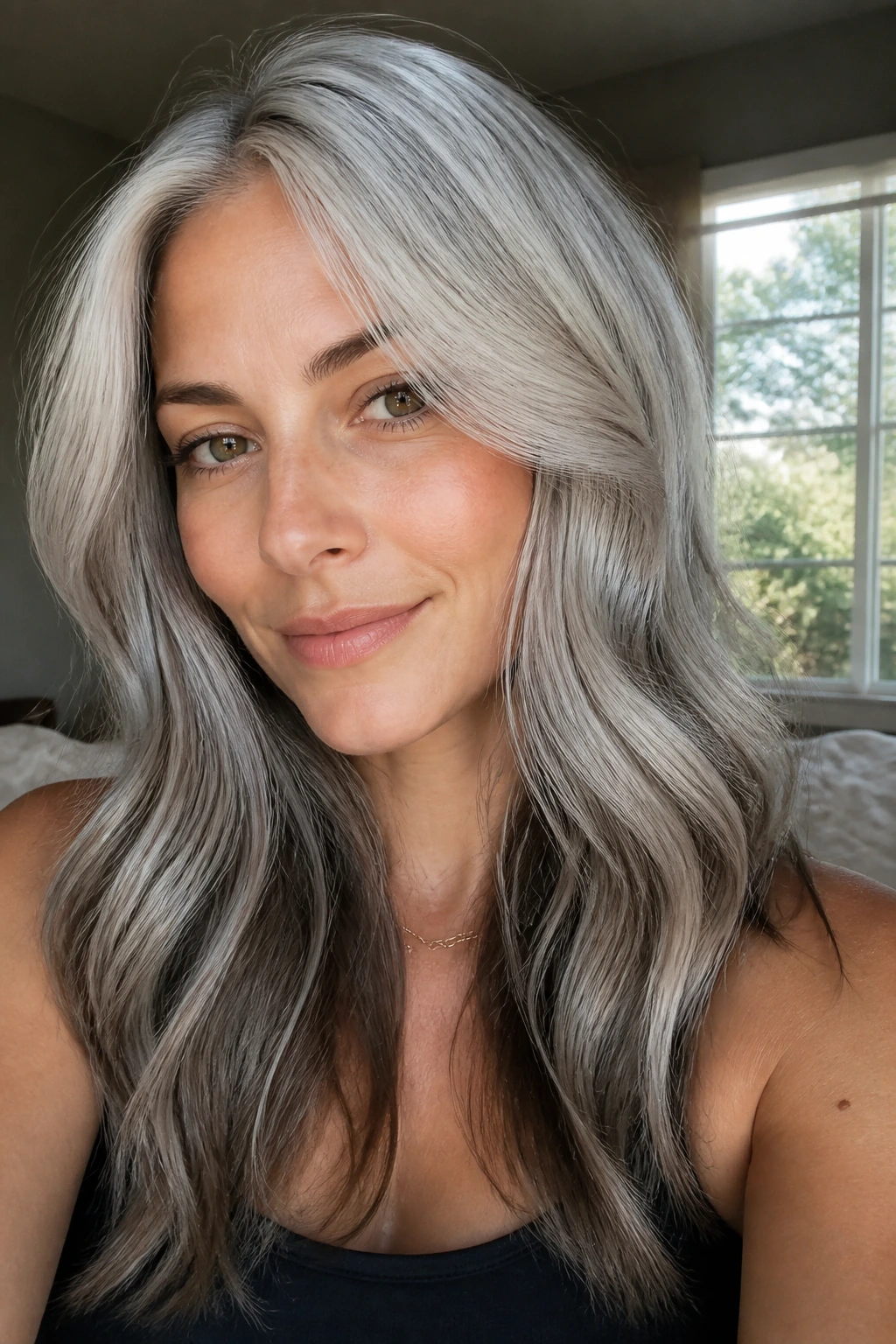
Reverse balayage flips the usual logic. Instead of painting lighter pieces into darker hair, the colorist adds smoky lowlights and silver-tinted pieces to create depth around an already light base.
The effect is smart. A too-bright blonde can look flat; reverse balayage gives it shape and shadow. Silver lowlights around the ends and underneath the top layer make the lighter pieces above them look cleaner.
This is a strong fix if your hair is already blonde but feels a little one-note. It keeps the silver idea in play without requiring a full bleach refresh. And it tends to grow out in a calm, blended way.
19. Arctic White-Silver Ends
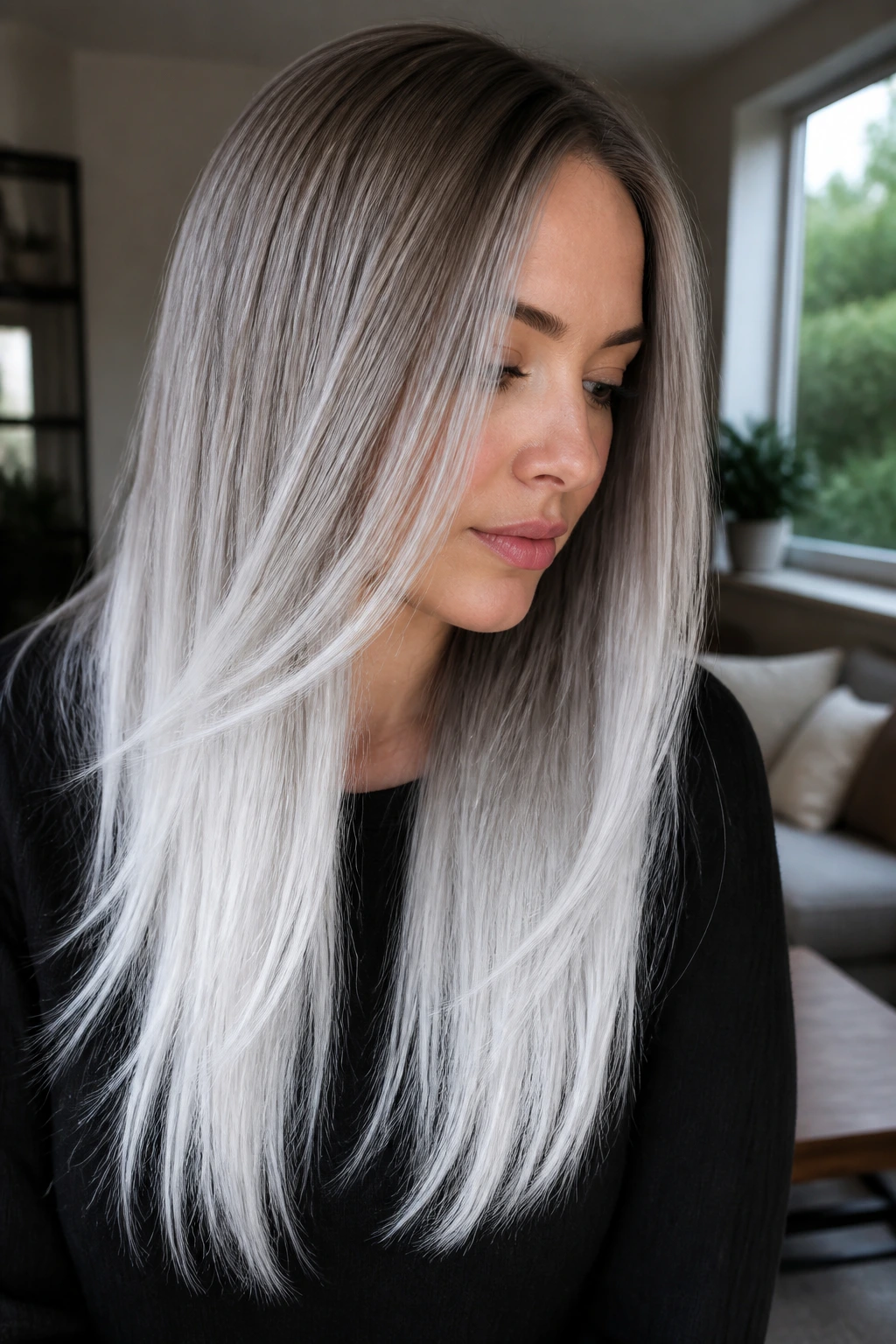
Arctic white-silver ends make a statement without needing an all-over icy blonde base. The top stays slightly deeper, often ash or smoke-toned, and the ends are pushed to a very pale silver-white.
The contrast looks especially sharp on straight long hair and blunt cuts. Every flick of the ends shows the color shift. The style has a frosted finish that can feel almost architectural when the hair is smooth.
This is not the easiest look to maintain. Those ends are the most fragile part of the hair. But when they’re cared for, the finish has a cold, clean brightness that’s hard to beat.
20. Silver Face-Framing Layers
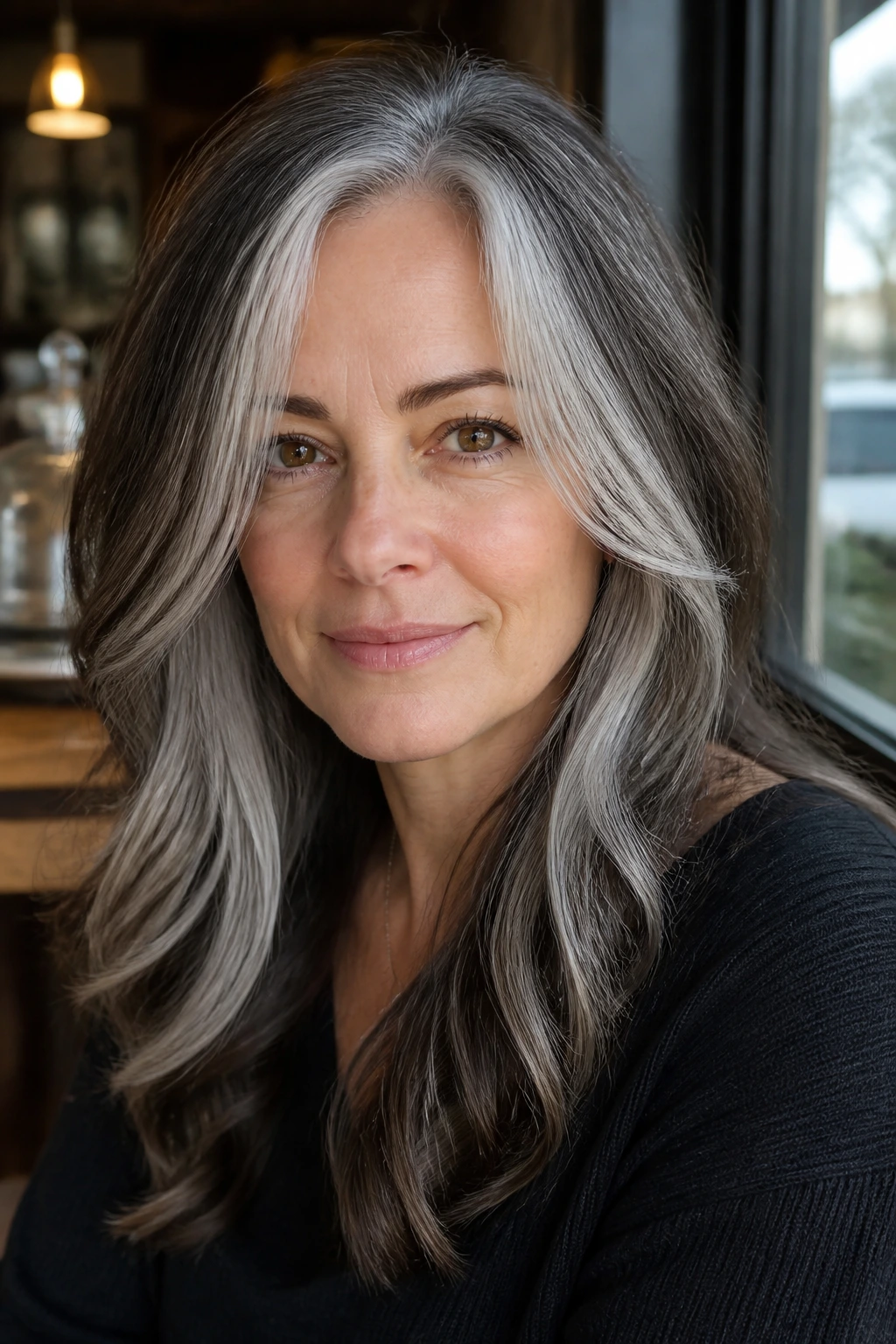
Face-framing silver layers are a nice compromise if you want brightness around the face without changing everything else. The front pieces are lifted to a soft silver or pale ash, then blended into the rest of the cut so the effect feels deliberate.
This works on layered hair especially well. The shorter front strands pick up light first, which makes the face look brighter and the haircut more shaped. The rest of the hair can stay darker, cooler, or more muted.
It’s a practical idea for anyone testing the silver waters. You get a visible result. You do not need to maintain a full head of pale hair. That matters more than people admit.
21. Smoky Silver Curls
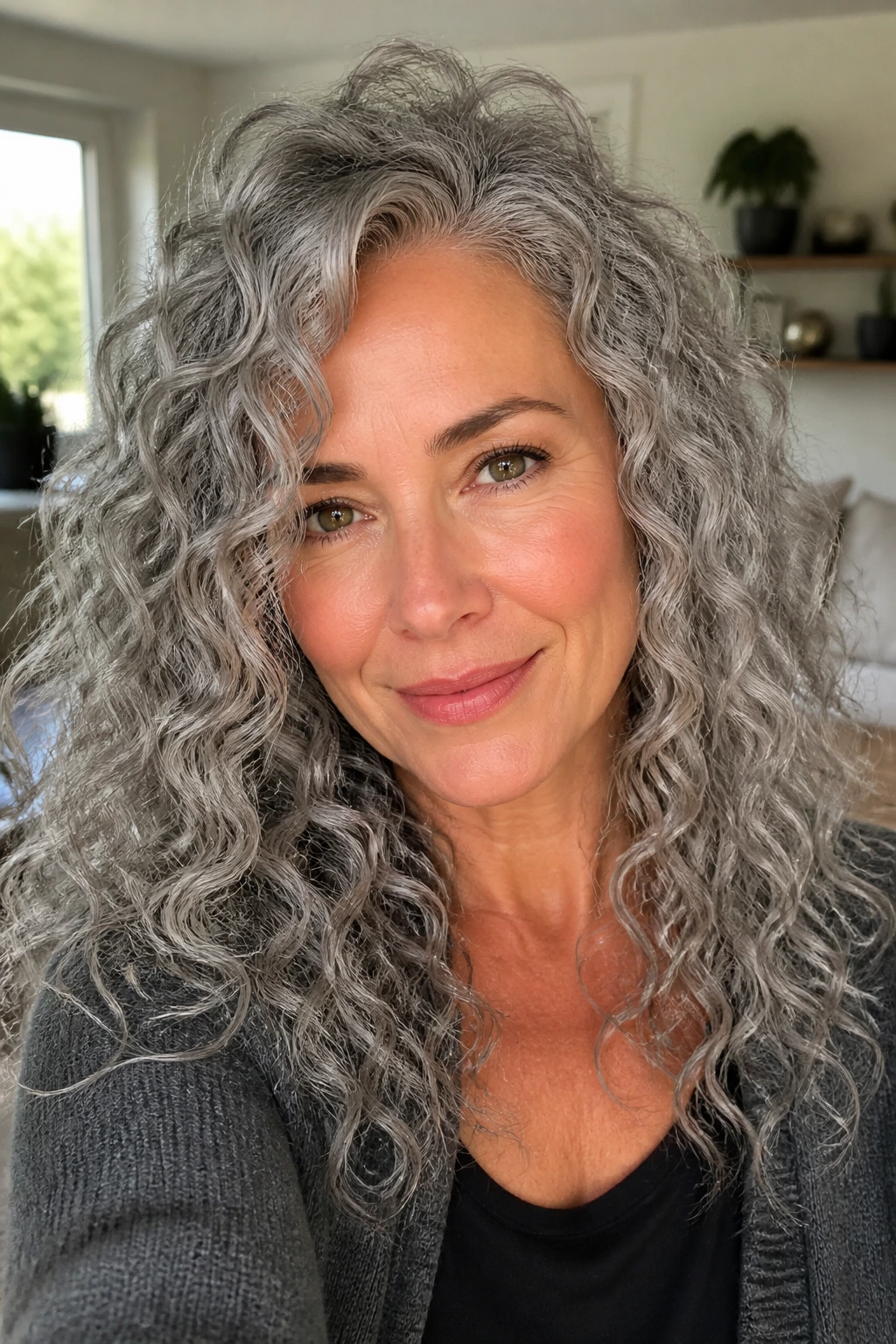
Silver and curls need a little more thought than silver and straight hair. Curls already have shadow built in, so a smoky silver tone can use that depth instead of fighting it.
The best version keeps the curl pattern defined and the shade slightly muted. If you go too bright, every bend can look dry. A smoky silver with ash undertones makes the curls look richer, and the twist of each coil shows off the color variation.
This idea is particularly good for medium-density curls that need visual separation. The silver sits on the surface, the smoke hides at the base, and the two together keep the shape lively.
22. Salt-and-Pepper Silver Blend
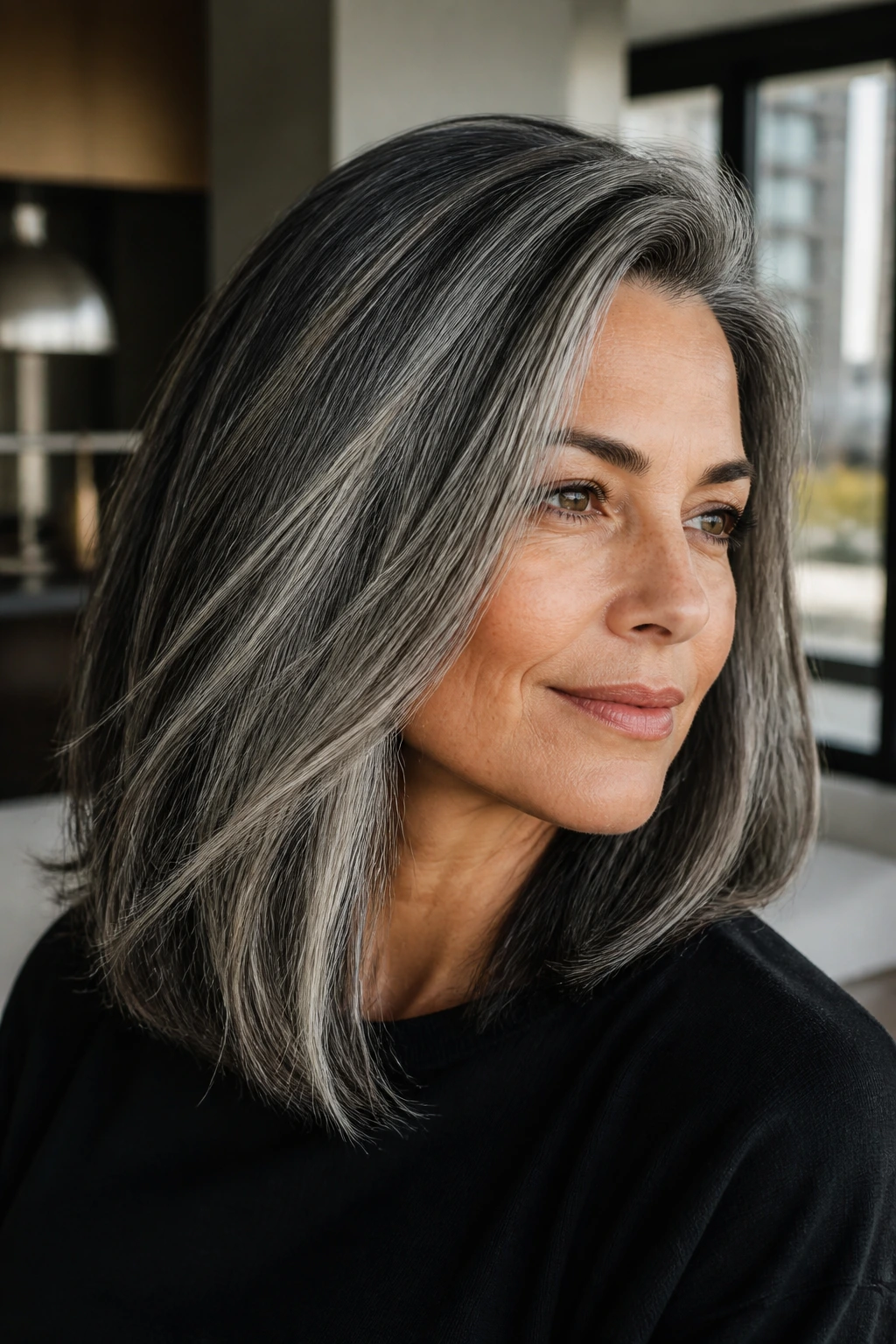
A salt-and-pepper blend is the most natural of the silver hair color ideas here, and honestly, one of the most interesting. Instead of covering every gray strand, the color leans into the mix of dark, silver, and white so the hair looks dimensional on purpose.
This style works on all lengths, but it looks especially good when the cut has movement—layers, bends, or a soft shag. The contrast between darker strands and silver ones creates a lived-in finish that doesn’t try to hide what’s already there.
It’s a strong option if you want a modern silver look that grows out gracefully. No harsh line. No panic when the root shows. Just a smarter version of what the hair is already doing.
Why Silver Hair Looks So Clean Against Blunt Cuts and Soft Layers
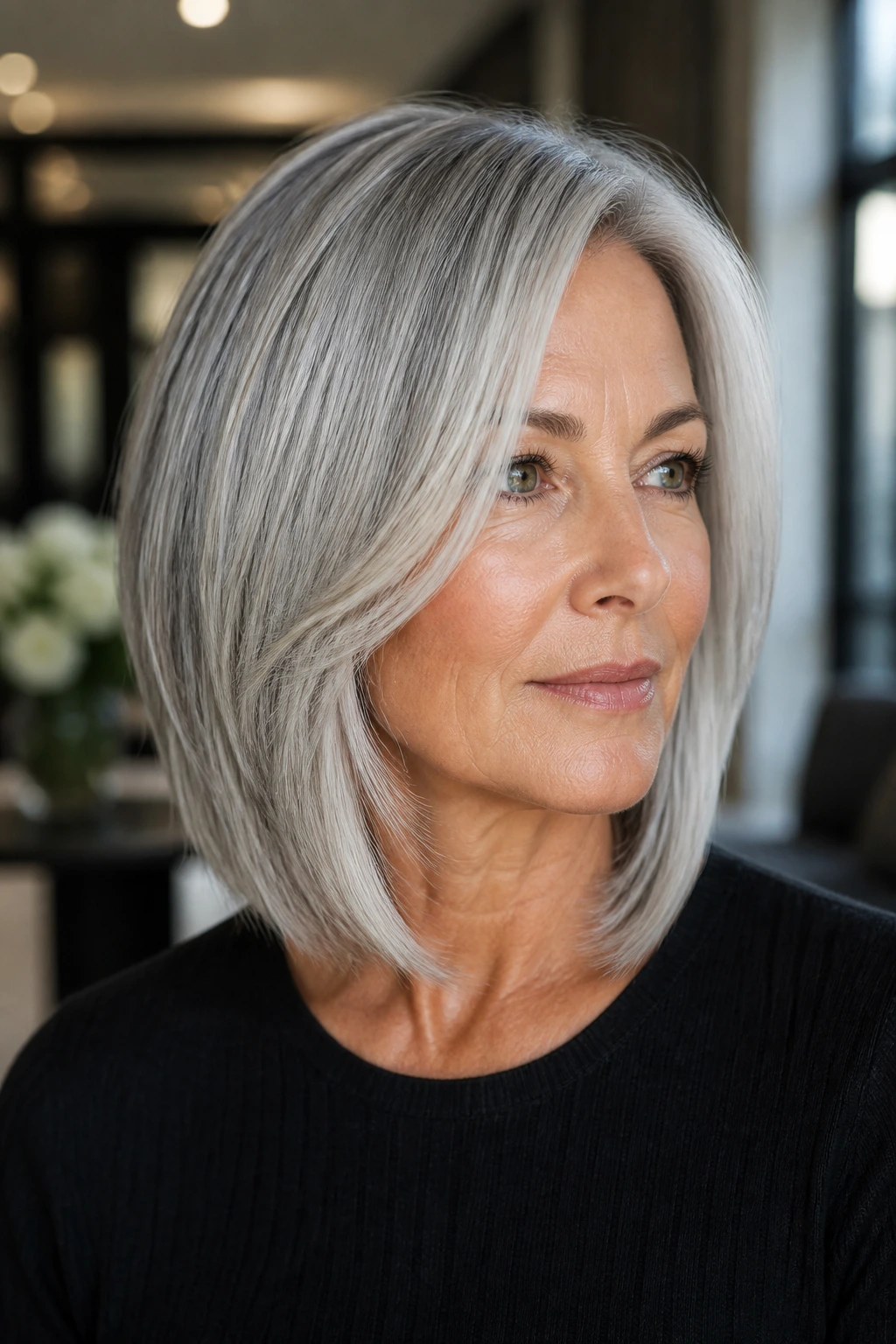
Silver has a funny habit of looking more expensive when the cut is straightforward. A blunt bob or lob gives the color a clear edge, so the eye reads the shape first and the shade second. That matters. When the cut is too busy and the silver is too pale, everything turns fuzzy.
Soft layers do the opposite job. They break up a solid sheet of color and let the silver move. If you want the shade to look smoky, pearl, or metallic in different places, layers help that happen without extra styling. A rough blow-dry, a round-brush bend, or a loose wave can change the whole read of the color.
What tends to fail is the middle ground with no intent behind it. Too much layering on a bright silver can make the ends look wispy. Too little shape on a cool, pale tone can make the hair read flat. Pick one direction and commit.
How to Choose the Right Silver for Your Base Color
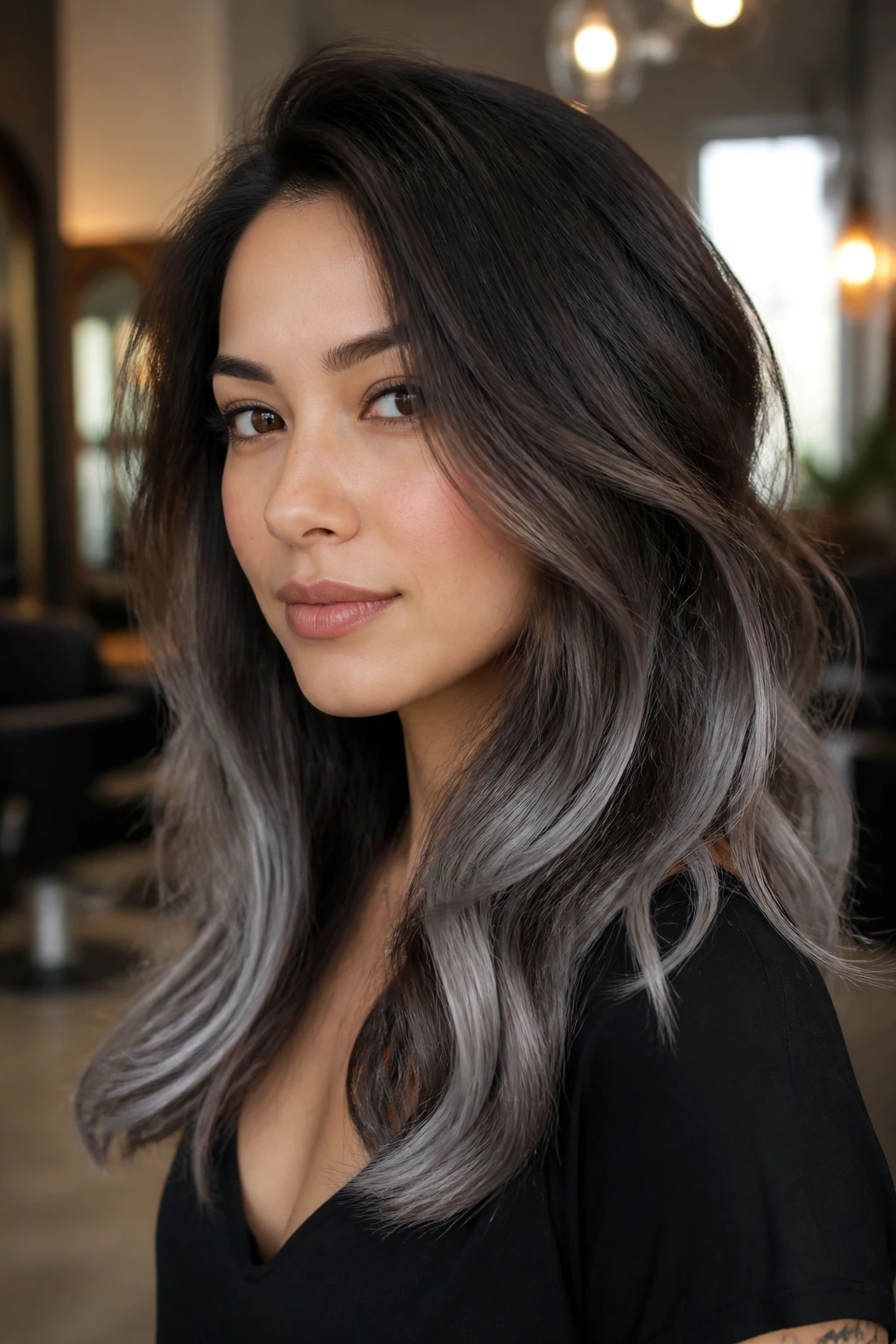
Dark hair, light blonde hair, and natural gray each need a different silver strategy. That’s the part people skip, and then they wonder why the tone looks off.
If Your Hair Is Dark Brown
You’ll need a stronger lift before silver can sit cleanly on top. On dark bases, a graphite melt, charcoal silver, or balayage tends to be easier to live with than a full icy white. The darker root keeps the result grounded and less fragile-looking.
If Your Hair Is Light Blonde
You have more room to play. Pearl silver, opal silver, and platinum money pieces can land without a huge correction. The hair still needs to be light enough that yellow doesn’t peek through once the toner fades.
If You Already Have Gray Hair
This is where silver can look smart with less work than people expect. A toner, a cool gloss, or lowlights around the hairline may be enough to make the gray feel intentional. The goal is usually to even out the tone, not erase the natural pattern.
If Your Hair Is Curly or Coarse
Ask for dimension, not one flat tone. Curls and coarser textures often need a slightly softer silver with smoky depth, because the light catches each bend differently. A heavy-handed icy tone can look dry fast.
Tools, Toners, and Products That Keep Silver Crisp
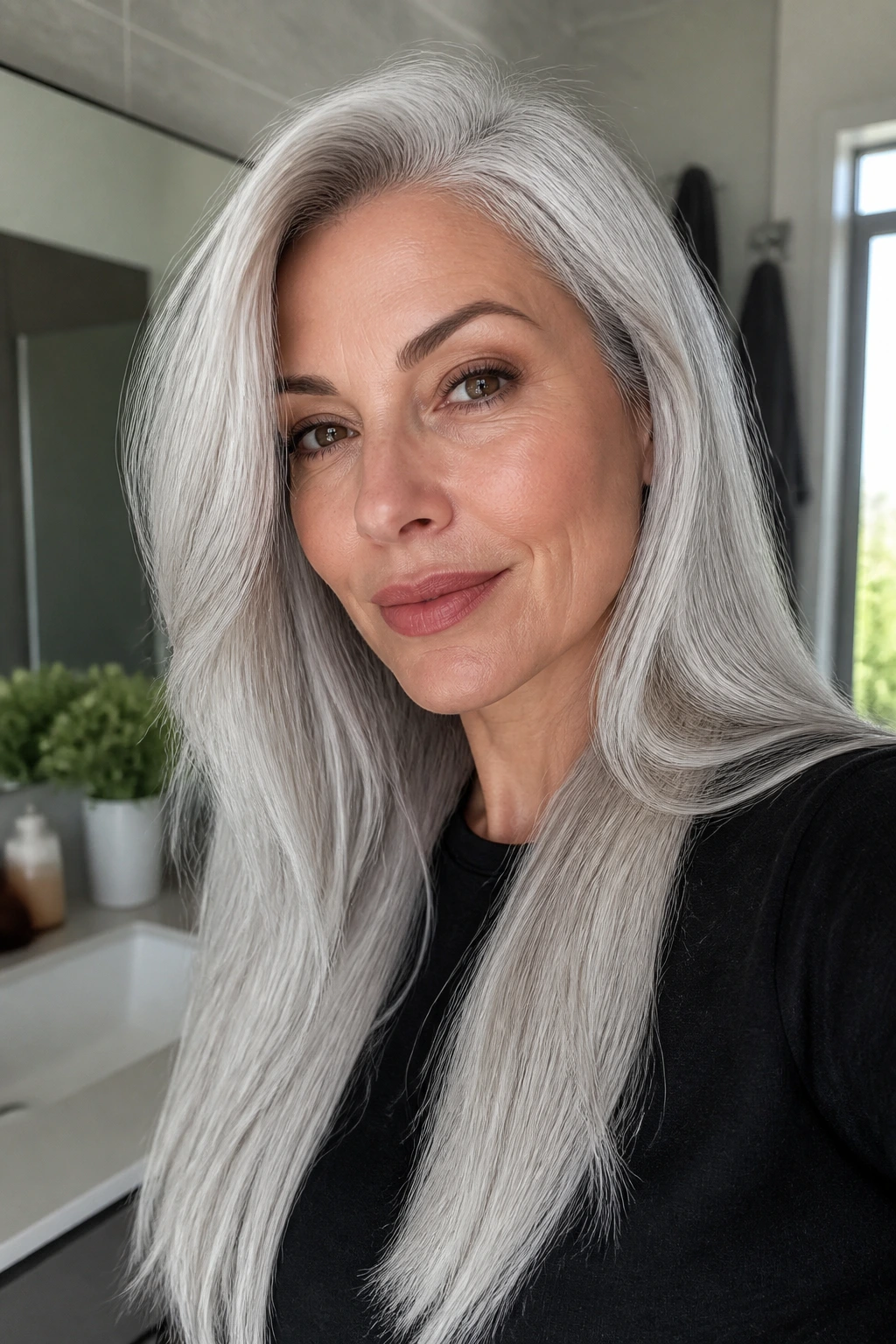
A silver color only looks good if the tools behind it are decent. The color itself is fragile. The support routine does the boring work.
-
Purple shampoo: Use it when the hair starts drifting yellow, not every wash, or the tone can go chalky.
-
Blue shampoo: Better for brassiness on darker blonde or brunette-based silver, since it leans toward orange correction.
-
Sulfate-free cleanser: Keeps the color from stripping too quickly, especially on porous or pre-lightened hair.
-
Bond-building treatment: Helps hair that has been lifted several levels stay smoother and less brittle.
-
Color-safe conditioner: Softens the cuticle so the silver reflects evenly instead of looking patchy.
-
Heat protectant spray: A must if you blow-dry or flat iron, because hot tools can dull silver fast.
-
Gloss or toner refresh: Useful between color appointments to restore that clean ash finish.
-
Wide-tooth comb: Easier on fragile silver hair than a fine brush, especially when it’s wet.
-
Shower filter: Worth it if your water is hard or mineral-heavy; those deposits can make silver look dingy fast.
-
Tint brush and gloves: Handy if you’re doing a glaze or toner at home and want even saturation near the roots.
How to Keep Silver Hair Bright Between Appointments
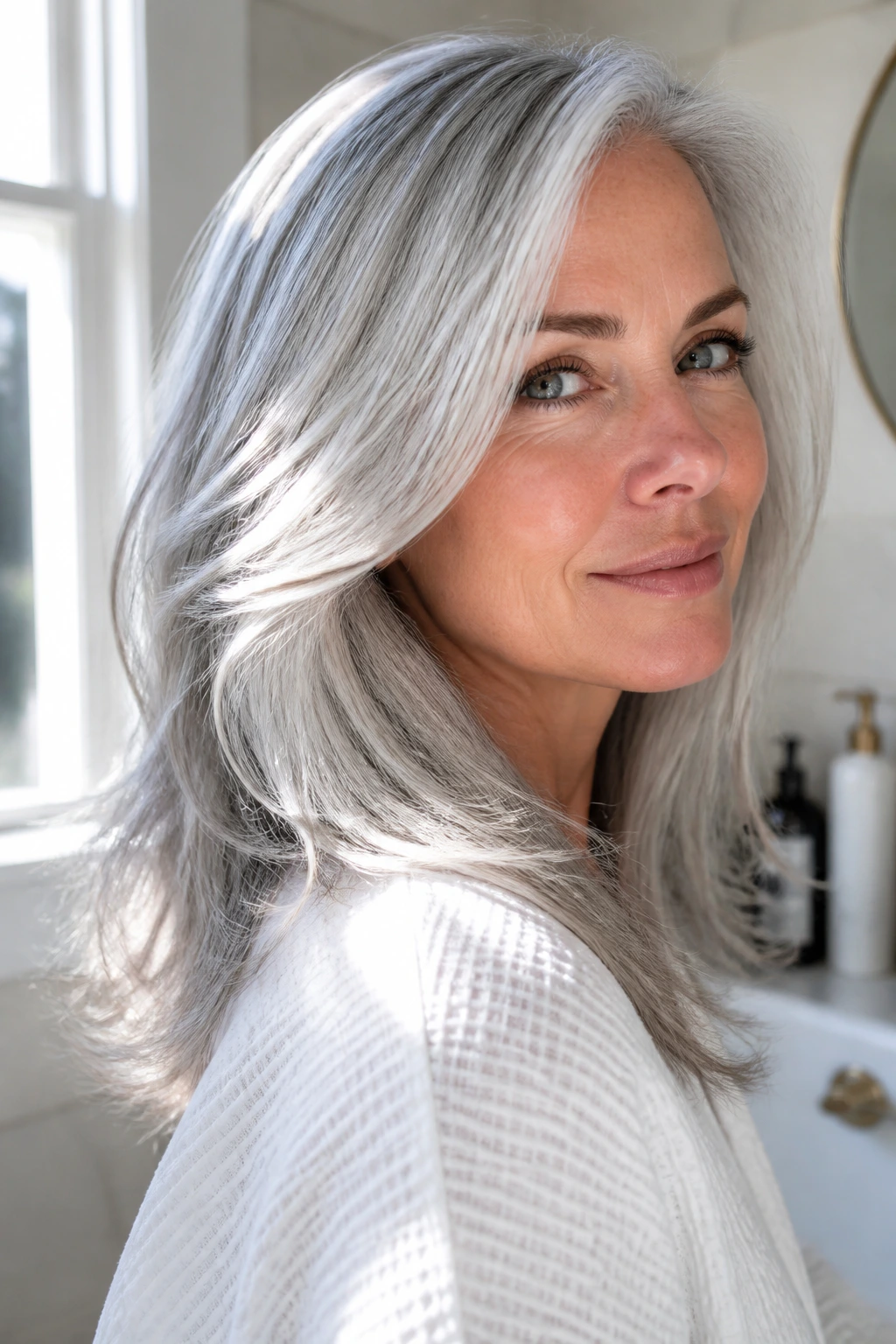
Silver hair does not ask for casual care. It asks for a rhythm. Not a huge one. Just enough to keep the tone from turning yellow, green, or flat.
Wash schedule: Two to three washes a week is plenty for most silver hair. The less you wash, the slower the fade, but product build-up can also mute the tone, so you need balance. If your scalp gets oily fast, focus shampoo only at the roots and let the suds slide through the ends.
Tone refreshes: A gloss or toner every four to six weeks keeps the cool tone from collapsing. If your hair is very porous, you may need it sooner. If the silver is sitting on top of a darker base, you can usually go a little longer.
Heat control: Keep hot tools on the lower side. Around 300°F to 325°F is enough for most fine-to-medium hair, and often too hot is what makes silver look dry and dull. Always use a heat protectant. Every time.
Water and minerals: Hard water can turn silver murky. If you notice the hair looking flat no matter what shampoo you use, mineral buildup may be the issue, not the color. A clarifying wash once every couple of weeks or a shower filter can help.
Night care: Sleep on a silk or satin pillowcase if you can. It cuts down on friction, which keeps the ends from looking frayed and rough by the time the next wash comes around.
Common Mistakes That Make Silver Turn Muddy
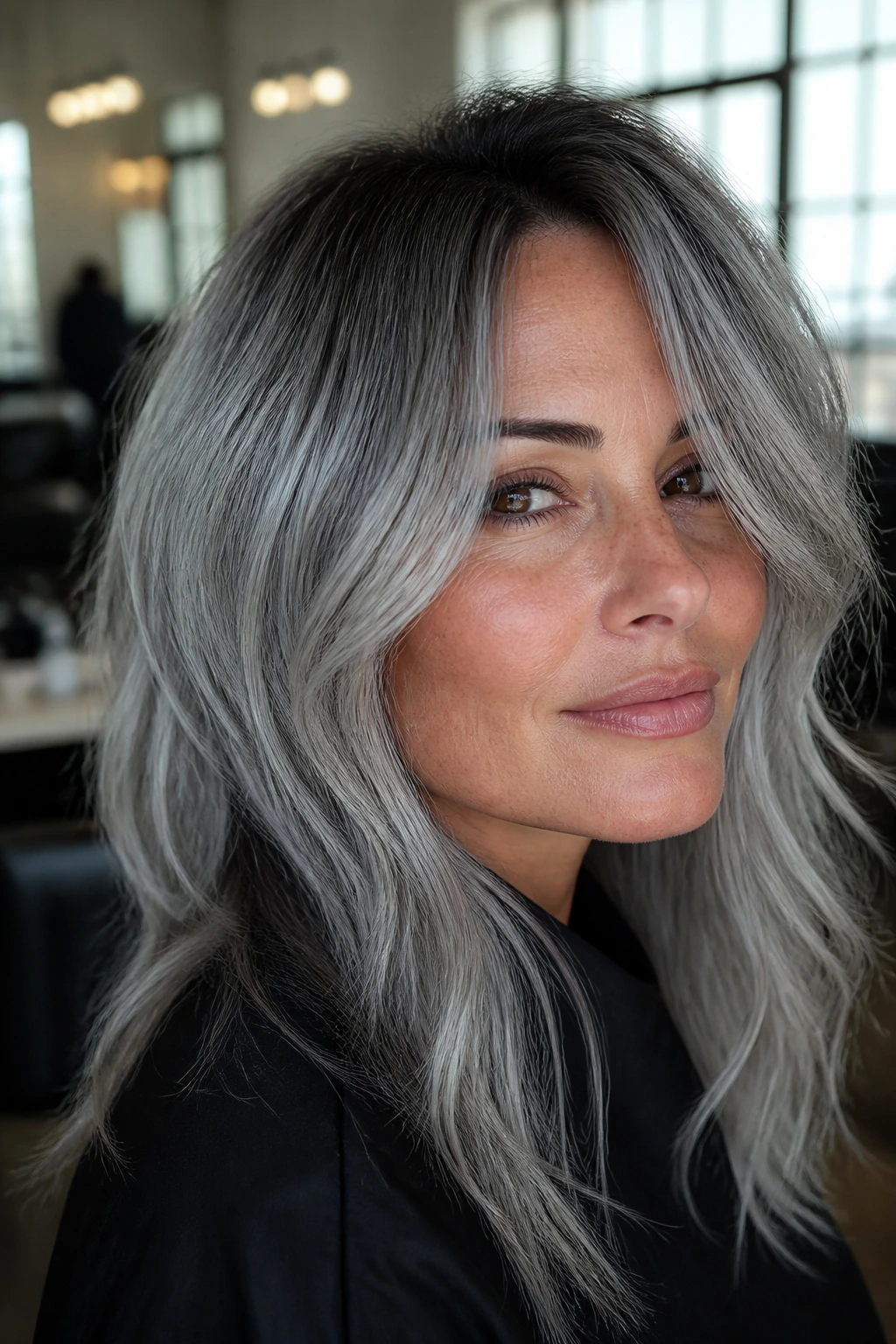
The fastest way to ruin silver is to treat it like a low-maintenance blonde. It isn’t. The tone is too cool and too light for lazy upkeep.
Lifting the hair too little: If the base still has too much yellow, the silver will fade into beige or brassy gray within a few washes. The fix is a cleaner lift before toning, not a stronger toner dumped on top.
Using purple shampoo like detergent: Too much violet pigment can leave the hair dull, smoky, or even slightly lavender in a patchy way. Use it once a week or less unless your hairdresser tells you otherwise.
Skipping the root plan: Full silver without depth can look blurry at the scalp as it grows. A shadow root, soft lowlight, or melt keeps the shape clear between appointments.
Ignoring porosity: Damaged hair grabs toner fast and releases it just as fast. That’s why one part of the head may stay silver while another goes flat or dark. Porosity equalizing treatments and slower processing help.
Too much heat, too often: Silver hair can look sleek with a flat iron, but repeated high heat burns the shine out of the tone. If the ends start looking dusty, lower the temperature before you blame the color.
Variations and Alternate Ways to Wear Silver
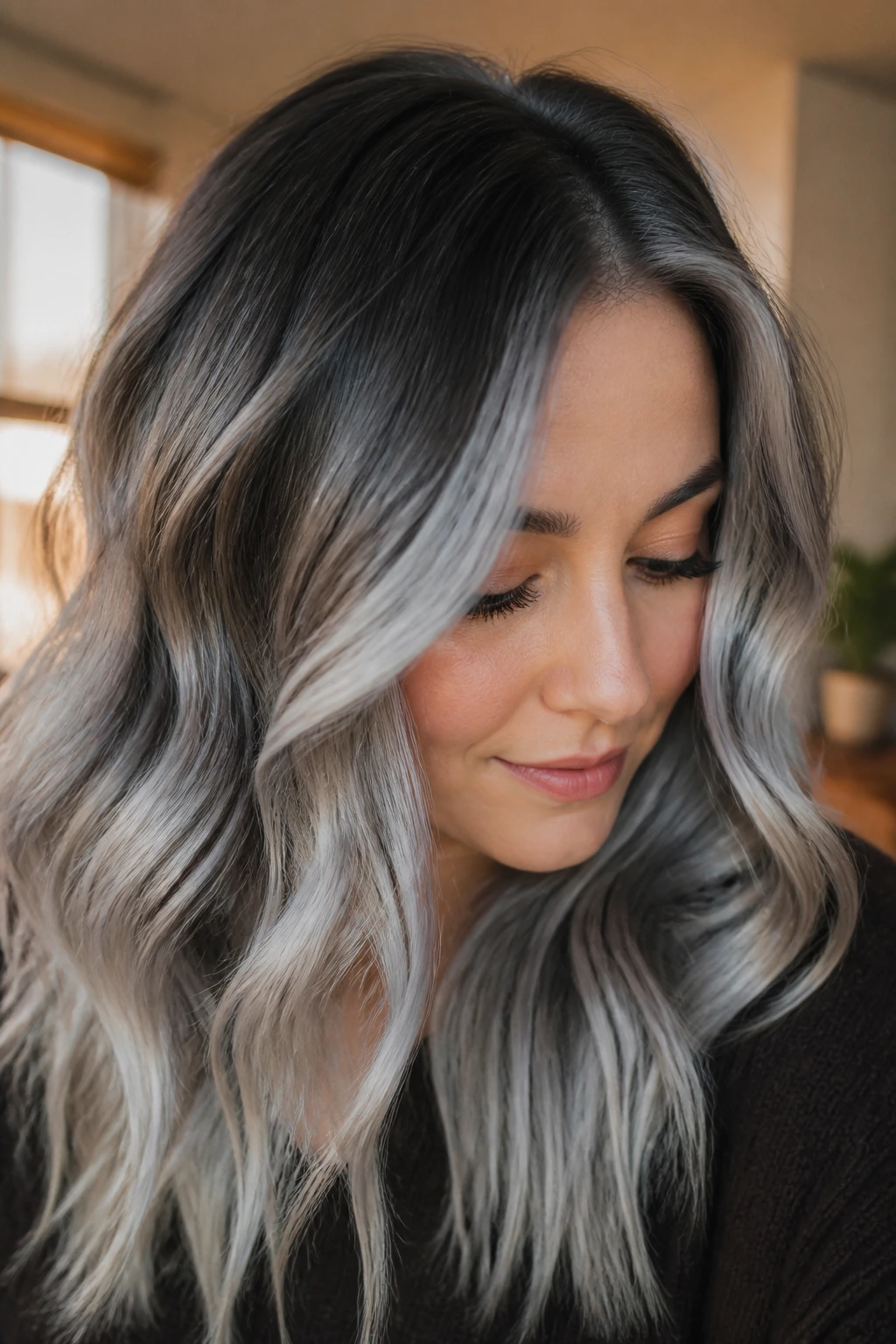
Soft Smoke Ombré
This version keeps the roots darker and lets the silver show mostly through the mid-lengths and ends. It works well if you want the cool look but need the color to last a little longer between salon visits.
Silver Money Piece With Dark Hair
Keep the base deep and place bright silver only around the face. The result is high contrast without a full-head commitment, and it’s one of the easiest ways to test whether silver suits your skin and style.
Pewter Blonde Blend
If full silver feels too stark, soften it with a muted blonde-meets-gray finish. The color reads cooler than beige blonde and softer than metallic silver, which makes it easy to wear with more casual cuts.
Blue-Gray Steel Finish
Add a faint steel blue note to a silver base for a colder, sharper look. This works best on straight or softly waved hair where the reflective finish can show the shift between gray and blue.
Natural Gray Blending
Instead of covering grays, blend them with gloss and strategic lowlights. This keeps the hair from looking flat and gives the natural silver a more deliberate, salon-finished shape.
Frequently Asked Questions About Silver Hair Color Ideas
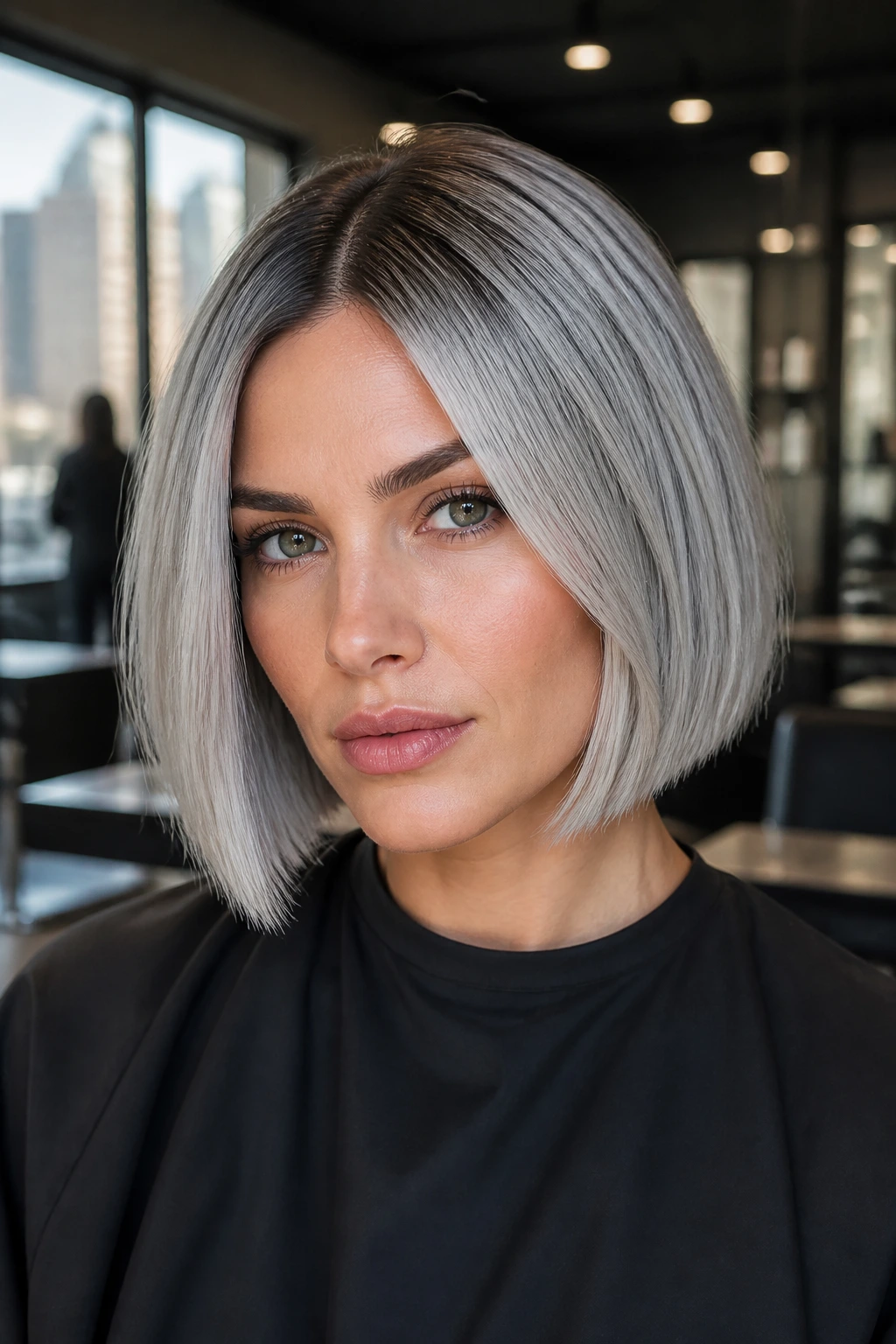
Can dark hair really go silver in one appointment?
Usually not if you want a clean, pale finish. Dark hair often needs more than one lightening step, especially if you’re aiming for icy or white-silver rather than smoky charcoal silver. Rushing it can leave the hair orange, patchy, or too fragile to tone well.
Which silver shade is easiest to maintain?
The versions with depth are easier to live with: shadow-root silver, charcoal melt, reverse balayage, and salt-and-pepper blending. They forgive grow-out and don’t demand perfect tone every week.
Will silver hair make my face look washed out?
It can if the shade is too pale and the cut has no depth. A smoky root, a pearl finish, or silver placed only around the face usually solves that by keeping some contrast near the skin.
Can I wear silver hair if my skin tone is warm?
Yes, but the silver usually needs a little softness. Mushroom silver, pewter blonde, or a cool beige silver tends to work better than the iciest version. The warmth in your skin needs a little buffer.
How often do I need to tone silver hair?
Most people need a refresh every four to six weeks, though porous hair can fade faster. If the silver starts looking yellow, muddy, or dull, that’s your sign to book a gloss or use a toner at home under professional guidance.
Does silver hair always damage the hair?
Lightening can be rough, especially if the hair is dark to begin with. But good prep, bond-building care, and a sane maintenance schedule make a big difference. The damage comes more from repeated overprocessing than from the silver tone itself.
Can I get silver hair without bleach?
Only if your hair is already light enough. On natural gray, light blonde, or some pre-lightened hair, a toner or gloss may do the job. On darker hair, silver without lightening usually turns muddy instead of metallic.
What if my silver turns greenish?
That usually points to mineral buildup, pool exposure, or a toner issue. A clarifying wash, a color-correcting gloss, or a shower filter can help. If the green cast is strong, a colorist can fix it faster than another round of shampoo will.
The Shade That Does the Heavy Lifting
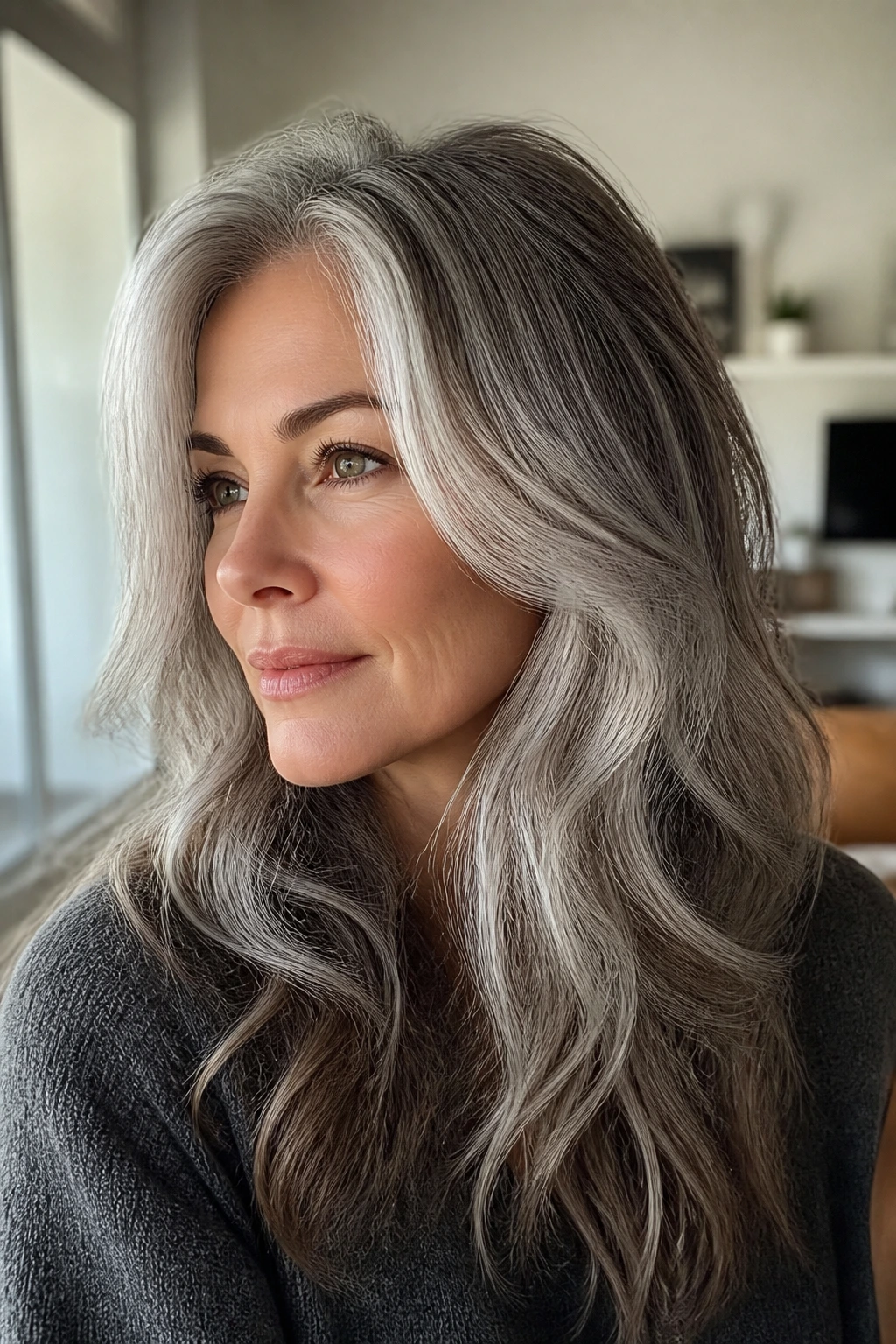
Silver hair works because it does two things at once: it cools the look down and gives the cut more structure. That’s a rare combination. Most colors do one job and stop there.
The best silver hair color ideas are the ones that leave room for depth, movement, and a little grow-out. A root melt, a face frame, a smoky overlay, or a clean blunt cut can make the same shade feel completely different. That’s the part worth paying attention to.
Pick the silver that fits the hair you actually have, not the one in a photo with five hours of lighting and no wind. The right version will still look good when you’re at home, in bad light, with day-three texture. That’s the one worth keeping.
