



Short hair on Black women should never look like a compromise. It should look chosen. When people ask for haircut ideas for Black women with short hair, they usually want more than a cute photo with good lighting — they want shape, movement, clean edges, and a cut that still makes sense after sleep, sweat, humidity, and one too many skipped wash days.
That’s where short hair gets interesting. On coily, curly, relaxed, and texturized hair, the difference between okay and sharp often comes down to the outline: the nape, the temples, the way the crown is left a little longer or kept tight, the way shrinkage is respected instead of fought. A quarter-inch can disappear into a curl pattern. A taper can change the whole mood. And a good line-up? It can make a tiny cut look deliberate instead of merely short.
I like short hair best when it does something specific. Soft where you want softness. Cropped where you want structure. A little dramatic when the face can carry it. The styles below lean into those differences instead of pretending every head of hair should be cut the same way. Some are barber-sharp. Some are salon-soft. Some need almost no styling at all. Some ask for a little mousse, a little patience, and a hand mirror you don’t trust completely.
Why These Short Cuts Keep Working on Black Hair
-
They respect shrinkage: A tapered nape or a rounded crown looks better on coily hair than a boxy outline, because the cut still reads well when the curls spring up.
-
They grow out with some grace: The best short cuts don’t fall apart at week three. A good pixie, fade, or cropped bob should look like a slightly different version of itself as it gets longer.
-
They leave room for texture: These cuts work on 3C curls, 4A coils, dense 4B hair, and even relaxed hair because the shape does the heavy lifting.
-
They can be styled two ways: Many of these ideas can look soft one day and sharp the next, which matters when you do not want a whole new appointment every time you want a new mood.
-
They suit real life: Earrings, glasses, makeup, scarves, office dress codes, weekend errands — short hair has to work in all of it, not just in a salon mirror.
-
They make face shape matter in a good way: A little height at the crown, a side part, or a clean fade can bring out cheekbones and jawlines without looking fussy.
1. The Tapered TWA With a Clean Nape
A tapered teeny weeny afro is one of those cuts that looks simple until you actually see a good one in person. The top stays soft and full enough to show off your curl pattern, while the sides and nape are trimmed close enough that the shape feels finished. On Black hair, that taper matters. Without it, short natural hair can puff out into a box. With it, the whole cut sits lighter.
Why it works
This shape respects natural shrinkage instead of fighting it. If your coils tighten up by an inch or two after drying, the taper keeps the overall outline neat. It also grows out cleanly, which is a small blessing if you hate that awkward halfway stage.
Best for
- Coily hair that needs structure
- Round, oval, and heart-shaped faces
- Anyone who wants short hair without a heavy styling routine
Pro tip: Ask your stylist to leave a little more length on top than you think you need. Once the curls dry and spring up, that extra half-inch is what keeps the cut from looking too close-cropped.
2. The Rounded TWA That Hugs the Head
A rounded TWA has a softer, more sculpted feel than the tapered version. The silhouette curves gently around the head, which is a nice move if you want your short cut to feel plush instead of sharp. The best versions have a little fullness at the crown and carefully softened corners at the temples.
That roundness matters because it keeps the eye moving. A square outline on tight curls can look blocky fast. A curved shape looks more intentional, and it flatters dense hair without demanding a lot from your morning routine.
How to wear it
You can keep it bare and brushed out, or define the curls with a light cream and a pick at the root. If you like a little polish, a clean side part and a glossy lip can change the whole read of the cut in ten seconds.
What to ask for
- Rounded sides, not a flat box
- A soft nape
- Enough top length to show curl texture once dry
3. The Curly Pixie With a Deep Side Part
A curly pixie is one of the best short haircuts for Black women who want movement without a lot of length. The deep side part gives the cut some drama, and the shorter sides stop the style from getting puffy around the ears. On textured hair, that part line does more than separate hair. It gives the eye a place to land.
This is the kind of cut that looks especially good when the front curl or wave falls across one eyebrow. Very old-school movie-star energy. But in a modern, cleaner way.
Why it works
The side part breaks up the volume so the cut doesn’t feel too round. It also gives you options: sleek it down with mousse, fluff it up with a little pick action, or tuck one side behind the ear and call it done.
Good if you want
- A feminine shape without shoulder-length hair
- Something that works with curl cream or a light foam wrap
- A cut that can go from office-clean to dinner-edgy fast
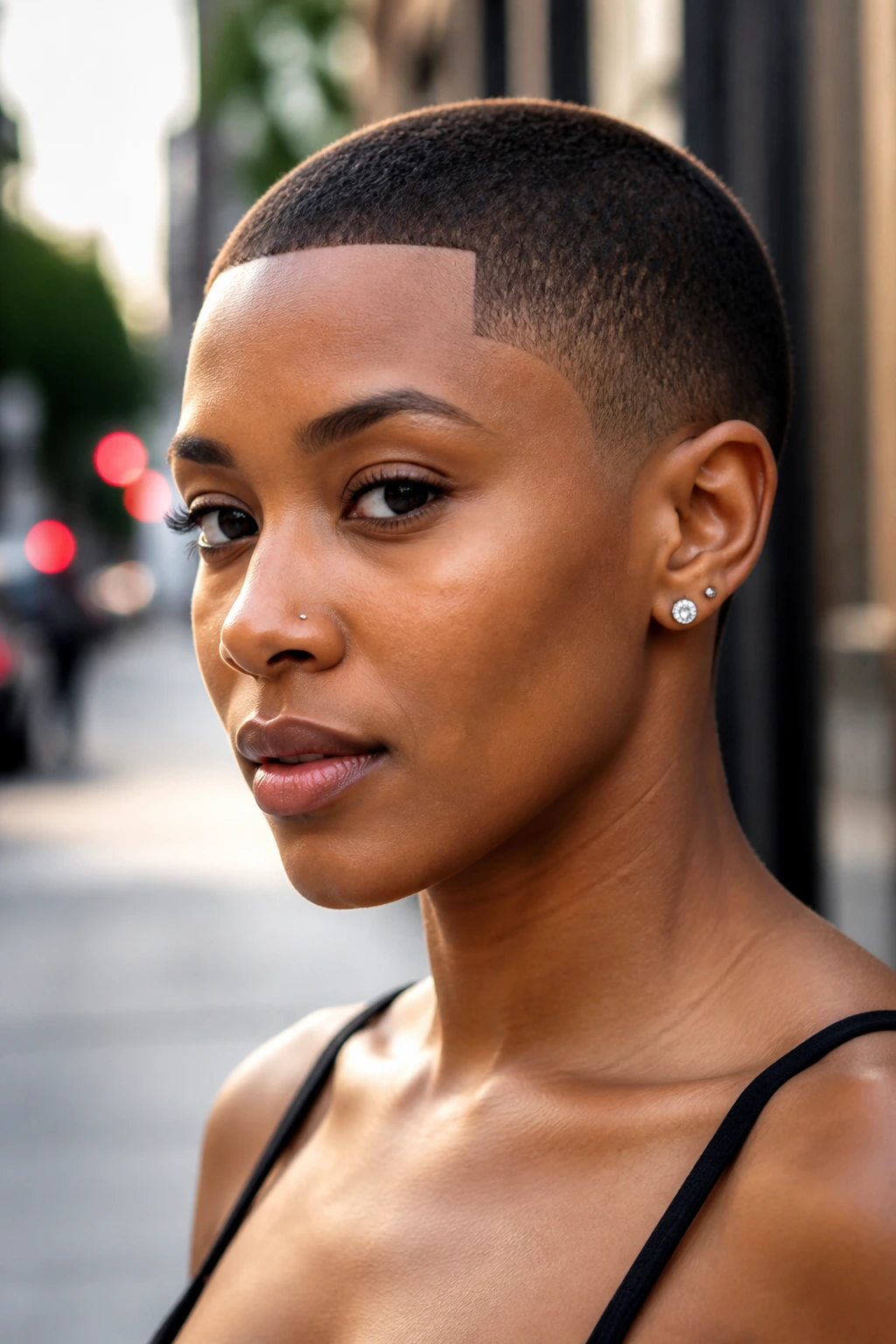
4. The Low Buzz Cut With a Sharp Line-Up
A low buzz cut is not subtle. That’s the whole point. It puts your face front and center, and when the line-up is crisp, the cut looks almost architectural. The shape is minimal, but it is not plain. On Black women, a buzz cut can look elegant, bold, severe, soft, or all four at once depending on the brow, earrings, and edge work.
The trick is keeping the line-up clean without making the hairline look unnaturally squared. A good barber knows when to stop. Too much edge control can look stiff. Too little, and the whole thing starts to feel unfinished.
Best for
- People who want almost no daily styling
- Strong cheekbones or brows
- Hot-weather months, gym life, or simply a low-fuss routine
One thing to watch: A buzz cut shows the scalp. If your skin gets dry, flaky, or irritated, this style will tell on you fast, so keep a lightweight scalp oil nearby and don’t let product build up.
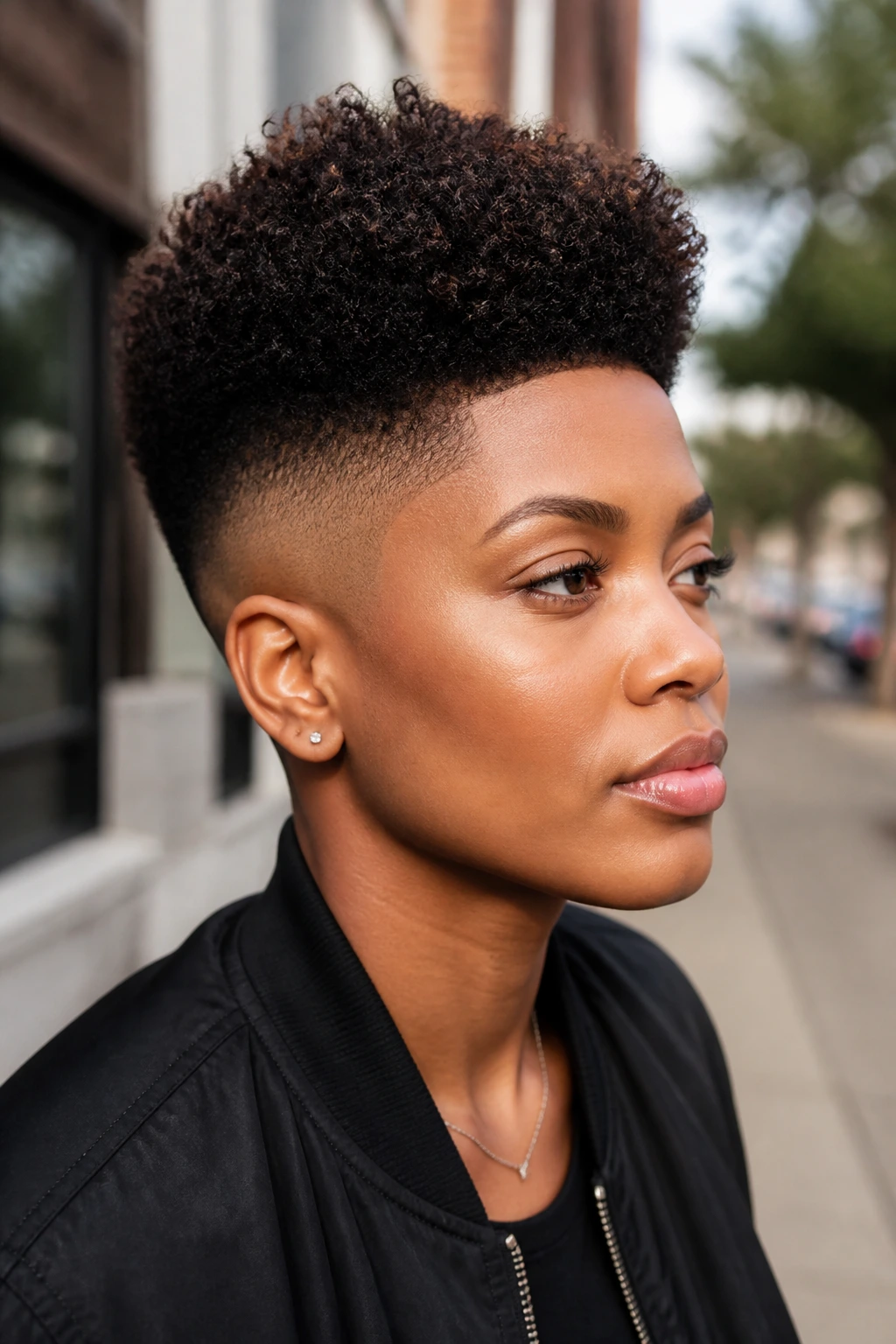
5. The High-Top Fade With Soft Curl Height
The high-top fade is one of those cuts that comes with history baked into it. On Black hair, it can look classic or fresh depending on the top length and how tight the fade is below it. I like the version where the top keeps some softness — not a rigid block, more like a controlled cloud with structure.
This cut needs balance. Too much width and it gets bulky. Too little height and you lose the point of the silhouette. When it’s right, it feels confident without trying too hard.
What makes it work
The fade cleans up the sides, while the longer crown gives you room to shape the top with a sponge, pick, or a bit of curl cream. You get volume where it matters and neatness where it counts.
Ask for this if
- Your hair is dense
- You want a little drama from the side profile
- You like styles that still look good after a few days
6. The Finger Wave Crop
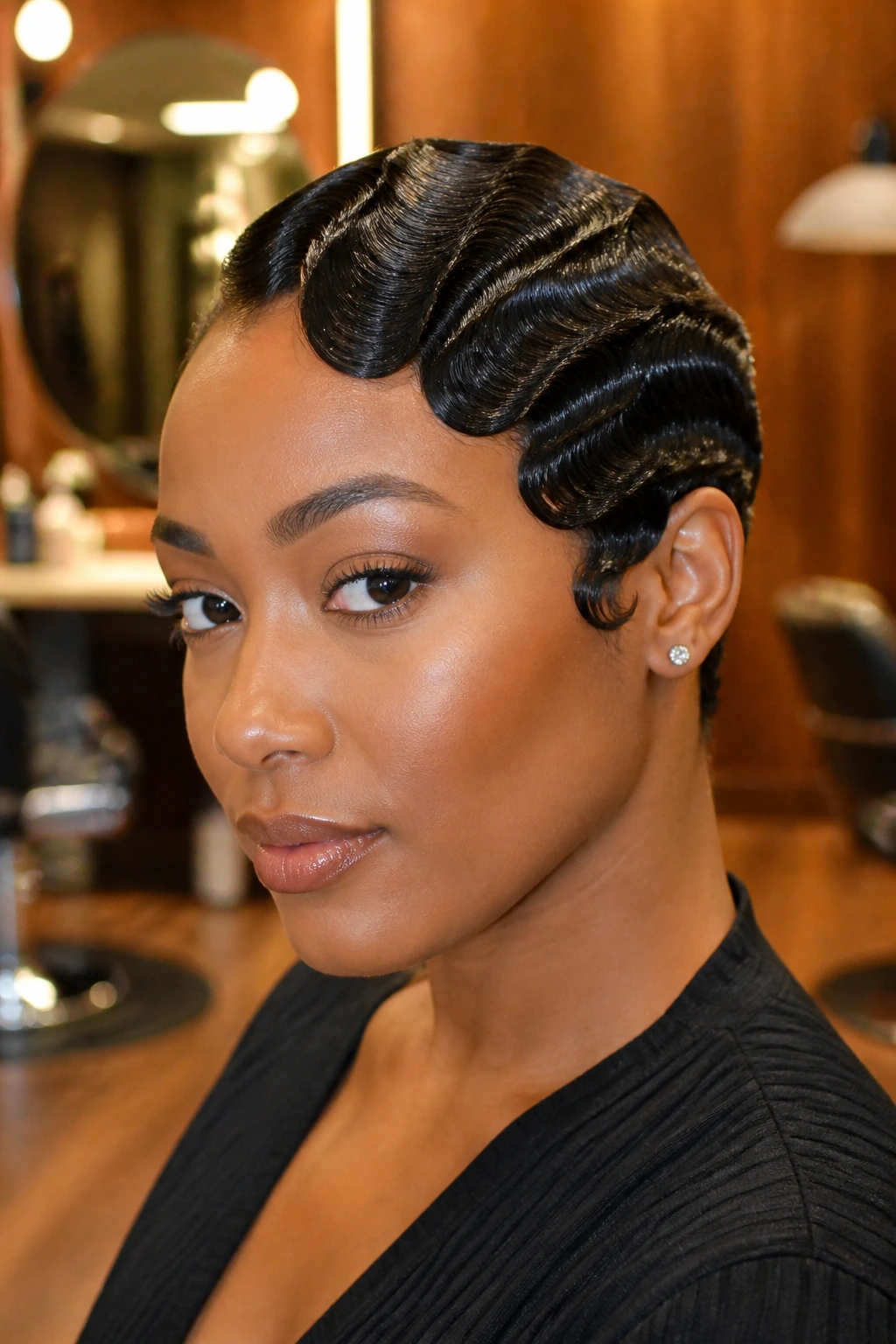
Finger waves on short hair are a whole mood. They’re glossy, sculpted, and a little theatrical in the best way. This works especially well on relaxed hair or short natural hair that’s been set with foam and molded close to the head. The wave pattern catches light in a way loose curls never quite do.
It’s a cut and a set working together. That’s why it looks polished even when the hair itself is very short.
Why it works
The wave pattern creates shape where length can’t. If your hair is close-cropped, the rippled surface gives you movement without needing bulk. It also photographs cleanly, which is useful if you want a style that reads from across a room.
A practical note
Finger waves need maintenance. Wrap them at night with a silk scarf and expect to refresh them with a little water or setting foam if you wear them more than a day or two. They’re worth the trouble, but only if you like a style that asks for a little respect.
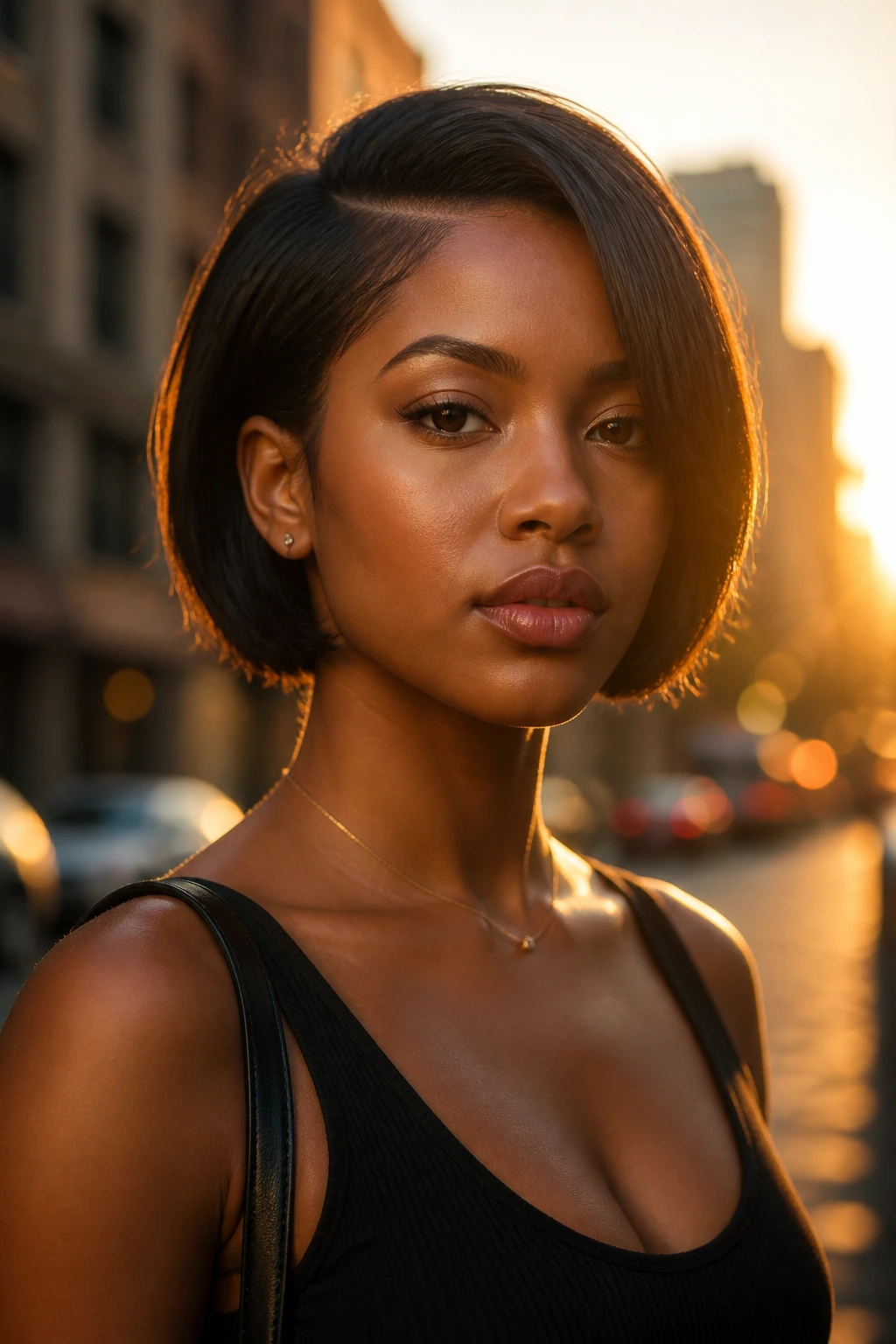
7. The Chin-Grazing Blunt Bob
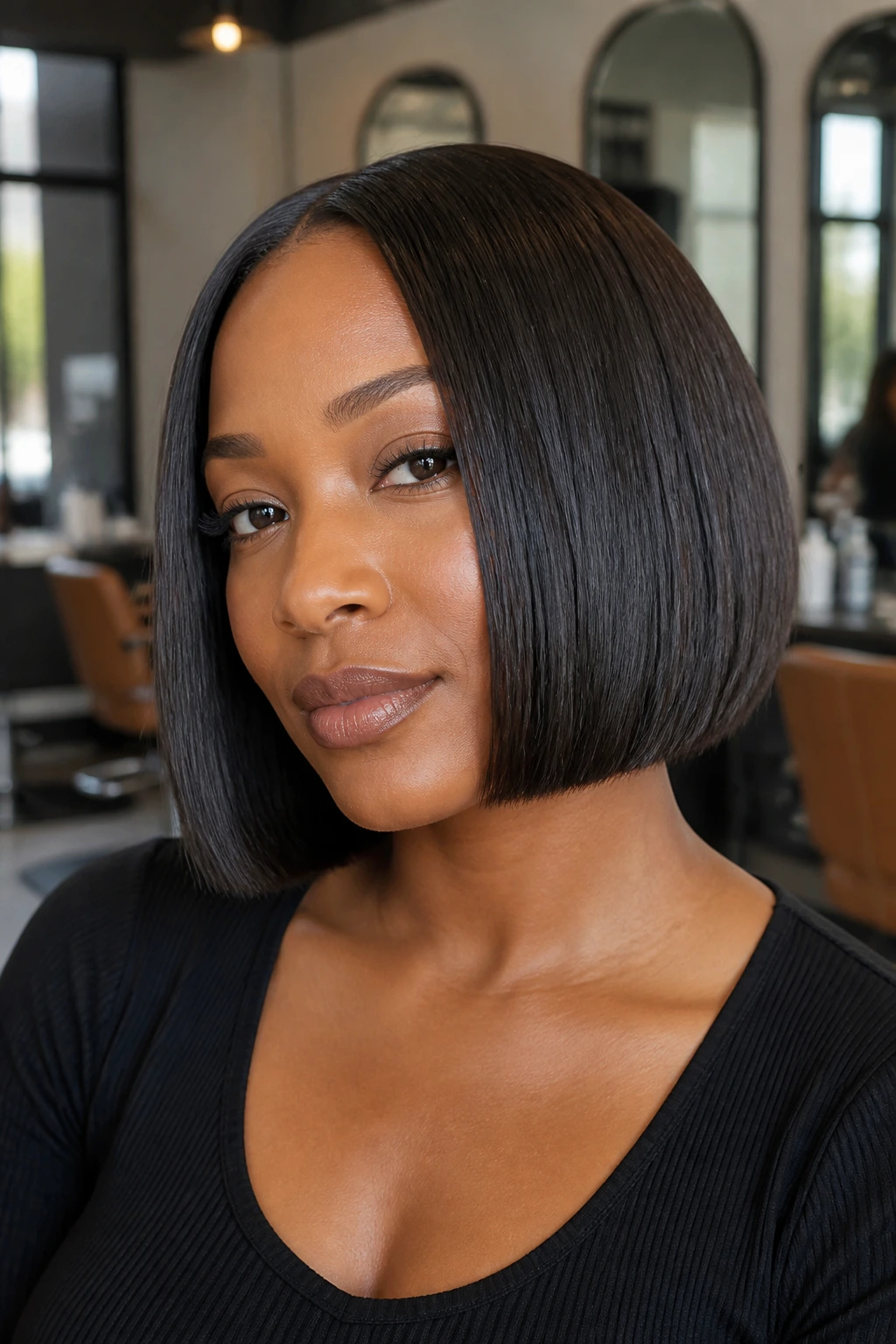
A blunt bob that lands at the chin or just below it can be very striking on Black women with short hair, especially when the perimeter is clean. This is not the soft, shaggy bob people wear when they want something breezy. This is a line. Crisp ends, steady shape, no nonsense.
On textured hair, you’ll usually need either a silk press, a blown-out finish, or a carefully set roller style to keep the line visible. If you wear it curly, the shape becomes softer, but the cut still reads as deliberate.
What makes it different
The blunt ends give the jawline something to play against. If your face is more angular, that can be a nice contrast. If your hair is dense, the blunt shape keeps the bob from fraying at the bottom.
Good to know
This cut needs trims. Not constant trims, but regular ones. Once the perimeter starts to flip unevenly, the whole clean look goes out the window.
8. The Asymmetrical Pixie Bob
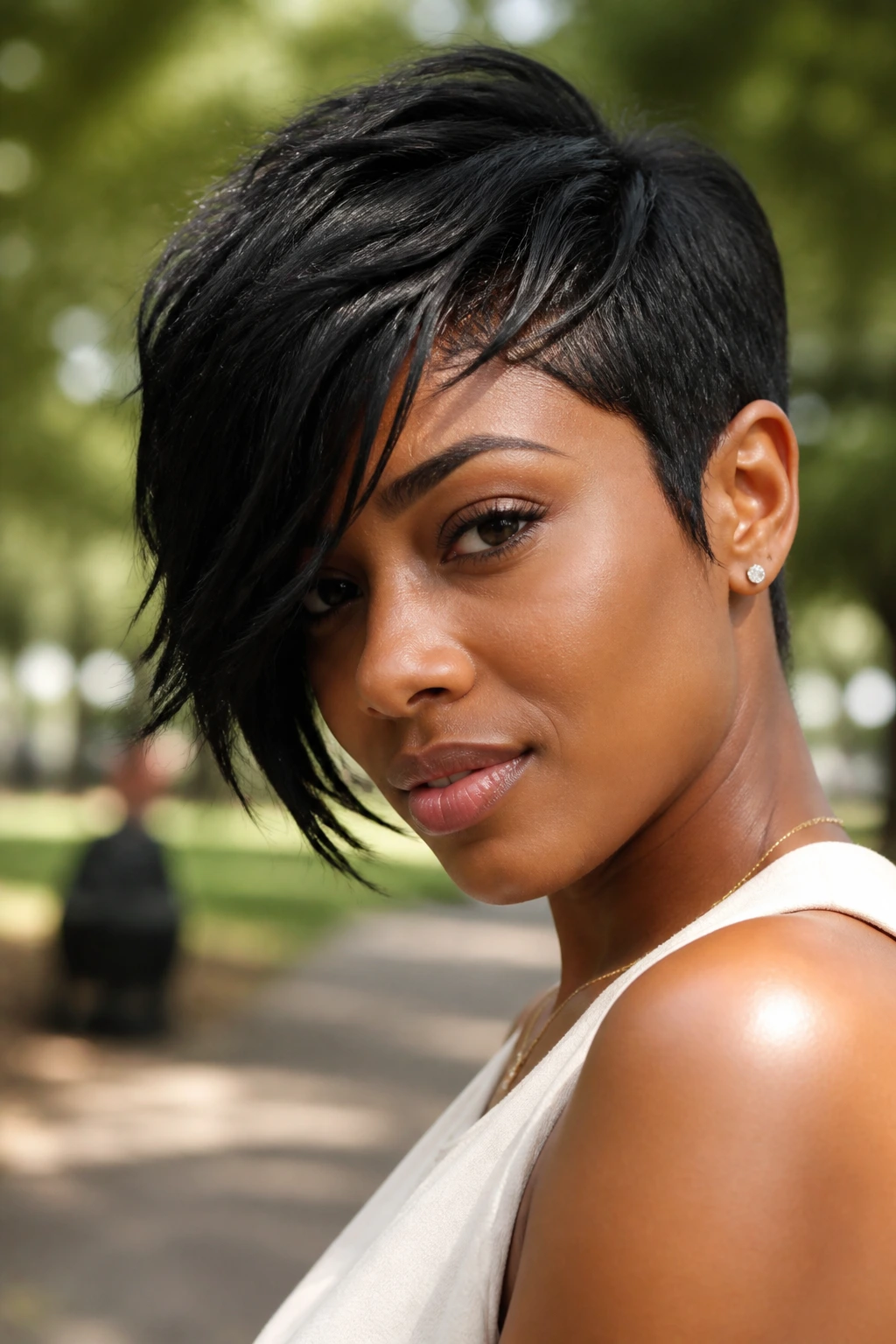
An asymmetrical pixie bob is for the woman who wants short hair with a little tilt to it. One side sits shorter. The other side drapes longer, often close to the cheekbone or jaw. That uneven length gives the cut movement even if you barely style it.
It’s a good choice if you like a style that looks intentional from one angle and playful from another. And yes, it can work on coily hair too, especially when the longer side has enough length to show curl pattern or a smooth bend.
How to make it work
Ask for a clear difference between the short and long sides, but not so much that the cut starts feeling disconnected. You want contrast, not confusion. A soft side part helps the longer side fall properly.
My opinion: This is one of the easiest short cuts to make feel expensive without actually being high maintenance. The shape does the heavy lifting. You do not need much else.
9. The Undercut Pixie With a Lifted Crown
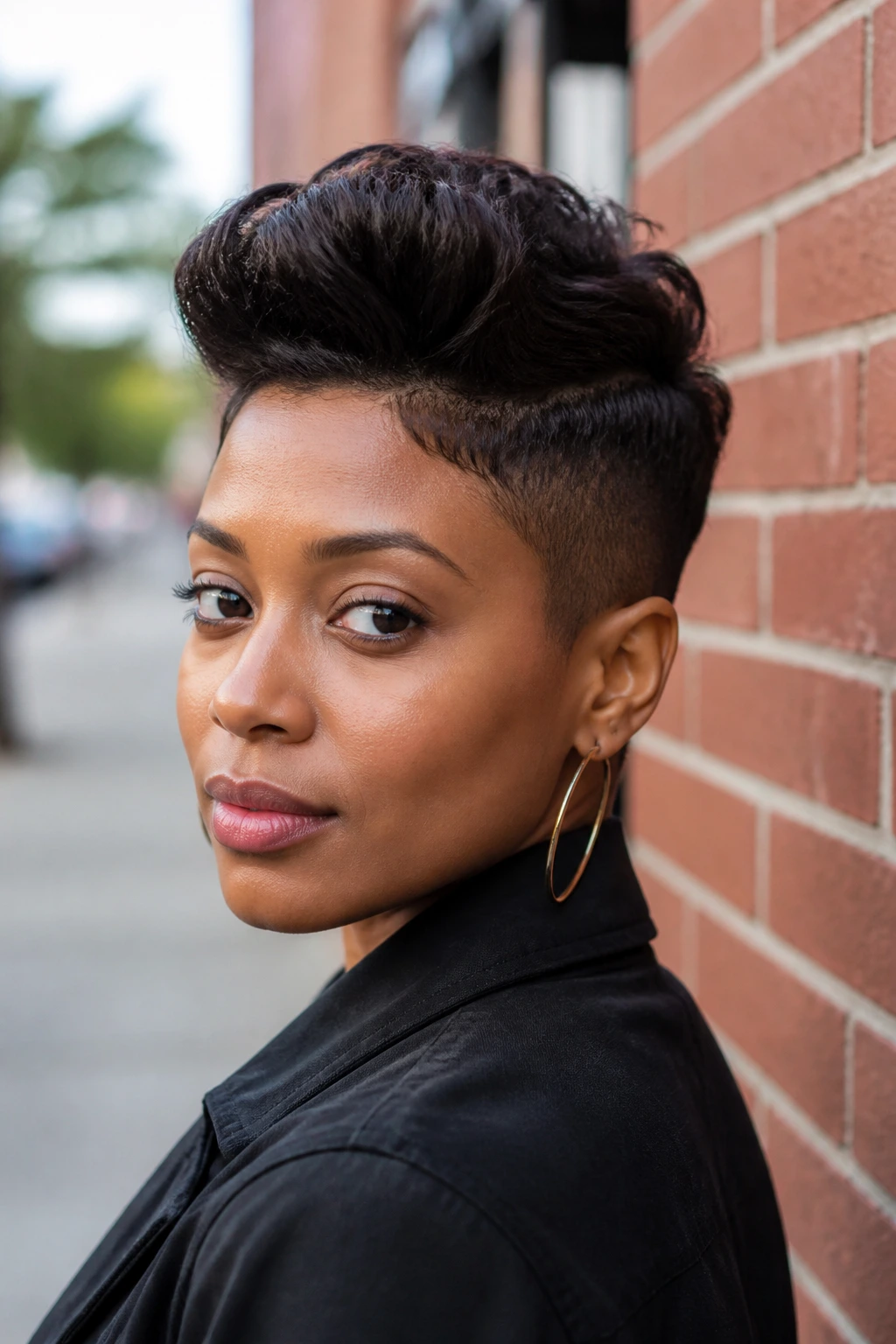
This one is for thick hair that refuses to sit down politely. The undercut removes bulk underneath, which lets the crown rise without the whole style turning into a round helmet. The top stays longer, often brushed up or swept to the side, while the sides and back are cropped close.
It’s a smart cut when your hair grows big fast. The undercut gives you breathing room. The longer top gives you styling room. Nice trade.
Why it works
Dense hair can look beautiful short, but without a hidden reduction of bulk, it can also look puffy in places you did not ask for. The undercut solves that. It removes weight where it is not needed and leaves the part that creates shape.
Best for
- Coarse, thick, or very dense textures
- Women who like a lifted silhouette
- Anyone who wants a short cut with some edge
10. The Coily Crop With Micro Bangs
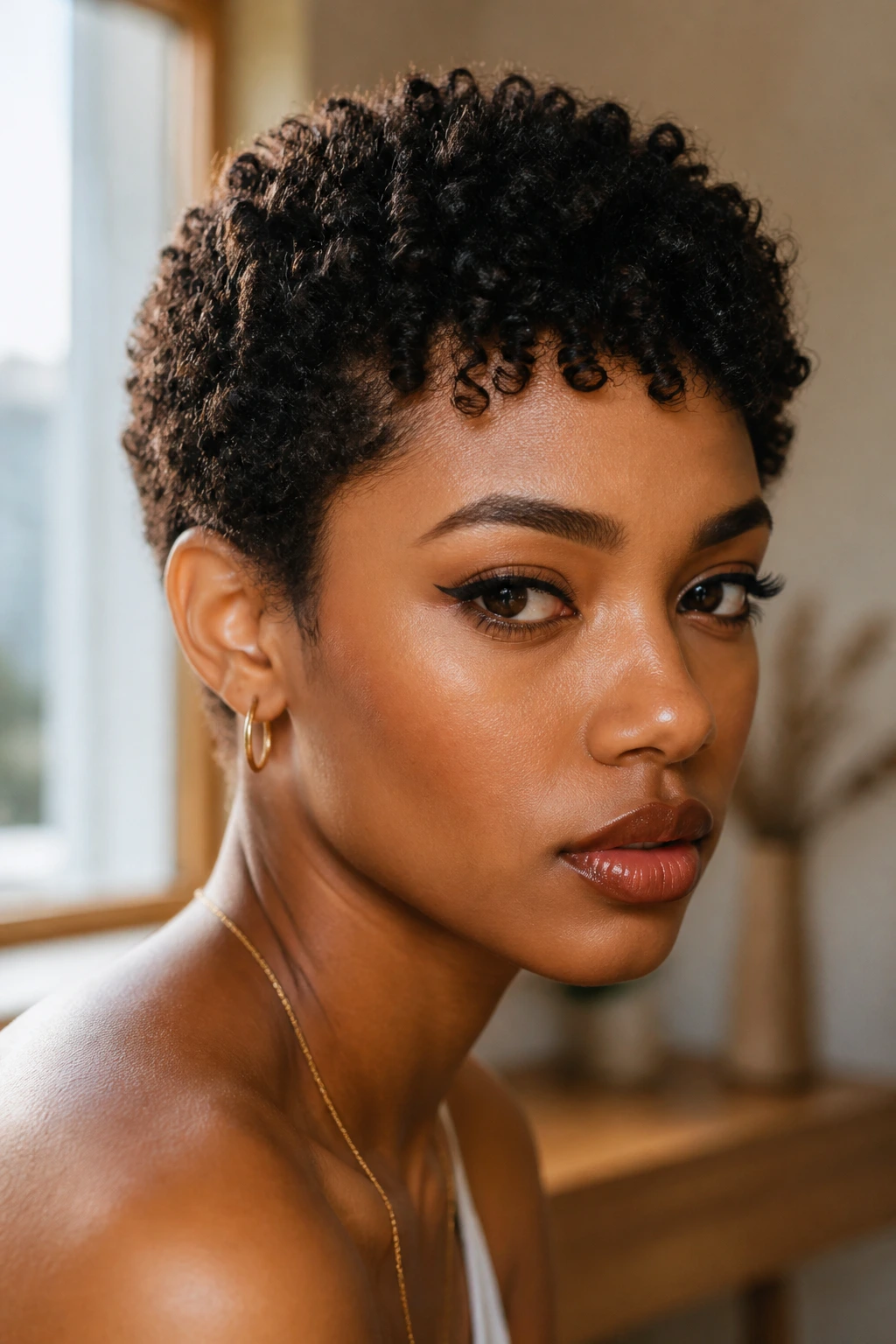
Micro bangs on coily hair are not for the timid. They sit high, short, and right on the forehead, and they change the whole expression of the face. Done well, they look sharp and fashion-forward. Done badly, they look like a haircut that stopped halfway through.
The crop underneath can be rounded or tapered, but the front needs enough shape to keep the fringe from disappearing into shrinkage.
What makes it work
The tiny bangs bring the attention upward. They frame the eyes, sharpen the brow area, and give the cut a distinct personality. If your forehead is something you like to emphasize, this is a fun way to do it.
A real-world caveat
Micro bangs need maintenance. If your coils shrink hard, they can rise faster than you expect. Ask for the fringe a touch longer than the final look you want, then let it dry and settle before judging it.
11. The Frohawk With Faded Sides
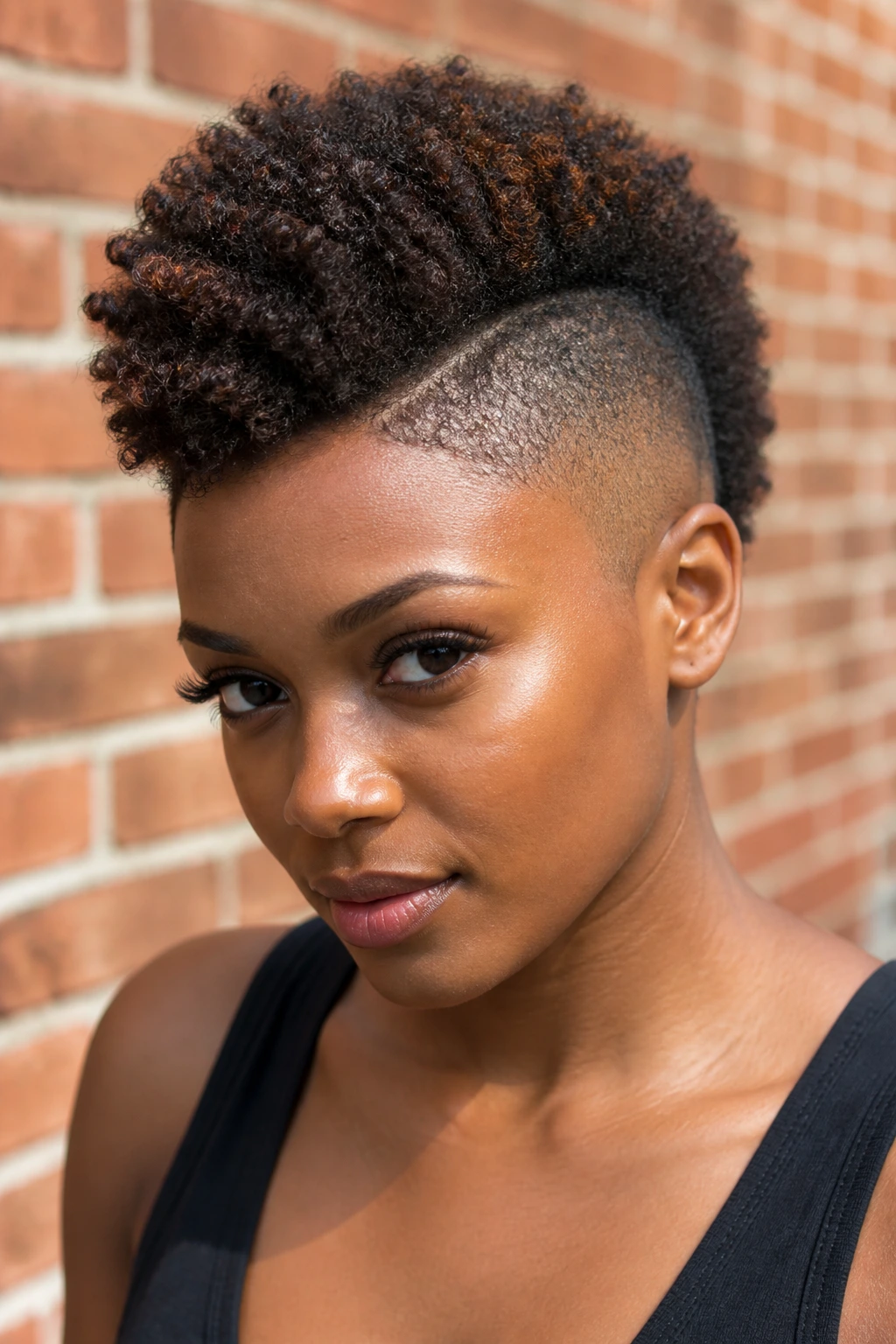
A frohawk gives you the drama of a mohawk without forcing you into an all-or-nothing shave. The sides are faded or clipped low, while a strip of curls or coils runs down the middle. It’s bold, but there’s enough softness in the texture that it never feels costume-y.
This cut works because the center strip becomes the focal point. You can wear it defined, spongy, brushed upward, or slightly curled. The sides stay clean, so the whole shape reads from every angle.
Best part
It looks especially good when you want movement and edge at the same time. Earrings, a strong brow, and a neat fade can make the cut feel finished with almost no extra styling.
If you’re asking for one
Tell your stylist how wide you want the center strip. That detail matters more than people think. A strip that’s too narrow can look severe. Too wide, and you lose the hawk shape.
12. The Sculpted Side-Swept Pixie
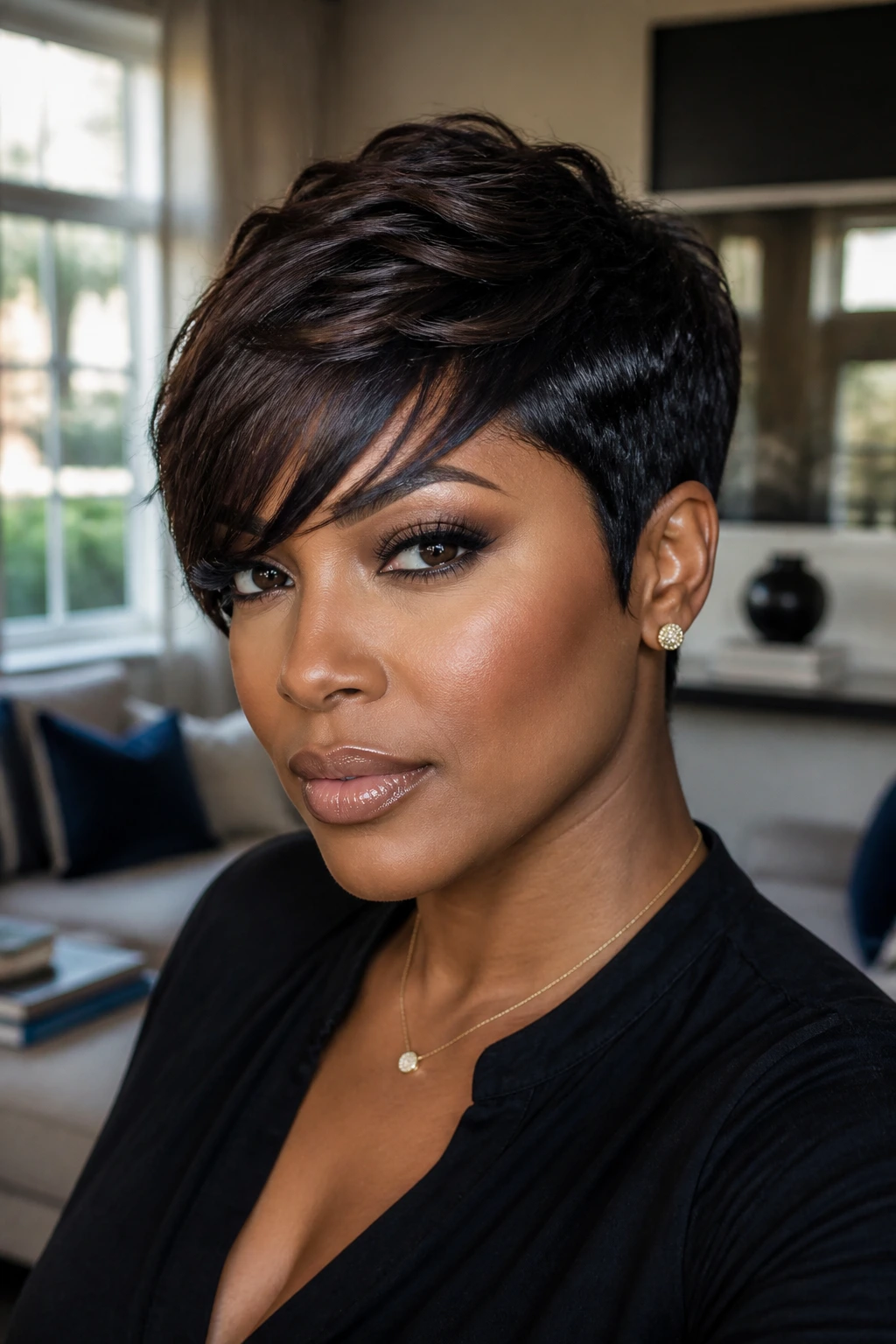
A side-swept pixie lives or dies by the front section. When the top has enough length to sweep across the forehead and the sides are trimmed close, the whole cut feels elegant in a very direct way. Not fussy. Not sweet. Just clean and deliberate.
This is one of the easiest short haircuts to dress up without adding length. The side sweep brings softness to the face, especially around the eyes and cheekbones.
What makes it work
The hair needs layers. Without them, the front can look heavy and slide into the eye in an annoying way. With good layering, the sweep sits where it should and moves when you move.
Styling note
A light mousse or wrapping foam can help train the direction. A small round brush or even your fingers can do the rest. Keep the product light, though. Too much and the front gets stiff fast.
13. The Caesar-Inspired Textured Crop
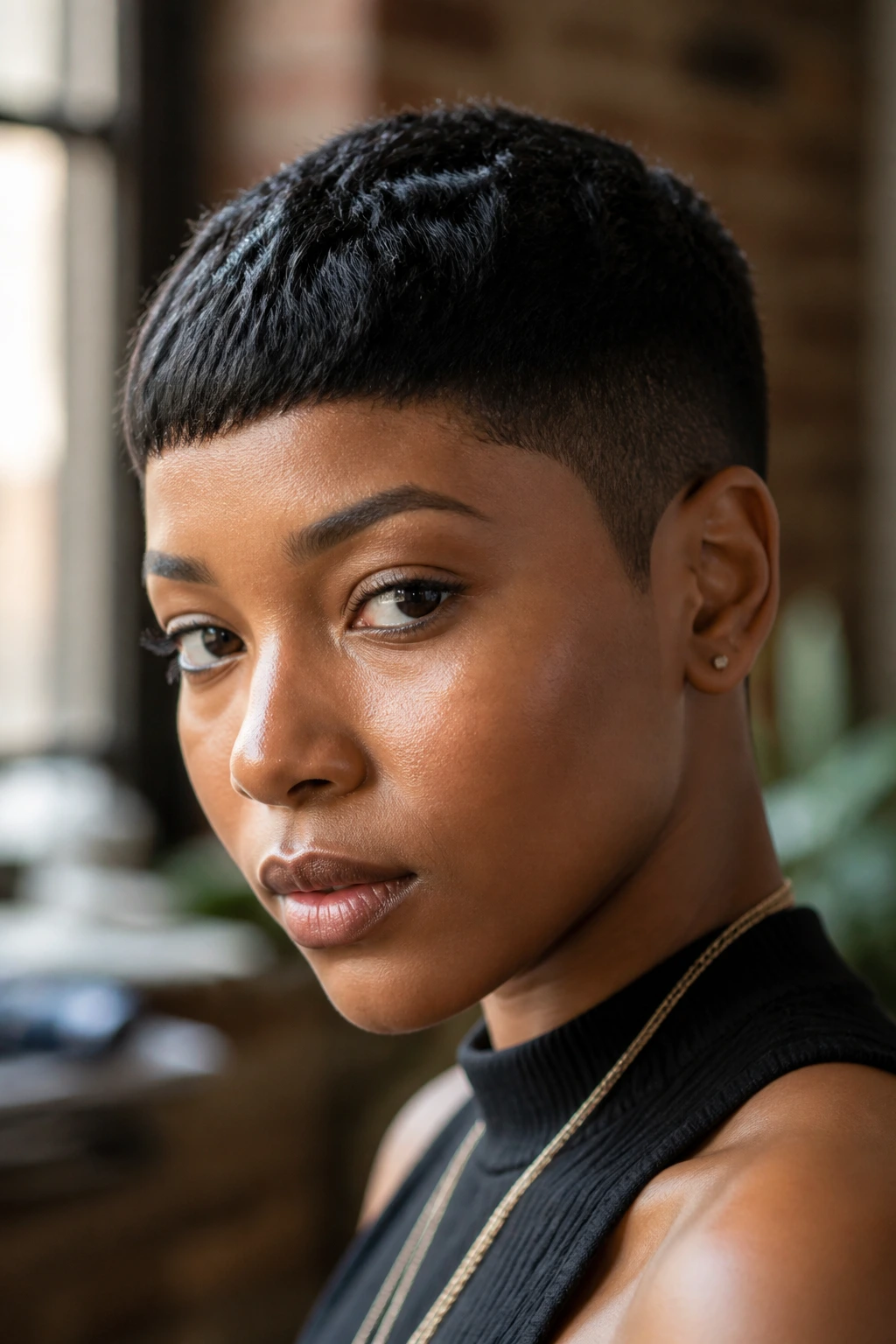
A Caesar cut on Black hair has more attitude than people give it credit for. The fringe is short and moved forward, the sides are tight, and the top keeps just enough texture to avoid looking flat. It’s a neat, purposeful cut with a little bite.
I like this shape on women who want structure and almost no daily fuss. It’s low-maintenance, but not boring. There’s a difference.
Why it works
The short fringe brings the eye down to the face, while the cropped sides keep the outline tidy. On coily textures, the top can be sponge-defined or lightly brushed forward to emphasize the texture without creating bulk.
Good to know
If your hairline has a strong natural curve or cowlick, mention it at the salon. A Caesar-style crop needs to respect growth direction, or the fringe fights you every morning. That fight gets old fast.
14. The Tapered Cut With a Curly Fringe
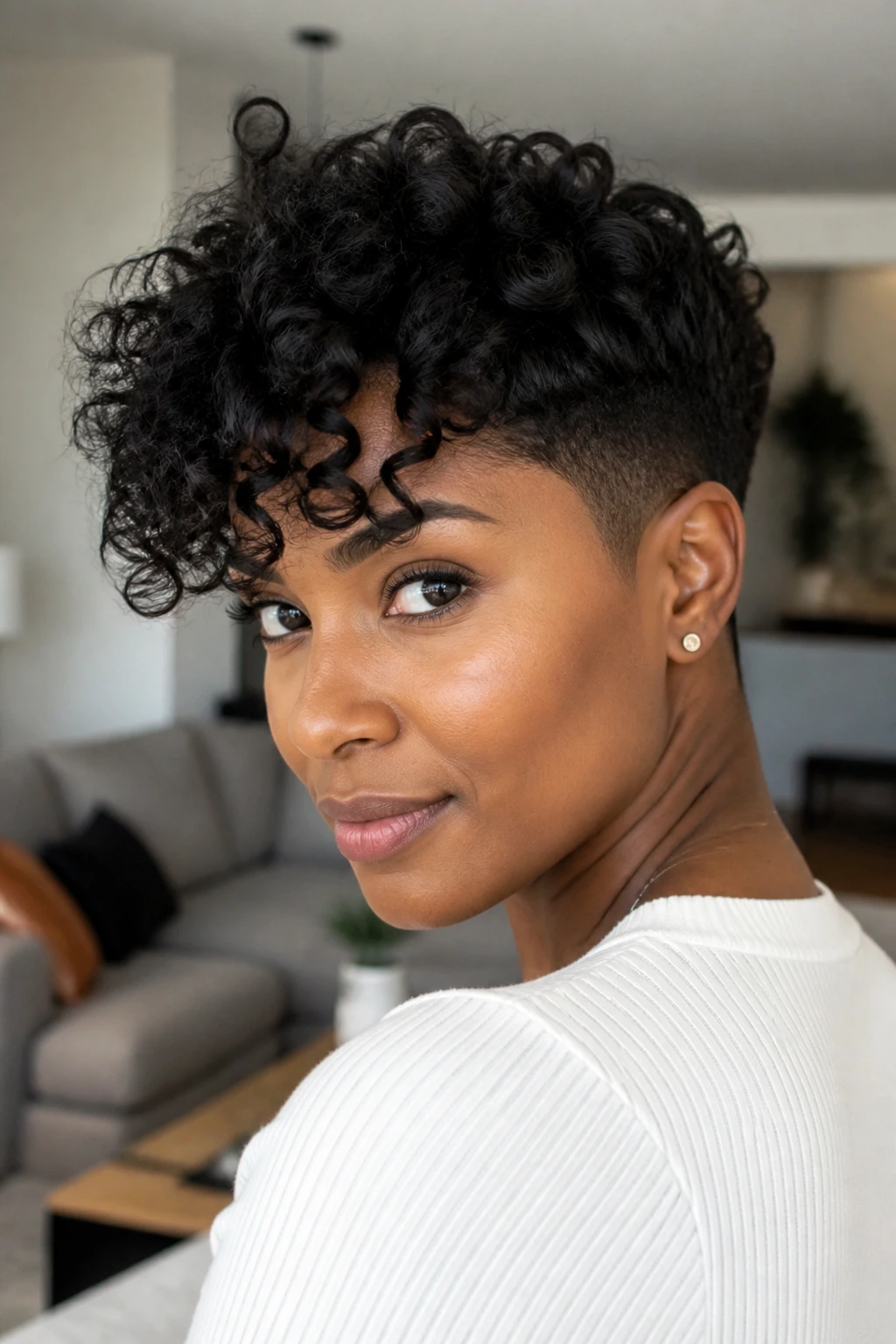
This cut gives you the best of both worlds: neat sides and a little play up front. The fringe can fall forward in loose coils, sit slightly to one side, or curl just above the eyebrows. The taper around the ears and nape keeps the shape clean while the fringe keeps it soft.
It’s a good option if you like the idea of bangs but don’t want a heavy slab of hair across the forehead. On Black hair, that lighter fringe often looks better than people expect.
Why it works
The curls in front create a frame, but the taper keeps the rest of the cut from getting bulky. That contrast is what makes the style feel balanced.
Practical tip
Ask for the front to be cut dry or at least checked dry after the initial shaping. Curly fringe can spring higher than expected, and if it’s cut too short wet, you will spend the next few weeks staring at your eyebrows.
15. The Modern Short Shag
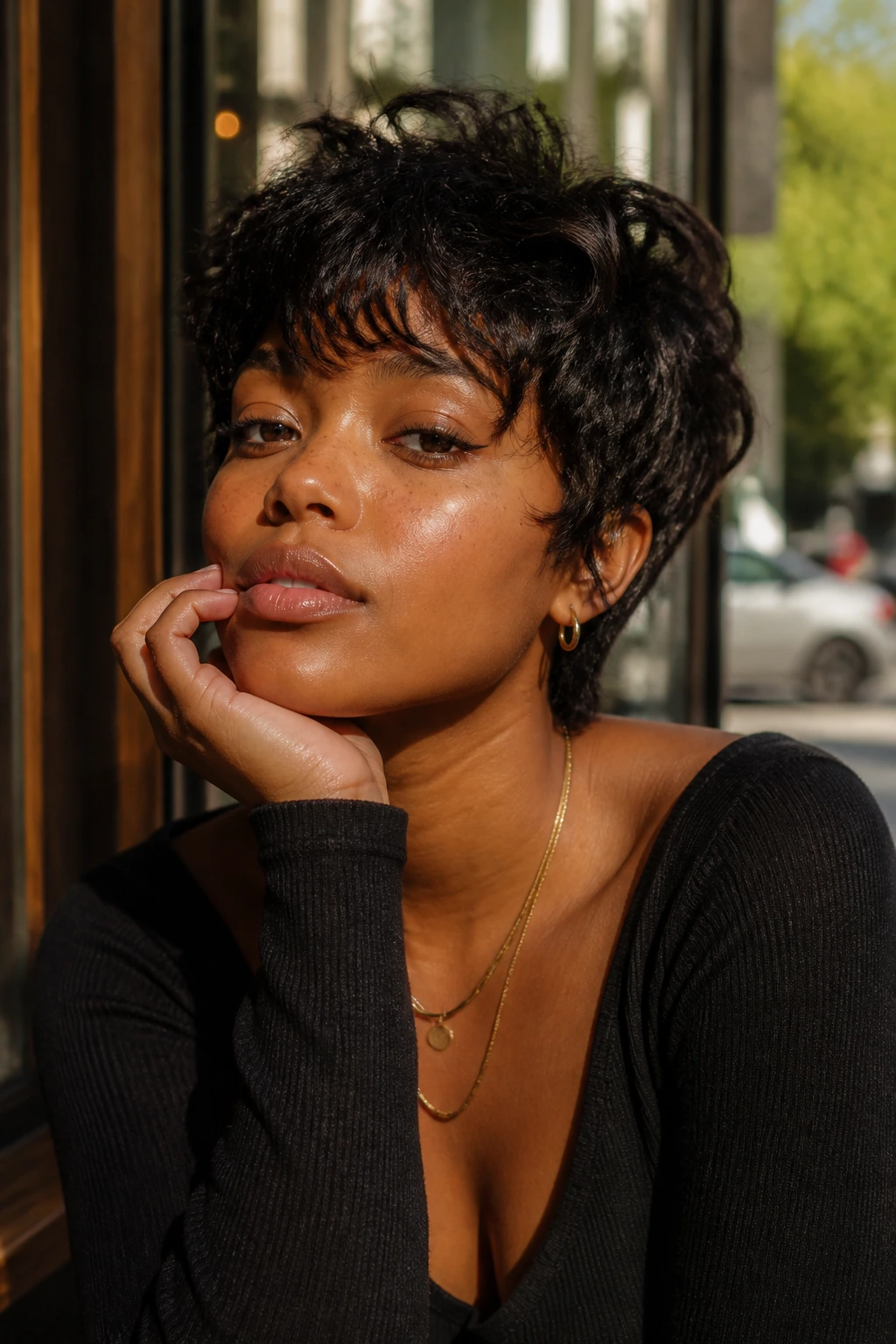
A short shag on textured hair can be excellent when you want movement without a strict silhouette. Layers are the whole point here. The shape is a little piecey, a little lived-in, and not remotely interested in being perfect.
That looseness is useful. Coily and curly hair can sometimes turn triangular when the cut is too blunt. A shag breaks up the bulk and gives the curls somewhere to fall.
Who it suits
- People with mixed curl patterns
- Women who like finger-styled hair more than slick styling
- Anyone who wants a cut that looks better with a little mess
The catch
A shag that is cut too heavily can eat too much length and leave the ends thin. You want layers that move, not a cut that has been chopped into submission. There’s a difference, and a good stylist knows it.
16. The Ear-Length Blunt Bob
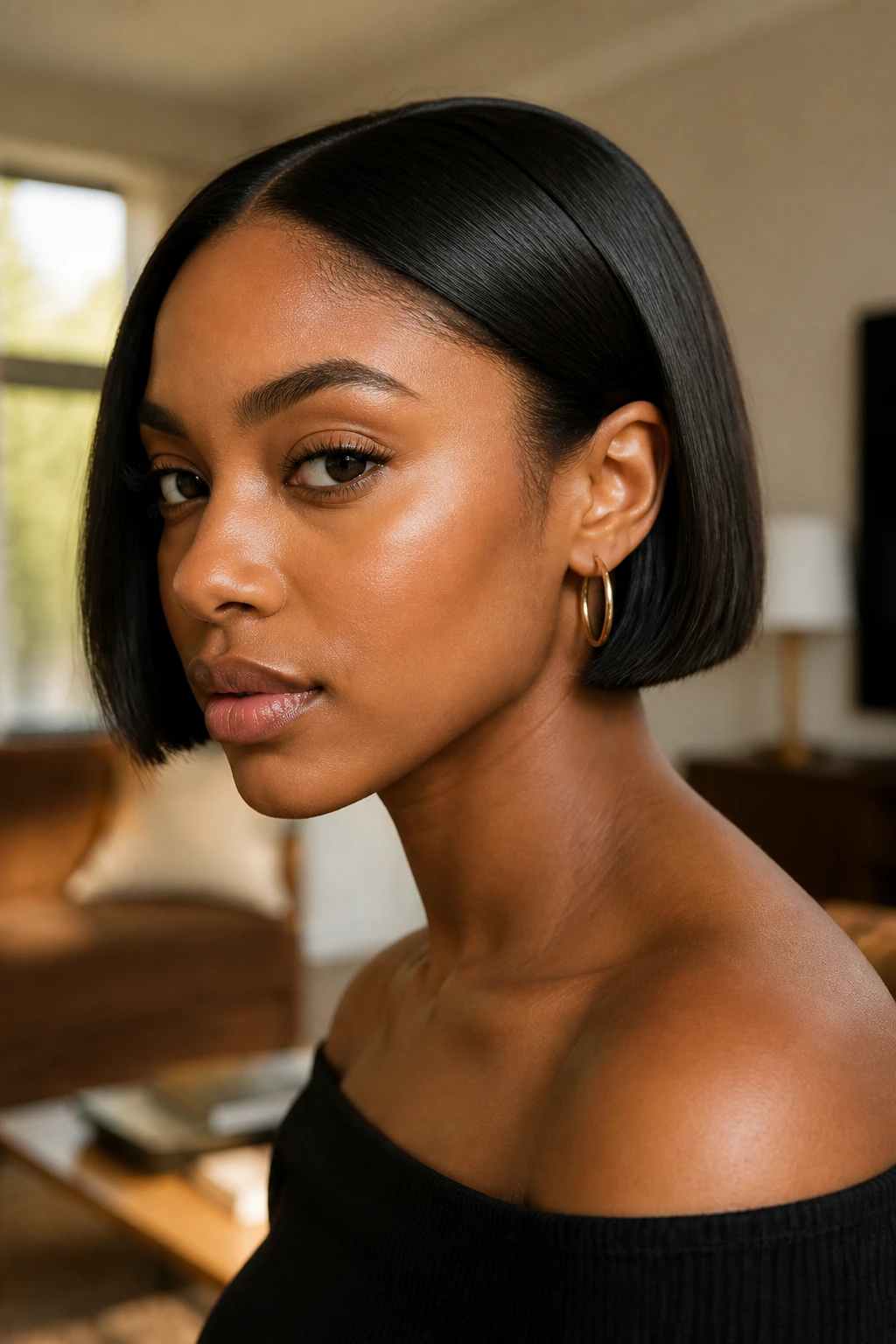
Ear-length bobs are crisp, graphic, and a little daring because they sit so close to the face. On Black women, especially with relaxed hair or a smooth blowout, the blunt edge can look strong in a way longer bobs sometimes miss. The line over the ears is the whole story.
This cut is one of my favorites for earrings. Hoops, studs, cuffs — all of them get room to show up.
Why it works
The short perimeter keeps the bob from dragging. The blunt line keeps it from feeling too airy. That combination gives the style a clean finish and a strong profile.
Style note
If you wear it textured rather than straight, the bob becomes softer and less severe. If you want the edge to stay visible, blow-dry or flat-iron in sections and keep the ends tucked under just a touch.
17. The Disconnected Pixie With Extra Height
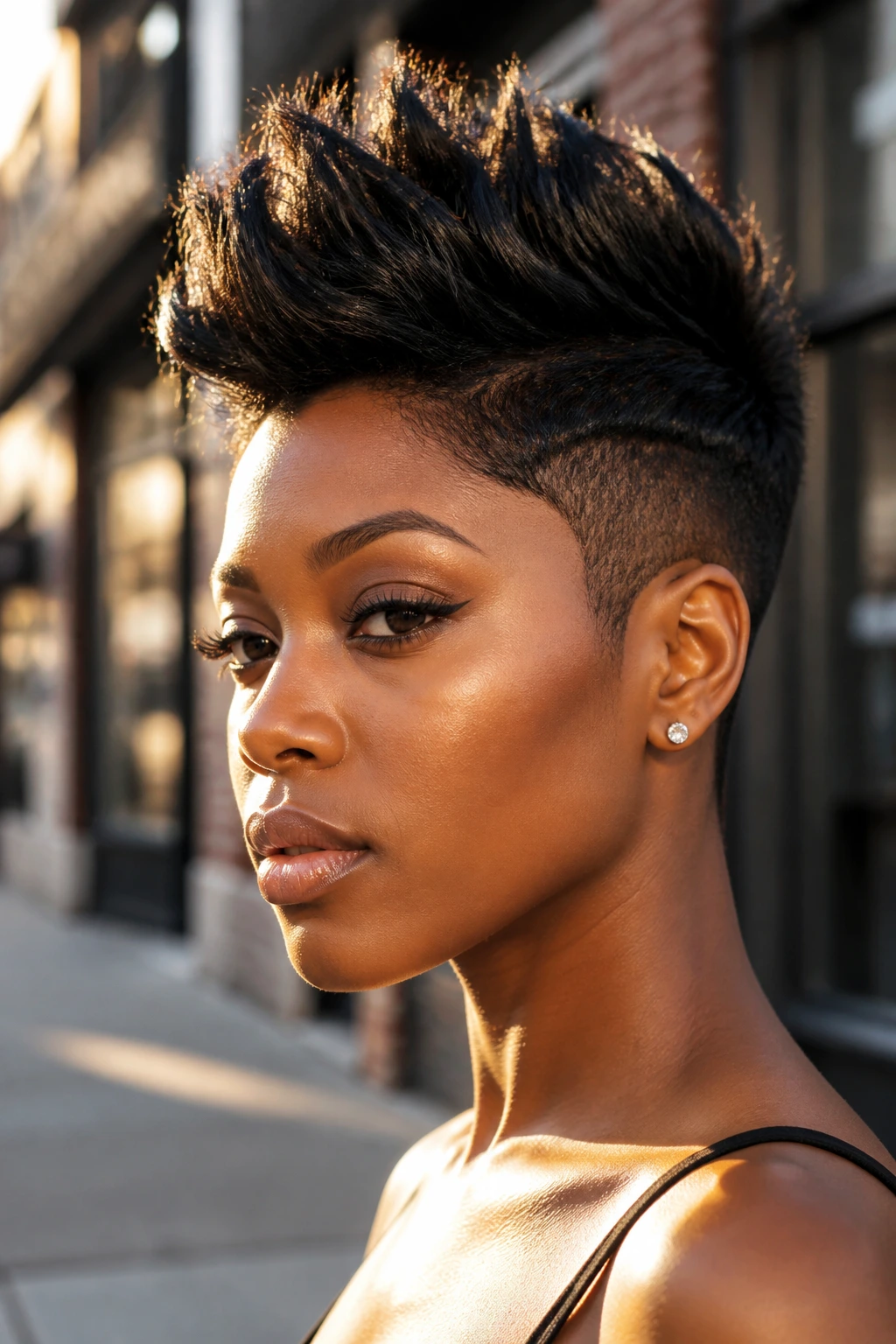
A disconnected pixie looks like somebody made a decision and never looked back. The top stays long enough to create lift, while the sides and back stay much shorter, with less blending than a classic pixie. That contrast gives the style its personality.
It works best when you want shape with some tension in it. Not messy. Not soft. Just a little architectural.
Why it works
The long top can be brushed back, pushed forward, or finger-styled into pieces. Since the sides aren’t over-blended, the silhouette stays visible even after a long day.
A real-life note
This is not the cut to get if you hate styling your front section. The top needs direction. If you’re willing to spend two minutes on it, the payoff is worth it. If you want wash-and-go with no hands, pick something else.
18. The Color-Ready Buzz Cut
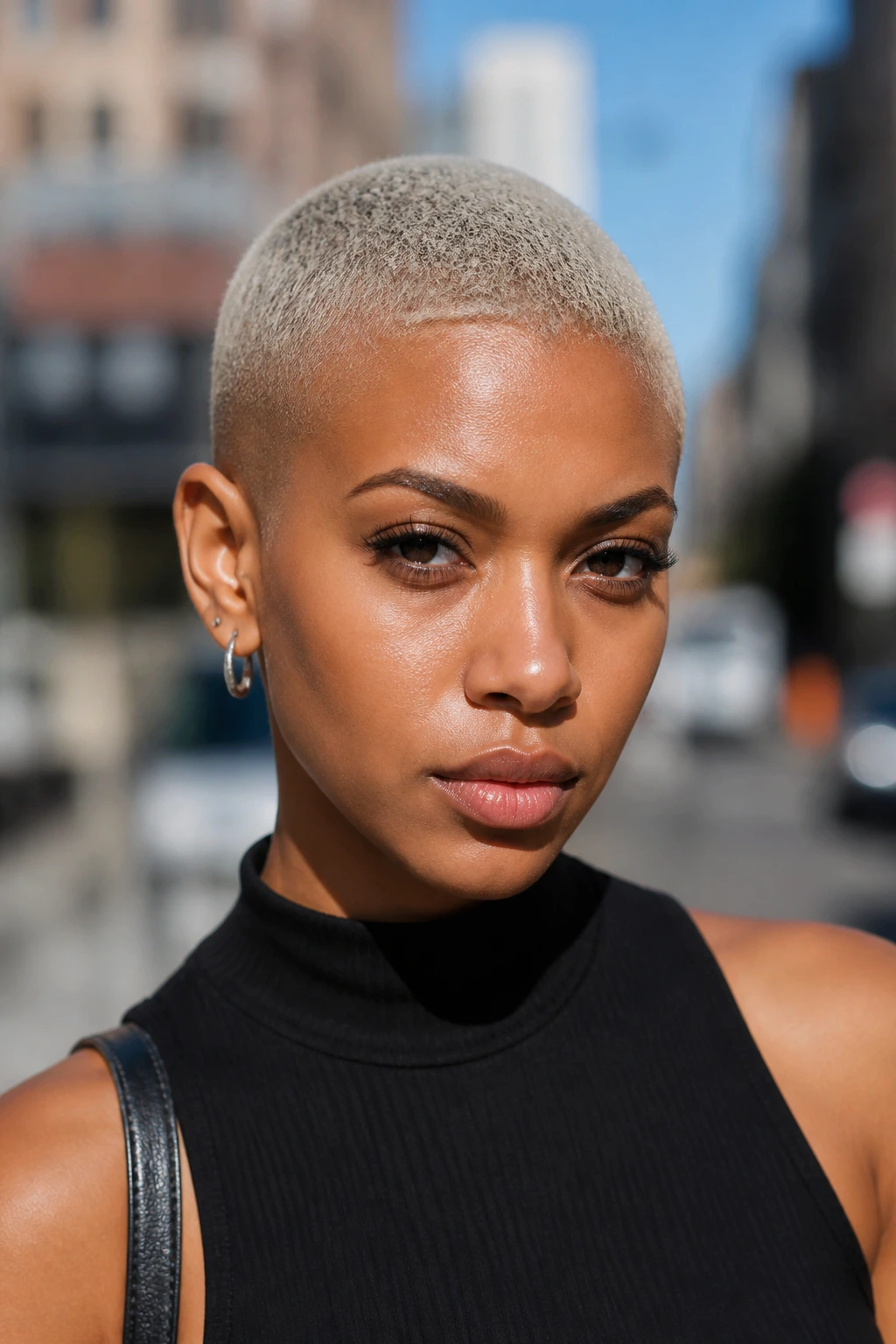
A buzz cut becomes a whole different animal when color enters the picture. Platinum, copper, honey brown, deep burgundy — the shade changes the mood fast because there is no length to hide behind. The cut itself stays minimal, which makes the color read even louder.
But the haircut still matters. A clean buzz with a slight fade at the edges looks more polished than a one-length clip with no shape at all.
Why it works
The scalp, hairline, and brow all become part of the design. That’s why this cut can look elegant, edgy, or unexpectedly soft depending on the tone and the line-up.
Be honest about upkeep
Color on short hair is easy to admire and harder to maintain. If you go lighter, your scalp and roots will need attention. If you go bold, the tone will need refreshes. Great cut. Not zero work.
19. The Tapered Afro With a Hard Part
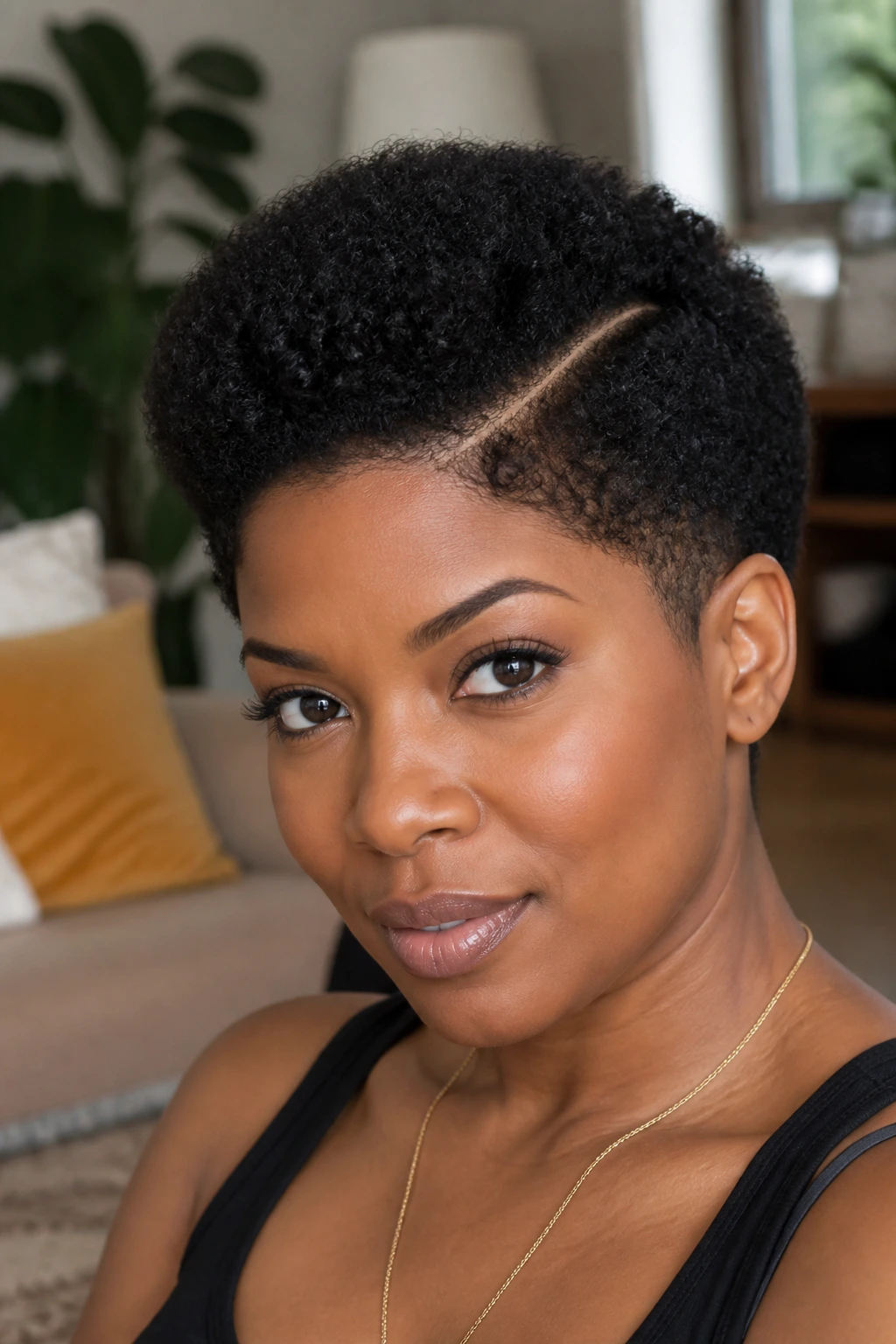
A tapered afro with a hard part feels classic in the best way. The afro shape gives you volume, while the part cuts through all that softness and gives the style a clear structure. On dense coils, that part can keep the cut from looking like a single round puff.
The hard part is not a must, but I like it. It adds a little precision to a shape that could otherwise drift too soft.
What makes it work
The taper at the temples and nape keeps the silhouette clean, and the part creates direction. If your curls are tight, the contrast reads even better because the part line stays visible.
Good to know
This cut can be worn with a sponge, a pick, or a leave-in cream depending on how defined you want it. The part looks strongest when the rest of the hair is not overloaded with product. Shine is one thing. Grease is another.
20. The Rounded Mushroom Cut
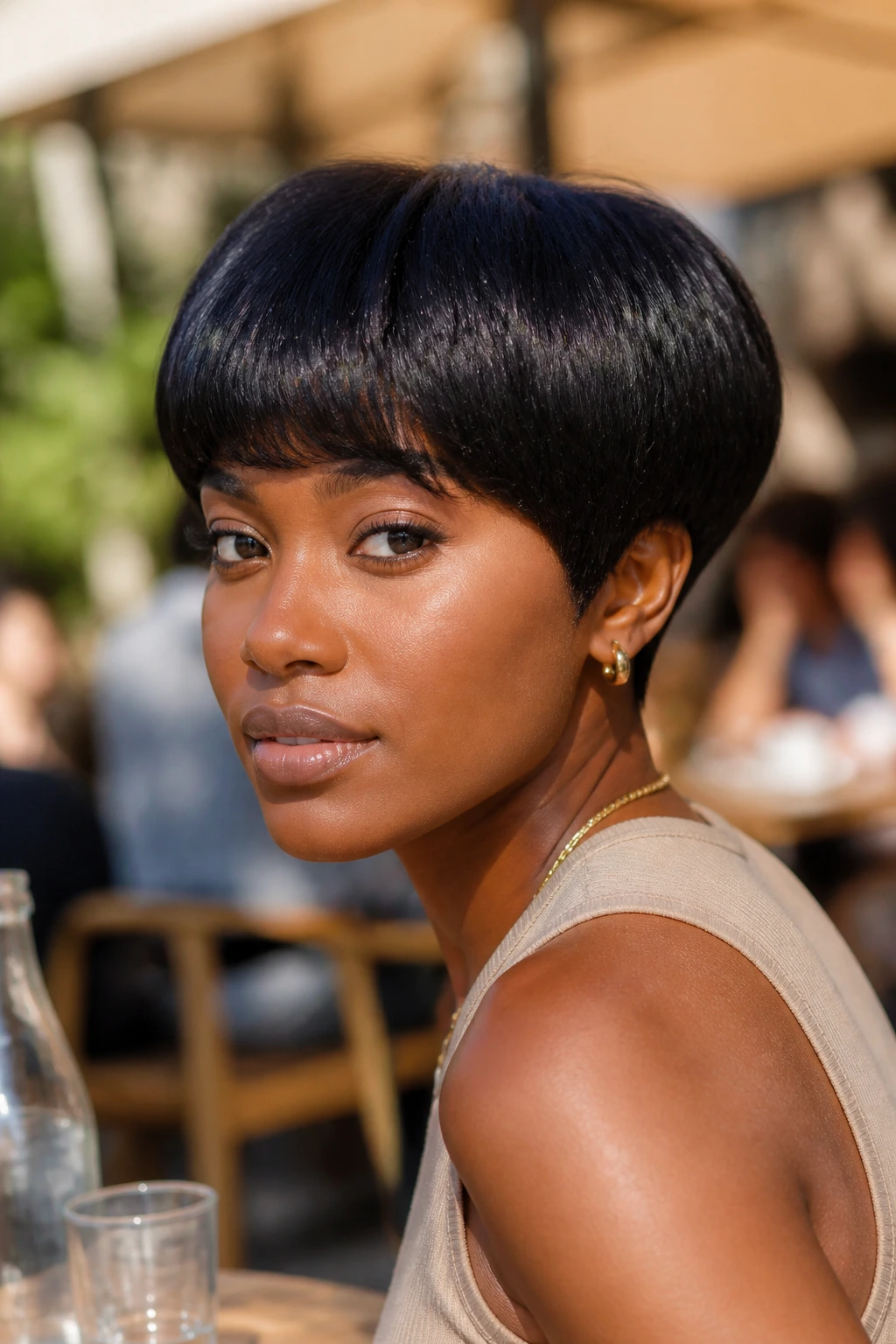
A mushroom cut on Black hair can sound retro until you see it cut well. Then it looks bold, modern, and slightly sculptural. The shape sits rounded through the crown and curves downward toward the ears, which gives it a very specific profile.
This is not a low-stakes cut. It makes a statement. That is the attraction.
Why it works
The rounded perimeter creates a smooth frame around the face, and the fuller crown gives the style its signature shape. It works especially well on dense hair that can support that curve without collapsing.
The risk
If the cut is too heavy or too blunt, it can feel helmet-like. The solution is texture in the right places — not random thinning, but careful shaping so the roundness feels intentional instead of stiff.
21. The Short Loc Bob
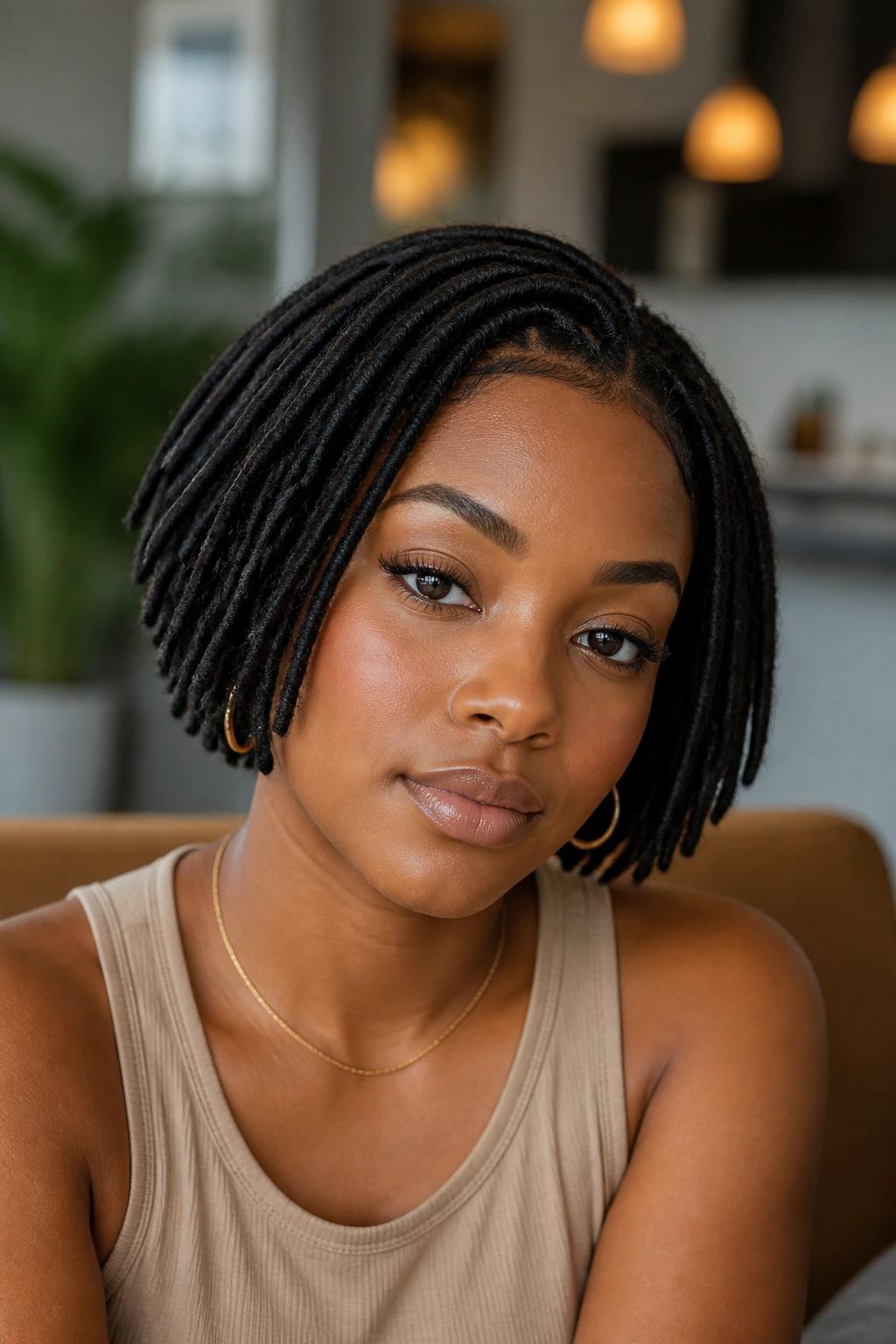
Short locs cut into a bob shape have a clean, grounded feel that I always find appealing. The weight sits around the jaw or cheekbone, which keeps the look neat without losing the character of the locs. Depending on how they’re cut, they can swing, tuck, or sit blunt.
This is one of the better choices if you want length off your shoulders but don’t want to give up locs. The shorter shape feels lighter immediately.
Why it works
The bob shape gives the locs a perimeter. Without that perimeter, short locs can feel a little shapeless as they grow out. The blunt or softly layered ends keep everything looking deliberate.
Maintenance note
Because locs have weight, the shape matters more than people think. If the bob is cut unevenly, it shows. Ask for a rounded or slightly angled perimeter, and keep the ends checked so the shape doesn’t drift.
22. The Textured Bowl Cut
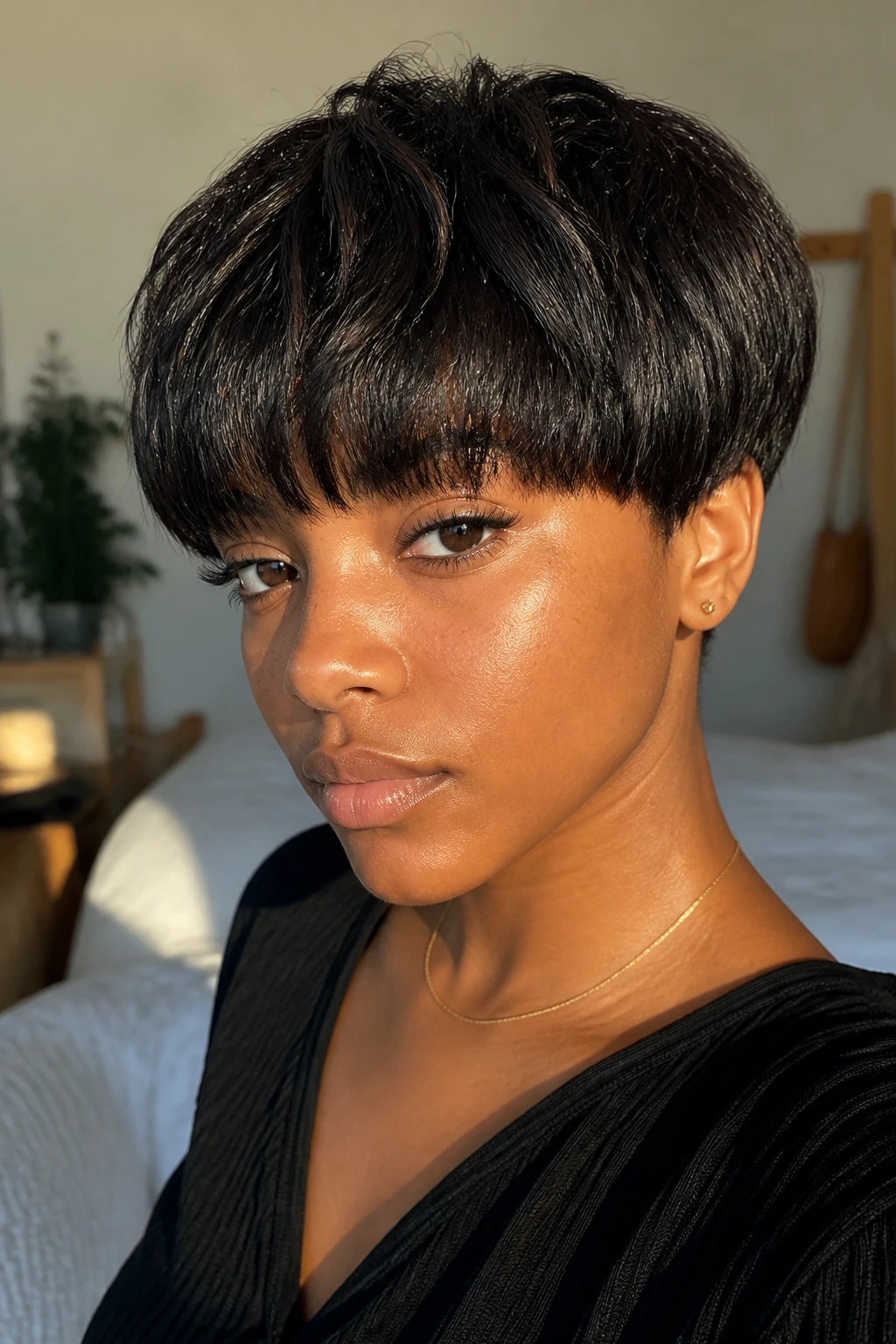
A modern bowl cut has come a long way from the blunt childhood version people remember. On Black hair, the best ones are softened with texture, broken edges, and a little irregularity around the fringe. That keeps the shape from feeling too stiff.
The idea is the silhouette, not the nostalgia. A good textured bowl cut frames the eyes and cheekbones in a way that feels sharp but not harsh.
Why it works
The rounded top and straight-ish perimeter create contrast, and the texture keeps the cut from looking flat. If your hair has a strong curl or coil pattern, that texture helps the shape breathe.
Best for
- Women who like geometric shapes
- Dense textures that hold form
- A fashion-forward look without super long styling sessions
23. The S-Wave Finger Wave Bob
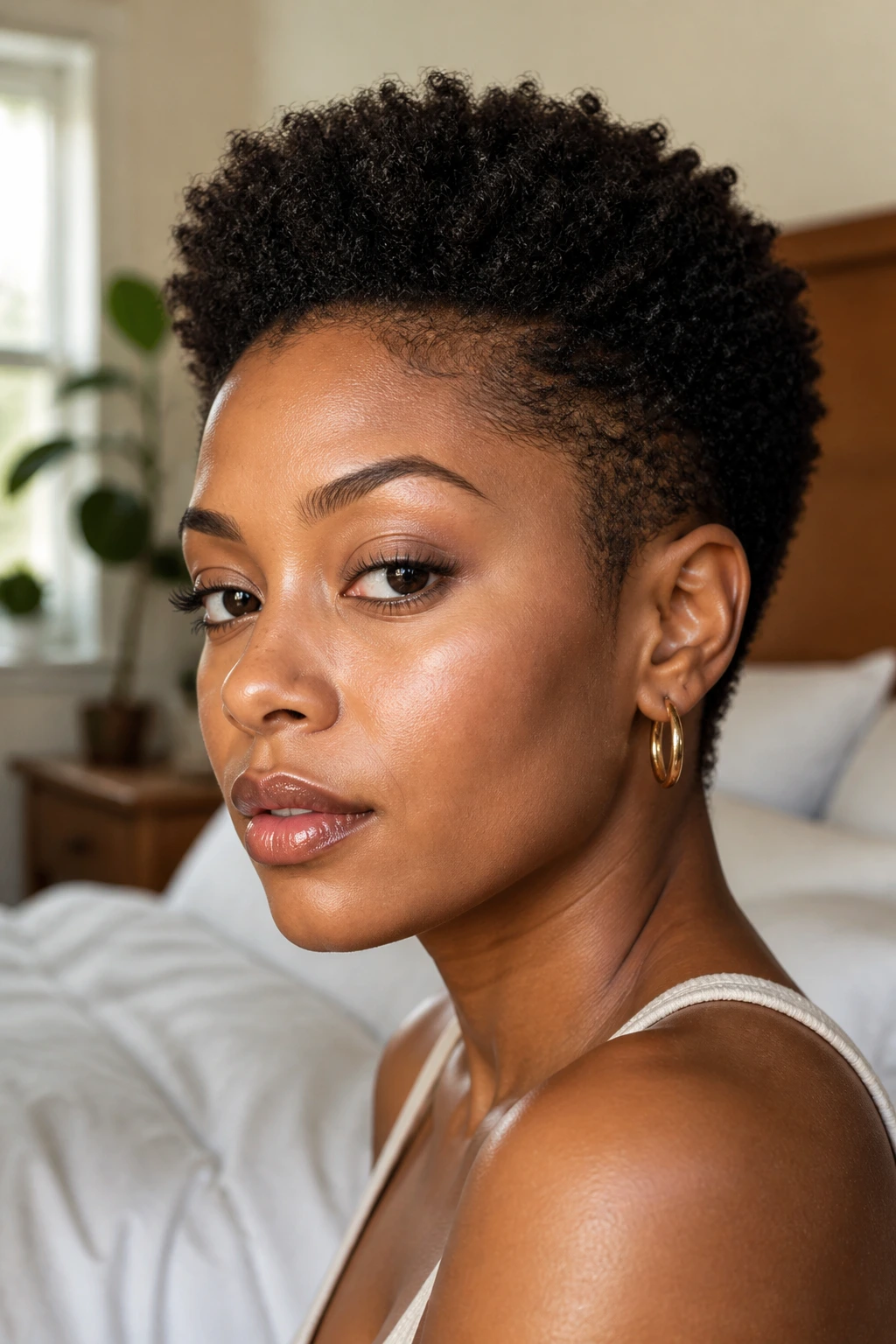
This is the polished cousin of the finger wave crop. The bob length gives the waves more room to travel, and the result is a style that looks old-Hollywood without feeling costume-like. The waves can sit across the front and sides, or run all the way through if your hair length allows.
It works especially well for formal events, photos, or any day when you want your short hair to look meticulously set.
Why it works
The wave pattern creates motion on a short canvas. On hair that’s too short for a traditional bob, the S-wave pattern can still give the impression of length and flow.
What to expect
This style asks for patience. Setting clips, foam, a comb with fine teeth, and a little drying time are part of the deal. If you want fast and easy, skip this one. If you like a finished, almost jeweled look, it’s worth every minute.
24. The Mini Mullet With Soft Nape Length
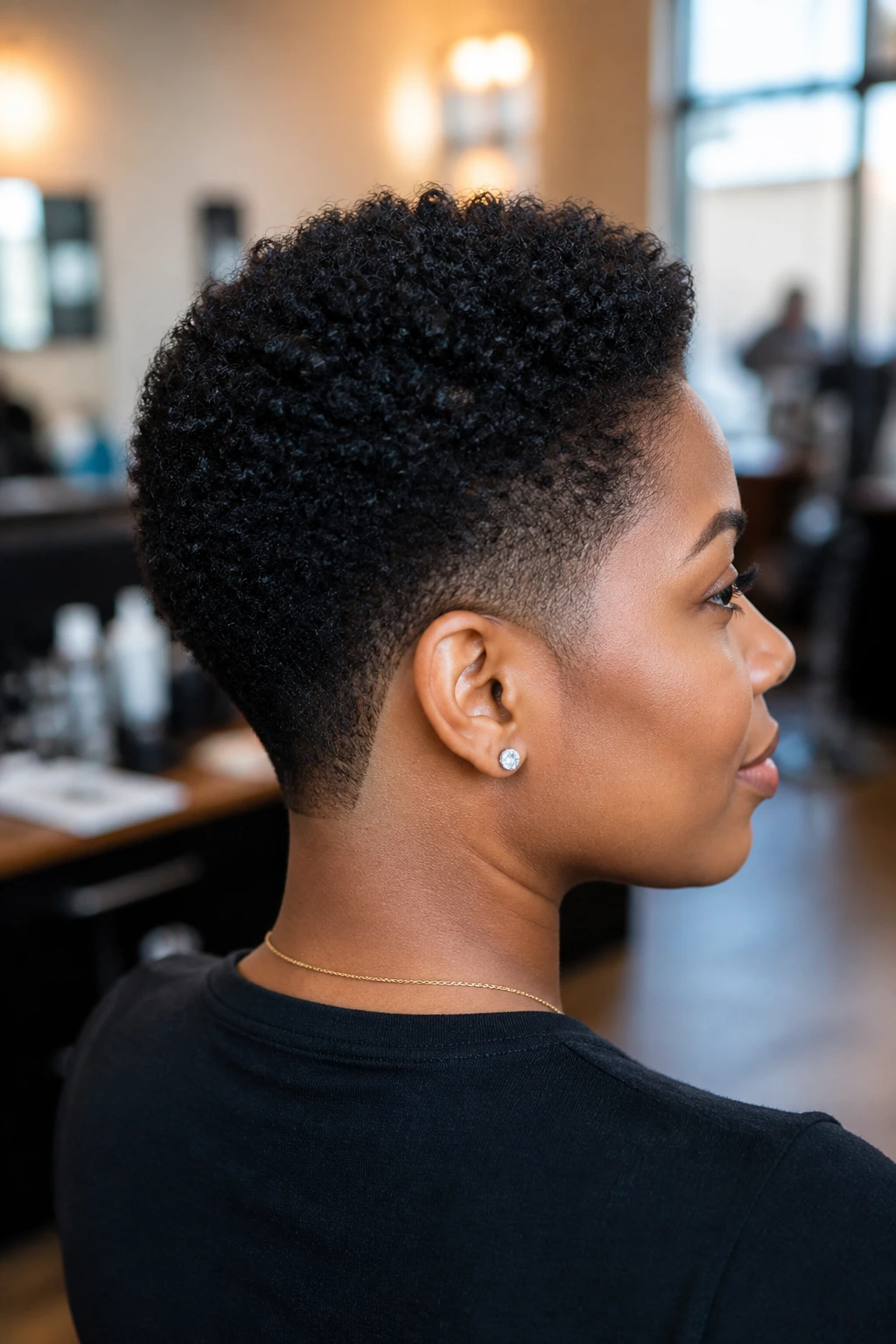
Yes, the mullet is back in a form that actually makes sense on short hair. The modern mini version keeps more length at the nape while the crown and sides stay shorter. On Black hair, especially with texture, it can look edgy without becoming cartoonish.
The trick is softness. A harsh mullet line can feel dated fast. A softer one with blended layers and a little curl reads far better.
Why it works
The extra nape length gives the silhouette movement from the back, while the short top keeps the cut light. If you want a style that grows out with a bit of character, this is a good bet.
A small warning
This cut needs a stylist with a good eye. The back should feel like a choice, not an afterthought. If the nape is too long and the crown too short, the whole thing can drift into awkward territory fast.
25. The Layered Wash-and-Go Crop
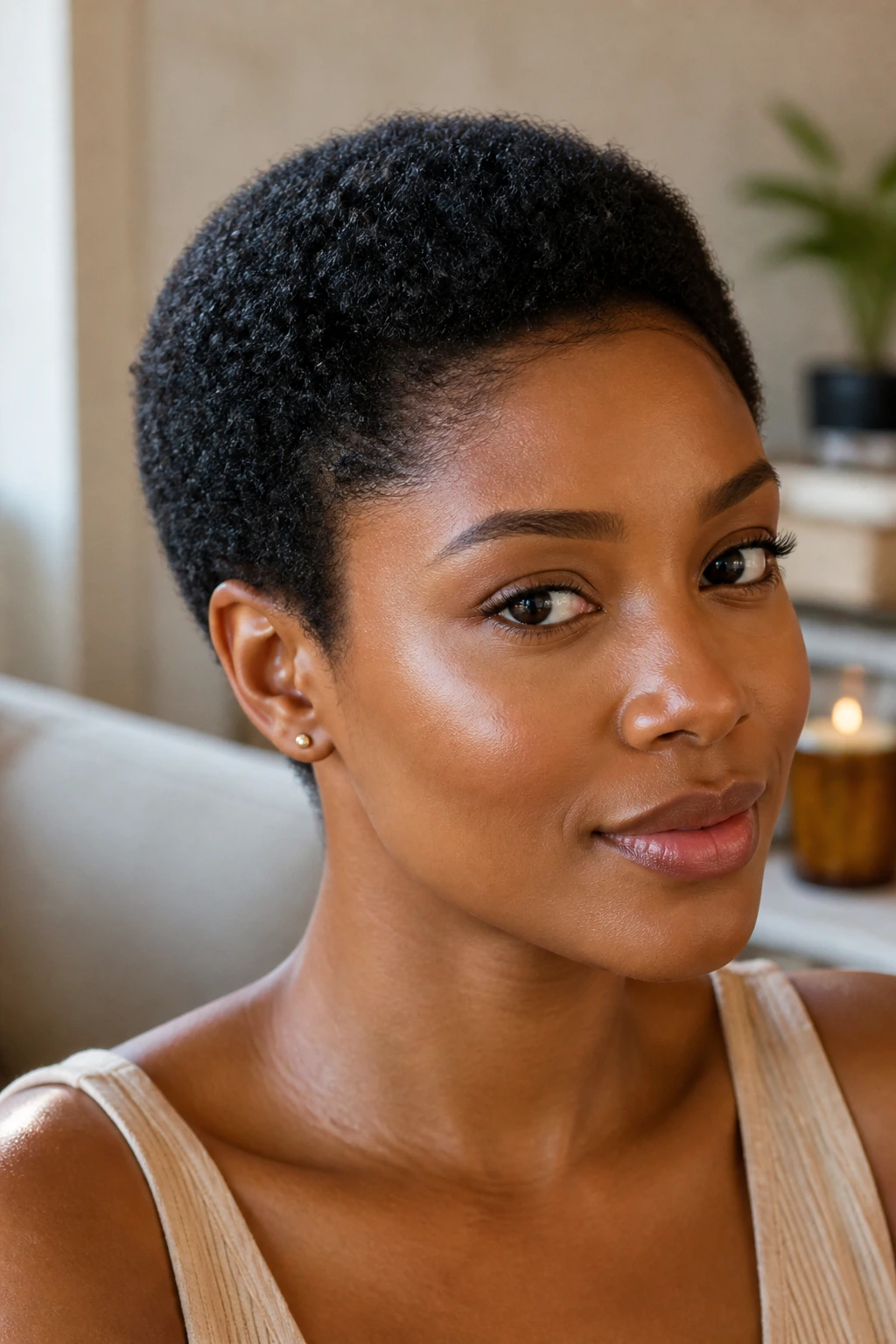
If your life runs on leave-in, water, and a diffuser you barely use, a layered wash-and-go crop may be the cleanest answer. The layers help curls clump instead of puffing outward, which keeps short natural hair from going triangle-shaped. That is the whole game.
It’s one of the most practical cuts on this list because it lets your texture stay visible. No pretending. No forcing. Just shape that works with what your hair already wants to do.
Why it works
The layers remove bulk in the right places and leave enough fullness to avoid thin ends. Once styled, the curls can dry in place with a little definition and a lot less effort than a blunt cut would require.
Good if you want
- A routine built around washing, conditioning, and going
- Short hair that still feels soft
- Shape without a lot of heat
26. The Deep Side-Part Pixie With a Swooped Bang
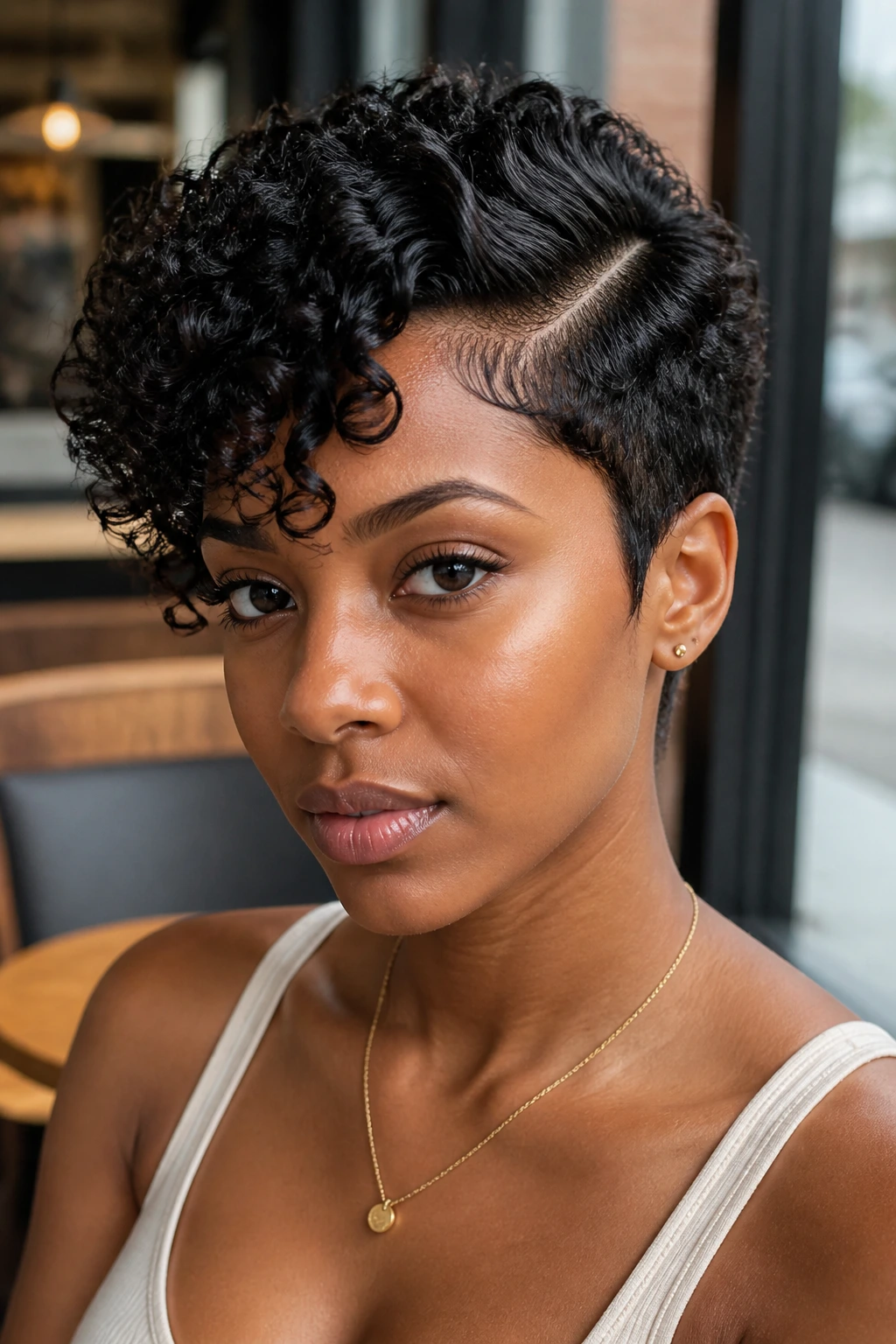
A deep side-part pixie with a swooped bang is the kind of cut that can look polished, playful, or slightly dramatic depending on how you style the front. The bang does most of the work. It sweeps across the forehead and softens the whole face, while the back and sides stay compact.
I like this cut when a woman wants short hair but still wants a little movement around the face. It’s not heavy. It’s not stiff. It just slides into place.
Why it works
The long front section creates asymmetry, and asymmetry keeps short cuts from feeling too severe. If your face is narrow, the swoop adds width where you want it. If your face is fuller, the diagonal line draws the eye upward.
Styling note
A wrap set or a quick pass with a brush and foam can make the swoop sit exactly where you want it. Skip heavy grease. The bang needs motion, not weight.
27. The Soft Rounded Fade With an Etched Part
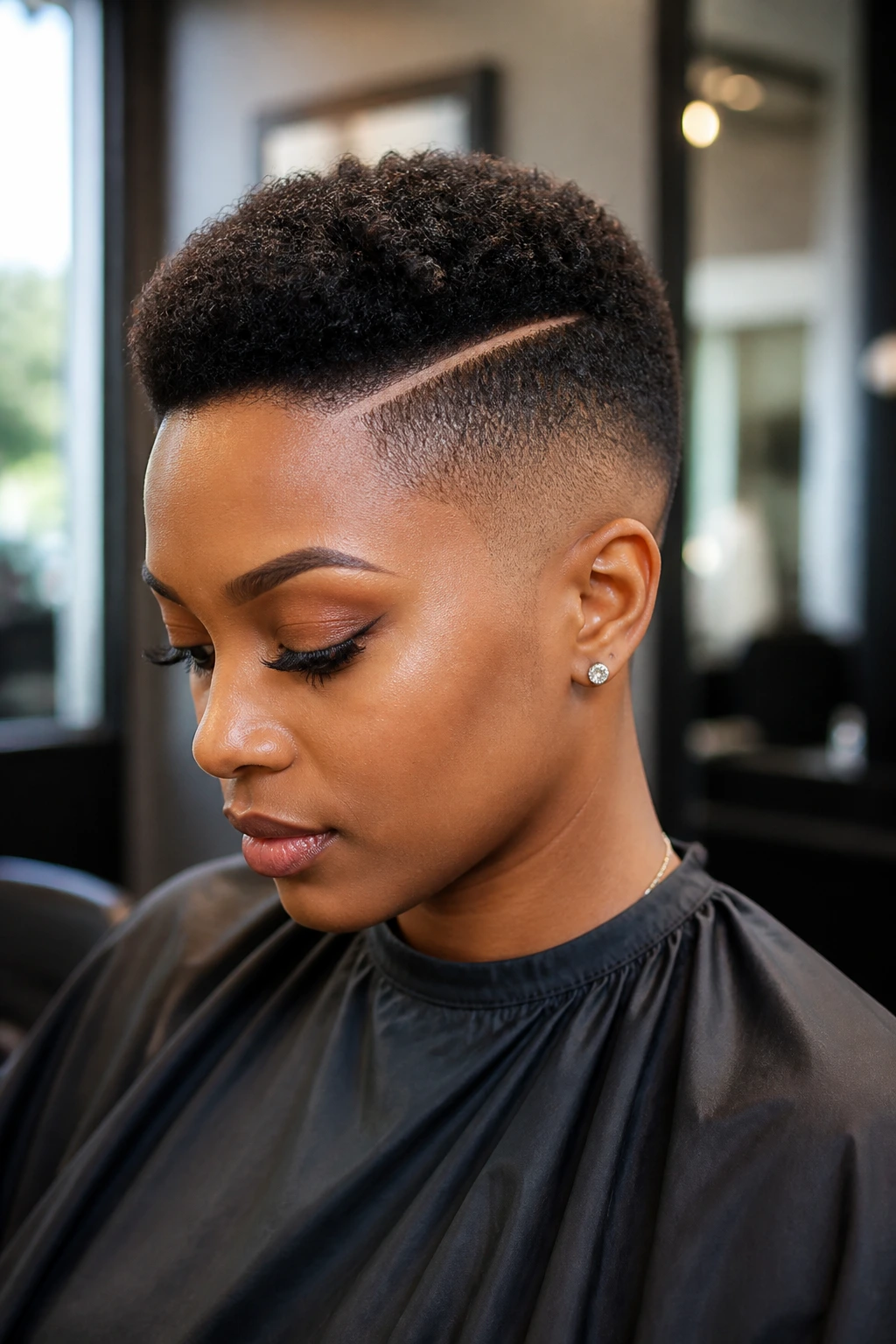
This is the cut for someone who wants crispness without losing softness. The sides fade close, the top stays rounded, and a simple etched part adds a bit of personality without turning the whole thing into a design-heavy style. It feels fresh, clean, and wearable.
The etched part is the detail that makes it stand out. A single clean line can do a lot when the rest of the cut is kept balanced.
Why it works
The fade removes bulk. The rounded top keeps the silhouette gentle. The part gives it a point of interest. Together, those pieces make a short cut look custom instead of generic.
Best for
- Women who like clean barber work
- Coily hair that needs structure
- A style that still looks good three weeks after the appointment
What Makes a Short Cut Work on Coily, Curly, and Relaxed Hair
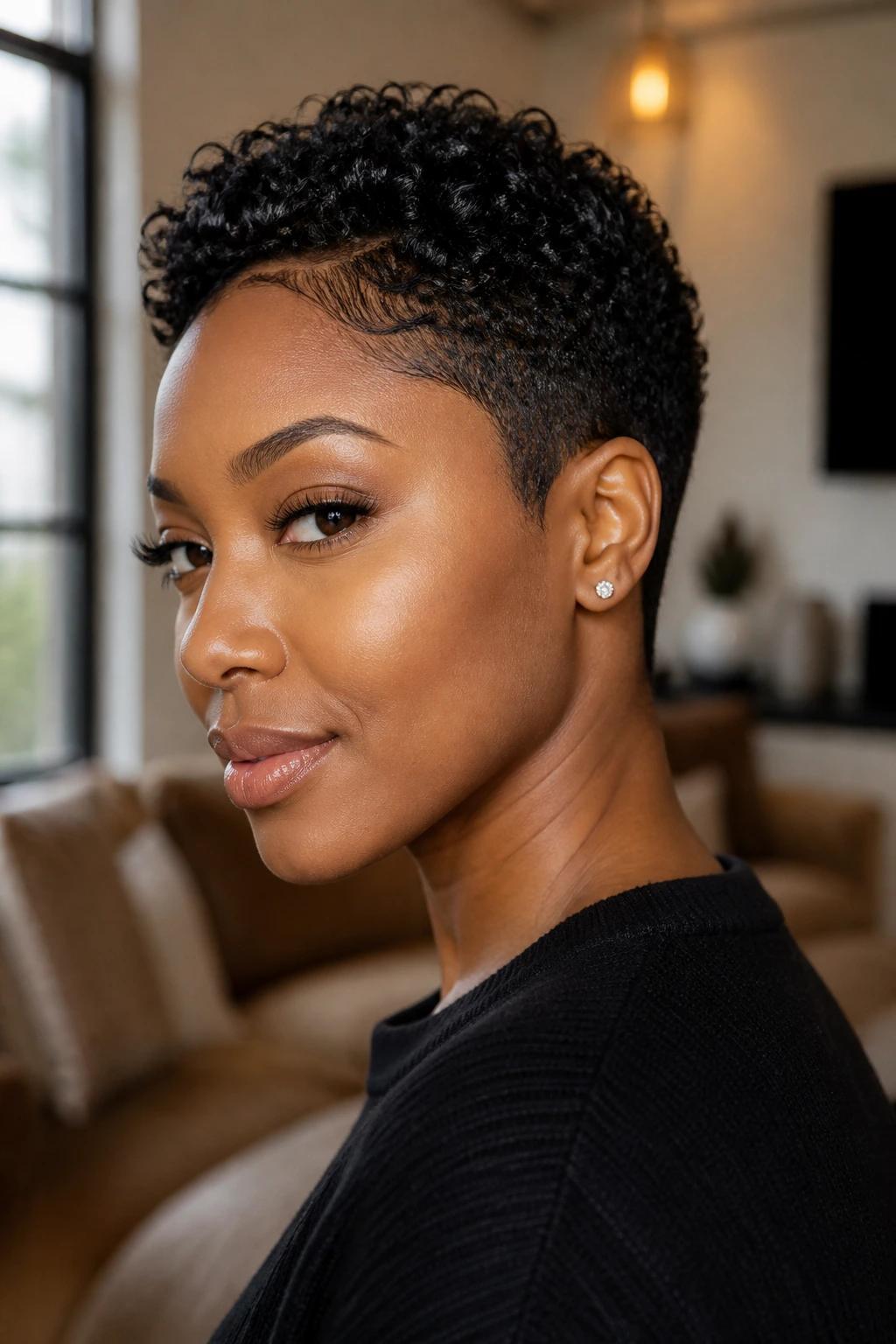
A good short haircut on Black hair is built around shape first, texture second. That sounds backwards until you’ve watched a blunt cut puff into a triangle or seen a fade sharpen a face in one minute flat. The outline is the thing. The texture fills it in.
Shrinkage is the other giant piece. Coily hair can look one length on the cape and a full inch shorter once it dries. That is why dry cutting, careful stretch-checking, or at least talking honestly about shrinkage matters so much. If you skip that part, you end up with bangs that sit too high and crowns that vanish.
Density changes the game too. Thick hair usually needs internal weight removal, a taper, or a fade to stop the cut from sitting like a helmet. Fine short hair needs the opposite: shape that makes the most of the hair you have without thinning it into nothing. Different problem. Different fix.
And then there’s grow-out. The styles that keep looking good longer are the ones with a strong perimeter, a clean nape, or a soft enough edge that the growth doesn’t scream at you. That is why I keep coming back to tapers, rounded shapes, and controlled asymmetry. They age better between appointments.
Tools and Products That Make Short Haircuts Easier to Wear
-
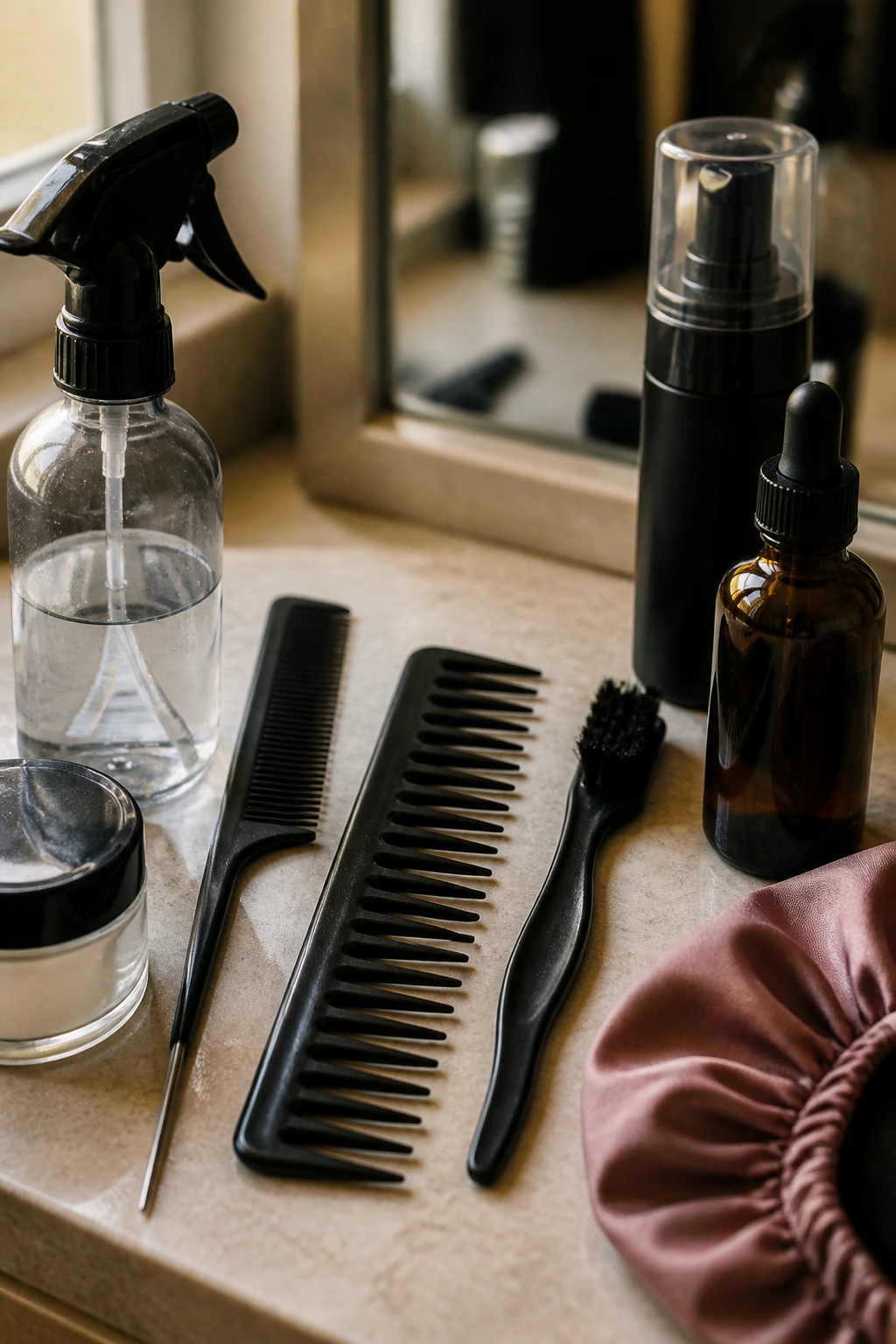
A small handheld mirror: You need one to check the nape, the fade, and any line work the barber misses from the front.
-
A rat-tail comb: Useful for clean parts, smoothing sections, and checking whether a side part actually sits where you want it.
-
A wide-tooth comb or pick: Great for lifting the root on TWAs, afros, and cropped natural styles without breaking up the curl pattern too hard.
-
Edge brush: Handy for softening or setting the hairline, especially with fades, pixies, and finger-wave styles.
-
Light mousse or setting foam: Best for wave sets, sculpted pixies, and curly fringes that need some hold without crunch.
-
Leave-in conditioner: Short hair still gets dry. A light leave-in keeps coils from looking dusty or rough.
-
Scalp oil or serum: Especially useful for buzz cuts and very close crops, where the scalp is exposed and dryness shows up fast.
-
Satin scarf or bonnet: Nighttime insurance. Saves your shape. Saves your patience.
-
Spray bottle with water: A little mist can revive curls, reset a part, or help you restyle one side without rewashing.
-
Clippers with guards, if you do your own upkeep: Not required for everyone, but useful if you keep a fade or nape clean between appointments.
Smart Salon Prep and Product Tips Before You Get the Cut
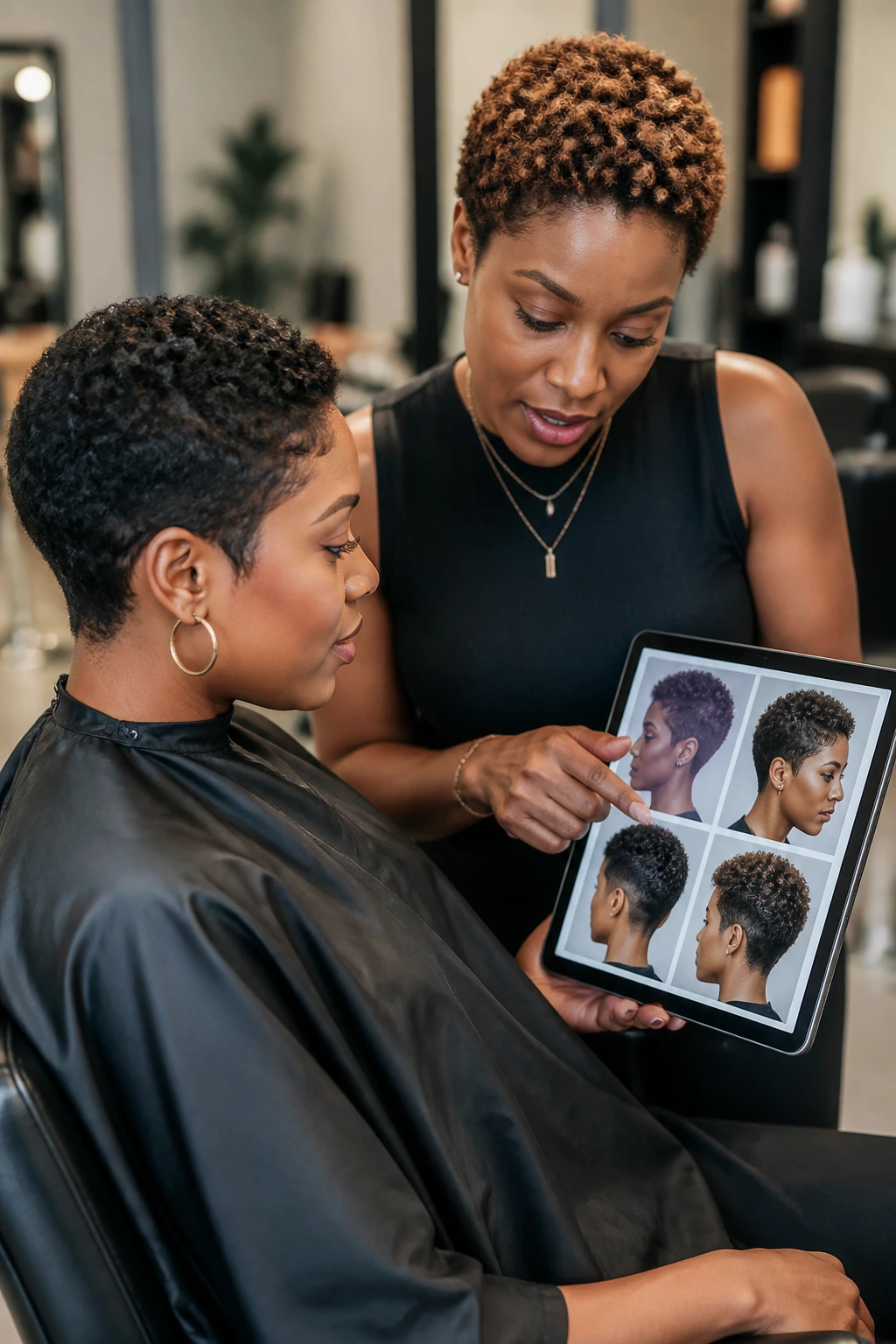
Bring photos. More than one. One front view, one side view, one back view if you can find them. A single glam photo tells a stylist almost nothing about the length at the nape or the weight around the crown, and that’s usually where the disappointment starts. If you wear your hair shrunken, stretched, flat-ironed, or in a twist-out most of the time, say that out loud.
The dry-versus-wet issue matters more than people think. Coily hair can lie when it’s wet. If you want a precise short shape — especially a TWA, pixie, or cropped afro — ask whether the cut can be checked dry or cut on stretched hair. That one detail saves a lot of “it looked different in the chair” regret.
Product shopping should be boring and specific. For finger waves, you want setting foam or wrap lotion, not a heavy butter. For a curly pixie, a lightweight curl cream or mousse makes more sense than thick grease. For buzz cuts and fades, scalp care matters more than styling product. People forget that part and then wonder why the haircut looks dull after a week.
Also, say how often you’re willing to come back. If you only want trims every six or eight weeks, do not ask for a super crisp fade that needs a line-up every ten days. Be honest. The best cut is the one that fits your schedule as much as your face.
How to Wear These Cuts So They Read Intentional
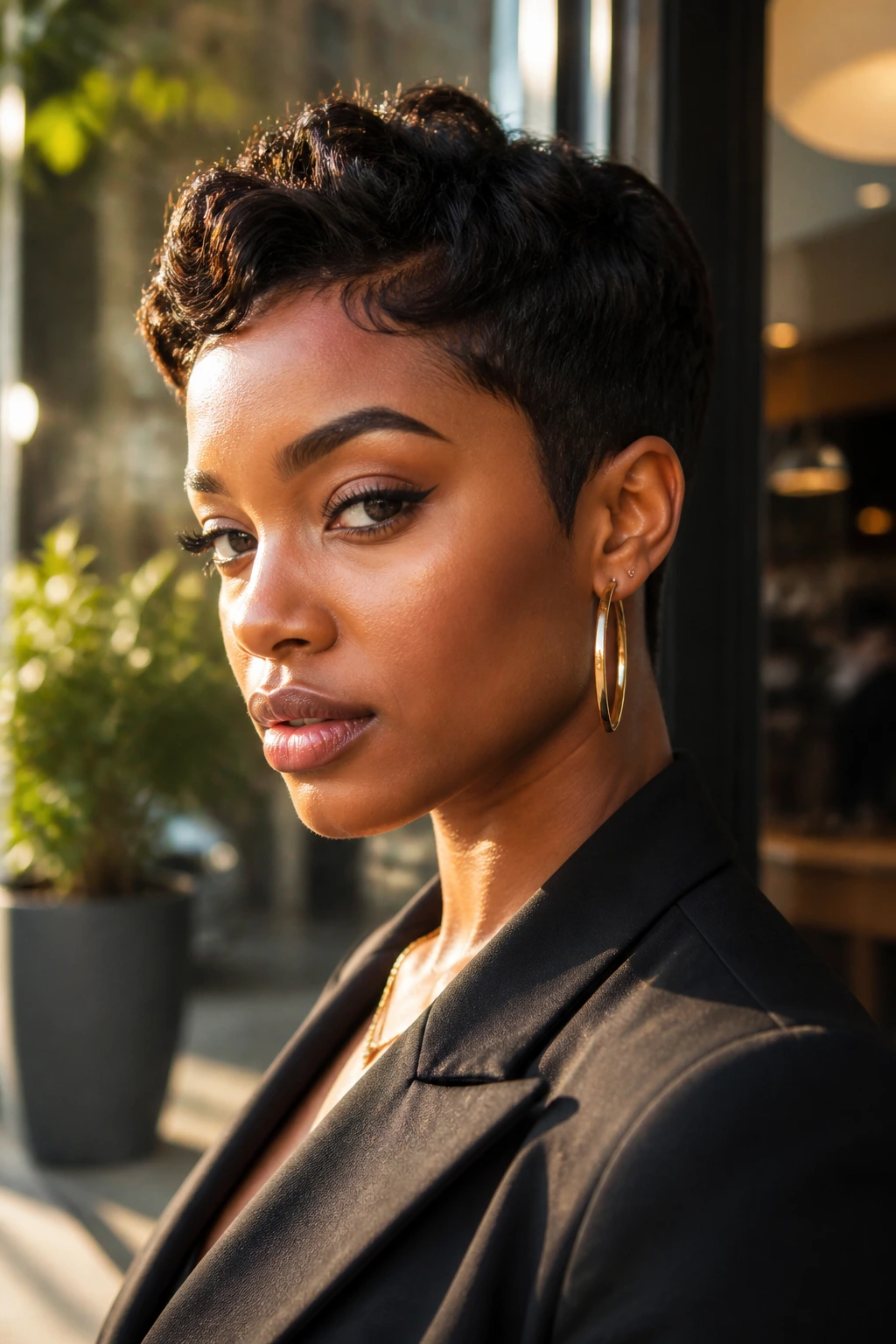
Presentation: Pick one thing to make sharp. If the haircut is soft, keep the edges neat. If the haircut is graphic, let the texture stay loose. One clear choice keeps the whole look from feeling confused.
Accompaniments: Earrings matter more than people admit. Hoops open up a TWA or pixie. Studs keep a blunt bob feeling clean. Glasses can also change everything, so let the haircut work with the frame instead of crowding it.
Portions: If you want more drama, keep more length at the crown or front. If you want the cut to feel calmer, reduce bulk at the sides and keep the outline close to the head. That balance does more for the final look than any product ever will.
Beverage Pairing: If you’re heading out after a fresh cut, a cold iced coffee or sparkling water fits the same crisp mood. Not because the drink changes the hair. It doesn’t. But there’s something satisfying about a neat cut and a neat cup in your hand.
Additional Tips for Making the Shape Yours
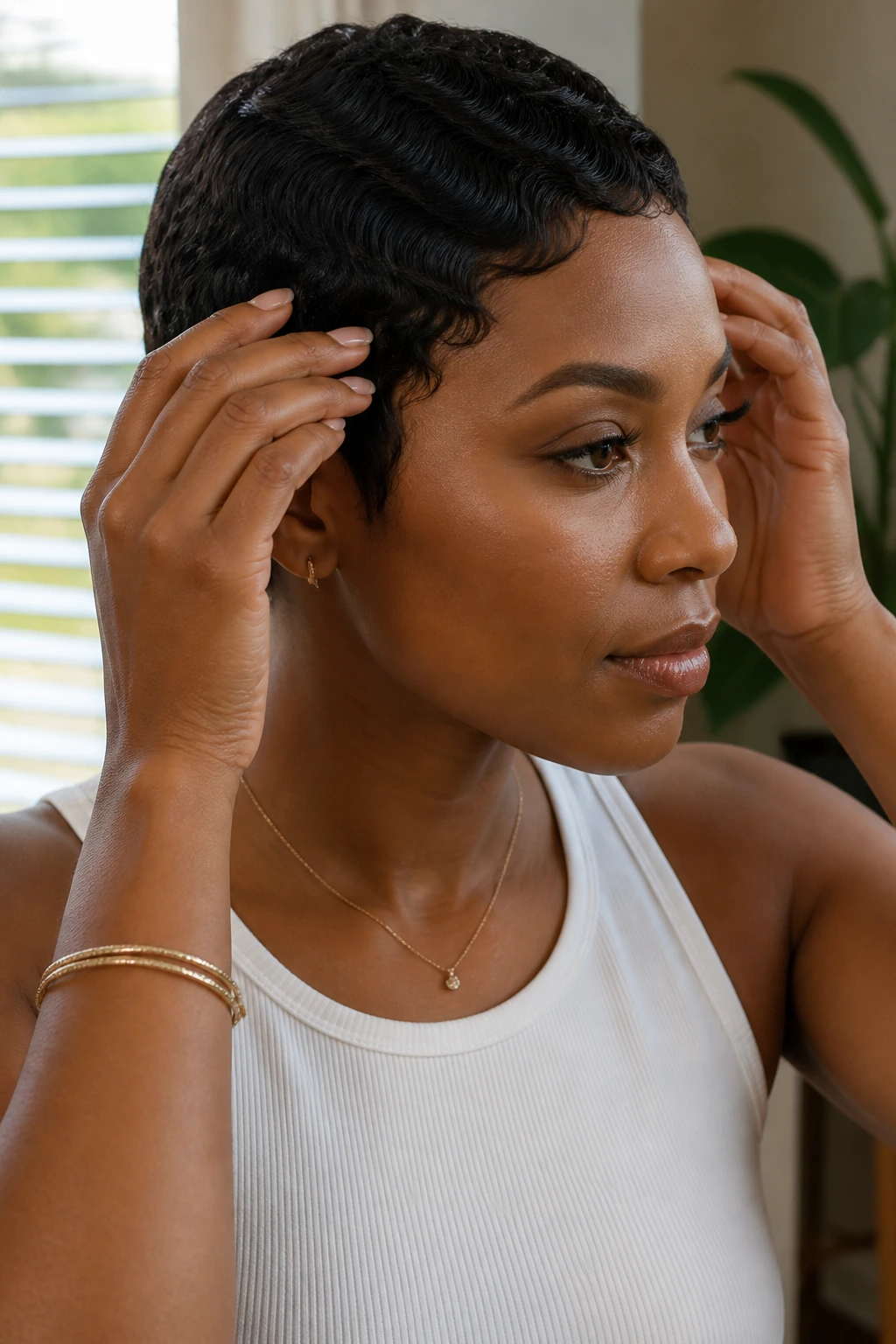
Shape Enhancement: If your haircut feels boxy, ask for a softer taper around the ears and nape. If it feels too round, keep more structure at the temples or add a side part. Tiny shape changes matter more than dramatic ones.
Customization: Wear glasses? Leave a little more room at the temples. Love big earrings? Keep the sides tighter so the face doesn’t get crowded. Prefer soft glam? Ask for a longer fringe or a sweep that falls into one eye.
Styling Tricks: A small amount of foam can revive a pixie, and a mist of water can reset a curl crop without restarting the whole wash day. For cuts with waves or finger patterns, use the scarf. Every night. No heroics. Just the scarf.
Make-It-Yours: If you want low maintenance, avoid designs and hard parts that need frequent cleanups. If you like a sharper edge, add one etched line or a firmer line-up. If you want softness, keep the perimeter curved and the top touchable.
Mistakes That Make Short Cuts Look Off
The first mistake is asking for “short” and leaving it at that. Short can mean a buzz cut, a tapered fro, a pixie bob, or a chin-length bob. If you do not name the length at the nape, crown, and front, you’re basically handing over the steering wheel and hoping for the best.
Shrinkage gets ignored all the time. Someone sees a cut in the mirror, loves it, walks home, and then the hair dries into something different. That is why checking the dry shape matters so much on natural hair. If the stylist cannot explain how the cut behaves dry, ask more questions.
Another problem is overloading the style with product. Thick butter on a close crop can make the hair look greasy and dull. Heavy gel on curls can make a pixie hard instead of shaped. Use what the texture needs, not what the shelf promises.
Then there’s the grow-out trap. A lot of people choose a crisp fade or hard part because it looks great on day one, then hate it when they realize it needs upkeep every two or three weeks. If you don’t have that kind of appointment rhythm, choose a softer silhouette.
Finally, many cuts fail because the crown was not considered. The top of the head controls the whole shape. Too much bulk there, and the cut looks top-heavy. Too little, and the style collapses. The crown is not an afterthought. It is the point.
Keeping the Shape Between Trims and Wash Days
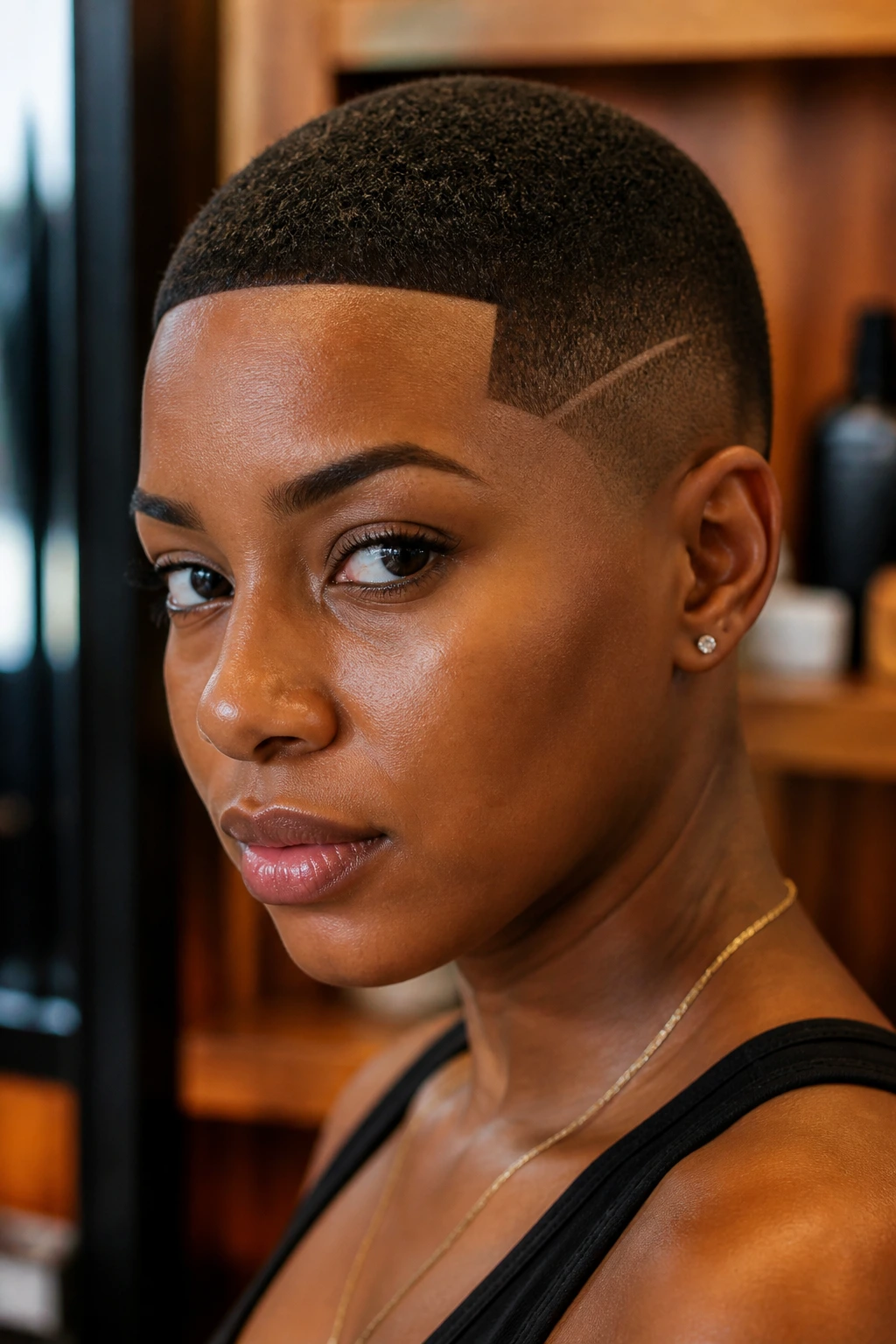
Buzz cuts and sharp fades usually need the most frequent touch-ups. A quick line-up or nape cleanup every 2 to 3 weeks keeps them from losing their edge. If you wait too long, the outline softens faster than you expect, and the cut starts reading as grown-out instead of intentional.
Pixies, TWAs, and short crops can often go 3 to 5 weeks before they need reshaping, depending on how fast your hair grows and how exact the perimeter is. Bobs are usually happiest with trims every 4 to 6 weeks. Short loc bobs may hold longer, but the silhouette still benefits from a check-in before the ends start looking uneven.
Night care is the part people skip and then blame the haircut. Satin scarf. Satin bonnet. Pillowcases help, but they are not a full substitute when you have waves, curls, or a side-swept front that needs direction. If you use foam or wrapping lotion, let the hair dry fully before bed so you’re not flattening damp sections overnight.
If your scalp gets dry, treat it on a schedule instead of waiting for flakes to show. A little oil on a close crop once or twice a week is plenty for many people. More is not better. More often means duller hair and more buildup.
Variations and Adaptations to Try
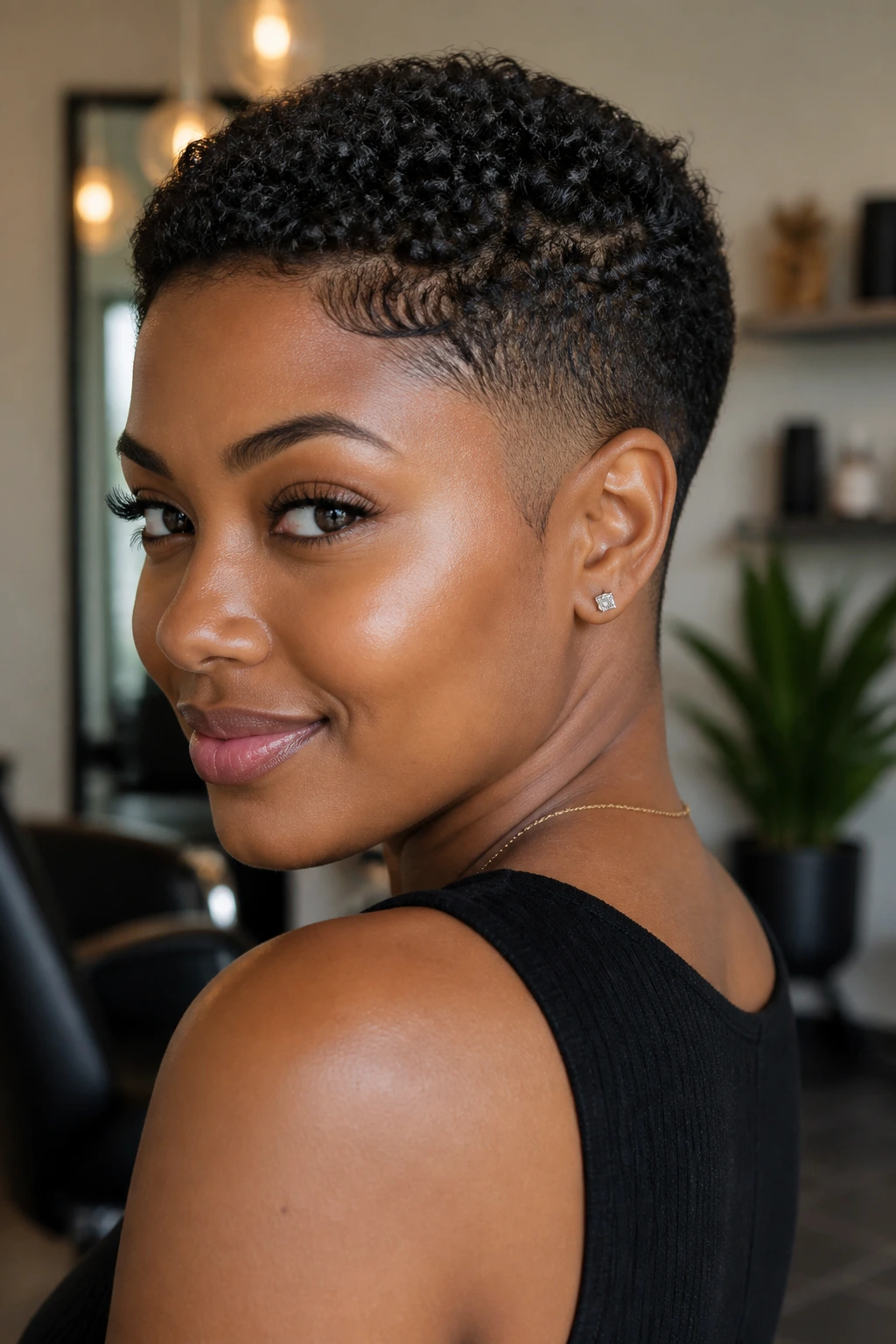
Soft-Shape Version: Keep the same cut but soften the temples and nape. This works well if you want a short style that feels approachable rather than strict.
Barber-Sharp Version: Add a tighter fade, a cleaner line-up, or a hard part. This is the route if you want the haircut to read from across the room.
Salon-Sleek Version: Blow it out, wrap it, or silk press the top section so blunt lines and asymmetry show clearly. Best for bobs, pixies, and side-swept cuts.
Natural-Texture Version: Ask for the cut to be shaped on dry or stretched hair, then wear it with coils, twist-outs, or a sponge-defined finish. The silhouette stays the same, but the texture does the talking.
Low-Tension Version: Skip tight edges, heavy razor work, and ultra-close shaping around the hairline. Good if your scalp is sensitive or you want a softer grow-out.
Questions People Usually Ask About Short Haircuts for Black Women
Which short haircut works best for 4C hair?
Tapers, TWAs, frohawks, and layered crops usually hold up well because they respect density instead of fighting it. The key is shape at the nape and crown, not just the top length.
Can short natural hair still look feminine or soft?
Yes, if that’s the look you want. A side part, rounded silhouette, swooped fringe, or a clean bob line can make a short cut feel soft without adding length.
How often should I trim a short fade or pixie?
Most sharp fades need cleanup every 2 to 3 weeks. Softer pixies and rounded crops can go a little longer, but once the outline loses its shape, the style starts reading messy.
What should I bring to the stylist?
Bring 2 or 3 photos, plus a clear idea of how much length you want at the crown, sides, and nape. If you wear your hair stretched, shrunken, or straightened most often, say that before the cut starts.
Do I need a barber or a stylist?
Either can work, but the person should be comfortable with textured hair and short shape work. If the look depends on fades, line-ups, and clipper work, a barber can be a smart choice. For finger waves, bobs, and layered curls, a stylist may be the better fit.
What if my cut looks too boxy?
Ask for softening at the temples and a better taper around the nape. Boxiness usually means the perimeter was left too straight or the crown was not shaped enough.
Can I grow out a pixie without hating the process?
Yes, if you keep the shape trimmed while you grow. A small cleanup every few weeks stops the grow-out from turning into an awkward puff. The trick is not leaving the old shape completely untouched.
Are short cuts high maintenance?
Some are, some aren’t. A buzz cut is easy day to day but may need frequent line-ups. A curly crop may need more styling but fewer salon visits. Pick the kind of upkeep you’re willing to live with.
The Shape That Feels Right
The best short haircut is the one that makes your face look more like itself, not less. That’s the part people miss when they chase a photo instead of a shape. A clean taper, a sharp fade, a rounded crop, or a blunt bob can all work on Black women with short hair — but only if the cut matches the texture, the upkeep, and the way you actually wear your hair.
I keep coming back to the same idea: good short hair is built, not guessed. Once the outline is right, everything else gets easier. The styling, the grow-out, the mornings when you barely have time to do anything but smooth the front and walk out the door.
If you’re sitting with a few screenshots and one stubborn feeling that your next cut should be shorter, cleaner, or a little bolder, trust that instinct. Bring it to the chair. Ask for the shape you mean. Then let the hair do what it does best.
