



The best short hairstyles for women over 50 do more than remove length. They can lift a flat crown, sharpen a soft jaw, and stop the back of the head from puffing out like a mushroom. That sounds blunt, because it is. Hair changes shape with time, and the cut has to meet it where it is instead of pretending the same old long layers will keep doing the heavy lifting.
Short hair is not one lane, either. A chin-length bob with blunt ends feels nothing like a feathered pixie with side-swept fringe, and a stacked bob solves a different problem again. The right shape works with your texture instead of nagging at it, which is why some short cuts look sharp in a salon mirror and still behave on a windy day, at a grocery store, or after a fast towel-dry.
The tiny details matter. Where the fringe lands. How short the nape sits. Whether the crown has a little lift or a lot. Get those lines right and the haircut does the work for you. Get them wrong and you spend your mornings pushing hair back into place, which is a miserable use of time.
Why These Cuts Keep Working in Real Life
-
They respect the crown. A lot of hair gets thinner or flatter up top with age, and short shapes can fake fullness by keeping the crown slightly shorter and more structured.
-
They clean up the neckline. A tapered nape stops the back from flipping out, which is the fastest way to make short hair look tidy instead of fuzzy.
-
They give you a choice about the face. Some cuts open the cheekbones, some soften the jaw, and some keep the forehead visible without turning severe.
-
They behave better with glasses and earrings. Shorter lengths can sit above the frame arms and leave room for jewelry, which matters more than people admit.
-
They dry fast. Less length means less water, less blow-drying, and fewer morning battles with a round brush.
-
They can be soft or crisp. The same basic length can look airy with point-cut edges or polished with blunt ends, and that flexibility is half the point.
1. Soft Pixie with Side-Swept Fringe
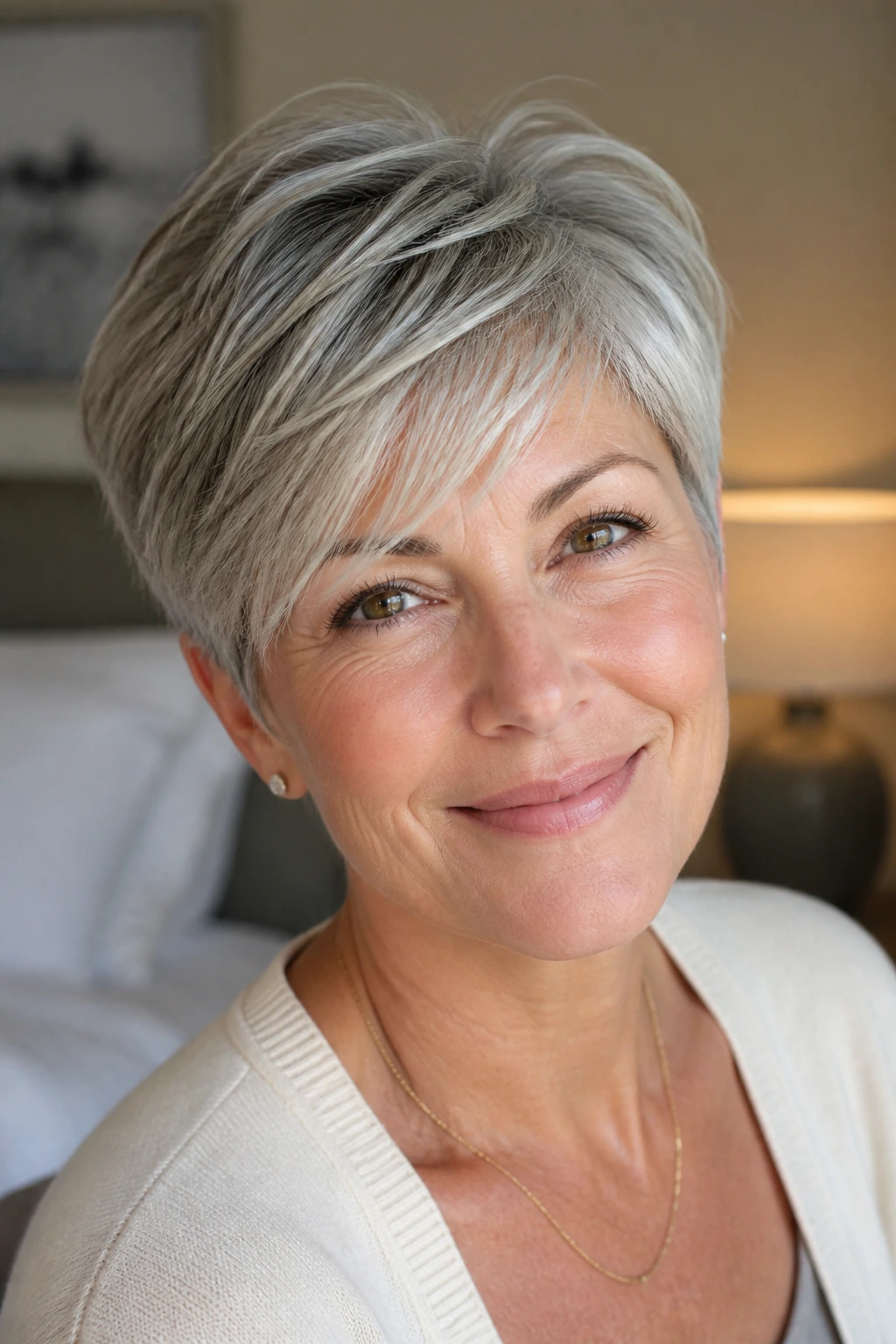
This is the cut I reach for when someone wants the neck open but does not want their face framed by a hard little helmet of hair. The top stays soft, usually around 2 to 3 inches, and the fringe sweeps across the forehead instead of sitting straight up or chopped blunt.
Why It Works
A side-swept fringe takes the sting out of a short cut. It gives you movement around the front, which matters if your forehead feels more prominent than it used to or if you just want a little softness near the eyes. Keep the nape snug and the temples gently tapered, and the whole shape looks intentional.
Quick Shape Notes
- Best with fine to medium hair that needs a bit of lift.
- Works well if you wear small hoop earrings or want the neckline visible.
- Ask for a soft taper around the ears, not a hard clipper line.
Styling tip: A pea-sized dab of lightweight mousse at the roots and a quick finger-dry at the front will usually do more than a full round-brush session.
2. Chin-Length French Bob
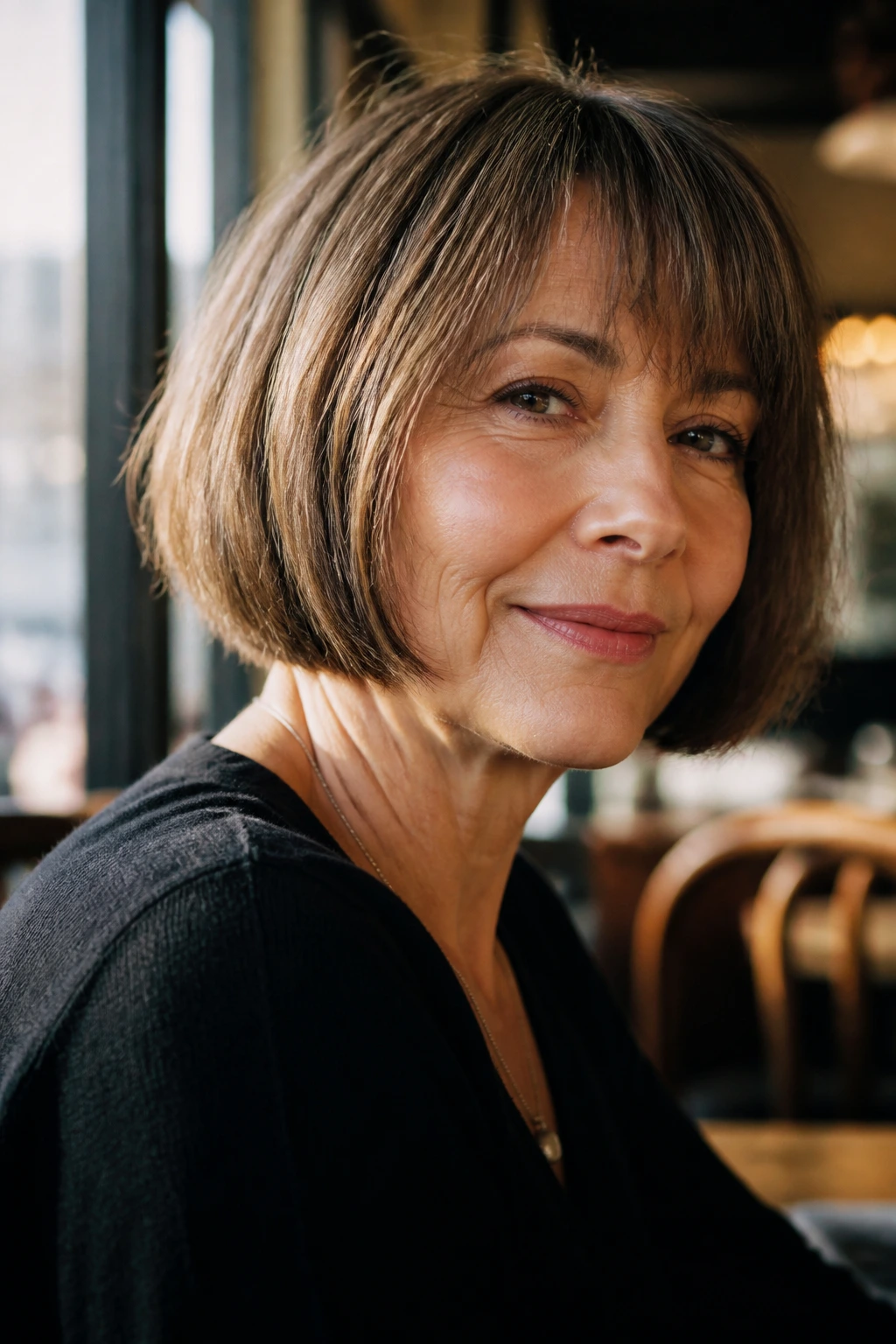
A chin-length French bob has a little attitude, but it doesn’t need to shout. The line lands around the chin, the ends stay clean, and the shape usually sits close to the head rather than ballooning out.
What makes it feel right is the length. Too short and it starts fighting the jawline; too long and it loses the whole point. I like this cut when the hair is straight or softly wavy, because the edge looks crisp even when you tuck one side behind the ear.
If your hair is fine, a blunt perimeter gives the illusion of weight. If it’s thick, ask for a tiny bit of internal debulking so the bob does not turn into a triangle by lunchtime.
3. Stacked Bob with Crown Lift
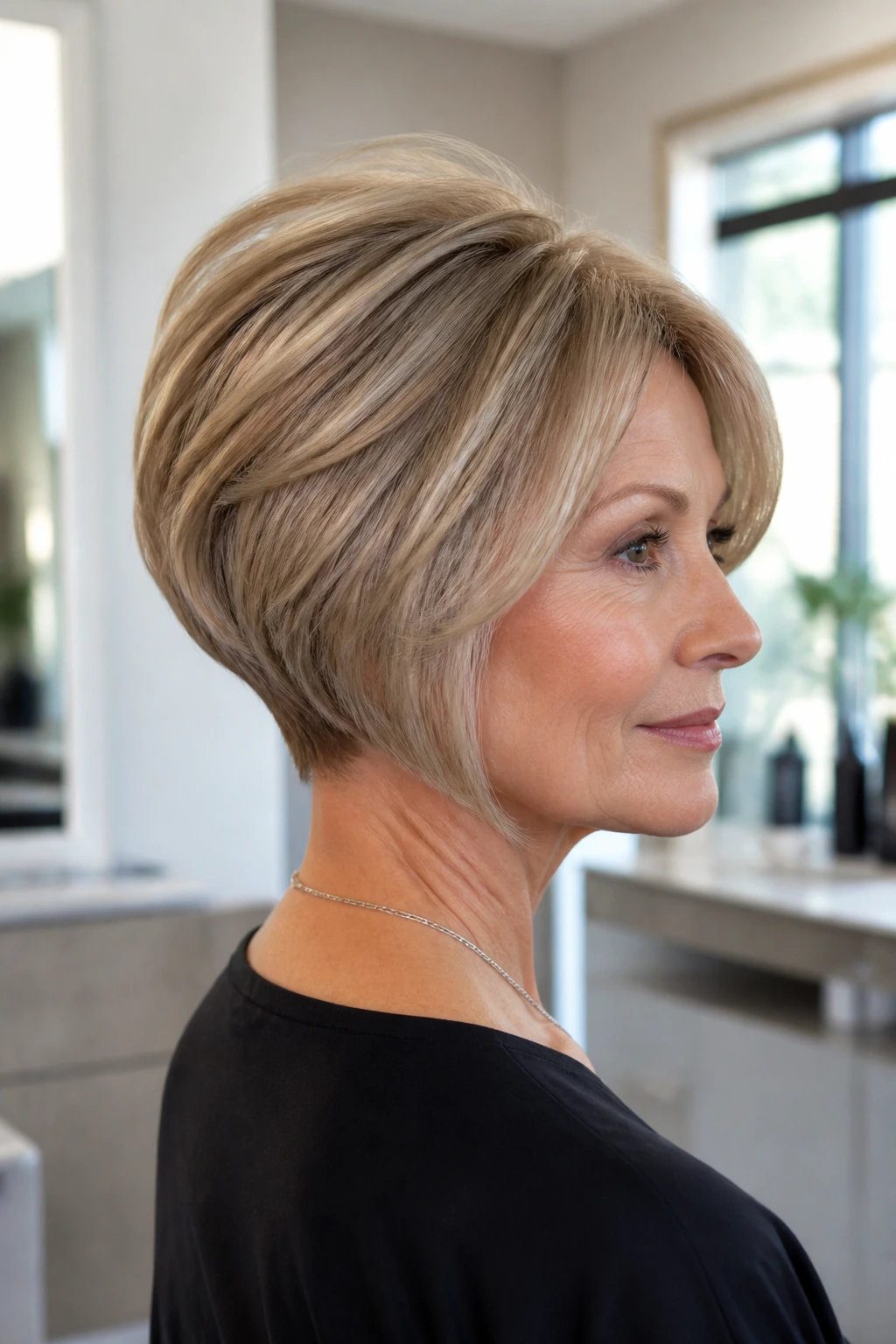
Why does this cut keep showing up on women whose hair goes flat on top? Because the back is doing the lifting. The stacked bob is shorter in the back, gradually longer toward the front, and that built-in slope gives the crown a little architecture.
How It Feels in the Chair
The stylist should build the stack carefully, not overdo it. If the back is cut too high, the shape can look dated fast. Kept moderate, though, it gives the head a cleaner profile and makes thin hair look less limp.
Best For
- Fine hair that collapses at the crown.
- Women who want a visible shape from the side.
- Anyone who likes a polished finish with a little volume at the back.
A round brush at the crown and a quick blast of root spray at the roots are usually enough. No fuss. No giant barrel brush marathon.
4. Feathered Crop with Longer Top
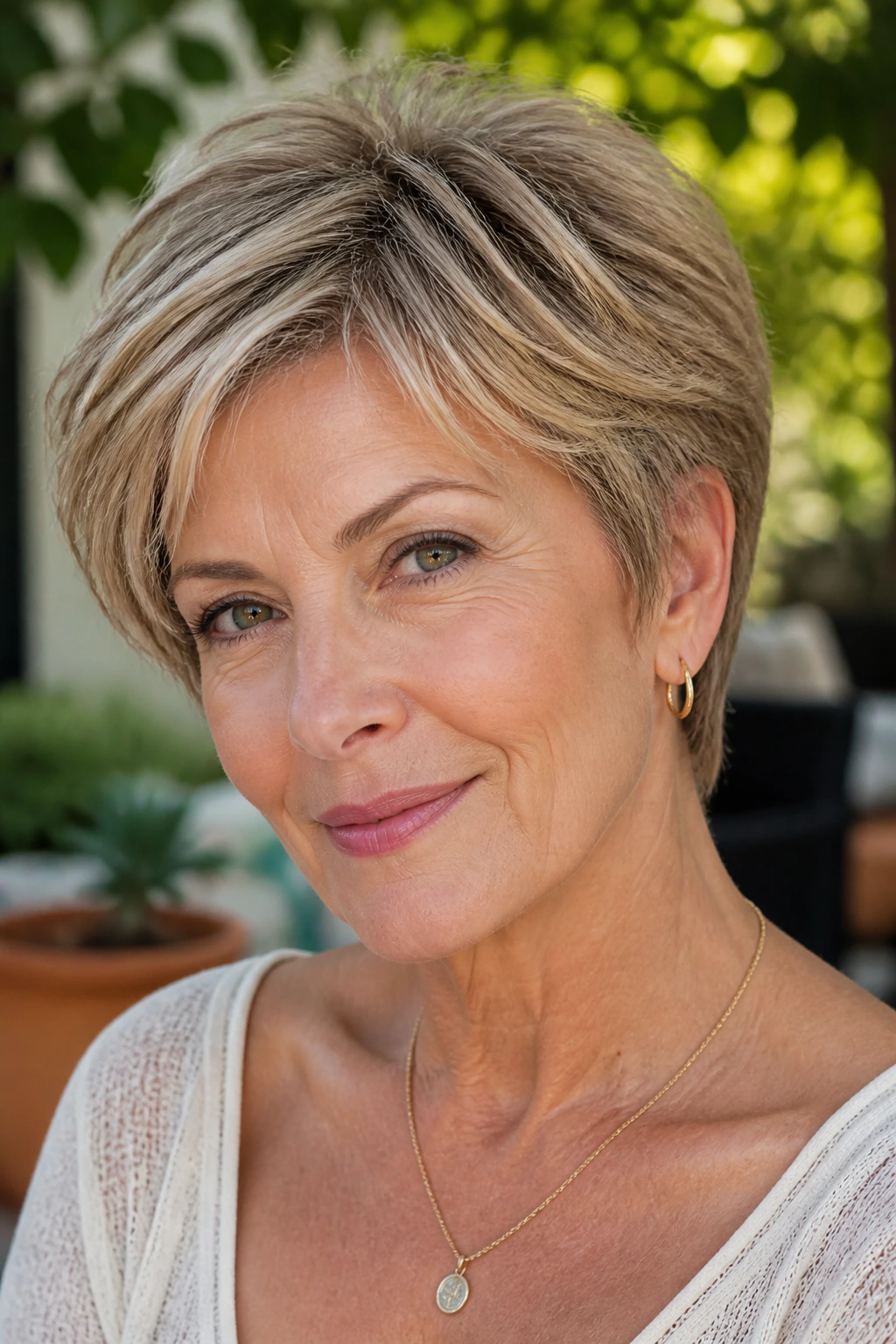
A feathered crop is one of those cuts that looks light even when the hair itself is stubborn. The top stays longer, the sides are cut away from the face, and the ends are softened so they move instead of sitting in one block.
The trick is restraint. Feathering should soften the outline, not shred the hair into wisps. If the ends are too thinned out, the cut starts looking sparse around the temples, which is a bad trade on older hair. Keep the top long enough to sweep or part, and the whole cut keeps its shape.
It’s one of my favorites for women with cowlicks, because a little feathering can work with the swirl instead of against it.
5. Curly Pixie with Tapered Sides
Curly hair can wear a pixie beautifully, but only if the curl pattern is given some room. The top should stay long enough for the curls to form their own shape, while the sides and nape get tapered so the silhouette does not puff out like a triangle.
The mistake here is cutting curls as if they were straight. Don’t do it. Curl shrinkage will bite you. A curl that looks long in the chair may spring up an inch or two once dry, so the cut needs to be checked in a dry or mostly dry state if the curls are springy.
I like this style with a leave-in conditioner and a small amount of curl cream. Scrunch, diffuse for a few minutes, then stop touching it. Curly pixies look best when the curl is allowed to land where it wants.
6. Blunt Bob with a Clean Center Part
A blunt bob with a center part is not shy. It gives a straight line at the ends, and that line makes hair look thicker than it really is. The center part adds a little symmetry, which can be flattering on oval and longer faces.
The key is not to let the ends go too wispy. If the perimeter is too thinned out, the blunt effect disappears and you lose the density that makes this cut worth having. Keep the line around the jaw or slightly below it, and the bob reads polished without feeling stiff.
This is one of the few cuts I’d choose when the hair is naturally straight and the goal is sharpness, not softness. If you want quiet movement, pick something else. If you want clean edges that hold their shape after a blow-dry, this is it.
7. Layered Bob for Fine Hair

Can fine hair wear layers without looking see-through? Yes, if the layers are long enough to keep the outline full. This is the important part people skip. Short, choppy layers on fine hair often leave the ends looking ragged, while longer internal layers add movement without eating the perimeter.
A layered bob should still have a clear outer shape. The layers live inside the cut, not all over the place. That gives the crown some lift and the ends some swing, which is what fine hair usually needs.
Good Signs to Ask For
- Layers that begin below the cheekbone, not at the scalp.
- A perimeter that stays strong around the chin or just below it.
- Enough weight at the bottom to stop the bob from fraying.
If your hair goes flat at noon, this cut is worth a look.
8. Shaggy Bob with Piecey Ends
The shag is not messy when it’s cut well. It’s airy. There’s a difference. A shaggy bob keeps the ends light, builds movement through the mid-lengths, and leaves enough fringe or front pieces to break up the shape around the face.
I like this cut on wave patterns that refuse to stay perfectly smooth. Instead of fighting that bend, the shag uses it. A little texture spray on dry hair and a quick scrunch with the fingers will usually bring the shape back after a rough day.
If you’ve ever felt like a plain bob looks too solid on you, this is the escape hatch. It has edge, but not the kind that needs constant flat-ironing. That matters.
9. Asymmetrical Bob with a Deep Side Part
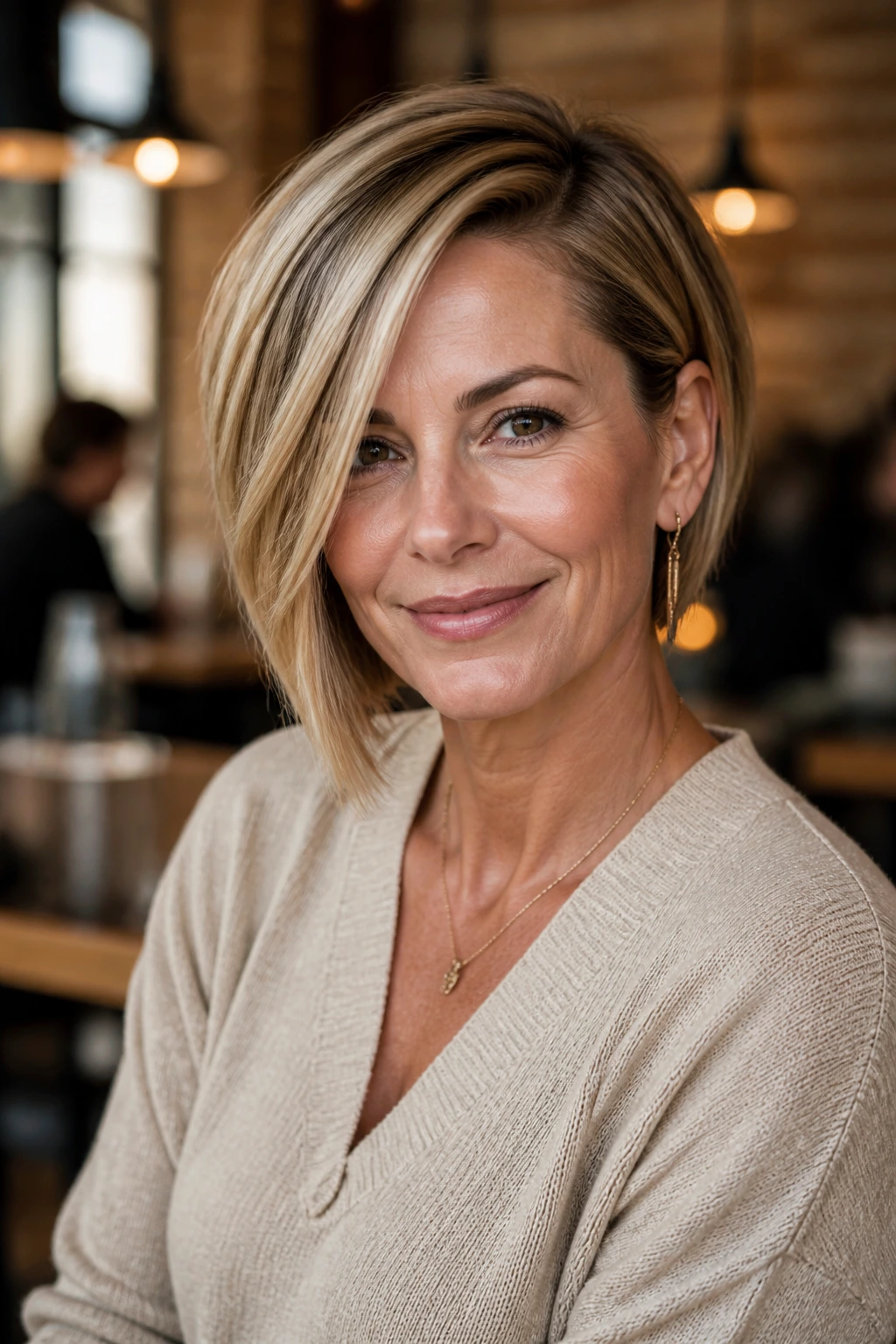
A slight asymmetry can do more than people expect. One side falls a touch longer, the part shifts lower, and the whole face gets a diagonal line that breaks up roundness or softens a strong jaw.
The difference should be subtle. I’m talking about an inch or so, not a dramatic fashion cut unless that’s what you want. Too much contrast and the style starts wearing you instead of the other way around.
Use this cut when you want movement without layers all over the head. The deep side part adds root lift on one side, and the longer front section can tuck neatly behind the ear on the other. It’s a tidy little trick.
10. Inverted Bob with a Smooth Nape
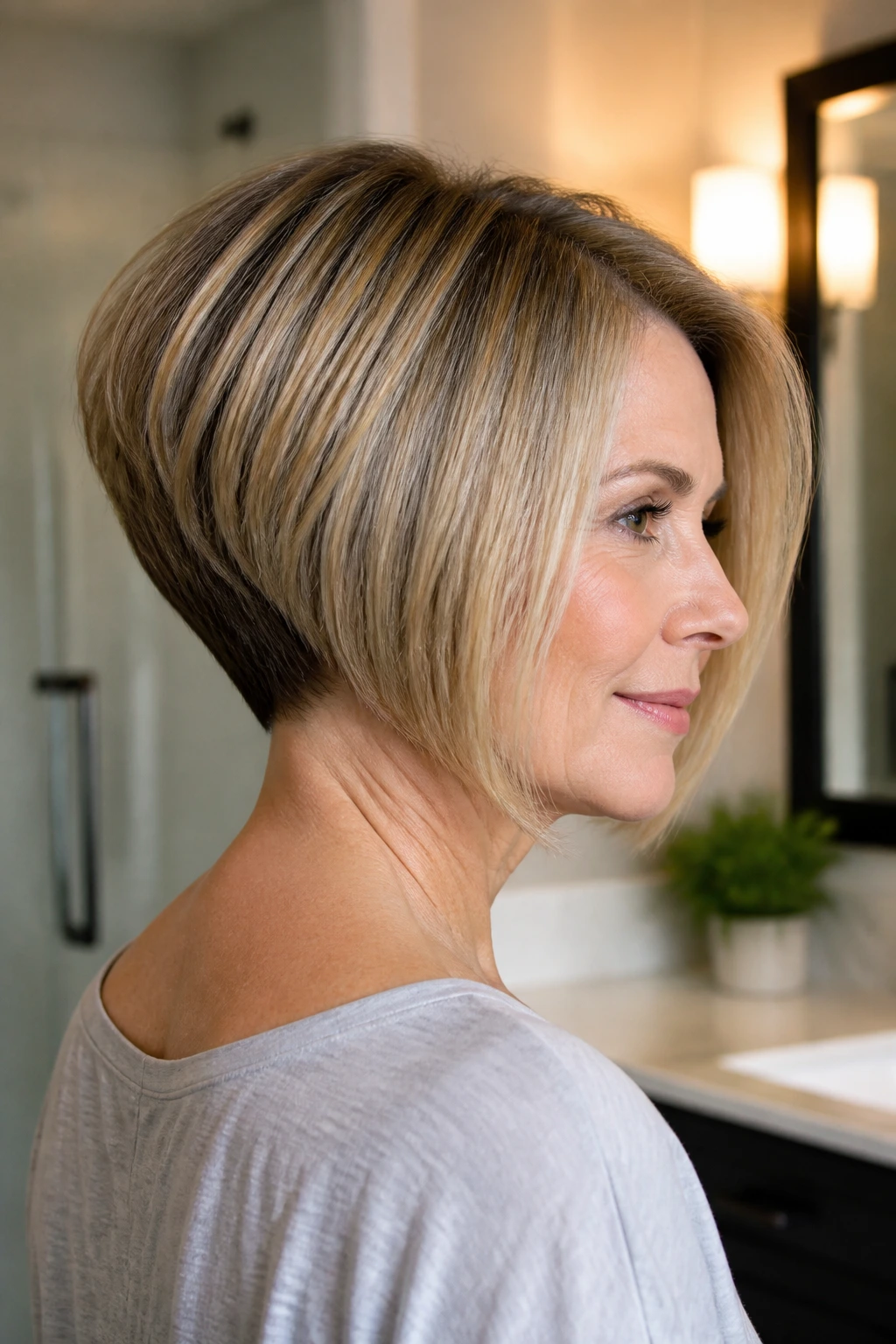
The inverted bob is built to show shape from the side. Shorter in the back, longer in the front, it creates a smooth curve that follows the head instead of hanging from it. That makes it especially useful if your hair has bulk in the nape or if the back tends to flip.
A lot of people ask for this cut and then get too much stacking. That’s where it goes wrong. The line should rise, yes, but not spike. Keep the curve elegant and the front pieces slightly longer so the cut looks grown-up rather than sharp for the sake of sharpness.
If you like a blowout finish, this one gives you a good canvas. The shape holds even when the styling is imperfect, which is more useful than any salon photo.
11. Bixie Cut with Soft Edges

A bixie sits between a bob and a pixie, which is exactly why it works for so many women. You get a little length around the top and front, but not enough to feel trapped in bob maintenance. It’s also one of the easiest cuts to style with fingers instead of a brush.
Why I Like It
It grows out gracefully. That sounds boring until you’ve lived with a pixie that turns awkward after five weeks. The bixie buys you time because it doesn’t lose its shape the second it moves past the first trim window.
Best For
- Anyone who wants short hair without fully committing to a pixie.
- Fine hair that needs lift but also a little coverage.
- Women who like a slightly softer edge around the ears.
A dab of matte paste and a rough dry is usually enough. Clean. Easy. No drama.
12. Tapered Crop with Wispy Neckline
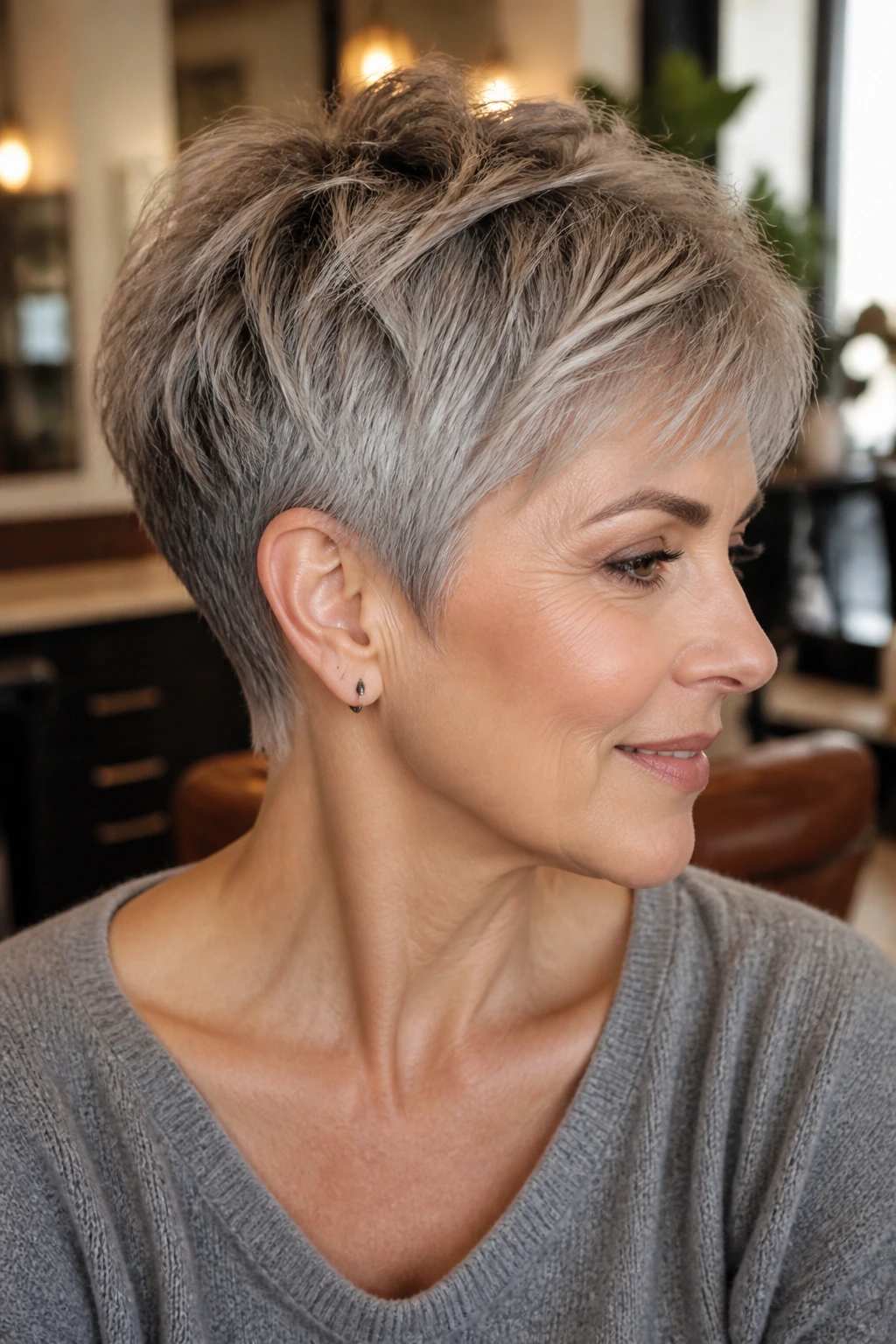
If you want the back of the neck to feel clean without going as short as a close pixie, the tapered crop is the sweet spot. The neckline is trimmed close, the sides taper softly, and the top keeps enough length to brush forward or up.
The wispy neckline is the part that matters. It keeps the cut from looking severe. I’d ask for a soft transition at the nape, not a hard line, unless you’re after a sharper feel.
This cut is also kind to thick hair, because it removes bulk where it tends to build up. Less puffing. Less flipping. More shape.
13. Jaw-Length Cut with Curtain Fringe
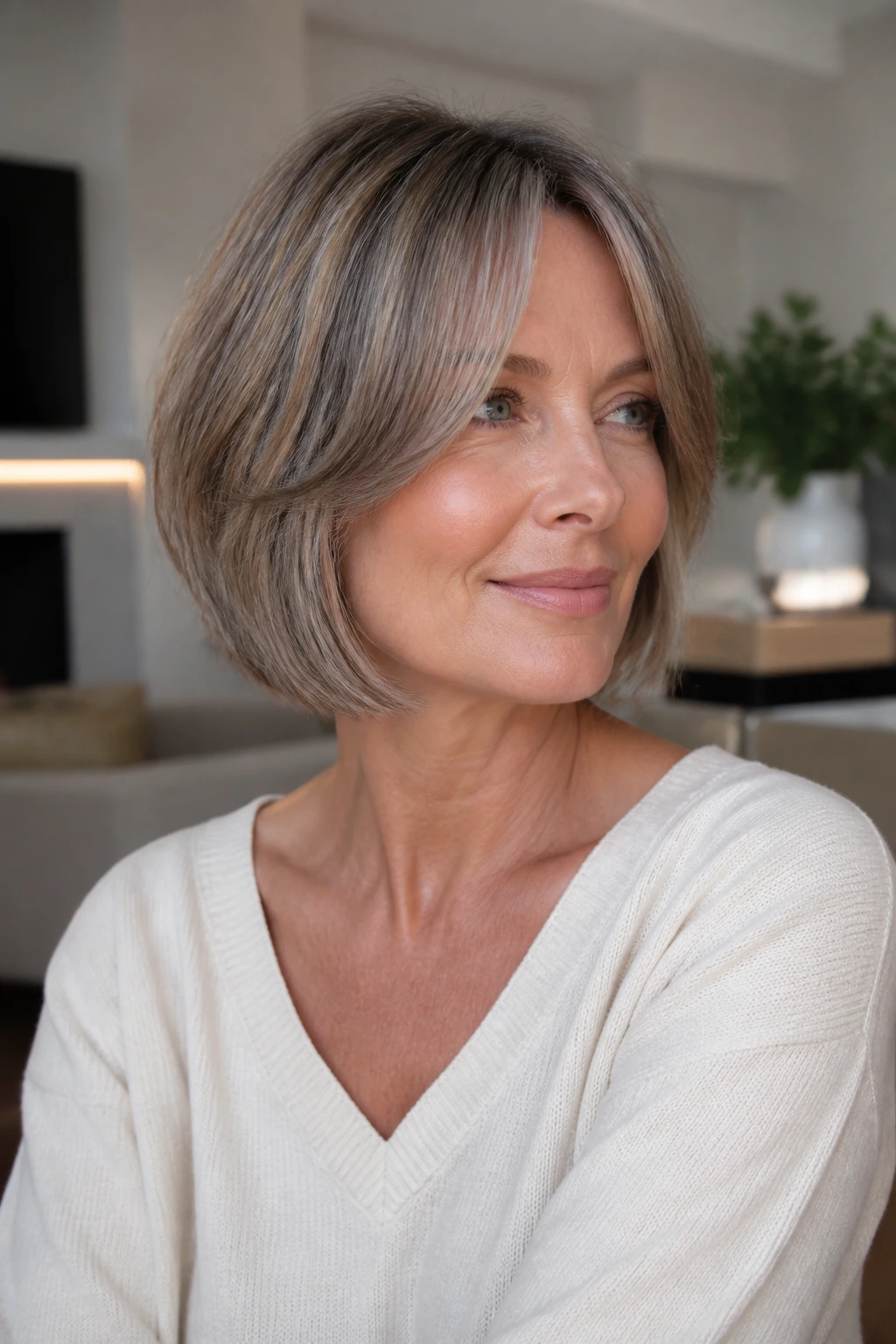
A jaw-length cut with curtain fringe lands in a useful place. It sits right where the face starts to narrow, and the fringe splits down the middle or slightly off-center so the forehead doesn’t get swallowed by one blunt line.
The curtain fringe gives this cut room to breathe. It softens the forehead, frames the eyes, and keeps the front from looking too boxed in. If your face is longer, this length can help balance it. If your jaw is strong, the soft fringe prevents the whole thing from getting harsh.
Use a round brush or a quick bend from a flat iron just on the front pieces. You do not need a perfect blowout every day. The cut already carries enough shape.
14. Silver Bob with Face-Framing Layers
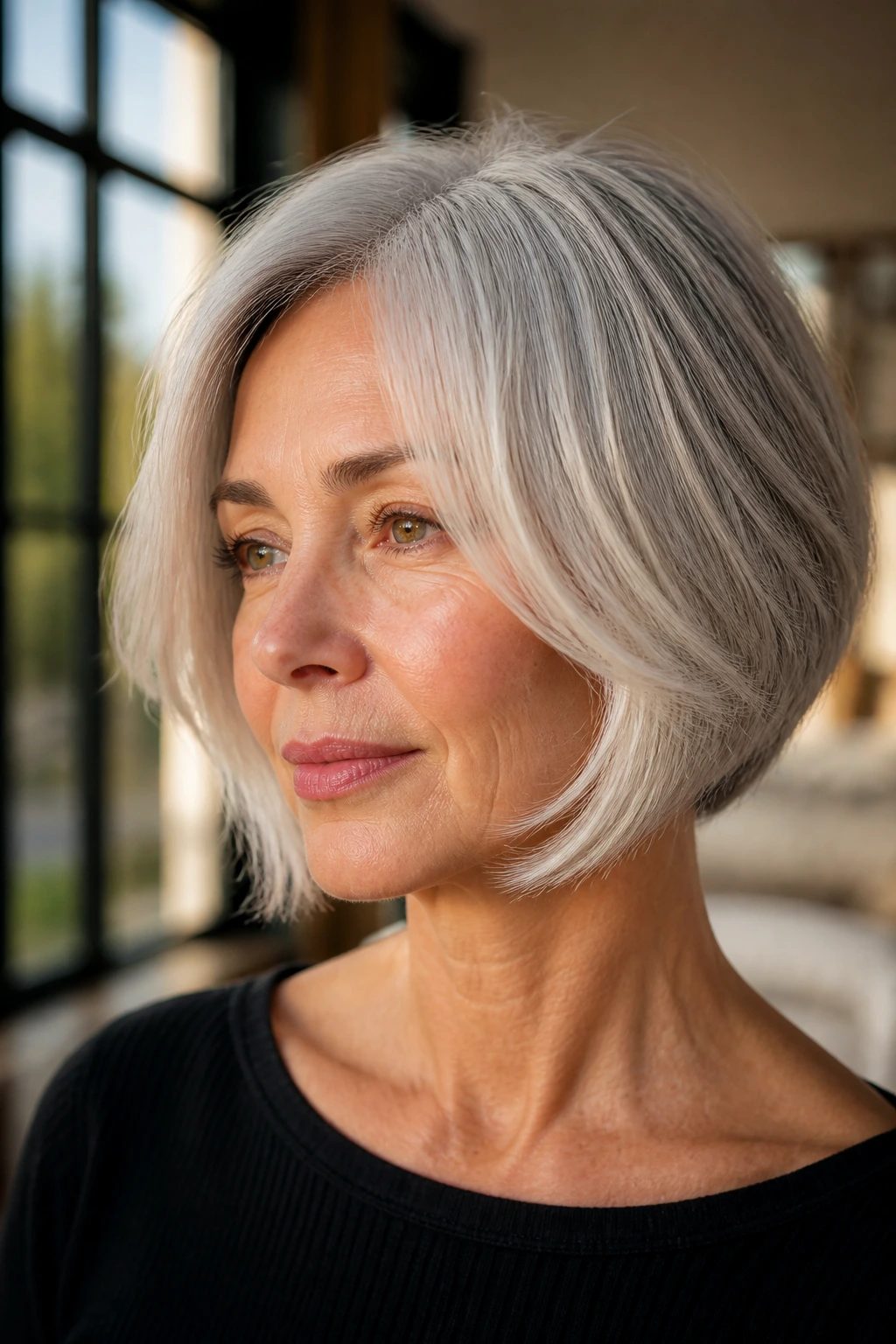
Silver hair looks especially good when the cut gives it a clean outline. The color itself is reflective, so the shape has to be precise enough to hold its own. A silver bob with face-framing layers does that by keeping the perimeter firm and adding soft movement around the cheekbones.
I prefer layers that start around the cheekbone rather than too low near the chin. That way the front opens the face instead of dragging it down. If the silver is natural, this cut also shows off the texture that gray often brings in—slightly more body, slightly less obedience, and that’s fine.
A shine serum on the ends can help, but don’t drown it. Silver hair needs light on the surface, not grease.
15. Ear-Length Crop with Soft Texture
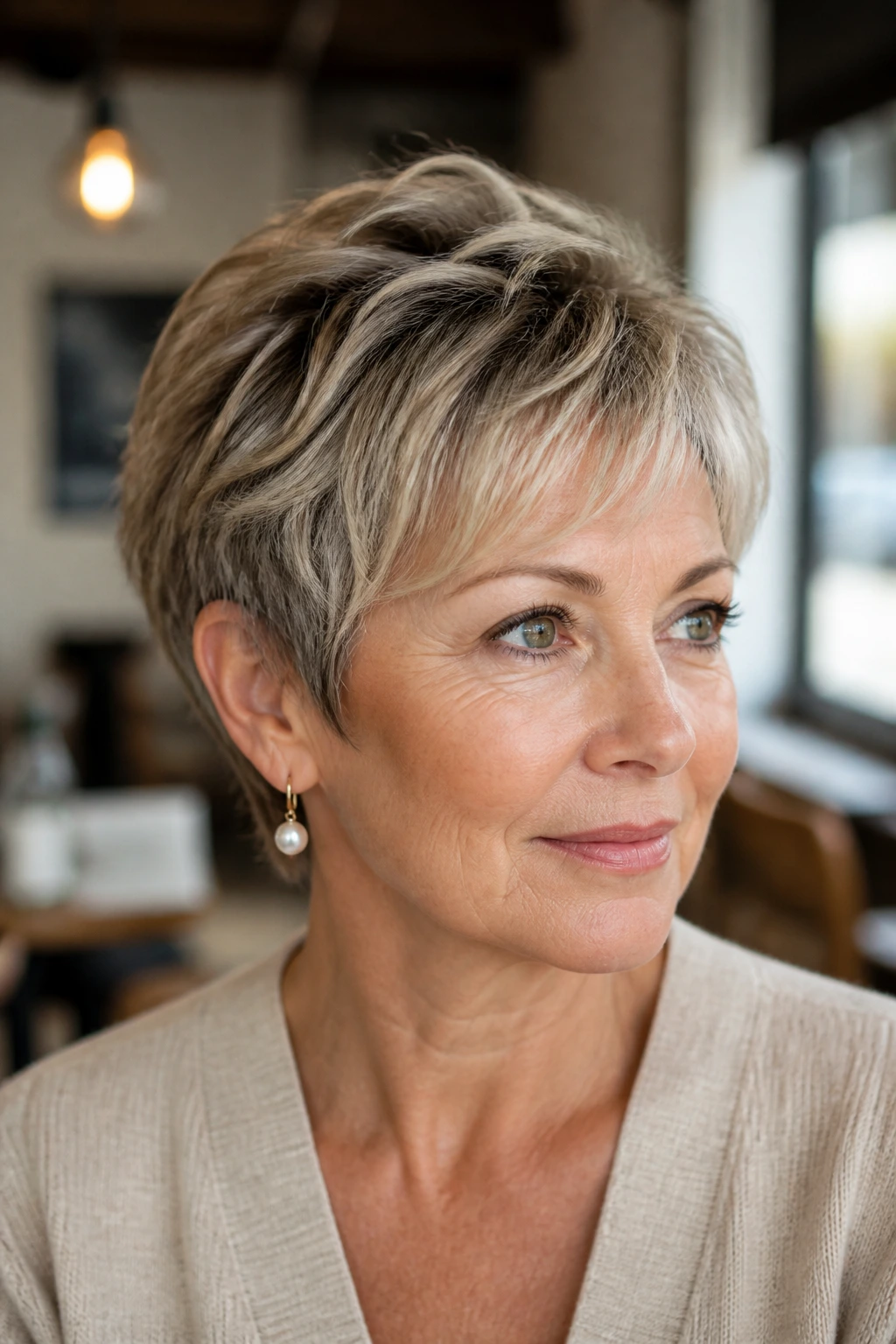
Ear-length hair is short enough to feel crisp and still soft enough to avoid that clipped, blocky look some crops get. The sides should skim the ears, the top should have a little texture, and the neckline should stay neat.
This is the cut for someone who likes earrings to show. It also works beautifully with strong brows and glasses, because the hair doesn’t fight for attention. The whole silhouette sits close to the head, which makes the face look cleaner from the side.
It does need upkeep. Ear-length cuts grow fast in the wrong places. Around the ears and at the nape, even a quarter-inch can change the shape.
16. Side-Parted Bob with Tucked Ends
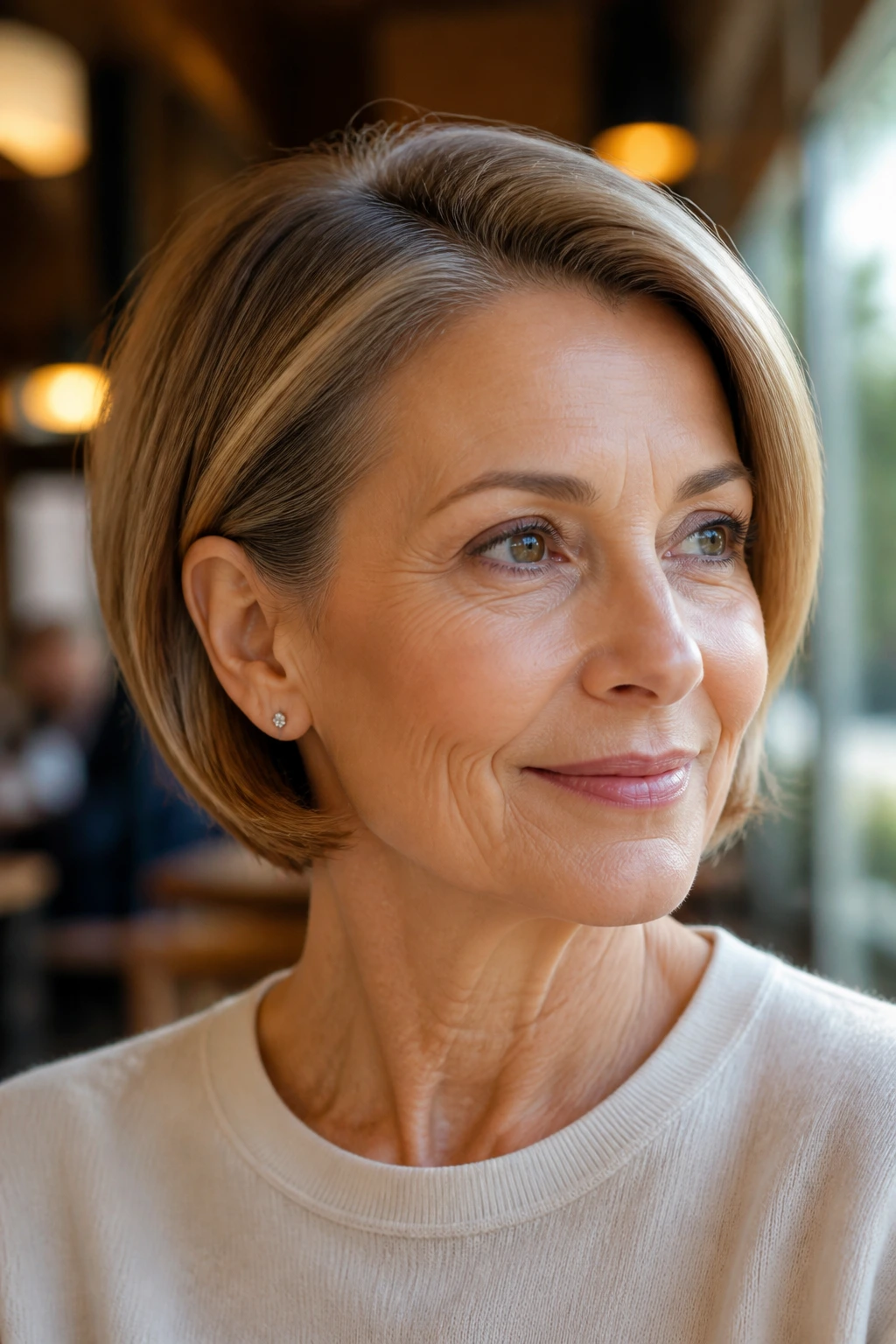
A side part changes everything. The roots get a lift on one side, the volume shifts away from the center, and the bob stops feeling too symmetrical. Tucked ends keep the look relaxed and a little modern.
This one is especially kind to hair that looks flat in the middle. The deep part gives the scalp a break from showing too much at the crown, and the tucked ends make the shape feel deliberate even when the styling is minimal.
If you wear glasses, this is a smart cut. The hair can sit off the frame line on one side and still keep enough weight on the other to look balanced. Nice and practical.
17. Razor Cut with Airy Movement
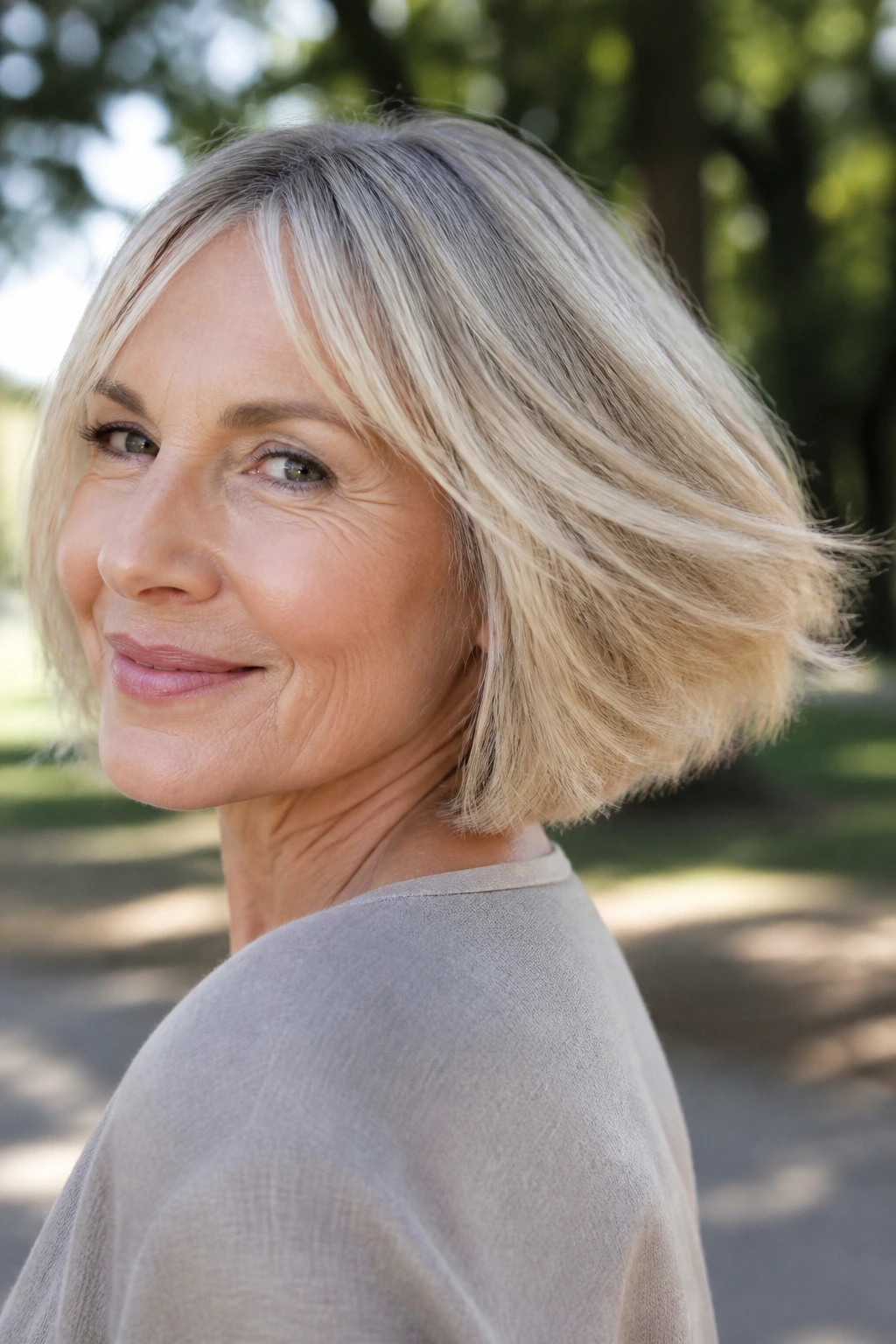
A razor cut can look light and airy, but only if the hair can handle it. On medium-density hair with some wave, it creates a soft edge that moves when you turn your head. On fragile ends or very coarse hair, too much razor work can leave a frayed finish. That’s the catch.
I like this cut when a bob needs a little looseness. The razor removes bulk and gives the perimeter a less blocky feel, which keeps the style from looking too heavy around the jaw. It’s a good pick if you want motion without obvious layers.
Ask for restraint. A good razor cut is a whisper, not a shredder.
18. Rounded Crop for Glasses

If you wear glasses, this cut is smart, full stop. The rounded crop sits inside the frame line, which keeps the whole face area tidy instead of crowded. The hair curves softly around the head, the fringe can be short or side-swept, and the sides stay clear of the temple arms.
What matters most is placement. You do not want the hair ending exactly where the glasses sit. That’s where friction and visual clutter happen. A crop that curves just above or just below that point usually looks calmer.
This is one of those styles that feels simpler in daily life than it looks on paper. Put the glasses on, shake the hair once, and move on.
19. Textured Pixie with a Choppy Crown
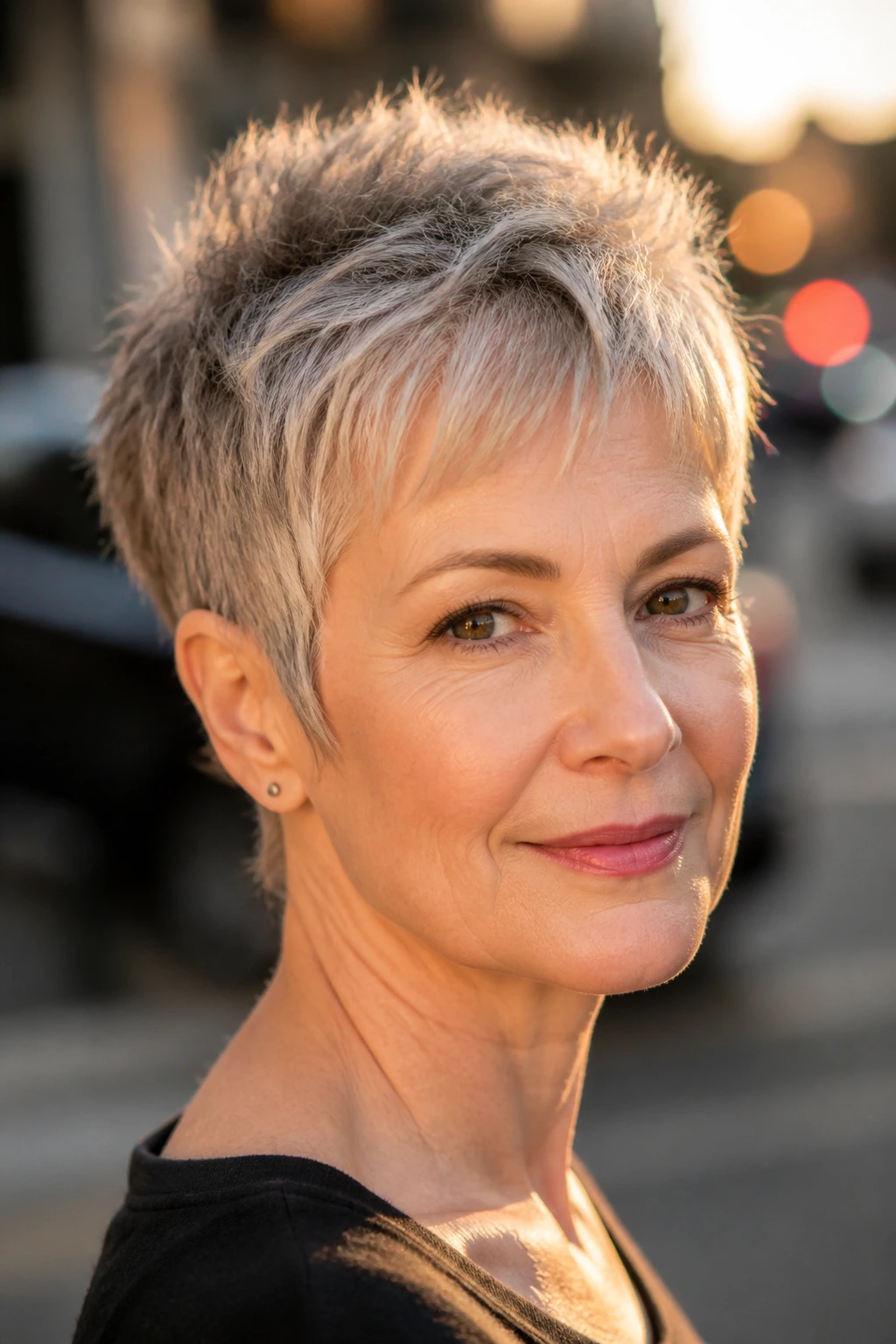
A textured pixie lives or dies by the crown. If the crown is choppy and lightly layered, the top gets that lifted, piecey look that keeps the cut from sitting flat. The sides stay shorter, and the whole shape feels energetic without being fussy.
The trick is to avoid over-thinning the front hairline. A little texture through the top is enough. Too much and the cut starts looking broken up instead of lively. I’d rather see a few stronger pieces than a dozen wispy ones.
Use a small amount of styling paste worked through dry hair. Pinch the top, sweep the bangs if you have them, and stop before it turns sticky. Less is the point.
20. Soft Tapered Cut with a Longer Nape
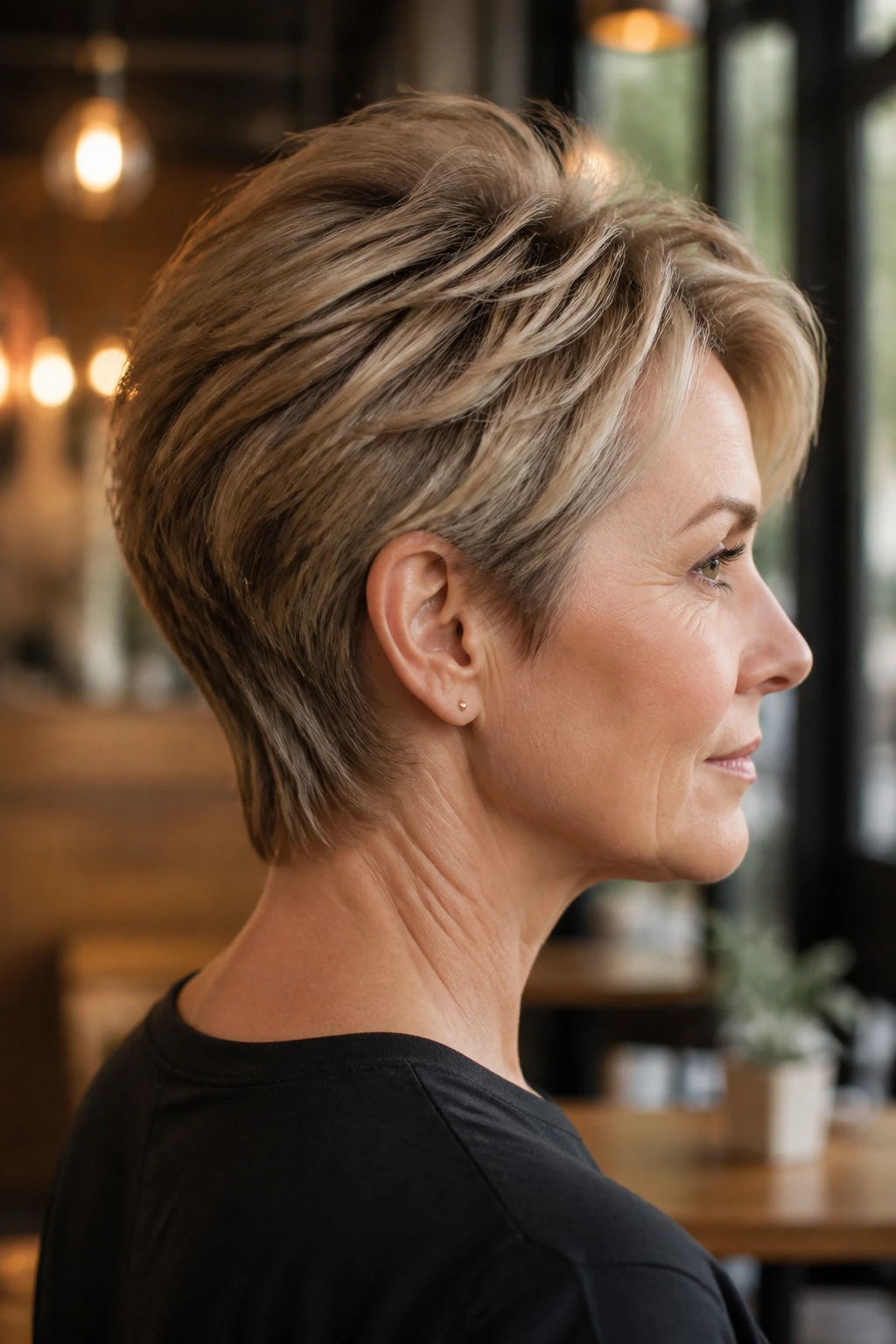
Not everyone wants their neck fully exposed. Fair. A soft tapered cut with a longer nape keeps some length at the back while still cleaning up the sides and top. The result is short, but not severe.
This is one of the more forgiving short styles for women over 50 because it gives shape without showing every line of the head. If you have a strong nape cowlick or just prefer a little softness in back, the extra length helps.
I’d choose this over a very short pixie when the goal is ease rather than edge. It looks neat when air-dried, and it still responds well to a quick blow-dry with a vent brush.
21. Modern Pageboy with Rounded Ends
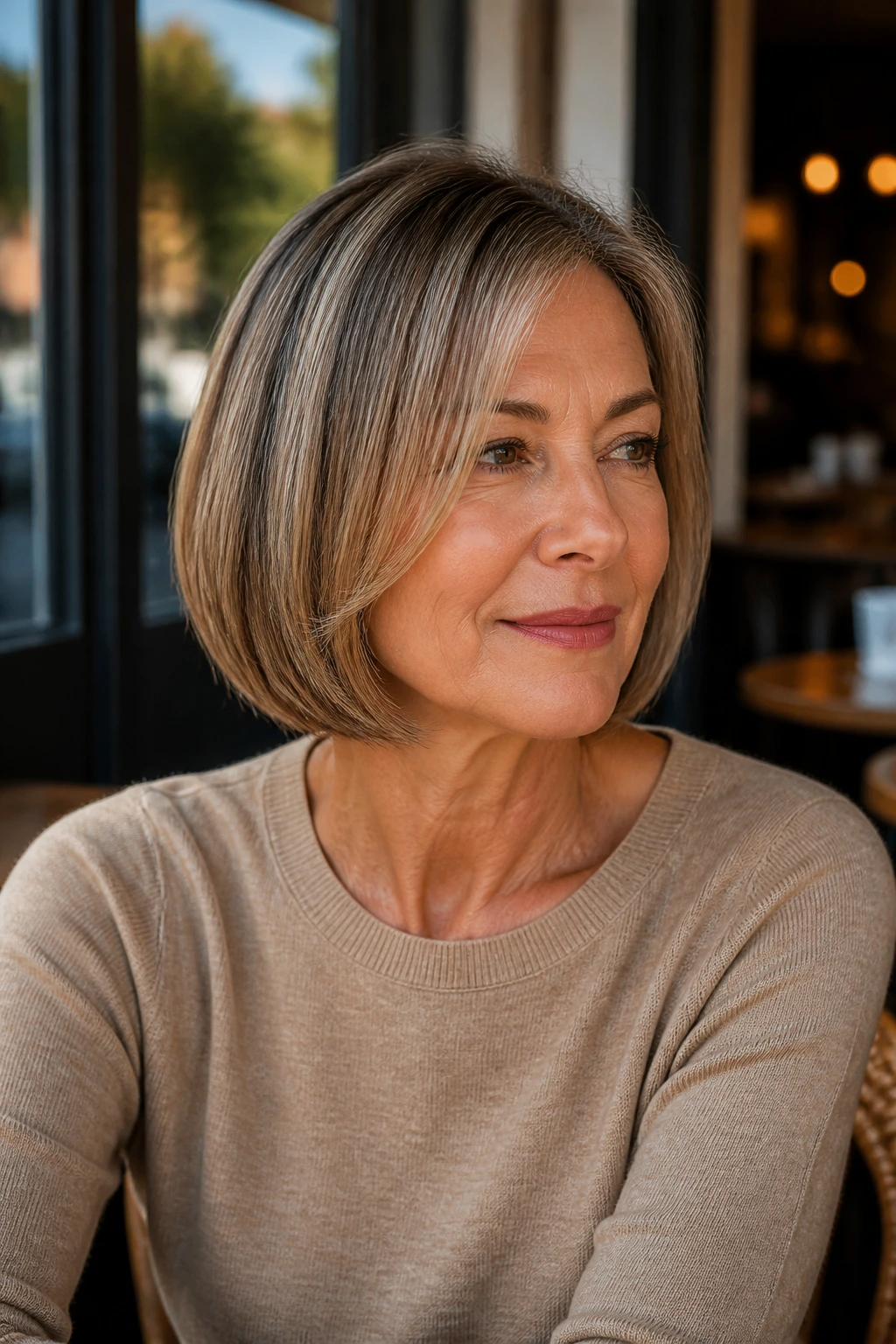
A pageboy can look old-fashioned if it’s too stiff. Keep the ends rounded, loosen the fringe, and it turns into something much fresher. The line usually falls at or just below the jaw, with a smooth curve under the chin.
The shape works because it keeps weight where the hair needs it. That matters on finer hair, but it also helps straight hair stay controlled instead of hanging limp. If you want a haircut with clear structure and a bit of polish, this one deserves a look.
I like it best when the undercurve is soft enough to move. If it’s too perfect, it starts feeling costume-y. That’s the line to avoid.
22. Chin-Length Shag with Loose Waves

Can a shag stay short without looking unruly? Yes, if the layers stop around the cheek and the ends stay light. A chin-length shag with loose waves gives you movement, a bit of fringe or face-framing detail, and a shape that doesn’t need a careful blowout.
This cut likes natural texture. If your hair bends, flips, or waves on its own, the shag helps the pattern instead of flattening it. On straight hair, you can still get the effect with a few bends from a curling iron or straightener, but the cut really shines when there’s some natural bend.
A tiny bit of salt spray on damp hair can bring the ends to life. Don’t overload it. This isn’t beach hair from a bottle; it’s just enough grit to keep the waves visible.
23. Sleek Crop with Side Bangs
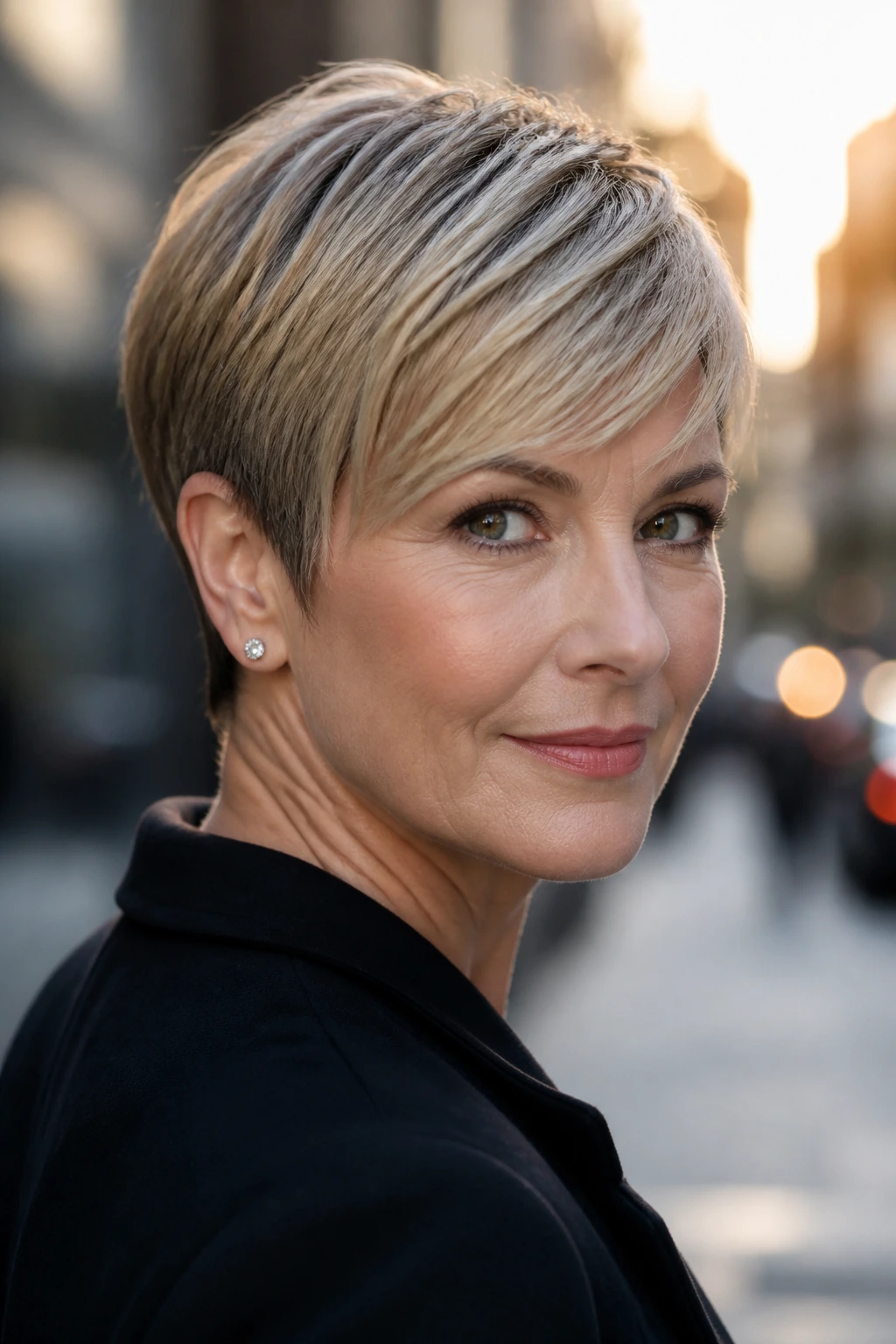
A sleek crop with side bangs gives you clean lines and a softer front. The side bang is the useful piece here. It can graze the forehead, sweep into the cheekbone, and make a short cut feel less abrupt.
This style is best when you like a more composed look. The outline stays neat, the top lies smooth, and the side fringe keeps the face from looking boxed in. It also works well for people who want to hide a bit of forehead without cutting a heavy full fringe.
Heat protectant matters here, because the finish is part of the haircut. Blow-dry the bangs in the direction you want them to go, then set them with a cool shot so they do not spring apart an hour later.
24. Undercut Pixie for Thick Hair
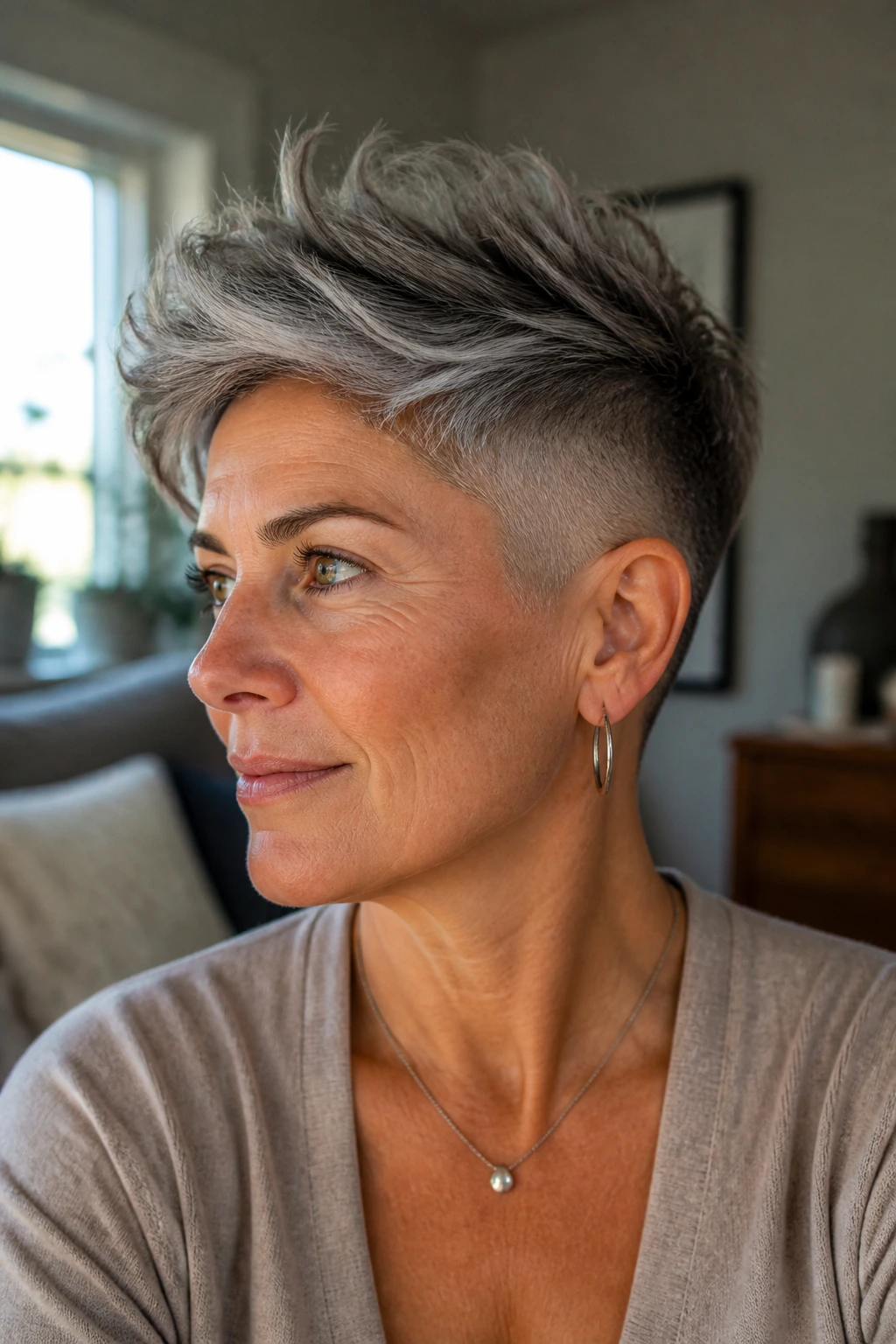
If your hair is dense enough to feel heavy before lunch, an undercut pixie can be a relief. The underlayer gets clipped shorter, sometimes around the sides and lower back, while the top stays long enough to style. That cuts bulk where it tends to build up.
The part people miss is that the undercut should follow the bulk, not just the trend. A good stylist will look at where the hair swells most—around the occipital bone, behind the ears, or in the nape—and remove weight there. Random shaving is a bad plan.
This cut can look polished or edgy. It depends on how much top length you leave. Either way, it’s one of the smartest short cuts for thick hair that resists flattening.
25. Tousled French Crop
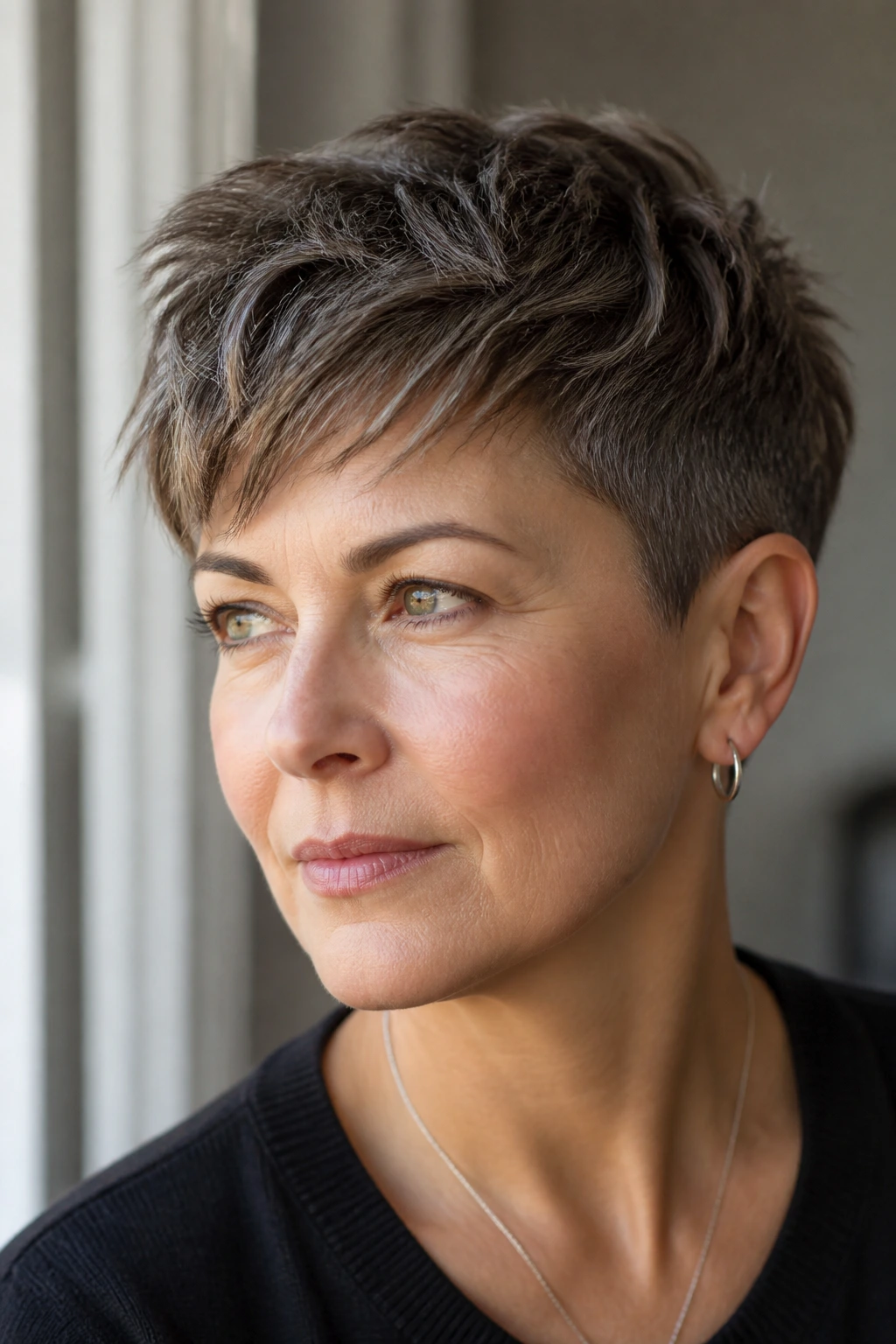
A tousled French crop has a little insouciance to it, which is a nice word for hair that doesn’t try too hard. The front is usually a touch longer, the sides stay tight, and the top gets enough texture to move when you run your fingers through it.
I like this style because it feels modern without being precious. It’s also forgiving on silver hair and salt-and-pepper mixes, since the texture shows the color variation instead of hiding it.
Use matte paste or a dry texture spray. Shiney products make this cut look sticky. Keep it a little rough around the edges, and it wakes up in the right way.
26. Swept-Back Pixie with Extra Height
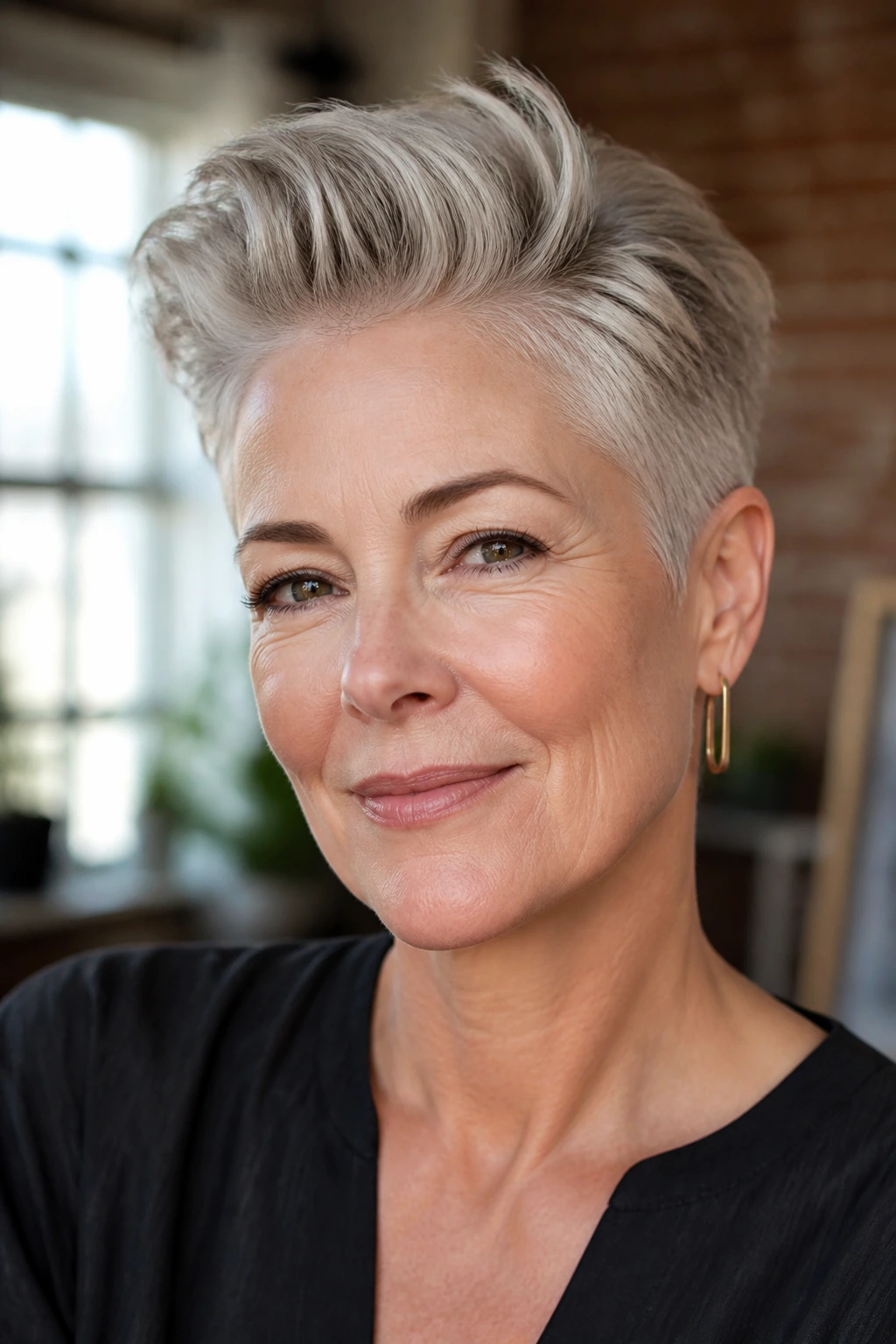
A little height at the front changes the whole face line. The swept-back pixie keeps the sides short and lets the top brush up and away from the forehead, which can make the face feel longer and more open.
This is not a wash-and-go cut if you want the lift to last. You’ll need a root mousse, a blow-dryer, and a brush or fingers to push the front back while the hair cools. But the payoff is a shape that looks alert instead of flat.
I’d choose this when you want more edge, more lift, or just a break from fringe. It pairs well with strong brows and a confident neckline. Simple enough.
27. Cropped Bob with Wispy Ends
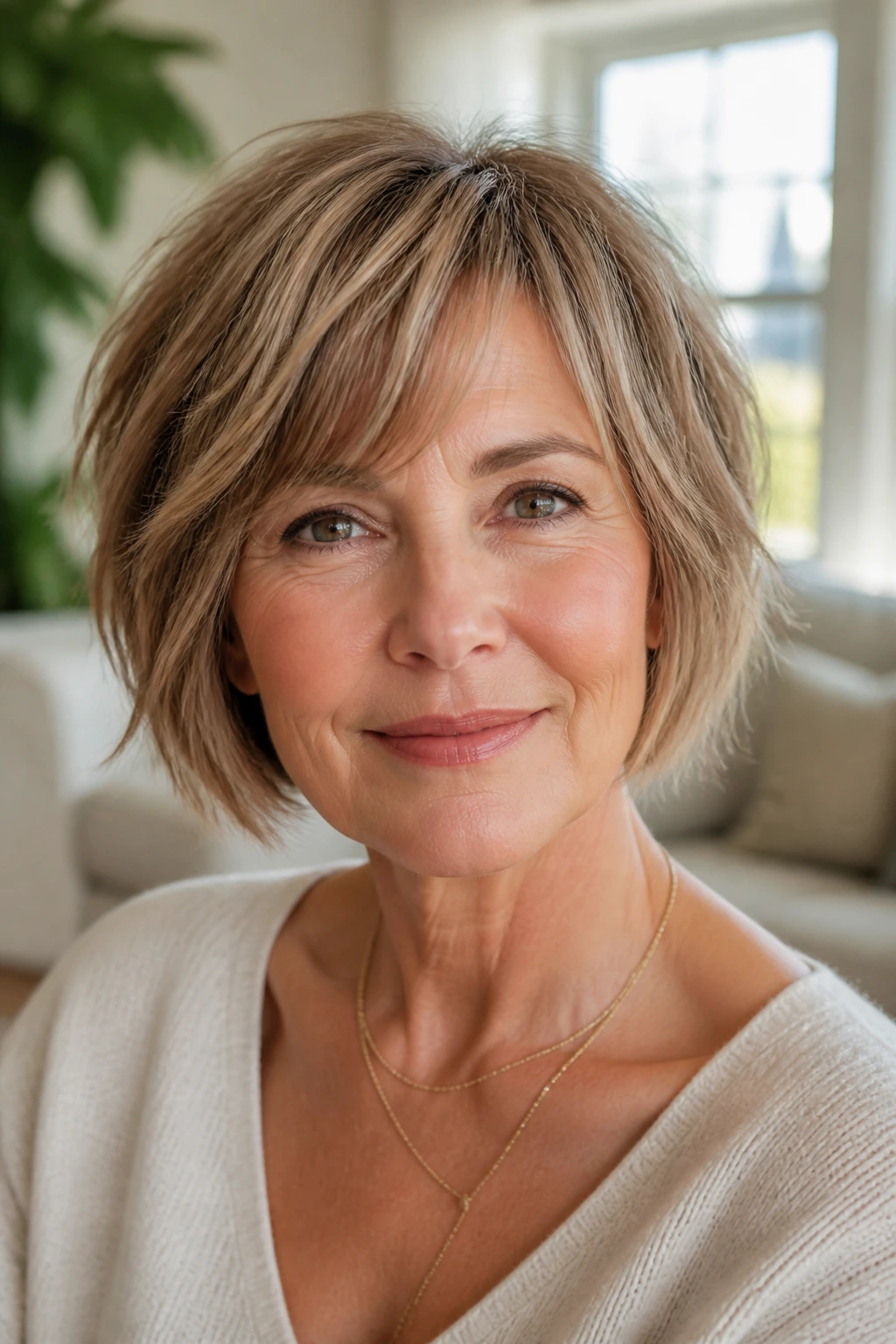
A cropped bob with wispy ends is the gentlest way to keep short hair moving. The base stays compact, so the shape has structure, but the ends are softened enough to keep the bob from feeling blunt or boxy.
This is a good transition cut if you’re growing out a pixie or coming down from shoulder length. It also works when you want a style that reads light on the face, not heavy. The wispy ends keep the line from sitting too hard against the jaw.
If you like air-drying, this one is friendly. Add a little cream, tuck one side if you want, and let the ends settle. It doesn’t need much more.
Why Short Hair Feels Better When the Shape Is Right
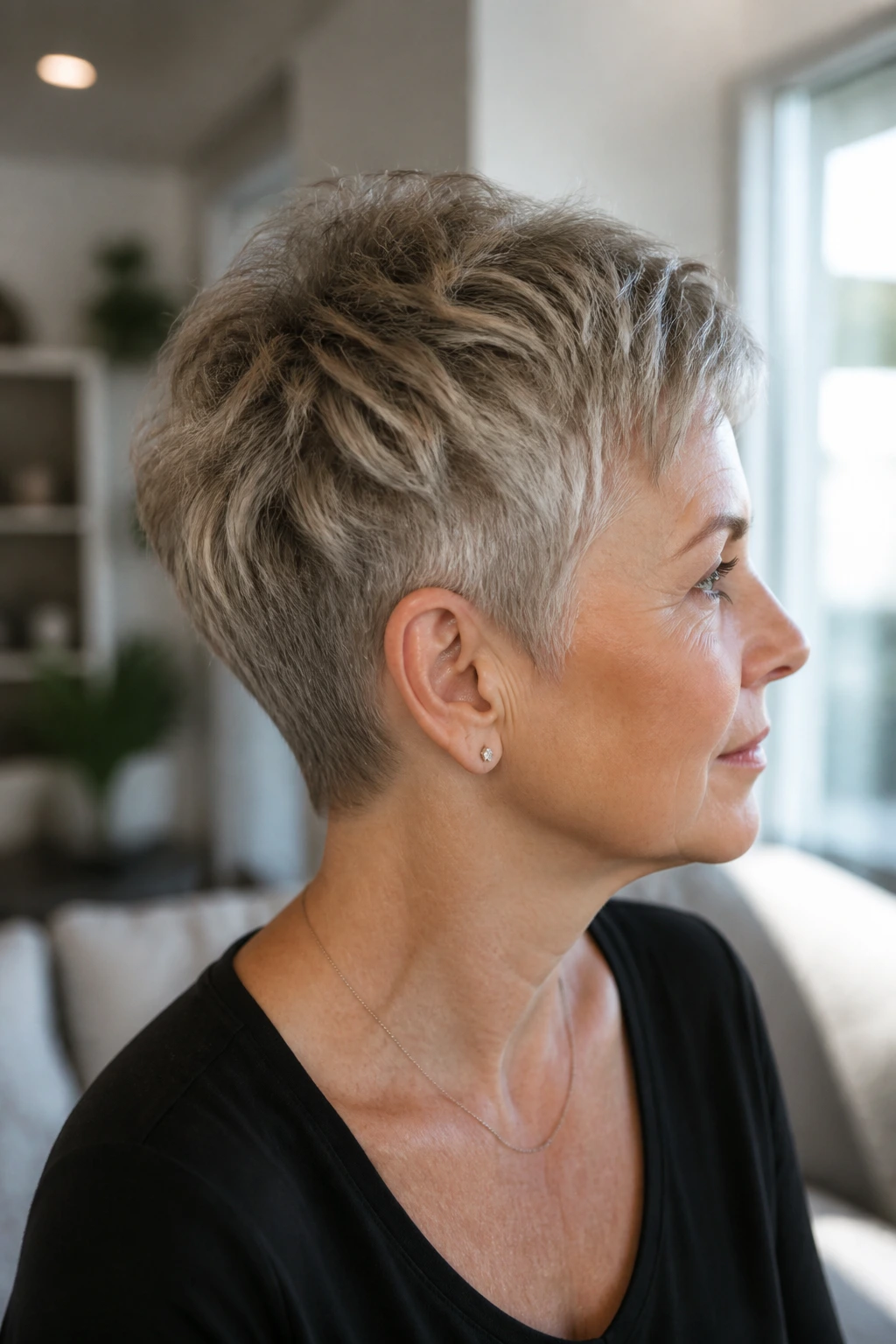
The cut matters more than the length. That’s the part people forget. A short style can look soft, sharp, airy, or dense depending on where the weight sits, and a good haircut for this stage of life is mostly about weight control. Crown too flat? Add lift. Nape too bulky? Remove it. Fringe too harsh? Soften the front.
I also like short hair because it shows the line of the face instead of hiding it under dead weight. That doesn’t mean every cut needs to be severe. It means the haircut should make the jaw, cheekbones, and neckline easier to see, not harder.
The best versions of these cuts feel like they belong to the head they’re on. Not copied from a photo. Not overworked. Just shaped with enough care that the morning routine gets smaller, and the mirror stops feeling like a negotiation.
How to Match the Cut to Your Face Shape and Hair Texture
Fine or Straight Hair
Fine hair usually needs one of two things: a clean blunt line or a little crown lift. Too many short layers can leave the ends see-through, so I’d lean toward a blunt bob, a stacked bob, or a pixie with controlled texture rather than a choppy mess.
Thick or Coarse Hair
Thick hair needs bulk removed in the right places. An undercut pixie, tapered crop, or inverted bob can keep the shape from widening at the sides. Ask your stylist to look at the nape and behind the ears first, because that’s where the puffy bits tend to hide.
Wavy or Curly Hair
Waves and curls need room to do their own thing. A curly pixie, shaggy bob, or chin-length shag usually works better than a rigid blunt line. Dry cutting can help the stylist see where the curl springs up, especially around the crown and fringe.
Glasses, Round Faces, and Longer Faces
Glasses ask for side clearance. Round faces often do well with a little height or a diagonal fringe. Longer faces usually look balanced with fringe, curtain pieces, or a bob that lands closer to the jaw. None of this is a law. It’s just where the eye tends to rest easiest.
Tools and Products That Earn Their Spot on the Counter
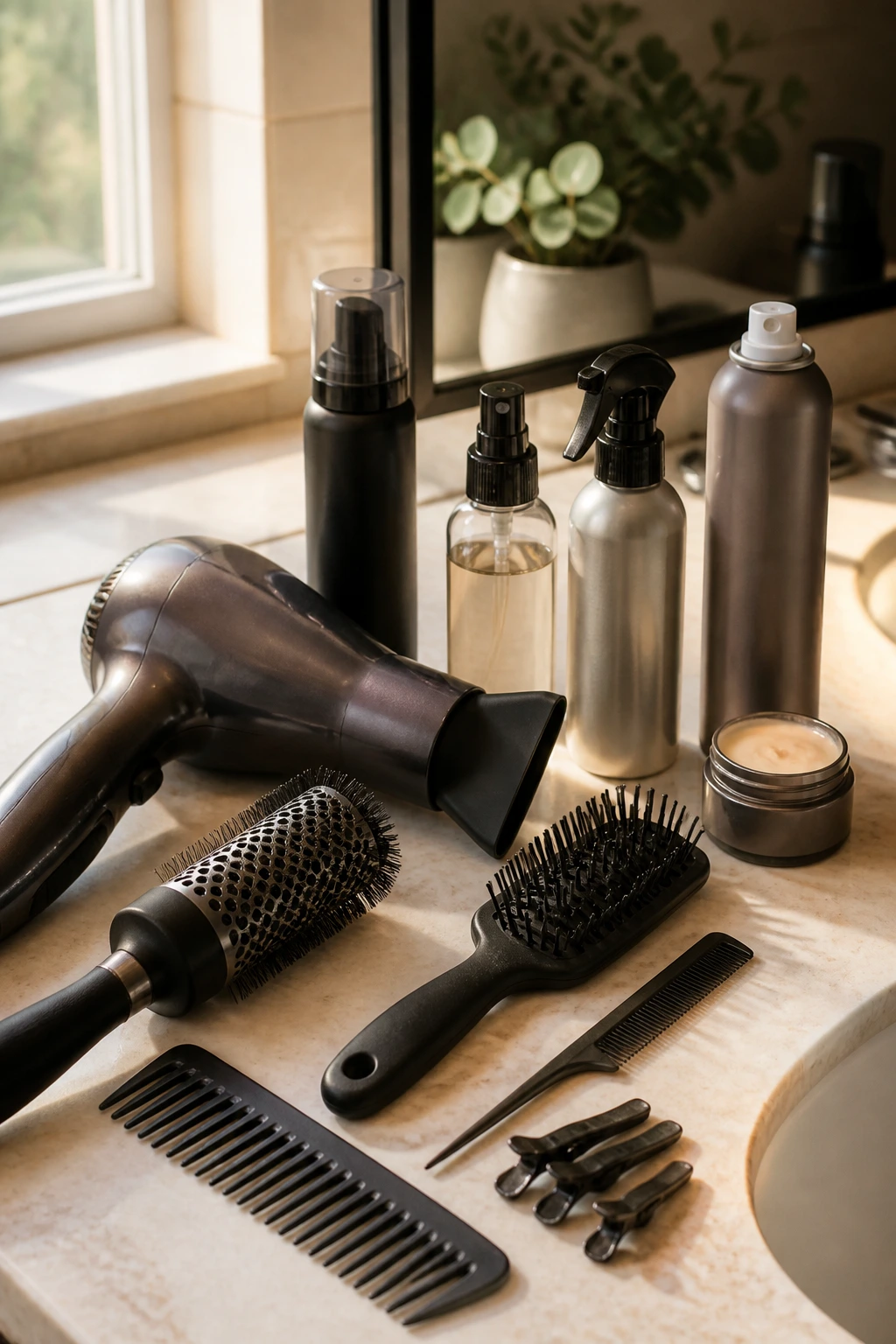
- Blow dryer with a concentrator nozzle — Directs air at the roots and keeps a bob or pixie from frizzing up.
- 1-inch round brush — Useful for side bangs, crown lift, and soft undercurves around the jaw.
- Vent brush — Speeds up drying on short hair and helps shape the nape without overworking it.
- Wide-tooth comb — Better for curly or wavy cuts when you do not want to yank out the pattern.
- Light mousse — Adds root support without turning short hair stiff or sticky.
- Texturizing spray — Gives piecey movement to pixies, bixies, and shaggy crops.
- Matte pomade or paste — Good for defining ends and keeping short styles from puffing out.
- Heat protectant spray — Worth it if you use a flat iron or round brush on the front pieces.
- Flexible-hold hairspray — Holds shape without making the cut feel shellacked.
- Tail comb and clips — Helps with sectioning the crown, fringe, and side parts when you style at home.
How to Ask for the Cut You Actually Want
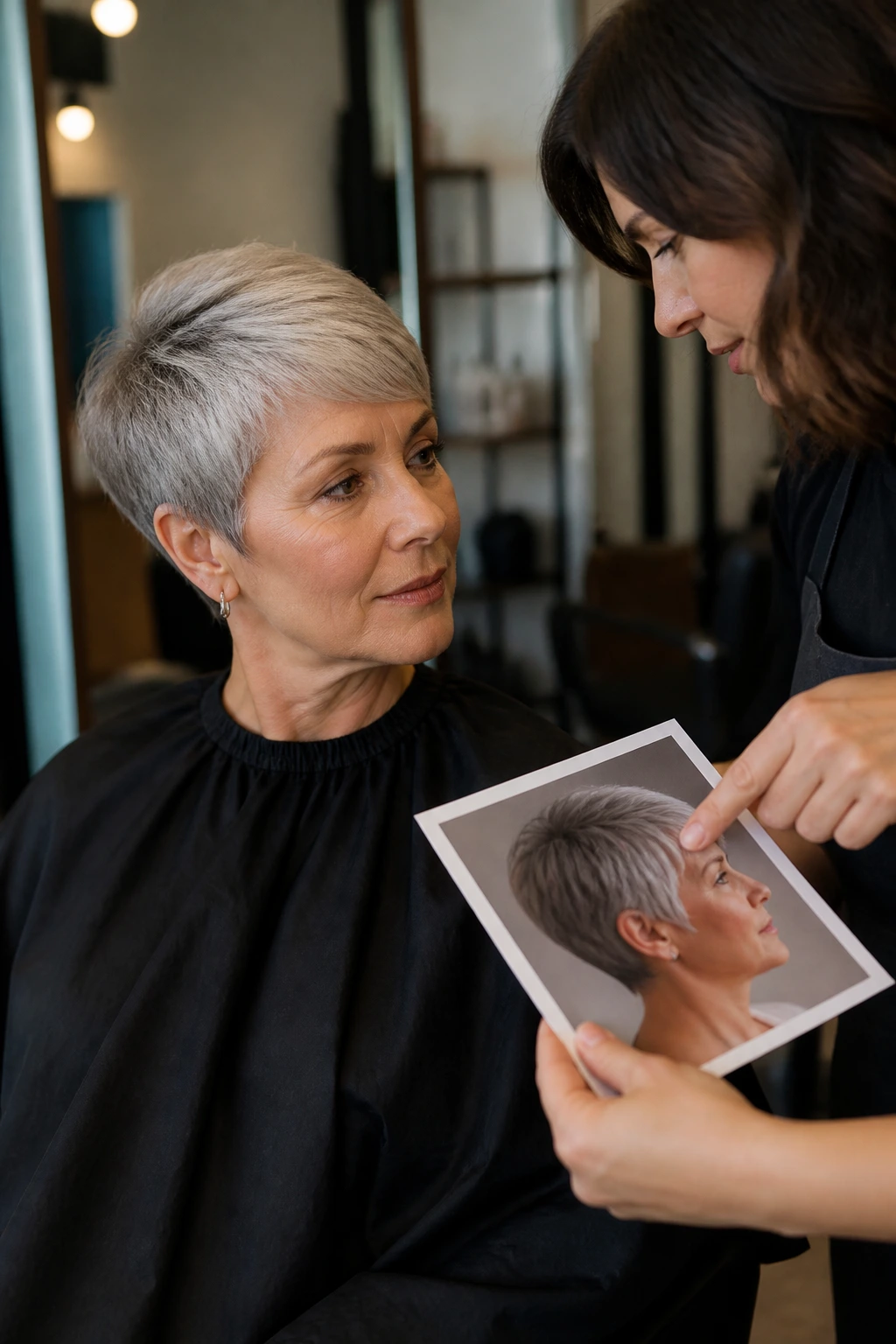
Bring photos, yes, but bring the right ones. One photo should show the shape you want, and one should show texture that looks like yours. A picture of straight hair on someone with loose curls is a fantasy, not a reference.
Say where you want the length to land in plain language. Chin. Jaw. Earlobe. Nape. Point to your face if you have to. Hairdressers can work with that more easily than vague words like “short but not too short,” which can mean anything from a pixie to a bob.
Talk about your cowlicks, too. Mention where the hair flips at the crown or sticks out near the nape. A great cut on paper can be a nuisance in real life if the swirl at the back was ignored. And if you need glasses clearance, say that before the scissors come out.
How to Style Short Hair So It Doesn’t Turn Helmet-Flat
Root lift: Start with damp hair and work a small amount of mousse or root spray into the crown, not the ends. Short hair usually goes flat at the roots first, so that’s where the product matters. Dry the crown in the opposite direction of the part for a few seconds, then set it back.
Texture: Use a pea-sized amount of paste or cream on dry hair, warming it between your fingertips before touching the ends. Short cuts need a light hand. If your fingers feel slippery, you’ve already used too much.
Finish: A mist of flexible-hold hairspray can keep a fringe in place without freezing it. I’d rather see hair move a little than sit like plastic. That stiff look ages a cut fast.
Time saver: On busy mornings, dry just the crown, fringe, and front sides. The back can air-dry if it’s cut well. That tiny trick saves more time than people expect.
Day-two fix: Mist the roots with a little water, blow-dry for 30 seconds, then pinch the ends back into shape with dry hands. You do not need to start over.
Common Mistakes That Make Short Hair Harder Than It Should Be
-
Too many short layers on fine hair. The ends start looking thin and separated. Ask for a stronger perimeter with softer internal layering instead.
-
Leaving bulk in the nape. The back flips out and the cut looks puffy from behind. A clean taper or undercut at the right point fixes it.
-
Cutting bangs too short above the brow. They shoot up as they dry and start looking accidental. Leave more length than you think, then trim again later if needed.
-
Ignoring the way your hair grows. Cowlicks at the crown or nape can split a fringe or push the back out. A cut that fights the growth pattern will always need more work.
-
Skipping trims for too long. Short hair loses its shape faster than long hair. Once the line goes, the whole style gets tired.
Easy Variations and Adaptations to Try
-
Softer Fringe Version: Keep the front longer and point-cut the fringe instead of cutting it blunt. This works when you want your forehead softened but do not want full bangs sitting across the face.
-
More Lift Up Top: Ask for a little extra length at the crown and use root spray at the base. Best for flat hair that collapses within hours.
-
Air-Dry Friendly Version: Ask for less stacking, more natural layering, and a softer outline. This is the version that behaves when you don’t want to reach for a blow-dryer every morning.
-
Glass-Frame Version: Keep side length clear of the temple arms and make the fringe land above or below the frame line. It stops the hair-and-glasses collision that makes the whole face area feel crowded.
-
Thick-Hair Taming Version: Add internal debulking or an undercut in the lower back and sides. That removes bulk where it builds fastest without leaving the top too thin.
-
Silver-Friendly Version: Keep the perimeter clean and use a shine product that doesn’t grease the ends. Silver and white hair show shape beautifully when the cut is neat.
Maintenance, Trims, and Growing It Out
Short hair asks for a tighter schedule than longer hair, and pretending otherwise is a fast way to look shaggy in the wrong places. Pixies and ear-length crops usually want a trim every 4 to 6 weeks. Bobs can stretch to 6 to 8 weeks if the line is strong. Shaggy or textured cuts may hold a little longer, but once the fringe starts hanging in the eyes or the nape flips, it’s time.
If you’re growing out a pixie, don’t try to skip straight to shoulder length in your head. That’s a miserable road. Grow the top first, tidy the sides just enough to keep shape, and use clips or a soft headband while the middle stage does its awkward little dance. It passes.
Color matters here too. Gray blending, highlights, or lowlights can change how often you need a trim, because shape and color read together. A crisp cut with grown-out color looks less polished than a slightly softer cut with healthy shine. The haircut and the color should talk to each other.
Questions Women Ask Before Going Short
Will short hair make my face look older?
Not if the shape suits your face. A blunt line, side fringe, or a little crown lift can sharpen the features in a good way. The older look usually comes from a bad shape, not from the length itself.
What short haircut is best for fine hair?
A blunt bob, stacked bob, or a pixie with controlled lift usually works well. Fine hair needs structure at the perimeter and some height at the crown, not a lot of choppy layers that leave the ends wispy.
Can I wear a pixie if my hair is curly?
Yes, but it needs to be cut for the curl pattern. Keep the top long enough for the curl to form, taper the sides, and avoid cutting it as if it were straight hair that will stay flat.
How do I keep short hair from sticking out at the back?
Ask for a cleaner nape taper and trim it often. A stubborn cowlick can also be directed with a blow-dryer for the first 20 seconds after washing, which sounds small until you try it.
What if I wear glasses every day?
Choose a cut that clears the temples. Rounded crops, side-parted bobs, and short styles with a bit of side height usually sit more comfortably than fringe-heavy cuts that land right on the frame.
How often should I trim a short cut?
Most short cuts want attention every 4 to 8 weeks, depending on how fast your hair grows and how precise the shape is. The shorter and sharper the cut, the faster it loses definition.
Is a fringe a bad idea after 50?
No. A fringe can be one of the best tools in the cut, as long as it matches your texture and forehead length. I’d rather see a soft side fringe than a blunt bang that needs constant correction.
Which short style grows out the easiest?
A bixie, cropped bob, or soft layered bob tends to transition more gracefully than a very tight pixie. The more structured the outline, the more awkward it gets once it passes the first trim window.
The Short-Hair Sweet Spot
The nicest thing about short hair is that it stops pretending. It shows the line of the face, the shape of the neck, and the way your hair actually behaves when no one is watching. That can be a relief. It can also be a little revealing, which is why the cut matters so much.
Pick the version that matches your texture, your routine, and the amount of styling you’re willing to do on a Tuesday morning. That’s the real test. A short cut should make life easier in the mirror, in the shower, and in the time you spend getting out the door.
And if you get the balance right—just enough lift, just enough softness, just enough cleanup at the nape—it stops feeling like a haircut and starts feeling like your face finally makes sense again.
