



Short haircuts for older women work best when they do three jobs at once: they lift the face, make the crown look fuller, and still behave after a 12-minute blow-dry. That’s the sweet spot. Not “young,” not “fussy,” not trying too hard. Just clean shape, the right texture, and enough movement that the cut feels alive instead of helmet-like.
Hair changes with time. It often gets a little finer, sometimes drier, and a lot more opinionated about where it wants to part. Gray hair can come in coarser at the same time, which sounds contradictory until you run your fingers through it and realize both things can be true on the same head. That’s why the best short styles aren’t one-size-fits-all. A blunt jaw-length bob can make thin hair look denser. A soft pixie can keep heavy hair from swelling out at the sides. A good cut works with your hair’s new habits, not against them.
There’s also the face-framing part people forget. Short hair exposes more of the jaw, ears, neck, and cheekbones, which means the shape has to earn its keep. Get it right, and you get lift near the eyes, a cleaner neckline, and a profile that looks tidier even on days when you do almost nothing to it. That’s the real reason these cuts matter.
Why These Cuts Earn Their Keep
-
They create structure fast: A well-shaped short cut gives the illusion of fuller hair by putting the strongest line where the eye lands first, usually around the jaw, cheekbone, or fringe.
-
They cut down styling time: Most of these looks need either a quick round-brush pass, a little mousse at the roots, or a finger-dry finish. You are not wrestling with a long blowout.
-
They play nicely with gray and silver: Crisp edges, soft layers, and a bit of texture make natural gray look intentional. Flat, over-thinned cuts can make silver hair look wispy in the wrong places.
-
They work with glasses and earrings: Shorter sides and lighter temples keep frames from fighting the haircut. A sharp bob or crop can also put the focus on earrings instead of competing with them.
-
They grow out more gracefully: The better short cuts keep their shape for weeks, not days. That matters when your salon visits need to be practical, not constant.
-
They adapt to different hair textures: Fine, coarse, straight, wavy, or curly — the right short shape can give each one a better job to do.
1. Soft Layered Pixie
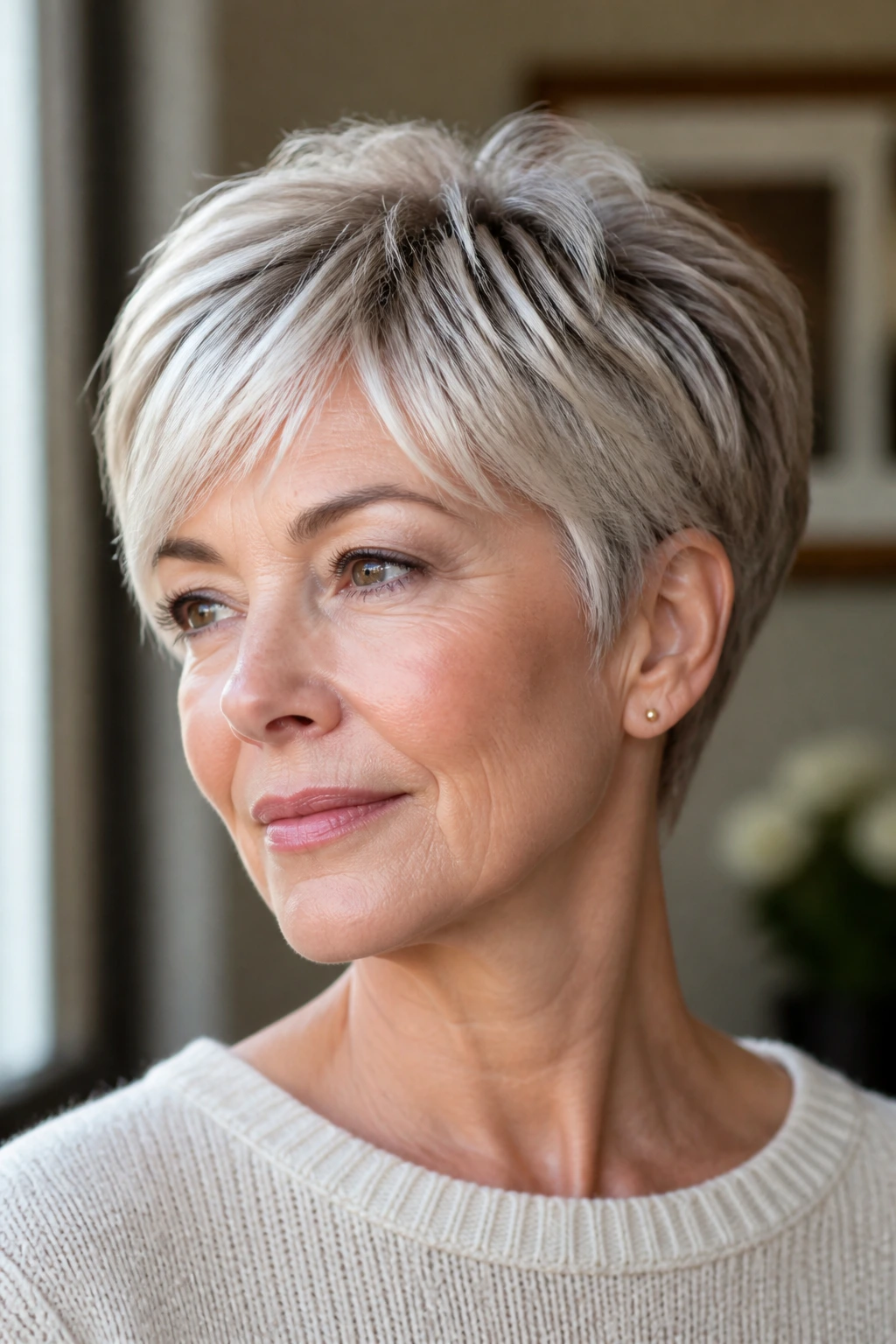
A soft layered pixie is the cut I recommend most often when someone wants short hair but does not want to look severe. The top stays airy, the nape sits close, and the fringe is long enough to sweep to one side instead of sticking straight up like a bristle brush. Done well, it makes fine hair look more awake.
Why It Works on Thinner Hair
The magic is in the layering, not the length. A few well-placed layers around the crown lift the shape without eating away all the bulk. Ask for soft point-cut ends rather than aggressive thinning, because too much texturizing can leave the top looking see-through.
This cut also behaves well with a round brush and a dab of mousse. Two minutes of lift at the root can make the whole thing look freshly styled.
- Best for oval, heart, and soft square faces
- Good if you want the ears partly visible
- Works with straight or slightly wavy hair
Styling tip: Blow-dry the fringe forward first, then sweep it aside while it’s still warm.
2. Chin-Grazing French Bob
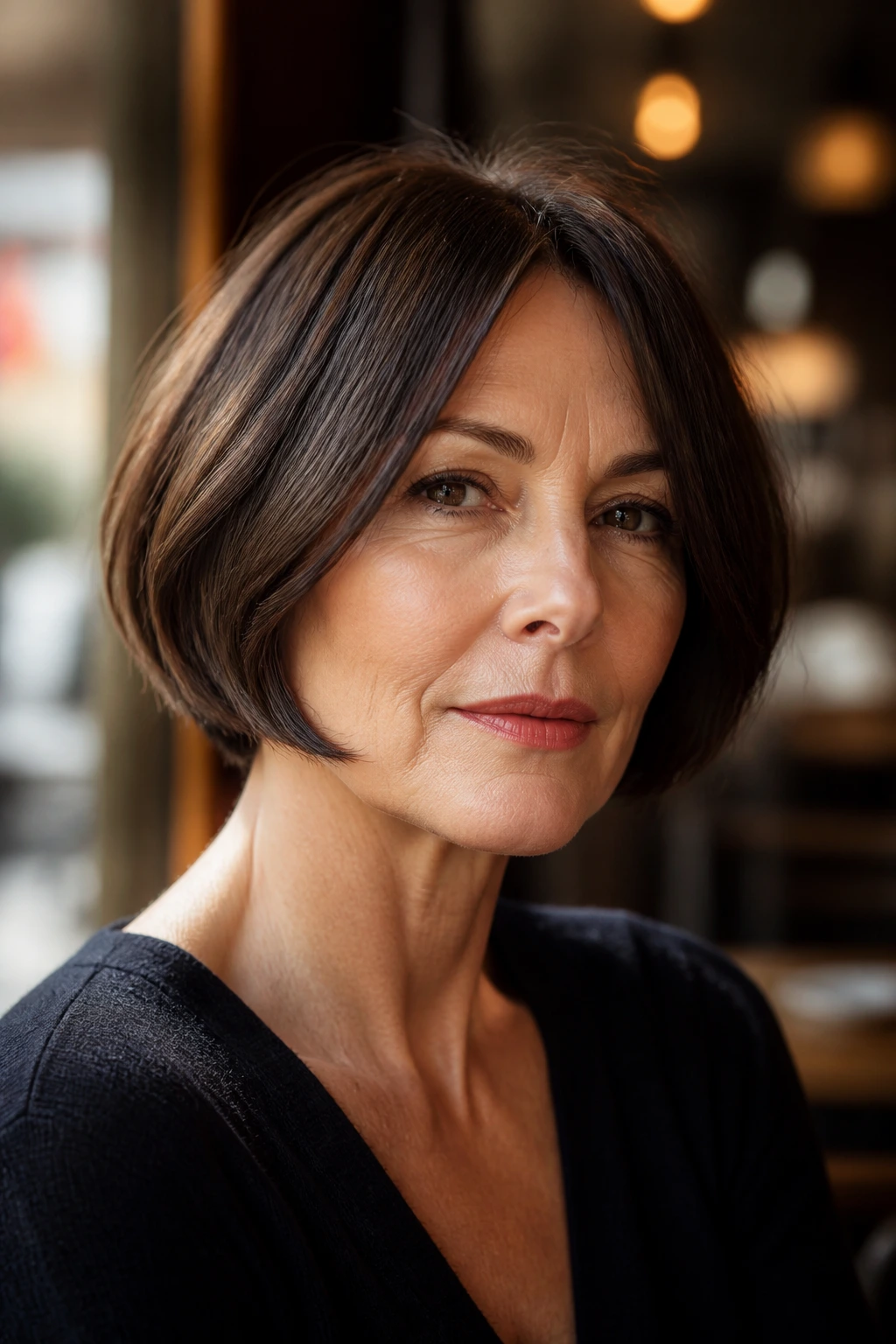
A French bob at the chin is one of those styles that looks more expensive than it is. The line sits cleanly at the jaw, often with a little bend or wave tucked into the ends, and the result is sharp without feeling rigid. It has a neat little confidence to it.
You can wear it blunt, or soften it with a slight off-center part. Either way, the cut puts attention right where many women want it: eyes, cheekbones, and the sweep of the jaw. If you wear glasses, this one is a friend. It leaves enough room around the temples that the frames do not get crowded.
Best Use Cases
- Straight hair that needs shape
- Wavy hair that wants to do less work
- Faces that benefit from a clear jawline
Keep the ends healthy. A French bob loses its charm fast when the bottom looks frayed, so trims every 6 to 8 weeks matter here.
3. Tapered Crop with a Sweeping Fringe
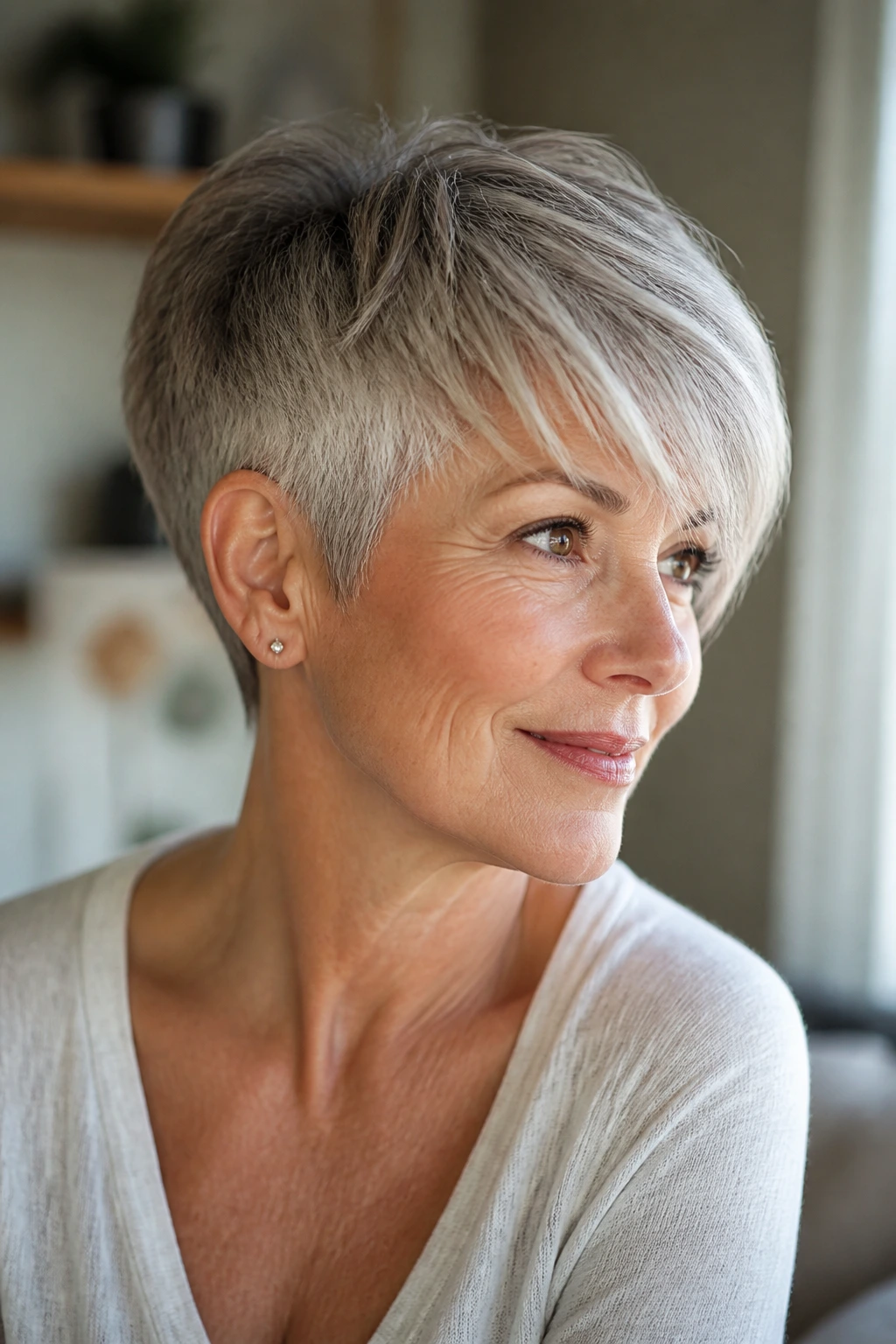
This one is a quiet little problem-solver. The back and sides are kept shorter, while the front stays long enough to sweep across the forehead and soften the face. It is a smart choice if you want the neck to feel lighter without giving up the comfort of a bit of fringe.
The sweep does useful work. It covers a forehead if you want that, but it also creates diagonal movement, which is a sneaky way to make the face feel a little longer. That’s why it flatters rounder cheeks and fuller jawlines especially well.
You do not need much product. A pea-sized bit of cream or paste through the ends is enough. Too much and the fringe collapses.
4. Feathered Shag Bob
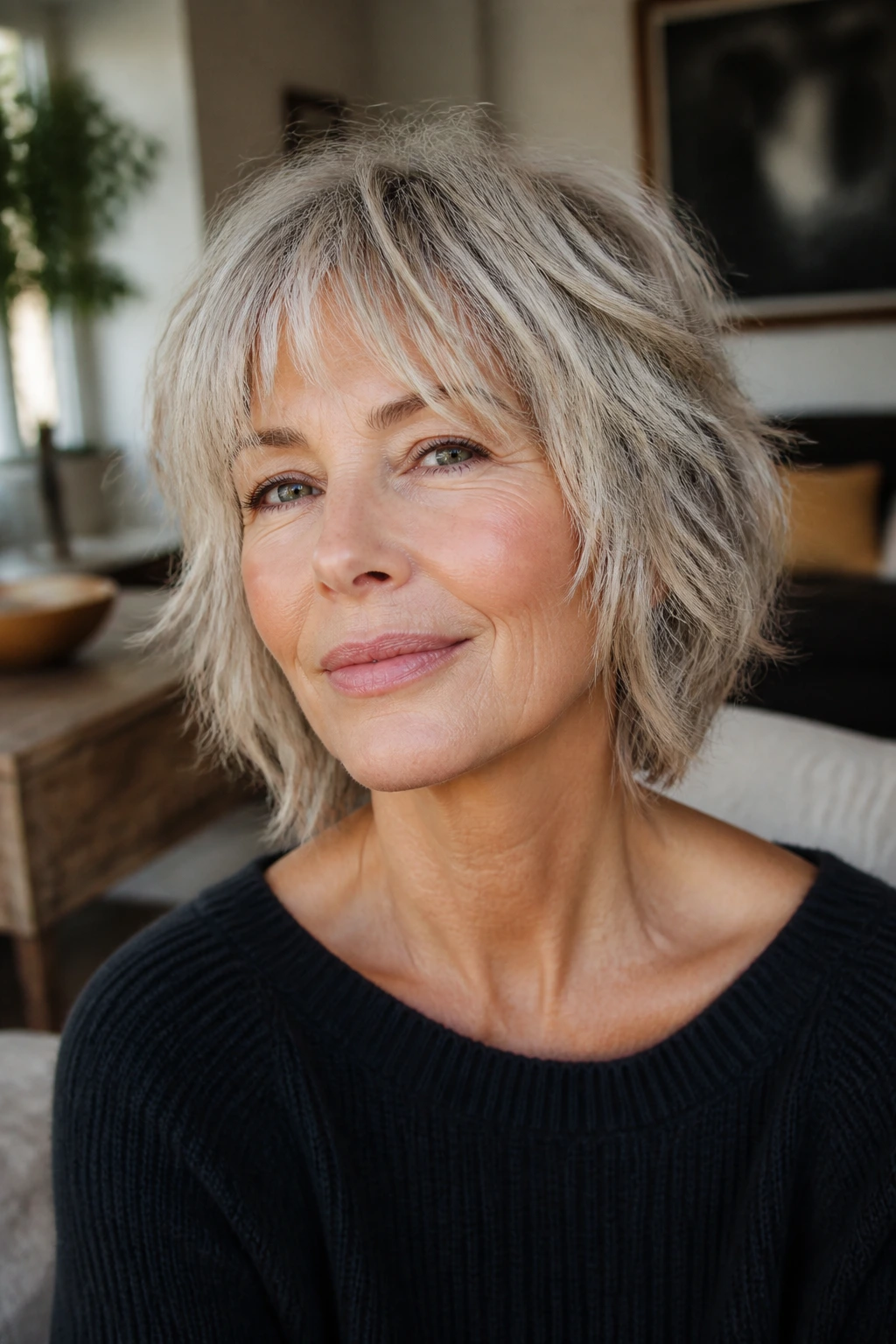
If your hair has some wave and a bit of natural texture, a feathered shag bob can be a gift. The shape sits between a bob and a shag, with soft layers that start around the cheekbones and continue through the ends. It moves. That’s the point.
This cut is especially good when hair has turned drier or a little more porous, because the feathering keeps it from looking boxy. It also works well with silver hair that reflects light in uneven ways; the layers give that color more depth instead of one flat sheet of tone.
Why It Looks Better a Little Messy
A shag bob gets better with a bit of imperfection. Let it air-dry halfway, then rough it up with your fingers and a touch of texture spray. If you try to flatten every bend out, you lose the easy shape that makes the cut feel modern.
5. Brushed-Back Pixie
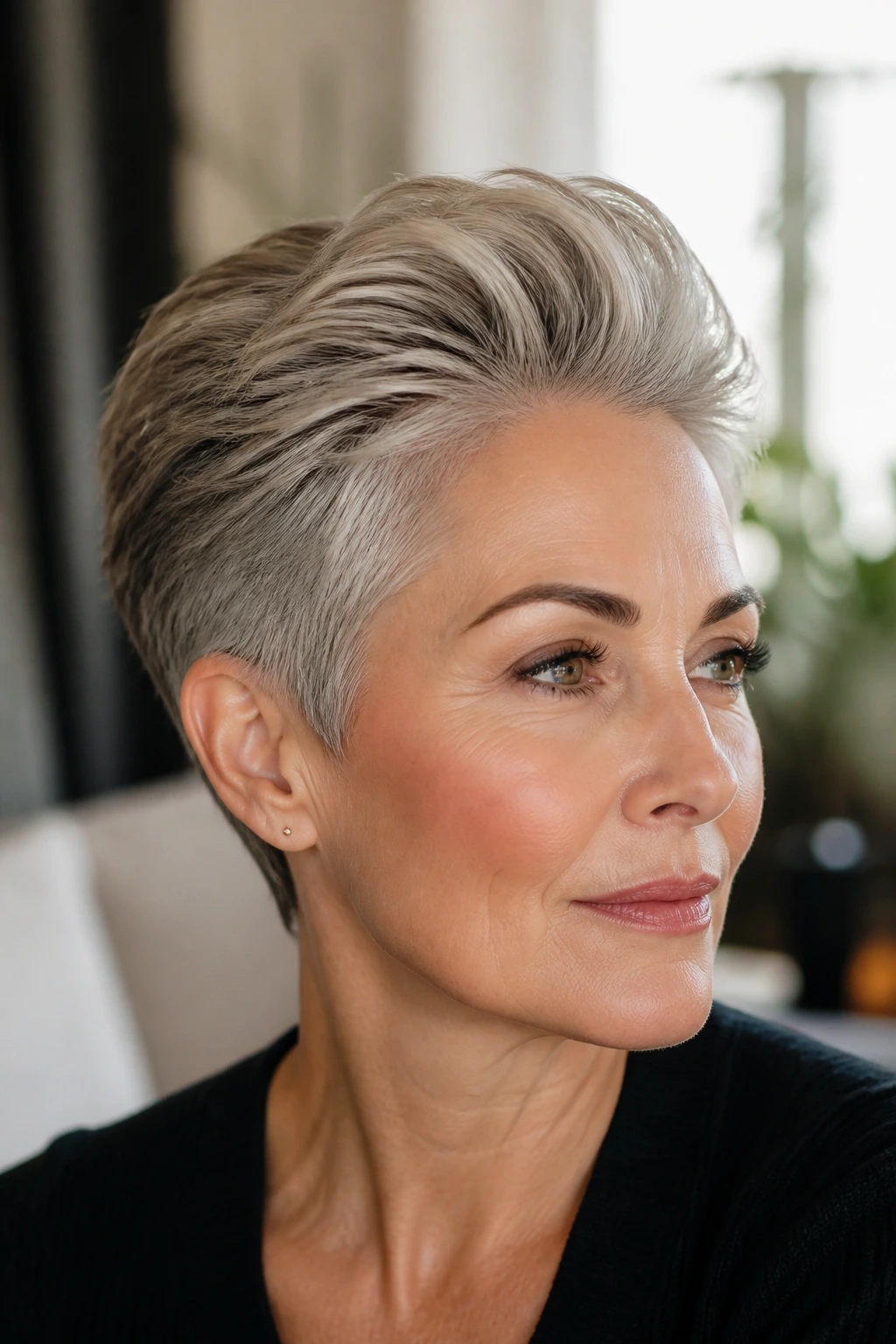
This is the more polished cousin of the soft pixie. The hair stays short, but the top is left long enough to brush backward with lift, not stiffness. It’s a strong-looking cut, which is exactly why some women love it.
What makes it work is the balance. The sides stay close enough to keep the silhouette neat, while the top brings height near the crown. That lift can make the face seem longer and the whole profile look cleaner. It’s especially nice if you have a strong jaw or want your cheekbones to do more of the talking.
Use a lightweight mousse at the root, then blow-dry with a vent brush or fingers. Heavy pomade can make it look greasy by noon. Nobody needs that.
6. Blunt Micro-Bob

A micro-bob is short, exact, and not shy. It usually lands around the jaw or just below the ear, with a blunt bottom edge that gives the hair a denser look. If your hair is fine and you want it to feel thicker, this is one of the best shapes you can choose.
The blunt line is the whole trick. Layering can be lovely, but on very fine hair it sometimes makes the ends too light. Here, the weight stays at the bottom, which gives the cut a sense of fullness that a wispy bob just cannot match.
A flat iron pass through the ends can make the line crisp, but keep it soft at the face. A dead-straight micro-bob with no movement can feel severe. A little bend helps.
7. Choppy Crop with Side-Swept Bangs
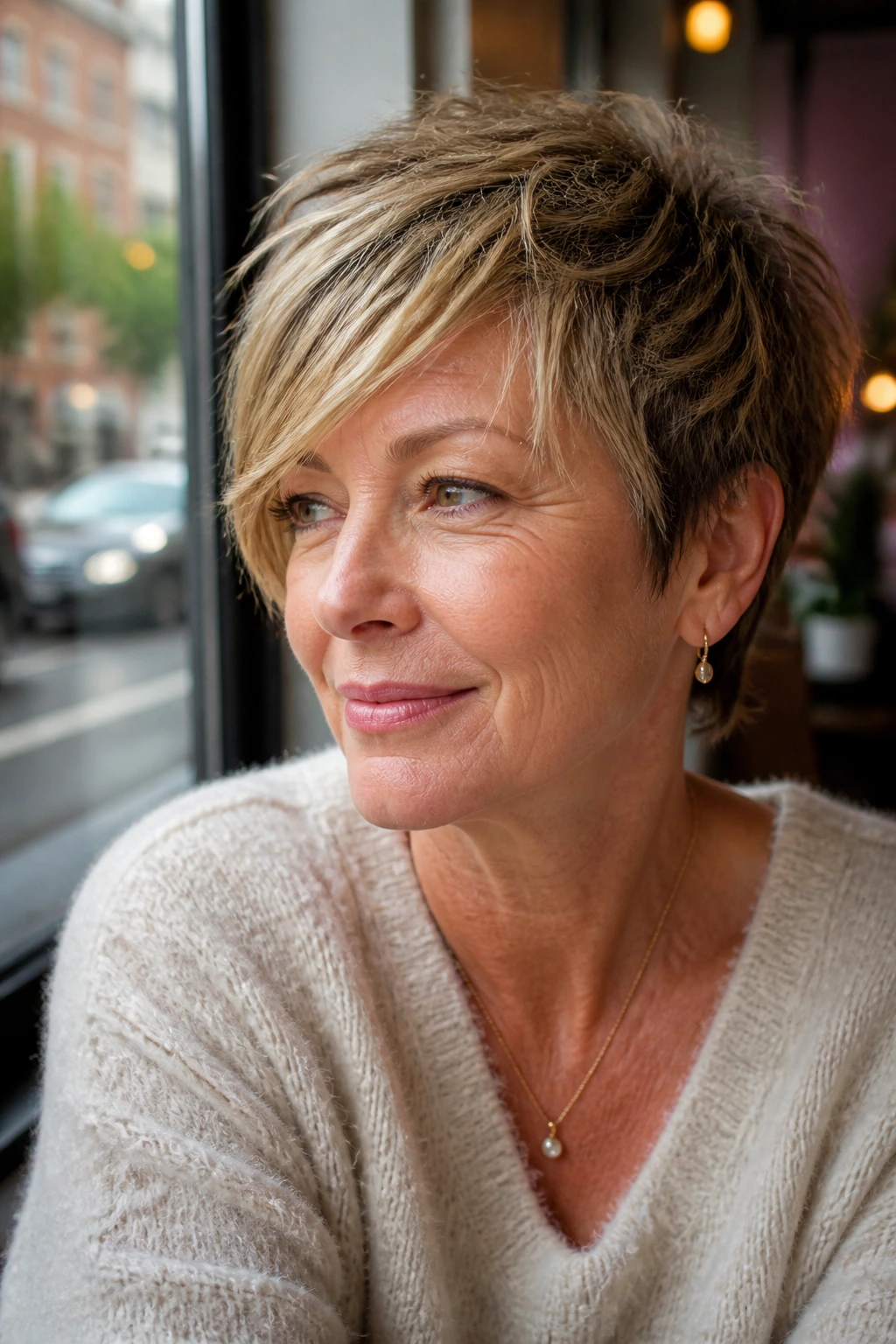
This cut has a little attitude, but not the loud kind. The top is broken into short, choppy pieces, and the bangs sweep rather than sit in a hard line. It is a good choice if you want short hair that feels playful without becoming spiky or overstyled.
The side-swept fringe matters here. It softens forehead lines and makes the cut easier to grow out. And because the texture is piecey, the style does not collapse in a single flat sheet when the weather turns damp.
What to Tell Your Stylist
Ask for soft ends, not razor damage. Choppy does not mean shredded. A good crop should still feel touchable.
- Keep the fringe long enough to move
- Leave a little length at the temples
- Avoid bulky layering right at the crown
8. Curly Tapered Crop
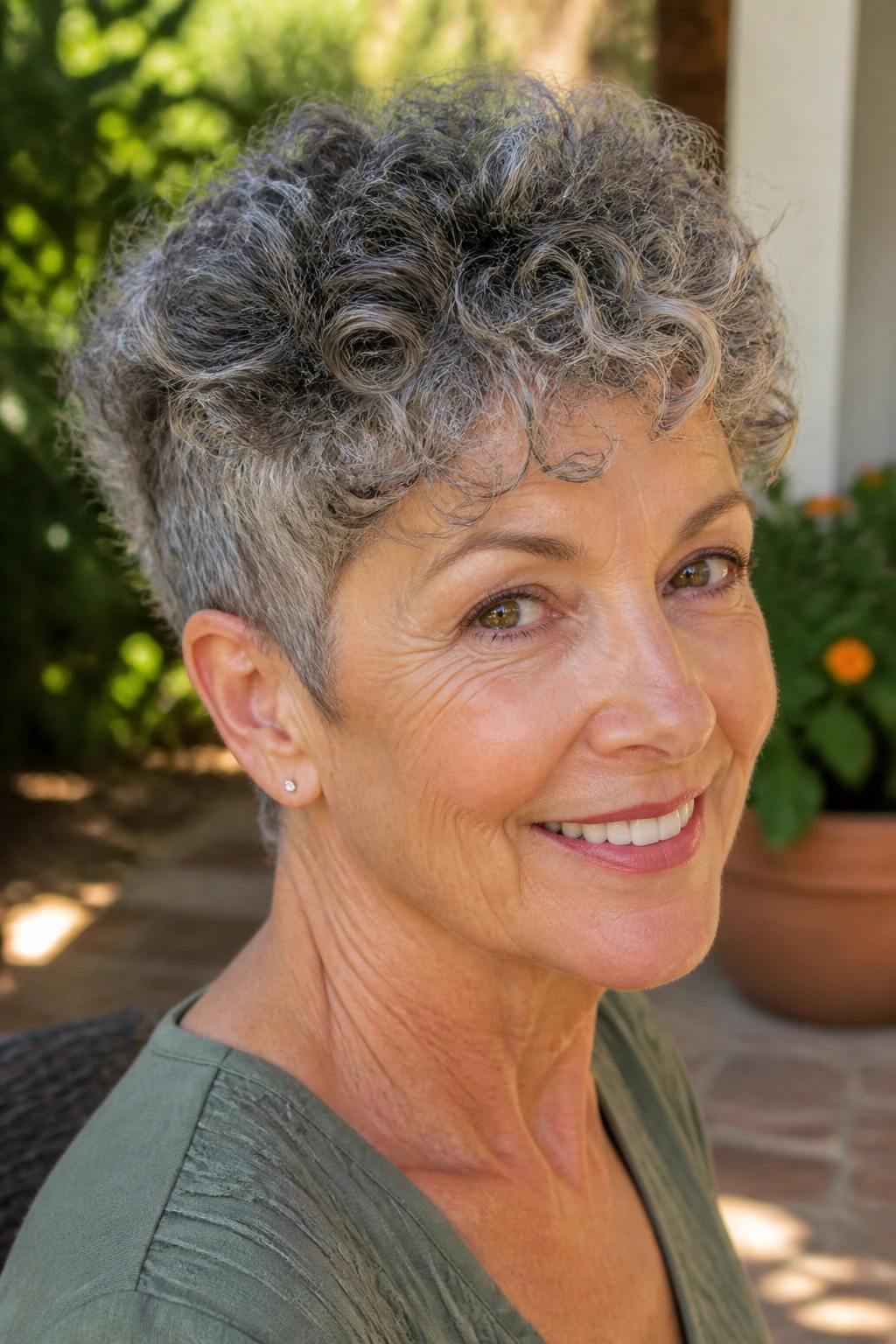
Curly hair needs shape, not just shrinkage. A tapered crop lets the curls stay lively on top while the nape and sides are trimmed close enough to stop the silhouette from turning into a triangle. That shape makes all the difference.
The best version is cut by curl pattern, usually when dry or nearly dry, so the stylist can see how each section behaves. Short curly hair can spring up more than you expect, so the front should usually be left a touch longer than your first instinct says.
This cut is also honest. It shows the curl pattern, the silver strands, and the natural texture all at once. If you’ve spent years fighting your curls, that can feel like a relief.
9. A-Line Jaw Bob
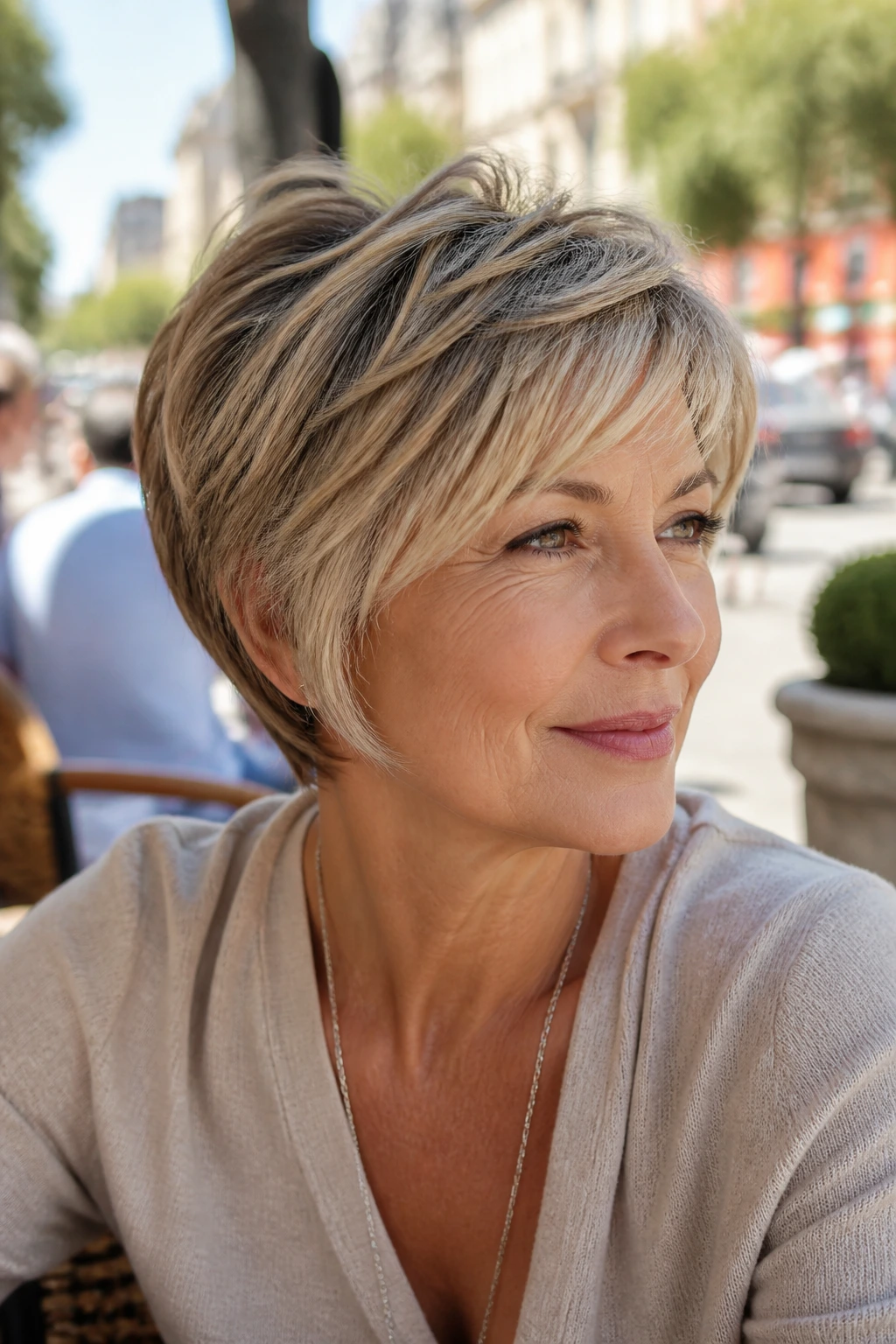
An A-line bob is shorter at the back and a little longer in front, and that diagonal line does a lot of quiet face work. It pulls the eye downward in front, which can lengthen a rounder face and give a stronger jaw some softness.
The reason this cut stays popular is simple: it looks shaped even on days when you do almost nothing to it. A quick blow-dry with a round brush keeps the front tucked under just enough to show the angle. If the back is too stacked, though, it starts to look dated fast. Keep the graduation subtle.
This is one of the better short haircuts for older women who want a little polish without going to a fully structured bob.
10. Soft Wedge Cut
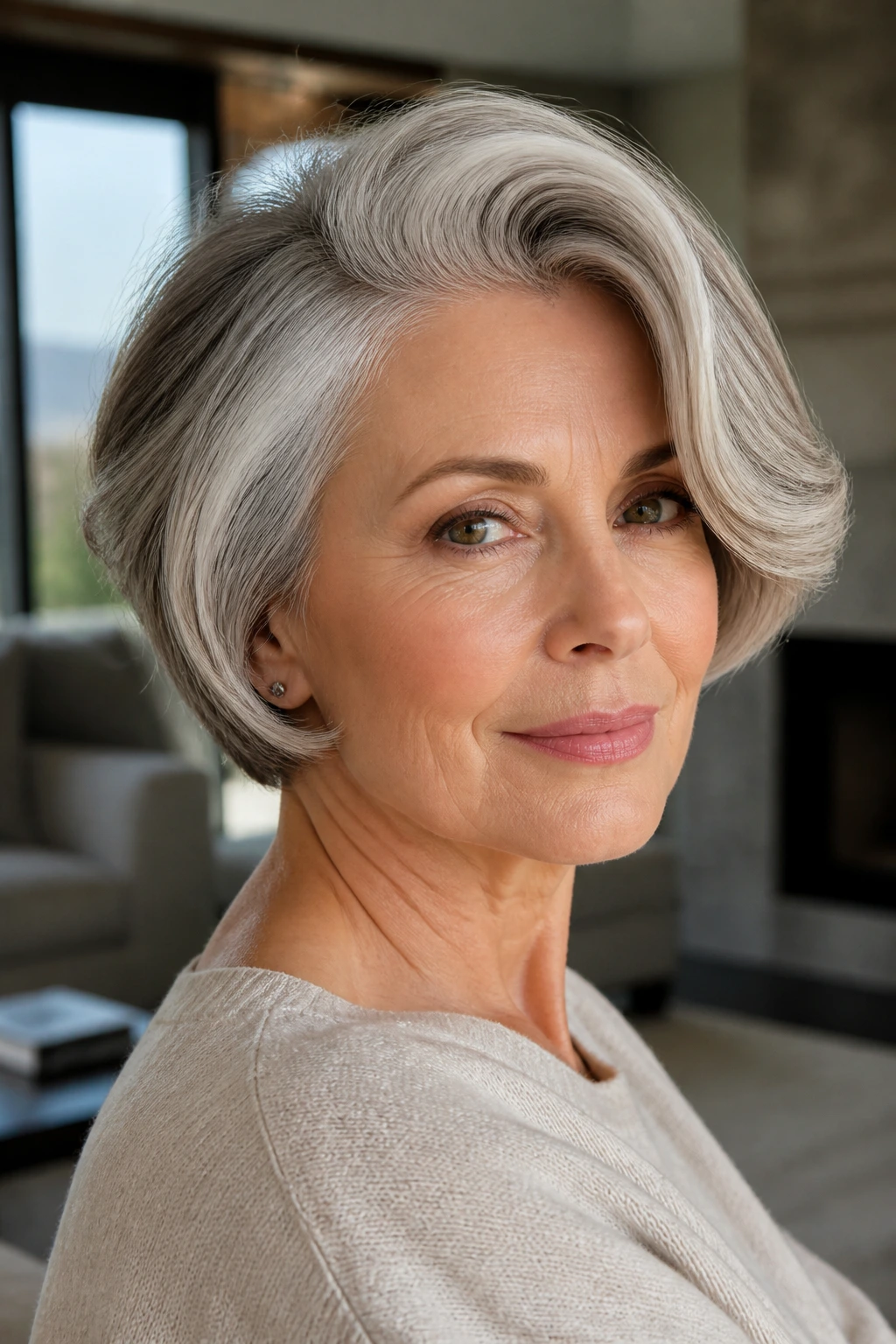
The wedge cut used to have a very specific reputation, and not always a flattering one. The modern version is softer. The back still stacks gently, but the layers are feathered enough that the silhouette moves instead of sitting there like a helmet.
It works especially well on straight hair that tends to fall flat at the crown. The stacked back gives lift, while the front and sides keep enough length to frame the face. When the neck is visible, the whole style feels light.
Ask for a softer graduation and fewer hard corners. That’s the difference between a fresh wedge and something that looks pulled from a dusty photo album.
11. Sleek Side-Part Crop
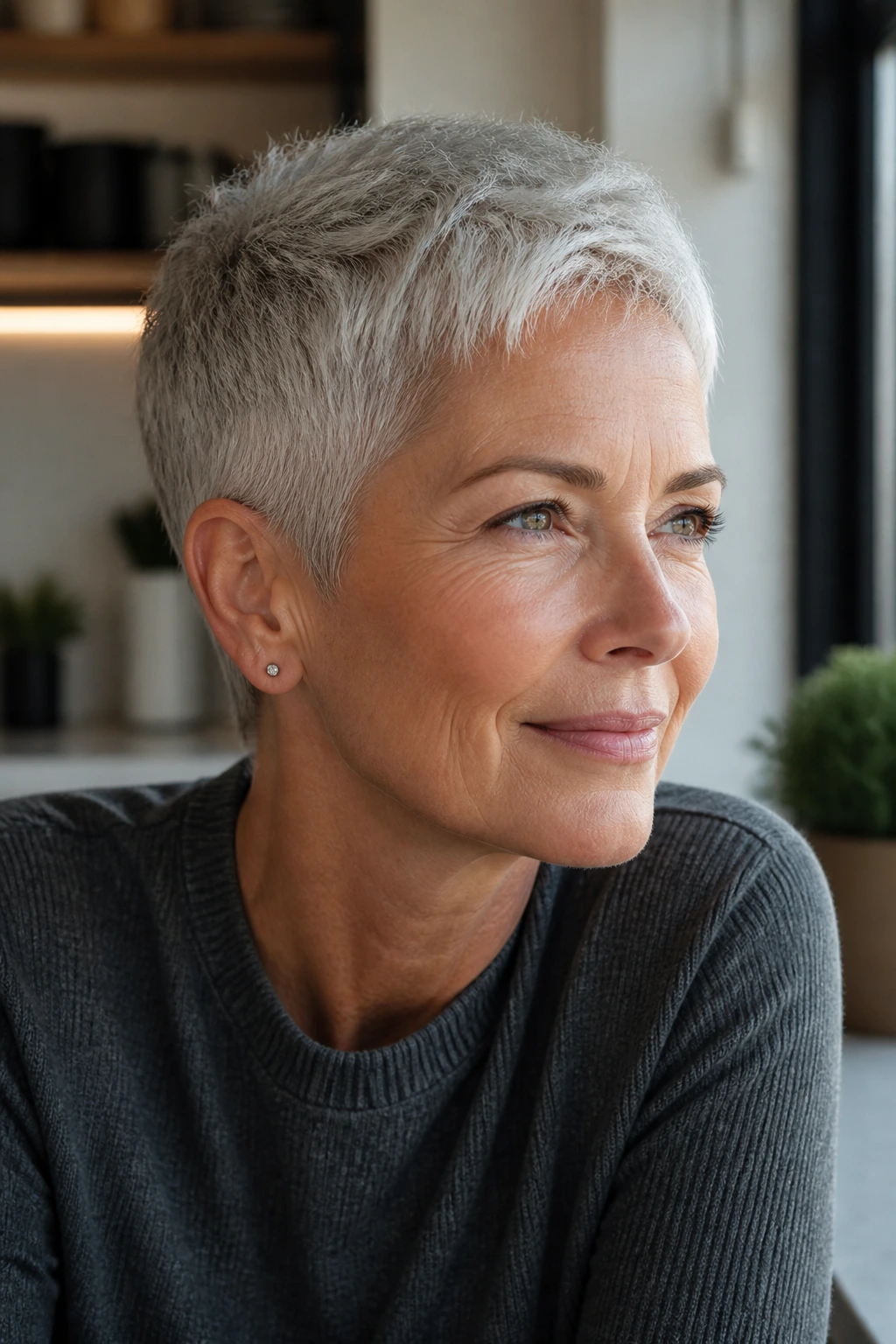
A deep side part can do more lifting than a lot of people realize. On a short crop, it creates instant height on one side, a neat sweep across the forehead, and a clean line over the temple. Very little drama. Very effective.
This is a good haircut when you want control. It behaves with glasses, stays tidy with earrings, and looks sharp with a blazer or a simple knit top. If your hair grows in with a stubborn part, this style often works with that habit instead of trying to fight it.
Keep the finish smooth, but not flat. A little root lift at the side part keeps it from looking pasted down.
12. Razor-Textured Pixie
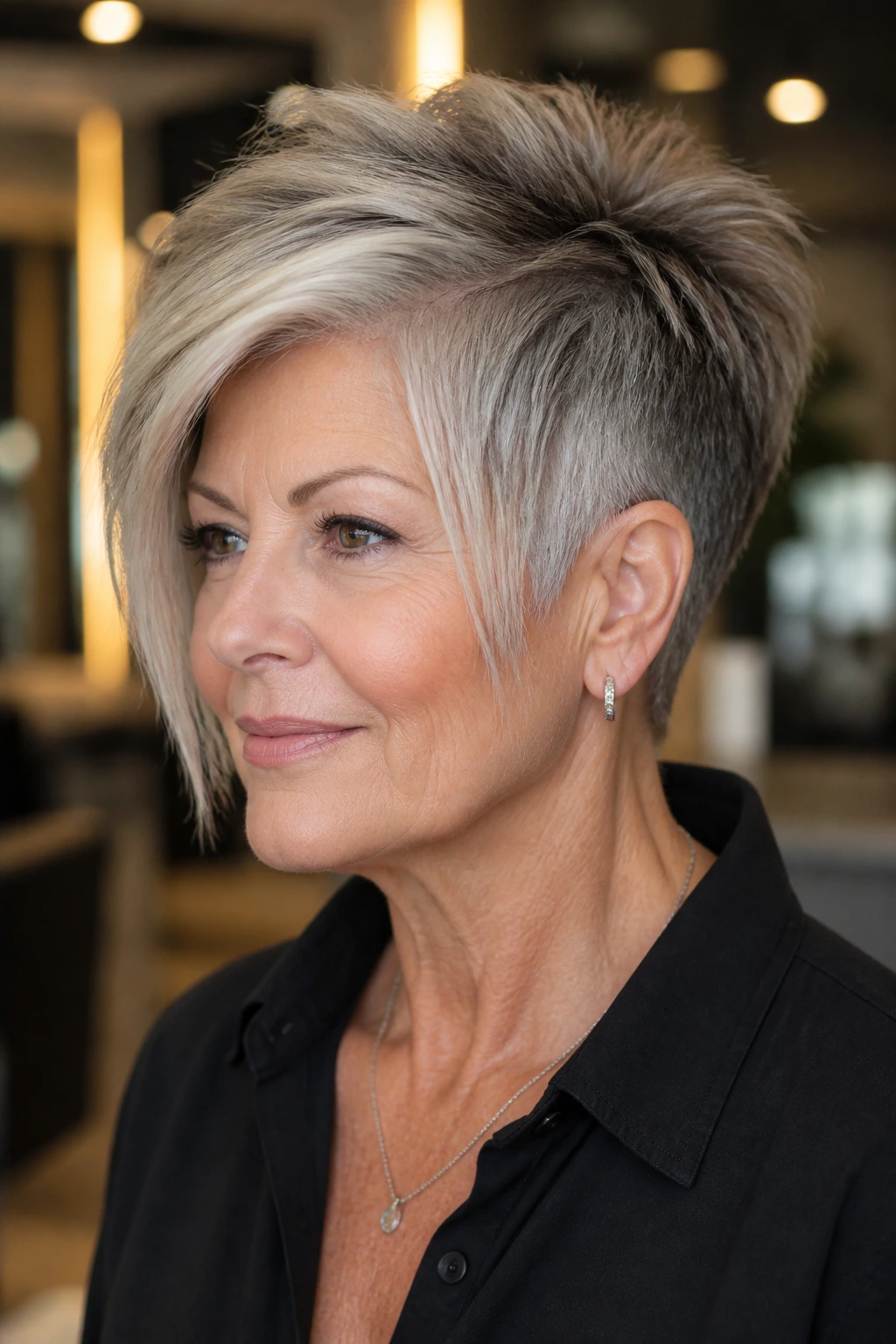
A razor-textured pixie is for hair that feels too thick, too heavy, or too stubborn to lie where you want it. The razor removes weight from the ends, which gives the cut a breezier look and keeps the top from puffing out.
The trick is restraint. A razor should soften, not shred. If the ends get too wispy, the style can fray fast and behave badly after a wash. Tell the stylist you want movement, not feather dust.
Best Fit
- Coarse hair that needs de-bulking
- Wavy hair with a strong bend
- Faces that can wear a little edge
A matte paste works better than glossy serum here. Shine can make the texture look stringy.
13. Ear-Length Box Bob
A box bob sits around the ear with a clean perimeter and a little bit of square structure. It sounds plain, but it can look surprisingly fresh, especially on fine hair that needs the appearance of density.
The boxy line gives the impression of a fuller edge. That matters. When hair thins at the bottom, soft ends can look skimpy; a firmer line holds the shape. You can tuck the front behind the ear for a sleeker version or keep it loose and blunt.
This is a neat cut for women who like order. It is not fussy, but it does want regular trims so the corners do not blur.
14. Wispy Bang Bob
If you want bangs but do not want a heavy forehead curtain, this is the sweet spot. The bob stays short and tidy, while the bangs are cut airy and soft enough to break up the forehead without stealing the whole show.
Wispy bangs work well when hair has some movement and the face benefits from a little softness around the eyes. They can be especially good if your forehead feels more prominent than it used to, or if you simply want less emphasis on the upper face.
Keep the fringe light. Once bangs get too thick, they stop looking wispy and start looking like they need a trim — which, frankly, they will. Trim them earlier than the rest of the cut.
15. Tousled Salt-and-Pepper Pixie
Gray and silver hair often looks best when the cut has texture on purpose. A tousled pixie does that well. The shape is short, but not exacting, and the finish can be a little messy in the best way.
This is one of those cuts that seems to understand the hair instead of bossing it around. Salt-and-pepper color brings its own contrast, so the hair does not need a heavy styling hand. A small amount of styling cream or paste, worked through the top with fingertips, is enough.
The biggest mistake here is over-polishing it. Too much shine or too much smoothing can flatten the texture and make the color lose its depth.
16. Short Shag with Curtain Bangs
A short shag with curtain bangs gives you softness around the face and movement everywhere else. The bangs split gently in the middle, then fall to either side of the forehead, which is useful if you want face-framing without a blunt line.
It suits wavy hair beautifully, but it can work on straighter textures too if the cut has enough internal layering. The shag part keeps the style from looking stiff, and the curtain fringe adds a little sweep that feels easy rather than formal.
How to Wear It
Let the front dry first, then push the bangs apart with your fingers. A dab of mousse or a light cream through the ends helps the layers stay separated instead of puffing together.
17. Graduated Bob with a Clean Nape
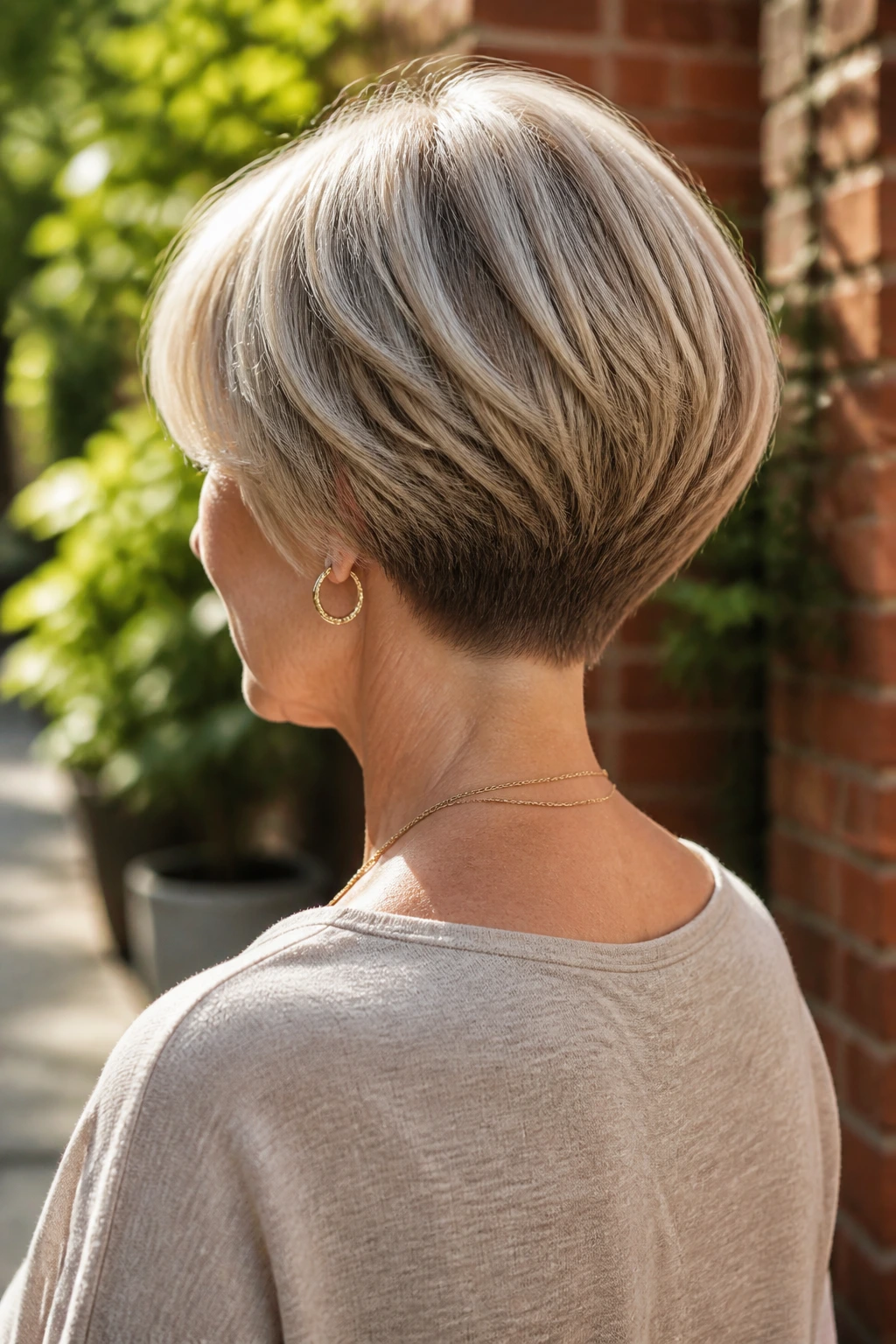
This is the bob for people who like the back of their head to look as neat as the front. The graduation at the back builds shape and lift, while the nape stays crisp and tapered. It’s tidy in a way that reads as deliberate, not severe.
It works especially well if the neckline tends to get lost under longer hair. A clean nape shows off the neck and keeps the style looking sharp from behind, which matters more than people admit. You see the back of your haircut every time you pass a mirror.
The cut does ask for maintenance. If the nape grows out too far, the whole structure softens fast.
18. Asymmetrical Crop
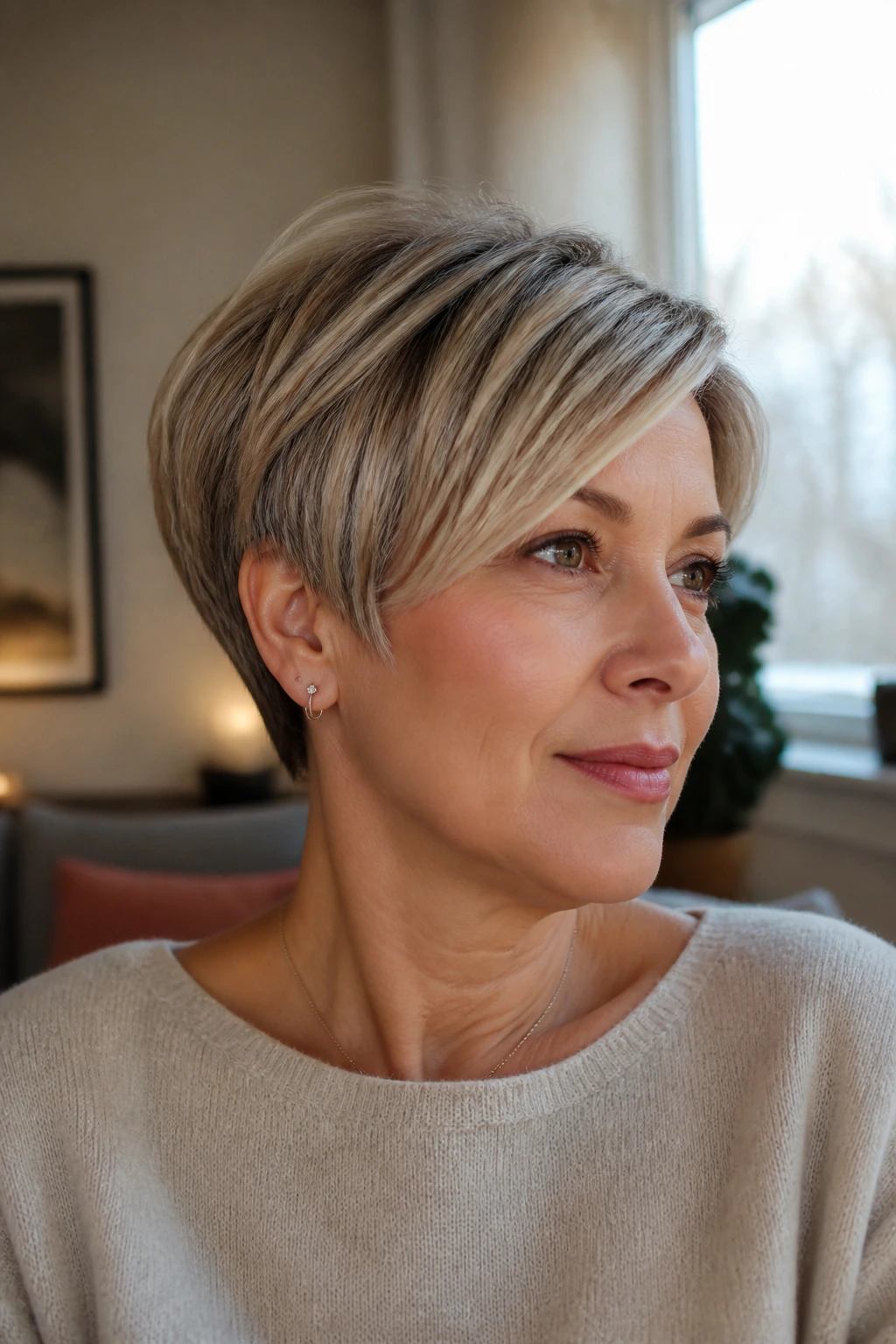
An asymmetrical crop gives one side a little more length than the other, and that small shift changes the whole feel. It creates movement, draws the eye diagonally, and keeps the haircut from feeling too neat.
This style is good when you want something a little modern without going full edge. It can also be a useful trick for balancing facial asymmetry, which everyone has to some degree. One side may sit slightly fuller, or one eye may benefit from a longer sweep of hair — the asymmetry helps.
Keep the difference subtle. A tiny length change reads as chic; too much can look like an accident.
19. Curved Pageboy
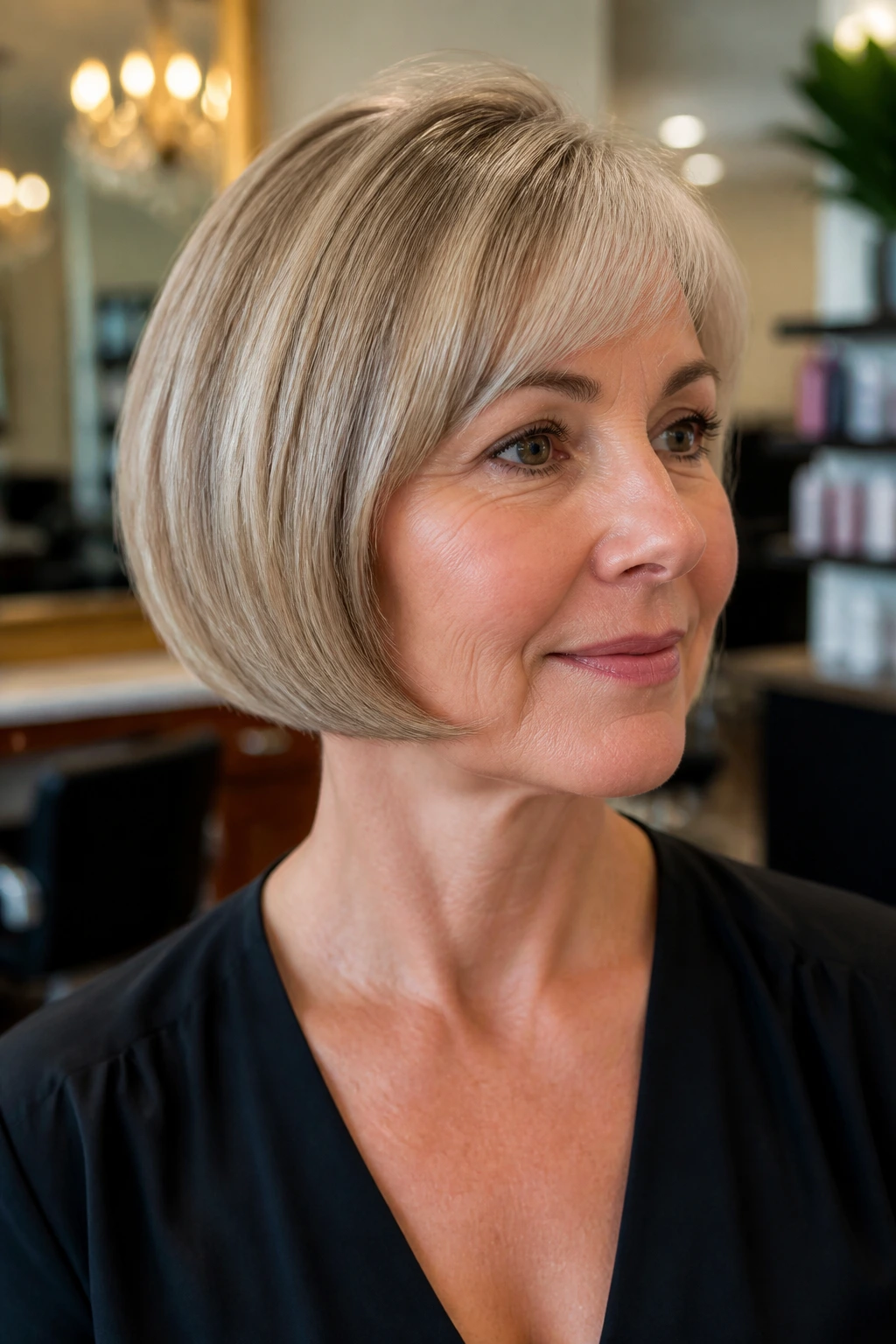
A pageboy brings back the rounded undercurve, but the modern version is softer and less severe than the old-school one. The ends curl gently under the jaw, which gives the hair a contained, polished shape.
This is a smart option for straight hair that tends to stick out or flip in odd places. The curve guides the ends instead of letting them wander. It also pairs nicely with smooth silver hair, which can look very clean under a controlled outline.
The one thing to watch is heaviness. If the cut is too dense and the line too blunt, it can feel blocky. A touch of internal layering keeps it from becoming a brick.
20. Rounded Curly Bob
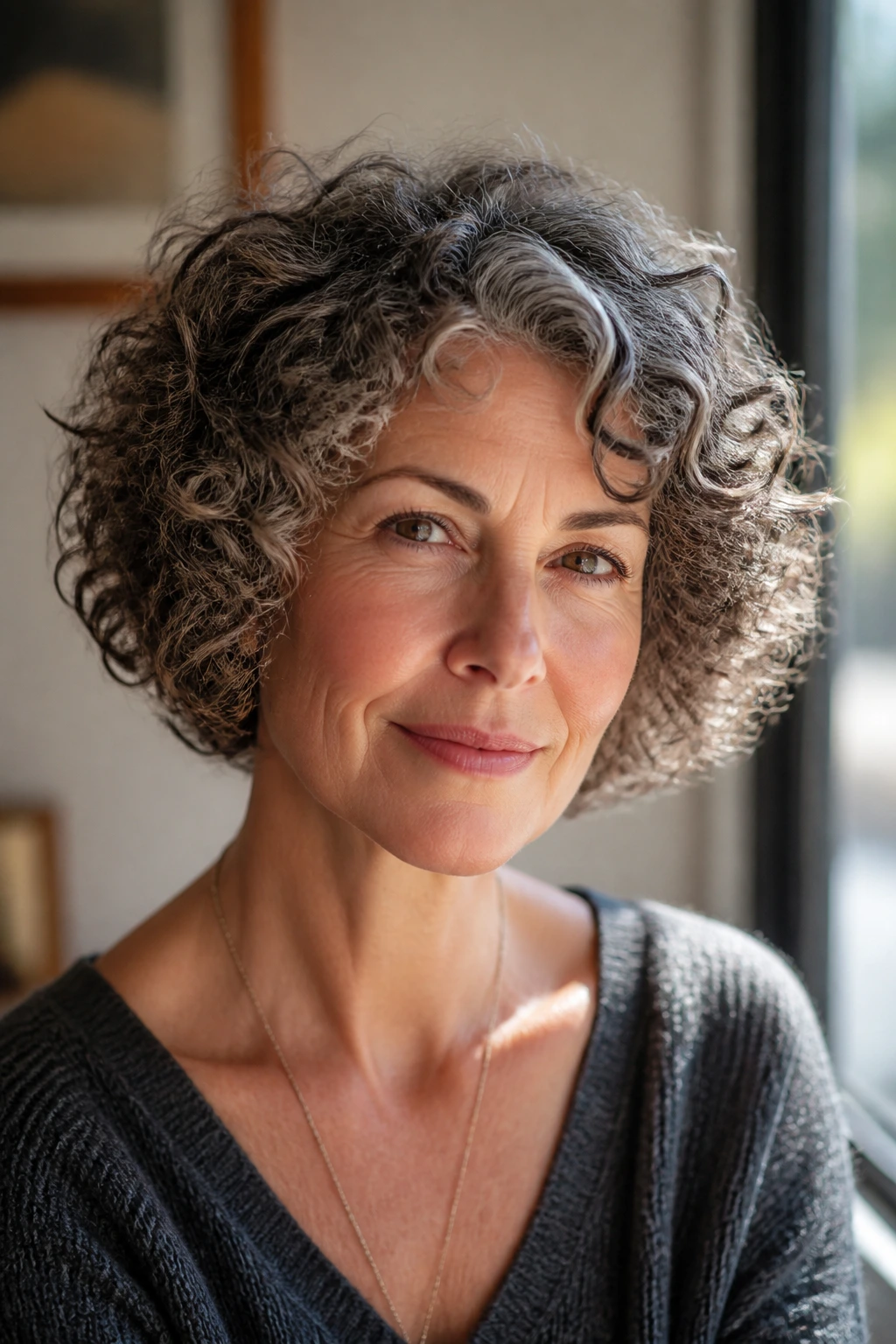
Curly hair looks best when the cut respects the curl pattern and the silhouette. A rounded curly bob keeps the shape balanced all around the head, so the curls form a soft halo instead of stretching wide at the sides.
That rounded outline is what makes it flattering. It controls bulk without flattening the curl. If your curls are looser, this cut gives them a place to land. If they are tighter, it keeps them from ballooning in the wrong spots.
Ask for a dry cut if your stylist knows how to do it. Curls shrink, and anyone who has watched a wet curly cut bounce up after drying knows the frustration.
21. Ear-Tucked Long Pixie
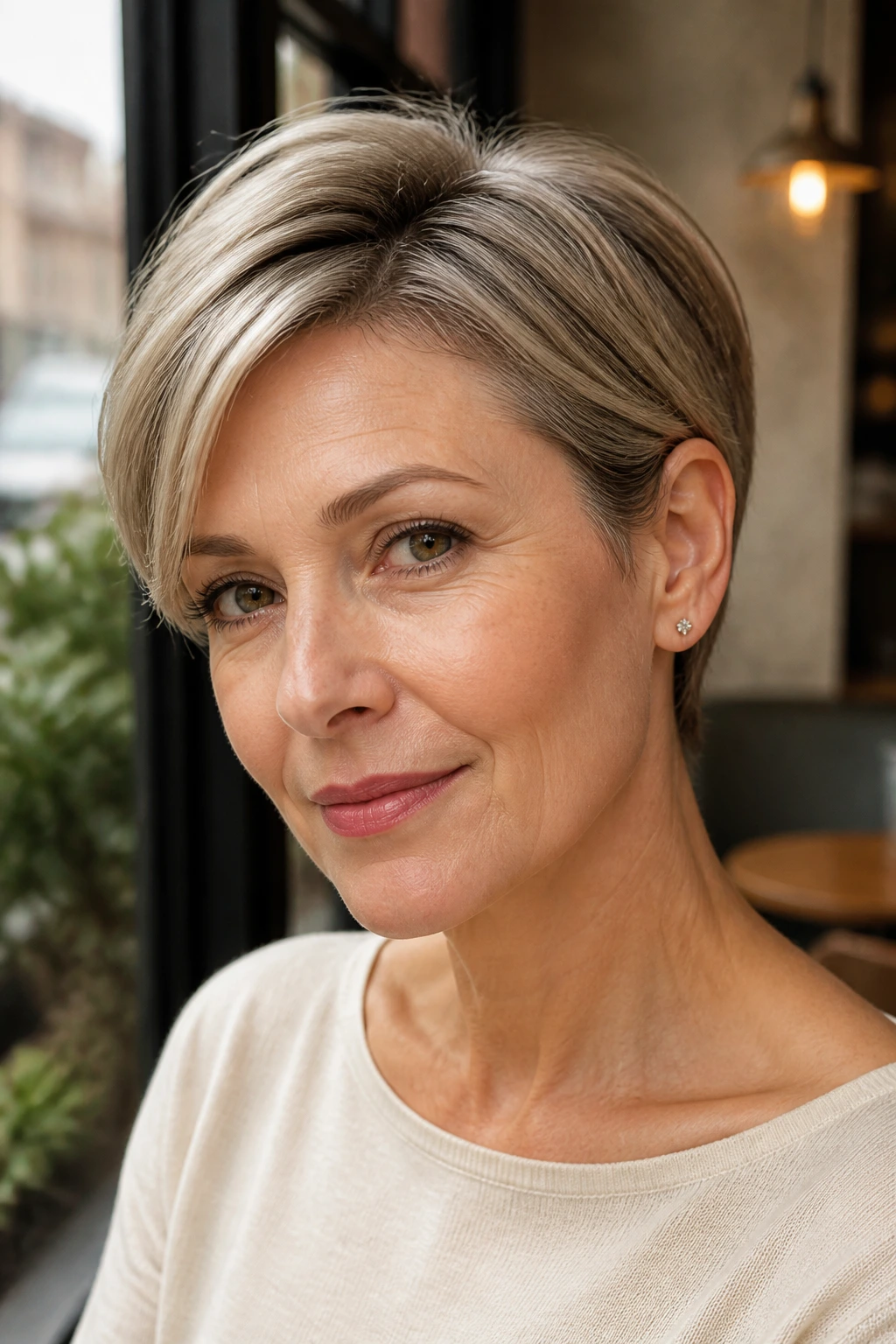
A long pixie gives you a little more length through the top and sides, which means you can tuck pieces behind the ear, sweep them forward, or let them fall softly across the forehead. It’s flexible in a way a very short crop isn’t.
That tucked-behind-the-ear option matters more than it sounds. It lets you change the shape of the haircut in seconds, which keeps the style from feeling static. If you like wearing earrings, this cut is a pleasant compromise between short and styled.
The longer top also makes grow-out less annoying. You get a few extra weeks before the shape starts asking for a trim.
22. Soft Undercut Bob
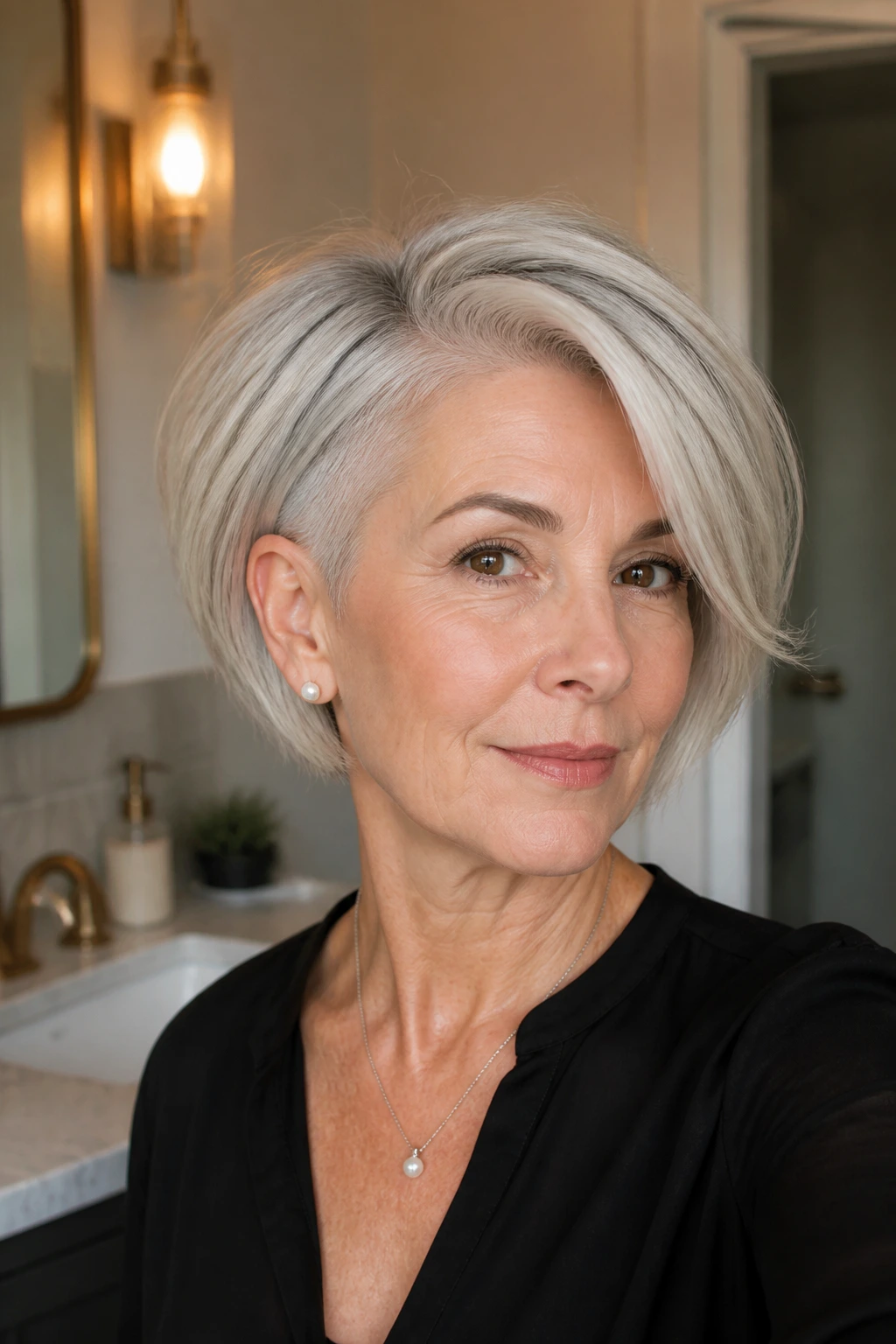
A hidden undercut removes bulk from underneath the top layers, which can be a lifesaver if your hair is thick, wide, or prone to puffing out at the nape. The top still looks like a bob, but the underside behaves better.
This is not the same as an edgy shaved undercut with visible contrast. The soft version keeps the surprise tucked under the surface. It’s practical. You feel the difference when you dry your hair and realize it no longer takes forever to settle.
Bring this idea up if your hair grows outward more than downward. That’s where the undercut earns its place.
23. Layered Crown-Lift Crop
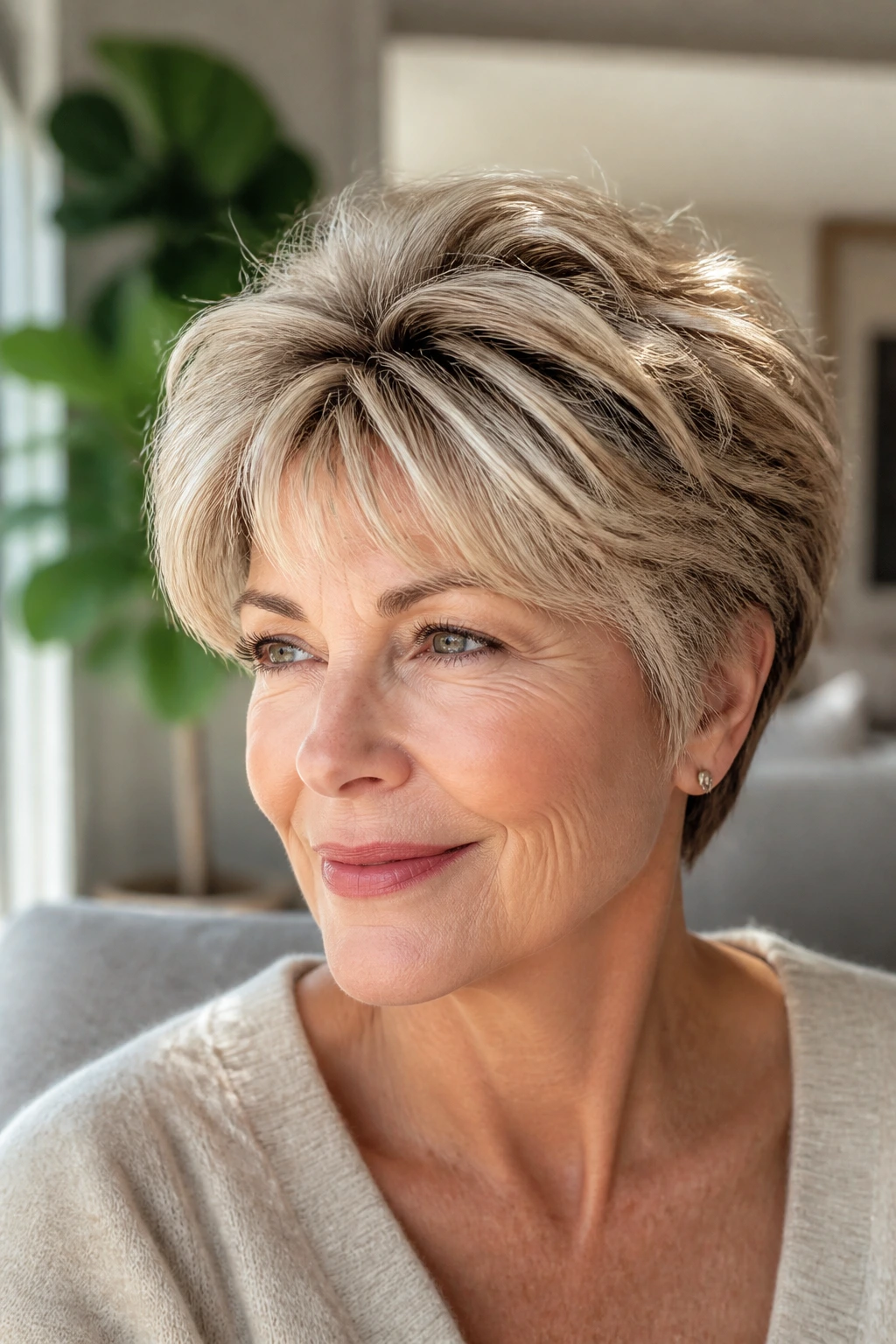
If the crown is where your hair has thinned, this cut is worth a serious look. The layers are built to lift at the top without shaving away too much density at the ends, which helps the silhouette stay full.
The key is placement. Layers should encourage volume where hair naturally wants to flatten, not create a lot of short pieces everywhere. Done badly, crown layers can leave a crown gap that looks even thinner. Done well, they give the top a little buoyancy.
Use a root-lift spray or mousse and blow-dry against your part for the first few minutes. That’s where the shape starts.
24. Jaw-Length Tapered Bob
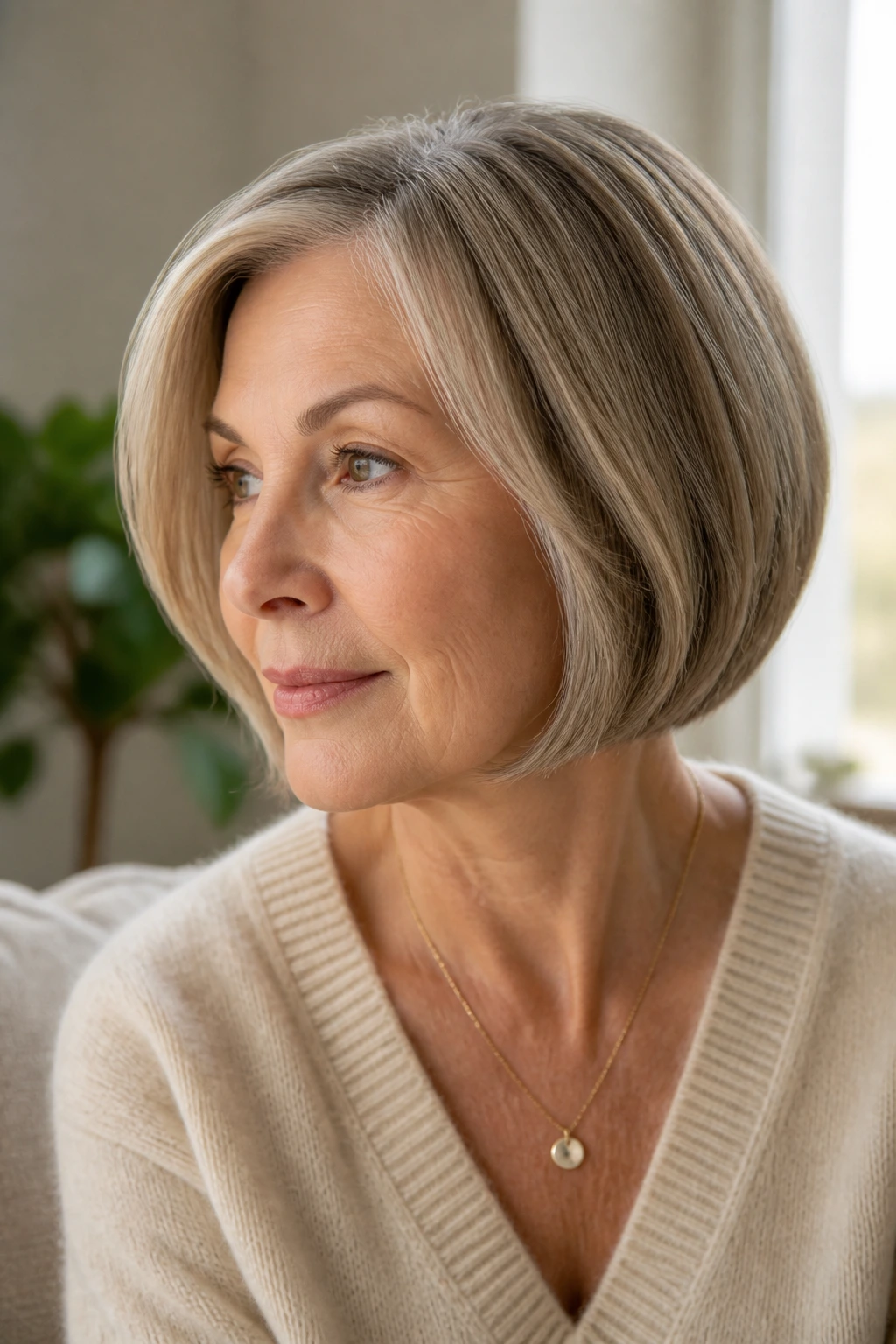
A jaw-length bob with a gentle taper at the nape gives you shape around the face and a cleaner line at the neckline. It sits in that useful middle zone where the cut feels short, but not severe.
The taper keeps the back from feeling blunt or heavy. The longer front pieces can skim the jaw and soften strong angles, which is handy if your face has become a little leaner with age and you want a fuller frame again.
This cut looks especially good when the ends are slightly curved under. That little bend keeps the line from looking too stiff.
25. Feathered Pixie Bob
A pixie bob lives between two lengths, and that’s what makes it useful. You get the short, lifted feel of a pixie with enough length around the sides and front to tuck, sweep, or soften.
The feathering matters because it keeps the transition from top to sides from looking blunt. It also gives the haircut a little swing when you turn your head, which is a nice detail in a shorter style. This one suits women who want a haircut that feels airy but not too exposed.
If you’re nervous about going very short, start here. It’s a sensible bridge cut.
26. Voluminous Swoop Bob
A deep side part and a sweeping front section give this bob its personality. The volume sits mostly at the top and front, which can lift the face and soften the look around the eyes.
This is the kind of short haircut that likes a round brush and a little patience. Once shaped, though, it holds well and can feel more dressed-up than the average bob. It works especially nicely on finer hair that needs a little dramatic lift without a lot of product.
The swoop should be soft, not stiff. If the front looks frozen in place, you’ve gone too far.
27. Close-Cropped Crop
A close-cropped cut is for women who are done negotiating with their hair. It’s short, clean, and low on daily fuss. The face becomes the focus, and that can be a very good thing when the cut is shaped with care.
This style needs good proportion. A well-cut crop should still have balance at the temples and crown, not just shortness for its own sake. It can look wonderfully modern on strong features, especially with a good pair of earrings or glasses.
It is also honest. You see the head shape, the texture, and the silver or natural color without distraction. That can be a strength.
28. Disconnected Long-Front Crop
This one keeps the front longer and the sides close, which creates a little tension in the shape. The longer front pieces can fall toward the cheekbone or jaw, while the shorter sides keep the overall style from getting bulky.
It’s a sharp look, but not a difficult one if the cut is balanced well. The disconnection gives you styling options: tuck it, sweep it, or let it fall across one eye a little. That makes it feel more current without turning into a costume.
If you like a haircut with a bit of edge, this is the one to show your stylist. It works best when the difference in length is intentional and clean.
Why Short Hair Works So Well When the Texture Changes
Hair texture rarely stays exactly the same for long. It may get finer at the ends, coarser through the gray, flatter at the crown, or a little bendy in places where it used to lie straight. A good short haircut does not fight those shifts. It uses them.
That’s why blunt edges and controlled layering matter so much. A blunt line can make fine hair look denser. Soft layers can stop thicker hair from ballooning. A shorter nape makes a neck look cleaner, and a little lift at the crown keeps the whole shape from sinking into the scalp.
The cut also has to respect how hair behaves after a wash. Some hair springs up. Some goes limp. Some puffs in humidity like it has a grudge. The right short style accounts for that reality. It’s not about chasing a fantasy photo. It’s about getting a shape that still looks deliberate on a Tuesday with no extra effort.
How to Choose Short Haircuts for Older Women by Hair Texture
Texture should drive the decision more than age ever does. Fine hair usually benefits from a cleaner line and less aggressive layering, because too many short pieces can make the ends look sparse. Thick hair often needs weight removal in the right spots, especially around the nape and sides, so the cut doesn’t swell outward. Curly hair needs shape cut into the curl pattern itself, not flattened into a shape that only works when wet.
Straight hair is its own animal. It can look sleek and expensive in a blunt bob, but it can also show every uneven line in the cut. Wavy hair gives you some of the best short styles because the bend adds softness automatically, though it needs enough structure to avoid the “I forgot to brush it” problem. That’s why I’m a fan of cuts that leave one area — usually the fringe, crown, or front pieces — a touch longer than the rest.
If you’re unsure, ask your stylist where your hair naturally wants to collapse, puff, or split. That answer will tell you more than face-shape charts ever will.
Essential Tools for Styling These Cuts
- A blow dryer with a nozzle: The nozzle matters because it directs air and smooths the cuticle better than blasting hair everywhere.
- A small round brush: Best for lifting roots, curving bob ends under, and giving pixies a little shape at the crown.
- A vent brush or paddle brush: Useful when you want speed over perfect polish.
- A tail comb: Handy for clean parts, lifting sections, and setting bangs where they belong.
- A light mousse or root spray: Gives short hair memory without making it stiff.
- A texture spray or matte paste: Good for piecey crops, shaggy bobs, and pixies that need separation.
- A flat iron or small curling iron: Optional, but useful for shaping ends, smoothing a fringe, or adding a bend to a bob.
- Heat protectant: If you use any hot tool at all, this is non-negotiable.
- A hand mirror: Worth having for the back of the neck and crown; short cuts show mistakes fast.
- A microfiber towel or old T-shirt: Helps reduce frizz when you scrunch or blot hair after washing.
What to Ask for in the Chair
Bring photos, yes, but bring words too. Show the stylist what you like about the shape, not just the overall look. One photo might have the fringe you want and the wrong amount of volume at the crown; another may have the right neckline and the wrong bangs. Cherry-picking details is smarter than treating a photo like a contract.
Say how long you want to spend on your hair in the morning. Say whether you tuck it behind your ears, wear glasses, or hate hair touching your neck. If you have a cowlick at the front, point to it. If your hair flips up at the nape, mention that too. Those details change the cut more than people realize.
Also ask what the cut will look like after 4 weeks, not just on day one. Short hair lives and dies by the grow-out. A shape that looks fantastic for 10 days and then turns boxy is a bad deal. A good stylist will talk you through how the cut ages, not just how it photographs in the mirror.
How to Style Them on Busy Mornings
Everyday wear: Pick a cut that can survive a quick finger-dry if you hate tools, then use a pea-sized amount of cream or paste only where the shape needs help. That usually means the fringe, crown, or ends — not the whole head.
For a cleaner finish: Blow-dry the roots first. Short hair gets its shape from the root direction, not from endless brushing at the ends. If the top is flat, the style looks tired even when the cut is good.
With glasses: Keep the temples light. Hair that ends exactly where the frame sits can feel crowded, so a bob or crop with a slightly softened side area usually works better than a heavy triangle around the face.
For a dressier look: Smooth the sides, lift the crown a little, and tuck one side behind the ear. That small shift makes even a simple pixie or bob feel more intentional without a lot of extra work.
When you want texture: Use dry shampoo or texture spray at the roots and a little paste on the ends. Then stop touching it. The more you fuss, the less shape it keeps.
Styling Products and Finish Choices That Help
Some finishes flatter short hair better than others. A matte cream or light paste gives separation to pixies and cropped cuts without that greasy shine that can make fine hair look limp. Mousse works well when you want volume, especially at the crown or in a bob that tends to sink by midday. A serum can help coarse or gray hair look smoother, but use a drop or two, not a palmful.
The finish should match the cut. A sharp micro-bob likes a smoother surface. A shag bob usually looks better with a little roughness in the texture. A curly crop needs moisture and definition, not a crunchy shell. That last part matters. Crunchy curls are not a styling goal; they’re a warning sign that too much product got involved.
Color also changes the finish. Silver hair tends to show shine in a different way than pigmented hair, so a lightweight glossing product can make the color look richer without flattening the cut. If you’re a fan of natural texture, dry shampoo can be more useful than hairspray. It adds grip and life at the root, which is often exactly what short hair needs.
Maintenance, Grow-Out, and Trim Timing
Short hair asks for more frequent trims, but not all short hair asks at the same pace. Pixies and crops usually need reshaping every 4 to 6 weeks if you want the outline to stay neat. Bobs can often go 6 to 8 weeks, sometimes a little longer if the cut is blunt and the ends stay healthy. Bangs may need attention sooner. That front section shows growth faster than the rest.
Sleep matters too. A satin pillowcase or silk bonnet can reduce friction and help the shape survive overnight, especially if your hair bends or frizzes easily. For second-day hair, a touch of dry shampoo at the roots and a quick blast with the blow dryer is often enough. No need to start from scratch every morning.
If you’re growing a short cut out, ask for transitional shaping rather than waiting until everything becomes a mess. A slightly longer pixie bob, a softened nape, or a face-framing fringe can carry you through the awkward middle without looking abandoned. That’s the difference between a planned grow-out and a bad haircut you’re merely enduring.
Variations and Adaptations to Try
The Soft Fringe Swap: Keep the haircut the same, but switch a blunt fringe for a wispy or side-swept one. That tiny change can make the whole cut feel gentler around the forehead and easier to live with as it grows.
The Silver Shine Finish: Add a glossing treatment or a lightweight shine serum to gray and silver hair. It keeps the color looking rich without turning the cut slick or heavy.
The Thick-Hair De-Bulk: Ask for hidden weight removal under the top layers if your hair feels wide around the head. This works especially well in bobs and wedge cuts, where too much bulk can make the shape puff outward.
The Curly Shape Reset: Have curls cut dry or nearly dry so the stylist can see the real curl pattern. This is the best move if your curls shrink differently in different zones and you’re tired of surprise triangles.
The Glasses-Friendly Trim: Keep the sides light around the temples and leave just enough length to tuck behind the ears. That keeps the haircut from crashing into your frames.
The Low-Commitment Grow-Out: Choose a pixie bob or a longer crop with soft edges instead of a very short, hard line. It buys you more weeks between trims and gives you room to change your mind.
Common Mistakes That Make a Short Cut Look Off
The biggest mistake is over-thinning. It sounds helpful, especially on thick hair, but too much texturizing can leave the ends ragged and the crown sparse. You see it most in silver hair, where every short broken piece catches the light and makes the cut look frayed.
Another one: ignoring the neckline. A short haircut lives or dies from the back view. If the nape grows out unevenly, the style starts looking tired even when the front is still fine. That’s why short cuts need maintenance more often than long ones. The back cannot hide.
Heavy bangs are another trap. A thick fringe can swallow the forehead and drag the whole face downward if it’s not shaped with care. Light bangs, side-swept bangs, or curtain bangs usually age better because they leave air around the eyes.
People also use too much product. Short hair does not need a fistful of anything. One dab of paste, one puff of mousse, one mist of spray — that’s usually enough. If the hair looks wet all day, the shape will collapse.
And finally, choosing a cut because it looks good on somebody else’s head. The right short cut has to work with your hairline, density, neck, and daily routine. Otherwise it becomes a job.
Frequently Asked Questions
Which short haircut makes thinning hair look fuller?
A blunt bob, micro-bob, or soft layered pixie usually gives thinning hair the most visual density. The trick is keeping the perimeter clean and avoiding too many short layers that make the ends look see-through.
Are pixie cuts flattering on older women with round faces?
Yes, if the top has some lift and the fringe is swept diagonally or kept soft. A flat, rounded pixie can widen the face, but a little height at the crown and length near one temple changes that balance fast.
How often should short hair be trimmed?
Pixies and crops usually need a trim every 4 to 6 weeks. Bobs can often stretch to 6 to 8 weeks, depending on how blunt the line is and how fast your hair grows.
Can I wear short hair if I use glasses?
Absolutely. In fact, a lot of short cuts work better with glasses because they keep the temples light and let the frames breathe. Just avoid a heavy side shape that sits right on top of the arm of the glasses.
What if my hair is curly and short styles always puff out?
Ask for the cut to be shaped around the curl pattern, not against it. A tapered curly crop or rounded curly bob usually behaves better than a square shape that gives curls nowhere to go.
Should older women avoid bangs?
No. The better question is what kind of bangs. Wispy, side-swept, or curtain bangs usually work better than a blunt heavy fringe, because they soften the face without closing everything off.
How do I grow out a short haircut without looking awkward?
Keep the shape soft while it grows. A stylist can trim the nape, clean up the sides, and leave the front longer so the cut evolves instead of turning into a fuzzy in-between stage.
What’s the easiest short cut to style with almost no effort?
A soft pixie or a simple blunt bob usually wins there. Both can be shaped with a quick finger-dry, a little root lift, and not much else.
A Clean Cut That Still Feels Like You
The best short haircut is not the shortest one, the trendiest one, or the one that looked good on a celebrity with six stylists and a ring light. It’s the one that gives your hair a cleaner shape and makes your face feel like it has room again. That may mean a crisp bob, a feathered crop, or a pixie with just enough softness around the forehead.
What matters most is honesty. Hair texture changes, routines change, and the right cut should meet your hair where it lives now. If you choose a shape that respects the crown, the neckline, and the way your hair actually bends, the result tends to look better on the third week than on day one.
And that’s the mark of a good short cut. It still looks like a good idea after you’ve washed it, slept on it, and walked past the mirror without thinking twice.
