



The best wavy hairstyles for brides do not try to lock the hair into a stiff shape. They move when you turn your head, they soften sharp lines in a dress, and they still look like hair after the veil comes off. That sounds easy enough. It isn’t.
A wedding hairstyle has a rough job. It has to survive a ceremony, a camera flash aimed from three bad angles, a hug from someone with a brooch on their shoulder, a meal, a dance floor, and usually a little humidity for good measure. Waves work because they give you shape without turning the head into a helmet. They also play nicely with lace, satin, tulle, and all the other fabrics that can make a sleek style feel too hard.
The catch is that “wavy” can mean a lot of things. A brushed-out curl set reads polished and formal. A half-up twist feels softer and more relaxed. A deep side sweep with one jeweled pin can look more expensive than a heavily built updo if the finish is clean enough. The styles below lean into those differences instead of pretending one wave pattern suits every bride.
Why These Wavy Bridal Looks Keep Working
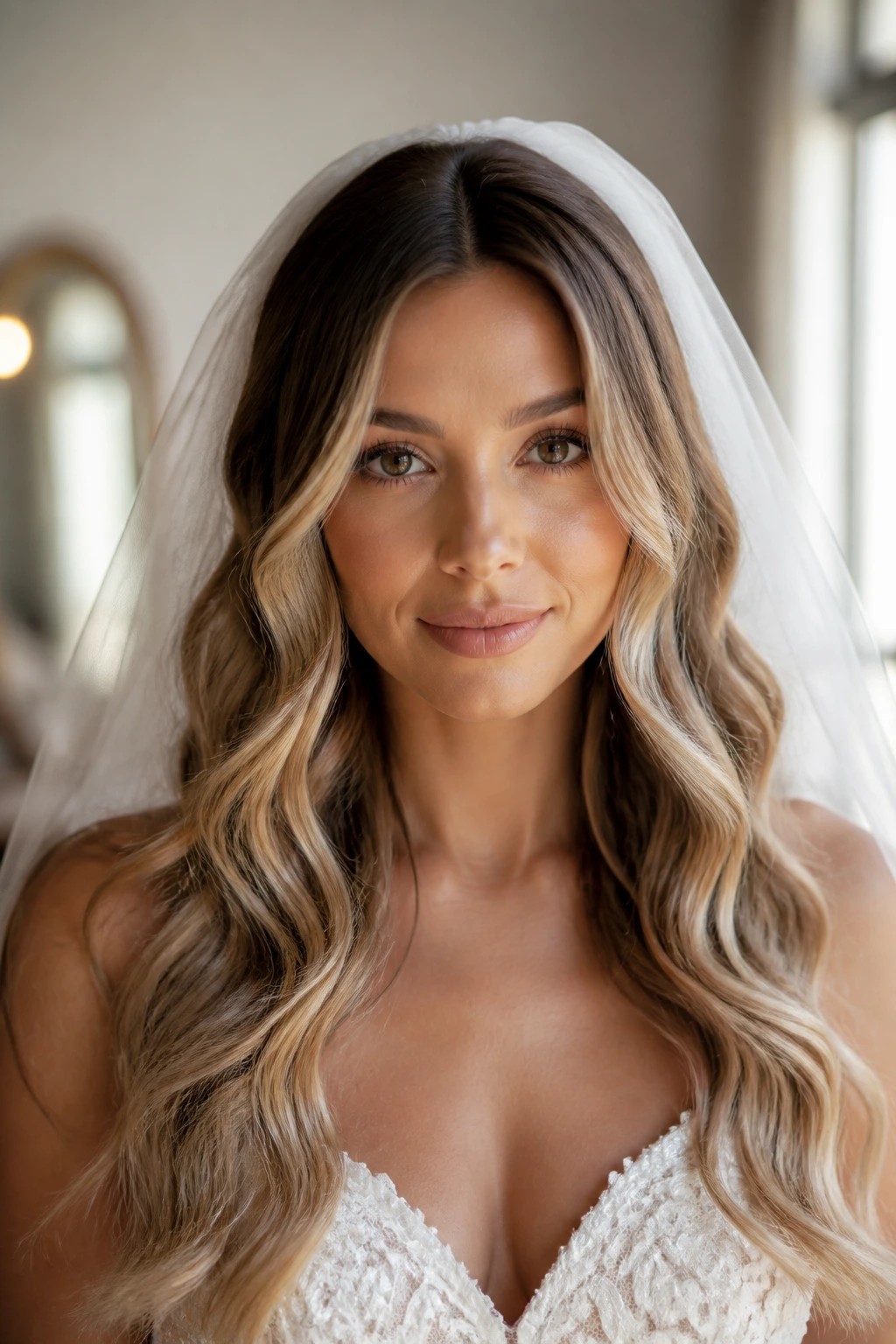
- Veil-friendly: These styles leave room for combs, pins, and placement under the crown or at the nape, so you are not fighting the hairstyle when the veil goes on.
- Photo-safe: Waves keep enough bend and shadow in the hair that close-up portraits do not flatten into one solid mass.
- Flexible on texture: Fine hair, thick hair, and naturally curly hair can all be steered toward these looks with different prep and pinning.
- Reception-proof: Soft movement survives better than rigid curls once the ceremony is over and people start hugging.
- Dress-friendly: Waves sit easily with high necklines, bare shoulders, illusion backs, and heavy beading without competing for attention.
- Easy to customize: Each look can be tightened, loosened, or clipped differently depending on whether the bride wants classic, boho, modern, or glam.
1. Old Hollywood Side-Swept Waves
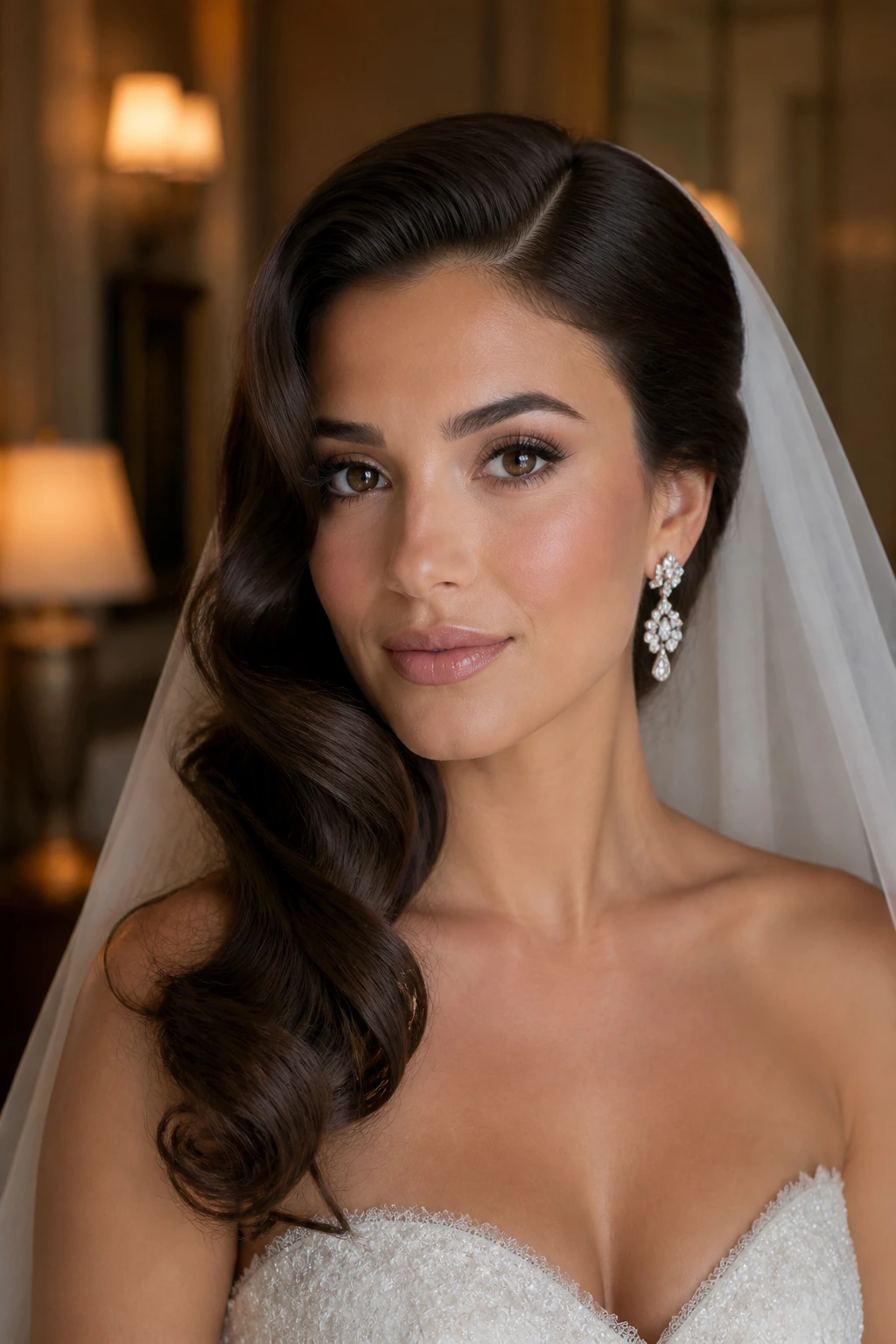
A deep side part and a sweep of glossy waves still do one thing better than almost any other bridal style: they make the face look composed from every angle. The shape lands especially well with satin, crepe, or anything with a clean neckline, because the hair brings the softness the dress is not trying to provide.
Why it works
This style uses large, deliberate curves instead of loose, airy texture. That means the hair reads formal without looking frozen, and the wave pattern keeps its shape in photos even after the room warms up. A 1¼-inch iron usually gives the right bend; smaller barrels can get too curly, which is not the point here.
Best with: one statement earring, a side comb, or a very small veil placed low enough to avoid swallowing the sweep.
Watch the root: The crown should be smooth, not flat. A little lift at the part keeps the profile from looking heavy.
Styling note: If the bride has thick hair, pin the back section under the wave line so the hair does not collapse toward one shoulder halfway through the evening.
2. Center-Part Glossy Waterfall Waves
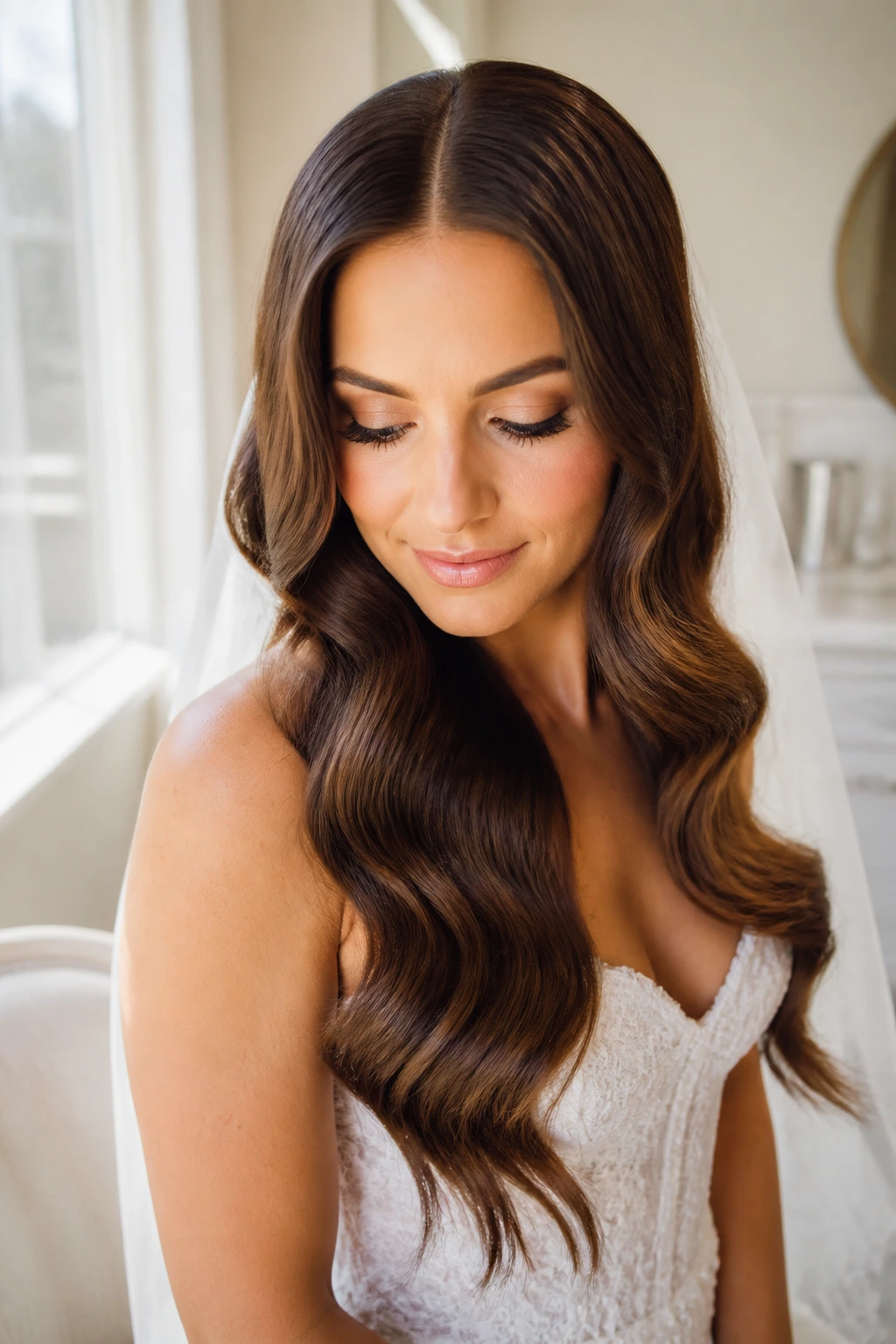
A center part can feel severe on paper. On a bride, it often reads calm, modern, and expensive-looking when the waves fall in even curtains on both sides. The trick is the polish at the root; if the hair starts too fuzzy, the whole look loses that clean, glassy finish.
This style suits long hair that can hold a strong wave from midlengths to the ends. It is the one I would pick for a minimal gown with a strong neckline, because the hair frames the face without stealing the whole show. A light shine cream on the last two inches helps the ends look smooth in close-up shots.
What to tell your stylist
- Keep the part sharp.
- Keep the top smooth.
- Let the wave begin lower than the cheekbone.
- Finish with a brush-through, not a finger-scrunch.
That last bit matters. Finger-separating the curls too early can make the style look puffy instead of sleek.
3. Half-Up Twist Crown With Loose Waves
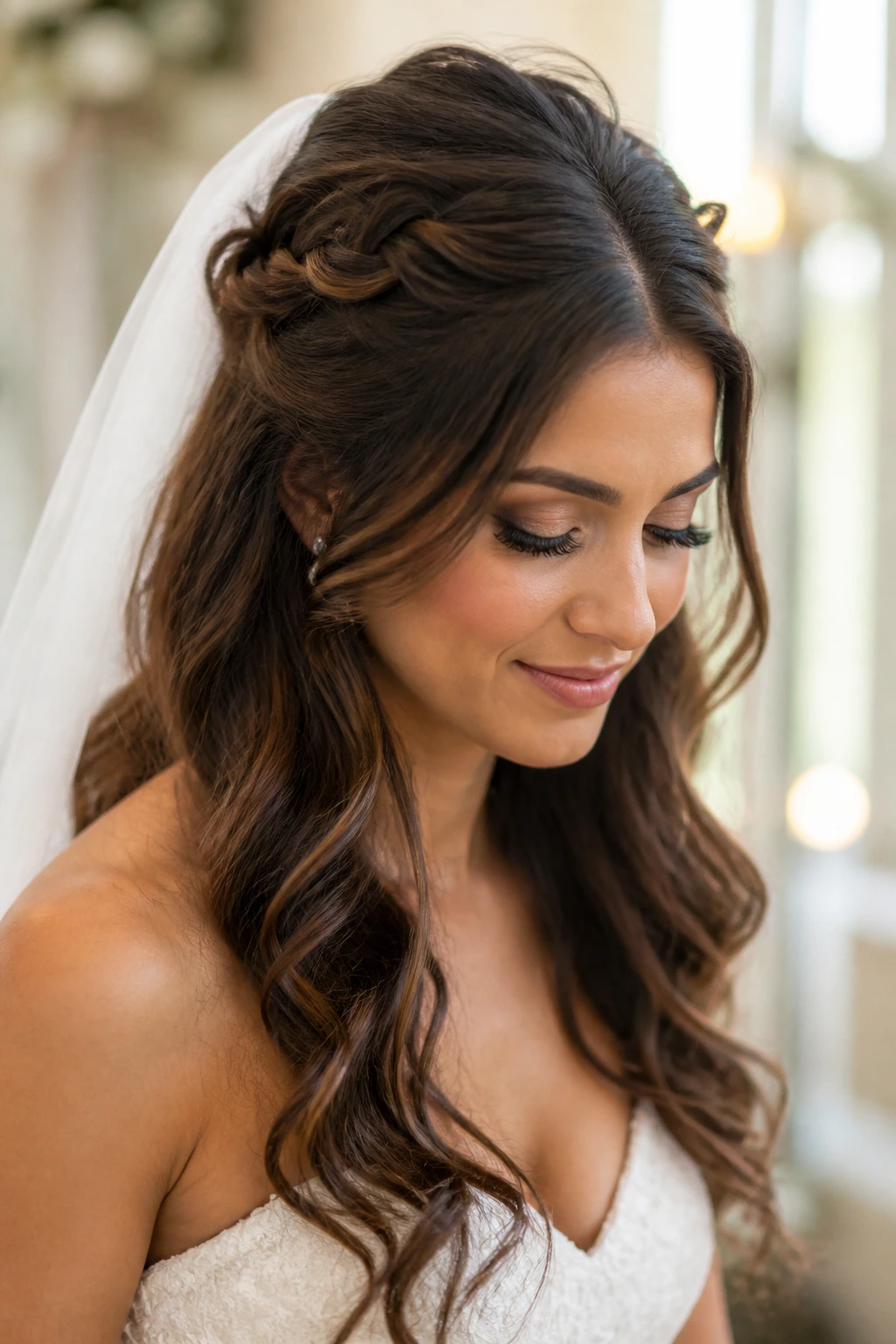
This is the bridal wave style for someone who wants hair off the face without losing the softness of length. Two twisted sections from the temples meet at the back, and the rest falls in loose waves below. It keeps the front tidy for a ceremony and still gives you movement down the back.
The style earns its keep with veils. The twist gives a built-in anchor point, so the comb has somewhere to sit without dragging the waves down. It also works well with long earrings, because the hair is pulled back just enough to show the jaw and the neck.
How to wear it
A half-up twist looks best when the loose waves start around the cheek or upper jaw, not at the ears. Lower than that, and the style can feel droopy. Higher than that, and it starts to look pinned up instead of softly balanced.
A small pearl pin, a crystal comb, or even a plain gold barrette can sit at the twist and finish the whole thing without making it busy.
4. Low Chignon With Face-Framing Waves
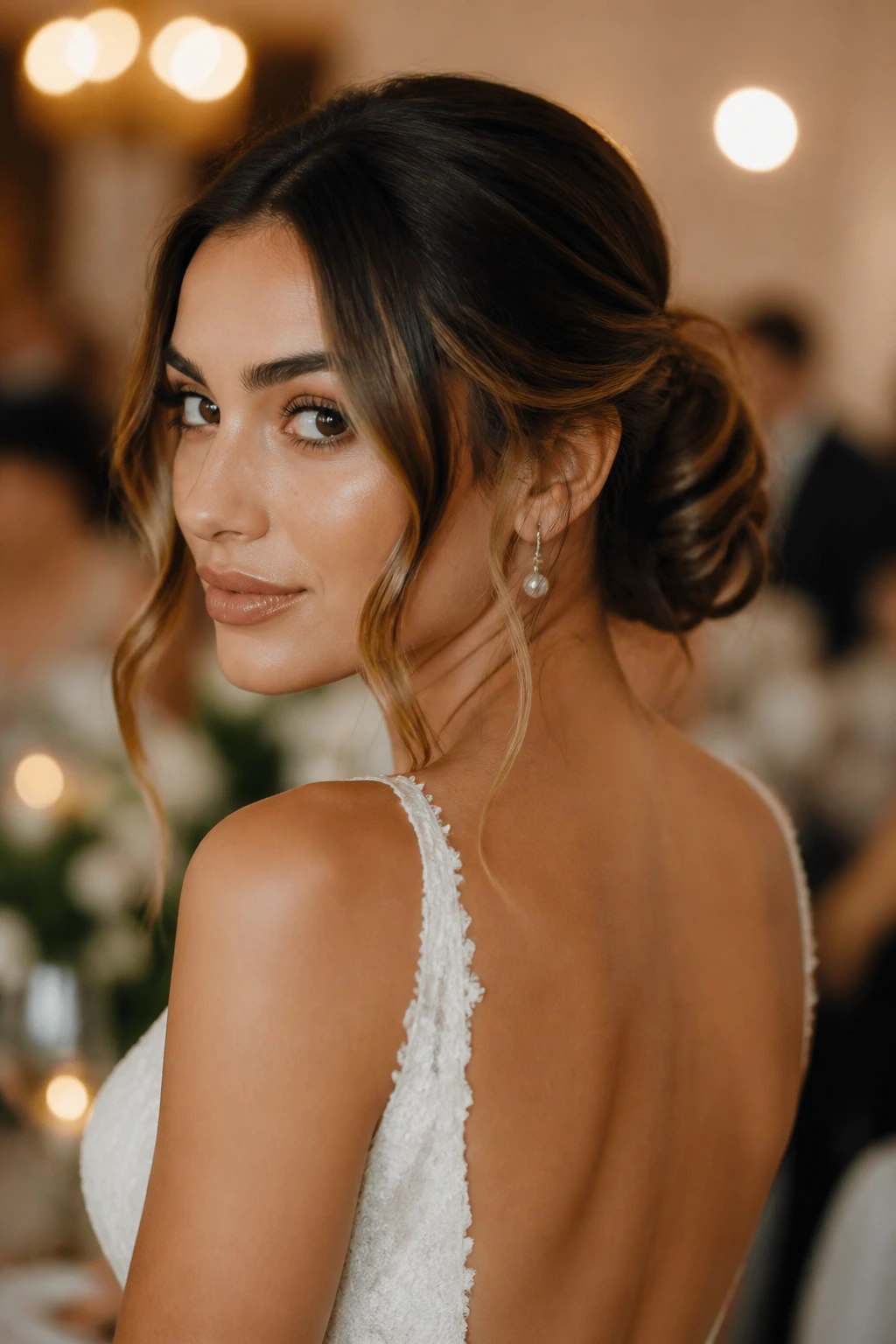
Some brides want movement, but not too much of it. A low chignon with a pair of face-framing waves is the answer when the dress has a detailed back or a higher neckline and the hair needs to stay out of the way. The front stays soft. The back stays neat.
Why it works
The wavy pieces near the cheeks keep the style from feeling severe. Meanwhile, the bun at the nape creates a clean line that lets lace, buttons, or beading do their work. It’s a smart choice for older family portraits too, because the shape holds up even when the bride is turning from one person to another all evening.
Good for: cathedral veils, vintage gowns, and brides who do not want to worry about hair brushing against lipstick.
Small detail that matters: Leave the front tendrils slightly longer than you think you need. Once the bun is pinned and the dress is on, those pieces always sit a little higher.
5. Boho Braid Halo Over Beachy Waves
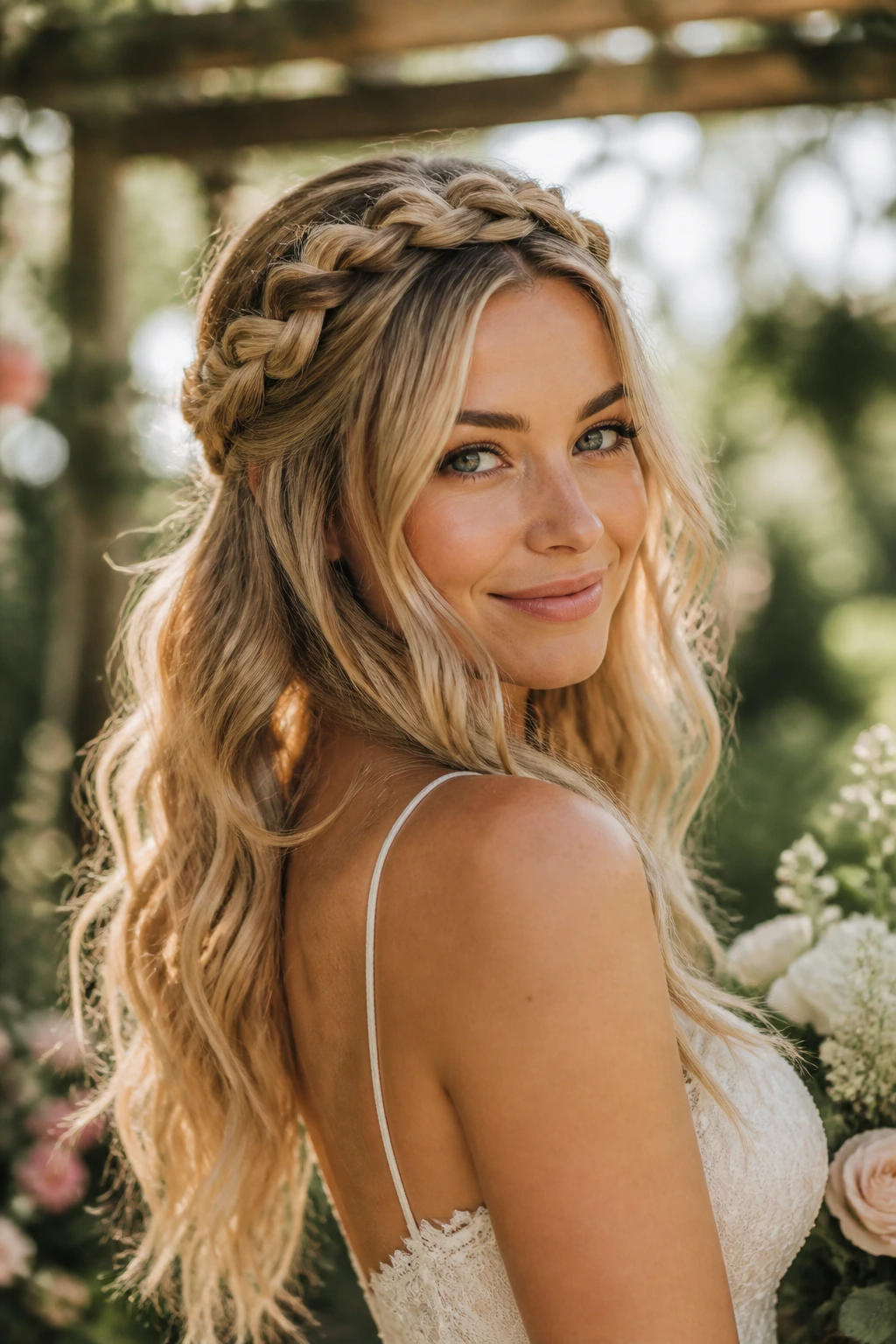
A braid wrapped around the crown gives structure, and the beachy waves below keep the look from getting stiff or overdone. This is the style I would send to a bride with an outdoor venue, a textured dress, or a bouquet that leans loose and garden-like. It feels relaxed, but not lazy.
The braid should not be pulled too tight. That’s the trap. If the braid is braided to the scalp like a schoolday style, the whole thing starts looking forced. Keep the braid soft, pinch it out slightly after it’s secured, and let the waves below stay undone enough to move.
A flower comb, a few tiny pins, or one delicate vine accessory can sit right where the braid ends. That’s usually enough. More can tip it into costume territory.
6. Pearl-Pinned Face-Framing Waves
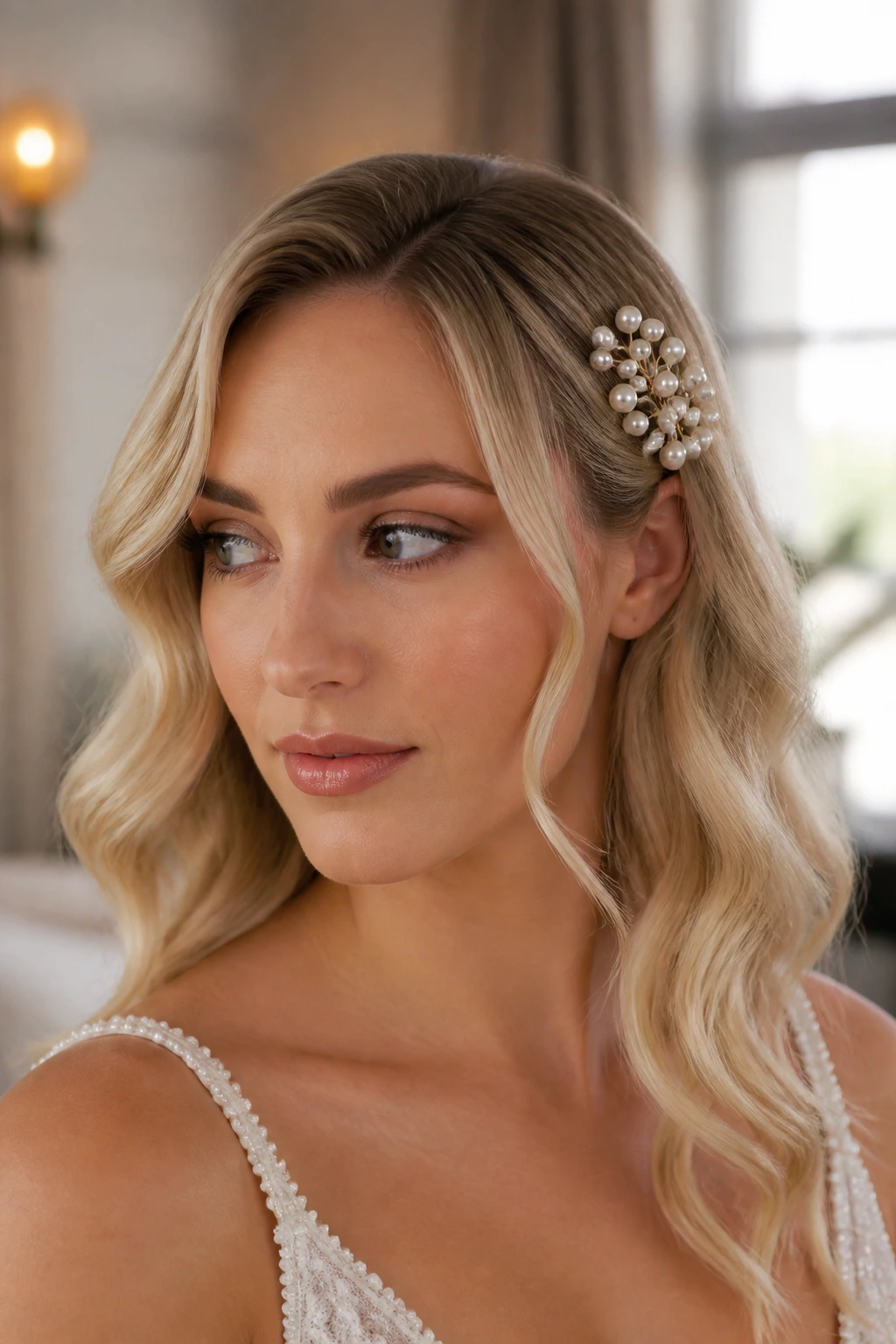
Pearls do a lot of work without shouting. A set of loose waves with a cluster of pearl pins along one side feels bridal in the best possible way: understated, not plain, and easy to match with jewelry that already has a bit of shine.
The waves themselves should stay loose and touchable, with just enough polish at the ends that the pins do not look like they are fighting frizz. Brides with medium-length hair often love this style because it fills the sides of the face without needing a long cascade down the back.
A small pearl cluster near the temple is enough if the dress already has detail. If the gown is simpler, you can run the pins a little farther back through the wave line. Either way, the hair needs one clean side and one softer side. That contrast is what makes it work.
7. Sleek Roots With Loose Mid-Length Waves
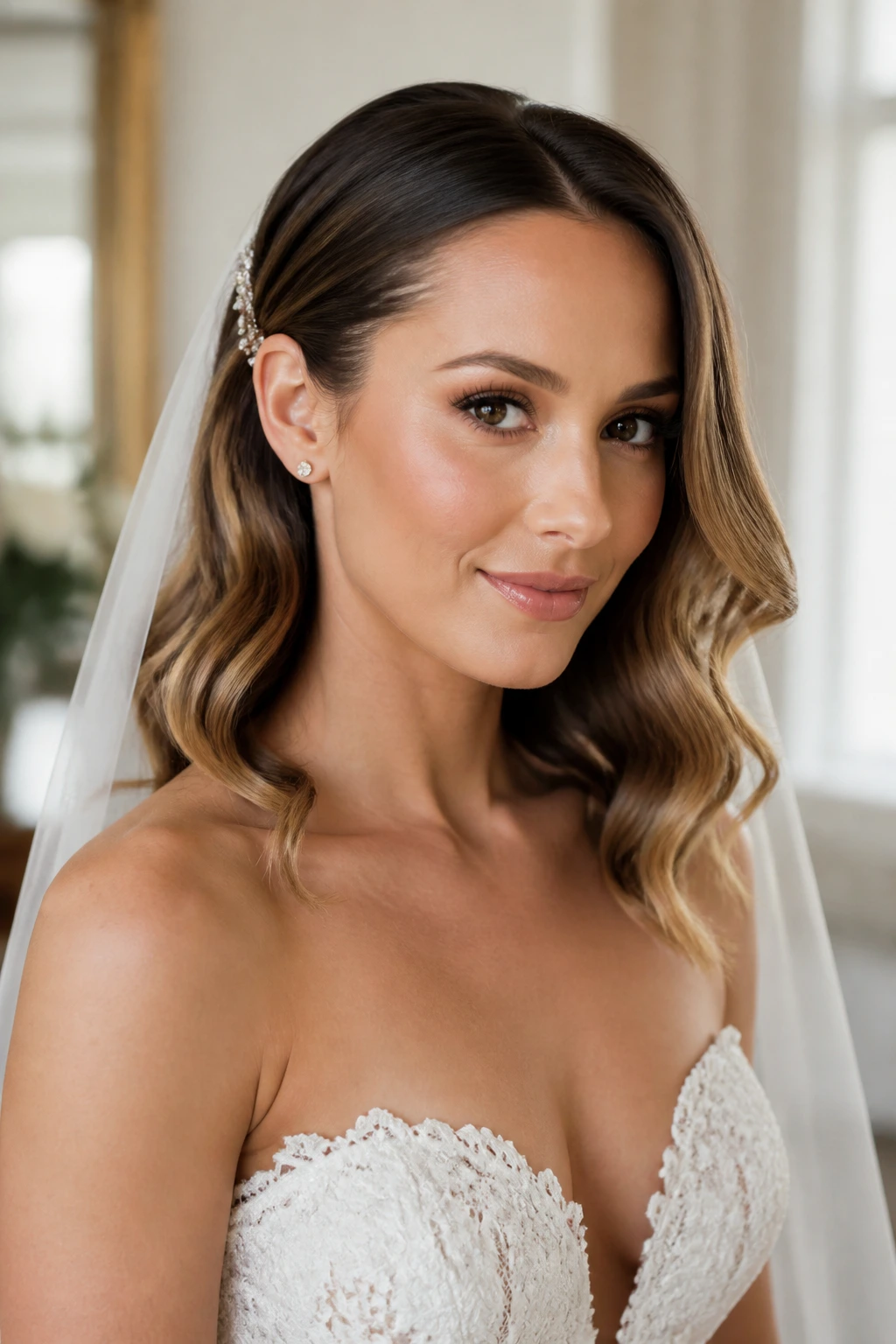
This is one of my favorites for brides who want the hair to look expensive rather than fluffy. The roots stay smooth, almost polished, and the wave starts lower, usually around the lip line or just below. That makes the style feel controlled at the top and soft at the bottom.
It is especially good for thicker hair. When a dense head of hair is waved from root to tip, the result can bulk up fast. Keeping the upper section smooth avoids that problem and gives the style a cleaner shape against the face.
A little anti-frizz serum on the surface and a light mist of flexible spray at the ends are usually enough. No hard shell. No crunchy finish. The style should still bend when the bride tucks one side behind the ear.
8. Mermaid Waves With Tiny Braids
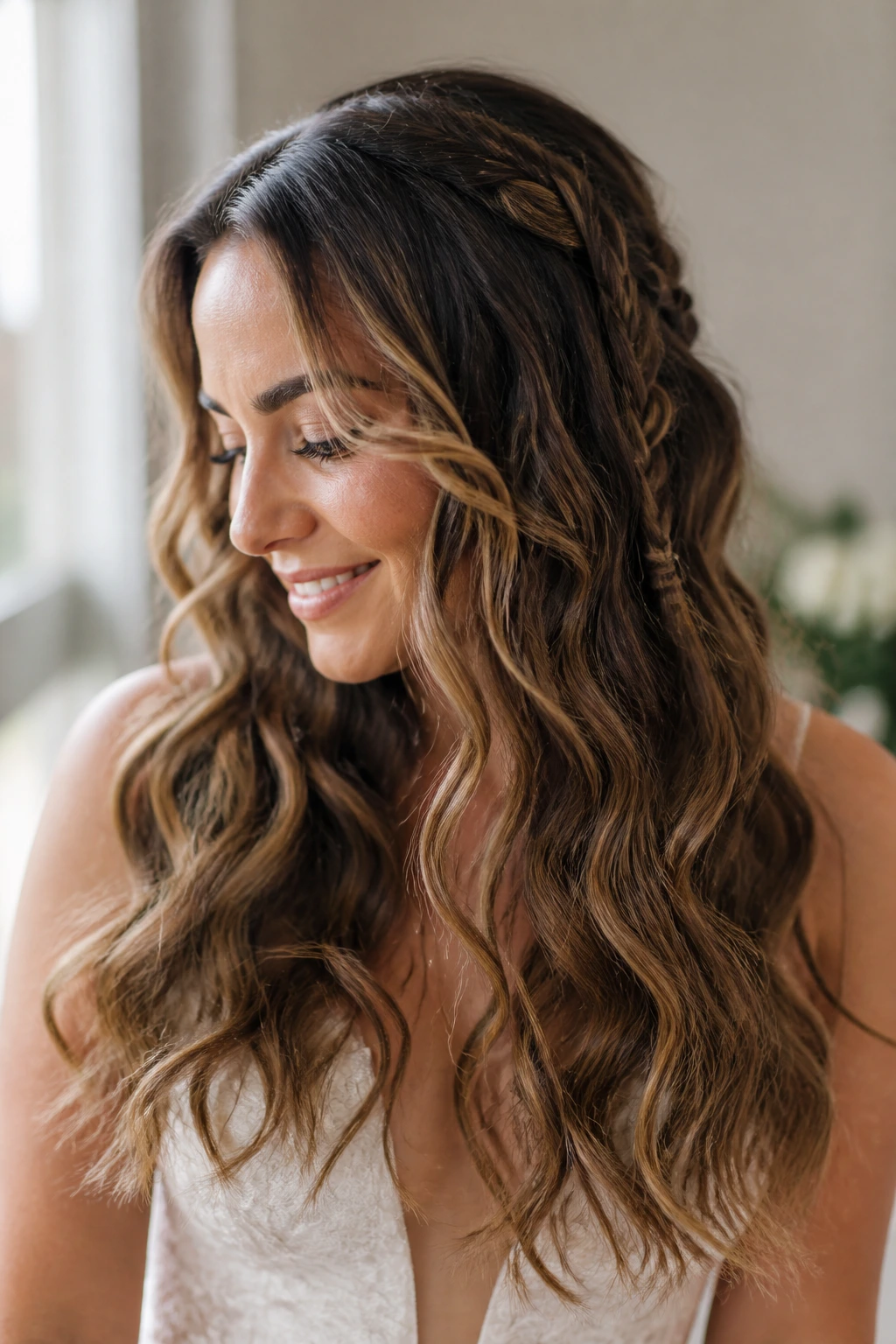
Mermaid waves need length. That part is non-negotiable. On long hair, though, they can look rich and layered, especially when a few tiny braids are woven in and left nearly hidden among the texture. The braids add detail without making the whole head busy.
The trick
The wave pattern should be loose and continuous, not tight and springy. Use a larger iron or a deep waving tool, then brush it out once the sections cool. A few micro-braids near the temple or behind one ear are enough; if you add too many, the style starts looking like a festival look instead of bridal hair.
This one works best for brides wearing simple gowns with a lot of fabric movement. The hair becomes the texture. The dress gets to stay clean.
9. Shoulder-Grazing Lob Waves
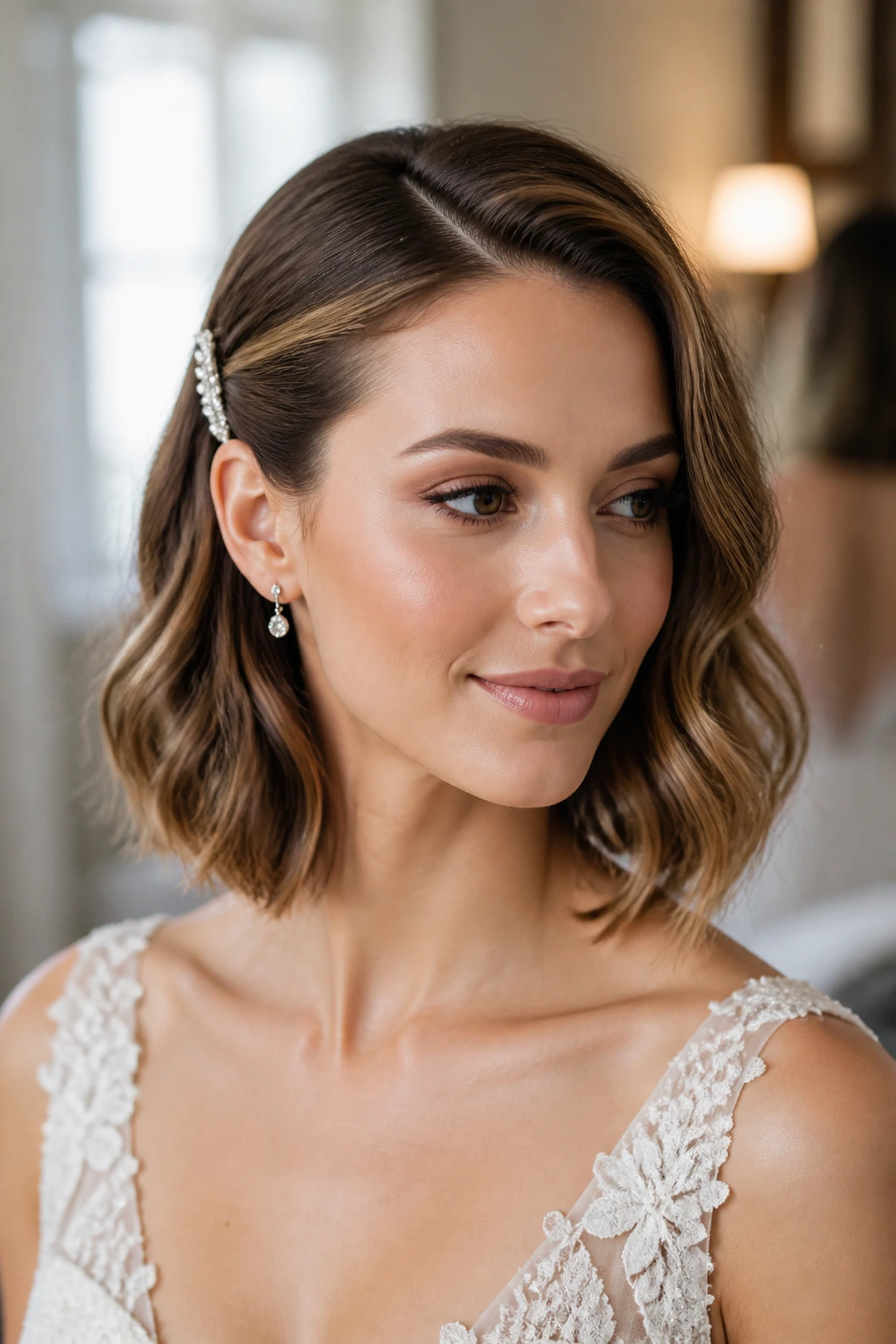
Not every bride has long hair, and that is not a problem. A shoulder-grazing lob can look sharp and modern with soft waves bent through the ends, especially if one side is tucked behind the ear and finished with a small pin or comb.
Shorter hair needs a different kind of wave. Bigger sections, less wrapping, more intention. The bend should look deliberate, not accidental. A flat iron can work better than a curling iron here because it gives the ends a cleaner turn without adding too much bulk.
This style is a good match for brides who hate the feeling of heavy hair on the neck. It also behaves well under shorter veils, since there is less length for the comb to drag. The shape stays neat, and the bride still gets movement.
10. Brushed-Out Curl Set
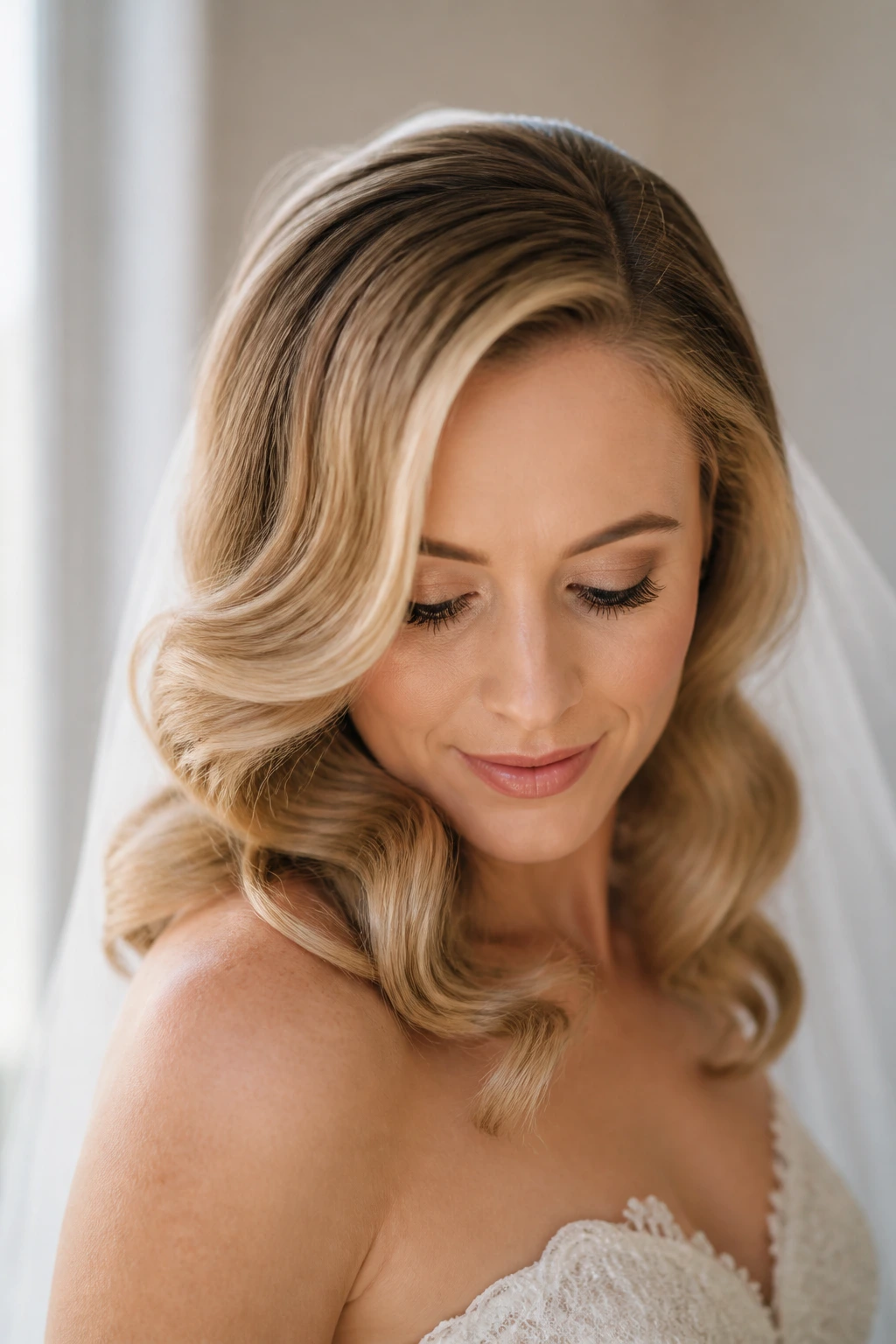
If there is one bridal wave style that loves fine hair, it’s this one. Set the hair in curls, let them cool completely, then brush them out until they become soft waves with a little cloud-like volume. The finish feels formal, but not rigid.
The old-school part of this style is what makes it useful. Fine hair often needs a bit of structure before it can look full in photos. Brushing the curls into waves creates the illusion of density without stuffing the hair with too much product. That’s the part some people get wrong. They add spray first, when what the style actually needs is space.
A side part can make this set feel more romantic. A center part can make it feel clean and polished. Either way, the wave shape should still be visible after brushing; if it disappears entirely, the curls were too loose to begin with.
11. Deep Side Part With a Jeweled Clip
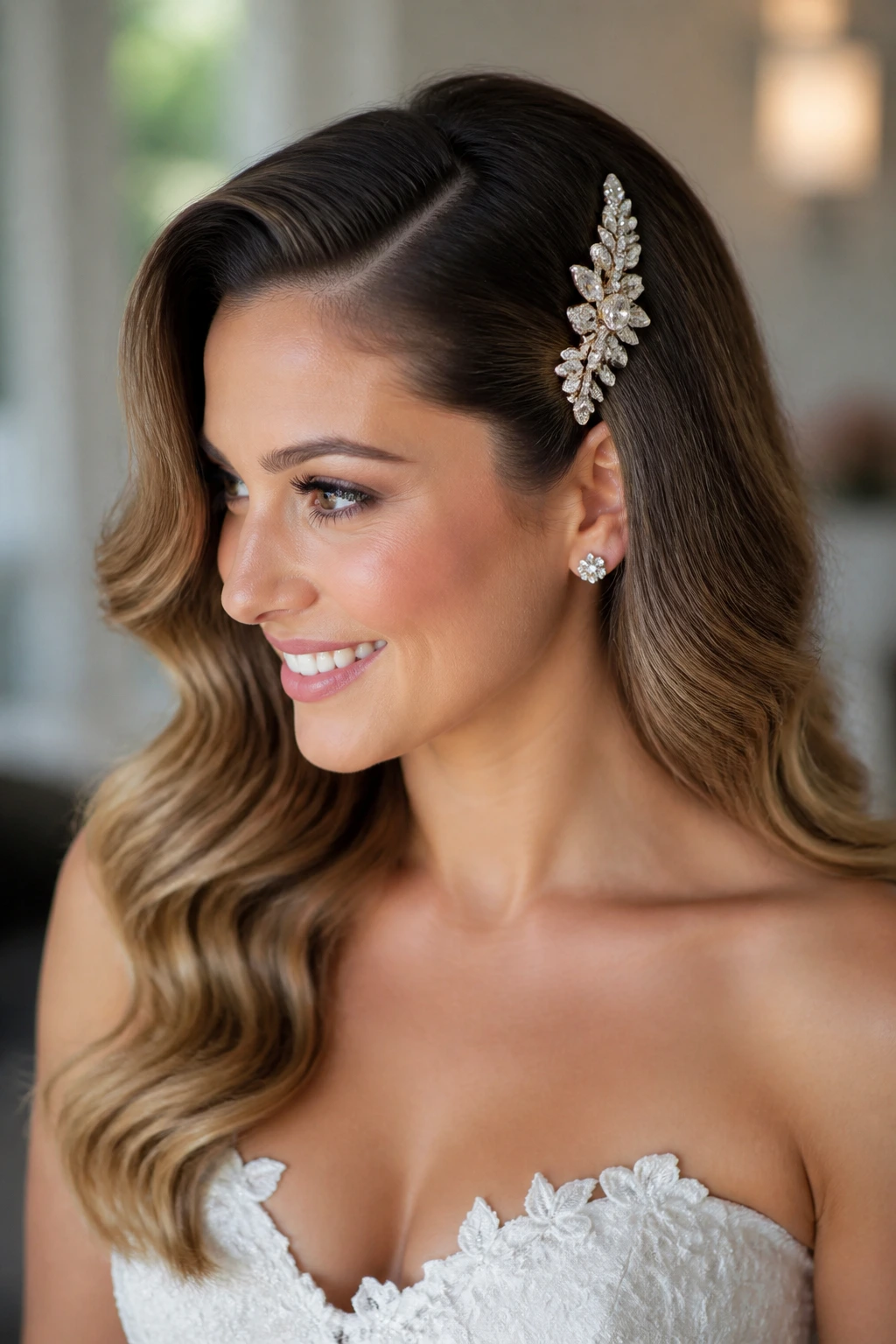
A deep side part gives the hair direction, and a jeweled clip does the rest. This is a fast way to make loose waves feel bridal without adding a braid, a twist, or a full updo. The clip becomes the focal point, so the wave pattern around it should be soft and smooth, not frizzy or overworked.
It is a smart choice for brides who want the face open on one side for earrings or neckline detail. It also works on medium-length hair better than people expect. The clip gives the look a deliberate finish even when the length stops at the shoulders.
Skip tiny, flimsy clips here. They disappear. Use one piece that can actually hold a section of hair flat against the head.
12. Bubble Half-Up on Waves
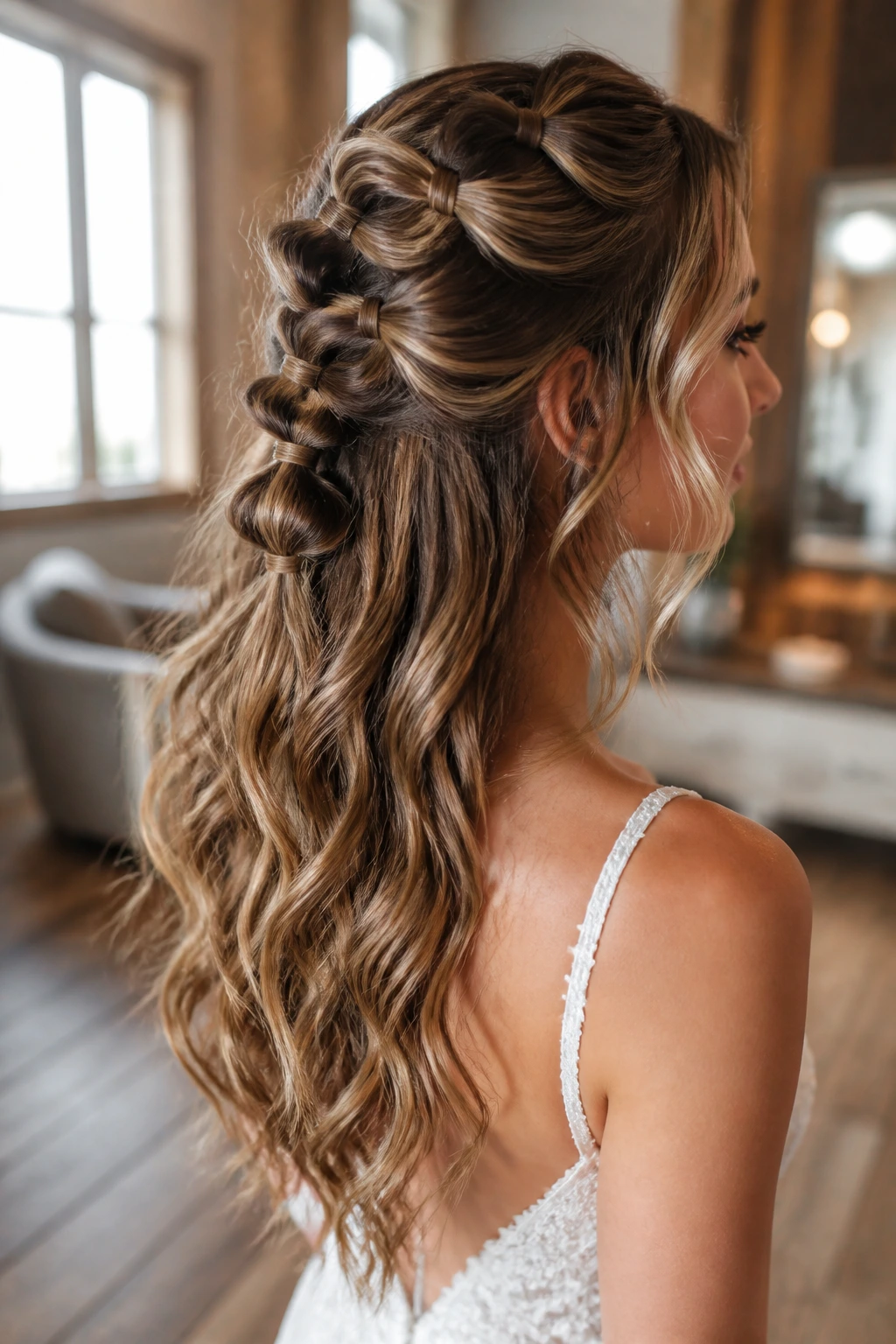
A bubble half-up can feel fashion-forward without drifting into gimmick territory when the base is soft waves. The lifted sections create small rounded shapes down the back, and the rest of the hair keeps the romantic movement underneath. It’s playful, but not childish.
This style works when the dress already has clean lines. The hair brings the interest. Because the bubbles create their own structure, the waves below can stay slightly looser than they would in a fully polished style. That makes it a good choice for brides who want something less expected than a twist or a braid.
Keep the bubbles evenly spaced. Uneven gaps make the style look accidental. Even if the goal is softness, the spacing should still feel planned.
13. Infinity Braid Accent With Undone Waves
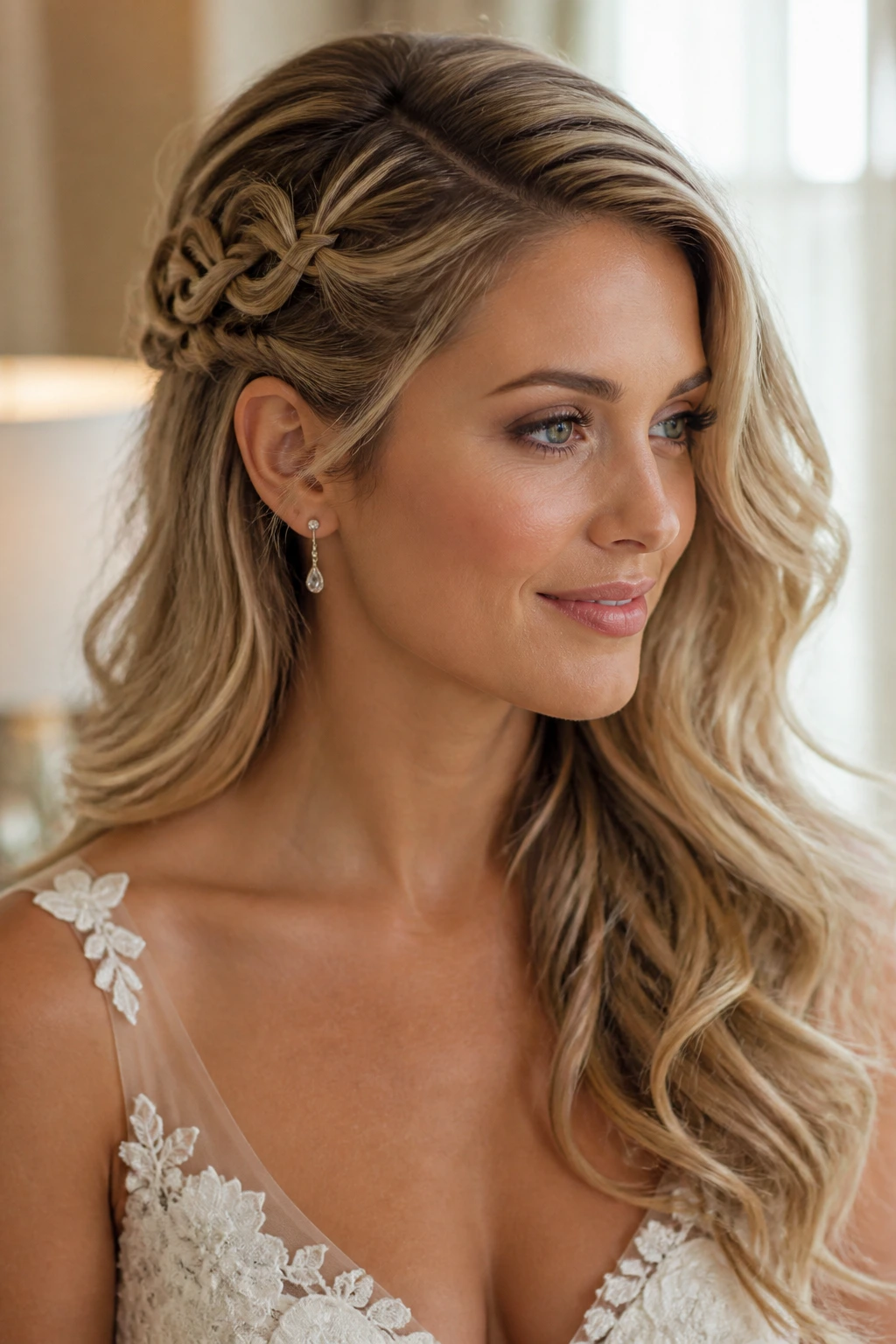
A small infinity braid tucked into one side can be the difference between “pretty waves” and a style that feels tailored for the day. The braid itself brings a little architecture, while the rest of the hair stays loose and easy to move through the room.
Who it flatters
Brides with long hair and a simple dress get a lot out of this one because the braid adds a focal point without taking over. It also works when the hair is naturally thick, since the braid can control a section near the temple while the rest of the length stays soft.
I like this style with one ear exposed and one side left fuller. The asymmetry keeps the whole look from going flat. And if you are adding a veil, the braid gives the comb a stable spot without wrecking the wave pattern.
14. Low Wavy Ponytail With a Wrapped Base
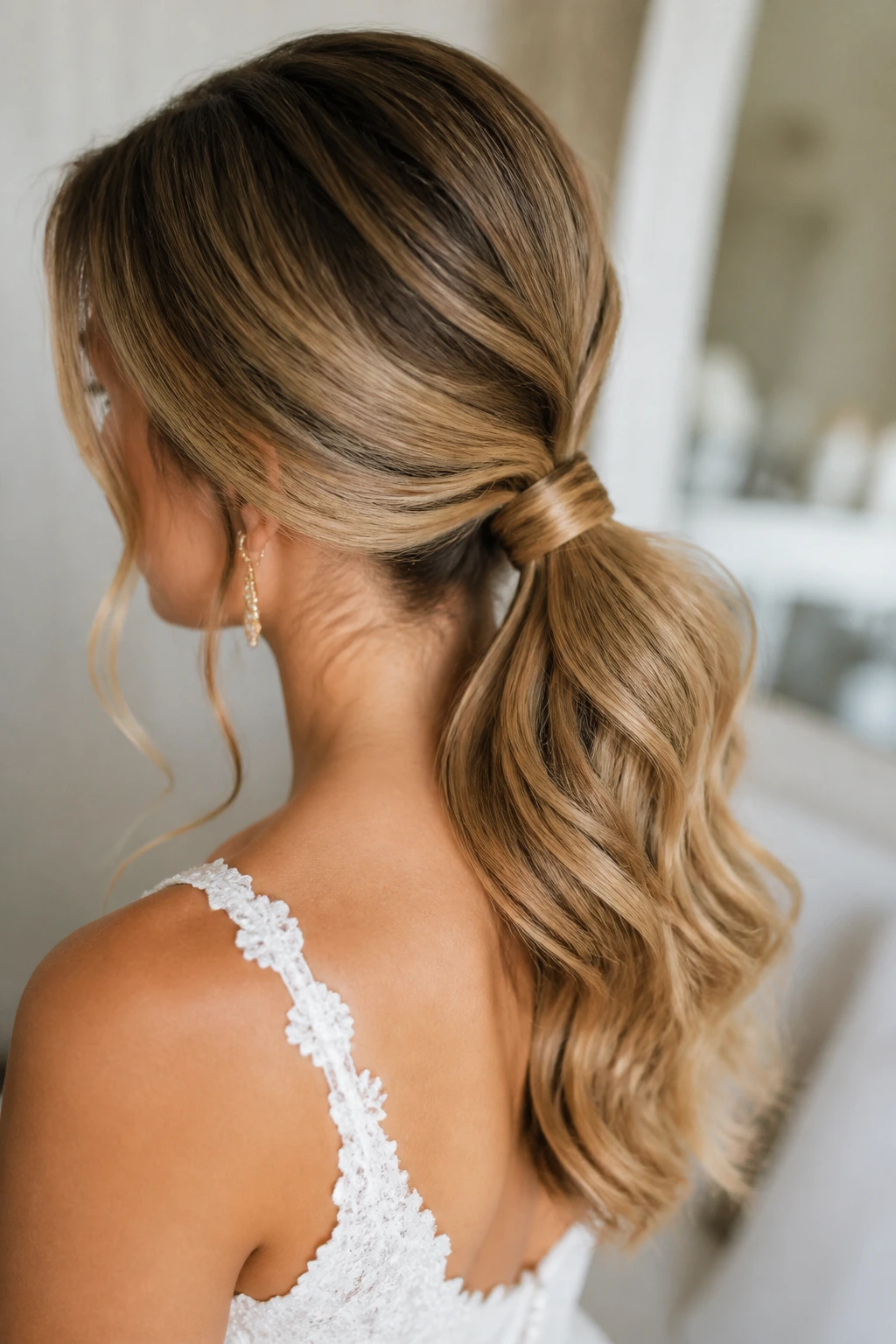
A ponytail sounds plain until you add the right wave and wrap the base with a clean section of hair. Then it starts looking modern, elegant, and easy to live in for ten hours straight. That’s the appeal. No fighting with pins at the nape. No heavy bun pressing against the collar.
The ponytail should sit low enough to feel bridal, not athletic. Waves in the tail keep it from looking too sharp. A silk ribbon or a hair wrap can hide the elastic if the gown leans romantic.
This is one of the best choices for brides who plan to dance hard. The style stays secure, and the tail still swings when you move. That movement matters.
15. Modern French Twist With a Wavy Tail
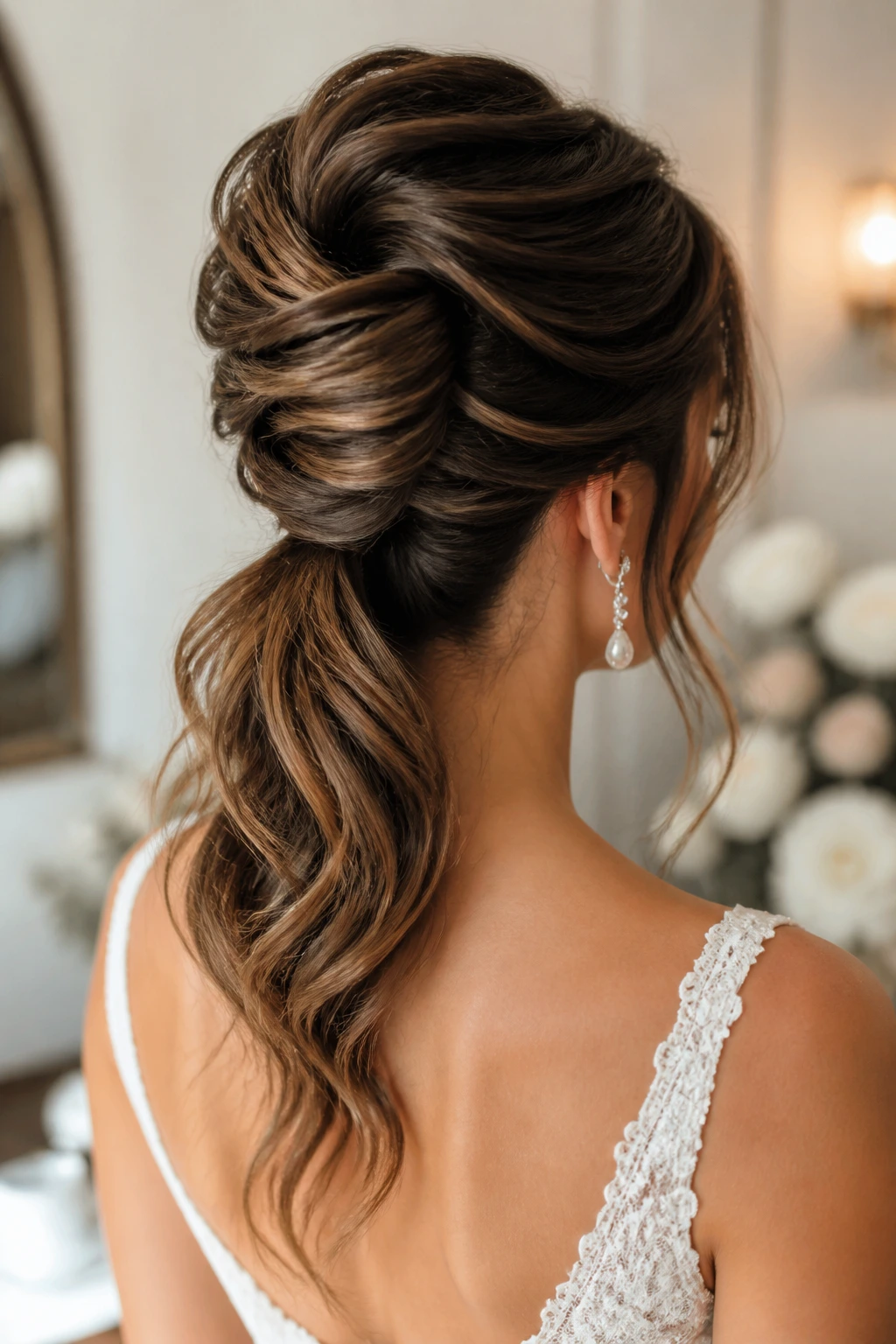
A French twist can feel old-fashioned in the wrong hands. Let a few soft waves escape into a tail, though, and it becomes something much more current. The twist gives the upper half structure. The loose length below keeps it from getting too severe.
This hybrid style is especially good for brides who want to keep the neck open while still wearing some length. It sits well with a backless dress or a gown with a long line down the spine, because the hair follows the shape instead of cutting it off.
A bride with straight hair can still wear this look, but the tail needs enough bend to keep the whole style from looking flat. The wave is the part that makes the French twist feel bridal instead of corporate.
16. Floral Comb Waves
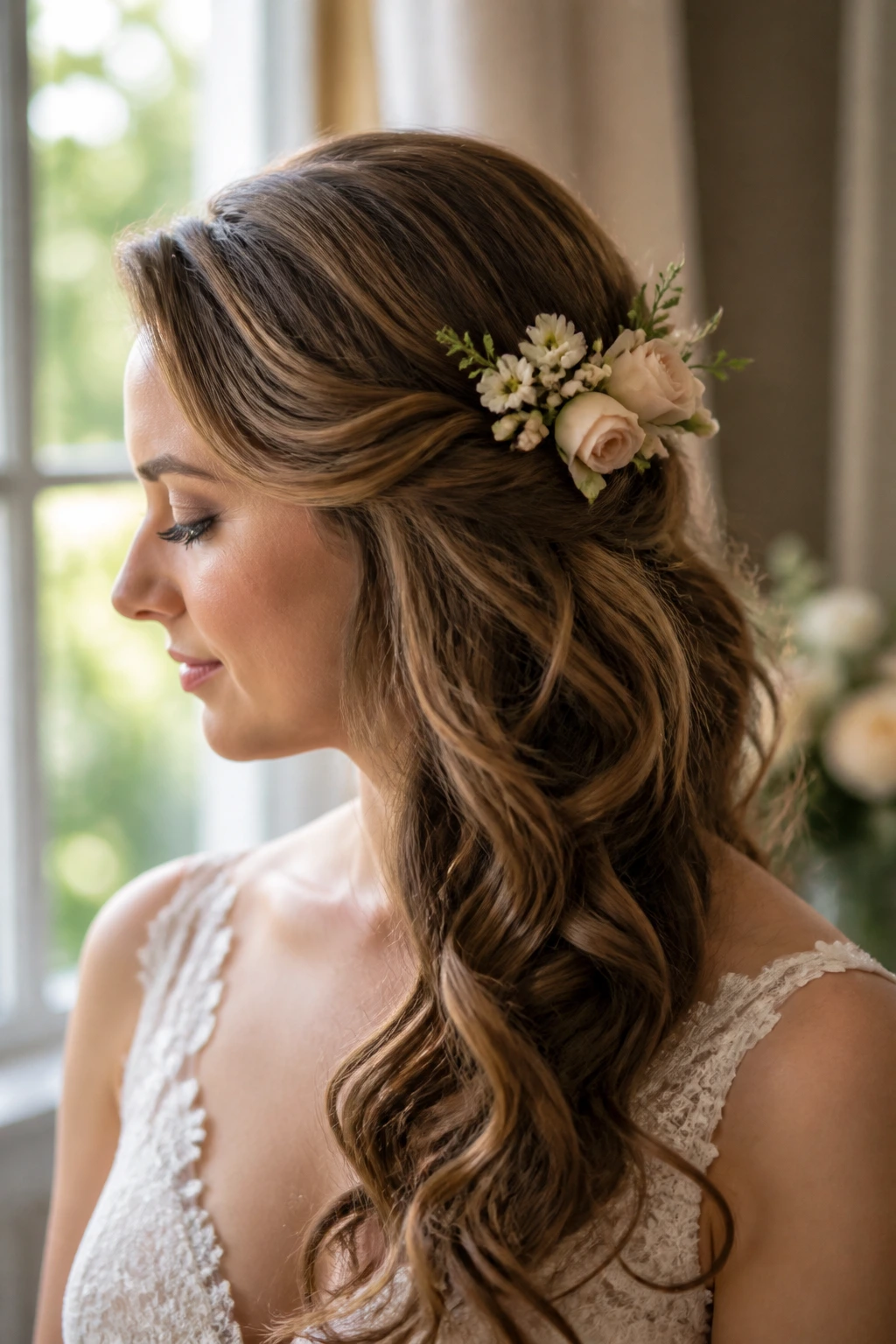
A floral comb can do more than decorate. It gives the waves a place to gather and lets the style feel connected to the bouquet without looking like the flowers were pasted on at the last minute. A side-swept set or soft center-part wave both work here.
Fresh flowers need a little more care, especially if the ceremony runs long or the weather is warm. A preserved floral comb or delicate silk blooms can be easier if the bride wants the same look in pictures and in the reception light. Either way, the waves should be simple enough that the flowers stay the focus.
The best version of this look keeps the flowers to one side. Scattering blooms everywhere tends to make the hair look crowded fast.
17. Vintage Finger-Wave Front With Soft Back Lengths
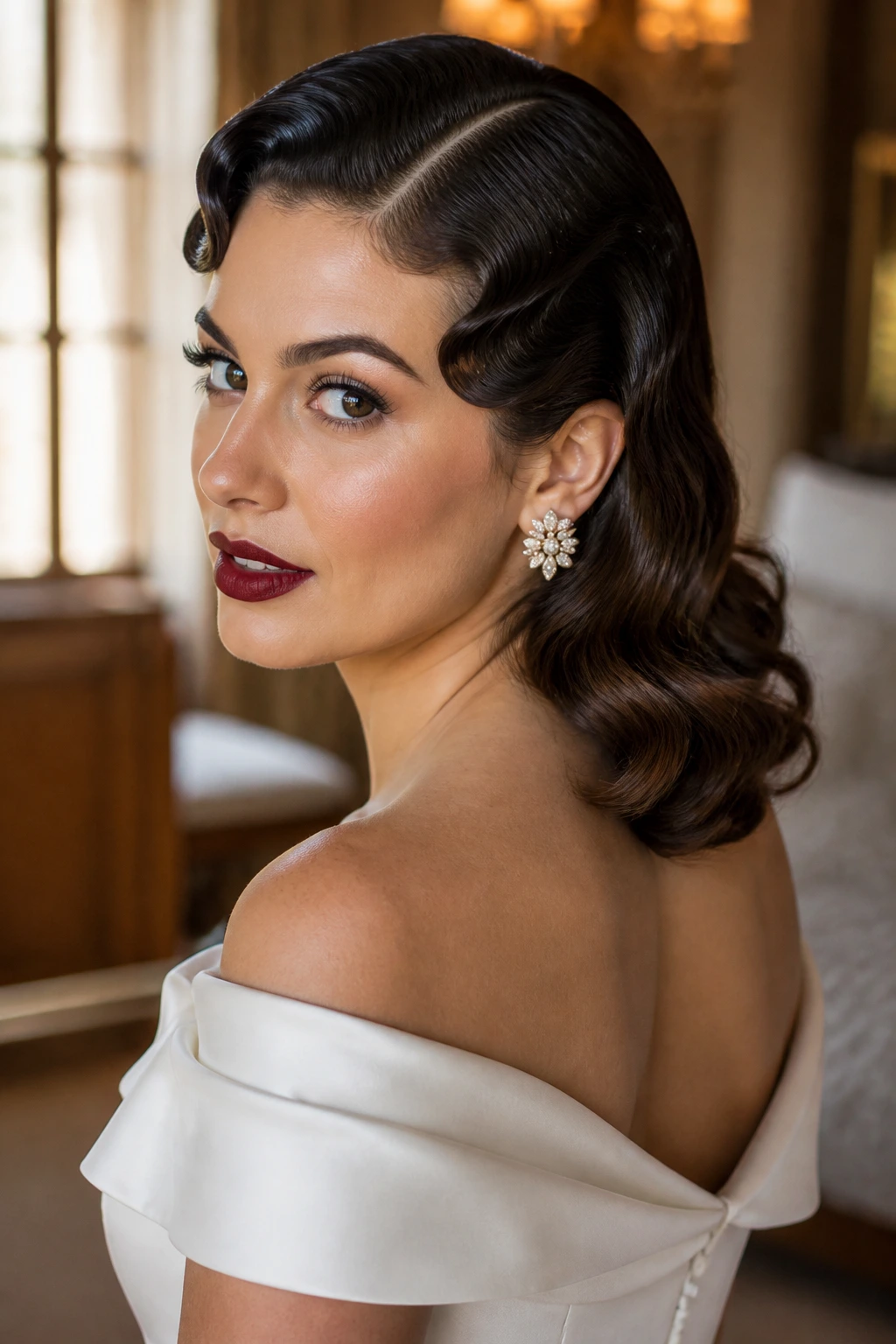
This is the bride who wants a nod to old glamour without wearing a fully vintage costume. Finger waves across the front create a sculpted frame, and the back can fall in soft lengths or brushed waves. That contrast is the magic.
Finger waves need patience. They are not a rushed style. But they give the front of the head a polished, almost jewelled shape that holds its own against a dramatic gown or a strong lip color. The back stays looser so the style still reads romantic.
I would choose this for a bride wearing a gown with structured satin, beading, or a square neckline. It has enough personality to stand up to a bold dress without turning into a costume piece.
18. Cathedral Veil Waves
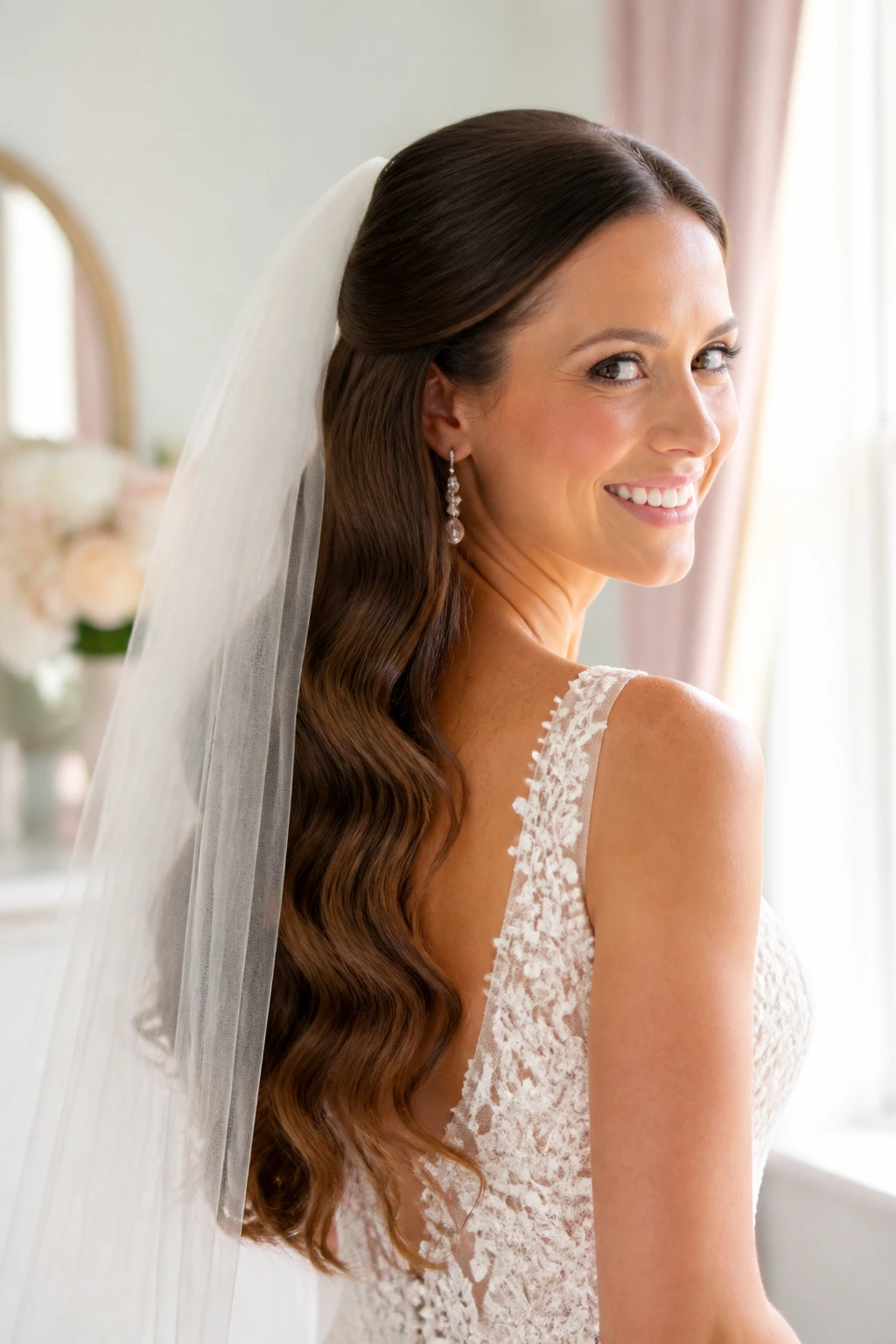
Some hairstyles are built to carry a veil first and a camera second. Cathedral veil waves fall into that camp. The waves need enough support at the crown and enough softness at the ends so the veil can be removed later without leaving the hair looking crushed.
The shape is usually a low, smooth style with loose bends running through the length. That gives the veil comb something steady to sit on while still leaving movement in the back. It also means the hair looks good after the veil comes off, which is the whole point.
A little hidden pinning helps more than heavy spray here. Heavy spray can make the veil slide oddly or snag when it’s removed. Secure the base well, then let the waves do the rest.
19. Side Braid Into Waves
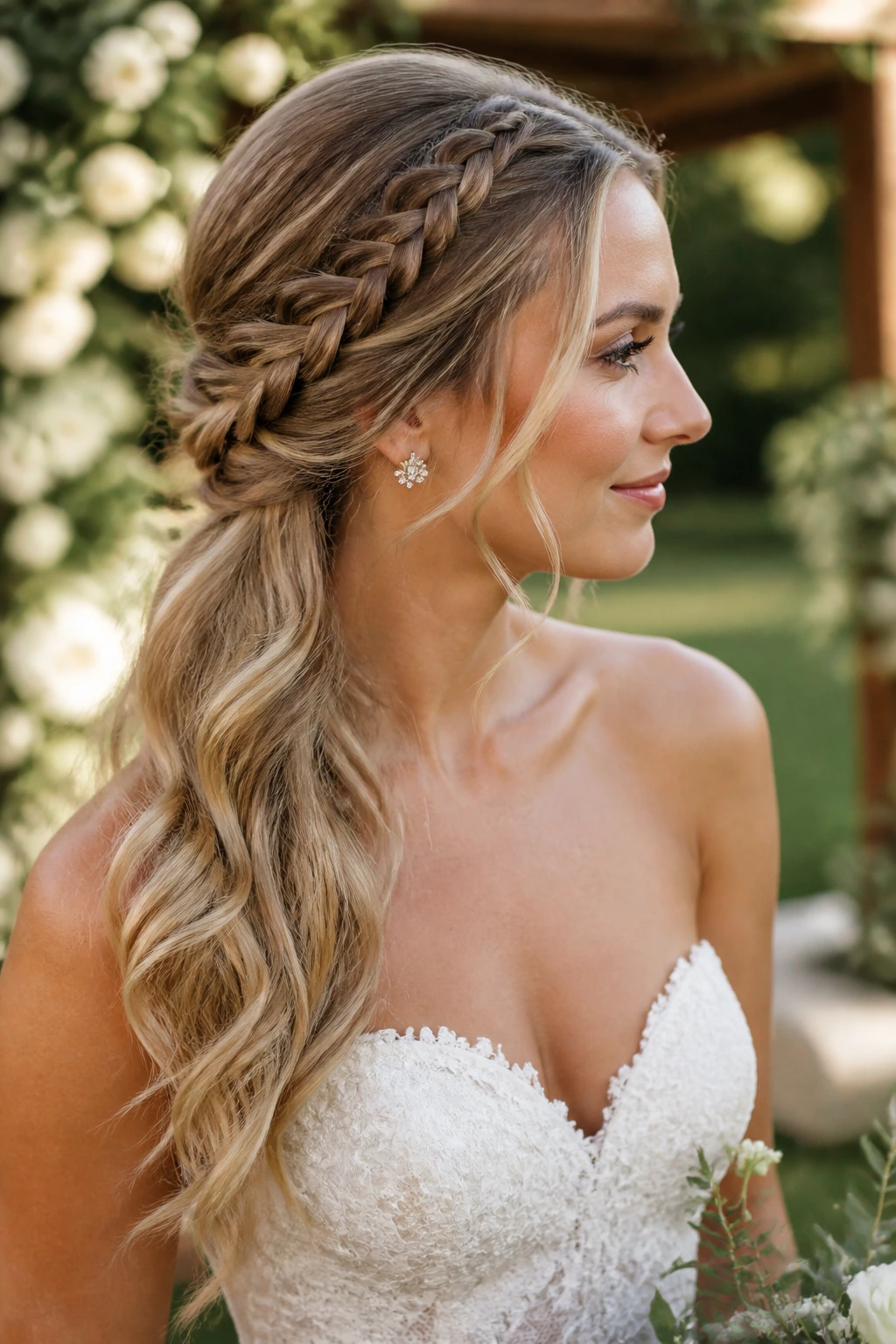
A side braid that flows into waves has a soft, hand-made feel that suits brides who want texture without a full crown braid. The braid starts at one side, runs back toward the nape or shoulder, and then loosens into wavy lengths. It creates direction without sealing off the face.
This style is a good fit for long hair and outdoor ceremonies, especially when the dress leans light or airy. The braid keeps one side from falling forward during the vows, and the waves keep the tail from looking too neat.
The transition from braid to wave should be smooth. If the braid stops abruptly and the waves start too low, the style can look disconnected. A few loose pieces around the temples make the whole thing feel softer.
20. Temple-Clipped Minimal Waves
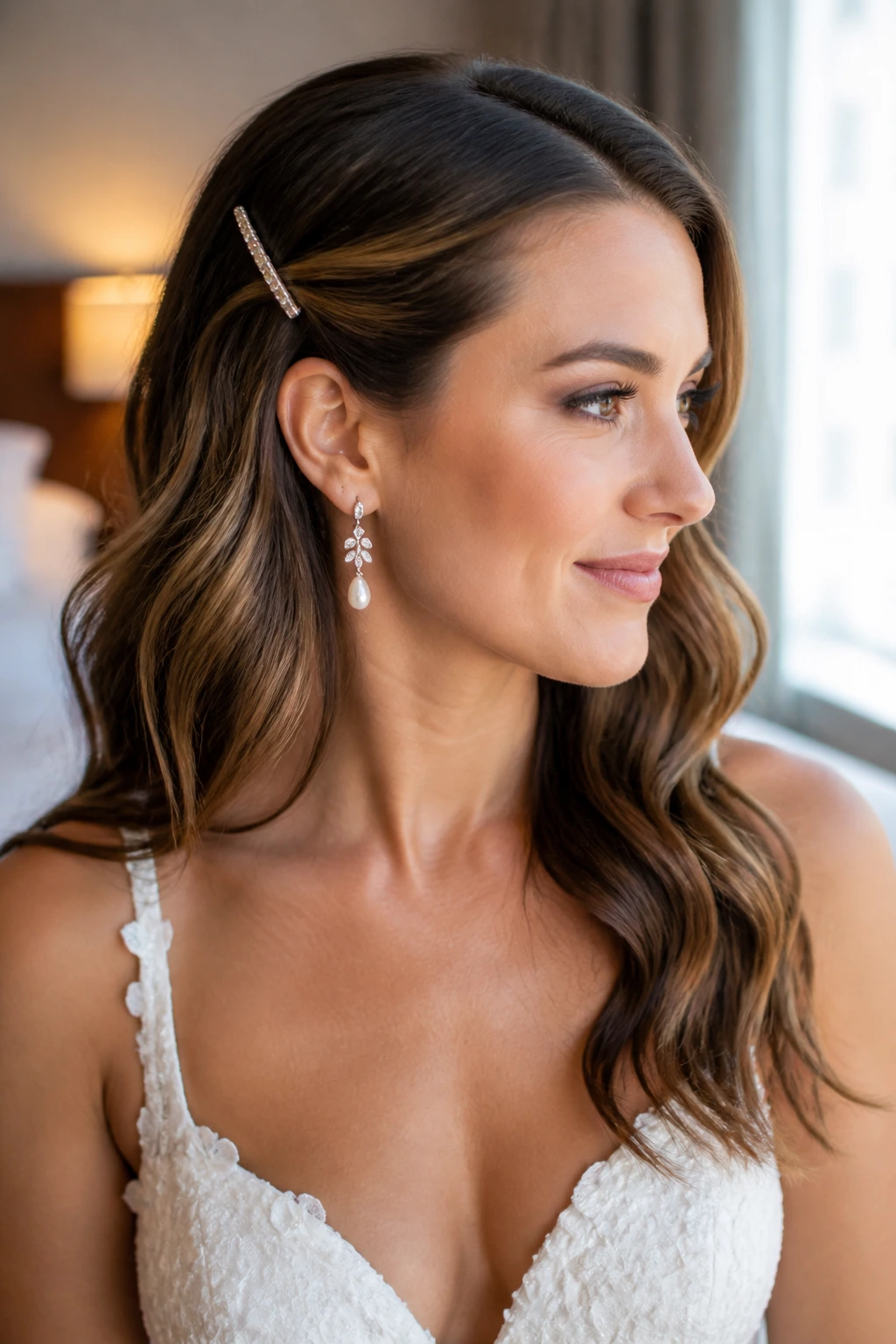
Not every bride wants visible structure. Temple-clipped minimal waves keep the hair mostly down, with only the sides tucked back enough to show the face and earrings. The result is clean, calm, and slightly modern.
What makes it different
There is very little decoration here, so the wave pattern has to be good. The bends should be smooth and controlled, with just enough polish that the tucked-back sections don’t look like they were pinned in a rush. A slim clip or two small pins can do the job.
This is one of the easiest ways to wear a strong earring without losing the softness of hair around the shoulders. It also flatters gowns that already have a lot going on at the neckline. The hair backs off and lets the dress speak.
21. Twisted Half Crown With Long Waves
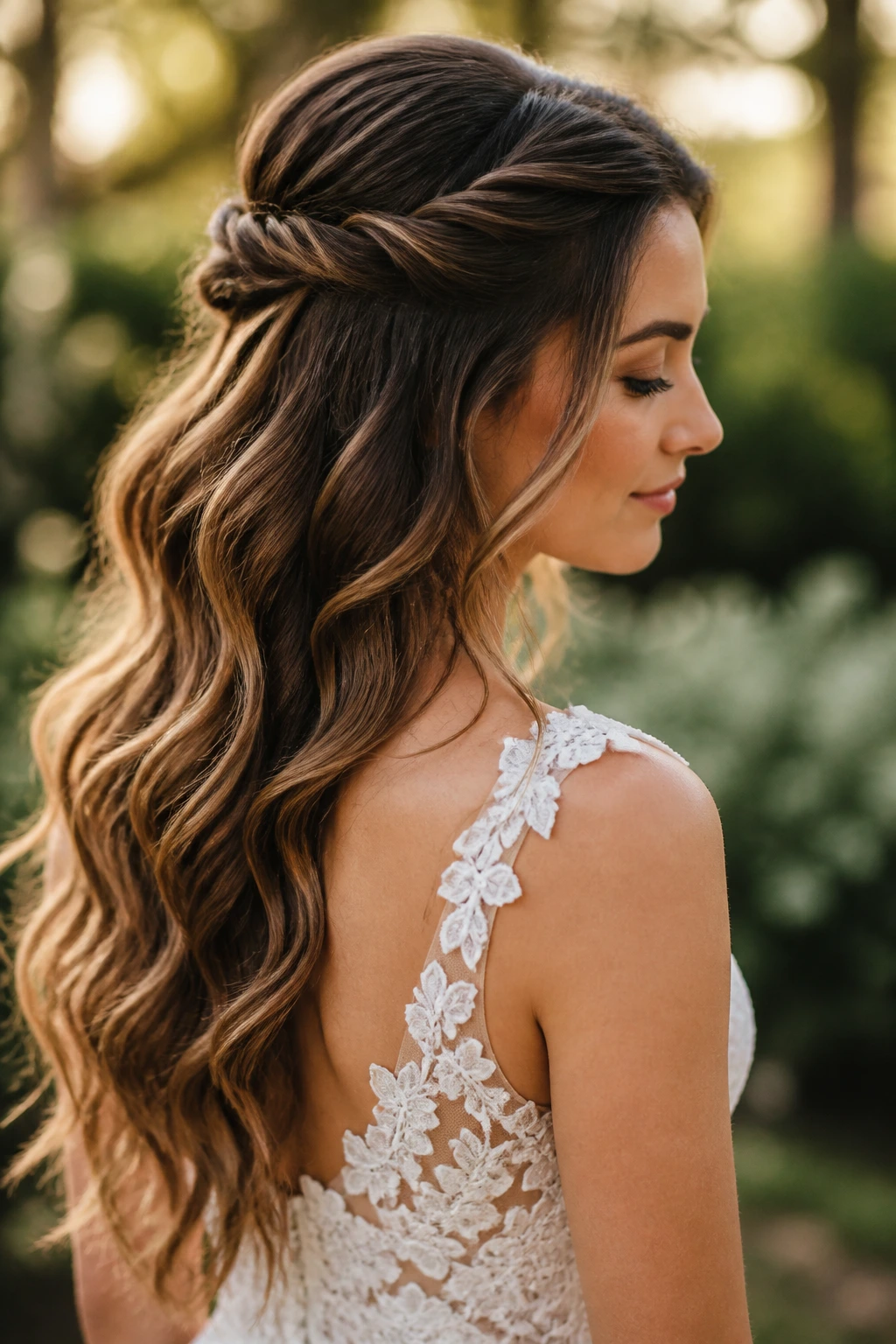
A twisted half crown is quieter than a braid and softer than a full half-up. Two twisted sections wrap back from the temples and meet near the center, leaving the rest of the hair to flow in long waves underneath. It feels balanced and slightly dreamy.
The twists give just enough structure to support a veil comb or a small floral pin. The waves below keep the style from becoming too formal. Brides with layered hair often like this because the twists control the shortest pieces around the face without pinning everything up.
This one looks best when the twists are not too neat. If every strand is tightly tucked, the style loses the softness that makes it appealing.
22. Waterfall Braid Into Soft Waves
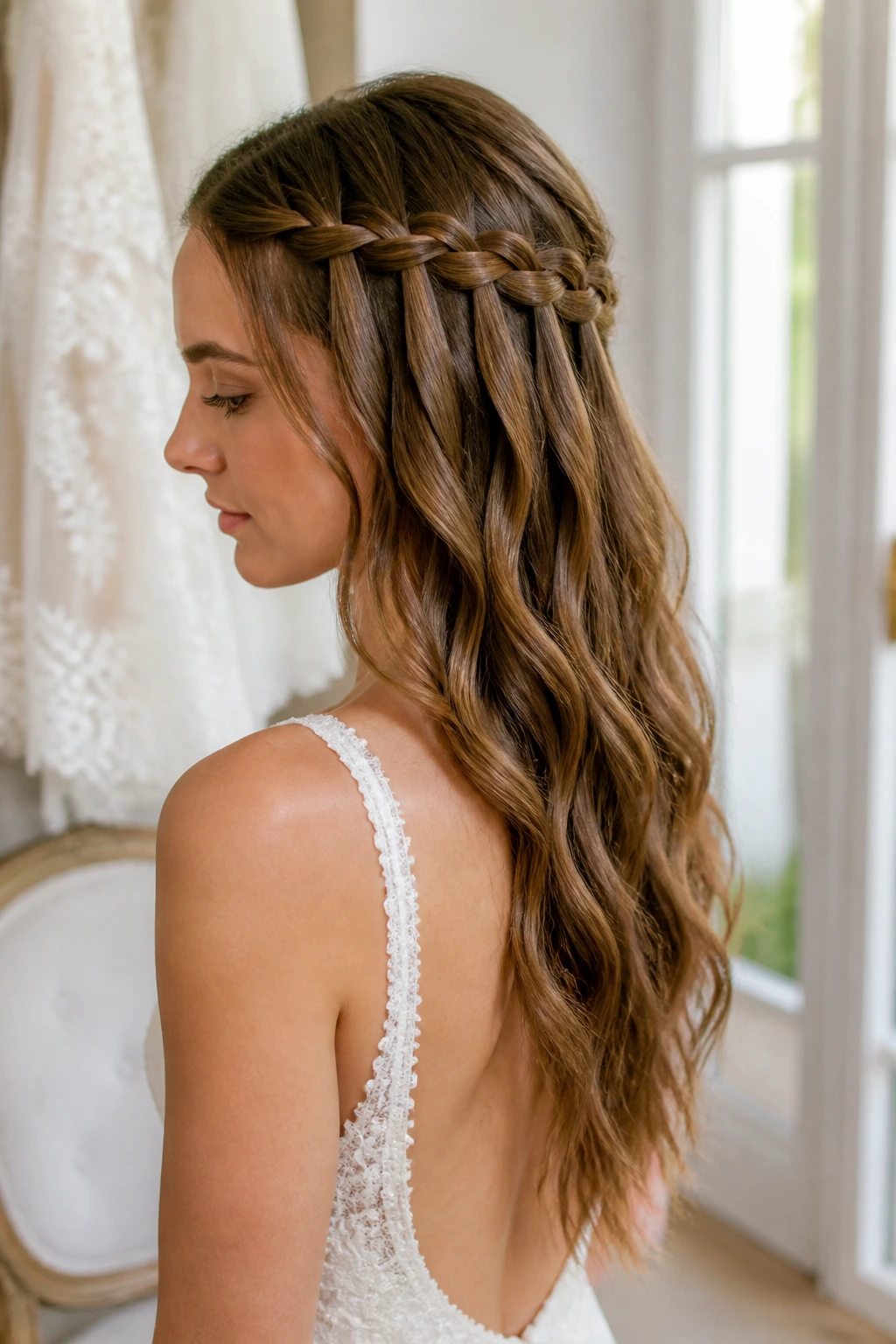
A waterfall braid drops strands through the braid pattern so the hair keeps moving underneath it. That makes it a natural fit for waves, since the braid acts like a frame rather than a wall. The look is romantic in a way that still feels precise.
It works especially well with long hair and dresses that have soft drape or lace detail. The braid pulls the eye to the side of the head and then lets the waves take over down the back. A bride who wants detail in the hair without closing off the length usually ends up here.
Keep the braid loose enough that the hair beneath it can still move. If it sits too tight, the waterfall effect gets lost, and the braid just becomes another hard line.
23. Glam Waves for Statement Earrings
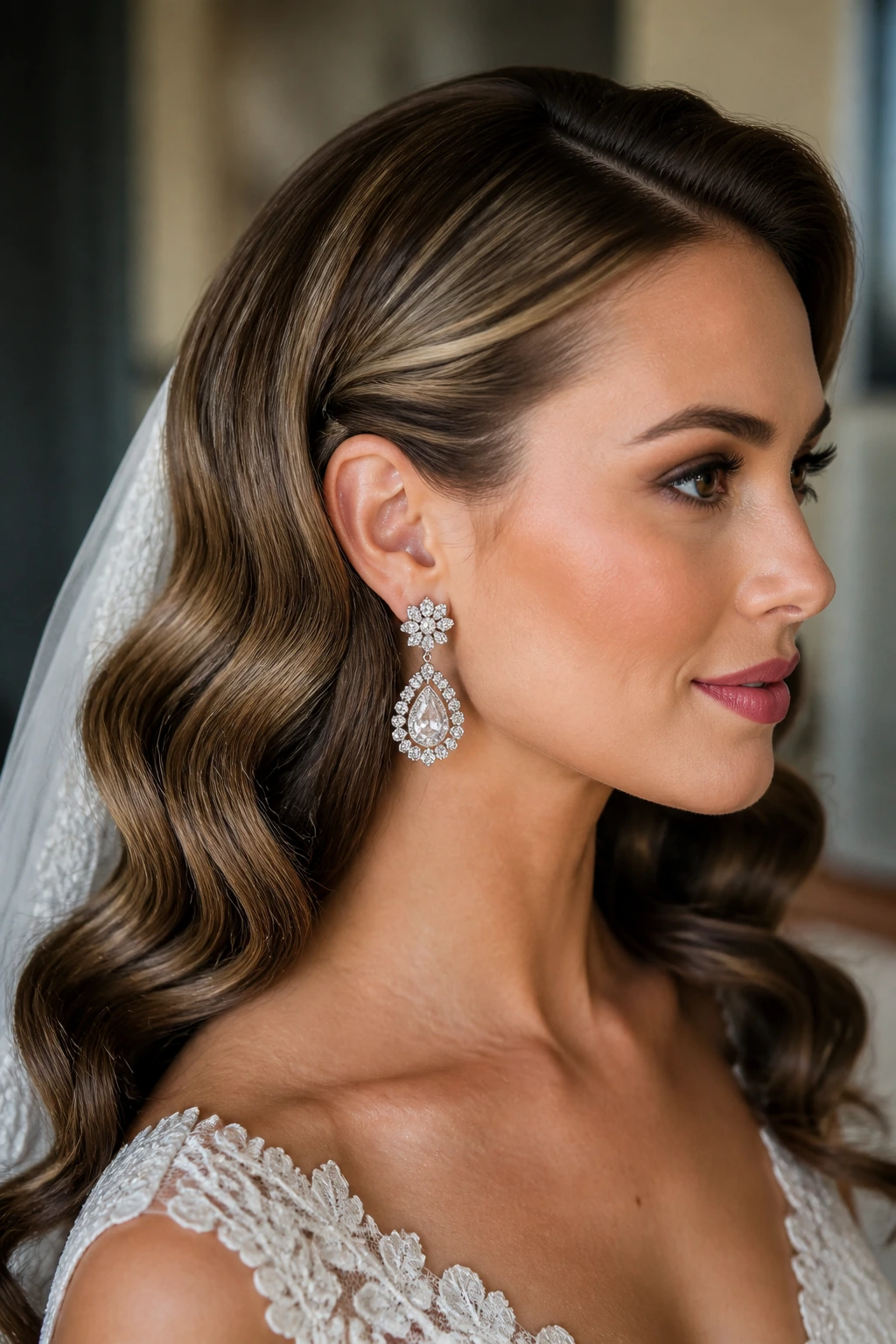
When the earrings are the main event, the hair should know its place. Glam waves for statement earrings usually mean a polished wave pattern with the front sections tucked slightly back so the earrings are visible from the side and the front. The hair still has fullness, but it doesn’t hide the jewelry.
This is the style for brides who love a sharp profile shot. The ear, jawline, and neckline get room to breathe. It also works beautifully with a gown that is simple on the body and dramatic at the ears.
The finish matters here. If the waves are too loose or fluffy, the earrings disappear into the hair. If the waves are too tight, the whole thing feels dated. Somewhere in the middle is the sweet spot.
24. Baby’s-Breath Scattered Waves
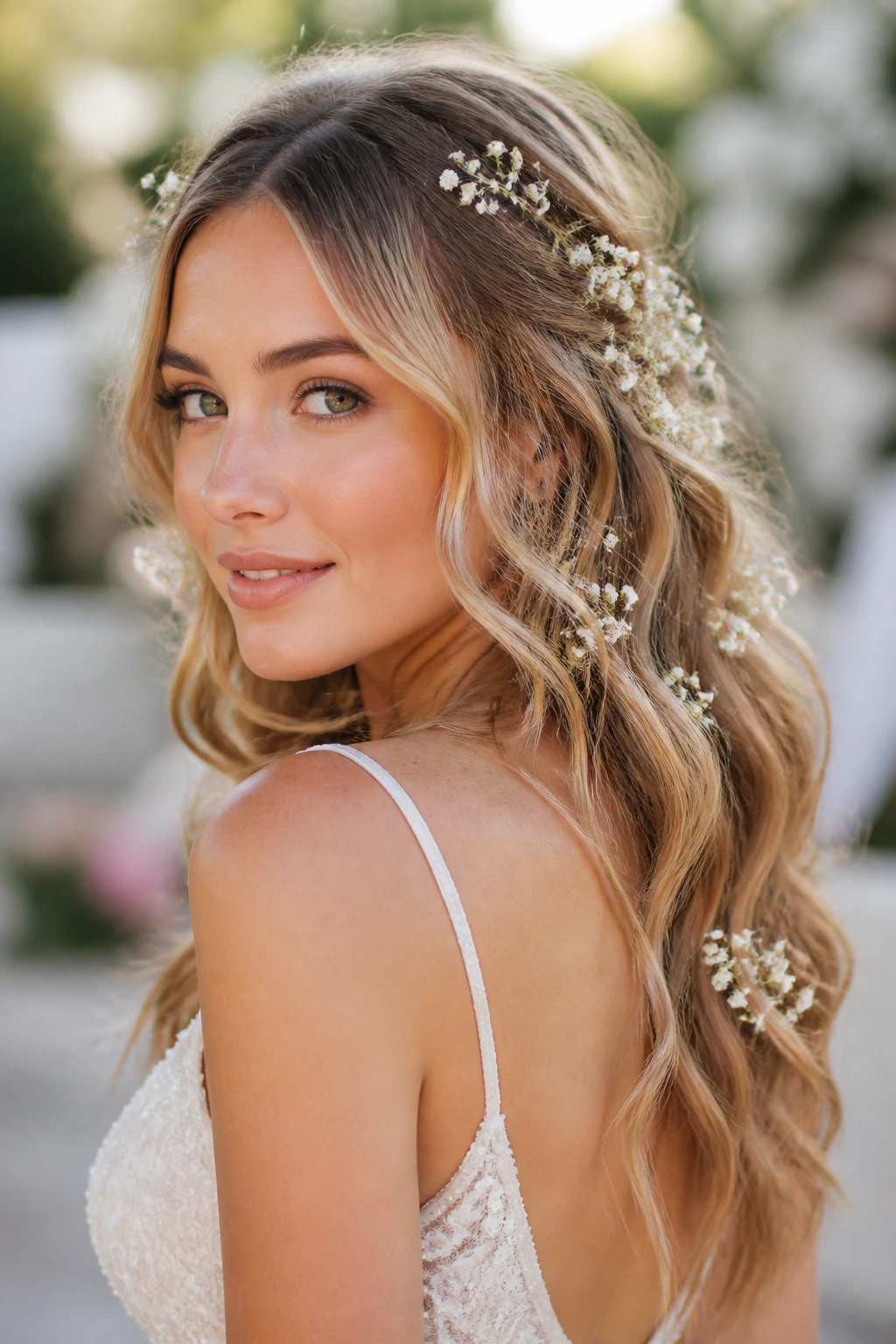
Tiny clusters of baby’s breath tucked through waves create a gentle, airy look that feels especially good with garden ceremonies or dresses that already lean soft and romantic. The flowers should look placed, not sprinkled everywhere like confetti.
This style works best when the wave pattern stays open and touchable. Overly defined curls can fight the small flowers, while too little texture makes the blooms slide around. A few pins, spaced carefully, keep the flowers sitting where they should.
I prefer this look when the bouquet has the same small-flower feel. It keeps the whole visual language consistent. One of those bridal details that looks simple until you notice how exact the placement is.
25. Curtain Bangs With Loose Bridal Waves
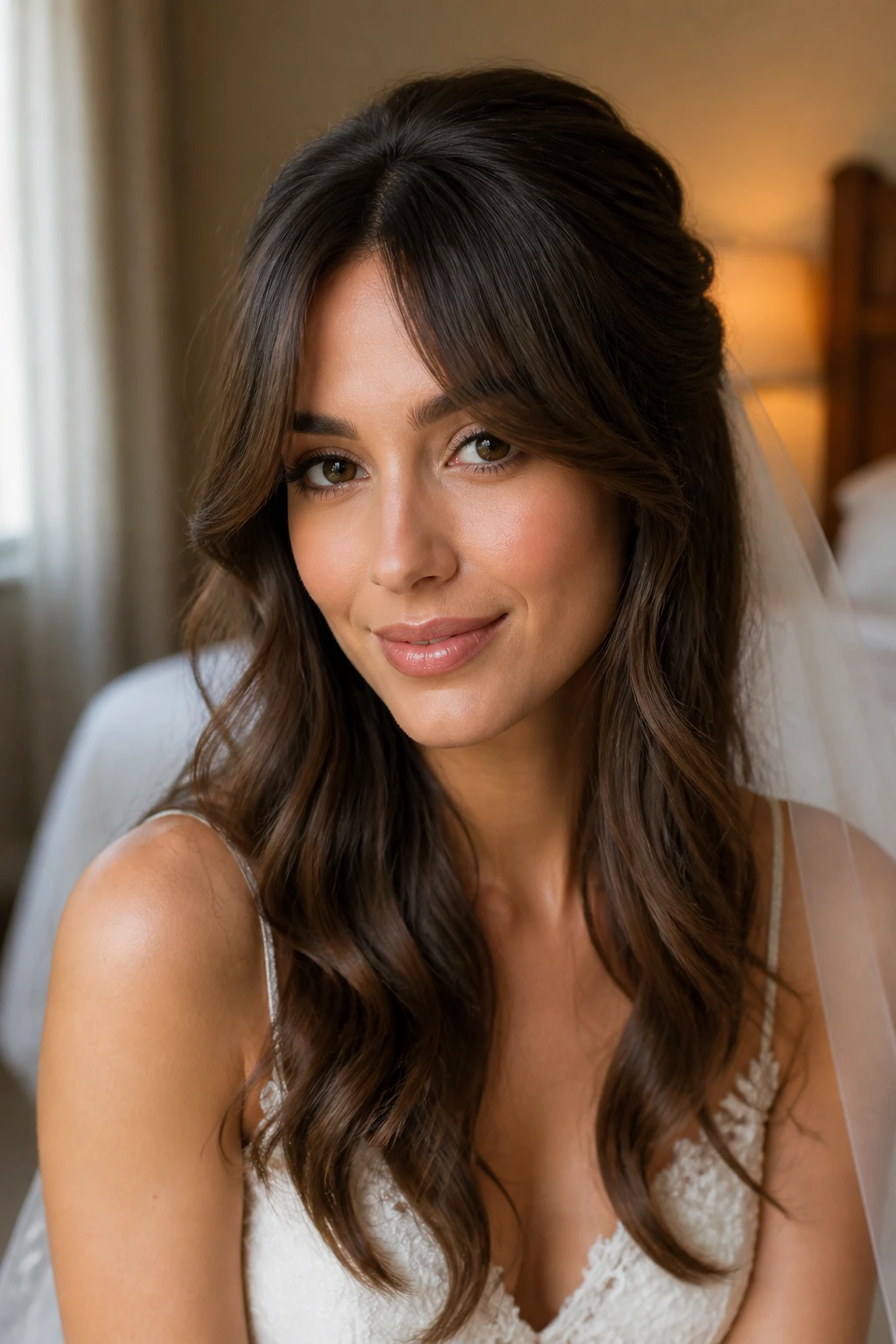
Curtain bangs change the whole balance of a bridal wave style. They frame the eyes, soften the forehead, and let the rest of the hair fall in loose bends that feel approachable rather than overly polished. If the bride already wears bangs, forcing them back for the wedding often looks less like a style choice and more like a compromise.
The key is keeping the bangs separated enough that they do not clump together after a few hours. A light root lift and a small amount of flexible spray usually help. The waves underneath should stay relaxed so the bangs remain the main face-framing element.
This is a good look for brides who want the hair to feel like their hair, only cleaner. That matters more than people admit.
26. Short Bob Waves With a Tucked Side
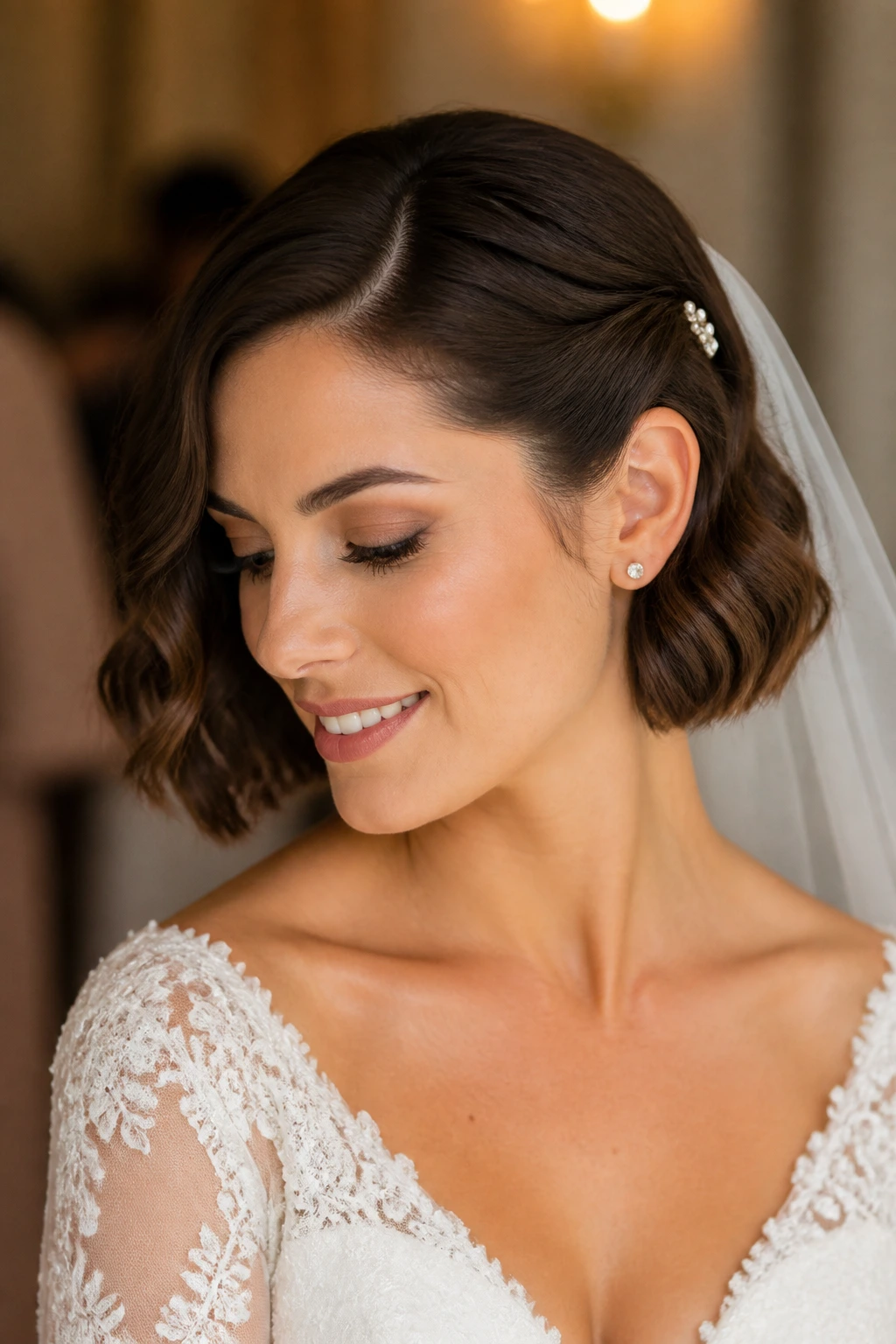
A bob does not need extra length to feel bridal. Soft waves through a short cut can look sharp and elegant, especially when one side is tucked behind the ear and secured with a tiny pin or comb. The shape becomes the point.
Short hair takes precision. The bends have to be placed intentionally so the bob doesn’t puff out at the sides. A flat iron can make neater bends than a curling iron here, especially around the ends and underlayers.
This style suits brides who want clean lines and low fuss. It also behaves well under shorter veils and pairs well with earrings that deserve to be seen.
27. Thick-Hair Sculpted Waves
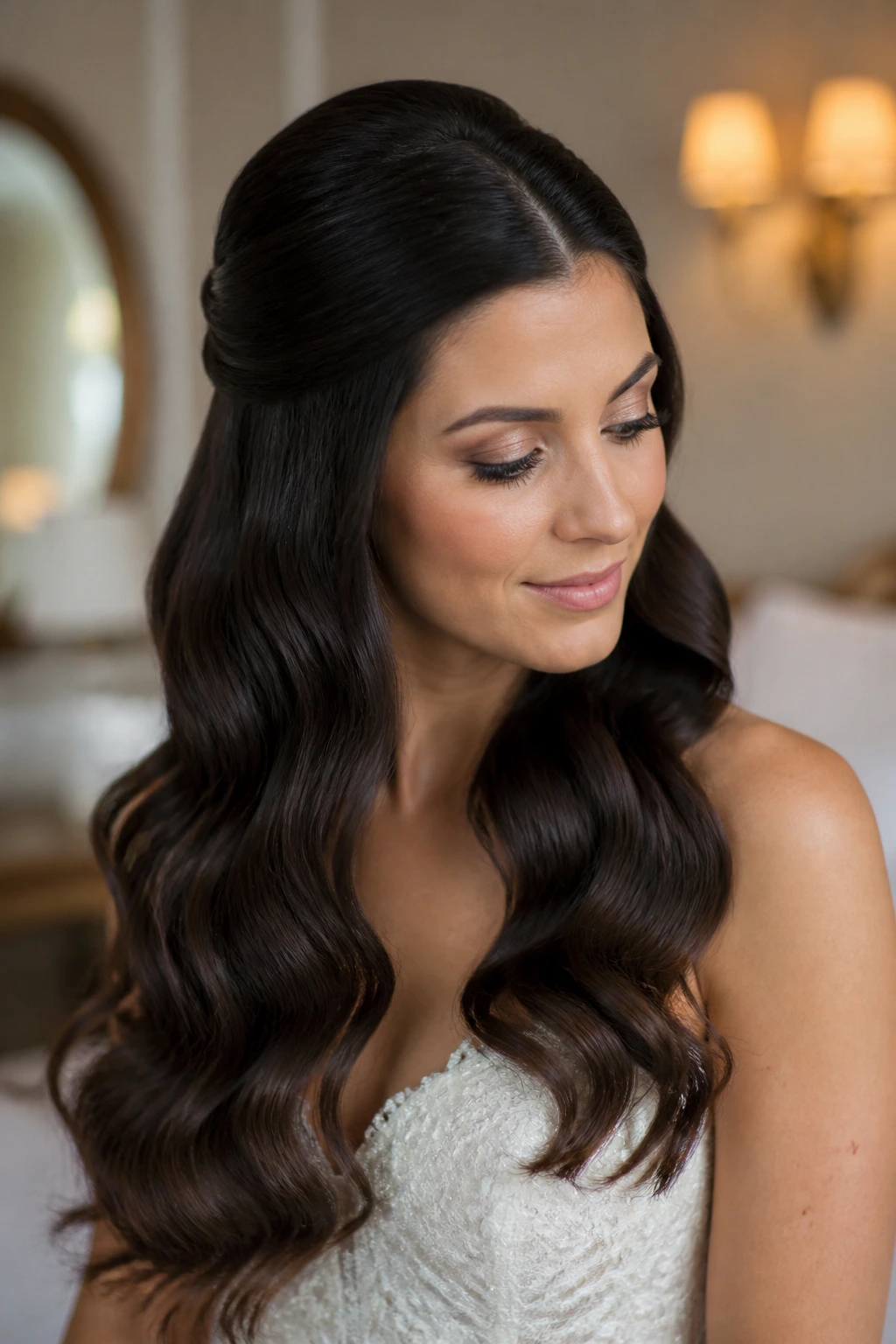
Thick hair has its own personality. If it’s not handled carefully, it can go wide before it goes soft. Sculpted waves solve that problem by building shape in sections, smoothing the top, and letting the length fall in controlled bends instead of one giant mass.
Why this one matters
A 1½-inch iron, section clips, and a strong heat protectant make a real difference here. The hair should be set while it cools so the wave pattern holds. Then a brush or wide-tooth comb softens the finish without expanding the head too much.
This is the style I’d choose for a bride who wants long hair down but still needs it to look contained in portraits. It feels full, not bulky. That distinction matters more than most people think.
Why Wavy Bridal Hair Holds the Room Better Than a Stiff Set
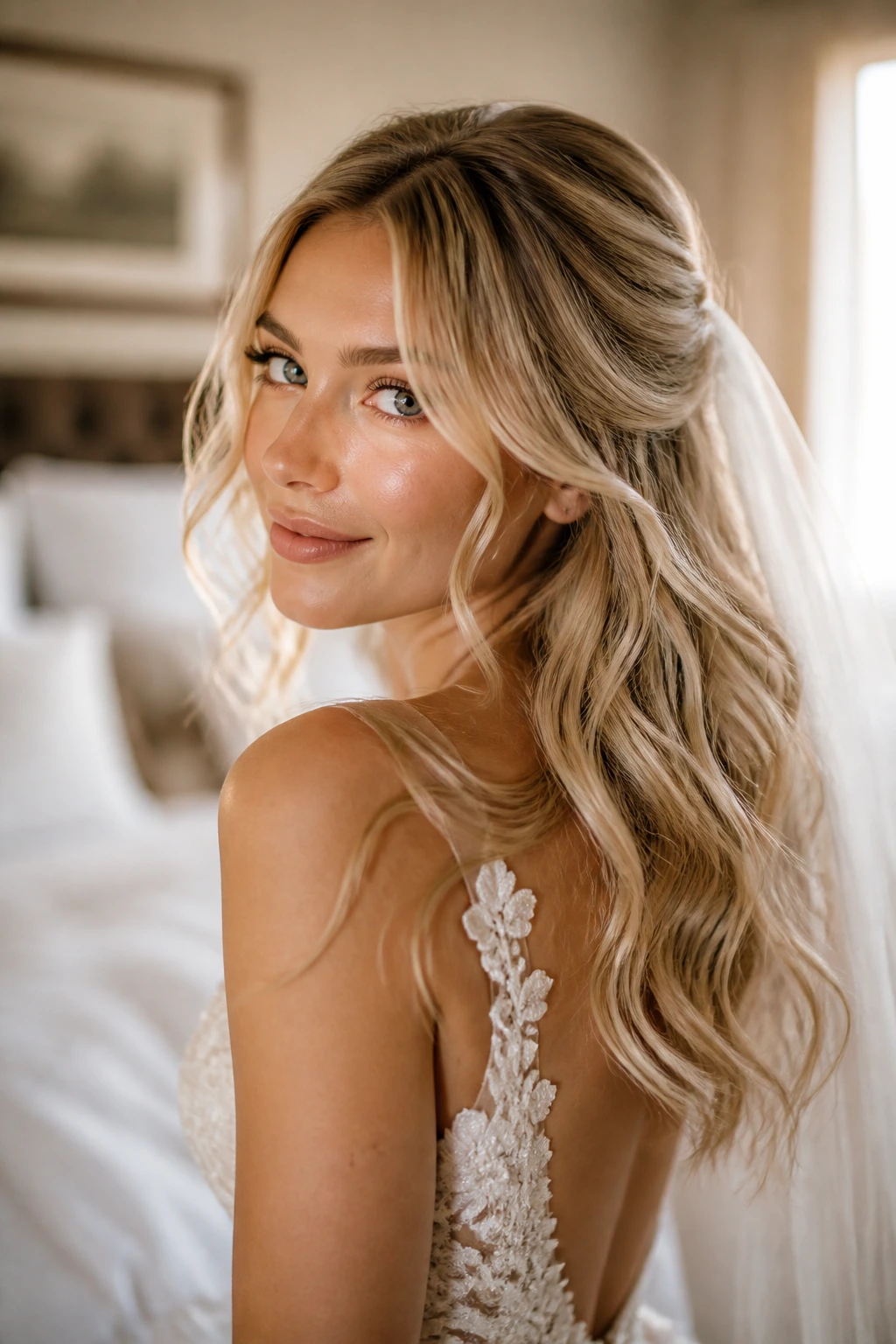
A bridal hairstyle that can move has a built-in advantage. It looks good from the front, the side, and the back because the light changes as the hair moves. Stiff curls can be photographed from one good angle and then fall apart the moment the bride turns her head. Waves, by contrast, keep their shape while still looking alive.
That matters on a long wedding day. Hair that is pinned into a hard shell tends to show every bump, every tug, every bad breeze. Wavy bridal hair forgives a little. The bend hides some of the wear. The softness around the face also helps the makeup and the dress feel connected instead of separate.
I also trust waves more when the bride plans to remove her veil. A style that starts with motion usually survives the veil removal better than a style that relies on one rigid silhouette. You can pin waves up, down, or half back. You cannot easily make a stiff set look relaxed once it starts to collapse.
Essential Tools for These Looks
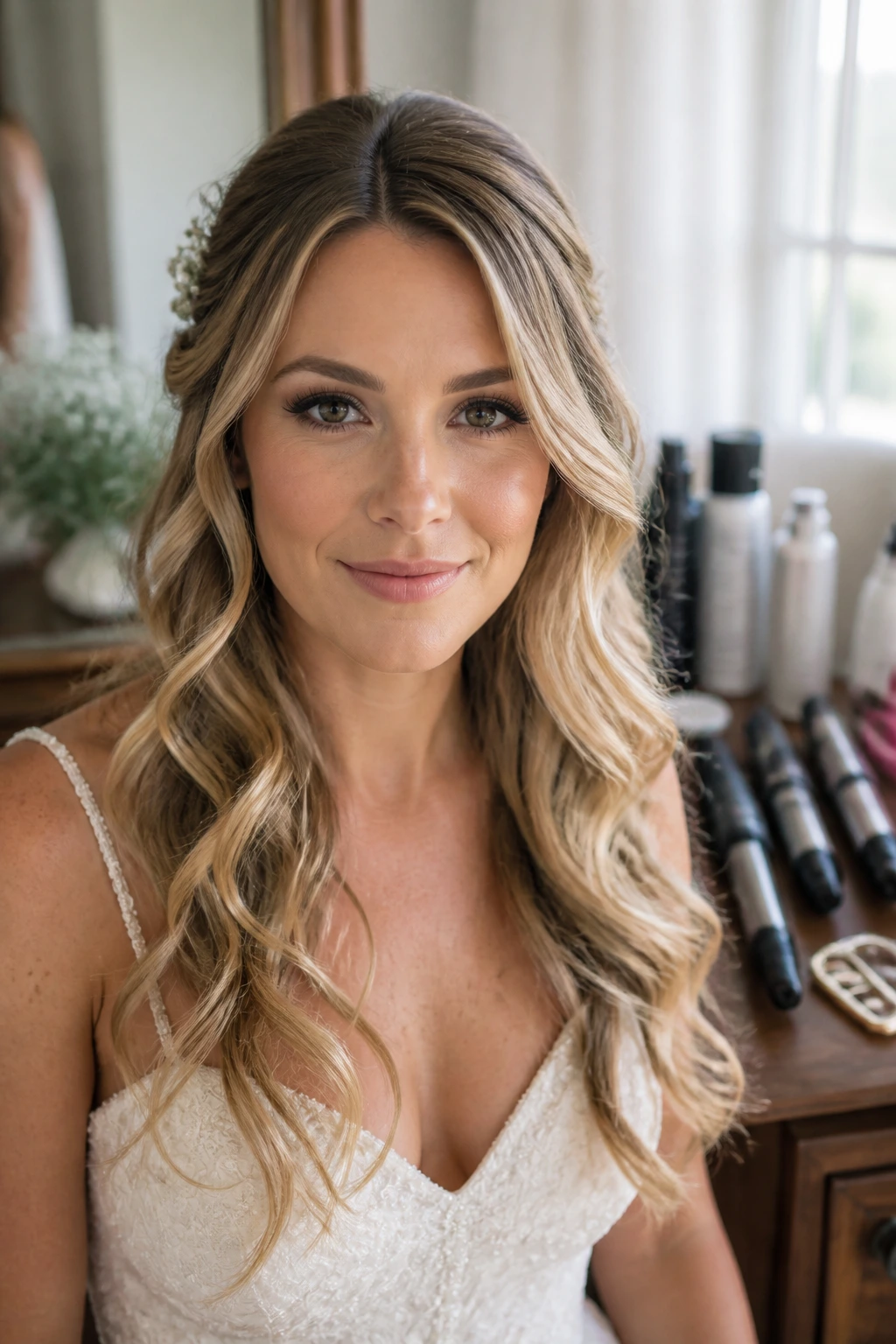
- 1-inch curling iron or wand: Best for tighter bridesmaid-adjacent bends or shorter hair that needs more definition.
- 1¼-inch curling iron or wand: The workhorse size for most bridal waves; soft enough to brush out, big enough to avoid a toy-like curl.
- Heat protectant spray: Keeps the cuticle from fraying when you’re setting and re-setting sections.
- Sectioning clips: These save time and keep the crown from going flat while you work through the length.
- Tail comb: Useful for clean parts, precise sectioning, and getting veil placement right.
- Boar-bristle brush or soft paddle brush: Helps turn curls into waves without shredding the shape.
- Flexible-hold hairspray: Holds the style without making it feel crunchy.
- Strong-hold hairspray: Good for pinning specific sections, especially near the crown or around a veil comb.
- Bobby pins and U-pins: Hide them under twists, buns, or clipped-back sections; match the hair color if possible.
- Humidity shield or anti-frizz cream: Helpful for outdoor ceremonies or hair that tends to swell at the ends.
- Veil comb or accessory comb: Lets you test placement before the wedding day so the style and veil stop fighting each other.
- Travel-size finishing oil: A tiny amount on the ends can calm flyaways, but don’t overdo it or the waves will collapse.
Smart Prep, Products, and Trial-Run Decisions
Hair prep is where bridal waves get won or lost. Clean hair is not always the best starting point, and that surprises people. Very squeaky-clean hair can slide apart faster than hair with a little lived-in texture. For many brides, washing the day before gives the right grip, especially if the hair is fine or freshly layered.
Wash day timing
If the hair is very slippery, a light mousse at the roots before blow-drying can help the style hold. If the hair is coarse or dry, a smoothing cream on the midlengths keeps the wave from looking fuzzy before the ceremony even starts. The goal is not “more product.” The goal is the right product in the right place.
Product layering
Start with heat protectant. Then choose one main support product: mousse for lift, cream for smoothness, or texture spray for hold. Too many layers make the hair heavy, and heavy hair drops waves faster than people expect. I’d rather see one good spray used well than three half-helpful products stacked on top of each other.
Trial-run details
A trial should happen with the actual accessory if possible. Veil, comb, clips, earrings, all of it. A wave that looks perfect on its own can fail once the comb is added, especially if the crown has no structure. Also test the look in the same lighting the bride will have for photos if that can be done. Hair reads differently under warm indoor bulbs than it does near a window.
How to Wear These Waves With Veils, Pins, and Jewelry
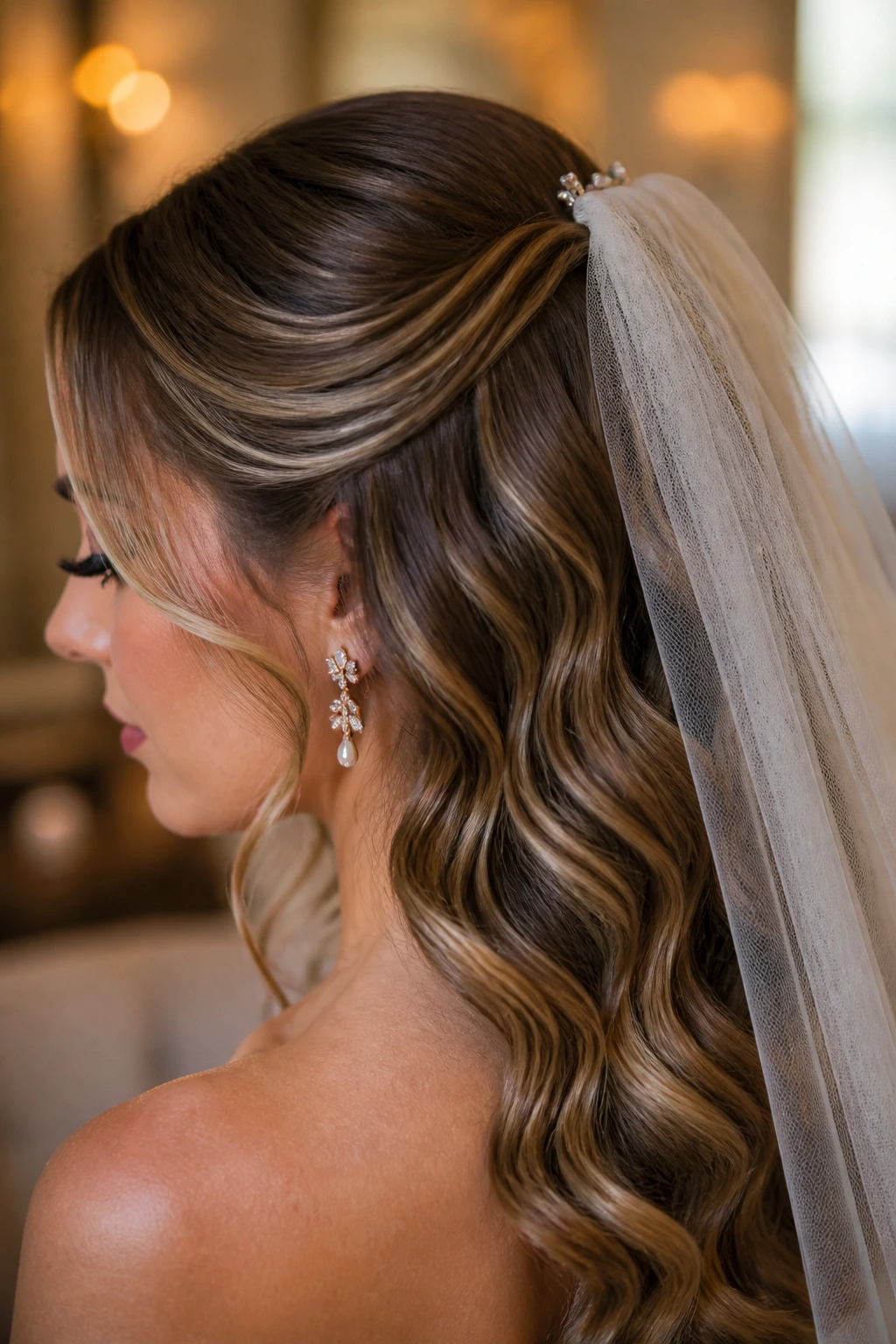
Presentation: Keep the line of the hair in conversation with the neckline. A high neckline usually wants waves that start lower and sit closer to the shoulders, while a strapless or off-the-shoulder gown can handle more volume around the face. The part matters too; a deep side part gives drama, while a center part feels calmer and more modern.
Accompaniments: Veils work best when the hairstyle has one clean anchor point — a twist, a half-up section, a low bun, or a securely pinned crown area. Pins, combs, and floral pieces should feel like they belong to the shape already there, not like they were tacked on after the hair was finished. Earrings can carry a lot of visual weight, so if they are large, keep the temple area a little cleaner.
Longevity: If the day is long, the style should be pinned in a way that lets the bride remove the veil without pulling at the wave line. Hidden pins at the base of a twist or under a side sweep help more than extra spray. For outdoor ceremonies, tuck the more fragile front pieces slightly tighter than you think you need.
Photo Angle: Turn the head slightly and check the way the wave falls from the camera side. The best bridal waves still show texture when the bride is laughing, not only when she is standing still. If one side keeps disappearing, pin it back a touch so the face and hair stay balanced.
Practical Touch-Ups and Finish Boosters
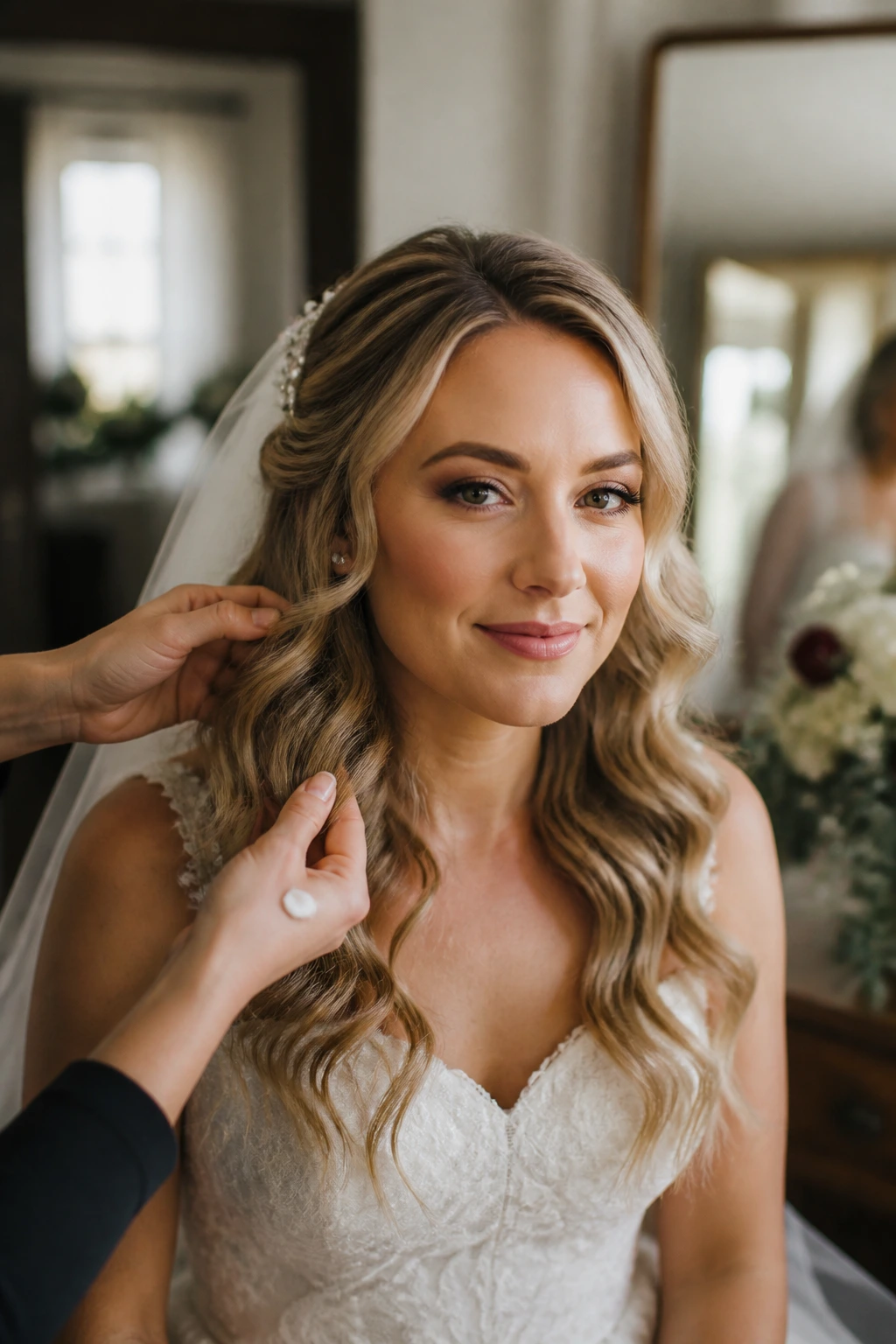
Finish Boost: A pea-sized amount of shine cream on the palms, warmed first, then skimmed over the midlengths can make the waves look smooth without flattening them. The key word is skimmed. If you can feel product sitting on the hair, it’s too much.
Texture Fix: For styles that start to swell by the end of the day, a tiny mist of water on your fingertips can tame one or two frizzy pieces without re-wetting the whole head. That trick works better than hosing the style down with spray and hoping for the best.
Pro Move: Pin the style in layers. The visual layer can be soft and open, but a hidden layer under it should do the actual work. Brides rarely lose a hairstyle because the outer wave is wrong. They lose it because the structure underneath is thin.
Touch-Up Kit: Pack a few bobby pins, a mini brush, a travel hairspray, and one small clip for the reception. Keep them in the bridal suite or with the planner, not buried in a tote bag in another room.
Common Mistakes Brides Make With Wavy Hair
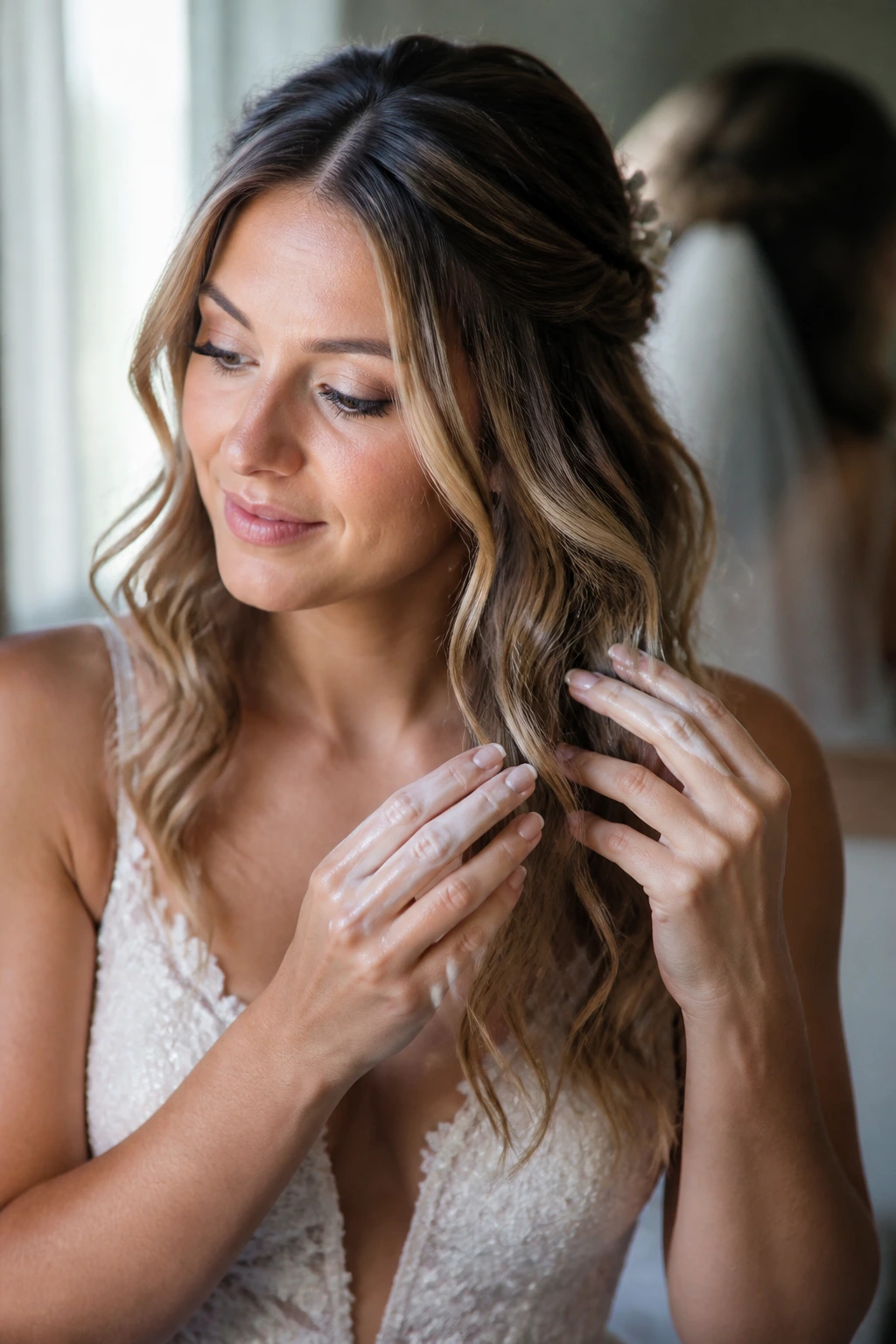
- Curling too tightly at the start: If the waves begin as springy ringlets, they often relax into something too puffy by the time photos start. Use a larger barrel than you think, then brush down to the final shape.
- Using too much oil near the roots: Shine is good. Slippery roots are not. Put smoothing products on the ends and midlengths, not along the scalp, or the style can slide.
- Ignoring the veil test: A comb that seems harmless can pull the whole crown down once it’s attached. Test the exact placement before the wedding so the wave line does not collapse.
- Leaving the front pieces too short: Tiny face-framing strands can pop out, curl oddly, and fight the rest of the look. Leave enough length to tuck or pin.
- Over-brushing the finished style: A little brushing softens the curl pattern. Too much turns the whole head into a frizzy cloud and kills the shape.
- Skipping humidity planning: Outdoor portraits, summer heat, and packed dance floors all change the way hair behaves. A flexible hold spray plus a backup pin or two is cheap insurance.
Variations and Adaptations to Try
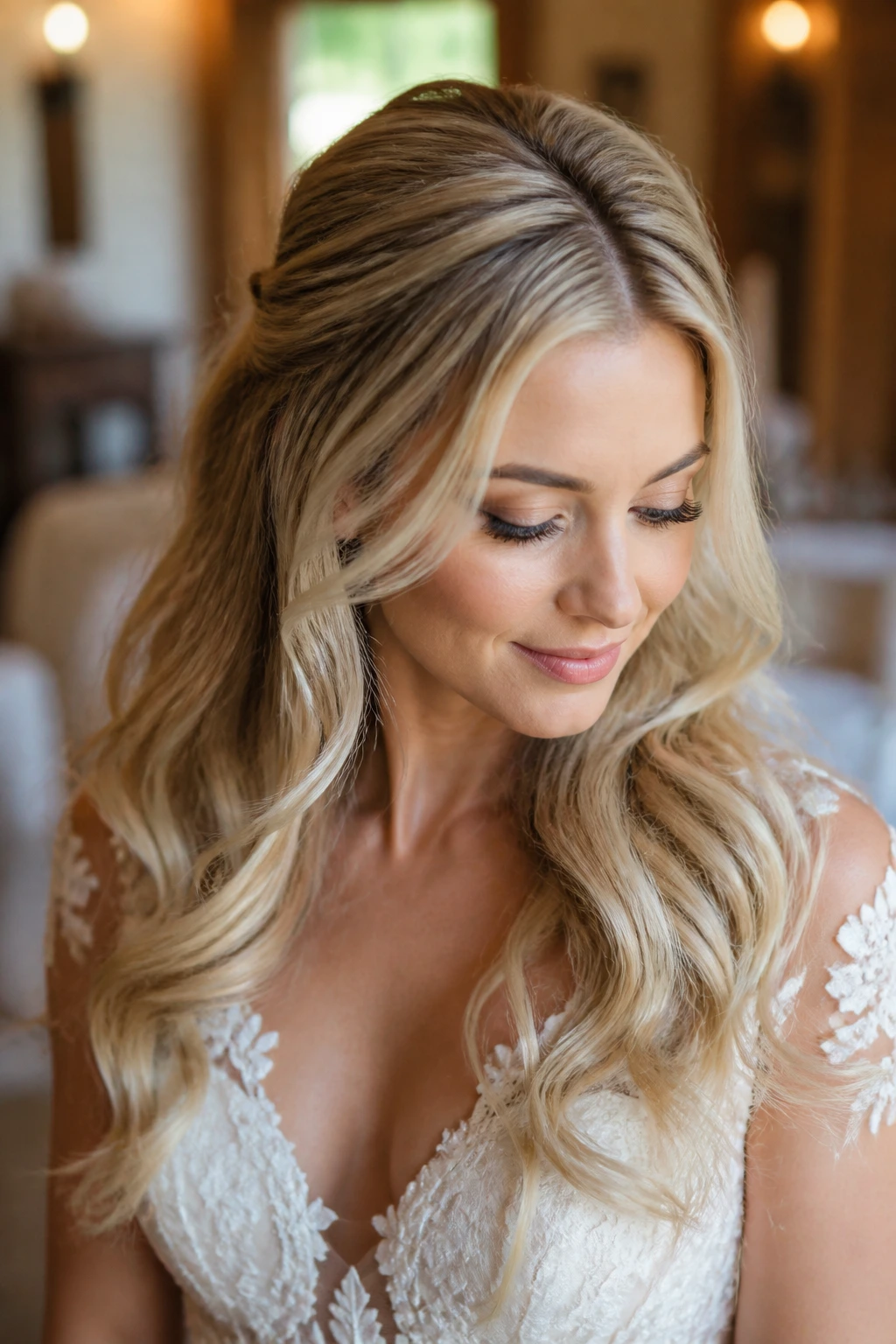
Fine-Hair Bridal Volume: Start with mousse at the roots and a brushed-out curl set through the ends. Smaller sections and a slightly shorter wave pattern give fine hair the look of density without making it feel heavy.
Curly-Hair Soft Wave Blend: If the bride already has curls, do not force them into a flat wave. Define the curl pattern, smooth only the top, and pin one side back. The result feels honest and still polished.
Heat-Free Rope-Wave Set: Overnight braids, foam rollers, or rope twists can create a softer wave pattern for brides who want to skip the iron. The look is less glossy, but it can suit boho dresses and outdoor ceremonies beautifully.
Short-Hair Bridal Bend: For bobbed or lob-length hair, use flat iron bends, a tucked side, and a tiny accessory instead of chasing long curls. The shape matters more than the length.
Humidity-Ready Finish: Add an anti-humidity spray over the finished waves and keep the roots smooth with a light cream before styling. This version is worth choosing for any ceremony where the air feels damp before noon.
Statement-Accessory Switch: If the dress is plain, add a jeweled comb, floral pin, or pearl cluster. If the dress already has detail, keep the accessory small and let the wave pattern do the talking.
Keeping the Waves in Shape Before, During, and After the Event
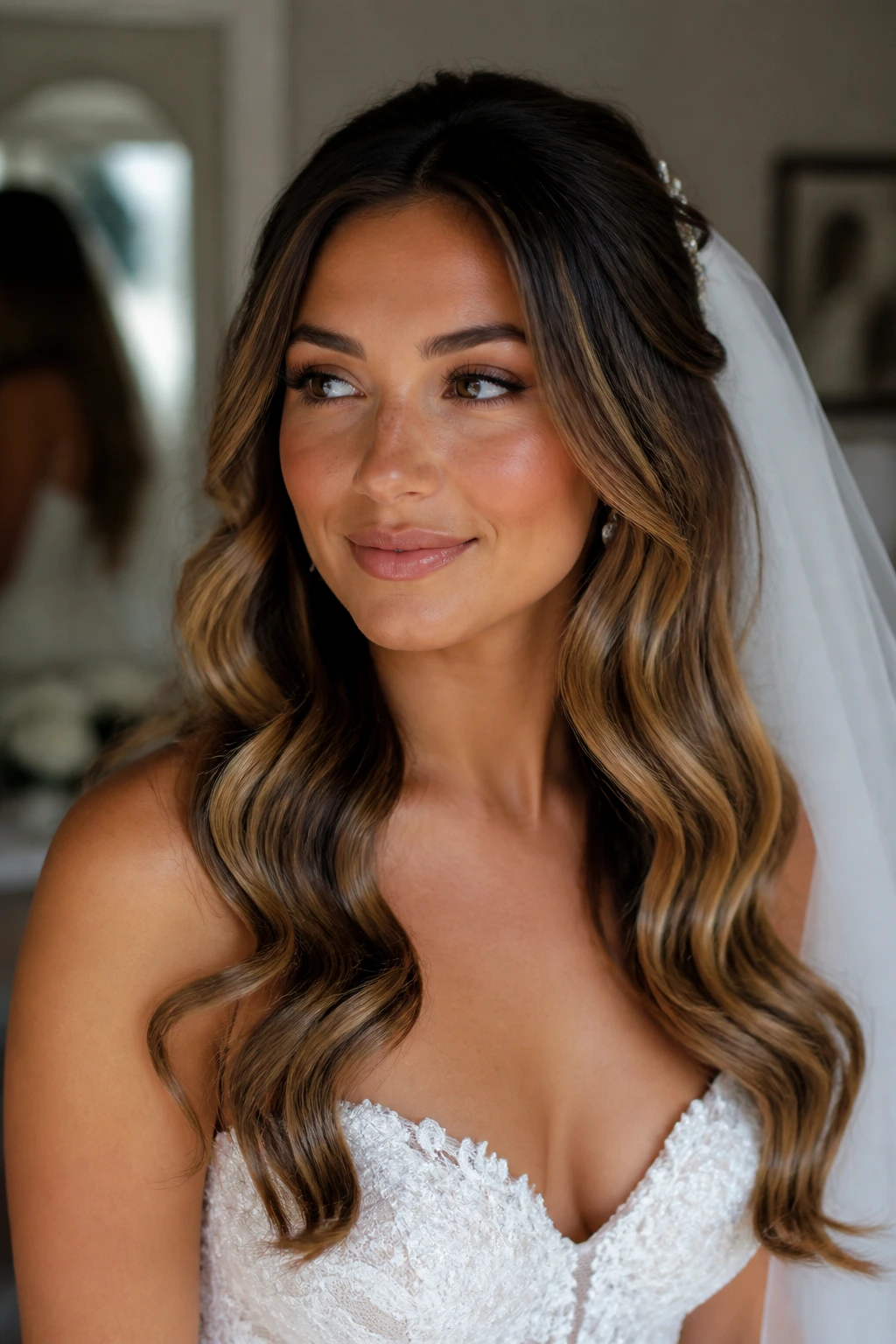
The best bridal wave plan starts before the wedding day. A trial run gives you a chance to see how the style behaves after two hours, not just the first ten minutes. If the hair drops fast, you learn that before the aisle, which is exactly when that lesson should happen.
On the day itself, timing matters more than people like to admit. Waves need to cool completely before they are brushed or pinned into their final shape. If the hair is still warm, the set is soft and unstable. That is when good styles go flat. If there is a veil, put it in only after the base has been secured and the top layer has been shaped.
For the reception, a small touch-up kit is enough: a brush, a few pins, travel spray, and a clip. Don’t bring a suitcase of products. You are fixing one or two problem spots, not rebuilding the whole head. If the bride plans to remove a veil or change earrings between the ceremony and the party, leave enough structure in the hair to handle the shift without losing the shape.
After the event, if the style needs to be preserved for a next-day brunch or portraits, pin the waves loosely and wrap the hair in silk or satin overnight. A rigid set can crease. A soft wave survives better if it is protected rather than crushed.
Frequently Asked Questions About Bridal Waves
Can wavy bridal hair work on fine hair without looking flat?
Yes, but the wave pattern has to be set with support, not just heat. Fine hair usually does better with mousse at the roots, smaller hidden sections, and a brush-out after cooling so the hair looks fuller instead of stringy.
Do waves hold better on dirty hair or clean hair?
A little lived-in texture often holds better than freshly washed hair. Very clean hair can be too slippery, while hair washed the day before usually gives enough grip for pins and waves to stay in place.
What if the bride wants a veil and long hair down?
Choose a style with one stable anchor point, like a half-up twist, a low side sweep, or a hidden pinned crown. That gives the veil comb somewhere solid to sit without crushing the loose waves underneath.
Can short hair still look bridal with waves?
Absolutely. A bob or lob with a sharp wave pattern, a clean tuck behind one ear, and a small accessory can look more finished than a lot of long styles. The shape matters more than the length.
How do you keep waves from turning frizzy outdoors?
Start with a smoothing product or humidity shield, then finish with flexible spray rather than a hard shell. If the weather is damp, pin the structure a little tighter and avoid over-brushing once the style is set.
Should the waves be uniform all the way through?
Not always. Uniform waves can look too set and stiff on some faces. A softer front and more defined bends through the ends often looks more natural, especially with bridal makeup and jewelry already doing visual work.
What if the hair falls before the reception?
That usually means the set was not cooled fully, the sections were too large, or the hair had too much slip from product. A few hidden pins and a targeted blast of travel spray can fix the shape at the back, but the better move is to correct the prep next time.
Do statement earrings mean the hair should stay off the face?
Not completely. Tucking one side back enough to show the earring is usually enough. If the whole front is pulled away, the style can start looking formal in a stiff way instead of soft and bridal.
Soft Waves That Still Feel Like You
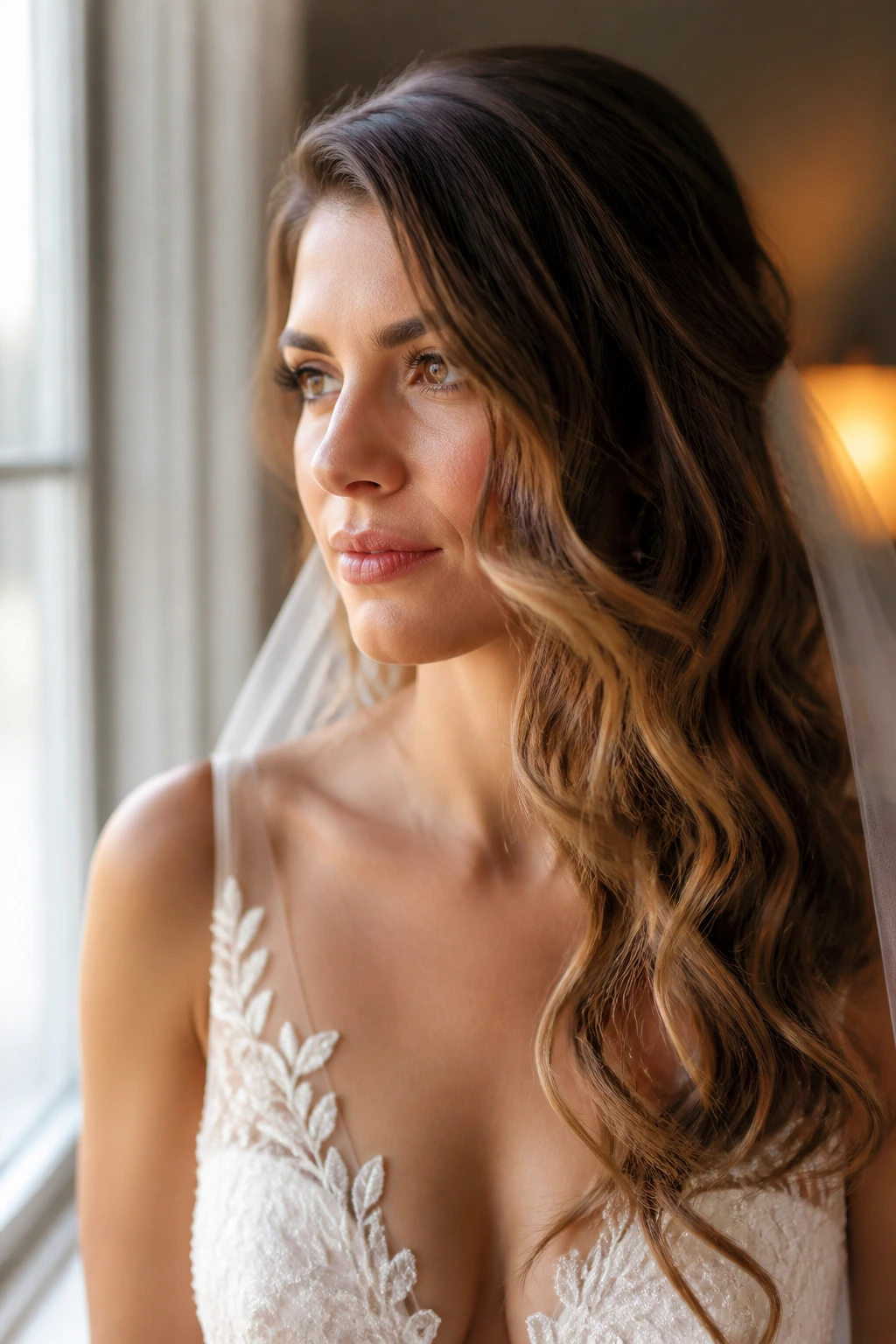
Bridal waves work because they leave room for the dress, the veil, the earrings, and the face. They don’t bulldoze the rest of the look. They settle into it. That is a rare quality in wedding hair, and it’s one reason I keep coming back to it.
The right version is not the most complicated one. It’s the one that stays alive in photos, survives the veil, and still looks like the bride after the first dance. If that means a polished side sweep, fine. If it means a short bob with one tucked side, also fine. The shape should suit the person, not the other way around.
Pick the wave that moves the way you want to move. That’s the whole trick, and it lasts longer than any trend cycle ever will.
