



Straight hair can be a gift at prom, but only if you stop treating it like it needs to look “done” in the same way curls do. On straight strands, every part line shows. Every pin shows. Every spray mark shows, too. That sounds unforgiving until you realize the upside: straight hair gives you the cleanest possible canvas for glossy ponytails, sculpted buns, sharp braids, and those sleek half-up styles that look expensive without looking overworked.
The best prom hairstyles for straight hair don’t fight the texture. They use it. A low bun sits flatter, a center part reads cleaner, and a ribbon or crystal clip doesn’t get buried under waves. The catch is grip. Straight hair can slide out of elastics and pins if you skip texture at the roots or use the wrong brush, which is why the smartest styles are the ones that build shape first and decorate second.
There’s a specific kind of confidence that comes from a hairstyle that stays put while you’re laughing through photos, eating cake, and dancing with bobby pins that actually do their job. That’s the sweet spot here: polished, secure, and flattering from every angle.
Why These Prom Hairstyles Work So Well on Straight Hair
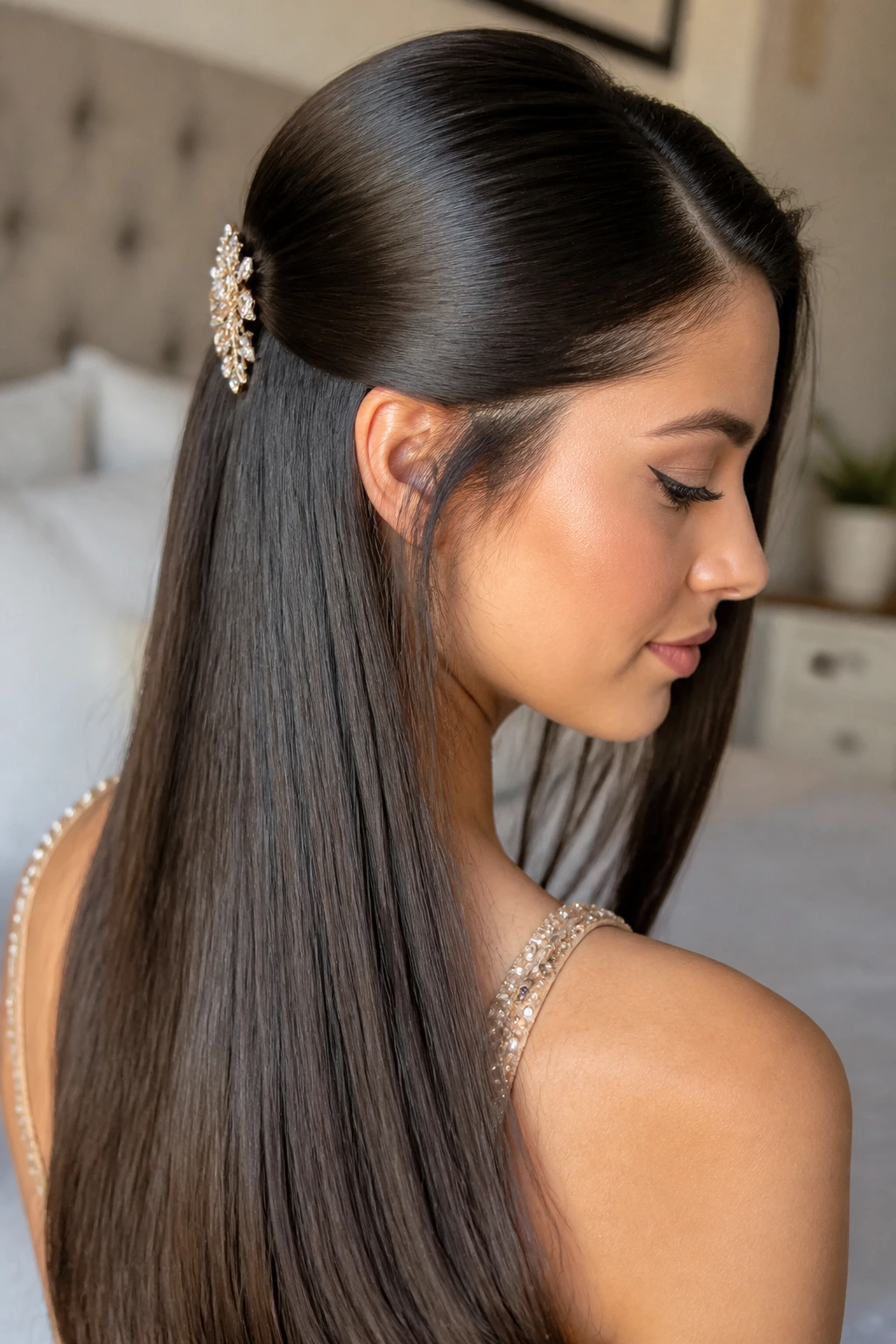
-
The finish looks sharper: Straight strands make parts, braids, and twists read crisp instead of fuzzy, which is exactly what you want when a dress, earrings, and makeup are all competing for attention.
-
The style sits flatter at the crown: That makes low buns, French twists, and tucked chignons easier to shape without a bulky bump sitting where you do not want one.
-
Accessories show up better: Pearls, crystal clips, ribbon, and metallic pins stay visible on straight hair instead of disappearing into texture.
-
You can build hold without a full curl set: A little mousse, a touch of dry shampoo, and a good pinning pattern often do more for straight hair than a whole head of curls.
-
The silhouette photographs cleanly: A sleek line at the nape, a sharp side part, or a sculpted ponytail tends to look deliberate in photos instead of chaotic.
-
The styles are easier to refresh: If a piece slips, straight hair is usually simple to re-smooth with a brush, a mist of hairspray, and one or two well-placed pins.
1. Sleek Center-Part Low Bun
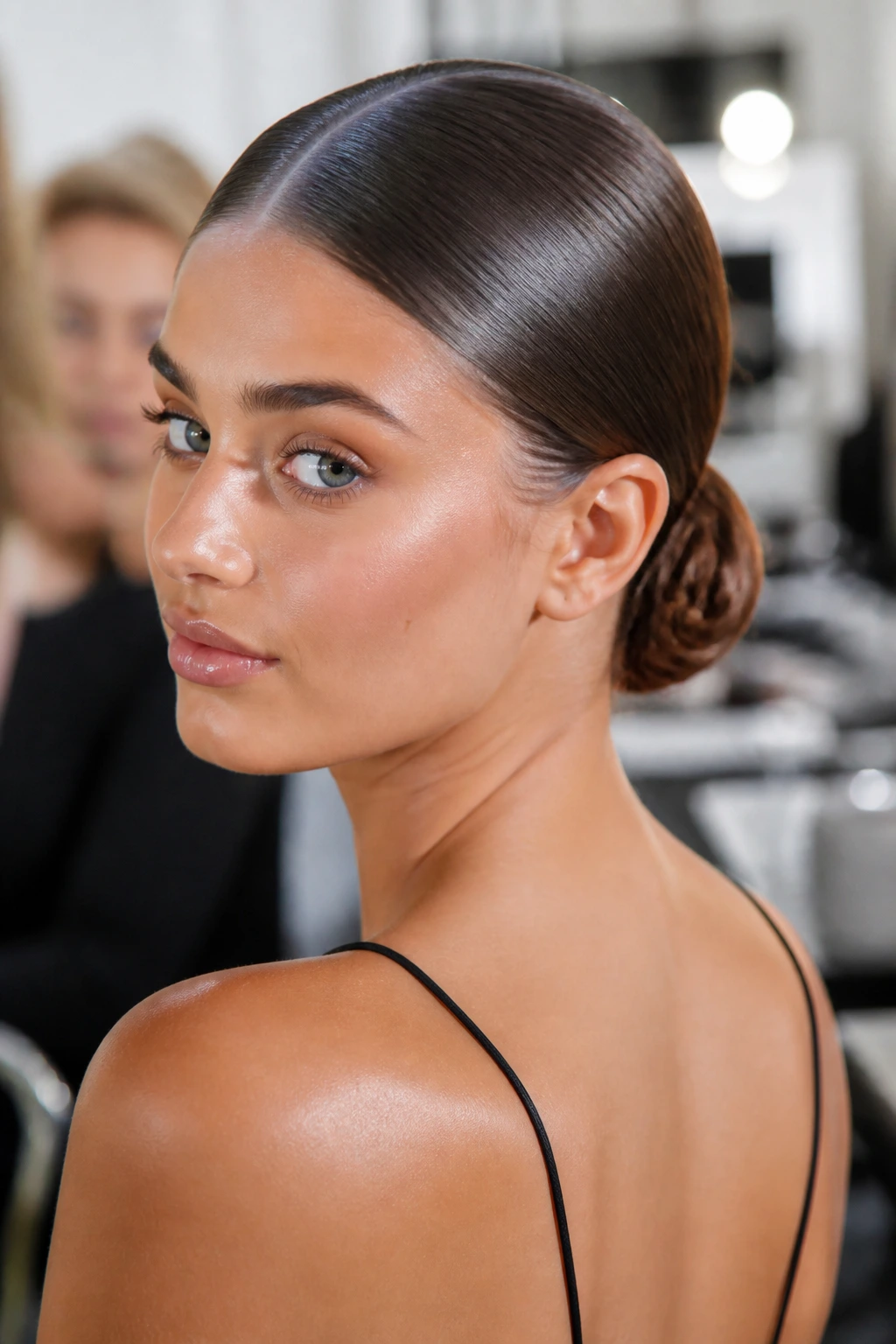
A center-part low bun is the prom hairstyle I’d trust first if the dress has an open back, a square neckline, or any detail worth showing off. Straight hair loves this shape because it lays flat from the part down to the nape, and the bun itself can be as small or as full as you want. Done well, it looks like a clean ribbon of hair folded into place.
Why It Feels So Polished
The whole trick is balance. A glossy top section keeps the head looking smooth, while the bun at the base gives you structure without competing with the dress. On straight hair, this style often looks better than on wavy hair because the bun edge stays neat instead of puffing out. If your hair is fine, a little padding or a small bun form helps it look fuller without turning it into a helmet.
How to Shape It
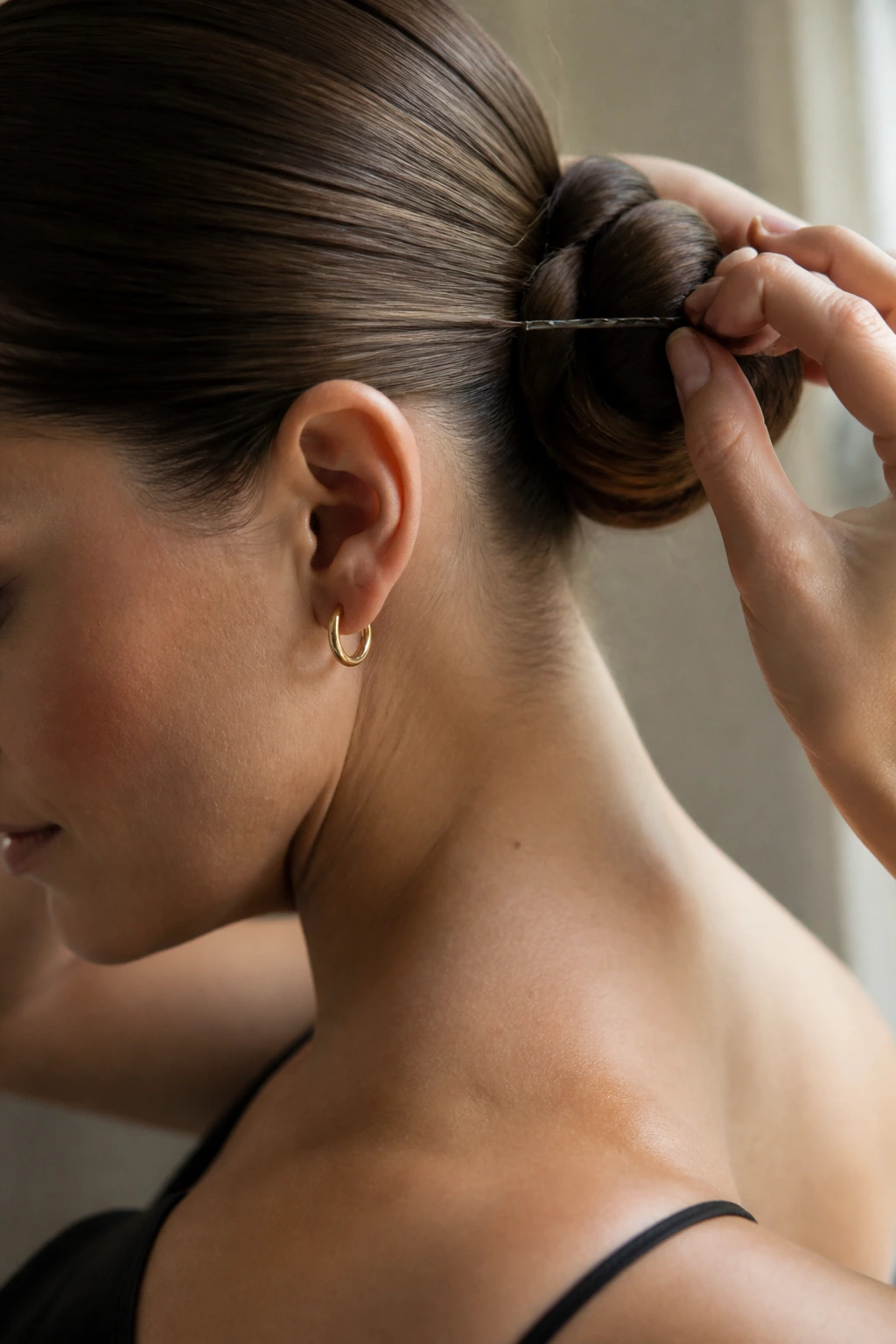
Start with a middle part and smooth the hair back using a light cream or serum at the lengths, not the roots. Gather the hair low at the nape, twist it once, and pin the coil in a circular pattern so the pins cross each other. That crisscross is the difference between “held all night” and “coming apart after the first slow dance.”
Best for: medium to long hair, high necklines, and dresses with dramatic earrings.
2. Deep Side-Part with a Crystal Clip
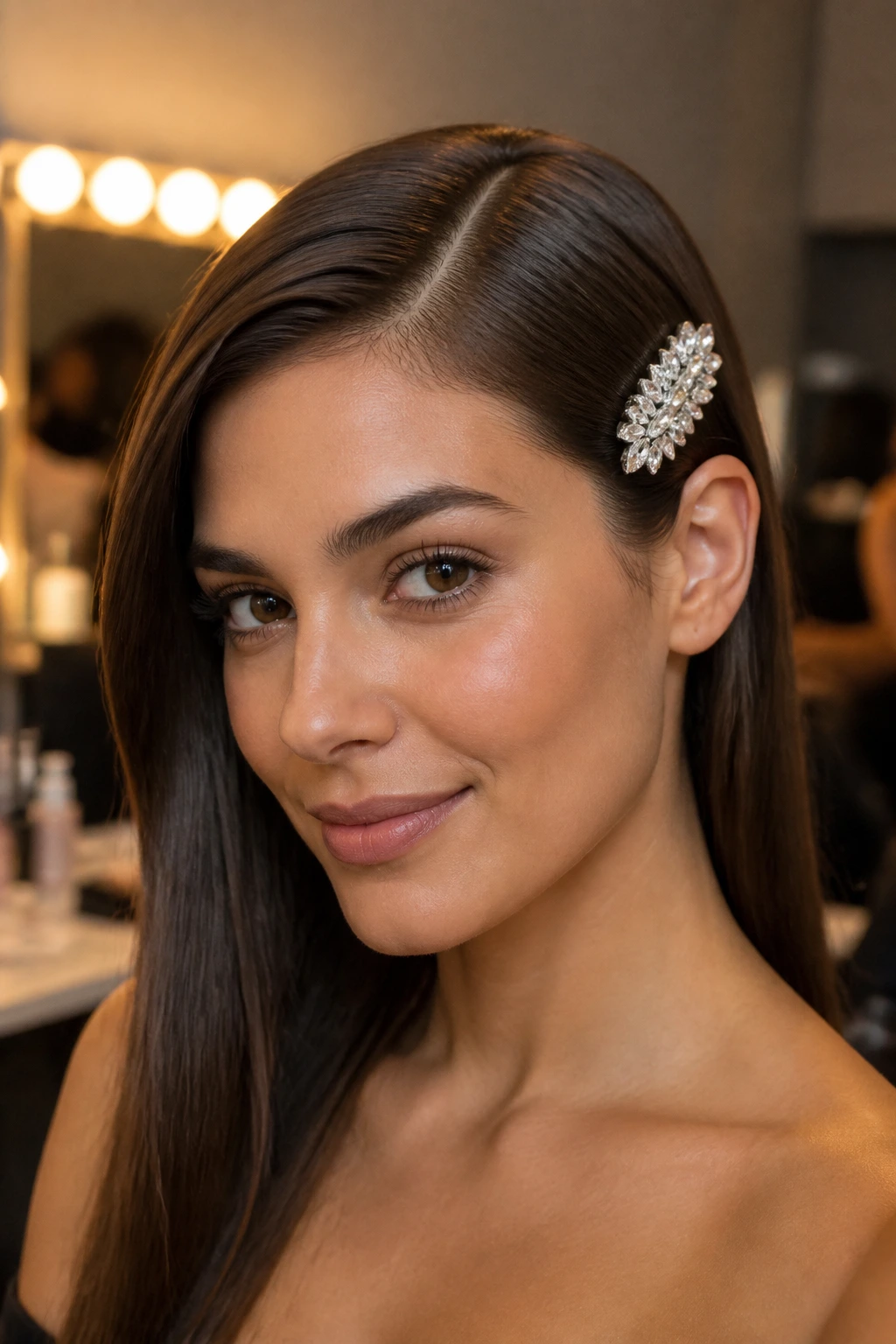
This one has a little old-Hollywood posture to it, but it stays modern if you keep the hair straight and the clip crisp. A deep side part creates a clean sweep across the forehead, then one side gets pinned back with a crystal barrette, comb, or cluster of pearl pins. The rest hangs smooth and glossy, with the front line doing the work.
Why It Works on Straight Hair
Straight hair is the right texture here because the shine reads like a choice, not a fallback. You don’t need waves to make this feel special; you need a strong part, a flat top section, and one accessory with enough presence to anchor the side. A large clip is more forgiving than several tiny ones because it gives the style a single focal point instead of visual clutter.
What to Watch
Keep the tucked side close to the head. If it puffs out, the whole look loses its shape. A pea-sized amount of styling cream on the front section and a couple of crossed bobby pins under the clip are usually enough. The ends can stay straight and loose. That’s the point.
Best for: one-shoulder dresses, asymmetrical necklines, and anyone who wants hair down but not in the face.
3. Half-Up Twisted Crown
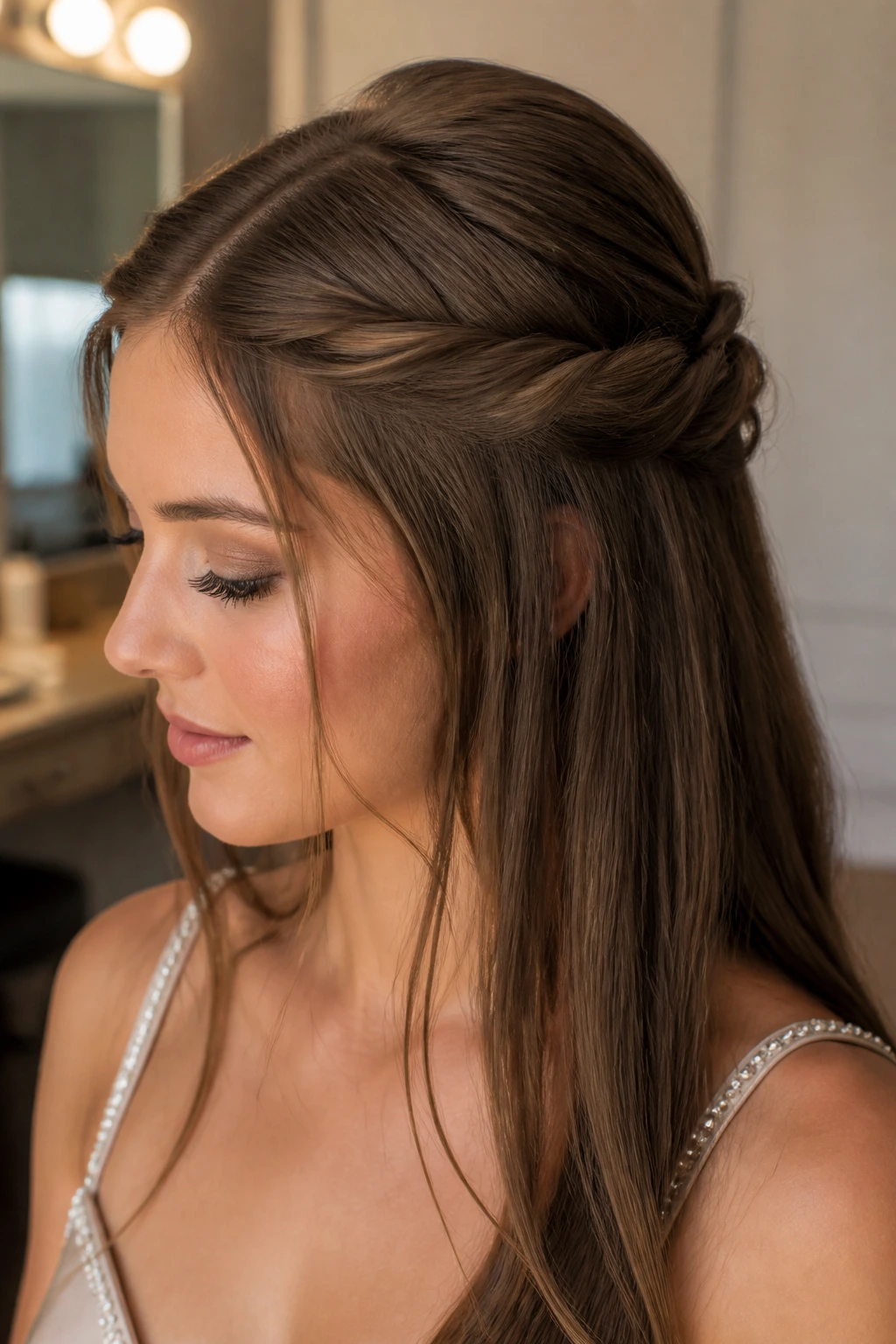
The half-up twisted crown is the style I’d pick for someone who wants softness without sacrificing control. You take the top sections from each temple, twist them back toward the crown, and secure them at the back so the remaining lengths fall free. On straight hair, the twist lines look neat and intentional, which is part of the appeal.
Why It Holds Its Shape
Straight hair can sometimes make half-up styles look too plain. Twisting fixes that by creating visible structure right where the eye lands. The crown effect also keeps the top from collapsing into the face, which matters if your hair is fine or if you know you’ll be moving around a lot.
How to Give It Enough Grip
Mist the top sections lightly with texture spray before twisting. Not soaking wet. Just enough grit so the strands don’t slip. Pull the twists back firmly, then pin them in a stacked X pattern under the joined section. Leave the bottom hair sleek and straight, or add one soft bend to the ends if you want a little movement.
Best for: medium-length hair, sweetheart necklines, and dresses that need a little softness around the shoulders.
4. Bubble Ponytail with Ribbon
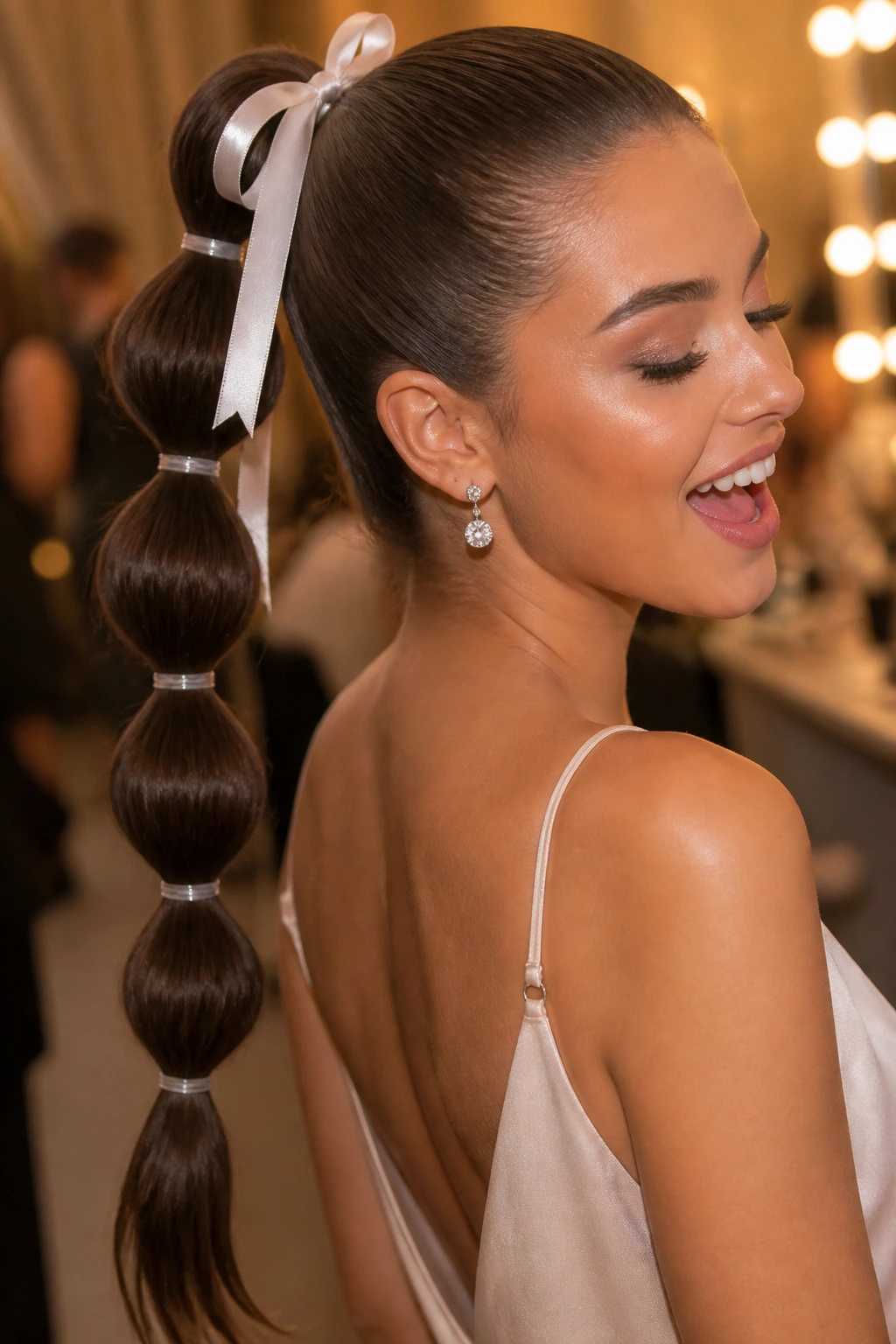
A bubble ponytail sounds playful because it is, but that doesn’t make it childish. On straight hair, the clean round sections look graphic and expensive when the elastic spacing is even. Add a ribbon woven through the base or tied around one bubble, and the whole thing turns into a proper prom style instead of a casual gym pony.
Why This One Works
The reason it’s so useful is that straight hair already gives you the sleek surface the bubble shape needs. You don’t have to rough up the strands to show the sections. You just secure the ponytail, add clear elastics every few inches, and gently tug each segment outward until it rounds. The spaces between the elastics matter as much as the bubbles themselves.
My Favorite Detail
Use a narrow satin ribbon if the dress is elaborate, or a thicker ribbon if the gown is simple and needs one strong accent. Keep the ponytail high for a more spirited look, or low for something cleaner. And don’t skip a wrap around the base. Even a small band of hair hiding the first elastic makes the style read much more finished.
Best for: long hair, high-energy dancers, and dresses with clean lines.
5. Braided Low Ponytail
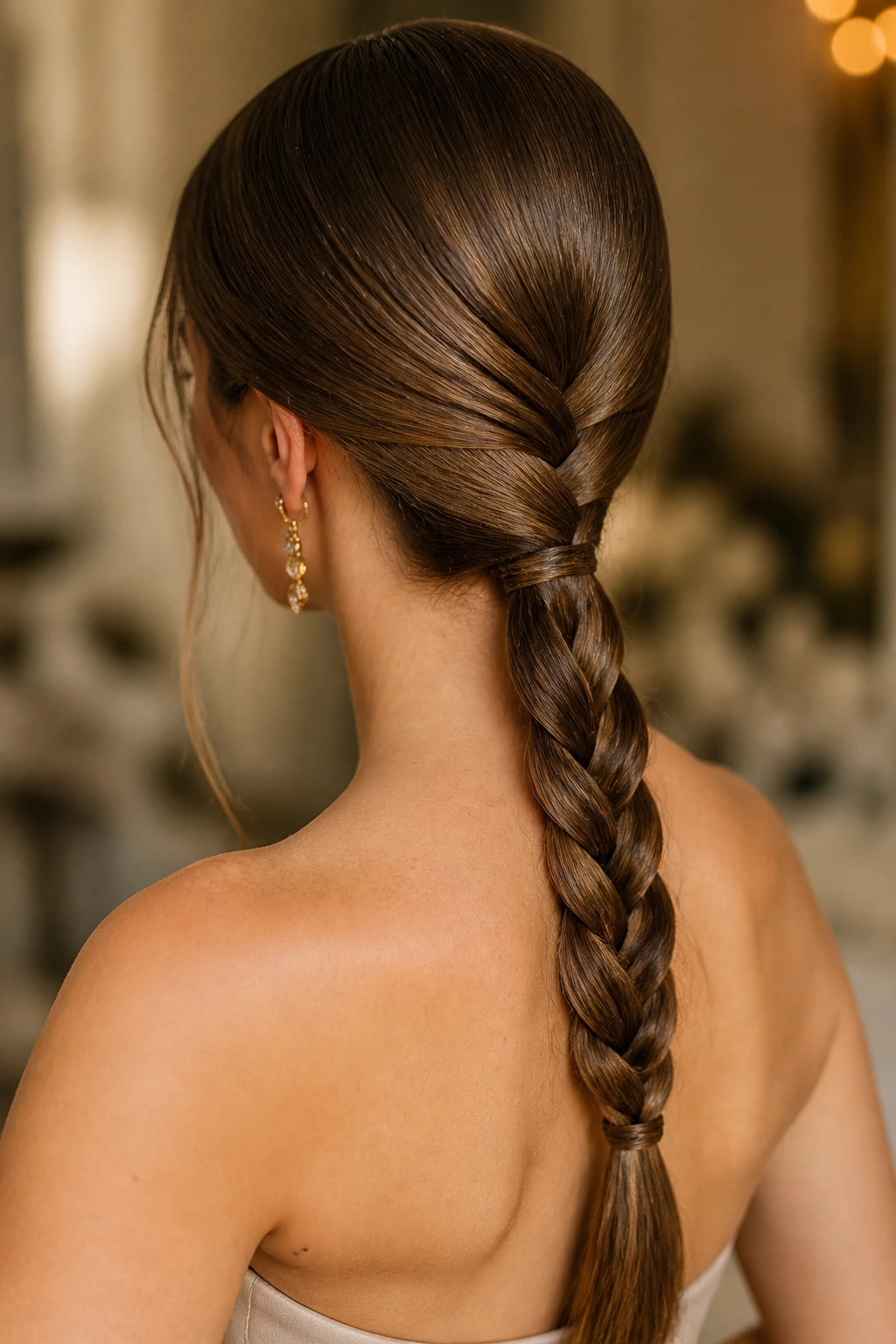
This is one of those styles that looks more complicated than it is, which is always a pleasant trick on prom night. You can start with a low ponytail, braid the tail all the way down, and then tug the outer braid loops just enough to soften the shape. On straight hair, the braid reads neat and glassy instead of fuzzy.
Why It’s a Smart Choice
It stays controlled at the crown and gives you texture lower down, where the eye can actually see it. That matters if your hair tends to go flat at the top but still looks too plain when left loose. A braid down the tail gives you movement without loose ends whipping around on the dance floor.
How to Make It Look Intentional
Keep the ponytail anchored close to the nape. If you put it too high, the style can start to feel sporty. A center part or a soft side part both work; just keep the lines clean. I like to wrap one small strand around the elastic before braiding, because the base then looks custom rather than thrown together.
Best for: long straight hair, simple dresses, and anyone who wants a style that will survive hours of movement.
6. French Twist with Loose Ends
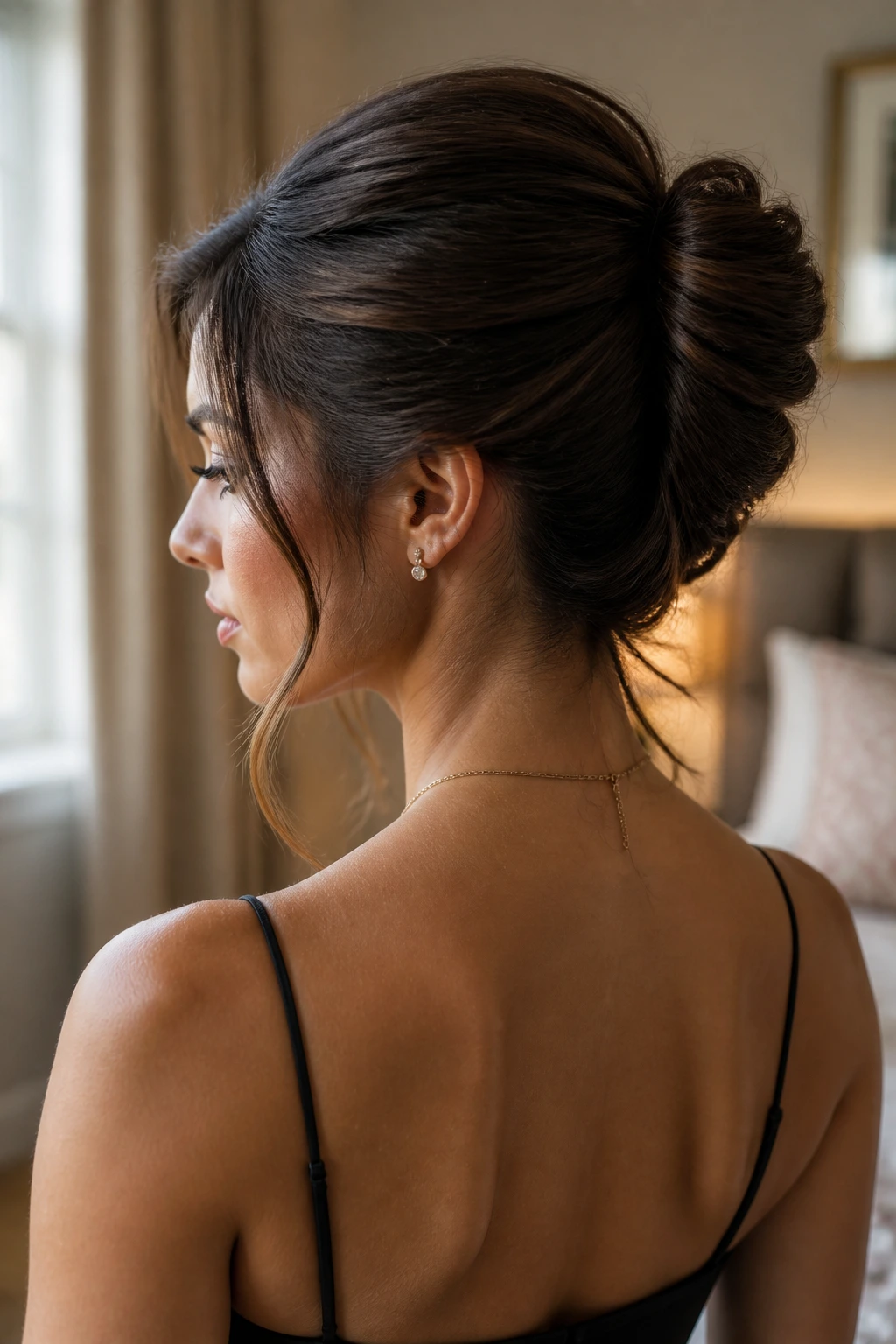
The French twist is classic for a reason, but I prefer it when it isn’t sealed up so tightly that it feels severe. Let a few ends peek out softly at the bottom or leave a whisper of face-framing length in front, and the whole thing loosens up without losing the shape. Straight hair is useful here because the twist line stays clean.
Why It Feels Elegant Without Trying Too Hard
There’s a neat contrast at work: the hair is smooth, but the twist itself has dimension. Straight strands stack into the roll more cleanly than wavy ones, so the seam of the twist tends to look sharper. That gives you a formal shape that doesn’t need extra decoration to feel finished.
Where It Goes Wrong
People often make the twist too loose at the top and too stiff at the bottom. That’s a bad combination. The base should feel anchored, and the roll should sit snugly against the head. Use long pins that go in horizontally, then angle upward to catch the inner structure. A dab of shine spray across the surface helps the style read polished in photos.
Best for: longer hair, classic dresses, and anyone who wants a grown-up, structured look.
7. Dutch Braid Halo
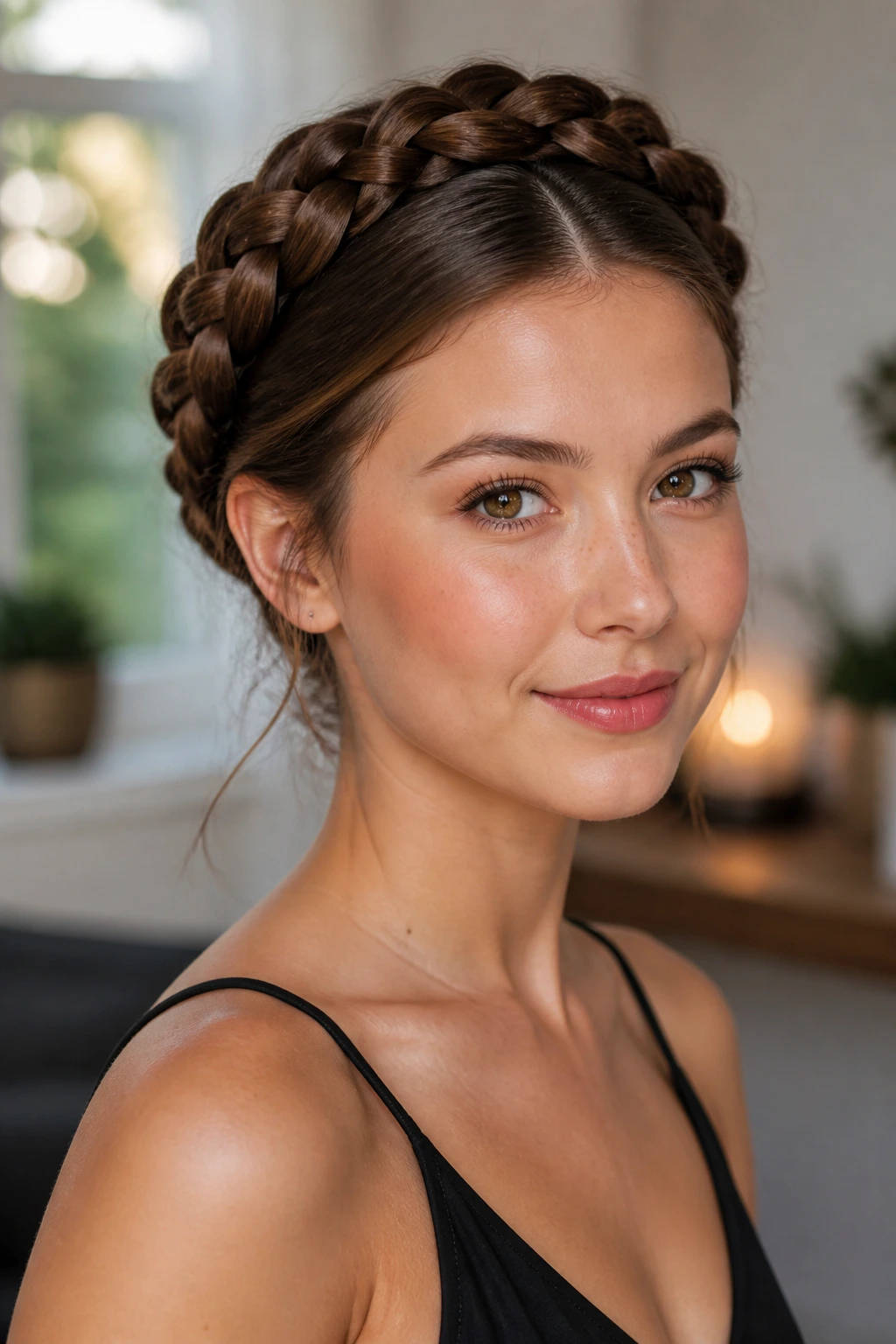
A Dutch braid halo gives straight hair something it often lacks on its own: visible texture with purpose. The braid sits around the perimeter of the head like a crown, while the center can stay sleek, tucked, or gathered into a low knot. It’s one of the best prom hairstyles for straight hair if you want an updo that feels detailed from every angle.
Why It Holds Up So Well
Dutch braids are raised, which means they show more clearly on straight hair than a flat braid often would. They also create a natural frame around the face and ears, which is useful if you’ve got statement earrings or a neckline that needs a little visual balance. The braid itself carries the style, so the rest can stay simple.
A Small Warning
This style needs grip. If your hair is freshly washed and slippery, the braid can slide. A dry shampoo mist at the roots or a texture spray through the braid sections makes a huge difference. I’d also braid a little tighter than you think you need; once you tug the edges and set it with pins, it softens.
Best for: medium to long hair, romantic dresses, and people who like braids but want something more formal than a single plait.
8. Wrapped High Ponytail
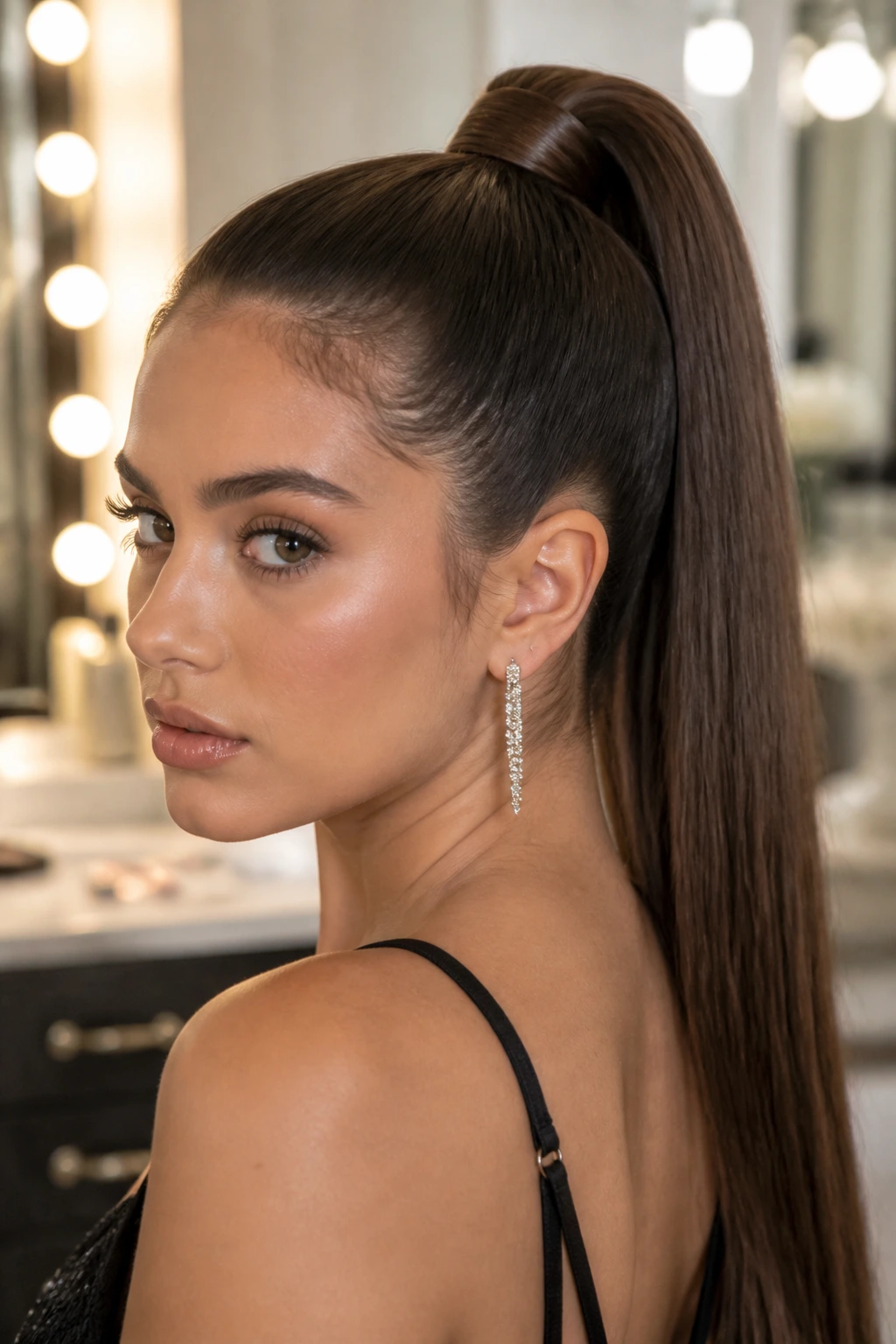
A high ponytail can absolutely be prom-worthy when the base is sleek and the wrap is neat. Straight hair is ideal because it lets the ponytail fall in a long, glossy line. The right version looks athletic in the best possible way: lifted at the crown, smooth at the sides, and sharp around the base.
Why It Reads So Strong
The height gives your face a lift, which is handy if you want a more open neckline or if your dress has a lot going on below the shoulders. The wrapped base hides the elastic and gives the style a cleaner edge. If the lengths are very straight, the tail can be left as-is. If they’re too flat, one quick bend through the ends keeps it from looking lifeless.
Keep the Crown Taut
That is the whole game. Brush upward from the temples and back of the head, then hold the ponytail while smoothing the sides with a boar bristle brush or a fine comb. Secure with a strong elastic, then wrap a strip of hair around it and pin the tail underneath. The ponytail should feel snug, not painful.
Best for: long hair, bold makeup, and dresses that need a stronger silhouette.
9. Tucked-Under Faux Bob
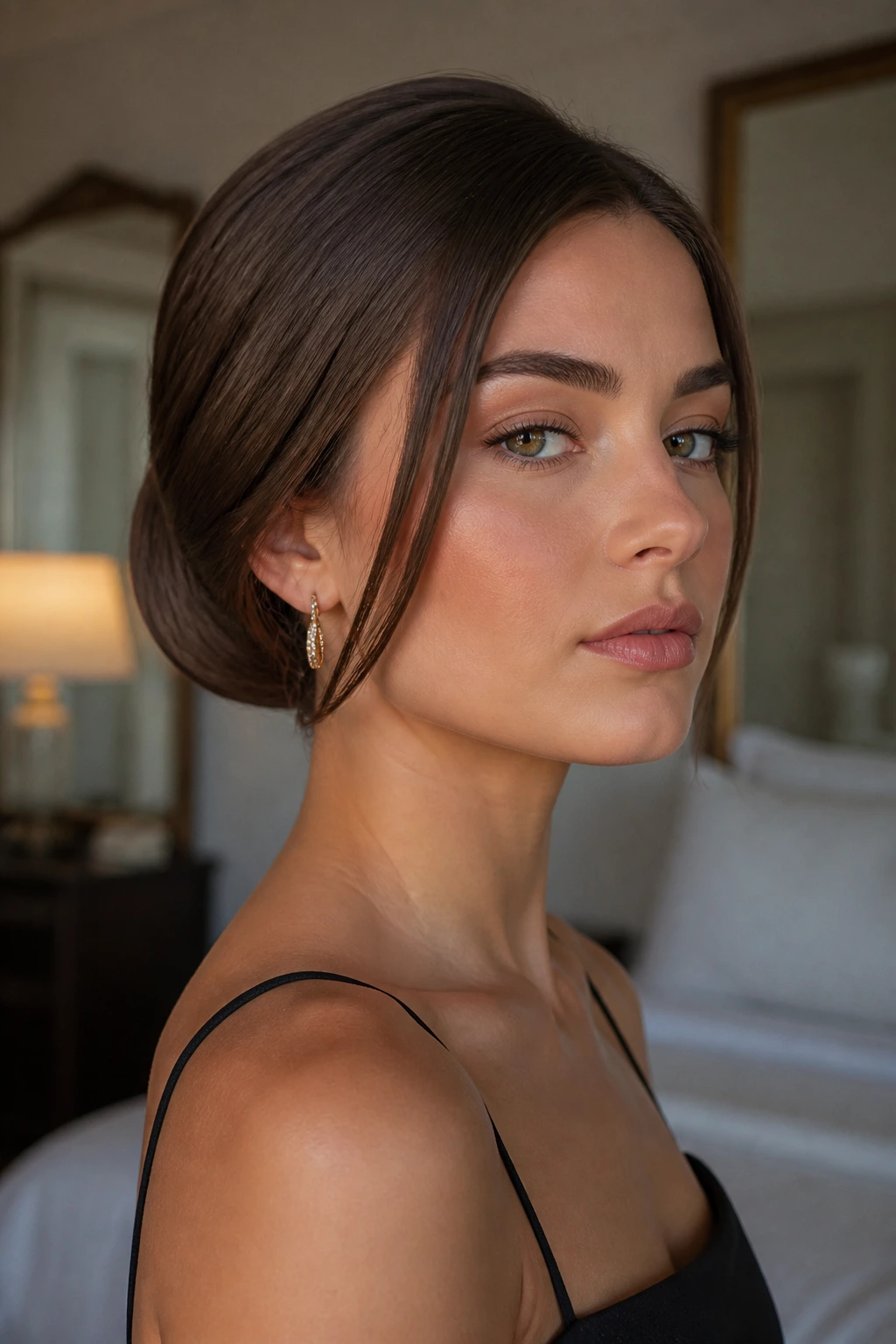
This one is pure theater in the best way. A tucked-under faux bob takes longer straight hair and hides the ends under itself so it looks like a shorter, sculpted cut. It’s not a trick to fake short hair; it’s a way to create a crisp shape that shows off shoulders, collarbones, and necklaces.
Why It’s Such a Fun Prom Option
Straight hair makes the illusion cleaner because the surface lies flat. The tucked ends stay less obvious than they would in curls, and the resulting shape looks like a deliberate vintage nod rather than a rushed pin-up job. If your dress has a lot of detail at the neckline, this style keeps the hair from competing with it.
The Best Part
You can make it look as neat or as soft as you want. Leave a side part and a few face-framing strands for a gentler version, or smooth everything back for a sharper line. Use several hidden pins under the fold rather than one or two visible ones. If the hair is thick, secure the lower layer first, then tuck the top section over it.
Best for: medium to long hair, detailed necklines, and anyone who wants a shorter-looking silhouette without cutting a thing.
10. Hair-Bow Half-Up
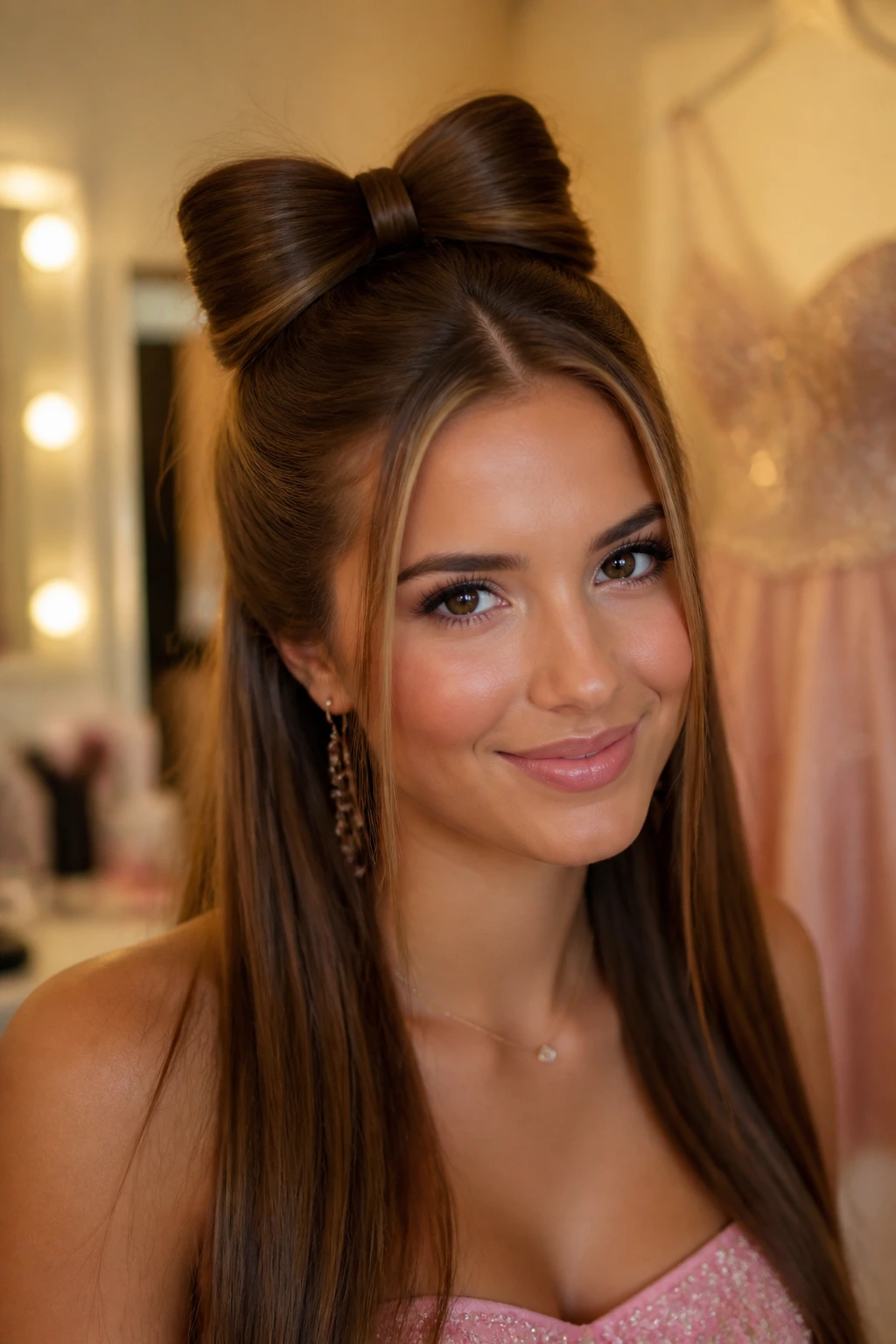
A hair bow made from your own hair is not subtle. That’s exactly why it works. Straight hair holds the bow loops cleanly, so the shape reads like a real bow instead of a sagging knot. The rest of the hair stays down, which keeps it from feeling too costume-like.
Why Straight Hair Helps
You need smooth sections to form clear loops, and straight strands do that better than almost anything else. The bow can sit at the back of the crown, slightly off-center, or even lower if the dress is more dramatic and you want the bow to become a focal point from behind. A tiny center knot made from a wrapped strand finishes it off.
Keep the Size Honest
If the bow is too large for your hair density, it will droop. If it’s too small, the effect disappears. For fine hair, use a small ribbon or a clip under the center to reinforce the shape. For thicker hair, tease the looped sections just a little before shaping them so they keep volume.
Best for: medium to long hair, playful formalwear, and dresses that need one memorable detail.
11. Rope-Braid Chignon
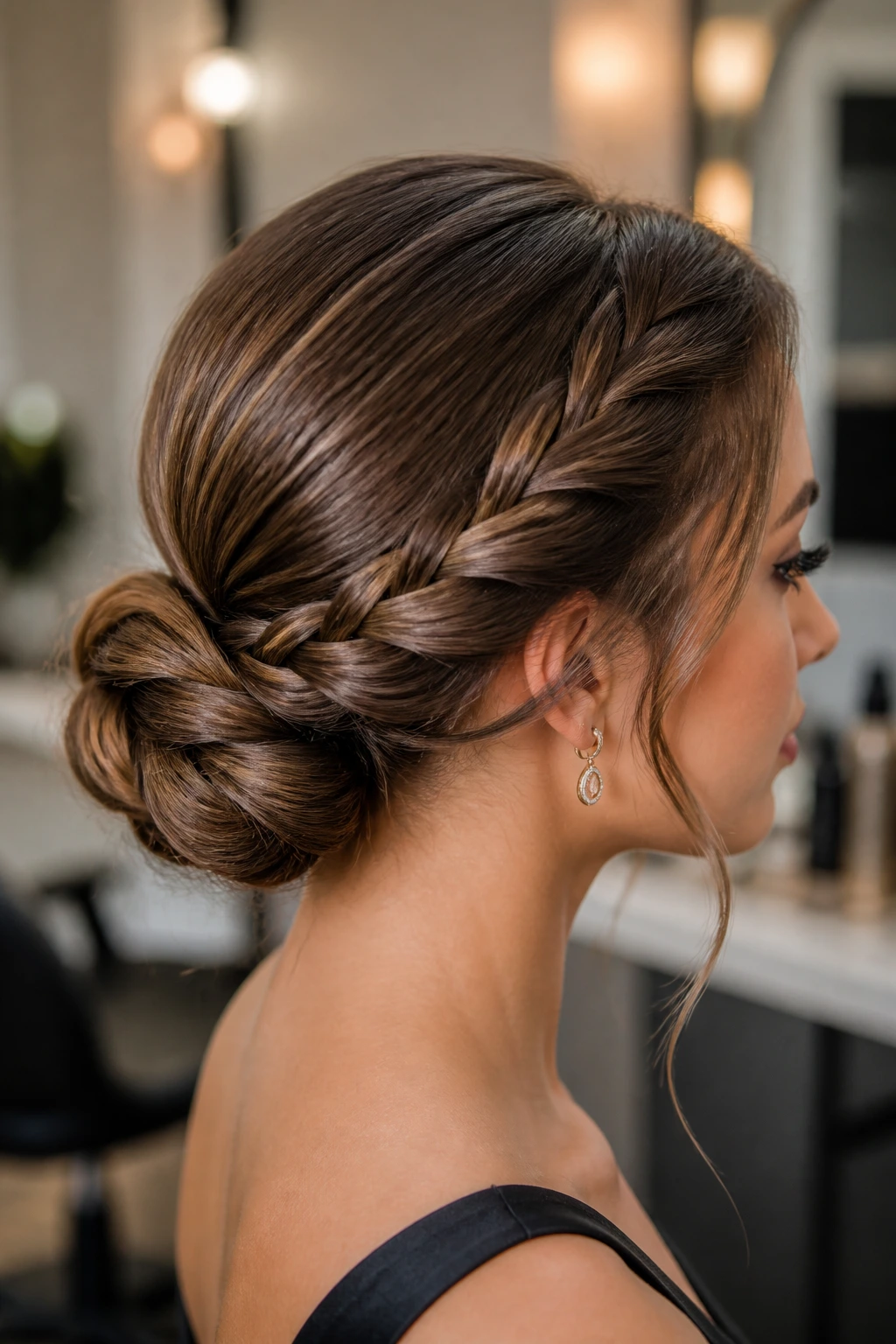
The rope-braid chignon is what happens when you want texture but refuse to let your hair get messy about it. Two twisted sections feed into a low bun, and the rope effect gives the style a sculpted look that sits beautifully on straight hair. It’s neat, but not stiff. That balance matters.
Why It Works Better Than a Plain Bun
A plain bun on straight hair can sometimes look too flat at the crown and too tidy at the base. The rope braid introduces visible ridges, which catch the light and give the bun more shape. It also creates enough friction that the twisted sections tend to stay put better than loose pieces would.
The One Detail That Matters
Twist each side section in the same direction before wrapping them together in the opposite direction. That keeps the rope braid from unraveling. Then coil the end into a bun and pin underneath. If you’re worried about slippage, spray the twists lightly before you wrap them. Not the whole head. Just the sections you’re using.
Best for: medium to long hair, sleek gowns, and anyone who wants a bun with a little texture.
12. Mini Braids Through Loose Length
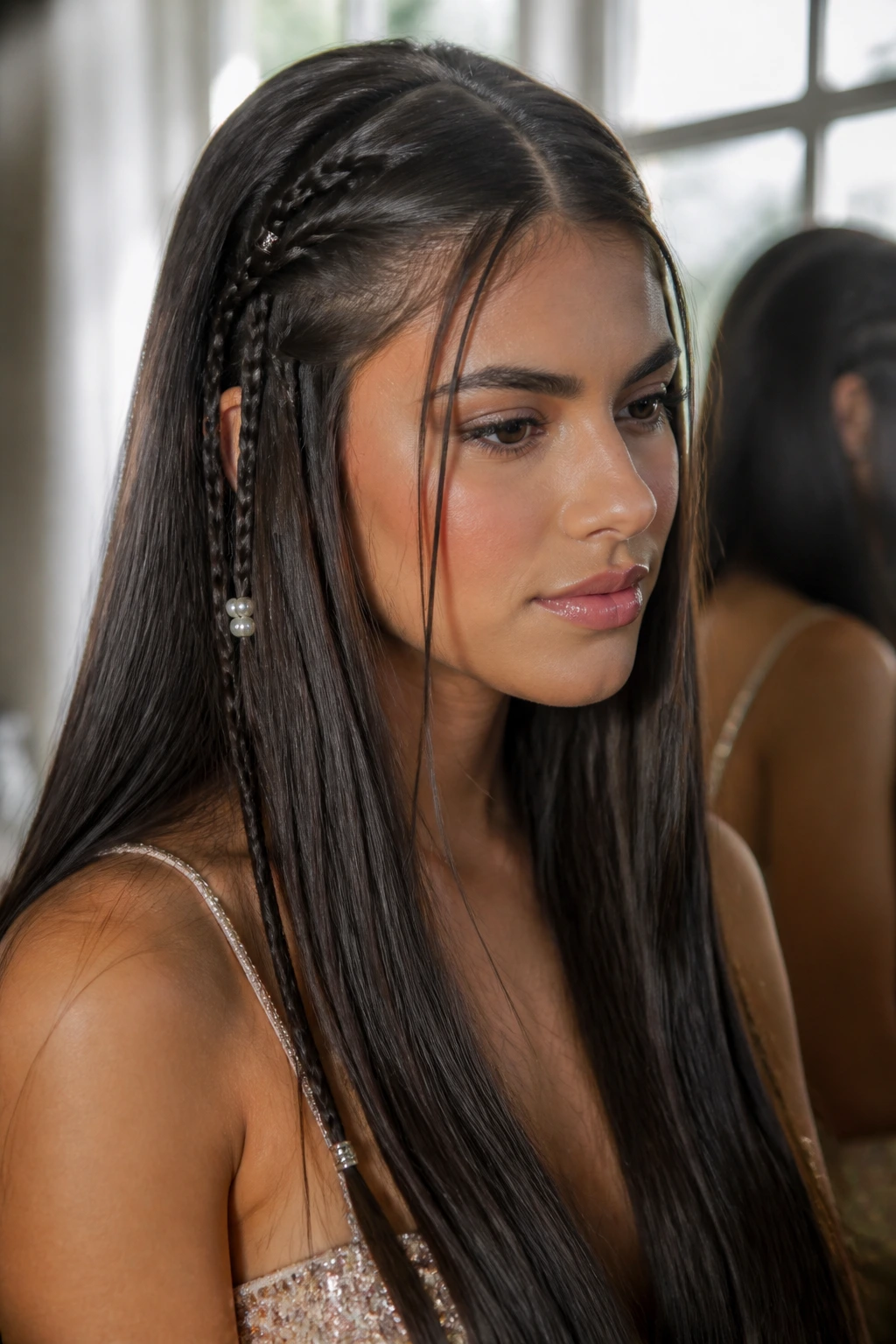
This is the style for someone who wants straight hair down but not plain straight hair down. Tiny accent braids tucked into the front, sides, or top layers add just enough detail to make the look feel styled. The rest of the hair stays glossy and long, which keeps the whole thing light.
Why It Feels Fresh
Mini braids work on straight hair because they break up the surface without changing the overall shape. They’re also flexible. You can do two braids near the temples, one braid behind each ear, or a few scattered braids that disappear into the lengths. Add a couple of tiny rings or pearl cuffs if you want a more dressed-up finish.
Keep the Braids Small
That’s the part people often miss. If the braid is too wide, it starts to overpower the length and the style gets busy fast. Thin sections keep it elegant. A little texturizing spray on the braid strands helps them hold, especially if your hair is fine and slick.
Best for: long hair, festival-inspired prom looks, and dresses that can handle a little edge.
13. Sleek Straight-Down with Crystal Pins
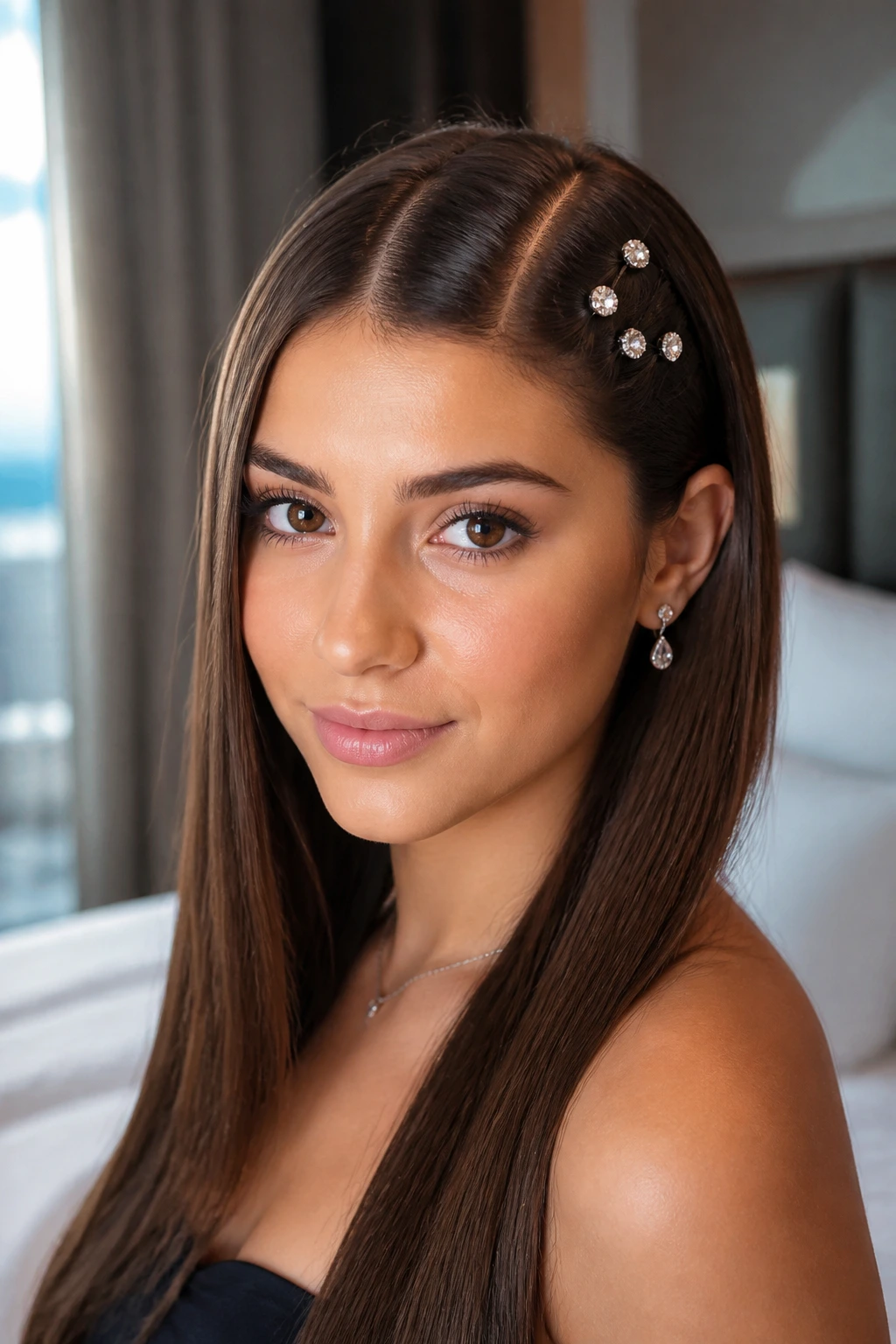
Sometimes the most striking answer is to leave the hair down and make the part, finish, and accessories do the work. Straight hair can look incredibly formal when the surface is smooth, the ends are freshly trimmed, and a few crystal pins are placed with intention near one temple or along the part.
Why It’s More Than “Just Down”
The difference between casual and prom-ready is structure. A center part or deep side part, a polished blow-dry, and a very small amount of shine spray can change the whole mood. Crystal pins catch the light near the face, so you get the jewelry effect without pulling the hair up.
What Makes It Work
Keep the shape clean from root to end. If the ends are frayed, this style loses its edge fast, which is why a trim before prom matters more here than with a bun. You can tuck one side behind the ear, leave the other loose, or pin both sides symmetrically. I prefer fewer pins with better placement over a cluster of random sparkle.
Best for: healthy long hair, beaded dresses, and anyone who wants a low-effort silhouette that still looks deliberate.
14. Pearl Claw-Clip Twist
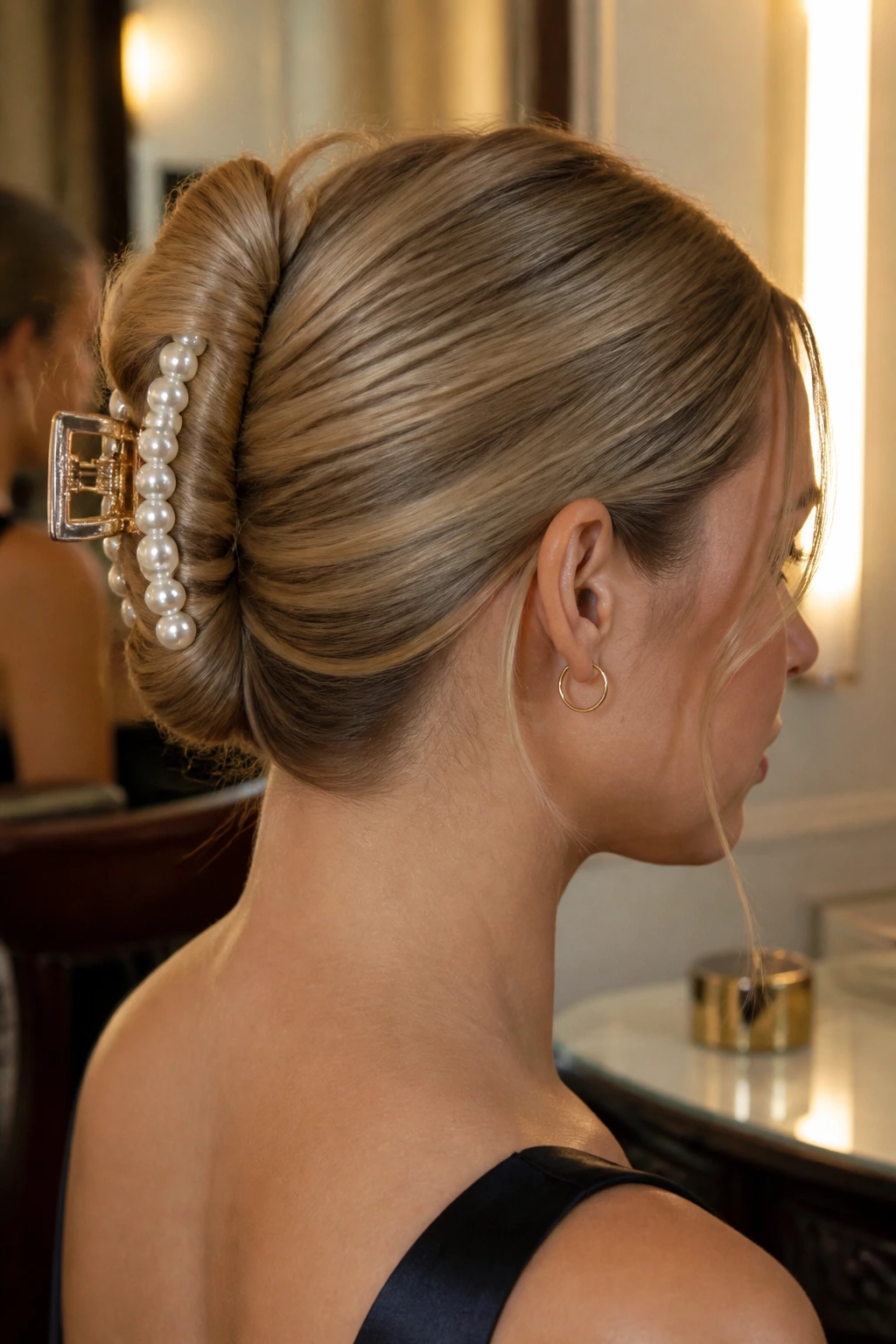
A claw clip can be prom-appropriate when the clip itself is beautiful and the twist underneath is tidy. A pearl or satin-finished clip holds a low twist or French roll in place, creating a shape that feels modern and slightly undone, but in a controlled way. Straight hair is good here because it lets the clip sit flat.
Why It Works Better Than You’d Expect
The clip gives you a focal point right away, which is useful if you do not want to spend half the night fussing with pins. The twist underneath should be tight enough to support the weight of the clip, but not so tight that it collapses the sides. If the hair is very silky, add a little dry texture spray before folding it up.
My Preference
Use a clip that’s large enough to grab all the hair without forcing it. Tiny claw clips on heavy straight hair tend to slip. A medium or large clip with smooth inner teeth does the job better, and it looks cleaner from the back. This is also one of the easiest styles to refresh if a piece drops.
Best for: medium to long hair, minimalist dresses, and a slightly modern prom look.
15. Bubble Half-Up
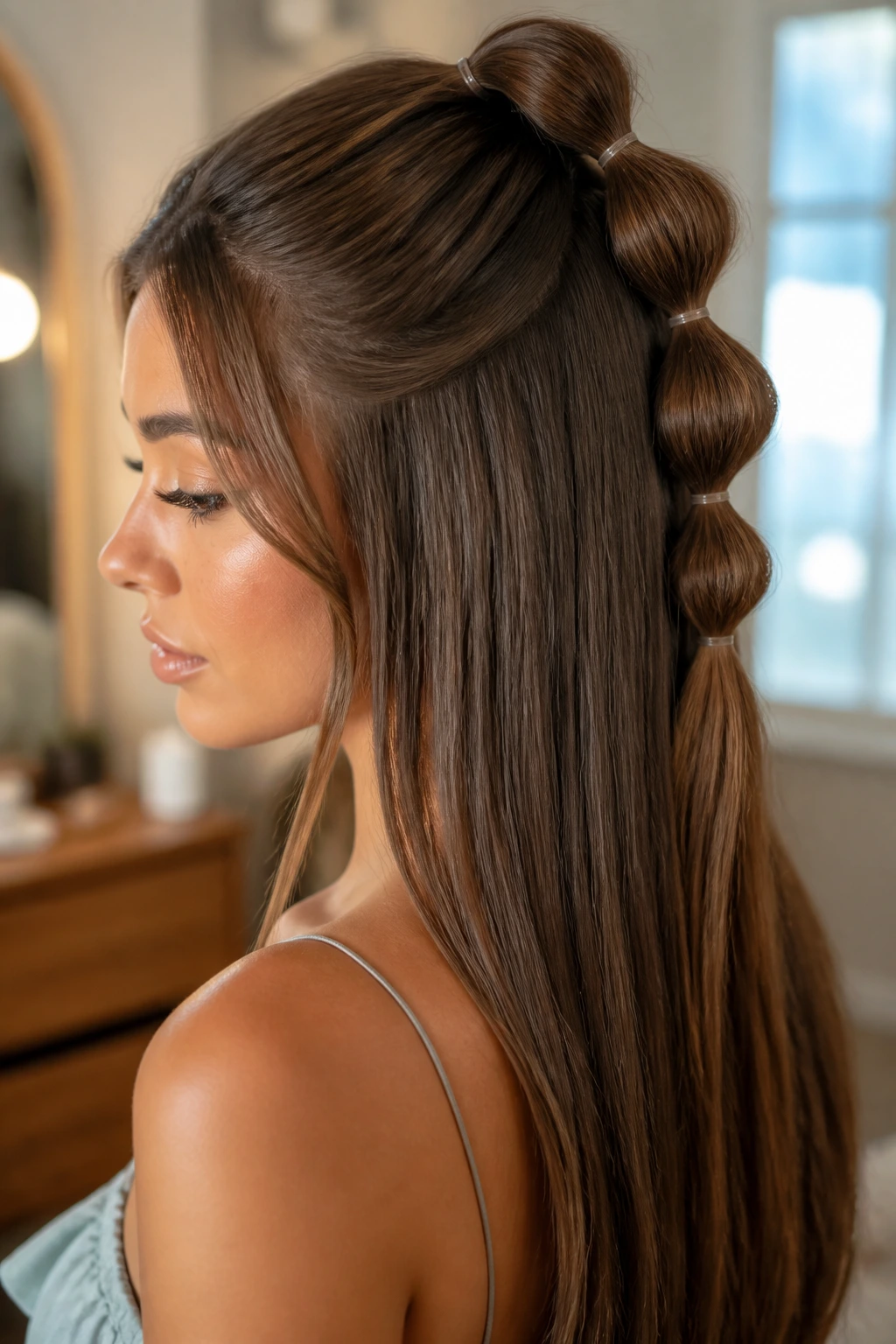
The bubble half-up is basically the answer to “I want something fun, but I still want my hair down.” You take the top section, secure it into a half ponytail, then add elastics every few inches down the tail and puff each section into soft bubbles. Straight hair makes the spacing crisp and the bubbles easy to see.
Why It Feels Light Instead of Heavy
Because only the top part is lifted, the style keeps a lot of movement in the lengths. That matters for dresses with volume or details at the bodice, since the hairstyle won’t crowd the whole look. The bubble pattern also gives you texture without curls, which is handy if you want the ends to stay straight.
Make the Bubbles Uniform
Space the elastics evenly. Uneven spacing is what makes this style look accidental. After each elastic goes in, pull gently at the sides of that section until it rounds out. A thin ribbon threaded through the top section gives the whole thing a softer prom feel, especially if the dress is pastel, satin, or floral.
Best for: long hair, playful formalwear, and anyone who likes a little movement without a full updo.
16. Braided Crown Into Low Bun
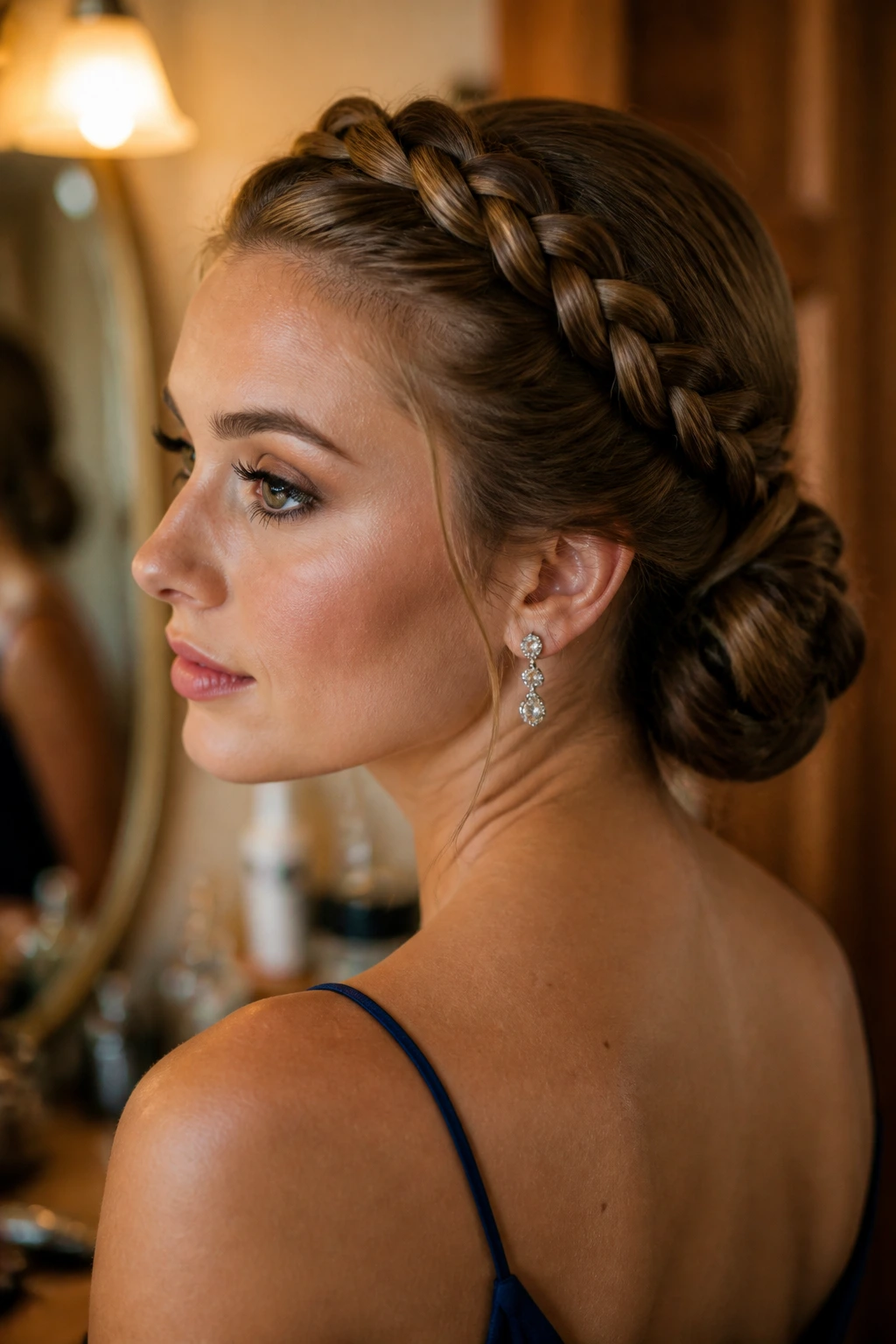
This one has more structure than the halo braid and more polish than a plain bun. A braid starts at one side, travels across the crown, and then feeds into a low bun at the nape. It’s a strong choice for straight hair because the braid line stays neat and the bun grounds the style.
Why It’s So Effective
You get two shapes in one look: a visible crown line and a stable bun base. That means the style has interest from the front and the back, which is useful on prom night when you spend a lot of time turning around for photos. The braid also helps keep finer straight hair from sliding away from the face.
A Tiny Practical Note
Braid a little tighter than your instinct tells you. Straight hair loosens as you move, especially near the hairline. Once the braid is pinned into the bun, tug a few edges very lightly to soften it. Not too much. You want movement, not frizz.
Best for: medium to long hair, dresses with open shoulders, and people who want one style that does a lot of work.
17. Silk-Scarf Low Ponytail
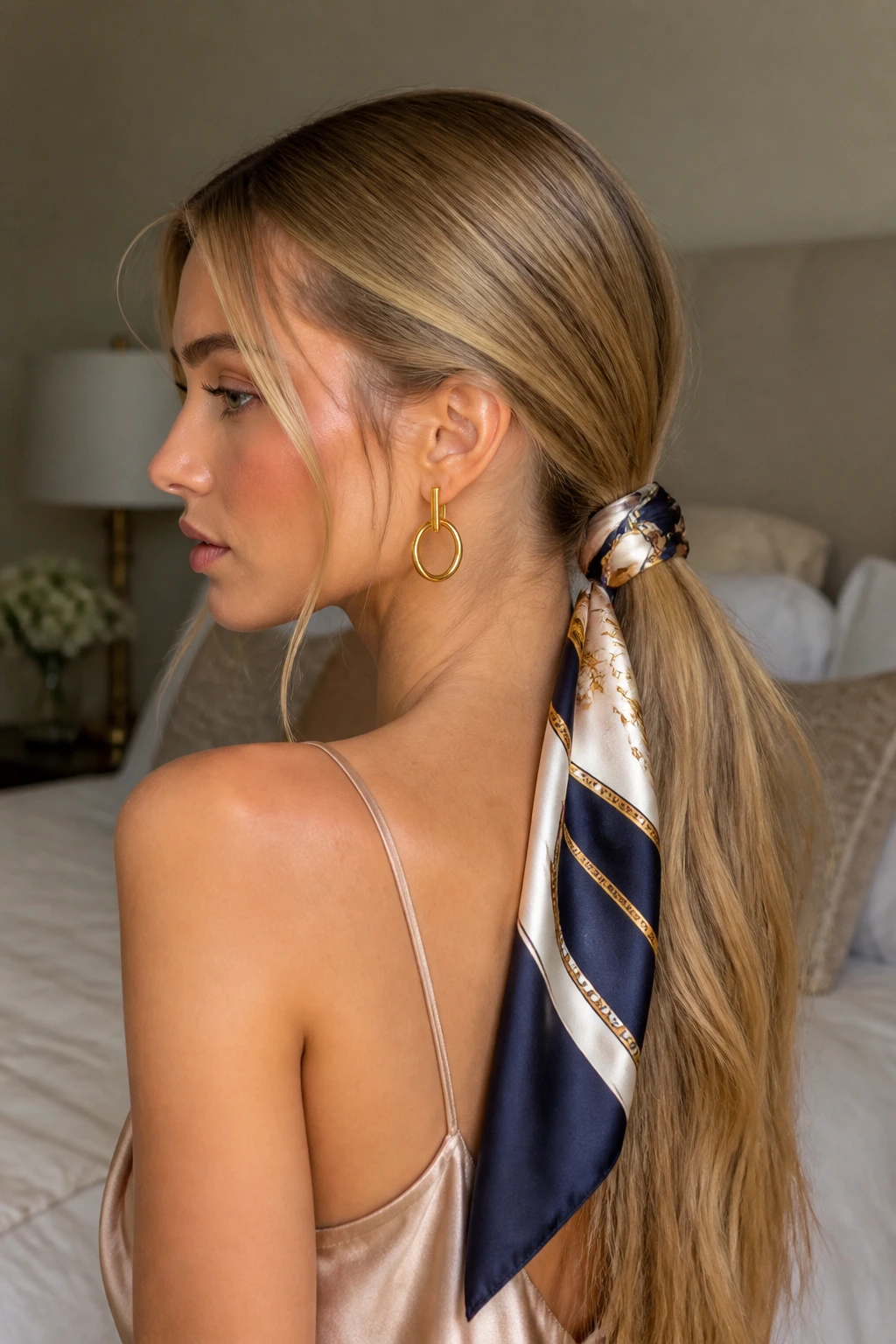
A silk scarf can do something a plain elastic cannot: make the ponytail look finished from the first glance. Wrap it around a low ponytail, tie it into a bow, or let the tails hang beside the lengths. Straight hair and silk play well together because both surfaces look clean and smooth.
Why It Feels Dressy
The scarf adds color and softness without requiring a complicated shape. If your dress is plain, this can be the thing that keeps the whole look from feeling underdressed. If your dress is already busy, choose a scarf in a matching tone so it feels intentional rather than noisy.
How to Keep It From Slipping
Tie the ponytail first with a strong elastic, then add the scarf over it. Never rely on the scarf alone to hold the hair. That’s how the style falls apart halfway through dinner. A low ponytail at the nape usually looks better here than a high one because the scarf hangs more naturally.
Best for: long straight hair, romantic dresses, and anyone who wants an accessory-forward hairstyle.
18. Side Chignon with Twisted Front
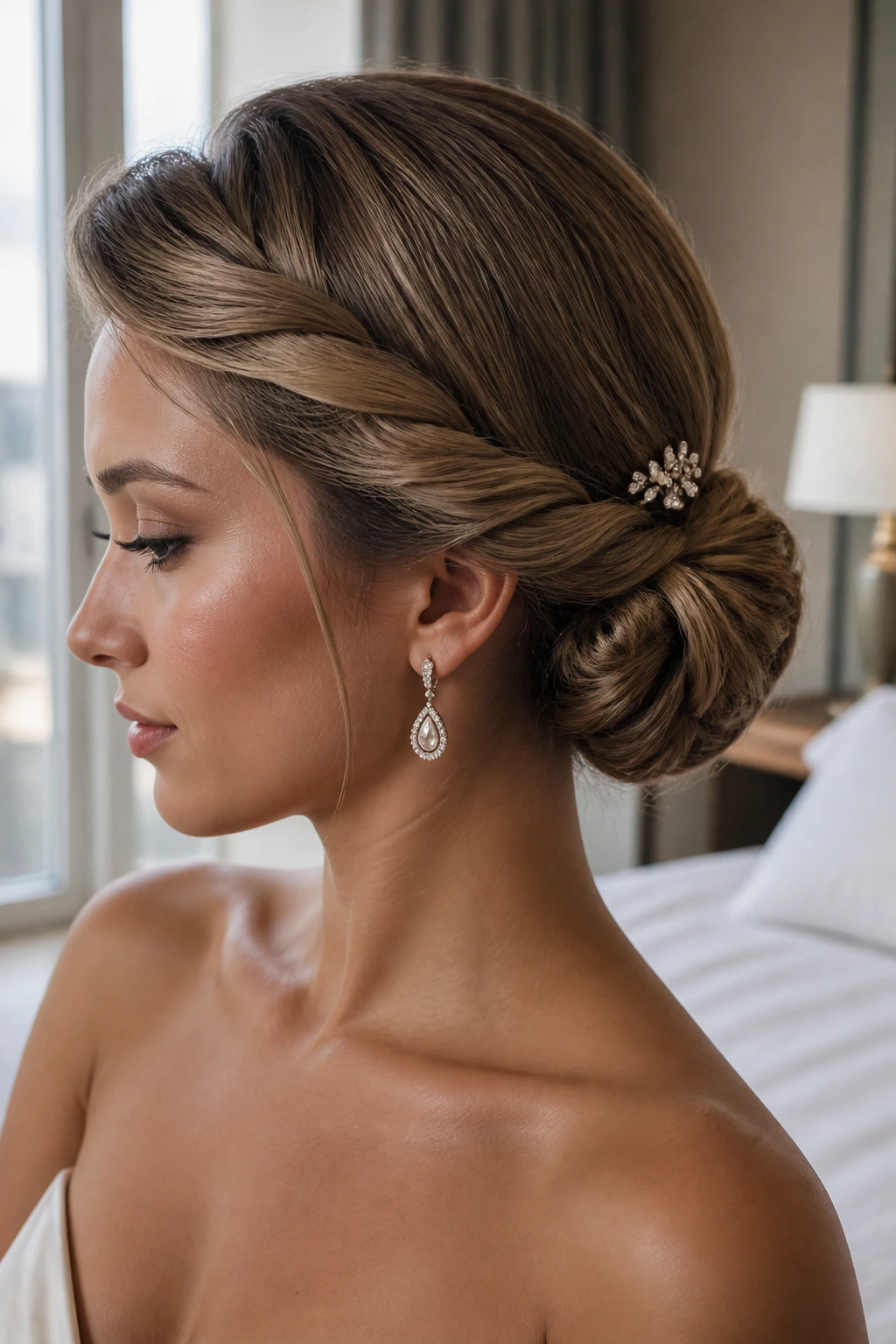
An asymmetrical chignon has a little more personality than a centered bun, and straight hair handles the geometry beautifully. Twist the front sections back from one side, guide the hair toward the nape, and build the bun just off center. The result feels tailored and slightly dramatic.
Why It Works
The side placement gives the face a softer frame without needing curls. The twist across the front also makes the style feel more layered, which helps if your hair is very straight and the lengths tend to hang a little too clean. This is a good choice when you want elegance with a bit of movement in the front.
Keep the Shape Low and Intentional
If the bun sits too far to one side, it can start to look accidental. The best version still feels anchored at the nape, just offset by an inch or two. Add a decorative pin on the open side or leave one sleek section tucked behind the ear. The contrast is what makes it interesting.
Best for: medium to long hair, one-shoulder gowns, and formal looks that need a softer line.
19. Pin-Straight Ponytail with Wrapped Base
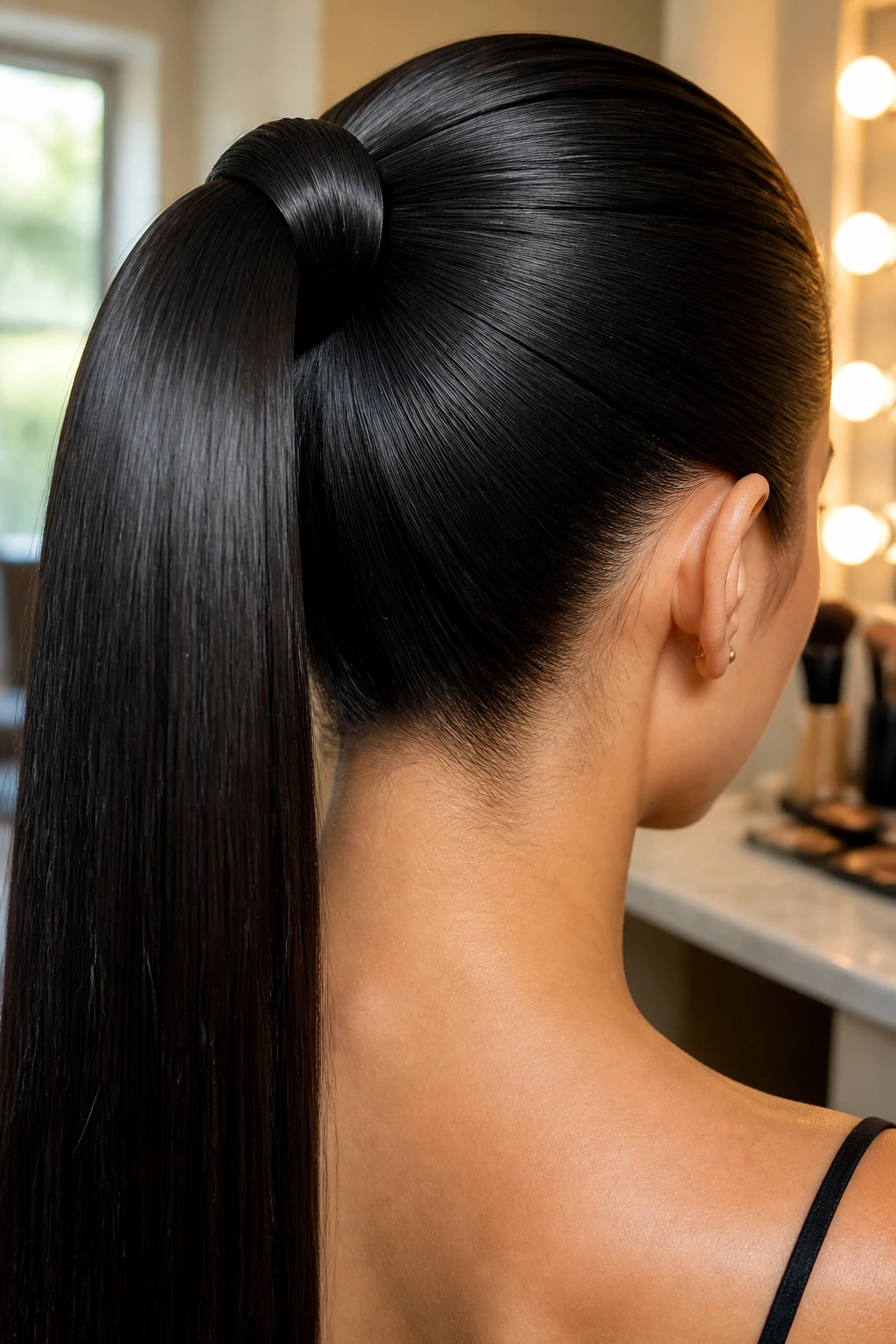
A ponytail does not need curls to feel formal. In fact, a pin-straight ponytail can look sharper than a curled one when the base is clean and the lengths are glossy. Wrap a piece of hair around the elastic, smooth the crown until it lies flat, and let the tail fall like a satin ribbon.
Why It Ends the List Well
There’s no extra drama hiding here. The style works because of precision. The crown should be smooth, the wrap should hide the elastic, and the tail should look well brushed, not stiff. If you want a little movement, bend just the last inch of the ponytail under with a flat iron so it doesn’t stick out straight and rigid.
Best Use Case
This is the one I’d choose for a dress with a detailed back or a high slit, because the line of the ponytail doesn’t compete with the outfit. Add one tiny accessory near the base if you want more sparkle, but don’t crowd it. A style like this needs space.
Best for: long hair, sleek gowns, and anyone who likes a clean silhouette with zero fuss at the neck.
Why Prom Hairstyles for Straight Hair Hold Their Shape Better Than People Expect
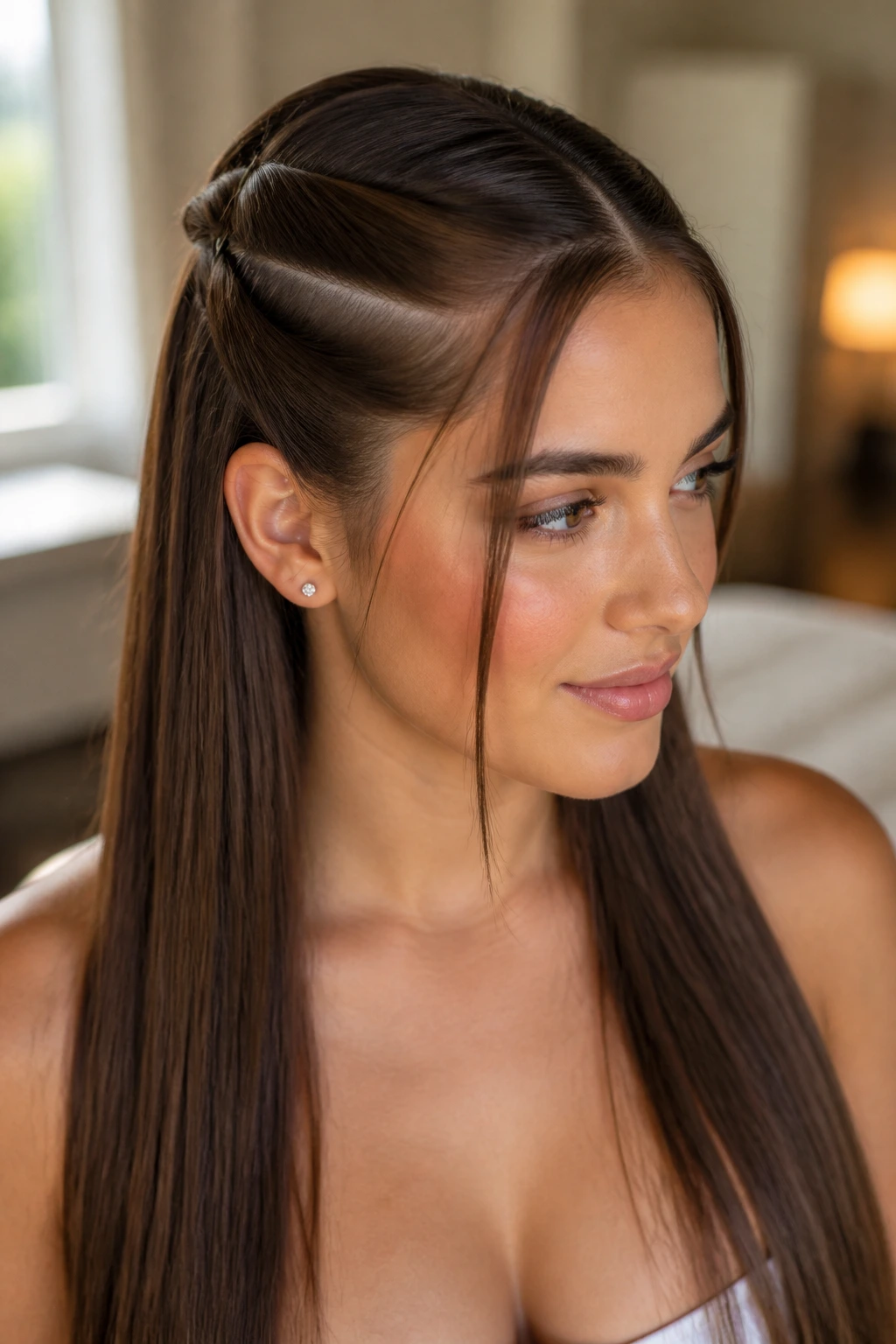
Straight hair gets underestimated because it can look plain when it’s left untouched. Once you start building shape with parts, twists, braids, and pins, it becomes one of the easiest textures to style for prom. The surface lies flat. The lines stay visible. And accessories actually show up instead of sinking into the hair.
The part people miss is that straight hair usually needs grip, not more decoration. Dry shampoo near the roots, a light texturizer through the mid-lengths, and a properly crossed pin pattern will do more for longevity than five extra curls slapped on at the end. A style that feels secure before you leave the house is usually the one that still looks good after photos and dinner.
Essential Tools for These Prom Hairstyles
-
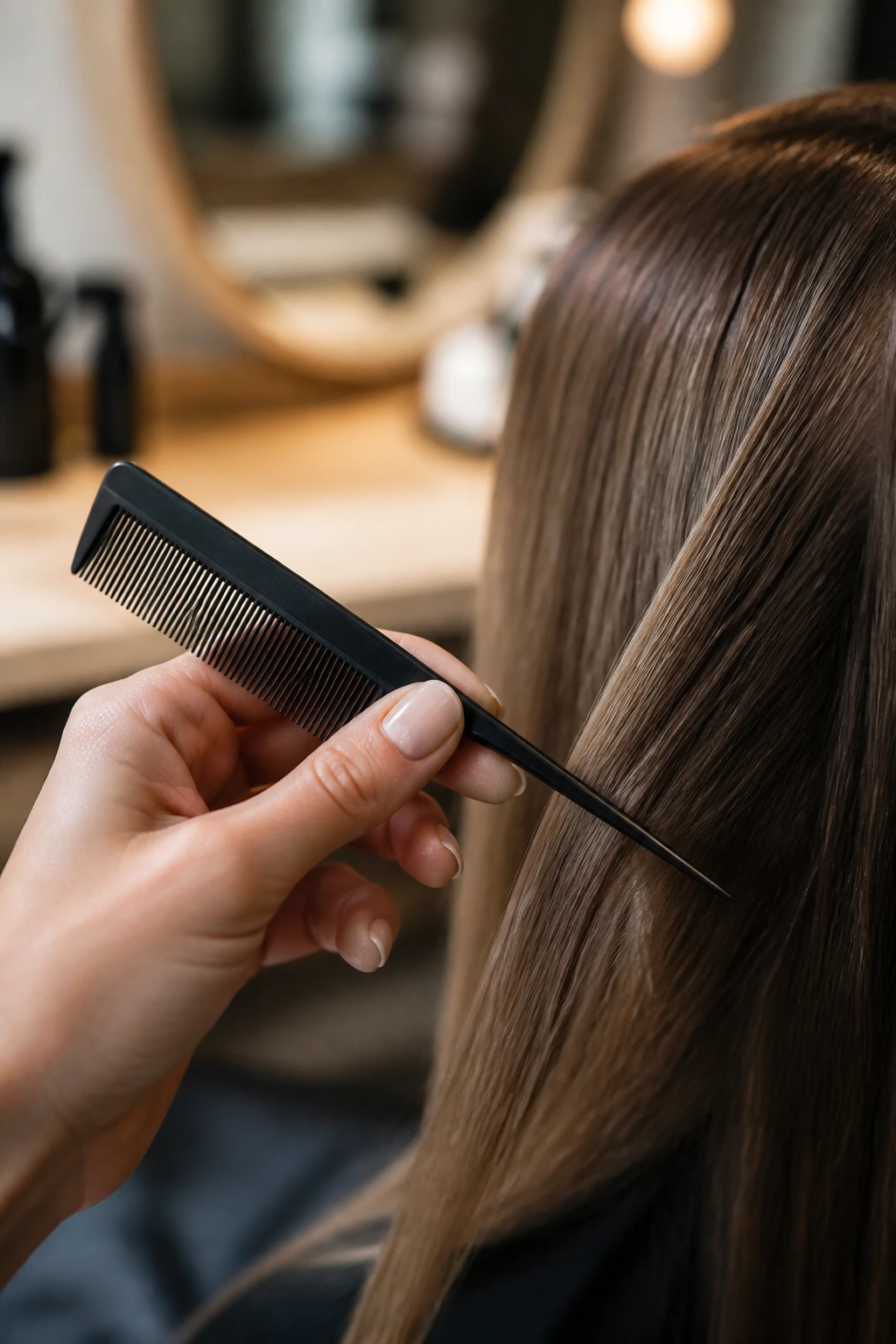
Tail comb: The pointed end makes clean parts and neat sectioning, especially for center parts and braid lines.
-
Boar bristle brush: This smooths the crown without creating static the way some plastic brushes do.
-
Small clear elastics: They disappear into ponytails, braid ends, and bubble sections.
-
U-pins and long bobby pins: U-pins help with buns and twists; long bobby pins hold more hair and are less likely to spit out of straight strands.
-
Strong-hold hairspray: Use a brushable formula if possible so the hair stays moveable instead of crunchy.
-
Texturizing spray or dry shampoo: Straight hair needs a little grit at the roots and through the sections that need to hold.
-
Flat iron or curling wand: Not for full curls unless you want them, but for smoothing bends, flipping ends, or polishing the front sections.
-
Shine spray or light serum: A tiny amount on the lengths gives sleek styles that glossy finish, but keep it away from the roots.
-
Decorative clips, combs, ribbon, or scarf: Choose one main accessory and let it do the talking.
Smart Prep and Product Choices That Make Straight Hair Behave
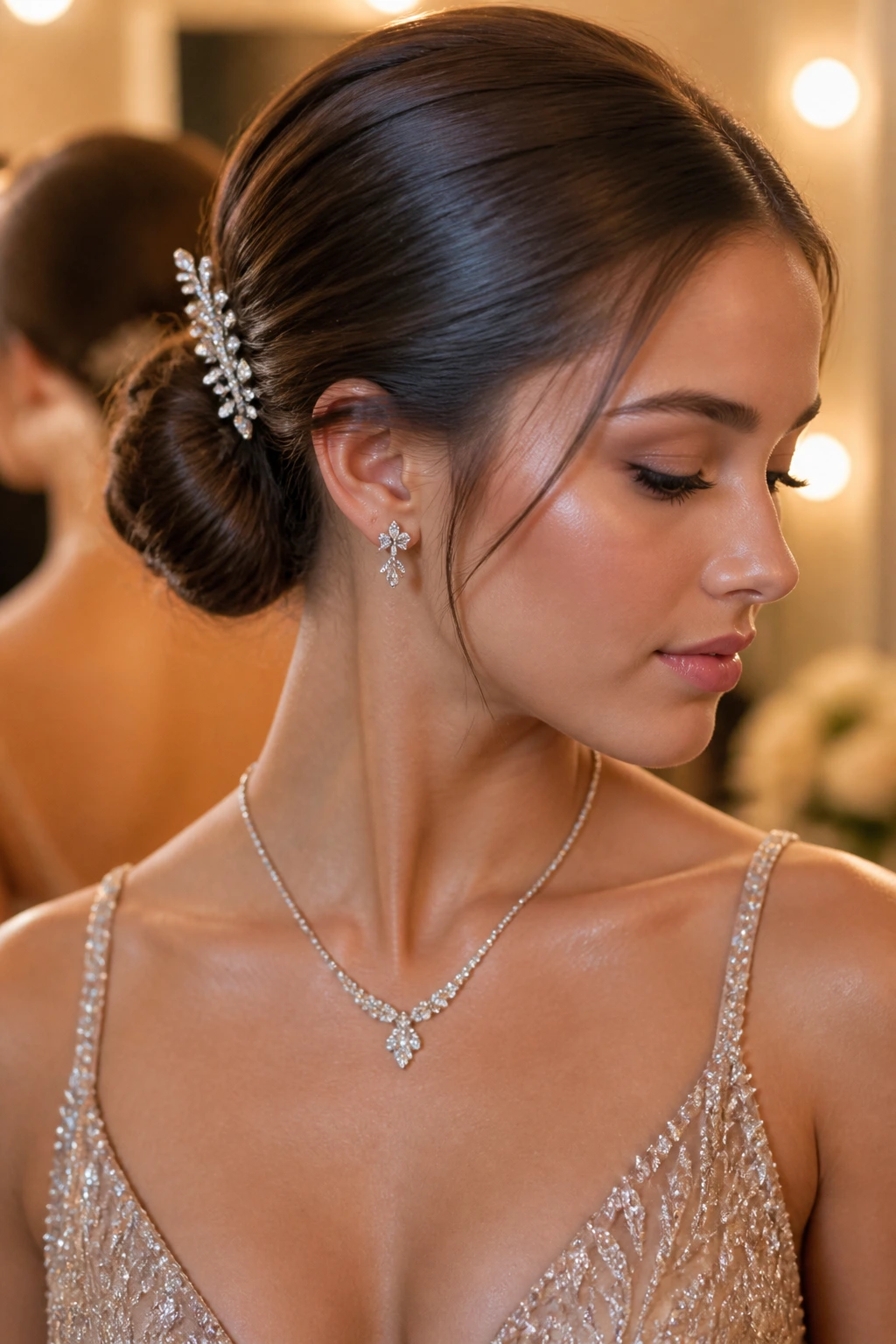
Clean hair is not always the best hair for prom. If your strands are silky and freshly washed, they can slide out of pins with annoying ease. Hair that was washed the day before often holds shape better because there’s a little natural grip left in it. If your scalp gets oily fast, use dry shampoo at the roots, then brush it through so it doesn’t look dusty.
Product choice matters more than quantity. A light mousse at the crown, a texture spray through the mid-lengths, and a finishing spray after the style is built will usually do more than loading the whole head with heavy cream. Heavy products can make straight hair collapse. That greasy, over-smoothed look is hard to fix once it starts.
Heat also has a place here, but it should be controlled. A flat iron can create a bend at the ends, a flip in the front, or a slight wave through the tail of a ponytail. That tiny bit of shape keeps straight hair from looking too severe. If you’re using heat, protect the hair first and let each section cool before you pin it. Warm hair slips.
How to Wear These Styles With Your Dress and Jewelry
Presentation: A low bun or French twist works best when the back of the dress deserves attention. A high ponytail or side part is stronger when the neckline is simpler and you want the hair to carry more of the visual weight. If your dress has a dramatic collar or heavy beading, keep the hairstyle cleaner so the whole look doesn’t start shouting at once.
Accompaniments: Studs, small drops, crystal combs, and ribbon all play differently. Crystal pins look best with sleek hair down or a low bun. Ribbon and silk scarf styles work better with softer dresses. If you’re wearing a big necklace, keep the hair away from the neck so the jewelry doesn’t get tangled in the style.
Fit: Fine hair usually needs hidden padding, extra pins, or a style that uses less volume but more control. Thick hair can handle bigger buns, fuller braids, and heavier accessories. Shorter straight hair often does best with half-up looks, faux bobs, or side-pinned styles that don’t require too much length.
Final Touch: Step back from the mirror and check the silhouette from the side and the back. That’s where prom hairstyles win or lose the night. A little shine spray on the lengths and one last smoothing pass over the crown can make a plain style look deliberate in seconds.
Extra Polish and Texture Boosters
Grip at the roots: Tap a little dry shampoo into the crown and temples before you start. Straight hair usually needs that subtle grit so pins stay where you put them.
Hidden structure: Cross bobby pins in an X, especially under buns and twists. One pin goes in, the next crosses over it. That tiny habit makes a massive difference.
Softness where it counts: Pull two thin face-framing pieces loose if the style feels too severe. The trick is to make them intentional, not accidental. Use a flat iron to bend the front pieces away from the face so they don’t cling.
A single accent is often enough: One ribbon, one crystal comb, or one pearl pin usually beats a pile of small decorations. Straight hair looks best when the accessory choice is clear.
If you want more body: Backcomb only the hidden sections, never the smooth outer layer. That gives you volume without ruining the sleek surface that makes straight hair look expensive.
Common Mistakes to Avoid
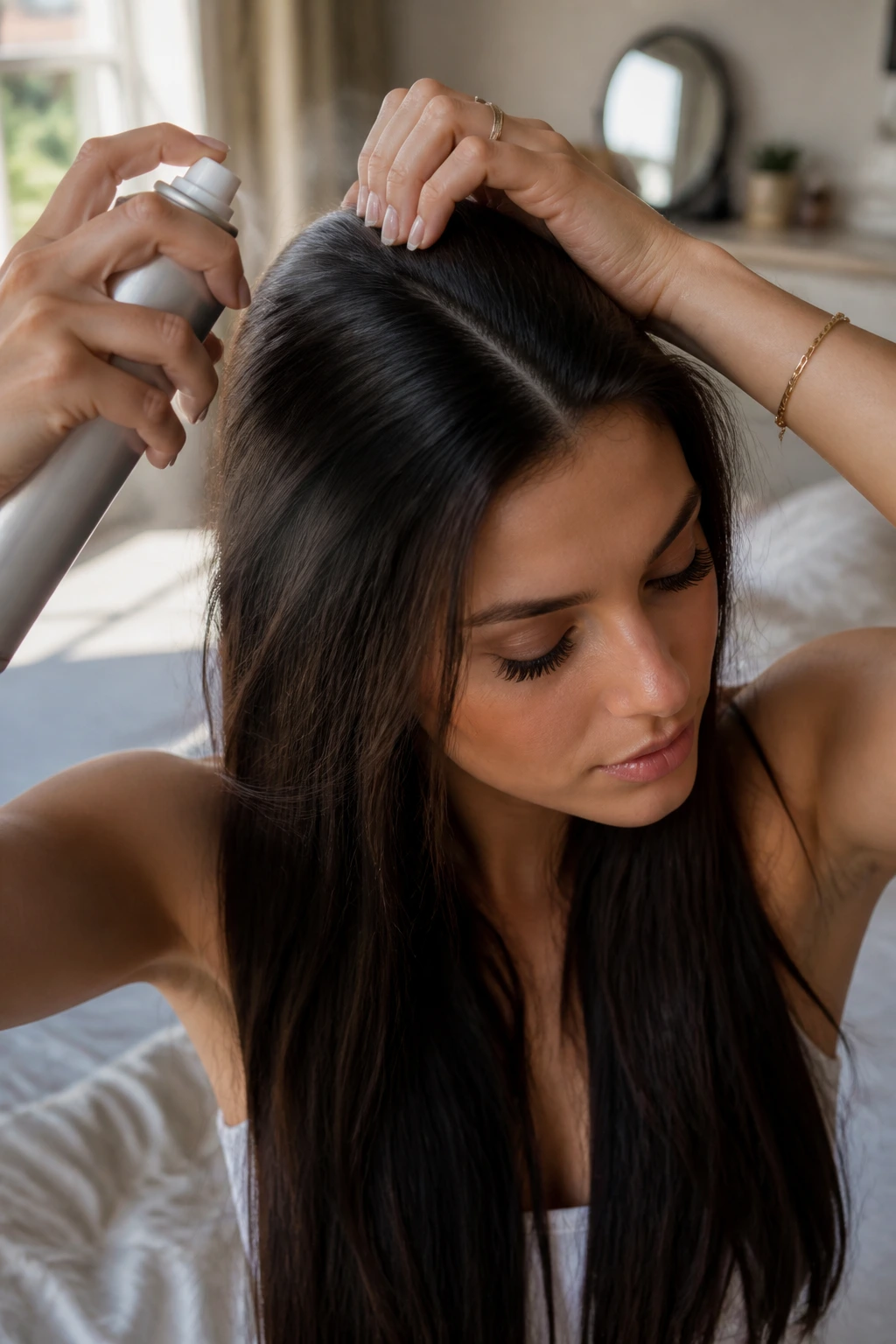
Starting with hair that’s too clean: Freshly washed straight hair tends to slip. If you need to wash the same day, use dry shampoo and texture spray before styling. The hair should feel slightly grippy, not silky and loose.
Using one elastic where you need two points of support: A low bun, ponytail, or twist often needs an anchor elastic and hidden bobby pins. If you rely on the first elastic alone, the style can sag by the time you’re in the car.
Overloading the crown with product: Too much serum or oil makes straight hair look greasy and weakens hold. Keep the shine product on the lengths and ends. The roots need lift, not slip.
Decorating every inch of the style: A pearl clip, a ribbon, and a dozen pins can turn a clean prom hairstyle into visual noise. Pick one main accent and let the shape do the rest.
Skipping a test run: Straight hair can react differently depending on humidity, haircut, or how long your layers are. A quick trial at home tells you whether the style needs more texture spray, tighter pinning, or a different part before the real night.
Variations and Adaptations to Try
The Short-Strands Edit: If your hair barely reaches the shoulders, lean into half-up styles, mini braids, clips, and faux bobs. You’ll get more control without fighting for length that isn’t there.
The Fine-Hair Support Plan: Use a little more texture spray, choose smaller sections, and add hidden padding at the crown or under the bun. Fine straight hair usually looks best when the shape is clean and the support is invisible.
The Thick-Hair Secure Version: Go for styles with stronger anchors: low buns, wrapped ponies, French twists, and braided crowns. Use larger pins and don’t expect a tiny clip to do the work of a real elastic.
The Heat-Free Approach: If you don’t want a flat iron near your head, choose styles that rely on parting, twisting, and pinning rather than bent ends. A sleek bun or braid can look formal without any heat at all.
The Soft Romantic Version: Leave a few face-framing pieces, soften the crown, and choose ribbon, pearls, or a side part. The style keeps its structure, but the finish feels gentler.
The Bold Accessory Swap: Replace delicate pins with a satin bow, jeweled comb, or silk scarf if the dress is plain. Straight hair takes accessories well because the surface doesn’t hide them.
Frequently Asked Questions
Should straight hair be washed the day of prom?
Usually, no. Hair that’s washed the day before tends to hold pins, elastics, and texture spray better. If your scalp gets oily quickly, freshen the roots with dry shampoo rather than starting from slippery, squeaky-clean hair.
Can straight hair hold curls if I want a softer look?
Yes, but the curls need prep. Use heat protectant, let each section cool fully, and mist the hair with a light-hold spray before and after curling. Straight hair often drops curls faster, so a looser wave or bend may last better than tight ringlets.
What if my hair is too slippery for pins?
Add texture first. A dry shampoo or texture spray at the roots and through the sections you’re pinning gives the hair enough grit to catch on itself. Then use long bobby pins in a crossed pattern instead of relying on one little pin.
Which styles work best for short straight hair?
Half-up twists, side parts with clips, faux bobs, and mini braids tend to be the most forgiving. Shorter lengths can struggle with large buns or huge braids, but they look sharp when the style matches the cut instead of trying to force more hair than you’ve got.
How do I keep the crown from going flat during the night?
Start with a little lift at the roots using dry shampoo or mousse before styling. Then avoid over-smoothing the top with heavy serum. A couple of hidden pins and a small travel spray in your bag can rescue the crown if it starts to settle.
Are ribbons and scarves too casual for prom?
Not if you choose the right one. Satin ribbon, velvet, or a scarf in a dress-matching color can look formal and intentional. The key is to anchor it to a strong hairstyle, not use it as a substitute for one.
Can I do one of these styles myself?
Absolutely. A low ponytail, bubble pony, half-up twist, or side-part with clips is realistic for a solo try. French twists, braided crowns, and sculpted buns are easier with a friend who can see the back of your head.
What should I carry in case the style loosens?
A few bobby pins, a small elastic, a travel-size hairspray, and one spare accessory if yours is clip-based. You do not need a full kit. You need the tiny things that fix the common failures: a slipping section, a dropped piece, or a clip that shifts.
The Last Pin
Straight hair doesn’t need to be coaxed into pretending it’s something else. It just needs the right shape, a little grip, and one strong idea. That might be a sleek bun that shows off your shoulders, a ribbon-tied ponytail that swings when you move, or a clean half-up style that keeps the front soft and the back controlled.
Prom is long enough to expose a sloppy style and memorable enough to make a good one worth the effort. If you choose a look that fits your dress, your hair length, and the amount of fuss you actually want to deal with, the whole night gets easier. A few pins, the right spray, and one honest mirror check before you leave the house usually beat a dozen emergency fixes in the bathroom.
