



The best bridesmaid hair is the kind that still looks calm at the end of the night, after the bouquet toss, after the hugs, after somebody has cried into somebody else’s shoulder and the heels have come off. A low bun earns that job because it sits close to the neck, keeps the shoulders clean, and doesn’t fight with earrings, veils, or a dress with any kind of back detail. It can be sleek enough for satin, soft enough for chiffon, and sturdy enough to survive wind, dancing, and a dozen camera flashes.
That’s why low bun styles for bridesmaids keep showing up in real wedding prep rooms. They don’t all look the same, which matters more than people admit. One wedding party can wear five versions of the same idea — smooth, braided, twisted, tucked, pearl-pinned — and still look coordinated without turning into clones. Good bridal hair should feel related, not copied.
And there’s a practical side too. Low buns are friendlier to second-day hair, easier to anchor with pins, and less likely to collapse under the weight of long curls or loose waves. They also leave room for a necklace, a statement earring, or a dramatic veil comb without the whole look crowding the neck.
Why These Low Bun Looks Earn Their Place
- Neckline Friendly: A bun that sits at the nape won’t compete with an open back, halter strap, or high lace collar, so the dress keeps its shape in photos.
- Camera-Smart: The back of a bridesmaid’s head gets photographed more than people expect, and a low bun gives you a clean line instead of a mass of loose hair.
- Wearable for Hours: Pins placed at the nape tend to hold better than styles piled high, especially when there’s movement, humidity, or a lot of hugging.
- Easy to Coordinate: You can make the same bun read polished, relaxed, romantic, or modern just by changing the part, the braid, or the finish.
- Kind to Accessories: Pearl pins, combs, small florals, and veils all sit more naturally on a low base than on a high knot.
- Works Across Hair Types: Fine, thick, straight, wavy, curly, and coily hair each have a version that can hold its own without fighting the texture.
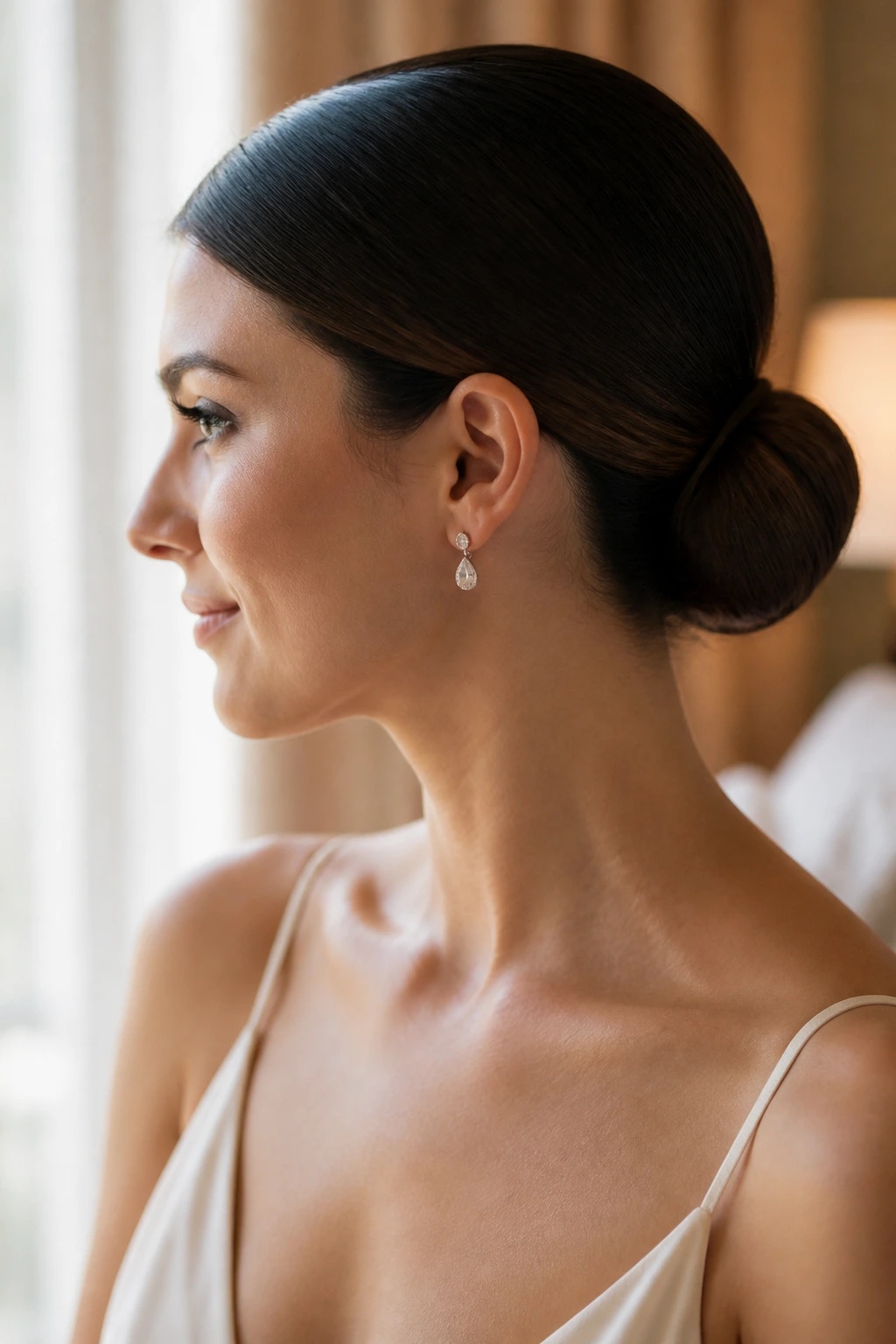
1. Sleek Center-Part Chignon
A clean center part and a low chignon are the quietest kind of confident. The line at the middle of the head pulls everything into order, and the bun sits close enough to the nape that it doesn’t interrupt the shape of the dress. It’s the sort of style that looks best when every flyaway is tamed, every pin is hidden, and the finish has a soft satin shine rather than a greasy gloss.
Why it works: This version loves a structured gown — think satin, crepe, mikado, or anything with a neat neckline. A boar-bristle brush and a little smoothing cream go a long way here, because the style depends on clean lines, not volume. If the hair is a bit puffy at the crown, it stops looking sleek and starts looking accidental.
Styling note: Keep the bun compact and centered, not too big. The whole point is restraint.
2. Soft Side-Part Knot
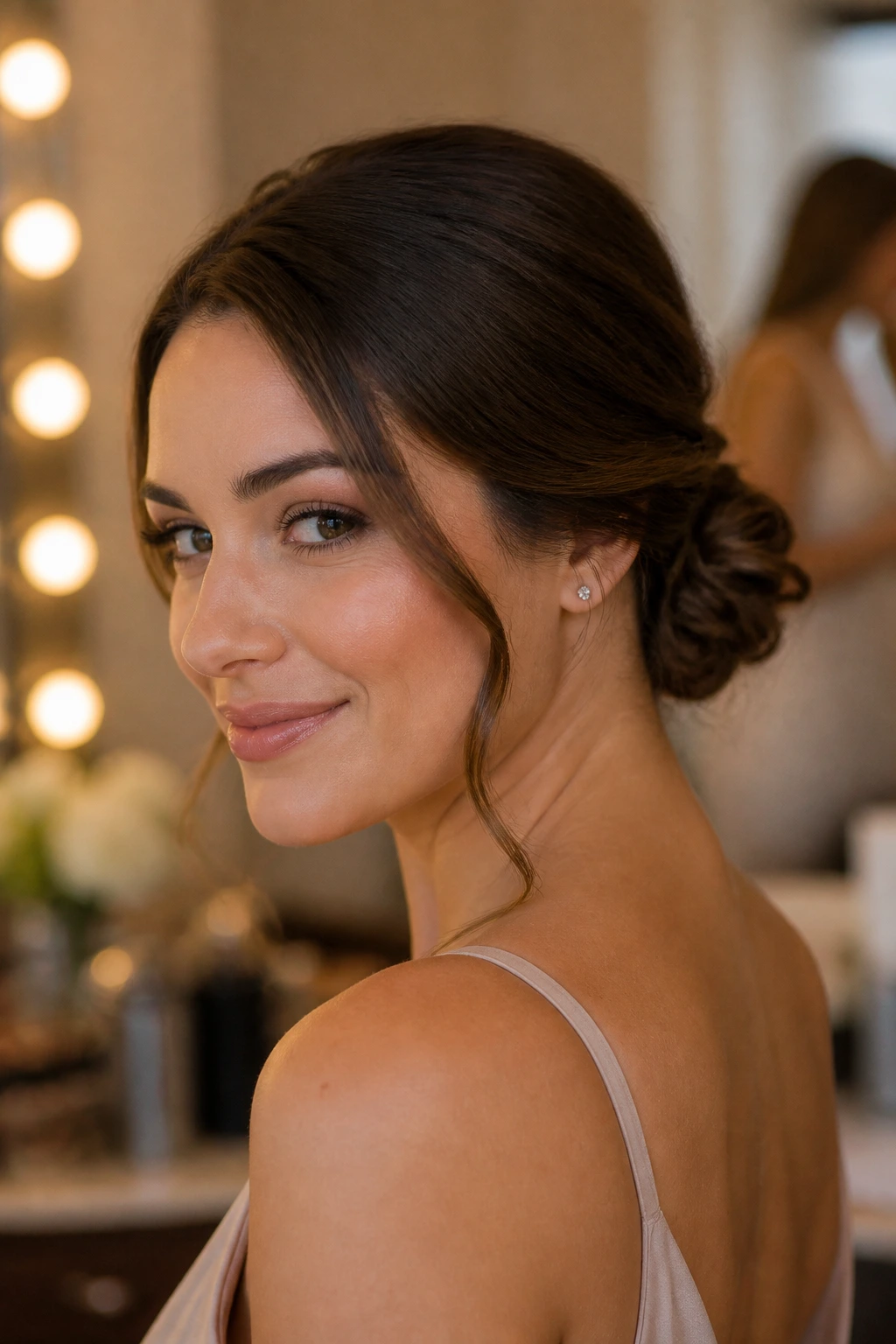
A side part changes the mood fast. Instead of feeling formal in a stiff way, this low knot gets a little movement near the face, which is useful if the bridesmaid dress has a square neckline or the makeup leans soft and rosy. The bun itself can still be neat, but the part keeps it from reading severe.
What I like about this one is that it doesn’t ask for perfection. A slight bend in the front section is fine. A few brushed-back wisps are fine too, as long as the bun itself is anchored properly and the front doesn’t collapse into frizz by the time photos start.
Best on: Hair with some natural bend or layered lengths. It softens sharp features and keeps the style from feeling too rigid.
3. Braided Crown Low Bun
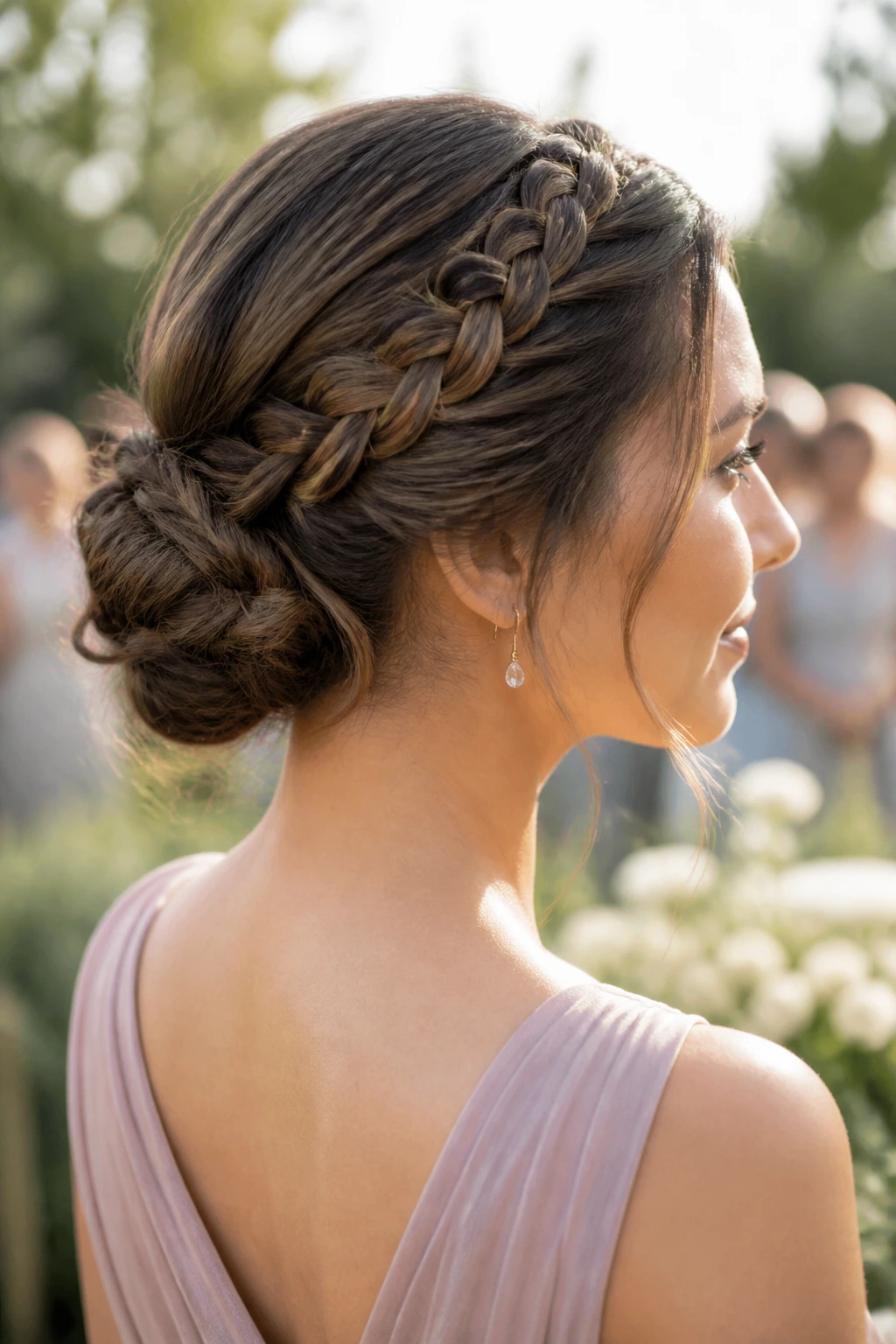
A braid running along the hairline gives a low bun some texture before the knot even begins. It’s a good move when you want the style to look planned from every angle, not only from the front. The braid also helps shorter layers behave, which matters if the bridal party has mixed haircuts and some of the pieces like to escape.
The braid can be a simple three-strand, a Dutch braid, or a loose French braid that feeds into the bun. Once it reaches the nape, tuck the remaining hair into a round knot or a folded bun and pin the ends under. The braid should look like part of the architecture, not an afterthought.
Watch for this: If the braid is too tight, the face can look pulled. Leave a little air in the weave.
4. Rope-Braid Wrap Bun
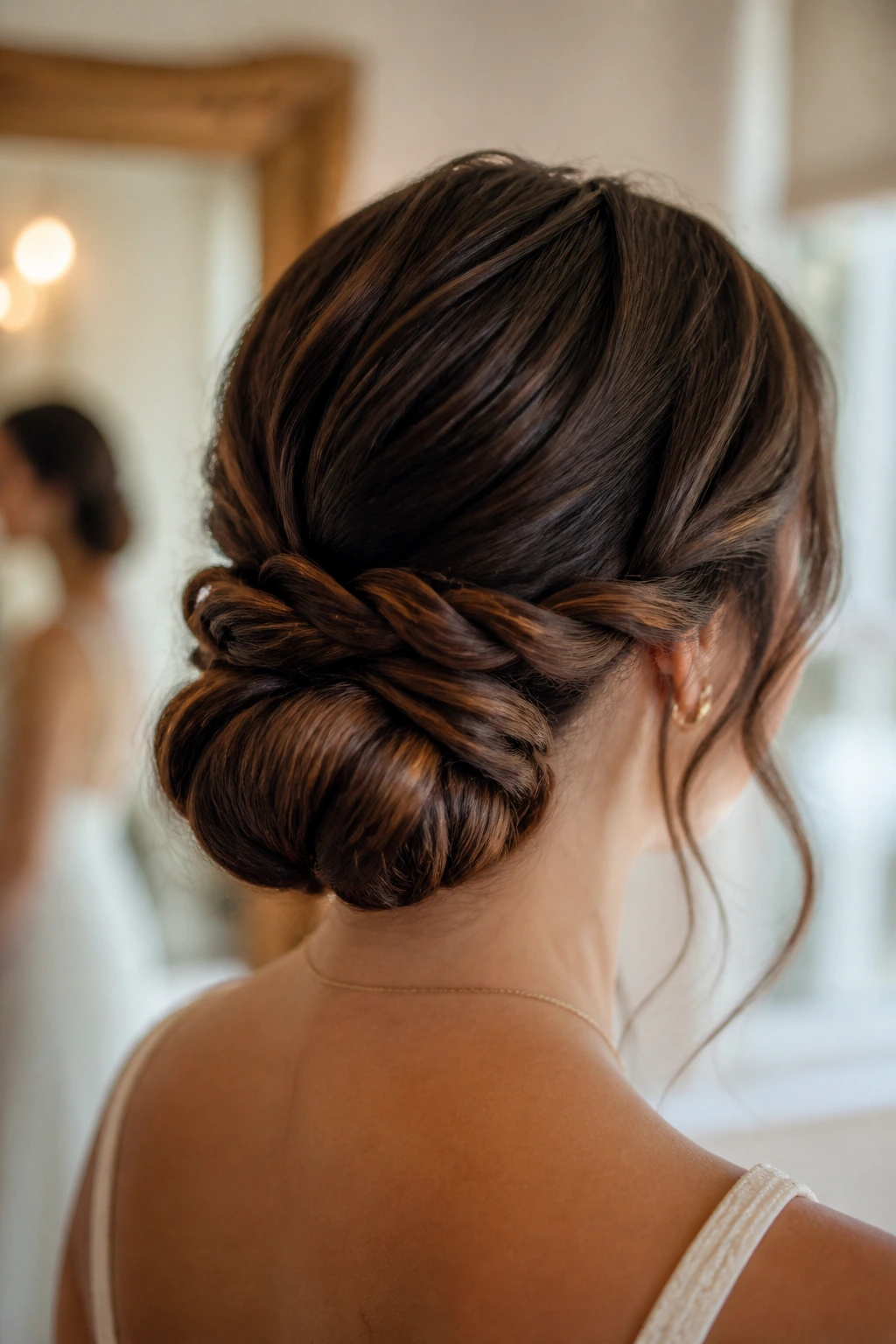
Rope braids are underrated. They give the nape a nice twisty texture without the bulk of a full braid, and that makes them ideal for medium-density hair. A rope-braid wrap bun can look almost sculptural, especially if the hair has been smoothed first and the twisted sections are wrapped evenly around the base.
This style is especially useful when the bridesmaid dress has a clean back and you want the hair to contribute a little interest without stealing attention. It’s tidy, but not flat. And it tends to stay in place better than loose twisting alone, because the rope twist grips itself.
Styling tip: Mist each section lightly with texturizing spray before twisting. Dry, slippery hair can untwist faster than people expect.
5. Twisted Knot Bun
Two or three large twists gathered into a knot can look far less fussy than a fully braided style. That’s the charm here. Instead of a bun that feels assembled piece by piece, this one reads as one continuous shape, which is lovely for bridesmaid hair because it keeps the back clean but not harsh.
This bun works well on medium to long hair that has some natural grip. If the hair is freshly washed and silky, a little dry shampoo at the roots and mid-lengths makes a difference. The shape should feel snug but not squeezed. You want tension, not strain.
Good pairing: Off-the-shoulder dresses. The twisted texture keeps the neckline from looking too bare.
6. Messy Romantic Bun
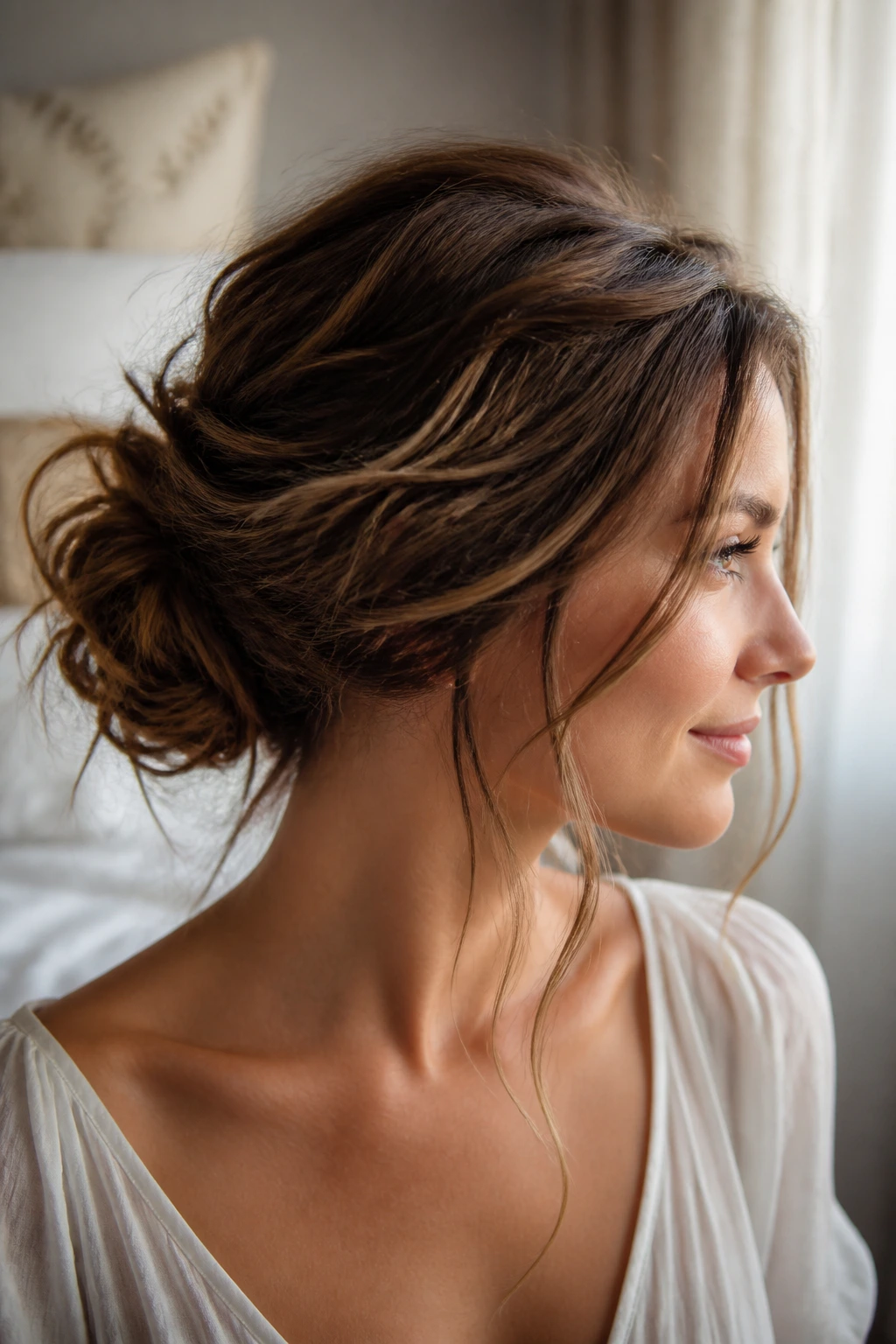
A messy bun can go wrong in a hurry. Too much mess, and it looks like the bridesmaid got dressed in the car. Just enough softness, though, and it becomes one of the prettiest low bun styles for bridesmaids because it catches light in little pieces and doesn’t feel overworked.
The trick is to leave the crown a touch fuller and the bun slightly irregular, with a few ends tucked loosely rather than buried. Face-framing strands help, but they should be intentional, not shredded. I usually prefer this style with softer dresses — chiffon, tulle, matte satin — because the texture of the bun plays nicely with fabrics that move.
Best on: Hair with some wave. Straight hair often needs a bit of heat-set bend to keep the bun from going limp.
7. Sculpted Ballet Bun
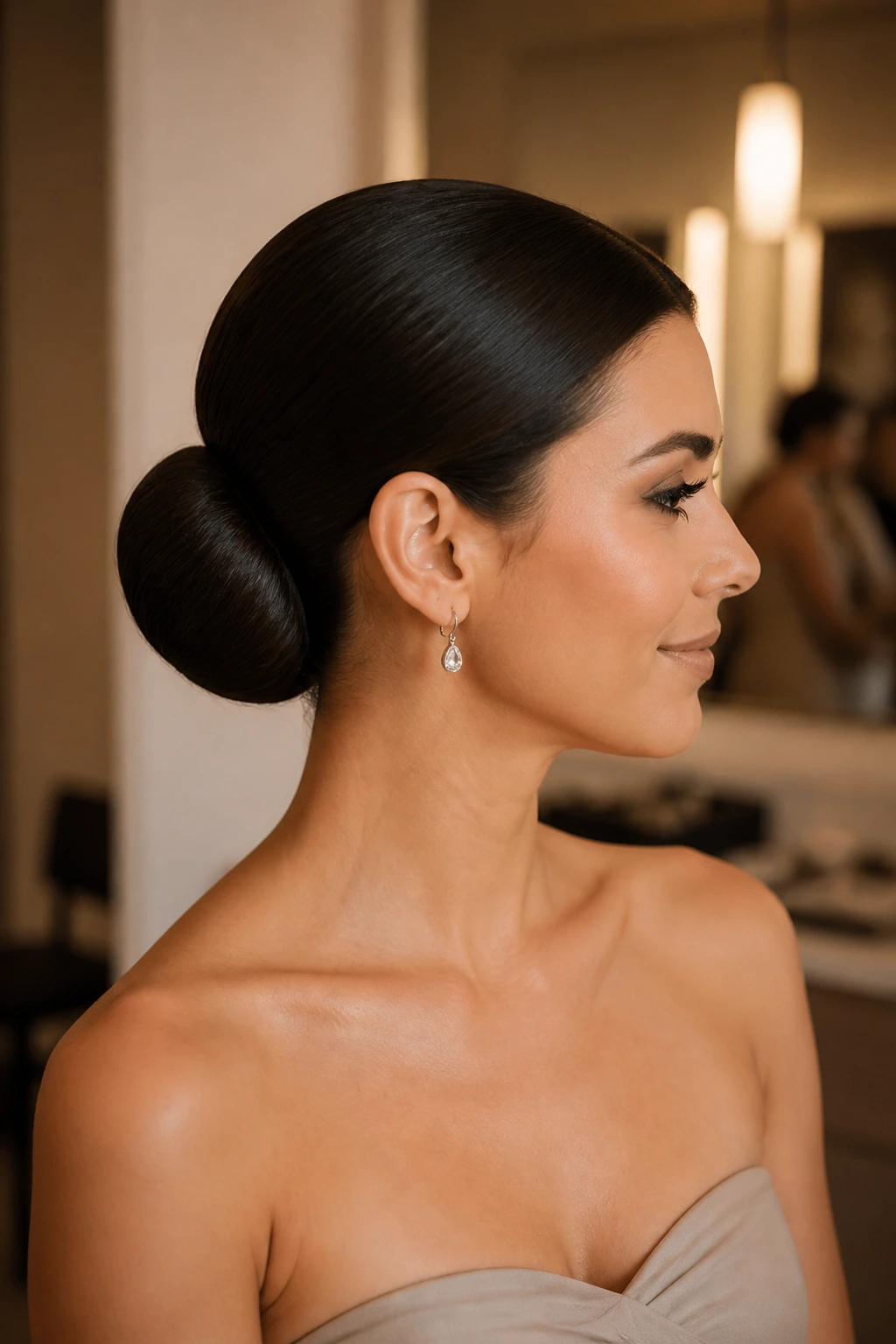
This is the one for bridesmaid groups that want a clean, unified look. A sculpted ballet bun sits low, smooth, and round, with the surface brushed so neatly that the style almost looks drawn on. It’s formal in a disciplined way, which can be a relief when the dresses already carry a lot of detail.
The shape depends on control. Use a fine-tooth comb, smoothing cream, and enough pins to create a firm base. If the bun has a tendency to balloon, a small bun donut can help. The finish should be flat at the crown and firm at the nape, with no loose ends peeking out unless that’s part of the design.
Use it when: The bridal party needs one hair look that reads exactly the same in every photo.
8. Face-Framing Tendril Bun
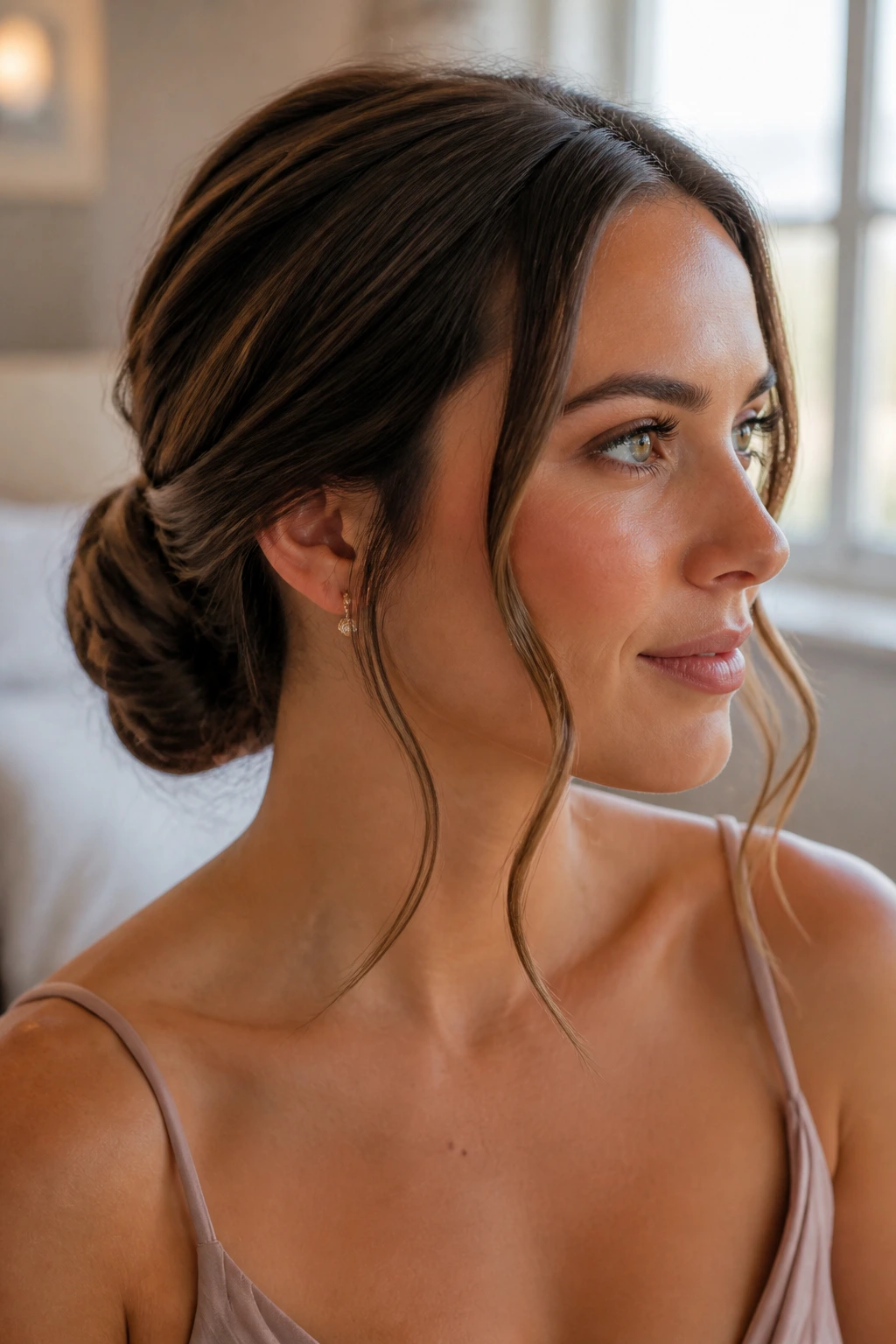
Some updos need a bit of softness around the edges, and this is the easiest way to get it without losing structure. Leave two thin front pieces out, curl them lightly, and let them rest against the cheekbones or jawline. The bun stays low and tidy, but the face gets movement.
The key is restraint. If the tendrils are too thick, the whole style turns into a half-up situation. Keep them slim, and let them curl away from the face rather than clinging to it. This looks especially nice with dewy makeup and dresses that don’t have a lot of built-in drama.
Small detail that matters: Curl the tendrils away from the face, not inward. They open the look instead of closing it in.
9. Pearl-Pinned Low Bun
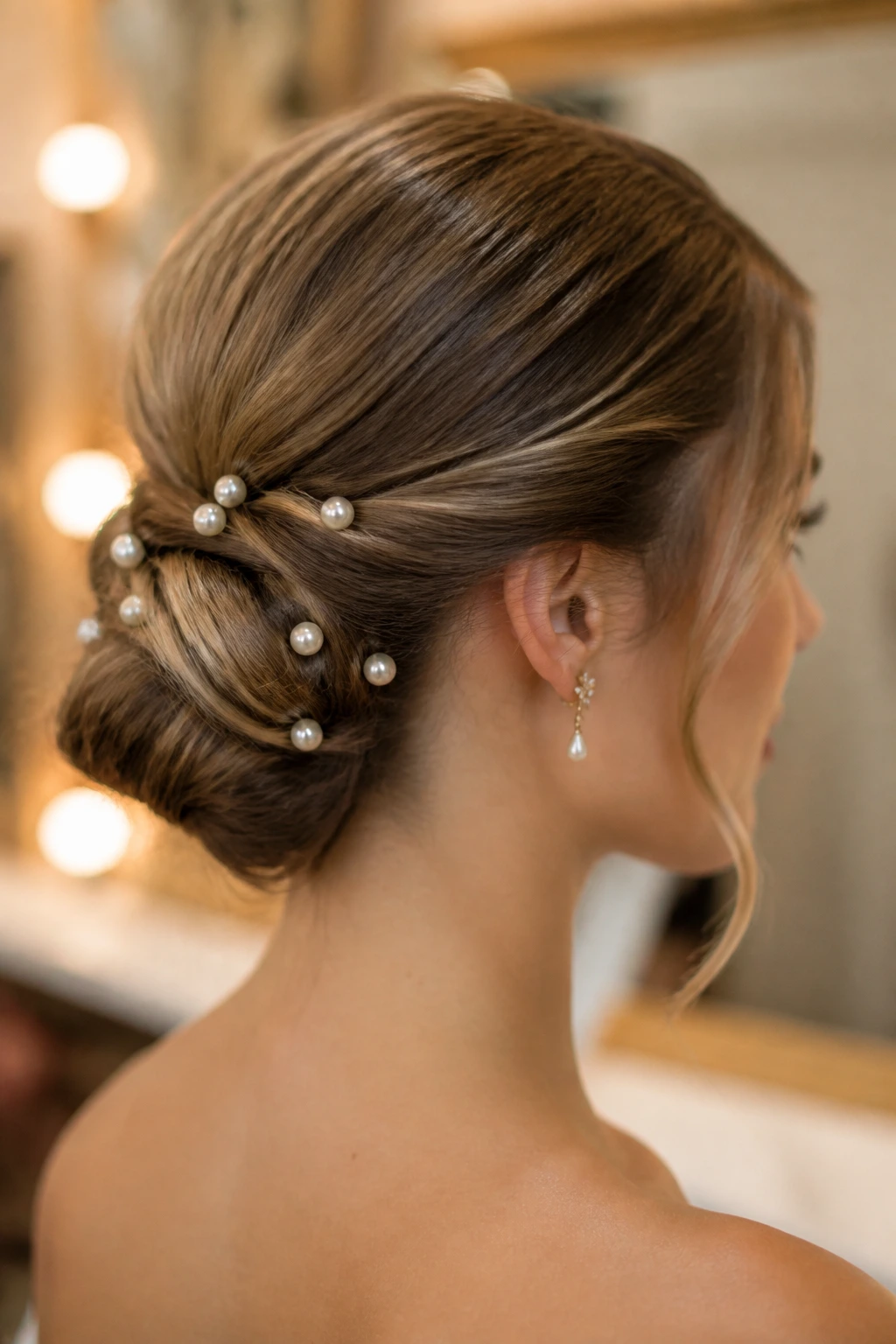
Pearl pins can change a plain low bun faster than almost anything else. A smooth base with scattered pearls feels polished and bridal without needing flowers, glitter, or a complicated braid. The pins can be clustered near the side or spread loosely through the bun, depending on how much shine you want.
This style is useful when the dress is simple and the hair needs to carry a little more visual interest. Keep the bun itself understated; the accessories are the point. If the pearls are too numerous, the style starts to look busy, which is exactly what you don’t want in a bridesmaid lineup.
Styling note: Use pins of different lengths so they sit at different angles. Flat pinning looks stiff.
10. Floral Sprig Bun
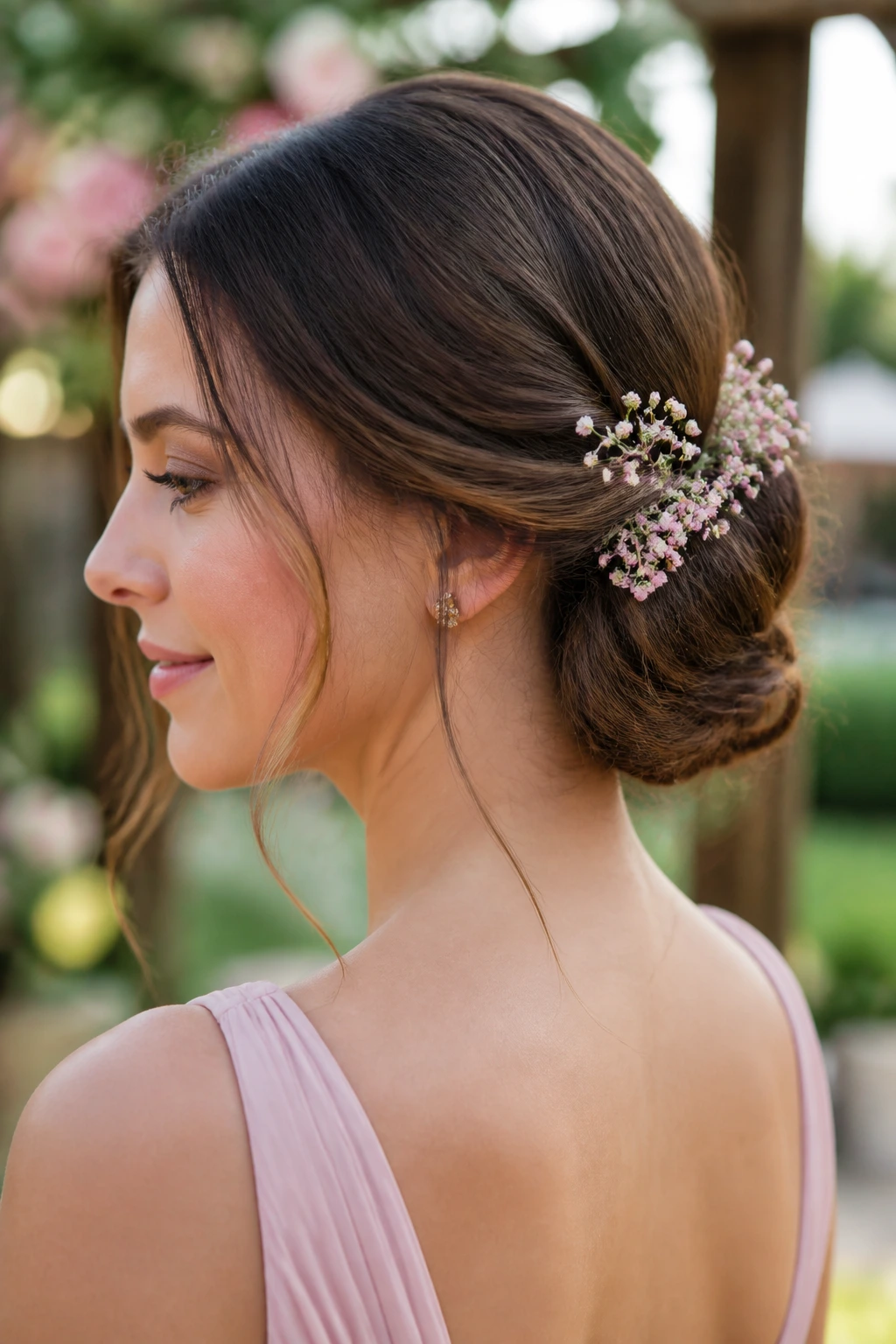
A few tiny blooms tucked into a low bun can make the whole style feel like it belongs in the ceremony space, not only the hair chair. Small roses, baby’s breath, waxflower, or fine faux sprigs work best. Big flowers are too heavy and shift the shape of the bun.
The secret is placement. Tuck the flowers where the bun curves outward so they appear to grow from the style instead of sitting on top of it. A floral bun works especially well for garden ceremonies, but it can also soften a very formal gown if the dress needs a little less polish and a little more life.
Practical note: Fresh flowers need short stems and a water source if they’re being prepared early. Faux stems are easier if the day will run long.
11. Voluminous Crown-Lift Bun
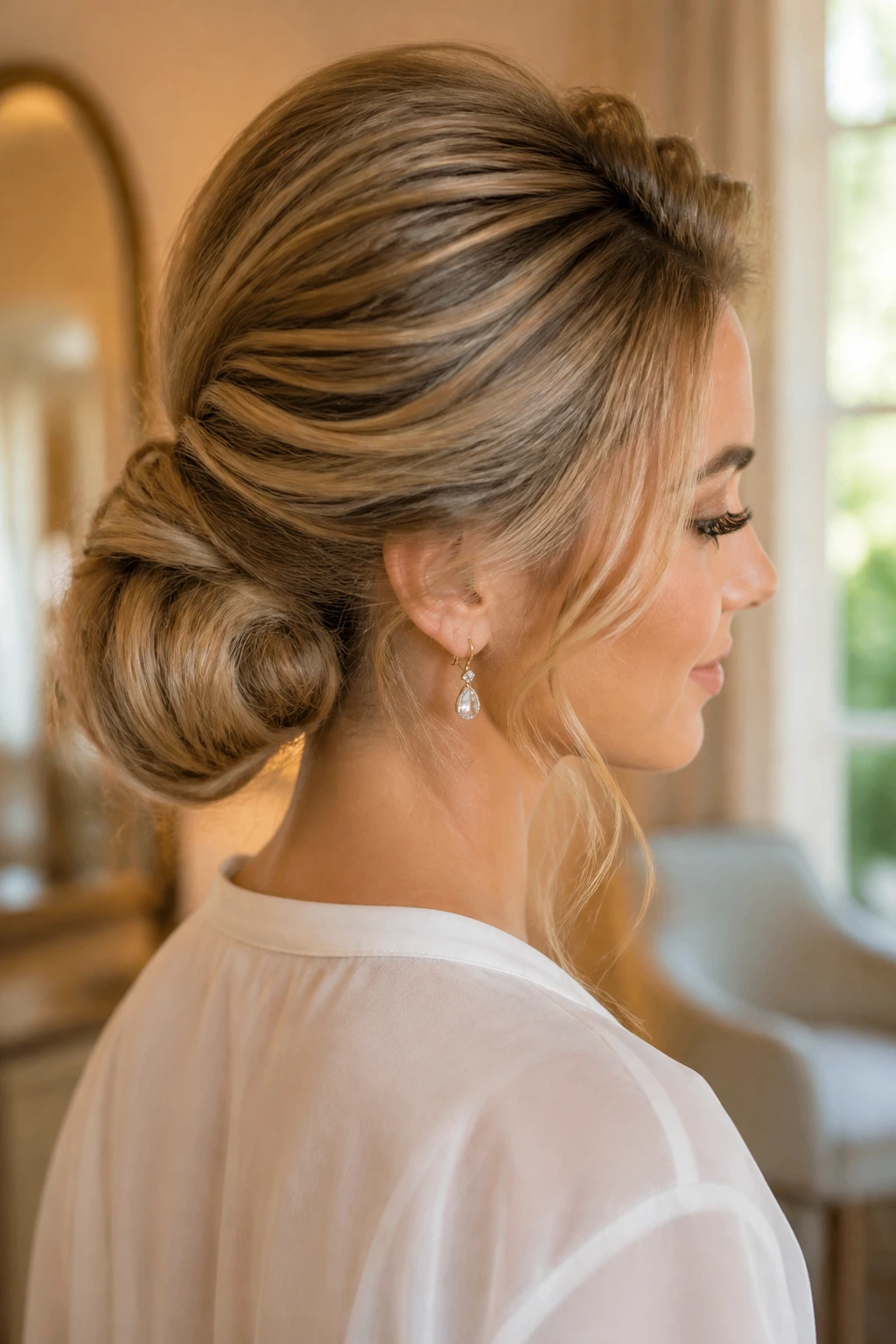
A little lift at the crown changes the whole silhouette. This style gives the head a bit more height before the bun drops low at the nape, which helps balance full skirts, busy bodices, and heavier earrings. It’s a good fix when the hair would otherwise look too flat against the skull.
The lift should be soft, not teased into a shell. Think gentle cushion, not 1980s drama. A little backcombing at the root, smoothed over with a brush, is enough. Once the bun is pinned, the style should still look elegant from the side.
Who it suits: Smaller frames, high-neck dresses, and anyone whose hair disappears when it’s pulled too tightly back.
12. Glossy Wet-Look Bun
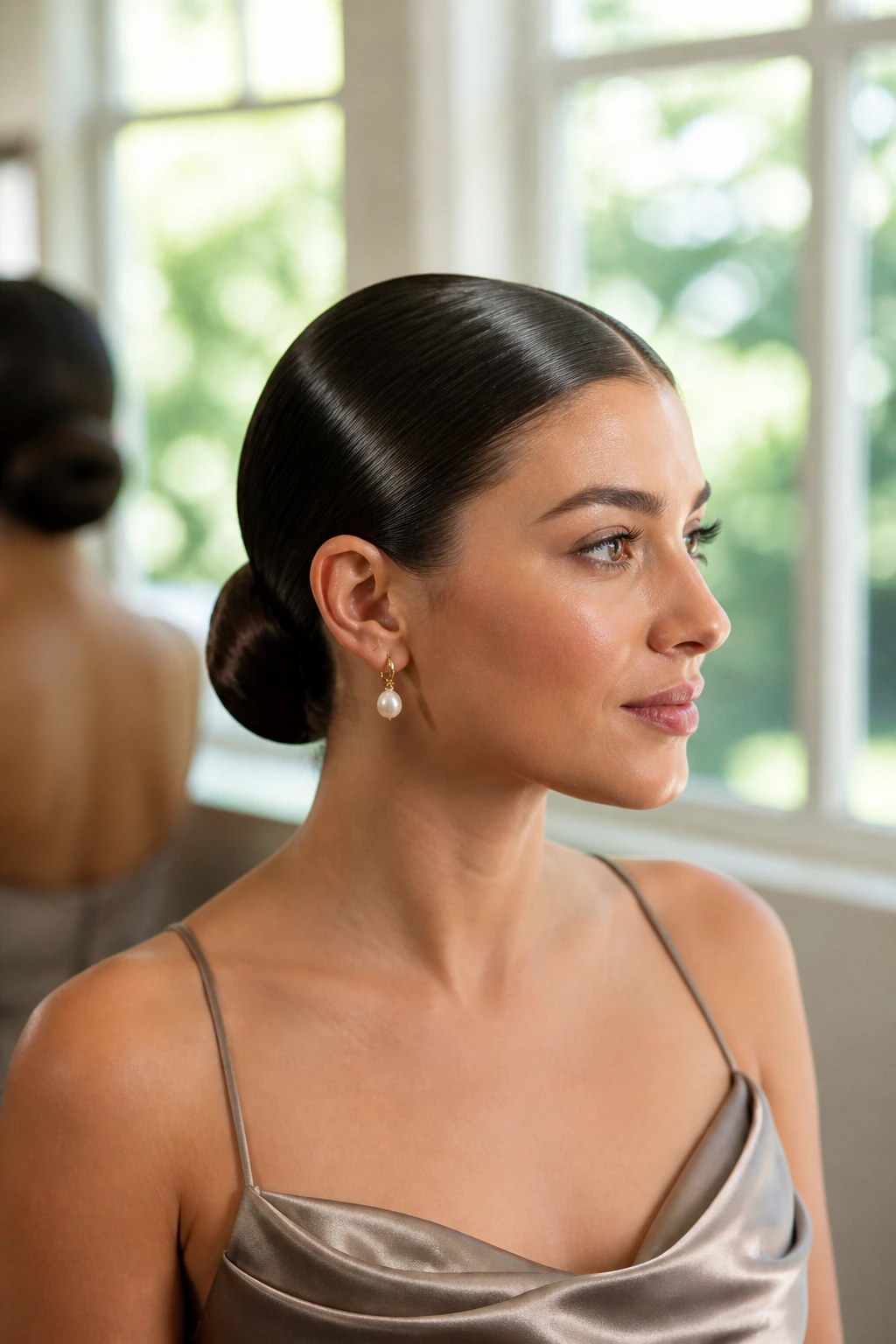
A wet-look bun is not for everyone. But on the right bridesmaid, it looks striking in that modern, clean, no-fuss way that can make satin dresses and bold earrings feel more deliberate. The hair is slicked close to the scalp with a glossy finish, then gathered low and wrapped into a compact bun.
It works because the shine is part of the design. You don’t want soft texture here; you want precision. Use gel or a strong styling cream while the hair is still damp, brush everything smooth, and let the front stay glassy rather than fluffy. Once the bun is pinned, resist the urge to touch it. Touching ruins the finish fast.
Good for: Contemporary weddings, structured dresses, and bridesmaid groups that want one sharper look in the mix.
13. Curly Coiled Low Bun
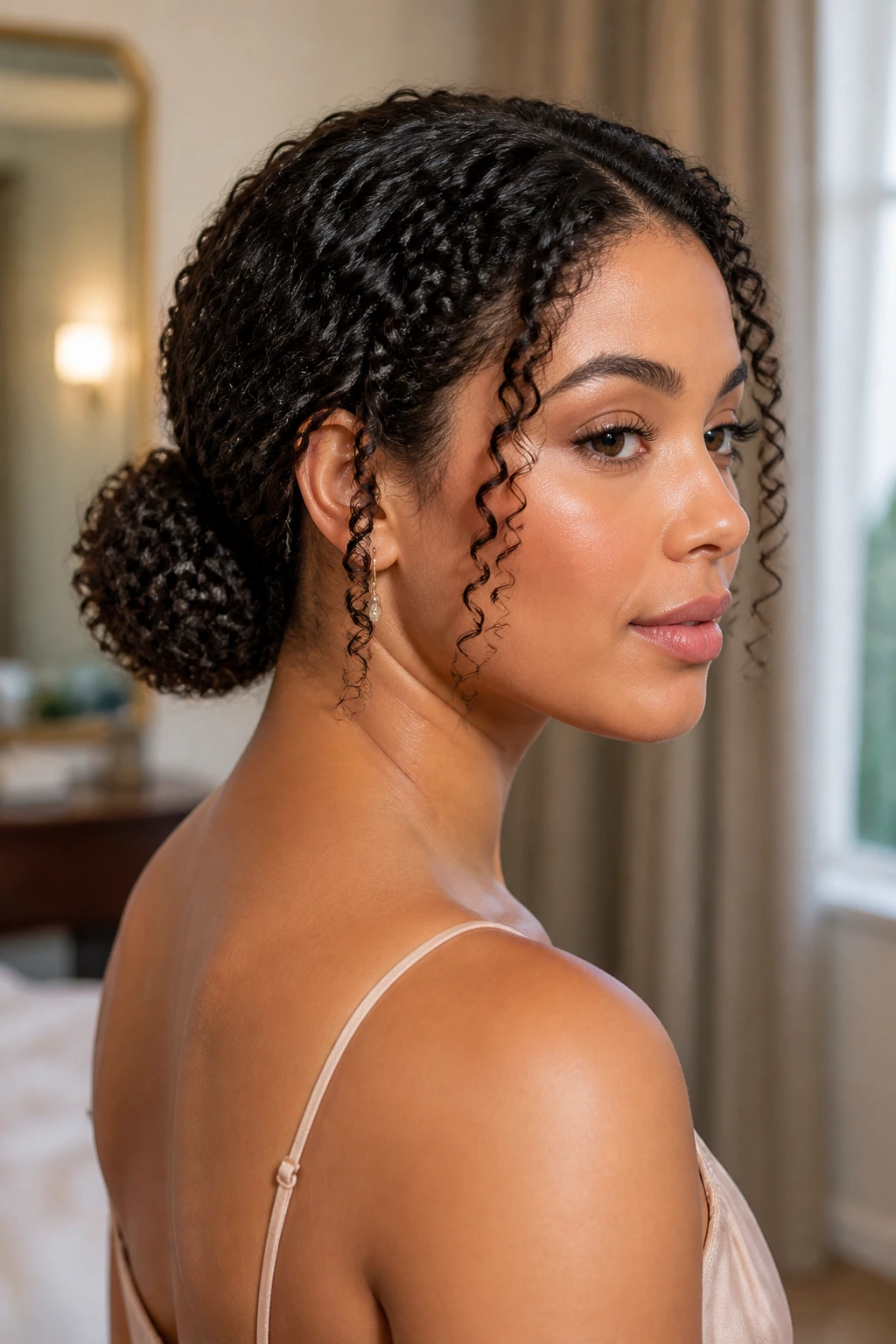
Curly hair does not need to be bullied into looking like straight hair to work as a low bun. In fact, some of the prettiest bridesmaid buns come from letting the curls keep a little shape before they’re tucked and pinned. The bun ends up looking full without feeling heavy, and the texture does half the work.
The trick is to stretch the curls enough to shape them, not enough to erase them. A curl cream, light gel, and careful pinning help the bun hold while keeping the hair’s natural pattern visible. I prefer this style when the bridal party wants harmony without sameness — every coil settles slightly differently, and that’s part of the charm.
Styling note: Don’t brush curls dry all the way out. Finger-shaping gives a cleaner bun with less frizz.
14. Fine-Hair Padded Bun
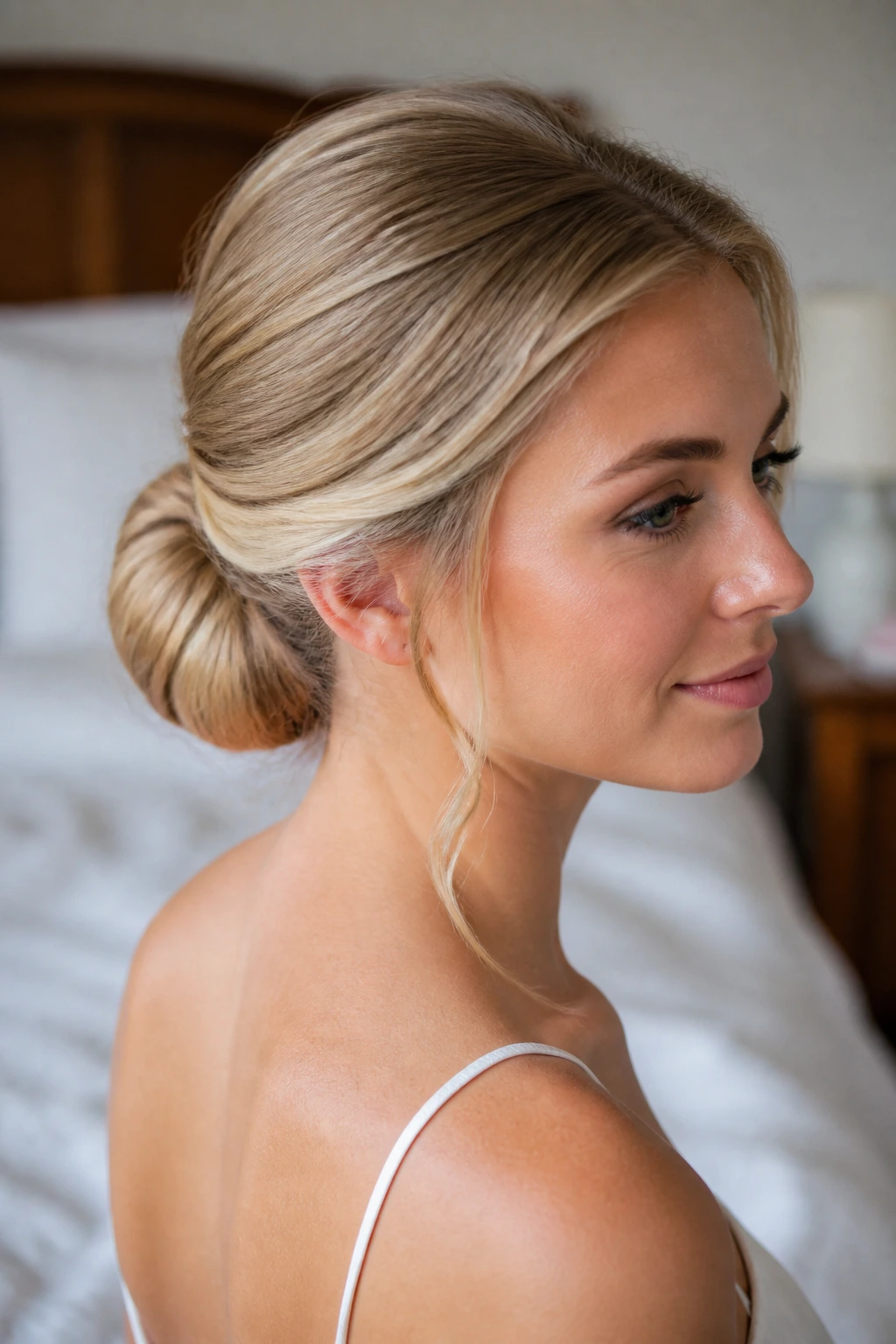
Fine hair needs structure, not more hair spray. A padded low bun uses a bun donut, small cushion, or light teasing at the base to create the sense of fullness that fine strands often lack when they’re pulled low. The shape should look rounded and soft, not sparse or stringy.
This style is one of the most practical bridesmaid choices because it stays visible in photos. Fine hair can disappear at the nape unless you give it a little body. Padding also helps the bun feel secure, since there’s more surface area for pins to catch. Use a lightweight texturizing spray first, then build the bun in sections so it doesn’t look thin at the edges.
Best on: Straight, fine hair that tends to fall flat by lunchtime.
15. Thick-Hair Multi-Twist Bun
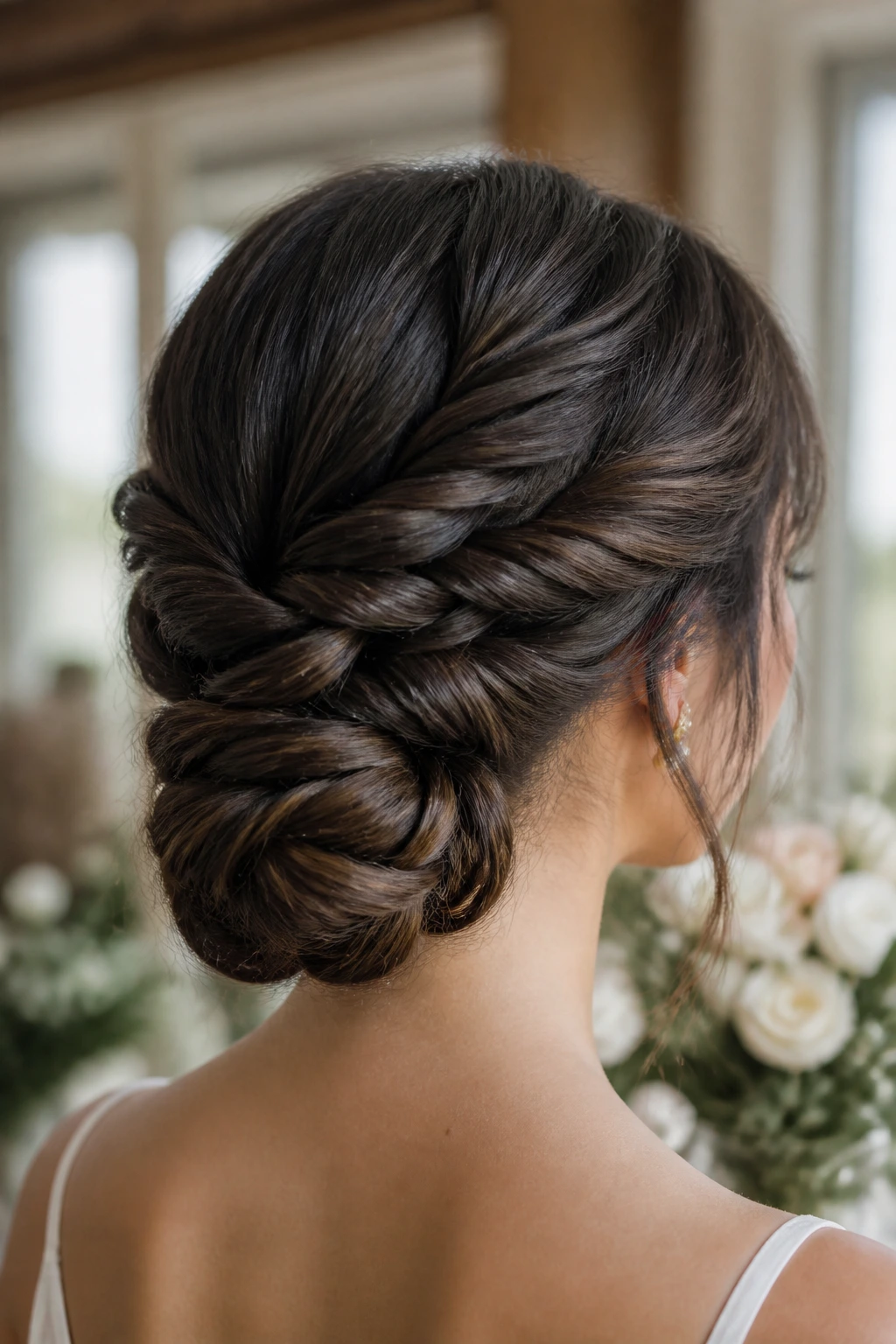
Thick hair can make a low bun look expensive fast, but it can also become a heavy knot that feels too bulky if you try to shove all of it into one place. Breaking the hair into several twists solves that. Each section folds into the bun separately, so the weight spreads out and the nape does not puff up into a lump.
This style is a lifesaver for long, dense hair. It also holds a clean shape through the ceremony because each twist locks the next one in. The bun can be smooth or softly textured, but the sections should be clearly controlled. Thick hair rewards patience.
Helpful detail: Secure each twist before moving to the next. Waiting until the end invites collapse.
16. Donut-Base Smooth Bun
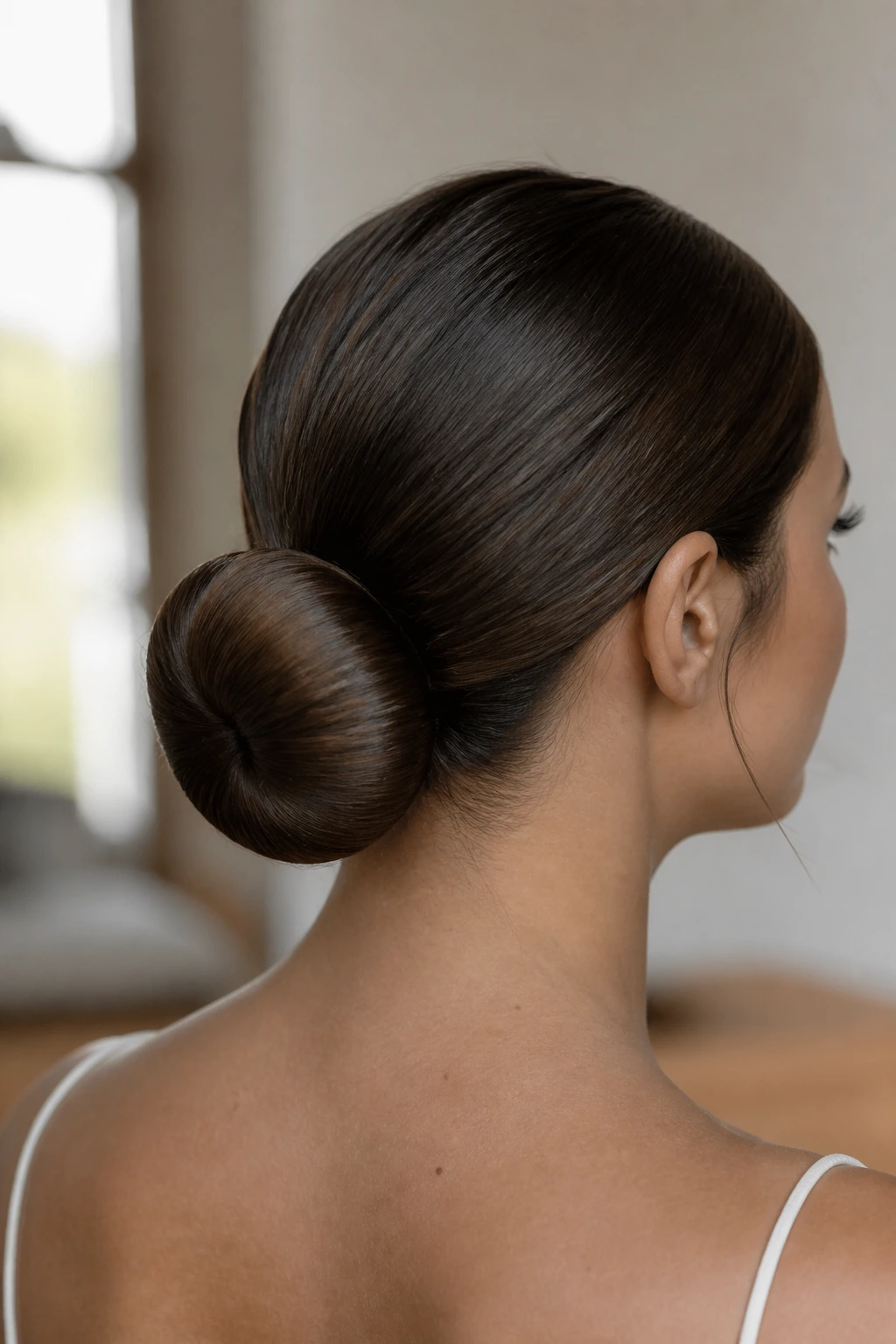
If you want a clean circle and a finish that looks almost tailored, a donut base does the heavy lifting. The hair wraps evenly around the foam and creates a smooth, full bun that reads polished from the back. It’s simple, but it has a kind of quiet precision that works well in a bridal party.
The donut keeps the shape consistent across different hair lengths and densities, which is why stylists reach for it when the goal is uniformity. A small amount of smoothing serum prevents puffiness at the surface, and a fine mist of strong-hold spray keeps the edges from fuzzing up. It’s not the most playful bun on this list. It is one of the most reliable.
Pair it with: Minimal dresses, pearl earrings, and a clean veil comb.
17. Knotted Low Bun
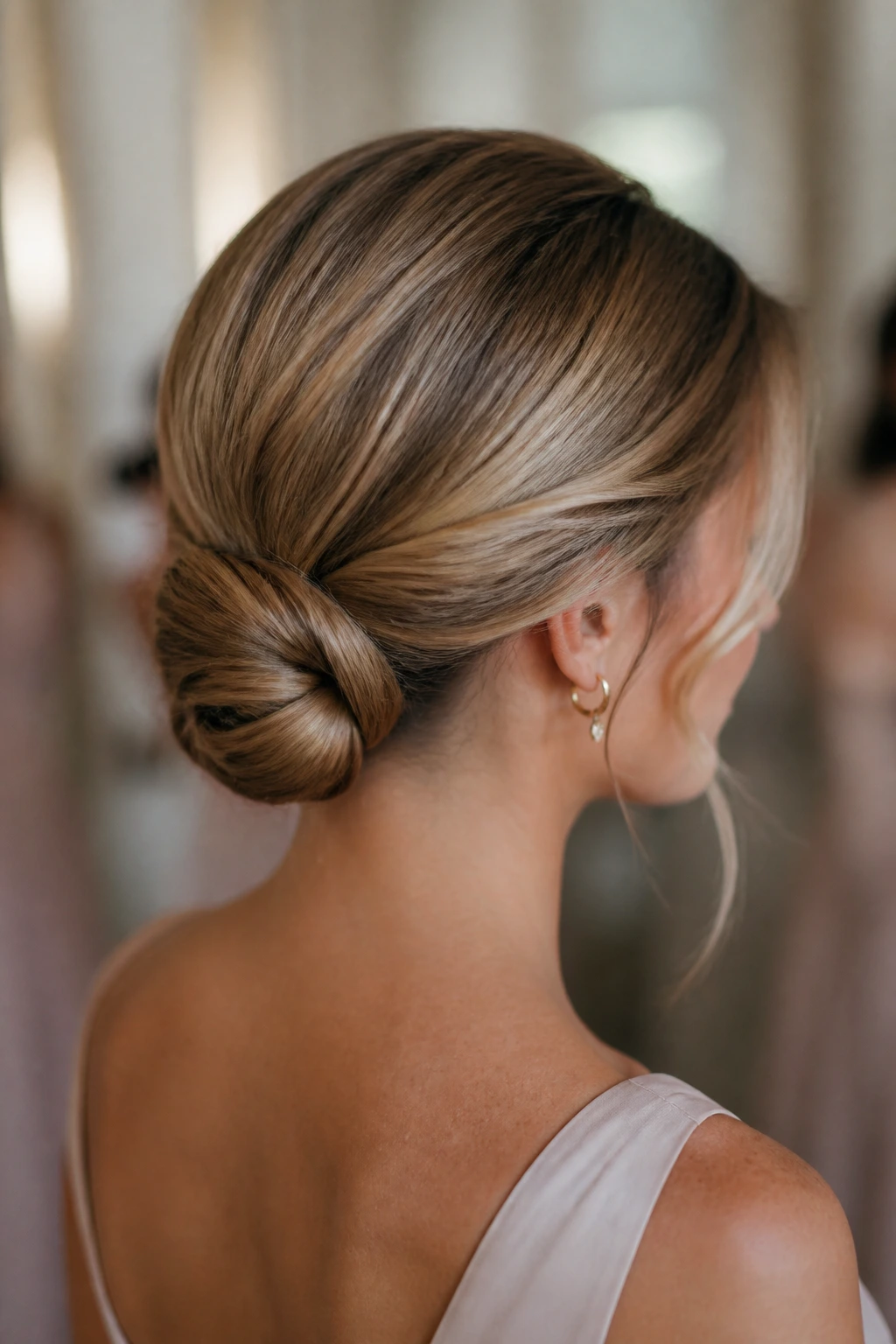
A knotted low bun feels a little more architectural than a twist, and that’s the appeal. The hair is looped over itself in a way that makes the knot visible, almost like the style is showing its own construction. That can be very pretty on bridesmaids because it looks intentional without leaning too hard into formal polish.
The best versions keep the knot compact but not tight. If it’s over-pulled, the shape gets stiff. If it’s too loose, the knot loses definition and turns fuzzy. This is a style that benefits from a steady hand and a few hidden U-pins rather than a flood of spray.
Where it shines: Modern weddings with simple dresses and clean flowers.
18. Bubble Braid Accent Bun
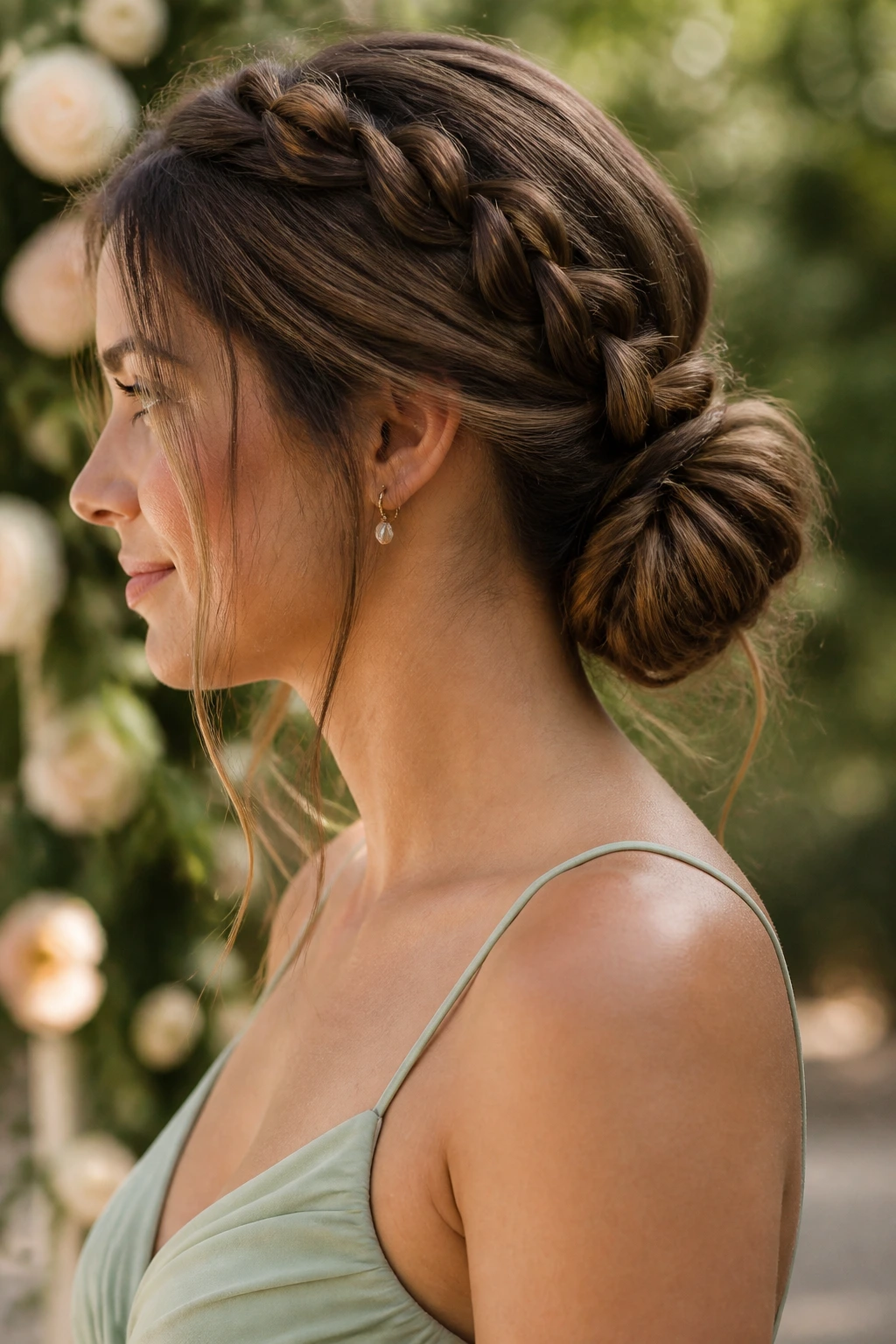
Bubble braids have a playful energy that can be easy to overdo, but used as an accent, they’re sharp and fun. A low bun with a bubble braid feeding into it gives the style some rhythm before it settles at the nape. It’s especially nice for bridesmaid groups that don’t want every head to look identical but still want a shared idea.
The bubbles should be evenly spaced and gently puffed, not cartoonish. Once the braid reaches the bun, tuck it into the base so the texture keeps going instead of stopping abruptly. This style is a smart choice when the wedding leans relaxed, outdoor, or just a little less formal than the traditional satin-and-pins setup.
Small warning: Uneven bubble sizes read as accidental. Measure the sections with your fingers as you go.
19. Fishtail-Accent Bun
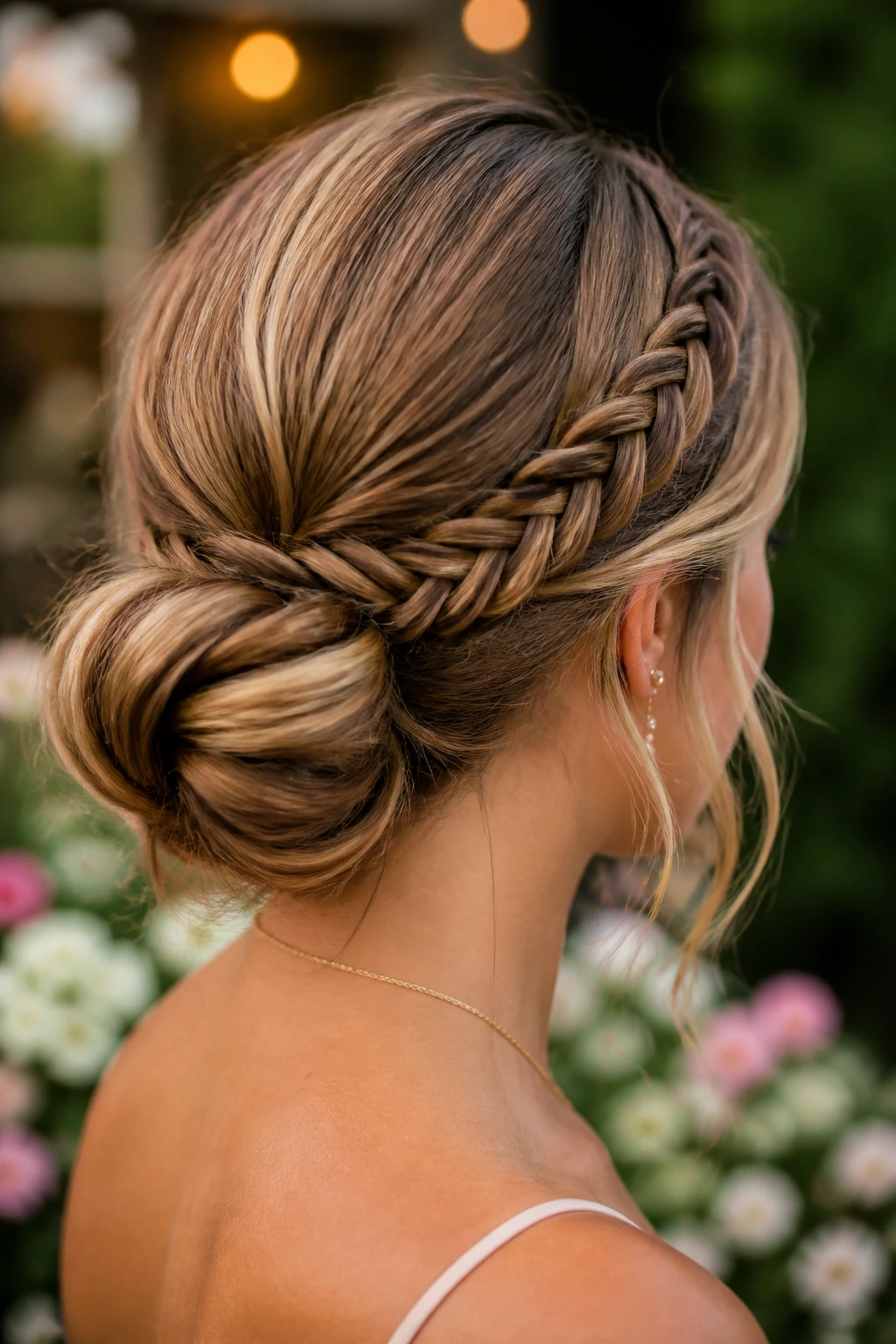
A fishtail braid gives a low bun more detail than a standard three-strand braid, and that extra texture shows up nicely in photos. The fine weave looks intricate without becoming heavy, which makes it a lovely choice for bridesmaids in boho or garden settings.
The braid can feed across the back and then curl into the bun, or it can wrap around one side of the nape before disappearing into the knot. Either way, keep the bun itself fairly clean so the fishtail gets the attention it deserves. If you make both the braid and the bun too busy, the style starts to argue with itself.
Best on: Medium to long hair with enough length to keep the fishtail tight and neat.
20. Tucked French Roll Low Bun
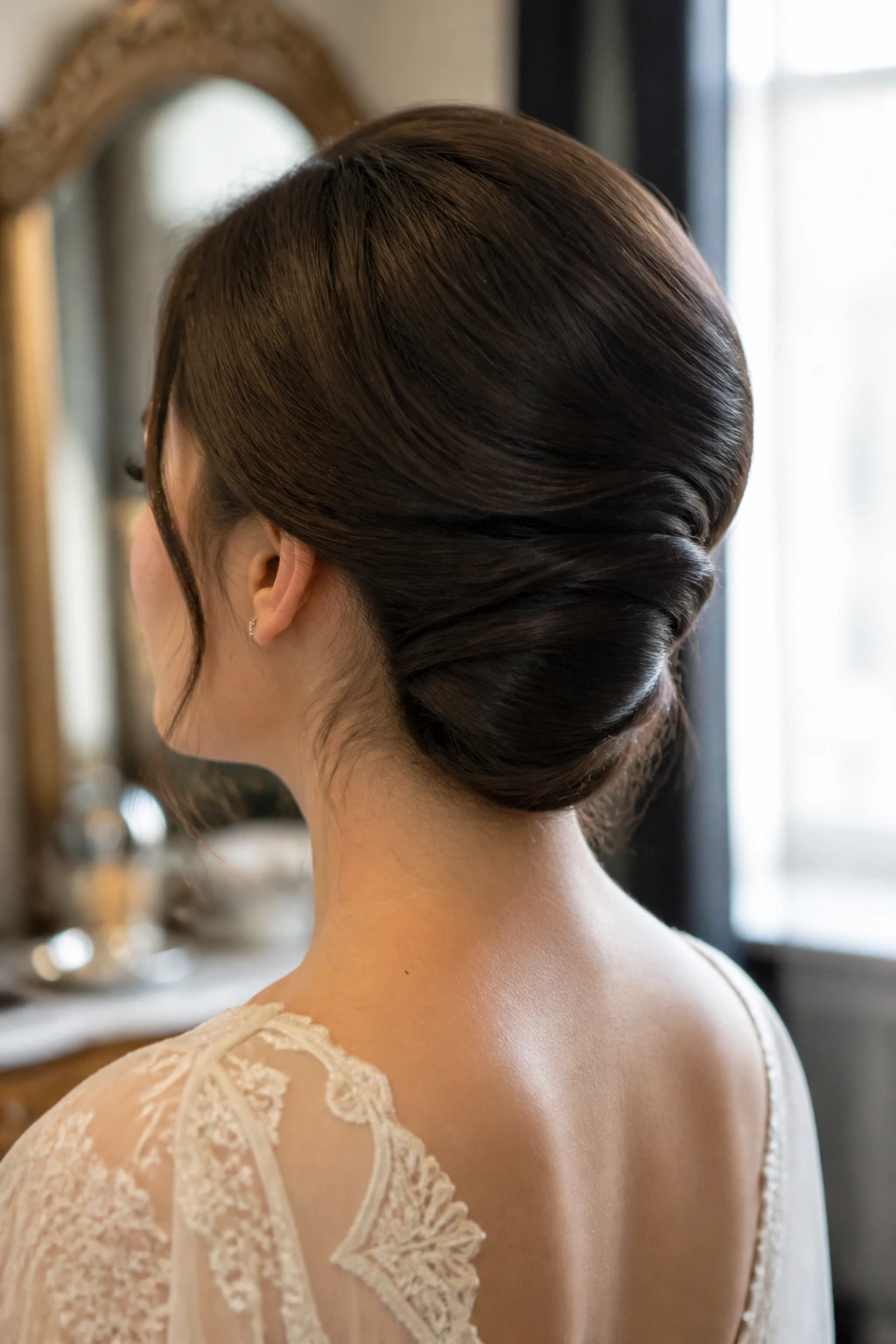
This one has vintage bones. A French roll placed low at the neck creates a smooth, elongated shape that feels elegant without being precious. The hair is swept back, rolled inward, and pinned along the curve so the style sits as a single sleek line rather than a round knot.
It’s a strong choice for bridesmaid dresses with shoulder detail, because the vertical roll keeps the neck visually long. It also pairs well with side-parted makeup and earrings that have a little length. The style can be made glossy and formal or a touch softer with a few loosened pieces at the front, but the roll itself should stay clean.
Styling note: This one needs a good base grip. Silky hair can slide if it isn’t prepped well.
21. Ribbon-Wrapped Low Bun
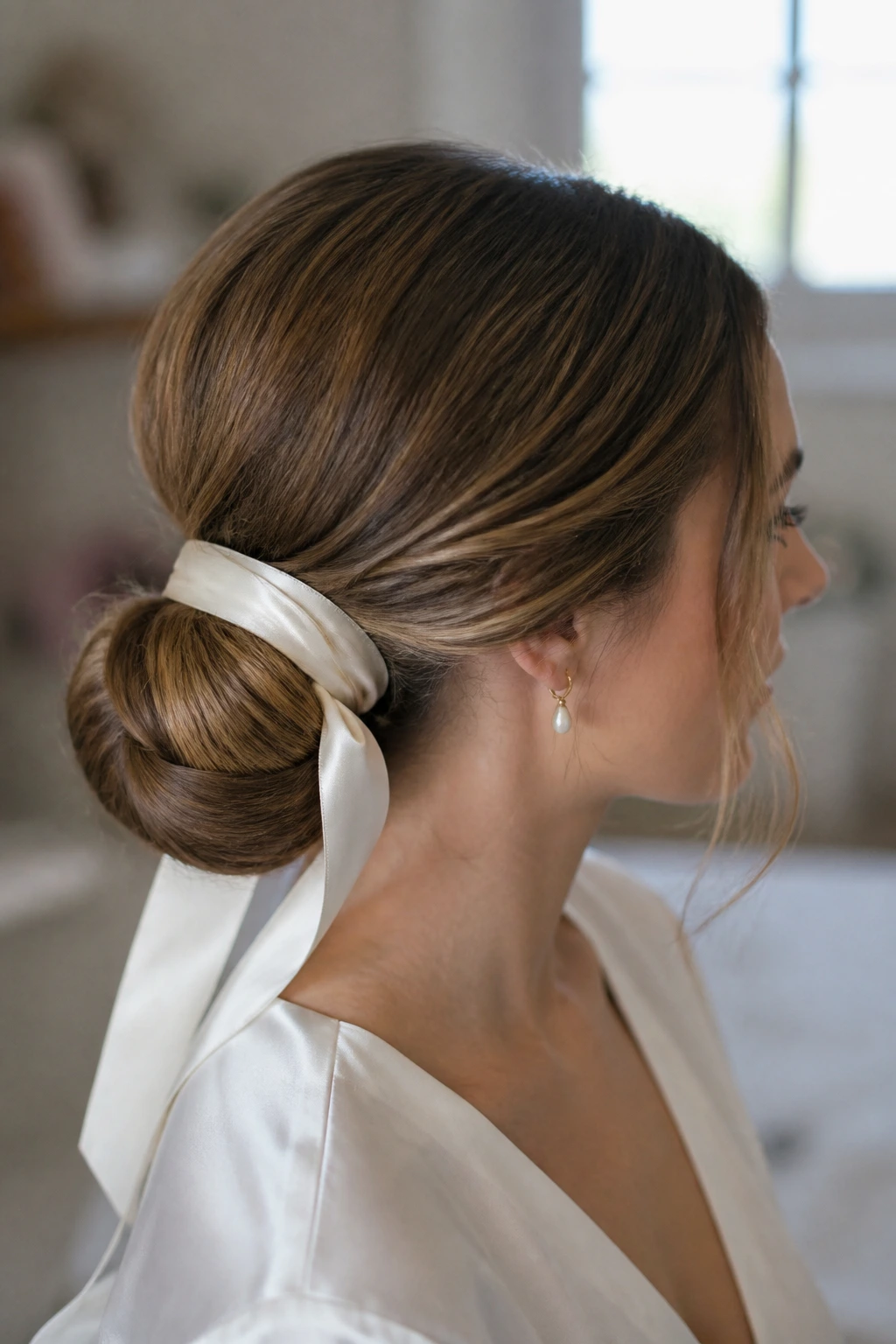
Ribbon changes the whole mood of a low bun. A narrow satin ribbon threaded through a braid, wound around the base, or tied just beneath the knot can echo bridesmaid dresses, bouquets, or ceremony colors without adding a heavy accessory. It’s a small thing, but it carries a lot of visual weight.
The ribbon should complement the hair rather than fight it. Matte silk ribbon softens the look; satin makes it feel dressier. Keep the ends short or tucked neatly so they don’t drift loose during the day. This version works especially well when the bridal party needs one subtle unifying detail.
Good use case: Mixed hairstyles within the same color family. The ribbon gives them a shared note.
22. Statement Clip Low Bun
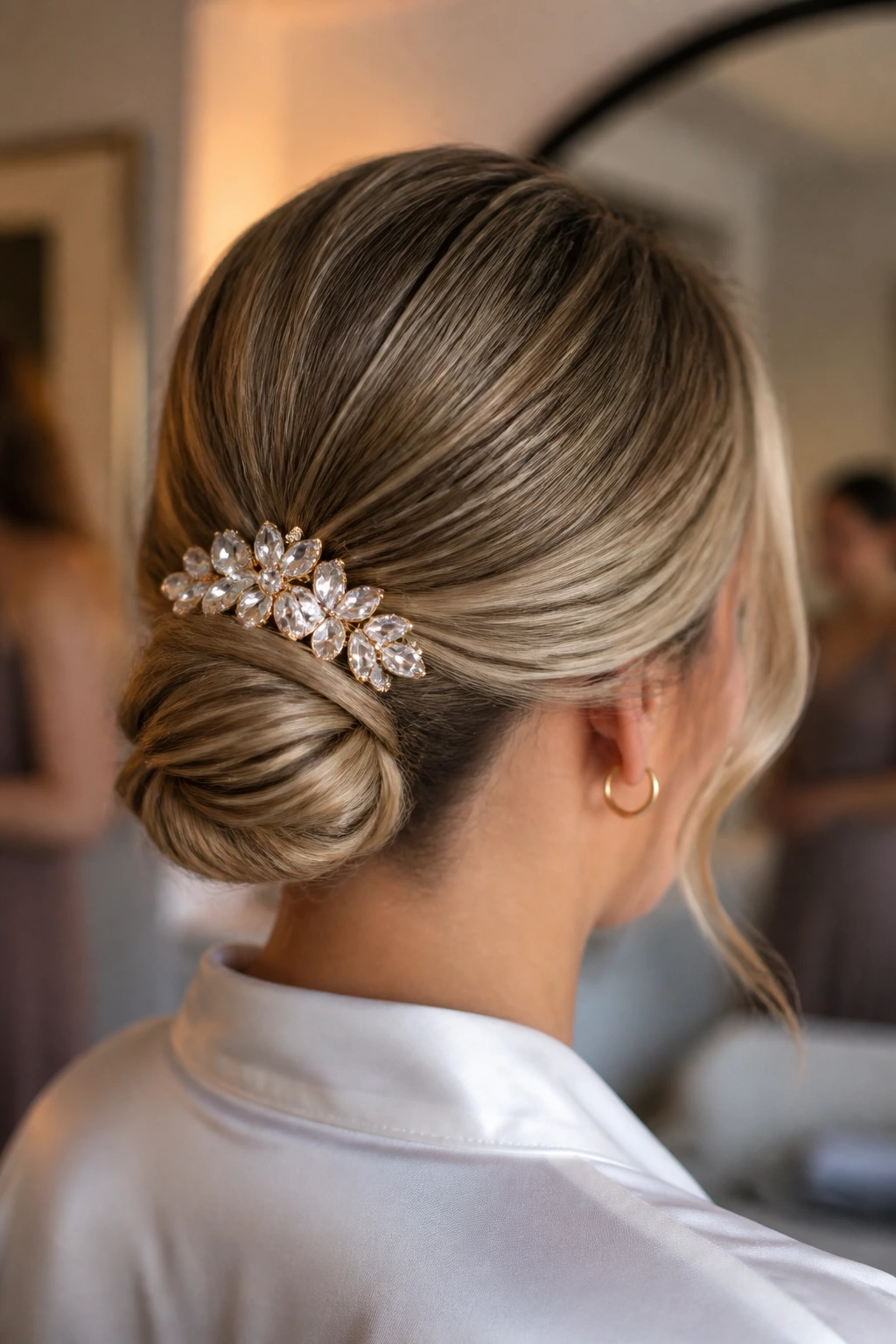
Sometimes the bun should stay simple and the accessory should do the talking. A statement clip — pearl, crystal, gold, tortoiseshell, or a sculptural metal piece — can sit at the side or just above the bun and give the whole hairstyle a point of focus. This is a clean fix when the dress is plain and the bridesmaid needs one strong finish.
The bun itself should be compact enough to support the clip, which means too much fluff is the enemy. The accessory needs a stable anchor or it starts tilting halfway through photos. I like this style because it keeps the hair from looking overdone. The clip becomes the punctuation mark.
Styling note: Place the clip where the bun changes direction. That’s where it looks most natural.
23. Veil-Ready Low Bun
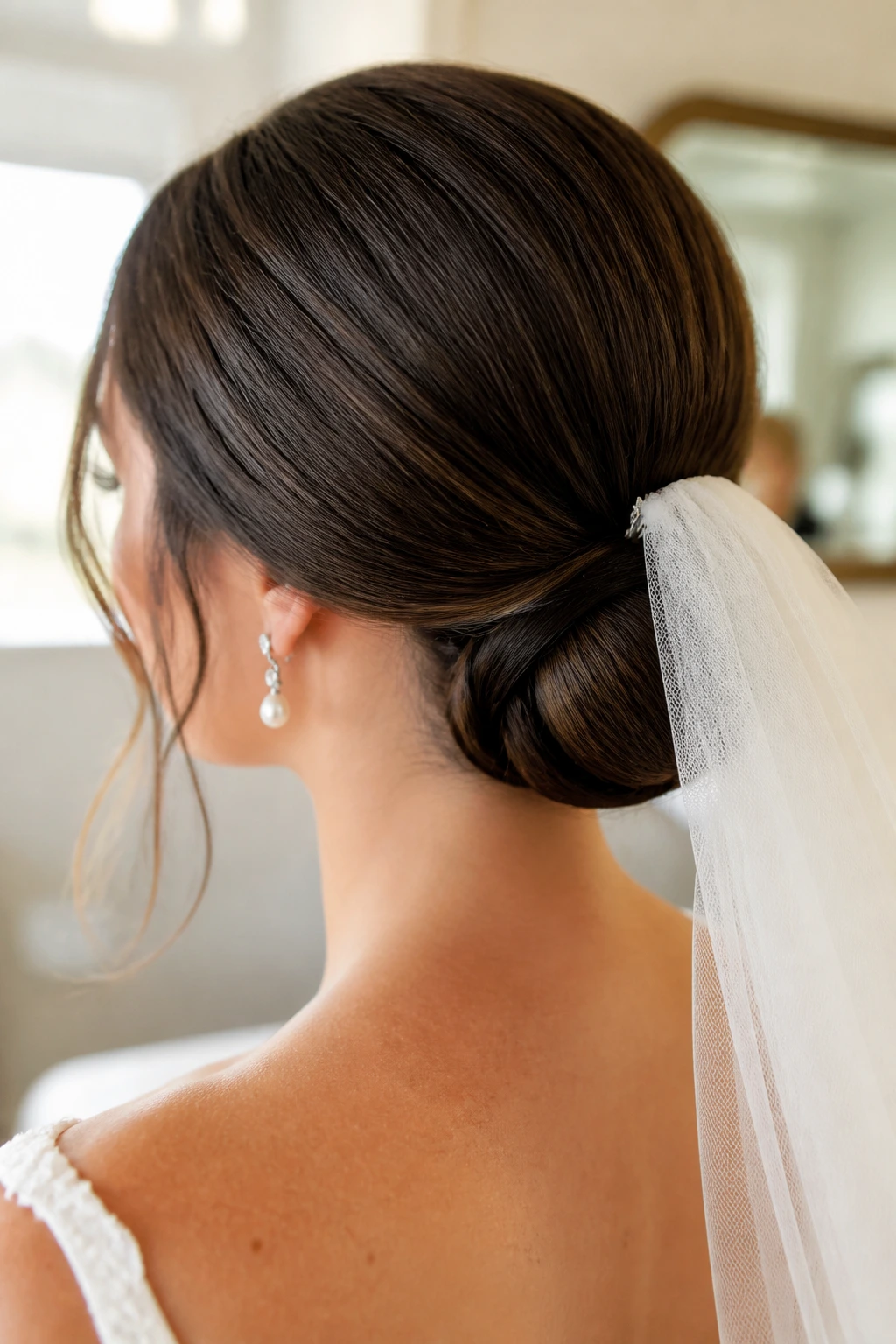
A veil-ready bun is about engineering first and prettiness second, which sounds dull until you see how nicely it works. The bun sits low, flat enough to support a comb, and pinned tightly enough that the veil doesn’t tug out of place when the bride or bridesmaid turns her head.
The important part is the anchor. Build the bun, secure it, then place the veil comb above the bun so it sits into the hair rather than resting on top. If the style is too soft or too loose, the comb slides. A smooth base helps, but hidden pins matter more than shine.
Best for: Traditional ceremonies and any bridesmaid who needs to remove or adjust a veil after the formal photos.
24. Scattered Pins Low Bun
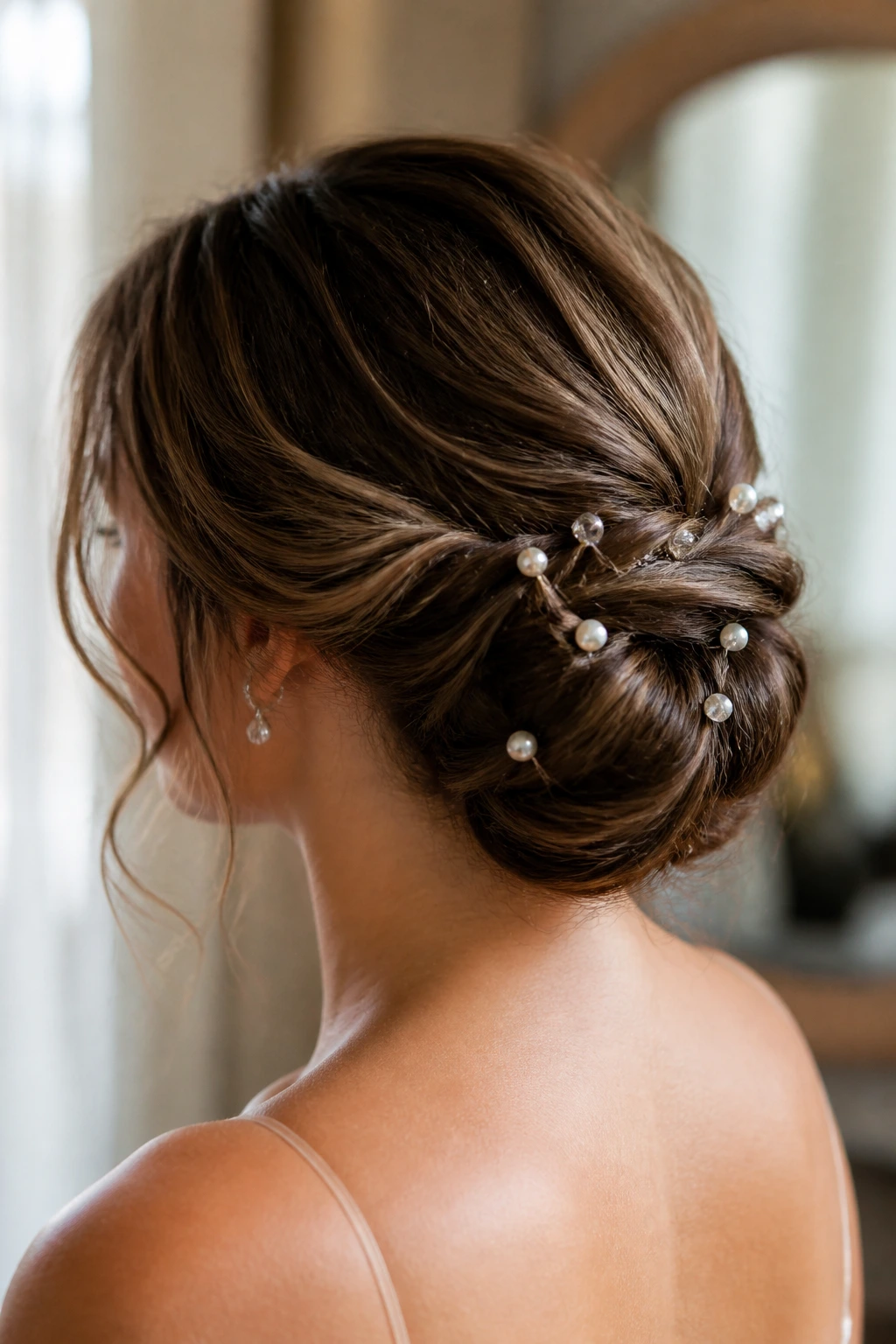
Scattered pins can look like tiny pieces of jewelry when they’re placed well. Instead of one large accessory, you get several small glints across the bun, which can be pearl-tipped pins, crystal pins, or plain gold ones if the dress and jewelry are understated.
This style is nice because it adds detail without changing the shape of the bun itself. The bun stays low and controlled, while the pins create movement when the light hits them. Keep the spacing irregular on purpose. Too much symmetry makes the look feel stiff, and this style wants a little looseness.
Tiny trick: Push the pins in at different angles so they catch light from more than one direction.
25. Asymmetrical Low Bun
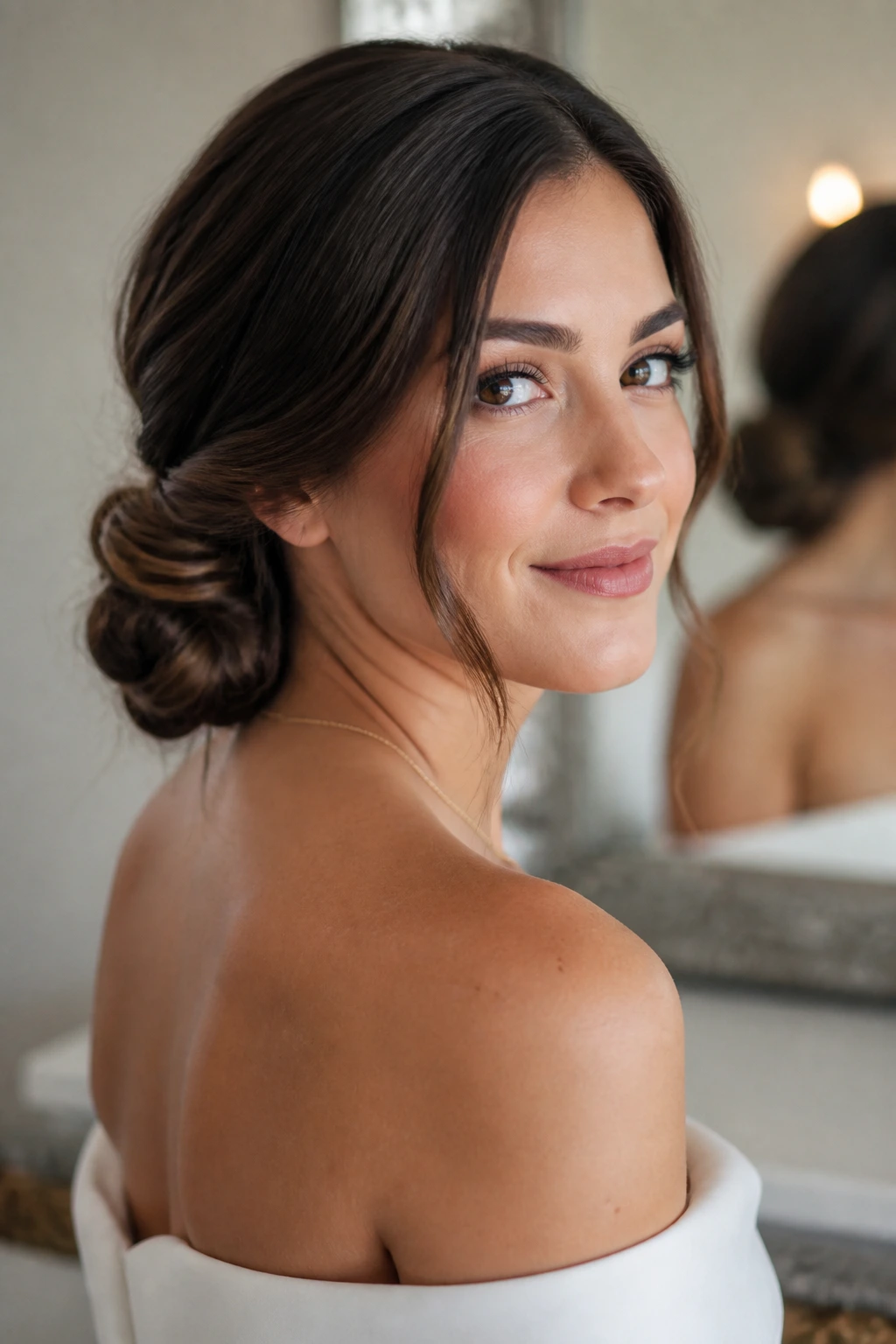
An off-center bun does something subtle and useful: it shifts the line of the face and neck without asking for a dramatic haircut or bigger accessory. The bun sits a little to one side of the nape, which can make the profile look longer and give the style a more editorial edge.
This is a smart choice if the dress already has one-sided details, like a single shoulder drape or asymmetric neckline. The bun should still feel balanced overall, just not perfectly centered. That slight imbalance keeps it from reading too safe.
Best on: Bridesmaids who want a more fashion-forward look without going anywhere near anything fussy.
26. Short-Hair Low Bun
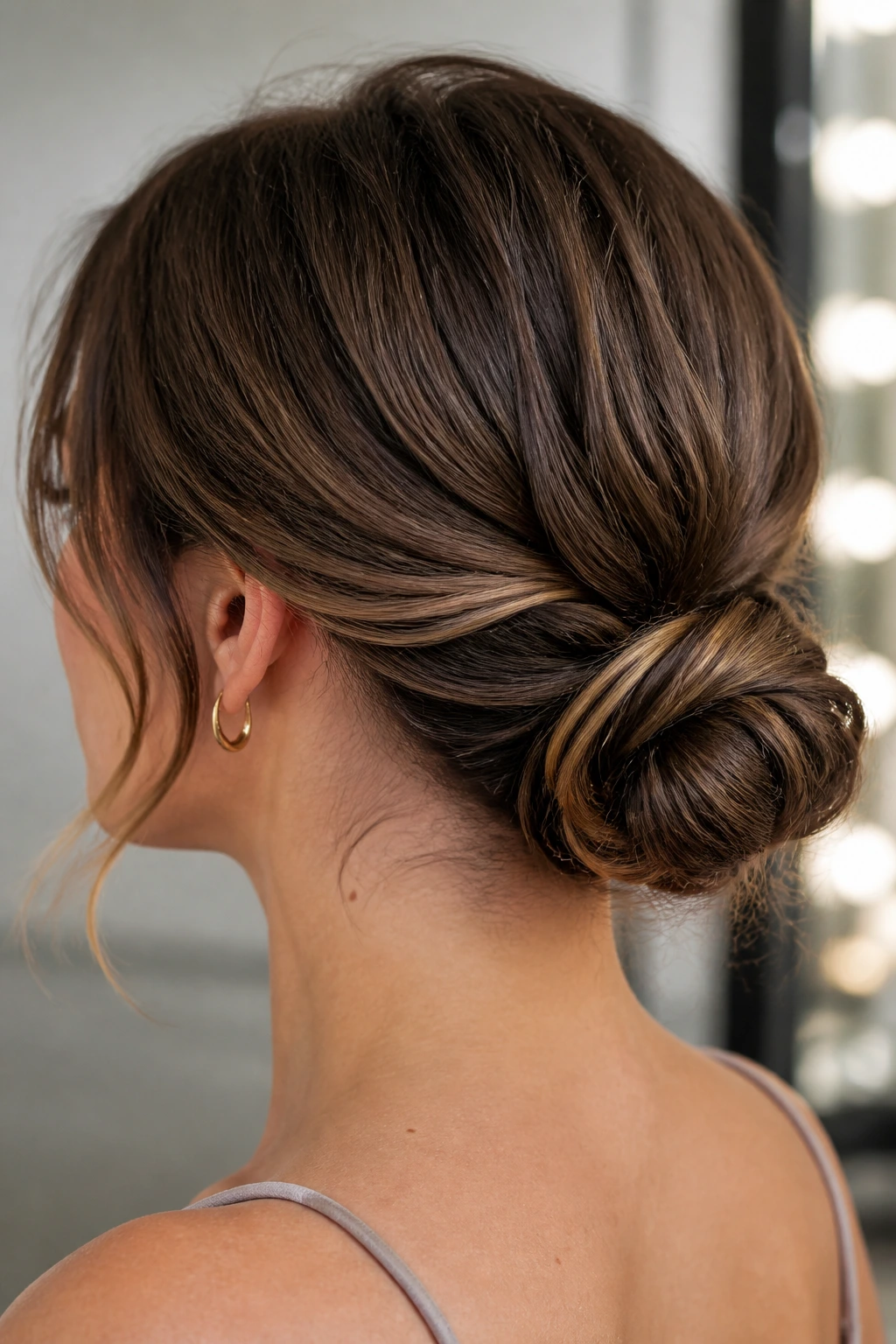
Short hair can absolutely do a low bun. It just needs better planning than longer lengths. The style usually relies on twists, mini sections, and hidden pins that gather the hair into a compact shape at the nape, sometimes with a small padded base to fake a fuller silhouette.
This version matters because lob-length and collarbone-length hair are common, and they shouldn’t be treated like a problem. They’re not a problem. They just need a bun built with the haircut in mind, not against it. Shorter layers can be tucked with a little styling paste and a firm hand.
Practical note: If the pieces are too short to pin securely, leave a little texture instead of forcing a polished finish.
27. Long-Hair Low Bun
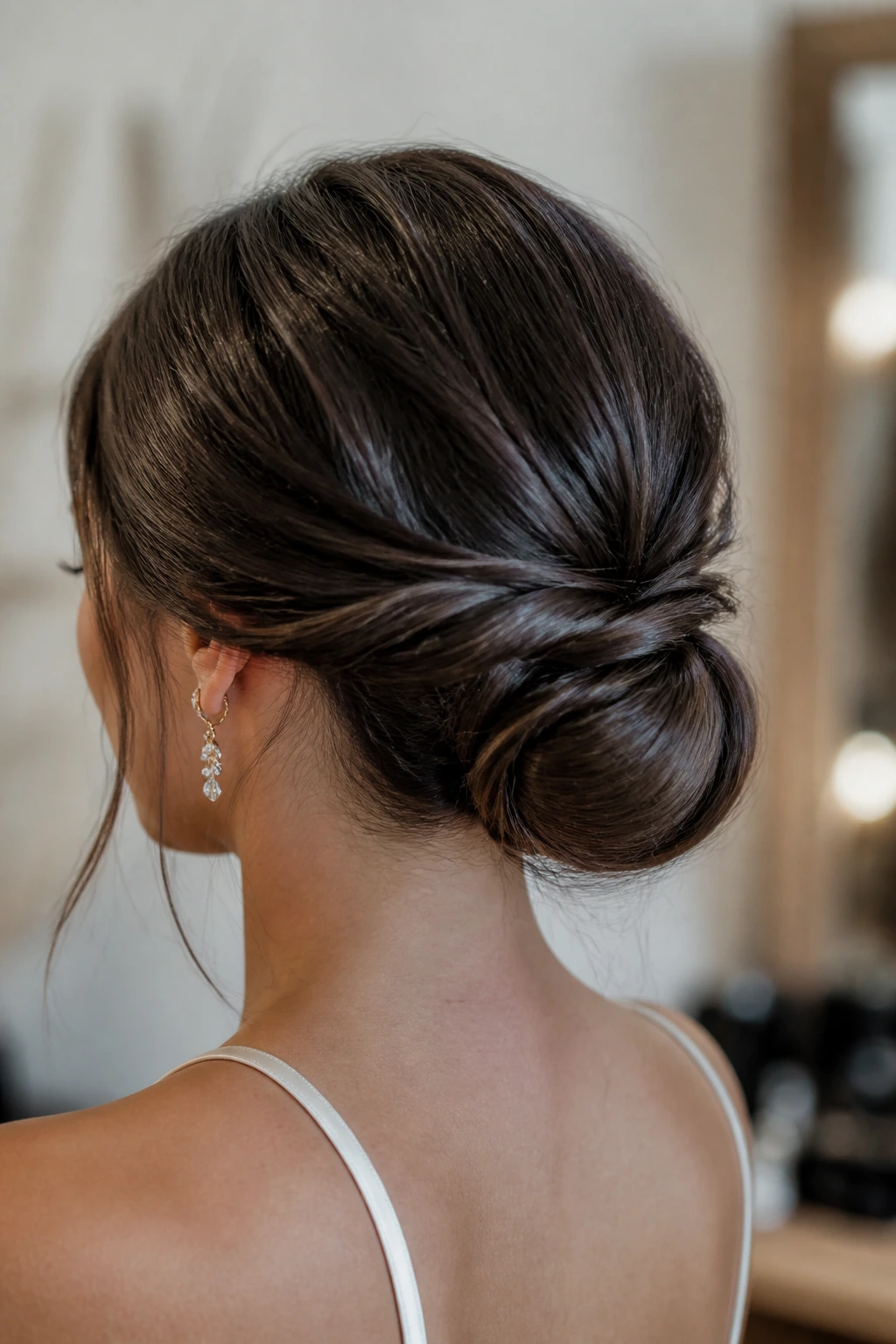
Long hair brings its own issues. There’s a lot of it, and if you try to fold it all at once, the bun gets bulky fast. The better move is to section it, twist the lengths inward, and anchor them in layers so the shape stays low and manageable.
A long-hair bun can be sleek, braided, or soft, but the important part is weight distribution. If all the length sits in one spot, pins slide and the bun slumps. This is the style that benefits most from a good foundation — texturizing spray, a firm base, and patience while you pin.
Good pairing: Backless dresses. A long, low bun keeps the hair from overwhelming the open space.
28. Mismatched Bridal Party Bun
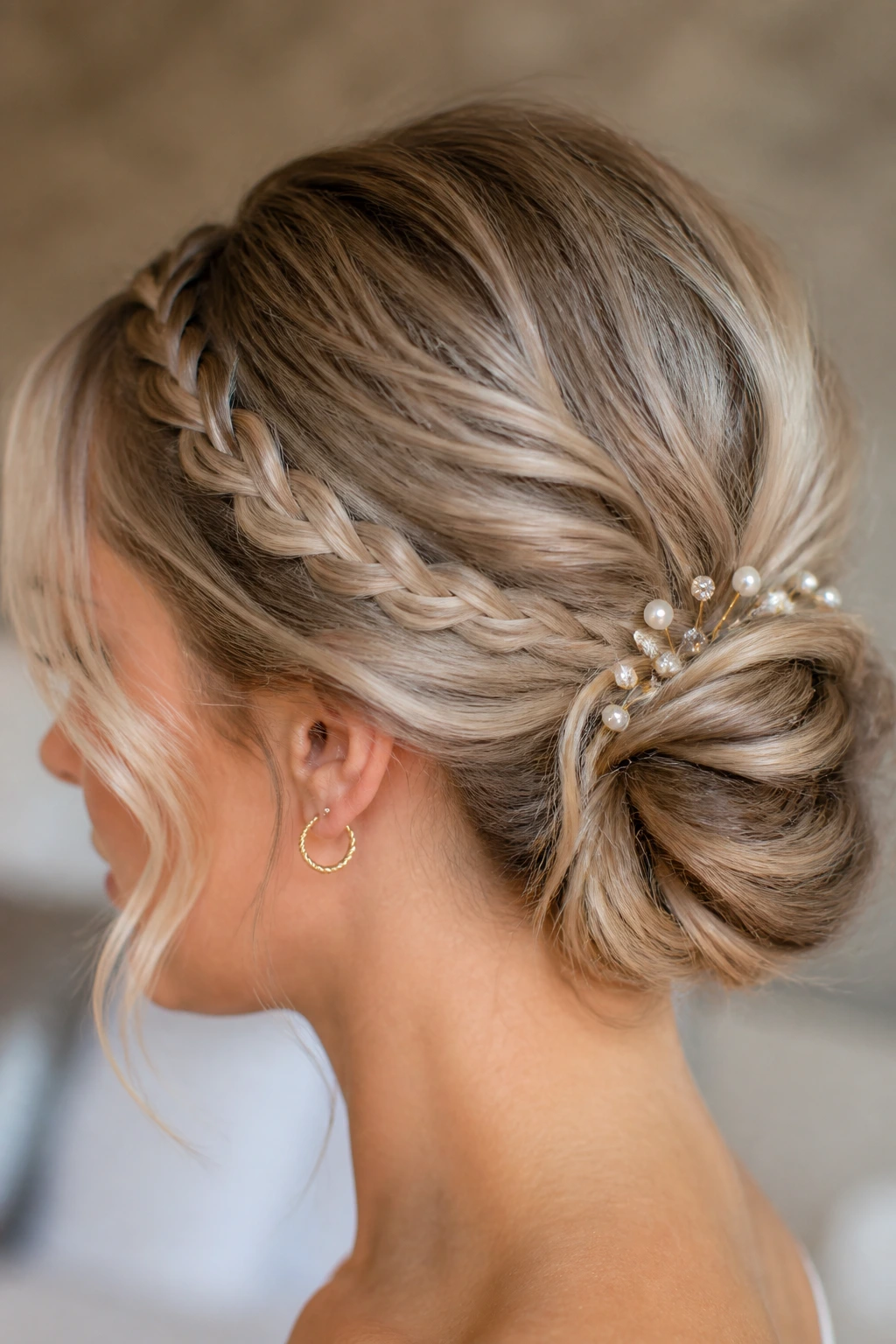
Not every bridesmaid has the same texture, density, or haircut, and honestly, that’s why this approach makes sense. A mismatched bridal party bun means everyone wears the same general low-bun family, but each person’s version suits their own head. One can be braided, one sleek, one soft, one with pearls.
The cohesion comes from shared details: the same part direction, the same accessory color, or the same level of polish. Not from identical shape. That’s the part too many people get backward. If every head is forced into one exact mold, the hair starts fighting the person wearing it.
Best use: Mixed hair textures, especially when the bridal party includes straight, wavy, curly, and coily hair.
29. Low Bun with Side Sweep
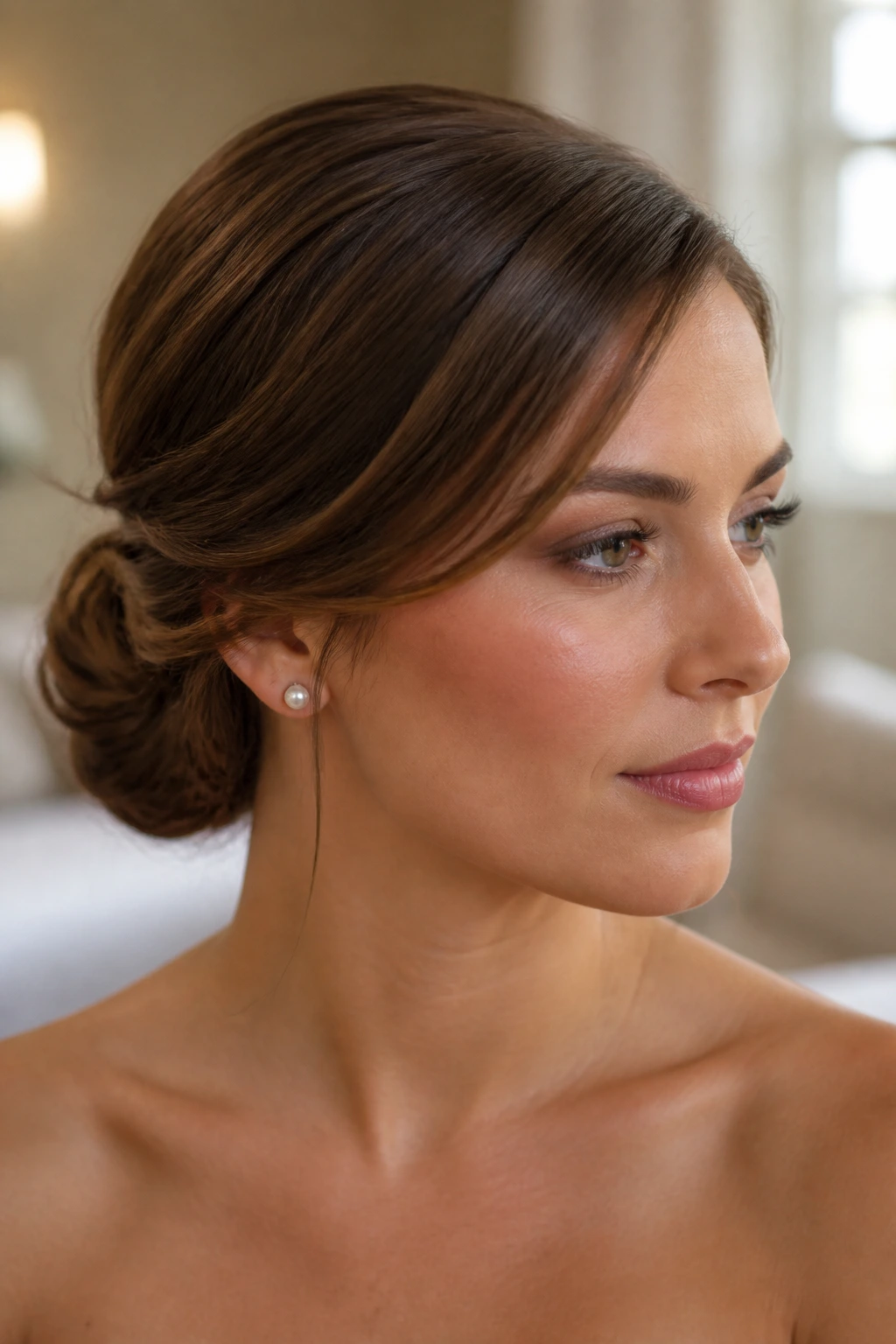
A side sweep gives the bun a little motion without taking the style out of the low zone. Hair is swept toward one side before it’s gathered into the bun, so the front has a directional feel and the back keeps its tidy shape. The result is softer than a strict center part and more polished than fully loose styling.
This is one of the easiest ways to flatter a statement earring or a one-shoulder dress. The sweep creates a natural line that draws the eye across the face and into the bun. If the sweep is too heavy, though, the style can lose balance. Keep it deliberate, not draped.
Styling note: Use a light mist of hairspray on the front section before sweeping it back. It helps the hair hold its direction.
30. Low Bun with Braided Veil Path
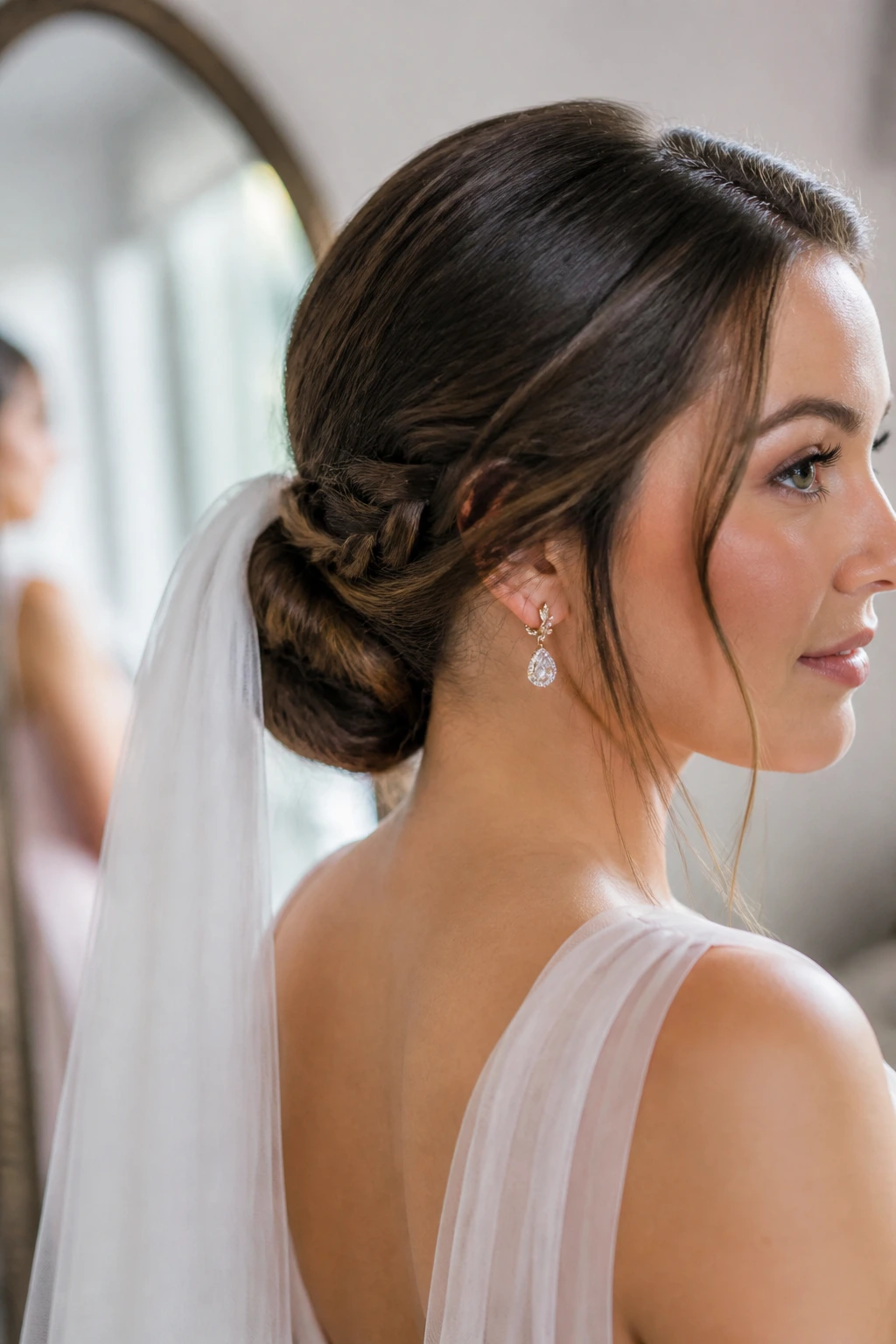
This one is built for ceremony logic. A braid runs along the back or side and creates a little “path” that helps a veil comb sit where it should. The braid also adds enough texture that the style doesn’t vanish behind the veil once the photos start.
I like this approach because it solves two jobs at once. You get a pretty braid, and you get a secure place for the veil to rest. The bun itself can be simple, because the braid does the decorative work. If the bridal party is sharing a hair direction but not the exact same accessory, this is a nice bridge style.
Where it shines: Weddings where the veil stays on for the ceremony and comes off after the formal pictures.
31. Low Bun with Soft Puff at the Crown
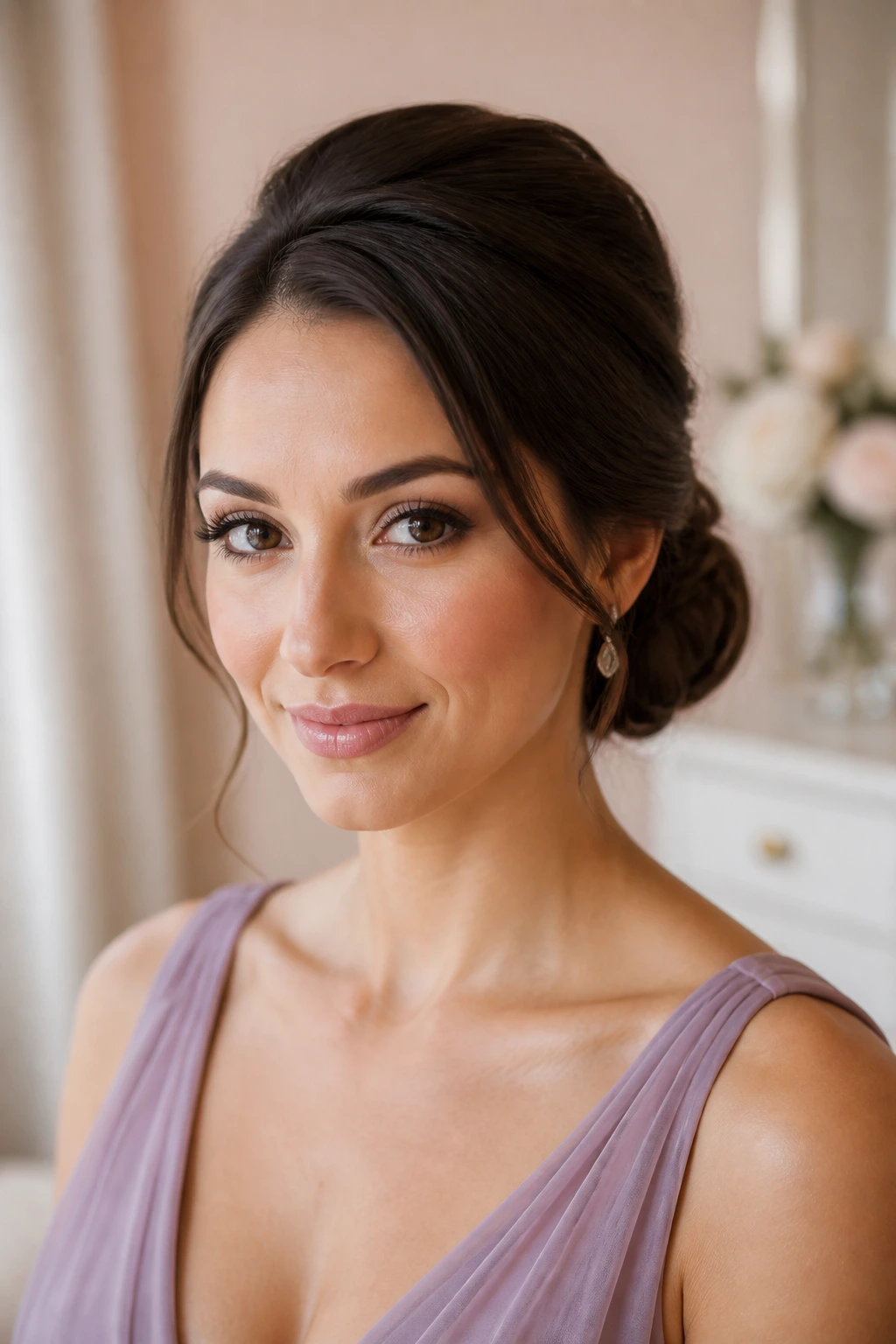
A small puff at the crown gives the low bun some breathing room. It keeps the head from looking too flattened against the dress, which is a real issue with straight hair or very tight updos. The lift should be gentle, like a cushion under the style rather than a bump on top of it.
This is useful when the neckline is high or the face needs a touch more vertical shape. It also helps the bun read better from the side, which matters in aisle photos. The crown should still look smooth. The puff is support, not spectacle.
Good for: Bridesmaid looks that need a little softness but can’t lose polish.
32. Low Bun with Lived-In Texture
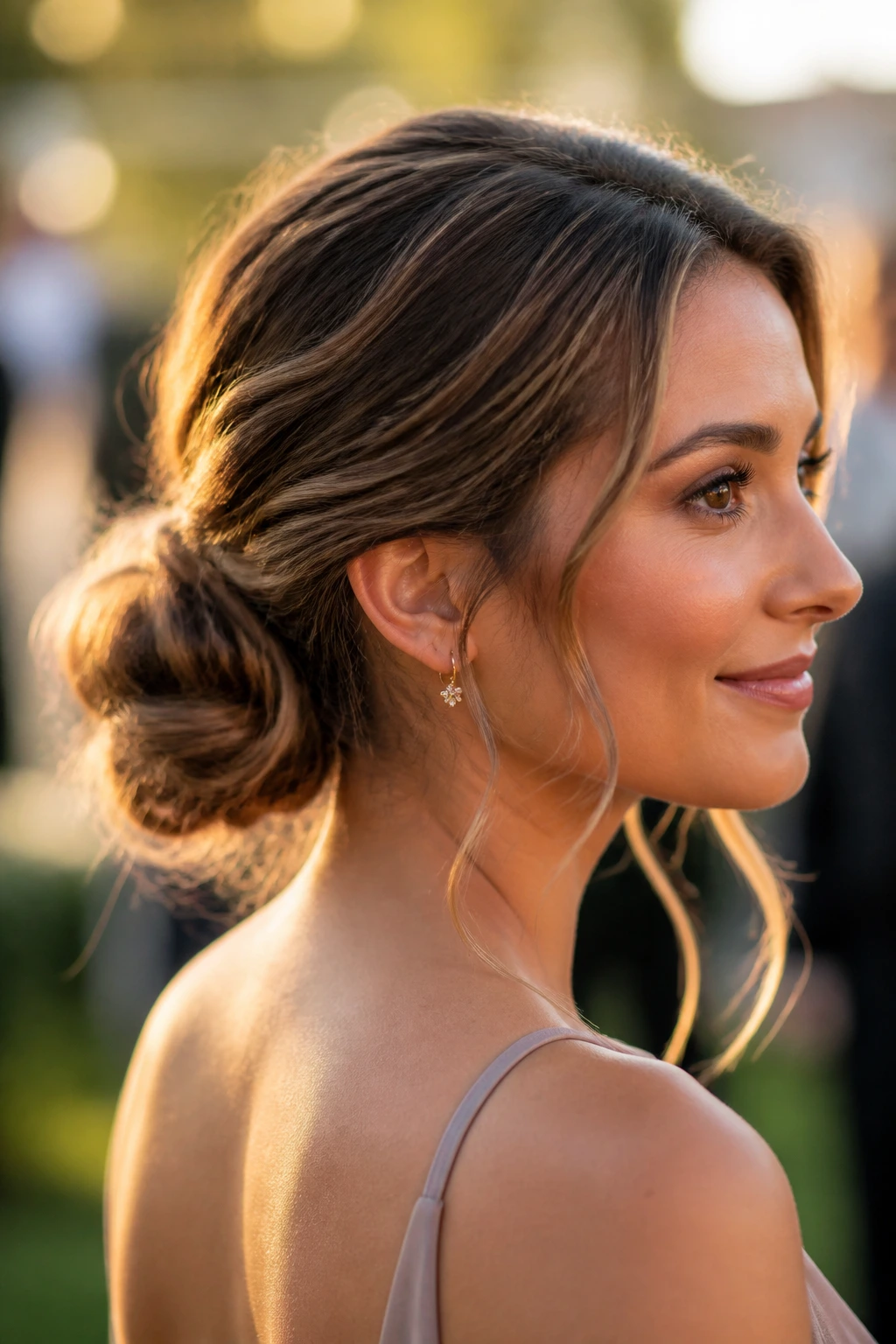
The final version is the one that looks a touch imperfect on purpose. A lived-in low bun keeps a bit of piecey texture, maybe a loosened twist or two, and just enough undone finish to feel human. It works especially well in outdoor settings, relaxed ceremonies, and bridal parties that don’t want every strand locked down.
What keeps it from sliding into messiness is the base. The nape still has to be anchored properly, and the front still needs a shape. The texture is in the surface, not in the structure. That distinction matters. A style can be relaxed and still be controlled.
Best on: Wavy hair, romantic dresses, and weddings that feel less formal but still well thought through.
Why Low Buns Stay Put Without Looking Heavy
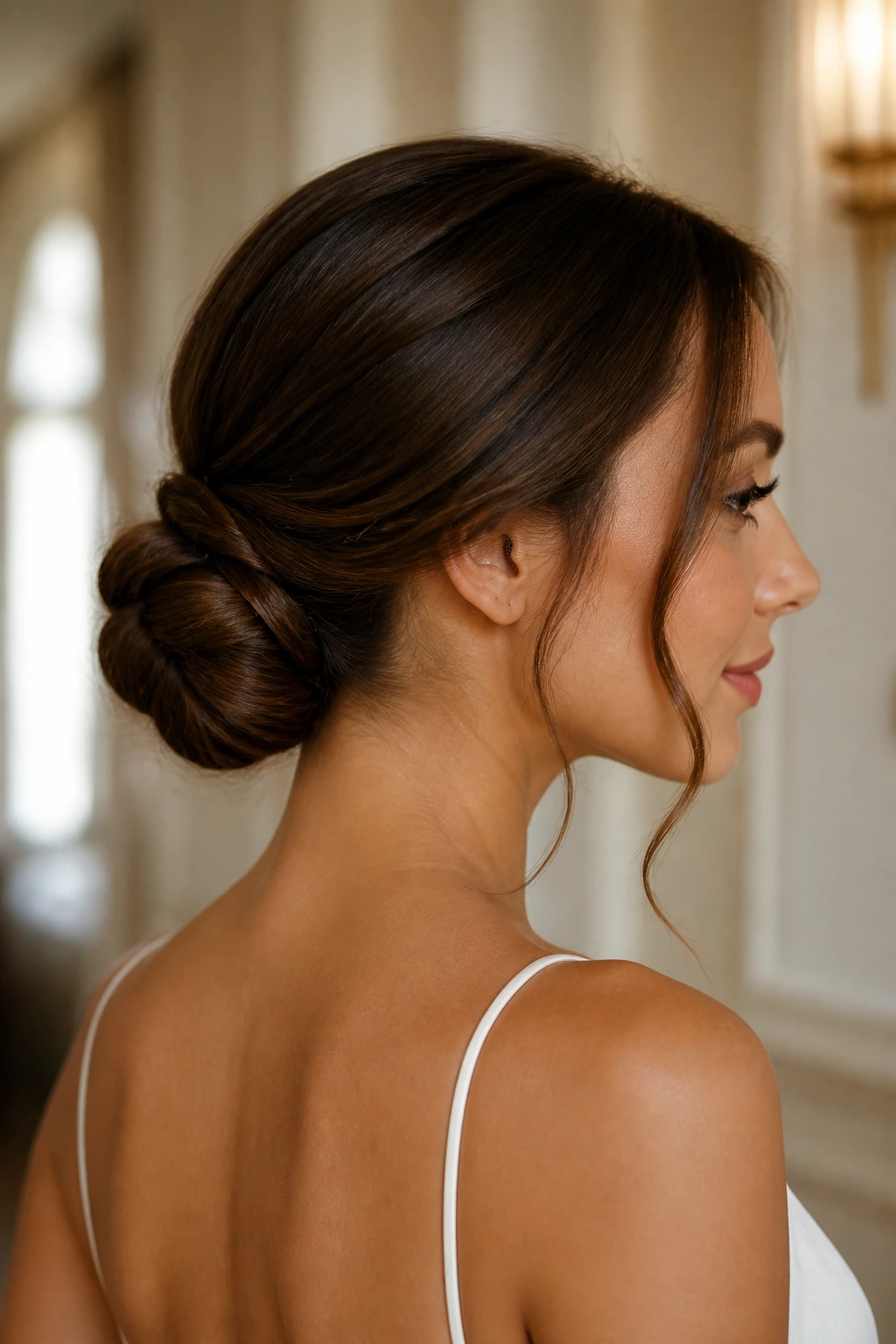
A low bun has a structural advantage that a high style doesn’t always get: the center of gravity sits close to the neck. That means the pins aren’t fighting as much weight, and the style can stay still while the bride’s party moves, hugs, and turns for photos. If you’ve ever watched a high updo start leaning by dessert, you already know why this matters.
The bun also gives the dress room to breathe. Open backs, square necklines, halters, and one-shoulder gowns all look cleaner when the hair does not compete with them. A low bun leaves the shoulder line visible, which is one reason it keeps showing up in bridesmaid styling. It makes the dress look intentional instead of cluttered.
The hold comes from the base, not the spray
People reach for hairspray first because it’s easy. But a low bun lasts because of anchoring — elastic first, pins second, then product used sparingly to smooth the surface. If you dump spray on dry hair and hope for the best, the style usually gets crunchy before it gets secure.
A good low bun starts with some grip. Day-old hair, light texturizing spray, or a little mousse at the roots gives the pins something to catch. That’s the part that gets missed. The bun doesn’t need to be loaded up. It needs something to hold onto.
How to Match the Bun to the Dress, Earrings, and Bouquet
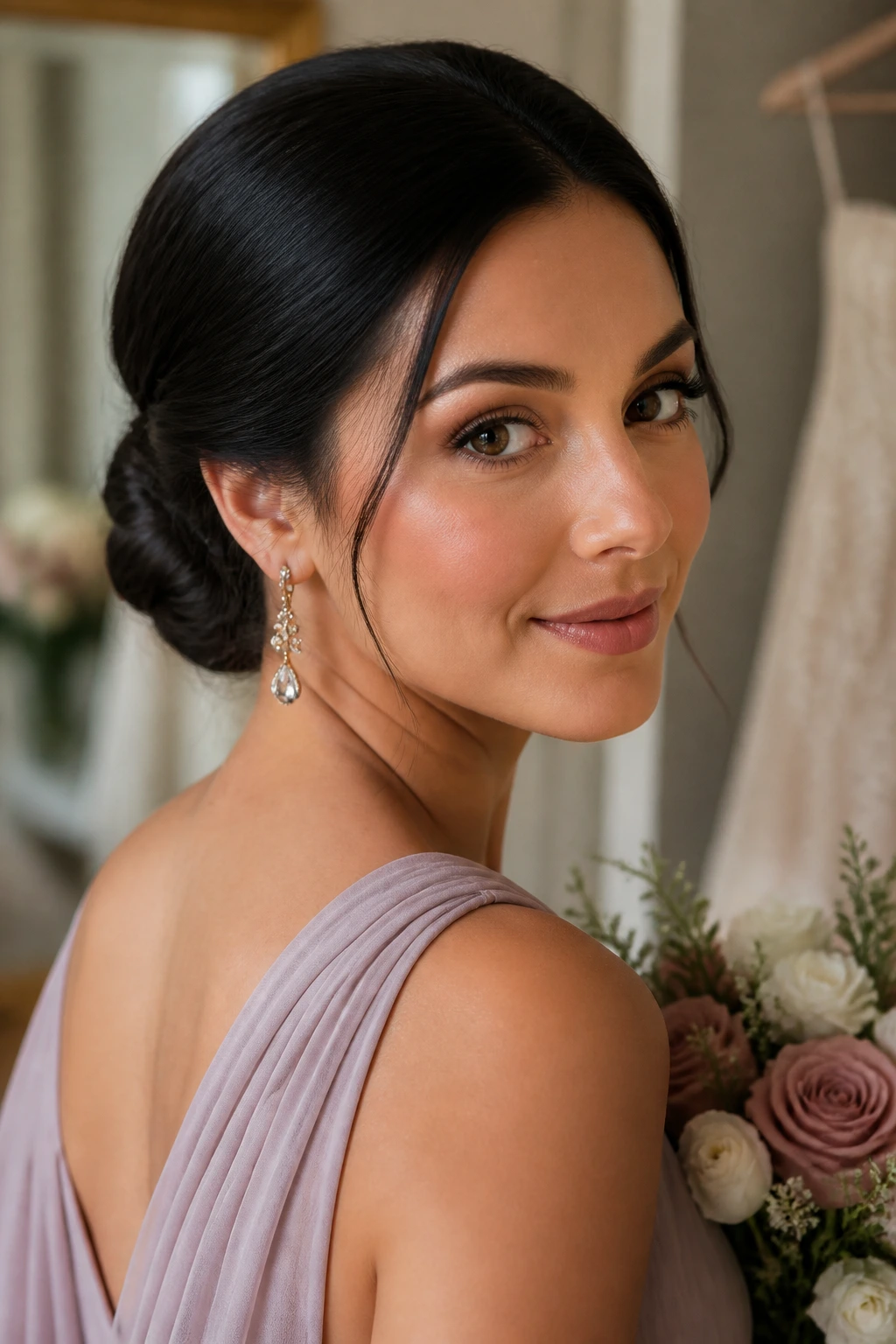
A bridesmaid hairstyle should sit in the same room as the dress, not yell over it. If the dress has a dramatic back or a lot of beadwork near the shoulders, a sleek bun or a simple twisted knot keeps the eye where it belongs. If the gown is plain and the bouquet is lush, a braided or softly textured bun can carry a little more detail.
Earrings matter more than people think. Long drop earrings pair well with a smooth bun because the line stays clean. Small studs can sit beside a floral or pearl-pinned bun without getting lost. If the earrings are already loud — maybe crystal or oversized gold — the hair should step back a little.
Bouquets add their own visual noise. A low bun with floral accents can look harmonious when the bouquet is restrained, but with a heavy bouquet, I prefer the hair to stay simpler. Too many competing details in one frame make the whole thing restless.
Practical Tips for Getting a Better Hold
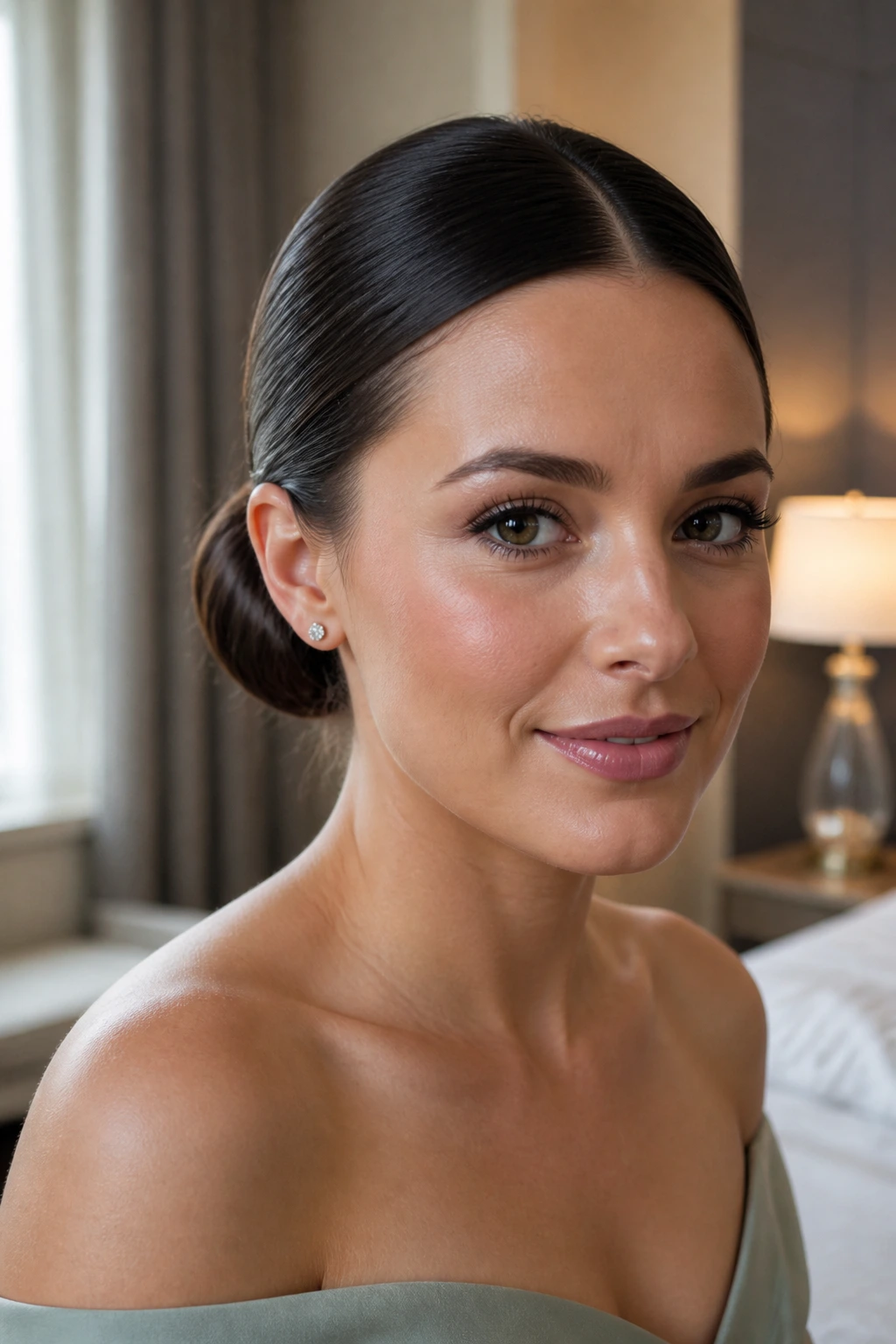
- Start with the right texture: Slightly dirty hair grips better than freshly washed hair. If hair was washed that morning, add dry shampoo at the roots and mid-lengths before you start pinning.
- Anchor in layers: Build the bun in stages. One elastic or twist creates the base, bobby pins lock that base, and then U-pins or extra pins shape the outer edges.
- Hide the stress points: Pin where the hair naturally crosses or folds. That’s where it holds most securely and where a pin is least likely to slip out.
- Match the finish to the dress: A high-shine sleek bun suits satin and crepe. Softer texture works better with tulle, chiffon, and matte fabrics.
- Carry a tiny repair kit: Two bobby pins, one small comb, a travel hairspray, and a few extra pearl pins are enough to fix most wedding-day problems.
- Test the bun with movement: Tilt your head, hug someone, and turn side to side before you leave the chair. If the style shifts in those moments, it will shift later too.
Tools and Products That Actually Earn Their Keep
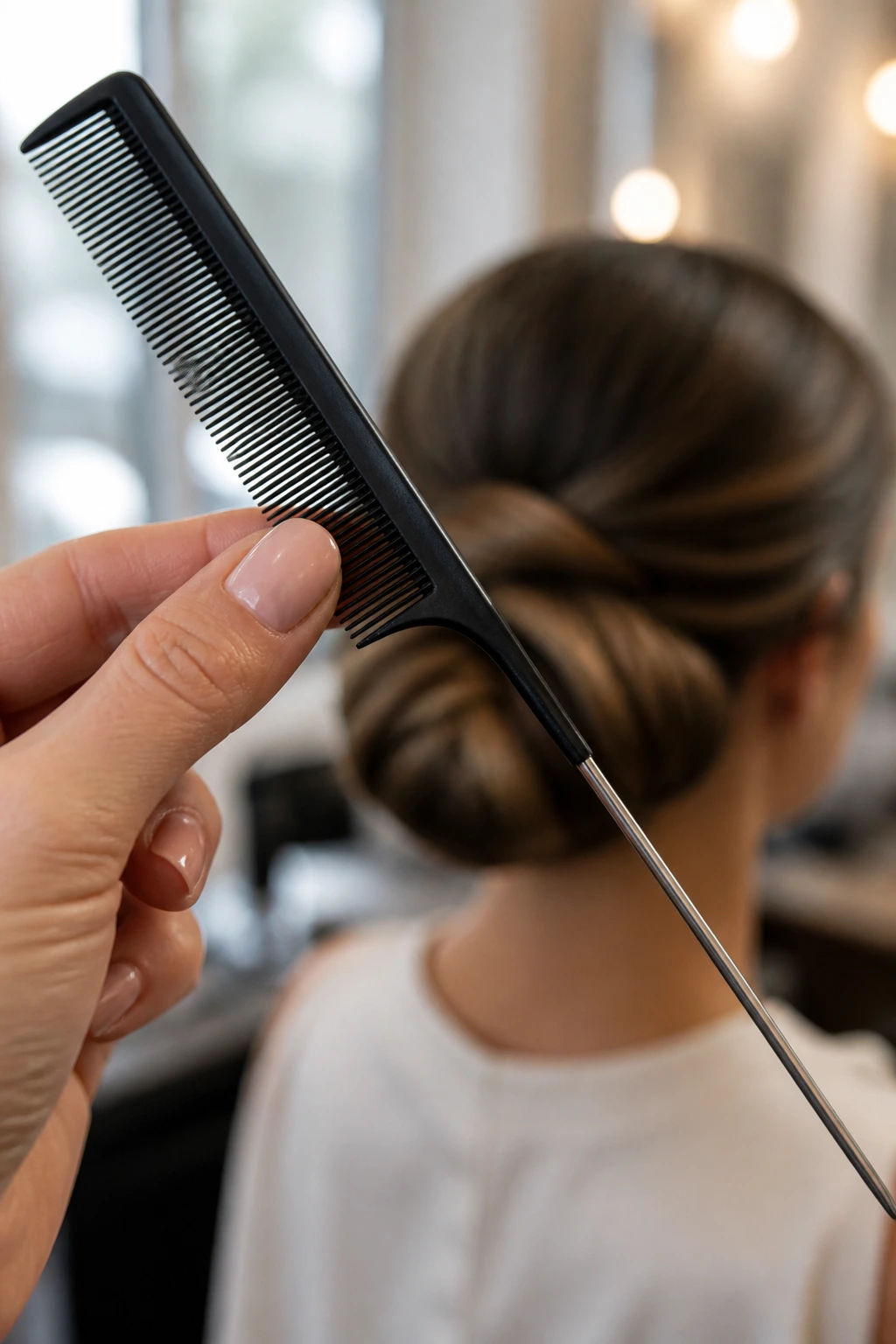
- Fine-tooth tail comb — Best for clean parts, neat sections, and smoothing the front without creating bulk.
- Boar-bristle brush or smoothing brush — Helps flatten the surface of sleek buns and keeps the crown from puffing up.
- Bobby pins in two shades — Match them to the hair color so they disappear, and keep a few extra in the kit.
- U-pins — Useful for larger buns, especially when you want shape without visible hardware.
- Hair elastics — Thin, snag-free elastics make the base easier to build.
- Texturizing spray — Adds grip to hair that’s too smooth to stay put.
- Flexible-hold hairspray — Holds the surface without turning the bun into a helmet.
- Smoothing cream or light serum — Good for sleek styles and for taming flyaways around the hairline.
- Small bun donut or padding — Helpful for fine hair or when the bun needs a fuller shape.
- Mini claw clip or sectioning clips — Keeps layers out of the way while you build the style.
Common Mistakes That Make Low Buns Sag or Look Flat
The first mistake is building on hair that’s too clean and too soft. Freshly washed hair can be slippery, especially if it’s fine or silky, and the bun starts shedding pins before the ceremony ends. A little dry shampoo or texturizing spray fixes that faster than another layer of hairspray.
The second mistake is over-smoothing the crown. A flat top can make the head look longer in a bad way, especially if the face is narrow or the dress is already sharp and structured. You want smoothness, not a plastered-down look. Leave a bit of lift unless the style is intentionally sleek.
A third problem is using too few pins in the wrong places. If the bun feels secure only when you’re standing still, it’s not secure enough. Pins should catch at the base and across the folds, not just on the outside. One bobby pin every now and then is not a strategy.
Another common issue is forgetting the back view. Bridesmaid hair gets photographed from behind more than people expect. If the bun has loose ends sticking out or a lopsided base, it will show. Check it in a mirror from all sides before you leave the chair.
Variations and Adaptations to Try
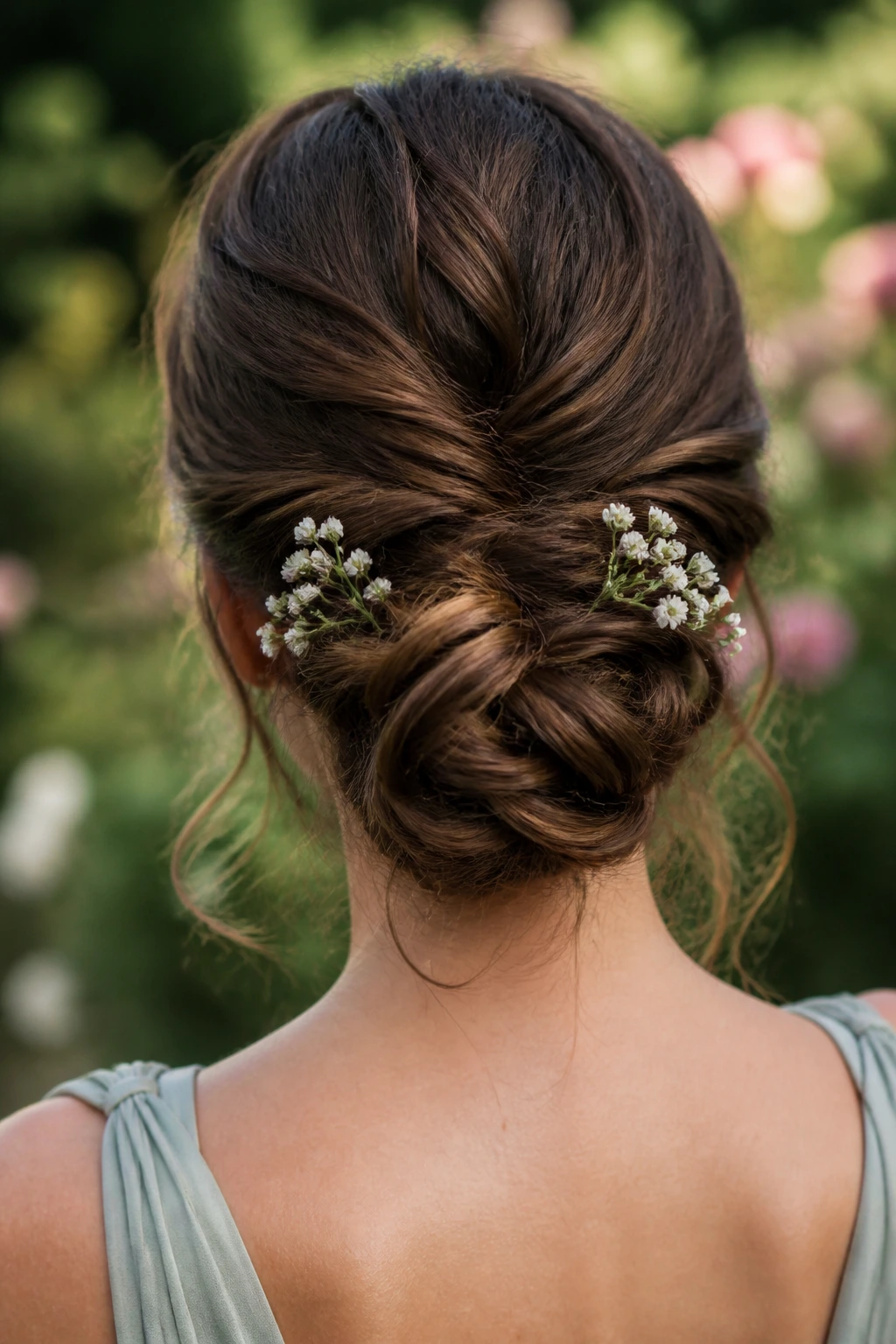
Soft Garden Version: Add two tiny sprigs of baby’s breath or one miniature rose to a textured bun. Keep the flower count low so the style feels fresh instead of crowded.
Modern Minimal Version: Strip everything back to a clean center part, polished surface, and one compact knot. No tendrils, no braid, no extra pieces. The shape does all the work.
Textured Boho Version: Swap the sleek finish for a loose braid, a puff at the crown, and a few piecey ends around the bun. This works well with outdoor ceremonies and dresses that move.
Curly-First Version: Leave curl pattern visible on the surface and pin the bun loosely enough to preserve shape. Do not brush it into straightness first unless you want to lose the whole point.
Accessory-Heavy Version: Build a simple bun and let pearl pins, a jeweled clip, or a ribbon do the decorating. This is the easiest way to keep a bridal party coordinated without forcing the same hairstyle on everyone.
How to Keep the Style Fresh Through Photos, Ceremony, and Dancing
The way a bridesmaid bun survives the day depends on when you touch it. Or rather, when you don’t. Once the style is pinned and sprayed, hands should stay off the surface. Twisting at the front or checking the bun every few minutes loosens the structure faster than weather does.
If the ceremony is outdoors, a little humidity defense goes a long way. A light anti-frizz serum on the surface and a flexible-hold spray at the end help the shape stay neat without making it stiff. Keep the repair kit somewhere easy to reach — a clutch, a makeup bag, a point person’s tote, whatever makes sense. The style will usually need one small fix after the ceremony and another before dancing.
The best wedding hair is not the hair that never moves. It’s the hair that still looks deliberate after it moves a little.
Frequently Asked Questions
Can bridesmaids wear low buns if their hair is short?
Yes. Shorter hair often needs a more pinned, twisted, or padded version, but it absolutely can work. The key is building a small, secure shape rather than trying to force a big rounded bun that the hair length cannot support.
Should the hair be clean or day-old for a low bun?
Day-old hair usually grips better because it has a little natural texture. If the hair is freshly washed, add dry shampoo or texturizing spray at the roots and through the mid-lengths so the pins have something to hold.
Can you add extensions to make the bun fuller?
You can, and for some hair types that’s the cleanest way to get a balanced shape. Clip-ins work well if they’re hidden under the base, but they need to be secured before the bun is formed so they don’t peek out later.
What if the bun starts sagging before the reception?
Most sagging comes from an under-pinned base or hair that was too slippery at the start. Add a few hidden bobby pins into the core of the bun, not just the outside, and tighten the elastic at the base if needed.
Which low bun style works best with a veil?
A flat, veil-ready bun or a smooth chignon is usually the safest choice because the comb can sit into the hair without shifting. Braided bases can also work well if they’re pinned tight and not overly bulky.
How do you keep a low bun from looking too severe?
Leave a little softness somewhere — a side part, a faint crown lift, a thin tendril, or a textured finish. Even a very neat bun needs one gentle detail so it doesn’t feel stern.
Can the whole bridal party wear the same low bun style?
Yes, but I’d usually tweak the finish for each person’s hair type. Same part, same accessory, same general shape — that keeps the group cohesive without forcing identical results on hair that behaves differently.
What’s the easiest low bun to do at home before the salon?
A twisted low bun or a simple wrapped chignon is the most forgiving. Both can be built from a ponytail base, and both hide small mistakes better than a super-sleek roll.
What Low Bun Bridesmaid Hair Gets Right
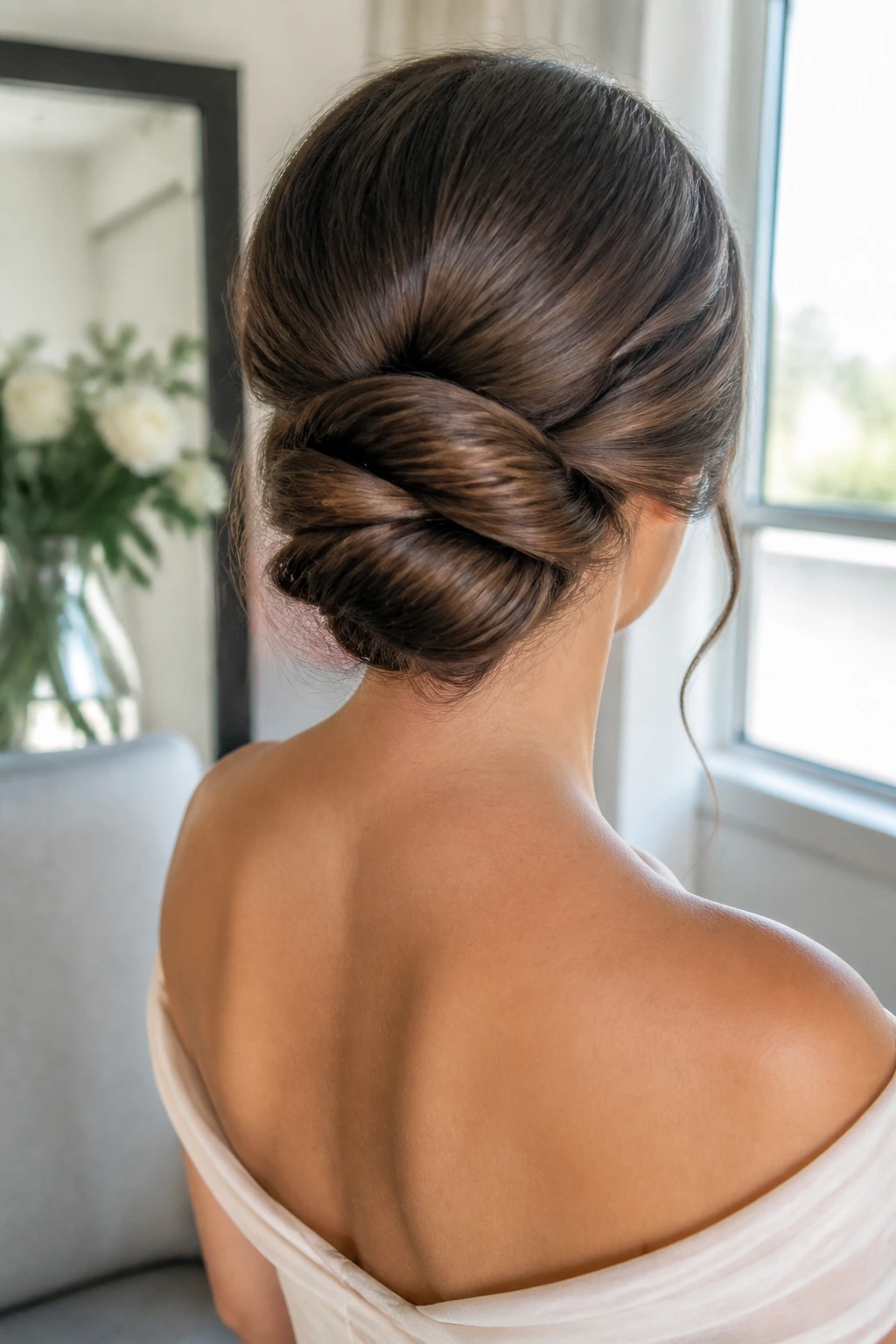
Low buns work because they’re steady, and weddings are not especially steady. There are tears, heat, hugs, wind, and all the little movements that loosen a style that’s too ambitious. A good low bun stays close to the head, keeps the dress visible, and can be dressed up or stripped back without losing its shape.
That’s the real reason these looks keep showing up in bridal parties. They don’t need to be loud to do their job. They just need to hold, flatter, and leave the rest of the outfit room to breathe. If you pick the right version for the hair and the dress, the style feels easy in the best possible way — and it still looks intentional when the last photo is taken.
