



The right bun does a funny thing on a wedding day. It disappears into the whole look, then quietly becomes the thing that holds the whole look together. A veil sits better. Earrings make more sense. The neckline stops fighting the hair. And when the room gets warm, the dancing starts, and the hugs become that long, happy, slightly chaotic wedding version of hugging, the style is still there.
That’s why bun hairstyles for brides keep showing up again and again in trial runs. They’re not one-note. A bun can be sleek and glassy, soft and loose, braided, coiled, tucked, sculptural, pearl-studded, or full of little face-framing pieces that move when you turn your head. Same category. Completely different mood.
I’ve always had a soft spot for buns that look composed from the front and a little interesting from the side. The cheap trick is teasing everything into submission and hoping the pins survive. The better move is building a strong base, choosing the right placement for the dress, and picking a bun shape that suits the bride’s hair texture instead of fighting it. That’s where the real range lives.
Why These Bridal Buns Are Worth Trying
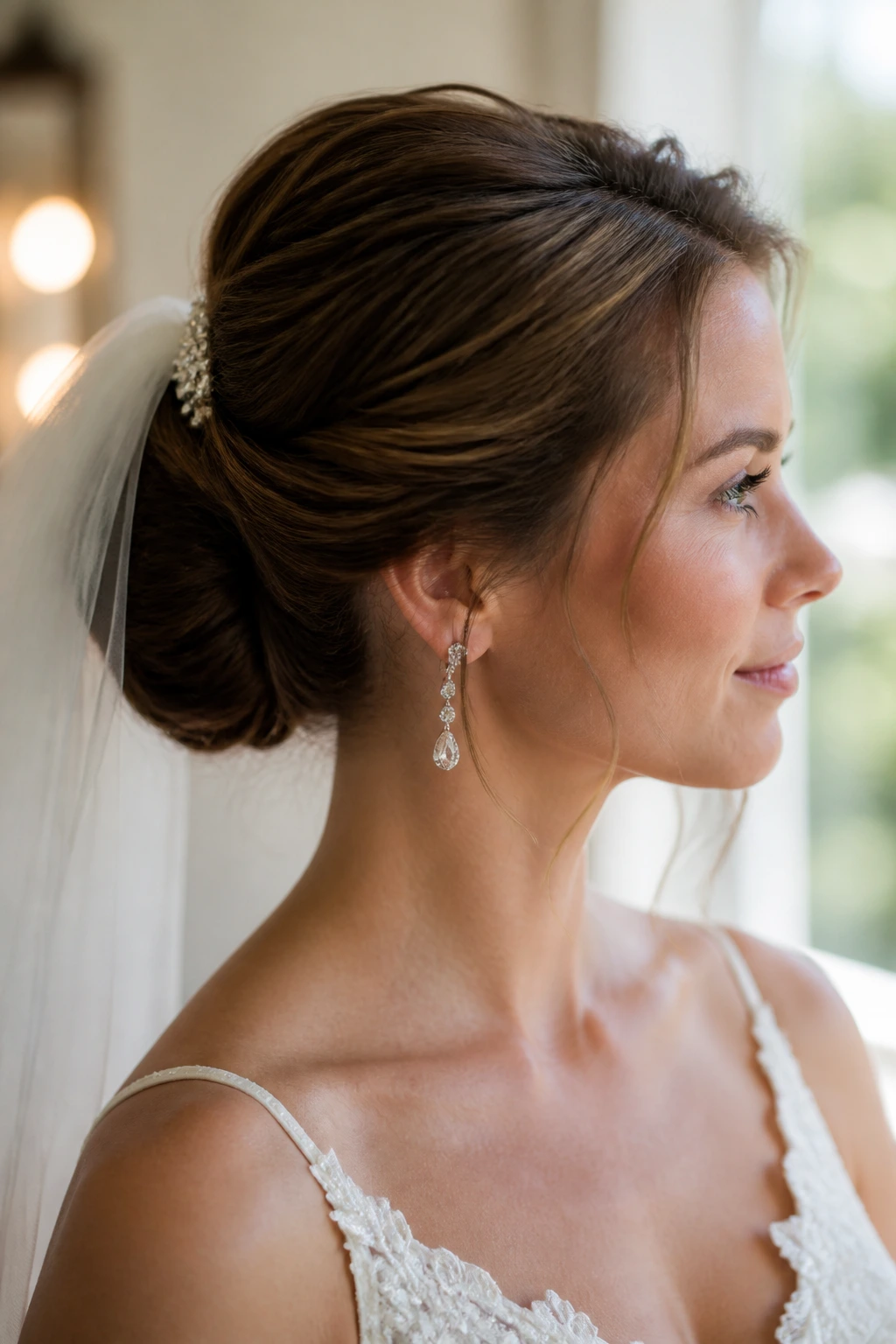
- Veil-friendly structure: A well-built bun gives a veil comb somewhere solid to bite, which matters a lot more than people expect once the first hug lands.
- Neckline control: A low bun opens the collarbone area cleanly; a high bun changes the shape of strapless and halter dresses in a way a loose curl never will.
- All-day staying power: Buns keep their shape better than down styles when there’s heat, wind, or hours of movement.
- Hair-type flexibility: Fine hair can be padded and pinned into shape, while thick hair can be folded and tucked without looking overworked.
- Photo balance: A bun keeps attention on the face, earrings, makeup, and dress details instead of letting hair swallow everything.
- Trial-run friendly: You can test parting, height, and accessory placement long before the wedding day and make small fixes fast.
1. Sleek Low Chignon
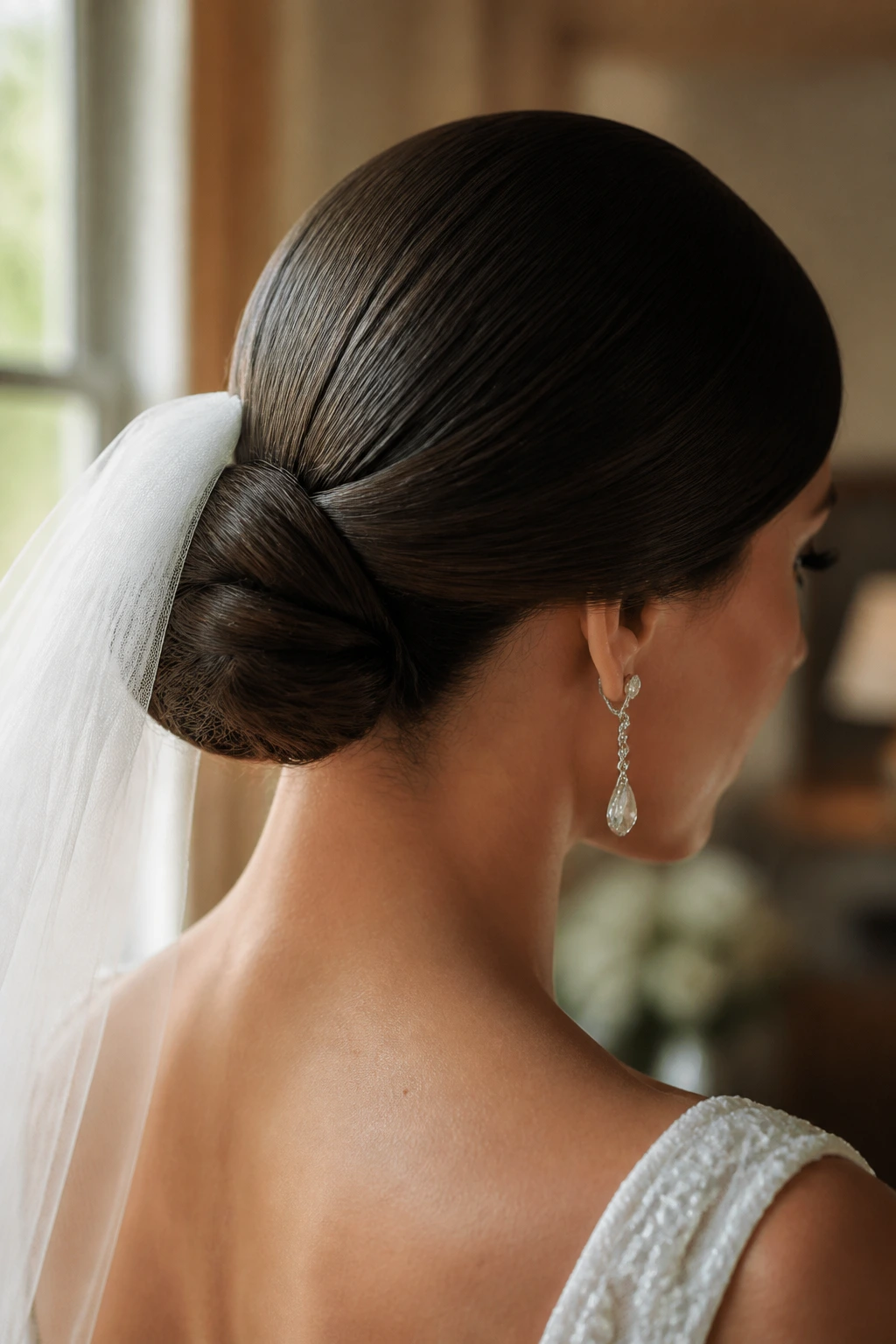
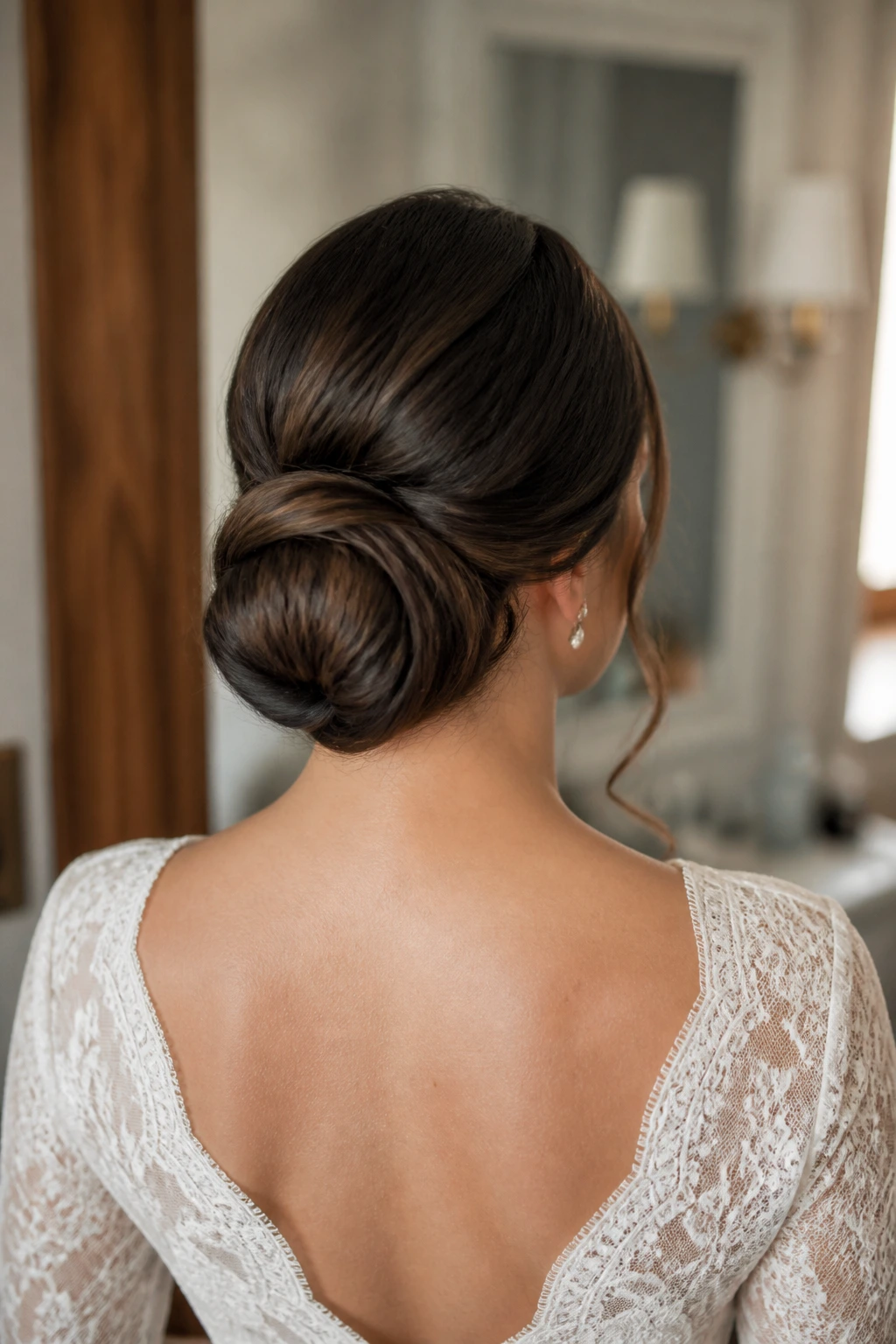
A sleek low chignon is the cleanest kind of bridal bun, and I mean that in the best way. It sits at the nape, smooth through the crown, with just enough polish to make satin, crepe, or silk gowns look finished instead of fussy. If a dress has a sharp neckline or a dramatic back, this is one of the few styles that doesn’t compete with it.
What to ask for: a low ponytail anchored flat, then wrapped into a compact coil with pins hidden under the roll. A little shine serum on the outer layer keeps the surface neat, but too much and the style starts to slip.
Why it works: the shape is compact, so it sits close to the head and won’t bump the veil comb. It also makes earrings look intentional, which is a small detail until you see the photos.
2. Soft Twisted Nape Bun
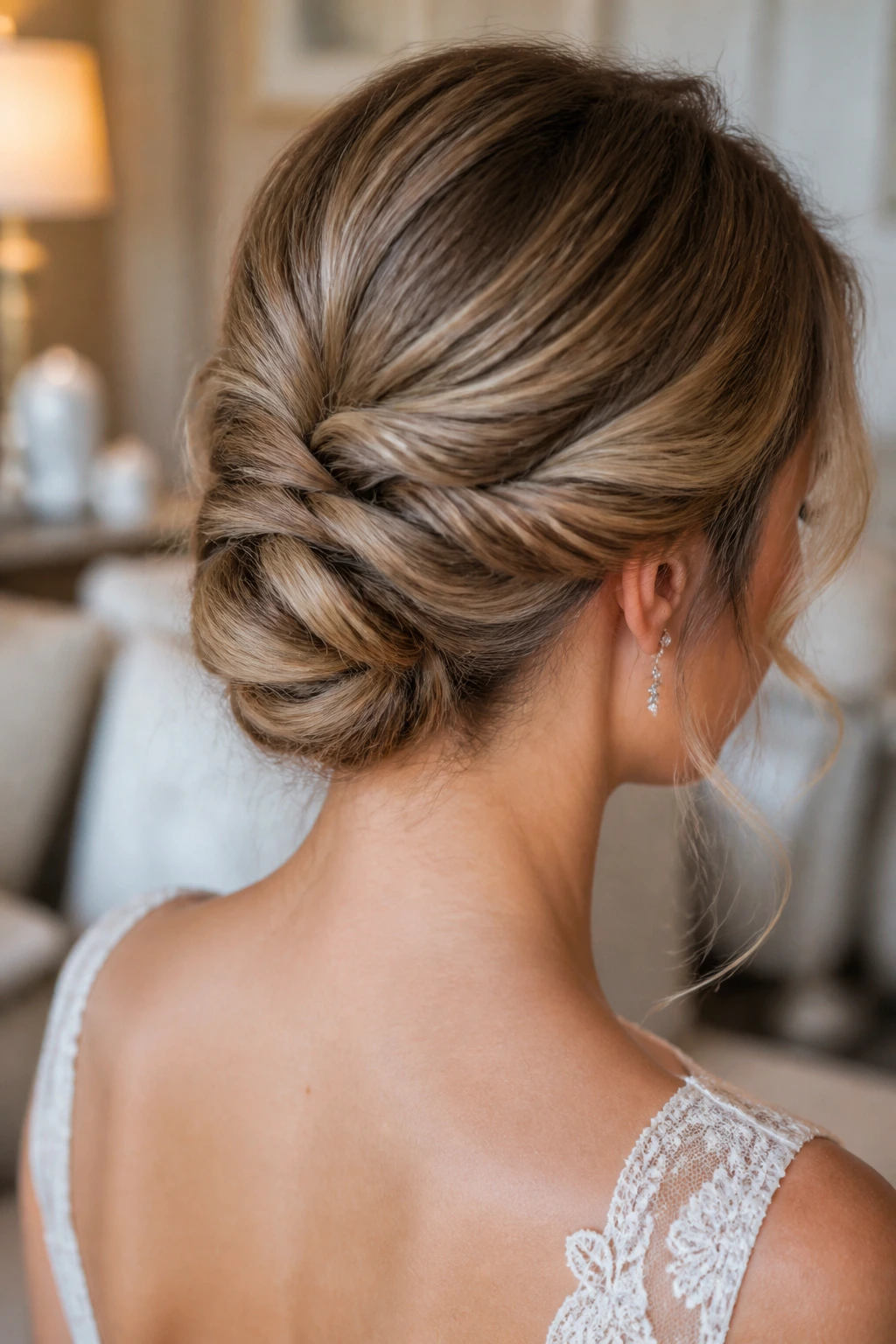
This one feels gentler than the sleek chignon. Two or three loose twists are brought together at the nape and tucked into a soft knot, which gives the bun a little movement without letting it fall apart into nothing. It’s the style I’d pick for lace, chiffon, or anything with a softer neckline.
The trick is keeping the twists visible. If the hair is over-smoothed, the bun loses its shape and looks like a plain knot. Leave the surface slightly lived-in, then pinch a few pieces loose around the ears if the face needs a little softness.
It’s especially nice on medium to long hair that has a bit of natural bend. Straight hair can wear it too, but it benefits from texture spray first so the twists don’t unravel before the ceremony is over.
3. Braided Low Bun
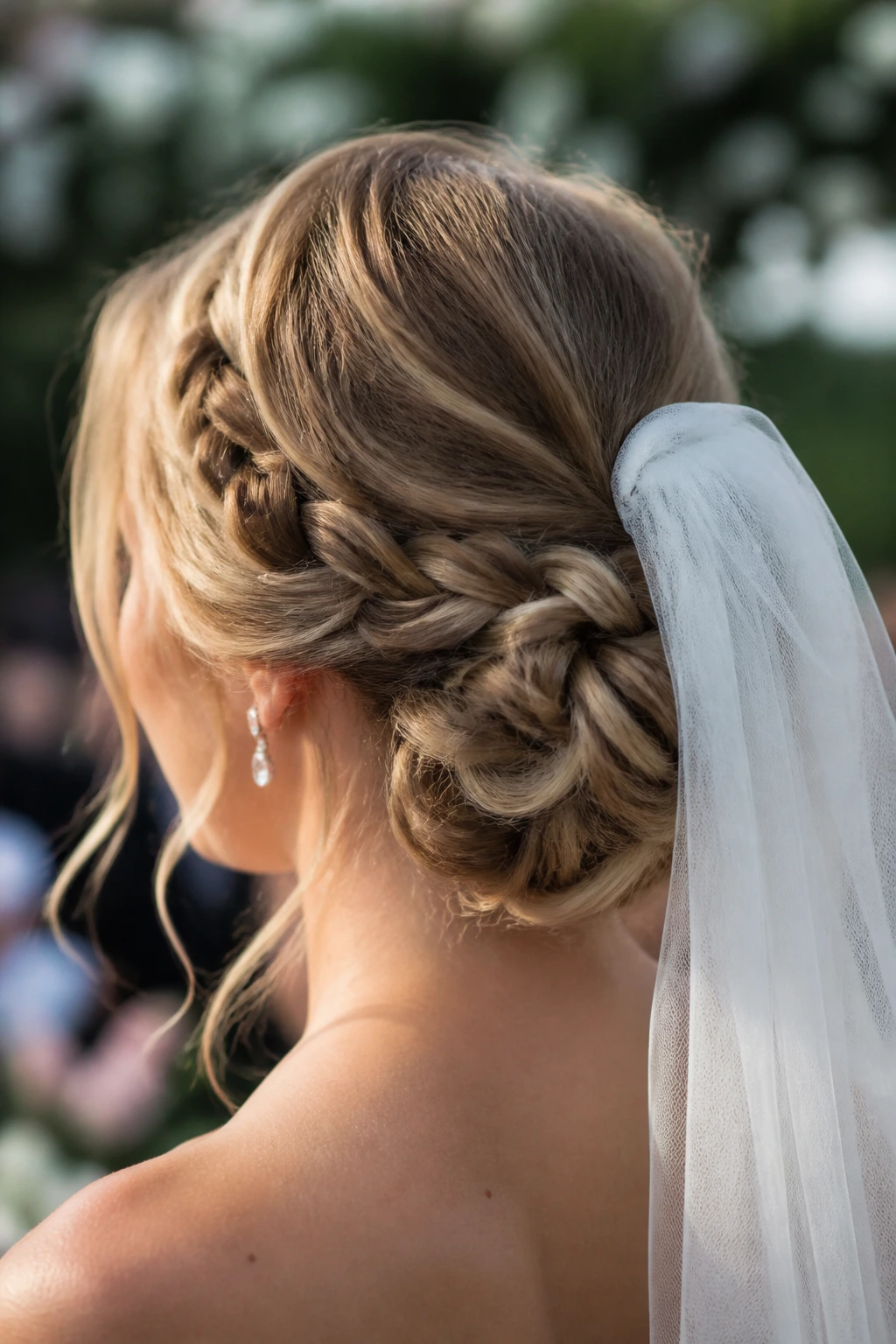
A braid tucked into a bun gives the whole style more grip, which is why it earns a spot on a bridal board so easily. The braid can run straight down the center, wrap from one side, or circle the bun like trim on a hem. Any of those versions adds texture without making the style feel heavy.
I like this one for outdoor ceremonies and windy venues. Braids hold shape better than loose twists, and they make fine hair look fuller without stuffing it with too much padding.
Best use case
Choose this if the gown has open shoulders or a low back. The braid gives the bun enough interest that you do not need extra ornament everywhere else.
4. Messy Romantic Bun
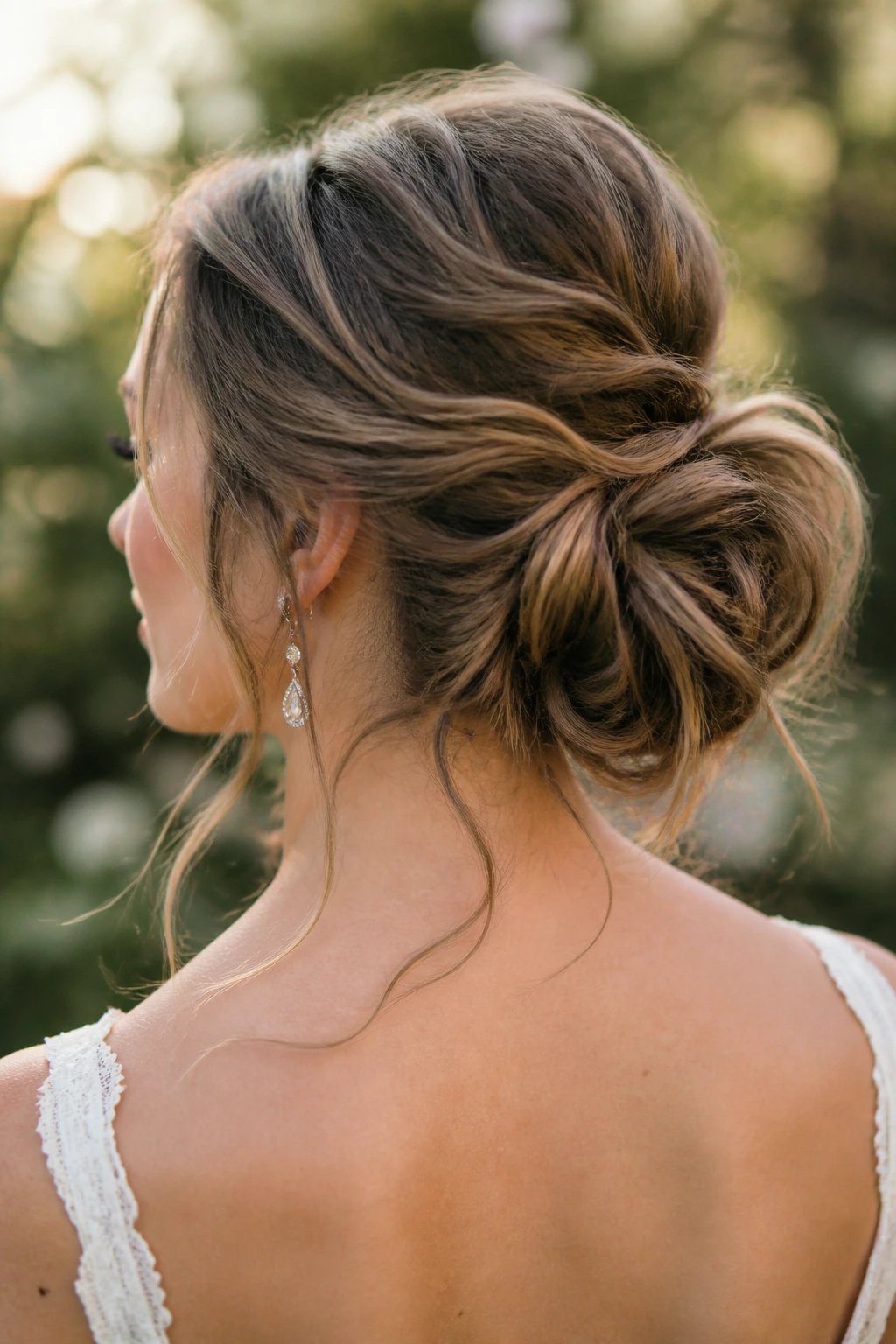
Messy does not mean careless. A good romantic bun is built with bent pieces, soft volume, and just enough looseness around the face to keep the style from looking severe. The shape usually sits low or mid-height, with a few pieces softly pulled free at the temples.
I’m picky about this one. It works when the looseness is controlled. It fails when it turns into a puffball with random pins poking out.
Use it with floaty dresses, garden ceremonies, or anything that wants a little softness around the edges. It photographs best when the front is deliberately shaped and the back has a bit of collapsed texture, not when every strand is trying to do its own thing.
5. Classic Ballet Bun
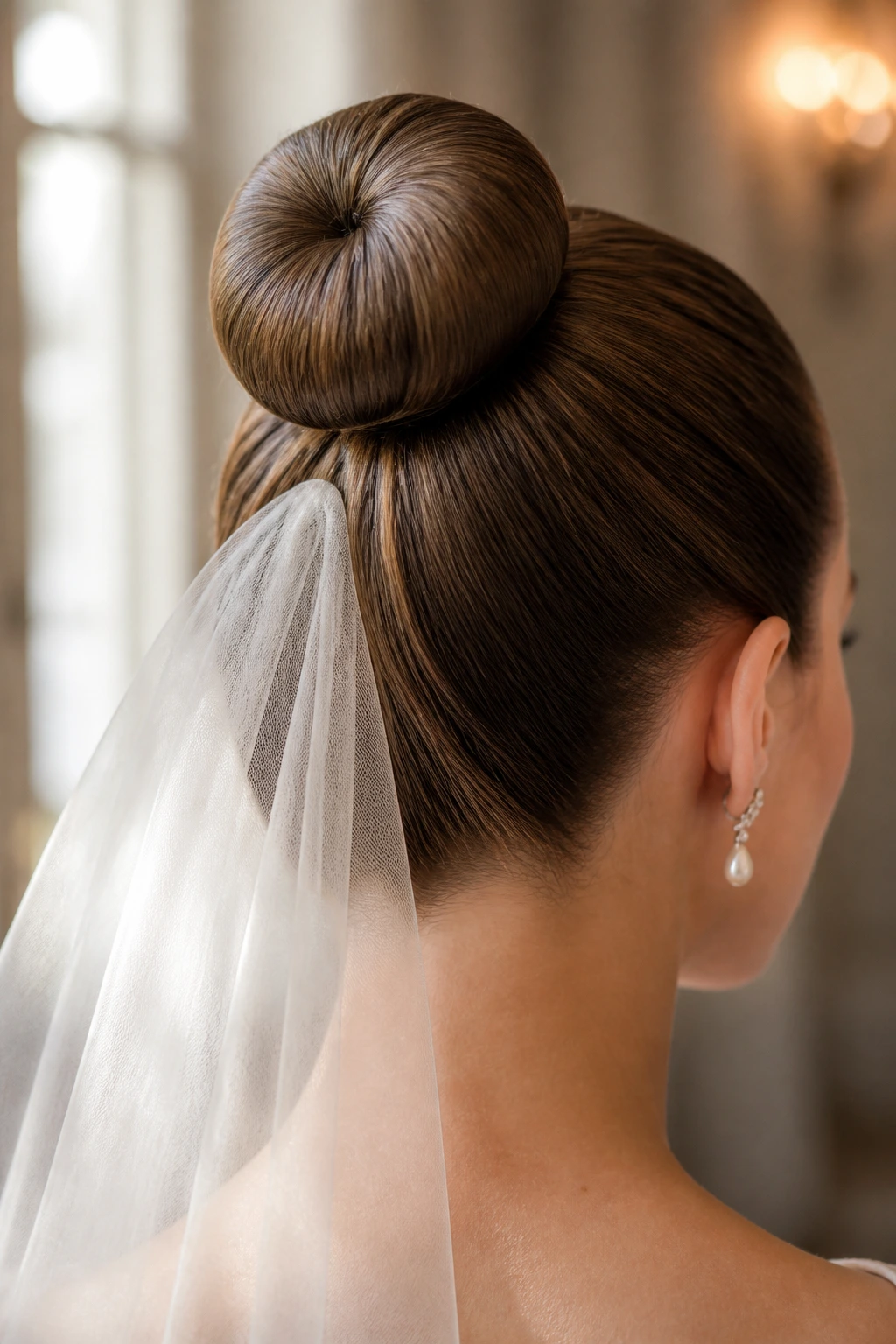
A ballet bun is the disciplined cousin in the family. It’s higher, tighter, and very centered, with a smooth finish and a round profile that sits like a neat disk at the back of the head. Brides with long necks and clean-lined dresses tend to wear this style well.
This bun needs a solid foundation. Start with an elastic that grips, not one that slides. Wrap the ends tightly, then pin them down in opposite directions so the bun doesn’t sag as the night goes on.
The look is crisp, almost architectural. If the dress has a dramatic train, heavy beadwork, or a square neckline, the simplicity is a relief for the eye.
6. Side-Swept Bridal Bun
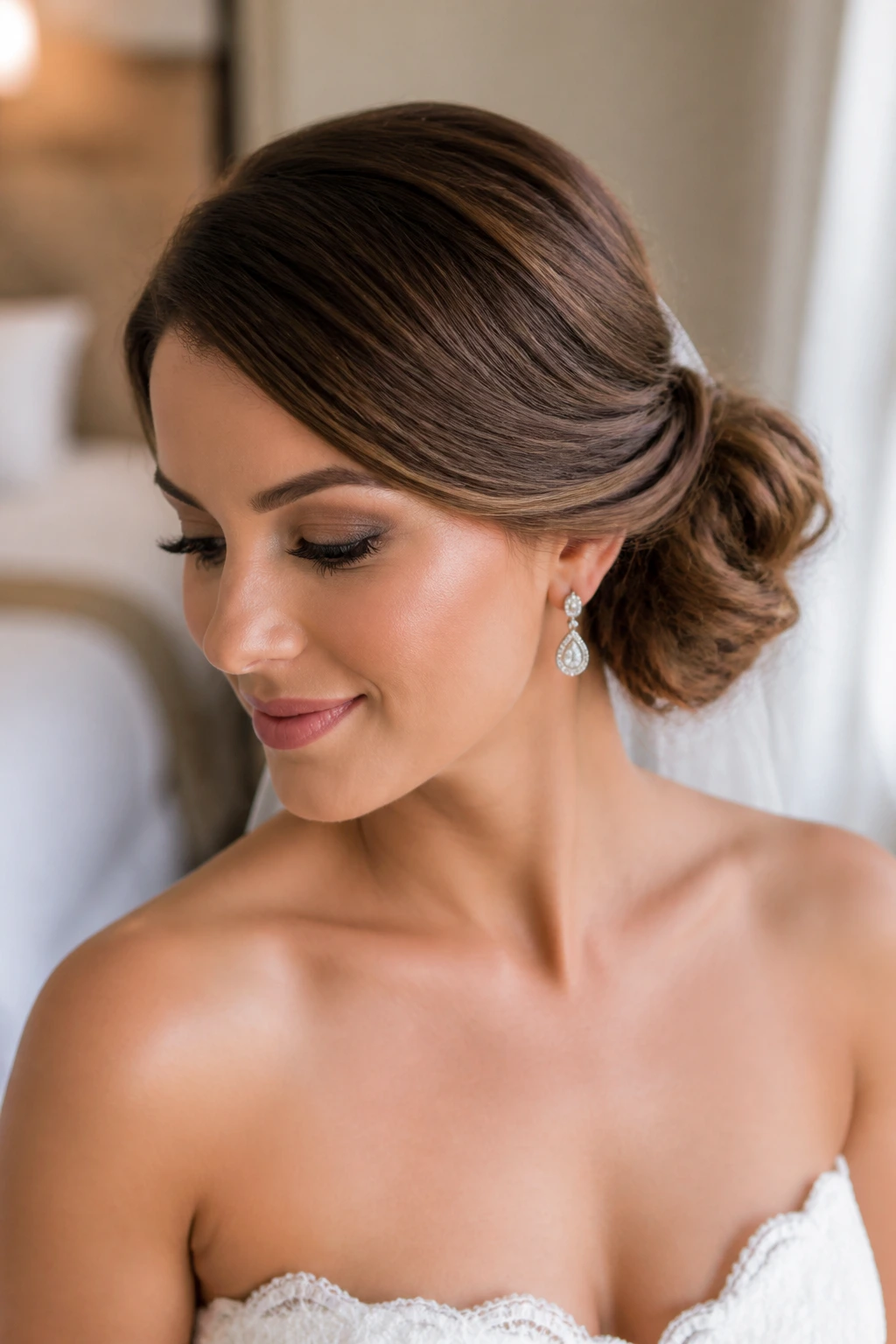
A side-swept bun shifts the weight just off-center, which makes the whole look feel a little less formal and a little more human. It’s still bridal. Just not stiff.
The placement matters. Too far to the side and the style starts to look accidental. Too centered and it loses the point. Keep it just off the nape or just behind one ear, then let one side have a cleaner curve than the other.
This bun is especially good when the dress has one shoulder, asymmetric draping, or a neckline that already leans to one side. It keeps the styling conversation going instead of flattening it.
7. Knot-and-Tuck Bun
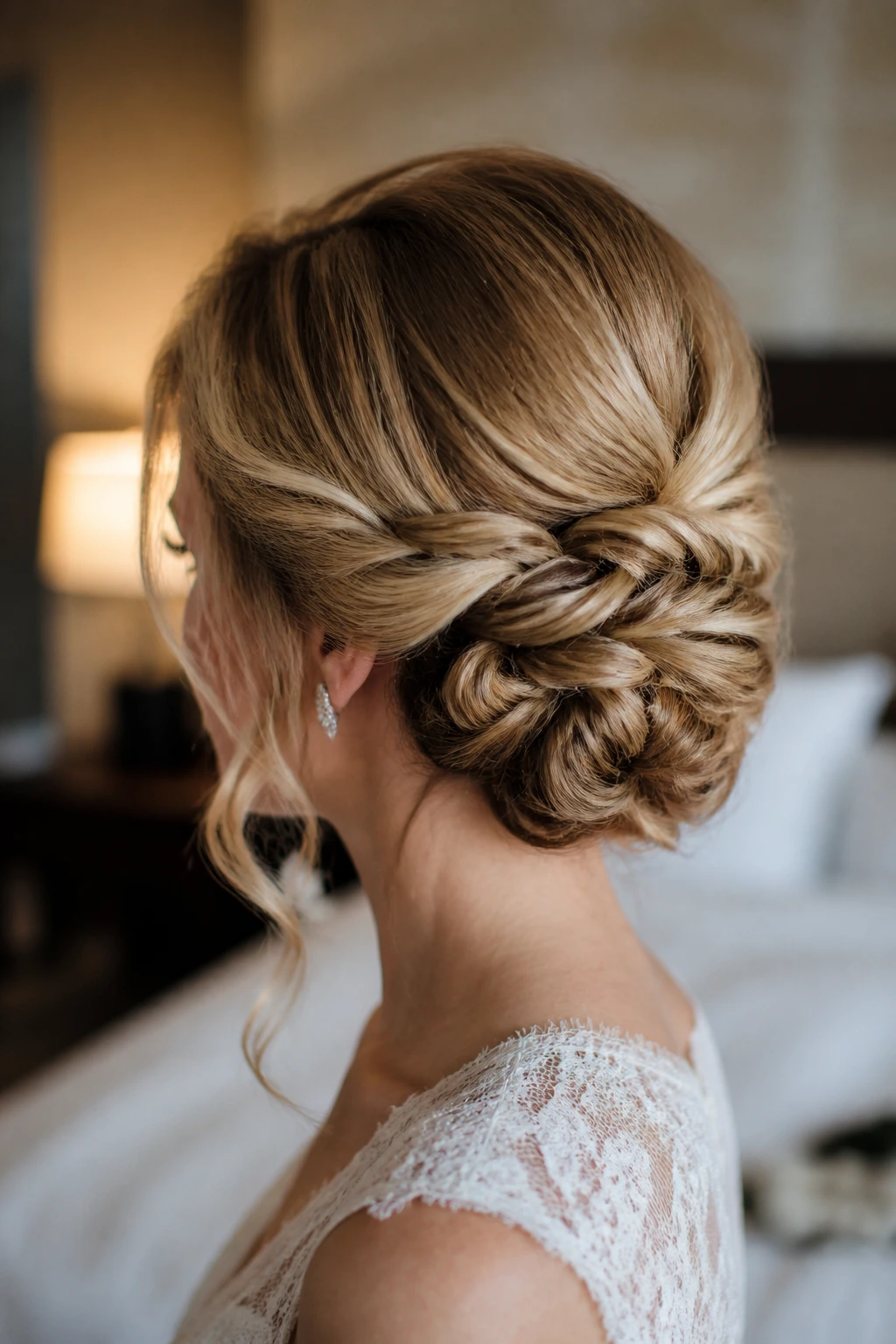
This is one of those styles that sounds simple and ends up looking richer than expected. Sections of hair are tied or looped into loose knots, then the remaining ends are tucked beneath them so the bun has little ridges and folds instead of a plain round mass.
It’s not the smoothest look in the room, and that’s the appeal. You get texture without the frizz that often comes with a truly undone bun. On thick hair, it can look almost woven. On fine hair, it needs a little padding underneath.
I like this one for brides who want something modern but not severe. It has shape. It also has a bit of personality.
8. Wrapped Donut Bun
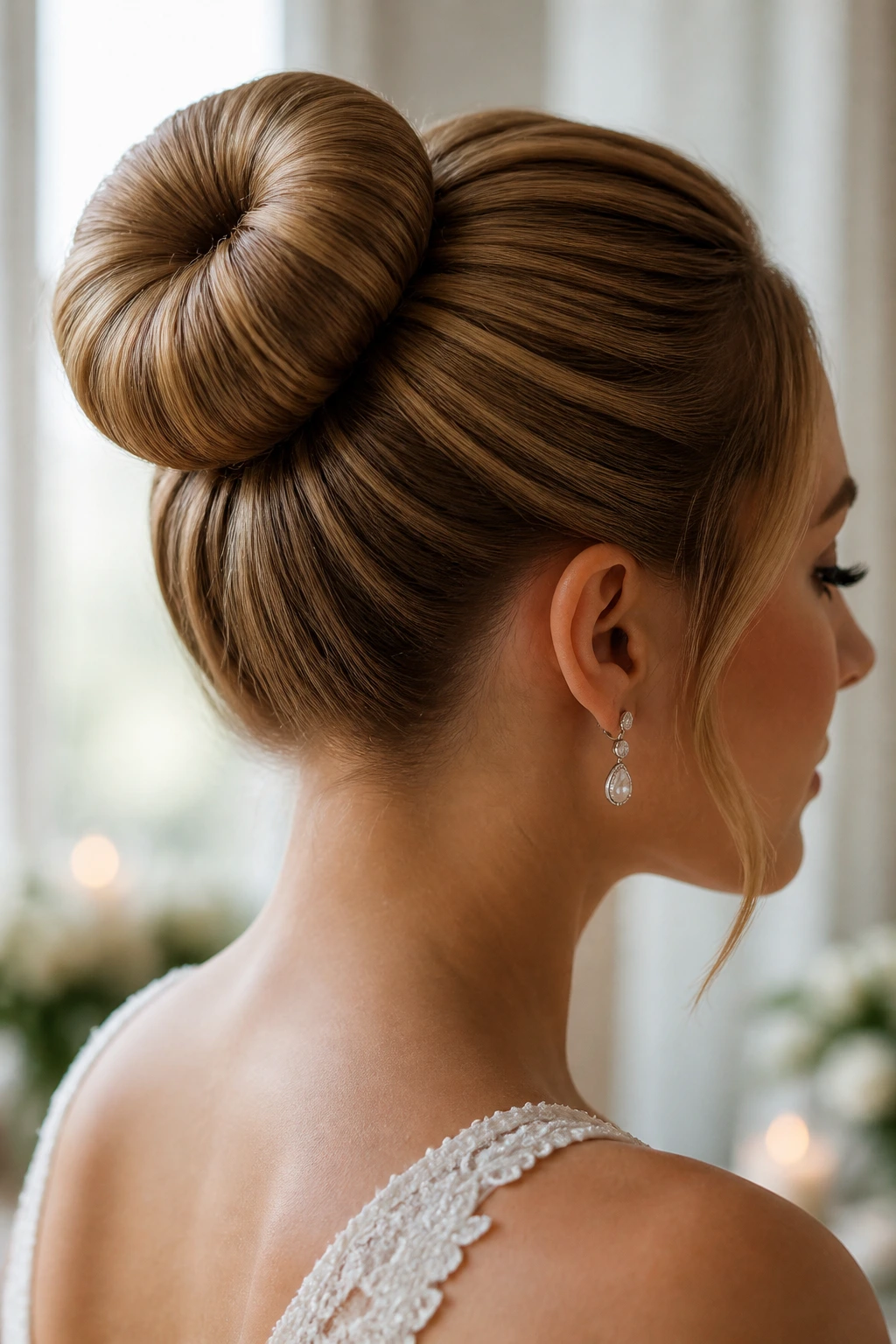
A wrapped donut bun is the polished, round, almost perfect circle of bridal buns. The hair is threaded over a bun form or padded base, then tucked neatly around it until the whole thing looks full and balanced from every angle.
It can read a little formal, which is exactly why it works for traditional ceremonies. With a cathedral veil or a classic dress, the symmetry feels right. With a very relaxed dress, it can feel too neat unless you loosen a few front pieces.
The biggest mistake here is using a donut that’s too big for the bride’s head. A bun that overshoots the proportions can dominate the whole silhouette.
9. High Polished Bun
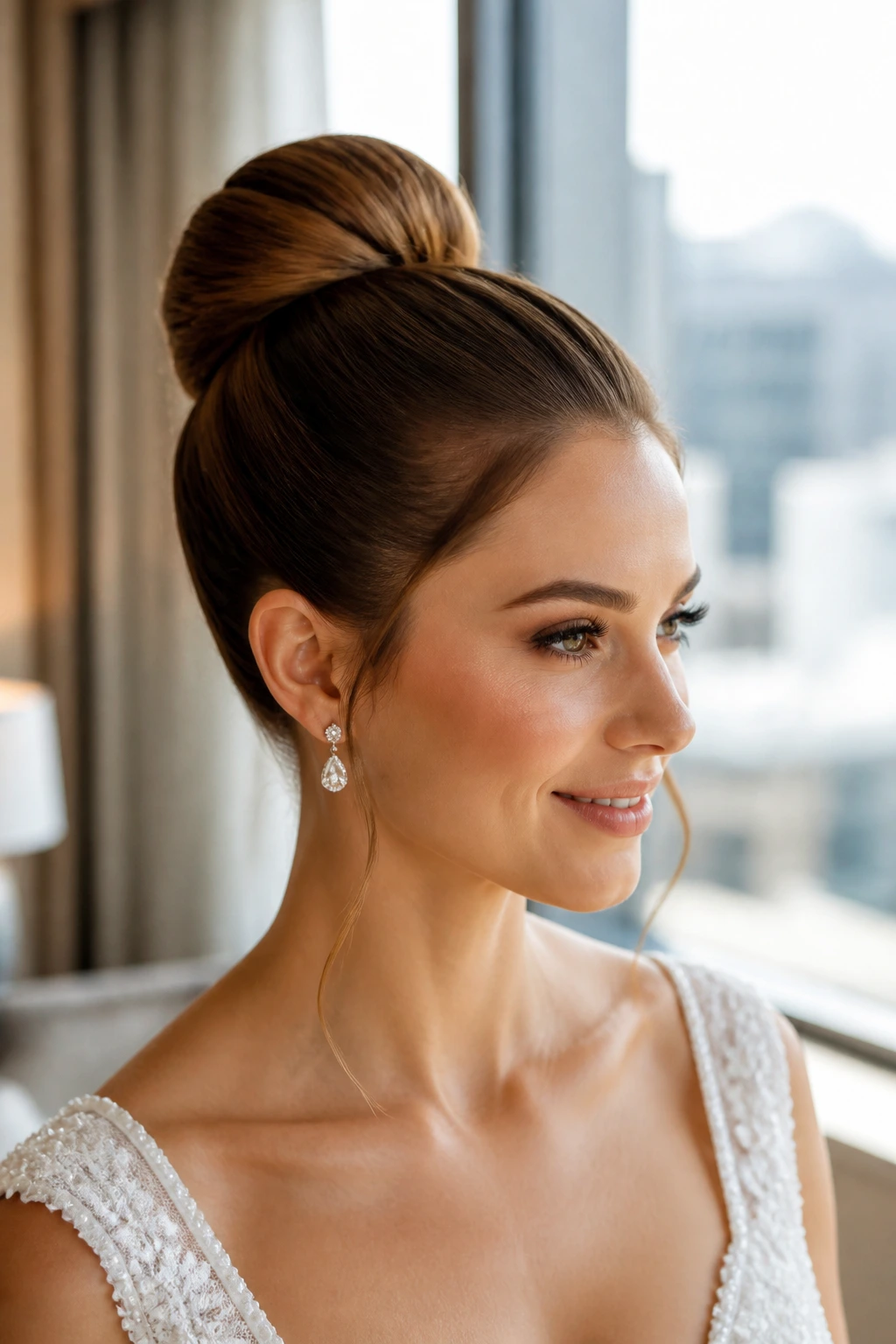
A high polished bun changes the energy instantly. It lifts the face, opens the shoulders, and gives the dress room to breathe at the neckline. Done well, it has a clean, lifted shape that makes the whole profile look longer.
This style loves strong cheekbones, bold earrings, and dresses that need vertical balance. It also gives a veil somewhere secure near the crown or upper back of the head, which helps if the veil is long and needs a solid anchor.
Keep the crown smooth but not pulled so tight that the hairline disappears. A tiny bit of softness at the temples makes the style look finished instead of severe.
10. Off-Center Chignon
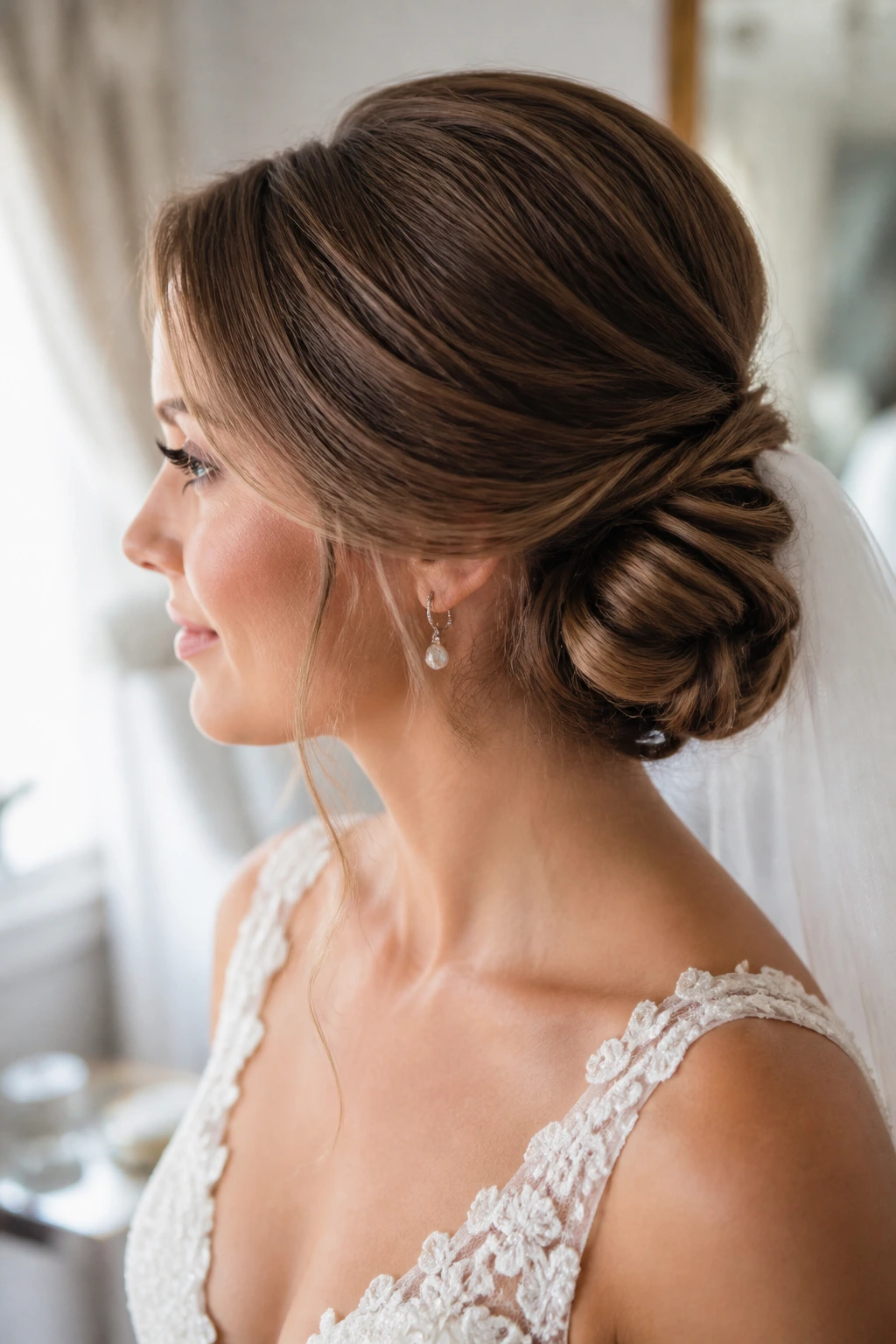
An off-center chignon is one of my favorite quiet choices. It still feels classic, but the placement keeps it from looking too formal. The bun sits slightly to one side, often low, with the folded shape visible from the profile.
It suits brides who want symmetry with a small twist. Not dramatic. Just enough to feel intentional. If the gown has a straight neckline or a column shape, the off-center placement keeps the look from feeling too rigid.
I’d pair this with simple earrings and a veil that doesn’t fight the bun. It’s the sort of style that looks better the closer you stand to it.
11. Curly Low Bun
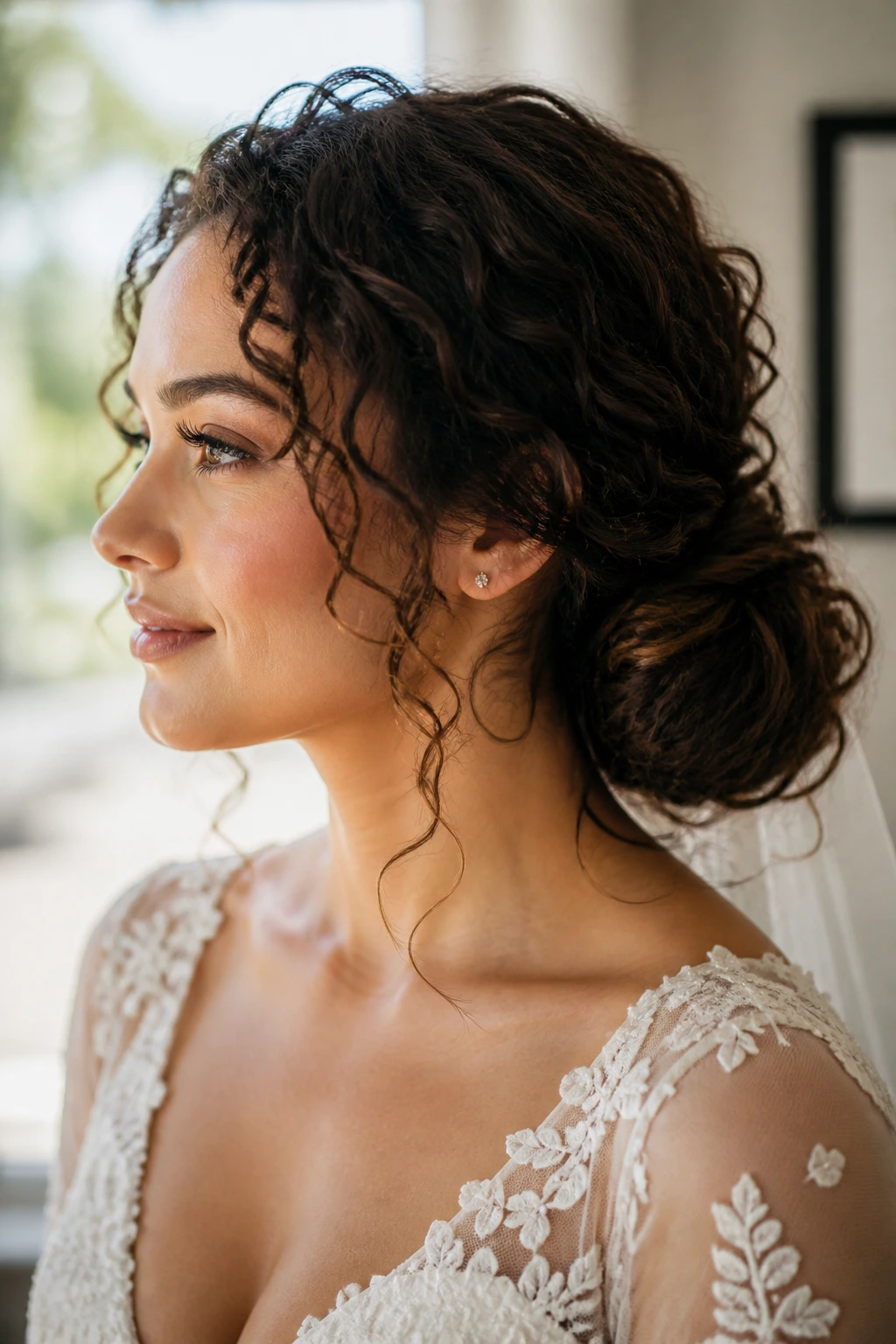
Curly hair in a low bun gives you built-in texture, and I’d never smooth that away completely. The shape can be soft and full, with curls pinned into the nape so the bun has body without looking puffy.
The key is controlling the edges, not erasing them. A light curl cream or flexible hold spray keeps the curls from frizzing out, but the bun still needs room to show its texture. Over-brushing curly hair before pinning is how you end up with a flat, fuzzy knot.
This style works especially well for brides who want movement at the bun without pieces hanging loose all over the place. It feels soft but grounded.
12. Voluminous Crown-Lift Bun
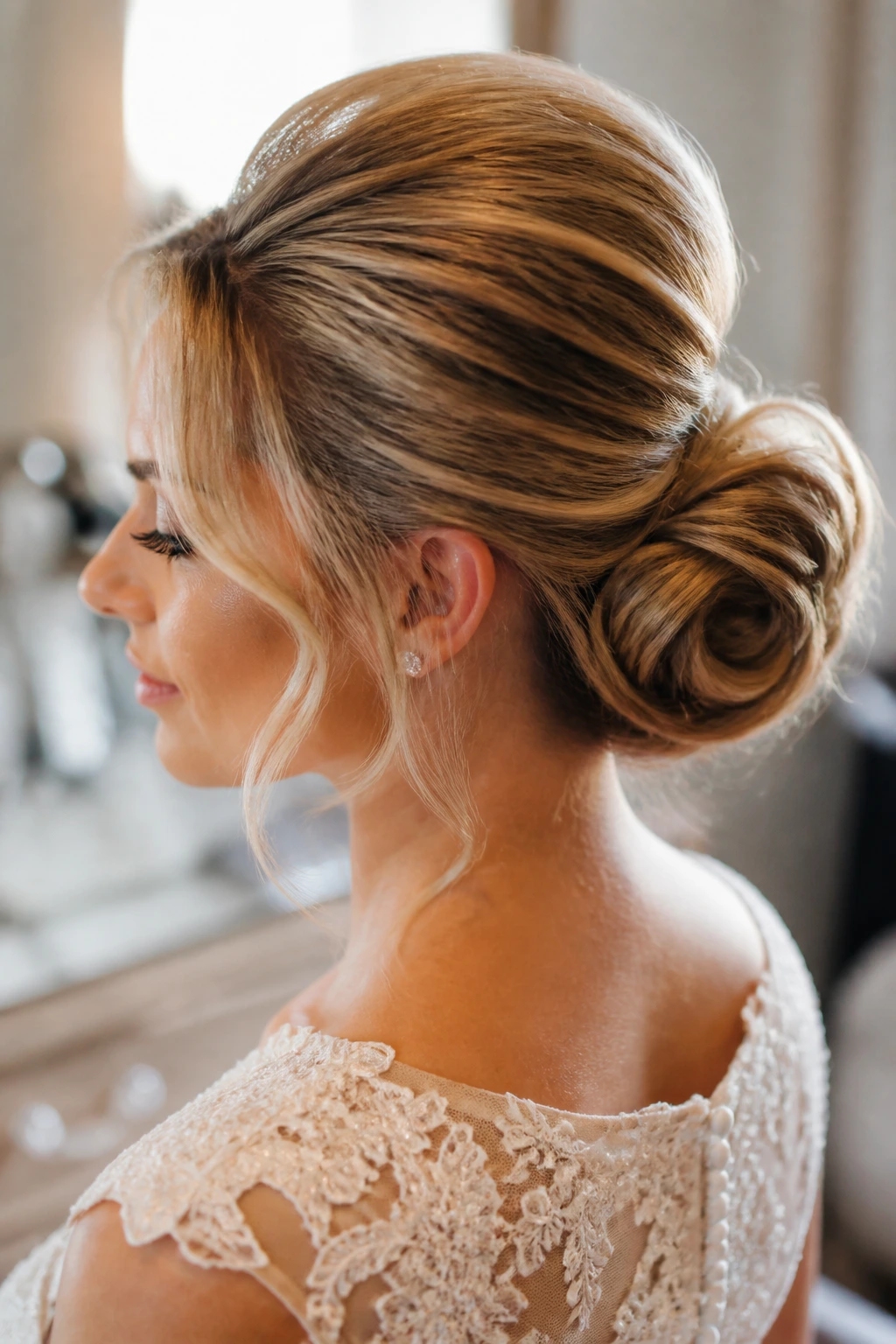
A little height at the crown changes everything. A crown-lift bun creates lift at the top of the head, then gathers the rest into a bun that sits low enough to stay bridal, not pageant-like.
The lift is the point. Use backcombing or a structured pad under the crown, then smooth the top layer over it so the shape looks intentional. If the top goes flat, the whole style loses its punch.
This is a smart choice for brides with rounder faces or fuller cheeks, because the added height stretches the outline in a clean way. It also looks good with dresses that need a bit of drama at the upper body.
13. Fishtail Wrapped Bun
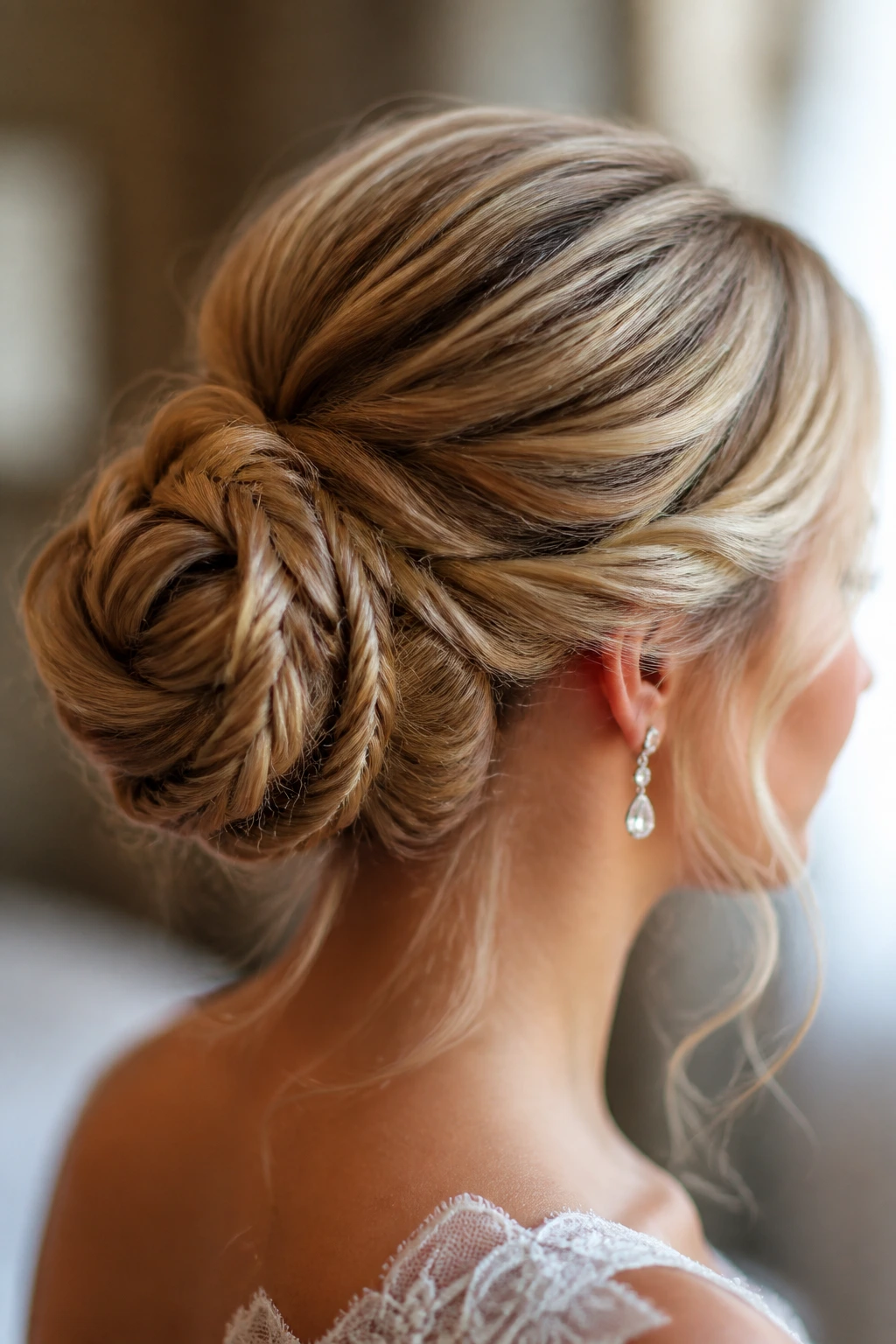
A fishtail wrapped bun adds tiny, detailed texture that you can actually see in photos. The fishtail braid can run around the bun base or feed into it, giving the style a woven look that feels more intricate than a basic wrap.
It’s especially good for brides who like detail up close. From across the room, it reads as elegant texture. Up close, people notice the braid pattern and how the bun is built around it.
This one takes a little more time. Worth it, though. Especially if the rest of the look is simple and the hair is doing some of the visual work.
14. Halo Braid Bun
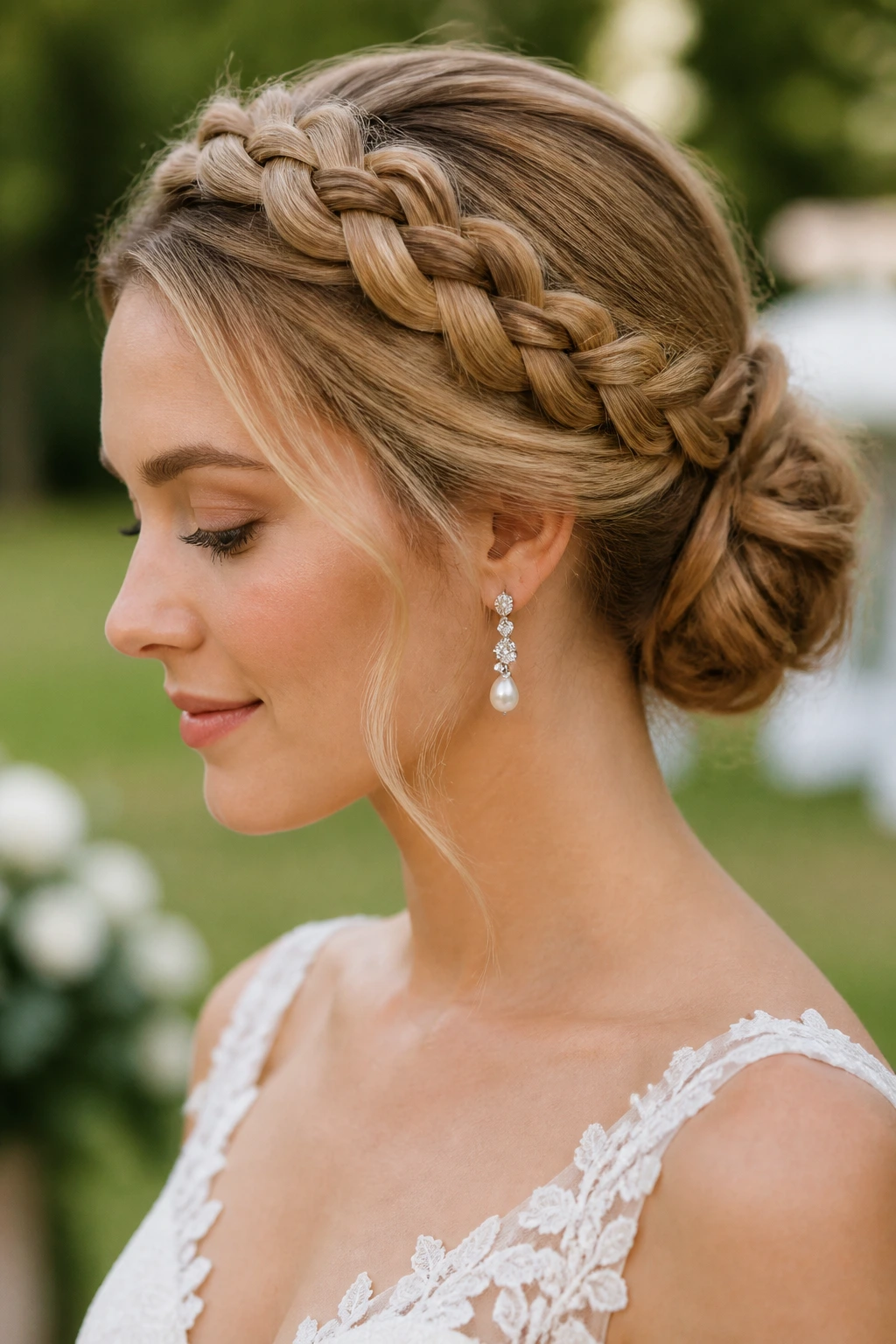
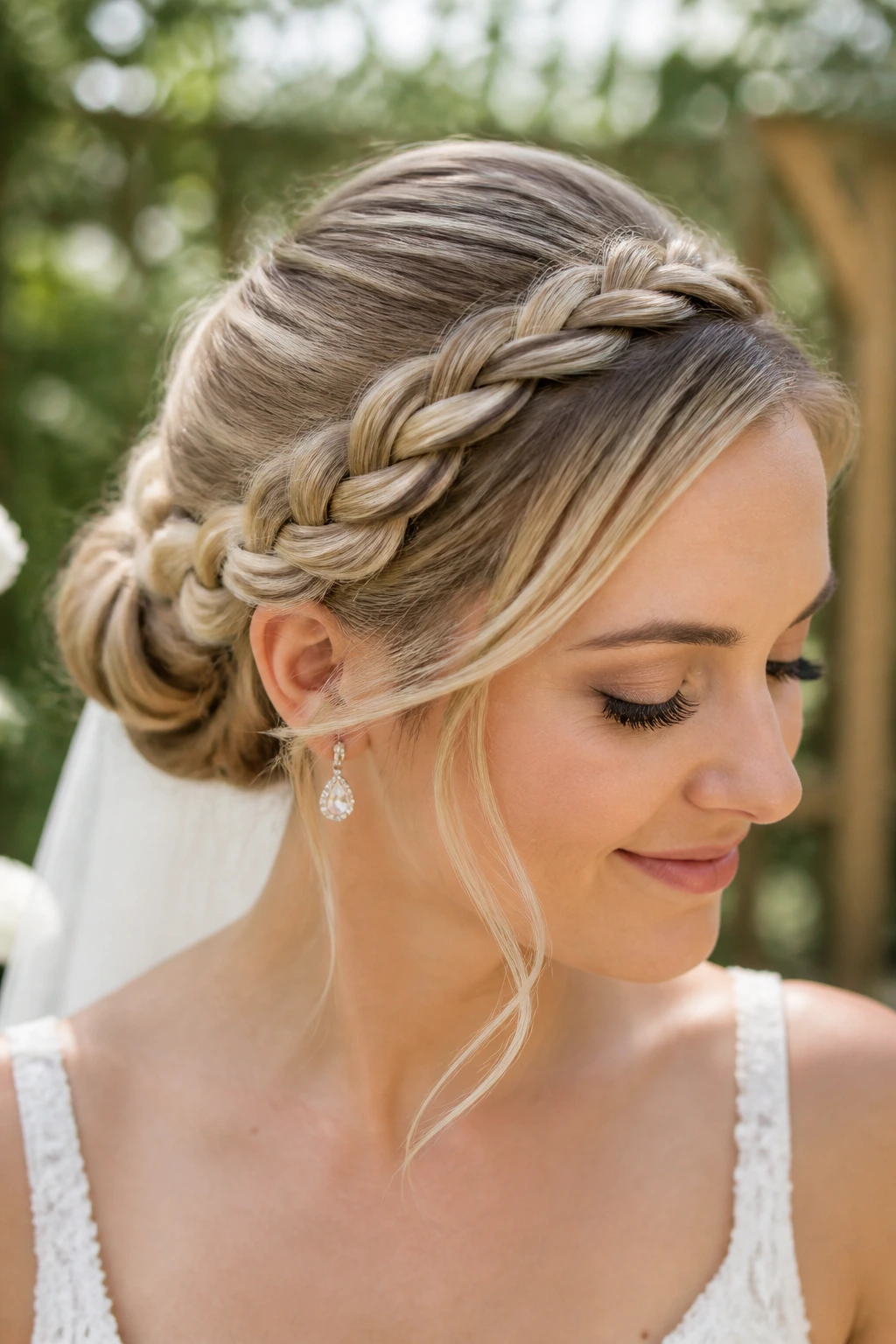
A halo braid bun combines two classic ideas: a braid circling the head and a bun tucked at the back or nape. The result feels balanced and secure, which makes it useful for long ceremonies and outdoor settings.
The halo keeps the front tidy. The bun keeps the back from getting too busy. I like this style when the bride wants hair off the face but still wants something with a little story to it.
It works best on medium to long hair, though extensions can help if the braid needs extra length to wrap cleanly. The whole shape should feel continuous, not chopped into separate pieces.
15. Pearl-Pinned Bun
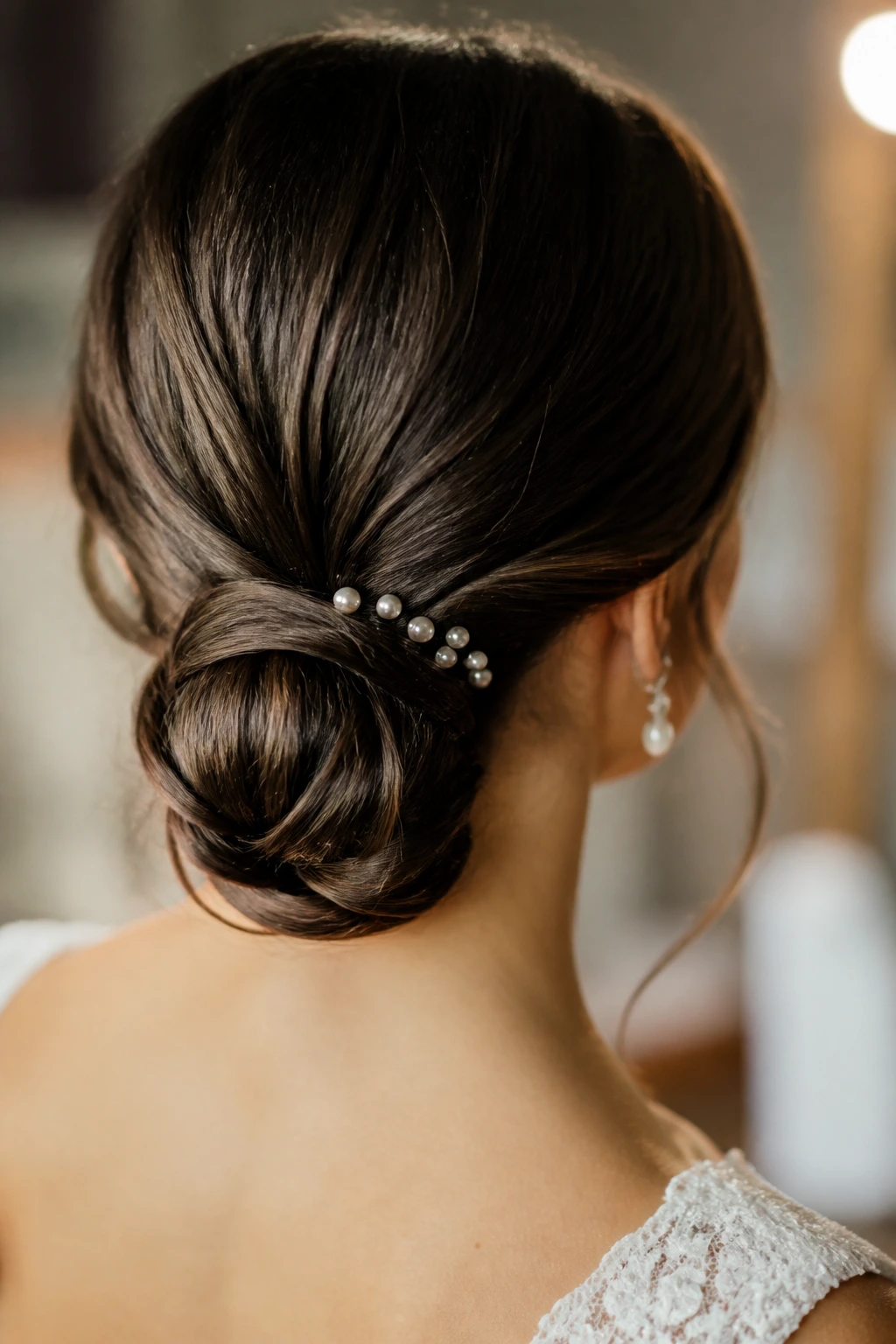
Pearls change a bun fast. Even a simple low bun starts to look more deliberate when a few small pearl pins are scattered through the seam or placed in a tight line near the base. I prefer small pearls over giant decorative pieces; the tiny ones look richer and don’t overwhelm the shape.
This bun works especially well with classic gowns, satin dresses, or anything with pearl buttons. There’s a nice echo there without matching too hard. Too many pearls, though, and the bun starts to feel themed.
Keep the bun itself clean and let the pins do the talking. That’s the smarter move.
16. Floral Nest Bun
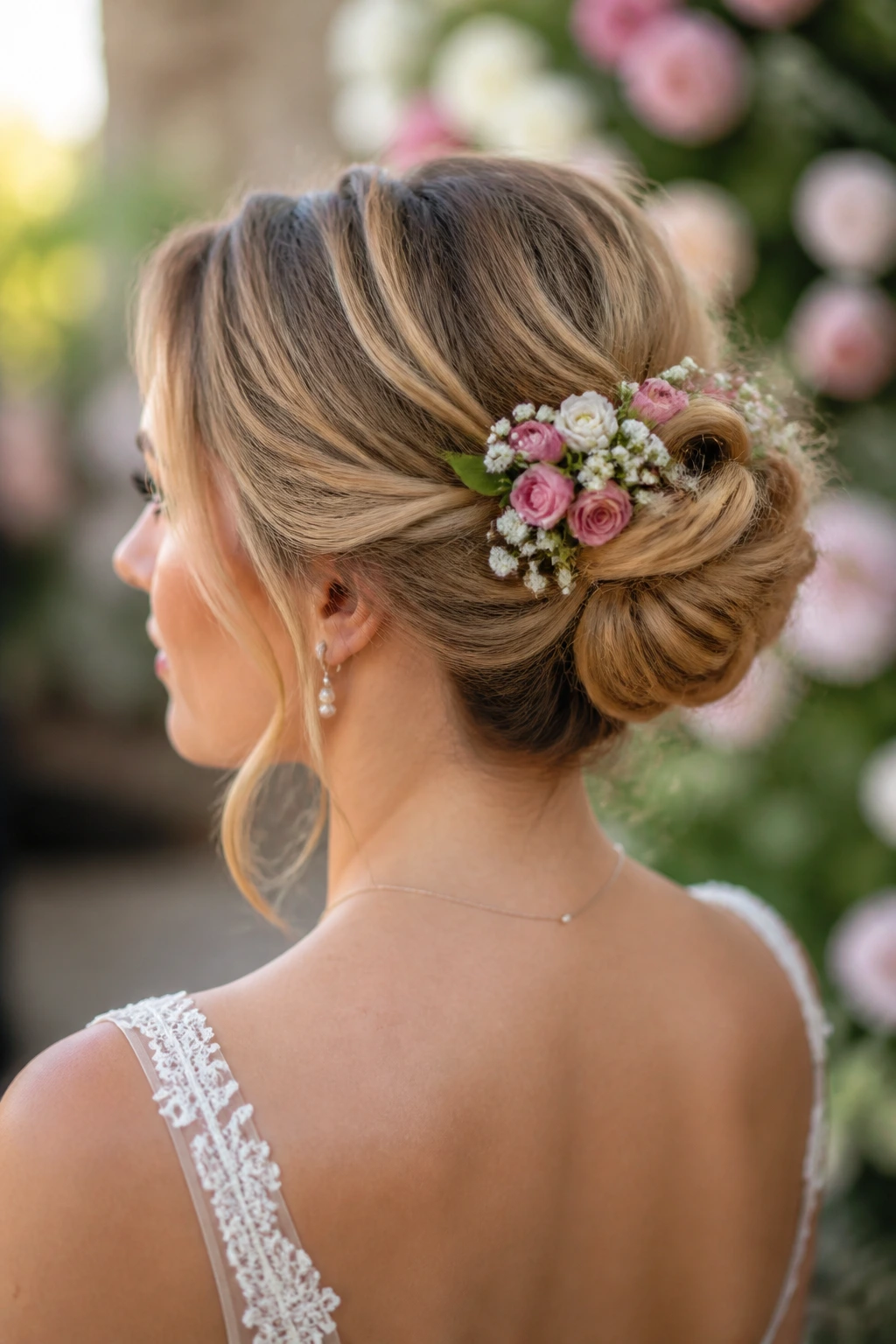
A floral nest bun is exactly what it sounds like: a bun built to hold fresh flowers, dried sprigs, or small floral clusters without collapsing under them. The bun usually has a slightly open center or a soft base where the flowers can tuck in and stay put.
This style is lovely for garden weddings and brides who want something a little less formal. The flowers should look placed, not thrown on. A few stems do more than a bouquet glued into the hair ever will.
Tiny blooms, baby’s breath, herbs, or one or two stronger flowers all work. I’d keep the rest of the bun fairly quiet so the floral detail stays readable.
17. Gibson Tuck Bun
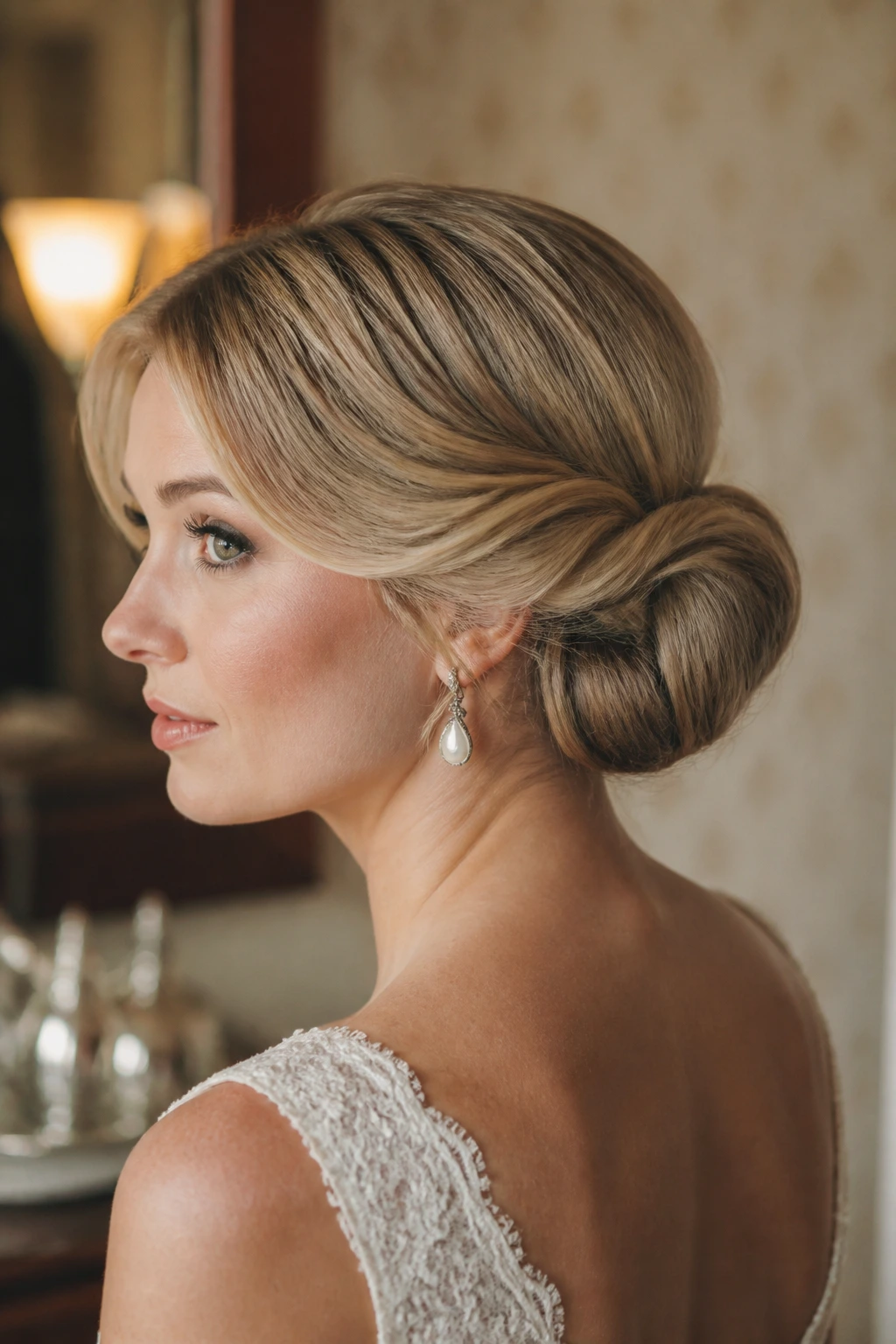
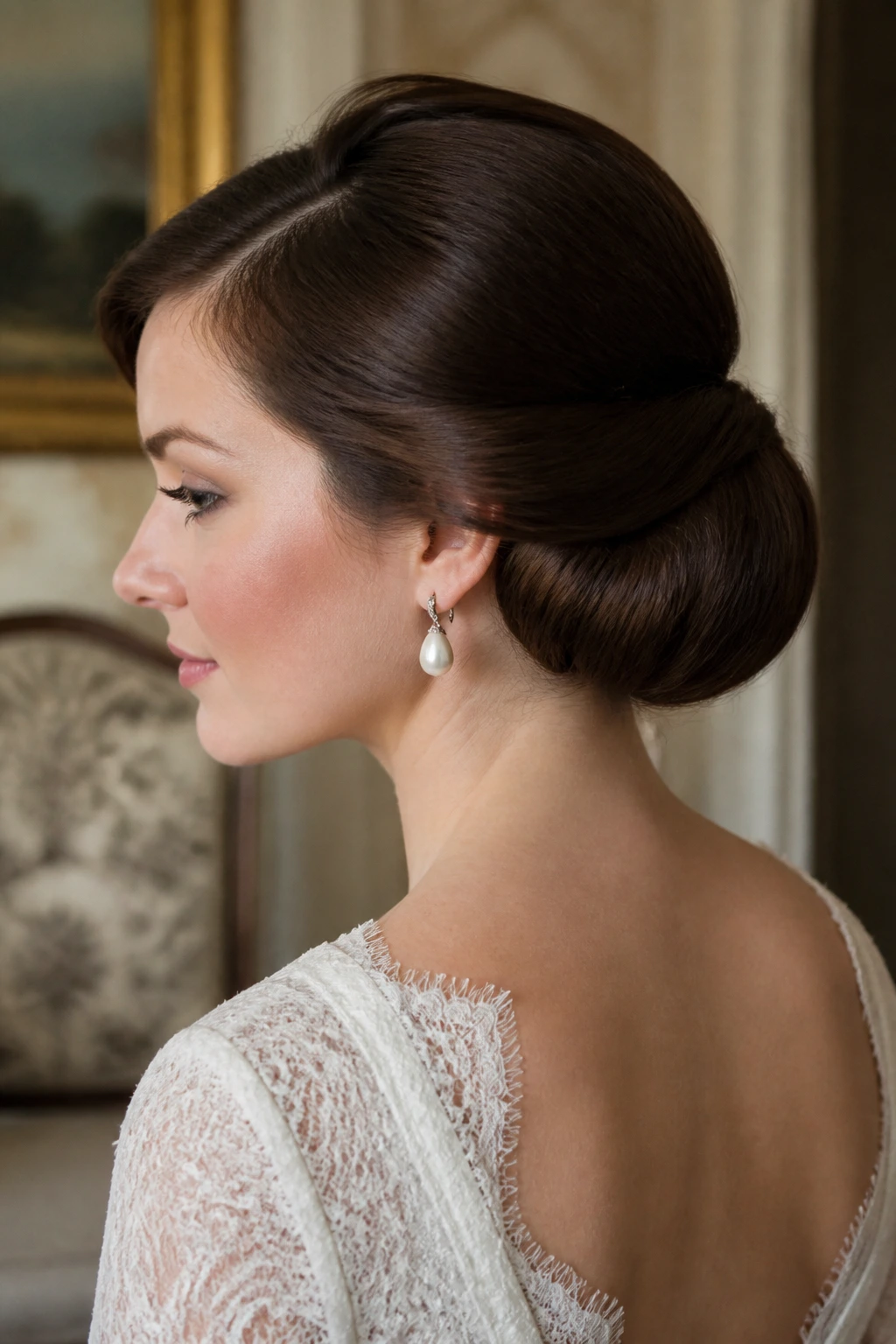
The Gibson tuck has a vintage backbone, which is why it still feels charming instead of costume-y. Hair is rolled or tucked under itself, usually low at the nape, creating a soft barrel shape that can be left smooth or loosened a little.
It suits dresses with lace, sleeves, or a classic waistline. There’s something about the shape that works with old-fashioned fabric details better than a sharp, modern bun does. If the gown already has a strong modern silhouette, you may want a sleeker version instead.
A side part works beautifully here. So does a comb tucked into one side if the bride wants a small amount of shine.
18. Rolled French Bun
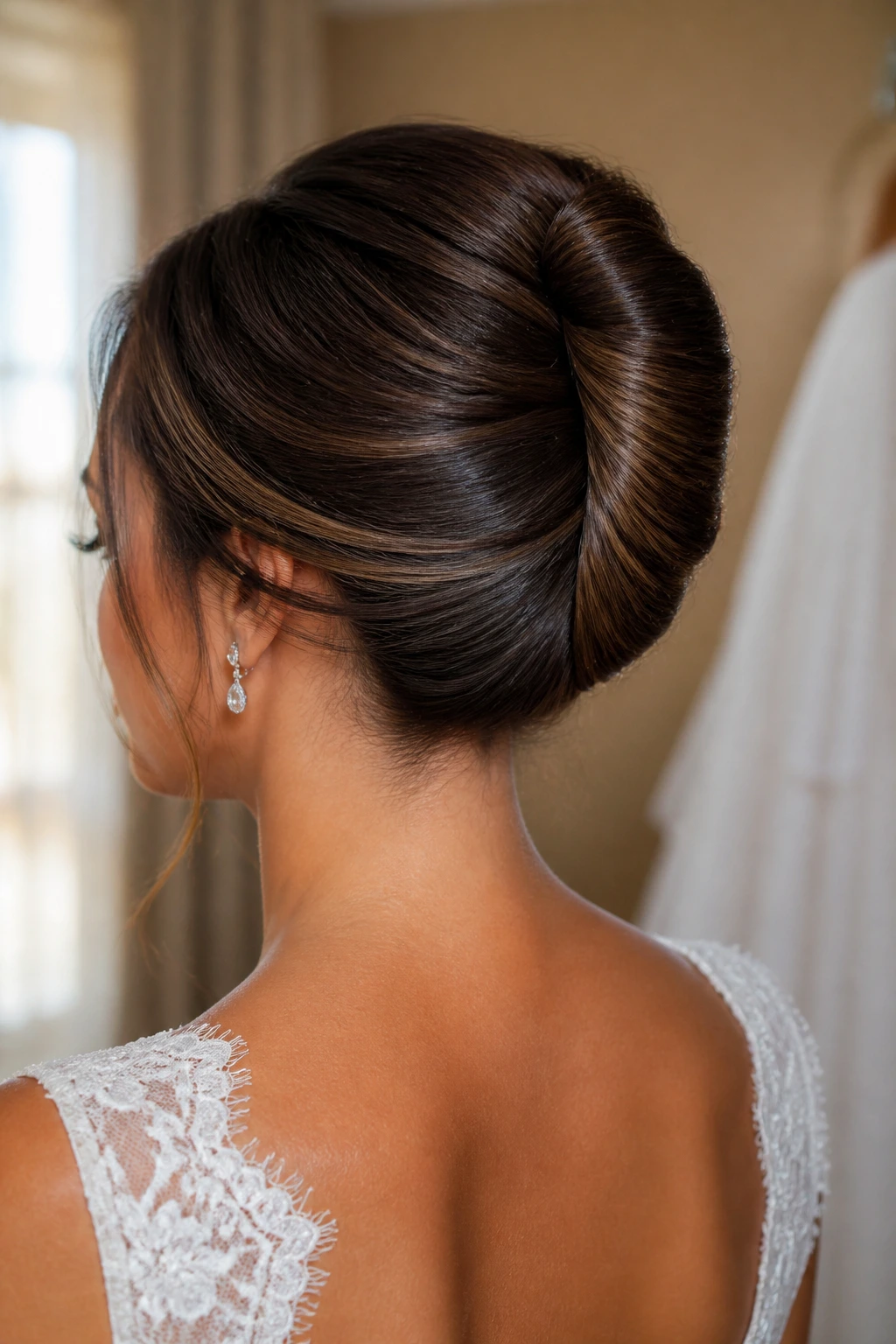
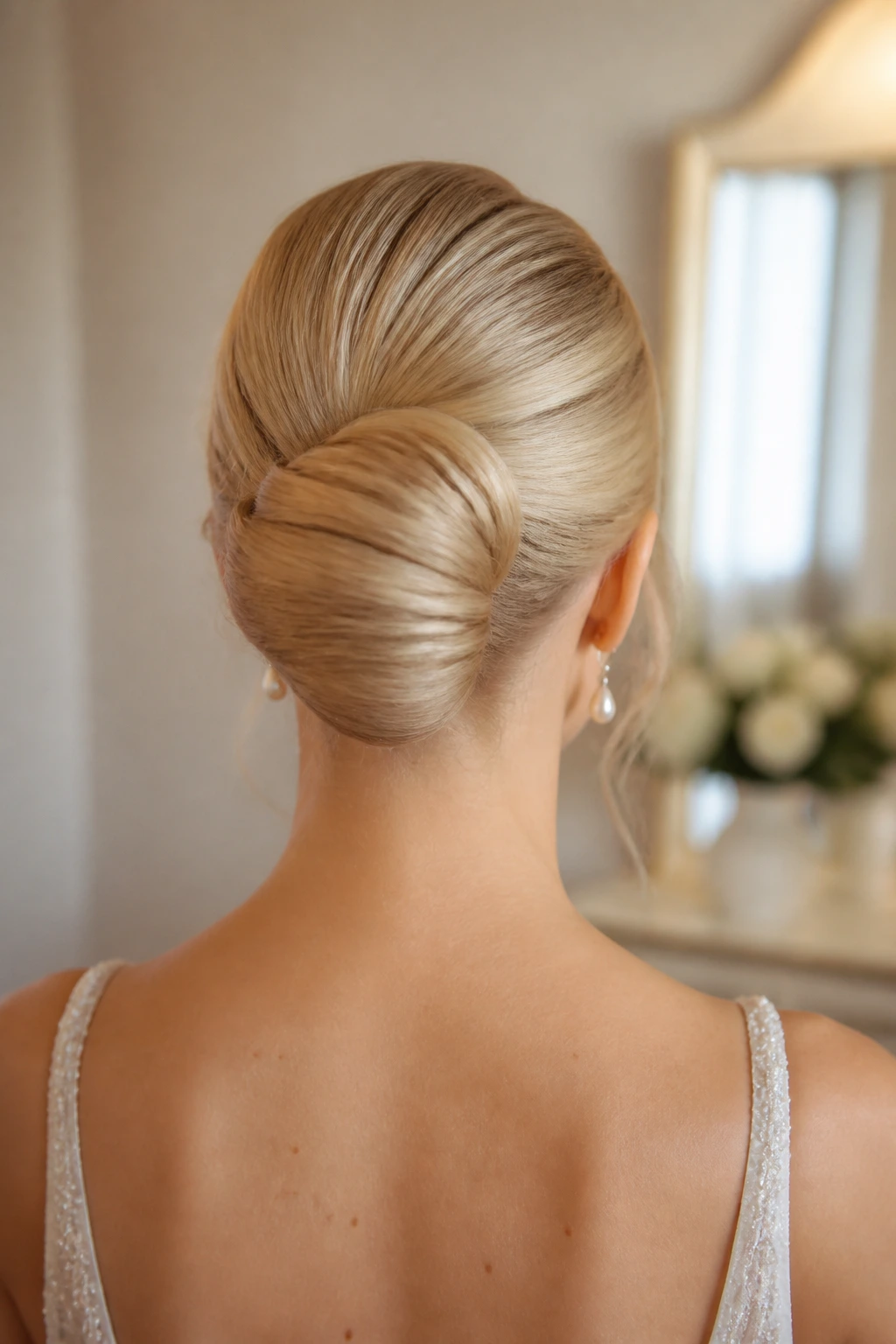
A rolled French bun is the elegant, vertical version that lives at the back of the head like a shell turned on its side. It’s tighter and more tailored than a loose chignon, with hair rolled inward and pinned along the seam.
This is one of the best choices for a minimalist bride who still wants structure. It loves clean necklines, high-quality fabric, and earrings that do not need much competition.
The important thing is the roll itself. If it’s too soft, the bun collapses into a lump. If it’s too hard, it can look severe. There’s a narrow middle ground, and it’s worth getting right.
19. Deconstructed Chignon
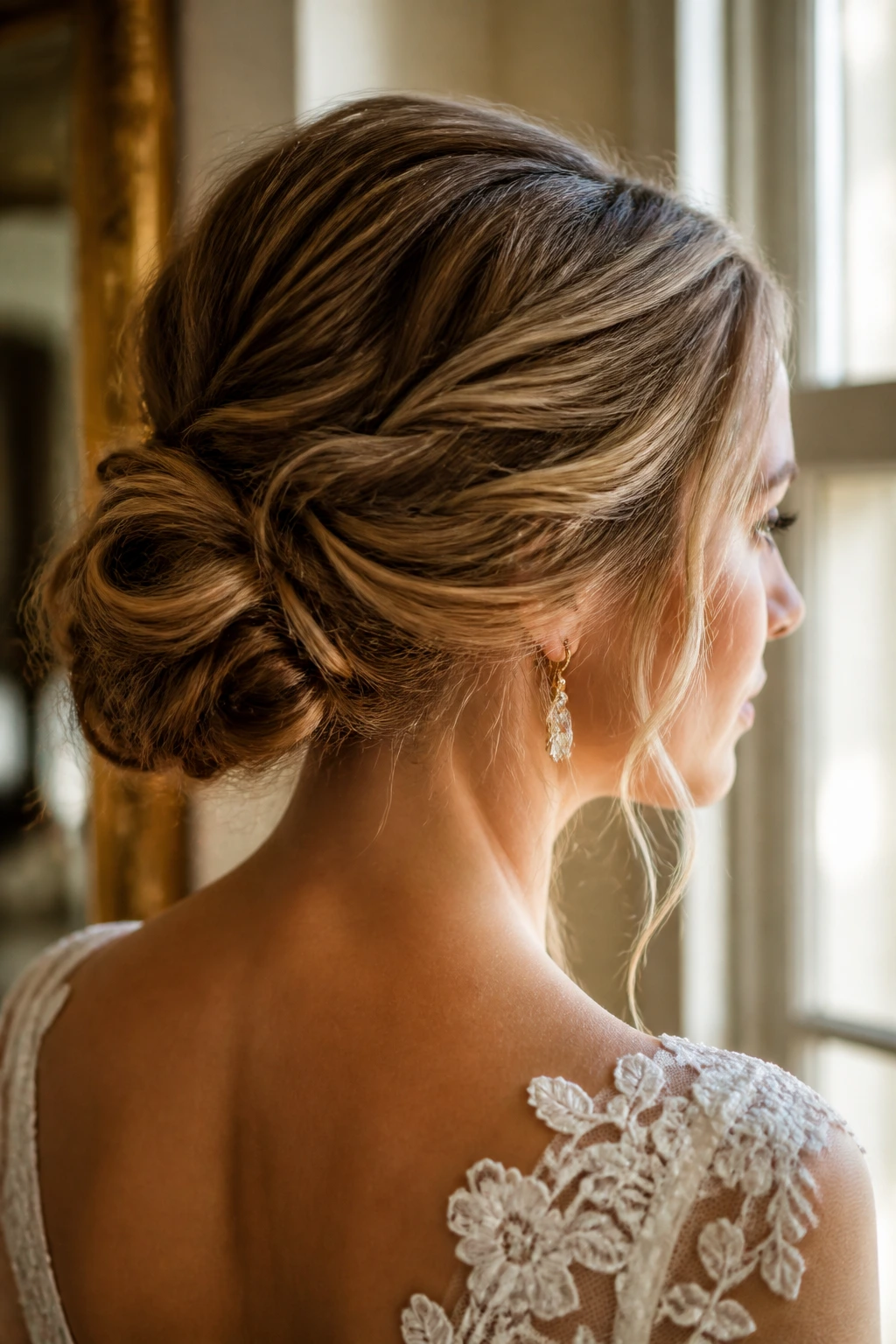
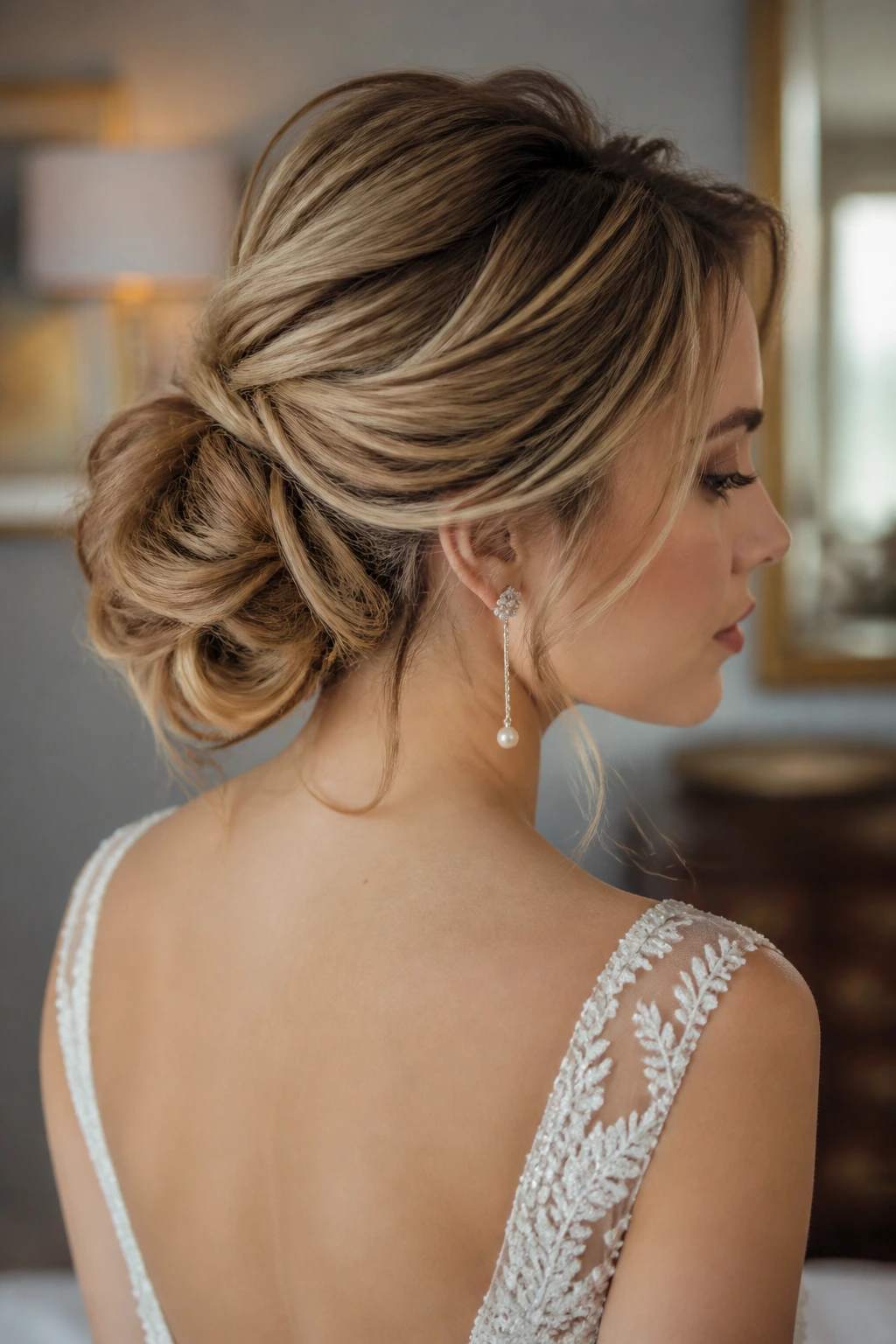
A deconstructed chignon keeps the classic shape but loosens the rules a bit. The bun is still low and tucked, but the surface has irregular folds, a few directional pieces, and a more relaxed profile.
I like this style for brides who want elegance without looking overdone. It’s less stiff than a polished chignon and less casual than a messy bun. That middle lane is harder to hit than people think.
It works especially well when the makeup is strong or the dress has rich fabric. You need one part of the look to breathe. This bun does that job.
20. Double-Twist Bun
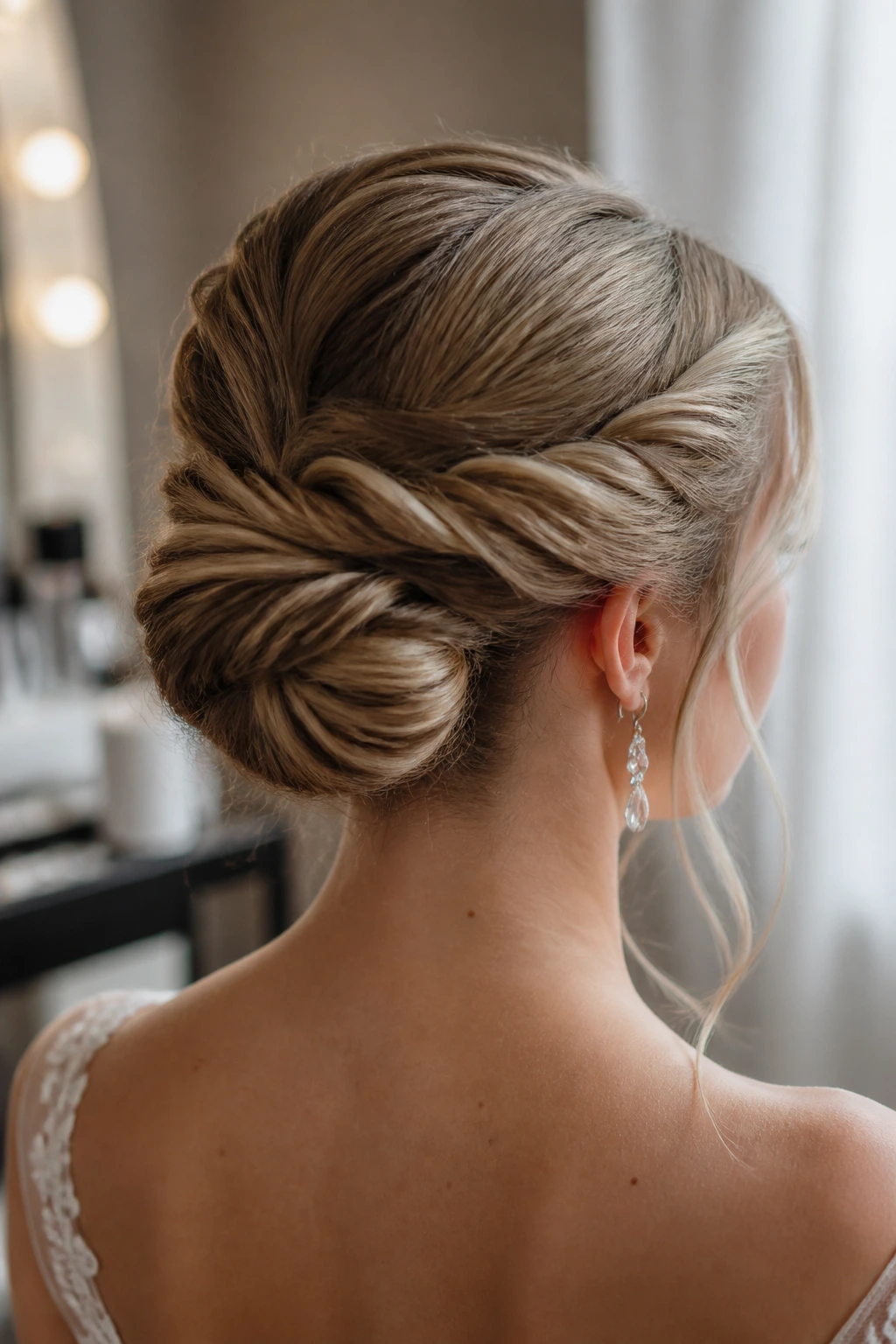
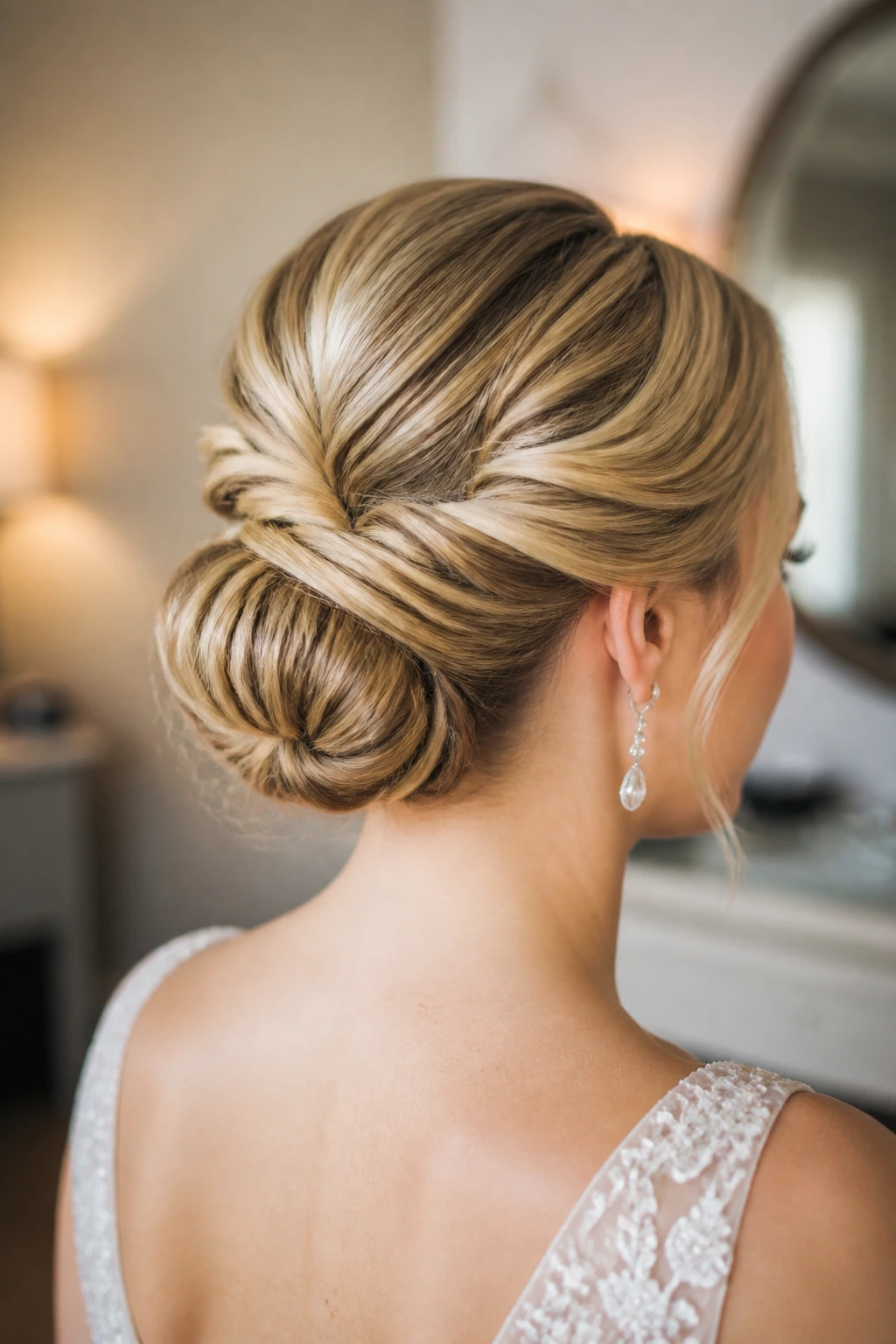
Two twisted sections meeting in the back create a bun with more movement than a single coil. The twists can be balanced symmetrically or offset slightly, and the ends tuck into the center to form a compact, lifted shape.
This style is useful when hair needs shape but not too much height. It also lets highlights and lowlights show through in a way a flat bun won’t. You see the movement in the twists.
It’s a good fit for brides who like texture but don’t want braids. Clean, but not plain. That’s the sweet spot.
21. Infinity Knot Bun
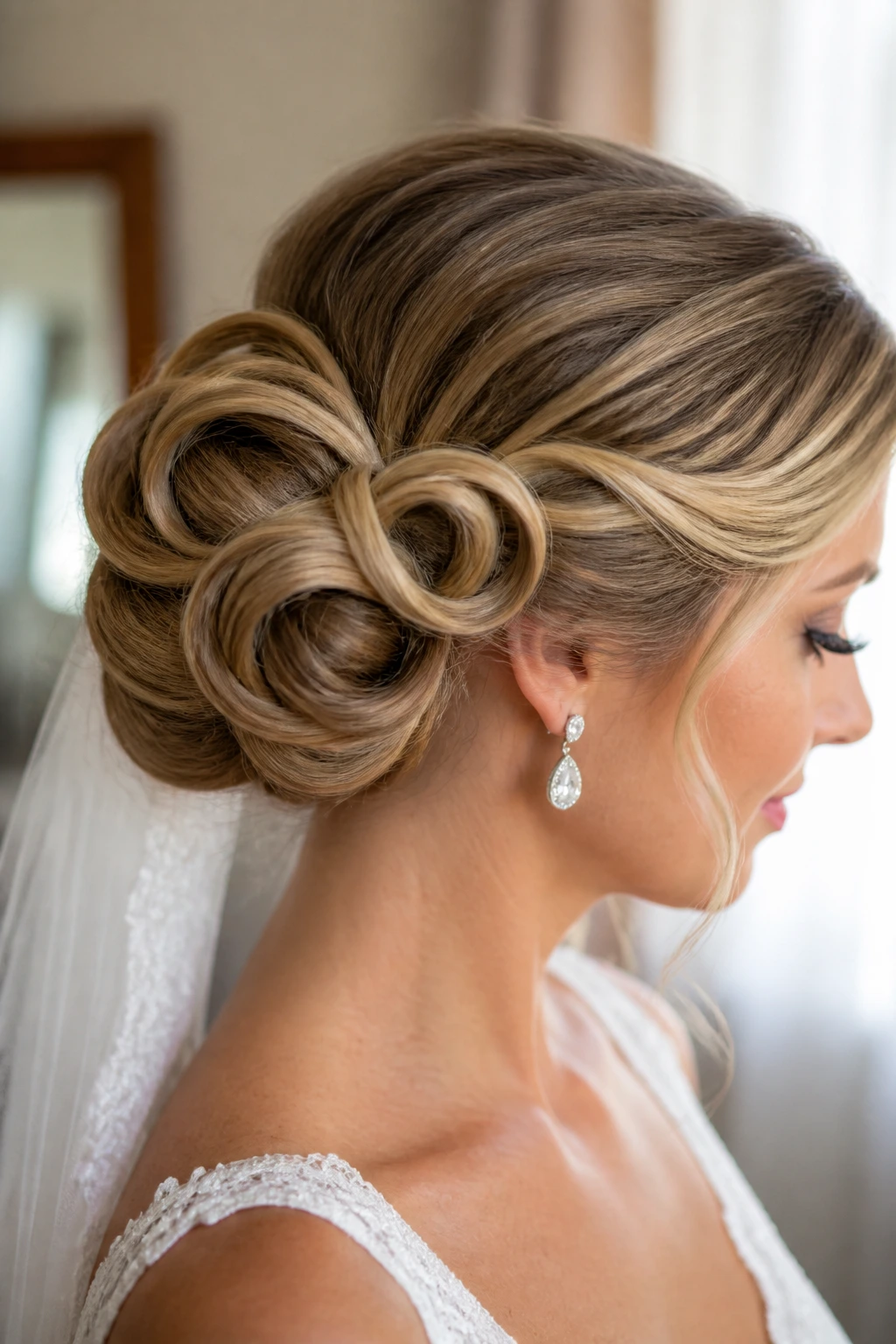
The infinity knot bun has that interlocked, looping feel that looks more complicated than it really is. Strands are crossed over each other to build a bun that has an elegant, woven center and a slight sculptural bend.
I’d call this one refined with a little attitude. It’s one of those bridal buns that photographs well from the side because the loops catch the eye. It also keeps the style from looking too round or too flat.
Pair it with a dress that has clean lines or subtle structure. It already brings enough detail.
22. Braided Crown Bun
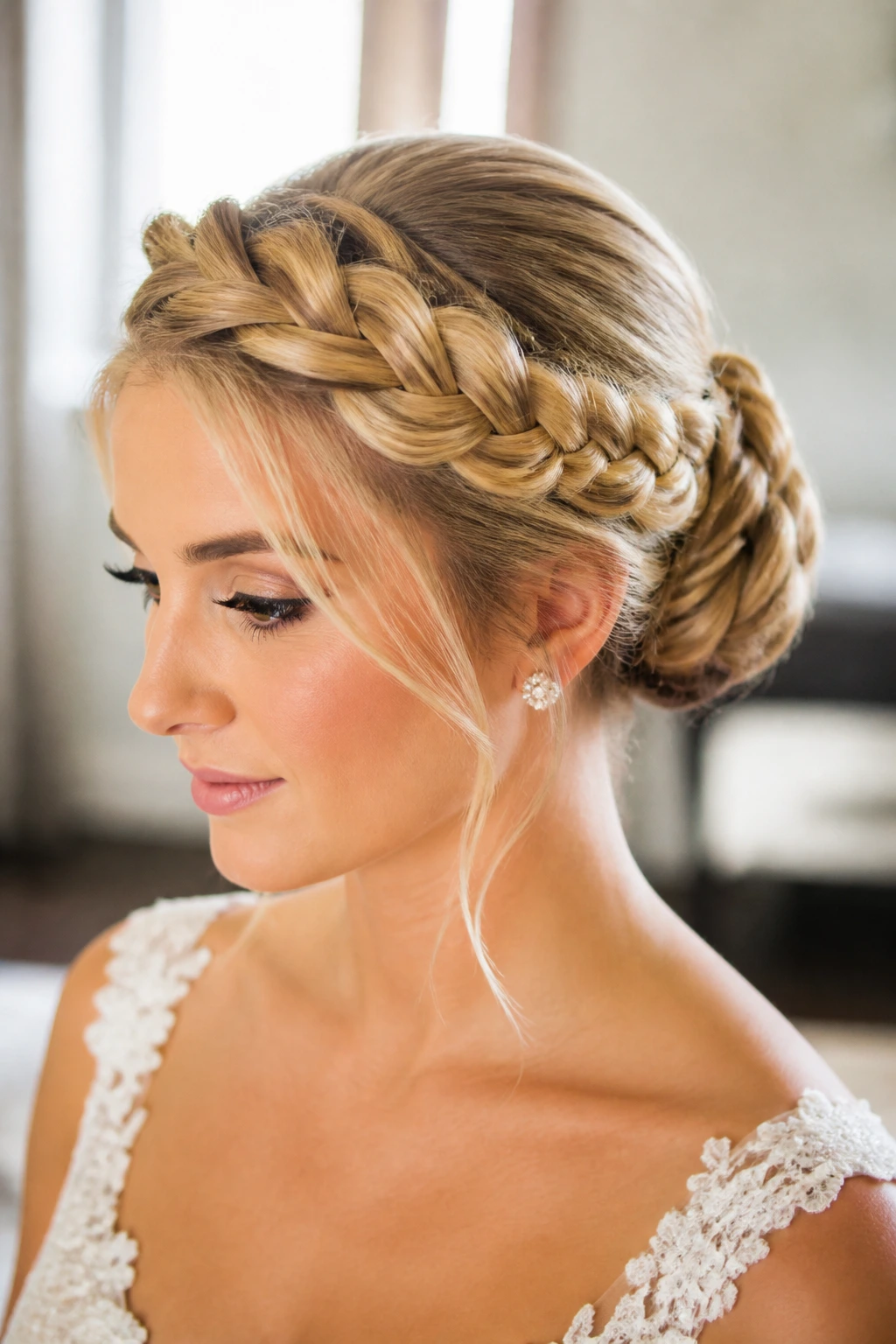
A braided crown bun frames the head first, then collects the remaining hair into a bun at the back or nape. It feels romantic in a way that never gets too sugary, which I appreciate.
The braid gives the top of the head shape, so the bun does not have to do all the work alone. That helps on brides with fine hair or hair that tends to slip flat after an hour. The crown section also stays visible in photos, which is a nice bonus.
This style sits nicely under many veil placements, especially if the comb is set just behind the braid line instead of buried in the bun.
23. Asymmetrical Side Knot Bun
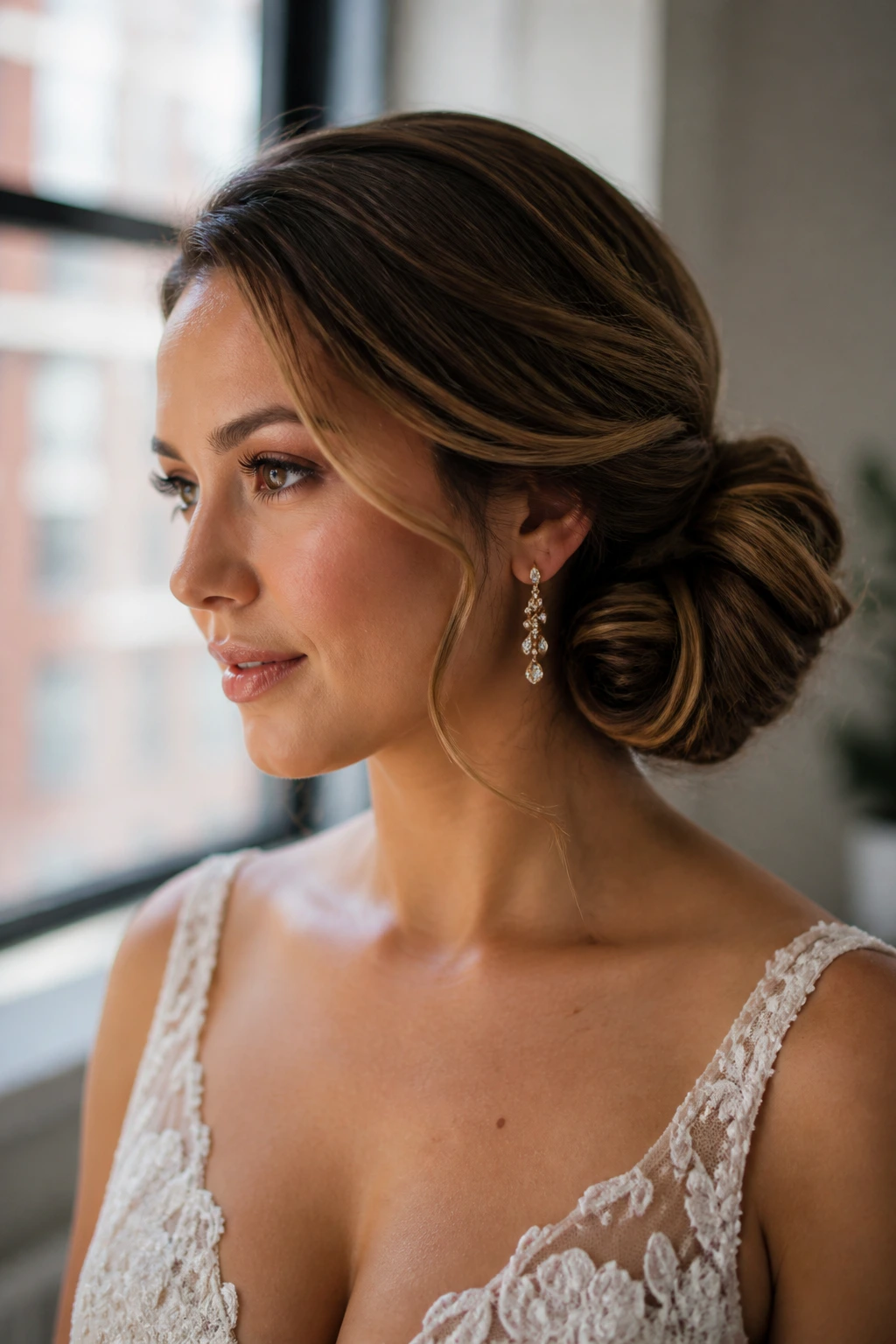
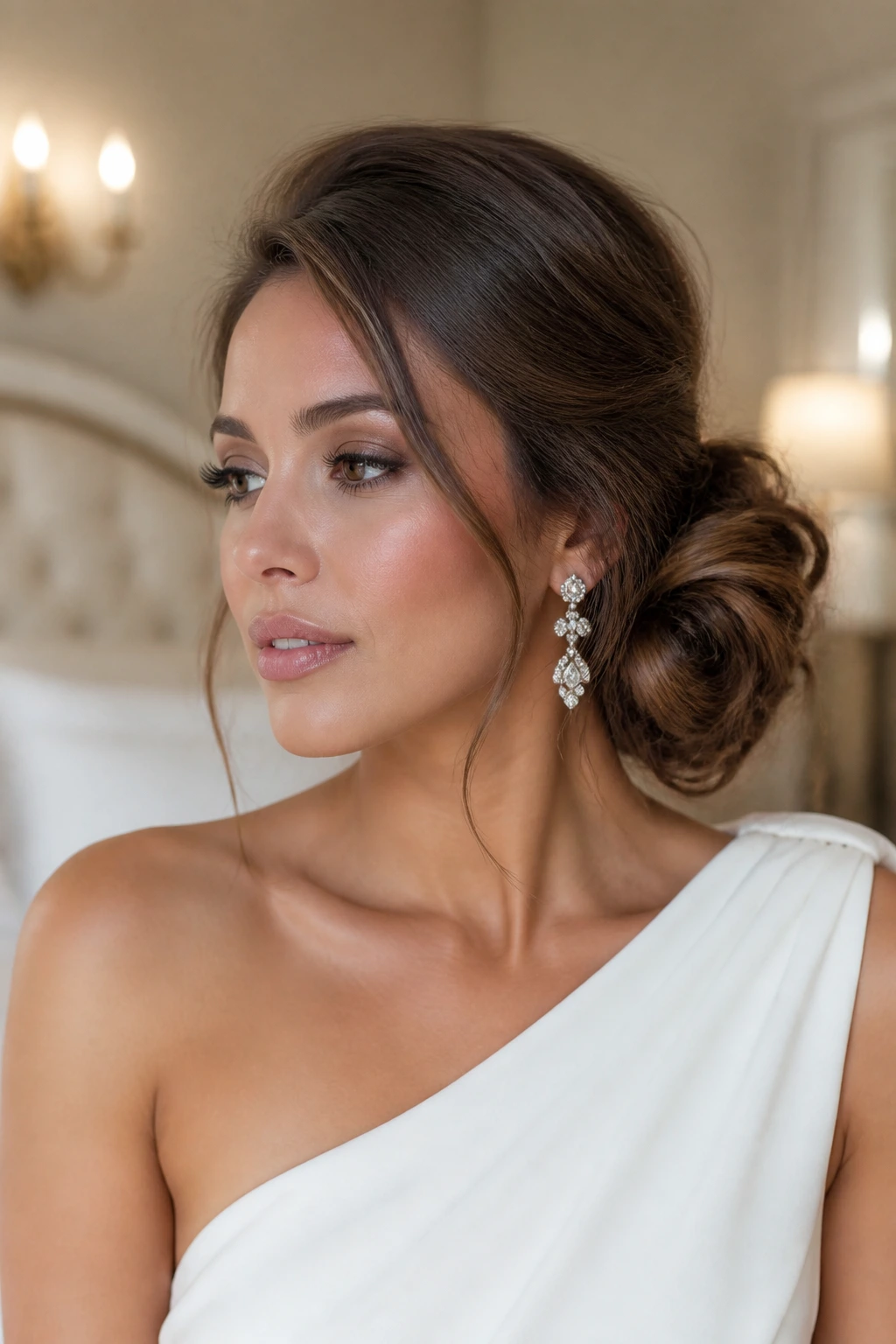
An asymmetrical side knot bun leans into uneven placement on purpose. One side of the bun has more volume or more texture, while the other side is sleeker. It sounds simple. It usually takes a careful hand to make it look intentional rather than lopsided.
The advantage is personality. This bun is not shy, and it works especially well with one-shoulder gowns, deep side parts, or earrings that need a little stage.
I’d keep the rest of the styling controlled. If the dress, jewelry, and makeup are all loud, the asymmetry can tip into chaos fast. One statement is enough.
24. Bubble-Pinned Bun
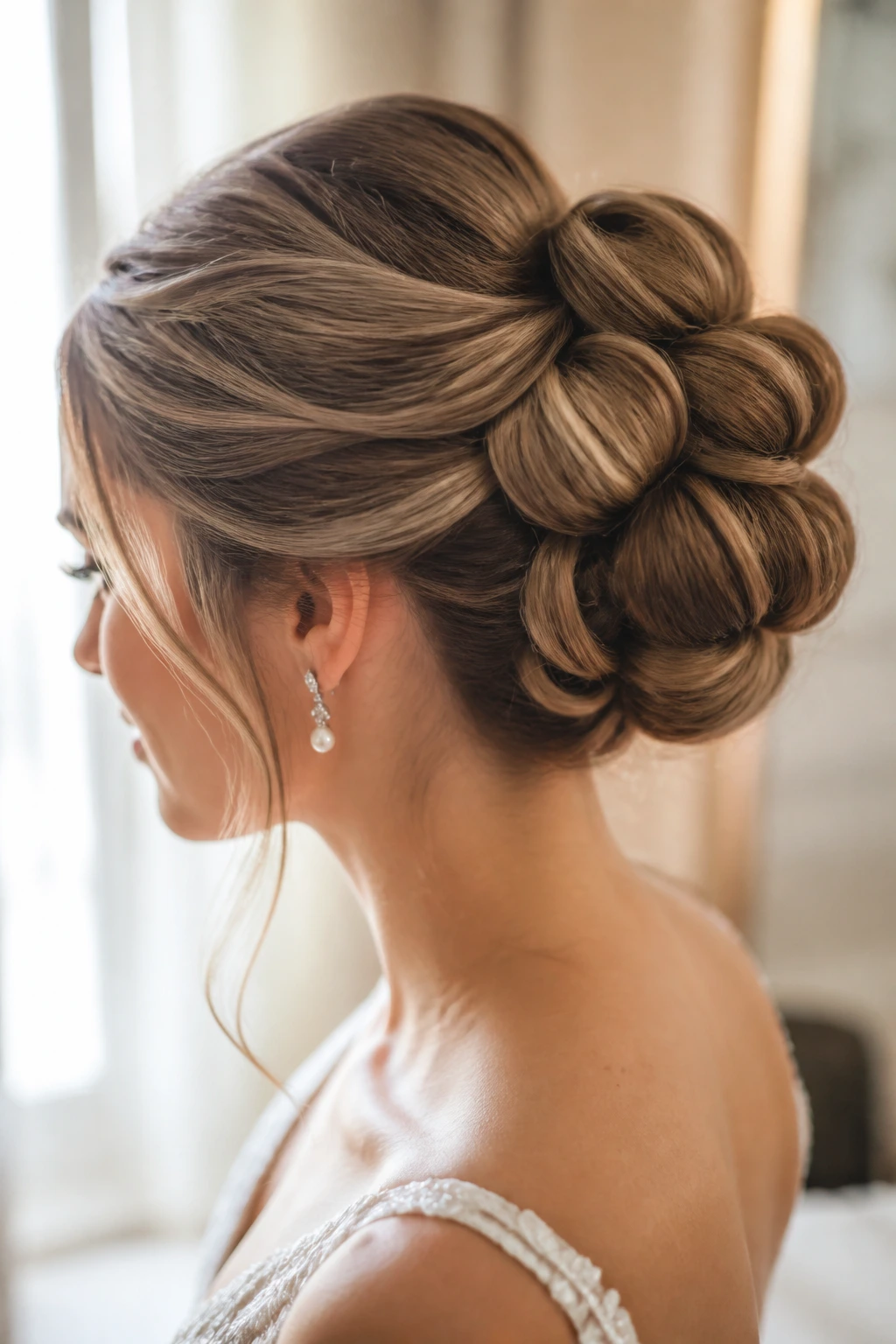
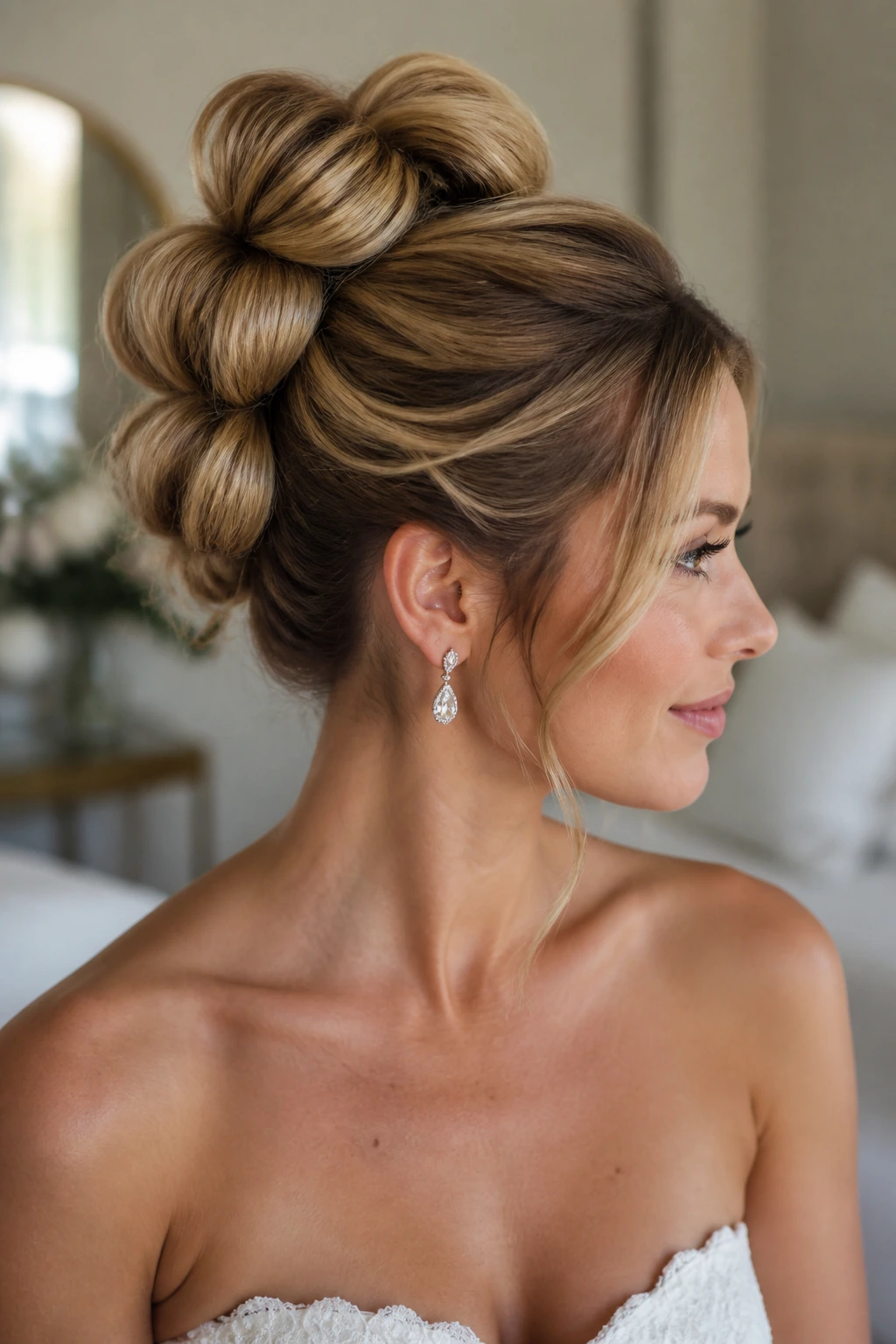
This one is for brides who want something with dimension but not a full braid. Sections are gently bubbled or separated, then pinned into a bun so the shape has rounded pockets and a bit of structure.
It’s a modern, graphic look without going full editorial. I like it when the bride wants the hair to feel finished from every angle and not just from the front.
The bubbles need clean tension. Too tight and they look strained. Too loose and they disappear before the ceremony starts.
25. Soft Folded Bun
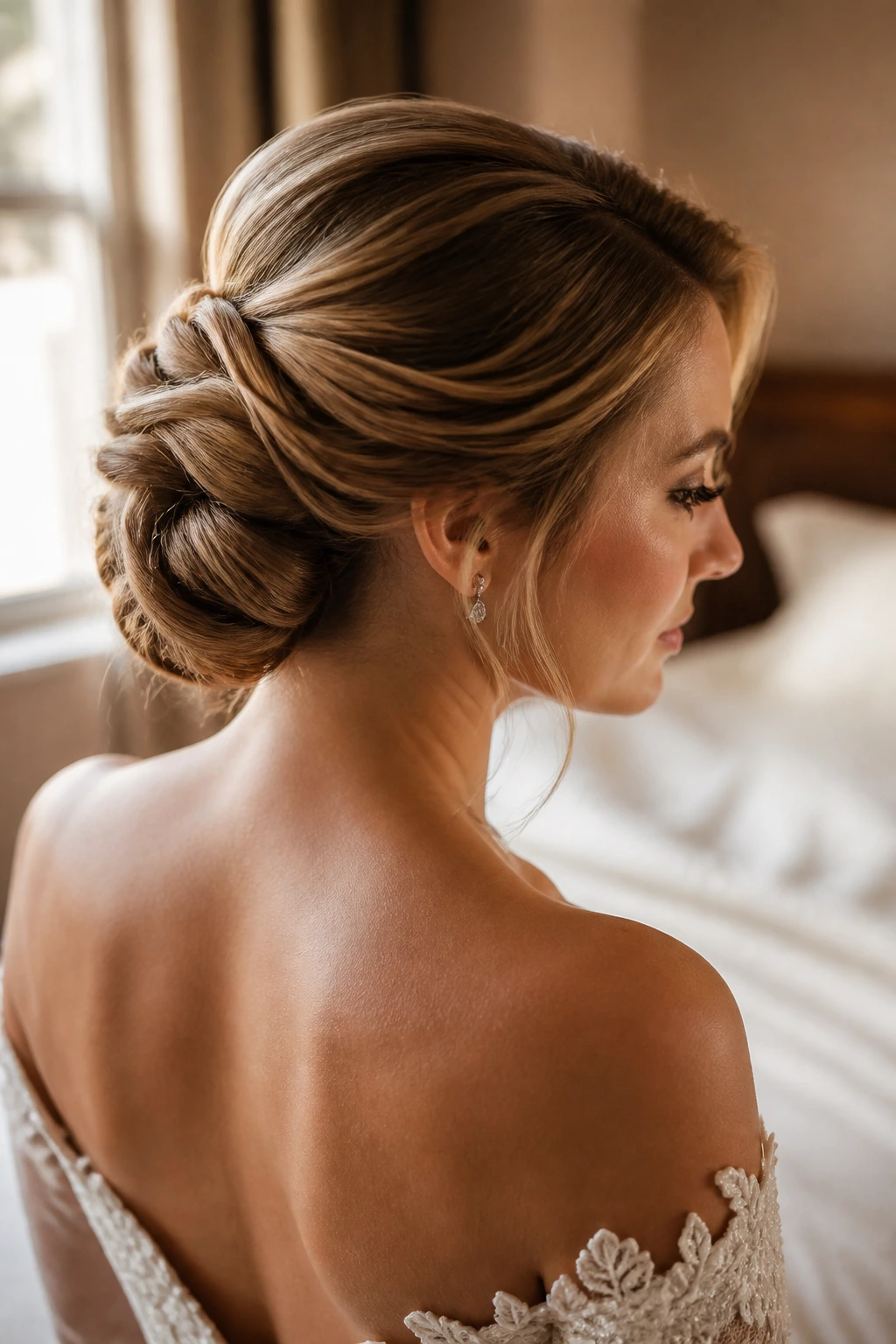
A soft folded bun is built from folded sections rather than a tight coil, which gives it a smooth but cushioned shape. The result feels gentle, almost fabric-like, especially when the hair is medium to long.
It’s a nice choice for brides who don’t want visible braids or obvious twists. The style reads as elegant without shouting for attention. That kind of restraint is underrated.
Use a few hidden pins and maybe a small padded base if the hair is fine. The whole point is to keep the folds visible while the mechanics stay out of sight.
26. Sculptural Editorial Bun
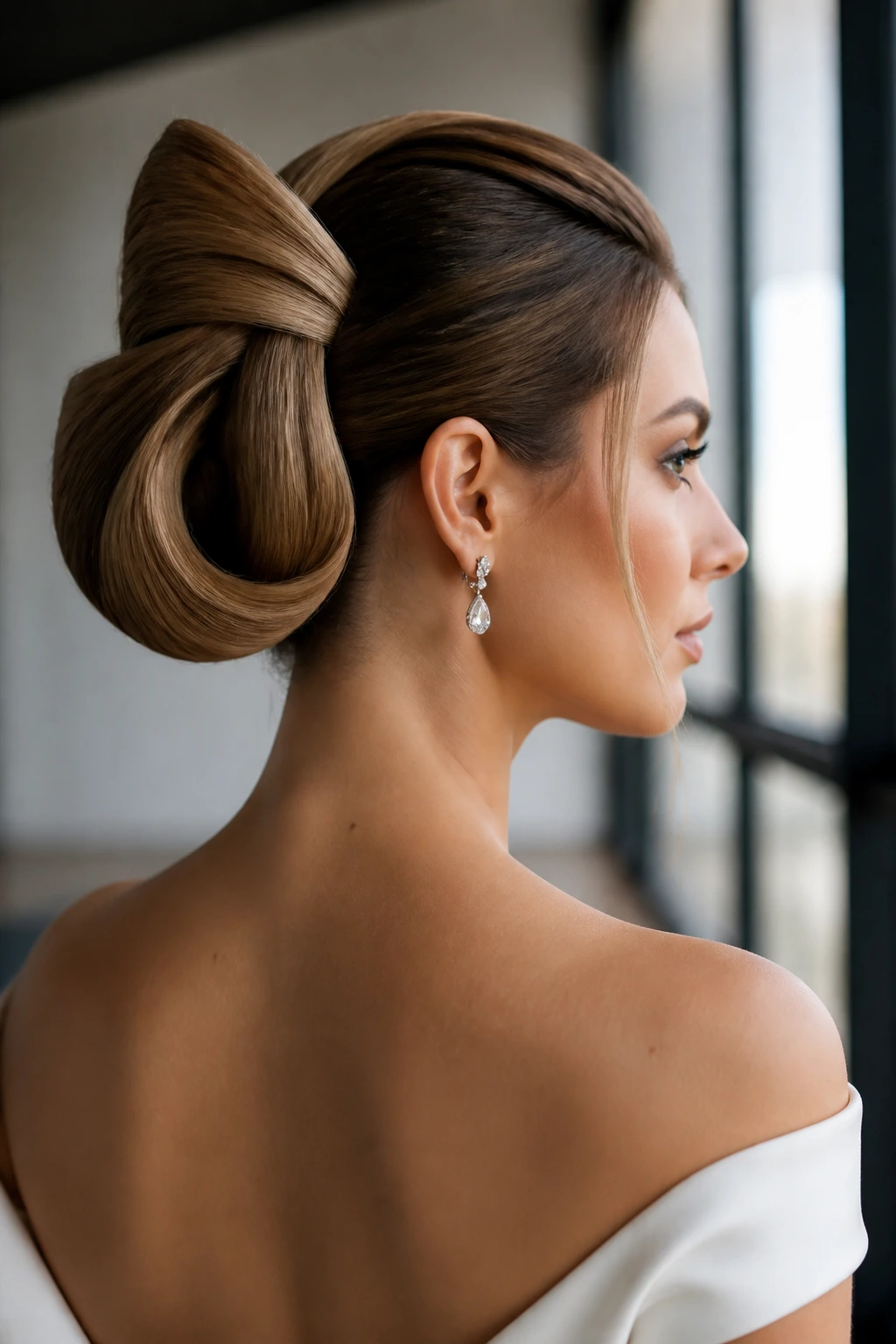
This is the bun for brides who actually like hair that looks designed. It has shape, contour, and a bit of negative space, which means some parts are tucked tighter while other sections are left to curve or flare.
It’s not the easiest bridal bun to wear, and I wouldn’t force it with a very delicate dress. But with a clean gown, a modern venue, or a bride who wants something unmistakable, it lands hard.
This style benefits from a stylist who understands balance. The line of the bun should look deliberate from the side, not like the hair stopped halfway through a thought.
27. Face-Framing Tendril Bun
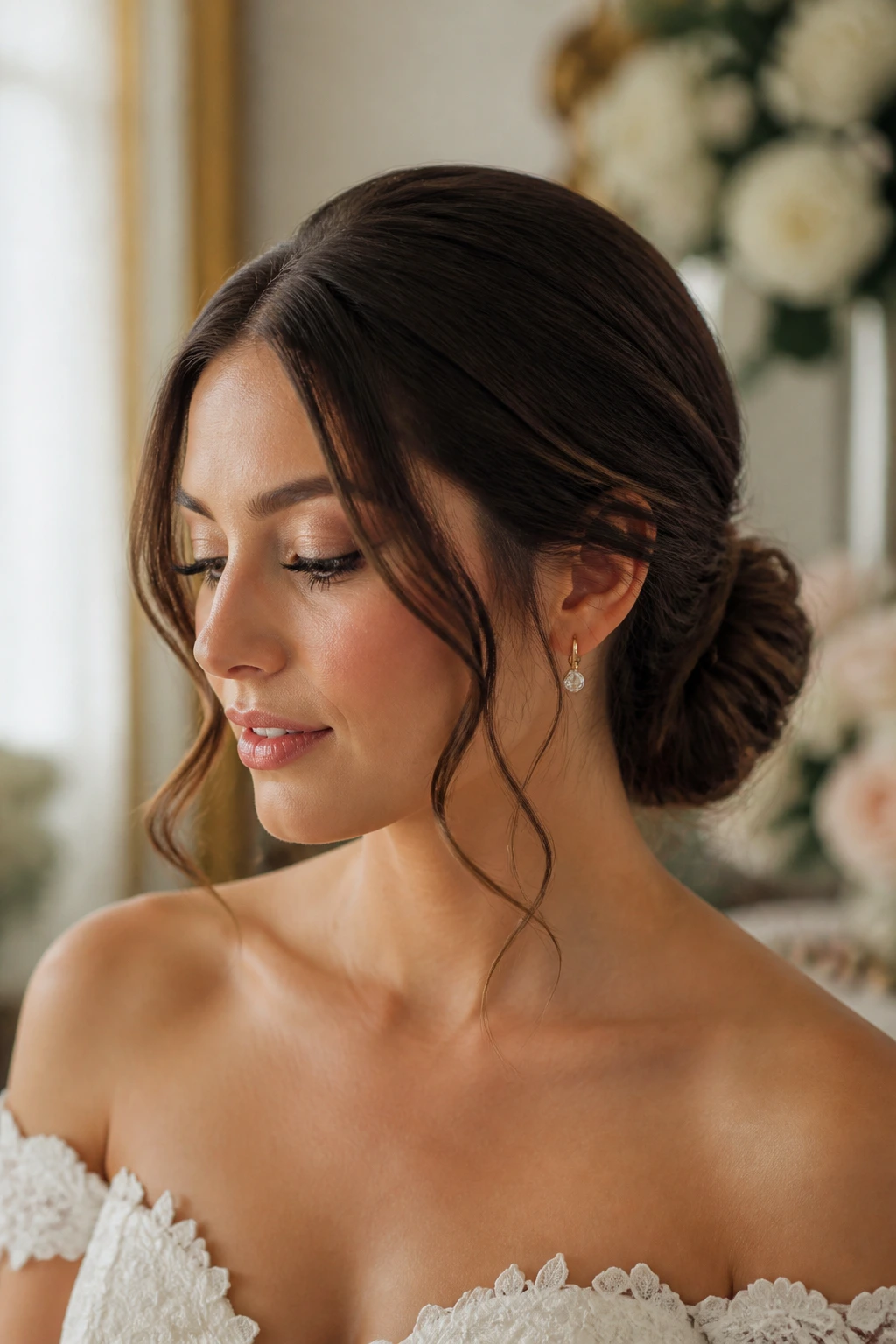
A few smart tendrils can soften a bun fast. This style keeps the bun itself structured, usually low or mid-height, then releases two or three front pieces to bend around the cheekbones and jaw.
The trick is restraint. Too many loose pieces and the style turns fuzzy. Too few and the framing feels stiff. The right amount depends on the face shape and the dress neckline, but the idea is always the same: soften the front without weakening the bun.
I like this look for brides who want polish with a little motion around the face. It feels less formal than a fully slick bun, which can be exactly right.
28. Tucked-Under Sleek Bun
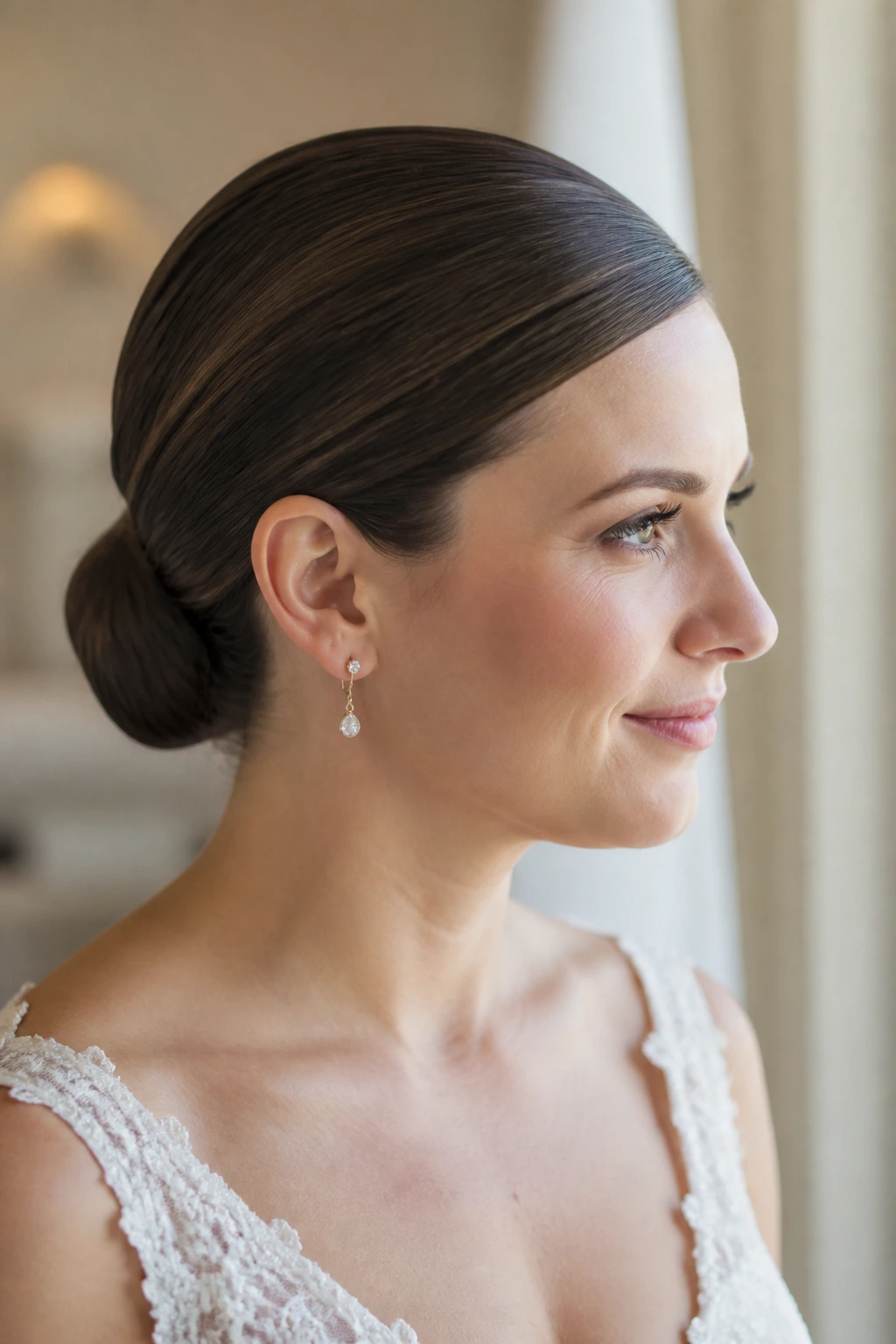
A tucked-under sleek bun hides the ends so cleanly that the shape almost looks carved. The hair is brushed smooth, folded under itself, and pinned so the finish is neat and uninterrupted.
This style is a workhorse. It handles humidity better than softer styles and keeps the profile tidy through long wear. It also gives veils and hairpieces a stable base.
If the gown is detailed, the bun can stay quiet. If the gown is simple, the sleekness becomes part of the statement. Either way, it’s efficient in the best sense.
29. Rope-Braid Bun
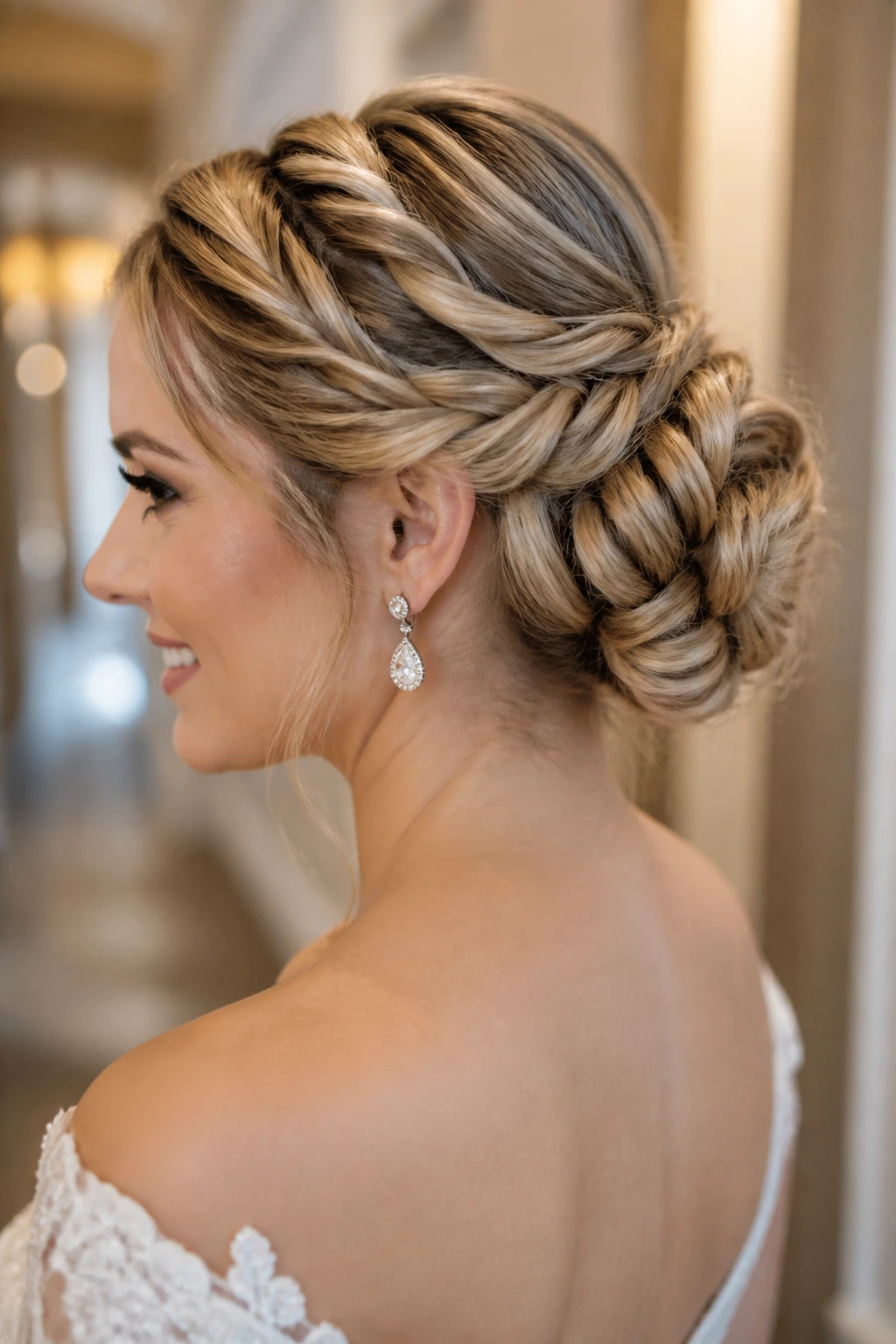
Rope braids twist two sections around each other, and they add a nice spiral texture to a bun without needing a full three-strand braid. Wrapped into a bun, they create lines that feel neat and a little modern.
This style suits thicker hair especially well because the rope braid keeps the pieces together. It also works when you want the bun to show texture without looking fluffy.
I’d use it for brides who like clean detail. It doesn’t need flowers, pearls, or much else. The pattern does the work.
30. Mesh-Wrapped Bun
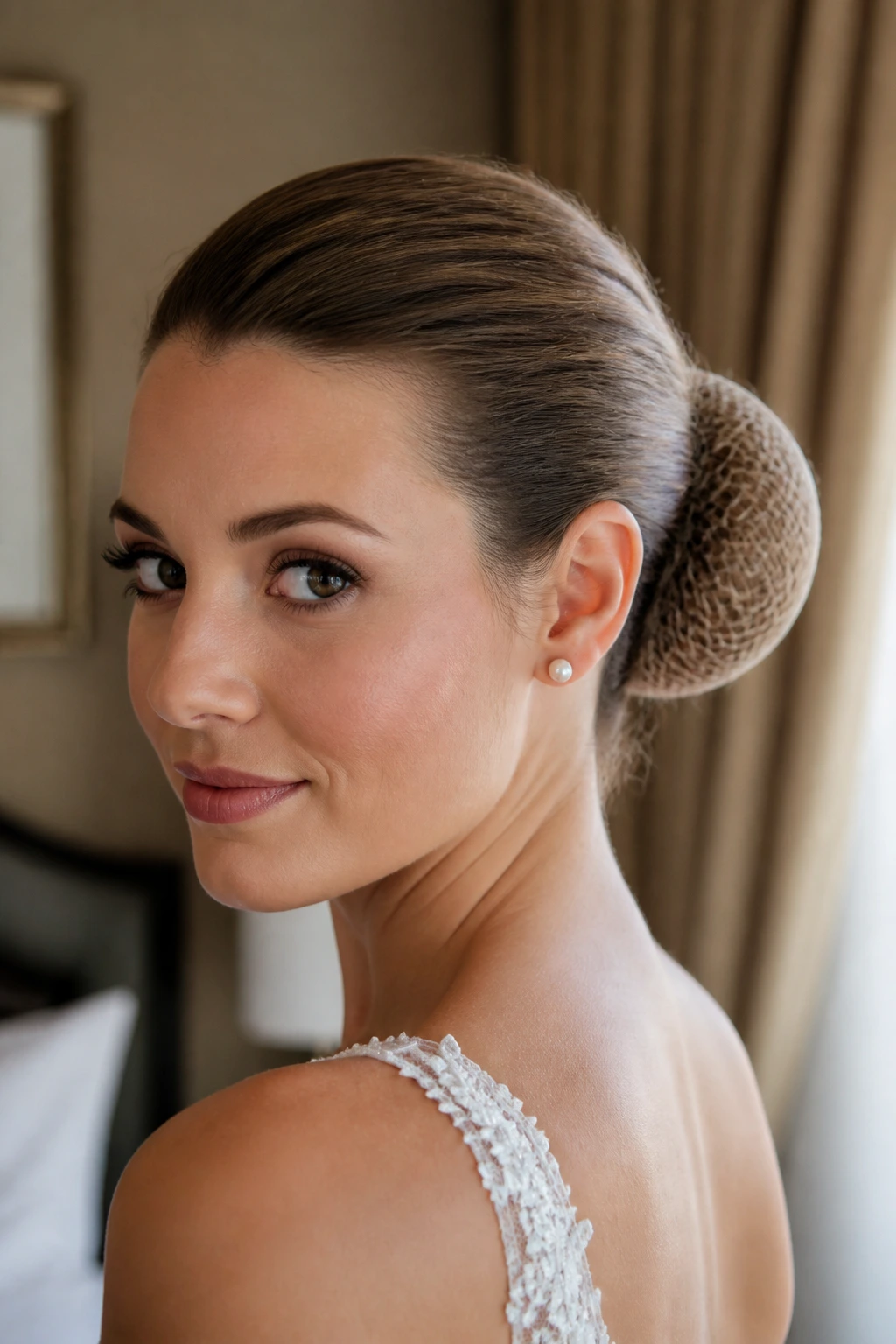
A mesh-wrapped bun leans into a more secure, almost netted finish. The hair can be wrapped under a decorative net or styled so the bun has a visible mesh-like structure. Either way, the effect is controlled and a little old-world.
It’s useful for formal weddings, especially when the bride wants the style to stay put through hours of movement. I’d pair it with satin, beading, or a gown that already has some texture.
This is not the loosest bun on the list. That’s the point. It’s there to hold.
31. Velvet Bow Bun
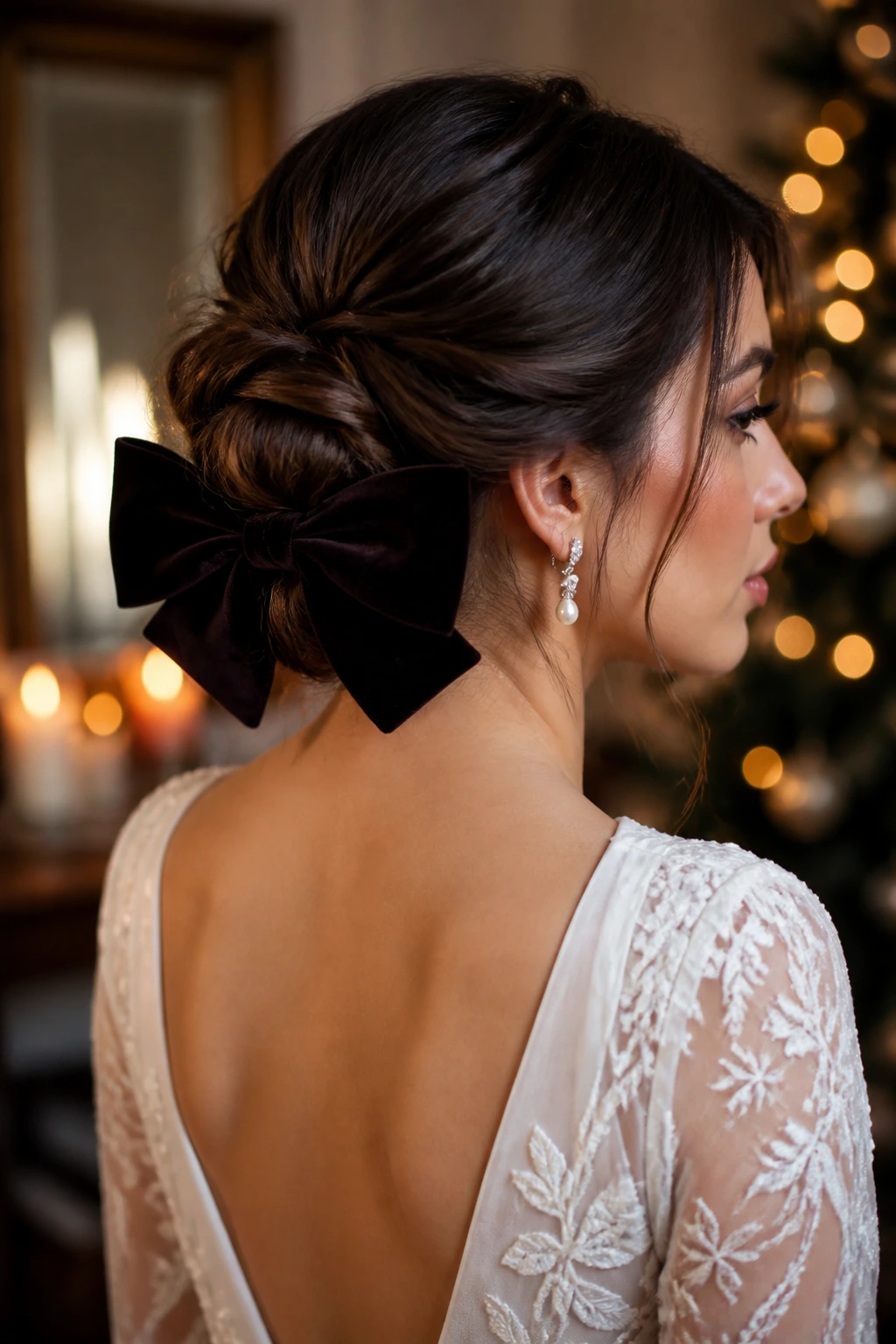
A velvet bow at the base of a bun changes the mood fast. The bun can be sleek or softly textured, but the bow adds a soft, tactile finish that feels romantic without being sugary.
This works best when the bow is the right size for the hair and the dress. Too large and it steals the scene. Too tiny and it looks like an afterthought. A narrow, rich-colored ribbon can be enough if the rest of the look is very clean.
I like this for winter weddings, evening ceremonies, or brides who want one small dramatic touch instead of a lot of extras.
32. Low Puff Bun
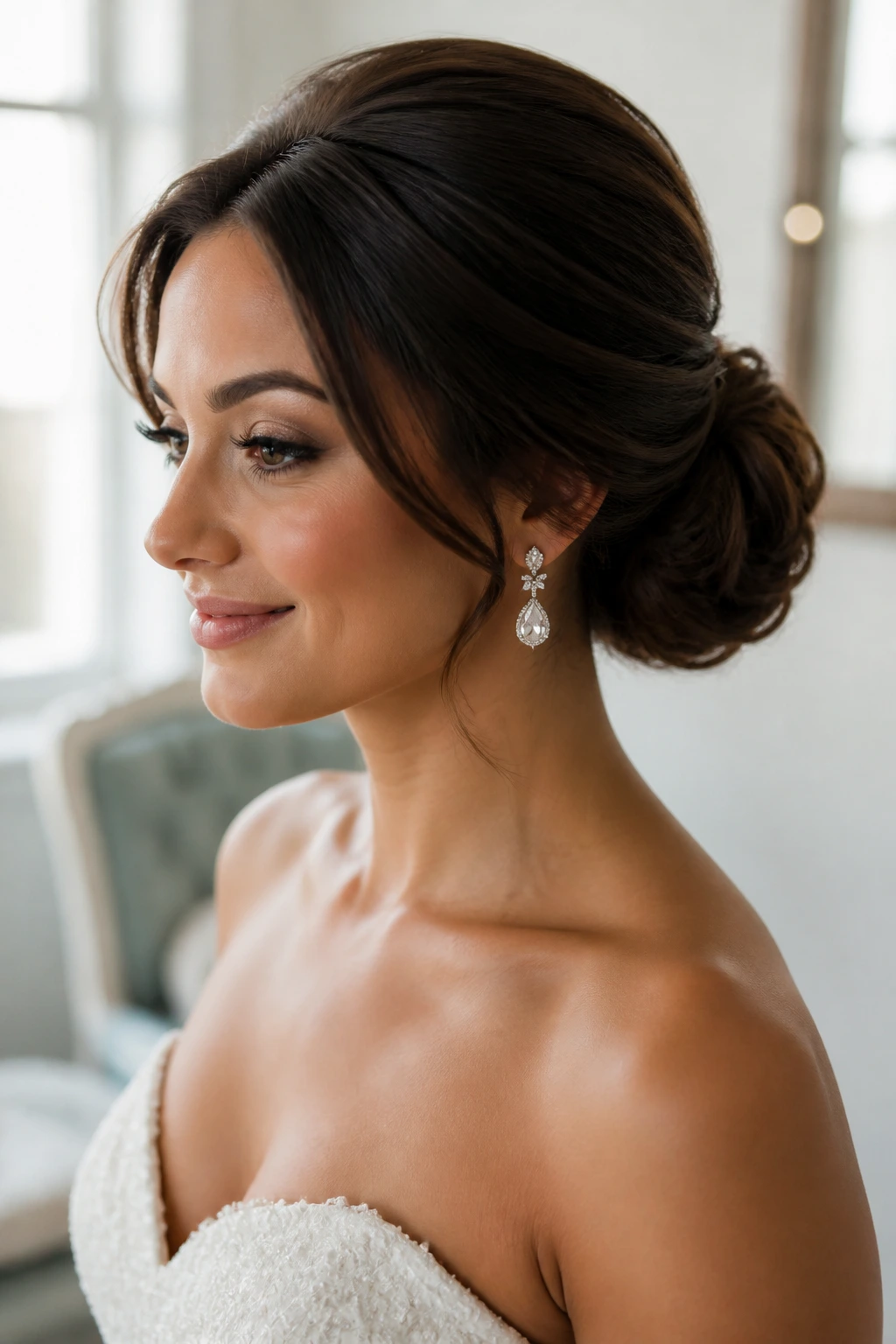
A low puff bun starts with volume at the crown and keeps the bun low at the nape, which gives the head shape without going full updo. It’s a useful middle ground for brides who want lift but not height all the way up the head.
The puff should be controlled. I’m not talking about teasing for its own sake. I mean a gentle roundness that supports the face and helps the bun feel balanced.
This style works well with strapless gowns and sweetheart necklines because it gives the upper half of the silhouette a little structure. It’s one of the more forgiving options on the list.
33. Minimal Center-Part Bun
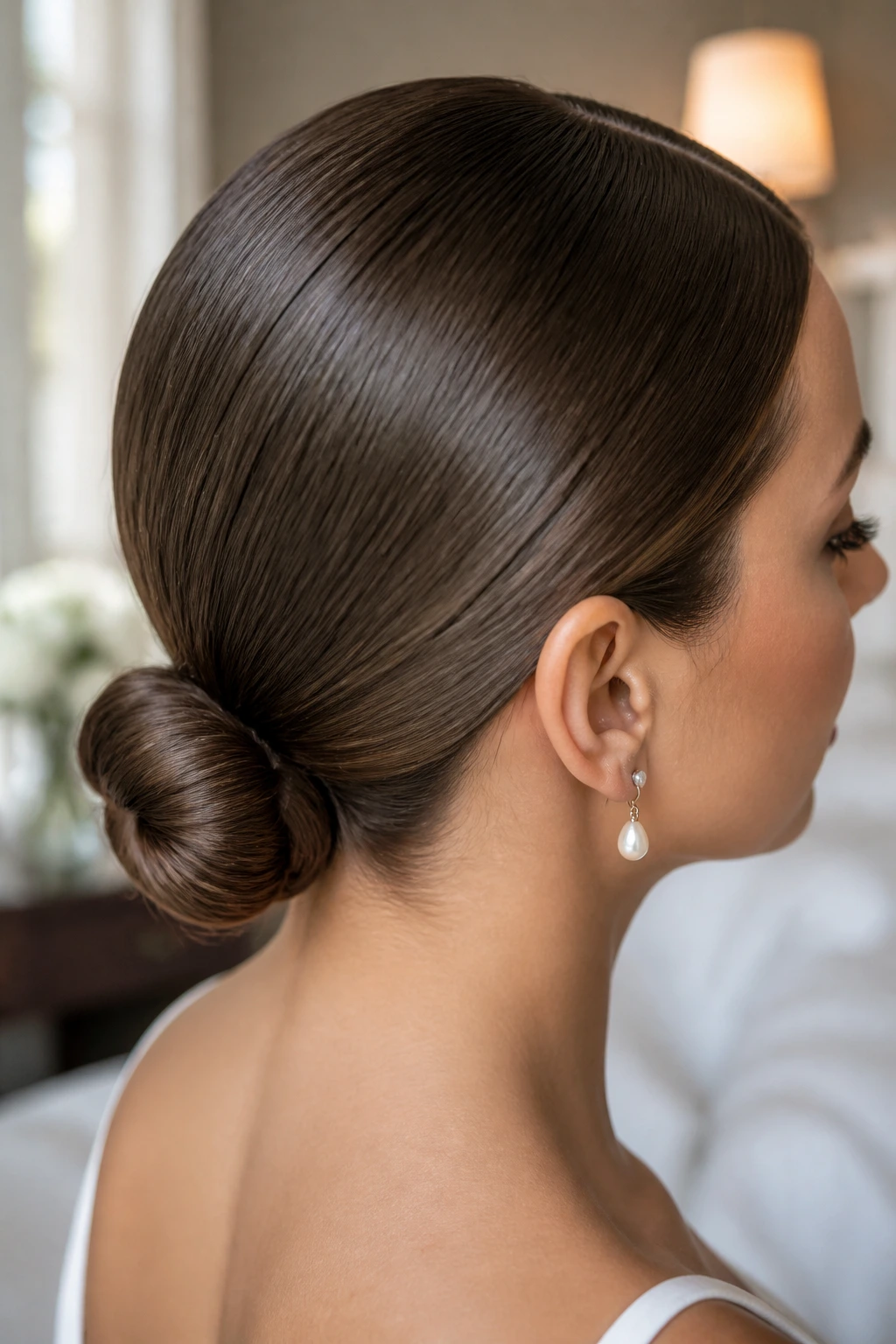
A center part and a clean low bun can feel surprisingly modern. There’s no extra braid, no stray curl fighting the line, just a straight part, a smooth crown, and a bun tucked low and tight at the back.
It’s the kind of style that lets the dress do the talking. That makes it a strong choice for minimalist brides, architectural gowns, or anyone who dislikes hair that wanders around the face.
The part has to be sharp. If it drifts, the whole look loses the clean edge. A tail comb and a little patience matter more here than fancy product.
Why Bridal Buns Work So Well
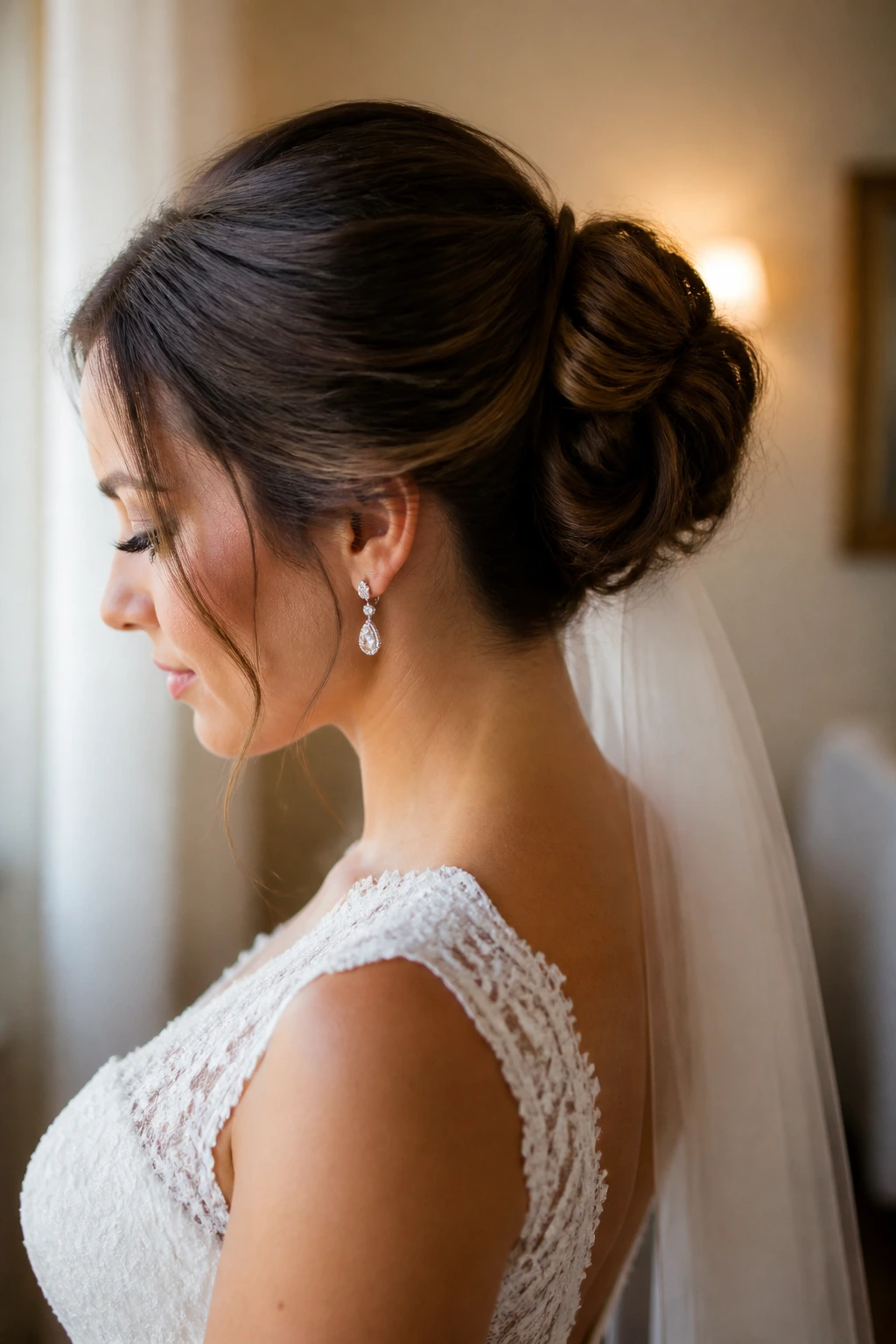
A bun does more than keep hair off the neck. It changes how the whole outfit reads. The right placement can make a dress feel more expensive, make a veil sit straighter, and keep the face visible in photos where loose hair would swallow the jawline. That last part matters more than people think. Wedding photos love structure.
The other reason buns keep winning is simple: they are stable. A braid or wave can collapse under heat, but a well-pinned bun stays readable. Not frozen. Just reliable. That is a bigger compliment than it sounds like.
There’s also room for personality. A bridal bun can be strict, airy, vintage, soft, or sharp enough to feel fashion-forward. The bun is the base. The details decide the mood.
Essential Tools and Products for Bridal Buns
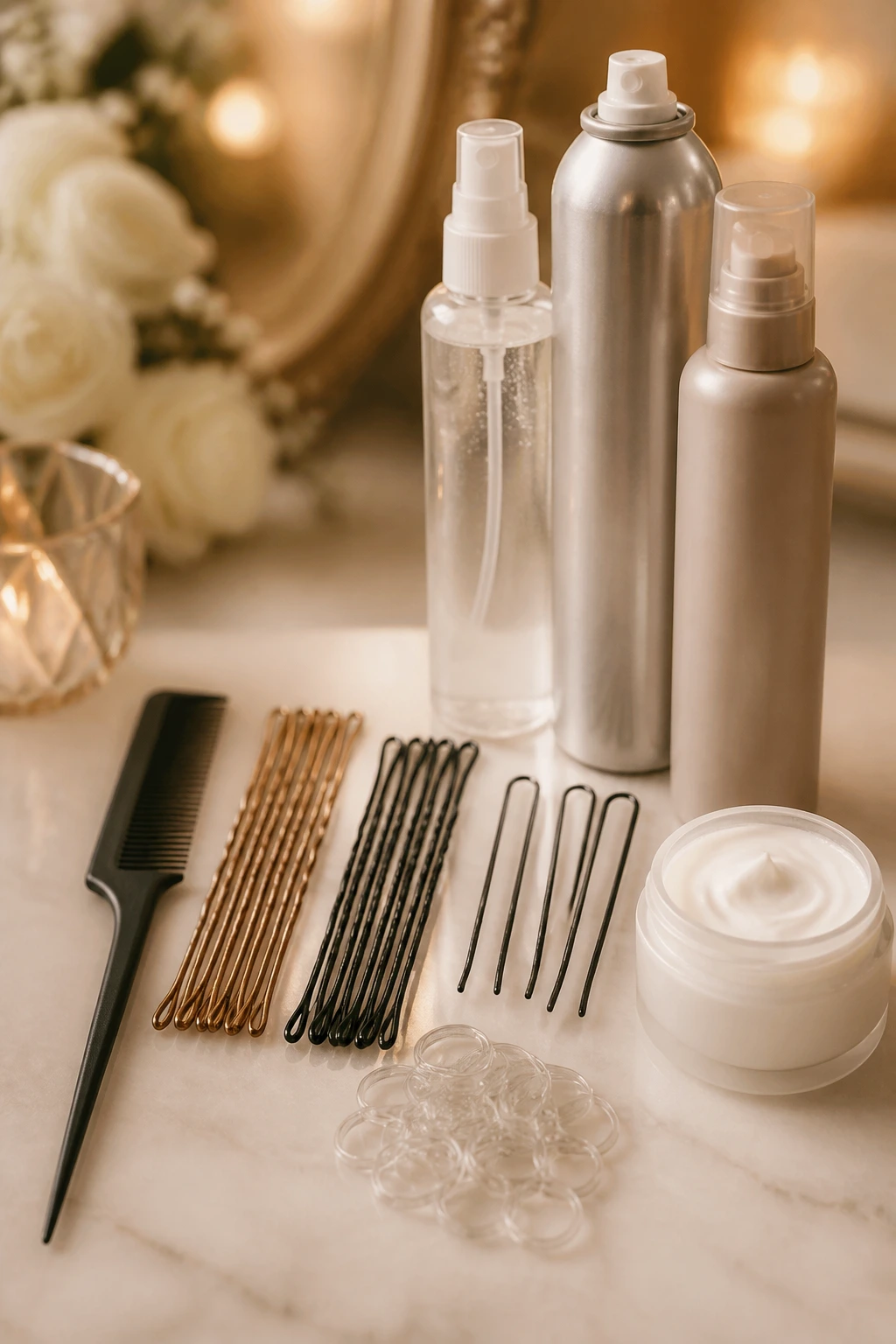
- Tail comb: Necessary for clean parts, smooth sections, and neat lift at the crown.
- Bobby pins in two shades: Match the hair color as closely as possible; mixed blonde and brunette tones usually need both.
- U-pins: Better than standard bobby pins for larger buns because they hold volume without crushing it.
- Clear elastics: Useful for anchor ponytails and braided sections where you do not want the tie to show.
- Texturizing spray: Adds grip to clean hair and keeps twists from sliding out.
- Lightweight hairspray: Sets the outer layer without turning the bun into a helmet.
- Smoothing cream or serum: Keeps sleek buns from frizzing, but use a pea-sized amount, not more.
- Hair padding or bun form: Helpful for fine hair or styles that need a rounder silhouette.
- Hairnet: Handy for a very secure base under a classic bun, especially with heavy hair.
- Duckbill clips: Great for sectioning during a trial run and keeping the part tidy.
- Mirror setup with two angles: One front mirror and one hand mirror make it easier to check the back while testing accessory placement.
Smart Prep and Product Shopping Tips
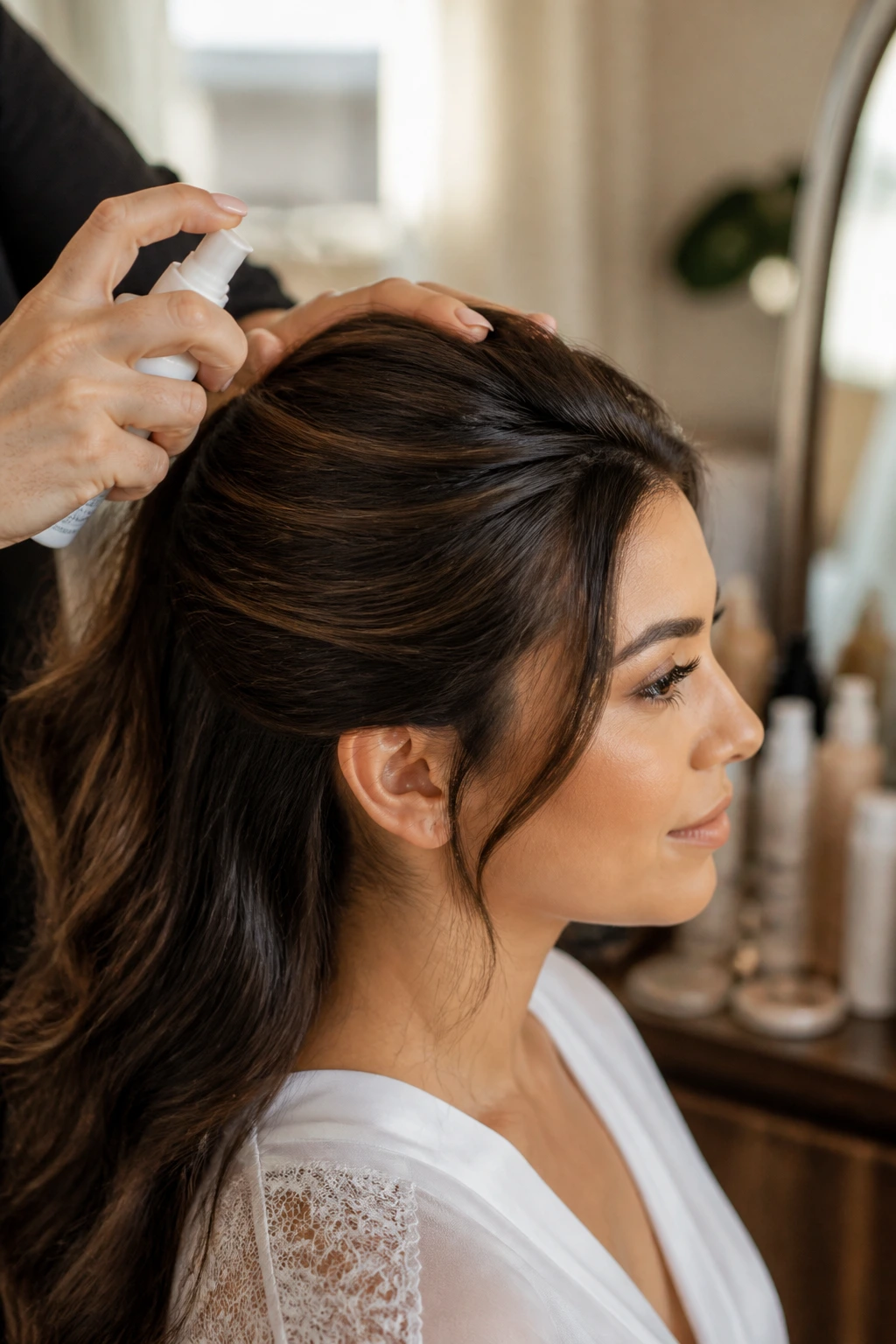
The best bridal bun starts before the pins go in. Hair that was washed that morning often feels too slippery, especially if it’s fine or straight. Hair that’s had a day to settle usually has better grip, which is why a lot of stylists prefer a fresh-but-not-squeaky-clean base. If the hair tends to go limp, a little dry shampoo at the roots can help.
Product choice should match the style, not the fantasy. Sleek buns want a smoothing cream or light serum. Textured buns need spray that gives grip without making the hair crunchy. Thick or curly hair often behaves better with curl cream and a firm but flexible hairspray than with heavy oil. The shine level matters too. A glossy finish looks elegant on satin and silk; a softer finish works better with lace and matte fabrics.
A trial run is where the real shopping happens. Bring the veil comb, earrings, and any hairpins or combs you plan to wear. If the bun needs extra support, buy the padding early so the stylist can test it before the wedding day. And yes, pin color matters. If the hair has highlights or balayage, one shade of bobby pin usually disappears better than the other.
How to Wear These Buns With Veils, Earrings, and Necklines
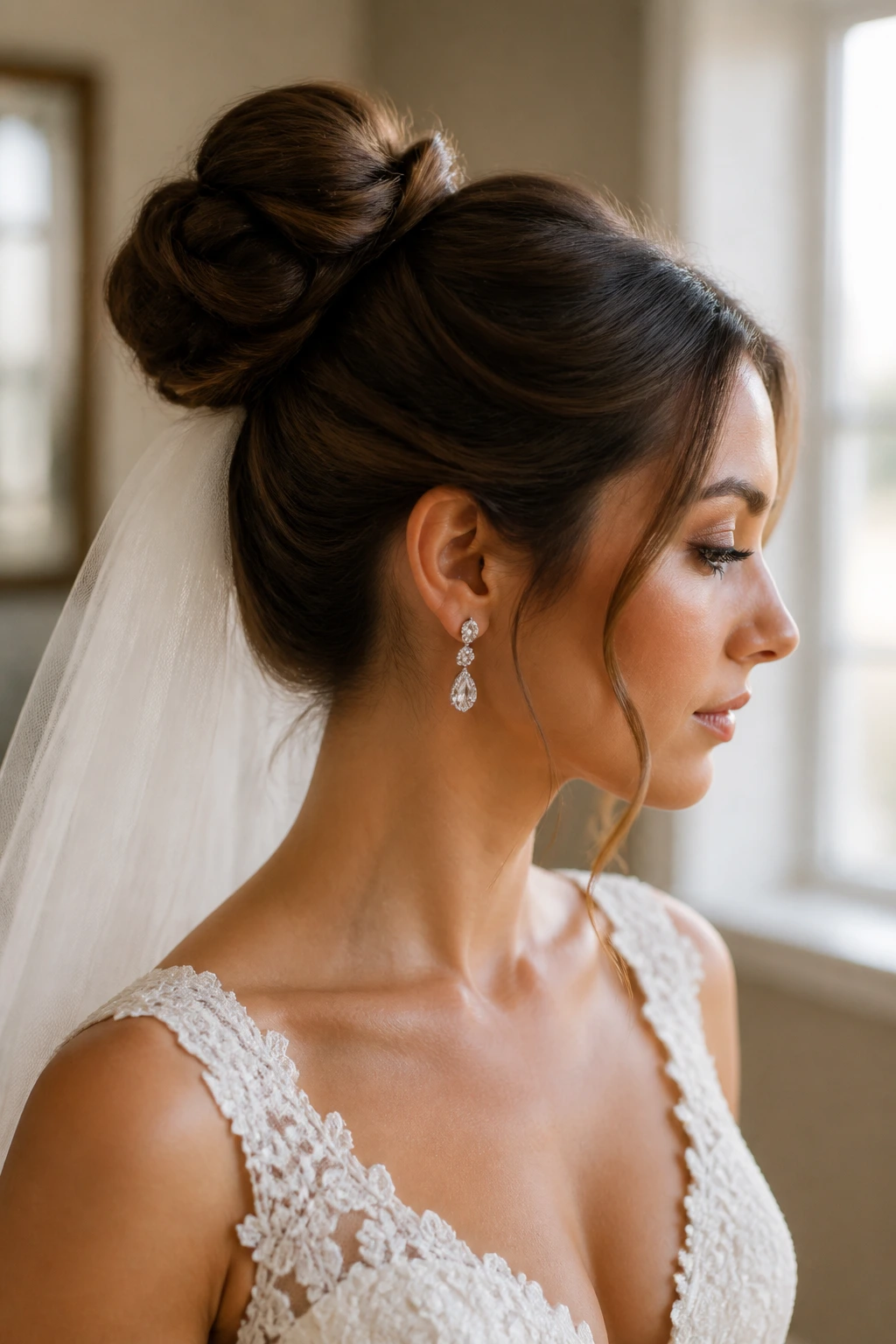
Presentation: Keep the bun placement in conversation with the dress. A low bun sits nicely under a veil and lets the neckline breathe, while a high bun lifts the face and pairs better with open shoulders or dresses that need more height. The bun should feel like part of the silhouette, not an extra item pasted onto the back of the head.
Accessories: A veil comb usually belongs just above or just behind the bun anchor, not wedged randomly into the middle of it. Statement earrings work best when the bun is tidy enough to leave the ears visible from the side. If the dress already has heavy beading at the neckline, go lighter on hair accessories. One loud thing at a time is plenty.
Scale: Big gowns can handle a bun with more volume or height. Slim, minimalist dresses usually look better with a smaller, cleaner shape. A tiny bun under a dramatic cathedral veil can look lost; a giant bun with a simple column dress can look bossy.
Comfort: Check the style from behind, but also check the way it feels at the nape and temples. If the bride is going to wear it for eight hours, a pin digging into the scalp is not a small issue. It becomes the whole issue after dinner.
Additional Tips and Finishing Touches
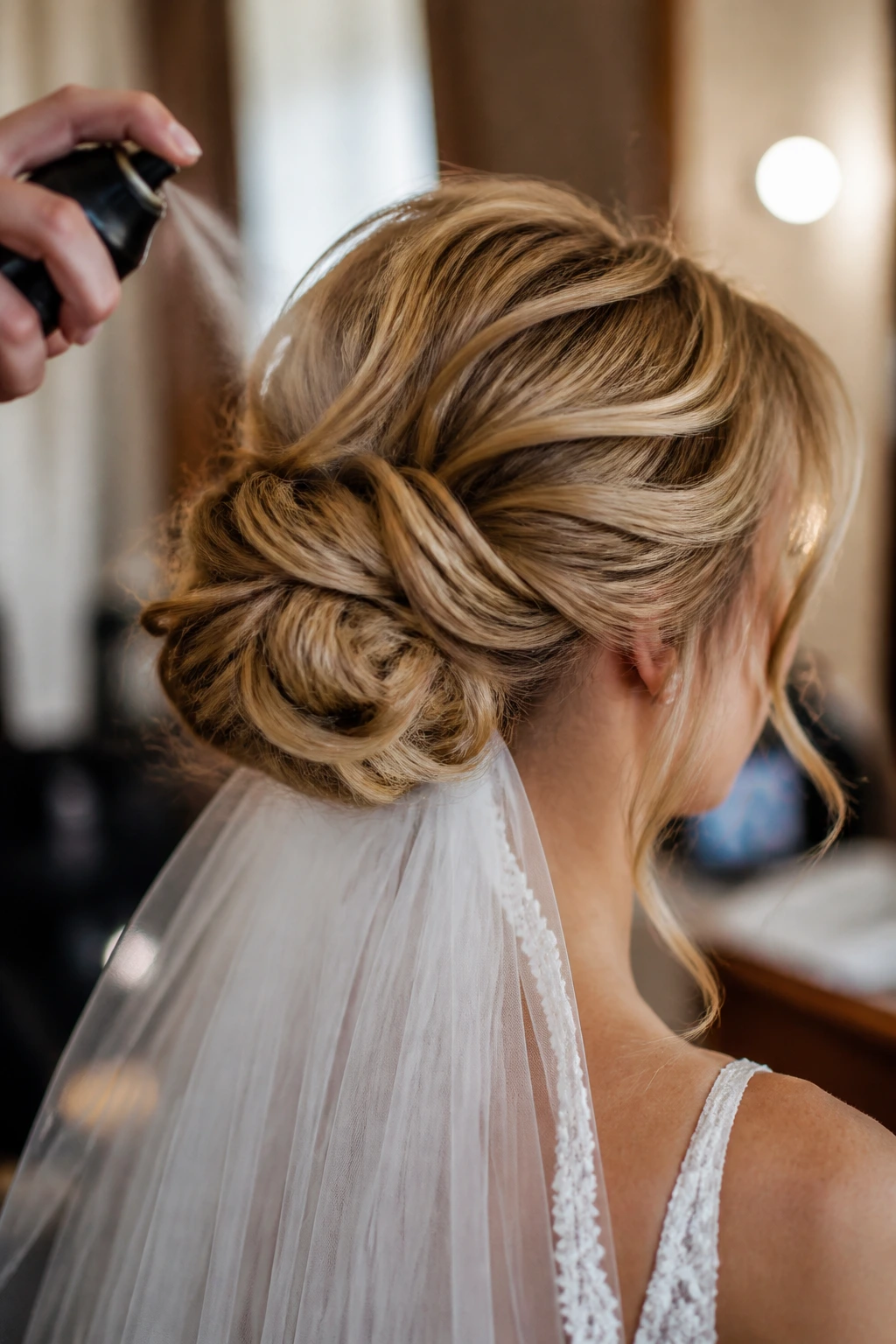
Hold: I like a light mist of hairspray on the finished bun, then a second, softer mist after the veil is in place. Too much spray before the veil goes on can make the comb slippery or leave a crusty finish around the crown.
Texture: If the hair is too silky, dust the roots with dry shampoo before styling. If it’s already coarse or curly, skip extra powder and focus on a smoothing cream at the outer layer only. Adding the wrong product type is how buns drift apart or puff up at the wrong moment.
Customization: A tiny braid wrapped around the base, a few pearl pins, a ribbon tail, or one fresh bloom can change the mood without rebuilding the whole style. Small changes are safer than trying to invent a new bun the morning of the wedding.
Comfort: Bring extra bobby pins and a few U-pins in a small pouch. A bun that needs one quick reinforcement after the first round of photos is normal. A bun that needs a complete rebuild is not.
Common Mistakes to Avoid
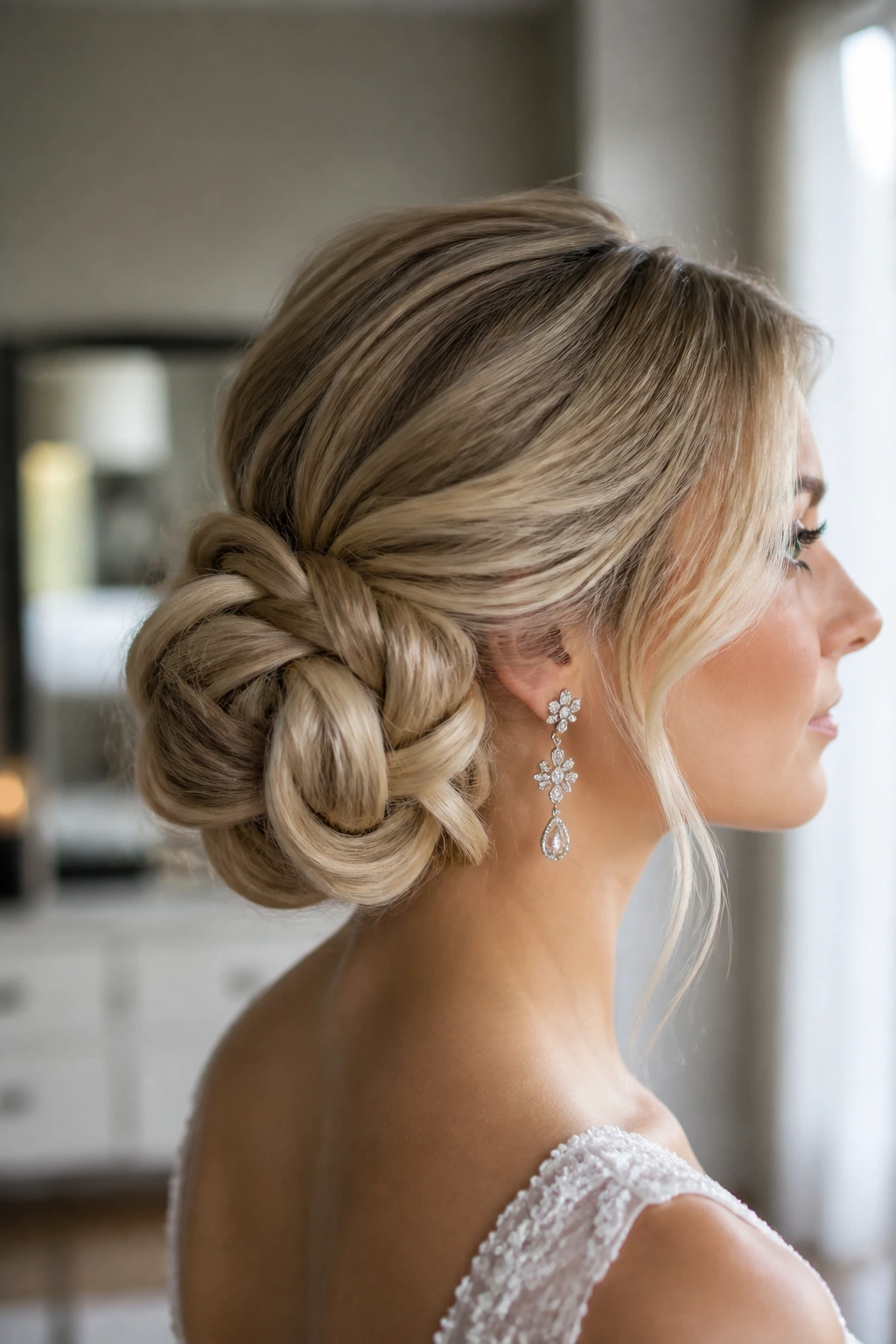
The biggest mistake is building the bun on hair that’s too slippery. Freshly washed hair can look lovely for about twelve minutes, then start sliding. If the style is sleek, that’s one thing. If it’s supposed to hold twists or braids, give the hair a bit of texture first.
Another common problem is pinning without an anchor. A bun pinned only to itself often loosens by the time the veil comes out. A tiny elastic at the base changes everything. So does crossing pins in different directions instead of planting them all the same way.
People also overload the bun with accessories. Three pins, a comb, flowers, and a bow can turn a clean style into visual clutter fast. Pick one main accent. Maybe two if the dress is quiet.
And then there’s placement. A bun that sits too low can disappear into the back of the dress. Too high and it may clash with the veil or feel disconnected from the neckline. The sweet spot is usually decided by the dress first, then the hair.
Variations and Adaptations to Try
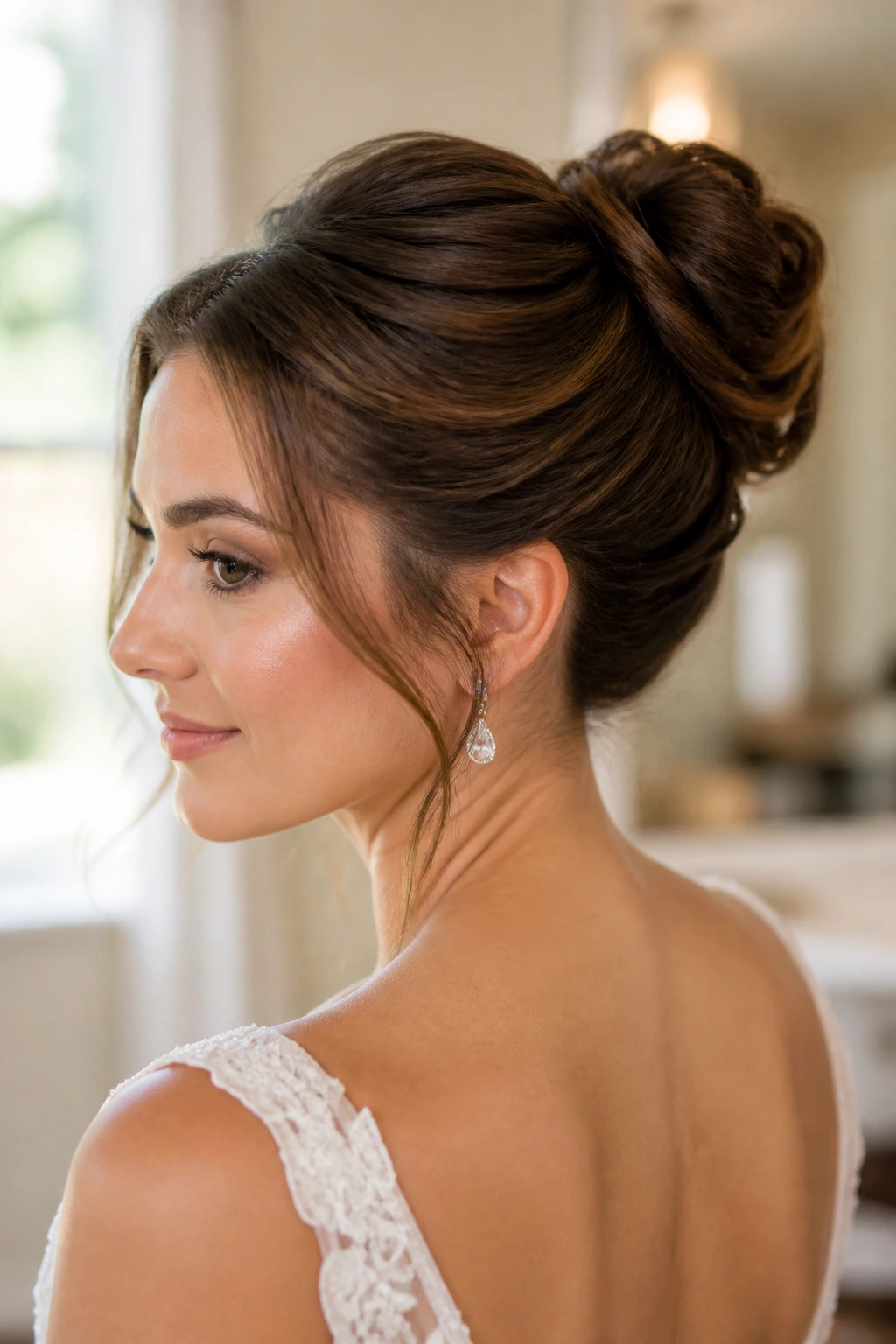
Fine-Hair Lifted Bun: Use a small bun form or light padding at the base, then keep the surface smooth so the shape reads full without looking stuffed. This works best when the bride wants a more substantial silhouette but doesn’t have a lot of natural volume.
Thick-Hair Tucked Bun: Split the hair into smaller sections and pin them one layer at a time instead of trying to coil everything at once. Thick hair needs structure, not brute force. Otherwise the bun starts to bulge in odd places.
Curly-Texture Bun: Let the curls keep some of their shape and pin them where they naturally want to fold. A little definition around the bun edges keeps the style lively and avoids that over-brushed, fuzzy look.
Extension-Supported Bun: If the hair needs more length or fullness, clip-in extensions can help, but they should be styled into the bun at the same texture level as the natural hair. Straight extensions with a curly base always look off.
Humidity-Ready Bun: Use less smoothing cream and more grip spray, then set the front and the bun separately. A style that can tolerate a little frizz is better than one that collapses when the air gets heavy.
Civil-Ceremony Minimal Bun: Strip the style down to a clean middle part, a low anchor, and one small accessory. It’s the fastest way to make the bun feel modern instead of formal.
Make-Ahead, Touch-Up, and Maintenance Guidance
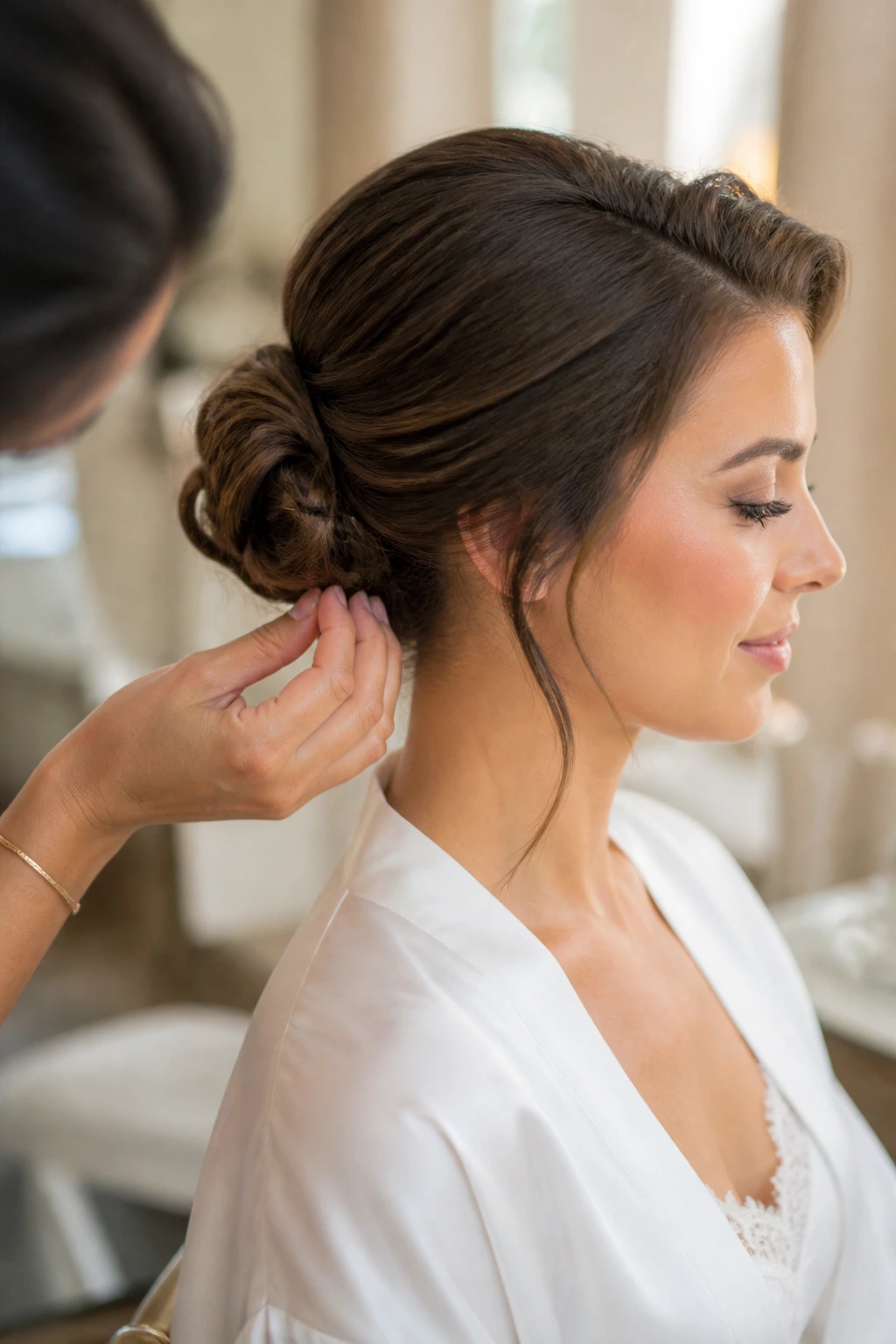
A bridal bun should be planned in layers. Two weeks out, the trial matters more than almost anything else. That’s when you test placement, accessory weight, and how the bun behaves with the veil comb. A style that looks nice but hurts after twenty minutes is the wrong style.
The day before the wedding, hair prep depends on texture. Fine or slippery hair often behaves better when washed the evening before and left to settle overnight. Thick or curly hair usually benefits from being washed a day earlier so the natural oils and bend make the bun easier to hold. Morning-of, use the right products for the style and give them a minute to dry before pinning.
During the event, keep a small touch-up kit with 4 to 6 bobby pins, 2 U-pins, a travel hairspray, and one tiny comb. If a side piece loosens, pin it from underneath instead of spraying it into place and hoping. After the wedding, remove every pin before sleeping. Sleep on a satin pillowcase if the style needs to survive until the next morning for brunch or photos.
Frequently Asked Questions
Which bun lasts the longest on a wedding day?
A sleek low chignon, tucked-under bun, or wrapped donut bun usually lasts best because the shape is compact and the pins have less work to do. Styles with lots of loose texture can still hold, but they need more touch-up.
Should bridal hair be washed the same day or the day before?
For most hair types, the day before is safer. Clean hair that’s too fresh can be slippery, especially if it’s straight or fine. Very dry or curly hair may be different, and a stylist can adjust the prep based on how much grip the hair needs.
Can a veil be worn with any bun?
Almost any bun can take a veil if the anchor is placed well. The comb usually sits just above or just behind the bun base, where it can catch enough hair without crushing the shape. Very high buns need a little more planning.
What if the bride has short hair?
Short hair can still work with a bun using padding, pins, or extensions. A low tucked style often looks cleaner than trying to force a bigger bun that the hair length cannot support. The goal is a believable shape, not a bulky one.
How do you keep a bun from sliding down?
Start with an elastic anchor, then pin into the base and the surrounding hair, not just the bun itself. Cross the pins in different directions. If the hair is fine, a little texture spray before styling usually helps more than extra hairspray at the end.
Do buns work with curly hair without straightening it?
Yes, and they often look better that way. Curly texture gives the bun body and keeps it from looking flat. The important part is controlling the outer layer and pinning the curls where they naturally fold, instead of brushing them into frizz.
Which bun suits a strapless dress best?
Low buns, side-swept buns, and softly textured chignons usually work well with strapless gowns because they leave the shoulders and collarbone open. A very high bun can work too, but it changes the balance and should be chosen on purpose.
Can a bride do her own bun instead of hiring a stylist?
Yes, if the style is simple and the bride has practiced it with the veil and accessories. A clean low bun or minimalist center-part bun is much more realistic for DIY than a braided crown or sculptural editorial style.
The Bun That Fits the Dress
A bridal bun works best when it behaves like part of the outfit, not a separate event happening on the back of the head. That’s the real trick. Get the placement right, choose a shape that respects the neckline, and keep the base strong enough to survive the whole day.
Some brides look best in a smooth low chignon. Others need the softness of a twisted bun, the lift of a crown-volume shape, or the little glint of pearls tucked into the seam. There isn’t one right answer. There are just buns that understand the dress and buns that ignore it.
Pick the one that makes the whole silhouette feel settled. That’s the one that will still look right after the ceremony, after the photos, and after the dancing gets a little reckless.
