



Short hair does not need to be “fixed” for a wedding. It needs a shape.
Finding wedding hairstyles for bridesmaids and short hair gets easier once you stop trying to fake length and start working with what’s already there: the edge of a bob, the clean line of a pixie, the swing of a lob, the way a few tucked pieces can look intentional instead of accidental. Short hair shows off the cut, the neck, the earrings, and the neckline in a way longer hair usually hides. That is not a drawback. It’s a very handy advantage.
Bridesmaids run into a particular problem because the style has to look coordinated without turning everyone into the same person. One woman has a sleek chin-length bob. Another has a layered crop that falls apart if you look at it sideways. Someone else is growing out a pixie and wants the front pieces controlled, not plastered. The best wedding hairstyles for short hair solve all of that with clean parts, smart pin placement, texture that holds, and accessories that earn their keep.
Why These 18 Looks Earn Their Place
- They respect the cut: Short hair already has structure, so these styles work with the shape instead of fighting it with a fake bun that collapses by dessert.
- They photograph cleanly from the side: A wedding album is full of profile shots, and short hair looks crisp when the silhouette is deliberate.
- They leave room for dresses and jewelry: Bare necks, shoulder lines, and earrings all stand out more when the hair is lifted, tucked, or smoothed back.
- They’re easier to coordinate in a bridal party: You can keep the same accessory, curl pattern, or side part across different cuts without forcing every bridesmaid into the same exact look.
- They hold up better than loose, overworked curls: The right short-hair style needs fewer pins and less obvious fussing, which matters when there’s dancing, hugs, and warm lights.
- They can be adapted fast: Add a pearl pin, a ribbon, a comb, or a braid and the whole mood changes without a second styling appointment.
1. Sculpted Side-Part Pixie
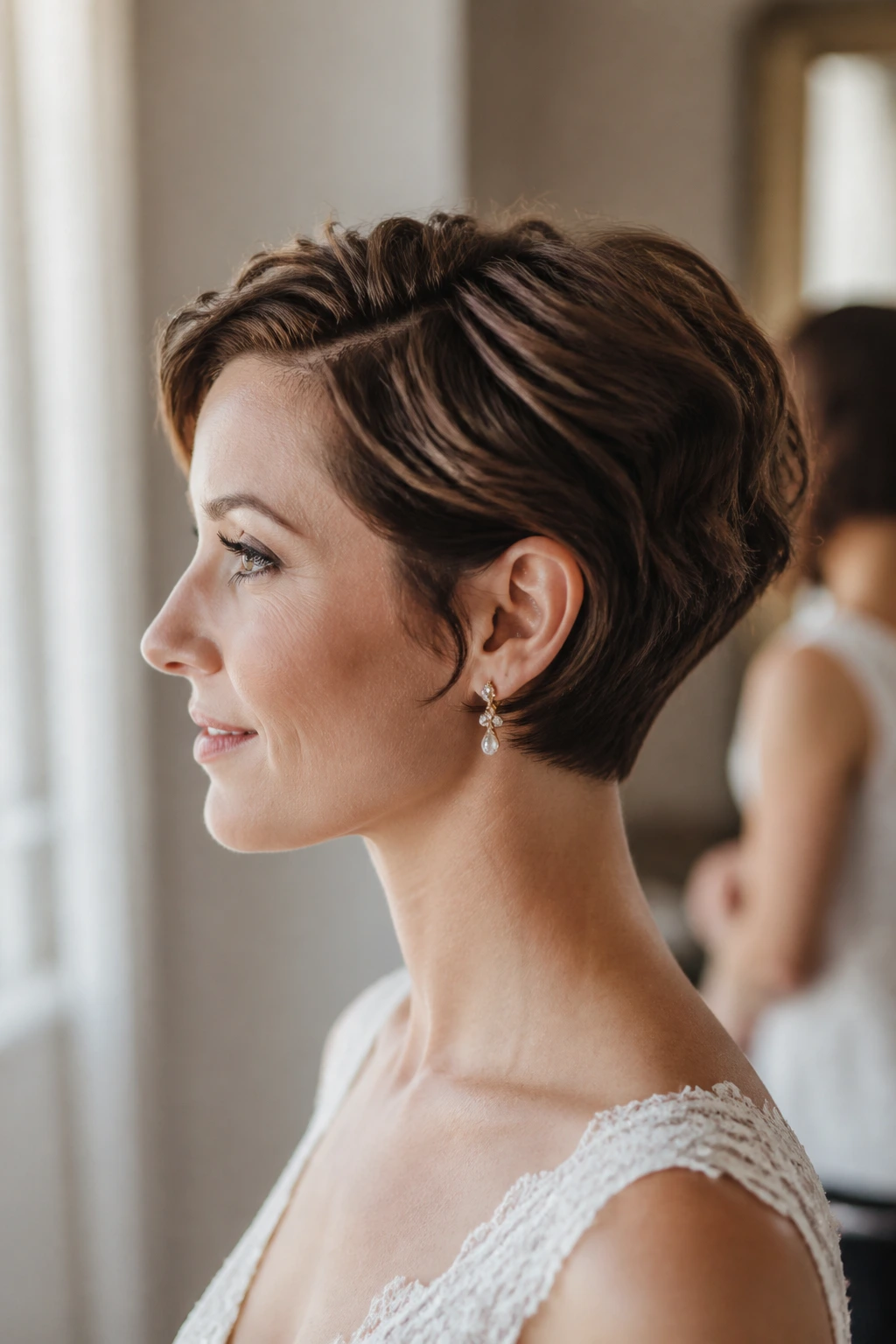
A pixie cut looks especially sharp when it’s not trying to be anything else. Sweep the hair into a deep side part, smooth the shorter side close to the head, and let the top keep just enough lift to show off the cut. On a bridesmaid, that kind of polish reads elegant fast.
Why It Works on a Pixie
The side part gives the eye a place to land, which matters on very short hair. Without it, a pixie can blur into the face in photos, especially if the dress has a busy neckline. A side-swept shape also keeps the style from feeling too severe.
Use a pea-size amount of smoothing cream on damp hair, then blow-dry with a small round brush or just your fingers if the cut is already neat. A 1-inch flat iron can bend the longer top pieces slightly away from the face, but don’t curl them into ringlets. That looks fussy. Keep the movement subtle.
- Best for: classic pixies, grown-out crops, and fine hair that needs direction.
- Pin placement: hide a jeweled clip about 1 inch above the temple.
- Finish: a light mist of flexible hairspray keeps the top from separating.
Tip: place the accessory on the heavier side of the part. It balances the silhouette instead of fighting it.
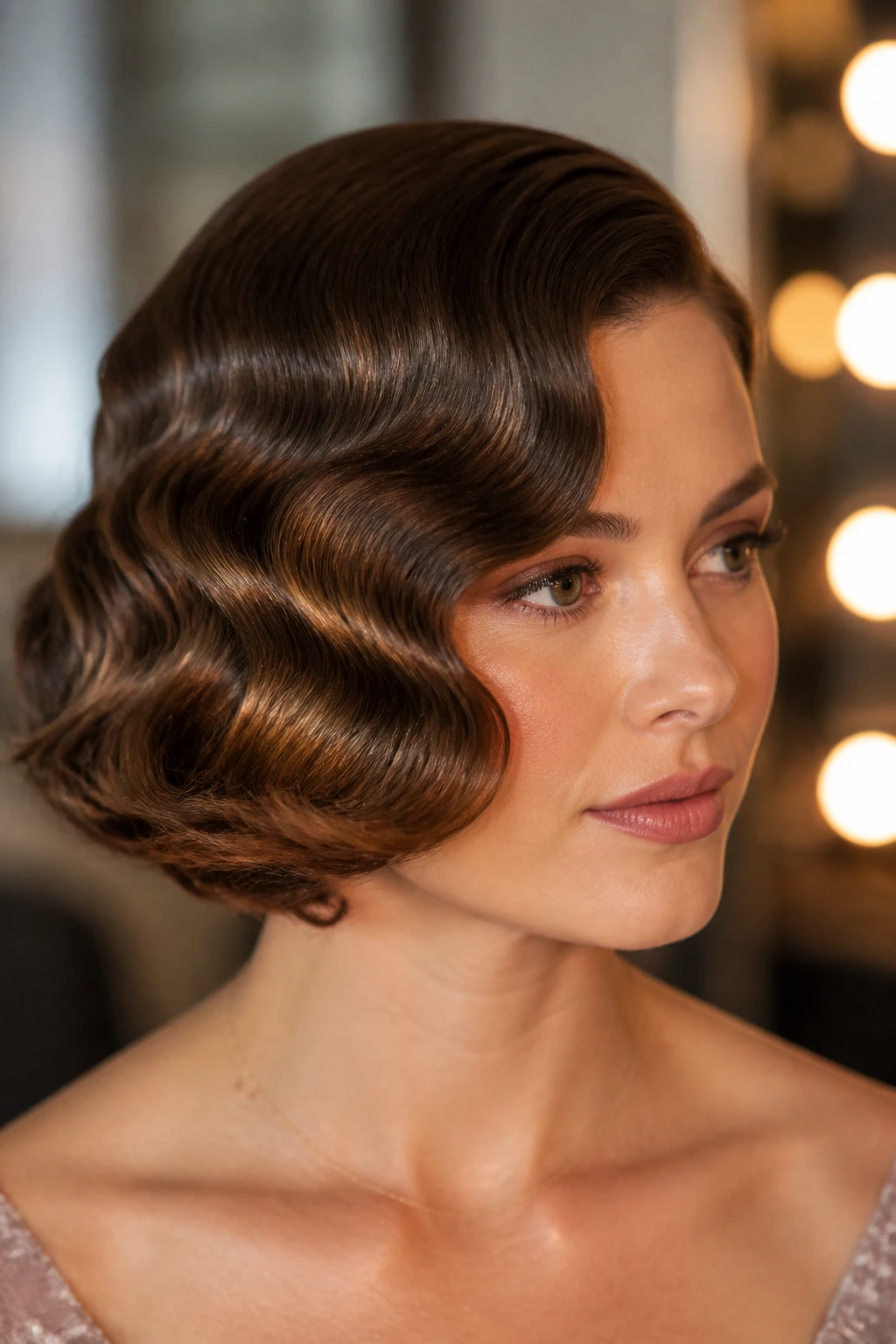
2. Soft Finger Waves on a Bob
Finger waves on a bob look polished in a way loose curls rarely manage. The shape is close to the head, the texture is glossy, and the whole style has that controlled sweep that makes short hair feel deliberate. If the bridesmaid dress is simple, this style does most of the visual work.
The trick is to keep the waves broad, not tiny. Section the hair while damp, work in a strong-hold gel or setting lotion, and shape the waves with a comb and your fingers. Clip each curve in place until it dries. Once it sets, you get that sculpted ridge-and-trough pattern that catches the light along the cheekbone and jawline.
This is a smart choice for a formal evening wedding, especially when the bob ends around the chin or just below it. It also keeps the hair off the neck, which is useful if the dress has a higher collar or a back detail worth showing.
A soft side part makes the waves feel a little less costume-like. That one small move changes the whole mood.
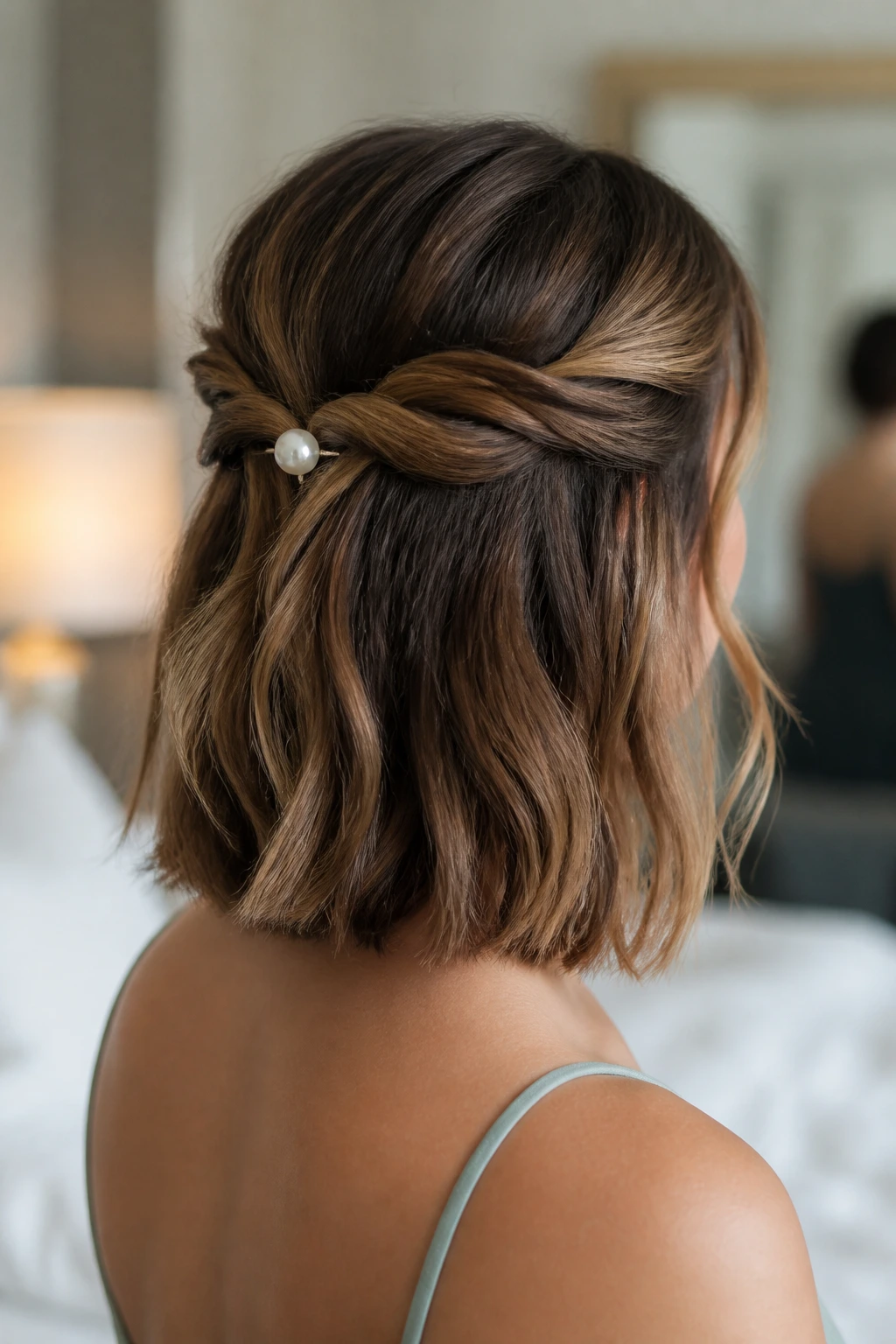
3. Twisted Half-Up Crown on a Lob
Can a lob look bridal without turning into a heavy updo? Absolutely. Two small twists from the temples, pinned where they meet at the back of the head, do more than enough. The rest of the hair stays loose, so the style keeps movement and doesn’t swallow the length.
How to Wear It
Start with a loose bend in the mid-lengths using a 1-inch curling iron or a flat iron wave. Then take a 1-inch section from each side, twist it back, and pin it under the top layer so the hardware disappears. The result looks cleaner if you leave the ends slightly imperfect. Perfect twists can look stiff on a lob.
- Works best on hair that hits the collarbone or a little above it.
- Use two crossing bobby pins per side so the twist doesn’t slide.
- A pearl pin or tiny floral comb sits nicely where the twists meet.
The style is especially good for bridesmaids because it feels dressed up without looking identical on every head. One person can wear the twists tight. Another can keep them softer. Same idea, different finish.
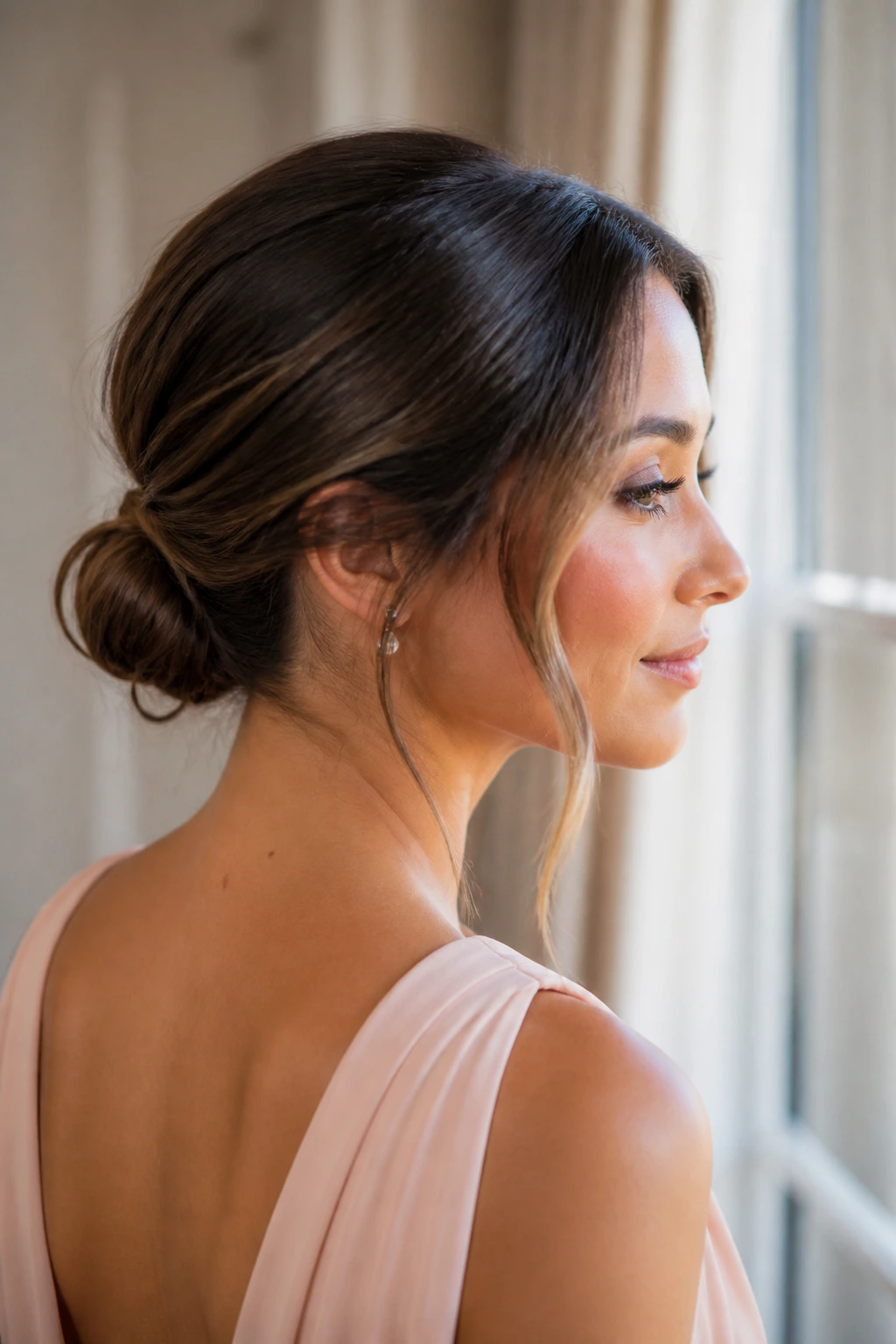
4. Mini Low Bun with Face-Framing Pieces
Picture this: the ceremony starts in twenty minutes, someone’s bob keeps slipping out of the nape, and the dress has a sweetheart neckline that needs a little more shape up top. A mini low bun fixes that problem without pretending the hair is longer than it is.
Section the hair low at the nape, twist the ends inward, and pin them into a compact bun that sits flatter than a classic chignon. Leave two small face-framing pieces out in front—about half an inch to an inch wide—so the style doesn’t look too tight around the jaw. Those soft pieces matter. They stop the bun from reading severe.
- Best for: chin-length bobs and short lobs with some bend.
- Accessory idea: a narrow comb placed just above the bun, not inside it.
- Hold factor: use U-pins for the bun itself; they grip better than plain pins.
The finish should look neat from the back and a little airy from the front. That mix is what makes it work at a wedding instead of in an office.
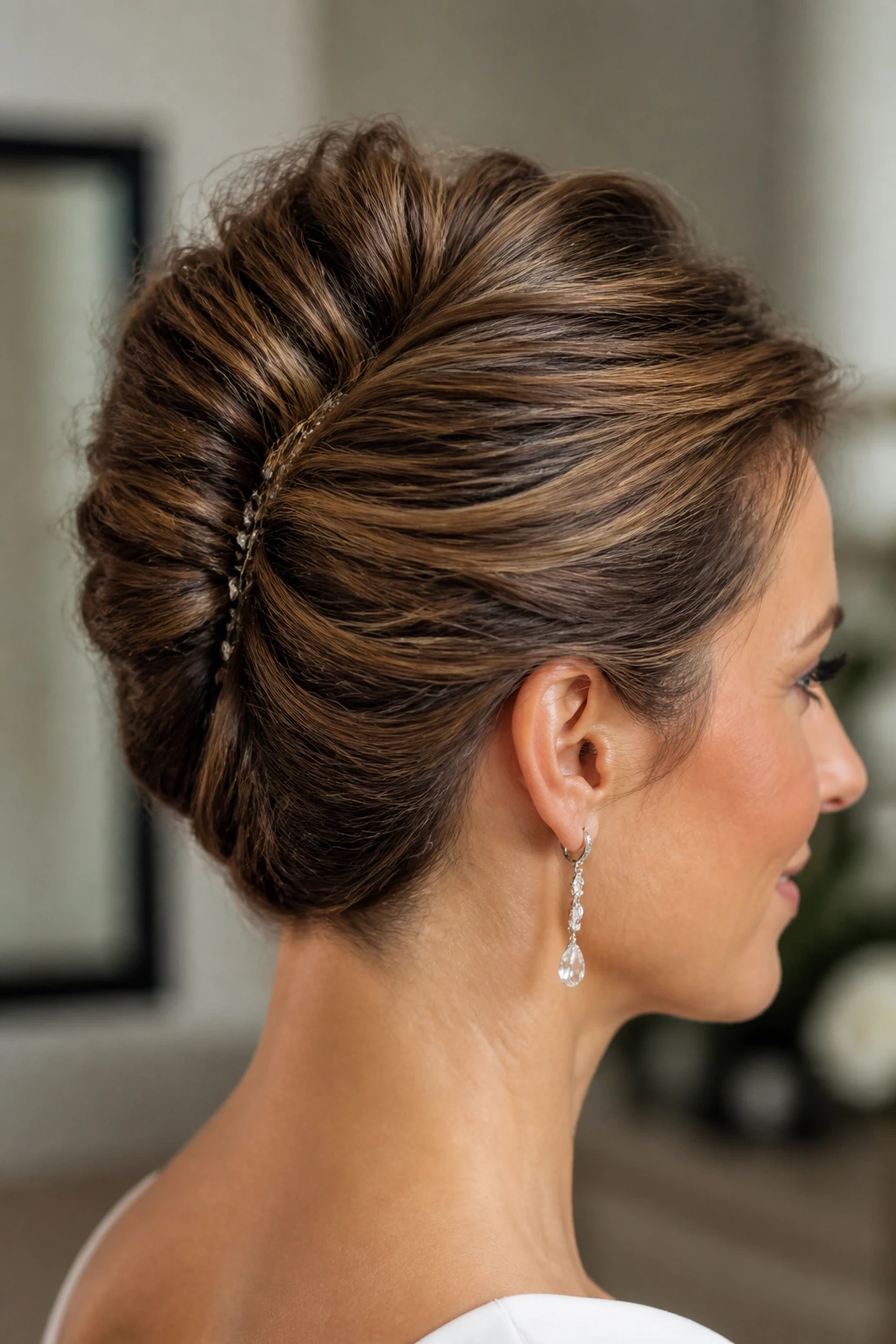
5. Textured French Twist for Short Hair
A French twist on short hair sounds ambitious until you break it into sections. Then it becomes one of the smartest formal styles in the stack. Shorter lengths can actually make the shape feel cleaner because there’s less bulk to wrestle into the roll.
Start by rough-drying with a touch of mousse and a light root lift. Back-comb the crown only a little—just enough to create grip—then sweep the hair to one side, fold it inward, and pin vertically along the center seam. The ends should disappear into the twist, not poke out like loose wires. If the hair falls above the collarbone, you may need a small padding piece or a rolled base underneath. That’s fine. It’s not cheating. It’s structure.
This style suits bridesmaids in satin or crepe dresses especially well because it has a crisp line. The neckline stays open, the ears can show, and a single decorative pin is often enough. Don’t crowd it with too much sparkle. The twist itself is already the statement.
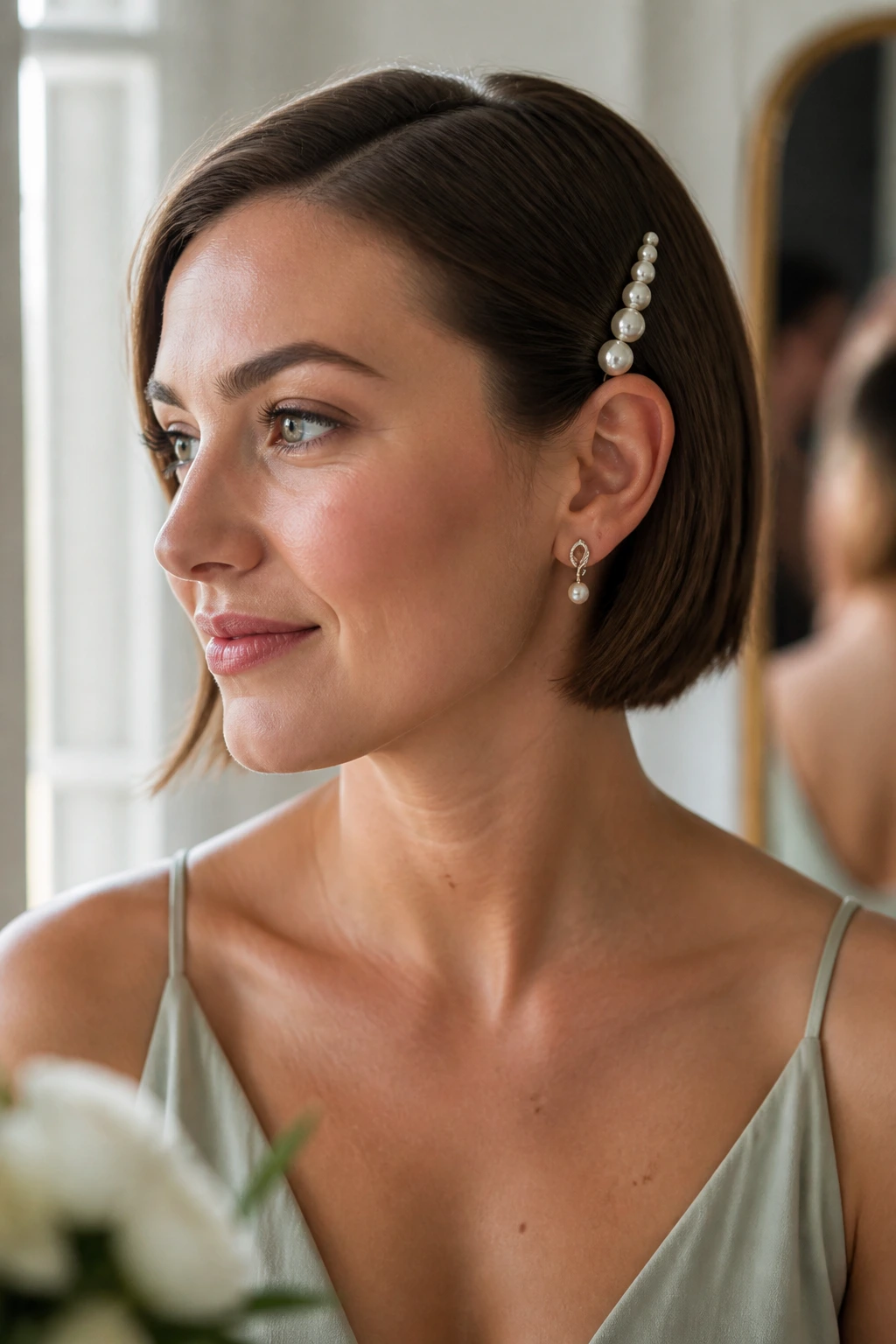
6. Sleek Tucked-Behind-Ear Finish with Pearl Pins
If finger waves feel too formal and loose styling feels too casual, this sits right in the middle. The hair is smoothed, tucked behind one ear, and pinned with a small row of pearls or one larger decorative clip. It’s minimal, but not plain. There’s a difference.
The beauty of this look is the restraint. A center part or deep side part both work. Flat-iron the hair in small sections, smooth a touch of anti-frizz cream through the ends, and tuck one side back so the face stays open. The visible ear line gives earrings a chance to show off, which matters more than people admit.
Best of all, this style works on cuts that refuse to hold a curl. Straight, fine, or slightly layered hair can all do it. You’re not fighting the texture. You’re using the cut’s clean edges and making them look expensive. A little shine spray at the very end helps, but keep it off the roots or the style goes limp fast.
7. Braided Halo on a Chin-Length Bob
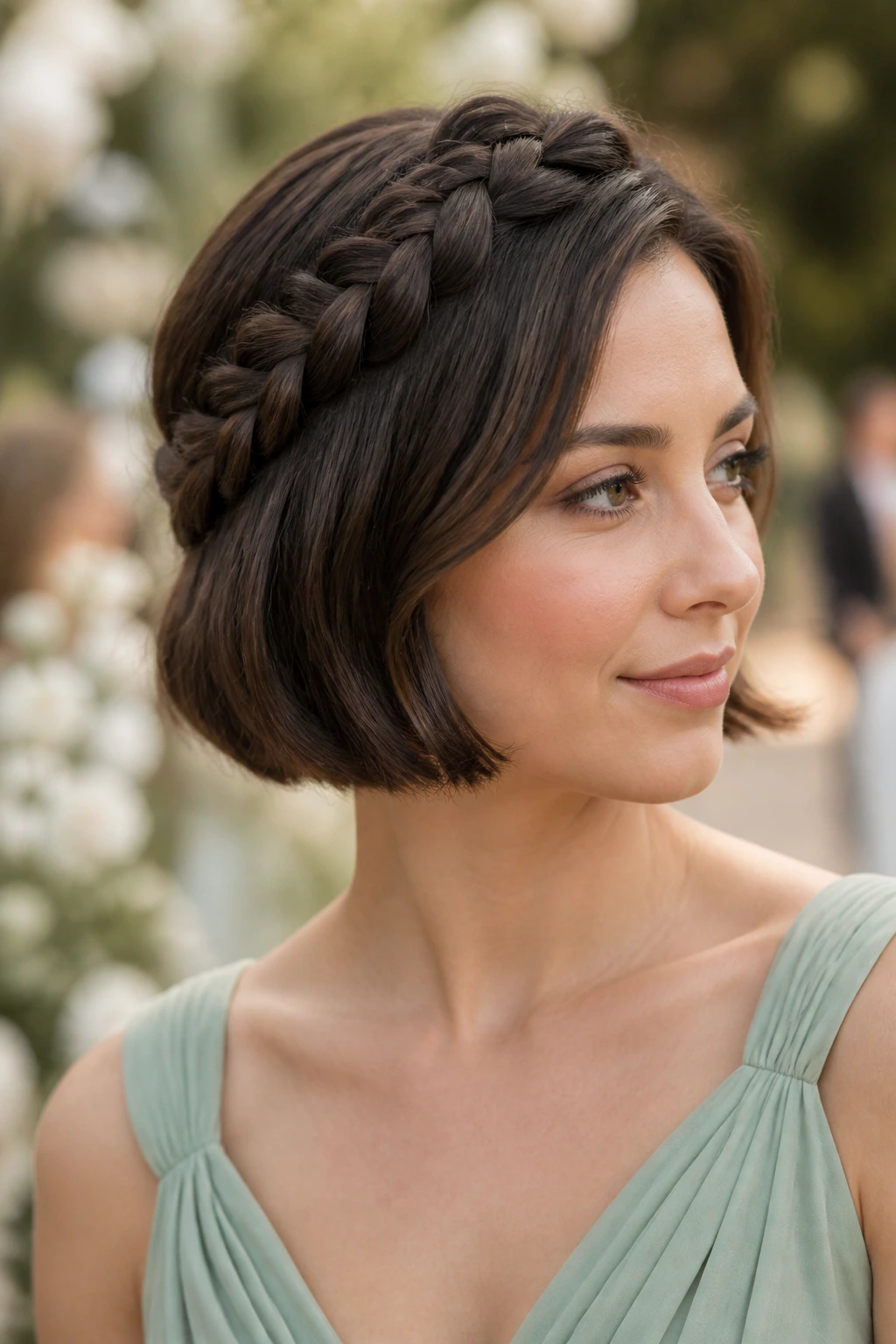
A halo braid on short hair is one of those styles that sounds harder than it really is. On a chin-length bob, you braid along the hairline from one side, wrap the braid toward the crown, and pin the tail under the opposite side so the end disappears. The result frames the face and keeps the front neat without hiding the haircut.
What Keeps the Braid from Looking Childish
Thin, tight braids can read school-day if they’re too small. Make the braid a little wider—roughly the width of your thumb—and pull the outer edges gently once it’s pinned so it looks fuller. That one move softens the whole shape. It also helps the braid sit flatter against the head, which matters if the bob is layered.
A chin-length cut gives you just enough hair to make the halo believable. If the ends are too short, leave the braid on one side only and sweep it across like a half-crown. That version is easier to pin and still gives a bridal-party feel.
- Good with: floral dresses, outdoor ceremonies, and soft makeup.
- Pair it with: tiny studs or drop earrings, nothing heavy.
- Watch for: slippery hairline layers; a little texture spray helps.
The best part is the way it stays visible from every angle. That matters in group photos.
8. Curled Ends with a Ribbon Bow
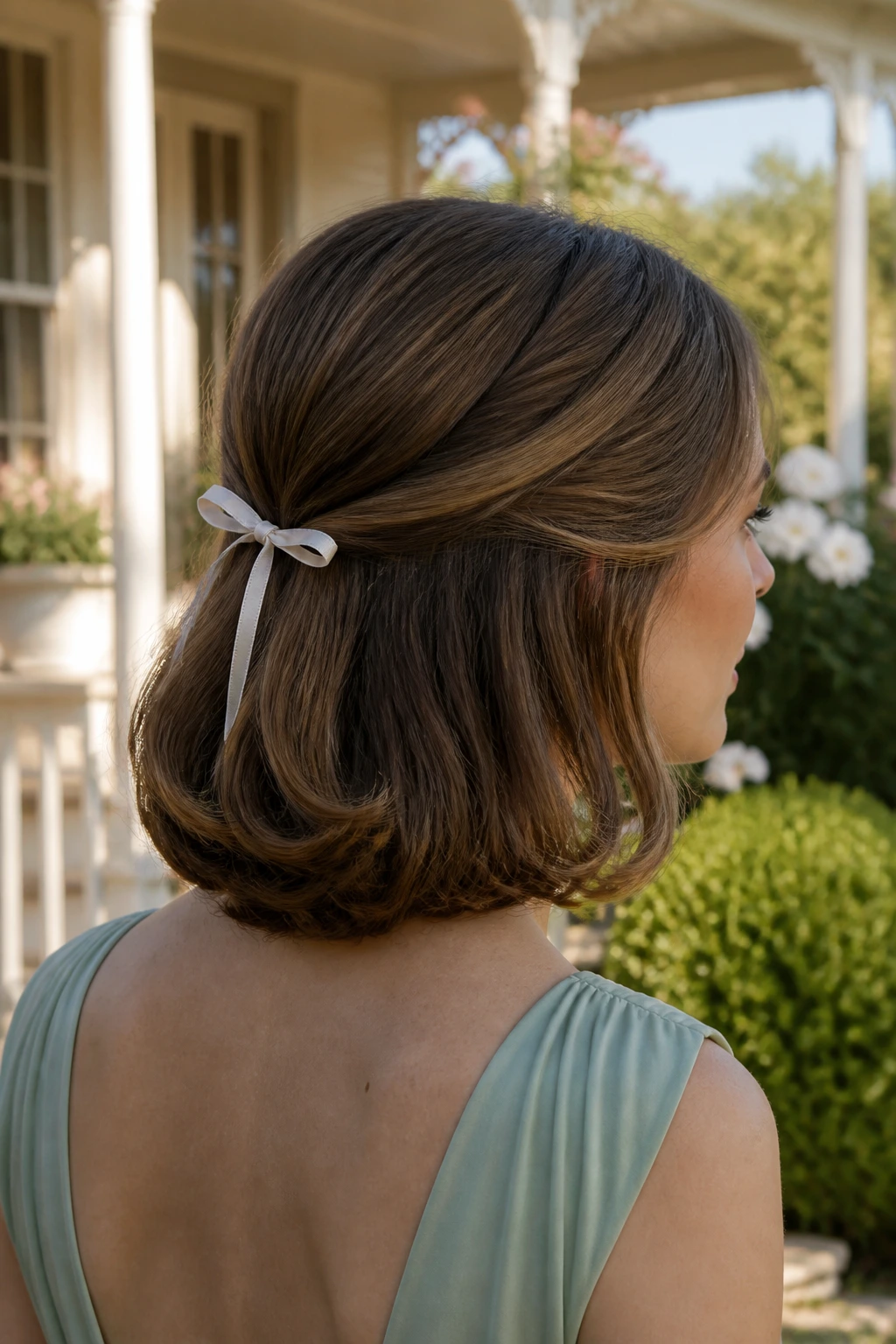
A ribbon can carry a short hairstyle farther than most people expect. Curl the ends of a bob or lob outward or inward with a 1-inch iron, let the top stay smooth, and tie a narrow satin ribbon around a half-up section or a low gathered point at the back. It looks sweet, yes, but not sugary.
The trick is scale. Keep the ribbon narrow—about 1/4 to 1/2 inch wide—so it doesn’t take over the haircut. A huge bow can swallow a short style and make the head look smaller. A slimmer ribbon just finishes the shape. It’s especially nice for bridesmaids because the color can match the dress, flowers, or one small detail in the bouquet.
This is a good choice when the wedding mood leans garden, daytime, or a little less formal. The hair still feels dressed, but there’s air in the style. If the hair is very fine, tease the crown by a half-inch before adding the ribbon so it won’t slide.
9. Faux Bob with Hidden Pins
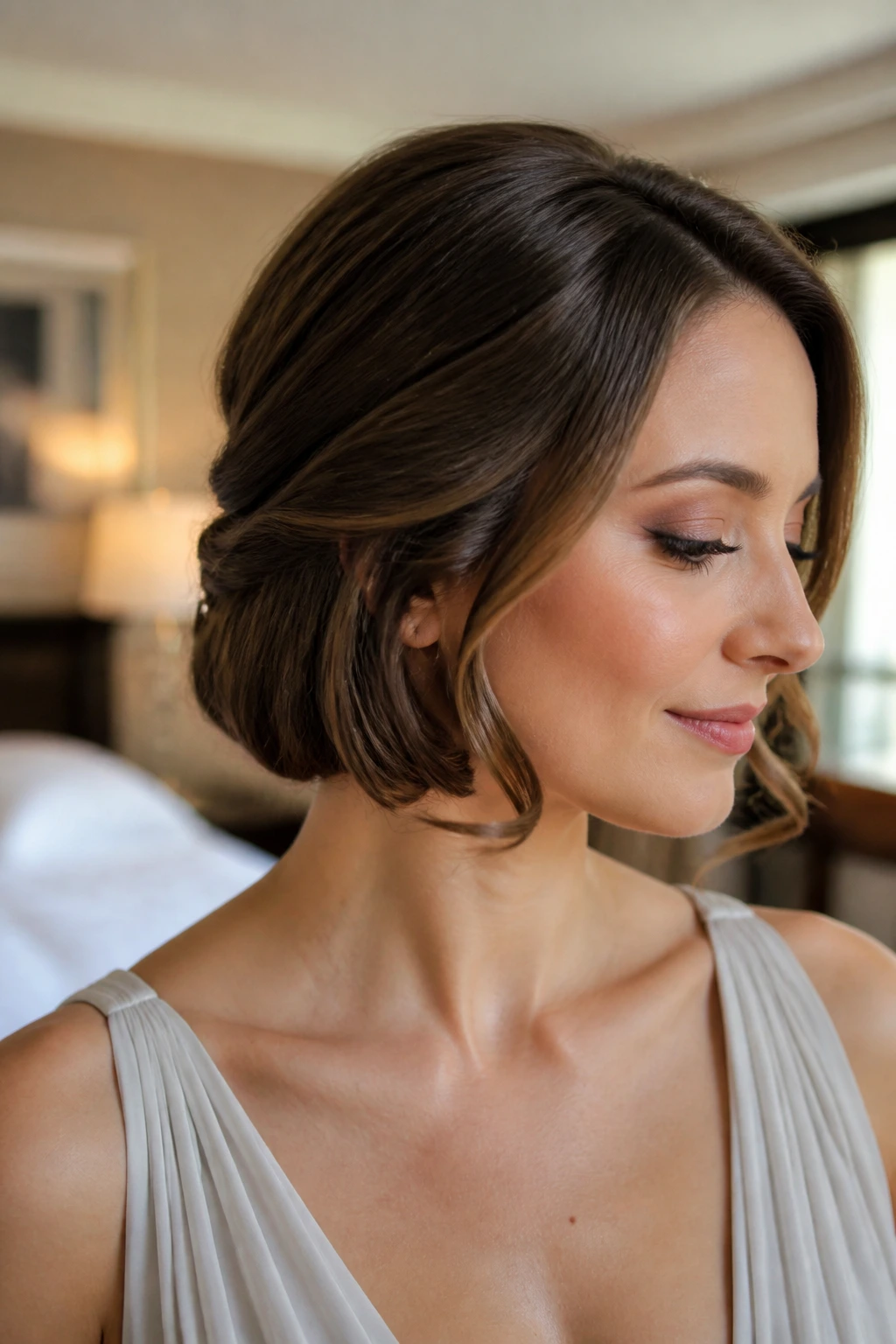
Can short hair do a faux bob? Sometimes the answer is yes, but it depends on the length. A lob or shoulder-skimming cut can be tucked under to create the illusion of a shorter, vintage-inspired shape. The finish works because it follows the natural bend of the hair instead of forcing a tight roll.
Curl the ends first so they’re easier to fold under. Then pin small sections against the nape, hiding the ends under the outer layer. The front pieces should skim the jawline, not cling to it. That little bit of looseness makes the style breathe. If the hair is layered, pin from the bottom up so the shorter top layers cover the tucked pieces.
This look gives bridesmaids a slightly old-Hollywood feel without needing full-length hair. It’s also kind to dresses with open backs or detailed shoulders. The neck stays visible, and the silhouette looks clean from across the room, which is where a lot of wedding styling either shines or falls apart.
10. Side-Swept Curls with a Single Statement Clip
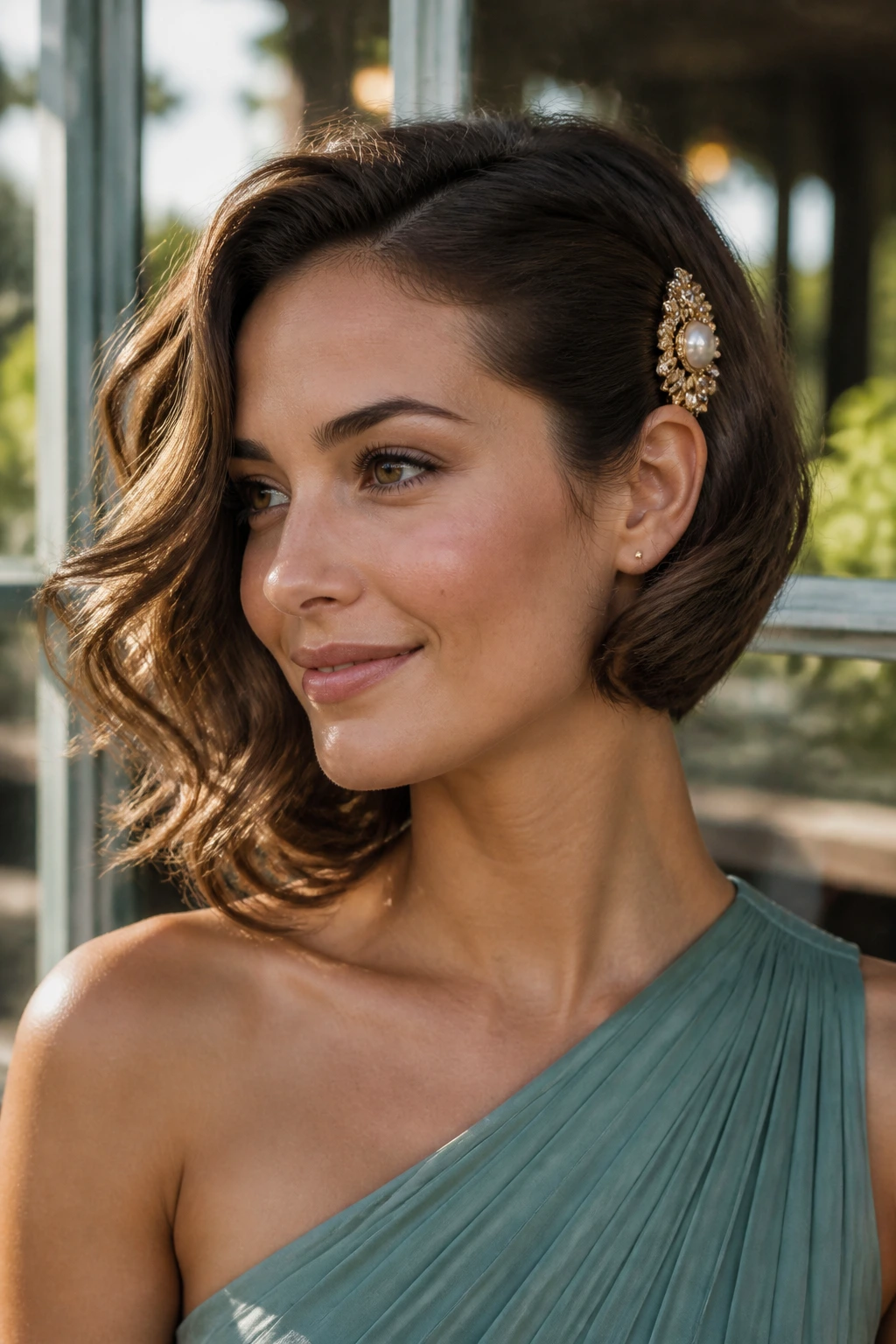
A single statement clip can do more work than a whole tray of tiny pins. Sweep the hair to one side, add soft curls or bends through the ends, and secure the heavier side just behind the ear with one bold barrette or jeweled clip. That asymmetry gives short hair a strong profile.
This style is especially good when the dress has one-shoulder lines or an angled neckline. The hair mirrors that shape instead of competing with it. Use the clip as the anchor, not the decoration. If it’s too far back, the front collapses. If it sits too low, the effect disappears in photos.
For short hair that tends to puff out, smooth the roots first with a blow-dryer and a flat brush. Then add bends through the mids only. You want the front to stay sleek enough to hold the clip, while the ends keep a little movement. The whole look lands somewhere between polished and relaxed, which is a nice place for a bridesmaid to live.
11. Messy Chignon for Shoulder-Length Short Hair
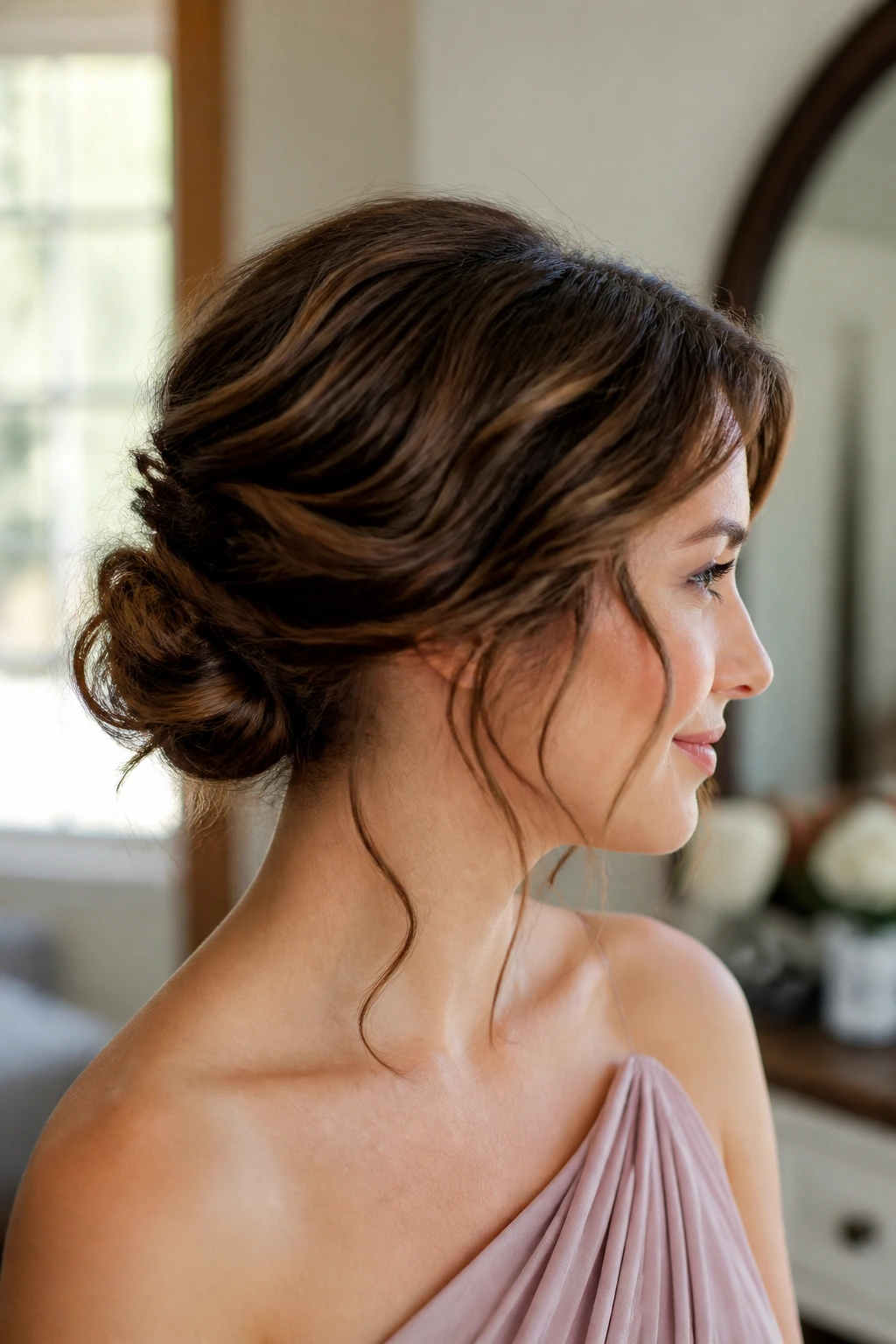
A shoulder-grazing cut gives you more to work with, and a messy chignon takes full advantage of that. Twist the hair low at the nape, tuck the ends under, and pin in loose loops so the bun sits soft instead of architectural. The shape should look gathered, not built.
This works because short shoulder-length hair often has enough mass for a bun, but not enough for a heavy one. If you pin it too tightly, the style can spring apart under its own tension. Leave a few pieces loose at the hairline and around the ears. They keep the look from turning blocky, especially on bridesmaids who are wearing high-neck dresses or textured fabric.
A small amount of texturizing spray before pinning gives the hair grip, and that grip matters more than extra hairspray. Too much finishing spray makes a chignon feel crusty by the end of the event. Nobody wants that. Use pins to create the shape, spray to lock the surface, and stop once the bun holds when you shake your head.
12. Twisted Half-Up with a Floral Comb
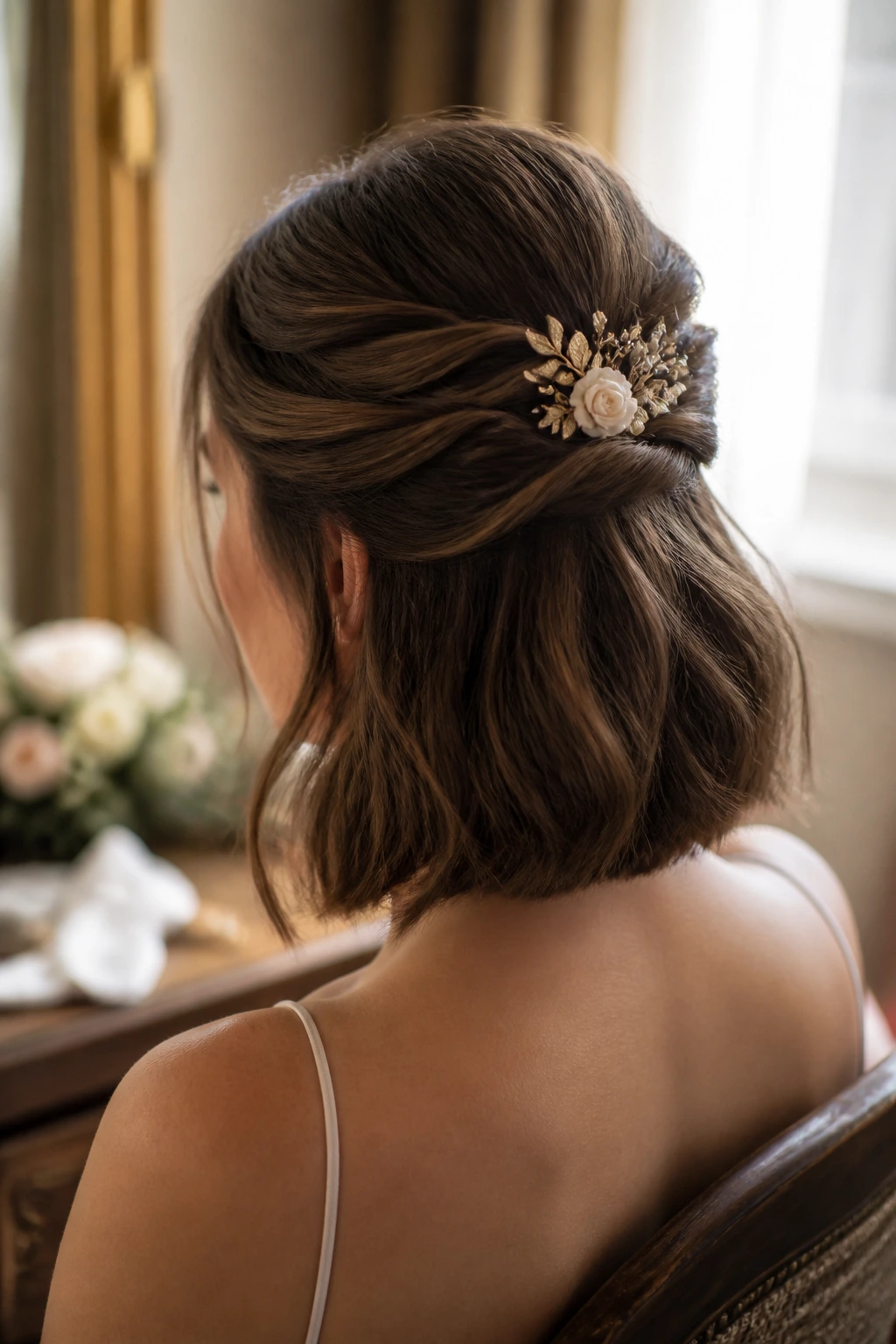
If the bouquet has soft blooms and the dresses lean romantic, a floral comb can pull the whole thing together without feeling overdone. Take two side sections, twist them back, and pin them beneath a comb that sits just off center. The lower half of the hair stays loose, which keeps the shape easy on short cuts.
The flower piece should match the scale of the hair. Small comb, small cut, small detail. A huge comb can overpower a bob in a second. A modest cluster of fabric blossoms, dried flowers, or tiny crystals sits better and lets the haircut stay visible.
This style is a good bridge between simple and dressed up. It has enough ornament to feel wedding-ready, but the twisted half-up shape keeps it grounded. It also works well for bridesmaids who don’t want curls everywhere. The twist gives control at the top, and the rest stays soft around the shoulders.
13. Wet-Look Wave on an Asymmetrical Cut
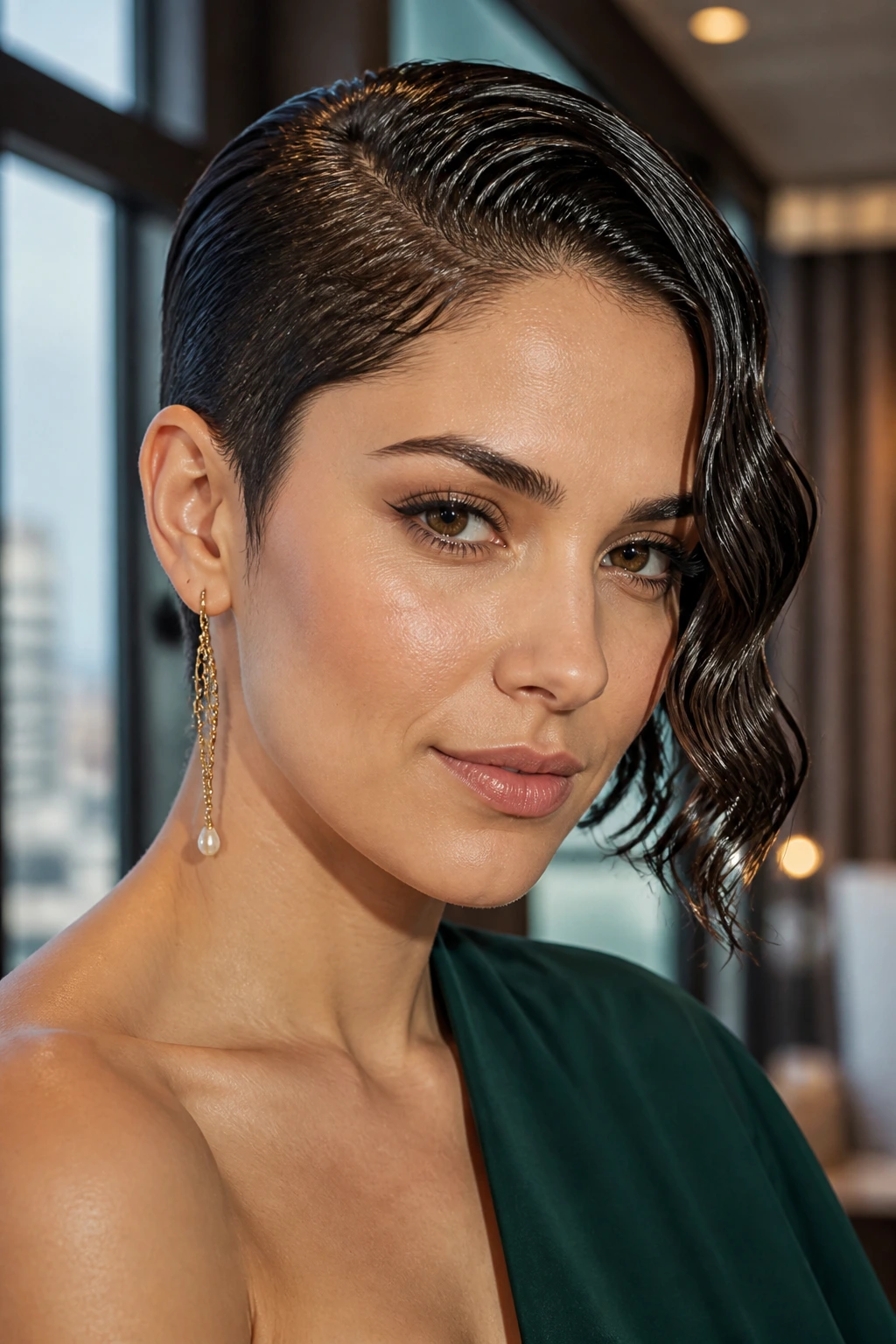
An asymmetrical cut already brings attitude, so a wet-look wave suits it better than a softer, airy style would. Use gel or a strong styling cream on damp hair, shape one or two defined waves with a comb, and let the rest fall in a polished curve. The finish should look controlled and glossy, not greasy.
Why This Style Wins on Angular Cuts
The uneven length of an asymmetrical cut can look accidental if it’s left too loose. A wet finish makes the shape read on purpose. The shorter side stays close to the head, while the longer side drops in a smooth line that catches light in a clean way.
Keep the product concentrated from roots to mid-lengths. If you overload the ends, they turn stringy. A tiny amount of serum on the tips after drying can help, but that’s it. This style is strongest when it looks exact.
It’s not for every wedding mood. But for a modern city ceremony or a dress with sharp tailoring, it hits the mark fast.
14. Voluminous Blowout with a Deep Side Part
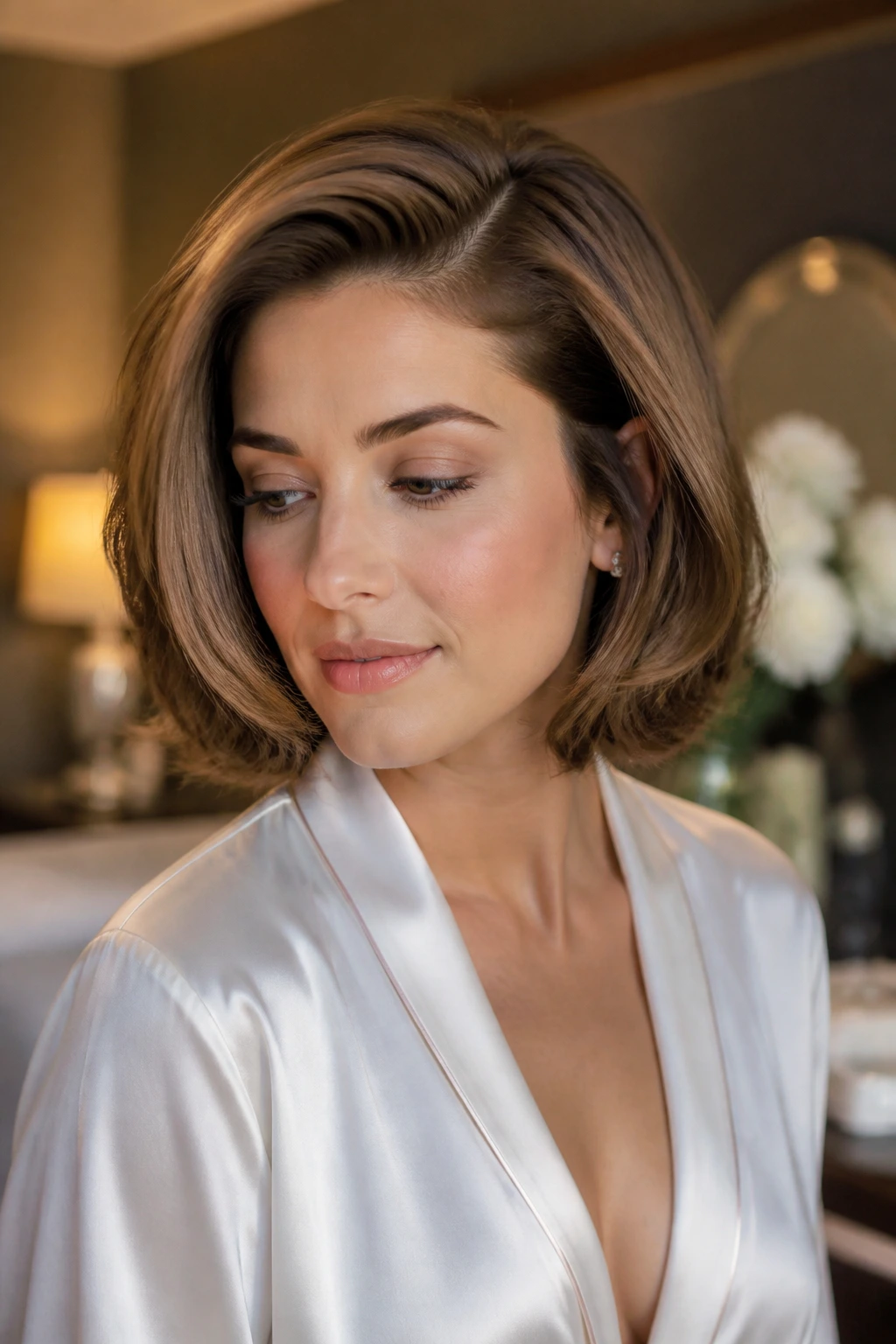
Not every short hairstyle needs pins, twists, or braids. Sometimes the strongest answer is a blowout with a deep side part and a bend at the ends. On a bob or lob, that shape gives lift at the crown and soft movement near the shoulders, which is a hard combination to beat.
The secret is root direction. Blow-dry the hair against the part first, then flip it back so the crown gets a little lift. Use a round brush on the top sections and a paddle brush on the sides if the hair is thick. The ends should curve under or outward just enough to show the cut, not collapse into one flat line.
This style is useful for bridesmaids who want a clean face line without looking overly styled. It also works well under a veil or with a dress that has strong shoulders. A side part gives the face some drama, and the volume keeps the head from disappearing in photos.
15. Pin-Back Braid Accent for Layered Hair
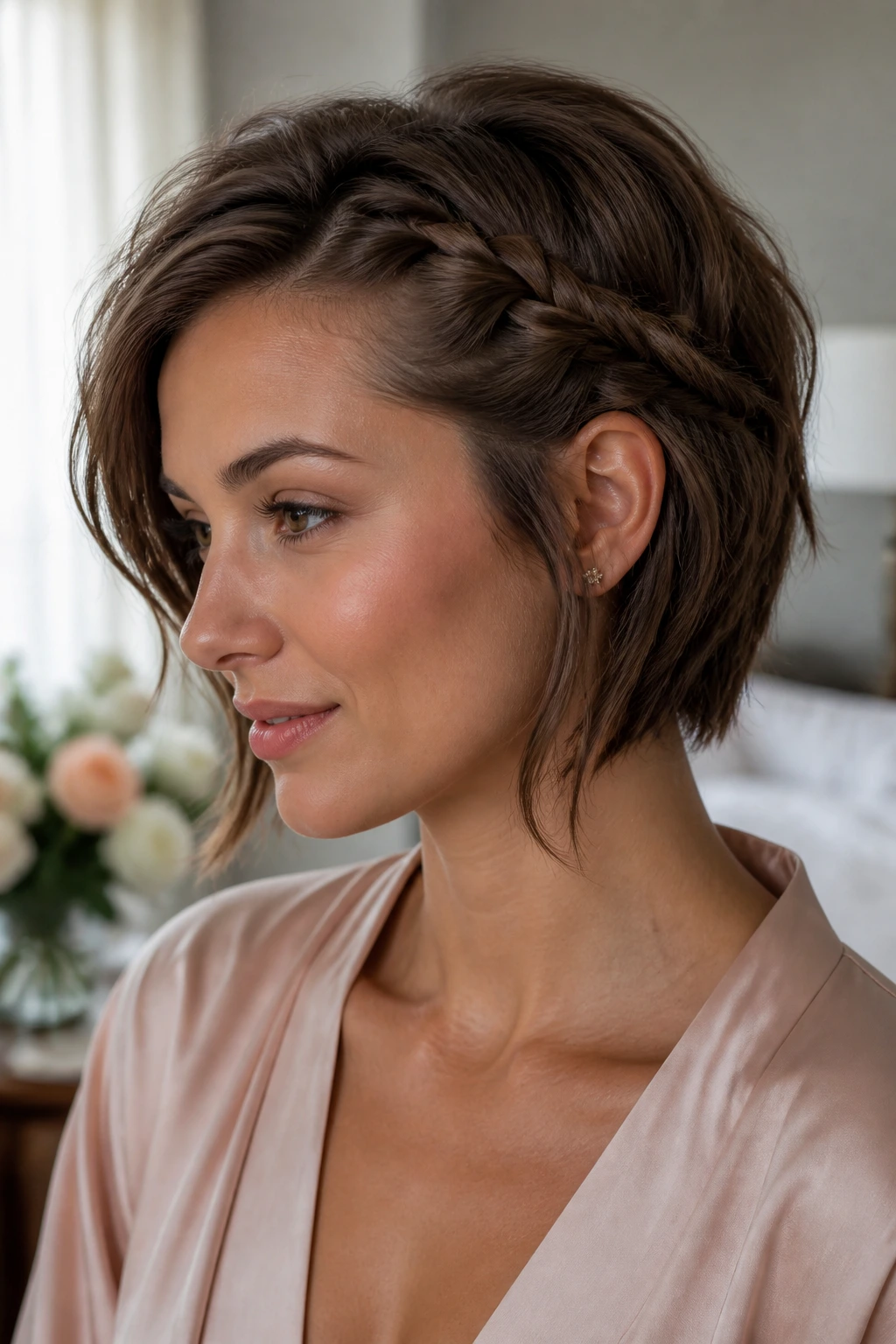
A tiny braid can do a lot on layered short hair, especially when the layers at the front keep falling into the eyes. Braid a narrow section from the temple or hairline, pin it back, and let the rest of the cut do its own thing. It’s subtle, but it creates a point of interest where short hair often needs one.
The braid should be clean and narrow, not thick and chunky. On layered cuts, that avoids the “piecey” look that can happen when the front is too broken up. Once it’s pinned, flatten the base with the palm of your hand and mist it lightly. That keeps the braid from popping loose halfway through photos.
This is a good bridesmaid option when one person has shorter front layers than everyone else. It gives a coordinated feel without requiring the whole party to wear the same style. One braid, one pin, done. Sometimes that’s enough.
16. Retro Victory Rolls for Short Hair
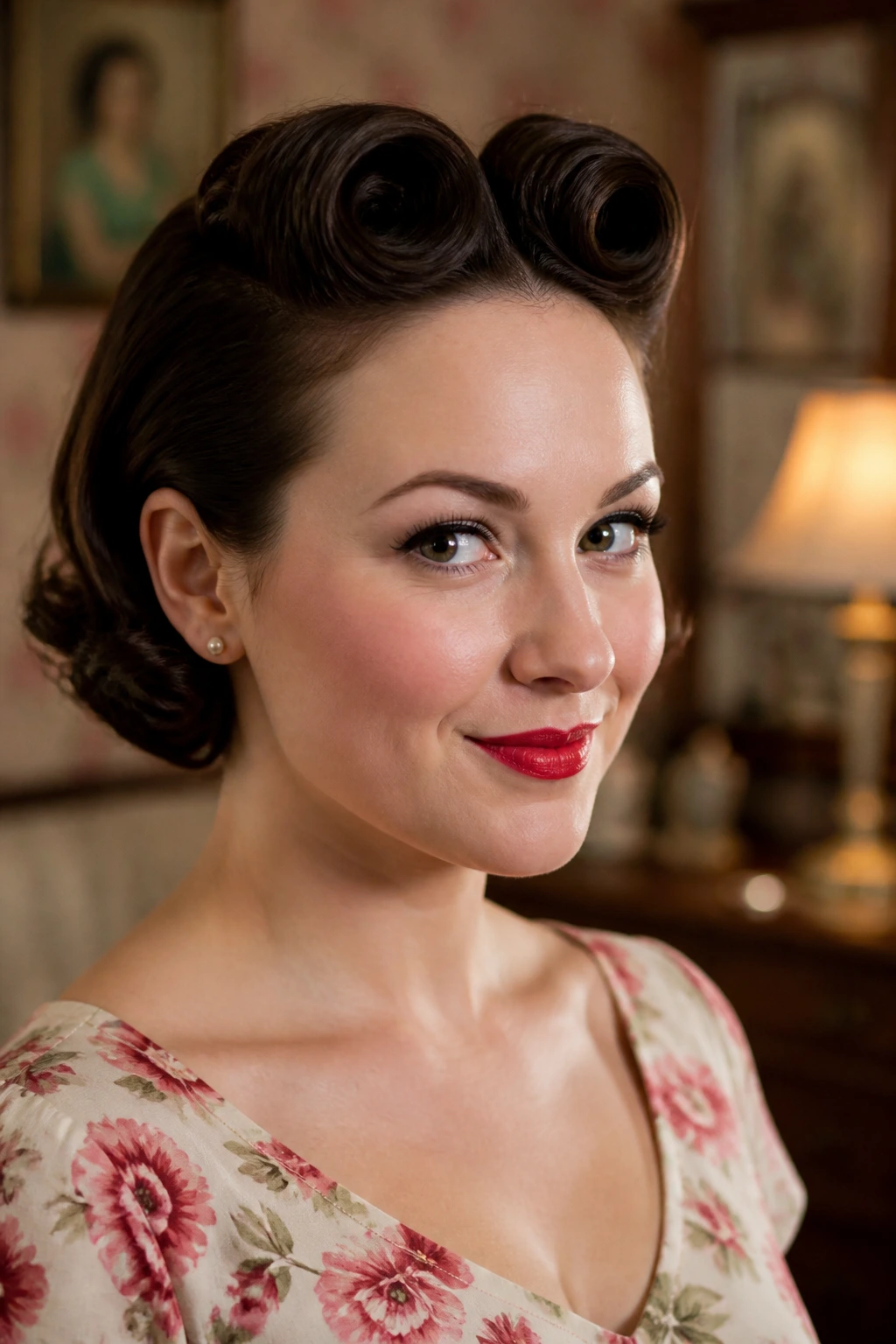
Victory rolls on short hair take a bit of nerve, but they repay the effort. Roll the front sections inward, one at a time, and pin them close to the scalp so the shape stays rounded. The rest of the hair can stay smooth, curled, or tucked depending on how much length you’ve got.
This is a strong choice for a vintage-themed wedding because the shape is unmistakable. It also works better than people expect on pixies and bobs with enough length at the front. The rolls don’t need to be huge. In fact, smaller rolls usually look cleaner and sit better with modern bridesmaid dresses.
A little setting spray goes on before the roll, not after. That gives the hair grip while you shape it. Once the rolls are pinned, press them lightly with your palm to settle the surface. Don’t over-touch. Victory rolls can loosen if you fuss at them too much, and the whole point is a style that knows exactly what it is.
17. Low Rolled Bun with Braided Detail
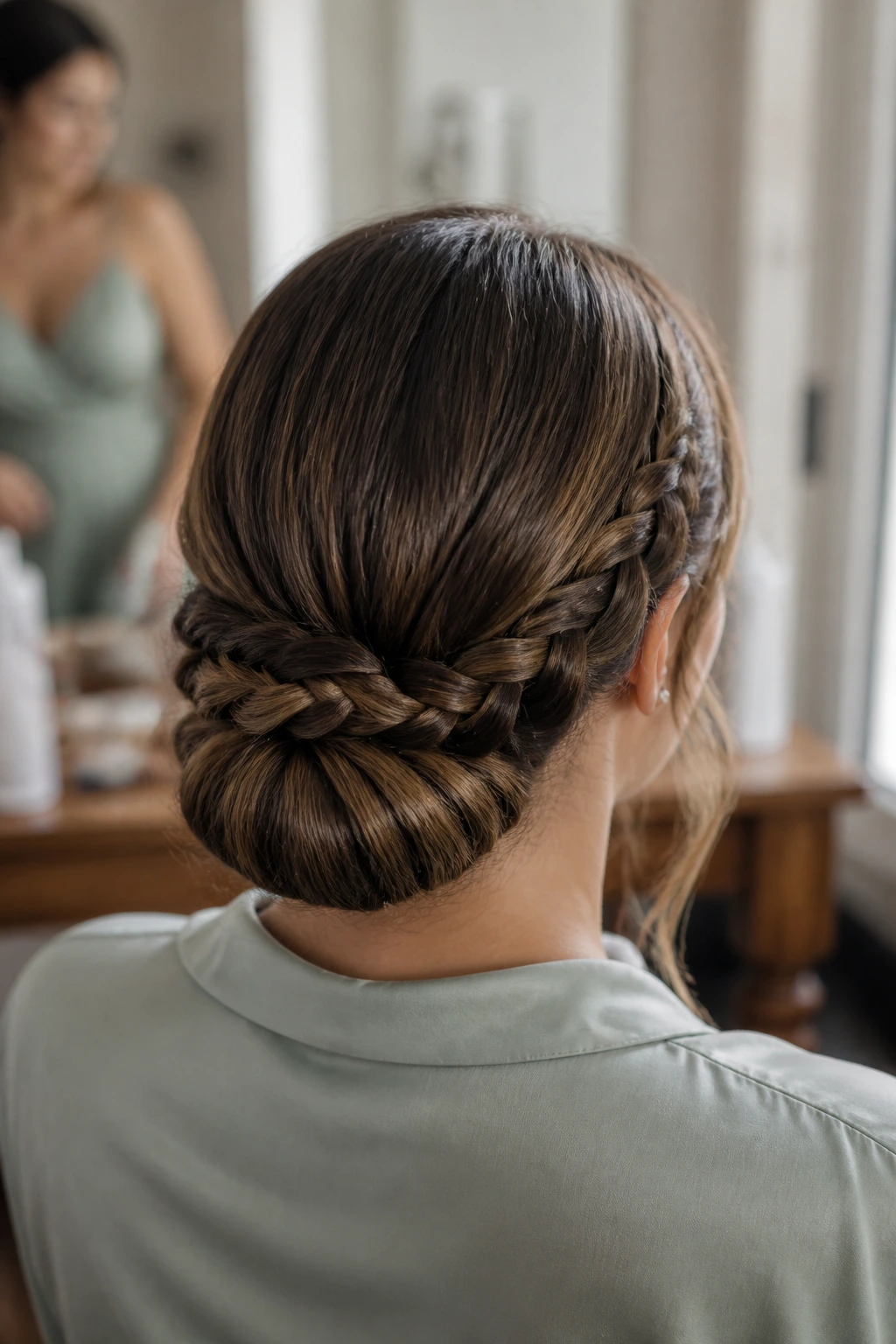
A low rolled bun feels more thoughtful when it has a small braid feeding into it. Start with a braid from one side of the nape, then roll the rest of the hair inward so it gathers into a compact knot. The braid becomes a visual line that leads the eye into the bun.
This style works best on short lobs and shoulder-length cuts. The braid gives you structure, and the roll hides shorter ends that might otherwise poke out. If the hair is layered, pin the ends in a spiral around the bun rather than trying to tuck everything in at once. That takes less wrestling and usually looks neater.
The best part is the back view. From behind, the braid adds a bit of shape without creating bulk. That matters in wedding photos, where the back of the head is on display more often than people expect. A center or slight off-center part keeps the top clean and lets the bun do the talking.
18. Tucked and Pinned Updo with a Veil or Comb
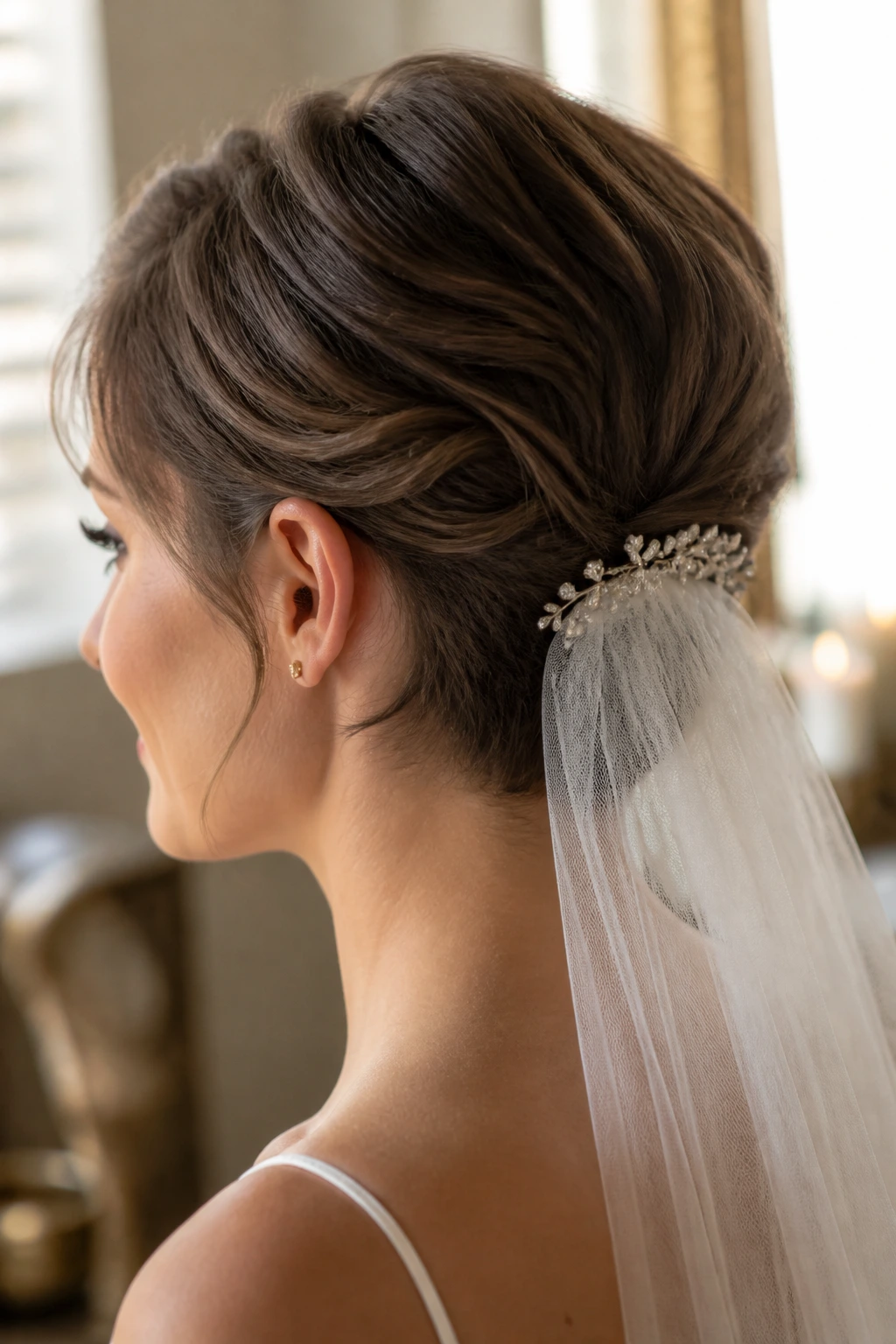
A veil or comb can turn short hair into a formal updo illusion without asking the cut to do something impossible. Tuck the hair upward and inward at the nape, pin the loose ends flat, and let the accessory sit over the seam. The accessory hides the construction, which is half the battle.
This is the most adaptable style in the group. A bridesmaid near the bride can wear a comb that matches the bouquet or dress trim. Someone else can use a simple veil pin or a small crystal piece and keep the rest of the hair smooth. The shape underneath doesn’t need to be large. It just needs to be secure.
Keep the base narrow so the accessory sits close to the head. If the tucked section gets bulky, the comb tilts and the veil pulls. That’s the part people forget. The best short-hair updos look light from the outside because the hidden pinning does the heavy work underneath.
How to Choose a Style for a Pixie, Bob, or Lob
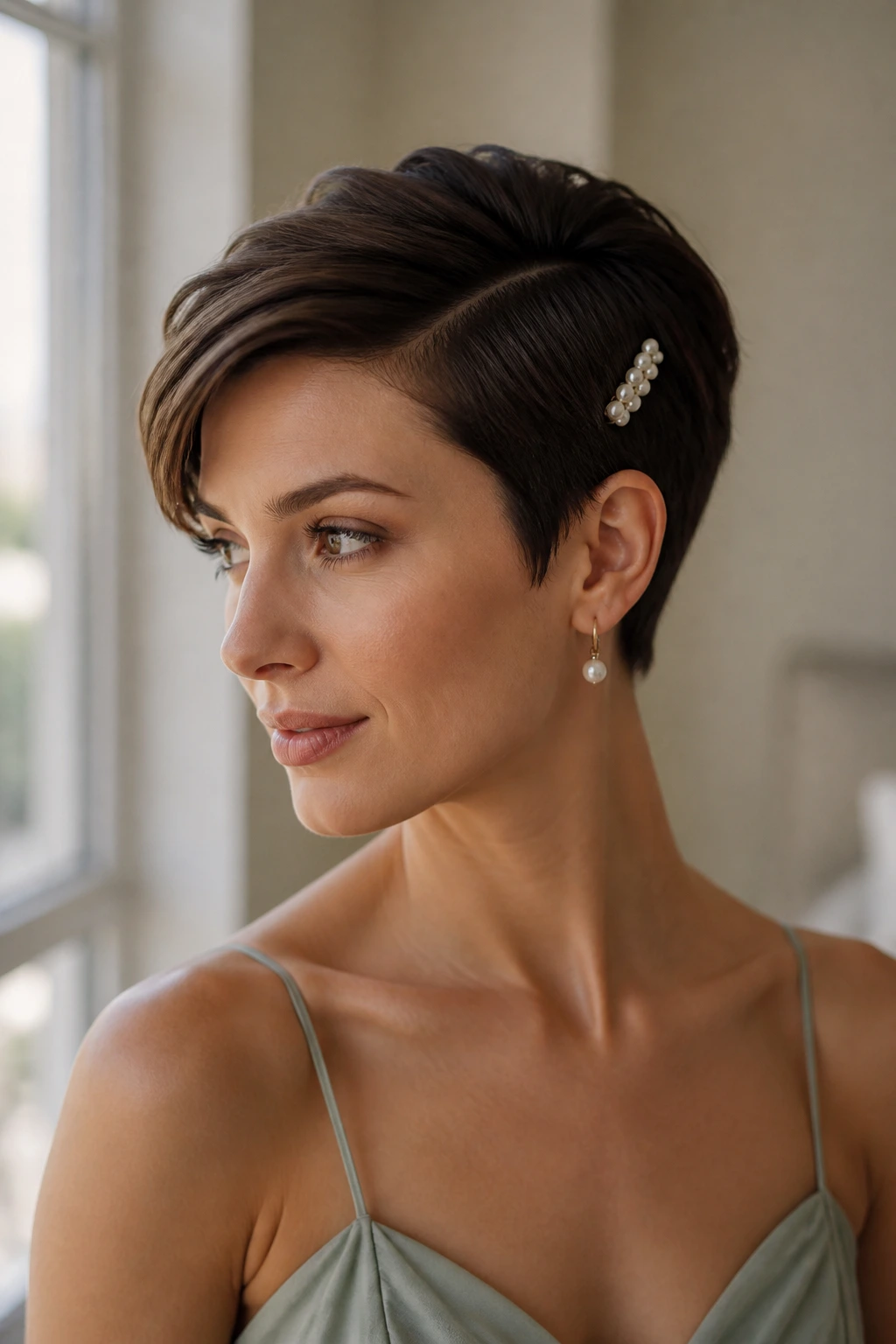
Pixies do best with direction, shine, and one strong detail. A sculpted side part, pearl clip, or tucked ear finish gives a pixie a finished edge without making it look overworked. If the cut is very short, lean on texture at the top and clean lines at the sides.
Bobs can carry more shape. Finger waves, halo braids, side-swept curls, and mini buns all sit comfortably on a bob because the length gives you a little room to pin. Chin-length bobs need closer attention at the temples and nape so the style doesn’t puff.
Lobs are the easiest to build on. They can wear half-up twists, faux bobs, low buns, and French twists without much trouble. If you’re unsure what to pick, the lob usually forgives small mistakes better than the other two lengths.
The dress matters too. High neck? Keep the hair away from the collar. Open back? A lower style or tucked finish shows the line of the dress better. A bridesmaid hairstyle should frame the outfit, not compete with it.
The Tools That Keep Short Hair from Slipping
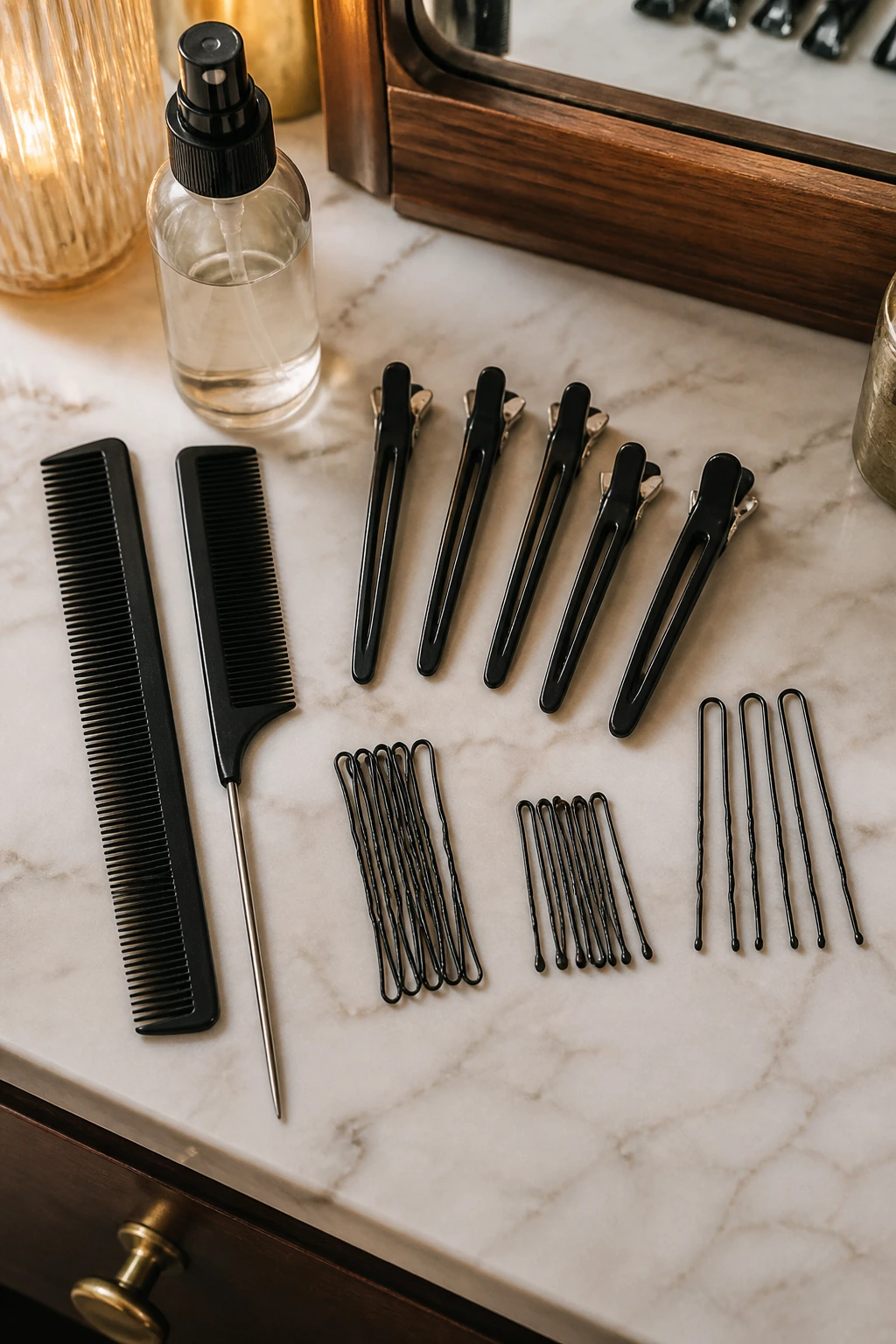
- Fine-tooth tail comb: gives you clean parts and helps place sections without roughing up the surface.
- Rat-tail comb: useful for sculpting waves, lifts, and small braids on short hair.
- Sectioning clips: hold damp or sprayed sections apart while you shape the rest.
- Bobby pins in two sizes: small pins hide better; larger ones grip thicker sections and twists.
- U-pins: better than plain pins for compact buns and tucked rolls.
- Flexible-hold hairspray: locks the style without turning the hair stiff and crunchy.
- Texturizing spray: adds grip to clean hair and keeps pins from sliding.
- Smoothing cream or serum: tames flyaways on pixies, bobs, and asymmetrical cuts.
- 1-inch curling iron or wand: makes bend and wave without forcing huge curls that overwhelm short hair.
- Blow-dryer with concentrator nozzle: helps direct the cut and keeps the root line clean.
- Mini teasing brush: useful for crown lift on lobs and short layers.
- Decorative pins, combs, or clips: one well-placed piece usually beats a cluster of tiny decorations.
Prep Tricks That Make Wedding Styling Easier
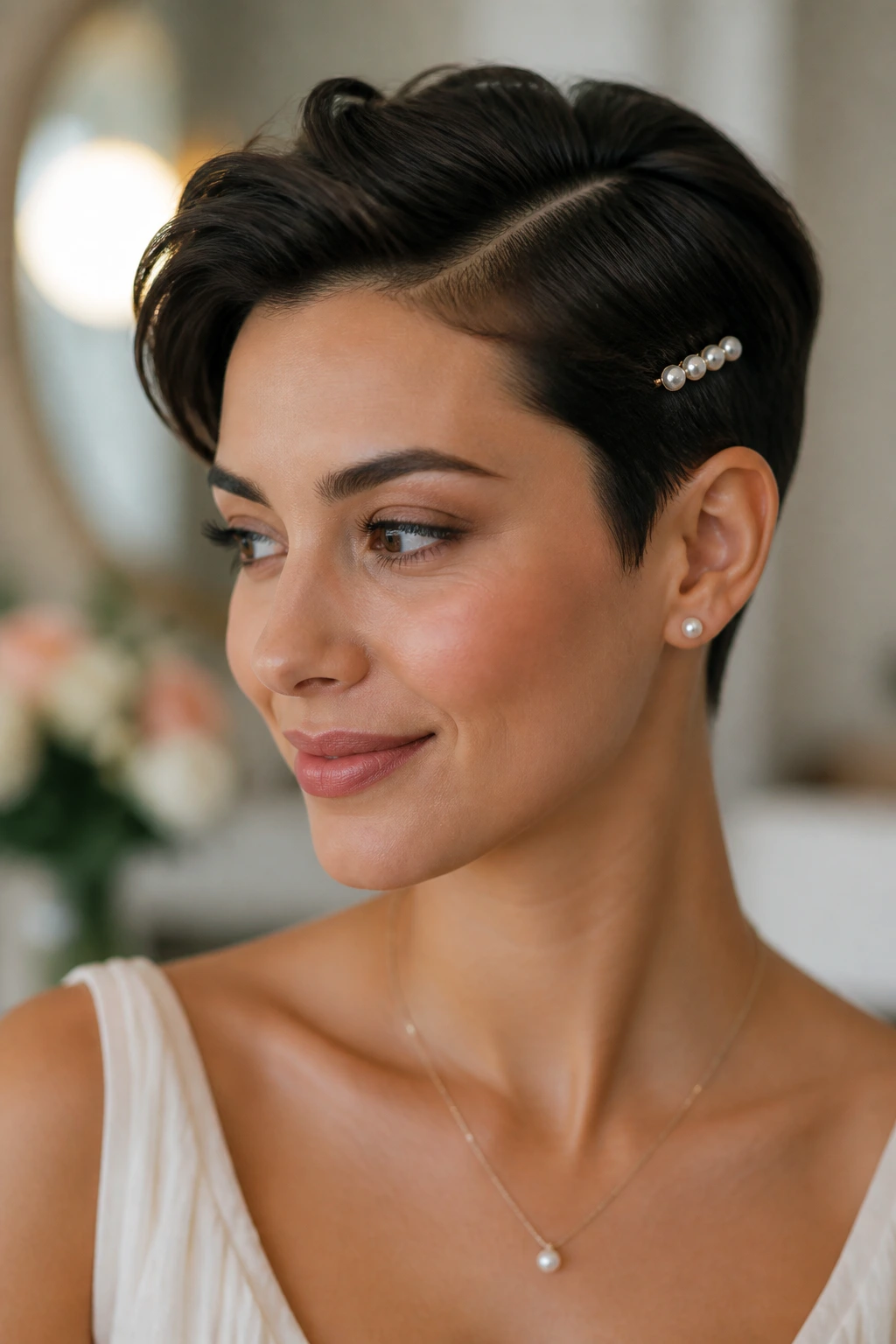
Short hair behaves better when it isn’t too clean. Freshly washed hair can be slippery, especially if it’s fine. A little natural oil from the scalp—or a very light mist of texture spray—gives pins something to grab. If the hair is extremely clean, let a root spray or dry shampoo sit for 10 minutes before styling.
Product order matters more than people think. Start with heat protectant if you’re blow-drying or using a flat iron, then add mousse, cream, or gel depending on the style. Put finishing spray on last, not during every step. Too much product too early turns short hair sticky and heavy.
A trial run helps, but it doesn’t need to be a full salon rehearsal. Even a 20-minute practice on one side of the head tells you whether the pins are slipping or the accessory sits too far back. That tiny test can save a lot of morning panic. And yes, the morning of a wedding is exactly the wrong time to discover that a clip needs more grip.
Matching the Hair to the Dress Neckline and Bridal Party Mood
A high neckline likes lift or sleekness. Think tucked styles, side parts, or an elegant French twist that clears the collar. You want the fabric and the hair to share the frame, not crowd each other.
A strapless or sweetheart dress gives you more freedom. Mini buns, soft curls, and side-swept looks work because the neckline is open and can handle a little movement. That’s where a touch of volume around the crown looks especially nice.
A one-shoulder dress is a strong reason to choose an asymmetrical hairstyle. Swept curls, tucked sides, or a deep side part mirror the line of the dress. Symmetry can feel too tidy here. A small offset makes the whole look breathe.
The overall mood of the wedding matters too. Formal evening setting? Lean sleek. Garden party? Let texture stay softer. Vintage details? Finger waves or victory rolls can carry the mood without a lot of extra decoration. Short hair is good at this sort of thing because it shows its intentions quickly.
Common Short-Hair Mistakes That Flatten the Look
The first mistake is using too much soft product on clean hair. The style looks fine for ten minutes, then starts sliding. The fix is a little texture spray or powder at the roots before pinning, especially at the nape and behind the ears.
Another one: choosing an accessory that’s too large for the cut. A big comb can overpower a pixie or chin-length bob and make the hair seem smaller. Keep the scale in line with the haircut. Small, intentional pieces tend to work better than oversized sparkle.
Over-curling the ends is a common trap on short hair. Tight curls eat length and can make a bob look frizzy instead of shaped. A bend or soft wave usually looks cleaner and stays in place longer.
People also pin too close to the edge. Pins placed right on the hairline show and pop loose. Hide them under a layer of hair, cross them for grip, and push them in against the direction the hair wants to move.
Finally, ignoring the dress neckline can make even a nice hairstyle feel off. If the hair fights the dress, the whole outfit looks a little confused. The fix is simple: step back, look at the shoulder line, and ask whether the hair is framing it or crowding it.
Variations for Curly, Fine, Thick, and Wavy Hair
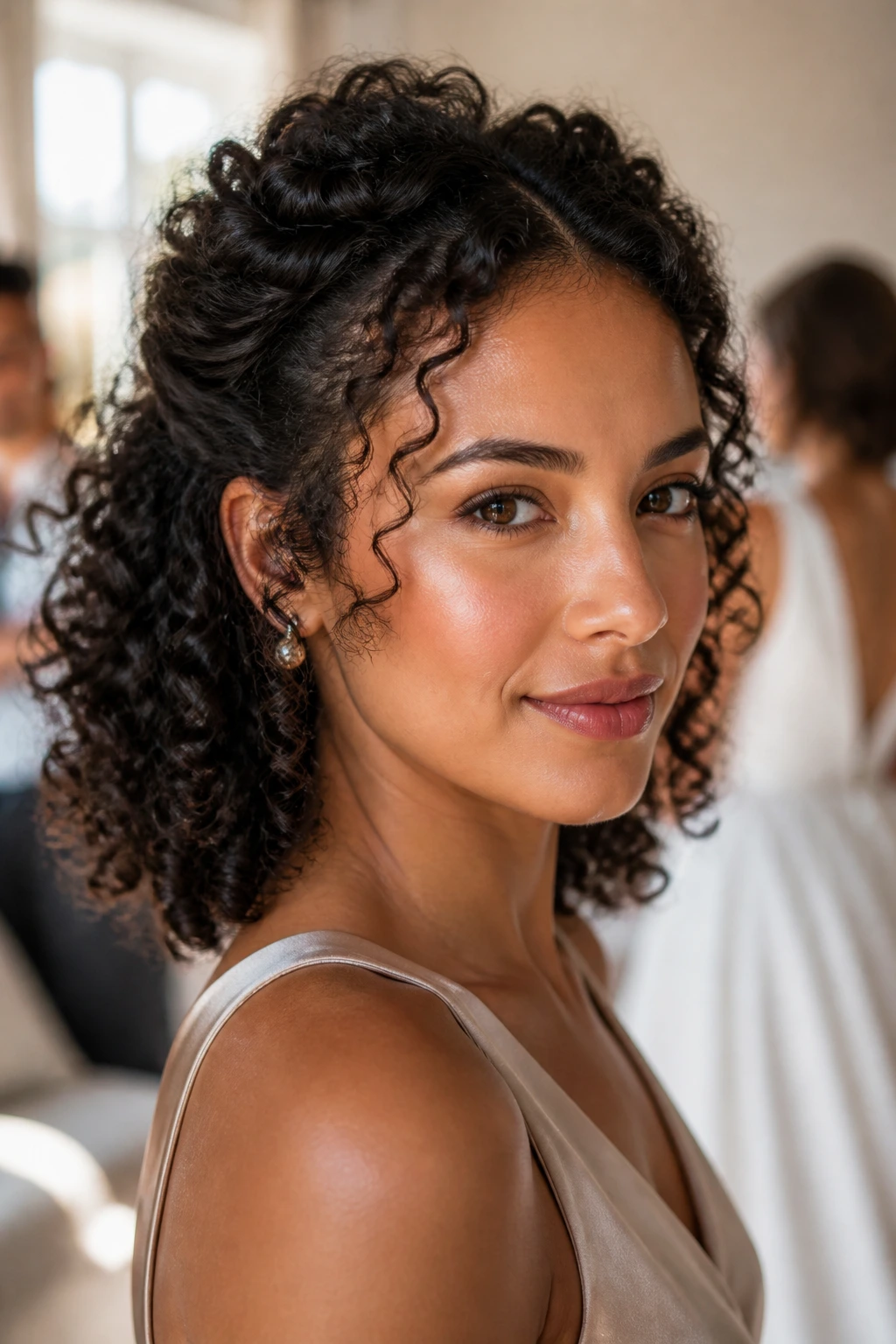
Curly-Hair First: keep the natural curl pattern and shape it rather than flattening it. A side pin, low twist, or half-up crown works well because curls already give you volume. Use curl cream and a light gel, not a heavy oil that kills the bounce.
Fine-Hair Lift Plan: build root lift with mousse and a quick blow-dry at the crown. A bob or lob will hold better if you curl only the mids and ends, then pin one side or add a small braid for texture. Fine hair needs grip more than it needs product.
Thick-Hair Control Plan: section more than you think you need. Thick short hair can look bulky if you try to roll it all at once, so work in narrow layers and pin the base first. Stronger pins and a firmer spray help here.
Natural Wave Embrace: let the wave pattern stay visible and use styles that follow the bend of the hair. A tucked finish, loose half-up, or low bun with a soft side part usually looks better than forcing straightness.
Accessory-Light Version: if the dress already has sparkle or the bouquet is busy, skip the obvious ornament and let the haircut carry the look. A clean part, polished texture, and one pin are enough. Honestly, that’s often the smartest choice.
Keeping the Style Fresh from Ceremony to Last Dance
A short hairstyle stays nicer when you stop touching it. Sounds obvious. Still worth saying. Once the style is set, leave the crown and side sections alone unless something has genuinely slipped. Every finger you run through the hair loosens a pin or flattens a wave.
Build a tiny touch-up kit: 4 bobby pins, 2 U-pins, a travel hairspray, and a small comb. Keep it with whoever is most organized in the bridal party. After portraits, check the nape and the side closest to the face; those are the spots that usually move first.
If the hair has curls or bends, refresh only the loose pieces with a quick mist of water and a finger twist. Do not brush the whole head out. That turns a set style into fluff in a matter of minutes. For sleek looks, carry a pea-size bit of cream in your hand and smooth only the flyaways.
The smart move is a quick check before the ceremony, another after photos, and one more before dancing. That’s usually enough. Short hair holds up when it’s shaped well, pinned correctly, and left in peace.
Frequently Asked Questions
Can bridesmaids with pixie cuts wear formal wedding hairstyles?
Yes, and they can look sharper than longer hair if the cut is styled with intention. A side part, tucked side, or jeweled clip gives a pixie enough structure to read formal without forcing it into an updo it cannot hold.
What short hair length is easiest for bridesmaid styles?
A chin-length bob or lob is the easiest to work with because it can hold waves, twists, and low pinned shapes. That said, a pixie can look just as polished with the right accessory and a clean finish.
How do you keep short hair from slipping out of pins?
Use texture first. Dry shampoo, root spray, or texturizing spray gives the pins something to catch, and crossing two bobby pins over the same section usually holds better than one alone. Smooth hair is pretty, but it is slippery.
Should all bridesmaids wear the same short hairstyle?
No. A shared detail—same clip, same side part, same wave direction—usually looks better than identical styling across different cuts. Matching the shape matters more than matching every strand.
Can curly short hair be styled without straightening it?
Absolutely. Curly hair usually looks better when the curl pattern is shaped, pinned, or half-up instead of ironed flat. Use curl cream, let the texture stay visible, and pick styles that frame rather than suppress it.
What if the hairstyle looks flat right after finishing it?
Gently lift the roots with your fingertips, not a brush, and mist the crown with a little dry texture spray. If it still looks too flat, one extra pin or a small accessory at the side usually creates enough visual height.
Are flower clips too much for short hair?
Not if the scale is right. Small floral combs or one modest bloom can look lovely on a bob or lob; a large cluster can overwhelm the haircut and make the head look smaller.
How far ahead should short hair be styled before the ceremony?
Plan for the finished style to sit for at least 20 to 30 minutes before the ceremony, then do one last check for slipped pins and flyaways. If the look uses waves or a set pattern, styling it too early can make the finish soften before photos begin.
The Shape That Does the Work
Short hair at a wedding does not need to shout. It needs to hold its shape, show the face, and respect the dress. That is the whole trick, and once you stop fighting the cut, the options open up fast.
A bridesmaid with short hair can look sleek, romantic, vintage, modern, or softly dressed up with almost no extra length at all. The right pin, the right part, and the right amount of shine do more than a complicated updo ever could.
Pick the style that matches the cut instead of forcing the cut into a costume, and the result will look calm in photos and steady through the dance floor.
