



A good short haircut for older women does one very specific thing: it makes the hair look like it knows where it’s going. No puffing at the crown by 2 p.m. No ends that flip out in random directions. No fringe that lands in your glasses and makes you spend the whole day tucking and fussing and muttering at the mirror.
Short haircuts for older women work best when they respect the hair you actually have. Hair gets finer in some places, wirier in others, and a little more honest about cowlicks, growth patterns, and necklines than it used to be. That’s not a problem. It’s information. The right cut uses that information instead of fighting it.
What I like most about short hair is how fast the result lands. A clean nape, a lifted crown, a blunt edge at the jaw — those details do more than “refresh” a face. They change the whole mood of the haircut. The silver looks brighter. The cheekbones get a little more room. Even a simple side part starts to feel intentional instead of accidental.
So if you’re after shape, ease, and a little bit of edge without spending half the morning with a blow dryer, start here. The cuts below cover soft, sharp, curly, polished, and piecey versions of short hair that actually make sense in real life.
Why These Short Cuts Work So Well on Real Hair
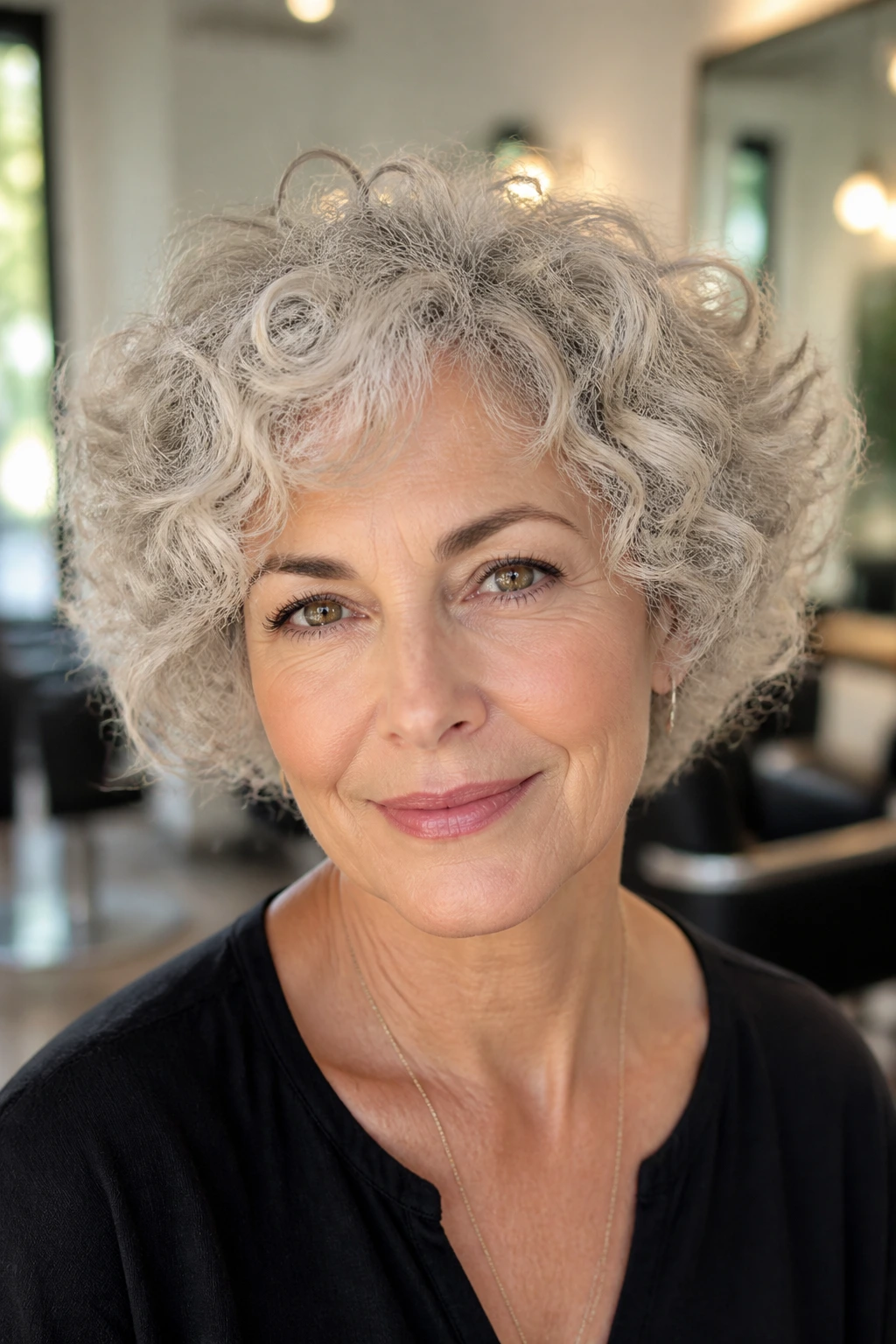
-
Less weight, more lift: Shorter lengths remove the drag that pulls fine hair flat at the crown and makes bobs sag by lunchtime.
-
Cleaner necklines: A tighter nape keeps the back from ballooning under collars, scarves, and sweater fuzz.
-
Better gray-hair shine: Silver, white, and salt-and-pepper hair catches light more cleanly in shorter shapes, especially when the ends are trimmed sharp.
-
Faster styling: Most of these cuts can be finished with fingers, a round brush, or a diffuser in under 10 minutes.
-
Easy to tailor: Side parts, bangs, stacked backs, and face-framing pieces let the same base cut lean softer, sharper, or a little more modern.
-
Less “grow-out panic”: When the silhouette is built well, a few extra weeks between trims won’t turn the whole thing into a triangle.
1. Soft Pixie with Side-Swept Fringe
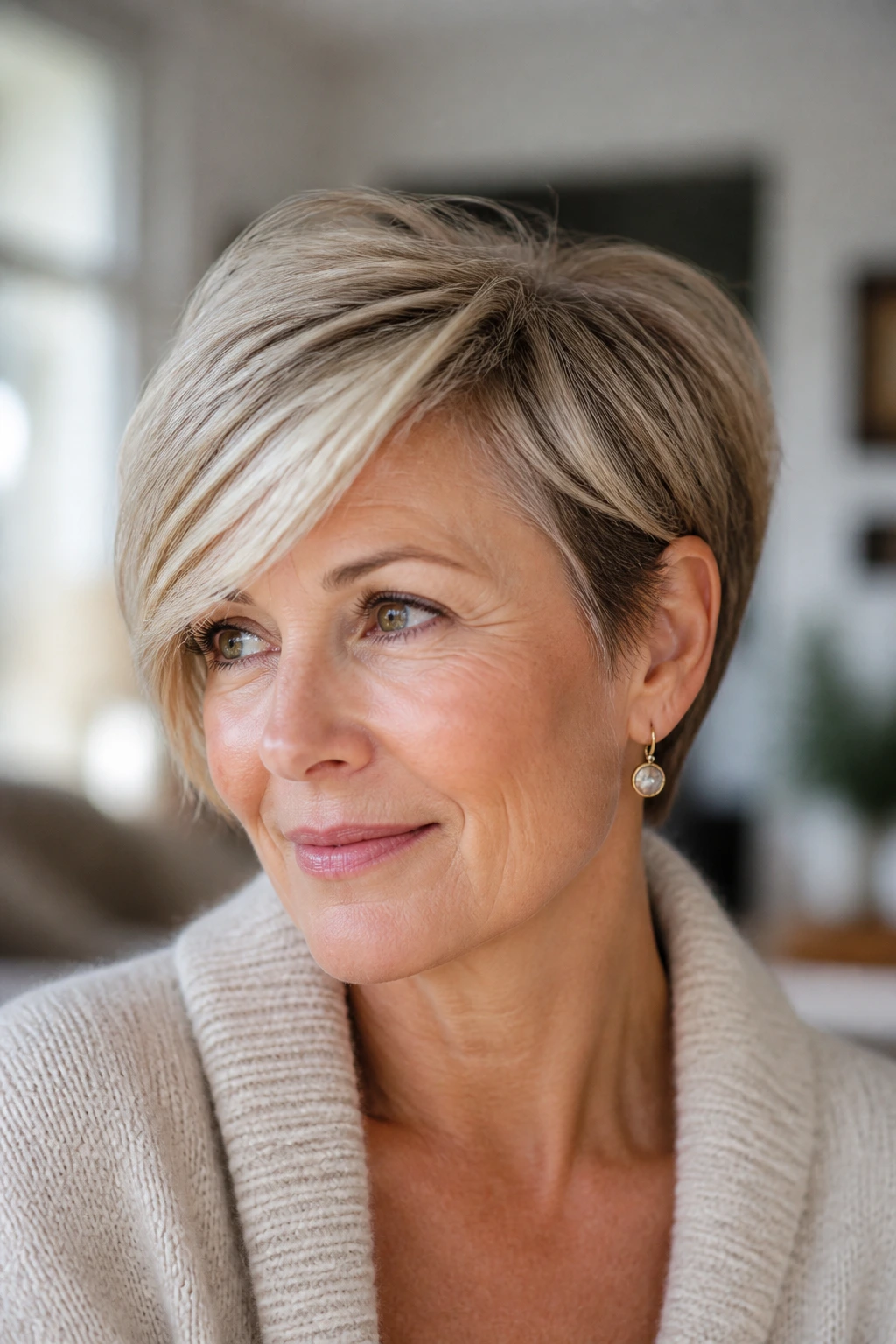
This is the pixie for someone who wants short hair without that hard, clipped feeling around the head. The top stays a little longer, the sides stay tapered, and the fringe sweeps across the forehead instead of chopping it off in a blunt line. It softens the face fast, especially if your hairline has a few cowlicks that like to misbehave in the morning.
What makes it work
The shape keeps most of the bulk on top, which gives you lift where fine hair usually collapses first. Ask for a nape that’s tight but not shaved bare, then leave enough length at the fringe to tuck behind one ear or brush forward on a windy day.
A little styling cream or paste is enough. Rub a pea-size amount between your palms, then pinch the ends and push the top upward with your fingertips. It should look piecey, not stiff.
2. French Bob with Cheekbone-Length Bangs
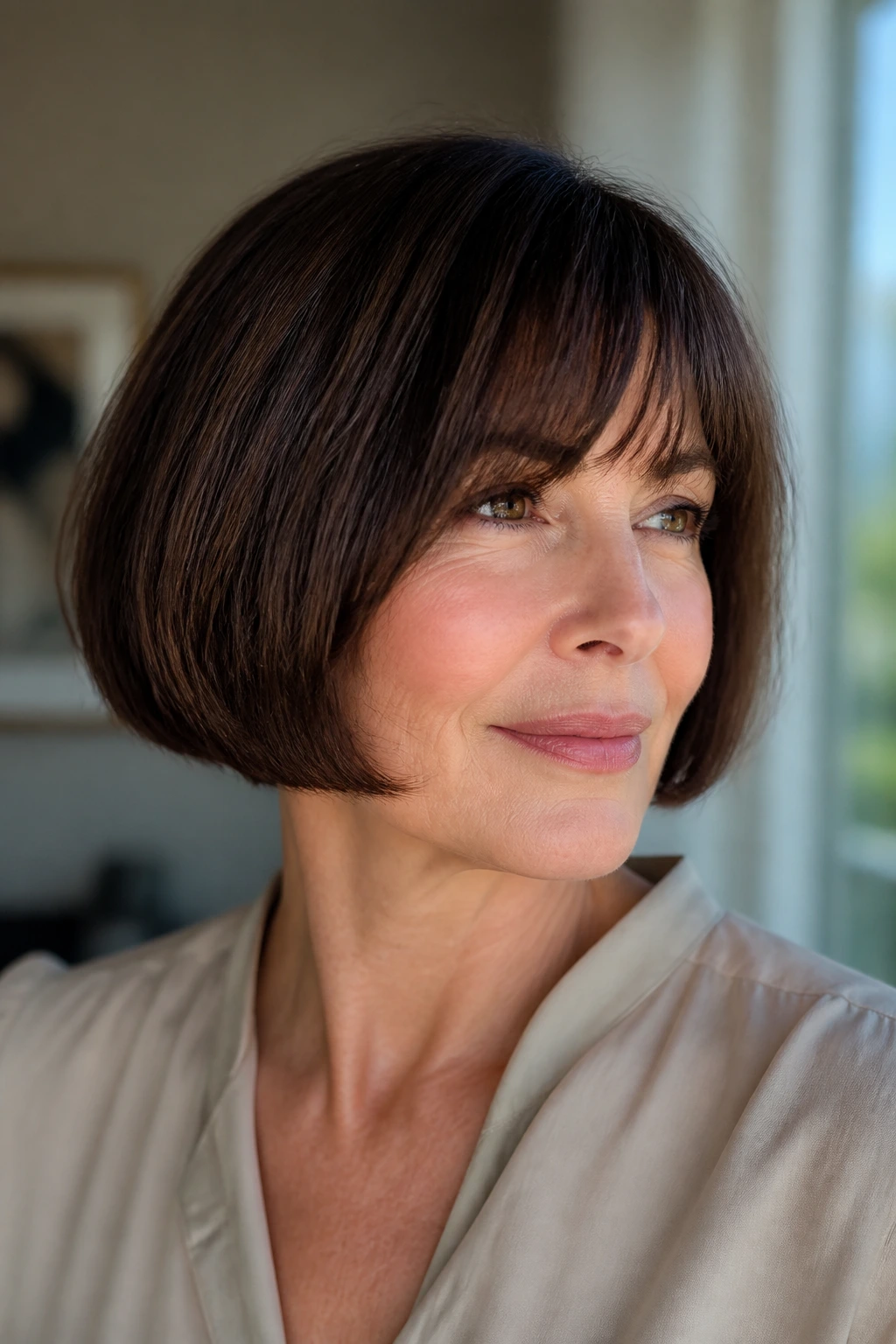
A French bob sits around the jaw or slightly above it, and that line does a lot of work without shouting about it. The cheekbone-length bangs are the part that sells the whole thing. They skim the face instead of sitting heavy on it, which is useful if you want a cut that feels polished but still has some air around it.
The best version is rarely poker-straight. A slight bend under the ends, or a soft wave through the mid-lengths, keeps the shape from looking severe. If your hair tends to puff at the ends, ask for a little internal weight left in the perimeter so it settles instead of exploding outward.
This is one of those short haircuts for older women that looks expensive even when it’s not. The trick is the line. Keep it clean.
3. Layered Bixie Cut
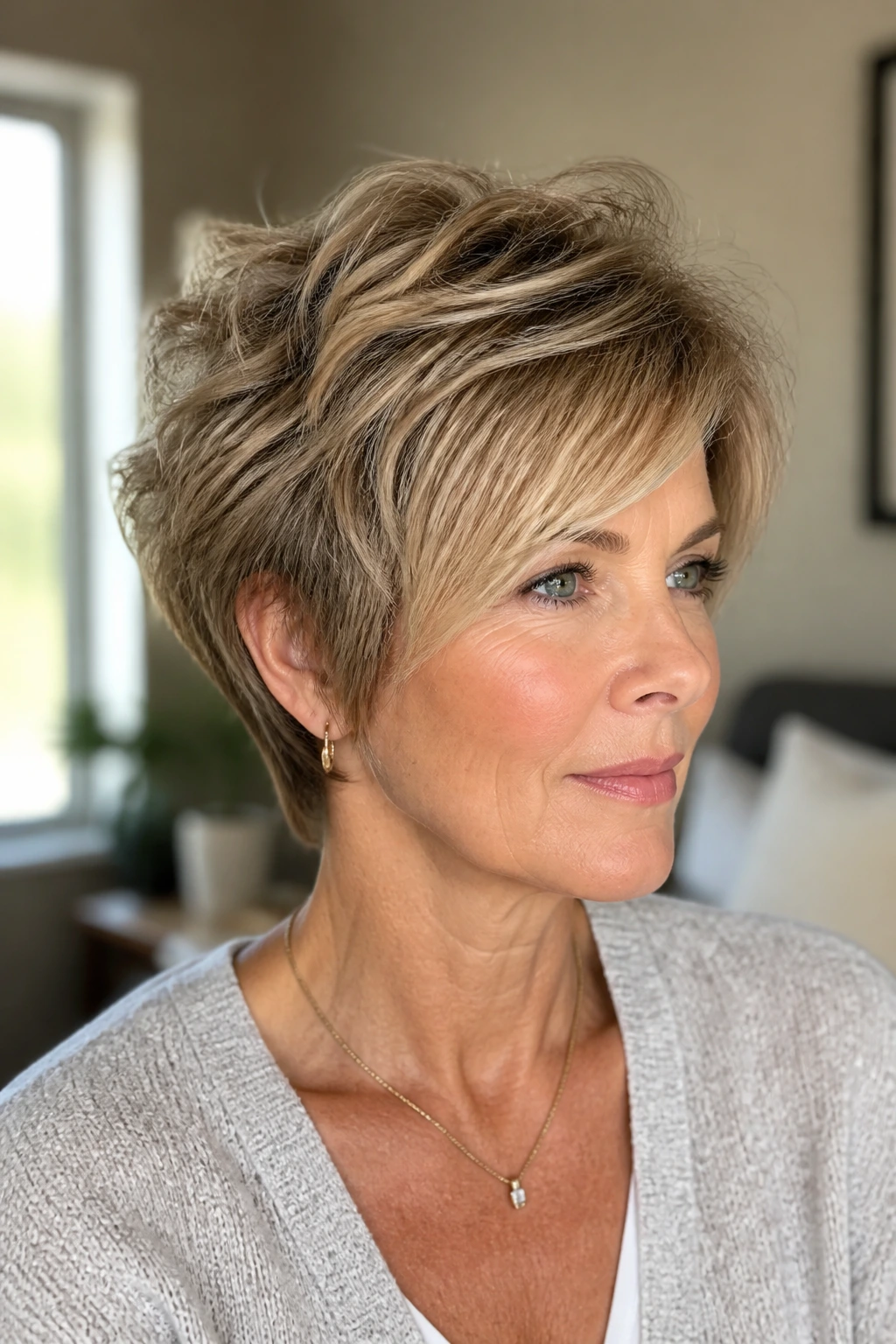
The bixie sits between a bob and a pixie, which sounds like a compromise until you see how useful that in-between length really is. You get enough hair to sweep, tuck, and fluff, but not so much that the style starts dragging downward.
Best for growing into shorter hair
If you’re nervous about going full pixie, this is the cut that eases the jump. The back stays short and neat, while the top and front keep more length for movement. It’s especially good if your crown is flat but you still want a little softness around the ears.
Ask for
- Short, feathered layers through the top
- A tapered nape
- Enough length at the front to brush diagonally across the forehead
Use a blow dryer only at the roots if you need lift. The rest can dry with a touch of mousse and a quick scrunch.
4. Jaw-Length Blunt Bob
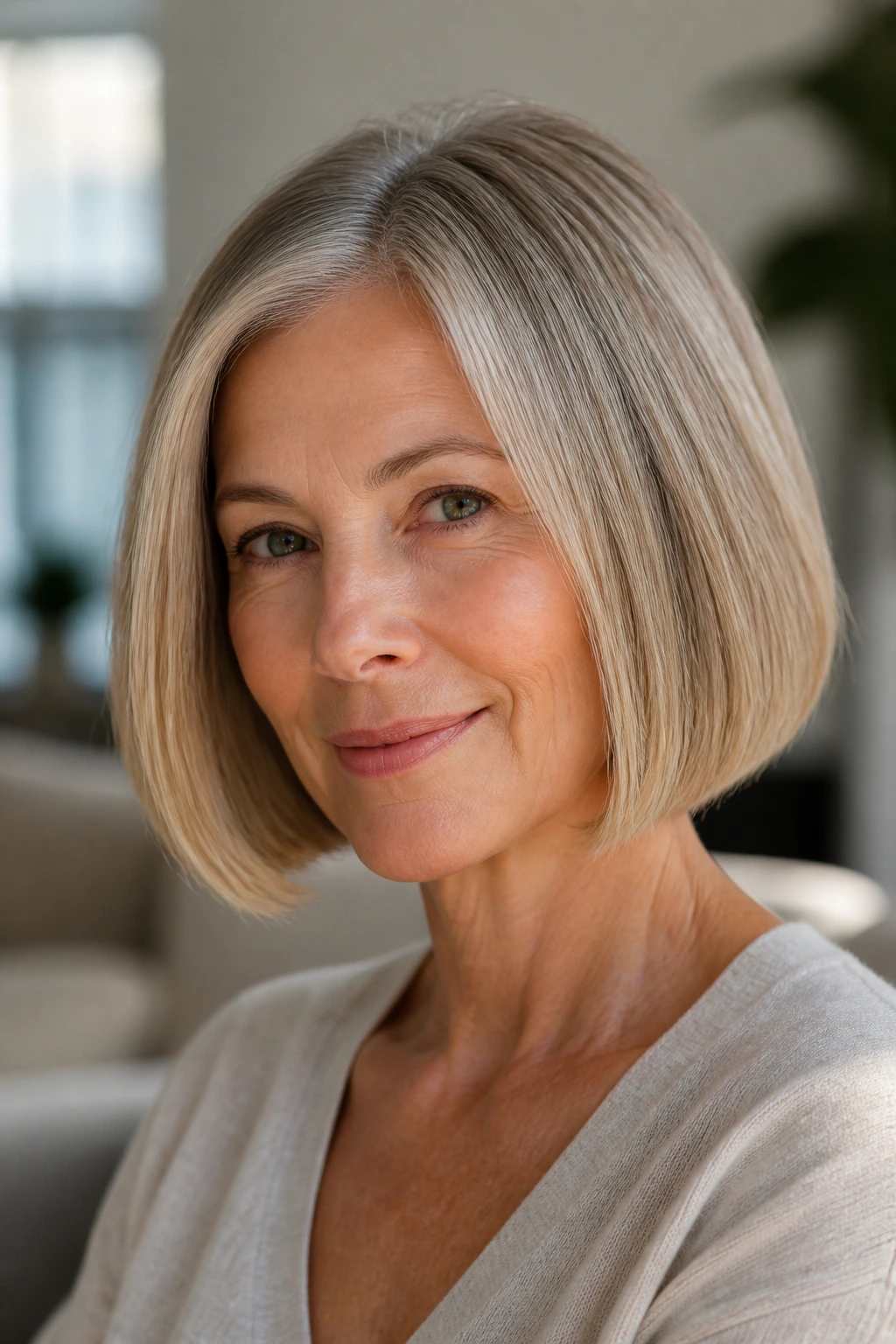
A blunt bob at the jaw is one of the sharpest ways to make fine hair look thicker. That straight edge creates a fuller outline, and the length keeps the jawline open without swallowing the neck. It’s clean. It’s crisp. It has no patience for fluff.
If your hair is naturally straight or only slightly wavy, this cut behaves beautifully with very little effort. If your ends flip, that’s not a dealbreaker, but you’ll want a paddle brush or a flat brush to keep the line tidy. The shape really depends on that edge staying even.
There’s also a reason this haircut keeps showing up. It works with glasses, earrings, scarves, and plain white shirts. That sounds minor until you realize how often a busy neckline or a bulky frame can fight a fussy cut.
5. Stacked Bob with a Lifted Nape
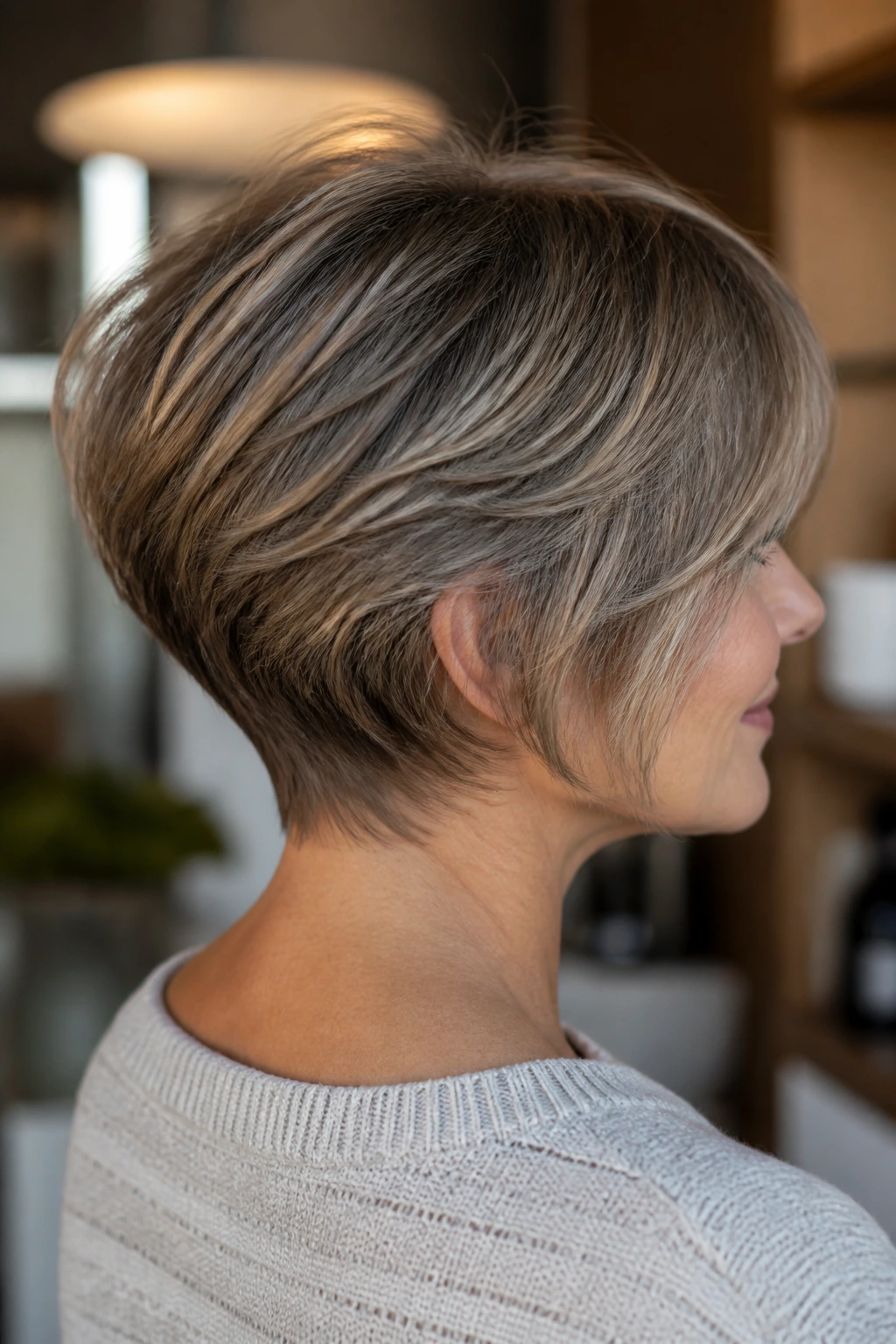
A stacked bob gives you volume where a lot of older hair starts to lose it: at the back of the head. The layers are shorter in the nape and gradually longer toward the top, which creates a built-in lift without making the whole head look overdone. If your hair tends to lie flat against the skull, this is the kind of cut that wakes it up.
The silhouette matters here. The stacking should be smooth, not choppy. When it’s done well, the back curves in and the crown rises just enough to show shape from the side. If the layers are too aggressive, the head can start looking narrow in a way that feels dated. Keep the graduation soft.
This is a strong choice for thick hair that has a little body but doesn’t need extra bulk. It can also make silver hair look especially clean, because the lines are crisp and the light hits the layers clearly.
6. Feathered Crop with Wispy Ends
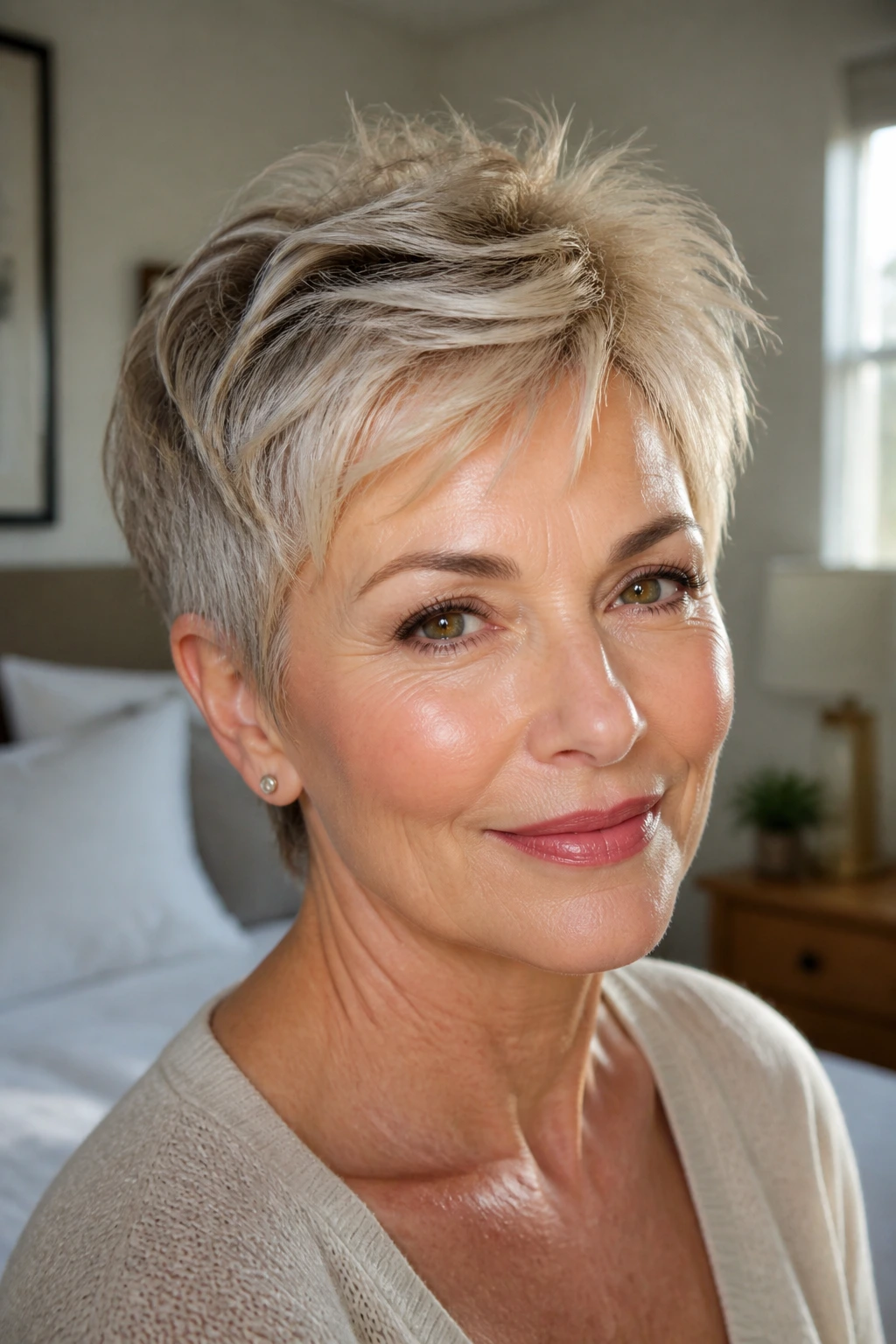
A feathered crop is a good answer when you want short hair to feel soft instead of boxy. The ends are thinned just enough to move, and the top carries a light, airy texture that keeps the cut from sitting like a cap. It’s one of the easiest styles to wear with glasses because it doesn’t crowd the temples.
The wispy finish matters. A crop with blunt, heavy ends can turn severe fast, especially on narrower faces. Feathering loosens that up, and it also keeps the grow-out from getting clunky. You won’t need a perfect blowout every single day.
A small round brush can lift the front, but fingers often do the job better. Dry the roots first, then use a dab of lightweight mousse or cream at the crown. No heavy wax. That’s how a feathered cut loses its air.
7. Curly Tapered Cut
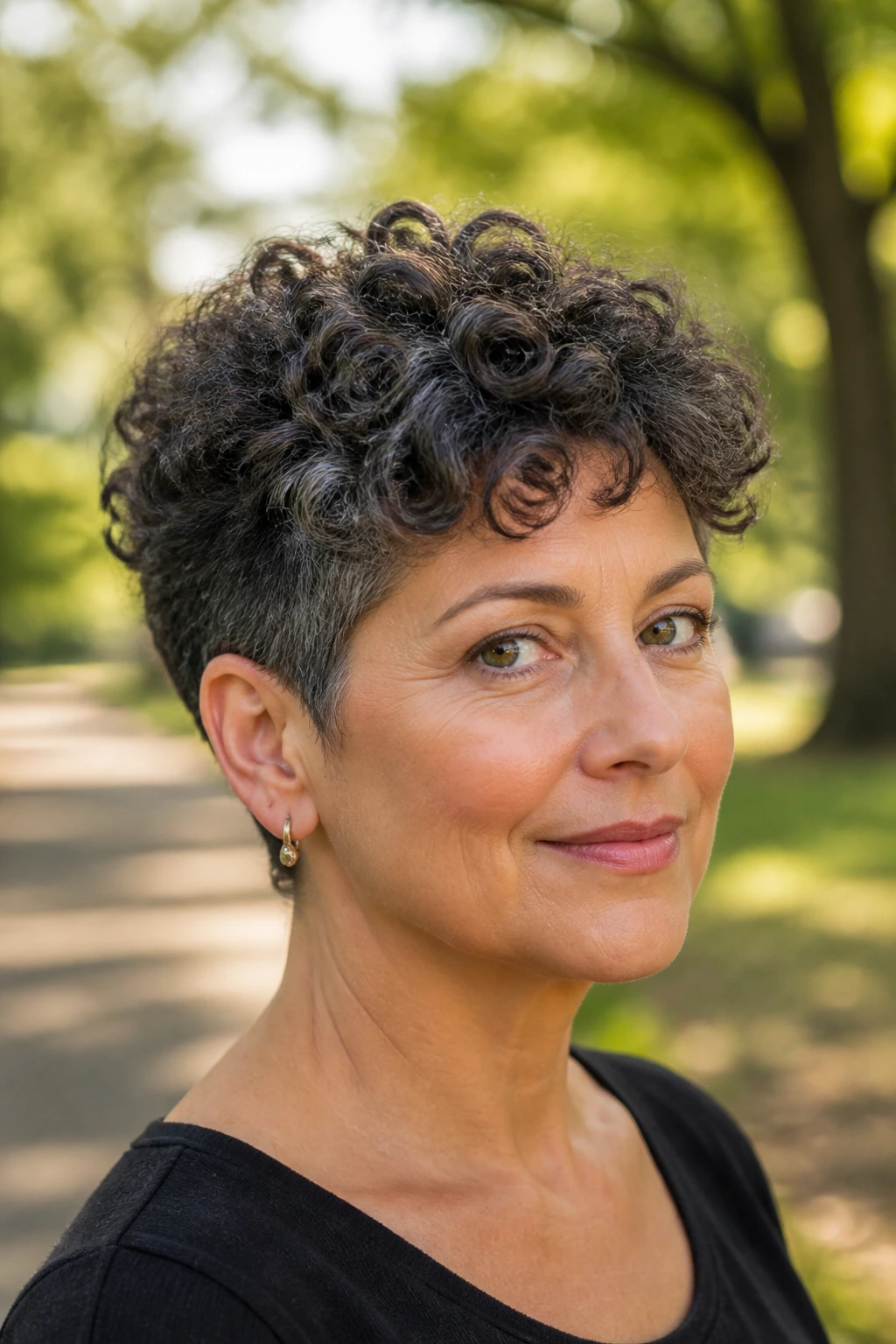
Curly hair needs shape, not surrender. A tapered cut keeps the sides and nape tighter while leaving enough length on top for the curls to spring instead of spreading into a triangle. That shape is flattering, practical, and a lot less fussy than forcing curls into a blunt bob that fights back all day.
Why it’s a smart move
If your curls are looser, the taper gives them a tidy outline. If they’re tighter, it stops the sides from ballooning outward. Either way, the shape depends on cutting it with the curl pattern in mind, not straight and wet and hopeful.
How to ask for it
- A dry or curl-by-curl cut if possible
- Shorter sides and nape
- Longer top layers to preserve bounce
- No heavy thinning at the ends
A diffuser helps, but only after you’ve worked in leave-in and a curl cream. Let the curls form first. Then touch them.
8. Textured Shag Bob
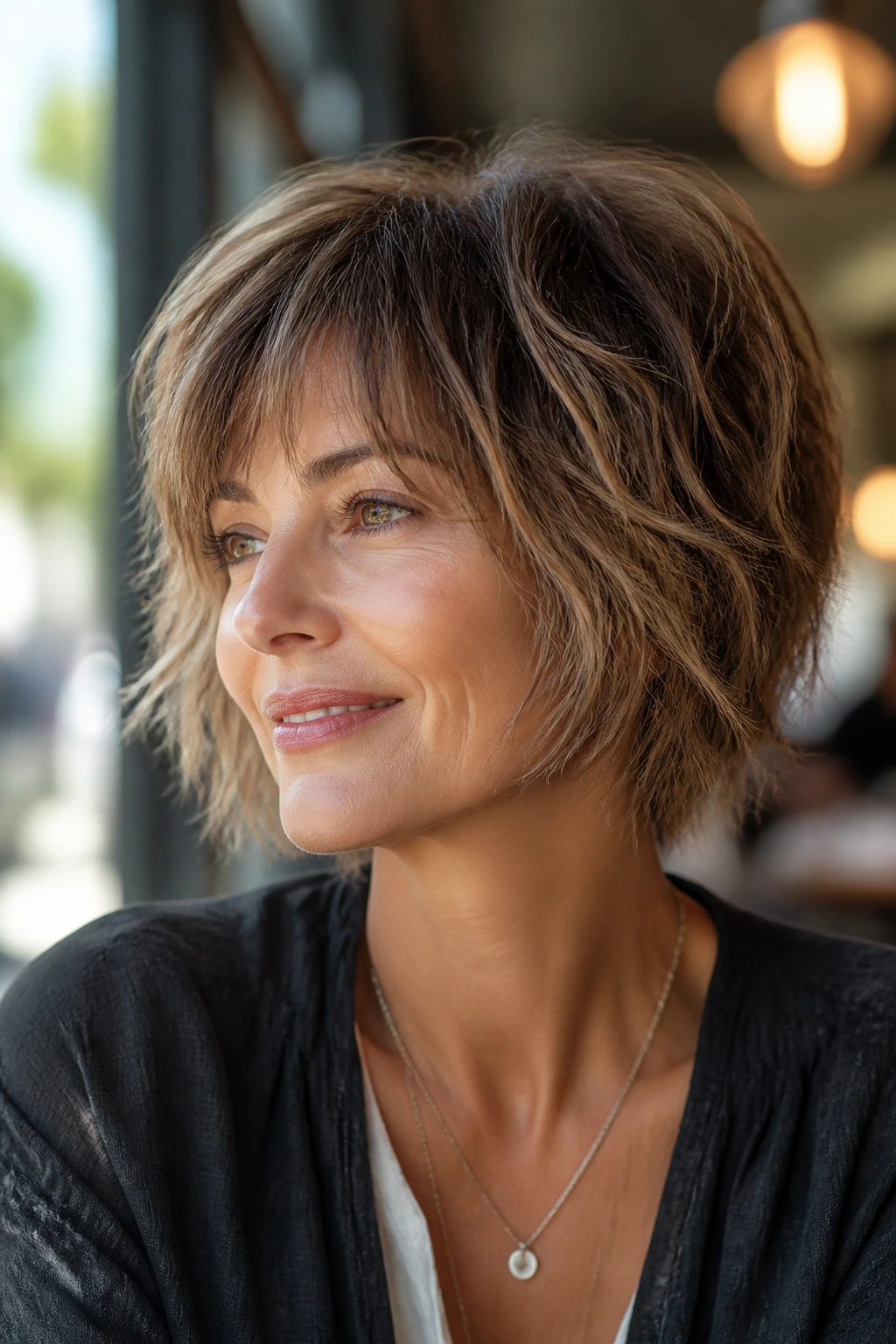
The shag bob has a little more attitude than a traditional bob, and that’s exactly why it works. The layers break up the outline so the haircut doesn’t feel blocky, while the ends stay soft enough to move around the face. It’s especially good if your hair is wavy and a little unpredictable in the best way.
I like this cut for women who do not want to look “done.” That polished, sprayed-to-death feeling? Not here. This one wants a bit of texture spray, a bit of scrunching, and maybe a side part that isn’t perfectly straight. The hair should look touched, not engineered.
If your hair is very fine, keep the layers longer so you don’t lose density. If it’s thick, the shag bob can take out enough bulk to stop the triangle effect without making the cut feel thin.
9. Asymmetrical Pixie Bob
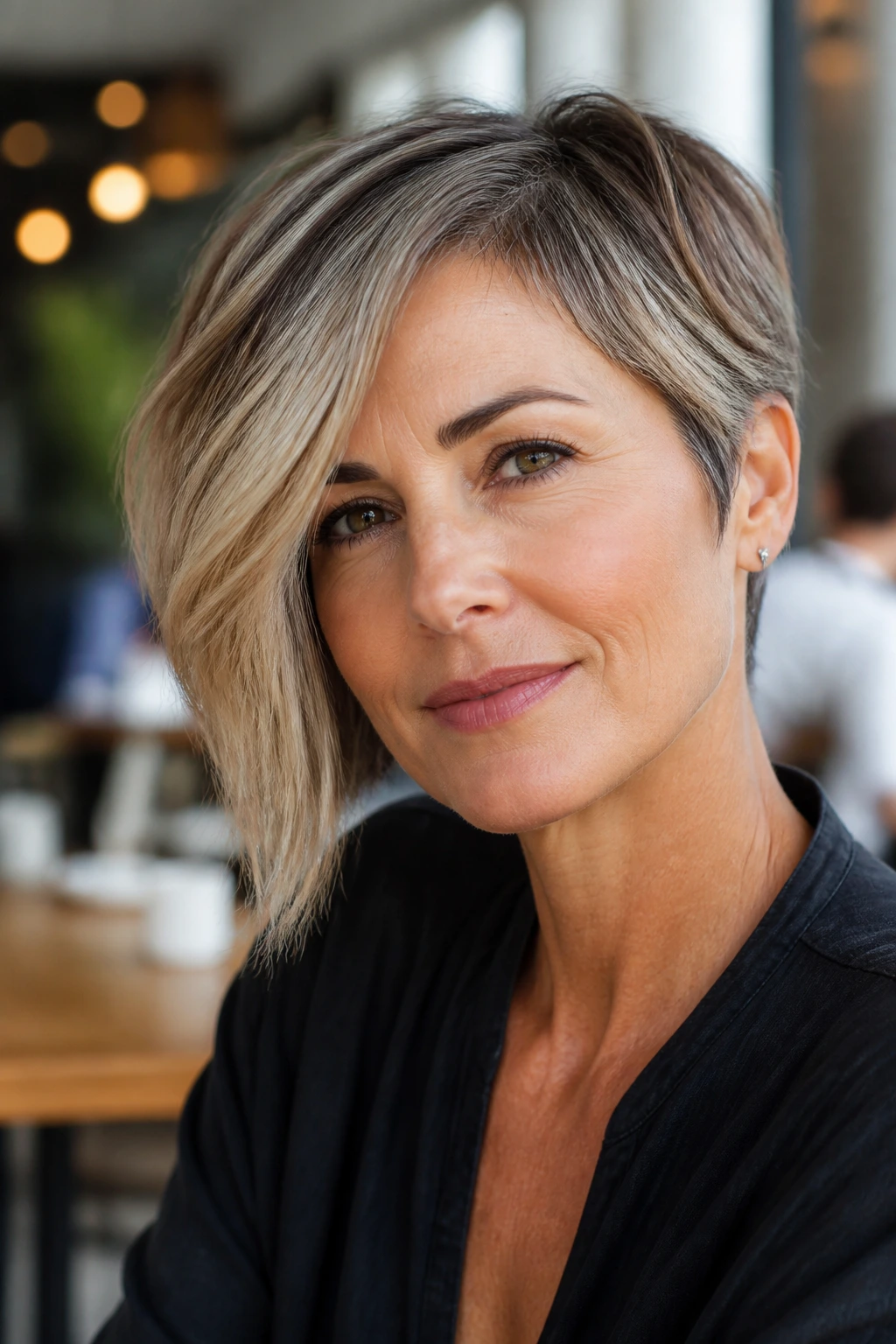
An asymmetrical pixie bob gives you a little edge without sliding into anything dramatic for the sake of drama. One side stays slightly longer, or the front drapes more heavily on one side, which creates movement around the face and a subtle sense of length. It’s a neat trick if you want short hair but still like seeing some softness near the cheek.
The asymmetry should look deliberate, not lopsided. That means the shorter side still needs enough weight to sit down, and the longer side should be trimmed to a real shape instead of left to grow wild. A side part helps the whole thing behave.
This cut works well if you like to tuck one side behind the ear and let the other fall forward. It also gives short hair a little drama in photos without becoming precious about it.
10. Ear-Length Tapered Pixie

This is the clean, elegant pixie that keeps the ears visible and the neckline neat. The sides are tapered close, the crown carries just enough length to stay soft, and the overall effect is tidy without feeling severe. It suits silver hair especially well, because the short length lets the color read as bright and intentional.
What to notice
The nape is the whole story here. If it’s clean, the cut looks fresh. If the nape gets bulky, the style loses its shape fast. This is why ear-length pixies need trims more often than longer bobs.
Best styling move
Work a little matte paste through the top, then pinch the fringe forward or diagonally. You want separation, not helmet hair. That’s the whole difference between chic and dated.
11. Chin-Length A-Line Bob
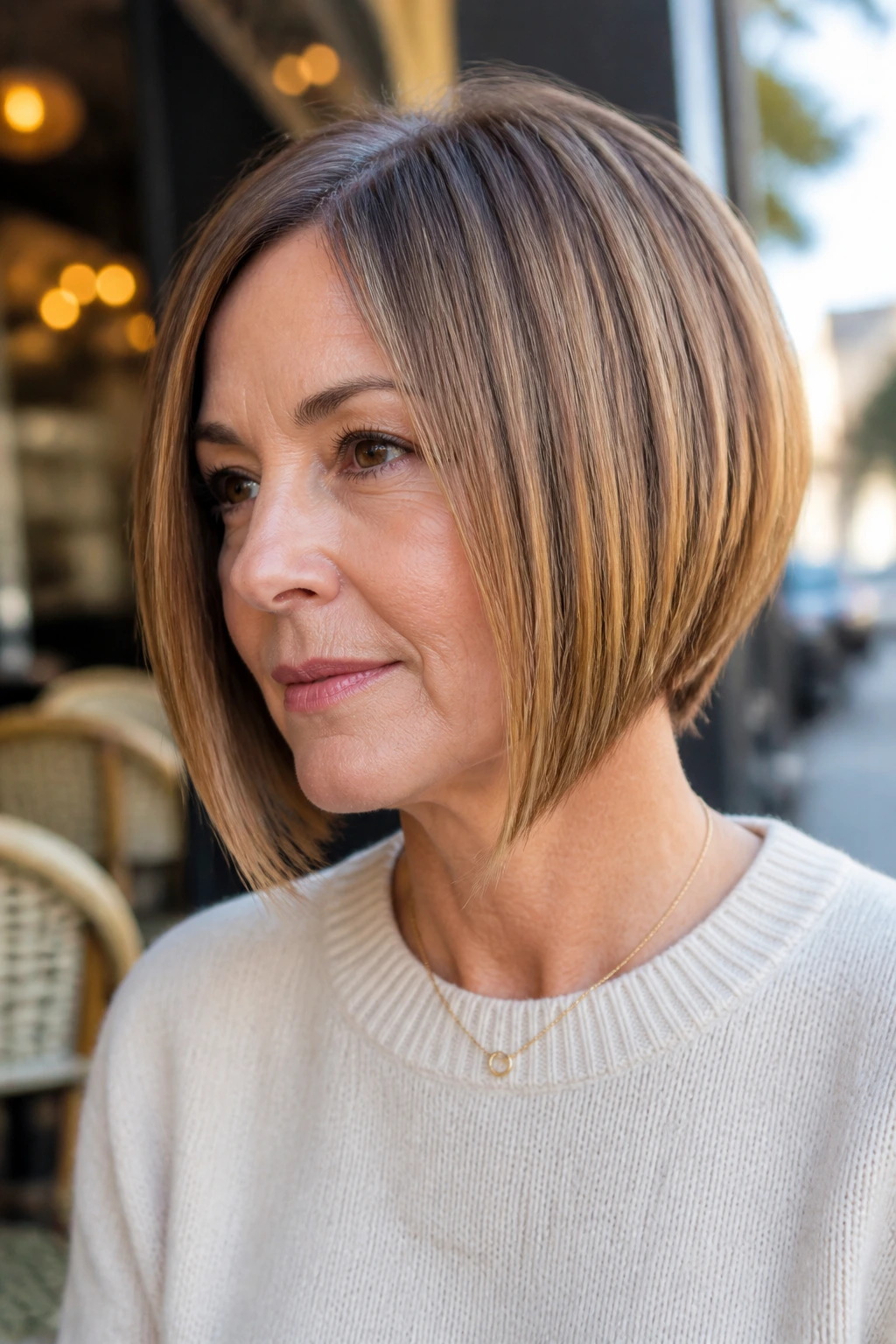
The A-line bob is shorter in the back and slightly longer in front, which gives the face a gentle frame and the neck a little breathing room. Hitting around the chin keeps it light around the jaw, and the forward angle helps the cut feel sleek even when the hair isn’t perfectly smooth.
This shape is especially useful if you want your hair to look longer without actually wearing it long. That front length gives you options: tuck it, bend it under, or let it skim the collarbone on a longer version. It also flatters rounder faces because the longer front pieces pull the eye downward.
If your hair is thick, ask for the angle to be soft rather than sharp. Too much front length can turn the cut into a shelf. You want a clean slope, not a point.
12. Collarbone Lob with Soft Layers

Not every flattering cut has to be very short. A collarbone lob gives you short-hair ease without giving up the movement some people still want near the face and shoulders. Soft layers keep it from looking heavy at the ends, especially if your hair is naturally straight and tends to fall flat.
This is the bridge cut. If you’re growing out a bob, or you’re not quite ready to lose all the length, it gives you a good middle place. The collarbone length also works well with scarves and jacket collars because the hair doesn’t sit awkwardly right at the neck.
A side part gives this lob a little lift, while a center part makes it look calmer and more symmetrical. Both work. The part changes the mood more than the cut does.
13. Silver Undercut Pixie
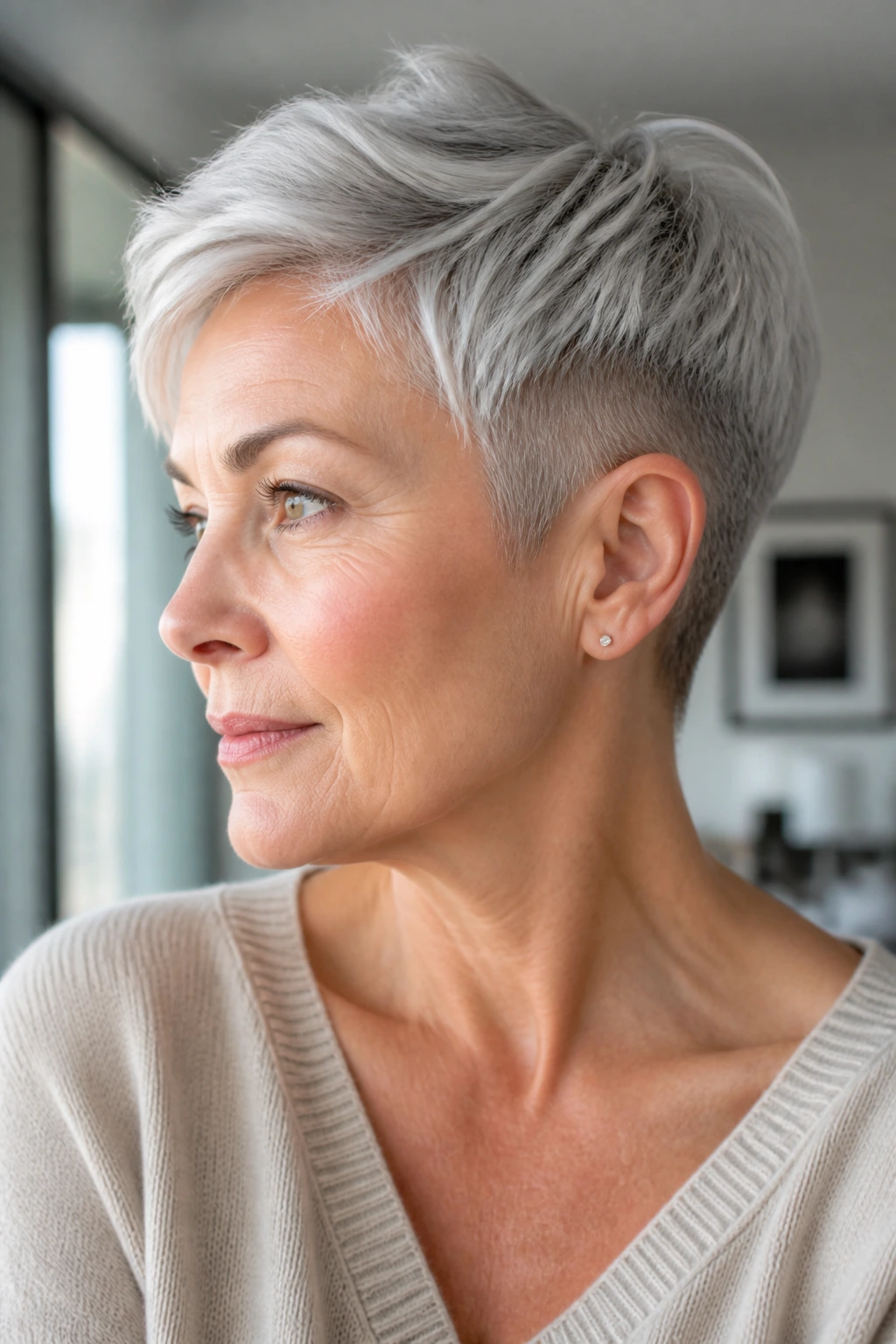
If your hair is dense and you’re tired of it puffing outward every time humidity shows up, an undercut pixie can be a relief. The clipped or very short sections underneath remove bulk, while the top keeps enough length to style with shape and texture. On silver hair, the contrast can look sharp in a good way.
Why people love it
It dries fast. It holds its line. It doesn’t ask for a giant round brush and 20 minutes of regret. If the top is left long enough to sweep, you can change the direction with one finger.
Small caution
This is not the cut for someone who wants softness everywhere. It has edges. It has purpose. If you prefer a gentler look, keep the undercut minimal and let the top carry the style.
14. Soft Mullet Shag
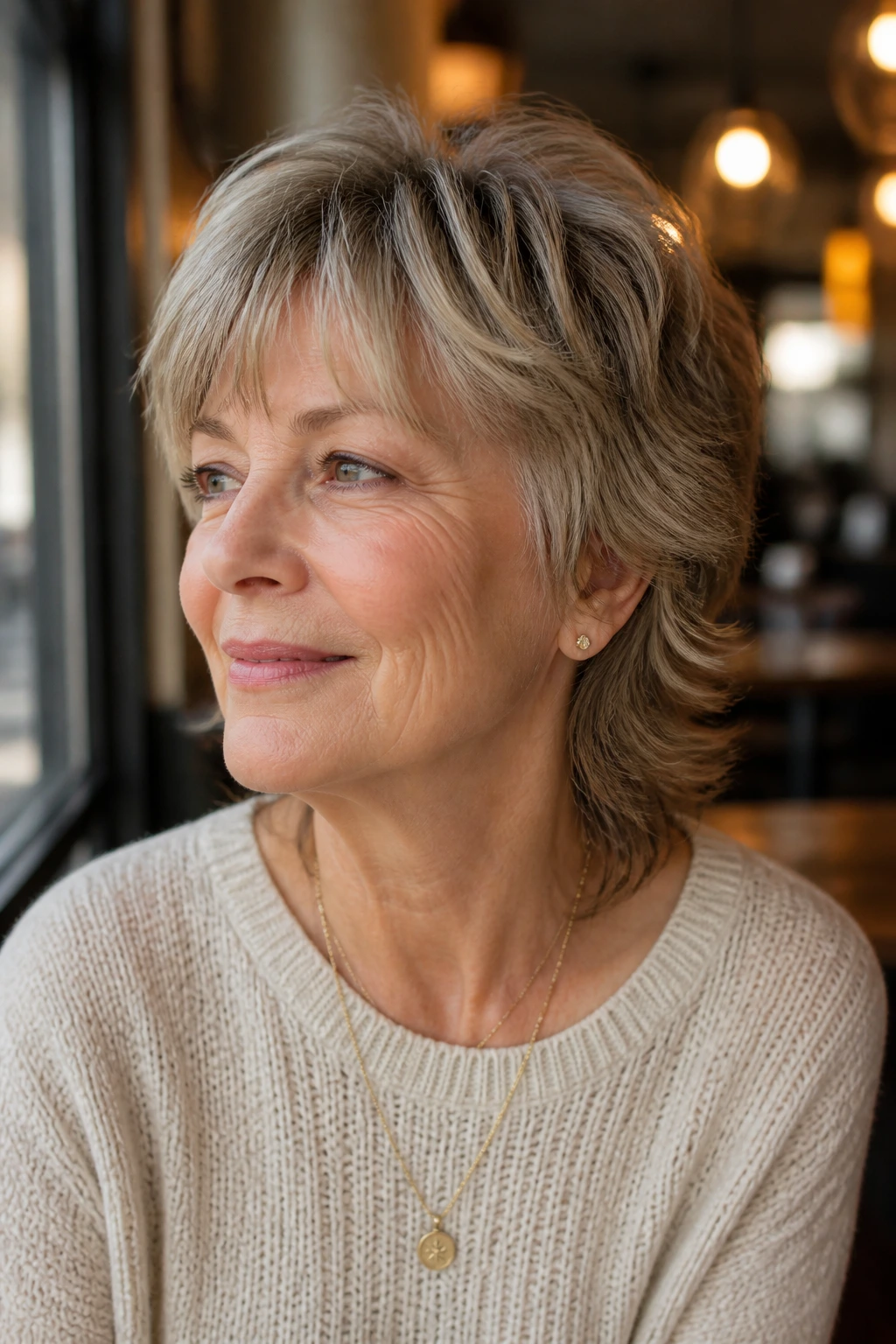
A soft mullet shag sounds braver than it looks. The front and sides stay lighter and shorter, while the back carries a bit more length, which gives the haircut movement and a slightly lived-in feel. The key word here is soft. You’re not after a sharp retro statement unless that is exactly your thing.
Wavy hair loves this shape because it can fall into the layers instead of fighting them. Straight hair can wear it too, but it needs a bit of styling texture so the layers don’t lie flat and expose the shape too much. Ask for a softened neckline and face-framing layers that don’t stop abruptly at the cheek.
This is one of the more modern-looking short haircuts for older women who want something with personality but not a lot of daily effort. It’s the kind of cut that looks better when it’s slightly imperfect.
15. Rounded Bob with Crown Volume
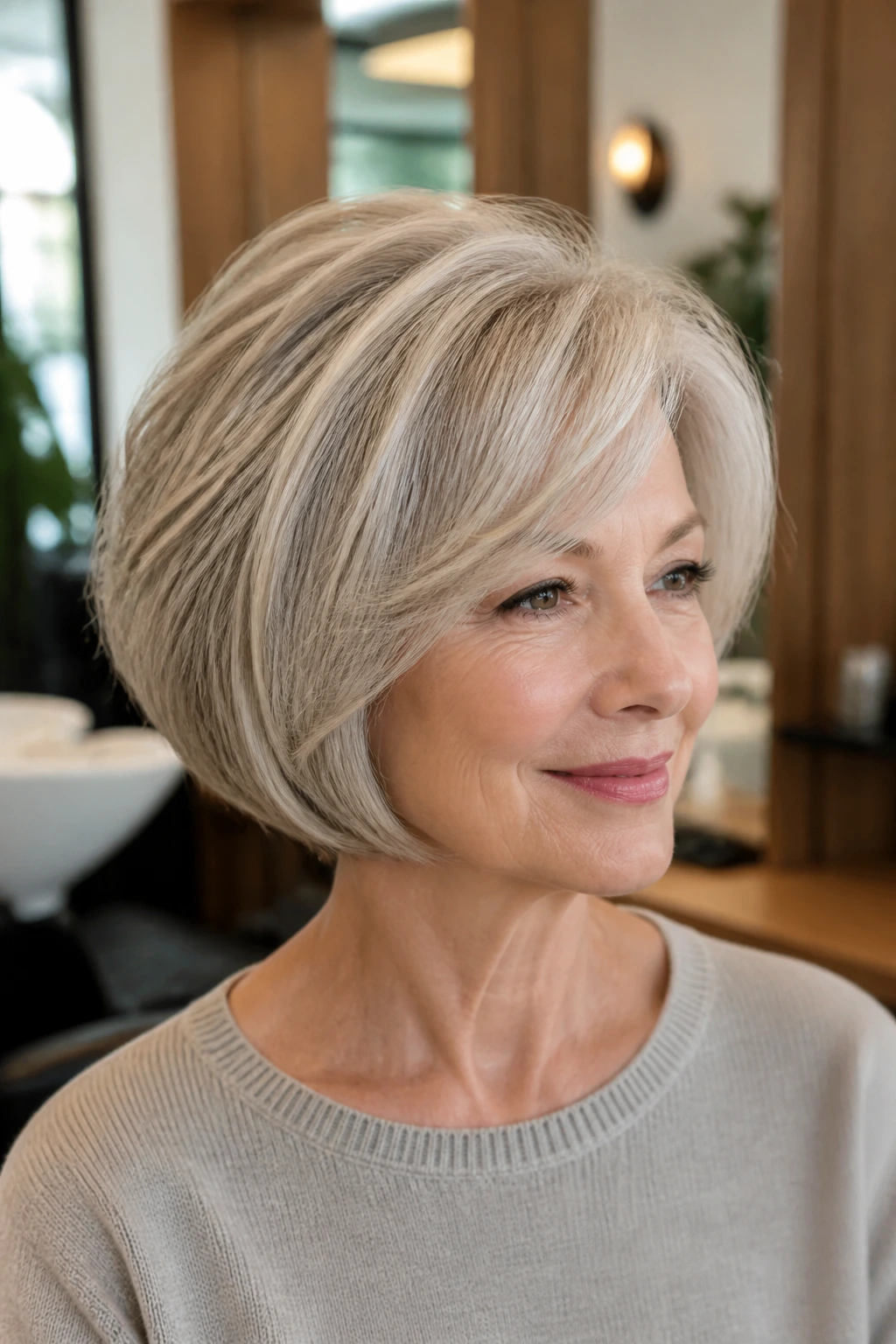
A rounded bob builds shape into the top and sides so the whole head looks balanced, not flat or boxy. The curve is subtle, not helmet-like. When done right, the crown lifts just enough to make the haircut read as polished from every angle.
Where it helps
Fine hair gets a fuller silhouette. Glasses sit well with it because the outline is smooth around the temples. And if you have a narrow face, the rounded shape adds a little width without puffing up the ends.
Styling note
Blow-dry with a medium round brush, directing the roots upward for the first two inches, then curve the ends under only slightly. Don’t overroll the brush. That’s how the shape tips into old-fashioned territory.
16. Piecey Crop with Micro Fringe
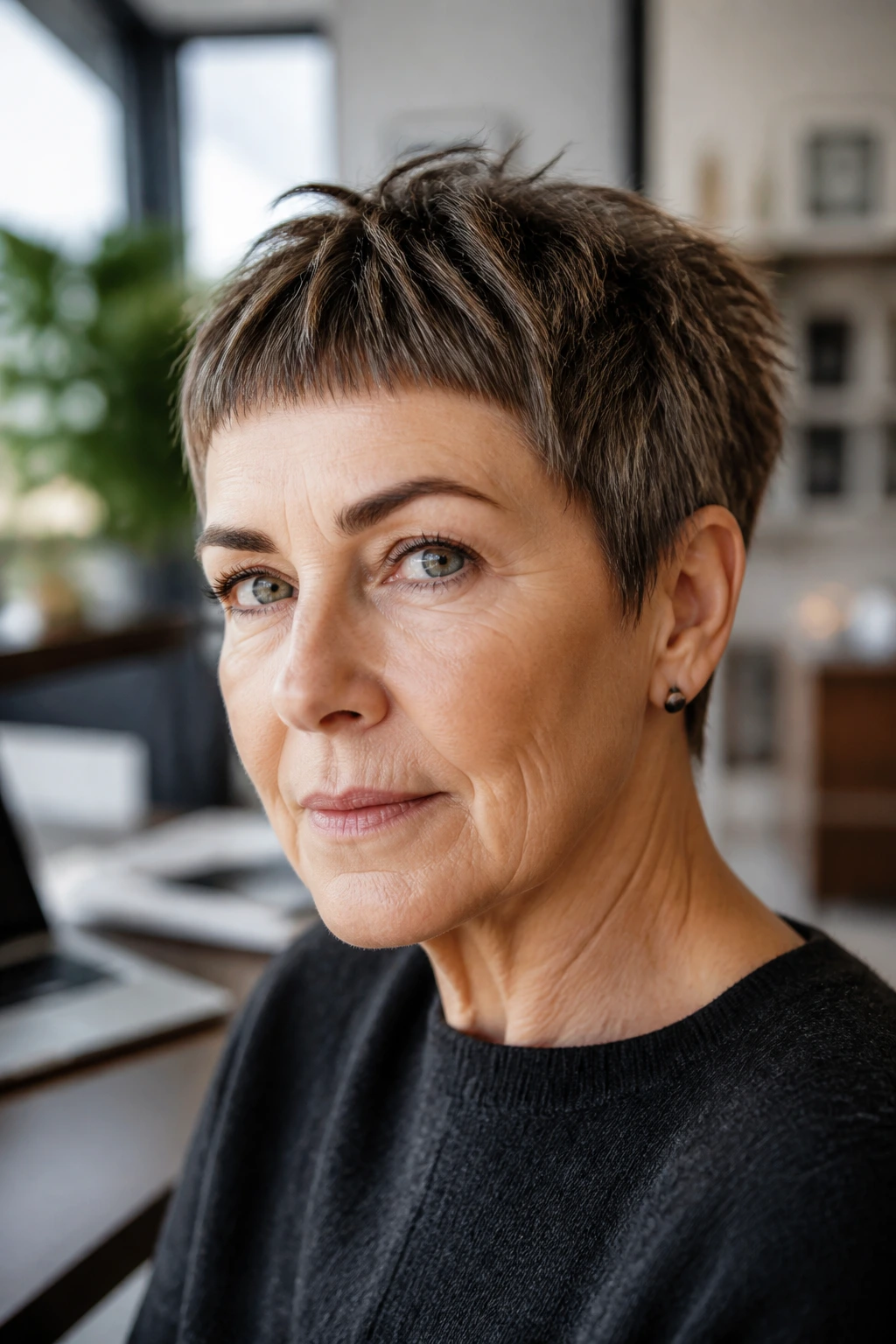
A micro fringe is a bold little detail, and on the right face it looks sharp instead of severe. Paired with a piecey crop, it gives the haircut a modern, graphic feel that works especially well with straight hair or hair that can be coaxed into separation. The fringe sits short, the top stays textured, and the whole style feels deliberate.
Best for
People who want a short cut with personality. People who do not mind their eyebrows being part of the story. People who like one or two strong features instead of lots of softness.
A tiny amount of wax at the ends goes a long way here. If you use too much, the pieces clump and the cut loses its airy shape. This is one of those styles where less product is almost always better.
17. Wavy Side-Part Bob
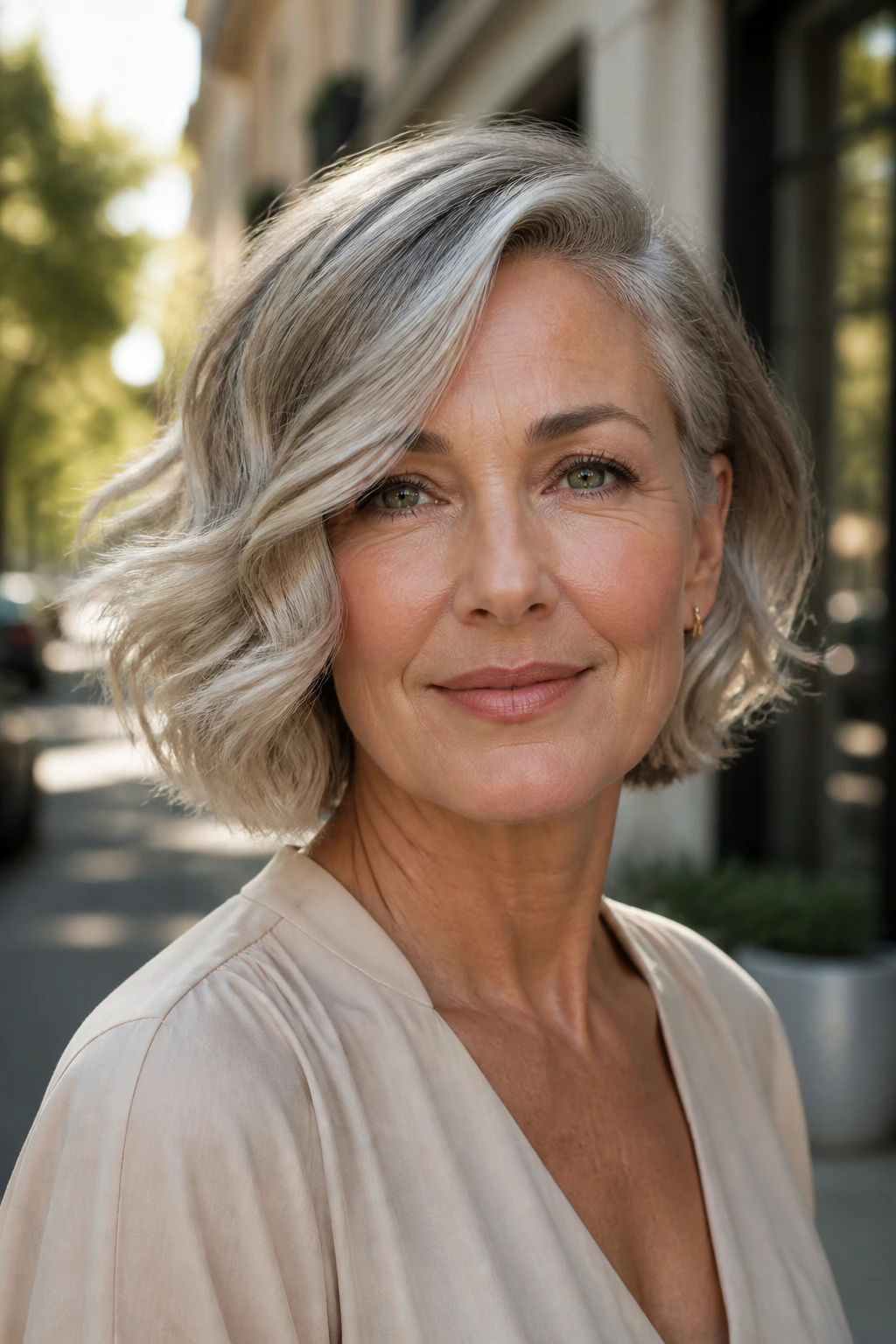
A side part changes everything on wavy hair. It gives the roots a little lift, breaks the symmetry enough to keep the style from feeling stiff, and lets the waves fall in a more natural line. A bob cut to jaw or cheek length can take on a lot of personality just from the direction of the part.
I like this cut because it doesn’t need to be perfect. A wave that bends differently on each side looks fine here. In fact, that unevenness is part of the appeal. If your hair gets a little fluff at the ends, a light cream or mousse can keep the shape together without flattening the wave.
It’s also a good option if you want to tuck one side behind the ear and leave the other side loose. That small asymmetry keeps the whole look from feeling too tidy.
18. Long Pixie with Swept Top
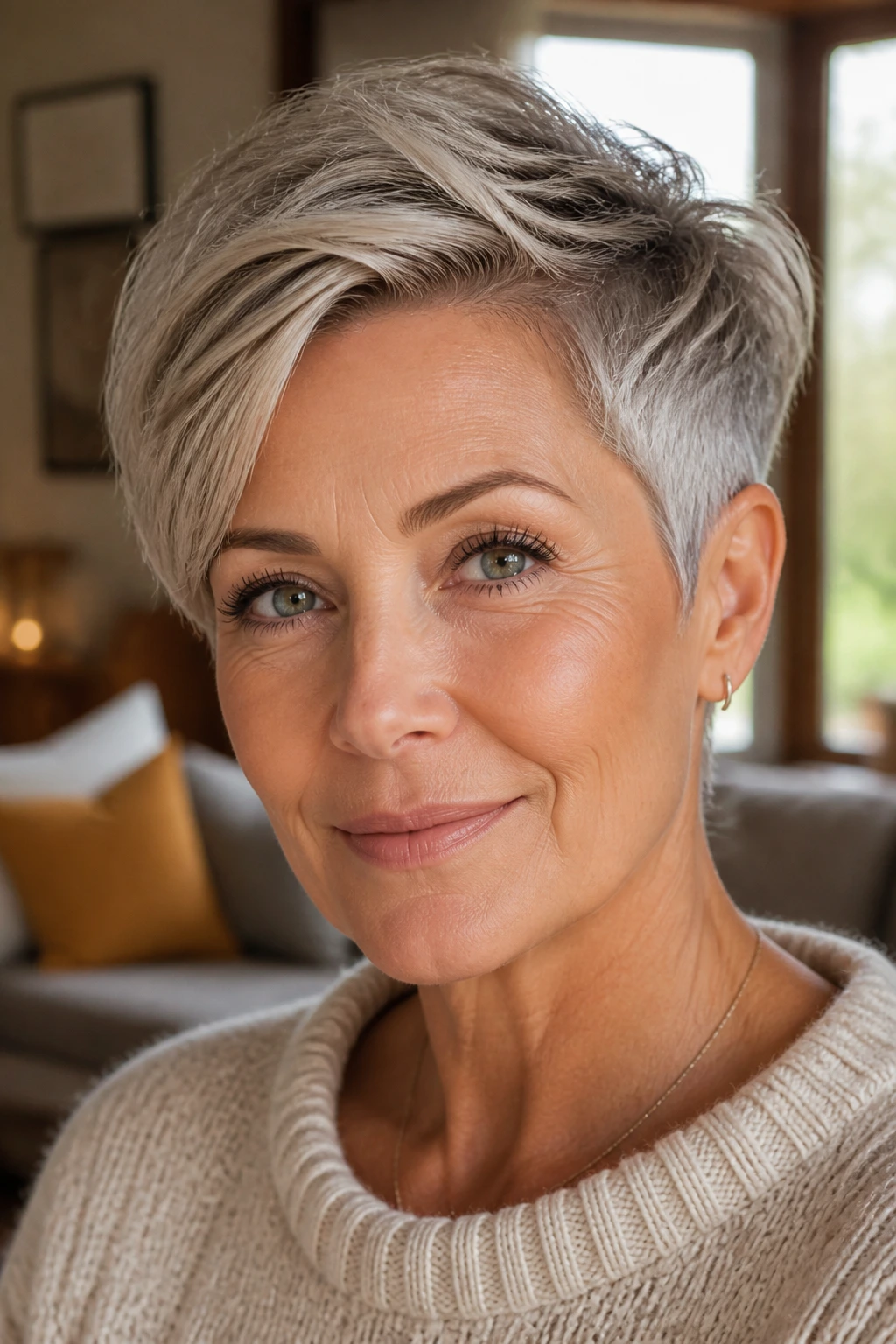
The long pixie gives you the comfort of short hair and a bit more room on top for styling. The sides stay neat, the back stays short, and the top has enough length to sweep, part, or tousle depending on the day. It’s one of the most forgiving short cuts if you don’t want to commit to a very tight crop.
That extra top length matters if your hair has a cowlick at the crown or if you like a side-swept shape. It gives you enough material to work with. A tiny round brush or even a quick finger-dry can push the hair where you want it.
If you wear earrings, this cut does a nice job of leaving them visible. Small detail. Big payoff.
19. Razor-Cut Bob with Light Movement
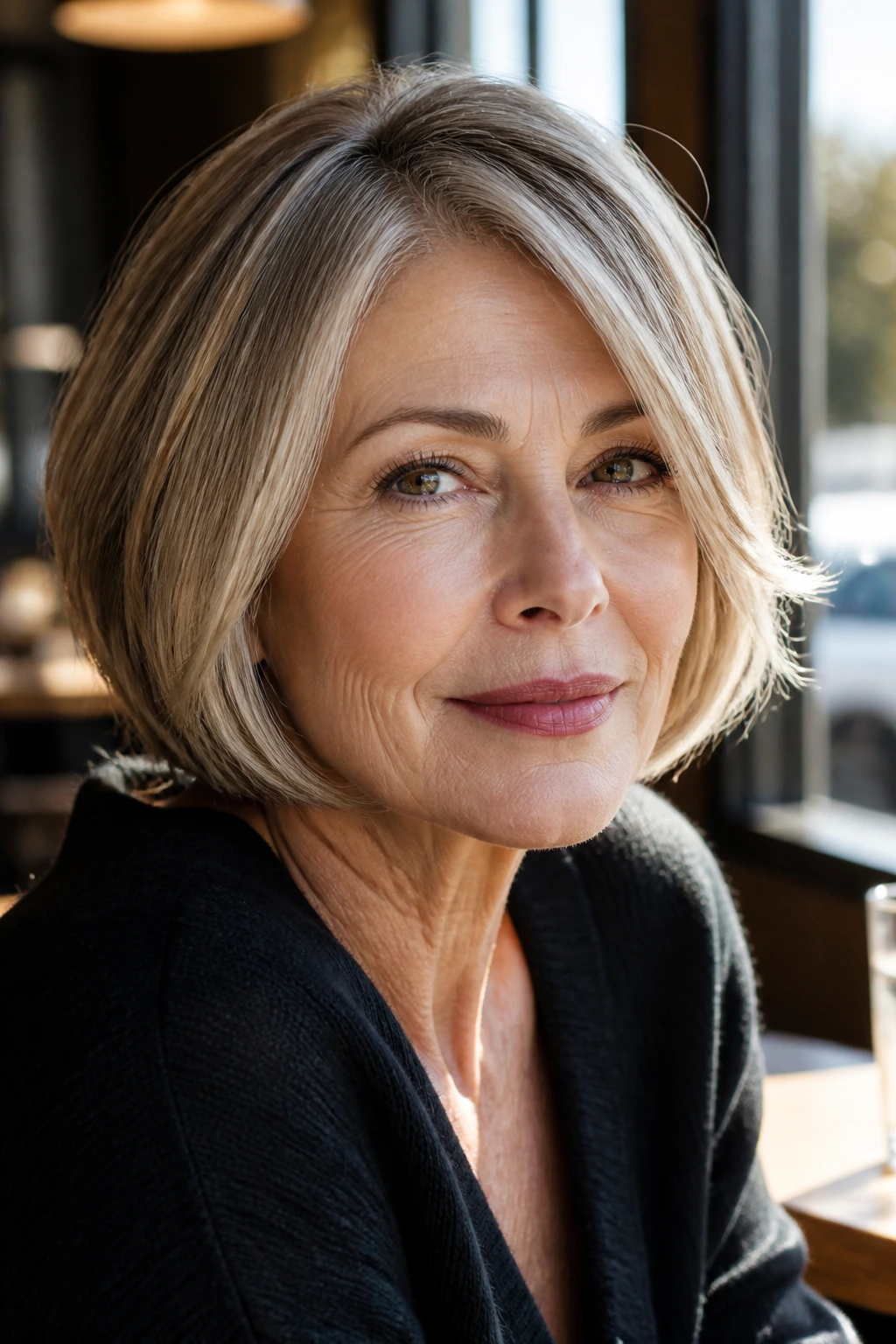
A razor-cut bob has softer edges than a blunt bob, and that softness gives the hair a little swing. The razor removes a touch of heaviness from the ends, which is useful if your hair feels stiff or hangs in a single block. It’s a bob that wants movement, not perfection.
A useful warning
Razor cutting is not the answer for every head of hair. If your hair is very frizzy, very coarse, or prone to rough ends, too much razor work can make it puff. In that case, a scissor cut with gentle point cutting may behave better.
When it shines
Straight hair with some density. Slight wave. A face that likes softness around the jaw. Add a side part and a light serum, and the cut settles into place without looking too styled.
20. Classic Tucked-Behind-the-Ear Bob

Some cuts stay around because they make daily life easier. This bob is one of them. The length skims the jaw or sits just below it, which gives enough room to tuck one side behind the ear and keep the other side loose. That simple move opens the face, shows off earrings, and keeps the hair from feeling fussy.
The charm is in the restraint. There’s no built-in drama here, just a clean line and a shape that can handle glasses, long necklaces, or a collar that sits high on the neck. If you want a bob that looks tidy even when you’re in a hurry, this is a good one.
A flat iron isn’t required, though it can help the ends sit neatly if your hair bends out at the shoulder. A smoothing cream and a quick blow-dry often do the job.
21. Curly French Crop
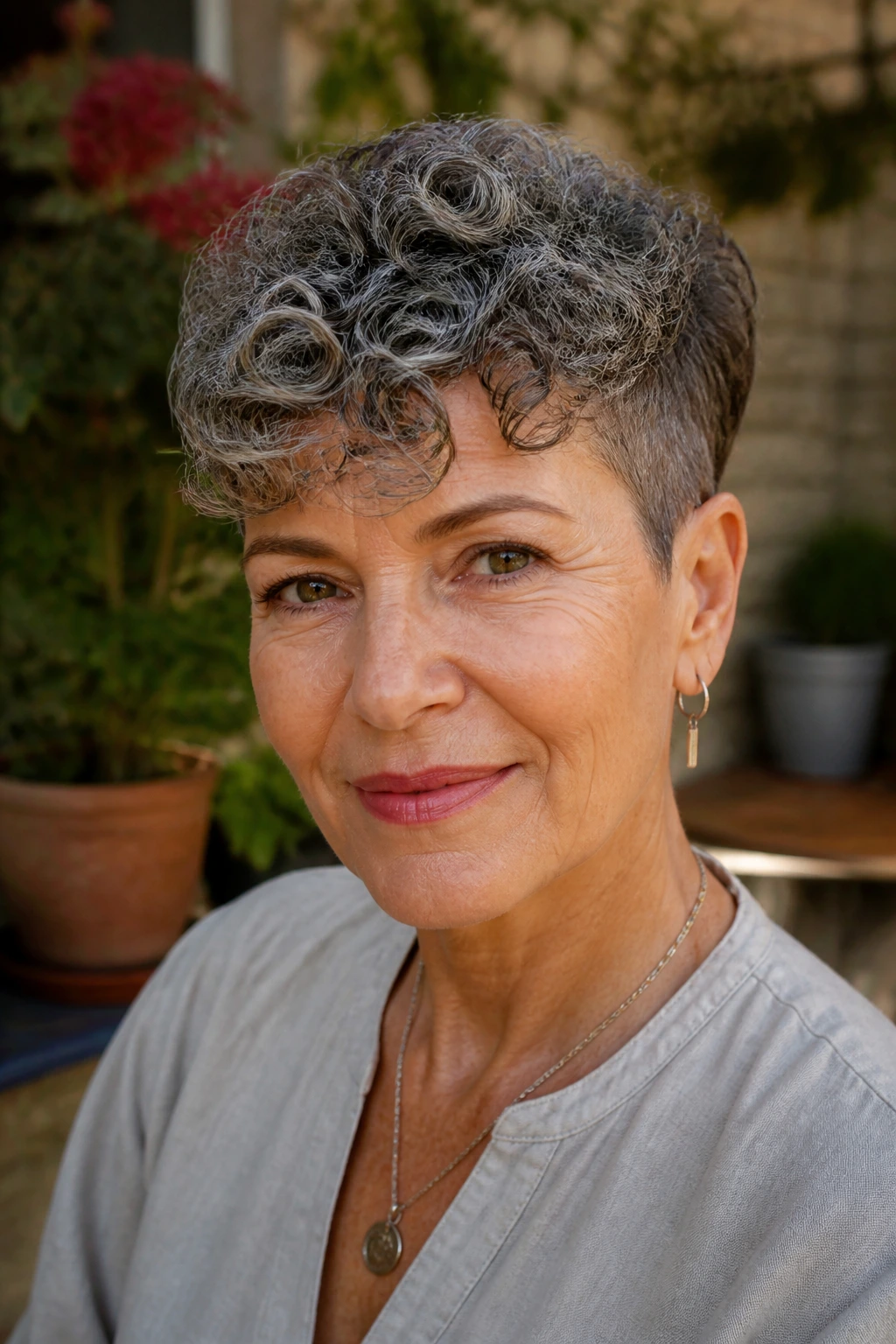
This is a neat cut for curl patterns that want a defined shape without too much length on the sides. The top stays curly and visible, while the sides and nape are cropped tighter to keep the outline clean. It has a little French-bob energy, but the curl gives it a different rhythm entirely.
The fringe can be short or just long enough to kiss the forehead. The point is to let the curls sit where they naturally want to sit, not stretch them into something straight and obedient. If your curls spring up a lot when dry, cut with that in mind.
This style looks best when the curls are hydrated and separated, not brushed into a cloud. A leave-in conditioner and a cream with a bit of hold make a huge difference.
22. Sleek Center-Part Bob
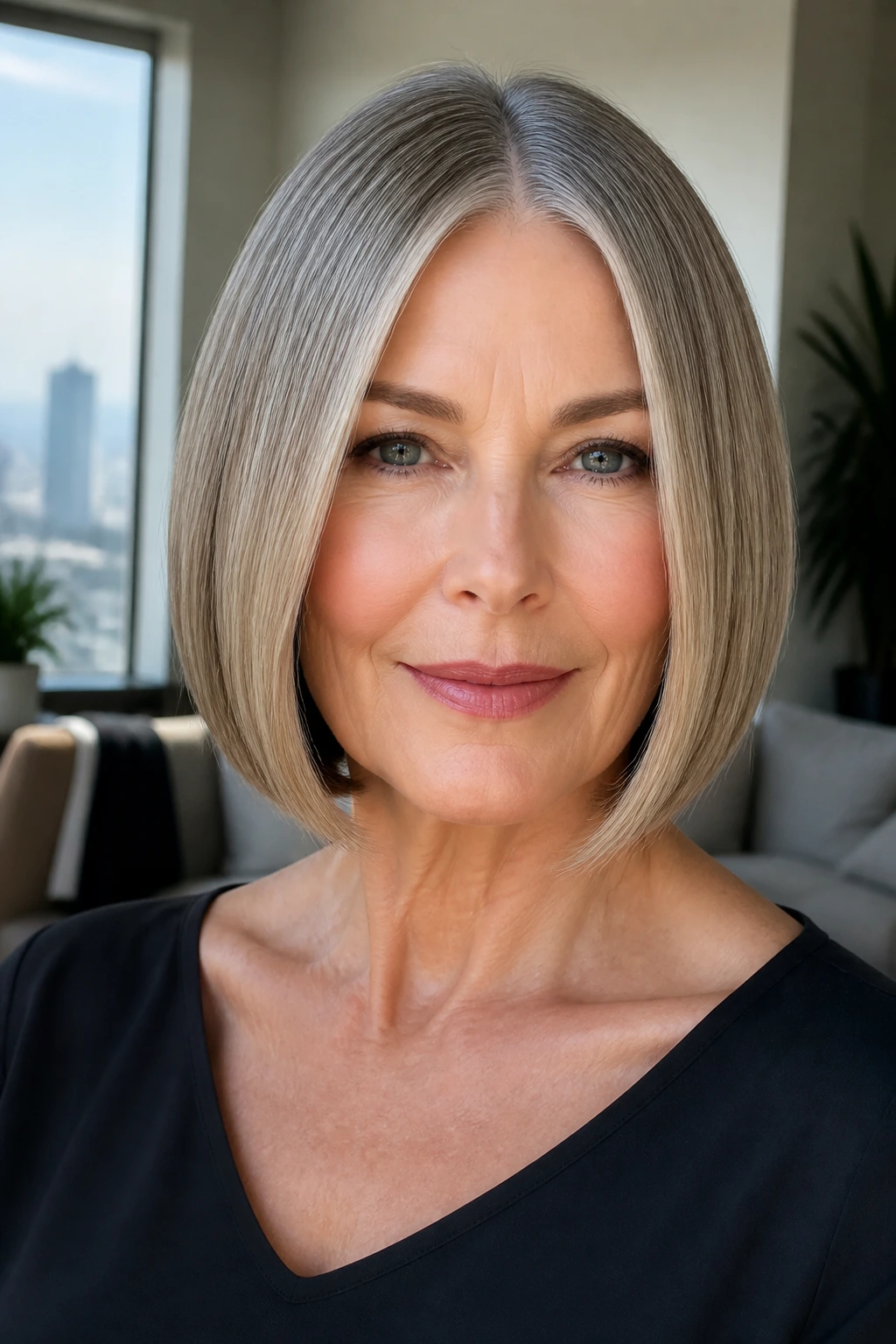
A center-part bob has no interest in hiding behind softness. It’s symmetrical, tidy, and sharp in a clean way, especially on straight or slightly wavy hair. The middle part opens the face, and the even line on both sides makes the haircut look calm and deliberate.
Why it feels so clean
The shape draws attention to the hair’s shine and density. If the ends are blunt and the finish is smooth, silver or white hair can look striking here. It does ask for a little maintenance, because uneven growth shows faster in a centered style.
Best for
Women who like structure. Faces with balanced features. Anyone who prefers one straightforward shape over lots of movement. It also pairs well with a polished wardrobe, though it doesn’t need that to work.
23. Side-Swept Crop with Nape Detail
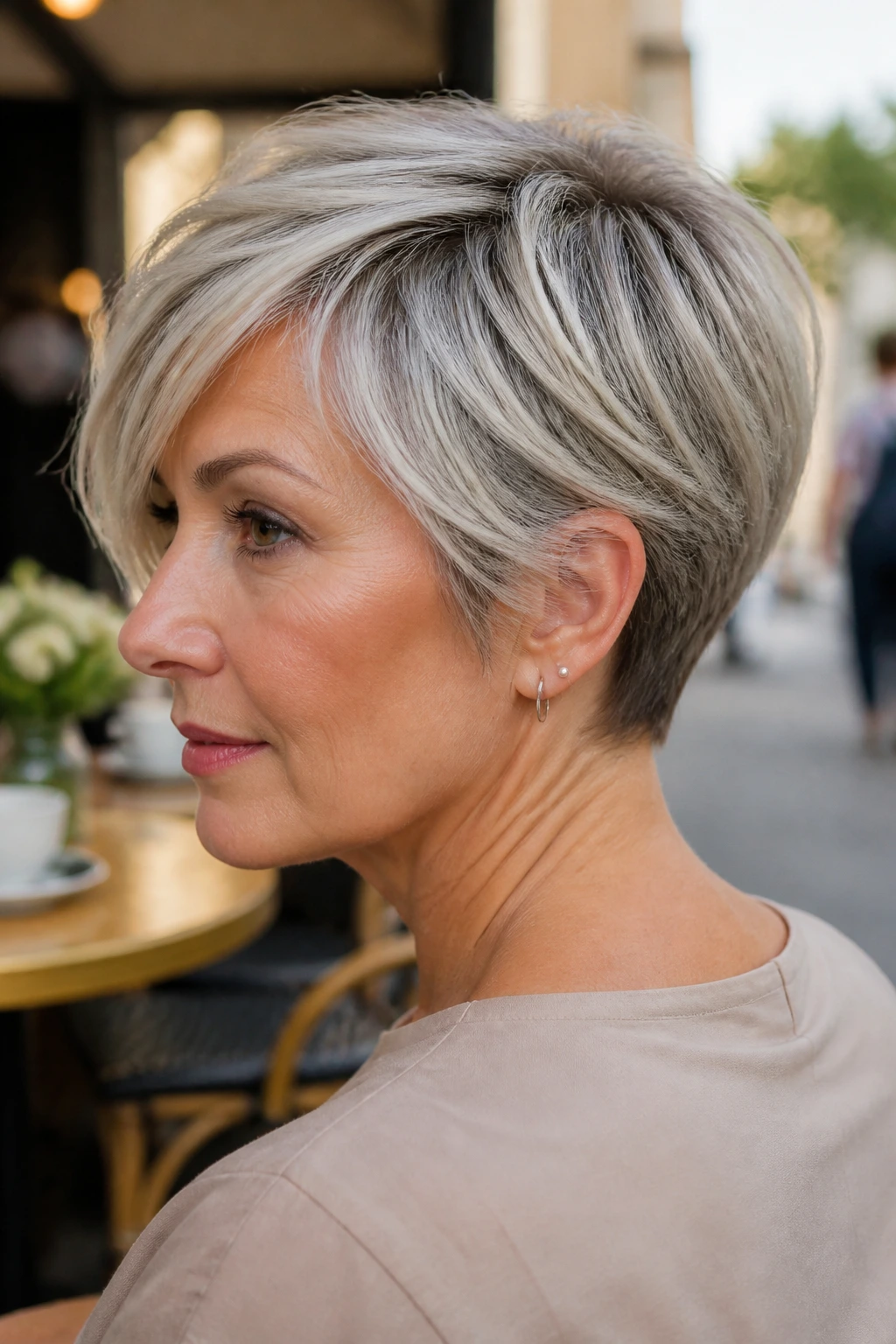
This crop keeps the sides neat and the nape clean, then lets the top sweep over in one direction for softness. That contrast is what makes it interesting. The back looks tidy, the top keeps a little movement, and the haircut feels finished even when you haven’t done much to it.
The nape detail matters more than people think. If the neckline is tapered close, the whole haircut looks more precise. If it’s left bulky, the style loses its shape and starts to read as just “short hair,” which is not the goal.
This is a good option if you want something easy but not plain. It has enough shape for a good profile, especially if you like seeing your neckline and earrings rather than hiding them under hair.
24. Soft Angled Lob
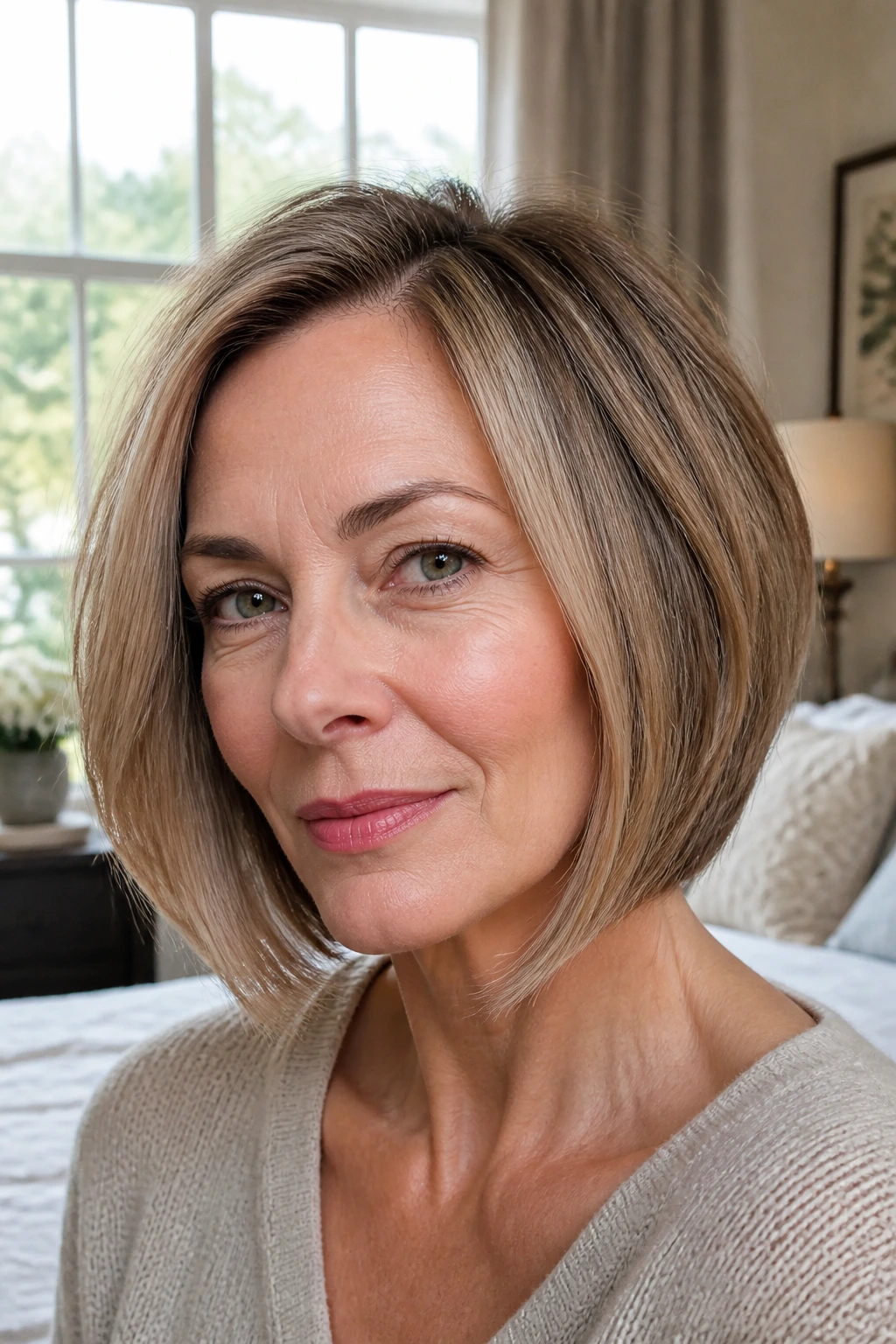
A soft angled lob gives you the longer-front, shorter-back shape without the sharpness that can make an angled cut feel stiff. The front pieces lengthen just enough to frame the jaw or collarbone, while the back stays controlled. It’s a nice choice if you want a cut that can move between polished and casual depending on how you dry it.
This is one of the easiest styles to grow out. The shape stays readable even as the ends drop a little. That matters more than people admit. A haircut that still looks intentional after six or eight weeks is worth more than a cut that only looks good for 10 days.
A side part gives it lift. A center part makes it quieter. Either way, the angle should stay soft, not pronounced.
25. Choppy Crop with Lifted Crown
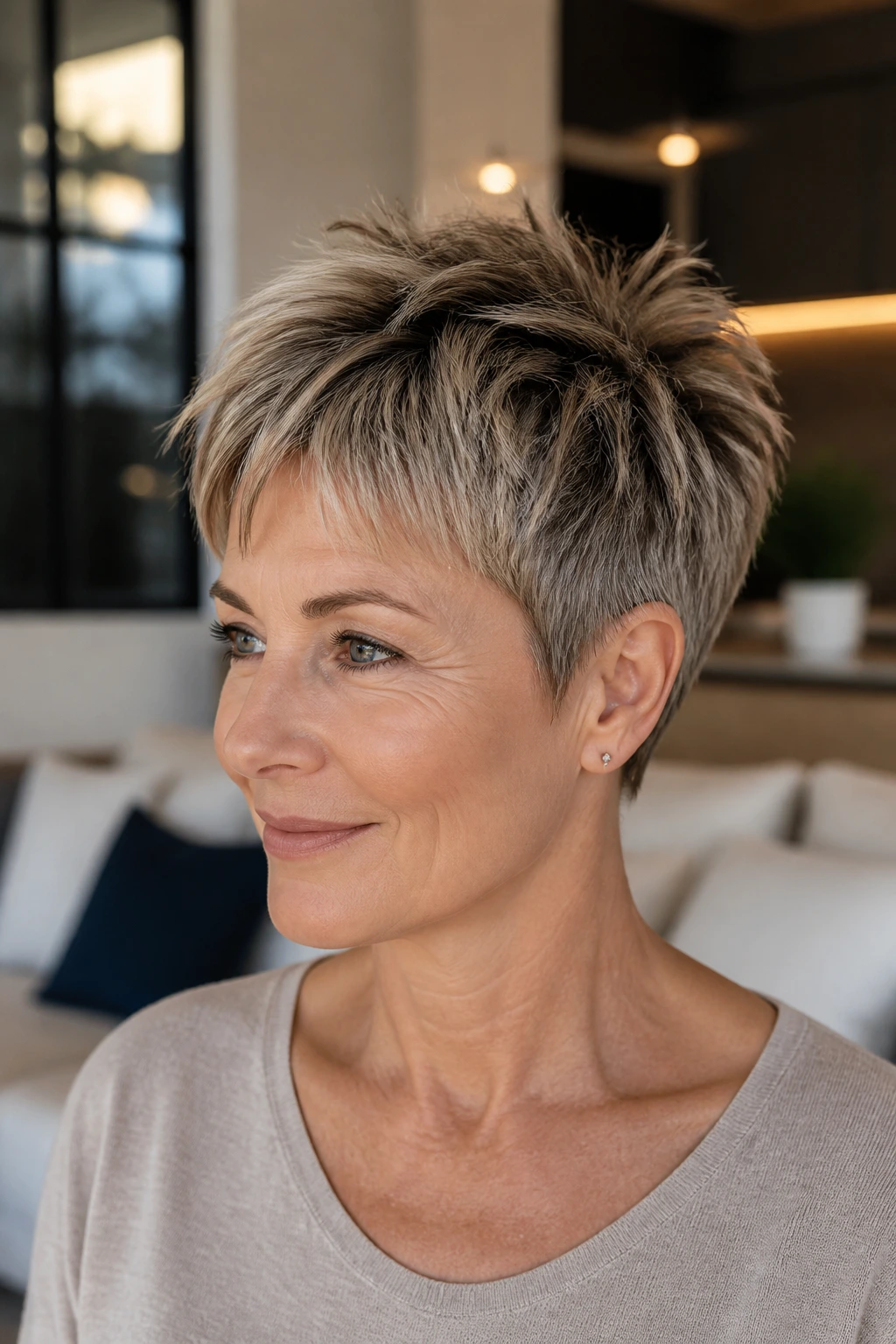
A choppy crop adds texture where flat hair usually needs help most. The layers are short and uneven enough to create separation, and the crown is lifted so the silhouette doesn’t collapse. It’s a lively cut, but not messy in the wrong way.
A strong fit for fine hair
If your hair is too fine to hold a big shape, this cut gives it the illusion of movement without asking for a ton of length. The trick is not over-layering the sides. Keep the texture on top and preserve some substance around the perimeter.
Styling move
A root-lift spray at the crown, then a quick blast with the dryer using your fingers. That’s often enough. Finish with a little dry texture spray if the pieces need more separation.
26. Layered Bob with Curtain Bangs
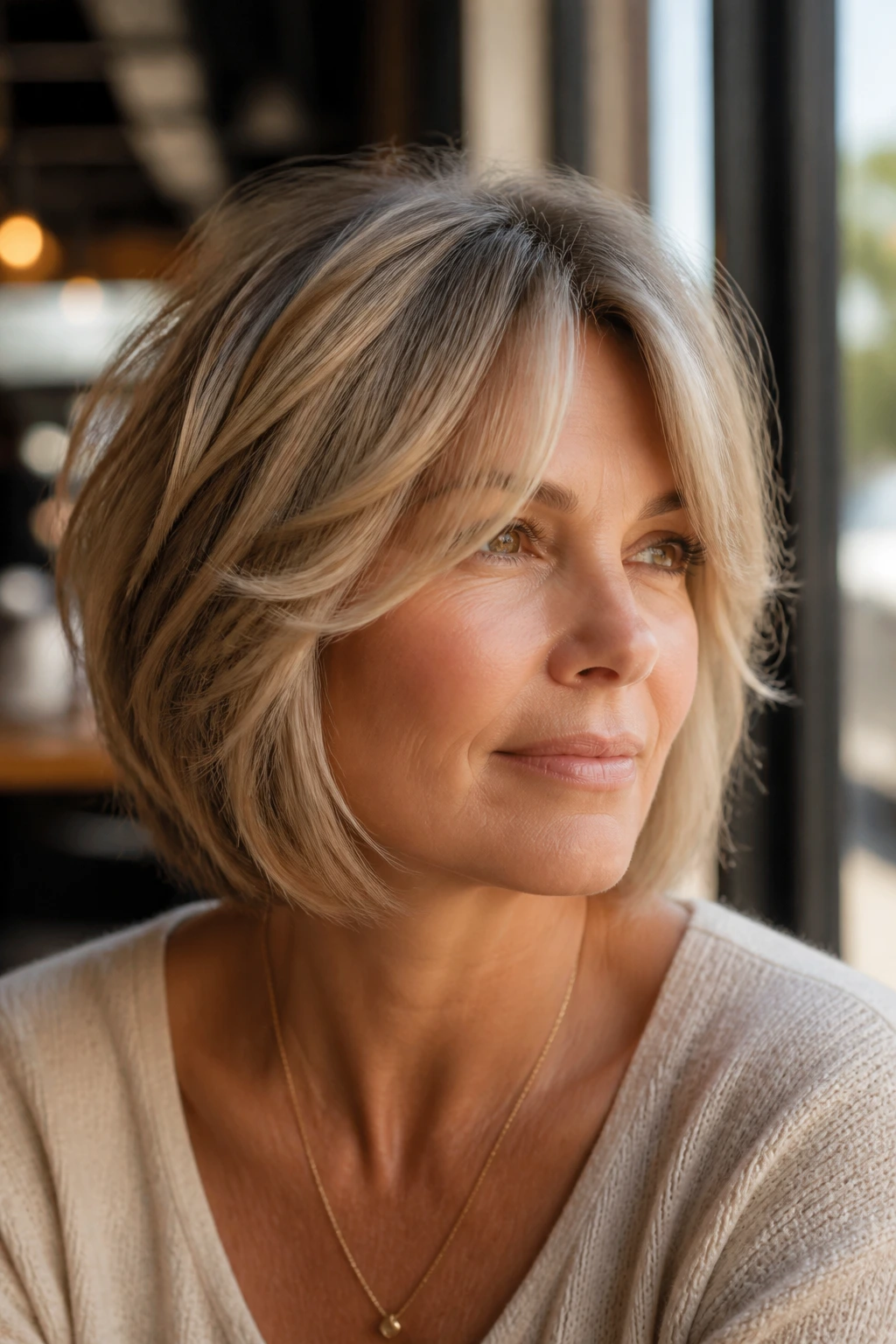
Curtain bangs soften a bob fast. They part through the middle, curve away from the face, and blend into the layers instead of sitting there like a wall of fringe. The result is gentle around the forehead and cheeks without losing structure in the rest of the cut.
This is a good choice if you want some face framing but do not want full bangs. Curtain bangs can also help balance a longer face or draw attention away from a very broad forehead without making the haircut feel heavy.
The layers should move into the bangs, not fight them. If the bob is too blunt and the bangs are too soft, the cut can feel divided. When the lines connect, it looks intentional.
27. Tapered Natural Afro Crop
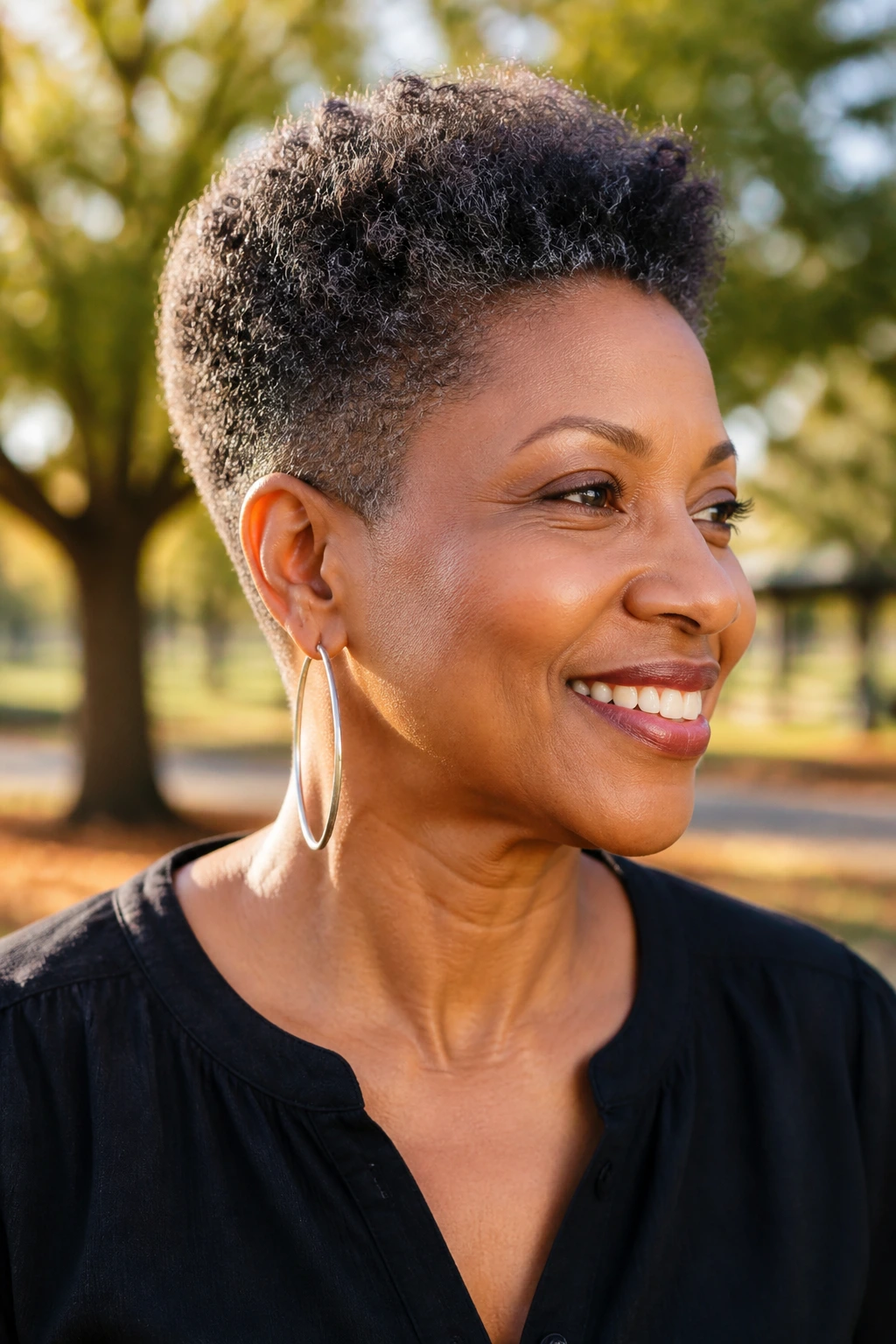
For natural coils and tight curls, a tapered crop can be one of the most elegant short shapes around. The sides and nape are tapered to keep the outline neat, while the top retains enough height and texture to show the curl pattern. The shape respects the hair instead of forcing it into a flat plane.
What to ask for
A dry cut, or a cut that is shaped while your curls are in their natural state. Rounded top, tapered sides, clean neckline. That’s the basic formula, though the exact silhouette should follow your curl density.
What makes it sing
This cut shows off line and texture at the same time. It can look crisp with a little sheen from leave-in conditioner or more matte and cottony if you prefer a softer finish. Either way, the silhouette stays visible.
28. Bob with Face-Framing Pieces
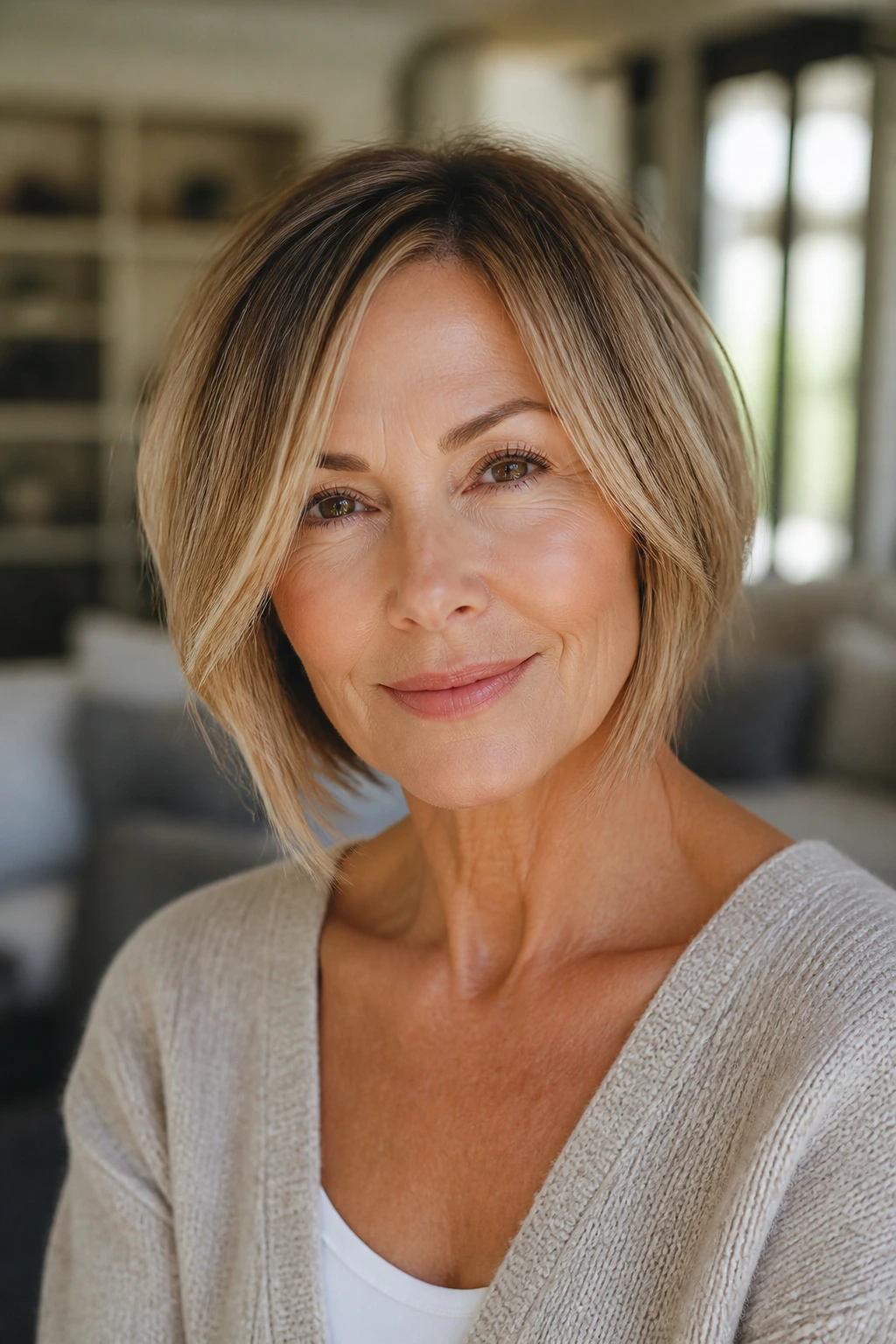
If you want to keep some length but still make the haircut feel lighter, face-framing pieces do the job. The back can stay fairly simple and blunt, while the front gets a few longer strands that bend around the cheekbones and jaw. It’s subtle, but it changes how the whole cut sits on the face.
This is a good last stop for someone who wants a refresh without committing to something dramatic. You can tuck the front, twist it back, or let it fall forward on days when you want more softness. The shape works especially well if you wear your hair parted slightly off-center.
The best version keeps the framing pieces long enough to move, but short enough to show the structure of the bob underneath. That balance is what keeps it from looking like grown-out layers.
How to Choose a Short Cut That Fits Your Hair, Not the Photo
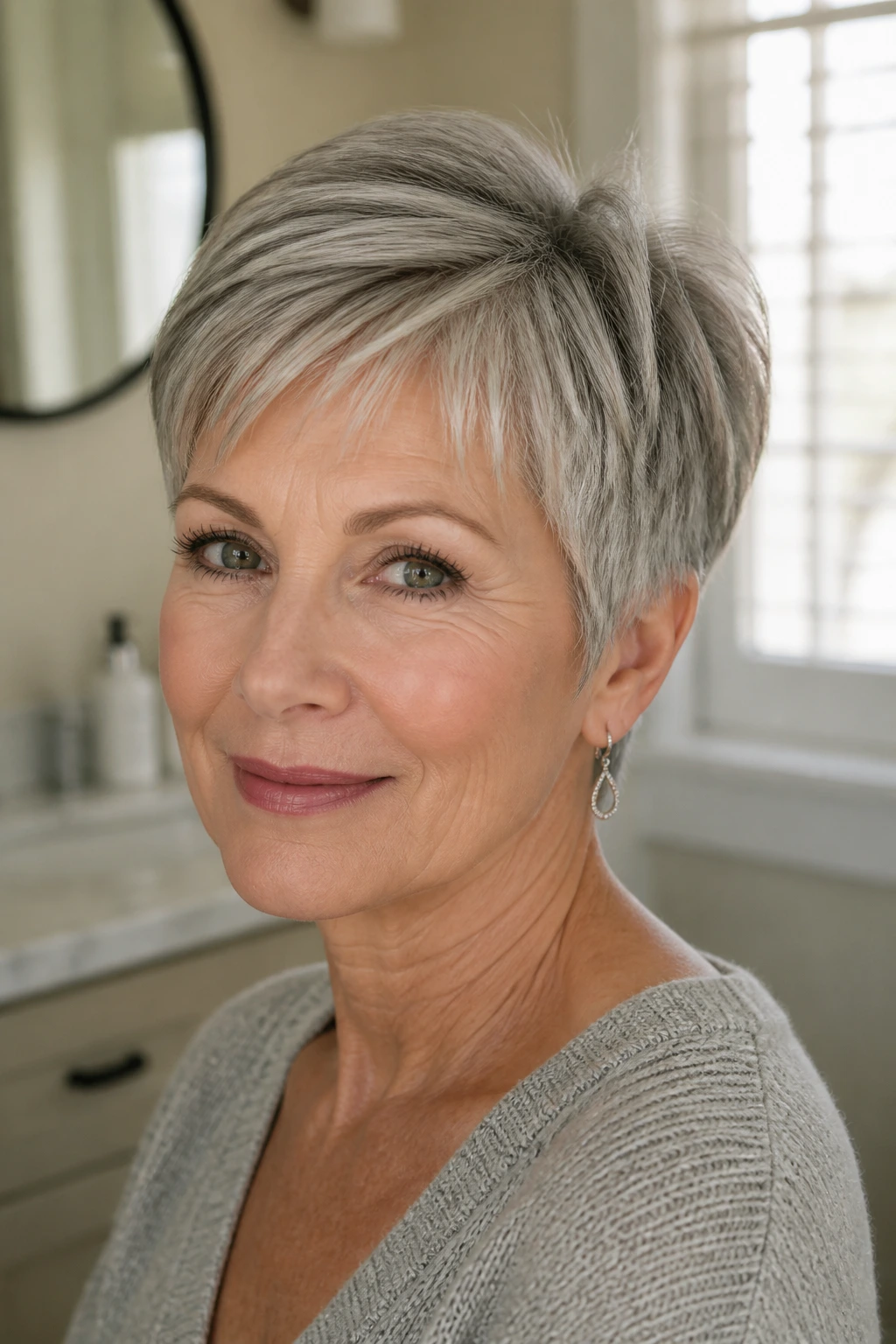
Density matters first. Fine hair usually looks better with a blunt perimeter, a lifted crown, and fewer chopped-up layers that steal mass from the ends. Thick hair can take more shaping, more stacking, and more internal removal without losing its shape.
Cowlicks get a vote. If your hair lifts at the temple or splits at the crown, choose a cut that works with that pattern instead of trying to flatten it with styling. A side-swept fringe can hide a tricky hairline; a center part can make a cowlick more obvious.
Glasses change the silhouette. Frames eat space around the temples, so the smartest short cuts leave room there or sweep the fringe above the brow. If the hair crowds the sides of your face, the whole look feels busy.
Your styling time should be honest. If you will not round-brush your hair, do not buy a cut that depends on round brushing. Choose the version that still looks clean with air-drying, a quick blow-dry, or a little texture product. That honesty saves a lot of regret.
The Short-Hair Mistakes That Make a Good Cut Look Fussy
The first mistake is choosing a photo without matching texture. A sleek bob on straight hair does not behave like the same bob on wavy or curly hair. The fix is to ask for the same silhouette, but shaped to your growth pattern and density.
The second is taking too much weight out of fine hair. When a stylist over-layers fine strands, the ends start looking thin and see-through. Keep the perimeter clean and blunt, then use only enough layering to create movement where you need it.
The third is ignoring the neckline. A pretty front with a bulky nape is a bad trade. The back should be trimmed often enough that collars, sweaters, and scarf edges do not kick the hair outward.
The fourth is using too much product on short hair. A pea-size amount goes far on a pixie. More than that can collapse the top and make the cut look greasy by noon. Start smaller than you think.
And the fifth? Letting short hair grow too long between trims. A tidy pixie can turn fuzzy fast. Even bobs lose their line if the ends go blunt in the wrong direction.
Fresh Ways to Bend These Cuts to Fine, Curly, Silver, or Thick Hair
The Fine-Hair Lift: Keep the outline blunt, the crown slightly elevated, and the layers long enough to preserve density. This version works best on pixies, chin-length bobs, and rounded crops that need shape more than volume loss.
The Curl-First Shape: Ask for a dry cut, more space at the crown, and a tapered nape so curls can spring instead of spreading sideways. This adaptation suits shag bobs, tapered crops, and French crops especially well.
The Silver Spotlight: Shorter cuts often make gray or white hair look brighter because the surface reflects light more evenly. A crisp bob or a clean pixie lets the color do the talking, which is a nice change from trying to hide it.
The Grow-Out Friendlier Version: If you dislike frequent trims, choose an angled bob, a lob, or a bixie with soft edges. These shapes stay readable longer and do not punish you when life gets busy.
The Braver Version: Add an undercut, a micro fringe, or an asymmetrical front if you want the haircut to feel more current. Keep the rest of the shape simple so the bold detail has room.
Tools That Make Styling Short Hair Easier
-
Blow dryer with a concentrator nozzle — Directs air at the roots so you can lift the crown without frizzing the ends.
-
Small round brush, 1 to 1.5 inches — Best for pixies, bobs, and any cut that needs a little bend around the face.
-
Paddle brush or flat brush — Useful for sleek bobs, center parts, and smoothing the sides quickly.
-
Wide-tooth comb — Gentle on curls and waves, especially when you’re applying leave-in conditioner or detangling wet hair.
-
Sectioning clips — Help you dry the crown and fringe in separate pieces instead of blasting everything at once.
-
Light mousse or root-lift spray — Adds structure without turning fine hair sticky.
-
Texture spray or matte paste — Good for piecey crops, shags, and pixies that need separation.
-
Heat protectant — Worth using if you flat iron, round brush, or blow-dry regularly; short hair gets handled more often than long hair.
-
Salon photos on your phone — Bring 2 to 3 that show shape, not just color. Shape is what matters.
Keeping the Shape Between Salon Visits
Pixies and crops usually need a trim every 4 to 6 weeks if you want the neckline and ears to stay clean. Once the nape starts touching the shirt collar, the shape blurs faster than people expect. A short bob can stretch a little longer, usually 6 to 8 weeks, especially if the edge is blunt and not too heavily layered.
Washing habits depend on texture. Fine hair often looks best with more frequent shampooing because oil shows faster at the roots, while curly or coarse hair may stay happy with fewer washes and more leave-in conditioner. If the crown falls flat by day two, a little dry shampoo at the roots can buy you another day without turning the hair chalky.
Night care matters more than people admit. A satin pillowcase reduces frizz and keeps the fringe from sticking up at odd angles. If your bangs or side-swept pieces need help, pin them lightly before bed rather than flattening them under tension.
One more thing: short hair likes tiny refreshes. A damp hand over the fringe, a little reactivation spray, a quick blast from the dryer. Small moves. Not a full production.
Questions That Come Up Before the Chop
Which short haircut makes hair look thicker?
A blunt bob, a rounded bob, or a structured pixie with a lifted crown usually gives fine hair the fullest outline. The clean edge at the perimeter keeps the ends from looking wispy.
Is a pixie cut too severe for older women?
Only if it’s cut too hard and styled too stiff. A soft pixie with a side-swept fringe can look gentler than a longer cut with limp ends, because the shape is cleaner and more intentional.
What short haircut works best with glasses?
Cuts that leave room at the temples tend to work best: French bobs, soft pixies, tucked-behind-the-ear bobs, and side-swept crops. Avoid fringe that lands right on the frame unless you want to spend time moving it out of the way.
How often should I trim short hair?
Pixies and crops usually need trims every 4 to 6 weeks. Bobs can often go 6 to 8 weeks, but the neckline and the ends still need regular shaping or the cut starts to feel fuzzy.
Can I wear bangs with a short haircut if I have cowlicks?
Yes, but the bang shape matters. Side-swept bangs or longer curtain bangs usually behave better than a blunt straight fringe, especially if the hair at the front grows in different directions.
What if my hair is curly and I want it short without looking wide?
Choose a tapered cut with length kept on top and less bulk at the sides. That shape lets the curls stack upward instead of ballooning sideways.
How do I ask for a cut that grows out well?
Ask for soft edges, a little length at the front, and a neckline that is clean but not shaved too close. Mention how often you’re willing to trim; that tells the stylist how hard they can push the shape.
What if I hate how my hair flips at the nape?
That usually means the back is too long or the weight line is sitting at the wrong spot. A shorter nape, cleaner graduation, or a more angled bob can stop the flip before it starts.
A Cut That Feels Like It Was Meant for You
The best short haircut is not the one that looks the most daring on a model with a blowout and studio lights. It’s the one that falls into place when you’re in your own bathroom, with your own cowlicks, your own glasses, your own five-minute patience threshold. That’s the real test.
Good short hair has shape. It has a little attitude, sure, but it also has manners. It gets out of your way. It makes silver shine, lifts the crown, and leaves room for earrings, collars, and the rest of your life.
Pick the version that fits your texture first, your maintenance level second, and your mood third. That order matters more than people think.
