



A round face doesn’t need hair that hides it. It needs hair that draws a line somewhere else.
That is why short choppy haircuts for round faces keep winning over the bland, helmet-like cuts that sit too close to the cheeks and stop right at the widest point. The right shape does a few small things at once: it lifts the crown, breaks up the outline, and leaves enough movement around the jaw that the face looks longer without looking forced.
I’ve always had a soft spot for cuts that look a little undone on purpose. A choppy pixie with a piecey fringe. A bob with a leaned-out side. A shaggy crop that moves when you turn your head. These styles don’t depend on one perfect blowout, which is lucky, because most real lives don’t leave room for one. They also age better as they grow out. A blunt line turns sloppy fast. Texture turns softer.
Why These Cuts Earn Their Keep
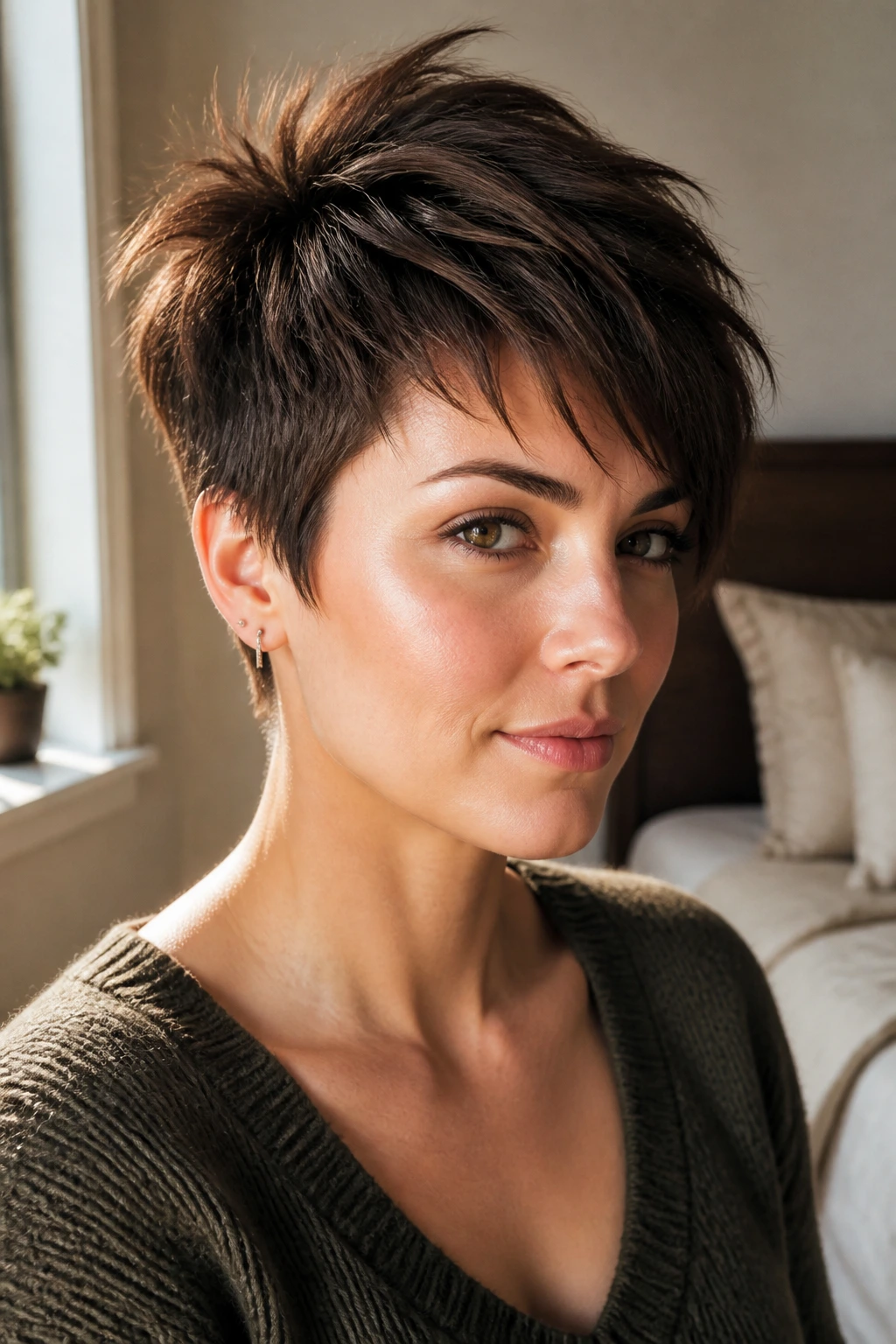
- They add height where it matters: A little lift at the crown stretches the face visually, especially when the sides stay close and controlled.
- They break the circle effect: Choppy ends interrupt the smooth outline that can make a round face look wider than it is.
- They give you direction, not just length: Side parts, diagonal fringe, and angled front pieces pull the eye up and across instead of straight out.
- They work with different textures: Fine hair gets bounce, thick hair gets shape, and wavy hair gets to do what it already wants to do.
- They grow out with less drama: A textured cut can look intentional for weeks longer than a blunt bob or a one-length crop.
- They make styling easier, not fussier: A fingertip of paste, a quick bend with a flat iron, or a blast of texture spray is usually enough.
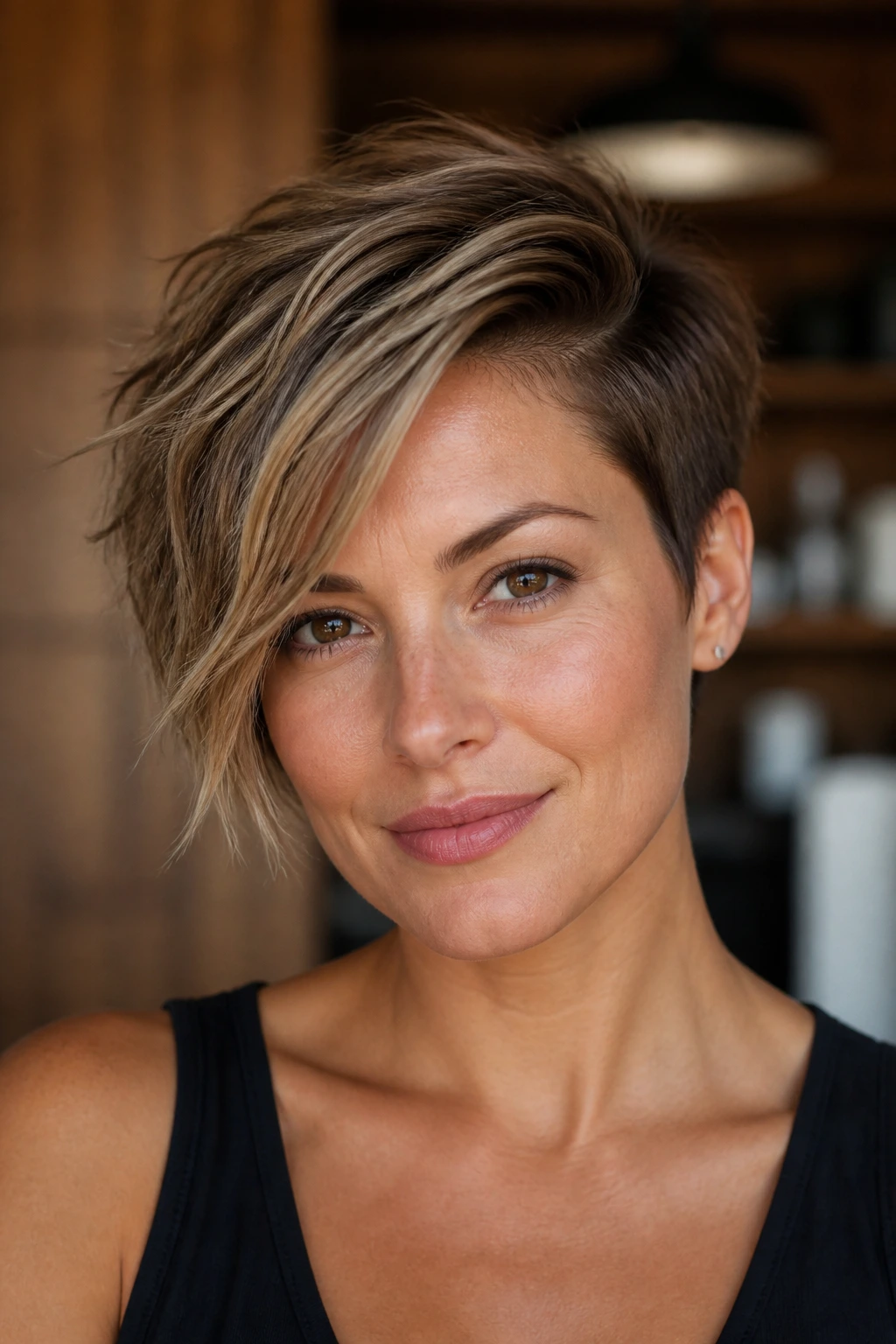
1. Crown-Lift Pixie with Piecey Fringe
A pixie can be a gift or a trap. If the top sits flat and the fringe lands in one heavy sheet, a round face can look even rounder. But a crown-lift pixie with piecey fringe changes the whole mood. The top stays a little longer, the sides stay neat, and the fringe breaks apart instead of forming one solid curtain.
Ask for the crown to be left about 1 to 2 inches longer than the sides, with point-cut ends rather than blunt snips. That tiny difference matters. It keeps the top light enough to move, but not so wispy that it collapses after lunch. I like this cut on fine hair because it creates the illusion of density without piling weight at the cheek.
The fringe should not be thick or straight across. Let it fall in separated bits, and keep the shortest pieces just above the brow or swept slightly to one side. A pea-sized bit of matte paste warmed in the palms is usually enough. Pinch it through the ends, then push the crown up and forward with your fingers. Done badly, pixies look static. Done well, they look sharp and alive.
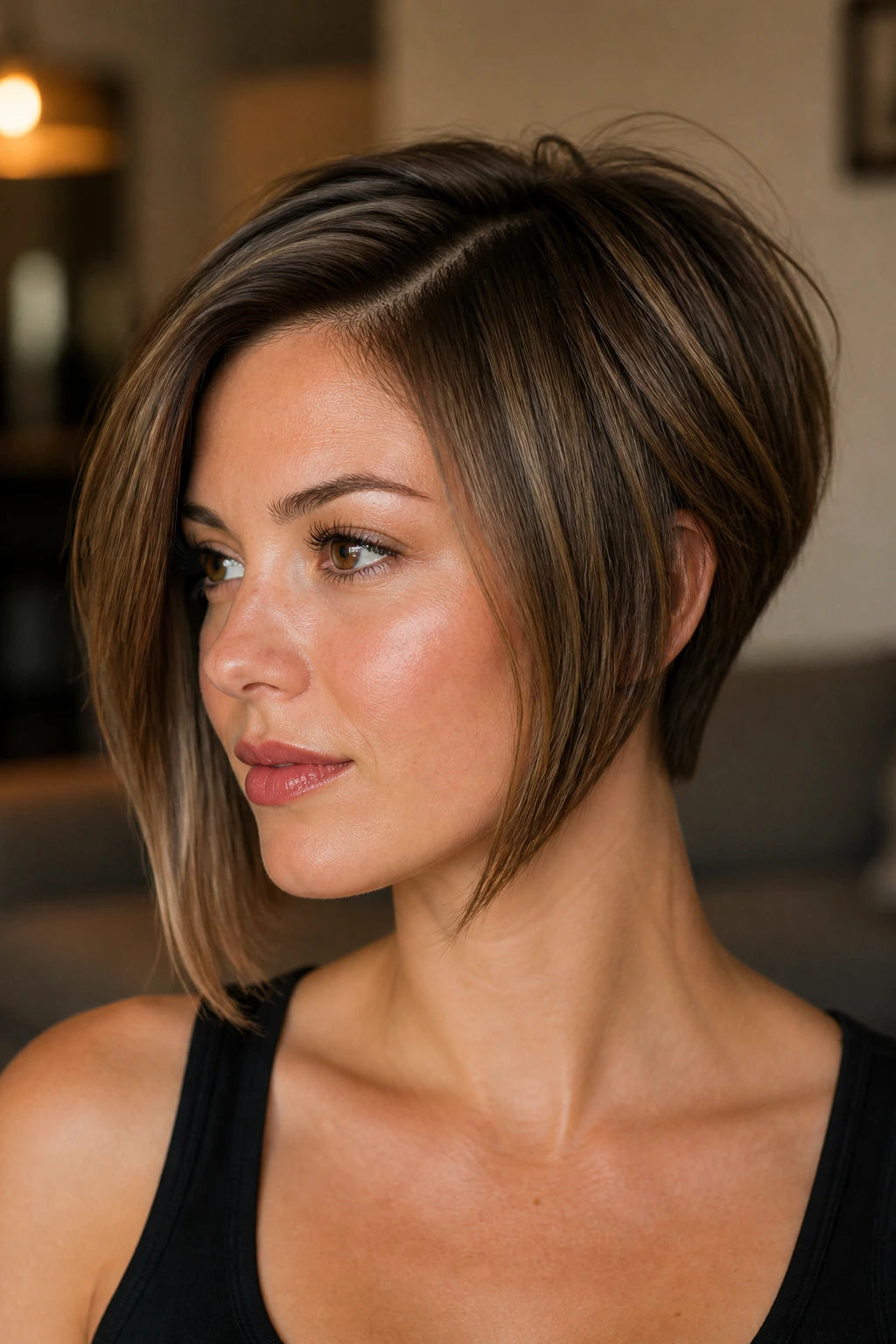
2. Asymmetrical Bob with a Tapered Nape
Want a bob that doesn’t sit like a little box around the face? This is the one. The asymmetrical bob with a tapered nape gives you the clean shape of a bob, then breaks the symmetry just enough to keep a round face from reading too wide. One side skims the jaw a bit longer. The back gets tighter and cleaner at the neck.
The line is the whole point. A subtle angle from back to front pulls the eye downward, which is exactly what a round face needs. I prefer this cut when the longest front piece hits somewhere between the jaw and just under it, never right at the widest part of the cheeks. That small shift changes the profile more than people expect.
Style it with a round brush if you like polish, or with a flat iron if you want a slight bend at the ends. Keep the nape snug so the silhouette doesn’t puff out under sweaters and collars. This cut looks especially good when the part sits a little off center. Straight down the middle can flatten the effect. A few degrees to the side? Much better.
3. Shaggy French Bob with Wispy Bangs
A French bob usually sounds crisp and neat, but the shaggy version has more give. The ends are chipped, the layers are airy, and the bangs are soft enough to move. On a round face, that softness is useful because it keeps the cut from turning into a circle-within-a-circle.
The trick is where the shape lands. I like this length just at the chin or a touch below, with light layering through the sides so the hair doesn’t stack at cheek level. Wispy bangs help here, but they need to be done carefully. Heavy bangs can shorten the face. Wispy bangs, especially when they split a little in the middle, create a vertical opening that feels lighter.
This cut shines with natural wave. A quick scrunch of texturizing spray after a rough dry gives the ends a broken-up finish that looks better than anything too polished. If your hair is straight, a one-inch iron bent away from the face in alternating directions keeps it from lying flat. The whole point is movement. Not perfection. Perfection gets stiff fast.
4. Textured Crop with a Deep Side Part
What happens when you take a crop and give it a deep side part? You get instant asymmetry, and asymmetry is one of the easiest ways to slim a round face without doing much at all. The side part creates a diagonal line across the forehead, while the shorter side keeps the cut from feeling bulky.
What Makes It Work
The top should be choppy, not fluffy. Ask for the layers to be cut with enough interior texture that the hair can stand up at the root without puffing out at the sides. This is a good cut for fine hair because the part creates height and the texture creates the feeling of fullness. It’s a funny little trick: less hair at the perimeter can make the whole style look fuller.
Keep one side around the temple a little shorter and let the longer side sweep across the forehead and cheekbone. That contrast matters. If both sides are equally short, the cut can look too round again. A dab of dry wax on the ends gives separation without making the hair greasy. You want pieces, not clumps.
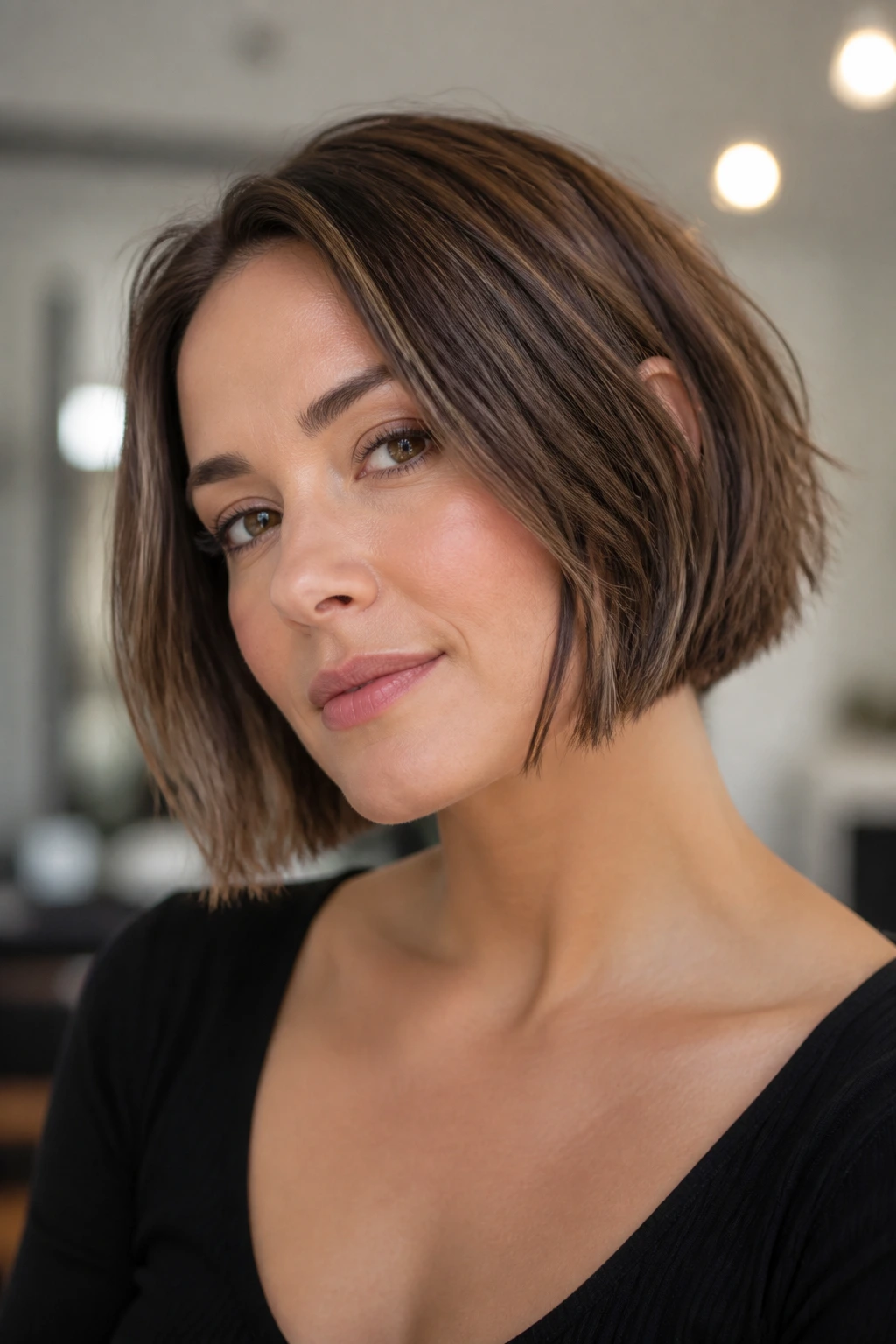
5. Razor-Edged Jaw-Skimming Bob
A blunt jaw-length bob can be a problem on a round face. Too even. Too tidy. Too much hard line exactly where the face is widest. A razor-edged jaw-skimming bob fixes that by softening the perimeter and adding a bit of movement at the ends.
The length is still close to the jaw, but the edge is chipped instead of squared off. That broken line matters because it keeps the cut from sitting like a shelf. I like a slight forward angle here, with the front just long enough to graze under the jaw when the head is upright. The back can be tucked in a little tighter so the whole shape leans forward, not outward.
This style works best on straight or lightly wavy hair that can hold a clean line and still show texture. A smoothing cream through the mid-lengths keeps frizz under control, but don’t drown the ends in oil. Too much shine makes the cut look flat, and flat is the enemy here. If you want a little bend, wrap the last inch of each side around a flat iron for three seconds and release. That’s enough.
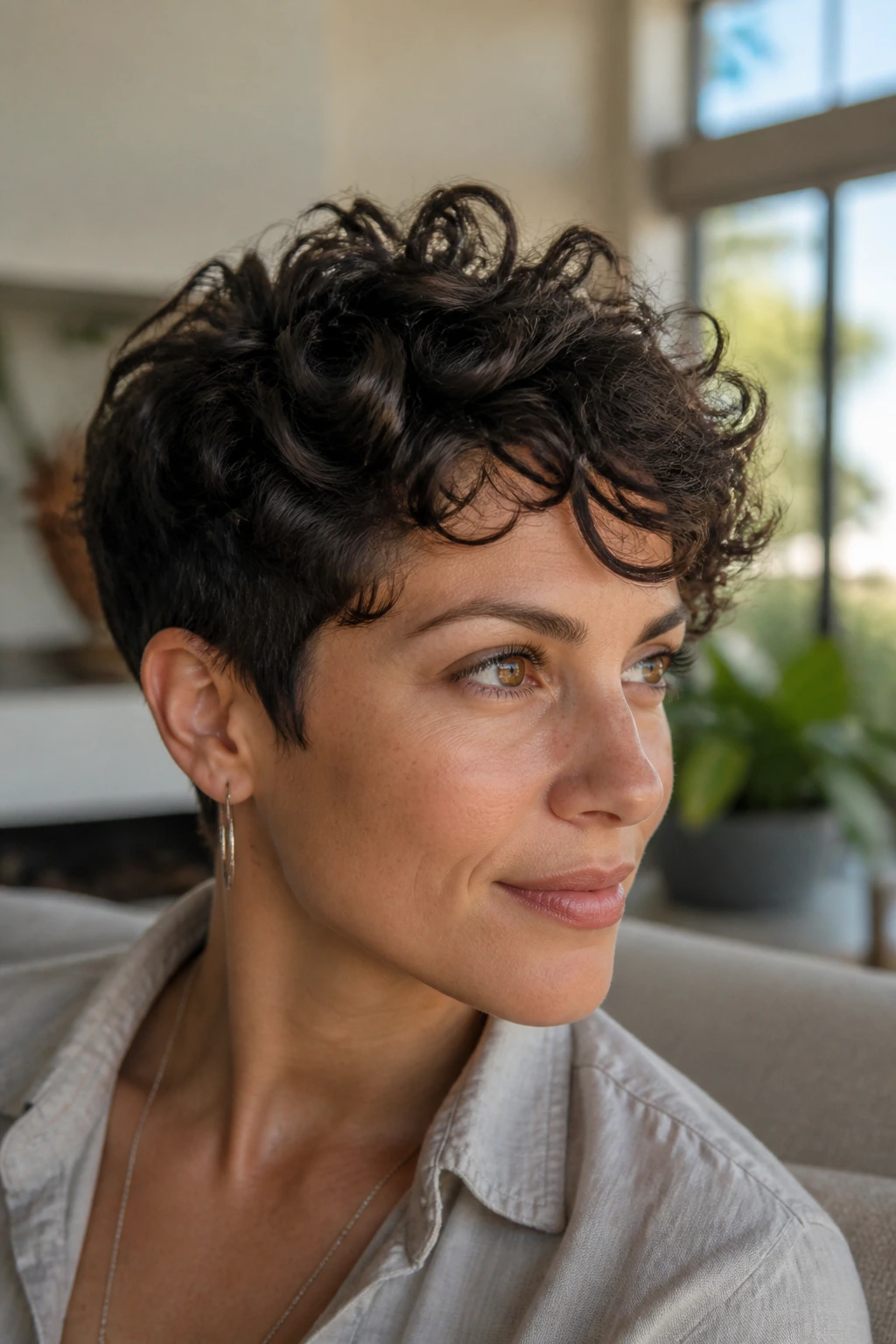
6. Curly Choppy Pixie for Natural Texture
Curly hair and short cuts have a tense little history. Too often, the shape gets thinned to pieces, then the curls spring out wider than anyone planned. A curly choppy pixie done well avoids that mess. It uses curl pattern as shape, not as an afterthought.
The best version keeps the top longer, with the sides and nape tapered just enough to reduce bulk. Ask for the cut to be done dry, or at least mostly dry, so the stylist can see how each curl lands. That matters a lot. A curl that looks short when wet can shrink an inch or more as it dries. You do not want surprises around the cheeks.
Diffuse on low heat with a curl cream that has a little hold. Then leave it alone. The more you touch it, the puffier the sides get. I like this cut because it adds lift without making the face look squeezed. The curls sit up, not out. That’s the difference.
7. Feathered Mini Shag with Airy Layers
A mini shag is one of the easiest short choppy haircuts for round faces because it never looks too fixed. The layers are feathered, the edges are uneven in a good way, and the whole cut feels like it can breathe. That breathing room is what keeps the style from adding width.
The shortest layers usually live near the crown and temple area, with slightly longer pieces around the cheek and chin. That shape draws the eye down. It also lets the hair move around the face instead of sitting in one heavy ring. If your hair has a little wave, this cut almost styles itself. If it’s straighter, a quick twist with the fingers and a mist of sea salt spray can fake the same energy.
I prefer this style for people who hate a fussy morning routine. It doesn’t need perfect sectioning or a blowout brush marathon. Rough-dry, pinch a few pieces for separation, and stop before it turns crunchy. A shag gets better when it looks lived in. Too neat and it loses the point.
8. Grown-Out Pixie with Long Top Layers
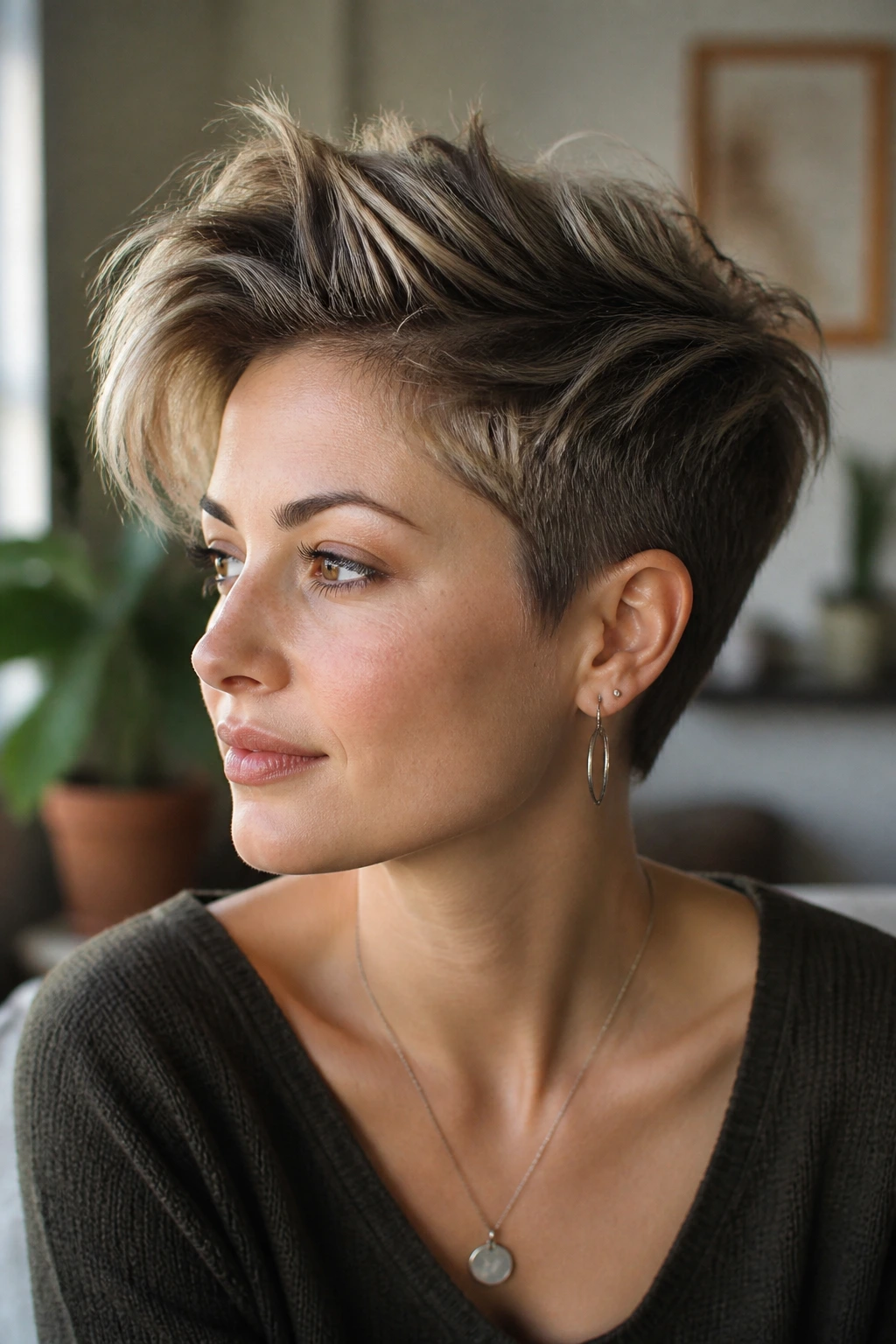
There’s a sweet spot between a pixie and a short crop where the top has enough length to sweep, tuck, or spike slightly, and the sides stay short enough to keep the outline tight. That’s the grown-out pixie. It’s one of my favorite options for round faces because it gives you flexibility without giving up the shape.
The top should be long enough to create height—often 3 to 4 inches, depending on texture—while the nape and around the ears stay much shorter. That contrast pulls the eye upward. It also means you can change the mood fast. Finger-combed and messy in the morning. Smoothed to one side for dinner. Pushed straight back if you want something more graphic.
This cut is forgiving during grow-out, which matters. The longer top pieces keep the style from collapsing into a fuzzy cap. You can maintain it with a light cream or paste and a quick trim around the ears every few weeks. If you like short hair but hate feeling trapped by it, this is a good place to live.
9. Side-Swept Crop with an Undercut
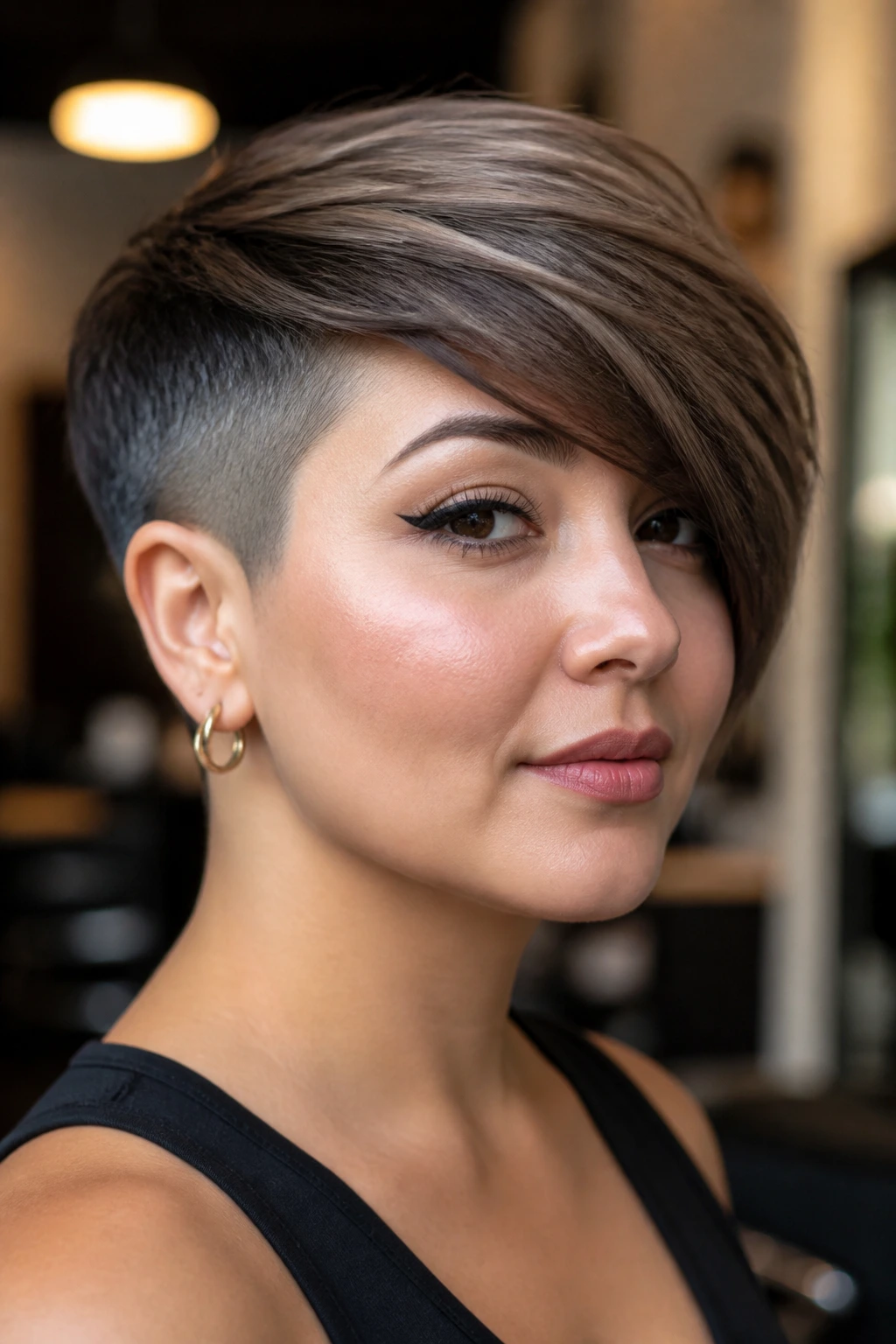
A side-swept crop with an undercut sounds edgy because it is edgy, but the shape serves a practical purpose too. Removing bulk beneath the top means the hair doesn’t poof out at the sides, and that helps a round face look a little longer and leaner.
The top remains the star. It should be long enough to sweep across the forehead and over one temple, creating a strong diagonal. The undercut can sit low around the nape or climb a bit higher behind the ears, depending on how much density you need to remove. Thick hair benefits most here. Without that internal reduction, the style can turn puffy fast.
I like this cut on people who want movement with a little bite. It looks good matte, with separation at the tips, not glossy and sculpted. A paste or fiber cream gives more control than a soft mousse. If you’re nervous about committing, ask for the undercut to stay hidden when the top is down. You get the shape without broadcasting it all the time.
10. Choppy Lob with Flipped Ends

A lob may be longer than some people think of as “short,” but on a round face the added reach can be worth it. A choppy lob with flipped ends stays just long enough to skim the neck or collarbone, while the broken ends keep it from becoming too heavy. That’s the useful part.
The flip matters. A slight outward bend at the ends creates movement away from the cheeks, which prevents the style from clinging to the widest part of the face. Keep the front pieces a touch longer than the back so the line angles down gently. A flat, even lob can look safe. A slightly off-kilter one looks smarter.
This is a nice option if you’re not ready to lose all your length. You still get that shoulder-skimming feel, but the texture keeps it from reading heavy. Use a round brush only on the top layers if you want lift. The rest can air-dry with a bit of texture spray. Don’t overthink the ends. A little bend beats a perfect curl every time.
11. Micro Bob with Soft Internal Layers
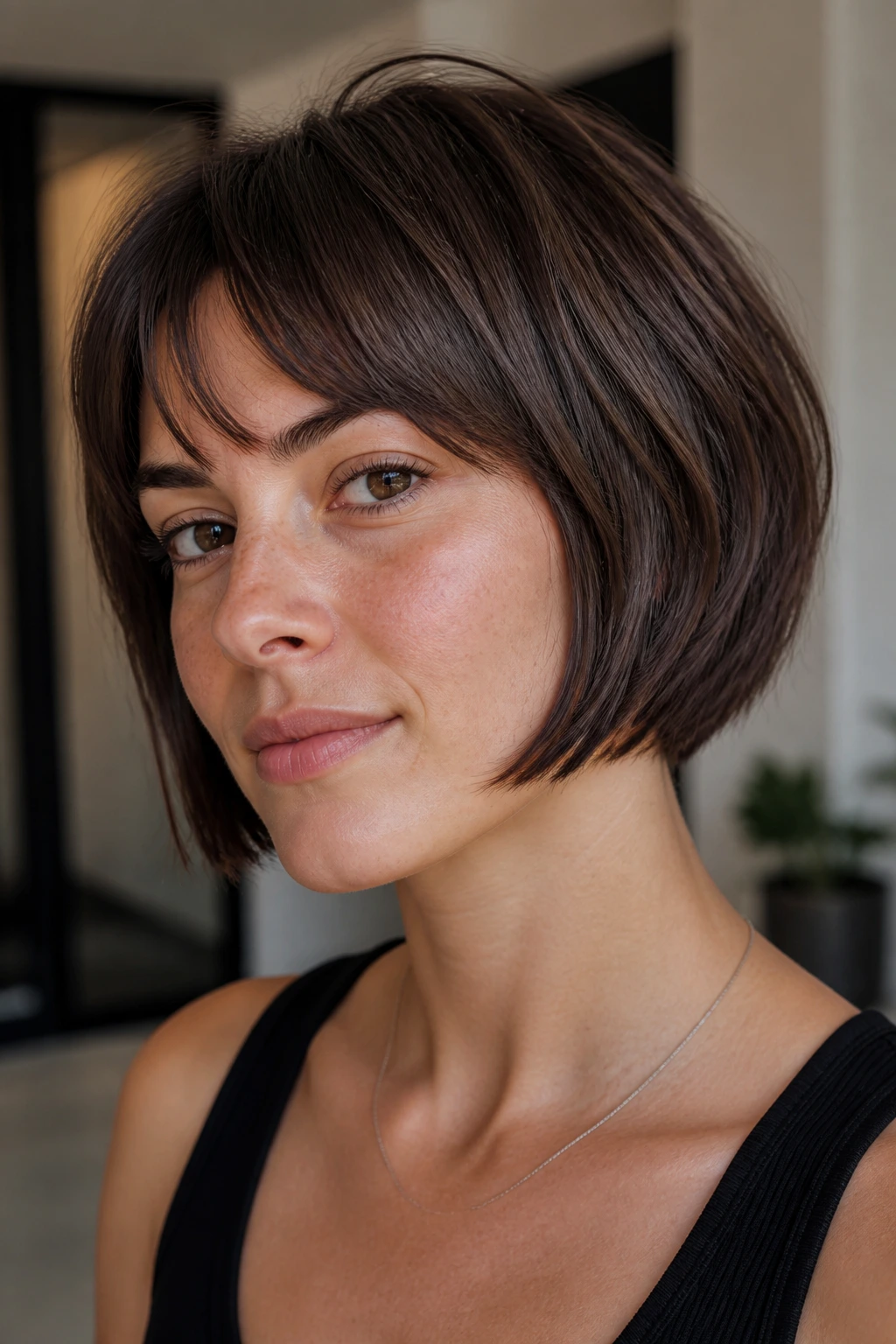
A micro bob can be tricky on a round face, which is exactly why the internal layers matter. If the perimeter sits around the jaw or just below it and the inside is lightly debulked, the cut stays sharp without looking boxy. The outer line gives definition. The hidden layers stop it from ballooning.
Why This One Works
The appeal is in the contrast. From a distance, it reads as clean and polished. Up close, you can see that the texture is broken up enough to keep the shape from feeling heavy. That’s useful if your hair is fine and tends to fall flat, because a micro bob with no internal support can look limp in an hour.
Keep the front just long enough to graze under the chin, and avoid a blunt fringe that cuts the face in half. A side part or a soft off-center part does more for this style than a perfectly centered one. I’d also skip heavy waxes here. They flatten the lift you worked for. A light volumizing mousse at the roots is enough, followed by a gentle bend through the ends if you want extra movement.
12. Wedge-Style Bob with Modern Texture
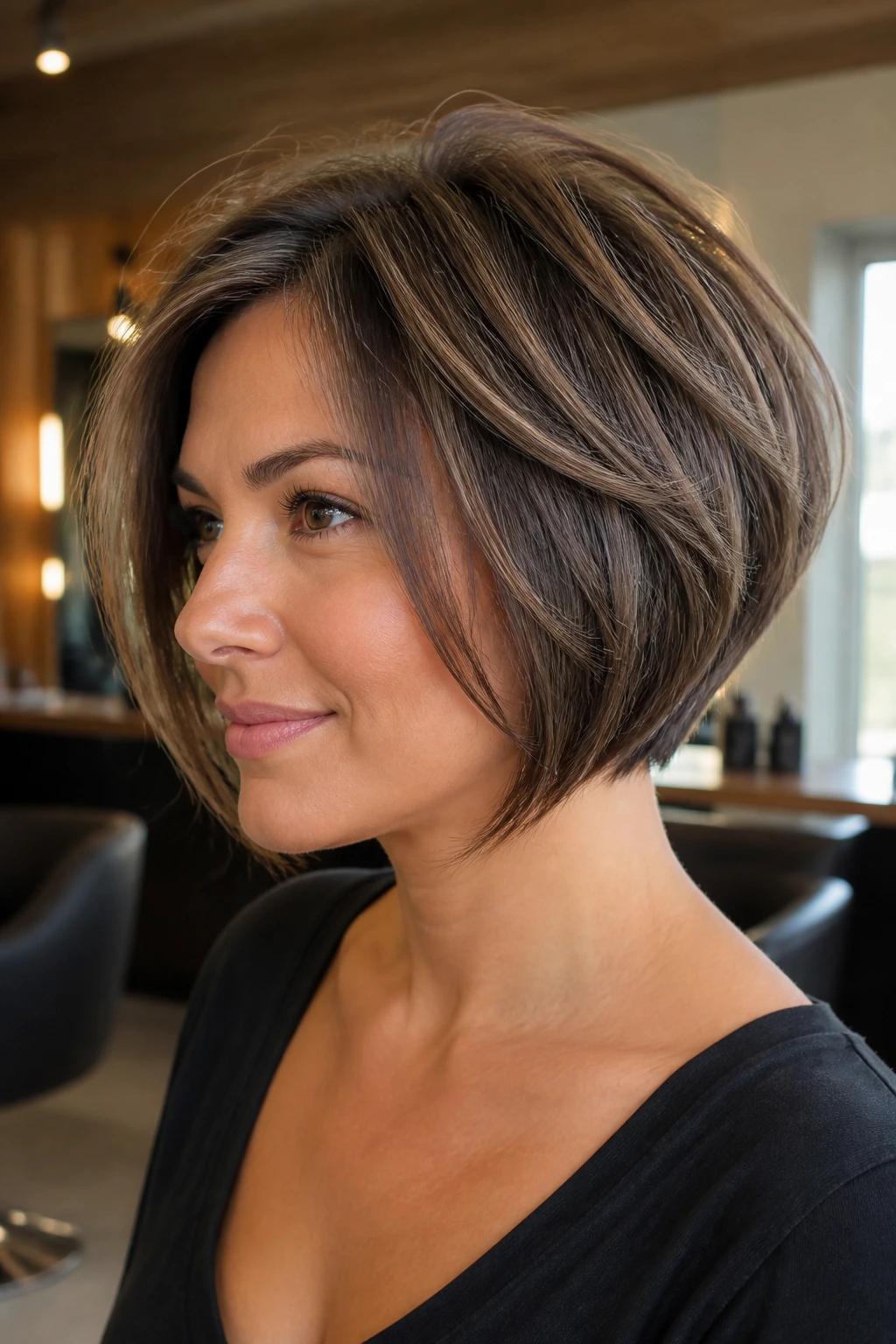
A modern wedge bob borrows the old stacked shape in the back, then softens the edges so it doesn’t feel dated. That stacked back lifts the crown and shortens the nape, which gives a round face a little more vertical length. The trick is keeping the front soft enough that the style doesn’t become a triangle.
The back should be clean and close, while the front slides forward in pieces that land near the jaw or slightly below it. Texture through the top keeps the cut from looking too polished. If the layers are too smooth, the wedge can create width at the sides. That’s the wrong direction for this face shape. You want lift, not puff.
This cut suits thicker hair especially well because it controls bulk without making the hair look thin. A quick blow-dry with a nozzle and a small round brush gives the back some polish. Then rough up the top with your fingers. It should look deliberate, not lacquered.
13. Curtain-Bang Crop with a Broken-Up Fringe
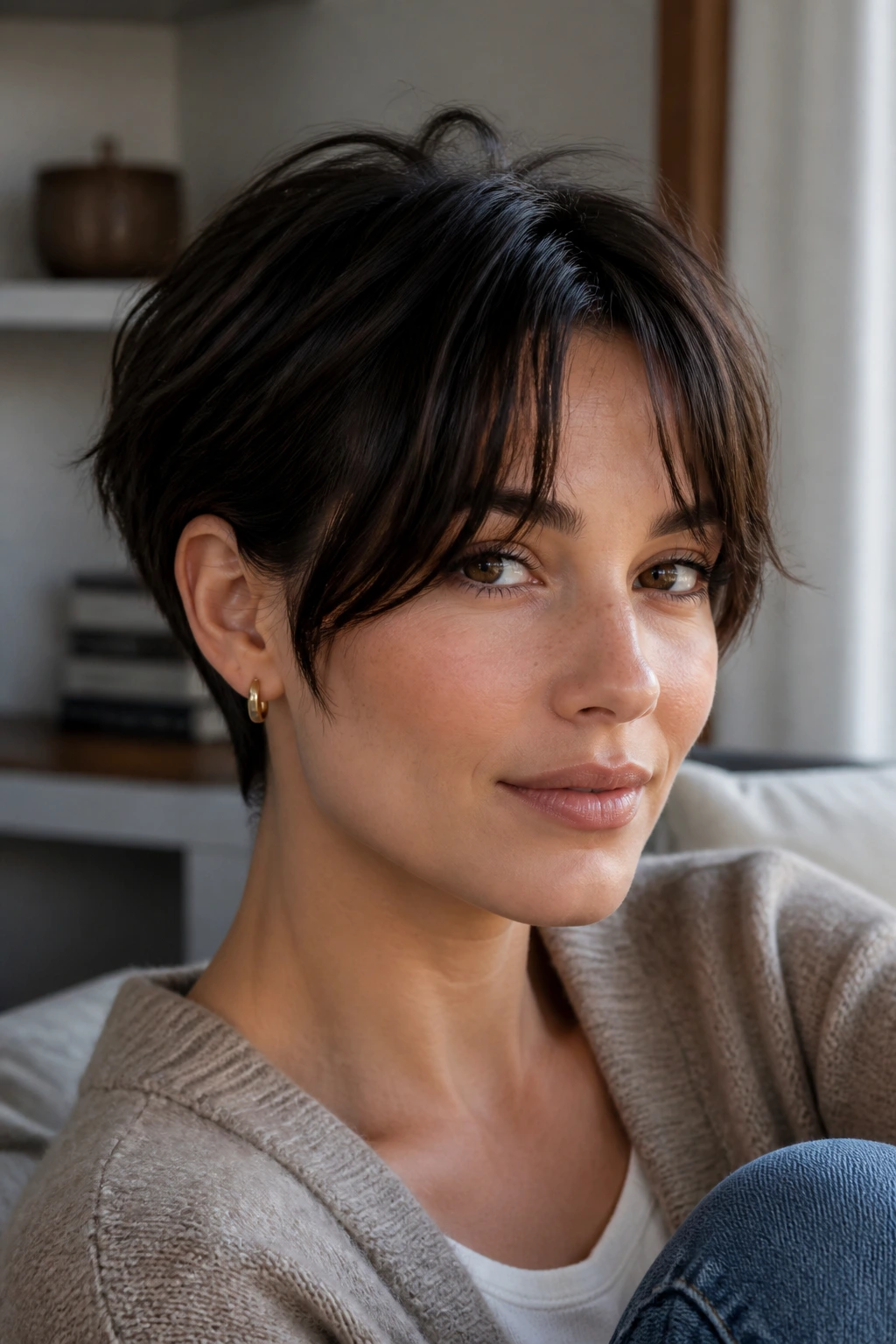
Curtain bangs can be a friend to a round face when they’re cut with enough softness. On a cropped haircut, they open the forehead, split around the center, and fall toward the cheekbones in a way that lengthens the face without hiding it. The mistake people make is going too heavy. Heavy bangs shrink the face. Light, broken-up bangs change the shape.
Keep the bang pieces longer at the edges so they brush the cheeks instead of stopping right above them. That little sweep draws the eye downward. The crop underneath can stay short and textured, which keeps the whole style from feeling too sweet or too symmetrical. I like this on hair with a bit of wave because the bangs settle more naturally.
If you blow-dry, use a small round brush just at the fringe. Turn the ends slightly away from the face. Don’t freeze them into a perfect curve. The whole point is that the bangs part a little and move. If they look a touch messy, good. That’s the charm.
14. Tousled Mullet-Inspired Pixie
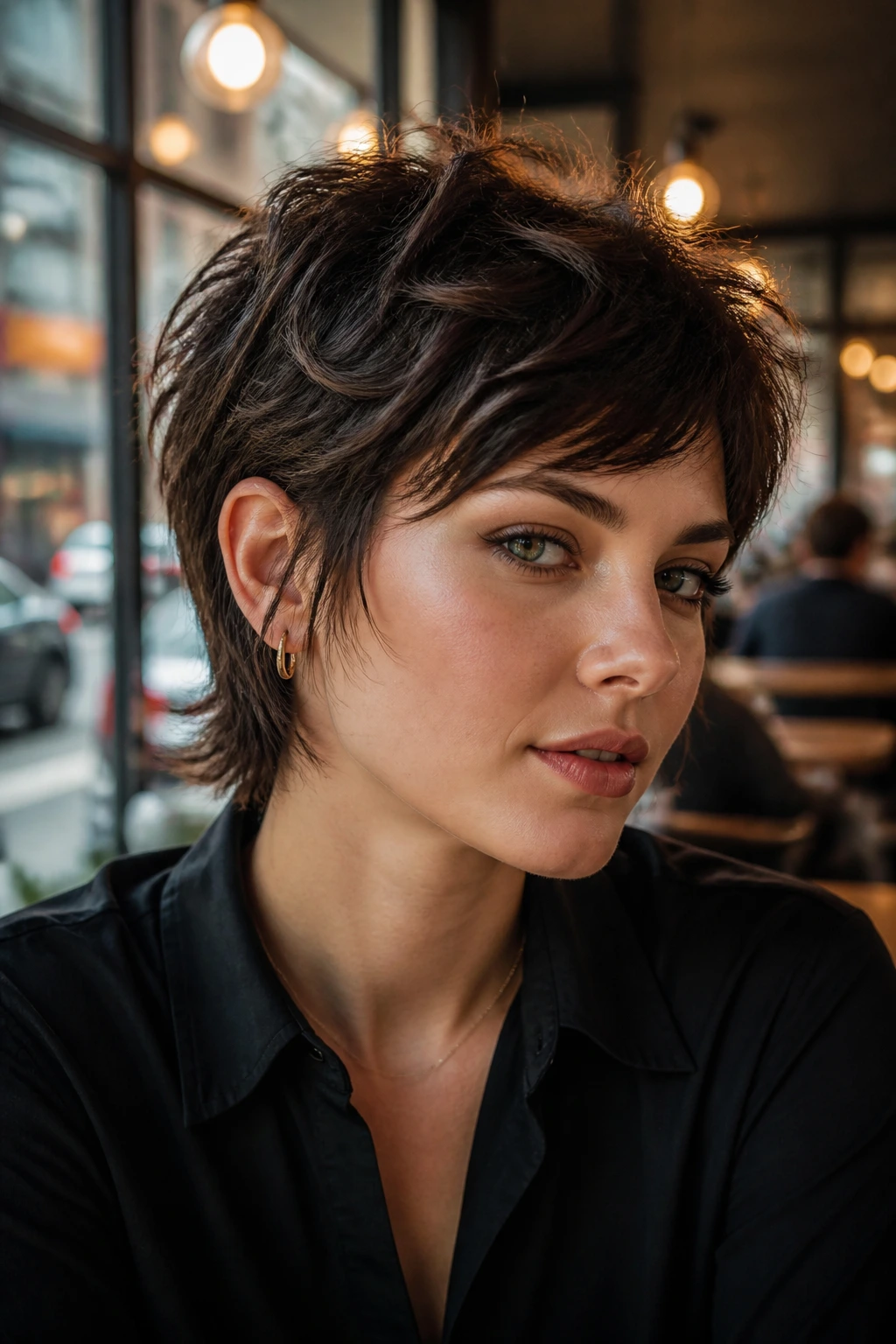
A mullet-inspired pixie is not for someone who wants quiet hair. It has attitude. Shorter at the nape, longer through the crown and back, and chopped around the sides, it gives a round face length in the places where length matters most. The silhouette stretches back rather than spreading out.
The shape can look too retro if it’s handled clumsily, so the texture has to be loose and broken up. Ask for the side pieces to stay soft around the cheek rather than bulky. The longer top and back can be pushed upward with a little mousse or matte cream, which keeps the style from collapsing into the face. That lift is the whole trick.
This cut is best for someone who likes a little edge and doesn’t mind a bit of styling. It does not need to be spiky. In fact, spiky often looks dated. A messy sweep, some separation, and a bit of taper at the temples usually look far better. It’s sharp without being stiff.
15. Tapered Bob with Long Face-Framing Pieces
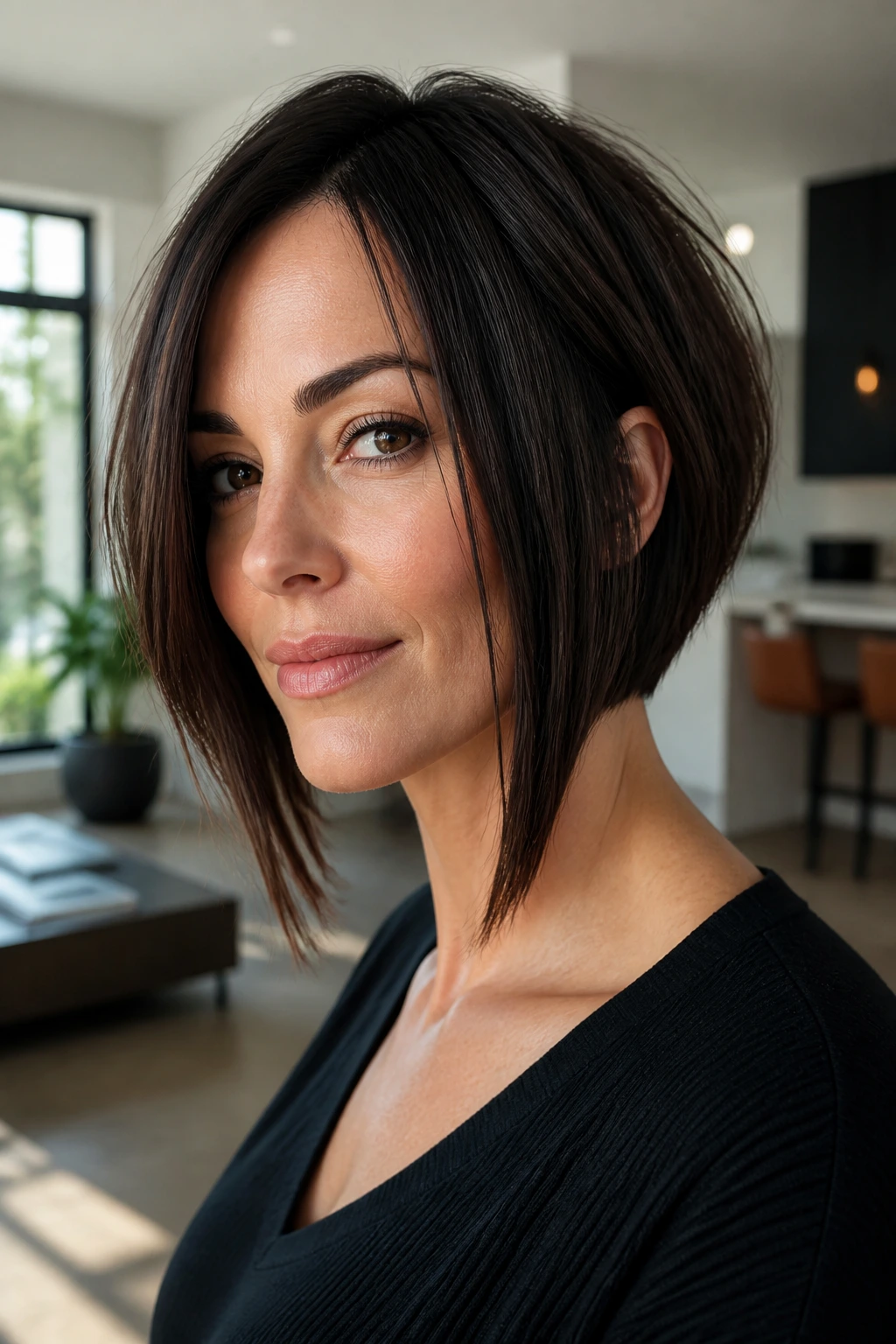
A tapered bob is one of those cuts that looks calm until you notice how much shape is going on underneath. The nape is slim, the back is controlled, and the front length stretches downward in two longer pieces that frame the face. On a round face, that front length is doing real work.
The longest pieces should fall below the jaw, not right at it. That matters more than people think. Hair that ends exactly at the jaw can underline the roundness you’re trying to soften. Hair that drops below the jaw creates a cleaner line. The taper in the back keeps the bulk from building up where you don’t want it.
I like this cut for people who want a polished look without going blunt. It can be worn sleek, but it also takes texture well. A smooth cream on the mid-lengths and a quick bend at the ends is enough to keep it from feeling flat. If you want more dimension, tuck one side behind the ear and let the front pieces fall loose on the other. That tiny asymmetry does a lot.
16. Edgy Crop with Temple Length
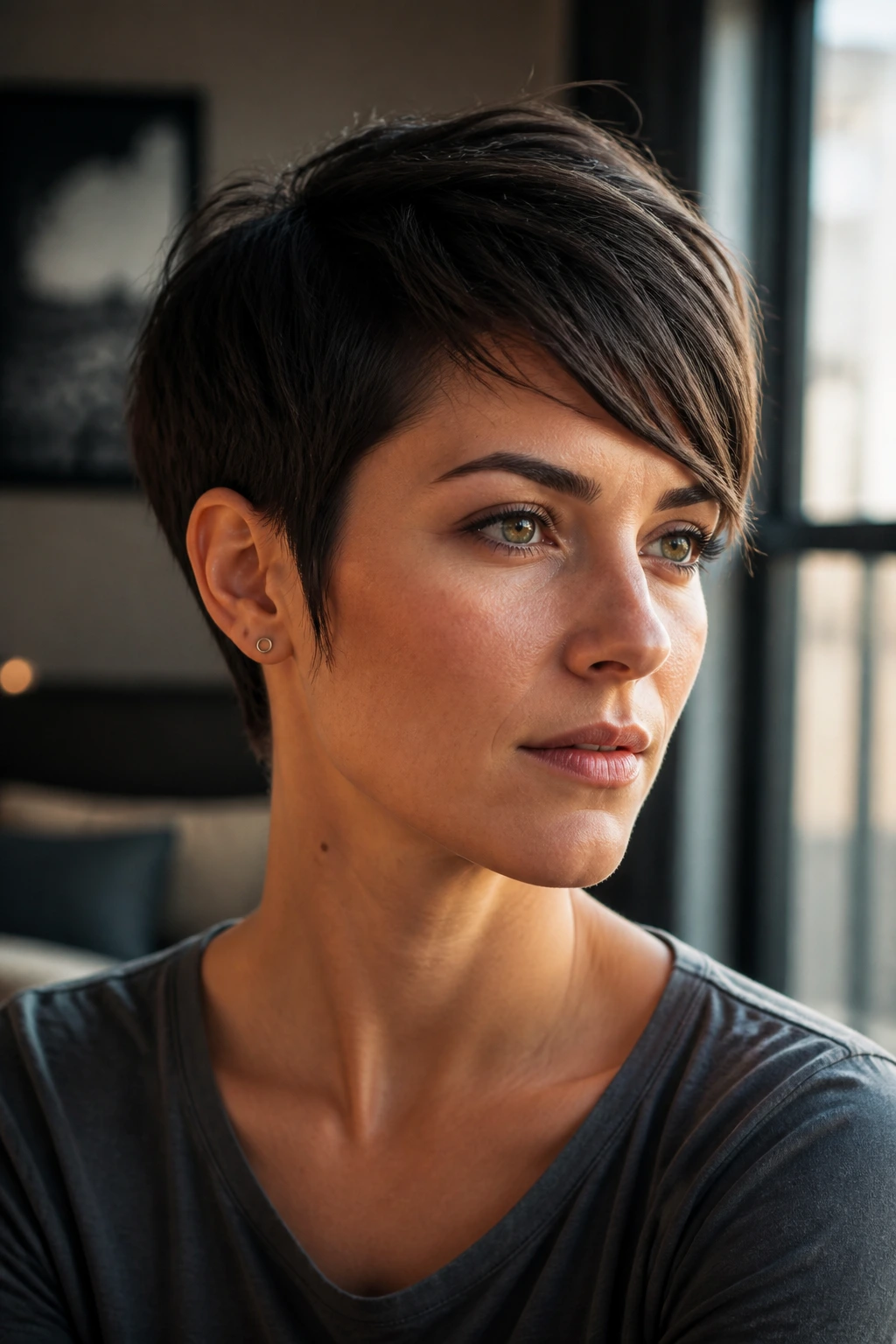
Temple length is one of the most overlooked tools in haircutting for round faces. Keeping the hair a little longer at the temples creates a thin vertical frame on each side of the face, which reads slimmer than a wide block of hair at cheek level. The rest of the crop can stay short, sharp, and easy to move around.
This cut looks especially good with a clean side sweep through the top. The temple pieces soften the transition between the short sides and the longer crown, so the haircut doesn’t feel disconnected. It can be neat, messy, or somewhere in between, but the temple area should never get puffed out. That’s where the face can start looking wider again.
A small amount of styling paste on dry hair gives enough hold to direct the top while keeping the texture visible. If your hair is dense, ask for internal removal near the temple so the side doesn’t stand away from the head. That little detail saves the whole shape. Small thing. Big difference.
17. Razored Shag Bob with Collarbone-Skimming Ends
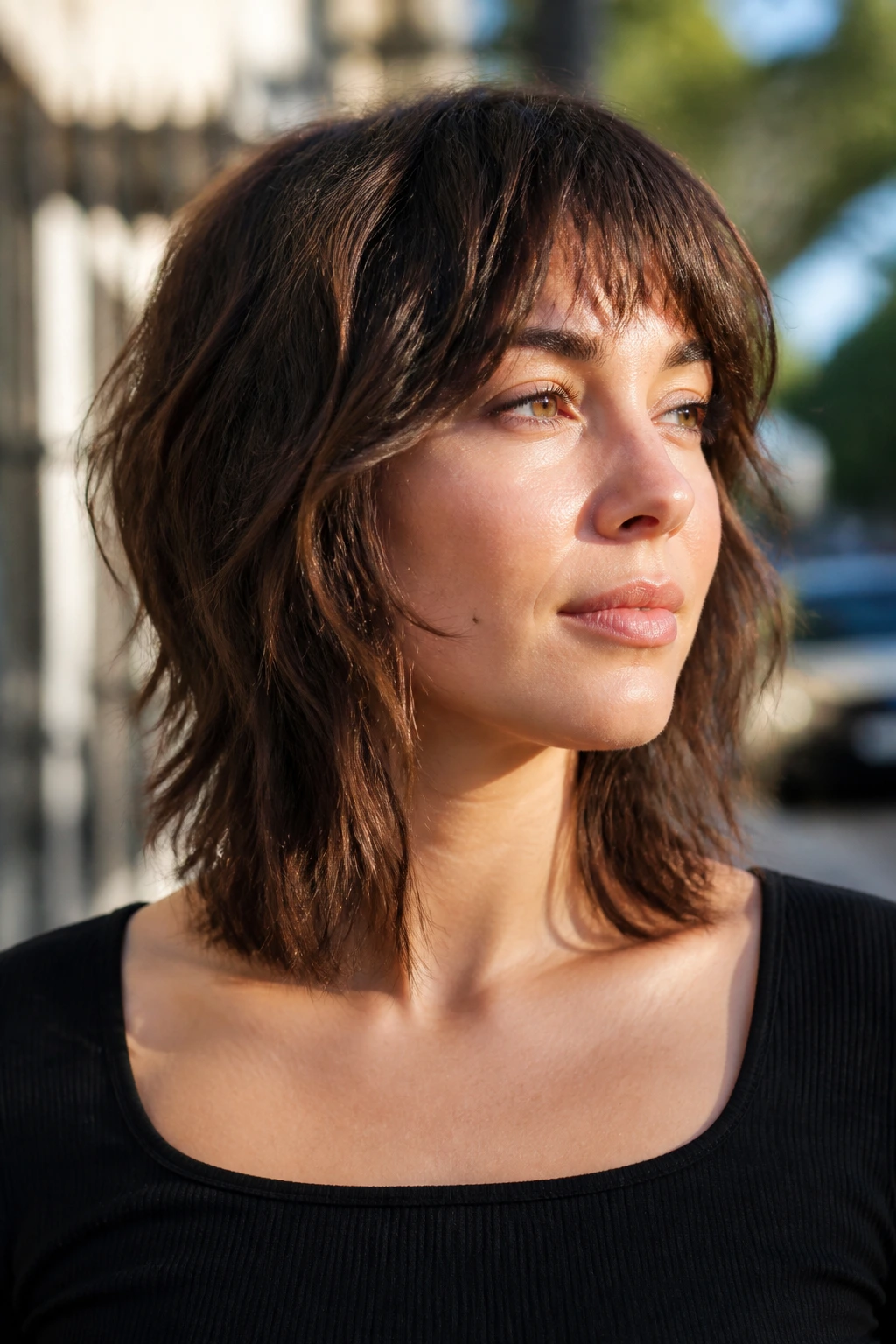
Why does a shag bob work so well when a blunt bob doesn’t? Because the texture keeps the eye moving. A razored shag bob with collarbone-skimming ends takes the safer bob shape and cuts it open with layers, so the hair doesn’t sit in one hard arc around the face.
The layers should start around the cheek or slightly below, then get softer through the ends. The collarbone length gives a little more vertical line than a jaw-length cut, which helps on round faces that need space below the cheek. If your hair is thick, this is a good way to remove weight without making the style feel chopped to bits.
I’d style this with a rough dry and a bit of texture spray rather than a perfect blowout. The razored ends want movement. If you force them smooth, the whole point gets lost. A small bend away from the face at the front pieces makes the line feel open. That’s enough.
18. Soft Undercut Pixie with a Longer Crown
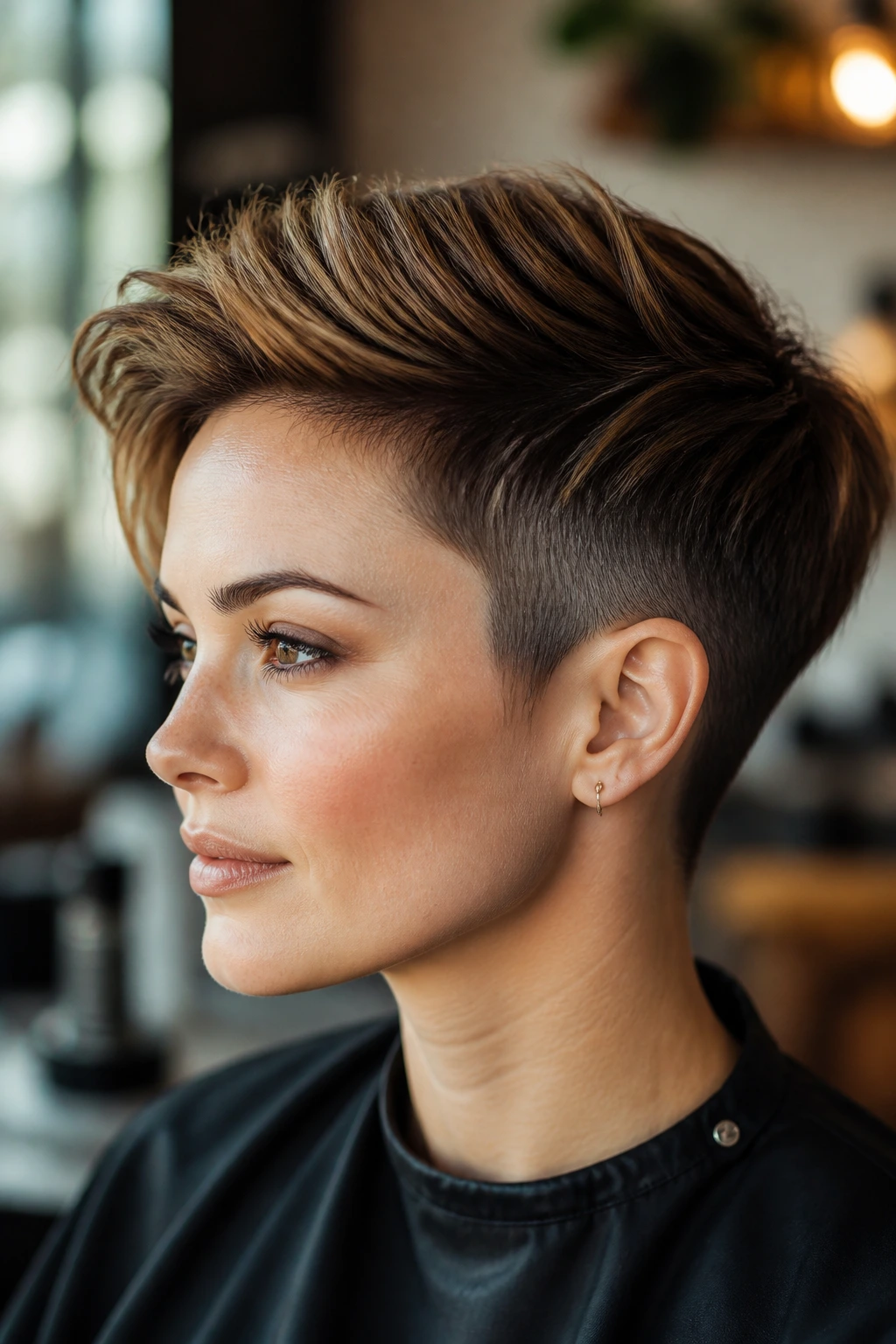
A soft undercut pixie is what happens when you want the ease of a short cut but hate helmet hair. The nape and lower sides are cut tighter, sometimes quite a bit tighter, while the crown stays longer and sweepable. On a round face, that longer top lifts the eye upward and keeps the sides from adding width.
The undercut does useful work here. It removes bulk where short hair often puffs the most, especially around the ears and lower head shape. The crown then becomes the part you style on purpose. A little lift, a little bend, and a little texture are enough. You do not need to make it spiky to make it count.
This cut is especially good if your hair is thick or if you live in a humid climate and want less volume around the face. The grow-out is manageable too, as long as the undercut gets cleaned up before it starts spreading. Once it grows too much, the shape loses its edge. Keep that in check.
19. Side-Parted Choppy Bob with a Lean Perimeter
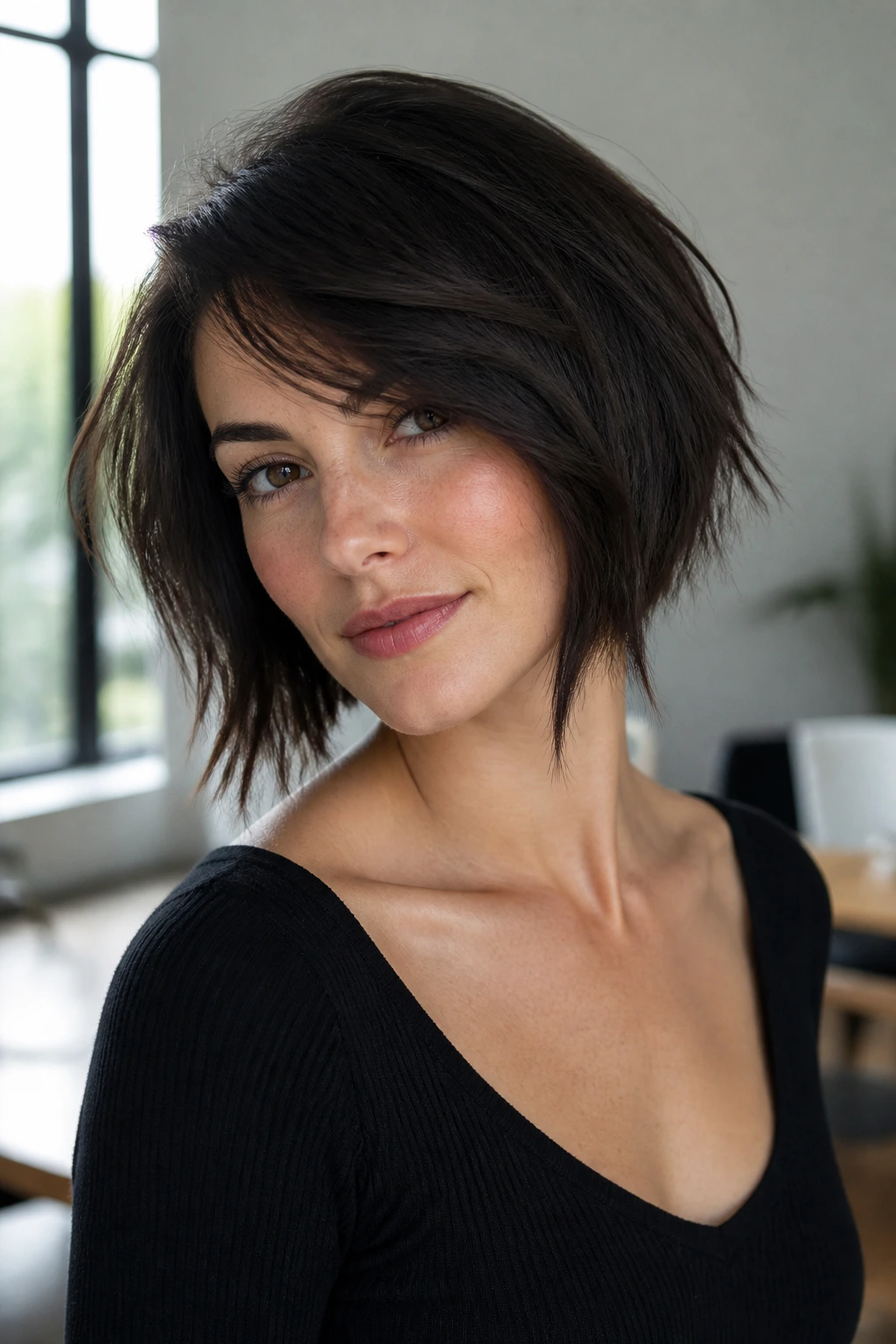
A side-parted choppy bob is the kind of haircut that looks ordinary in a mirror photo and much better in motion. The side part shifts the weight away from the center of the face, and the lean perimeter keeps the outline from feeling square. It’s a smart option if you want something wearable without being dull.
The perimeter should be slightly angled, not perfectly level. Let the front live a little longer than the back, and break the ends with point cutting so the line doesn’t sit like a shelf. On a round face, that lean edge creates a thin, downward pull that feels cleaner than a blunt cut. The hair moves toward the collarbone instead of stopping at the cheeks.
This is a good everyday cut if you wear your hair both sleek and messy. It can be tucked behind one ear for a quick change, or roughed up with spray for more texture. I like it because it is not trying too hard. It just knows where to put the weight.
What Makes Choppy Shape Work on a Round Face
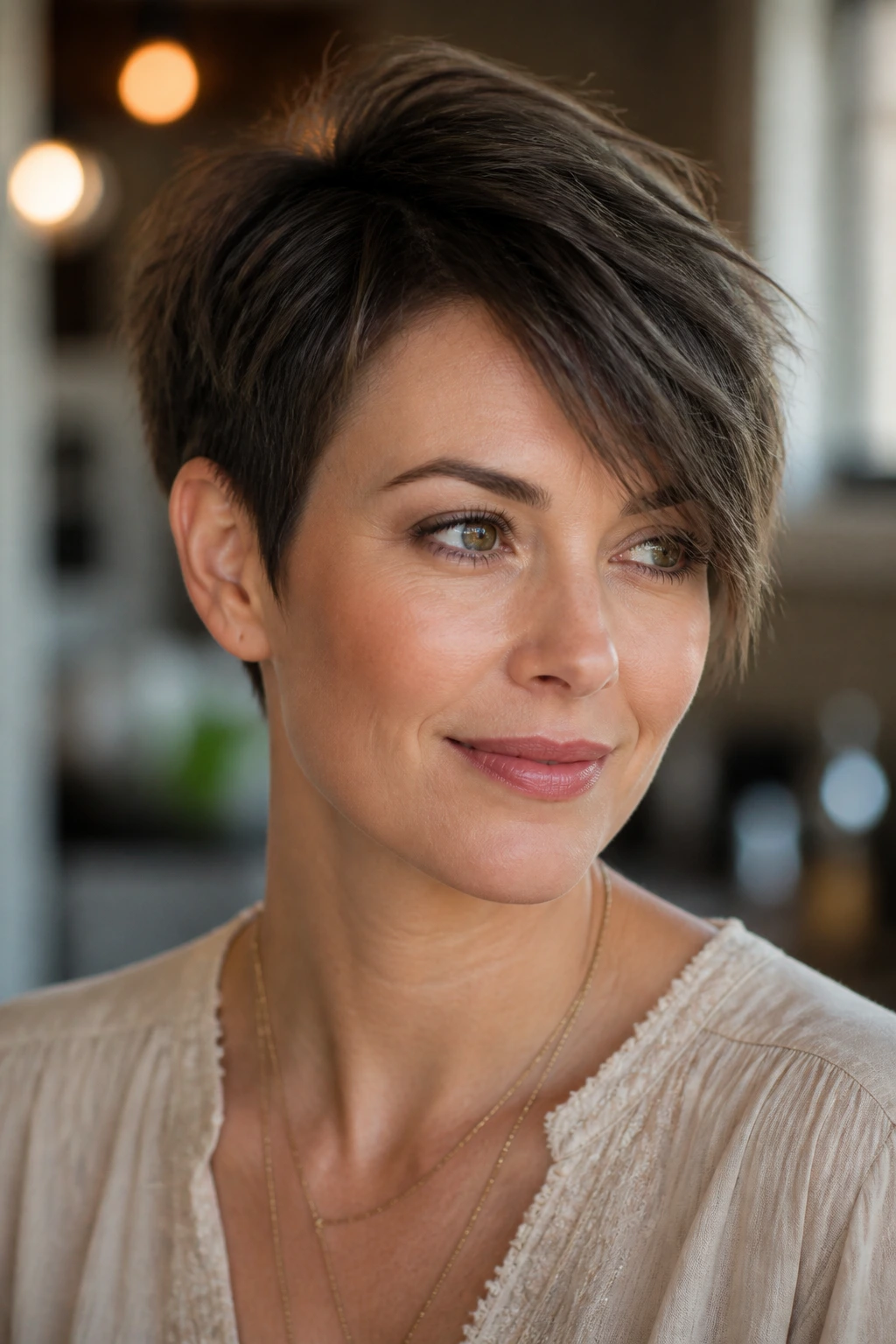
A round face is all soft corners and gentle width, which is part of the appeal. The goal of a haircut is not to fight that. It is to place the hair so the face reads a little longer and a little leaner from the front and the side.
The best short choppy haircuts for round faces do three things at once: they add height at the crown, they avoid stopping right at the widest point of the cheeks, and they break the outline with texture. That texture can be subtle. It doesn’t need to look jagged or shredded. A few point-cut ends, a diagonal fringe, or a softened perimeter can change the whole balance.
I also think people underestimate the part line. A deep side part creates a stronger diagonal than a center part, and diagonals are helpful because they keep the eye moving. A middle part can work if the cut has enough length and lift, but if the hair is short and compact, a side part often gives more shape for free. Not magic. Just geometry.
One more thing: the widest part of the haircut should not sit exactly where the face is widest. That’s the trap. When the volume lands on the cheeks, the whole look widens. When the volume sits higher, lower, or off to one side, the face gets room to breathe.
The Tools That Keep Short Texture from Going Flat
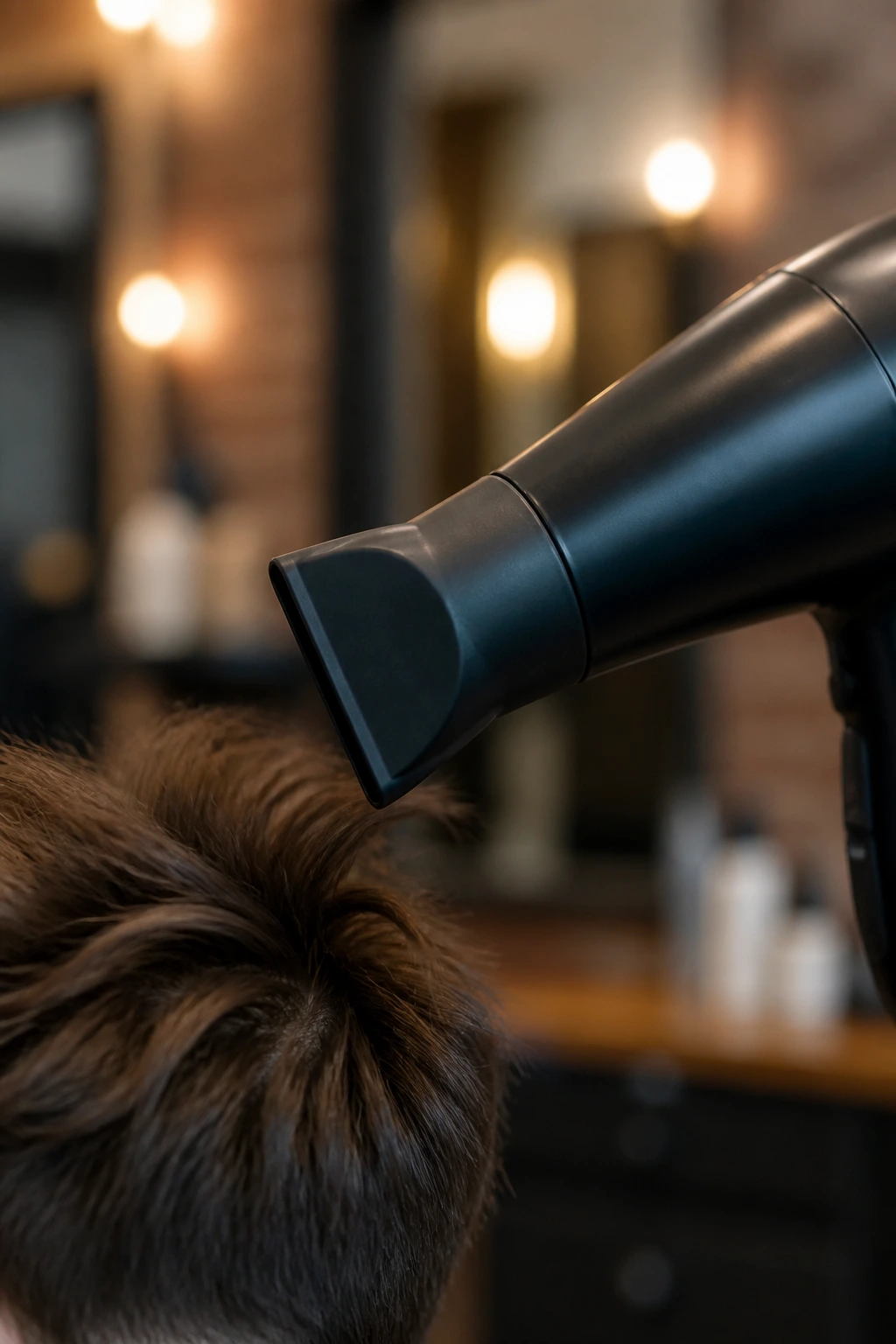
You do not need a drawer full of gadgets. You need a few things that do specific jobs well.
- A blow-dryer with a narrow nozzle: This keeps the airflow directed at the roots instead of blasting the whole cut apart.
- A small round brush: Useful for lifting the crown, bending the fringe, and smoothing just the front pieces.
- A flat iron or 1-inch curling iron: Either one works for adding a soft bend to the ends without making curls too formal.
- Texturizing spray: This gives choppy layers that broken-up finish that keeps the haircut from looking stiff.
- Matte paste or fiber cream: Best for pixies, crops, and undercuts when you want separation with control.
- Light mousse: A better pick for fine hair when you need body but not crunch.
- Dry shampoo: Not just for greasy roots. It gives grit to clean hair and helps short layers hold shape.
- Sectioning clips: Handy when you’re blowing out a fringe or doing a quick bend only on the top layer.
A wide-tooth comb is useful for curls. A fine-tooth comb is useful when you want a crisp part. That’s enough for most people.
What to Tell Your Stylist Before the First Snip
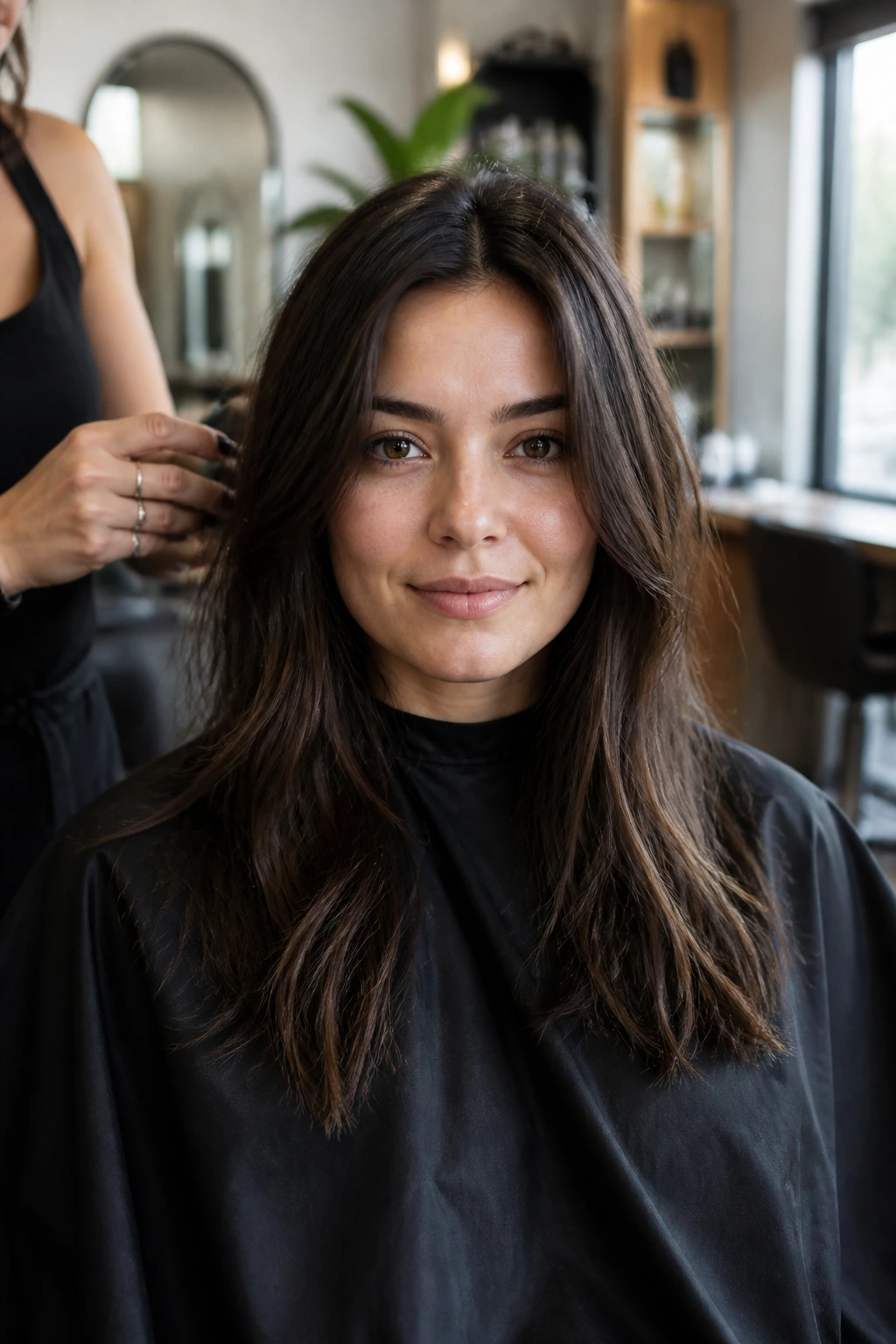
The phrase “short and choppy” can mean a hundred different things in a salon chair. Say more. Bring photos, yes, but bring photos that match your texture, not just your dream mood board. A pin-straight bob on someone with dense waves will not behave the same way on you.
Tell your stylist where you want the longest pieces to sit relative to your face. “Below the jaw” is more helpful than “short but not too short.” If you want lift, say you want the crown to stay longer than the sides. If you want the face softened, say you want broken-up pieces around the cheekbone rather than a single heavy edge. Those little details matter.
Ask whether the cut should be point-cut, razor-cut, or a mix of both. Point cutting leaves soft, irregular ends. Razor cutting can add movement, but on some hair types it can also fray. Thick hair usually benefits from internal weight removal. Fine hair usually needs texture without too much thinning. Curly hair often needs a dry cut or curl-by-curl shaping so the final outline doesn’t wander off on its own.
If your hair has a cowlick, say so before the scissors come out. That swirl at the front can flip a fringe or split a side part. Better to plan for it than pretend it isn’t there.
How to Wear These Cuts on Busy Days
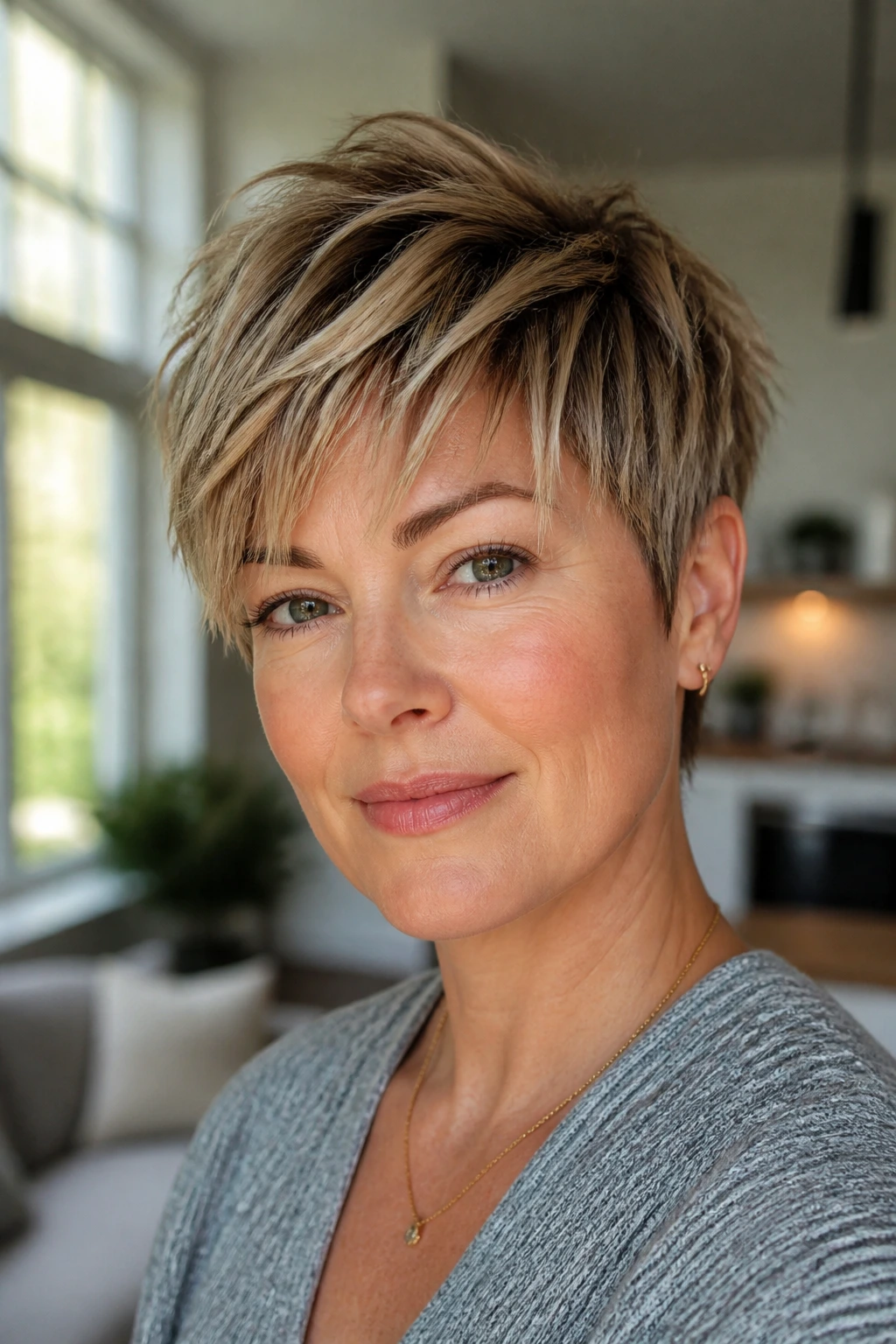
Shape: Keep the crown from lying flat. A quick blast of heat at the roots, lifted with your fingers, does more for a round face than overworking the ends ever will.
Texture: Use the least amount of product that gives separation. A pea-sized amount of paste, or two sprays of texture mist, is usually enough for short hair. If the hair starts looking wet or piecey in the wrong way, you’ve gone too far.
Shortcut: Day-two hair is often better than day-one hair on these cuts. Dry shampoo at the roots and a five-second re-bend of the front pieces can make the shape look more lived in.
Accessories: Small hoops, narrow headbands, and tucked-behind-one-ear styling all work nicely because they keep the face open. Big, padded accessories can add width if the haircut is already full at the sides.
Pace: Don’t try to make every short choppy style look polished. Some should look a little messy. That’s part of the charm, and in this case the mess is doing technical work.
Smart Styling Tweaks That Save Time
Lift: Blow-dry the crown first, not last. If the top goes flat early, it stays flat. A little root lift while the hair is still damp makes the rest easier.
Softness: If the front feels too severe, leave one or two longer bits around the cheekbone and let them fall forward. That tiny piece can change the whole expression of the cut.
Speed: On rushed mornings, warm the product in your hands before applying it. Cold paste clumps. Warm paste spreads. You feel the difference right away.
Humidity Plan: In damp weather, use less serum and more dry texture. Shine tends to collapse the choppy shape. Grit holds the outline.
Make-It-Yours: If your forehead is short, keep bangs lighter and shorter. If your chin is strong, leave the front pieces longer. If your hair is dense, remove bulk beneath the surface. If it’s fine, keep layers soft and strategic instead of heavily razored.
Common Mistakes That Make Choppy Cuts Work Against a Round Face

- Putting the widest part of the hair at cheek level: The symptom is a fuller-looking face and a cut that feels wide instead of lean. The fix is to move the volume up, down, or to one side.
- Over-thinning fine hair: The hair starts looking wispy, separated in a bad way, and oddly see-through. Ask for texture, not overuse of thinning shears.
- Cutting bangs too heavy: Heavy bangs shorten the face and can make the whole haircut feel boxed in. Keep fringe airy, side-swept, or softly split.
- Letting the nape grow too long on pixies and undercuts: The back starts collapsing into a blob. Clean up the nape before the shape loses its line.
- Styling every piece in the same direction: Hair that all bends the same way can look round again. Alternate directions on the front pieces so the outline stays broken.
- Using too much glossy product: Shine can make short hair lie close to the head and expose the facial width you were trying to soften. Matte or low-sheen products usually work better.
Ways to Bend These Cuts Toward Your Own Style
Soft Office Version: Keep the choppiness, but soften the edges and avoid shaved sides. This works when you want the haircut to read clean in daylight and still have texture after work.
Curl-First Version: Leave the top and fringe a little longer than you think you need. Curly hair shrinks, and a crop that looks balanced wet can get too short once it dries.
Bold Edge Version: Add an undercut or stronger asymmetry. This is the move if you want the haircut to look sharper and less sweet.
Low-Drama Version: Choose a lean bob or a grown-out pixie with longer top layers. These shapes need fewer salon visits and grow out in a way that still looks deliberate.
Fine-Hair Version: Keep the layers light, use a root-lifting mousse, and avoid too much internal thinning. Fine hair needs support more than it needs removal.
Thick-Hair Version: Ask for hidden bulk removal and a tighter nape. Thick hair gets shape faster when the interior weight is reduced first.
Keeping the Shape Sharp Between Appointments
Short choppy haircuts do not stay crisp forever. The good news is that they usually fall out of shape in predictable ways, which makes them easier to maintain. Pixies and undercuts tend to lose their edge at the ears and nape first. Bobs usually get heavy at the bottom line or start flipping in weird directions at the ends. Shaggy crops lose their lift at the crown before anything else.
For very short cuts, plan on a trim every 4 to 6 weeks if you want the silhouette to stay tight. Bobs and textured crops can usually stretch to 6 to 8 weeks before the weight starts changing the face. If your hair grows fast or your nape is stubborn, keep the interval closer. A shape that has drifted too far stops flattering the roundness and starts just looking grown out.
Between trims, focus on the places that collapse first. The crown usually needs a quick re-lift with product and heat. The nape often needs a little dry shampoo or a cleaner blow-dry to keep it from puffing. At night, a silk or satin pillowcase helps reduce the flat-and-frizzy thing short hair does when it gets rubbed into a mess. Not glamorous. Useful.
If you’re growing the cut out, resist the urge to let every part grow at the same speed. That’s how a cute choppy crop turns into a shape with no plan. Ask for the back and sides to stay cleaner while the top catches up. The haircut will look intentional for longer.
Frequently Asked Questions
Which short choppy haircut is best for a round face if my hair is fine?
A crown-lift pixie, textured crop, or side-parted choppy bob usually works well. Fine hair benefits from lift and separation more than heavy layering, so avoid over-thinning and keep the top slightly longer than the sides.
Are bangs a bad idea for round faces?
Not at all. The problem is heavy, blunt bangs that cut straight across the face. Wispy fringe, side-swept bangs, or curtain bangs with a little space in the middle tend to soften the face instead of shortening it.
Can curly hair pull off a short choppy cut on a round face?
Yes, but the cut should be shaped around the curl pattern, not forced into a straight-hair formula. Dry cutting or curl-by-curl shaping helps the stylist see where the curls will land, which keeps the sides from getting too wide.
How short can I go without making my face look wider?
You can go quite short if the crown has lift and the sides are controlled. The issue usually isn’t shortness itself; it’s where the weight sits. If the bulk lands at the cheeks, the face reads wider. If the height lives at the top, the shape reads longer.
What should I ask for if I want texture but not a mullet?
Ask for broken-up ends, light internal layering, and a clean outline at the nape. That keeps the haircut choppy without pushing the back too long or too shaggy.
Do side parts work better than middle parts for round faces?
Often, yes. A side part creates a diagonal line that interrupts the roundness and adds lift near the crown. A middle part can still work, but it usually needs a bit more length or height to avoid flattening the face.
How do I stop short choppy hair from puffing out on the sides?
Reduce bulk near the temples and lower sides, then style the crown first. A small amount of matte cream or paste near the ends helps keep the silhouette close to the head without making it stiff.
What if my cut looks too round after styling?
Push a little height into the top and bend the front pieces away from the face. If that still doesn’t do it, the cut may need more asymmetry or a longer front section when you next go in for a trim.
The Shape That Stays Interesting

Short hair on a round face works best when it looks like someone made a decision. Not a timid one. A real one. The right choppy cut adds height, lightens the sides, and keeps the outline moving, which is why the best versions look better in motion than in a flat salon mirror.
What I like most about these cuts is that they don’t rely on one perfect mood. They can be sleek, rough, airy, sharp, or slightly wild, and the face still has room to show up beneath them. That flexibility is the point.
Bring the photo. Be specific about where you want the weight to land. Then let the shape do its work, because a good short choppy haircut doesn’t hide a round face — it gives it cleaner lines and a little more room to breathe.
