



A blunt chop can look sharp on day one and stubborn by day three. Layers are what keep short hair from going flat, boxy, or a little too polite around the edges.
The best short haircuts with layers for women do more than add texture. They move weight around the head so the crown lifts, the jawline shows, and the nape sits clean instead of puffing out like a mushroom cap. That matters whether your hair is fine and slips against your scalp, thick and wants to swell, or naturally wavy and refuses to obey a single shape for long.
I keep coming back to layered short cuts because they solve a problem people notice the second they leave the salon chair: the haircut looked amazing under the cape, but at home it either collapsed or took on a whole different personality. The right layers fix that. Not random choppiness. Real shape.
Some of the cuts below are soft and airy. Others are a little tougher, with piecey ends and a sharper outline. A few lean classic, and a few lean messy in the good sense — the kind of messy that looks deliberate because the weight sits exactly where it should.
Why These 28 Short Haircuts Work So Well
-
Movement: Layers keep short hair from sitting like one solid block, which matters most around the crown and the nape where hair loves to flatten or flip out.
-
Shape control: A good layered cut can pull the eye to the cheekbones, jaw, or eyes instead of letting the haircut overpower the face.
-
Texture-friendly: Fine hair gets lift, thick hair loses bulk, and wavy or curly hair stops ballooning into one wide shape.
-
Lower styling stress: Several of these cuts still look deliberate after air-drying with a little cream or mousse, which is a nice trade when mornings are rushed.
-
Better grow-out: The right layers can grow into a bob, shag, or longer crop without that awkward helmet stage that some short cuts hit hard.
-
Salon clarity: These styles are easy to explain to a stylist because each one has a clear silhouette, not just a vague request for “more layers.”
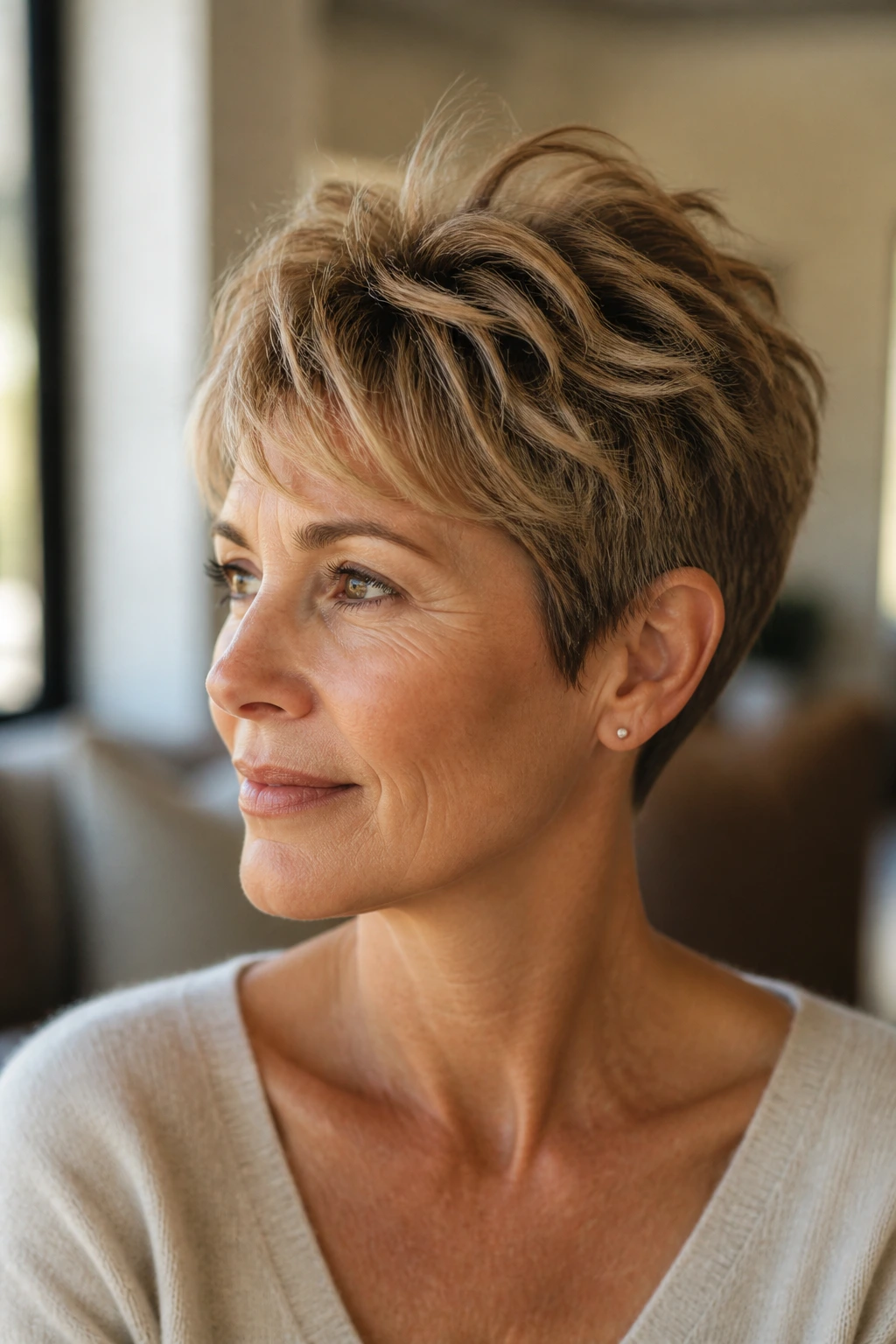
1. Soft Pixie With Crown Layers
This is the pixie I recommend when someone wants short hair but not a hard, helmet-like outline. The sides stay neat, the nape is trimmed close, and the crown carries just enough length to create lift without standing up like a stubborn cowlick fight.
Why it works
Crown layers make this cut look airy instead of flat. A little extra length on top lets you push the hair forward, sweep it to one side, or rough it up with paste, which gives the haircut more than one mood. It also keeps the head shape from looking too round at the back — a problem I see all the time with overly compact pixies.
What to ask for
Tell your stylist you want short, clean sides with soft crown layers and a tapered nape. If your hair is fine, keep the top slightly longer so there’s something to move. If it’s thick, ask for point-cutting through the top instead of heavy thinning; that keeps the shape from looking shredded.
Styling note
A pea-sized bit of matte paste warmed between your palms is usually enough. Push it in at the roots, then pinch the ends. Done. No need to fuss.
2. Textured French Bob
A French bob with layers has that neat little line at the jaw, but it doesn’t sit dead-straight and severe. The ends are softened, the interior has enough removal to let the hair bend, and the whole thing falls with a little swing when you turn your head.
What makes it different
A classic blunt French bob can look chic, but it can also go stiff fast if your hair is dense or slightly wavy. Light layering inside the shape keeps the perimeter crisp while letting the body move. That’s the trick. You get the clean outline without the “cut it once, wear it the same way every day” problem.
Best on
This cut shines on hair that has a little natural bend, or on straight hair that takes a soft wave with a round brush. It’s less forgiving if your cowlick at the front is dramatic, so a side part often behaves better than a dead-center split.
Ask for it like this
Say you want a jaw-grazing bob with soft internal layers and a slightly broken-up finish at the ends. That keeps the haircut elegant without making it too precious.
3. Jaw-Length Layered Bob
Why does a jaw-length bob work so often? Because it sits right where the face has structure. Add layers, and you stop the shape from looking blocky or too blunt around the cheeks.
The strongest version of this cut keeps the perimeter near the jaw while slipping in short internal layers that remove bulk through the middle. It’s a good choice if your hair poofs at the sides or if you hate styling every strand into place. A round brush or a quick bend with a flat iron is usually enough.
A detail that matters
The front pieces should fall a touch longer than the back if you want the face to open up. That small difference keeps the cut from feeling severe. If the front and back are the same length, the whole thing can look too boxed in.
Best for
Women who want polish without a lot of layering drama. It’s especially useful if you like tucking one side behind the ear and letting the other side frame the cheekbone.
4. Shaggy Crop With Micro Fringe
This one has attitude. The fringe is short, the layers are choppy, and the whole cut looks a little better when it’s slightly imperfect.
A micro fringe changes the mood fast. It brings the eyes up and shortens the face visually, while the layers around the crown and temples keep the crop from feeling too heavy. On thick hair, the cut can be a lifesaver because it removes weight from the top before the sides start to bulk out. On fine hair, though, the layers need to stay controlled or the style can go wispy in a thin, unfinished way.
What to watch
This is not the haircut to choose if you hate your forehead being on display. It makes a statement right away. It also asks for a bit of styling, even if that styling is just rubbing in a touch of cream and using your fingers to break up the fringe.
My opinion
The micro fringe works best when the rest of the cut has softness. Too much choppiness everywhere and the look tips from stylish to crunchy.
5. Chin-Length Layers With Side Part
A side part changes everything here. It softens the shape, gives the layers a little swing, and makes a chin-length cut feel less like a block sitting around the face.
This is one of the easiest cuts to wear if you want movement without losing the sense of a bob. The layers usually begin around the cheekbone and angle down toward the chin, which helps round out sharp features or balance a narrow face. It also plays nicely with glasses, because the side part keeps the hair from piling too neatly on both sides of the frame.
Styling tip
Blow-dry the front section away from the face with a small round brush. That one move keeps the layers from folding in too tightly at the chin, which is where this cut can start to feel heavy.
Good to know
If your hair line around the temples is sparse, a side part can be more flattering than a middle part. It creates lift where the hair usually lies flat.
6. Curly Layered Bob
Curly hair and short layers can be a glorious pairing or a complete mess, and the difference usually comes down to placement. If the layers are cut to follow the curl pattern, the bob gets shape. If they’re cut too aggressively, the hair can spring into a pyramid.
The sweet spot is a bob that lands around the chin or just below it, with layers that start lower in the length rather than right at the root. That gives the curl room to form without stacking too much volume near the cheeks. I like this cut because it respects the curl instead of trying to flatten it into submission.
Ask for it like this
Use the words curl-by-curl shape, soft layering, and no harsh weight removal at the top. That tells the stylist you want movement, not random frizz.
Best styling move
A diffuser on low heat, then hands off. Too much touching while it dries can break the curl clumps and make the layers look fuzzy.
7. Tapered Pixie With Long Top
This is the cleaner, more tailored cousin of the soft pixie. The sides taper down toward the ears, the nape hugs the neck, and the top stays long enough to sweep, spike, or flatten depending on your mood.
A tapered pixie with a longer top is excellent when you want a short cut that still feels editable. You can part it, push it forward, or lift it at the front for a sharper profile. The taper matters most at the back; if the nape is left too bulky, the silhouette loses that crisp finish and starts looking puffy.
Who should consider it
Women with straight or slightly wavy hair usually get the most mileage from this shape. Very curly hair can wear it too, but the top needs enough length to keep the cut from shrinking too high.
Styling note
Use a light cream or fiber paste, not a heavy pomade. Heavy product makes the top look greasy before lunch.
8. Invisible-Layer Blunt Bob
This is one of my favorite cuts for women who want a clean perimeter but hate the feeling of one solid, heavy block. The bob looks blunt from the outside, yet the stylist sneaks in layers inside the shape so the hair moves instead of sitting like cardboard.
The result is subtle. You won’t see a lot of obvious steps, which is exactly the point. The haircut still keeps its line at the ends, but it loses the dense center that can make short bobs feel too wide on the face. It’s a smart choice for thick hair, though fine hair can wear it too if the internal layering stays very light.
Why it works
The perimeter gives structure. The hidden layers stop the shape from ballooning.
Salon language
Ask for a blunt bob with soft internal layering and no visible shelf lines. That phrase helps prevent the over-thinned look that some stylists default to when they hear “layers.”
9. Feathered Crop Around the Ears
A feathered crop has a soft edge, especially around the ears and temple area, where a harsh line can make short hair feel boxy. The layers are cut to bend away from the face, giving the haircut a light, swept feel rather than a chopped one.
This cut is flattering when you want the face to stay open. It keeps the sides close enough to feel neat, but the feathering creates that airy motion you see when the hair catches a little breeze or when you tuck one side back. It’s a lovely option if you wear earrings, because the cut doesn’t hide them.
Small detail, big payoff
The feathering should be precise, not wispy for its own sake. Too much texturizing around the ears can leave the ends thin and feathery in a cheap way. A little softness goes a long way.
Best on
Straight to slightly wavy hair. Very dense hair can wear this shape too, but the taper has to be controlled or the ears start looking overwhelmed.
10. Neck-Grazing Wavy Lob With Light Layers
A lob can still count as short when it sits right at the neckline and keeps the shape compact. With layers, it gets that easy bend that makes wavy hair look intentional instead of simply grown out.
This cut is one of the most forgiving on the list. The layers are long enough to move, short enough to keep the hair from dragging down the face, and flexible enough to wear tucked, clipped, or loose. If your waves form stronger toward the ends, this cut lets them show without forcing the top to do all the work.
What to ask for
Say you want a neck-grazing lob with soft layers that follow your natural wave pattern. If the stylist cuts it too bluntly, the wave can collapse into a shelf. If it’s layered too high, the shape can frizz out.
Styling note
A salt spray can be too drying here. I prefer a light mousse or wave cream, then a few bends with a flat iron if needed.
11. Bixie With Piecey Bangs
The bixie sits halfway between a bob and a pixie, and that middle ground is where it gets interesting. It’s short enough to feel fresh, but the extra length on top and around the face keeps it from looking clipped to the skull.
Piecey bangs make this cut work. They soften the forehead, connect the front layers to the rest of the haircut, and give the style a lived-in feel that you can build with your fingers in the morning. The bixie is one of those cuts that looks better with a little texture than with a smooth blowout. Polished can work, but too polished loses the point.
A useful nuance
The back should stay shorter than the front, but not so short that the haircut reads as a pixie from the side. That length difference is what gives the bixie its shape.
Best for
Women who want a short style with enough hair left to tuck behind the ear or sweep off the face.
12. Graduated Bob With Stacked Back
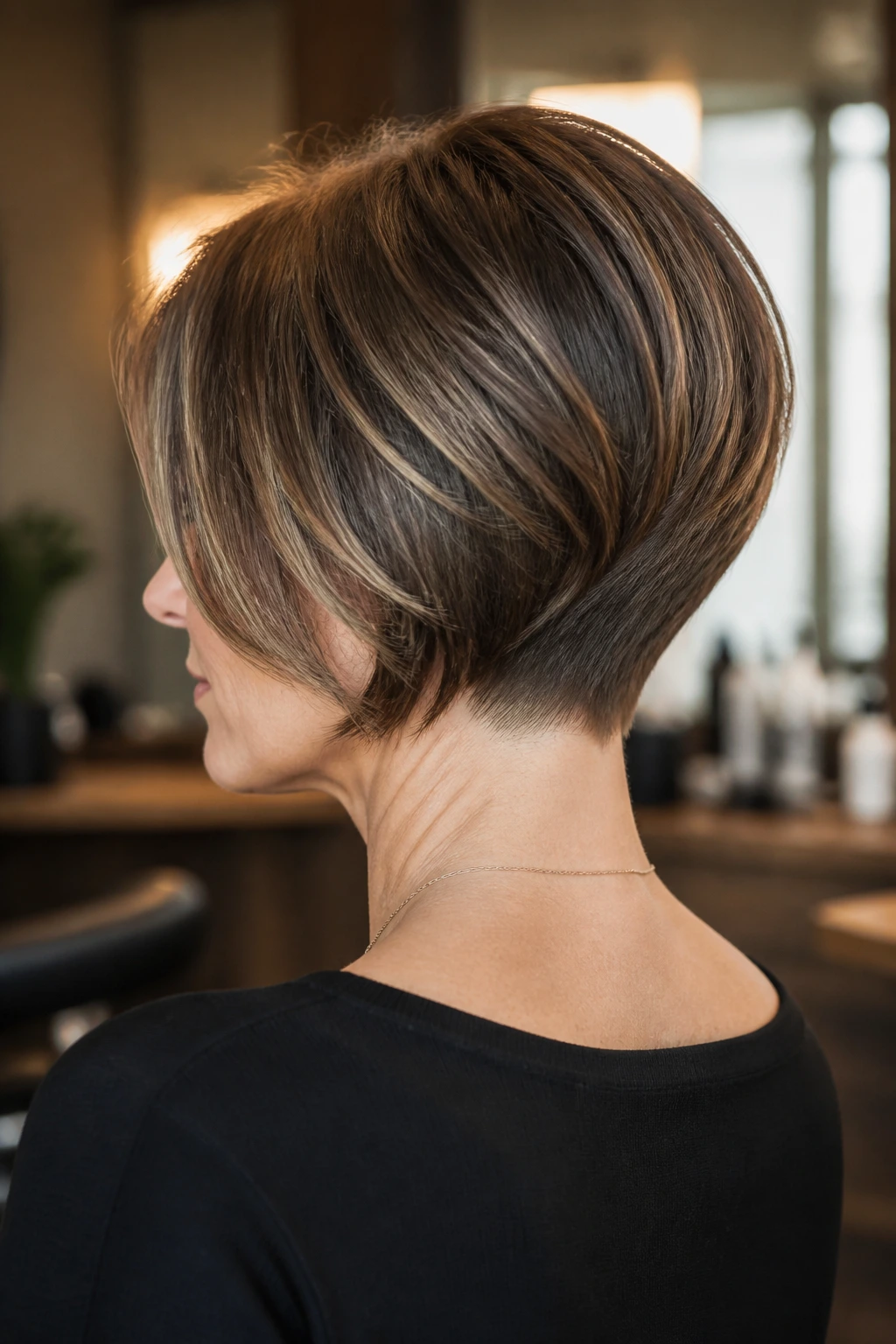
A stacked bob makes the back of the head look fuller and cleaner at the same time. The layers are shorter in the rear and gradually lengthen toward the front, so the cut gets lift without needing a lot of teasing or product.
This shape is useful when hair lies flat at the crown or when the neck area needs a neat line. The stack creates a built-in curve that photographs well in motion, though I’ll say this plainly: it looks best when the graduation is precise. If the stacking is too abrupt, the back can feel heavy in a helmet way.
Ask for it like this
Use the phrase graduated bob with a soft stack and a smooth transition from nape to crown. That keeps the stylist from cutting it too severe.
Styling note
A round brush at the crown and a quick bend under at the ends are usually enough. Don’t over-flip the front pieces; the haircut already has shape.
13. Razor-Cut Shag

The razor-cut shag lives for movement. The ends are broken up, the layers are soft but uneven in a useful way, and the whole cut has that slightly undone texture that makes short hair feel less formal.
A razor can make this style look feather-light, but it has to be used with judgment. On thick hair, the razor can remove bulk and wake up the shape. On fine or fragile hair, too much razor work can leave the ends see-through. That’s where a smart stylist matters more than the tool itself.
What makes it different
This cut doesn’t rely on one clean line. It relies on how the layers fall against each other, especially around the cheeks and neck. If you wear a lot of texture spray or like to air-dry, this is one of the easiest short cuts to live with.
My take
This is the cut for women who like a bit of edge and don’t mind their hair looking a little more interesting than “done.”
14. Fine-Hair Layered Crop
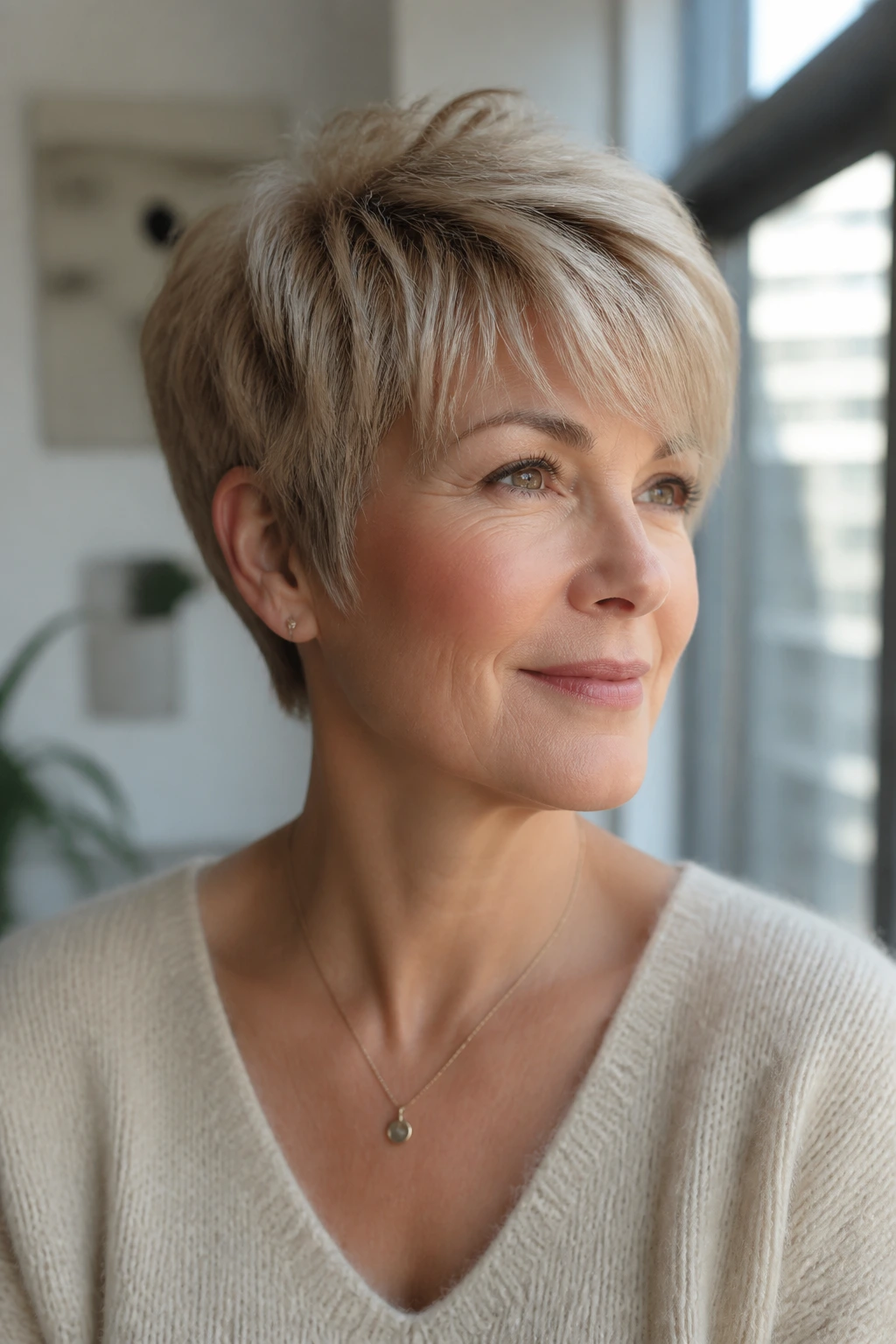
Fine hair needs a cut that builds the illusion of fullness without stripping away too much density. That’s where a layered crop earns its keep. The layers should be short enough to create lift, but not so aggressive that the ends go stringy.
This shape usually looks best with a compact outline and a little height at the crown. If the hair is too long, fine strands just hang. If it’s cut too thin, the scalp can show in a way nobody asked for. The balance is delicate, but when it lands, the haircut looks airy and expensive without trying hard.
Ask for it like this
Tell the stylist you want soft layers for volume, a strong perimeter, and minimal thinning at the ends. That last part matters a lot.
Styling tip
Mousse at the roots, then blow-dry with a small round brush. Fine hair usually needs structure more than product.
15. Thick-Hair Layered Crop
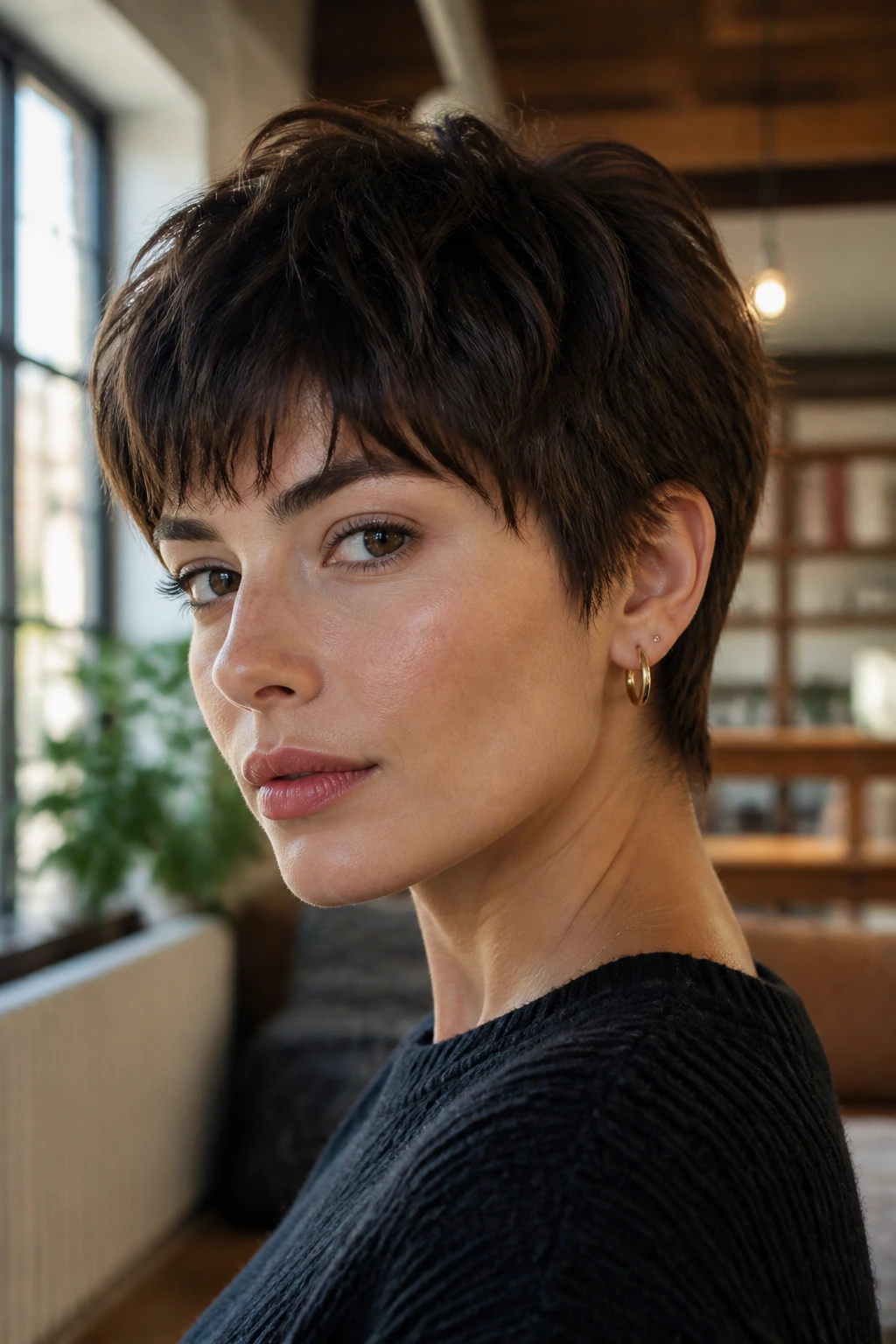
Thick hair has the opposite problem: too much volume in the wrong places. Layers help by removing bulk where the head starts to widen, especially at the sides and around the occipital bone.
I like thick-hair layers when they’re carved to keep the shape from becoming a triangle. The haircut should still hold weight at the edges so it doesn’t fly apart, but the interior needs enough movement to stop the whole thing from feeling dense. A little undercut in the nape can help too, especially if the hair builds up fast back there.
What to ask for
Use direct language: remove bulk without making the ends wispy. That is the whole game.
Styling note
Heavy creams can make this cut droop. A lightweight lotion or a texturizing spray usually behaves better, especially if you want the layers to stay visible.
16. Curly Layered Crop
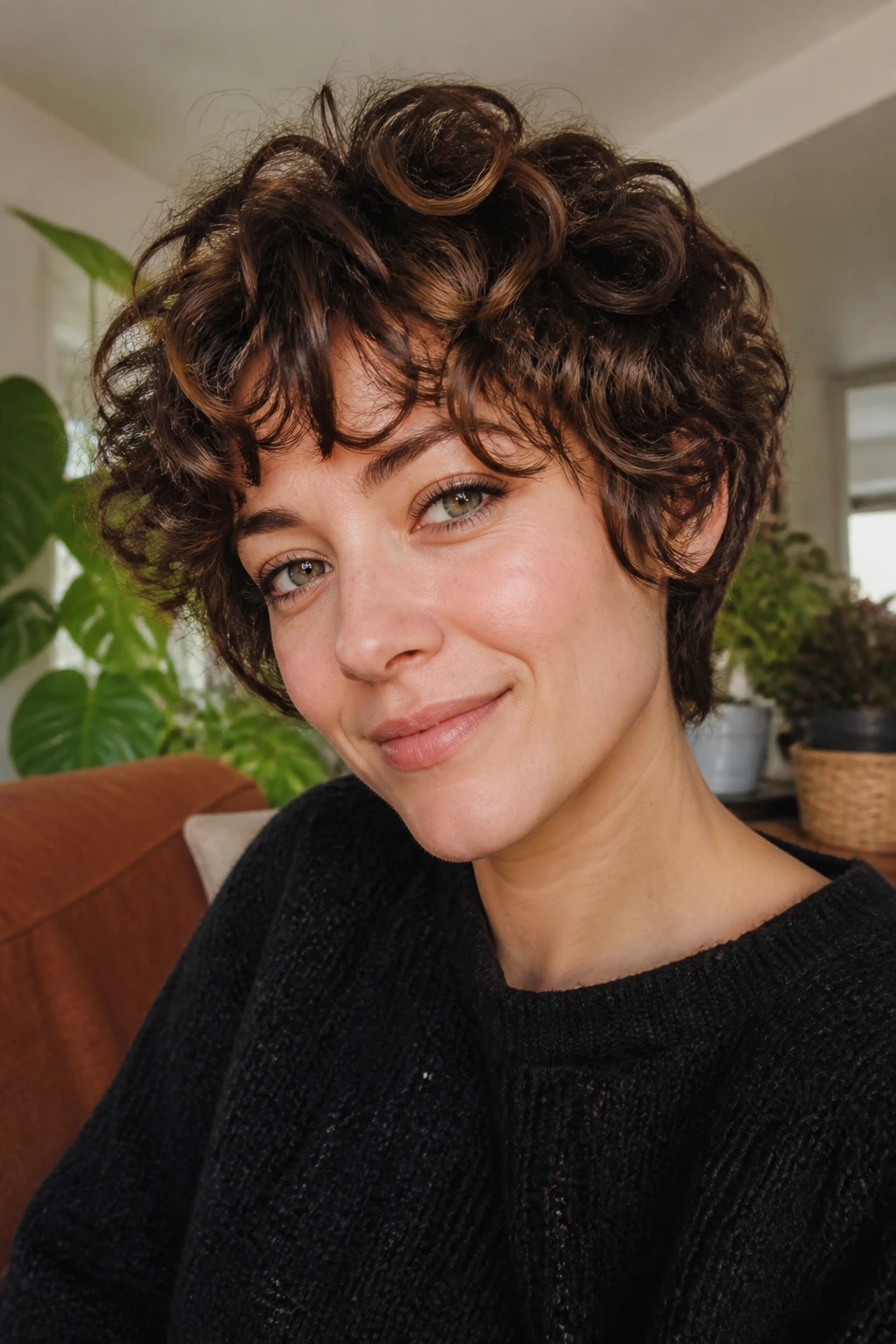
A curly crop with layers is not about shrinking the hair. It’s about letting the curl sit in a shape instead of forming one wide halo around the head. The shorter layers help the curls stack with intention, while the longer bits around the front frame the face.
The cut needs to respect where the curls naturally spring. That means the stylist should cut some curls dry, or at least check the shape when the hair is not stretched out. Wet-only cutting can be misleading with curls. I’ve seen too many good curls turned into accidental triangles because the length looked harmless when wet.
Best on
Medium to dense curls that need movement at the crown. If your curls are very tight, keep the top a little longer so the shape doesn’t shrink too high.
Styling move
A curl cream plus gel combo usually gives the best hold here. Air-dry if you want softness; diffuse if you want more lift at the roots.
17. Side-Swept Layered Crop
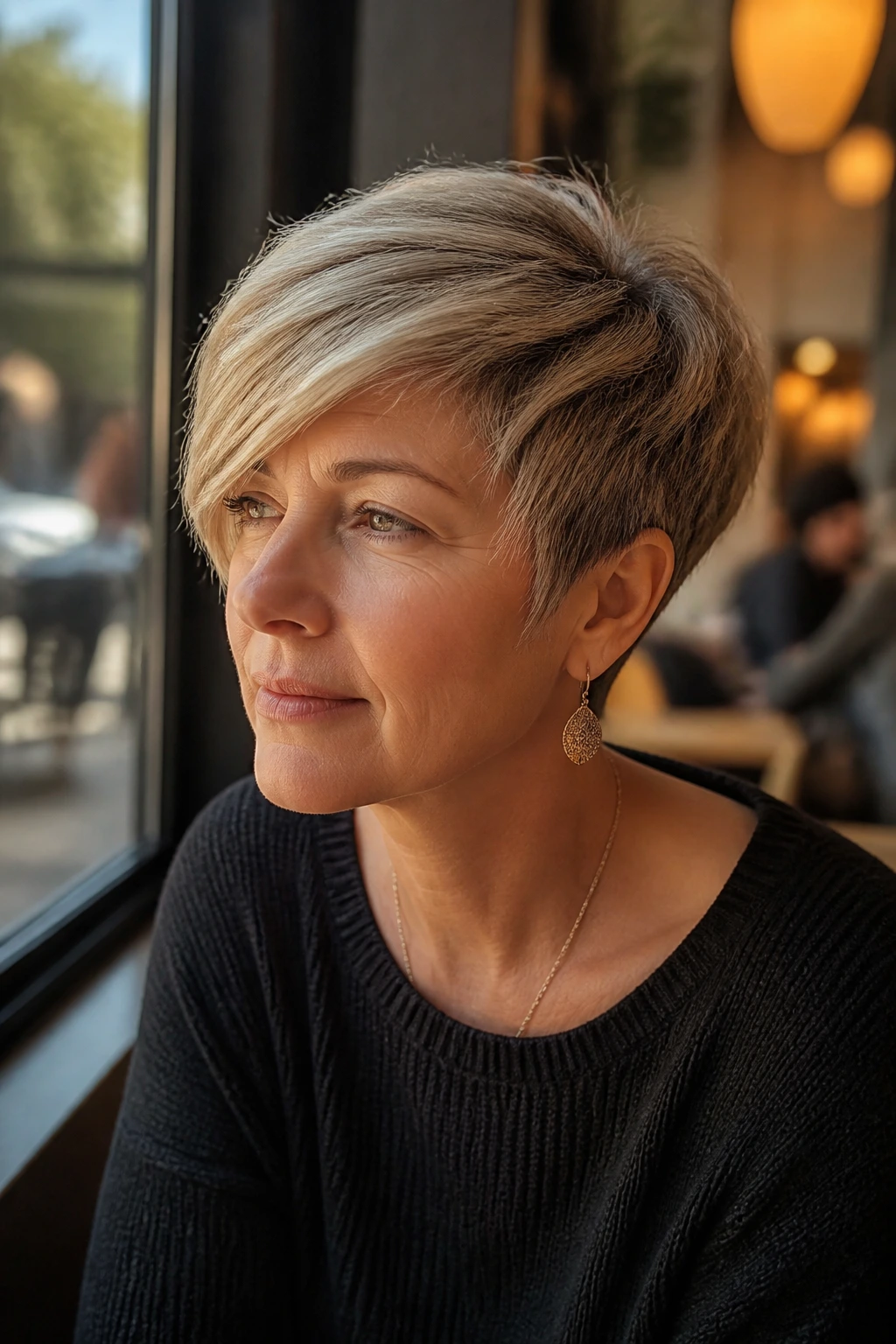
A side-swept crop feels easy on the face because it gives the eyes a diagonal line to follow. The layers usually build from one side to the other, so the haircut has motion even when the rest of it is kept short.
This is a good cut when you want softness around the forehead without committing to full bangs. The side sweep can skim the brow, cover a cowlick, or simply break up a strong forehead line. It also works well with earrings and high collars because the haircut doesn’t crowd the whole face.
Why it works
The diagonal shape slims the look of the haircut more than a center part does. It also gives you a little styling freedom; some days you can tuck it, and some days you can push it forward for more drama.
Salon note
Ask for a short layered crop with a long side sweep and soft transition at the temples. That keeps the front from feeling hacked off.
18. Choppy Bob With Curtain Bangs
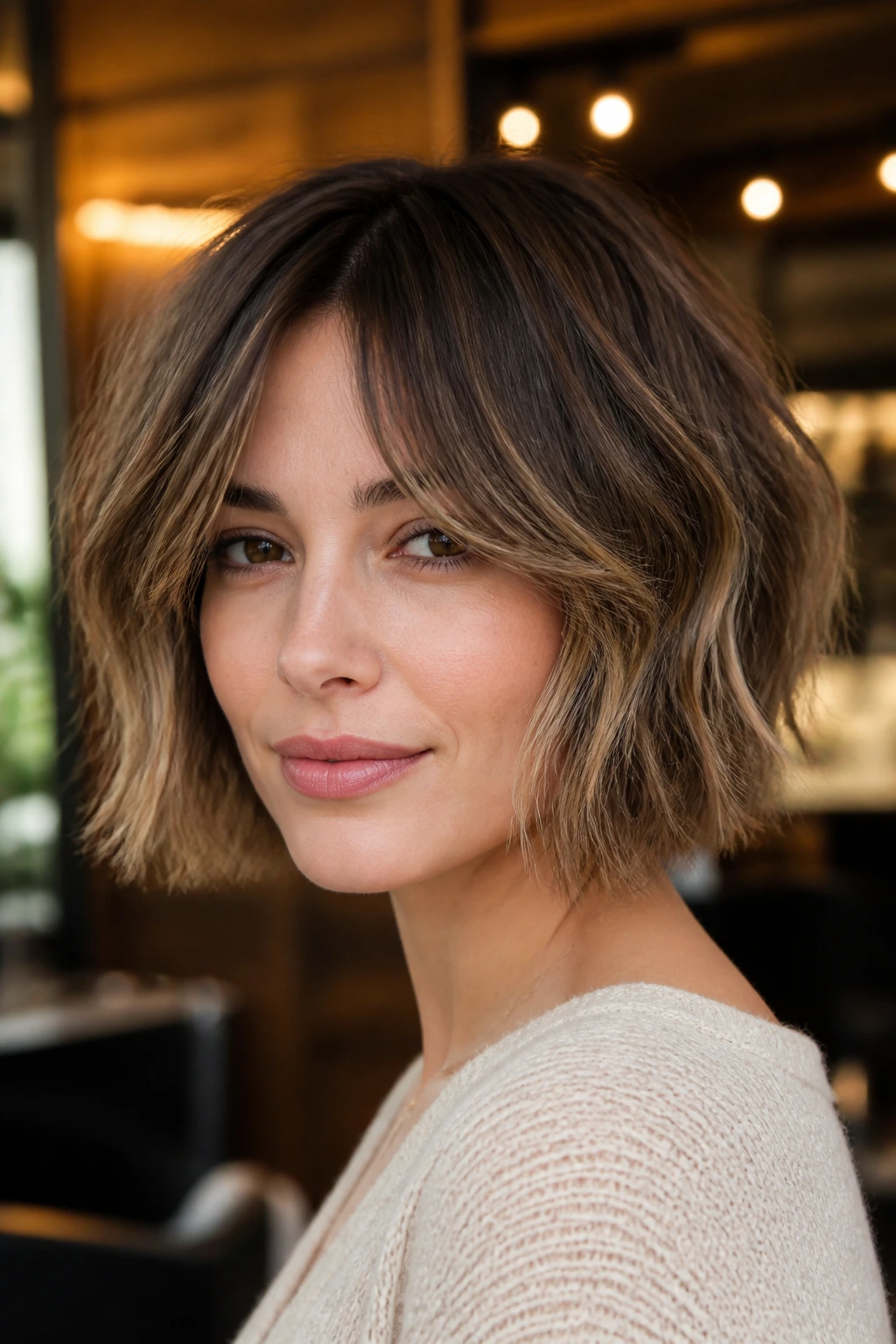
Curtain bangs on a short bob can look very modern, but only if the layers are handled with care. The bangs need to part cleanly, fall away from the center, and connect into the face-framing pieces without a harsh step.
The choppy texture keeps the bob from looking too sweet. That’s the point. A little broken-up edge at the ends, paired with the middle part and the curtain fringe, creates a shape that feels relaxed but still controlled. It’s one of the few cuts on this list that can swing from polished to mussed-up with almost no effort.
A blunt truth
If the bangs are cut too short, this style loses its balance fast. Curtain bangs need a bit of length to drape; otherwise they sit like tiny walls.
Best for
Women who like to tuck the front sections behind the ears once in a while and let the fringe fall back when they want softness.
19. Soft Mullet Bob
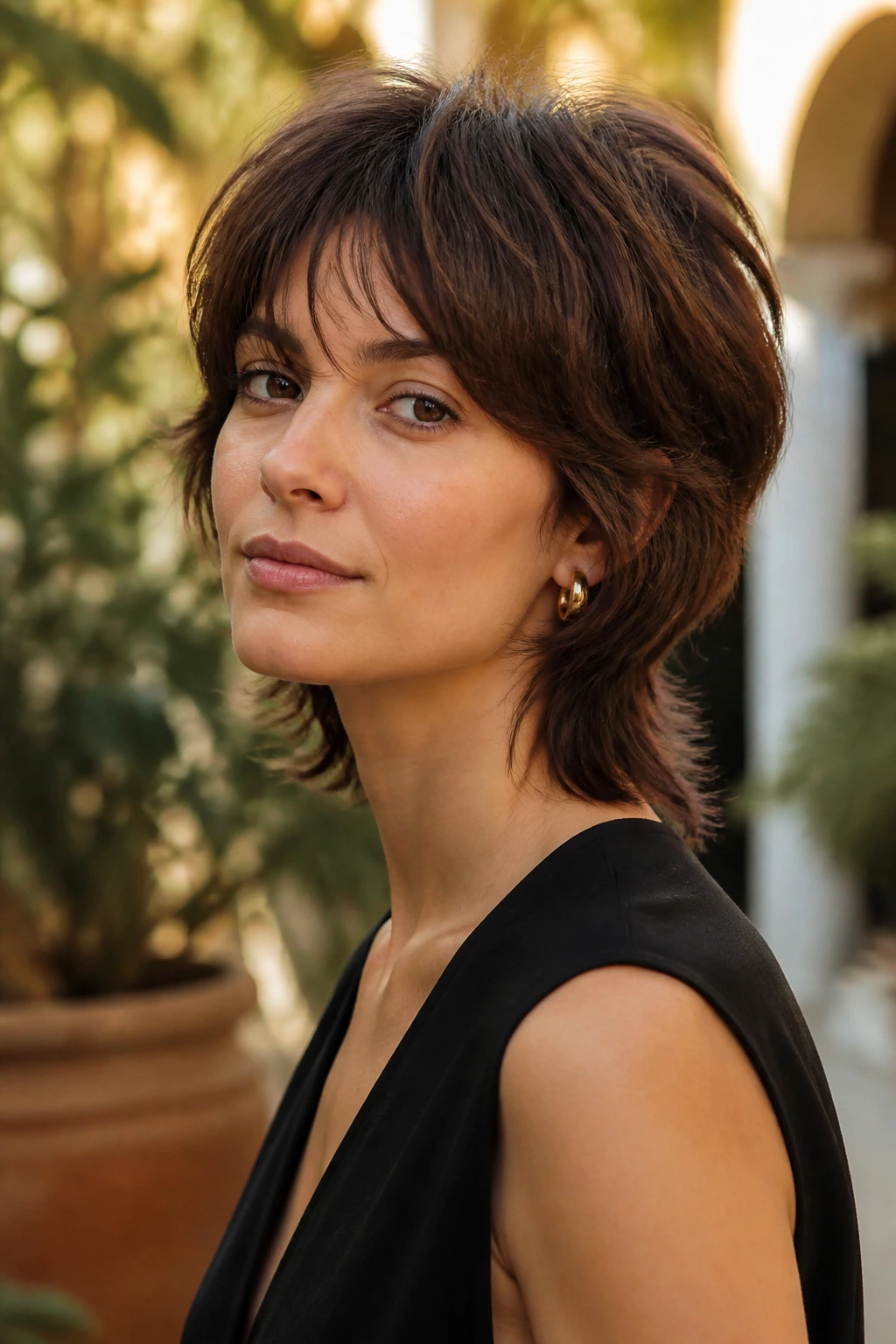
The soft mullet bob is for people who want something a little off-center without going full punk. The front stays shorter and more polished, while the back carries a little extra length and the layers create that subtle kick at the neck.
This cut works because the transition is gentle. You’re not getting a hard mullet line; you’re getting a bob that loosens up in the back. It can be flattering on wavy hair, because the layers give the shape enough movement to feel cool instead of costume-y.
What to watch
The top should not be over-thinned. A soft mullet bob needs enough body to balance the longer back. If the top gets too airy, the whole cut can look unfinished.
My opinion
This is one of the most interesting short layered cuts if you want personality without going too far into trend territory.
20. Undercut Pixie With Length on Top
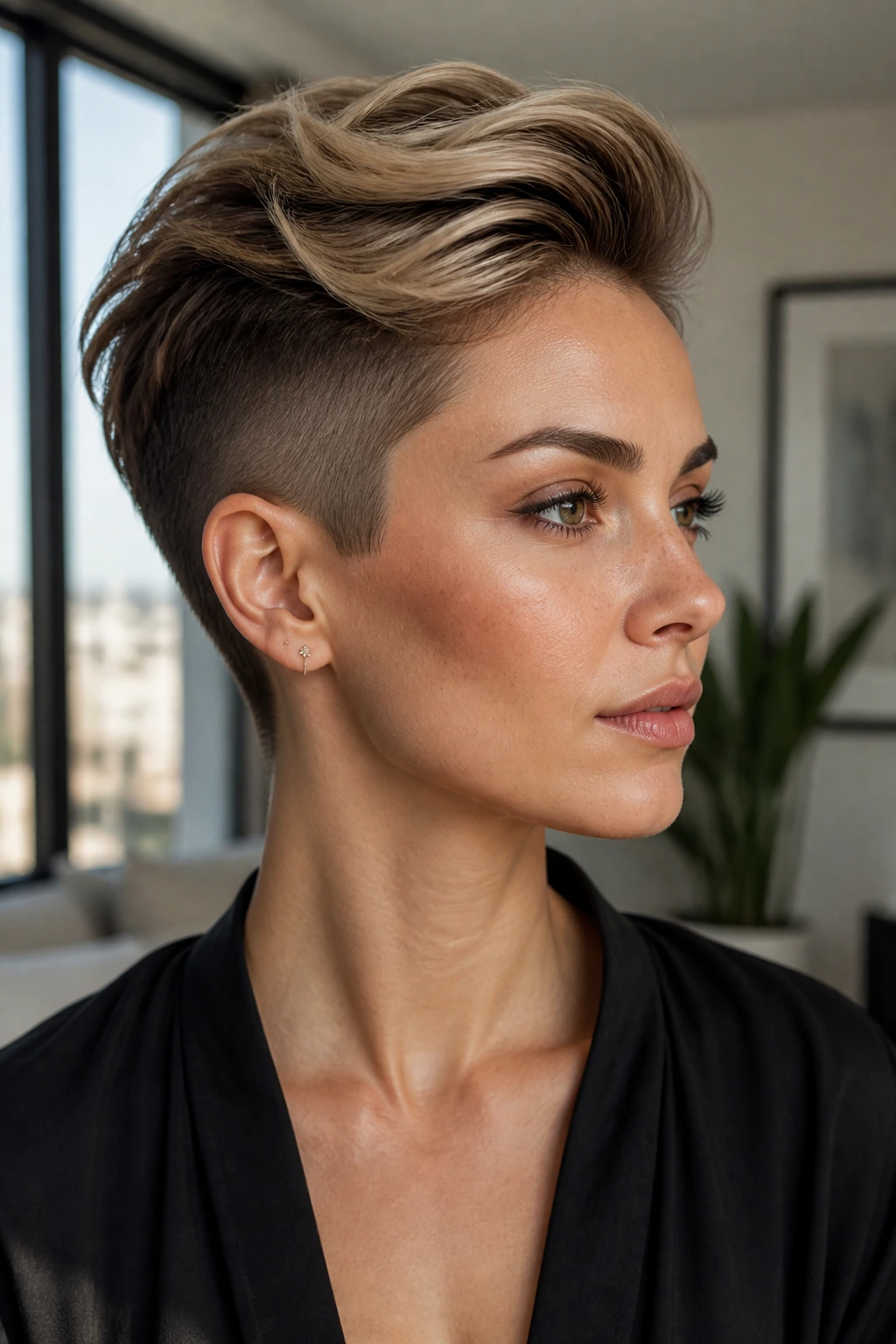
An undercut pixie is a strong move, but a good one when you’re tired of bulk at the sides or back. The undercut removes weight from underneath, while the top stays long enough to flip, sweep, or spike depending on the day.
The contrast is what gives it shape. Short underneath, longer above. Clean at the neck, flexible up top. It also saves time if your hair is dense, because you’re not fighting the same amount of mass every morning. The cut looks sharp when the top is slightly broken up with paste, but it can also sit softer if you comb it down and let the undercut do the quiet work.
Ask for it like this
Say you want an undercut that removes bulk but leaves visible length on top and around the crown. That tells the stylist the top still matters.
Styling note
You do not need much product here. A little wax near the roots is enough. Too much and the top turns greasy fast.
21. Neck-Length Layered Cut
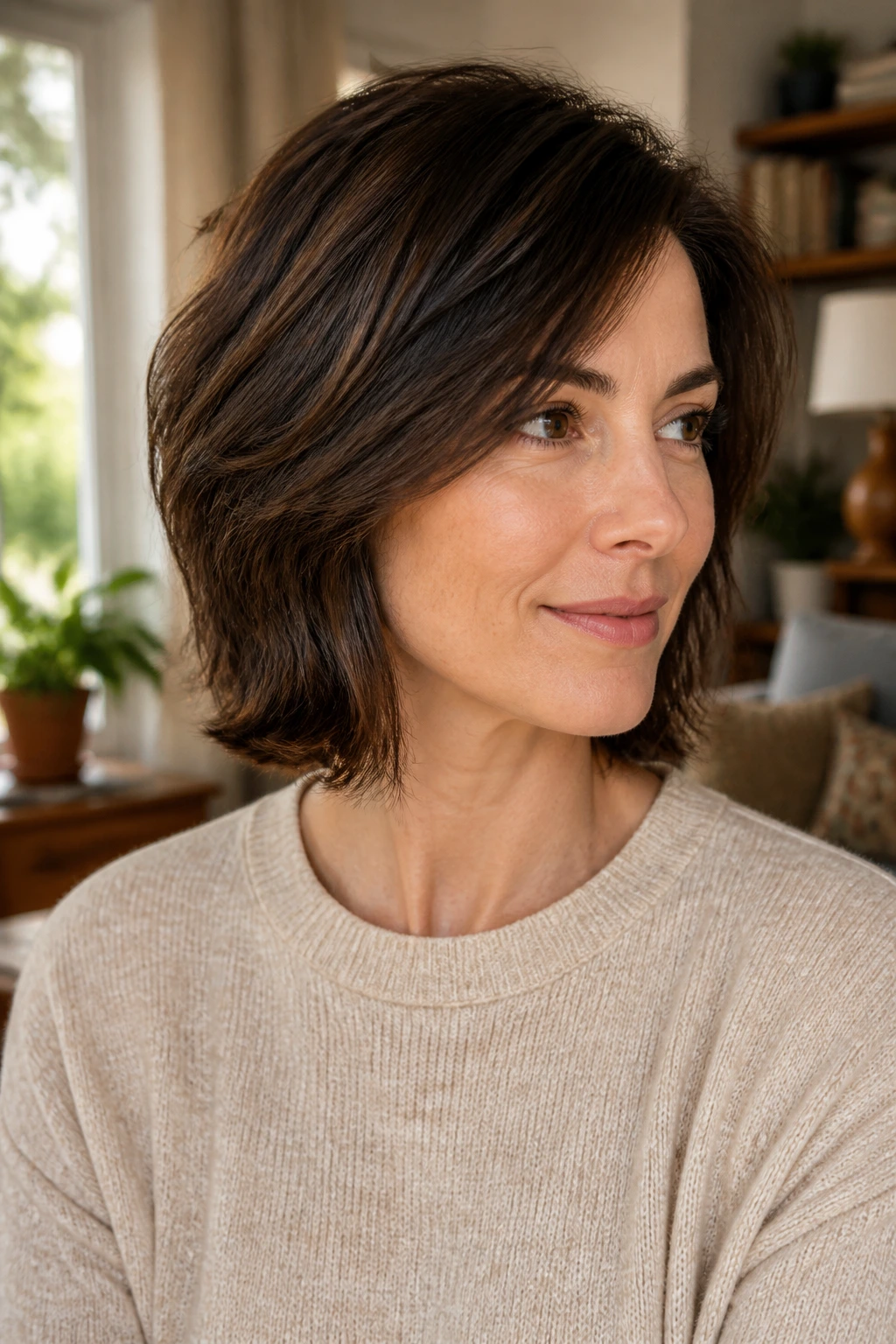
A neck-length cut is one of those shapes that gives short hair a graceful landing spot. It skims the neckline, moves when you turn your head, and feels shorter than a lob without being severe.
Layers keep the neck-length shape from sitting flat. They let the hair fold softly at the ends and remove enough weight to stop the back from puffing out. This is especially helpful if your hair grows in a bit of a wedge at the nape. Instead of fighting it, the layers work with that bend.
Best for
Women who want a short cut that still tucks behind the ear and stays easy to pin back when needed.
Styling note
A slight bend through the ends matters more than a perfect blowout. If the ends curve under a touch, the whole haircut looks intentional.
22. Asymmetrical Layered Bob
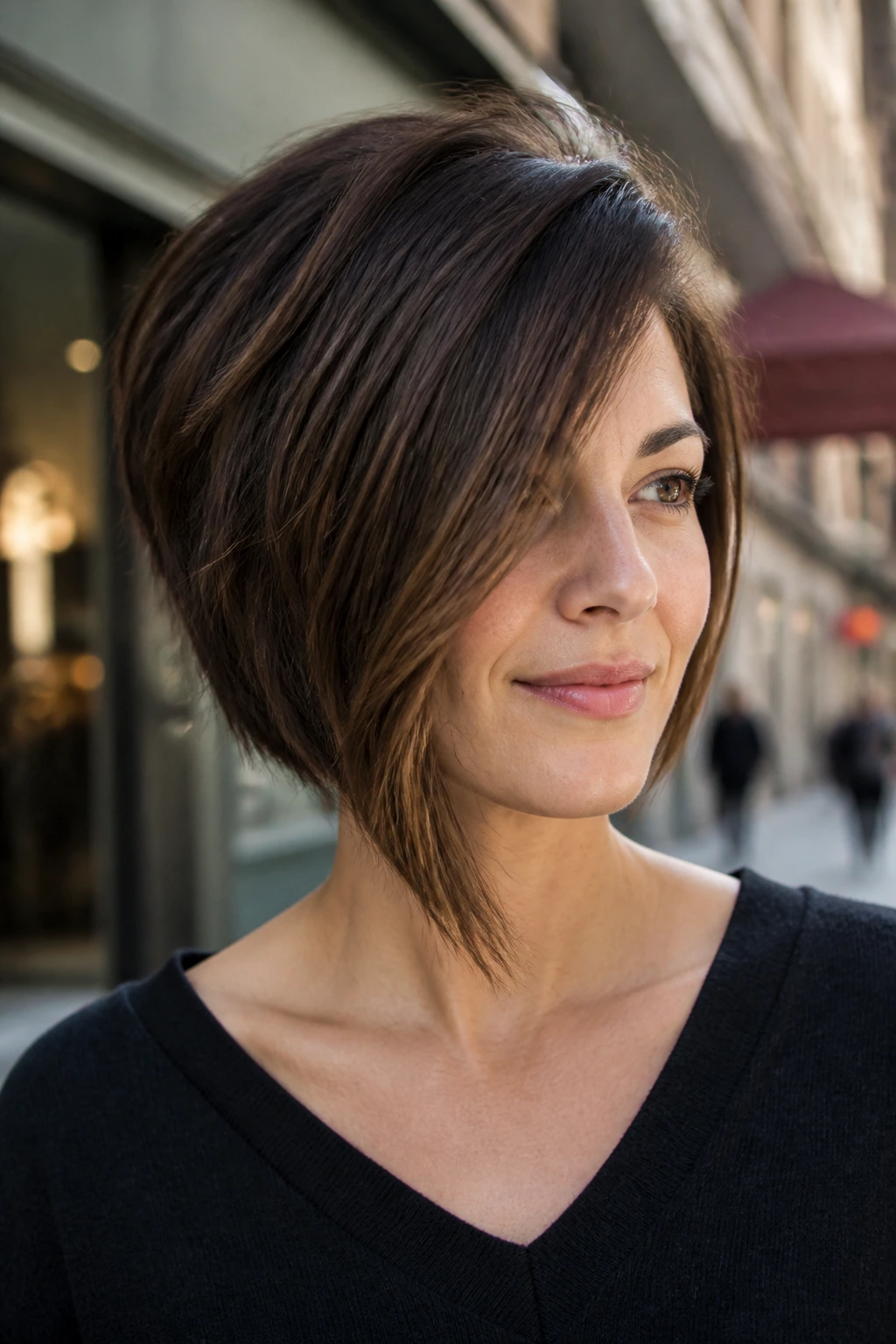
An asymmetrical bob gives short hair a bit of tension in the best way. One side sits slightly longer, the layers keep the shape from becoming too rigid, and the uneven balance draws attention to the cheekbones and jawline.
This cut works when you want something polished but not predictable. The asymmetry should be subtle enough that it reads as stylish, not accidental. I prefer a softer version where the longer side is only an inch or so below the other. Too much difference and the haircut starts to feel like a design project.
What makes it work
The layers have to follow the asymmetry, not fight it. That means the shorter side often needs a touch more interior weight so it doesn’t disappear next to the longer side.
Styling tip
Wear the part on the shorter side if you want more lift, or on the longer side if you want the shape to fall across the face more dramatically.
23. Airy Layered Cut With Wispy Bangs
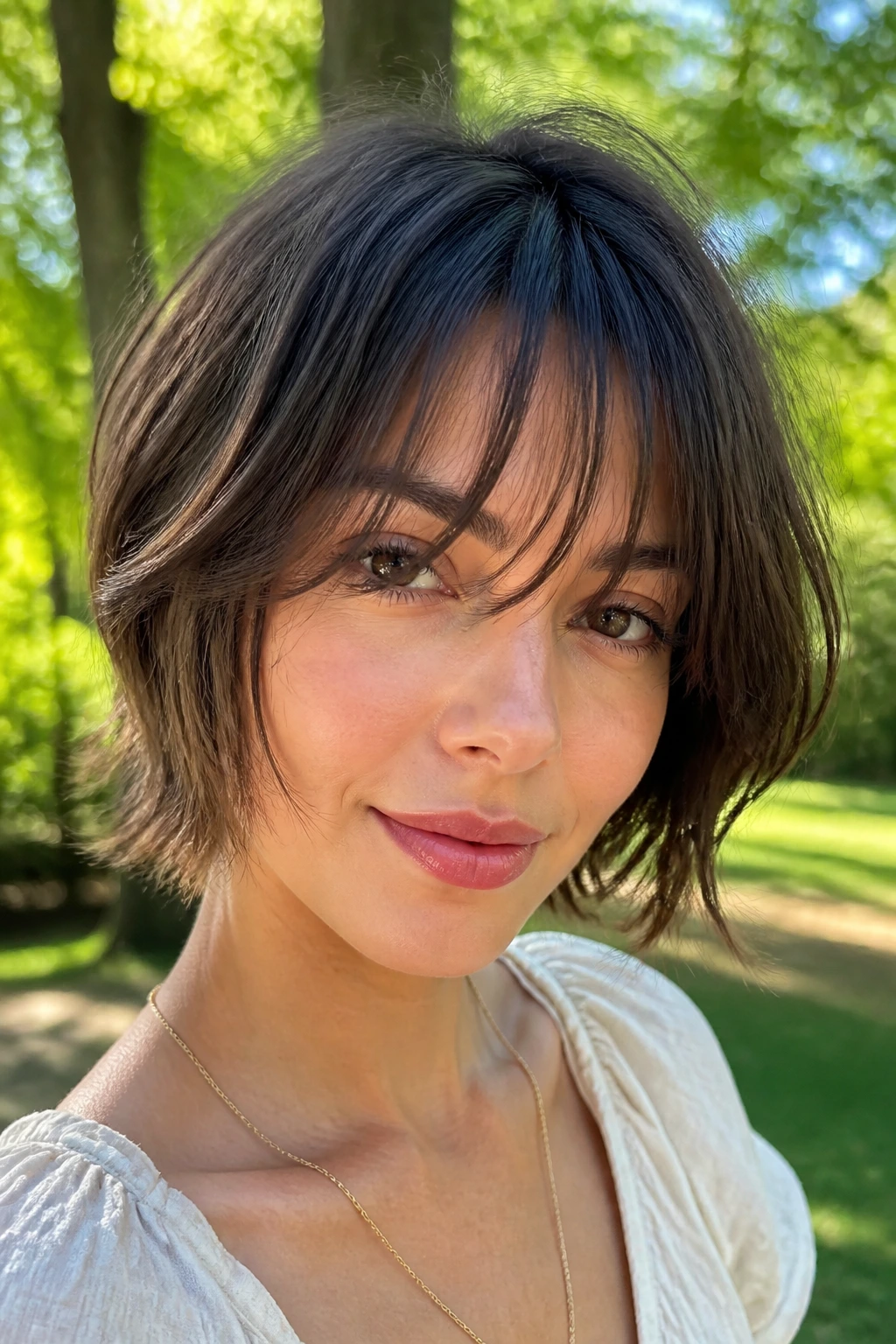
If you like softness around the forehead without a heavy fringe, wispy bangs are a nice middle path. They break up the front of the haircut, blend into the layers, and keep the whole style from feeling too closed in.
This cut is especially useful if your hairline is strong or your forehead feels like a feature you’d rather soften than spotlight. The layers around the face should be light, not shredded. That keeps the airiness from turning into frizz or flyaway chaos. There’s a real difference there, and it matters.
Best on
Straight and wavy hair that can hold a little shape at the front. Curly hair can wear wispy bangs too, but they need a dry curl check before the scissors come out.
Styling note
A small round brush or even a finger blow-dry can keep the bangs from splitting too much. Let them dry with direction, or they’ll go wherever they please.
24. Tousled Crop With Deep Side Part
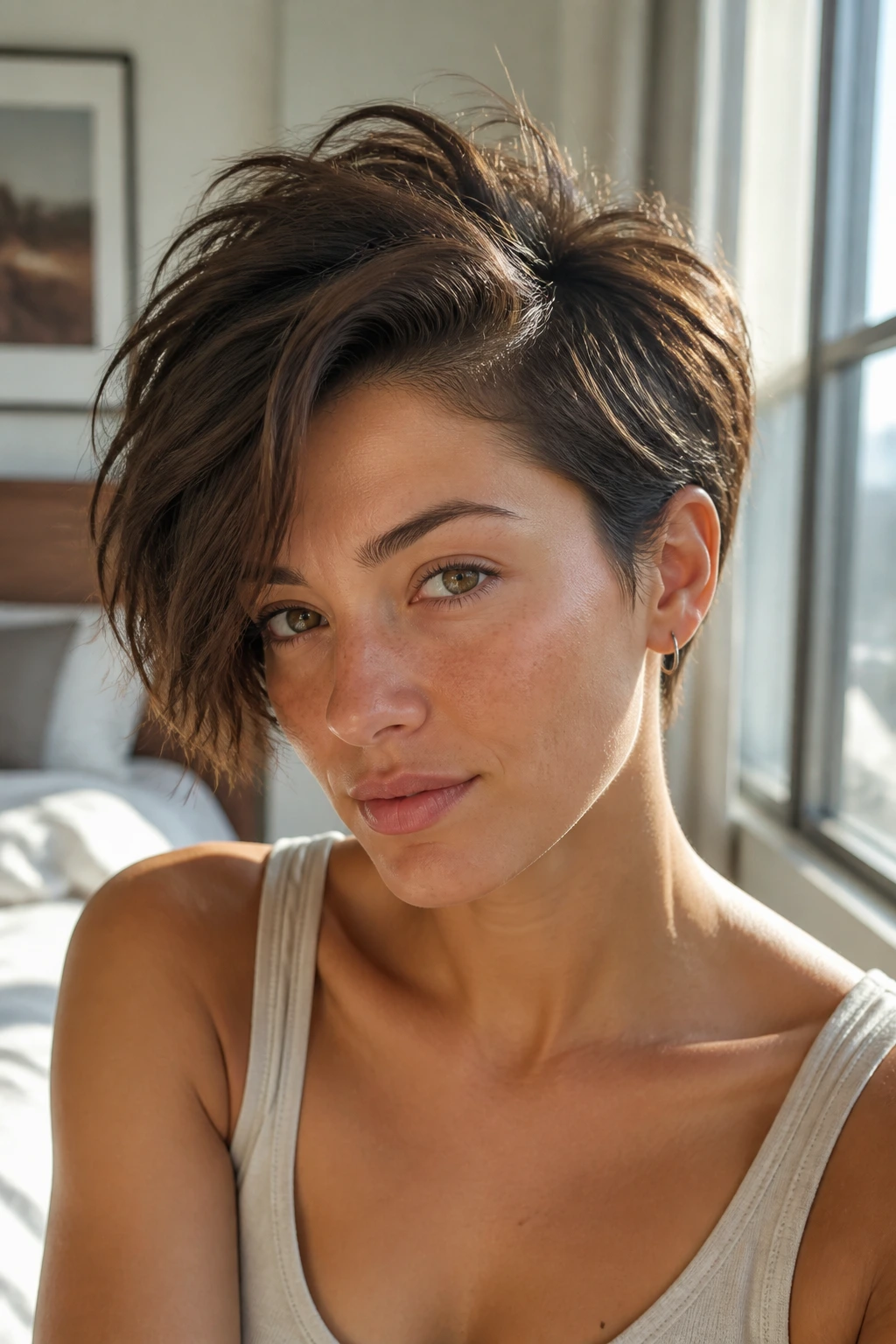
A deep side part gives a short crop instant shape. It builds volume on one side, softens the temple area, and makes the layers feel intentional even if the rest of the style is a little loose.
This is one of the easiest ways to create a “finished” look without a lot of heat. The deep part helps the cut settle into a side-swept shape, and the layers around the crown stop it from going flat at the roots. If your hair likes to separate at a natural part, this cut can work with that instead of fighting it.
What to ask for
Tell your stylist you want a short textured crop that can be worn with a deep side part and extra lift at the crown. That gives you flexibility without sacrificing balance.
My take
This is one of the most practical short layered cuts on the list because it can look polished with only a little product and a rough dry.
25. Layered Pageboy Remix
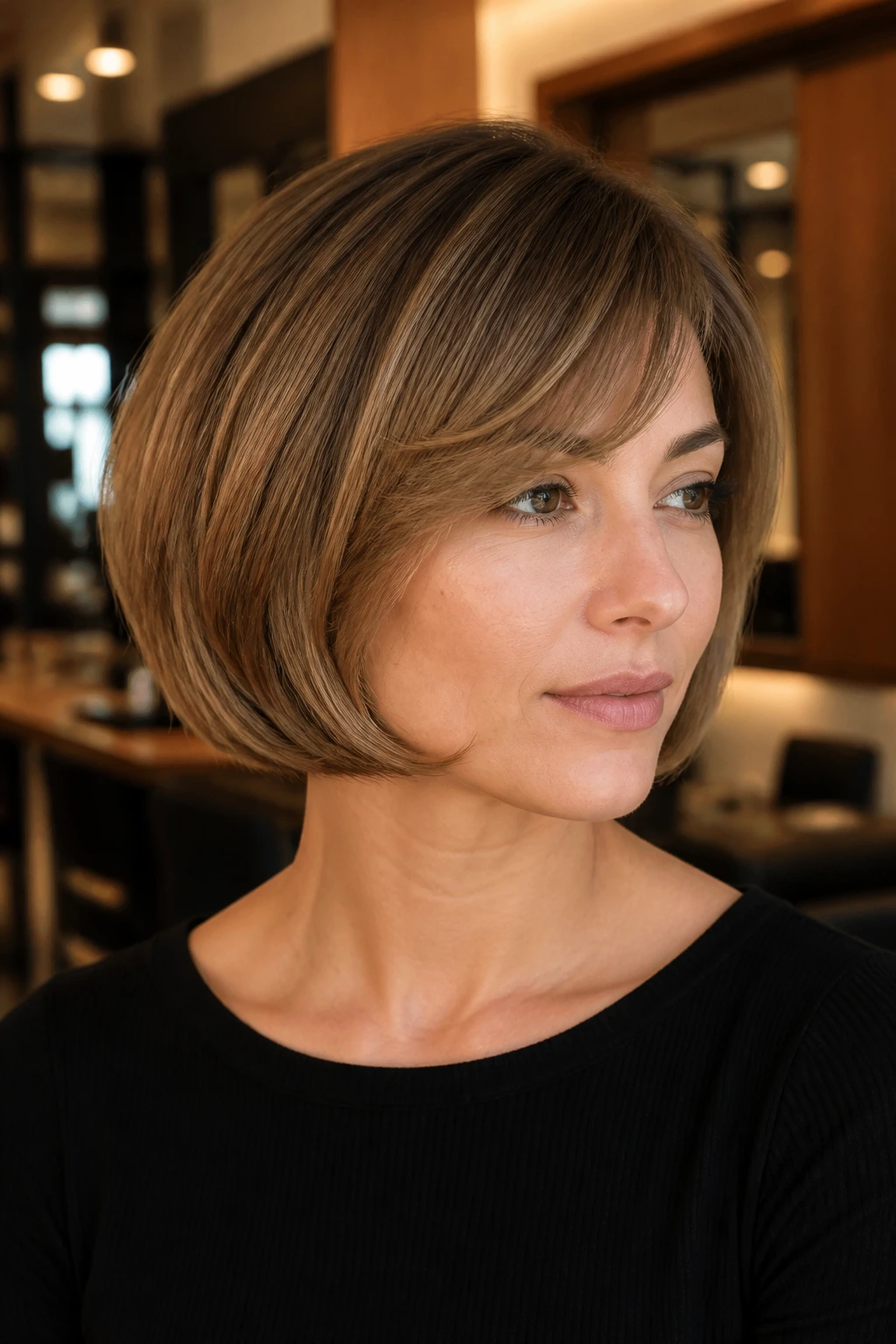
The pageboy shape gets a bad reputation because people picture a stiff cap. A layered remix fixes that. The outline stays rounded and tidy, but the interior is lighter, so the cut bends instead of sitting like a helmet.
The ends usually curve under the jaw or just above it, and the layers are hidden enough to keep the silhouette clean. This is a nice option if you like structure and a little retro polish, but you don’t want the full weight of a traditional pageboy. It feels smarter when the bangs are soft or swept rather than blunt and heavy.
Best for
Women with straight hair who want a tidy shape that still has movement around the face and neck.
Styling note
A brush set under the ends is what makes this cut sing. If you let it air-dry completely flat, you lose the whole point of the curve.
26. Short Wolf Cut Lite
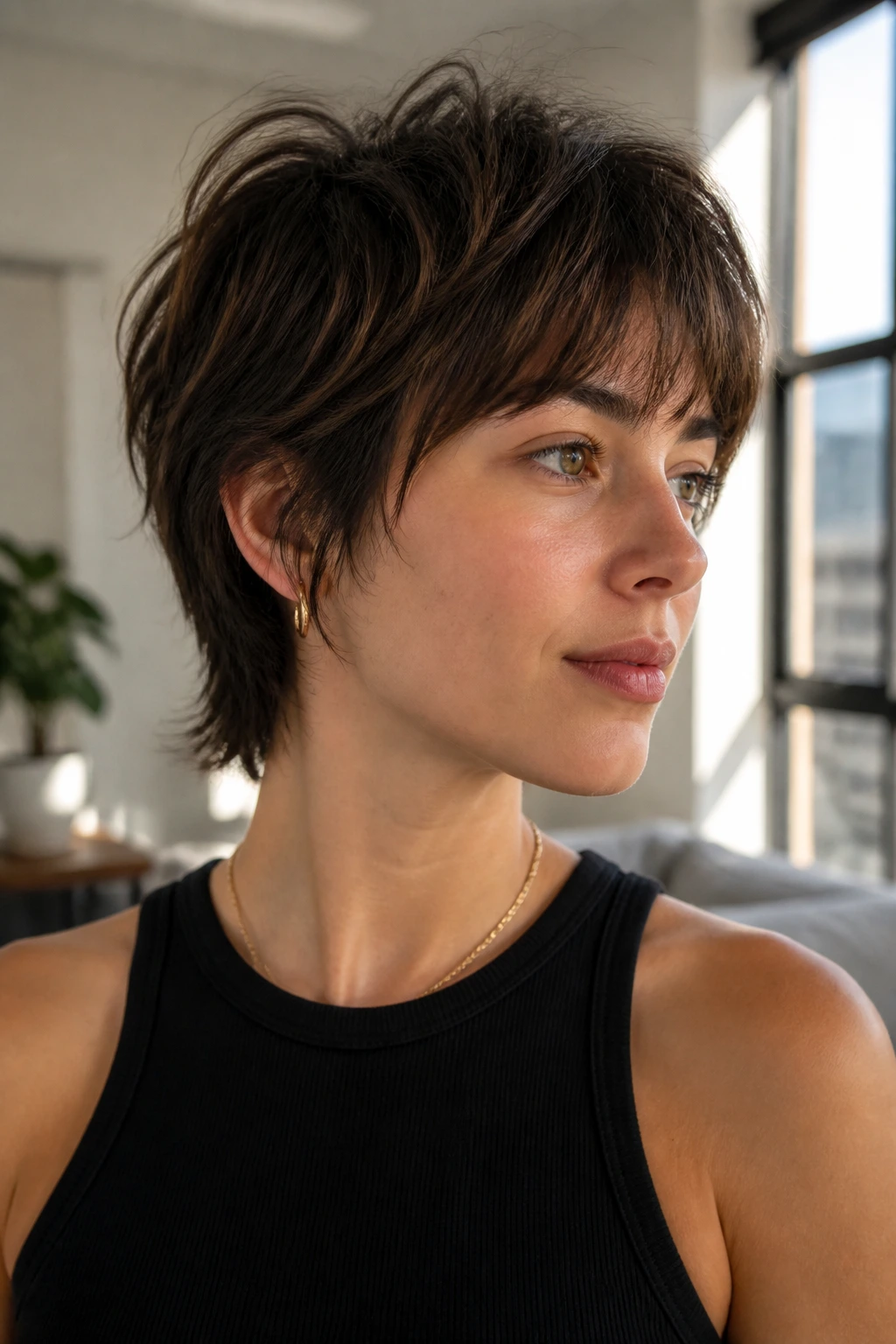
The wolf cut gets toned down here. You still have layers that build volume toward the crown and loosen through the ends, but the shape stays short enough to feel wearable on a daily basis.
I like the “lite” version because it keeps the shaggy spirit without requiring a full commitment to wild texture. The crown has lift, the perimeter stays manageable, and the overall effect is choppy in a controlled way. That balance is useful if you want something current-looking but not messy enough to fight with every morning.
Why it works
The shorter top layers create height, while the softer ends keep the cut from exploding outward. That combination is what stops the style from looking overgrown before it’s even grown out.
Ask for it like this
Say short wolf cut with a softer perimeter and moderate crown layers. Those words keep the shape from turning into a complete shag cloud.
27. Round-Face Layered Bob With Cheekbone Pieces
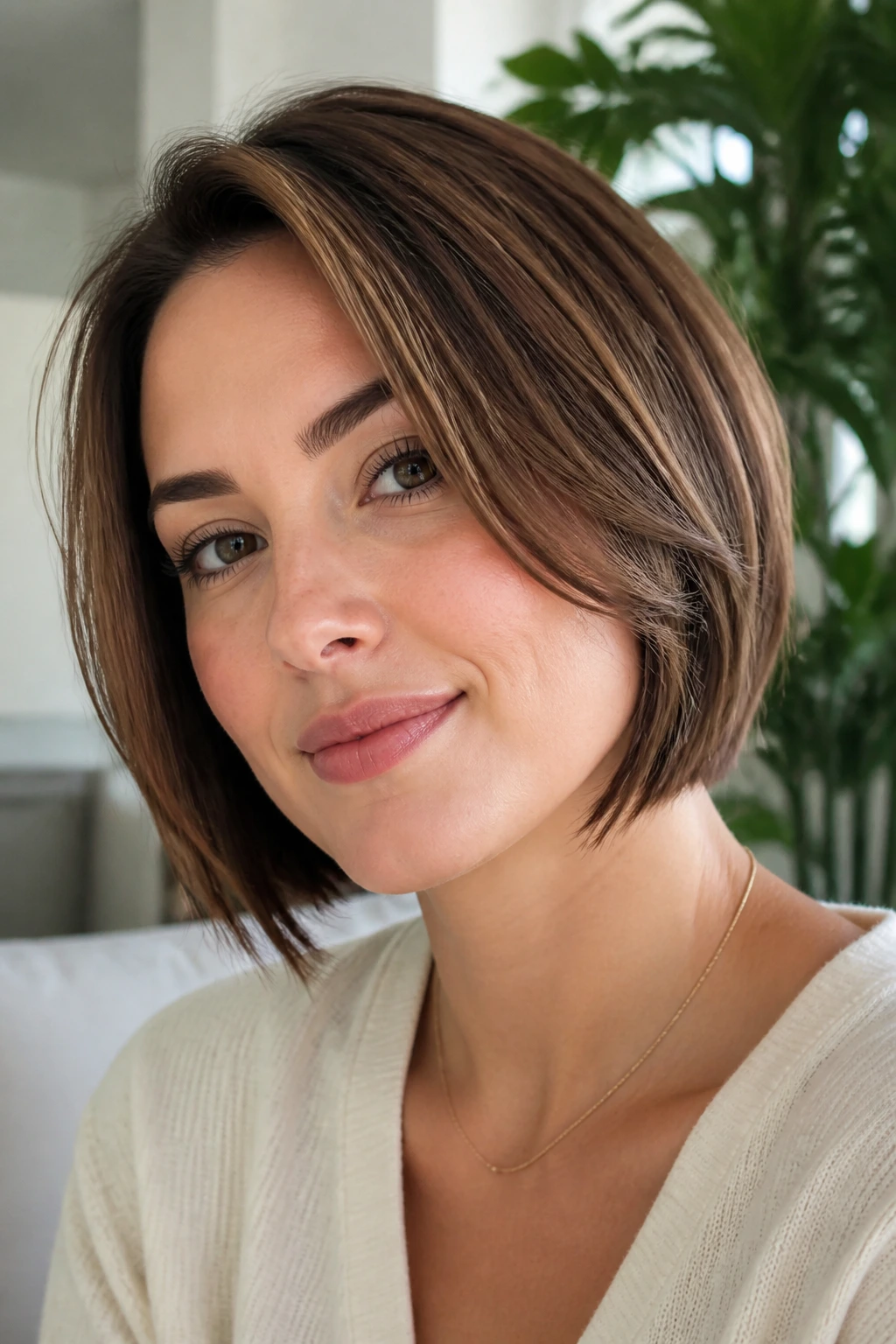
A round face doesn’t need hiding. It needs a haircut that gives it angles. Cheekbone pieces do that work beautifully because they cut across the widest part of the face and create a vertical line where you want one.
This bob should sit around the jaw or just below it, with the front layers angled enough to graze the cheeks. The layering should be soft, not puffy, because too much width at the sides only makes the roundness feel stronger. A side part usually helps too, since it breaks the symmetry and gives the hair a little lift at the roots.
What to ask for
Use the phrase layers that hit the cheekbone and narrow gently toward the jaw. That helps the stylist place the shortest face-framing pieces where they’ll do the most work.
Styling note
Tuck one side behind the ear and let the other fall forward. It sounds tiny, but that asymmetry changes the whole line.
28. Square-Jaw Softened Crop With Curved Layers
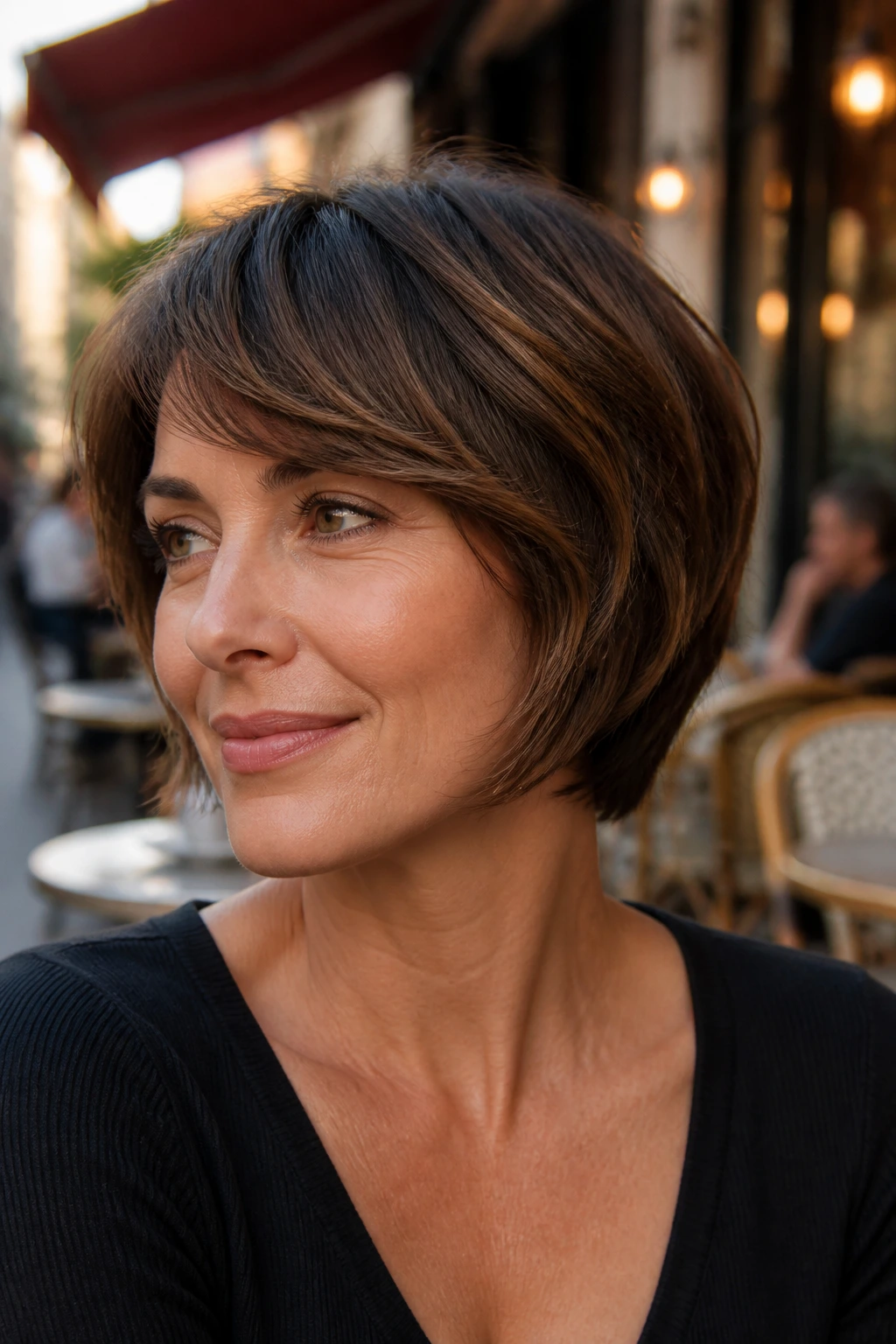
Square jaws can wear short hair beautifully when the cut adds curve instead of more hard edges. That’s what this crop does. The layers bend around the face, the ends soften at the temples, and the overall silhouette eases the sharpness without hiding the bone structure.
I like this style when the perimeter isn’t too blunt. A little softness through the front and sides keeps the haircut from echoing the jawline too closely. The goal is balance, not camouflage. If the hair is too straight and the layers too rigid, the whole cut can start feeling severe. Curved layers solve that.
Best approach
Ask for rounded face-framing layers, a softened side fringe, and no harsh shelf at the jaw. That gives the haircut motion and keeps it flattering from the profile view.
Styling note
A soft blow-dry with the brush rolling the ends away from the jaw is enough. You want the hair to skim, not cling.
Why Layers Change the Shape of Short Hair

Short hair looks simple from the chair. It is not simple in motion. The second you wash it, sleep on it, or walk into damp weather, the haircut tells the truth about its structure. Layers change that structure by moving weight, not just removing it.
A clean perimeter gives short hair its line. Layers decide whether that line feels light, heavy, round, angular, or a little bit messy in a useful way. A pixie with crown layers sits differently from a bob with internal layers because the pressure points are different. One needs lift at the top. Another needs softness through the middle. A curly crop needs room for the curl to spring. A fine-hair bob needs enough density left behind to avoid see-through ends.
That’s why the best layered short cuts are specific. Vague layering is how people end up with ends that fray, tops that puff, and shapes that need constant correcting. Good layering solves a problem in the haircut itself. It doesn’t just decorate the cut.
There’s also a grow-out advantage that people underestimate. A well-cut layered short style can drift into a new shape without looking neglected. The layers keep movement in the silhouette, which buys you weeks, sometimes months, before the haircut starts to feel wrong.
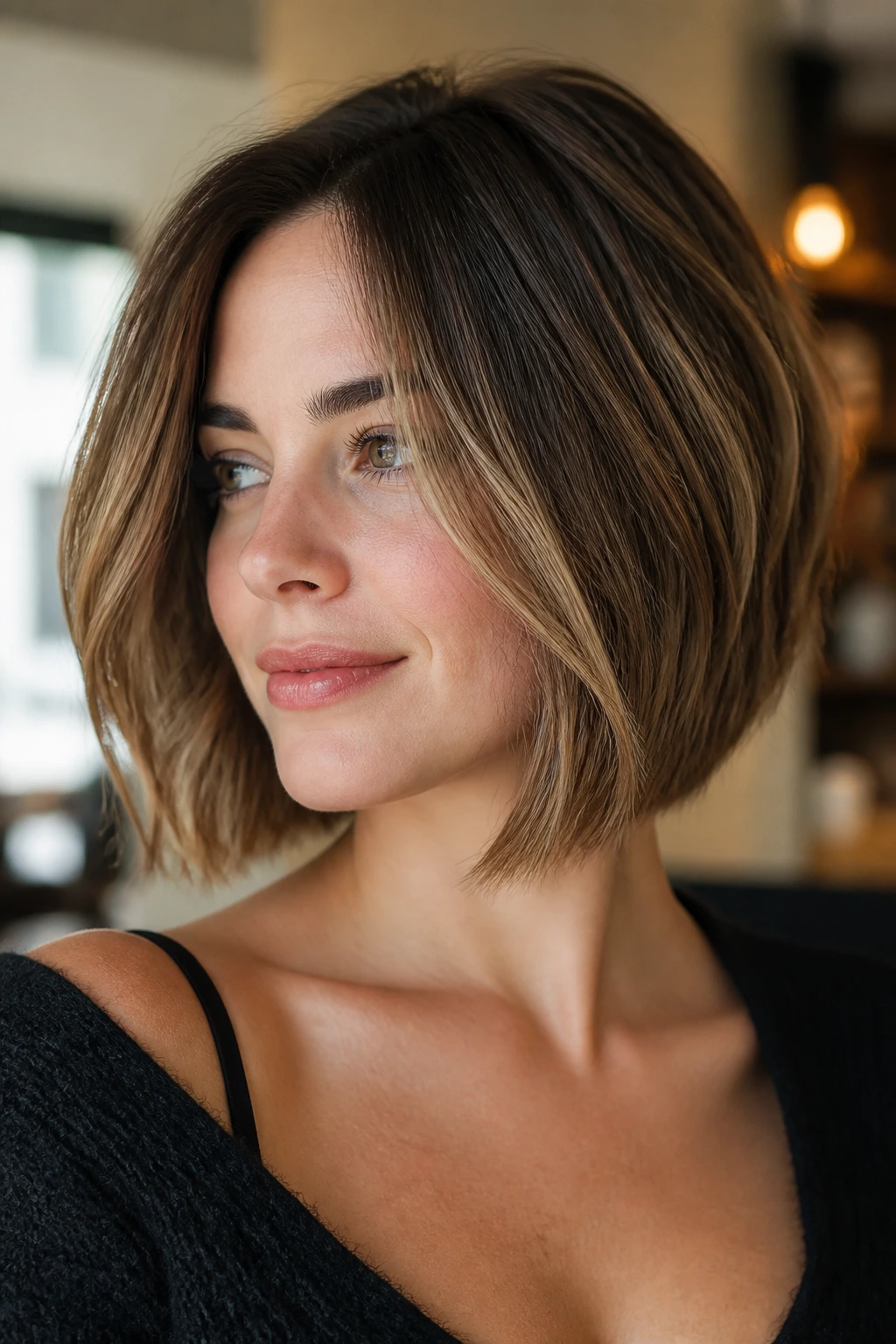
Tools That Make These Cuts Easier to Live With
-
Blow dryer with a concentrator nozzle: The nozzle helps direct the airflow so the layers sit where you want instead of scattering.
-
Round brush, 1 to 2 inches: Smaller brushes give lift at the root and bend at the ends, which matters most on bobs and pixies.
-
Vent brush or paddle brush: Good for quick drying and smoothing a layered crop without flattening the crown.
-
Wide-tooth comb: Useful on curly and wavy layered cuts so you don’t drag the shape apart while detangling.
-
Texturizing spray: Adds grip to piecey layers, especially on fine hair that goes limp by noon.
-
Light mousse or root-lift foam: Great for airy crops and bobs that need volume at the crown without stiffness.
-
Matte paste or fiber cream: Best for pixies, bixies, and cropped shags where you want separation, not shine.
-
Hair clips: Keep the top section out of the way when you’re blow-drying shorter layers at the neck and ears.
-
Diffuser: A must for curly and wavy layered cuts if you want shape without frizz explosion.
-
Small hand mirror: Not glamorous, but useful for checking the nape and back corners, which are easy to miss.
What to Bring to the Stylist’s Chair
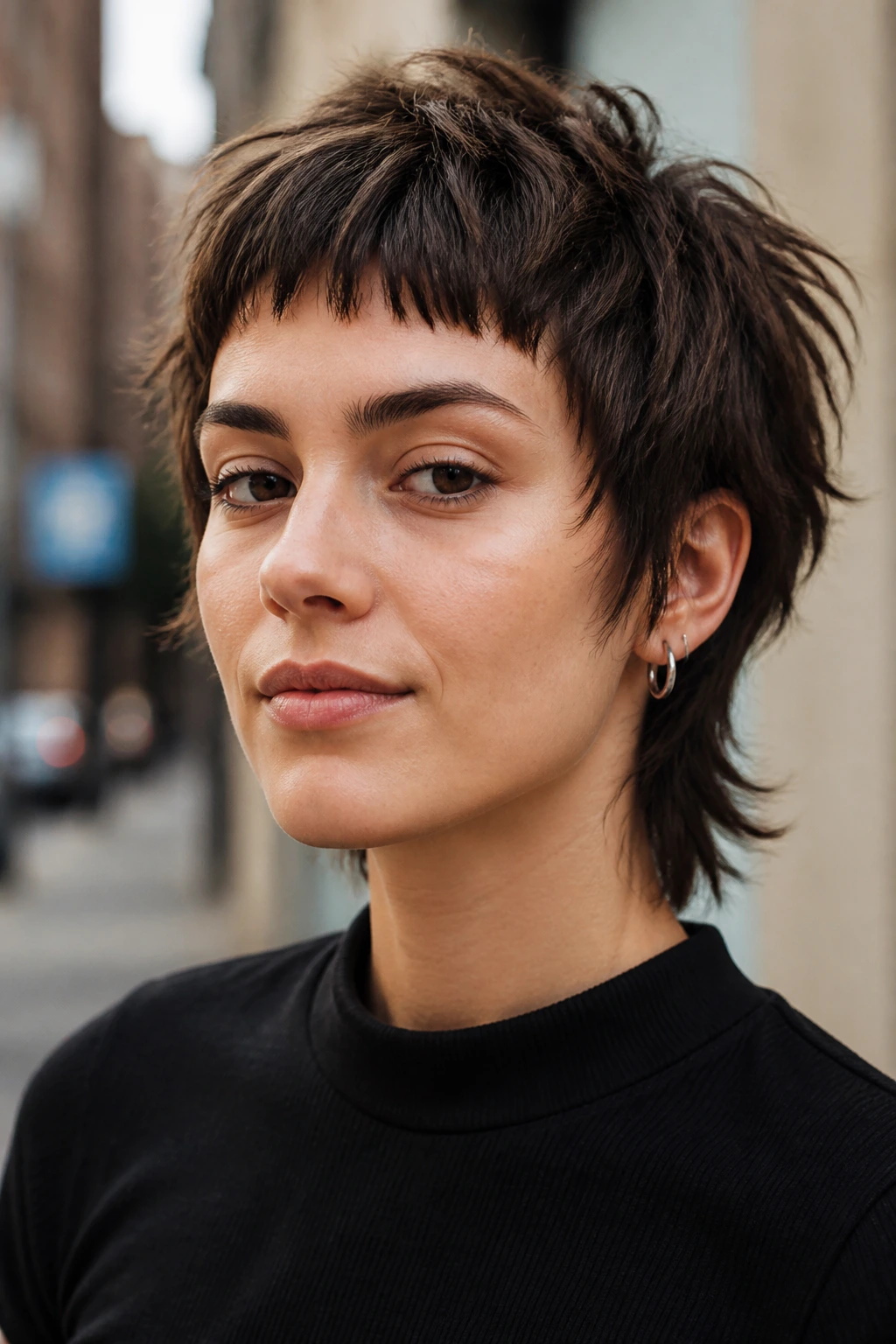
A good reference photo helps. Three, if you can get them. One for the overall shape, one for the fringe or front pieces, and one for the texture you actually want on your own head.
The trick is not finding a perfect copy of someone else’s haircut. It’s isolating the useful parts. Maybe you like the crown height in one photo, the jawline length in another, and the soft ends from a third. That gives the stylist something real to work with instead of forcing them to translate one screenshot that only looked right because of lighting, makeup, or a blowout.
Tell your stylist how your hair behaves on a lazy day. Does it flip at the nape? Split at the crown? Puff at the sides? Sit flat by the ears? Those little annoyances matter more than the photo, because they tell the cutter where the layers need to land.
Bring up how much time you’ll actually spend styling. A crop that needs a round brush every morning is a different animal from one that can be roughed dry and left alone. Say that out loud. Stylists can work with honesty. They cannot read your patience.
How to Wear and Style These Cuts
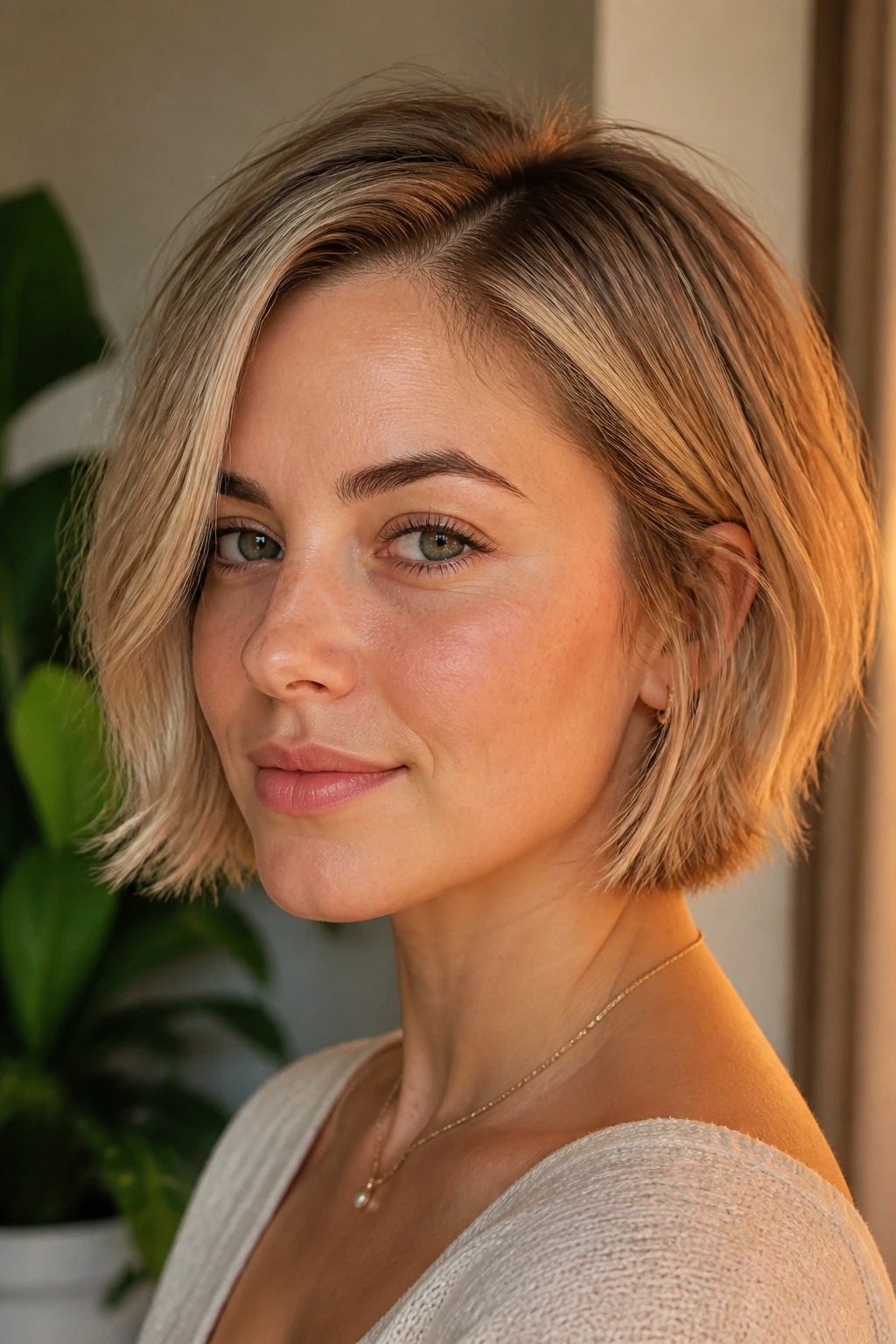
Shape: Keep the outline in mind before you reach for product. A pixie wants lift at the crown and a clean nape; a bob wants controlled movement at the ends; a shag wants separation through the top and softer edges around the face. If the shape is strong, the styling can stay light.
Styling Pairings: Match the tool to the cut, not the other way around. Round brushes help bobs and pageboy shapes. Fingers and paste work better on bixies, shags, and crops. Diffusers belong with curly layers, and flat irons only help if you’re bending a few pieces, not ironing every strand flat.
Wardrobe Pairings: Short layered hair shows off collars, earrings, and necklines in a way longer hair just doesn’t. A sharp bob with a blazer collar reads differently from the same cut with a loose crewneck. A cropped pixie opens up the neck and lets earrings do more work. Tiny detail. Big effect.
Finish: Decide if you want glossy, matte, or airy. Glossy tends to suit clean bobs and pageboy shapes. Matte paste makes pixies and wolf-cut-lite shapes look sharper. Air-dried texture gives the softer layered cuts their movement, especially on wavy hair. Pick one finish and commit, because mixing all three at once usually looks confused.
Small Tweaks That Change the Whole Cut

Texture Boost: If a layered cut looks too calm, add a root spray at the crown and a little texture mist through the mids. It wakes the layers up without making the ends crunchy.
Customization: Bangs change everything. Curtain bangs soften a bob, micro fringe sharpens a crop, and side-swept fringe can make a layered cut feel less blunt around the forehead. If you’re unsure, start longer. It’s easier to trim later than to wait for short bangs to grow out.
Shape Shift: Tucking one side behind the ear changes the weight distribution on the face. So does flipping the part. A center part can make some layered cuts feel calmer; a deep side part can make them look fuller and more intentional.
Make-It-Yours: For a softer look, keep the ends polished and the layers long. For a bolder look, ask for more piecey separation at the crown or a slightly undercut back. For low-maintenance wear, favor cuts that keep a strong perimeter, because that outline holds up better between trims.
Keeping the Shape Between Salon Visits
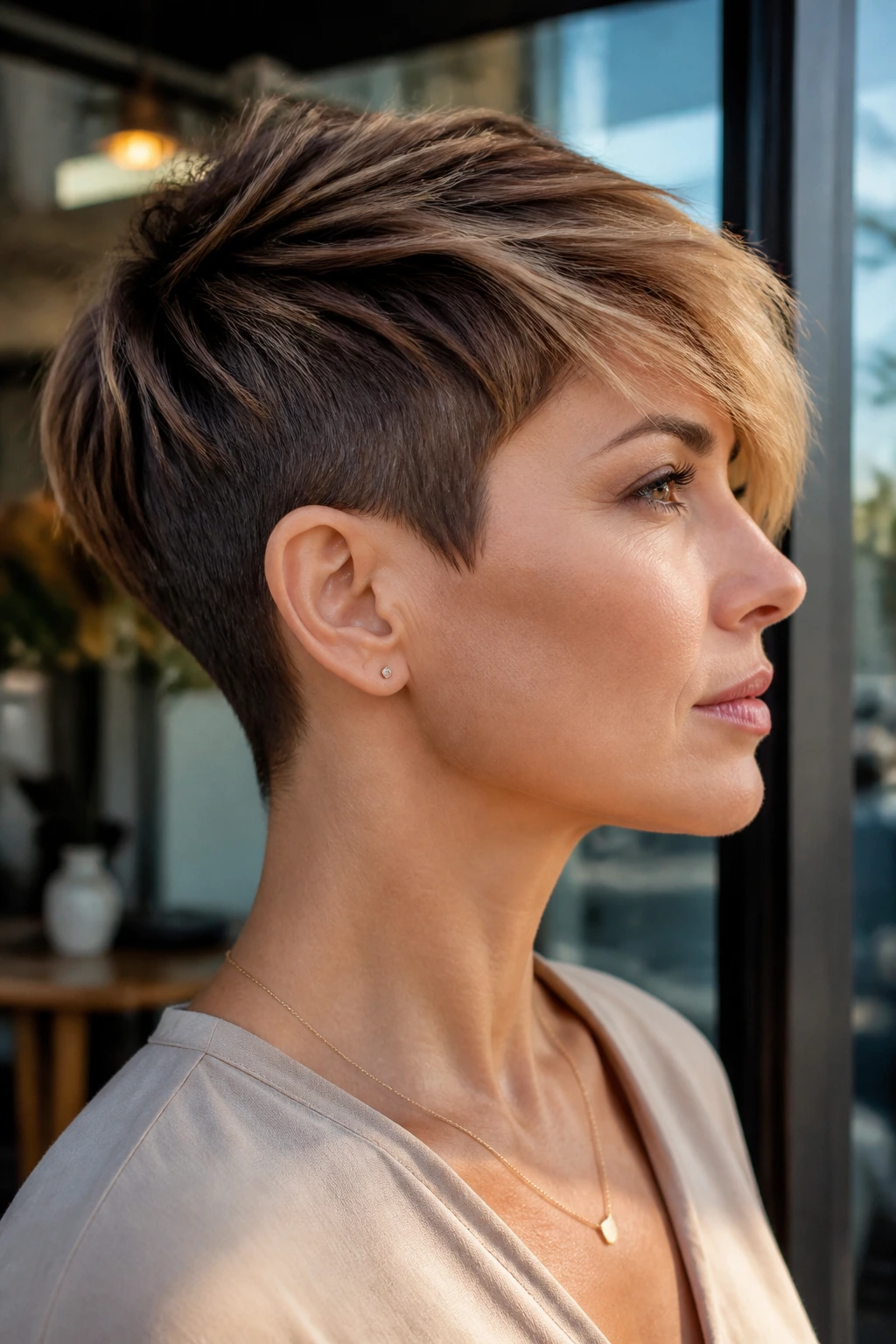
Short layered cuts live or die by maintenance. The good news is that the upkeep is predictable, which is one reason I like them more than some longer styles that look forgiving and then suddenly aren’t.
Pixies and bixies usually need a trim every 4 to 6 weeks if you want the outline to stay crisp. Bobs can go 6 to 8 weeks, sometimes a bit longer if the layers are soft and the perimeter is still behaving. Shags and wolf-cut variations can stretch to 8 to 10 weeks, though the fringe may need a touch-up sooner if it starts poking into your eyes.
At home, the routine matters. Don’t overload the roots with conditioner, especially on fine hair. Use dry shampoo on day two or day three if the crown starts to collapse. On wavy or curly cuts, refresh with a little water and cream rather than piling on more product every day. Too much buildup makes layers look stringy and dead.
Sleep care helps more than people expect. A silk pillowcase reduces friction, but a loose clip at the crown or a soft bonnet can protect the shape even better if your hair kinks overnight. If a cut is designed to swing or curl under, sleeping with the ends jammed under your head will flatten it faster than any bad product choice.
Growing one of these cuts out is not a disaster if the layers were cut thoughtfully. The shape should move into a bob, then a lob, then a shoulder-length cut without weird shelves. If your haircut starts getting bulky at the bottom, don’t wait too long. A small trim can save months of awkwardness.
Variations and Adaptations to Try
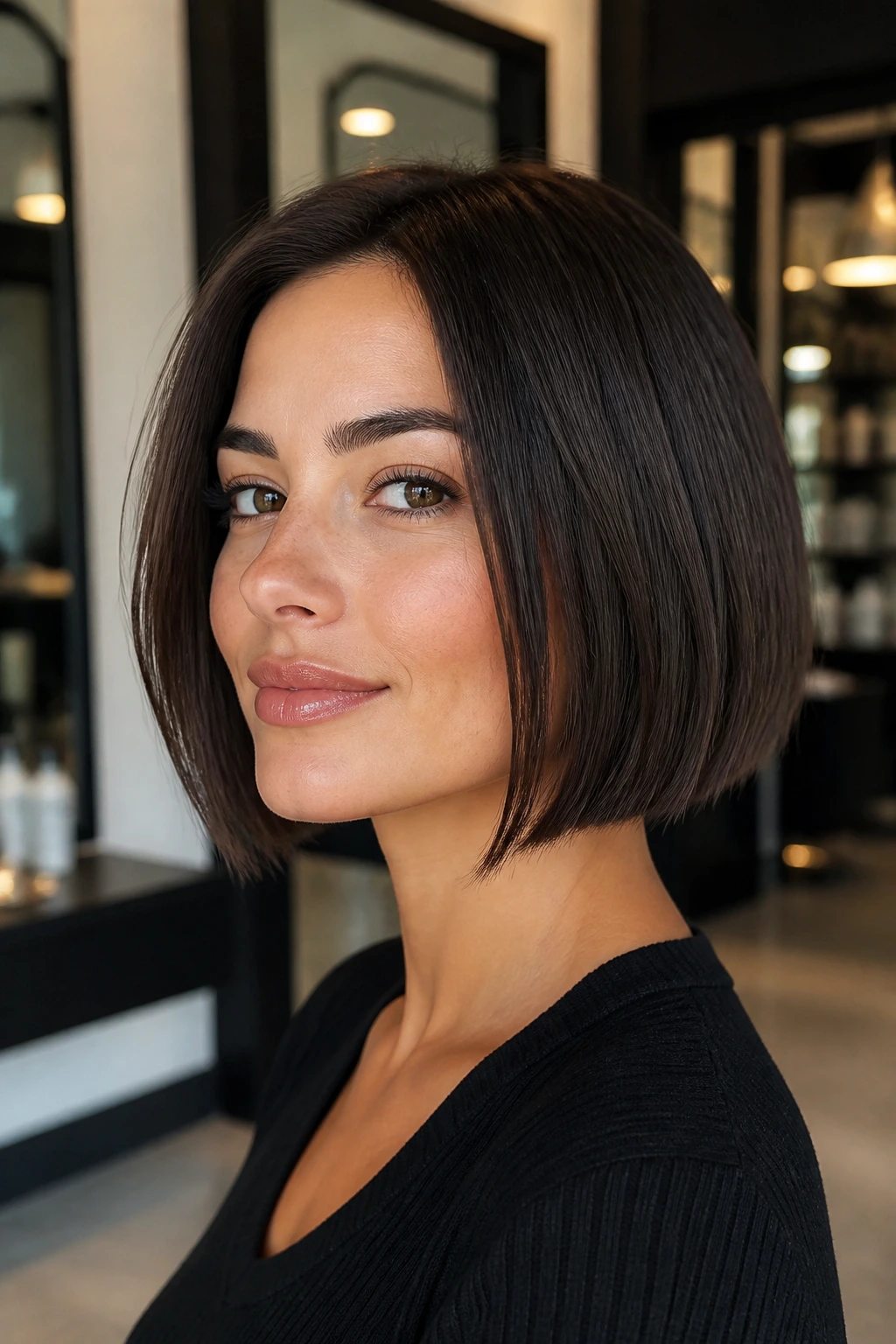
Fine-Hair Lift Version: Keep the perimeter strong and the layers soft but short at the crown. This gives the impression of fullness without stripping away too much density at the ends.
Thick-Hair Weight-Removal Version: Ask for internal layers and controlled thinning only where the hair swells, usually at the sides and back of the head. This keeps the haircut from going triangular.
Curly-Pattern Version: Have the cut shaped with the curls in their natural state so the layers land where the curl actually sits. That makes the final shape much more accurate.
Low-Maintenance Air-Dry Version: Choose cuts with softer edges, longer fringe, and a strong perimeter. These wear better when you want the haircut to look good without a brush and blow dryer every morning.
Bold Fringe Version: Add micro bangs, curtain bangs, or a side-swept fringe to change the mood without changing the overall length. Bangs do a lot of work in short layered hair.
Soft Grow-Out Version: If you know you’re growing the cut out, keep the top and sides blended rather than sharply disconnected. The haircut will move into the next length without awkward gaps.
Common Mistakes That Flatten Layered Short Hair
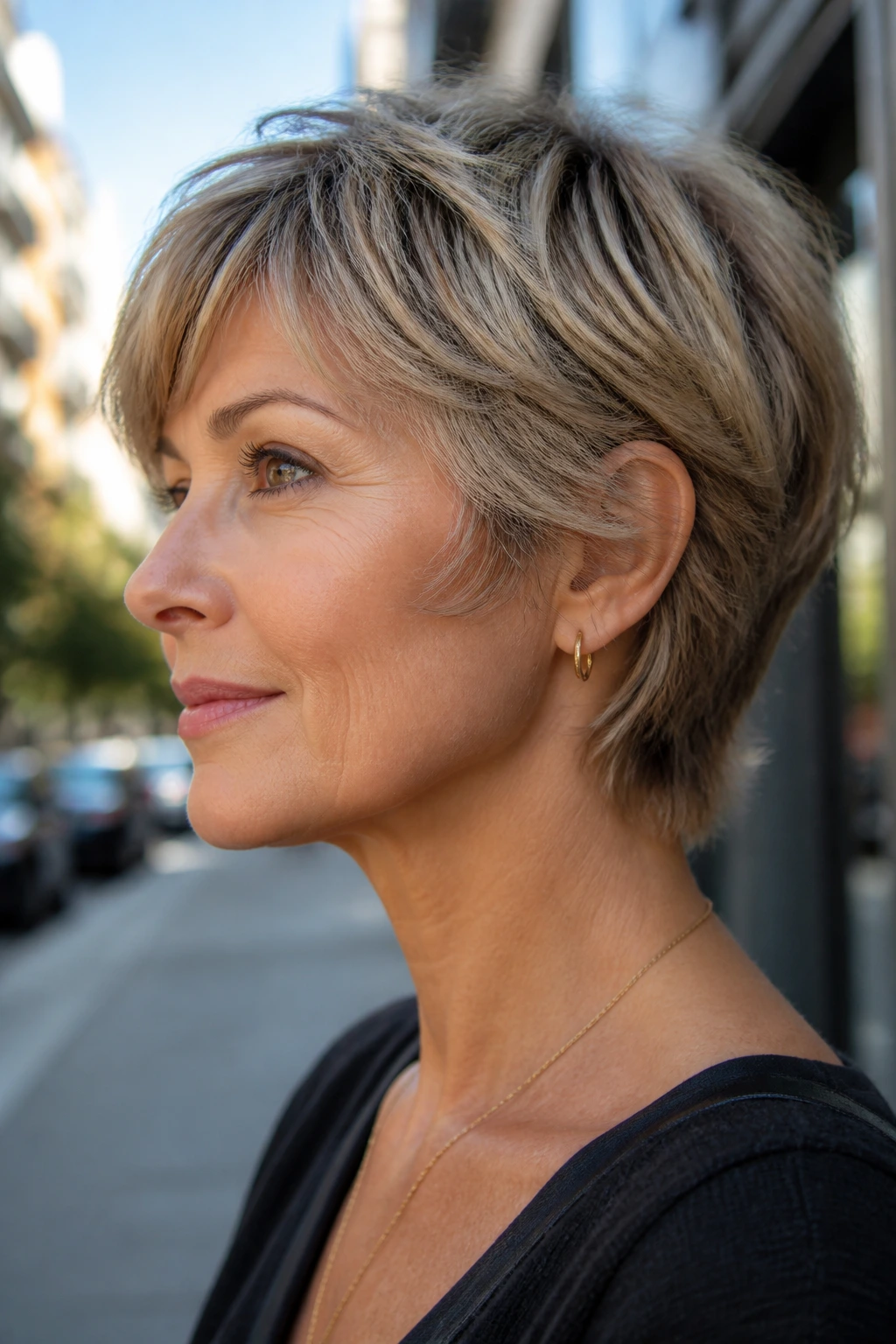
The first mistake is cutting too much weight out of fine hair. It feels smart in the chair because the hair moves immediately, but a week later the ends can look see-through and thin. The fix is a stronger perimeter with only light internal layering.
The second is leaving thick hair too dense at the sides and back. That creates the classic triangle shape, where the haircut widens around the head instead of following it. Ask for bulk removal in the right zones, not random thinning everywhere.
The third is ignoring the natural part or cowlick. A layered crop that fights your growth pattern will need constant correction, and the front will keep splitting or flipping in the wrong direction. A good stylist plans for the parting, not against it.
The fourth is over-styling every day. Short layered hair can look deliberate with one product and a quick dry. If you keep piling on heat, sprays, and oils, the layers start to lose separation and the whole cut goes limp or sticky.
The fifth is asking for bangs that are too short too soon. Short bangs can be great, but they’re unforgiving. If you’re not sure, go longer first. That small bit of length gives you more options and fewer regrets.
Questions About Short Haircuts With Layers
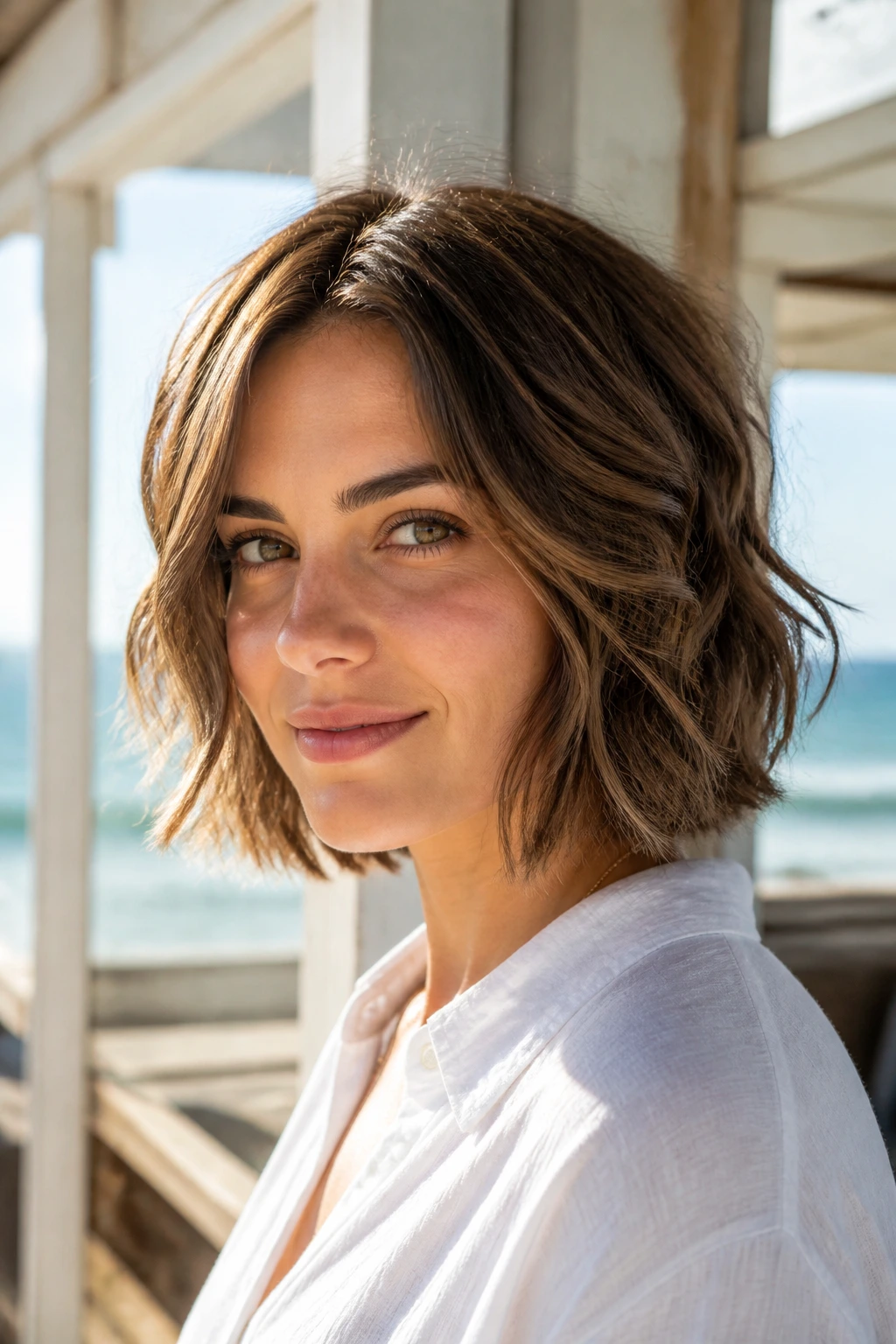
Do layers make short hair look thinner?
They can, if the hair is already fine and the stylist removes too much weight. The fix is a balanced cut that keeps density at the ends and uses only light layering for movement.
Are layered short cuts good for curly hair?
Yes, if the layers follow the curl pattern. Curly hair needs shape, not random thinning, or it can flare out at the sides.
What short layered cut is easiest to style?
A neck-length layered bob or a soft pixie usually asks for the least work. Both can look good with quick drying and a small amount of product.
How often should I trim a layered pixie?
Plan on every 4 to 6 weeks if you want the shape to stay clean. Once a pixie grows too much at the nape, the silhouette changes fast.
Can I ask for layers if I want a polished bob?
Absolutely. Just ask for invisible or internal layers so the outline stays blunt while the inside moves.
What should I say if I want volume at the crown but not fluffy sides?
Use that exact phrasing. The crown can be layered for lift while the sides stay controlled. Placement matters more than the word “layers” alone.
Will a layered crop work if I air-dry most days?
Yes, if the cut is shaped with your natural texture in mind. Wavy and curly hair usually does well here, while straight hair may need a little product to keep the movement visible.
Can I grow one of these cuts into a longer bob later?
Most of them, yes. The cleaner the perimeter and the softer the layers, the easier the grow-out. That’s why shape planning matters at the start.
The Shape Worth Keeping
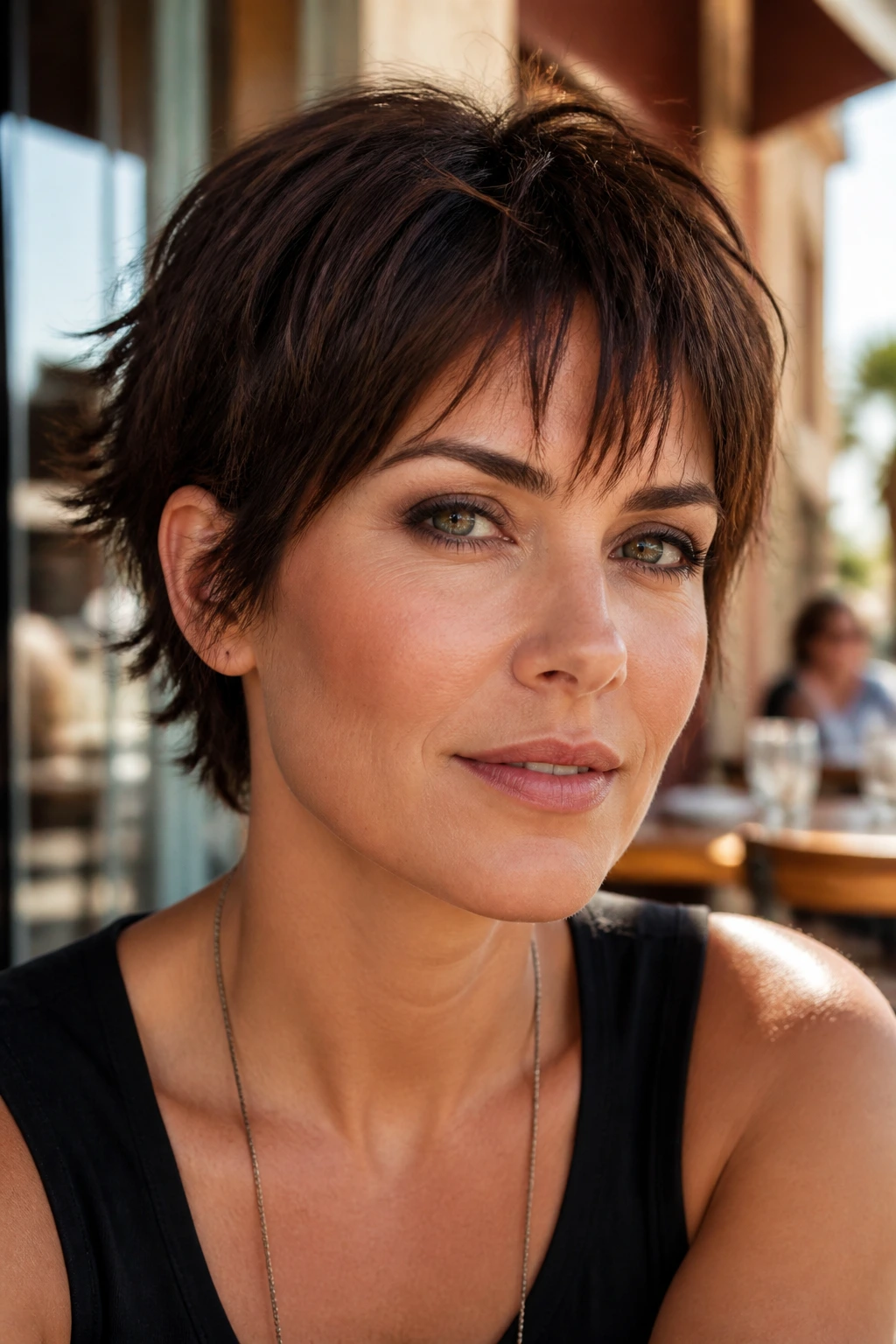
Short layered hair isn’t about chasing volume for its own sake. It’s about putting movement where the haircut needs it and leaving enough structure so the shape survives real life — wind, sleep, humidity, all of it.
The best version for you is the one that works with your hair’s habits instead of arguing with them. That might be a clean French bob with hidden layers, a shaggy crop with fringe, a bixie with piecey texture, or a calm little bob that only looks simple because the layers are doing their job behind the scenes.
Bring a photo, talk through the parting and the crown, and don’t let anyone sell you layers without a reason. The right cut will do more than look good on the first day. It’ll still make sense when you’ve washed it, slept on it, and lived in it a bit.
