



A short queer haircut should do more than look sharp in a mirror. It should hold its shape after a long day, survive a windy walk without turning weird, and still look deliberate when you’re half-dry from a shower and running late. That’s the standard I keep coming back to with cropped cuts for edgy women: the cut has to carry the mood, not just borrow it from makeup or styling.
The bad short haircut is easy to spot. It’s the one that looks fine for the first forty-eight hours and then starts negotiating with your cowlicks, your hairline, your glasses, and your patience. The good ones have cleaner bones. They work with texture instead of fighting it. A strong nape line, a messy fringe, a hard part, a fade, a little extra length where the face wants movement — that’s the stuff that makes a crop feel intentional instead of accidental.
Queer hair has always had a smarter relationship with shape. It doesn’t ask permission to be feminine, butch, soft, sharp, and weird all at once. Short hair makes that easier to see. The ear gets exposed. The jaw shows up. Earrings start doing half the styling for you. And once the outline is right, you can push the whole look in different directions with color, product, or a tiny change in fringe length. That’s where the fun lives.
Why These Cuts Keep Their Edge
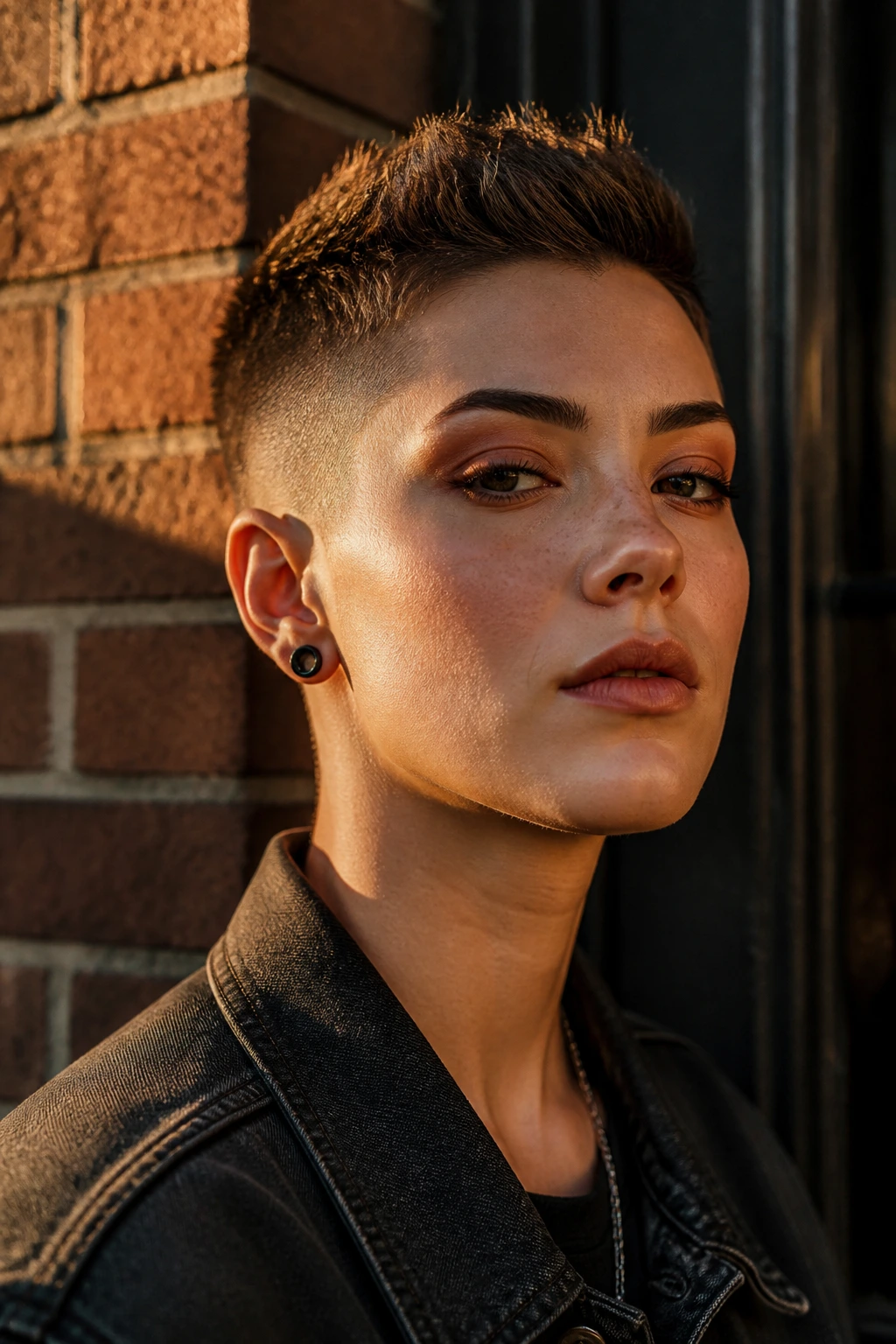
- The silhouette does the heavy lifting: A strong outline — buzzed, tapered, shorn, or razored — reads before anyone notices product or color.
- They work with real-life hair growth: The better cuts here still look planned after two or three weeks, not like a haircut that immediately went stale.
- Texture gets to stay visible: Coils, waves, bends, and rough ends are part of the design, not problems to flatten.
- They leave room for gender play: A close crop can lean masc, femme, androgynous, or somewhere deliciously in-between without changing the haircut.
- Styling time stays sane: Most of these cuts need 5 to 15 minutes, not a whole ceremony in front of the mirror.
- Color has a stage: Platinum, copper, black roots, split dye, and shadow roots all hit harder when the hair is short enough to frame the face cleanly.
1. Soft Buzz Cut With Dark Roots
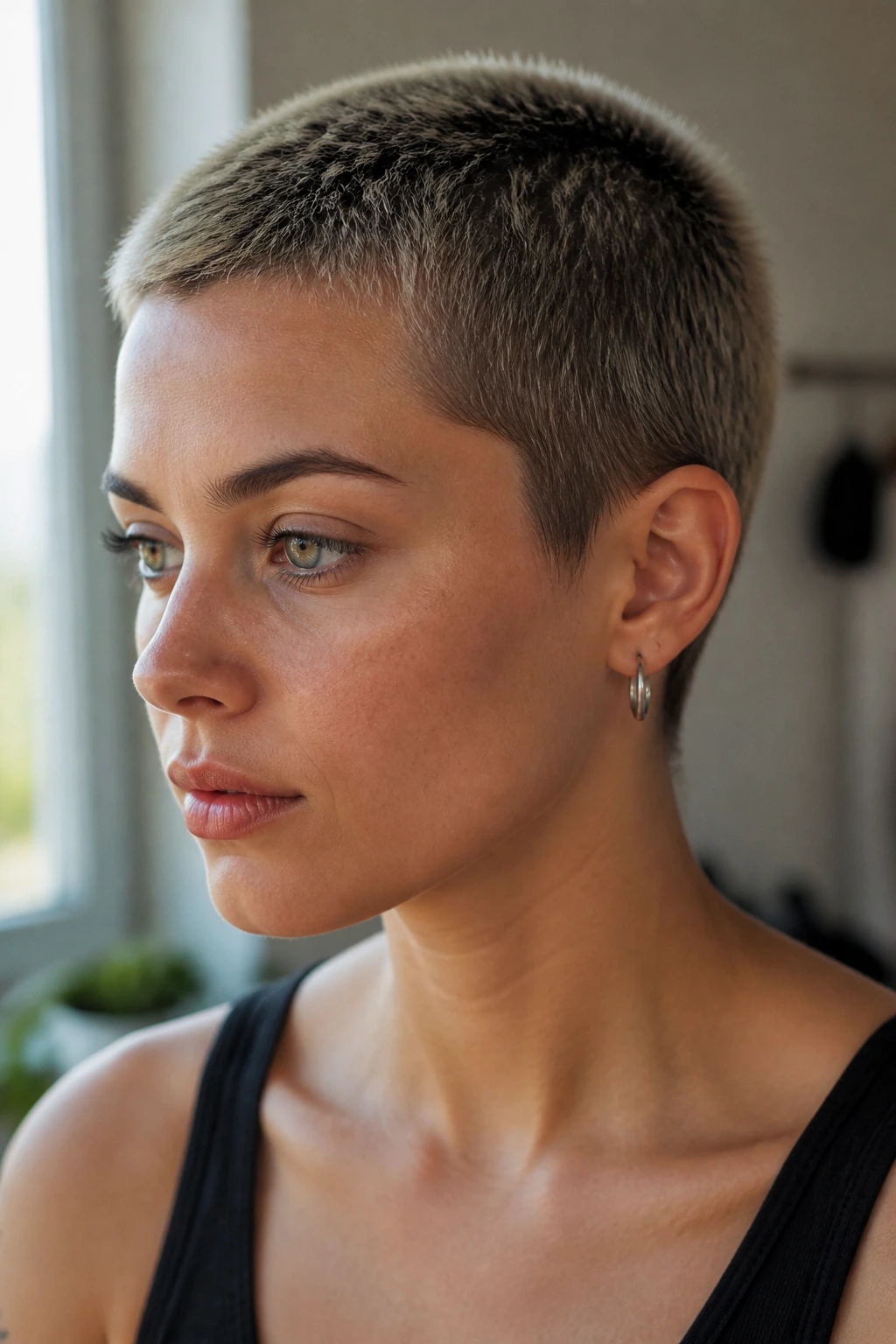
A buzz cut with a little shadow at the roots is brutal in the best way. The shape is tiny, the scalp shows through, and the dark regrowth line makes the whole thing look lived-in instead of sterile. If you want a cut that says you’re not asking for approval, this is an easy place to start.
It suits women who like earrings, sharp brows, or heavy eyeliner, because the face becomes the whole point. Ask for a #1 to #3 guard depending on how much scalp you want visible, and leave the roots alone if you’re coloring blond or silver. That tiny bit of contrast keeps the cut from looking flat. Maintenance is the catch: buzzes need trimming every 2 to 4 weeks if you want the outline crisp.
2. Platinum Pixie With Choppy Fringe
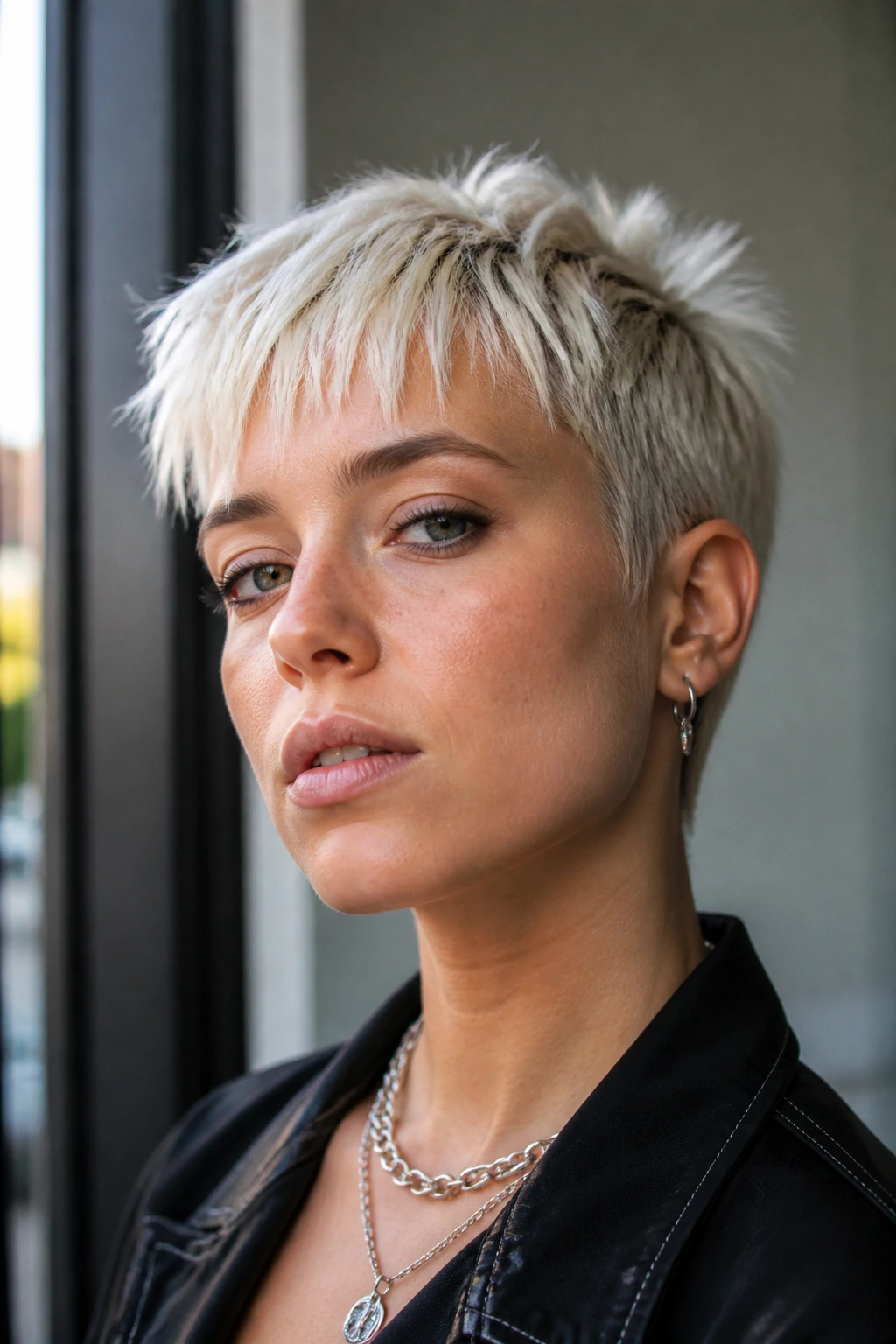
Platinum on a pixie is never subtle, and that’s the appeal. The light color makes every choppy edge visible, so the fringe lands like a little shard across the forehead instead of blending into the rest of the cut.
Why It Reads Sharp
Short platinum hair exposes every line. If the pixie is too soft, the bleach can make it look flimsy; if the fringe is broken up with razoring or point-cutting, the whole thing gets that restless, punky texture people keep trying to fake with product. Keep the sides tight, leave enough length on top to sweep forward, and use a matte paste so the fringe doesn’t collapse into a shiny helmet.
This is the haircut I’d hand to someone who wants a strong shape but doesn’t want the drama of a full buzz. It still frames the eyes. It still grows out with some attitude.
3. Tapered TWA Crop
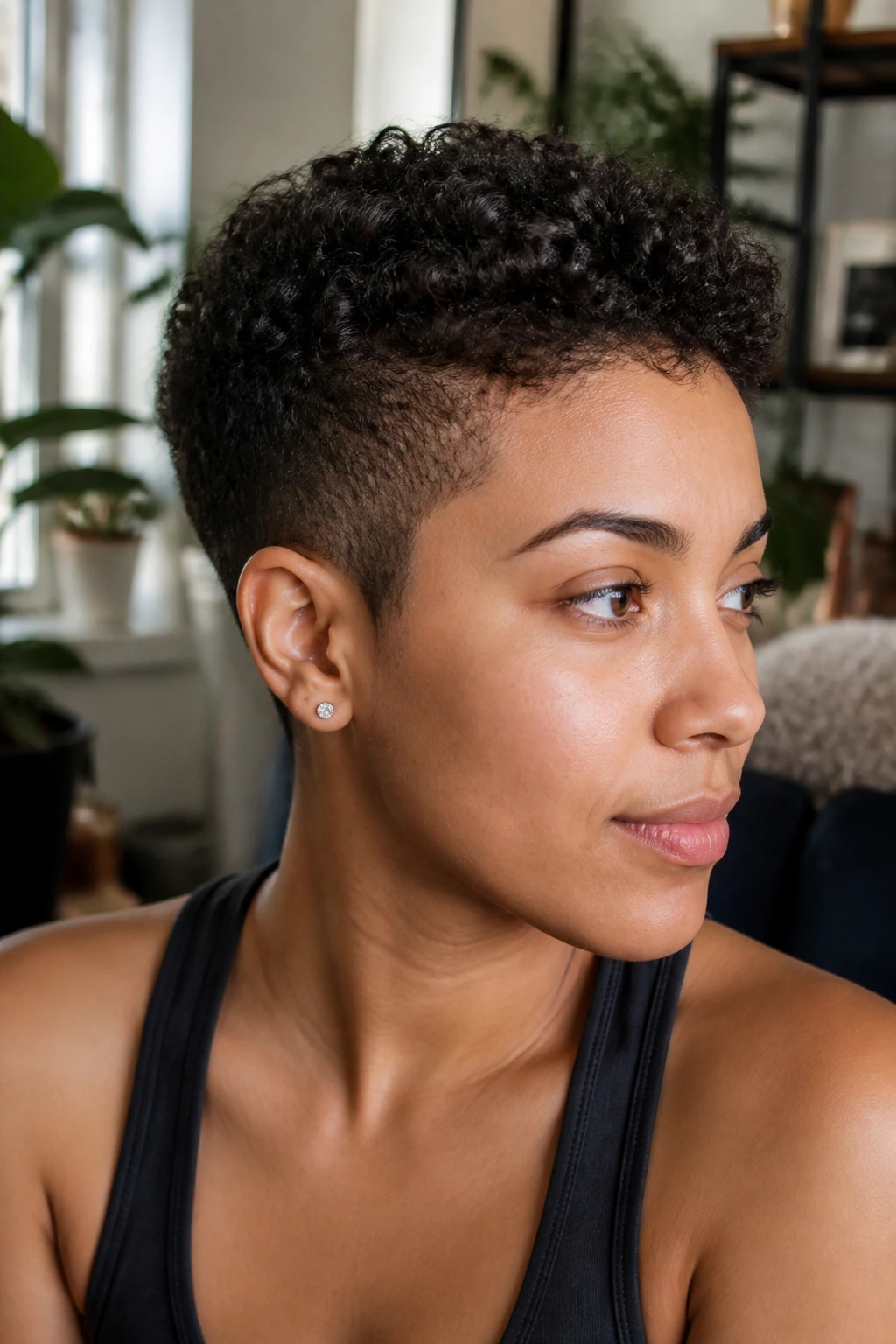
A tapered TWA crop is all about respecting the curl pattern and then cleaning up the edges around it. The sides and nape stay tight, while the top keeps enough length for coils to stack and breathe. It’s minimal, but not plain.
Ask for a taper around the temples and neckline rather than a blunt clip all the way around. That tiny taper gives the cut shape when you’re wearing it natural, and it makes the profile look clean from the side. If your hair shrinks a lot, leave extra length on top so the final shape doesn’t end up too close to the head. A dab of leave-in and a sponge or pick can wake up the crown fast.
4. Undercut Pixie With Long Top
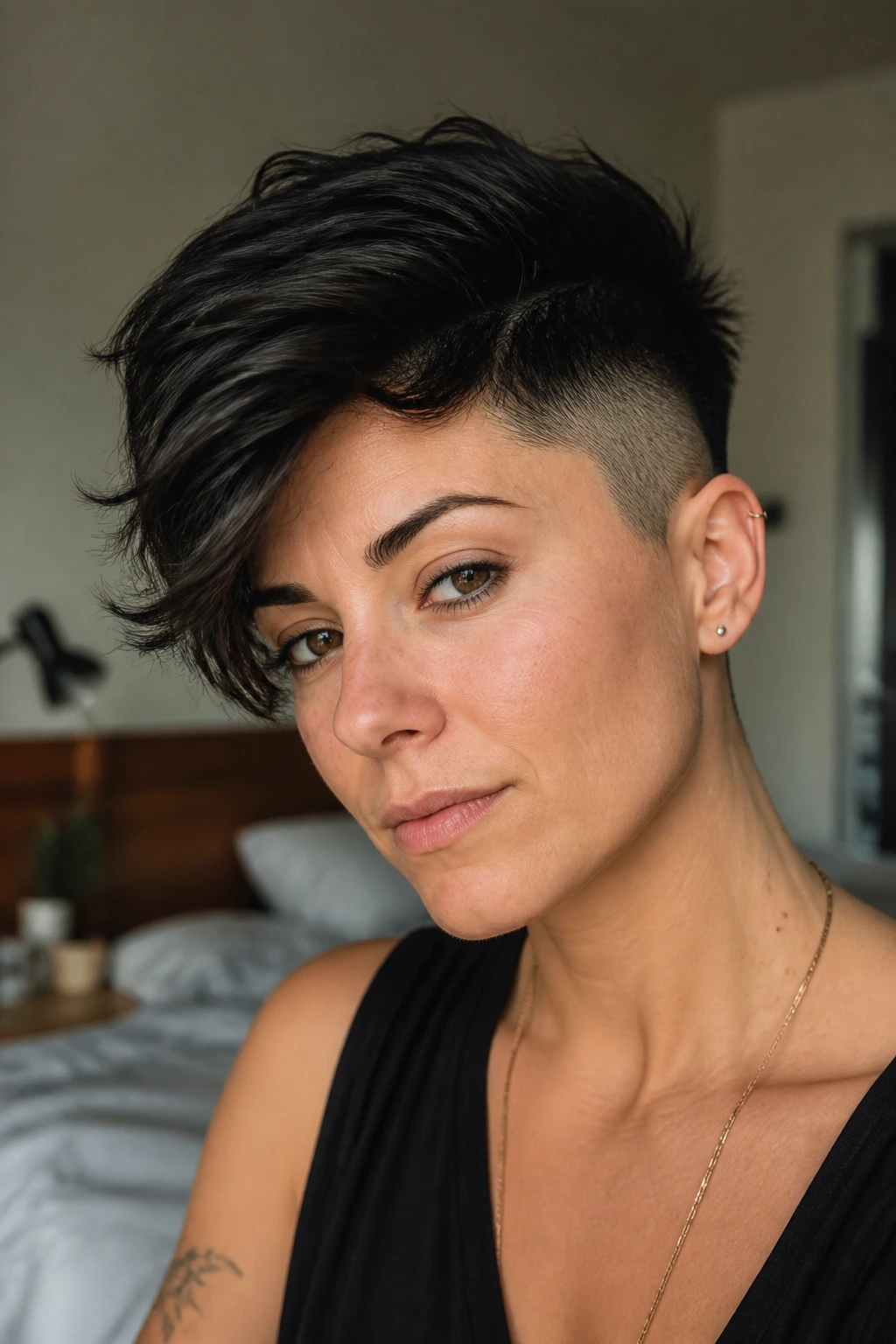
This one works because it gives you two personalities in one cut. The sides and back are clipped or faded down, then the top stays long enough to flip, part, or fall over the forehead. It’s a good choice if you want a little softness near the face but refuse to give up the bite.
The trick is balance. If the top gets too long, the cut starts reading like a grown-out style instead of a sharp one. If it’s too short, you lose the contrast that makes the undercut interesting. A length of around 3 to 5 inches on top usually gives enough movement without turning into a mop. Finger-styling works better than a brush here.
5. Feathered Mullet
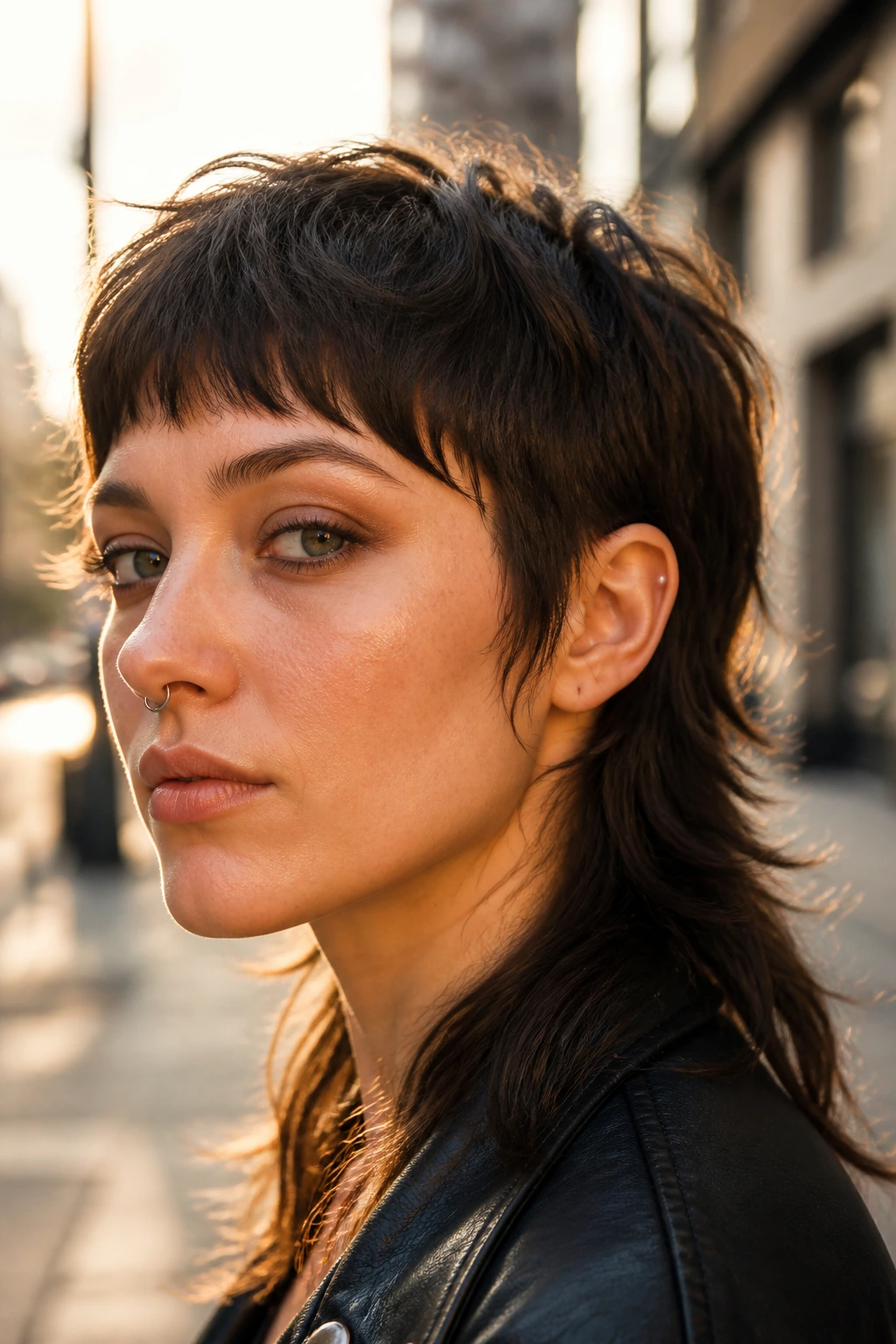
The queer mullet earns its place because it refuses to be polite. Short in front, longer in back, and feathered enough to keep the transition from feeling heavy, it brings movement from every angle. There’s a reason this shape keeps coming back in better salons and barbershops.
A feathered version is easier to wear than a blunt one. Ask for softer graduation through the crown and a nape that lands at or just below the collar line. The front can stay short and choppy, which keeps the face open. Best detail: a little air-dried bend or scrunched-in texture makes the cut look better than a blowout that tries too hard.
6. Curly Crop With Tapered Sides
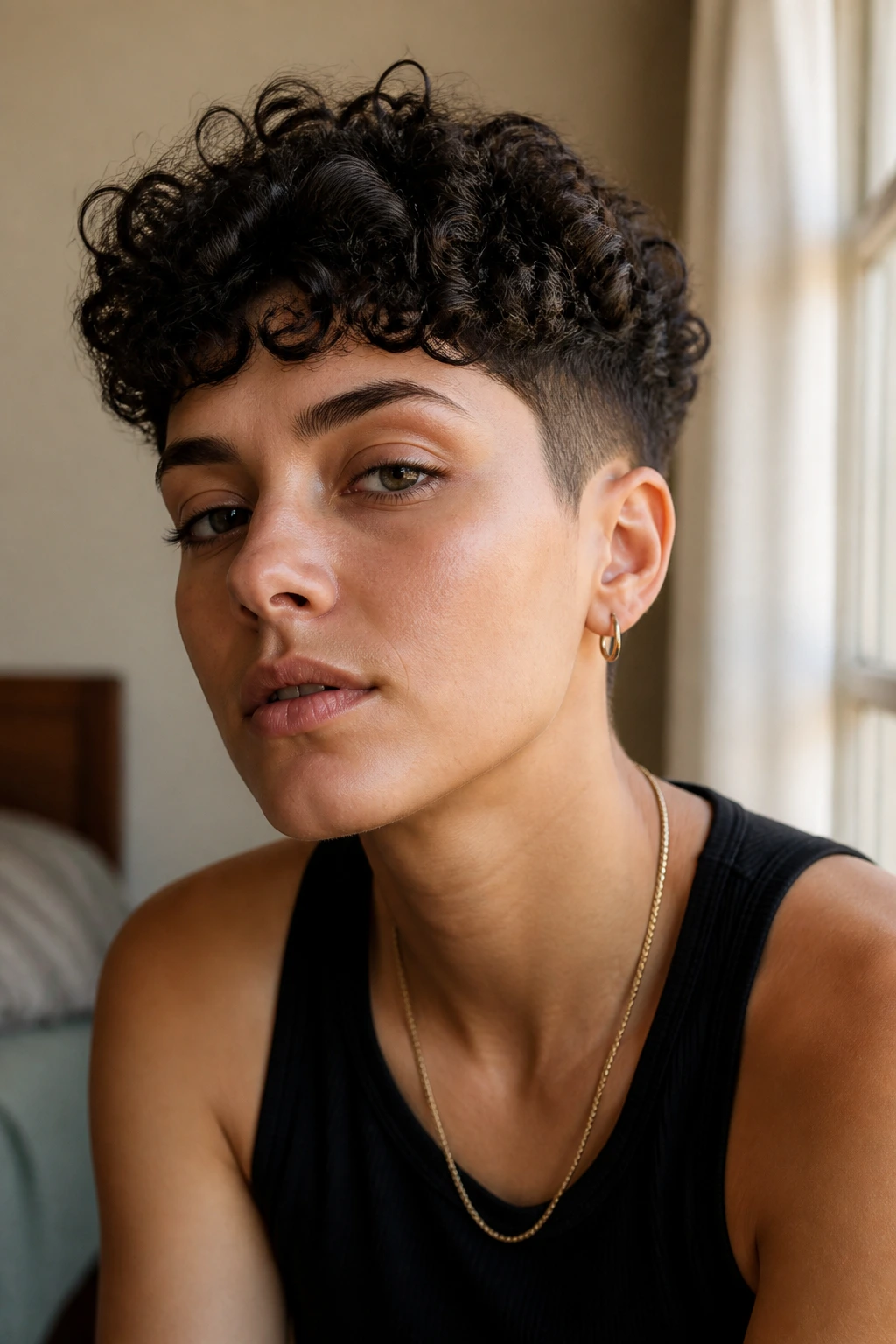
If your curls are dense, this cut is a relief. The sides stay low and neat, which prevents the shape from turning triangular, while the top keeps enough length for definition. The whole point is to let the curl live where it wants to live.
Ask for the top to stay long enough for the curl to spring — usually 2 to 4 inches, depending on texture — and have the stylist taper the sides rather than stack layers all over the place. Over-layering curly hair this short can make it halo out in the wrong way. Use a diffuser on low heat and stop touching it once the curls start setting. That’s the hard part.
7. Bowl Cut With Micro Bangs
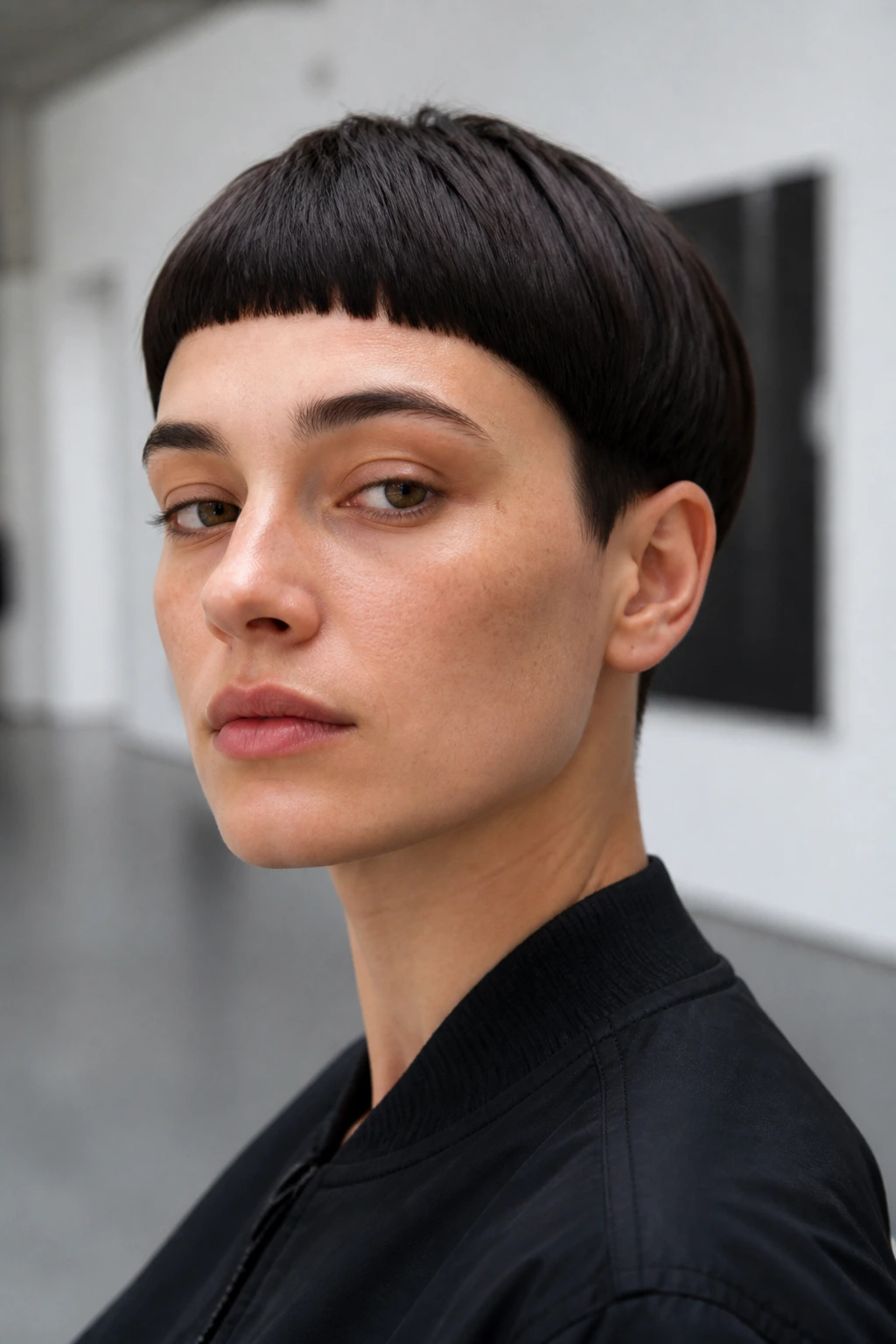
A modern bowl cut is not the awkward childhood picture people carry around in their heads. Done right, it’s architectural. The line around the head is clean, the micro bangs hit high on the forehead, and the whole cut feels like it belongs in a gallery opening with a strong coat.
This style is best on straight or slightly wavy hair that can hold a shape without puffing out. Keep the perimeter blunt or lightly point-cut, but don’t let the ends get wispy. Wispy kills the power here. A strong bowl shape looks better with minimal styling — a touch of smoothing cream, a quick blow-dry, and that’s enough.
8. Slicked-Back Wet Look Crop
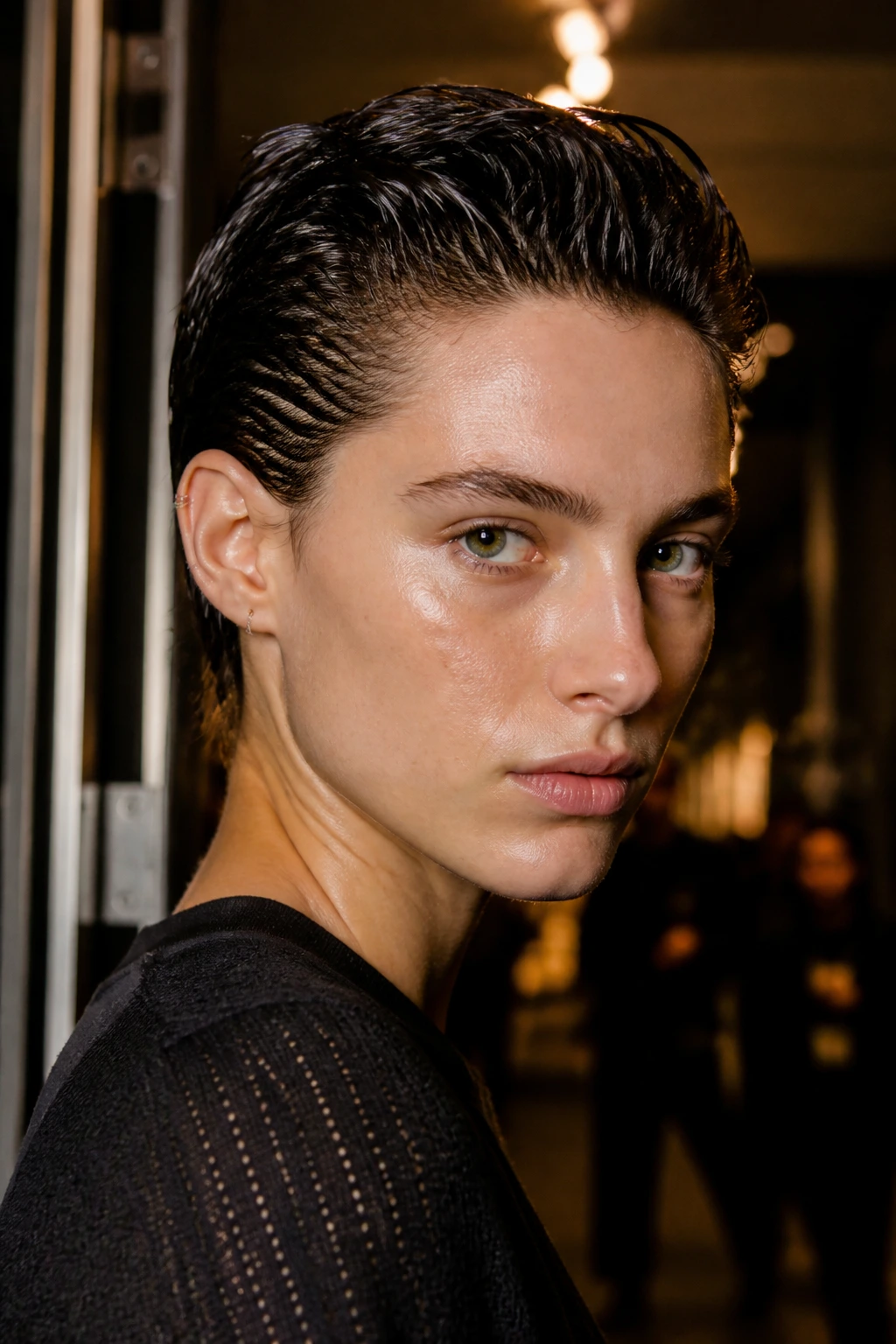
Some days you want a haircut that looks like it stepped out of a nightclub bathroom mirror and into daylight. The slicked-back crop does that. It sweeps all the hair away from the face, shows off bone structure, and turns texture into shine instead of volume.
How It Wears
Use gel on damp hair, not soaking wet hair, then comb it straight back or slightly diagonally depending on your growth pattern. The goal is a controlled sheen, not crunchy spikes. If your hair is fine, a little mousse underneath the gel gives the style more hold without making it flaky. This cut also looks strong with bold lipstick or a bare face, which is rare and useful.
9. French Crop With Heavy Fringe
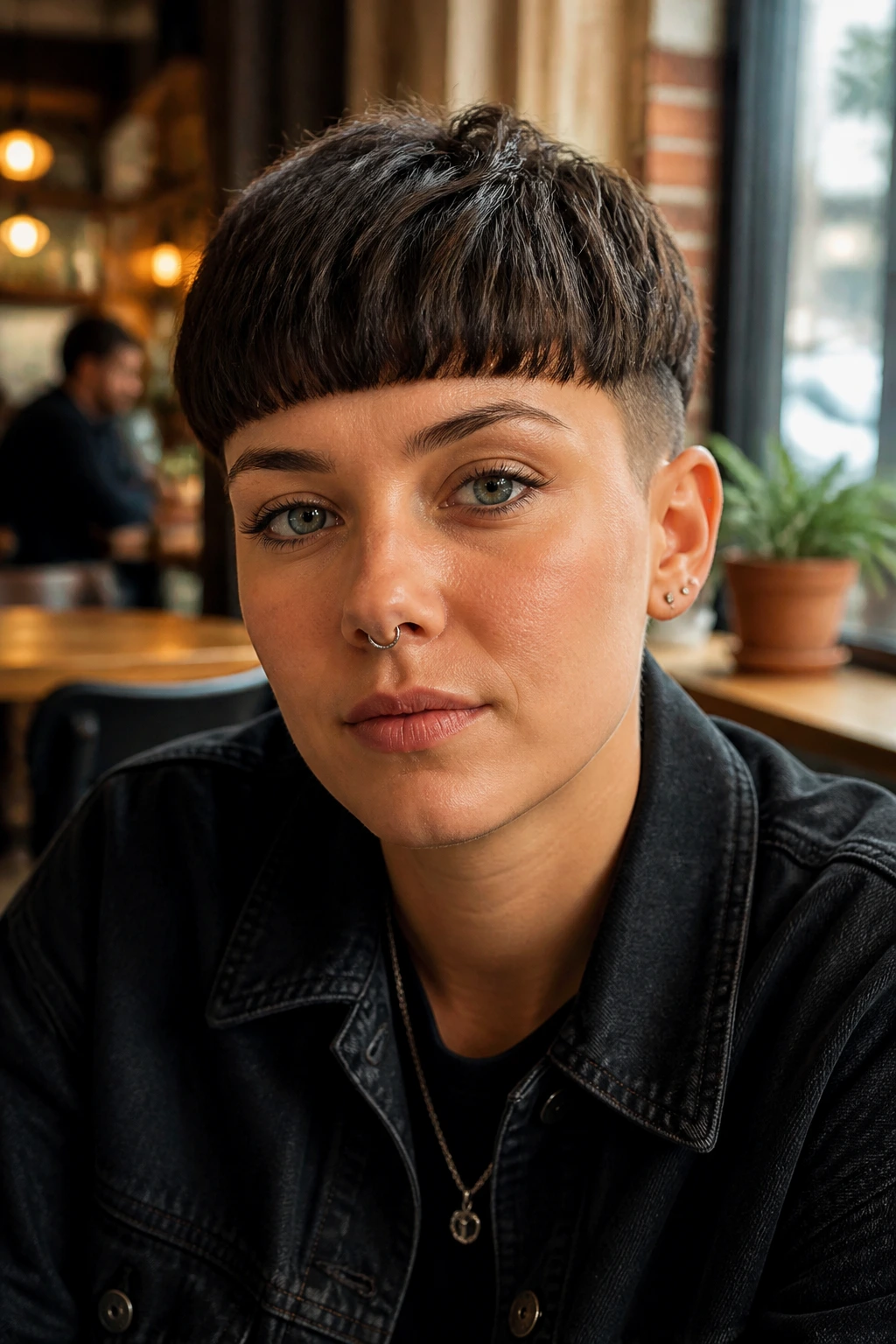
A French crop is one of those haircuts that looks calm until you get close. The fringe sits heavy across the forehead, the sides stay short, and the top carries just enough texture to keep it from feeling stiff. It’s blunt in a good way.
This is a smart option if you want something low-fuss but still intense. Ask for a short taper at the sides and a fringe that lands just above or right at the brows. If the fringe gets too long, it starts shading the eyes in a way that looks sloppy. Keep the front piecey with a tiny bit of paste, or let it fall naturally if your hair already has bend.
10. Shaggy Wolf Pixie
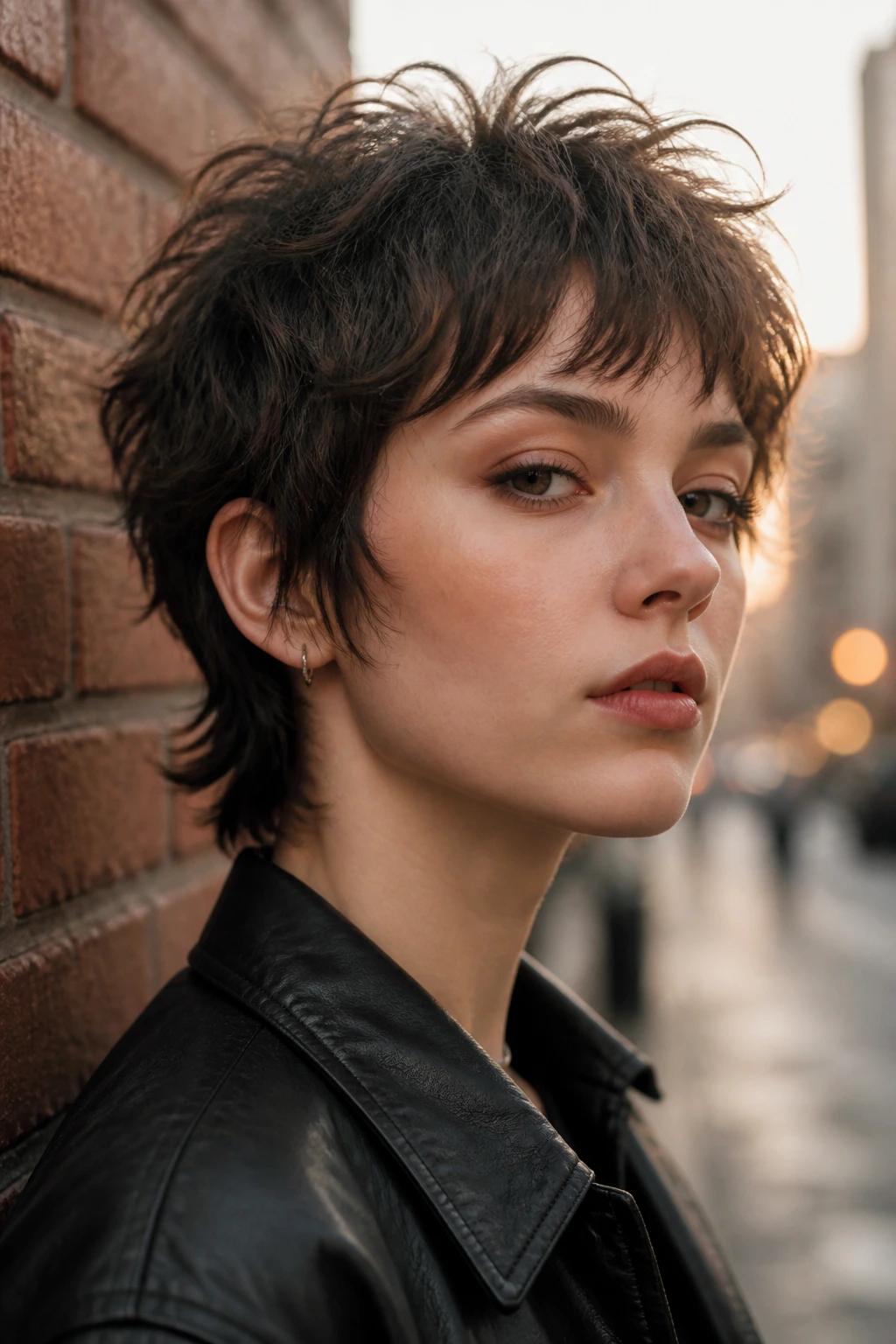
The wolf pixie lives halfway between a pixie and a tiny shag, which is exactly why it works. It has messy crown layers, broken-up ends, and a little extra length in the back or around the ears so it never feels too neat. A queer haircut should not be over-controlled. This cut gets that.
It’s especially good on hair that has some natural texture, because the shaggy layers make movement visible without needing a lot of hot tools. If you wear glasses, the broken fringe can sit nicely around the frames instead of fighting them. Use a light texturizing spray and pinch the ends rather than brushing them into submission.
11. Side-Parted Crop With Ear Tuck
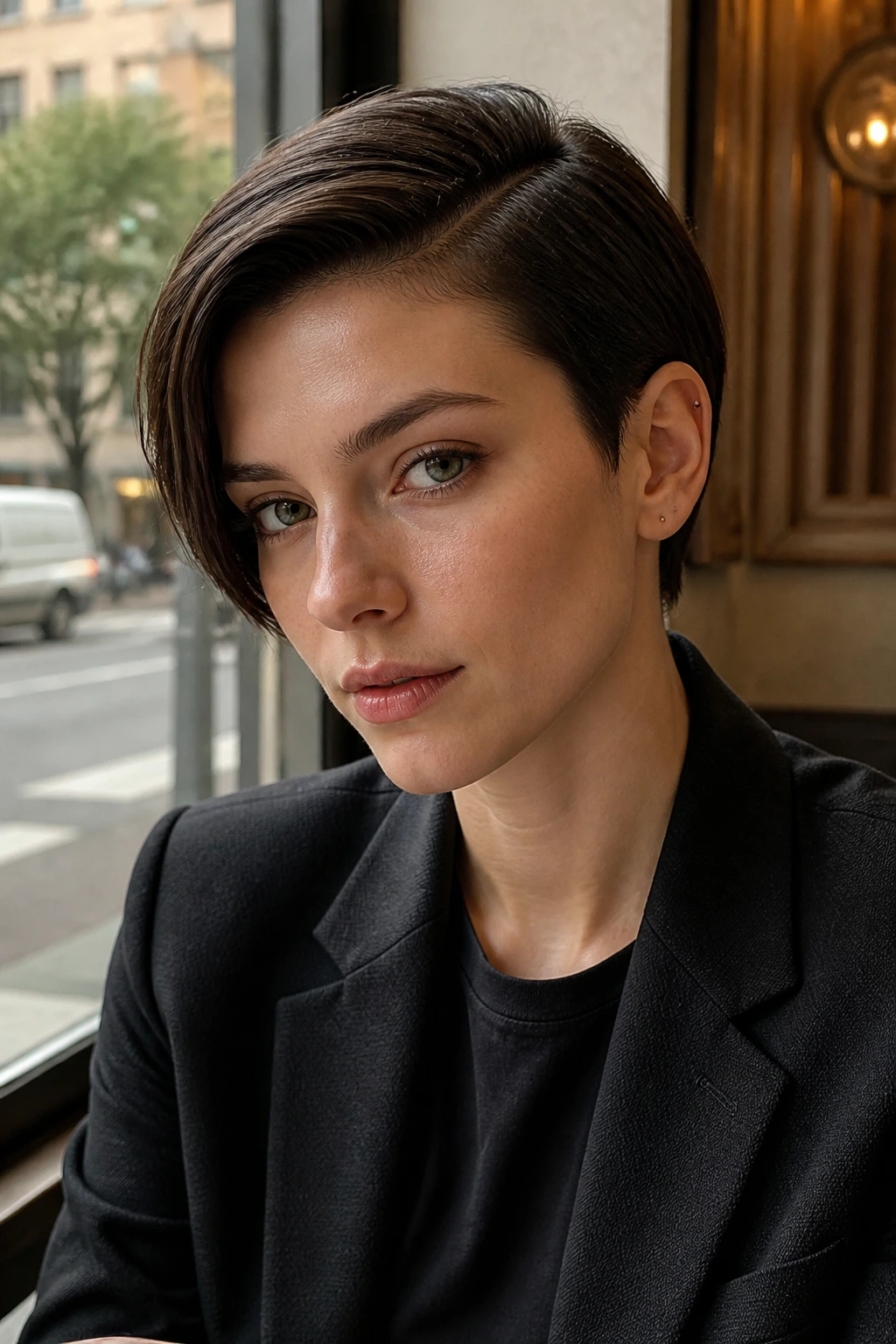
A deep side part changes the whole mood of a short cut. Suddenly the crop looks a little quieter, a little smarter, and a lot more deliberate. Tucking one side behind the ear gives you asymmetry without needing a dramatic undercut or a shaved panel.
This style is useful when you want edge without shouting. It works on straight, wavy, and slightly curly textures, and it’s one of the easiest cuts to dress up with earrings or a bold collar. Ask for enough length on top to create a real side sweep, not a fake part that disappears when the hair dries. A little pomade on the tucked side keeps the line clean.
12. Coily Fade With Defined Line-Up
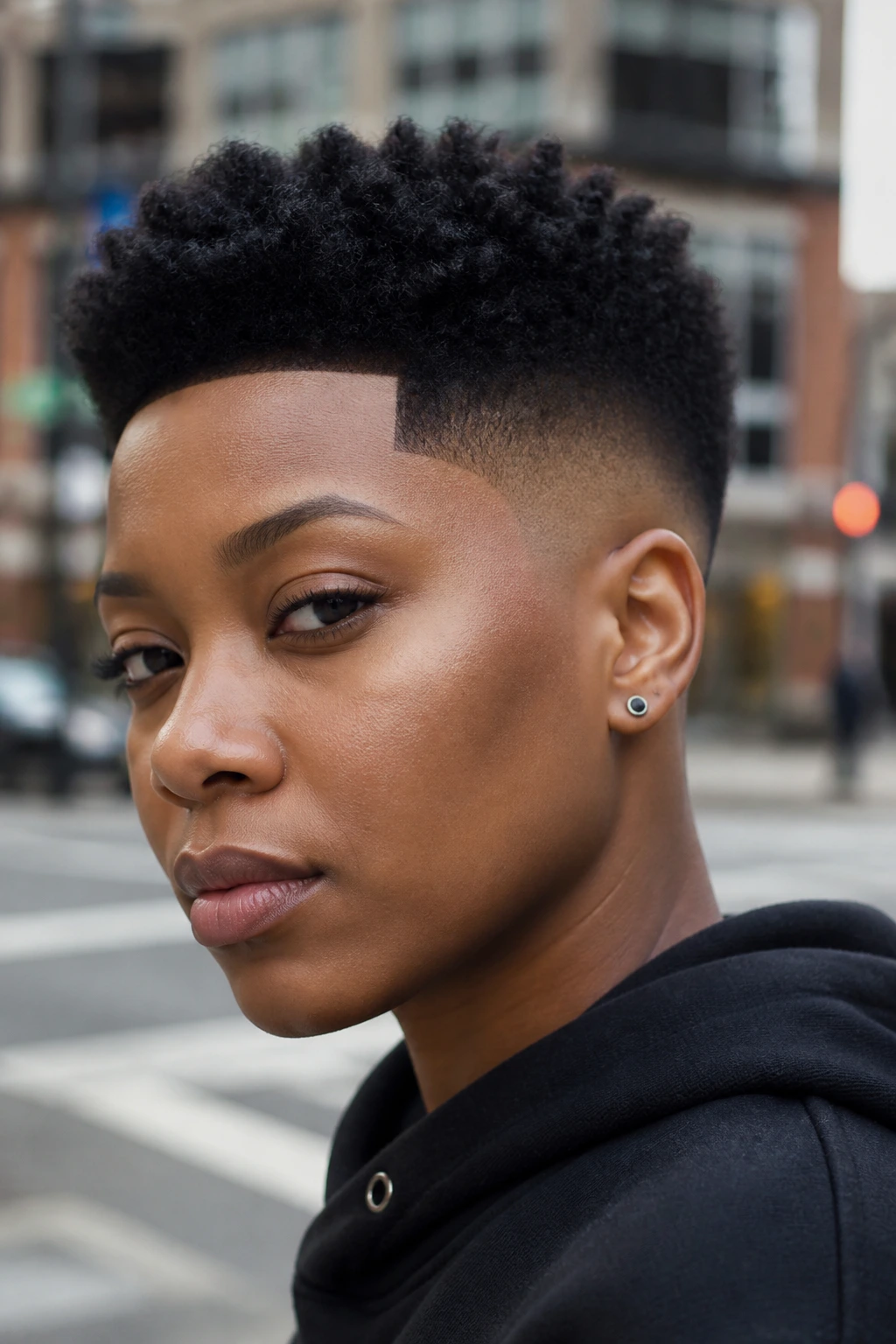
A coily fade looks sharp because the outline is exact. The sides fade down smoothly, the top stays full and springy, and the line-up around the forehead and temples gives the cut a clean frame. It’s one of the best short queer styles for women who want precision without losing texture.
The difference lives in the details. If the line-up is too harsh, the cut can look boxy; if it’s too soft, the whole edge disappears. Keep the top moisturized with a cream that won’t leave buildup, and don’t over-saturate it with grease or thick butter unless your hair truly needs that much weight. Coils should look defined, not plastered.
13. Asymmetrical Pixie Bob
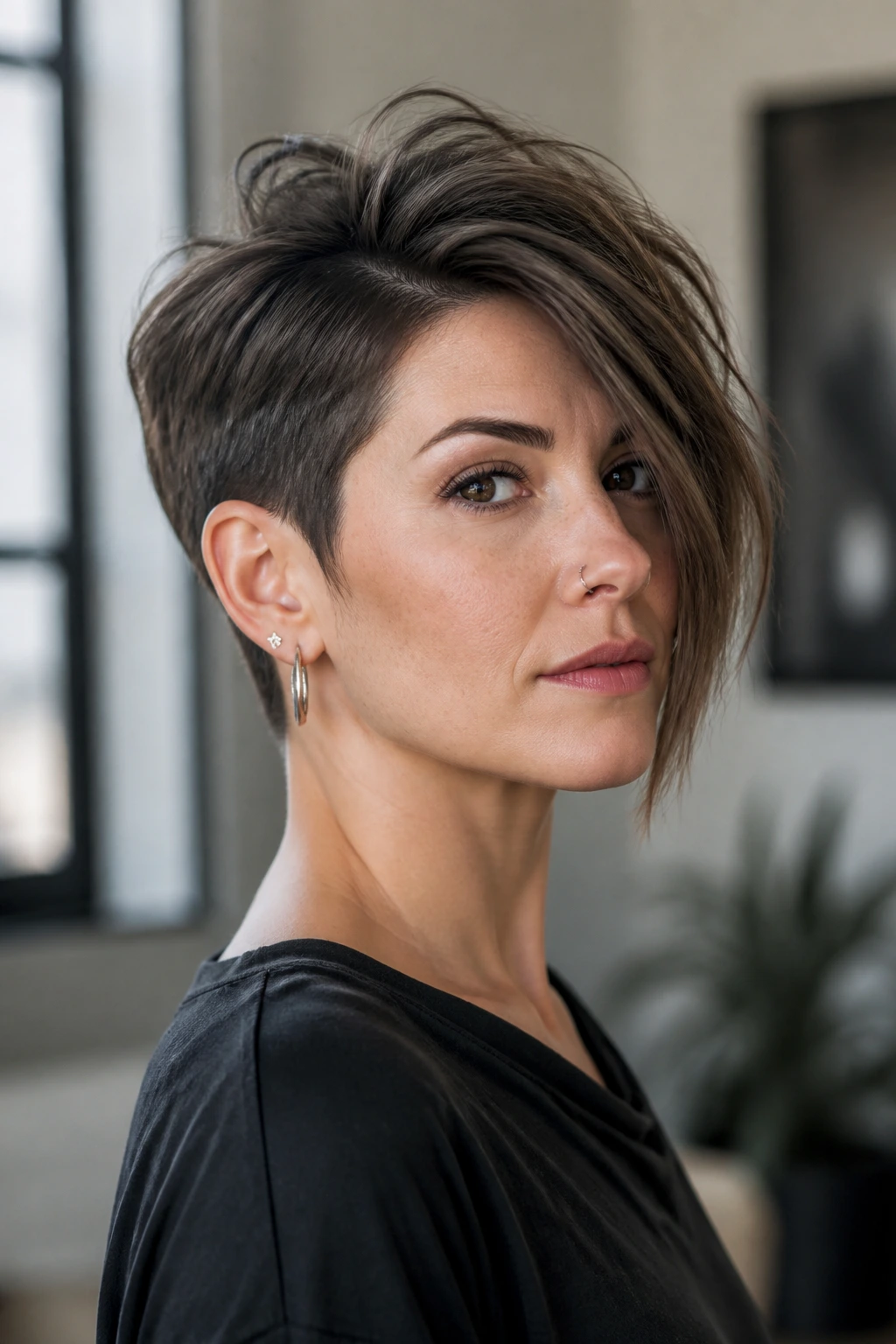
An asymmetrical pixie bob gives you movement without making you commit to full bob length. One side sits a little longer, the other stays shorter and tighter, and the result is an angle that keeps drawing the eye back to the jaw and cheekbones.
This cut is especially good if you like styling one side behind the ear and letting the other one fall forward. It creates an intentional imbalance that reads very queer, very stylish, and very specific. Keep the longer side blunt enough to feel strong, not feathered into nothing. A round brush can help the longer side curve under just a bit.
14. Choppy Ear-Length Shag
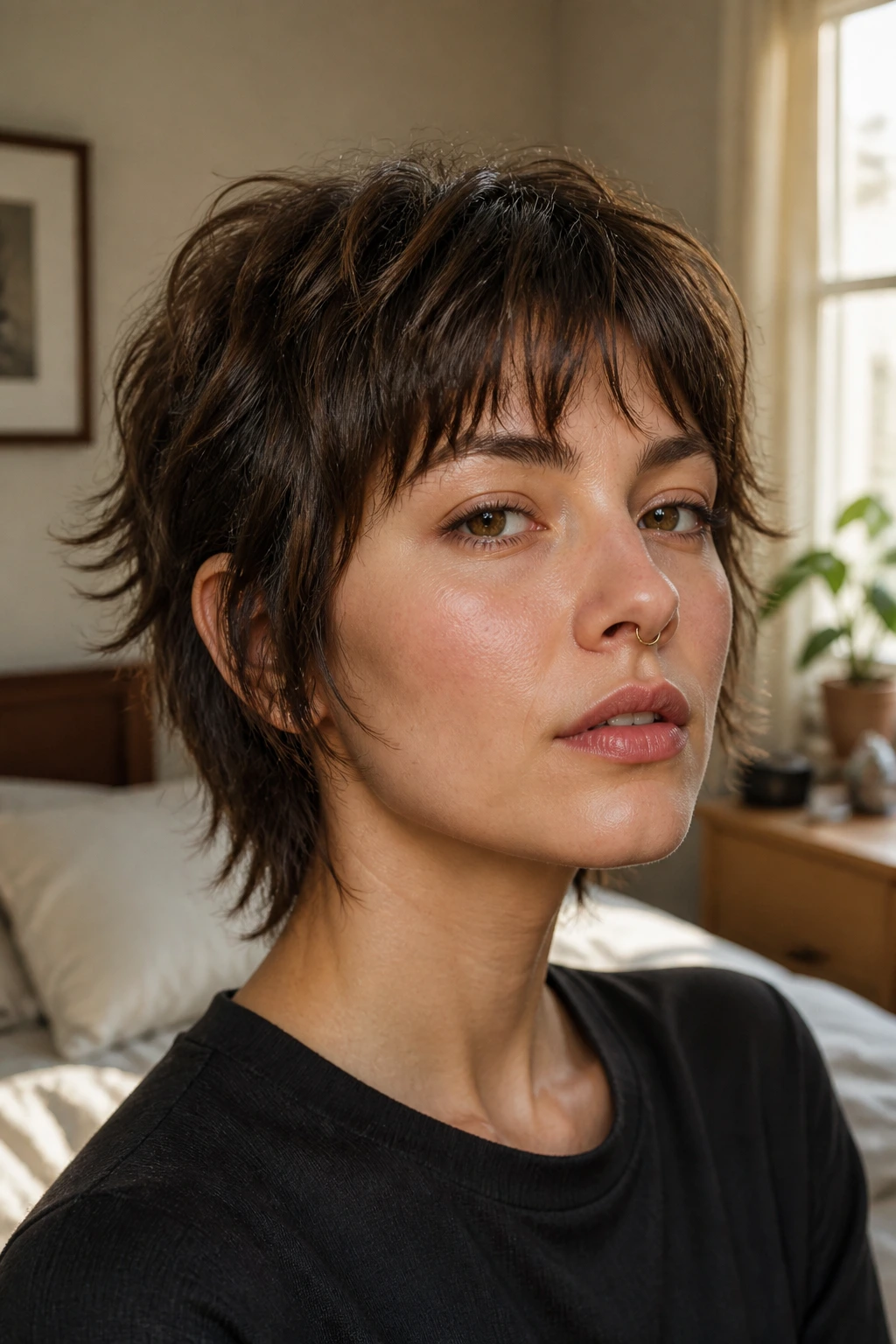
Ear-length is a sweet spot. It’s short enough to feel fresh, but long enough to hold texture around the face. Add shag layers and the haircut starts moving instead of sitting there like a block.
The best version has broken ends, a little lift at the crown, and soft pieces around the cheekbones. It’s a nice choice if you want something that can air-dry without a fight. Use a small amount of cream through the mid-lengths, then rough-dry the roots with your fingers. Too much product here kills the airy shape fast.
15. Spiked Crop With Piecey Ends
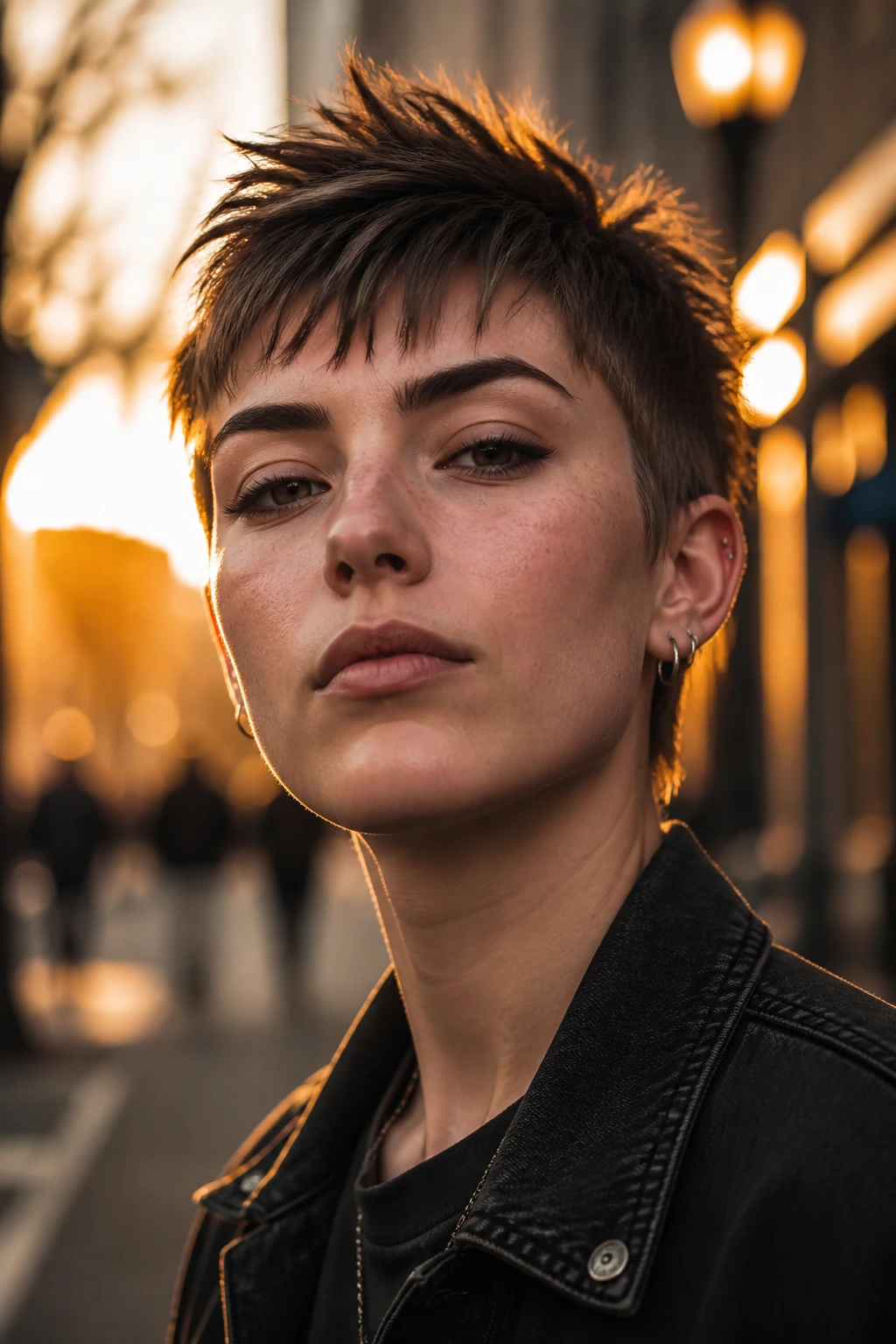
Not every edgy haircut has to be slick or soft. Some should look like they’ve got a little static in them. A spiked crop with piecey ends gets there by keeping the top short enough to stand up in places and long enough to break apart into chunks.
This cut works well if you like styling with your hands. A matte paste or clay lets you pinch little sections upward and forward, which keeps the whole thing from looking like a 2000s throwback. Keep the sides tighter than the top so the spikes read as a shape, not as random texture. If your hair is very thick, the stylist may need to remove bulk carefully, not shred it.
16. Bleach Blonde Razor Cut
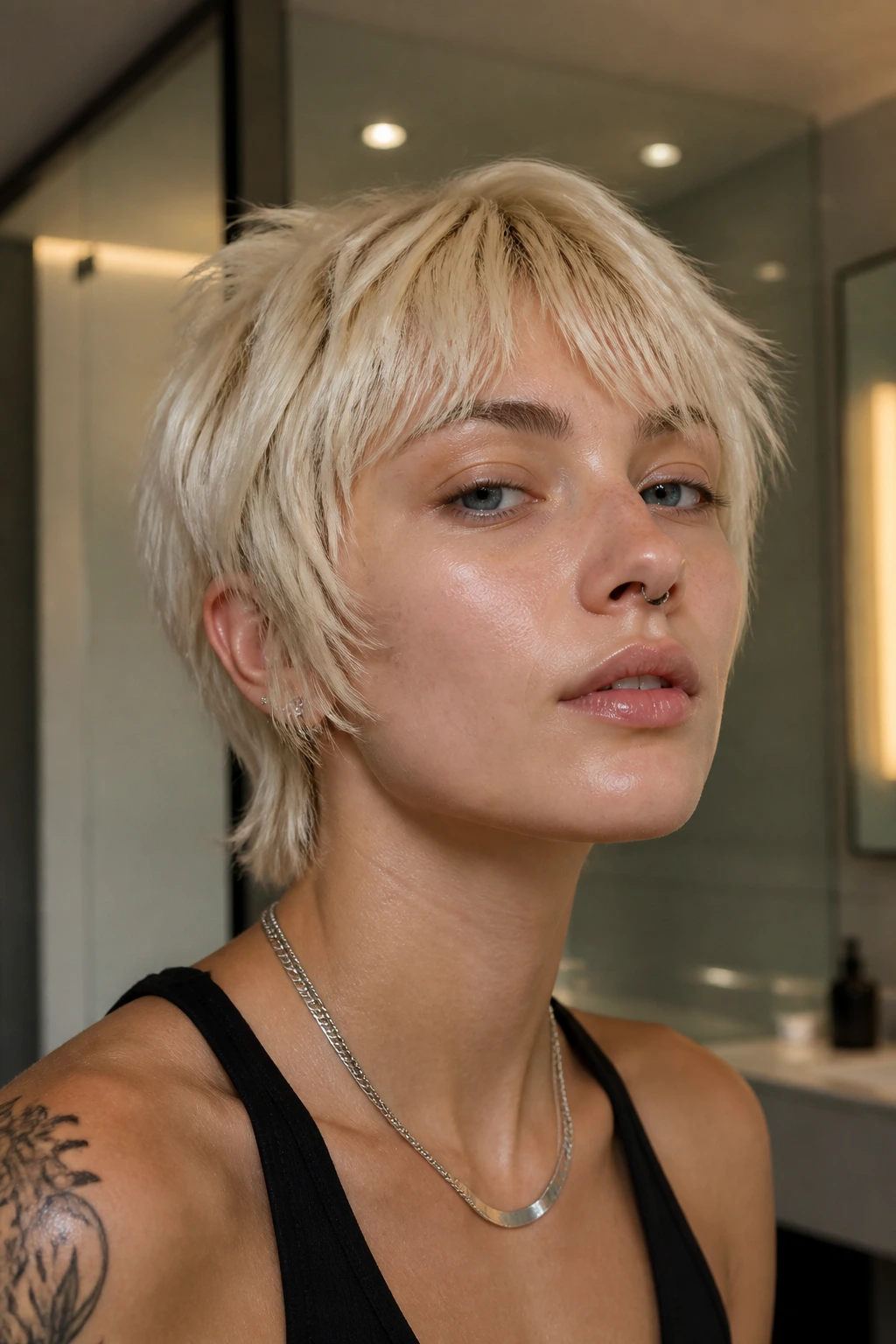
Bleach blonde and razor-cut ends are a sharp combination, but they only work if the cut has enough structure underneath the color. The light tone reveals every line, and the razor work creates soft, separated ends that move when you turn your head.
This one needs maintenance. Bleach grows out fast in short hair because the roots show immediately, and razor ends can fray if you overheat them or overload them with protein. Ask for a cut that keeps the nape and sides crisp while the top stays slightly broken up. A purple shampoo once a week is usually enough if your blonde pulls yellow. More than that and the hair can feel dry.
17. Cherry Red Micro Mullet
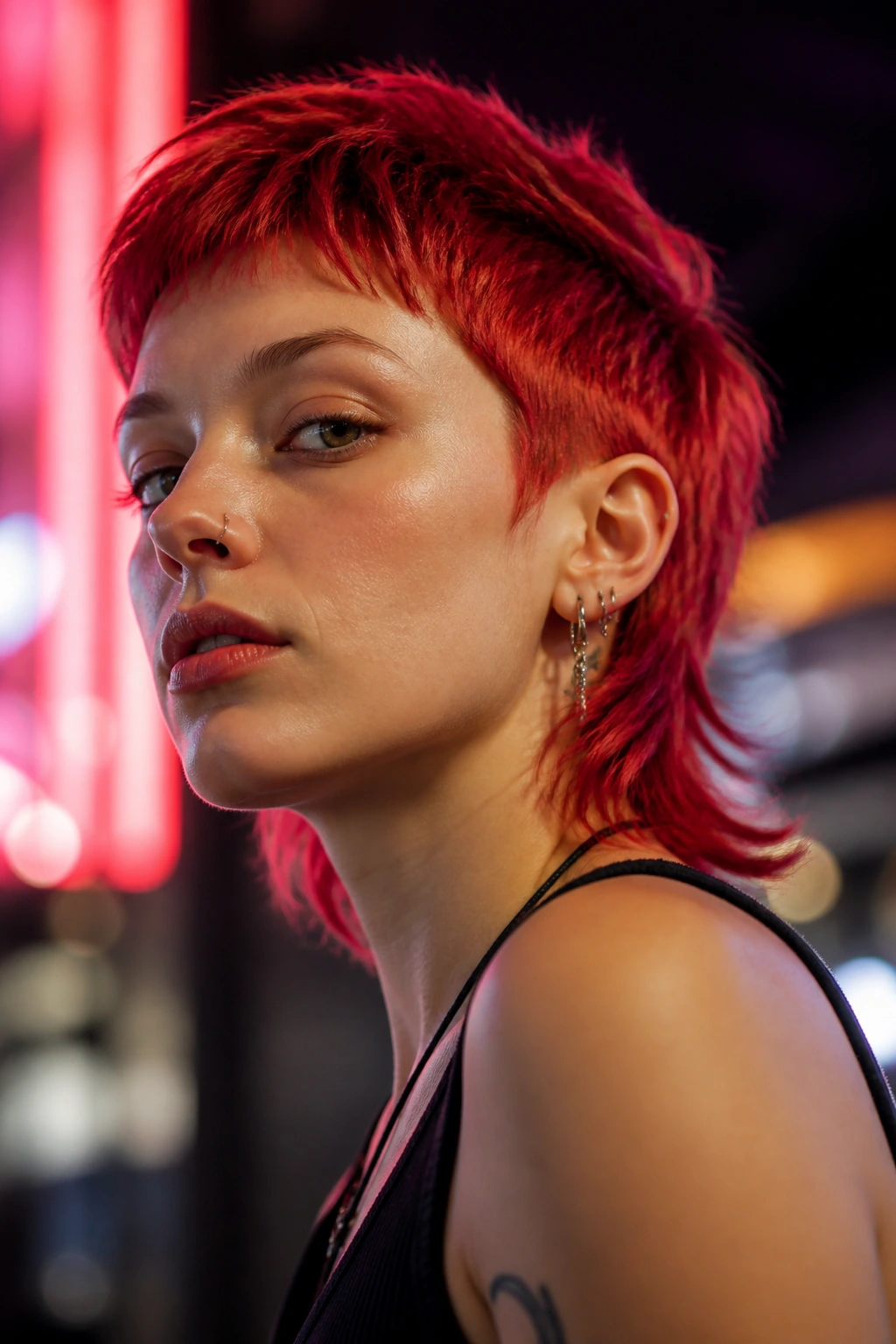
Cherry red gives a micro mullet a loud, concentrated punch. The shape is already rebellious; the color makes sure nobody misses it. Because the haircut is short, the color sits close to the face and reads almost like a built-in accessory.
The cut itself should keep the front tight and the back just long enough to flick at the collar. If the nape gets too long, the style loses its compact energy. Red pigment fades fast, so a color-depositing conditioner can keep the tone from washing out into orange too quickly. This is the haircut for someone who likes their hair to look a little dangerous in fluorescent light.
18. Curly Mohawk With Soft Edges
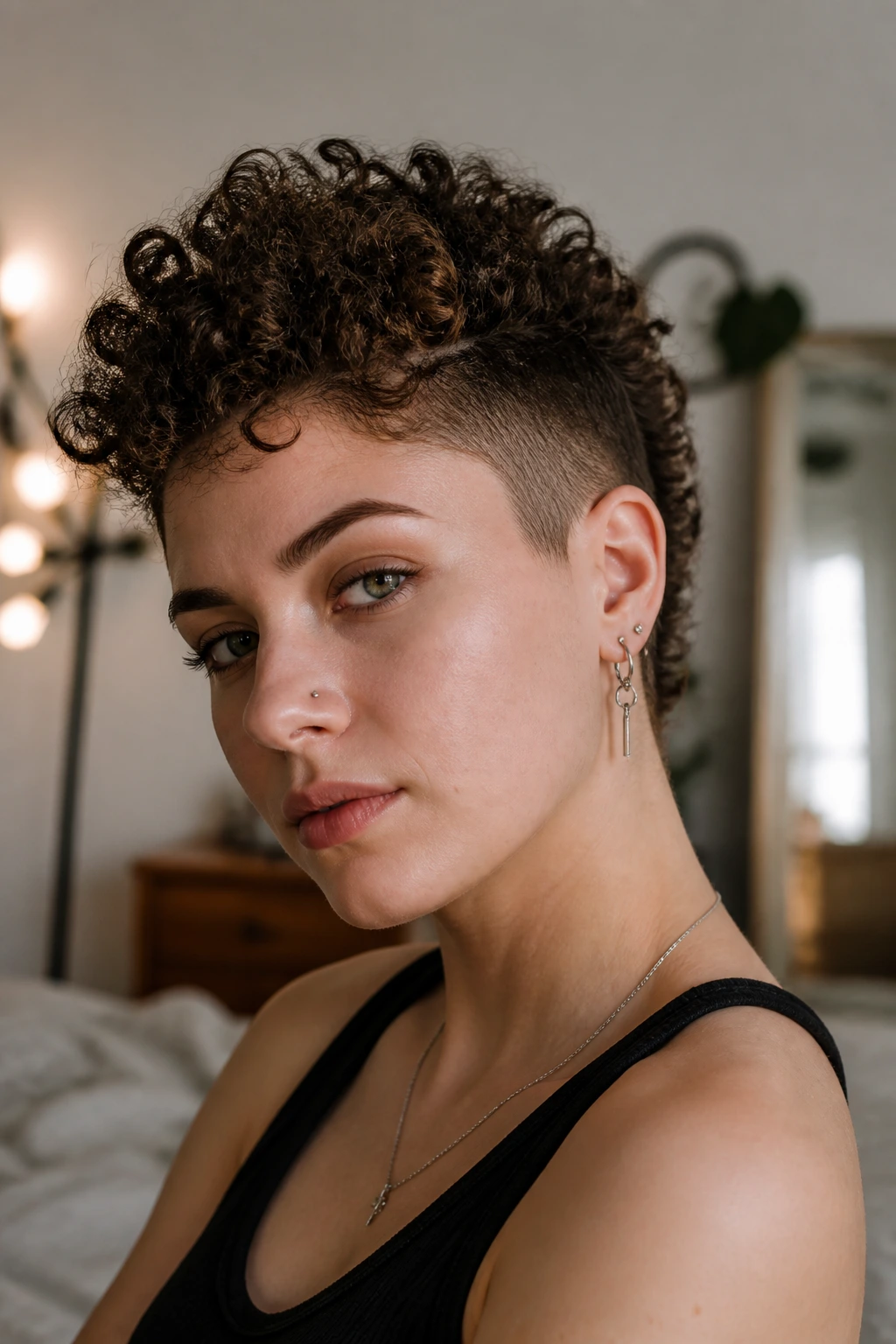
A curly mohawk sounds extreme until you see it with soft, rounded edges. The sides stay cropped down, the center strip keeps the curl pattern alive, and the whole thing feels more sculpted than aggressive. That’s the trick.
This shape flatters curls because the height comes from natural spring, not from heat styling. It’s also a good fit for women who want a face-framing lift without shaving everything down to the skin. Ask for the sides to taper gradually so the center strip doesn’t look like it’s floating awkwardly. A diffuser and a little gel on the ends can keep the curl shape tidy without flattening it.
19. Line-Up Crop With Temple Fade
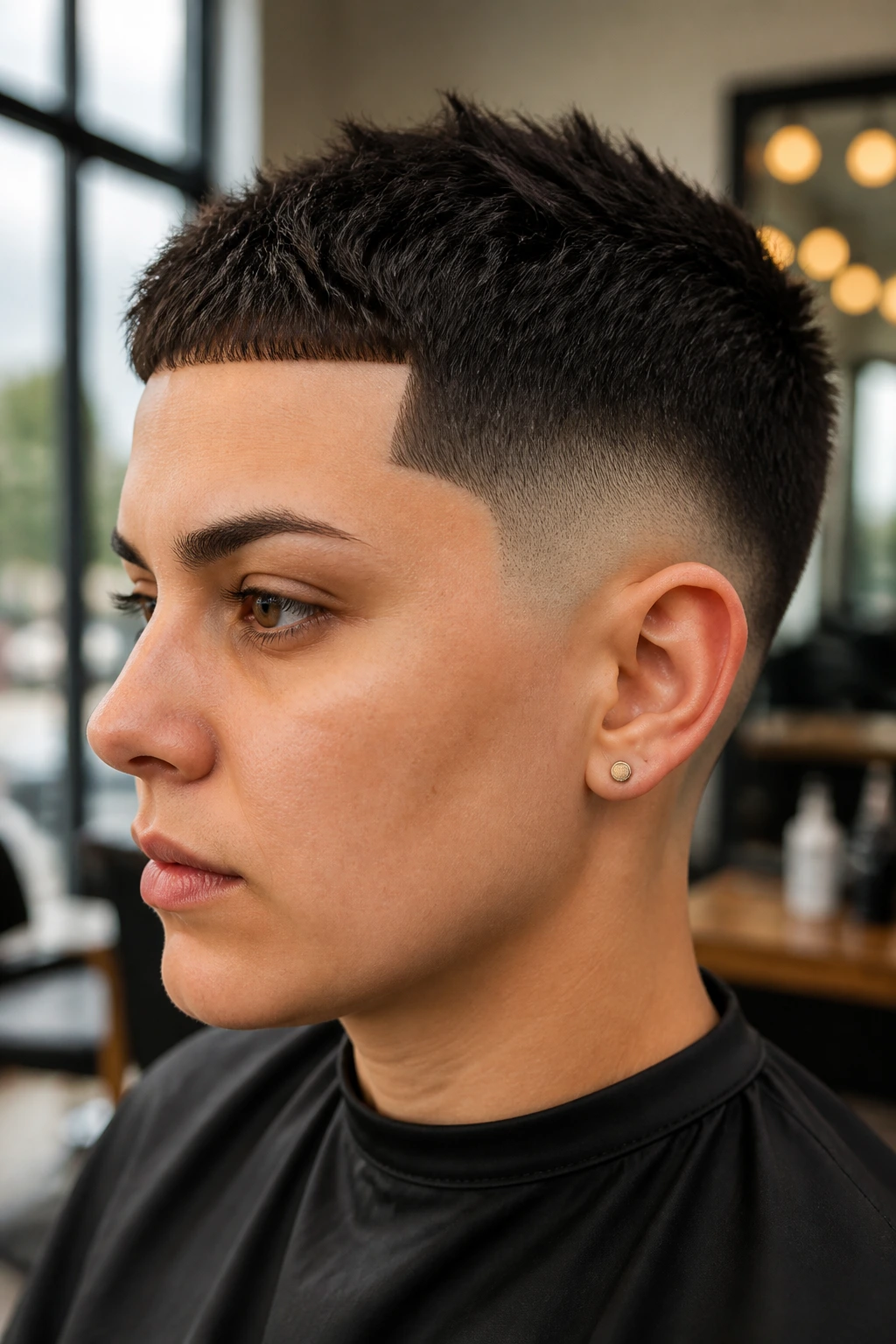
The line-up crop is all about clean geometry. The temple fade removes bulk at the sides, the hairline gets squared or gently arched, and the top stays short and tidy. It’s one of the most precise-looking short queer haircuts on the list.
What makes it feel edgy is the clarity. There’s no confusion about where the haircut starts or ends. That makes it a strong choice for anyone who likes crisp edges, a strong brow, or glasses that already bring a lot of structure to the face. Keep the top lightly textured so the cut doesn’t slide into too-formal territory.
20. Mini Afro With Sculpted Shape
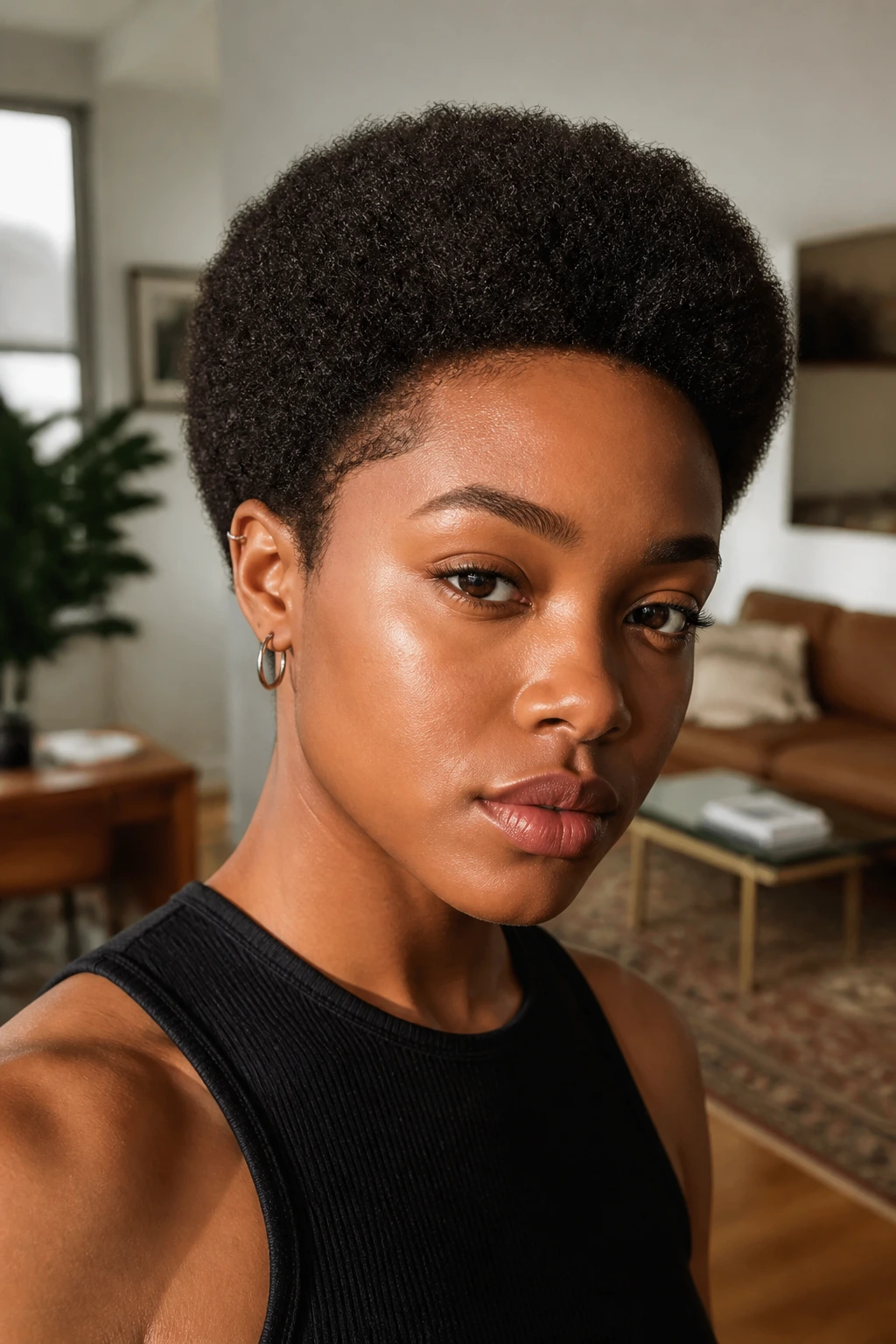
A mini afro can be soft and formal or weird and sharp, depending on how you shape the edges. The best version for edgy women keeps the silhouette rounded but trimmed with intention so the hair sits like a cloud with a backbone.
The shape matters more than the length. Ask for the sides and back to be shaped into a clean round or slightly oval outline, not squared off. That keeps the cut from ballooning at the cheeks. A pick at the roots can give lift, while a little leave-in keeps the ends from drying out and frizzing into a halo you didn’t ask for.
21. Two-Tone Split-Color Pixie
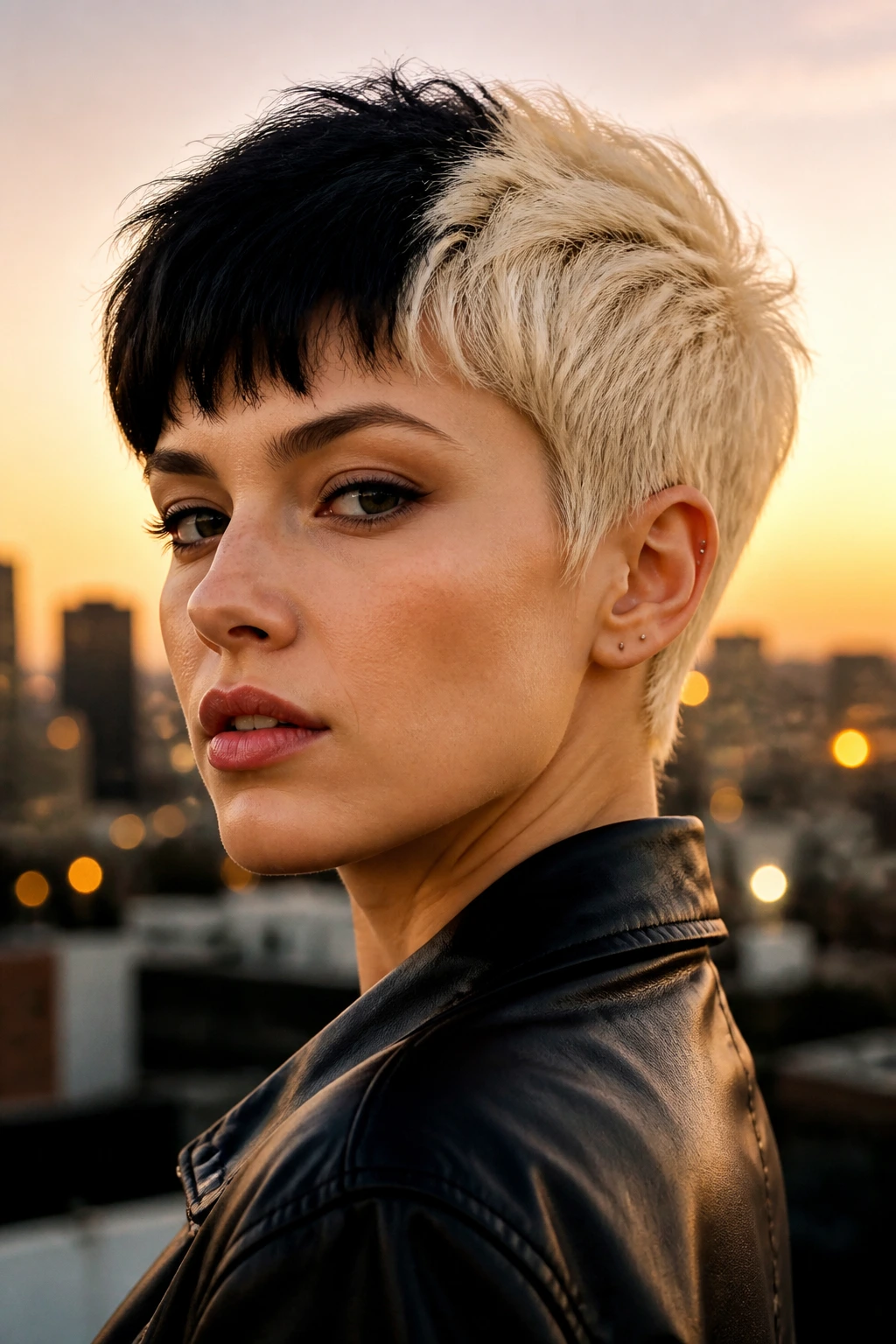
A split-color pixie is one of the easiest ways to turn a short cut into a statement. One side in black, the other in blond, copper, silver, or even a saturated color makes the shape read twice as hard because your eye keeps following the line between the tones.
This cut works best when the haircut itself is already strong. Don’t hide behind the color; sharpen the nape, clean up the sideburns, and keep the fringe purposeful. The split should follow the part or a deliberate diagonal line, not wander around like a mistake. If you want the color to stay clear, plan for regular toner or color refreshes. Split dye looks best when the contrast is still clean.
22. Grown-Out Pixie With Long Fringe
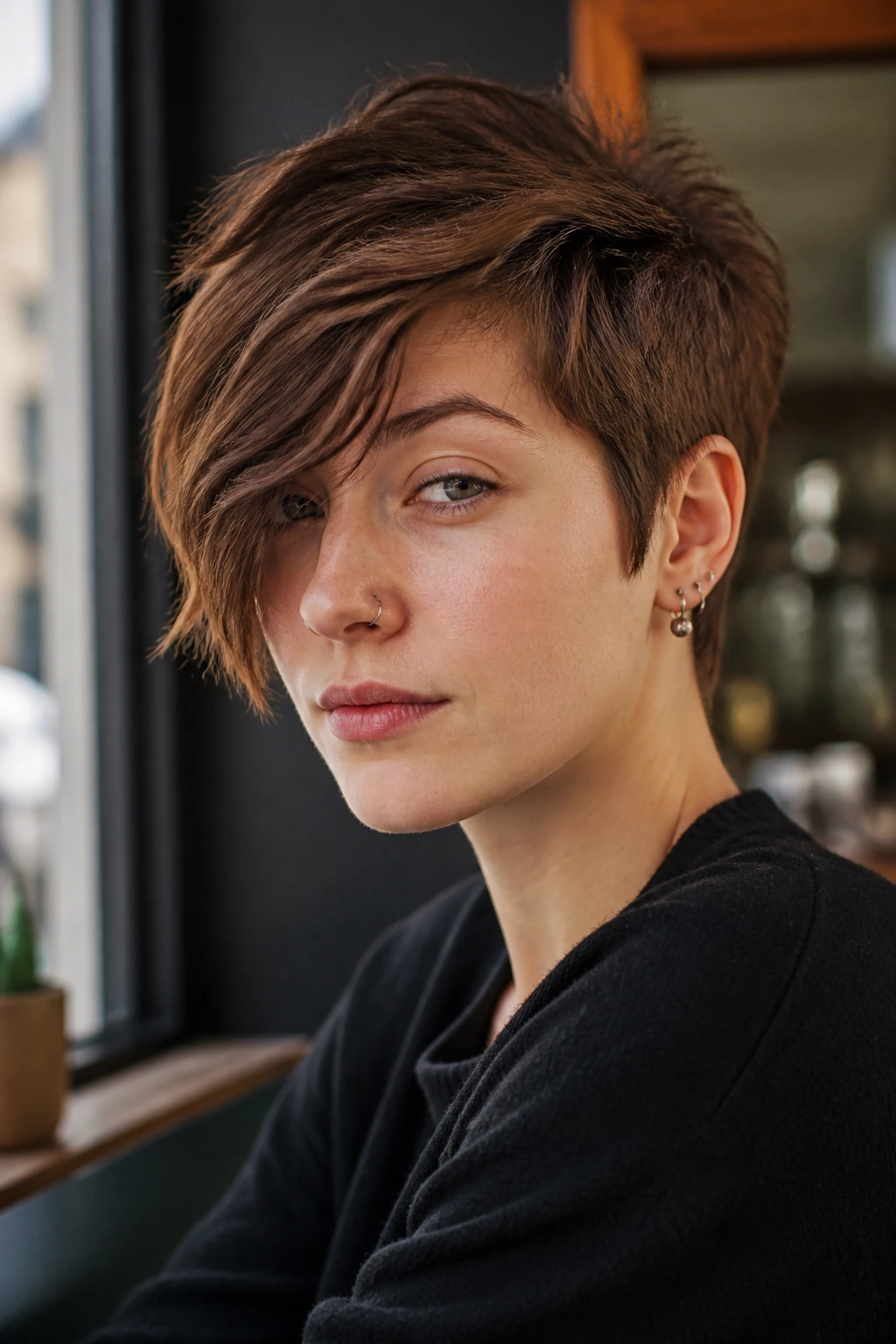
A grown-out pixie is for people who like to keep some softness in the system. The back and sides stay short enough to hold shape, but the fringe grows longer and starts sweeping across the face. It’s flattering, easy to move around, and less demanding than a freshly clipped pixie.
The longer fringe gives you options. You can part it down the middle, sweep it sideways, or let it fall forward on lazy days. That flexibility is the whole point. If you’re not ready for constant trims, this version buys you a little breathing room. It still looks queer and sharp because the outline stays cropped, not because every strand is exact.
23. Short Wolf Cut With Curtain Bangs
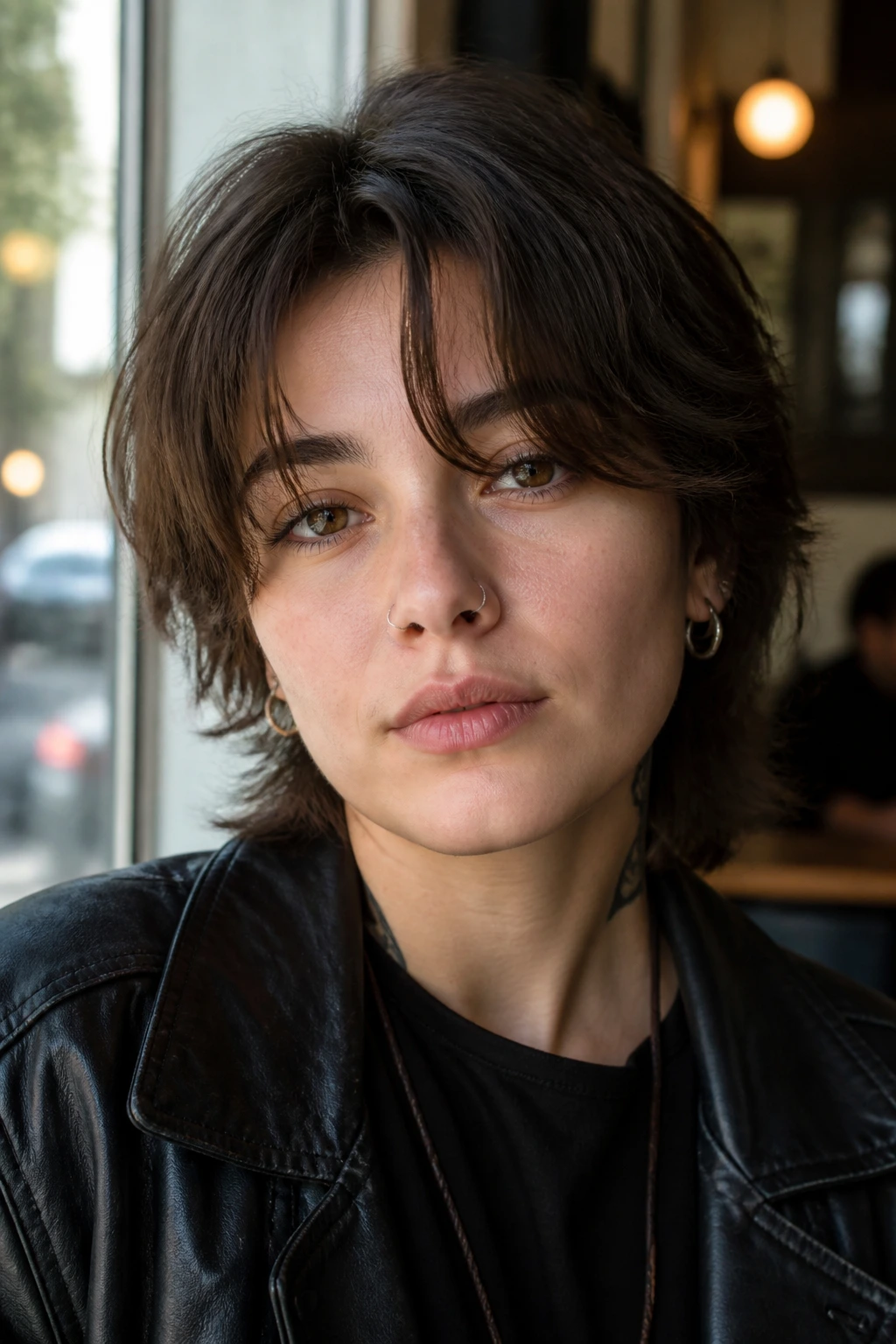
A short wolf cut is what happens when a shag gets a little more attitude and a little more face-framing. Curtain bangs soften the front while the crown layers keep the top from going flat. The result is messy in a way that feels chosen.
This cut tends to shine on hair with bend or wave, but straight hair can handle it if the layers are cut with enough separation. Keep the bangs long enough to split around the face, not so short that they turn into awkward baby fringe. Dry shampoo at the roots helps preserve the lived-in shape between washes, which is honestly half the charm.
24. Tapered Pageboy With Edge
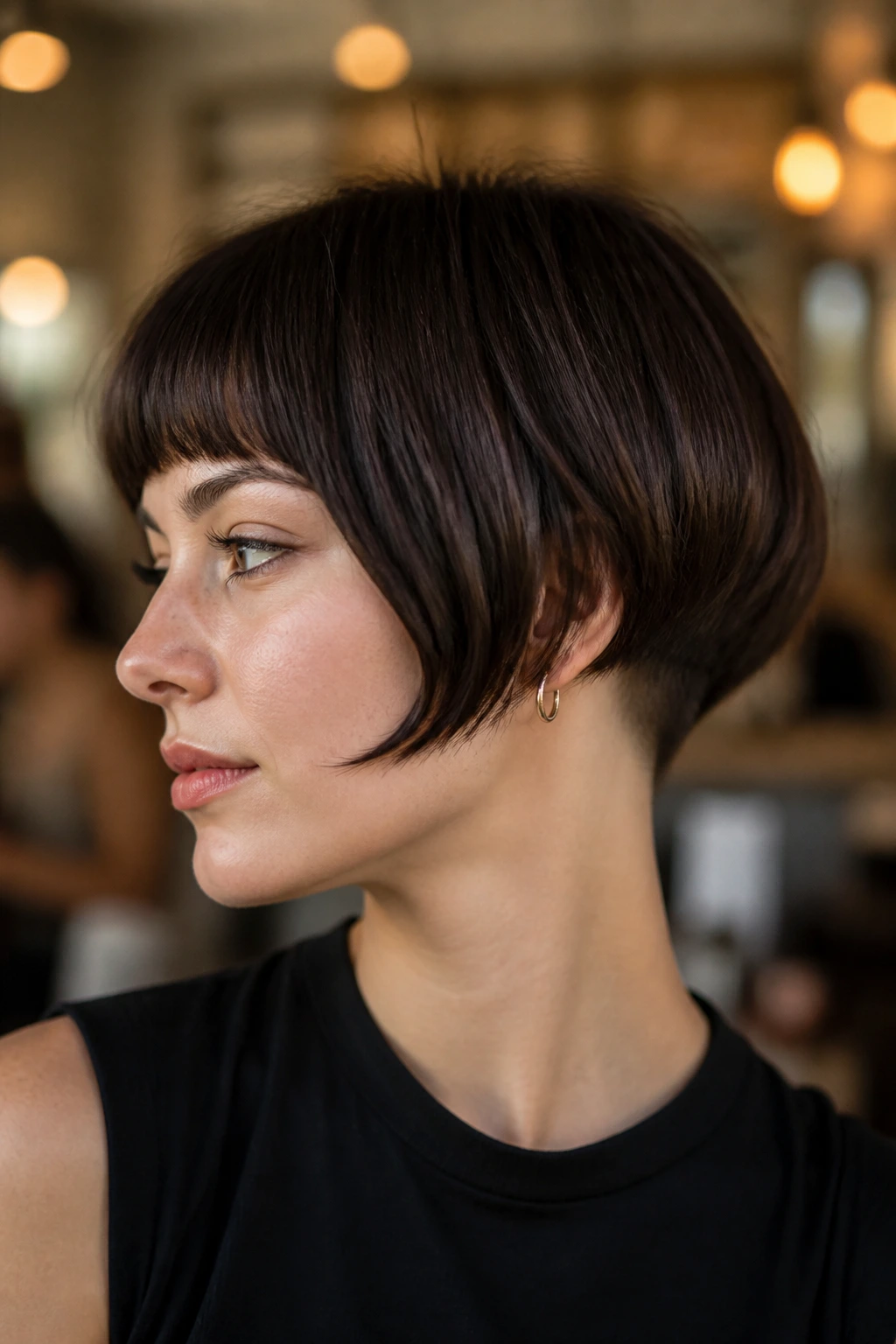
A pageboy with edge sounds polite until you cut it the right way. The round shape stays, but the underside gets tapered and the ends are sharpened just enough to keep it from feeling retro in a costume-y way. It’s a nice choice for someone who wants structure without harshness.
This cut does well when the line around the head is clean and the interior layers are minimal. Too many layers kill the pageboy shape. Ask for a smooth curve through the perimeter and a little separation at the ends so the cut moves when you do. A flat iron pass on the ends can flick them under or out, depending on the mood.
25. Flipped-Out 90s Bob
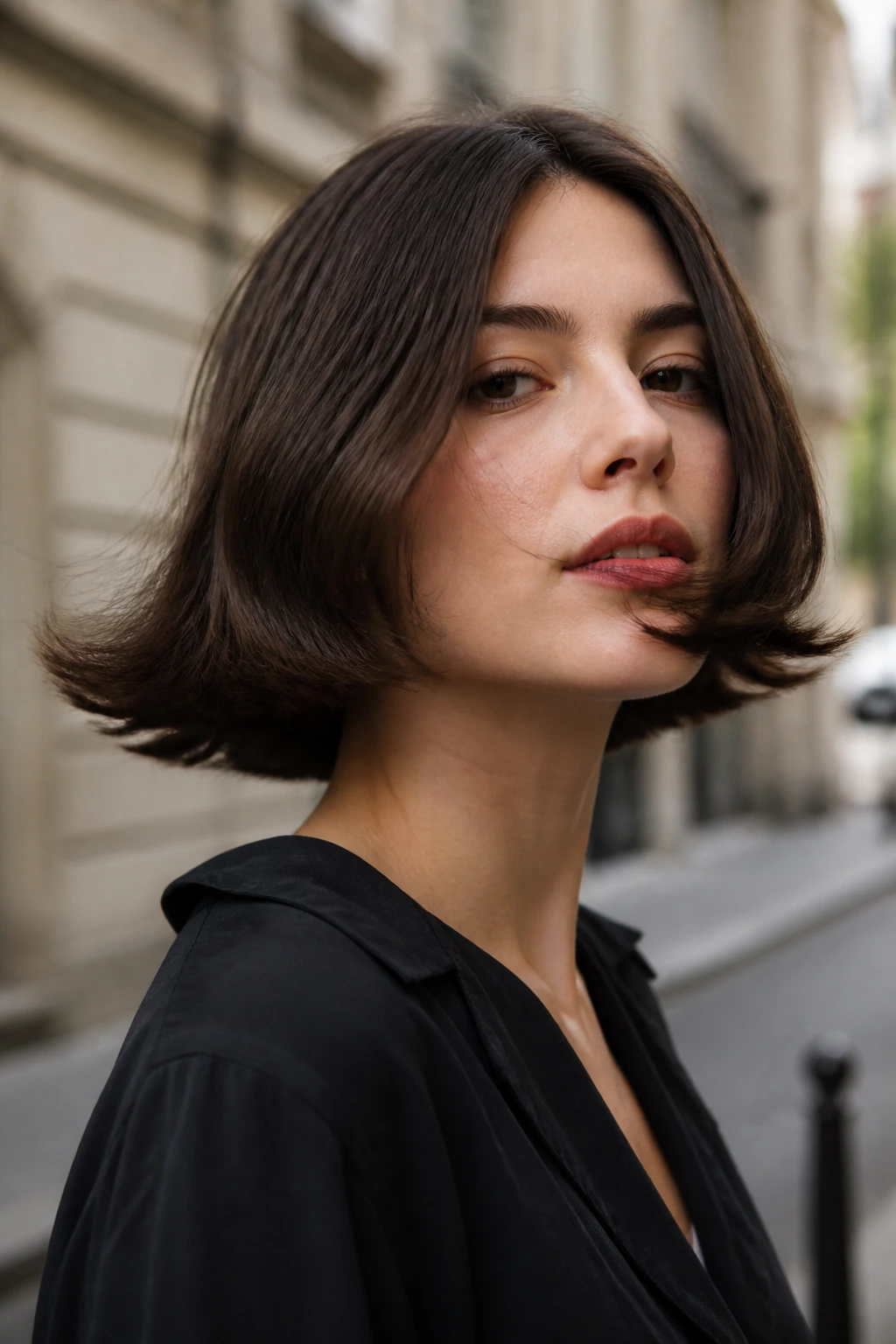
The flipped-out short bob gives you cheekbone emphasis, neck exposure, and a little retro swagger. It’s short enough to feel easy, but the flipped ends keep it from sitting like a school-photo bob from another era.
This one is great for straight to lightly wavy hair because the flip shows up clearly. Blow-dry the ends outward with a small round brush, or use a flat iron to bend them away from the face. Keep the length somewhere around jaw to chin for the strongest shape. If it gets much longer, the flip starts to feel fussy instead of deliberate.
26. Soft Mullet With Nape Length
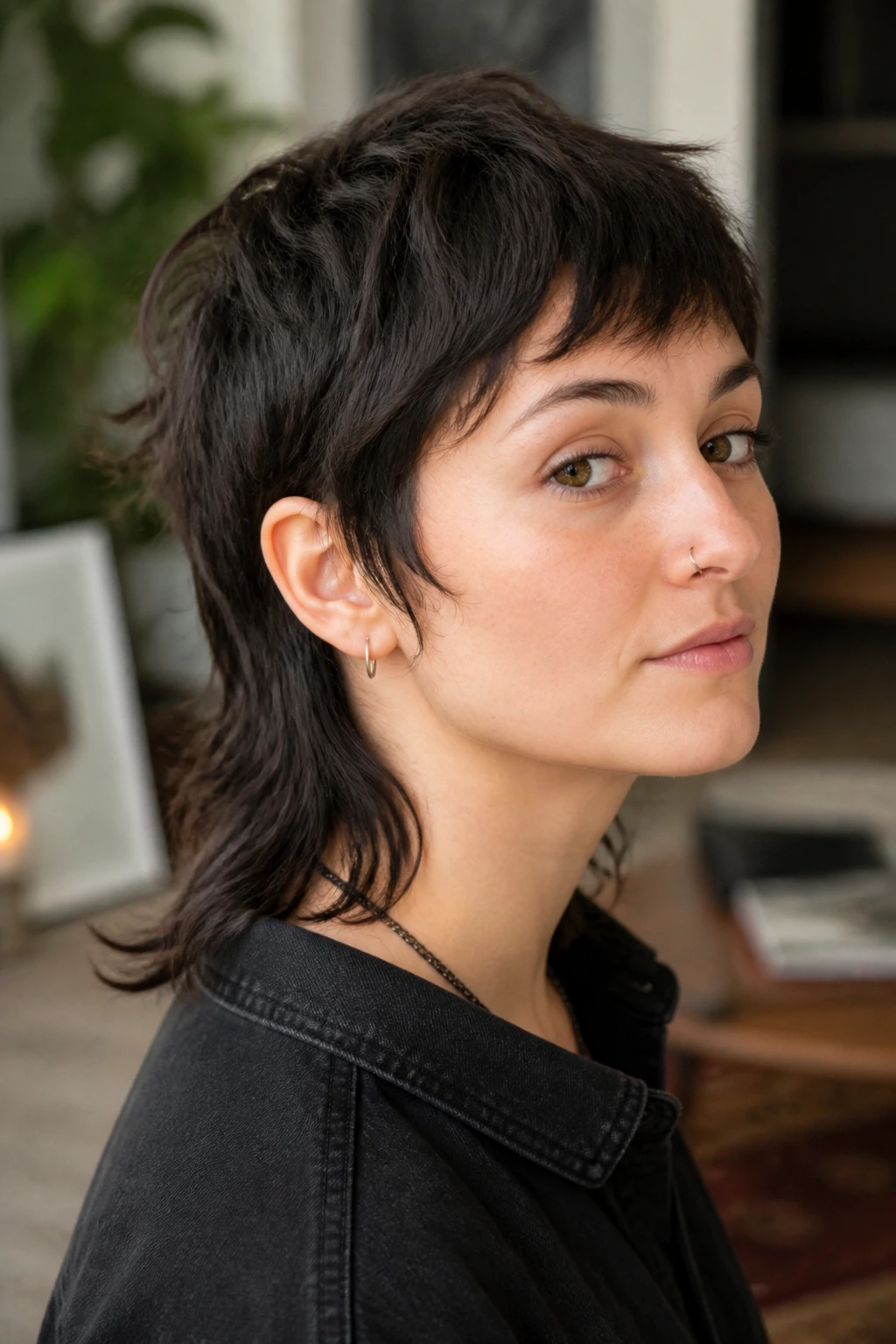
A soft mullet is the friendlier cousin of the harder, punkier version. The back still carries a little extra length, but the transition from crown to nape is gentler, which makes it easier to wear in everyday life.
This is a solid choice if you want movement without a heavy commitment to styling. The nape length should be noticeable but not dramatic — enough to brush the collar, not enough to feel like a costume. Keep the fringe broken and the sides light. A bit of texture spray brings the whole cut alive, especially if you scrunch it while it’s drying.
27. Side Shave With Top Sweep
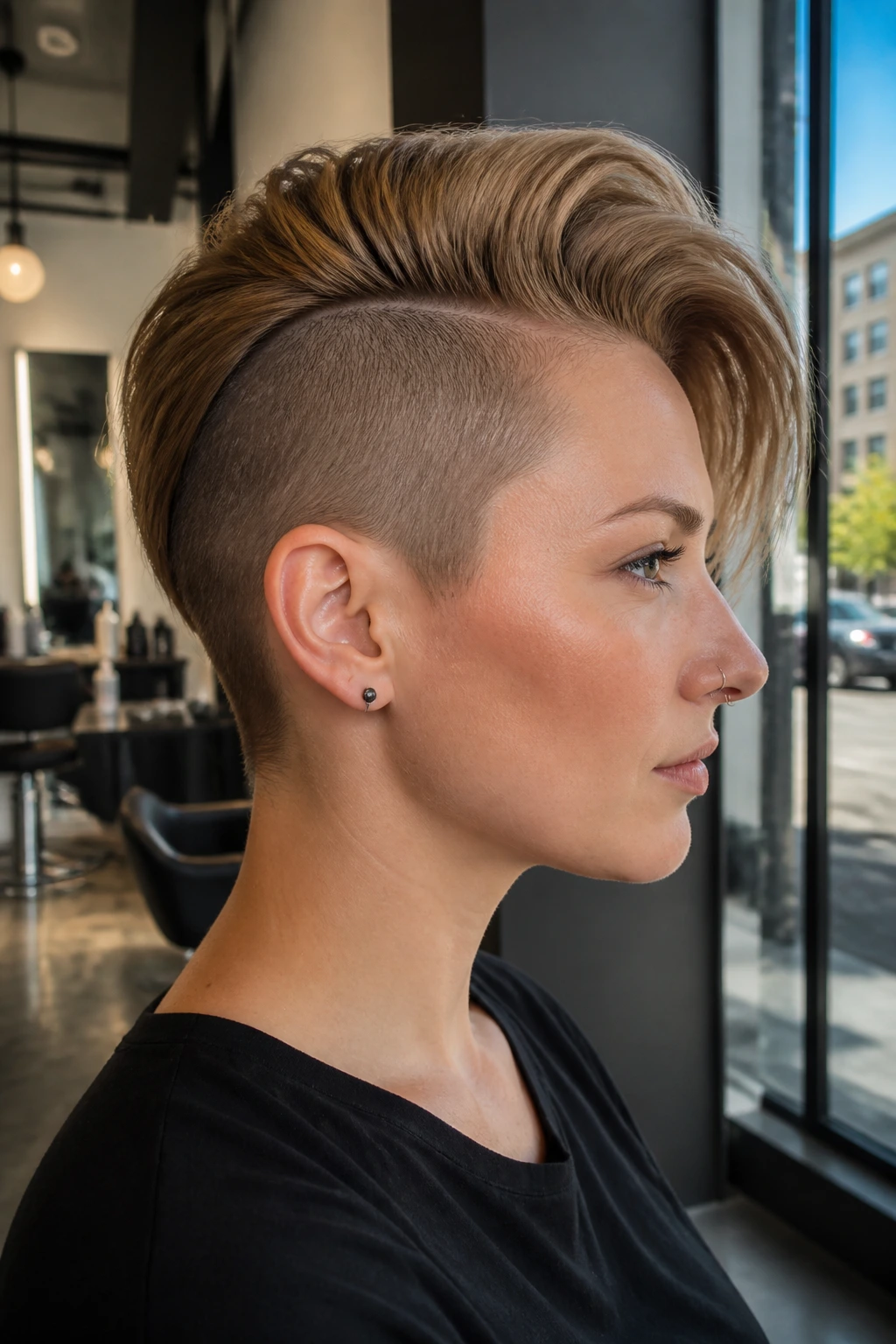
A side shave does a lot with one decision: remove a chunk of hair, then let the remaining top sweep over it. That contrast is the whole show. It’s direct, confident, and easy to tweak depending on how visible you want the shaved side to be.
You can go subtle with a hidden undercut or louder with a full temple shave. The top should have enough length to arc over the shaved section, otherwise the style looks unfinished during grow-out. Keep one eye on maintenance; a shave gets fuzzy fast. If you like a strong earring or a dramatic brow, this cut gives both room to work.
28. Textured Caesar for Women
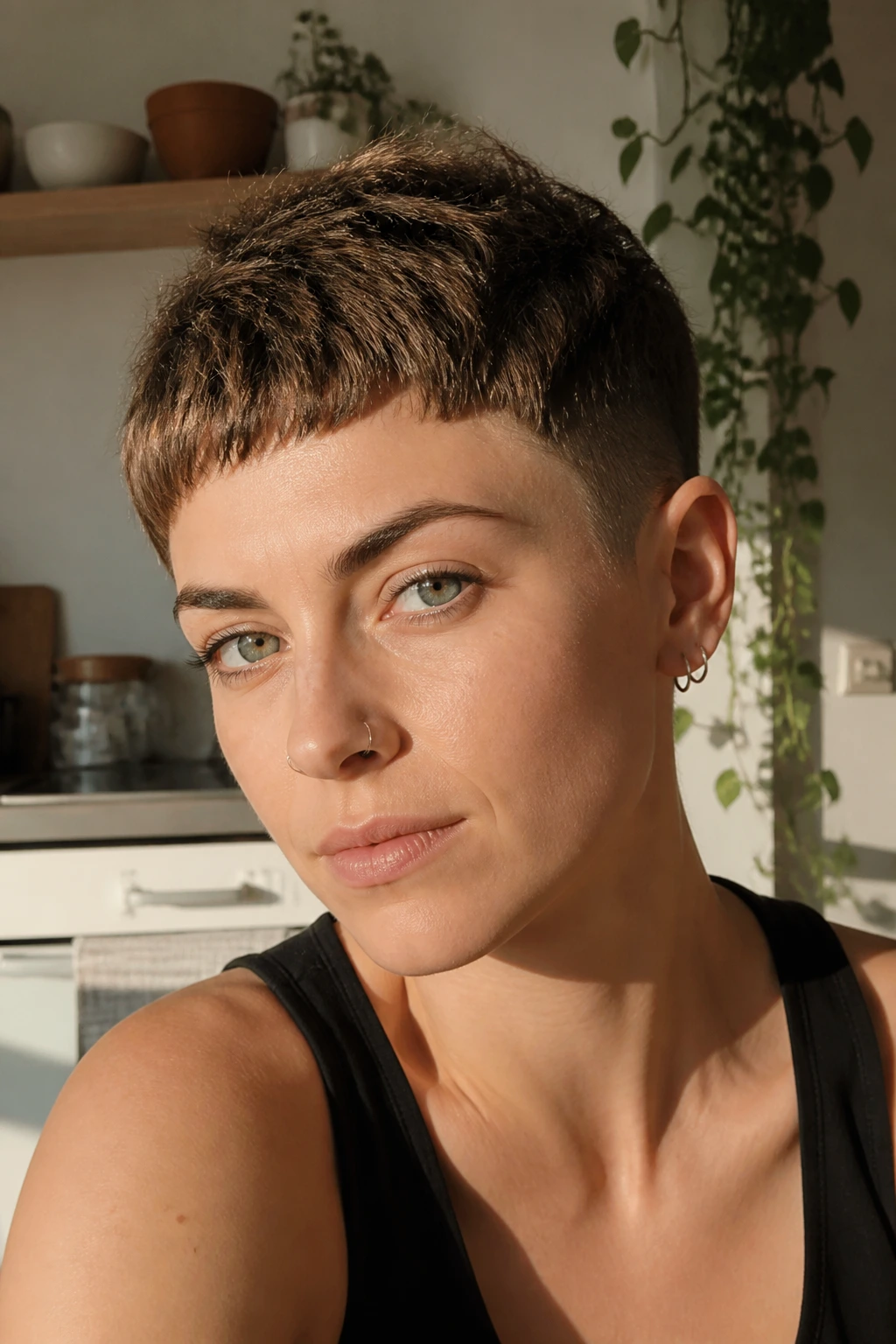
A textured Caesar gives you a short fringe, cropped sides, and a forward shape that sits close to the head. It has old-school roots, but the texture keeps it from feeling rigid. This is one of the better cuts for women who want minimal styling and a face-framing line that doesn’t depend on volume.
The fringe should be cut with enough roughness to break the line a little. Too blunt and it starts looking severe in a way that can be hard to wear. Too soft and the whole point disappears. A pea-sized amount of matte product is usually enough. Finger-comb it forward and leave the rest alone.
29. Shattered Crop With Micro Bangs
A shattered crop sounds a little wild because it is. The ends are intentionally uneven, the fringe is tiny, and the overall effect is fractured in a way that makes the face look sharper. It’s one of those cuts that works best when it doesn’t try to be too neat.
Micro bangs can be a little unforgiving, so they need a stylist who knows how to balance the forehead and the hairline. Keep the sides cropped close but not shaved unless you want a more severe edge. This cut looks especially good with bold glasses, dark liner, or a lip color that gives the face a focal point. Everything about it wants a strong accessory.
30. Short Curly Shag With Lift
A short curly shag gives curls space to move upward instead of only outward. The layers stack lightly through the crown, the sides stay soft, and the ends keep enough length to show definition. It’s one of the most forgiving short cuts if your hair changes mood from wash day to day three.
The real trick is restraint. Don’t overload it with butter or heavy cream. Curly shags need lift more than weight. A light gel or mousse on wet hair, then a diffuser, usually gets the outline right. If your curls are looser at the top than the bottom, ask for the layers to be adjusted so the crown doesn’t collapse.
31. Slick Pixie With Hard Part
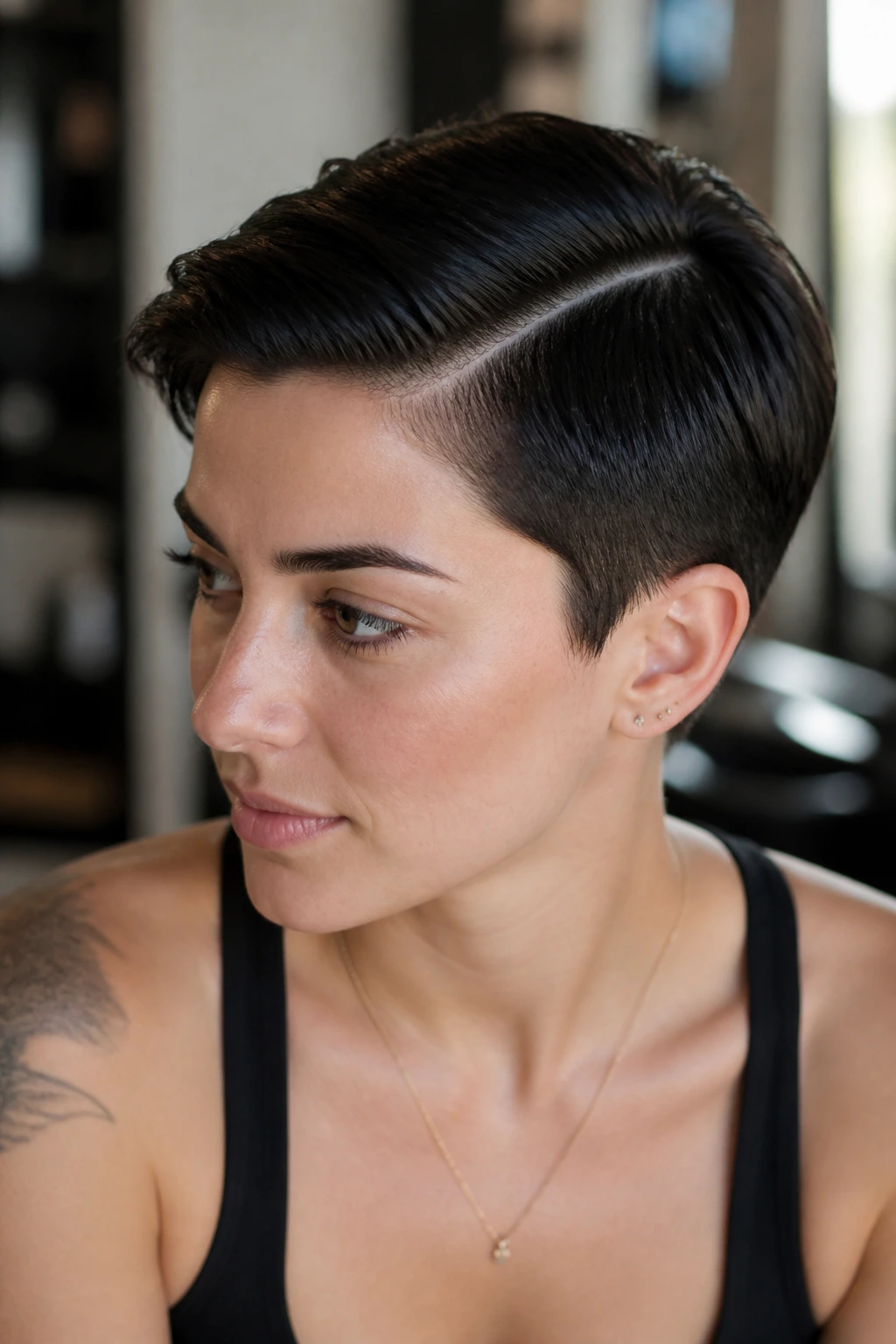
A hard part can change a pixie from cute to sharp in one move. Add sleek styling, and the haircut turns into something almost tailored. The part line gives the eye a place to land, while the short sides keep the overall shape crisp.
This style loves shine. Use a small amount of gel or pomade and comb the hair into place before it dries. The part should be clean but not theatrical unless that’s your thing. A hard part looks especially good on hair that naturally wants to fall one way, because the style works with the grain instead of wrestling it.
32. Jaw-Length Box Bob With Choppy Ends
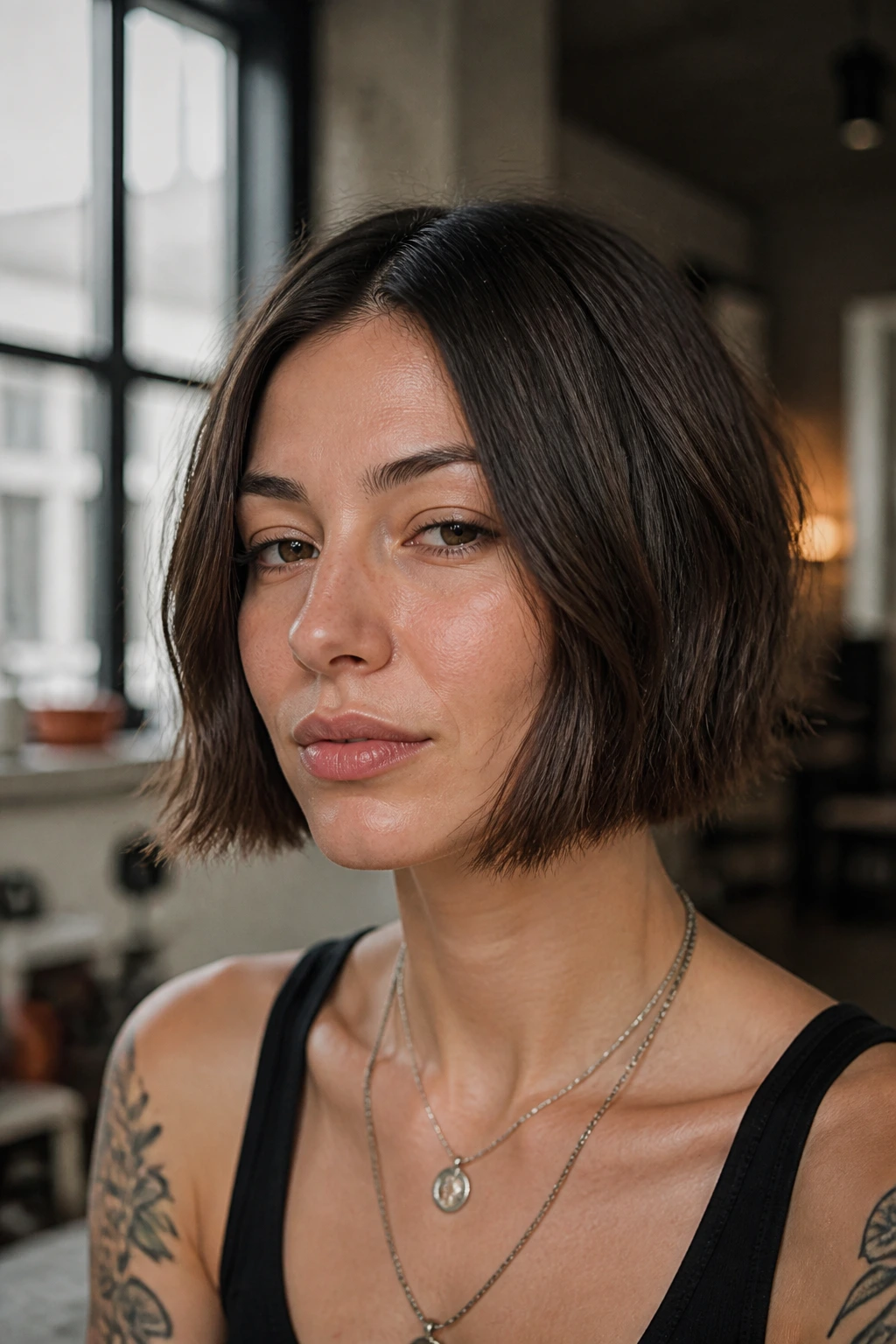
A box bob at jaw length looks structured, but the choppy ends keep it from feeling stiff. The shape sits close to the jawline, which gives the face a strong frame, and the uneven edges add movement so it doesn’t read like a helmet.
This cut is a nice bridge for women who want shorter hair but aren’t ready for a full crop. Ask for a blunt overall shape with point-cutting or razor work only at the ends. That keeps the box silhouette intact. A center part makes it feel cooler and more androgynous, while a deep side part softens the whole thing a notch.
33. Rounded Mushroom Cut With Jagged Ends
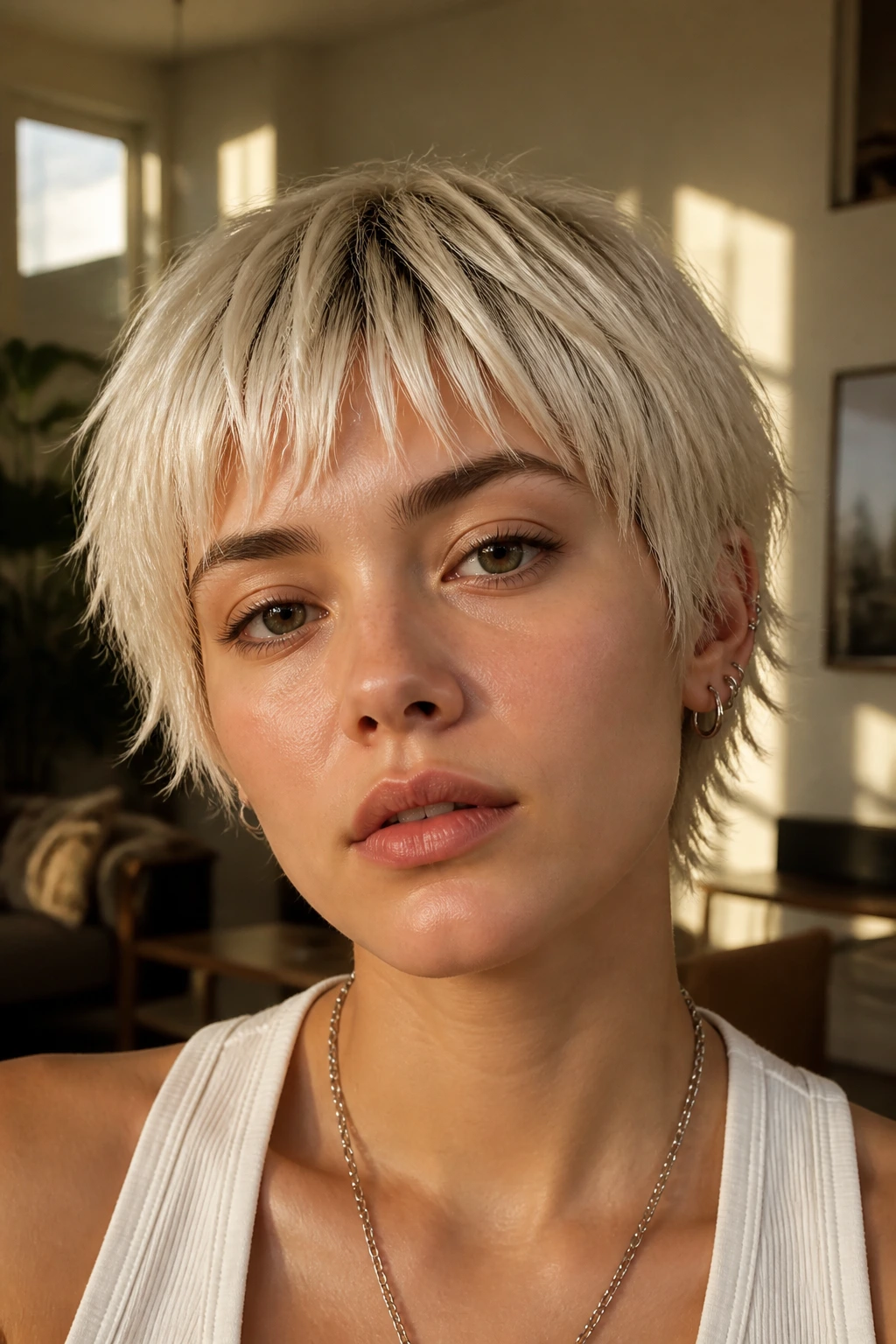
A mushroom cut with jagged ends is weird, charming, and more wearable than people expect. The rounded top gives it a clear outline, while the broken ends stop it from looking too neat or too retro. It’s a strong choice if you like haircuts with a little art-school nerve.
The shape works best when the perimeter is kept intentional and the interior layers stay light. Ask for softness at the ends, not bulk removed from everywhere. That distinction matters. Too much thinning and the cut loses its dome; too little and it gets puffy. A little texture cream and a rough dry are usually enough to keep it looking alive.
Why Short Queer Haircuts Feel So Good on Edgy Women
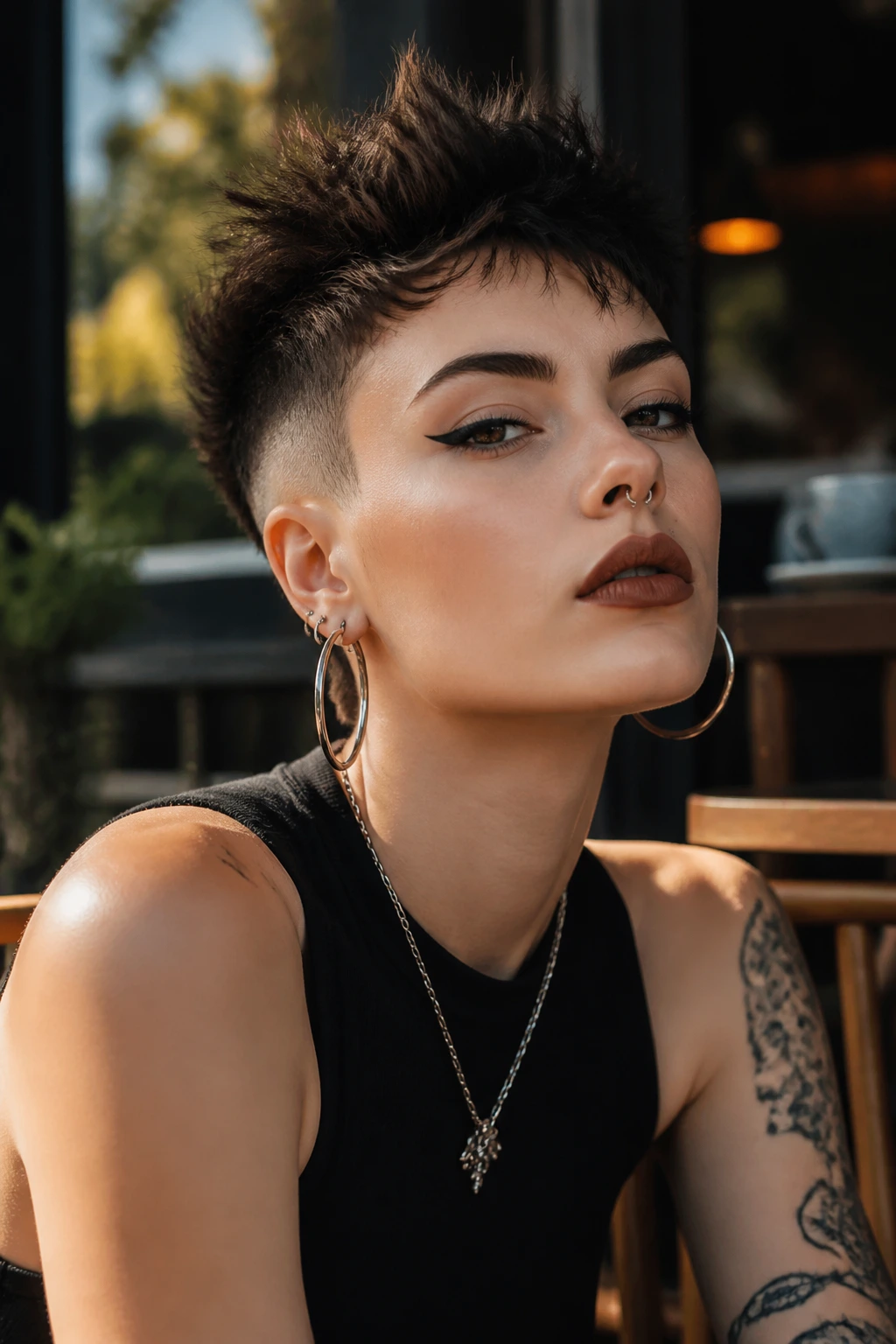
Short queer haircuts hit a nerve because they move the focus from length to structure. That sounds simple. It isn’t. Hair that sits close to the head forces the shape to work harder, and that means the line at the temple, the angle of the fringe, and the way the nape is cleaned up all matter in a way long hair can hide. When the outline is right, the whole face looks more awake.
I also think short cuts do something useful for presentation. They let jewelry, collars, tattoos, piercings, glasses, and makeup take turns speaking instead of competing with a curtain of hair. A good crop can look soft with bare skin and heavy with liner. It can lean masc with a hard part, then turn femme with a glossy lip. That range is part of the appeal, and it’s why these cuts keep showing up on women who like their style with a little bite.
Tools That Make the Shape Happen
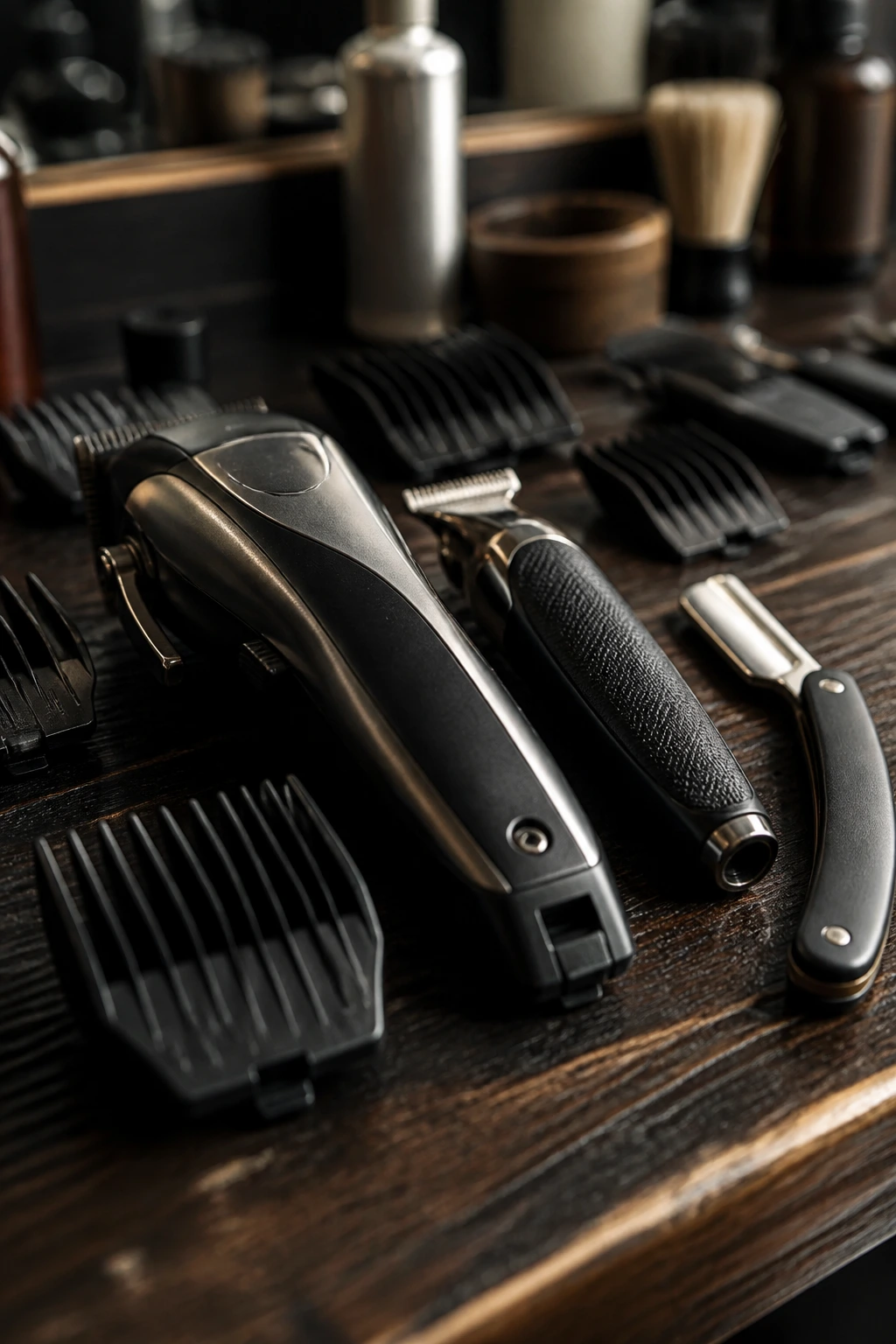
- Clipper with guards: Useful for buzzes, fades, undercuts, and temple cleanups; a #1 to #4 range covers a lot of these shapes.
- Detail trimmer: Good for crisp edges at the neckline, sideburns, and around the ears.
- Razor or razor comb: Best for broken, feathered ends on shags, mullets, and softer pixies.
- Texturizing shears: Handy when a crop needs bulk removed without turning fluffy.
- Wide-tooth comb and fine-tooth comb: One for curls and wet detangling, one for parts and precision.
- Spray bottle: Wet hair is easier to section and cut cleanly.
- Matte paste or clay: Gives pixies, crops, and spiky cuts shape without shine.
- Gel or edge control: Use this for slick looks, coily line-ups, and strong fringe control.
- Diffuser attachment: A must if curls or waves need lift without frizzing out.
- Hand mirror: Checking the back and nape matters more than people admit.
What to Bring to the Chair
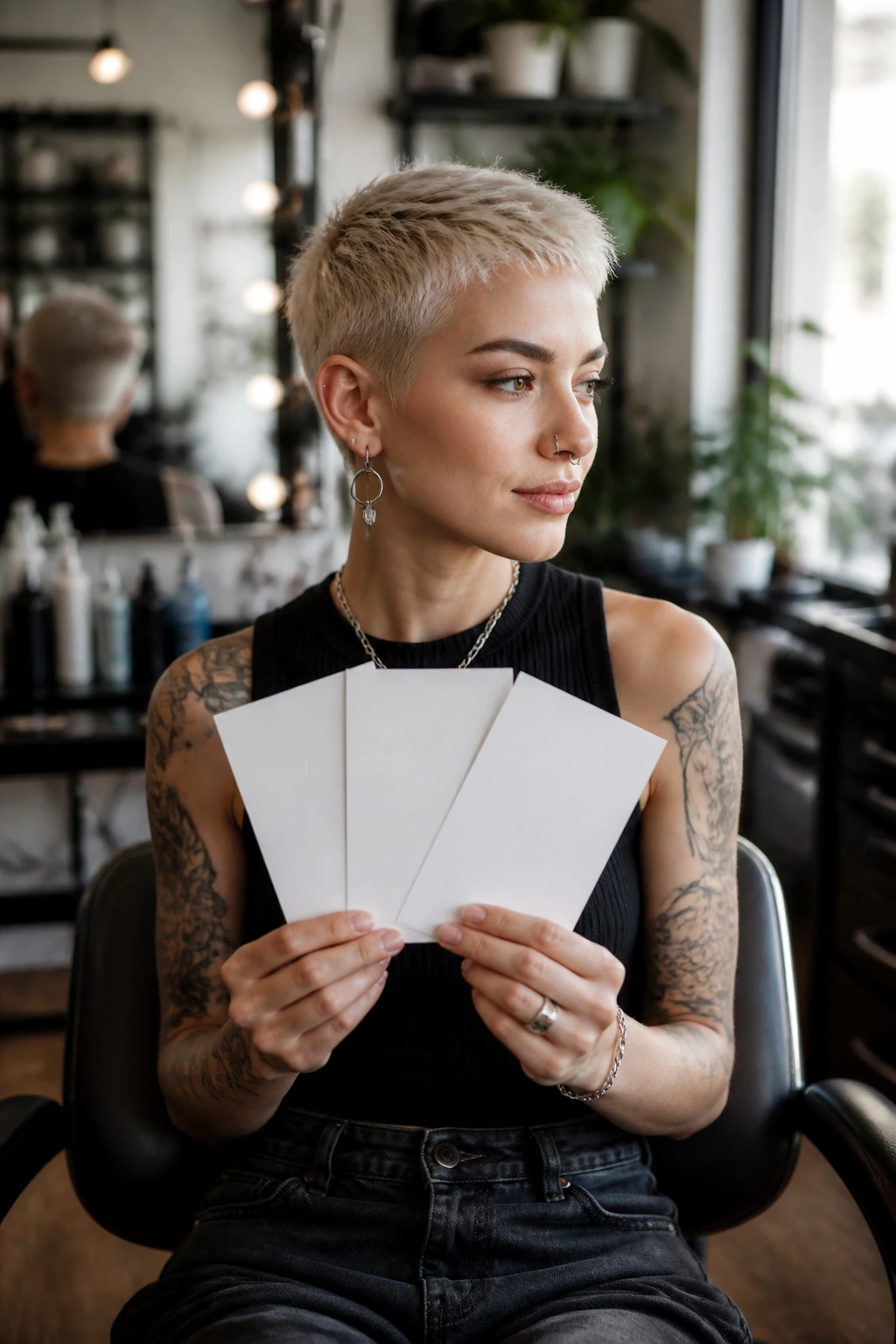
The smartest short haircut starts before the scissors come out. Bring photos, yes, but bring the right photos: front, side, and back views if you can find them. One flattering front shot tells only half the story, and short hair lives or dies on the profile. A good stylist can work from one image, but three makes the conversation cleaner.
Talk about your hair like a person who has lived in it. Tell them where it sticks up, where it falls flat, how fast it grows, and whether your hair hates humidity. If you have a strong cowlick at the crown or a swirl at the nape, say so. That little bit of honesty saves everyone time. Ask how often the cut needs tidying, because some of these styles need a trim every 3 weeks while others can coast for 6 or 8.
How to Wear These Cuts So They Don’t Feel Flat
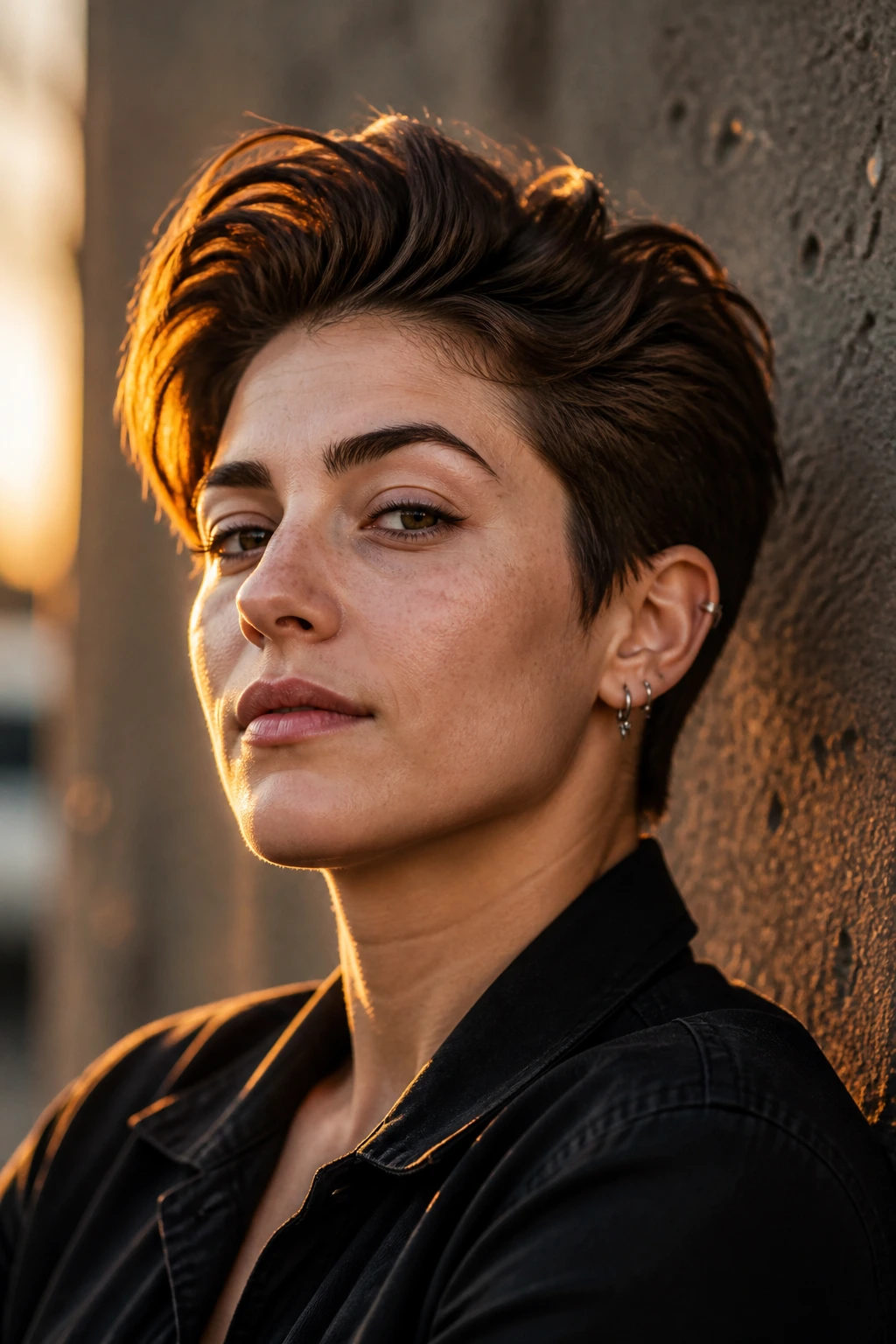
Presentation: Keep the outline visible. That means tucking one side behind the ear, sweeping the fringe forward, or letting the nape sit clean against the neck instead of burying the cut under too much product. A short cut should show its bones.
Companions: Earrings, thick frames, a button-up shirt collar, a sharp jacket, or a tank with strong shoulders all help short hair read as deliberate. The haircut does not need props, but the right ones give it more room to speak.
Commitment: Some of these styles want a quick morning refresh with water and paste. Others, especially buzzes and fades, want regular cleanups so the outline doesn’t blur. Pick a version that matches how much upkeep you’ll actually tolerate, not the version that looks coolest in a photo.
Mood Pairing: Hard parts, bleached sections, and blunt bangs lean tougher. Soft curls, a deep side tuck, or a rounded crown can shift the same cut toward femme or androgynous without changing the basic shape.
Small Fixes That Make a Short Cut Look Intentional
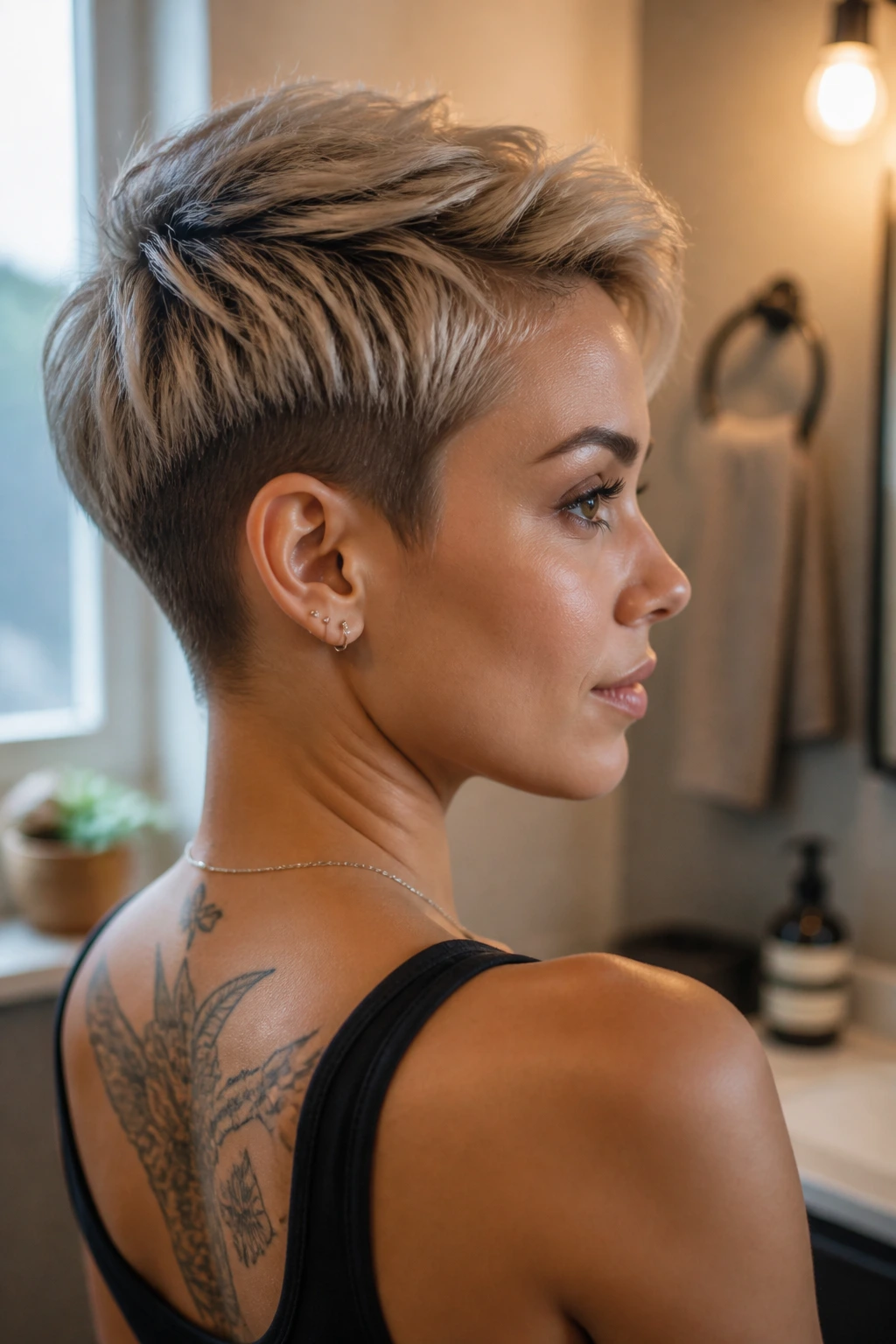
Texture Boost: A pea-sized amount of matte paste warmed in your palms can wake up a pixie or crop in seconds. Use less than you think. Short hair gets greasy fast when people overdo product, and that wet, sticky look is usually a mistake rather than a style.
Line Clean-Up: The neckline and sideburns matter more than most people realize. A clean edge at the nape makes a cut look freshly done even when the top has already started to grow out. If you’re comfortable doing tiny touch-ups at home, a trimmer with a guard can help between salon visits.
Color Shift: Even one panel of bleach, one dark root shadow, or a copper gloss can change the whole attitude of a crop. Short hair shows color clearly because there’s less length for it to disappear into.
Accessory Trick: If a cut feels too plain, swap the earrings before you change the haircut. A heavy hoop, a sharp stud, or a small chain earring can tilt the whole vibe.
Common Mistakes That Make Short Cuts Go Soft
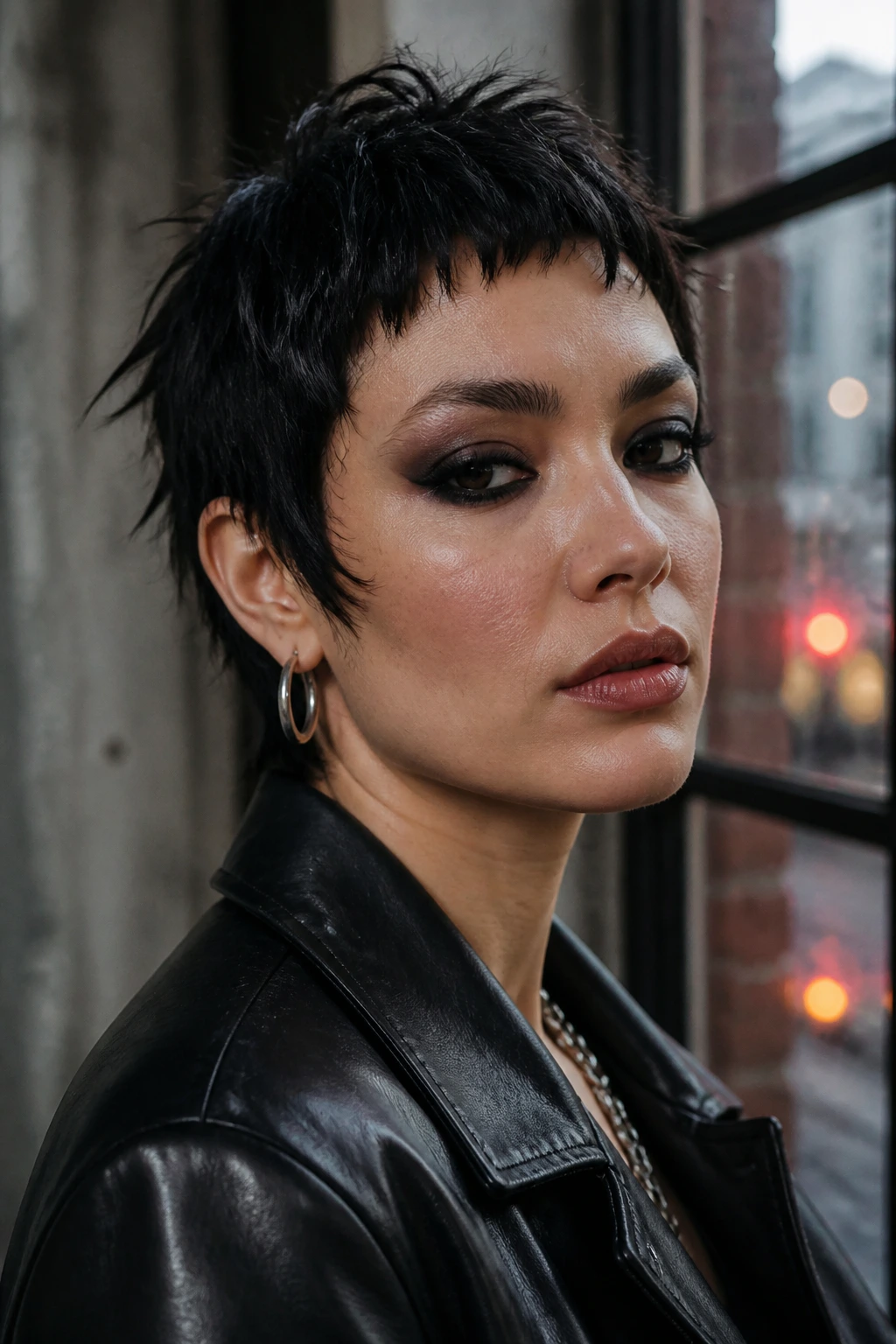
- Over-thinning curly hair: The result is puffiness and weak ends instead of shape. Ask for light shaping, not aggressive texturizing.
- Letting the fringe grow without a plan: Bangs that hit the eyes can make a sharp cut feel slouched. Trim them before they collapse into the rest of the style.
- Using too much heavy cream or oil: Short hair gets weighed down quickly, especially on fine or low-density hair. Start with a tiny amount and add only if needed.
- Ignoring growth patterns: Cowlicks, flat spots, and strong side growth can wreck a sleek pixie or bowl if the cut wasn’t planned around them.
- Waiting too long on fades and line-ups: The edges blur fast. Once the temple or nape fuzz starts spreading, the cut loses its punch.
- Asking for “something edgy” without details: A picture of a side shave, a specific fringe length, or a nape length gives your stylist something real to work with.
Different Ways to Push the Mood
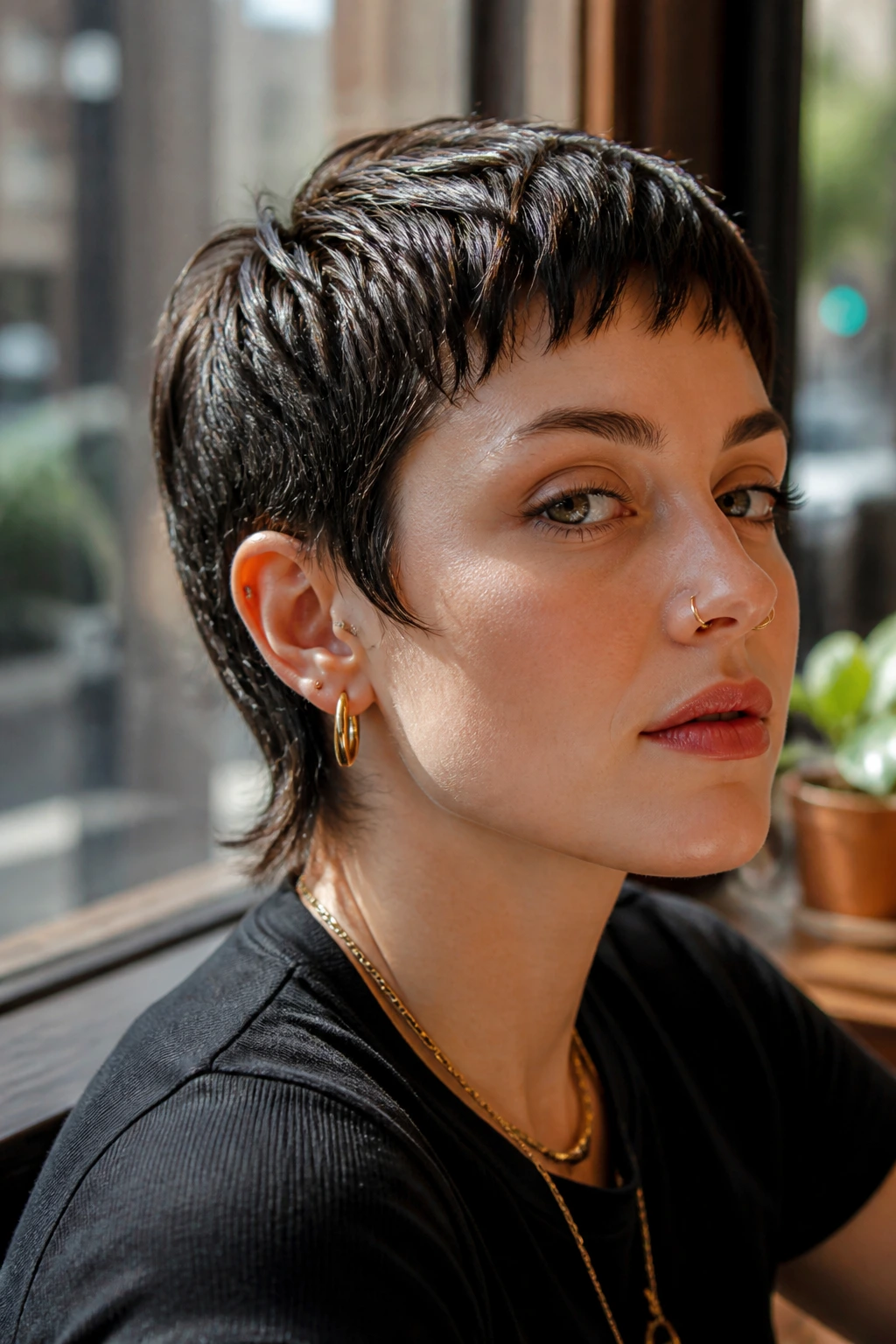
Soft Femme Edge: Keep the cut short but leave a touch more length around the fringe or ears. A glossy finish, softer makeup, or a side tuck turns a strong cut into something quietly femme without losing shape.
Masc Lean: Tighten the sides, sharpen the neckline, and use a matte product instead of shine. This version works especially well on crops, Caesars, and fades where the outline can carry the whole look.
Color-First Version: If you want the haircut to feel louder, let color do half the work. Platinum, split dye, red, or even a single contrasting root shadow can make a familiar cut look more aggressive.
Low-Maintenance Grow-Out: Pick a cut with soft layers or a longer fringe if you know you’ll skip trims. Grown-out pixies, soft mullets, and shaggy crops hold their shape longer than a severe buzz or hard line-up.
Curly Respect: Keep the scissors honest and the layers light. Curls need room, and a good short curly cut should still look like curls, not a flattened imitation of straight hair.
Between-Appointment Care That Saves the Shape
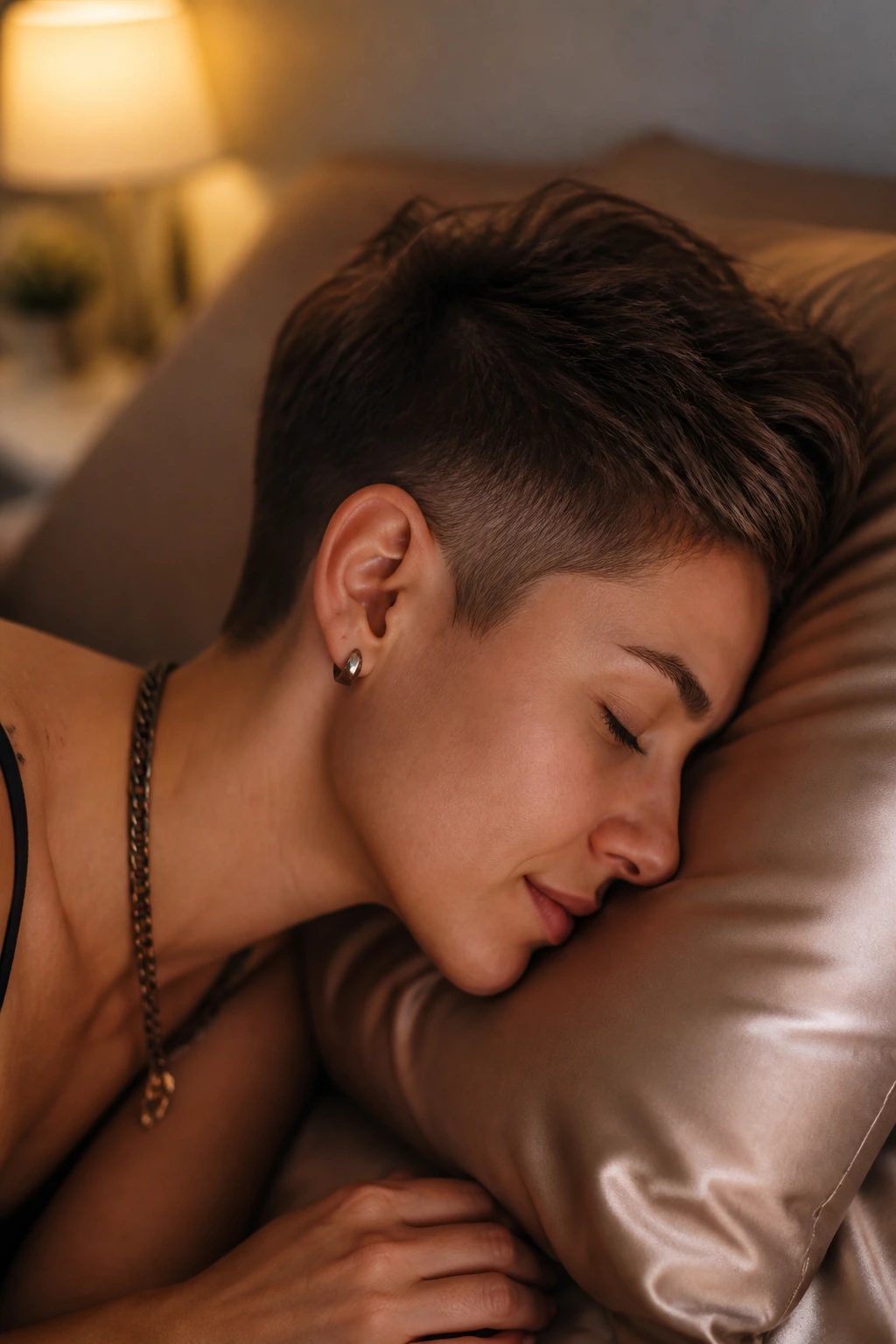
Short hair is sneaky. It looks low-maintenance, then one rough sleep or one skipped trim and suddenly the outline is gone. A satin pillowcase or bonnet helps more than people expect because it cuts down on flattening at the crown and frizz at the edges. If your hair is coarse or curly, a little moisture at night keeps the next-day shape from drying out into fuzz.
Trim timing depends on the cut. Buzzes and crisp fades usually need cleanup every 2 to 4 weeks. Pixies, crops, and line-ups tend to sit well for 4 to 6 weeks. Shags and soft mullets can go longer, often 6 to 8 weeks, because the grow-out is part of the look. Dry shampoo can buy you a day or two, but once the neckline gets muddy or the fringe starts fighting your eyes, it’s time to book.
Frequently Asked Questions
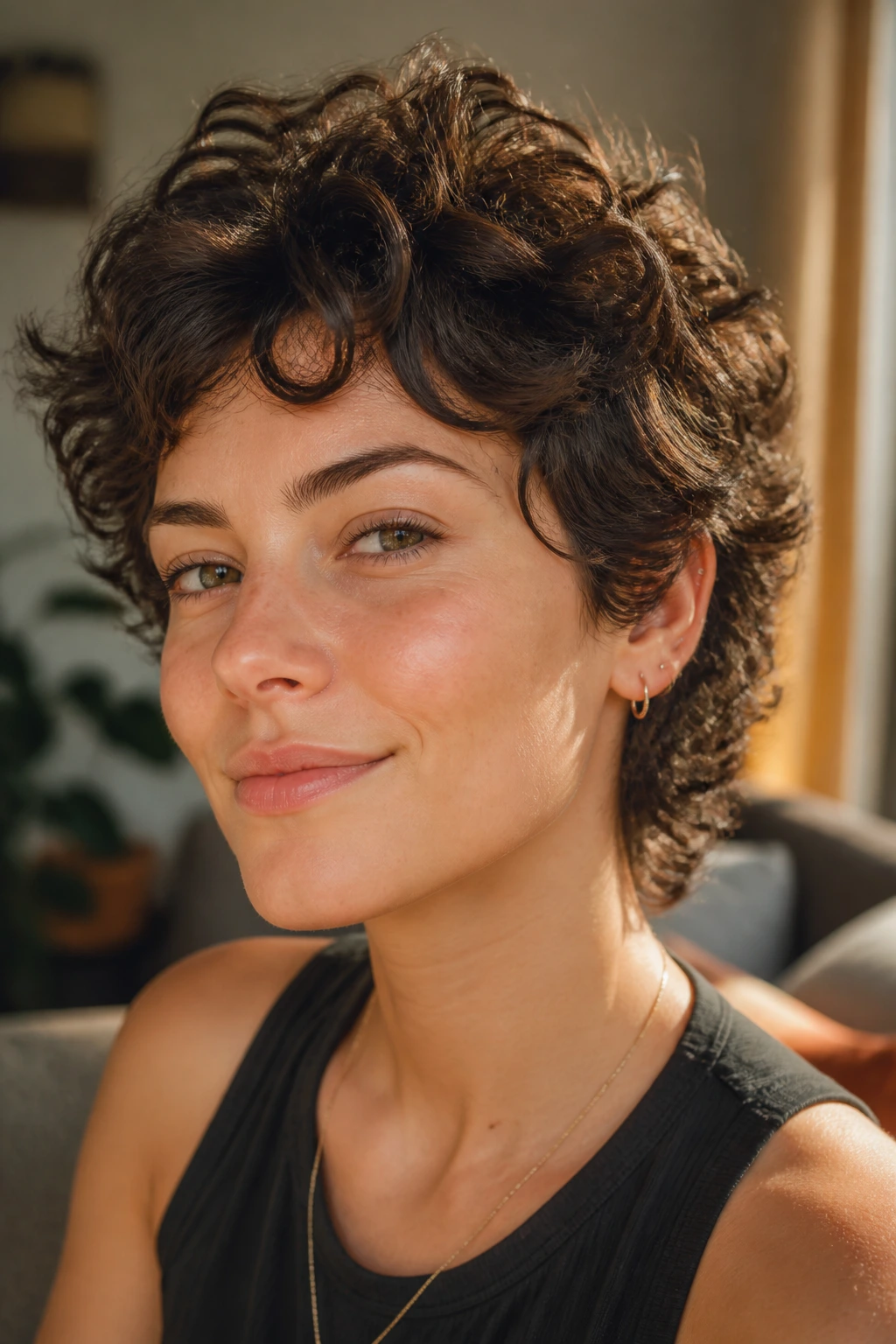
Which short haircut looks most queer without trying too hard?
A grown-out pixie, a soft mullet, or an undercut crop usually does the trick because the shape feels deliberate but not overworked. The queerness comes from the balance — a little softness here, a tight edge there, and enough asymmetry to keep it from feeling classic in a boring way.
What if I have a strong cowlick?
Tell your stylist before they cut. Cowlicks can be worked with, but not if they’re discovered halfway through a razor-sharp fringe. Often the fix is leaving a touch more length in the problem area so the hair has weight.
Can thick hair pull off a bowl cut or Caesar?
Yes, but the bulk has to be managed carefully. Thick hair needs internal removal and a strong perimeter so it doesn’t poof out. A blunt line with light texturizing usually works better than heavy thinning.
How often do these cuts need trims?
It depends on the shape. Buzz cuts and line-ups want attention every 2 to 4 weeks; pixies and short crops can often last 4 to 6 weeks; shags and mullets can stretch further because the grow-out looks intentional.
Will short hair make my face look too round?
Not if the fringe and sides are planned well. A side part, a little height at the crown, or longer pieces near the cheekbones can lengthen the face. The wrong cut can add width; the right one trims it visually.
What’s the easiest short cut to style on busy mornings?
A French crop, a tapered crop, or a soft buzz with visible texture usually takes the least work. Water, a tiny bit of product, and finger-shaping are often enough.
Can I keep some femininity in a short cut?
Absolutely. Femininity can live in the fringe, the color, the earrings, the makeup, or the softness of the edges. A short haircut does not decide your gender expression for you; it just gives you a different set of lines to work with.
What should I say if I’m nervous at the salon or barbershop?
Bring photos and talk in plain language: how much length you want left, how often you’ll trim, and whether you want the cut to look softer or sharper. That tells the stylist more than saying “make it edgy,” which could mean twenty different things.
The Shape of It
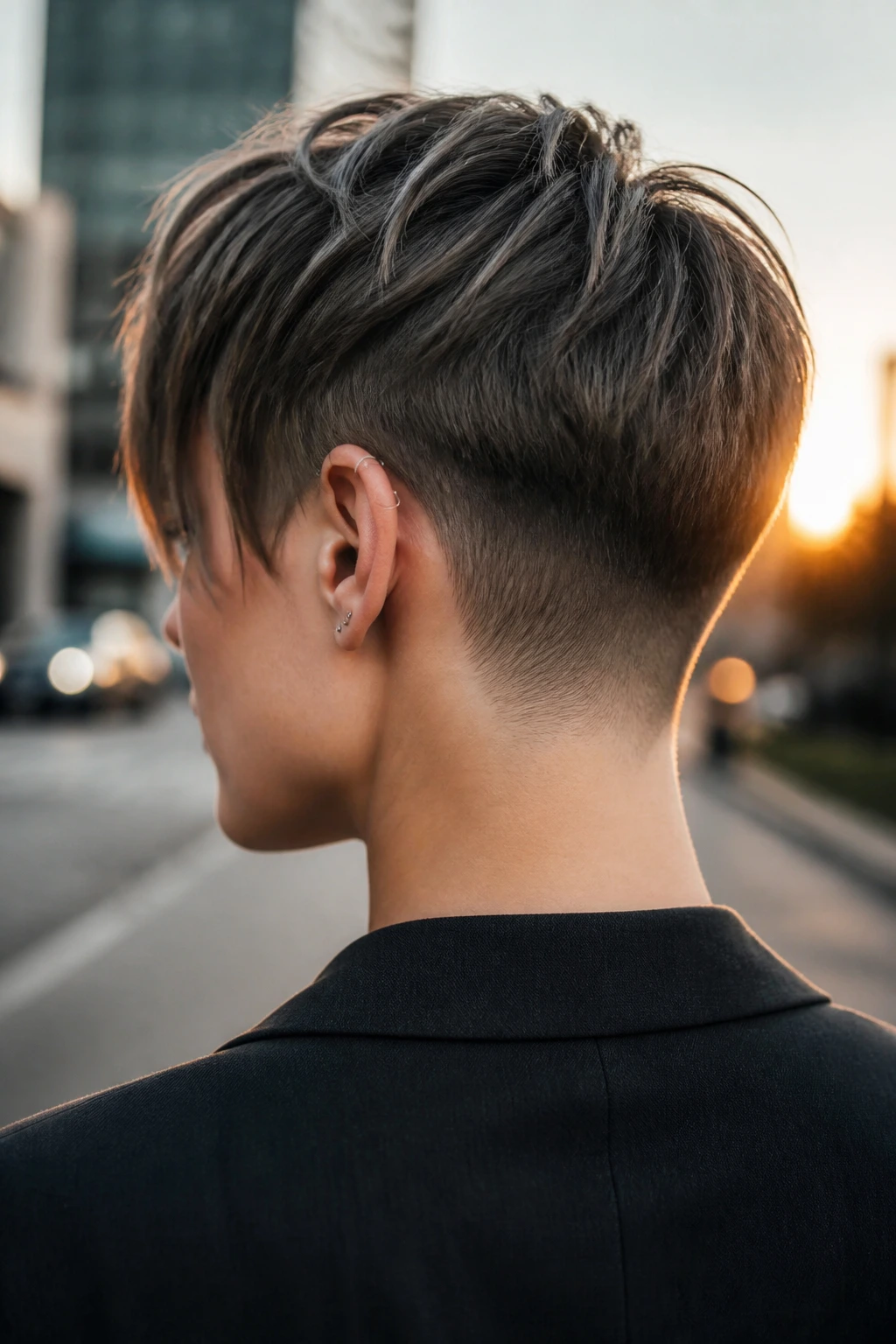
Short queer haircuts work because they turn shape into personality. The line at the nape, the angle of the fringe, the way a fade disappears into the skin, the way curls stack at the crown — all of that reads before the outfit does. That’s the magic, really. The haircut speaks first.
And the nicest part is how much room these cuts leave for change. A pixie can go softer with a side tuck, meaner with a harder part, louder with platinum, or more relaxed with grow-out. Once the shape is right, you get to decide how sharp or soft the rest of the story should feel.
