



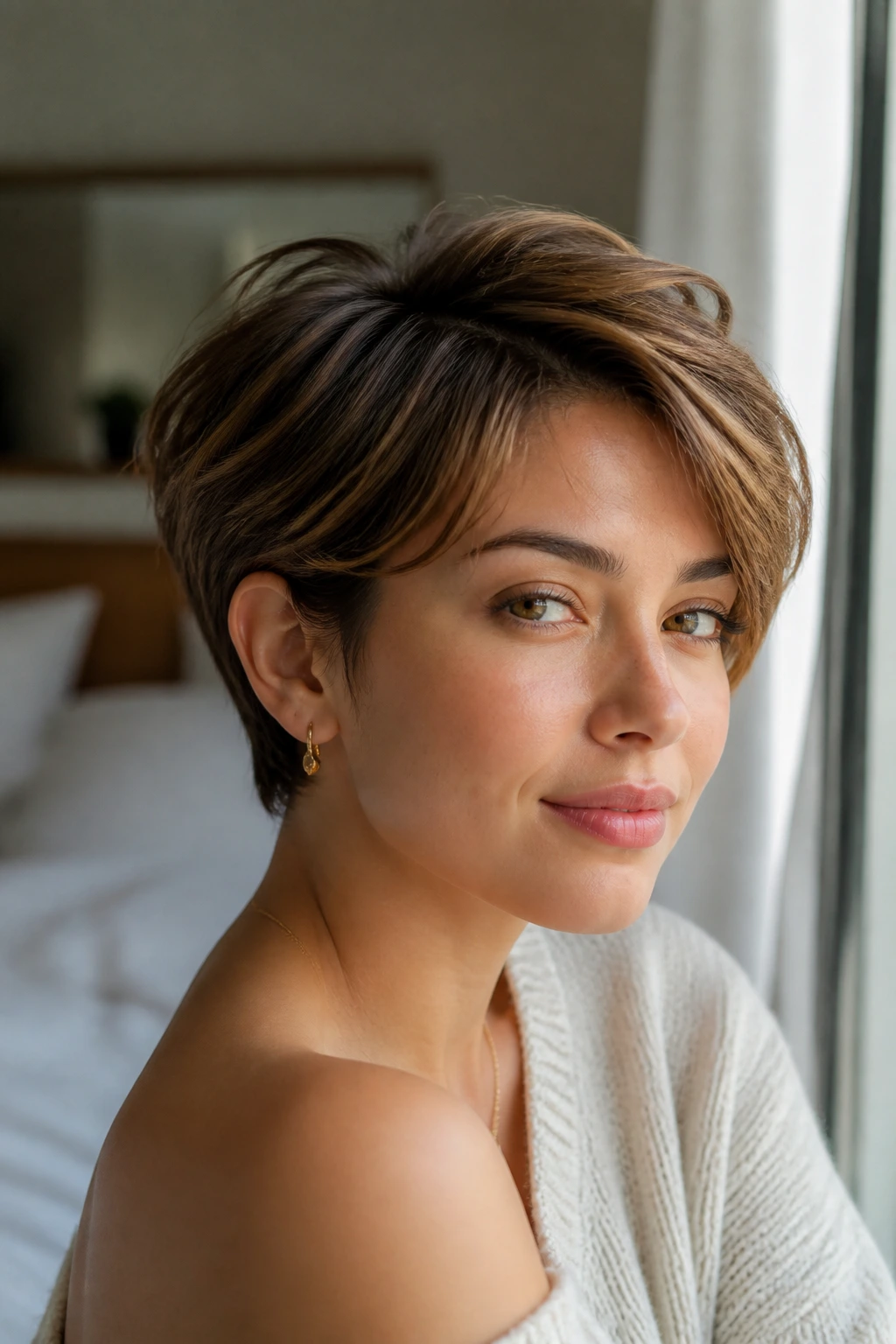
Short hair gets told it has “limited options” by people who never learned how to use a bobby pin. Hairstyle ideas for women with short hair are usually better than the reputation they get: cleaner lines, faster styling, and a lot more shape from a little less work. A jaw-length bob can look razor-sharp. A pixie can look softer, sharper, or more dramatic in the space of five minutes.
The trick is knowing what the cut wants. Short hair does not behave like long hair with the ends chopped off. It shows the part, the crown, the nape, the hairline, and every little decision you make there. That sounds fussy. It is fussy. But it also means one smart twist, one tucked ear, one clean wave, or one pinned ridge can change the whole mood of the haircut.
And that is where the good styles live. Not in trying to force short hair into long-hair shapes. In using the haircut’s own lines — the cheekbone, the jaw, the temple, the nape — and making them look deliberate.
Why These Short-Hair Styles Earn Their Place
-
Fast to build: Most of these looks need a comb, a few pins, or one hot tool pass, not a full morning in the mirror.
-
Length-friendly: The list covers pixies, bixies, bobs, and in-between cuts, so you are not stuck with one exact shape.
-
Texture does the heavy lifting: A bend in the front, a lifted crown, or a tucked side can do more than another round of hairspray.
-
Day-one to day-three friendly: Several of these styles actually get better once the hair loses a little squeaky-clean slip.
-
Accessory-ready: Clips, headbands, pins, and small braids work with short hair instead of fighting it.
-
Low-heat options included: If your hair hates heat, there are still enough choices here to keep things interesting.
1. Sleek Side-Part Bob
A clean side part gives a short bob structure in a way a center part often doesn’t. The line falls across the forehead, skims the cheek, and makes the whole cut look more precise. On jaw-length hair, that tiny shift can turn “just hair” into a deliberate shape.
Why it flatters
The side part creates a little asymmetry, and asymmetry is useful when the hair is short. It keeps the style from sitting too flat and makes the ends look sharper, especially if the bob is blunt. I like this on days when the haircut itself is doing the work and you want the styling to stay out of the way.
A fine-tooth comb, a smoothing cream, and a flat iron with narrow plates are usually enough. Part the hair about 1 inch off center, blow-dry the roots in the direction you want them to live, then bend the ends under just once so they do not flip out in a messy way.
Quick facts:
- Best on chin-length and slightly longer bobs
- Works well with straight or lightly wavy hair
- Looks especially neat with one ear tucked back
- Takes about 10 to 15 minutes once your part is set
One-line tip: Tuck the heavier side behind one ear and leave the other side loose; that little imbalance keeps the style from looking stiff.
2. Textured Pixie With Piecey Ends
A pixie looks flat the second it gets overloaded with product. That’s the whole problem. Piecey ends solve it by separating the top layers so the cut reads as intentional, not sleepy.
Work a pea-sized amount of matte paste between your fingers, then pinch small sections from the crown toward the fringe. Don’t drag the product through everything. That is how pixies turn greasy at the roots and fuzzy at the ends. The better move is to keep the roots light and let the tips carry the texture.
If the cut has a little length on top, lift the hair at the roots with your fingers while blow-drying on low heat. Then stop. Seriously. Too much brushing kills the shape. A pixie usually looks best when it has a bit of separation and a bit of roughness.
This one is especially good for fine hair, because the piecey finish makes the top look fuller without needing a ton of volume spray.
3. Deep Side-Swept Waves
Why do side-swept waves work so well on short hair? Because the wave lands above the shoulder line, where the shape is easy to see, and it never has to compete with too much length. The result feels dressed up without looking overdone.
Use a 1-inch curling iron or wand and wrap sections away from the face, but keep the curls loose. Clip each curl flat against the head while it cools. That part matters. If you skip it, the wave drops before lunch and you are left with a vague bend that looks accidental.
Once the hair cools, brush it out gently with a paddle brush or wide-tooth comb. Push the whole shape to one side and let the front wave skim the temple. The finish should feel soft, not fluffy.
How to wear it
If you want this style to look clean, leave one earring visible and tuck the opposite side behind the ear. It also works nicely with a side part that starts a little farther back than usual. That gives the wave room to fall instead of sitting like a helmet.
4. Finger Waves
Finger waves on short hair have a very specific energy: polished, sculpted, and a little old-Hollywood, but not costume-y if the waves are tight enough. They make a short cut look like it was planned from the start.
The process is slow on purpose. You saturate damp hair with setting lotion or strong gel, then push the hair into S-shaped ridges with a comb and your fingers. Duckbill clips hold each ridge while the hair dries. Don’t rush the drying. Half-set finger waves collapse in the second you touch them.
Key details:
- Start on damp, not dripping, hair
- Use a fine-tooth comb for clean ridges
- Keep the wave lines close to the head
- Let the hair dry fully before removing clips
The shine is half the appeal here. If the hairline is tidy and the waves are smooth, the whole style reads as sharp. It’s a strong choice for formal events, but it also works when you want a short haircut to look more deliberate than usual.
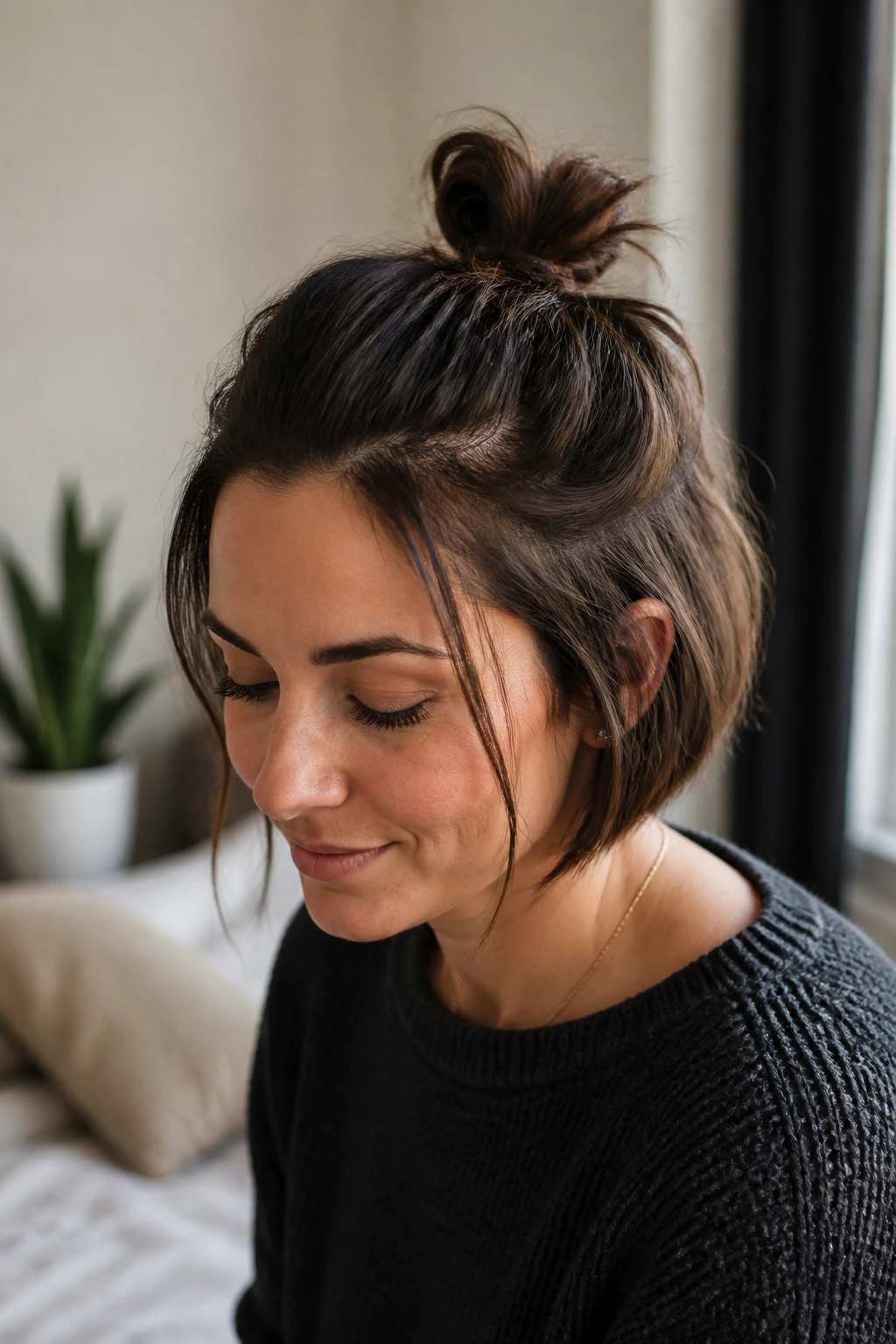
5. Mini Top Knot
A mini top knot is not a full bun, and pretending it is usually makes the style look awkward. On short hair, the knot should sit small and a little imperfect, with the ends tucked under or left as a tiny tail depending on length.
Gather the top half of the hair at the crown, twist it once or twice, and secure it with a small elastic. Wrap the tail around the base if you have enough length, or fold it into the knot and pin it flat. The goal is not height for its own sake. The goal is a neat little bump of shape at the top of the head.
This style works best on second-day hair, because clean hair slips. A touch of dry shampoo gives the strands something to hold onto. If your hair is too short for a true knot, stop at the twist and pin it in place; a tiny wrapped twist often looks better than a struggling bun.
Leave a few face-framing pieces out if the temples are shorter than the rest. That makes the whole thing feel softer and keeps it from looking like a half-finished updo.
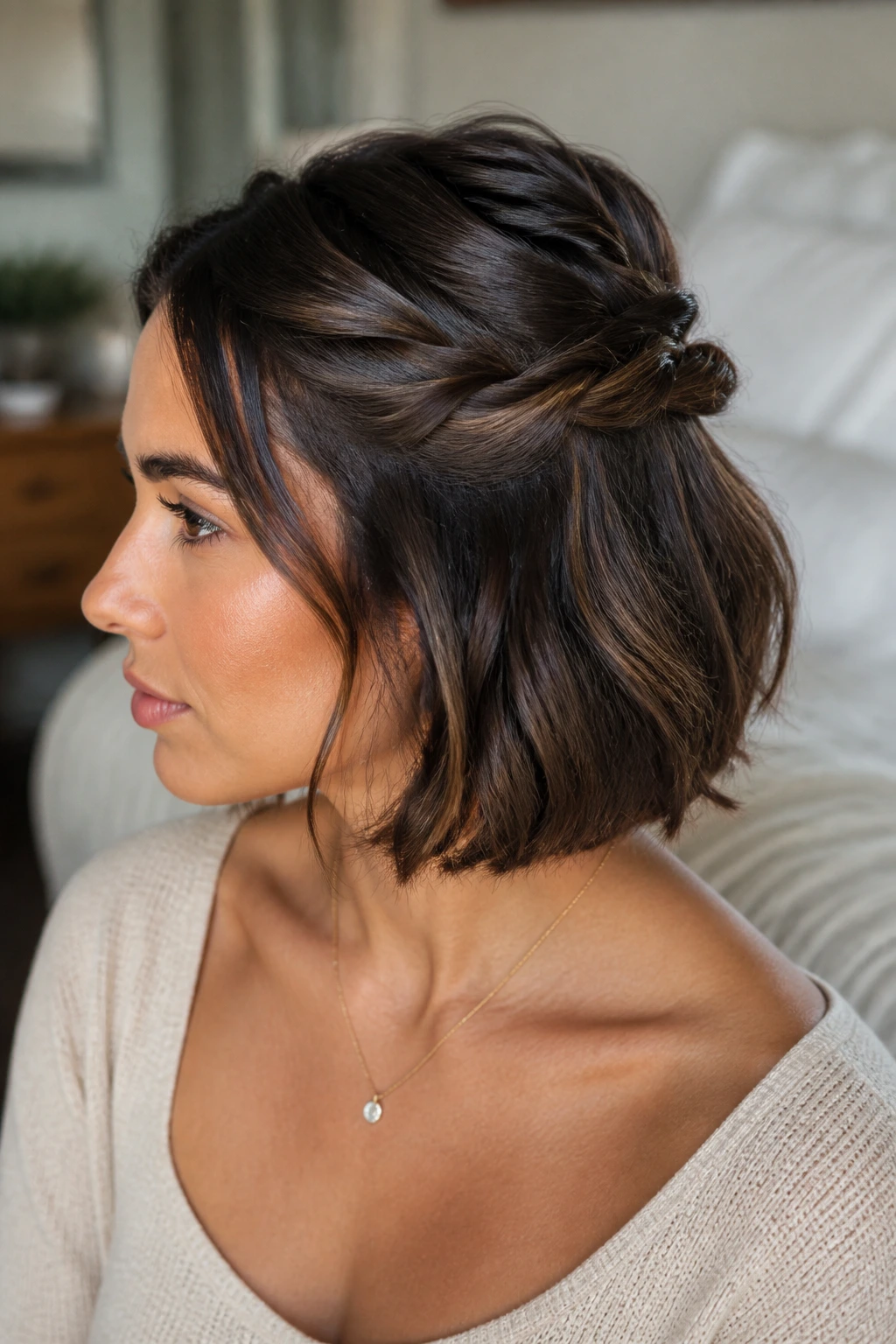
6. Half-Up Twist Back
A half-up ponytail can look blunt on short hair. Twists are kinder. They pull the sides back without exposing every uneven layer around the temples, which is exactly why they work so well on growing-out cuts.
Take a 1-inch section from each temple, twist each piece backward toward the crown, and secure them together with bobby pins in an X shape. Keep the twists snug but not so tight that they bulge. If the hair has a little wave, let that show. It gives the style movement.
This is one of the easiest choices for hair that sits between a pixie and a bob. It also works when bangs are in that annoying in-between stage where they do not stay put on their own. The twist gives them a job.
My preference: keep the pinned section low enough that it does not fight with the crown. A half-up style on short hair looks better when it feels like a small detail, not a fake updo.
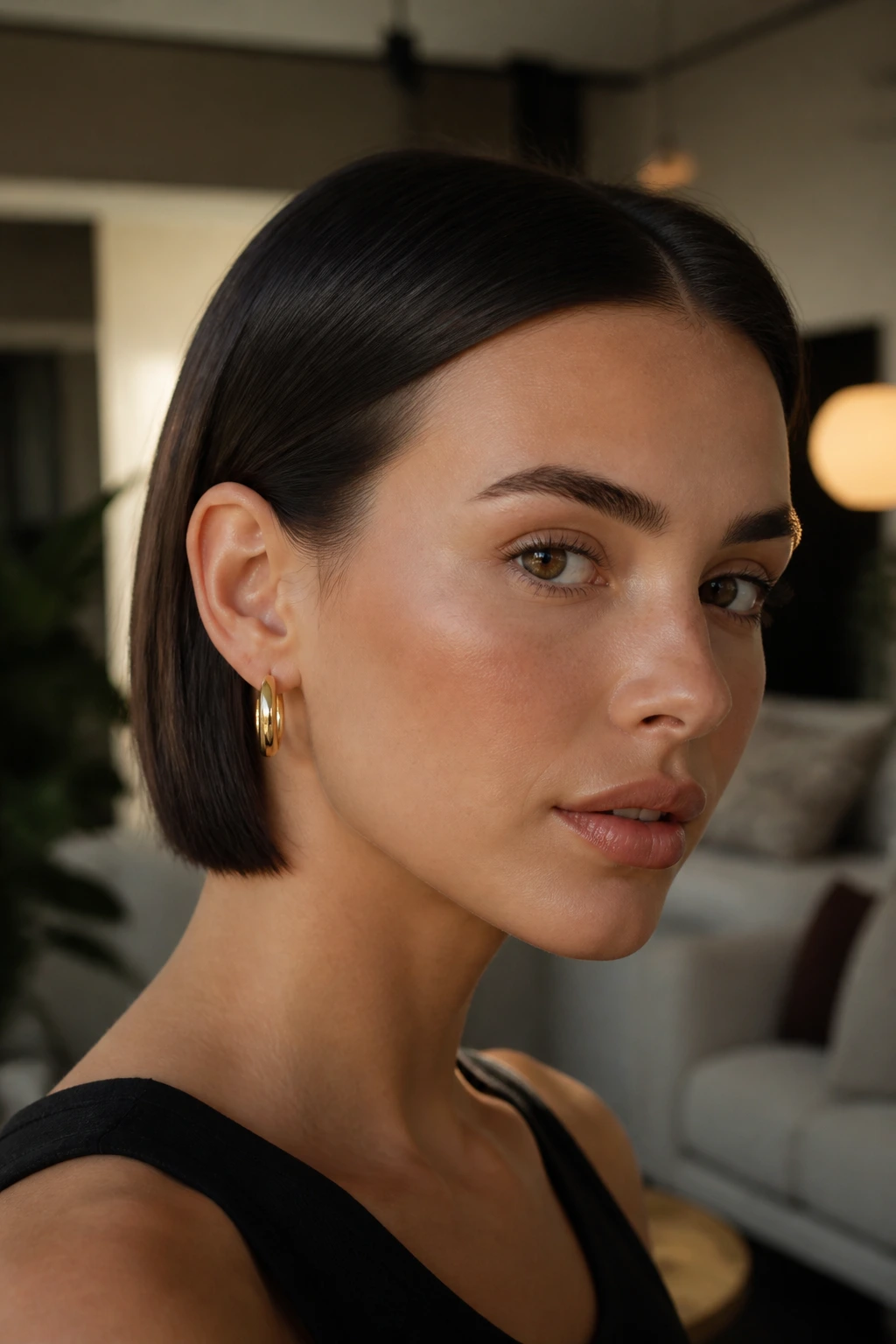
7. Tucked-Behind-Ears Slick Bob
A slick bob with both sides tucked behind the ears has a blunt, clean look that I keep coming back to. It shows off the jawline, the neck, and any earrings you actually want people to notice.
Use a lightweight smoothing cream on damp hair, then blow-dry with a boar-bristle brush so the front sits close to the head. Part it wherever the cut naturally wants to fall, then comb the front sections behind the ears and pin them from underneath if the hair refuses to stay put. That hidden pin makes a difference.
Why it works
This style works because it reduces visual noise. No flyaways fighting the silhouette. No lifted roots where you do not want them. The shape becomes all line and shine, which is useful if your bob is blunt or just a little above the shoulders.
It is one of the few styles that can make short hair look expensive without requiring much skill. That sounds snobby, but it’s true. The finish is clean enough to carry a strong brow, a bold lip, or a high neckline.
8. Faux Hawk With Short Sides
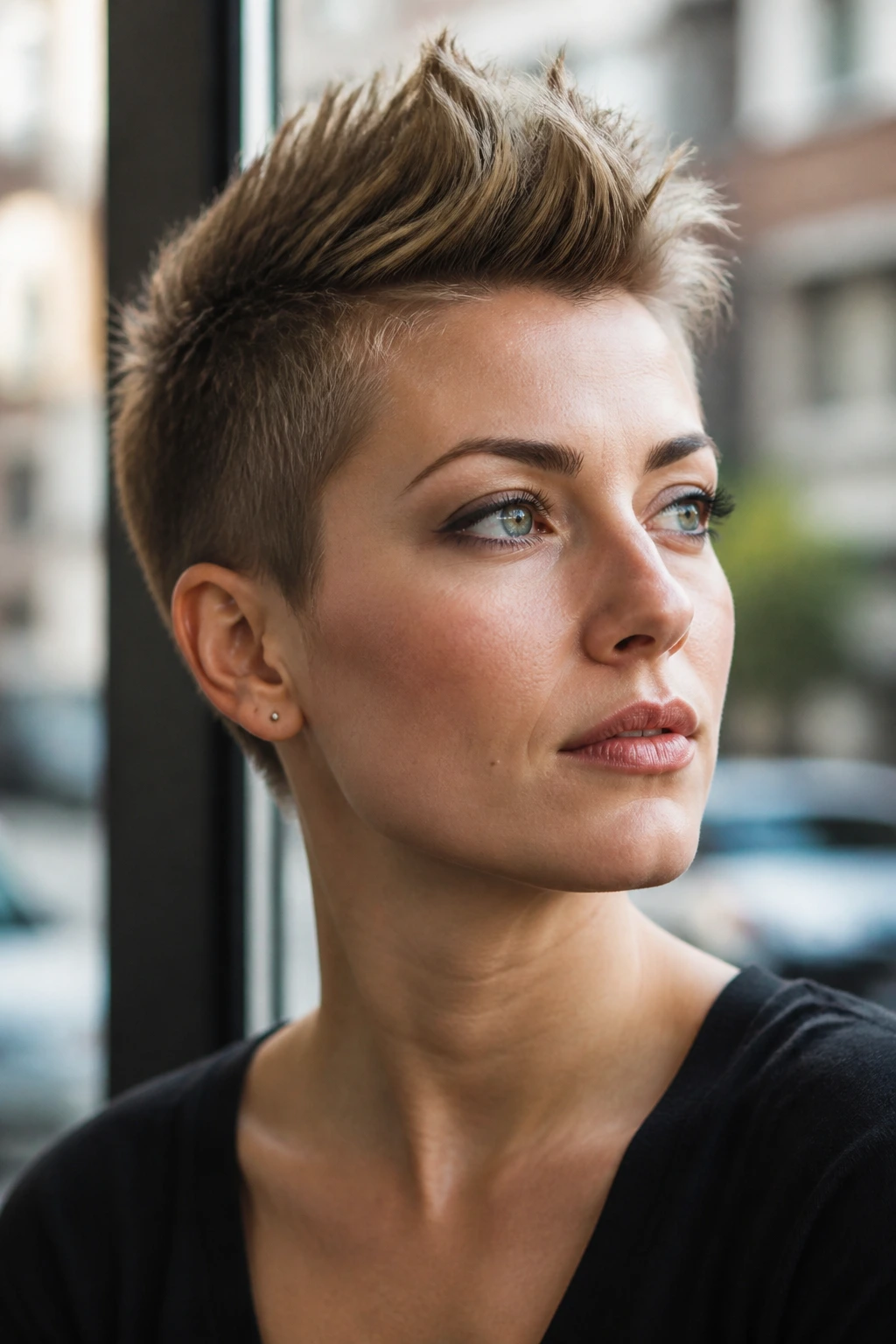
If a pixie ever looks sleepy, a faux hawk wakes it up. Fast. The center ridge lifts the eye upward, while the sides stay tight enough to make the shape read as deliberate instead of messy.
Work mousse through the roots, blow-dry the crown upward with your fingers, then smooth the sides down with pomade or gel. Pin the sides close to the scalp if they keep puffing out. The top should stand up just enough to suggest height, not enough to turn into a costume.
This is especially good for thick or layered hair, because those layers help the ridge hold. Fine hair can do it too, but the lift should stay modest. If the front gets too tall, the style starts to look stiff and loses its shape.
Use this when you want a short cut to feel sharper and a little more modern. It’s not quiet. That is the point.
9. Curved-Under Blunt Bob
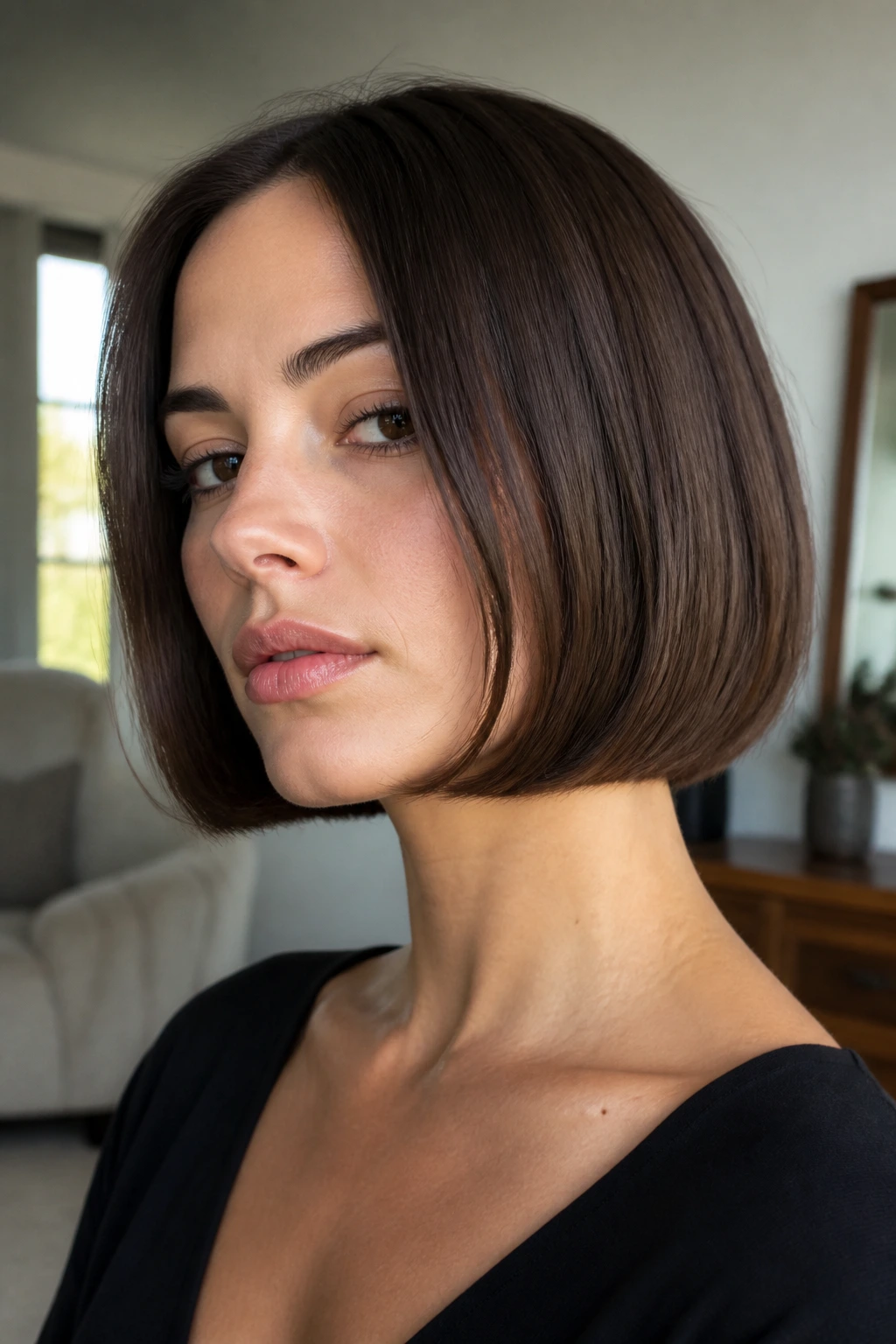
Why does a blunt bob look so finished when the ends curve under by half an inch? Because that tiny bend tightens the edge of the cut and makes the line at the bottom look clean instead of chopped.
Use a round brush or a flat iron with narrow plates to pull the ends under just once. Not twice. Once. Too much bend makes the bob round instead of sharp, and the whole point is to keep the line visible. If your hair is thick, smooth the surface first with a blow-dryer so the iron only has to refine the ends.
How to wear it
This style works with nearly any face shape because the ends frame the jaw instead of sitting around it. It’s a strong office style, but it also looks good at dinner because the shape holds itself without needing much fluff or teasing.
If you want it a little softer, push one side behind the ear and let the other side hang free. That gives the bob a small lopsided feel that keeps it from looking too formal.
10. Headband Tuck
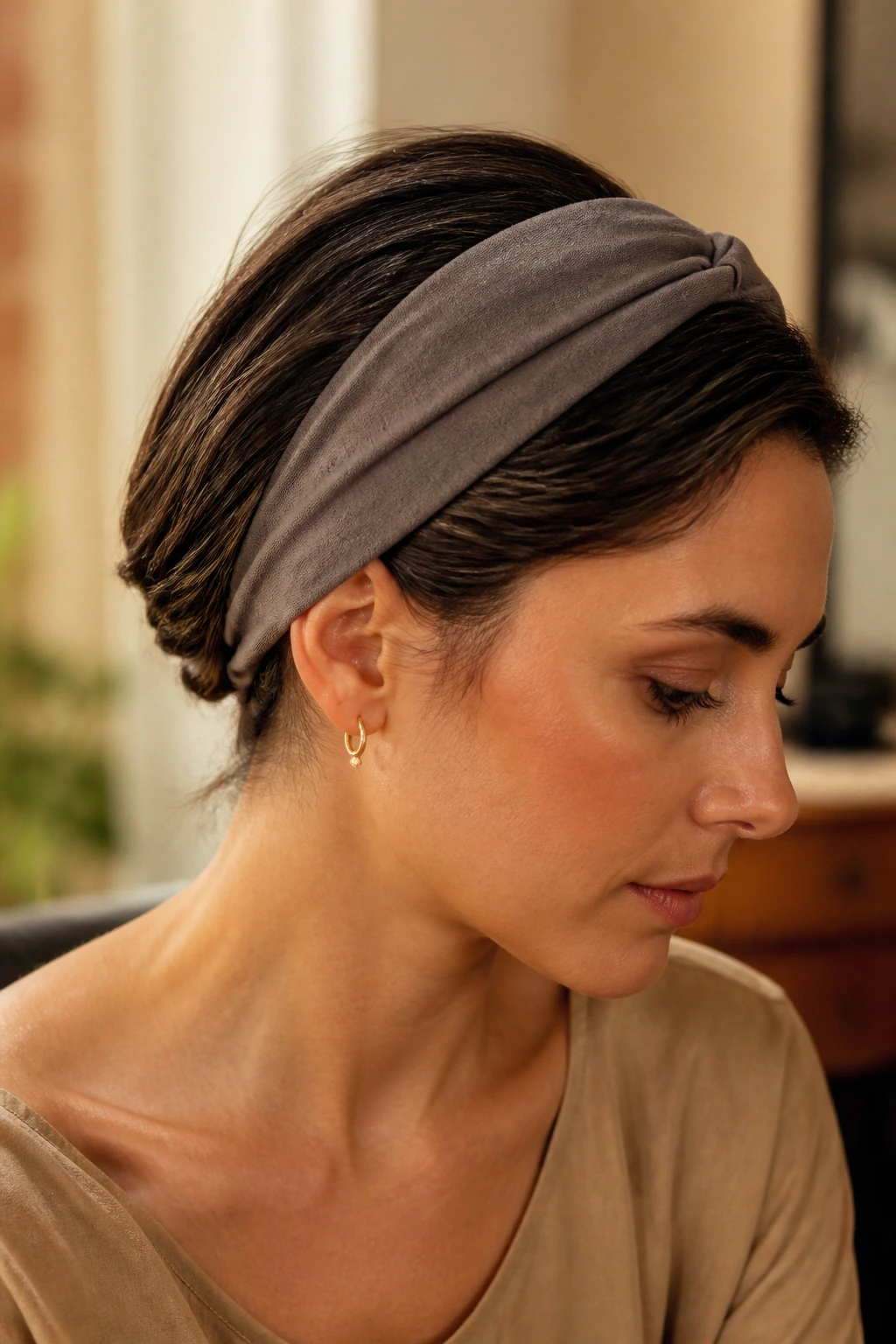
A headband tuck is one of those styles that saves a bad hair day and makes people think you planned the whole thing. It works especially well when the hair is just long enough to tuck under a band but not long enough for a full updo.
Put on a wide, slightly grippy headband, then tuck the lengths up and under the band at the nape. Use a couple of pins if the hair starts to slide. A fabric-covered band gives more grip than a smooth plastic one, and that detail matters a lot on short, slippery hair.
Quick details:
- Best for bobs and grown-out pixies
- Works well with second-day texture
- Tucks better when the ends are lightly curled or bent
- Needs a headband that fits snugly, not one that stretches wide and slides
This style has a neat, tucked-in shape that stays calm even when the rest of the day is not.
11. Tiny Braided Crown
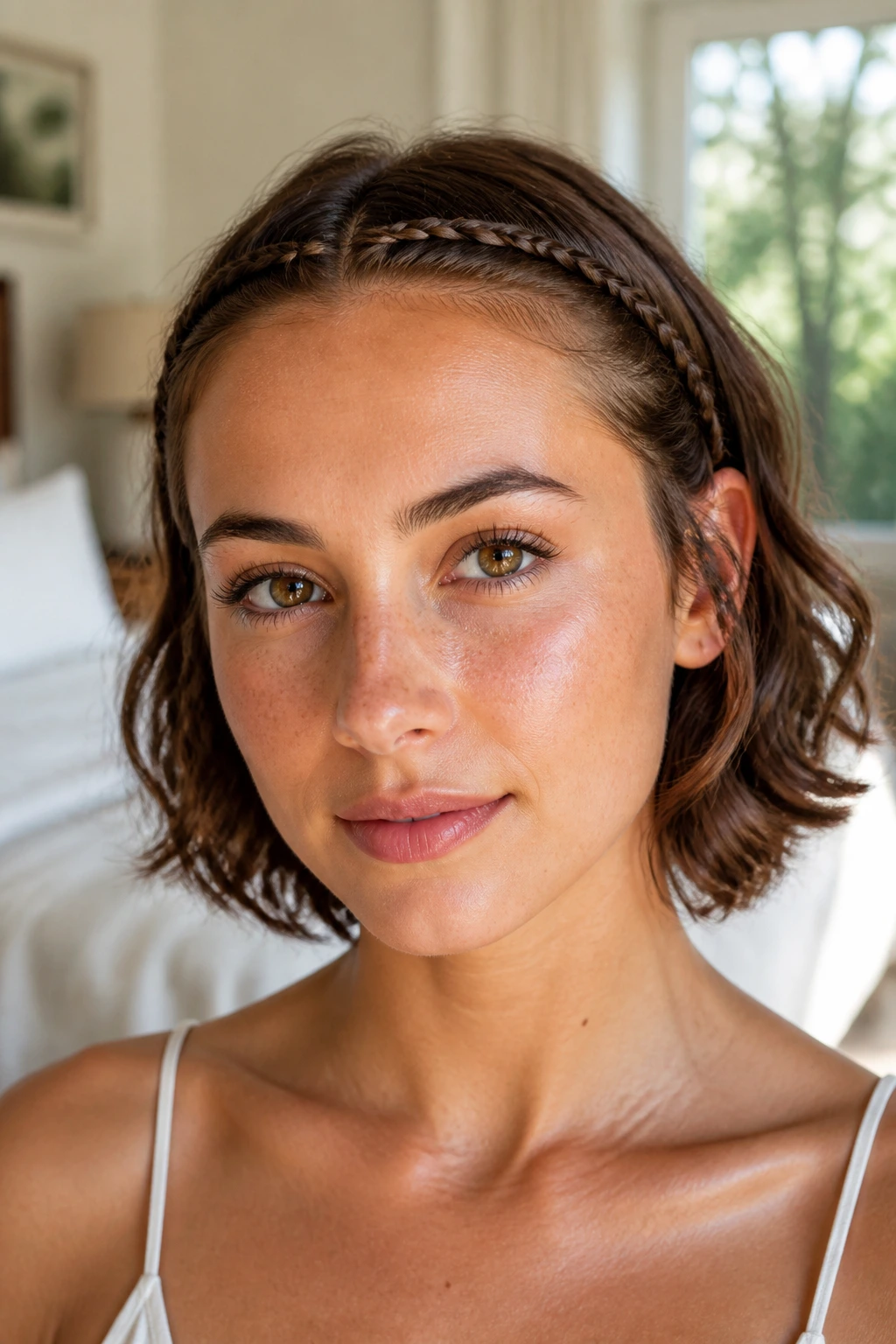
A tiny braided crown is useful when a short cut needs a little decoration but not a full braid-heavy style. The braid can be pencil-thin and still do its job.
Start near one temple, braid a narrow section back along the hairline, and pin it behind the ear or across the crown depending on the length you have. If the cut is very short, two tiny braids on each side often work better than one long braid that runs out of hair halfway through. I like this on grown-out bangs because it gives them a place to go.
Keep the braid small. That is the mistake people make. A braid that is too wide swallows the haircut and makes the rest of the style look thin.
This is also a good choice for straight hair that needs a touch of pattern. The braid gives the eye a line to follow, and short hair always benefits from that.
12. Wet-Look Comb Back
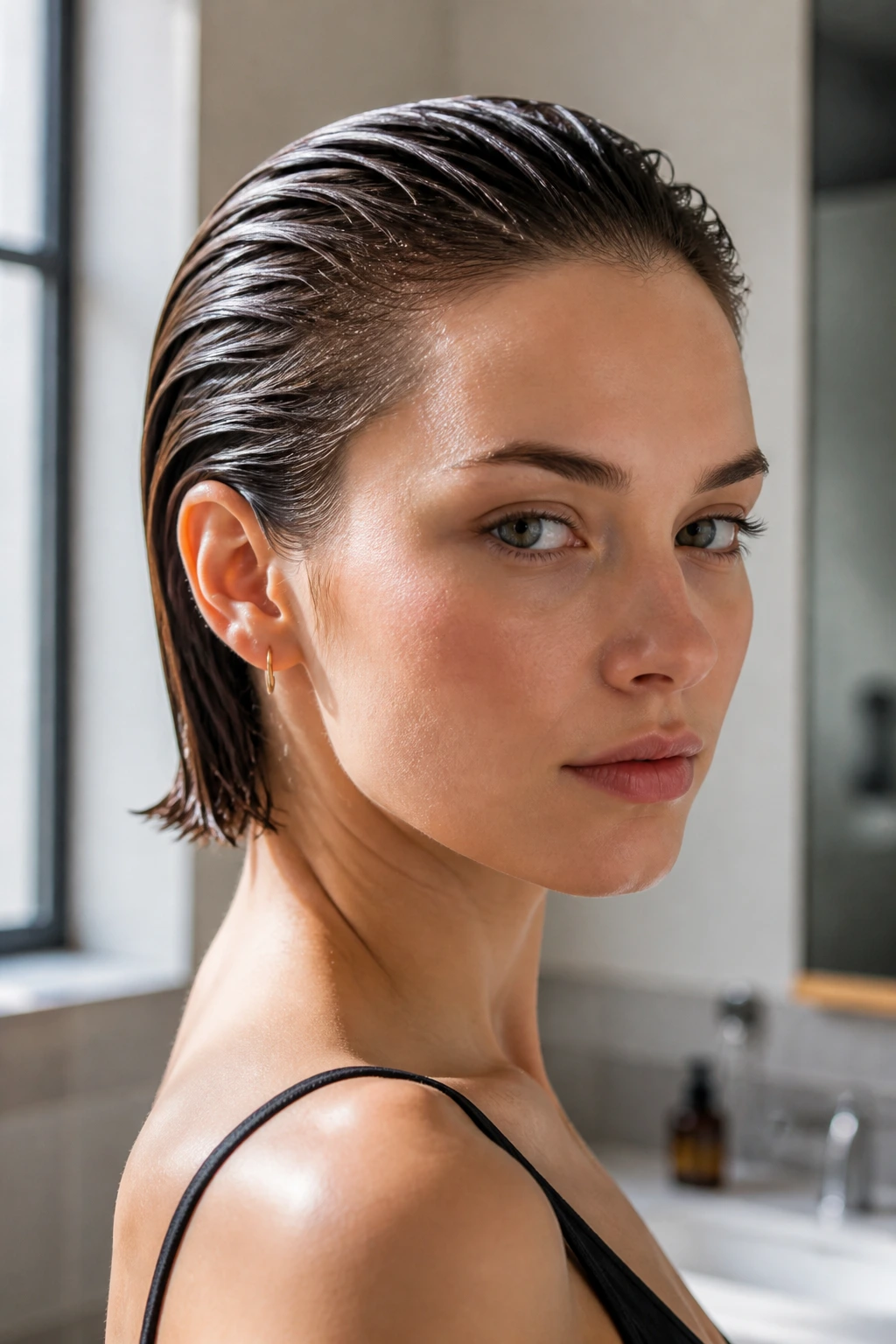
Unlike a blowout, a wet-look comb back starts by looking damp and staying that way on purpose. The finish is sleek, glossy, and close to the head, which makes it one of the easiest ways to make short hair look bold without much length.
Apply gel to damp hair from the roots through the mid-lengths, then comb everything straight back or slightly off-center. Use a wide-tooth comb if the hair is thick, or a fine-tooth comb if you want a tighter finish. Leave it alone while it dries. Touching it too much creates rough patches at the surface.
What makes it different
This style is best for pixies, bixies, and bobs that have enough length to smooth backward. It is also one of the few styles that can look cleaner on day two than on day one, because the roots have a little less slip.
If baby hairs are part of your hairline, smooth them with a toothbrush sprayed lightly with gel. That small move stops the front from fuzzing out. Pair this style with a sharp neckline or strong earrings, because the hair itself already does the visual work.
13. Soft Barrel-Curled Bob
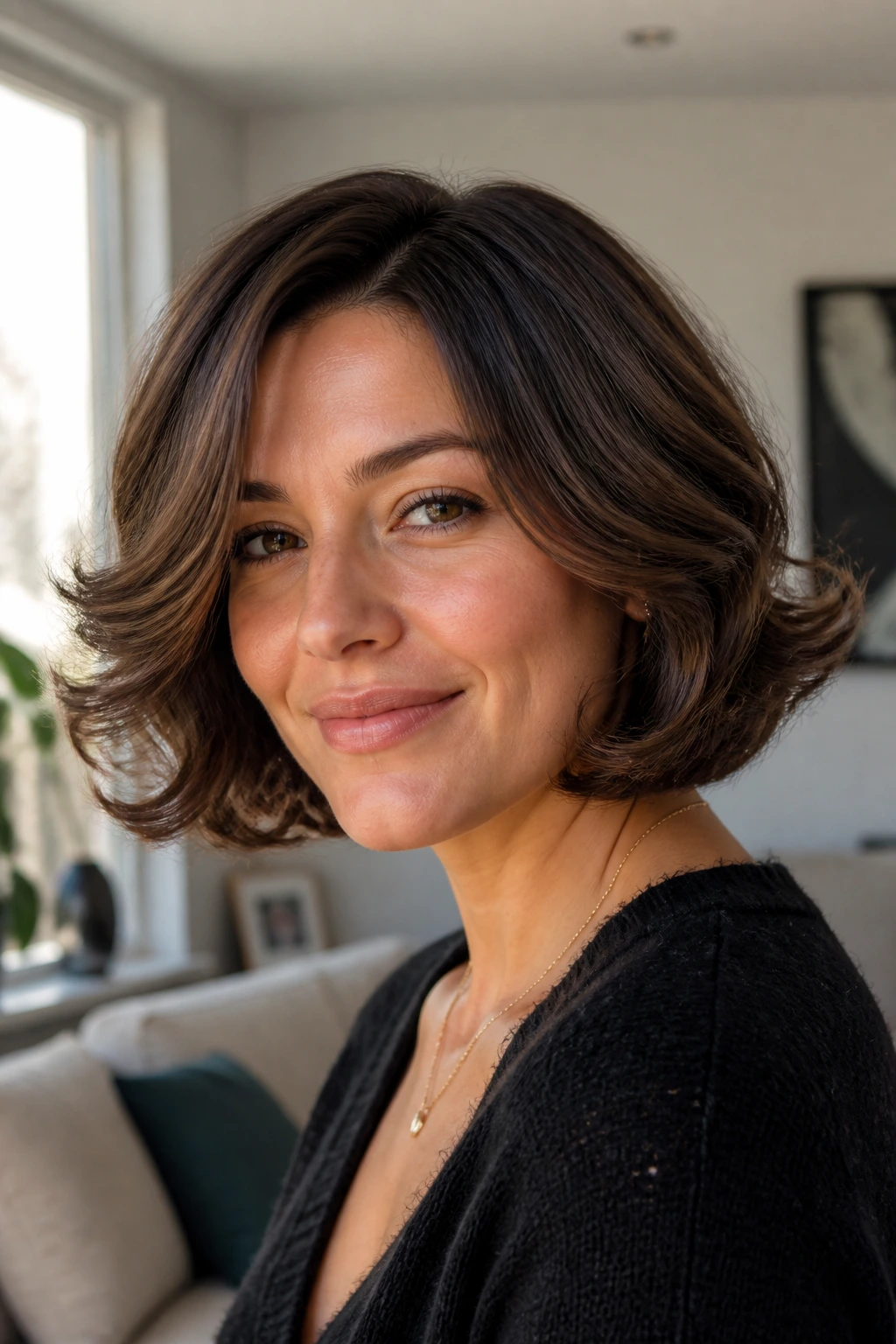
A soft barrel curl gives short hair movement without turning it into a full wave set. The ends stay visible, the body lifts a little, and the whole bob looks airier.
Wrap 1-inch sections around a curling iron, alternating direction every other piece so the curls do not collapse into one big pattern. Let them cool, then brush the curls out just enough to soften the shape. If you brush too much, the bob turns puffy. Stop when the curl becomes a bend with a little shine.
Why it flatters
The softer curl opens the cut up, especially if the bob is blunt or slightly layered. It adds width in a controlled way, which can balance a narrow jaw or a long face. If your hair has highlights, this style shows them off because the bends catch light on different strands.
I’d keep the ends a touch straighter on this one. A little straightness at the bottom keeps the curl modern.
14. Claw-Clip Twist
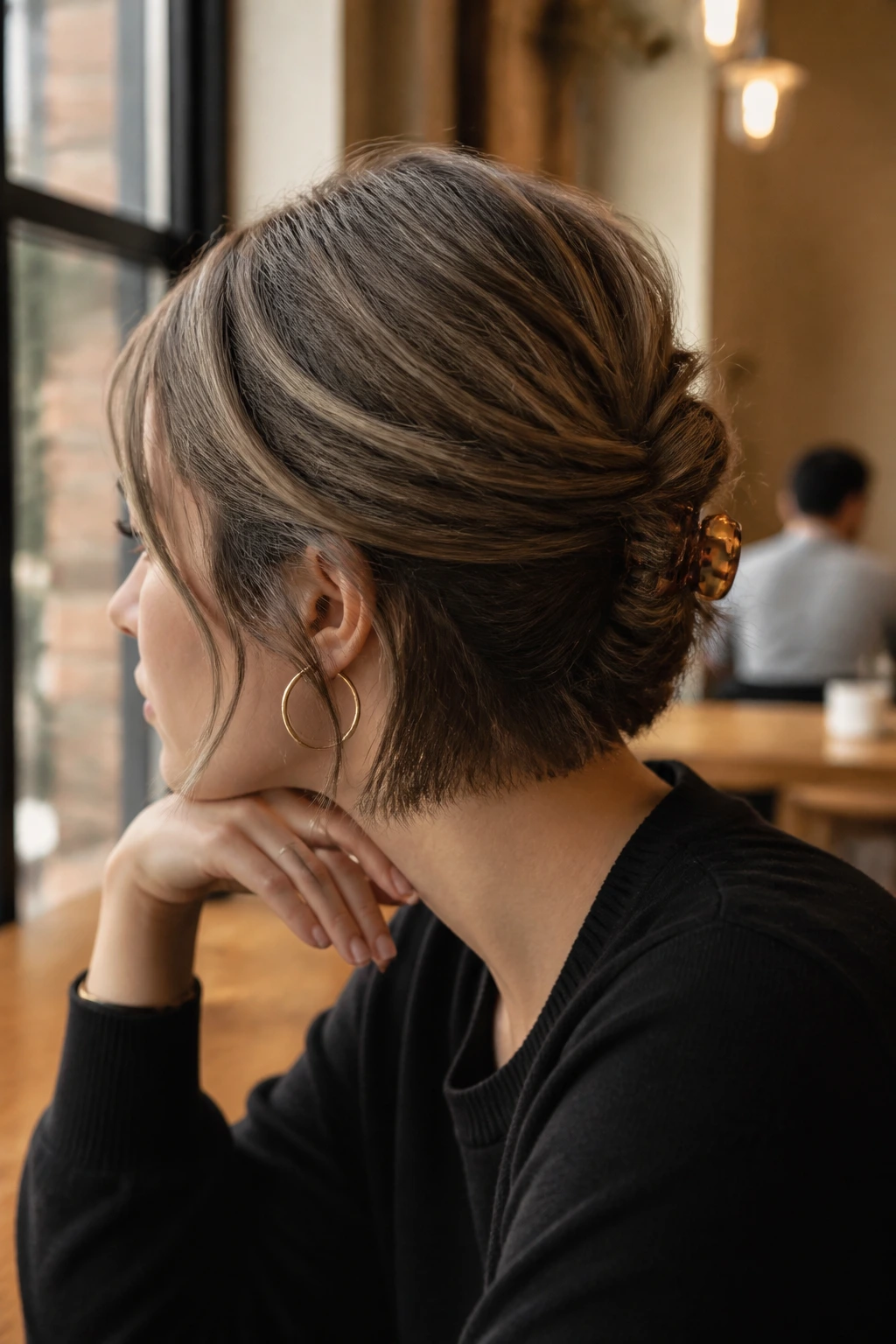
A small claw clip can do more for short hair than a dozen pins if the clip actually fits the amount of hair you have. The trick is choosing a clip that closes fully around the twist instead of sitting on top of it like a decoration.
Gather the hair low at the back, twist it upward, fold the twist in half if needed, and clip it in place. Let the ends stick out a little if the hair is too short to tuck completely. That unfinished edge can look better than forcing the twist into a shape it does not want.
This is a strong errand-day look, but it also works for desk days when you need the hair off your neck. It’s especially useful on hair that is too short for a ponytail but too long to wear loose without constant touching.
A mini clip is usually better than a big one. Big clips slide on short hair. Small clips grip.
15. Pin-Curl Set
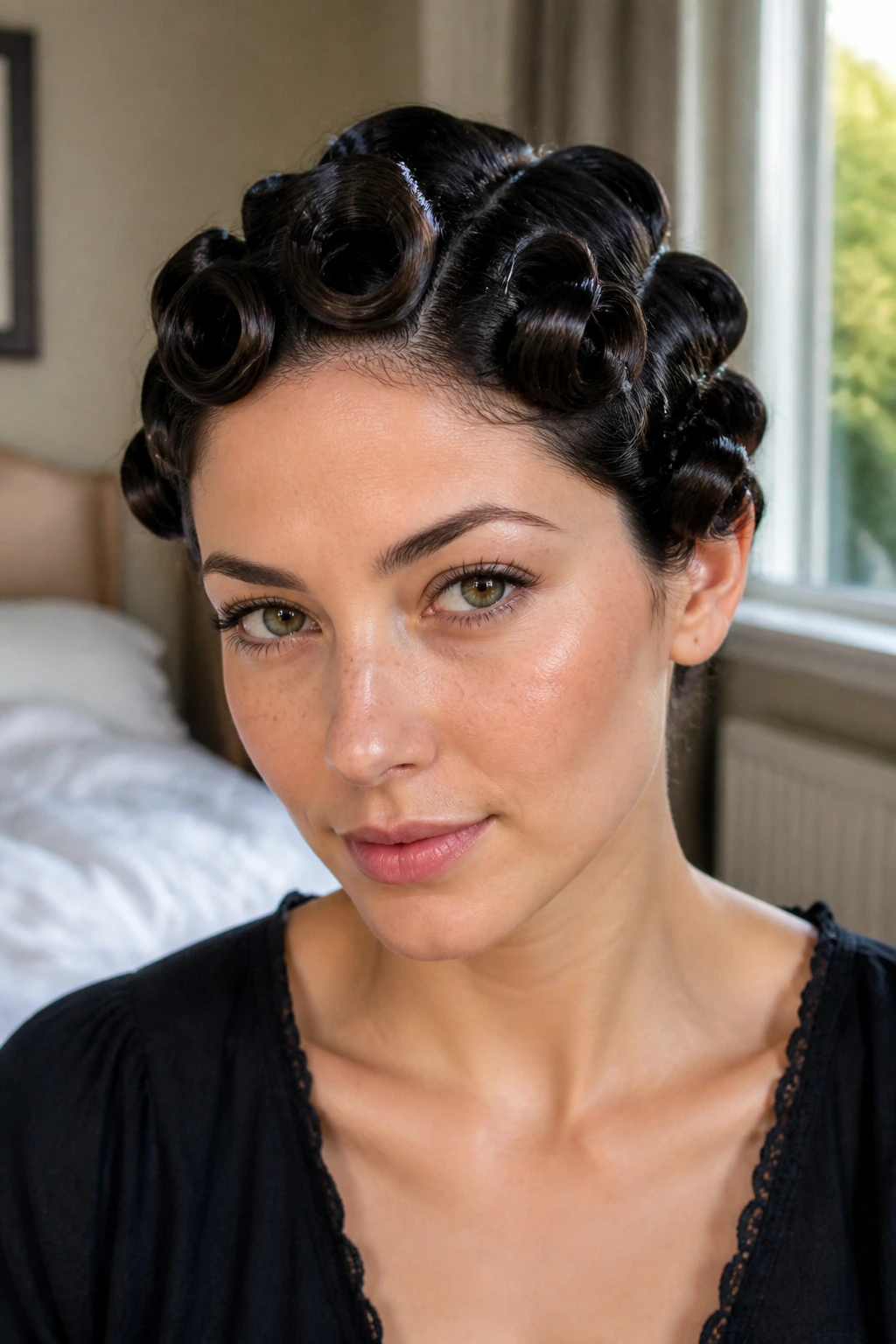
Want waves that come from setting, not from wrestling with a hot tool? Pin curls are the answer. They take longer up front, but the shape lasts in a way curling-iron bends often don’t on short hair.
Section damp hair into 1- to 1½-inch pieces, roll each section flat against the scalp, and pin it with duckbill clips or flat clips. Let it dry completely before taking it down. If the hair is still cool and damp at the center, the set will drop much sooner than you want.
How to wear it
Pin curls can be brushed into soft waves or left more defined, depending on how much you separate them. Short hair usually looks best when the result is a little controlled and not too fluffy. Use your fingers first, then a wide-tooth comb only if the shape needs softening.
This is a good overnight choice. It also works for people who want a polished wave pattern without a curling iron fighting the length.
16. Tousled Shaggy Bob
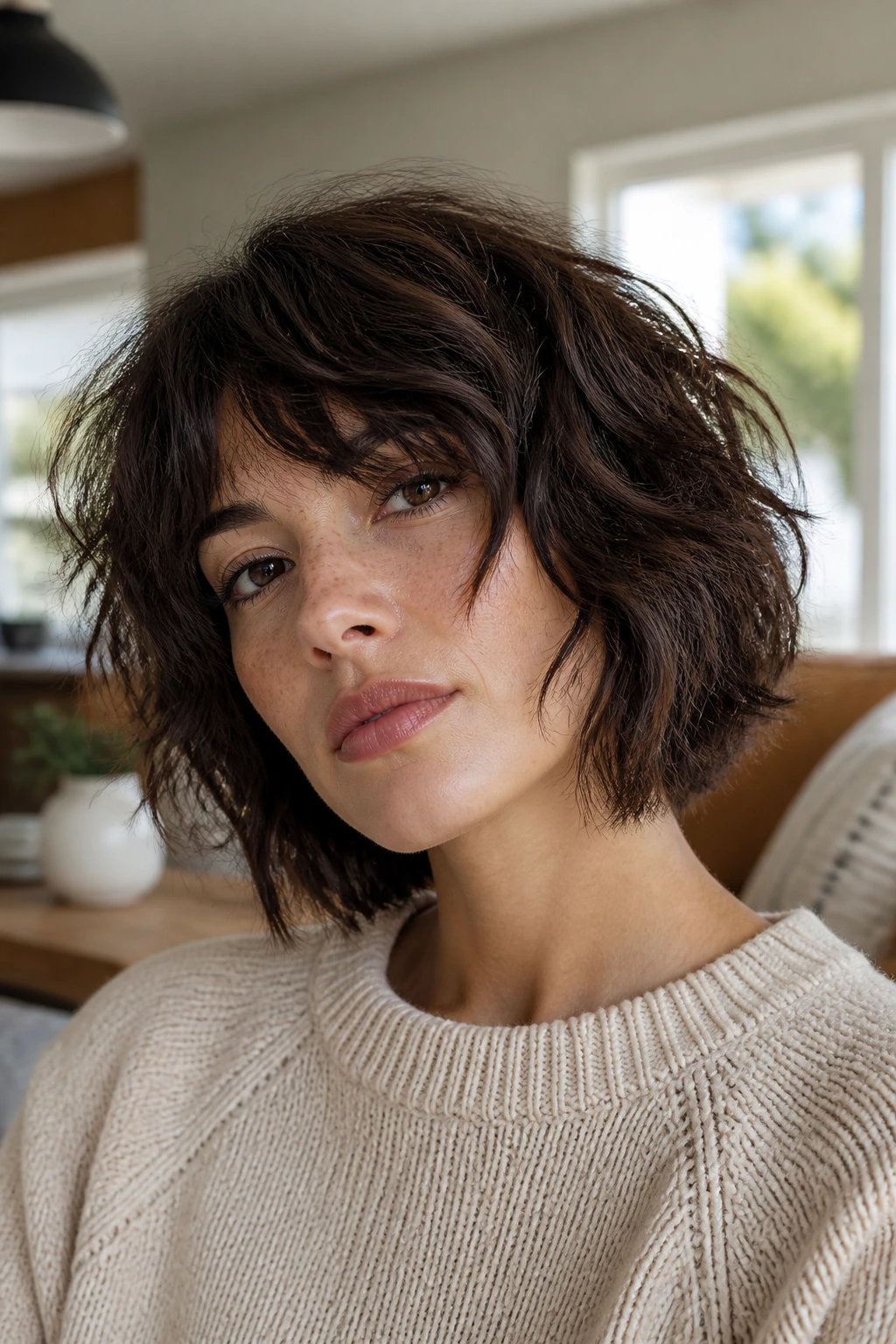
A shaggy bob works best when you stop trying to make every piece behave. The layers are already doing half the job, so the styling can stay loose and a little rough around the edges.
Work mousse through damp hair, scrunch the ends upward, then rough-dry with a diffuser until the hair is about 80 percent dry. After that, use a texture spray at the ends and crown, then separate a few pieces with your fingers. A brush usually ruins this look. Fingers keep it more natural.
This style is great if your bob has layers that hit different lengths around the cheek and jaw. It also saves time on mornings when you do not want to smooth every strand into submission. The finished shape should feel touchable, not crunchy.
I like this one most when the cut already has movement. It’s not a rescue plan for a heavy, one-length bob.
17. Low Side Pin Sweep
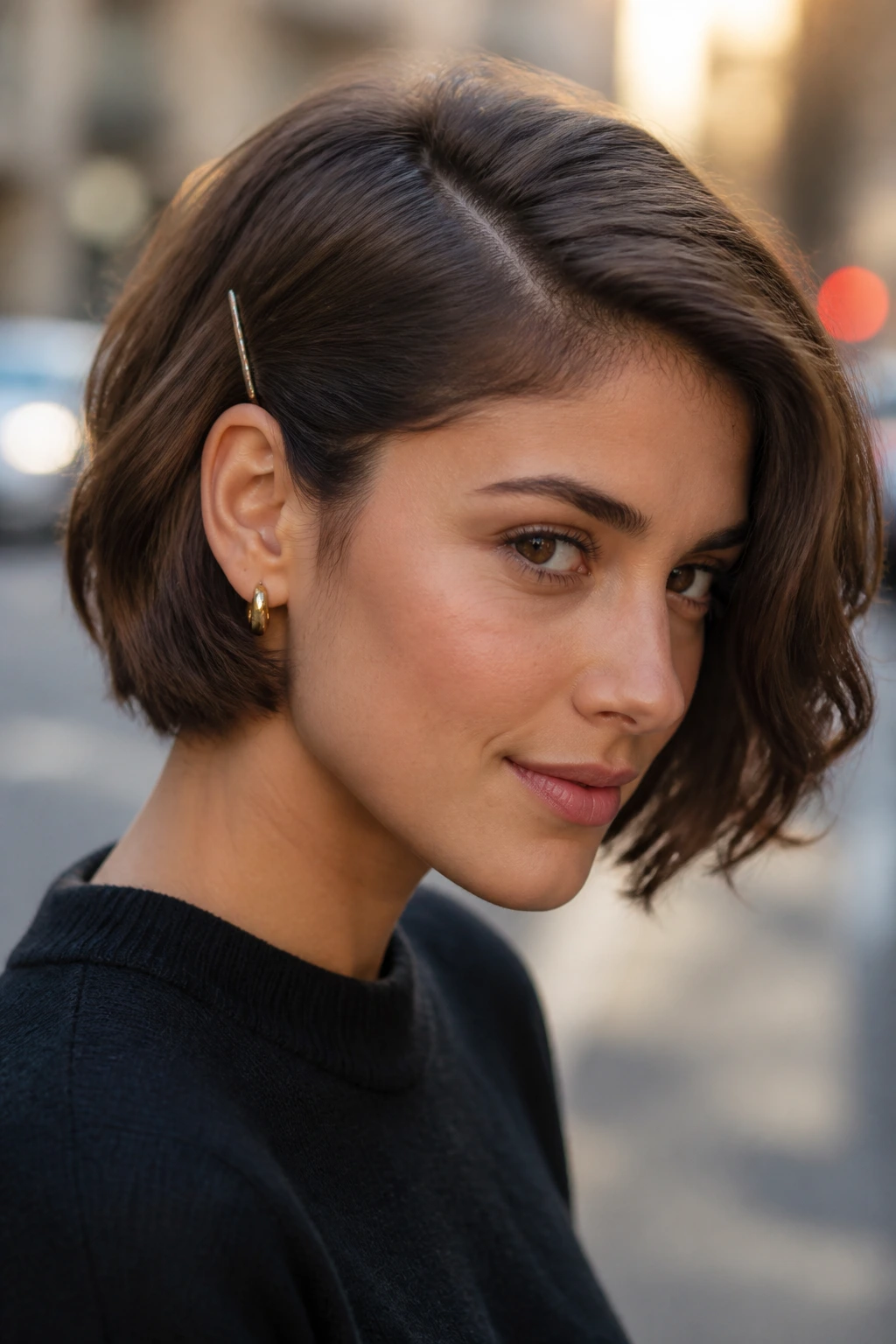
A low side pin sweep gives short hair a softer, almost slanted shape without needing a full curl set. Sweep the hair to one side, pin it low and close to the scalp, then let the opposite side drape around the cheek.
Use two or three bobby pins crossed over each other so the style stays flat. Hide the pins under the top layer, not on top of it. That is what keeps the look neat. If the hair is fine, a little dry shampoo at the roots helps the sweep hold its direction.
This one is useful when you want something elegant but not stiff. It pairs well with earrings because the sweep keeps the neck and jawline open.
The part should feel slightly off-balance. If it sits too centered, the whole style loses its shape.
18. Front Pompadour Lift
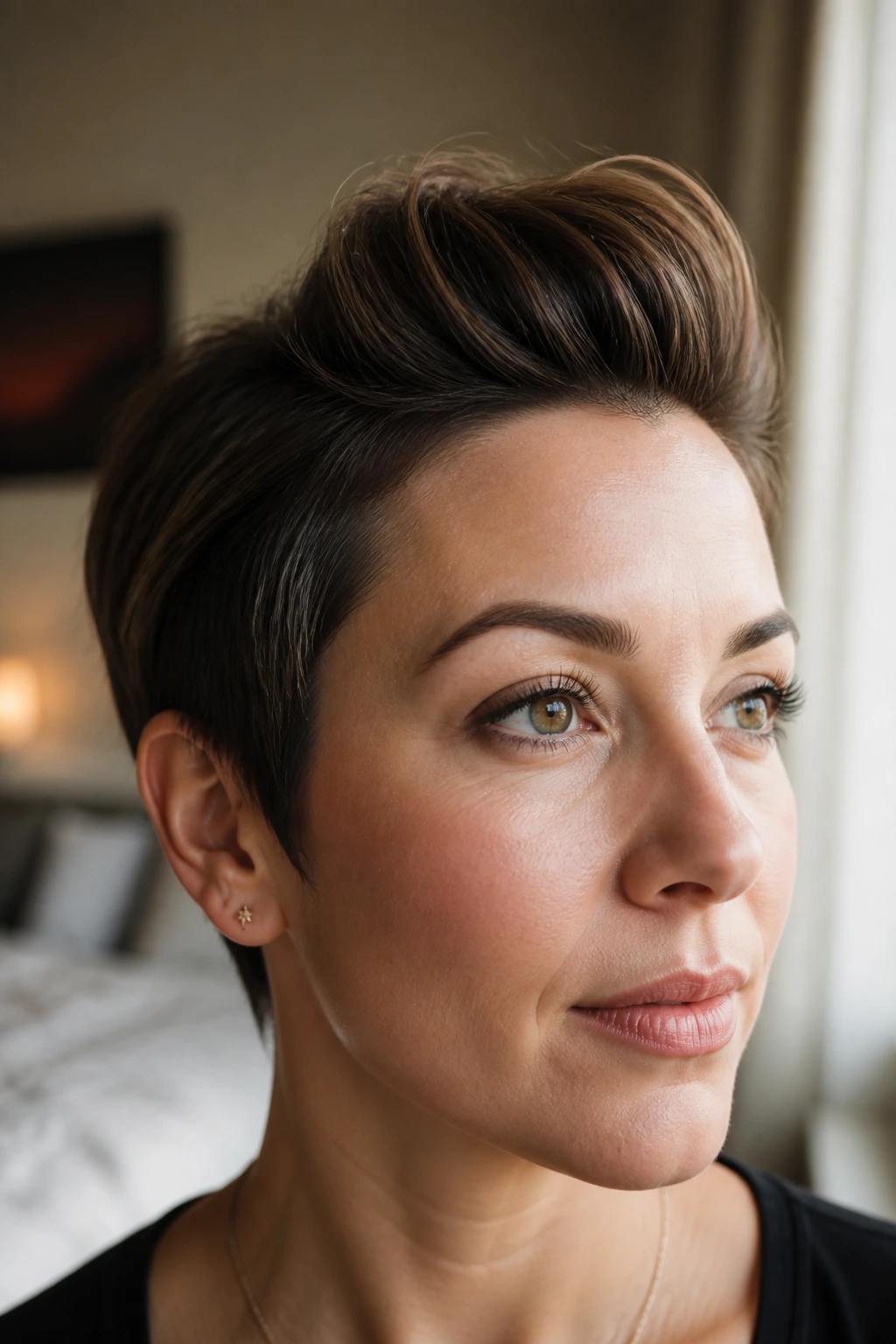
Unlike a full quiff, a front pompadour lift only raises the front section and leaves the rest of the cut calm. That makes it easier to wear on short hair, and a lot less likely to collapse.
Backcomb the roots at the front lightly, smooth the top layer over the tease, then pin the section underneath so the lift stays in place. The lift only needs to rise 2 to 3 inches. More than that and it starts to look like a stage look instead of a hairstyle.
This is one of the best fixes for flat roots or short fringe that refuses to stay low. It adds height where the eye goes first and lets the sides stay close to the head.
Use dry shampoo first if your hair is slippery. It gives the lift something to grab.
19. Micro Braids or Twists Accent
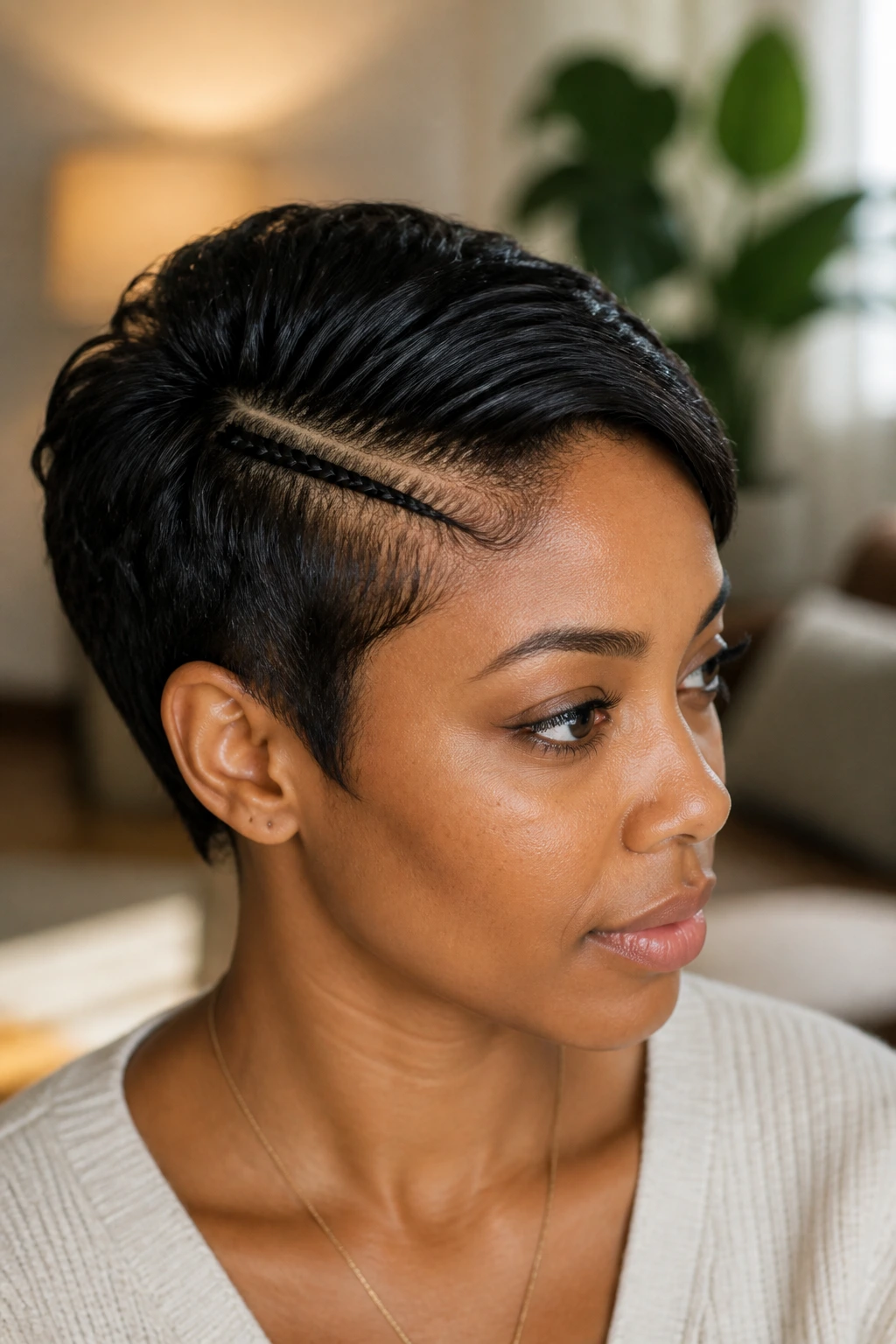
A tiny braid or twist along the part or temple can change the whole feel of a short haircut. The detail is small, but that’s the charm. It gives the haircut a line to follow, which short hair always appreciates.
Why it works
A braid that is no thicker than a shoelace usually looks best here. Bigger braids eat up length and make the rest of the haircut seem thinner. Keep the accent narrow, pin the end flat, and let it disappear into the rest of the style.
This works especially well on second-day hair, or on cuts that are growing out around the face. It also gives straight hair a little pattern without needing curls, clips, or heat. If you want the braid to stand out more, rub a tiny bit of pomade between your fingers and smooth the surface before braiding.
Quick facts:
- Good for pixies, bobs, and grown-out bangs
- Takes about 5 to 10 minutes
- Works with one braid or two slim twists
- Best when the braid stays close to the scalp
One-line tip: Place the accent where the eye naturally lands — along the part, at the temple, or just behind the ear.
What Short Hair Changes About Parting, Pins, and Hold
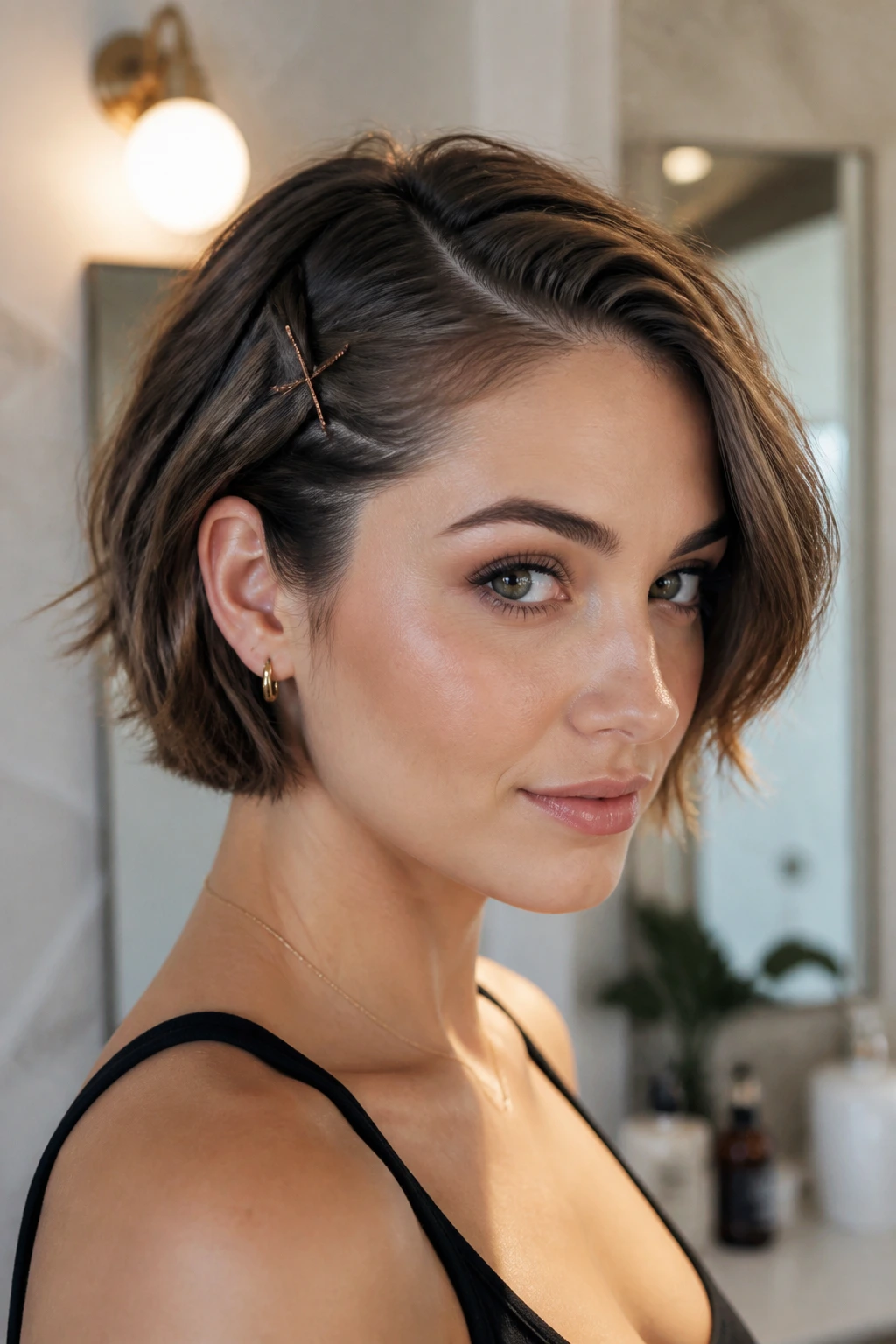
Short hair rewards precision. A part that is a little too far off center can tilt the whole haircut. Pins that are too long poke out. Products that are too heavy sit on top instead of moving with the cut. That is why short styles need a different kind of attention than long ones.
The crown matters more
On short hair, the crown is a huge part of the silhouette. If the top is flat, the style can look tired even when the ends are perfect. A quick root lift with a blow-dryer, a little dry shampoo, or a bit of mousse at the base does more for the shape than a heavy finish spray ever will.
Pins need to cross, not just sit there
One bobby pin often feels like it should be enough. It usually is not. Cross two pins in an X when you are holding back a twist, a braid, or a tuck. That makes the style stay put without needing to be crammed tight enough to hurt.
Texture has to show up early
If you want waves, bends, or grip, put the texture in before the hair dries completely. Short hair sets quickly, and once it cools into the wrong shape, it can be annoying to fix. That’s why a lot of these styles either start damp or rely on a quick heat pass followed by cooling time.
The nape matters too. A messy back can ruin an otherwise clean front. Check it in a mirror, always. The back of a short haircut is too visible to ignore.
Essential Tools for These Hairstyles
-
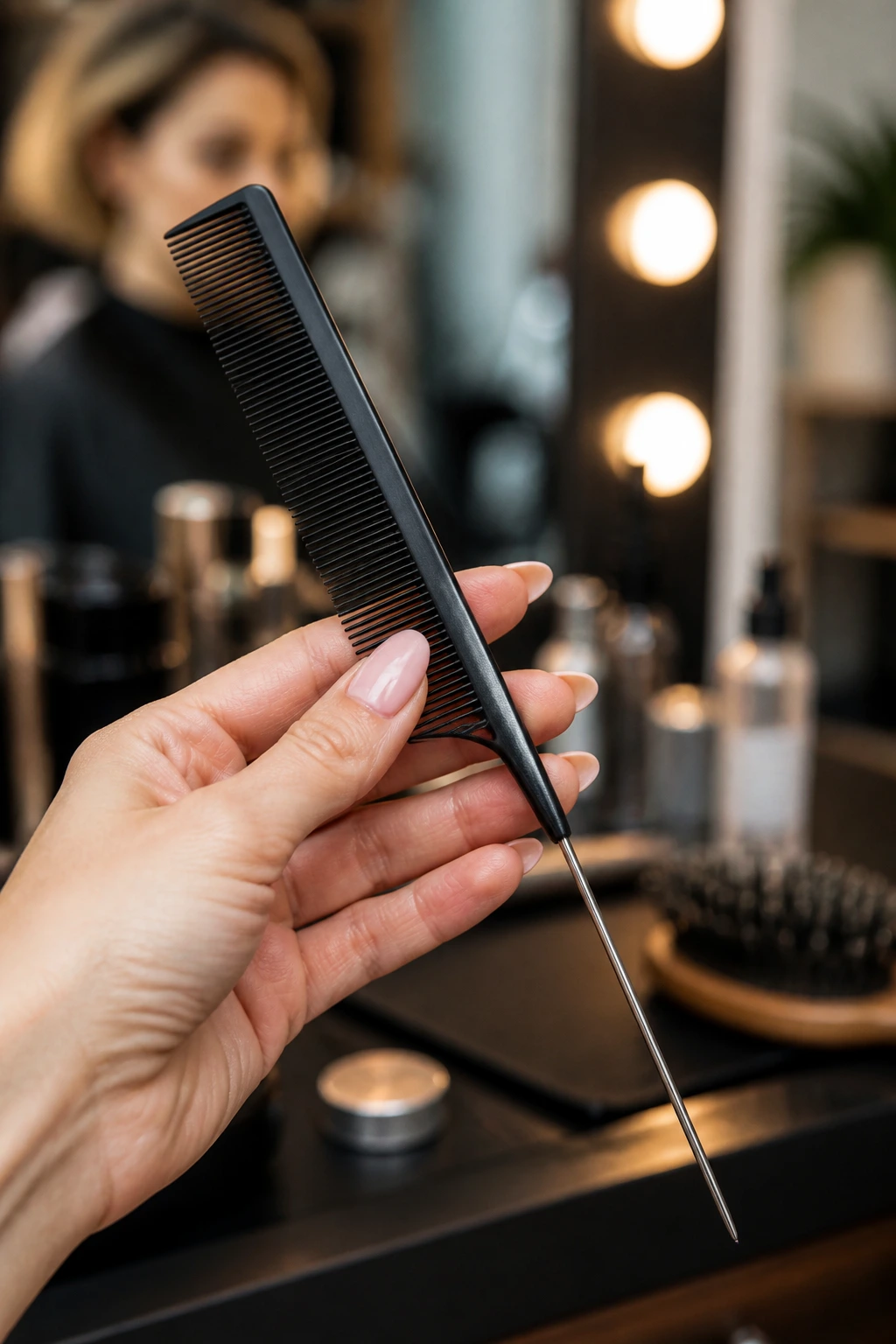
Fine-tooth tail comb — Best for crisp parts, wave ridges, and small braid sections.
-
Boar-bristle brush — Smooths short layers close to the scalp without making the hair look fluffy.
-
1-inch curling iron or wand — The most useful barrel size for bobs, side waves, and soft bends.
-
Narrow flat iron — Easier to use on short ends, pixies, and face-framing pieces than a wide iron.
-
Mini and standard bobby pins — Mini pins disappear better in short hair; standard pins hold heavier twists and waves.
-
Small clear elastics — Useful for mini top knots, half-up twists, and sectioning small braids.
-
Mini claw clip — A better fit for short hair than a full-size clip that slips off the twist.
-
Texturizing spray — Gives grip to bobs, pixies, and tucked styles when the hair is too soft.
-
Dry shampoo — Helps with hold at the roots and cuts down on slip from clean hair.
-
Strong-hold hairspray — Useful for waves, finger waves, and pin curls that need to stay in place.
-
Heat protectant spray — Worth using every time the iron comes out. Short hair burns faster because the ends are so exposed.
-
Satin scarf or bonnet — Keeps pinned and waved styles from getting crushed overnight.
Product Picks That Actually Help Short Hair
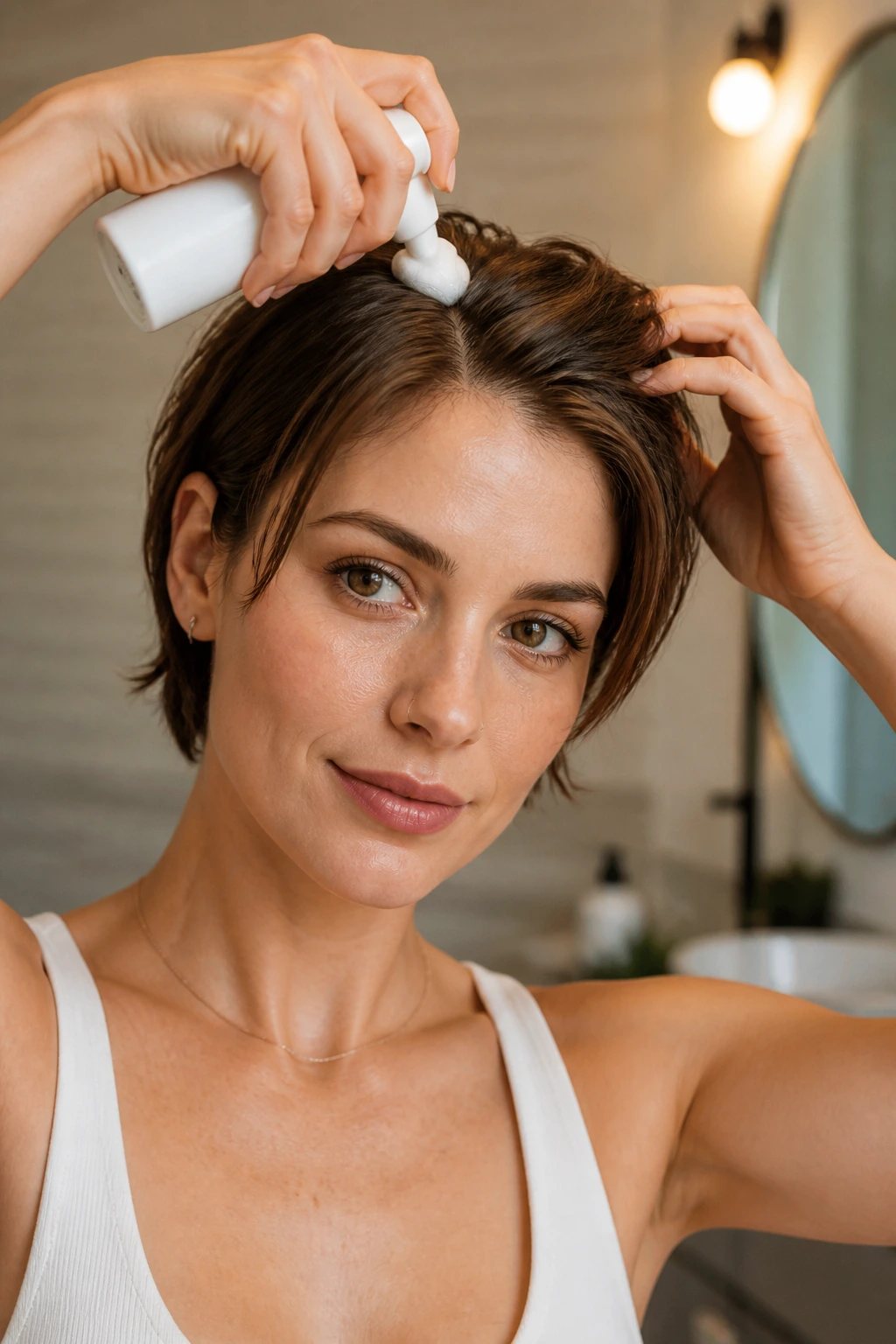
Short hair doesn’t need a mountain of product. It needs the right kind, in the right spot. That means thinking about hold, slip, and where the hair falls flat first. Roots and hairline matter more than the last inch of length.
For fine hair, a light mousse or root-lifting spray usually beats a cream. Cream can make the strands look stringy if the cut is short and the density is low. A little dry shampoo at the roots adds grip without making the finish chalky. I’d keep the oil off the crown unless the ends are dry enough to need it.
For thick hair, reach for smoothing cream, a sturdy hairspray, and sometimes a little gel at the hairline. Thick short hair often fights the shape by puffing out at the sides or flipping at the ends, so the goal is control, not softness. A narrow flat iron helps here because it gets into short sections without flattening the whole head at once.
For curly or coily hair, leave-in conditioner and curl cream make more sense than paste. You want definition first, then hold. A gel cast can keep the shape clean if you want wet-look or finger-wave style, but a soft twist or braid accent is usually kinder when the goal is movement.
For slippery straight hair, texture spray and a little pomade at the ends are useful. Clean, silky hair loves to slide out of pins. Give it some grit. Even a quick blow-dry at the roots after product goes in can change how well the style holds.
One thing I’d avoid: heavy oils near the roots. They make short styles droop fast.
How to Wear These Looks From Errands to Events
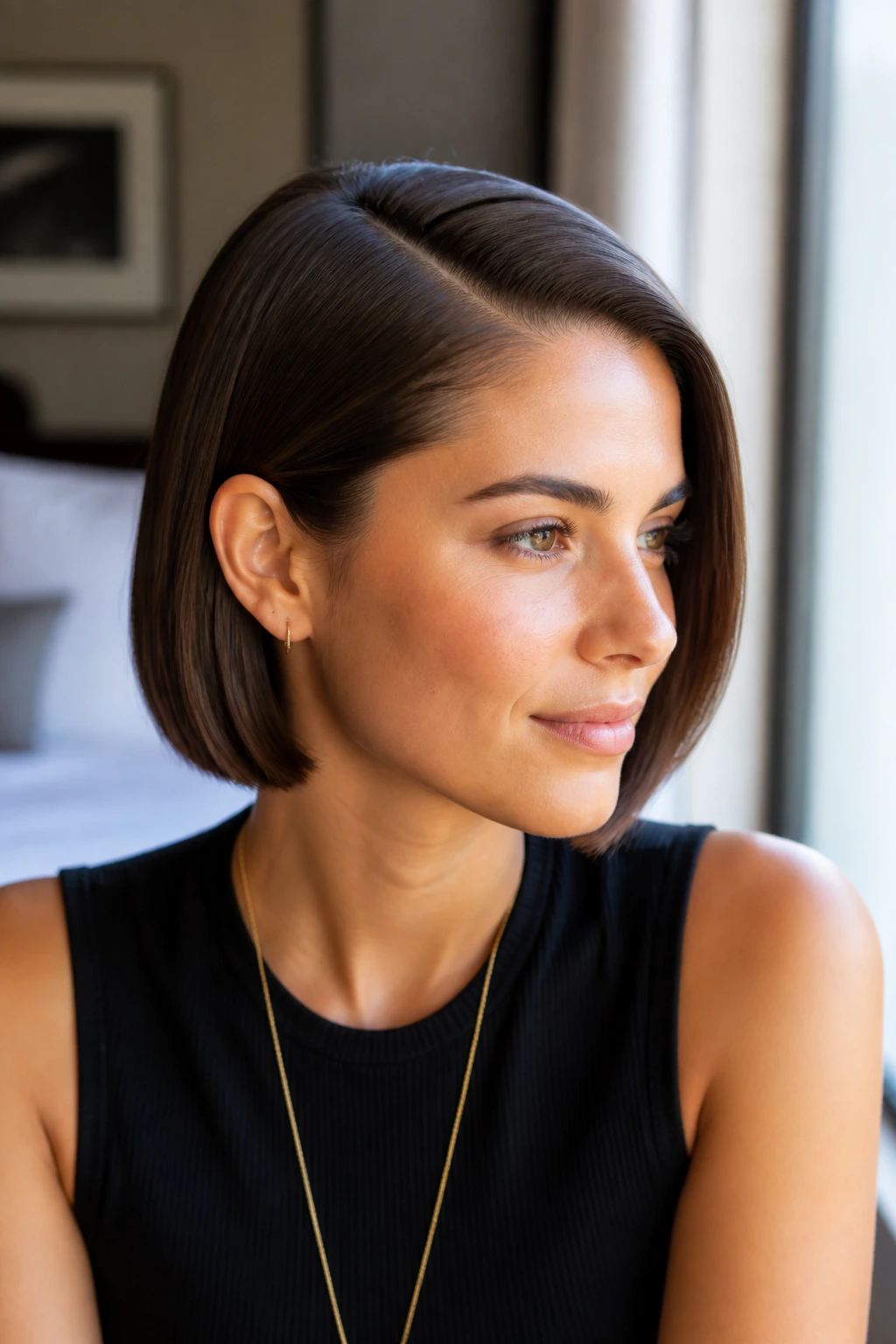
Everyday: Reach for the claw-clip twist, headband tuck, mini top knot, or tousled bob when the day calls for speed. These styles keep hair off the face and still look like a choice, not a fix.
Work: The sleek side-part bob, curved-under bob, tucked-behind-ears style, and low side pin sweep all read clean without looking severe. They work especially well with blazers, button-downs, and anything with a sharp collar because the hair stays close to the head.
Evening: Finger waves, wet-look comb backs, faux hawks, and front pompadour lifts give short hair more attitude. If you want earrings to show, pick a tucked or swept style. If you want the haircut itself to be the focus, use a style that lifts the crown or shapes the front.
Accessories: Short hair and accessories are friends. Hoops work with tucked styles, stud earrings look crisp with slick shapes, and a narrow headband can save a bob that won’t cooperate. A velvet clip reads softer than a plastic one, while a metal barrette gives a cleaner line.
Outfit match: A high neckline pairs well with volume at the crown, while an open neckline can handle a slick side part or tucked bob. That little balance keeps your silhouette from feeling crowded.
Small Tweaks That Make Short Hair Styles Pop
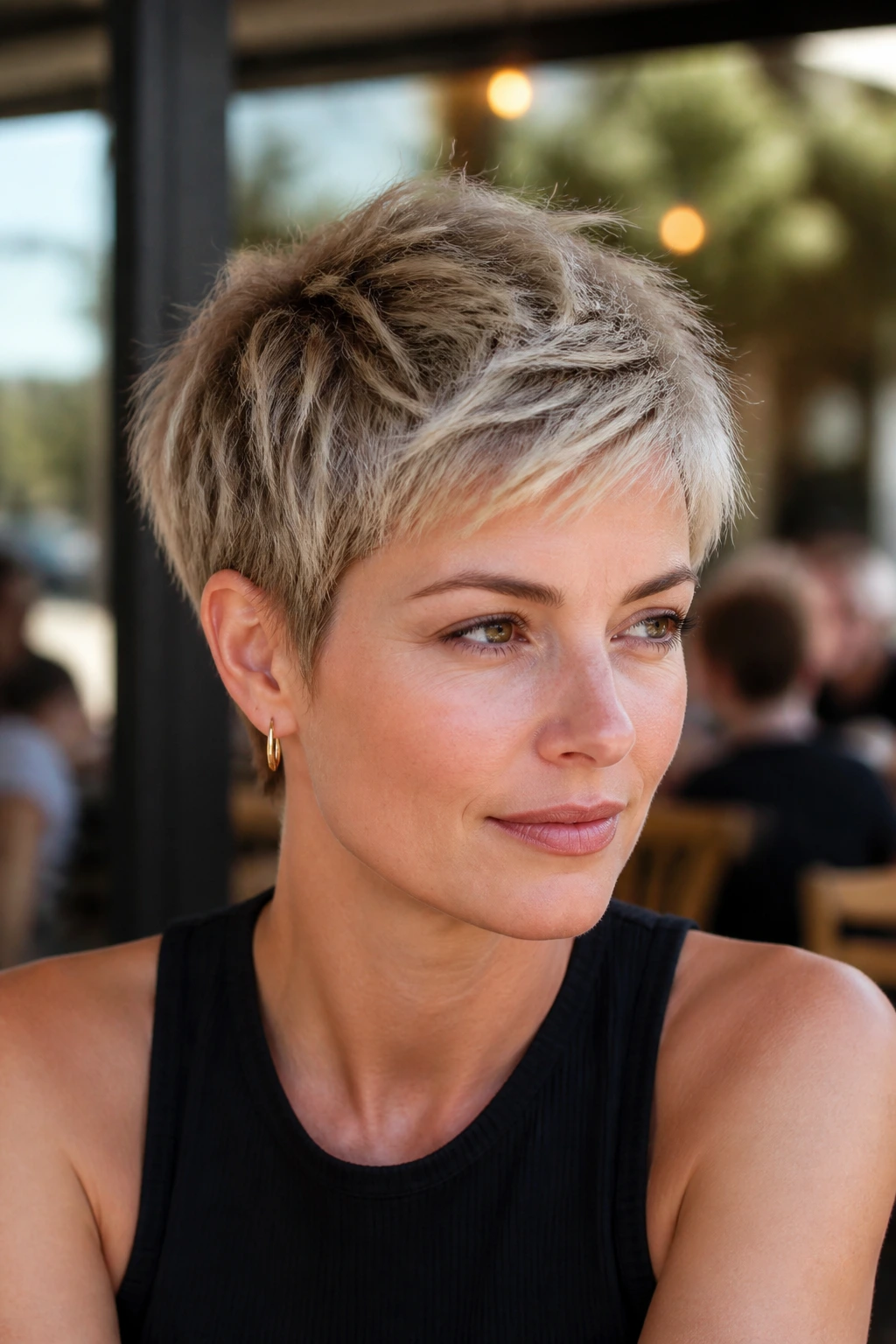
Root Lift: A little lift at the crown changes everything. Blow-dry the roots in the opposite direction of the part for 15 to 20 seconds, then flip them back. That quick bend gives short hair shape without a lot of teasing.
Texture: If the ends disappear into the haircut, pinch in a tiny bit of matte paste or texture spray after styling. Focus on the last inch of hair. That is where the eye lands first on short cuts.
Shine: Use serum only on the mid-lengths and ends, not the roots. One drop is often enough. More than that and the style looks slick in a bad way, not polished.
Softness: A few loose face-framing pieces can stop a short style from looking too hard. This matters on faux hawks, comb-backs, and tucked bobs. The difference is small. The effect is not.
Accessory Choice: A single pin, a slim headband, or one small claw clip usually looks better than stacking three accessories at once. Short hair gives you less surface area, so every extra piece shows.
If you have highlights or balayage, bend the front pieces away from the face. It lets the color catch the eye instead of hiding under a blanket of smooth hair.
Keeping Short Hair Styles Fresh Overnight and Day Two
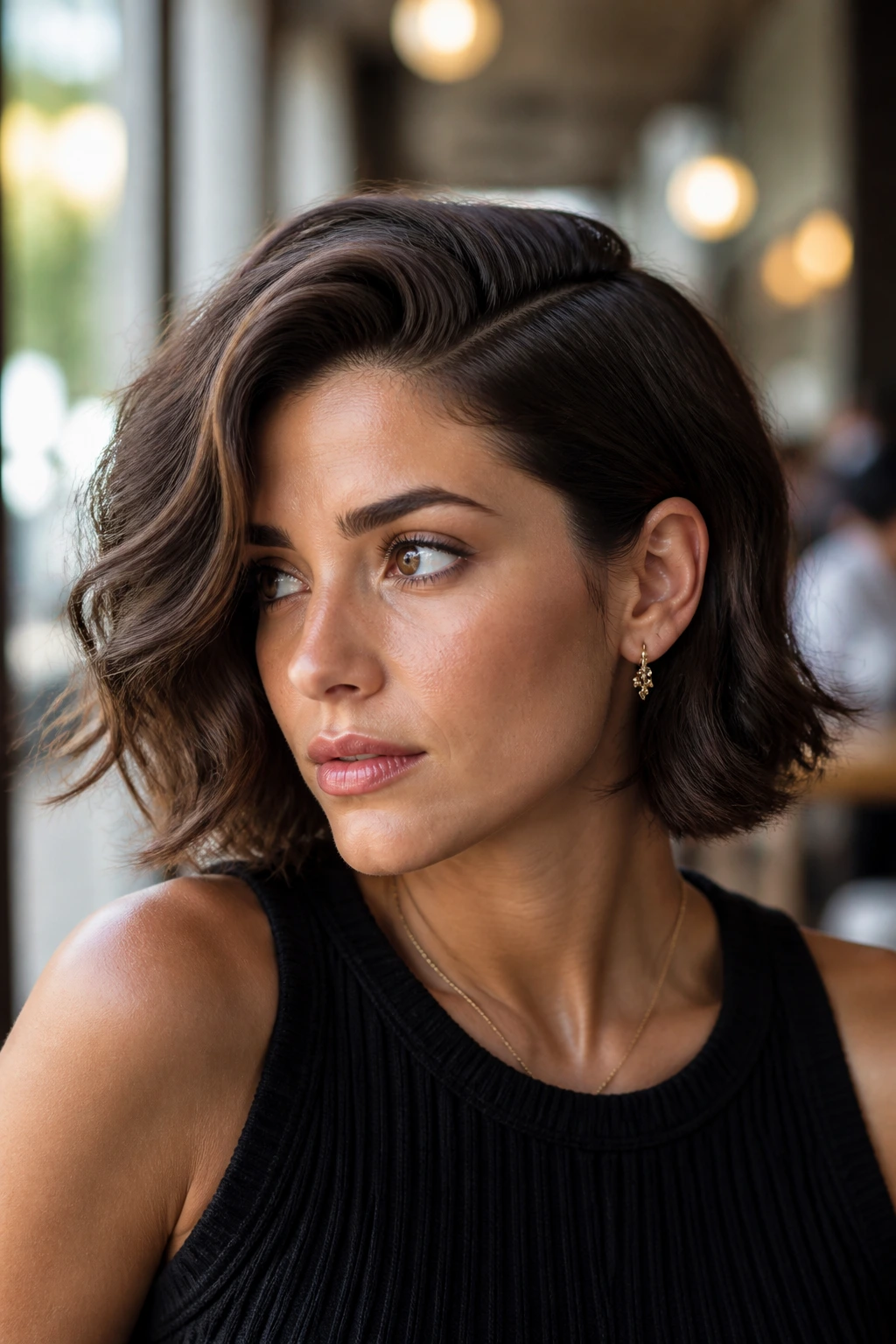
Short hair usually loses shape faster than long hair because there’s less weight to keep it down. That means overnight care matters. A silk or satin pillowcase helps, but for styles with strong shape — finger waves, pin curls, slicked-back looks — a scarf or bonnet does more.
Sleep without smashing the shape
If you wore a waved style, clip the front pieces loosely in place before bed and wrap a scarf around the hairline. For a mini top knot or claw-clip twist, sleep with the clip removed if it feels uncomfortable, then redo the twist in the morning. Hair that gets crushed at the nape is easier to smooth with a little water and a quick blow-dry than with more product.
Morning reset in 5 minutes
Mist the roots with water or a leave-in spray, then use your fingers to lift the crown. Dry shampoo can go in before brushing if the hair has gone flat at the roots. Let it sit for a minute. That little pause helps it work better. For styles with waves or bends, rewrap only the front pieces rather than redoing the whole head.
When to start over
If a style is frizzing at the hairline, sliding at the part, or losing shape at the crown, redoing it is faster than trying to save it. Wet-look comb backs, finger waves, and pin curls usually look best when refreshed in full. A loose tuck or shaggy bob, though, can usually be revived with a comb and a touch of spray.
Braided accents often last 2 to 3 days. Slick styles tend to last 1 day cleanly, maybe 2 if the weather is kind. Textured bobs and pixies can go longer if you are willing to lean into the second-day texture instead of fighting it.
Smart Variations for Different Hair Textures
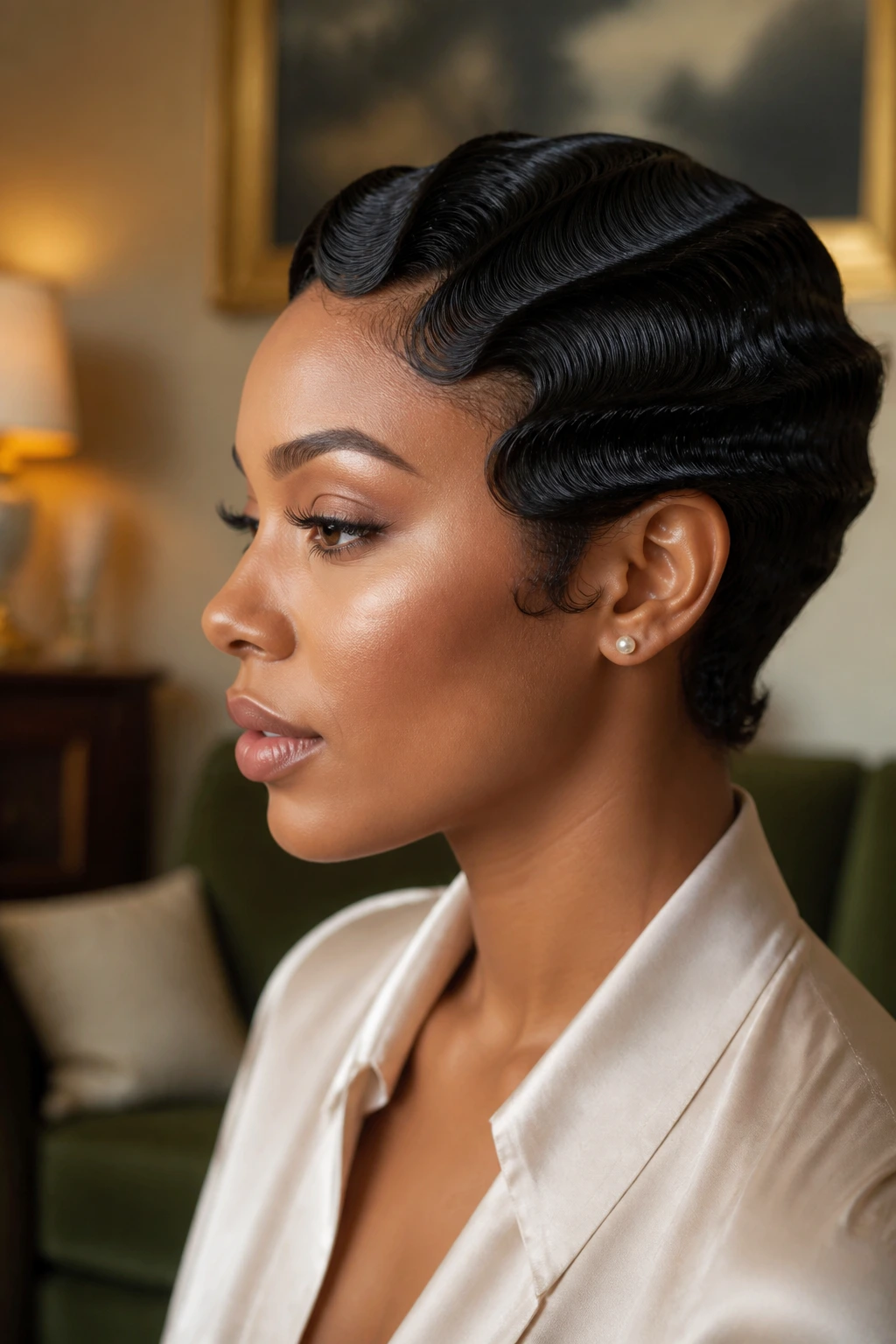
Fine-Hair Lift Plan: Use mousse at the roots, not heavy cream, and keep the sections small when you curl or pin. Fine short hair usually looks fuller when you stop layering on product and start building shape from the scalp.
Thick-Hair Control Edit: Go for smoothing cream, a firmer blow-dry, and stronger pins. Thick hair can hold beautiful shape on short cuts, but it needs sectioning or the style puffs out at the sides and nape.
Curly-Coily Curve: Use twist accents, tucked styles, and defined half-up looks instead of brushing everything smooth. Curl cream and gel should do the work here. If you want a sleek finish, stretch the curls first rather than flattening them with a brush.
Humidity-Proof Switch: Wet-look comb backs, finger waves, and braided crowns hold up better when the air gets heavy. Styles built on gel or braid tension usually survive frizz better than loose curls that rely on perfect finish.
Heat-Free Rotation: Headband tucks, mini top knots, pin curls, and claw-clip twists all work without hot tools. That matters if your ends feel fried or your cut is already short enough that extra heat just makes it brittle.
Grow-Out Friendly Version: Half-up twists, braided accents, and low side pin sweeps are kinder when bangs or layers are in the awkward middle stage. They hide uneven lengths instead of demanding symmetry the haircut does not have yet.
Common Mistakes That Flatten Short Hair
-
Using too much product at the roots: The style starts heavy and greasy instead of controlled. Fix it by starting with less — a pea-sized amount of paste or a light mist of spray is enough on most short cuts.
-
Choosing pins that are too big or too few: The style slips, bounces open, or leaves obvious metal showing. Use mini pins for small sections and cross them when you need real hold.
-
Curling every piece the same way: The hair clumps into one shape and loses movement. Alternate curl direction on bobs and waves so the style keeps some bounce.
-
Forcing a style that needs more length: Mini buns and full braids can look strained if the hair is too short. If pieces keep falling out, switch to twists, tucks, or accents instead of fighting the cut.
-
Ignoring the crown: Flat roots make short hair look tired even when the rest is styled well. Lift the crown with a blow-dryer, dry shampoo, or a little backcombing at the base.
-
Skipping the back view: The nape can look untidy fast on short hair. Check it in a mirror before you walk out. A loose pin or stray bend in the back can undo an otherwise clean style.
Questions Women Ask About Styling Short Hair
How short is too short for these hairstyles?
If the hair can be tucked behind the ear, pinned at the temple, or twisted at the crown, you already have enough length for several of these looks. A pixie will do fewer updo-style options than a bob, but it still has room for texture, lift, and accessories.
Can a pixie cut still look dressed up?
Yes, and often with less effort than longer cuts. Finger waves, a wet-look comb back, or a front pompadour can make a pixie look polished in a way loose curls never will.
What product works best on fine short hair?
Light mousse, root spray, and dry shampoo usually work better than heavy cream. Fine hair needs lift and grip, not weight. A little paste at the ends is fine, but keep it away from the roots.
How do you keep short hair pinned in place?
Use small bobby pins, cross them in an X, and place them where the hair has some hidden tension, like behind the ear or just under a twist. Pins that sit on top of the hair almost always slip.
Do these styles work on curly short hair?
Some do better than others. Braided accents, twist backs, claw-clip twists, and tucked styles work well on curls, while wet-look comb backs and finger waves need more smoothing and control.
What if my bob is too short for a mini top knot?
Switch to a top twist or a half-up twist back. Those styles need less length and still give you shape at the crown without fighting the ends.
Which styles are best for second-day hair?
Claw-clip twists, mini top knots, textured pixies, and braided accents usually get easier on day two because the hair has a little grip. Freshly washed hair is often too slippery for pins and clips to hold well.
How do I keep the back from looking messy?
Use a hand mirror and check the nape before you leave the house. Short hair shows the back more than long hair does, so one hidden pin or a quick smooth-down with a comb can make the whole style look cleaner.
A Better Short-Hair Routine
Short hair gets more interesting once you stop asking it to behave like long hair. The best styles here do not hide the cut. They show it off — the jawline, the crown, the side part, the nape, all of it. That is the real advantage.
Pick one look for speed and one for shape. A tucked bob or claw-clip twist on busy days. Finger waves, a faux hawk, or a soft barrel curl when you want the cut to feel sharper. Short hair rewards repetition, too. The more you learn where your own part falls, where your crown flattens, and which side likes to tuck, the easier styling gets.
And that’s the nice part. Once the haircut starts working with you, the rest falls into place fast.
