



Gray hair looks for short hair over 50 work best when the cut does some of the decorating for you. A silver pixie with a lifted crown, a jaw-length bob with a hard line, or a cropped style with a clean nape can make gray hair look deliberate in a way long, shapeless layers often never quite manage.
That’s the part people miss. Gray and silver strands do not behave like dyed hair that’s still holding a lot of pigment and oil. They can be drier, a little wiry at the ends, and sometimes flatter at the root while puffing out at the wrong spots — especially around the temples and back of the head. A short cut solves that by giving the eye a line to follow. You see the cheekbone. The jaw. The nape. Suddenly the hair isn’t “doing nothing.” It’s framing.
And that framing matters more than most salon chatter admits. Some women want softness. Some want a sharper edge. Some want a cut that behaves on a Tuesday morning without a full blowout. The best gray short hair doesn’t fight texture; it shapes it. That’s the thread running through every look below.
Why This Collection Feels Fresh on Gray and Silver Hair
- Shape beats length here: A short cut gives gray hair a visible outline, so the silver reads as intentional instead of unfinished.
- Texture gets room to show: Wavy, curly, or wiry strands have space to move without collapsing into the shoulders.
- Styling time stays sane: Most of these cuts look polished with a round brush, a bit of mousse, or a dab of paste — not a 45-minute ordeal.
- Glasses and earrings matter more: Short hair opens up the face, which makes frames, hoops, and collar lines part of the look.
- Color grows out cleaner: A short gray style makes regrowth, lowlights, or full silver transition look tidier between appointments.
- Fine hair gets real lift: The right nape, fringe, or crown shape can make thin hair look fuller without teasing it into a helmet.
1. Feathered Silver Pixie
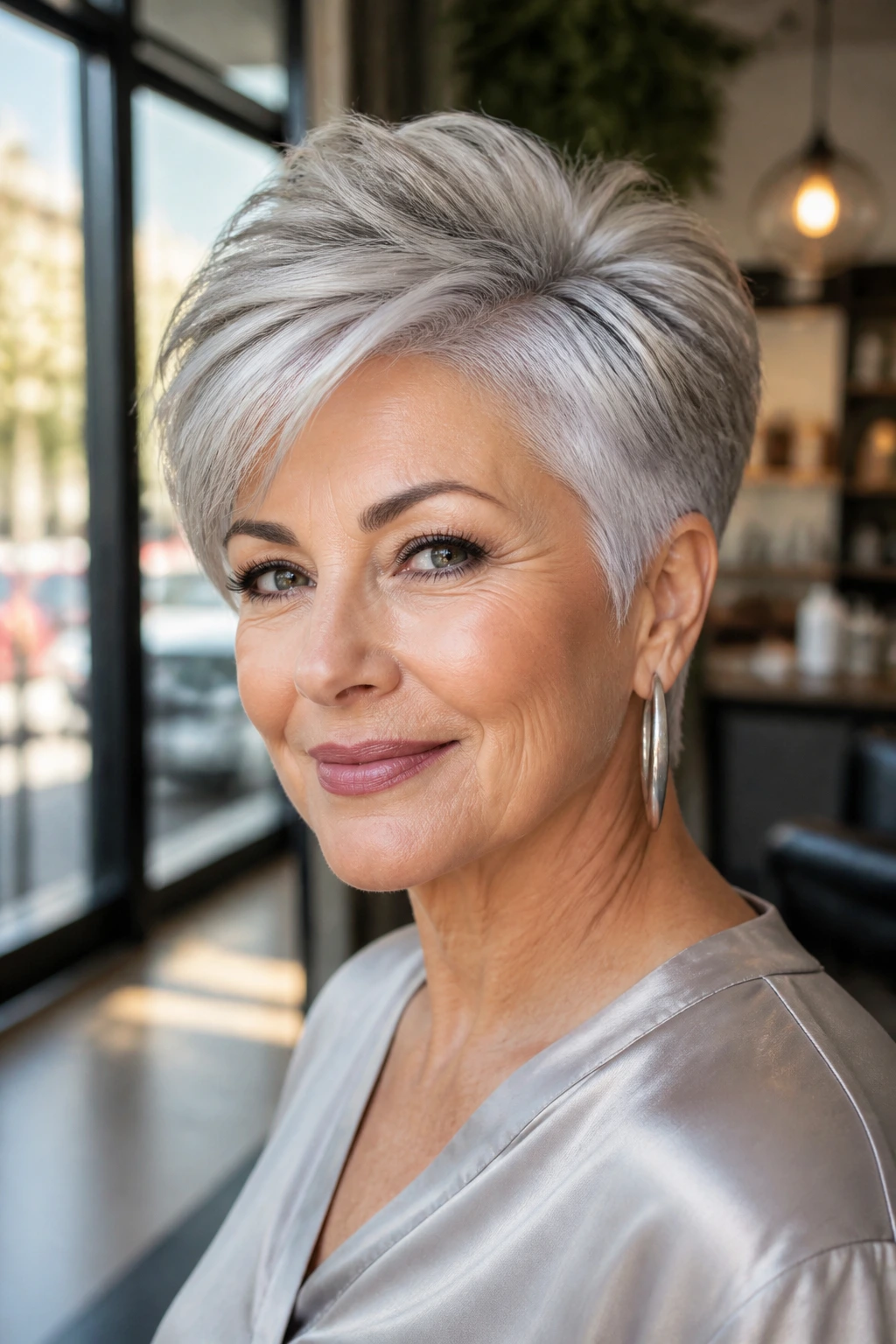
A feathered silver pixie is the cut I reach for when hair has started to feel a little tired and the wearer wants it to move again. The crown stays around 2 to 3 inches, the sides are snug, and the ends are softly sliced rather than chopped blunt. That gives gray hair a lifted, airy finish instead of a hard cap on the head.
Why It Flatters Gray Hair
Gray hair often looks brighter when it has edges that catch light in small pieces. A feathered pixie does exactly that. The texture at the top breaks up the silver into little flashes, which makes the color look dimensional instead of flat.
- Best for: fine to medium hair that needs lift at the crown.
- Ask for: soft point-cutting around the top and temples.
- Style with: a pea-sized amount of lightweight mousse or styling cream.
- Avoid: thick waxes; they crush the feathers and make the top look sticky.
My favorite detail: keep the nape clean and the fringe just long enough to sweep to one side. That tiny bit of movement keeps the cut from feeling severe.
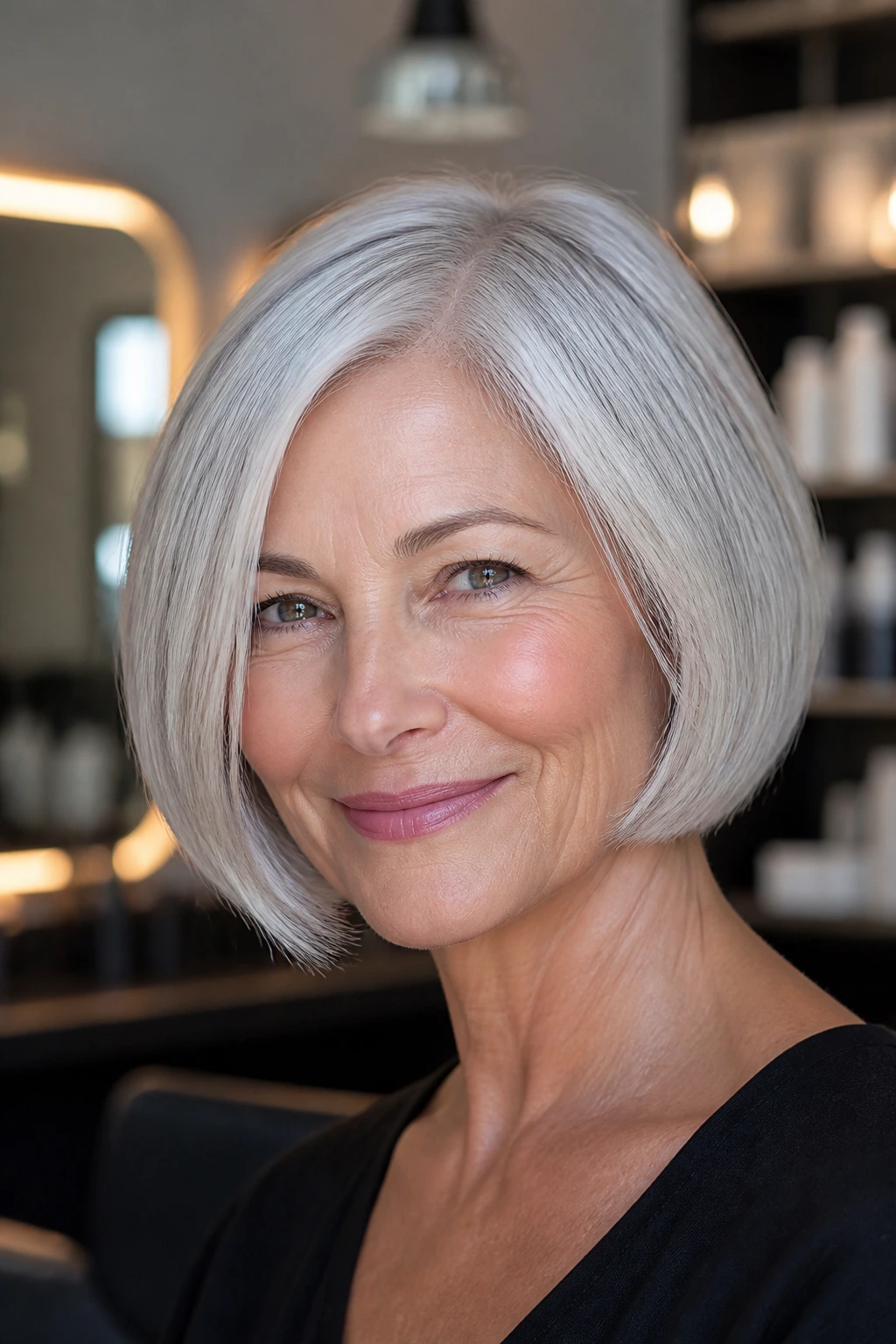
2. Chin-Length Silver Bob with a Side Part
A chin-length bob is the easiest way to make gray hair look polished without making it stiff. The line sits right at the jaw, which gives the face structure, and a side part shifts the volume where you want it instead of letting it split down the middle and collapse.
The beauty of this cut is how little drama it needs. A blow-dryer, a 1.25-inch round brush, and a pass of smoothing cream are usually enough. If your hair has a little bend, even better. The ends can tuck inward or swing slightly outward, and both versions look clean.
I like this bob for women who wear earrings or glasses, because it leaves the neck open and the silhouette crisp. Ask your stylist for a blunt perimeter with only a whisper of internal layering — too much layer and the bob starts to fray at the edges.
3. Tapered Crop with a Side-Swept Fringe
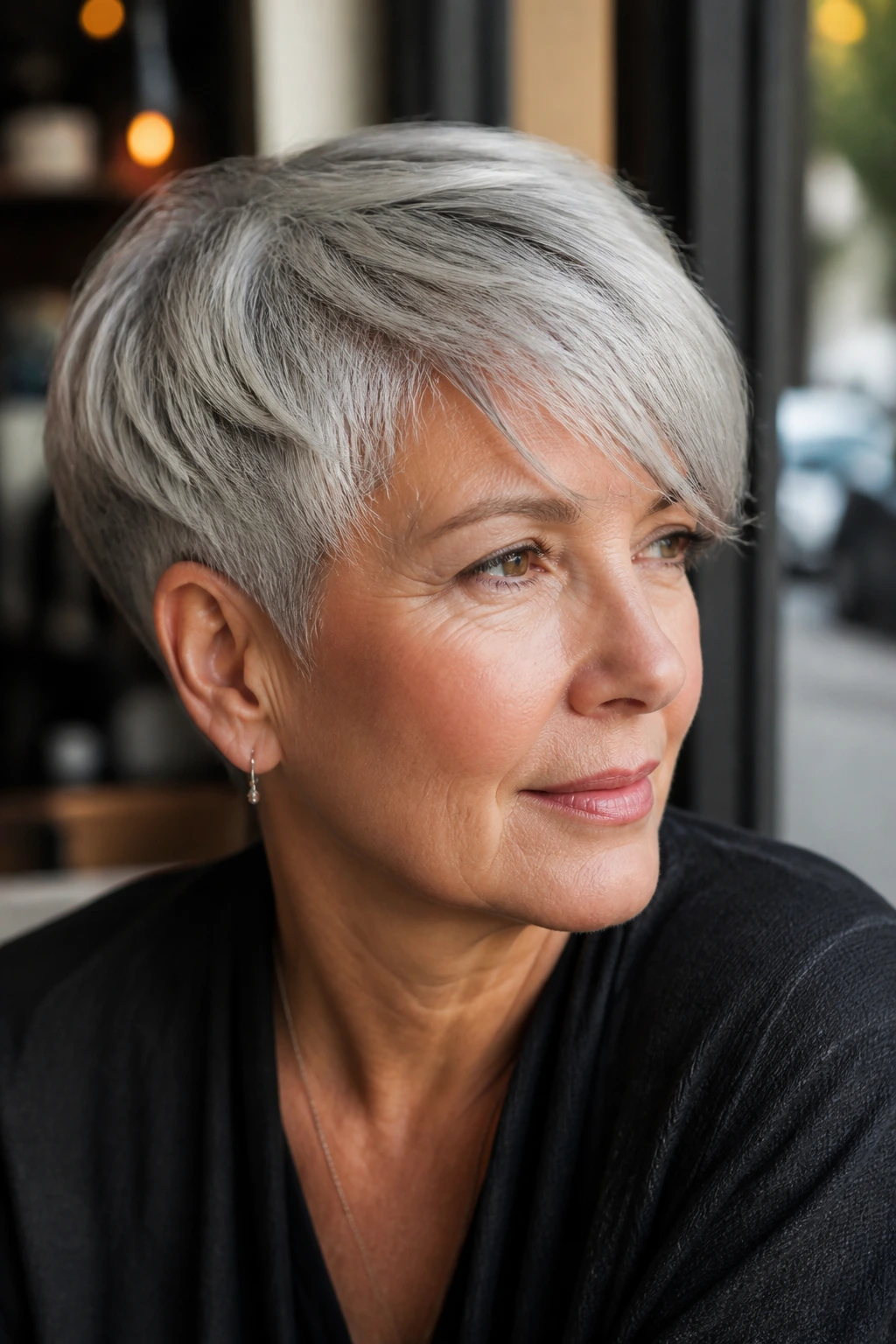
Why does this cut work so well on a stubborn crown? Because it stops trying to force the hair into a shape it does not want. The back and sides are tapered close to the head, while the fringe stays long enough to slide across the forehead and soften the front.
How to Style It
Brush the fringe in the direction it naturally wants to fall, then use a small round brush only at the roots. A little lift at the front and a neat taper at the back give the style its shape. If the fringe lands around the eyebrow, you’re in the sweet spot; shorter than that and it can start to feel choppy instead of soft.
This one is especially good if you have a cowlick at the hairline or if your hair likes to split open at the front. The side-swept fringe gives the eye a diagonal line to follow, which is a quiet trick but a useful one. It also works beautifully with a light hold spray, not a stiff lacquer.
4. Curly Gray Shag

If your curls start out soft at the roots and then puff out by lunchtime, a shag is usually the answer hiding in plain sight. The layers sit around the cheekbones and jaw instead of all hanging at one blunt length, so the curl pattern can stack instead of balloon.
What Makes It Work
A good curly shag on gray hair is built around the curl, not against it. That means a dry cut or curl-by-curl shaping if your stylist knows how to do it, plus a diffuser on low heat rather than a blast-dry that turns the ends into frizz.
- Best for: wavy to curly textures with medium density.
- Ask for: layers that release volume around the face, not all over the crown.
- Use: curl cream on damp hair, then scrunch in a gel or foam.
- Dry: with a diffuser until the roots are set and the curls feel springy, not wet.
The payoff is movement. Not chaos. There’s a difference, and this cut knows it.
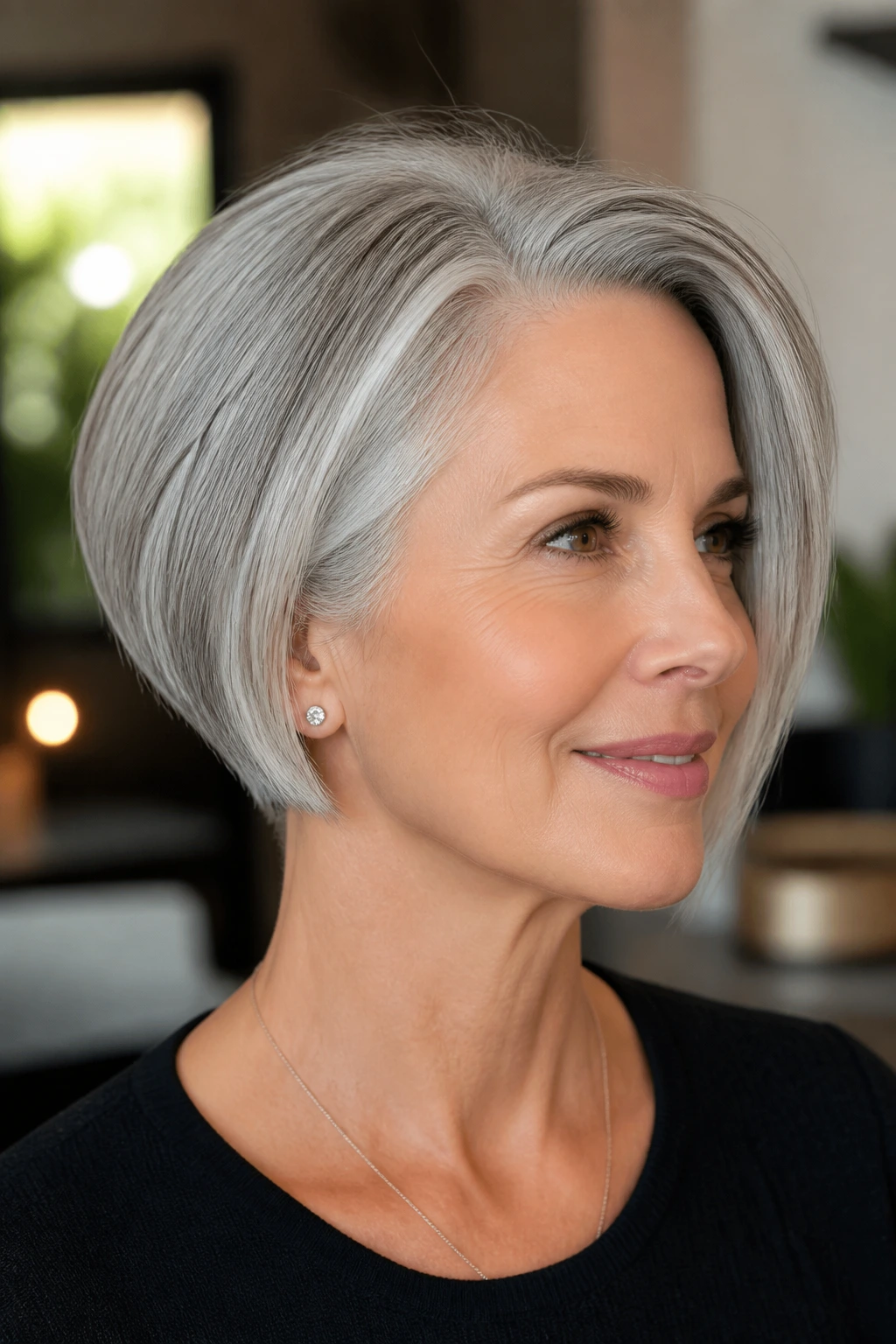
5. Stacked Bob with Lifted Crown
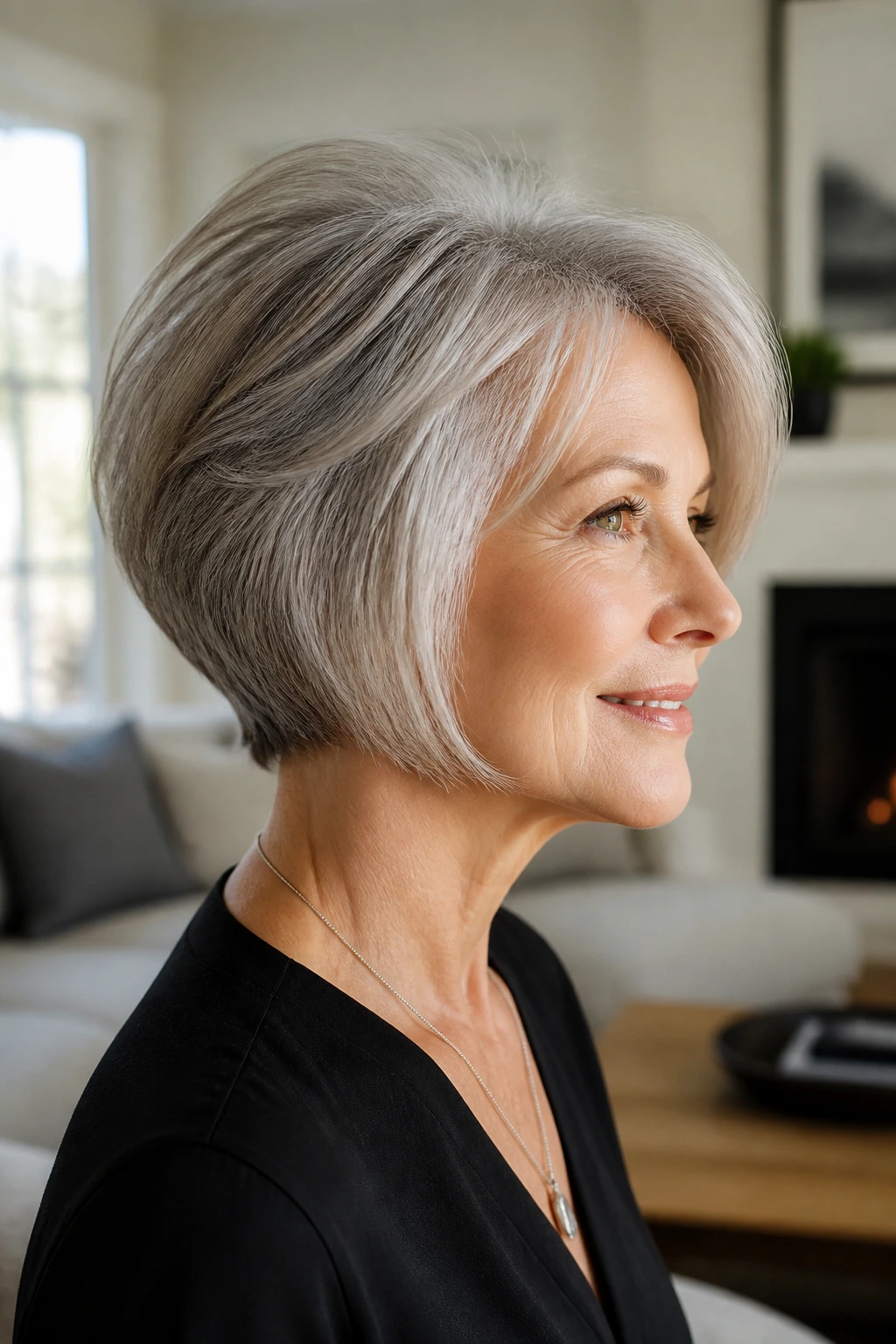
A stacked bob is one of those cuts that quietly does the heavy lifting. The back is graduated so it sits close to the nape, then the layers build upward toward the crown. The result is lift where many short gray styles lose it, especially if the hair has softened over time.
I prefer this shape on hair that needs a little structure to look awake. Fine hair gets body. Medium hair gets a cleaner outline. Even thicker hair can benefit if the stacking is done with restraint and the weight is removed from the interior, not hacked off at the ends.
The trick is balance. If the back is too short and the front too long, the shape tips forward. If the layers are too choppy, it stops looking elegant and starts looking dated. Ask for a rounded back with a smooth transition into the sides, and keep the front pieces long enough to skim the jaw.
6. French Bob with Soft Ends
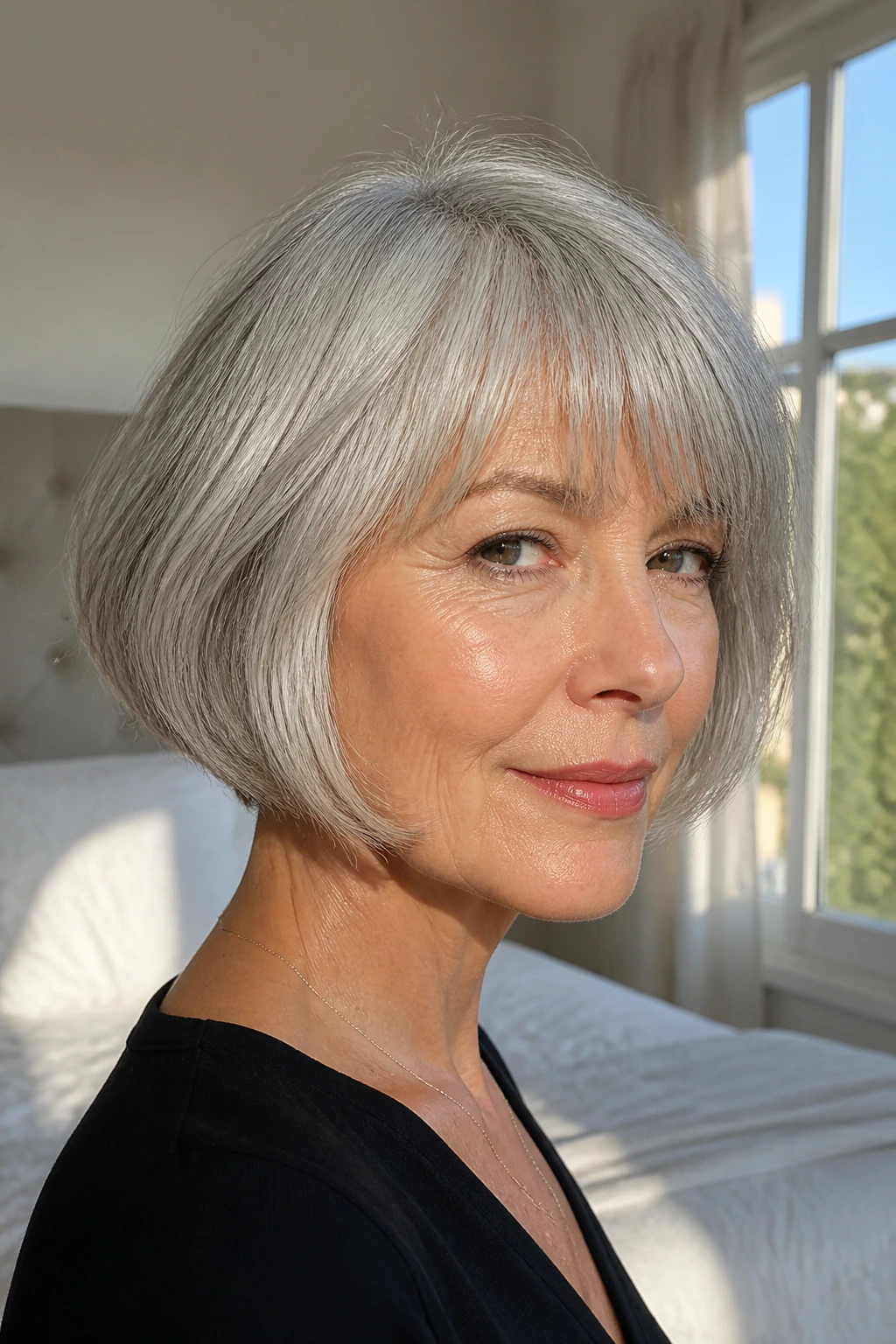
Unlike a blunt bob that stops with a hard little line, the French bob has a softer finish. It usually sits around the jaw and may include a light fringe or a side sweep, but the real charm is in the ends: slightly beveled, slightly undone, never heavy.
That softness works especially well on silver hair because gray strands can look stark when the line is too rigid. Here, the cut gives you edge without stiffness. A flat brush or a quick pass with a dryer is often enough, and you can leave a tiny bend at the ends rather than forcing everything pin-straight.
This is a good choice if you like your hair to look chic without looking “done.” I’d call it the easiest cut to dress up with a red lip and a crisp collar. It does not need much help.
7. Asymmetrical Silver Crop
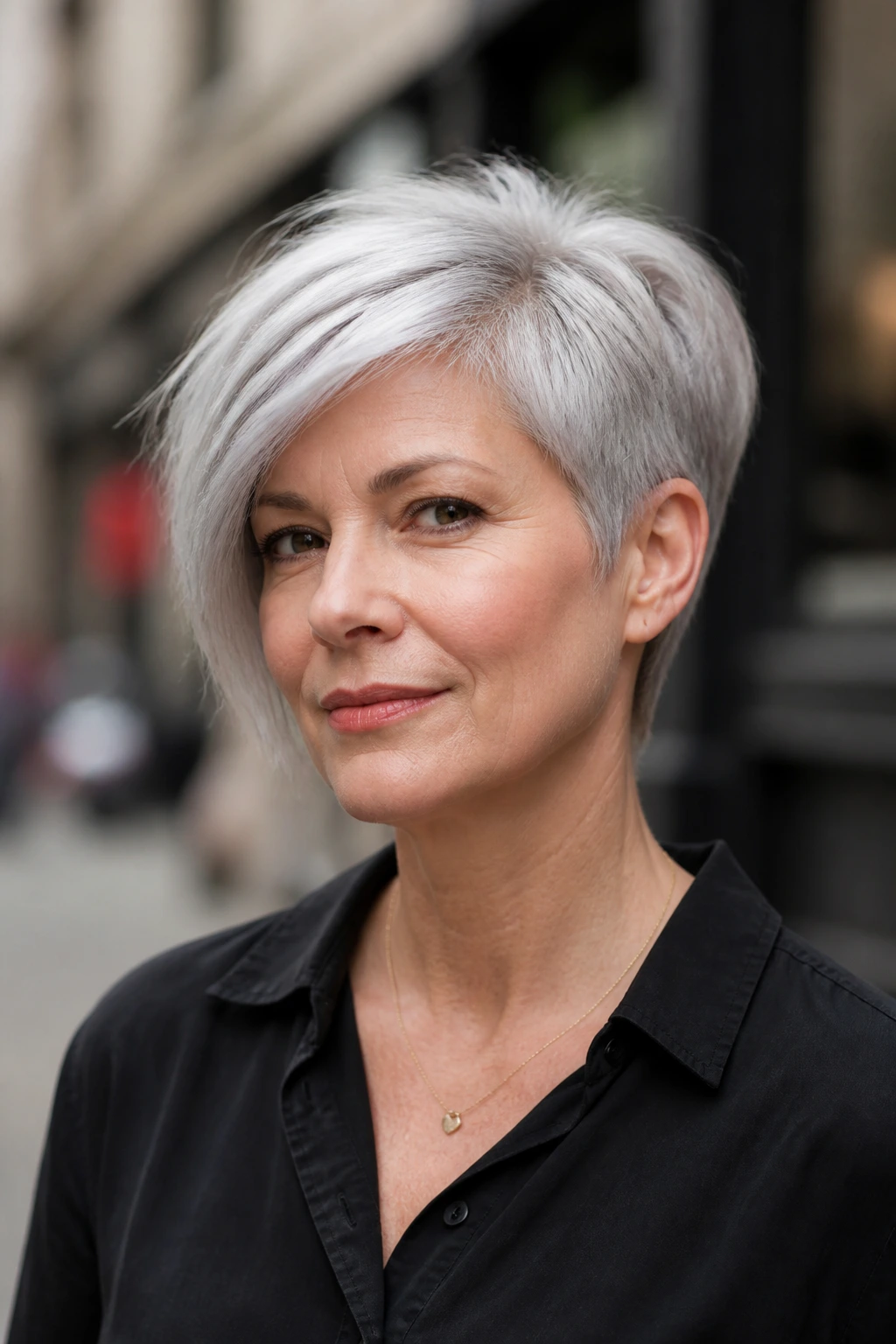
A subtle asymmetry does more work than another inch of length. One side stays slightly longer — usually by half an inch to an inch — while the other side is tucked closer to the face. That small difference gives the cut motion and keeps it from feeling too safe.
This style shines when you want short hair with a little attitude but not a dramatic undercut. The longer side can sweep over the temple or skim the cheekbone, which is flattering if you want to soften a stronger jaw or balance a wider forehead. It also gives silver strands a kind of moving highlight effect as you turn your head.
I like this on straight or slightly wavy hair. Too much curl can hide the asymmetry, and then you lose the point. Keep the styling simple: a touch of paste at the ends, finger-combed toward the longer side, and a clean nape underneath.
8. Wash-and-Go Salt-and-Pepper Crop
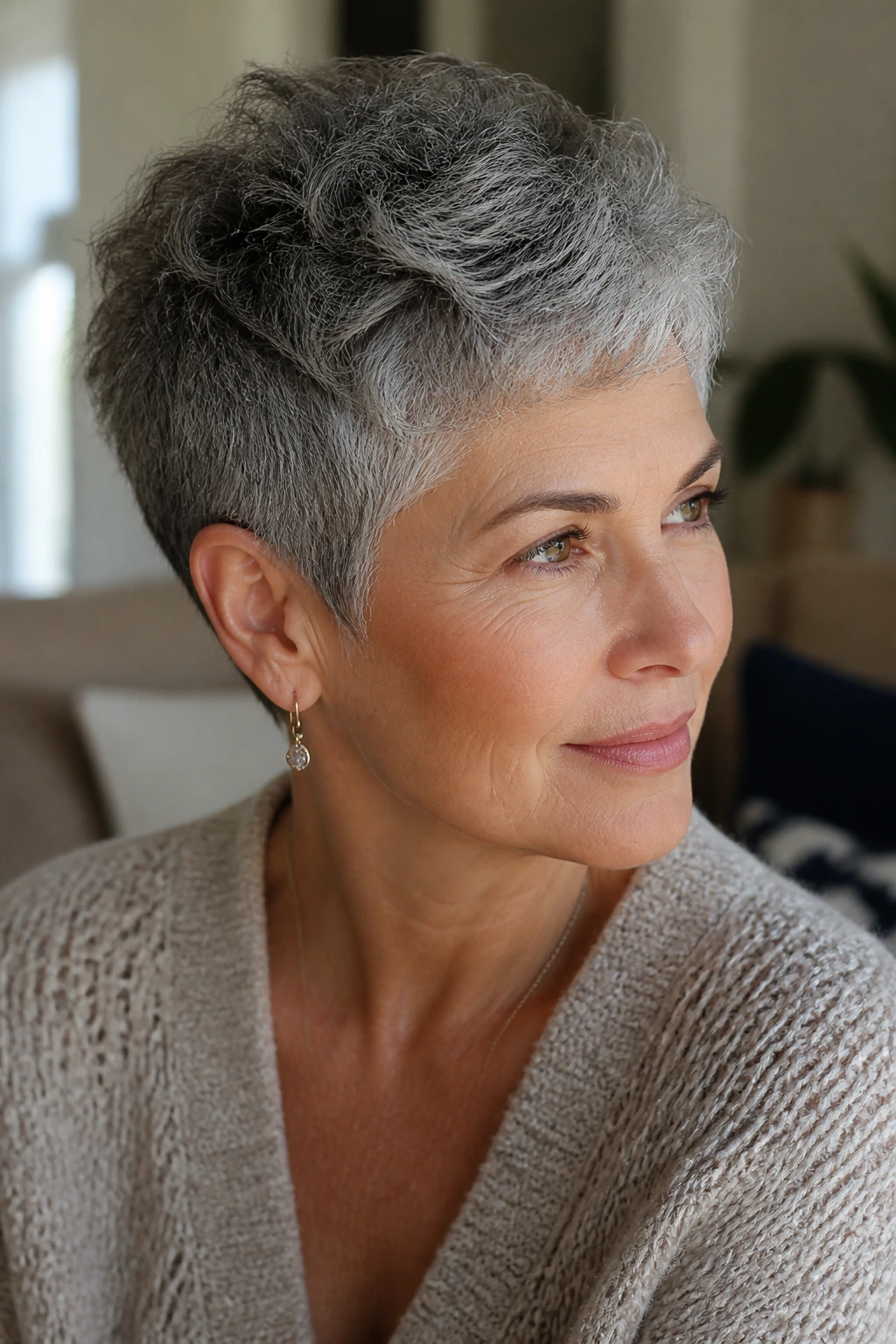
If you’d rather not wrestle with a round brush before breakfast, this is your friend. The crop is short enough to dry fast, but long enough on top to hold a bit of piecey movement. Salt-and-pepper color looks especially good here because the texture stays visible.
What makes it work is restraint. The layers are soft, not chopped. The product is light — think leave-in conditioner, not a heavy butter. And the finish should look touchable, not shellacked. A microfiber towel or cotton T-shirt helps keep the cuticle calm while the hair dries.
I’d recommend this for hair that has a natural bend or a little wave through the top. If the hair is too straight, it can fall flat; if it’s too curly, the shape needs more deliberate cutting. But in that middle zone, this crop is one of the easiest gray short hair looks to live with.
9. Sleek Ear-Tucked Bob

A sleek bob tucked behind the ears has a certain plain-spoken elegance to it. No teasing. No fluff. Just a smooth line from the side part to the jaw, with enough length to tuck one side behind the ear and let the silver do the talking.
This is the cut for someone who likes a polished finish and doesn’t mind bringing out a flat iron once in a while. The secret is not making it glassy from root to tip — that can look severe on gray hair — but keeping the top smooth and the ends softly rounded. One pass with a heat tool over 1-inch sections is enough. More than that, and you’ll start flattening the life out of it.
It works best on hair that’s naturally straight or easily smoothed. Pair it with shine spray at the ends and a light touch at the crown. You want the bob to sit close to the head without looking pressed there.
10. Undercut Pixie with a Long Top
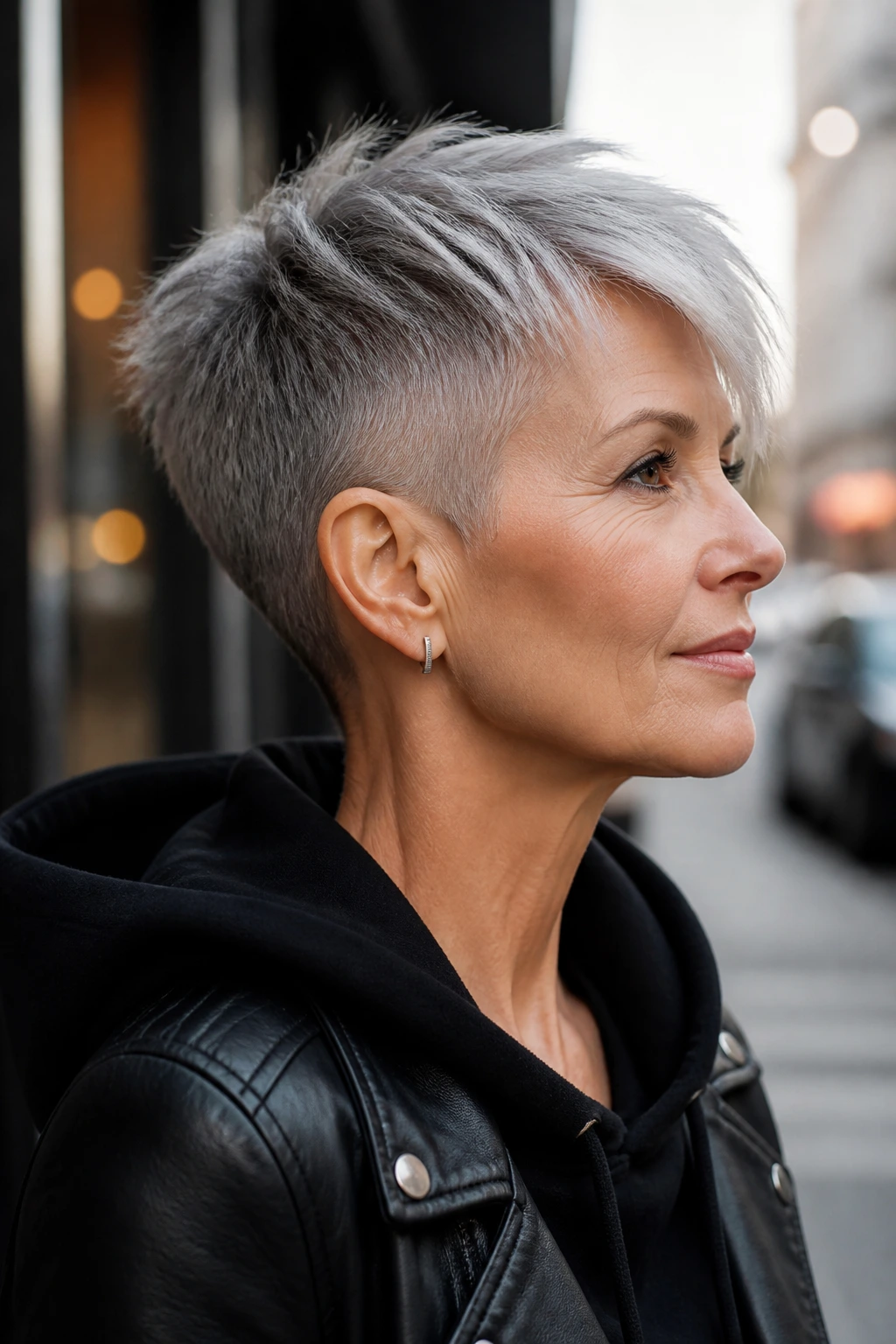
A pixie with an undercut is not for everyone. Good. It has a point of view. The nape and sometimes the sides are clipped very short, while the top stays long enough to sweep, spike, or lay sleek depending on your mood. On thick gray hair, that kind of contrast can be a relief.
The practical upside is real. Removing bulk from the bottom means the top doesn’t have to fight its own weight. You get a lighter head, faster drying time, and a shape that stays put instead of swelling into a triangle by noon. If you’ve ever had a short cut that felt too puffy through the back, this is the fix.
I like this on women who want edge without losing softness on top. The longer crown can be brushed forward, angled to the side, or ruffled with a matte paste. The undercut keeps the neckline clean, which makes the silver read sharper and cleaner.
11. Wavy Jaw-Length Bob

A wavy bob that lands right at the jaw has a nice middle-ground energy. It’s short enough to feel fresh, long enough to keep a bit of movement, and forgiving enough that you don’t need every strand behaving at once. Gray hair often takes to this shape because the natural wave shows off the silver and white ribbons in the bend.
The best version does not try to force a beachy mess. That gets old fast. Instead, use a medium-hold mousse on damp hair, rough-dry about 80 percent, then wrap only the front pieces or the top layer around a 1.25-inch iron if they need help. Leave the ends relaxed.
This cut is a quiet workhorse for people who want softness around the face but still like a clean outline at the jaw. It looks especially nice with side-swept bangs or a deep side part, both of which keep the shape from feeling too boxy.
12. Choppy Pixie-Bob
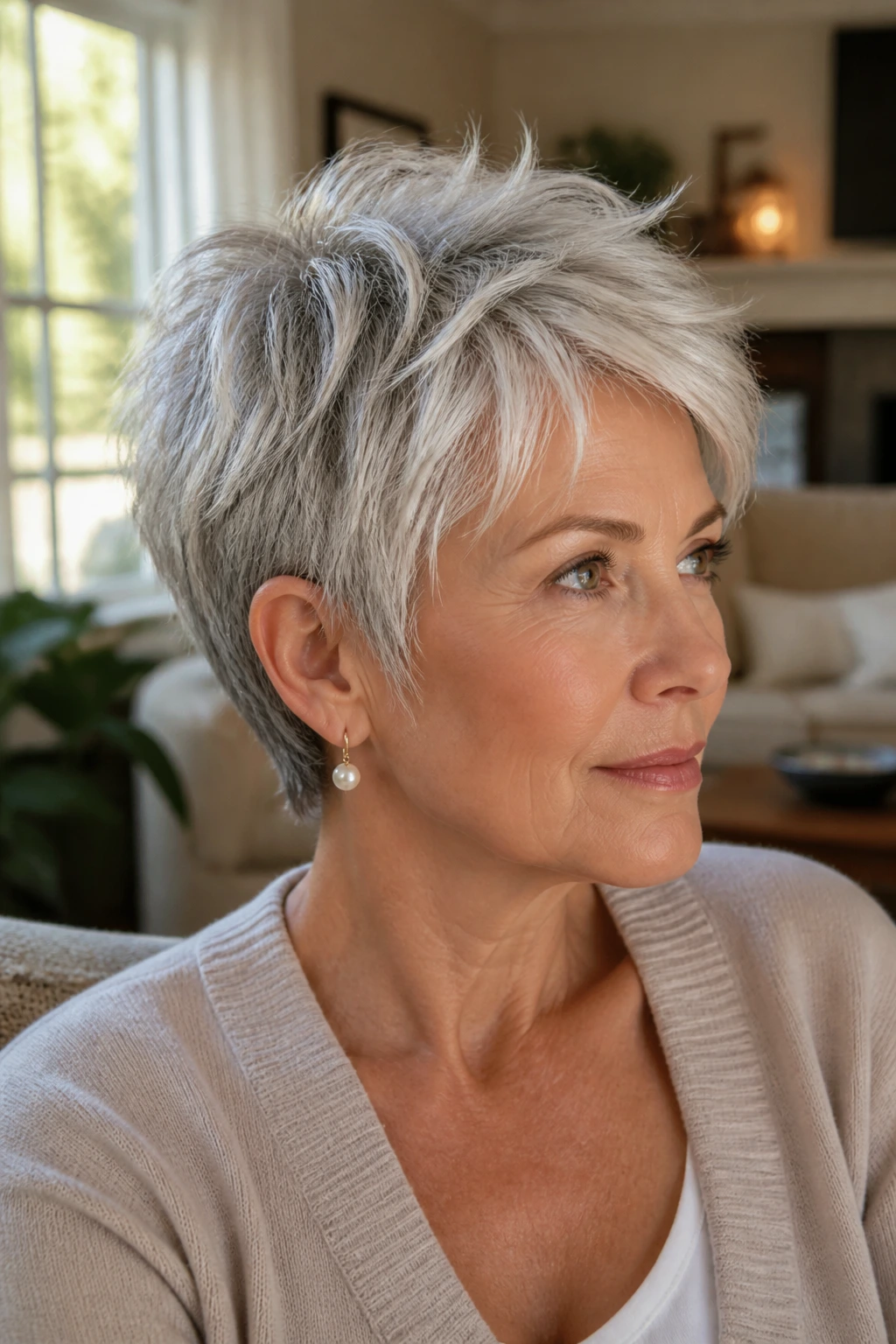
Can’t decide between a pixie and a bob? The pixie-bob is the compromise that doesn’t feel like one. The back stays cropped and neat, while the top and sides keep enough length to create texture and a little swing.
That extra length gives gray hair room to move, and movement is the whole point here. Choppy ends can make silver look lively rather than static, especially if the strands are fine and need a bit of visual density. Ask for irregular, piecey layers on top and a tapered back that follows the head shape.
Styling is fast. Work a small amount of paste through dry hair, pinch a few pieces around the crown, and let the fringe fall wherever it wants as long as it doesn’t cover the eyes. This is one of those cuts that looks better after you’ve been wearing it for a few hours — the texture softens, and the shape settles in.
13. Curly Crop with Halo Layers
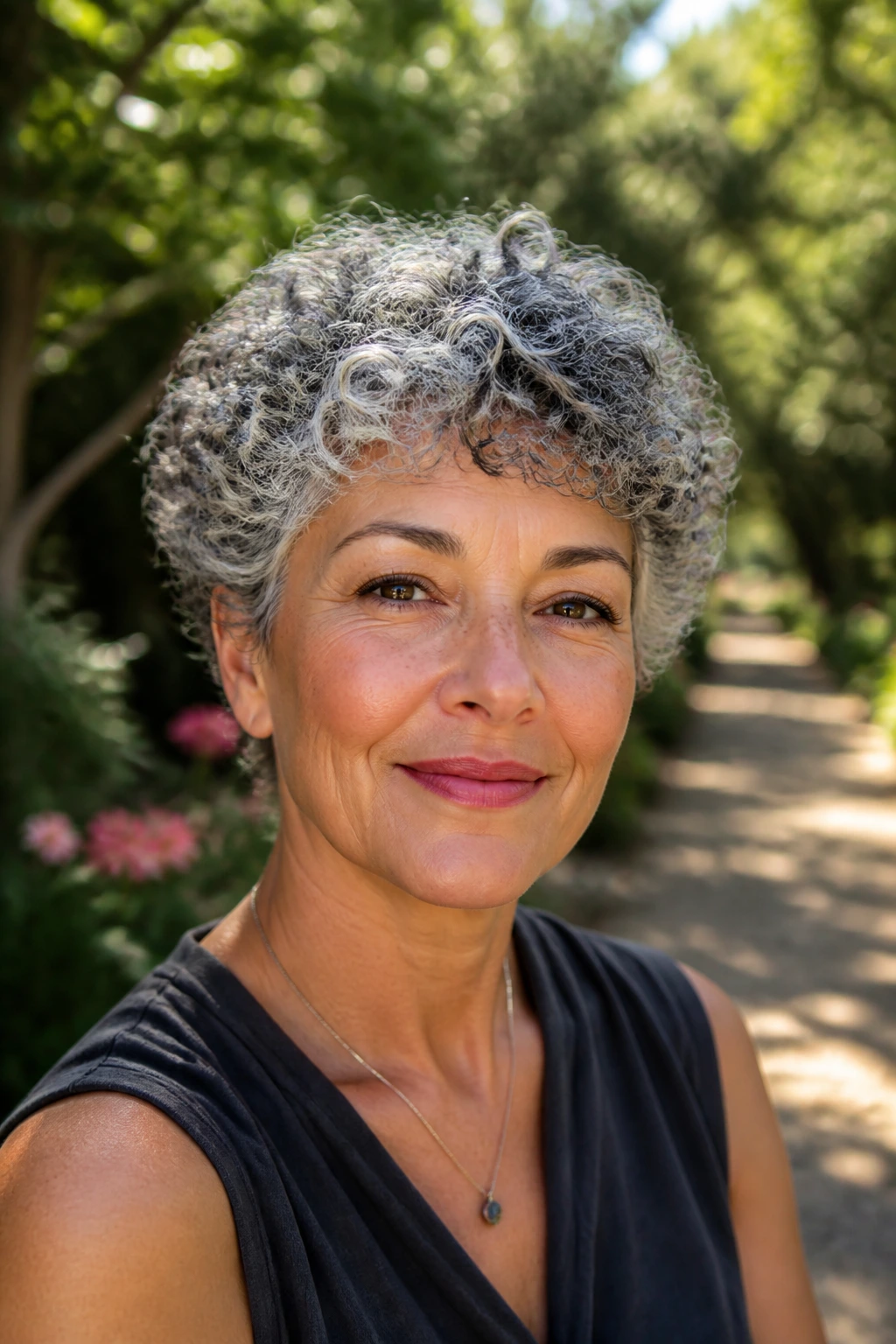
A curly crop with halo layers is the one I recommend when curls want to expand upward more than outward. The layers circle the head like a soft halo, which gives the cut shape without flattening the curl pattern into a helmet.
This style is especially flattering when the silver is mixed through the curls in streaks rather than a full cap of white. The layers let light move through the shape, so the hair looks bright without needing extra color work. A dry cut helps here, because curls shrink and shift when wet, and you want the shape to follow the actual curl, not some optimistic version of it.
Use a light leave-in and a gel with a flexible cast. Scrunch, diffuse, and then break the cast once the hair is fully dry. The result should feel springy around the temples and cheeks, not crunchy or bloated.
14. Blunt Bob with a Soft Bend at the Ends
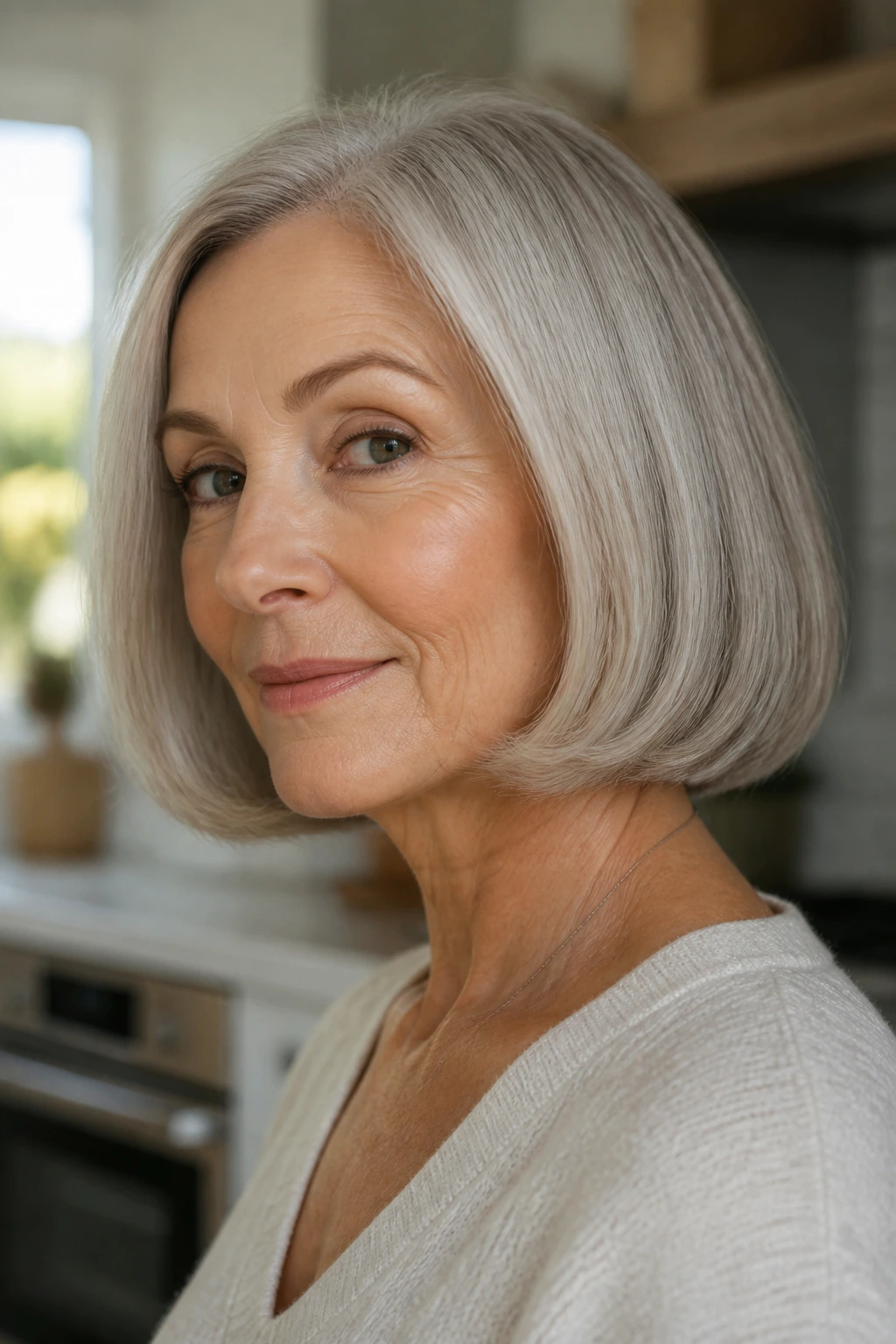
A blunt bob is the cut that quietly makes fine gray hair look denser. The edges stay clean and even, which gives the hair a fuller line, but the ends are bent just enough to avoid a hard ruler-straight finish. That tiny bend matters. A lot.
The reason this works is simple: gray hair often loses pigment and a bit of heft, so it can look wispy when it’s over-layered. A blunt edge gives it a stronger perimeter. Then the soft bend at the ends keeps the bob from reading severe. It’s structure with a little mercy built in.
If your hair is naturally straight, a flat iron or round brush can tuck the ends under in a single pass. If it’s wavy, blow-dry the root smooth and leave the ends to do a small turn of their own. Either way, the cut should look like it has weight, not like it’s trying to float away.
15. Graduated Bob with Nape Lift
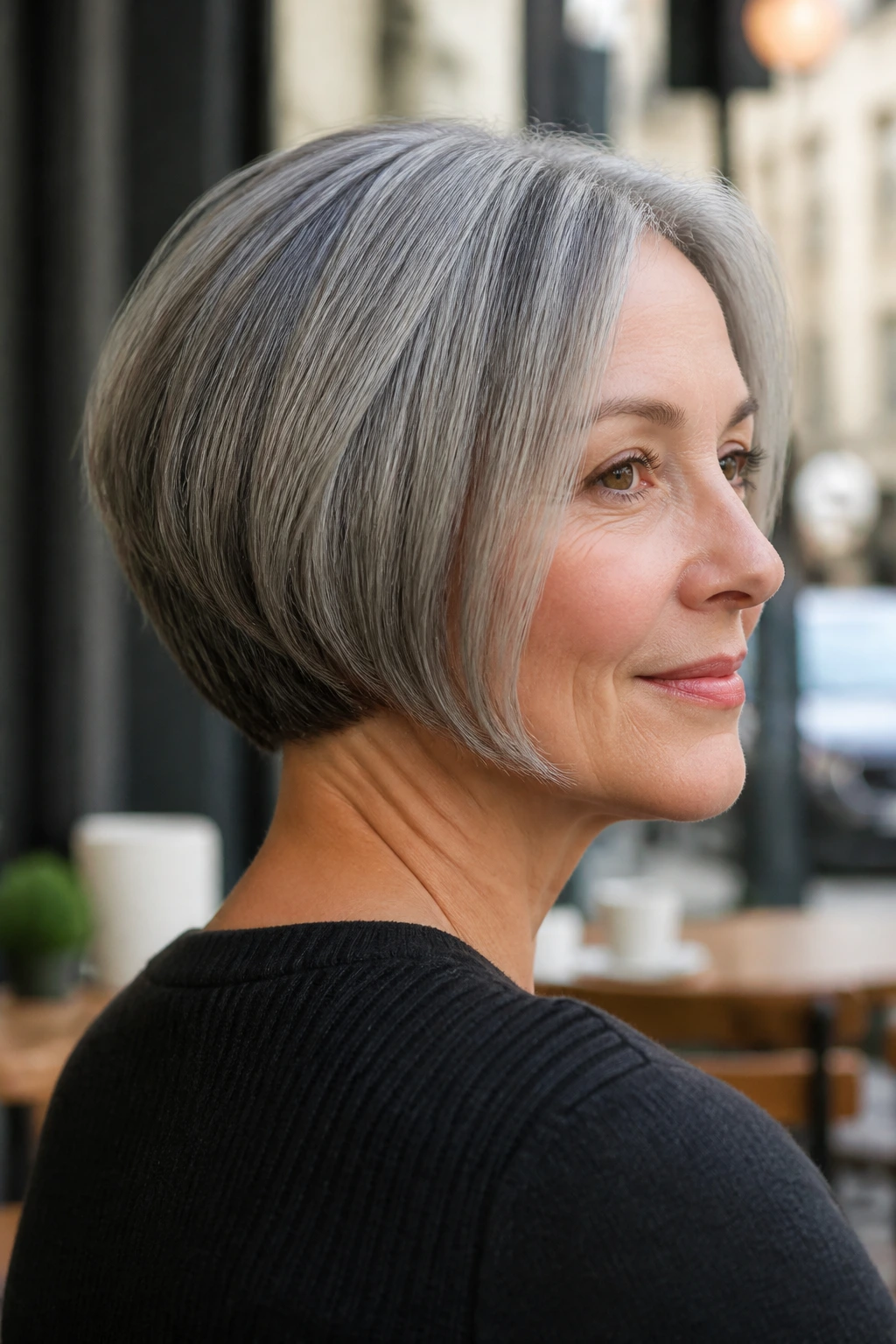
When hair starts to collapse at the back of the head, a graduated bob can wake it up fast. The nape stays short and precise, then the layers build upward so the back has lift without needing heavy teasing or a mountain of spray.
This is a strong choice for women who want a neat silhouette but don’t want a severe pixie. The front can stay a touch longer, grazing the chin, while the back stays stacked enough to keep the profile clean. From the side, that shape does a lot of quiet work. It lifts the crown, opens the neck, and makes gray hair look deliberate.
I like this cut on medium-density hair most of all. Fine hair can wear it too, but the stacking has to be careful; too much removal and the ends start to look thin. If you’ve got a strong swirl at the crown, this shape can also help the hair sit down instead of flipping up in weird places.
16. Fringe Crop That Plays Well with Glasses

Tired of hair sitting on the top rim of your frames? Then the fringe crop is worth a close look. The bang area is kept short enough to clear the glasses, while the sides stay soft so the cut doesn’t look boxy around the temples.
The sweet spot is usually a fringe that lands just above the frame line or splits gently in the center. That keeps the eyes open and the silver around the forehead bright. It also prevents that annoying daily battle where bangs keep falling into your lenses by noon.
This style has more styling options than people expect. Wear the fringe forward for a neat, graphic line. Sweep it sideways for something softer. Or let it break into tiny pieces with a dab of paste if you want a more lived-in finish. The key is keeping the length mindful of the frames, because glasses can either finish a short gray cut or fight it.
17. Deep-Side-Part Elegant Crop
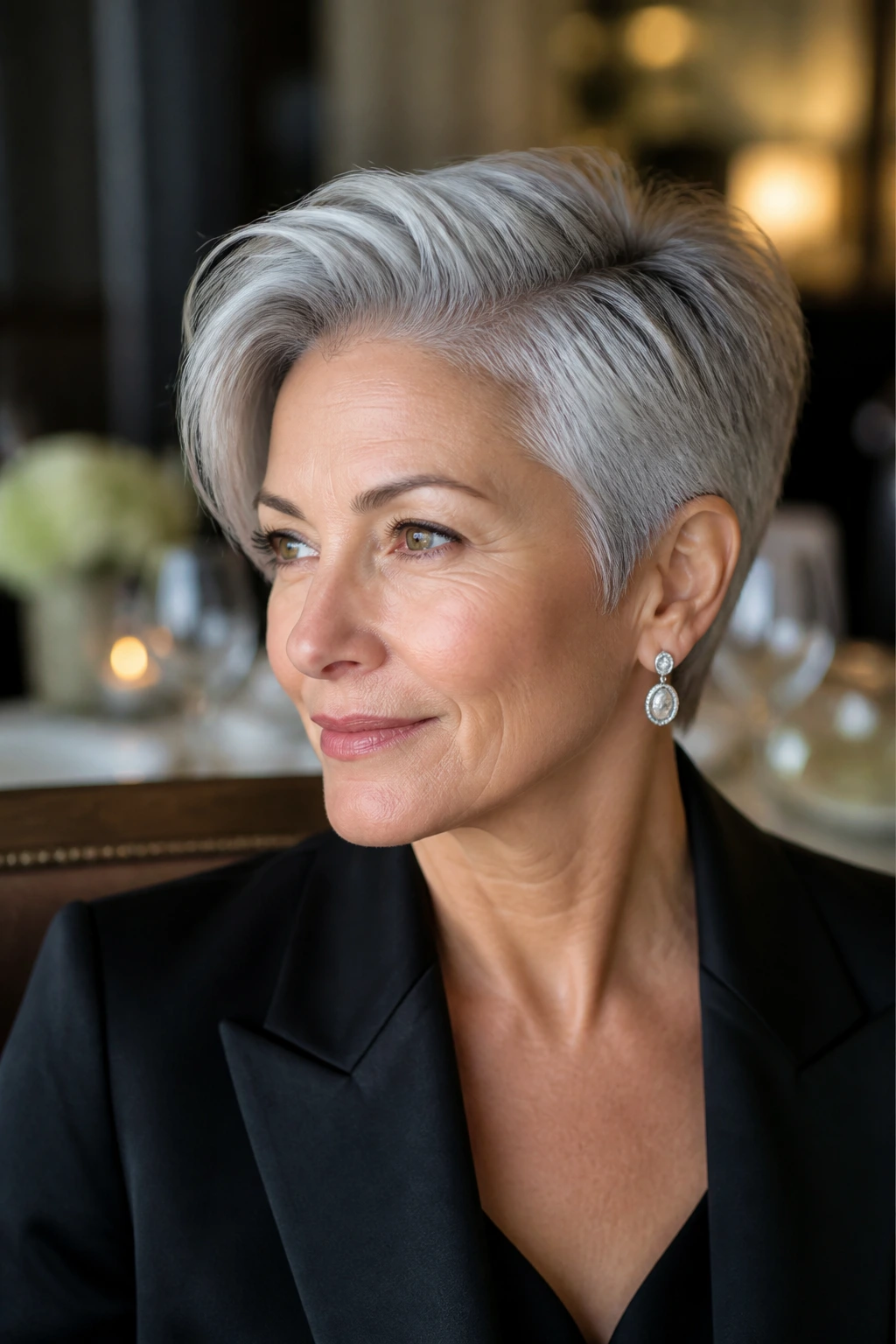
A deep side part changes everything. It gives a short gray cut instant height at the front, a little drama through the crown, and a polished angle that feels useful for dinners, events, or any day you want your hair to look a notch sharper.
The style works because it creates asymmetry without making a huge shape change. One side lies flatter and can be tucked back; the other rises at the root and sweeps across the forehead. That shift is flattering on most face shapes because it breaks up the straight vertical line of short hair and opens the cheekbones.
I like this on silver hair that already has shine. A bit of root-lifting mousse, a round brush, and a light glossing serum at the ends are usually enough. Don’t drown the roots in product. The part needs lift, not sludge.
How to Choose the Right Short Gray Cut Without Guessing
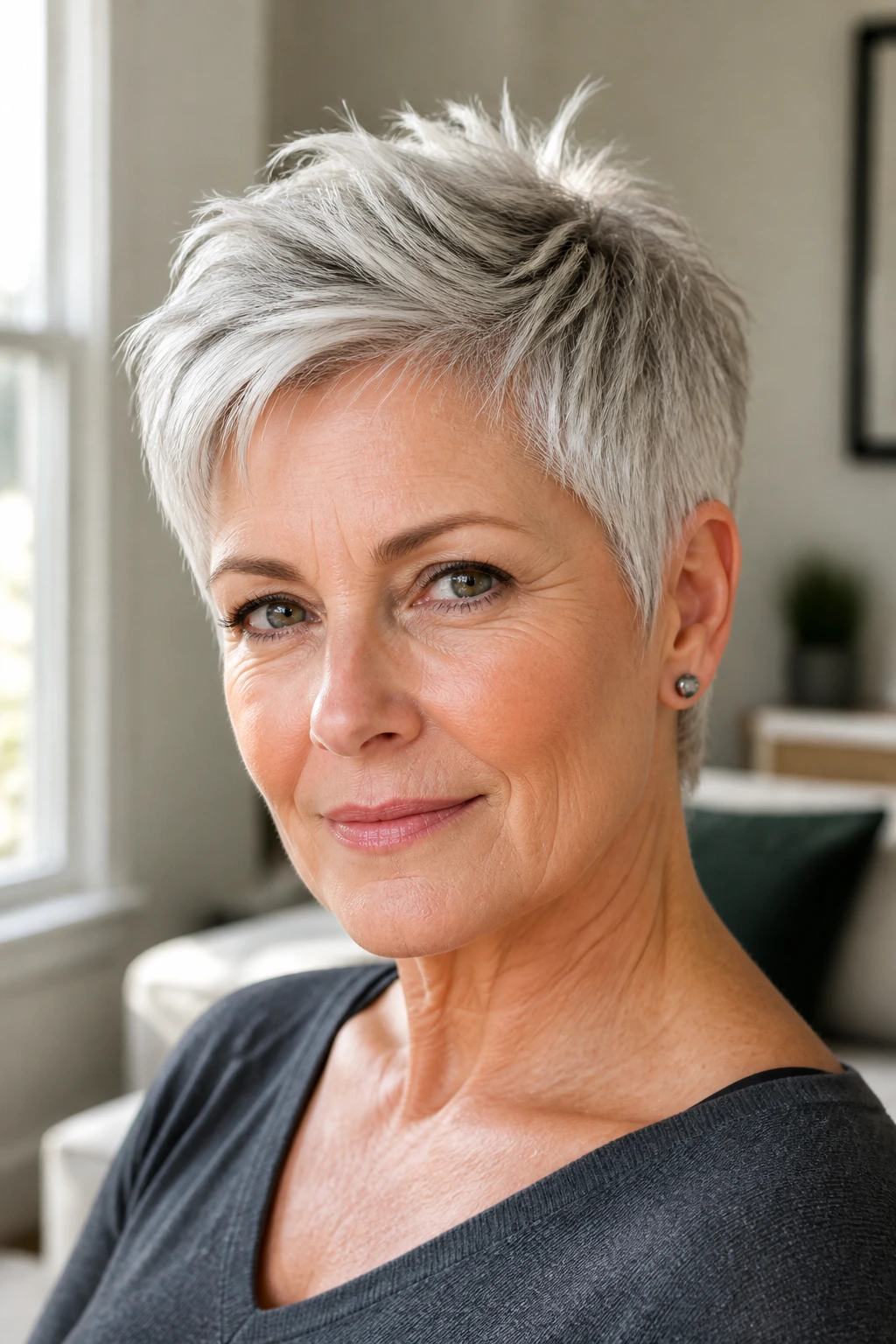
Picking the right short gray haircut gets easier when you stop asking which look is “best” and start asking which one matches the way your hair actually behaves. Fine hair needs different architecture than thick hair. A round face wants a different line than a long one. And if you wear glasses every day, fringe length matters more than people like to admit.
Fine hair: choose a blunt bob, stacked bob, or feathered pixie with clean perimeter lines. Too many layers make the ends look see-through, and gray hair shows that faster than dark hair does.
Thick hair: ask for internal debulking, tapered napes, or an undercut on the lower back. That removes bulk without leaving holes in the outline.
Curly or wavy hair: favor cuts that work with the pattern — shag, halo layers, jaw-length bob, or a crop with soft layers. If your hair has a strong bend, dry cutting can save you a lot of regret.
Glasses wearers: keep the fringe above the frame line or angled away from the lens area. Once hair starts fighting your frames, you spend half your morning fixing the same section.
And then there’s your real-life styling budget. If you want five-minute hair, be honest about that. A sleek bob that needs a flat iron every morning is beautiful, but not if it becomes a chore you resent by Wednesday.
Essential Tools for Styling Gray Short Hair
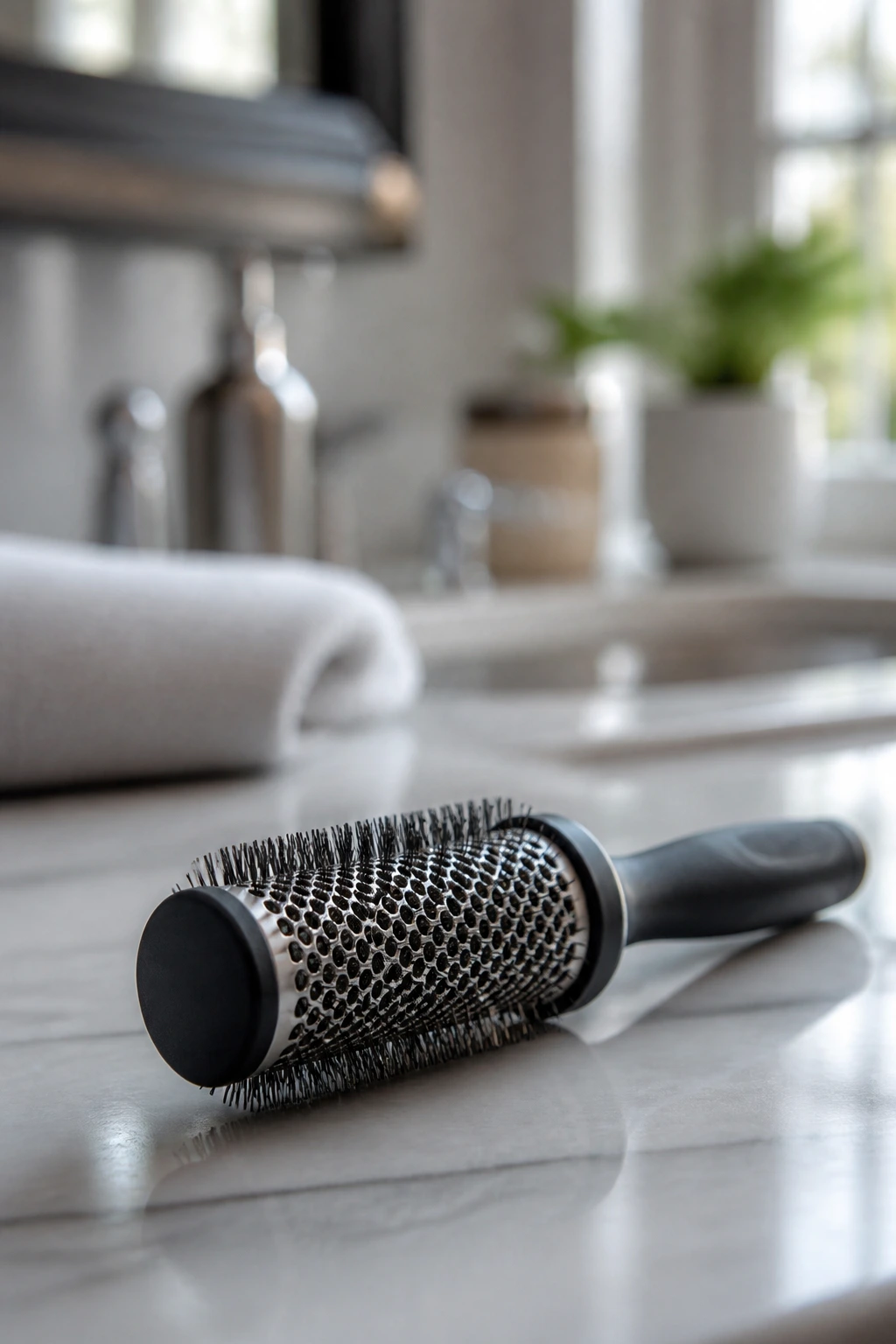
- 1-inch to 1.25-inch round brush: Best for bending bob ends under and lifting the crown without making the shape puffy.
- Blow dryer with concentrator nozzle: Helps direct airflow so short layers don’t blow all over the place.
- Lightweight mousse or root-lift spray: Gives fine or flat gray hair body without the sticky finish of heavy cream.
- Texturizing paste or soft wax: Useful for pixies, crops, and choppy ends; use a tiny amount and warm it in your palms first.
- Flat iron with adjustable heat: Handy for sleek bobs and polished fringe, especially if your hair bends unevenly.
- Purple shampoo: Helps tame yellow tones in silver hair, but use it sparingly so the hair doesn’t take on a dull cast.
- Wide-tooth comb or detangling brush: Better for curls and waves than a fine brush that pulls at dry gray strands.
- Microfiber towel or cotton T-shirt: Cuts down on rough frizz when the hair is damp.
- Heat protectant spray: Non-negotiable if you use hot tools more than once in a while.
- Hand mirror: Useful for checking the nape, sideburns, and back crown — the places that often get ignored until they’ve gone fuzzy.
How to Wear and Style These Cuts So They Look Intentional

Presentation: Keep the outline visible. Gray hair looks especially strong when the nape is clean, the fringe has a clear line, and the ears are either softly exposed or deliberately covered. A short style that hides everything tends to look fuzzy rather than chic.
Accents: Glasses, earrings, and collars matter here more than they do with long hair. A sharp bob sits well with a clean neckline. A feathered pixie loves a pair of small hoops. A curly crop can handle bolder frames because the shape already has movement.
Styling time: Most of these looks can be shaped in 5 to 15 minutes if the cut is right. Pixies need a little paste and finger work. Bobs often want a quick blowout at the roots and a bend at the ends. Curly styles need moisture more than heat.
Daily finish: Pick one finish and keep it consistent for a while. If the cut is feathered, use a matte or soft-texture product. If it’s sleek, keep the shine at the ends and leave the roots light. If it’s curly, stop touching it once it dries. That last part is hard. Still true.
Common Mistakes That Age a Short Gray Cut Too Fast
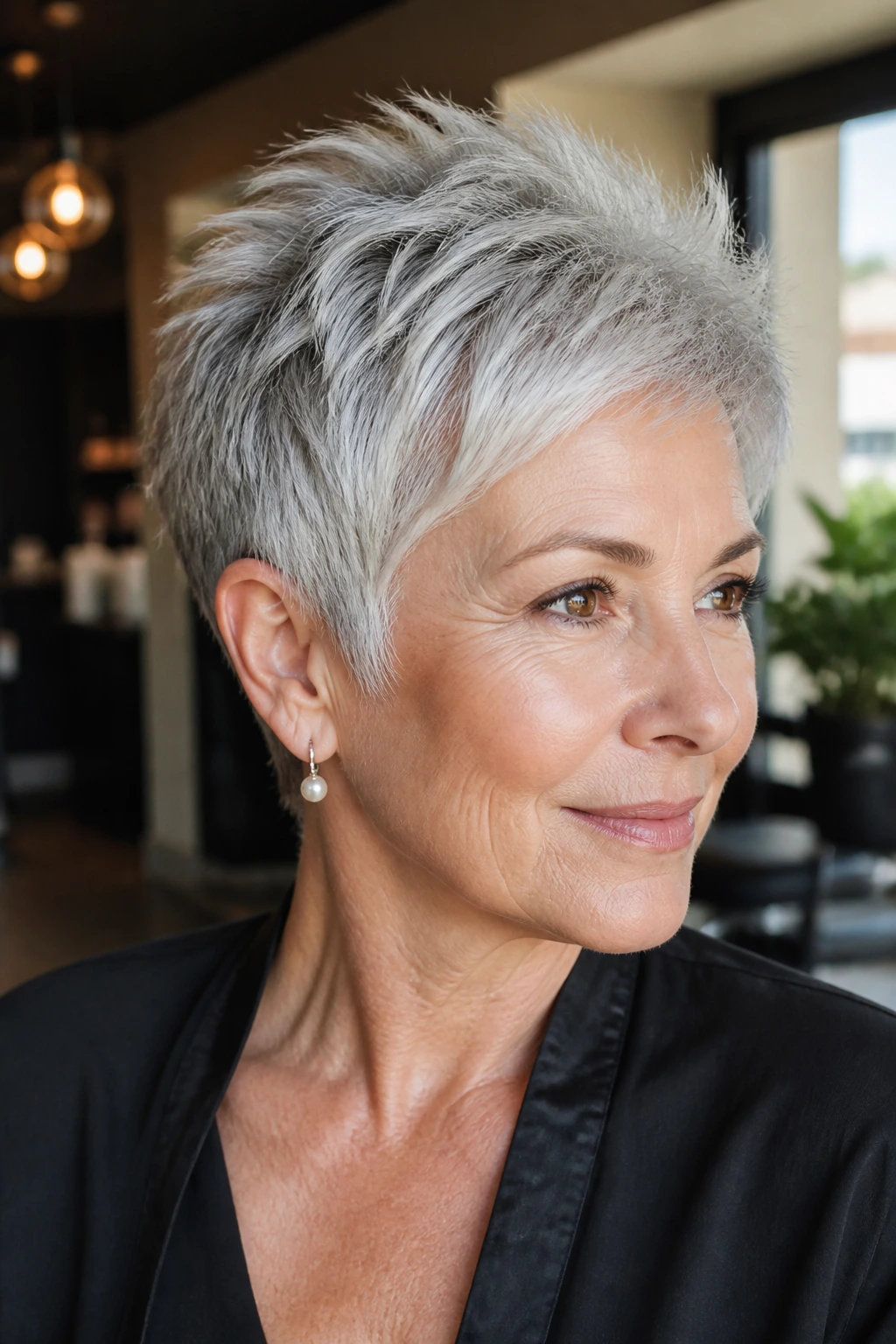
The most common mistake is over-layering fine gray hair. It sounds like the right move until the ends start looking see-through and the crown starts to fray. The fix is a stronger perimeter and fewer aggressive layers.
Another one: letting the nape and sideburns grow out too long. Short gray hair loses its shape fast when those corners blur. A tidy trim every 4 to 6 weeks keeps the cut looking deliberate.
Too much purple shampoo is a sneaky problem. Use it too often and the hair can go flat, dull, or slightly lavender in a way that looks tired rather than silver. Once every 1 to 2 weeks is enough for most heads; more only if the yellowing is stubborn.
Then there’s heavy oil on dry gray ends. A little shine serum can be lovely. A palmful turns the style limp and greasy by lunch. Keep the product on the fingertips and work it only through the last inch or two.
And please, don’t ignore the part line. If you keep parting the hair in the same place for months, the roots can flatten in that exact spot, which makes even a good cut look sleepy. Shift the part a little now and then. It changes the whole face of the haircut.
Variations and Adaptations to Try
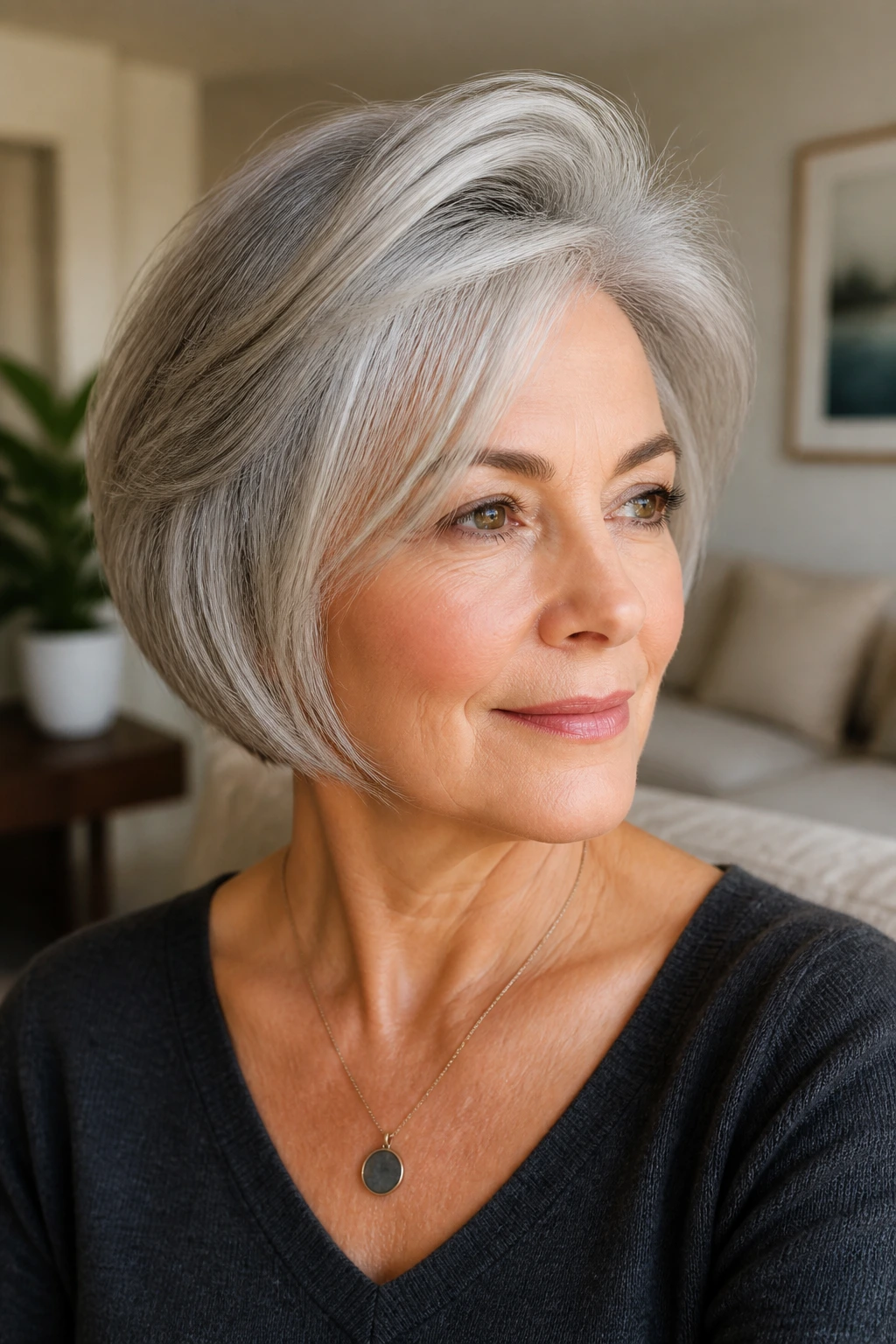
The Fine-Hair Lift Edit: Choose a blunt bob, stacked bob, or short crop with a strong perimeter and minimal layering. Add root-lift spray at the crown and blow-dry the hair up and away from the scalp. This keeps silver strands from scattering into a see-through veil.
The Curl-Friendly Soft Frame: Keep more length around the cheeks and leave the shape loose around the ears. This version works well if your curls need room to spring and your goal is shape, not control. A dry cut and a diffuser make the biggest difference.
The Glasses-and-Fringe Edit: Shorten the fringe so it clears the frame line by a small margin. If the glasses are bold, keep the fringe light and textured. If the frames are thin, you can go a little stronger with the bang.
The Low-Heat Routine: Pick a wash-and-go crop, wavy bob, or shag that can air-dry with leave-in and a little scrunching. This is the least fussy route if you’d rather not live with hot tools every morning. A satin pillowcase helps the shape survive to day two.
The High-Contrast Silver Look: If your gray is still mixed with darker strands, a sharp bob, deep side part, or sleek crop can make the contrast look intentional. A gloss treatment or careful lowlight placement can deepen the dimension without hiding the silver. I like this version when the goal is crisp rather than soft.
Keeping the Shape Sharp Between Salon Visits

Short gray hair needs maintenance more often than shoulder-length hair, and that’s not a flaw. It’s part of the deal. Pixies and cropped cuts usually need a trim every 4 to 6 weeks if you want the neckline and fringe to stay crisp. Bobs can often stretch to 6 to 8 weeks, especially if the perimeter is blunt and the layers are subtle.
Wash frequency depends on the texture. Fine straight hair may need shampoo every other day because oil shows faster on short lengths. Curly gray hair often does better with fewer shampoos and more conditioner, since the curl pattern stays happier when it isn’t stripped all the time. If the ends feel rough, don’t pile on more shampoo. Add moisture.
Purple shampoo is a tool, not a lifestyle. Use it only when brassiness creeps in, usually every 1 to 2 weeks for many silver heads. Leave it on long enough to neutralize yellow tones, but not so long that the hair gets dull. If your water runs hard, a monthly clarifying wash helps keep mineral buildup from muting the gray.
At night, a satin or silk pillowcase helps short hair keep its shape. It sounds fussy. It isn’t. Less friction means fewer bent ends and less frizz at the crown, which is where short gray cuts tend to go sideways first.
Frequently Asked Questions
Which short gray haircut is best for fine hair?
A blunt bob, stacked bob, or feathered pixie usually gives fine hair the most believable fullness. The key is keeping the perimeter clean so the ends look denser, not over-thinned.
Can I wear bangs with gray hair after 50?
Yes, but the length matters. A fringe that clears the eyebrows or just skims them tends to look lighter and easier to manage than a heavy bang that sits on the lashes all day.
How often should short gray hair be trimmed?
Most pixies need a trim every 4 to 6 weeks, while bobs can often go 6 to 8 weeks. If the neckline starts fuzzing out or the fringe hits your eyes, it’s time.
Does gray hair really need purple shampoo?
Only if yellow or brassy tones bother you. Some silver hair stays bright with regular cleansing and a good conditioner, while other heads pick up warmth fast from water, sun, or heat tools.
What if my hair is curly and short styles puff out?
Choose a shape that follows the curl pattern instead of fighting it, like a shag, halo layers, or a curl-friendly crop. Dry cutting helps a lot, because the stylist can see how the hair actually sits.
Is a pixie too severe on older women?
Not if the texture and fringe are handled well. A feathered pixie or a pixie-bob can look soft, lively, and flattering; the severity usually comes from an overly tight outline or a flat crown.
Can I grow out dye into one of these looks?
Absolutely. A chin-length bob, soft crop, or layered pixie can make the transition look cleaner while the color grows out. Short hair gives the line a place to live, which makes regrowth less obvious.
What’s the easiest style if I don’t want to heat-style every day?
A wash-and-go crop or curly shag is probably your best bet. Both can look finished with very little heat, as long as the cut follows your natural texture.
The Cut That Lets the Silver Lead
The best gray short hair rarely tries to hide what the hair already is. It puts a frame around it. A clean nape, a sharp bob line, a lifted crown, or a piecey fringe can make silver look expensive in the plainest, smartest way — by giving it shape.
If you take one thing from these 17 gray hair looks for short hair over 50, let it be this: choose the cut that matches how your hair behaves on a normal Tuesday, not the one that only looks good in salon lighting. The right shape will do more for your color than any product shelf ever could.
And once you find that shape, keep it trimmed. That’s the whole trick.
