



Gray hair is picky.
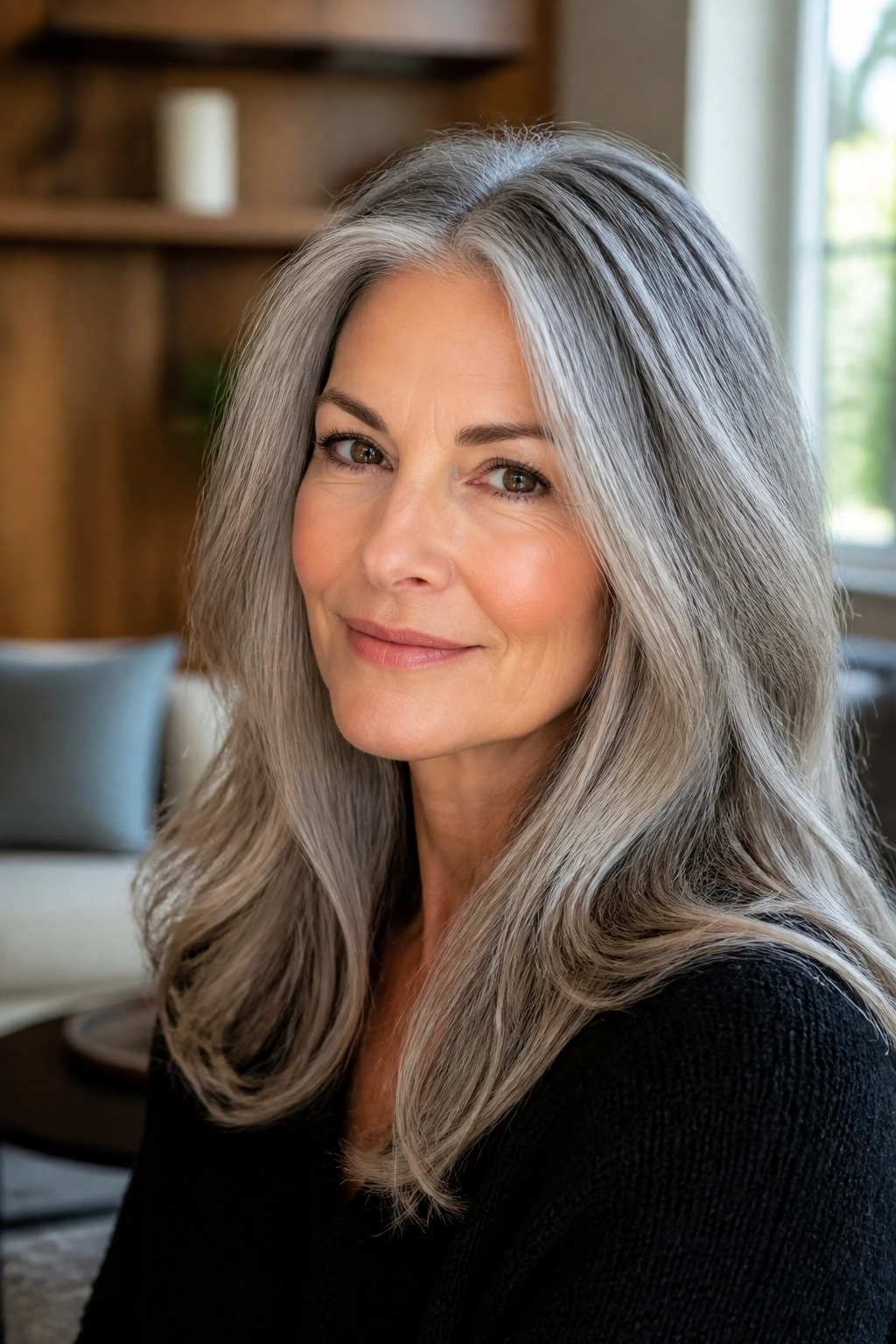
The minute the tone goes muddy, too violet, too beige, or too flat, the whole thing stops looking intentional and starts looking like a color that gave up halfway through. The best gray hair color ideas do the opposite: they use shadow, shine, and placement to make silver hair look deliberate, dimensional, and expensive without relying on one flat dye job.
That’s why silver hair works best when you think in layers, not labels. Mushroom gray is not the same thing as pearl silver. Graphite has a different mood than icy balayage. A root melt behaves very differently from a money piece, and if you’ve ever watched a cool toner turn a pretty blonde into lilac straw, you already know the difference between “silver” and “what happened to my hair?”
A strong silver look also has to respect the hair underneath it. Porosity, previous box dye, warmth in the mids, hard water, and how often you heat-style all decide whether the finish stays crisp or drifts off into dullness. So let’s get specific, because gray hair deserves more than a vague “make it silver” request at the salon chair.
Why These Gray Hair Color Ideas Work in Real Life
-
They use depth on purpose: A root shadow or lowlight keeps silver from looking like one big helmet of color, which matters even more on straight hair.
-
They respect undertones: Cool silver on warm skin can look harsh fast, while mushroom, champagne, or pewter shades soften the contrast.
-
They buy you time between appointments: Several of these looks grow out better than a full bleach-and-tone job, and that matters when your schedule is already packed.
-
They work with different textures: Curly hair, blunt bobs, long layers, and pixies all show silver in different ways, and the right placement can make the haircut do half the work.
-
They’re not all high-maintenance monsters: Some are salon-heavy at the start, yes, but a few are built for low upkeep and natural regrowth rather than constant correction.
-
They give you options beyond “platinum or nothing”: The modern silver look is broader than icy blonde. You can go soft, smoky, metallic, pearlized, or almost charcoal and still land in the same family.
1. Smoky Mushroom Gray With a Soft Root Shadow
Smoky mushroom gray is one of those shades that looks especially good when the hair has a little natural depth left in it. The finish sits between beige and silver, which keeps it from going flat or icy in a way that can make the face look washed out. I like this shade on brunettes who want gray hair color ideas that feel believable on day one and even better after a few weeks of grow-out.
Why it works
A soft root shadow gives the color someplace to start, and that small bit of depth near the scalp keeps the mids and ends from reading too pale. Ask for a beige-gray gloss over lifted pieces, not a blunt silver overlay. The trick is restraint. Too much violet and you get a lavender cast; too much ash and the whole thing goes dull.
Best for: medium to dark bases, shoulder-length cuts, and anyone who hates a hard regrowth line.
Salon note: ask for a level 7-8 root smudge, then cooler, lighter mids with a neutral-silver glaze.
Styling note: loose waves show the beige-gray movement better than pin-straight hair.
2. Icy Silver Balayage on Mid-Length Layers
This is the one that says “silver” from across the room. The darker base gives the icy pieces something to sit on, and balayage keeps the color from looking striped. On layered hair, the lighter sections catch movement around the cheekbones and collarbone, which is where the eye lands first anyway.
A bold look, not a busy one
Icy silver balayage needs lift. Not a little. Enough to reach a pale yellow base before toner even enters the conversation. If the hair stops at orange, the silver will not hold cleanly.
- Ask for: hand-painted lightening through the top and surface layers.
- Watch for: a toner with blue-violet tone, not straight violet.
- Wear it best with: loose bends and a glossing serum on the ends.
If you want a modern silver look that still moves when you turn your head, this is a strong pick. The contrast does the heavy lifting.
3. Charcoal Root Melt Into Pewter Ends
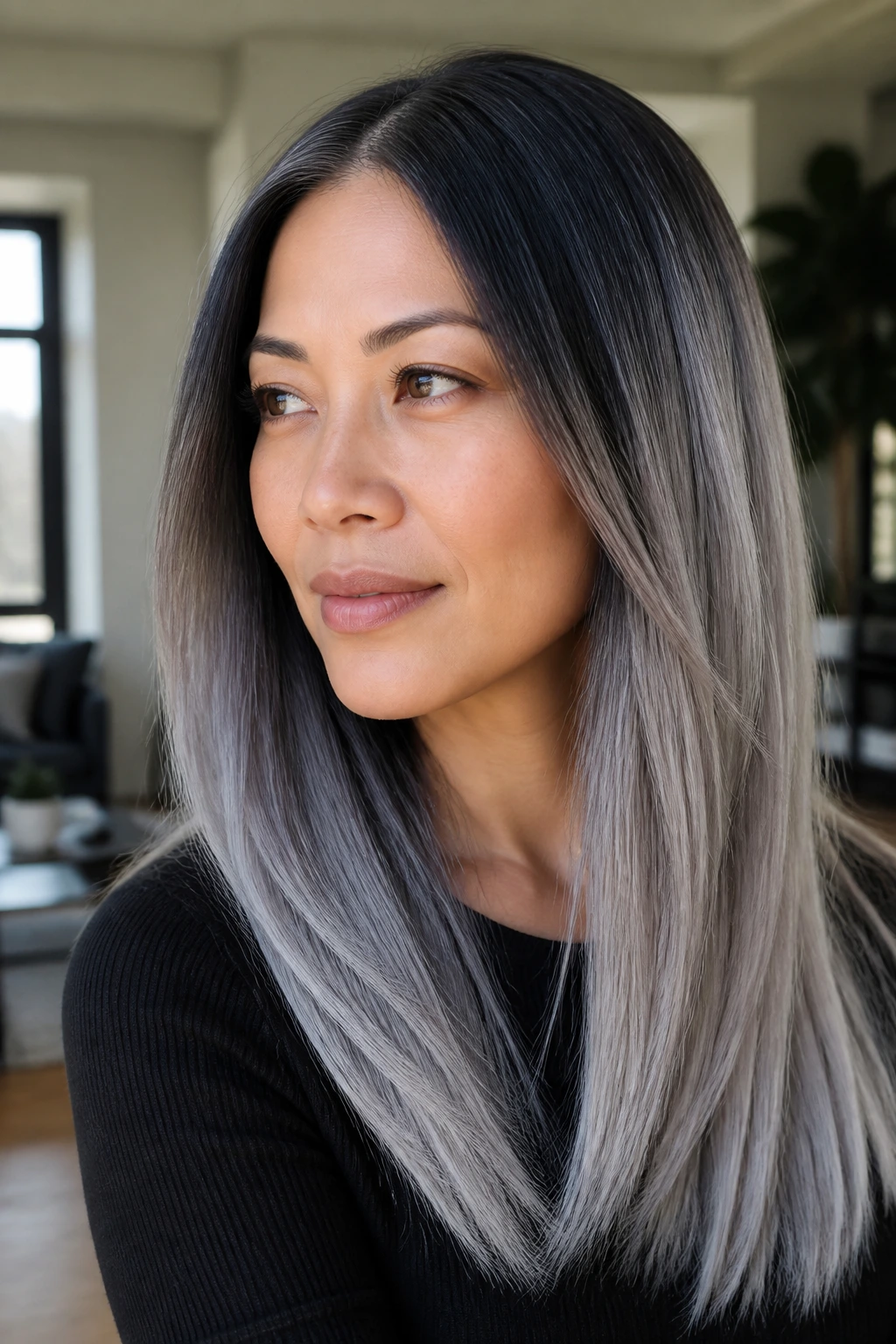
Charcoal root melt is for people who like their gray hair color ideas with a little attitude. It starts dark and smoky at the scalp, then softens into pewter ends that look polished instead of over-lightened. On straight hair, the effect is sleek and almost liquid. On wavy hair, it picks up a nice, smoky depth that feels a touch more relaxed.
What makes this one so useful is the grow-out. The root melt buys you time, and that’s not a small thing when you’re trying to keep silver hair from turning into a monthly obligation. Ask your colorist for a seamless transition, not a sharp fade. The line between charcoal and pewter should look brushed, not painted with a ruler.
One detail people miss: the ends don’t need to be white-blonde. Pewter is cooler and softer than that. It’s also kinder to damaged hair.
4. Silver Money Piece Framing the Face
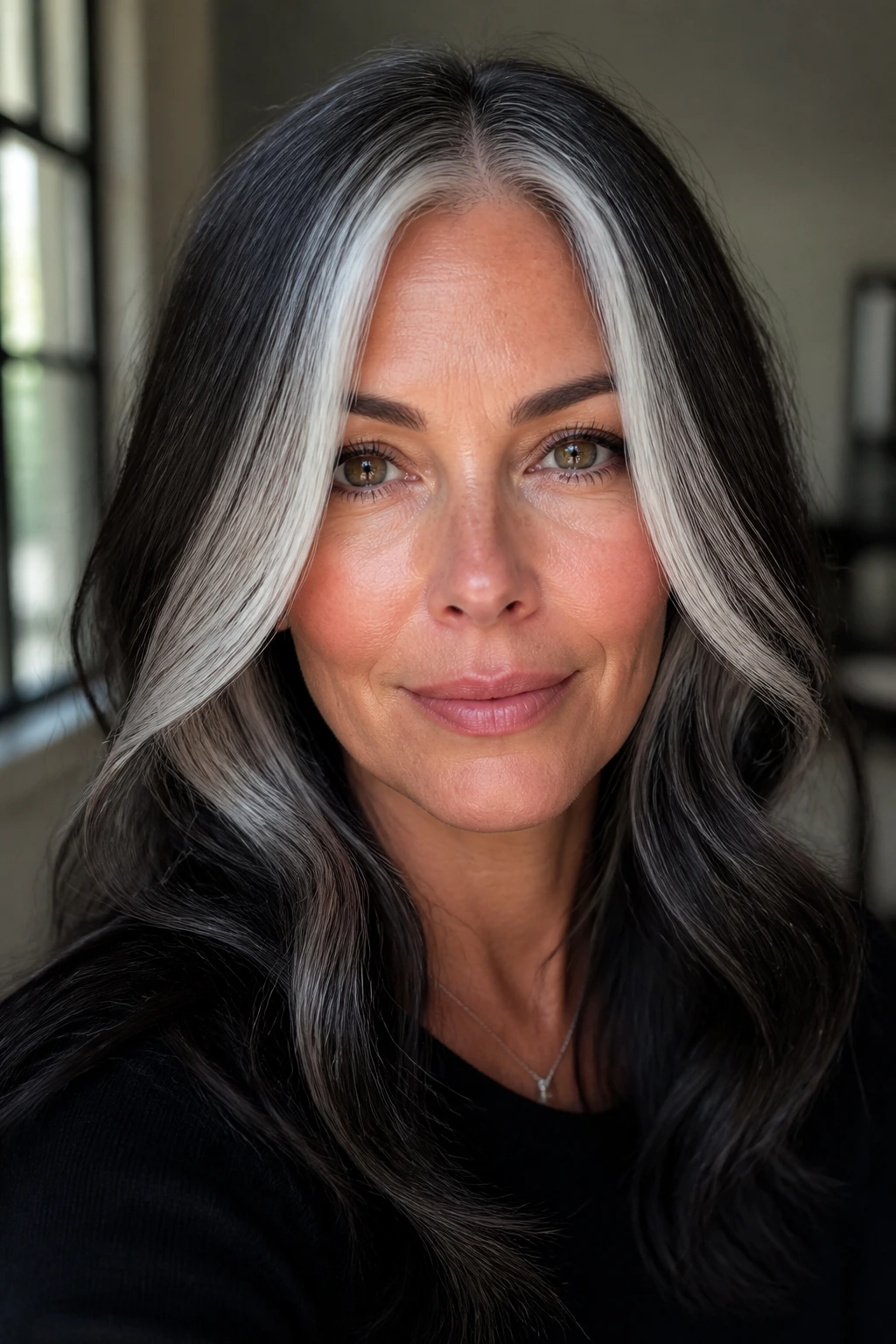
If you don’t want to commit to a full head of silver, start at the front. A silver money piece puts the brightness right where it changes the whole face, especially around the temples and cheekbones. It works because the eye sees the frame first, not the back of the head.
The best version has a soft root and a slightly brighter front panel, not a flat stripe. That tiny difference matters. One looks expensive. The other looks like it was done in a hurry.
How to wear it
- Keep the base a few shades deeper so the silver has contrast.
- Ask for a cool pearl toner at the front only.
- Style with a center part if you want the money piece to read symmetrical, or a deep side part if you want one side to pop harder.
This is also one of the easiest entry points into silver. You get the look without the maintenance of a full-head lightening job.
5. Pearl Gray Bob With a High-Gloss Finish
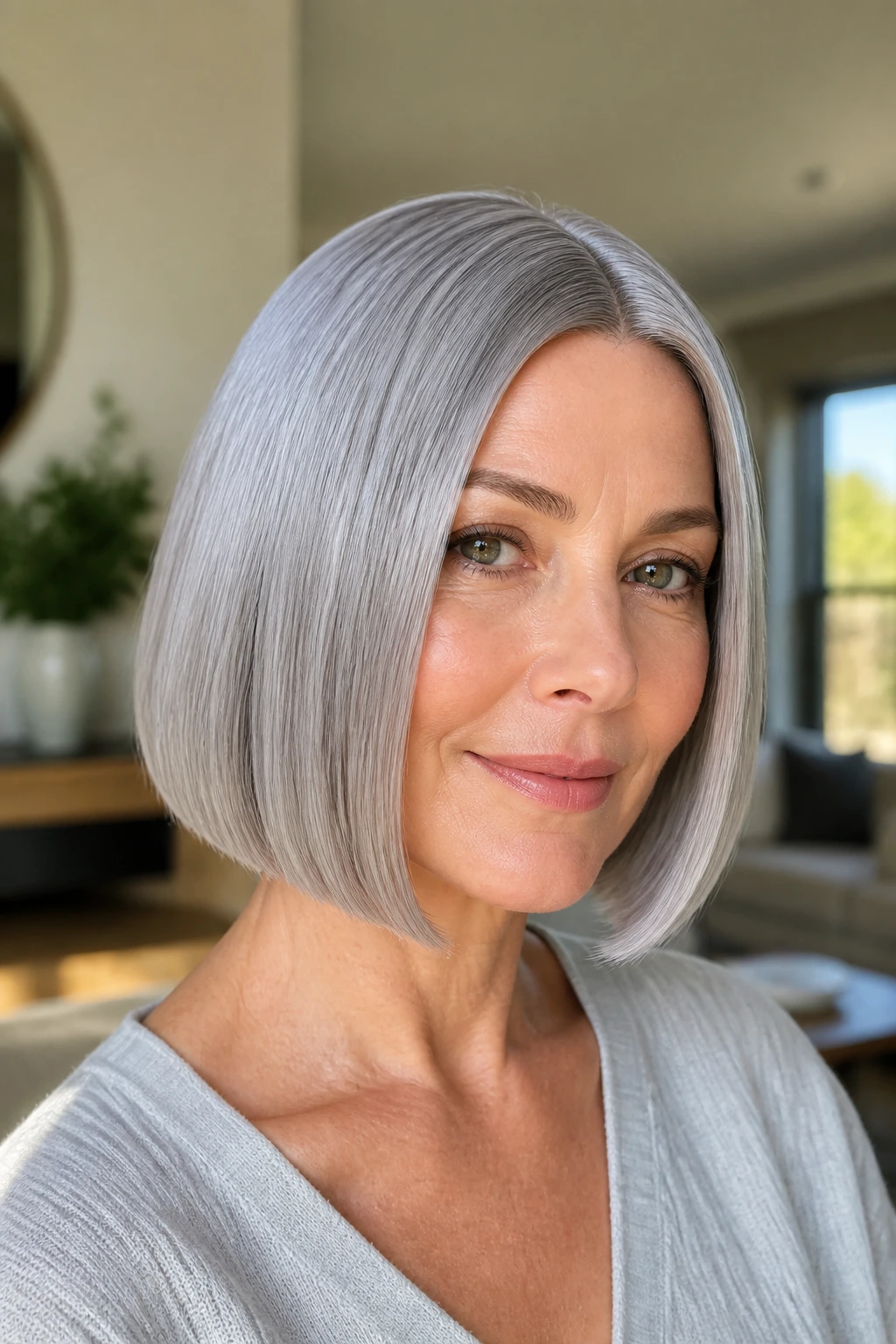
A bob and pearl gray are a smart pair. The cut gives the color shape, and the color gives the cut that clean, reflective edge that makes a blunt line look sharp. Pearl gray sits softer than white silver, which means it can flatter a wider range of skin tones without screaming for attention.
I prefer this on hair that’s been cut with a clean edge at the jaw or just below it. The gloss catches on the curve of the bob, and the finish looks polished even when the styling is minimal. A flat iron can make it too severe. A round brush and a slight bend at the ends is usually enough.
This one likes shine. If the hair is dry, the pearl effect disappears fast. A lightweight serum on the mid-lengths and ends keeps the silver from looking chalky.
6. Graphite Gloss on Long Layers
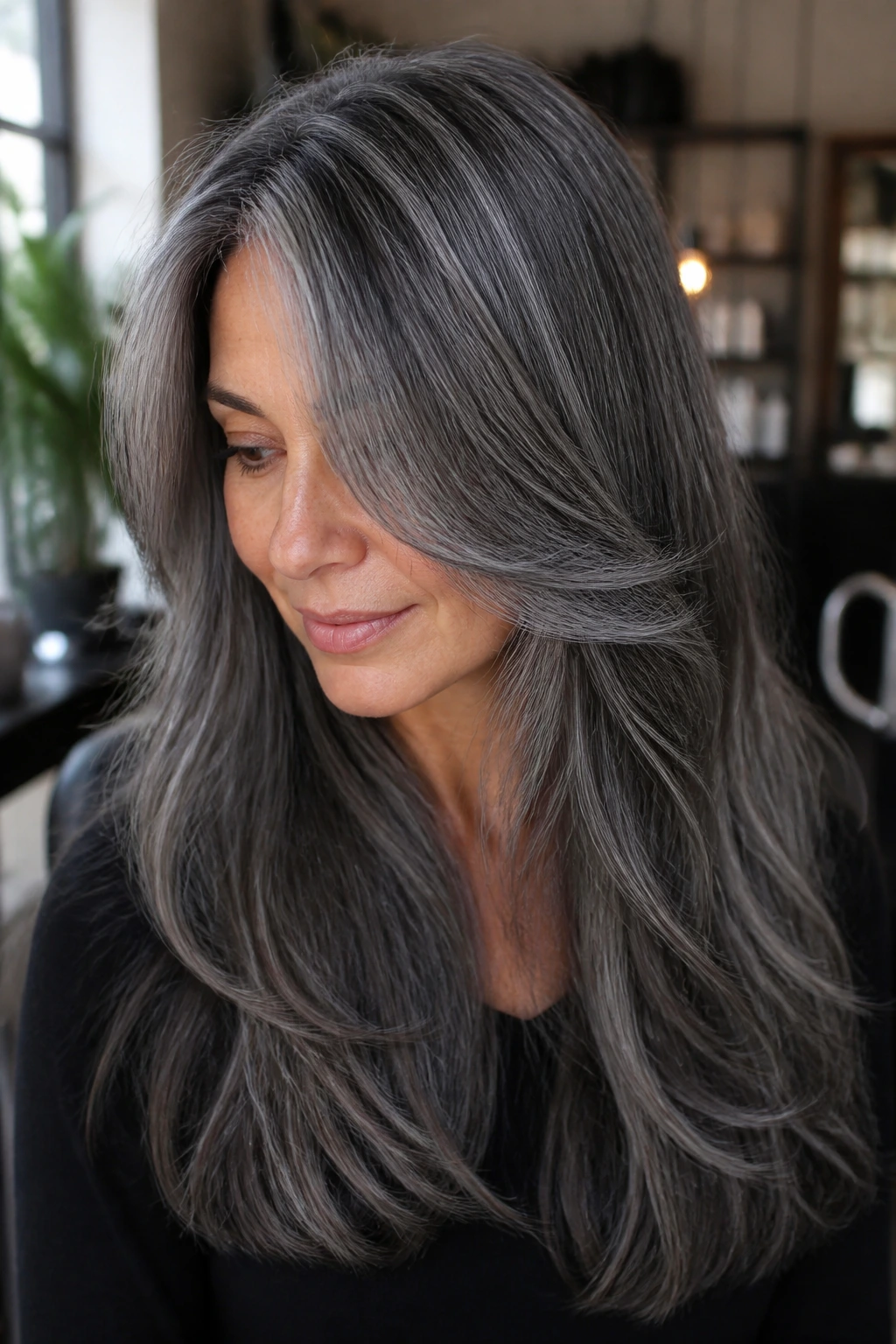
Graphite gloss is the quietest kind of silver, and that’s part of its appeal. It leans dark, smoky, and cool, with enough shine to read as intentional but not so much lift that the hair feels fragile. On long layers, it creates movement without losing the deeper base that makes the whole thing look grounded.
Unlike brighter silver shades, graphite doesn’t need every strand to be pushed to the edge of white. A dark blonde or light brown base can take it surprisingly well if the toner is chosen carefully. That’s useful. Fewer levels of lift usually means happier hair.
If you like gray hair color ideas that live somewhere between brunette and silver, this is one of the strongest options. It feels modern without chasing the brightest end of the spectrum.
7. Sterling Balayage Over Dark Blonde Hair
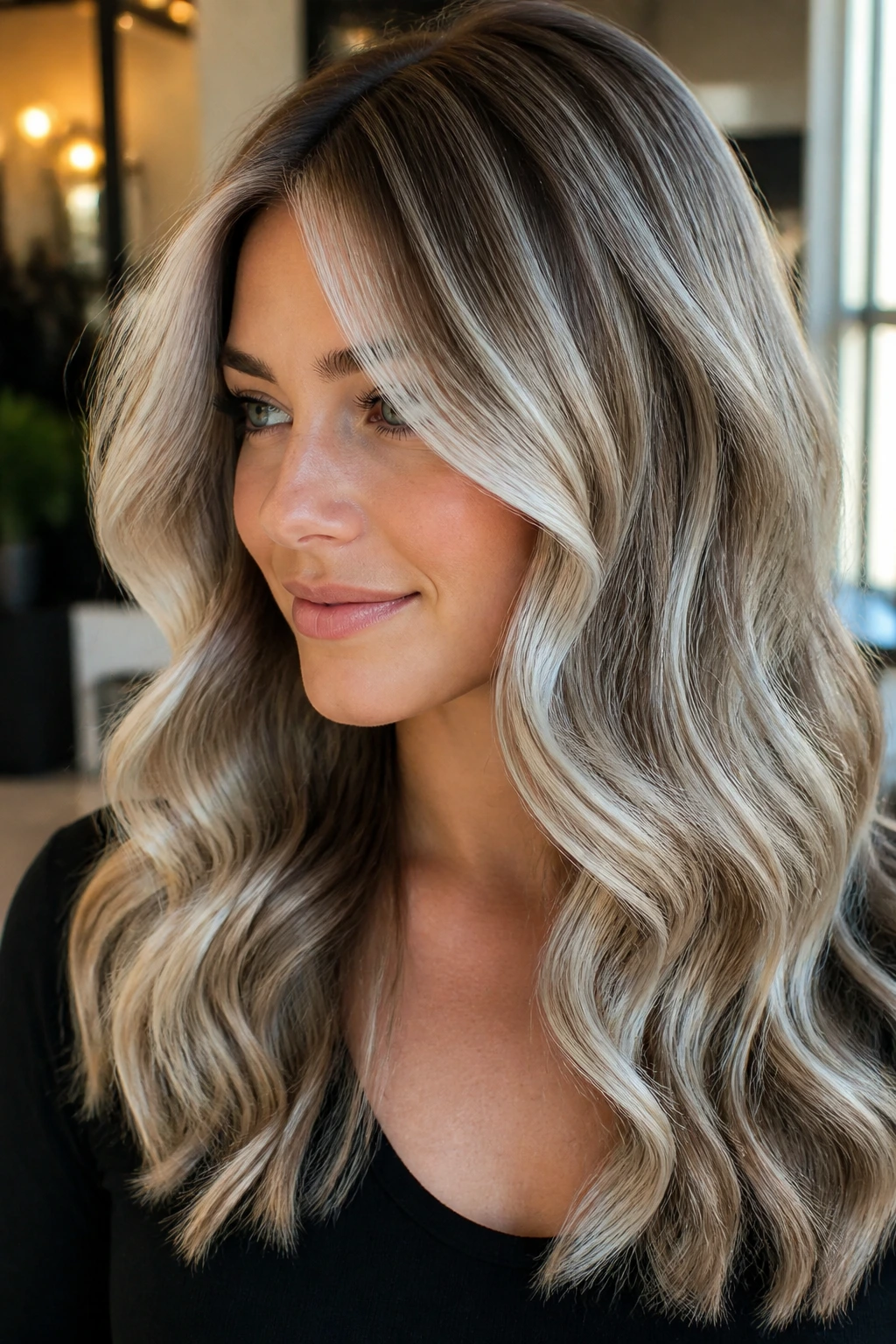
Sterling balayage has a lighter, airier feeling than mushroom gray or graphite. The name fits: cool, clean, reflective, but not blindingly pale. Dark blonde hair is a natural starting point here because the silver ribbons can sit over the base without fighting it.
What makes it different
The silver is not all over. It’s placed in ribbons, usually through the top and around the face, so the hair keeps dimension. That’s what stops the color from turning into one metallic block.
- Good placement zones: around the hairline, crown, and surface layers.
- Good finish: soft waves or a rough blow-dry.
- Best maintenance move: a quick gloss every few weeks, not constant re-lightening.
I like this version because it ages better than many bright silver jobs. The grow-out stays soft, and the balayage shape keeps the hair from feeling too precious.
8. Frosted Brunette-to-Silver Ombré
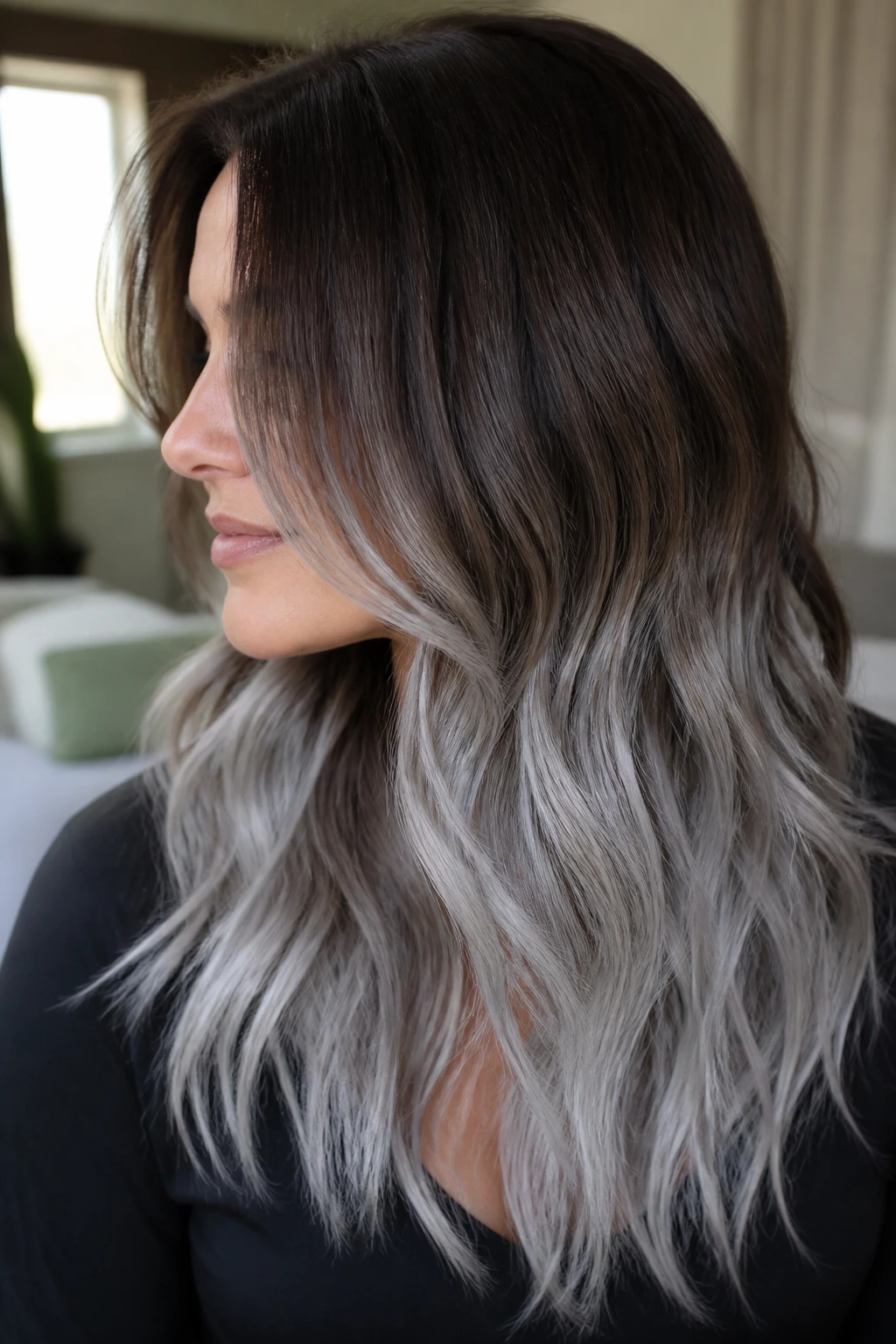
This is for people who want a dramatic shift without a blunt line. Frosted brunette-to-silver ombré starts dark and rich near the scalp, then gradually lifts into cool silver toward the ends. When the blend is done well, the eye sees a slow fade, not a staircase of color.
The important thing here is softness through the mid-lengths. If the transition gets too abrupt, the effect looks dated fast. A good ombré should feel melted. The ends can go almost white, but the middle section has to carry the gray in a believable way.
This style looks especially good on waves and curls because the movement breaks up the gradient. Straight hair can handle it too, but it needs a little bevel or bend to keep the fade from looking too literal.
9. Slate Gray Pixie With Piecey Texture
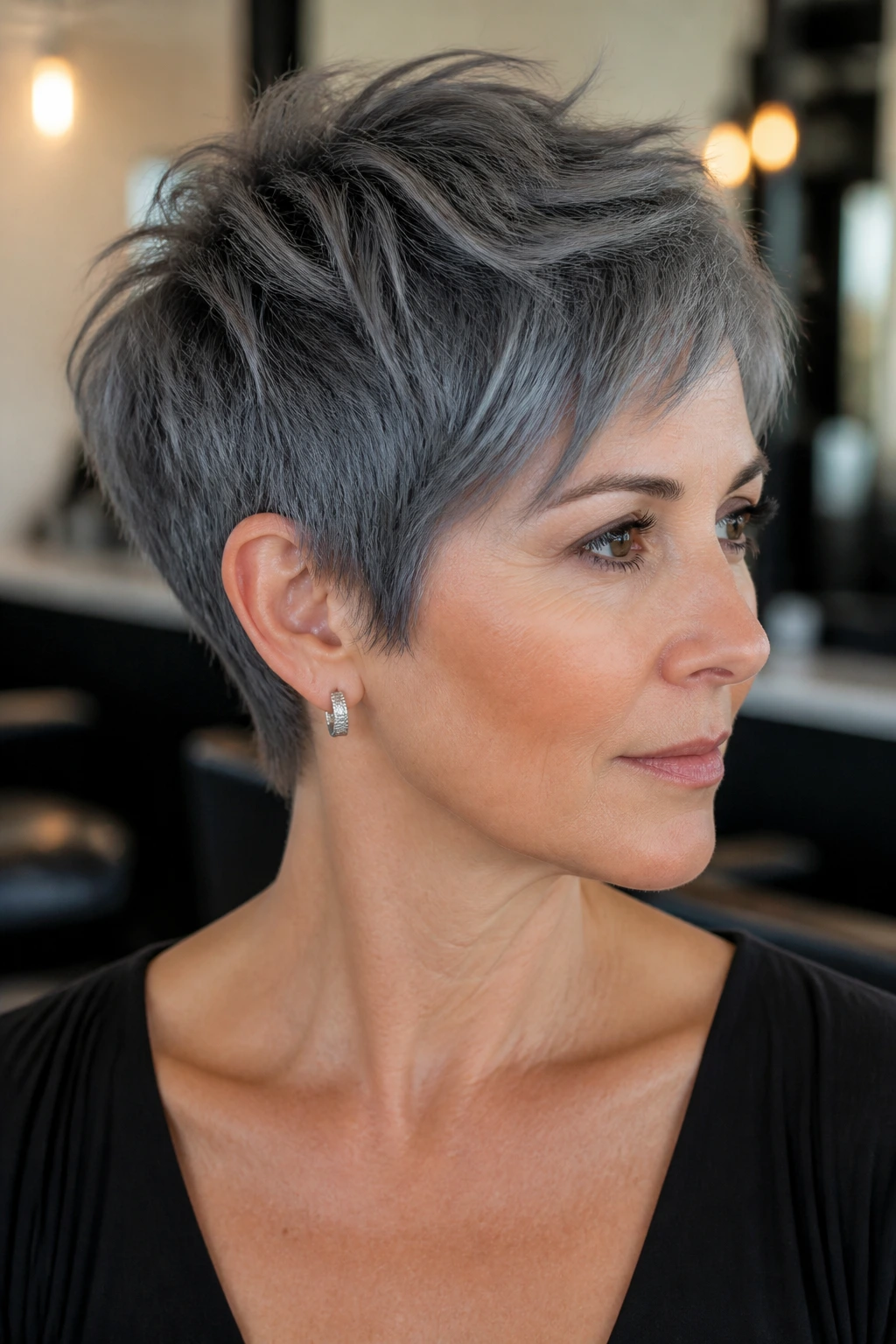
A slate gray pixie is sharp in the best way. The short cut keeps the color from feeling too heavy, and the piecey finish gives the gray edges some attitude. This is not a soft, romantic silver. It’s closer to a tailored jacket: clean, direct, and a little bit cooler than everyone else in the room.
Short hair does two useful things here. It makes upkeep easier, and it puts the focus on the color shift instead of the length. Ask for a cooler slate tone with darker shadows through the nape and sides. That keeps the top from floating away visually.
A matte paste can help here, but don’t overdo it. Too much product kills the reflective parts that make the gray interesting.
10. Opal Silver With a Lavender Whisper
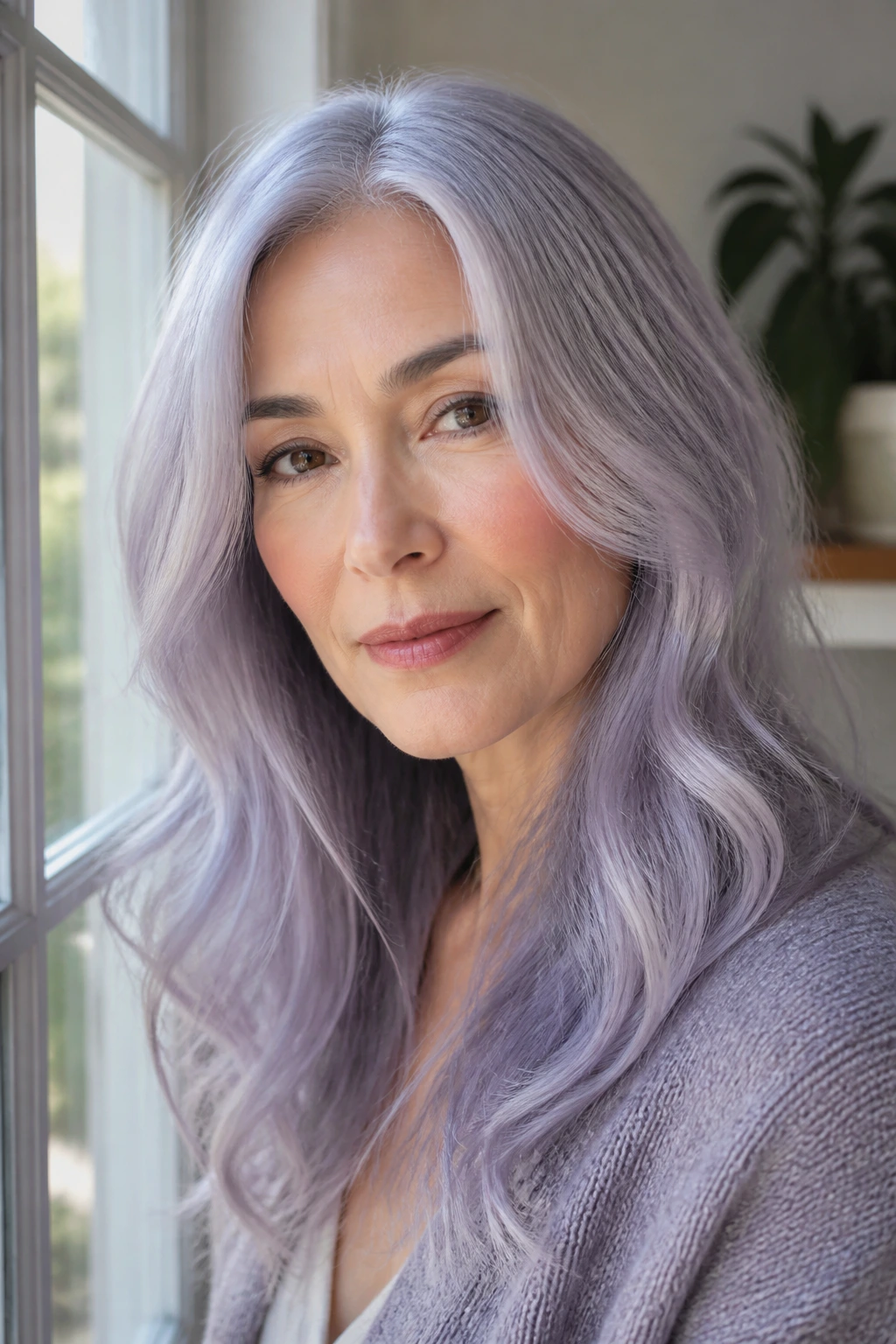
Opal silver is where gray hair color ideas get playful without tipping into costume territory. The base stays silver, but a faint lavender cast gives the finish a soft glow that changes in different light. It’s subtle enough to feel grown-up, which is exactly why it works.
A little color, not a pastel flood
The lavender should whisper, not shout. If it reads purple from five feet away, it’s too much. The trick is a translucent toner or a pale pastel gloss layered over a cool silver base.
Best on: pre-lightened hair with low yellow warmth.
Best styling choice: loose texture, half-up styles, or a soft bend through the ends.
Best caveat: this shade fades faster than plain silver, so plan on refreshing it more often.
It’s a good pick if you want something with a little personality but still want the hair to read silver first and lavender second.
11. Steel Gray With Mirror Shine
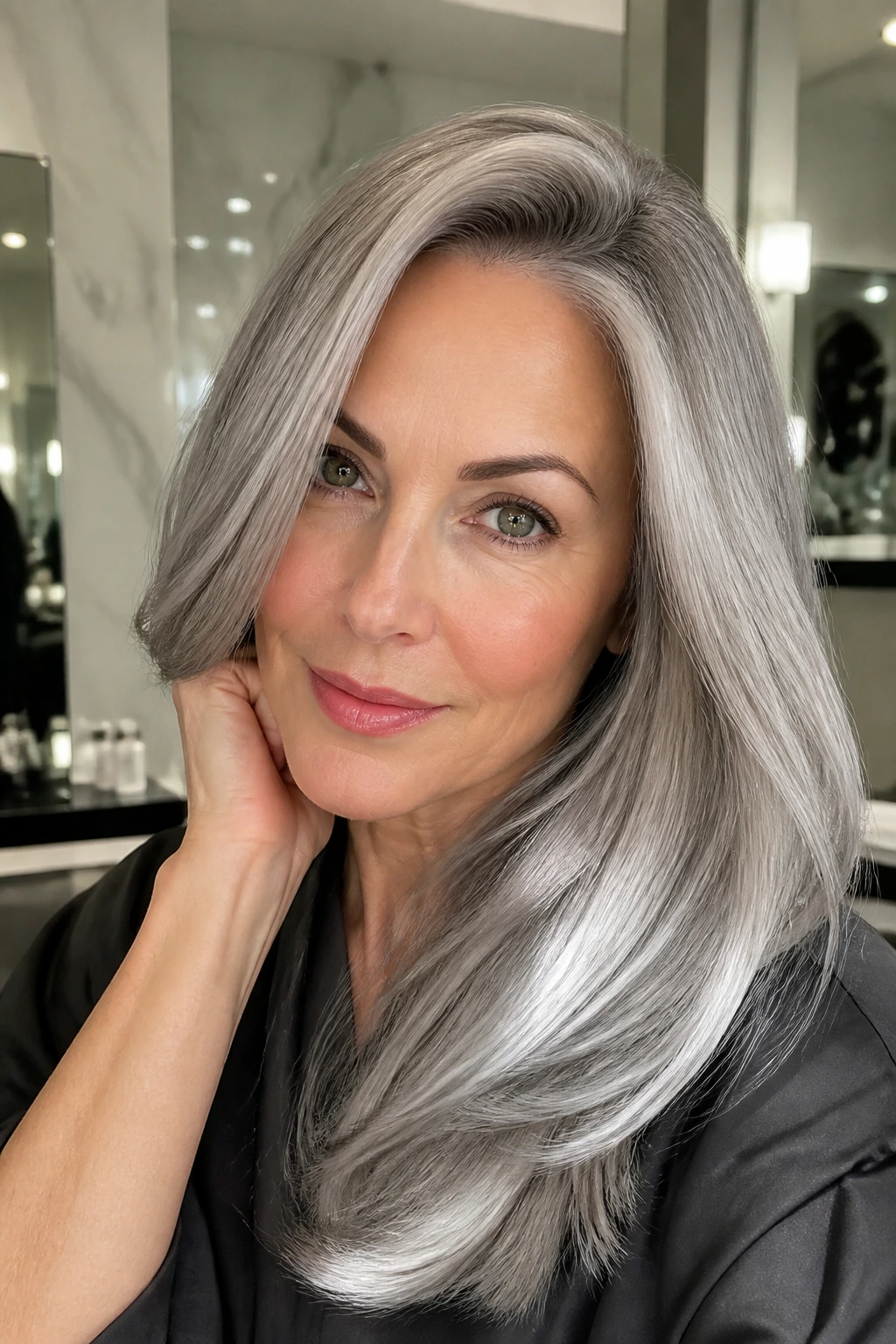
Steel gray is the polished one. It has a harder, cooler edge than pearl or mushroom gray, and the shine is part of the look. On smooth hair, it can look almost metallic. On textured hair, it feels more grounded and less severe.
The difference between steel gray and dull gray is finish. You need shine, and lots of it. A smoothing blow-dry, a light gloss, and a heat protectant with slip can change the result more than an extra level of lightness ever will.
If you like hair that looks deliberate from the moment you walk out the door, steel gray is worth a look. It’s especially good for straight bobs, long layers, and sharp cuts with a clear outline.
12. Ash-Gray Babylights Through Chestnut Hair
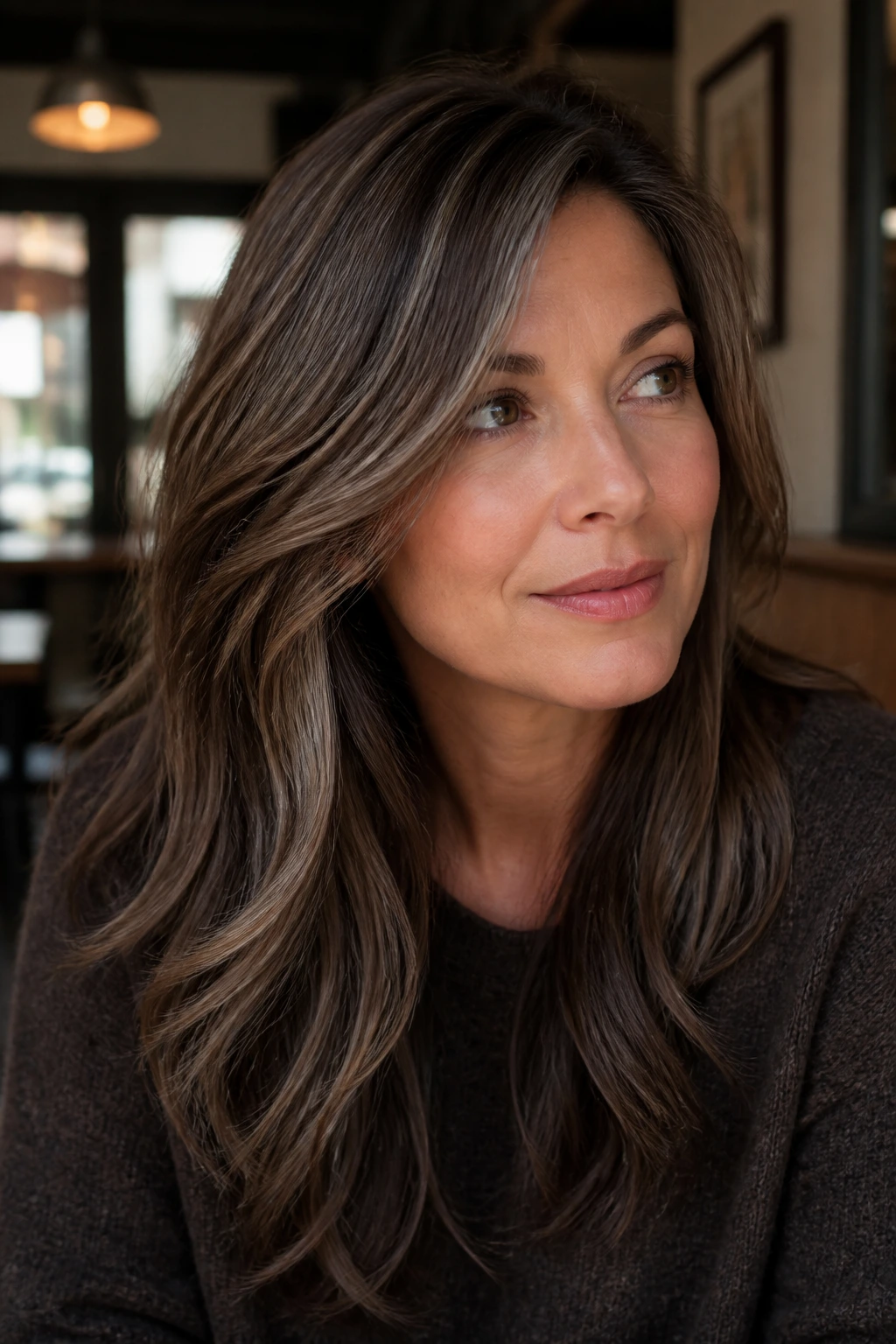
Babylights are tiny, and that’s the point. Ash-gray babylights scattered through chestnut hair give you a silver effect that feels threaded into the base instead of sitting on top of it. This is one of my favorite gray hair color ideas for people who want restraint.
The charm here is in the detail. A few cool ribbons around the face, a few more through the crown, and the whole head changes without losing its brown identity. That makes the grow-out easier, too, because the contrast stays soft.
Ask for this if: you want gray, but you do not want to lose the richness of your natural brunette base.
Skip this if: you want a high-impact silver that reads from across the street.
13. Silver Fox Crop That Blends Natural Gray
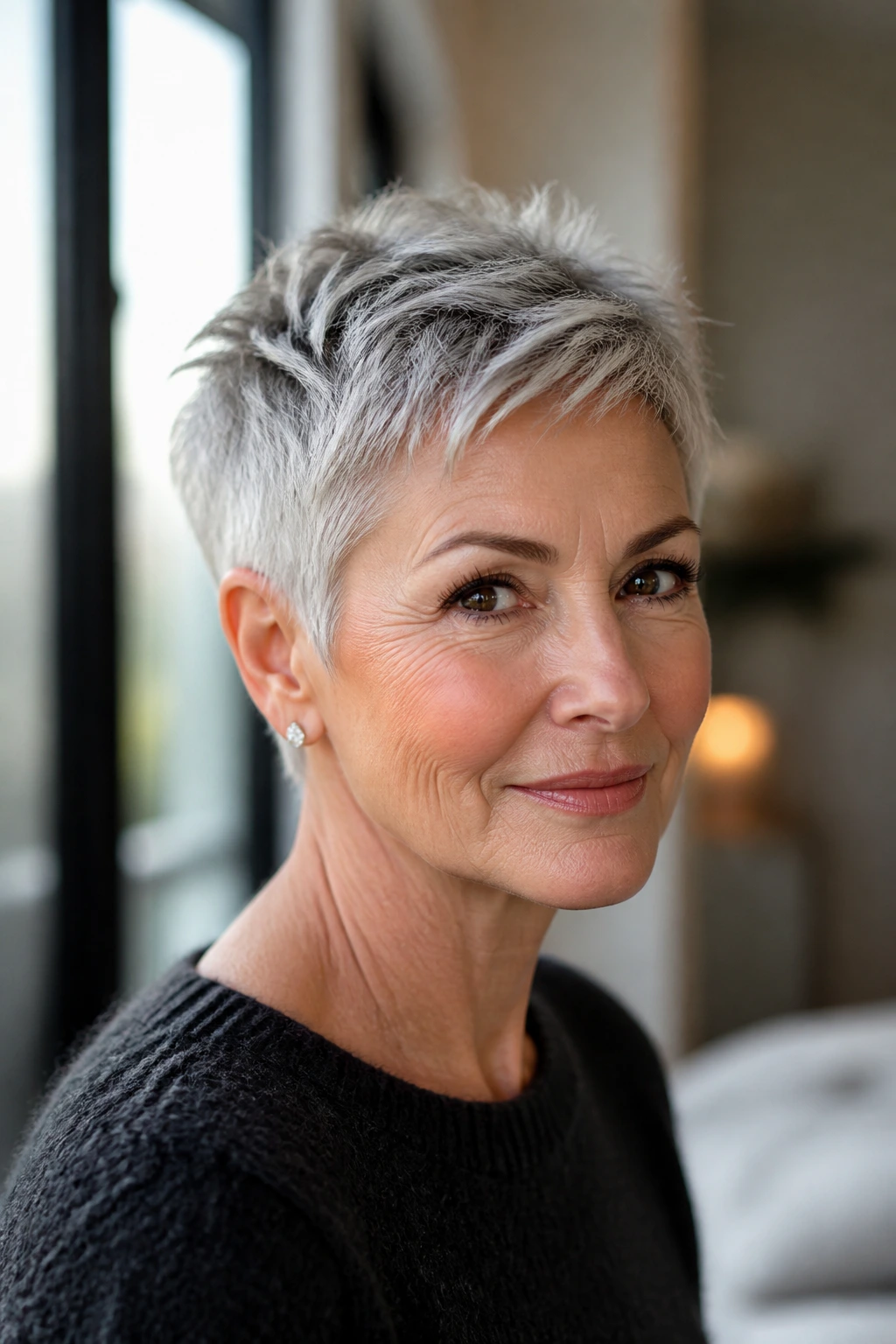
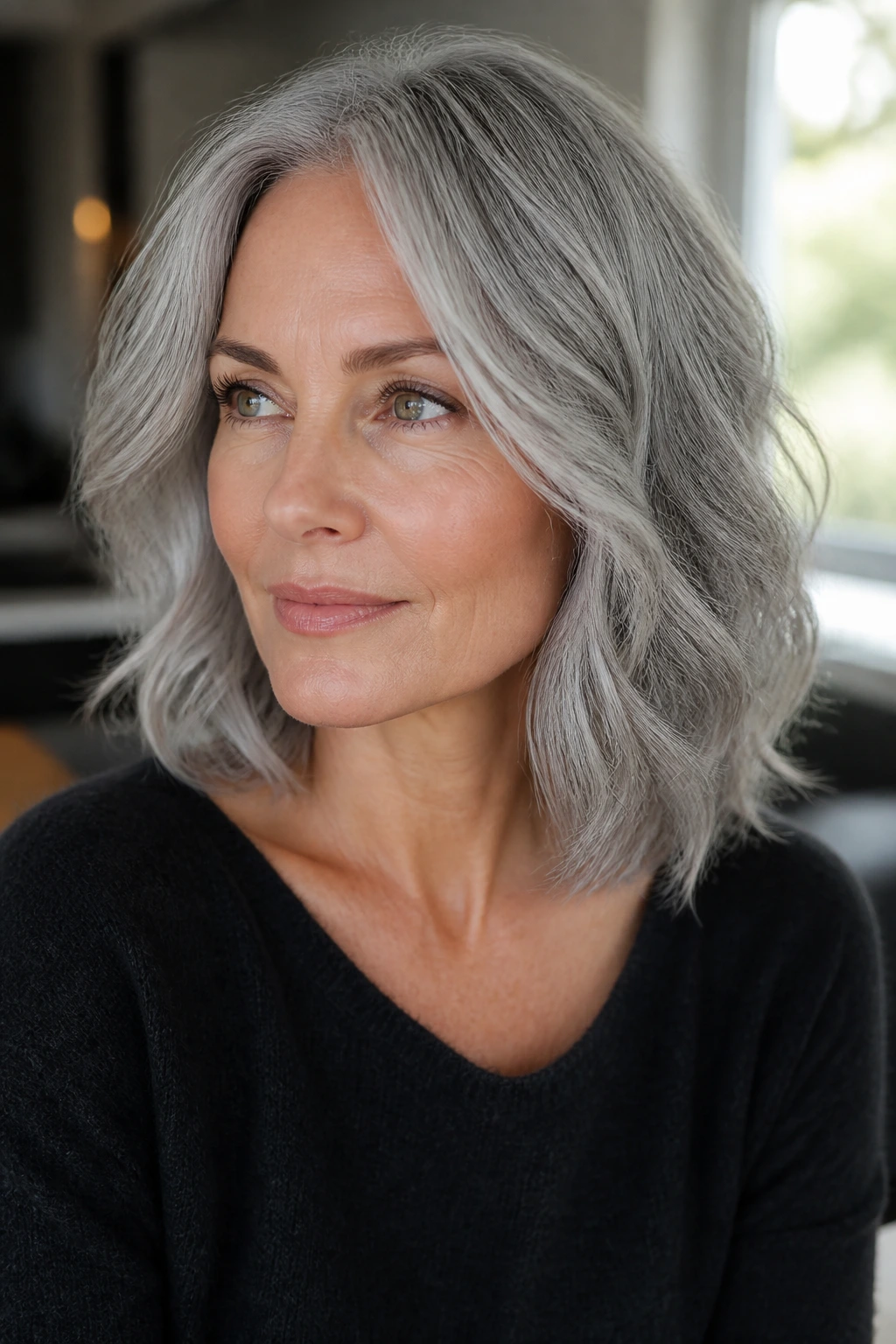
A silver fox crop works with natural gray instead of fighting it, and that’s the smartest way to keep the hair looking current. The cut is usually short enough to let the gray blend into the natural pattern, while a cool gloss adds uniformity and shine.
This look often becomes better when the hair is left slightly imperfect. A little texture around the crown, a clean edge at the neckline, and the natural gray becomes a feature, not a problem to hide. That’s the part people often get wrong. They try to make natural gray disappear, then wonder why the result looks flat.
If your hair is already going gray and you want a clean finish without all-over bleaching, this is a very strong direction.
14. Pewter Gradient on a Wavy Lob
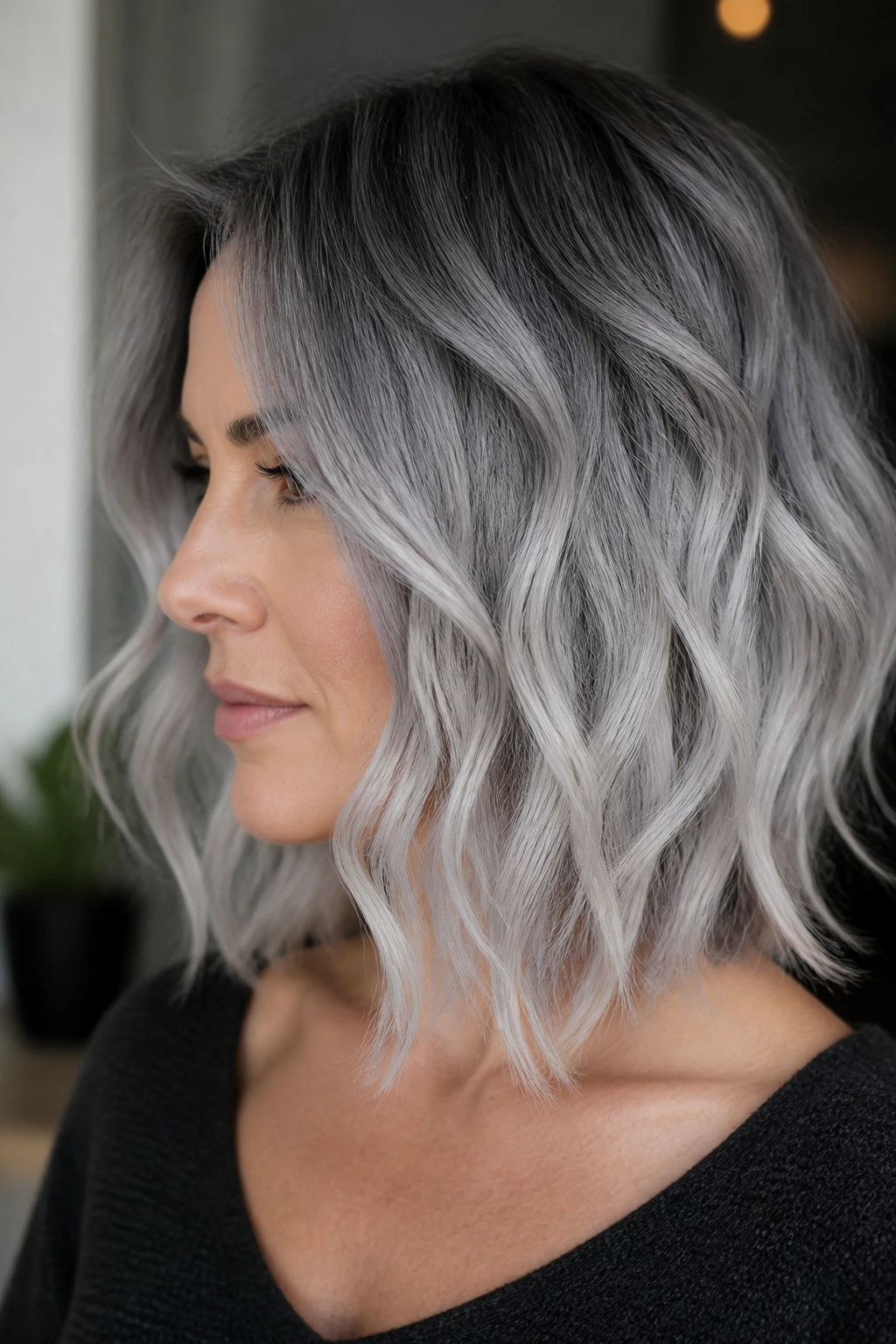
The wavy lob is a sweet spot for silver tones because it gives the color room to move. Pewter sits in that slightly smoky middle ground, so it doesn’t clash with the softness of a wave pattern. The gradient keeps the look from feeling blocky.
I like a deeper root, a softer middle, and the coolest pewter toward the ends. That structure makes the hair look thicker, too, because the eye can see variation from top to bottom. A one-process silver on a lob can work, but it often looks harsher than this.
Best styling move: loose bends with a 1-inch iron, then finger-comb the waves apart. A brush can erase the texture that makes the gradient readable.
15. Moonlit Silver Waves With Soft Dimension
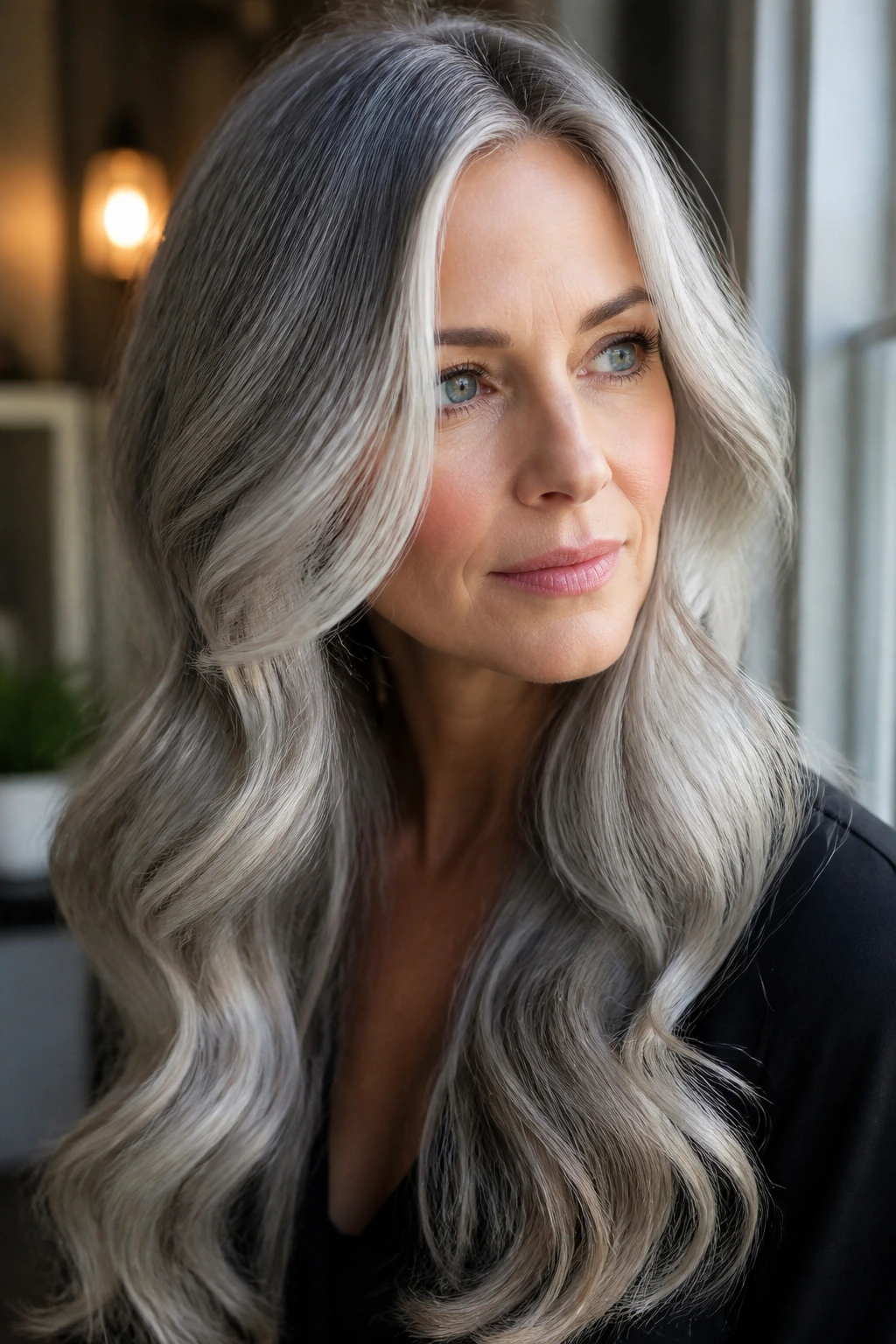
Moonlit silver is a little more romantic than steel or graphite. The shade still reads cool, but the dimension through the mids and ends gives it a reflective, glowing quality rather than a hard metallic one. On waves, that movement matters.
The best version keeps some depth near the root and sprinkles brighter silver through the surface. Too much uniform brightness can flatten the curve of the wave. A little contrast makes the hair look fuller and the color look more expensive, if I can use that word without turning this into a perfume ad.
This one is strong on longer hair, especially if the layers are soft and the waves are not too tight. The shape should feel airy, not sprayed into place.
16. Salt-and-Pepper Blend With Clean Partings
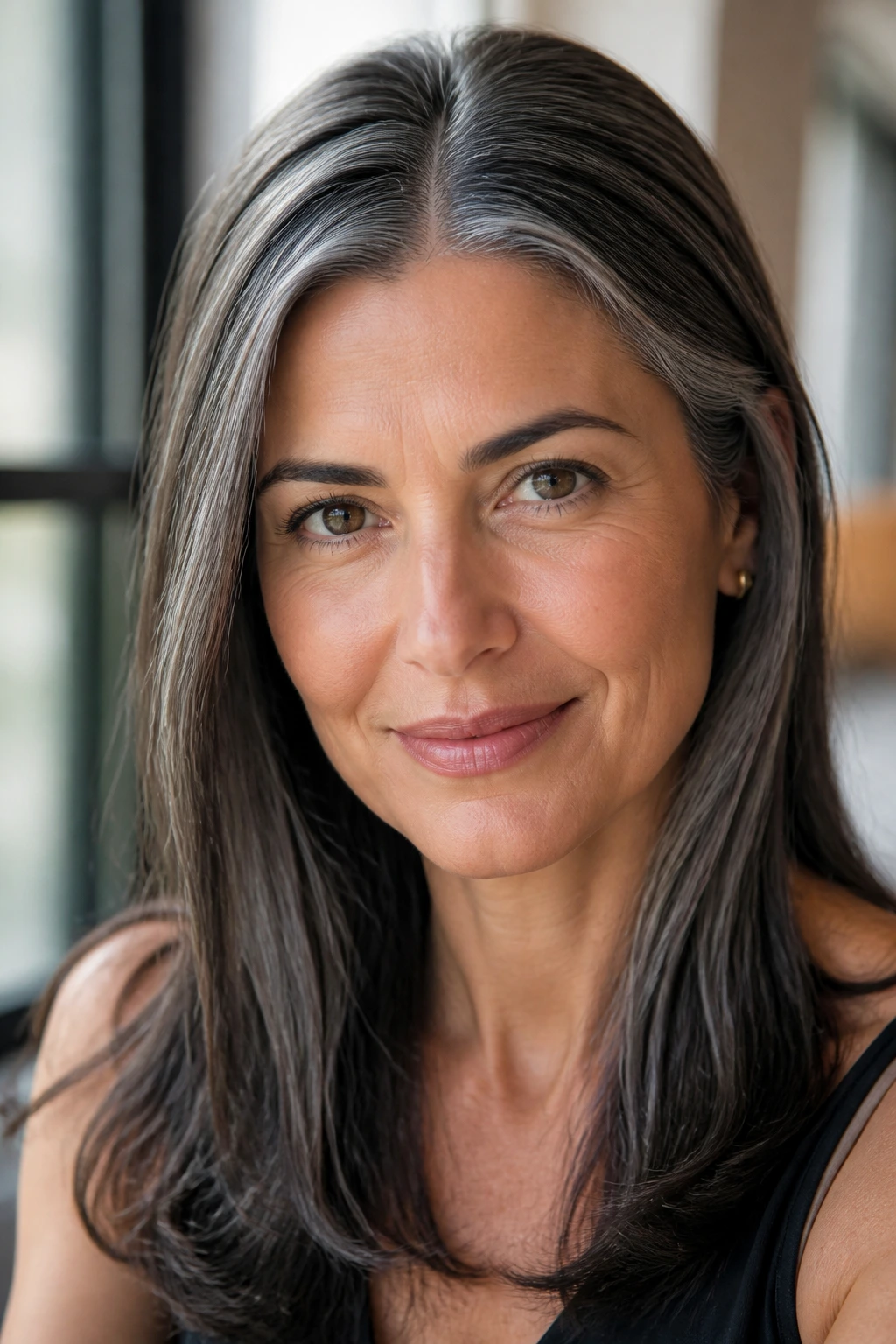
Salt-and-pepper hair can be gorgeous when the pattern is treated like design, not neglect. Clean partings, a polished cut, and a gloss that evens out the darker and lighter strands can make natural gray look intentional from every angle.
The key is not to over-process it. If the darker pieces are erased completely, you lose the thing that gives salt-and-pepper its charm. This is one of the few looks where contrast is the whole point.
A crisp middle part or a tidy side part helps the pattern show up cleanly. So does a haircut with a clear outline. Messy can work, but messy with shape is better.
17. Metallic Gunmetal Bob
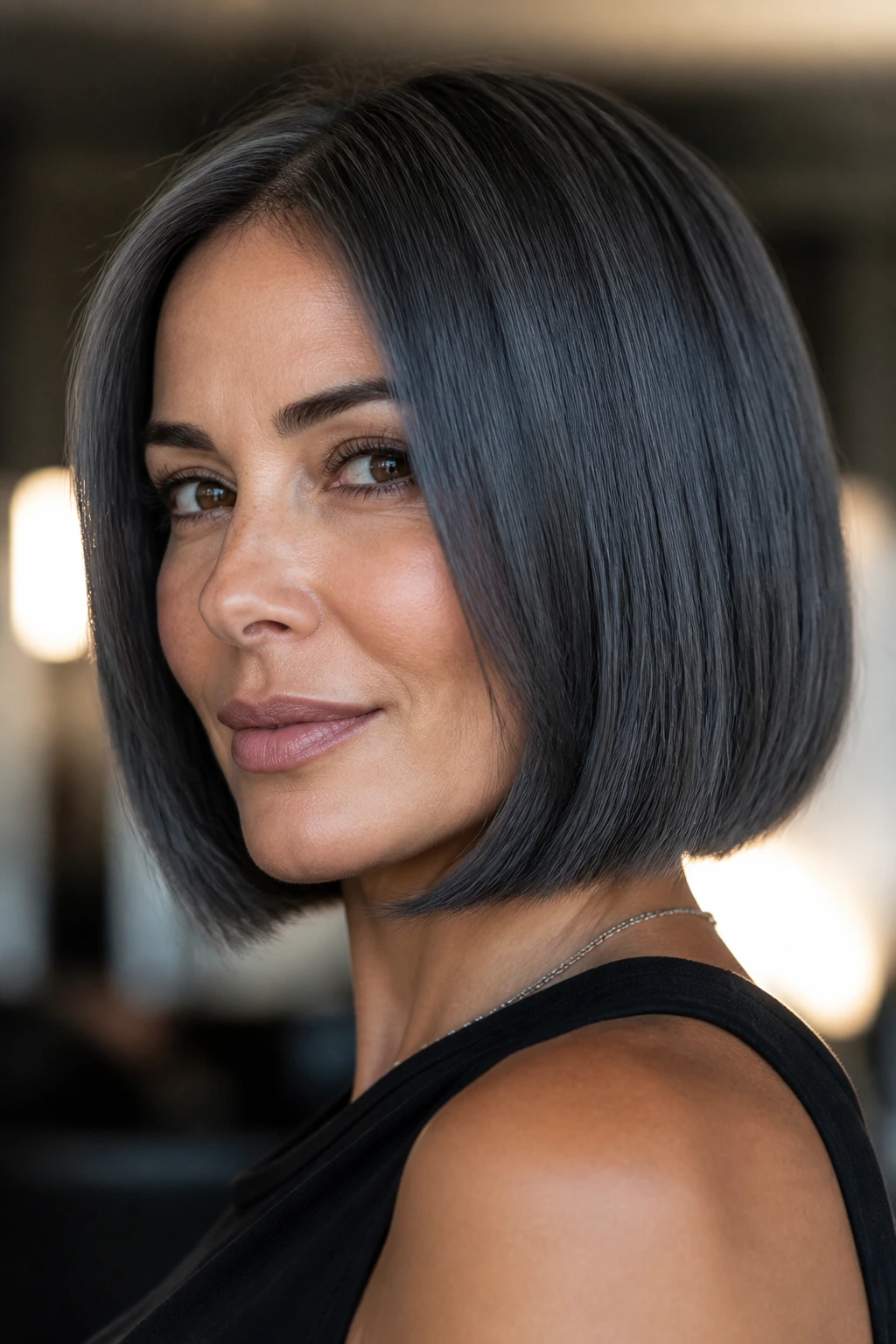
Gunmetal sits darker than many people expect when they picture silver hair, and that’s why I like it. The finish is metallic, but the depth keeps it grounded. On a bob, gunmetal looks deliberate and a little edgy without going full fashion-editor.
This shade is a good answer if you love gray but do not want to brighten everything around your face. It pairs well with dark brows and stronger makeup because the color carries enough weight on its own.
A high-shine blowout helps, but the cut matters almost as much. A blunt bob or a slightly beveled line gives the color something clean to cling to. If the haircut is shapeless, the gunmetal effect loses its punch.
18. Champagne Silver for Warmer Undertones
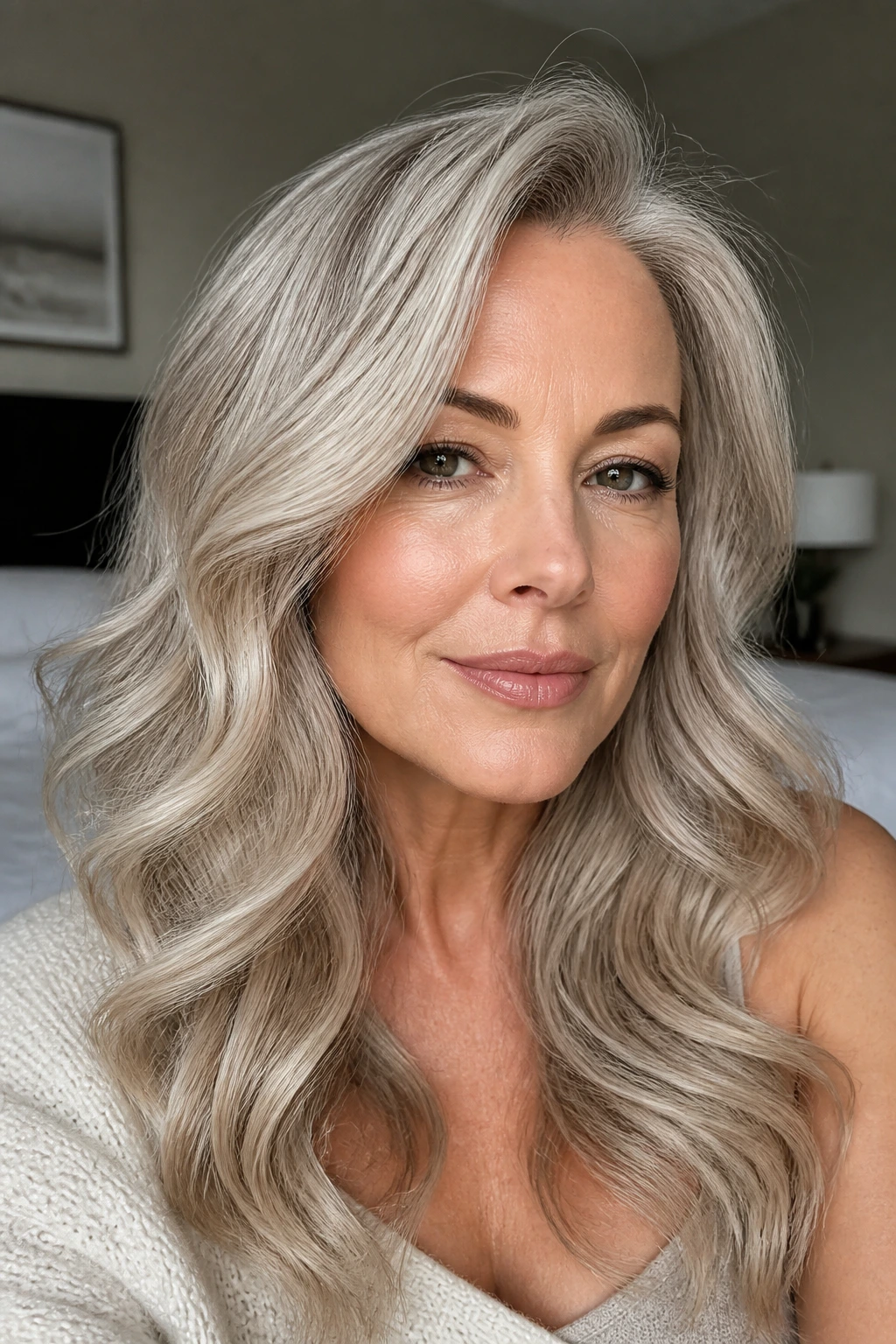
Champagne silver is the one I recommend when someone wants silver hair but keeps worrying it will make their skin look cold. The beige-gold softness in the tone bridges that gap. It still reads silvery, but with a warmer cast that plays nicer with golden or olive undertones.
A lot of people assume silver has to mean icy. It doesn’t. This version proves the point. It keeps the modern shine while dropping just enough warmth into the mix so the face doesn’t look stark.
Good pairing: soft waves, nude lips, and clothing in cream, charcoal, or dusty rose.
Not the best pairing: ultra-yellow brass or heavy orange warmth in the toner. That usually fights the finish.
19. Platinum Silver With a Soft Root Blur
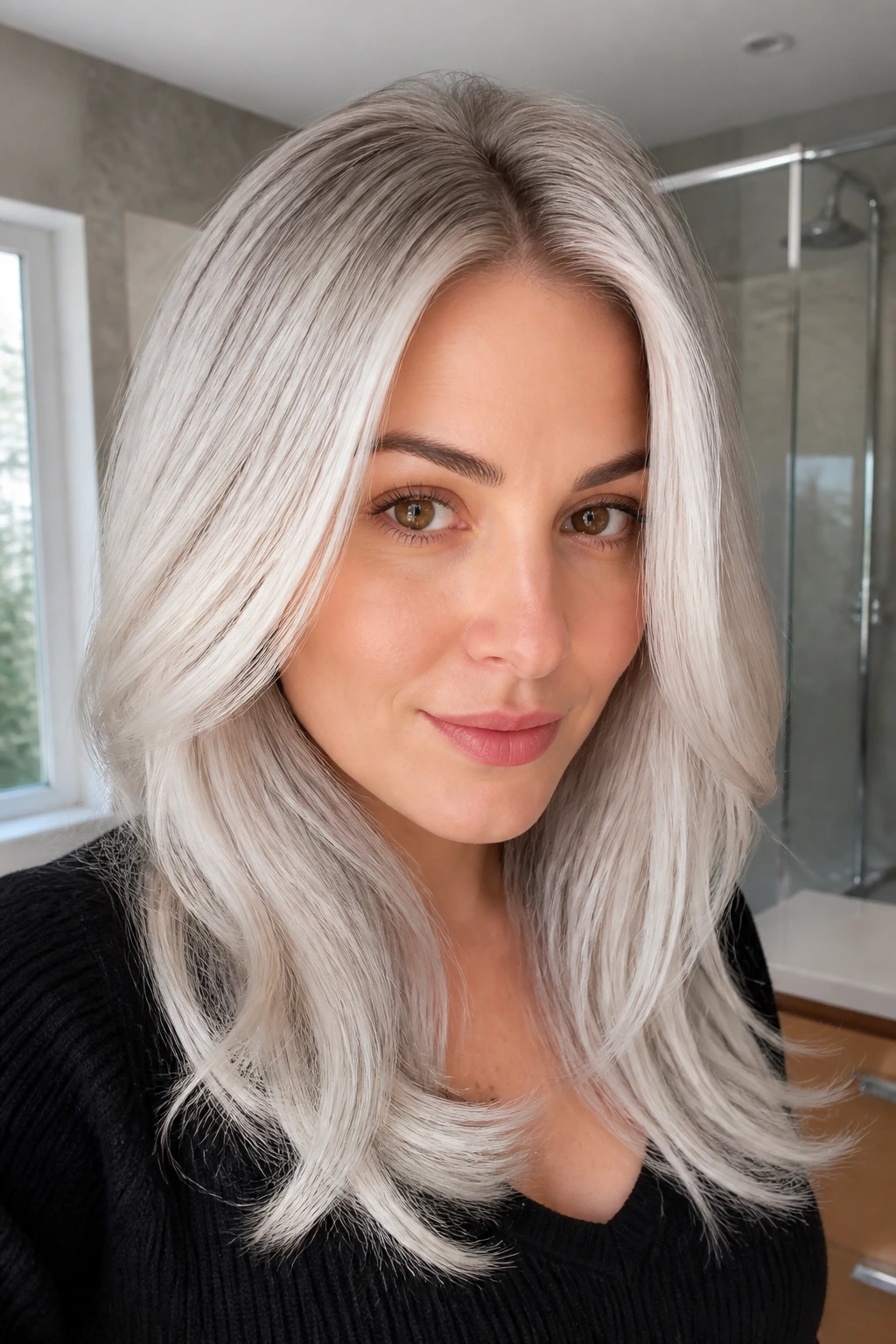
This is the bright end of the map. Platinum silver with a root blur gives you that almost-white finish while keeping the regrowth line softer than a standard bleach-and-tone job. The blur matters because it stops the color from feeling like a hard cap on top of the scalp.
You need healthy hair for this one, or at least hair that can tolerate the process without snapping. A bond builder, regular masks, and realistic expectations are part of the deal. The payoff is a light, clean silver that reflects a lot of light and photographs with crisp edges, especially on blunt cuts and sleek styling.
It’s glamorous, but it is not lazy. If you want this shade, plan for maintenance.
20. Smoky Lilac Silver for Cool Skin Tones
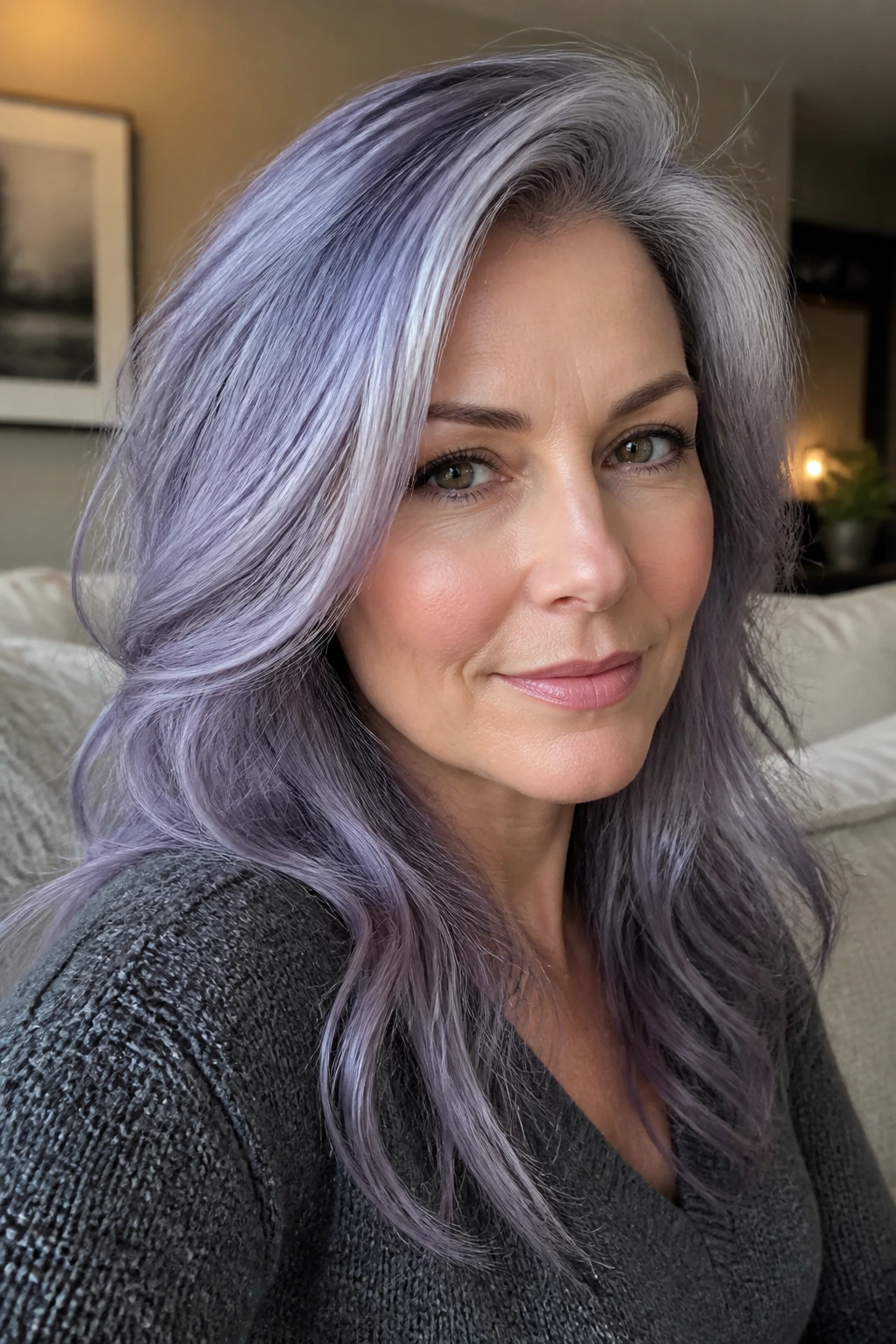
Smoky lilac silver takes the silver family and adds a muted violet haze. The effect can be pretty striking on cool skin tones because it picks up the pink in the face instead of fighting it. Done carefully, it reads as soft and edited rather than purple-purple.
Where it lands best
- Hair texture: straight, wavy, or softly curled—anything that shows a little shine.
- Base level: pre-lightened hair that has already reached a pale yellow or lighter.
- Maintenance: more frequent toning than a plain silver, because the lilac can fade unevenly.
This shade can go wrong if the violet is too bold, so the restraint has to be real. Think washed silk, not candy wrapper. That’s the difference between chic and noisy.
21. Deep Gray Underlights on Dark Hair
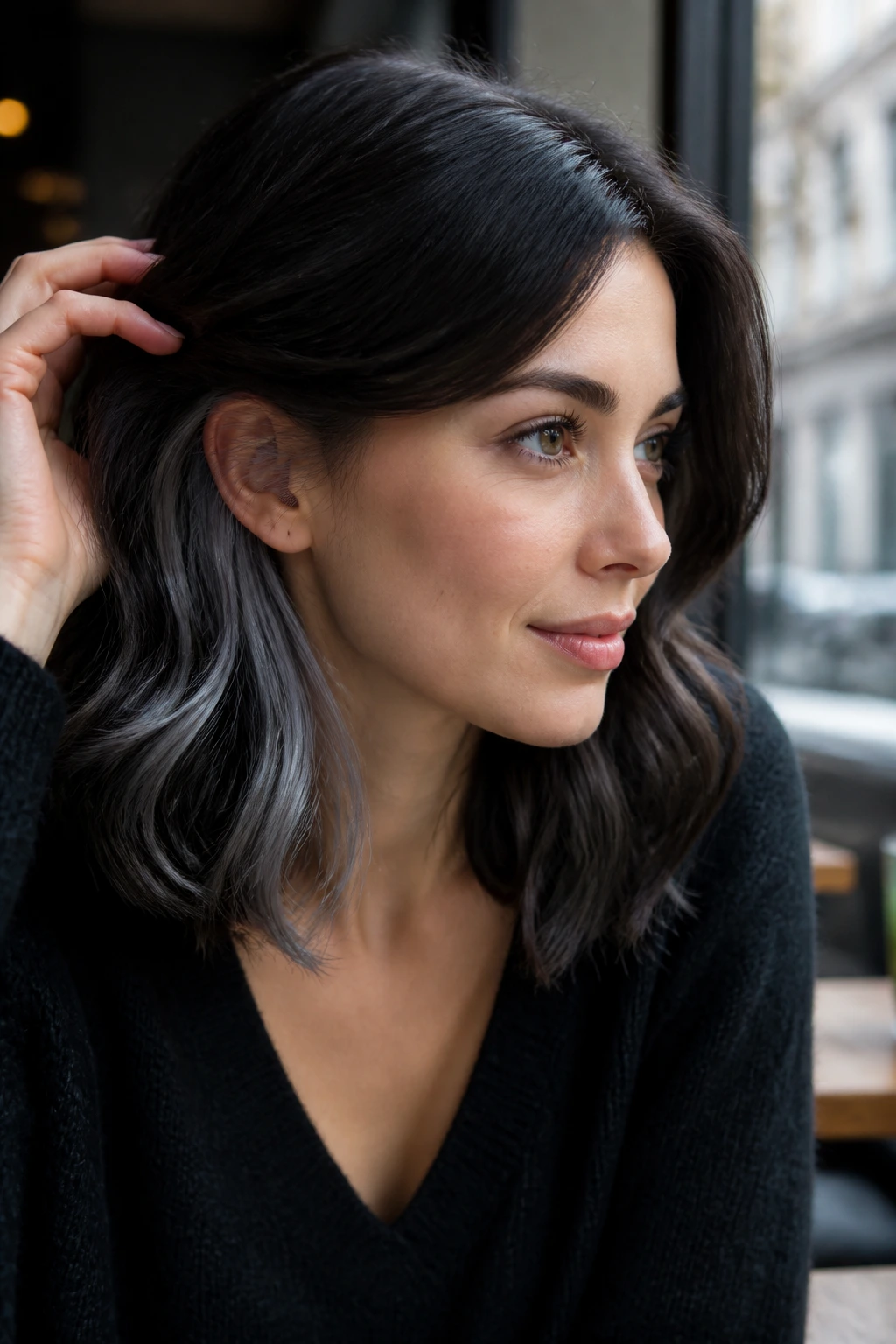
Underlights are underrated. A deep gray panel hidden beneath darker hair gives you a flash of silver when the hair moves, parts, or gets tucked behind the ear. It’s a lower-commitment way to play with gray hair color ideas without changing the whole head.
The contrast is the point. Dark hair on top keeps the style wearable, and the gray underneath gives it edge. It’s also a nice choice if your workplace likes neutral hair on the surface but you still want a bit of personality built in.
This works especially well on shoulder-length cuts, where the lower panels can peek through at the ends. Straightening the hair makes the contrast cleaner. Waves make it more secretive, which is fun in a different way.
22. Winter White Silver on a Blunt Cut
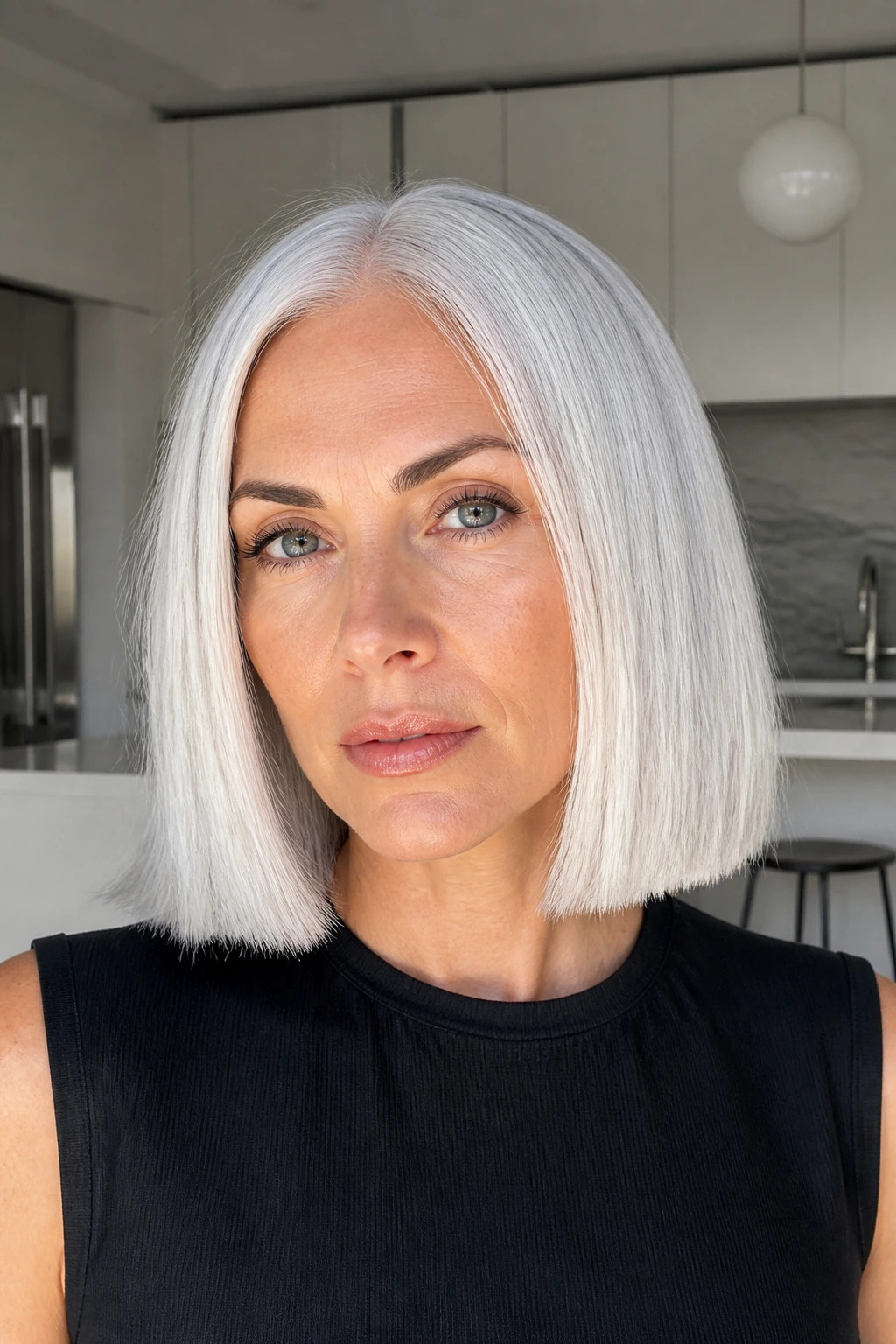
Winter white silver is bright, crisp, and unapologetic. On a blunt cut, the clean edge makes the color look even sharper because there’s nowhere for the eye to wander. The result is a pale silver that comes off sleek instead of fuzzy.
The warning here is simple: white silver shows everything. Dryness, uneven lift, uneven toner, all of it. The hair has to be in decent shape and styled with care. A smooth finish makes this shade read polished; rough texture can make it look more chalky than intended.
I’d choose this for someone who likes a strong visual line and doesn’t mind regular tone refreshes. It’s a statement without needing a lot of accessory work.
23. Mushroom Bronde Gray for Brunettes
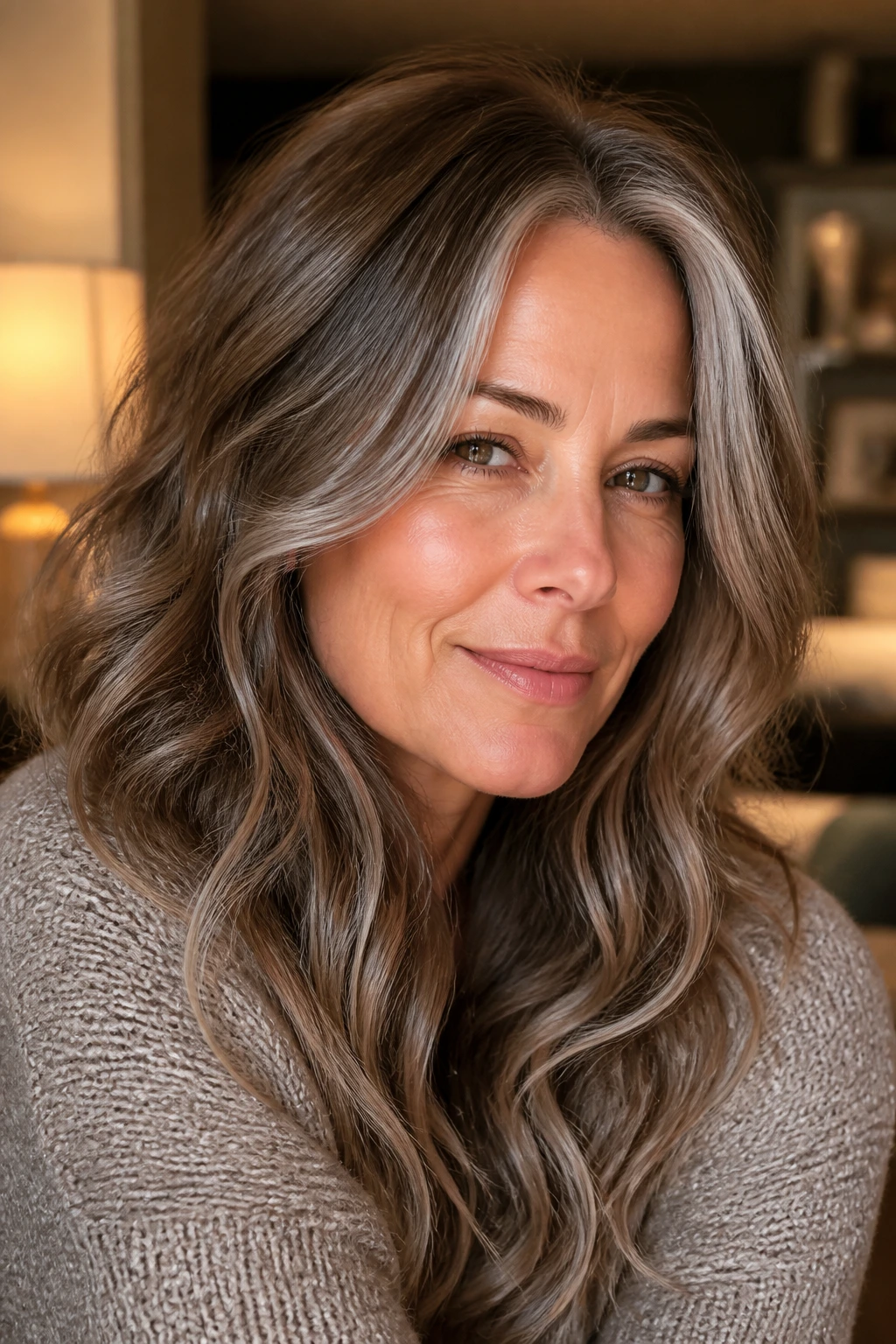
Mushroom bronde gray is one of the most wearable gray hair color ideas for brunettes who want to move cool without losing their warmth completely. It blends brown, blonde, and gray into one muted finish, which sounds fussy until you see it on hair that needs dimension to look alive.
The reason this works is balance. The brown keeps the base from getting hollow, the blonde gives the eye some lift, and the gray cools the whole thing down. It’s not as dramatic as a full silver transformation, which is exactly why plenty of people end up preferring it.
If your hair has a lot of natural brown left and you want a softer silver look, this is a smart place to start.
24. Silver Ribbon Highlights on Curly Hair
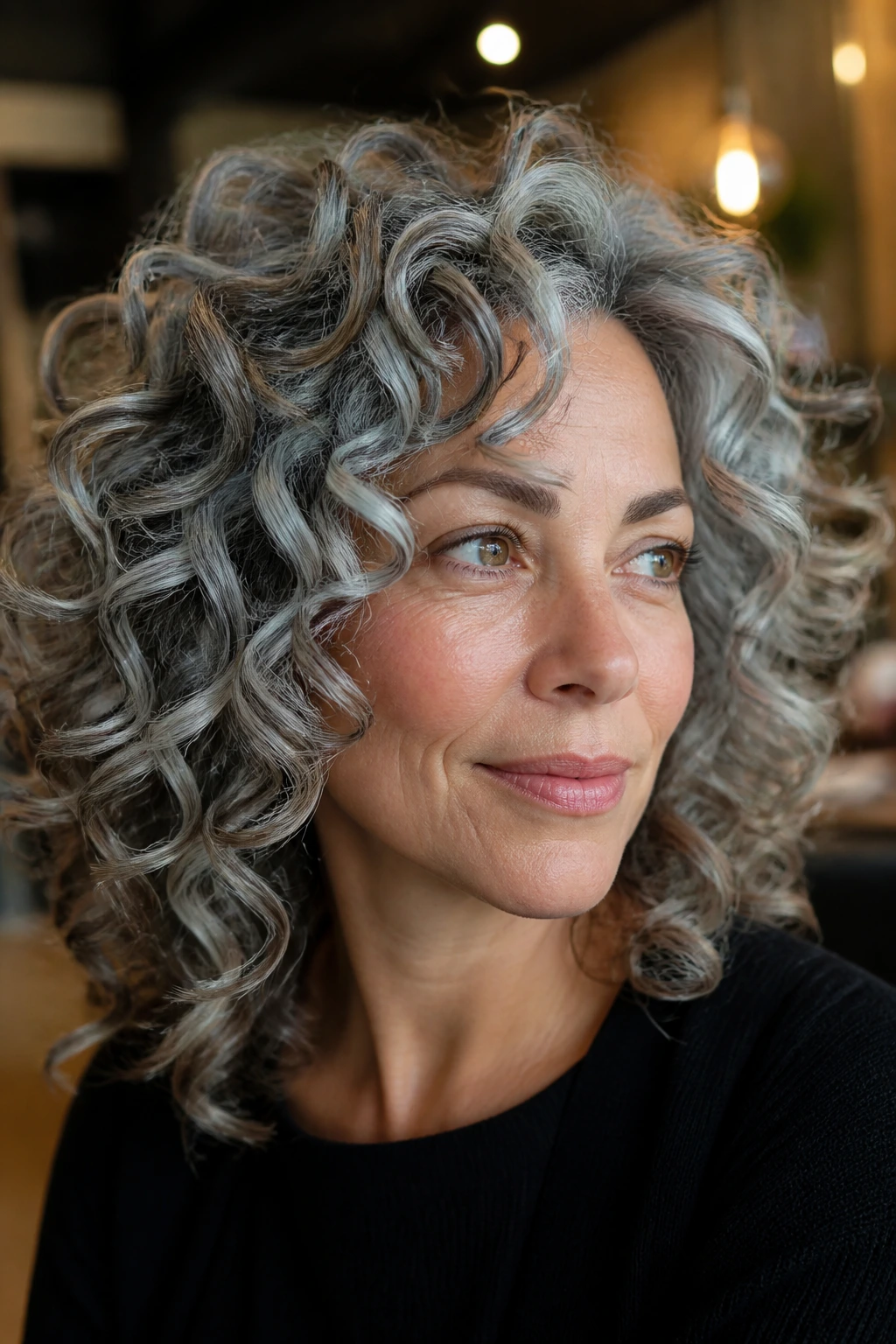
Curly hair does not need thin, striped highlights. It needs ribbons that follow the pattern of the curl. Silver ribbon highlights do exactly that, placing lighter sections where the coils open and catch light instead of slicing the curl into pieces.
This is one of the most flattering silver approaches for texture because it respects the shape. The curl stays full. The silver just moves through it. A good placement pattern can make the hair look denser and more alive, not thinner.
A curl cream or light gel helps the ribboning show up after the hair dries. If the curls are frizzy, the silver can disappear into the fluff. Clean definition is half the battle.
25. Graphite-to-Pearl Pixie Fade
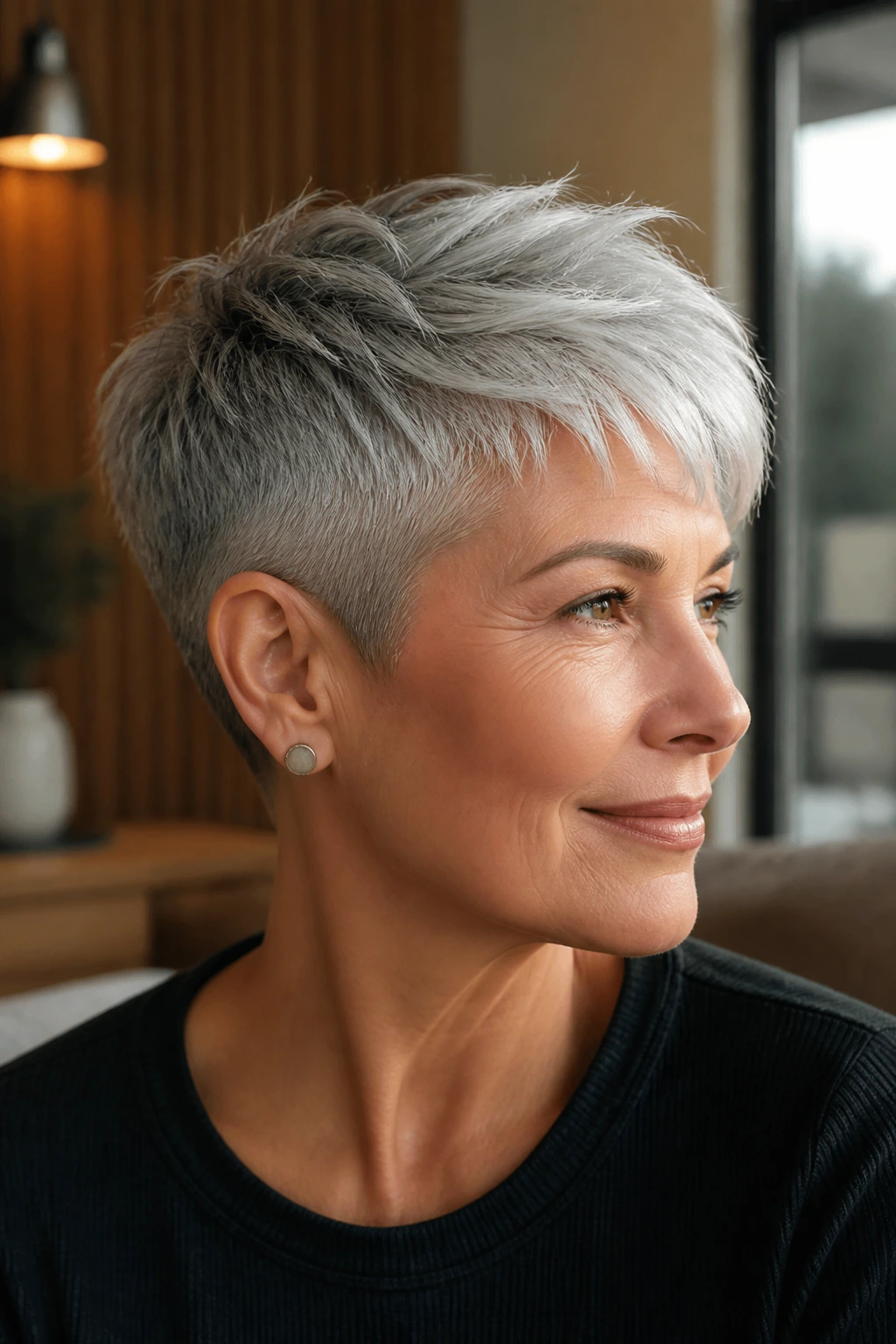
A graphite-to-pearl pixie fade gives you two gray moods in one cut. The back and sides stay deeper and smoke-toned, while the top lifts into pearl silver, which creates a small but noticeable shift as the hair moves. On a pixie, that difference gives the cut shape without needing a long length to do the work.
This is a strong choice if you like short hair that still feels dimensional. The fade should be soft enough that the transition doesn’t look striped, but distinct enough that the top has lift. A little wax or paste can separate the top pieces and show off the lighter tone.
If you want gray hair color ideas that feel tailored rather than soft-focus, this one lands neatly in that lane.
What Makes Silver and Gray Color Placement Behave Differently
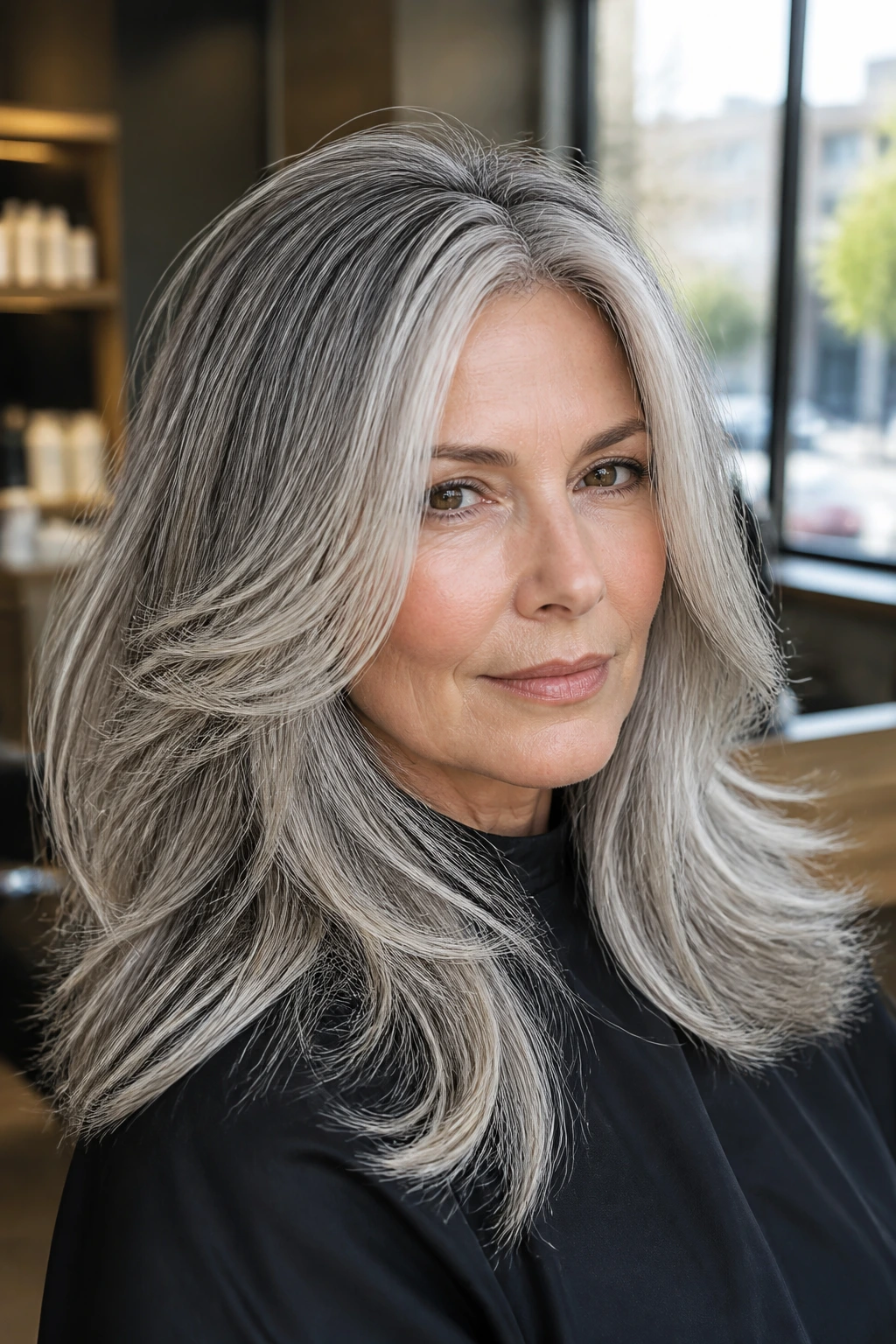
Silver hair is not one single tone, and it does not behave like one either. The farther you push the hair toward white-blonde, the more every tiny flaw starts showing up: porosity, uneven lift, old pigment, and the dulling effect of water minerals. Gray, by contrast, can be built with more depth, which gives you room to keep the look wearable instead of sterile.
That depth matters. A silver shade with a root shadow or lowlight usually looks richer than a flat all-over gloss because the eye can see movement from scalp to ends. It also lets the haircut participate. A layered lob, a blunt bob, and a pixie all catch silver in different ways, and the color needs to match the shape if you want it to feel finished.
The other thing people miss is maintenance. Bright silver tends to fade fast because it lives on a light base. Softer gray shades can stretch farther between appointments, especially when the root is blended. If you hate constant touch-ups, choose a darker, smokier version and let the metallic effect come from shine rather than brightness alone.
Essential Equipment for These Looks
-
Color-safe shampoo: Keeps the toner from washing away faster than it should.
-
Purple shampoo: Helps reduce yellow warmth in silver and gray hair, but use it sparingly.
-
Blue shampoo: Better for brunette-based silver looks that drift orange.
-
Deep-conditioning mask: Useful after lightening or when the hair starts to feel rough at the ends.
-
Clarifying or chelating shampoo: Helpful once a month if hard water leaves the hair dull or coated.
-
Heat protectant spray or cream: Non-negotiable if you use a blow-dryer, iron, or hot brush.
-
Wide-tooth comb: Gentler than a brush on damp, lightened hair.
-
Sectioning clips: Make balayage, foiling, and at-home toning much easier to control.
-
Tint brush and mixing bowl: Handy for root shadow, gloss, or precise toner placement.
-
Microfiber towel or soft T-shirt: Cuts down on roughing up fragile, lightened hair.
-
Shower filter: Optional, but worth it if your water leaves mineral buildup that dulls silver tones.
Smart Shopping and Product Tips for Gray and Silver Hair
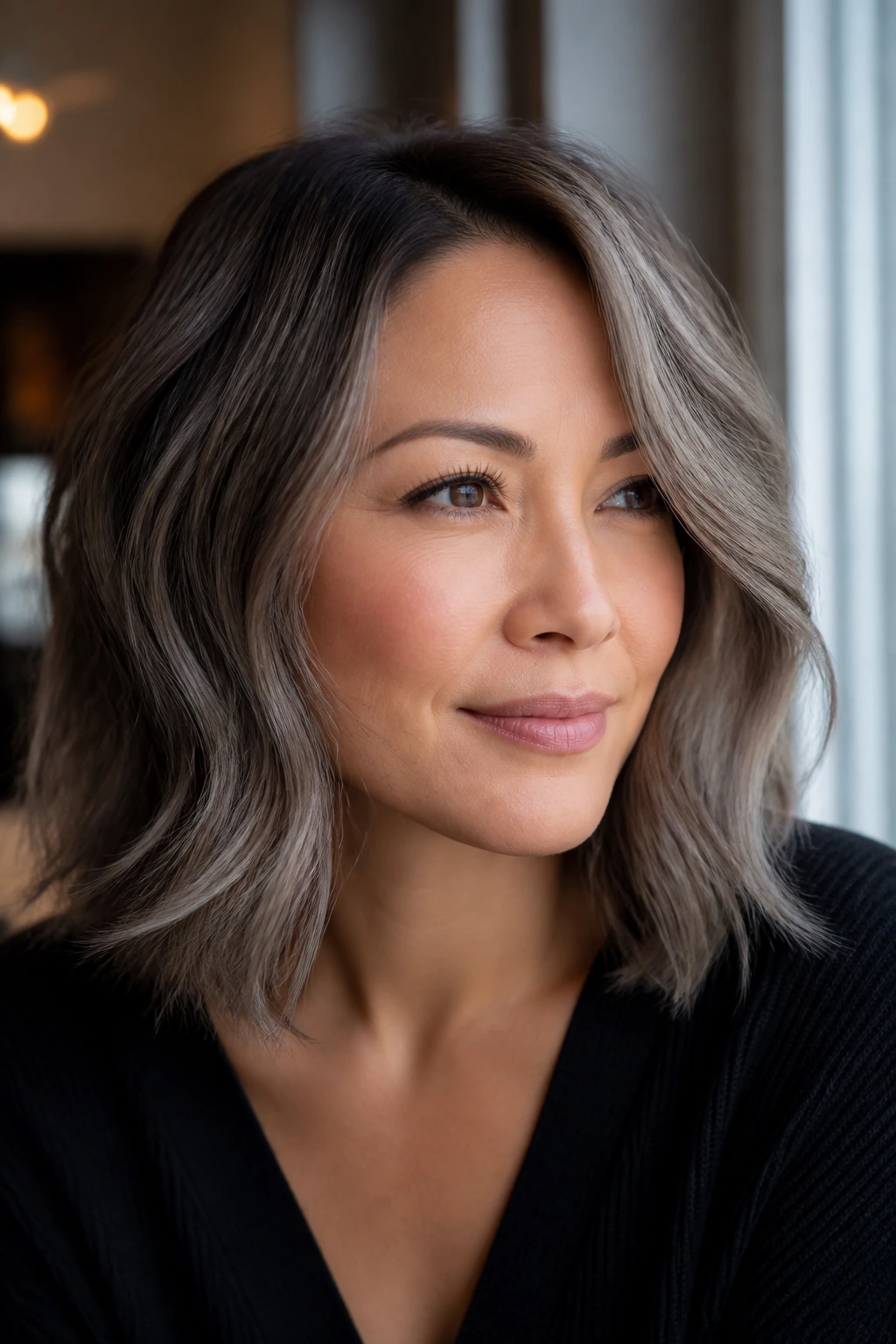
Silver hair starts before the toner. If the base is too yellow or orange, the final shade will fight you the whole way. That means the shopping list should begin with lift and repair, not just color. Bond-building treatments, a decent lightener, and a toner that matches the undertone you’re correcting matter more than the bottle design.
If you’re buying products for upkeep, read the fine print. Some purple shampoos are strong enough to tint porous hair lilac after one wash. Others are so weak they barely touch warmth. The same goes for glosses. A neutral-silver gloss can keep the shade clean without pushing it into violet, while a cool violet gloss can refresh washed-out silver in about ten minutes if the hair needs a stronger tone.
Hard water is the sleeper problem here. Minerals coat silver hair fast, and the result is that cloudy, tired finish nobody wants. If your water is hard, a chelating shampoo once every few weeks helps more than piling on more pigment. And if the hair is already damaged from lightening, buy the repair mask before you buy another toning product. Dry silver looks dusty. Healthy silver looks expensive, even when the color itself is quiet.
How to Wear These Shades So They Read Cleanly
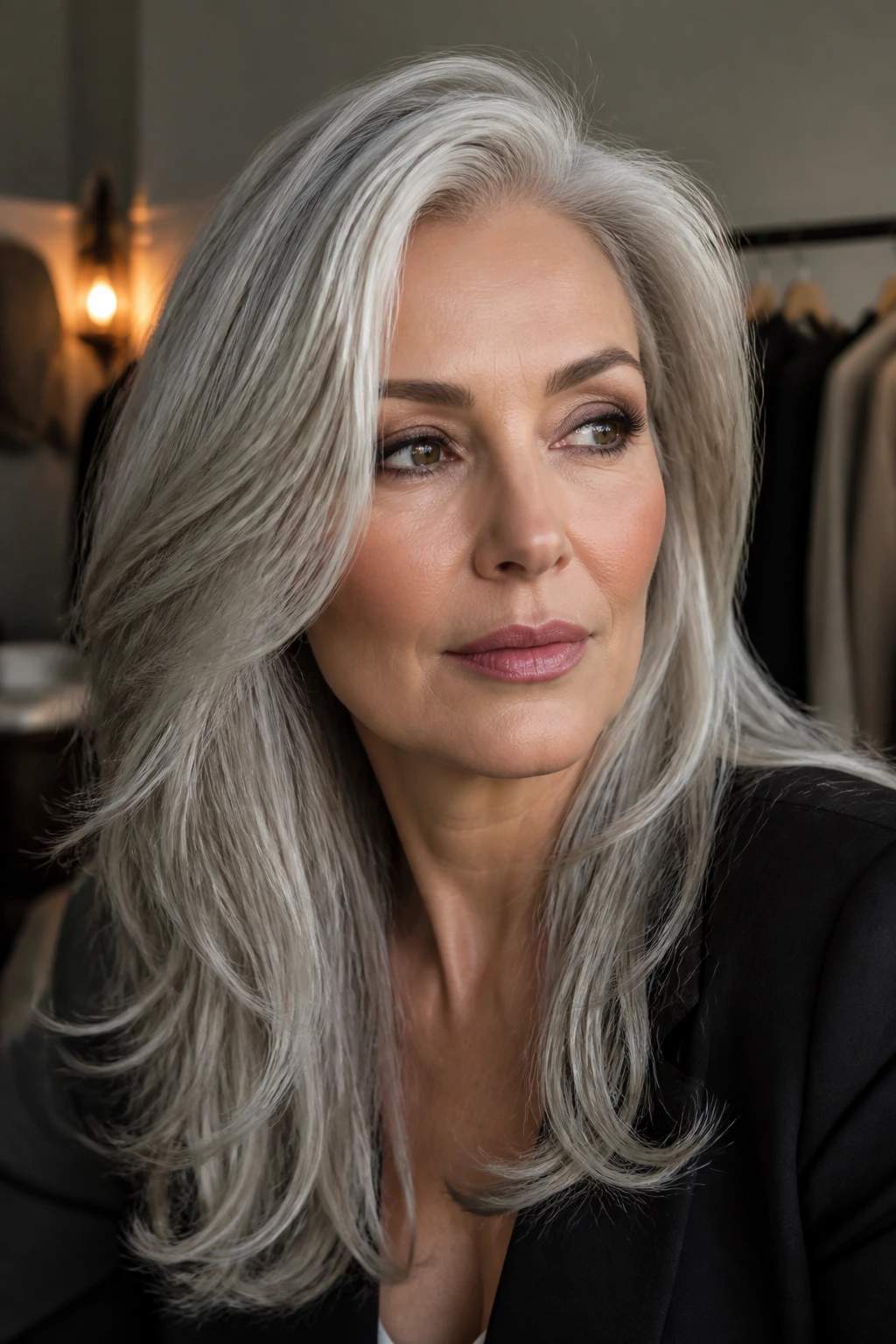
Cut and shape: A silver shade changes character depending on the haircut. Bobs sharpen metallic tones, lobs soften them, and pixies make darker silver shades look bolder because there’s less hair to carry the color.
Makeup balance: Cool silver hair usually looks strongest with defined brows and a little warmth in the cheeks, even if the hair itself stays icy. Champagne silver and mushroom gray can handle softer makeup, while graphite and gunmetal often look better with a stronger lip or liner.
Wardrobe choices: Charcoal, navy, cream, black, and muted rose sit well next to most gray tones. If the hair has a lavender or pearl cast, avoid clothes that fight the undertone too hard. That clash is easy to miss in the mirror and obvious in photos.
Styling finish: Sleek styling makes steel, platinum, and winter white look sharper. Waves and texture help mushroom, pewter, and ombré versions show their depth. The finish matters more than people think. A flat iron can make a gorgeous silver look severe, while a soft bend can make the same color feel expensive and alive.
Additional Tips and Color Boosters
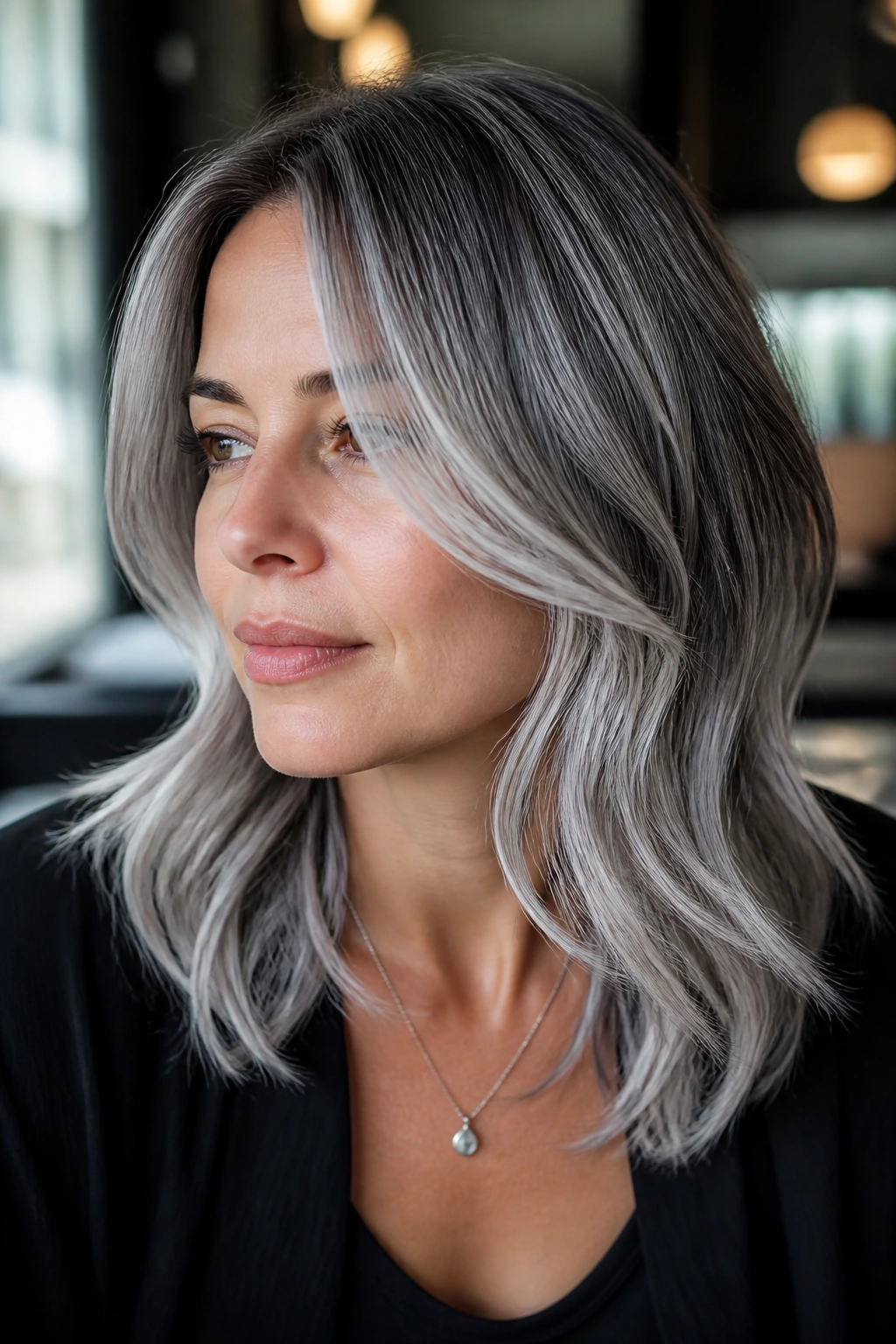
Gloss Boost: A clear or tinted gloss every 4 to 8 weeks keeps silver reflective and helps the tone stay clean without re-lightening the whole head.
Customization: Add one soft root shade or a few lowlights if the color feels too bright. That small amount of depth usually makes the silver look less harsh and more dimensional.
Serving Suggestions: Tuck one side behind the ear, use a center part for symmetry, or let face-framing pieces fall forward if you want the silver to brighten the face. The placement changes how the color reads more than people expect.
Make-It-Yours: If your skin leans warm, choose mushroom gray, champagne silver, or graphite with beige undertones. If your skin leans cool, pearl, steel, platinum, or smoky lilac usually sits more naturally. Curly hair often looks best with ribboned highlights instead of all-over lightening, because the curl pattern does some of the visual work for you.
How to Keep Silver Hair Bright Between Appointments
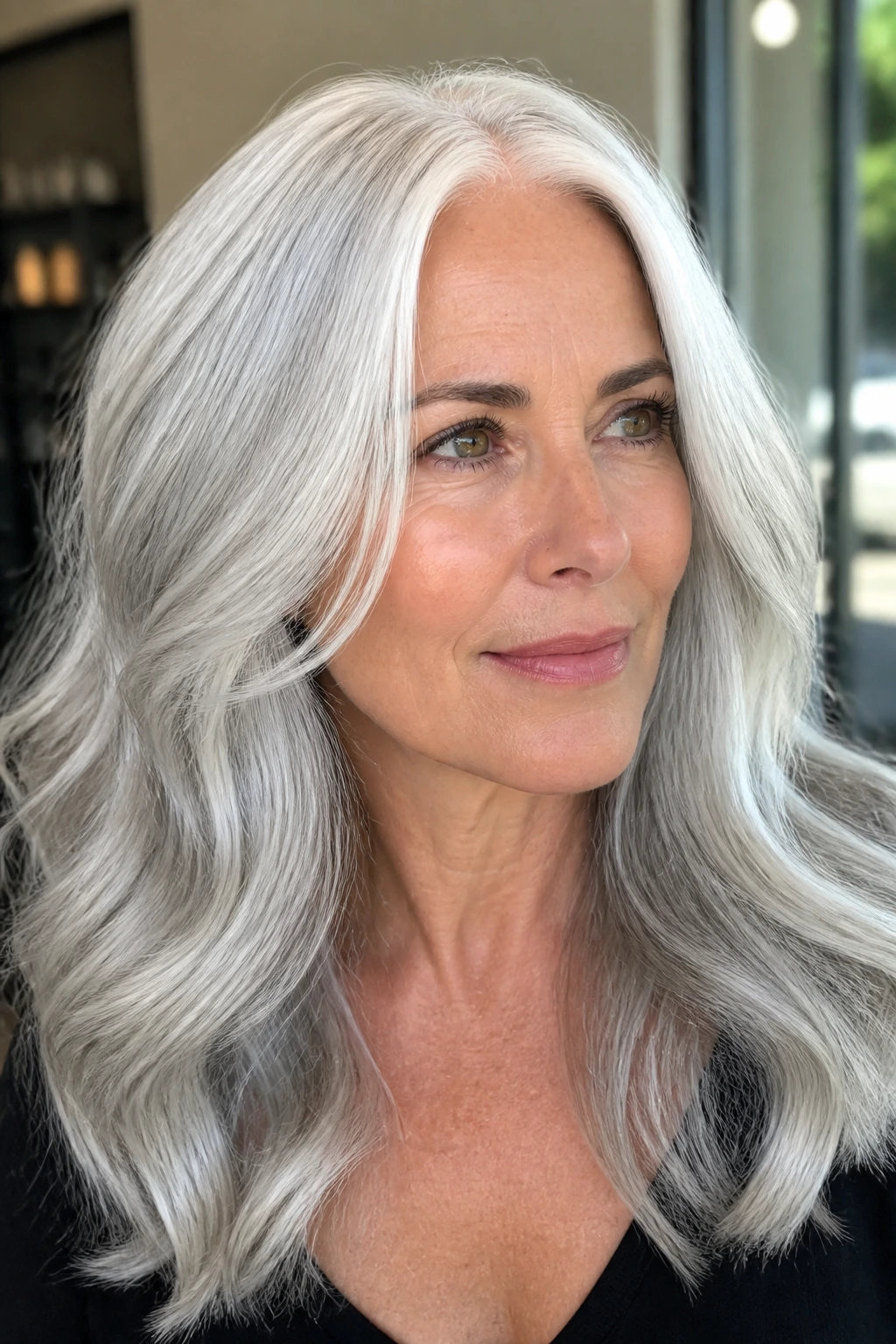
Silver hair needs a schedule. Not an obsession. A schedule.
For most shades, a color-safe shampoo two or three times a week is enough. Purple shampoo can sit in the cabinet until the hair starts to look yellow or tired, then use it once and check the tone before repeating. Overusing it can leave the hair dull or slightly violet, especially if the strands are porous.
Root timing depends on the look. A full platinum silver usually needs a touch-up sooner, often around 4 to 6 weeks, because regrowth is obvious against pale hair. Root-shadowed mushroom, pewter, and graphite shades can stretch farther, sometimes 6 to 10 weeks, because the darker base hides the line better. That’s one of the quiet advantages of staying a little deeper in the gray family.
Heat is another factor. Every time you use a hot tool without protectant, you chip away at shine. That matters more on silver hair because shine is part of the color story. A weekly mask helps, but don’t drown the hair in protein if it’s already stiff. Too much protein can make lightened hair feel straw-like, which is not the look anyone wants.
Common Mistakes That Make Silver Hair Look Flat or Dull
-
Lifting to the wrong stage: If the hair stays too yellow, silver toner can’t clean it up properly. The fix is more lift first, not more purple shampoo later.
-
Using one tone everywhere: A flat silver job can look wig-like fast. A root shadow, lowlight, or slightly deeper base keeps the shade from collapsing into one sheet of color.
-
Overdoing purple shampoo: A little helps. Too much turns porous hair dull or lavender-tinted, which is especially obvious on lighter silver.
-
Skipping hard-water care: Mineral buildup makes gray and silver hair look cloudy. A chelating shampoo once in a while clears the film and brings the shine back.
-
Ignoring damage before toning: Tone does not hide rough ends. If the hair is fried, the silver will look dry no matter how good the formula is. Trim the ends and use repair care before chasing a cooler color.
-
Using high heat without protection: Burnt silver is not subtle. It looks faded, frayed, and much warmer than you wanted.
Variations and Adaptations to Try
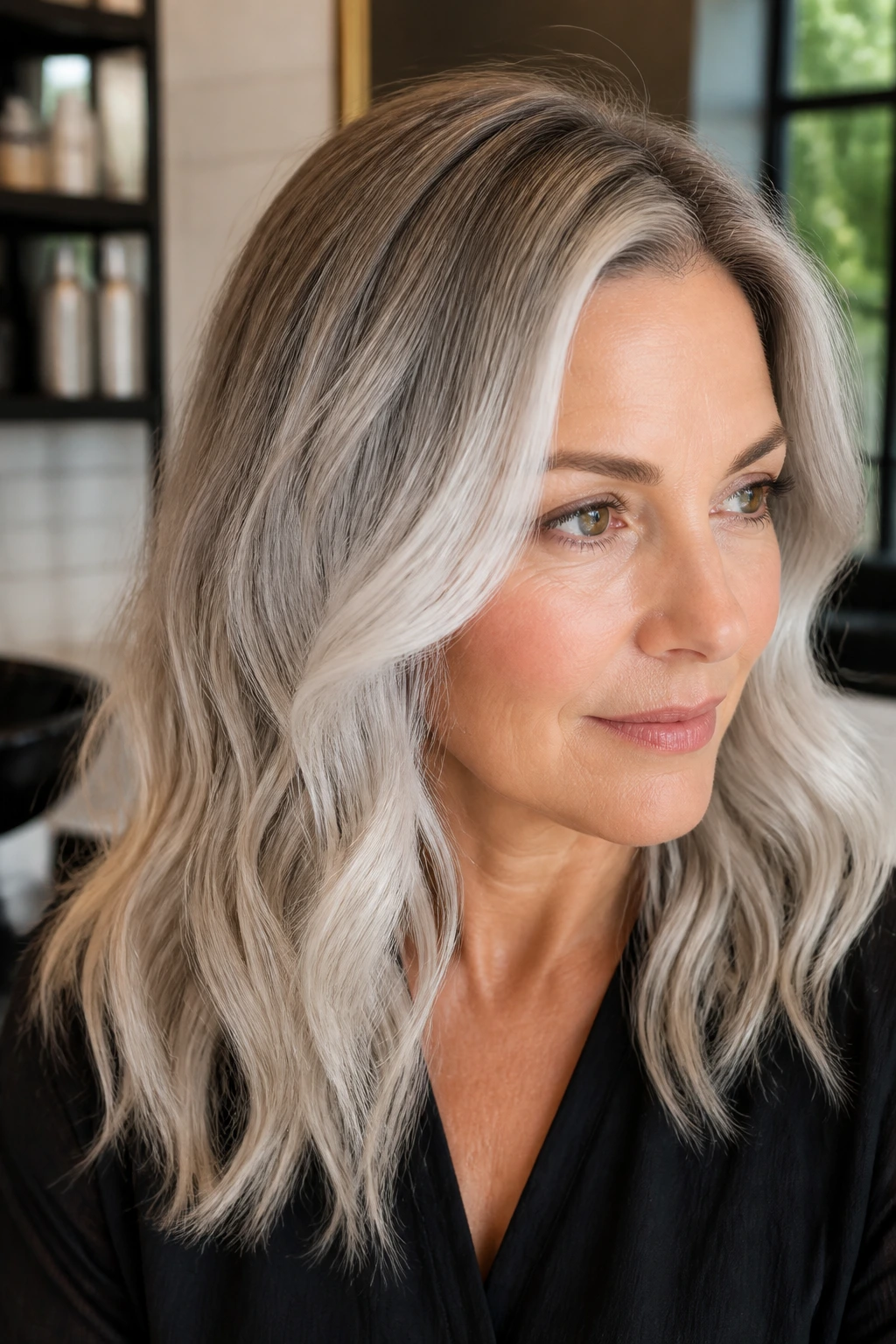
Soft Root Shadow Blend: This keeps the scalp area a shade deeper than the mids and ends, which gives silver hair room to grow out more gracefully. It’s a good choice if you want the look to last longer between salon visits.
High-Contrast Ice Stripe: If you like bolder placement, go for brighter silver panels against a darker base. The contrast is sharper, especially on straight hair or blunt cuts, and the look leans more fashion-forward.
Warm Champagne Version: Swap the coolest toner for a beige-silver finish if icy shades make your skin look tired. This version still reads modern, but it doesn’t pull as hard toward blue or violet.
Lilac Smoke Overlay: Add a sheer lilac cast over silver for a softer, moodier finish. Keep the pastel muted so the color reads as silver first and lilac second.
Natural Gray Blend-Up: If your hair is already going gray, let some of that natural pattern stay visible and refresh it with a cool gloss instead of bleaching it out. The result is lower maintenance and often looks more convincing than forcing uniform silver.
Curly Ribbon Placement: For curls and coils, use ribbon-like highlights instead of thin streaks. The curl pattern will break up the color and keep the silver from looking stripy or overdone.
Frequently Asked Questions
Can dark brown hair go silver in one appointment?
Sometimes, but not cleanly. Dark hair usually needs more than one lightening session to reach the pale yellow base silver toner needs, and rushing it is how you end up with breakage or a muddy result.
What level does hair need to reach for silver to look clean?
For most silver and icy gray shades, the hair needs to be lifted to a very pale yellow, often around level 9 or 10. If the base is orange or brassy, the toner will fight the warmth instead of sitting on top of a clean canvas.
Is gray hair color the same thing as silver hair color?
Not exactly. Gray usually reads deeper, smokier, or more muted, while silver tends to be brighter and more reflective. They overlap, but the finish changes the whole mood.
How often do you need to tone silver hair?
That depends on porosity, heat styling, water quality, and how bright the shade is. Many people need a toner refresh every 4 to 8 weeks, while softer gray looks can stretch farther if the hair is well cared for.
What if my toner turns the hair lavender or blue?
Wash with a gentle clarifying shampoo, then follow with a moisture mask. If the tone is mild, a few washes usually pull it back. If it’s heavy, a colorist can rebalance it with a neutral gloss.
Can curly hair wear silver well?
Yes, and often better than people expect. The curl pattern breaks up the color and gives silver more dimension, especially when the highlights or lightened pieces are placed in ribbons instead of thin stripes.
Does silver hair work with warm skin tones?
It can, but the tone matters. Champagne silver, mushroom gray, and graphite with beige undertones usually flatter warm skin better than a stark blue-white silver.
How do you stop silver hair from looking dull?
Keep buildup off the hair, use toner only when the color needs it, and protect the cuticle from heat and rough towel drying. Shine is part of the silver effect, so once the hair gets rough, the color loses its edge.
The Shade That Holds Its Shape
The best silver looks are the ones that still make sense three weeks later. That’s the real test. A good gray or silver finish isn’t just about the first photo out of the salon; it’s about whether the roots, the tone, and the cut still work together when the hair has lived a little.
Some of these gray hair color ideas lean icy, some lean smoky, and some barely move away from brunette at all. That range is the point. Silver does not have to mean one fixed formula, and the more honestly you match the shade to your hair, your upkeep tolerance, and the cut you actually wear, the better it holds up.
Pick the version that fits your life, not the one that only looks good under perfect lighting. That’s the silver look that sticks.
