



The best short haircuts for thick hair over 40 do not fight the hair. They give it borders.
That sounds simple, but thick hair has a way of turning the simplest plan into a helmet, a triangle, or a neck-warming blanket by lunchtime. Shorter length can fix that fast — if the cut respects density, growth pattern, and the little quirks that show up more clearly once you stop hiding everything behind long layers. A blunt edge can be a gift. So can a soft bend around the jaw. What ruins the whole thing is the lazy version of a short cut: too much bulk left in the wrong places, or too many wispy layers that frizz out by noon.
After 40, the right haircut often has less to do with chasing some youthful ideal and more to do with shaving minutes off the morning routine. Maybe you want hair that dries in ten minutes instead of twenty-five. Maybe you wear glasses and are tired of bangs that smack into the frames. Maybe your thick hair has turned coarser, or a cowlick at the nape has become a tiny but stubborn dictator. The good cuts below solve those real problems without making you look like you’re trying too hard.
Why Short Haircuts for Thick Hair Over 40 Work Better When Shape Comes First
-
They remove weight where thick hair likes to collapse: Dense hair often builds a shelf at the shoulders or a puff at the sides, and a smarter cut takes that weight out before it turns into a triangle.
-
They shorten dry time without stripping all the body: The goal is not thin hair. It’s controlled hair — the kind that still has lift, but doesn’t spend all day expanding outward.
-
They make the jawline do some work: A chin-length line, a tapered nape, or a side sweep gives the face structure, which is especially useful when you want the haircut to look deliberate from every angle.
-
They can be styled with a few honest products: Thick hair usually needs less product than people think. A mousse, a paste, or a light cream in the right spot often beats layers of heavy serum.
-
They grow out with more grace when the perimeter is smart: Some short cuts collapse after six weeks. Others soften and still look like a choice. That difference matters a lot.
-
They let texture do the heavy lifting: If your hair bends, waves, or swells, a short cut can make that movement look sharp instead of untidy.
What Thick Hair Actually Needs From a Short Cut
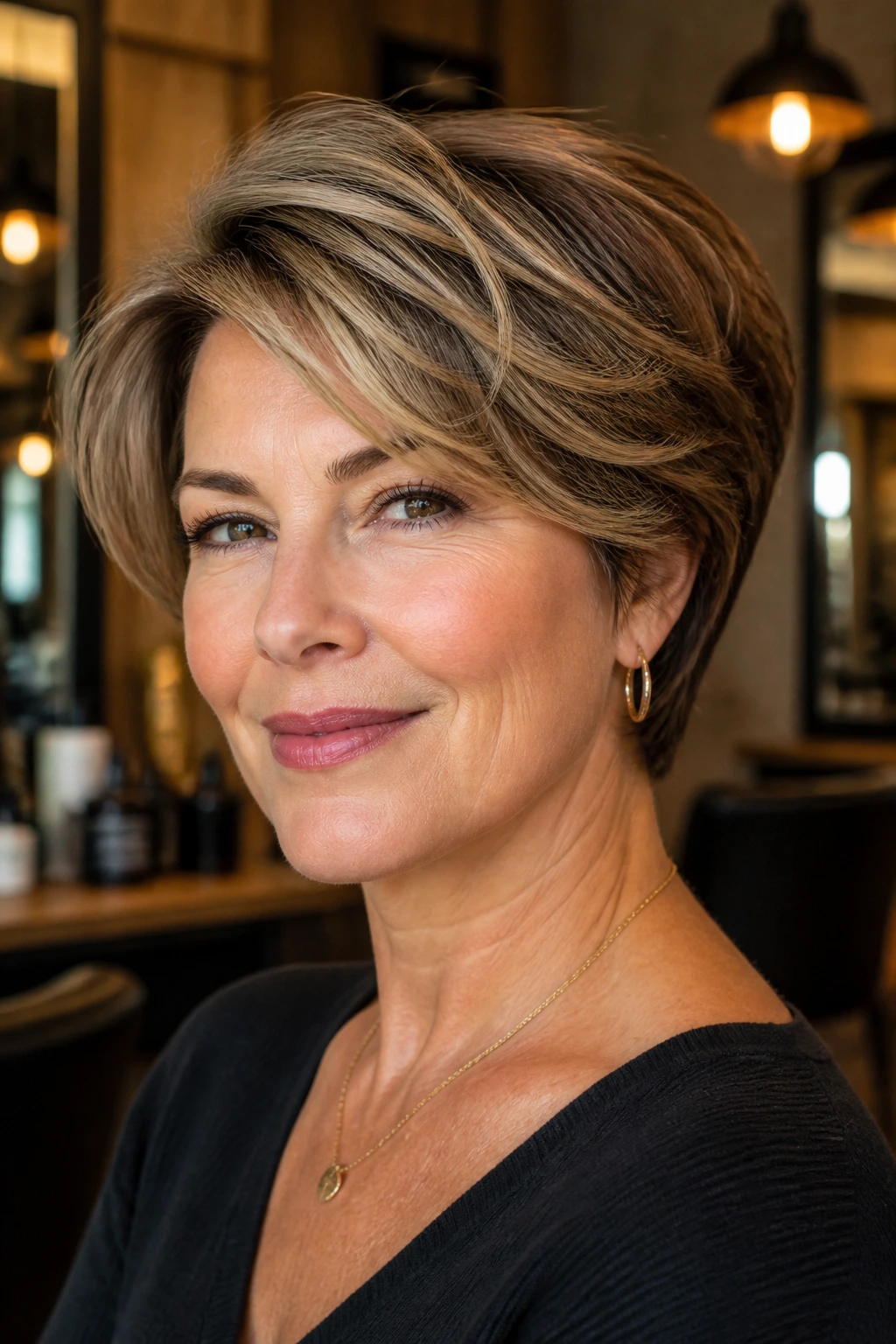
Thick hair does not need to be hacked away until it behaves. That usually backfires. You get fluffy ends, a wide silhouette, and a shape that looks fuller at the wrong places. What thick hair really wants is a haircut that knows where to hold the line and where to remove weight quietly.
That’s where internal layering, graduation, and perimeter control come in. Internal layers sit under the top layer and take out bulk without destroying the outline. Graduation — especially at the nape and back of the head — creates lift where the hair would otherwise sit in a block. A blunt edge can also help, because strong thick hair often looks better when the bottom line is clear and intentional. The mistake is assuming every short cut needs to be choppy.
Thick hair after 40 also tends to show every bad decision more clearly. If your nape sticks out, you’ll know. If the crown is cut too short, it balloons. If the sides are too wide, the face disappears. That’s why the best short cuts here are usually built around one central idea: reduce bulk, keep shape, and leave enough length in the right spots so the haircut still moves.
How Face Shape, Glasses, and Cowlicks Change the Choice
A haircut that flatters thick hair on one person can look awkward on another, and the reason usually has less to do with age than with geometry. Face shape, glasses, and growth patterns matter more than most salon conversations admit.
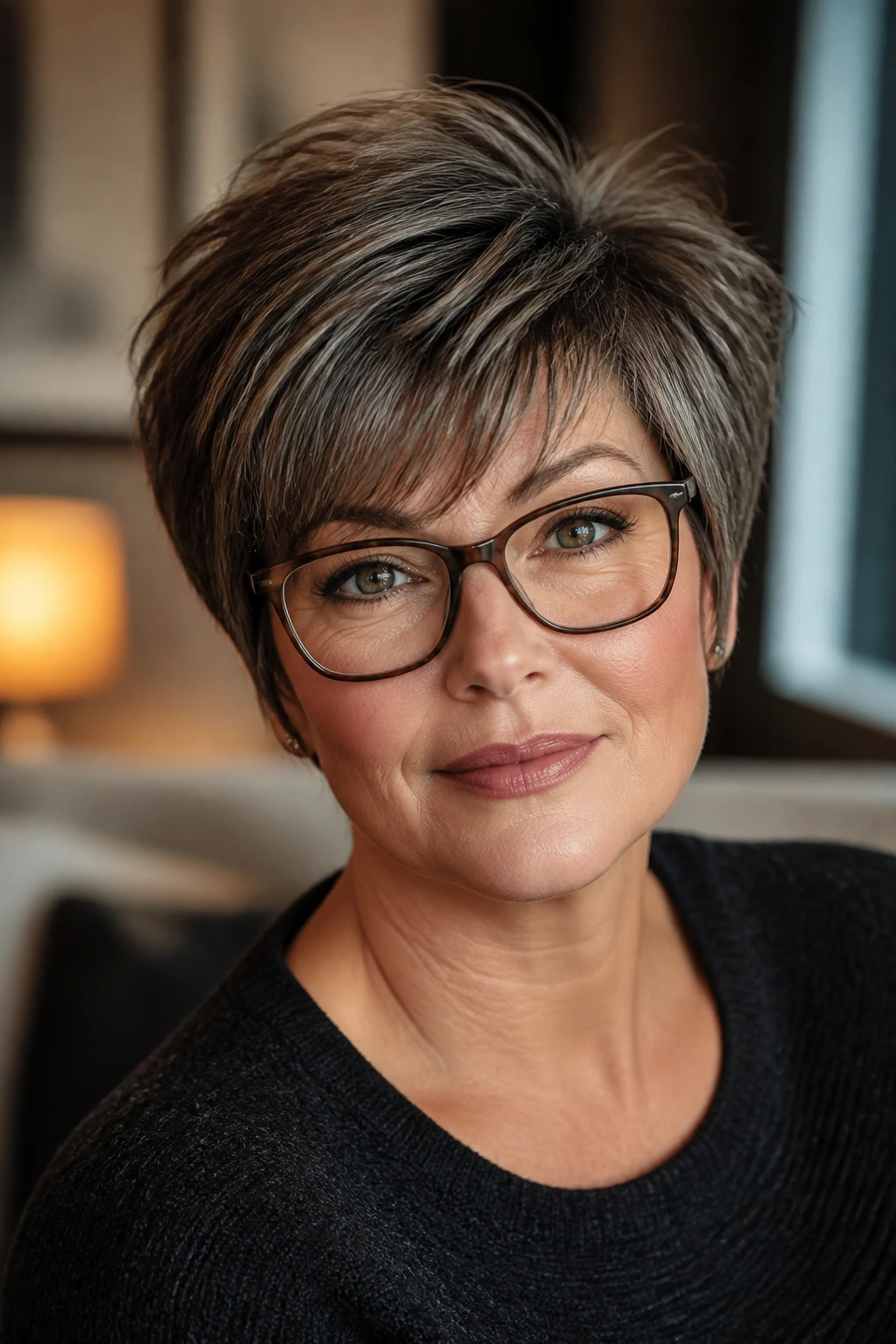
A round face often benefits from a little vertical lift at the crown or a side-swept front that moves the eye diagonally. A strong jaw can handle a chin-length bob better than a very soft face can, especially if the ends are blunt. If you wear glasses, bangs need room to live; a fringe that falls straight into the frames becomes a daily irritation, not a style point. And cowlicks? They are not “bad hair.” They are instructions. Ignore them, and you’ll spend months fighting the same bend at the nape or split at the forehead.
One thing I always watch on thick hair is the back view. People fixate on the front mirror, then wonder why the cut feels heavy. The nape and crown tell the real story. If the back is too stacked, too square, or too short, the whole haircut can kick outward. If it’s too long, it becomes a curtain again. There’s a sweet spot, and it changes depending on your neck length, your glasses, and whether your hair grows straight down or swirls like it has opinions.
1. The Chin-Length French Bob
The French bob is a sharp little thing when it’s cut well. On thick hair, that matters. The shape lands right around the chin, which keeps the weight off the shoulders and stops the hair from making a broad, puffy outline. I like this cut best when it sits slightly curved under at the ends rather than flaring outward like a bell.
Why it works on dense hair
The clean perimeter does half the work. Thick hair can make a bob look boxy if the interior is over-layered, so the cleaner approach is often better: a firm line, a bit of internal debulking underneath, and a soft fringe or side part to break up the front. If your hair has a natural wave, the French bob can look almost air-dried into place with a little mousse and finger-combing.
- Length: Chin to just below the jaw.
- Texture: Best on straight or loose-wavy hair.
- Styling: Rough-dry the roots, then smooth the ends with a round brush.
- Ask for: Internal weight removal under the top layer, not thinning all over.
Best tip: If your chin is broad or your neck is short, let the front land a half-inch lower than you think. That tiny change keeps the shape from looking too severe.
2. The Layered Pixie With a Long Top
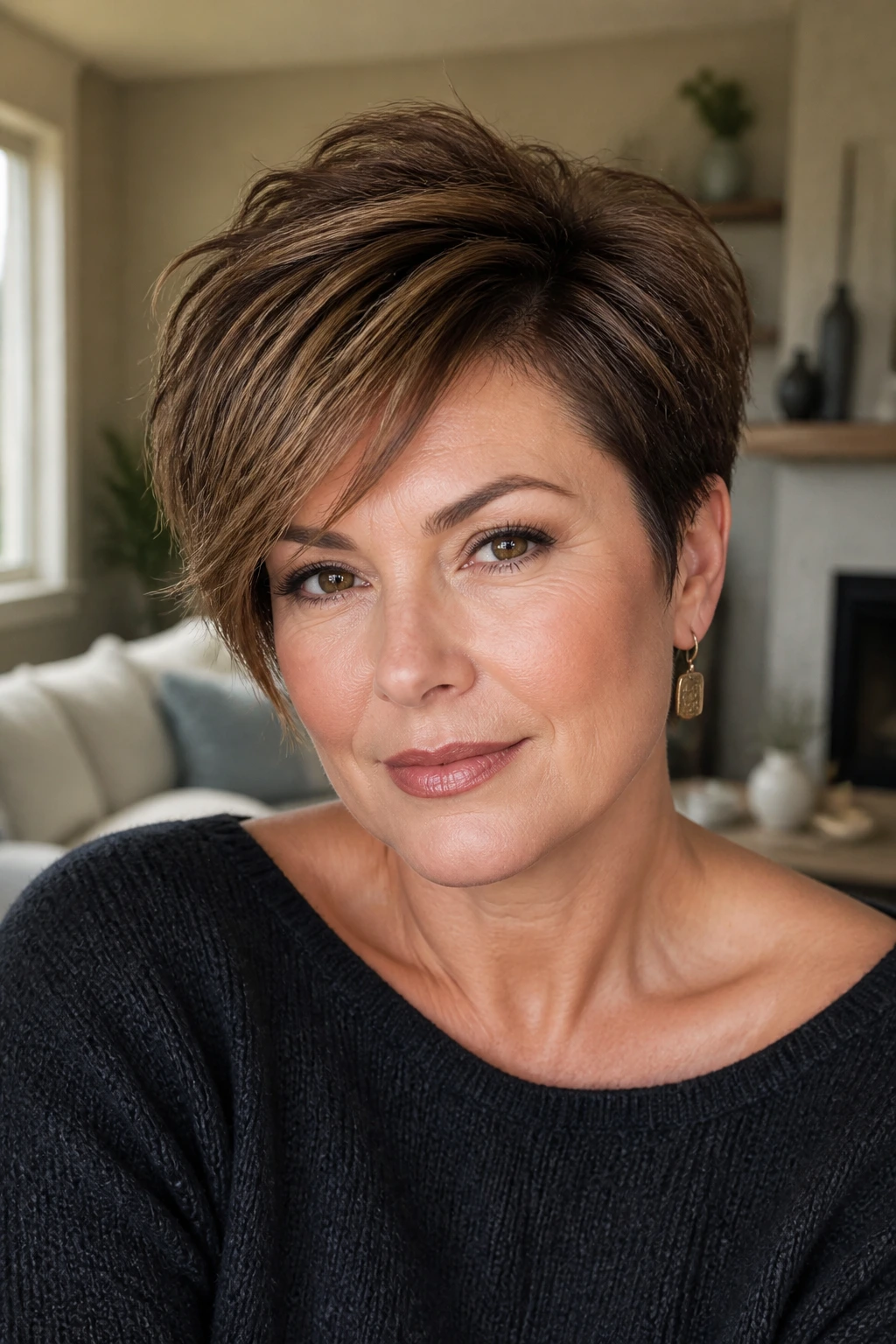
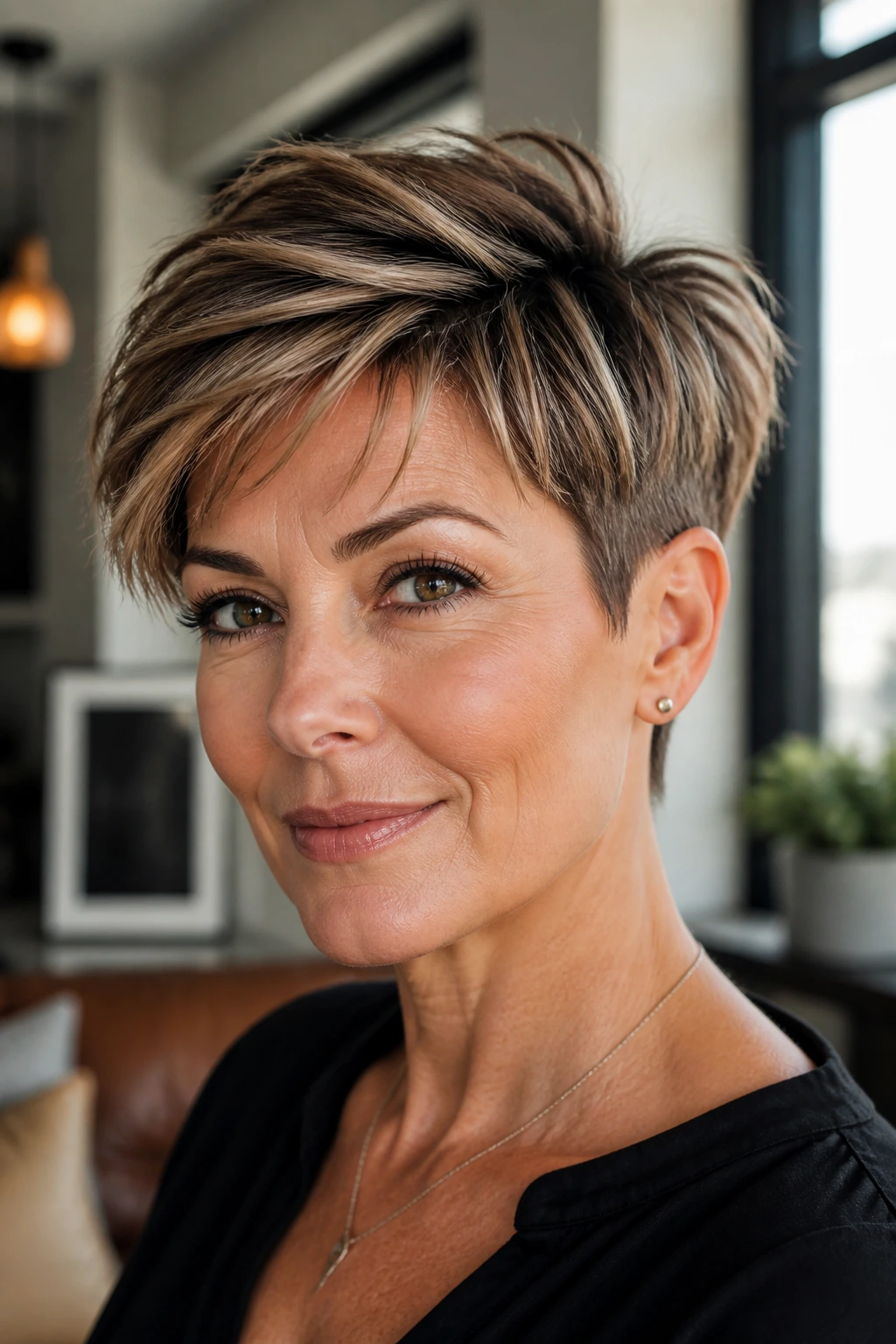
A pixie can be cleaner on thick hair than a bob if the top is left long enough to move. That’s the version I trust. Too-short pixies on dense hair can end up looking stiff at the crown and bulky at the sides, which is exactly what you do not want.
The better version keeps the top around 3 to 4 inches, with tapered sides and a nape that hugs close to the head. That extra length on top lets you sweep it over, toss it forward, or build a little lift at the roots without fighting the hair’s natural heaviness. If your hair is coarse, ask for point-cutting rather than aggressive thinning. Heavy razor work can leave the ends fuzzy, and thick hair does not forgive that.
This cut is especially strong if you are tired of hair touching your collar, your glasses arms, or the backs of your ears. It feels light, but not tiny. And that distinction matters. The best pixies on thick hair still have some muscle in them.
If you like a matte paste or a light wax, this cut will cooperate. If you pile on shine serum, it can start to look stringy on the top and puffy on the sides. Balance is the whole game here.
3. The Stacked Nape Bob
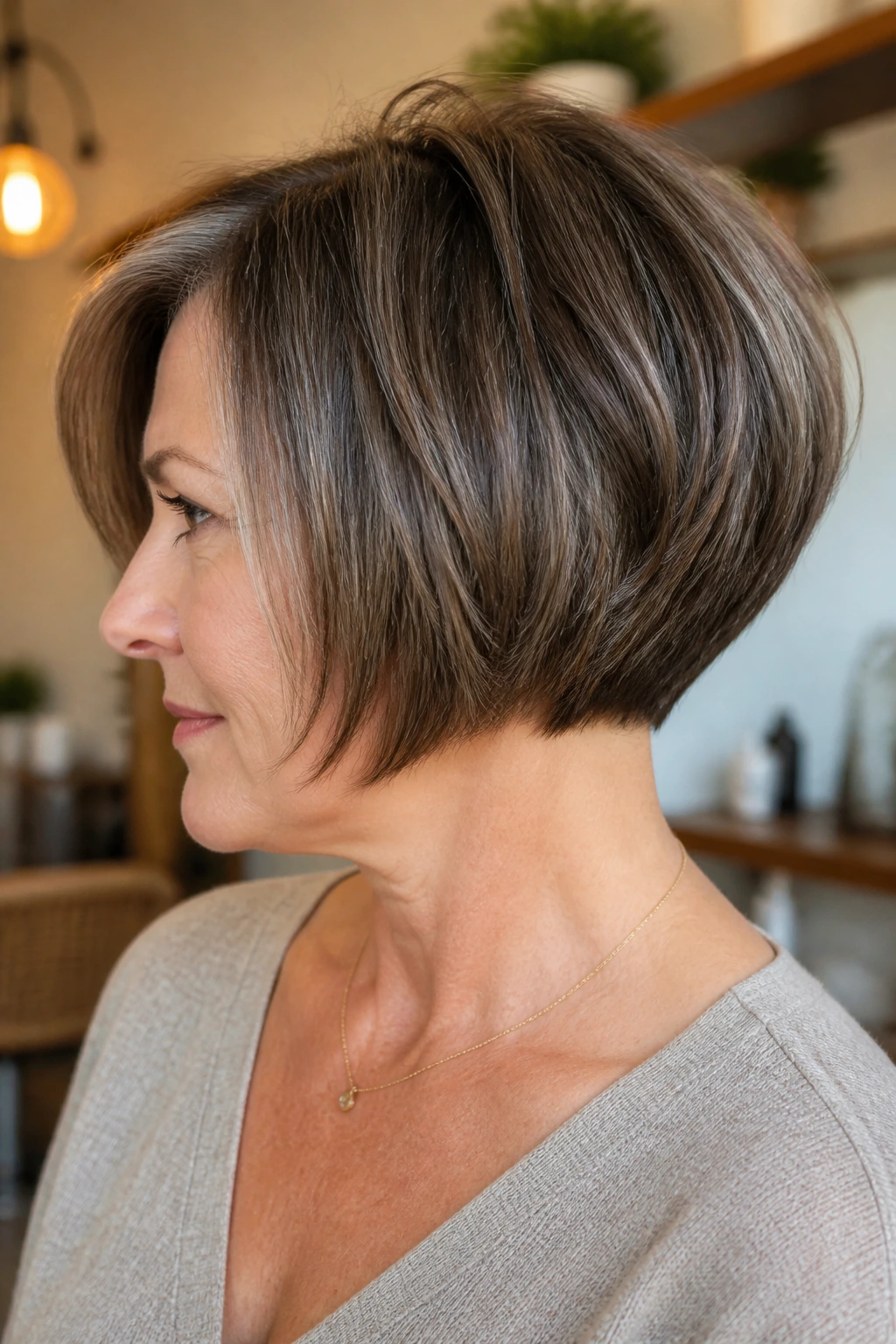
If thick hair grows into a shelf at the back, the stacked nape bob is the cleanest correction. It builds a little graduation through the back of the head, then lets the front stay a touch longer so the silhouette feels lifted instead of blocky.
What to ask for in the chair
The stack should be visible, but not exaggerated. You want enough graduation to take weight out of the lower back of the head, not such a steep angle that the bob looks dated or overbuilt. On dense hair, a modest stack often works better than a dramatic one because the hair already brings its own volume.
- Back shape: Rounded and lifted through the nape.
- Front length: Cheek to jaw, depending on your neck length.
- Styling move: Blow-dry the crown first so the back does not flatten and swell.
- Best for: Hair that flips outward at the shoulders and builds bulk at the neckline.
I like this cut on people who want a polished outline without living in a blowout. It grows out into something softer rather than something messy. The nape stays neat longer than you’d expect, which is a small mercy if you hate the in-between stage.
4. The Soft Shag With Curtain Fringe
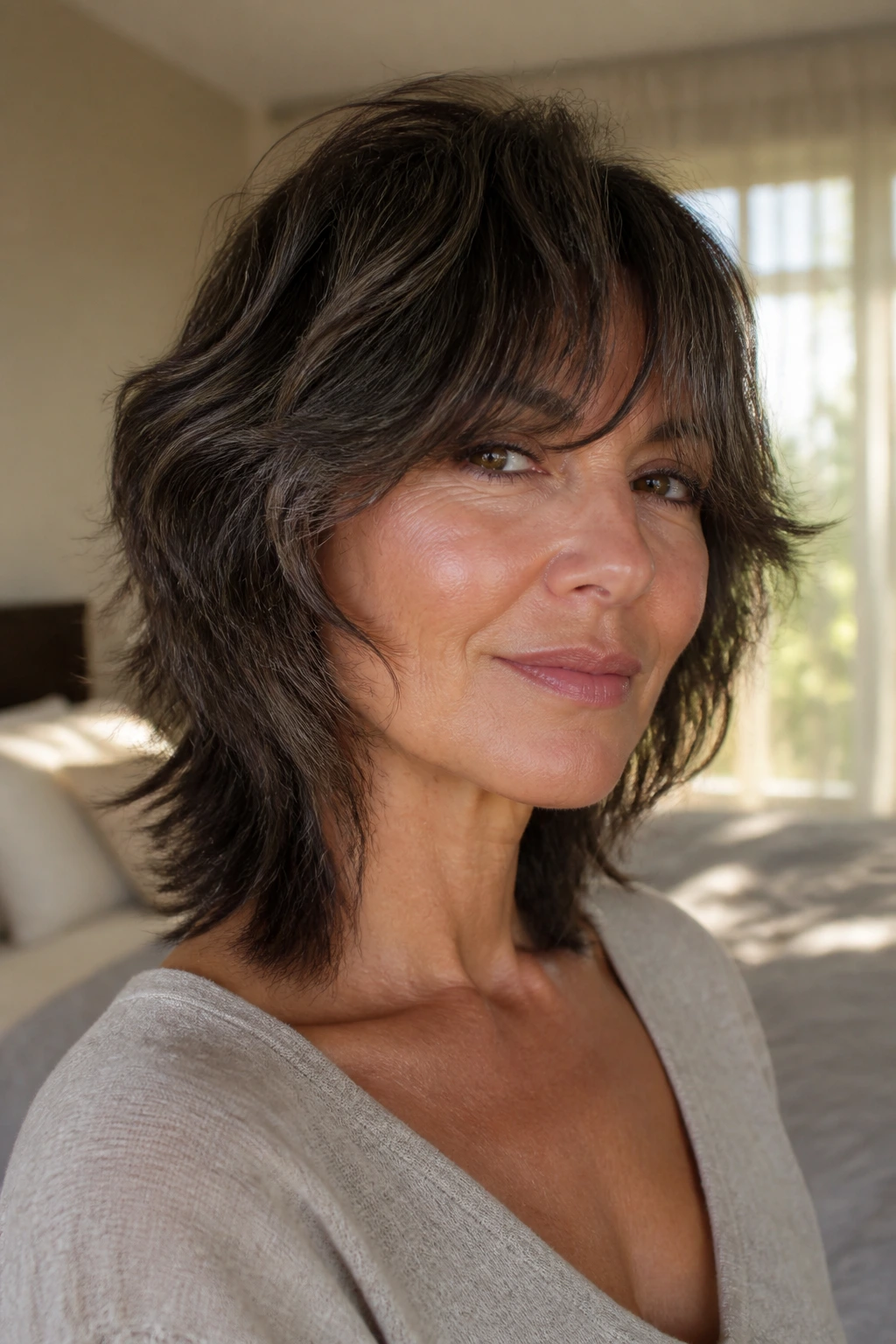
The soft shag is the haircut that keeps thick hair from acting like a single heavy sheet. The layers break the mass into pieces, and the curtain fringe opens the front of the face so the whole thing feels lighter, even when the hair itself is still dense.
This is not the shag that looks torn to bits. I’m talking about a softer version, with layers that start around the cheekbones and continue through the mid-lengths. On thick hair, that gives you movement without the frizz halo that can happen when the layers are too short or too close together. A good curtain fringe should fall away from the center and graze the brow or cheekbone, not sit like a blunt curtain over the eyes.
It’s one of the best choices if you air-dry a lot. A little leave-in, a dab of curl cream, and some finger scrunching is often enough. If your hair is straight but heavy, a few bends with a round brush around the face keep it from reading flat.
I’d skip a super-short crown on this one if you have a strong cowlick. Thick hair with a stubborn crown swirl can explode upward fast. Leave the top a little longer, and the cut behaves better.
5. The Collarbone Lob With Internal Layers
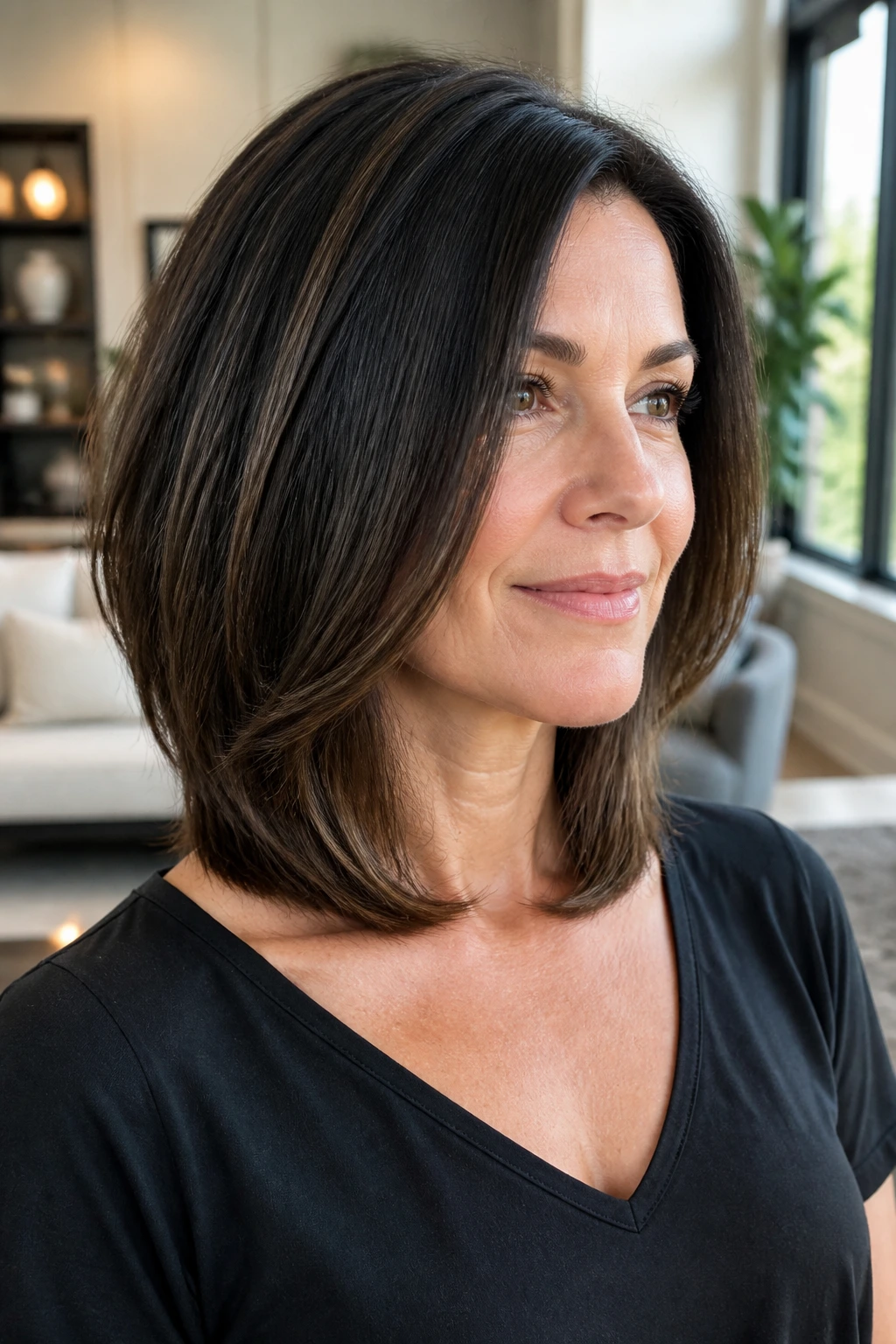
Why put a lob on a list about short hair? Because a collarbone cut is where a lot of thick hair finally stops making life difficult. It is short enough to feel lighter, but long enough to tuck behind an ear, clip back, or pull into a low tie when you need it.
What makes it work
The secret is hidden layering. If the surface layer stays smooth and the bulk is removed underneath, the hair keeps its sleek outline while losing that heavy shelf at the bottom. That’s a smarter move than carving obvious steps into every inch of the head.
This cut works beautifully when your hair is thick but you still want some swing. It also plays nicely with highlights, because the longer surface shows dimension without needing a lot of styling. If your hair tends to frizz at the ends, keep the perimeter blunt and only soften the face frame.
The collarbone lob is also generous about grow-out. A bob can feel old after eight weeks if the line was too crisp. A lob often softens into a more relaxed shape and still looks intentional. That’s a real advantage if you do not want a trim every month.
6. The Tapered Crop With a Side Sweep
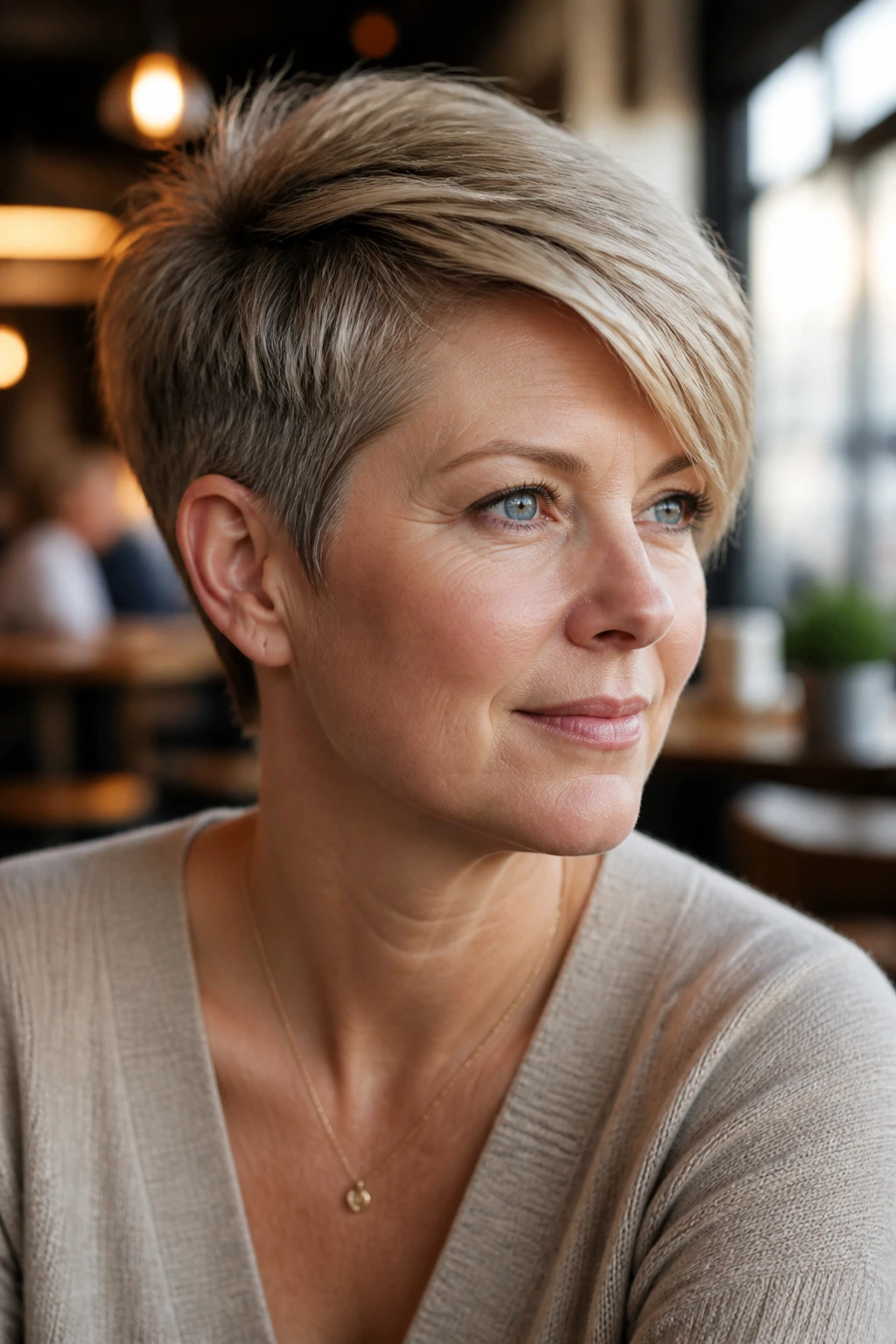
Unlike a pixie that goes spiky at the first sign of product, the tapered crop stays smoother around the sides. That makes it a strong choice if you want short hair without the full commitment of a cropped, exposed shape.
The taper is the point. Hair at the nape and around the ears is cut close enough to remove bulk, then the top stays longer and sweeps to one side. On thick hair, that side sweep helps move the eye diagonally across the face, which softens the silhouette and keeps the style from feeling too square. A little lift at the root and a clean temple line do more here than any amount of scrunching.
I like this cut for people who wear glasses or small earrings. It shows them off without getting fussy. The side sweep also makes cowlicks easier to manage because the hair has a clear direction instead of being forced straight forward.
If your hair is coarse, ask your stylist not to shred the edges. You want shape, not fray. A small amount of matte paste or styling cream is enough to separate the top without making the ends sticky.
7. The Blunt Bob With Subtle Texture
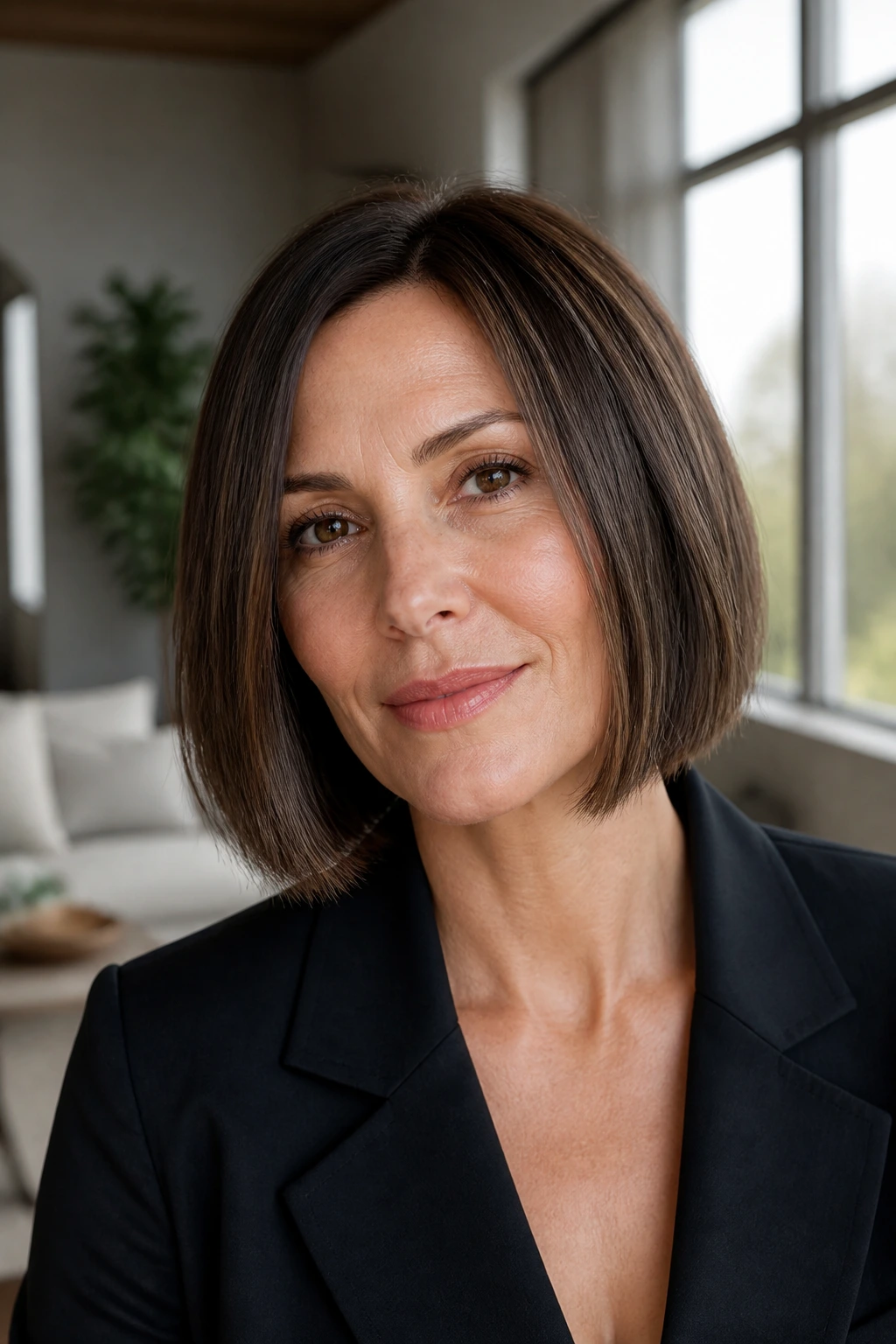
A thick head of hair can make a blunt bob look richer, not heavier, if the line is honest. That’s the whole appeal. The perimeter sits cleanly, the ends look full, and the shape has enough weight to resist flaring out at the sides.
The trick is to keep the texture subtle. I like a little point-cutting at the ends, maybe a whisper of movement through the front, but not much more. If you go in with too many internal layers, the bob starts to expand outward. Thick hair wants a controlled bottom line. Give it that, and it behaves.
This cut is a nice choice if your hair is straight or only slightly wavy. It can look expensive in the plainest sense of the word: clean, solid, and deliberate. Gray or silver hair often looks especially sharp in this shape because the line catches the light cleanly and does not disappear into fuzz.
Use a round brush or a flat brush, not both. One direction keeps the ends polished. Too much flipping and re-styling only creates volume where you did not ask for it.
8. The Bixie With Ear-Skimming Layers
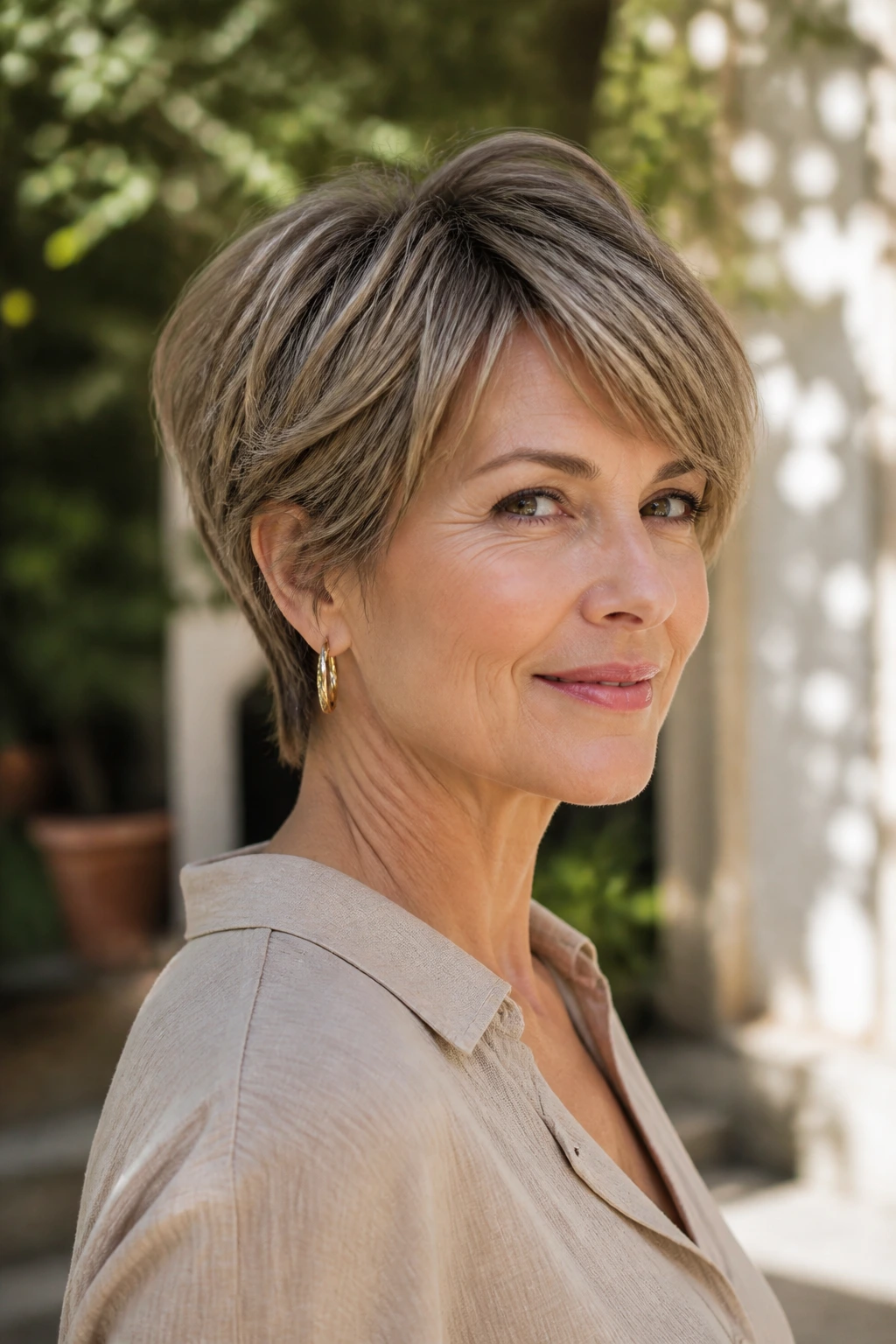
The bixie is the compromise nobody needs to apologize for. It gives you the openness of a pixie around the neck and ears, but keeps a little bob-like length through the top and sides. On thick hair, that combination can be a relief. You get movement without losing all your frame.
Think of it as a hybrid with a purpose. The nape is shorter, the layers skim the ears, and the top has enough length to tuck, sweep, or mess up slightly and still look styled. If you wear glasses, this cut is especially practical because it clears the arms without making the side profile look bare.
I’ve seen thick hair become easier to style the moment the bixie removes the dense box around the head. The best versions keep the top piecey and the back neat, so the haircut reads modern instead of mushy. That balance matters. Too soft, and it collapses. Too sharp, and it starts to look like a grown-out pixie with no plan.
A small amount of texturizing paste on the fingertips is enough. You are aiming for separation, not crunch. If the hair is very coarse, a tiny bit of smoothing cream on the front pieces can stop them from standing up in protest.
9. The Rounded Graduated Bob
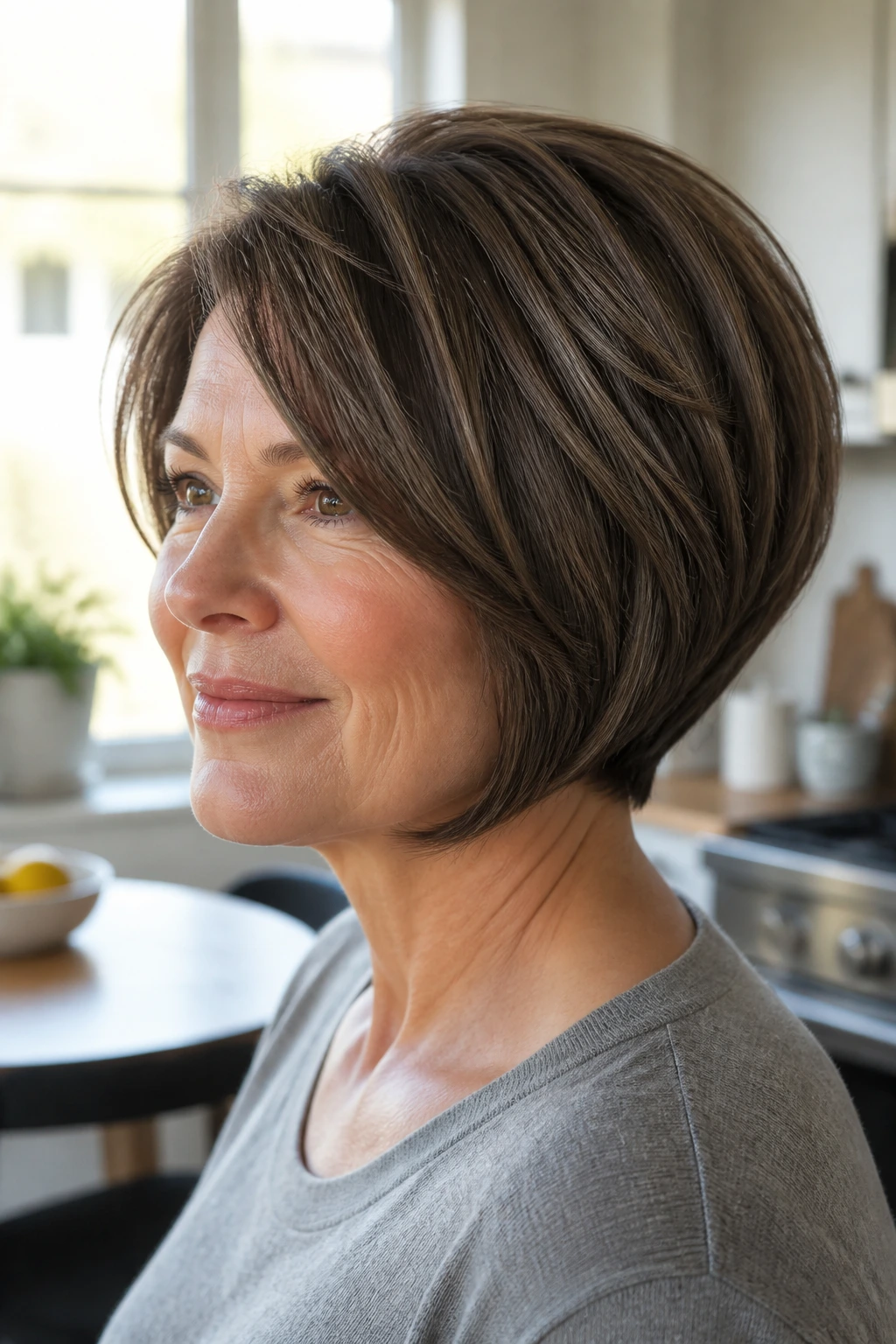
Want a bob that curves instead of building corners? This is the one. The rounded graduated bob uses shorter length in the back and a softly curved outline that hugs the head instead of jutting out from it.
Why the rounder shape matters
Thick hair has a habit of making square cuts look boxy. A rounded graduation keeps the back lifted and the sides smooth, so the haircut looks tailored rather than bulky. The curve also helps soften the profile if your jaw is strong or your neck is short.
This is a haircut that likes clean brushing and a small amount of root lift. It does not need a lot of hot tools. In fact, overworking it can flatten the crown and make the round shape disappear. If your stylist cuts the back too steeply, the bob can mushroom. If it’s too flat, it loses the lift. The sweet spot sits between those extremes.
I’d choose this for someone who wants structure without harsh edges. It’s one of those cuts that looks calm from every side when it’s done well. Not flashy. Just well-built.
10. The Feathered Crop With Wispy Fringe
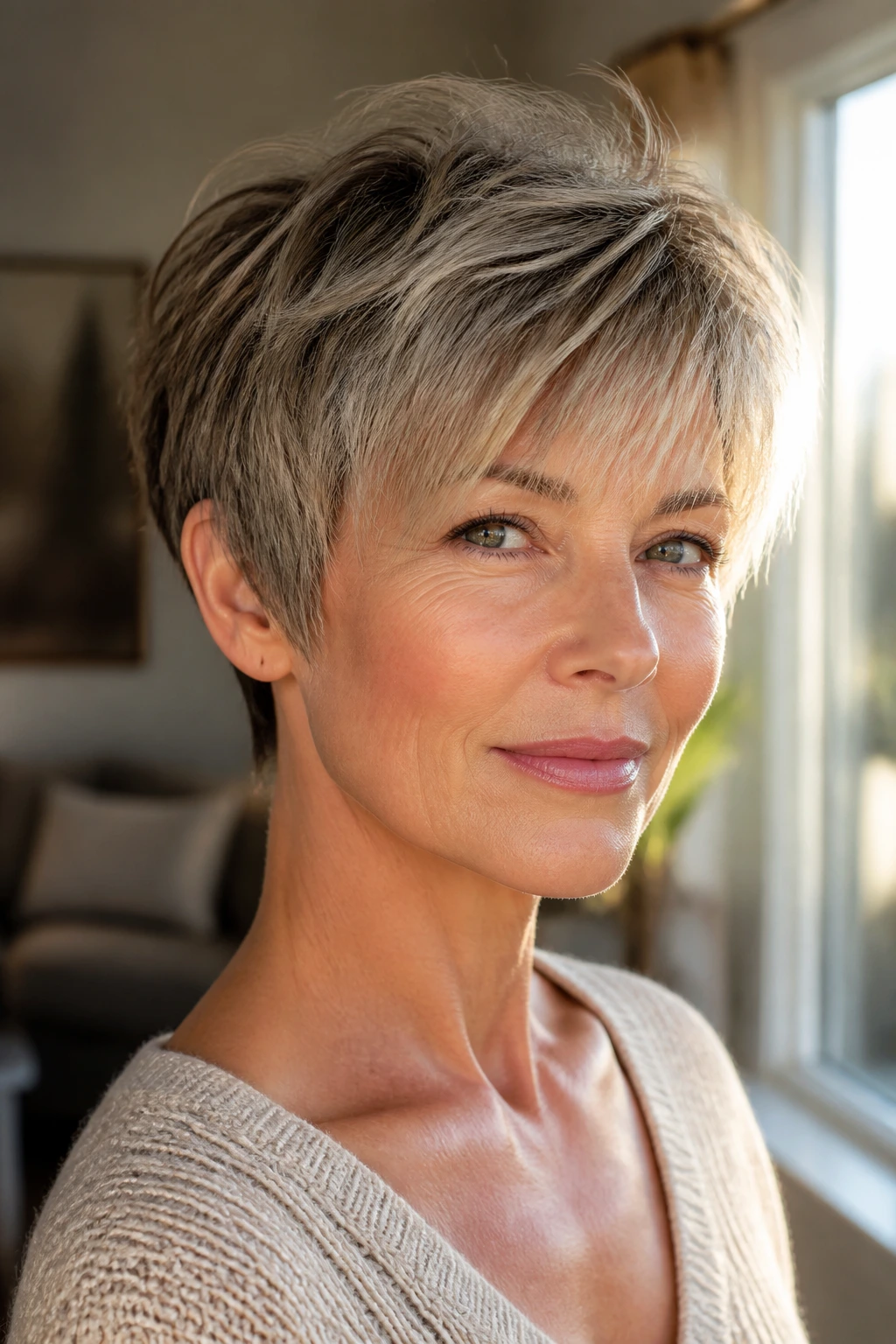
Feathering has a bad reputation only because people remember the wrong version of it. Done well, it gives thick hair air around the edges and keeps the cut from feeling like a block. The wispy fringe softens the front without burying the eyes.
This works best when the feathering is controlled, not shredded. The layers should move away from the face and neck in a way that lightens the shape, especially if your hair likes to puff at the temples. A feathered crop can be surprisingly flattering on coarse hair because it reduces the visual heaviness without making the ends look thin.
The fringe is the detail that keeps this from feeling old-school. It can be short and light, or longer and brushed to the side, but it should never sit too thick on the forehead. Thick hair already brings enough mass. The fringe should open the face, not crowd it.
I’d keep the styling simple here: light cream, rough dry, and a tiny bit of finger separation at the end. If you use a round brush on the fringe, keep the motion soft. Too much curl at the front makes the cut lose its easy shape.
11. The Wedge Cut With a Modern Edge
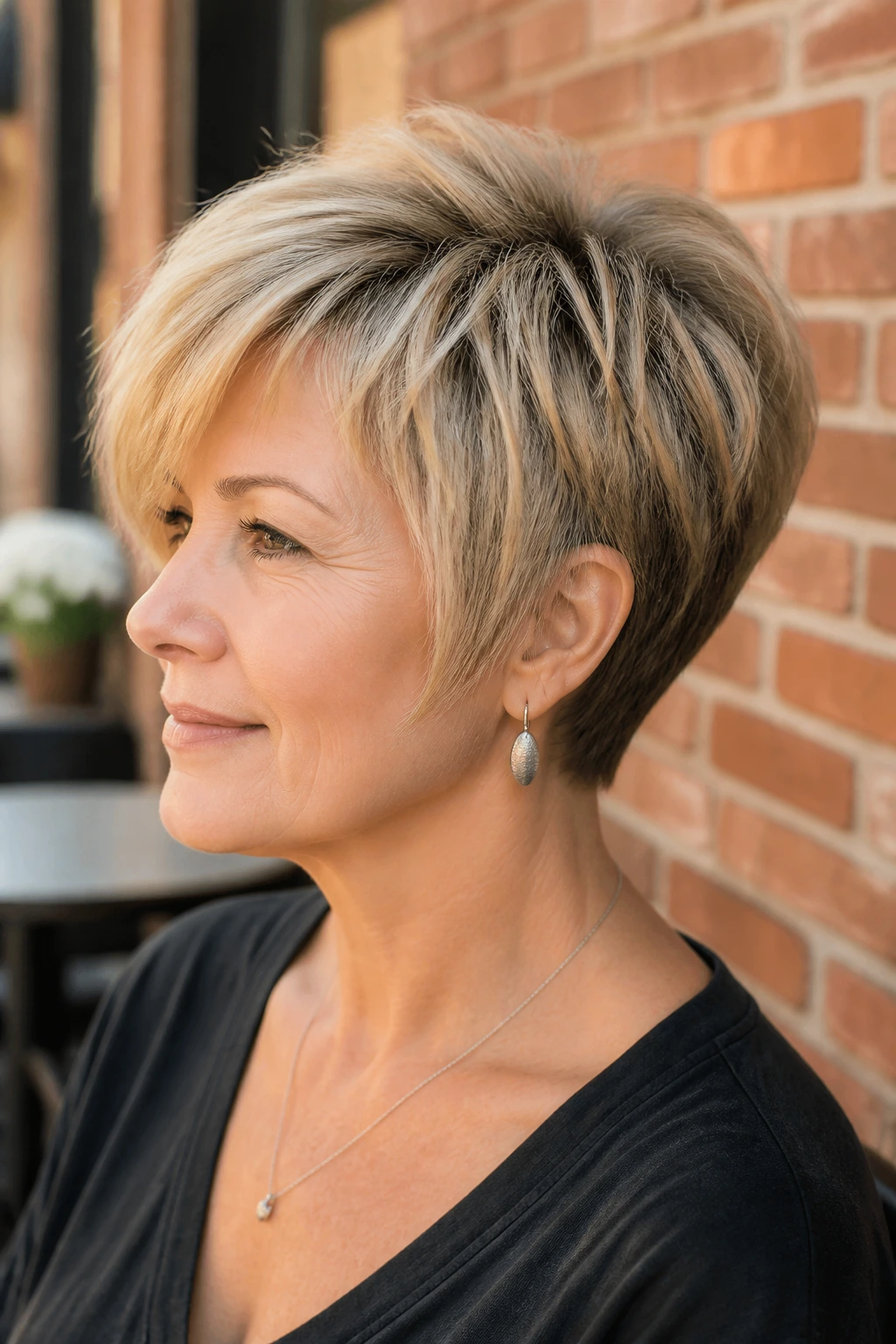
The old wedge got a bad reputation because so many versions were stiff and overbuilt. The modern wedge is softer, longer in the front, and much smarter about where it carries weight. On thick hair, that matters a lot.
The back still does the heavy lifting with a strong shape through the nape and crown, but the sides and front are less severe. That keeps the cut from reading like a helmet. If your hair is dense and straight, a wedge can be one of the easiest cuts to live with because it holds its outline even when you air-dry it. There’s structure built in. That’s the good part.
It also gives the back of the head a nice lift without asking for much styling. A round brush at the crown and a quick bend on the ends is often enough. If you have a cowlick at the back, though, make sure the stylist cuts with it instead of against it. The wedge shape will fight less if the growth pattern is respected.
This is a quietly strong haircut. Not soft in the usual sense, but not harsh either. It looks especially clean on silver or salt-and-pepper hair, where the line has room to show.
12. The Asymmetrical Bob
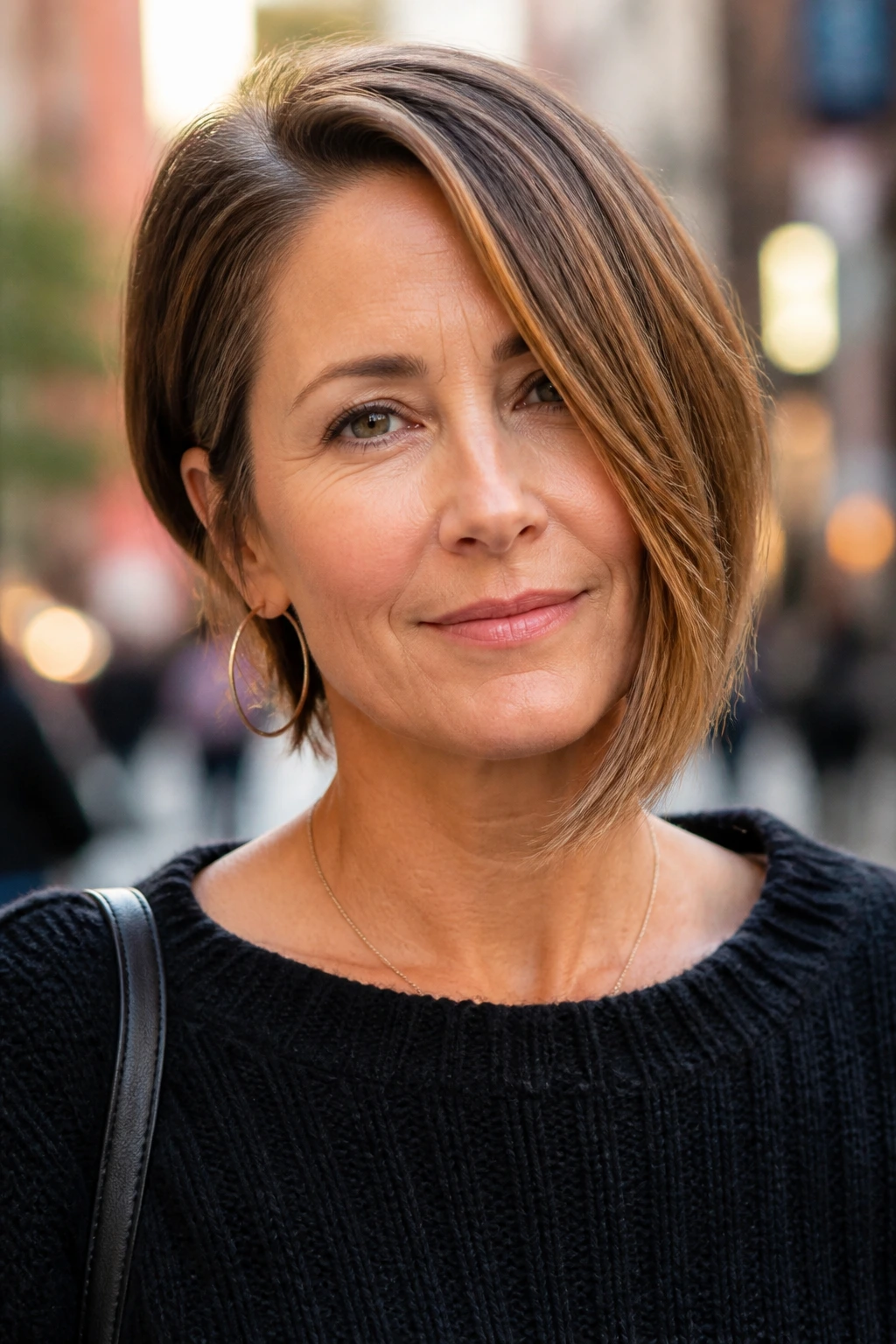
One side a little longer than the other sounds like a small detail, but on thick hair it changes the whole mood of the cut. The diagonal line cuts across the fullness, which makes the bob look more deliberate and less broad.
That slight asymmetry also helps if your hair naturally parts to one side or one side grows faster. Instead of pretending everything is even, the haircut leans into the asymmetry and makes it feel intentional. I like a difference of about half an inch to an inch and a half, not a dramatic lopsided effect. You want movement, not costume.
This cut is useful when you want the bob shape but don’t want the usual square silhouette. The longer side can skim the jaw or cheekbone, while the shorter side keeps the nape neat and the overall weight down. Thick hair often reads heavy from the front; the asymmetry interrupts that visually.
Style it with a side part and a bend on the longer side. That’s enough. If you keep flipping the part every day, the shape loses its point.
13. The Curly Pixie Bob
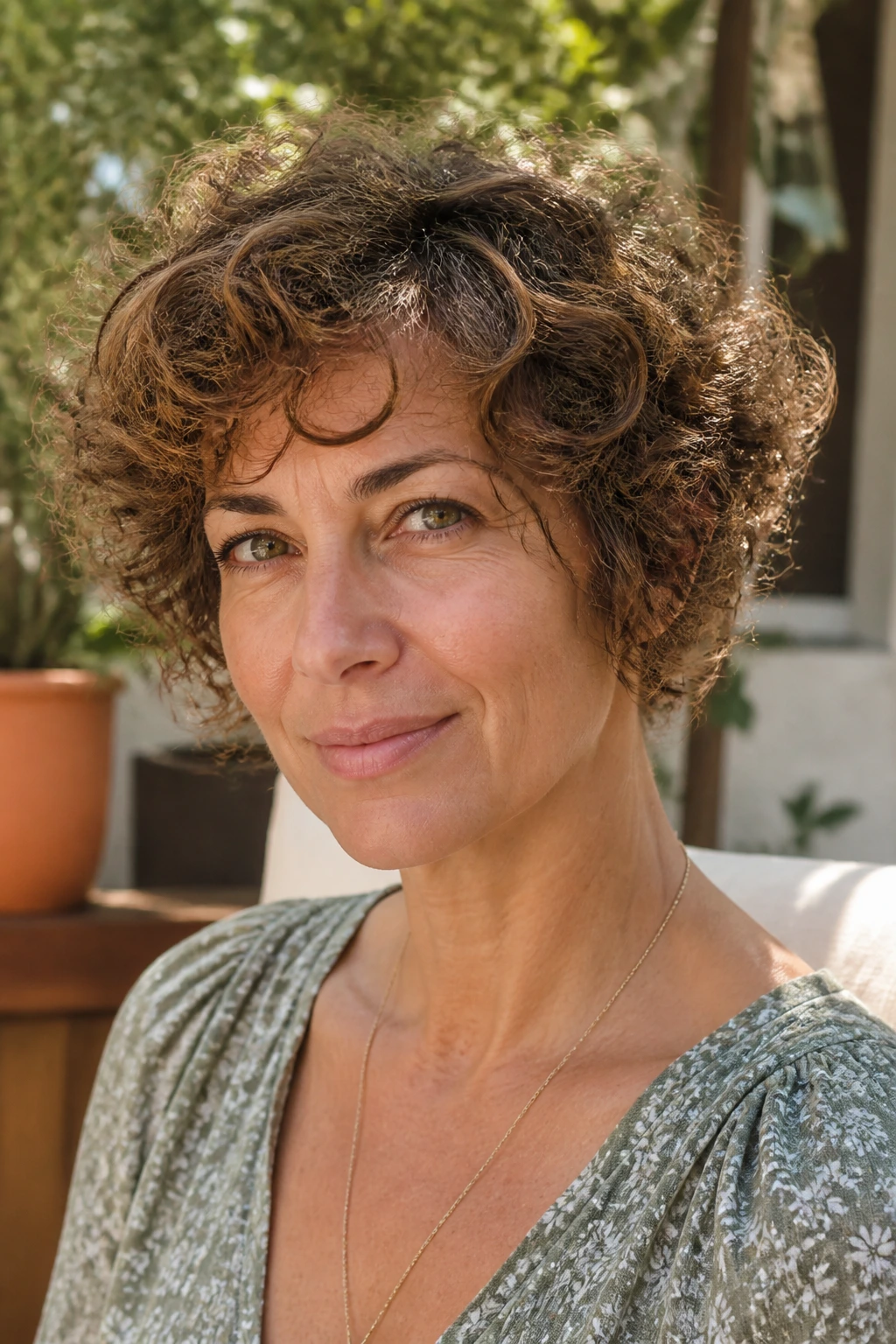
Can thick curly hair go short without turning into a puffed-up cloud? Yes, if the cut follows the curls instead of ignoring them. A curly pixie bob keeps enough length for the curls to form shape, but shortens the sides and back so the head doesn’t widen too much.
The part people get wrong
This cut should usually be shaped dry or at least partially dry, because curly hair changes length when it dries. If you cut it wet and assume the curl will behave, you can end up with a shape that feels too short on top or too bulky at the sides. A good stylist will look at your curl pattern, your shrinkage, and the spots where your hair naturally stacks.
- Top length: Long enough to curl, not so long it hangs heavy.
- Sides: Tapered around the ears.
- Styling: Diffuse on low heat or air-dry with curl cream.
- Best for: Loose curls through tighter coils that want a cleaner outline.
I like this one for thick curls because it gives the curls room to live without making them compete for space. The outline stays lighter, and the face gets shape back. If your curls are inconsistent from one section to another, a dry cut can save a lot of frustration.
14. The Jaw-Length Bob With Face Framing
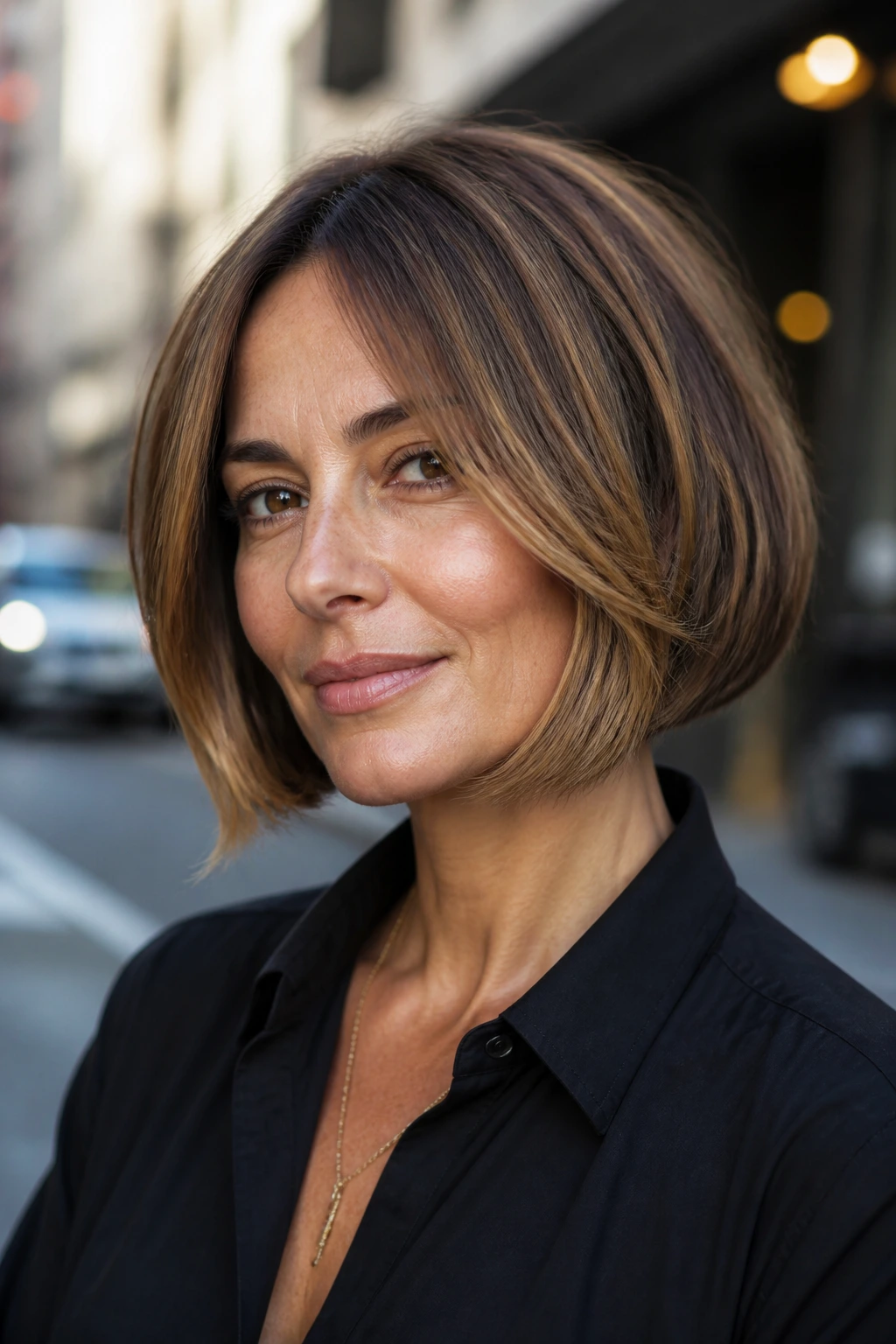
A jaw-length bob is not shy. It puts the line right where people see it first. On thick hair, that can be a good thing because the cut brings order to all that fullness and lets the jawline do some visual work.
The face-framing pieces matter here. If they start around the cheekbone and soften toward the jaw, they keep the front from looking like one hard shelf. That is the move that separates a sharp bob from a boxy one. Thick hair at this length can go from polished to helmet fast, so the front should have enough movement to soften the edges.
I like this cut on someone who wants a clean, graphic shape but does not want to look severe. If your face is round, keep the front a little longer than the jaw so it narrows the outline. If your face is square, let the pieces round off a bit below the jaw instead of ending right on it.
The styling is plain but not boring: smooth the roots, tuck one side behind the ear, and let the front pieces fall where they want. That little asymmetry brings the whole thing to life.
15. The Undercut Bob
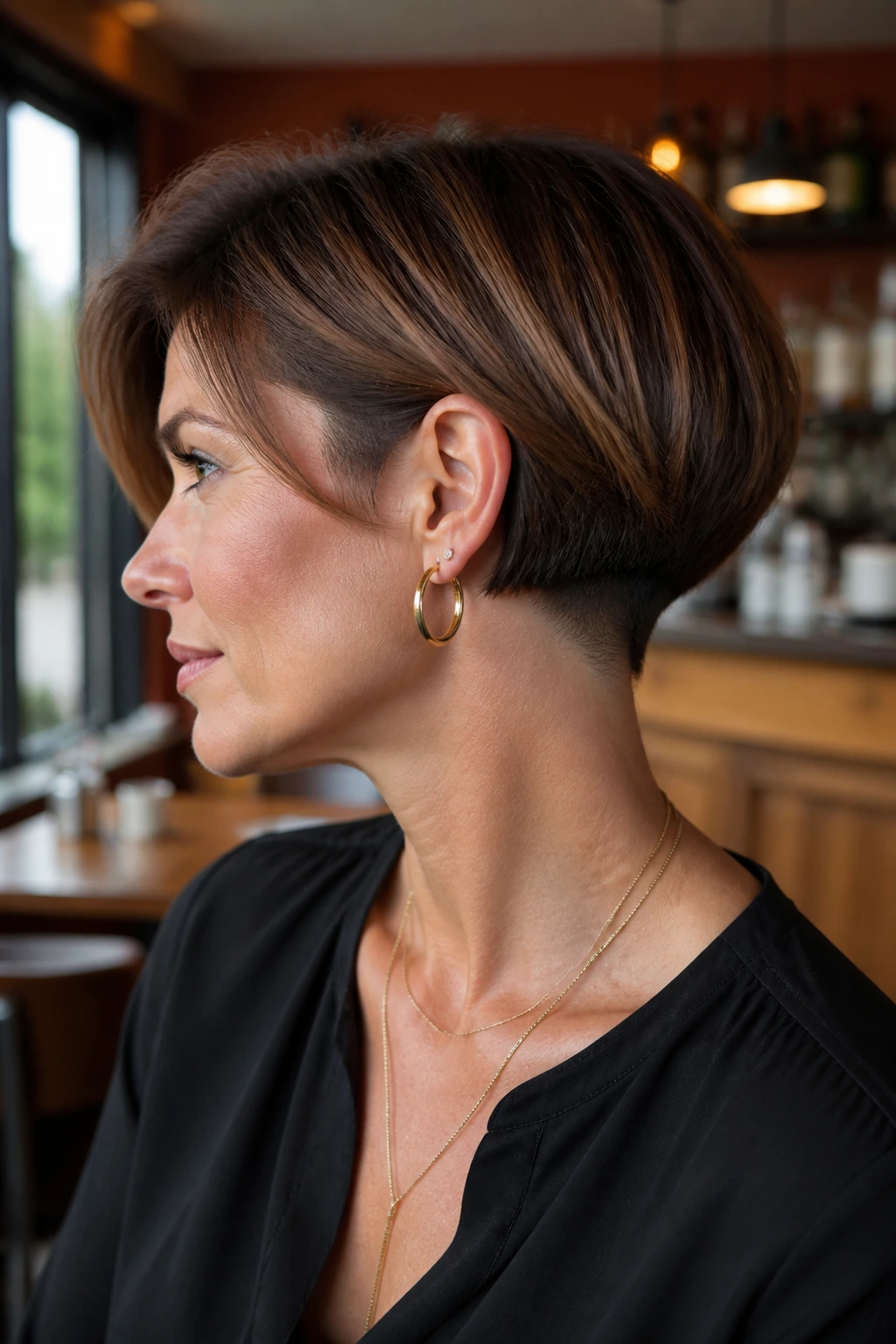
When the inside of the hair is the problem, taking weight off the underside is cleaner than shaving the whole thing down. That’s what makes the undercut bob so practical for thick hair. The visible surface still looks like a bob, but the hidden bulk underneath has been reduced.
This cut can be tiny or fairly bold. Sometimes the undercut sits just at the nape. Sometimes it extends behind the ears. Either way, it changes the way thick hair sits on the head, which is the real point. You feel the difference first. The haircut no longer swells under scarves, collars, or humidity.
It is a strong choice if your hair is so dense that even a blunt bob feels too heavy by midday. It is also useful if you want shorter hair without losing the sense of a full top layer. The catch? Maintenance. If you leave the undercut alone too long, the grow-out can get fuzzy and uneven.
I would only choose this if you’re comfortable returning every four to six weeks for a shape clean-up. It is worth it when the bulk is truly the issue.
16. The Choppy Shullet
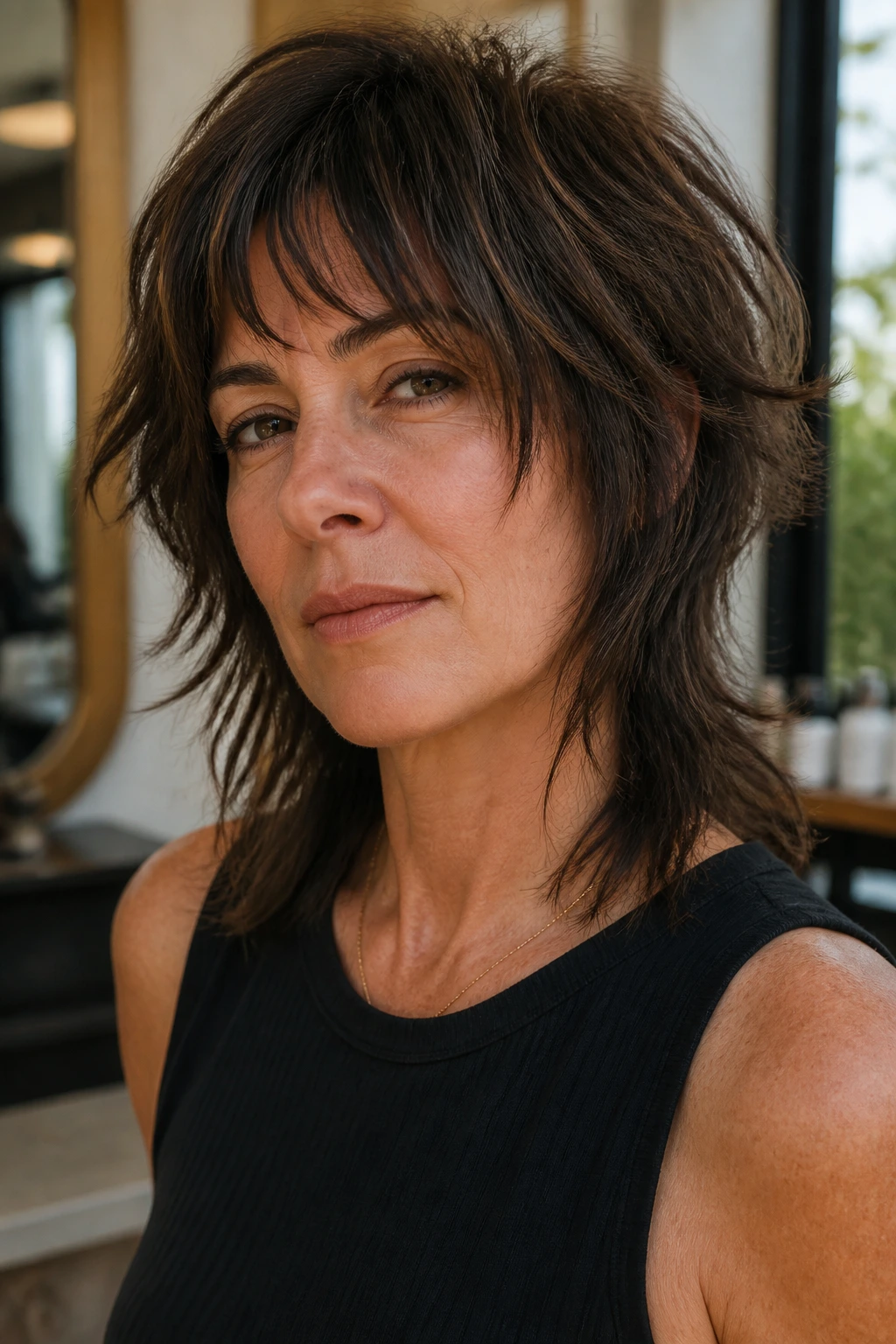
Not everyone wants a polished bob. Some thick hair needs a little attitude, and the shullet gives it room. This cut mixes shag energy in the front with a longer, softer back, which makes the silhouette feel undone in a controlled way.
It works because it breaks up mass without making the whole head short. The front layers and fringe keep the face open, while the back stays long enough to prevent that harsh, all-over chop that thick hair sometimes hates. The choppy texture can be a blessing if your hair has wave or bend. It can look strangely flat if your hair is pin-straight and you never style it, so I would not call it the easiest choice for everyone.
If you want something a little edgy but still wearable, this is a strong option. It pairs well with air-dry cream, a diffuser, or a small wand bend on the ends. The point is texture with a plan. Not chaos.
This one is also forgiving when it grows out. That matters more than people admit. A good shullet can move from sharp to soft without turning into a mistake.
17. The Soft Mushroom Crop

The mushroom crop has been reinvented enough times to shed its worst reputation. The soft version keeps the rounded outline and close sides, but loosens the fringe and lengthens the edges so it feels modern rather than retro-costume.
On thick hair, the mushroom shape can work because it distributes bulk evenly instead of dumping it all at the bottom. The crown stays smooth, the edges stay soft, and the silhouette reads as intentional from every side. This is a particularly nice shape for straight or slightly wavy hair that likes to sit in a neat, rounded form.
I especially like it on silver or salt-and-pepper hair. The shape is crisp enough to show the color, but soft enough that it doesn’t look severe. If your hair is very curly, though, I’d be cautious. The crop can become too round too fast unless the curl pattern is handled with real care.
Ask for length around the ears and a fringe that can be swept or broken apart. That small bit of flexibility keeps the cut from turning into a solid cap.
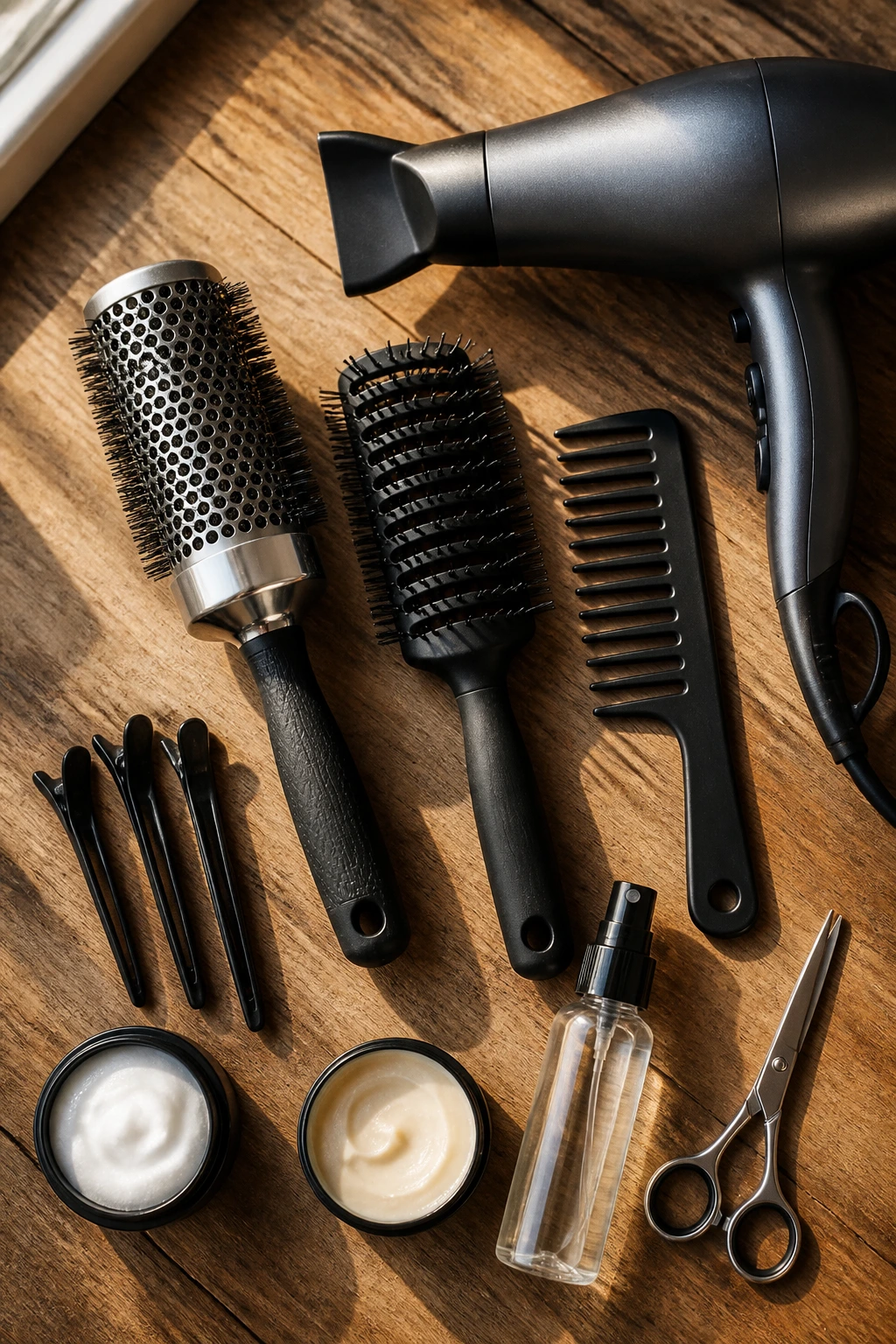
Essential Tools for Styling and Trims
-
Blow dryer with a narrow nozzle: Directs air at the roots and nape so thick hair dries in the right direction instead of puffing out sideways.
-
2- to 2.5-inch round brush: Big enough to smooth bob lengths and give the ends a soft curve without creating tight curls.
-
Vent brush: The best thing for rough-drying dense hair fast when you do not want a polished blowout.
-
Wide-tooth comb: Good for detangling thick hair while it’s wet, especially if your texture bends or curls.
-
Duckbill clips: Helpful for holding the top layer up while the underlayer dries, which keeps the shape from collapsing at the crown.
-
Light mousse or root foam: Gives lift and grip without the sticky feel that thick hair hates by midday.
-
Texturizing paste or cream: Useful for pixies, bixies, and crops when you want separation at the ends and around the fringe.
-
Heat protectant spray: Worth using before any flat iron or round-brush work; thick hair can take heat, but the cuticle still needs protecting.
-
Small trimming scissors for fringe only: Handy if you are confident and only need a tiny tidy-up, not an actual cut. If you’re unsure, leave this to the salon.
-
Saved photos from front, side, and back: Not a tool in the metal-and-plastic sense, but one of the best resources you can bring. Thick hair hides bad angles until it doesn’t.
How to Brief a Stylist So Thick Hair Behaves
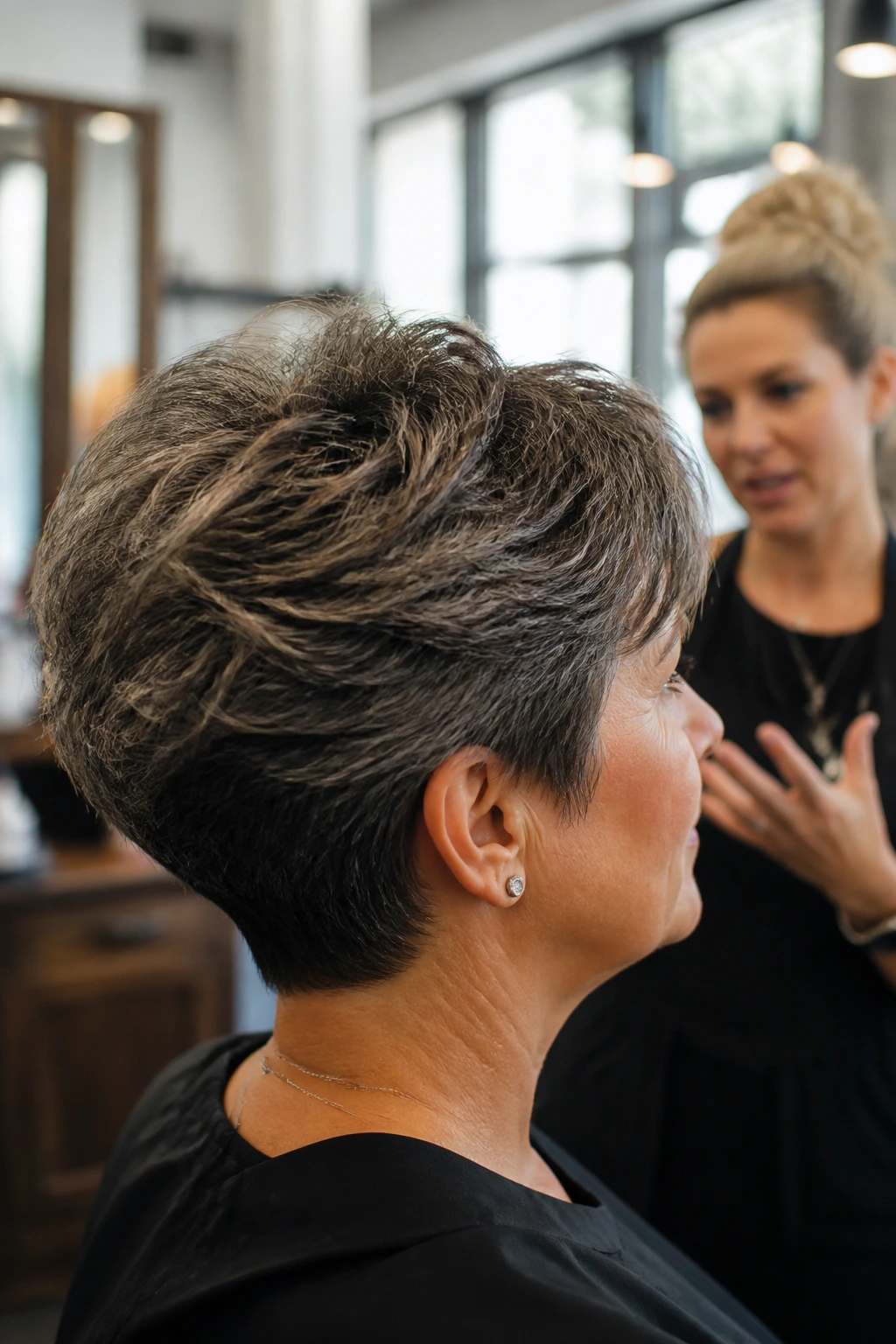
The consultation is where good haircuts are saved or ruined. Thick hair needs precision, and precision starts with a real conversation about what the hair does on a normal Tuesday, not what it looks like in a perfect salon blowout.
Bring photos, yes, but bring the useful ones. One front-facing picture tells only half the story. A side view and a back view are worth their weight in gold because thick hair often fails at the perimeter, not the front. If you wear glasses, say so. If your hair flips out at the nape, say that too. If one side is flatter or heavier, point it out.
Three things worth naming out loud
Where the bulk lives: some hair piles up at the crown, some around the ears, some at the nape. A stylist can only control what they know about.
How much styling you’ll tolerate: if you want five-minute hair, say five minutes. A great cut for a 20-minute blowout can be a terrible cut for an air-dry routine.
How often you will come back: a pixie that looks great for four weeks is not the same thing as a bob that still works at eight. Maintenance belongs in the first conversation, not the second visit.
If you remember one phrase, make it this: remove weight without destroying the outline. Thick hair behaves much better when the stylist hears that sentence clearly.
How to Keep the Shape Between Salon Visits

Short thick hair looks best when the shape stays ahead of the grow-out. Once the sides start ballooning or the nape starts flipping, the cut stops reading as intentional. The fix is not always another big appointment; sometimes it’s just timing.
Pixies, bixies, and undercuts usually want a clean-up every 4 to 6 weeks. Bob shapes can stretch to 6 to 8 weeks if the perimeter was cut cleanly. Shags, shullets, and softer lob styles often buy you a little more room — 8 to 10 weeks, sometimes more if you like the lived-in look. Fringe trims are their own thing. If you wear bangs or a curtain fringe, a quick tidy every 2 to 3 weeks can keep them from falling into your eyes or frames.
The biggest mistake is waiting until the cut has already turned on you. At that point, you are trying to rescue a shape that has lost its structure. Much easier to keep the outline tidy before the puff starts.
A dry shampoo at the roots, a quick bend at the ends, and a tiny bit of control at the nape often extend a haircut another few days. Not forever. Just long enough to keep it looking deliberate instead of accidental.
Small Styling Moves That Make Thick Hair Look Intentional
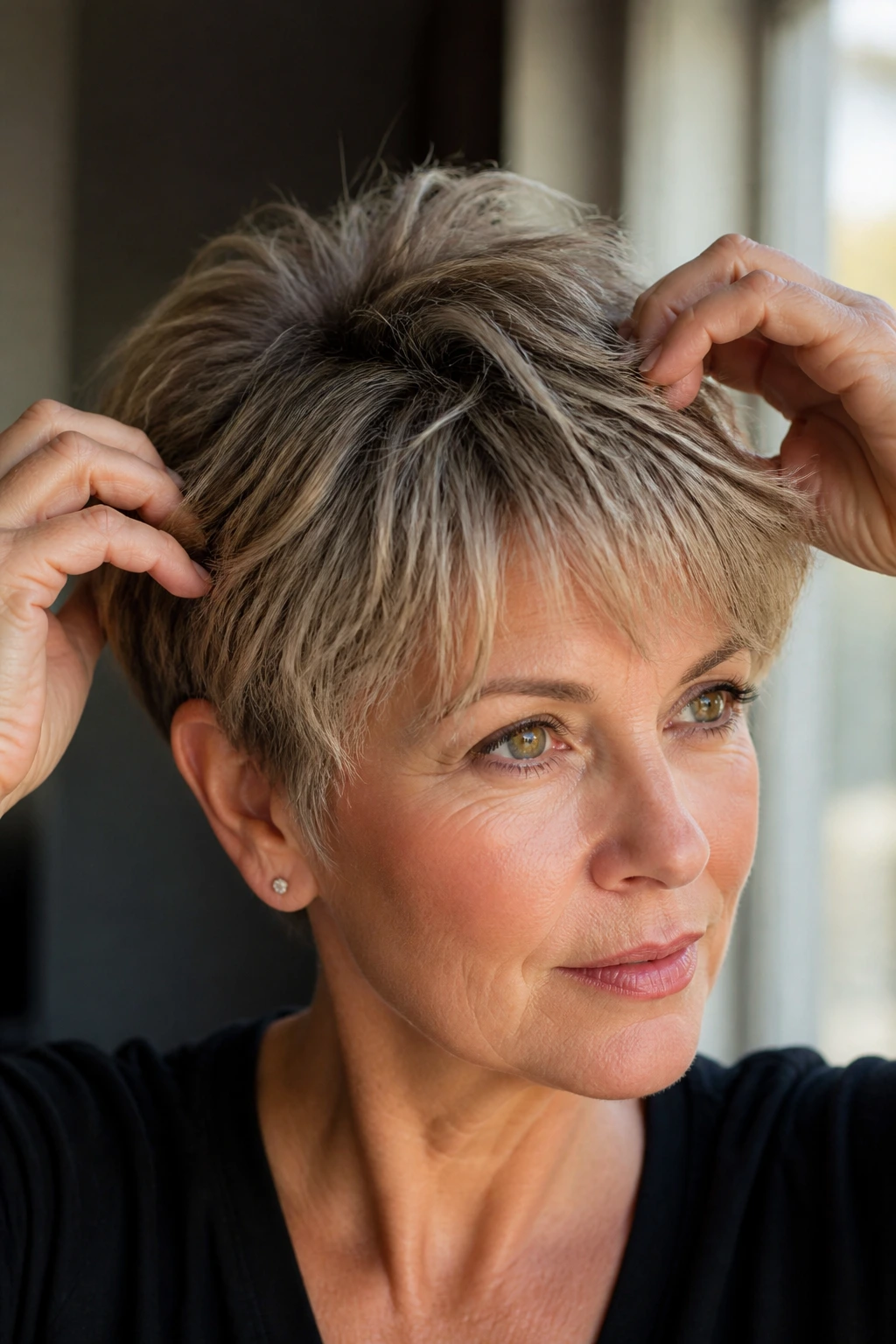
Root Lift: rough-dry the roots first, then use clips or a round brush to lift the crown for a few minutes. Thick hair often needs direction more than product, and this step gives it that direction.
End Direction: pick one motion for the ends and stick with it. Under, out, or softly curved — fine. Half the head bending in and the other half flipping free is what makes a cut feel messy.
Piece Control: a pea-sized amount of paste or cream on the fingertips can define the fringe, the temples, or the top layer without smothering the haircut. Thick hair usually needs less product than it looks like it needs.
Day-Two Reset: mist the front lightly with water, twist the fringe or face frame with your fingers, and hit it with a dryer for 30 to 60 seconds. That tiny reset often brings the whole shape back to life.
Color Placement: if you color your hair, keep the brightest pieces around the face and crown. On thick short hair, that little contrast breaks up the mass and makes the cut read lighter.
A good short cut should not ask for a ceremony every morning. It should ask for ten honest minutes, maybe less.
The Most Common Mistakes That Make Thick Hair Harder to Wear

-
Removing too much weight in too many places: Thick hair can look fuzzy and wide when it’s over-thinned. The symptom is soft, see-through ends with a puffier middle. The fix is controlled internal removal, not all-over texturizing.
-
Cutting the crown too short: The top lifts, the sides widen, and suddenly the haircut sits like a dome. Keep the crown long enough to smooth over the head unless you want a very cropped look.
-
Leaving the perimeter too long: When thick hair hits the shoulders or collarbone without shape, it flips and swells. Either keep the line above the shoulders or build a real shape that can sit below them.
-
Ignoring the nape swirl or cowlick: If the back of your hair grows in a stubborn direction, it will show. The fix is to cut with the growth pattern, not against it, and leave enough length for the swirl to settle.
-
Using heavy cream on a short cut: Thick hair can handle moisture, but a pixie or bixie can go limp fast if you load it with oils and rich creams. Use a lighter product and keep it mostly on the ends.
-
Waiting too long between trims: The shape goes first, then the styling gets annoying, then the whole cut feels like a bad idea. Book the trim before the haircut starts fighting back.
Variations and Alternatives to Try
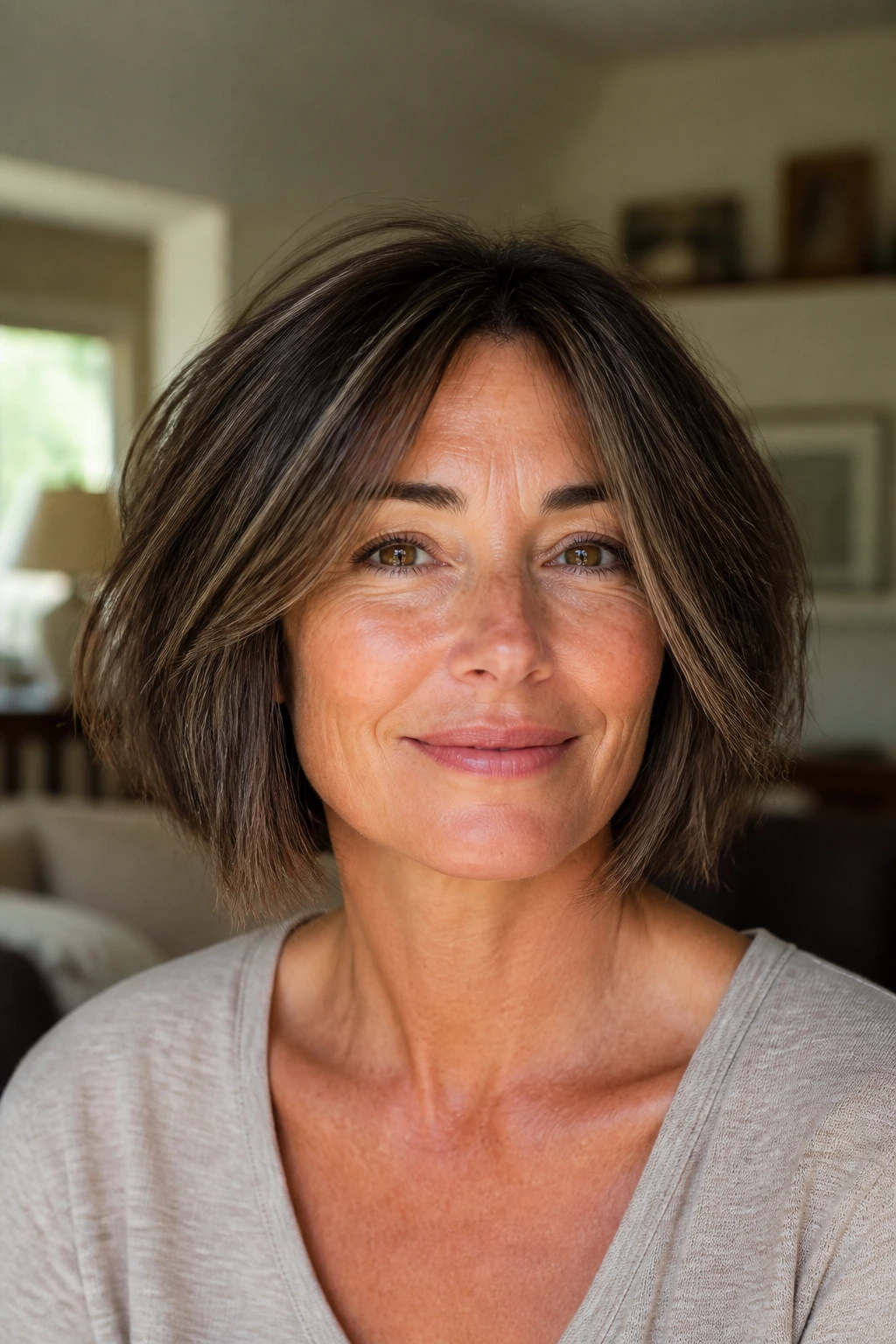
The Silver Sweep: If your gray or silver strands feel a little coarser than they used to, keep the perimeter crisp and the front soft. A clean line shows off the color, while a side-swept front keeps it from looking severe.
The Air-Dry Bob: Ask for internal layers and a blunt outer edge, then let the hair dry with a little cream and finger-twisting. This version works best on thick hair with a natural bend and a low-heat routine.
The Low-Drama Lob: If you are not ready to go truly short, the collarbone lob gives you the easiest grow-out. It still removes enough weight to matter, but you can tie it back when needed.
The Curly-First Crop: For thick curls, the shape should follow the curl pattern, not force the curls into a bob template. Dry cutting, diffuse drying, and a longer top make this one work.
The Frame-Friendly Fringe: If you wear glasses, choose curtain bangs or a soft side fringe that clears the frames. A blunt bang that sits on the lenses will ask for daily attention you probably will not want to give it.
Frequently Asked Questions
What is the best short haircut for very thick hair over 40?
If you want the safest answer, I’d point you toward a chin-length bob, a layered pixie with a long top, or a stacked nape bob. Those three control bulk without making the hair feel stripped bare, and they grow out with a little dignity.
Is a blunt bob or a layered bob better for thick hair?
A blunt bob often wins when the hair is straight or slightly wavy because the line keeps the silhouette under control. Layering helps more when the hair is extra dense, curly, or prone to puffing at the sides. The trick is not choosing “layers” as a blanket answer; it’s placing them where the bulk actually lives.
Can thick curly hair go short without looking triangular?
Yes, but the cut has to follow the curl pattern. Dry cutting, a little length through the top, and shorter sides usually help keep the shape from widening outward.
How often do short haircuts on thick hair need trimming?
Pixies and undercuts often need attention every 4 to 6 weeks. Bobs and lob styles can go 6 to 8 weeks, sometimes longer if the perimeter was cut well and you don’t mind a softer grow-out.
Will thinning shears make my thick hair easier to handle?
Sometimes, but they can be overused fast. A small amount of internal debulking can help. Too much leaves the ends fuzzy and the shape weaker than before.
What if my hair flips out at the nape?
That usually means the neck line is too long, too blunt, or cut against your growth pattern. Ask for a cleaner taper, a little more graduation, or a slightly shorter nape that sits above the flip point.
Can I wear bangs with thick hair and glasses?
Yes, but the fringe has to leave room for the frames. Curtain bangs, side-swept bangs, and softer brow-grazing fringe tend to work better than a heavy straight-across bang.
Should I ask for a dry cut?
If your hair is wavy or curly, dry cutting can be a big help because it shows the real shape and shrinkage. Straight thick hair can still be cut wet, but the stylist should be aware of how it behaves as it dries.
A Shape That Still Feels Like You
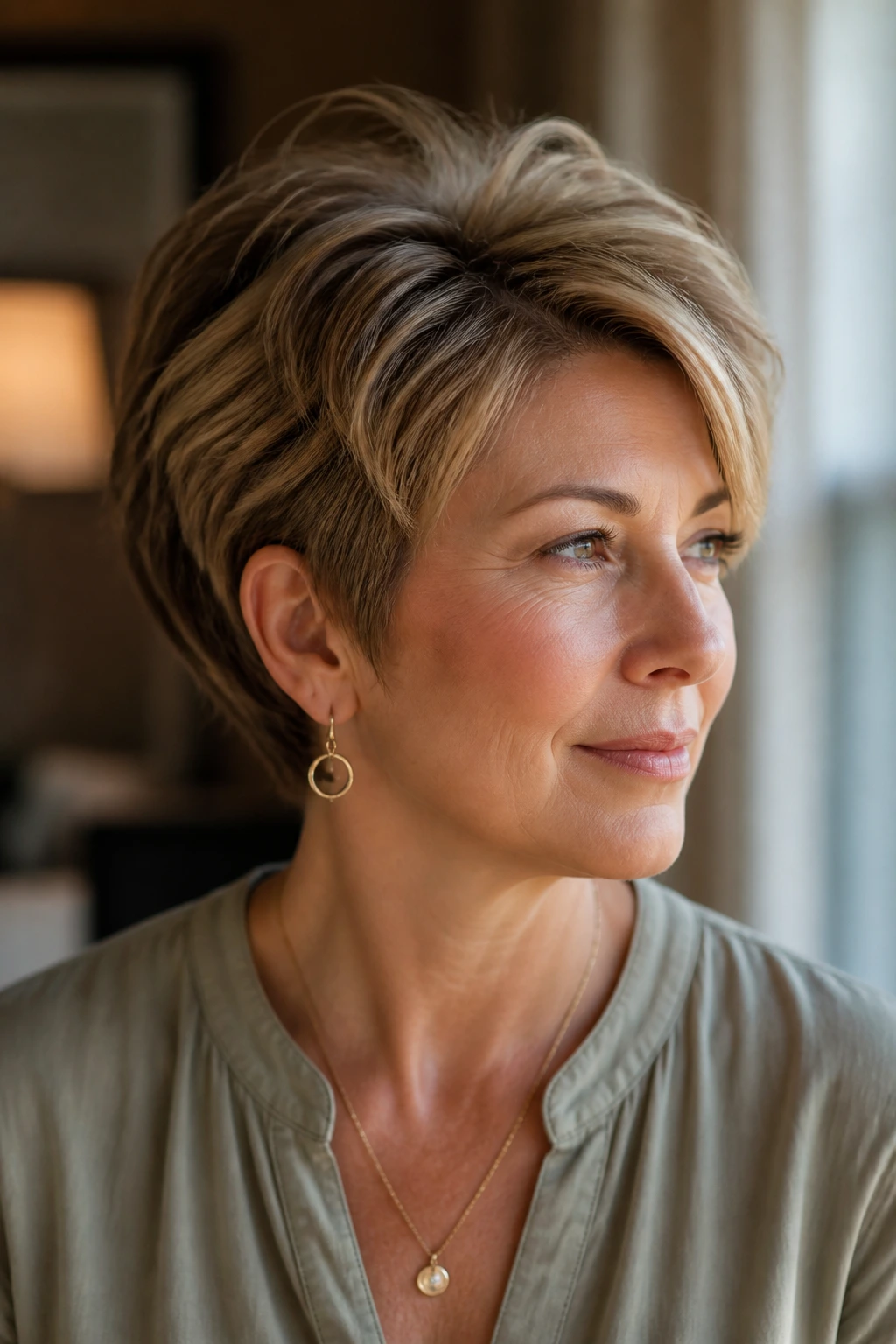
The best haircut for thick hair is not the one that removes the most hair. It’s the one that removes it in the places where it causes trouble and leaves enough shape behind to look intentional from every angle.
That’s the part people often miss. Thick hair does not need to be punished into obedience. It needs a silhouette with a plan, a nape that behaves, and a top layer that does not fight the rest of the head. Once those pieces line up, short hair can feel lighter, quicker, and a lot less bossy.
If you are heading to the salon, bring a few photos, say exactly where the bulk lives, and pick the shape that fits the way you actually live. That one decision usually matters more than another inch of length ever will.
