



Thick hair after 50 can feel like a blessing and a small structural problem at the same time. Cut it too bluntly, and the shape can land like a helmet. Thin it too aggressively, and you get frizz, airy ends, and a cut that looks good for about twenty minutes before it starts doing its own thing. The sweet spot is a short shape that removes weight where thick hair piles up — through the nape, around the ears, and at the crown — while leaving enough length to bend, tuck, and move.
That’s why short cuts for thick hair over 50 can be so satisfying when they’re done with intention. Not all short cuts are equal. A good one gives the hair room to sit close to the head without swallowing your face, your neck, or your glasses. It also works with the way mature hair often behaves: a little drier, sometimes a touch coarser, often less interested in lying flat just because we ask politely.
The better short cuts don’t fight density. They edit it. There’s a difference, and it matters.
Why These 28 Cuts Work So Well on Thick Hair
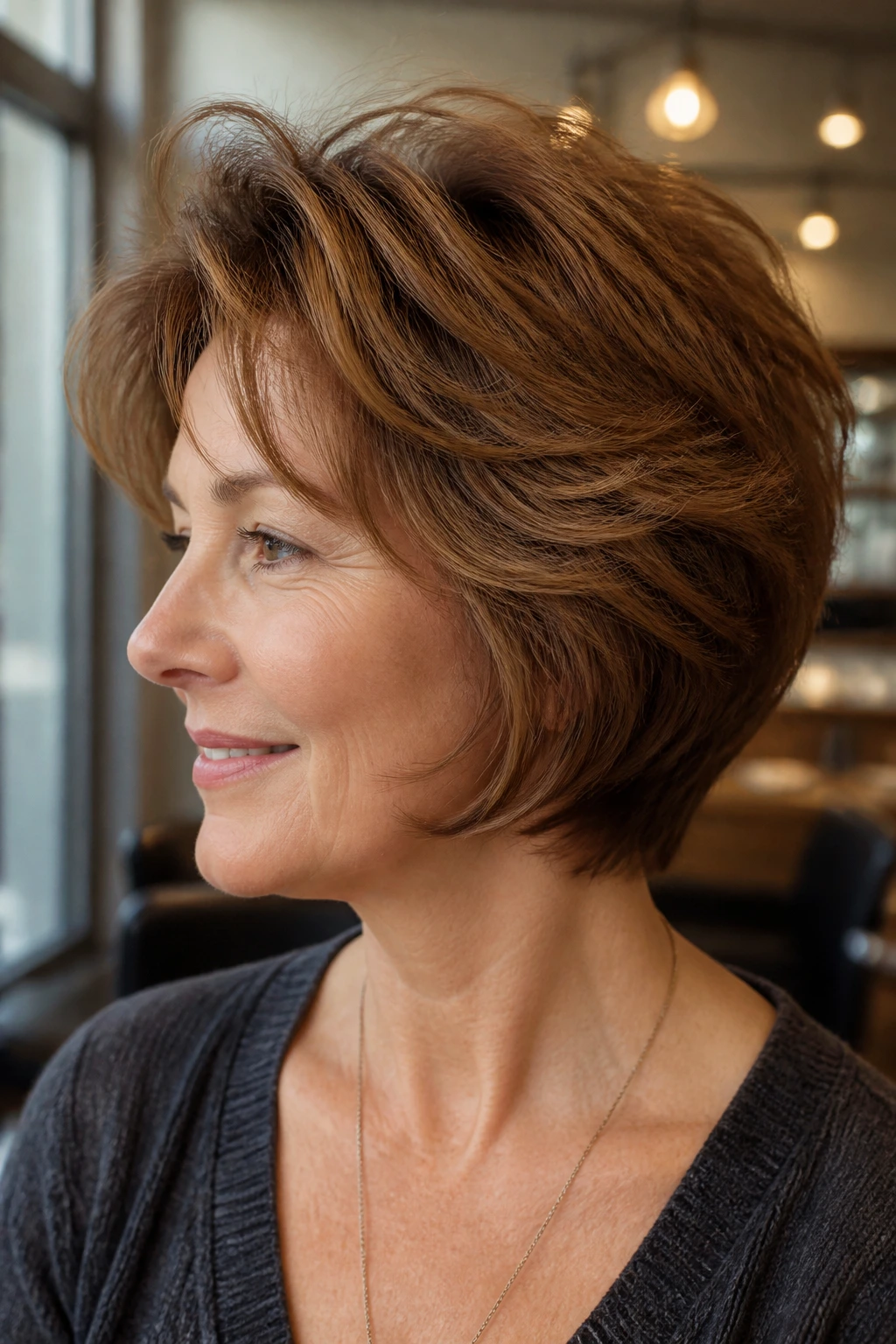
- They remove bulk where thick hair traps heat: A smart nape taper or internal layering keeps the cut from puffing out like a triangle by noon.
- They leave enough length for movement: A couple of extra inches at the front or crown keep the style from looking chopped to bits.
- They make styling faster, not fussier: Thick hair holds shape well, so the right cut can be dried in half the time with a round brush or a simple rough dry.
- They flatter changing facial features: Soft edges around the jaw, cheekbones, and temples keep the cut from looking severe.
- They play nicely with silver and salt-and-pepper hair: Coarser gray strands show texture well, which is a gift if the shape is clean.
- They grow out more gracefully: The best short shapes keep their structure for weeks, not days, so you are not trapped in the salon chair every other minute.
1. Soft Stacked Bob
A soft stacked bob is the kind of cut that quietly does the heavy lifting. The back sits shorter and fuller at the crown, then slopes into a gentler front line that usually hits somewhere between the jaw and just below it. On thick hair, that graduated back removes weight before it starts pushing the whole shape outward.
Why it works on dense hair
The stacked back gives the crown lift without needing a lot of teasing or product. That matters on thick hair, because thick hair already has enough body; what it usually needs is direction. Ask for soft stacking, not a hard shelf, so the cut keeps movement instead of turning into a square block.
It’s a strong match if you want a tidy neckline but still like a little swing when you turn your head. The silhouette feels polished, but not stiff.
Styling note
A round brush at the crown and a flat brush through the sides is usually enough. Blow-dry the nape first so the back doesn’t stay damp and puff up later. A pea-size smoothing cream on the ends keeps the front from flipping out too far.
2. Chin-Length Blunt Bob
What happens when thick hair is left one length and cut clean at the chin? It gets weight. Real weight. And that can be fantastic if you want a shape that looks crisp rather than fluffy.
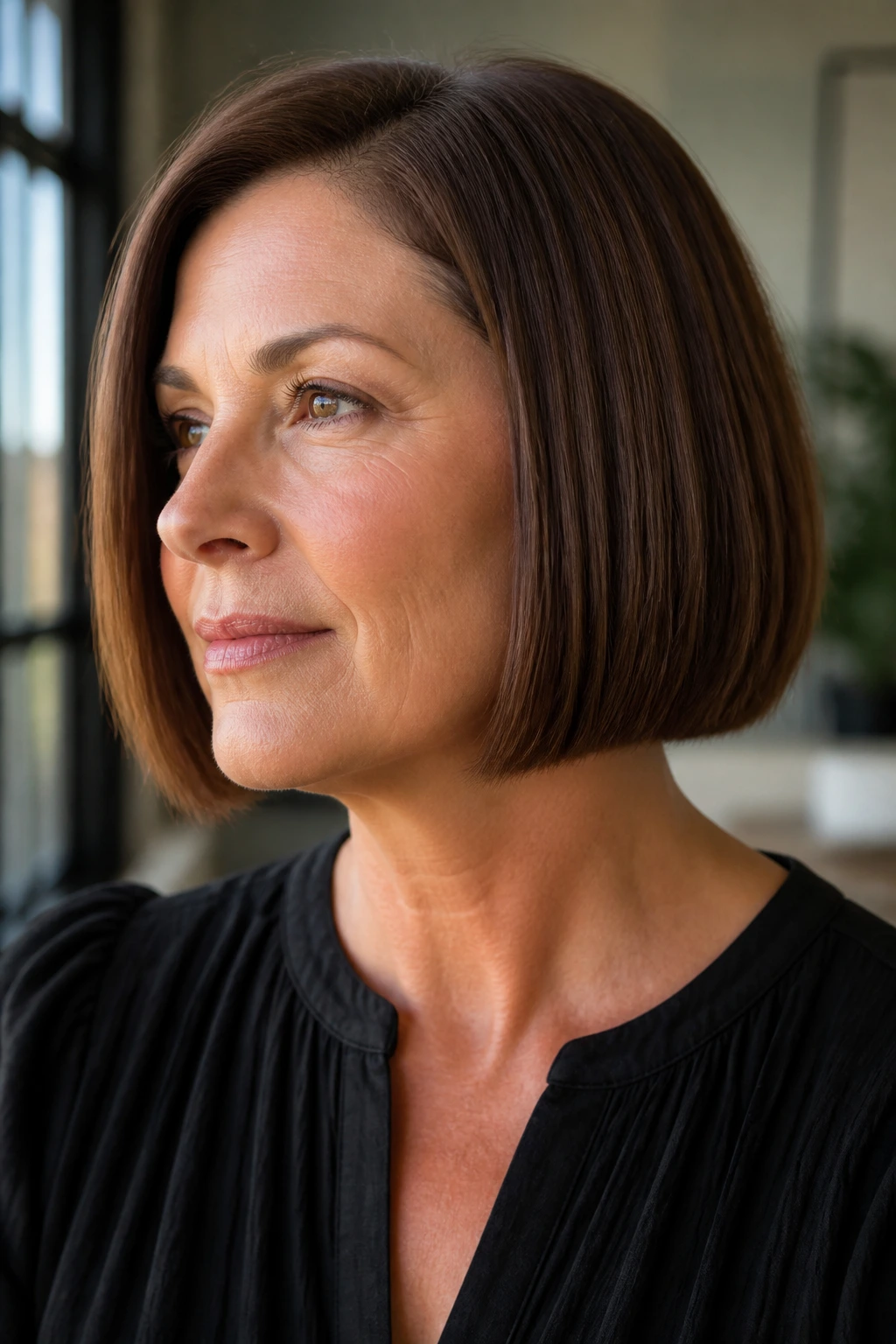
This cut works because the blunt edge gives thick hair a strong line to fall against. On gray or silver hair, that edge can look especially sharp, since coarser strands tend to hold a straight line well. The key is keeping the interior tidy, not stuffed with layers that make the bob cave inward.
Wear it with a side part if you want a little softness around the face. Wear it straight if you like a cleaner, more graphic outline. Either way, the chin length keeps the cut close enough to the face to feel modern without requiring the constant maintenance of a pixie.
3. Layered French Bob
A French bob on thick hair is charming when it’s cut with restraint. Too much layering and it goes poofy. Too little and it loses that airy, cheekbone-grazing shape people want from it.
The part people get wrong
The best version sits around the lip or jaw line and has internal layers that release bulk, not choppy ends that stick out like little shelves. Add a soft fringe or eyebrow-length bangs if your forehead likes a little framing. The overall effect is compact, not tiny.
This cut is especially good if your hair naturally bends a little at the ends. Thick hair with a slight wave can make the French bob look lived-in almost by accident. That’s a nice accident to have.
4. Long Pixie with Side-Swept Top
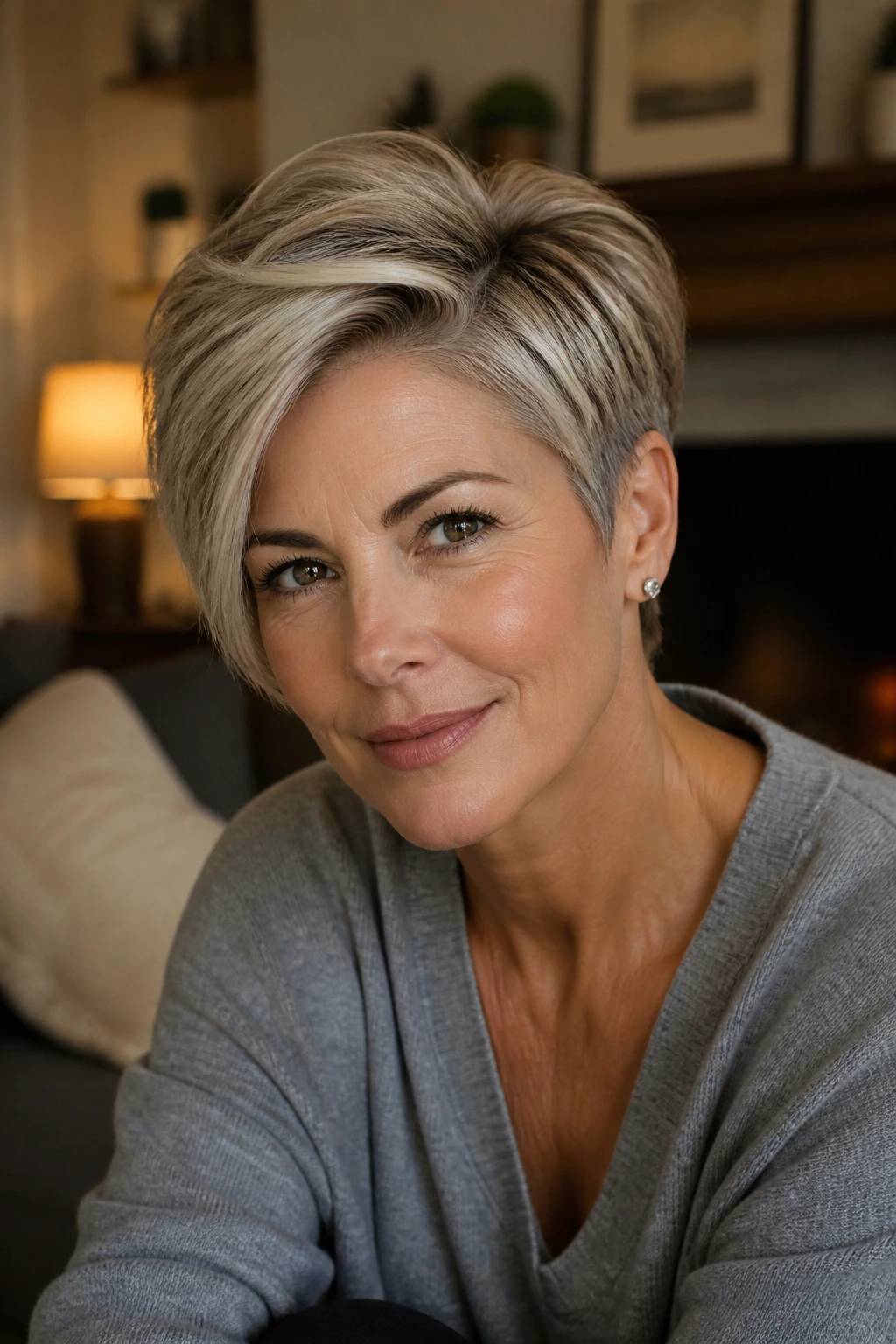
A long pixie works because it leaves you a little length where you need options. The top can be swept across the forehead, puffed up with a round brush, or tucked behind the ear on days when you want the face fully open. The sides stay tight enough to keep thick hair from ballooning.
What to ask for
- Short, tapered sides around the ears
- Length left on top for side-sweeping
- Soft texture through the crown, not heavy chunking
- Nape cleaned up so the back lies flat
This is one of the most forgiving short cuts for thick hair over 50 because it grows out with grace. If your hair runs straight and dense, the side sweep keeps it from looking severe. If it has wave, the longer top gives the wave somewhere to go.
5. Bixie Cut
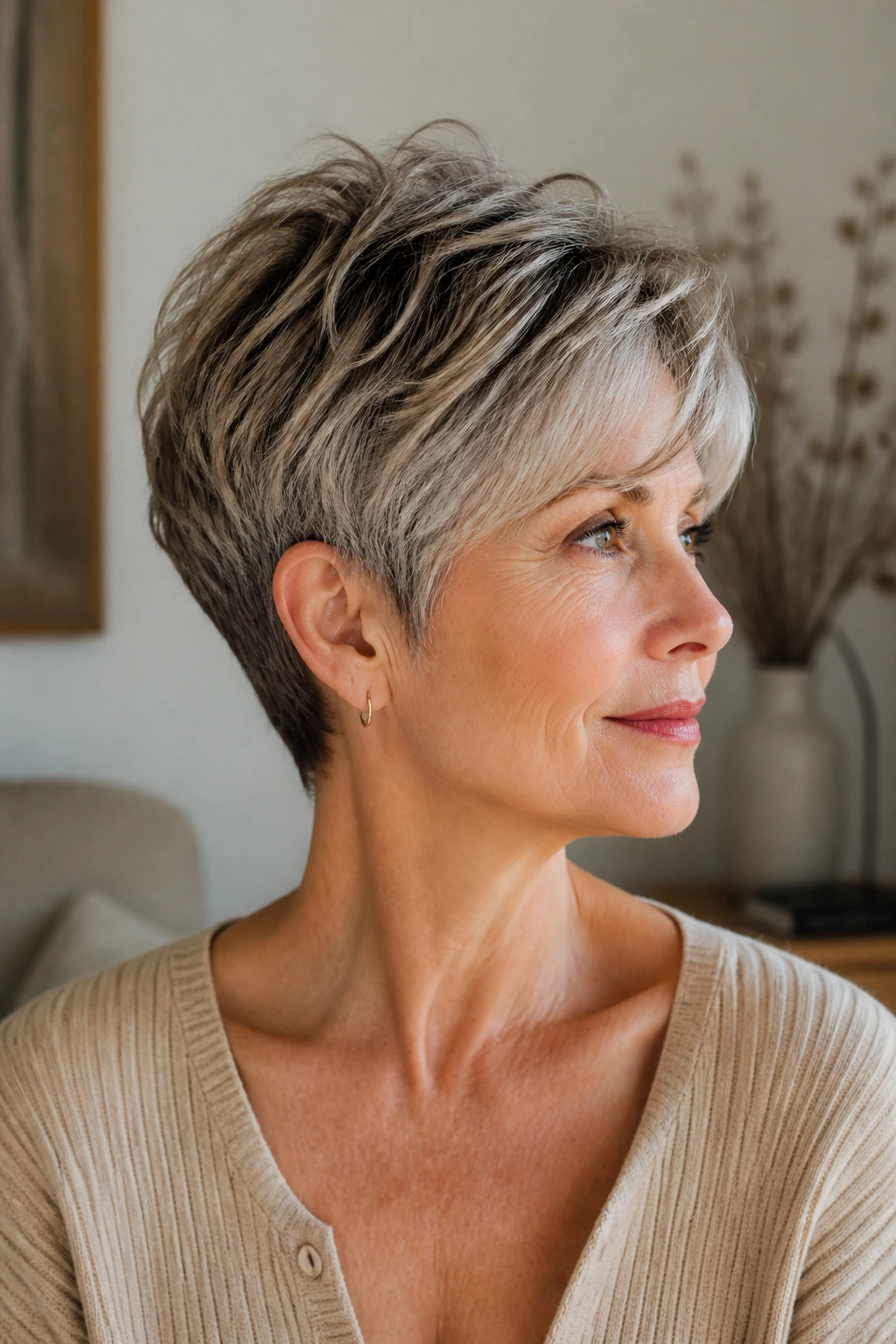
The bixie sits between a bob and a pixie, and that in-between space is where thick hair often behaves best. You get the structure of a short cut without the full exposure of a close crop. The nape can be tapered, the top can stay a touch longer, and the sides can be softened just enough to avoid bulk.
It’s a strong choice if you like short hair but don’t want your face and ears fully out in the open. The shape also works well when hair density is high at the back of the head, because the cut can remove volume there while leaving the front more flexible.
Ask your stylist to keep the perimeter soft. If the outline gets too hard, the bixie can tip from chic into boxy fast.
6. Feathered Crop
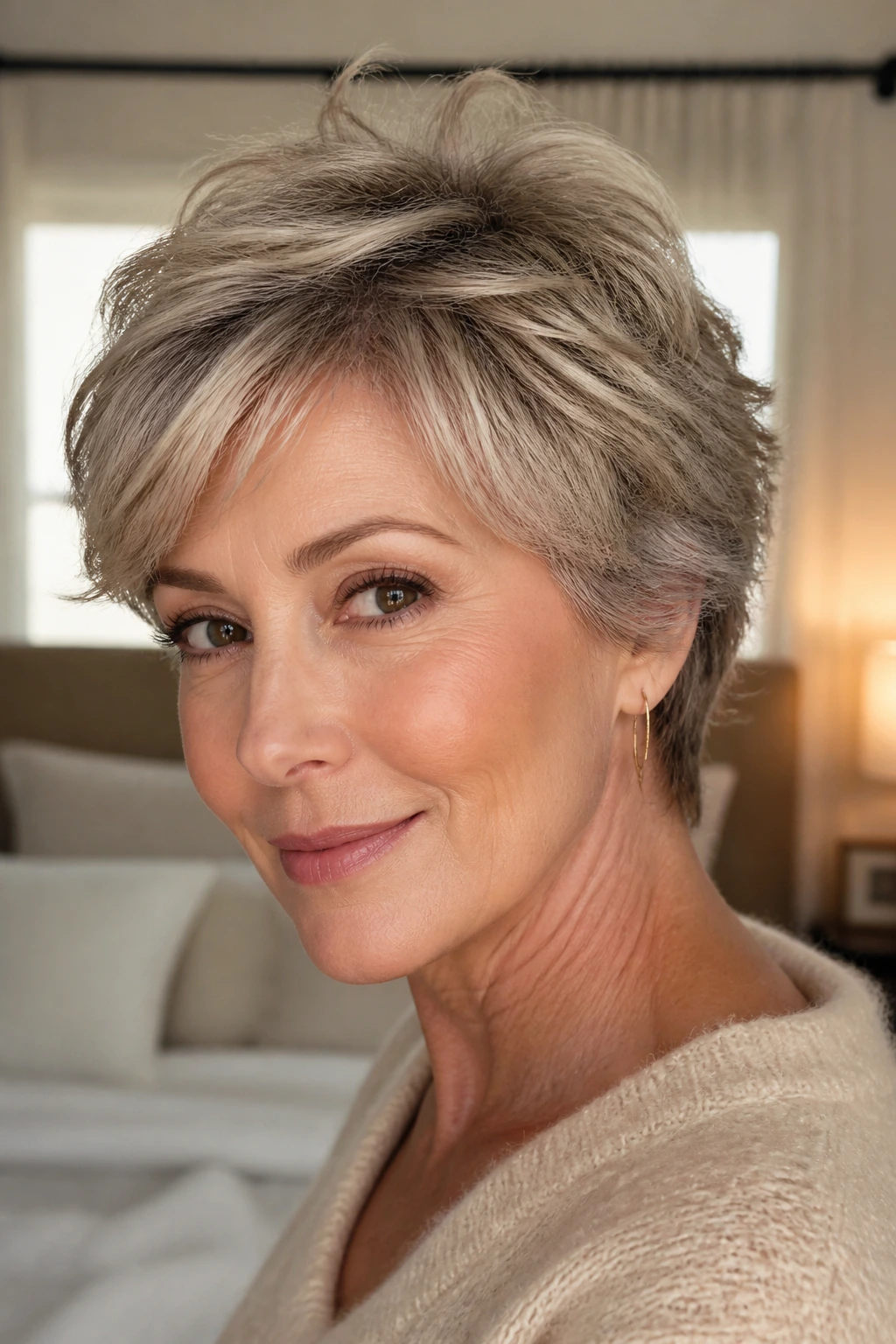
Feathering is useful on thick hair when it’s done with a light hand. The ends are cut or texturized to flick away from the head instead of lying in one dense sheet. That creates air between the strands, which helps the whole cut move instead of sitting like a cap.
The feathered crop is especially flattering if your hair has a little wave or if your crown likes to stand up on its own. It also pairs well with softer makeup and glasses, because the edges around the face don’t compete with your features.
A small round brush and a vented blow-dryer brush can do a lot here. You do not need a complicated routine. You need a shape that already knows where it wants to go.
7. Shaggy Bob
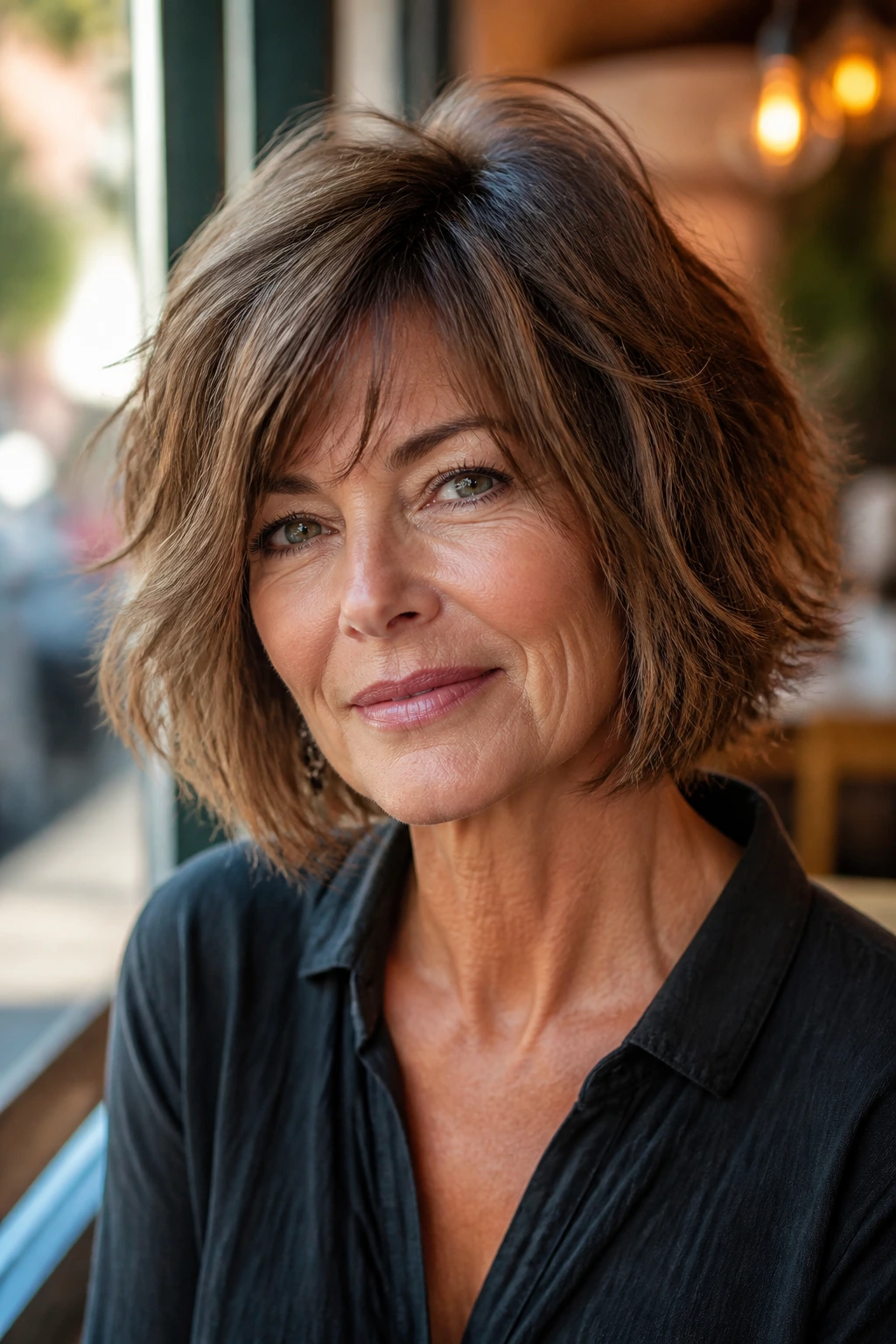
A shaggy bob is where thick hair gets to have a little personality. Not a wild one. Just enough texture to keep the shape from feeling too tidy. The layers should be loose and irregular, with the longest pieces still carrying the outline.
The reason this cut works is simple: thick hair can hide a sloppy layer pattern. That gives a stylist room to build movement, but it also means the cut needs discipline at the ends. Keep the perimeter strong, and let the inner layers do the breaking up.
This is the cut I’d point to if someone says they want short hair but hates the idea of looking “done.” It reads softer when air-dried and a little more polished when blown smooth.
8. Piecey Pixie with Long Crown
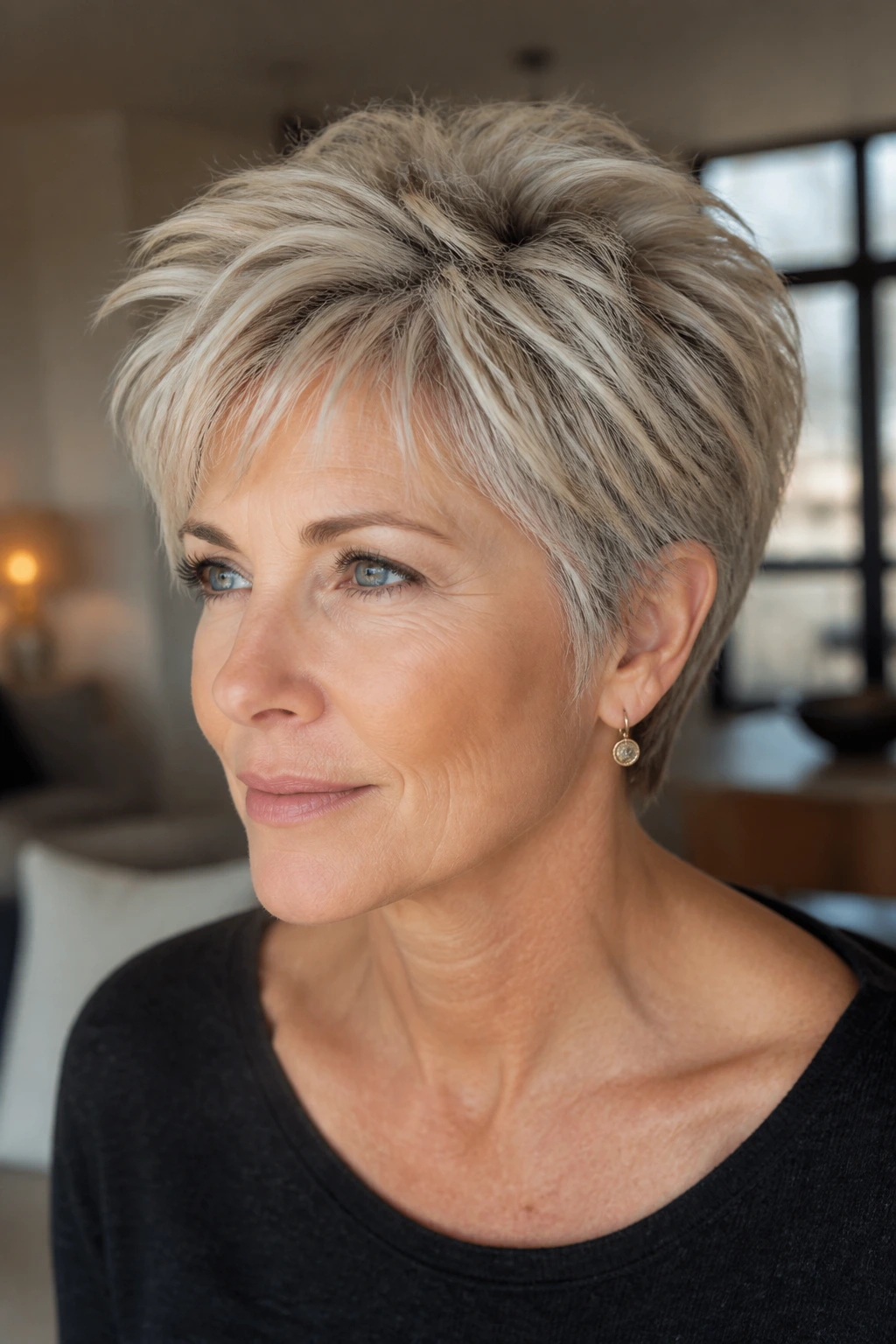
Can a pixie still have softness? Absolutely, if the crown is left a little longer and the texture is broken up into small sections. A piecey pixie depends on contrast: shorter nape, lifted crown, and enough separation on top that the hair doesn’t turn into one dense helmet.
Use a matte paste or a light styling cream on dry hair, not a heavy wax that clumps everything together. Thick hair responds well to pieceing because it naturally has the body to stand apart in sections. The trick is stopping before it looks overworked.
If you wear earrings, this cut is a treat. The face is open, the neck shows, and thick hair stops hogging the entire conversation.
9. Curly Crop
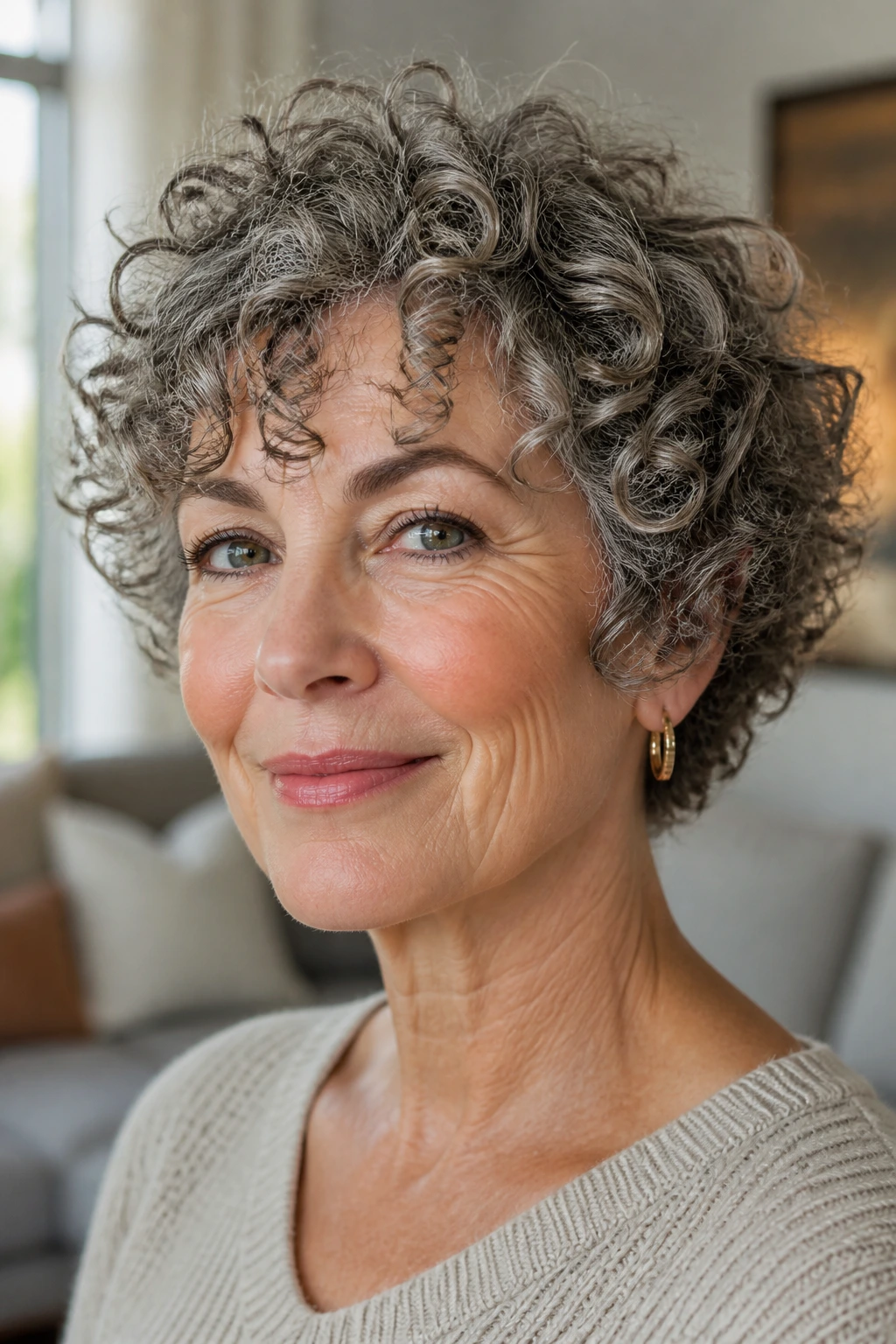
Curly thick hair needs a short cut that respects the curl pattern, not one that tries to flatten it into submission. A curly crop can sit around the ears or just above the jaw, with enough internal shaping to keep the curl from mushrooming out at the sides.
The best curly version is cut dry or almost dry, so the stylist can see where the curls really land. Wet curls lie. They make promises they cannot keep. That is why a curl-aware crop feels so much better once it’s fully dry.
Use a diffuser on low heat and low airflow. Scrunch in a light cream, then leave it alone. The shape should look rounded, not puffy.
10. Tapered Wedge Cut
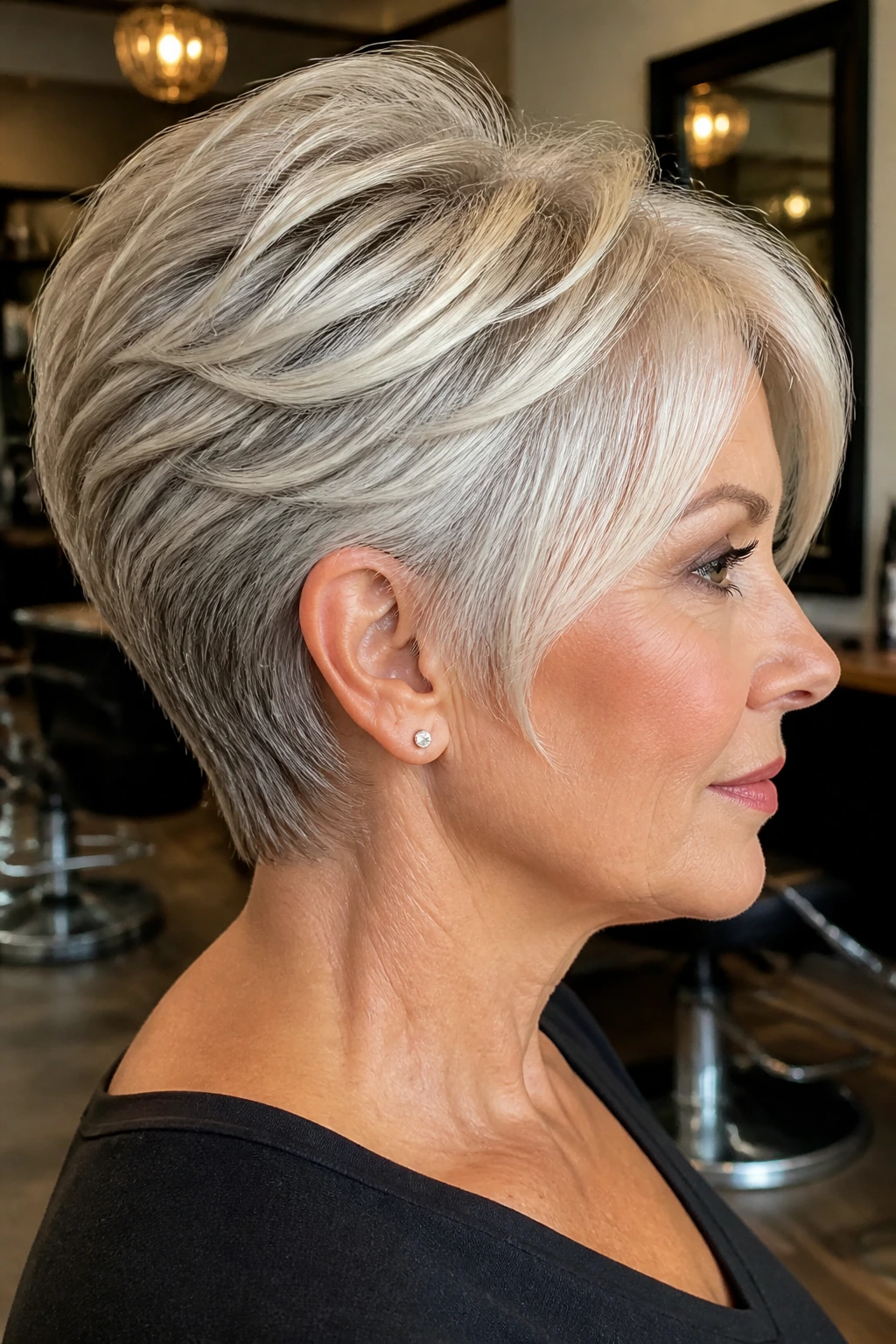
The tapered wedge has a built-in answer to thick hair: lift at the crown, narrow through the back, and a controlled line around the face. It’s clean. It’s practical. It doesn’t waste time.
This cut works because the wedge shape uses graduation to stack fullness where it flatters and remove it where it swells. The nape stays close, which is good news if your neck feels crowded by heavier bobs. The top can keep some height so the whole silhouette feels intentional.
If your hair has ever made a triangle shape by lunch, this is the sort of cut that can stop the drama.
11. Asymmetrical Bob
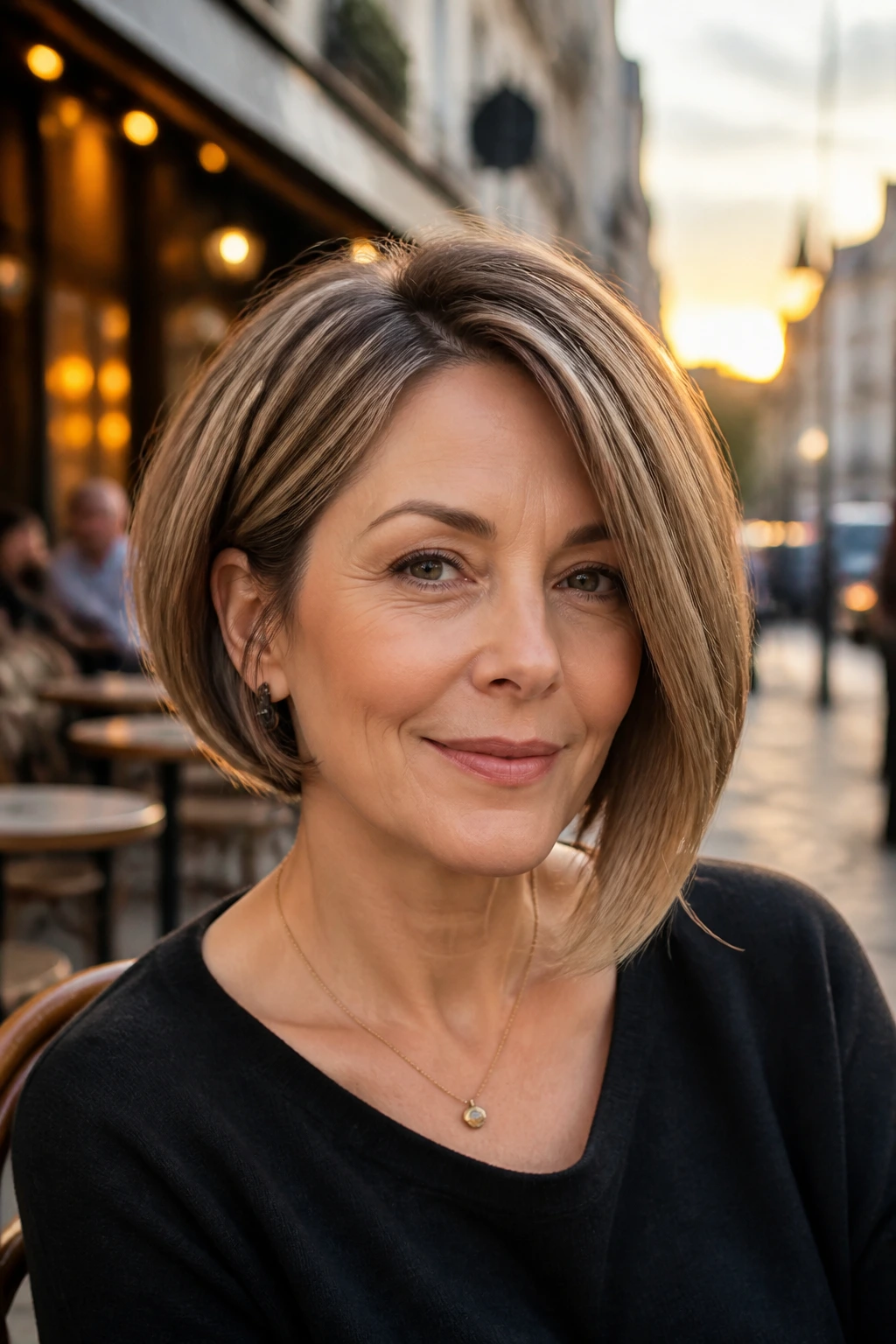
One side a little longer. One side a little sharper. That tiny imbalance is enough to make thick hair look designed rather than merely shortened.
An asymmetrical bob is useful if your face feels stronger from one side or if you want to soften a fuller cheek without hiding behind long hair. The diagonal line draws the eye downward, which keeps density from spreading outward in a flat, boxy way.
Keep the longer side only slightly longer, though. If the difference gets too extreme, the cut can start looking like it is trying too hard. A subtle asymmetry is usually the smarter move on mature thick hair.
12. Collarbone Lob with Internal Layers

Not every short cut has to be chin-short. A collarbone lob still counts as a shorter shape when thick hair is the starting point, because the added length can calm the bulk while keeping the ends light enough to move.
Internal layers are the whole point here. You don’t want obvious steps. You want hidden release points that keep the hair from stacking into a heavy curtain. The best lobs on thick hair swing a little when you walk.
This is the safest option if you are nervous about going too short. It buys you room to experiment with parting, waves, and face-framing pieces without giving up the clean neckline that makes shorter hair feel fresh.
13. Undercut Pixie
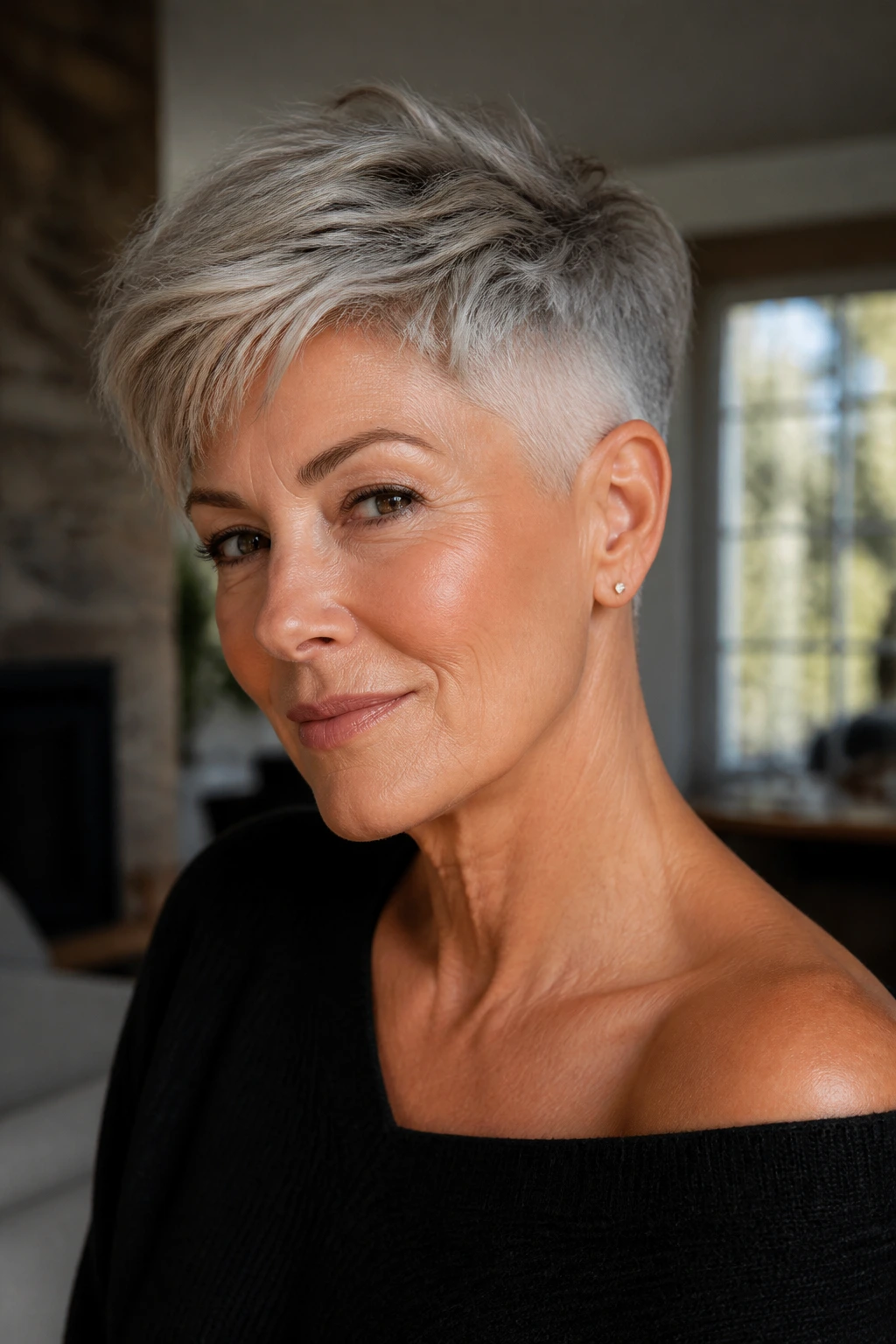
An undercut pixie is blunt about what it wants to do: remove bulk fast. The sides and nape are clipped shorter or very close, while the top stays long enough to be styled forward, swept back, or lifted with fingers and a little paste.
It works brilliantly on thick hair that grows heavy at the sides. That hidden reduction matters more than most people realize. Without it, the top can look cute while the lower half turns into a fuzzed-out cloud.
If your hair is resistant, this is one of the few cuts that truly lowers the daily fight. It’s not subtle. It’s efficient.
14. Choppy Crop with Fringe
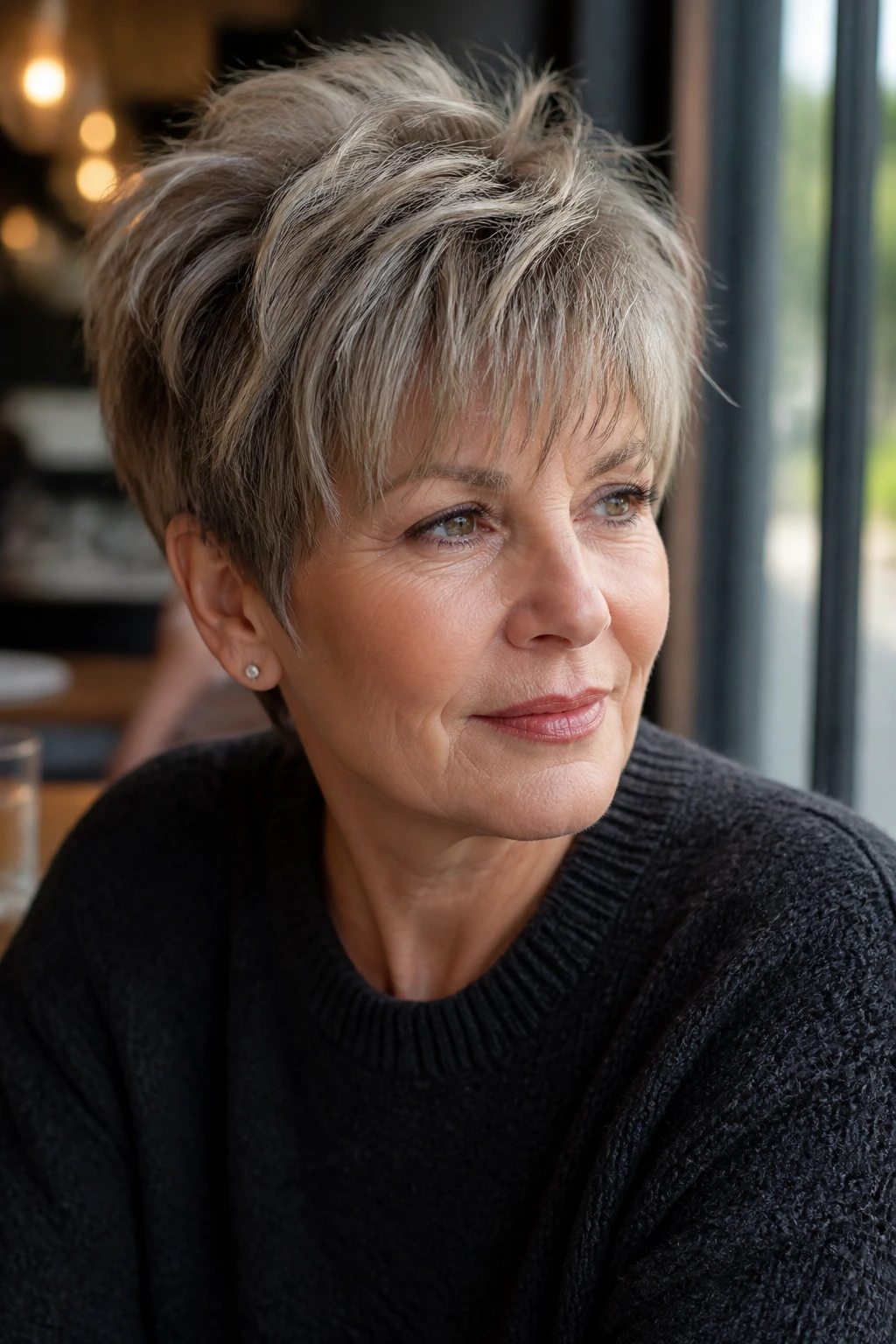
A choppy crop with fringe has edge, but it doesn’t need to be harsh. The hair is cut into broken sections so thick density doesn’t sit as one mass, and the fringe softens the forehead line instead of framing it with a blunt curtain.
The fringe matters more than people think. On thicker hair, too much bang can become a wall. A choppy, slightly separated fringe gives just enough forelock to balance the short sides without swallowing the face.
This cut loves a little dry texture spray. Work it in at the roots, then pinch a few ends between your fingers. Done.
15. Rounded Graduation Bob
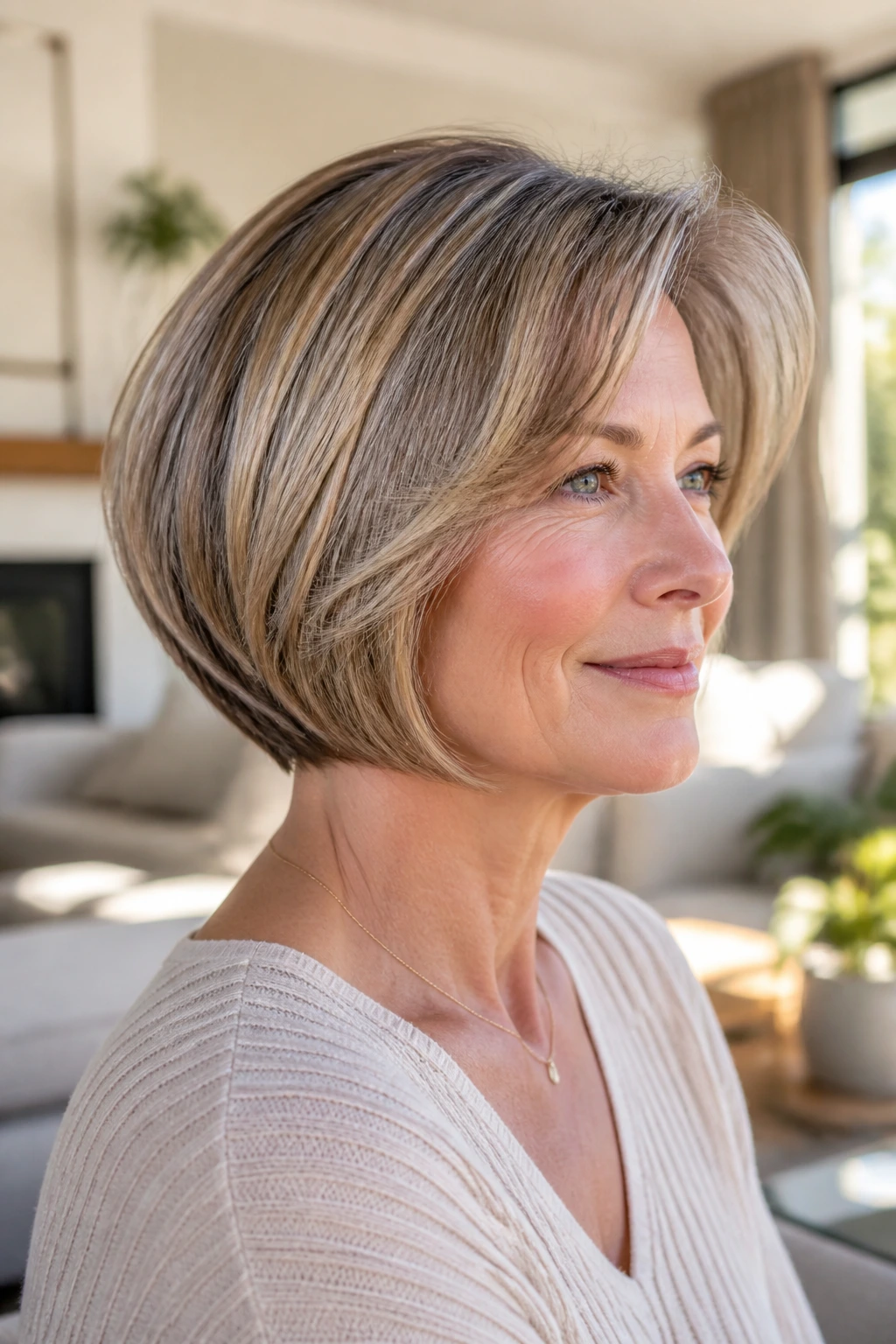
Rounded graduation gives thick hair shape from the back of the head outward. The outline is curved, not boxy, which keeps the style from making the head look wide at the jaw. That curve is flattering when the hair is dense through the back and sides.
This cut sits in a sweet spot for women who want neatness with some softness. It is more polished than a shag, less severe than a blunt bob, and easier to wear than a super-short pixie on days when you want a bit more coverage.
If your profile matters to you — and it usually does, because all haircuts are profile haircuts once you turn sideways in a mirror — this one is worth a serious look.
16. Ear-Length Crop with Micro Layers
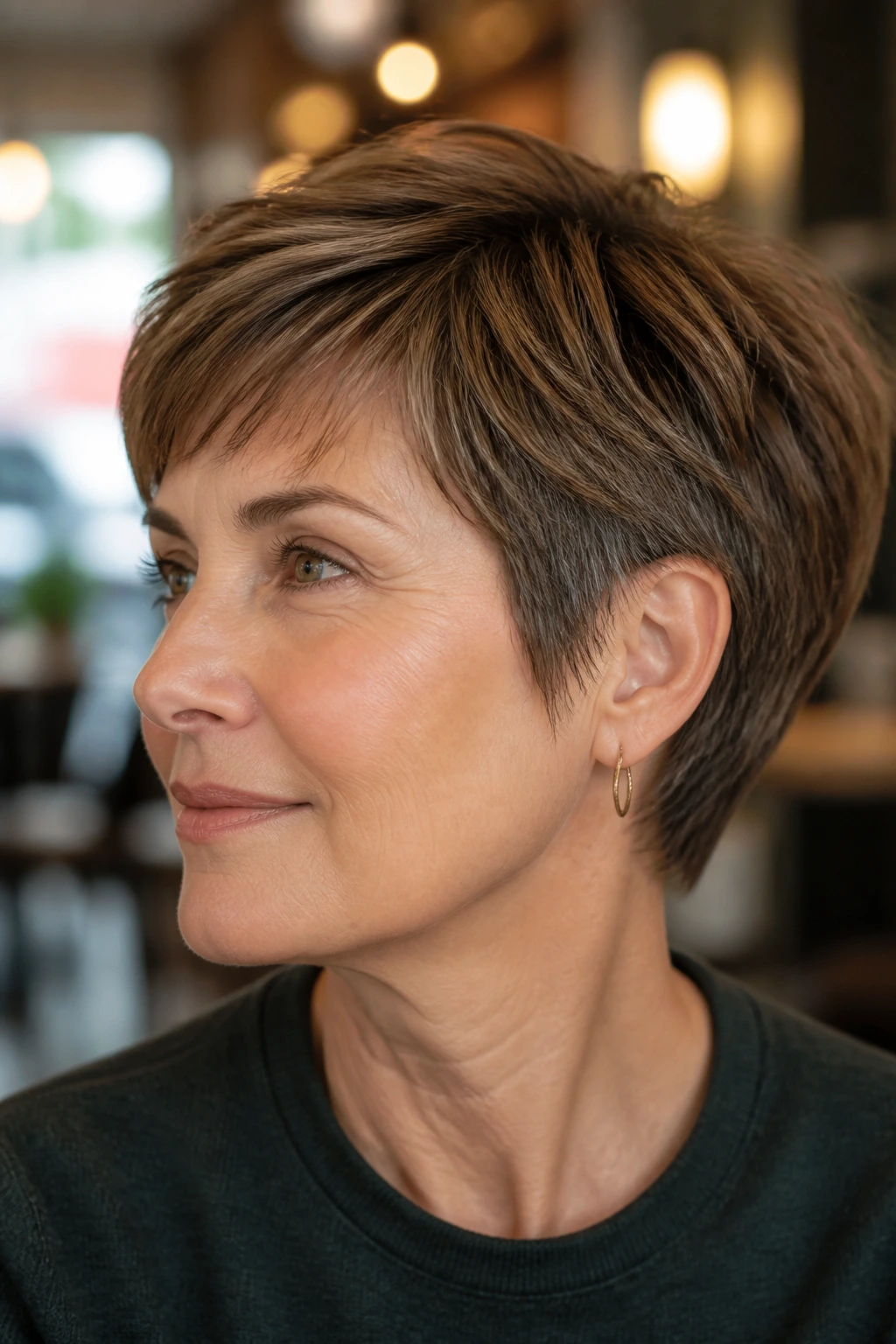
Ear-length sounds brave, and it is. But on thick hair, an ear-length crop can be easier than a longer cut because the shape is contained. Micro layers keep the crown from puffing, and the close length around the ears takes weight off the sides.
The trick is precision. The cut has to be tidy around the temples and nape, or it can look accidental. Ask for softness, not fuzz. Those are not the same thing.
This style shines when you want your earrings, glasses, or cheekbones to get more visual space. The hair steps back. Nice change.
17. Pageboy-Inspired Bob
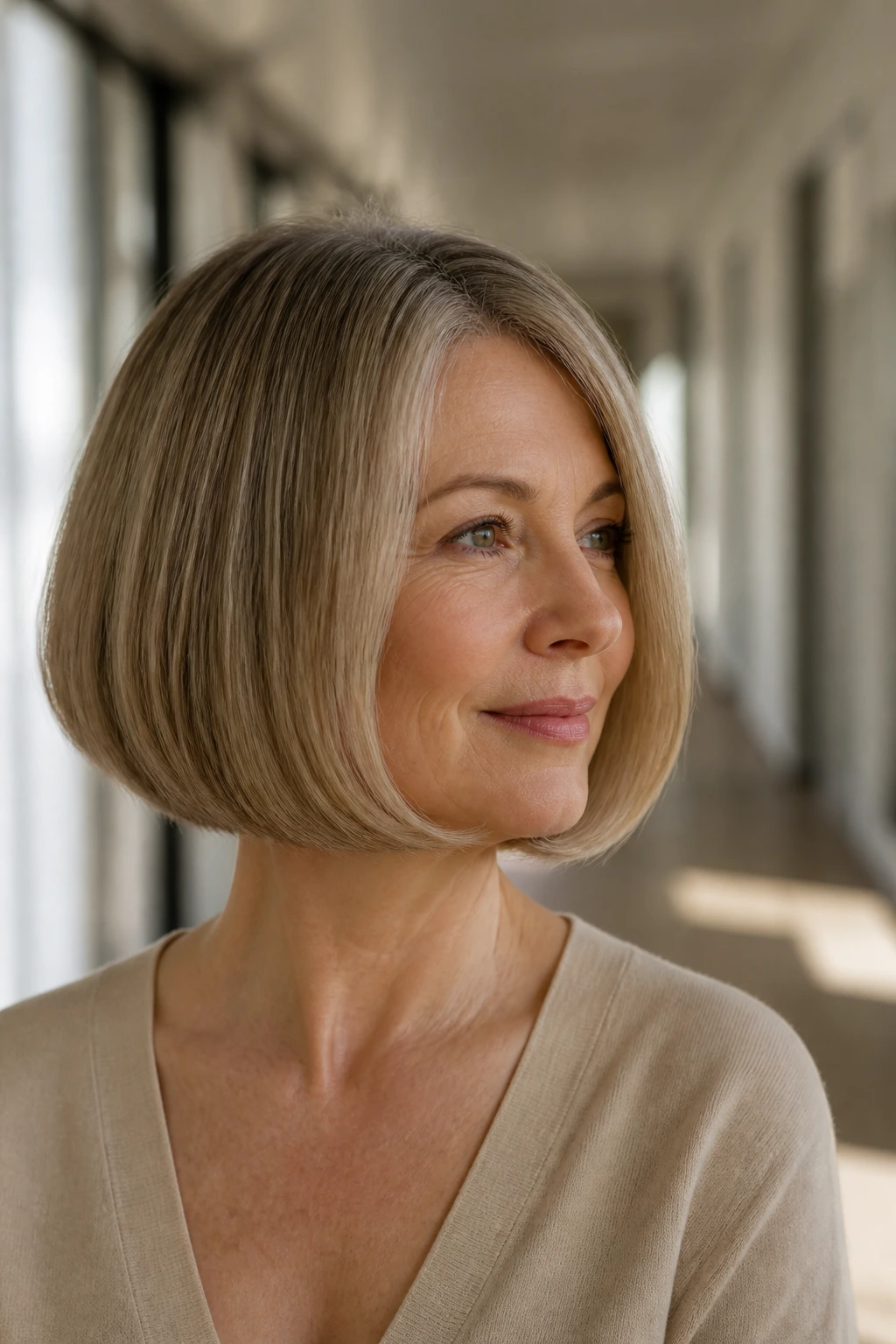
A pageboy-inspired bob has a quiet, almost retro polish that can look especially good on thick hair. The line is curved under at the ends, with enough internal structure to keep the body from blowing outward. It feels deliberate, not fussy.
This cut works best when the hair is dense but cooperative at the ends. A round brush and a blow-dryer nozzle help keep the undercurve neat. If the ends flip in random directions, the pageboy loses its point.
I like this cut on anyone who wants structure without sharp corners. It gives shape to the face and keeps the neck tidy, which is usually half the battle with thicker hair.
18. Soft Mullet
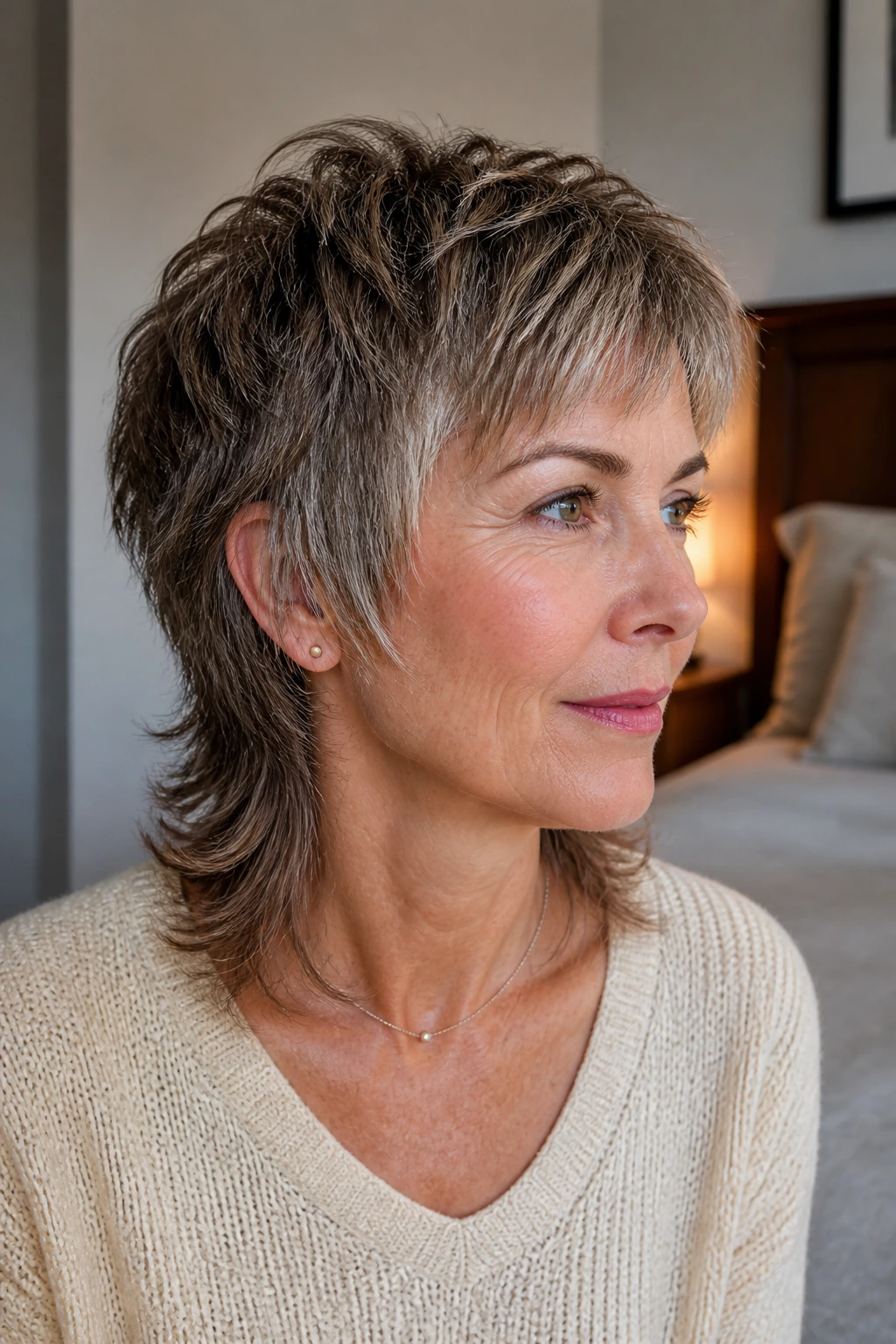
Yes, really. A soft mullet can be one of the smartest short cuts for thick hair over 50 when it’s handled with restraint. The crown and sides stay short enough to keep the bulk contained, while the back stays a touch longer for movement.
The word “mullet” can scare people off because they picture a hard, rebellious shape from a different era. The soft version isn’t that. It’s feathered, broken up, and usually much gentler around the face. Think texture, not costume.
This cut is for someone who likes a little personality and doesn’t mind hair that moves. It can be very flattering with glasses, by the way, because the shape doesn’t crowd the upper face.
19. Jaw-Skimming Layered Bob
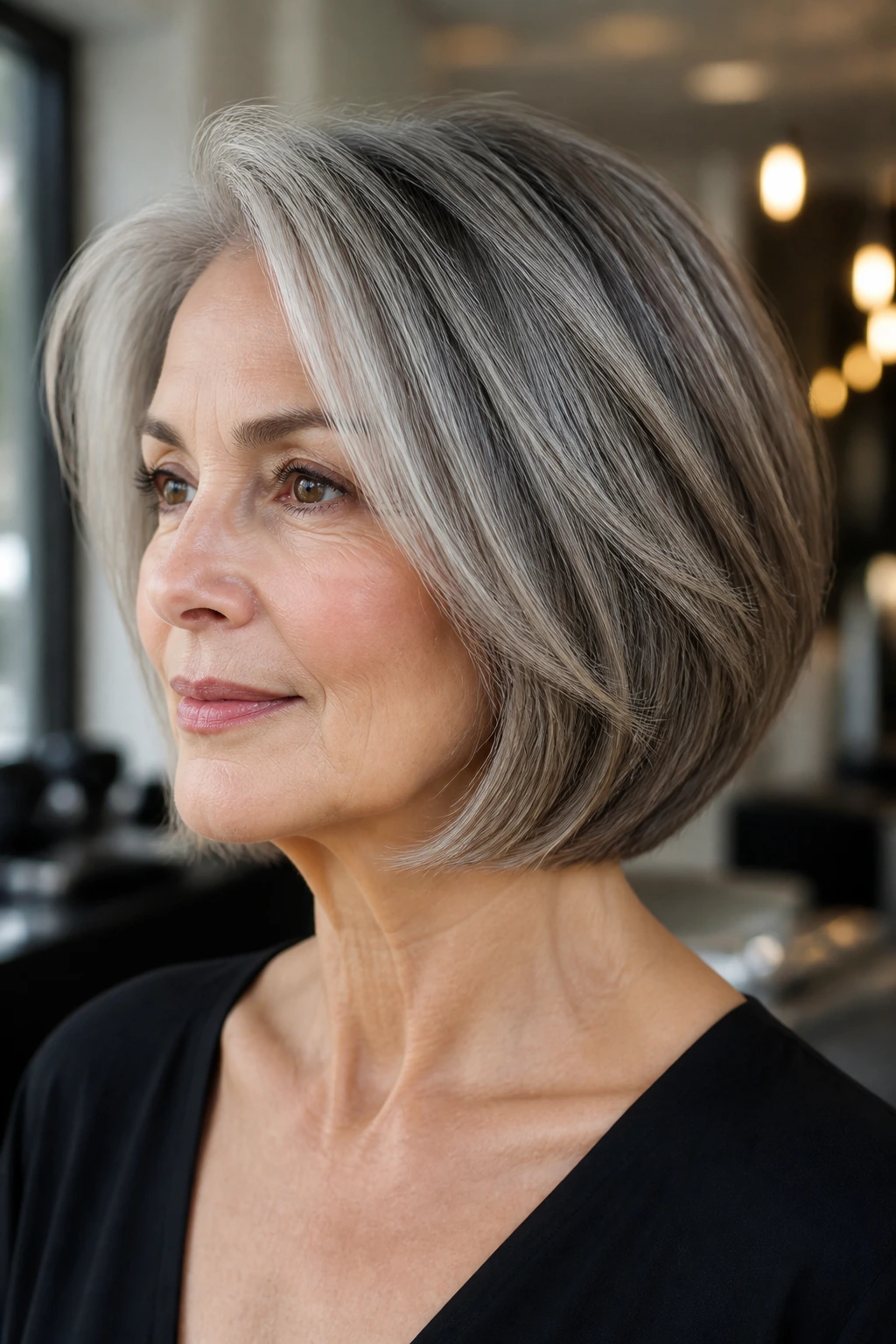
A jaw-skimming bob lands exactly where thick hair can show off its cleanest edge. The layers are subtle enough to stop bulk, but not so obvious that the outline loses its shape. That jaw line can sharpen the whole face in a nice way.
If your hair tends to kick outward at the bottom, keep the layers minimal and the ends blunt-ish. If it sits flat, a little internal layering will bring it back to life. This cut is one of those cases where a quarter-inch matters more than a whole theory.
It’s a good middle ground if you want short hair, but not too short. That comfort zone is real, and there’s no shame in it.
20. Textured Crop with Curtain Fringe

Curtain fringe on thick hair can be a dream when the crop behind it is short and controlled. The fringe parts softly in the center and skims the brows or cheekbones, which opens the face without making the forehead feel bare.
The crop underneath should stay lean. If the top is bulky, curtain bangs just sit there like a heavy drape. A textured crop gives the fringe room to frame the face instead of competing with it.
This cut is especially kind to rounder or fuller faces because the front pieces pull the eye down and outward. It has a soft, modern feel without asking for a lot of daily styling gymnastics.
21. Short A-Line Bob
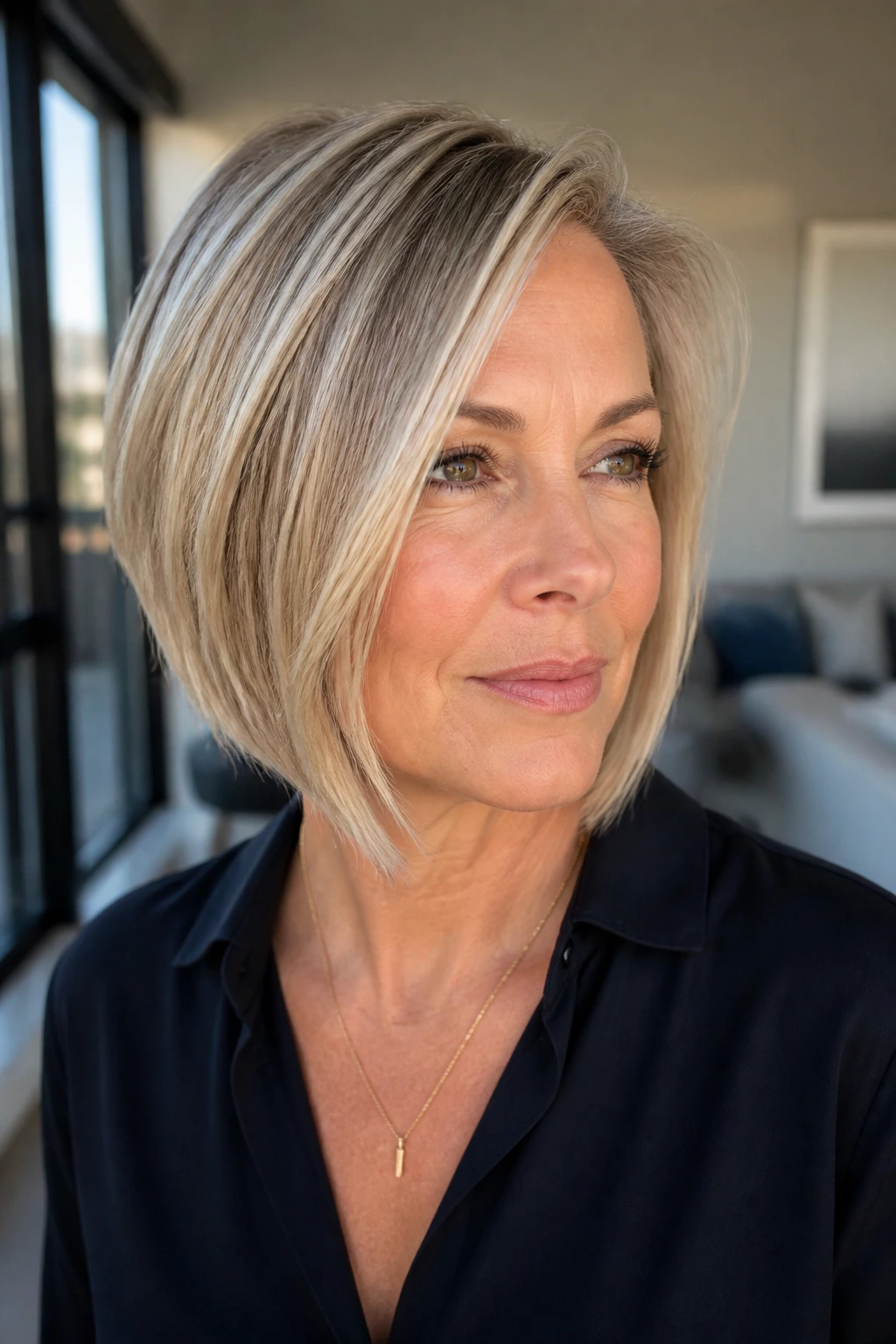
The short A-line bob keeps the front slightly longer than the back, which helps thick hair fall forward instead of ballooning out sideways. That tiny front-to-back angle can make a huge difference in how the cut settles at the jaw.
It works because the forward pull of the shape narrows the profile. If your hair is especially dense, the back can be stacked just enough to relieve bulk while the front stays sleek. The result looks clean, not heavy.
This is one of the easiest short styles to wear with straight hair. A smoothing brush and a little heat usually do the job.
22. Tucked-Behind-Ear Bob

A tucked-behind-ear bob is less about a trick and more about a shape that invites one. The sides are cut to sit cleanly enough that you can tuck one or both ends behind the ears without the whole style collapsing.
That sounds small, but it changes the mood of the cut. Thick hair can feel heavy around the cheeks, and a tuck opens that space instantly. It also works nicely with glasses, since the hair and frames don’t fight for the same patch of real estate.
Ask for softness around the ears and enough length in front to tuck without strain. If the sides are too short, you lose the option entirely.
23. Deconstructed Bowl Cut
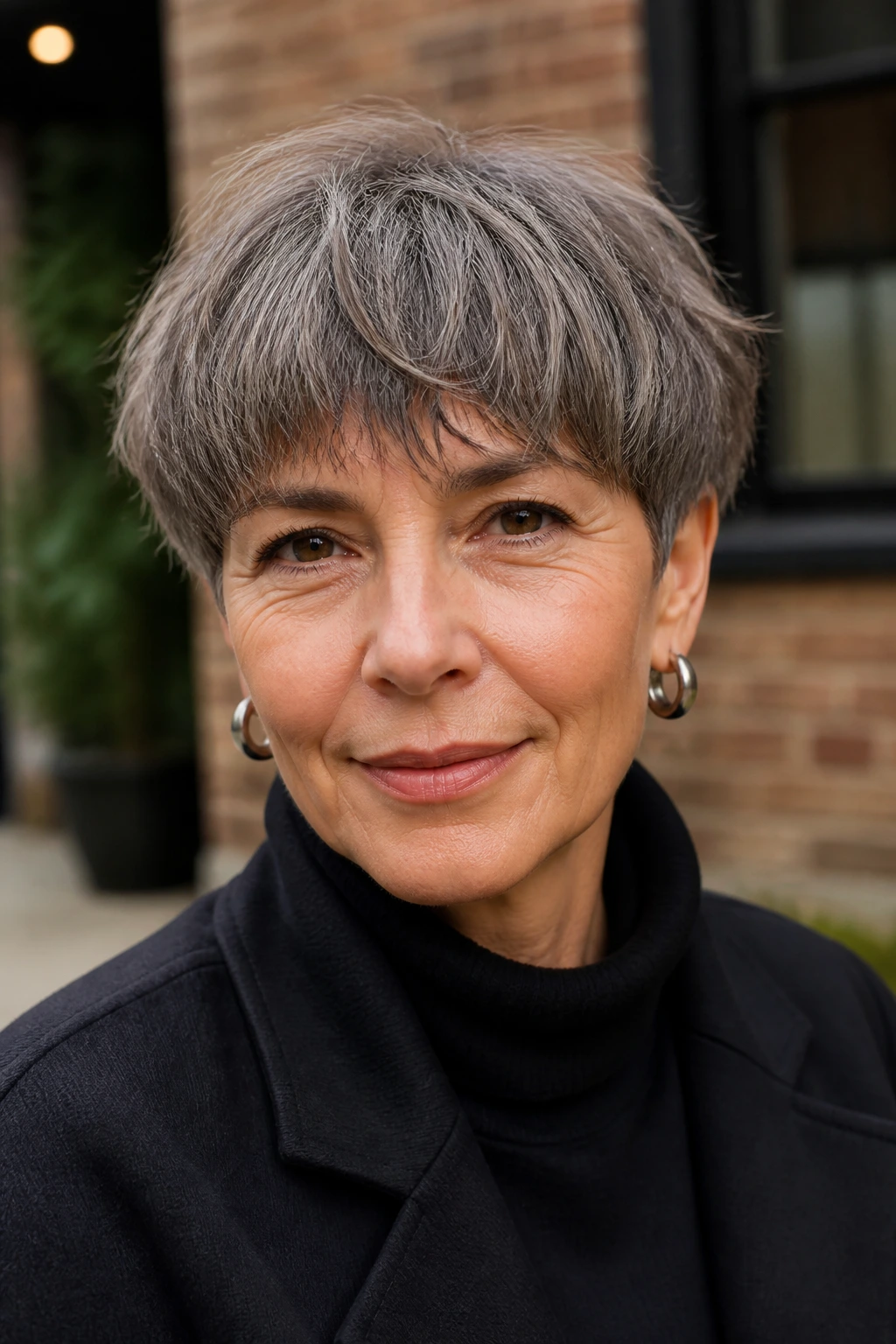
A deconstructed bowl cut is not the blunt childhood cut most people remember. It’s softer, broken up, and much better behaved on thick hair when the edges are relieved with internal texture. The outline stays rounded, but the ends don’t form one hard line.
This shape is useful if your hair is dense at the temples and crown. The rounded perimeter can make the head look balanced while the deconstruction keeps it from looking too rigid. It’s a bold choice, but not a harsh one.
If you’ve always wanted something a little fashion-forward without going full avant-garde, this is the lane. It needs a confident cut, not a lot of product.
24. Feathered Pixie Bob
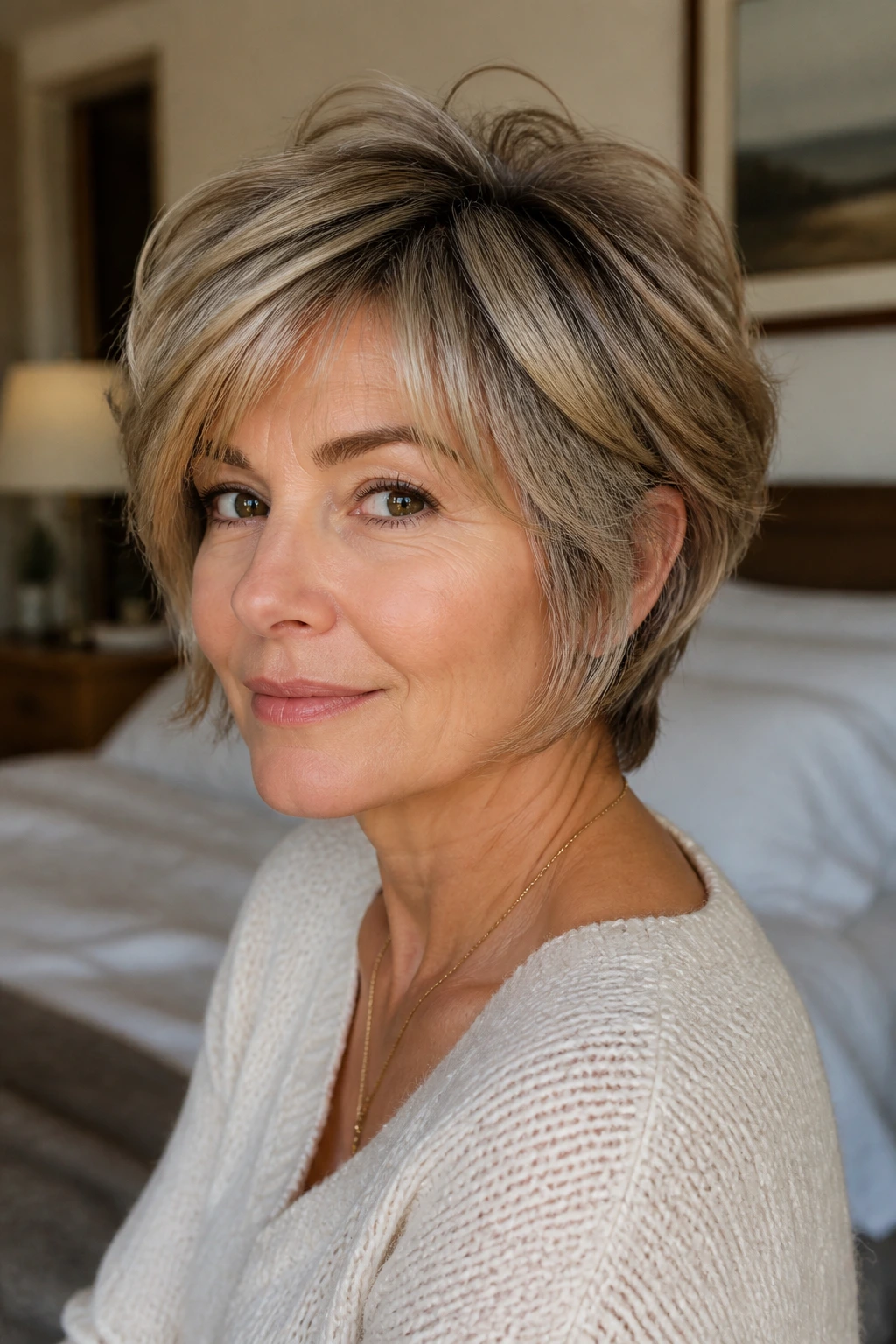
Think of this as the peace treaty between pixie and bob. The top and sides are short enough to keep the haircut light, but the back and front leave a little more room to shape the face. Feathering prevents the cut from puffing out at the temples.
This style works especially well when thick hair has a slight bend. The feathered bits catch that bend and turn it into movement instead of bulk. A light mousse at the roots and a small round brush can give it lift without stiffness.
The feathered pixie bob is one of those cuts that looks good even when it’s a little imperfect. That’s a useful quality.
25. Side-Part Stacked Crop
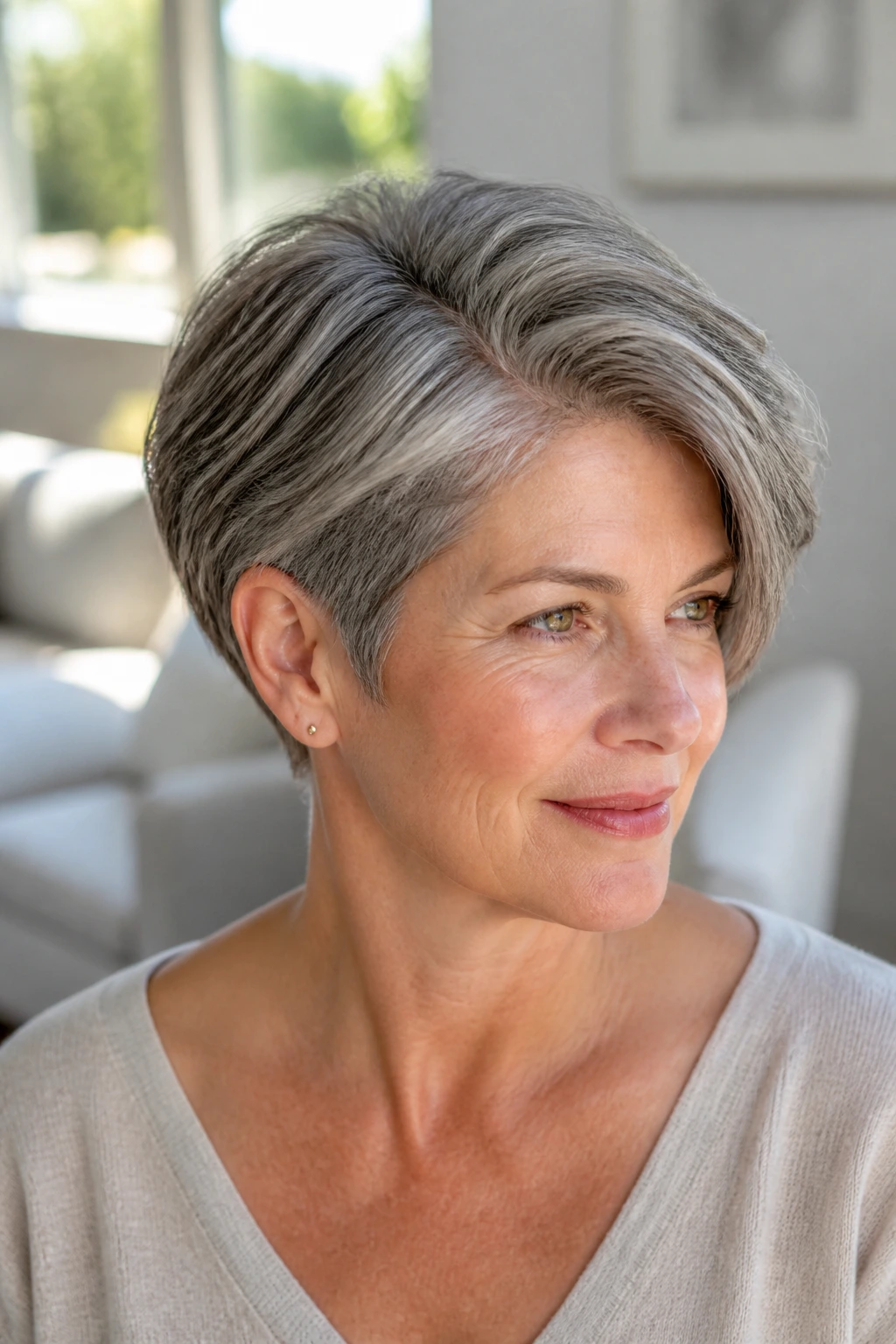
A side part gives thick hair direction before you’ve even picked up a brush. Pair it with a stacked crop, and you get lift where the hair wants to lie flat and control where it wants to puff up.
The part is doing more than styling here. It helps build asymmetry through the top, which stops the haircut from spreading out evenly across the head. Even dense hair can look airy when one side leads.
If your crown is stubborn, this cut can be a quiet fix. You are working with the growth pattern instead of fighting it, which is usually smarter anyway.
26. Curved Undercut Bob
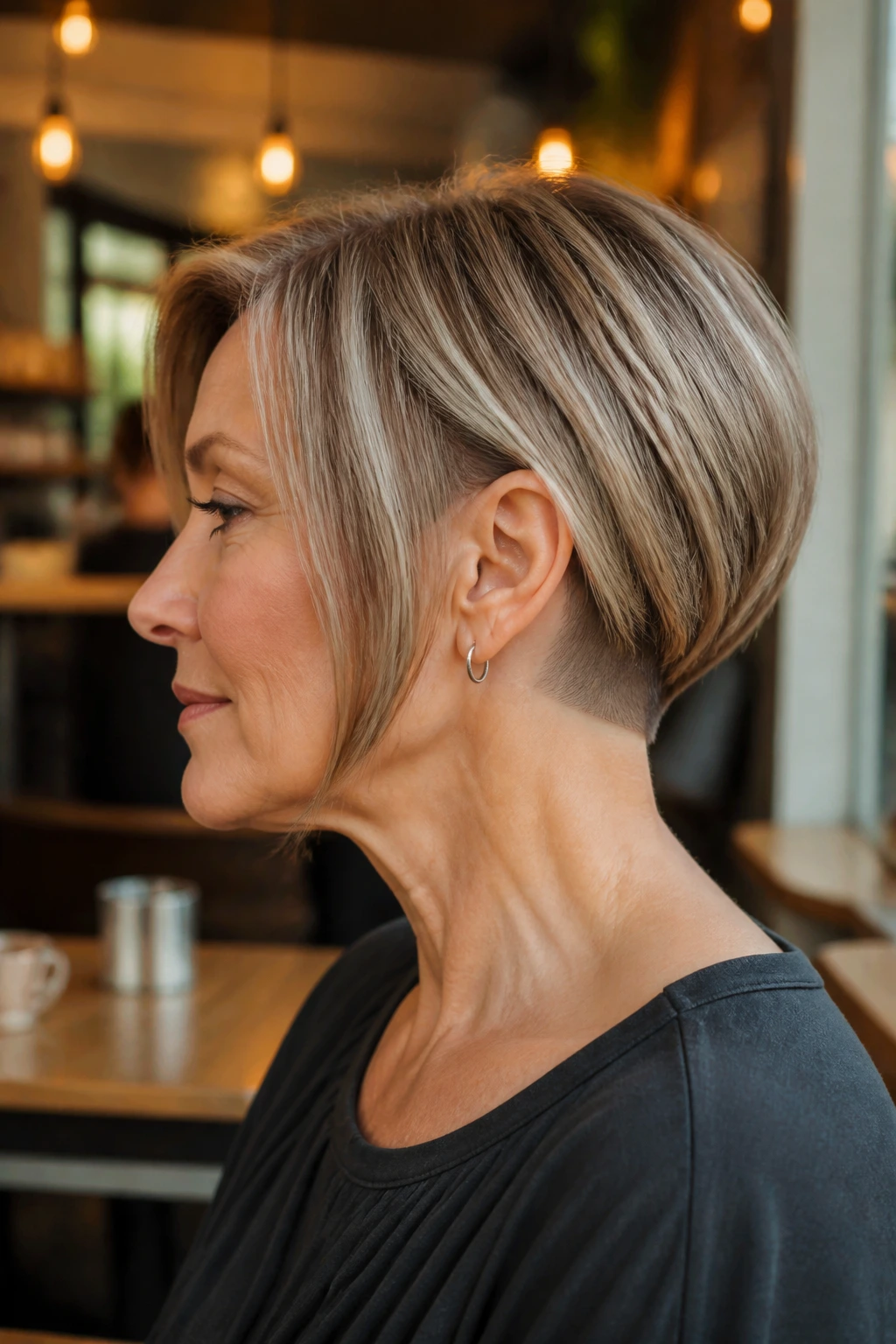
A curved undercut bob is what happens when a neat bob gets hidden relief underneath. The outer shape stays rounded and smooth, while the underlayers are trimmed tighter so the mass of thick hair doesn’t push the silhouette outward.
That hidden shortness matters. You can keep the visible line elegant without carrying all the internal weight. It’s especially nice if the neck is prone to sweating or if the nape hair grows thick and fuzzy fast.
This is a salon cut worth asking for specifically. If you just say “bob,” you might get too much weight left under the surface.
27. Short Shag with Wispy Bangs

A short shag with wispy bangs can be one of the best answers to thick hair that refuses to sit still. The layers break the density into softer sections, and the bangs keep the front from feeling too heavy or severe.
The wispy part matters. Heavy bangs on thick hair can turn into a solid wall, especially if the hair dries with a bit of lift. Wispy bangs let light through, literally and visually, so the face stays open.
This cut loves a little mess. That’s the point. If you over-style it, you can flatten the charm right out of it.
28. Graduated Wedge with Nape Taper
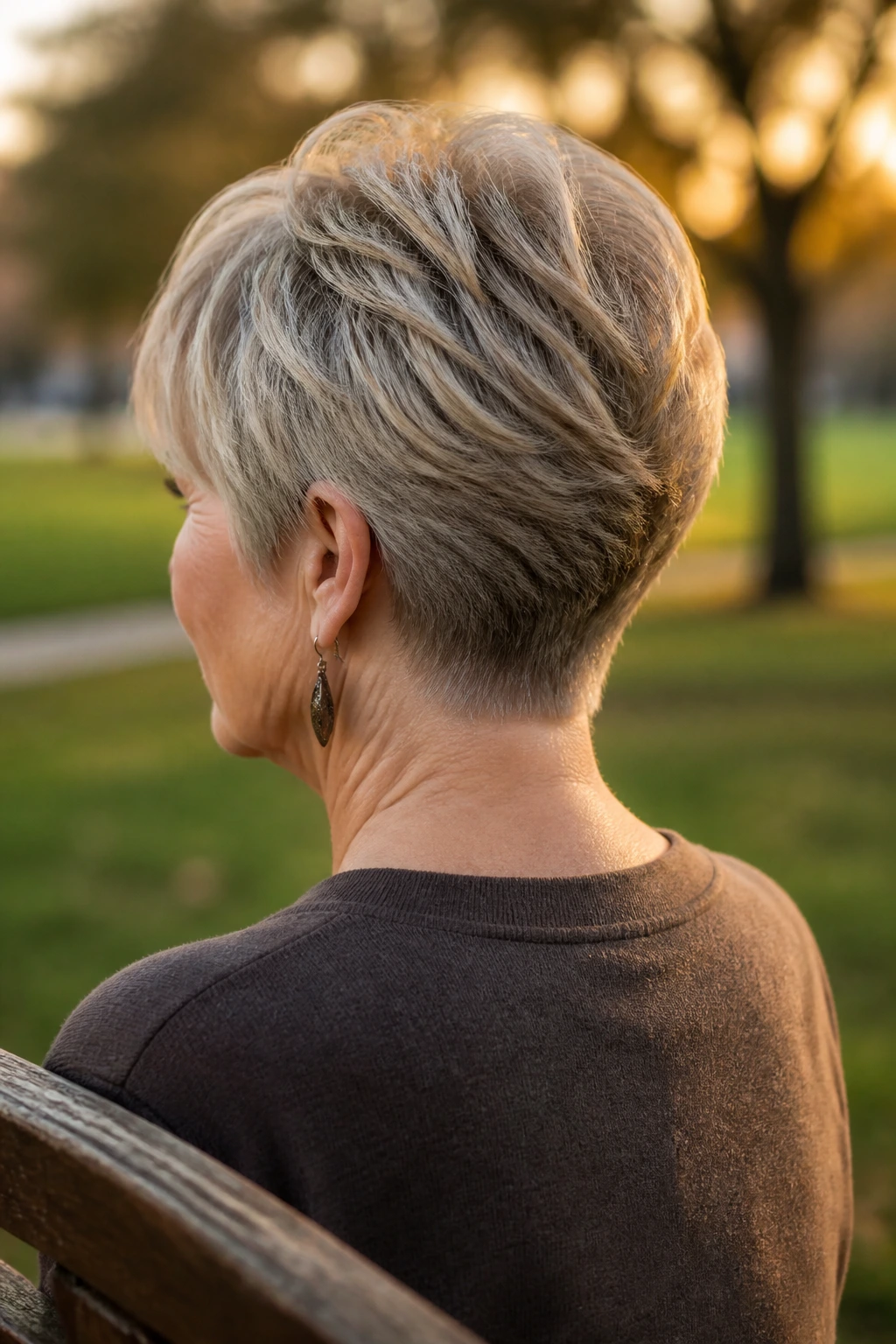
The graduated wedge with a nape taper is a clean finish to a strong shortlist. The back is stacked just enough to create shape, the neckline is tapered close, and the top keeps enough length to avoid the helmet effect that scares people away from shorter cuts.
Why does it work so well on thick hair? Because the cut manages three jobs at once: it lifts, it narrows, and it keeps the sides from flaring. That balance is hard to get with one-length cuts, especially when the hair has a lot of density at the back of the head.
If you want a cut that looks crisp from every angle, this is the one I’d put near the top of the list.
What Makes Thick Hair Look Better Shorter After 50
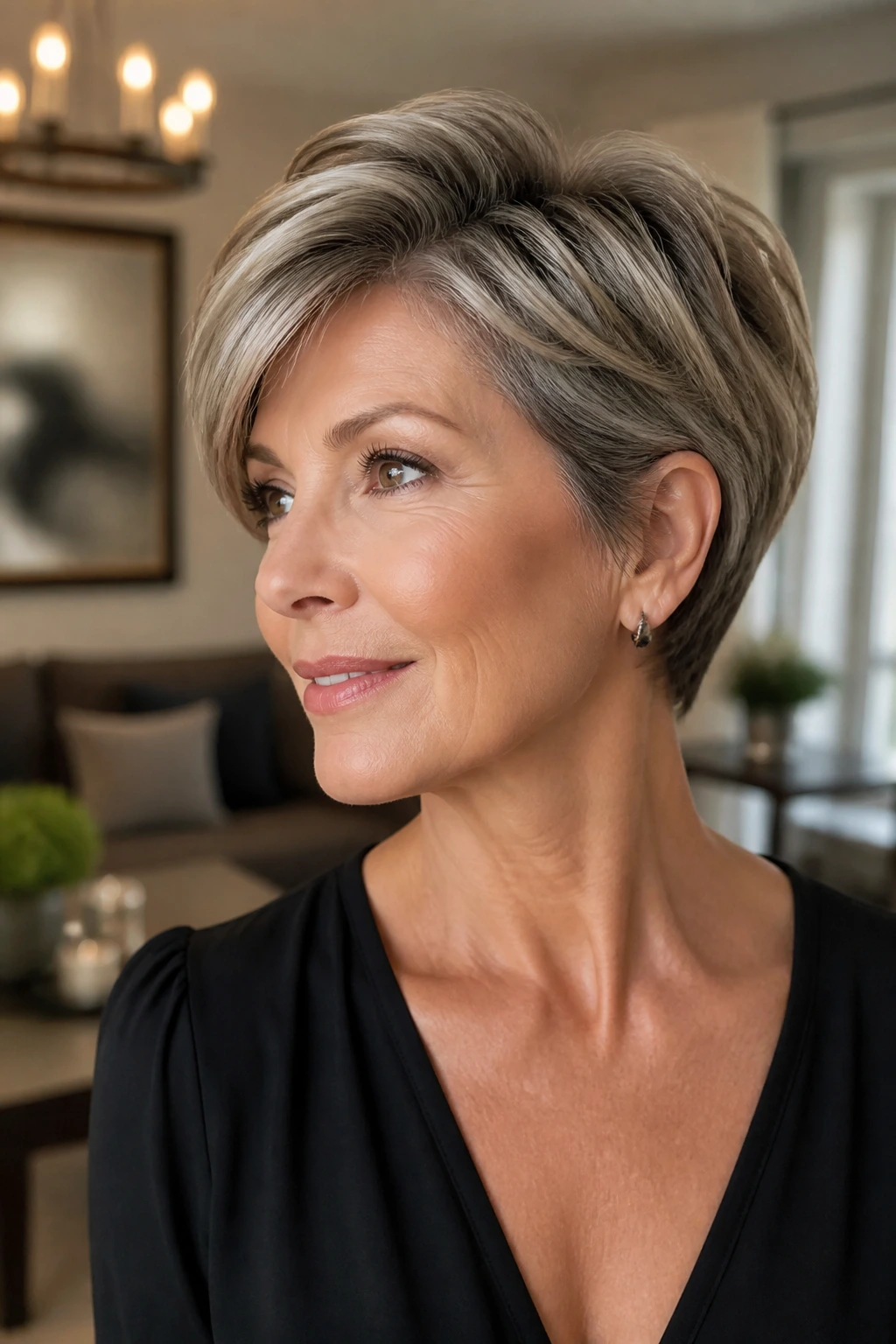
Thick hair does not lose its usefulness with age. It changes the rules a little, that’s all. Sometimes the strands get drier, sometimes the wave changes, and sometimes the hairline feels a bit more open than it used to. A shorter cut can actually make all of that look more deliberate, because the shape stops fighting for space.
The best short cuts remove what I call dead weight — the extra bulk that collects under the occipital bone, around the ears, and at the neckline. Once that weight is gone, the hair can lift instead of spreading. That lift is what makes a haircut look fresh rather than merely short.
There’s another quiet benefit. Shorter thick hair usually shows the neck, jawline, and cheek structure more clearly. That can be flattering in a way long hair often isn’t, because the face stops hiding behind its own volume.
How to Choose the Right Short Cut for Your Face, Neck, and Cowlicks
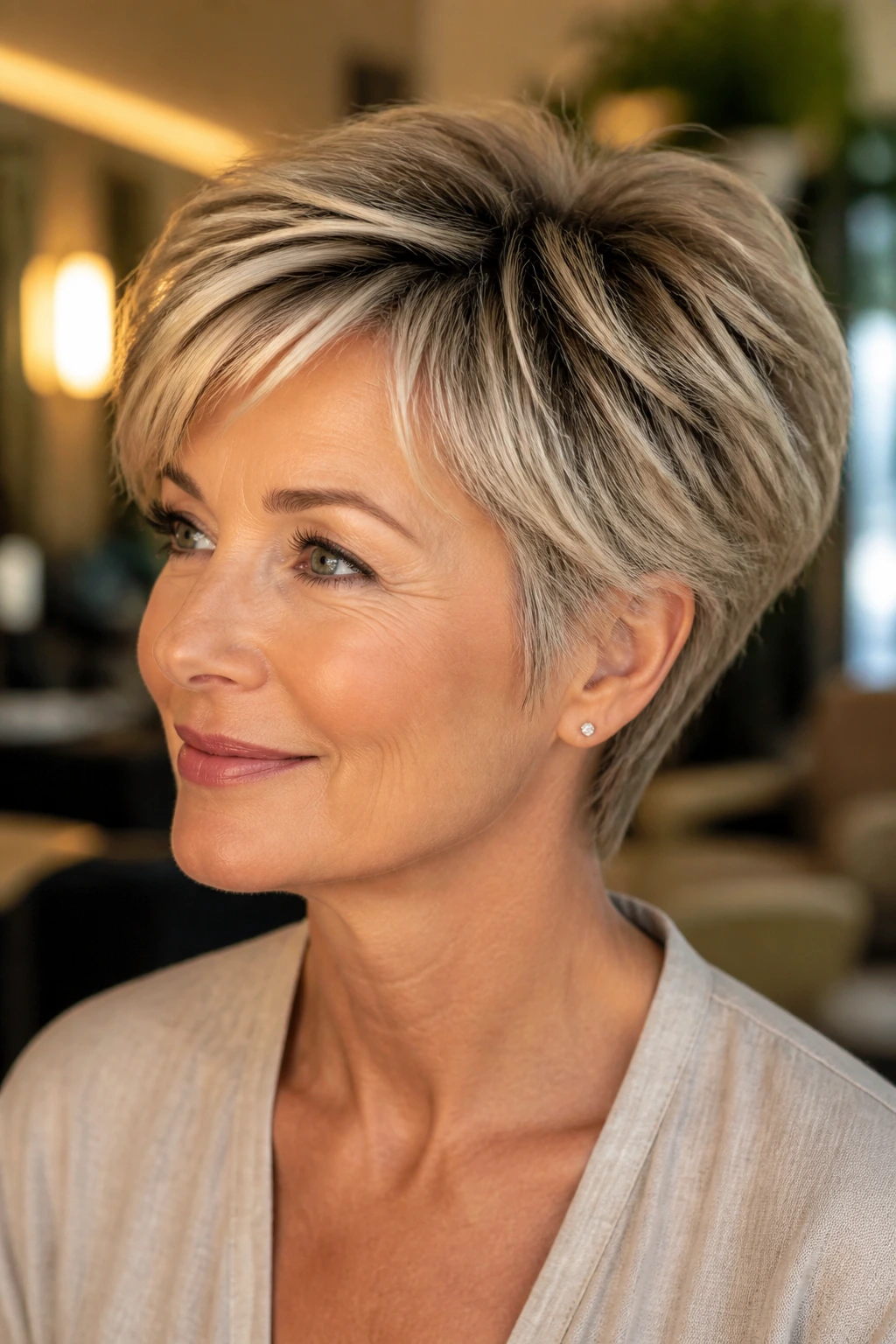
Face shape matters, but it’s not the only thing. A strong cowlick at the front can matter more than your cheekbones. A short neck can call for a softer nape. Glasses can change where your side pieces need to land. The smartest cut is the one that respects the head you actually have.
If your face is round, look for diagonal lines, side parts, or longer front pieces that sit below the cheek. If your face is longer, a fuller bob or fringe can restore balance without adding bulk. If your jaw is the part you want softened, keep the front pieces grazing it instead of ending exactly on it.
Cowlicks are the part people forget to mention at the salon. Don’t. A stubborn cowlick at the crown can be worked with, but not if the cut is too short in the wrong spot. And if your hair kicks out at one temple, a stylist needs to know that before the scissors come out.
What to Tell Your Stylist Before the Cape Comes Off
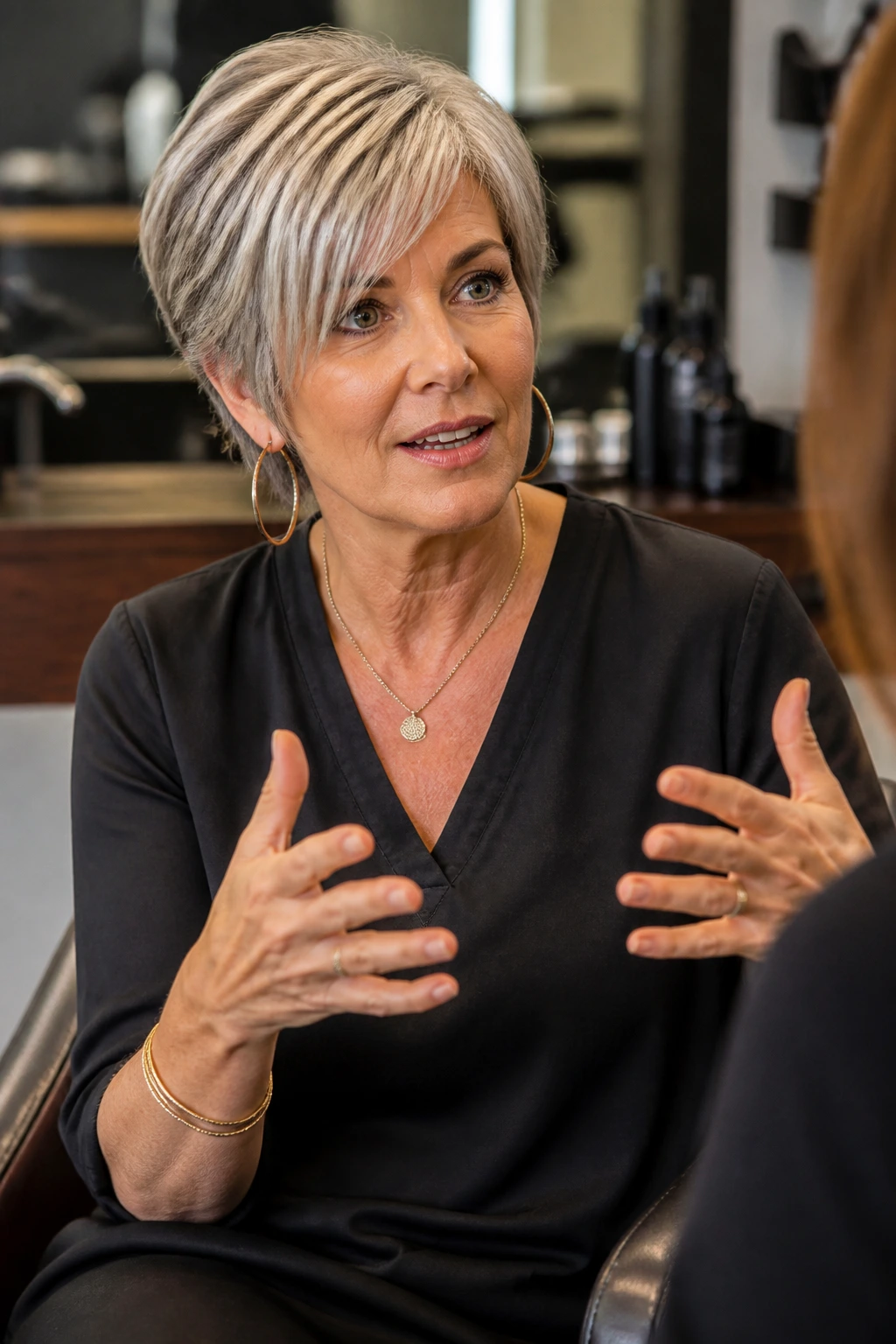
Bring photos, yes, but also bring words. Photos show the shape. Words explain the behavior. Tell your stylist where your hair feels heaviest, where it sticks up, and how much styling you’re willing to do on a Tuesday morning.
Use plain language:
- “My hair bulks up at the nape.”
- “I need room around my ears.”
- “I want movement, not a big round shape.”
- “I wear glasses, so I need the sides to sit cleanly.”
- “My crown always lifts here.”
If you can, mention how your hair behaves on day two. That matters more than how it looks right after a fresh blow-dry. A short cut that collapses or puffs out the next morning is not a win, no matter how pretty it looked in the chair.
Essential Tools for Styling Thick Hair at Home
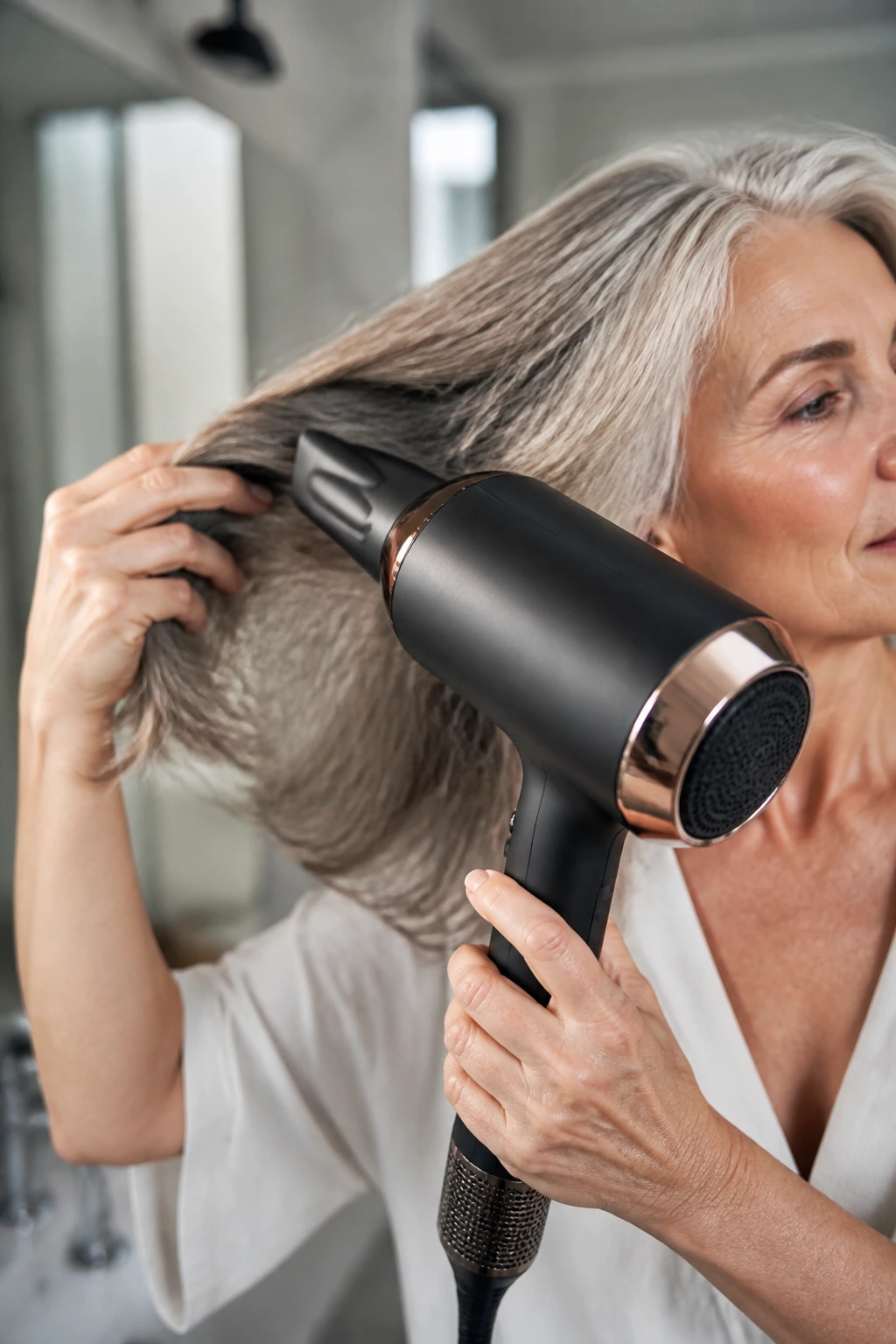
- Blow dryer with a nozzle: The nozzle keeps airflow pointed where you want it, which helps thick hair sit smoother and faster.
- Small to medium round brush: Best for lifting the crown and smoothing bob lengths without dragging too much hair at once.
- Vent brush: Good for rough-drying dense hair before you refine the shape.
- Light mousse or root lift spray: Gives body at the roots without turning the cut crunchy.
- Texture paste or cream: Use this on pixies, crops, and shaggy shapes to separate the ends.
- Flat iron with narrow plates: Handy for smoothing a fringe or nudging a bob under at the ends.
- Duckbill clips: Useful for setting crown lift or controlling bangs while they cool.
- Wide-tooth comb: Safer than a tiny fine-tooth comb when hair is thick and a little tangled.
- Satin pillowcase or bonnet: Not glamorous, but it saves the cut from waking up with a rough halo.
How to Wear These Cuts So They Look Intentional, Not Fussy
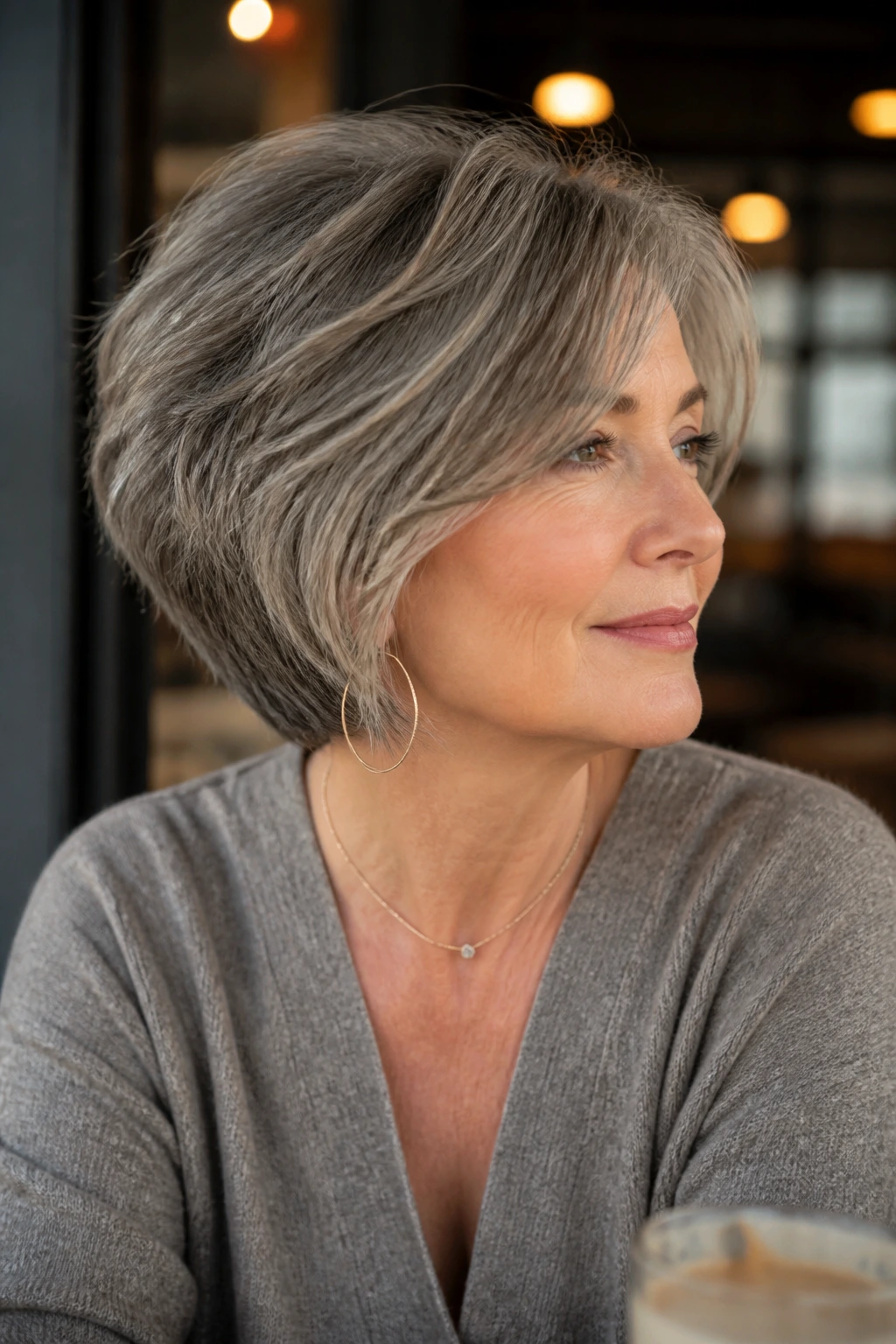
Parting: A side part usually gives thick hair the most instant relief because it breaks up the width of the head and adds lift at the root. Middle parts can work, but they need a cut with real internal shaping or they’ll expose every bit of width at once.
Accessories: Small clips, slim headbands, and earrings matter more with short hair than long hair. Once the neck is visible, the whole silhouette changes. If you wear glasses, keep the side pieces clean so the frames don’t tangle in the hair by lunchtime.
Texture: Smooth, piecey, or softly air-dried all send different signals. A polished bob needs the ends tucked under or turned in slightly. A shag or crop usually looks better with a little separation and a matte finish. Don’t force one texture onto every cut.
Outfit Pairing: Collared shirts, V-necks, and open necklines tend to work well with short thick hair because they echo the clean line of the cut. Heavy turtlenecks can crowd a very short nape unless the style has enough lift on top. Little thing. Big effect.
Smart Styling Tips That Save Time
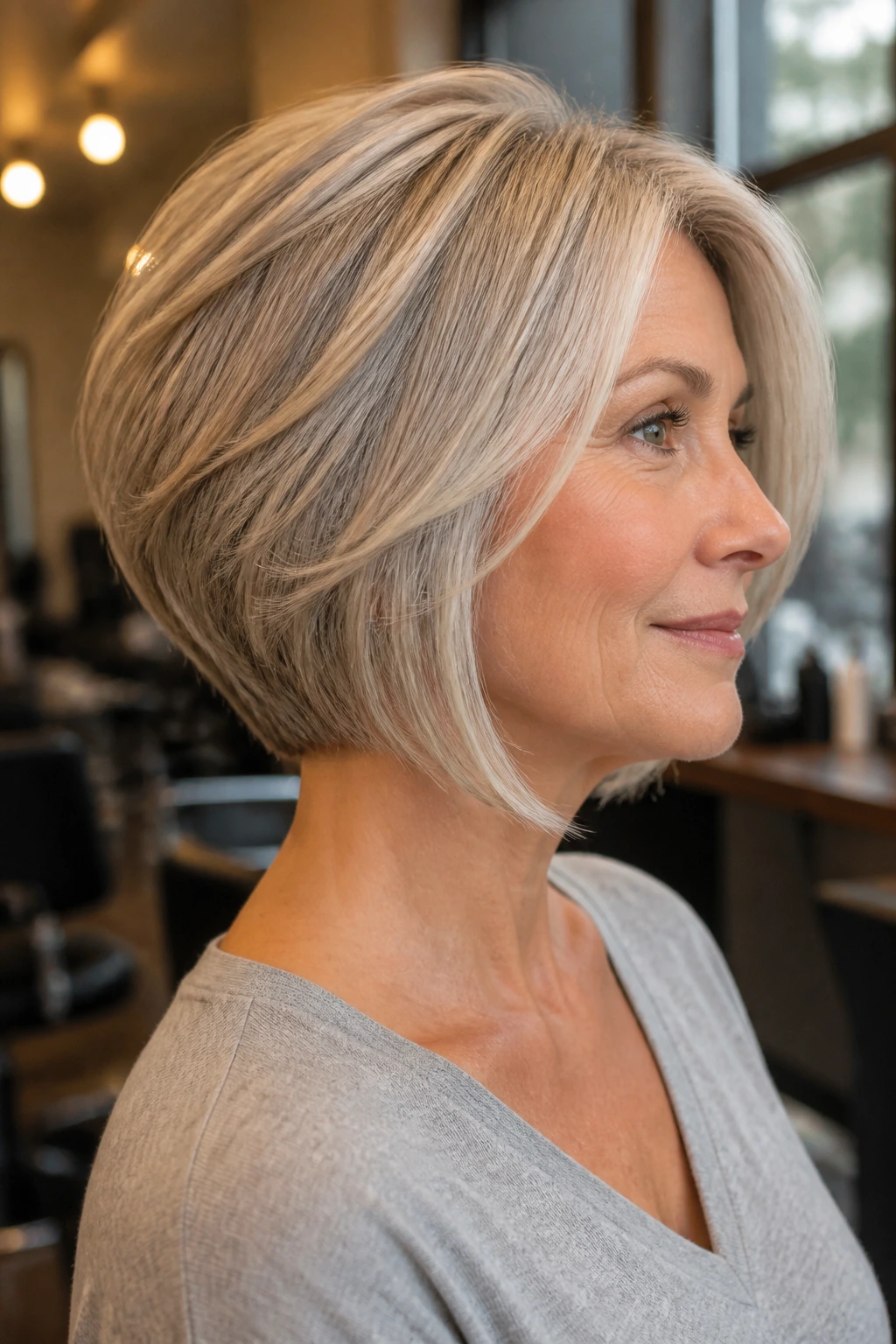
Root Lift: Dry the roots first, not last. Thick hair can hold dampness close to the scalp, and that leftover moisture flattens the crown after you’ve already spent time on the ends.
Finish Line: Stop using heat the moment the hair is shaped. A five-second cool shot locks the bend into place better than adding more brush work ever will.
Product Control: Start with half the product you think you need. Thick hair can handle more, but the difference between “piecey” and “greasy” is usually measured in pea-sized amounts.
Night Routine: If your cut leans smooth, wrap it or sleep on a satin pillowcase. If it leans textured, a quick finger restyle in the morning is usually enough — no full wash required.
Common Mistakes to Avoid with Thick Hair and Short Cuts
- Cutting too much weight out with a razor: The ends start to look frayed, especially on coarser silver strands, and the style can puff instead of settling. Ask for controlled texturing, not aggressive thinning.
- Leaving the nape too bulky: Thick hair grows dense at the neckline, and if that part stays heavy the whole haircut feels hot and round. A clean taper there changes everything.
- Making bangs too thick: Heavy fringe on thick hair can swallow the face. Keep bangs lighter, piecey, or angled unless you have a strong reason not to.
- Skipping the crown plan: If the top is cut too short without enough shape, the hair can stand up like a brush. Leave enough length to direct it.
- Using too much cream or oil: Thick hair can take product, but short hair shows overload fast. Start small and add only where the ends need help.
- Choosing a cut you cannot maintain: A beautiful pixie that needs daily heat styling is not always a good fit. Be honest about your routine before the scissors come out.
Variations and Adaptations Worth Trying
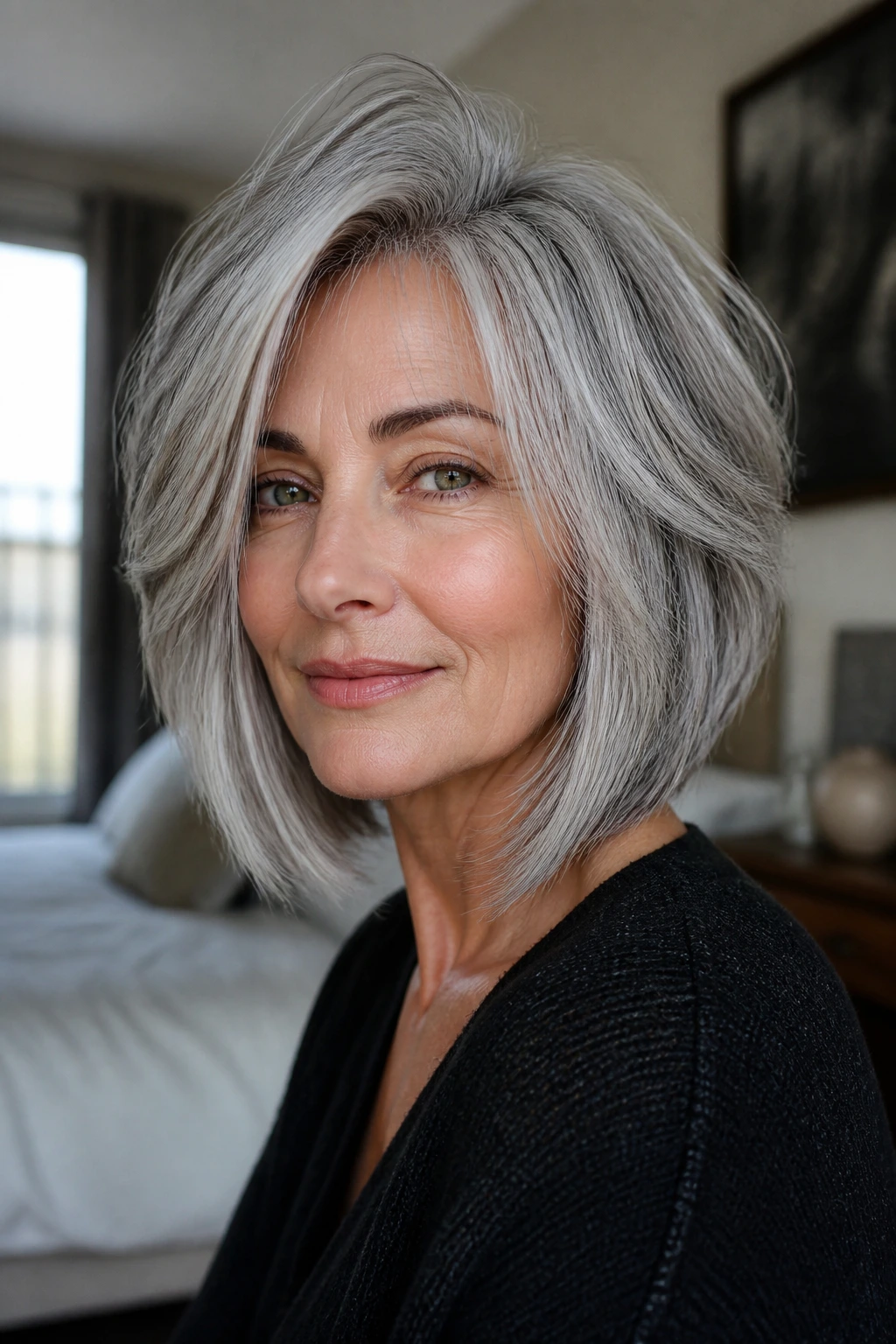
Silver Softening: If your gray hair feels wiry, ask for softer edges and a bit more length at the top. The extra length keeps the cut from looking bristly, and silver strands usually show texture beautifully when the shape is clean.
Wavy Air-Dry Version: For hair that bends naturally, swap the blowout routine for curl cream and a diffuser or air-dry finish. Keep the cut slightly longer than you think you need; wavy thick hair often springs shorter once dry.
Glasses-Friendly Shape: If you wear frames, prioritize clean side panels and a fringe that stops above or around the brow. Too much width at the temples will fight the glasses every time you slide them up.
Low-Hands Styling Cut: If you want to do almost nothing in the morning, choose a stacked bob, wedge, or tapered crop with a strong perimeter. These shapes fall back into place better than heavily shattered layers.
Grow-Out Softener: If you are nervous about going shorter, start with a lob, soft bob, or bixie and keep the layers gentle. You’ll still lose bulk, but the grow-out will be calmer if you change your mind later.
Maintenance, Trims, and Grow-Out Strategy
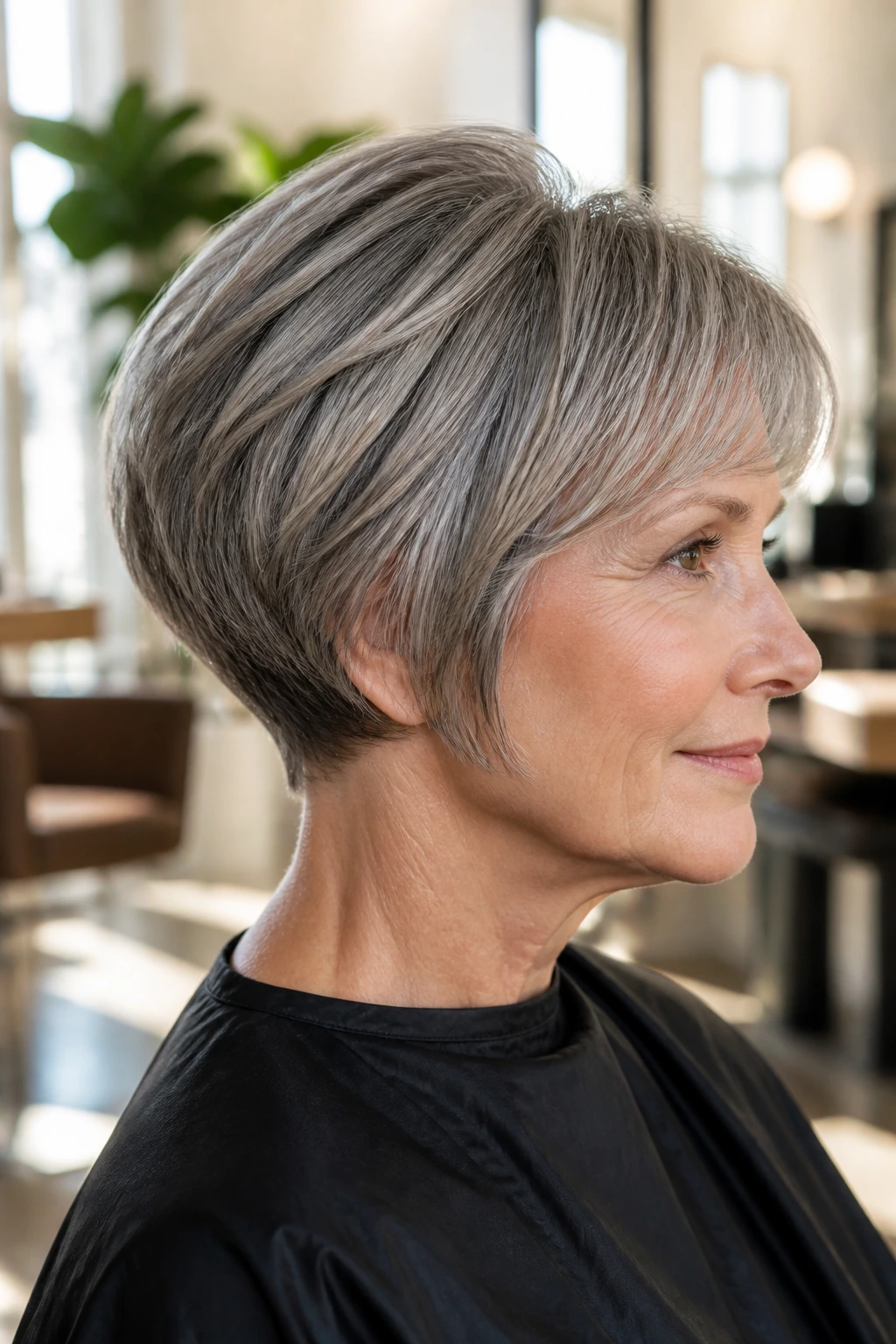
Short hair on thick texture usually needs a different trim rhythm than long hair, but not every short cut needs the same schedule. Pixies, undercuts, and ear-length crops often look best every 4 to 6 weeks because the neckline shows growth quickly. Bobs, lobs, and stacked shapes can usually stretch to 6 to 8 weeks if the outline stays clean.
Between trims, concentrate on the spots that change first: the nape, around the ears, and the fringe. Those areas can go from crisp to shaggy faster than the rest of the cut. A quick bang trim at home is possible if you’re careful, but nape cleanup is better left to a stylist unless you like living dangerously.
If you’re growing a short cut out, don’t try to “fix” every awkward stage with a new drastic cut. That’s how people end up in a loop. Instead, keep the perimeter shaped and let the layers catch up. Thick hair usually forgives the awkward stage better than fine hair does, as long as you keep the bulk under control.
Frequently Asked Questions
Which short cut is easiest for thick hair after 50?
A stacked bob, bixie, or tapered crop is usually the least demanding because the shape does most of the work for you. These cuts remove bulk without asking for daily battle with a round brush.
Will a pixie make my thick hair look poofy?
It can, if the sides and crown are cut too bluntly. A good pixie for thick hair needs tapering at the nape and a little separation on top so the shape stays close to the head.
Is layering or blunt cutting better for thick hair?
Both can work, but they solve different problems. Blunt edges give control and weight; internal layers remove hidden bulk. The best cuts often use a blunt outline with softer shaping inside.
Can I keep bangs with thick hair and a short cut?
Yes, but keep them lighter than you think. Heavy bangs on dense hair can crowd the forehead and make the cut feel top-heavy. A wispy or side-swept fringe usually sits better.
What if my hair is curly or wavy?
Then the cut needs to respect shrinkage and bounce. Ask for the shape to be checked dry or nearly dry, and leave enough length so the curl can spring without turning the whole cut shorter than planned.
How often should thick short hair be trimmed?
Most pixies need 4 to 6 weeks, while bobs and lobs can go a bit longer. If the neckline starts puffing or the fringe loses shape, that’s your sign.
What if I hate how it looks after the cut?
Give it a day or two if the style was blow-dried hard in the chair. Thick hair often settles once it’s washed and styled at home. If it still feels wrong, ask for small edits around the nape, fringe, or sides rather than a brand-new haircut.
How do I keep short thick hair from feeling too warm or heavy?
Ask for a clean neckline, some relief around the ears, and a cut that lets air reach the scalp. Thick hair can trap heat fast, and that is one of the biggest reasons people feel better in shorter shapes.
A Short Shape With Room to Move

The best short hair on thick texture doesn’t try to erase what the hair is. It edits it, trims the excess, and leaves enough strength behind to keep the shape alive. That’s the whole trick with short cuts for thick hair over 50: less bulk, more line, and a haircut that still looks good when you’re not standing under salon lights.
If you choose a cut that suits your density, your neck, and your real styling habits, the morning routine gets quieter. The comb works faster. The mirror is less annoying. And the haircut starts doing the job you wanted all along.
