



Shoulder length hairstyles for thick hair live or die by the cut line. Too blunt in the wrong place, and the ends kick out like a triangle. Too many short layers, and the whole head balloons around the cheeks. Get the shape right, though, and the hair does something thick hair does better than almost any other texture: it looks full, deliberate, and a little bit expensive even when you’ve done the bare minimum.
That sweet spot usually sits somewhere between the collarbone and the top of the shoulder. Long enough to keep weight in the shape. Short enough that you can actually move it around with a brush, a clip, or a curling iron without wrestling a curtain. Thick hair likes that balance. It wants structure, not punishment.
The twenty looks below lean into that structure in different ways—clean lines, soft layers, bangs, waves, clips, pins, buns, braids, and a few styles that are polished enough for dinner but not so precious that you’ll panic if the humidity rises. Some work because they remove bulk in the right places. Some work because they keep the weight where thick hair behaves best. Some work because they’re fast, which matters more than people admit.
Why These Styles Make Thick Hair Easier to Wear
-
The length lands in the useful zone: Shoulder-grazing hair is long enough to feel versatile, but short enough that drying and styling take less time than a mid-back length.
-
Bulk gets controlled instead of fought: These styles use blunt lines, soft layers, or strategic texture to stop thick hair from swelling into a pyramid at the sides.
-
The shape stays visible: Thick hair can hide a haircut if the layers are vague. These looks keep the outline clear, so the style still reads from across the room.
-
Heat styling becomes manageable: A shoulder-length section fits neatly around a 1.25-inch iron, a round brush, or a flat iron bend without taking forever.
-
Second-day hair behaves better: Dense hair at this length usually holds a wave, clip, braid, or bun shape longer than fine hair does, which means fewer desperate morning fixes.
-
You can change the mood fast: The same cut can look sharp, soft, or undone depending on where you part it, how much bend you add, and whether you tuck one side behind the ear.
1. The Blunt Lob That Holds Its Shape
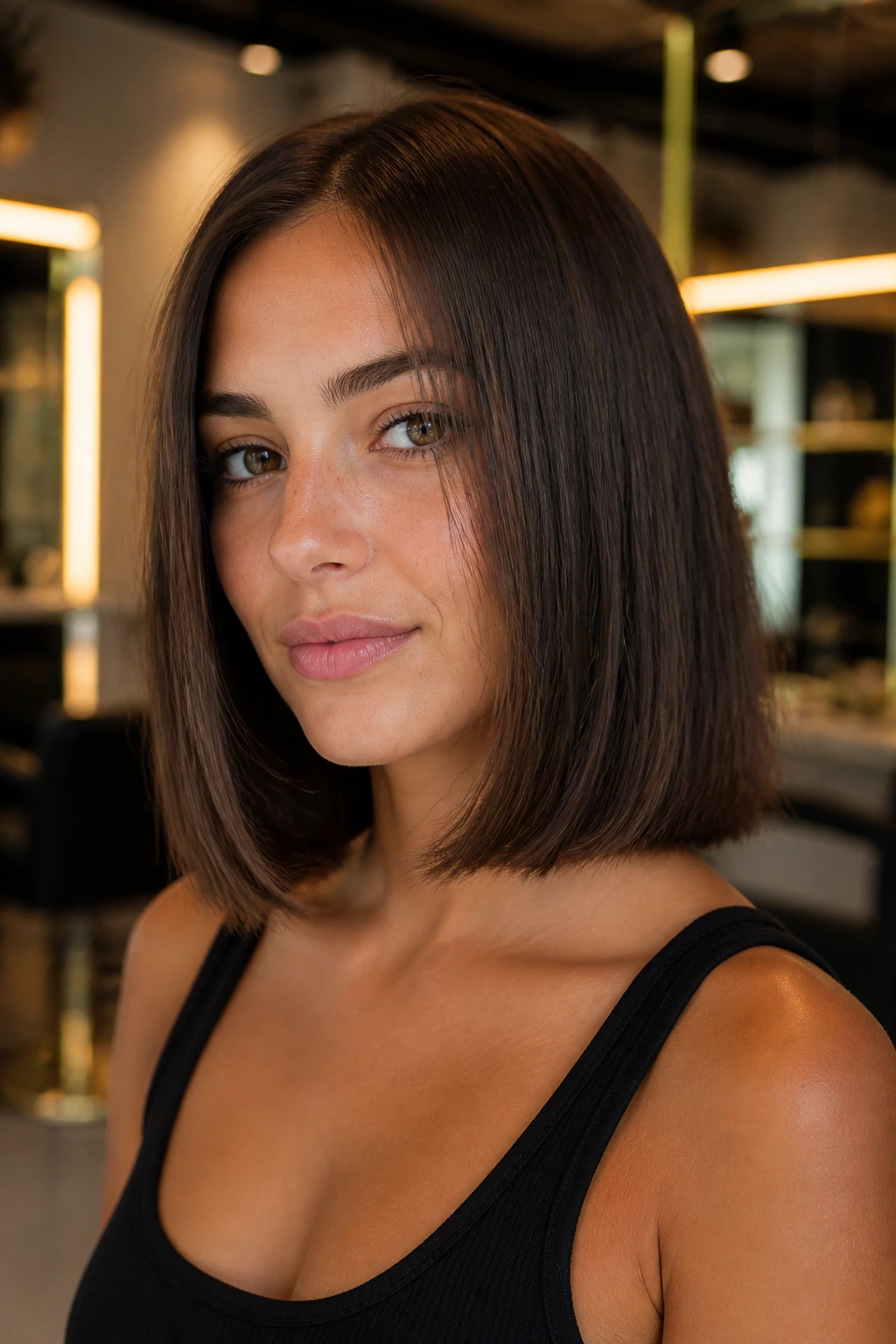
A blunt lob is the no-nonsense answer to thick hair that starts puffing out the second it dries. The clean edge gives the density somewhere to go, and that matters more than people think. On thick hair, a blunt line at the collarbone can look crisp and heavy in a good way, not helmet-like, as long as the ends are kept hydrated and the cut is precise.
Why it works
The blunt perimeter keeps the bulk from scattering. Instead of layers exploding outward, the hair sits as one clear shape. I like this look best on naturally straight or softly wavy hair that can air-dry with a bit of polish. If your hair tends to swing wide at the bottom, ask for the cut to sit just below the chin in front and graze the shoulders in back.
Best for: straight, slightly wavy, or blow-dried thick hair.
Skip the over-thinning: razor-happy ends can make the line fray and puff.
Styling note: a quick pass with a paddle brush and heat protectant is often enough.
Best finish: smooth, tucked, and polished with a center or slight off-center part.
Pro tip: keep the ends trimmed every 8 to 10 weeks. A blunt lob loses its whole personality once the edge starts splitting and feathering.
2. Long Layers with Curtain Bangs
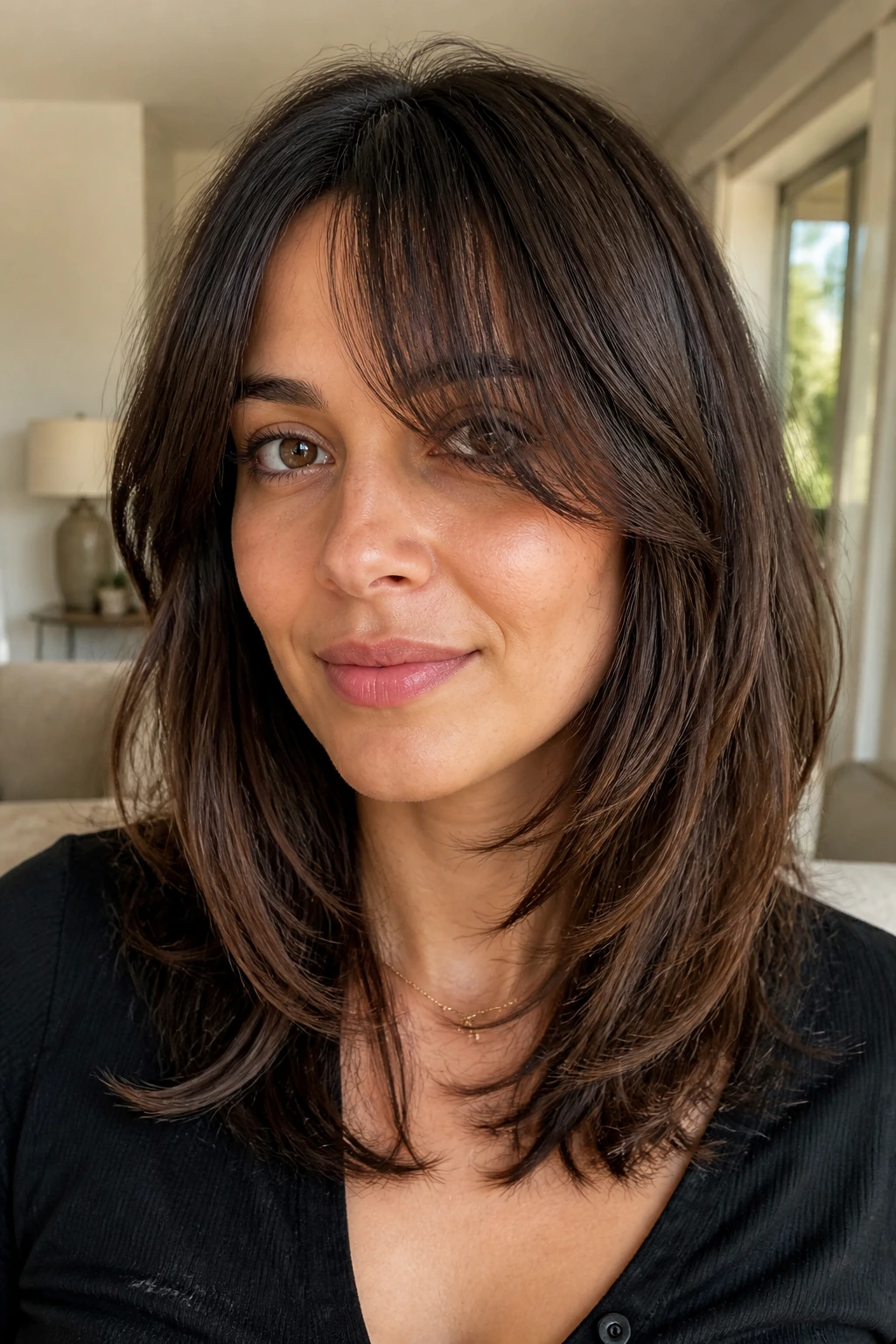
Curtain bangs change the whole mood of shoulder length hair. They break up the thickness around the face, which makes the rest of the cut feel lighter without removing too much weight from the ends. On thick hair, that matters. You want enough movement to stop the shape from feeling blocky, but not so much layering that the style turns fluffy by noon.
The curtain bang works because it starts short enough to open the face and then drifts into the cheekbones and jaw. That soft sweep makes the haircut feel intentional even when the rest of the hair is worn loose. Blow-dry the fringe with a round brush or a small Velcro roller, and the bend will sit better than a flat-ironed bang that wants to split apart.
What to ask for
- Curtain bangs that start around the cheekbone or just above it.
- Long internal layers through the sides, not chopped-up ends.
- Enough weight left in the bottom line to keep the cut from ballooning.
This look is especially good if you wear your hair half-up a lot. The bangs do half the work, so the rest of the style can stay simple. And if you’re the kind of person who hates a full fringe sticking to your forehead, this is the safer, less fussy route.
3. The Textured Shag with Airy Ends
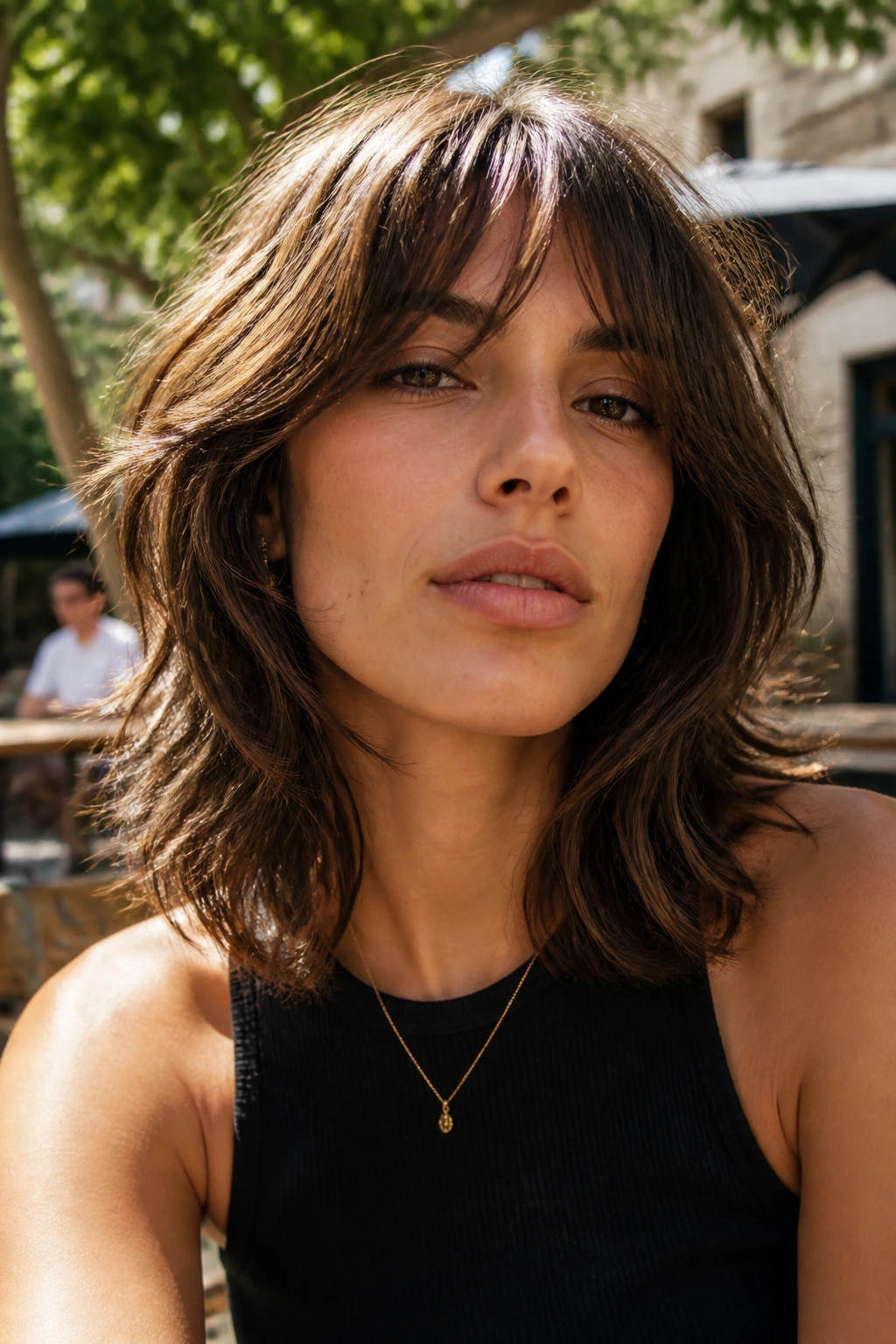
The shag is where thick hair gets to be a little unruly on purpose. Done well, it does not look messy. It looks lived-in, which is not the same thing at all. The trick is keeping the layers soft enough to move, but not so chopped that the ends frizz into a halo.
Why this cut earns its keep
Thick hair carries a shag beautifully because there’s enough density to support all that separation. A finer head of hair can look stringy in this shape. Thick hair can handle the breakup. You get lift around the crown, movement through the sides, and a little flick at the ends that reads like texture instead of bulk.
Use a lightweight mousse at the roots and a touch of cream through the mids before diffusing. If you air-dry, scrunch once and leave it alone. Fiddling tends to wreck this cut faster than almost anything else.
- Best texture match: natural waves, loose curls, or hair that bends easily.
- Best mood: edgy, casual, slightly retro.
- Best warning: too much oil makes the layers collapse together.
I’m partial to a shag when someone says their thick hair feels “heavy.” Usually, what they mean is that it has too much weight in the wrong places. The shag shifts that weight upward and inward. Handy. Messy, too, in the right way.
4. The Angled Lob That Slims the Profile
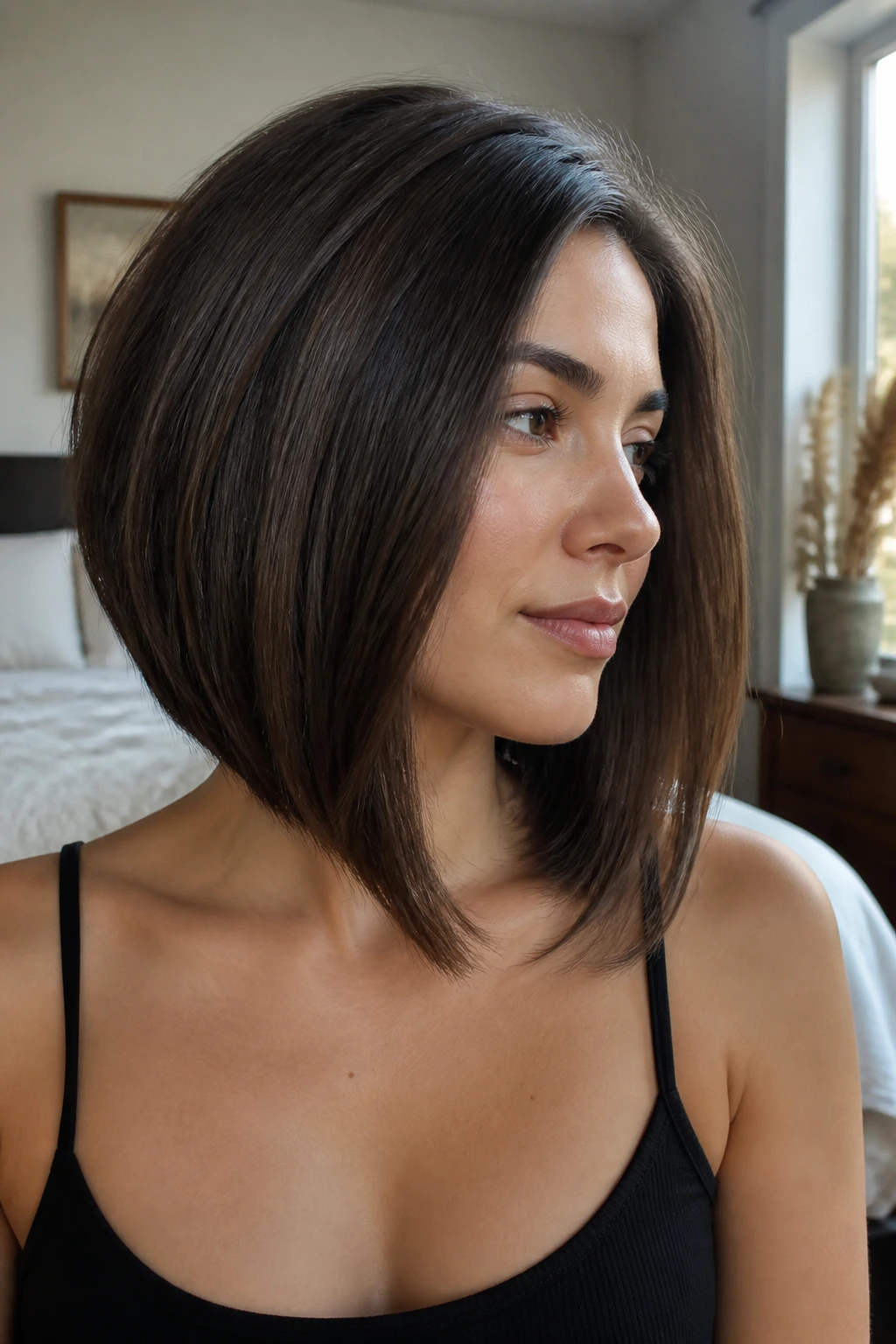
An angled lob gives thick hair a cleaner line from back to front, and that slight slope does a lot of quiet work. It keeps the nape lighter while leaving more length around the face, which means the haircut looks intentional from the side instead of boxy from every angle. If your hair sits on your shoulders and kicks outward at the ends, this is one of the smartest ways to redirect it.
You don’t need a dramatic angle. Honestly, too much can start to look dated. A gentle difference—shorter near the back, longer in front—is enough to create movement without losing the dense, full feel that makes thick hair appealing in the first place.
Good fit when:
- You want a haircut that frames the face without full bangs.
- You wear jackets, collars, or turtlenecks often.
- Your hair feels too wide at the shoulders in a blunt shape.
The best version of this style usually has the ends bent under with a round brush or flat iron. That little turn keeps the angle visible. If you let it dry wild and ignore the shape, the cut can flatten into an awkward wedge, and nobody wants that.
5. The Butterfly Cut at Shoulder Length
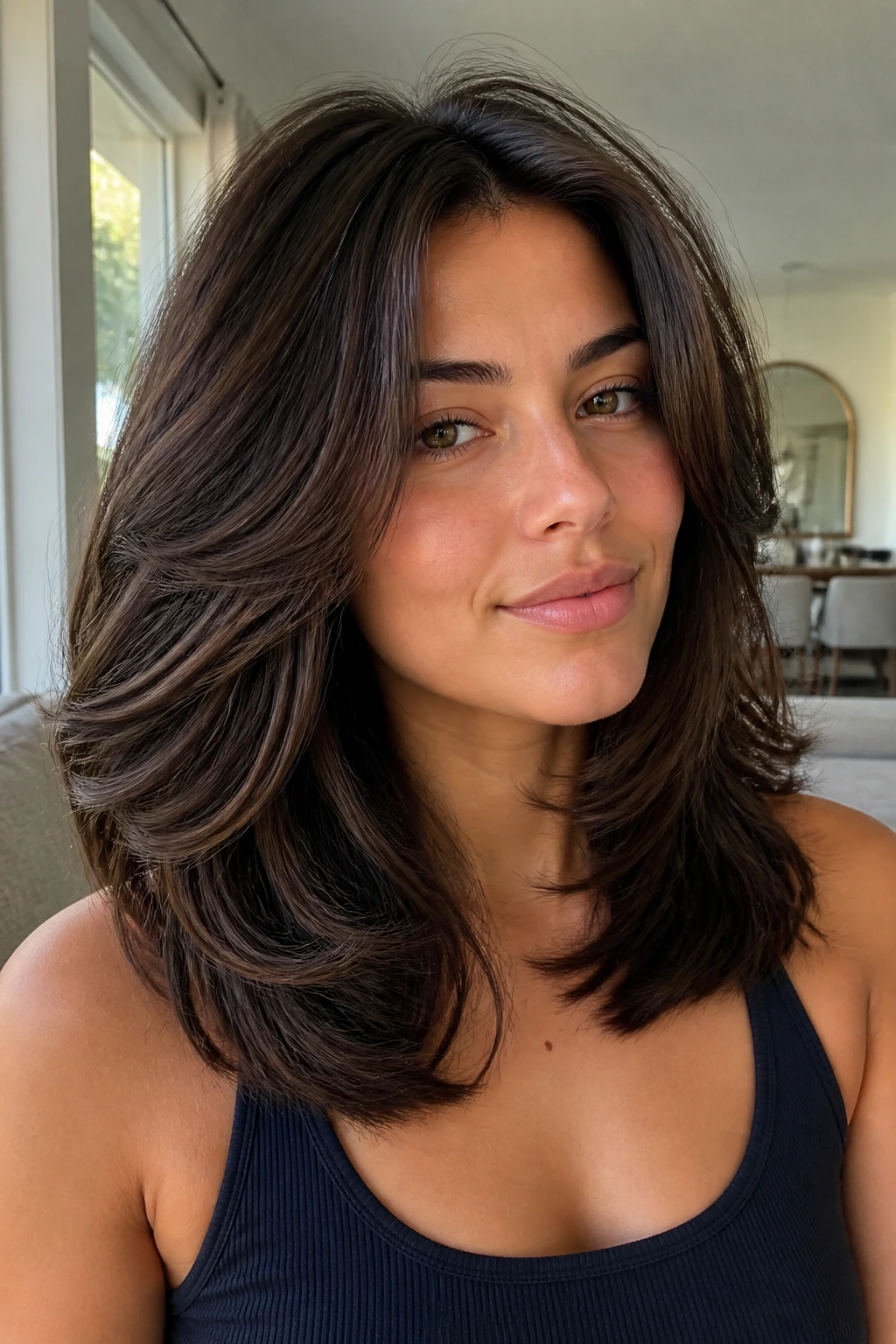
The butterfly cut gets talked about like it’s some magical new thing, but the reason it works is plain enough: it gives you short face-framing layers and longer sections underneath, so thick hair gets movement without losing all its weight. At shoulder length, that contrast is especially useful. You get bounce around the crown and cheeks, while the lower layer still carries enough length to feel substantial.
This cut can be dramatic on very thick hair if the stylist is too aggressive. So I prefer a softer version at this length—layers that start around the chin, not halfway up the head. That keeps the style airy rather than overworked. The goal is flow. Not shredding.
A blowout brings out the shape fast. Flip the top layers away from the face, and the shorter pieces open like wings around the jaw and cheekbones. It sounds a little theatrical, but it’s not. It just looks like your hair decided to cooperate for once.
Best for: round or square faces, heavy hair, and anyone who wants volume without a full shag.
6. Face-Framing Layers with a Side Part
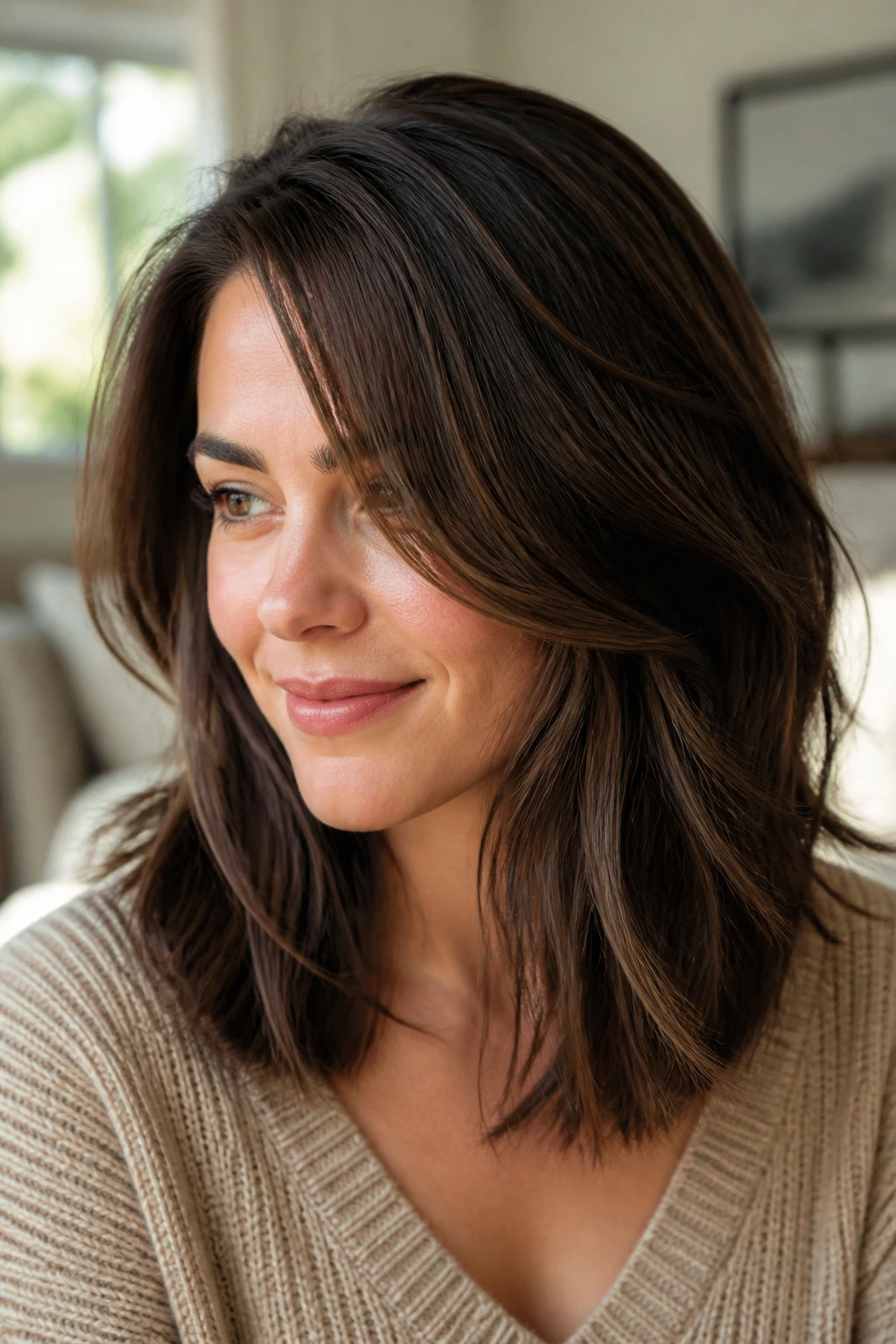
A side part changes thick hair faster than a lot of people expect. It shifts the weight, softens the width, and stops the style from sitting dead-center and bulky. Add long face-framing layers, and the haircut starts to fall with a bit more grace around the jaw instead of jutting outward at the shoulders.
When I’d pick this over bangs
If you like the idea of movement near the face but don’t want to commit to fringe maintenance, this is the safer choice. A side part gives you that same softening effect without the daily trimming and blow-drying a bang demands. It also plays nicely with glasses. That’s one of those small things nobody mentions enough.
A few loose bends through the front sections help the layers fold inward. Keep the back simple. The whole point is to let the front do the talking while the density stays controlled.
- Parting trick: place the part just off the high point of your eyebrow for a softer lift.
- Styling trick: tuck one side behind the ear for ten minutes to set the bend.
- Finish: light shine serum on the ends only.
7. Soft Waves That Stop Just at the Shoulders
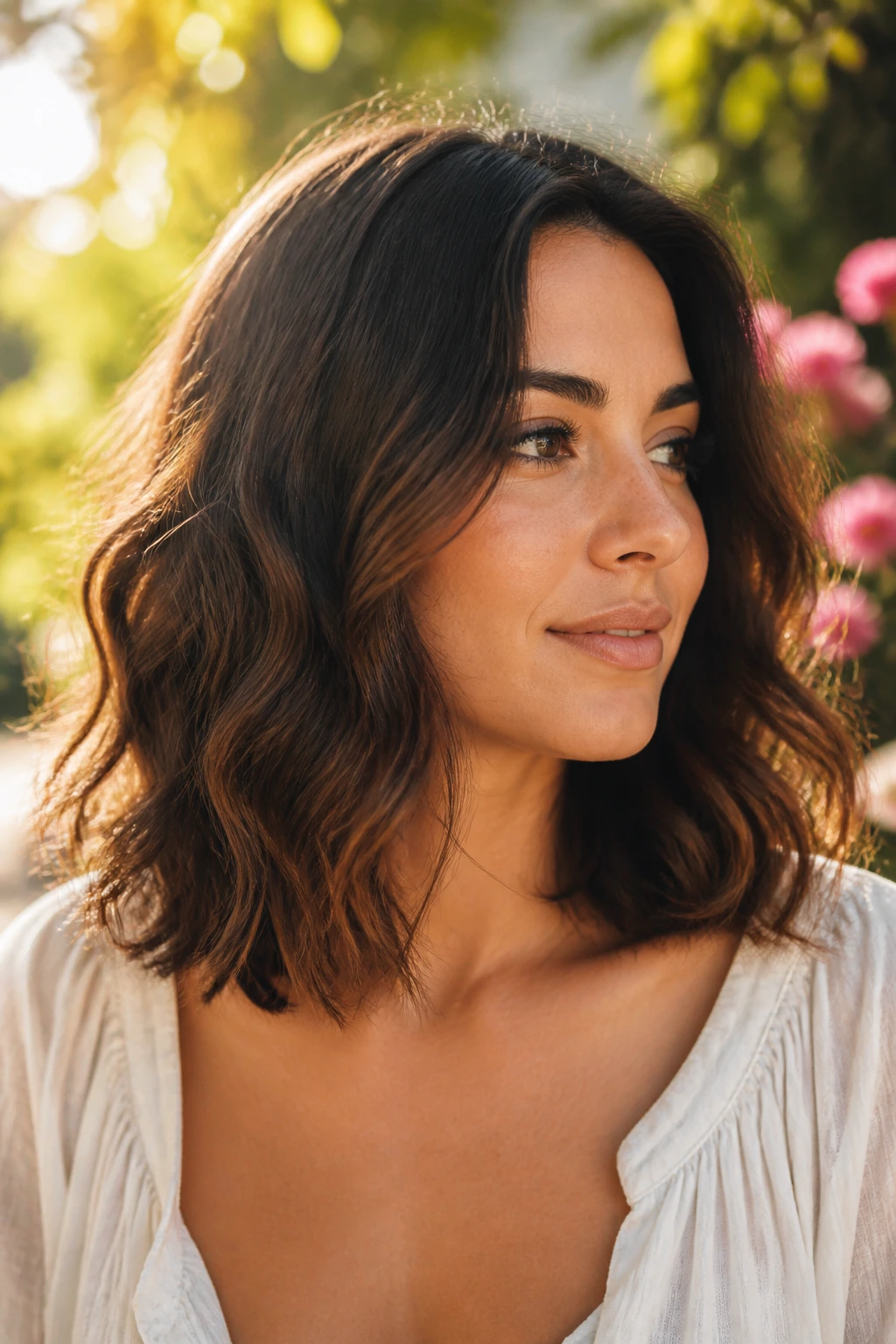
Loose waves on thick hair can go two ways. Polished and airy, or big in a way that feels like your head has expanded overnight. The difference is usually section size and iron size. Use fewer sections, not more, and a larger barrel—1.25 inches is the sweet spot for most shoulder-length thick hair. Smaller irons can turn the style into a pile of curls that fight each other.
The best version of this look has a little bend at the root and a softer finish through the mid-lengths. Leave the ends slightly straight if your hair is dense. That keeps the shape modern and keeps the wave from looking like a full prom curl set.
I like this style because it gives thick hair motion without stripping away its natural heft. It still looks like hair. Just a bit more cooperative.
How to keep it from puffing
- Curl away from the face on one side, toward it on the other.
- Let each section cool fully before touching it.
- Brush through only after the hair is completely set.
- Finish with flexible-hold spray, not stiff lacquer.
8. Bottleneck Bangs with Flipped Ends
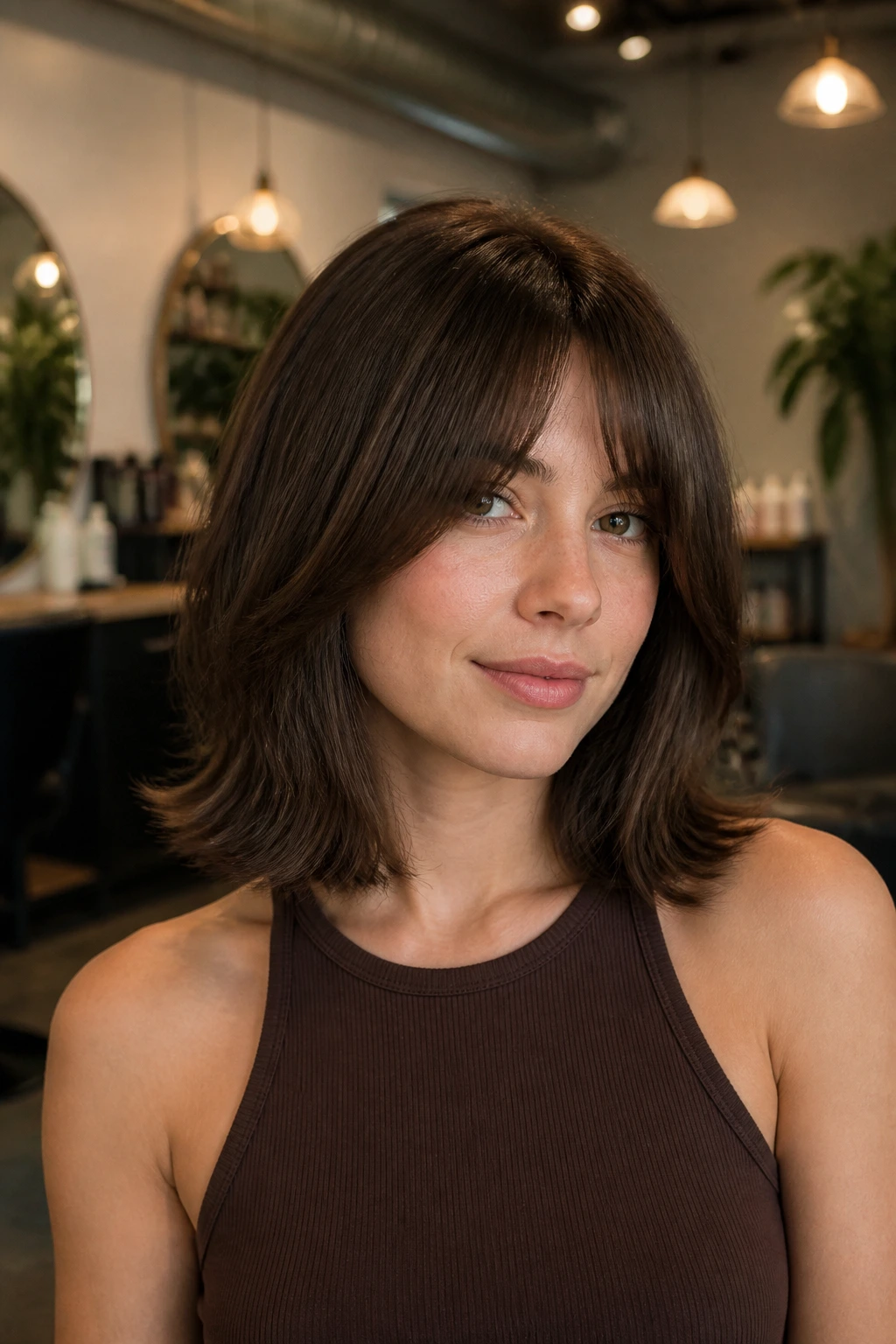
Bottleneck bangs are the quieter cousin of curtain bangs. They start narrow near the center, open gradually, and blend into the sides in a way that flatters thick hair without creating a hard line across the forehead. Paired with flipped ends at shoulder length, they give the whole style a bit of motion and a little attitude.
The flip at the ends matters. Thick hair at shoulder length can look heavy when every strand points straight down. A soft outward bend at the bottom breaks that weight up and keeps the haircut from settling into a blunt block. Think of it as a shape, not a curl.
This style looks especially good when the top is blown smooth and the ends are left slightly playful. That contrast keeps it from feeling too precious. It’s one of those cuts that can handle a blazer, a tee, or a gold hoop without changing the hair itself.
Best for: anyone who wants fringe without full commitment.
Best tool: a round brush or medium-barrel iron.
Best warning: if the bangs are cut too short, thick hair will spring up and sit higher than planned.
9. Deep Side-Part Glam Waves
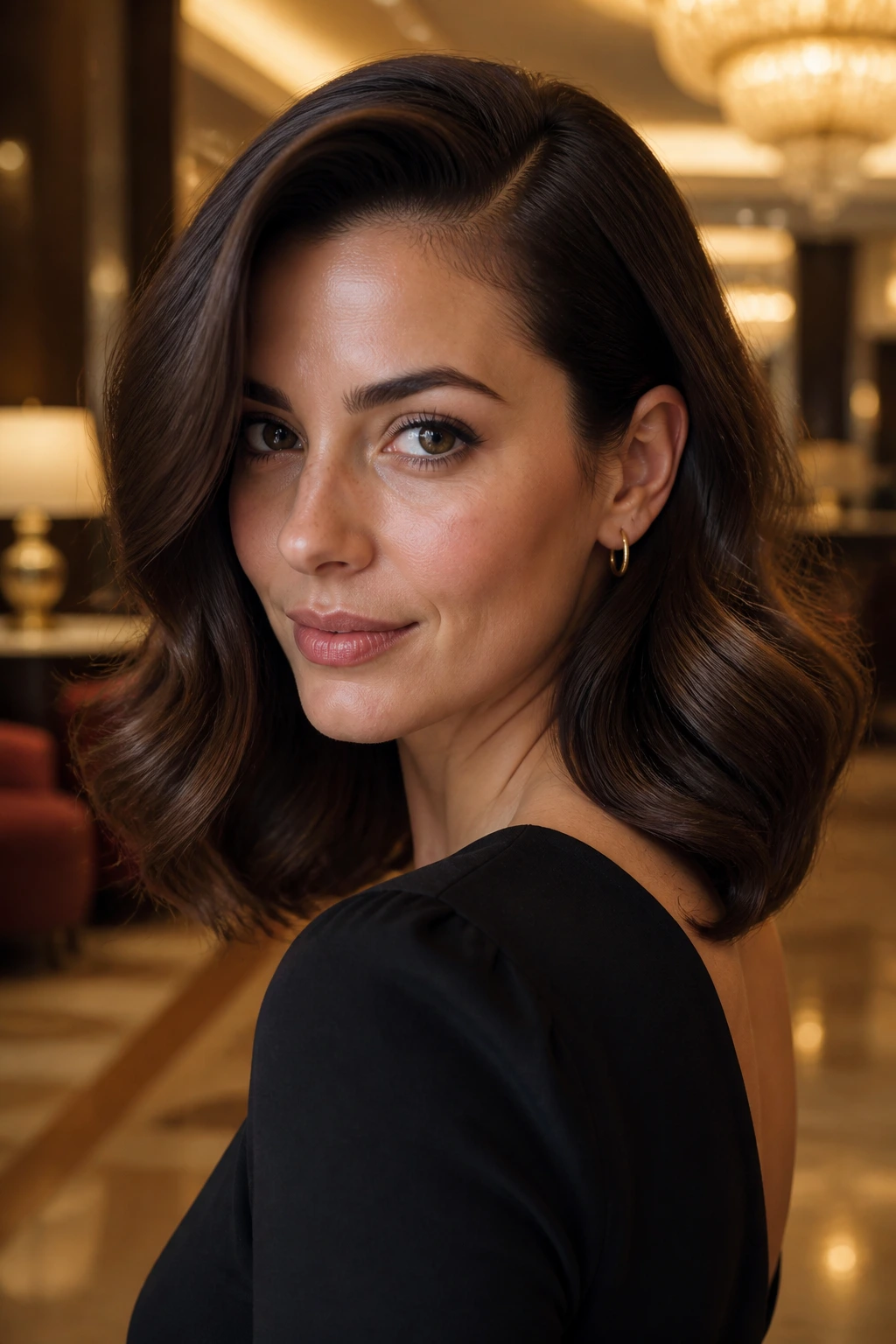
A deep side part gives thick shoulder-length hair a little drama without asking for a major cut. It moves the density to one side, which instantly makes the hair feel more sculpted. Add soft waves, and the whole look gets that old-Hollywood curve that thick hair can carry better than most textures. There’s enough body to hold the sweep. That’s the part people miss.
This style works best when the waves are brushed apart after cooling, not combed into obedience right away. Thick hair likes a bit of separation. If you smooth every wave into one uniform shell, it can look too heavy. Leave the bend visible and let one side sit behind the ear or against the cheekbone.
Best paired with
- Strapless or one-shoulder necklines.
- A statement earring on the tucked side.
- A smoothing cream used sparingly on the top layer only.
The part should sit low enough to feel deliberate, not accidental. Too high and the style can flatten. Too low and it loses the face-framing effect.
10. The Half-Up Half-Down That Actually Stays Put
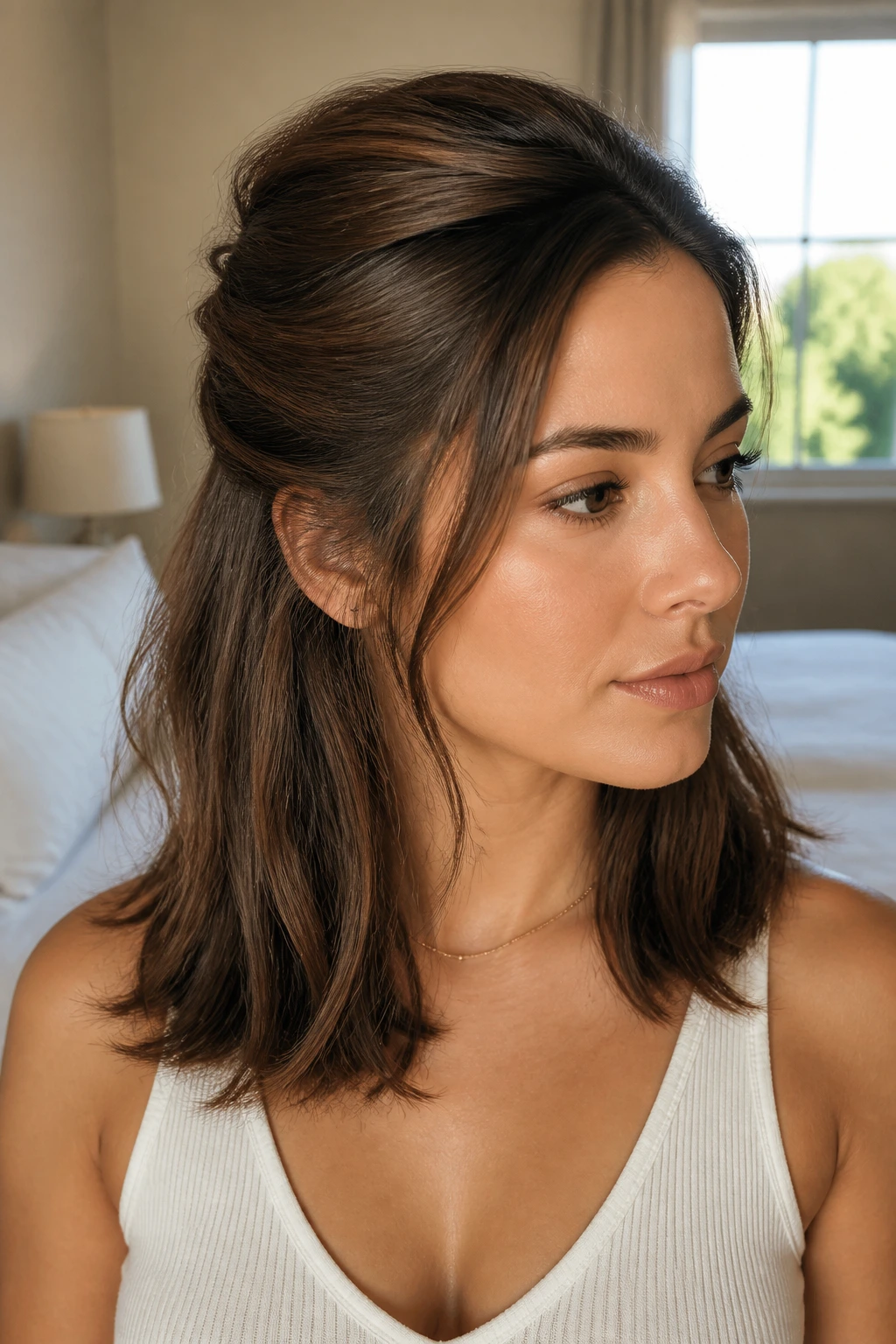
Half-up hair on thick strands is not just practical. It’s strategic. You remove some of the weight from the crown, keep the length visible, and stop the top layer from slipping into your face every ten minutes. Thick hair makes this style look fuller than it does on finer hair, which is a quiet advantage. The lifted section has some substance. It doesn’t vanish.
I like a half-up style with a little crown volume and a loose, soft hold at the back. Pull it too tight and you lose the balance. Too loose, and the top starts to sag. The sweet spot is a small lift at the crown and a secure tie or clip just above the occipital bone—the little bump at the back of your head.
A few face-framing pieces make it feel less school-photo and more modern. Leave the ends either soft-waved or naturally textured. That way the top looks managed and the bottom stays relaxed.
11. The Claw-Clip Twist for Busy Mornings
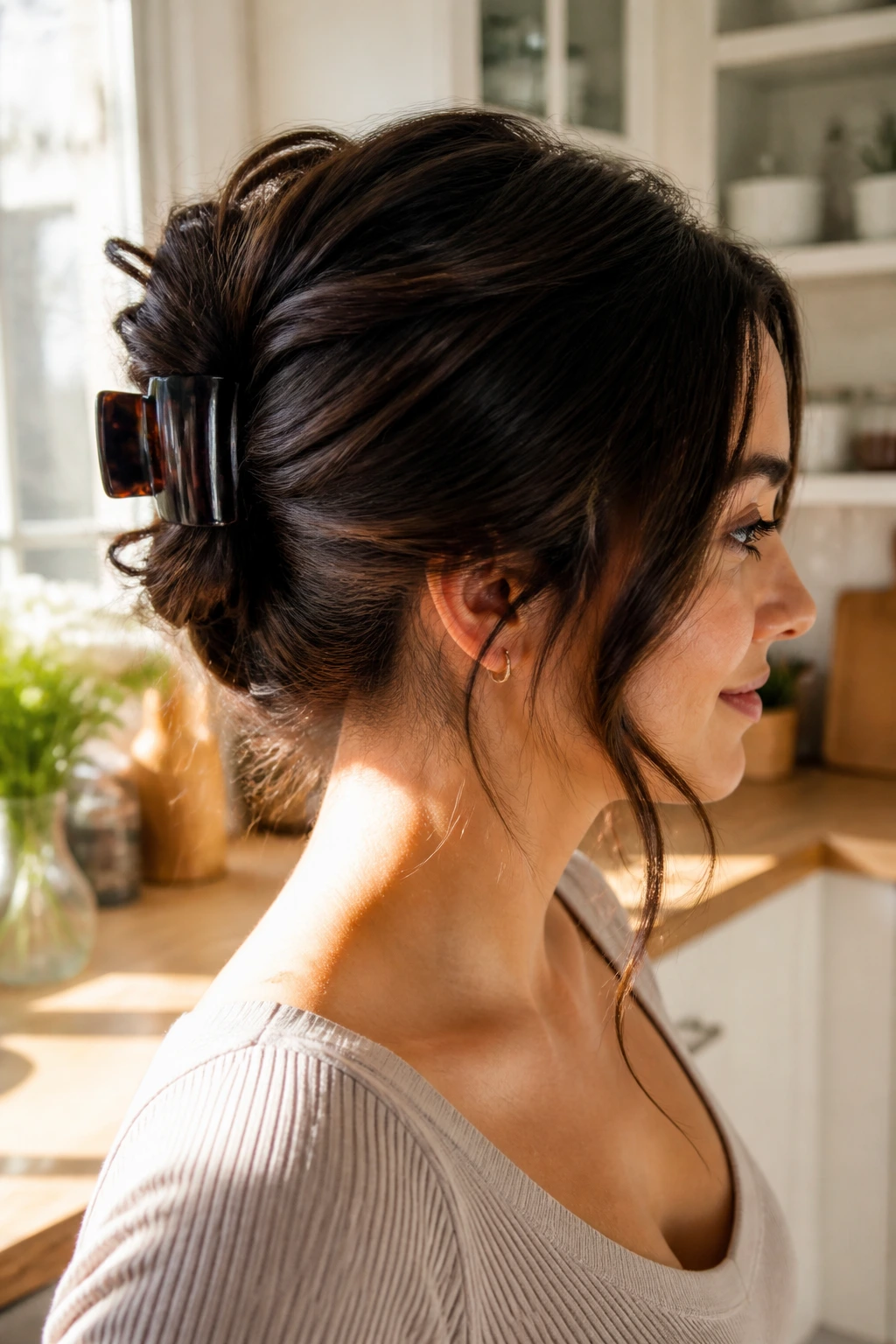
Claw clips earn their popularity on thick hair because they can hold real weight. Not wispy strands. Real weight. At shoulder length, you can twist the hair up once or twice, tuck the ends under, and still have enough volume left to make the clip look full instead of swallowed.
The best version of this style doesn’t fight the hair. It uses the density. Gather the hair at the back, twist upward, and let a few ends spill out on purpose. That little looseness matters. If everything is jammed in, the clip can pinch and the shape gets lumpy.
Use a clip with a strong spring and teeth that actually grip. Cheap ones slide off thick hair in about half an hour, which is a waste of both money and patience.
Works best with: day-two hair, air-dried texture, or loose waves.
Looks best when: a few pieces are left around the face.
Good shortcut: mist the ends lightly with water before twisting if the hair is too dry to settle.
12. Sleek Straight Hair with an Ear Tuck
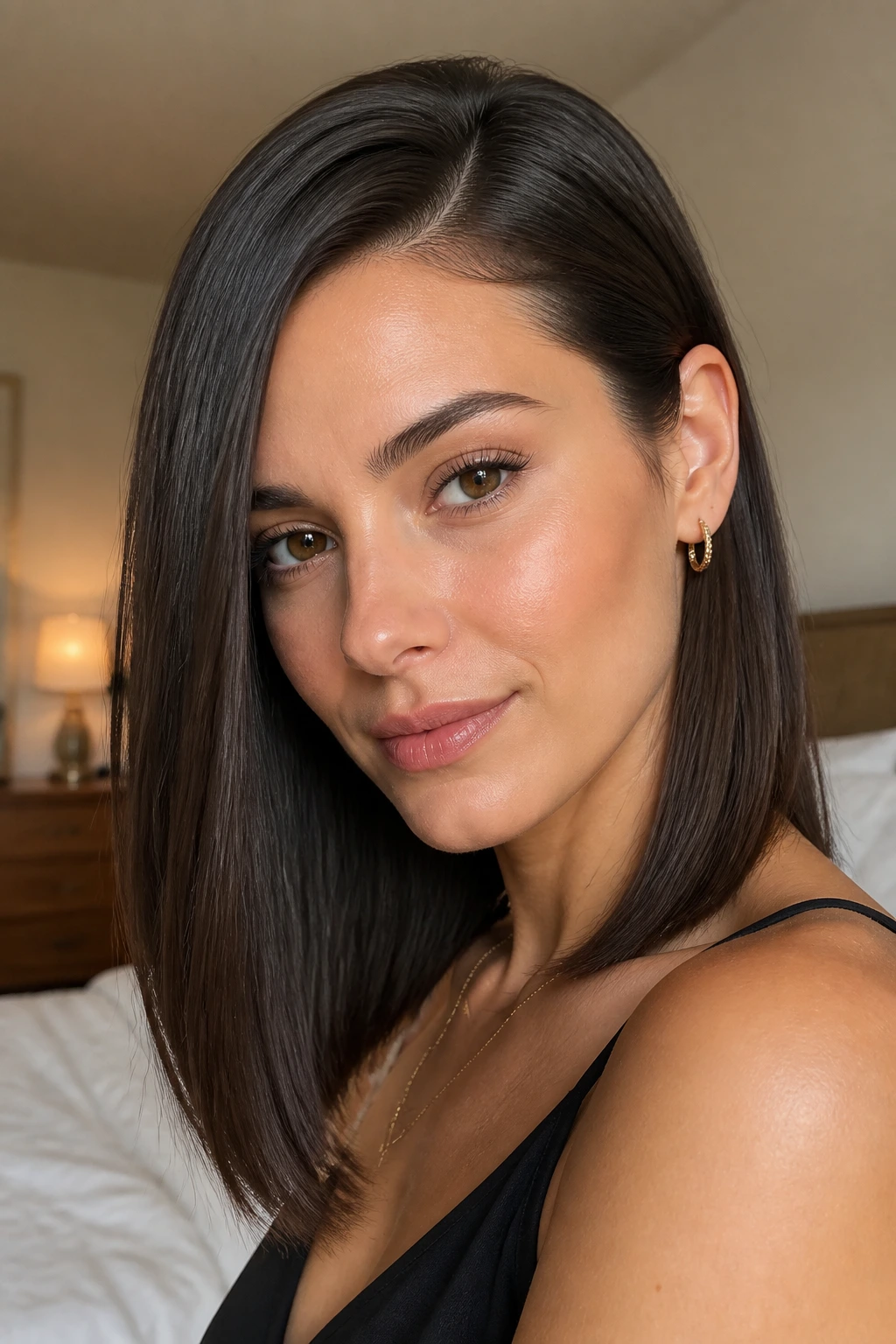
This is the style I reach for when thick hair needs to look sharp, not soft. Blow it out smooth or flatten it carefully with a heat protectant, then tuck one side behind the ear and let the other side fall clean. The result is simple, but not boring. Thick hair has enough mass to make the line look strong.
The part matters here. A middle part can feel severe. A slight off-center part often sits better because it keeps the face from being boxed in. If the hair is blunt at the ends, the tuck will look crisp. If it has a few long layers, the front will move a little more, which is useful if you want less polish.
One practical note: this style shows frizz. All of it. If the ends are dry, the cut will look rough fast. A pea-sized amount of smoothing cream through the mids and ends helps more than piling on oil at the roots.
13. The Low Messy Bun with Thick-Texture Volume
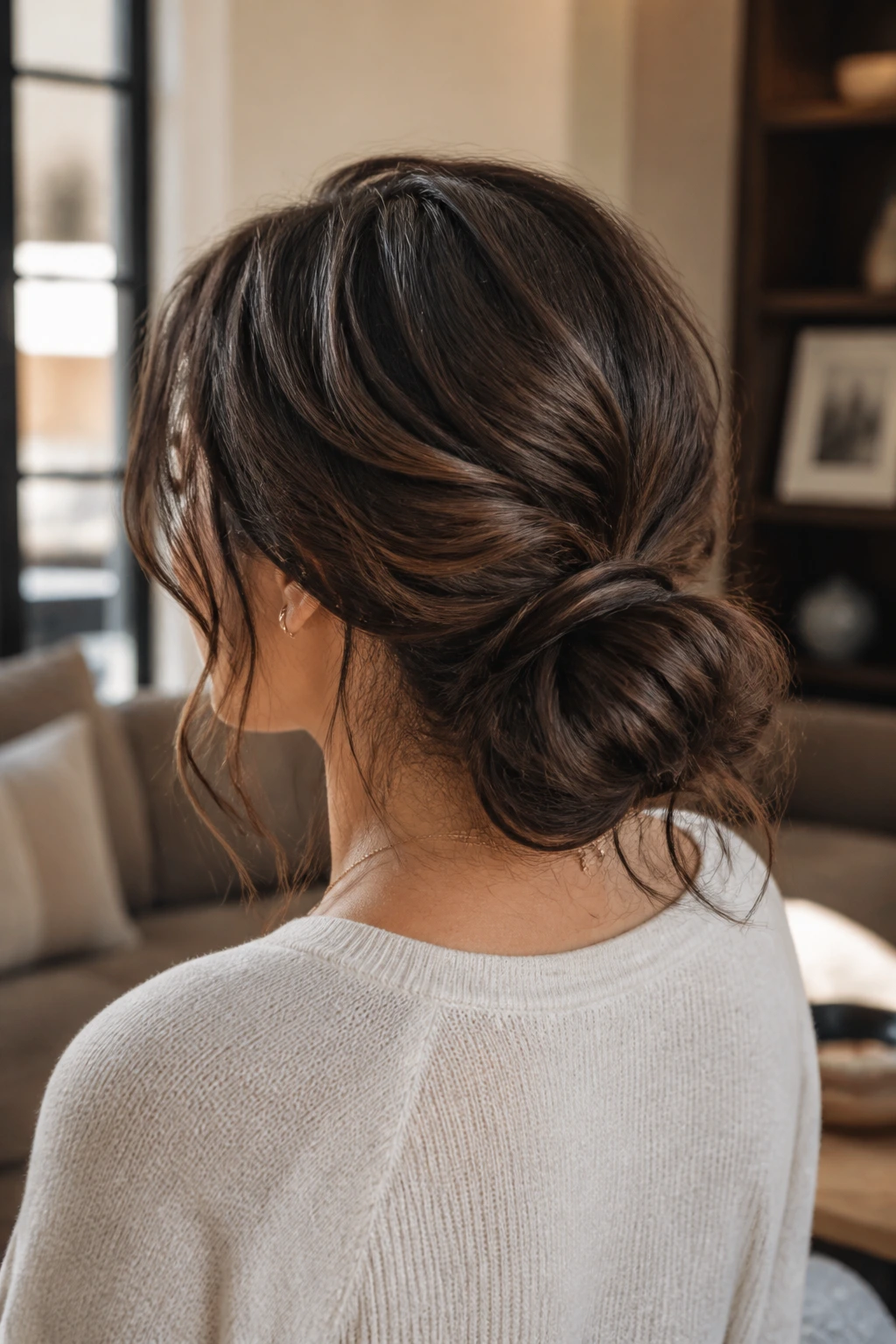
A low bun on thick hair should never look puny. That’s half the point. There’s enough hair to make the knot feel substantial, almost architectural, even when the finish is loose and slightly undone. At shoulder length, you may not get a giant ballerina bun, but you can get a rich, textured knot that sits neatly at the nape and doesn’t collapse halfway through the day.
Start by gathering the hair low, twisting it into itself, then pinning in a circular shape. If the hair is too slippery, rough it up first with dry shampoo or texture spray. That gives the pins something to hold. Leave a few pieces around the ears or temples if you want the style to feel softer.
This is one of the best styles for thick hair when you want the weight off your neck but still want the hair to look intentional. Clean but not severe. That’s the sweet spot.
14. Flipped-Out Ends with a 90s Feel
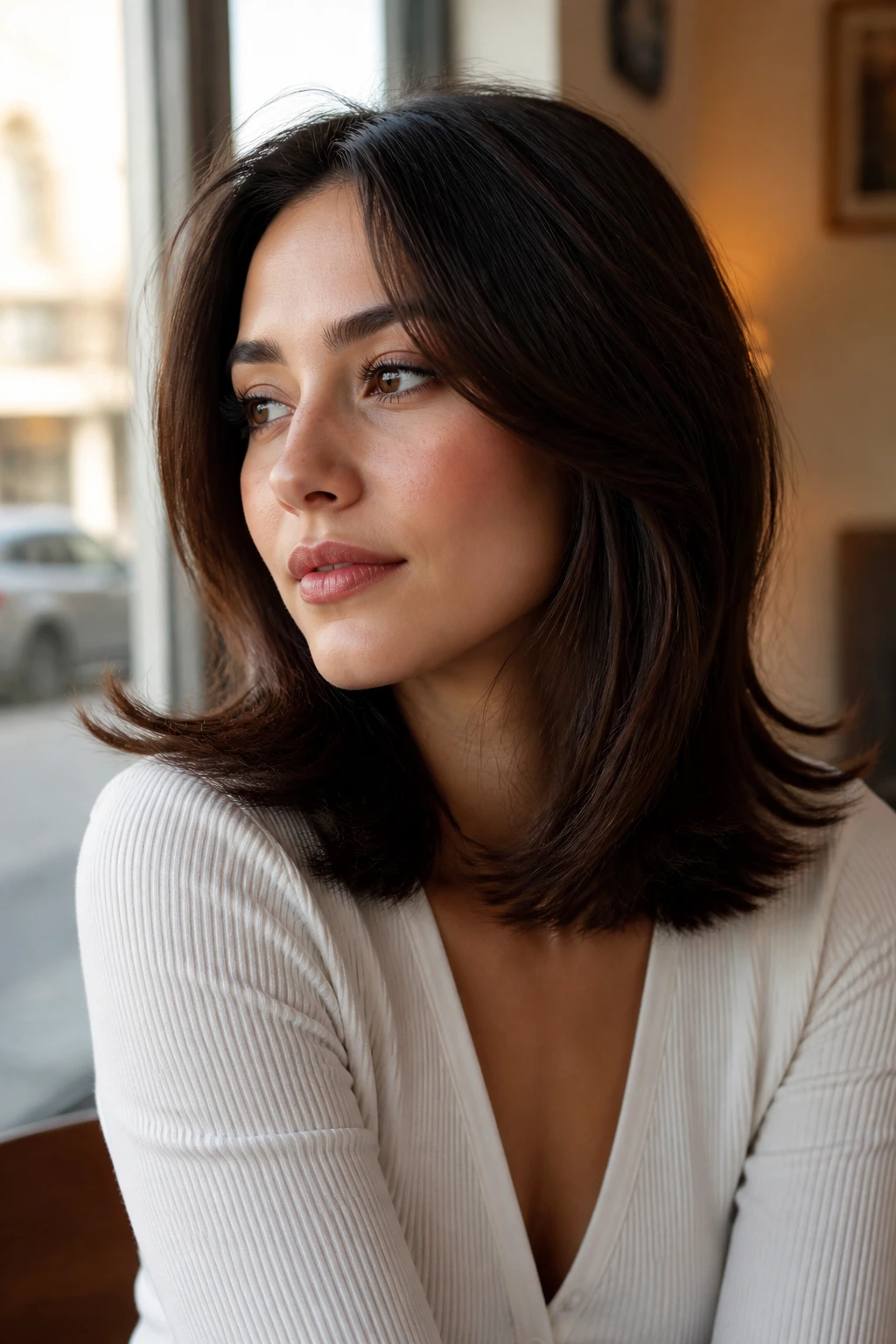
Flipped-out ends look especially good on shoulder-length thick hair because the cut line has enough weight to hold the bend. The style reads playful, a little retro, and more polished than straight ends without becoming curls. That outward flick at the bottom keeps the silhouette from feeling bottom-heavy.
Use a flat iron or medium round brush to turn just the last inch or two of hair outward. You do not need a huge flip. In fact, a smaller bend often looks better because it keeps the style from tipping into costume territory. Think neat, not exaggerated.
I’d choose this when the haircut is blunt or softly layered and you want the ends to feel alive. It’s especially useful if your hair naturally wants to turn inward. Flipping the ends out creates contrast, which thick hair likes.
Good pairing: center part, lip gloss, and a simple top.
Best caveat: if the layers are too short, the flip can fray instead of curve.
15. Curly Shoulder-Length Hair Shaped Like a Halo
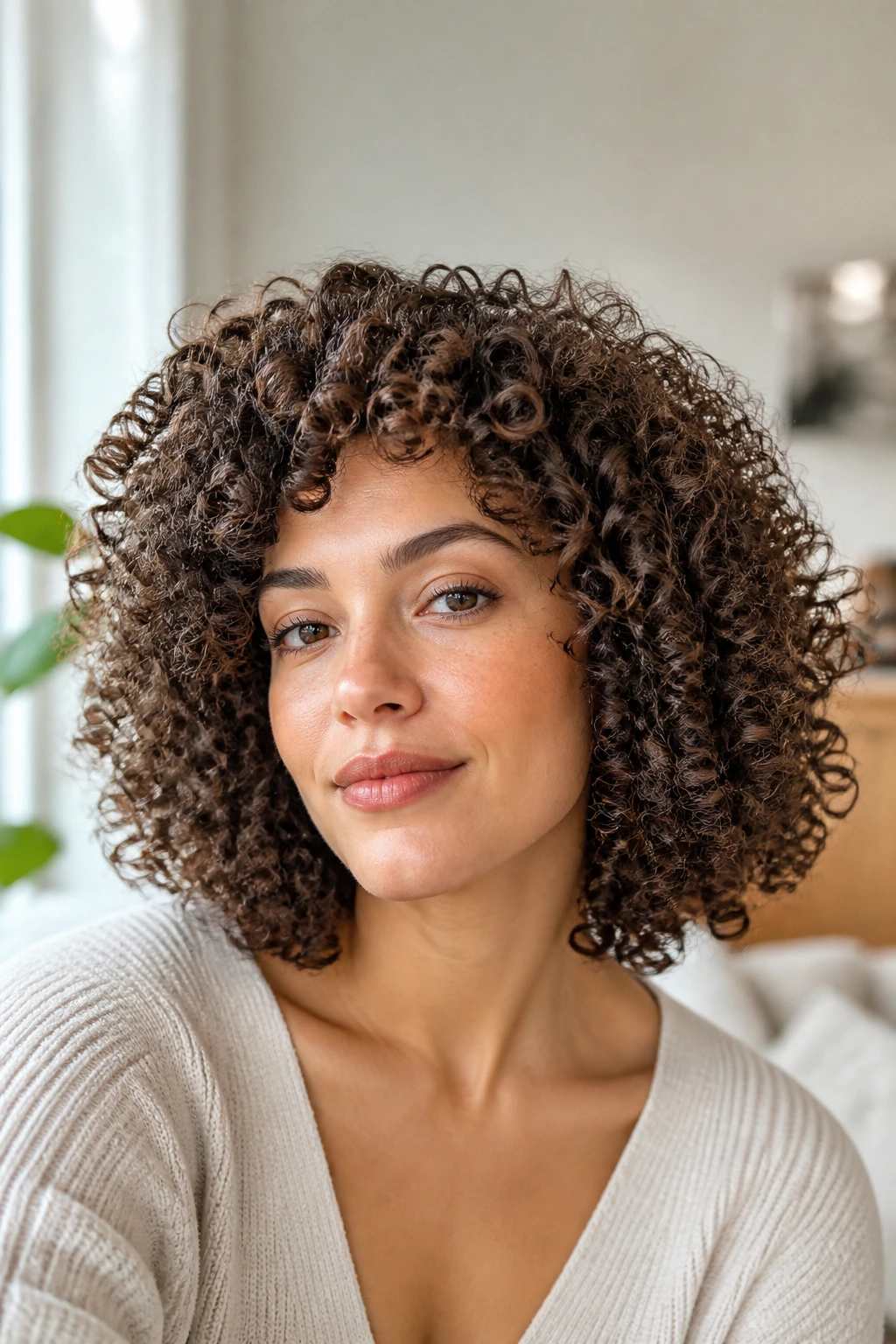
If your thick hair is naturally curly, shoulder length can be a very smart stopping point. Long enough to let the curls stack and spring. Short enough to keep the bottom from dragging under its own weight. The shape around the face should follow the curl pattern, not fight it. That means a dry cut or curl-by-curl shaping from someone who knows how curls behave when they’re dry.
The most flattering version usually has a rounded outline with slightly shorter layers on top to keep the crown from going flat. Diffuse on low heat, or air-dry with a leave-in and curl cream if your pattern is cooperative. Touch it too much while drying, and the frizz wins.
What makes it work
- Curls need room at the shoulders, not pressure.
- Heavy bottoms can stretch curls out.
- A good shape keeps the silhouette rounded rather than triangular.
This is one of the few styles where I’d rather keep some frizz than over-smooth it. Too much effort can flatten the life out of the curl pattern. A little halo is part of the charm.
16. The Grown-Out Wolf Cut with Real Edge
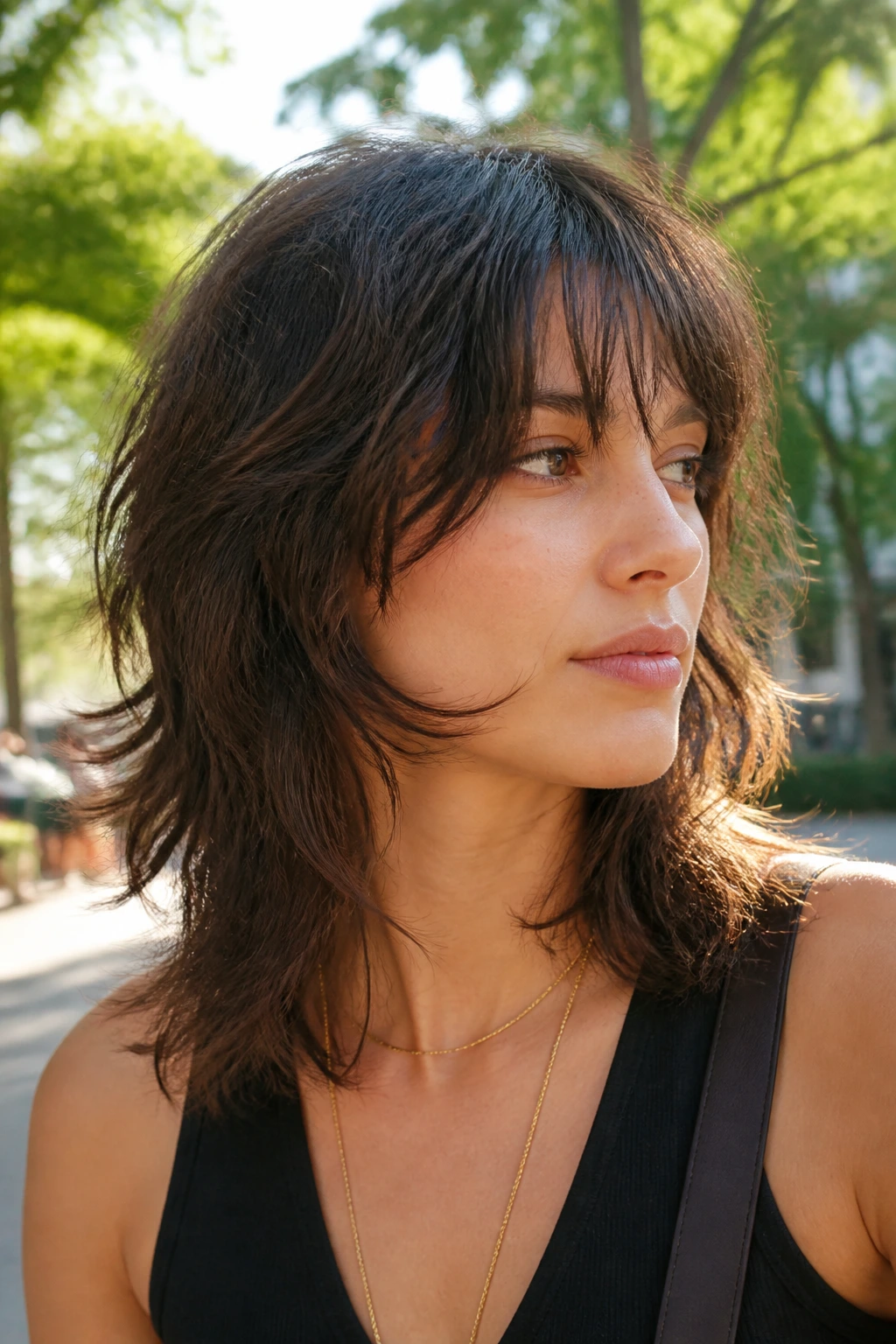
The wolf cut can look brilliant on thick shoulder-length hair when it’s kept slightly softer than the internet sometimes likes to make it. You want crown lift, shaggy movement, and shorter layers that break up the density. But if the layers are hacked in too short, the cut starts to feel lopsided instead of cool. That’s the line to watch.
What thick hair gives this style is body. Lots of it. The top can rise, the sides can move, and the ends can stay light enough that the whole thing doesn’t land as a heavy mop. Air-dry it with mousse or rough-dry with a diffuser if you want the texture to come forward. Straightened wolf cuts can look flat unless the shape is very precise.
This is the style for someone who likes a little chaos in the mirror and doesn’t mind that “messy” still requires planning. That’s true of most good haircuts, honestly. The best undone looks are rarely accidental.
17. The Braided Crown Half-Up
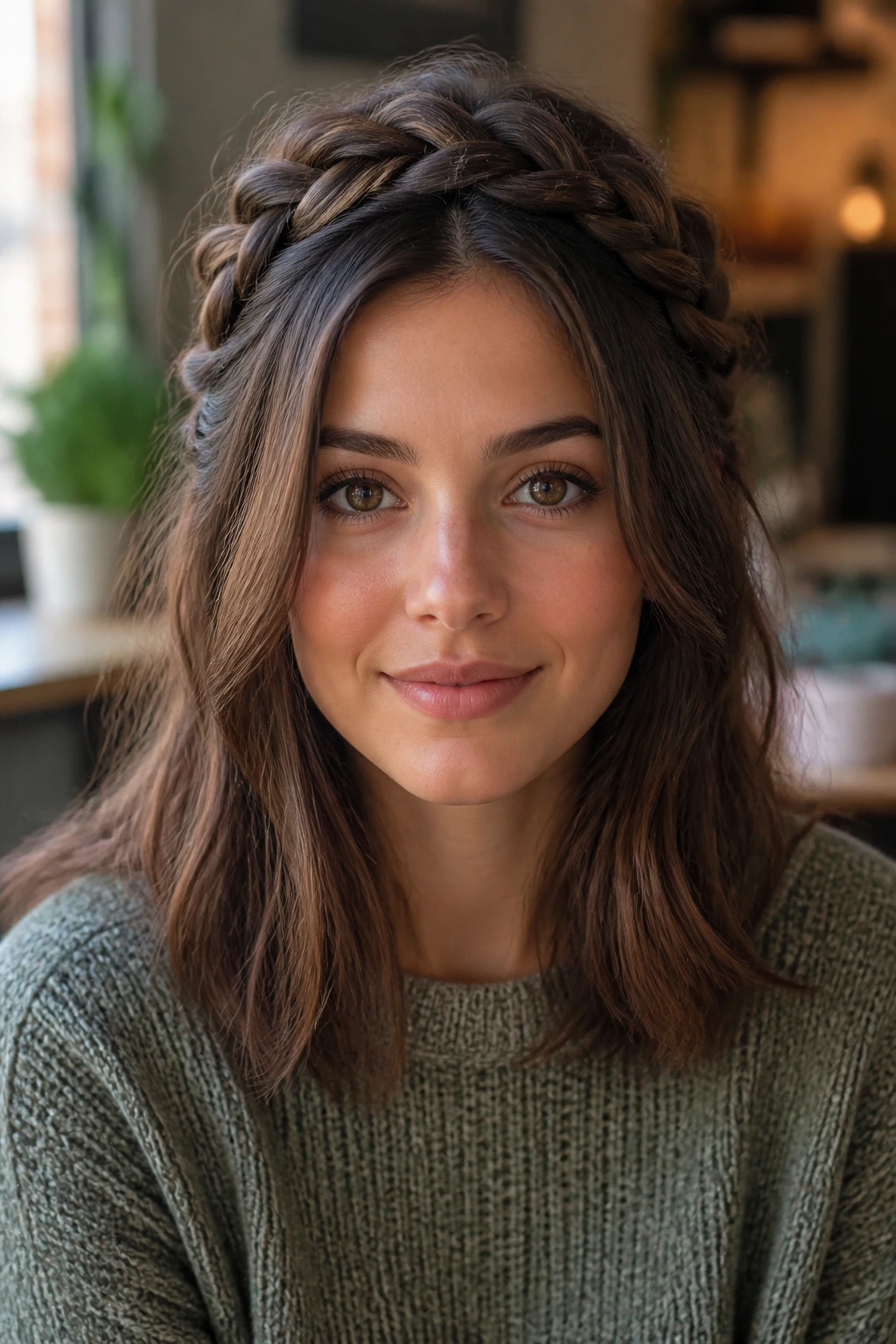
Thick hair makes a braid look full instead of skinny, which is one of its best gifts. A braided crown half-up style uses that fullness near the top of the head while leaving the rest loose and shoulder-grazing. It’s romantic, yes, but not fragile. The braid has enough meat on it to stay visible.
Take a section from each temple, braid or twist it back, then pin it across the crown. Leave the rest of the hair down in soft waves or natural texture. If the braid feels too neat, gently tug the outer loops once it’s pinned. That gives the crown more width and keeps the style from looking stiff.
This works especially well for second-day hair because a little grit helps the braid hold. Freshly washed thick hair can be too slippery unless you add texture spray first.
18. Slicked-Back Low Knot
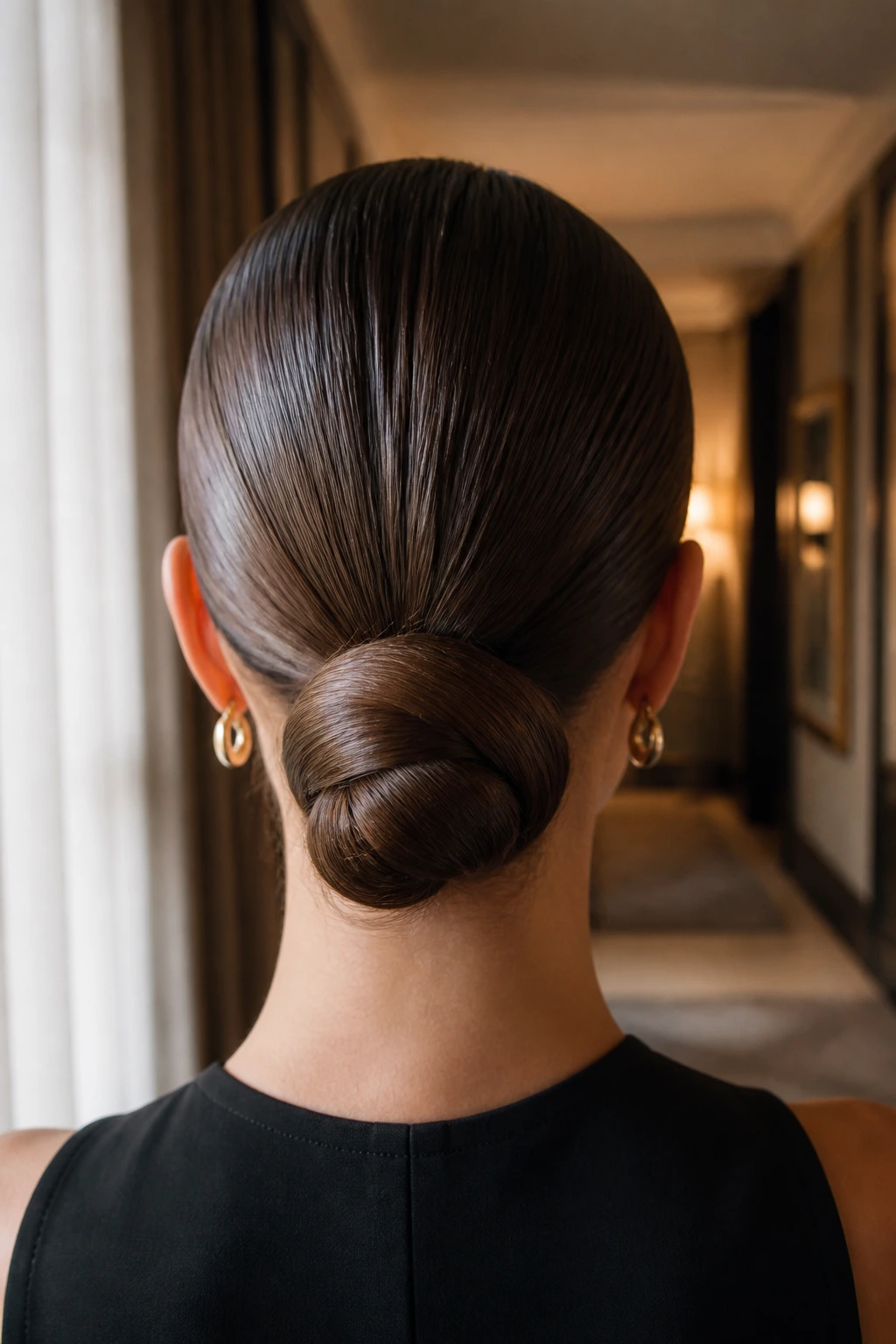
Sometimes thick hair needs to be put in its place. The slicked-back low knot does exactly that. It clears the face, shows off the cheekbones, and turns all that density into a neat knot at the nape. It’s not the softest style in the bunch, but it’s one of the strongest-looking.
Use gel or a strong styling cream through the front and sides, then smooth the hair back with a brush. The key is getting the surface flat before you twist the knot. If you try to slick after the bun is already pinned, the whole shape gets lumpy. Do the smoothing first. Then build the knot.
This look is especially good on thick hair that frizzes when the weather turns damp. A clean, polished knot can survive a lot more than loose styling can. And yes, it reads formal. It also reads practical, which is why I like it.
Best for: humid days, formal dinners, and sharp necklines.
Best finish: shine spray on the surface, not a heavy oil.
19. Air-Dried Layers That Show Off Natural Movement
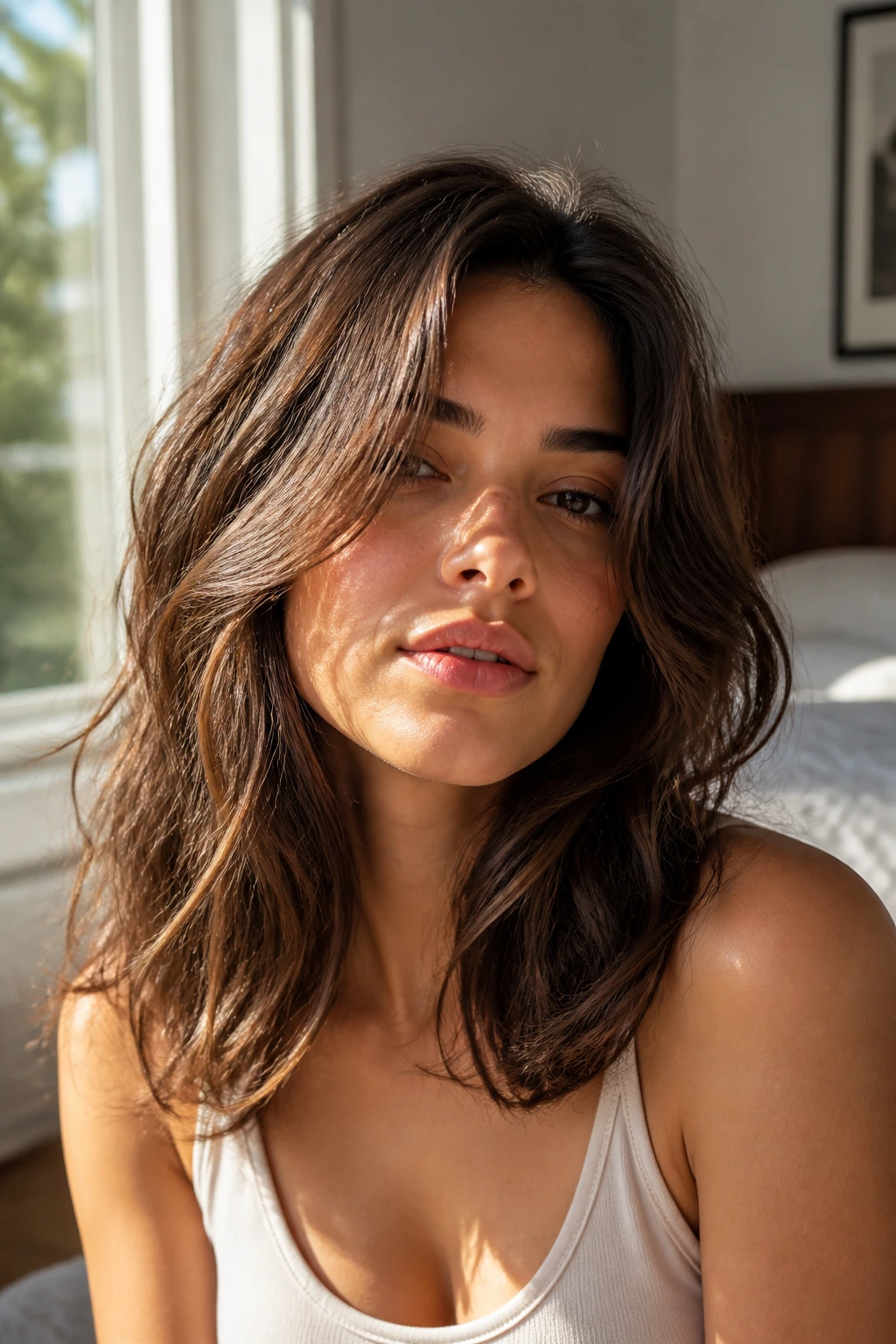
Some thick hair looks better when you stop trying to force it into a blowout. A shoulder-length cut with soft layers can air-dry into a shape that looks better than anything you could fake with a curling iron at 6:30 in the morning. The trick is to cut the hair so the natural bend has somewhere to fall. Without that structure, air-dried thick hair can go wide in all the wrong places.
Use a leave-in conditioner and a light cream, then scrunch once and leave it alone. If you keep touching it, the surface gets frizzy and the wave pattern stretches out. This style is about restraint. Not total neglect. There’s a difference.
I like this look best when the layers are long and the ends are a little piecey. It feels relaxed, but not unfinished. Thick hair can carry a lot of shape on its own, and at shoulder length, that shape becomes visible fast.
20. The One-Side Barrette Sweep
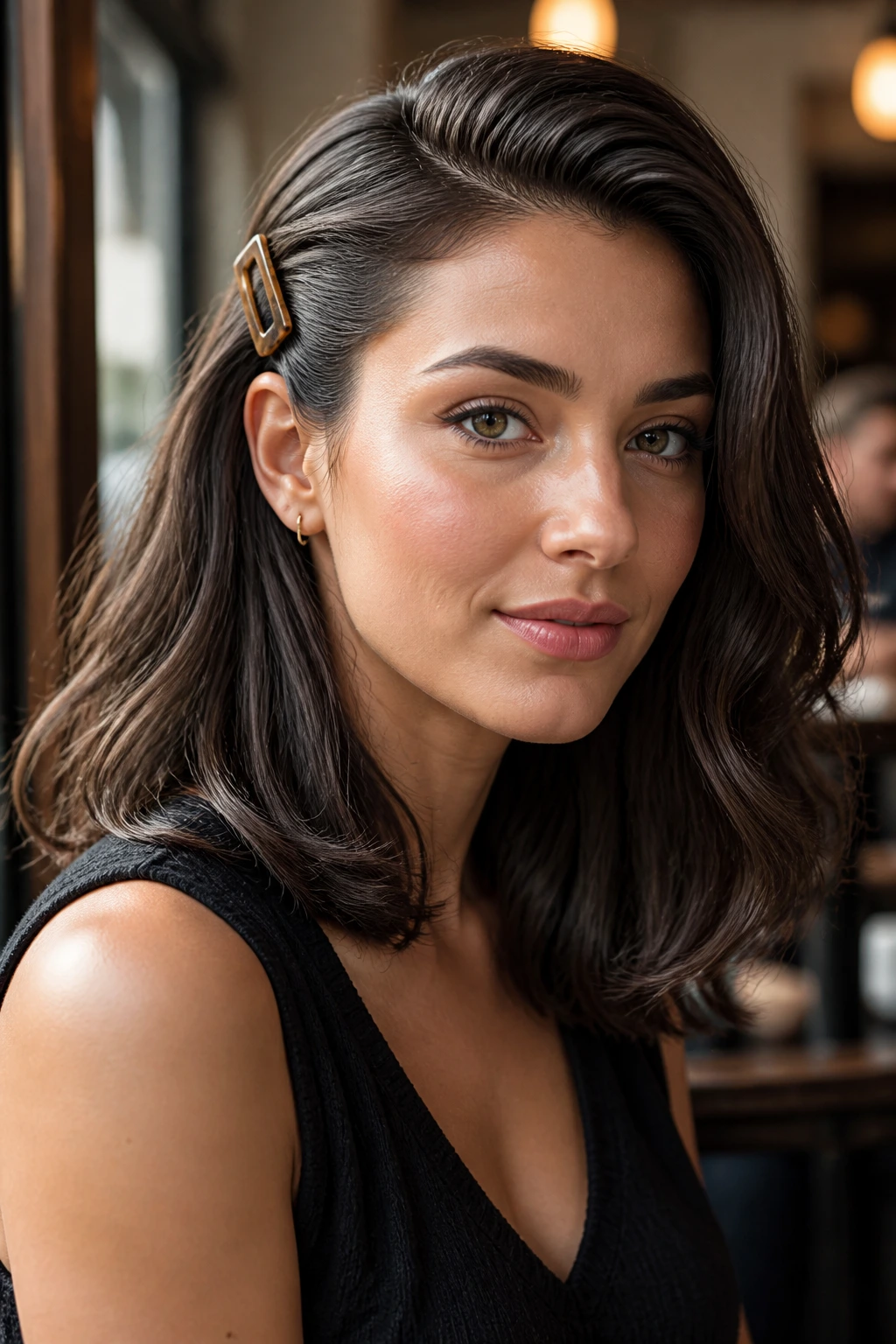
A single side sweep pinned with a barrette is one of those styles that looks simpler than it is. On thick shoulder-length hair, it creates a clean line across the face while letting the rest of the length stay loose. The pinned side stays controlled. The other side gets to move. That contrast keeps the whole thing from looking flat.
Choose a sturdy barrette or slide comb, not a flimsy decorative clip that slides off dense hair after ten minutes. Tuck a section from the front over the ear and secure it just above the temple or behind the ear, depending on how much face you want to show. Leave the rest smooth or softly waved.
This style is especially useful when the front sections are a little oily and the back still looks fresh. It buys you another day. Sometimes that’s all a good hairstyle needs to do.
Why Shoulder Length Works So Well on Thick Hair
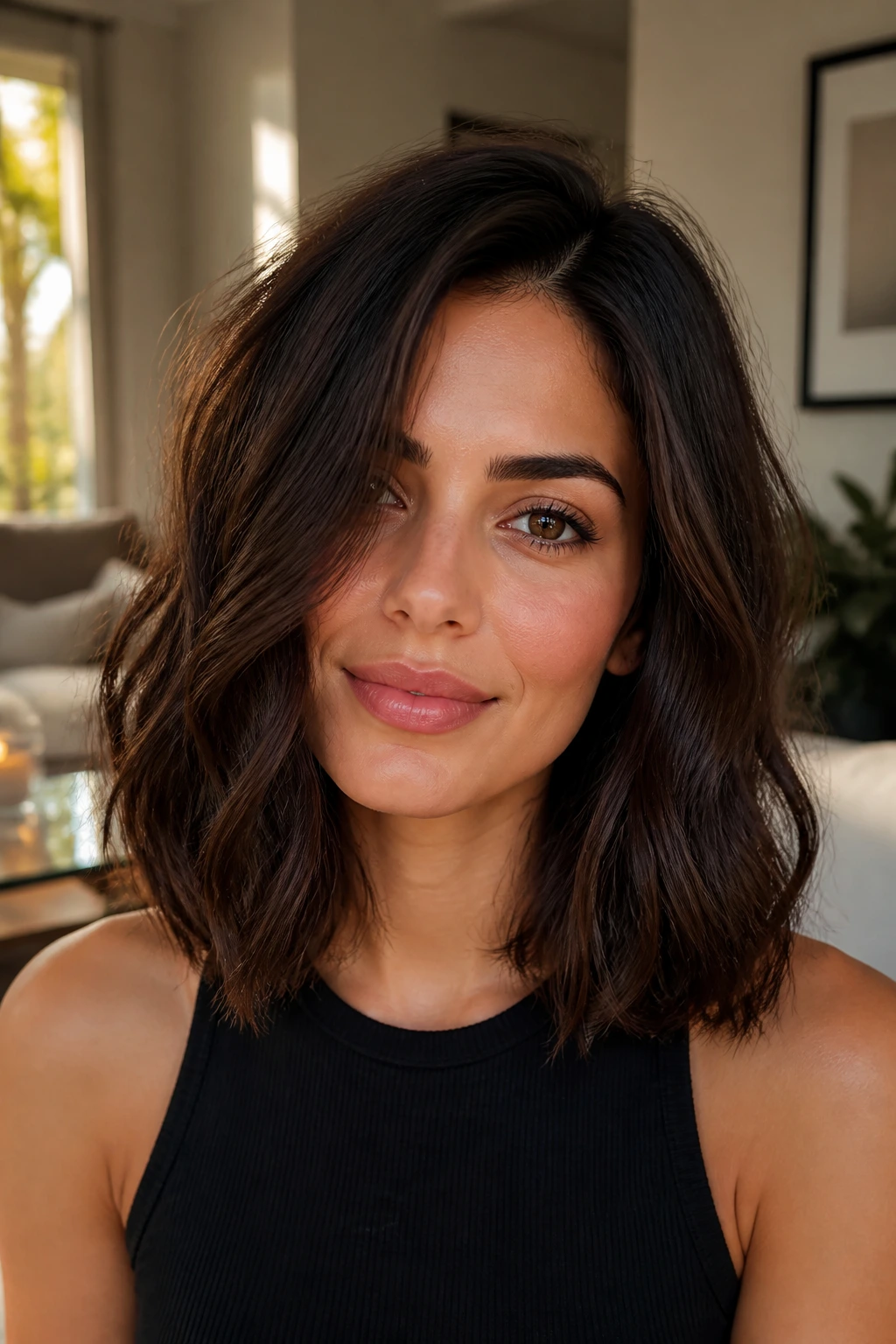
Shoulder length sits in a strange but useful place. It’s short enough to remove some of the load that thick hair carries, but not so short that the ends spring outward like a bell. That balance matters. Thick hair can turn bulky fast when the cut is too wide at the bottom, and it can lose its shape when it’s too long and too heavy. Shoulder-grazing length usually gives you the best middle ground.
Another advantage: the haircut still has enough weight to hold shape. A blunt lob can look sleek because the density supports the line. Layered shoulder-length cuts can still feel lush because there’s enough hair to keep the movement from turning wispy. That’s why these styles can lean polished, romantic, or edgy without needing a complete reset every morning.
I also think shoulder length is friendlier to real life. It fits into a claw clip. It works with a round brush. It can be curled in sections without taking forever. And when you’re tired, the hair still lands on your shoulders in a way that looks finished instead of half-grown-out. There’s no sense in pretending that convenience doesn’t matter. It matters a lot.
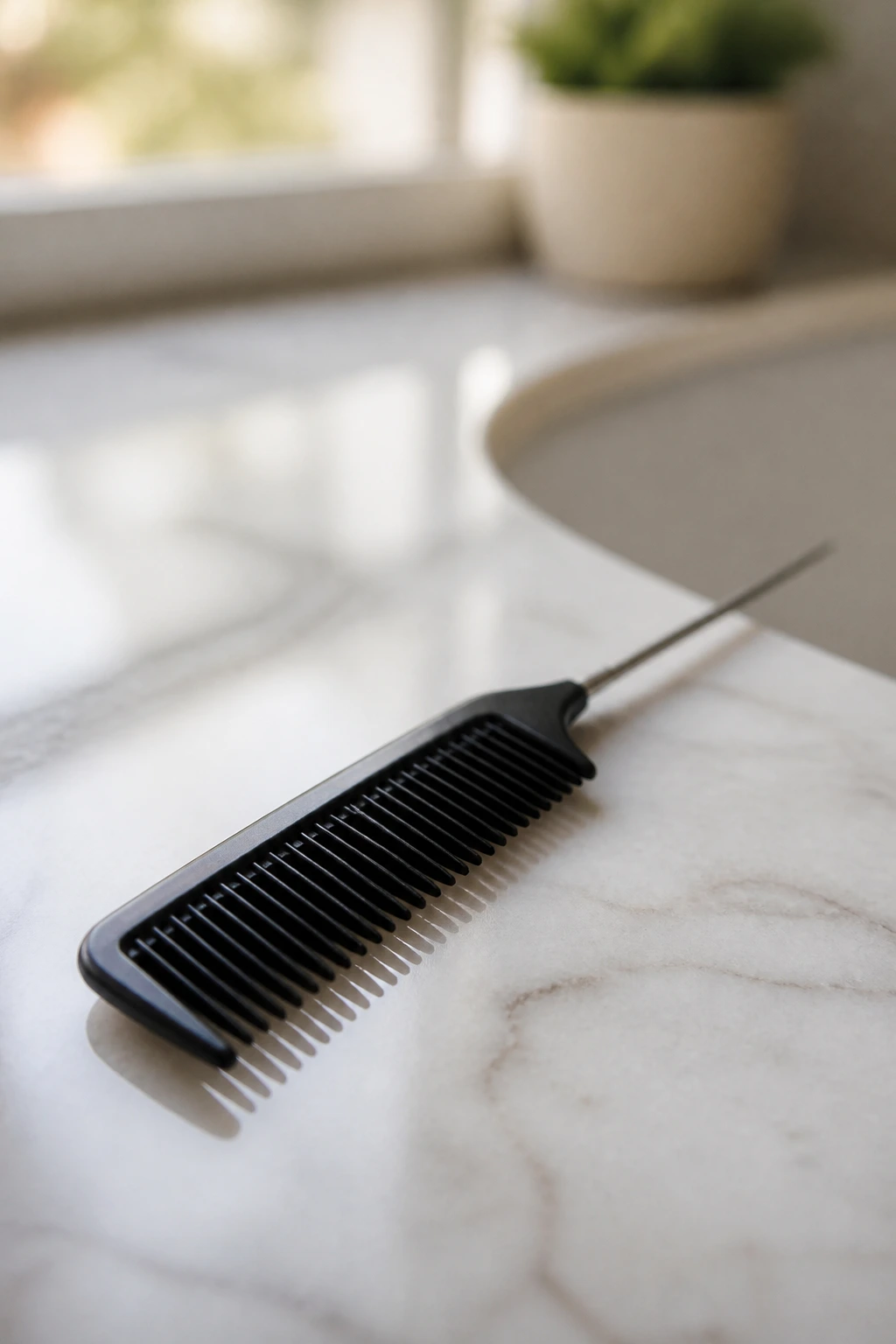
The Tools That Make These Hairstyles Easier
-
Tail comb: Clean parts and sectioning without fighting through thick roots.
-
Sectioning clips: Keep heavy hair divided while you blow-dry or curl in manageable pieces.
-
1.25-inch curling iron or wand: A sweet spot for shoulder-length waves that won’t collapse into tight curls.
-
Flat iron with rounded edges: Useful for bends, flips, and sleek tucks without sharp crease lines.
-
Blow dryer with nozzle attachment: Directs air at the roots so thick hair dries smoother and faster.
-
Round brush, medium to large barrel: Helps with volume, curtain bangs, and rounded ends.
-
Paddle brush: The best tool for smoothing a blunt lob or straightening thick hair without over-stretching it.
-
Diffuser: A real help for curls and waves that need shape without frizz.
-
Claw clips and strong pins: Thick hair needs hardware that can grip, not decorative nonsense.
-
Heat protectant: Use it before any iron or blow-dry; thick hair may feel sturdy, but it still dries out at the ends.
Smart Product Choices for Thick Shoulder-Length Hair
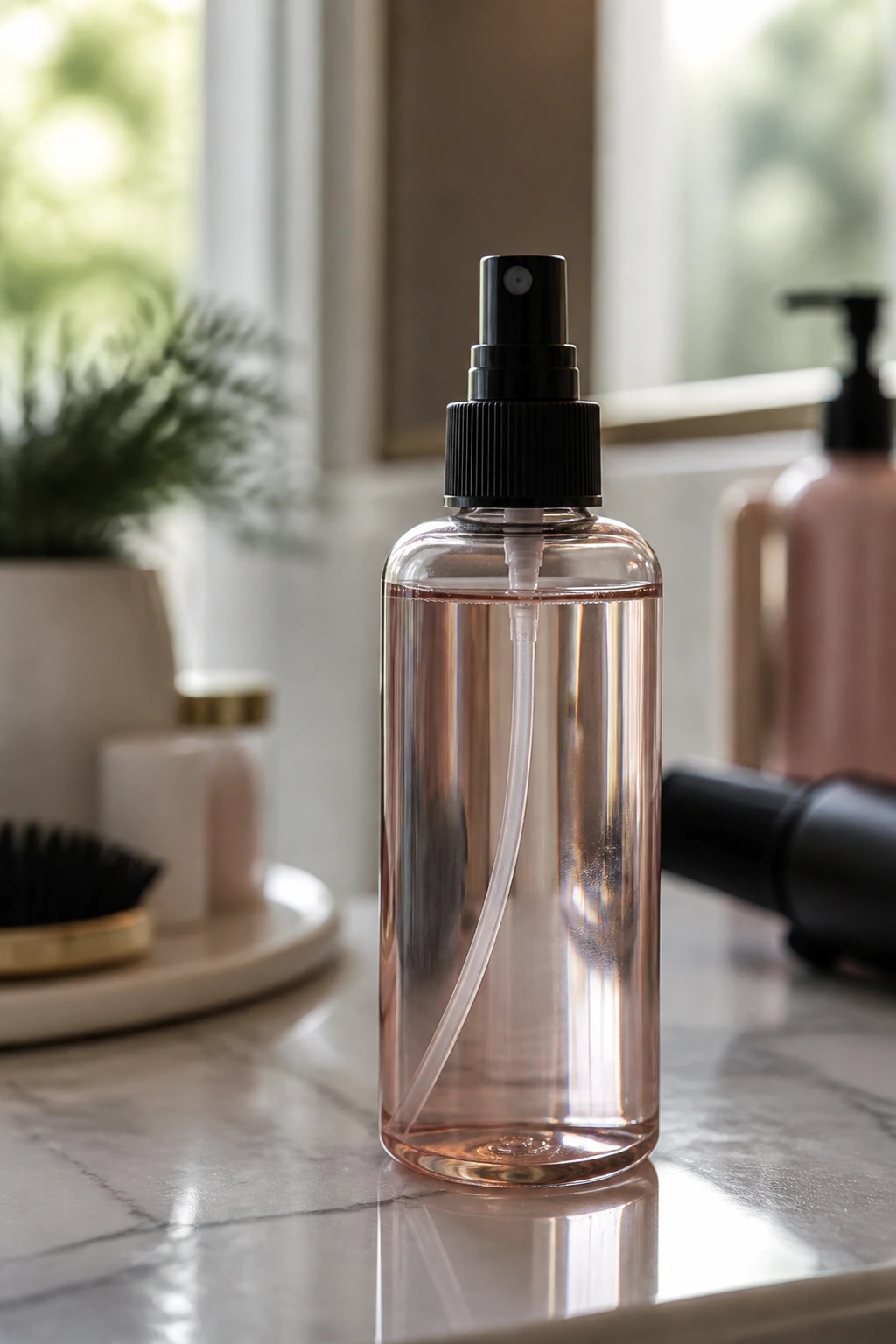
Thick hair is not the place to pile on every heavy cream you own. That’s the fastest route to limp roots and dull ends. I like to think in layers: something for protection, something for control, something for finish. A lightweight heat protectant goes first. A mousse or root lift spray helps if you want volume. Then a smoothing cream or serum goes only through the mids and ends.
The texture of the product matters as much as the label. Thick hair usually likes formulas that spread thinly and disappear into the strand instead of sitting on top. If a cream feels waxy in your hands before it even touches your hair, that’s a warning sign. Same with heavy oils. A drop or two at the ends can be enough. More than that, and the style starts to close in on itself.
For hold, I’d rather have flexible spray than shellacking. Thick hair can carry its own body. What it usually needs is direction. A light-to-medium hold spray keeps waves, flips, and pinned styles in place without making them crunchy. Dry shampoo is useful too, but only if you use it where the hair actually gets oily—usually the roots around the temples and crown, not all the way through the lengths.
How to Wear These Styles in Real Life
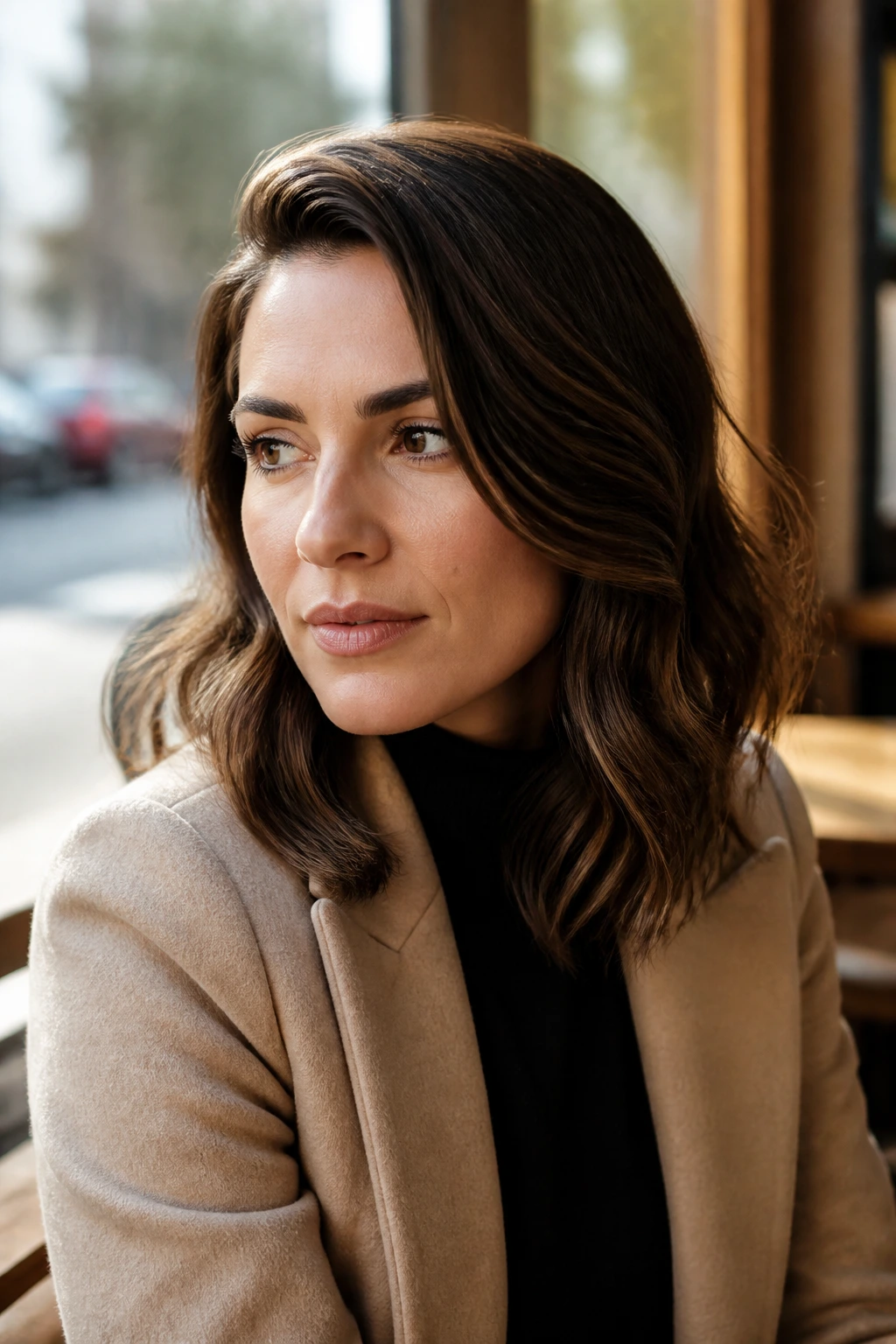
Workdays: The blunt lob, sleek tuck, and side-part layers do the cleanest job when you need hair to look tidy by 9 a.m. They sit well with collars, blazers, and anything structured at the neck because the shape stays visible instead of puffing into your clothes.
Off-duty days: Half-up styles, claw-clip twists, and air-dried layers are the move when you want the hair to look deliberate without spending twenty minutes with a brush. They tolerate a little bend, a little frizz, and a little second-day grit.
Dressier plans: Deep side-part waves, braided crowns, and the slicked-back low knot feel more dressed up because they show off the thickness instead of hiding it. Pair them with a neckline that leaves room around the shoulders. Thick hair can overwhelm a crowded top half.
Humid or rainy weather: Go low, tight, or pinned. Loose curls and fluffy layers can swell fast when the air turns damp. A knot, braid, or slicked style keeps the shape under control and saves your patience.
Extra Tips That Make Thick Hair Behave Better
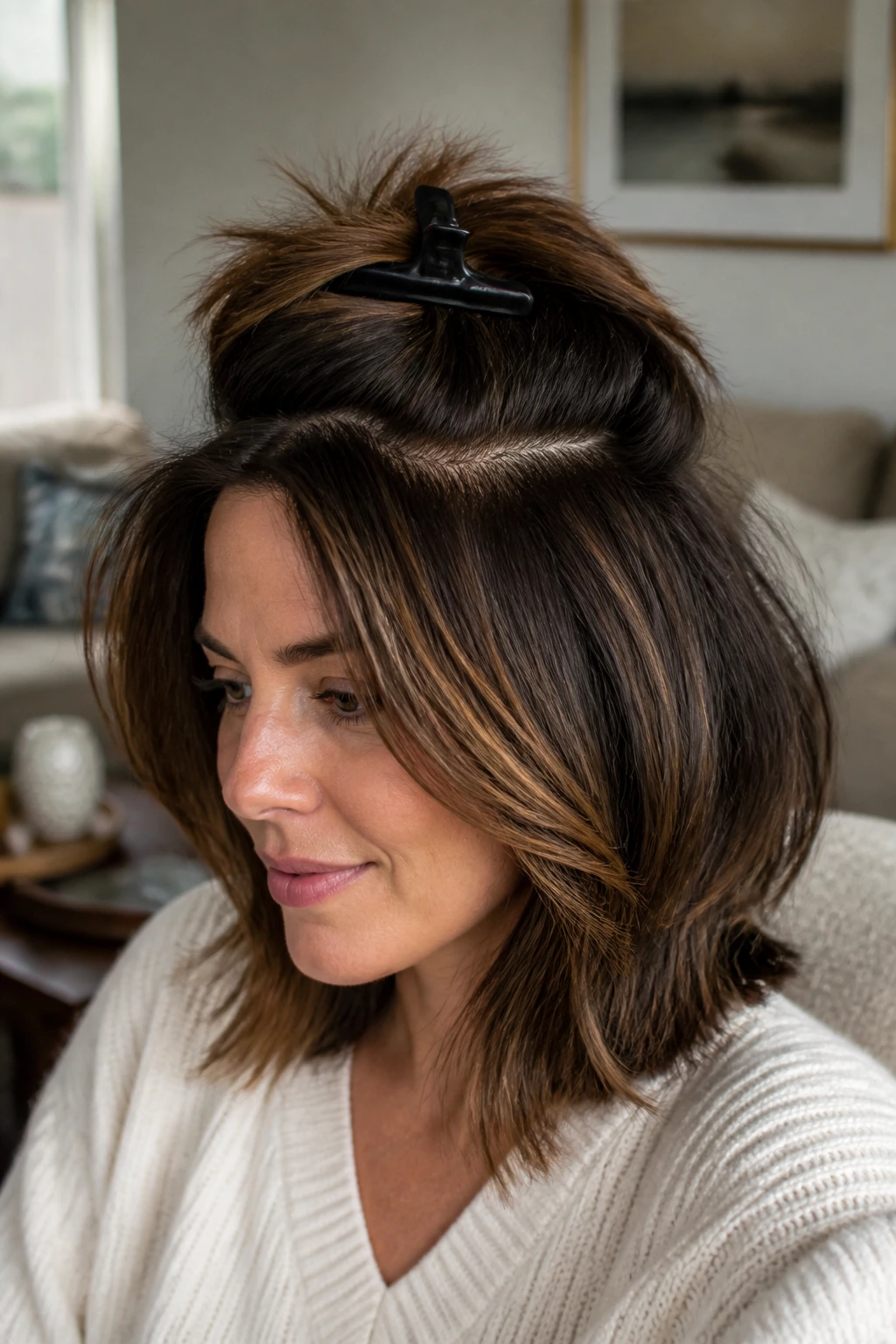
Volume Boost: Clip the roots at the crown while the hair cools after blow-drying. That little lift at the top keeps thick shoulder-length hair from collapsing into the sides. I use this trick on blunt lobs all the time.
Smoothing Move: If the ends look bulky, run a flat iron only over the last inch of hair, then curve the iron slightly under or out. Do not clamp the whole head. That’s how you get flat roots and puffy ends. A tiny amount of control goes further here.
Texture Fix: Thick hair often looks best when the surface has some separation. A pinch of texturizing spray at the mids, then a quick scrunch, gives waves and shags a more lived-in finish. Too much product and you lose the movement.
Make-It-Yours: If your hair is coarse, use a leave-in with slip. If it’s fine but dense, keep the product lighter and focus on lift at the roots. If your hair is curly, diffusing and shaping with your hands usually beats brushing it into obedience.
Common Mistakes That Make Thick Hair Look Bigger Than It Is
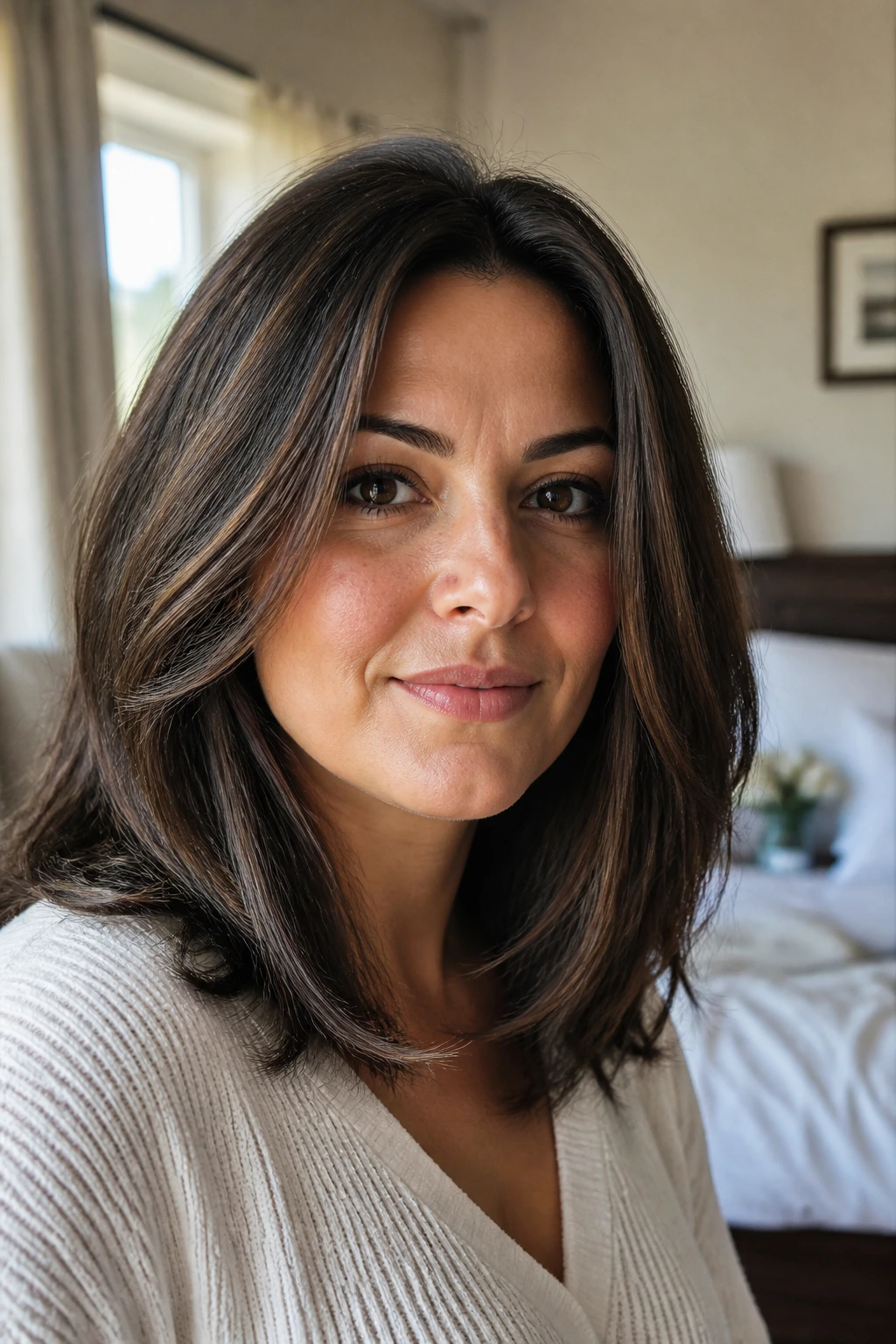
The first mistake is over-thinning. Thick hair can handle some internal weight removal, but too much texturizing at the ends leaves you with frizz, gaps, and weird puffing. If the hair starts to look see-through in the wrong spots, the cut is probably too shredded. Ask for controlled layering, not random razor work.
Another one: using too many hot tools on the same section. Thick hair often needs two passes, not five. Every extra pass adds dryness and makes the cut look rougher. If a wave won’t set, the section is probably too large or the iron too small for the shape you want. Fix the method, not just the heat.
A third mistake is placing the shoulder-length cut too high on the neck. That’s how you get the triangle effect. If the line sits too close to the jaw, thick hair can explode outward at the shoulder. A better cut usually lands a little lower than people expect.
And then there’s product overload. Thick hair can carry cream, oil, mousse, and spray, but not all in heavy doses at once. If the roots go flat and the mids feel sticky, you’ve gone past the point of help. Start smaller. Add only where the hair actually needs it.
Variations and Adaptations to Try
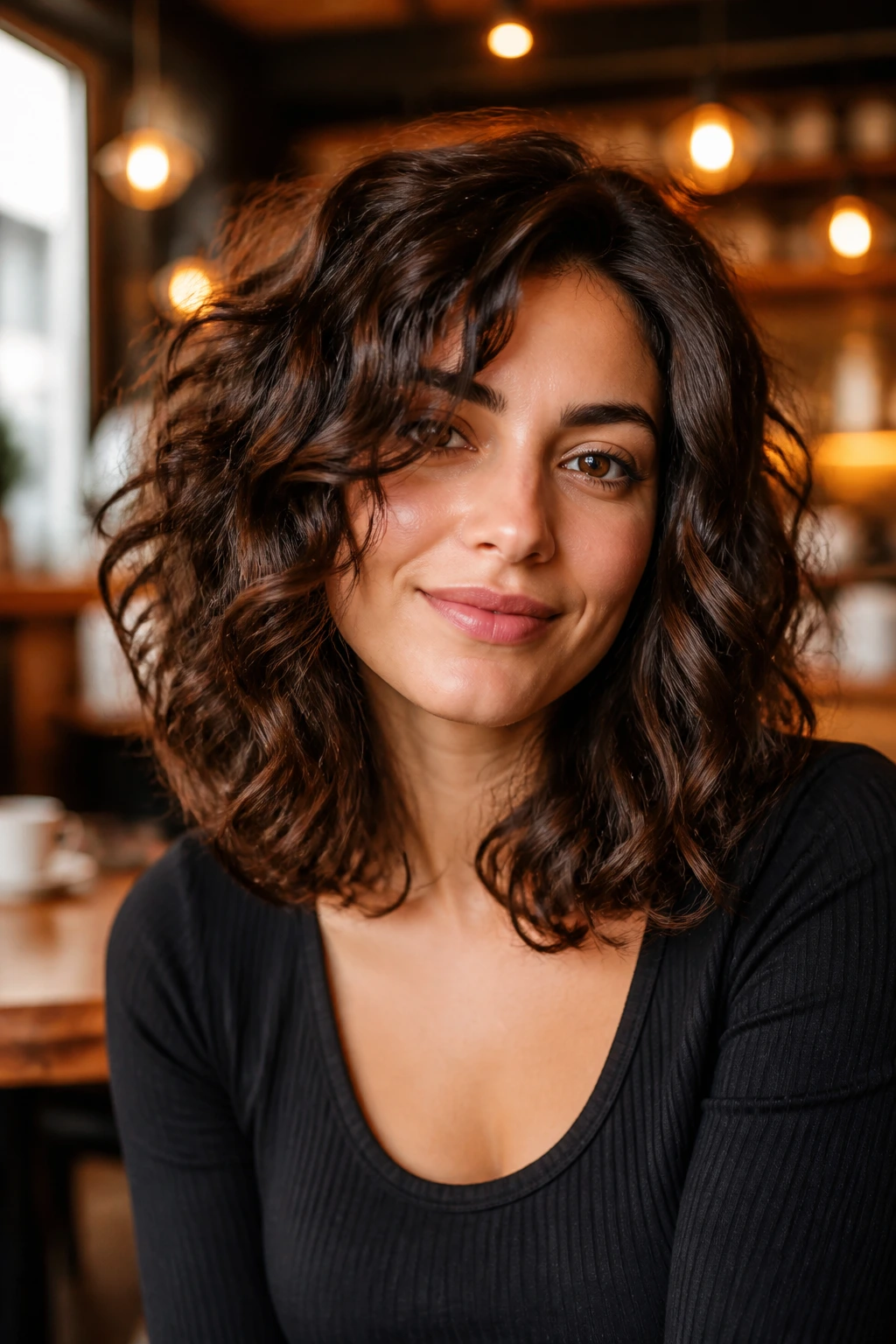
The Curly-Friendly Shape: Ask for the same shoulder-length idea but cut dry so the curl pattern can be seen as it sits. That keeps the shape from shrinking too high once it dries. It’s a calmer choice than forcing curls into a straight-hair blueprint.
The Low-Maintenance Air-Dry Version: Keep layers long, the outline soft, and the finish natural. This works well if you want one of these shoulder-length looks but do not want to heat-style every morning. A leave-in and a cream are enough for many thick heads.
The Polished Office Version: Choose the blunt lob, side-part layers, or sleek tuck and keep the surface smooth. These three styles handle professional settings without looking stiff. They also recover well after a midday tuck behind the ear.
The Event-Ready Upgrade: Add waves, a deep side part, or a braided crown and pin the front away from the face. Thick hair gives these styles enough fullness that they do not need much extra decoration. One strong barrette or a pair of earrings can do the rest.
The Fringe Swap: If full bangs feel like too much, choose curtain bangs or bottleneck bangs instead. They soften the face without sitting flat and greasy against the forehead by lunchtime. That compromise is often the right one.
Questions People Ask Before Cutting Thick Hair to Shoulder Length
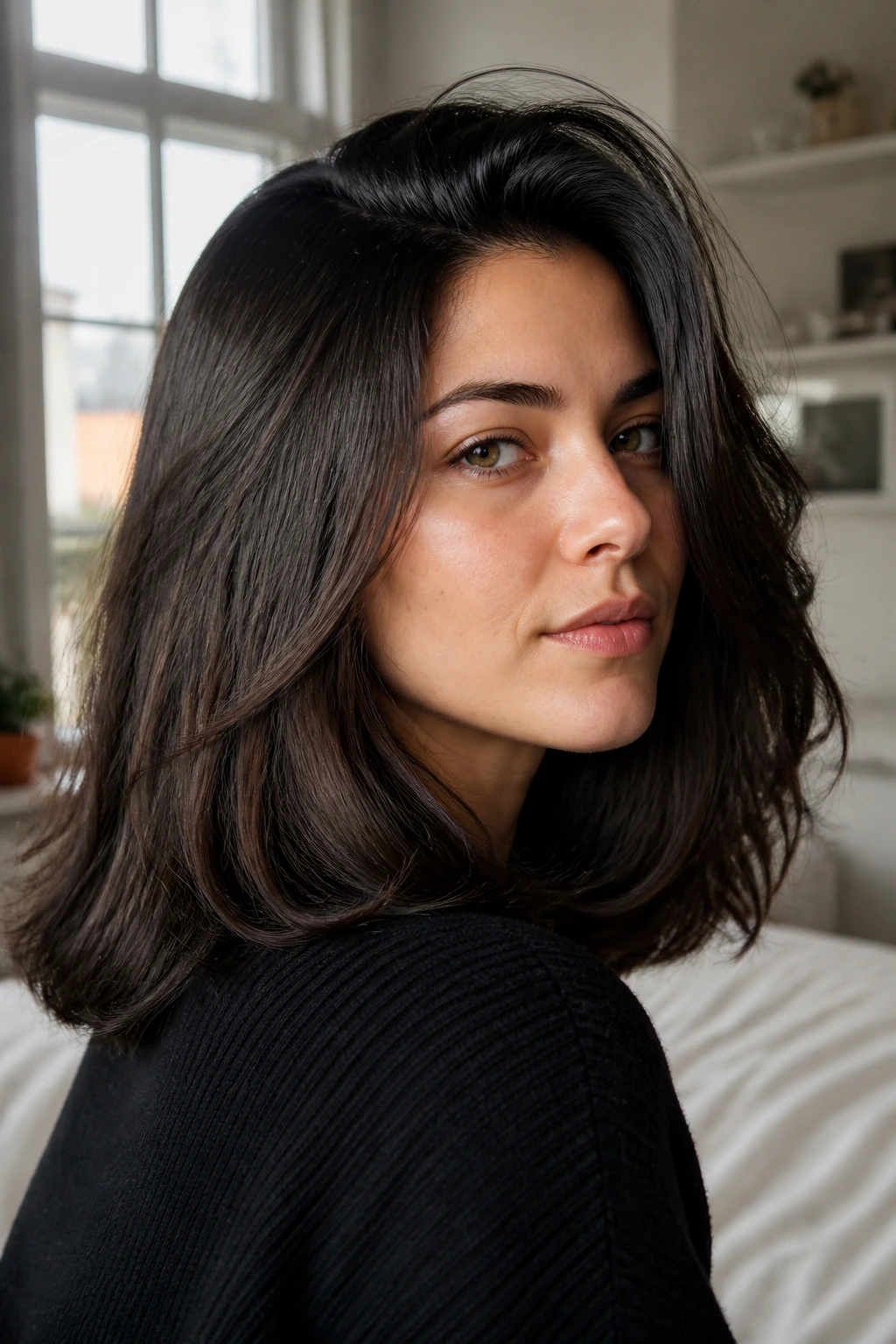
Will shoulder length make thick hair puff out?
It can, if the cut is too blunt in the wrong place or the layers are too short. A shoulder-length style works best when the perimeter is controlled and the weight is left where the hair needs it. The cut should shape the bulk, not fight it.
Are layers or blunt ends better for thick hair?
Both can work. Blunt ends create a cleaner, heavier line, while long layers remove weight and add movement. If your hair is especially dense, I usually lean blunt at the bottom with soft layers only where you need motion.
Can thick curly hair stay shoulder length without looking triangle-shaped?
Yes, but the shape has to be planned around the curls. A rounded outline, careful layering, and enough length at the bottom help the curls stack without flaring out sideways. Dry cutting often gives the best result.
What’s the best way to style thick hair fast in the morning?
A claw-clip twist, a half-up, or a low bun. Those three look intentional even when they take less than five minutes. Thick hair has enough volume that the style still looks finished.
How do I stop shoulder-length thick hair from flipping out awkwardly?
Either commit to the flip and make it a style, or smooth the ends under with a brush or flat iron. The awkward version usually happens when the cut sits right on the shoulder and the ends catch on clothing. Moving the length slightly above or below the shoulder line helps.
Do these styles work without heat?
Several do. Air-dried layers, the claw-clip twist, braided crown looks, and low buns all work beautifully without a blowout. If you want the smoother looks, though, a little heat usually makes the line cleaner.
What if my thick hair is also frizzy?
Keep the layers longer, use less thinning, and lean on smoothing products at the ends only. Frizz plus short layers is a rough combination because it makes the shape expand in every direction. A calmer cut usually behaves better than a heavily textured one.
A Good Shoulder-Length Cut Does the Heavy Lifting
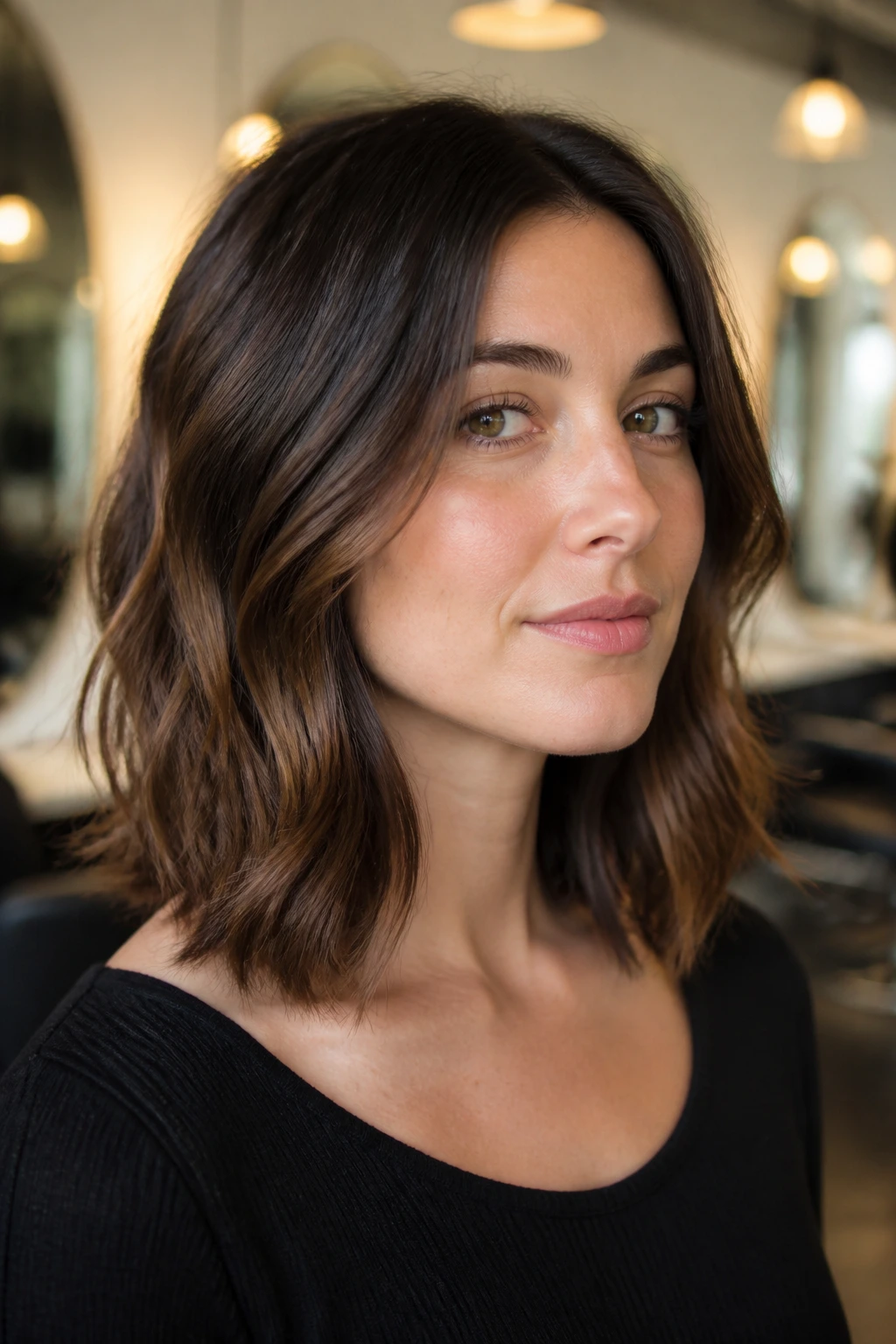
The best shoulder-length styles for thick hair don’t try to erase thickness. They shape it. That’s the whole trick. A good cut gives the hair somewhere to fall, somewhere to bend, and somewhere to stay put when you’ve got five minutes and a brush that has seen better days.
I like this length because it’s practical without looking plain. You can wear it blunt, wavy, pinned back, clipped up, or brushed smooth, and the hair still has enough body to look like it means something. That’s the real gift of thick hair at this length: it can hold a shape, then change its mind by the next day.
If you’re choosing between a few of these looks, start with the one that matches how you already wear your hair. The smartest haircut is the one that works on your busiest morning, not the one that only looks perfect in a salon mirror.
