



Medium hairstyles for thick hair over 40 can feel like a negotiation between two stubborn forces: the hair wants to live big, and the wearer wants it to behave. Too much length drags the whole shape down. Too many layers, and the ends turn wispy while the crown puffs up like it’s had three espressos.
The sweet spot is usually somewhere between collarbone and shoulder length. That range gives thick hair room to move, but not enough room to build a mushroom cap around the sides. It also plays nicely with the little texture shifts that show up over time — coarser gray strands, flatter roots, drier ends, and bangs that suddenly have opinions of their own.
What actually works here is not one magic haircut. It’s a set of cuts that handle density in different ways: some remove weight from the inside, some keep the outline blunt, some lean into wave, and some use fringe to soften the face without swallowing it. A good medium cut on thick hair should look intentional on day one and still make sense on day three, which is a far more honest test than a salon mirror under flattering lights.
Why These Cuts Earn Their Place
Weight Control: Thick hair needs bulk removed in the right places, not everywhere at once. The best medium cuts keep the outline clean while taking pressure off the interior.
Face Framing: Mid-length hair gives you enough length for cheekbone and jawline shaping without dragging the face down with extra bulk at the sides.
Lower Daily Fuss: Shoulder and collarbone lengths usually dry faster and need fewer passes with a brush than longer thick hair.
Gray-Friendly Shape: Softer layers and fringe break up a strong regrowth line, which helps when the hair at the part feels coarser or more resistant than the rest.
Easy Updos: Medium length still twists into clips, half-up looks, and low knots. You’re not giving up flexibility.
Better Growth-Out: If you change your mind, these cuts grow out in a way that doesn’t punish you for waiting too long between trims.
How to Choose the Right Shape for Dense, Mid-Length Hair
Thick hair is not one texture. That’s the first thing most haircut advice gets wrong. A dense straight mane, a wavy head of hair that blooms in humidity, and a curly pattern that shrinks upward all need different weight placement. If you treat them the same, you usually end up with a puffed-up outline and a frustrated morning routine.
Straight, dense hair usually likes a blunt edge or very controlled layers. You want the cut to keep a clean line, because straight thick hair can go stringy fast if the layers are too eager. The good news is that straight thickness can hold a shape for a long time once it’s set.
Wavy hair needs a little more movement inside the cut. If the perimeter is too heavy, the ends flip out in awkward places and the mid-lengths swell. Internal layers, soft face framing, and a collarbone finish tend to behave better.
Curly thick hair wants room to spring. A cut that looks tidy when wet can become a triangle when dry, so dry cutting or curl-by-curl shaping is often the smarter route. The goal is not to make curls smaller. It’s to stop them from piling up.
If your crown is flat and your ends are broad, ask for weight removal around the midsection, not the top. If your hair is bulky at the sides, the shape usually needs cleaner face framing and a perimeter that doesn’t sit too wide at the shoulders. Tiny decisions. Big payoff.
1. Collarbone Lob with Soft Internal Layers
The collarbone lob is the haircut I’d recommend to a thick-haired person who wants movement without drama. It sits right where the neck starts to matter, which sounds odd until you see how well that length prevents the ends from turning into a shelf. With soft internal layers, the hair bends instead of bulking out.
Best for: thick straight or wavy hair that feels heavy at the bottom but still needs enough length to tuck behind the ears or clip back.
Ask for: a blunt perimeter at the collarbone, with light interior debulking under the top layer. Keep the face frame soft and long, not choppy.
Style it with: a medium round brush and a slight inward bend at the ends. You do not need a curl, just a curve.
A collarbone lob also plays nicely with a side part or a soft center part. That matters if your hair has changed texture over time and the old part suddenly exposes more scalp than you’d like. This cut doesn’t rely on a perfect blowout to look finished. It just needs clean edges and a little bend.
The trick is restraint. Too much thinning, and the cut loses its weight line. Too many short layers, and the shape starts bouncing out at the sides. Keep the outline honest. Let the inside do the work.
2. Blunt Shoulder Cut with Hidden Weight Removal
Can thick hair sit at the shoulders without puffing out like a bell? Yes — if the bulk is removed from the inside, not shaved off the outline. That’s the entire game with this cut.
Why the outline stays clean
The blunt shoulder line gives thick hair a visual anchor. Instead of scattering the ends into little feathery bits, you keep a firm edge that looks deliberate even when the hair air-dries with a slight bend. The hidden weight removal happens underneath, so the top layer lies flatter without exposing choppy ends.
A lot of people ask for layers when what they really want is less width. Those are not the same thing. With thick hair, blunt can be smarter than layered, especially if your hair is straight or just mildly wavy.
This cut is also one of the easiest to grow out. If you go six to eight weeks between trims, it still looks like a hairstyle, not a compromise. That’s worth something.
3. Long Layers with Side-Swept Bangs
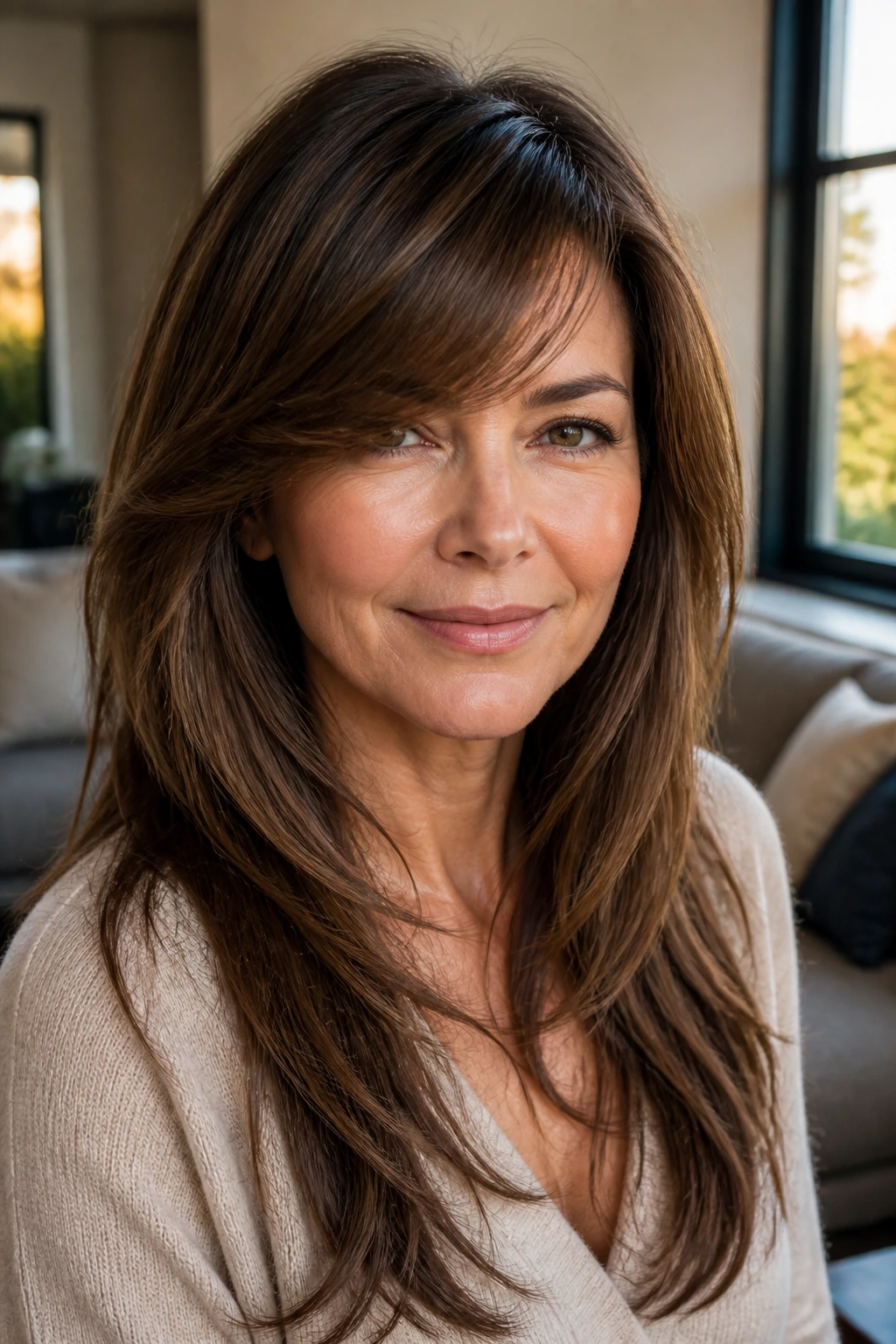
A long layered midi with side-swept bangs is the reliable friend of thick hair. Nothing flashy. No weird tricks. Just a cut that lets the hair move without taking away the length that keeps it from blowing outward.
The side-swept fringe is the useful part here. It softens the forehead, opens one side of the face, and gives the cut a direction. Thick hair can look blocky when every line is centered and symmetrical; a side sweep breaks that up fast.
I like this shape on hair that’s dense but not coarse to the point of rebellion. It works on straight hair that needs lift, and on loose waves that tend to collapse by midday. The layers should start lower than most people think — around the cheekbone to jaw area — so the top stays full and the ends don’t get too thin.
If you wear glasses, this cut is worth a close look. The bangs can move around the frames instead of fighting them. And if you decide to grow the fringe out, you’re not trapped. The side sweep slides right back into the rest of the cut.
4. Textured Shag Lob with Lift at the Crown
This is the cut for thick hair that refuses to lie flat and doesn’t need to. A shag lob uses purposeful texture to make bulk feel like movement instead of weight. Done well, it looks lively. Done badly, it looks like the haircut got caught in a fan.
The crown is where the shape starts. Shorter layers there create lift, while the longer perimeter keeps the style grounded. That balance keeps thick hair from forming the dreaded triangle — narrow at the top, wide at the bottom, and hard to brush into submission.
The cut is strongest on wavy hair, but straight thick hair can wear it too if you’re willing to use a texturizing spray or a light mousse. Air-drying works fine, as long as the top is lifted a little with clips or scrunched at the root.
Be picky about the amount of choppiness. A shag on thick hair needs a skilled hand, not a razor-happy one. You want separation, not holes. If the layers are too aggressive, the ends can start looking frayed within a month.
5. C-Cut Face-Framing Midi
The C-cut is one of my favorite answers to the question, “How do I make thick hair look softer without making it look thinner?” The shape curves around the face in a long sweep — almost like a loose letter C — which is exactly why it flatters thick hair so well.
Unlike blunt face-framing pieces that stop abruptly, a C-cut moves from the cheekbone area down toward the collarbone in one fluid line. That curve eases the width around the jaw and keeps the sides from feeling boxy. It also works beautifully with thick hair that has a little bend or wave, because the shape seems to continue even when the hair is not freshly styled.
Who it’s best for? People who want polish without a rigid blowout. If your hair is naturally dense and a bit dry at the ends, this cut keeps the bottom from feeling heavy while still leaving enough mass to look healthy.
If you’re nervous about layers, this is a friendly place to start. It gives shape without making the whole head feel chopped up. Clean. Soft. No nonsense.
6. Feathered Medium Cut with Crown Lift
Feathering got a bad reputation because people remember the versions that were too airy, too flipped, and too committed to a blow dryer set on high. The modern version is calmer. It keeps the movement, but stops before the hair starts looking shredded.
What to ask for
- What to use: A shoulder-length base with feathering around the crown and face, plus a fuller perimeter at the bottom.
- Preparation: Show your stylist where your hair tends to sit flat. That’s where the lift needs to happen.
- Substitutions: If you wear your hair curly, ask for a softer layered shape instead of true feathering.
- Tips: Keep the shortest layers long enough to tuck behind the ear. That avoids the helmet effect.
This cut is good when thick hair needs air around the head but not so much that the ends look wispy. It gives the upper section a little lift and keeps the lower section from flaring. I like it most on hair that has started to feel heavier at the crown, because the shape brings the eye upward without making the whole haircut scream for attention.
7. Curtain Bangs with Rounded Ends
Curtain bangs are popular for a reason, but the reason is practical, not trendy. They let thick hair have a fringe without trapping your forehead under one heavy slab of hair. The center part opens the face, and the longer edges blend into the rest of the cut instead of landing like a curtain rod.
If your hair is thick, the bangs need enough spacing through the interior so they don’t pile up around the brow. Rounded ends help too. They keep the bottom from looking chopped off and make the whole haircut feel finished when you tuck one side behind the ear.
The best version of this cut has a medium body and slightly curved ends — not ringlets, not stick-straight poker strands. That curve matters. It keeps the bangs and the length speaking the same language.
One warning: thick curtain bangs can become a daily styling job if they’re cut too blunt or too short. Keep them long enough to split naturally, and they’ll behave far better. I’d rather see them slightly grown out than cut too high. Always.
8. Modern Rachel Cut
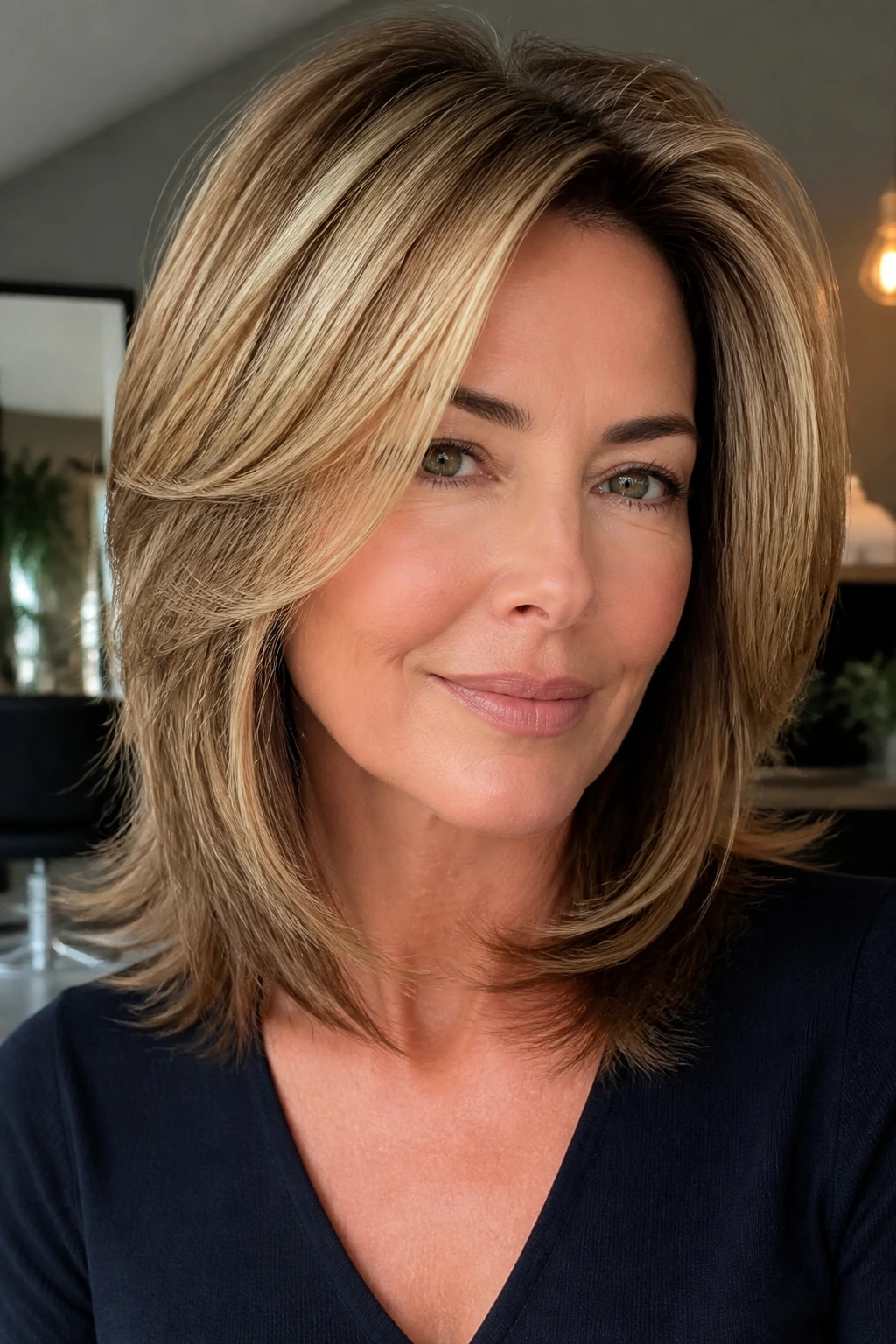
The modern Rachel cut is what happens when a familiar shape gets a better haircut. You still get that framed face and lifted front section, but the layers are softer, longer, and less eager to flip out at the ends.
This cut works because thick hair needs direction. The layers guide the hair forward around the face, then let it settle back into a shoulder-grazing length that still has fullness. If your hair used to be thicker in the nineties and now behaves a little differently, this version keeps the nostalgia but drops the stiffness.
The old version could be high-maintenance. This one isn’t, at least not if you keep the layers long and the blowout loose. A round brush, a medium barrel brush, or even a big Velcro roller at the front can give you that bend without the overstyled effect.
It’s especially good if you like a polished finish but don’t want the cut to depend on perfect weather or perfect product. Thick hair will hold the shape once it’s there. The trick is giving it enough lift through the front and enough weight through the bottom.
9. Choppy Midi with Piecey Ends
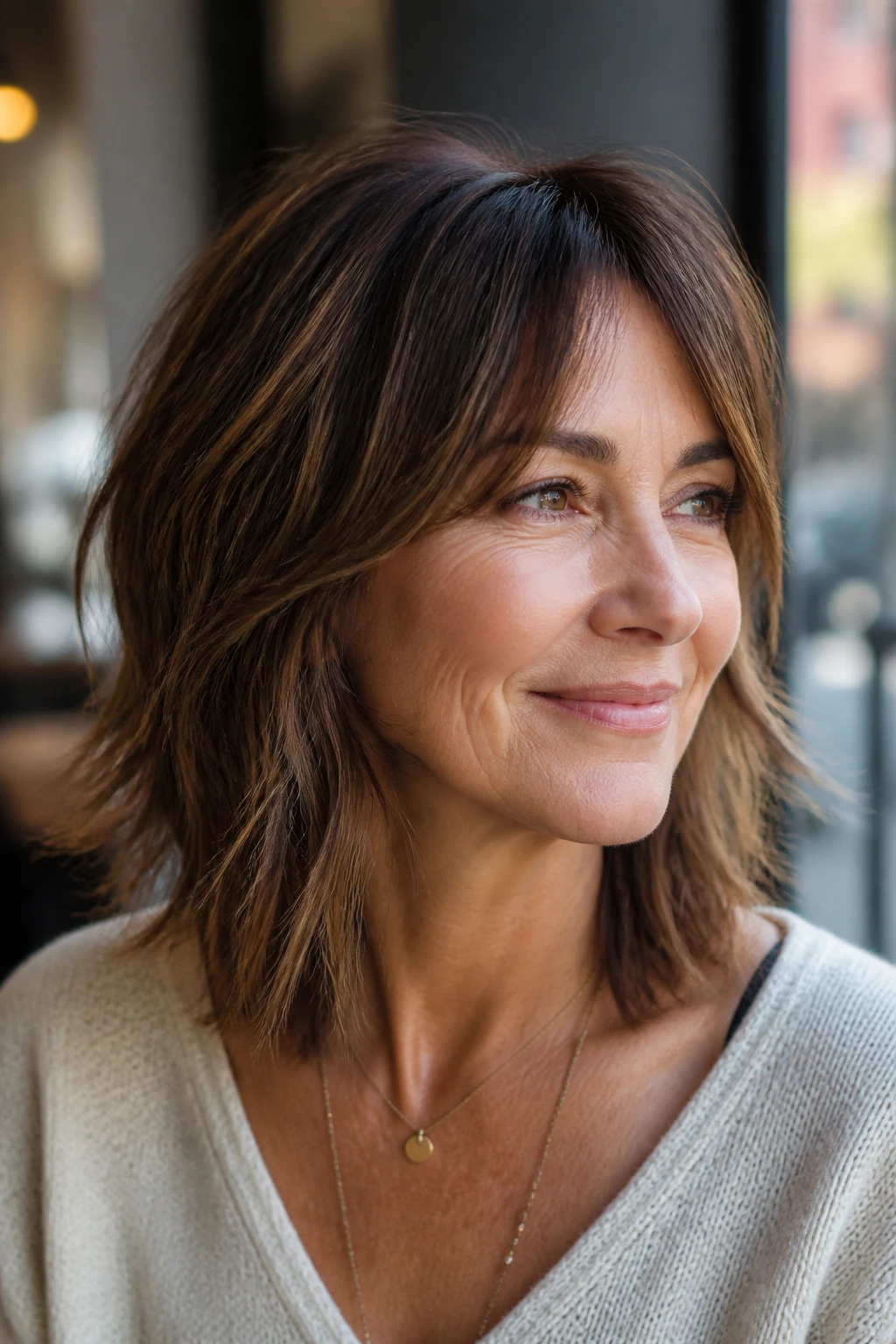
A choppy midi is what thick hair looks like when it’s allowed to move in sections instead of trying to behave as one block. The ends are broken up just enough to keep the shape from turning boxy, but not so much that the hair starts looking thin or ragged.
This is a strong choice if your hair is naturally dense and you wear it mostly loose. It does best with a little styling texture — a wave iron, a scrunch of mousse, or even a rough-dry finish with a bend at the ends. The piecey finish gives the haircut its edge. Without that, it can look like a standard medium cut that forgot its purpose.
I’d use this on hair that is too bulky in a blunt cut but too heavy for a full shag. It sits in the middle. That’s the point.
Do not overdo the razoring. Thick ends need movement, yes, but they also need enough substance to keep the haircut from collapsing by noon. Keep the pieces separated, not shredded. There’s a difference, and your mirror will know it.
10. Wavy Clavicut with Minimal Layers
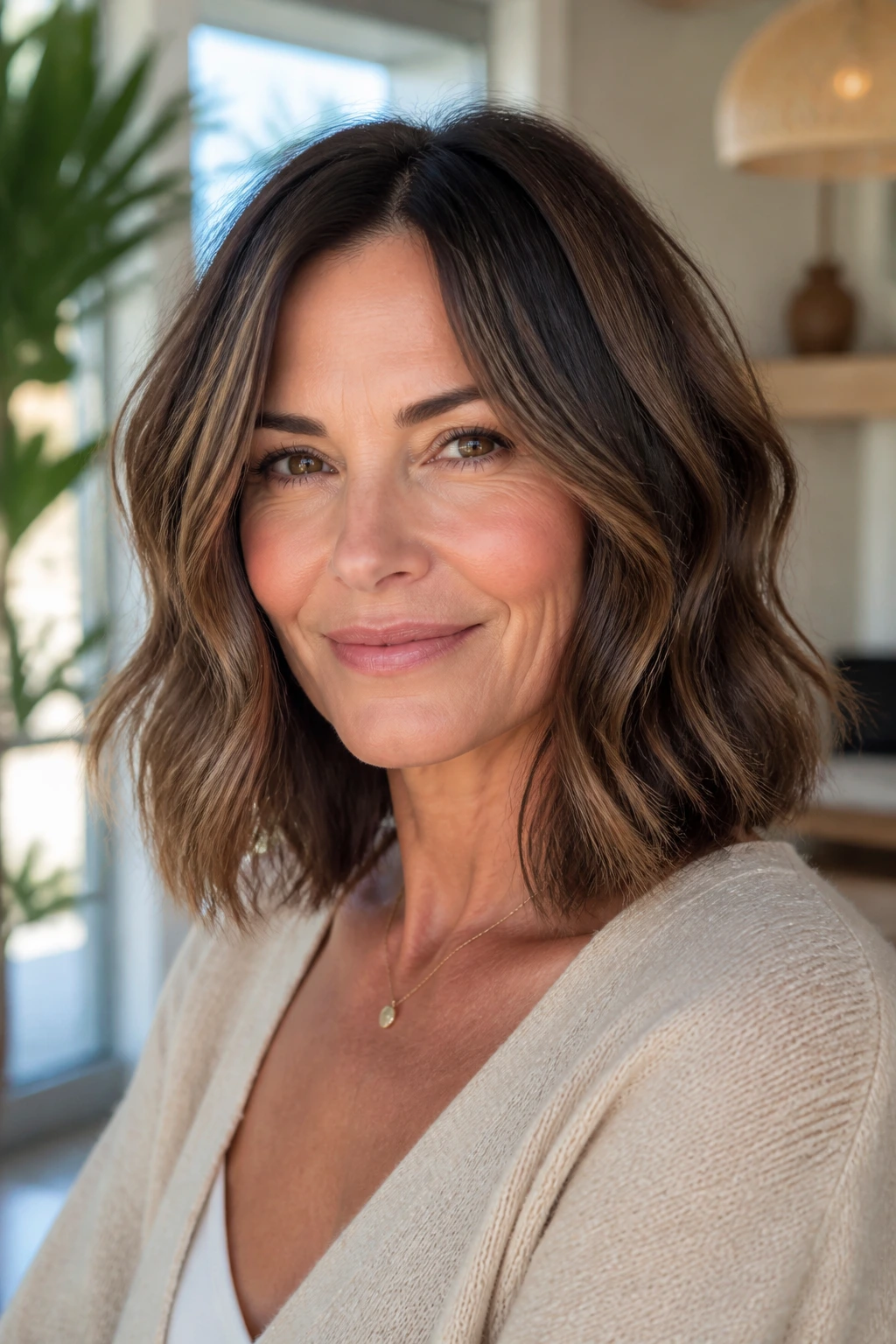
If your thick hair already bends on its own, don’t bully it into submission. A clavicut — landing right at the collarbone — lets natural wave do the heavy lifting while keeping the silhouette tidy. Minimal layers keep the shape from puffing up.
This is the haircut I’d hand to someone who wants to air-dry with a little cream and go live life. The cut holds its own because the wave pattern gives it texture, and the collarbone length stops the sides from looking too wide. It’s not trying to be a blowout cut. That’s part of the appeal.
The fewer the layers, the more important the perimeter becomes. You want clean edges and just enough soft shaping around the face to keep the front from hanging like a curtain. If your ends tend to dry fuzzy, this length is forgiving. It can look intentional even when the styling is barely there.
It’s a smart pick if your hair feels too heavy below the ears but you don’t want obvious layering. Sometimes less structure reads as more control. Strange, but true.
11. Bottleneck Bangs with a Soft Mid-Length Shape
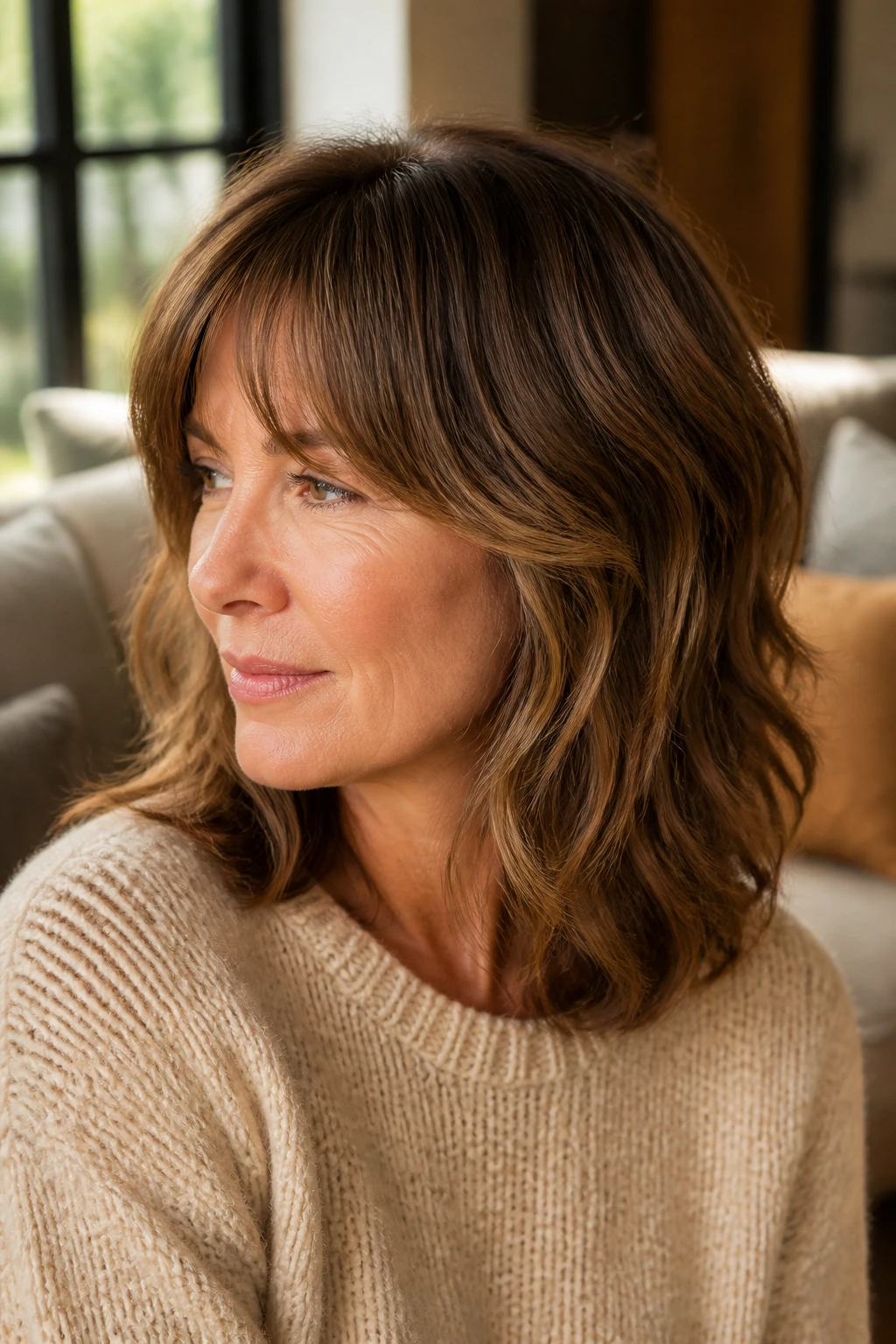
Bottleneck bangs make sense on thick hair because they’re not all-or-nothing. They begin narrower at the center and open out toward the temples, which means you get fringe without a blunt wall of hair across the forehead.
What makes them different
The middle section sits a little fuller, then tapers outward in a softer curve than a straight fringe. That shape flatters thick hair because it creates a light center without making the sides too dense. It also blends neatly into a medium cut, especially one with rounded ends or a collarbone finish.
If curtain bangs feel too long and blunt bangs feel too heavy, bottleneck bangs live in the useful middle ground. They’re easier to grow out than a sharp fringe, and they’re kinder to dense hair at the root because they don’t demand one flat, uniform line.
I’d choose them for hair that frames the face well but needs a little break at the brow. They work especially well with glasses, strong brows, or a forehead that you do not want to cover completely. Subtle, but not invisible.
12. U-Shaped Cut for Thick Ends
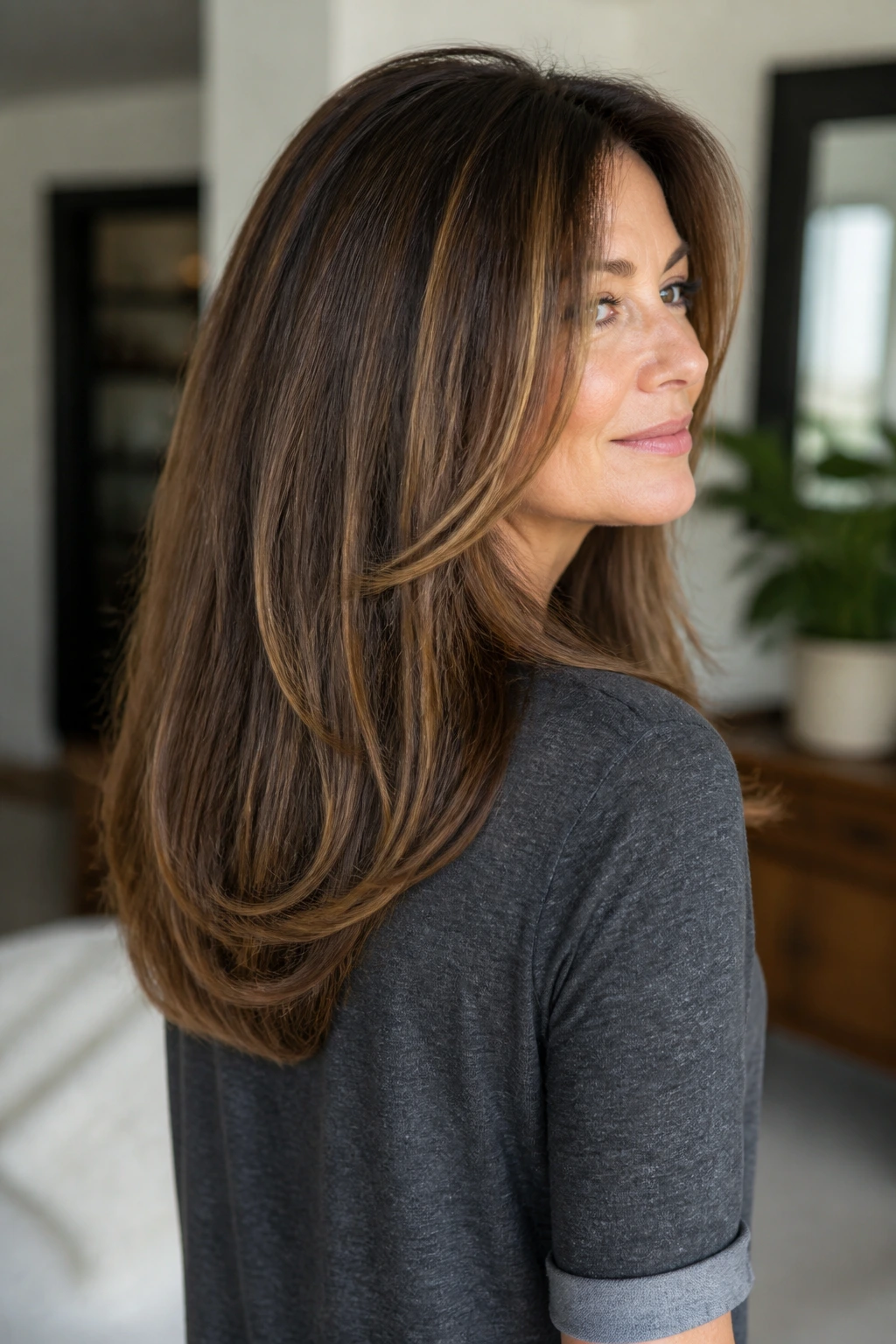
A U-shaped cut sounds tiny on paper and makes a huge difference in real life. The back stays a little longer and fuller, while the sides curve up just enough to stop the hair from hanging like a slab on each shoulder.
That slight drop in the back gives thick hair a softer tail and keeps the ends from splitting visually into two wide wings. It’s a useful shape if your hair is heavy but you still want some length around the neck. The line feels more graceful than a straight horizontal cut.
Quick guide to the shape
- Best for: thick straight or wavy hair that looks blunt in all the wrong ways.
- Ask for: a gentle U through the back, with longer front pieces that skim the collarbone.
- Avoid: high, sharp layers that break the curve.
- Style tip: turn the ends inward with a round brush or a large hot brush for a neater finish.
This cut feels especially good if your hair naturally wants to swing forward. The curve gives it a place to go.
13. Deep Side-Part Blowout Cut
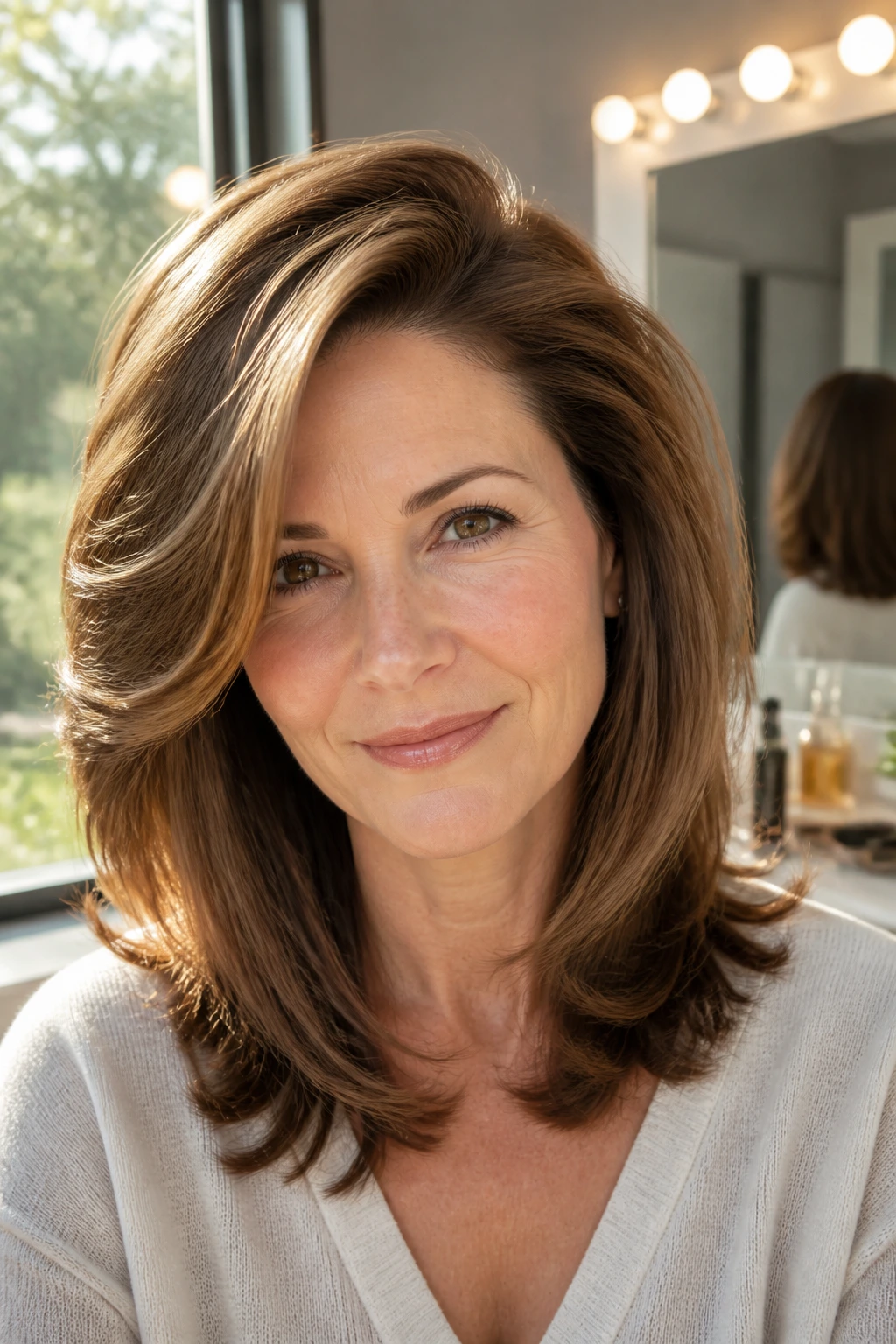
A deep side part can rescue a medium cut faster than almost any other styling choice. It creates lift at the crown, opens up one side of the face, and gives thick hair a little asymmetry so it doesn’t settle into a helmet shape.
The cut underneath should support that part: soft layers around the front, a medium perimeter, and enough density left at the bottom to keep the style from going skinny. When the blowout is done right, the hair has a slight sweep over one eye and a fuller shape at the top, which is a very nice trade for thick hair that tends to sit flat at the roots.
I like this most when hair has started to lose height at the crown but still has plenty of body through the lengths. It’s one of those styles that looks more polished than it is complicated. The part does a lot of the work.
If you’re tired of a center part exposing every bit of scalp at the front, this is a good reset. You don’t need to commit forever. Just shift the part, dry with a little lift, and see how the shape changes.
14. Soft Wolf Cut for Medium Hair
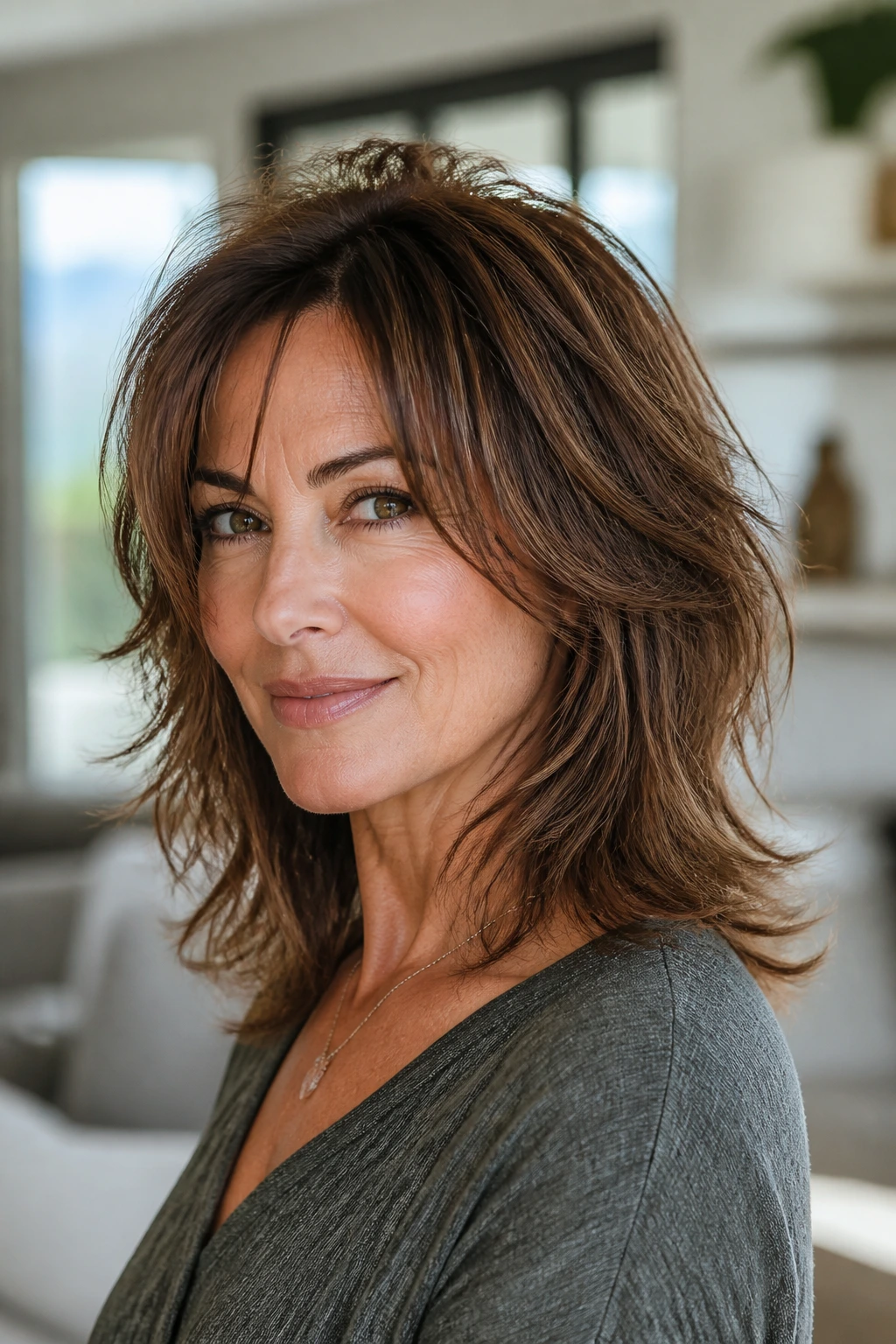
A soft wolf cut can be fantastic on thick hair, but only if someone has the nerve to keep it soft. The whole point is to get the lifted crown and loose ends without the aggressively choppy, almost costume-like version that can happen when the layers go too short.
Think of it as a shag with a quieter voice. The top is lighter, the middle is broken up, and the ends are still thick enough to sit under the shape instead of disappearing. That’s what makes it wearable after 40. It has attitude, but it doesn’t act like a dare.
This cut works best when you like texture and do not mind a little styling. A diffuser, a wave spray, or a rough blow-dry with your fingers can bring it to life. If your hair is dense and slightly wavy, the wolf cut can make it feel much less heavy around the neck.
The mistake is obvious when it happens: too many short layers and not enough length left to hold the line. Keep the perimeter honest. Let the texture live on top.
15. Sleek One-Length Midi with Glossy Finish
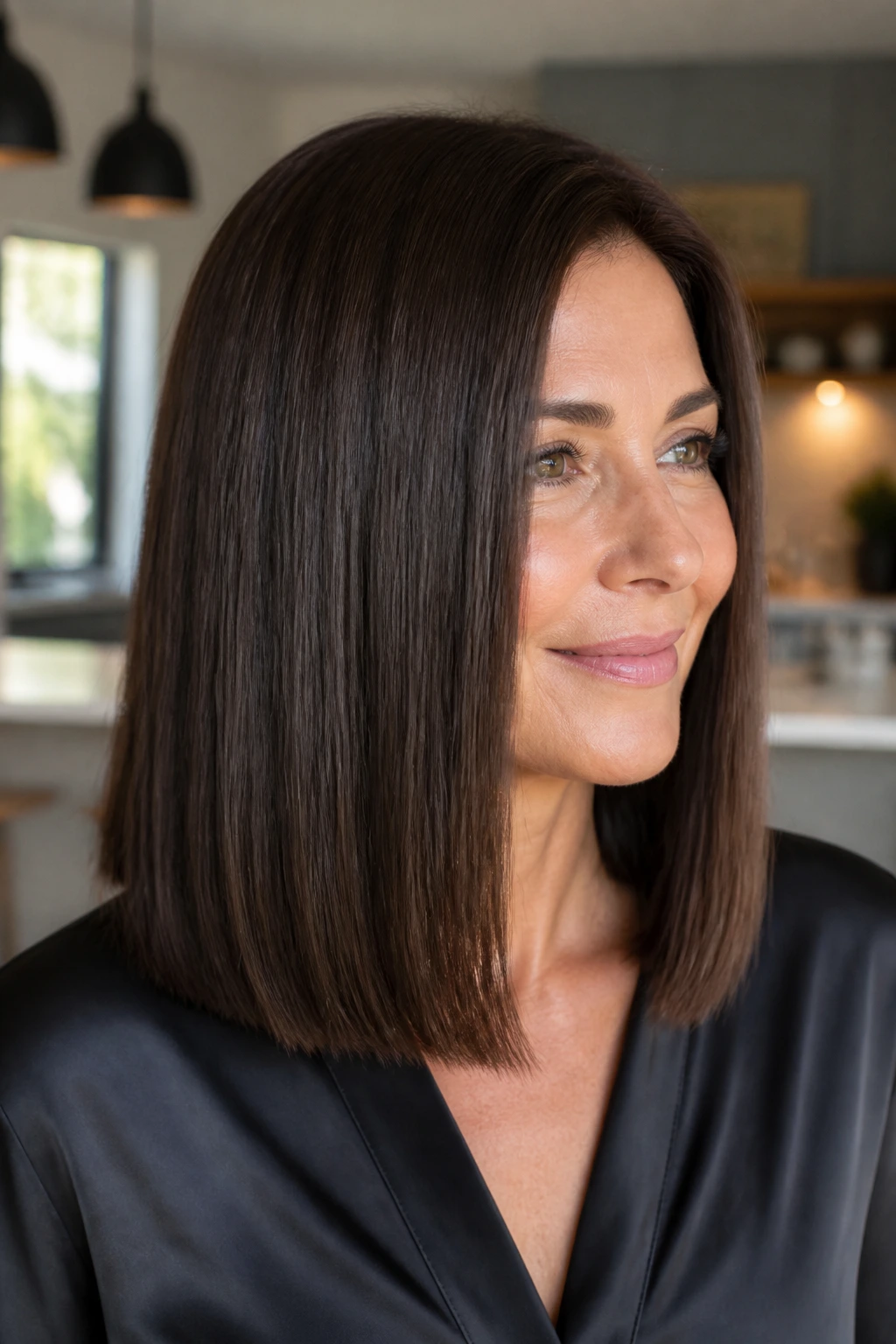
Sometimes the smartest answer for thick hair is to stop cutting so much of it away. A one-length midi can look rich, polished, and calm in a way layered cuts can’t always match. It works because the fullness is concentrated into a smooth sheet instead of being broken into pieces.
This is the cut for someone whose hair already has movement, shine, or a little natural wave that doesn’t need extra help. It can also be a relief if your hair is coarse and layered cuts tend to puff up. A blunt line gives the eye somewhere clean to rest. The result feels deliberate, not heavy.
I especially like this on hair that sits a little below the shoulders, where the ends can turn inward naturally. It’s one of the few styles that can look expensive without actually trying to look expensive — and I mean that in the best possible way.
The maintenance is simple, though not zero. You need trims to keep the edge from fraying, and you need to avoid loading the roots with heavy cream. Shine matters here. Weight does not.
16. Curly Mid-Length Cut with Structured Layers
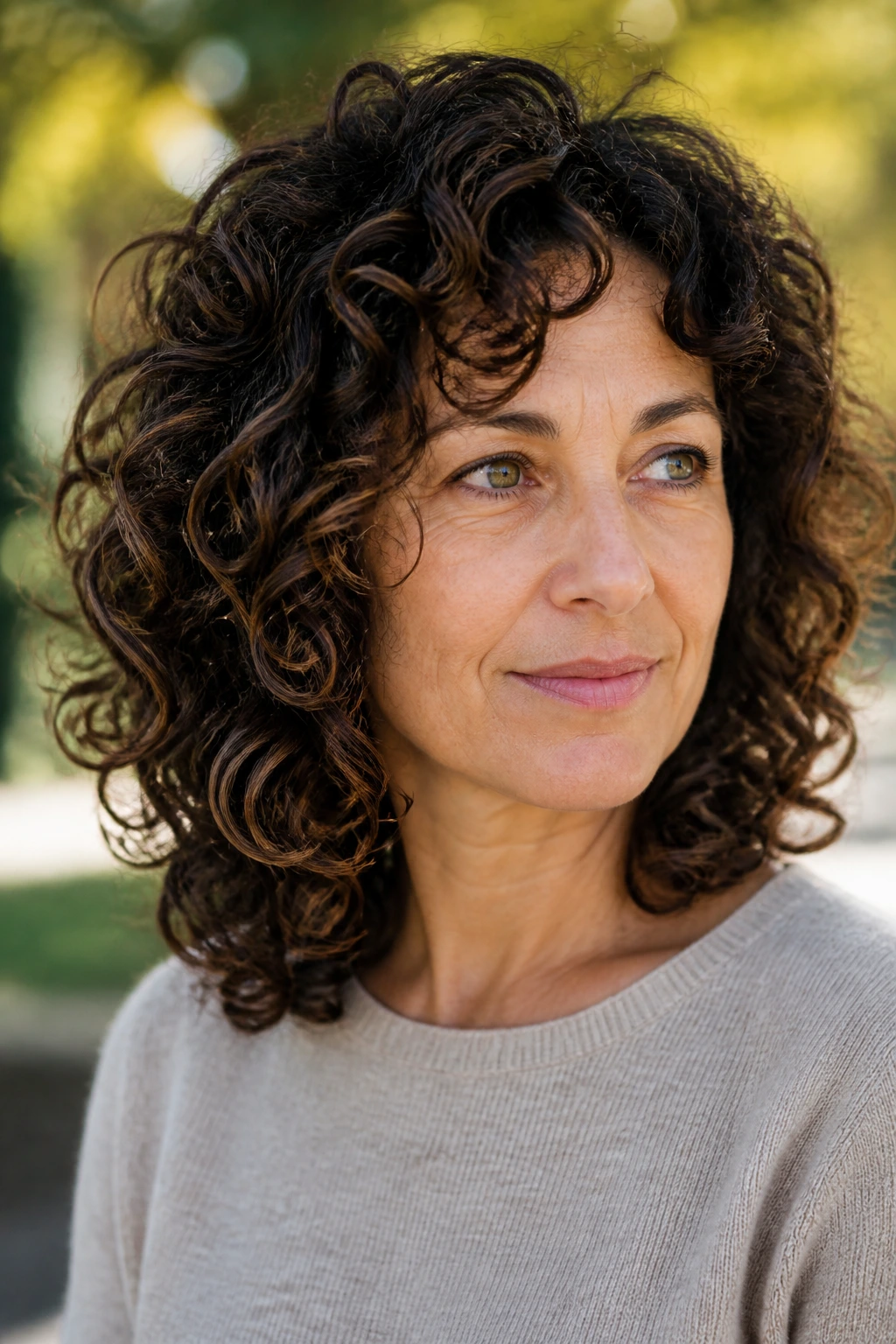
Curly thick hair needs a cut that respects the curl pattern instead of fighting it. Structured layers do exactly that. They take weight out of the interior, help the curls stack more evenly, and stop the side panels from exploding into a triangle.
The best version is usually cut dry or nearly dry, because curl shrinkage can turn a cautious cut into a surprise haircut fast. I want the layers to support the curls, not shorten them into little stairs. A medium length gives the pattern enough room to spring without piling too high around the face.
This is also one of the most forgiving styles for over 40 because it doesn’t depend on perfect smoothness. If your hair has become drier or more porous, curls often look better with shape than with forced shine. A good layer map makes the difference.
Use a cream that gives slip, not stiffness. Diffuse gently or air-dry with clips at the root if you want lift. The cut does the heavy lifting if it’s built right.
17. Tucked-In Shoulder Cut with Light Graduation
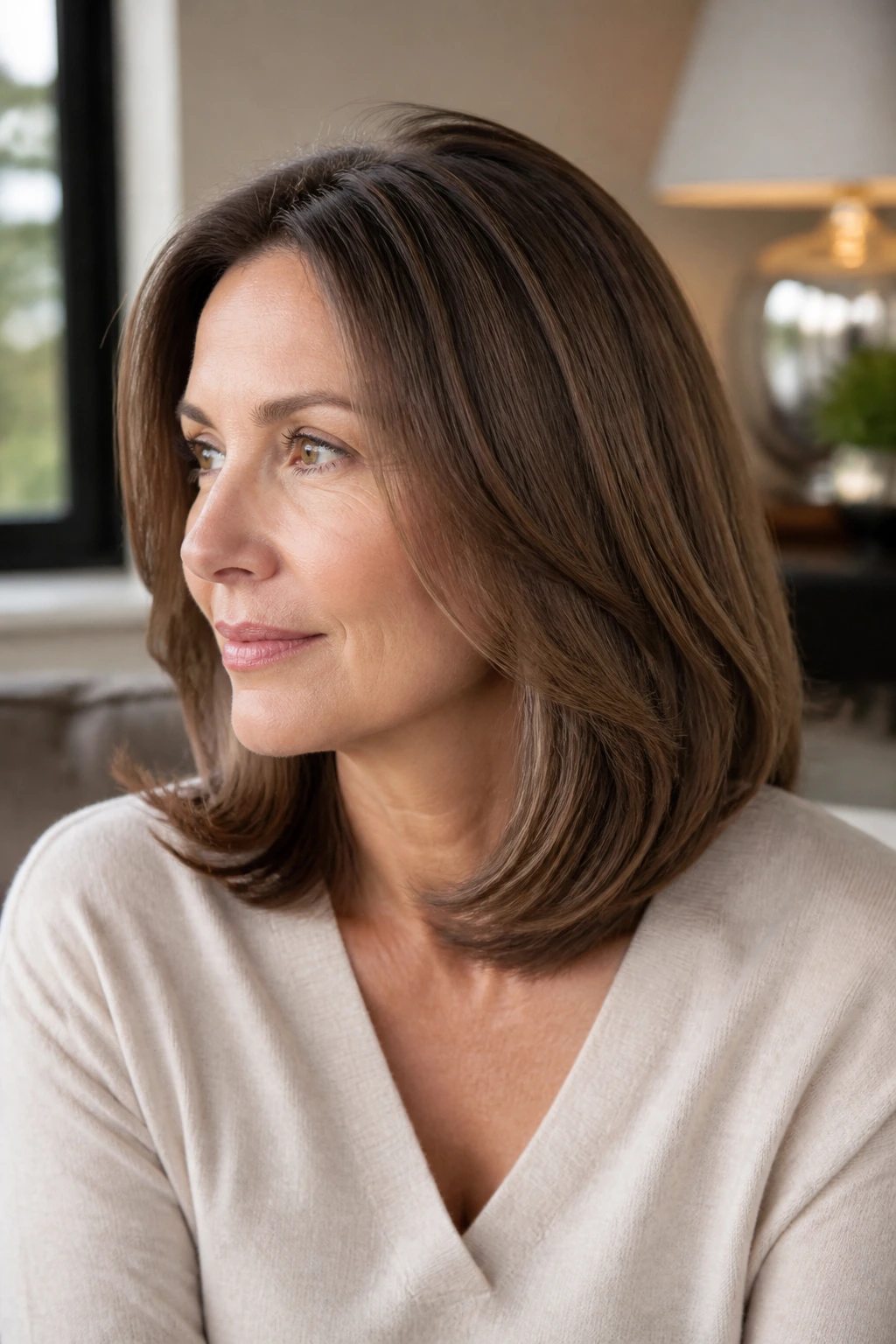
A tucked-in shoulder cut is for the person who likes a neat neckline and hates a shape that flares out at the shoulders. The slight graduation means the front edges are just a touch shorter, which lets the ends curve inward instead of kicking out.
That inward movement is the whole point. Thick hair can build a lot of width right at shoulder level, especially if the ends are blunt and the hair is coarse. Light graduation softens that line without creating obvious layers. It’s tidy, but not severe.
This cut is a strong match for people who wear jackets, collars, or scarves a lot, because the length sits cleanly and doesn’t snag or puff as easily as longer thick hair. It also looks good with a side part or a tucked-behind-the-ear finish. Quietly polished. Never boring.
If you want the hair to feel more controlled, this shape helps. If you want big movement, pick something else. It knows what it is.
18. Half-Up Friendly Layered Lob
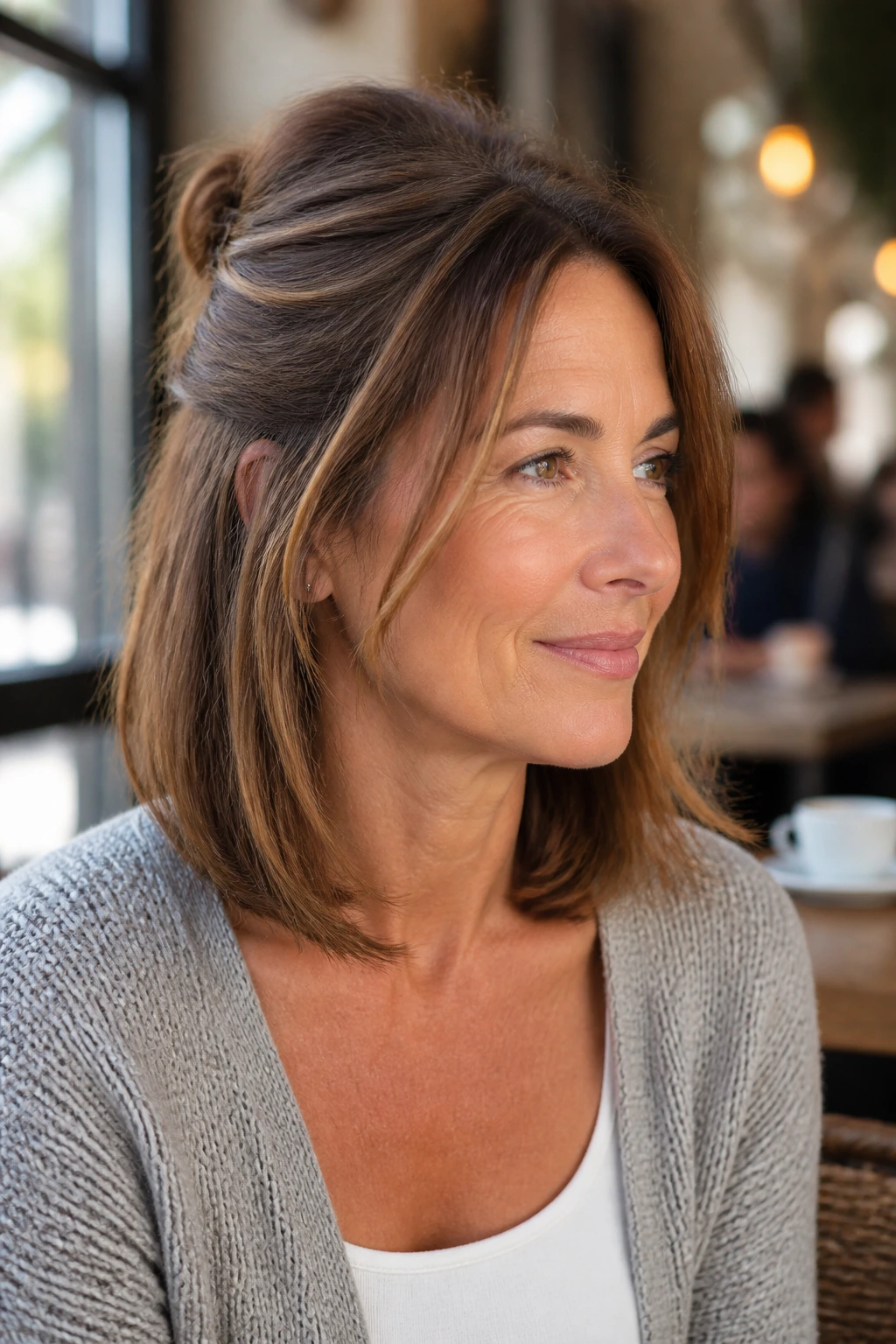
Some cuts look great down and turn into a small disaster the minute you pull half the hair back. This one does the opposite. The layers are placed so the front sections still have enough length to gather cleanly, which means your half-up styles don’t leave a hundred short pieces hovering around your temples.
The cut is especially handy for thick hair because it gives you options on the messy mornings. Wear it down, and the layers create motion. Tie the top half back, and the remaining length still has enough weight to sit nicely. No awkward shelf. No overstuffed bun.
What to ask for
- What to use: a lob that hits collarbone to upper shoulder, with long face layers and soft interior shaping.
- Preparation: bring one photo of the hair down and one photo of a half-up style you actually wear.
- Substitutions: if your hair is very curly, ask for the same idea but with curl-aware layering.
- Tips: keep the shortest front pieces long enough to graze the jaw or cheekbone.
This is one of the most practical cuts on the list. I like that it works with real life instead of pretending every day is a blowout day.
19. Air-Dry Medium Cut with Face Pieces
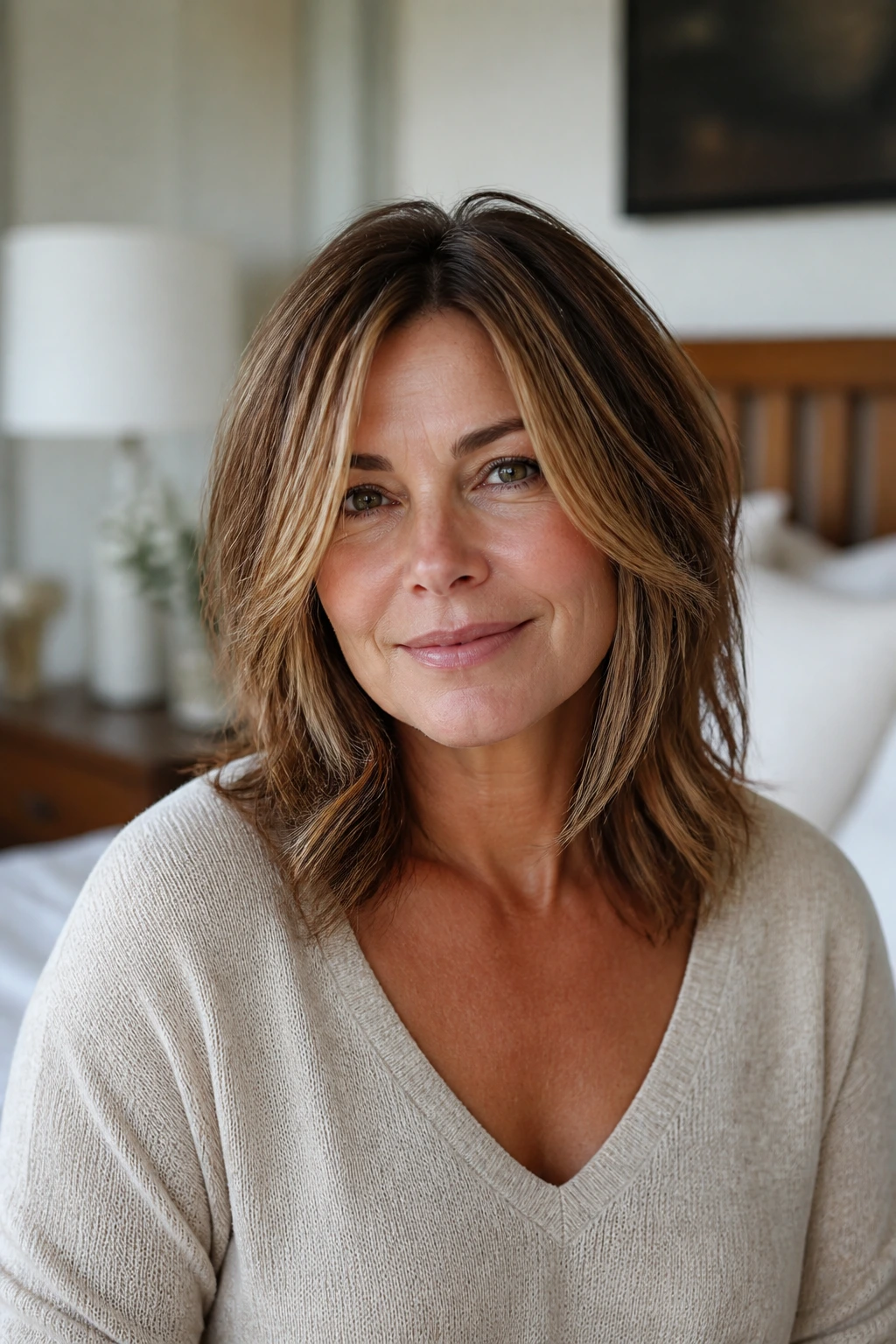
Air-dry cuts are not lazy. They’re planned. This version is built for thick hair that looks better with a little softness and less brush intervention, which is often the case once the hair starts changing texture or getting drier at the ends.
The face pieces matter most. They stop the cut from feeling like one broad block and help the front fall in a way that still looks intentional when the rest of the hair dries on its own. The back should stay thick enough to keep the shape from collapsing, but not so heavy that it takes all day to dry.
This cut is strongest when you’re honest about your routine. If you’re not going to round-brush every morning, do not ask for a cut that depends on round brushing. Ask for a shape that survives a leave-in cream, a little scrunching, and maybe a quick root lift with fingers.
I’d choose this for someone who wants ease but doesn’t want to give up polish. Those are not opposing goals. They just need the right haircut.
Styling Tweaks That Save Time on Thick Mid-Length Hair
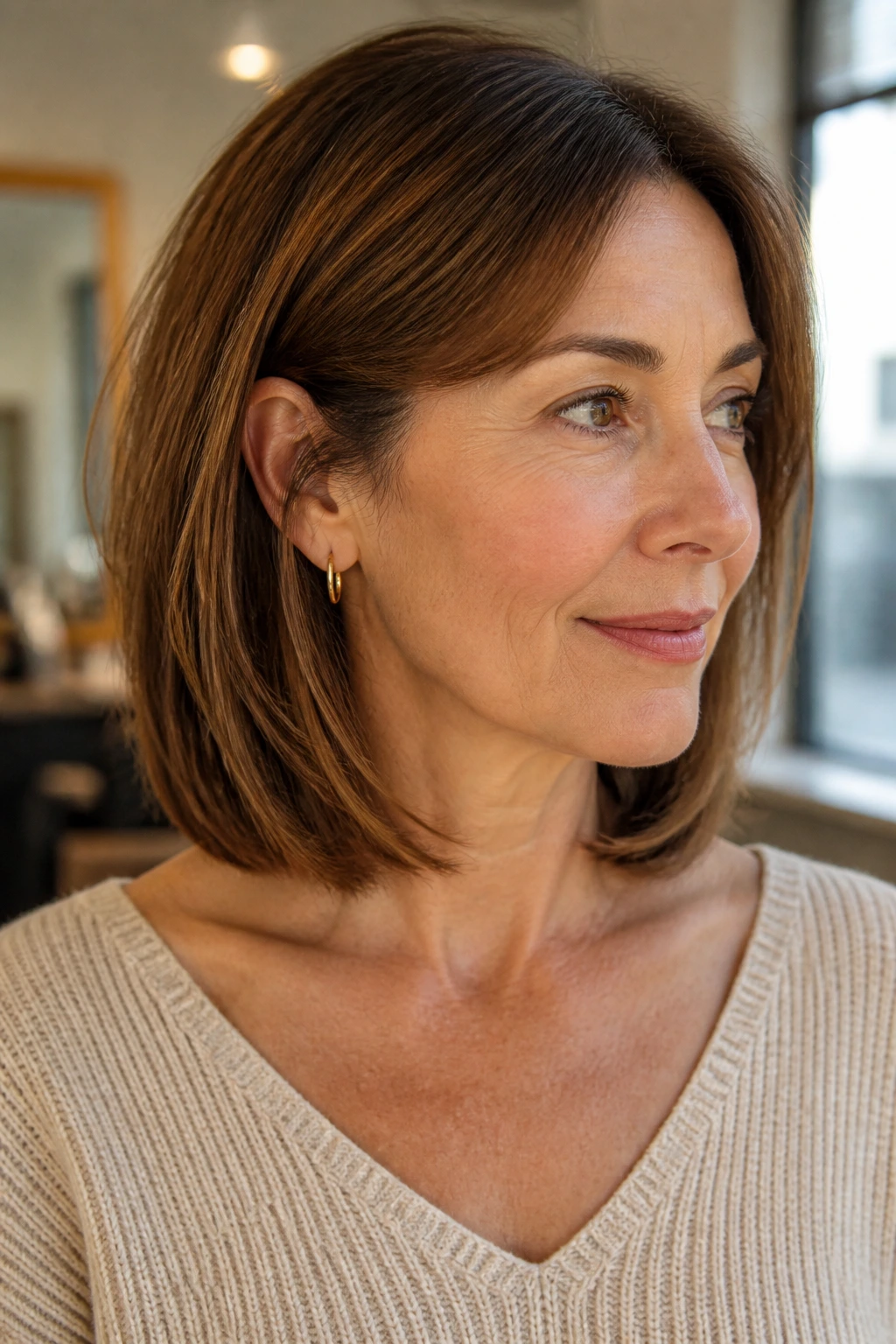
A great medium haircut still needs a few smart habits, because thick hair can turn on you if the styling routine is too heavy-handed. The rule I trust most is this: dry the roots enough to shape the head, and leave the ends slightly softer than your instincts tell you to. Bone-straight ends on thick hair can look blunt in a bad way. A small bend reads more expensive and less effortful — and yes, I know that word is overused, but the point stands.
Blowout Shortcut: Clip the top layers out of the way, dry the underside first, then smooth the top last with a round brush. That order keeps the root from getting crushed while the lengths are still damp.
Air-Dry Trick: Work a light mousse or foam through the crown and a pea-size cream through the ends only. If you put the heavy product at the roots, thick hair slumps before lunch.
Quick Refresh: On day two or three, mist the front pieces lightly and bend them with a 1-inch or 1.25-inch iron for 10 to 15 seconds per section. You do not need to redo the whole head. Just wake up the pieces people actually see.
Smoother Finish: If your hair feels puffy at the sides, use the blow dryer nozzle and point the airflow downward. That helps the cuticle lie flatter and cuts down on the fuzzy halo that thick hair can develop in humidity.
The Tools That Make Thick Mid-Length Hair Easier at Home
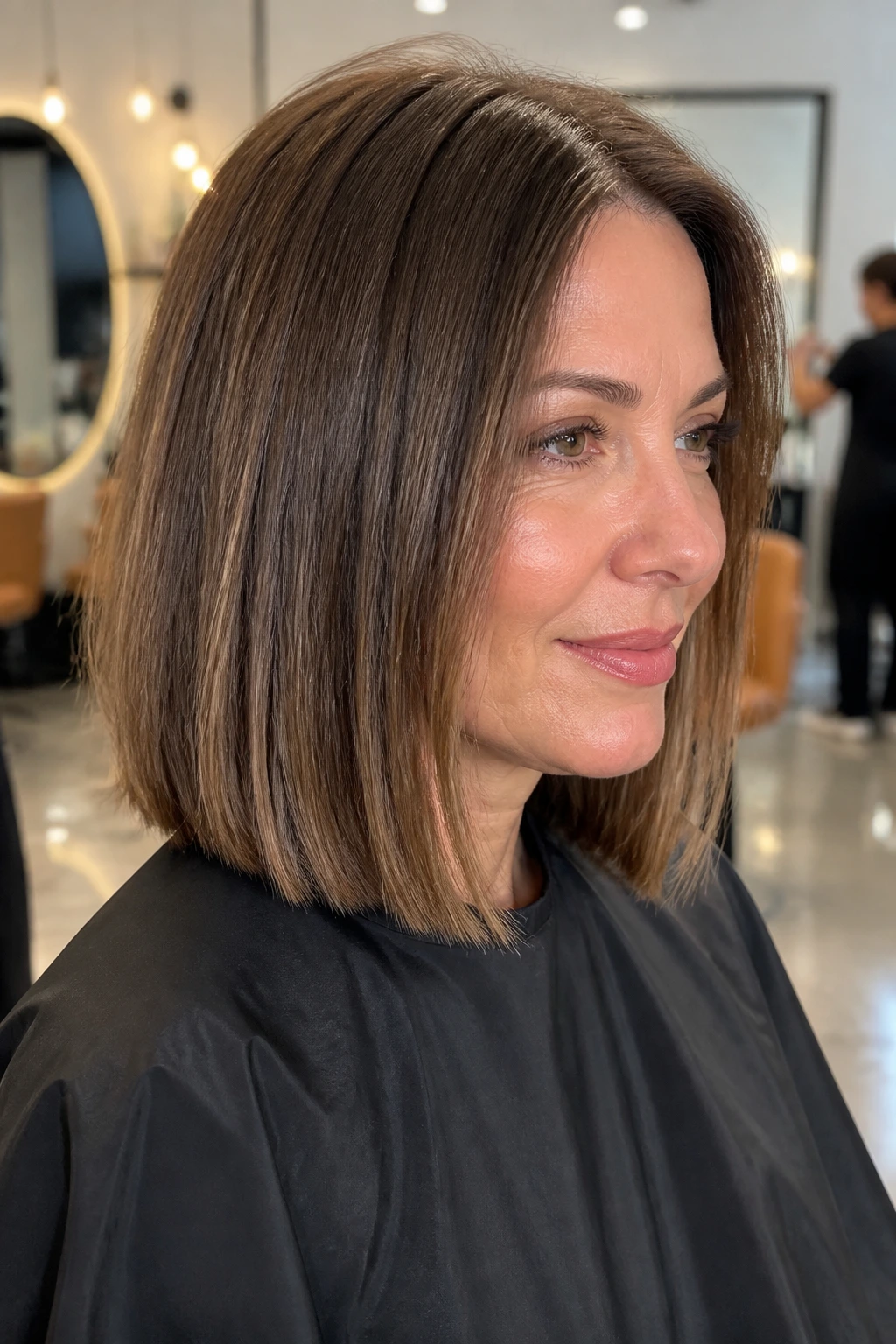
A thick medium cut behaves better when the tool drawer is not full of random junk. A few well-chosen tools do more than a pile of miracle products ever will.
- A 1.25-inch curling iron or wand: Big enough to bend thick sections without making tight curls that disappear into the bulk.
- A blow dryer with a nozzle: Direct airflow matters. It keeps the hair smoother and helps the cut sit cleanly.
- A medium round brush, 1.75 to 2.25 inches: Small enough to lift at the root, large enough to avoid overly tight curls at the ends.
- A vent brush: Useful for rough-drying the crown fast before you smooth the shape.
- Heat protectant spray: Non-negotiable if you use hot tools more than once a week.
- Light mousse or styling foam: Gives root support without the sticky feel of old-school gel.
- Wide-tooth comb: Better than a fine brush for detangling wet thick hair without tearing at the ends.
- Duckbill clips or sectioning clips: They save time, and they keep thick hair from fighting itself while you dry.
- A flexible-hold hairspray: Keeps movement in place without freezing the hair into helmet mode.
A detangling brush is fine too, but I’d still keep the wide-tooth comb in rotation. Wet thick hair is fragile in a sneaky way.
How to Ask for the Cut at the Salon
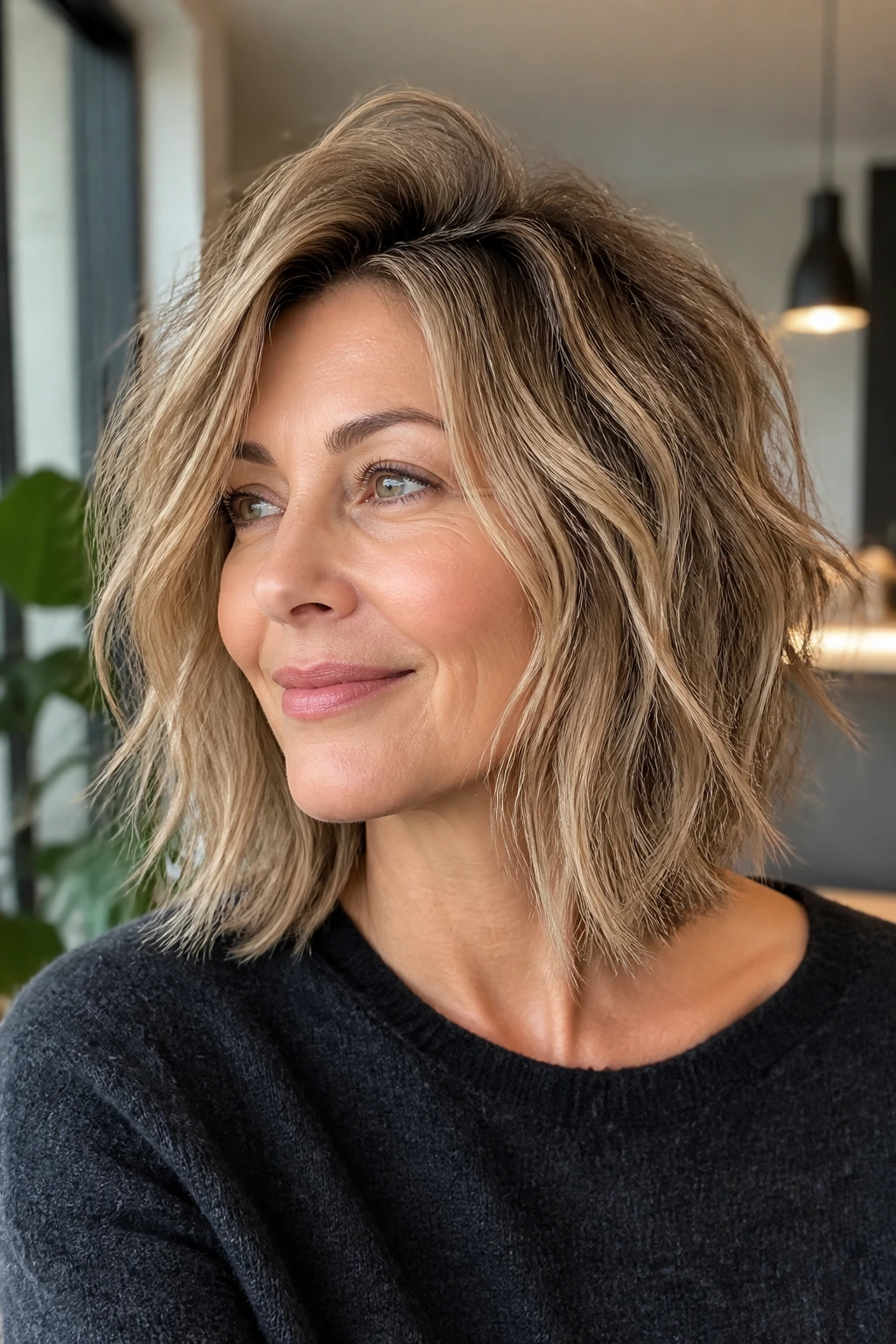
The difference between a haircut you love and one you spend two months apologizing for is often one sentence. Be specific about what your hair does, not just what you want it to look like on a good day. Thick hair has habits. Your stylist needs to hear them.
Start with the basics: where you part it, how you dry it, and where it gives you trouble. Say things like, “It puffs at the sides,” “The crown goes flat,” or “The ends flip out at shoulder length.” Those details matter more than saying you want something “modern.” Modern to whom? The mirror wants facts.
Bring photos, but bring the right photos. One image from the front is not enough. Thick hair changes shape in profile, especially at collarbone and shoulder length. A side view shows whether the cut actually holds a line or just looks good from the front chair.
If you wear your hair curly or wavy half the week and smooth the other half, say that too. A cut built for a flat iron is not the same as one built for air-drying. Ask the stylist where the layers will land when the hair is dry, because that’s where the haircut lives in real life.
One more thing: if you hate a lot of thinning, say so plainly. Some stylists reach for thinning shears too fast on thick hair. That can make the top frizzy and the ends see-through. Better to keep the conversation blunt than to clean up a haircut you never asked for.
How to Keep the Shape Between Appointments
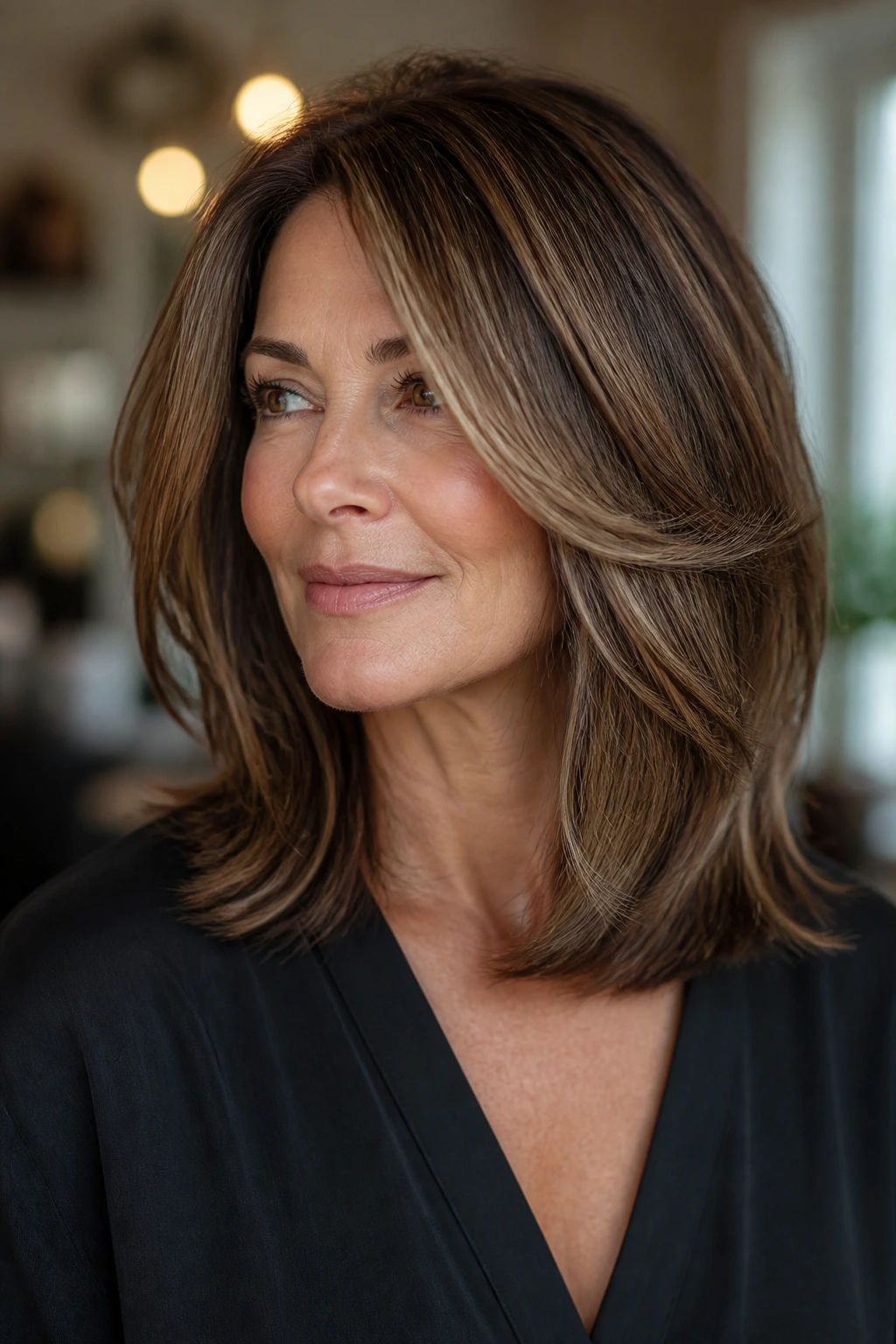
Thick medium hair stays looking expensive when you trim on a schedule that respects the shape. For most of these cuts, a full refresh every 8 to 10 weeks keeps the perimeter from getting too wide and the layers from collapsing into each other. Bangs or fringe may need a light trim every 3 to 4 weeks if they sit directly on the brows.
Dryness changes the game too. Thick hair often looks fuller when it’s slightly moisturized, but not coated. If the ends start feeling rough, use a leave-in conditioner on the bottom third only. Keep it away from the roots unless your hair is unusually dry there, because heavy product near the scalp can flatten the whole silhouette in a hurry.
Sleep habits matter more than people think. A loose low clip or a soft scrunchie can keep the shape from getting crushed overnight, especially if your hair is wavy or has a strong bend. You don’t need a five-step bedtime ritual. You need the front pieces not to look like they spent the night under a pillow fight.
If you color your hair, especially gray-blend or highlights, keep the shine up. Thick hair can take color well, but it also shows dullness faster because there’s so much surface area. A clear gloss or a lightweight shine spray every so often keeps the cut looking deliberate rather than dry.
Common Mistakes That Make Thick Hair Puff Up or Fall Flat
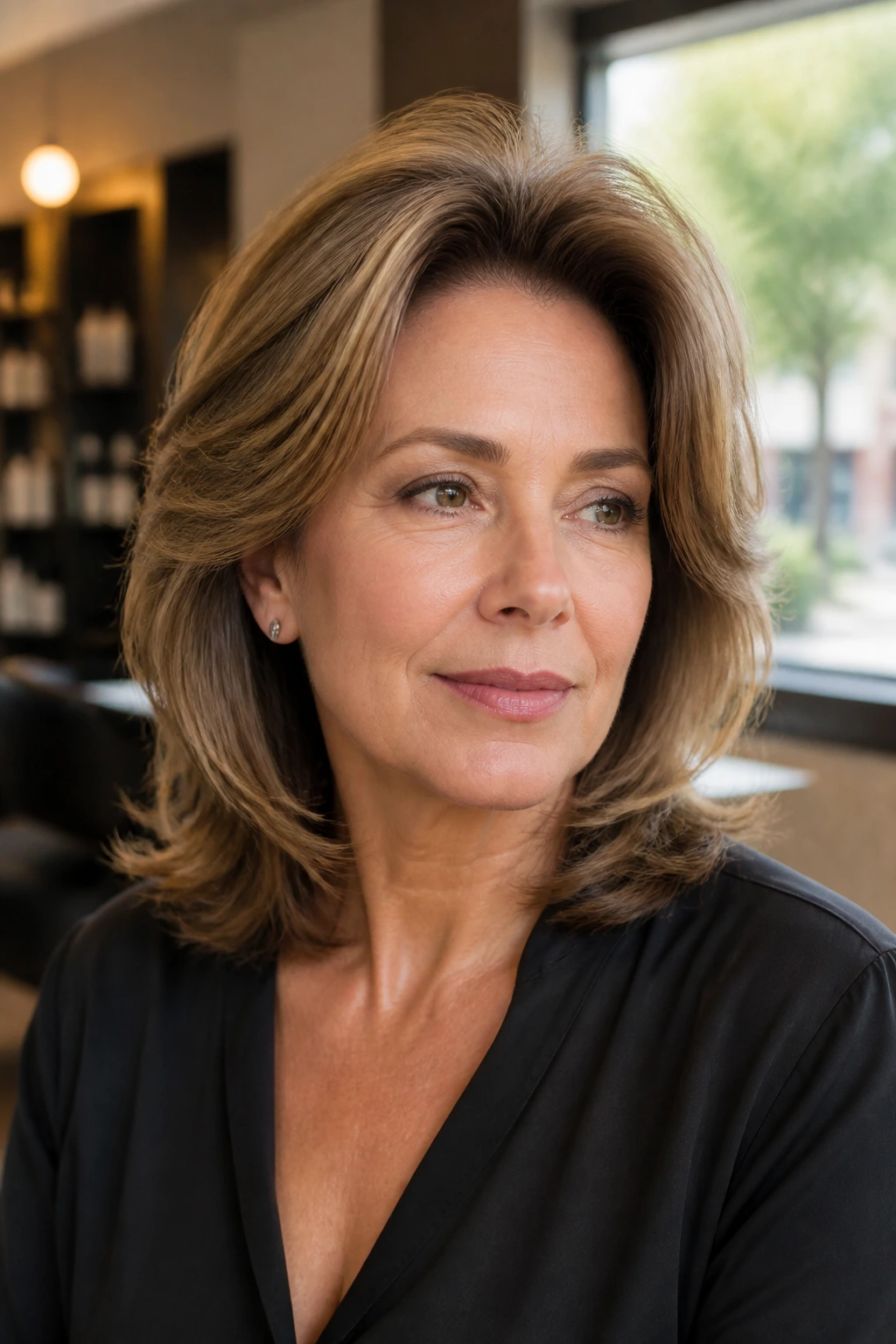
The biggest mistake is over-thinning the hair from the top down. The symptom is obvious: the crown lies flat, the ends look patchy, and the whole cut starts to expand at the sides. The fix is to remove weight from the interior in measured sections, not to strip the top layer bare.
A close second is layering too high. People want movement, so they ask for more layers, and suddenly the haircut loses its base. Thick hair needs a bottom line to sit on. If the shortest layers start near the crown, the hair can balloon out and the ends go thin fast.
Another common problem is using products that are too rich. Thick hair can handle cream, but not in gallon-sized spirit. Heavy oils and dense masks at the roots make the hair collapse, especially around the part. Keep the heavy moisture on the ends and save the root area for lighter products.
Cutting bangs too thick is another trap. Dense fringe sounds flattering until it starts sitting like a wool mat across the forehead. The better move is to let the bangs be a little lighter than the rest of the hair and trim them often enough that they don’t hog the whole face.
Finally, people ignore the natural bend. Thick hair that flips at the shoulders will keep flipping if the cut doesn’t account for that. Either soften the perimeter or move the length a little higher or lower. Fighting the flip is a waste of mornings.
Four Ways to Bend These Cuts to Your Own Hair
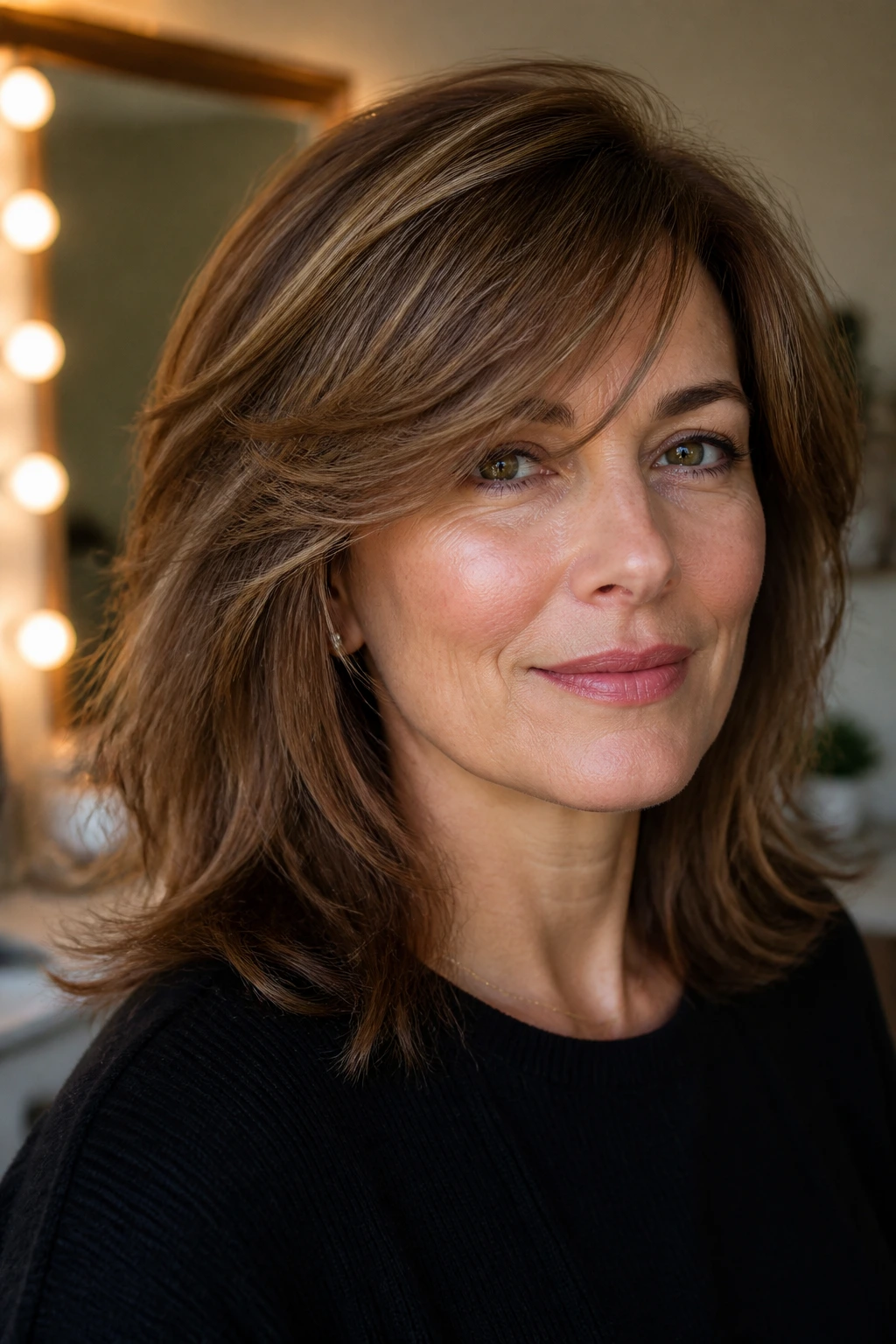
The Softer Fringe Swap: If straight-across bangs feel too severe, turn them into curtain bangs, bottleneck bangs, or a long side sweep. The change is tiny, but it can make the whole haircut feel lighter around the eyes and easier to grow out.
The Crown-Lift Version: If your roots go flat, keep the perimeter medium and ask for modest lift through the top layers. This works best for dense hair that loses height at the crown but still has volume through the sides.
The Curl-Respecting Version: For wavy or curly hair, ask for the same overall shape but cut with the natural pattern in mind. Dry cutting or curl-by-curl shaping keeps the cut from turning into a triangle the minute the hair dries.
The Sleeker Office Version: If you wear your hair smooth most days, keep the layers longer and the ends cleaner. That gives you a more polished look that still moves when you walk, without requiring a round brush every morning.
The Gray-Blend Version: If silver strands are coming in around the part, soften the face frame and avoid overly blunt fringe. A little softness around the hairline makes regrowth less stark and keeps the style from feeling harsh.
Frequently Asked Questions About Medium Hairstyles for Thick Hair Over 40
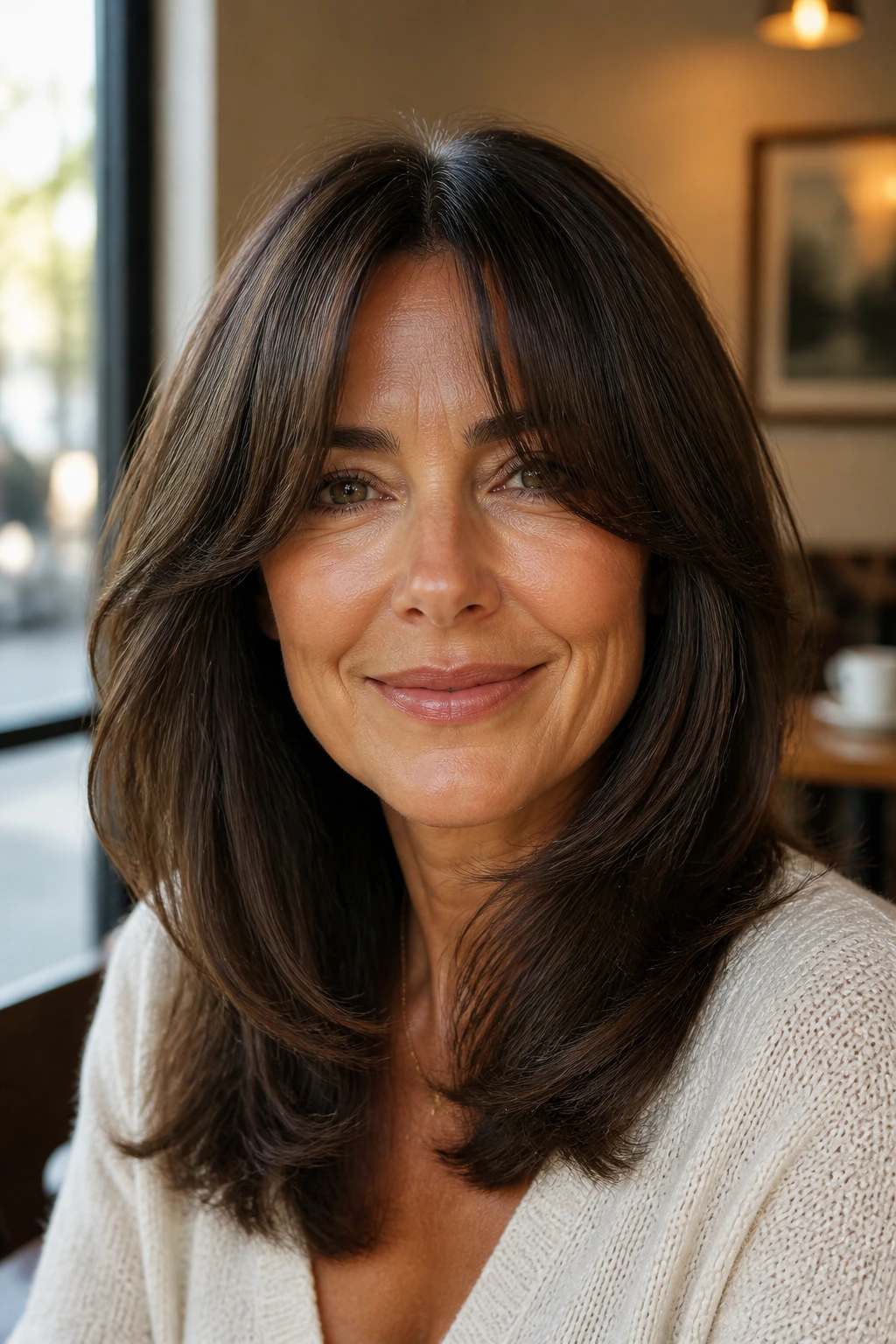
Which medium haircut makes thick hair look less bulky?
A collarbone lob with soft internal layers is usually the best place to start. It removes weight without making the ends too thin, which is the mistake that causes a lot of bulky thick hair to look stringy instead of shaped.
Are layers good for thick hair after 40?
Yes, but the placement matters more than the label. Long, controlled layers help thick hair move; short, aggressive layers often make it puff at the sides and feel harder to style.
Should thick hair over 40 avoid blunt cuts?
Not at all. A blunt shoulder cut or one-length midi can be excellent on dense hair, especially if you want the ends to look full and polished. The trick is keeping the interior from becoming too heavy.
Do curtain bangs work on thick hair?
They do, as long as they’re cut with enough space and length to split naturally. Thick curtain bangs that are cut too short can sit like a block, which is not the look most people want.
How often should a medium thick haircut be trimmed?
Every 8 to 10 weeks is a solid rhythm for most medium shapes. Bangs may need attention sooner, especially if they sit right at the brow or brush against glasses.
What if my thick hair flips out at the shoulders?
That usually means the length is landing on the exact spot where your hair bends outward. A slight shift shorter or longer, plus a softer perimeter, often solves it better than more styling product.
Can curly thick hair wear a blunt medium cut?
Yes, though it usually needs some interior shaping so the curls don’t stack too wide. Curly hair can wear a blunt outline beautifully when the layers inside support the curl pattern instead of fighting it.
Is a shag a good idea for thick hair over 40?
It can be, if it’s a soft shag rather than an overcut one. You want movement and air, not a chopped-up outline that takes three styling tools to calm down.
A Shape That Still Moves
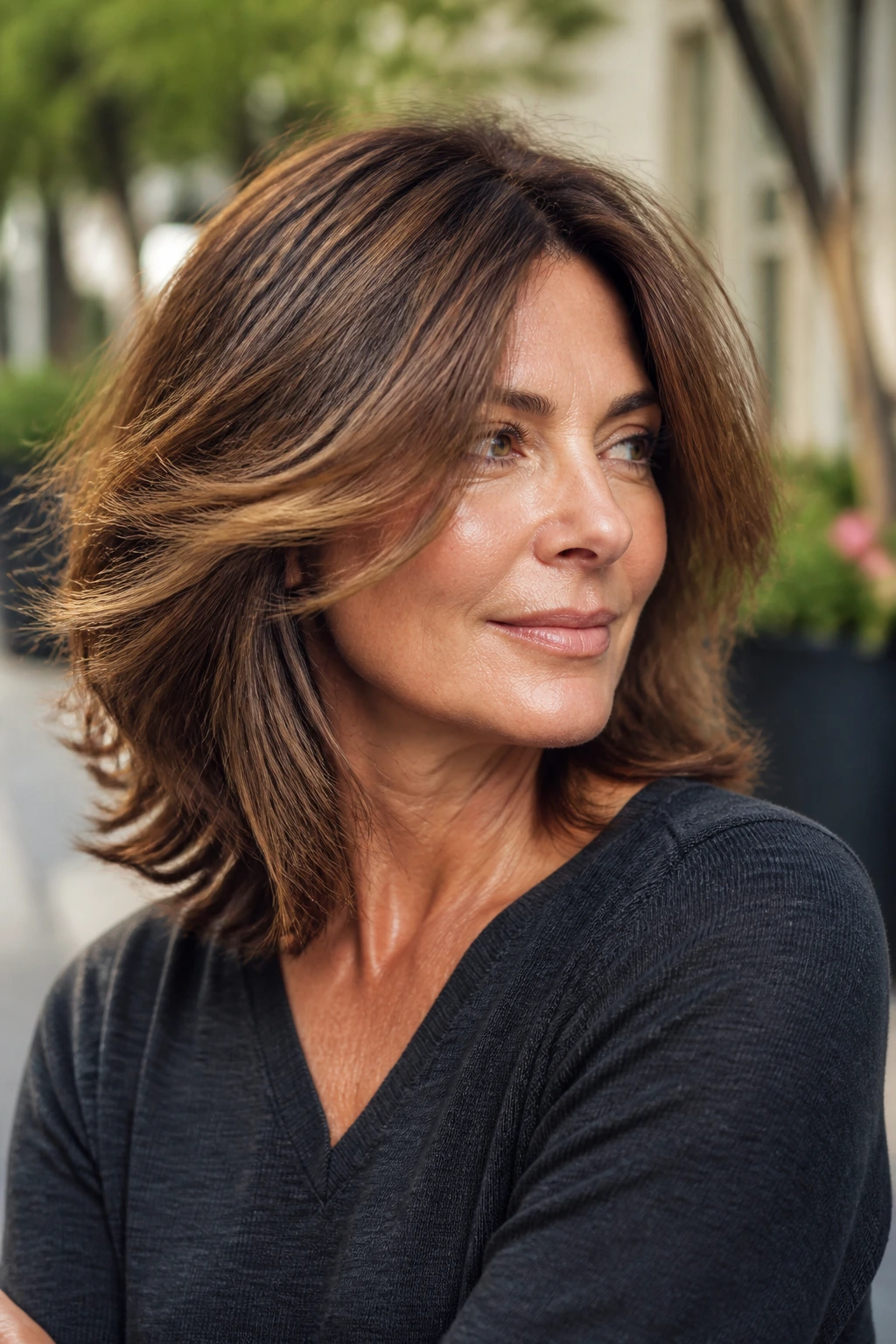
The best medium hairstyles for thick hair over 40 do not try to erase the hair’s personality. They give it a better structure to live in. That’s a much smarter goal, and a more flattering one too.
If your current cut feels bulky, heavy, or oddly stubborn at the shoulders, one of these shapes will probably make the daily routine easier without stripping away the fullness that makes thick hair look rich. The real win is not chasing some imaginary “younger” look. It’s getting a cut that moves cleanly, behaves in humidity, and still looks like your hair when you walk out the door.
Pick the version that matches your texture, your styling patience, and the amount of lift you actually want to do every morning. Then let the shape do the work.
