



A choppy haircut with bangs has one job: make the whole cut move when your head does. The ends break apart instead of sitting like a helmet, and the fringe does the same thing across the forehead, so the haircut looks alive even when you haven’t had time for a full blowout. That little bit of broken texture changes everything.
The reason people keep returning to choppy haircuts with bangs is simple: they’re forgiving in a way a blunt cut isn’t. A blunt bob shows every missed styling day. A choppy bob, shag, bixie, or lob can look even better after a few hours of wear, once the pieces settle and separate a bit. That’s not laziness. That’s the point.
There’s also a practical side that doesn’t get enough credit. Choppiness removes weight from thick hair, gives fine hair a little lift through the crown, and softens a strong fringe so it doesn’t read as one hard block across the face. Bangs bring attention up to the eyes and brows; the texture keeps that attention from feeling severe. The trick is choosing the right shape, because “choppy” can mean a neat jaw-length bob, a shag with floaty curtain bangs, or a short crop with broken baby fringe.
Why These 18 Choppy Haircuts Keep Their Shape Instead of Going Flat
-
They move between salon visits. The broken ends and layered fronts keep the outline from collapsing into a single heavy line, even after a few weeks of growth.
-
They work with imperfect styling. A rough blow-dry, a quick pass with a flat iron, or airdrying with mousse can all land in the right neighborhood if the cut was built correctly.
-
They can lighten thick hair fast. Point-cutting and razor work remove bulk from the right places, which keeps the sides from puffing out like a triangle.
-
They make bangs easier to wear. A choppy fringe usually has a softer edge than a blunt one, so it grows out into curtain bangs or side-swept pieces with less drama.
-
They give fine hair a little lift. Shorter internal layers can create the feeling of density and movement without stealing so much length that the ends look thin.
-
They’re easy to tune to your face. Move the shortest bang piece half an inch, and the whole haircut changes mood. That small adjustment matters more than people think.
1. Chin-Length Choppy Bob With Curtain Bangs
A chin-length choppy bob with curtain bangs has a crisp outline, but the inside of the cut is all soft movement. The hair lands right at the jaw, so it shows off the neck and cheekbones, while the fringe splits away from the center and drifts toward the temples. It’s a smart choice if you like a clean silhouette but don’t want the haircut to sit there in one hard block.
Why It Feels Balanced
The bob length gives shape, and the curtain bangs break up the forehead without taking over the whole face. On straight hair, the ends flick a little when you tuck one side behind the ear. On wavy hair, the texture looks more relaxed, almost like the cut was meant to be lived in instead of preserved.
Quick Fit Notes
- Best when the hairline sits lower than the brows.
- Works well if your hair is medium density or fine-to-medium.
- Looks especially sharp when the perimeter hits just below the jawline.
- Ask for the bangs to start around the bridge of the nose if you want softness, or higher if you want more lift.
Tip: Keep the outer edge clean and the interior slightly shattered. That contrast is what makes this bob look polished instead of fluffy.
2. Razored Lob With Soft Bottleneck Bangs
A razored lob with bottleneck bangs does a very specific thing well: it keeps the length, but takes the weight out of the ends. The cut sits somewhere between the collarbone and the top of the chest, so it still feels versatile, but the razored layers stop it from dropping straight down like a curtain. The bangs are shorter in the center and longer at the sides, which gives you that bottleneck shape without making the front too heavy.
This is one of my favorite options for thick hair that gets puffy at the bottom. A blunt lob can make thick ends look boxy. A razored version breaks that box up and lets the hair swing.
What Makes It Different
The ends should look feathered, not choppy in a blunt, hacked-up way. That matters. A good razored lob has movement at the bottom and enough density through the sides so the cut still feels full when it’s tucked or twisted.
It suits people who like to air-dry and want the front to fall in a predictable way. If you blow-dry the bangs forward with a round brush and curve the side pieces away from the face, the whole cut opens up. The result is relaxed, but not sloppy.
3. Wolf Cut With Long, Shattered Fringe
Why does the wolf cut keep showing up on people who swear they hate layers? Because it solves the old layering problem: too much bulk on top, too little movement at the ends. The long, shattered fringe is the piece that ties it together. It isn’t a neat bang. It isn’t a full curtain fringe either. It’s a broken front section that can fall across the forehead, split in the middle, or sweep to one side when you get bored.
The wolf cut leans into contrast. Shorter crown layers create lift, while the length in back keeps the style from feeling too cropped. The bangs matter because they soften the top-heavy part of the cut and keep it from reading as a mullet unless that’s exactly what you want.
How to Wear It
Let the front dry with a little texture cream and keep your hands out of it until it’s almost dry. That’s the move. If you keep fluffing the fringe while it’s wet, the pieces separate too much and the shape gets messy in a bad way.
The wolf cut works best on medium-to-thick hair and natural waves, where the layers have something to grab onto. Straight hair can wear it too, but it usually needs a bit more heat shaping to keep the crown from lying flat.
4. Bixie With Piecey Micro Bangs
Walk into a salon with a picture of a bixie and the first question is usually about the fringe: do you want it to sit on the brows or float above them? Micro bangs answer that question fast. A bixie already lives between a bob and a pixie, so the tiny bangs make the whole haircut feel deliberate, not halfway finished. The shape opens up the ears, the temples, and the neck, which gives the face a lot of room.
This cut has edge. No pretending otherwise. It’s best when you want short hair with some bite, but you still want enough texture to push the front around with a fingertip and a little paste.
Key Details
- The shortest bang point usually lands 1/2 inch to 1 inch above the brows.
- The sides should stay soft enough to blend into the temples.
- Point-cutting matters here; blunt micro bangs can feel harsh fast.
- A matte paste or light wax keeps the pieces separated without turning them sticky.
The bixie is one of the easier short cuts to live with if you hate a perfect blowout. The bangs can go slightly crooked and still look intentional. That’s the charm.
5. Curly Shag With Rounded Bangs
Curly hair and bangs can be a bad idea if the cut ignores shrinkage. They can also be brilliant when the shape is done properly. A curly shag with rounded bangs keeps the top lighter, opens space around the face, and lets the curls stack in a way that feels airy rather than triangular. The rounded fringe follows the natural curve of the forehead instead of fighting it, which is the part most people get wrong.
Cutting this shape dry or nearly dry makes a huge difference. Wet curls lie. They promise length they will not keep. When the hair springs up, those bangs can end up two inches shorter than expected, so the stylist has to respect the curl pattern from the start.
The Shape in Practice
The crown should have enough layers to keep the volume from sitting only on the sides. The fringe should be long enough to tuck into the rest of the curl pattern if you want a softer look. If your curls are tighter at the temples, the bangs can be slightly longer there and shorter in the center so the curve feels even.
A diffuser, a curl cream, and a light gel are the whole story here. Heavy oils on the fringe will make the bangs collapse onto the forehead, which is a miserable feeling by midday.
6. Shoulder-Length Choppy Cut With Split Bangs
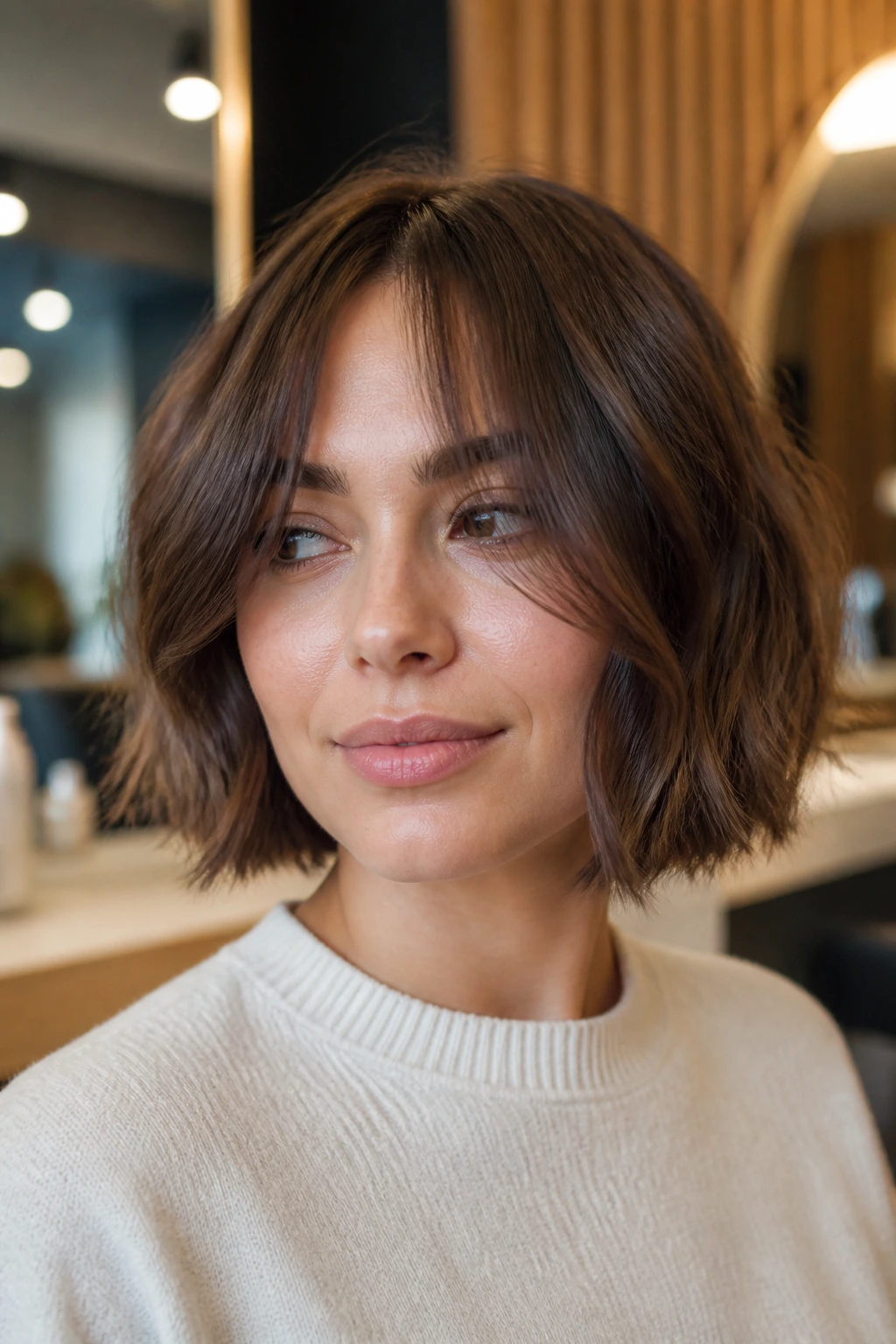
Unlike a blunt shoulder-length cut, this version doesn’t rely on one clean line to do the work. The weight is broken up through the mid-lengths, and the split bangs leave the center open so the face doesn’t feel boxed in. That makes the haircut a nice middle ground for people who want movement but aren’t ready to go short.
The split fringe works especially well if you wear glasses. The center opening keeps the bangs from fighting the frames, and the side pieces can slide just over the temples. It also helps if your forehead is on the longer side and you don’t want full coverage.
Best On
- Straight to wavy hair with some natural bend.
- Medium density hair that needs movement, not thinning.
- Faces that look better with a bit of width around the cheekbones.
A shoulder-length choppy cut like this can be worn tucked, half-up, or loose without losing its shape. Ask for the front pieces to hit around the lip or chin, not all the way down at the collarbone, if you want the split bangs to connect smoothly to the rest of the cut.
7. Feathered Mullet With Wispy Fringe
A feathered mullet sounds bolder than it usually looks in the mirror. The short crown and longer back create a tailwind effect through the haircut, and the wispy fringe keeps the front from feeling too heavy or theatrical. It’s one of those cuts that can look very cool with zero polish and still hold up when it’s brushed out.
The important part is the feathering. If the top is cut too blunt, the shape turns boxy. If the back is left too heavy, the mullet stops looking airy and starts looking overgrown. The fringe should be light enough to move when you shake your head.
A texturizing spray at the roots and a little dry wax through the ends can make this cut come alive fast. It’s not a style for someone who wants one smooth finish. It’s for someone who likes a little edge and doesn’t mind if a few pieces stick out on purpose.
8. Inverted Bob With Textured Side Bangs
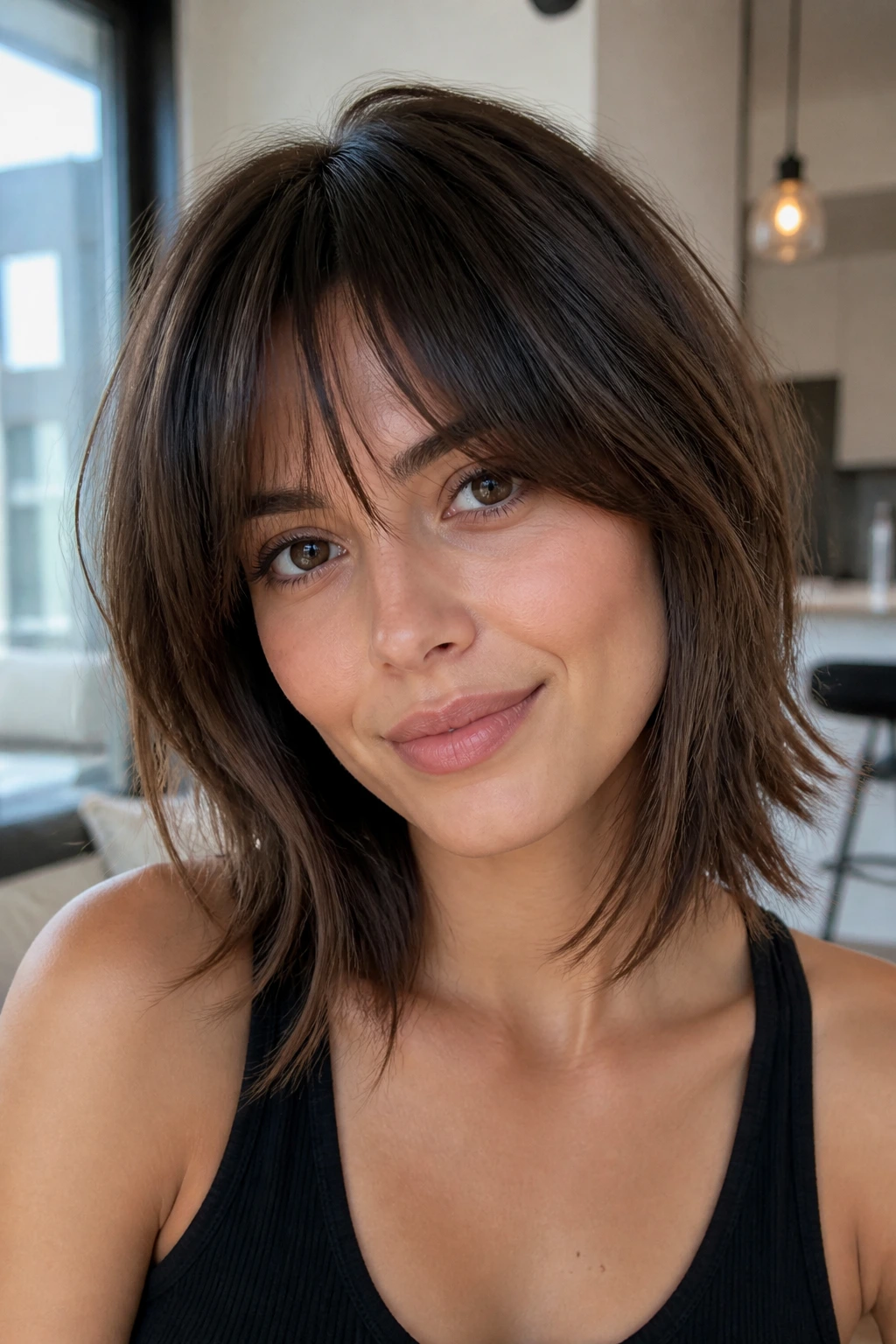
The inverted bob does one thing that a straight bob can’t: it builds a little lift in the back so the front pieces swing forward with purpose. Add textured side bangs, and the haircut gets a soft diagonal line that can sharpen the cheekbones or narrow a wider forehead. The shorter back creates that tucked-in look at the nape. The longer front keeps it from feeling severe.
What to Watch For
Side bangs need enough weight to lie in the right direction, but not so much that they become one heavy chunk. The cleanest version usually has a bit of slide-cut texture through the ends. That keeps the fringe flexible when you part it.
This cut is especially kind to fine hair because the stacked back creates the feeling of density without demanding a lot of length. It also works on straight hair that tends to fall limp by noon. The angle gives the shape some memory.
If your hair grows toward one side already, lean into it instead of fighting it. The cut will look more natural, and you won’t have to use as much heat to force the fringe over.
9. French Bob With Blunt, Broken-Up Bangs
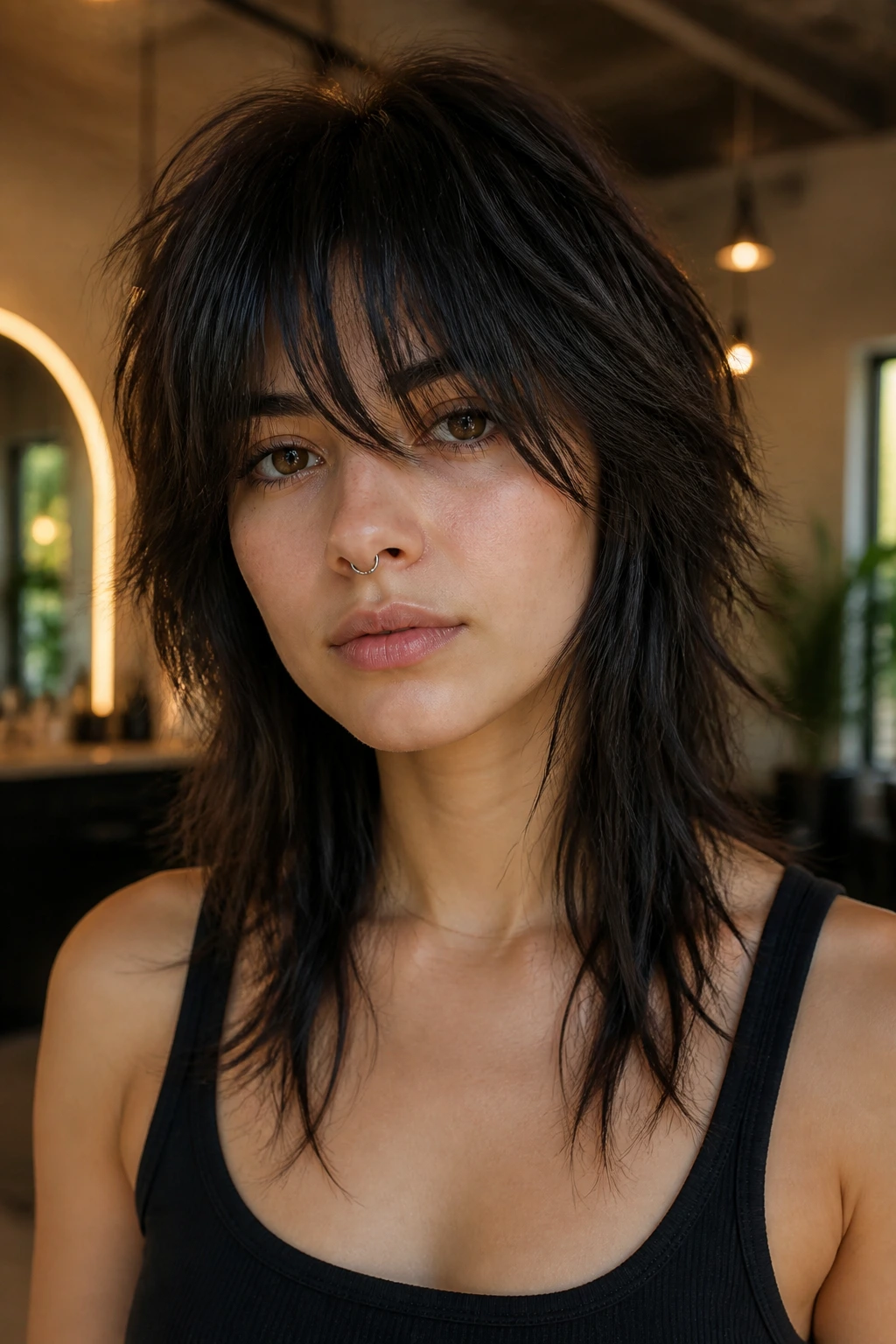
A French bob usually lives somewhere around the jaw, with enough softness to keep it from feeling old-school in a costume-y way. The bangs are where it gets interesting. A blunt line across the forehead can feel sharp fast, so the best versions are broken up just enough to show a little forehead through the fringe. That tiny bit of separation keeps the cut chic instead of stiff.
The length works well when it kisses the cheekbone or sits just below the ear. Shorter than that, and the bob can start to feel more pixie-like. Longer than that, and you lose the little burst of shape that makes a French bob so recognizable.
If you style it with a quick bend through the ends and a light touch of serum, the haircut gets this neat, slightly undone feeling. Very little effort. Nice payoff.
10. Long Choppy Layers With Curtain Bangs
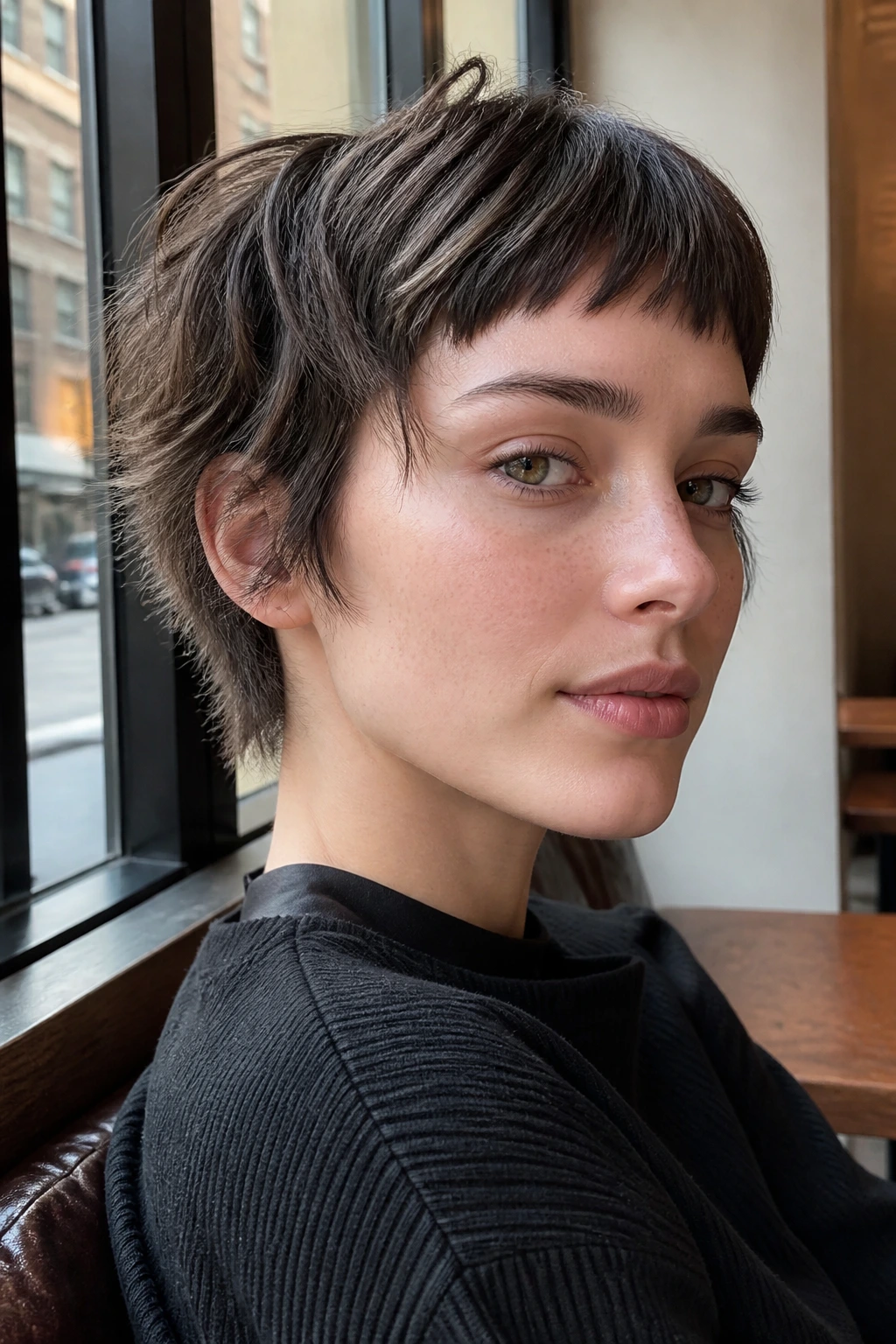
Long hair does not have to be flat to be beautiful, and this cut is proof. Choppy layers through the lengths remove some of the curtain effect that happens when long hair grows heavy, while the bangs split at the center and open the face. It’s the safest choice on this list if you like length and still want visible shape.
The bangs are the front door here. Keep the shortest point around the nose or upper lip if you want a gentle frame that can be tucked behind the ears on lazy days. If you cut them too short, the balance with the long layers disappears. Too long, and they stop reading as bangs at all.
This is a smart option for people who want a face-framing haircut without giving up ponytail length. It also grows out better than a full fringe. After a few weeks, the bangs just shift into longer curtain pieces. No awkward shelf. That part matters.
11. Collarbone Shag With Airy Brow-Skimming Fringe
A collarbone shag sits in the sweet spot between shoulder length and long hair, which makes it easy to wear up, down, or shoved behind the ears. The airy fringe skims the brows and breaks apart just enough that it never feels trapped against the forehead. This is one of the least fussy cuts in the whole group, provided the layers are placed correctly.
The shagginess should be felt, not seen as a bunch of short pieces shouting at once. You want movement in the front and crown, with enough length at the bottom to keep the outline from fraying. The fringe should be light enough to separate after a quick blow-dry with fingers.
This cut is a nice answer if you want bangs but you’ve been scared of commitment. The fringe is there, but it doesn’t control the haircut. That’s the key.
12. Pixie Crop With Side-Swept Bangs
A pixie crop with side-swept bangs gives you the shortest shape in this roundup without losing softness at the front. The sides and back stay close to the head, while the bangs are left a touch longer and combed across the forehead. That diagonal line keeps the face open and makes the cut feel less severe than a classic short crop.
This is one of the best choices if you want cheekbones to do some of the talking. The side fringe can be cut to skim one brow and disappear into the top layers, which gives you a little length to play with even in a short cut. It’s also useful if you’re dealing with a strong cowlick at the front, because the bangs can be directed with the growth pattern instead of against it.
A tiny amount of styling cream is enough. Too much product and the fringe goes limp. Too little and the short pieces stick straight up. There’s a small window here, but it’s worth learning.
13. Choppy Lob With Grown-Out Baby Fringe
What happens when a baby fringe grows out? If the rest of the cut is designed well, it can turn into one of the easiest choppy lob styles to live with. The length sits around the collarbone, the ends are broken up, and the front fringe is long enough to tuck or split if you don’t want it centered every day.
That’s the appeal. You get the attitude of shorter bangs without being trapped by them. The fringe can read as edgy on day one, then soften into a more lived-in shape a few weeks later. A lot of haircuts fail at this stage. This one can survive it.
How to Wear It
- Blow-dry the fringe down first, then bend the ends away from the face.
- Use a flat brush if your hair is straight; use fingers if there’s a wave.
- Keep the ends slightly piecey so the lob doesn’t turn dense at the bottom.
This is the cut for someone who wants options. It can look cool at the office, a little messier on the weekend, and still pull into a low knot without the front falling apart completely.
14. Asymmetrical Bob With Heavy Side Fringe
A strong asymmetrical bob does not whisper. One side sits longer, the other side pulls up slightly, and the side fringe cuts across the face with enough weight to make the shape feel intentional. It’s one of the more dramatic options here, but the drama comes from line, not from volume.
The longer side should still feel mobile, not like a rigid curtain. That means the interior has to be choppy enough to keep the front from hanging in one slab. If the bangs are too thin, the asymmetry loses its punch. If they’re too thick, the whole style can feel lopsided in a bad way.
This cut works best when you want your hair to be part of the outfit. It pairs well with sharp collars, earrings, and simple makeup because the haircut already does a lot of visual work.
15. Razor Shag With Face-Framing Bangs
A razor shag is the haircut equivalent of a guitar riff. It has texture, movement, and a little edge at the ends. The face-framing bangs are the part that make it wearable; they soften the cheek area and stop the shag from feeling like it belongs only on stage or in a magazine spread.
The razor gives the lengths a softer finish than scissors alone. That matters on thick hair, where blunt ends can feel bulky. It also matters on wavy hair, where the shape needs help bending instead of sitting in a straight, dense line.
Use a heat protectant if you’re going in with a blow-dryer or flat iron. Razor-cut ends can look gorgeous, but they don’t love being scorched. A medium-hold mousse through the roots and a little cream through the front is usually enough.
16. Choppy Crop With Curved Full Bangs
A short crop with full bangs can go wrong fast if the fringe is too heavy or cut too straight. A curved version fixes that by letting the bangs arc gently from temple to temple and then break into small pieces at the ends. The crop underneath stays close, so the bang shape becomes the star.
This cut is a strong choice if your hair is straight or only slightly wavy. Curly hair can wear it too, but the bangs need more length to account for shrinkage. The curved fringe creates a soft frame over the eyes, which gives the style a little old-school charm without making it feel dated.
The crop itself should be light, almost airy around the ears. If the sides get too bulky, the bangs can look disconnected. A good version feels neat at the edges and soft in the middle.
17. Wavy Mid-Length Cut With Bottleneck Bangs
Wavy hair and bottleneck bangs get along because neither one needs to be perfect. The mid-length cut sits somewhere between the chin and the collarbone, and the waves create a broken outline that keeps the style from looking overworked. The bangs start narrower in the center and widen toward the temples, which lets the front open and close depending on how you wear it.
This is one of the easiest looks to grow out gracefully. The bangs slide into face-framing layers, and the mid-length body keeps enough weight that the waves don’t puff out too much. It’s the sort of haircut that looks like it knows what it’s doing even when you only spent six minutes styling it.
A salt spray can be a little harsh here if your hair is dry. A texture mist or light mousse does the job with less grit. The goal is movement, not stiffness.
18. Layered Wolf Bob With Light, Fluttery Bangs
A layered wolf bob takes the shaggy energy of a wolf cut and trims it down to bob length. That shorter outline makes the style feel cleaner, while the light, fluttery bangs keep the front from becoming boxy. The result lands somewhere between playful and sharp, which is a nice place to be.
The bangs should move when you do. If they sit too still, the whole cut loses its looseness. If they’re cut too thin, though, they disappear. The sweet spot is a fringe with enough texture to break apart, but enough body to still show up in the mirror.
This cut flatters hair that has some natural bend or density. On fine hair, it can still work, but the layers need to be restrained so the ends don’t go wispy in a bad way. On thicker hair, it can be one of the most flattering short-to-mid cuts around, because the fringe and crown both hold shape without getting heavy.
Why Choppy Texture and Bangs Work So Well Together
A clean line is honest, but it isn’t always forgiving. Choppy texture changes the way a haircut grows out because the eye reads the broken edge as motion, not damage. That’s a big deal when you’re living with a fringe, since bangs are the first part of a haircut to betray an overgrown trim. Once they get too blunt, they sit like a sheet. Once they’re lightly shattered, they soften instead of collapsing.
The other advantage is balance. Bangs pull attention to the front of the face, and choppiness redistributes weight around them. Thick hair loses bulk where it needs to. Fine hair gains a little lift where it’s usually flat. Curly hair gets shape without having to be carved into one perfect line that the curl pattern will ignore by lunchtime.
There’s a grow-out benefit too, and it’s underrated. A lot of people avoid bangs because they’re afraid of the awkward phase. Choppy bangs avoid some of that pain because the ends are already broken up. The transition into curtain bangs, side fringe, or face-framing layers is smoother. Less hostage situation. More slow shift.
Which Choppy Bangs Work Best for Your Face and Hair
The right cut starts with the hair you already have, not the haircut you saw on someone with a different texture and a different growth pattern. Fine hair usually likes shapes that create fullness at the crown without stripping the ends too hard. That’s where bobs, bixies, and softer shags do useful work. Thick hair can carry heavier texture and more dramatic layers, but it needs the weight removed in the right places or the cut puffs outward at the sides.
Face shape matters less than people think, but it still matters. Longer faces usually like bangs that land a little fuller across the forehead, because that shortens the visual length of the face. Rounder faces often do well with side-swept bangs, bottleneck bangs, or curtain fringe that leaves some space at the center. Square jaws can look softer with curved bangs and longer front pieces around the cheekbones. Heart-shaped faces tend to get a nice result from curtain bangs and chin-length cuts that add balance below the cheekbone.
Cowlicks are the real boss, though. A strong cowlick at the front can lift a bang or split it forever if you fight it too hard. If that sounds familiar, ask for a longer fringe and let the shortest point sit where the hair naturally wants to bend. That one conversation saves a lot of forehead drama later.
What to Tell Your Stylist Before the First Snip
The best haircut consults start with the boring details. How much time do you want to spend styling? Do you air-dry? Where does your hair fall apart first? Those answers matter more than the reference photo, because the photo only shows the finish. It does not show the hours under the hood dryer or the round-brush work that made it behave.
Say where you want the shortest bang point to land. Name the brow, the bridge of the nose, or the cheekbone. That gives the stylist a real target. If you want a choppy shape, ask for point-cutting, slide-cutting, or razor-softened ends depending on your hair density. Fine hair usually prefers scissors and a lighter touch. Thick, coarse hair often benefits from a bit more texture removal.
Bring up the grow-out plan, too. A fringe that can become curtain bangs is a different animal from a baby bang or a blunt micro fringe. If you know you want flexibility, say it out loud. A stylist can leave the front a little longer and build shape in the side pieces so the cut has somewhere to go later. That detail sounds small. It isn’t.
Essential Tools for Styling Choppy Haircuts With Bangs
- Blow dryer with a nozzle attachment — directs air where you want it, which matters when the fringe likes to split.
- 1 to 1.5-inch round brush — useful for bending curtain bangs, lobs, and bob ends without overcurving them.
- Flat iron with rounded edges — best for a quick bend through the front pieces or a soft wave in the mid-lengths.
- Wide-tooth comb — helps keep curl and wave intact when you’re detangling wet hair.
- Texturizing spray — adds separation to the ends so the cut doesn’t fall into one flat sheet.
- Lightweight mousse — good for lift at the roots without making the bangs crunchy.
- Matte paste or cream wax — especially helpful for pixies, bixies, and short fringes.
- Heat protectant spray — worth using if the front of your hair gets touched by a hot tool every day.
- Duckbill clips — useful for setting curtain bangs while they cool.
- Dry shampoo — more than a grease fix; it gives bangs a little grip on day two.
How to Style Choppy Haircuts With Bangs on Wash Day and Day Two
Wash day is where most people overcomplicate things. You do not need to force every piece into place at once. Start with a light mousse at the roots if you want lift, then rough-dry the crown until the hair is about 80% dry. That part matters. If the roots dry flat, the rest of the shape has to work too hard to compensate.
Bang section first, always. If the fringe dries in the wrong direction, you spend the rest of the day negotiating with it. Use your fingers or a small round brush to direct the bangs exactly where you want them, then let them cool before touching them again. That cooling step is the difference between a fringe that holds and one that flips off the forehead ten minutes later.
Day two is often easier. The cut already has texture, so you’re refreshing shape rather than rebuilding it. Mist the bangs lightly with water or a bit of leave-in spray, twist them for a few seconds, then release and finger-shape them. A small puff of dry shampoo at the roots can bring the whole haircut back to life. Don’t spray it all over the ends unless you want them to look dusty.
If your hair is wavy or curly, scrunching the mid-lengths while leaving the bangs controlled works better than trying to make the whole head obey one method. The front and the body of the cut can—and usually should—behave differently. That’s not inconsistency. That’s the haircut doing its job.
Maintenance, Trim Timing, and Grow-Out Strategy
Bangs need more attention than the rest of the haircut. That’s just the truth. A fringe can lose its shape in three to five weeks, especially if it sits above the brows or has a strong center point. Curtain bangs and longer split fringe can often go six to eight weeks before they start feeling unruly. Shorter crops and micro bangs usually want a tidy-up sooner.
The rest of the cut can breathe a little longer. Bobs and lobs often hold their structure for six to ten weeks depending on density and how sharp the shape is. Shags and wolf cuts can stretch farther because the point is movement, not precision. If the ends start looking stringy, that’s when a small dusting trim helps more than a full reshape.
Grow-out works best when the layers are already designed to connect. If you know you want a softer fringe later, don’t cut the front so short that it has nowhere to go. While it grows, pin the sides back on busy days, split the fringe with a deep center part, or let it fall into a bend with a small round brush. The awkward phase isn’t a crisis. It’s a transition stage. Still annoying, though.
Common Mistakes That Flatten the Shape
The biggest mistake is over-thinning the front. People ask for texture, then end up with bangs so sparse they separate into three sad strings. The fix is simple: keep the density in the bang line and remove softness from the ends, not from the whole front section.
Another easy error is using too much product. Choppy cuts need separation, but they do not need a coating. When the fringe gets greasy, the pieces cling together and the haircut loses that airy, broken look. Start with a pea-sized amount of cream or paste, then add only if you need it.
Ignoring growth patterns causes trouble fast. A cowlick at the center of the forehead can kick a fringe upward, while a side swirl can push bangs across the face in a way you did not ask for. The answer isn’t more heat. It’s a better haircut map from the start, plus a styling direction that works with the growth pattern instead of fighting it.
Skipping regular trim touch-ups turns a crisp choppy cut into an unplanned mullet or a limp lob. That may sound dramatic, but the shape really does change that fast once the bang line and the interior layers grow past each other. Keep the fringe tidy and the rest follows.
Variations and Adaptations to Try
Soft Office Version
If you want the shape but not the edge, ask for longer curtain bangs and a less shattered perimeter. The cut still moves, but it reads cleaner around the face. This version suits people who need the haircut to work with blazers, glasses, and a low-effort styling routine.
Thick-Hair Weightless Version
For coarse or dense hair, keep the perimeter blunt enough to hold shape, then remove bulk inside the cut with deep point-cutting. The fringe should stay slightly longer at the sides so it doesn’t puff out. This approach gives you movement without making the ends look see-through.
Fine-Hair Lift Version
If your hair goes flat easily, shorten the crown layers a little and keep the fringe light but not wispy to the point of vanishing. A small root lift from mousse and a round-brush bend at the bangs will do more here than heavy layering ever could. The aim is body, not fragility.
Curly-Friendly Version
Ask for the cut to be shaped in its natural dry state and leave the bangs long enough to account for shrinkage. A rounded fringe or longer curtain bang usually behaves better than a blunt straight-across line. This version can be stunning, but only if the curl pattern gets the first vote.
Low-Styling Version
If you want the least fuss, choose a lob or shag with bangs that blend into the sides. The haircut should still look fine when air-dried and finger-combed. That means no ultra-short micro fringe and no layers that depend on a perfect blowout.
What to Ask for if You Want the Look but Not the Drama
Bring a photo, yes. Then say what you actually like about it. Is it the length? The fringe? The soft edges around the cheek? That part helps more than asking for the haircut by name, because different stylists will interpret the same reference in different ways.
A good salon phrase sounds plain: “I want the texture, but I need it to grow out cleanly.” Or: “Keep enough length in the fringe that I can split it later.” That tells the stylist to leave room for movement instead of carving the bang line into something that only looks good for two weeks. People forget to say this and then wonder why the haircut feels high-maintenance.
If you have a strong cowlick, say so before the scissors come out. If your hair is fine and you want lift, say that too. The more specific you are about how your hair behaves in the morning, the better the cut will fit your actual life.
Frequently Asked Questions
Do choppy haircuts with bangs work on fine hair?
Yes, if the stylist keeps enough density in the outline and doesn’t over-thin the fringe. Fine hair usually looks best in bobs, lobs, bixies, or soft shags where the texture creates the feeling of movement without leaving the ends stringy.
Can curly hair wear choppy bangs without looking puffy?
Absolutely, but the cut has to respect shrinkage. Curly bangs should usually be longer than straight-hair bangs, and they’re often best cut dry or nearly dry so the shape reflects the real curl pattern.
How often do bangs need trimming?
Short bangs and micro fringe often need a trim every 3 to 5 weeks. Longer curtain bangs can usually go a bit longer, around 6 to 8 weeks, before they start blocking the eyes or losing their shape.
What if my bangs split because of a cowlick?
Work with it. A deep center part, a longer curtain fringe, or a side-swept bang often behaves better than a forcefully straight fringe. If the cowlick is strong, ask your stylist to leave the shortest point longer than you think you need.
Do I need heat tools every day?
No. Many choppy cuts look better with a rough blow-dry, airdry, or a quick bend in the bangs rather than a full styling session. The haircut should be doing some of the work on its own.
What’s the best cut if I want low maintenance?
A collarbone shag, a choppy lob, or a longer layered cut with curtain bangs usually gives the best mix of shape and flexibility. Those cuts can look intentional even when they’re not freshly styled.
Should I ask for scissors or a razor?
That depends on your hair. Thick, coarse hair often benefits from razor or slide-cut texture, while fine or fragile hair usually does better with careful scissors work so the ends don’t get too thin.
How do I grow out choppy bangs without hating the in-between stage?
Start with a fringe that can split into curtain bangs, then pin it back, twist it off to the side, or dry it with a soft bend. The goal is to let the front become a layer before it becomes a problem.
The Cuts That Keep Moving
The best choppy haircuts with bangs don’t try to stay perfect. They stay alive. That’s why they can handle morning shortcuts, a little wind, a little sweat, and a few weeks of growth without falling apart the second the salon styling wears off.
If you want something sharper, go shorter and more broken at the edges. If you want something gentler, keep the fringe longer and let the layers do the talking. Either way, the sweet spot is the same: enough texture to move, enough structure to hold shape, and just enough bang to make the front of the haircut feel intentional.
Pick the silhouette that matches your hair’s habits, not the one that fights them, and the cut will do a lot of the heavy lifting for you.
