



Bottleneck bangs are one of those rare fringe shapes that make curly hair look like it was cut on purpose, not negotiated with. Too-short curly bangs can spring up into tiny hooks. Too-long ones fall into the rest of the cut and vanish. The bottleneck shape sits in the middle: shorter at the center, longer near the temples, with enough softness to let the curl pattern stay visible.
Curly hairstyles with bottleneck bangs work because the fringe follows the way curls actually behave. A center piece that lands around the brows when dry can shrink to a neat upper-fringe shape without turning into a blunt shelf, while the longer sides blend into cheekbone-length pieces that stop the face from getting boxed in. That little bit of length difference matters more than people think. On curls, one inch can change the whole mood.
The fun part is how many directions this shape can go. On a bob, it looks polished and compact. On a shag, it gets shaggy in the best possible way. On long curls, it acts like a frame that keeps the face from disappearing under layers of spiral and shine. The styles below cover the full spread, from soft and tidy to wild and airy, because bottleneck bangs are at their best when they’re matched to the rest of the silhouette rather than treated like a separate accessory.
Why This Fringe Shape Plays So Well With Curls
Shrinkage-Friendly Shape: The shorter middle section gives the curls room to spring up without landing at an awkward micro-bang length, while the longer sides keep the fringe from feeling chopped.
Face-Framing Balance: The temple pieces soften the transition into the rest of the haircut, which is the difference between “bangs on curly hair” and “a haircut that knows where your cheekbones are.”
Flexible Across Curl Types: Loose 2C waves, springy 3A spirals, and tighter 3C coils all read well in this shape as long as the stylist respects the curl pattern and the dry length.
Looks Good on Day Two: A little frizz at the edge doesn’t ruin bottleneck bangs the way it can ruin a blunt fringe. The shape forgives a bit of movement.
Easy to Pair With Layers: The fringe works with bobs, lobs, shags, wolf cuts, and long layers because it already has that tapering effect built in.
1. Shoulder-Grazing Curly Lob With Bottleneck Bangs
This is the safest place to start if you want curly hairstyles with bottleneck bangs without jumping straight into a big chop. A shoulder-grazing lob keeps enough weight in the ends to stop curls from puffing outward, while the fringe draws the eye up and gives the cut some shape right away.
Why it works on curls
The lob keeps the outline clean. That matters because bottleneck bangs already bring motion to the front of the face, and the rest of the cut should not fight them. When the ends sit around the collarbone, the curl pattern has room to swing without turning into a triangle.
A little layering around the cheekbones helps the bangs blend instead of sitting like a separate panel. Ask for the center of the fringe to sit roughly at eyebrow level when dry, then let the temple pieces drop toward the top of the cheekbones.
Best for
- Loose-to-medium curls that need weight in the perimeter
- Anyone growing out blunt bangs
- Round or oval faces that want a little vertical line through the front
A lob like this is also kind to people who air-dry more often than they diffuse. If the curls fall a little differently on one side, the shape still reads clean. That is half the magic.
2. Rounded Curly Bob With Bottleneck Bangs

A rounded bob changes the whole attitude of the fringe. Instead of letting the bangs hang in front of a flat surface, the curve of the bob creates a little halo around the face, and the bottleneck shape softens the front edge so it does not look boxed in.
The trick here is balance. If the bob is too blunt, the bangs can feel like they belong to a different haircut. Keep the interior lightly layered, especially around the sides, so the front pieces melt into the body of the bob. On tighter curls, this shape can look plush and sculpted; on looser curls, it reads airy and modern.
If you like hair that looks deliberate even when it is not perfectly styled, this is one of the strongest options on the list. The rounded bob gives structure. The bangs give movement. Together, they do the work.
3. Airy Curly Shag With Bottleneck Bangs

This is the cut for people who want movement first and neatness second. A shag with bottleneck bangs gives you layers all over, then uses the fringe to anchor the whole thing at the front.
What makes it different
The shag can turn messy fast if the top gets overloaded. Bottleneck bangs prevent that by creating a clear front shape without drawing a hard line across the forehead. The center lands shorter, the sides fall longer, and the whole look stays soft even when the curls separate a little.
The best version of this cut usually has layers starting around the cheekbones and then stepping down through the crown. That keeps the top from collapsing and stops the bangs from disappearing into the rest of the hair.
How to wear it
- Use a lightweight mousse at the roots
- Scrunch in a curl cream through the mids and ends
- Diffuse until the fringe is fully dry, or the center will shrink unpredictably
A shag with bottleneck bangs is one of those cuts that gets better when it moves. Wind, humidity, a hat, a car window. None of it ruins the line. It just makes the haircut look like it has a pulse.
4. Soft Wolf Cut With Bottleneck Bangs

The wolf cut and bottleneck bangs belong together because both rely on controlled mess. The wolf cut brings short crown layers, longer underlayers, and a slightly rebellious outline. The bangs act like a bridge between all that texture and the face.
A curly wolf cut needs restraint around the fringe. Too much density at the front and it starts to look heavy, like someone dropped a shelf across the forehead. Keep the center fringe piece light and let the temple lengths taper into the first side layers. That way the bangs still read as bangs, not just a random chunk of front hair.
This cut shines on curl patterns that naturally lift at the roots. If your curls tend to expand upward and outward, the wolf shape gives that energy a home. If your hair is finer, you can still wear it, but the layers should be kept softer so the shape does not disappear by midafternoon.
5. Long Spiral Layers With Bottleneck Bangs

Long curls with bottleneck bangs can look almost cinematic when the layers are cut with enough space between them. The fringe stops the style from feeling all one length, and the long temple pieces keep the front from looking abrupt.
Why this shape matters
Long curly hair can drag down the features if the front is too heavy. Bottleneck bangs fix that without forcing you to give up length. They create a focal point right where the face needs one, then let the rest of the curls fall freely.
The key is to avoid over-layering the ends. Long curls already move plenty. What they need is direction, not a thinned-out tail. Ask for face-framing layers that begin around the cheekbone or jaw, then connect to the bangs with a soft diagonal line.
The result is lush, not stiff. And on a good curl day, the bangs look like they were made for the rest of the hair, which is a nicer feeling than “tacked on.”
6. Side-Parted Curly Lob With Bottleneck Bangs

A deep side part changes the whole reading of bottleneck bangs. Instead of falling straight over the center of the face, the fringe sweeps across at a slight angle, which makes the cut feel less symmetrical and a little more relaxed.
That angle helps if your curls get bulky at the forehead. The longer side of the bangs can tuck into the part, while the shorter center piece still gives the front some lift. It is especially good for people who want bangs but do not want to feel married to the middle part every day.
This cut also gives the eye a path to follow. The side part leads into the longer temple pieces, which lead into the lob length, which keeps the whole haircut from stalling in one spot. Small detail. Big effect.
7. High Puff With Bottleneck Bangs
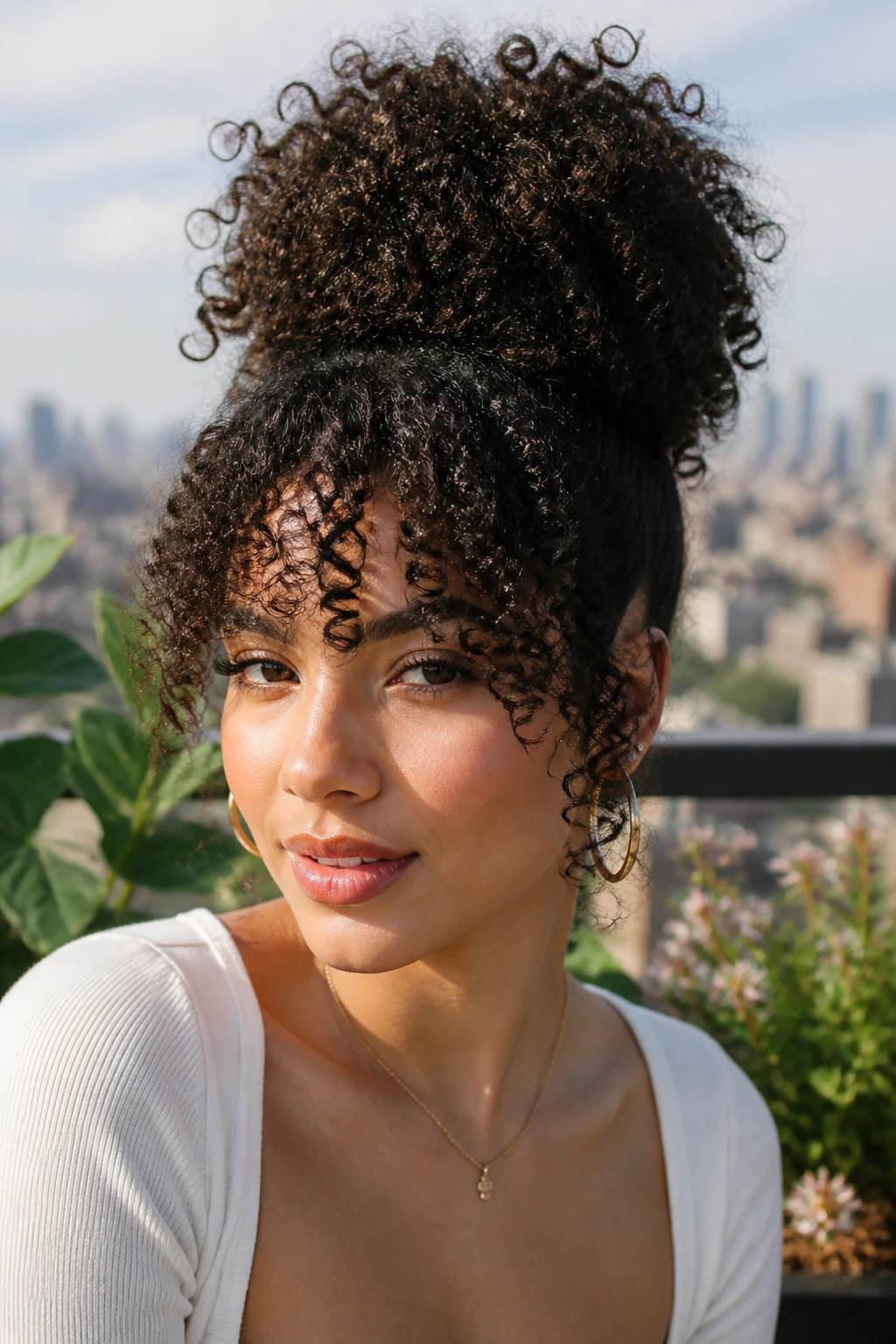
A high puff with bottleneck bangs is one of the sharpest ways to wear curls when you want the face front and center. The puff gathers the length up top or at the crown, while the bangs stay loose enough to frame the forehead and cheekbones.
It works because the fringe brings softness to a shape that can otherwise feel all lift and no detail. The center can sit a little shorter for definition, and the side pieces should be long enough to tuck into the puff base without poking out like random pieces.
Best for when you want the hair off your neck
This is a strong choice for hot days, workouts, or any situation where you want your curls out of the way but still styled. It also lets the bangs do the face-framing work that a full updo would otherwise skip.
Use a gel or edge control sparingly at the roots, then leave the bang area softer. If you coat the fringe too heavily, it loses the airy movement that makes bottleneck bangs attractive in the first place.
8. Curly French Bob With Bottleneck Bangs

The French bob gets a curl-friendly upgrade when bottleneck bangs are added. The length is short, usually around the jaw, and the fringe keeps the cut from looking severe.
A curly French bob can feel very tidy if the bangs are blunt, and that is not always the look you want. Bottleneck bangs soften the line by giving the center a little lift and the sides a longer drop, which makes the whole cut feel warmer and less stiff.
This is a good option if your curls are compact and you like your hair to look finished without a lot of styling drama. The bob should have just enough internal shape to let the curls sit on top of each other instead of stacking into a helmet. Short. Controlled. But not hard.
9. Tapered Coily Cut With Bottleneck Bangs
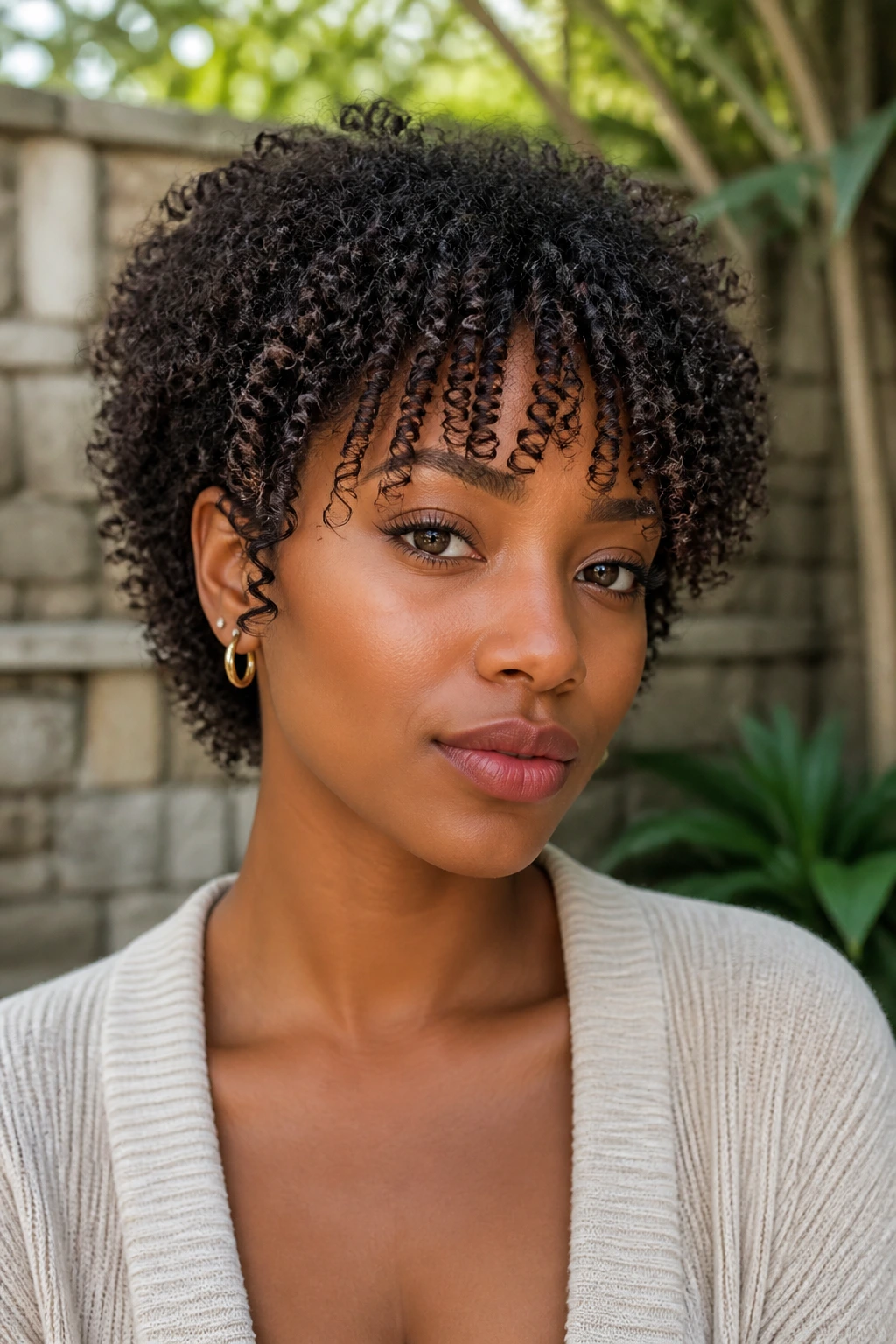
For tighter curls and coils, a tapered shape can be one of the smartest ways to wear bottleneck bangs. The back and sides are kept shorter or more closely shaped, while the top and front retain enough length to show the curl pattern.
The bangs should not be too ambitious here. On coily hair, bottleneck bangs usually work best when the center is left long enough to shrink naturally and the temple pieces are cut in a soft curve rather than a hard diagonal. That keeps the front looking intentional instead of choppy.
Why curl-by-curl cutting matters
A tapered cut depends on seeing how each section springs up. Wet curls can lie to you. Dry curls tell the truth. That is why a stylist who cuts coils in their natural state usually gets a better fringe line than someone guessing from stretched hair.
This look is strong, sculptural, and very good at making the face stand out without forcing the hair into a shape it does not want.
10. Half-Up Curly Crown With Bottleneck Bangs

A half-up style gives bottleneck bangs a job to do. The top section pulls back the crown and leaves the fringe loose, so the bangs become the main soft frame around the face instead of just one small detail in a busy style.
This is one of the easiest ways to make curly bangs feel practical. The front pieces stay visible, the rest of the hair gets lifted off the shoulders, and the whole shape looks like it took more planning than it did.
The half-up crown works especially well when the bangs are a touch longer at the sides, because those pieces can blend into the pulled-back section instead of fighting it. A few pins, a small elastic, and a curl refresh at the front are enough. No need to overwork it.
11. Collarbone Flip With Bottleneck Bangs

A collarbone-length cut with a little flip at the ends gives bottleneck bangs a lively backdrop. The curls hit just long enough to swing, and the front fringe sharpens the whole shape.
This is not a rigid, formal cut. It moves. The ends can flick outward or tuck inward depending on your texture, and the bangs help keep that movement from looking random. On looser curls, this style can read almost retro. On tighter curls, it looks softer and more rounded.
If your face tends to disappear into long hair, this length is a smart middle ground. You keep enough volume to feel like you have hair, but the collarbone length opens the neckline and lets the bangs carry some of the styling load.
12. Curly Mullet With Bottleneck Bangs
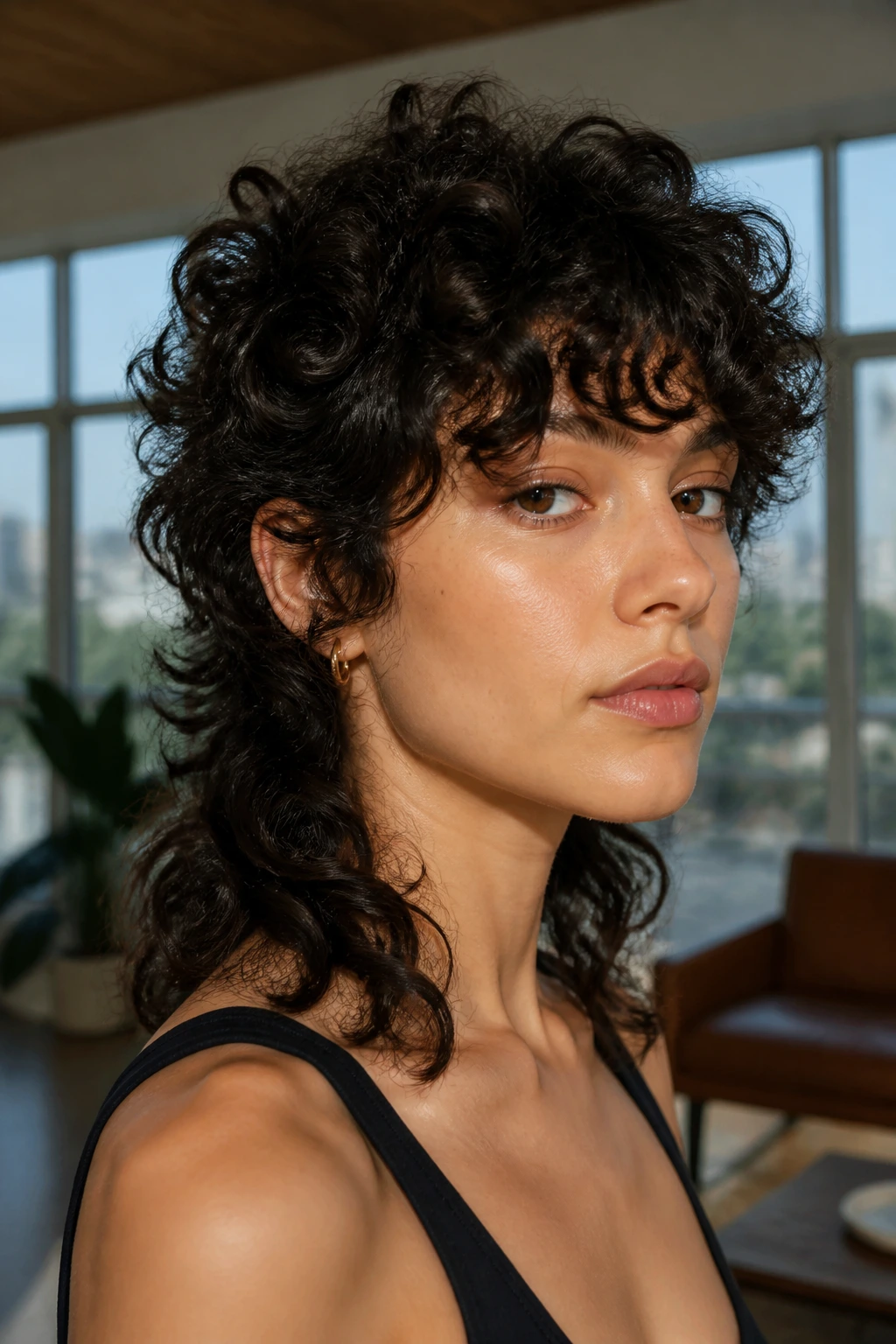
A curly mullet is not shy, and bottleneck bangs give it the polish it needs so it does not veer into costume territory. Shorter layers up top, longer lengths in the back, and a curved fringe at the front create a shape that is edgy without being stiff.
The fringe here matters more than usual. If the bangs are too blunt, the haircut gets heavy in the middle and loses the airy quality that makes a curly mullet fun. Keep the center shorter, let the sides taper, and leave enough length for the curls to shrink into a soft arc.
This style suits people who like texture and are not afraid of a little shape contrast. It is one of the few cuts on this list that looks better when it is slightly undone.
13. Rounded Afro With Bottleneck Bangs
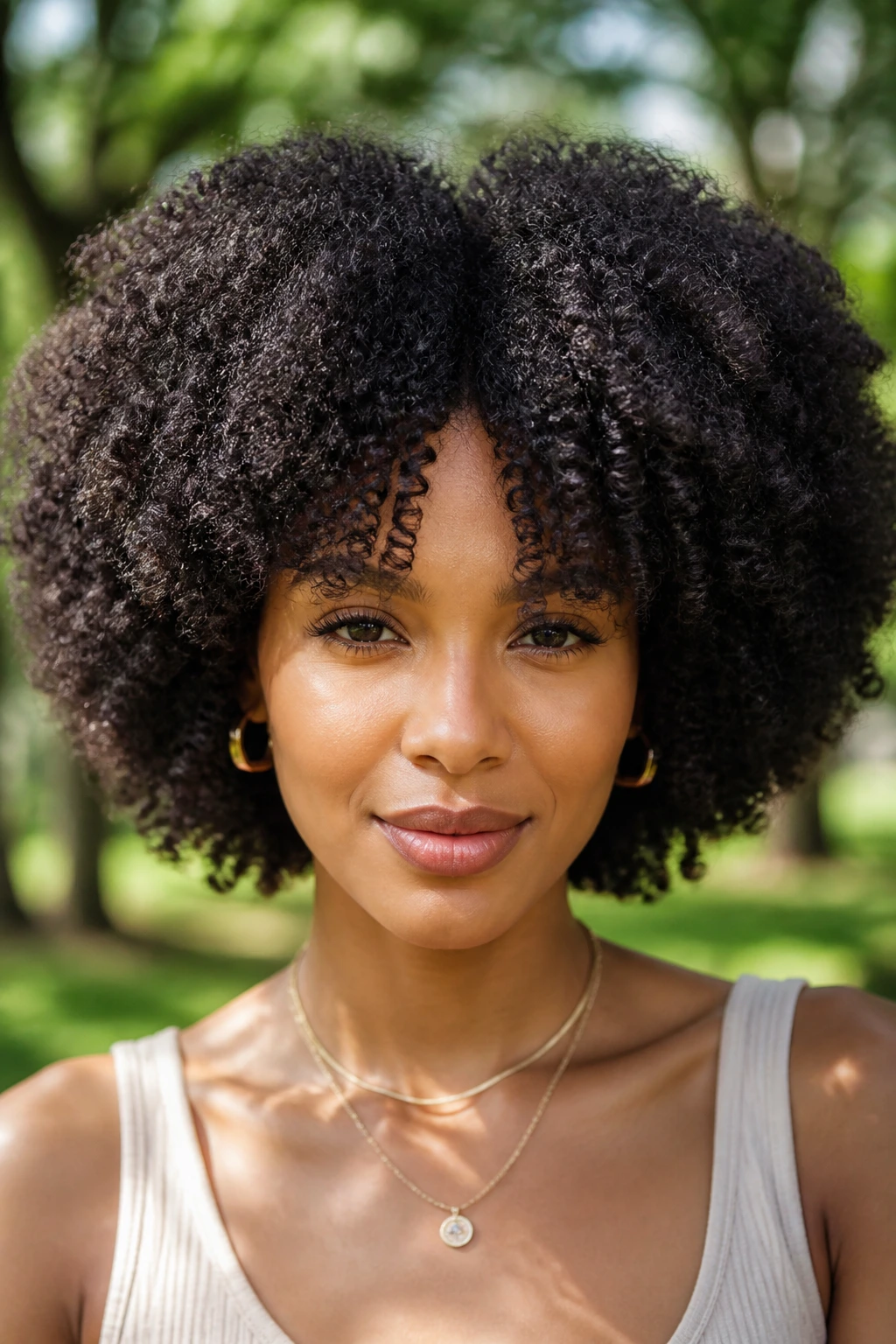
A rounded afro with bottleneck bangs is all about contour. The shape sits out from the head in a controlled cloud, while the bangs create a visible opening at the front so the face does not get swallowed by the silhouette.
This is a beautiful choice for dense, tightly curled hair that likes volume. The bangs should be shaped to follow the natural fall of the front coils, not forced into a straight line. A little softness at the temples keeps the roundness from looking too blocky.
What to ask for
- A rounded outline through the crown and sides
- Fringe pieces that follow the curl pattern
- Enough length at the temples to connect into the side shape
The result is balanced and strong. Not flattened. Not over-edited. Just a round shape with a face-framing opening that feels clean.
14. Ringlet Layers With Bottleneck Bangs
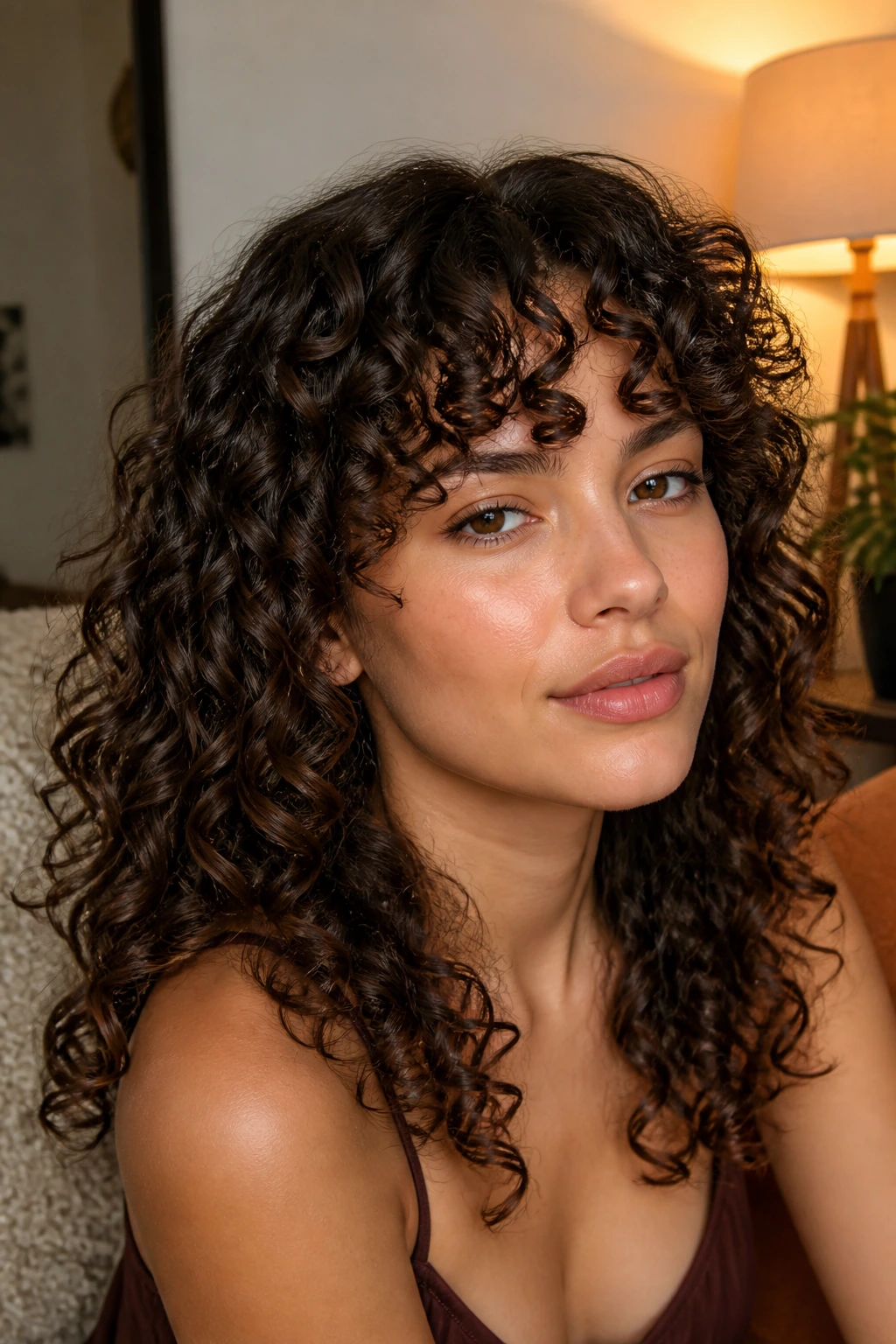
Ringlet-heavy curls love a bottleneck fringe because the shape lets the eyes focus on the curl pattern instead of on a wall of hair. The bangs give the front a soft arch, and the rest of the layers cascade in loose, defined loops.
This cut works best when the layers are spaced carefully. Too many short pieces and the ringlets break apart. Too few and the bangs have nowhere to blend. Ask for layers that connect around the cheekbones and jaw, then let the fringe taper naturally into them.
If your curls form clean spirals, this look can be especially flattering because the bangs mirror the same curves as the rest of the hair. It is orderly, but not strict. There is a difference, and this cut lives in that space.
15. Deep Side-Part Volume With Bottleneck Bangs
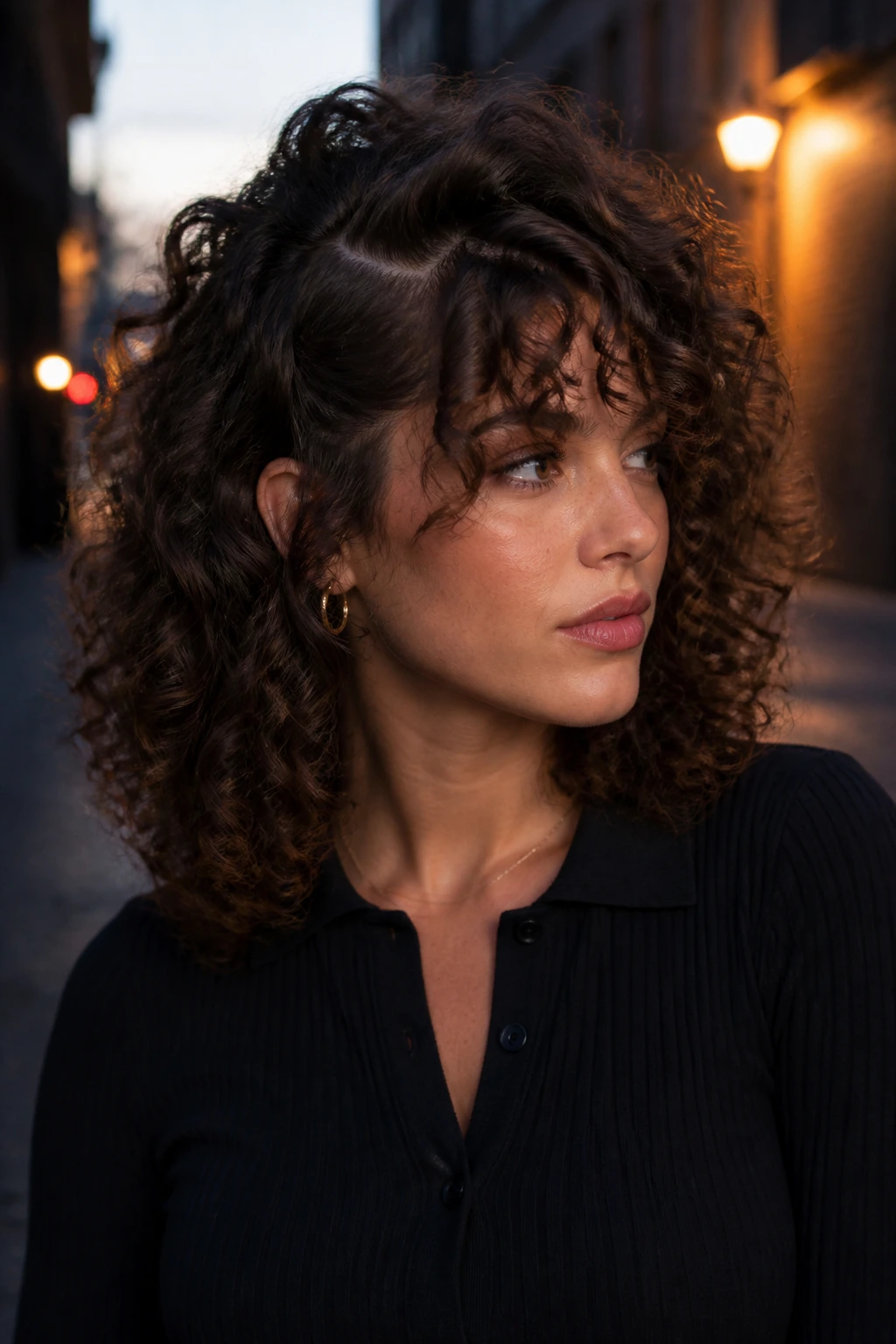
A deep side part adds drama before you even touch the styling product. On curly hair, that single move can shift the whole shape, and bottleneck bangs keep the front from looking too heavy on one side.
The longer temple section should sit over the heavier side of the part, while the shorter center piece keeps the forehead from disappearing. That balance matters, because a curly side part can collapse fast if the front is cut too blunt.
This style is especially good for people who like big hair but still want a clear face frame. It gives you height, curve, and movement all at once. The side part is the engine. The bangs keep the engine from overpowering the car.
16. Pineapple Updo With Bottleneck Bangs
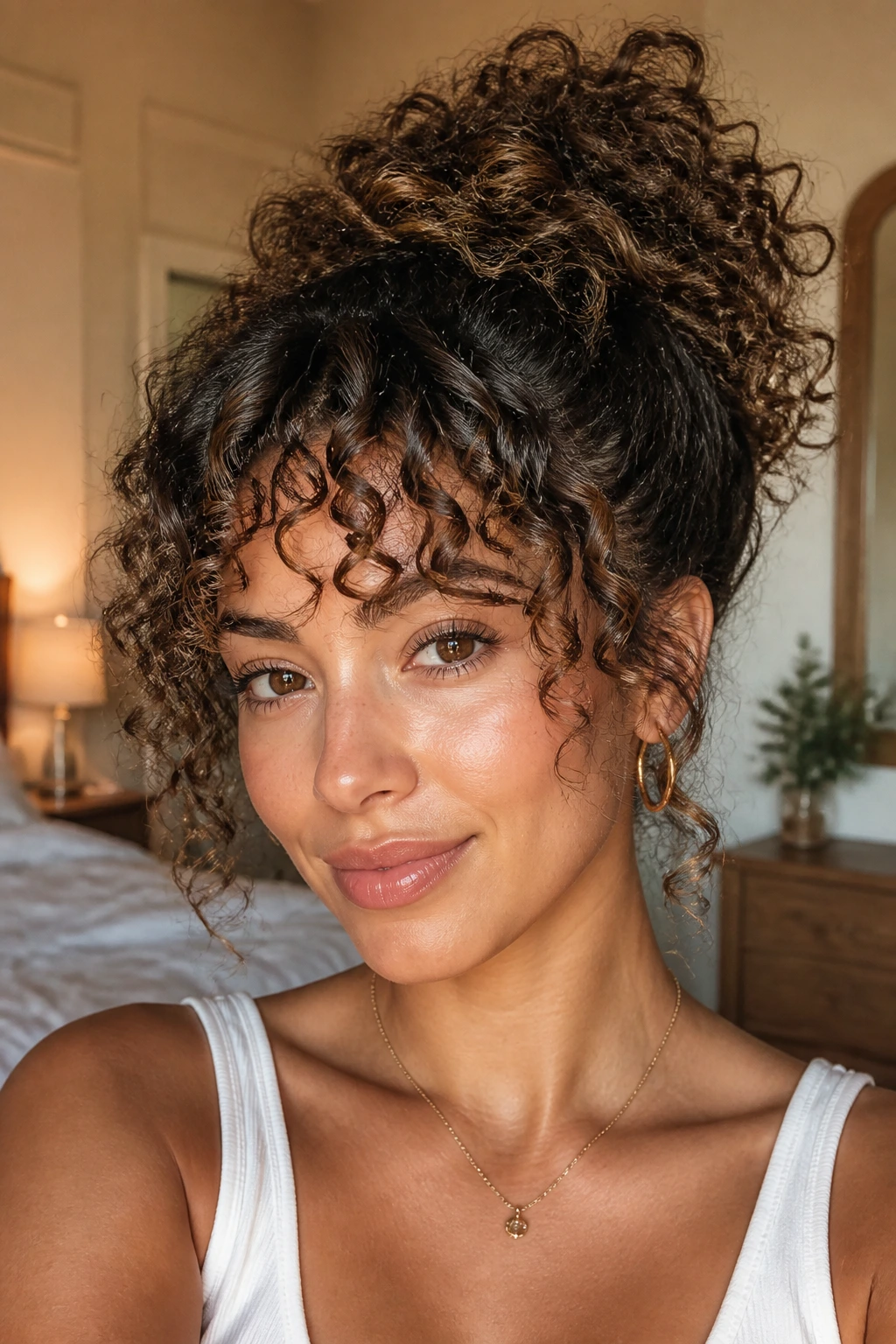
A pineapple updo is usually thought of as a sleep style, but it can work as a daytime look when the bangs are shaped on purpose. Pull the curls high and loose, then leave the bottleneck fringe out so it softens the forehead and gives the style a finished edge.
That front section changes everything. Without it, a pineapple can feel unfinished. With it, the style becomes playful and face-focused. The bangs can be refreshed with a bit of water and curl cream, then left to sit separately while the rest of the hair stays gathered.
This is a smart option for second-day curls. The lengths can be up and out of the way, but the fringe still does its job, which is to make the style look thought through.
17. Pixie Grow-Out With Bottleneck Bangs

When a curly pixie starts growing out, the front often becomes the awkward zone. Bottleneck bangs help the grow-out period look intentional instead of in-between.
The center can stay short enough to keep some fringe on the forehead, while the temple pieces stretch into the side length and make the whole cut feel connected. That taper keeps the grow-out from turning into a puffed-up cap shape.
This is a smart move if you want to move from very short hair into something longer without doing the miserable halfway stage. The bangs become the bridge. And on curls, a bridge is useful.
18. Long Waterfall Layers With Bottleneck Bangs
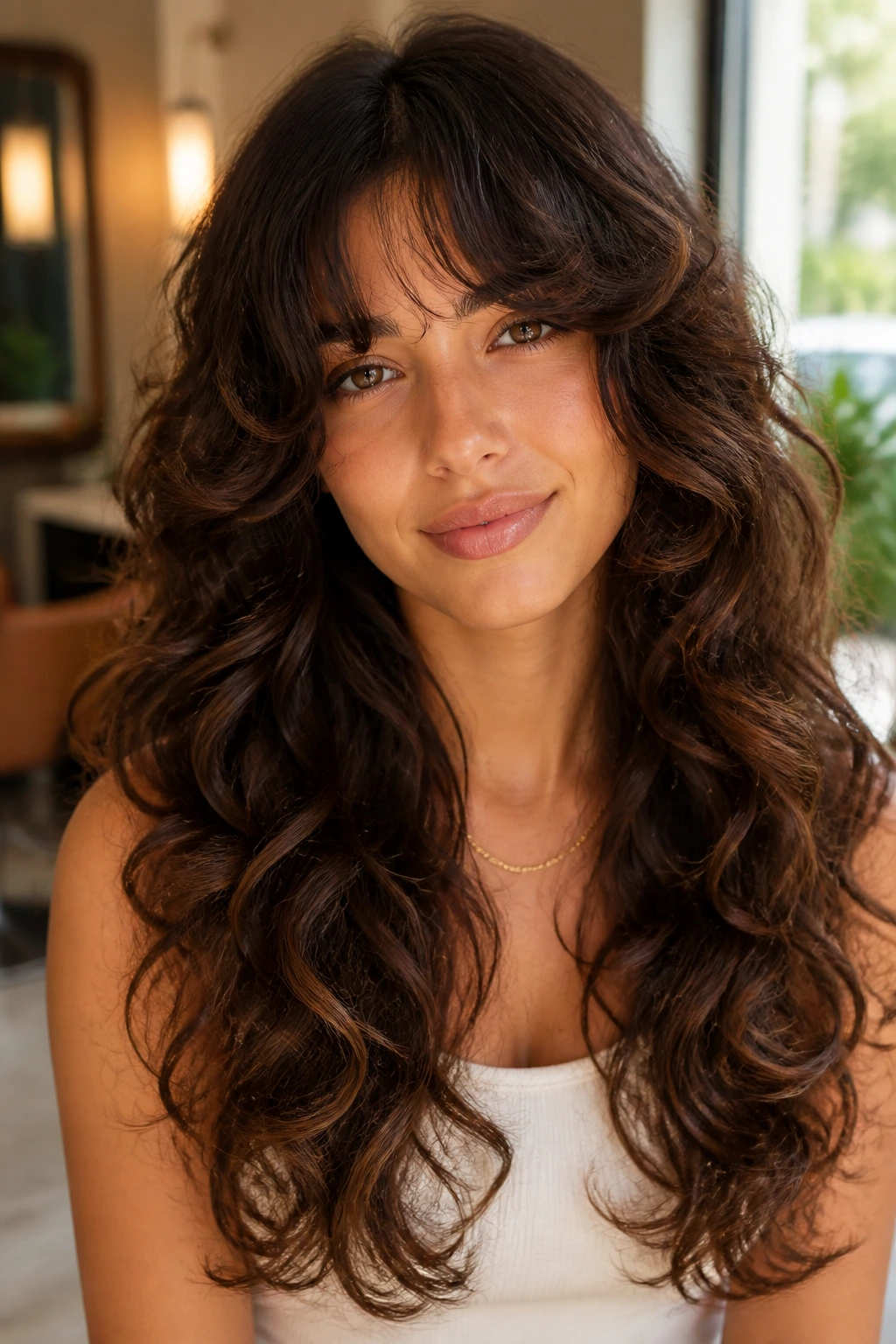
Long curls can swallow the face if the front is left untouched. Bottleneck bangs fix that by carving out a soft, visible frame right where the eyes and cheekbones need it.
The waterfall effect comes from layers that start high enough to move, then fall in long waves or spirals through the shoulders and chest. The bangs should not be too short at the center, or they’ll pop up and lose the soft landing. Leave enough length for shrinkage, especially if your curls tighten after drying.
This is the version for people who love long hair but want a front shape with actual presence. The bangs keep the hair from feeling all one note. The layers keep it from feeling heavy. The combination is calm, full, and easy to live with.
Why Bottleneck Bangs Need a Curl-Safe Cutting Plan

The biggest mistake with curly bangs is treating them like straight bangs and hoping the curl pattern will behave. It won’t. Curl shrinkage changes everything, and the front of the head is the first place that shows it. A bottleneck fringe works because it already expects movement.
A good cut usually starts with the hair in its natural state or close to it. Dry cutting, curl-by-curl shaping, and checking the length after the hair springs up are not fussy extras. They are the whole point. The stylist should be looking at how the center of the fringe lands relative to the brows and how the temple pieces blend into the face-framing layers. If the bangs look perfect wet, they may be too short once dry. That is not a maybe. That is a pattern.
The best bottleneck cuts also leave a little breathing room around the forehead. Heavy density at the front makes curls bunch up and separate in a weird shelf. Soft point cutting, controlled layering, and a taper that respects the curl diameter keep the fringe moving. That is why these bangs look better when they are a little imperfect. The shape is doing the work, not the iron.
What to ask your stylist for: a fringe that is shorter in the center, longer at the temples, and cut with your natural shrinkage in mind.
The Tools That Make These Styles Easier
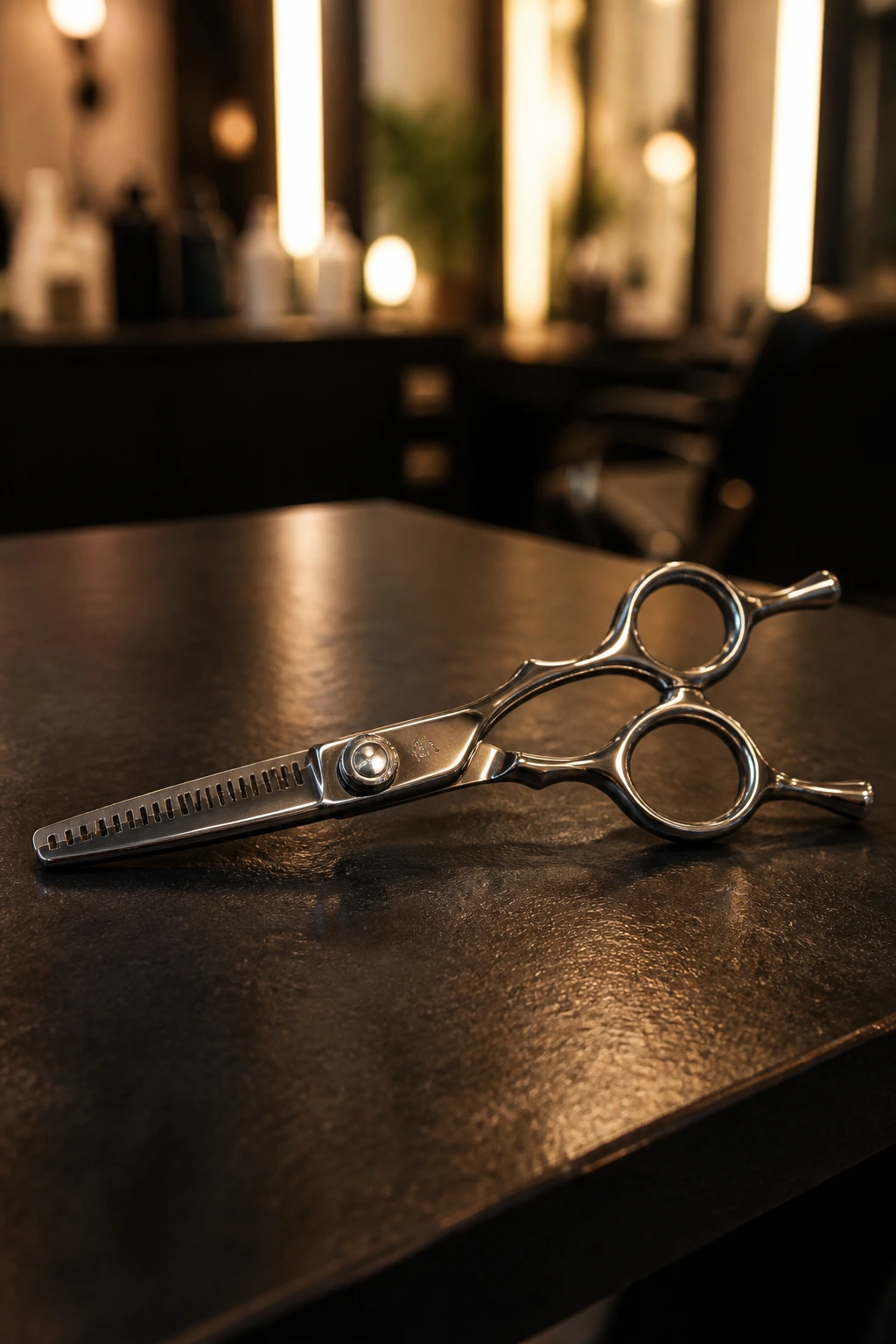
- Curl-cutting shears: Regular kitchen-shear energy has no place here; sharp salon shears keep the fringe clean and stop frayed ends.
- Water spray bottle: Use it for targeted refreshes on the bangs only, not a full soak.
- Leave-in conditioner: A light mist or cream keeps the front pieces from drying out before the rest of the hair.
- Curl cream or foam: Cream works well for thicker curls; foam helps finer curls keep lift without collapsing.
- Lightweight gel: Best for holding the bottleneck shape through humidity without turning the bangs crunchy.
- Diffuser attachment: This is the difference between “air-dried forever” and “the bangs sit where you meant them to.”
- Duckbill clips or sectioning clips: Handy for pinning the sides away while you dry the fringe.
- Microfiber towel or soft T-shirt: Rough towels make the front frizz up fast.
- Wide-tooth comb or fingers: Use these to separate curls gently before styling.
- Satin scarf or bonnet: Keeps the fringe from getting mashed flat overnight.
What to Ask For at the Salon Before You Commit
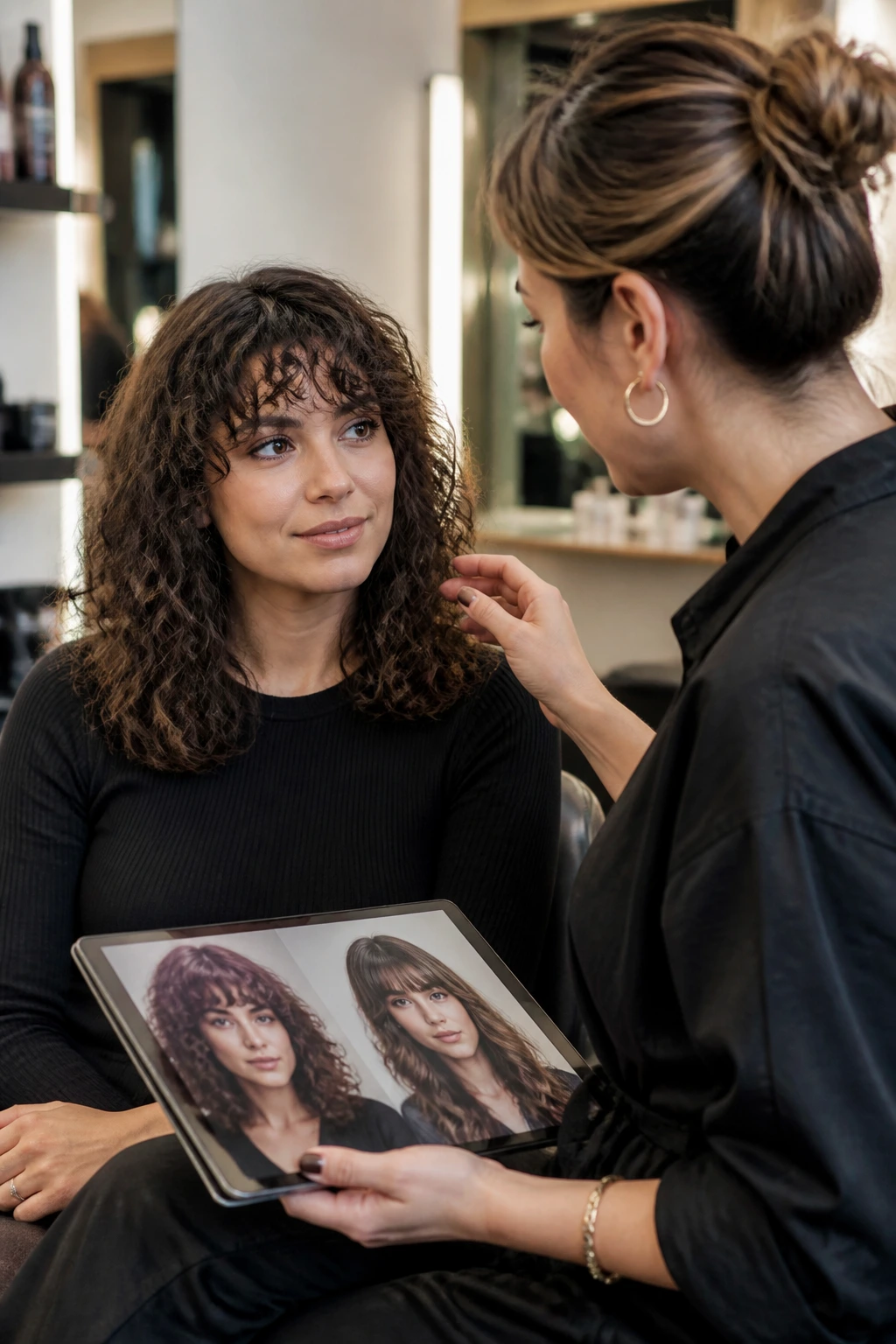
Bring photos, but bring the right ones. A picture of the full haircut tells the stylist how the fringe should sit inside the whole shape. A face-only bang photo by itself can be misleading, because bottleneck bangs change a lot depending on whether they’re paired with a bob, a shag, or long layers.
Ask how the stylist handles shrinkage on curly hair. If they answer with a blank stare, that is a warning sign. A good curl cutter should talk about dry length, density at the front, and whether your bangs should land at the brows, just above them, or slightly below them when the hair is fully dry. They should also tell you where the temple pieces will sit, because that’s the part that turns bottleneck bangs into a frame instead of a strip.
Product choice matters too. Fine curls often need foam or a light curl milk to keep the bangs from sagging. Denser curls usually want leave-in plus a soft-hold gel. Heavy butters around the fringe can make the front look greasy or flat by lunch, and bangs are not the place to gamble with weight. The front is small. Small mistakes show fast.
How to Wear These Styles Without Fighting the Shape

Face Shape: If your face is round, the longer temple pieces can add vertical length. If it’s more square, a soft shag or lob will take the edge off the jaw without hiding it.
Styling Time: Pick a shape that matches your morning routine, not your best intentions. A rounded bob with bottleneck bangs can be washed, scrunched, and diffused in about 20 minutes if your curl pattern cooperates; a long layered style often needs a little more sectioning.
Accessory Matchup: Clips, headbands, and hats matter here. A wide band can crush the fringe, while a loose clip near the crown can keep the bangs visible and let the rest of the curls stay loose.
Daily Reality: If you wear your hair up half the week, pick a style where the bangs still look good on their own. A high puff, half-up crown, or pineapple variation makes sense. If you wear it down most days, a lob, shag, or waterfall layer shape will give you more to work with.
The best version is the one that still looks like you after the hair has moved around a bit. That is the whole point.
Little Styling Moves That Change the Finish
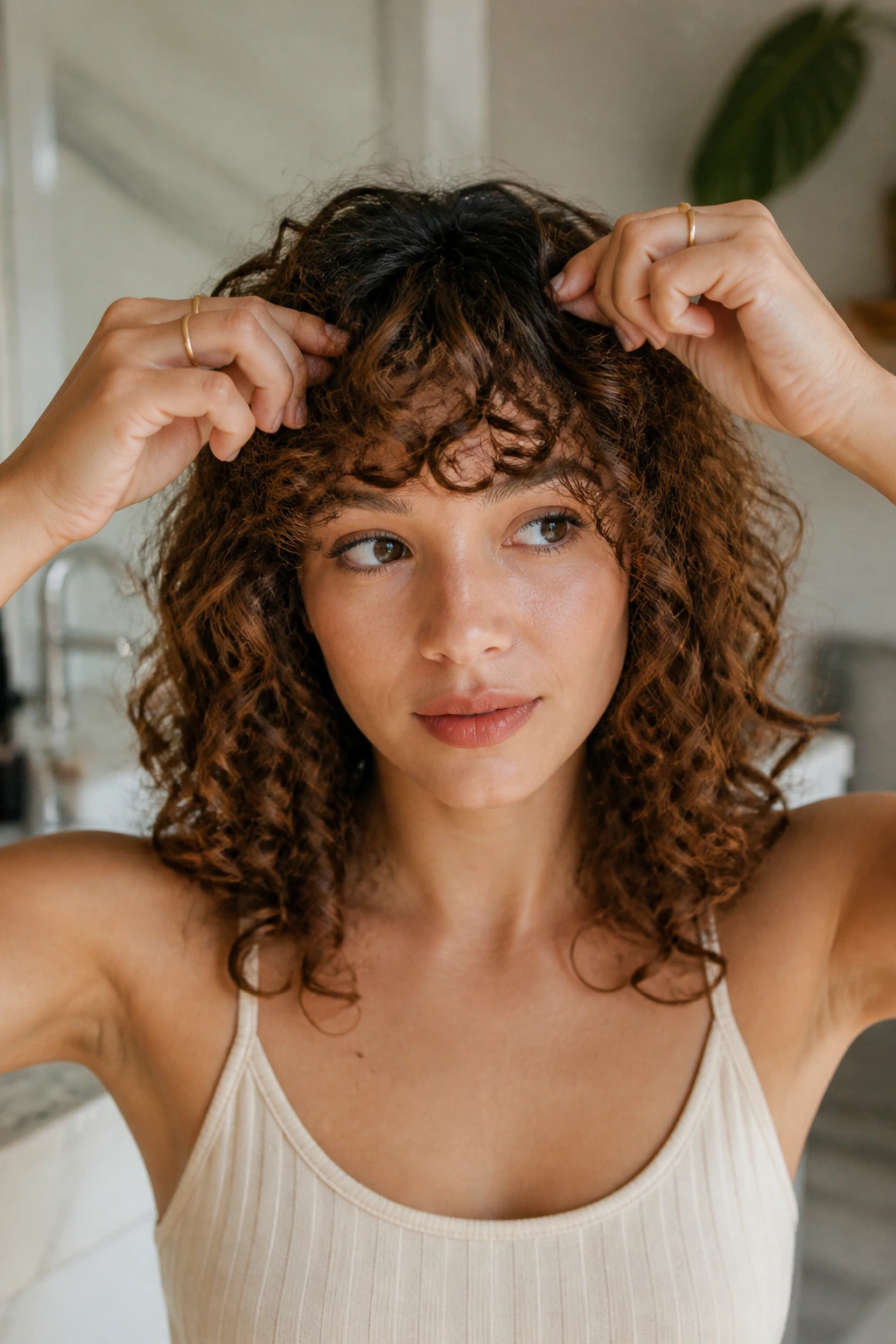
Shape Boost: Clip the bangs at the roots for five to ten minutes while they dry, especially if your hair wants to fall forward and flatten at the forehead. That tiny lift changes the whole front.
Texture Boost: Scrunch a pea-sized amount of foam through the bang area after your leave-in. Too much product clumps the center and turns the temple pieces stringy.
Accessory Move: If the bangs are acting up, sweep the longer temple bits back with two small clips instead of forcing the front flat. It keeps the bottleneck shape visible.
Make-It-Yours: Fine curls usually do better with mousse and a lighter fringe. Coarse curls can handle more cream and a touch of gel. Tight coils often look best when the center of the fringe is left a little longer than you think.
And one more thing: if the bangs start to separate, do not panic and drown them in product. A little water, a little scrunching, and a short blast from the diffuser usually brings them back faster than a whole restyle.
Keeping the Shape Between Washes

Curly bangs have a shorter memory than the rest of the haircut. That front section gets touched, brushed, tucked behind ears, and flattened by wind more than anything else. So the maintenance routine has to be simple enough that you’ll actually do it.
At night, keep the fringe separate if possible. A loose satin scarf, a bonnet with room at the front, or a soft clip that lifts the bangs off the forehead all help. If you sleep on a cotton pillowcase and rub the front flat for eight hours, you’ll wake up with a weird bend or a dry puff. Not tragic. Just annoying.
On day two, mist only the bang area until it’s damp, then smooth in a small amount of curl cream or foam. Scrunch upward and diffuse for 30 to 60 seconds, or until the center settles back into its curve. If the bangs look too wide, clip the temple pieces back while they dry; if they look too flat, clip the roots up. For most curl types, the fringe needs a real trim every 6 to 10 weeks to keep the center from drifting into the eyes and the temple pieces from losing their taper. Very tight coils may want the front checked a little sooner, because shrinkage can make the line move in a hurry.
Common Mistakes to Avoid With Bottleneck Bangs

-
Cutting them too short when wet: Wet curls stretch, then spring up hard. If the fringe is cut to eyebrow length while drenched, it can land an inch higher once dry. The fix is to leave extra length and check the dry shape before trimming more.
-
Making the front too heavy: Thick bangs across curly hair can look bulky and blocky. The symptom is a dense curtain that sits on the forehead instead of tapering. Ask for softer density at the center and a cleaner connection at the temples.
-
Using too much product on the fringe: Bangs need less cream than the rest of the head. If they look stringy, sticky, or limp by noon, you’ve probably loaded the front too much. Use a smaller amount and keep the richest product on the mids and ends.
-
Ignoring shrinkage at the temples: The side pieces are what make bottleneck bangs look like bottleneck bangs. If they’re cut too short, the front turns into a blunt fringe with two stray pieces. Leave the temple lengths long enough to blend.
-
Skipping the diffuser: Air-drying can work, but the bang area often dries in a weird flat shape if it’s left alone. A short diffuser session around the roots and fringe gives the front a more predictable curve.
-
Not planning for grow-out: A fringe that looks perfect on day one can become annoying in three weeks if the grow-out shape wasn’t thought through. Ask for a fringe that can transition into face-framing layers instead of a hard cut-off line.
Variations and Adaptations to Try

The Low-Maintenance Version: Ask for a softer bottleneck fringe with slightly longer center pieces and less dramatic temple contrast. It grows out more gracefully and is easier to refresh on busy mornings.
The Bigger-Volume Version: Pair the bangs with a shag, wolf cut, or rounded crown layers. The top gets more lift, which makes the fringe look intentionally airy instead of sparse.
The Fine-Curl Version: Use a lighter fringe with foam or mousse instead of cream. Fine curls can lose the shape fast if the bangs are weighed down, so a feathered front is usually better than a dense one.
The Coily Shape Version: Keep the front longer and let the stylist cut each curl in its natural pattern. Tight coils need room to shrink, and a longer bottleneck fringe keeps the shape readable after drying.
The Grow-Out Version: If your bangs are already on their way out, ask for cheekbone-length pieces at the sides and a center that can tuck into the rest of the haircut. That makes the transition look planned instead of accidental.
Questions People Actually Ask About Curly Bottleneck Bangs
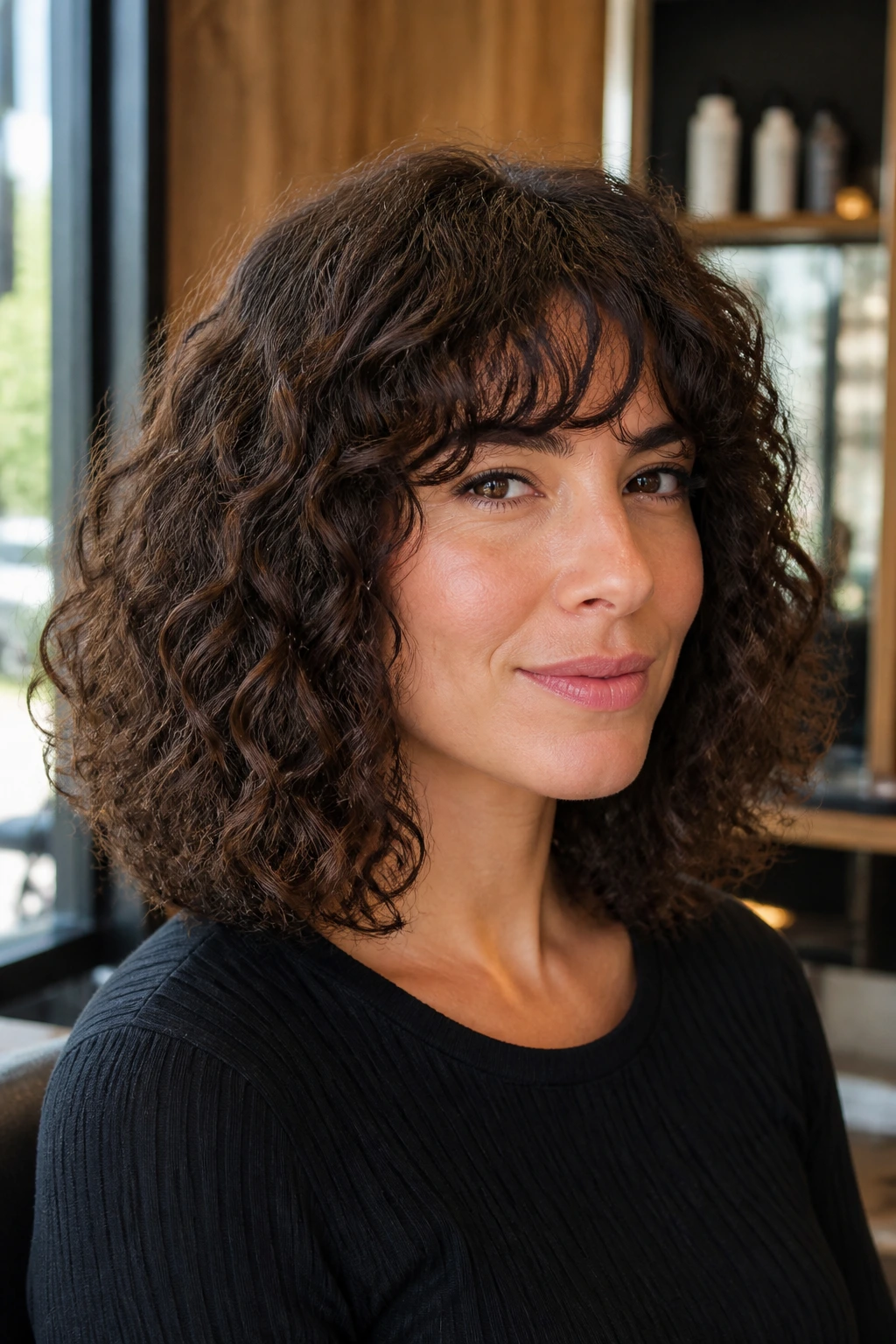
What exactly makes bottleneck bangs different from curtain bangs?
Curtain bangs usually start longer and part cleanly down the middle. Bottleneck bangs are shorter in the center and taper more sharply toward the temples, which gives curly hair a tighter frame around the face.
Do bottleneck bangs work on tight curls?
Yes, but they usually need to be left longer than on loose curls. Tight curls shrink more, so the center should be cut with extra length and checked dry before any final trimming.
Should curly bottleneck bangs be cut wet or dry?
Dry or mostly dry is the safer choice. Wet curls lie about length, and bangs are the one place where that lie gets expensive fast. A stylist can always trim more; they cannot put the length back.
How often do they need a trim?
Most curly bangs need a touch-up every 6 to 10 weeks, depending on curl pattern and how much you wear them forward. Very springy curls may need the shape checked sooner.
Can I wear them with a middle part?
Absolutely. A middle part is the most natural match for bottleneck bangs, but the fringe can also be swept slightly off-center if your hair grows that way or your face needs a little asymmetry.
What if the bangs frizz up by noon?
That usually means the front is either too dry or too overloaded with product. Try a small mist of water, a pea-sized amount of light cream or foam, and a 30-second diffuser reset instead of piling on more product.
Can I pin them back on days I do not want bangs?
Yes, and that is one of the best things about this shape. The longer temple pieces can be clipped back or tucked into a headband more easily than blunt bangs, which means the grow-out phase is less annoying.
Will this work if my hair is fine and curly?
It can, but the fringe has to stay light. Fine curls usually do better with a softer bottleneck shape, lighter layers, and products that add hold without making the front collapse.
The Shape That Keeps Curls Looking Intentional

Bottleneck bangs work on curly hair because they respect the way curls shrink, separate, and move. That sounds small until you live with a fringe that was cut like straight hair and spend three weeks trying to wrestle it into place. This shape avoids that fight. It gives the center some lift, the temples some softness, and the whole haircut a cleaner line around the face.
The best versions of these styles do not hide the curl pattern. They show it off. A good lob, shag, bob, or long layer cut with bottleneck bangs should still look like curly hair at full volume, just with a front shape that feels considered instead of accidental.
If you take one thing from all of this, let it be this: keep the center a little longer than your instinct says, keep the temple pieces connected, and let the curls do the rest. That is where the good shape lives.
