



Medium length hairstyles with bangs have a useful trick up their sleeve: they look deliberate even when you haven’t spent half the morning fighting your hair. A collarbone cut with a fringe can clean up a cowlick, soften a strong jaw, or make fine hair look like it has more body than it really does. And because the length sits in that middle zone — not too short to feel limiting, not so long that it drags everything down — the bangs get room to do the work.
That middle zone matters more than people think. Go too short and the fringe becomes the entire story. Go too long and the bangs can disappear into the rest of the cut, which is a shame if you actually wanted shape around the eyes, cheekbones, or forehead. Medium length gives the front of the haircut some structure, then leaves enough hair in the back to tuck, wave, curl, or tie up without looking like you’re growing out a mistake.
I keep coming back to this length because it’s one of the few that can live in several registers at once. It can be polished. It can be messy. It can be air-dried, blown out, pinned back, or bent with a flat iron in ten minutes flat. The real skill is choosing the right fringe for your texture and your patience level — and that’s where the good cuts start to separate from the ones that sit in your bathroom drawer, ignored after two weeks.
Why Medium-Length Hair and Bangs Keep Paying Off
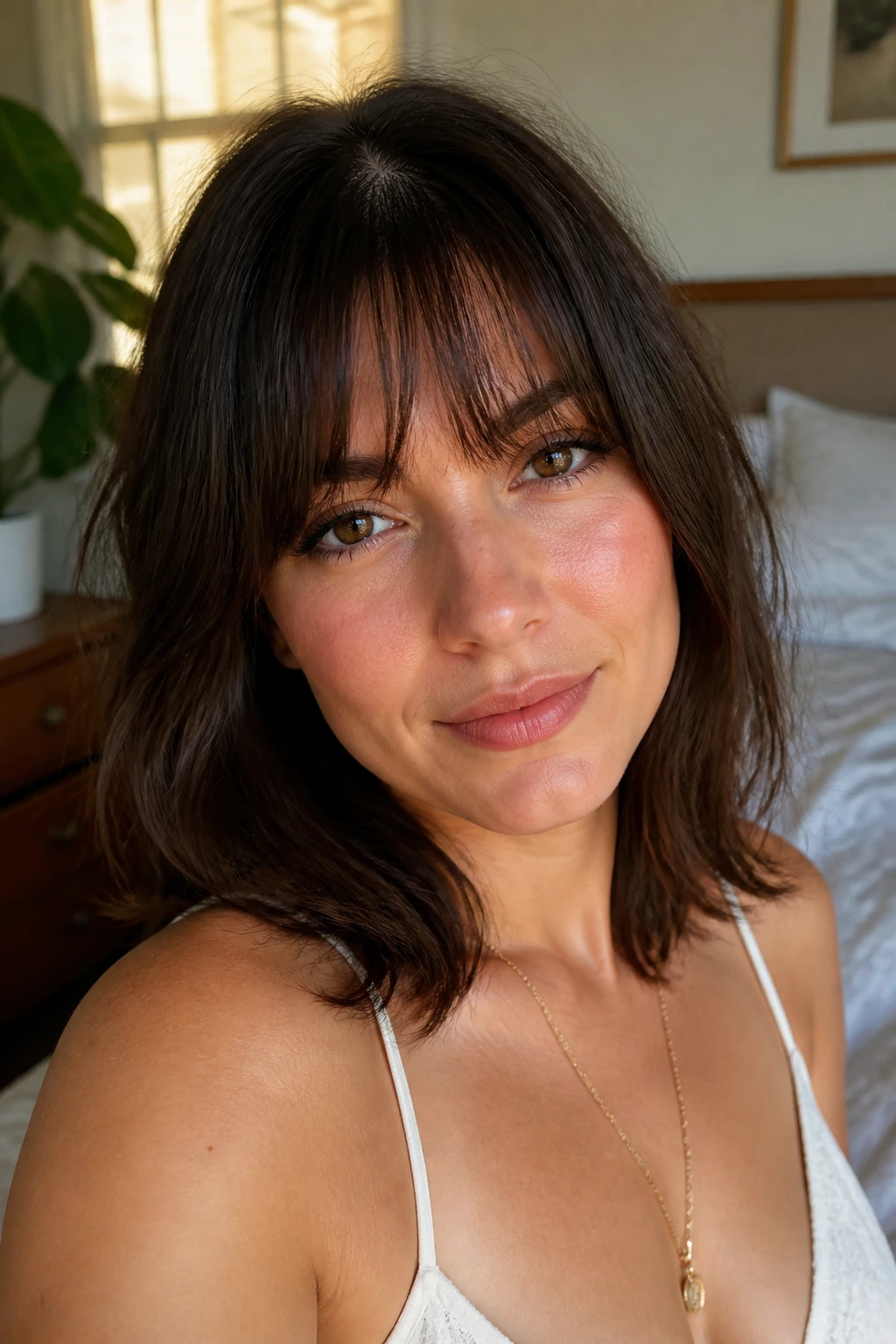
-
The front gets shape without swallowing your face: Bangs can frame the eyes and cheekbones while the length stays light around the shoulders, so the cut doesn’t feel boxy.
-
The grow-out phase is less annoying: A shoulder-grazing cut gives your fringe room to soften into curtain bangs, side bangs, or face-framing layers without an awkward hard line.
-
Texture has somewhere to go: Waves, bends, and curls show up better on medium hair than on a blunt short cut, and bangs can echo that movement instead of fighting it.
-
Daily styling takes less time than a long blowout: You can focus on the front section, rough-dry the lengths, and still look put together.
-
It works with a pin-back plan: On days when the fringe misbehaves, you can clip it, tuck it, or braid the front pieces and still keep the haircut’s shape.
-
The style reads as intentional even when it’s not perfect: A few bent ends or a slightly messy fringe can look like a choice here, not a mistake.
1. Collarbone Lob with Curtain Bangs
A collarbone lob with curtain bangs is the haircut I recommend when someone wants shape but refuses to baby their hair every morning. The cut sits right on that useful line between the jaw and the shoulders, so it still moves when you turn your head, and the curtain fringe splits open instead of chopping the face in half. It has a soft, grown-up ease that works on straight hair, wavy hair, and even the slightly puffier texture you get when humidity shows up uninvited.
Why It Stays So Wearable
Curtain bangs are forgiving because they don’t demand perfect symmetry. If one side flips a little more than the other, it still looks fine. That matters, because most people are not standing in front of a round brush for twenty minutes every morning.
The collarbone length also gives the haircut some swing. It brushes the tops of the shoulders, which creates movement without making the ends look stringy. If you have fine hair, ask for light internal layers so the ends don’t collapse into one flat curtain. If your hair is thick, keep the bottom line blunt enough to hold the shape.
- Best fit: Oval, square, and heart-shaped faces
- Styling tool: A 1.25-inch round brush or curling iron
- Salon note: Ask for the shortest bang pieces to hit around the bridge of the nose, not above the brows
My favorite part: it still looks good when you tuck one side behind the ear and leave the fringe loose.
2. Feathered Shag with Wispy Fringe
The feathered shag is for people who want hair that looks like it has already been lived in a little. Not abused. Lived in. The layers are light and broken up, the fringe is airy instead of heavy, and the whole cut gets a kind of soft lift around the crown that makes medium length hair feel fuller without going poofy. If blunt cuts feel too neat for you, this is the opposite of that.
The wispy fringe matters here because it keeps the front from turning dense. On medium hair, a thick bang can take over the face fast. A feathered fringe avoids that problem by letting a few shorter pieces fall near the brows while the rest melts into the side layers. It’s especially good on hair that already has a bit of wave, because the bend helps the cut look intentional rather than overworked.
What Makes It Work
The shag shape gives you movement at the crown and around the jaw, which is where medium hair often needs help. Without those layers, the style can sit heavy. With them, the hair falls in pieces that catch light and move when you walk.
This cut is also a smart choice if your hair air-dries better than it blow-dries. Scrunch in a small amount of mousse, twist a few face-framing pieces while the hair is damp, and leave the fringe to dry with a light side part if it wants one. It does not need a glossy finish to look good.
3. Blunt Midi with Brow-Skimming Bangs
Here’s the blunt truth: a straight, sharp midi with brow-skimming bangs looks best when you commit to the line. If the ends are wispy and the fringe is heavy, the cut starts arguing with itself. But when the bottom is clean and the bangs sit right at the brows — not above them, not floating awkwardly in the middle of the forehead — the result is crisp, graphic, and quietly strong.
This is the cut for someone who likes structure. The hair falls around the shoulders with a single, deliberate edge, and the bangs add a frame across the eyes. On naturally straight hair, it can look almost architectural. On wavy hair, you can still wear it, but the bang line needs more attention because waves can kick the fringe apart by noon.
A Small Salon Detail That Changes Everything
Ask your stylist to leave the bangs a touch longer in the center if your forehead is short or your hair shrinks when it dries. That little bit of length saves you from the pinched, overcut look that can happen with blunt bangs. The ends should skim the eyebrows when dry, not hang in your lashes.
This cut loves shine. A light smoothing cream on the mid-lengths and ends will keep the silhouette sleek without turning the fringe greasy. And yes, the difference between “sleek” and “flat” is about two peas-sized pumps of product.
4. Wavy Lob with Side-Swept Bangs
If you’ve ever wanted bangs but feared the full commitment of a straight-across fringe, the wavy lob with side-swept bangs is the safer, smarter door in. The bang opens across the forehead instead of closing it off, and the lob length gives the waves enough weight to fall in loose bends instead of exploding into a puffball. It’s one of those cuts that looks like you spent time on it even when you didn’t.
Side-swept bangs are underrated. They don’t get nearly enough credit for being practical. They’re easier to grow out, kinder to glasses, and less likely to separate into weird little islands if your forehead runs oily or your cowlick has opinions. They also work beautifully when tucked behind one ear, which gives the front of the cut a little asymmetry that feels modern rather than fussy.
The key is not over-layering the front. Let the wave do some of the talking. A medium round brush and a quick bend away from the face usually do more than heavy styling ever will.
5. Butterfly Layers with Long Curtain Bangs
Butterfly layers are one of the few cuts that make medium hair look both airy and expensive without requiring an hour with a blow-dryer. The shape keeps the length around the shoulders, but the internal layers lift the top section so the hair doesn’t sit heavy at the bottom. Pair that with long curtain bangs, and you get softness around the face plus movement through the crown. Good combination. Strong one.
The long curtain fringe is what makes this version feel especially flattering. It begins near the cheekbones and opens through the center, so the hair around your face has motion without losing coverage. That’s useful if you want to soften the forehead, narrow a wide face, or simply avoid a hard bang line. When styled well, the shorter top layers and longer front pieces create that familiar blown-out shape people chase with rollers and round brushes. Here, the haircut does half the work.
Best For
- Hair that holds a bend without falling flat
- Faces that benefit from width at the cheekbones
- People who like a blowout look but don’t want long hair
A center part helps, but a slight off-center part can make the curtain pieces sit more naturally if your hairline refuses to cooperate. I prefer this cut with a little bounce at the ends, not pin-straight lengths. The motion is the point.
6. Textured Wolf Cut with Piecey Fringe
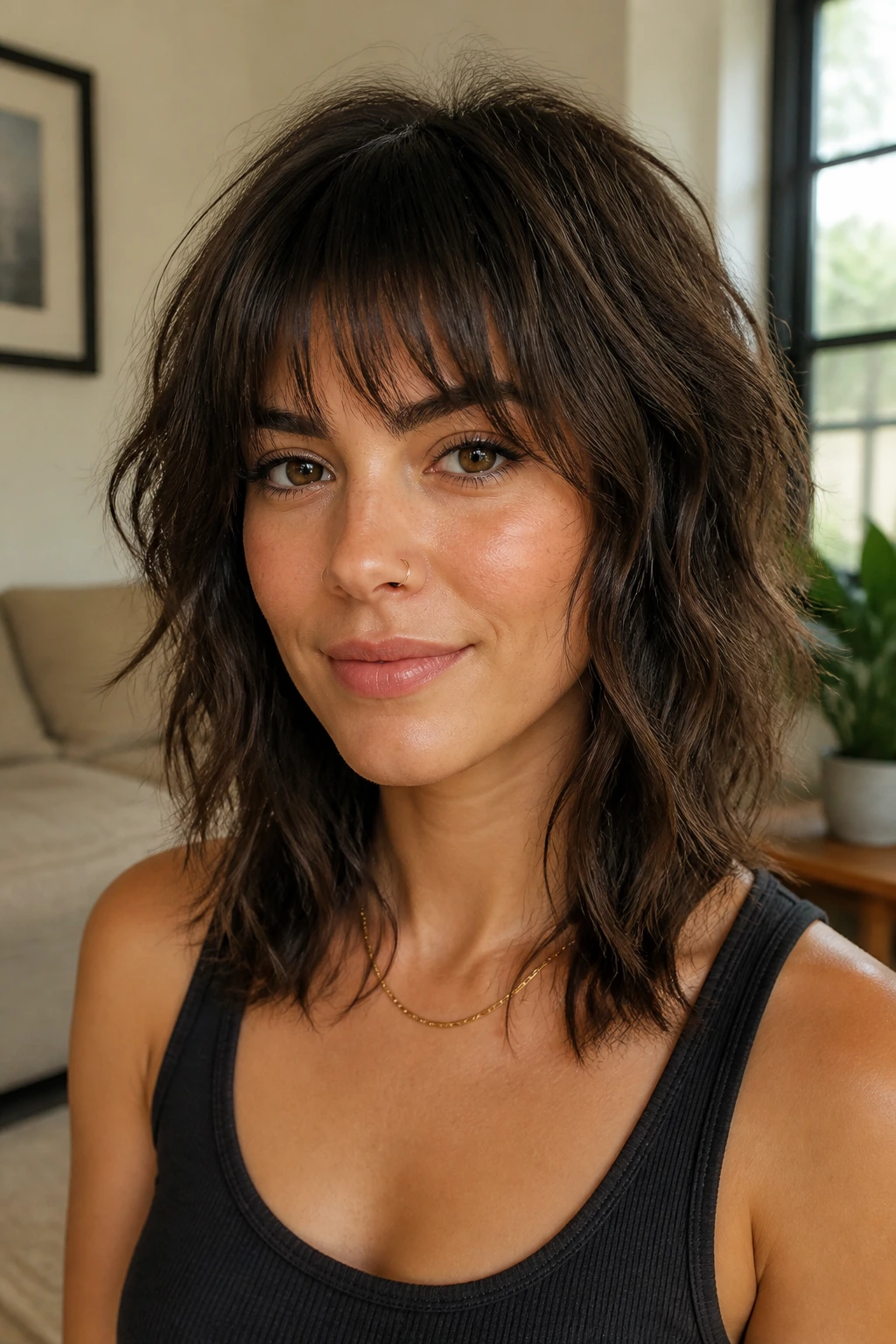
The wolf cut is not subtle. That’s why it works. On medium length hair, it gives you that rough, broken-up shape through the crown and the ends, while the piecey fringe keeps the front from looking too polished for the rest of the cut. If you like hair that looks a little rebellious even on a clean day, this is the one that gives you that energy without forcing a full punk move.
What I like most is how the texture lands differently on various hair types. On thick hair, the layers remove bulk and keep the silhouette from becoming too triangular. On fine hair, the piecey fringe can create the illusion of density up front, especially when you use a light texturizing spray and let the lengths dry with a little lift at the roots. On wavy hair, this cut almost styles itself. Almost.
It’s not the easiest haircut to grow out if you want something polished later, but that’s the trade. You get attitude and movement now. The pieces around the face should fall irregularly, not in a neat curtain. If every strand behaves, the wolf cut loses the thing that makes it interesting.
7. Sleek Center-Part Lob with Split Bangs
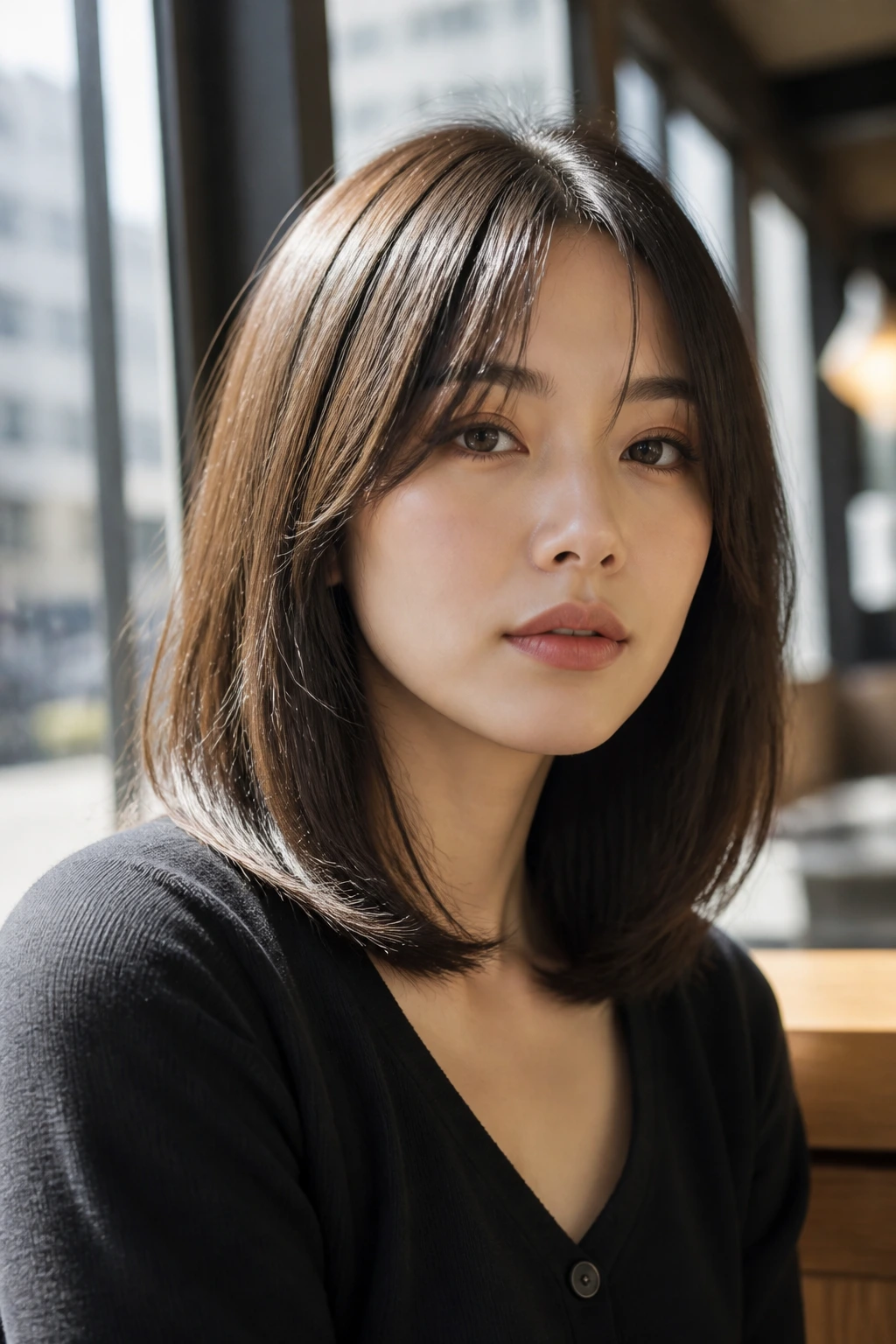
A sleek center-part lob with split bangs is the polished cousin in this group. Everything about it says clean lines, but not in a rigid way. The fringe opens right at the middle and slides to each side, which softens the forehead and keeps the face visible. The rest of the cut stays smooth and shoulder-grazing, so the shape reads calm instead of severe.
This is one of the best medium length hairstyles with bangs for people who want to look styled without adding much bulk. The middle part creates balance, and the split fringe gives you that little veil effect around the eyes. It’s especially nice on straight to slightly wavy hair, because the lines stay tidy. If your hair has a strong cowlick, ask for a slightly longer fringe that can be trained to split rather than fighting for a flat center part every morning.
The styling trick is simple. Blow-dry the fringe from side to side while it’s still damp, then direct it apart with a round brush or a flat brush and a quick cool shot. That little movement at the root makes all the difference. Don’t overdo the serum. Shiny is good. Greasy bangs are not.
8. Curly Shoulder-Length Cut with Curly Bangs
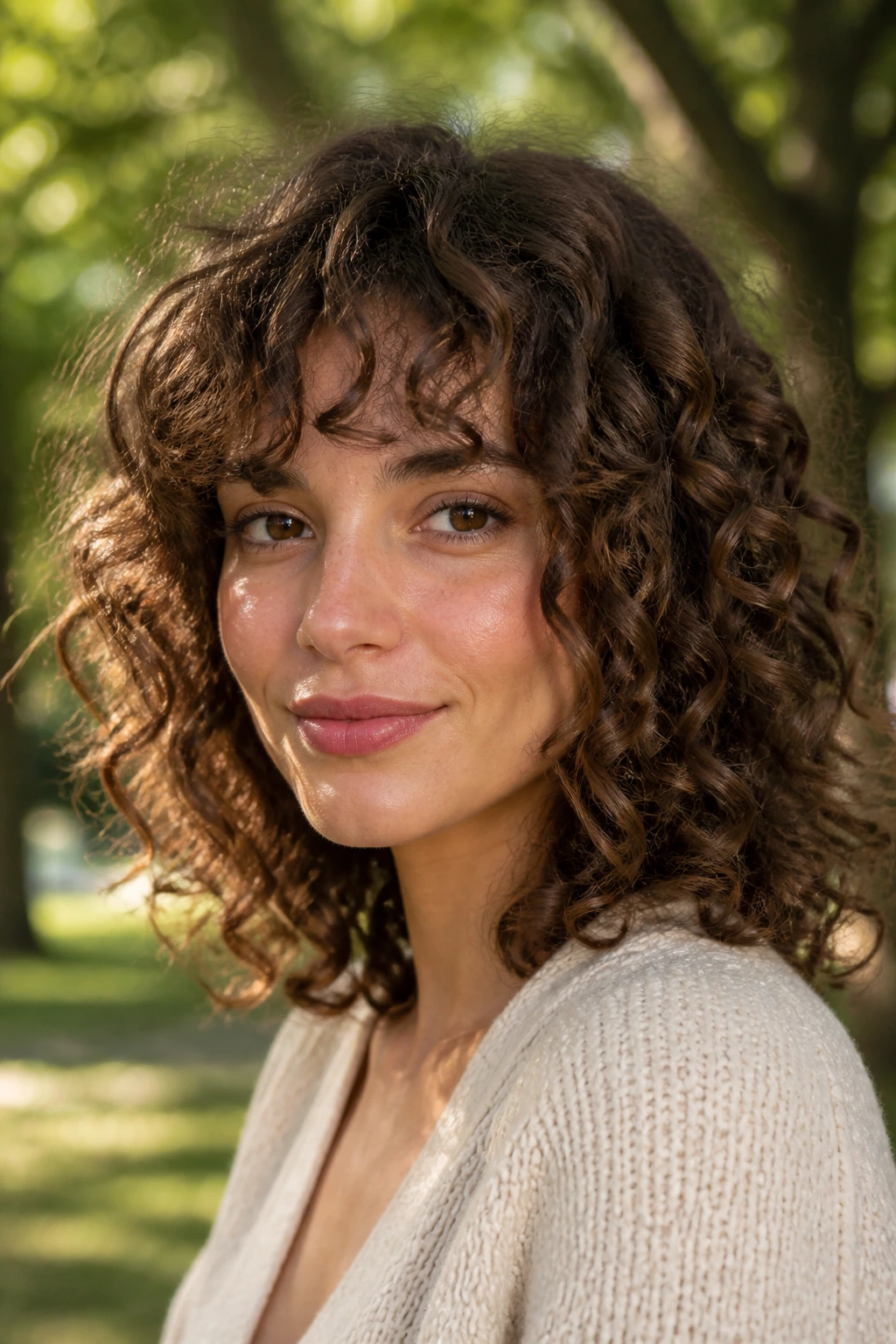
Curly bangs are one of those things people either avoid for years or fall in love with almost immediately. The trick is knowing that curls need room to spring up, and a shoulder-length cut gives them exactly that. A curly shoulder-length shape with curly bangs keeps the front soft and alive, while the rest of the curls sit around the collarbone instead of stacking up at the ears or clinging to the chin.
The best version of this cut is usually shaped dry, curl by curl, by someone who understands shrinkage. If you cut curly bangs too short when they’re wet, they can rebound several inches and land in the middle of your forehead in a way that feels accidental. Ask for the fringe to be cut with your natural curl pattern in mind, and leave it long enough to bounce. It is much easier to take off a little later than to wait months for a too-short bang to settle down.
What Helps It Look Intentional
A curl cream with enough slip to define but not crunch is the sweet spot. Scrunch the bangs with a towel first, then finger-coil a few front pieces if they tend to fray. The shape should feel soft, not sculpted into one stiff tube.
This cut shines when the curls have room to breathe. If you usually iron your bangs flat because you’re scared of them, that is a sign the cut needs to be reshaped, not a sign you should fight your hair harder.
9. Rounded Midi with Feathered Fringe
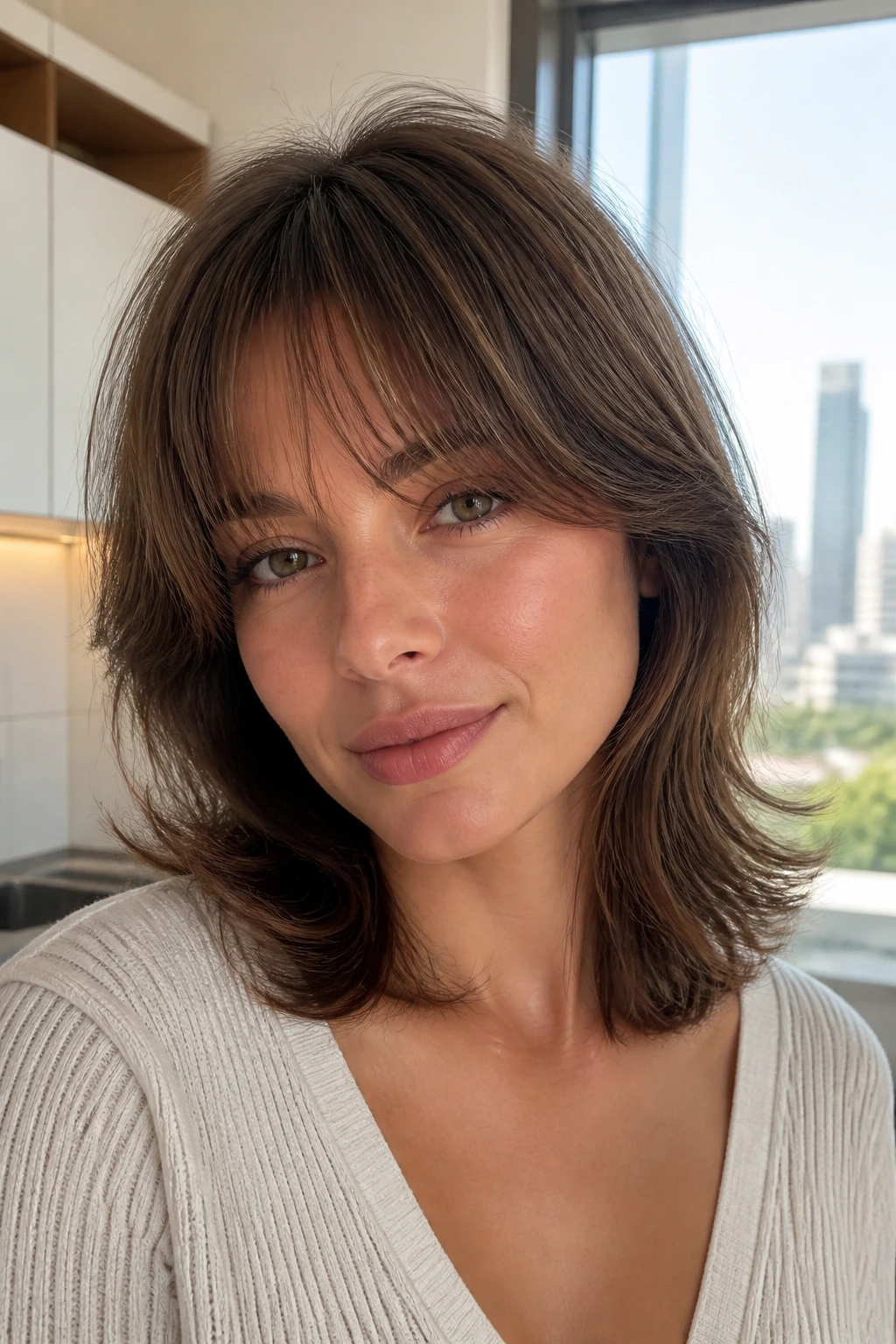
A rounded midi is one of my favorite shapes for medium hair because it quietly fixes a lot of small problems at once. The silhouette curves in around the jaw and shoulders, which gives the haircut a gentler outline than a blunt line. Add a feathered fringe, and the front gets a soft landing that doesn’t feel heavy across the forehead.
This style works especially well if your hair is medium to thick and tends to sit in a triangle when it gets too long. The rounded shape keeps that from happening. It also suits people who want bangs but don’t want the bangs to be the loudest thing in the room. The feathering breaks the edge so the fringe blends into the sides instead of forming a hard shelf.
A medium round brush and a quick underbend at the ends are enough most days. If the cut is fresh, the curve looks neat. If it’s a little grown out, it still falls nicely, which is the kind of practicality I appreciate in a haircut.
10. Choppy Midi with Brow-Skimming Bangs

Choppy lengths and brow-skimming bangs give medium hair a bit of grit. Not mess. Grit. The difference matters. This cut is built from small, broken pieces rather than one smooth line, so it feels casual and a little undone even when it’s freshly cut. The bangs sit at the brows and can be worn straight, bent, or separated slightly down the middle.
This one is a smart answer for hair that gets too bulky at the ends. The choppiness removes weight without making the whole haircut thin. It also helps if you like texture sprays, sea salt sprays, or that slightly piecey finish that shows off the cut instead of hiding it. On fine hair, too much choppiness can leave the ends looking wispy, so ask for softness near the perimeter and texture mainly in the interior.
A flat iron can help define the front two or three pieces, but don’t flatten everything. The best version has a little swing. If the bangs start to split, mist the roots lightly and re-dry the fringe; don’t just keep pushing more product into it. That’s how good bangs turn tired.
11. French Midi with Soft Piecey Fringe

This is the haircut I think of when someone says they want hair that looks chic but not stiff. The French midi sits around the shoulders with a little bend in the ends, and the soft piecey fringe falls forward in loose, broken sections instead of one heavy slab. It has that easy, slightly artless feel that takes a real haircut to fake.
The point is restraint. The fringe should skim the forehead, maybe hit the lashes in the center, then open around the temples. The rest of the cut should have movement, but not so much layering that it looks shredded. Think polished by accident. That balance is hard to get right on paper and easy to ruin with too much thinning, so I would be blunt with your stylist: ask for softness, not texture for texture’s sake.
This cut suits medium-density hair especially well. If your hair is ultra-thick, you’ll need some internal shaping to keep it from puffing out. If it’s very fine, keep the fringe longer and the layers gentle so the style doesn’t lose body.
12. Shaggy Lob with Bottleneck Bangs
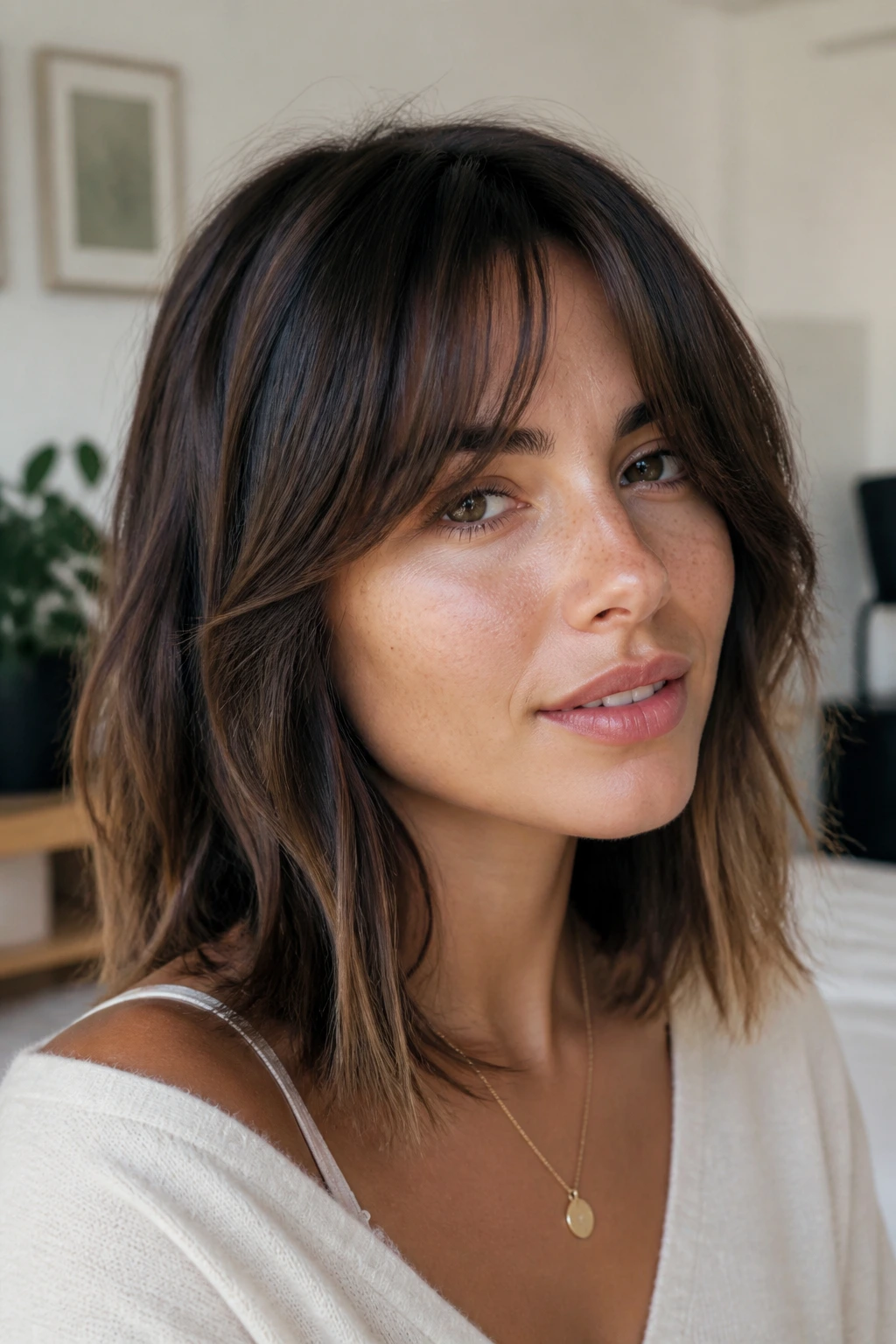
Bottleneck bangs are one of the smartest fringe shapes for medium hair because they start narrow at the center, then widen as they approach the cheekbones. That shape makes a shaggy lob feel balanced instead of top-heavy. The lob length keeps the cut wearable, while the shag layers give the face room to move inside the shape.
This is a particularly good option if you want bangs but don’t want a full forehead line. The center pieces are shorter, the sides are longer, and the whole fringe melts into the layers near the jaw. The result is softer than blunt bangs, but more defined than curtain bangs. It’s one of those in-between choices that solves a real problem: you get framing without committing to a single hard look.
Why I Like It on Medium Hair
Medium length gives bottleneck bangs the right amount of room to taper. On very short hair, they can feel abrupt. On very long hair, they can get lost. Here, they sit in the middle of the cut and help the whole style feel finished.
For styling, start by drying the center pieces forward, then sweep the sides away from the face with a round brush. That’s how you keep the narrowing-and-widening shape intact. Skip heavy creams near the fringe. They flatten the piecey effect fast.
13. Straight Shoulder Cut with Full Rounded Bangs
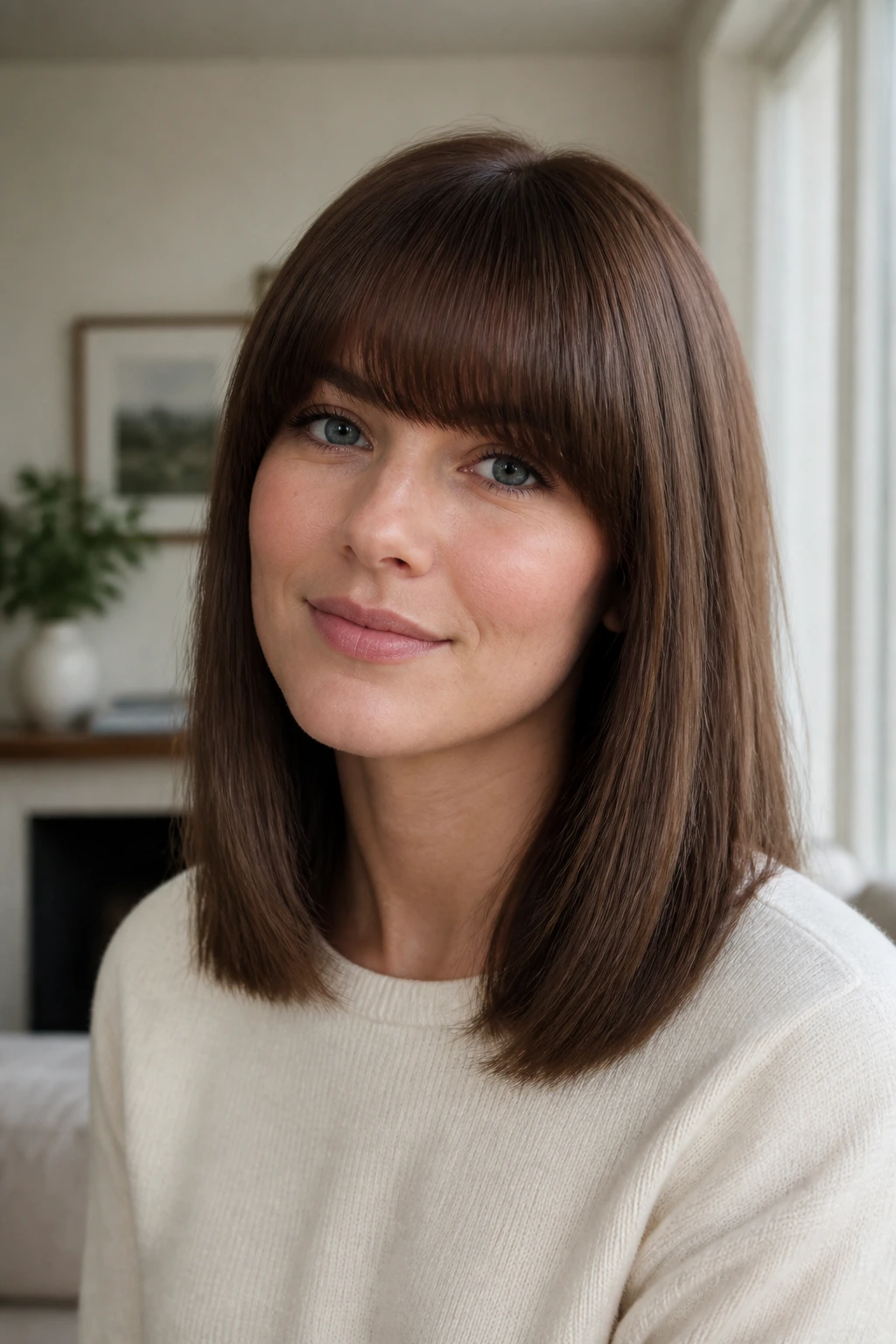
A straight shoulder cut with full rounded bangs is not shy, and I mean that in the best way. The line across the bangs gives the face an immediate frame, while the shoulder length keeps the rest of the cut grounded. Rounded bangs — slightly curved, not blunt in a boxy way — soften the shape enough that the cut doesn’t feel severe.
This style likes smooth hair. If your hair is naturally straight or easily straightened, the shape falls into place with far less work than people expect. If your hair is wavy, you can still do it, but the fringe will need more maintenance because any bend at the roots can change the arc of the bang. The upside is that this cut makes the eyes stand out without needing extra layers or aggressive styling.
A round brush and a nozzle attachment on your dryer matter here. Dry the bangs side to side first, then sweep them forward and under so they curve slightly. The ends should not curl into a helmet. That’s the line between stylish and dated.
14. Layered Midi Flip with 70s Curtain Bangs
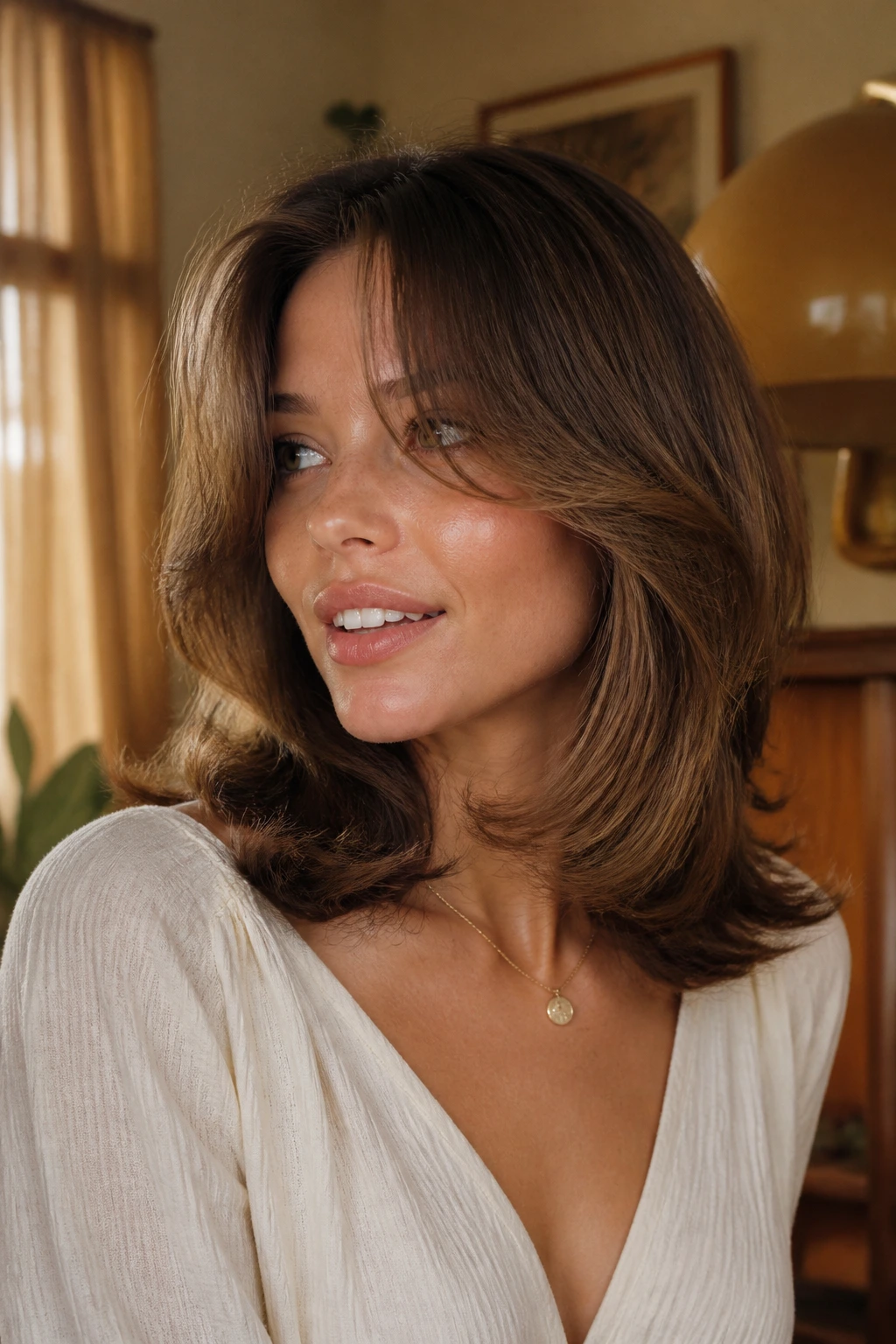
This one has motion baked into it. The layered midi flip uses ends that flick outward or inward depending on how you style them, and the 70s-style curtain bangs bring that same airy, face-opening energy to the front. It feels a little retro, but not costume-y. The key is keeping the layers soft enough that they move, not explode.
The bang shape here should start around the bridge of the nose and sweep open around the cheekbones. That gives the face a lifted look without a hard bang line. I like this cut most on hair with a bit of natural bend, because the flip at the ends and the sweep in the fringe echo each other. If your hair is pin-straight, a medium barrel curling iron can create the bend in a couple of passes.
The Small Detail That Keeps It From Looking Like a Wig
Don’t curl every section the same direction. Alternate the front pieces or leave the ends slightly imperfect. The charm of this cut lives in the looseness.
If you want a cut that can move from casual to dressed up without changing shape, this is a very good one. It photographs as a finished style, but it still tolerates a little mess. I consider that a win.
15. Air-Dried Waves with Long Wispy Bangs
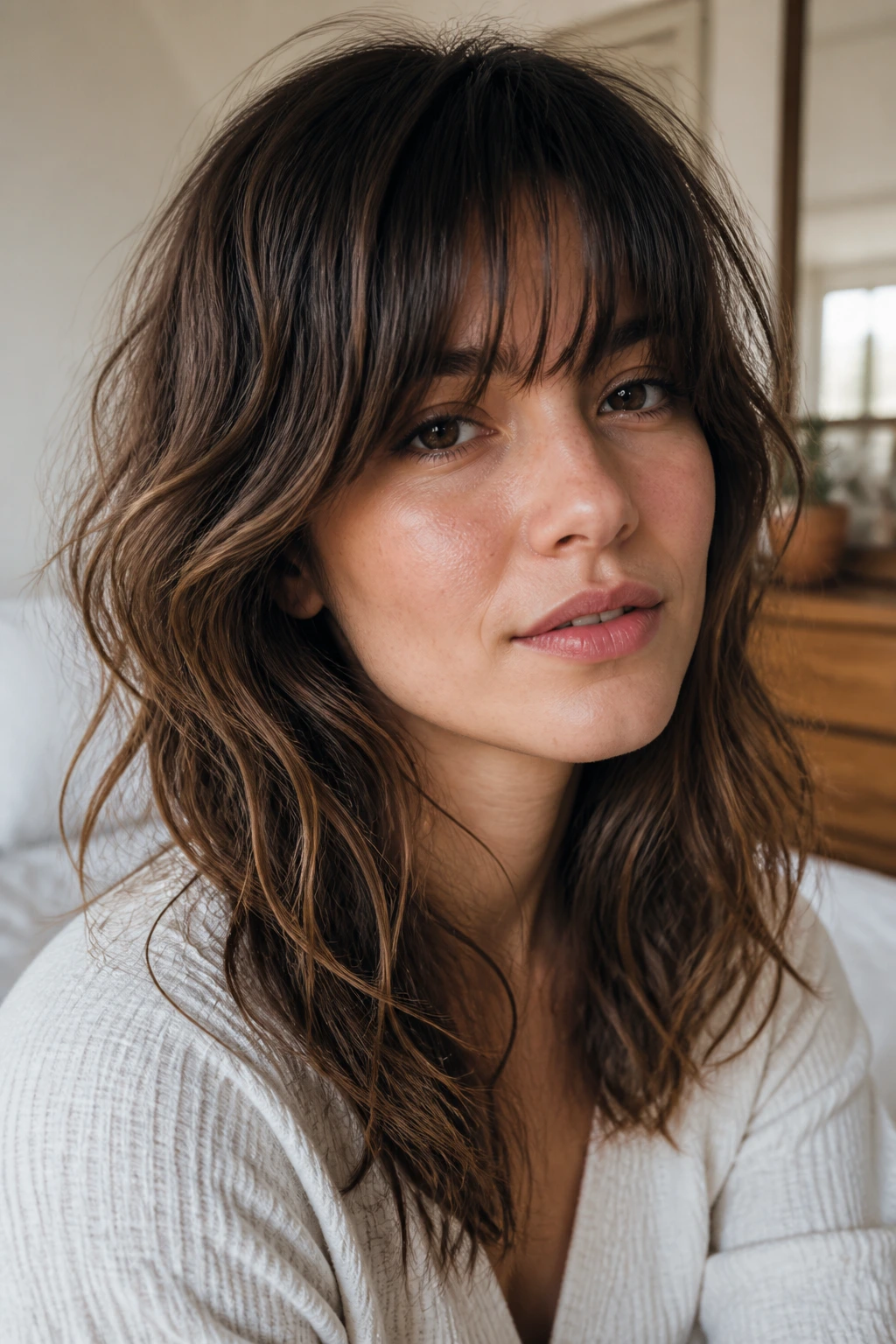
Some cuts are built for styling tools. This isn’t one of them. Air-dried waves with long wispy bangs are for people whose hair already has movement and who would rather shape that movement than fight it into a straight line. The longer fringe keeps the front from feeling too heavy, and the wispy finish means the bangs blend into the side layers instead of sitting there like a separate object.
This style is especially useful if you hate the idea of daily heat styling. The waves can dry on their own with a little curl cream or leave-in, and the fringe can be split, tucked, or nudged with fingers while it dries. Leave it a touch longer than you think you need. Air-dried bangs always seem shorter once they dry, and the extra length gives you room to shift them around the forehead.
Best with: hair that bends easily, a soft side part, and a little patience while the front dries.
Avoid: heavy oils near the fringe. They make wispy bangs look stringy by lunchtime.
16. Face-Framing Lob with Side Bangs
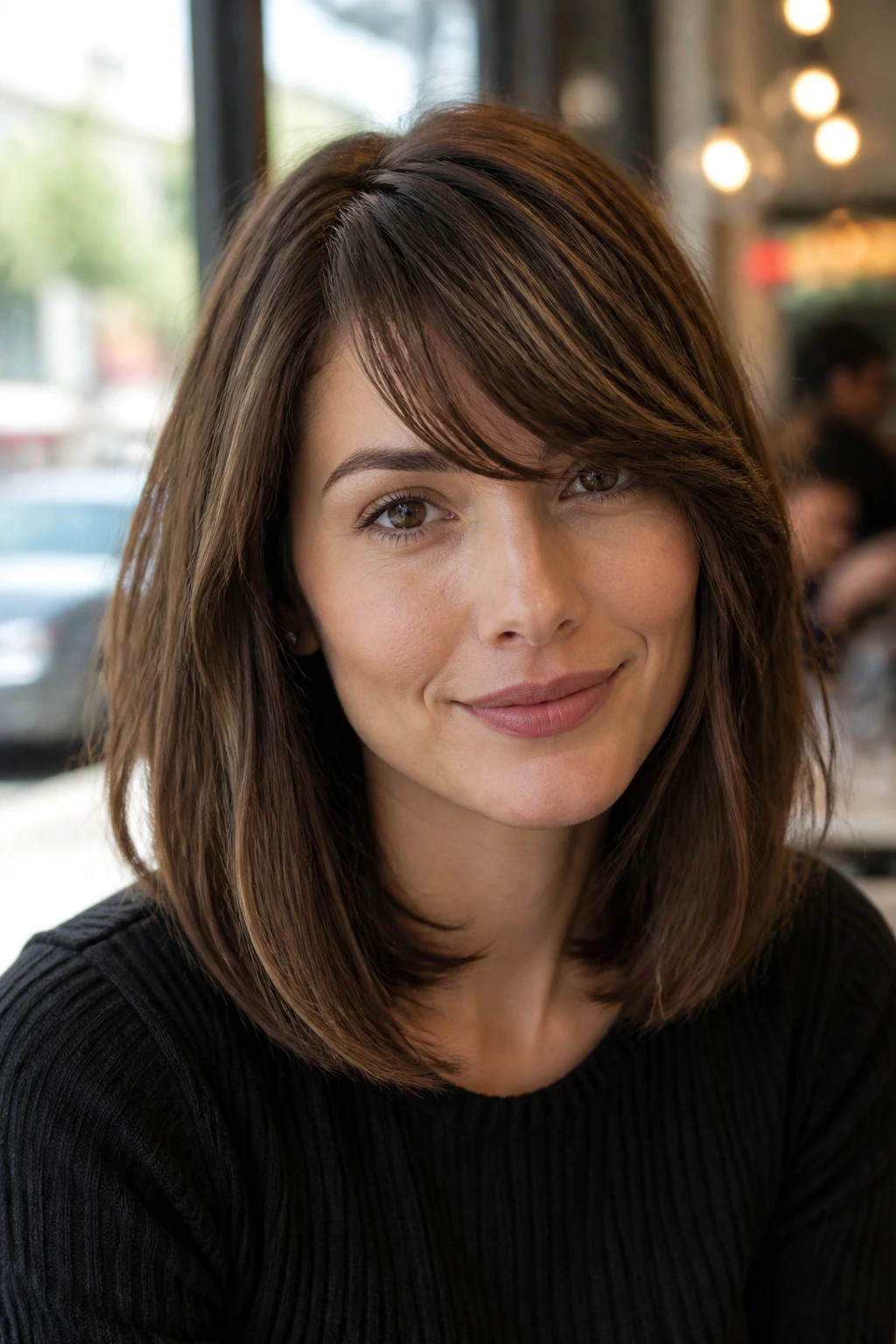
If you want the least fussy version of medium length hairstyles with bangs, this is the one I’d point to first. A face-framing lob with side bangs keeps the front soft, hides a cowlick better than a center fringe, and works whether you wear your hair smooth, blown out, or a little messy. The side bang gives you movement across the forehead, and the face-framing layers bring the eye down toward the cheekbones and jaw.
What makes this cut especially useful is the flexibility. You can shift the part a little deeper one day, sweep the bangs flatter the next, and tuck them behind your ear when you’re over it. That’s a rare feature. A lot of bang styles look best in one very specific arrangement. This one survives a more normal life.
The best version is slightly longer in the front than you think. Side bangs that are cut too short can spring up and turn fussy. Leave enough length to sweep them across the brow line and let them live with the rest of the hair. That’s the whole trick.
What to Ask for at the Salon Chair
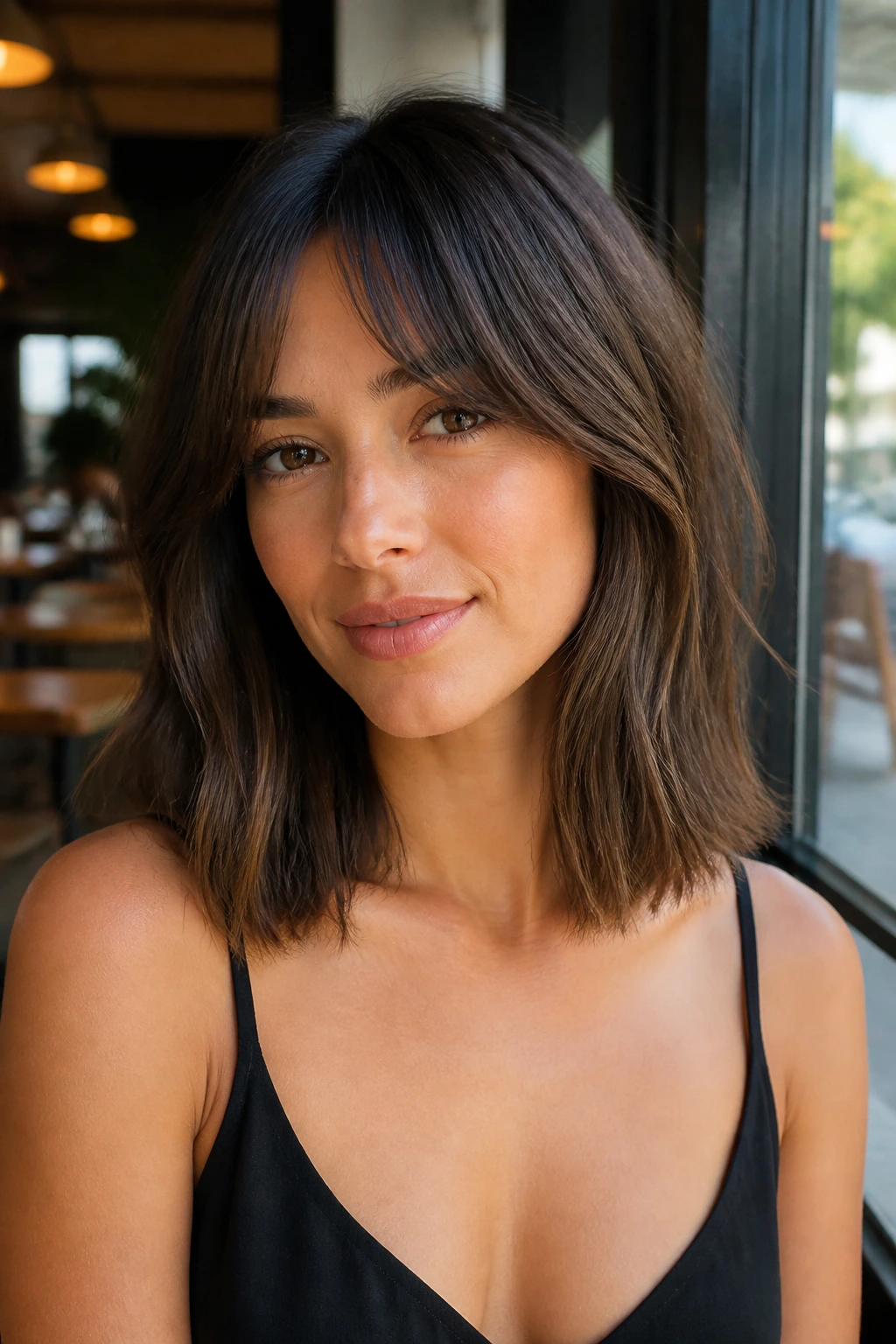
Ask for the haircut in plain language. Seriously. Bring the reference photos, but also tell your stylist how much time you actually want to spend on the front each morning. That changes everything. A curtain bang that looks dreamy in a photo may be a bad fit if you never blow-dry your hair, and a blunt fringe may be a perfect match if you like a neat finish and don’t mind trimming it often.
Say something specific about your hair’s behavior. Mention whether it falls flat at the crown, splits in the front, puffs at the sides, or shrinks when it dries. Those details matter more than vague words like “low maintenance.” A stylist can work with a cowlick. They can work with dense hair. They cannot guess what your hair does at 7:30 in the morning.
Bring a photo of your hair from the side as well as the front if you have one. The silhouette matters. So does the density. And if you wear glasses, say that out loud — fringe length changes when frames sit under the bangs.
Tools That Make Bangs Behave
-
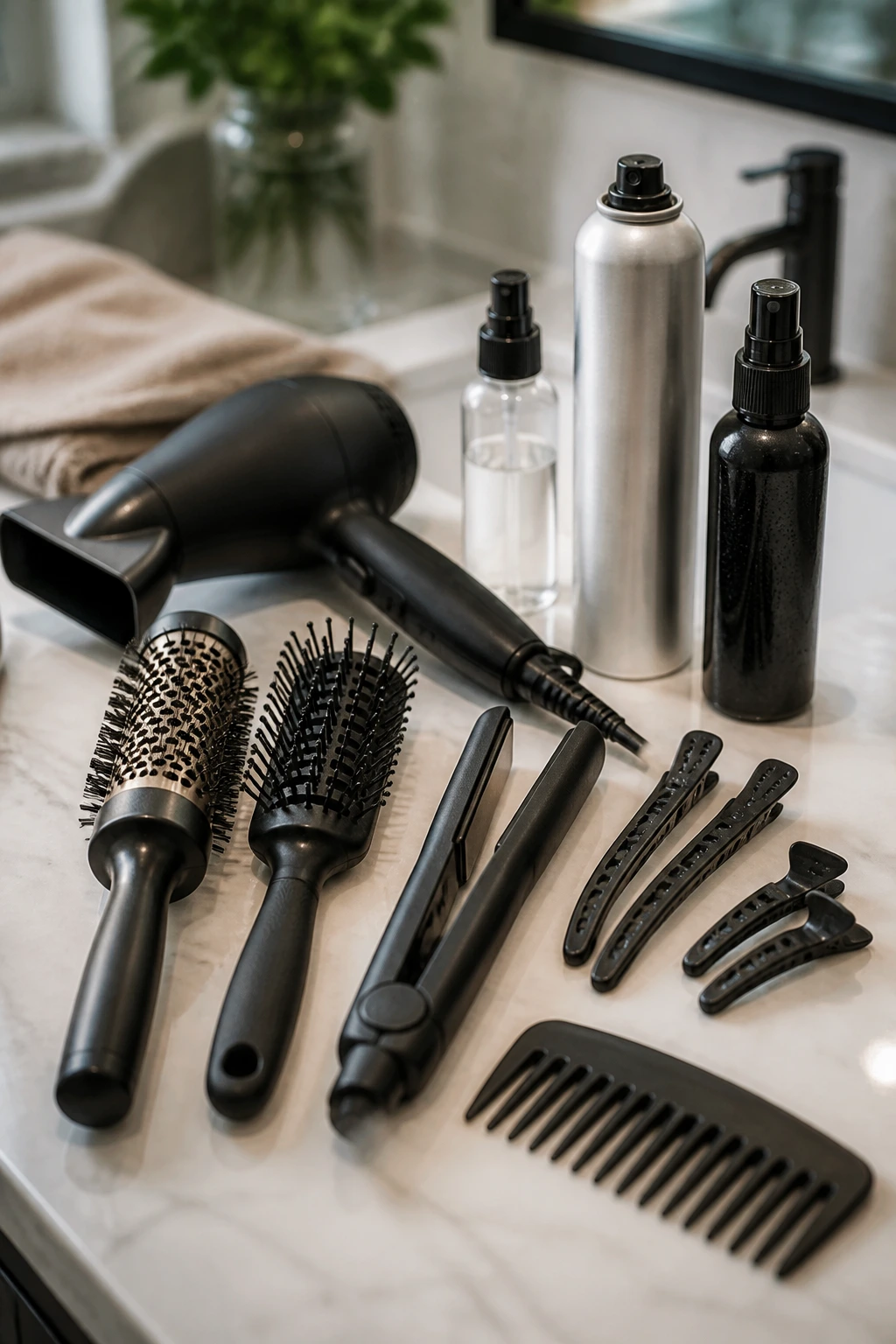
Small round brush, 1 to 1.5 inches: Best for shaping the front without over-curving it.
-
Vent brush: Useful for quick blow-drying when you want lift at the roots and a looser finish.
-
Blow-dryer with a nozzle attachment: Directs airflow so bangs don’t get blasted into every direction at once.
-
Mini flat iron: Handy for bending only the front pieces or taming one side that flips out harder than the rest.
-
Duckbill clips or sectioning clips: Keep the fringe separate while you dry the rest of your hair.
-
Light heat protectant spray: One mist is enough; too much can make bangs look limp.
-
Dry shampoo: Helps with oily roots at the forehead, which show up faster than anywhere else.
-
Texturizing spray: Good for piecey fringes and shaggy cuts, especially on the second day.
-
Wide-tooth comb: Better than tugging through a damp fringe with a brush that pulls too hard.
How to Style Bangs Without Overworking Them
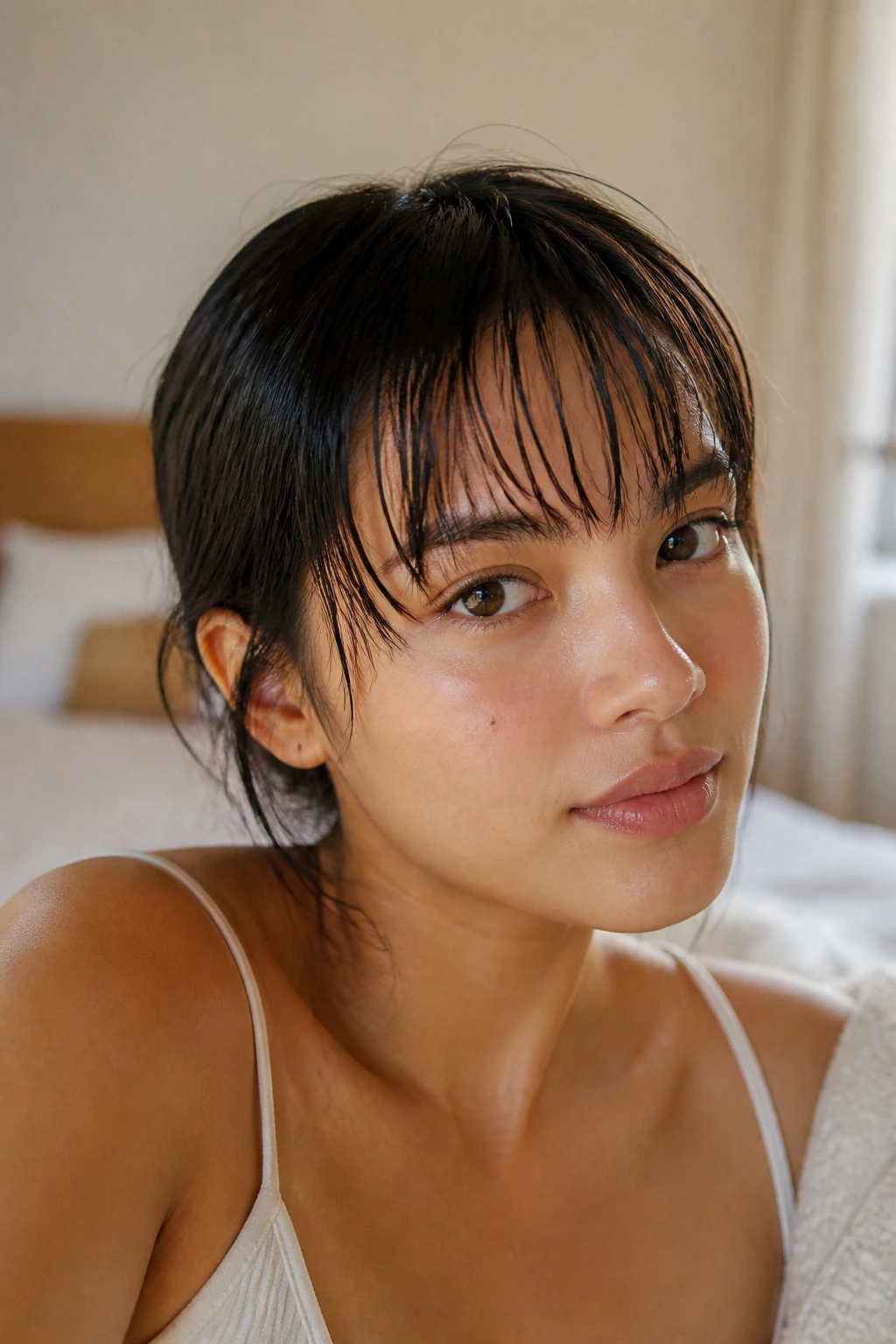
Bangs behave better when you dry them first. That sounds almost too simple, but it matters. If you blow-dry the rest of your hair first and leave the fringe to sweat on your forehead, the shape usually goes sideways. Start with the bangs while they’re damp, not soaking, and keep the airflow moving from side to side if you want them to lie flat instead of splitting.
Root control comes first. Lift the front section with your brush or fingers, then direct the air down the hair shaft once the roots are dry enough to hold shape. That’s how you avoid the puffy, overblown bang that sticks out from the forehead. If the front wants to separate, clip it in the direction you want while it cools. A few minutes under a clip often works better than another pass with heat.
For day-two hair, don’t wash everything for the sake of one fringe. Mist the roots lightly, dry just the bangs, and refresh the front with a little dry shampoo if needed. If your bangs are piecey, use your fingers. If they’re blunt, use a small brush and keep your hands out of them once they’re set.
Common Mistakes That Make Fringes Fight Back

Cutting the bangs too short on day one is the classic regret. The front looks cute for about twelve hours, then shrinkage, cowlicks, or humidity take over. The fix is simple: leave them longer than you think, then refine after the first wash if needed.
Using too much product near the forehead is another easy way to ruin a good cut. Oils and heavy creams make bangs separate, stick, and collect lint. Put smoothing product on the mid-lengths first, then use only the residue on the fringe if you absolutely need it.
Forcing every fringe to behave the same way also causes trouble. Curtain bangs want to part. Side bangs want to sweep. Curly bangs want room. If you fight the natural direction every morning, the cut will feel difficult no matter how good it is.
Ignoring density can wreck the shape. Fine hair usually needs softness and a little lift; thick hair often needs interior removal so the front does not feel bulky. When those things get swapped, the haircut starts sitting wrong fast.
Skipping trims for too long turns a cute fringe into a face-curtain. Bangs change the whole mood of a haircut when they’re even half an inch off. If the shape stops reading cleanly, trim time has arrived.
Smart Variations for Different Hair Textures and Routines
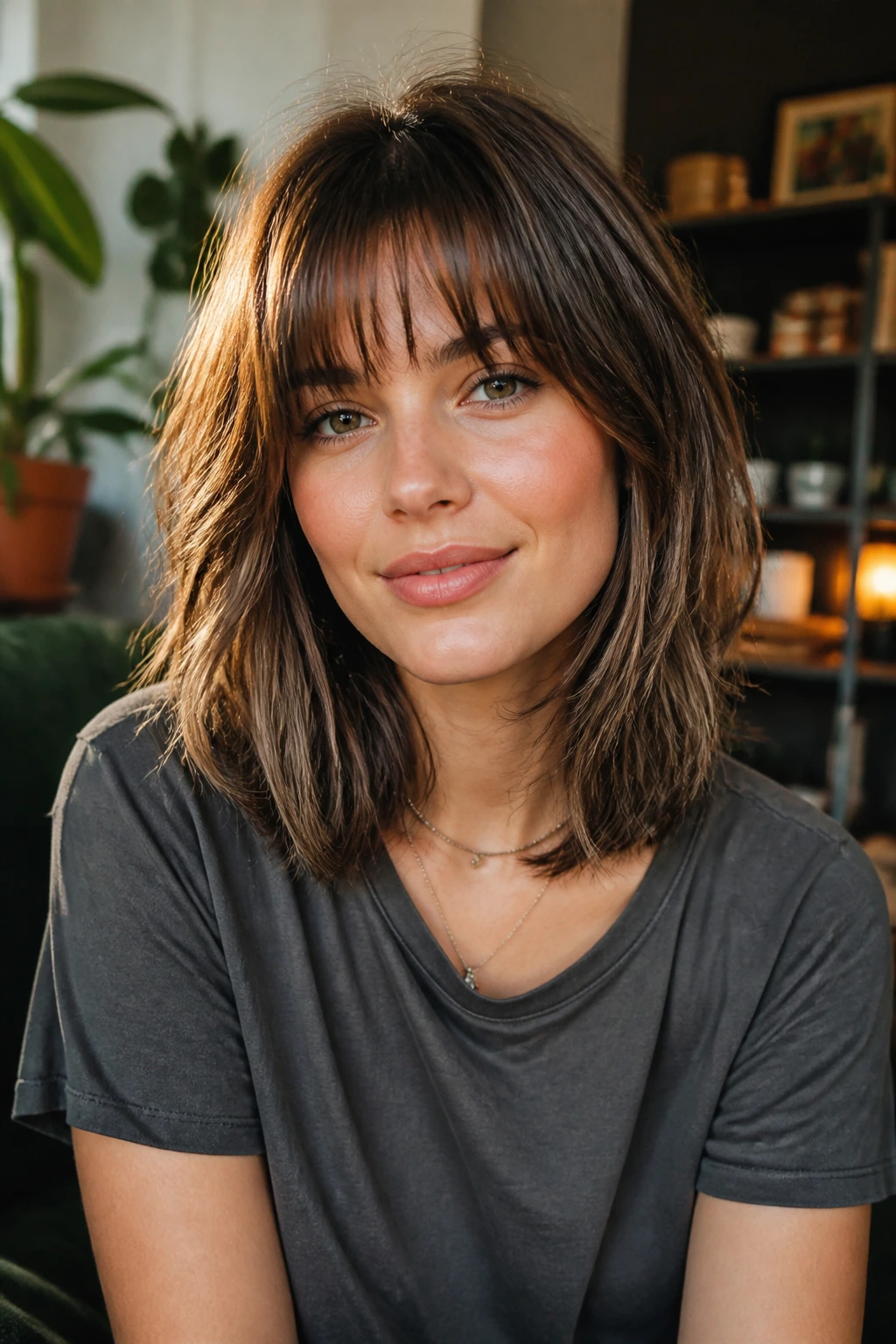
The Fine-Hair Lift: Keep the layers soft and the bangs slightly airy so the front doesn’t collapse. A root spray and a small round brush will give the illusion of more body without making the cut feel overbuilt.
The Thick-Hair Release: Ask for internal weight removal and a fringe that’s shaped in pieces rather than one solid slab. That stops the front from puffing outward and keeps the medium length from feeling boxy.
The Curl-Friendly Shape: Cut the bangs dry, or at least mostly dry, so shrinkage doesn’t surprise you. This works best when the fringe follows the curl pattern instead of trying to flatten it.
The Low-Styling Version: Choose side bangs or long curtain bangs and keep the layers long enough to air-dry cleanly. You’ll spend less time with heat and more time pretending your hair behaved on purpose.
The Glasses-Friendly Fringe: Leave the bang a bit longer and softer so it doesn’t jam into the frame line. Split bangs and side bangs usually win here because they cooperate with lenses instead of competing with them.
Trim Timing and Between-Salon Maintenance
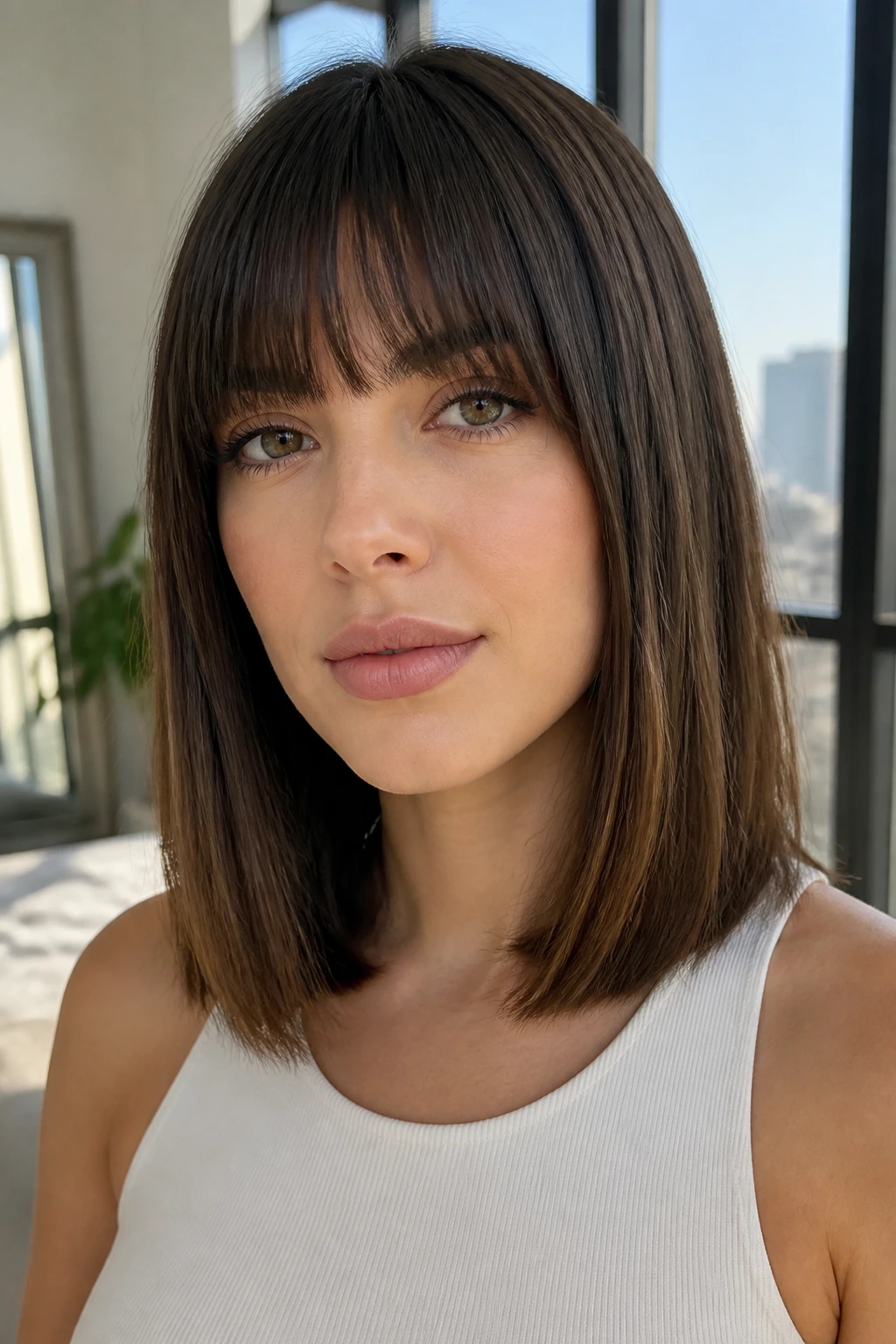
Bangs need a tighter trim rhythm than the rest of the haircut. A fringe usually wants a cleanup every 3 to 5 weeks, while the full medium-length shape can often go 8 to 12 weeks before it needs a proper reshaping. If you wait too long on the front, the whole haircut starts reading as grown-out, even if the lengths are still in good shape.
Between salon visits, keep the fringe clean and dry at the root. I like to clip bangs off the forehead while I do skincare, then release them once my face is dry. That keeps them from soaking up moisture and separating before the day even starts. A little dry shampoo at the roots helps on oilier days, but use it sparingly — too much leaves a dusty cast.
At night, tuck the bangs away gently or pin them to one side if they tend to bend awkwardly while you sleep. A silk pillowcase helps, but the real trick is not flattening the front under a wet head. That’s where strange cowlicks are born.
Frequently Asked Questions About Medium-Length Hair With Bangs
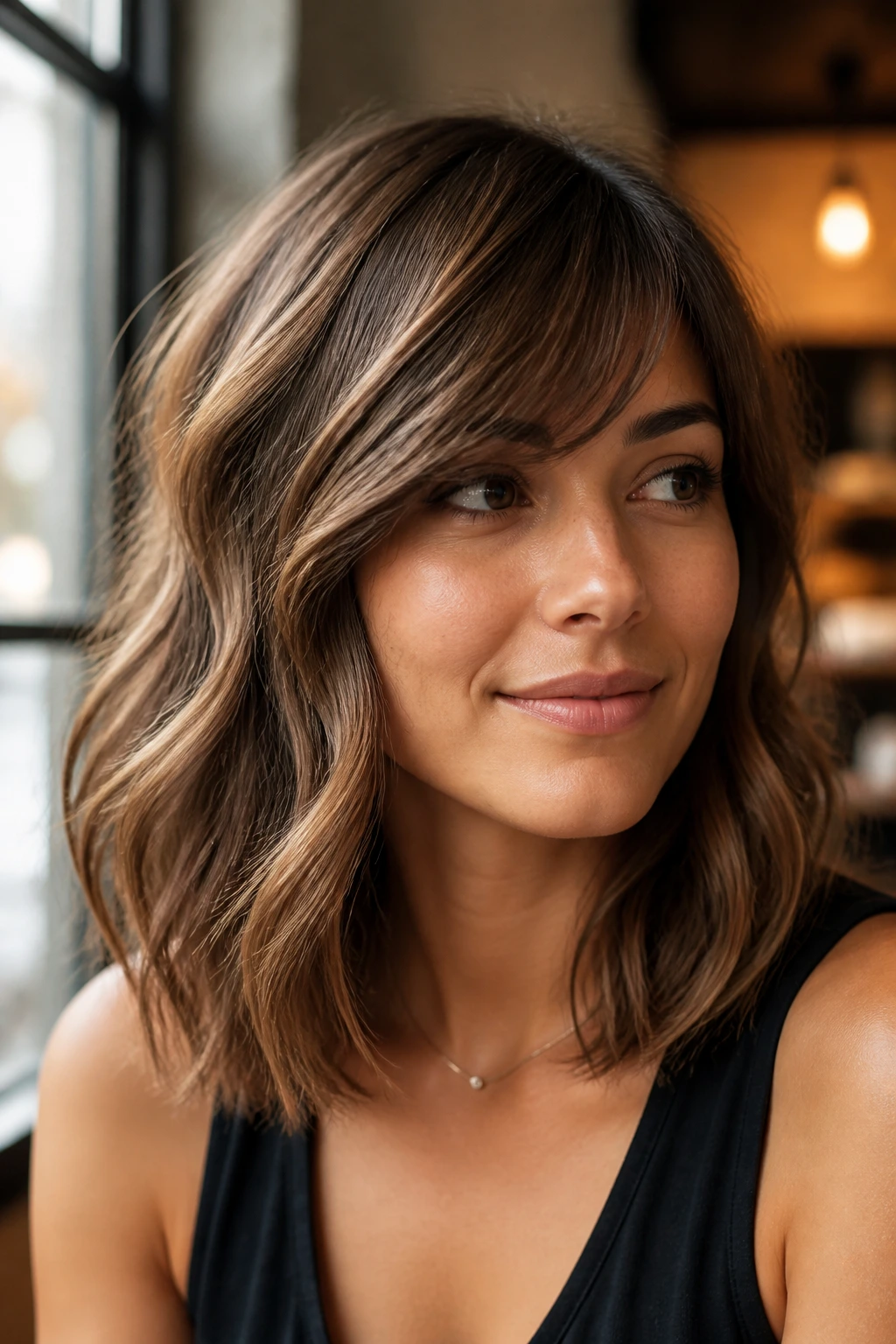
Which bangs are easiest to live with?
Curtain bangs and soft side bangs are usually the least demanding because they don’t rely on a perfect straight line across the forehead. They grow out in a forgiving way, and if they separate a little, the style still looks deliberate.
Are blunt bangs a bad idea for medium-length hair?
Not at all. They just ask for more maintenance and more intention. If your hair is straight or easy to smooth, blunt bangs can look sharp with a shoulder-length cut, but they need regular trims and a little daily shaping.
Do bangs work on curly hair?
Yes, but they need to be cut with the curl pattern in mind. Curly bangs should usually be longer than straight bangs at the start, because the curl will spring up as it dries. A dry or mostly dry cut is much safer than guessing from wet hair.
What if my bangs split in the middle all day?
You probably have a cowlick or a root pattern that wants to part there. Dry the front side to side, clip it while it cools, and keep heavy oils away from the root. If the split keeps returning, ask for a softer curtain or side-swept shape instead of forcing a blunt fringe.
Can I wear these cuts with glasses?
Yes, but the fringe needs to sit with the frame instead of fighting it. Side bangs, curtain bangs, and slightly longer brow-skimming bangs usually work better than a very short blunt fringe that collides with the top of the frames.
How often should I trim bangs?
Most bangs need a touch-up every 3 to 5 weeks. Curtain and side bangs can stretch a bit longer than blunt fringe, but once they start hanging into your eyes in a way that changes the shape, they need a trim.
Which medium-length hairstyle with bangs is best for fine hair?
Collarbone lobs, blunt mids, and soft layered cuts usually work well for fine hair because they preserve density at the ends. Keep the fringe light enough to avoid dragging the front down, and use root lift rather than heavy cream.
What if I want bangs now but may grow them out later?
Start with curtain bangs, bottleneck bangs, or long side bangs. Those styles soften into face-framing pieces more cleanly than a very short blunt fringe, so the grow-out phase feels like a change, not a punishment.
The Shape That Keeps Its Life
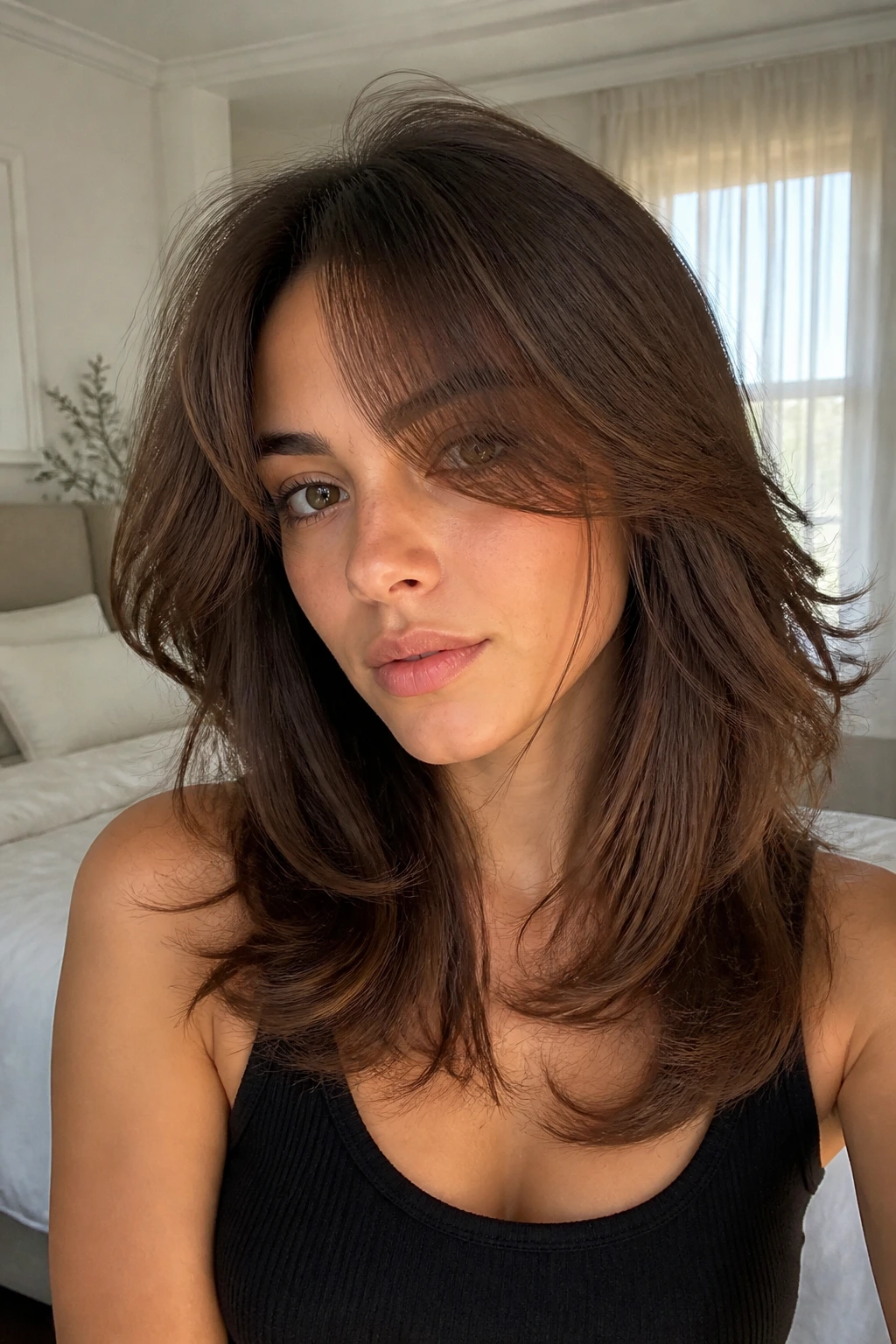
Medium-length hair and bangs stay popular for a reason that has nothing to do with trends and everything to do with usefulness. The cut gives you shape when you want it, softness when you need it, and enough length to recover when the fringe has a bad morning. That combination is harder to find than it sounds.
The real win is flexibility. You can make this haircut look sleek, messy, curled, or air-dried, and the front still matters. That’s the sweet spot. If you want a style that keeps working after a busy week, a missed wash day, or one too many runs with the flat iron, this is where I’d look first.
