



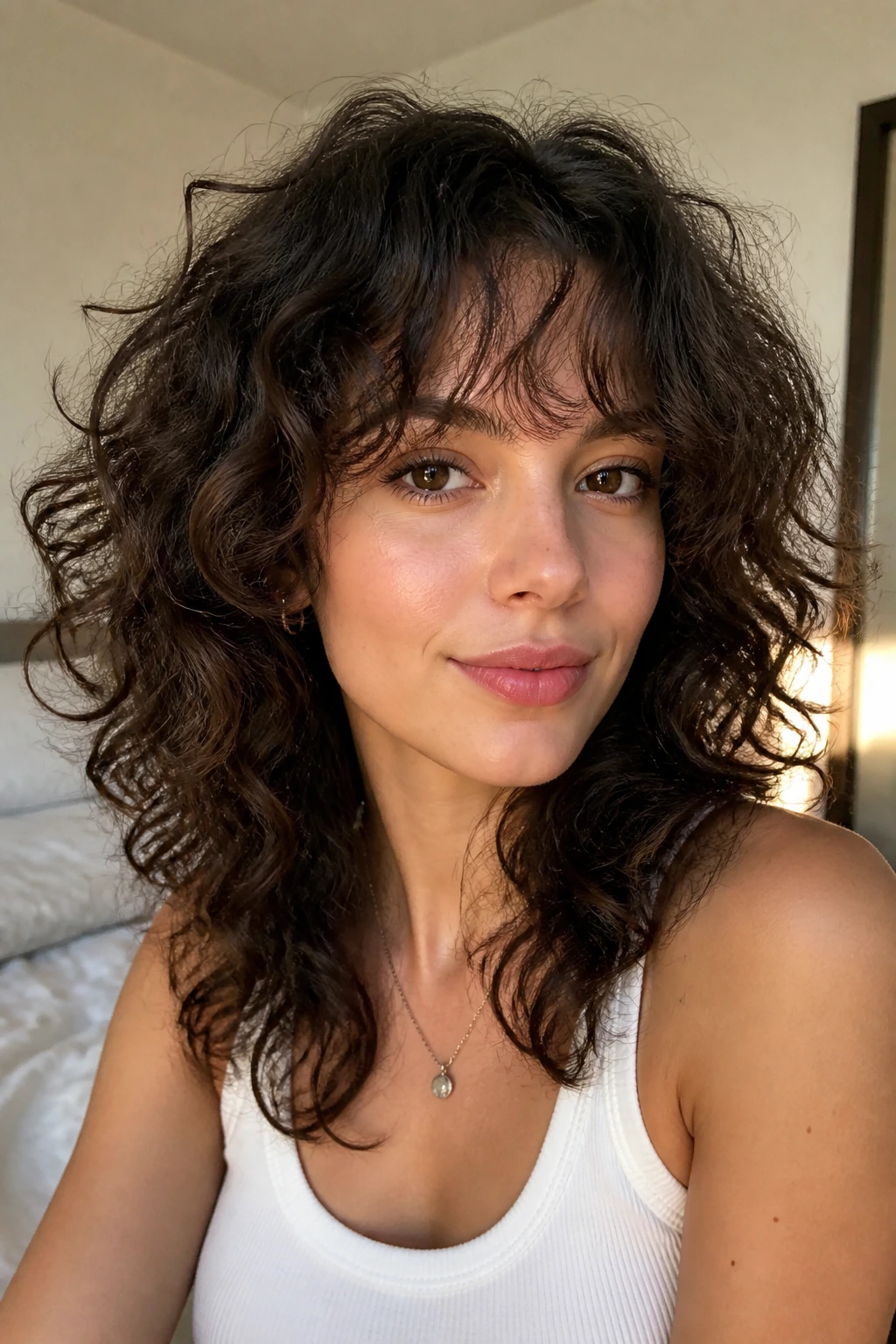
Curly bangs can look like a mistake at 9 a.m. and like the smartest haircut in the room by lunch. That swing is what makes people nervous. It’s also what makes the right fringe so satisfying. The best curly hairstyles with bangs don’t force curls into a straight-haired rulebook; they work with shrinkage, bend, and that little halo of movement around the forehead that straight hair never quite gives you.
And yes, curl pattern matters. So does density. So does where your curls live when they dry — the bangs that sit neatly at brow level when wet can spring an inch or two shorter once they set, which is why the old “cut them damp and hope” habit causes so much grief. A dry cut, or at least a very controlled section-by-section cut, is usually kinder to the face and far less cruel to the mirror.
There’s also a practical upside people don’t talk about enough: bangs can make curls look shaped on purpose. They can soften a wide forehead, break up a long face, pull attention to the eyes, or make a heavy mass of hair feel lighter without sacrificing length everywhere else. That’s the trick. Not a random fringe. A fringe with a job.
Why Curly Bangs Are Worth the Extra Shape

Built for movement: Curly bangs don’t sit like a flat curtain. They bounce, separate, and change shape over the day, which makes the cut feel alive instead of stiff.
Better face framing: A fringe can pull the eye upward and soften the transition from forehead to cheekbone, especially when the curls around the temples are layered into it.
Less bulk at the front: If your curls collect weight at the hairline, bangs can remove that shelf feeling and make the whole cut fall cleaner.
Easy to personalize: Tiny changes — half an inch here, a deeper side part there, a little more face-framing at the temples — make a huge difference on curls.
Works with a lot of lengths: Short crops, bobs, mid-length shags, and long spiral layers all take bangs differently, which gives you room to match the look to your routine.
Grows out better than you’d think: On curly hair, a fringe often blends into layers as it lengthens, so the awkward stage can be shorter than people expect.
1. Shoulder-Length Ringlets With Brow-Skimming Bangs
Shoulder-length ringlets are one of those cuts that can tip into “pyramid” territory fast. Brow-skimming bangs pull the focus back to the face and stop the whole shape from dropping all the weight at the ends. The result is soft, round, and a little bit airy — not fluffy in the bad sense, but lifted, like the hair has somewhere to go.
Why it works
Ringlets love a clear outline. When the fringe lands around the brow, the eye gets a starting point, and the rest of the curl pattern can fall in layers instead of building a heavy curtain. That makes this shape especially good if your hair gets wider through the cheeks and jaw. It also plays well with medium-density curls because the bangs are there to frame, not overpower.
A dry cut helps here. Ask for the bangs to be shaped while the curls are in their natural spring, then refined after they dry so the stylist can see whether the fringe hits at the brow or floats above it. If you wear glasses, this cut gets even more practical — the curls can sit above the frames without fighting them.
Best detail to ask for: slightly longer pieces at the temples so the fringe blends into the sides instead of stopping abruptly.
Best styling move: finger-coil the center of the fringe, then scrunch the rest and diffuse on low heat for 5 to 8 minutes.
2. Curly Shag With Wispy Fringe
A shag on curls is not a compromise. It’s a shape with opinions. The wispy fringe keeps the front light, and the stacked layers around the crown stop the haircut from swelling into one big triangle when it dries. If you’ve ever felt like your curls were wearing the haircut instead of the other way around, this is the fix.
The fringe should not be thick and blunt. That’s the mistake people make. On a curly shag, the bangs need little gaps between pieces so they can separate naturally as they dry. A good stylist will point-cut the edge and leave a few shorter pieces in the middle, which helps the fringe sit soft instead of heavy.
How to wear it
This cut likes a touch of mess. Not chaos. Just a little softness at the roots and a clean curl pattern through the lengths. A pea-sized amount of curl cream, followed by a light gel over the fringe, keeps the front from puffing up like it has its own weather system.
If your curl pattern is loose, the shag can look almost effortless. If your curls are tighter, the wispy fringe keeps the forehead from looking boxed in. Either way, this cut works because it leaves some air around the face. That air matters.
3. Rounded Afro With Full Curly Bangs
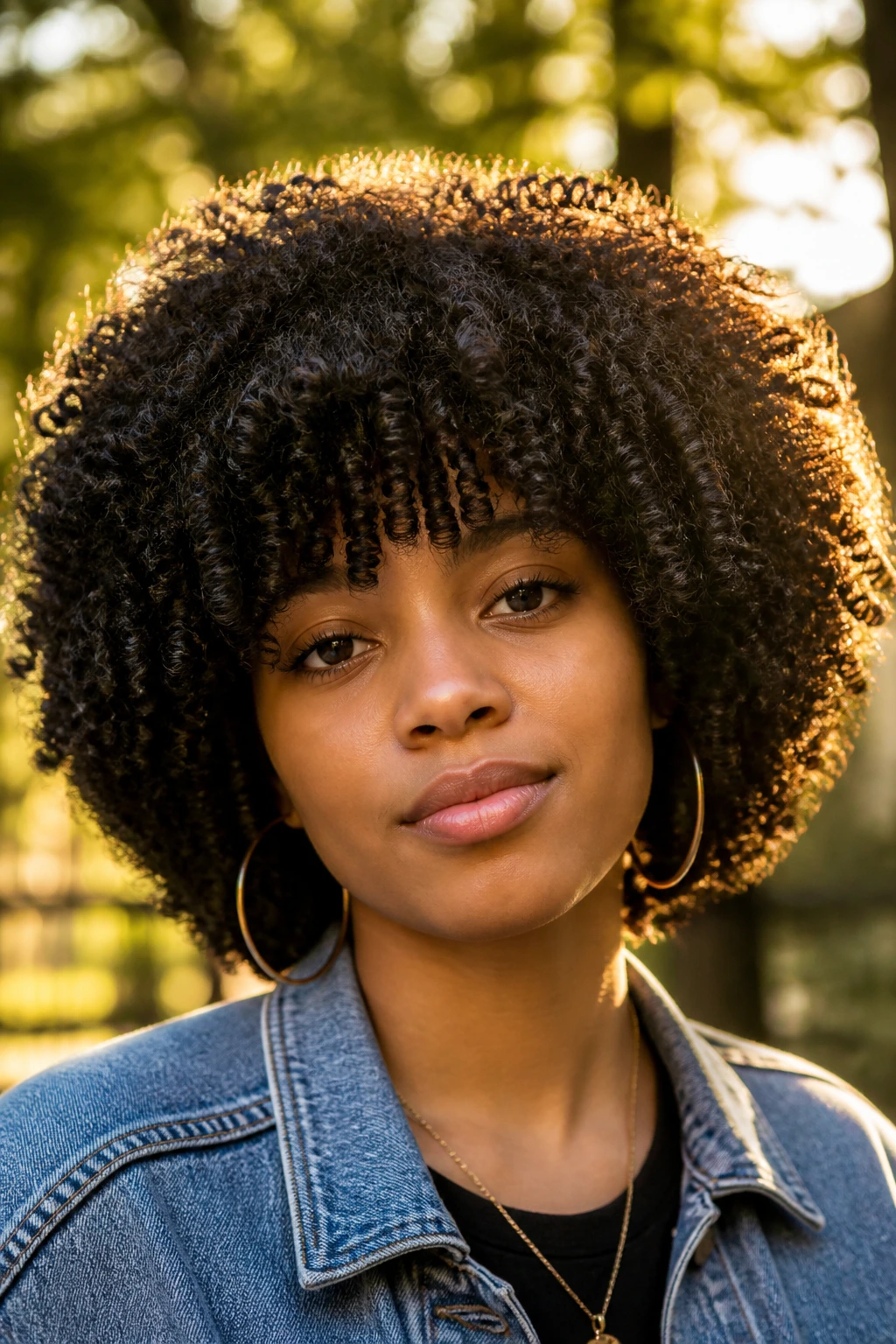
Can a full fringe work on a rounded afro without turning into a helmet? Absolutely — if the bangs are shaped to echo the head, not sit on top of it. This cut is all about contour. The bangs curve with the crown, and the sides stay soft enough that the shape feels intentional from every angle.
The key is weight placement. A full curly fringe needs enough density to read as bangs, but not so much that it creates a flat shelf at the forehead. The best versions leave the ends slightly irregular, which keeps the front from looking blocky. A sharp line is the enemy here. A rounded edge is the friend.
What to watch for
The fringe should follow the natural curve of the hairline. If it gets cut too short in the center, it can shrink up and disappear. If it’s left too long, it can blur into the rest of the style and lose the bang effect altogether. There’s a narrow window, and that’s where a dry cut pays off.
This is also one of the best looks for people who like shape without too much fuss. A little leave-in, a little oil on the ends, and a diffuser held a few inches away are often enough. The curls do the rest.
4. Long Layers With Curtain Bangs
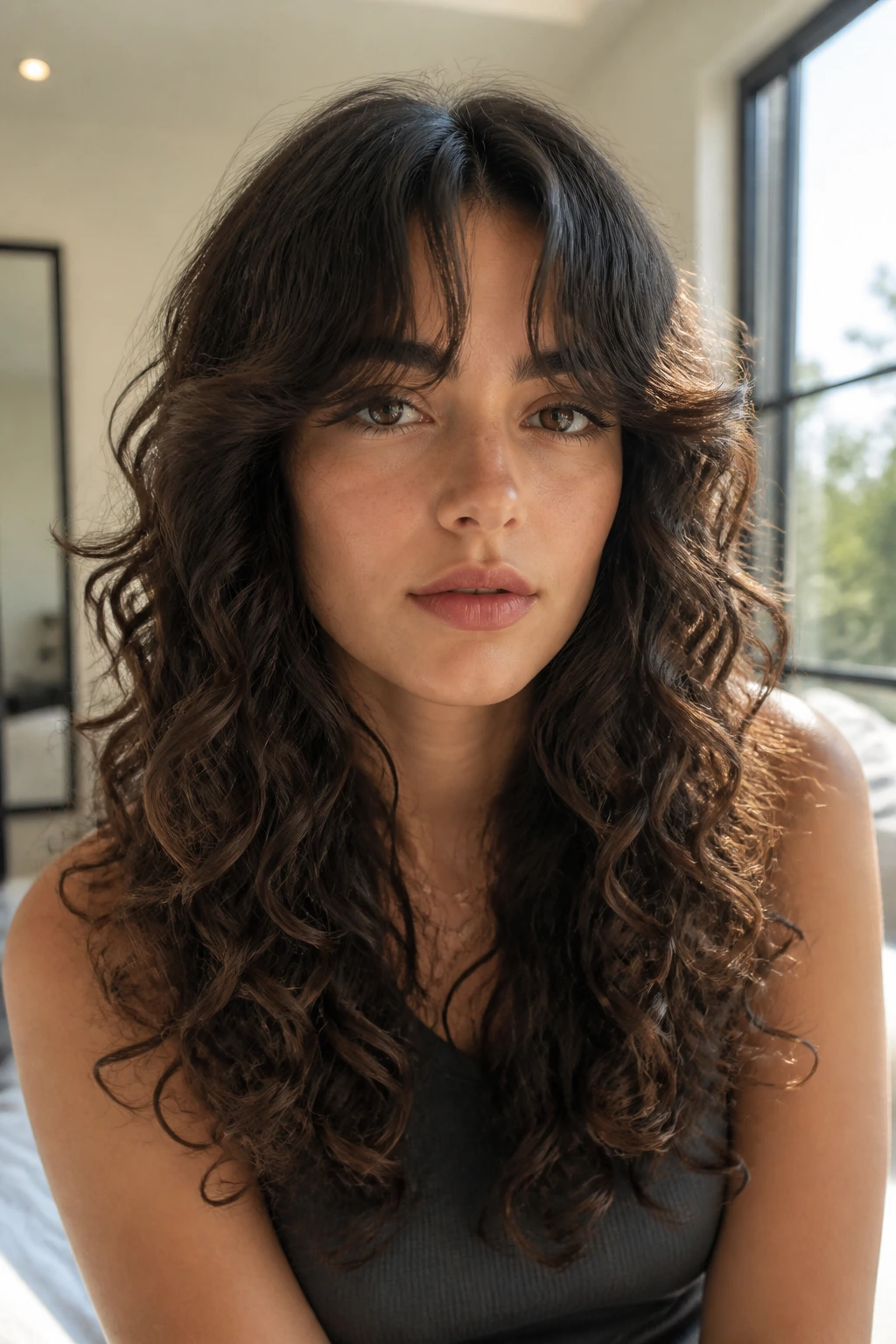
Long curls with curtain bangs have a particular kind of grace when they’re cut well. The fringe splits at the center, falls away from the face, and lets the length stay dramatic without feeling heavy at the front. It’s a quieter look than full bangs, but it’s not timid. The middle part gives the eyes room to breathe.
The best version starts the curtain pieces at the cheekbone or just below, then blends them into the first face-framing layers. On curly hair, that blend matters more than the exact length. If the bang section is cut too bluntly, it sits like a separate object. If it’s feathered into the sides, the whole haircut moves together.
A lot of people choose this style because it’s forgiving on off days. The bangs can be pushed wider, pinned back, or let fall naturally after a refresh. That flexibility is part of the charm. You’re not locked into one exact shape every morning.
5. Soft Curly Bob With Side Bangs

A bob with side bangs is one of the smartest ways to keep curls from feeling too square. The side fringe breaks the line on one side, which gives the cut a little tilt and a little motion. It also makes the bob feel less formal. Less “precision cut,” more lived-in shape.
Side bangs are useful when your curls won’t sit still across the forehead. Some curl patterns part easily but refuse to lie flat in the center. A side sweep works with that tendency instead of fighting it. It lets the bang travel with the curl clumps, which is why this style often looks better after a few hours than it does right after styling.
If you want the bob to feel modern rather than dated, keep the ends a touch longer in the front. That small angle helps the side bangs connect to the face-framing pieces. Without that connection, the bang can look pasted on.
6. Tapered Crop With Micro Bangs
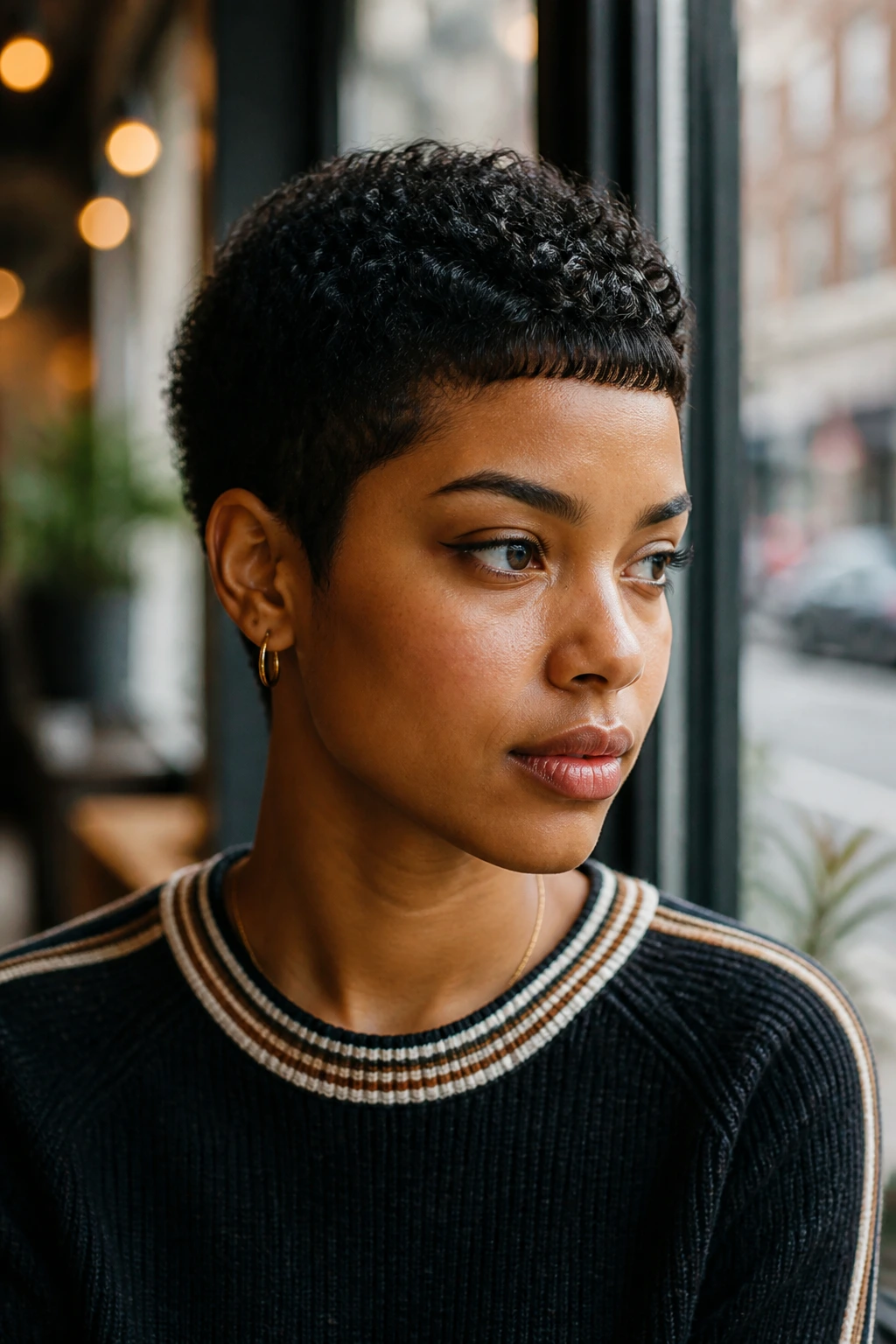
Micro bangs on curls are not for the faint of heart. Good. Hair should have a little nerve. On a tapered crop, a short fringe can look sharp, playful, and almost architectural, especially when the sides are kept close and the top has enough texture to show off the curl pattern.
The risk is obvious: curl shrinkage can make a micro fringe disappear. That’s why the cut needs to land longer than you think, then be adjusted once the hair springs up. A fringe that looks almost too long in the chair may be exactly right once it dries. I would rather see that than a bang that shoots halfway up the forehead and never quite recovers.
Quick facts
- Best on curls with visible spring and consistent shrinkage.
- Needs trimming more often than longer bang styles.
- Looks strongest with defined edges and a clean nape.
- A little edge control at the hairline can help on humid days.
This cut suits people who like their hair to read as a shape first and a style second. It’s small, but it is not shy.
7. Wolf Cut With Choppy Fringe

The wolf cut lives on uneven texture, and curly hair gives it even more reason to exist. Choppy fringe keeps the front from looking too precious. The layers flare out at the crown, the lengths taper through the sides, and the bangs break up the face in that slightly rebellious way the cut depends on.
A smooth, even bang line would kill this haircut. It needs staggered pieces. Some should graze the brows, some should sit a little higher, and a few should melt into the side layers. That broken edge keeps the curl pattern visible and stops the fringe from forming one heavy wall.
If your curls are dense, this is a good way to lose bulk without losing personality. If your curls are finer, the choppy fringe helps create the impression of more texture than you actually have. Either way, the cut lives on movement. Flat styling makes it look tired. A soft diffused finish makes it come alive.
8. Pixie Cut With Curly Baby Bangs
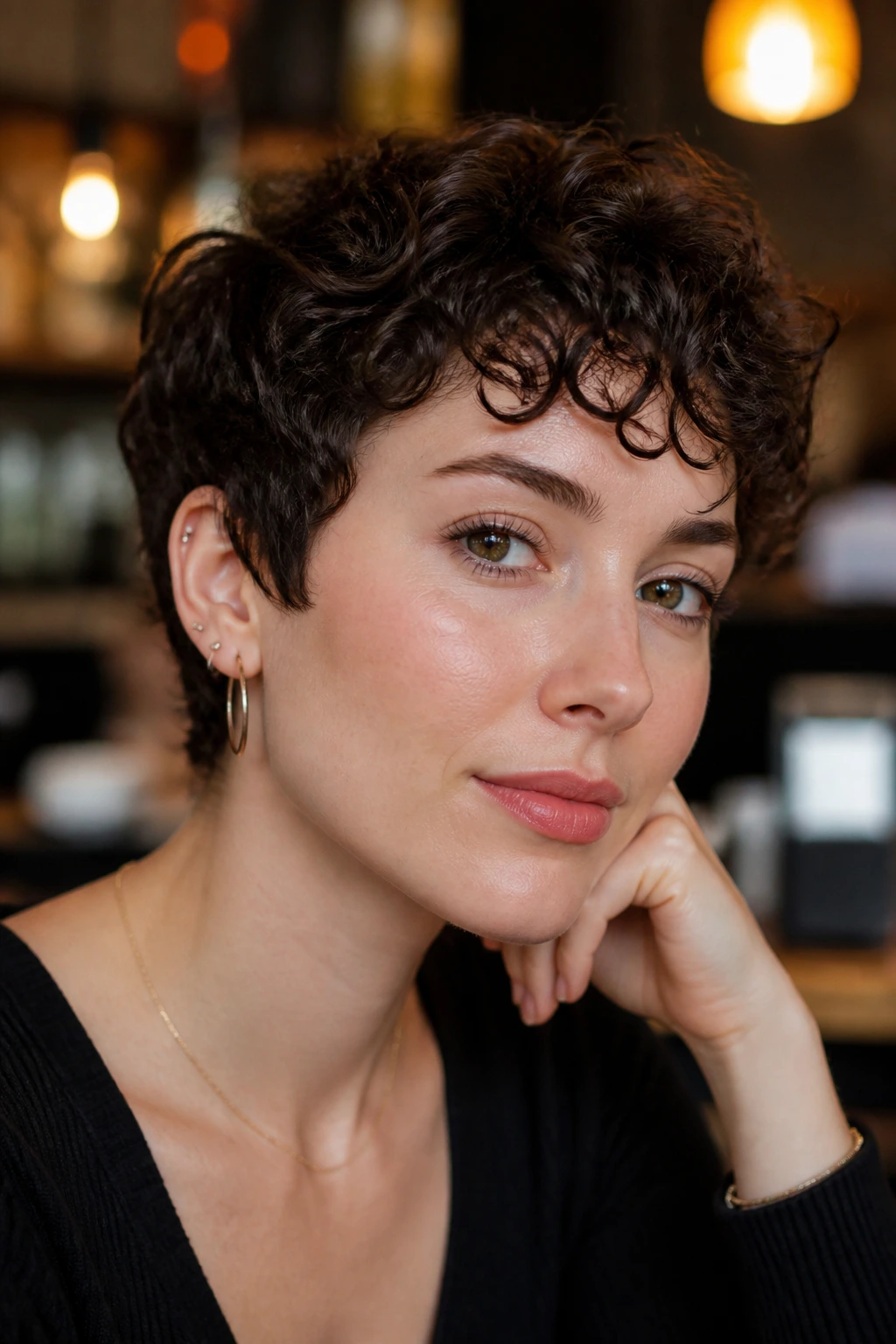
Short curls with baby bangs can look adorable in the wrong hands and striking in the right ones. The difference is proportion. The bangs need to feel attached to the cut, not dropped on top of it like an afterthought. A pixie gives the fringe a stage; the fringe gives the pixie attitude.
Because curls spring, baby bangs usually need to be left longer than straight bangs. That sounds backward until you’ve seen them dry. Then it makes perfect sense. The front should skim the top third of the forehead, not sit as a hard line right at the brows. The best versions have tiny bits of length variation, which keeps the shape from looking toy-like.
Best for: people who like low volume on the sides and a little drama up front.
Best styling trick: blow-dry or diffuse the fringe in the direction you want it to live while it is still damp; once curls set, they are far less cooperative.
This is a haircut with presence. It does not whisper.
9. Lob With Arched Bangs
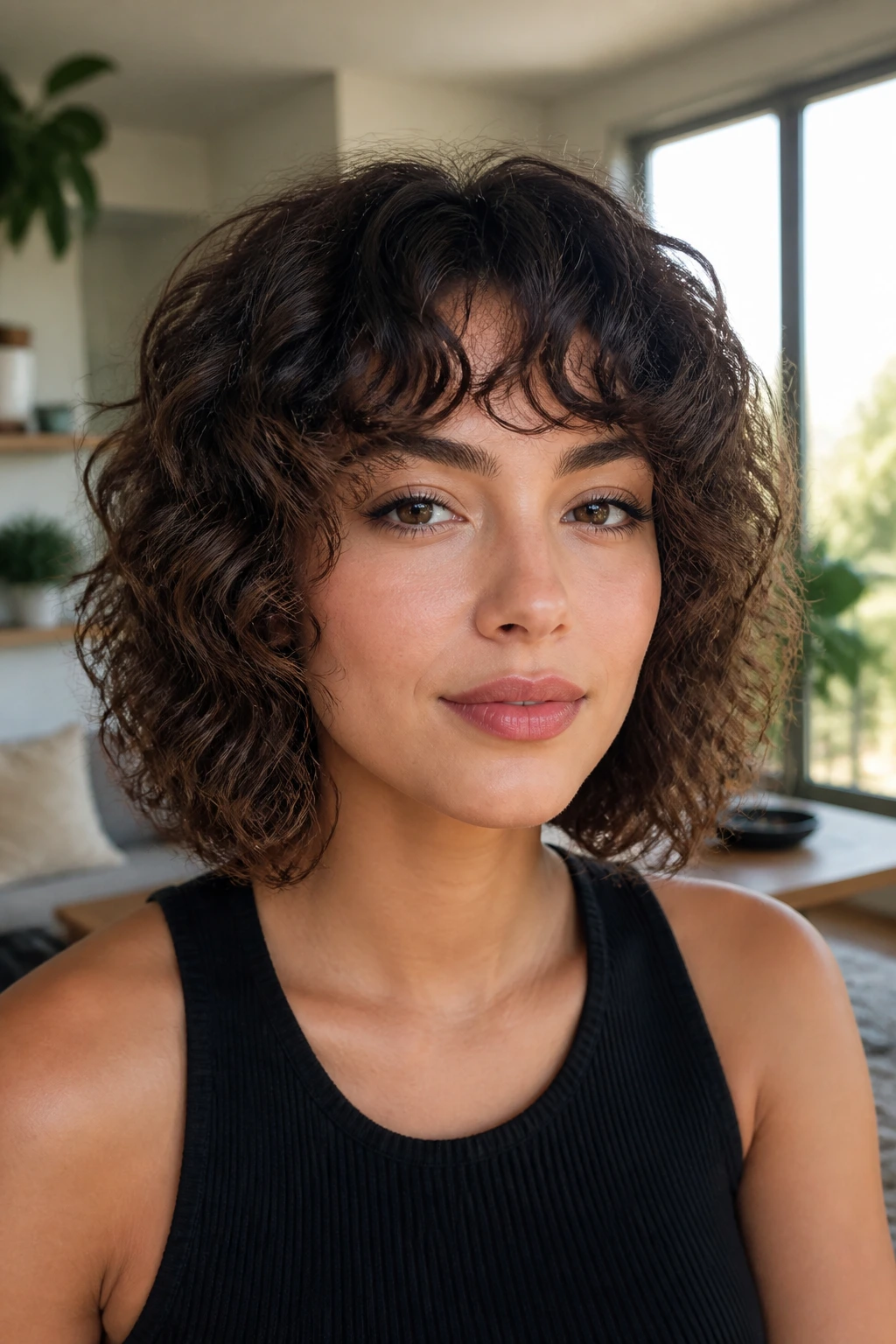
A lob gives curls breathing room, and arched bangs sharpen the front without making the cut feel severe. The arch — shorter in the center, slightly longer at the temples — follows the natural curve of the forehead and creates a soft spotlight around the eyes. It’s flattering in a way that feels structural, not decorative.
What makes this combination work is restraint. The lob stays blunt enough to hold its shape, while the bang section bends gently instead of dropping straight across. That contrast keeps the style from looking boxy. Curls need that contrast. Too much roundness everywhere can turn into blob territory fast.
If your hair is thick, ask for internal layering in the lob so the ends don’t puff. If it’s fine, keep the perimeter clean and let the arch in the bangs do the visual work. One of the nice things about this cut is that it looks polished even when the curl definition softens by day’s end.
10. Mid-Length Coils With Split Fringe
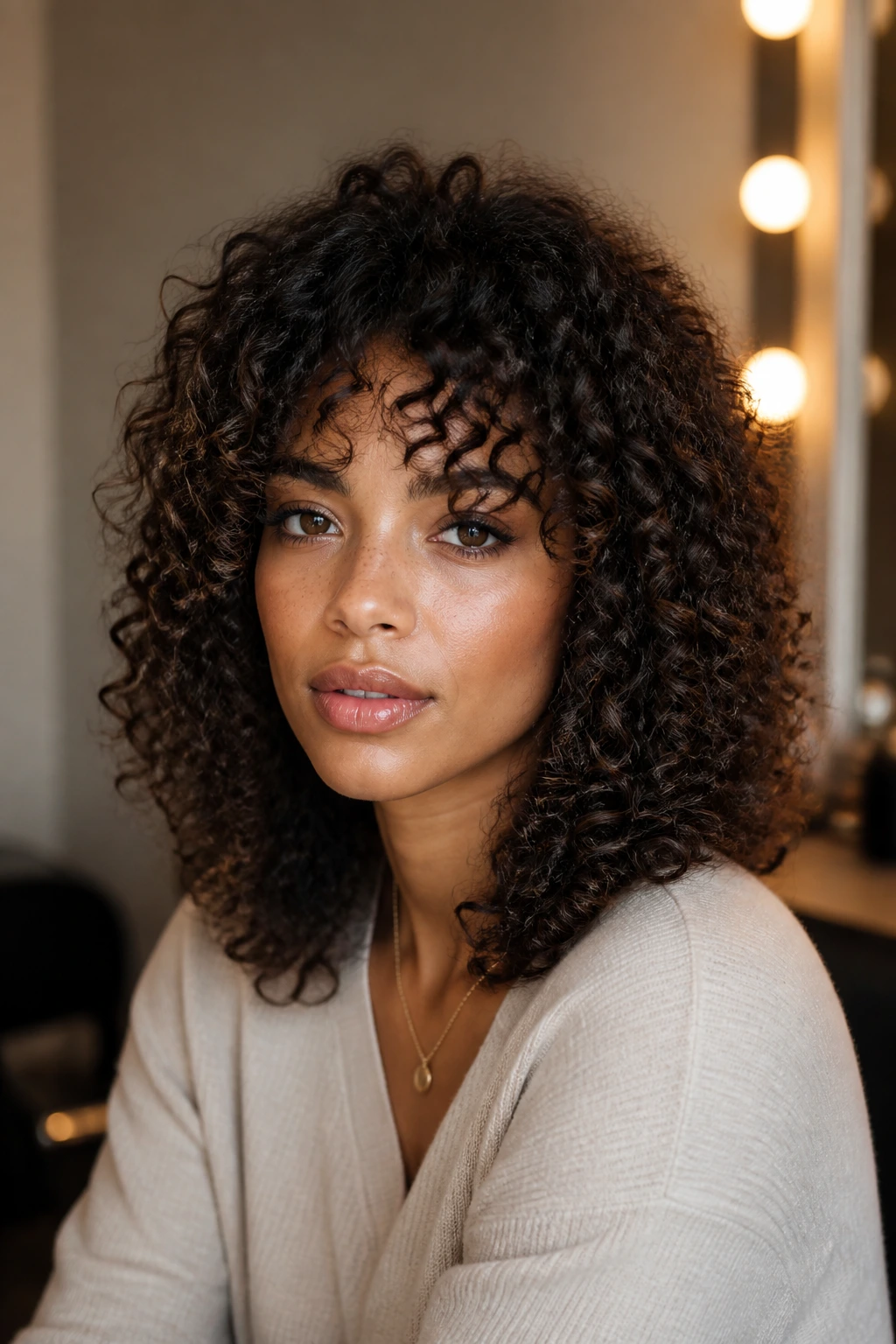
Split fringe is one of the easiest ways to wear bangs on tighter coils without hiding the forehead completely. The center part opens the face, and the fringe pieces fall to either side in a way that echoes curtain bangs but feels a bit neater and more deliberate. It’s a strong choice if you like shape but not a lot of hair hanging directly into your eyes.
The pattern matters here. Coils tend to cluster in obvious clumps, so the fringe has to be cut with that clumping in mind. If the front is cut as one solid block, it can spring too high and sit awkwardly. A split fringe lets the hair separate naturally and gives the stylist room to shape each side with the curl’s own direction.
How to use it
A light gel on damp bangs, then a gentle side-to-side shake before air-drying, helps the part settle without creating a hard line. If one side dries faster, that’s normal. Resist the urge to keep touching it. Finger-combing curls into obedience usually only makes them puff.
This style is especially good for people who wear earrings or glasses and want the front of the haircut to frame, not crowd, those details.
11. Curly Mullet With Piecey Bangs
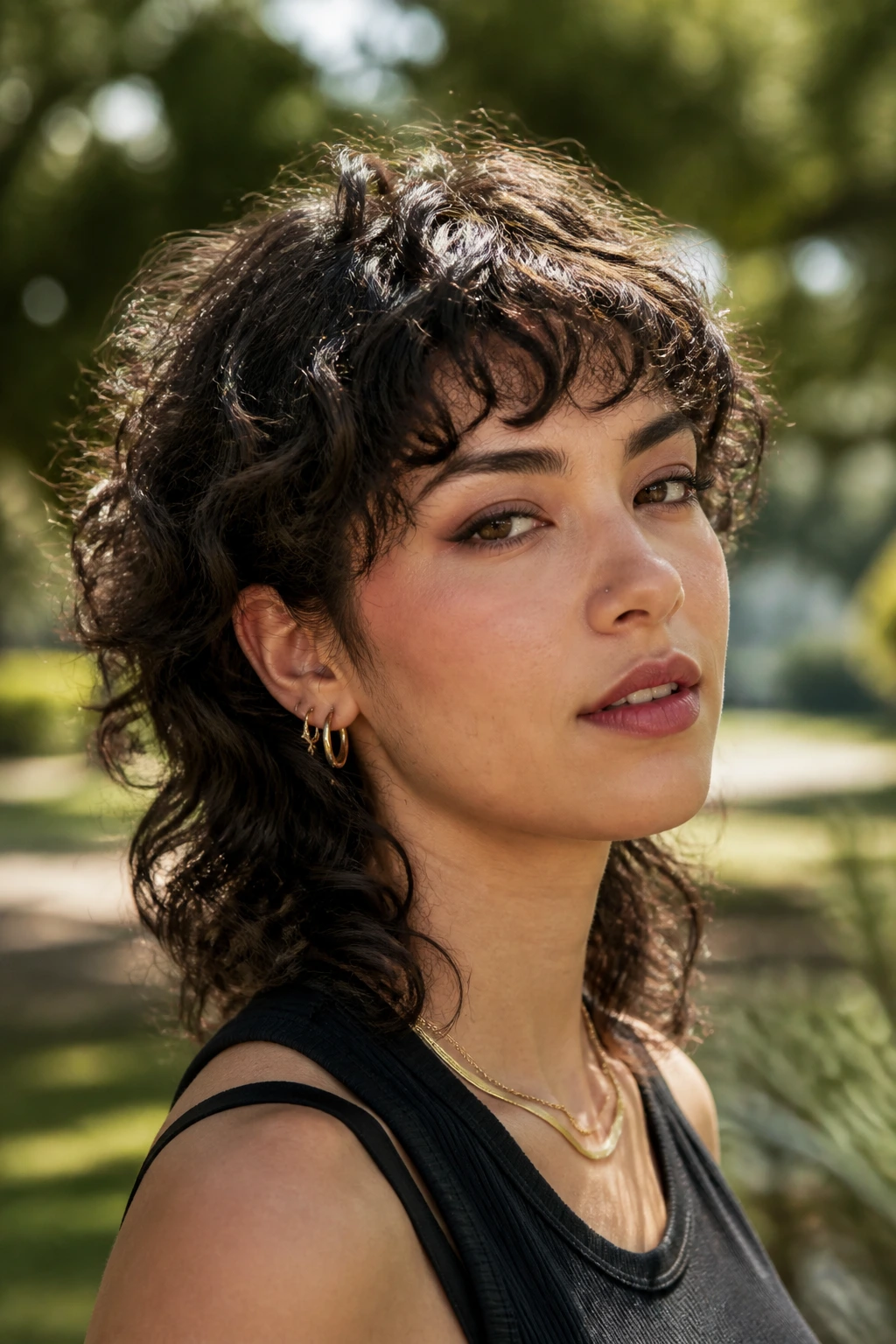
The mullet gets a bad reputation from bad versions. Fair enough. But on curls, with piecey bangs and some discipline at the crown, it becomes a shape with real energy. Shorter layers up top, length in the back, broken fringe at the front — the whole thing is built around contrast.
Piecey bangs are the secret. They keep the cut from looking too heavy across the forehead, which matters because the rest of the haircut already has attitude. You want separation, not a curtain. A bit of gel or foam through the front section gives the bangs definition, and a diffuser helps the ends stay springy instead of stringy.
Who should try it: anyone who likes texture and doesn’t want their curls to all sit at one length.
Who should skip it: anyone who wants a neat, symmetrical silhouette with almost no upkeep.
There’s a reason this cut keeps resurfacing. It lets curls look wild in a controlled way. That’s a hard balance to fake.
12. Half-Up Puff With Loose Fringe
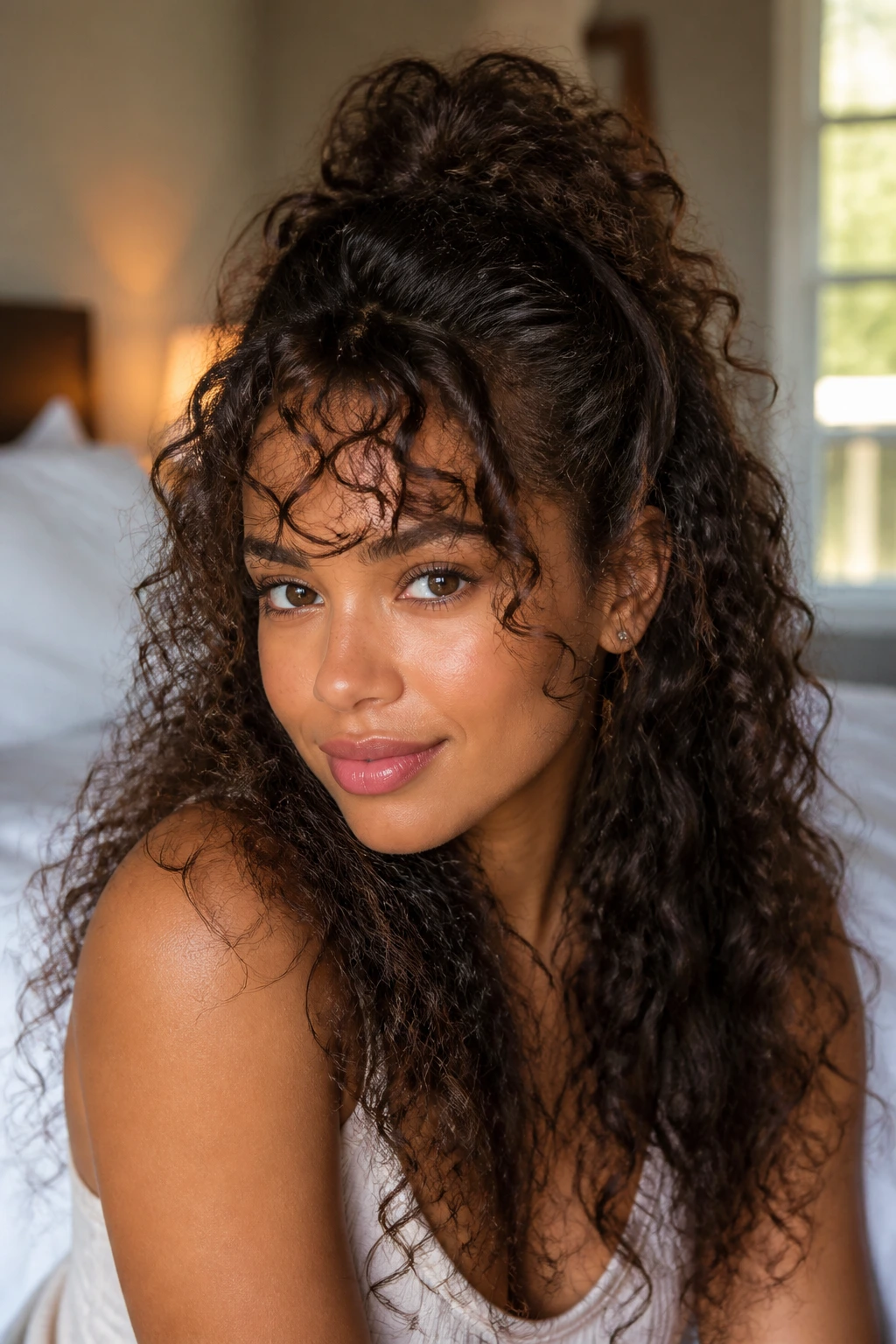
Some days the hair needs to be out of the way, but the bangs still need to exist. A half-up puff with loose fringe solves that neatly. The top section is gathered up and back, the sides stay soft, and the bangs hang free enough to frame the eyes without crowding the face. It’s casual, but not lazy.
This works especially well on medium to long curls that need a reset between wash days. The half-up section removes bulk from the crown, which gives the fringe more visual weight. A loose bang around the forehead keeps the style from looking like a gym bun with good intentions.
If your fringe gets fuzzy when you pull the rest back, that’s a sign the front needs a little more hold than the lengths. A small amount of gel at the roots of the bangs — not the whole head — keeps the look tidy without making the curls crunchy. You can also leave a few shorter temple pieces out to soften the line around the face.
13. Layered Cut With Long Face-Framing Bangs
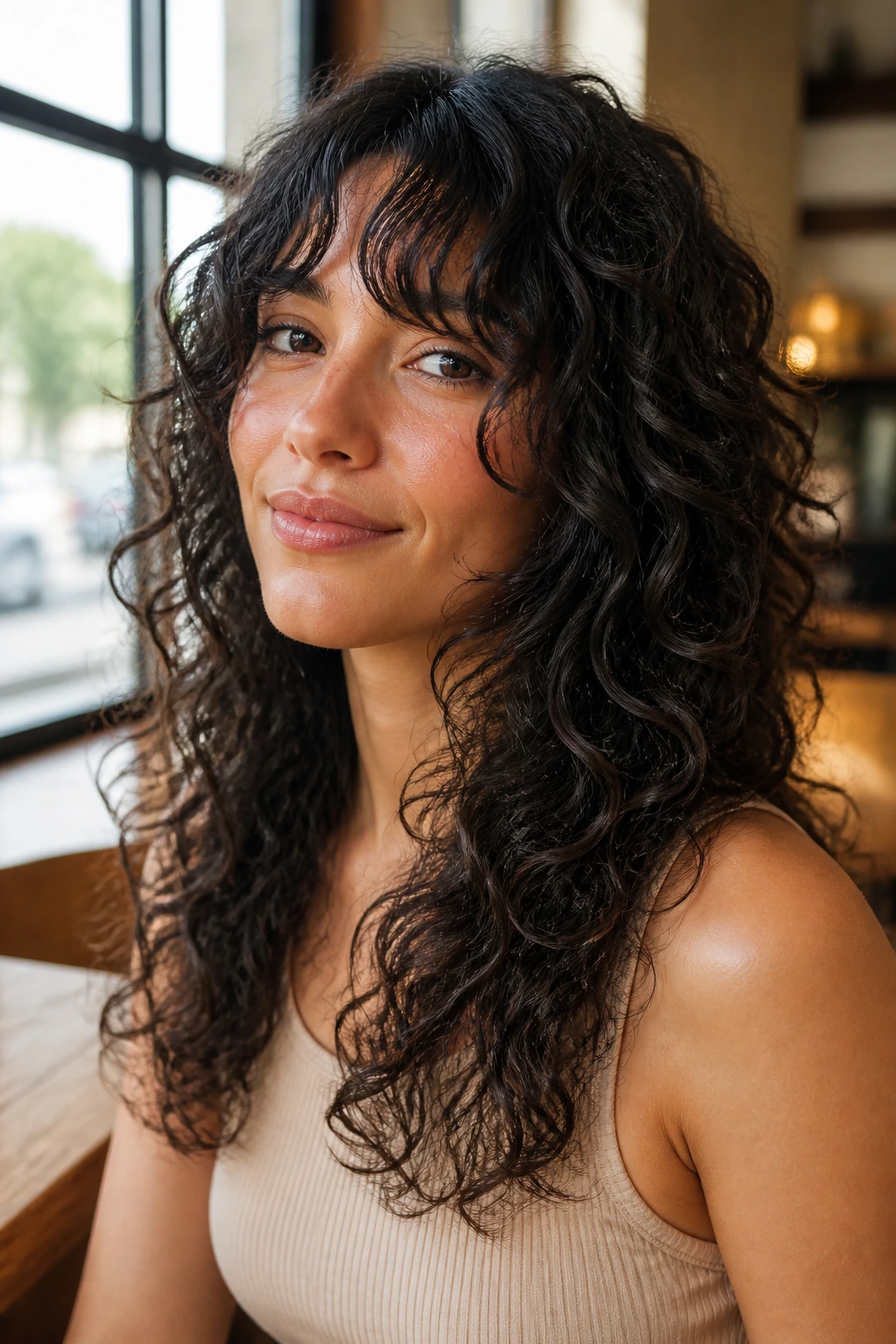
Long face-framing bangs are the safest route into the curly fringe world, and I do not mean that as an insult. They are practical. They grow out gracefully. They work with ponytails. They give you the bang effect without committing to a short front section that demands constant attention.
The best part is the way they tie the haircut together. On layered curls, the bang pieces can start around the cheekbone and fade into longer pieces that hit the jaw or collarbone. That soft descent makes the face look narrower without making the front feel heavy. If your curls are fine or easily flattened, this is one of the kinder options.
What to ask for
- Longest pieces that still touch the face when dry.
- Soft point-cut ends, not one blunt slice.
- Temple layers that connect to the fringe.
- Enough room at the crown so the front can sit lifted.
This is the style I’d send nervous curl owners toward first. It gives you room to adjust later. That matters.
14. Blunt Bob With Heavy Curly Bangs
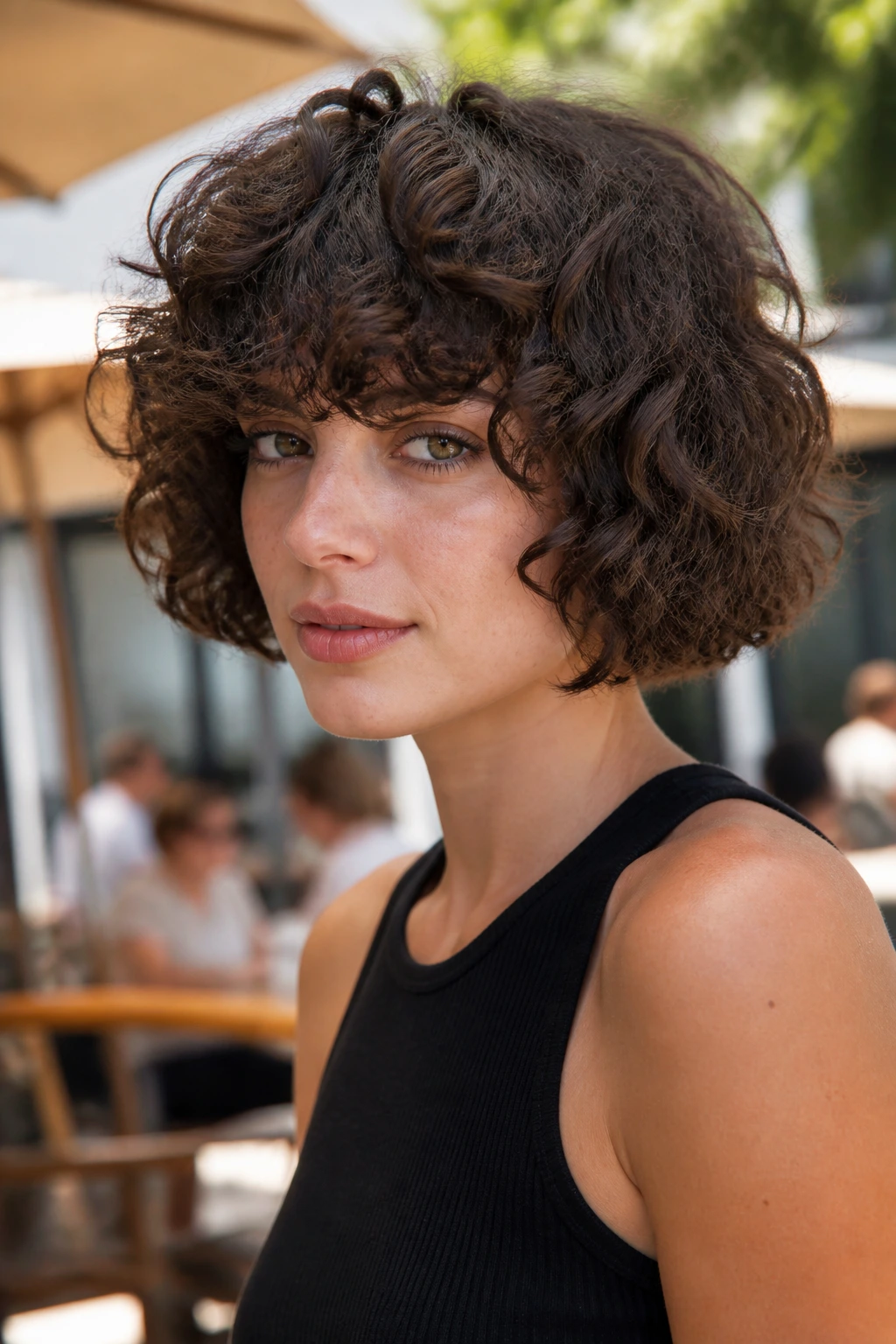
A blunt bob with heavy bangs is a sharp look, and sharp is the point. When curls are dense enough to support it, this combination creates a strong line across the bottom with a full front that lands right at the brow or just above it. The contrast between the solid bob and the textured fringe is what makes it interesting.
The danger, obviously, is too much weight. Heavy curly bangs can collapse into a wet-looking clump if they’re overloaded with cream or cut too thickly. The solution is not to thin them out until they disappear. It’s to shape them with enough internal space that the curls can sit together without matting.
This cut is strongest when the rest of the bob is precise. A sloppy perimeter will make the whole thing look accidental. A clean line at the ends gives the fringe something to bounce against.
15. Waterfall Layers With Long Curtain Bangs
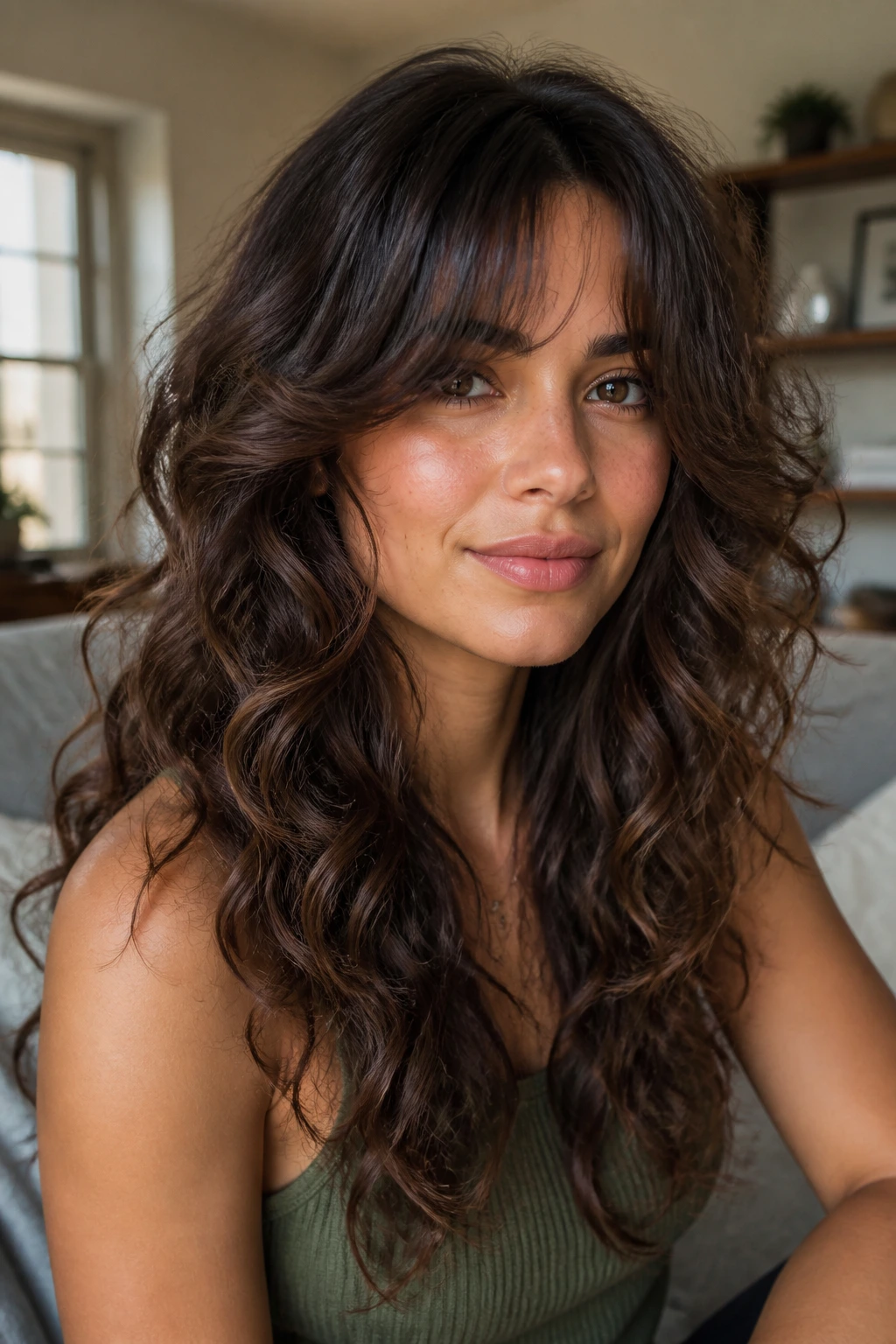
Waterfall layers are one of the most forgiving shapes for curls because they let the hair spill downward in stages. Add long curtain bangs, and the whole cut starts to feel like motion rather than mass. The bangs frame the center, the layers fall away, and the back keeps its length without looking weighed down.
This style is especially useful if you like to wear your curls down most of the time but still want the option to pin pieces back. The curtain fringe is long enough to tuck behind the ear or split wider on second-day hair. That versatility is earned, not accidental. Longer bangs need those escape routes.
The best versions keep the shortest bang pieces around the nose or cheekbone, not much higher. That lets the curl pattern do the work of framing the face instead of forcing the bang to do all the talking. If you’ve got looser curls, this can look soft and airy. If your curls are tighter, it reads lush and dimensional.
16. Halo Afro With Rounded Fringe
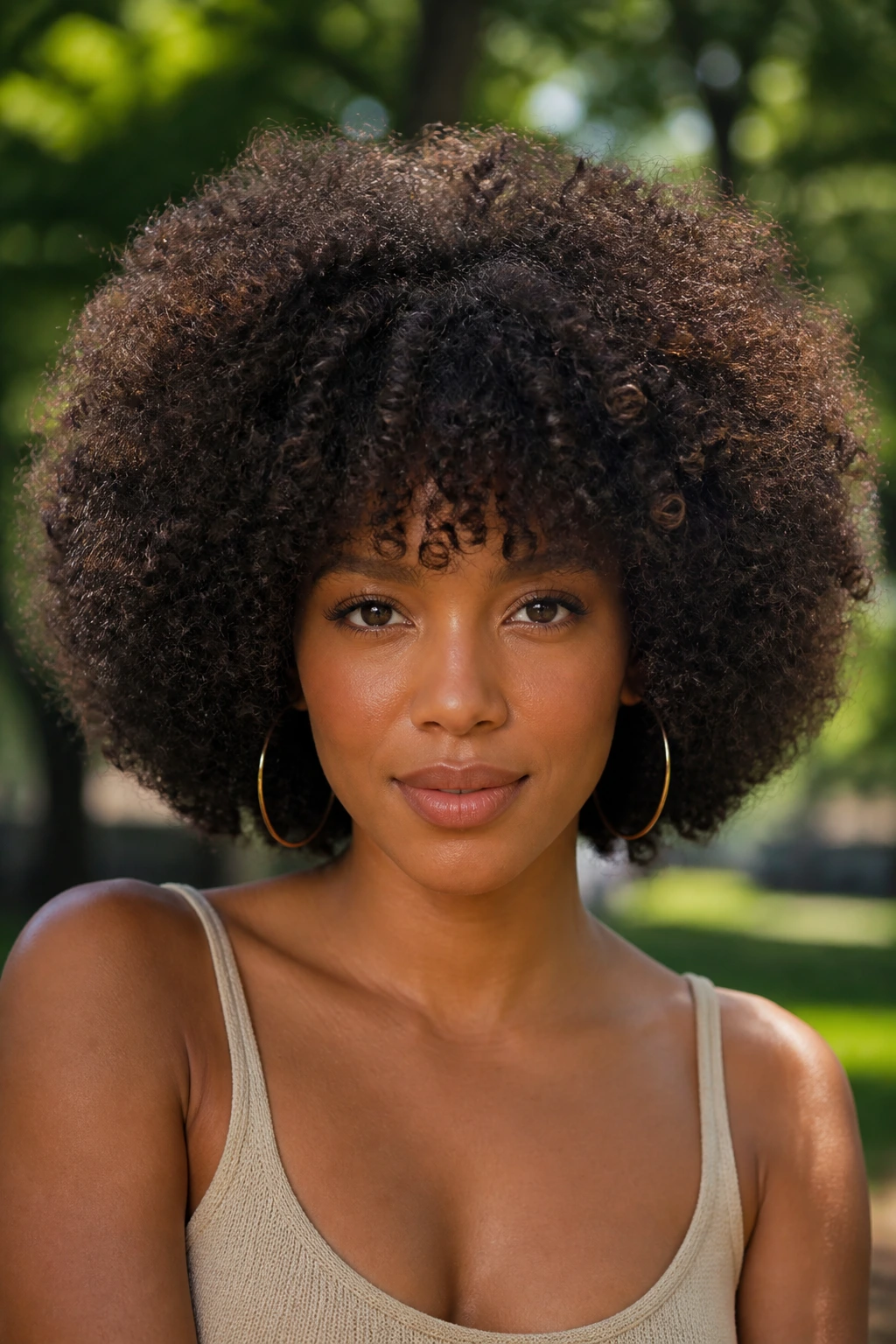
A halo afro with a rounded fringe has a beautiful simplicity to it. The shape is full all around, but the bangs carve out the front so the haircut doesn’t feel like one continuous cloud. The fringe should echo the roundness of the afro, not interrupt it. When that balance lands, the style looks deliberate from every angle.
Rounded fringe on tighter curls needs patience at the cut line. Too much length and it disappears into the bulk. Too little and it jumps up above the forehead in a way that changes the whole mood. The sweet spot is usually a touch lower than expected in the chair, then adjusted once the curls settle.
The nice thing about this shape is that it wears volume as a feature, not a problem. You’re not taming the halo. You’re giving it a doorway.
17. Bixie With Textured Bangs
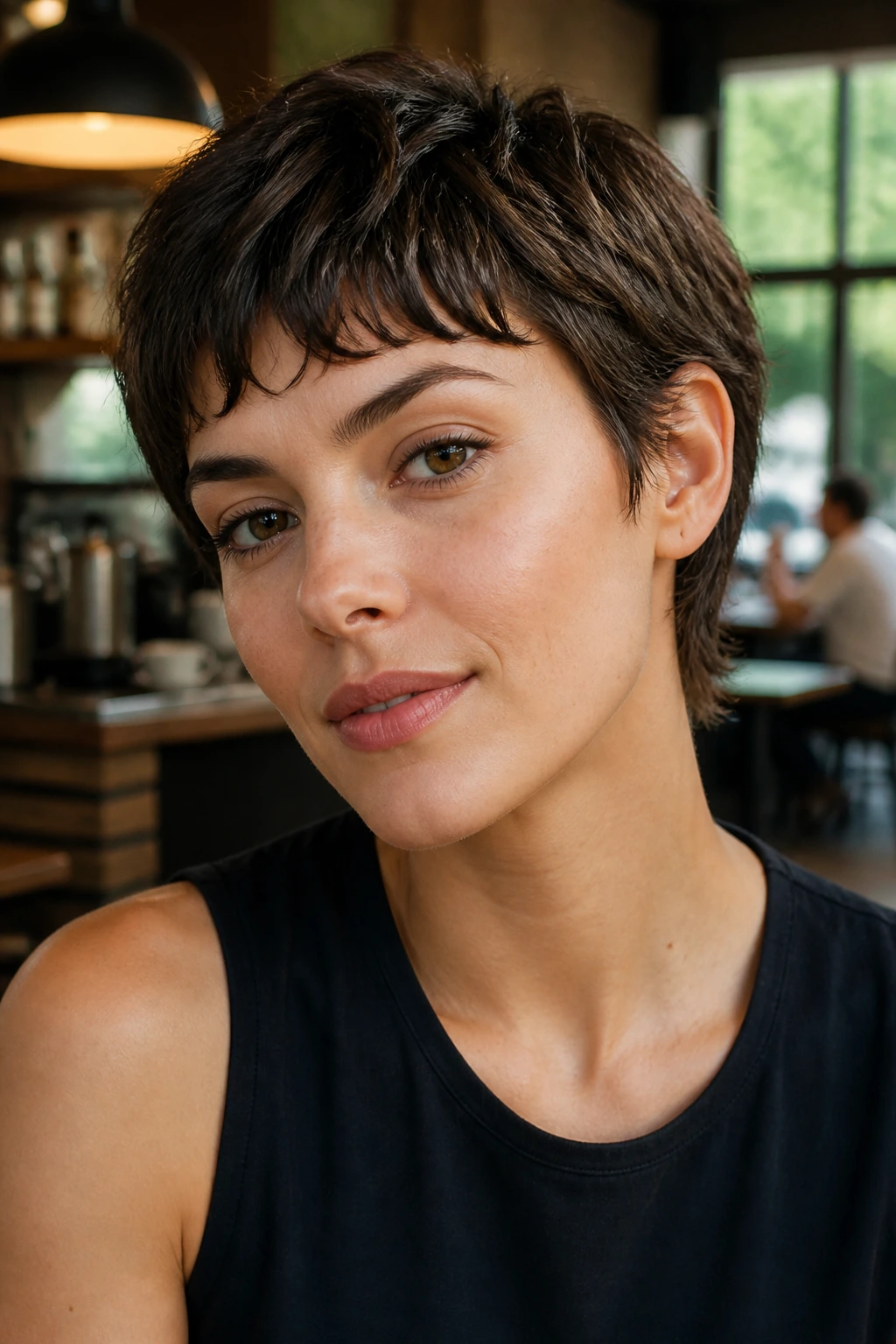
A bixie — part bob, part pixie — gives curls a lot of personality in a small footprint. Textured bangs are what keep it from looking too neat. They break up the front, soften the forehead, and make the cut feel a little undone in the best way. It’s short, but not severe.
This style lives on clean layers and lightness around the ears. The bangs should feel feathered, not blunt. That texture helps the fringe sit above the brows without freezing into one shape. If your hairline is strong or your forehead is shorter, this cut can be especially flattering because the bangs bring the eye toward the center without crowding the face.
Best match: curls that can hold some shape without a lot of product.
Watch for: over-thinning. Too much texturizing can make the front fray and separate in a way that looks patchy instead of airy.
The bixie is one of those cuts that looks casual but asks for thoughtful shaping. You can tell when the shaping is off. The line goes quiet.
18. Extra-Long Curls With Soft Side-Swept Bangs
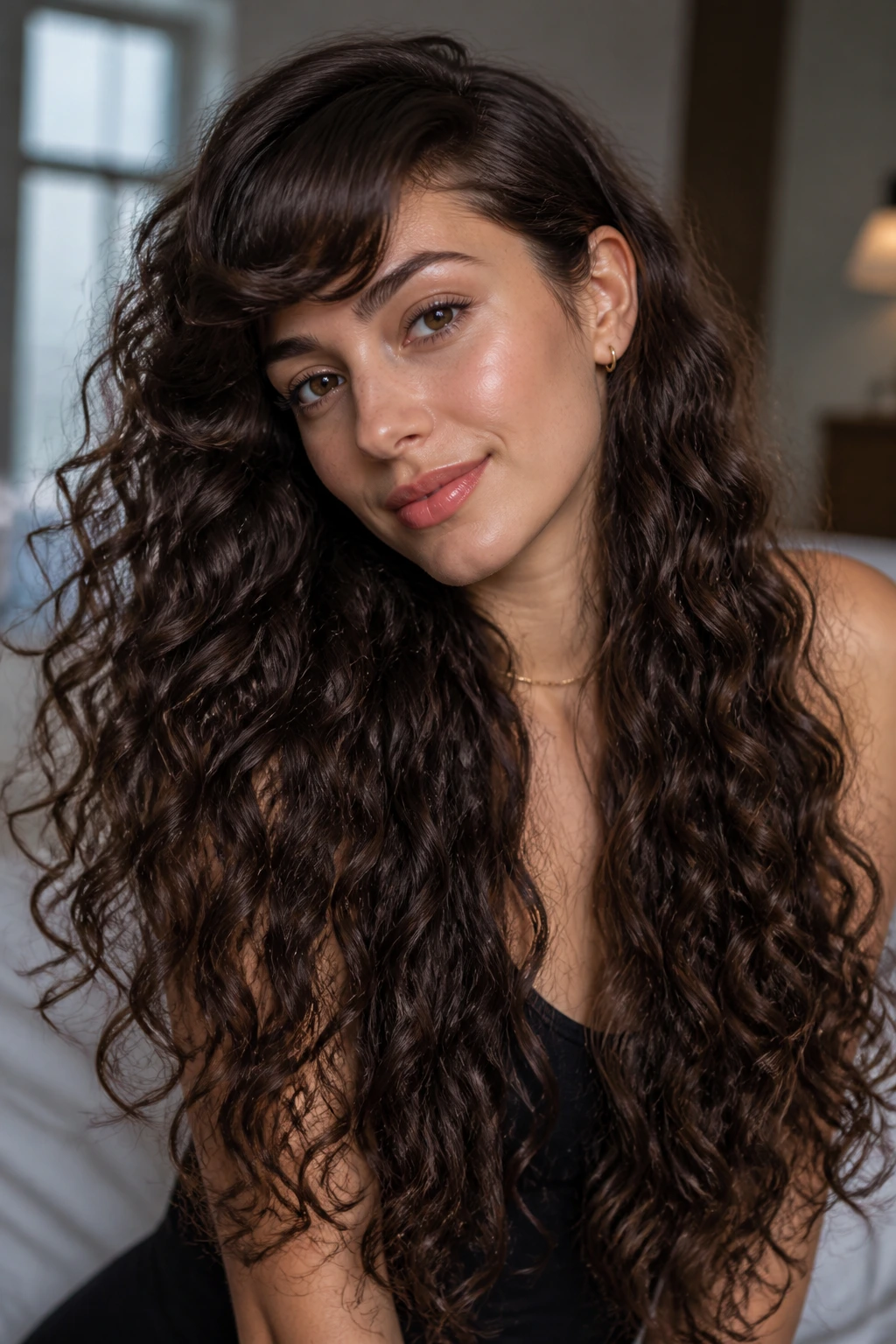
Long curls with side-swept bangs are the easy answer for anyone who wants the fringe effect without giving up dramatic length. The bangs sweep across the forehead, then melt into the side layers instead of stopping at a clear line. It’s a gentle look, but not a timid one. The movement is doing the work.
This style suits people who want to keep their hair mostly off their face but still avoid the hard separation of a center part. The side sweep softens the forehead and gives the curl pattern a little leading edge. On looser curls, it can look romantic. On tighter curls, it can look polished in that “I did not overthink this” way that people always notice.
The trick is to keep the sweep long enough to tuck behind the ear if needed. That gives you an escape hatch on humid days or when you want the bangs out of the way. A side-swept fringe that can’t be moved is just a small obligation. A flexible one earns its keep.
What Curly Bangs Need From a Cut
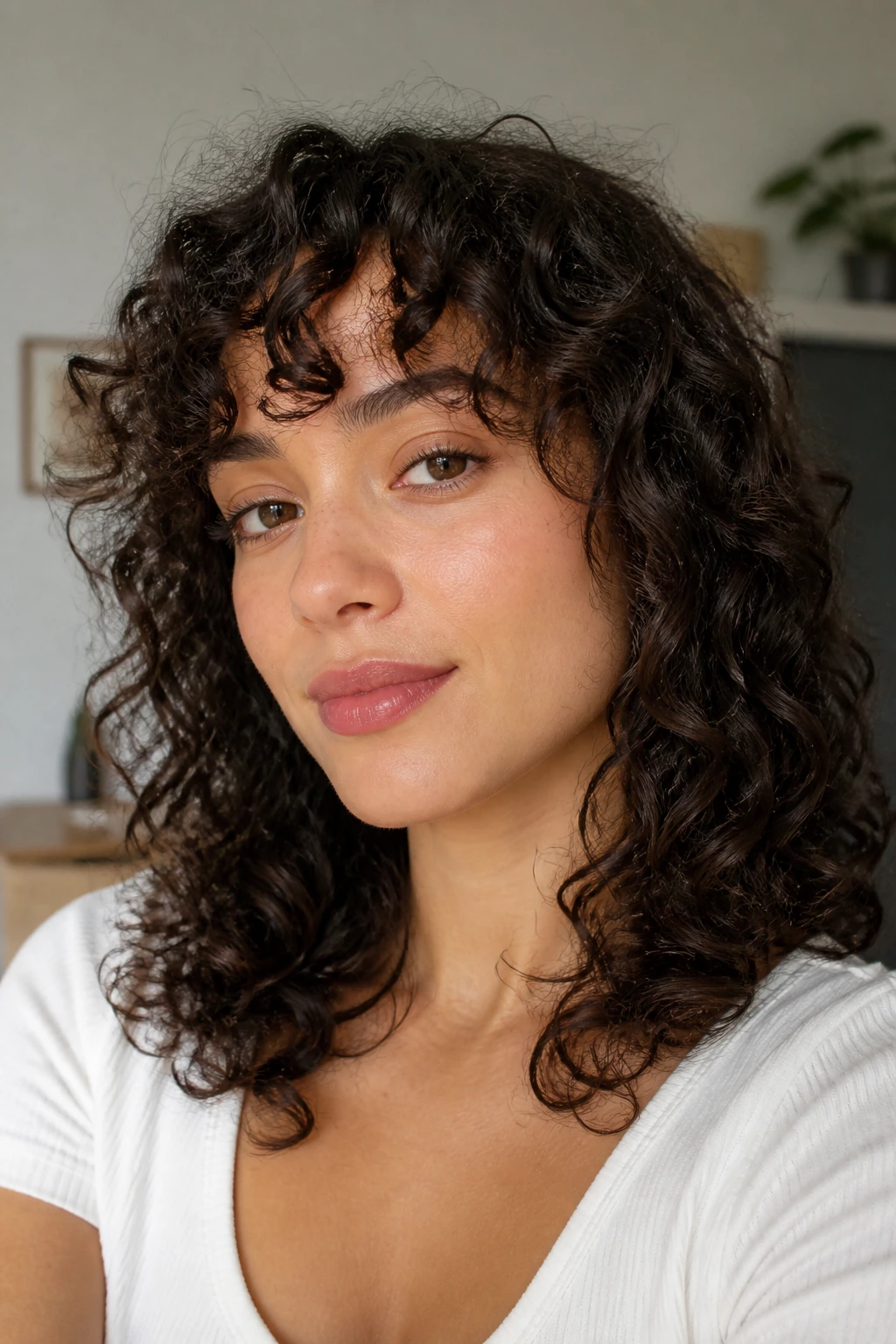
Drying changes everything. A curl that lands at eyebrow level when wet may jump half an inch or more once it sets, and that’s the entire reason so many fringe experiments go sideways. The cut has to respect that spring.
The best curly fringe work usually starts with the hair in its natural state, or close to it. Dry cutting lets the stylist see how the curl clumps together, where the forehead needs more space, and which pieces should be slightly longer so the center doesn’t vanish. Wet cutting can still work in skilled hands, but it leaves less room for guesswork. And guesswork is the enemy here.
The shape matters more than the line
Curly bangs are not about drawing a perfect edge. They’re about mapping a face. A little extra length at the temples can make the front feel softer. A little more height at the crown can keep the bangs from collapsing into the eyes. A little less density in the center can stop the fringe from turning heavy.
The front needs room to move
Curls hate being forced flat across the forehead. They frizz, they separate, they shrink unevenly. Give them a little room, and they’ll do something far more useful: frame the face without looking pasted on.
Essential Tools and Products
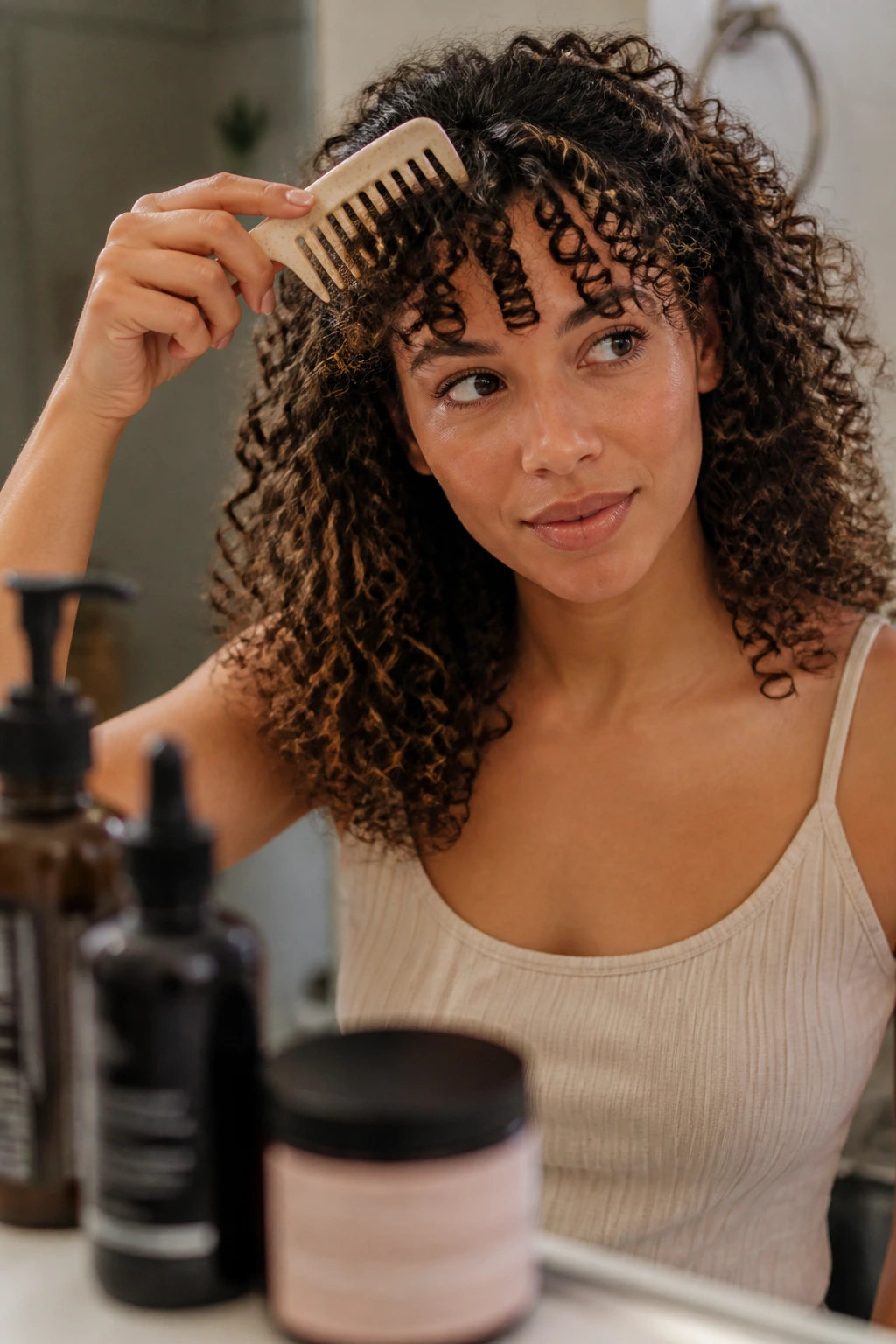
- Wide-tooth comb: Best for detangling damp curls without ripping the fringe apart.
- Duckbill clips: Useful for lifting roots while bangs dry so they don’t sit flat at the scalp.
- Spray bottle: Helps re-wet only the fringe on refresh days instead of soaking the whole head.
- Microfiber towel or T-shirt: Cuts down on rough frizz from aggressive drying.
- Leave-in conditioner: A small amount keeps the bang section soft without making it limp.
- Curl cream: Good for definition, but use a light hand near the forehead.
- Mousse or foam: Gives bang roots lift and keeps the front from collapsing.
- Strong-hold gel: Helpful when the fringe needs a cast to hold its shape through the day.
- Diffuser attachment: Lets you set the front without blasting it into frizz.
- Satin bonnet or pillowcase: Keeps the bangs from getting crushed overnight.
Smart Shopping for Curl Patterns, Hold, and Fringe Control

Curl products live or die on weight. A rich cream that feels gorgeous in the palm can turn a fringe into a damp rope if you use too much. That’s why the front section often needs lighter styling than the rest of the head. Buy products with the fringe in mind, not just the overall curl routine.
Fine curls usually behave better with mousse, foam, or a very light leave-in plus gel. Thicker curls and tighter coils may want a creamier base, but the bangs still need a restrained amount. If the product leaves your fingers slippery for a long time, it probably does too much for the forehead area. Bangs like control. They do not like grease.
A salon cut also matters more than people admit. Ask whether the stylist dry-cuts curls, point-cuts the bangs, or uses curl-by-curl shaping. Those methods tend to give the fringe a more natural fall. If the answer is a vague shrug, keep looking. Curly bangs are one of those places where technique shows up immediately.
How to Wear These Looks in Real Life

Presentation: Keep the fringe visible. On curl days, that usually means diffusing the front first so the bangs don’t disappear under the rest of the hair. A clean part, a little lift at the roots, and a few face-framing pieces around the temples make the whole style read on purpose.
Best pairings: Soft collars, hoops, small earrings, and anything that gives the neckline some space tend to work better than high necks with a bulky fringe. The haircut already sits near the face; the clothes should not crowd it.
Styling speed: Longer curtain bangs and side-swept fringe can be refreshed in under 5 minutes with water and a touch of product. Full bangs and short crops usually need a bit more attention, especially if the curl pattern is dense or frizz-prone.
Where it fits: These cuts can feel polished enough for work, but they also handle casual hair days well. That flexibility is one reason people keep coming back to curly bangs after they’ve sworn them off once.
Extra Styling Tips for Cleaner Bangs
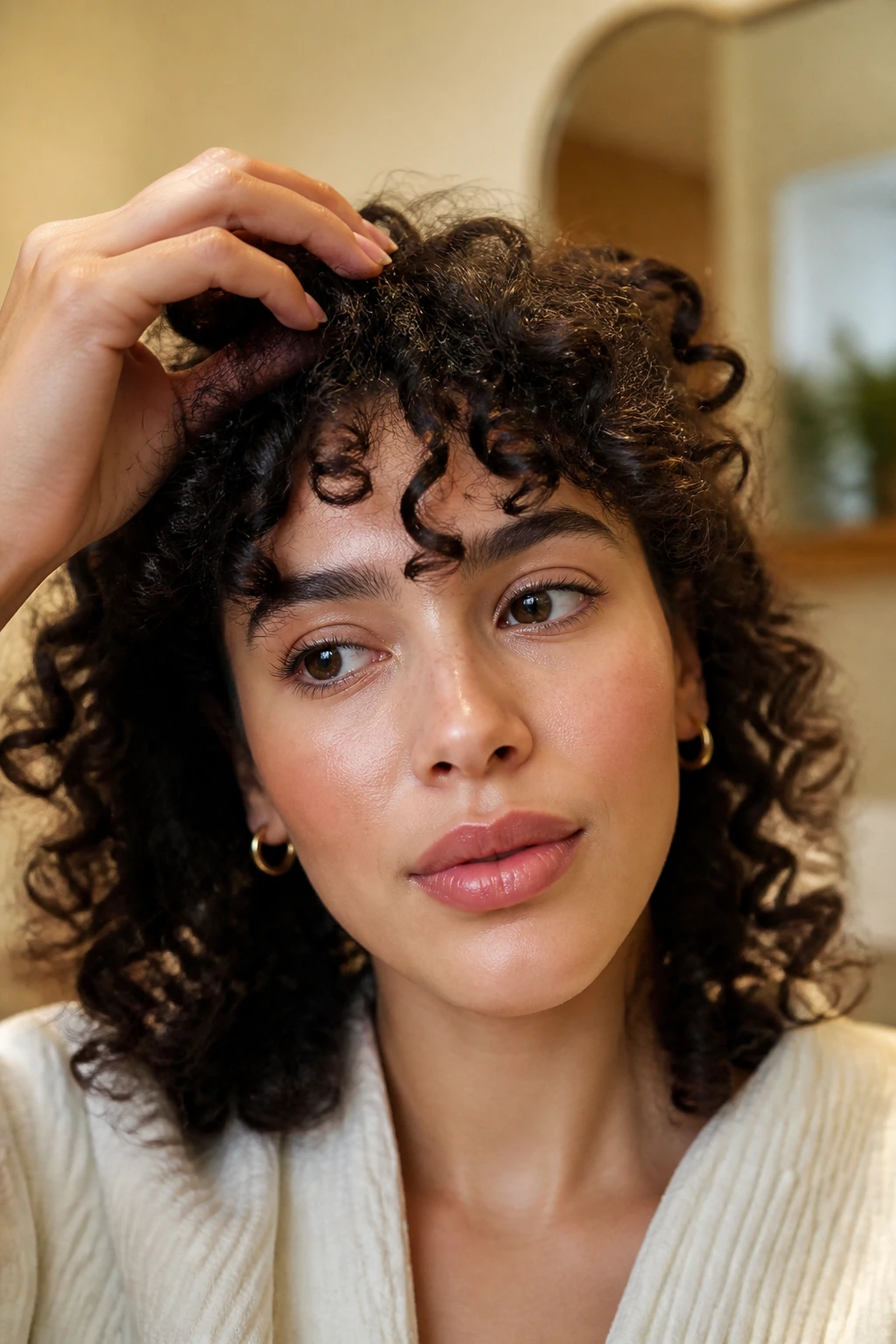
Root Lift: Clip the fringe up and away from the forehead for 10 to 15 minutes while it dries. That tiny pause can stop bangs from sealing flat against the skin.
Humidity Shield: Use a gel with a firm cast on the front section, then scrunch it out only after the hair is fully dry. If you break the cast too early, the bangs puff.
Refresh Trick: Re-wet the bangs with a spray bottle, then twist small sections around your finger for 20 to 30 seconds each. It is faster than restyling the entire head and keeps the front from getting fuzzy.
Salon Note: If you plan to wear bangs every day, tell the stylist how much time you actually spend styling. A fringe cut for a 15-minute routine looks different from one that needs a diffuser and two products.
Common Mistakes That Make Curly Bangs Misbehave
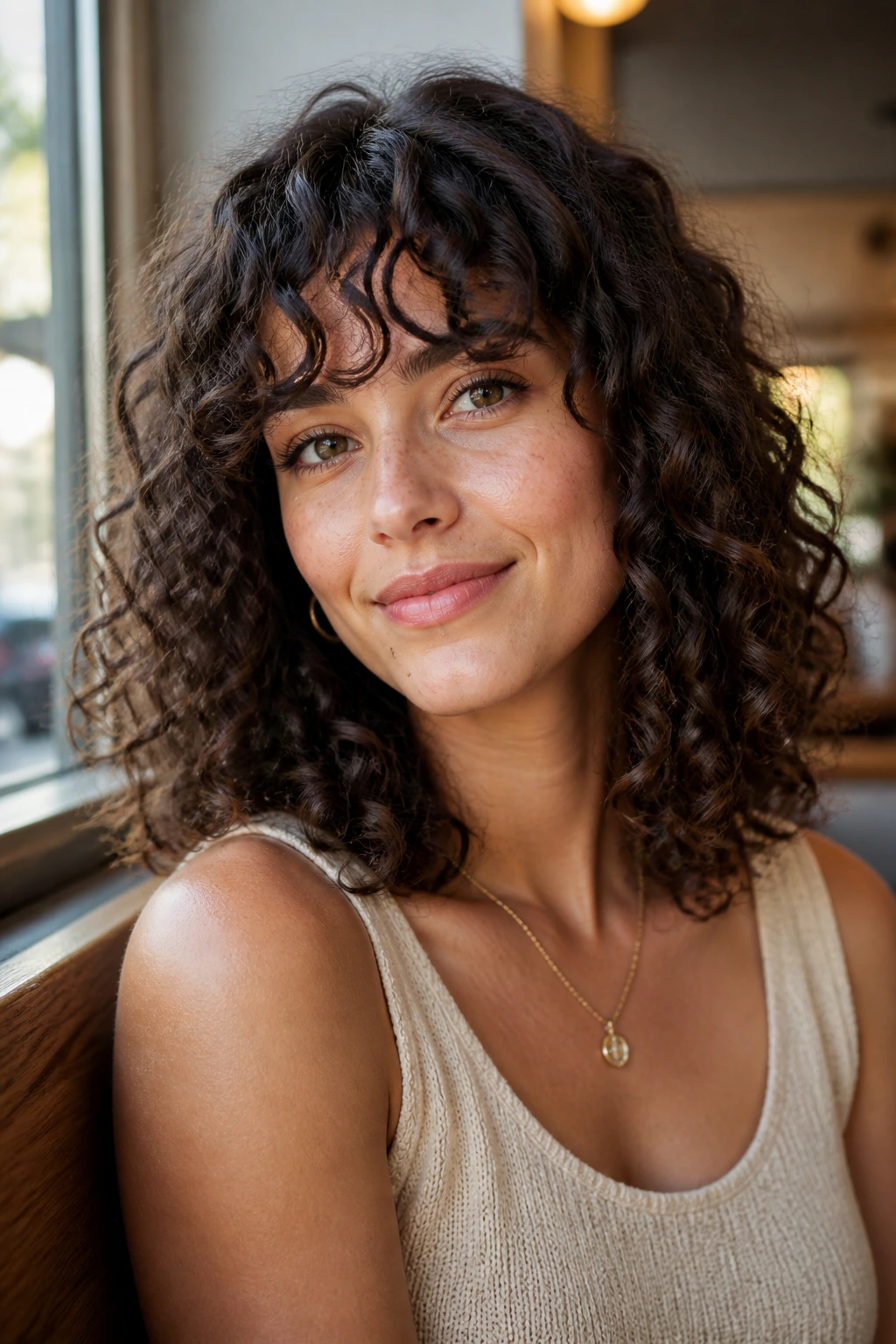
Cutting them too wet: Wet curls stretch. Then they bounce back. If the bangs are cut at full extension, they can end up too short and too choppy once dry. A dry or mostly dry cut avoids that surprise.
Using too much product at the front: Bangs need definition, not a heavy coat. If they look stringy or greasy by noon, the cream or oil is probably too rich for that section. Switch to mousse or use half the amount.
Ignoring shrinkage: Curl shrinkage is not a footnote. It is the whole story. Leave more length than feels necessary, especially if your curl pattern is tight or your bangs sit high on the head.
Letting bangs dry in one clump: A single wet chunk can dry into a weird hook or a flat plank. Separate the fringe with your fingers while it dries, then leave it alone. Constant touching ruins the shape.
Trying to trim with kitchen scissors: Dull blades chew through curls and leave frayed ends that frizz up immediately. If you trim at home, use sharp hair shears and tiny snips. Better yet, leave major shaping to someone who cuts curls for a living.
Forgetting the temple blend: Bangs that stop suddenly at the sides look pasted on. A little length at the temples makes the front feel connected to the rest of the haircut.
Variations and Adaptations to Try
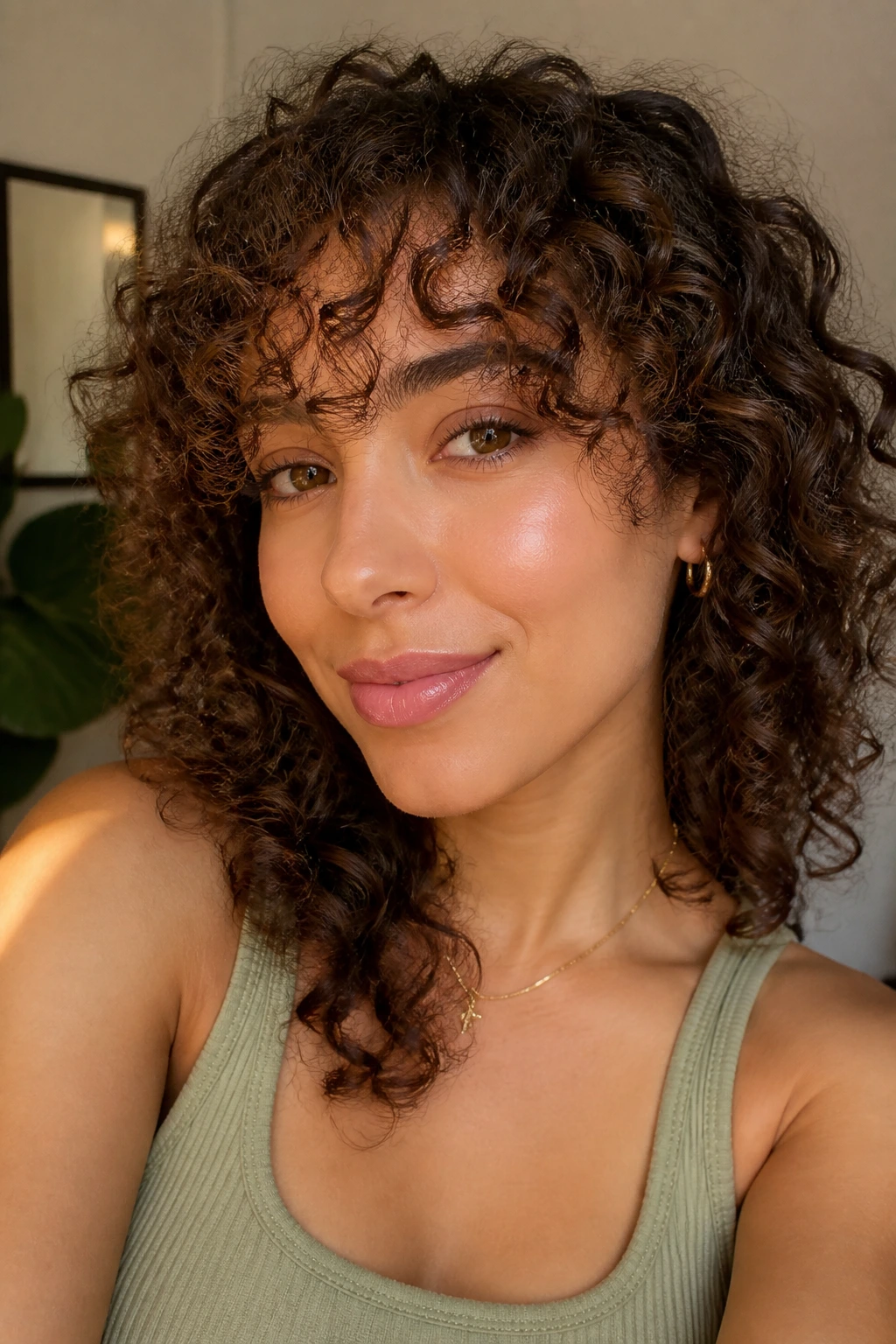
The Air-Dry Fringe: Best for loose curls that don’t need much coercion. Use a light leave-in and a foam, then clip the roots for lift and let the bangs dry on their own. The finish is softer and a little more lived-in.
The Defined Coil Front: Good for tighter textures that look best with shape and hold. Work a strong gel through the fringe in tiny sections, then diffuse until a cast forms. Scrunch it out only when the hair is fully dry.
The Side-Pinned Reset: Handy for second-day hair or growing-out bangs. Sweep the fringe to one side and pin the shorter front pieces back with a small barrette or two bobby pins. The rest of the style still reads like a bang-heavy cut.
The Soft Blowout Finish: For curls that can handle a little stretch, diffuse the bangs with a round brush or tension method until the front lies smoother. This works well for events, photos, or any day when you want less volume at the forehead.
The Protective Night Routine: If your bangs frizz easily, wrap them in a loose satin scarf or tuck them into a bonnet with a little extra room at the front. The shape survives better than it does under a rough cotton pillowcase.
Wash-Day, Refresh-Day, and Sleep Care
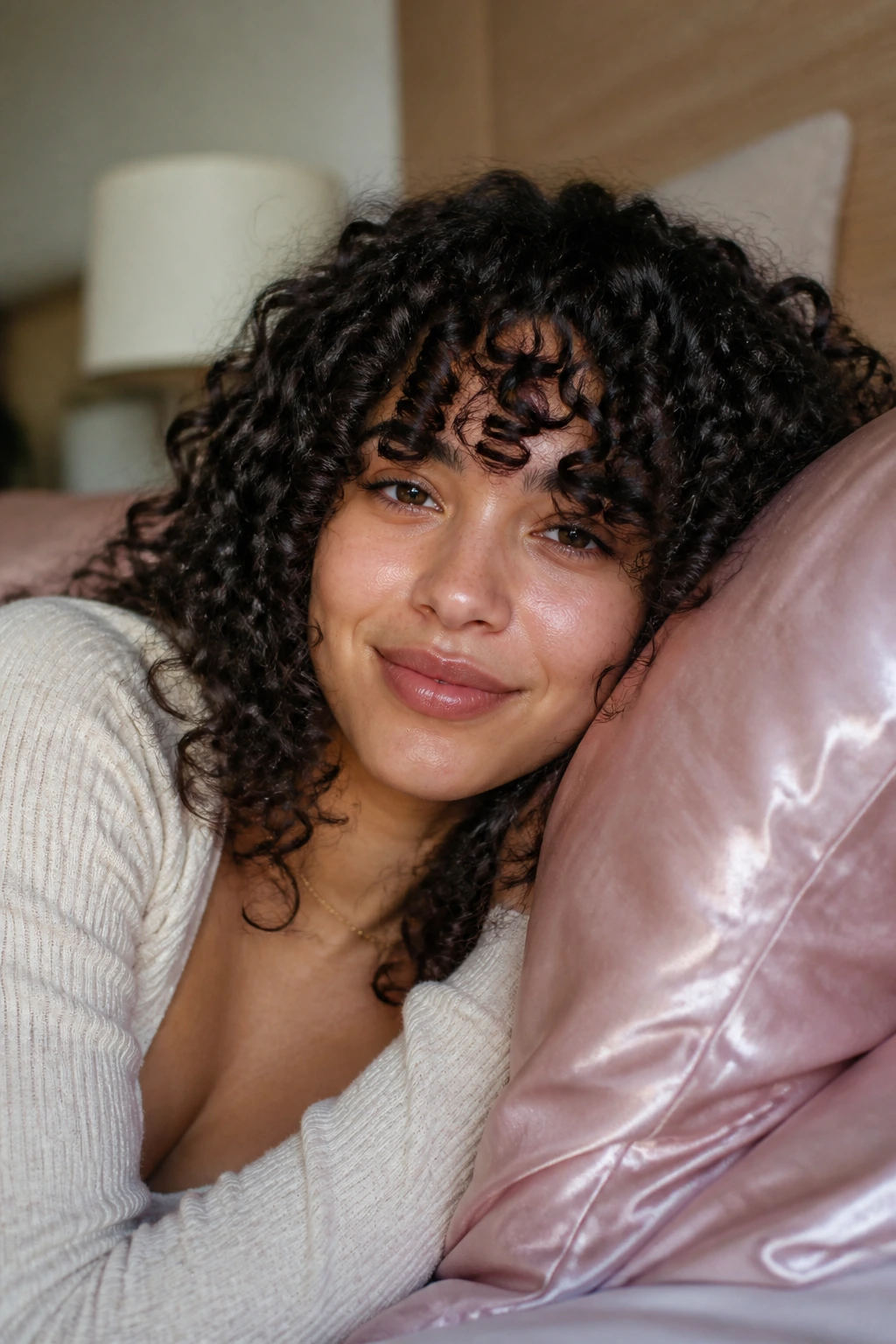
Curly bangs need more attention than the rest of the haircut, plain and simple. They sit on the forehead, they get touched more, and they break up faster. Most people can stretch a full wash every 3 to 5 days, but the fringe often wants a quick refresh on the off days. That’s normal.
At night, protect the front. A satin pillowcase helps, but a bonnet or scarf helps more if your bangs are short or dense. Some people clip the fringe up loosely before bed so it doesn’t press flat against the skin. Just do not pull it so tight that you crease the roots. That creates a weird bend that takes water to fix.
On refresh days, a spray bottle, a bit of leave-in, and 1 or 2 minutes of finger-shaping are usually enough. If the bangs smell like product buildup or feel coated, rinse the front section only. You do not need to wash your whole head just because the fringe looks tired.
For trims, most curly bangs need attention every 4 to 8 weeks, depending on growth rate and how short they were cut to begin with. Shorter fringes need more maintenance. Longer curtain pieces can wait longer and blend into the layers as they grow.
Frequently Asked Questions
Do curly bangs have to be cut dry?
Not always, but dry cutting is often the safer choice because it shows the curl’s real length and shape. Wet curls can shrink enough to change the whole fringe once they dry, especially if the pattern is tight or springy.
What curl types work best with bangs?
Most curl patterns can wear bangs if the cut is shaped for that texture. Looser waves usually suit curtain or side-swept fringe, while tighter curls often look best with longer, softer bangs that have room to spring.
How do I stop my bangs from frizzing first?
Keep the front section lighter on product, dry it with a diffuser or clip it for root lift, and stop touching it once it starts to set. Bangs frizz fastest when they’re overhandled or under-supported at the roots.
Can I trim curly bangs at home?
You can, but only in tiny snips with proper hair shears and only if you accept that curls will bounce up after the cut. Take off less than you think, check the shape in natural light, and stop early. Hair is easier to remove than to replace.
What if my bangs keep splitting in the middle?
That often means the front is trying to fall into its natural part or the section is too heavy. A small amount of gel, a quick clip at the roots while drying, or a slightly different parting pattern can help the fringe sit together.
How do I grow out curly bangs without an awkward stage?
Blend them into face-framing layers as they lengthen. That keeps the front connected to the rest of the haircut, which makes the grow-out look deliberate instead of messy.
Can curly bangs work with glasses?
Yes, and often well. Curtain bangs, side bangs, and slightly longer brow-skimming fringe tend to sit best with frames because they leave room around the eyes instead of crowding the top rim.
Should I ask for bangs shorter or longer than I think I want?
Longer. Curly hair shrinks, and a bang that feels almost too long in the chair is often the one that settles best once it dries. Starting conservative gives you room to refine later.
The Fringe That Moves With You
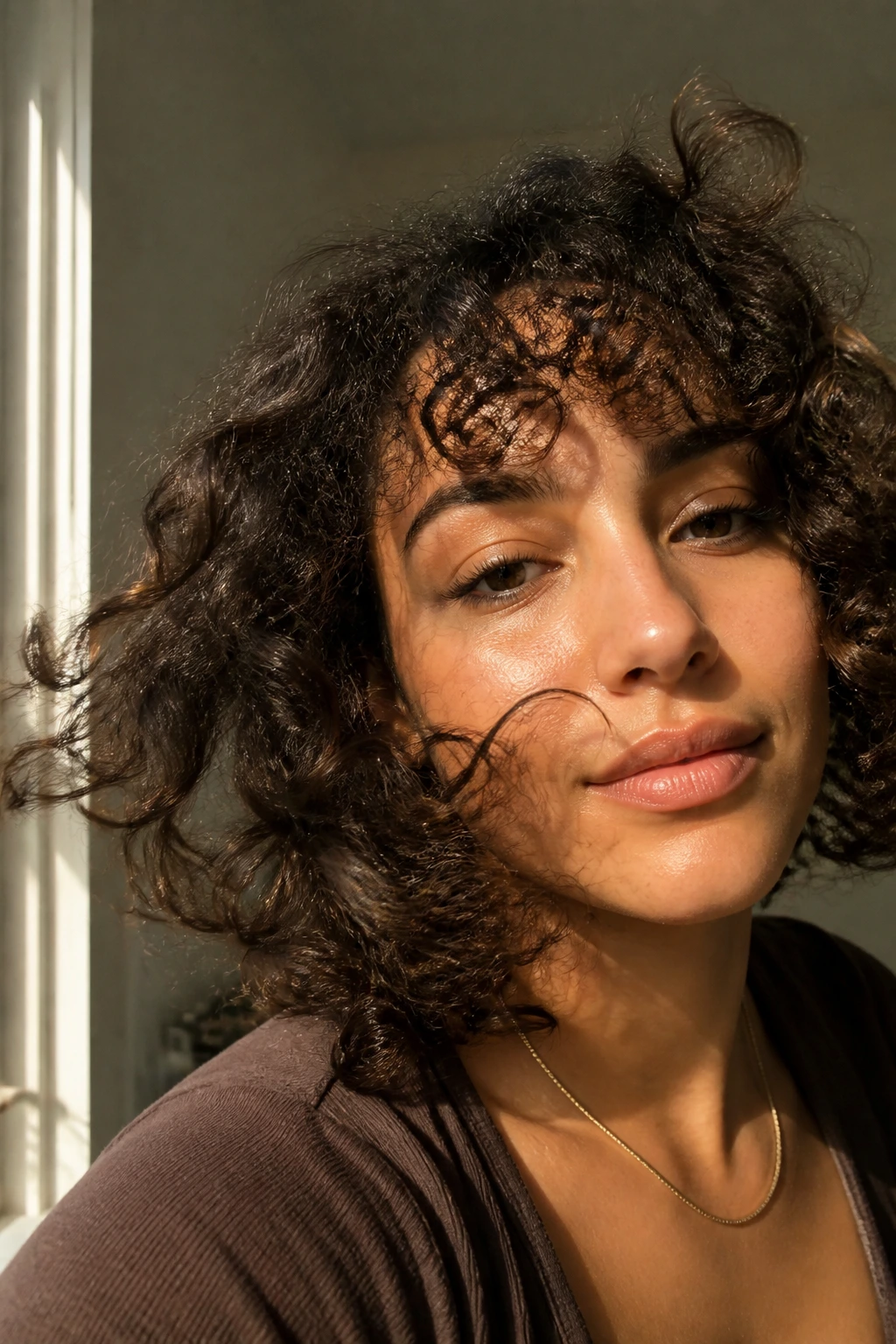
Curly bangs are at their best when they’re treated like part of the curl pattern, not a separate project. The cuts that work have shape, but they also have room — enough space for shrinkage, enough length to blend, enough softness at the edges to let the hair breathe.
A good fringe on curls changes the whole mood of a haircut. It can sharpen a bob, soften a shag, give a crop some attitude, or make long layers feel finished instead of merely long. That is the appeal. Not perfection. Shape that holds up in real life.
If you pick one of these looks, take the time to get the front cut by someone who understands curl behavior, then give the bangs a few days to settle before you judge them. Curls need a minute. Sometimes two.
