



Full cheeks, a softer jawline, a bit of width through the middle — none of that is a haircut problem. The wrong haircut is. Hairstyles for chubby faces work best when they pull the eye into a line, an angle, or a bit of lift, instead of parking all the hair at the widest part of the face like a bracket. That one detail changes everything. A blunt bob at cheek level can make the face feel boxier. The same bob with a slant, a side part, or a touch of movement suddenly looks deliberate.
I keep coming back to the same rule: don’t hide the face, guide it. Hair that falls in a clean vertical line, breaks softly around the cheekbones, or opens up at the crown does more for a rounder face than hair that’s trying too hard to “cover” anything. The trick is placement. A face-framing layer that starts at the mouth is a different animal from one that starts at the cheekbone. So is a ponytail at the crown versus one sitting at the back of the head like an afterthought.
Some of these looks are long and easygoing. Some are short and sharp. A few are downright playful. All 18 rely on the same idea: shape the silhouette so it works with the face, not against it. Once you see how those lines behave, the whole salon conversation gets easier.
Why This Collection Works for Fuller Cheeks
-
Vertical lines do the heavy lifting: Styles that add length below the chin help the eye travel downward instead of stopping at the cheeks.
-
Angles beat bulk: A side part, an asymmetrical cut, or a forward sweep through the front keeps the shape from going wide at the sides.
-
Texture can be your friend: Soft waves, broken ends, and piecey layers create movement, which keeps hair from sitting in one solid round shape.
-
Short hair still has room here: You do not need long hair to flatter a fuller face; the real question is where the volume sits and how the edges are cut.
-
Your hair type matters as much as your face shape: Fine hair, thick hair, curls, and straight strands all need a slightly different version of the same idea.
-
The best styles are easy to explain: If you can describe where the shortest piece lands and where the part sits, you are already halfway to the right cut.
1. Long Face-Framing Layers
Long face-framing layers are one of my favorite answers for a chubby face because they add shape without cutting the face into pieces. The layers start below the cheekbone, usually somewhere around the mouth or collarbone, so the hair falls in a long line instead of sitting right on the widest part of the face. That little shift matters more than people expect.
Why This Works
The whole point is to keep the front pieces moving. If the shortest layer lands too high, the hair can flare out at the cheeks and make the face feel wider. If the shortest layer starts lower, the line stays clean and the eye keeps going down.
Where to ask for it: tell your stylist you want the first face-framing pieces to begin around the mouth or chin, then blend into longer layers through the sides.
Best texture match: straight, wavy, and softly curly hair all work here, as long as the layers are not chopped too short around the face.
My favorite finish: a loose bend from mid-length down. It keeps the style from looking flat and helps the layers fall away from the cheeks instead of clinging to them.
Quick tip: blow-dry the front sections away from the face with a medium round brush. It takes five minutes and changes the whole shape.
2. Curtain Bangs and Loose Waves
Curtain bangs are one of those styles people fear for no good reason. When they’re cut with enough length and softness, they can be excellent on a fuller face. The middle part opens the forehead, while the longer sides slide into the cheek area instead of boxing it in.
The key is to keep the center shorter than the sides, but not so short that the fringe sits like a shelf. I like curtain bangs best when the shortest point grazes the brow or just below it, then sweeps down toward the cheekbones with a soft bend. Pair them with loose waves, not tight curls, and the whole thing feels airy.
What Makes It Work
Curtain bangs give you shape across the forehead, which helps balance out width in the lower half of the face. Loose waves keep the sides from puffing out too much. If the wave starts low — around the ear or jaw — the style keeps its openness.
- Let the bangs blend into the rest of the cut.
- Avoid a heavy, straight-across fringe.
- Use a small round brush or a 1-inch iron for the bend.
- Keep the waves brushed out a little so they don’t bunch at the cheeks.
3. Deep Side-Part Hollywood Waves
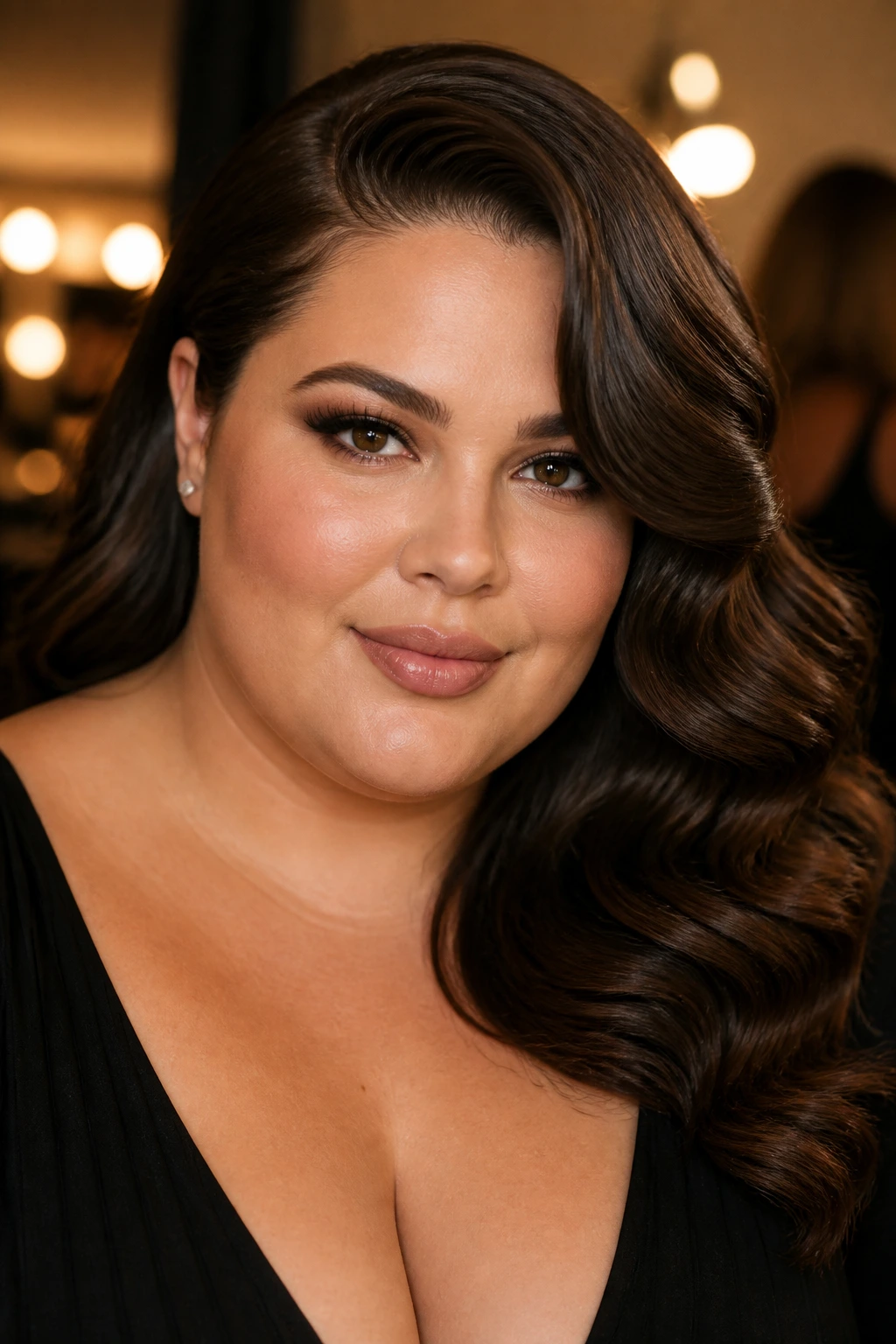
Why does a deep side part change the whole face? Because it breaks the face’s symmetry in a way that feels intentional. A center part can work too, but a deep side part throws the weight to one side and gives the eye a diagonal line to follow. That diagonal is doing more work than most people realize.
Hollywood waves give the style polish without freezing it into a hard shape. The wave should start below the cheekbone, then sweep around the jaw and shoulder. If the curl begins too high, it can puff at the sides and do the exact opposite of what you want.
How to wear it
Keep the roots lifted at the part, then smooth the front section over with a brush so it sits close to the head before opening into the wave. That little bit of control at the top keeps the style from feeling wide. The ends should be soft, not sticky-straight.
Best for: medium to thick hair, or fine hair with a good root spray and a set.
Avoid this: tight spiral curls all over the front. They make the cheeks look busier than they need to be.
4. Angled Bob That Slants Forward
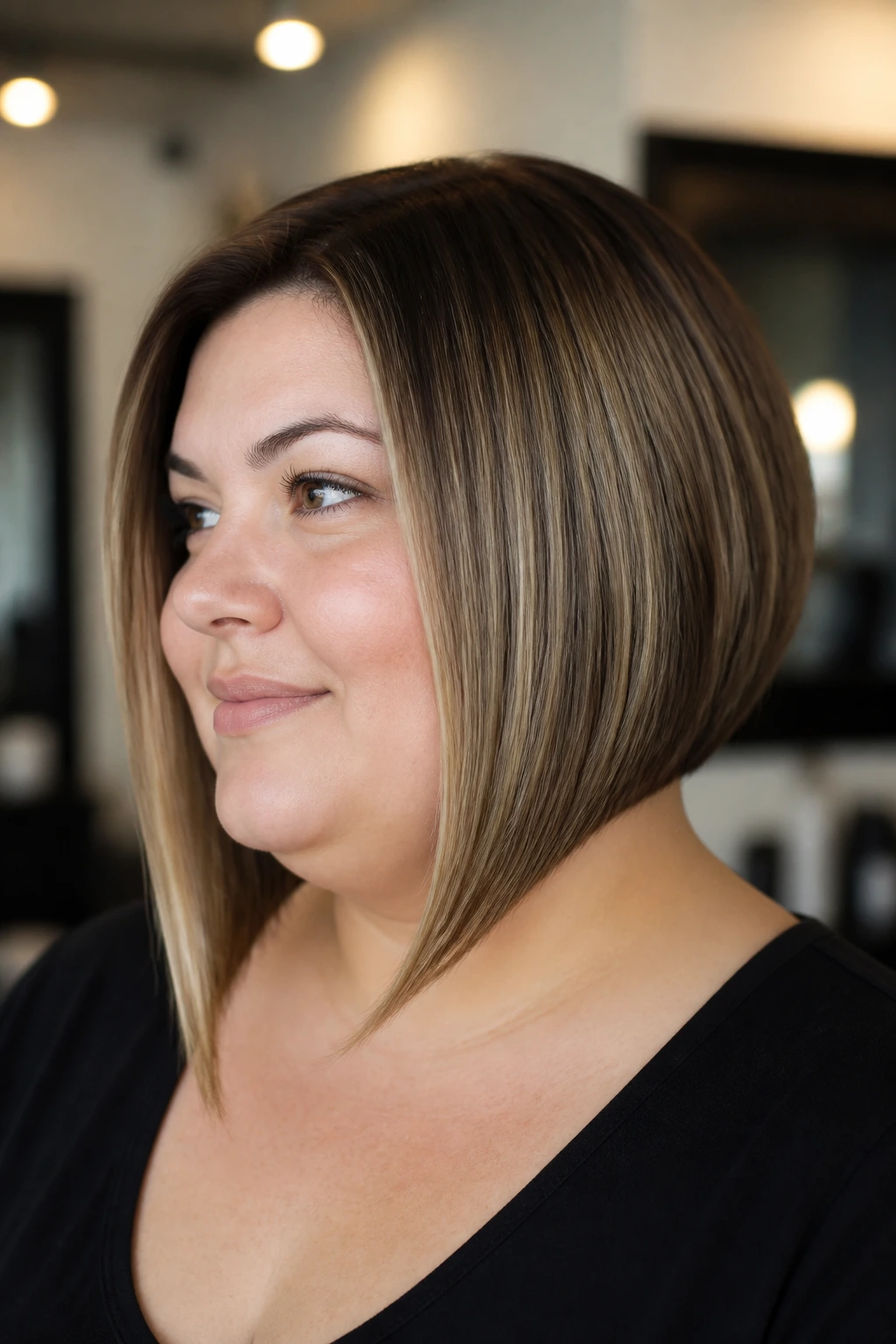
If you want short hair but do not want a square outline around the face, an angled bob is the cleaner choice. The back is a touch shorter, the front is longer, and that forward slant gives the face a built-in line. It is the opposite of a chin-length bob that stops dead at the widest point.
The cut should feel like it leans toward the collarbone, even if the back is tucked neatly behind the neck. I prefer an angle that is visible but not severe. Too much stack in the back can build a bubble, and nobody needs that near the cheeks.
Good details to ask for
- Front pieces that skim past the jaw
- A slightly shorter nape for lift
- Soft internal texture so the ends do not look heavy
- A side part if you want even more diagonal movement
The nicest thing about this cut is that it still feels tidy when it grows out. It does not fall apart on day ten. It just relaxes a little.
5. Collarbone Lob with Tapered Ends
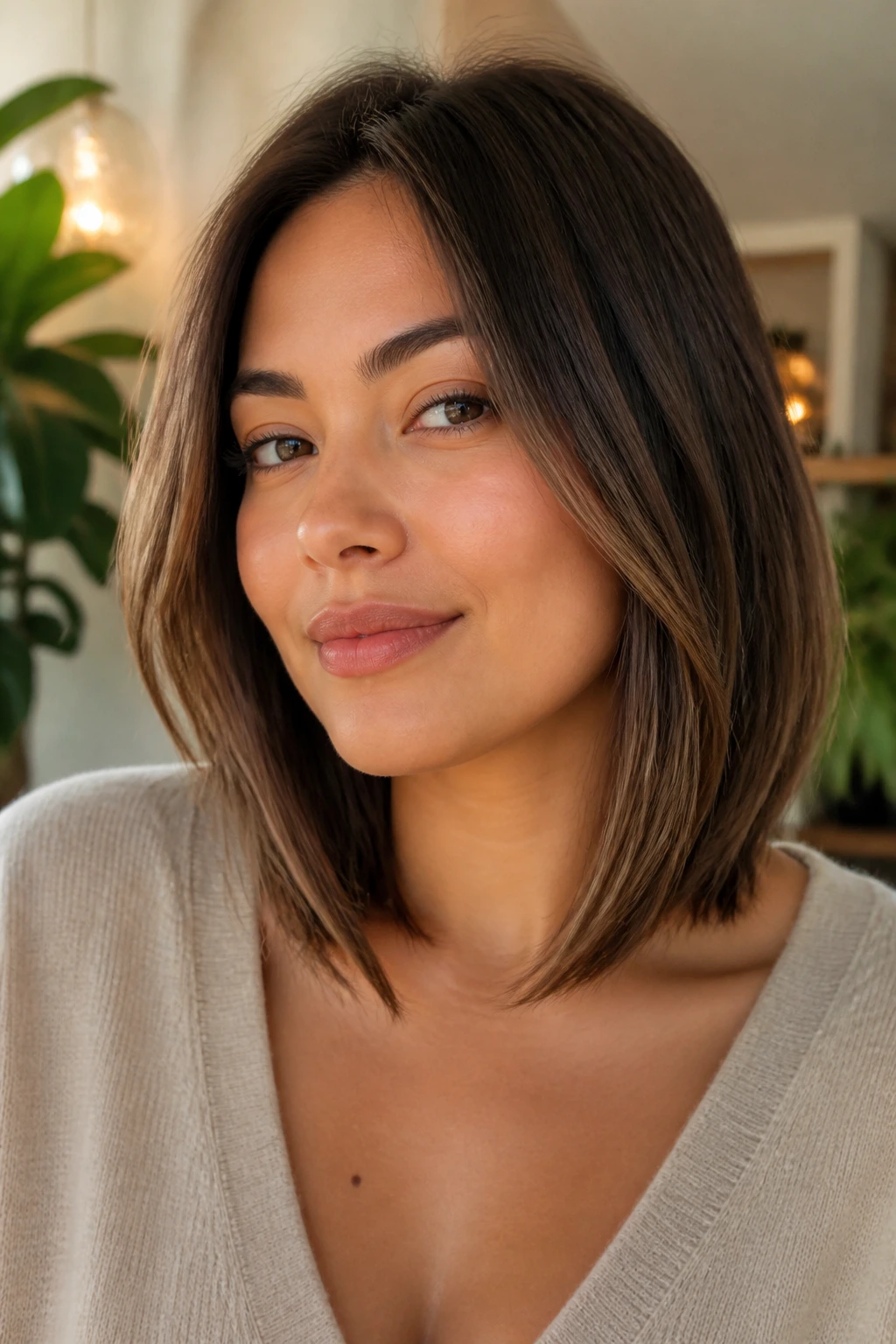
A collarbone lob is probably the safest haircut on this list, and I mean that in the best way. It lands just below the widest part of the face, so it gives you length without the fuss of very long hair. The tapered ends matter a lot here. A blunt edge can look heavy; tapered ends move.
This cut works because the hair hits that sweet spot right around the collarbone, which means it falls away from the cheeks when you turn your head. It also gives you options. Straight and sleek looks clean, but a wave or bend through the ends makes the line even better.
My opinion? This is the cut to choose when you want low drama and real versatility. You can wear it tucked, waved, curled under, or air-dried with a salt spray. It still behaves.
6. Textured Pixie with Crown Lift
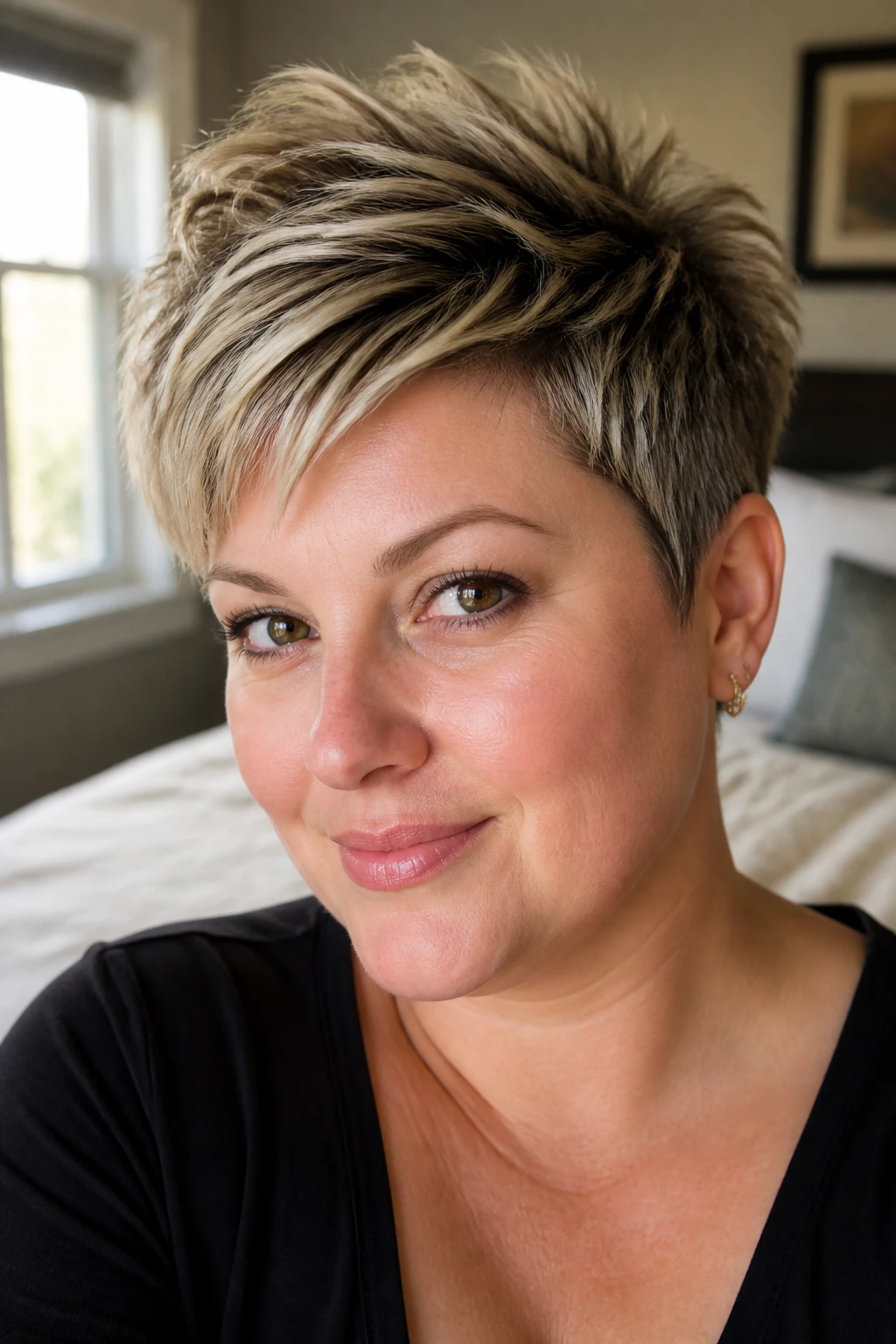
A pixie can work beautifully on a fuller face if the shape is right. The mistake people make is going too flat on top or too wide at the sides. That gives the face more width where it does not need it. A textured pixie with crown lift does the opposite: close at the sides, taller at the top.
This cut is all about the top line. The crown should have enough lift to add height, while the sides stay soft and narrow. I like a longer fringe on one side or a piecey sweep across the forehead, because it keeps the look from feeling severe. The ears can be partially covered, but not buried.
What to watch for
- Keep the side panels close to the head.
- Ask for texture, not choppy bulk.
- Use a matte paste or light wax, not a heavy cream.
- Trim regularly so the top does not collapse into a mushroom shape.
A good pixie feels modern because it creates shape with very little hair. That is the whole charm.
7. Feathered Shag with Broken Ends
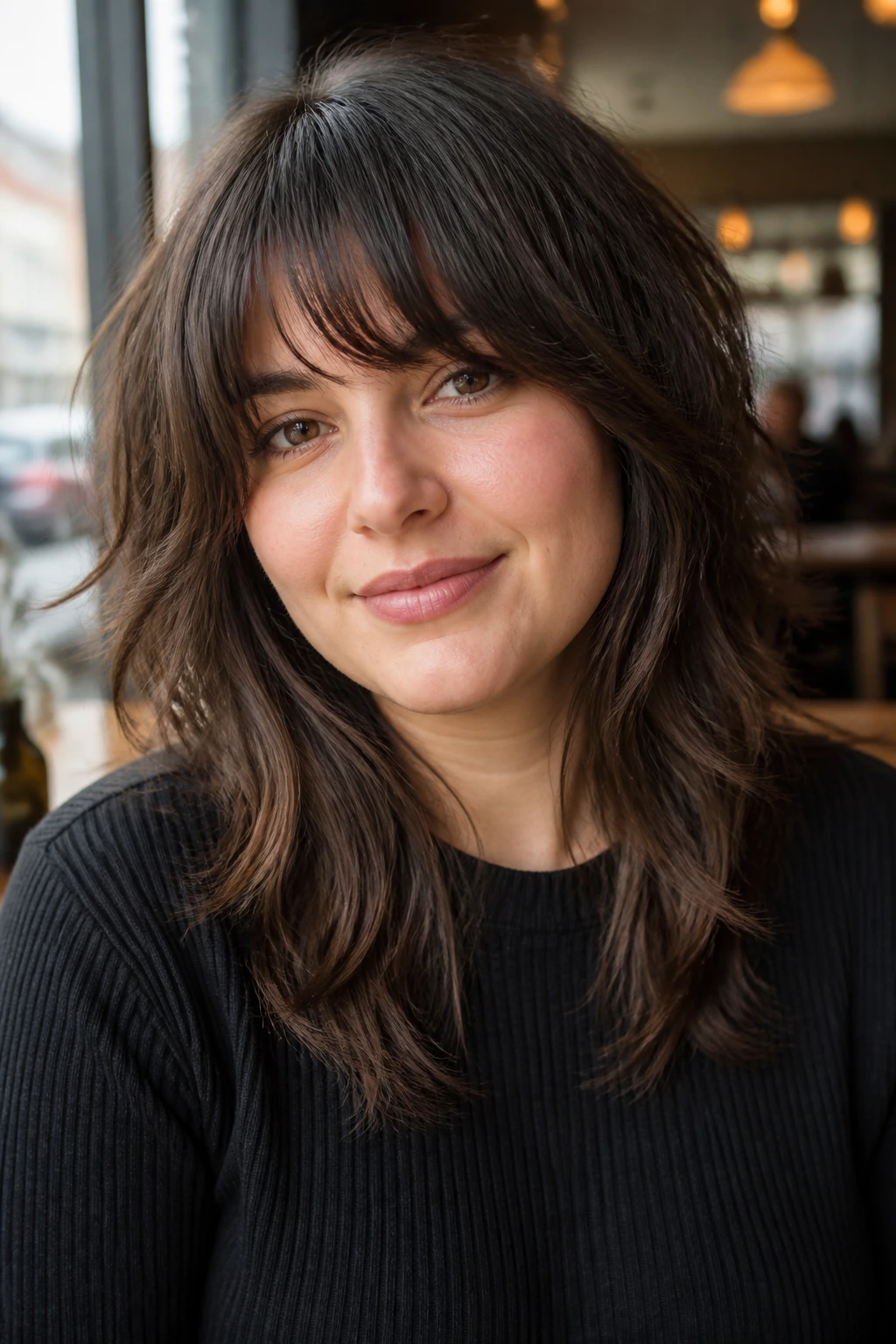
The shag is one of the few cuts that can be messy on purpose and still look smart on a chubby face. The broken layers keep the hair from forming one round wall around the face. Instead, it falls in pieces, and those pieces create space.
I like feathered ends here, not blunt ones. The feathering should start around the cheekbone or below, then dissolve through the rest of the length. That keeps the width under control. If the layers are cut too short at the sides, the whole thing puffs outward. That is the trap.
A shag also works nicely with natural wave. Scrunch in mousse, diffuse for a few minutes, and stop before the hair gets too big. The charm is in the movement, not the volume for volume’s sake.
8. Butterfly Cut with Lifted Crown Layers
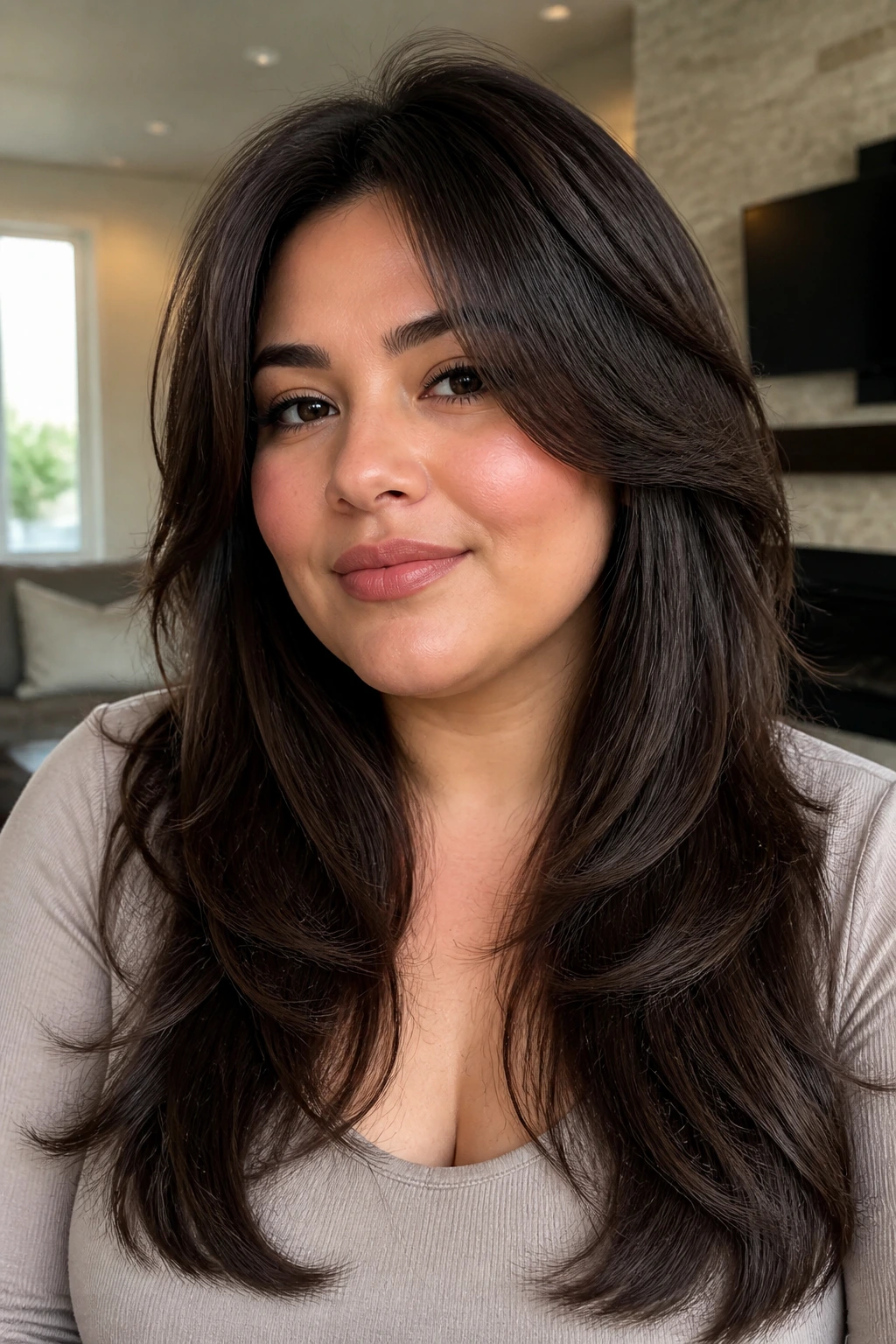
The butterfly cut is a good choice if you love long hair but want more shape near the face. It gives you shorter layers around the crown and face, while the rest of the hair stays long. That means you keep the drama of length without dragging everything flat.
What makes this cut flattering is the difference between the top and bottom layers. The top layers lift the eye upward; the longer layers pull the eye down. That tension is the whole trick. It makes the face look longer without sacrificing softness.
I like this cut especially for blowouts. A round brush brings the shorter layers off the face, and the longer lengths fall cleanly beneath them. If your hair is thick, ask for internal debulking so the top does not balloon. If it is fine, keep the layers soft so you do not lose the illusion of fullness.
9. High Ponytail with a Wrapped Base
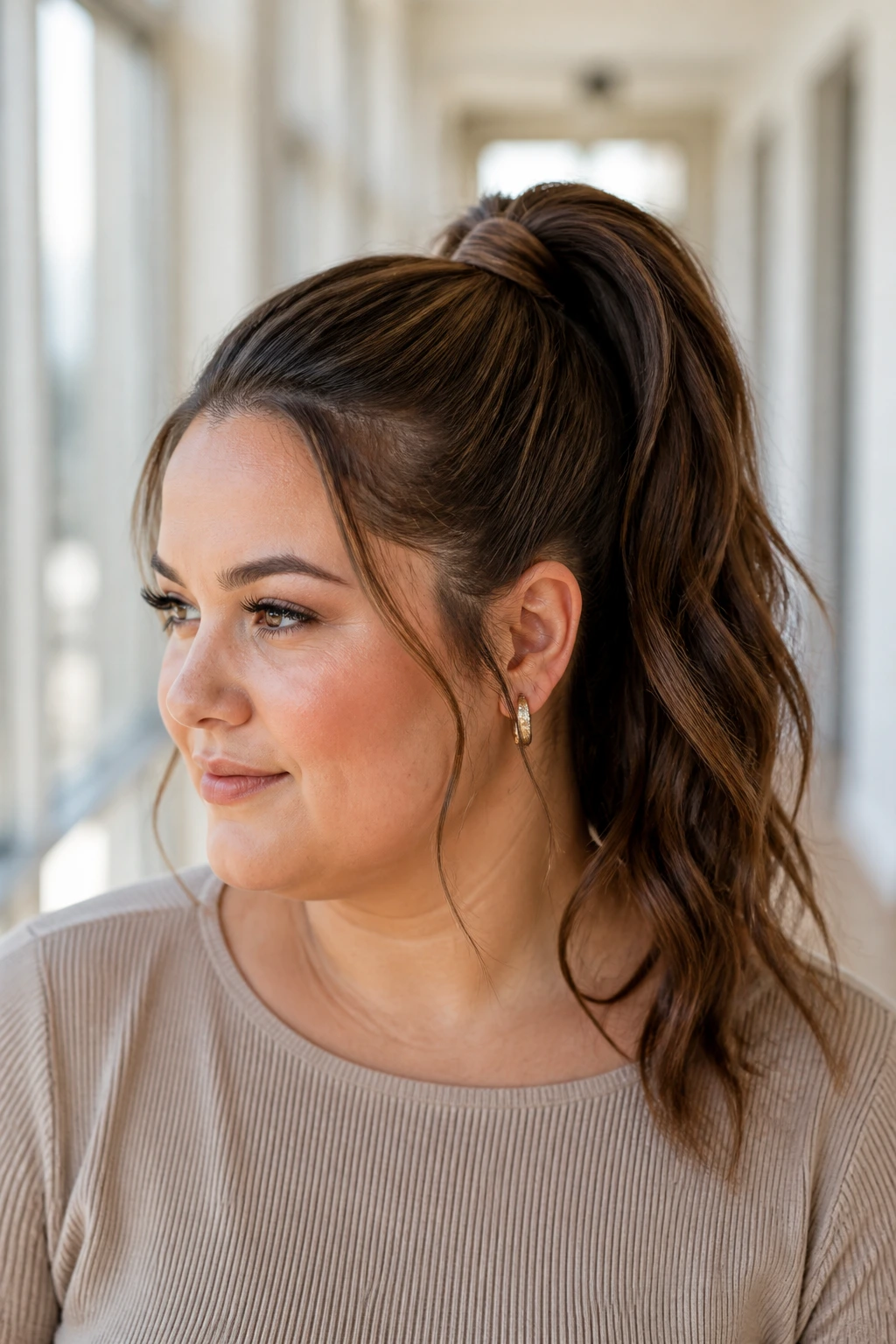
A high ponytail can be surprisingly flattering on a fuller face because it lifts the whole line of the face upward. The pony should sit at or above the crown, not low at the nape. That placement lengthens the neck and opens the cheeks.
The other detail that matters is the front. Leave a small amount of softness around the temples or a couple of face-framing pieces, then wrap a strand around the elastic so the base looks finished. A tight, slick pony with every hair pulled back can feel harsh. A high pony with a little movement feels stronger.
How to make it work
Use a boar-bristle brush or soft paddle brush to smooth the roots without flattening the crown. Secure the pony with a strong elastic, then pin the wrapped strand underneath. If your hair is fine, tease the underside of the pony slightly so it has a bit of body.
10. Half-Up Style with Loose Front Pieces
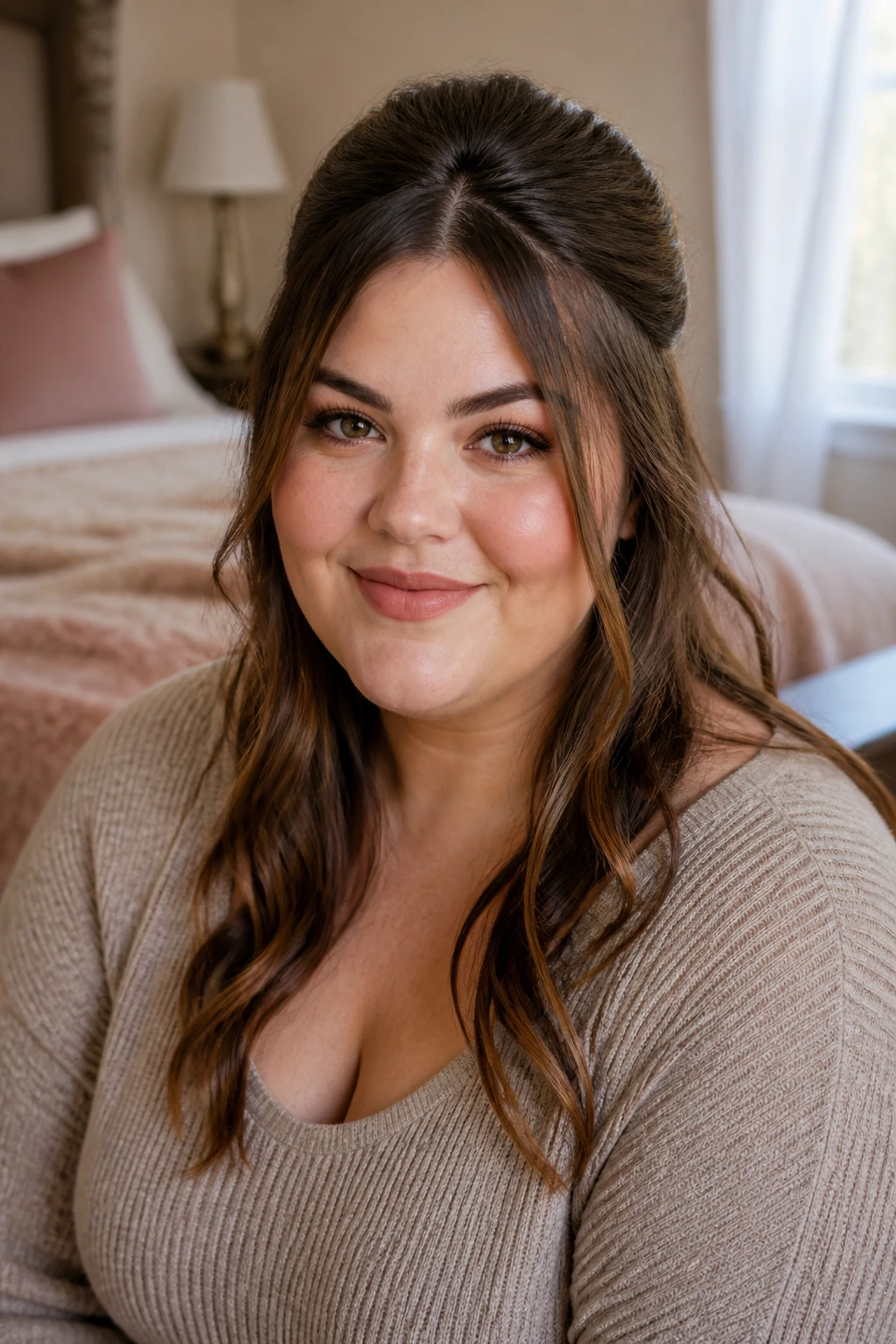
A half-up style is one of the easiest ways to get lift without losing the softness of wearing hair down. It keeps the top half pulled back, which exposes the face, but leaves enough length around the sides to keep the shape balanced. The loose front pieces are the part that make it work.
The half-up section should start above the ear, not at the widest point of the cheek. That keeps the lift high. A small bump at the crown helps too — nothing big, just enough to avoid a flat top. When the front pieces are left loose and bent slightly away from the face, the style feels open instead of boxed in.
This is one of my favorite styles for second-day hair. A little dry shampoo at the roots and a few bobby pins are usually all it takes.
11. Side-Swept Bangs and Long Length
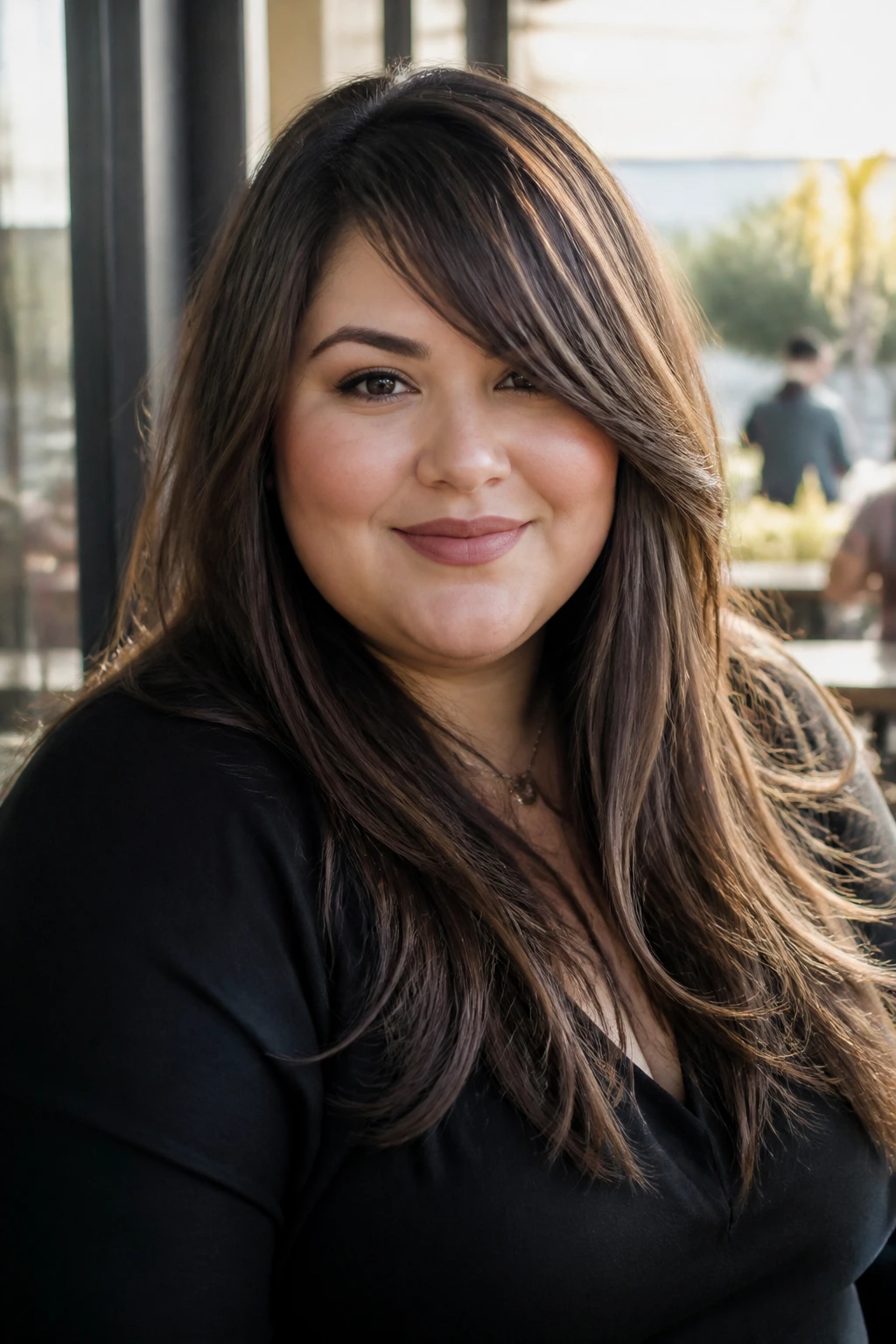
Side-swept bangs are underrated. They soften the forehead, give you movement, and create a diagonal line that works well on a chubby face. The important thing is to keep them airy. A thick, heavy side bang can behave like a blanket. That is not the effect we want.
The best version sweeps from a deeper part and lands somewhere between the brow and cheekbone, then blends into long layers. It should feel like part of the haircut, not a separate piece sitting on top of it. When the rest of the hair is long and slightly waved, the bang helps break up the width in the front.
If your hair grows quickly at the front, this is a fairly forgiving bang choice. It can be tucked, clipped, or blended back without making the cut look awkward.
12. Asymmetrical Lob with One Longer Side
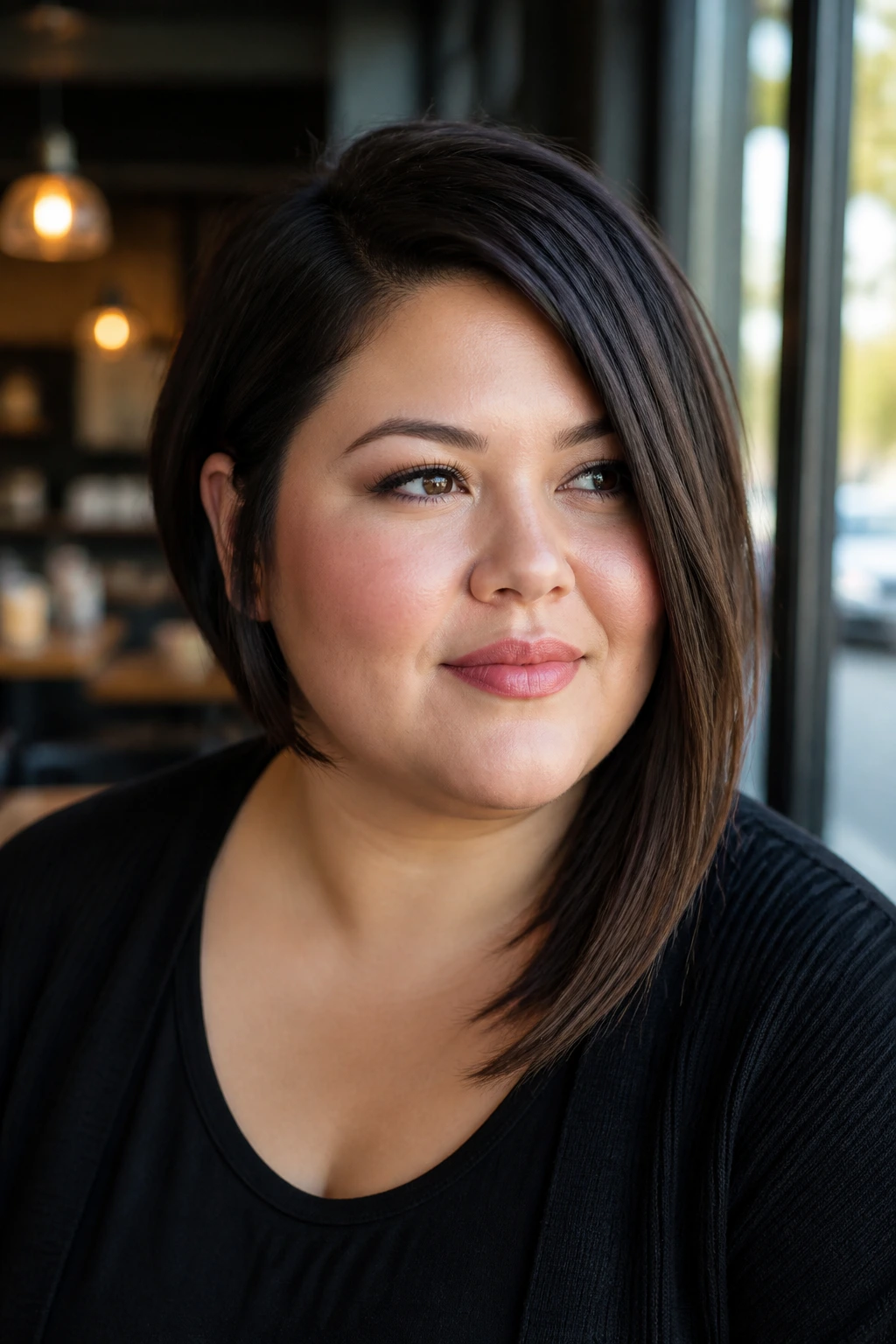
An asymmetrical lob has a sharp, clean logic to it. One side is a little longer than the other, and that small imbalance creates a line the eye wants to follow. On a fuller face, that diagonal can do a lot of useful work.
Unlike a symmetrical bob, which can sit evenly across the face and feel boxy, an asymmetrical lob gives you movement by design. The longer side should fall below the chin, while the shorter side can skim just above or right at the jaw. That contrast keeps the silhouette from reading as wide.
Best way to wear it
A side part usually helps this cut, but not always. If your hair is naturally straight, the asymmetry alone may be enough. If it is wavy, a soft bend through the ends makes the difference more visible. This is one of those cuts that looks better when it’s not overstyled. Let it move a little.
13. Sleek Straight Lengths with Invisible Layers
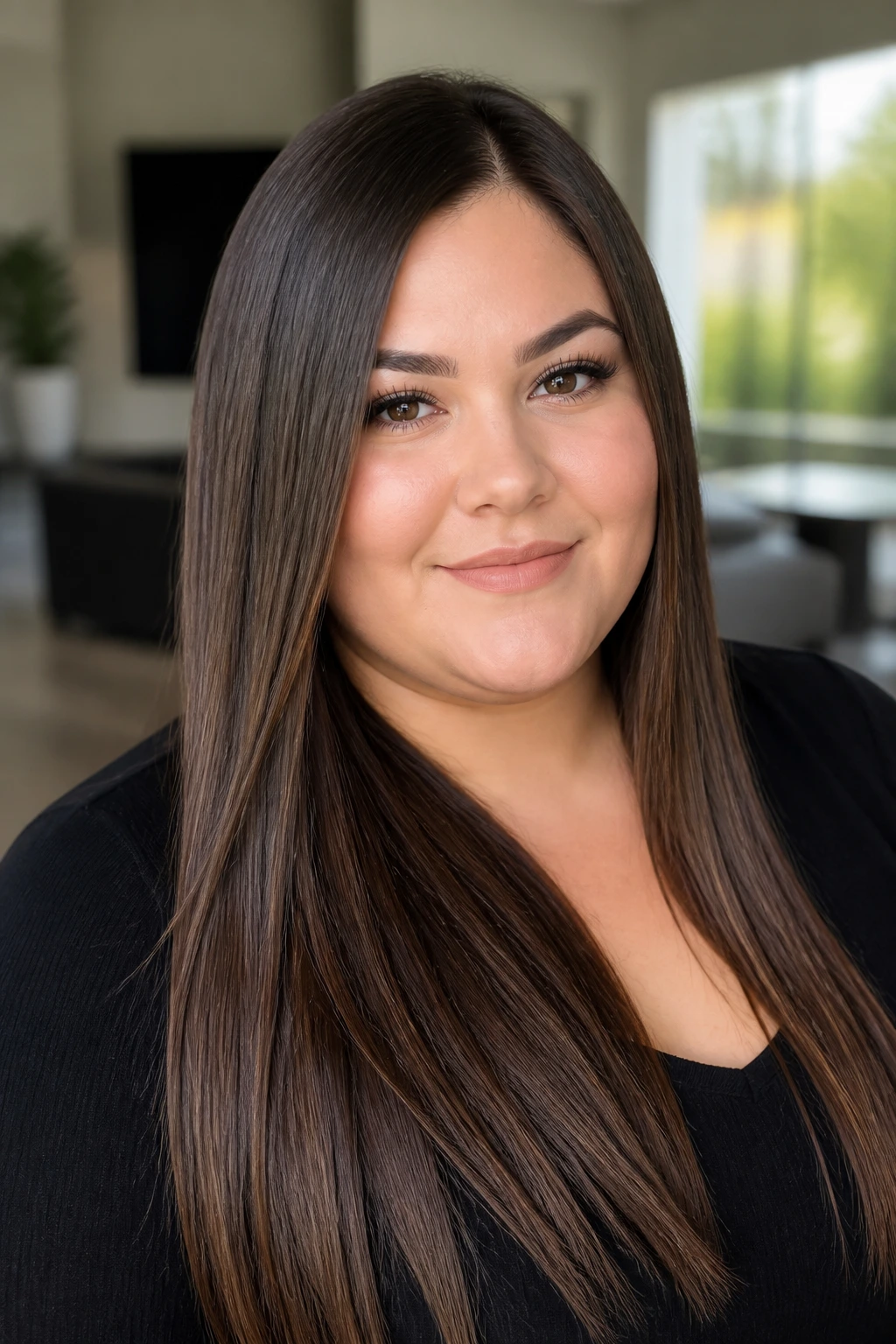
Straight hair gets unfairly blamed for “flattening” a face, but that is only true when the cut is too blunt or too short. Long, sleek lengths with invisible layers can look clean and strong on a fuller face because they create one uninterrupted vertical line. That line is the entire point.
Invisible layers are subtle internal cuts that remove bulk without showing choppy steps on the surface. They help the hair fall better around the shoulders and keep the ends from looking thick like a plank. I like this style best when it lands below the collarbone and is worn with a slight off-center part.
A glossy finish matters here. Use a smoothing serum on the mid-lengths and ends, not the roots. The roots need lift, not grease. And if your hair is very thick, ask your stylist to remove weight underneath so the front stays sleek instead of puffing wide.
14. Wispy Fringe and Soft Bends
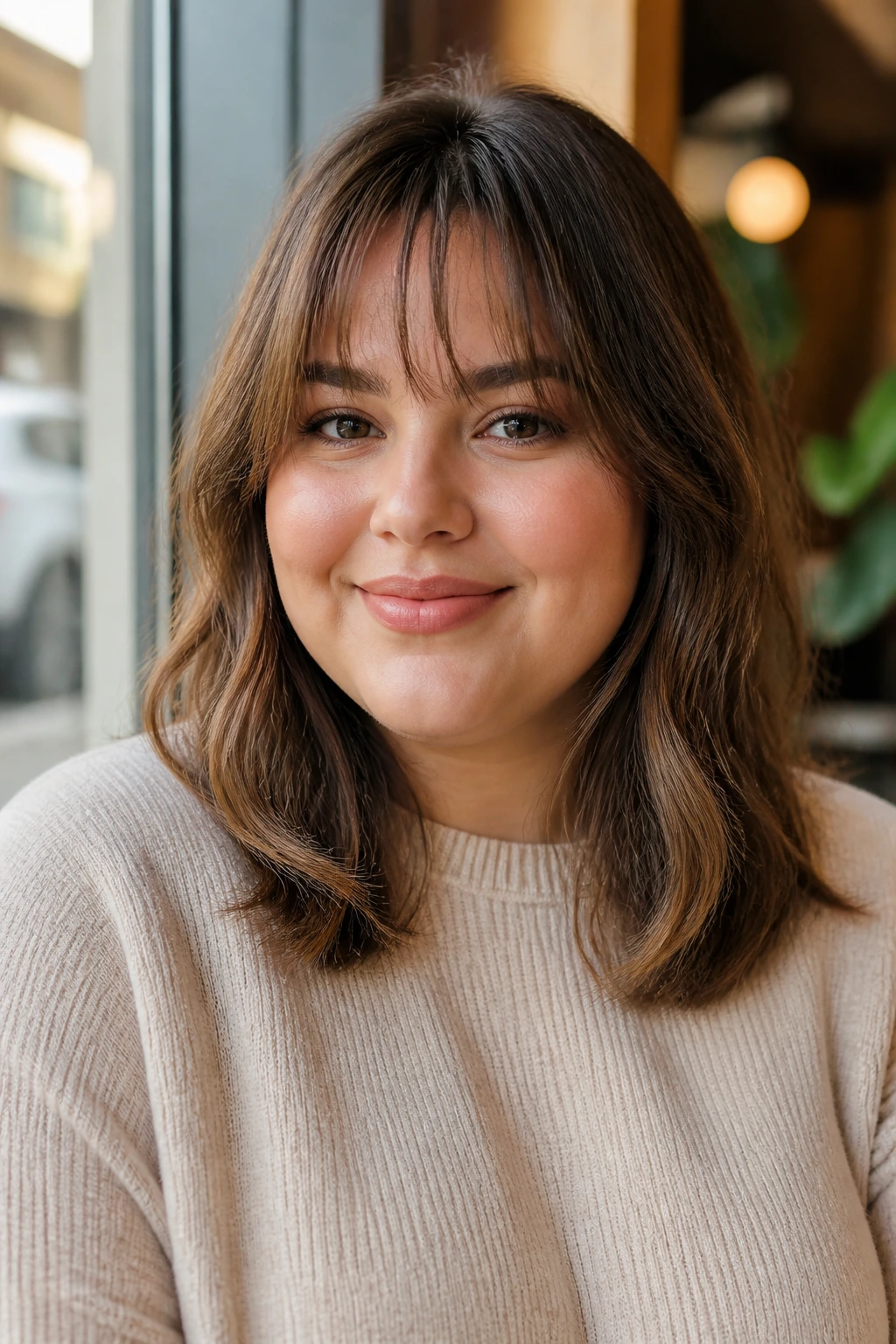
Can bangs work on a fuller face without closing everything in? Yes — if they’re wispy. The whole trick is air. You want enough fringe to soften the forehead, but not so much that the top of the face turns into one dense line.
Wispy fringe should have see-through spaces and mixed lengths. The center can sit a little shorter, while the sides blend out into the rest of the haircut. Pair that with soft bends through the lengths and the result feels light, not heavy. I like this look on shoulder-length cuts because the fringe and the bend work together to keep the face open.
What to ask for
- Point-cut texture through the fringe
- Longer sides that taper into the cheek area
- A soft bend, not a tight curl
- Enough length to tuck the bangs if you change your mind
This is a smart pick if you want bangs but do not want to commit to a blunt statement fringe.
15. Tousled French Bob with Texture
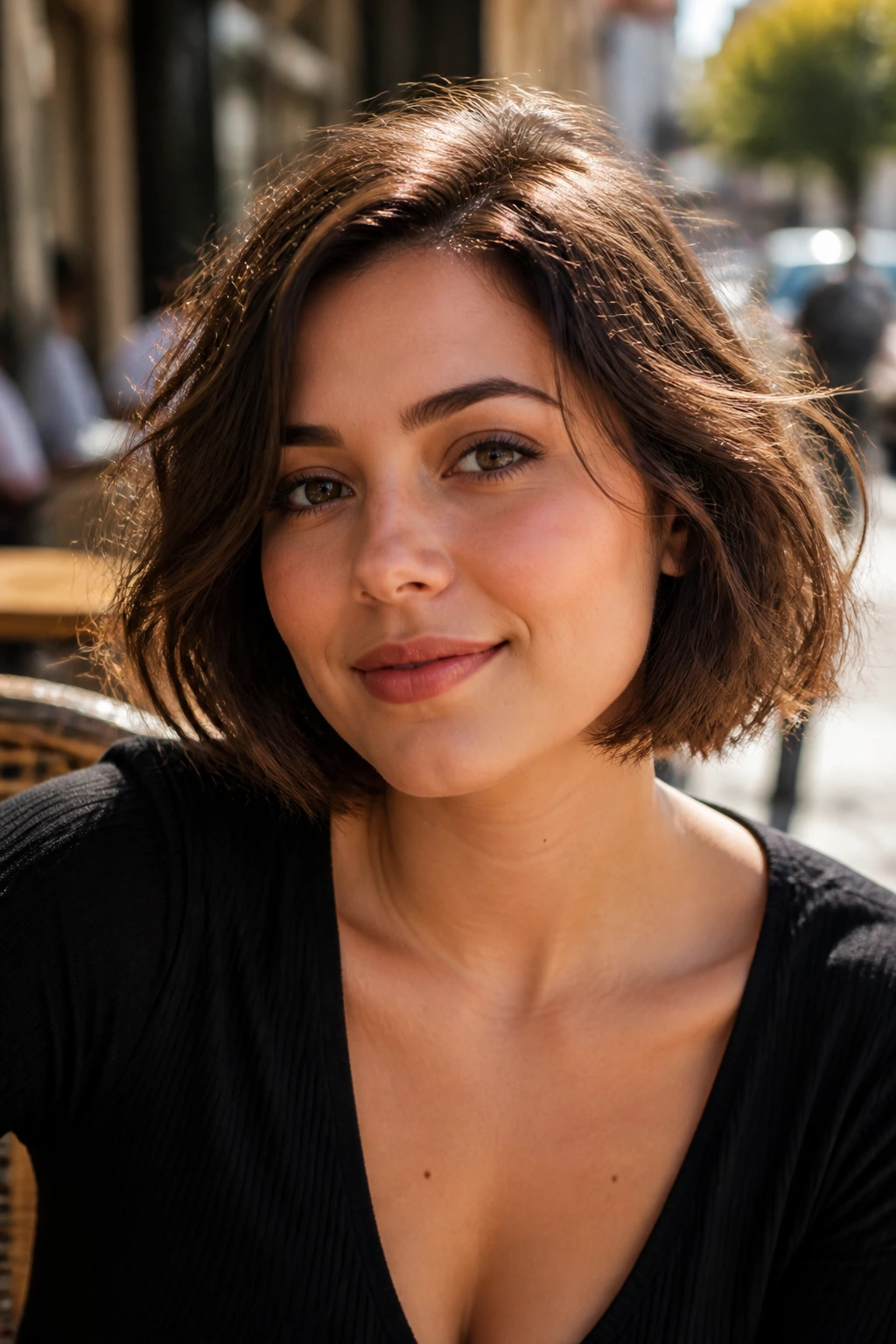
A French bob can work on a chubby face, but only if it avoids the one mistake that ruins it: stopping right at the cheekbone. The better version sits a touch lower, usually around the jaw or just below it, and has enough texture to move. Without that, the bob can look like a helmet. Nobody wants a helmet.
The tousled finish is what saves it. A soft wave, a bit of bend at the ends, and an off-center part keep the cut from feeling square. I also like a small amount of fringe or face-framing softness, because it keeps the forehead from looking too open when the bob is short.
This is a style for people who like short hair but still want a little flirt to it. It has attitude. Just not the boxy kind.
16. Voluminous Top Knot with Face Tendrils
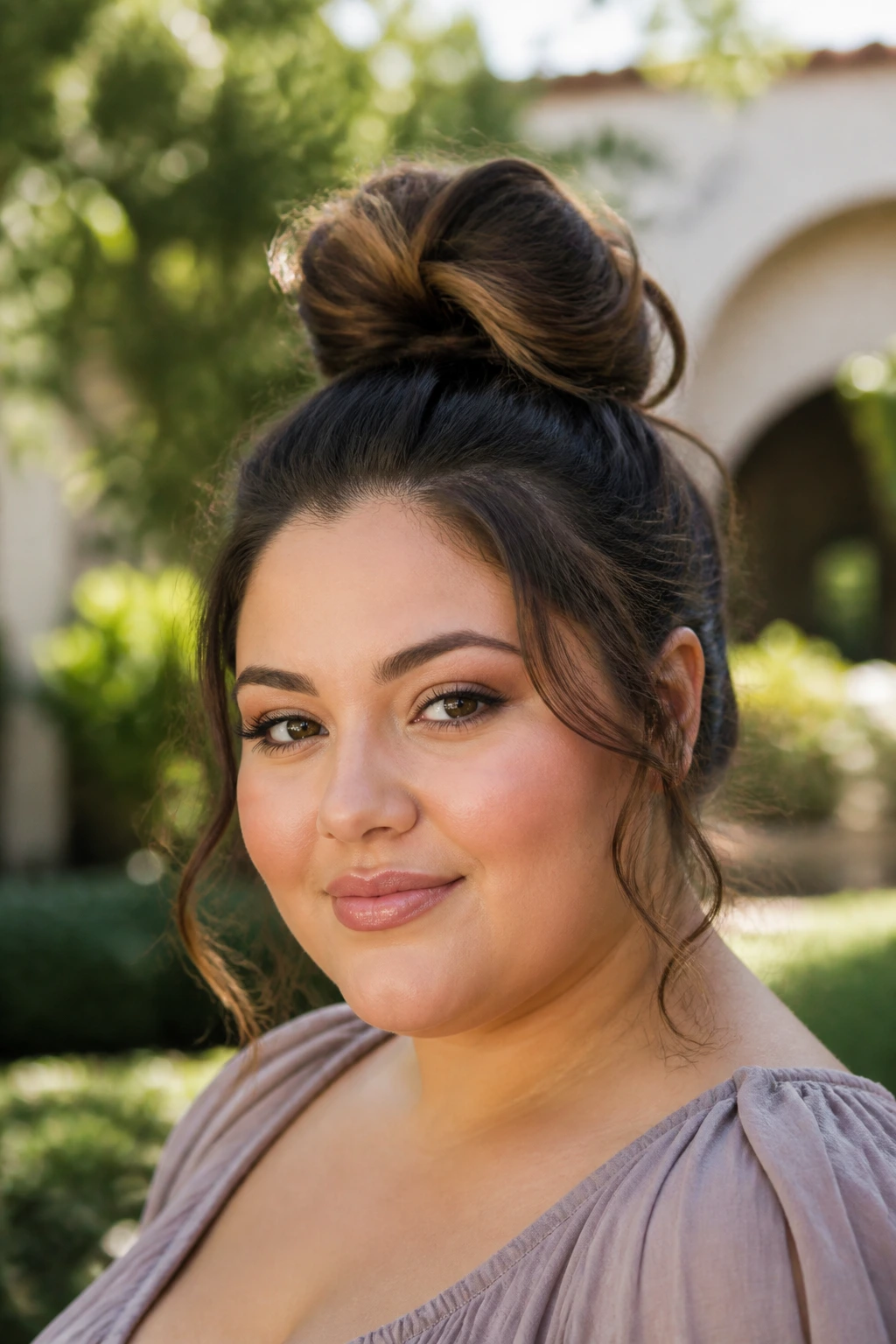
A top knot can look more flattering than loose hair when the placement is right. Put it too low and it drags the eye down. Put it at the crown and it lifts the whole face. That is why this style works so well on rounder features.
The bun itself should be a little messy, not a tiny hard ball. Leave a few face tendrils at the temples and maybe a soft strand near the jaw. Those pieces break up the outline and keep the look from feeling severe. The neck is also part of the equation here — when you expose it, the face automatically reads longer.
I like this style for days when you need your hair off your face but still want shape. Use a little root spray before gathering the ponytail, and do not pull the front too tight. A little looseness at the crown helps more than a lot of tension ever will.
17. Long Curls with Height at the Roots
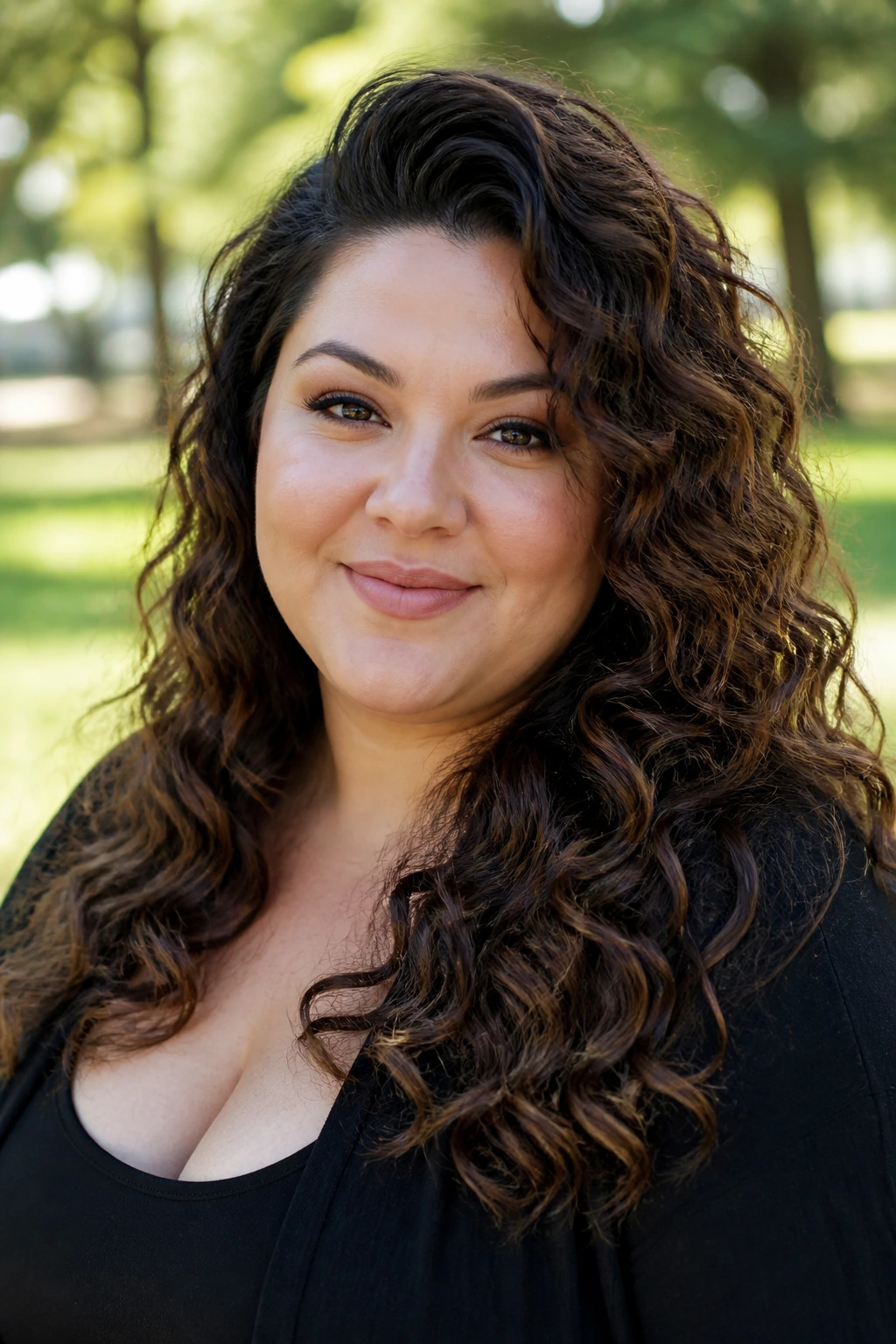
Long curls can be a little tricky on a fuller face because curls naturally add width. But that is only a problem when the volume sits at cheek level. If the lift is at the roots and the curls fall in defined pieces below the cheekbones, the shape looks balanced and intentional.
The layers matter a lot here. Curly hair needs layers that respect shrinkage and keep the curl pattern from turning into a triangle. Ask for shape around the crown, not a pile of short pieces around the cheeks. Diffuse upside down for a minute or two if you need root lift, then flip back and let the curls settle.
The sweet spot
Use enough cream to define the curl, but not so much that it turns heavy. Heavy curls collapse into width. Lighter, springy curls give the face room to breathe.
18. Braided Crown with Loose Front Strands
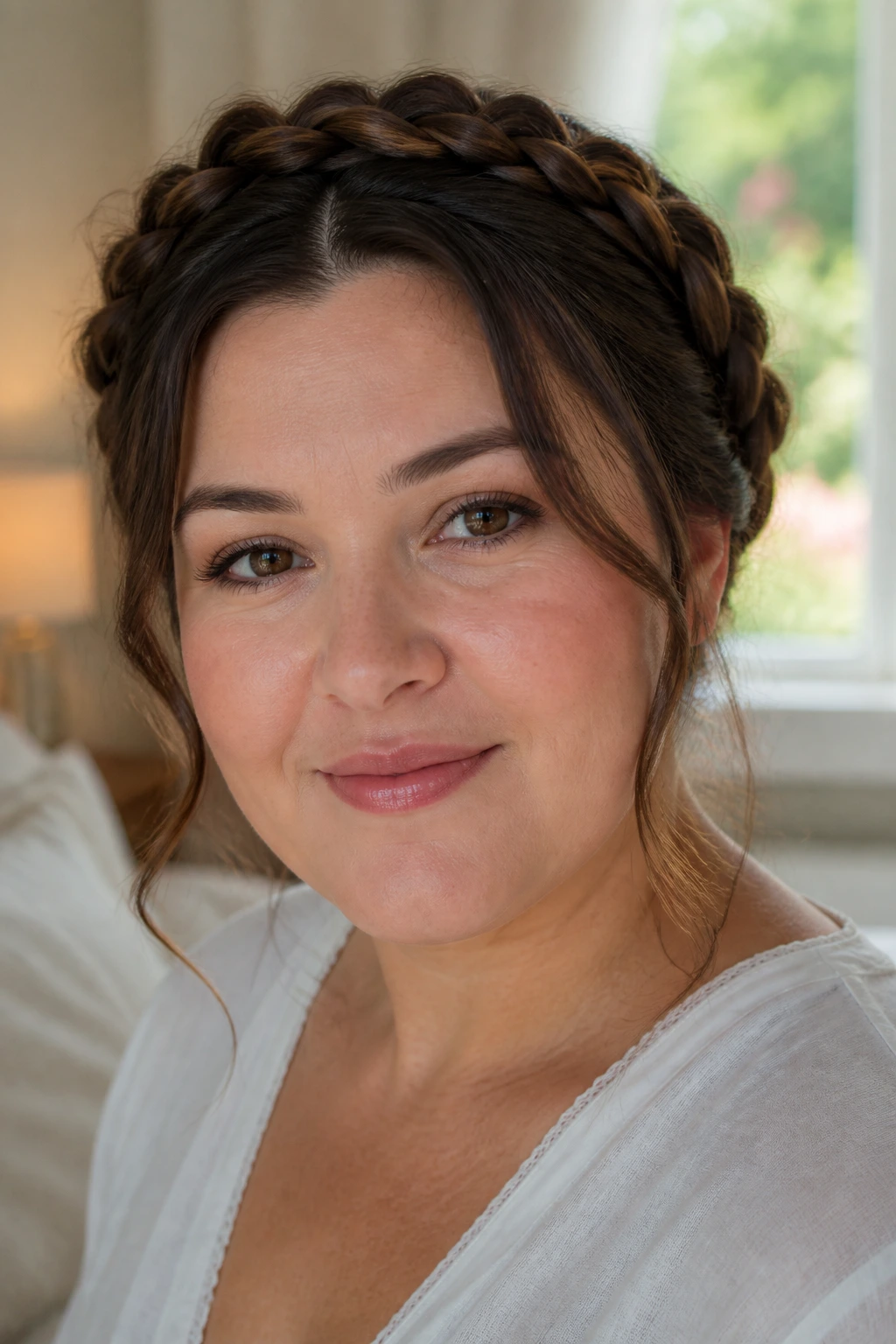
Braids are easier on a fuller face than people assume. A braided crown keeps the volume around the perimeter of the head and opens the center, which gives the face a longer, cleaner look. The face stays visible. The braid just frames it.
The trick is to keep the braid medium-sized, not oversized. A thick, chunky halo can get bulky fast, especially near the temples. I like a softer braid that sits a little back from the hairline, with two loose front strands left out to curve around the cheeks. That keeps the style from feeling too tight or too severe.
This one works for weddings, brunch, or any day you want your hair up without looking plain. It also ages well through the afternoon. A few wisps around the temples only make it better.
Why These Hairstyles for Chubby Faces Work Best With Lift and Diagonal Lines
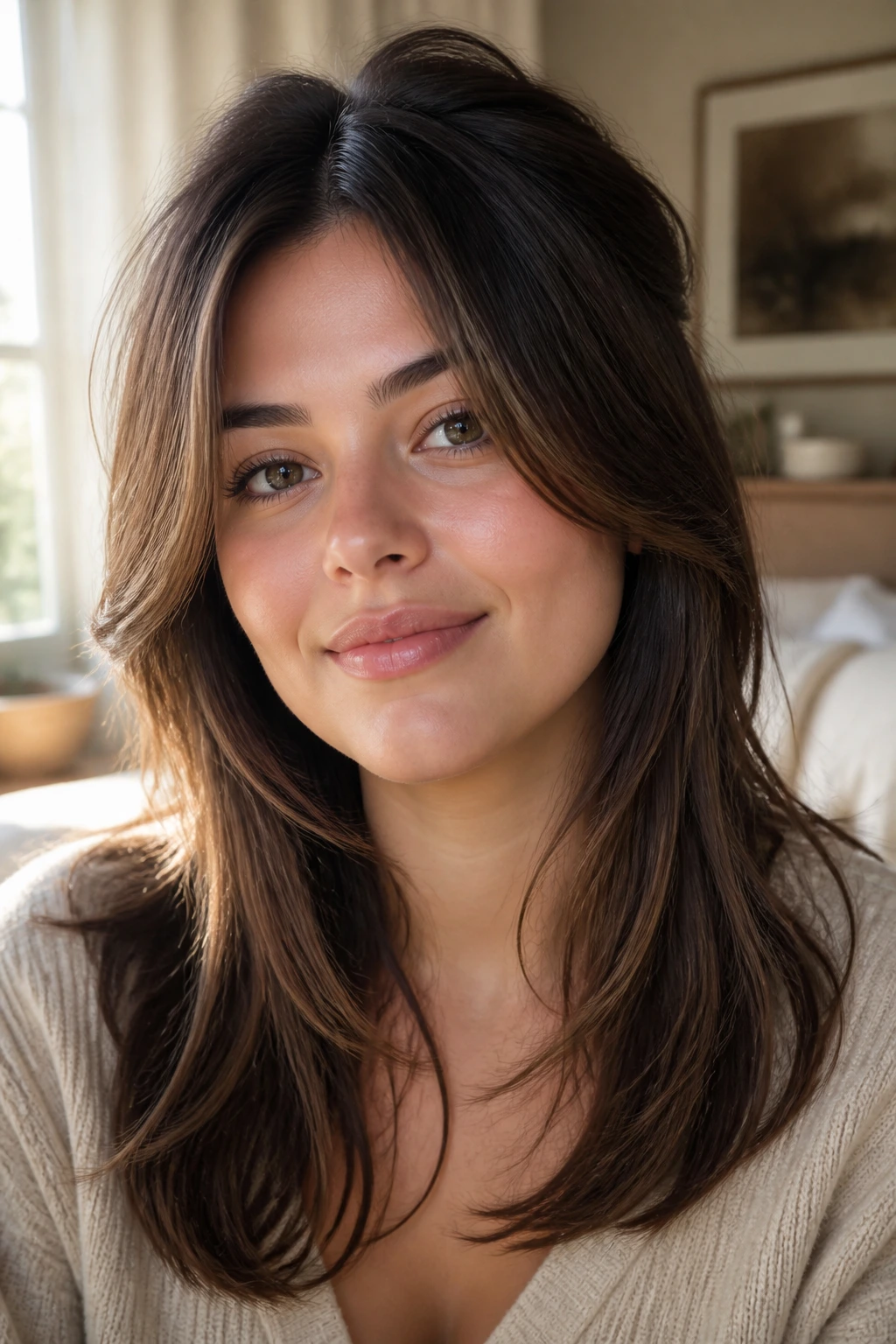
Hair that sits low and wide can make a rounder face feel wider than it is. Hair that rises at the crown, sweeps across diagonally, or falls below the jaw does the opposite. That is the core idea behind most flattering shapes here. Not hiding. Reframing.
The face is not trying to become a different shape. It just needs lines that move the eye in a better direction. A side part, a slanted bob, a lifted ponytail, or a soft fringe can all do that in different ways. The details matter more than the label on the cut.
One blunt edge can change the whole mood. So can one extra inch of length. That’s why stylists keep talking about placement, because placement is what determines whether the haircut works with your features or lands on top of them.
Essential Tools for Clean, Face-Framing Styling
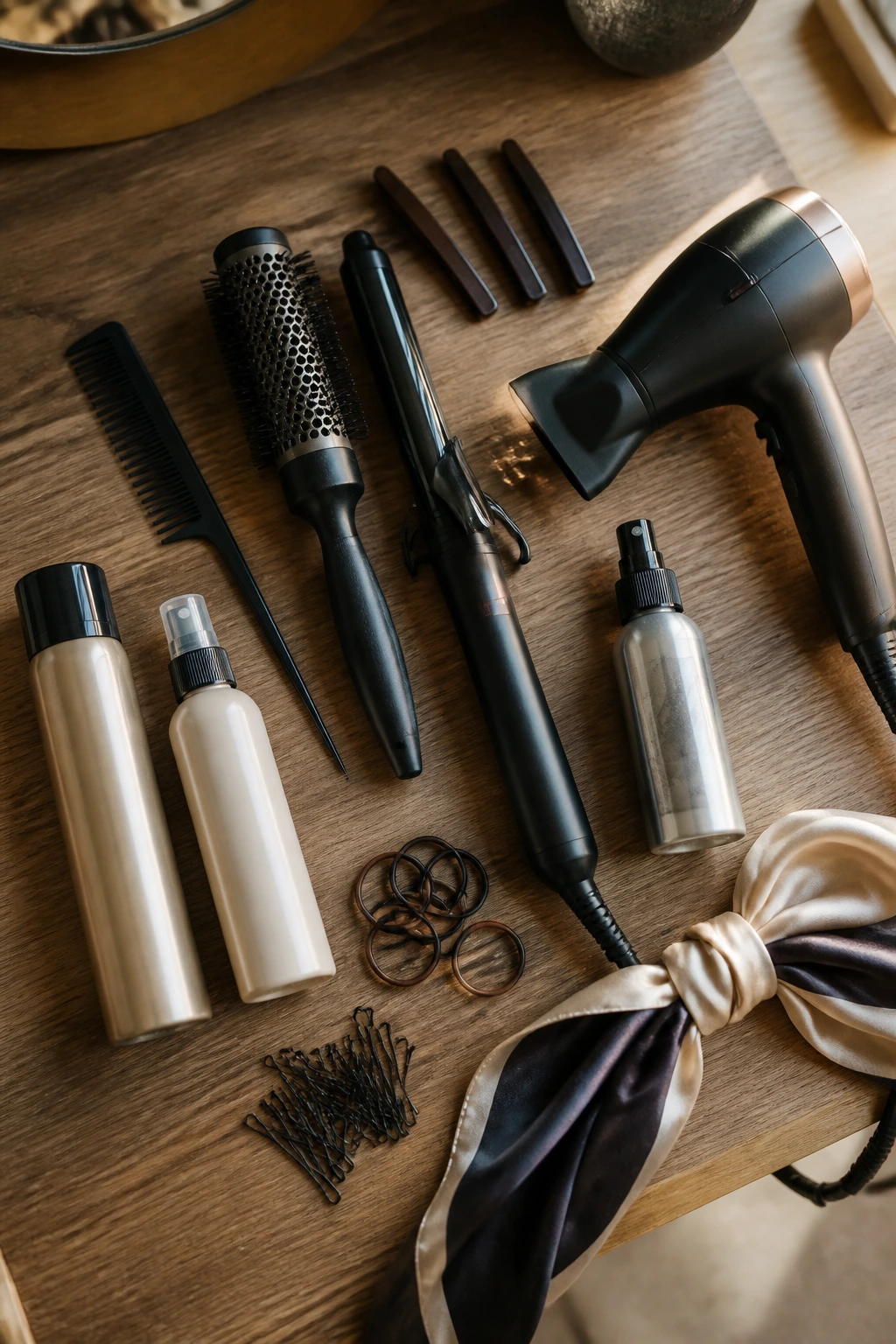
-
Tail comb: Useful for clean parts, sectioning the front pieces, and setting a deep side part without guesswork.
-
1-inch curling iron or wand: Best for curtain bangs, loose waves, and soft bends that stay close to the head.
-
1.5- to 2-inch round brush: Helps build crown lift and smooth the front without making the ends flip too hard.
-
Blow dryer with concentrator nozzle: Keeps airflow controlled so the roots dry with direction instead of puffing everywhere.
-
Duckbill or sectioning clips: Useful when you’re setting face-framing pieces or pinning curls to cool.
-
Texturizing spray: Gives grip to shaggy cuts, lob waves, and second-day styles that need a little life.
-
Heat protectant spray: Non-negotiable before hot tools; use it on dry hair in a light, even mist.
-
Dry shampoo: Helps keep the root area lifted on styles that rely on crown height.
-
Bobby pins and small clear elastics: Needed for half-up styles, wrapped ponytails, and braided looks.
-
Silk pillowcase or scarf: Not a styling tool in the strict sense, but it keeps waves and bangs from getting smashed overnight.
How to Choose a Style by Hair Texture and Density
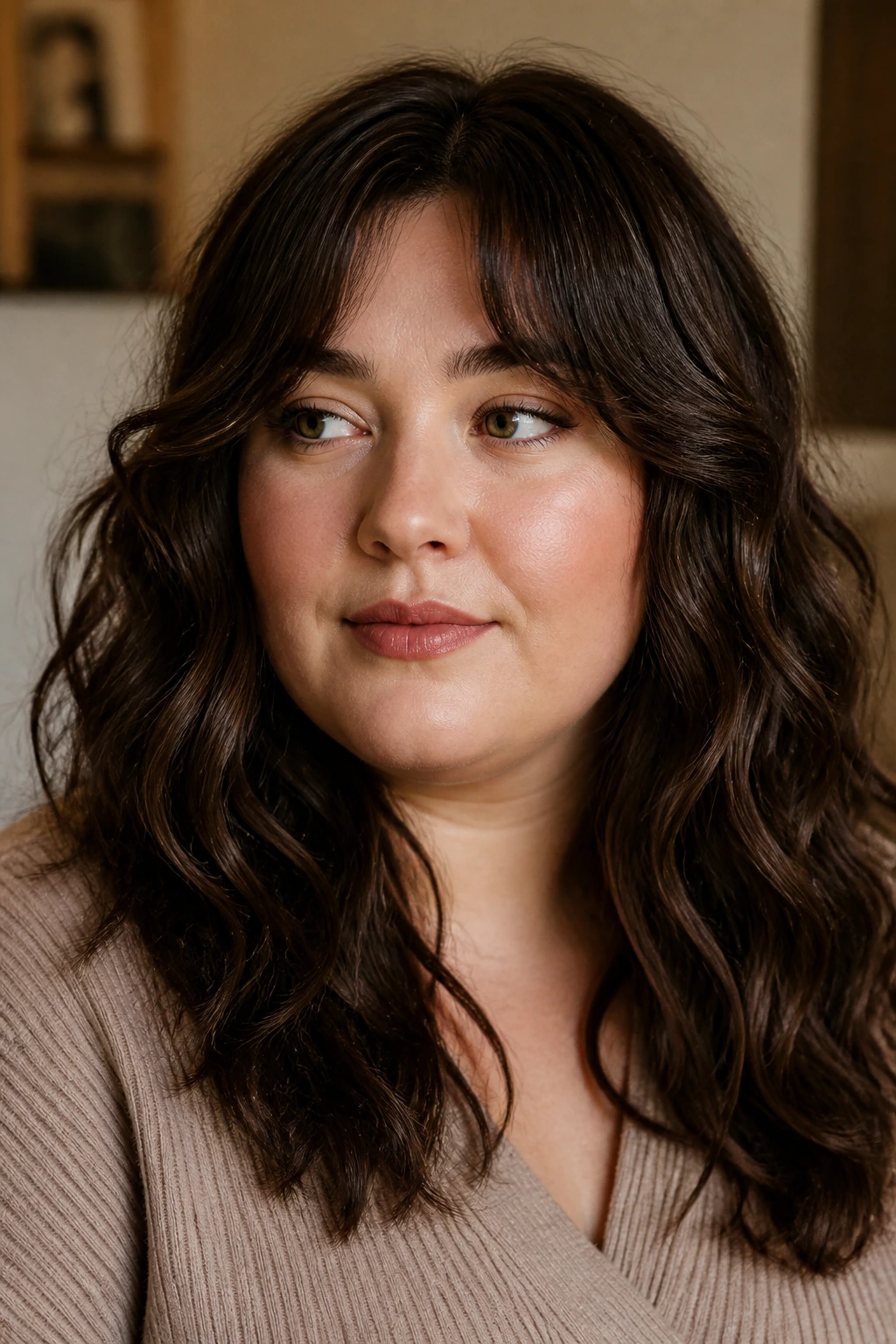
A style that looks soft on wavy hair can act very differently on pin-straight or dense hair, and that matters here. If your hair is fine, too many layers can remove the perimeter and make the face feel wider because the hair no longer has enough shape to fall around it. If your hair is thick, the opposite problem shows up: too much bulk at the sides, especially near the cheeks.
Fine hair
Choose cuts with lift at the crown and not too much internal shredding. A collarbone lob, a deep side part, or a soft pixie can give you shape without making the ends look thin.
Thick hair
Ask for weight removal below the cheekbone. That way the hair doesn’t balloon around the face. Angle, taper, and internal shaping matter a lot more than the exact length.
Curly or coily hair
The cut should respect shrinkage. If the widest curl volume sits at cheek height, the face can look broader, so the shape needs to be built higher or longer. Dry cutting, or a cut done on hair that’s fully dry and in its natural pattern, usually gives the most honest result.
Straight hair
Straight strands show every line. That can be a blessing or a problem. If the cut is too blunt, the face can look heavier; if the cut has subtle layers and a controlled part, the shape looks crisp and clean.
How to Wear These Styles Without Fighting Your Features
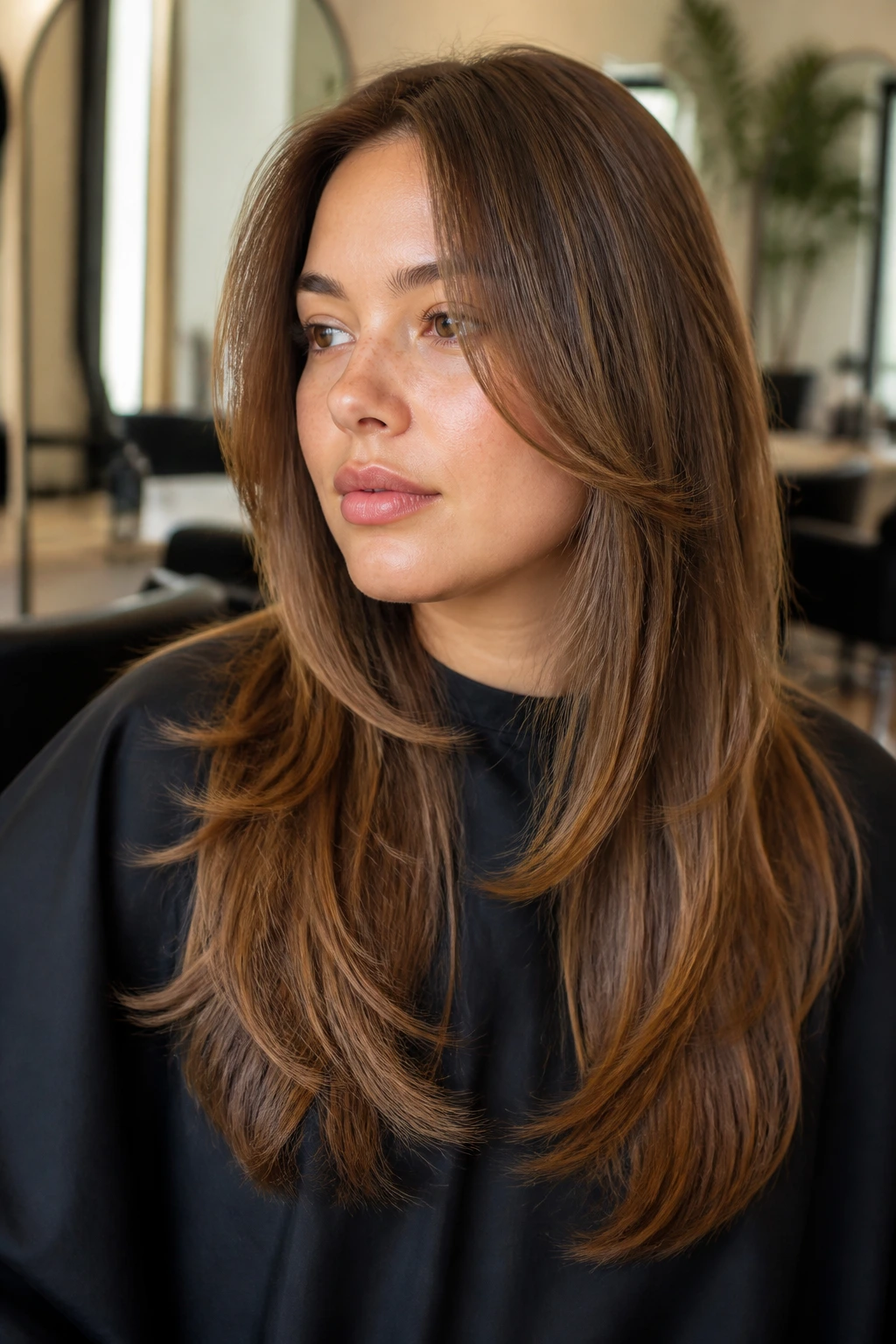
Parting: A deep side part creates the most obvious diagonal and works especially well with waves, bobs, and long layers. A center part can still work, but it needs length and root lift so the hair doesn’t hang flat beside the cheeks.
Texture: Keep the texture matched to the cut. Sleek cuts need shine and smoothness; layered cuts need a little bend or movement; curls need definition, not frizz. If the texture and the shape disagree, the style looks off even when the cut itself is good.
Front pieces: A couple of soft front strands can be useful, but too many loose pieces around the temples can make the sides feel crowded. I like enough softness to frame, not so much that it hides the face entirely.
Accessories: Small clips, narrow headbands, and delicate earrings can pull the eye upward. Wide bands or oversized clips that sit near the cheeks tend to add width where you don’t want it.
Extra Styling Tweaks That Change the Whole Silhouette
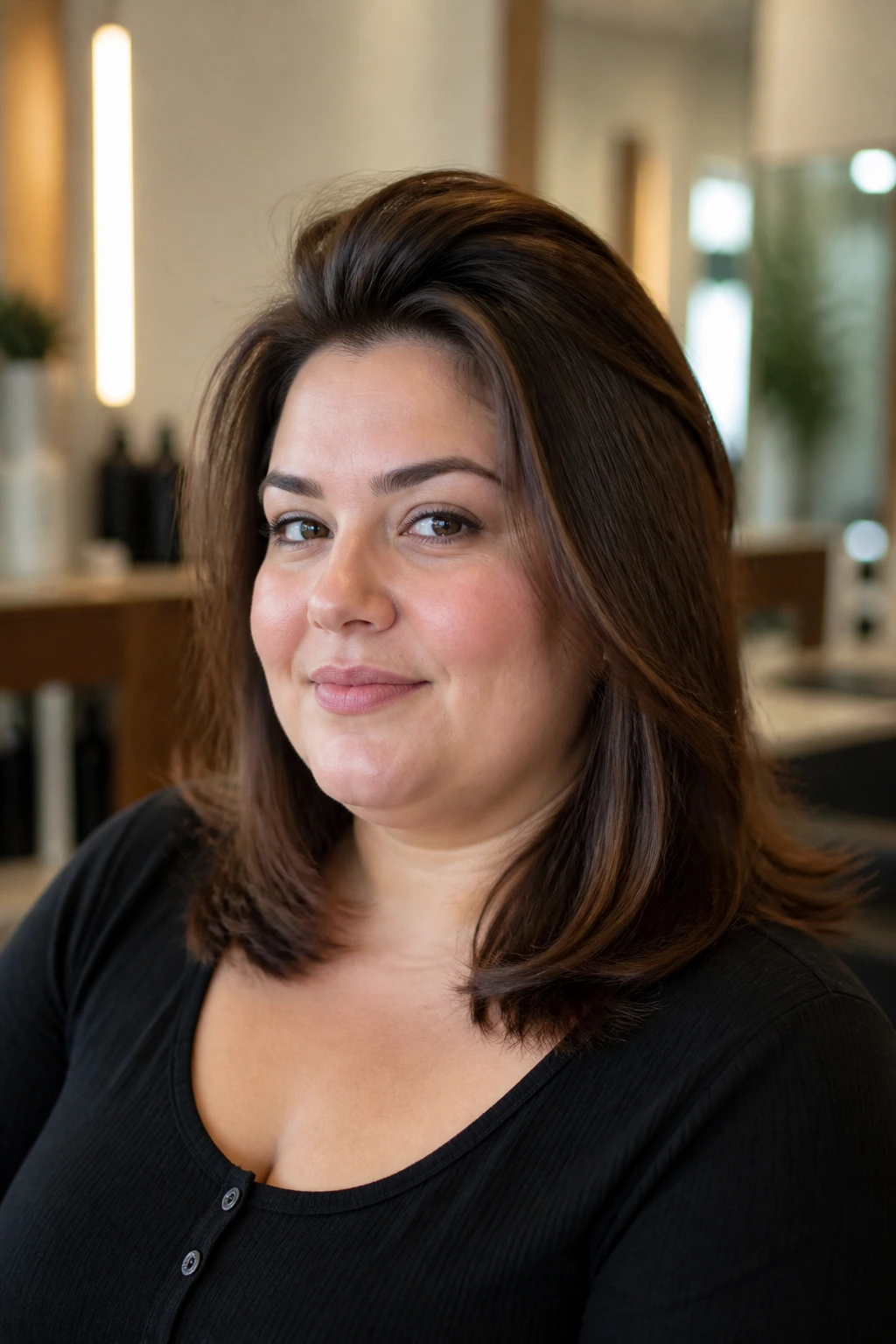
Face-Framing Lift: Clip the front sections up while they cool after blow-drying. That tiny bit of memory helps them fall away from the cheeks instead of collapsing onto them.
Color Placement: If you wear highlights, place lighter pieces around the front and crown, not just the lower lengths. A little brightness near the temples and cheekbone area opens the face without needing a dramatic cut.
Texture Control: Use mousse for lift, cream for curls, and serum only on the ends. Putting the wrong product at the roots is one of the fastest ways to flatten the shape you worked for.
Make-It-Yours: For glasses wearers, keep the front pieces slightly shorter so they don’t sit on the frames. For very round faces, add a bit more height on top. For longer round faces, go easier on the crown and let the front pieces soften the width instead.
A small change can have a big effect. Sometimes it is one inch of lift, sometimes it is one inch of length.
Keeping the Shape Fresh Between Wash Days
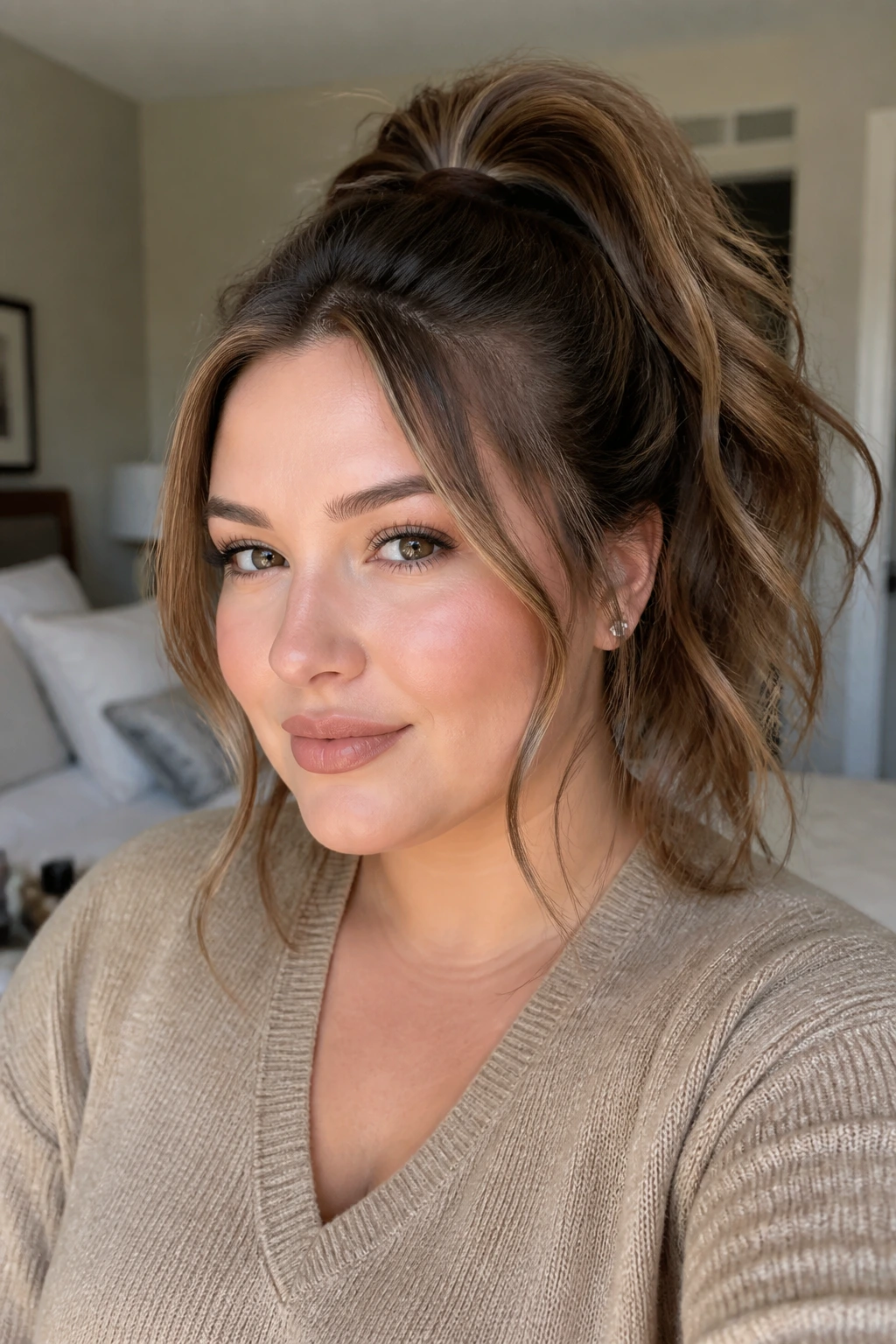
Loose waves and blowouts usually look best on day one and day two. After that, they can still work, but the roots need help. Dry shampoo should go in before the hair looks greasy — at the roots, from about 8 to 10 inches away — then massage it in and let it sit for a minute before brushing.
For curls, sleep with the hair in a loose pineapple or wrapped in a silk scarf. That keeps the root lift and protects the curl pattern near the face. In the morning, refresh with a water mist and a small amount of curl cream, then scrunch only where the curl has flattened.
Pixies need a different rhythm. They usually need a quick daily reset with a small amount of paste or wax, and they often need a trim every 4 to 6 weeks to keep the crown from losing shape. Bobs and lobs usually hold for 6 to 10 weeks before the outline starts to feel off.
High ponytails, buns, and half-up styles are the most forgiving. They can often be reworked on the second or third day with a little root spray and a couple of fresh pins.
Variations for Fine, Thick, Curly, and Short Hair
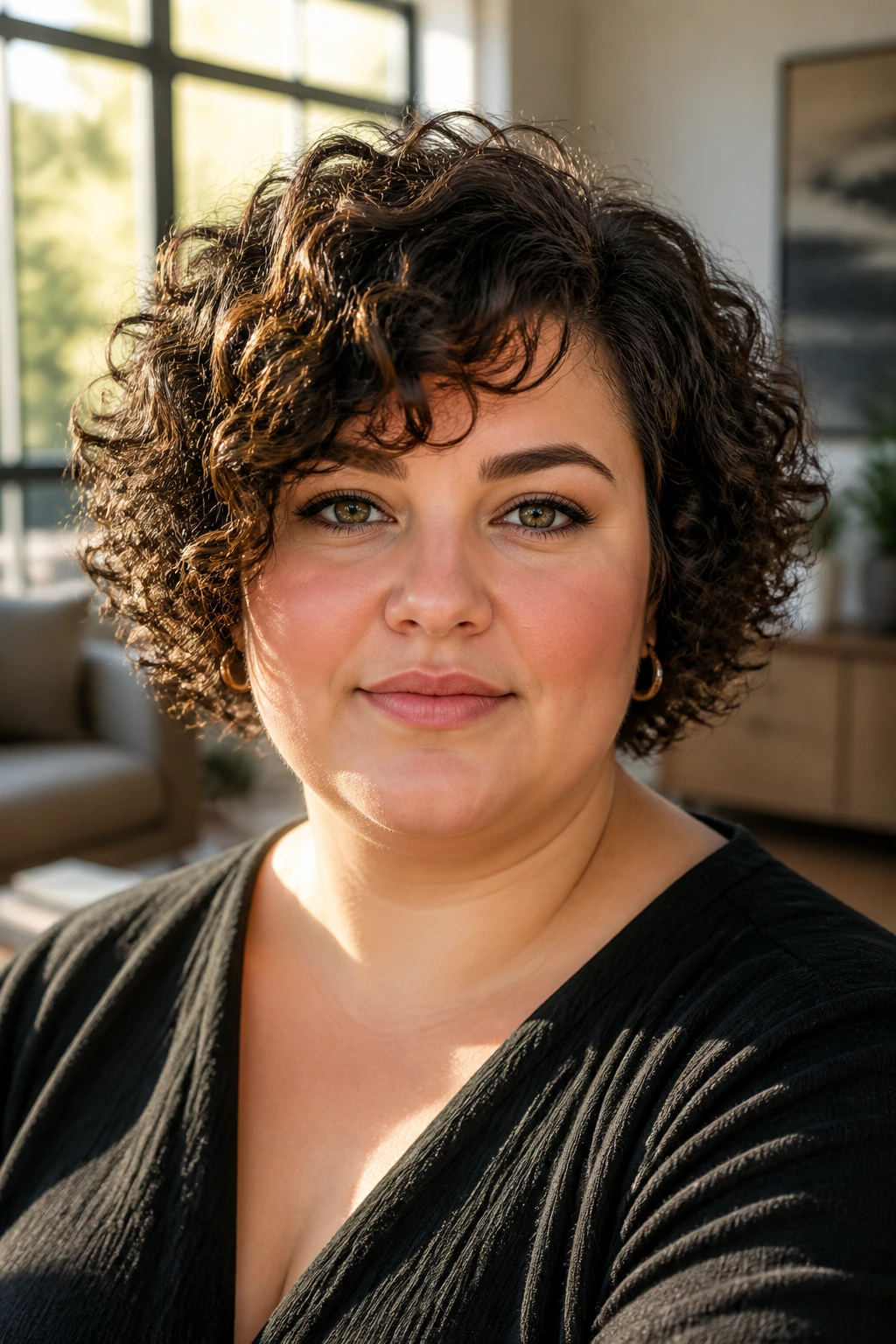
Fine-Hair Lift Edit: Keep layers long and gentle, then build height with mousse and a round brush. This version works best when the ends stay full enough to frame the face without looking see-through.
Thick-Hair Weight-Release Edit: Ask for internal thinning below the cheekbone and a cleaner edge around the jaw. The goal is to remove bulk where the hair expands, not where the face is widest.
Curly Shape Edit: Shape the cut around the curl pattern and keep the heaviest volume a little higher on the head. A curly bob or long curly layers can look gorgeous when the curls are allowed to stack above the cheeks instead of around them.
Short-Hair Clean-Line Edit: If you love short cuts, keep the sides tidy and the top taller. Think pixie, tapered bob, or a cropped cut with a side sweep. The outline should feel narrow at the cheek and stronger at the crown.
Low-Heat Air-Dry Edit: Use a cream or foam, twist the front sections lightly, and pin them while damp. When they dry, they fall in soft bends that flatter the face without any hot-tool fuss.
Common Mistakes That Add Width Instead of Balance
-
Starting the shortest layer at cheek level: That creates a horizontal shelf right where the face is widest. Move the first frame lower, usually near the mouth or collarbone, so the line falls past the cheeks.
-
Adding volume to the sides instead of the top: Big curls or teased sections at the temples widen the face fast. Put the lift at the crown and keep the sides softer.
-
Choosing a blunt bang with no bend: Straight bangs cut across the face and can make the top half feel heavy. Curtain bangs, side-swept fringe, or wispy fringe usually work better because they leave room around the forehead.
-
Letting a bob stop exactly at the jaw: That can make the jaw look wider, even when the cut is neat. Go slightly longer, slightly shorter, or angled forward instead.
-
Using too much product near the roots: Heavy creams and oils flatten volume and make the silhouette drop. Keep richer products on the ends and use lighter styling sprays at the root.
Questions People Ask Before They Sit in the Chair
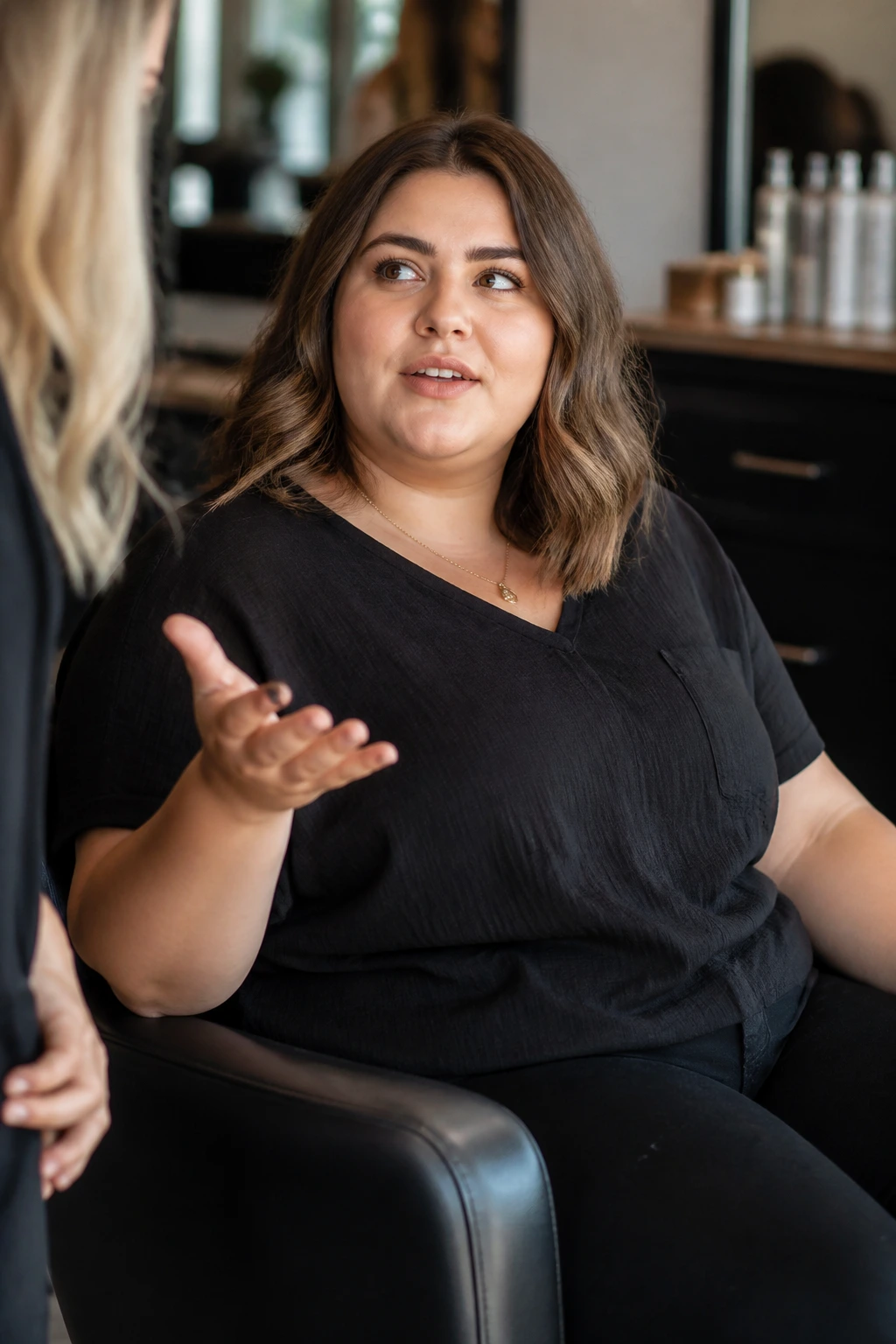
What haircut is most flattering for a fuller face?
A collarbone lob, long face-framing layers, or an angled bob are usually the safest starting points. They create length and direction without sitting directly on the widest part of the face.
Are bangs a bad idea for chubby faces?
No. The wrong bangs are the problem. Heavy straight bangs can feel boxy, while curtain bangs, wispy fringe, and side-swept bangs soften the face and keep it open.
Can short hair work on a rounder face?
Yes, as long as the cut has height at the crown and some narrowness at the sides. A textured pixie or angled bob is usually much better than a blunt, round shape.
Is a center part flattering?
It can be, especially with long layers or sleek lengths, but it needs root lift. If the hair hangs flat beside the cheeks, a slight side part usually reads better.
What if my hair is curly?
Curly hair can look fantastic on a fuller face when the shape is cut with shrinkage in mind. The widest curls should sit above or below the cheek area, not right across it.
How often should I trim these styles?
Pixies usually need a trim every 4 to 6 weeks. Bobs and lobs often stay clean for 6 to 10 weeks, while longer layered styles can go a bit longer before they lose shape.
Do I need to hide my cheeks?
No. That is the wrong goal. A better cut frames the cheeks, gives the face some vertical length, and keeps the hair moving so the overall shape feels balanced.
What if my hair is fine and flat?
Pick a cut that relies on direction, not massive layers. A little crown lift, a cleaner edge, and a lightweight root product will usually help more than chopping the hair up.
A Better Frame
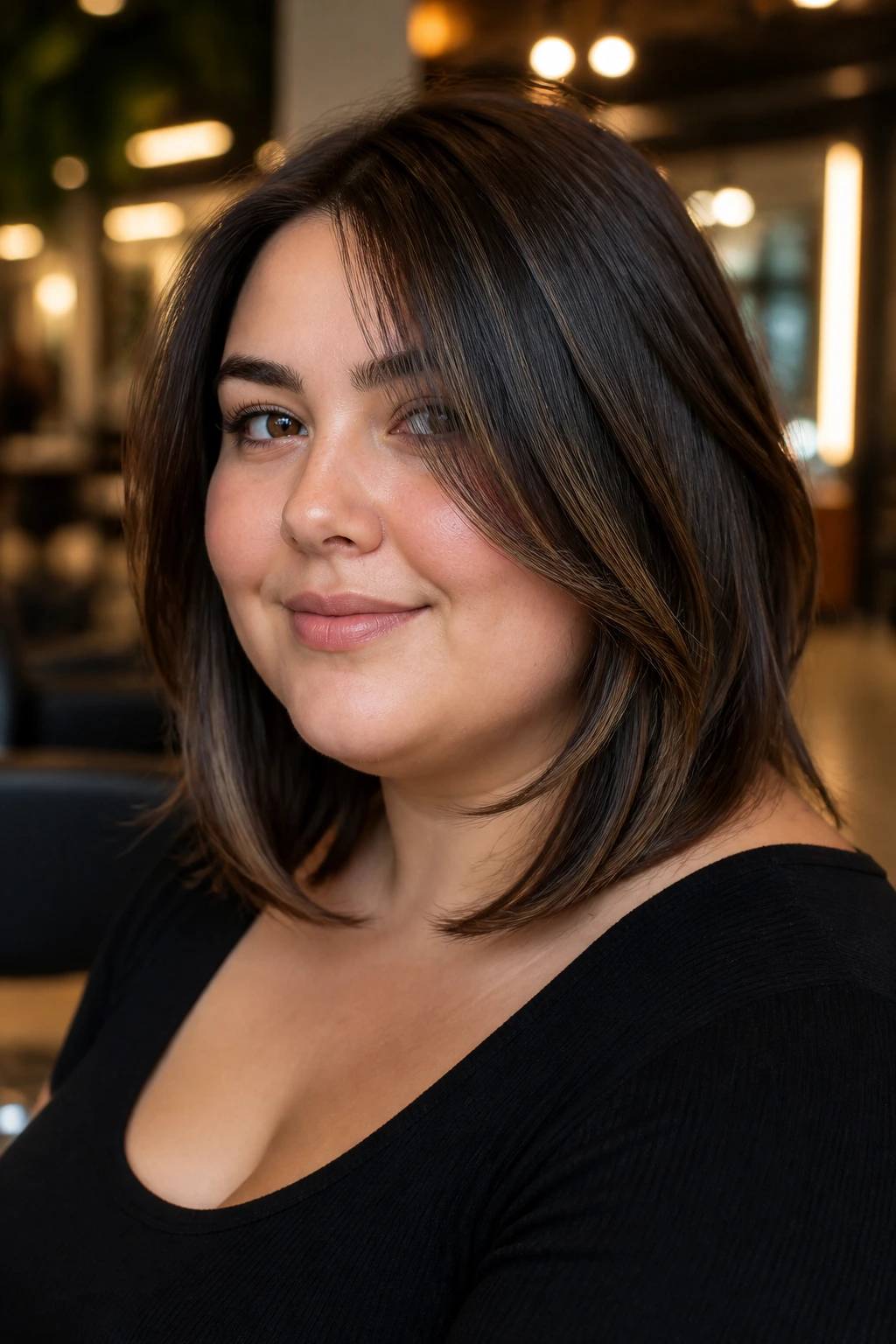
The right haircut does not hide a fuller face. It gives it structure. That is a better deal anyway. Once the line is right — a bit of lift here, a softer edge there, a front piece that falls in the right place — the whole face reads differently without looking forced.
If I had to pick one thing to remember, it would be this: start the shortest pieces below the widest part of the face, then build shape upward or diagonally. That single habit saves a lot of bad cuts. Bring a photo, sure, but bring a clear sense of where your hair actually sits on your head, because that is the part a screenshot can’t tell you.
A good style should make you forget about measuring your face against a rule and start noticing the shape instead. That is the cut worth wearing.
