



A square face has presence. The jawline already does a lot of the visual work, and the wrong cut can make it look even sharper, even harder, even boxier than it really is. That’s why medium length hairstyles for square faces sit in such a useful sweet spot: long enough to bend, feather, wave, and tuck; short enough to keep shape and movement from sagging into heaviness.
The sweet zone usually lives between the collarbone and the top of the shoulder. That length gives hair room to skim past the jaw instead of parking right on it, and that matters more than people think. A blunt line at chin level can look crisp on paper and stubborn in real life. On a square face, it often reads as a second jaw.
The styles that work best here do one or more of three things: they break up the outline with layers, they shift attention with a side part or fringe, or they add movement near the cheekbones and ends so the face doesn’t look locked inside a rectangle. Some are soft and airy. Some are polished. A few are a little edgy. All of them are chosen with one thing in mind: making a strong face look balanced, not hidden.
Why This Collection Feels Different on a Square Face
- Softness where it counts: These cuts avoid stopping right at the jaw, which is the fastest way to make square features feel harsher than they are.
- Movement over bulk: A little bend through the mid-lengths does more for a square face than extra width at the sides ever will.
- Salon-friendly options: You’ll find sleek lobs, shaggy layers, fringe-forward cuts, and curl-friendly shapes, so you can match the style to your hair texture instead of forcing your hair to fight the cut.
- Easy to wear down or half-up: Medium length gives you enough hair for clips, low buns, and loose ponytails without losing the shape that flatters your face.
- Better grow-out: These styles usually look fine for weeks after a trim because the length is forgiving and the layers keep moving.
- Not one-size-fits-all: Straight hair, waves, curls, fine strands, and thick hair all need a slightly different approach, and that difference matters here.
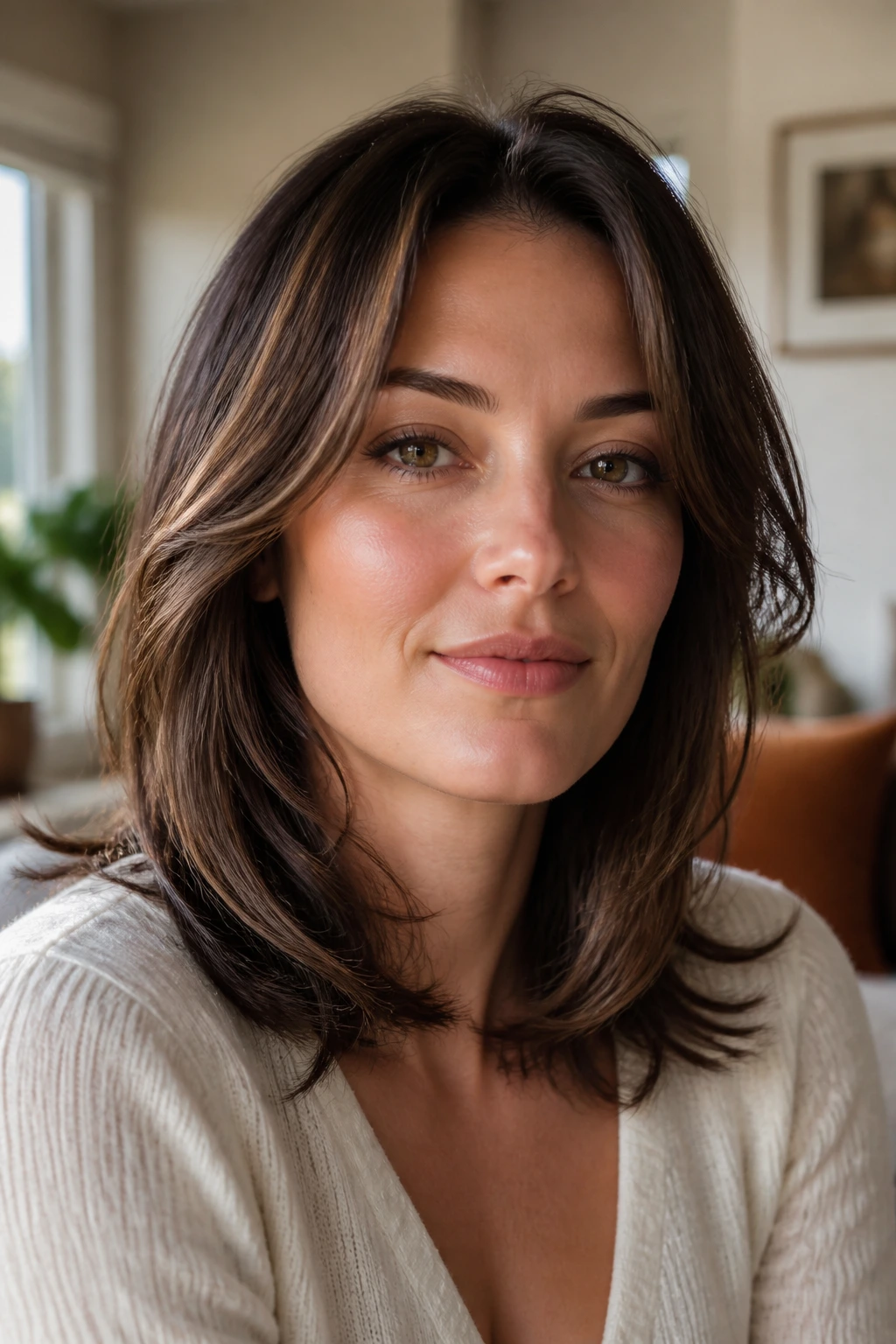
1. Collarbone Lob with Soft Ends
The collarbone lob is the easy first pick because it lands below the jaw and refuses to box the face in. It gives square features some breathing room. The ends skim the collarbone, which keeps the line long and clean without feeling severe.
Why It Works on a Square Face
This cut works because the eye moves downward instead of stopping at the jaw. The soft ends matter more than the length sounds like they should. A blunt shoulder-grazing line can still be flattering, but the ends need a little bevel, a little bend, something that keeps them from sitting like a ruler across the bottom of the face.
Quick Notes
- Ask for the front pieces to sit a touch longer than the back.
- Keep the ends lightly point-cut, not razor-chopped.
- Style with a round brush or a loose wave iron for extra curve.
One small rule: if the lob lands exactly at jaw height, move it lower. That inch or two makes a real difference.
2. Side-Swept Layers with Long Curtain Bangs
If you want the face to look a little softer without losing structure, side-swept layers do the heavy lifting. Long curtain bangs open the center and angle away from the jaw, which is a good thing on a square face. Clean, but not stiff.
A deep side part helps here. It cuts a diagonal through the face, and diagonals are your friend when your features already have strong horizontal lines. The whole shape feels less squared-off, more brushed by motion than carved by it.
You also get flexibility. Blow it smooth for work, wave it up for dinner, clip back one side on a busy morning. The bangs shouldn’t be cut too short; they need to graze the cheekbones or just below them so they don’t widen the forehead.
3. Textured Shag to the Collarbone
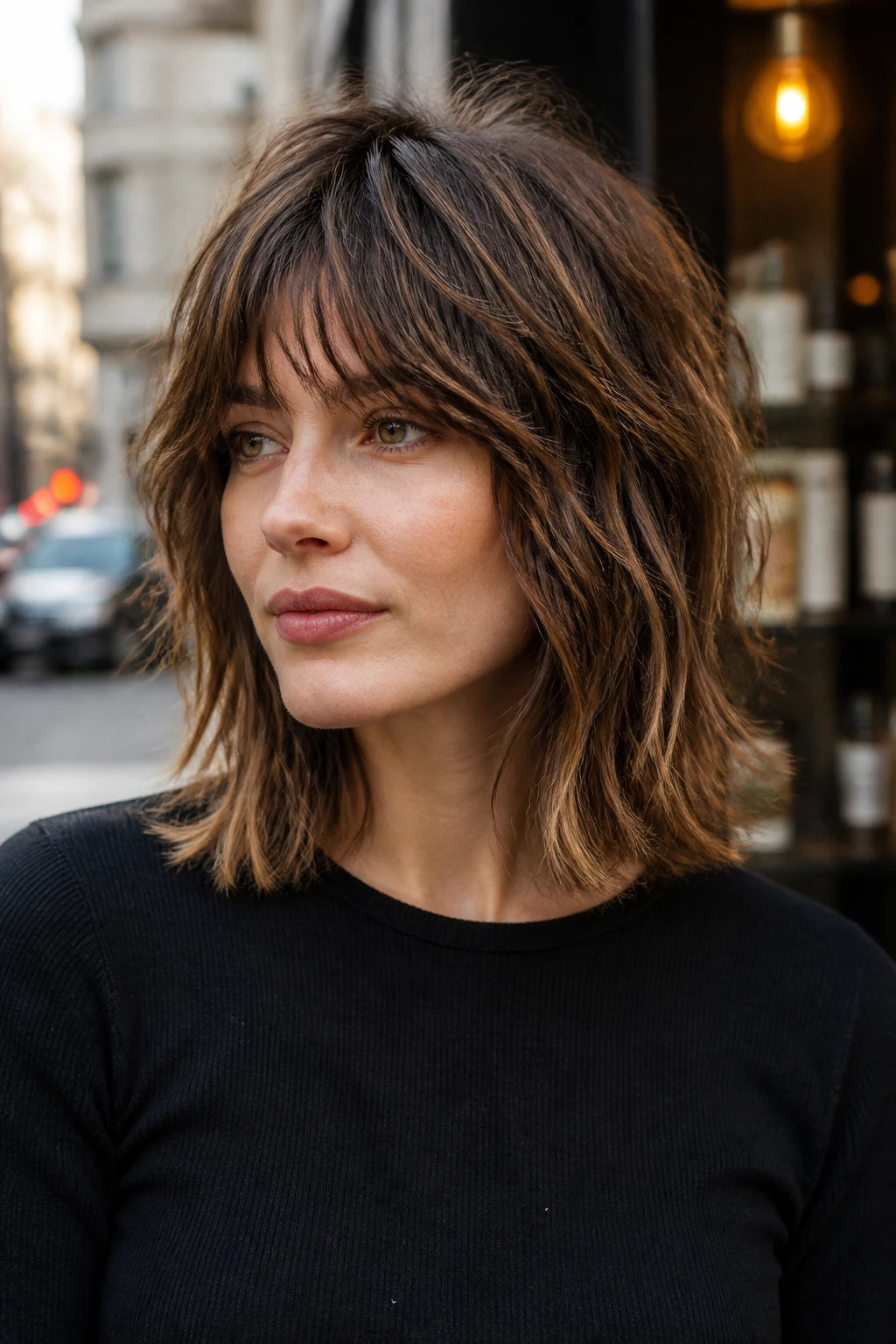
Why do shags look so good on square faces? Because they break up everything that wants to look straight. The layers do not march in a neat line. They move. They flick. They keep the face from sitting inside one hard outline.
A collarbone shag is a good middle ground if you like texture but do not want full rock-and-roll chaos. Keep the crown light and the lower layers soft, with the longest pieces falling somewhere around the collarbone. That keeps the cut from turning into a triangle or, worse, a puffball at the sides.
How to Keep It from Going Too Far
- Ask for layers that start below the cheekbone.
- Use a light mousse at the roots, not a heavy cream.
- Let the ends look a little uneven on purpose. That’s the point.
This cut loves a bit of mess. Too much polish kills it.
4. Blunt Lob with a Deep Side Part
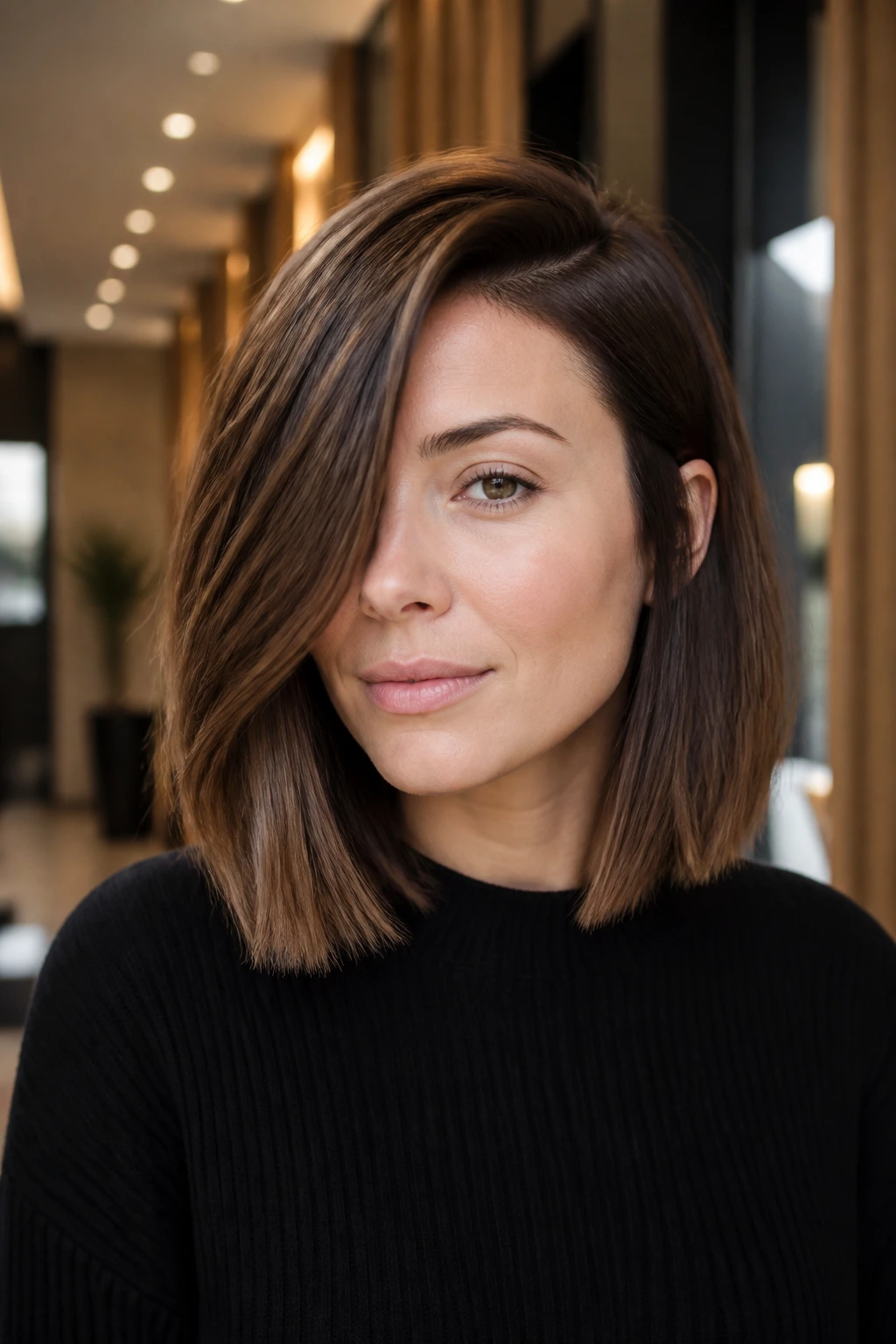
A blunt lob can work on a square face, and I mean that in the most direct way possible. Just don’t pair it with a center part and a flat blow-dry unless you enjoy looking boxy. The side part changes the whole story.
The blunt edge gives the haircut strength, but the part and the bend stop it from feeling like a helmet. It’s a clean, grown-up look that suits straight hair especially well. The trick is to keep the line below the jaw and to add a little bend through the front so the eye gets something softer than a straight line.
If your face is very angular, this is one of those cuts that looks best when the ends are tucked behind one ear on one side and left loose on the other. Small asymmetry. Big payoff.
5. Bouncy Layered Blowout
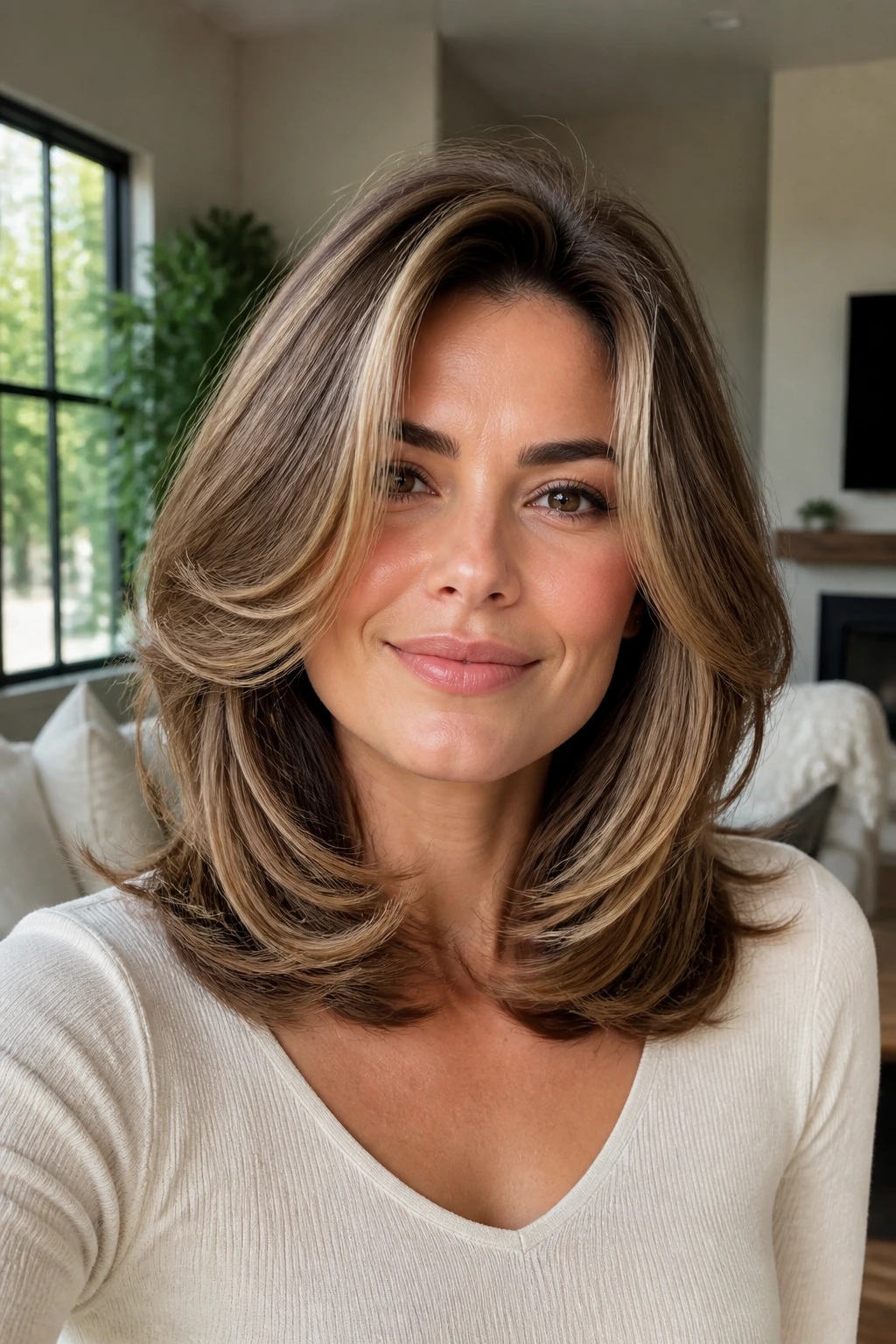
This is the cut for someone who likes hair with a little swing. Bouncy layers can make a square face look lifted through the cheeks and softer around the jaw, especially when the shortest face-framing pieces begin below the cheekbone. The whole point is movement that curves, not sits.
Think of the finish here as polished, not stiff. A good layered blowout has that easy shape where the front bends away from the face and the ends flip lightly under or out depending on the brush. That curve matters. It changes how the light hits the face and keeps the strong lines from dominating the look.
A round brush and a medium barrel brush both work. I prefer a brush that is big enough to smooth but not so huge that it flattens the shape. The hair should look lifted, not puffy.
6. Wavy Midi Cut with Face-Framing Pieces
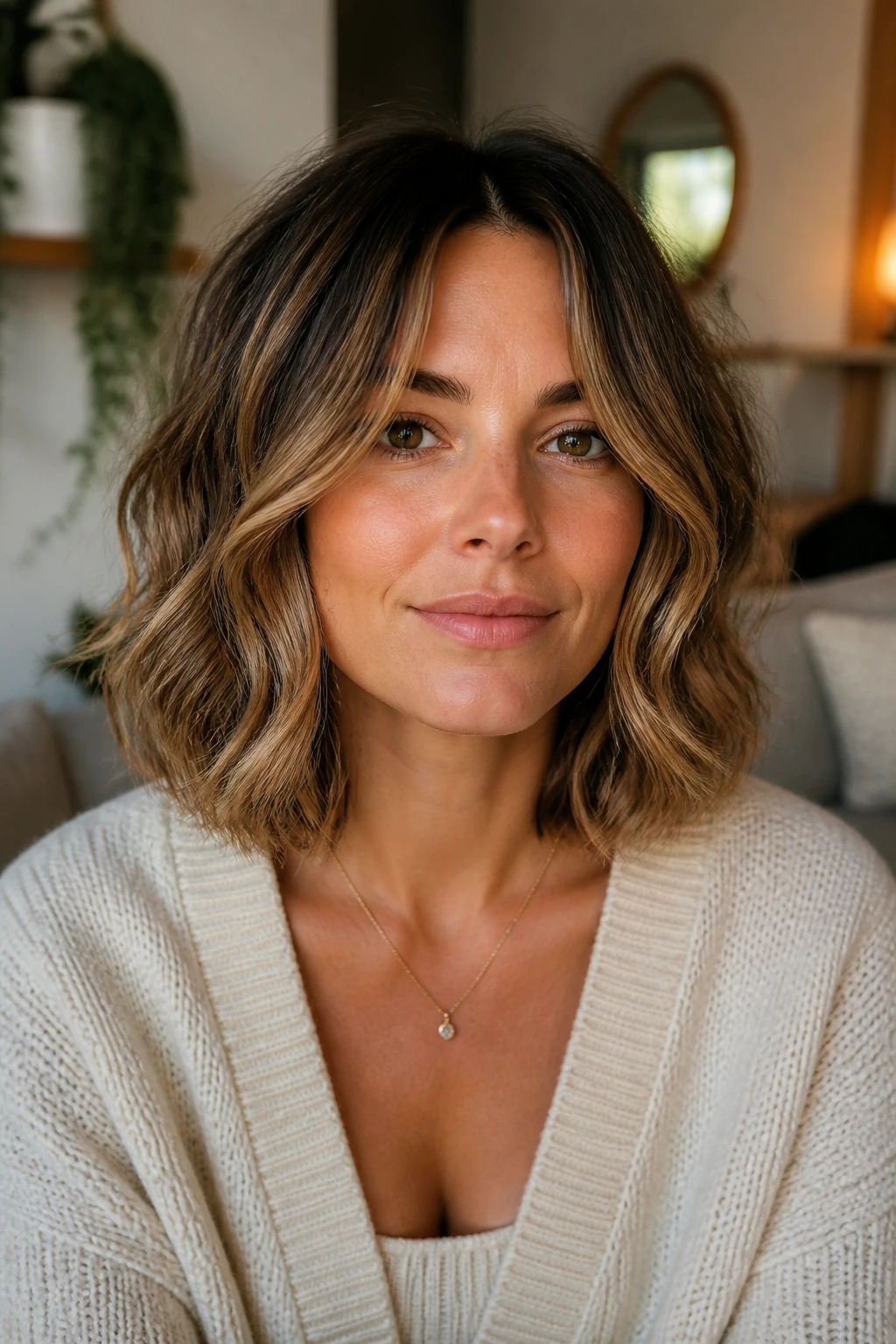
Unlike a strict one-length style, this cut gives the eye places to rest. The waves break the outline, and the face-framing pieces should start low enough to soften the jaw without hanging on top of it like curtains.
Square faces tend to look best when the front layers are longer than people expect. Too short, and they widen the lower half of the face. Too long, and the effect disappears. The best version usually starts around the cheekbone and slides down past the chin.
This is a forgiving cut for natural waves. Let the texture do the work, then refine it with a little cream at the ends if the hair gets frizzy. If your waves are loose, a 1.25-inch iron can add just enough bend to keep the shape from collapsing by noon.
7. Angled Lob that Skims the Jaw
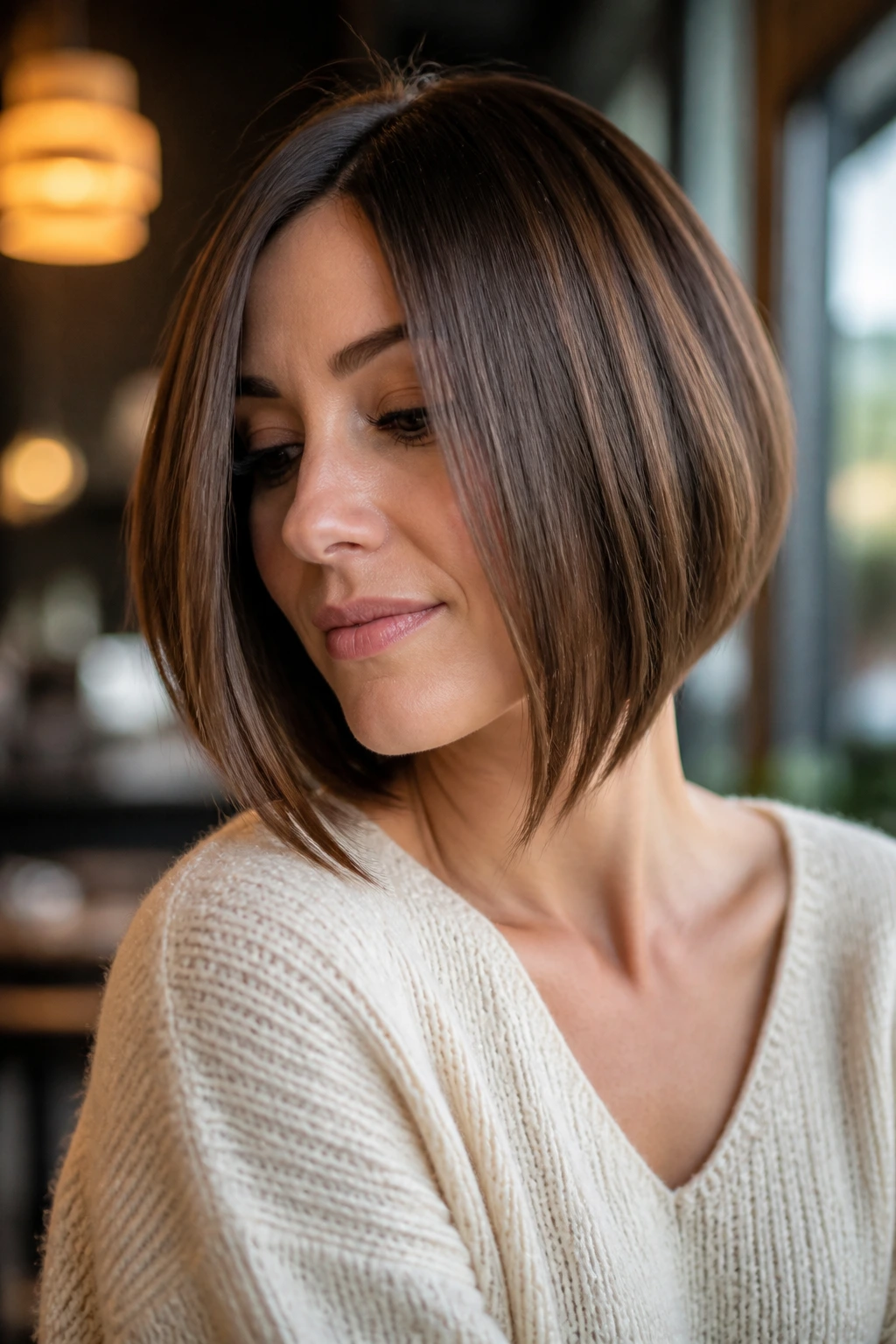
An angled lob is one of my favorite options for a square face because it uses geometry on purpose. The front pieces are a little longer than the back, so the eye travels downward instead of stopping at the widest part of the jaw. Simple. Useful. It works.
What Makes It Different
- The front length gives a lengthening effect without making the hair feel heavy.
- The back stays neat, so the shape still looks intentional.
- The angle is most flattering when it is subtle, not dramatic.
If the angle gets too steep, the cut can look dated fast. Keep it soft. The point is not to shout. The point is to stretch the silhouette and let the face keep its strong structure without adding another hard line under it.
8. Soft Curly Lob with Side Volume

Curly hair on a square face needs room, not punishment. A soft curly lob gives the curls enough length to spring without building a square silhouette around the jaw. Side volume helps a lot here because it creates lift above the cheekbones and breaks up the width at the lower face.
The best version of this cut is shaped dry, or at least checked dry, because curl pattern changes the whole geometry. A curl that shrinks to the chin in the chair may end up at the jawline once it dries, and that’s the zone you want to avoid.
A side part often beats a center part here, though not always. If your curls naturally fall to one side, let them. Fighting curl direction is usually where curly cuts go sideways.
9. Shoulder-Length Cut with Bottleneck Bangs

Want fringe without a heavy wall across the forehead? Bottleneck bangs are the answer. They start narrow near the center and open out toward the temples, which keeps the forehead from looking chopped off and gives a square face a softer top half.
This cut sits around the shoulders, which helps the overall shape feel long and airy. The bangs draw the eye inward and upward, but because they don’t come straight across in one blunt line, they avoid adding width to the face. That’s the little trick.
It’s a good choice if you like a more styled look without the daily commitment of full bangs. The fringe can be brushed to one side on lazy days and still look deliberate.
10. Invisible Layers for Fine Hair
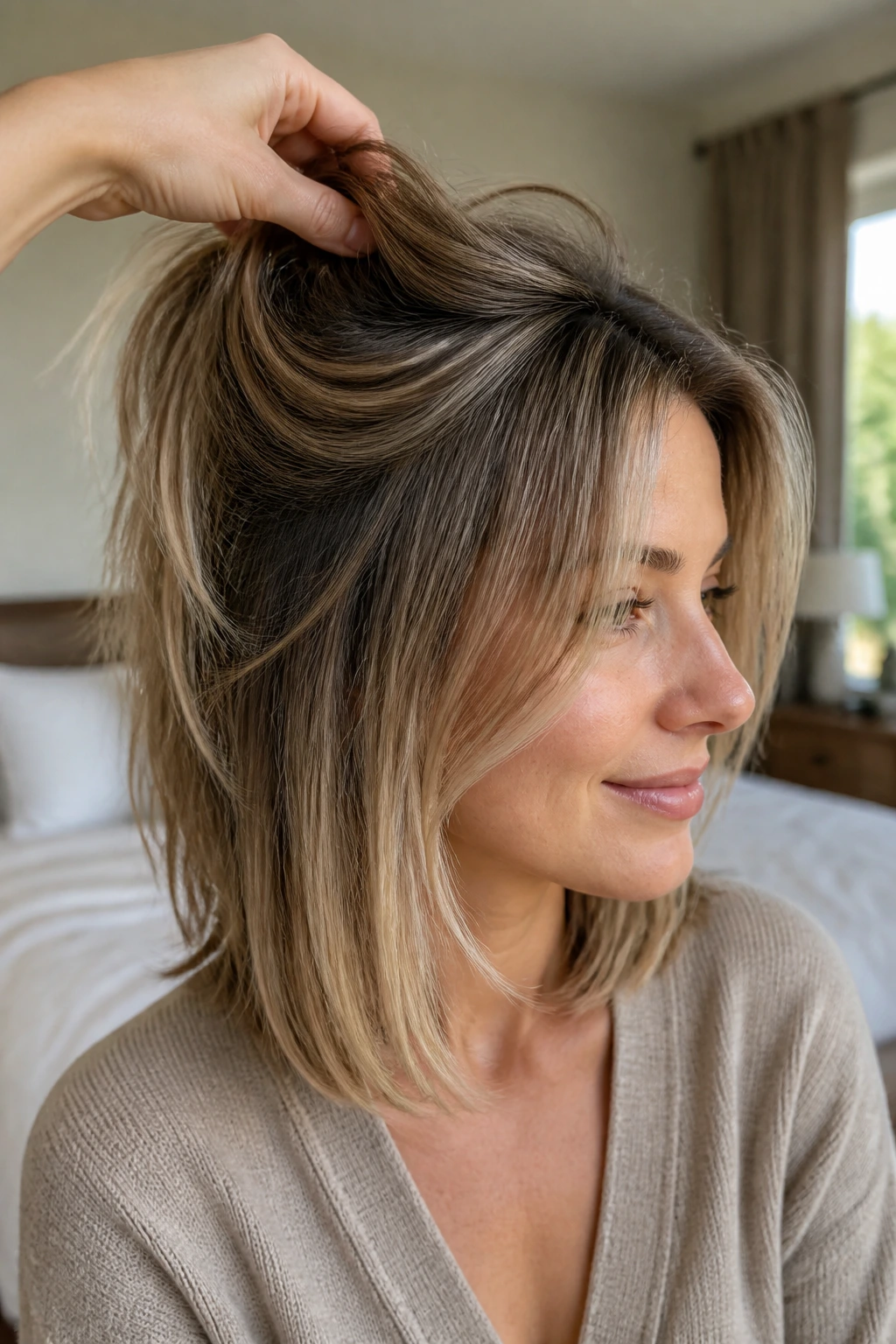
Fine hair can go limp fast at medium length, especially if the cut is too blunt and too heavy at the ends. Invisible layers fix that without making the haircut look choppy. You get movement inside the shape, not messy steps on the outside.
The best part is how clean it looks. The layers live underneath the top section, so the haircut still reads as full. On a square face, that matters because you want lift and softness, not a ragged outline that adds width at the sides.
How to Wear It
- Blow-dry with a root lift spray at the crown.
- Use a one-inch round brush to bend the front pieces away from the face.
- Keep products light; thick creams can collapse the layers by lunch.
This is a quiet haircut. That’s its strength.
11. Choppy Lob with Piecey Texture
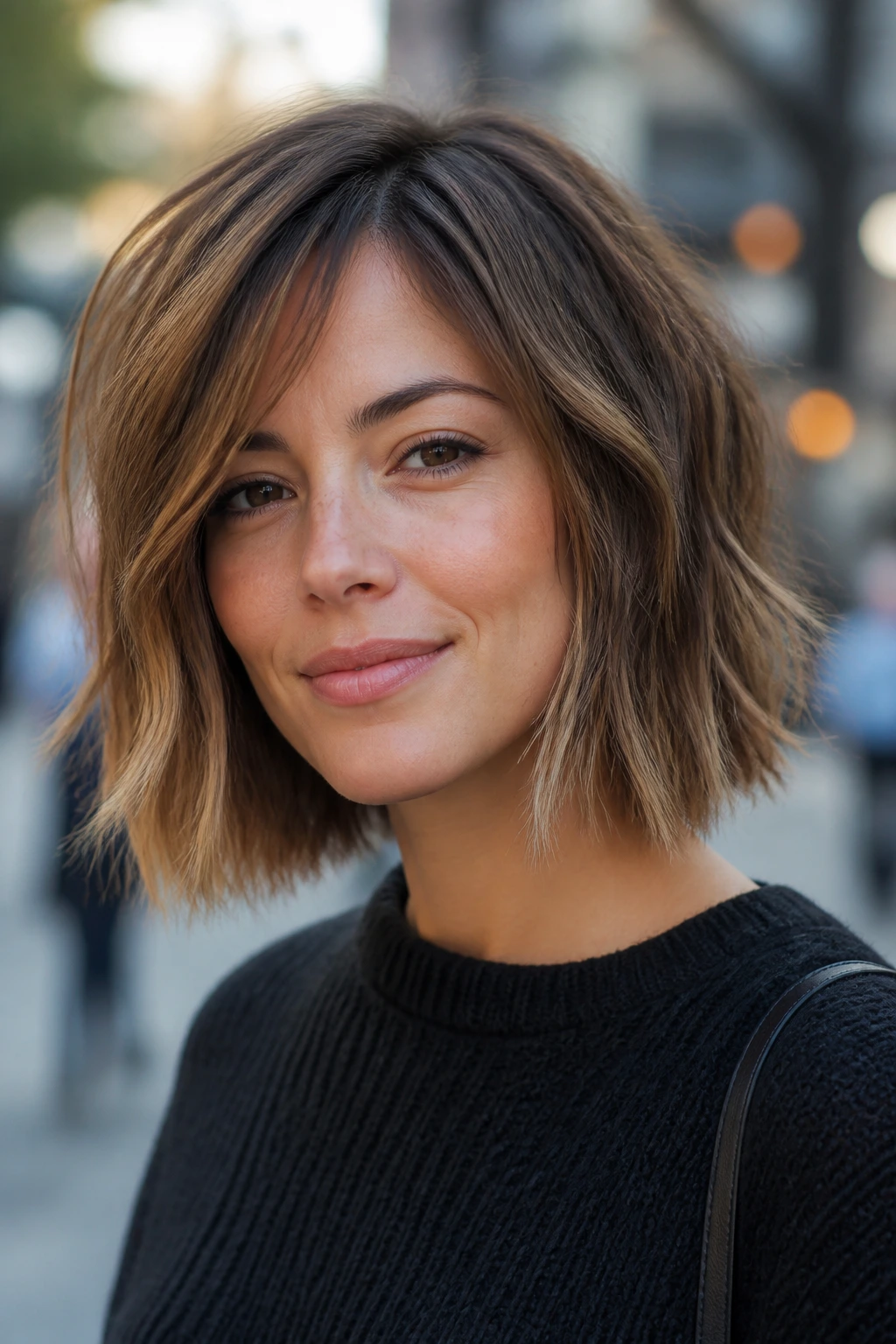
A choppy lob is the opposite of slick and formal, and sometimes that is exactly what a square face needs. The piecey ends break the outline and keep the haircut from feeling too severe. Every little separation in the hair helps soften the edges.
This cut suits hair that holds texture well. Thick straight hair especially likes it, because the layers remove enough bulk to keep the ends from sitting like a block. A little sea-salt spray or a dry texturizer can give the hair that slightly undone finish that makes the shape feel current without trying too hard.
The key is restraint. Choppy does not mean shredded. The pieces should move, not fray.
12. Modern Wolf Cut at Medium Length

The wolf cut can work on square faces, but only when it stays medium and controlled. If the crown gets too short and the sides get too broad, the shape goes wild in a bad way. Keep the longest pieces near the shoulders, and let the top layers stay soft rather than spiky.
What makes this version useful is the combination of lift and separation. The layers create movement around the upper half of the head, which keeps the jaw from carrying all the visual weight. It has some edge, sure, but it still needs balance.
This is the kind of cut that looks best with a little texture spray and not much else. Over-styling it kills the charm.
13. Mid-Length Cut with Swept-Back Fringe

A swept-back fringe is a smart move when you want your forehead open but still want something around the face. On square faces, that matters because a straight-across fringe can emphasize width, while a swept-back shape lifts the line upward and outward.
The rest of the cut should stay medium and flexible, with enough length to tuck behind the ears or wave away from the face. That gives the fringe room to do its job without the whole haircut turning heavy.
The Best Part About It
- It softens the temples, which people often forget about.
- It works with ponytails and half-up looks.
- It lets the brow stay visible, which keeps the face feeling open.
This is a good one if you like structure but not bluntness.
14. Soft A-Line Bob That Hits the Collarbone
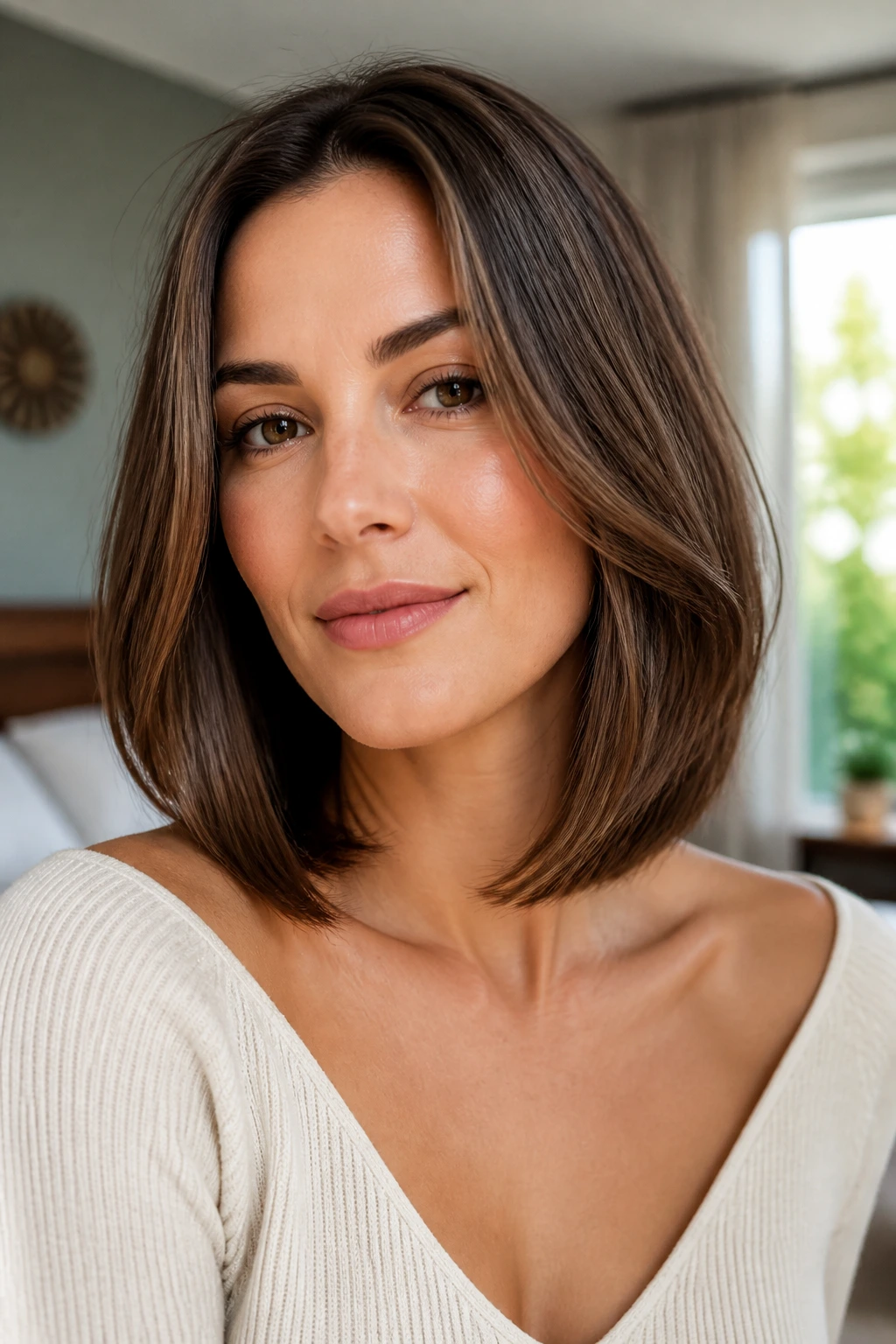
A subtle A-line is a tidy way to make a square face look a little longer. The front stays longer than the back, but the angle is gentle, not dramatic. That means the haircut keeps some polish while still moving the eye downward.
The cut should graze the collarbone or sit just above it in front. Any shorter, and the jaw starts to dominate again. A soft A-line works especially well when the ends are beveled, since that keeps the lower edge from looking too rigid.
You can wear this one sleek or with a bend. Either way, the length difference between front and back is doing quiet work in the background.
15. Half-Up Friendly Layered Cut
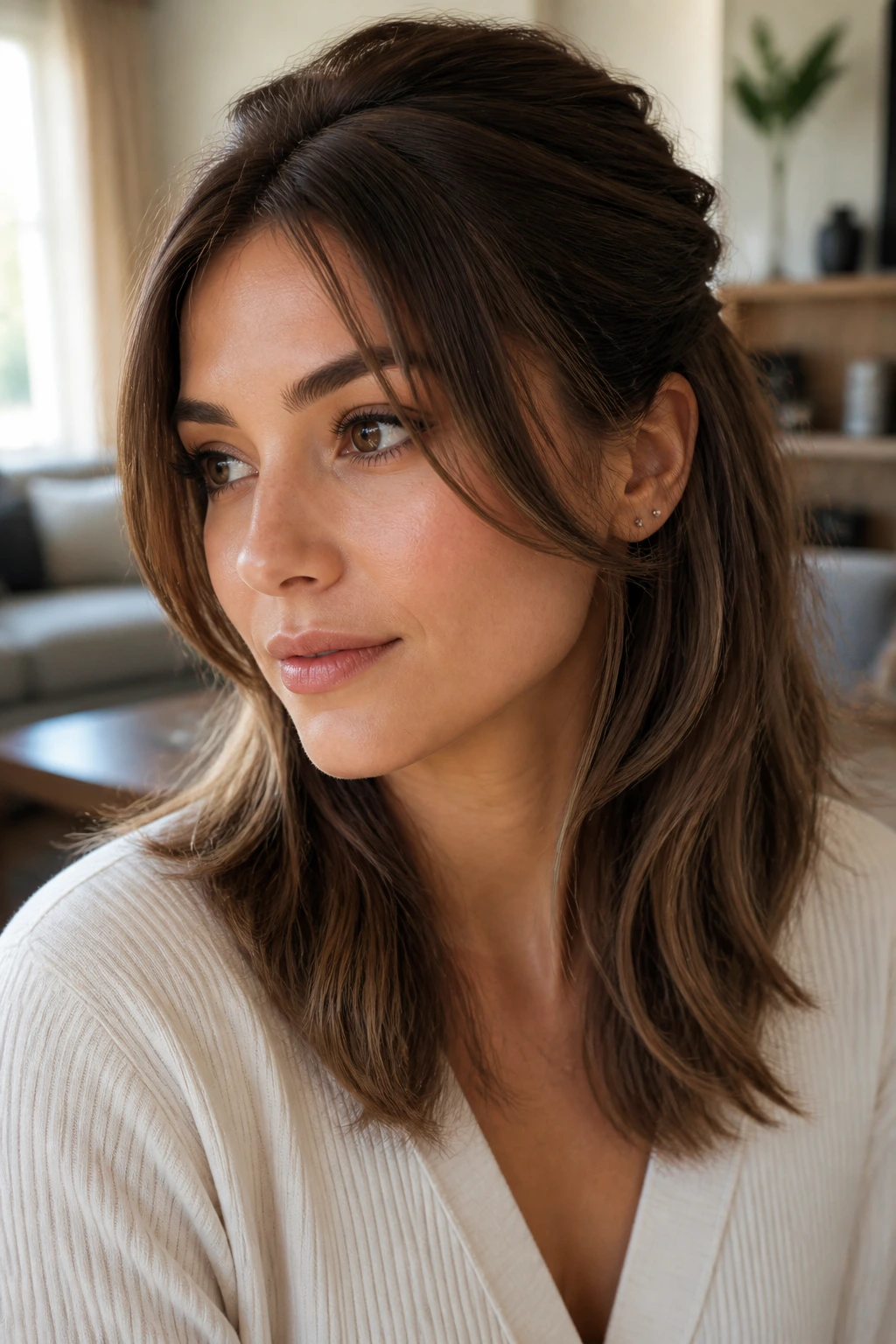
Some styles look good only when fully down. This isn’t one of them. A layered medium cut that still works in a half-up clip is practical, and on a square face, practicality matters because you’ll actually wear it.
The trick is to keep the shortest layers long enough to fall around the cheekbones when the top section is pulled back. That leaves softness around the face instead of exposing every angle. You get the lift of a half-up style without the hard lines that can happen when everything is pulled away.
It’s one of the easiest cuts to live with. And that counts.
16. Messy Waves with Tapered Ends
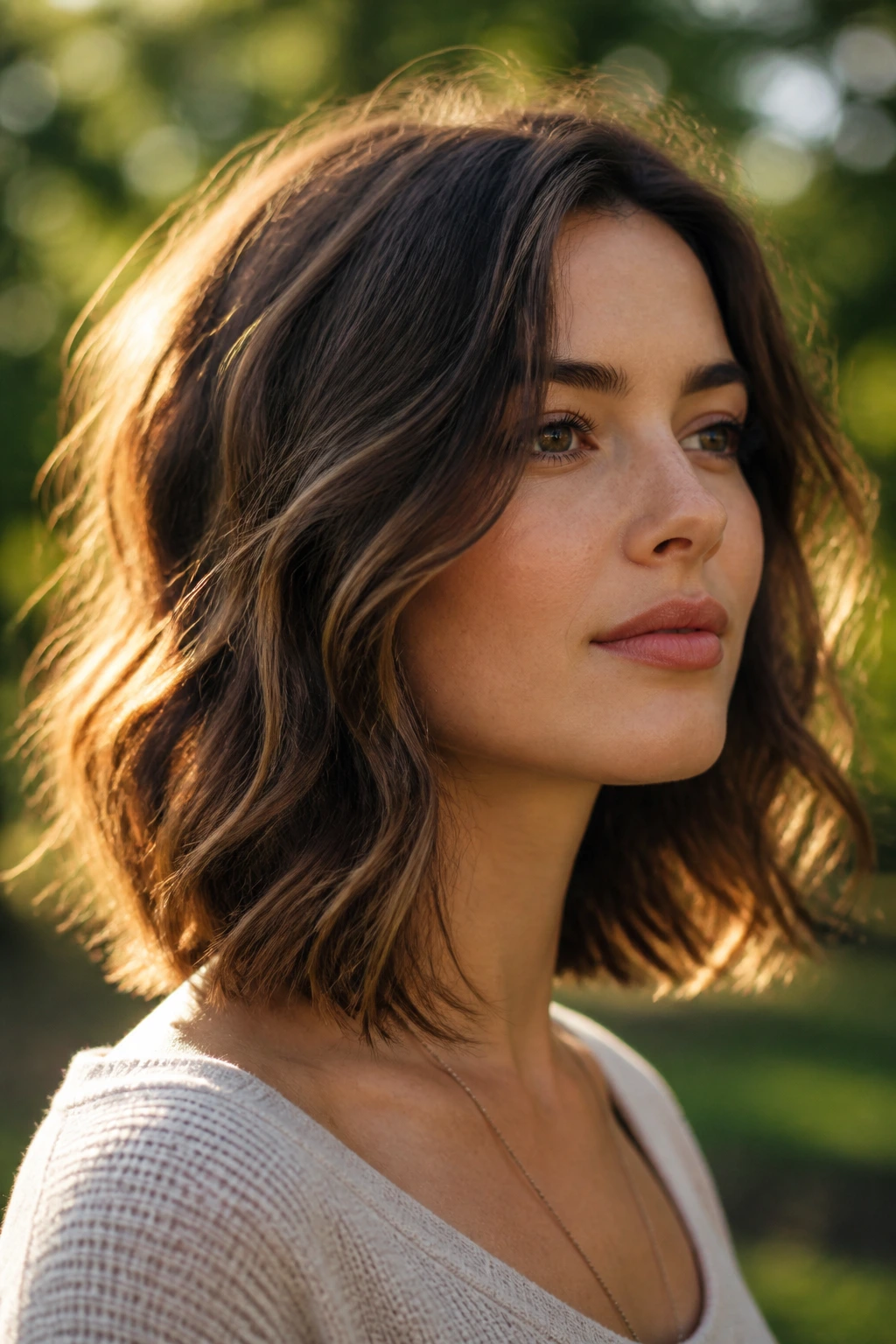
Messy waves look effortless in theory and weirdly specific in real life. The difference on a square face comes down to the ends. If they’re too blunt, the wave sits like a shelf. Taper them and the whole shape loosens up.
The tapered finish helps the waves feel light around the jaw and neck. That keeps the face from looking wider than it is. You can achieve this with a good cut, a 1.25-inch iron, or an air-dry routine that encourages the ends to bend instead of puff.
This style works when it feels a little imperfect. If every wave is identical, it can read stiff. Let the pattern vary a bit.
17. Layered Cut with Curtain Bangs and Flicked-Out Ends
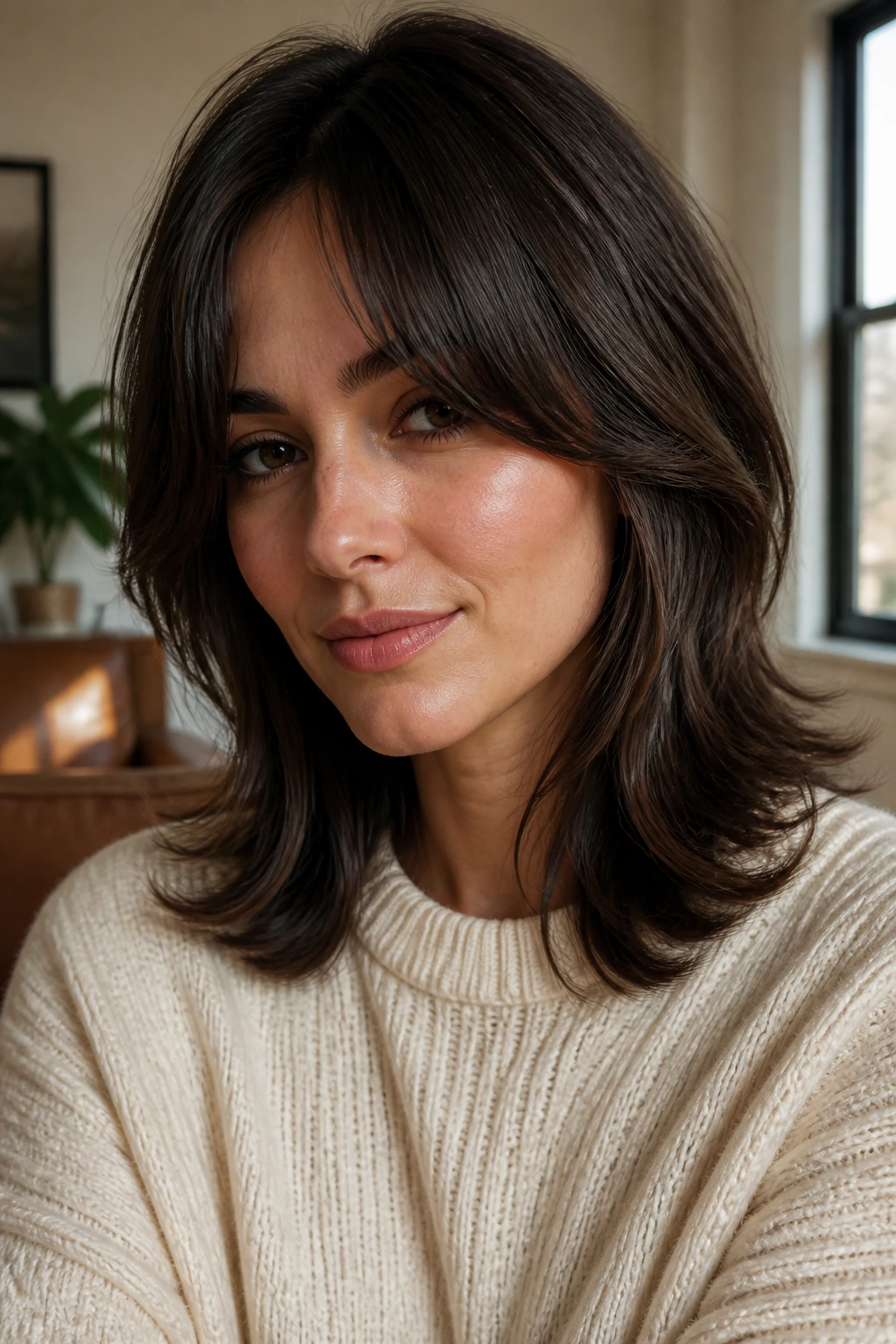
Curtain bangs are useful on square faces because they split the forehead and steer attention toward the eyes and cheekbones. Add flicked-out ends, and you get a shape that moves away from the jaw instead of settling into it.
This is the cut for someone who likes a bit of drama but not a lot of weight. The bangs should blend into the front layers, not sit like a separate piece. The ends can be styled outward with a round brush or a flat iron bend, which creates a little softness and keeps the silhouette from looking too neat.
It’s a small thing, that outward flick. It changes the whole outline.
18. Shoulder-Grazing Cut with U-Shaped Layers
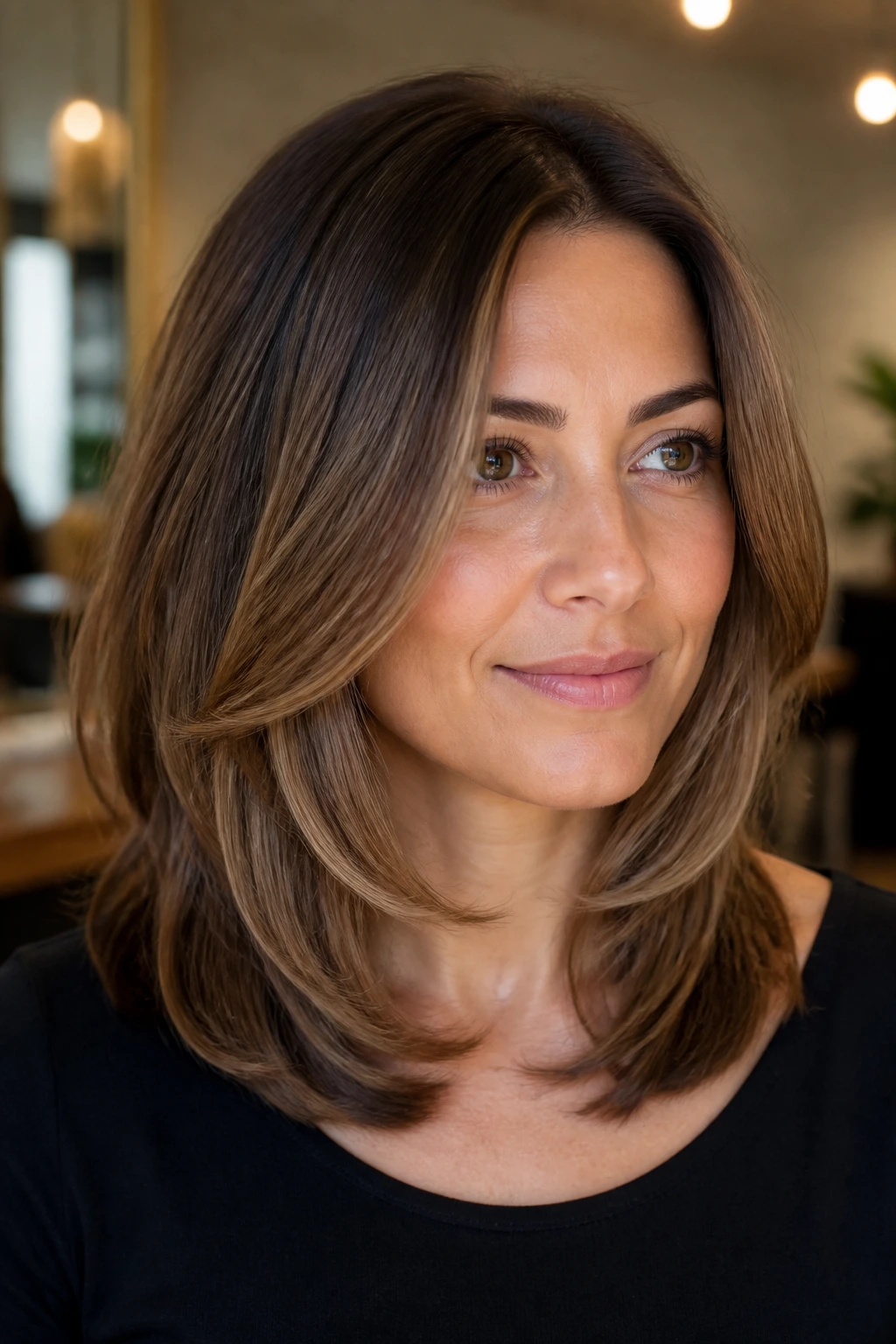
A U-shape keeps the back full and the sides softer, which is a nice setup for square faces. The layers fall in a gentle curve, so the line doesn’t feel boxy when the hair is down. It’s cleaner than a shag, less structured than a lob, and surprisingly easy to wear.
The U-shape works best when the face-framing pieces begin below the cheekbone and the shortest layer doesn’t land exactly at the jaw. That keeps the outline from getting wider where it should be softer.
If your hair is thick, this shape can remove some weight without making the ends thin. If your hair is fine, keep the layers conservative so the cut doesn’t lose body.
19. Brushed-Out Retro Waves
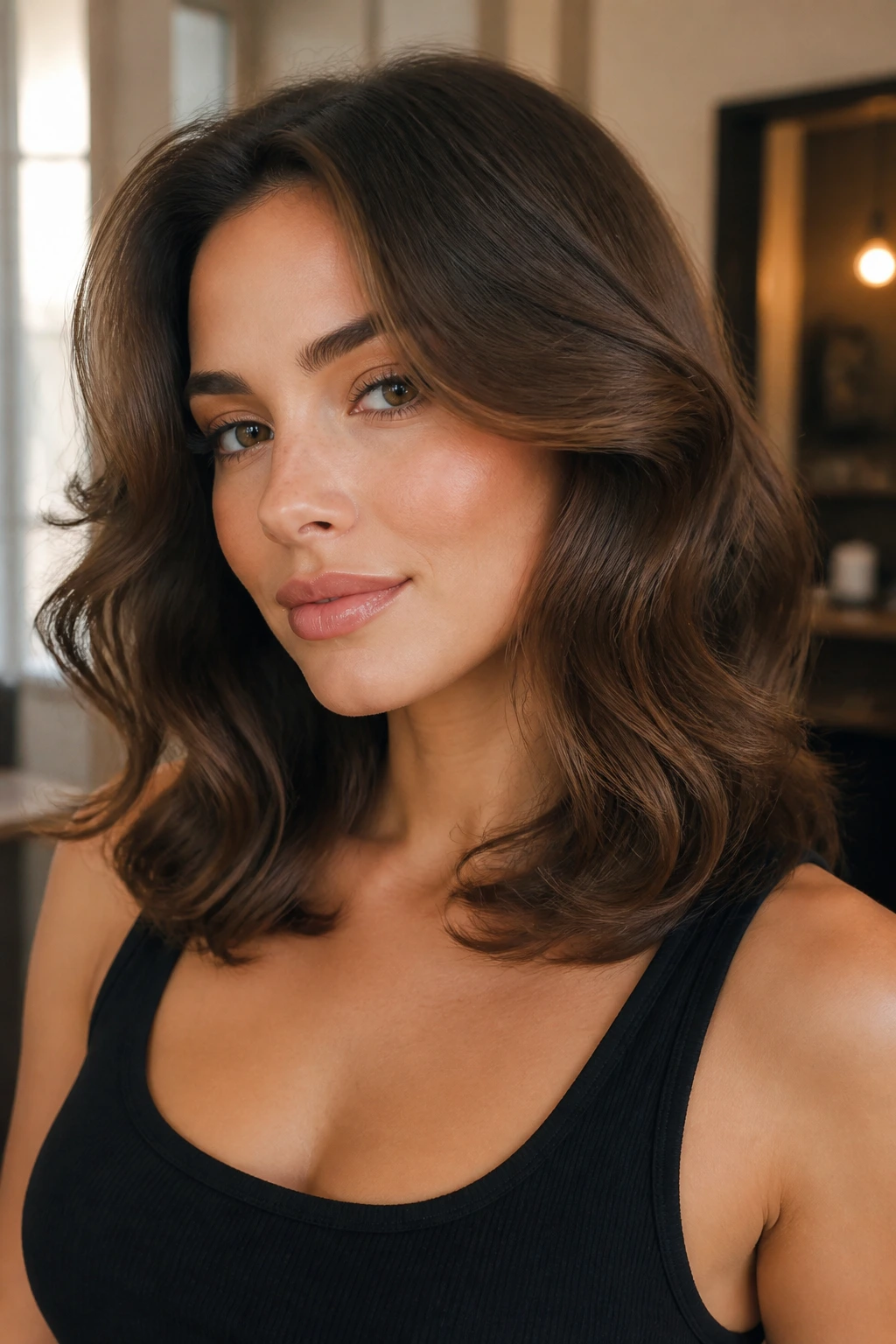
Retro waves have a softness that square faces love, especially when they’re brushed out a bit. Tight curls can sometimes add width where you don’t need it. Brushed waves break into a looser pattern that skims over the jaw and cheekbones.
This is one of the more glamorous options in the bunch, but it still works because the waves are directional. They curve rather than puff. The front pieces should sweep away from the face, and the length should sit below the jawline so the silhouette stays long.
A medium-hold spray helps the shape last without turning it crunchy. The finish should look touchable, not cemented.
20. Low-Maintenance Air-Dry Cut with Soft Internal Layers
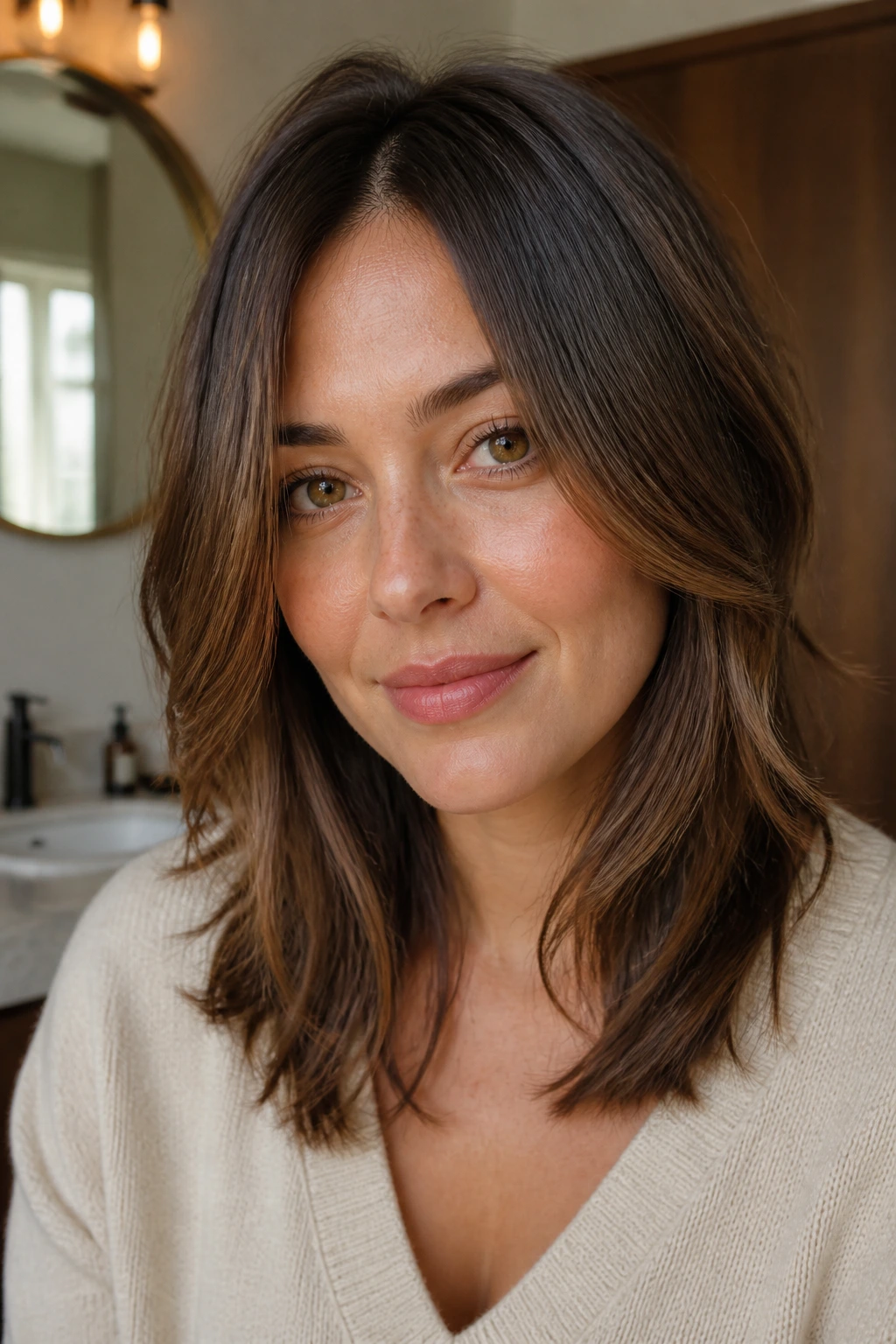
If you hate a blow dryer, this is your lane. Soft internal layers give air-dried hair room to move without making the outside of the cut look ragged. On a square face, that matters because the shape needs to stay gentle even when the hair dries on its own.
The best version usually includes a bit of face-framing length, a center or off-center part, and a product that encourages the hair to clump softly instead of puffing out. A cream or foam can work, depending on texture. What you do not want is a heavy finish that drags the hair flat against the sides of the face.
It’s a quiet cut. Low drama. Fewer tools. Fewer headaches.
Why Medium Length Softens Strong Angles So Well

Square faces already have clear structure, and that structure is the point. The goal is not to erase it. The goal is to keep the hair from competing with it.
The cleanest way to do that is with length placement. When hair ends right at the jaw, the eye gets trapped in the same place over and over. When the cut lands below the jaw, especially near the collarbone, the line keeps moving. That movement makes the face look more open and less rigid.
Layers matter because they create diagonals. So do parts. So does a little bend around the cheekbones. A flat, one-length shape tends to mirror the face’s natural angles, which is why it can feel harsh. Softness comes from interruption. A curve here, a side sweep there, a few pieces that break the outline instead of reinforcing it. That’s the whole game.
Essential Tools for Styling These Cuts
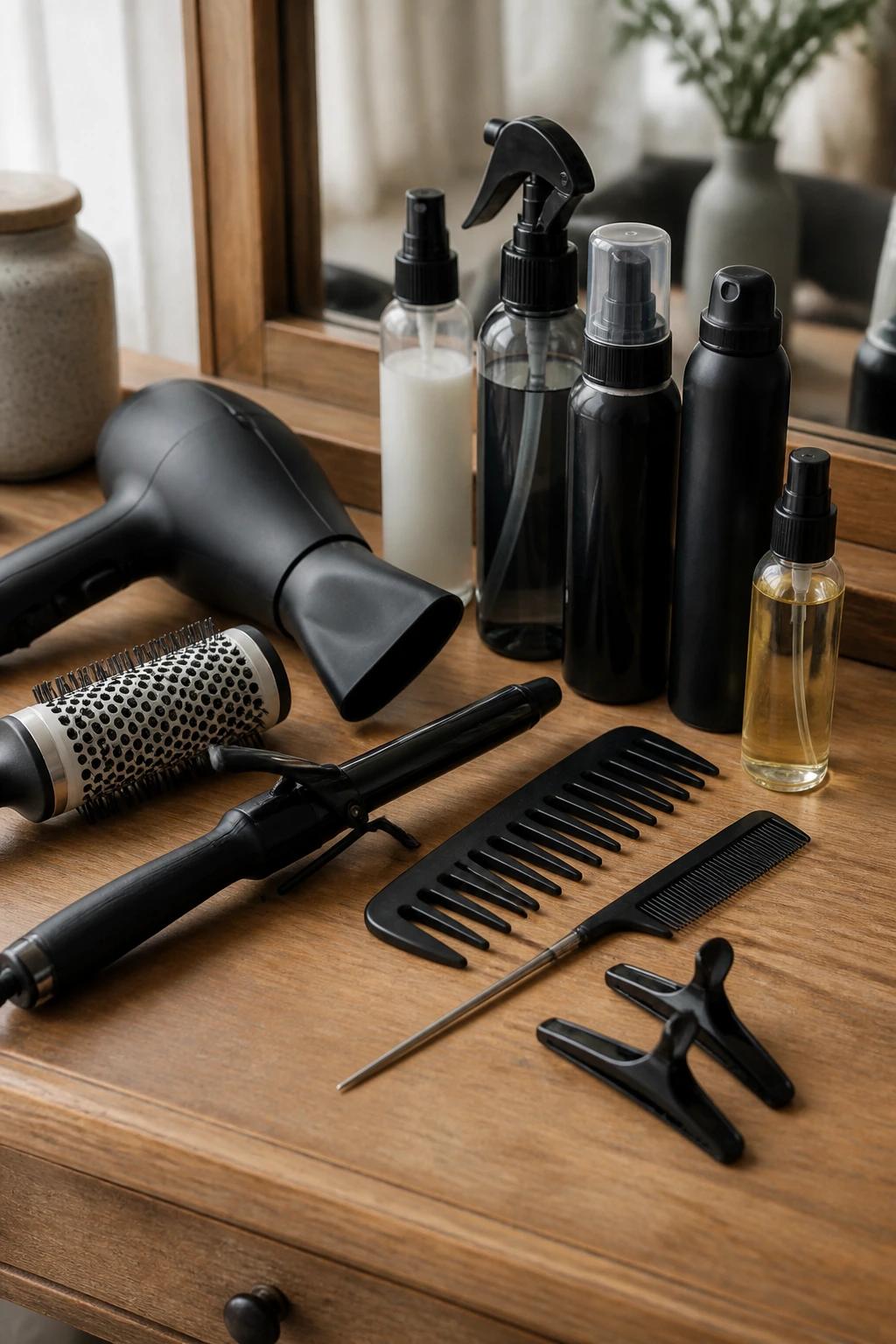
- A 1.25-inch curling iron or wand: This gives a loose bend that flatters medium length without turning the ends into tight ringlets.
- A medium round brush: Useful for smoothing layers, flipping out the ends, or giving curtain bangs a little sweep.
- A blow dryer with a concentrator nozzle: The nozzle matters more than people think; it directs airflow and helps you shape the cut instead of blasting it apart.
- Heat protectant spray: Keep it light and even, especially around the face-framing pieces.
- Texturizing spray: Good for shaggy, choppy, or waved styles that need separation.
- Mousse or root lift foam: Best for fine hair or any style that needs height at the crown.
- Wide-tooth comb: Handy for curly or wavy hair when you want to keep the shape intact.
- Clips and sectioning pins: Small thing, big difference. Clean sections make the styling faster and neater.
- Light serum or finishing oil: Use this only on the ends if they get frizzy; too much near the roots will flatten the cut.
- A tail comb: Great for precise parts, especially if you’re testing side parts against center parts.
How to Ask for Medium Length Hairstyles for Square Faces at the Salon
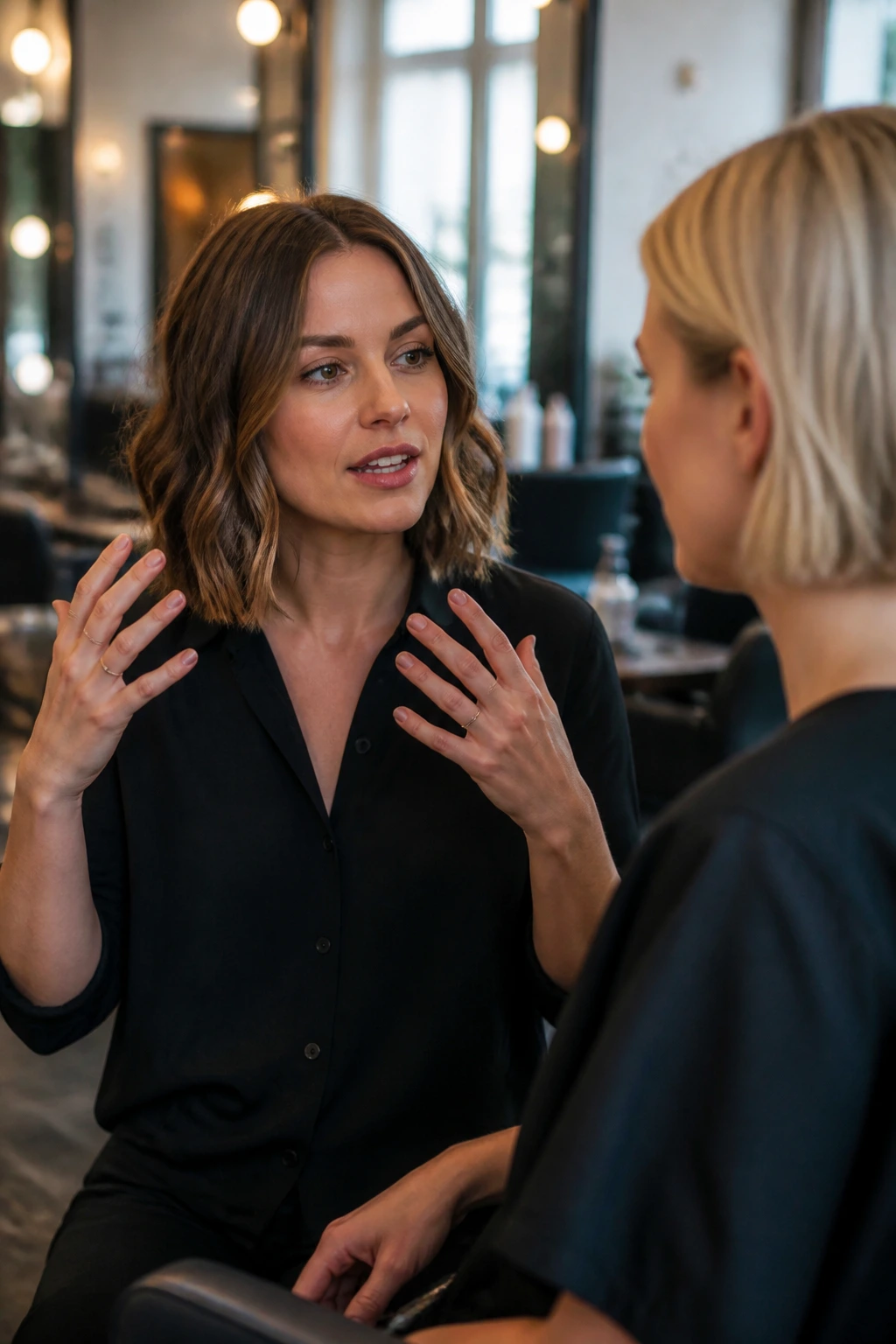
A good haircut starts with a clear sentence. Tell your stylist you want the length to sit below the jaw, usually around the collarbone or just above the shoulders, and that you’re trying to soften the face rather than widen it. That one detail helps more than asking for something “flattering,” which can mean anything and nothing.
Be specific about where you do and do not want weight. If the hair is thick, ask for internal layers or point cutting so the cut moves without getting bulky at the sides. If the hair is fine, ask for fewer exterior layers and more strategic face framing so the shape does not lose density too quickly.
The face-framing pieces deserve attention. For most square faces, the shortest pieces look best starting around the cheekbone or a little below it, not at the jaw. That length bends the eye downward and stops the haircut from echoing the square shape of the face. Bangs can help, too, but the good ones are soft: curtain bangs, bottleneck bangs, or a side sweep that doesn’t land in one blunt line across the forehead.
Texture changes the conversation. Curly hair usually needs a dry check or at least a careful dry finish so shrinkage doesn’t surprise you. Straight hair can carry a cleaner line, but it still needs movement. A little bend, a slight angle, a softer end. Those tiny choices are where the haircut gets better.
How to Style Medium Length Hairstyles for Square Faces on Busy Mornings
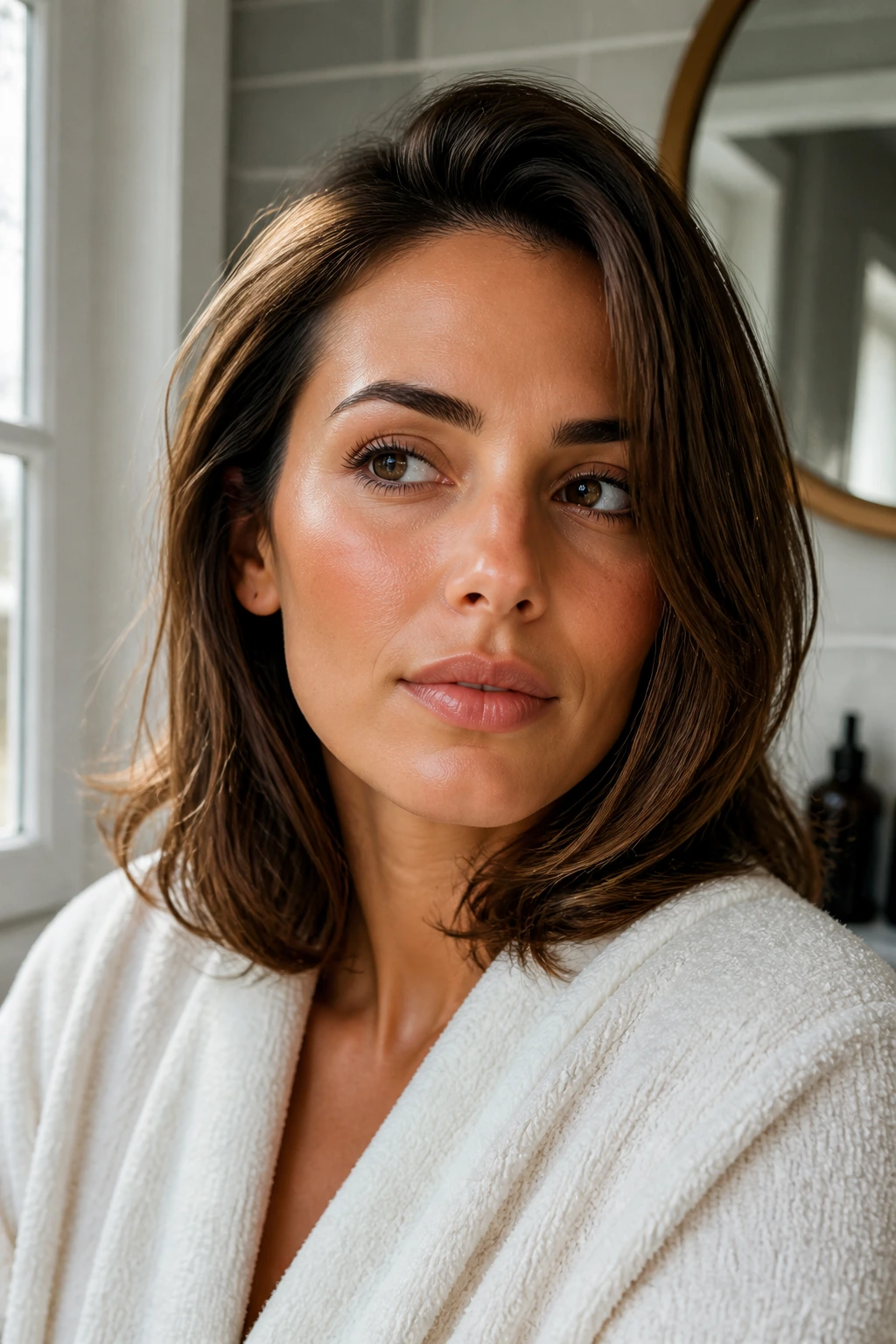
The fastest route is not to style every strand. It’s to shape the front and let the rest do enough on its own. A side part, a quick bend at the ends, and a little root lift at the crown can change the whole read of the haircut in under ten minutes.
Fastest Fix: dry the crown first, then smooth only the front pieces with a round brush or curling iron. Leave the lower back more relaxed. That contrast keeps the hair from looking overworked.
If You Air-Dry: scrunch in a light cream or mousse, clip the front pieces away from your face for a few minutes, then let them fall. The little lift near the roots helps the hair avoid sticking flat to the sides of the jaw.
For Day 2 Hair: mist the mid-lengths with water, hit the roots with dry shampoo, and re-bend just the face-framing pieces. You do not need to re-curl the whole head. That’s a waste of time and heat.
For a Softer Finish: tuck one side behind the ear and leave the other loose. It sounds small, but the asymmetry makes square features feel more relaxed. Small moves. Big effect.
The Mistakes That Make Square Faces Look Wider
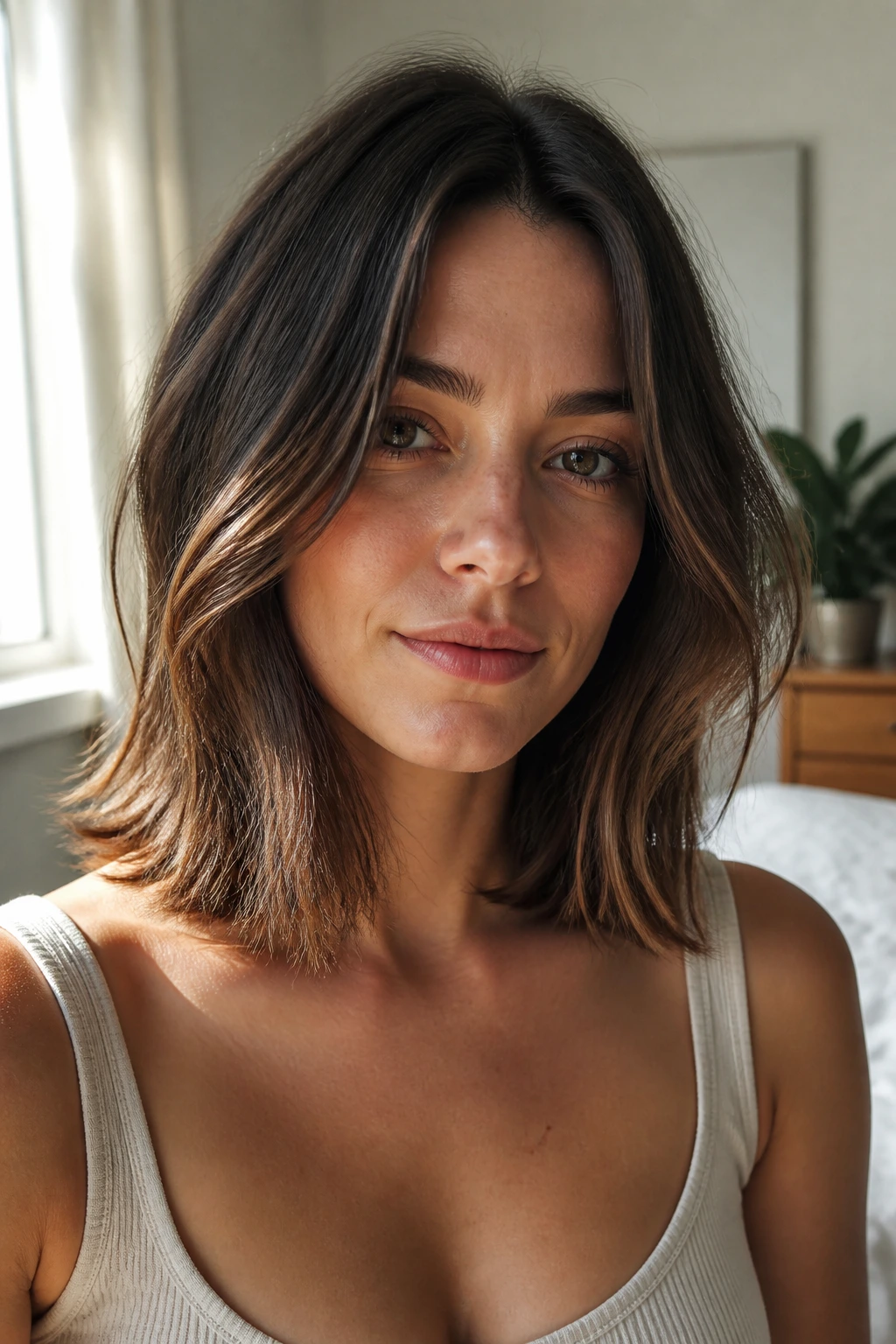
The first mistake is a cut that ends exactly at the jaw. It’s the haircut equivalent of underlining the widest part of the face. The fix is simple: move the length down, even by an inch or two, so the silhouette has room to fall.
Another one is too much width at the sides. Big, poofy volume near the ears can make the face look broader instead of softer. If your hair is thick, ask for internal shaping and keep the side volume controlled. If your hair is fine, build lift at the crown rather than the cheeks.
Heavy blunt bangs can cause trouble too. They don’t have to be banned, but they need to be softened or swept. A straight horizontal fringe across a square face can make the forehead and jaw feel equally weighted, which is not the effect most people want.
Over-layering is sneaky. It sounds like a fix, but if the layers are too short or too many, the cut can turn choppy and widen out. You want movement, not fray.
And then there’s the styling habit of curling everything outward from the face in a hard, uniform shape. That can create a halo of width. Alternate directions, soften the ends, and let some pieces bend inward. A little irregularity helps.
Named Variations to Match Different Hair Textures
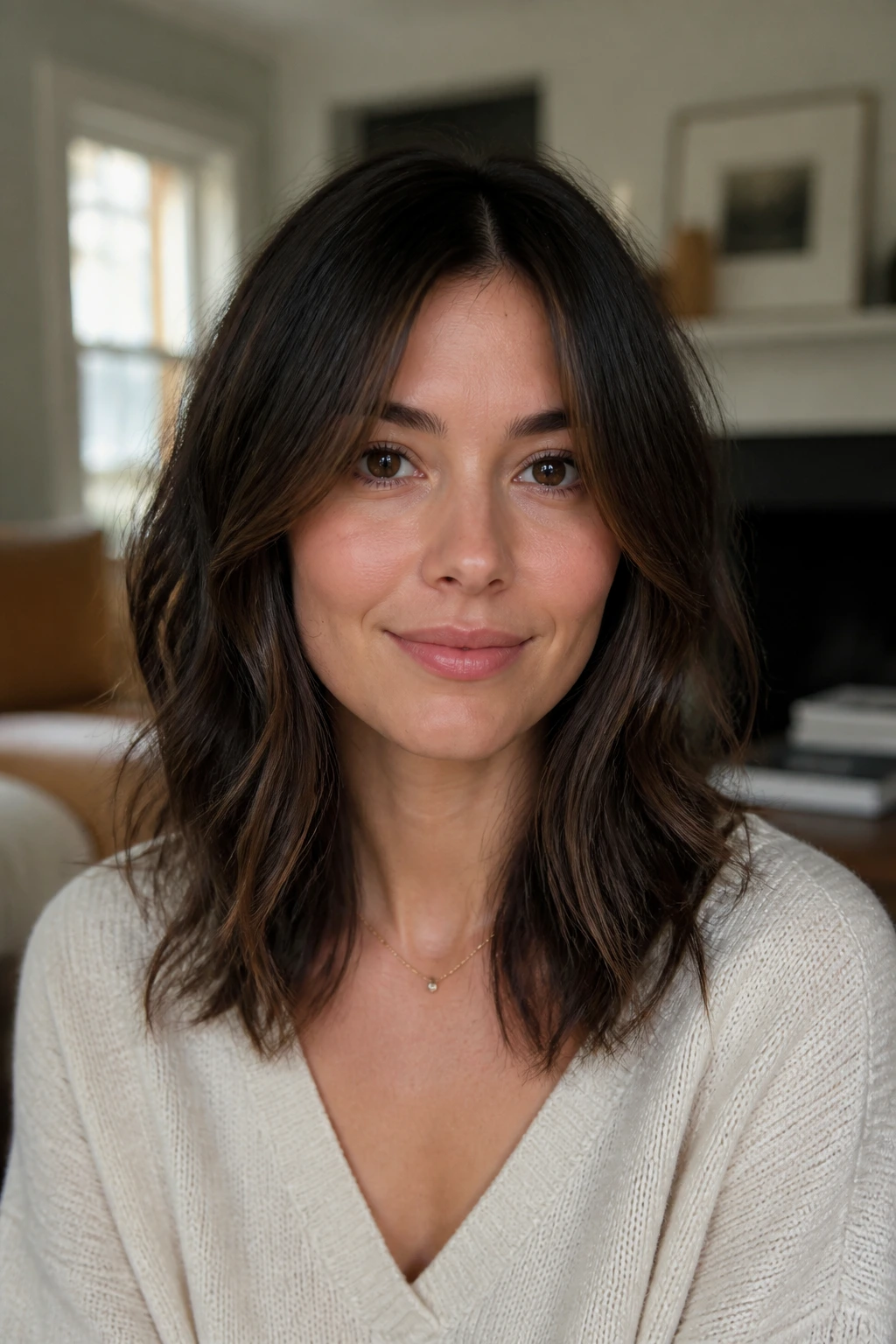
The Soft Air-Dry Version: Keep the layers longer, skip heavy face-framing, and use a light mousse or cream. This suits wavy hair that already has some bend and doesn’t need much coaxing.
The Fine-Hair Lift Edit: Ask for internal layers, a collarbone length, and a side part. The shape stays full without looking stringy, and the crown gets more lift than the sides.
The Thick-Hair Weight-Removal Cut: Use point cutting and underlayers to remove bulk from the interior, not the outline. This stops the haircut from ballooning outward around the jaw.
The Curly Shape Shift: Leave the ends longer than you think, and cut with shrinkage in mind. A dry finish or curl-by-curl shaping keeps the cut from creeping too short once the curls spring up.
The Low-Commitment Fringe Swap: If you’re unsure about bangs, ask for longer curtain pieces that can be tucked back. They give the face some softness now and can grow out without looking awkward.
How to Keep the Shape Between Salon Visits
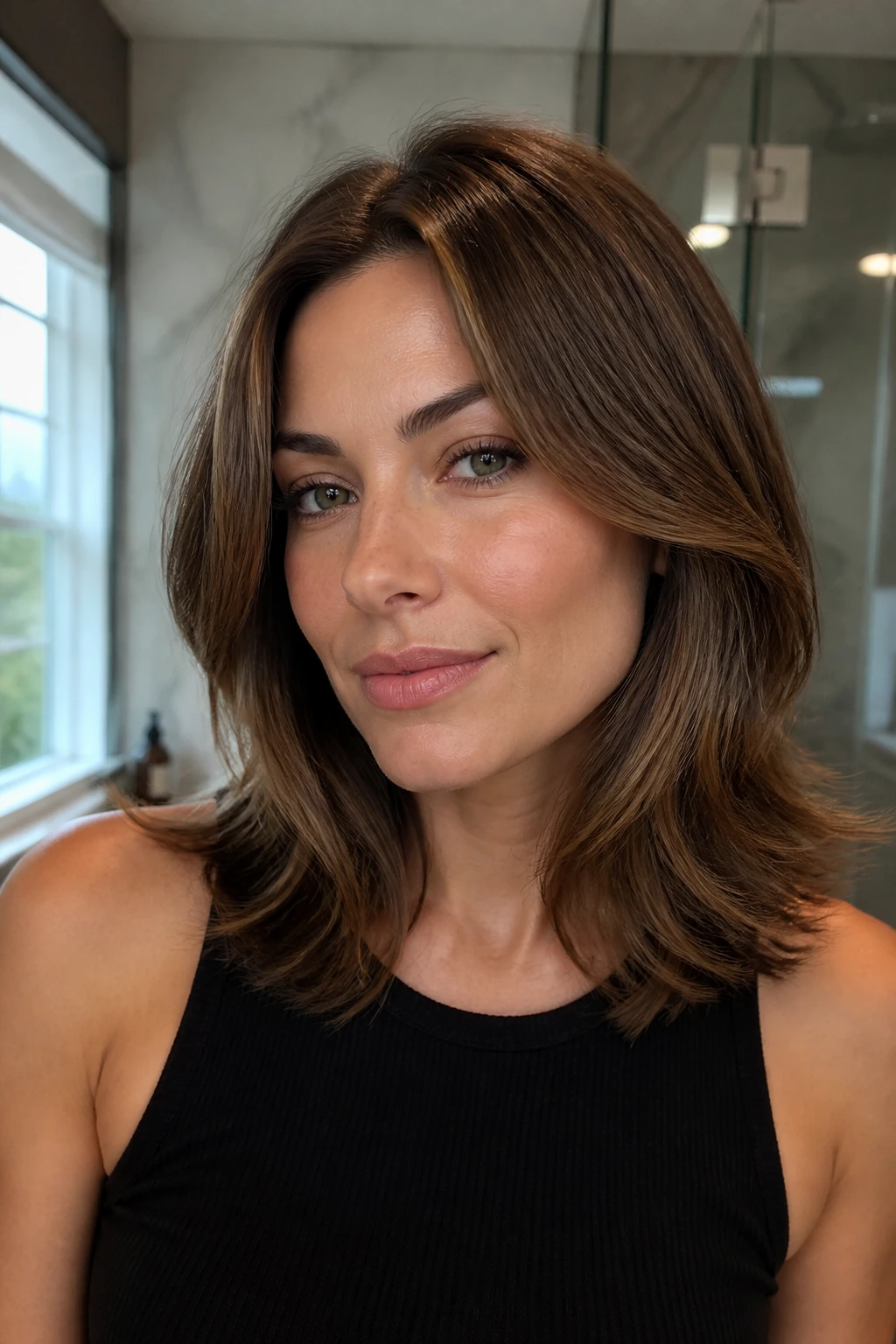
Medium length cuts stay attractive longer when you trim them before they get shapeless. Most square-face-friendly cuts do best with a cleanup every 8 to 12 weeks, depending on how fast your hair grows and how much layering you have. If the face-framing pieces start hitting the jaw in the wrong way, that’s your signal.
Styling habits matter between appointments. Keep the roots from collapsing with dry shampoo or a light root spray if your hair gets oily. Use a tiny amount of serum only on the ends if they start to puff. Too much product near the cheekbones can make the hair sit heavy right where you want it to move.
Sleep can change the cut too. A loose silk scrunchie, a soft clip, or a simple braid can keep the front pieces from getting bent into odd shapes overnight. If your hair is wavy or curly, a silk pillowcase helps the texture hold together instead of frizzing apart.
One more thing: do not wait until the ends look ragged. These styles depend on shape. Once the edges get frayed, the softness turns messy fast.
Frequently Asked Questions About Medium Length Hairstyles for Square Faces
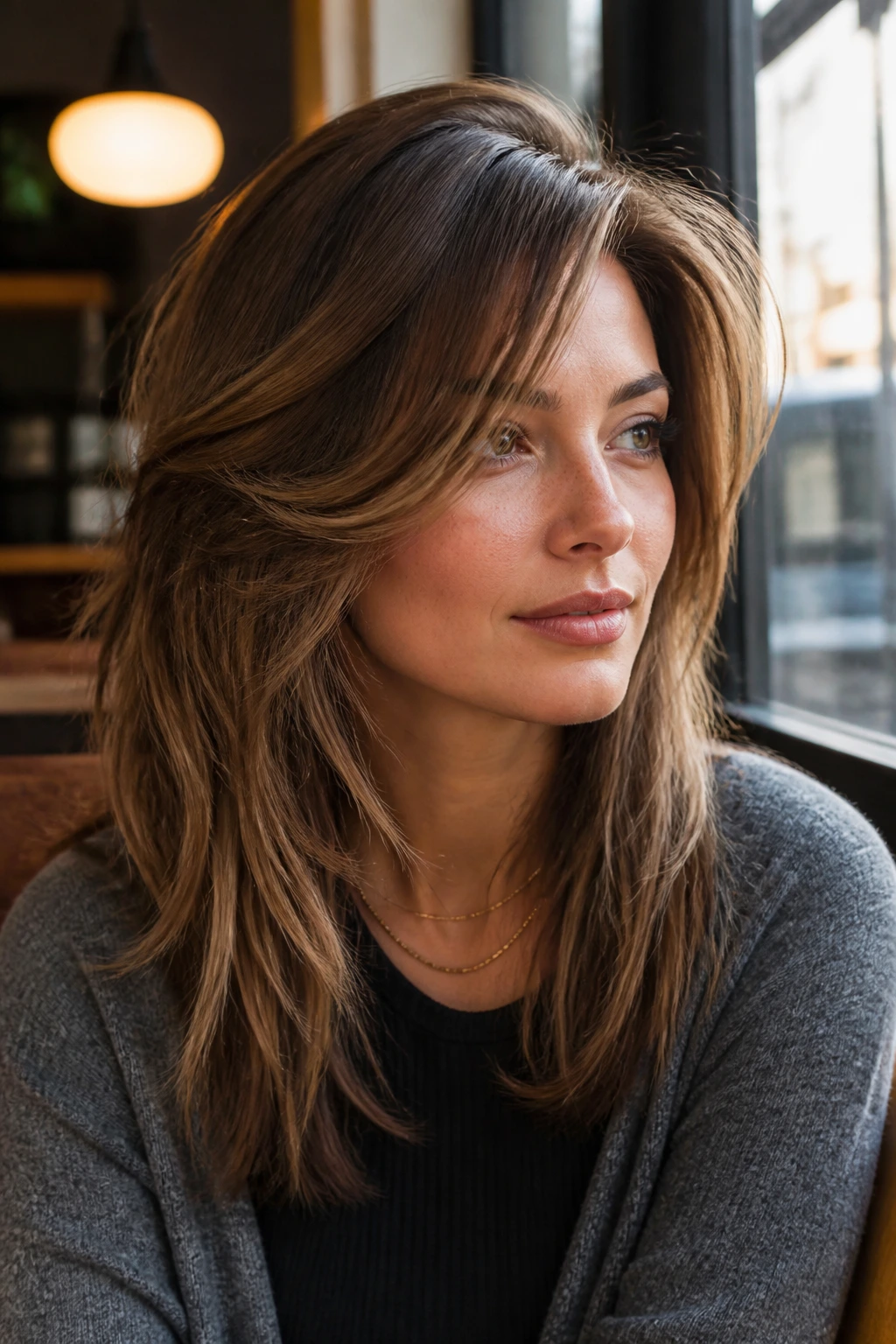
Can square faces wear blunt haircuts?
Yes, but the blunt line usually needs help. A blunt lob with a side part, soft bend, or slightly longer front pieces can work well. A blunt cut that stops at the jaw with no movement is where problems start.
Are curtain bangs good for square faces?
Usually, yes. Curtain bangs split the forehead and soften the temples, which helps balance strong angles. The safest versions are longer and feathered, not short and heavy.
Is a center part bad for a square face?
Not always. A center part can work if the cut has layers, movement, and a length that falls below the jaw. If the hair is straight, blunt, and heavy, a side part often looks softer.
What length is most flattering for a square face?
The collarbone is a very good place to start. It gives the hair enough length to move past the jaw while staying manageable. Shoulder length can work too, as long as the ends are softened.
Do layers make a square face look slimmer?
They can, if the layers are placed well. The goal is not chopping for the sake of chopping; it’s creating lines that break up the width at the jaw and guide the eye vertically. Face-framing layers below the cheekbone are usually safer than short layers at the jaw.
What if my hair is very thick and puffy?
Ask for internal shaping, not just lots of surface layers. Thick hair needs weight removed from the inside so it can fall instead of expanding sideways. A good stylist will keep the outline controlled and use texture where it helps.
What if my hair is fine and flat?
Keep the cut a little fuller through the ends and use crown lift when styling. Too many short layers can make fine hair look thinner, especially at medium length. A clean lob with invisible layers often beats a heavily textured cut.
How do I fix a cut that feels too boxy?
Use styling to shift the outline first: side part, bend the front pieces, and add a little lift at the crown. If it still feels square, ask for longer face-framing pieces and softer ends at the next trim. Small changes can rescue the shape without starting over.
A Softer Frame, Without Losing the Edge
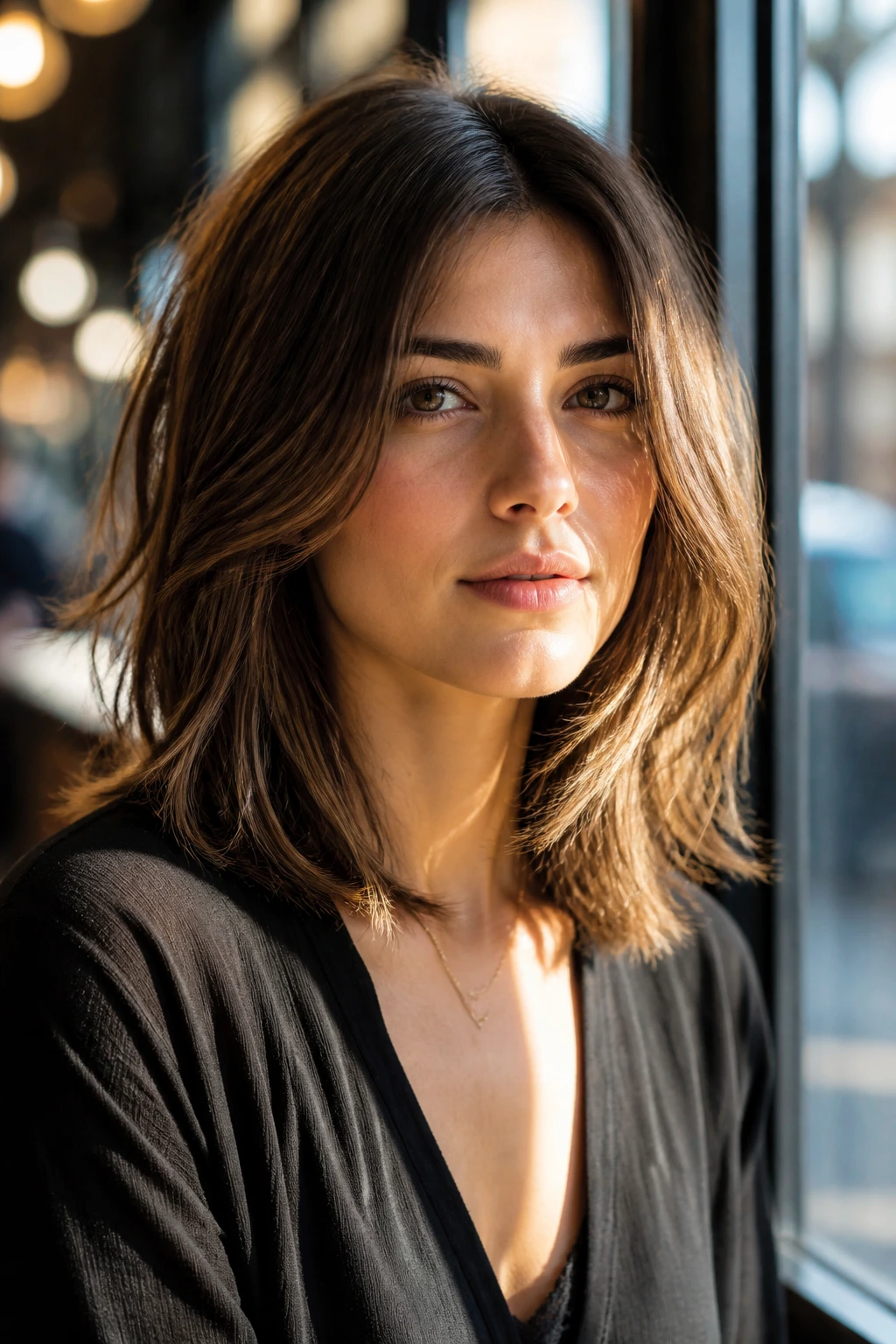
Square faces do not need to be hidden. They need a frame that knows when to soften up and when to get out of the way. That’s why medium length hair works so well here: it gives you room to move, bend, wave, clip, and tuck without forcing the face into a box.
The best cut is the one that respects the jaw instead of fighting it. When the length lands in the right place and the front pieces are shaped with a little care, the whole look changes. It feels lighter. Less stiff. More lived-in, in the best sense.
Pick the version that suits your texture, your routine, and how much styling you’re willing to do before coffee. Then let the cut do its job.
