



A shoulder-length cut can either sharpen a round face or make it look wider in the mirror. The difference usually comes down to three things: where the hair ends, where the part sits, and how much weight lands at the cheeks. Get those wrong, and the whole look turns boxy. Get them right, and the face looks longer, cleaner, and a little more lifted without screaming for attention.
That is why shoulder-length hairstyles for round faces are such useful territory. The length gives you enough room to build shape, but not so much that the hair swallows your jawline. It’s a sweet spot, honestly. Not fussy, not boring, and far more flexible than people give it credit for.
The best versions do not try to hide a round face. They edit it. Side parts break up symmetry, layers move bulk away from the cheekbones, and a little crown height keeps the eye moving upward instead of stopping dead at the widest point. That’s the whole game, and once you notice it, you start seeing it everywhere.
Why Shoulder-Length Styles Make a Round Face Look Longer
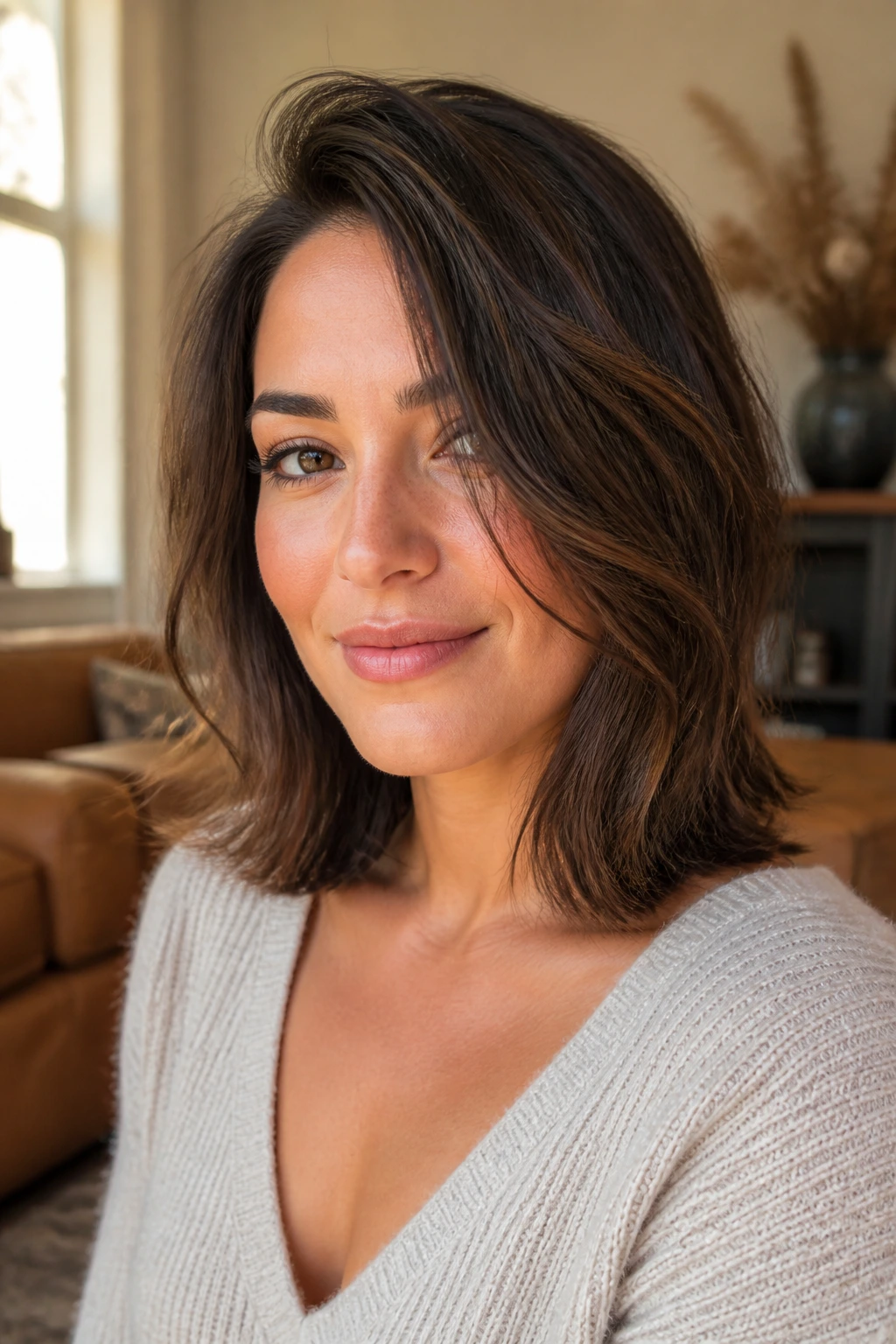
A round face usually reads as having similar width and length, with soft cheeks and a gentler jawline. The haircut doesn’t need to fight that shape. It just needs to give the eye a reason to travel up and down instead of side to side.
Collarbone length adds vertical pull: When the ends sit below the cheekbone, the hair creates a longer line through the face and neck. That extra inch or two matters more than people think.
Off-center parts break the circle: A side part or even a slightly off-middle part interrupts symmetry, which keeps the face from looking perfectly wide on both sides. Small shift. Big payoff.
Layers control width where it counts: Long layers remove bulk around the sides without making the cut feel thin or stringy. The goal is movement, not puff.
Crown lift changes the whole silhouette: A bit of volume at the top of the head makes the face look longer. Volume at the cheeks does the opposite, so placement matters.
Soft ends beat blunt heaviness: Tapered, bent-under, or softly textured ends are easier on a round face than a dense line that hits right at the jaw.
1. Side-Parted Layers That Fall Past the Cheekbones
I keep coming back to this cut when someone says their face looks wider the second hair touches the cheeks. A side part pushes the visual weight off-center, and layers that start below the cheekbone pull the length downward instead of spreading it outward. It’s one of those styles that looks almost plain at first glance, then quietly does the work once you move your head.
Why it flatters a round face
The trick is placement. If the shortest face-framing layer lands at the mouth or lower, the hair skims the face instead of grabbing onto the widest part of it. That keeps the cheek area open, which is the part a round face usually needs most.
- Best for: straight to wavy hair with medium density.
- Ask for: long layers that start below the cheekbone, not at the jaw.
- Style with: a round brush or a 1¼-inch curling iron for a soft bend.
- Wear it with: a deep or medium side part for a sharper line.
Pro tip: Skip the short, fluffy pieces around the cheeks. They create width right where you do not want it.
2. Curtain Bangs with Soft Waves
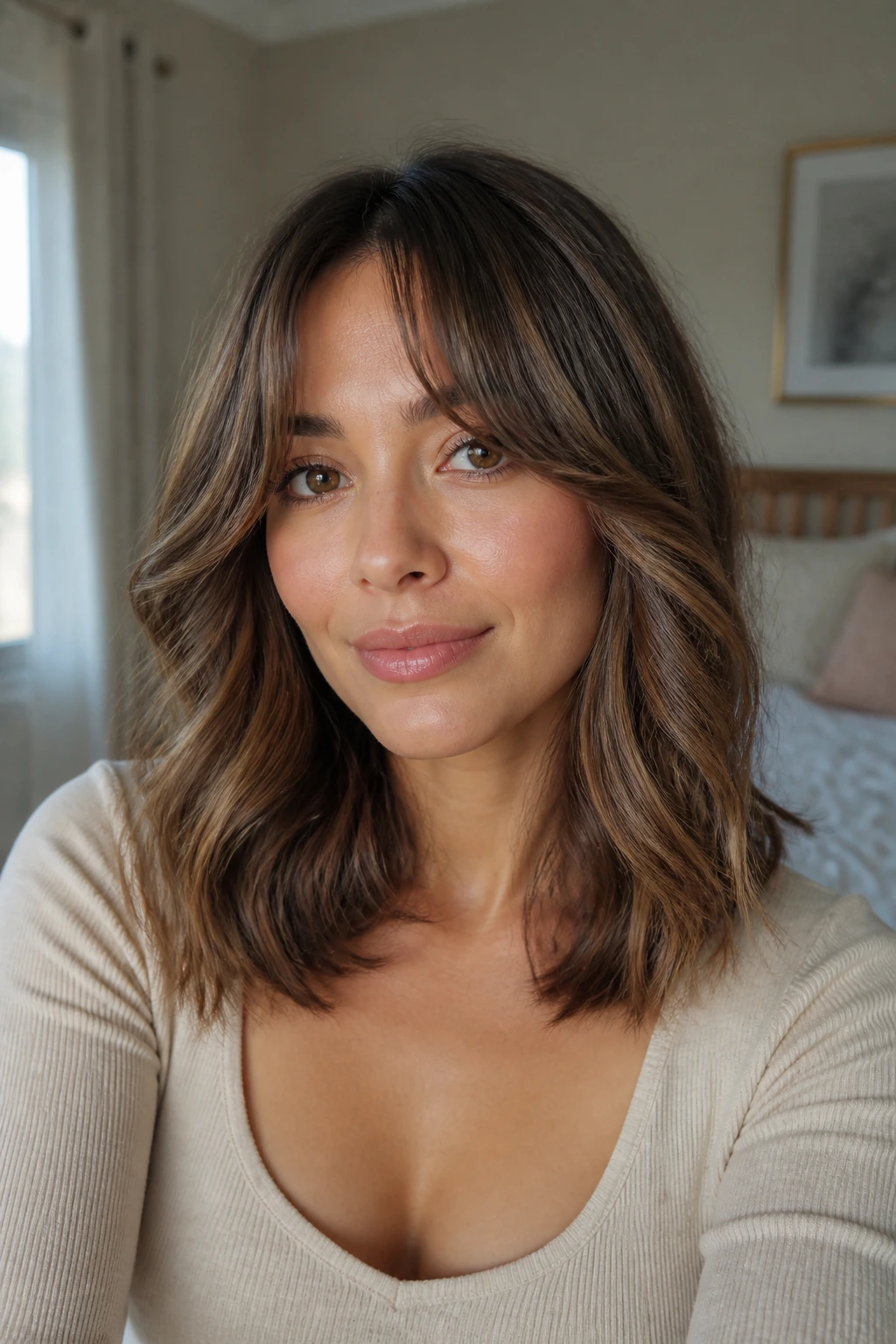
Curtain bangs can be friendlier to a round face than no bangs at all, which surprises people. The key is keeping them long enough to split and sweep, not chopped short like a fringe that ends at the eyes. When the bang opens in the center and falls into the cheek area, it draws a clean vertical line right through the middle of the face.
Soft waves make the whole thing feel less rigid. A round face does not need stiff hair. It needs movement that starts below the eyes and keeps going.
I like curtain bangs most when they’re styled with a slight bend away from the face rather than a big barrel curl. Blow-dry them with a small round brush, then let the wave relax. If the bang sits too round, it can puff out at the cheeks and undo the whole effect.
3. Angled Collarbone Lob
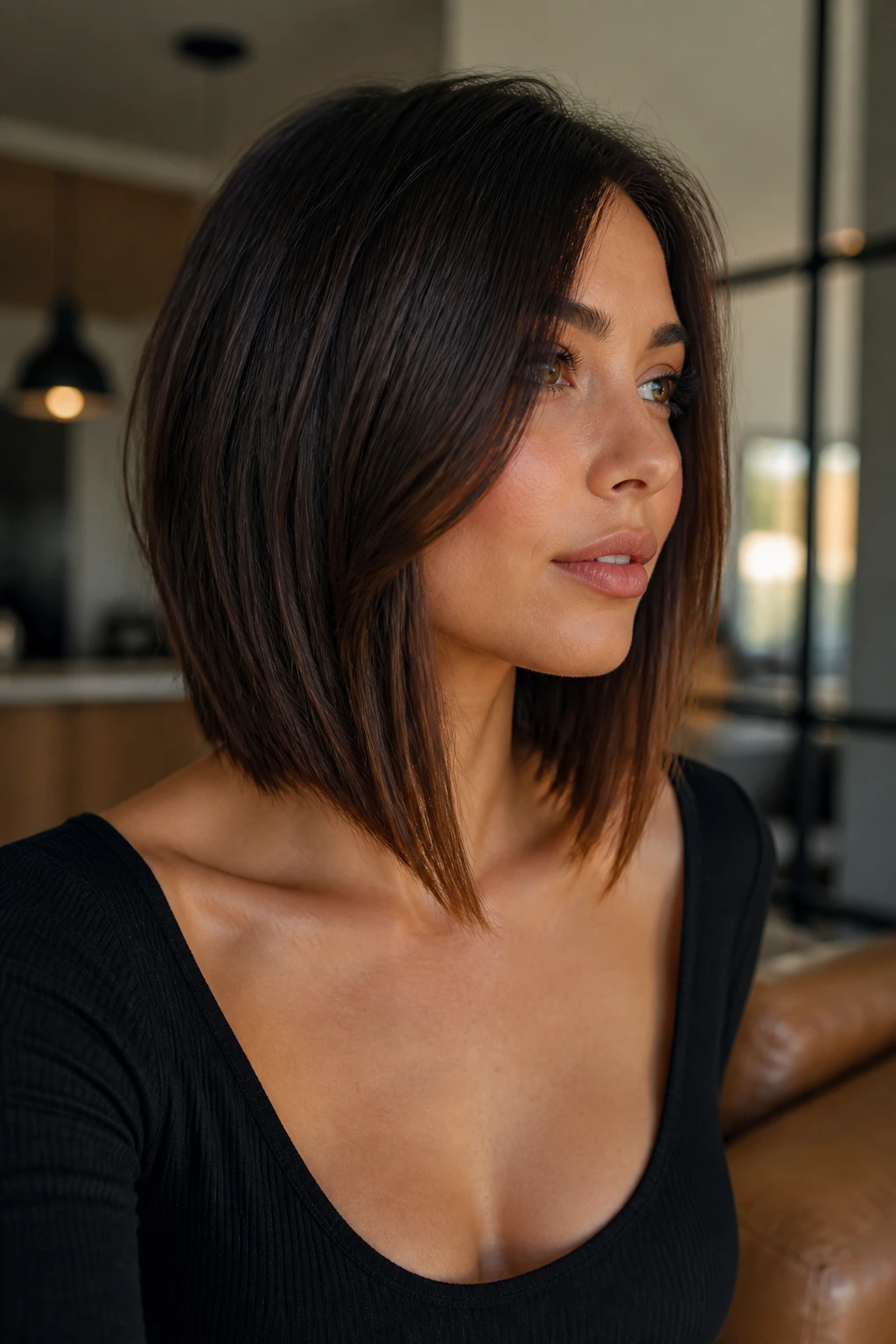
Why does a slight angle change so much? Because the front pieces sneak past the jawline while the back stays a touch shorter, and that diagonal line is a neat little trick for round faces. Your eye follows the angle down and forward. It’s simple, but it works.
How to style the angle
The angle should stay soft, not dramatic. A hard A-line can look sharp in photos but finicky in daily life.
- Blow-dry the front pieces forward first, then turn them slightly under.
- Keep the back grazing the collarbone so the shape doesn’t balloon outward.
- Use a side part or a soft off-center part to keep the top from feeling too even.
- Finish with a light texturizing spray, not a heavy cream that flattens the angle.
A good angled lob is especially useful if you want structure without sacrificing movement. It gives the face a longer edge without making the haircut look severe.
4. Collarbone Shag with Soft Fringe

A shag can go wrong fast on a round face if it gets too fluffy at the sides. But at collarbone length, with soft fringe and controlled layers, it becomes a useful shape tool. You get texture, lift, and a little edge, but the weight still sits low enough to keep the face from looking wide.
The fringe should be light. Not wispy in a flimsy way—light in the sense that it breaks up the forehead without lying like a heavy curtain across the face. The best version taps into movement around the cheekbones and chin, then drops the longest pieces below that line.
What to ask for
- Collarbone length with loose, blended layers.
- Fringe that opens at the center and softens toward the temples.
- Interior texture rather than jagged ends.
- A little crown lift, especially if your hair falls flat.
Bold tip: If the shag starts to puff at cheek level, it stops helping. Keep the volume at the top and the movement at the ends.
5. Sleek Blunt Lob with a Deep Side Part
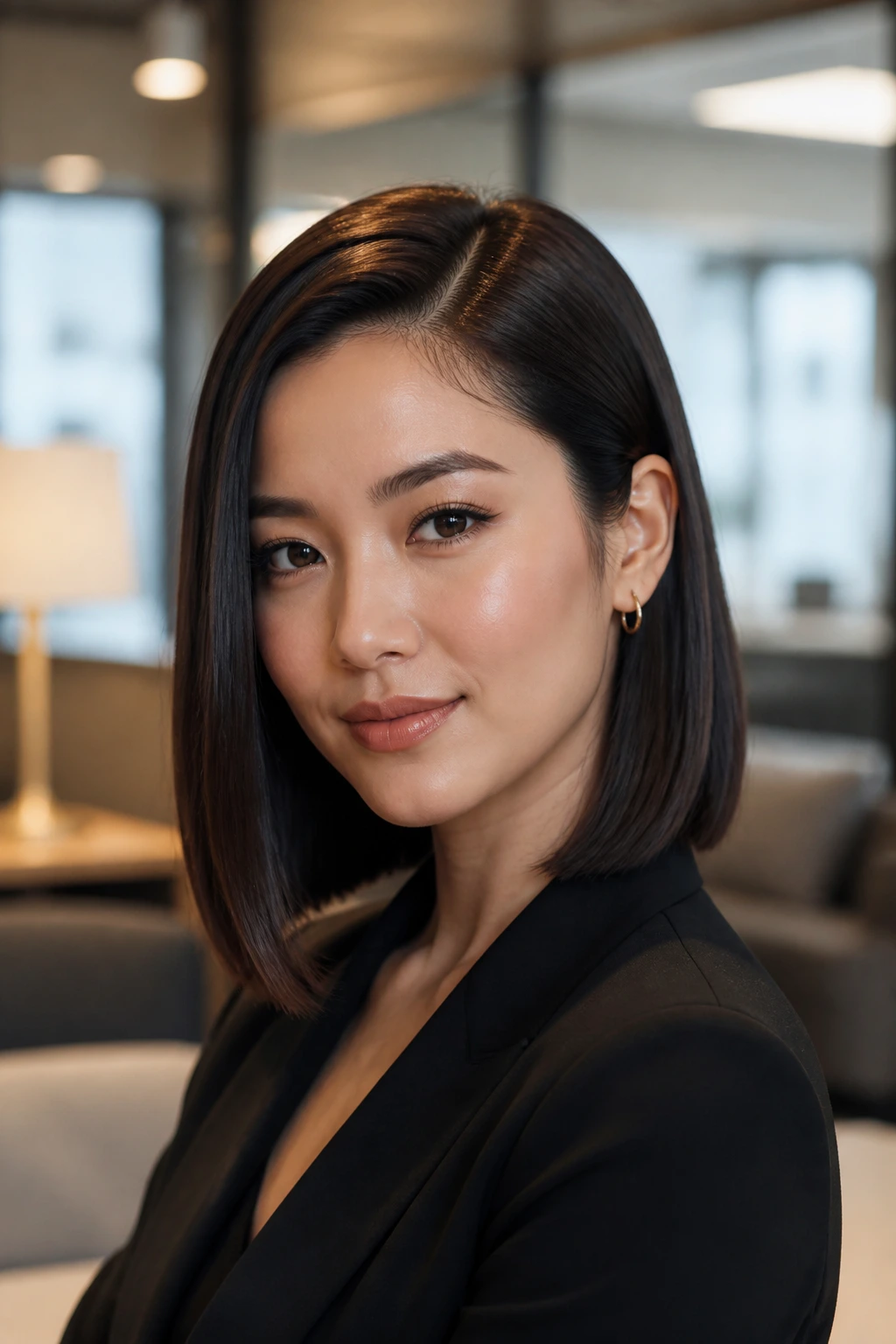
A blunt lob on a round face sounds risky until you change two things: where it lands and where it parts. Put the hem at the collarbone, swing it into a deep side part, and suddenly the cut feels deliberate instead of wide. The blunt edge gives shape; the part gives direction.
This style works best on straight or smoothed hair because the clean line matters. If the ends are too curled inward on both sides, the cut can widen the cheeks. If the crown is flat, the whole thing looks boxy. But when the top has a little lift and one side is tucked back, the face opens up in a way that feels polished without being stiff.
I’d reach for this when you want a haircut that can go from office-clean to dinner-ready with one pass of a flat iron. It’s not the easiest style for air-dried hair, but it rewards a careful blowout.
6. Shoulder-Length Layers With Internal Weight Removal
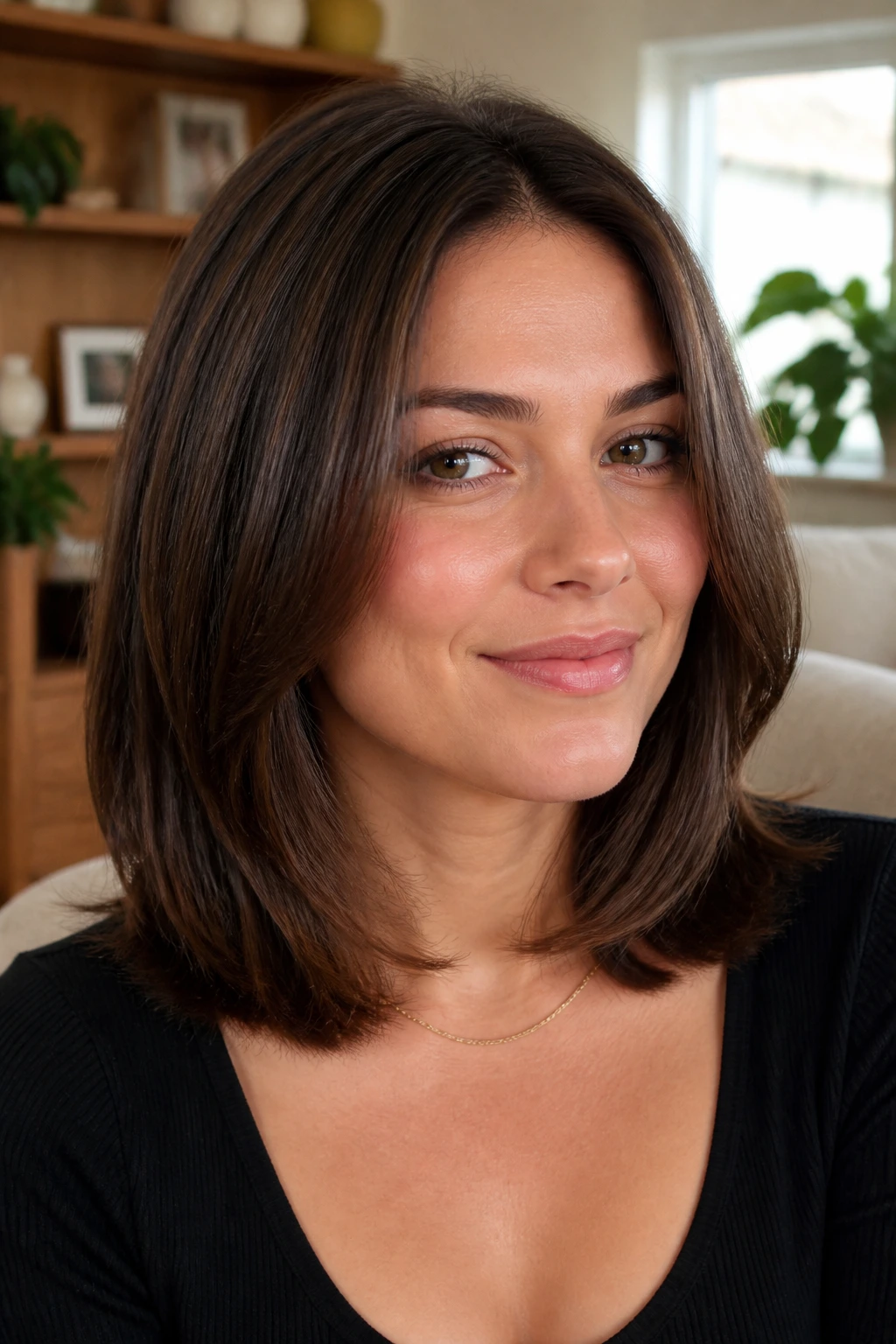
Unlike choppy layers that spray texture across the whole head, internal layers remove bulk from inside the shape while keeping the outside line smooth. That matters on round faces, especially if your hair is thick or puffy. You want the cut to fall, not bloom.
Why this is the smart move for thick hair
Thick hair often adds width at the cheeks just because there is so much of it. Internal layering keeps the perimeter clean, which means the haircut still looks full but not triangular.
- Best for: thick, dense, or heavy hair.
- Ask for: hidden layers inside the cut, not short exterior pieces.
- Avoid: razor-thinning the front; it can make the ends look ragged.
- Style with: a smoothing cream from mid-length to ends.
This is the cut I’d recommend when someone says, “I want shoulder-length hair, but I don’t want it to sit like a helmet.” Good internal layering fixes that problem without wrecking the outline.
7. Tucked-Behind-the-Ear Waves

Some days you only need one side of the face open. Not both. Tucked-behind-the-ear waves do that nicely, and on a round face they create a little asymmetry that stops the shape from looking too even. One side frames. The other side lifts away. Done.
The hair should still have movement through the lengths, but the tucked side gives you a cleaner view of the jaw and neck. That exposed line is useful. It creates a slim, vertical interruption right where a round face can use it.
This is a good style for second-day hair. Spray a little water on the front sections, re-bend them with a flat iron or curling wand, and tuck one side behind the ear while leaving the other loose. Add a pin if the hair is slippery. Tiny move. Big difference.
8. Bottleneck Bangs and Midi Length
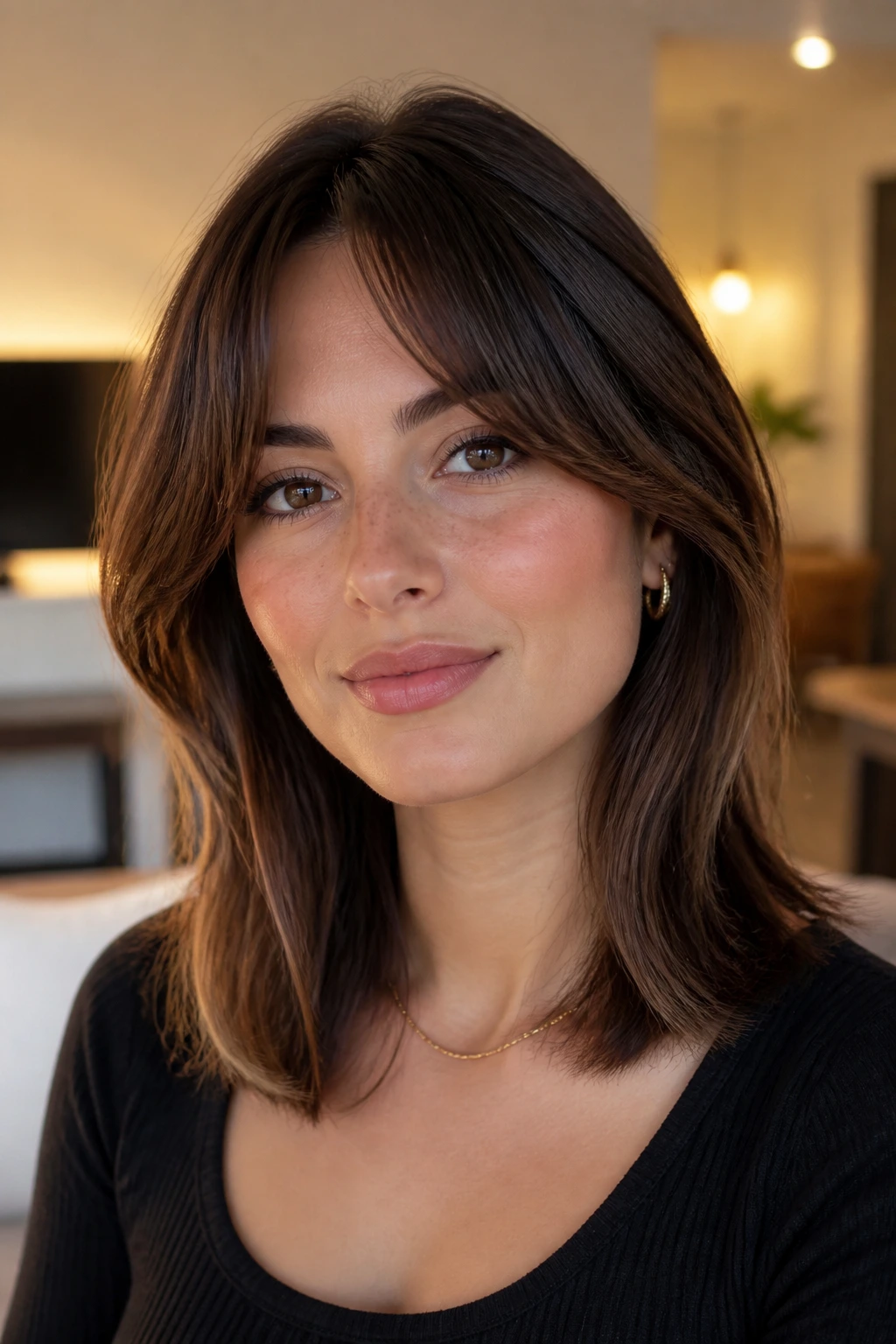
If curtain bangs feel too soft, bottleneck bangs give a round face a cleaner frame. The center opens a little higher on the forehead, then the sides fall longer toward the cheekbones. That shape makes the face look less circular because it narrows near the middle and expands only where it needs to.
Midi length—somewhere between the collarbone and a few inches below it—keeps the whole cut balanced. Too short, and the bangs do all the talking. Too long, and the face frame can get lost in the rest of the hair.
I like this shape on hair that holds a bend well. It doesn’t need constant reworking, but it does need a stylist who understands that the shortest bang pieces should not stop at the widest part of the face. If they do, the whole illusion falls apart.
9. Crown-Lifted Curls
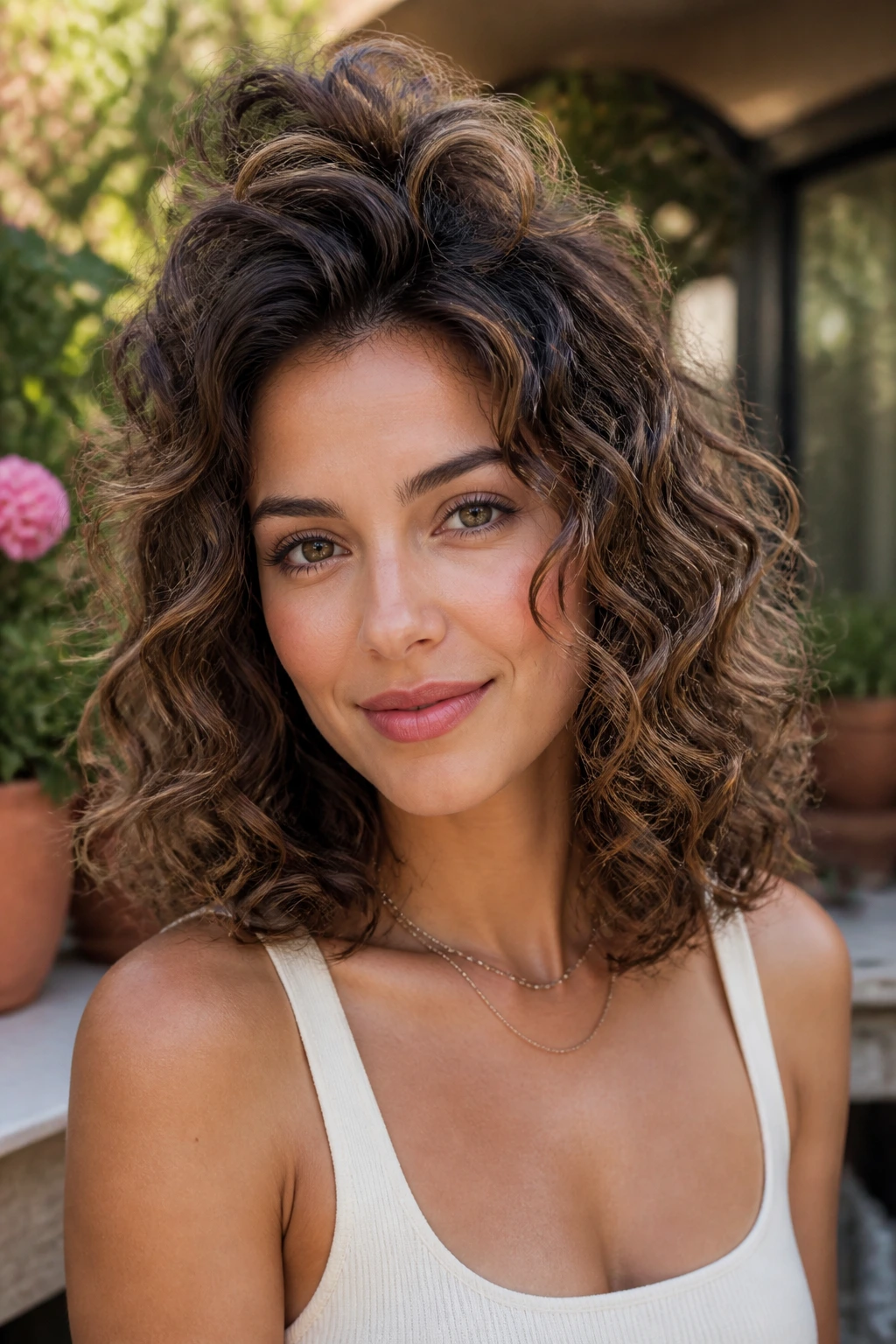
Round faces and curls can be a gorgeous match, but the volume has to live in the right place. If the curl expands at the cheeks, the face can look wider. If the lift starts at the crown and the curl falls a little tighter along the sides, the shape gets taller, cleaner, and easier to wear.
A diffuser helps here, but technique matters more than gear. Flip the head, dry the roots first, then let the curls settle before you touch them. If you rake through them too early, the curl pattern spreads outward. That’s how you end up with width you didn’t ask for.
A few rules worth following
- Dry the roots with the diffuser pointed upward.
- Keep curl cream light near the sides of the face.
- Let the outer layers sit a little longer than the crown layers.
- Break up the curl clumps near the cheeks with your fingers, not a brush.
Short version: lift up top, keep the sides soft, and leave the cheeks alone.
10. Feathery Layers with a Side-Swept Fringe

Feathery layers have an old-school reputation, but they can look fresh on a shoulder-length cut when they’re done with restraint. The layers should feel light and brushed through, not broken or choppy. On a round face, that softness helps because it keeps the haircut moving instead of piling up around the jaw.
The side-swept fringe matters just as much. It adds a diagonal line across the forehead and upper cheek area, which subtly stretches the face. I prefer this to a heavy straight bang because it gives you coverage without sealing off the top half of the face.
There’s also a practical upside: this style grows out well. When the fringe gets longer, it just slips into the rest of the layers. That makes it a good choice if you hate feeling trapped by bang upkeep.
11. Textured Lob With an Uneven Part
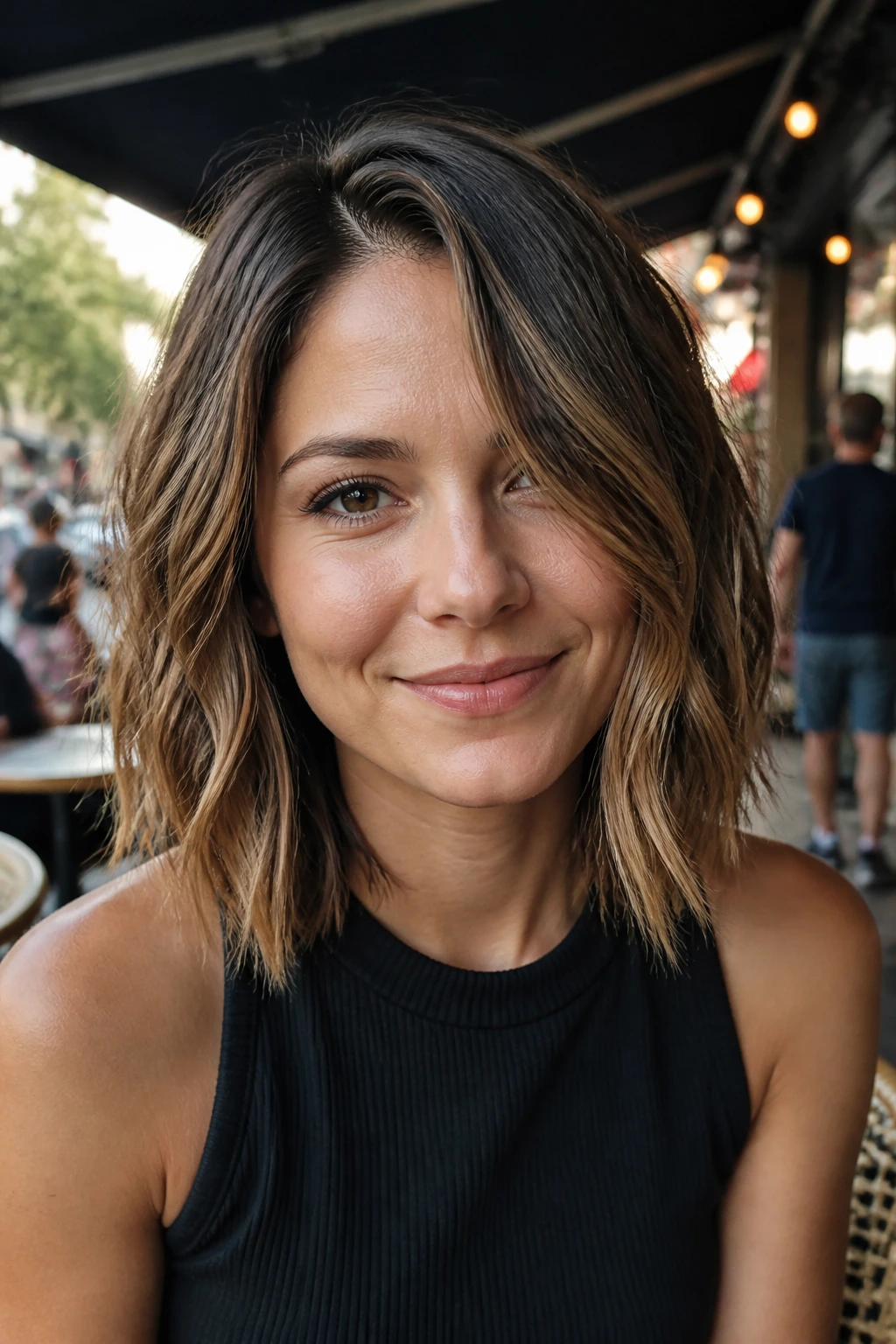
A perfect center part is neat. A slightly uneven part is kinder to round faces. That tiny imbalance keeps the style from reading as a full circle, and it gives the haircut a bit of lived-in movement that looks less staged.
The texture should be loose, not crunchy. Think bent ends, a few softer waves, and some separation through the mid-lengths. If every section is curled the same way, the shape gets puffy. If the waves are mixed—one forward, one back, a few straight pieces in between—the cut feels more natural and less wide.
Who this works best for
- People who like low-effort styling.
- Wavy hair that wants a little direction.
- Fine hair that needs movement without heavy layering.
- Anyone who wants shoulder length but fears the “triangle” effect.
I’d ask for this if you want a lob that looks good on day one and day three, because the uneven part hides a lot of small growth and styling drift.
12. Half-Up Styles With Face-Framing Pieces
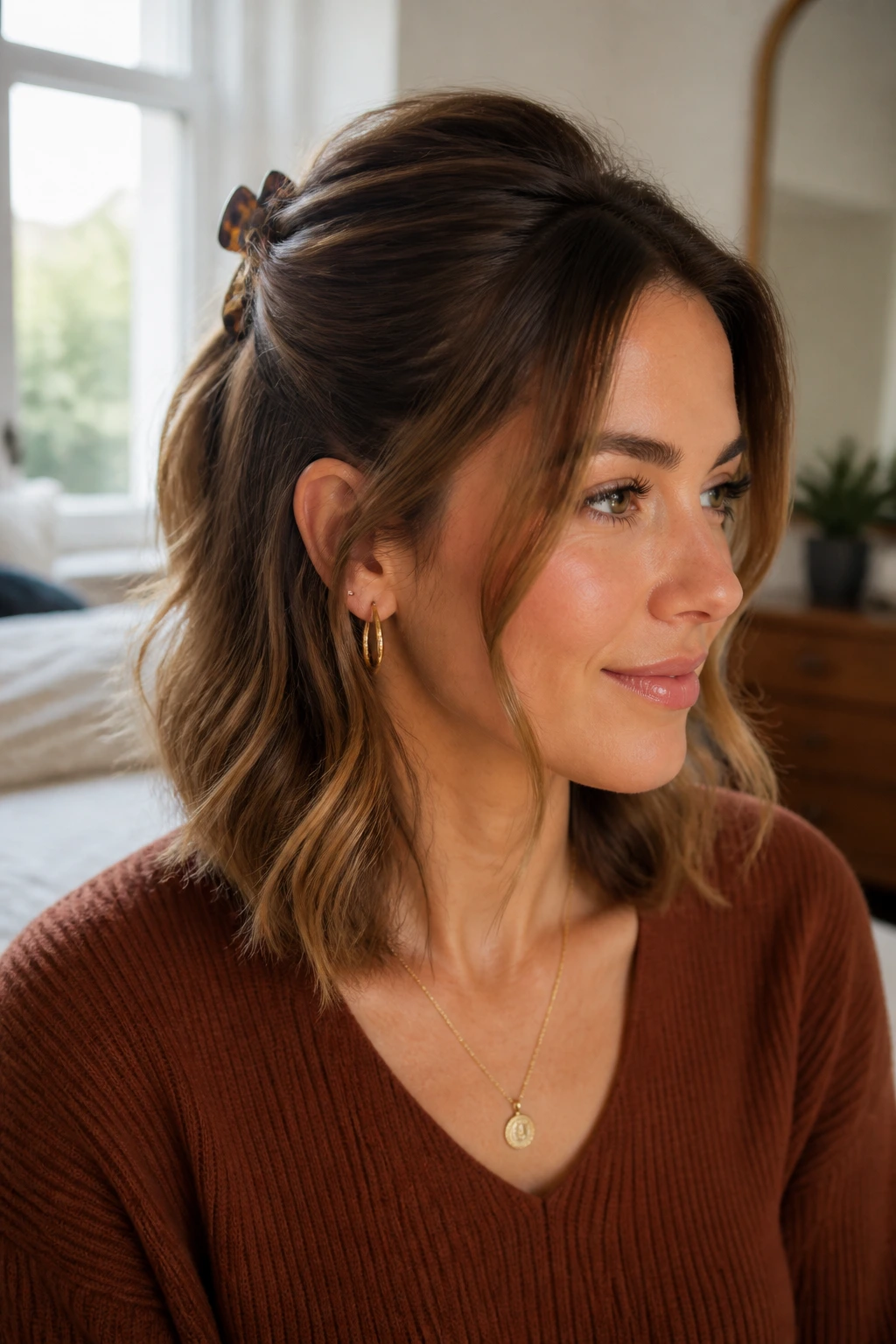
When you need your hair off your neck but don’t want the whole face pulled backward, half-up styling is the sweet spot. On a round face, it can work better than a full ponytail because the loose front pieces keep the line open around the cheeks. You get height where you want it and softness where you need it.
The crown lift matters here. If the top is flat, the style can drag the face down. If the top is lifted a little and the front pieces are left out on purpose—not as an afterthought—the whole look feels longer.
Use this on shoulder-length hair that has some bend. Straight hair can work too, but a small wave helps the loose pieces curve away from the cheekbones instead of clinging to them. A clip, a barrette, or a small elastic all work. The trick is not the accessory. It’s the placement.
13. A Shoulder-Length Blowout with Rounded Ends
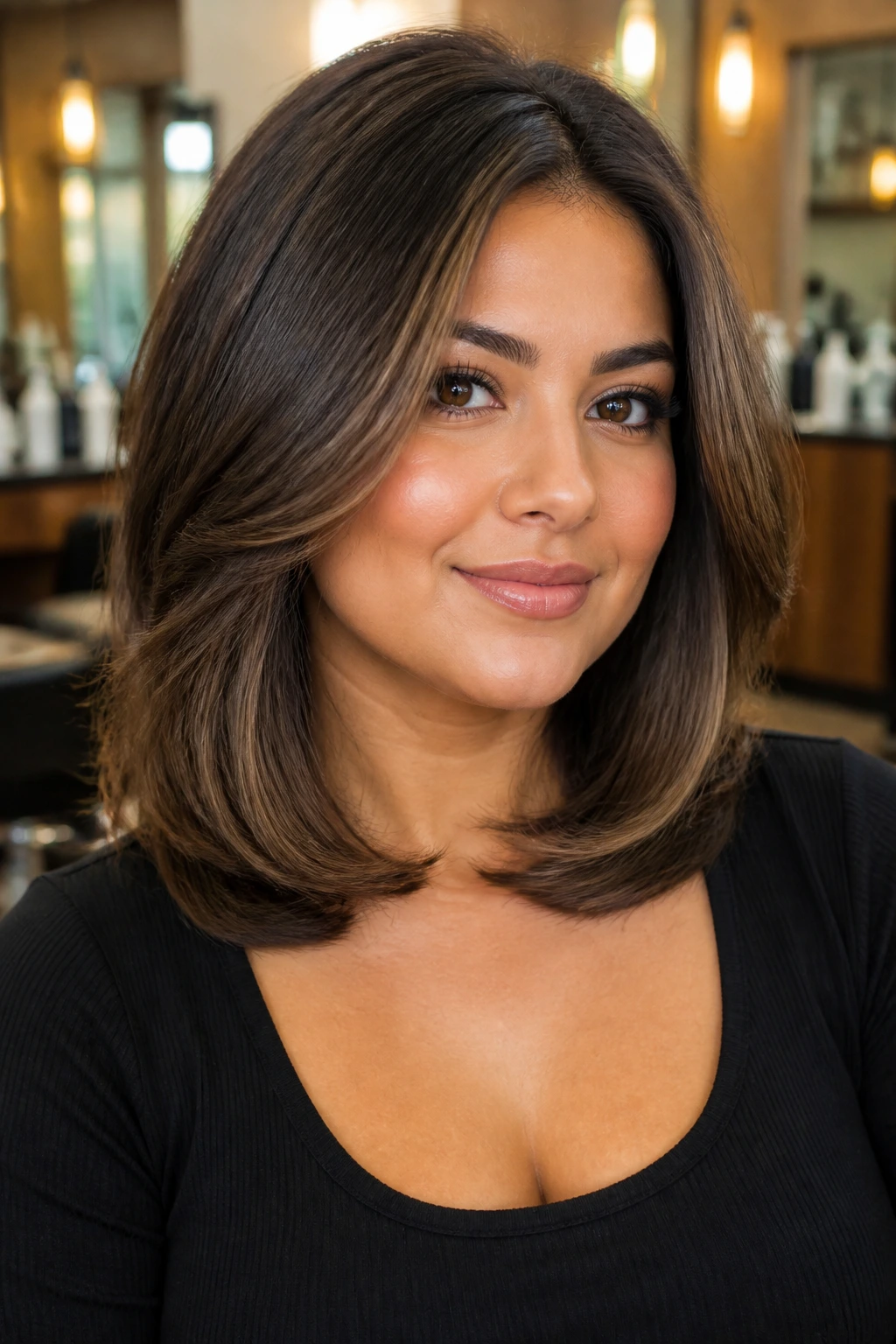
A good blowout can cheat the eye. Not in a fake way—just in the neat little way round brush styling changes how the face reads. At shoulder length, a blowout with rounded ends creates movement below the face rather than around it, which keeps the width from building at the cheeks.
The roots should have lift. The ends should bend under or softly away from the face, depending on your texture. What you don’t want is a puffed-out side shape that sits level with the widest part of the face. That’s the look that turns “full” into “wide.”
This style is one of my favorites for events, interviews, or any day you want your hair to look intentional without turning it into a formal set. It holds shape well, and it doesn’t need a lot of product. A heat protectant, a blow-dry cream, and a flexible spray are enough.
14. Straight Shoulder-Length Hair With Long Face-Framing Pieces
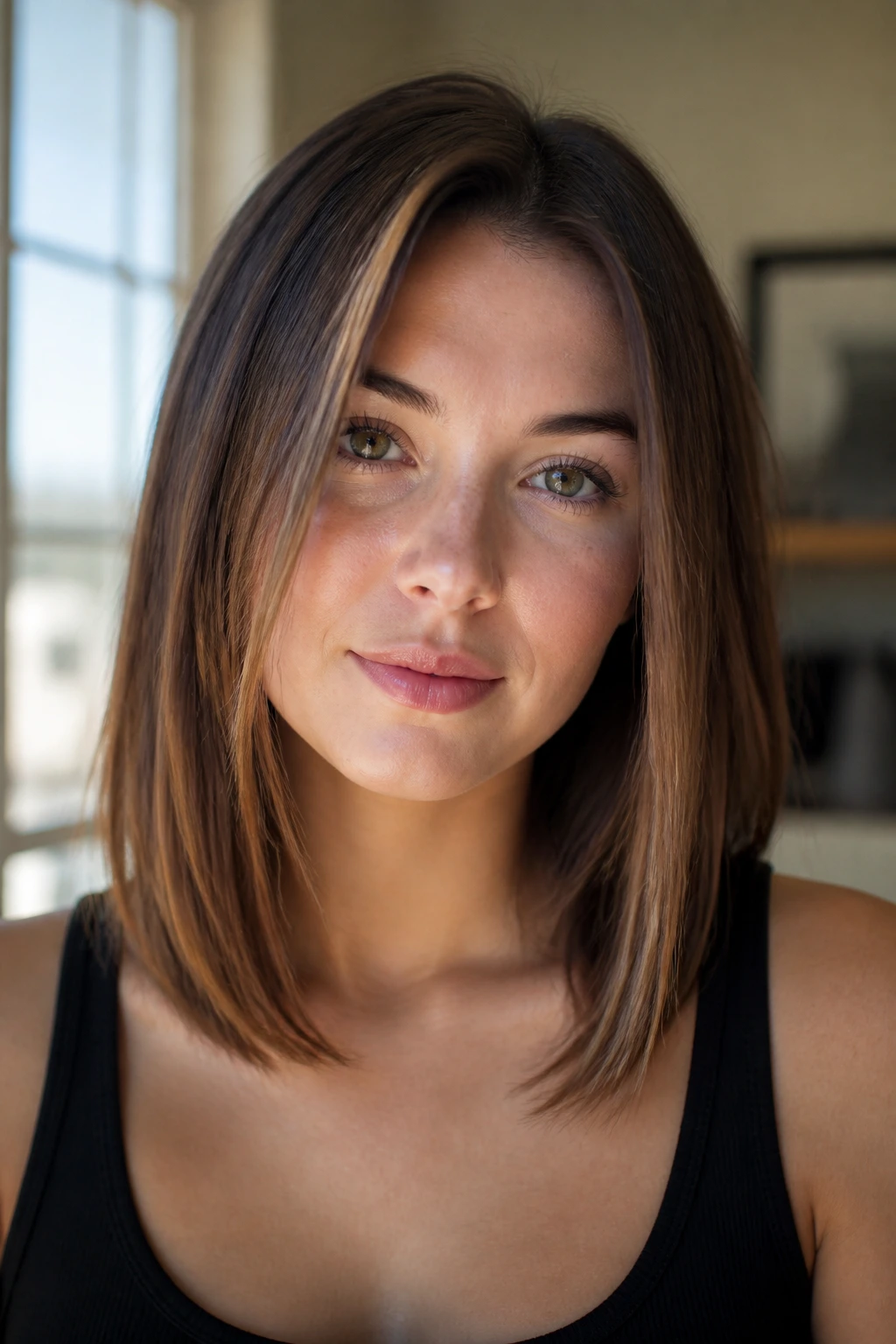
Can straight shoulder-length hair work on a round face? Absolutely—if the front pieces do more than sit there. Long face-framing sections that start below the cheekbone create a cleaner line than a blunt edge that stops at the jaw. The shape is quiet, but it is not flat.
This is where exact length matters. If the front pieces are too short, they widen the cheeks. If they’re long enough to graze the collarbone, they pull the eye downward. That’s the difference between a haircut that feels heavy and one that feels sleek.
Keep the part slightly off-center and add a small bend at the ends if the hair is very straight. A bone-straight finish can work, but a tiny bit of movement gives the shape more life. And life matters. Hair that moves reads longer than hair that sits in one hard line.
15. Defined Shoulder-Length Natural Curls
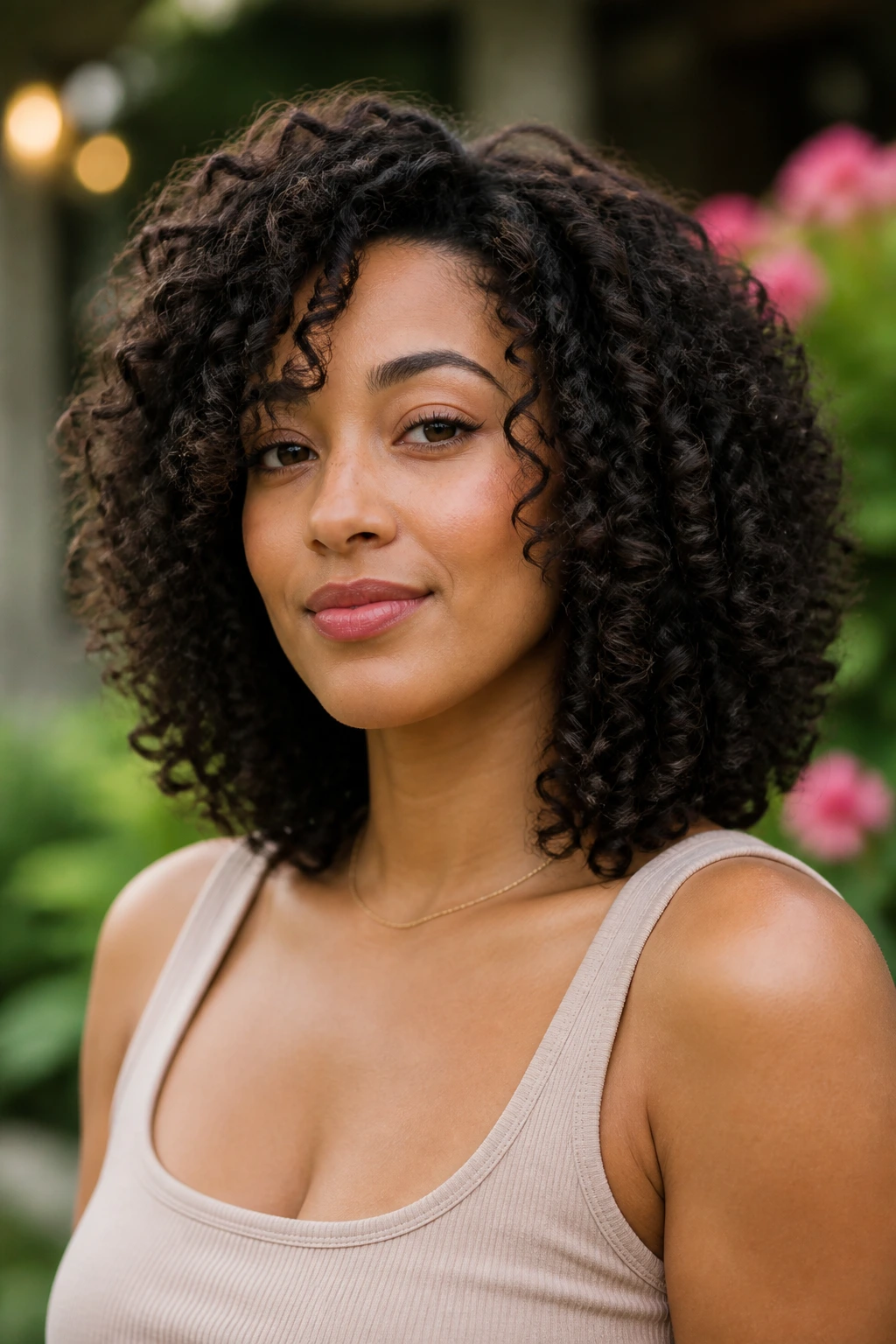
Natural curls at shoulder length can look fantastic on a round face when the shape is cut with intention. The main thing is stopping the cut from ballooning at the sides. A good curl specialist will shape the layers so the curl pattern stacks upward and falls around the face, not across it like a circle.
Dry cutting often helps because curls shrink and behave differently when wet. If the cut is done without respecting shrinkage, the front can land too short and sit right at cheek level. That is the zone to avoid. You want the curls to skim past the widest point and then spring out below it.
Diffusing helps with lift, but so does restraint. Touching curls too much while they dry can spread them sideways. Let them set, break the cast gently if you use gel, and keep the crown a little fuller than the sides. That balance makes the face look longer without flattening the curl pattern.
16. A Low Knot With Soft Tendrils
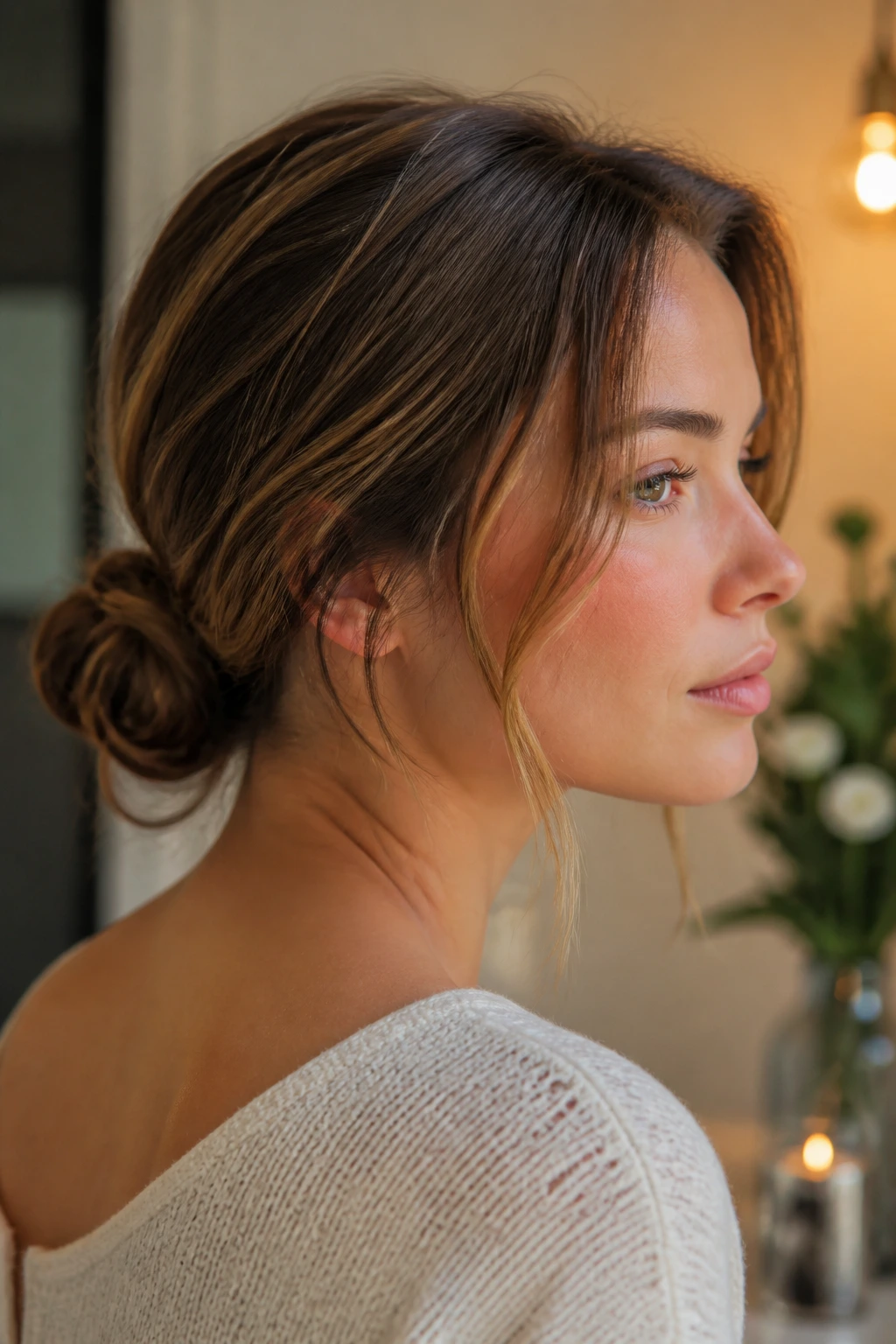
A low knot can flatter a round face better than leaving every strand down. That sounds backward until you see what happens to the neckline. The face gets a cleaner border, the neck shows, and the loose tendrils keep the whole thing from feeling severe.
The tendrils should not be random. Pull out a few pieces near the temples and the front of the ear, then leave them soft enough to curve without looking wispy. If they stop at the cheekbone, they can widen the face. If they fall below the jaw, they help lengthen it.
This is one of those styles that works for second-day hair, humid hair, or hair that refuses to cooperate with heat. A little texturizing spray, a low twist, and two bobby pins can carry the whole look. Low effort. Good shape.
Why Shoulder-Length Hair Still Feels So Practical

The reason I keep recommending shoulder-length hair for round faces is simple: it gives you room to shape the silhouette without making daily styling a full-time job. You can tuck it, wave it, blow it smooth, or let it air-dry with a few bends. That flexibility matters more than a dramatic haircut that only looks right on salon day.
A lot of people chase length because they think longer hair always slims the face. Not always. Hair that hangs too heavy at the cheeks can drag a round face wider, especially if it’s all one length. Shoulder length gives you a better middle ground. Enough length to stretch the face. Enough control to keep the width in check.
The best result usually comes from three ingredients: a part that isn’t dead center, ends that fall below the cheekbone, and enough movement to keep the shape alive. Get those three right, and the cut starts doing some of the styling for you.
Essential Tools for These Hairstyles
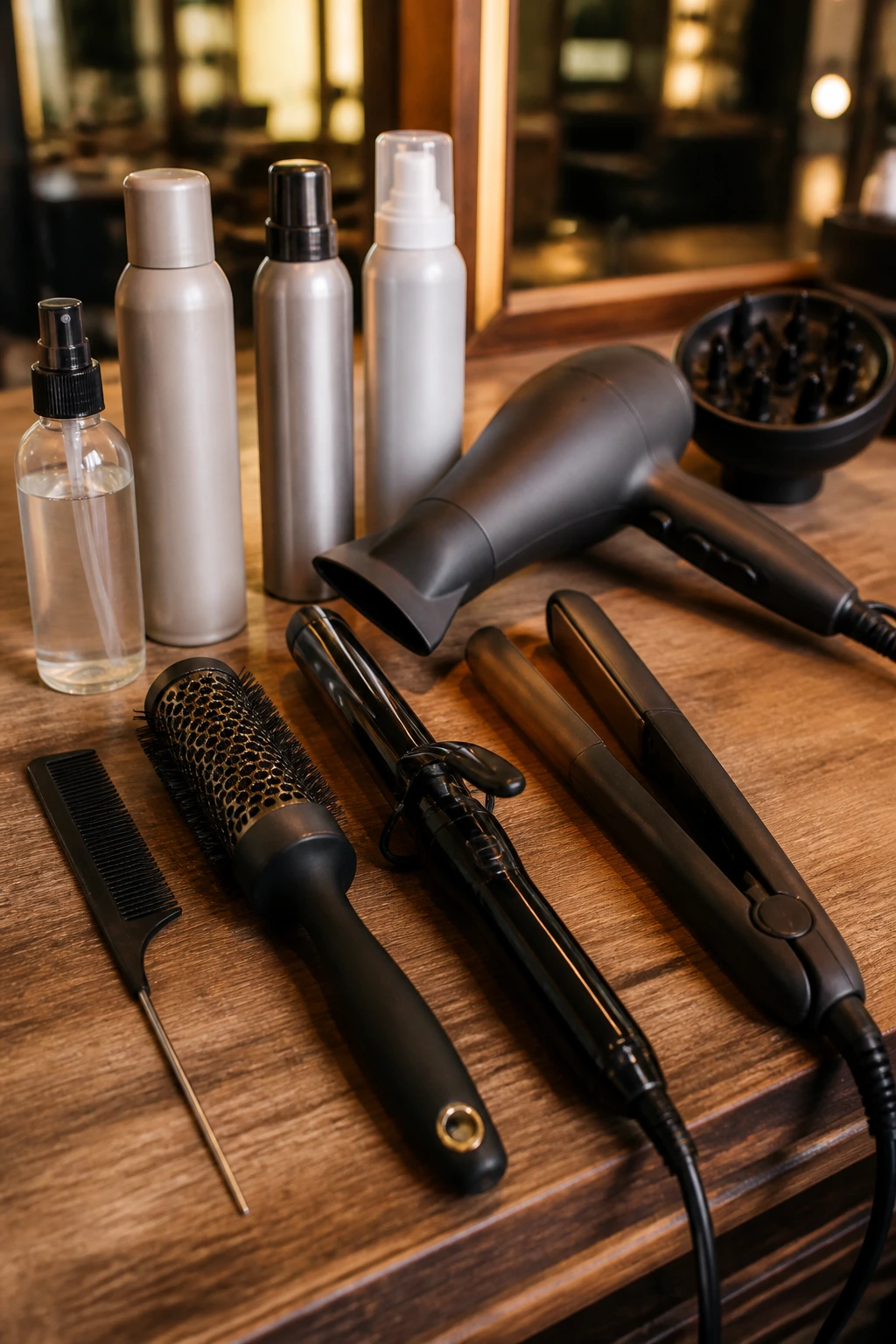
- Tail comb: Useful for clean side parts and for moving the part a half-inch at a time until the face looks balanced.
- Round brush, 1½ to 2 inches: Helps build root lift and bend the ends under without making the whole head puffy.
- 1¼-inch curling iron or wand: Best for soft waves that start below the cheekbone and don’t turn into corkscrews.
- Heat protectant spray: A must if you blow-dry, curl, or flat iron more than once a week.
- Volumizing mousse or root spray: Good for fine hair that collapses at the crown.
- Flexible-hold hairspray: Keeps movement in the hair so the style doesn’t feel stiff.
- Dry shampoo: Useful on day two or day three to lift roots without adding more heat.
- Blow-dryer with concentrator nozzle: Gives you more control when shaping the front and top sections.
- Diffuser attachment: Handy for natural curls and waves that need height without frizz.
- Flat iron: Not mandatory, but useful for smoothing a blunt lob or softening face-framing pieces.
How to Choose the Right Cut for Your Hair Texture
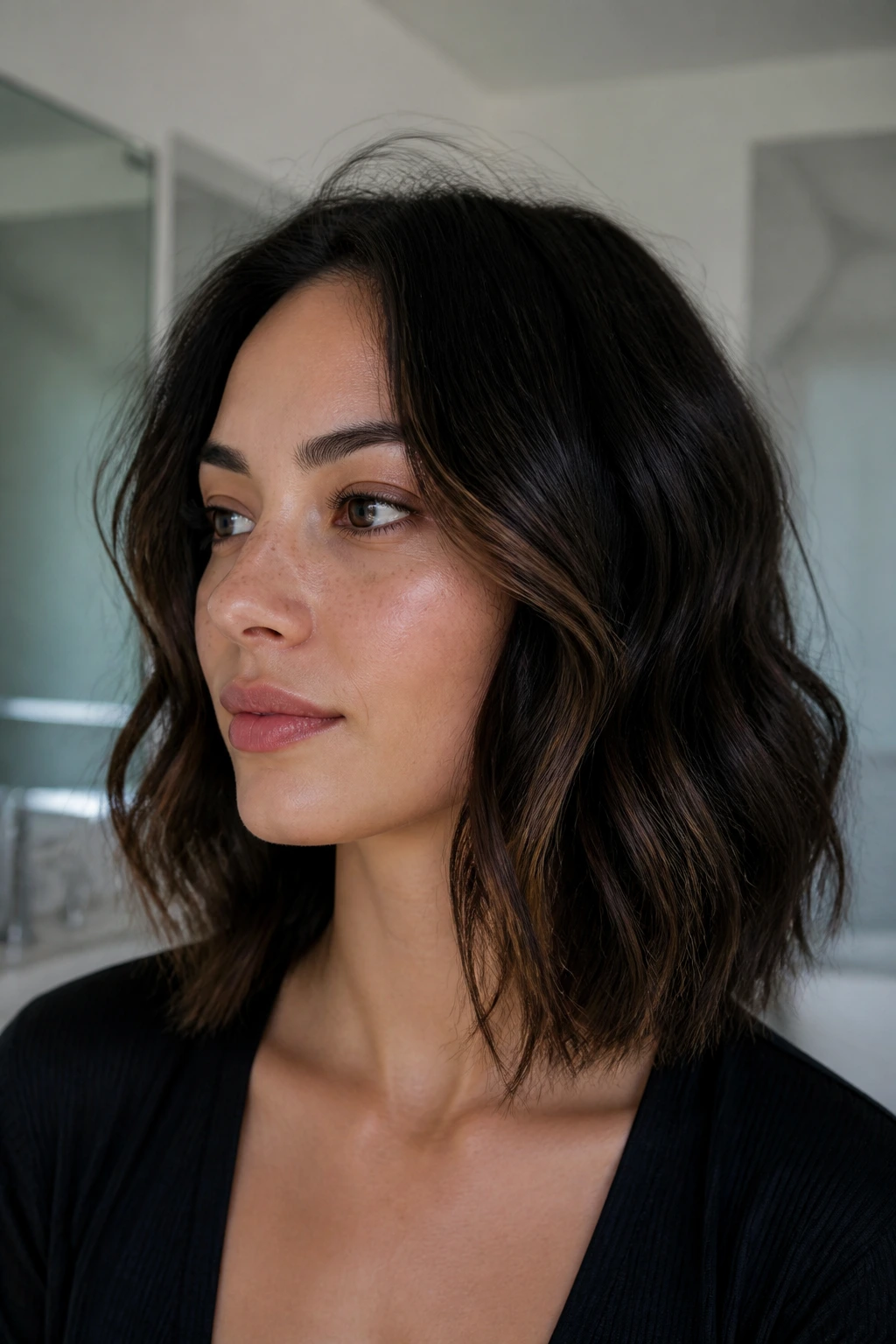
The round face part is only half the story. Texture decides whether a shoulder-length style sits softly, puffs outward, or falls in the exact wrong spot. I care more about texture than people expect because the same haircut can behave like three different styles depending on density and wave pattern.
Fine hair
Fine hair usually looks best with blunt or lightly layered edges and a little crown lift. Too many layers make it look see-through at the ends, which can exaggerate cheek width instead of reducing it. Root spray, a round brush, and a soft bend through the front are your friends here.
Thick hair
Thick hair needs weight removed from the inside of the shape. Otherwise it can fan out at the sides and make the face feel wider. Ask for internal layering, controlled face-framing pieces, and a perimeter that still feels solid.
Wavy hair
Wavy hair gives you the easiest route into most of these styles, but it can also turn mushroom-shaped if you cut it too short around the cheeks. Collarbone length and off-center parts tend to behave well. A light curl cream or mousse is usually enough.
Curly and coily hair
Curly hair needs shape planning before it needs layers. If the curls expand at cheek level, the face looks wider. If the layers are cut to lift at the crown and fall below the cheeks, the whole shape looks longer and more balanced.
How to Style Shoulder-Length Hair So It Opens Up the Face
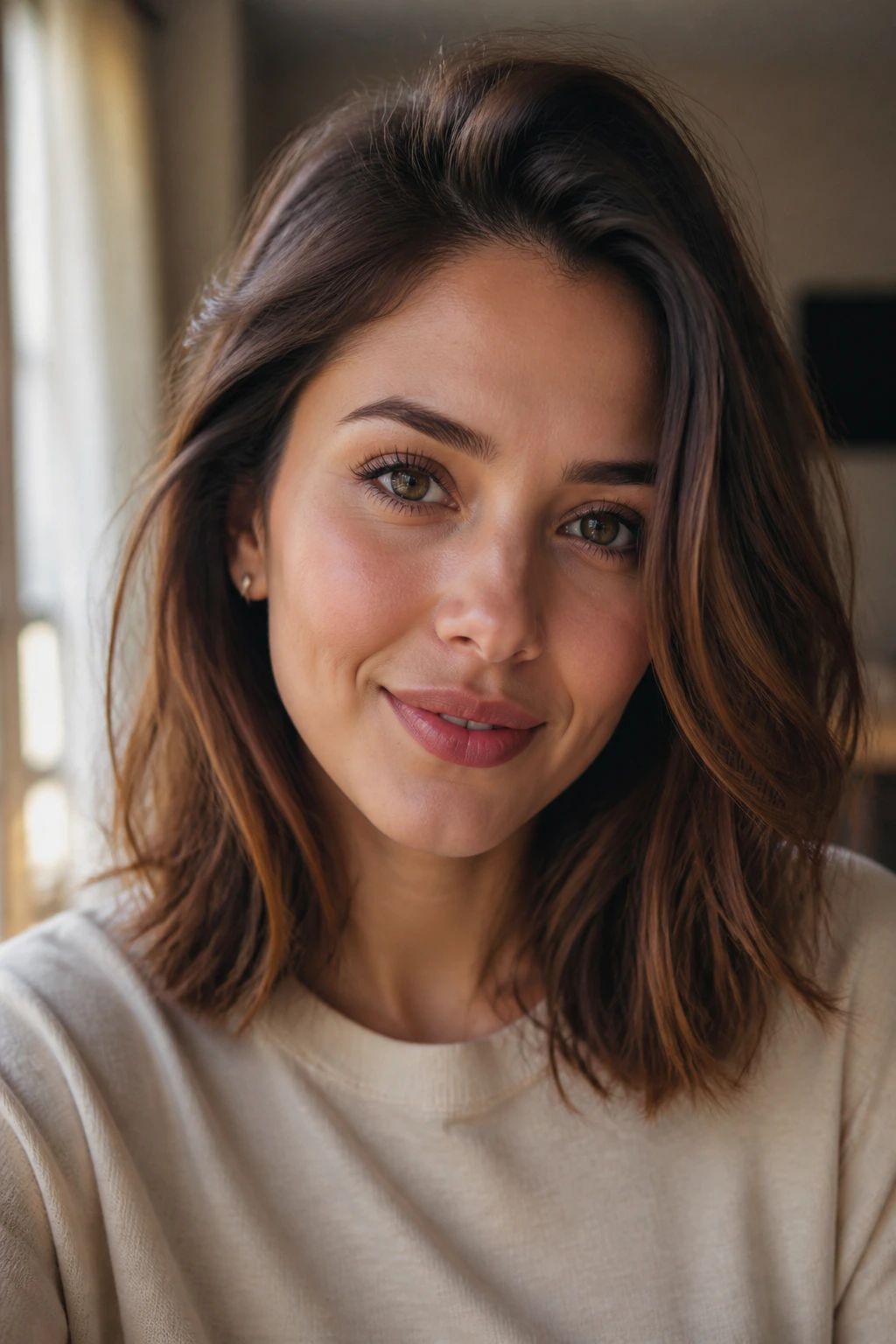
Parting: Move the part off-center by half an inch or more if the face feels too round in the mirror. That tiny shift can change the whole line of the haircut.
Volume: Put lift at the crown, not at the cheeks. Blow-dry the roots upward with a nozzle, or use mousse at the base before you dry. That’s where the shape gets taller.
Texture: Keep movement in the mids and ends, but don’t build too much width around the ear line. Soft bends below the cheekbone work better than big curls that start halfway up the face.
Finish: Leave the ends airy and touchable. Heavy oils and thick creams can drag shoulder-length hair outward, which is the opposite of what a round face usually needs.
Salon language: Ask for pieces that start below the cheekbone, a little height at the crown, and a perimeter that stays below the jaw. Those words are more useful than saying “slimming,” which does not tell a stylist where the hair should move.
Extra Tips for Volume, Shine, and Hold
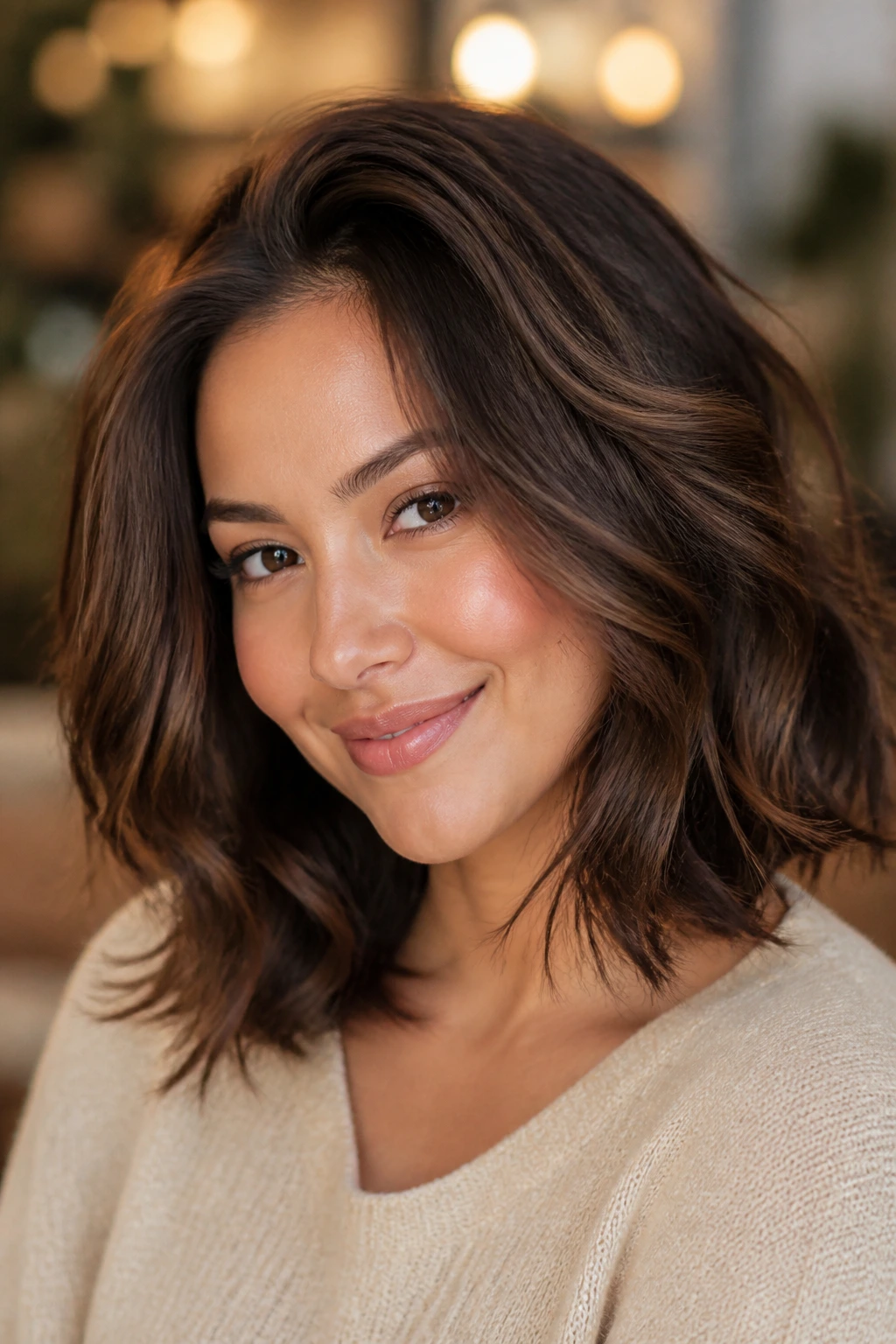
Volume Boost: Spray root lift on damp hair, then rough-dry until the roots are about 80% dry before you start shaping sections with a brush. That keeps the hair from lying flat against the scalp.
Shape Control: If your face-framing layers flip too wide, switch from a big round brush to a smaller one or a flat brush through the sides and only round-brush the ends. Small adjustment. Less puff.
Shine Without Grease: Work a pea-sized amount of serum into the very ends only. If it goes higher than the ear line, it can make the sides collapse and cling to the face.
Quick Reset: On day two, mist the top layer with water, re-bend only the front pieces, and hit the roots with cool air. You do not need to restyle the whole head.
My preference: I like movement that looks accidental even when it is planned. Hair that’s too polished around a round face can flatten the personality out of the cut.
Keeping the Shape Fresh Between Salon Visits

Shoulder-length hair grows out in a way that can be forgiving, but the shape still needs maintenance. For most people, a trim every 8 to 10 weeks keeps the ends from blunting out and adding width. If you wear bangs or curtain fringe, those often need a quicker clean-up—closer to 3 or 4 weeks if you want them to keep opening the face.
Night care matters more than people think. A loose clip, a silk pillowcase, or a low loose tie can keep the front pieces from kinking at the cheekbone. That kink is sneaky. It can make a flattering layer sit in exactly the wrong spot the next morning.
Wash rhythm depends on scalp oil and product use, but shoulder-length cuts usually look best when they’re not overloaded with dry shampoo for days on end. If roots start to look dusty or dull, wash. If the ends feel coated, use a clarifying shampoo once in a while and follow with conditioner only from the ears down. Clean hair takes shape better than tired, sticky hair.
If you heat-style often, give the hair at least one low-heat or heat-free day between sessions. The ends around the shoulders are the first place to get rough, and rough ends catch light in a way that makes the cut look wider and less clean.
Variations and Adaptations to Try

Fine-Hair Float: Keep the perimeter blunt and the layers minimal, then build lift only at the roots. This version works best when you want the illusion of fullness without turning the sides into a puff.
Thick-Hair Release: Ask for internal layers, a soft face frame, and point-cut ends at the bottom. It drops extra bulk while keeping the silhouette controlled, which is the whole point with dense hair.
Curly Halo Shape: Shape the curls so the crown sits a little higher than the sides, and keep the shortest pieces below the cheekbone. This lets the curls form a halo instead of a round cloud around the face.
Heatless Wave Set: Use loose braids, foam rollers, or large flexi rods on damp hair, then brush out the waves with a drop of serum. It gives shoulder-length hair movement without putting hot tools on it every time.
Sleek Office Version: Smooth the hair with a blow-dry cream, tuck one side behind the ear, and leave the front pieces hanging long. It looks tidy without pinning the face in place.
Growing-Out Bridge: If you’re between lengths, keep the front pieces shaped and let the back live a little longer. That prevents the awkward “neither short nor long” stage from widening the face while you wait for the next trim.
Common Mistakes That Add Width
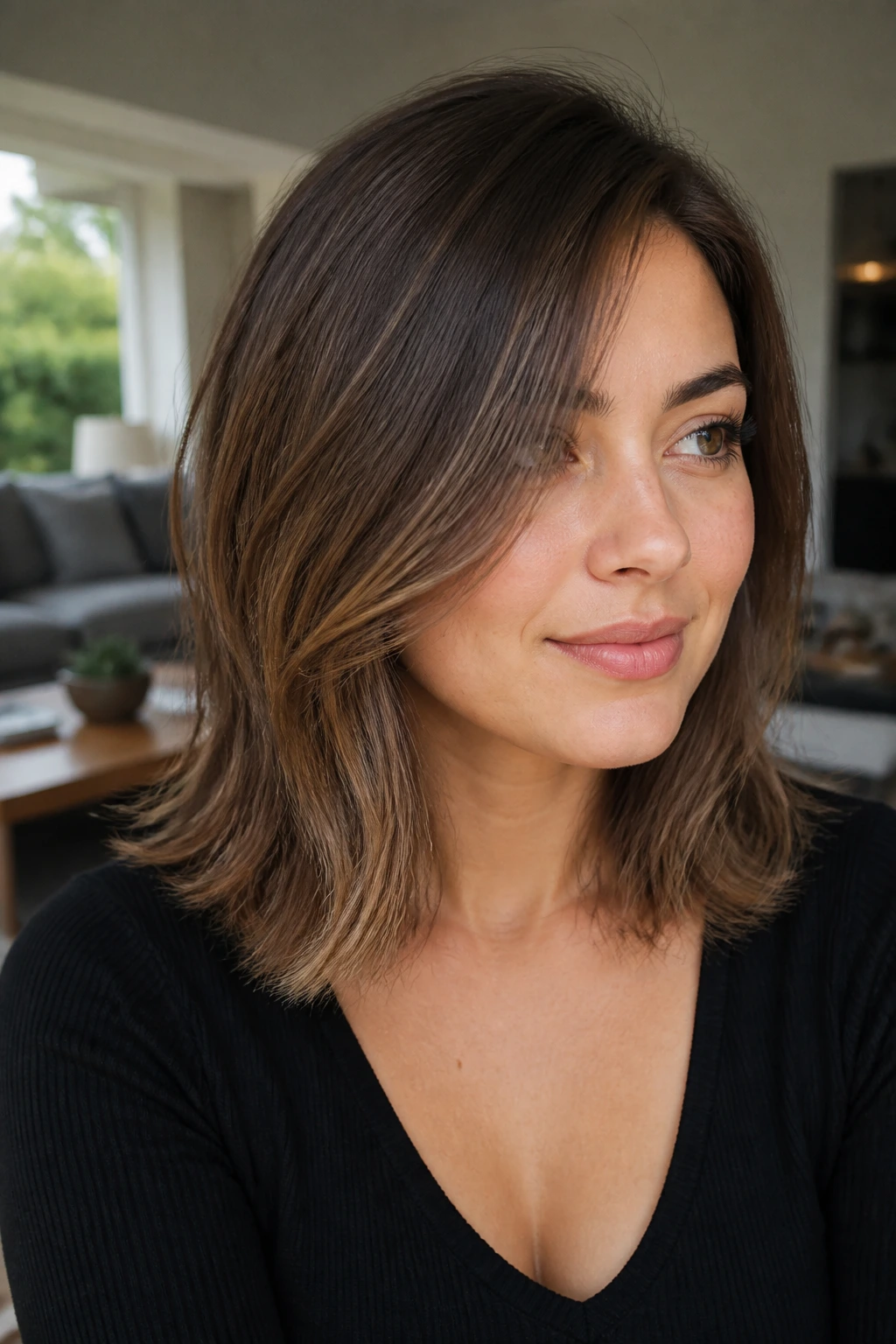
Cutting the ends right at the jaw: That’s the fastest way to make a round face look broader. The fix is simple: move the hemline lower, closer to the collarbone.
Building volume at the cheeks: Big round-brush lift at the side of the head can spread the face visually. Focus lift at the crown and keep the mid-lengths softer.
Using blunt bangs that stop too high: A short straight fringe can chop the face in half and make the cheeks feel larger. Longer curtain or bottleneck bangs tend to work better.
Choosing a dead-center part with flat roots: A center part can work on some round faces, but only when the crown has height and the front pieces break the symmetry. Flat and centered is the bad combo.
Over-layering curly hair: Too many short layers can make curls expand outward. Keep the shape planned and the shortest pieces away from the widest part of the face.
Ignoring neck length and glasses: A style that looks balanced in a chair can feel off when you add glasses or a short neck. Those details matter. They change where the eye lands.
What If My Hair Is Very Fine and My Face Is Round?
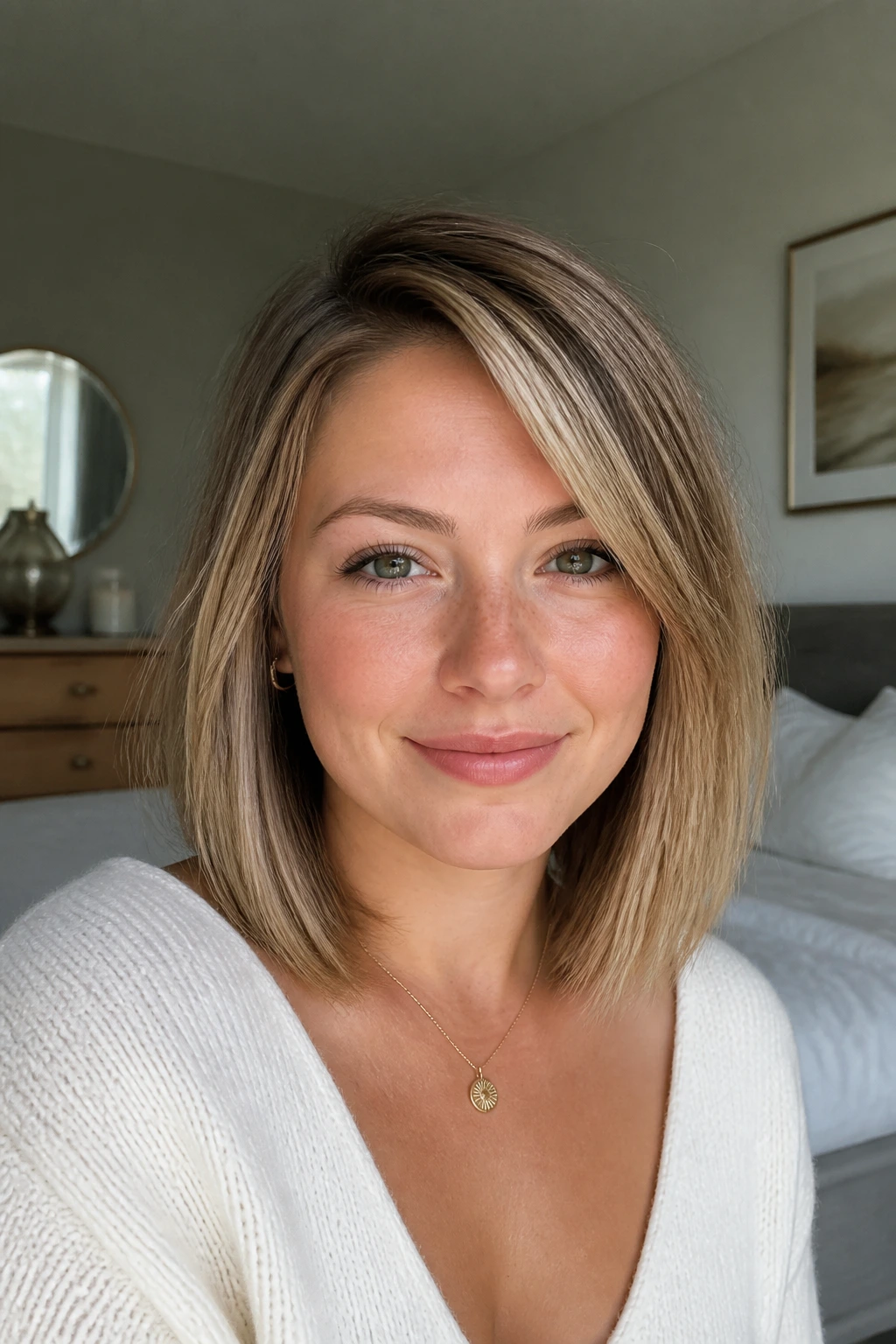
Fine hair needs shape more than it needs a lot of layers. A blunt or slightly angled collarbone cut with a soft side part usually gives the best balance because it keeps the ends full. Add root lift, not a pile of texturizing product that makes the hair feel dry and see-through.
Are Curtain Bangs Actually Good for Round Faces?
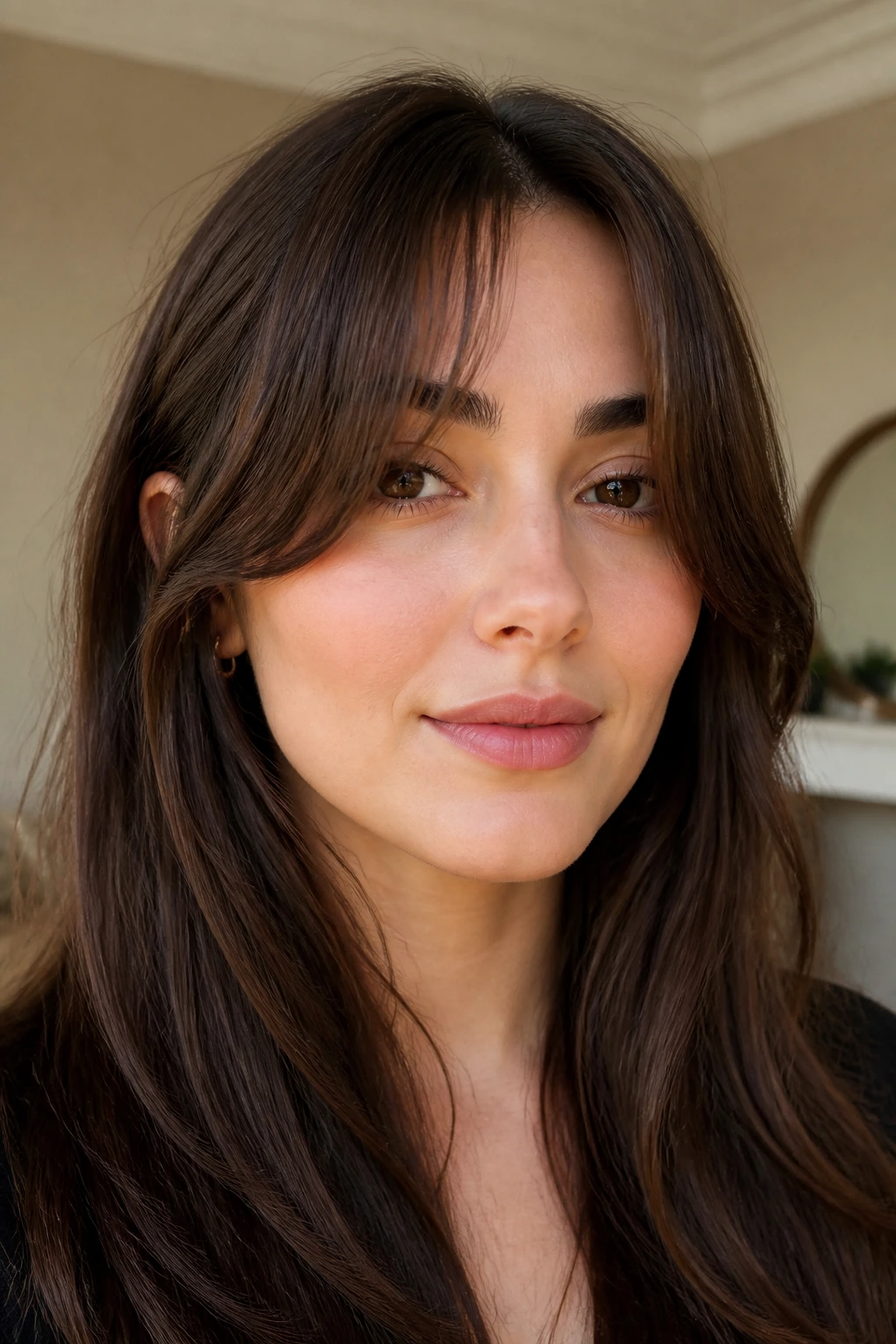
Yes, if they are long enough to split and blend into the sides. Curtain bangs that start too short can widen the upper cheeks, but longer pieces that fall toward the cheekbone create a vertical line that helps lengthen the face. The style only works when the bang opens, not when it sits like a block.
Should I Avoid a Middle Part Completely?
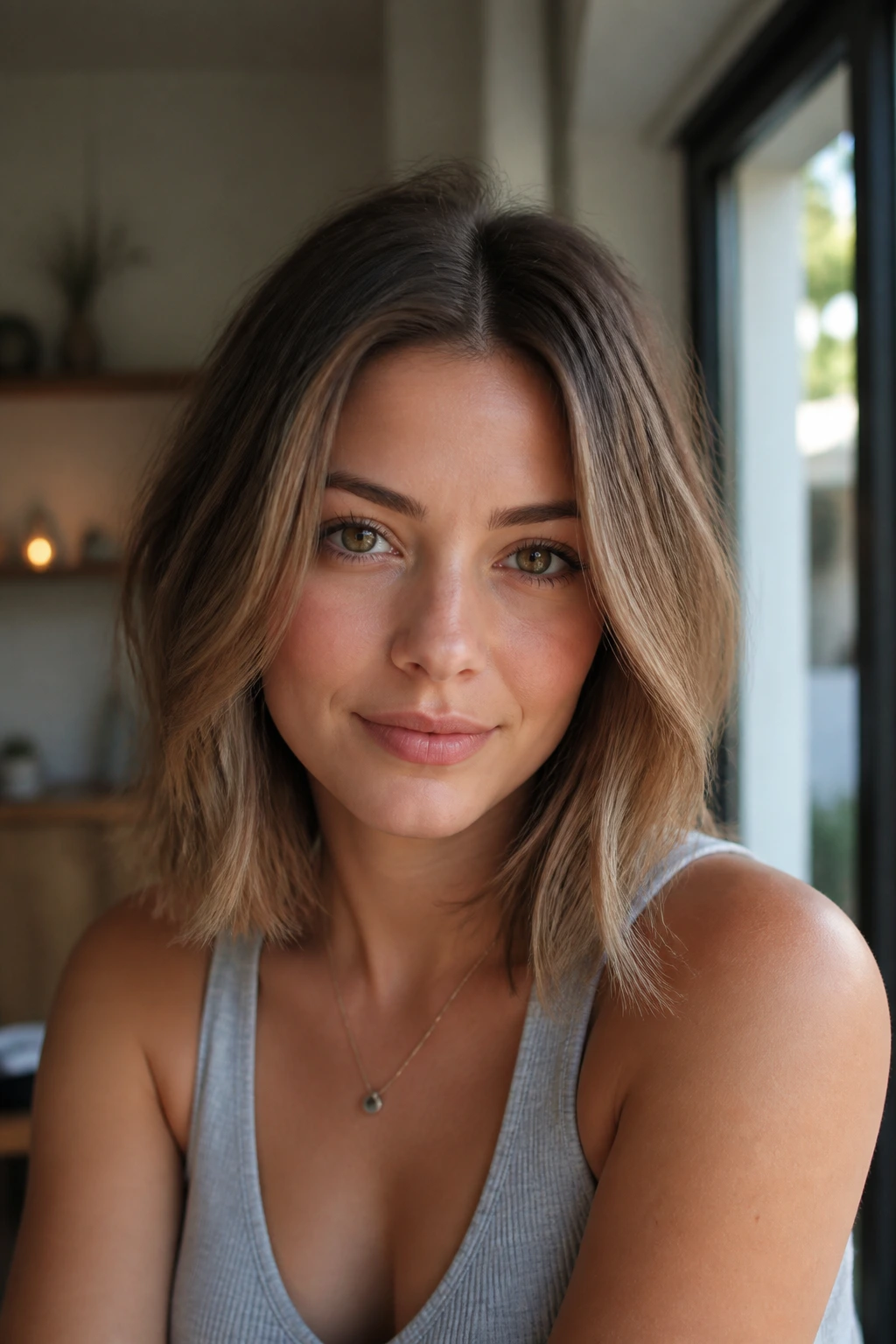
No, but it needs help. A middle part can work on a round face if the crown has lift and the front pieces are long enough to move past the cheekbone. Flat roots plus a perfect center part is where things go sideways.
What Should I Ask My Stylist For?
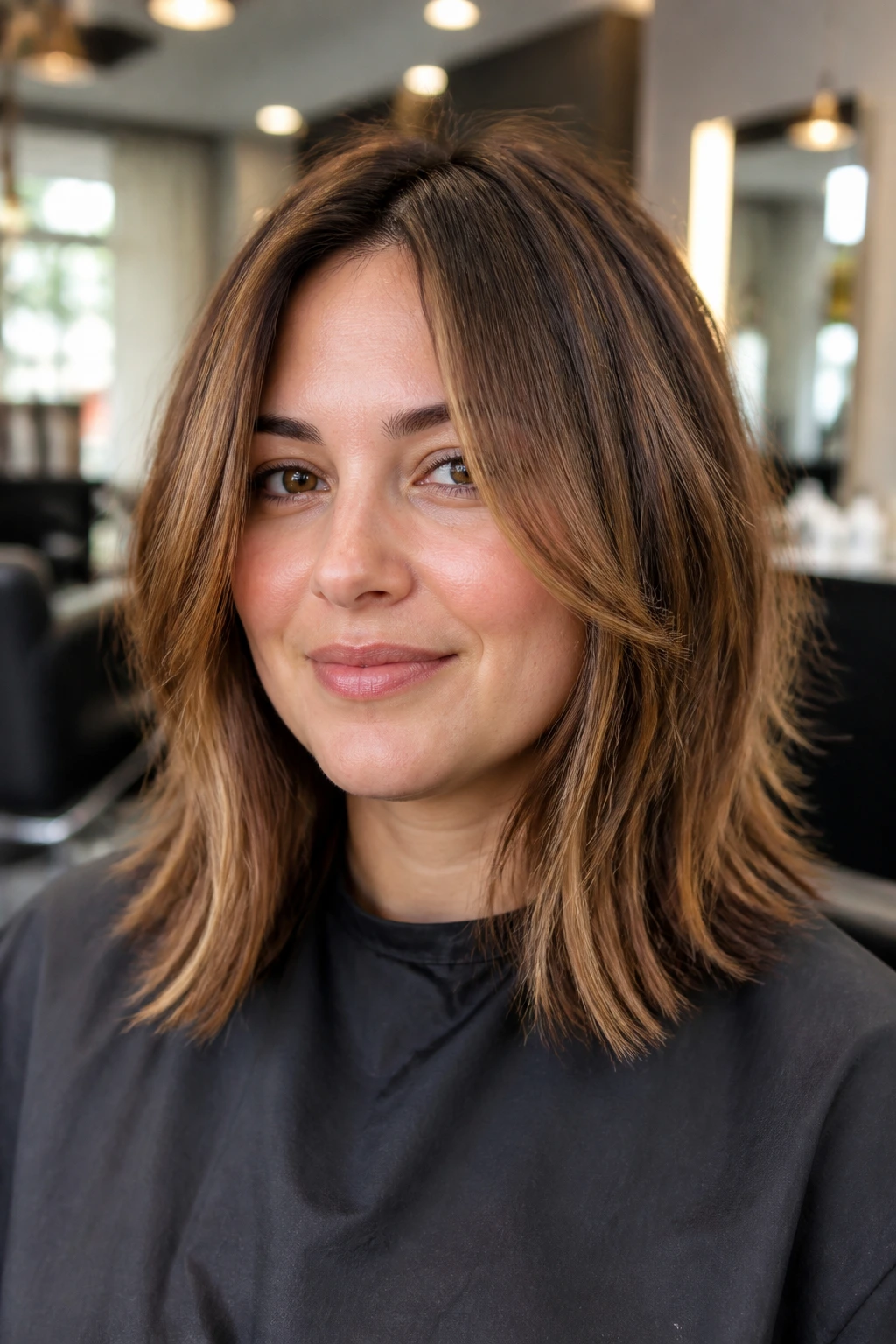
Use plain language: shoulder length, weight removed from the sides, face-framing pieces that start below the cheekbone, and a little lift at the crown. If you like layers, ask for long layers rather than short ones. That gives shape without widening the face.
Do Curls Make a Round Face Look Wider?
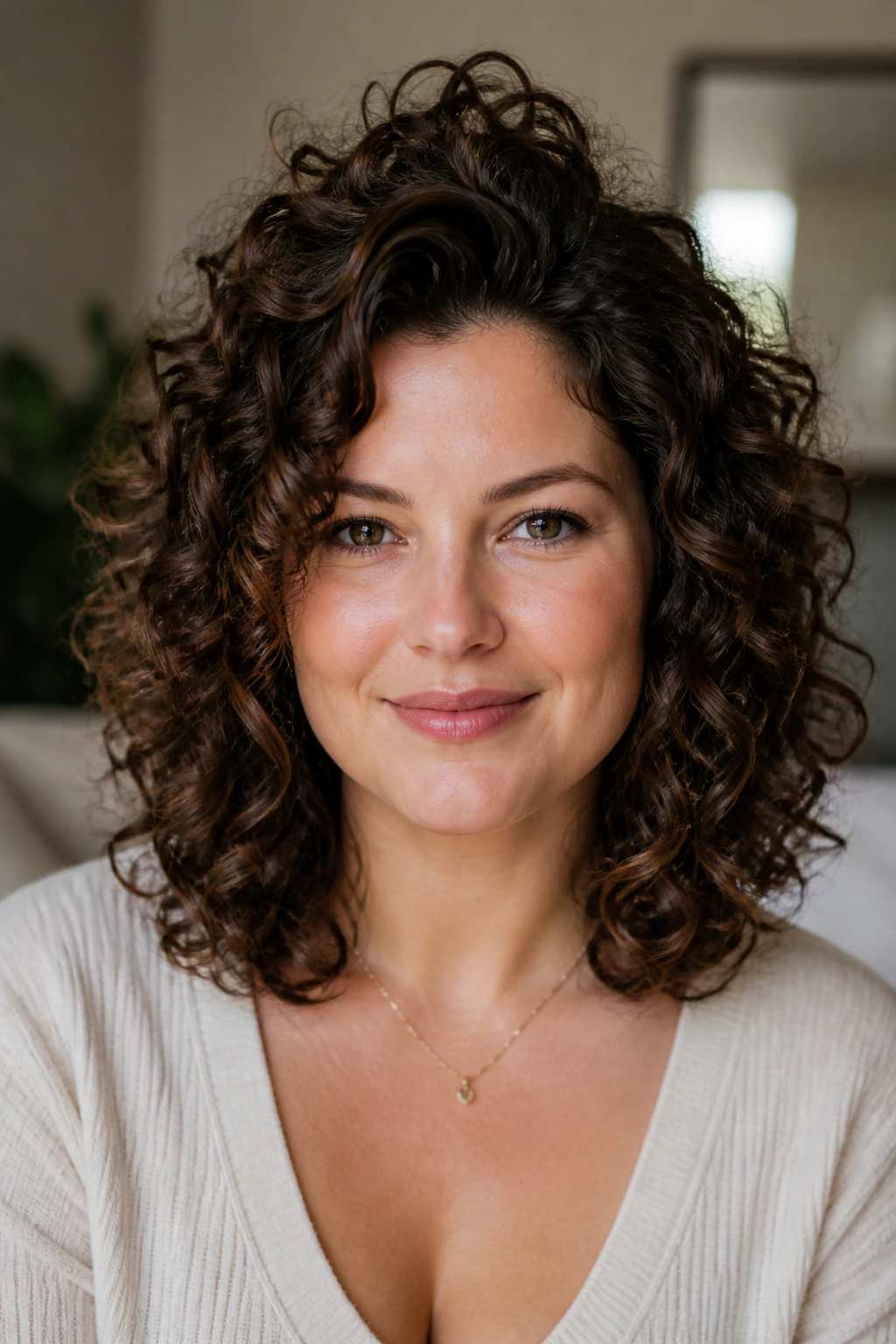
They can, if the curl volume sits at cheek level. The trick is shaping the curl pattern so the height lives at the crown and the width falls lower, near the shoulders and collarbone. A dry cut and thoughtful diffusing can make a huge difference here.
How Often Should I Trim a Shoulder-Length Cut?
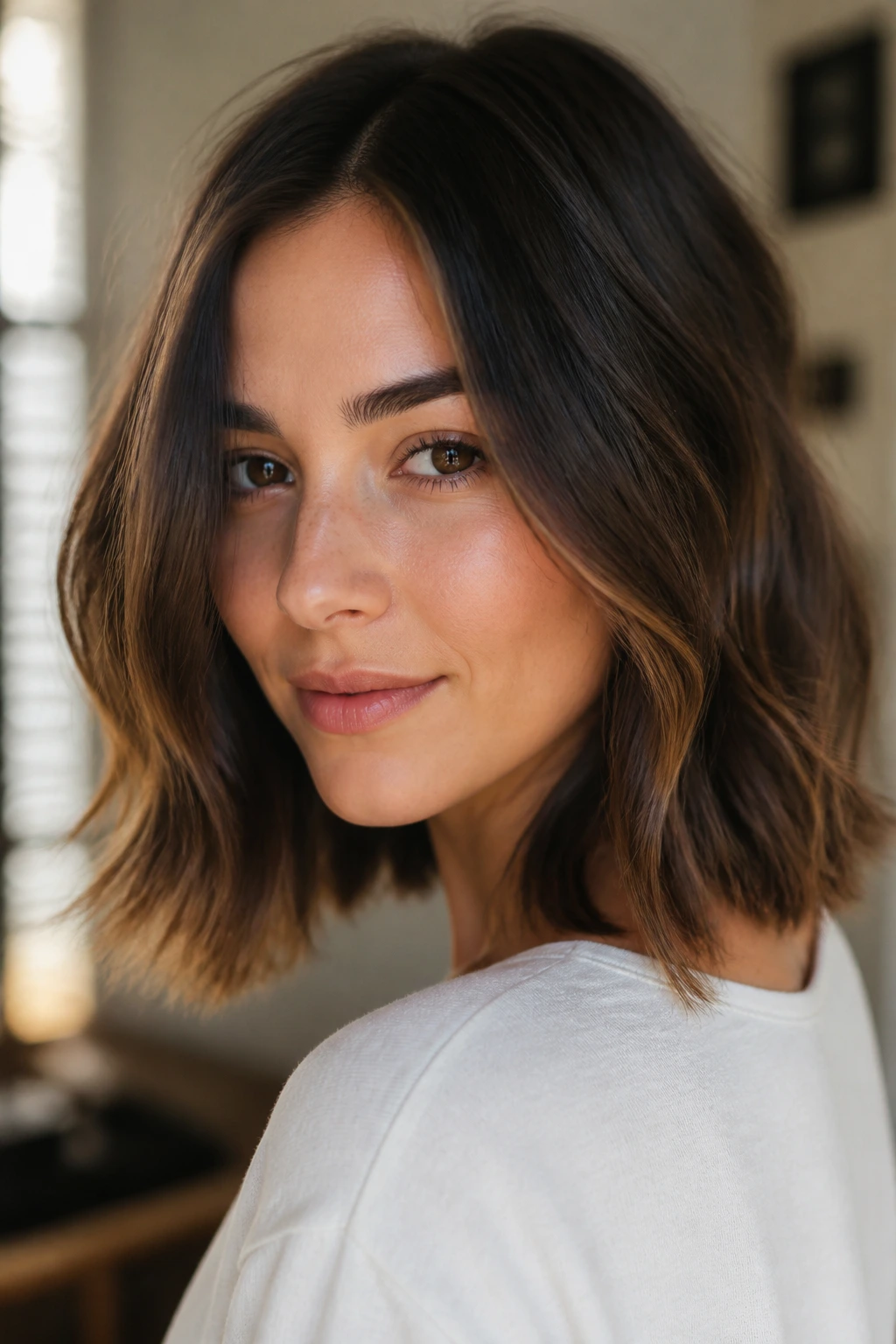
Every 8 to 10 weeks is a good rhythm for most people. If you wear bangs or sharp face-framing pieces, those may need a faster cleanup so they don’t drift into the widest part of the face and lose their shape.
Can I Wear My Shoulder-Length Hair Straight Every Day?
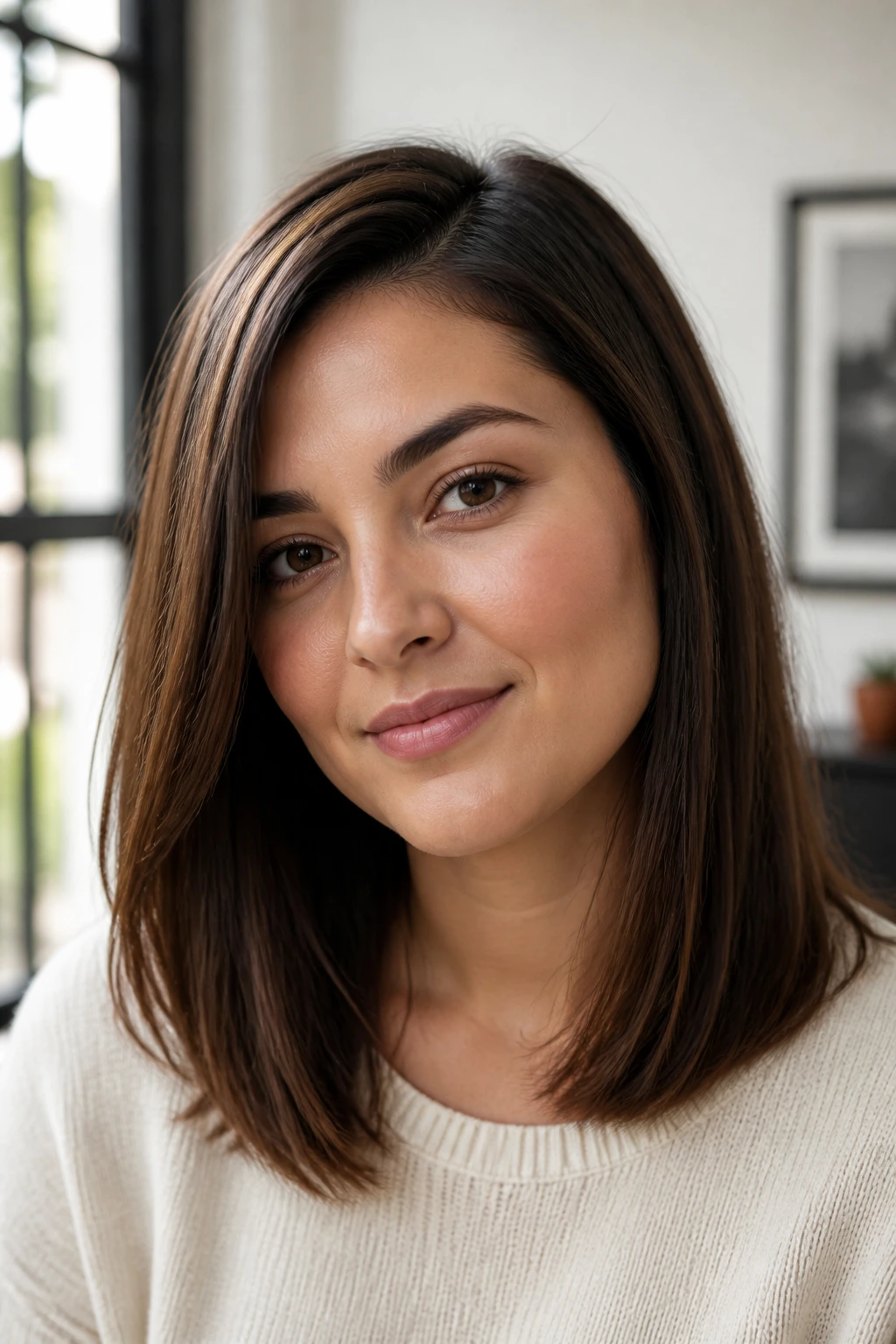
Absolutely. Straight shoulder-length hair can look very clean on a round face when the front pieces are long and the part is off-center. I’d keep a little bend at the ends, though. A pin-straight finish with no movement can make the haircut look heavier than it is.
What If My Hair Feels Too Puffy at the Sides?

That usually means the volume is sitting in the wrong place or the cut has too much width around the cheek line. Ask for internal layering, use less round-brush lift at the sides, and move the part slightly off-center. A tiny change in placement often fixes the whole problem.
The Right Length Does the Heavy Lifting

Shoulder-length hair on a round face works because it gives you options without making the silhouette fight itself. That’s the real advantage. You can go sleek, wavy, curly, tucked, or clipped back, and still keep the face open as long as the length lands in the right place.
The smartest versions do not chase drama. They use a collarbone hem, a side or off-center part, and enough movement below the cheekbone to keep the shape from spreading outward. Get those pieces lined up, and the haircut starts helping you instead of asking for daily negotiation.
Pick the version that matches your texture, not just the one that looks pretty in a mirror. That one usually behaves better once you leave the salon.
