



A heart-shaped face can wear short hair beautifully — but the cut has to do some honest work. A wider forehead, prominent cheekbones, and a narrower chin create a shape that wants balance, not bulk. Get the proportions wrong and the style looks top-heavy. Get them right and the whole face looks calmer, cleaner, and sharper.
I like short hair on heart-shaped faces when the cut puts a little weight at the jawline or cheekbone and keeps the crown from puffing up like it has somewhere to be. Side parts, soft fringe, inward bends at the ends, and texture that lives around the sides all earn their place. A blunt bob can work. A pixie can work. A cropped shag can work. The trick is knowing what each one is doing to the eye.
Texture changes the rules. Fine hair needs shape that doesn’t disappear by lunch. Thick hair needs internal removal so the cut doesn’t balloon. Curly hair needs perimeter and curl pattern to agree with each other, not fight all day. That’s where the good short hairstyles for heart shaped faces separate themselves from the cute-but-wrong ones, and that’s where the real choices start.
Why These Short Styles Work on Heart-Shaped Faces
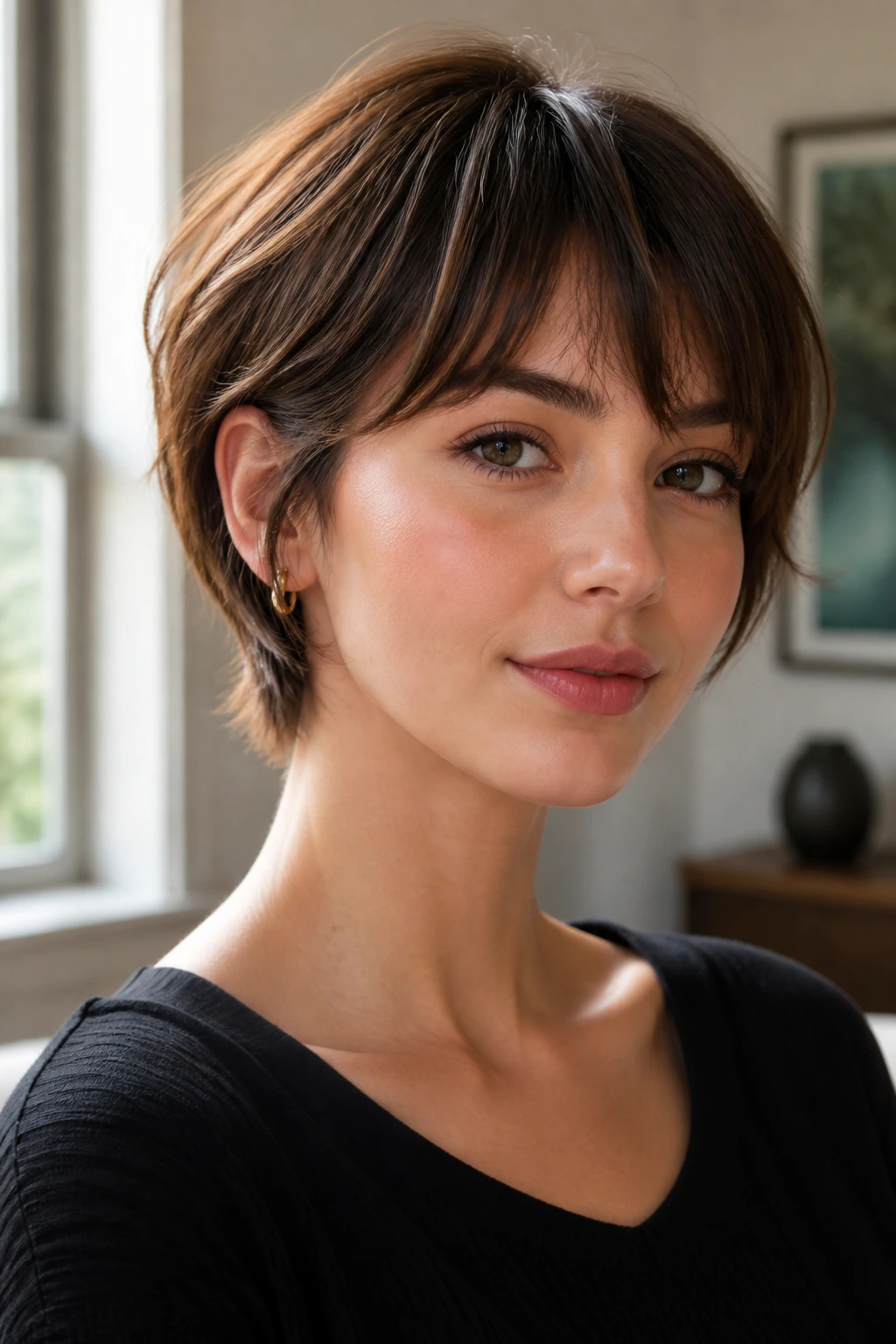
The right short cut doesn’t hide a heart-shaped face. It edits it. That’s a much better deal.
- Jawline Balance: These styles add visual weight lower on the face, which keeps the chin from looking too delicate next to a wider forehead.
- Forehead Softening: Side-swept fringe, curtain pieces, and broken-up bangs interrupt width at the top without turning the whole haircut into a curtain.
- Cheekbone Focus: The best cuts land near the cheekbones or graze the jaw, so the eye has a place to stop instead of racing straight across the forehead.
- Texture-Friendly Shape: Short hair shows texture fast, which means wavy, curly, straight, and coily hair can all look intentional if the outline is right.
- Low-Drama Grow-Out: Several of these cuts stay readable as they grow. That matters when you don’t want a trim every time your bangs blink.
There’s one thing I keep coming back to with this face shape: the crown should not be the loudest part of the haircut. If the top is tall and the sides are skinny, the face gets even more top-heavy. If the ends carry a little substance, everything settles down.
That’s the whole game.
1. Textured Chin-Length Bob
A chin-length bob is the cleanest answer when a heart-shaped face wants structure without shouting at the forehead. The line lands where the face starts narrowing, which gives the jaw something to say for itself. Keep the ends soft — a little point cutting or razor-softening at the perimeter keeps it from looking like a helmet.
This cut does its best work with a side part or a slightly off-center part. That tiny shift breaks up width up top and keeps the eye moving diagonally instead of straight across. If your hair flips out at the bottom, ask for a subtle inward bend at the chin rather than a pin-straight edge.
The best version isn’t pin-straight. A little movement around the ends makes the whole bob feel more expensive and a lot less stiff.
If you’ve got straight or wavy hair, this is a very safe place to start. Thick hair can wear it too, but only if the stylist removes weight underneath instead of hacking at the surface and hoping for the best.
2. Side-Parted Pixie With Long Fringe
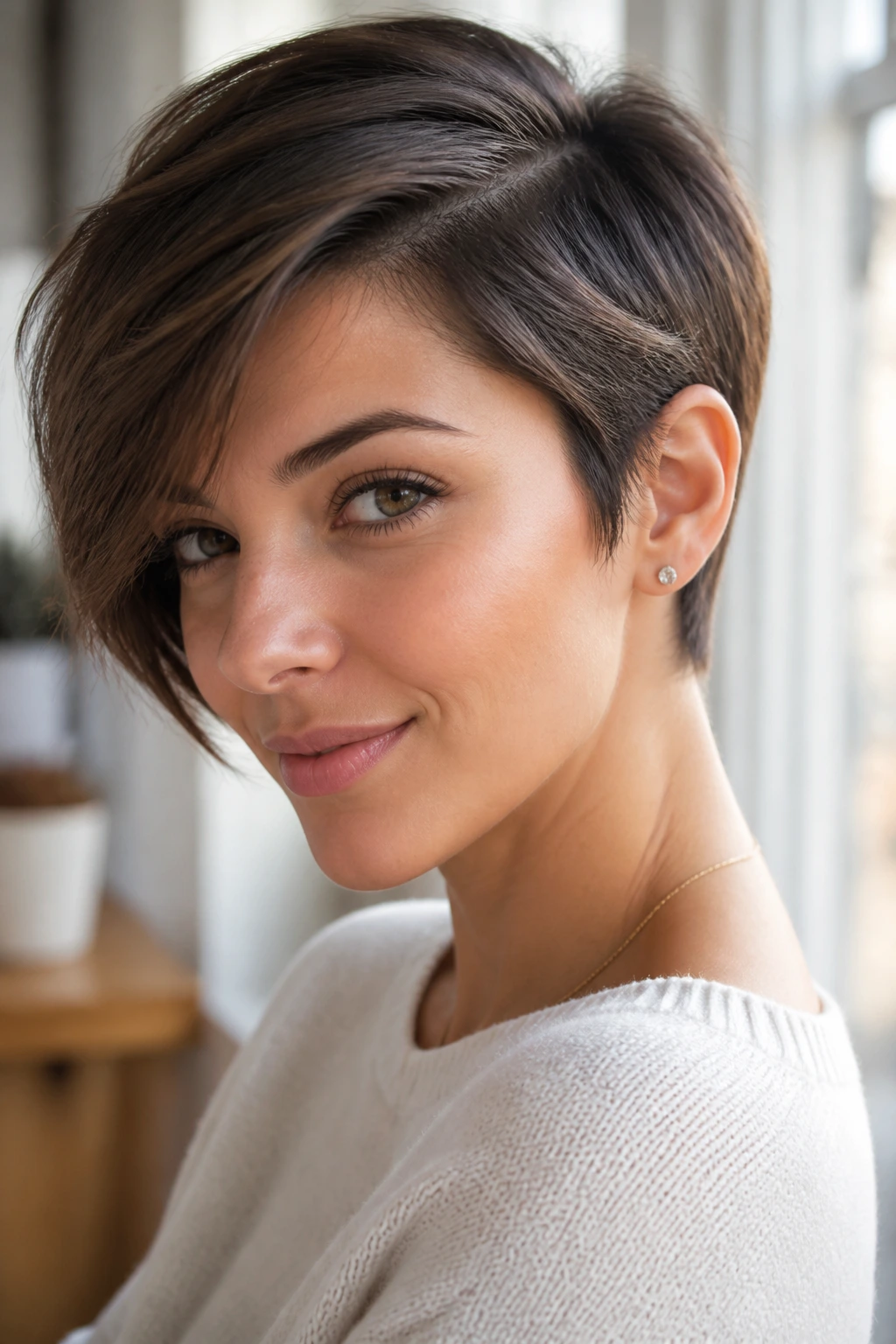
Can a pixie work on a heart-shaped face? Absolutely — if the fringe sweeps across the forehead instead of standing up like it’s trying to win a contest.
Why the fringe matters
The long top section gives the cut a diagonal line, and diagonal lines are your friend here. They soften the forehead width and pull attention toward the eyes, not just the hairline. Keep the sides close but not shaved to the skin unless you really want contrast; a little softness around the temples makes the whole shape easier to wear.
How to style it
A pea-sized amount of paste or cream is enough for most fine hair. Work it through damp hair, then push the fringe to one side and let the nape stay neat. If you blow-dry, use a small round brush or just your fingers — the goal is movement, not height.
This is a good cut when you want short hair that still feels feminine and a little undone. It looks best when the front is allowed to fall forward a touch. Not upward. Forward.
3. French Bob With Brow-Skimming Bangs
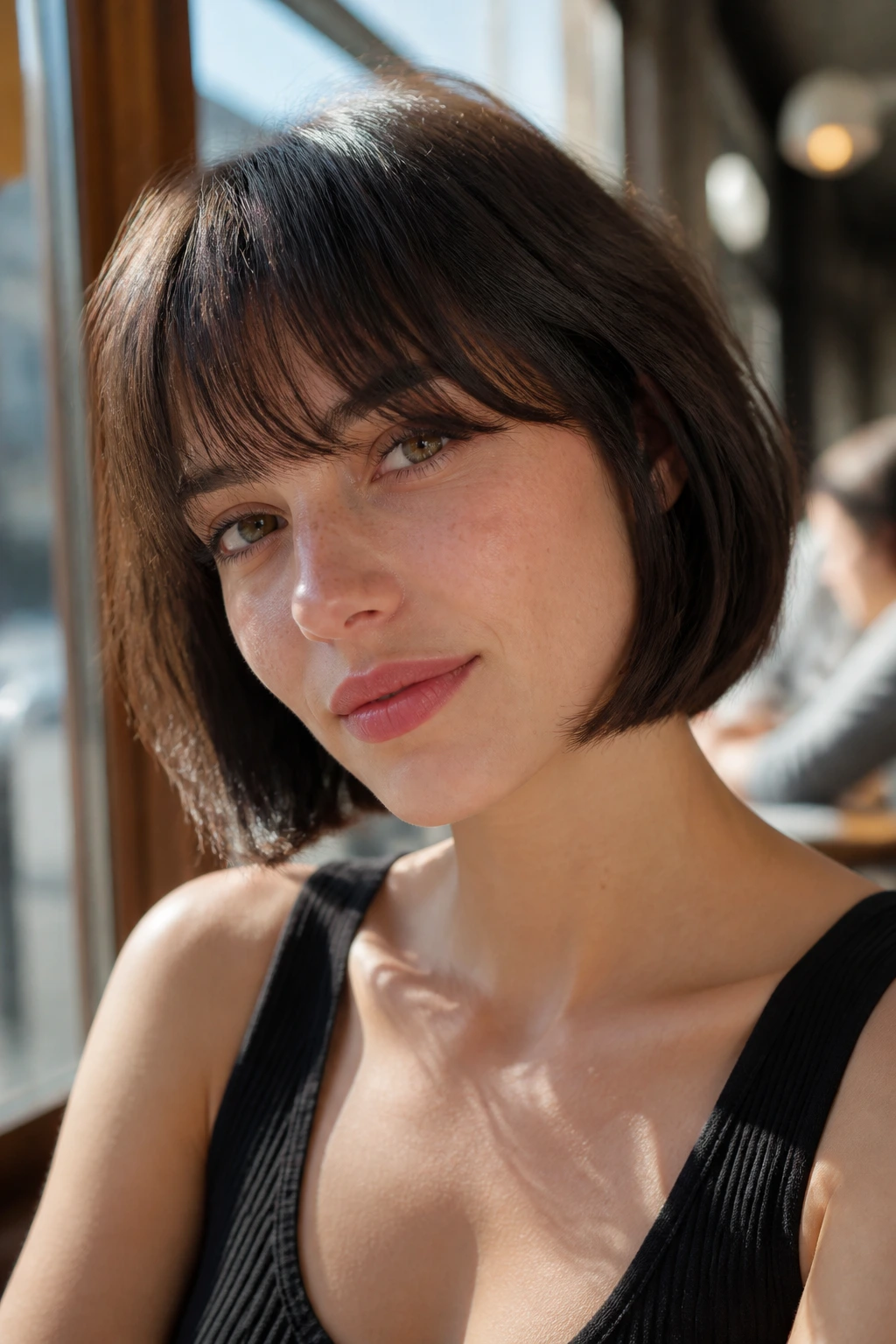
A French bob can be a gift to a heart-shaped face, but only when it keeps its shape soft. The chin-to-lip length gives the lower half of the face more presence, and the bangs cut across the forehead in a way that trims visual width without hiding everything.
The sweet spot is a fringe that touches or barely grazes the brows. Too short, and the forehead looks wider. Too dense, and the whole cut turns boxy. You want the bangs to feel airy enough that they move when you blink, not sit there like a wall.
- Best for: Fine to medium hair that has a little bend.
- Ask for: A soft baseline at the chin and fringe that’s lightly textured at the ends.
- Avoid if: Your hair is very cowlick-prone and you hate daily styling.
I’ve always liked this cut on people who can live with a little maintenance. It’s not fussy, but it does ask for a quick blow-dry or a flat-iron bend at the ends. Worth it, if you like a face-framing bob with some personality.
4. Asymmetrical Bob With One Longer Side
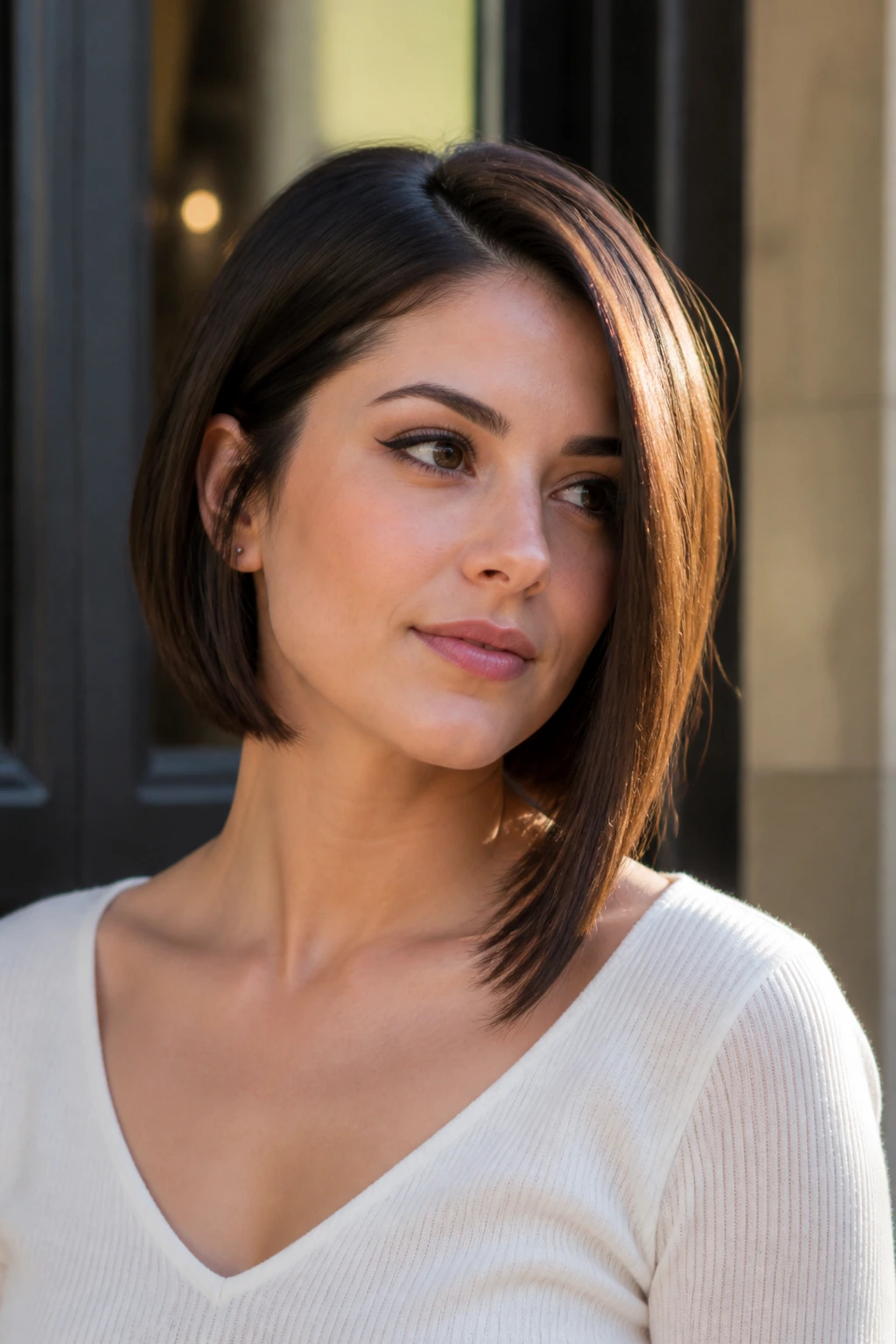
A subtle asymmetrical bob is one of the smartest short haircuts for heart-shaped faces because it cheats the eye in a useful way. The longer side creates a diagonal line that pulls attention away from forehead width and down toward the jaw. It’s a small shift with a big payoff.
Keep the asymmetry gentle. You do not need one side to swing wildly past the other; that turns into a style statement first and a flattering cut second. A difference of an inch or two is often enough, especially if the ends are soft and the part is slightly off-center.
This one suits straight or slightly wavy hair best because the line reads cleanly. If your hair is thick, ask for internal weight removal so the longer side doesn’t puff out at the bottom. If your hair is fine, keep the perimeter blunt enough to hold its shape.
The nice thing about this cut is that it still looks deliberate when it grows out. It gets a little more relaxed, not messy. That’s a good trade.
5. Bixie Cut With Soft Ends
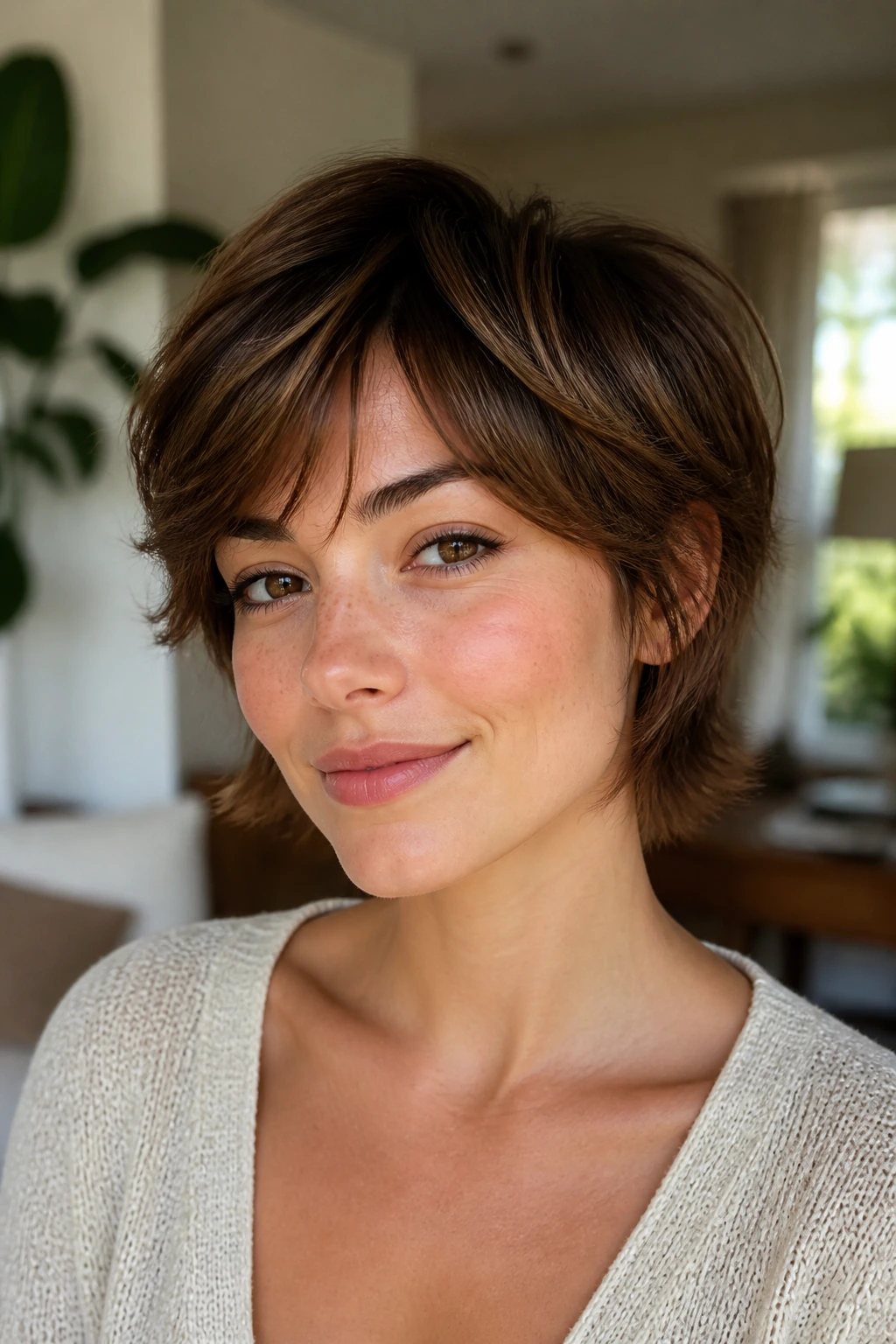
The bixie lives in that useful middle zone between a bob and a pixie, and heart-shaped faces usually wear it better than either extreme when they want softness without length. It gives you movement near the cheekbones, a little lift on top, and enough length around the sides to keep the face from looking bare.
This is the cut for people who want short hair but don’t want to look cropped to the scalp. That extra bit of length near the ears and nape makes a real difference on a face with a wider upper half and a narrower lower half.
A bixie looks best when the ends are chipped or lightly feathered, not stacked. Ask for pieces that can tuck behind one ear and still fall forward when you want them to. That gives you some styling range without getting precious about it.
It’s especially useful if you’re growing out a pixie and want something cleaner than an awkward in-between phase. The whole point is easy shape. Nothing stiff. Nothing puffy.
6. Shaggy Crop With Curtain Fringe
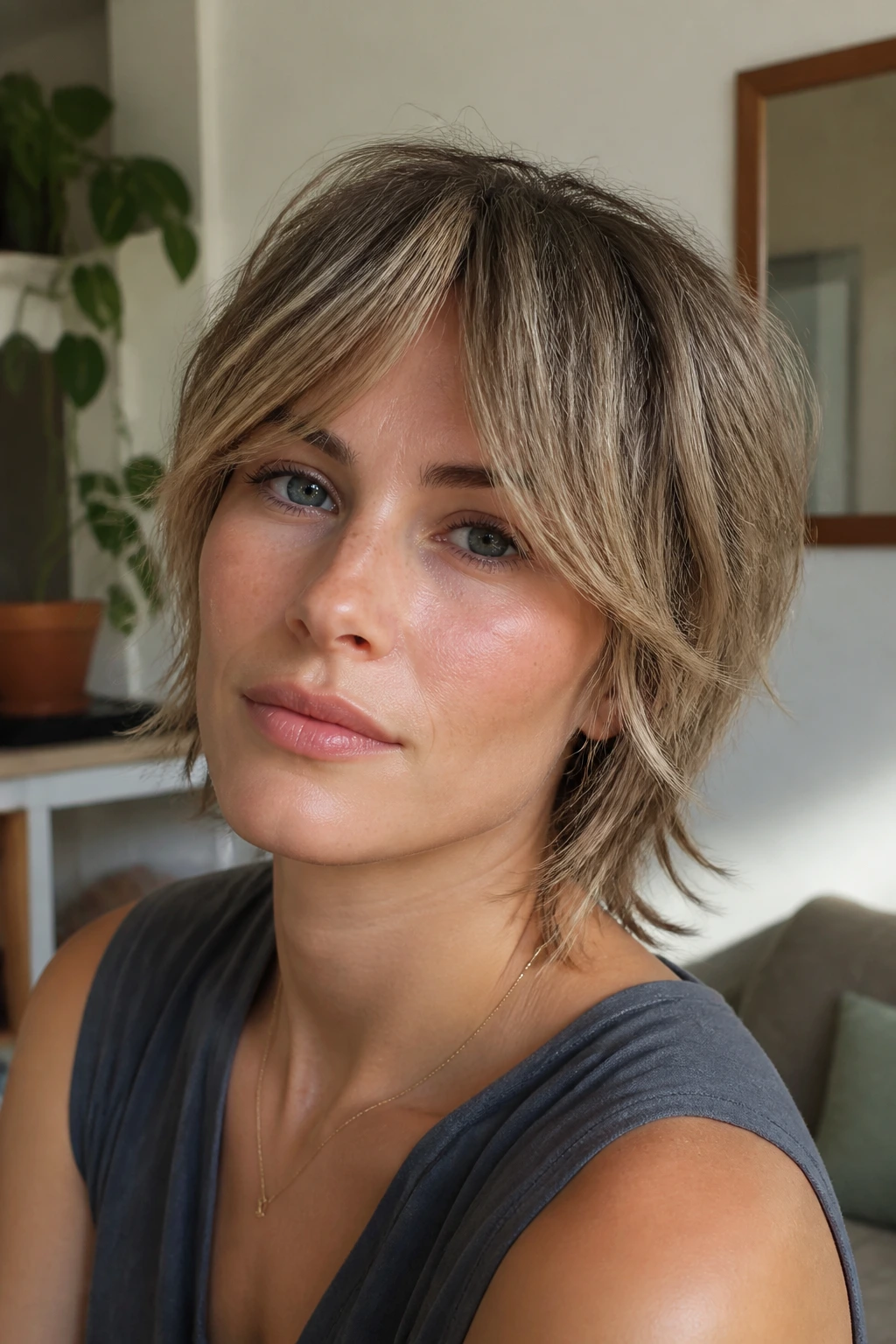
A shaggy crop can be brilliant on heart-shaped faces when the layers are placed with restraint. Too much crown volume and you’re back in top-heavy territory. But a light shag with curtain fringe? That has real balance.
What makes it work
The center opens the forehead just enough, and the fringe breaks into two softer pieces that sit around the temples. That diagonal movement narrows the widest part of the face without making it look hidden. Keep the layers soft through the sides, especially if your hair has natural wave.
Best for wavy hair
Wavy hair often does this style better than straight hair because the texture keeps the layers from looking choppy in a bad way. A mousse at the roots and a little cream on the ends is usually enough. Scrunch, air-dry, and leave some mess in it. That’s the point.
If you hate a haircut that demands heat tools every morning, this is worth a hard look. It’s one of the few short styles that can look better after a day or two of living in it.
7. Sleek Jaw-Length Bob With Tucked Pieces
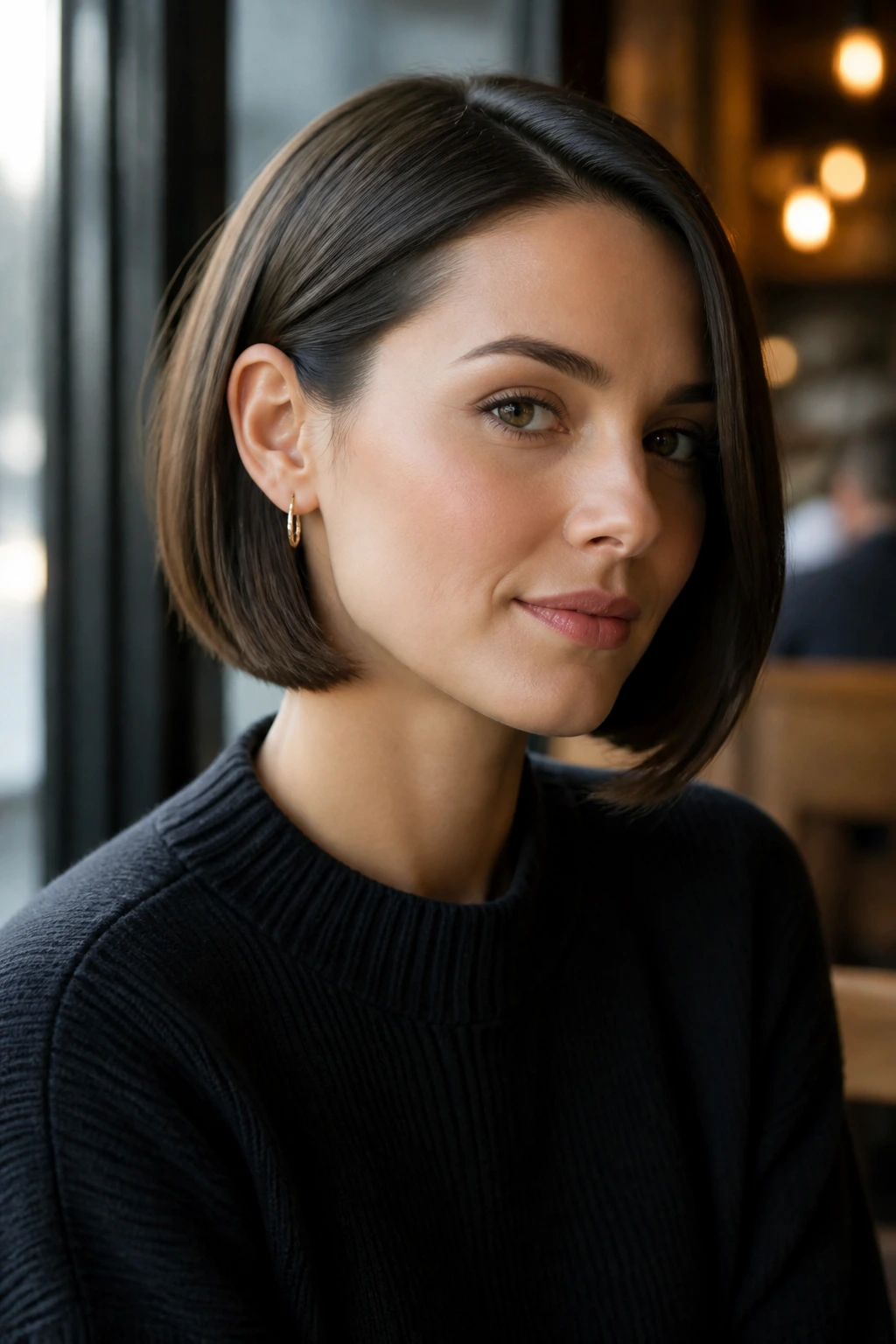
There’s a very clean version of a heart-shaped-face bob that I like a lot: jaw-length, blunt enough to feel intentional, but soft enough at the ends that it doesn’t read as severe. Tucking one side behind the ear exposes the jawline and gives the face a little breathing room.
This cut works when the line sits just below the cheekbone and kisses the jaw rather than stopping right at the widest point of the face. That placement matters. If the bob cuts across the cheekbones too hard, the face can look broader at the top and smaller below. Move it slightly lower and the whole shape settles.
A flat brush blow-dry helps here, but keep the ends curved under, not stuck straight to the neck. The little inward turn is what softens the edge. Without it, the cut can look too hard for daily wear.
If your style leans polished, this is one of the best short hairstyles for heart shaped faces because it looks sharp without needing bangs to do all the work.
8. Feathered Crop With Light Movement
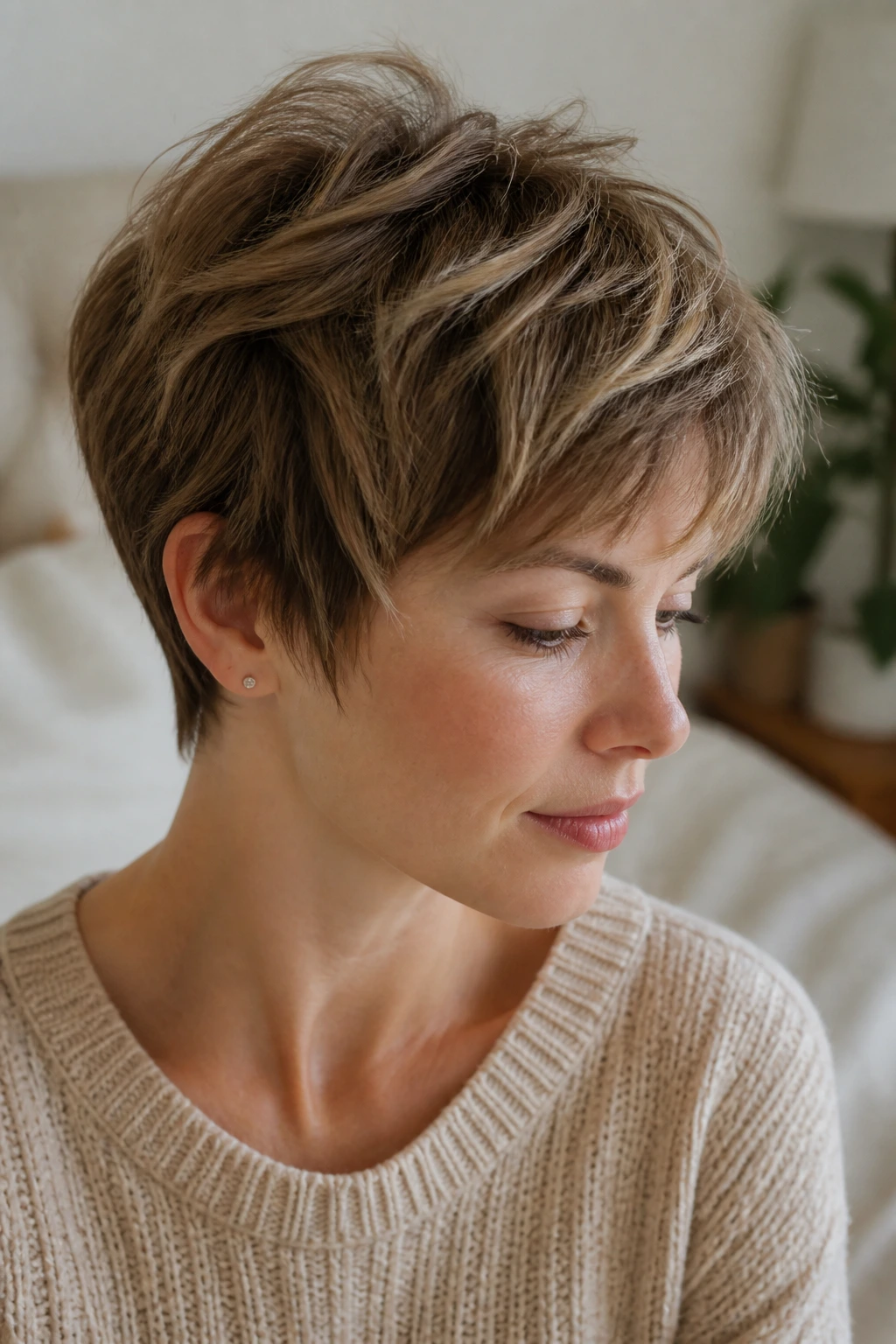
A feathered crop has a softer, airier feel than a blunt pixie, and that softness matters on a face with a wider forehead. The old-school version could go a little too wispy. The modern one keeps some body at the crown but doesn’t let the top take over.
The shape to ask for
Tell your stylist you want feathering around the sides and temple area, with the longest bits angled forward. That keeps the eye moving down and in. The nape should stay neat, but not clipped so close that the cut starts looking severe.
Why it’s useful
This is one of the better short cuts for fine hair because the feathering creates the impression of fullness without piling everything up on top. It also grows out gracefully if you don’t live in a salon every six weeks.
A little styling cream or lightweight mousse is enough for most days. If you overuse product, the whole thing can turn stringy, and that’s the one thing feathered hair cannot forgive.
9. Curly Crop With Rounded Shape
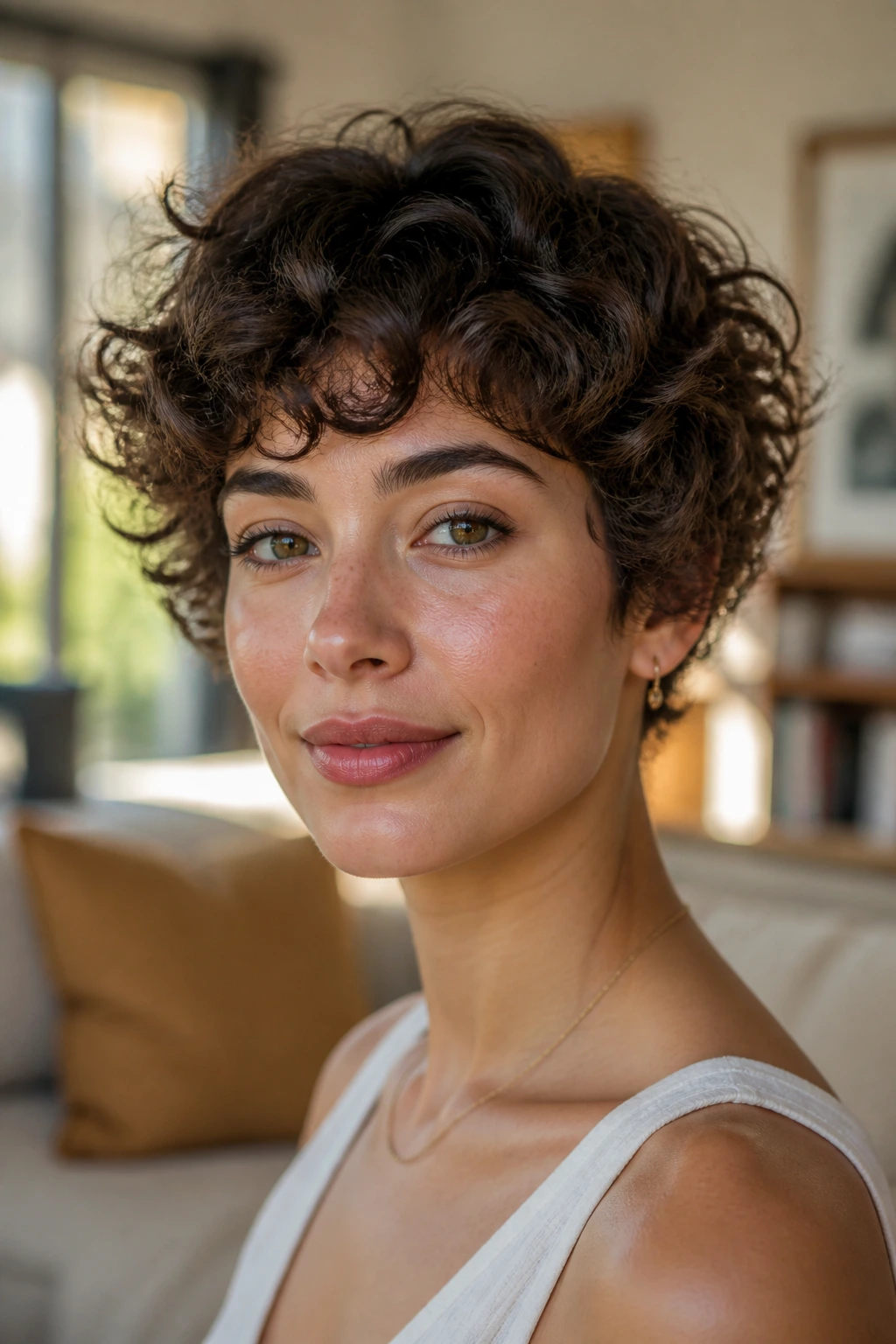
Curly hair changes the whole conversation. On a heart-shaped face, a curly crop works best when the shape is rounded at the sides instead of stacked high at the crown. That lower, fuller silhouette gives the chin more support and keeps the forehead from dominating.
Dry cutting can help here, because curls don’t lie when they’re dry. A stylist who knows how your curl pattern behaves will know whether the sides need more length or the top needs a little release. The goal is not to shrink the hair into submission. It’s to let the curls sit where the face needs them most.
- Keep the length around the cheekbones and jaw.
- Avoid too much bulk right at the crown.
- Use a leave-in and a curl cream that doesn’t coat the hair too heavily.
- Diffuse on low heat if you want more lift, or air-dry if you want a softer halo.
This cut looks especially good when the curls are allowed to bend outward a little at the sides. That one detail can make the face read more balanced in a mirror and in real life.
10. Undercut Pixie With Longer Top Layers
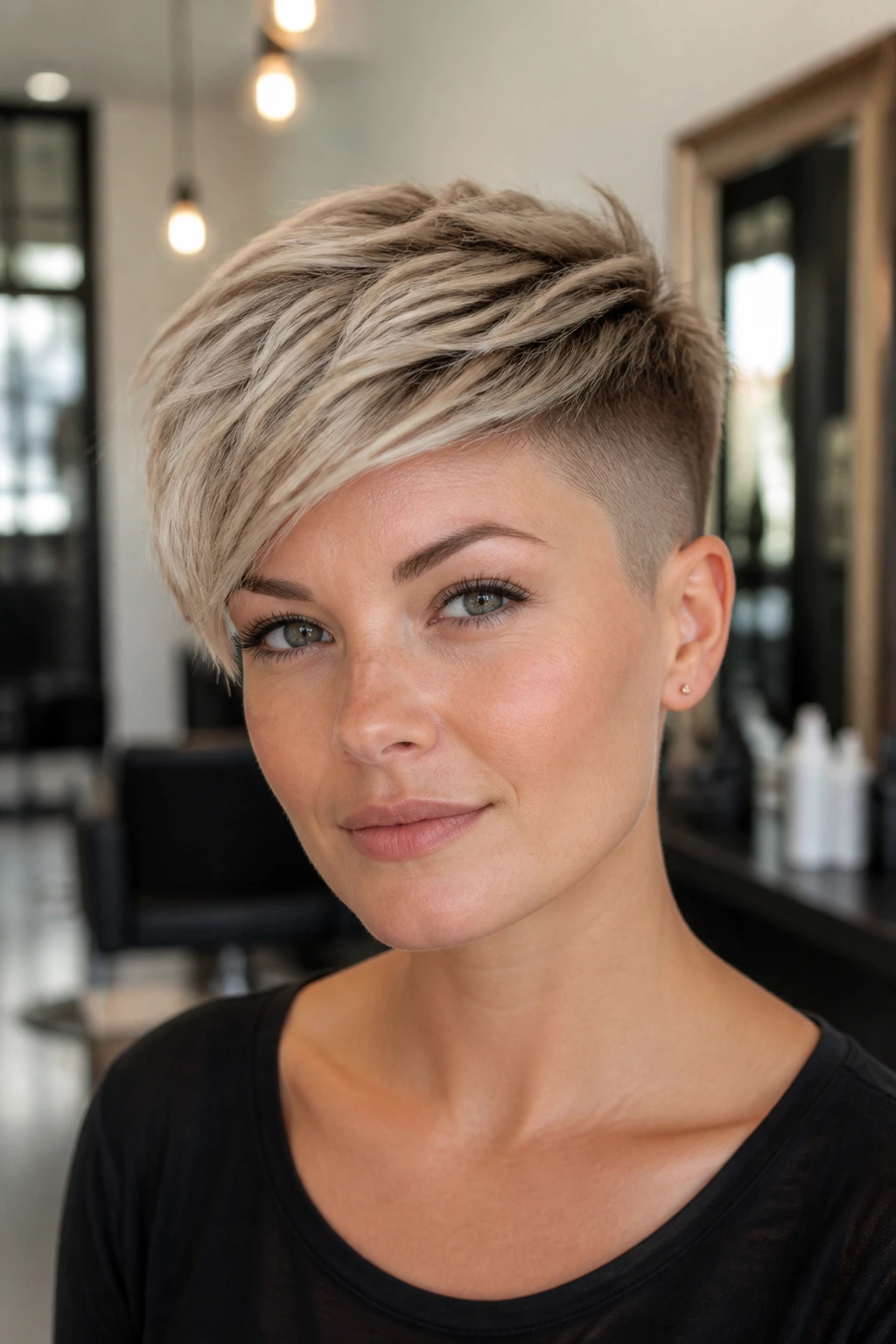
A heart-shaped face does not need more height on top. Sometimes it needs less hair near the sides, more control at the nape, and a top section that falls forward instead of straight up. That’s why an undercut pixie can work so well.
The undercut removes bulk where it tends to widen the upper part of the head, while the longer top layers can be swept down over the forehead or across to one side. That gives you shape without fluff. The difference between a good undercut pixie and a scary one is placement. Keep the top flexible. Don’t ask for a spike unless you’re committed to living there.
This cut tends to suit people who like a little edge and don’t mind styling with fingers or a flat iron. A small amount of matte paste will keep the top piecey, and a side sweep helps the face read longer.
Not delicate. Not overly sweet. Just sharp in the right places.
11. Wavy Bob With Face-Framing Bends
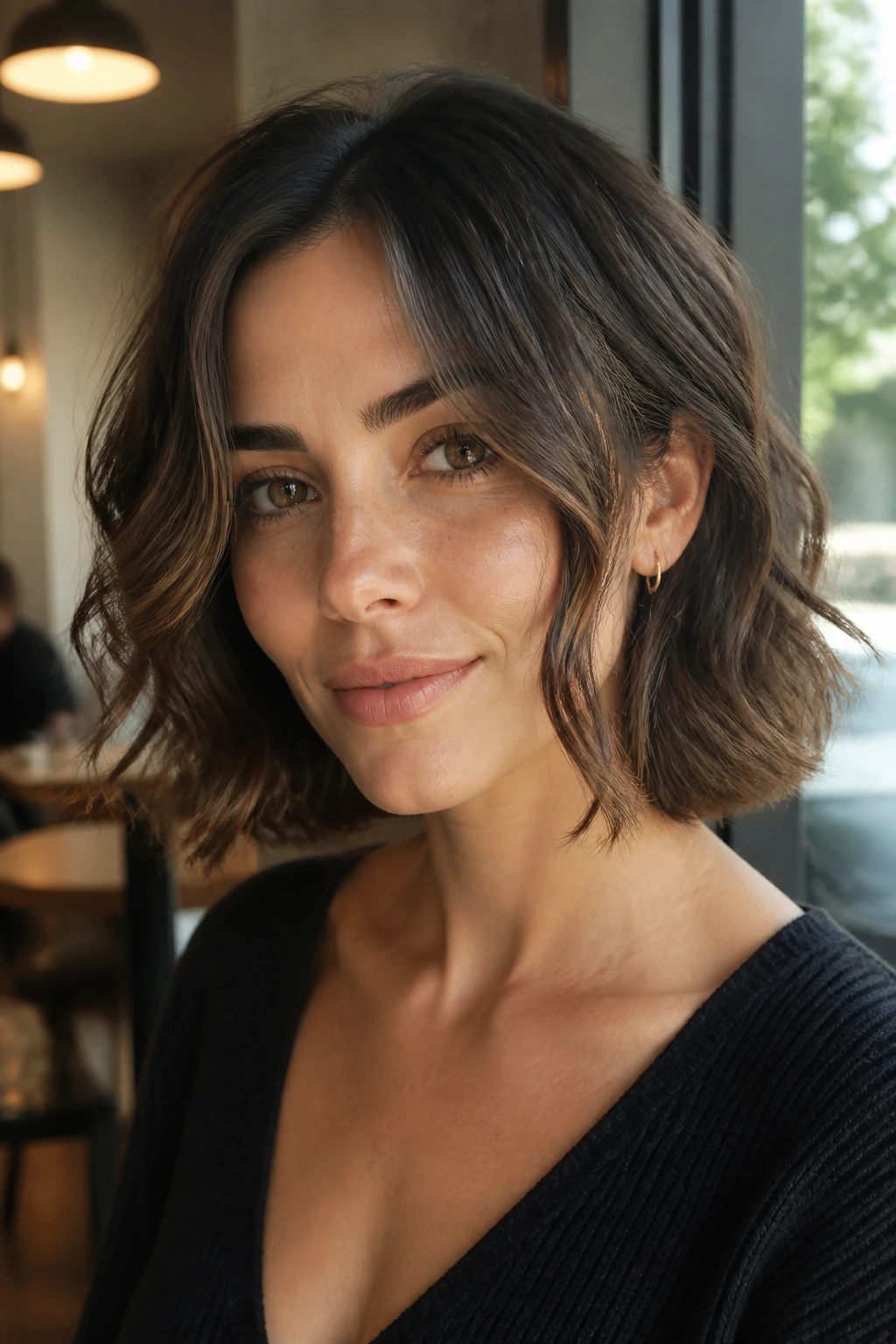
The wavy bob is the easy winner when you want something short enough to feel fresh but soft enough to flatter a heart-shaped face. The bends at the cheekbone and jaw do the balancing work for you. They keep the eye from getting stuck at the top of the face.
If your hair already has wave, this is the cut that lets it behave without overthinking it. If it’s straighter, a 1-inch curling iron or flat iron bend near the ends gives the style enough shape to matter. You do not need perfect curls. You need a few controlled bends that sit around the face and stop the outline from going rigid.
Best detail: keep the front pieces a touch longer than the back. That slight difference helps the chin look less narrow and gives the bob a more lived-in finish.
This is one of those cuts that looks better when it’s not freshly pressed within an inch of its life. A little air to it helps.
12. Rounded Afro Crop
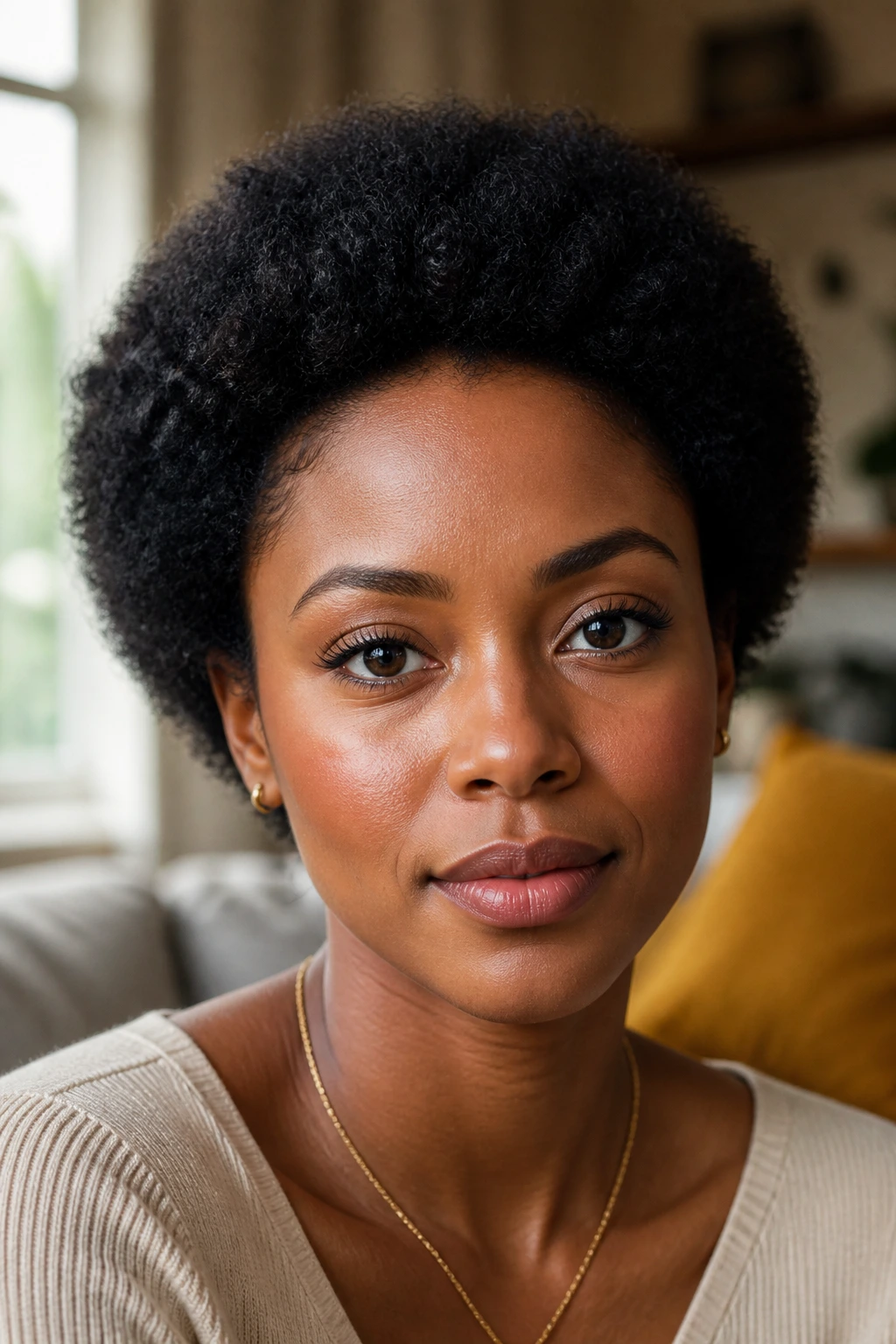
A rounded afro crop is strong, elegant, and much kinder to a heart-shaped face than a shape that shoots straight up. The key is proportion. You want side width and a rounded outline that echoes the cheekbones, not just height at the crown.
Shape first, length second
A good rounded crop keeps some fullness at the temples and jawline. That helps counter the broader forehead and keeps the face from feeling top-heavy. If the sides are too tight and the top is too tall, the whole silhouette starts to stretch in the wrong direction.
What to ask for
Tell your stylist you want a rounded shape with controlled edges and enough length on the sides to avoid a triangle effect. If your curl pattern is tight, shape by shrinkage, not just by what you see wet. That’s a mistake people make all the time.
This cut can be beautiful with a defined line at the hairline or with a softer, more cloud-like edge. Either way, the shape should feel intentional from the front and the profile.
13. Tapered Natural Cut
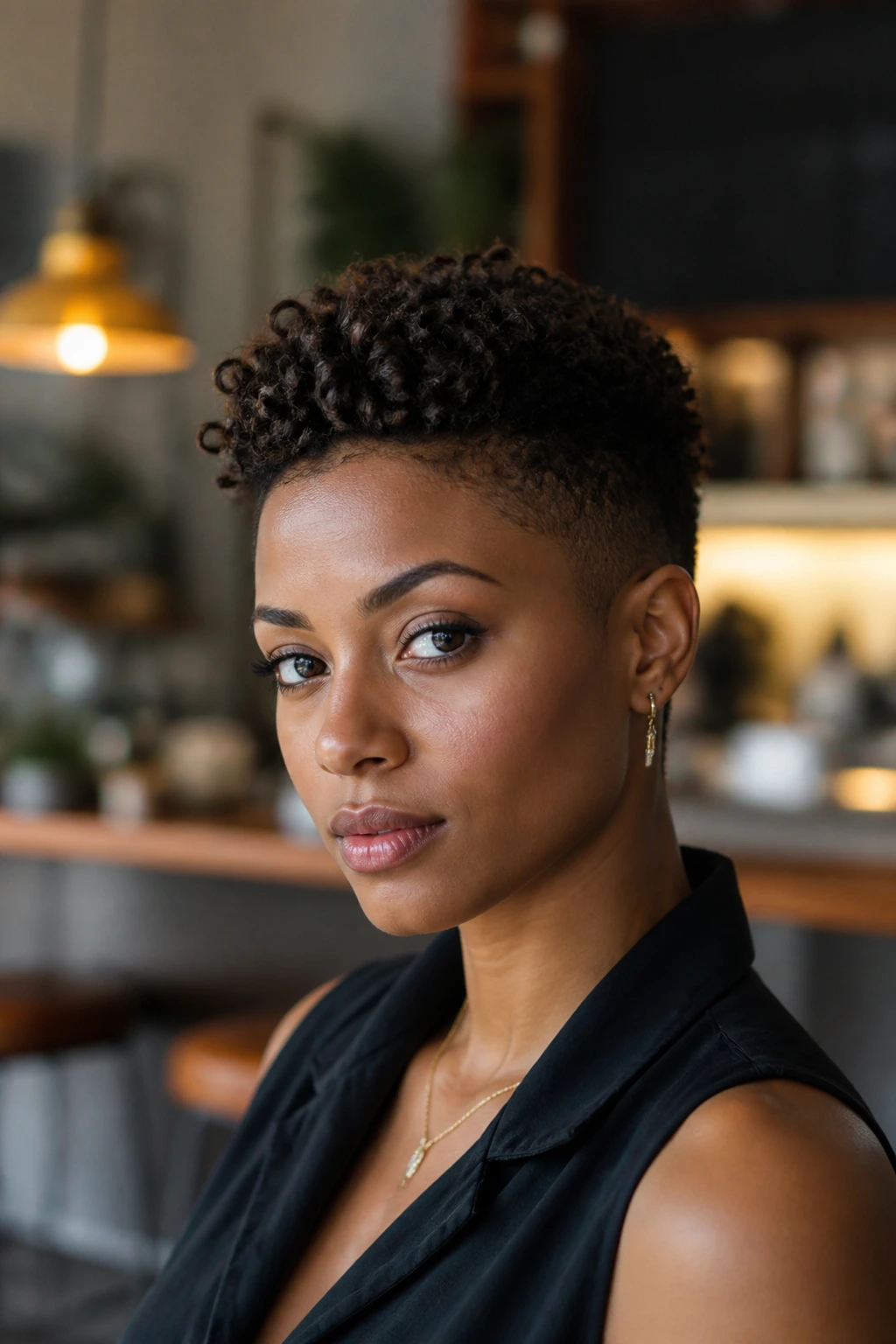
A tapered natural cut is one of the neatest ways to wear very short hair on a heart-shaped face because it keeps the sides tidy while preserving enough shape to balance the forehead. The taper brings the eye down without starving the lower half of the face.
The strongest version is short at the nape and around the ears, then a little fuller toward the top front. That gives you some lift without making the crown the main event. If your hair is coily, a sponge twist, a small twist-out, or a bit of curl cream can help keep the shape visible day to day.
- Best for: tight curls and coils that shrink a lot.
- Ask for: tapering around the sides, but not a hard clipper fade unless you want that contrast.
- Watch for: over-thinning at the crown, which can leave the top airy and the face unbalanced.
This cut has a clean, strong line when it’s maintained. It also makes earrings and necklines do more work, which is never a bad thing.
14. Side-Swept Crop With Long Fringe
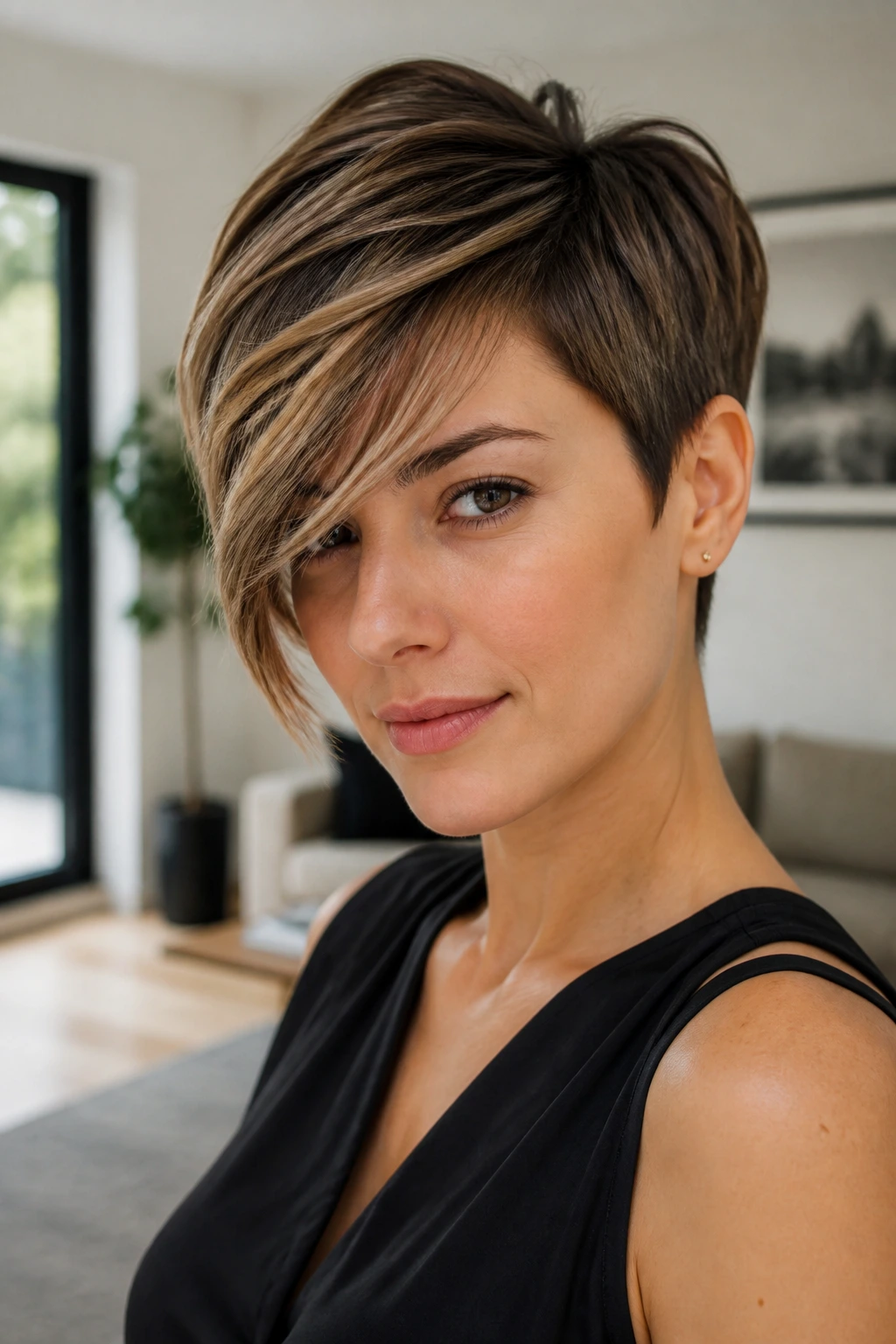
If you want short hair but you’re not ready to give up fringe, this is the compromise that actually makes sense. The side-swept crop keeps the forehead soft, the temple area covered in part, and the sides close enough to keep the silhouette neat.
The long fringe is the whole trick. It creates a diagonal line that narrows the upper face and gives the haircut motion. A straight-across bang can feel too blunt here unless it’s very light and textured. A side sweep lands softer and usually grows out more gracefully.
This cut works well for people who style with a blow-dryer and round brush or who like to use a little flat iron bend on the front section. It can look polished, sporty, or a touch glam depending on how sleek you keep the rest.
The main thing is that the fringe should fold into the haircut, not sit on top of it like an afterthought.
15. Blunt Bob With Softened Ends
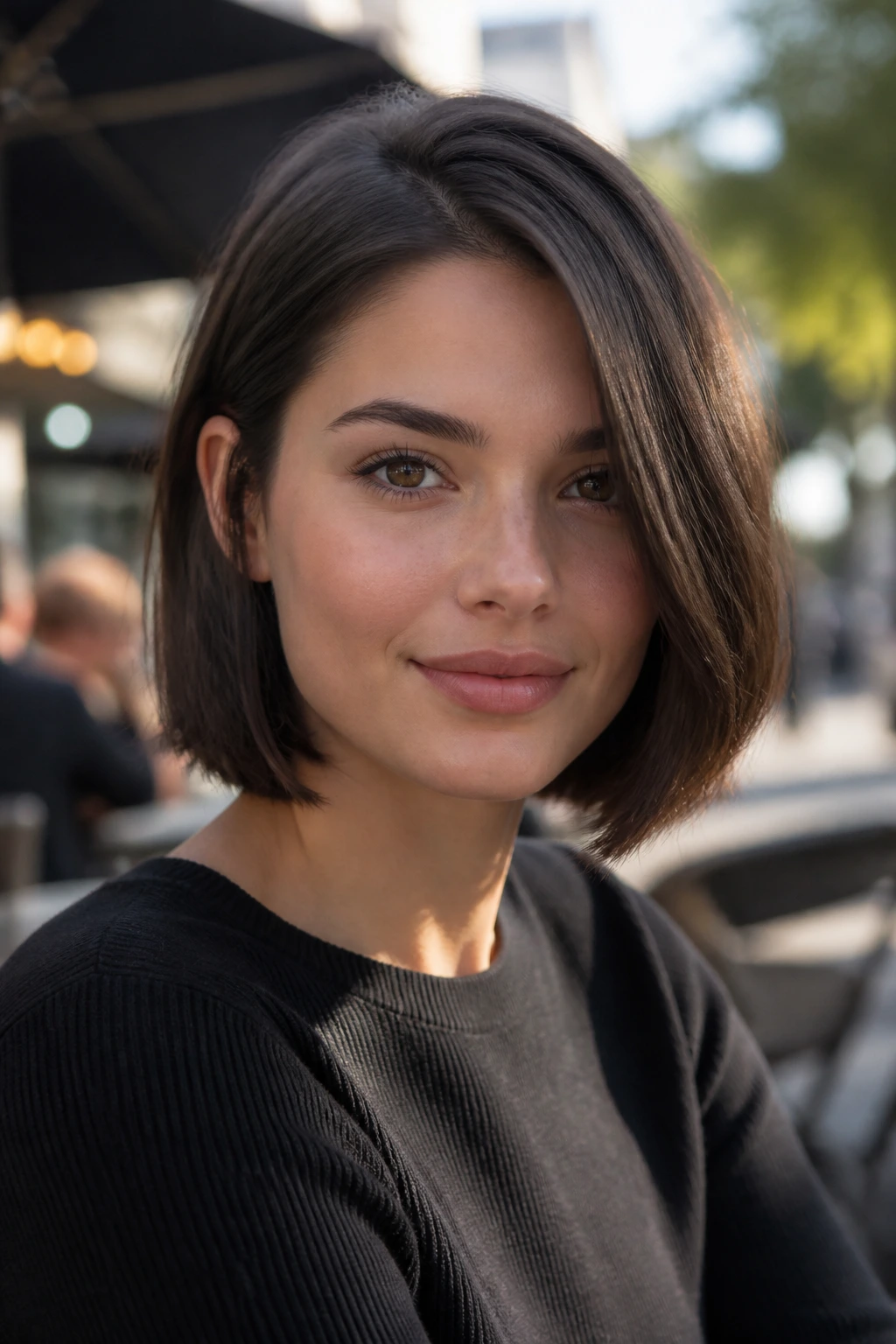
A blunt bob sounds like a risky choice for a heart-shaped face, and sometimes it is. But a jaw-length blunt bob with softened ends can look razor-sharp in the good sense, not the harsh one. The trick is keeping the line strong while avoiding a boxy finish.
I prefer this cut when the ends are lightly point-cut and the part is just off-center. That keeps the outline clean without making the forehead look wider by comparison. If the bob is too high on the cheekbone, it can feel crowded. If it drops right at the jaw, it usually lands better.
This is the style for someone who likes order. The shape has to be trimmed carefully, and the grow-out needs attention. But when it’s fresh, there’s a nice clean contrast between the strong line of the bob and the softer shape of the face.
A flat iron pass with slightly bent ends is enough. Don’t overwork it. The cut should do the talking.
16. Choppy Pixie Bob
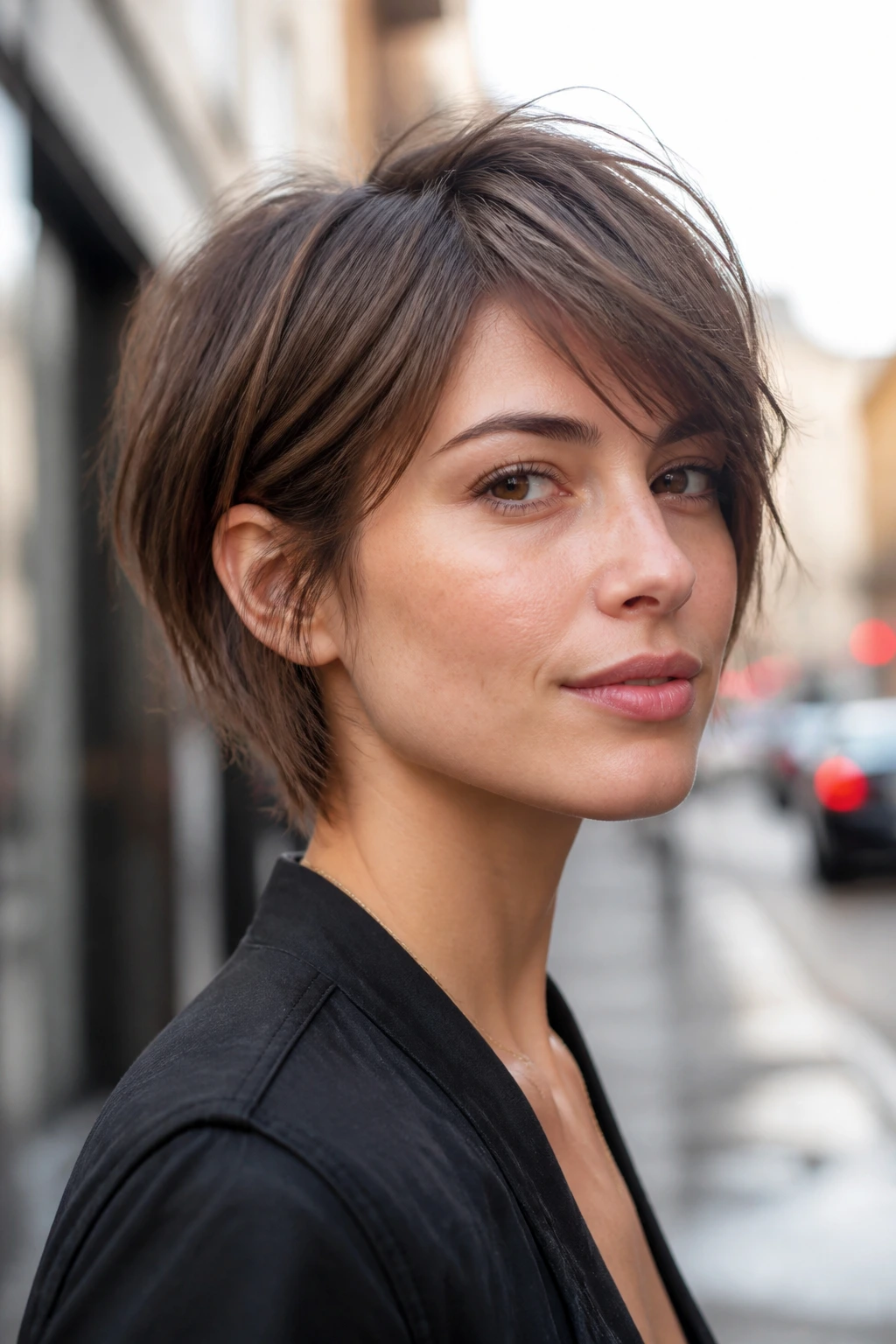
A choppy pixie bob gives you some of the freedom of a pixie and some of the weight of a bob, which is exactly why it works on a heart-shaped face. The uneven ends keep it from feeling too neat, and the extra length around the sides helps the jawline read stronger.
This is a smart pick if you like texture products. A dry wax or texturizing spray can break the cut into little pieces and make the front sweep where you want it to. If your hair is fine, the choppiness gives the illusion of more body. If your hair is thick, the layering keeps it from sitting like a block.
What I like here is the grow-out. It doesn’t collapse all at once. The shape loosens in a way that still looks styled, which saves you from that awkward too-short-to-be-a-bob, too-long-to-be-a-pixie stage.
If you want something modern but not fussy, this is one of the easiest answers.
17. Curved Neck-Length Bob
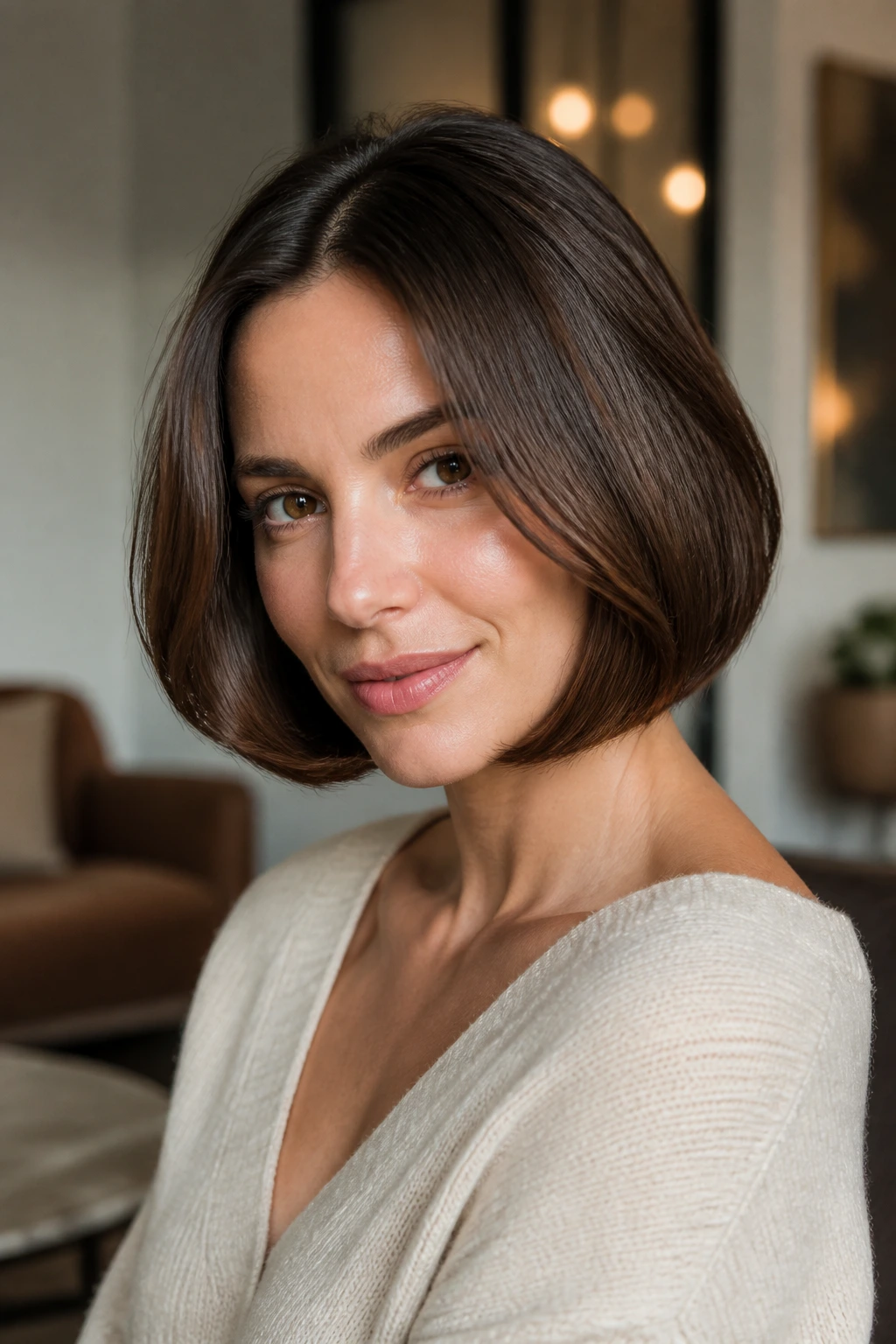
A curved neck-length bob sits just below the jaw and bends inward slightly at the ends, which sounds small until you see what it does on a heart-shaped face. That gentle curve softens the narrow lower half without crowding the cheeks. It’s one of the better short-to-medium options if you still want some hair to tuck behind the ears.
The curve matters more than people think. Straight, blunt lines can feel too hard if the forehead is already broad. A slight inward bend makes the whole cut look tailored to the face instead of copied from a salon catalog.
This one likes straight or lightly wavy hair, but it can work with thicker textures too if the weight is removed from underneath. The neckline should stay clean. If the nape gets bulky, the shape gets heavy fast.
It’s understated in the best way. Nothing noisy. Just a shape that lands where it should.
18. Modern Bowl Cut With Airy Edges
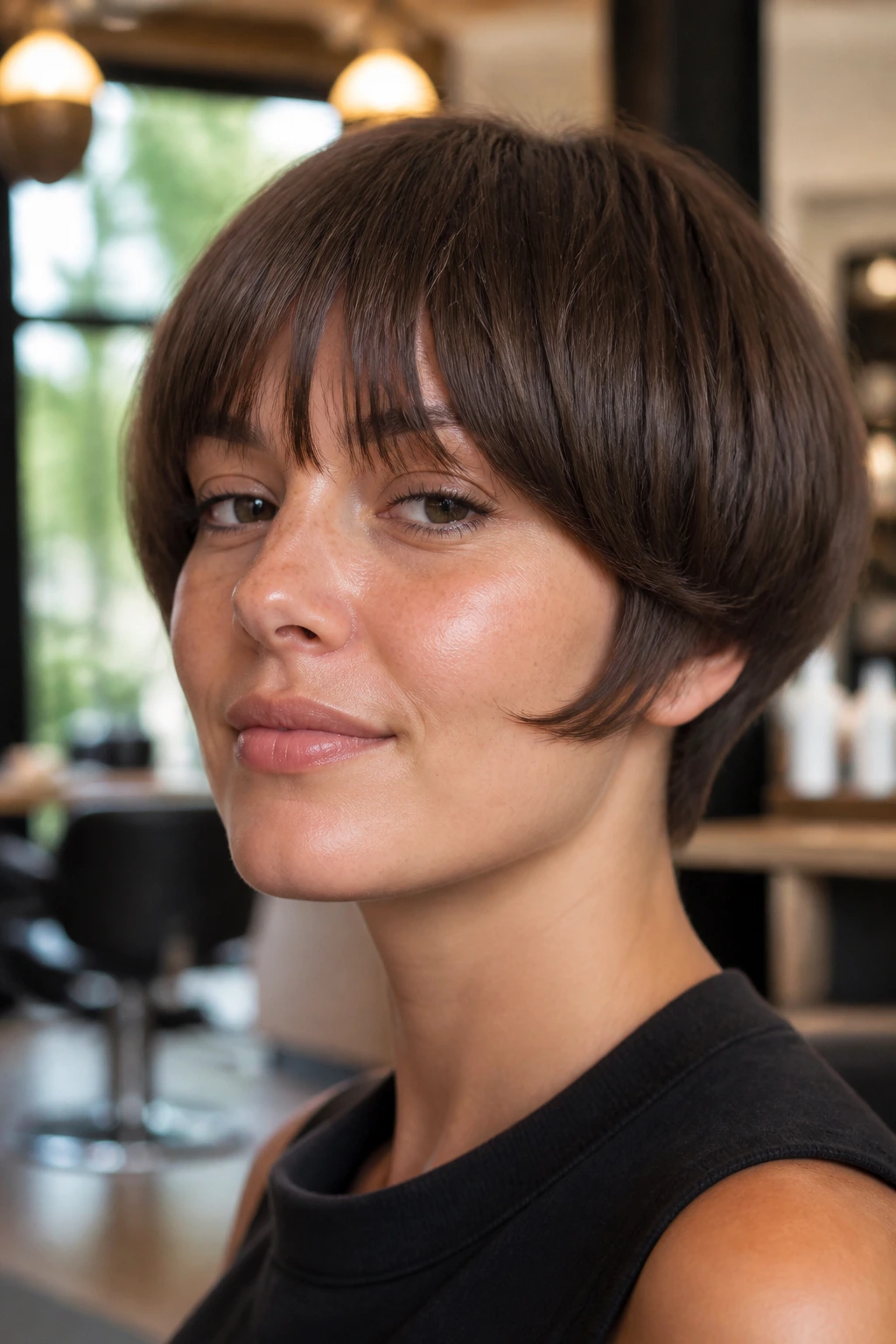
The old bowl cut is a bad idea on most people, and on a heart-shaped face it can look especially severe if it’s left rigid and round. The modern version is different. It’s softer, broken at the edges, and usually a little longer around the cheekbones so it doesn’t feel like a helmet.
What makes it work
The fringe should be airy, not dense. The sides need movement. And the perimeter should curve around the face instead of cutting it off. If those pieces are there, the style can actually flatter a heart-shaped face by creating width lower down without adding bulk up top.
Who should choose it
This is for someone who likes a fashion-forward cut and doesn’t mind a strong shape. Straight hair usually shows the line best, though slightly wavy hair can keep it from looking too precise. A round brush or a quick flat-iron bend helps the outline stay intentional.
I wouldn’t recommend the heavy, rigid version. But the softened bowl? That has real life in it.
How to Choose the Cut That Fits Your Hair Texture and Routine
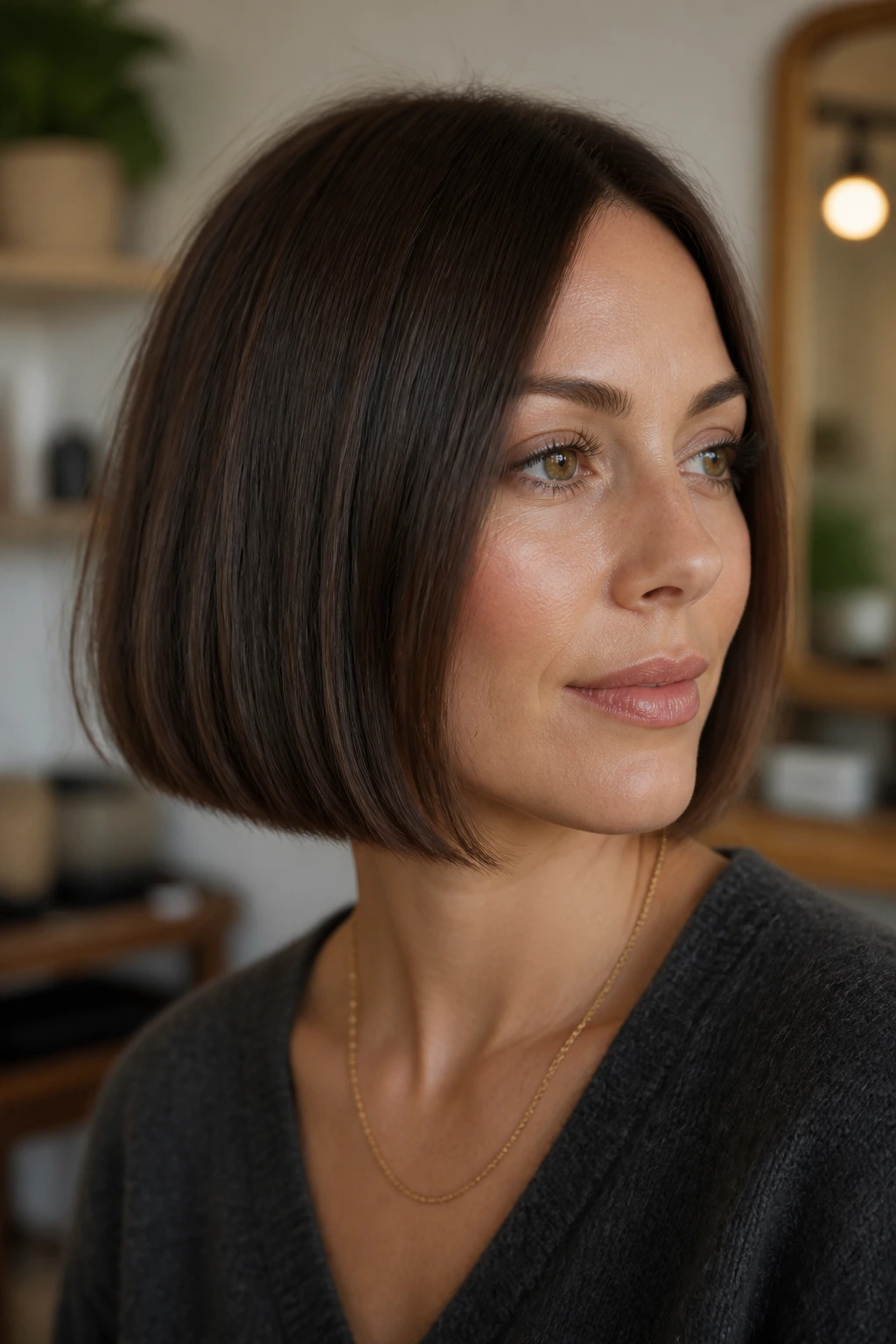
The face shape matters, but your hair texture gets a vote too. A heart-shaped face can wear a lot of different short styles, yet the wrong texture choice will sabotage the cut faster than the wrong photo on a salon wall.
Fine hair: lean toward blunt edges, soft bobs, and pixies with a little length on top. Too much layering can make the hair disappear at the ends, which leaves the forehead looking even broader by comparison. A clean perimeter gives fine hair more presence.
Thick hair: ask for weight removal in the interior, not just at the surface. If the stylist thins the top too aggressively, the cut can puff out at the sides and sit awkwardly around the cheekbones. You want structure, not a triangle.
Curly and coily hair: shape matters more than exact length. A curly crop, tapered natural cut, or rounded bob often works better than a cut that ignores shrinkage and hopes for the best. Dry cutting, or at least checking the shape when dry, is worth asking about.
Low-maintenance routines: choose a style that looks fine after air-drying. Shaggy crops, bixies, and wavy bobs usually behave better here than precise blunt lines. If you hate daily heat styling, say that before the scissors come out. That one sentence saves bad haircuts.
How to Brief Your Stylist for a Heart-Shaped Face
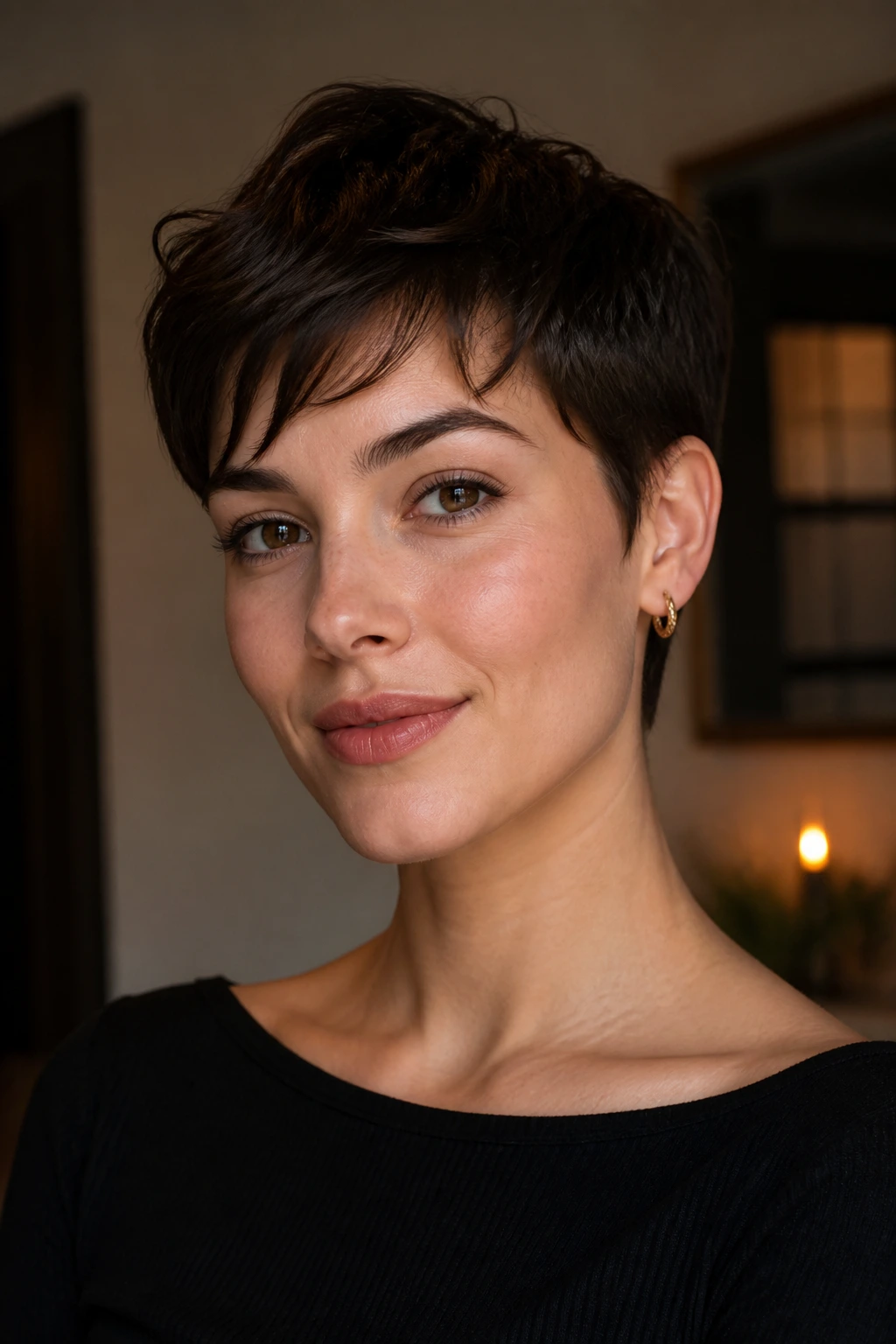
The best haircut usually starts with a better conversation. If you sit down and say “something short,” you’ll get the stylist’s default short cut. That’s not the same thing as a flattering one.
Name the balance point: tell them you want more visual weight around the jaw or cheekbones, not more height at the crown. That one detail steers the whole shape.
Bring two photos, not ten: one front view and one side view is enough. Too many references usually mean too many mixed signals.
Talk about your part: if you wear a side part every day, say so. A center part can work on heart-shaped faces, but it changes the whole read of the cut.
Say what you won’t style: if you won’t round-brush every morning, don’t agree to a cut that only works with that routine. A good stylist would rather hear the truth than discover it at home in front of a mirror.
If your face is especially wide at the forehead, mention that too. The tiny details are the point here.
Common Mistakes That Make Short Hair Look Top-Heavy
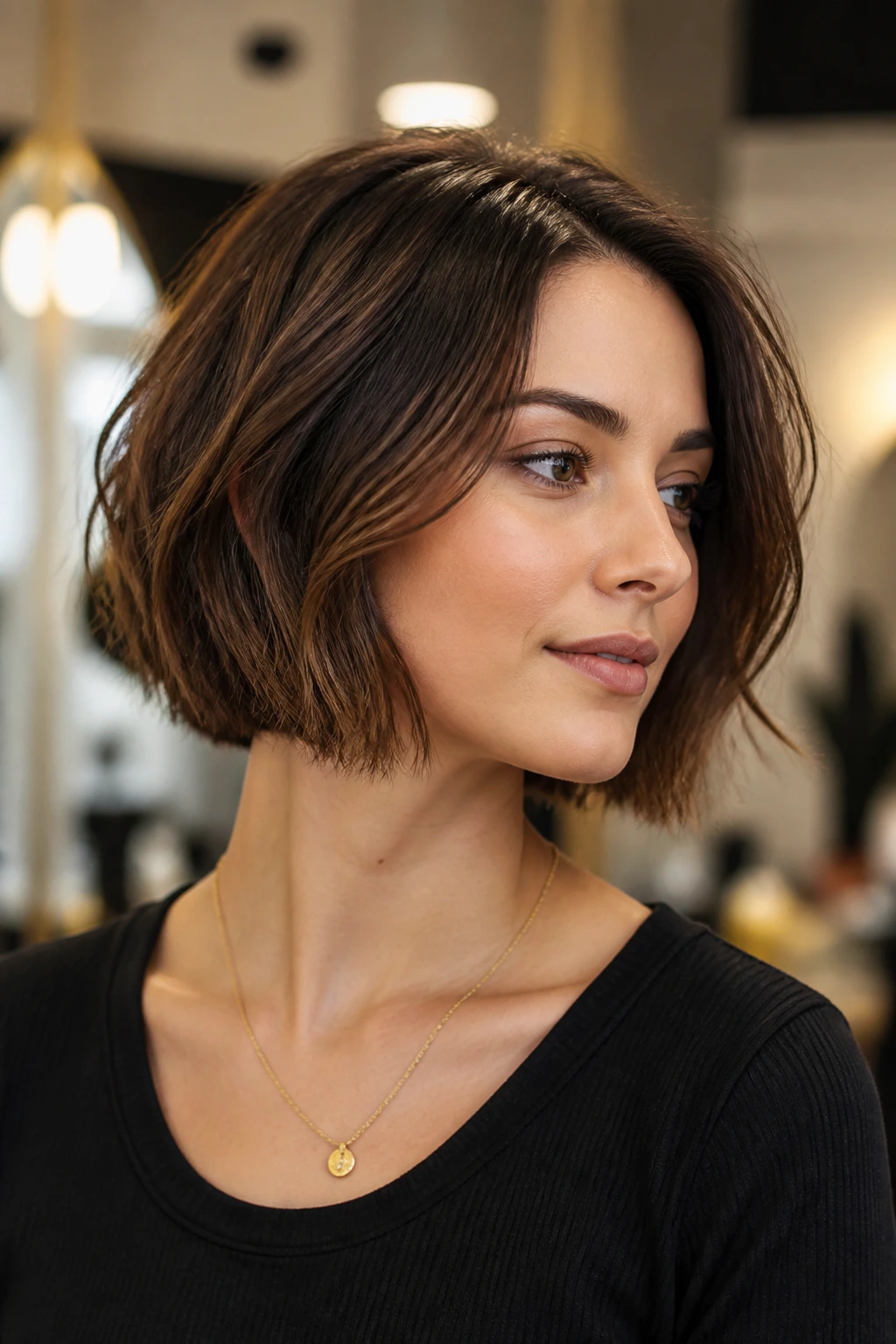
A short haircut on a heart-shaped face doesn’t fail because it’s short. It fails because the weight goes to the wrong place.
- Too much height at the crown: If the top is teased, blown up, or layered too high, the face looks even wider up top. The fix is simple: keep height controlled and let the sides do some work.
- Bangs cut too blunt and too heavy: Dense bangs can make the face feel shorter and boxier, especially if they hit straight across the forehead. Ask for texture or side sweep if you want softness.
- Perimeter ending right at the cheekbone widest point: This is the sneaky one. A cut that stops at the broadest part of the face can make the whole silhouette feel stuck. Move it slightly lower or add angle.
- Too much thinning on curly hair: Over-thinned curls frizz out and lose shape, which leaves the top visually loud and the sides limp. Curl pattern should guide the cut, not the razor.
- Choosing a style you won’t maintain: A precise bob that needs daily heat tools becomes a dull helmet fast if you leave it alone. Be honest about the routine you’ll actually keep.
The fix is rarely dramatic. Usually it’s one inch, one part change, or one different edge.
Variations and Alternatives to Try
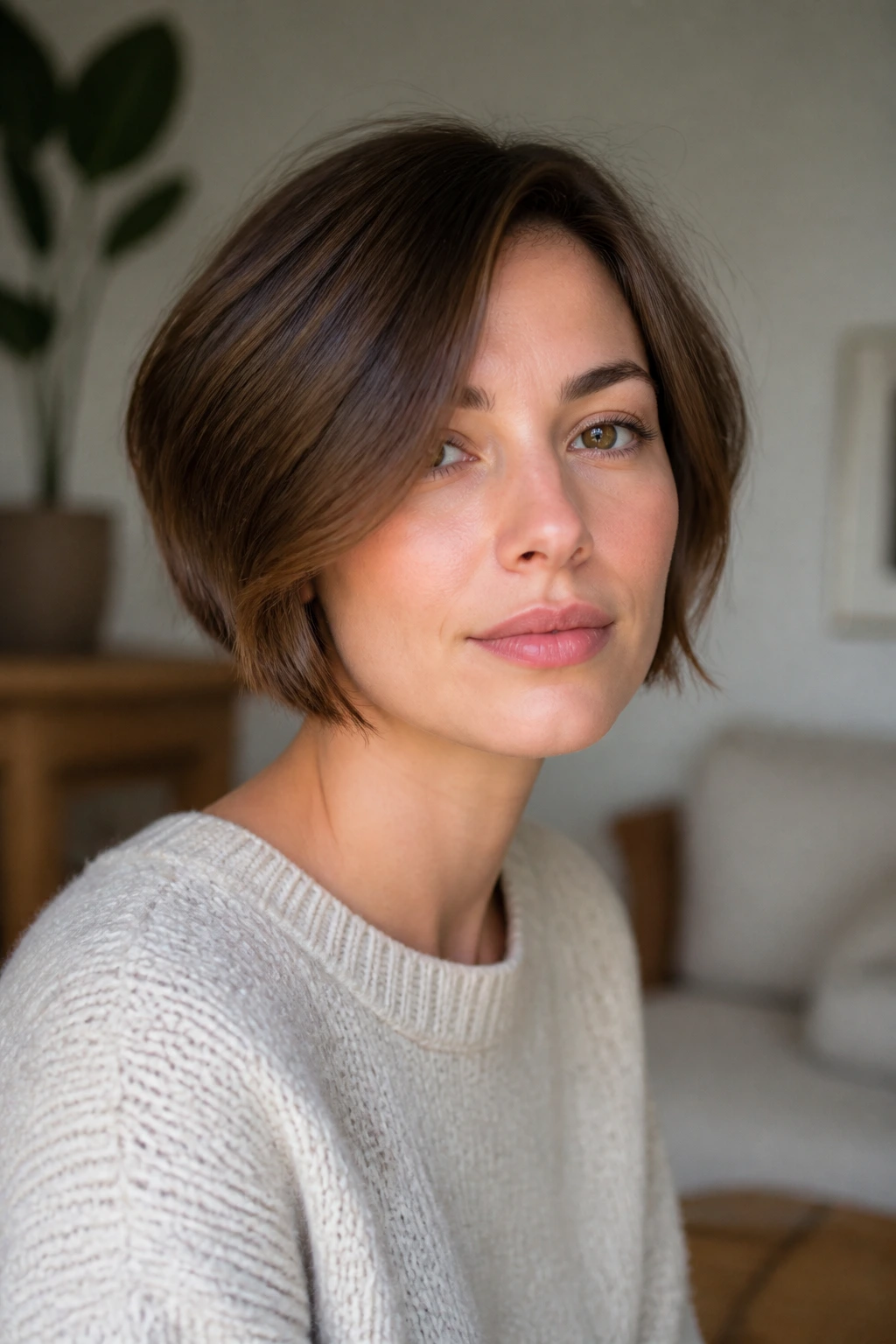
Sometimes the cut is right, but the details need a little adjustment. These swaps can change the whole read without sending you back to square one.
The Softer Fringe Edit: Swap blunt bangs for longer side-swept fringe or curtain pieces. This works well if you want forehead coverage without closing off the face.
The Air-Dry Version: Ask for more texture through the mid-lengths and less precision at the ends. That makes a shaggy crop, bixie, or wavy bob easier to live with on busy mornings.
The Curve-Forward Bob: Keep the length near the jaw but add a slight inward bend at the ends. It’s a cleaner choice if you like short hair but don’t want anything too piecey.
The Bold Crop: Choose a pixie with an undercut or a bowl-inspired shape with airy edges. This suits someone who wants the haircut to be a feature, not background noise.
The Grow-Out Friendly Option: A bixie or curved neck-length bob is the safest choice if you know you’ll want a little more length later. The shape holds while it grows, which saves you from awkward months.
Each of these changes the balance a little differently. That’s the point.
Tools That Keep Short Hair Looking Intentional
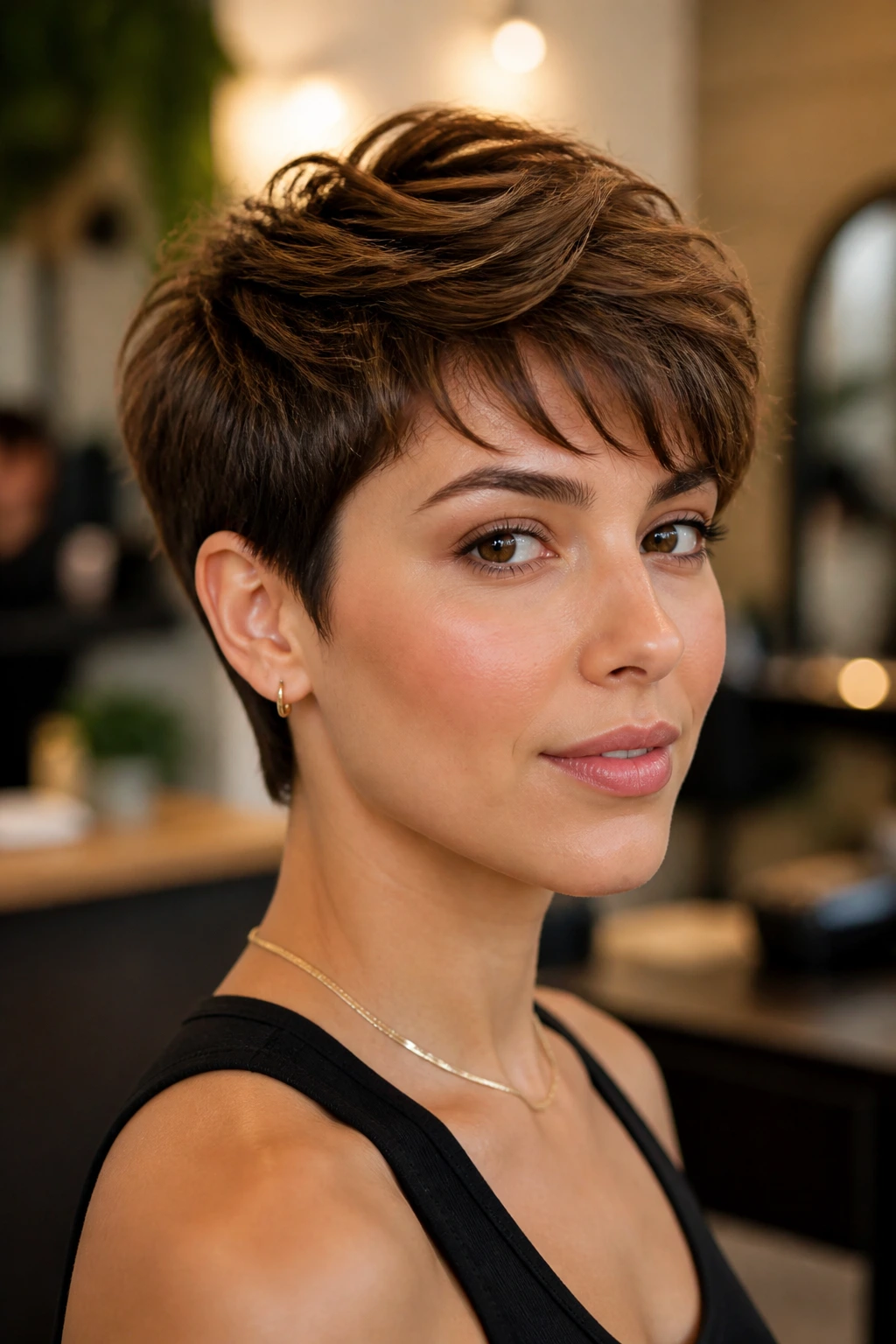
Short hair doesn’t need a giant drawer of products, but it does need a few specific tools that make the shape behave.
- Blow-dryer with a concentrator nozzle: Helps push the hair where you want it without blasting the fringe everywhere.
- Small round brush: Useful for bobs, French cuts, and any style that wants the ends to bend under.
- 1-inch curling iron or flat iron: Good for wavy bobs and side-swept pieces when you want a little bend instead of a full curl.
- Light mousse or root lift spray: Helps fine hair keep shape without getting crunchy.
- Texture spray or matte paste: Useful for pixies, bixies, and shaggy crops that need separation.
- Tail comb: Handy for clean parts and for directing the fringe before it dries.
- Duckbill clips: Great when you’re blow-drying pieces in the right direction.
- Satin pillowcase: Not glamorous, but it keeps short hair from fighting you overnight.
You do not need all of these. Pick the two or three that match your cut.
Keeping Short Hair in Shape Between Cuts
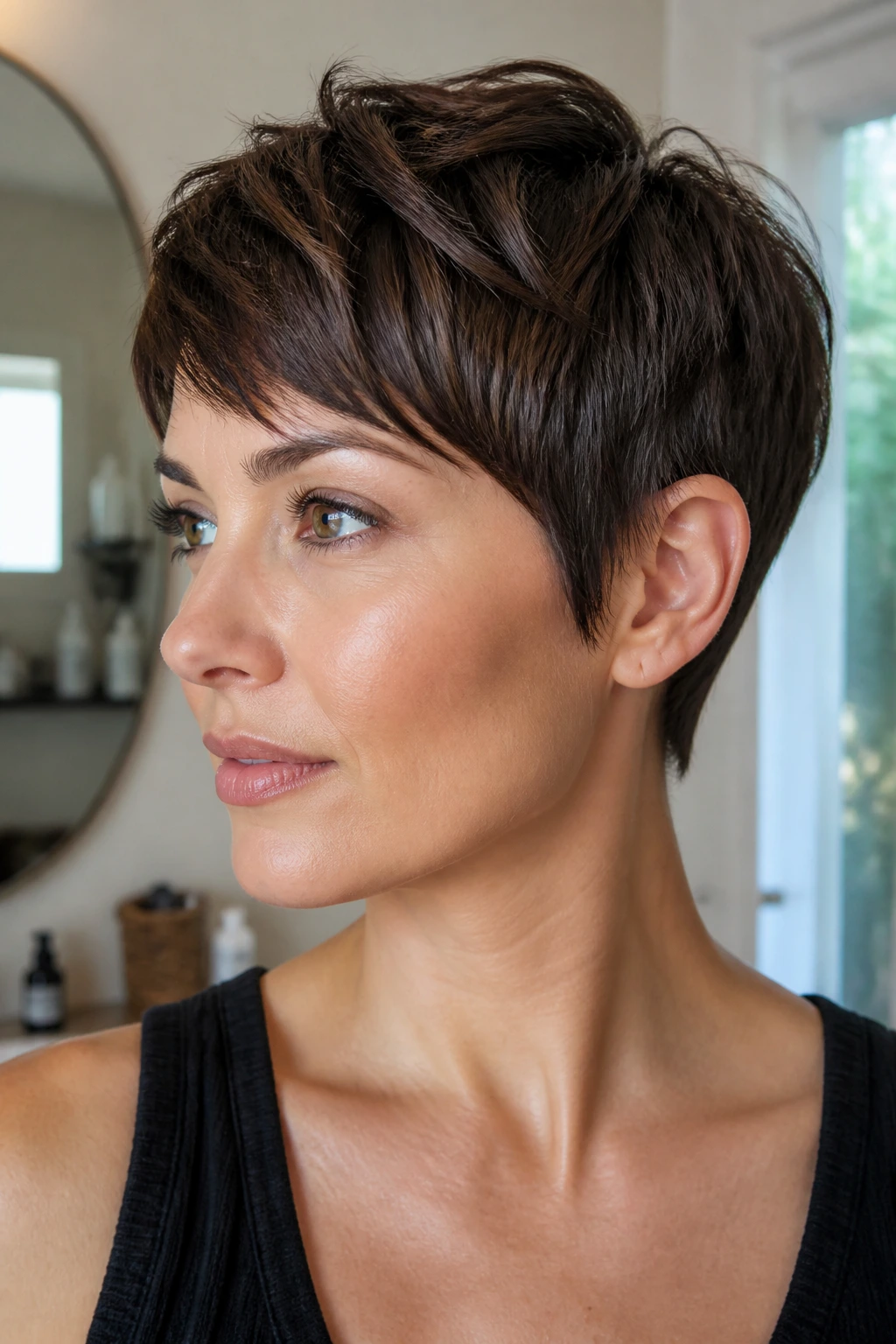
Short hair looks fresh when the outline stays crisp. That means trims matter more than they do with longer hair, because the silhouette changes fast.
Pixies and crops: plan on a trim every 4 to 6 weeks. Once the fringe drops too far or the nape gets fuzzy, the whole look loses its shape.
Bobs and bixies: most of these hold for 6 to 8 weeks, sometimes a touch longer if the ends stay healthy. If the bob starts turning outward at the bottom, it’s time.
Curly and coily cuts: the schedule can stretch a little because curls hide growth, but the shape still needs checking. Eight to 10 weeks is a solid rhythm for many people, though some tight textures go longer if the perimeter still reads clean.
Between cuts, day-two hair is your friend. A bit of dry shampoo at the roots, a quick mist of water on the fringe, or a drop of leave-in on the ends can bring the shape back without a full wash. If you wear a side part, re-establish it while the hair is still damp. That tiny habit keeps the cut from drifting into a different shape overnight.
Questions About Short Hairstyles for Heart-Shaped Faces
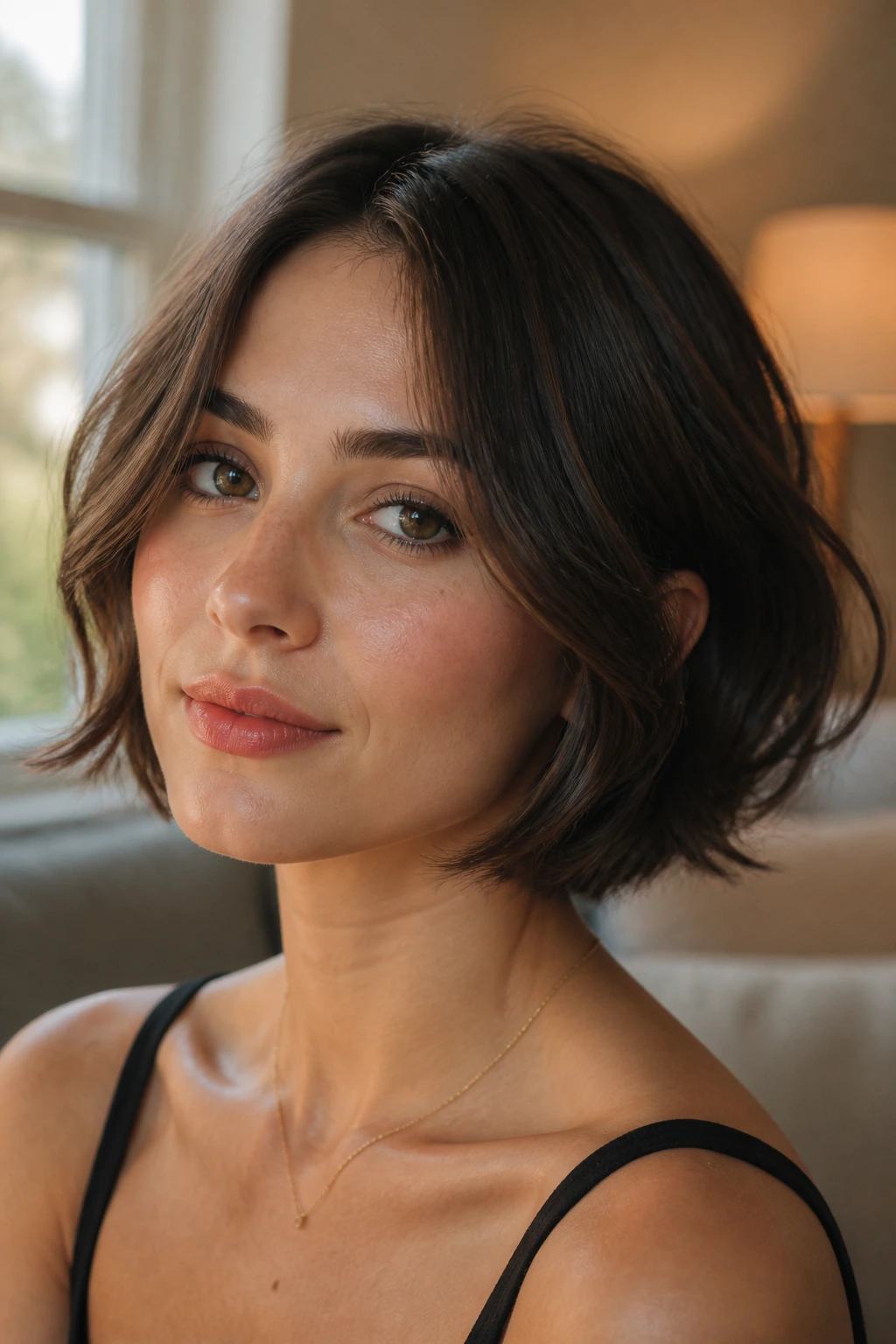
What short haircut is most flattering for a heart-shaped face?
A chin-length bob, a bixie, or a side-parted pixie with long fringe are the safest starting points. They all keep some visual weight lower on the face, which balances a wider forehead.
Are bangs good for heart-shaped faces?
Yes, but the type matters. Side-swept bangs and light curtain fringe usually work better than a thick straight fringe unless the rest of the cut is very soft.
Can a heart-shaped face wear a pixie cut?
Absolutely. The trick is to keep some length in the fringe or top so the cut doesn’t expose the forehead too much. A swept pixie is usually kinder than a spiky one.
What if my hair is very fine?
Fine hair often does best with cleaner lines, like a blunt bob, a feathered crop, or a pixie-bob. Too many layers can make the ends look thin and leave the face looking top-heavy.
What if my hair is thick or coarse?
Ask for internal weight removal and a perimeter that still has structure. If the stylist thins too aggressively, the cut can puff out or separate in odd places.
Should I avoid center parts?
Not always. A center part can work if the fringe or face-framing pieces soften the forehead and the rest of the cut adds width lower down. A slightly off-center part is easier for most people.
How short is too short on a heart-shaped face?
There isn’t one fixed line, but very short cuts without fringe or side softness can make the forehead feel dominant. If the cut is almost all crown and no sides, it usually needs adjusting.
What should I tell my stylist?
Say how much styling you’ll tolerate, where you want the eye to go, and whether you prefer softness or a clean edge. That beats asking for a style name alone, because the same name can look different on different textures.
A Cut That Lands in the Right Place

The best short hairstyles for heart-shaped faces don’t fight the face. They give it a smarter outline. That might mean a bob that lands at the jaw, a fringe that sweeps off-center, or a crop that keeps the crown under control and lets the sides do a little more work.
If you remember only one thing, make it this: short hair should bring balance, not attention-seeking volume in the wrong place. Once the weight is where it belongs, almost every style on this list becomes easier to wear, easier to style, and a lot more flattering in real life than it looks in a photo.
The good cuts know where to stop. The great ones know where to begin.
