



A medium cut has a sneaky advantage. It never looks like it’s trying too hard, but it can do a lot of face-shaping work when the length lands in the right spot and the layers are placed with a little brain, not a blind fold of scissors.
Too short and you can box in the jaw. Too long and the whole look can drag downward, especially if the hair is fine or the ends have gone wispy. Medium length hairstyles sit in that useful middle zone — collarbone, shoulder, and just below the jaw — where you can soften angles, add width where a face needs it, or pull the eye vertically without swallowing your features.
The trick is not finding one magic cut for every face. It’s choosing a shape with enough give to be adjusted: a side part here, curtain bangs there, a blunt edge when the hair needs weight, soft layers when it needs movement. That’s the difference between a haircut that merely exists and one that seems to fit the face it’s on.
Why These Cuts Keep Showing Up in Real Salons
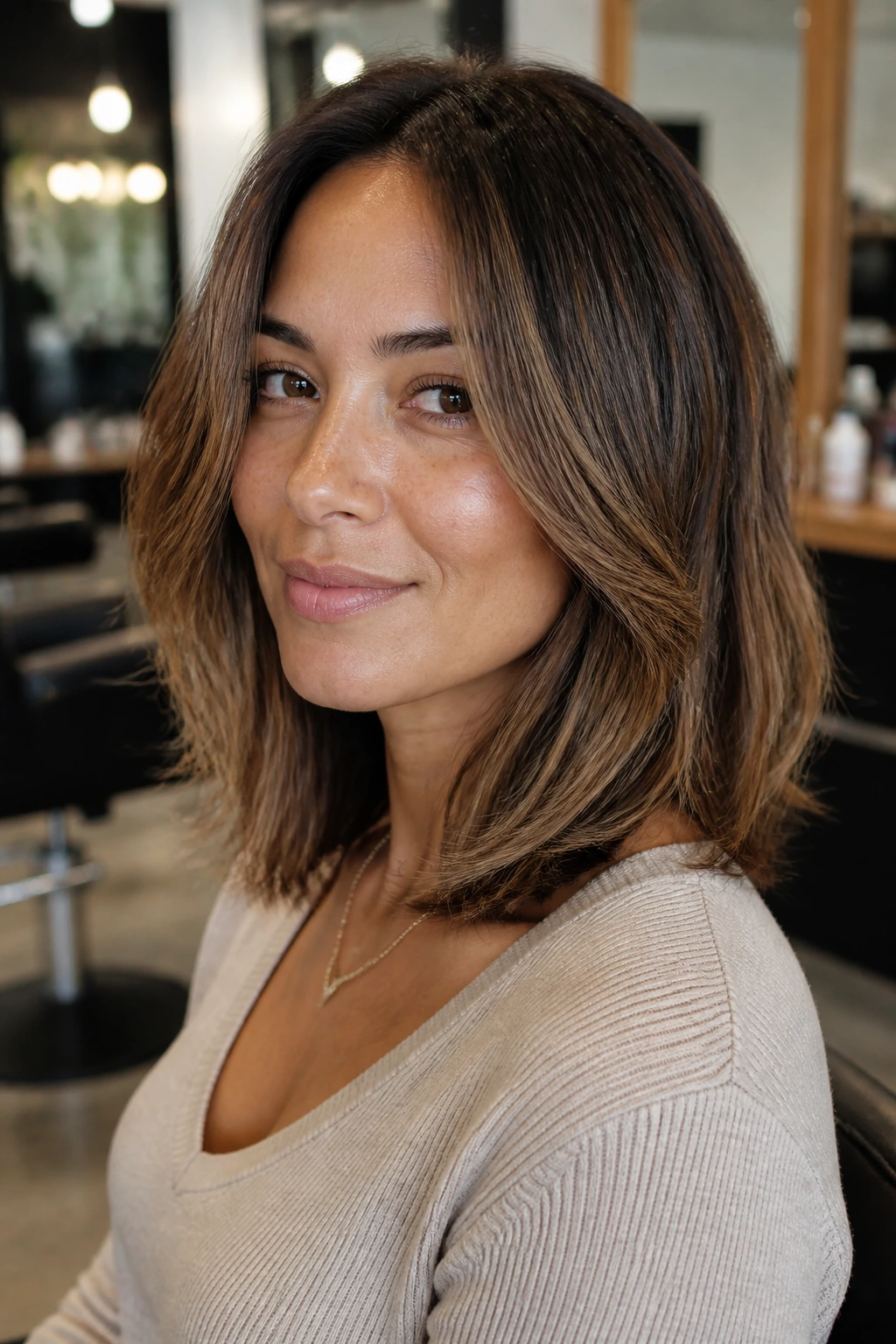
- They land in a forgiving zone: Hair that hits around the collarbone or shoulders can be nudged up or down by just an inch and still change how it sits against the jaw.
- They can be shaped for width or length: A center part, side part, or off-center part changes the whole read of the face before you even pick up a round brush.
- They work with bangs without locking you in: Curtain bangs, bottleneck bangs, and side-swept fringe all play nicely with medium hair because the length below them keeps the cut from feeling top-heavy.
- They don’t need perfect hair to look good: A little wave, a flat iron bend, or natural texture gives these cuts life; they don’t demand a glassy blowout every time.
- They grow out better than sharp short cuts: When the outline is medium, you get a few weeks of grace before the shape falls apart.
- They give fine hair some swing and thick hair some control: That balance is the whole point. There’s enough length to move, but not so much that the hair becomes a heavy curtain.
1. The Collarbone Lob With a Soft Side Part
A collarbone lob is the haircut I recommend when someone wants the safest possible bet without ending up with something dull. The ends skim the collarbone, the side part breaks up symmetry, and the length keeps the face open instead of crowding the jaw.
Why It Flatters So Many Faces
The side part is the quiet hero here. It adds a diagonal line, and diagonals do a lot of work on round and square faces because they break up width and sharpen the eye’s path. On longer faces, the collarbone length stops the cut from stretching the face even more.
This is one of those medium length hairstyles that looks expensive even when it’s barely styled. A quick blow-dry with a medium round brush gives the ends a slight bevel, which keeps the outline from looking flat or blunt in a bad way.
What to Ask For
Ask for a lob that hits at the collarbone, with a soft side part and ends that are lightly beveled, not chopped into a hard line. If your hair is thick, keep some internal weight removed so it doesn’t puff out at the sides.
Best on: round, square, and heart shapes.
Watch for: if the part is too deep and the hair is very flat at the crown, the whole cut can slump. A little root lift changes everything.
2. The Blunt Midi Cut With a Center Part
Sharp, straight, and a little bit bossy. That’s the blunt midi cut, and it works because it uses clean edges instead of layers to create presence.
A center part gives the face a long vertical line, which is useful on fuller cheeks and softer jawlines. The blunt edge keeps fine hair looking dense at the ends, and that matters more than people think. When the perimeter is crisp, the hair reads as fuller even if the strands themselves aren’t especially thick.
This cut looks best when the length sits just below the shoulders or right at the top of them. Any shorter and it can feel boxy; any longer and you lose the blunt effect that gives it strength. On oval faces, it’s sleek and easy. On round faces, it helps pull the eye down. On square faces, it looks best when the ends are softened with a tiny bit of bend so the whole thing doesn’t feel severe.
If you live in a ponytail and hate fuss, this one is practical. It goes up cleanly, comes down cleanly, and doesn’t need layers to stay respectable by day three.
3. Curtain Bangs With Long Layers at Shoulder Length
Why does this one keep working? Because curtain bangs create a soft opening around the eyes, and long layers keep the rest of the cut from becoming a bulky block.
Curtain bangs are forgiving. They open down the middle, skim the cheekbones, and slide into the rest of the hair instead of ending in a hard line. That makes them useful for heart-shaped faces that want a little extra width near the jaw, and for longer faces that need some horizontal movement near the upper third of the face.
The shoulder-length layers matter because they keep the ends alive. Without them, the bangs can look like they belong to a different haircut entirely. With them, the whole shape has one rhythm.
How to Wear It
Let the bangs part a little farther apart if your face is round and you want more length. Let them fall fuller if your forehead is larger or your face shape leans longer. A round brush and a quick bend away from the face is usually enough; don’t overthink the finish.
This is a strong choice if you like hair that moves when you turn your head. It doesn’t sit there like a helmet.
4. The Choppy Shag That Grazes the Collarbone
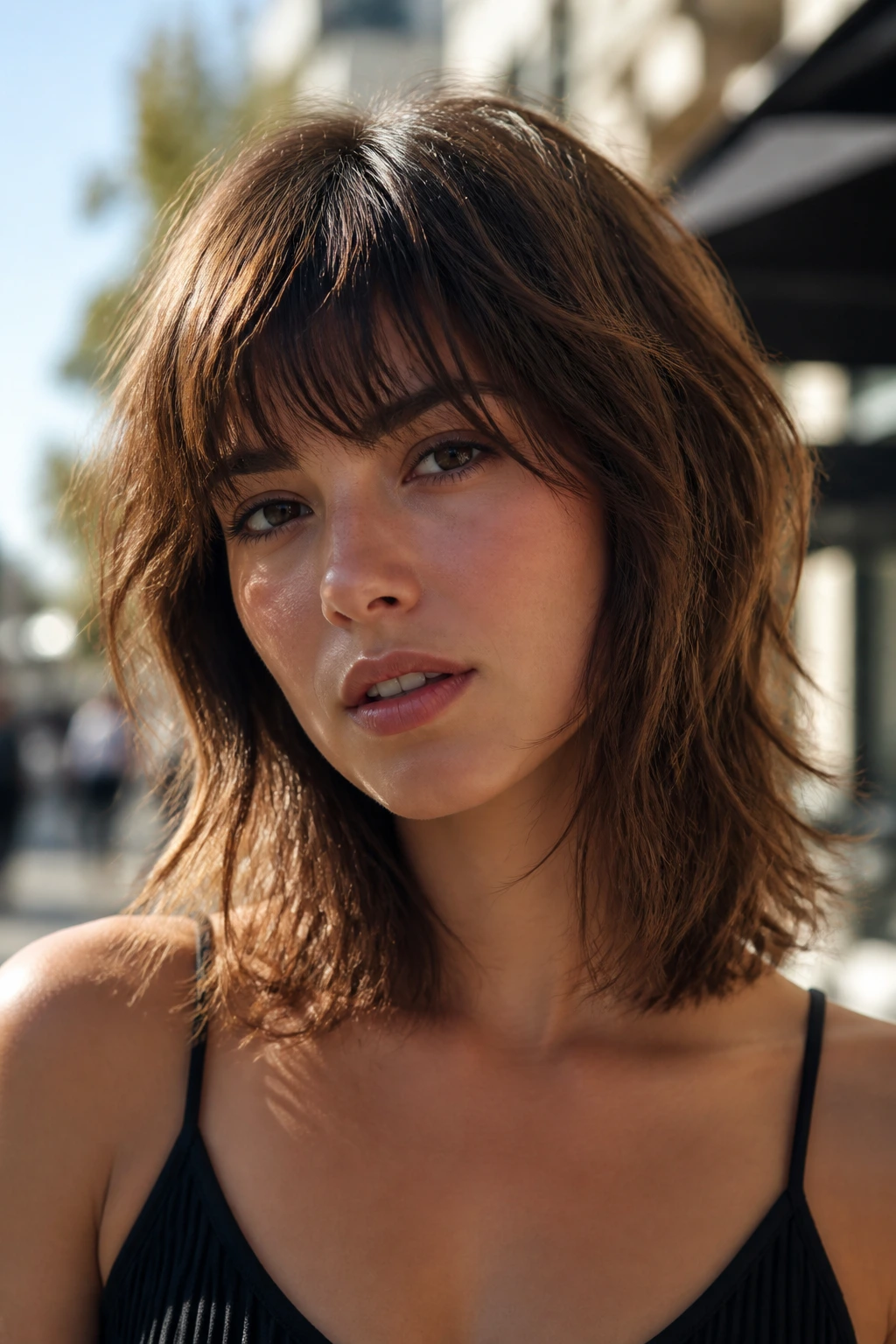
A medium shag is not the same thing as a mess with layers. The good version has intention. The pieces are broken up, the ends look airy, and the whole cut has a rougher edge that makes straight hair look less rigid and wavy hair look fuller.
It flatters faces that need softness around the jaw — square, heart, and diamond shapes especially — because the uneven layers keep the eye from locking onto one hard boundary. On round faces, you want the choppiness kept lower and the crown volume restrained so the cut doesn’t widen the head.
The collarbone length is what keeps this from tipping into short-hair territory. You get movement without losing the little bit of length that makes the face feel framed instead of exposed.
A shag also earns points for behaving well on second-day hair. Mist a little dry texture spray at the roots, scrunch the mids, and it wakes up fast. Very little polish needed. That is the charm.
5. The Shoulder-Grazing Cut With Beveled Ends
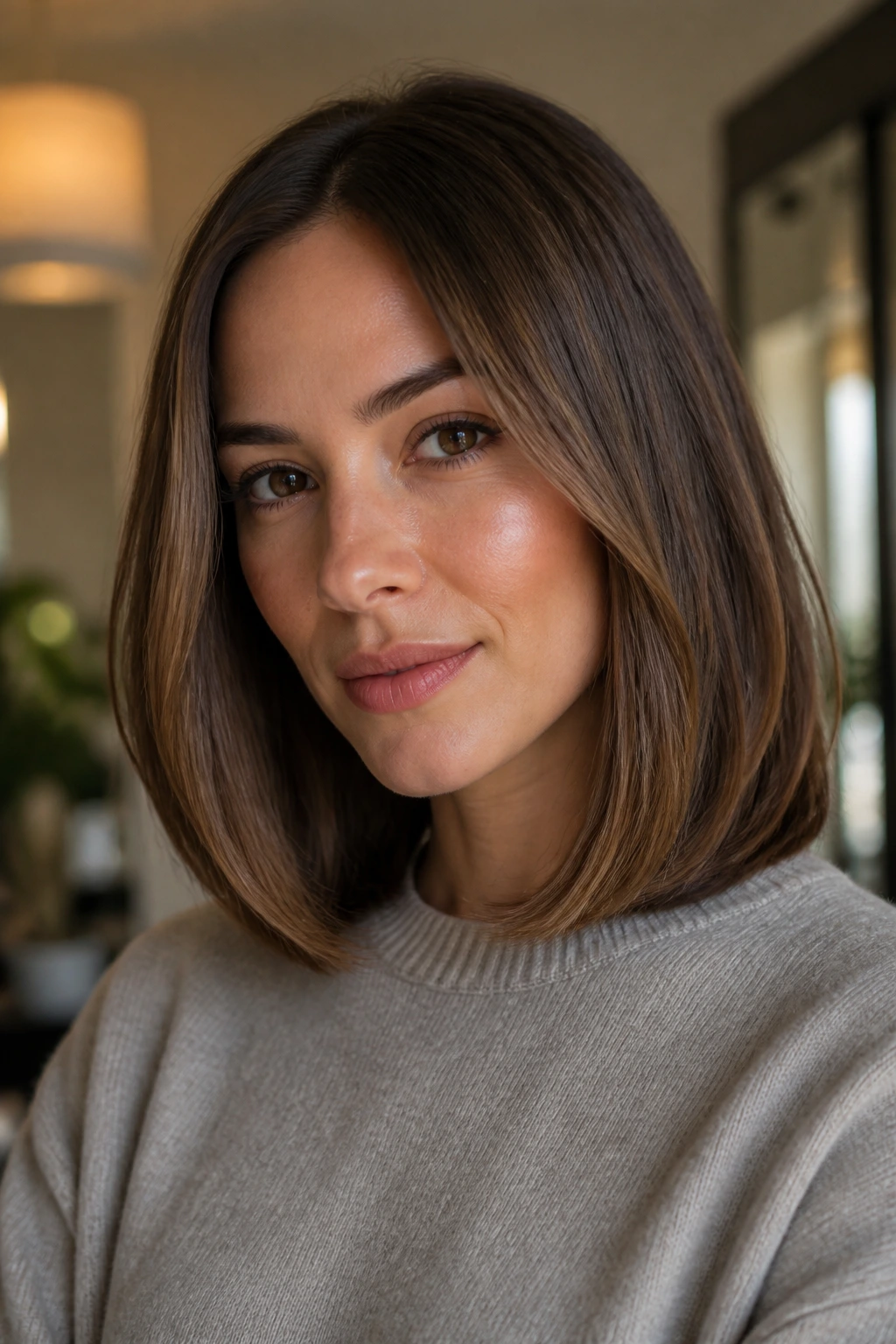
This one looks simple from the front, but the beveled end changes the whole mood. Instead of hanging straight down, the ends tuck slightly under, which gives the haircut a cleaner finish and keeps the shoulders from making the hair puff out awkwardly.
If your jaw is wide, beveled ends help soften the lower edge without removing too much weight. If your face is long, the slight tuck adds visual width near the shoulders and keeps the shape from feeling too vertical. That little curve makes a difference.
It’s also one of the easiest medium length hairstyles to style with a blow-dryer and a paddle brush. Not fancy. Just controlled. If you like a cut that looks intentional even when you didn’t spend half an hour on it, this is a good one.
Best For
- Straight to slightly wavy hair that wants shape
- Faces that need a little softness at the jaw
- People who hate layers but still want movement
Ask for enough length to skim the tops of the shoulders. If the hair sits right on the shoulder seam, it flips out in weird ways. That’s one of those tiny salon details that makes or breaks the cut.
6. The Jaw-Skimming A-Line Lob
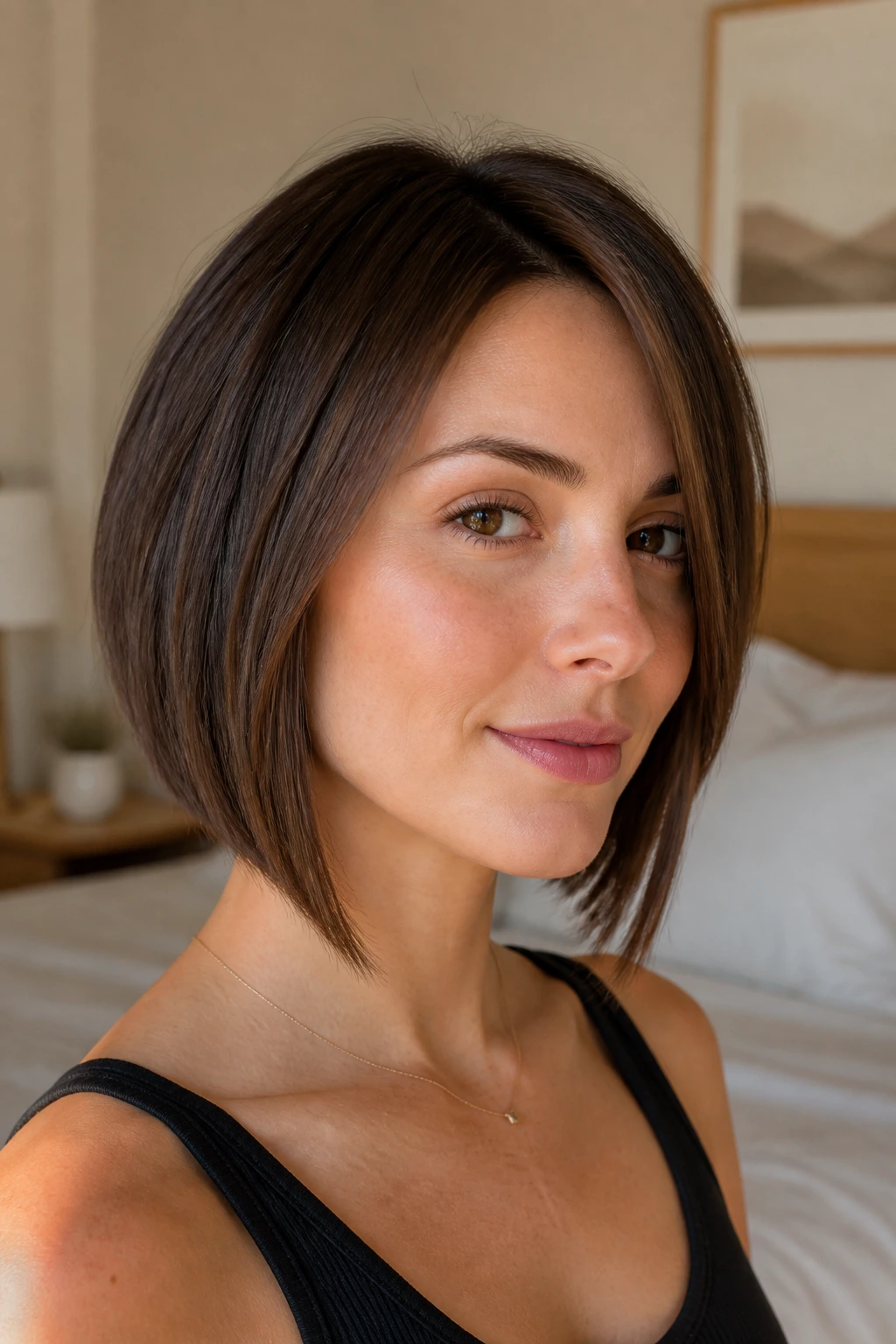
The A-line lob is a neat little trick: shorter in back, slightly longer in front, and angled just enough to guide the eye downward. It’s a particularly useful shape for round faces because the forward length draws attention away from width and adds a clean line near the cheek.
But don’t file it away as a “round face” cut only. Square faces like it too, especially when the front pieces are softened and not sliced into hard points. The angle gives structure without making the jaw feel heavier.
The cut works best when the front pieces hit just below the jaw and the back is not so short that the shape becomes dramatic for no reason. There’s a sweet spot. Too steep, and it starts looking like a dated stacked bob. Too mild, and it loses the whole purpose.
Ask for a gentle A-line, not a sharp one. The goal is a little movement, not a geometry lesson.
7. Invisible Layers on a Wavy Midi
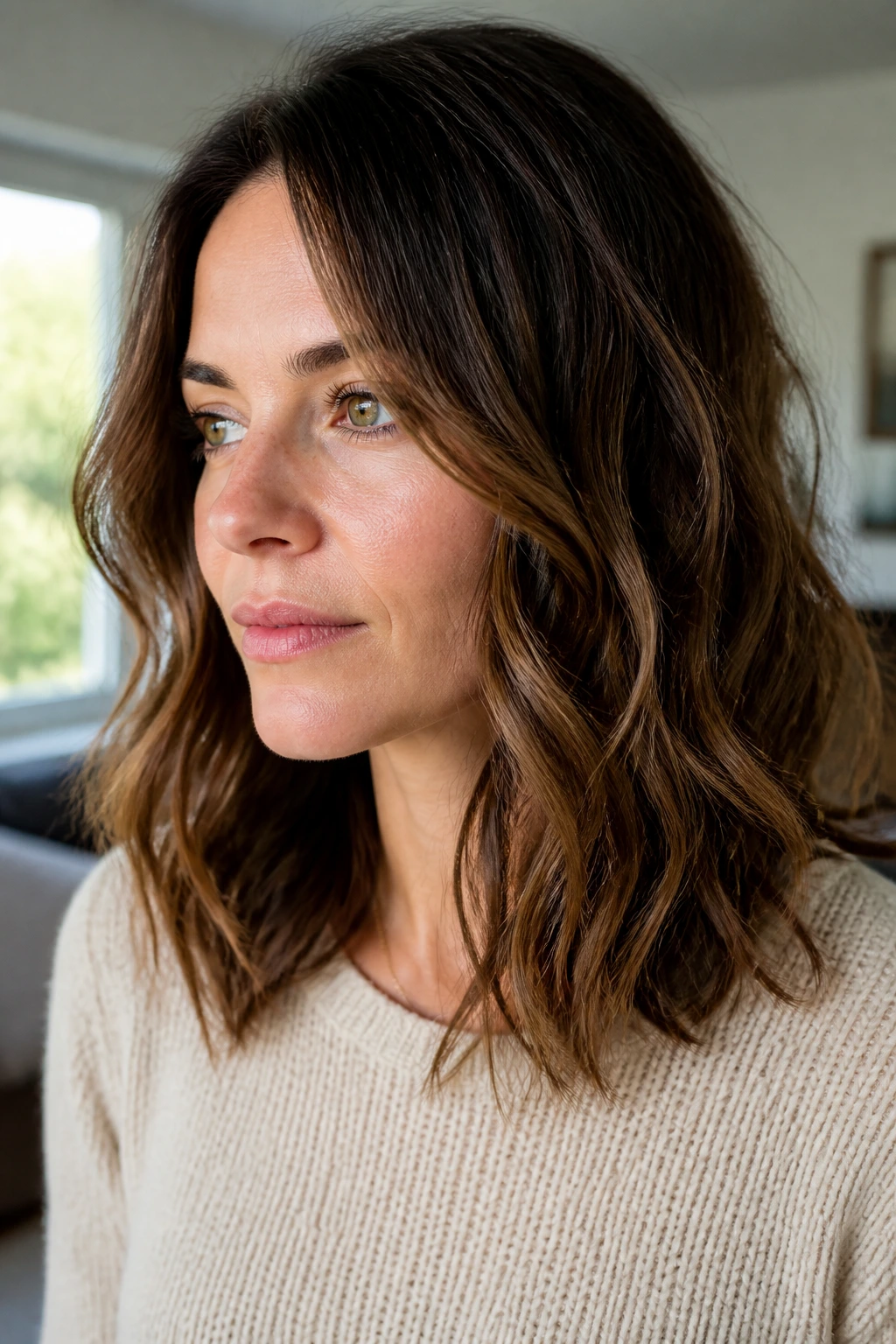
If your hair already has wave, this is one of the best medium length hairstyles to keep it from puffing in random places. Invisible layers remove bulk without leaving obvious steps, so the haircut looks smooth when it falls and lively when it moves.
Wavy hair can get bulky at the ends and flat at the roots in the same week. Invisible layers split the difference. They let the wave bend and spring, but they don’t carve the hair into obvious chunks that can frizz out on dry days.
This is especially kind to diamond and heart-shaped faces because the movement around the cheekbones softens the widest part of the face without crowding the chin. On oval faces, it just looks easy. On long faces, ask for the wave to start a little lower so the volume doesn’t climb too high.
How to Style It
Air-dry with a curl cream or light foam, then scrunch out the cast once the hair is dry. If you use a diffuser, keep the heat medium and the airflow low. High heat makes the ends frizzy before the wave has set.
8. The Deep Side-Parted Medium Cut

A deep side part is one of the fastest ways to change the shape of a medium haircut without touching the scissors. It adds lift at the crown, breaks symmetry, and can make the whole face look a touch longer and leaner.
That lift is useful on round and square faces, where a little vertical emphasis helps. It’s also useful on flat, fine hair, because the extra root volume gives the cut some life even if the rest is straight. Pair it with shoulder length or collarbone length, and the result has movement without drifting into overdone territory.
The catch is balance. If the part is deep but the hair is also pinned flat behind the ear, the style can look too lopsided. You want one strong shape, not three competing ones.
A side part with a soft bend through the mids is one of those old salon tricks that keeps coming back because it works. No mystery there.
9. Butterfly Layers at Medium Length
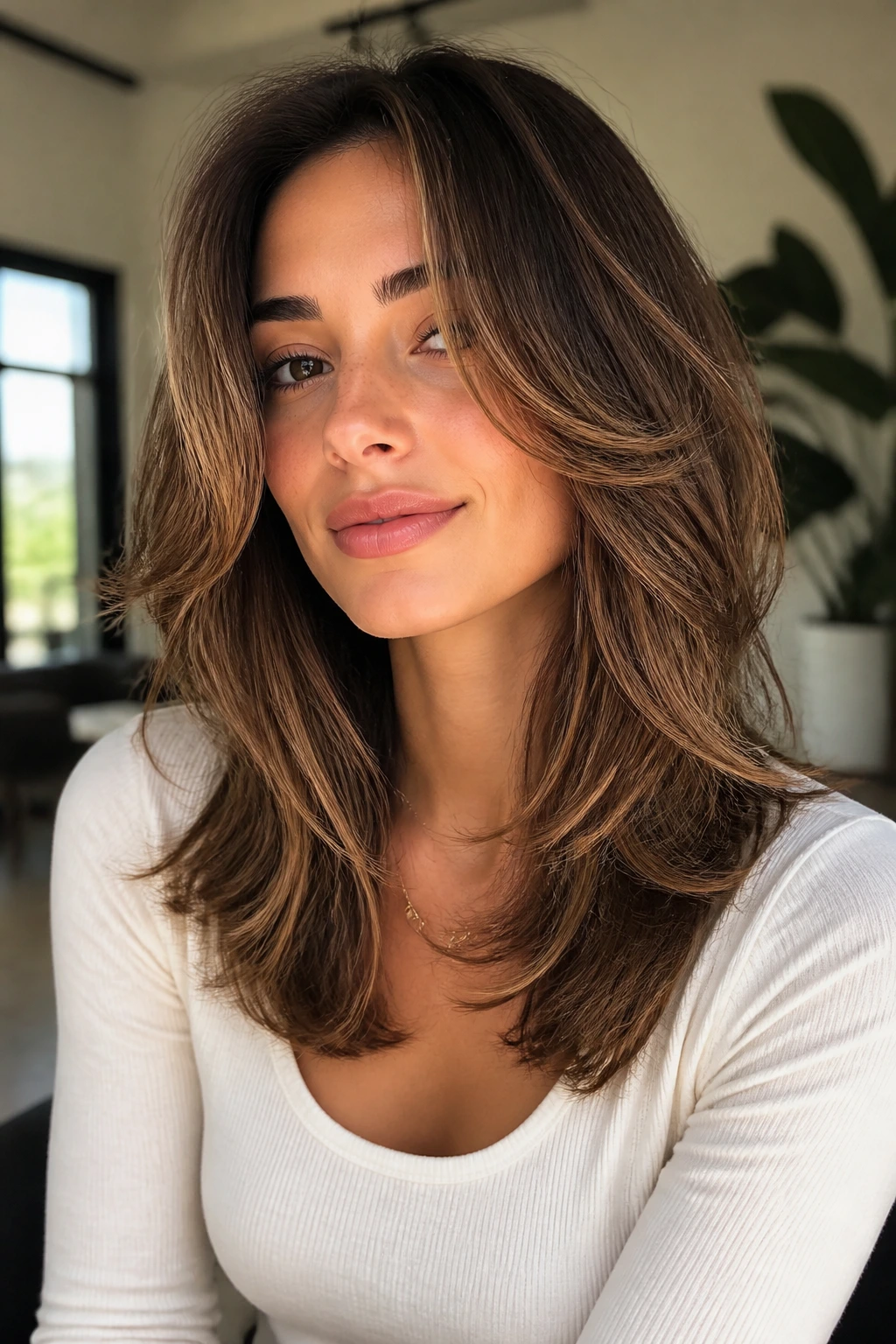
Butterfly layers are the haircut equivalent of opening the curtains a little and letting the room breathe. Shorter face-framing pieces around the upper layers meet longer lengths below, which creates movement without sacrificing the body of the cut.
That split-length effect is why it flatters so many face shapes. Round faces get the illusion of length from the longer base. Heart-shaped faces get softness near the cheekbones. Square faces get broken-up lines around the jaw.
The best versions keep the top layers light and the bottom layers full enough to hold their shape. If the shortest pieces are too short, the haircut can feel busy. If the longest pieces are too long, you lose the butterfly effect and end up with just… layers.
What Makes It Different
It gives you a blowout look even when the hair isn’t perfectly blown out. A round brush at the front and a smooth bend through the mid-lengths is usually enough to show the shape.
10. The Grown-Out French Bob
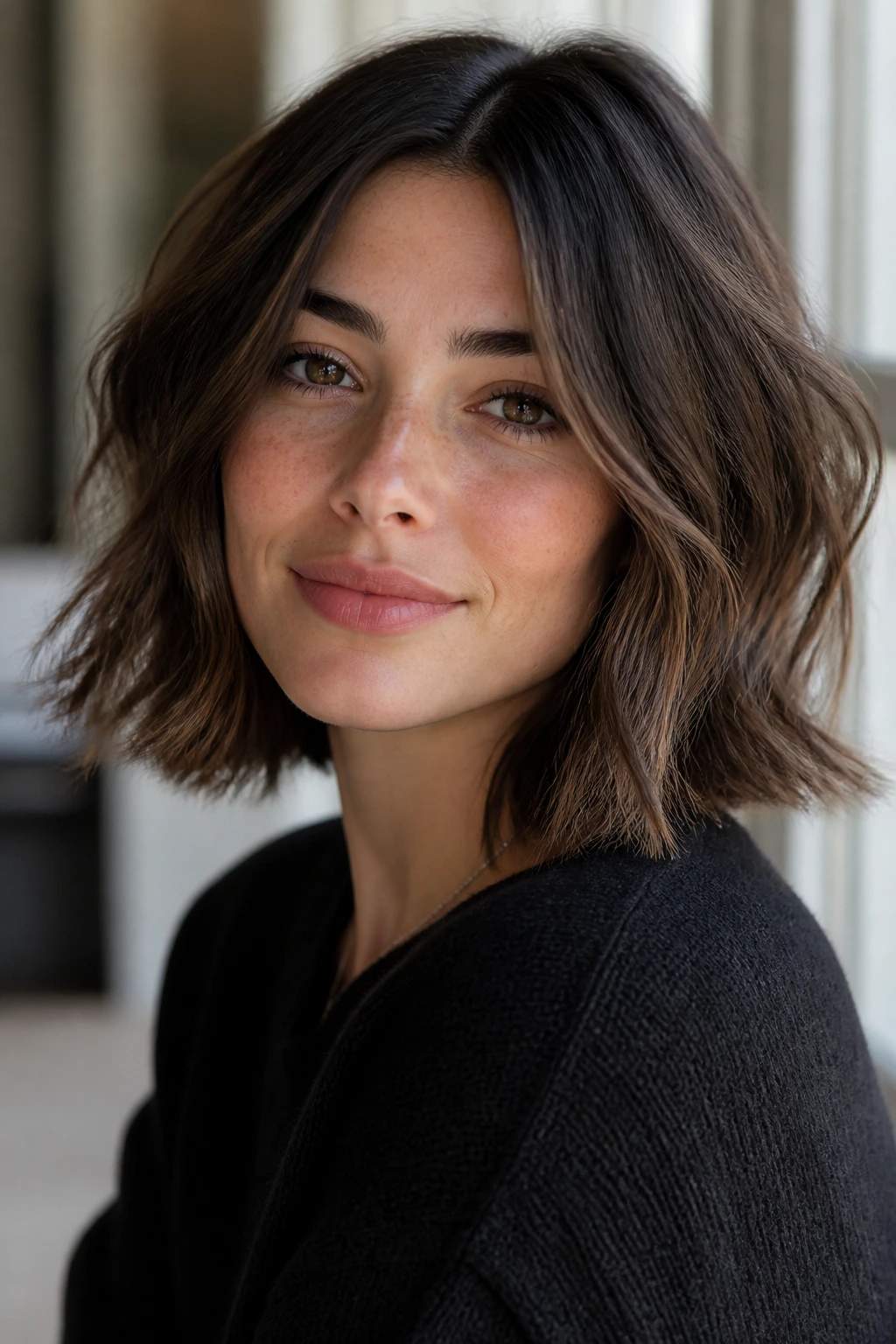
A grown-out French bob has that neat, slightly undone feel people keep trying to copy with texture spray and a prayer. At medium length, it sits between chin and shoulder, which is why it can flatter more face shapes than the shorter version.
The grown-out length is kinder to square and round faces because it doesn’t stop right at the widest part of the jaw. Instead, it falls a bit lower and creates a softer frame. Add a loose wave or a bend with a flat iron, and the effect becomes even better.
This is a strong choice if you like a clean outline but don’t want a severe blunt bob. It has enough weight to stay polished, yet enough length to tuck behind the ear without fighting back.
A little side part helps if your features are very symmetrical and you want the cut to look more relaxed. Center part if you want a cleaner read. Both work.
11. The Sleek Lob With Tucked Ends
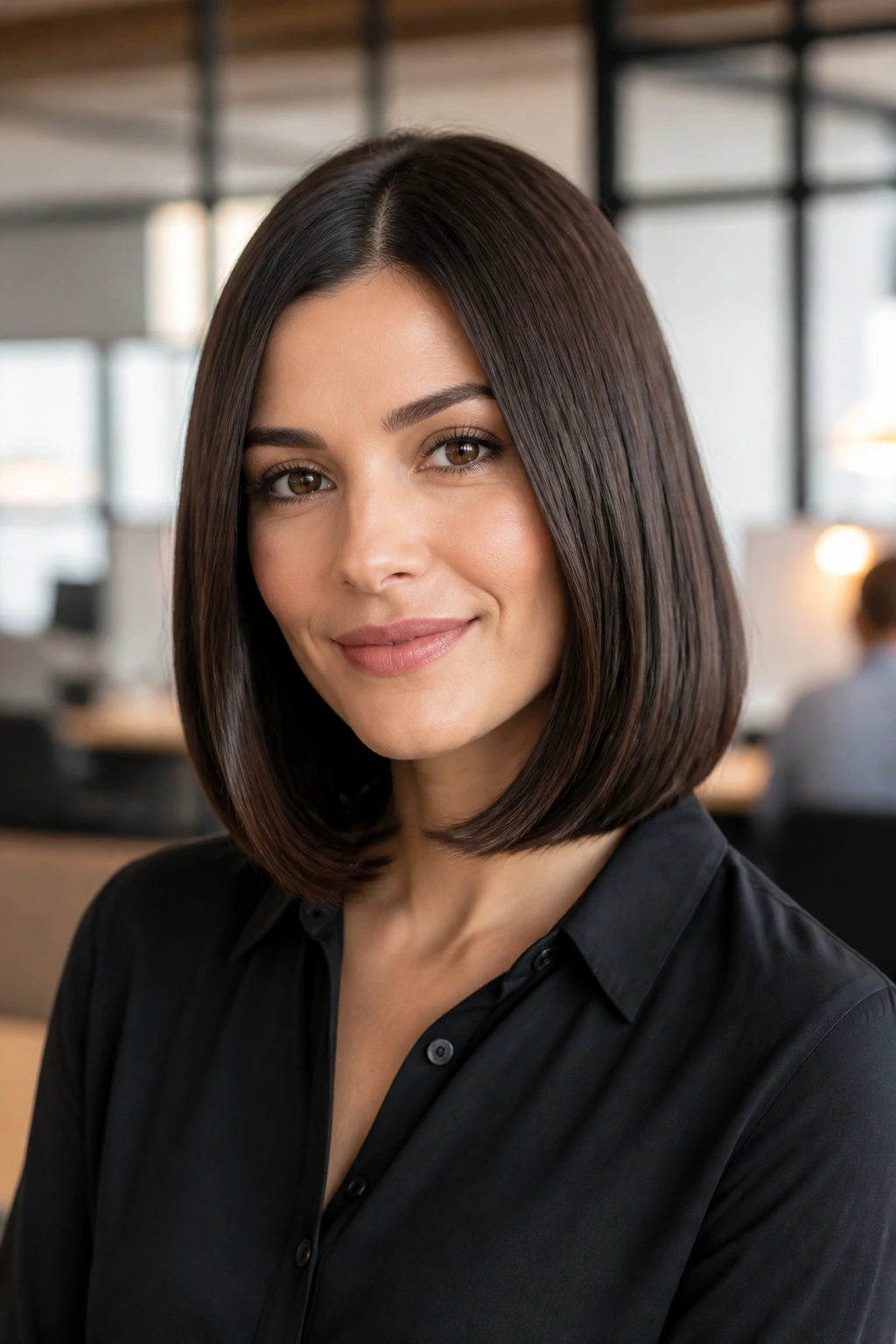
Straight, shiny, and quietly sharp. The sleek lob with tucked ends is one of my favorites for people who want medium length hair to look deliberate instead of casual.
The ends curve inward just enough to keep the shape compact. That little tuck matters on long faces, where straight lines can exaggerate length, and on round faces, where the inward shape helps narrow the silhouette near the chin. On square faces, the soft curve takes the edge off the jawline without hiding it.
This cut also loves healthy-looking hair. A glossing serum on the mids and ends keeps it from fraying out, but don’t drench the roots. That’s how sleek hair turns greasy fast.
The best part? It works with a blazer, a T-shirt, a dress, all of it. It isn’t fussy. It just looks finished.
12. Bottleneck Bangs and Soft Layers
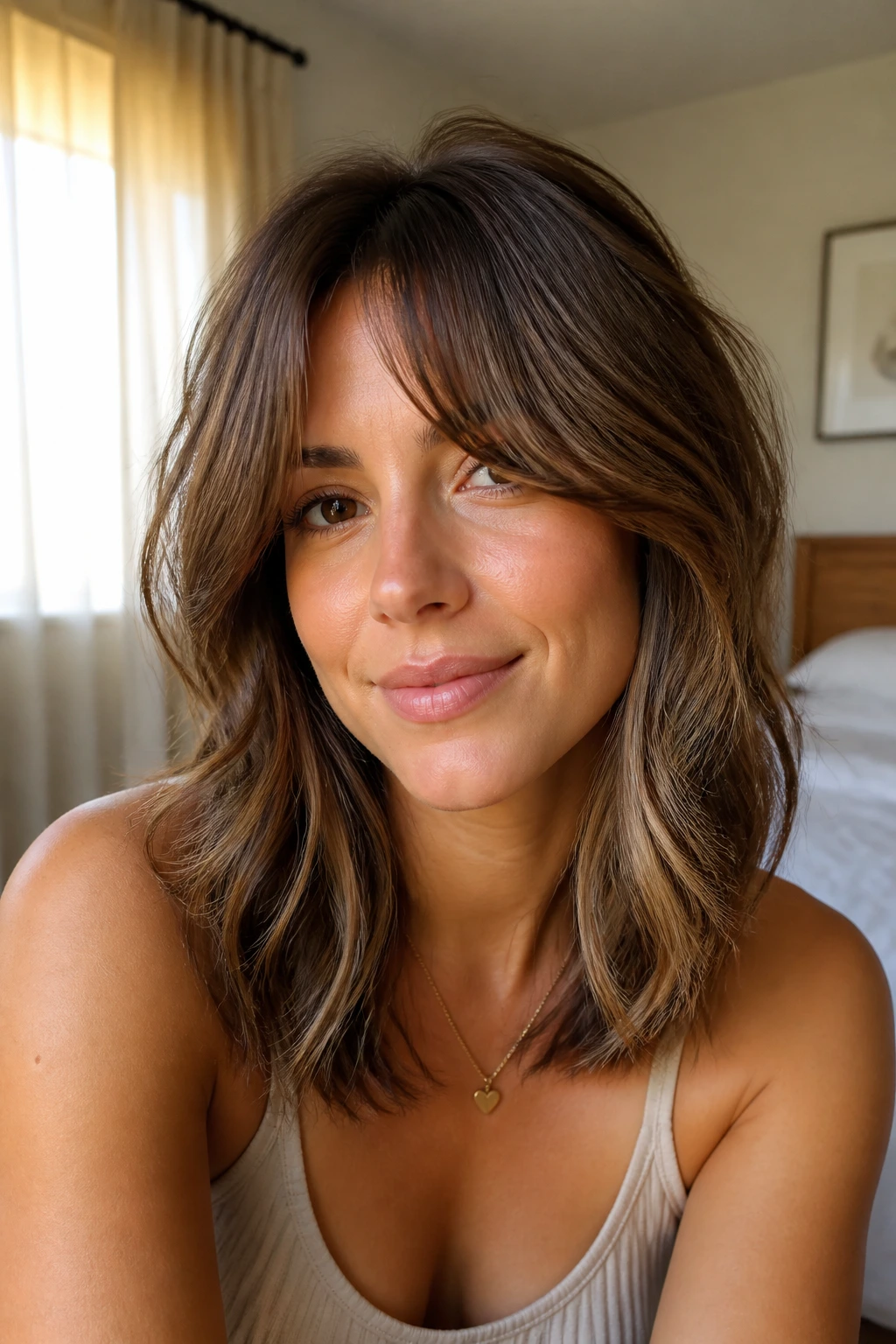
Bottleneck bangs are a nice middle ground when full fringe feels like too much and curtain bangs feel too open. They start narrower at the center, open out around the eyes, and blend into soft layers that carry the shape downward.
That narrow-to-wide effect helps round faces by adding a little vertical focus up top, while heart-shaped faces get balance around the forehead and cheekbones. On long faces, let the bangs sit slightly fuller so they actually shorten the forehead visually.
The soft layers below keep the cut from feeling front-heavy. Without them, the bangs can look like a separate event. With them, the whole haircut feels linked.
One useful rule: if your hairline grows in a strong cowlick at the center, leave the very shortest piece a touch longer. It lies flatter, and you’ll thank yourself every morning.
13. The Wolf Cut With Controlled Volume
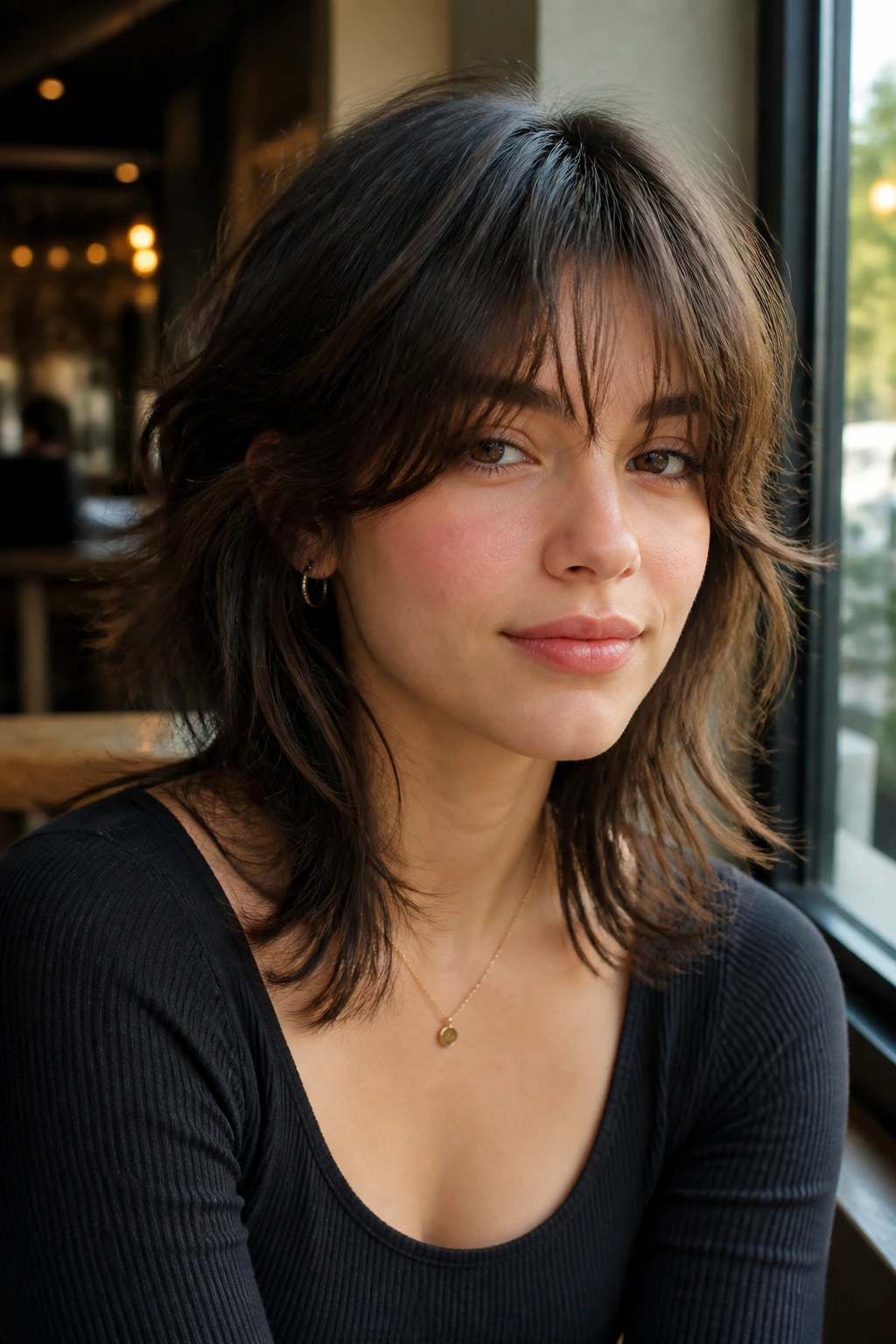
A medium wolf cut can go wrong fast if the layers are too severe. The controlled version keeps the shaggy texture but reins in the crown so the haircut doesn’t balloon out at the sides.
That control is what makes it more face-friendly. Round faces can wear it when the layers stay lower and the length passes the jaw. Square faces get a nice softening effect from the broken edges. Long faces need the crown kept low and the fringe a bit fuller so the style doesn’t stretch things upward.
This is not a cut for people who want clean lines. It’s for people who want motion, a little edge, and hair that looks better when it’s not perfect. The key is asking your stylist to keep the top pieces connected to the length instead of giving you a disconnected pyramid.
Dry texture spray. Finger combing. Stop there. That’s usually enough.
14. The Soft A-Line Lob

Think of this as the polished cousin of the sharper A-line. The angle is still there, but the edges are softened, which makes the cut easier to wear across more face shapes.
The front pieces skim the jaw and then fall into the length, which helps pull attention downward on round faces and smooths a square jaw without hiding it. On heart-shaped faces, the softer front pieces help fill out the lower half of the face a bit more, which creates balance.
It’s a quiet haircut. Not boring. Quiet. The kind that doesn’t shout but still gets noticed because the shape makes sense.
If you want medium length hairstyles that can move between office clean and weekend easy, this is a good lane. It’s one of the few cuts that still looks tidy when the hair dries with a slight bend instead of a full blowout.
15. Shoulder-Length Curls With a Rounded Shape

Curly hair at medium length needs shape, not just length. A rounded silhouette keeps curls from building outward at the sides while still giving them enough room to spring.
When the cut is too blunt, curly hair can hang heavy at the bottom and puff out in awkward places. A rounded medium cut takes some weight off the sides and leaves the crown and cheek area with enough structure to flatter round, square, and oval faces alike. For heart shapes, it adds fullness lower down, which helps balance a narrower chin.
The trick is to cut curls in their natural state, or close to it. Wet curls lie to you. They shrink, bounce, and change direction later, and that’s how people end up with a triangle when they wanted a shape.
A curl cream and a diffuser on low heat are enough. Please do not over-handle it. Curly medium cuts love a light touch.
16. The Choppy Midi Cut With Micro-Layers

Micro-layers are the secret to keeping medium hair from looking like one solid sheet. The layers are small enough to stay subtle but distinct enough to keep the ends moving.
This cut helps fine hair look lighter and thick hair lose some bulk without turning fluffy. On round faces, keep the shortest layers below the cheekbones so the width stays controlled. On square faces, the movement around the jaw softens the line without turning the cut fuzzy.
It’s a great choice if you like texture but dislike a shaggy finish. The micro-layers do their work quietly. You usually notice them most when the hair swings or when the wind catches it.
A flat iron bend through the ends gives this cut a little life, but even straight, it doesn’t look dead. That’s the payoff.
17. The Medium Cut With Bright Face-Framing Pieces
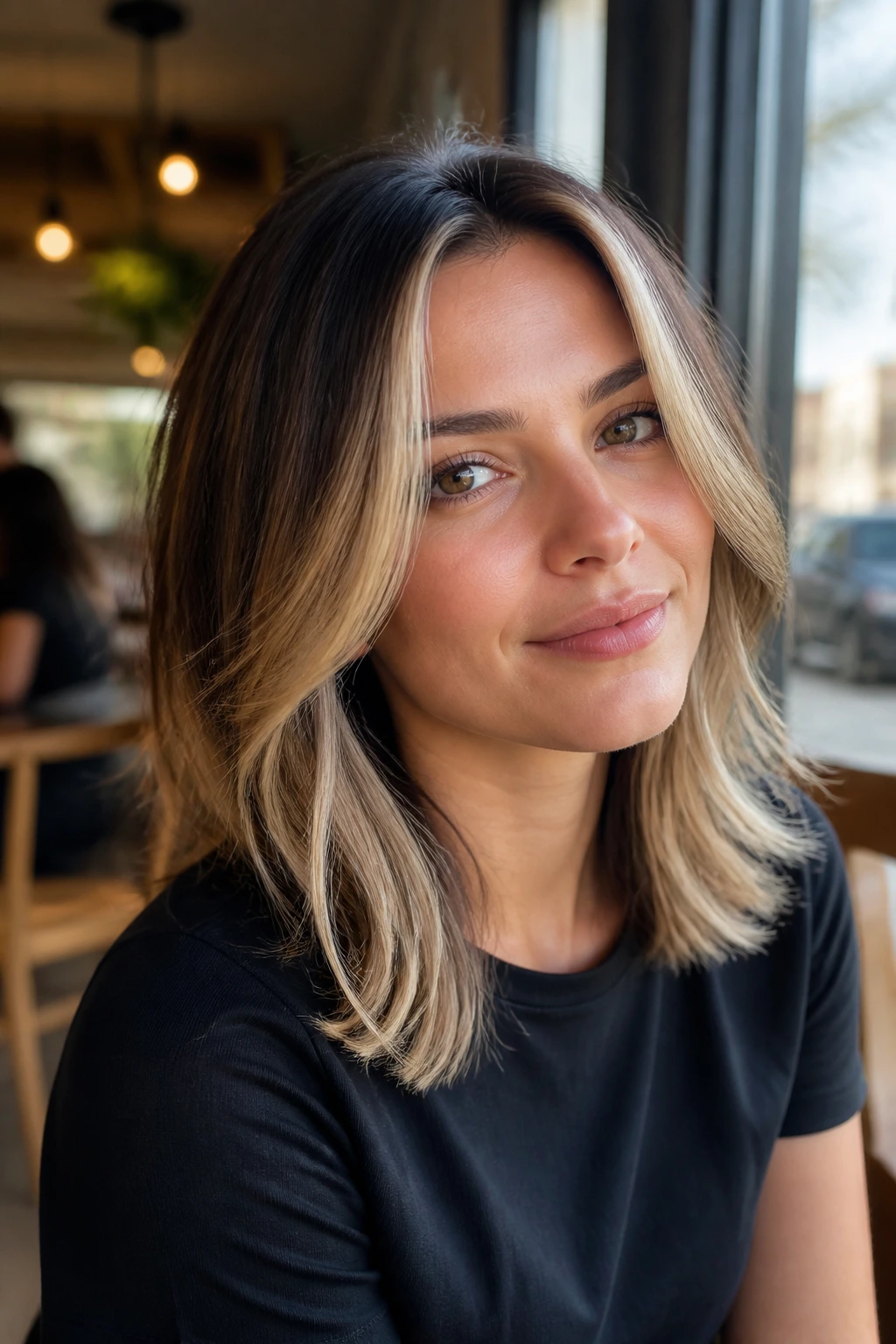
A little brightness around the face changes how a haircut reads. Face-framing pieces can make medium hair look lighter near the front while leaving the rest of the length intact.
That matters because face shape isn’t only about the cut line; it’s also about where the eye lands. Lightened pieces or slightly lighter front strands draw attention upward and inward. On heart-shaped faces, that helps balance a broader forehead. On longer faces, it can widen the visual field near the cheeks.
Even without color, the same idea works with shape. Ask for the front pieces to be the shortest part of the cut, then let them drift longer into the rest of the hair. The line becomes softer and more forgiving.
I like this style on people who feel their hair is “heavy” around the face. It takes some of that weight away without sacrificing length. Simple fix. Good payoff.
18. The One-Length Shoulder Cut With Crown Lift
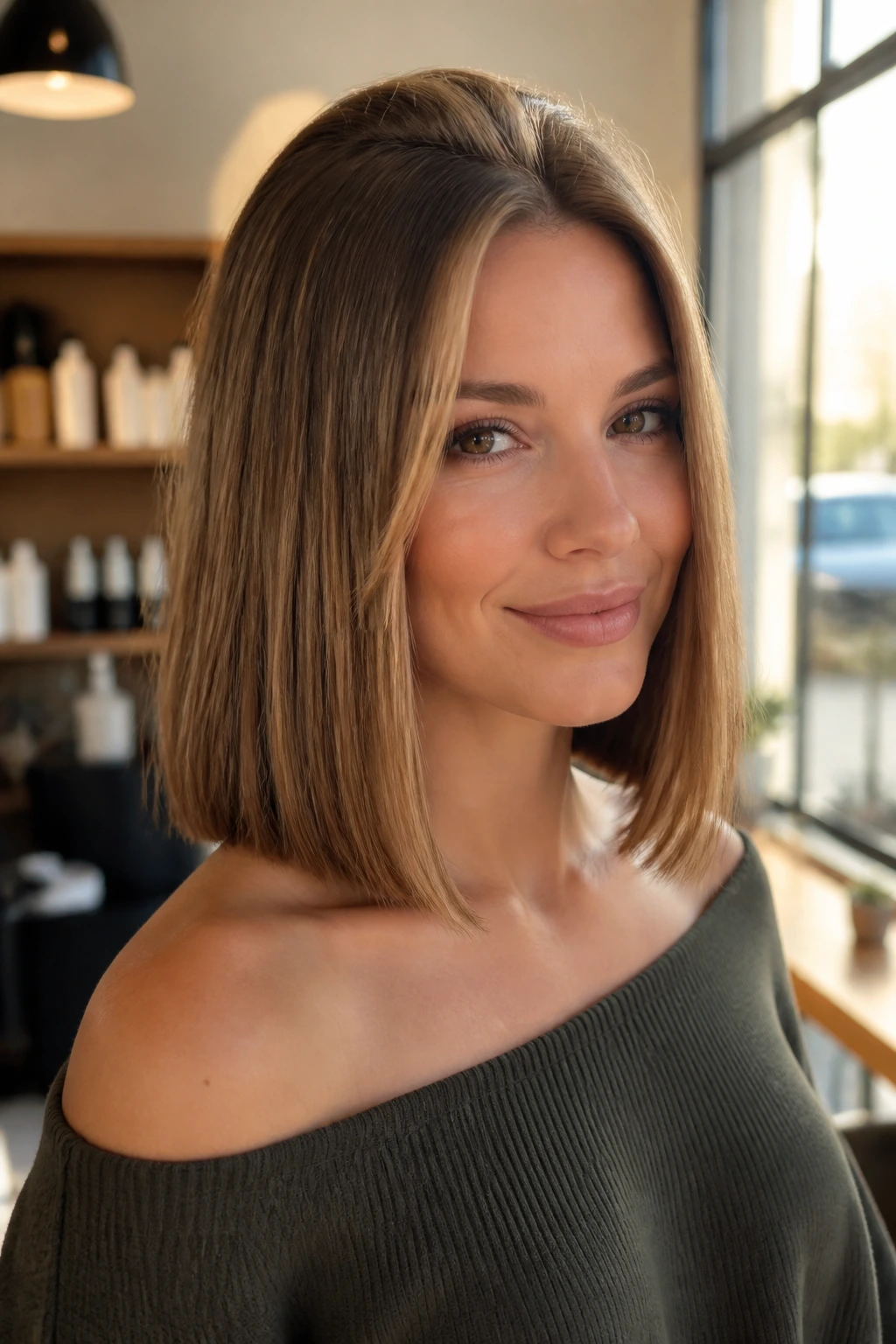
One-length doesn’t mean flat. If you keep the edges blunt but build lift at the crown, the whole cut gains presence without needing a stack of layers.
This is especially good for fine hair that needs a thicker-looking outline. The blunt perimeter gives density, while the crown lift prevents the head from looking compressed. On long faces, the volume at the top needs to be controlled so the style doesn’t become too tall. On round faces, lift at the crown is useful because it creates vertical space.
The cut works best when the shoulders don’t force the ends outward. If your shoulders are broad, ask the stylist to leave enough length to clear them or use a slight inward bevel. That detail matters more than people admit.
No layers. No fuss. Just shape.
19. The Flipped-End Medium Cut
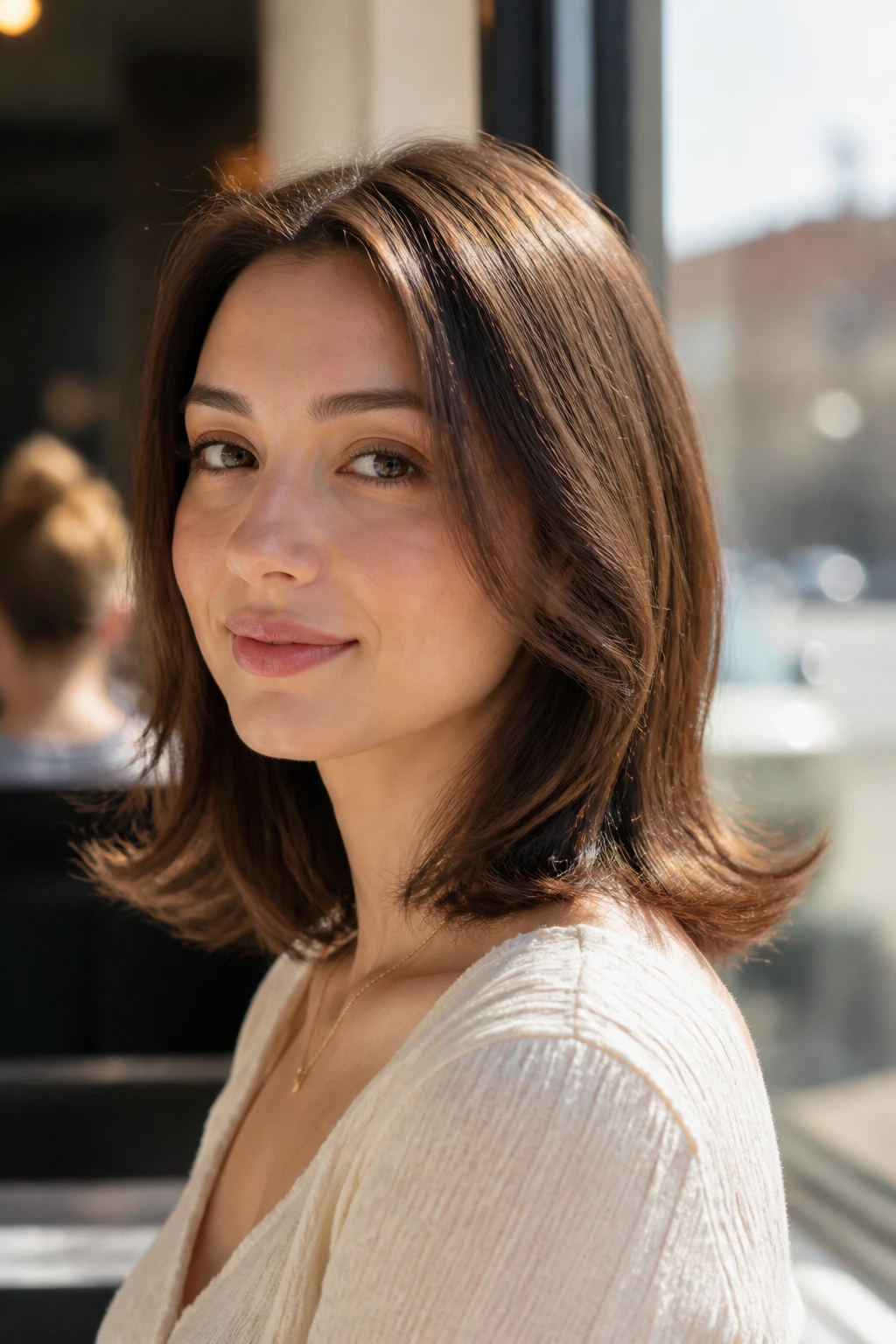
Flipped ends can feel retro in the best way, not the costume version. The ends turn outward just a little, which gives the haircut movement and keeps medium length hair from sitting too close to the neck.
That outward sweep is useful on square faces because it softens the lower edge. It also helps round faces by adding a touch of lift and movement at the sides rather than hugging the cheeks too tightly. On oval faces, it just adds charm. Sometimes that’s enough.
The key is restraint. If the flip is too strong, the style starts looking dated in a very specific, very avoidable way. The flip should look like the hair naturally decided to move, not like it was forced into a stunt.
A medium barrel brush or a flat iron twist at the ends usually does the job. A little hairspray. Done.
20. The Off-Center Wave Cut
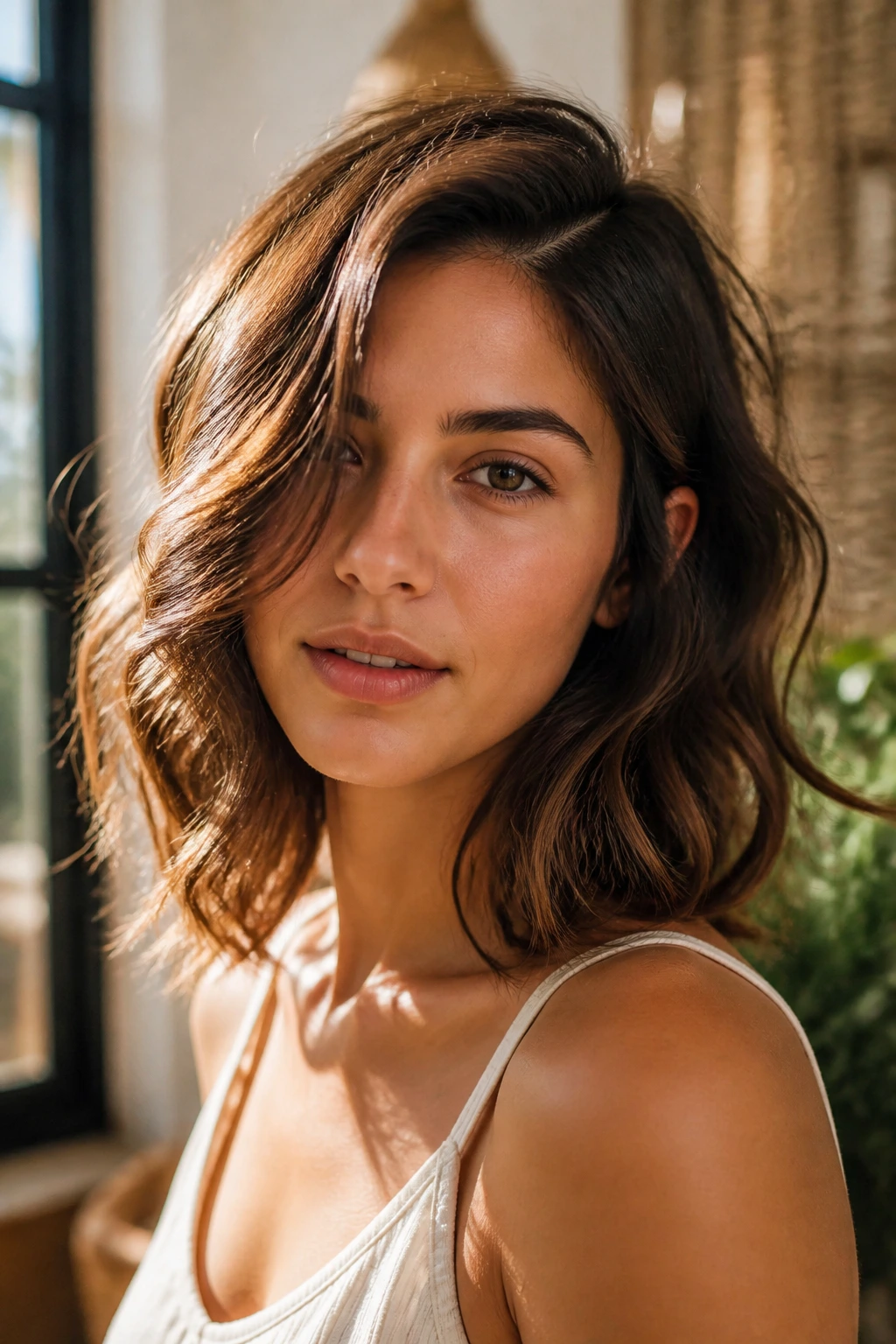
If center parts feel too formal and side parts feel too severe, the off-center wave cut lives in the pleasant middle. The part sits just a little to one side, and the waves fall with enough asymmetry to keep the face from looking rigid.
This is one of those medium length hairstyles that flatters almost everybody because it doesn’t commit to a single hard line. Round faces get a subtle lengthening effect. Square faces get softness. Long faces get width from the waves without losing shape.
The wave itself should start around the cheekbone or lower. Too high, and the style widens the face in the wrong place. Too low, and it loses its balancing work. There’s a sweet spot, and it’s right around the upper third of the cheek.
This cut looks especially nice when the wave is imperfect. A little variation makes it feel lived-in instead of studio-polished.
21. The Razored Medium Cut With Airy Ends
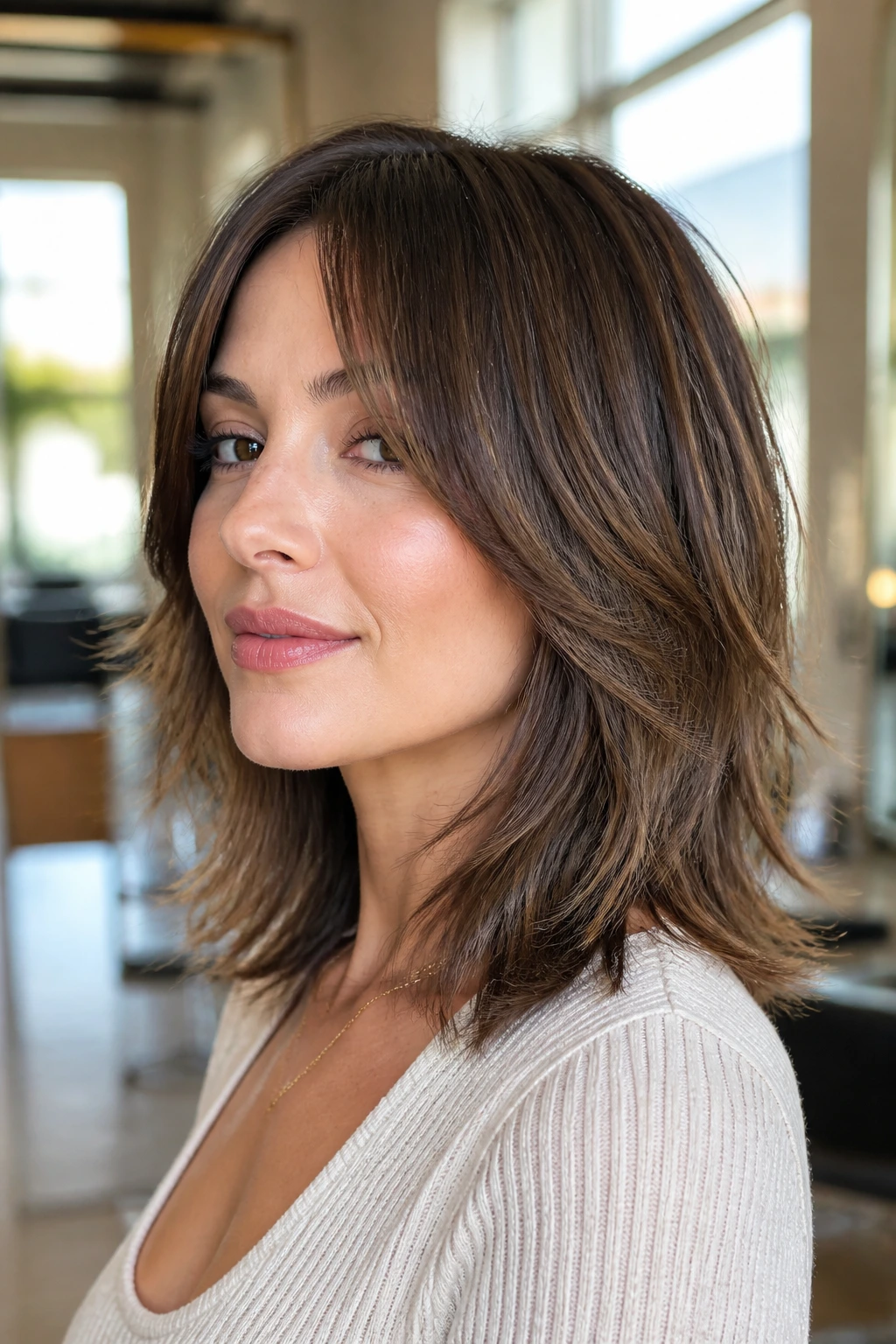
Razored ends are not for every head of hair. On the right texture, though, they make medium hair move in a softer, lighter way that blunt scissors can’t imitate.
The airy finish keeps thick hair from feeling bulky and helps straighter hair look less stiff. On square faces, the wispy perimeter can soften a strong jaw. On round faces, keep the layers more vertical than wide so the texture doesn’t expand the sides too much.
You want enough razor work to soften the edge, not so much that the ends fray. That’s the line. A good razor cut should look light, not shredded.
This is one of those styles that benefits from a touch of serum on the ends and very little else. If you pile on heavy cream, the airy effect disappears fast.
22. The Polished Medium Cut With Wispy Fringe
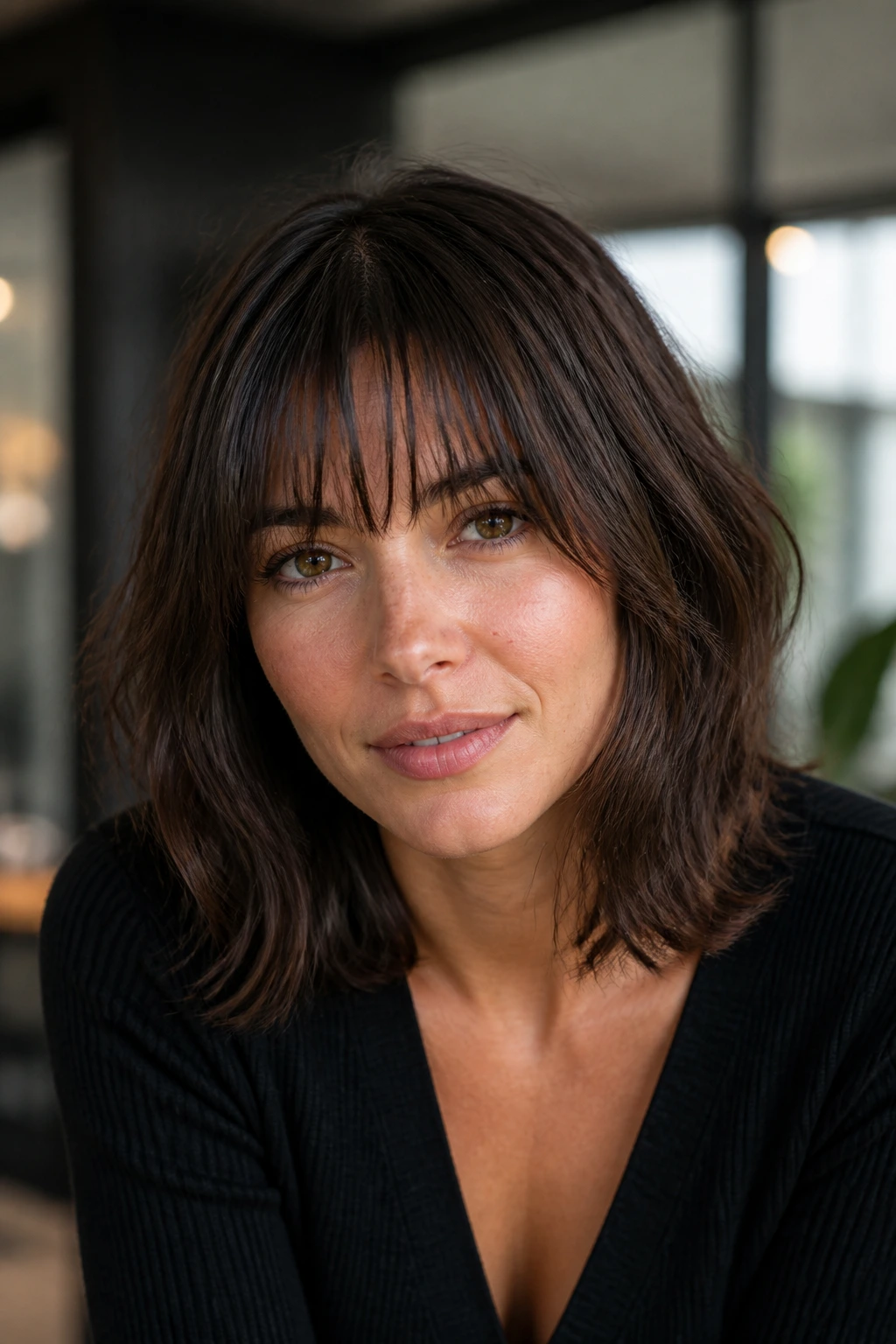
A wispy fringe is the easiest way to add personality to a medium haircut without making the bangs the whole story. The fringe softens the forehead, and the medium length below keeps the cut grounded.
This works well on heart and long face shapes because the fringe shortens the forehead visually while the length below the chin keeps the lower half from feeling empty. On square faces, keep the fringe feathered so it doesn’t sharpen the jaw by contrast. On round faces, a slightly off-center fringe often reads better than a straight, heavy one.
The polished part matters. If the fringe is wispy but the rest of the hair is frizzy, the haircut loses its point. A smooth blow-dry at the roots and a tiny bend through the ends keeps the whole thing in sync.
It’s a gentle cut. Not timid. Just edited.
How to Match the Cut to Your Face Shape

Round faces usually look best when the haircut creates some vertical movement. That means length that clears the chin, parts that aren’t too rigidly centered, and layers that don’t puff out at the cheeks. A lob, A-line shape, or collarbone cut tends to work well because it draws the eye down instead of across.
Square faces like softness. A blunt line can work if the texture is loose, but the easiest wins come from curtain bangs, beveled ends, waves, and anything that breaks up the jaw. You want the haircut to blur the corners a little, not erase them.
Heart-shaped faces often need the opposite treatment: a little fullness lower down to balance a broader forehead. Curtain bangs, bottleneck bangs, rounded ends, and shoulder-length layers usually help because they move attention away from the top of the face and toward the jaw and neck.
Long faces need width, not extra height. That means avoiding too much crown lift, keeping bangs fuller if you wear them, and adding movement around the cheeks or shoulders. Off-center waves, shoulder-grazing bobs, and rounded curls are especially useful here.
Diamond faces can handle a lot, but they usually benefit from hair that adds a bit of width at the forehead and jaw rather than sitting tight against the cheekbones. Soft layers and medium cuts with movement at the ends tend to feel balanced. Oval faces get the easiest time of all, but even then, the cut should respect the texture. An oval face does not mean every haircut works equally well. That’s salon folklore, and it’s lazy.
The Tools That Make Medium Hair Behave
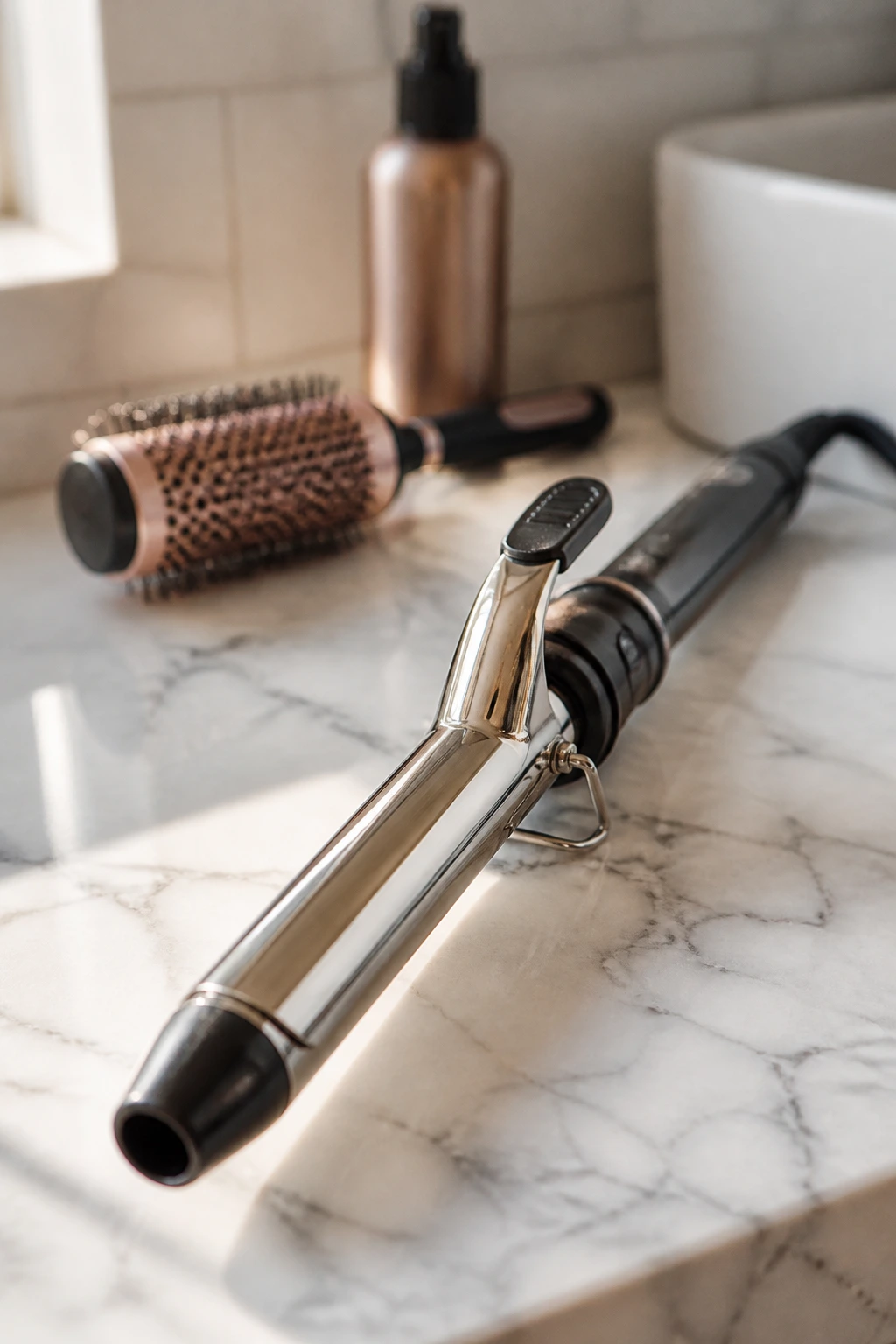
- A 1-inch curling iron or wand: Best for loose bends, waves, and quick texture on medium hair that needs movement at the ends.
- A medium round brush: Useful for collarbone lobs, beveled ends, and any style that needs a little curve under the hair.
- A blow dryer with a concentrator nozzle: Helps direct airflow so the cut stays smooth instead of frizzy at the surface.
- Heat protectant spray: Non-negotiable if you use a flat iron or curling iron more than once a week.
- Texturizing spray: Good for shags, wolf cuts, and choppy mid-length layers that need separation.
- Light smoothing serum: A few drops tame flyaways on sleek lobs and blunt mids without making them greasy.
- Sectioning clips: Small thing, huge difference. They keep the top layers out of the way when you blow-dry the underlayers first.
- Wide-tooth comb or detangling brush: Especially useful for wavy and curly medium cuts, where pulling too hard can wreck the pattern.
- Dry shampoo: Useful at the roots, not on the mids. If you spray it halfway down the hair, it leaves a dusty finish that looks worse than oily roots.
- Silk or satin pillowcase: Not a styling tool in the strict sense, but it cuts down on friction and helps the shape last overnight.
What to Tell Your Stylist Before the First Snip

Bring photos, but bring a sentence too. The sentence matters more than people think. A picture of a collarbone lob with curtain bangs means almost nothing unless you also explain whether you want the ends blunt, soft, tucked, or airy.
Say where the length should land on your body, not just on the model’s. Collarbone, jaw, shoulder, just under the chin. Those landmarks change everything. A cut that sits one inch higher can flip outward on the shoulders; one inch lower can remove all the lift you wanted.
Tell the stylist how you wear your part. If you always part your hair on the left, a center-part cut may look wrong the second you get home. Same goes for bangs. A fringe cut for a center part behaves differently than one designed to sweep from a side part.
And be honest about styling time. If you air-dry and leave, say that. If you own a flat iron but use it once a week, say that too. A great haircut that needs a 20-minute blowout every morning is not the same as a great haircut you can scrunch and go.
How to Keep the Shape Between Salon Visits

Medium hair can go limp in a week if you ignore it, but it can also hold its outline for a long stretch if you treat the ends with a little respect. The first rule is simple: don’t wait until the shape has collapsed to trim it. For most medium cuts, a light trim every 8 to 12 weeks keeps the perimeter honest and prevents that ragged, see-through end that makes the whole haircut look older than it is.
At home, the biggest enemy is over-styling the same section day after day. Hot tools on the front pieces every morning will fry the face frame first, and that is usually the part that does the most visual work. Alternate heat days with air-dry days if you can, and use a heat protectant any time the iron comes out.
If your hair is fine, a little dry shampoo at the roots on the second day can buy you another full wear cycle. If your hair is thick or wavy, a lightweight cream on the mids may do more than dry shampoo ever will. Different hair, different rescue plan. No shame in that.
Night care matters too. A loose clip, a soft scrunchie, or a satin pillowcase keeps the ends from bending into strange angles while you sleep. That sounds tiny. It isn’t. Hair remembers friction more than people think.
Common Mistakes That Make Medium Hair Look Off
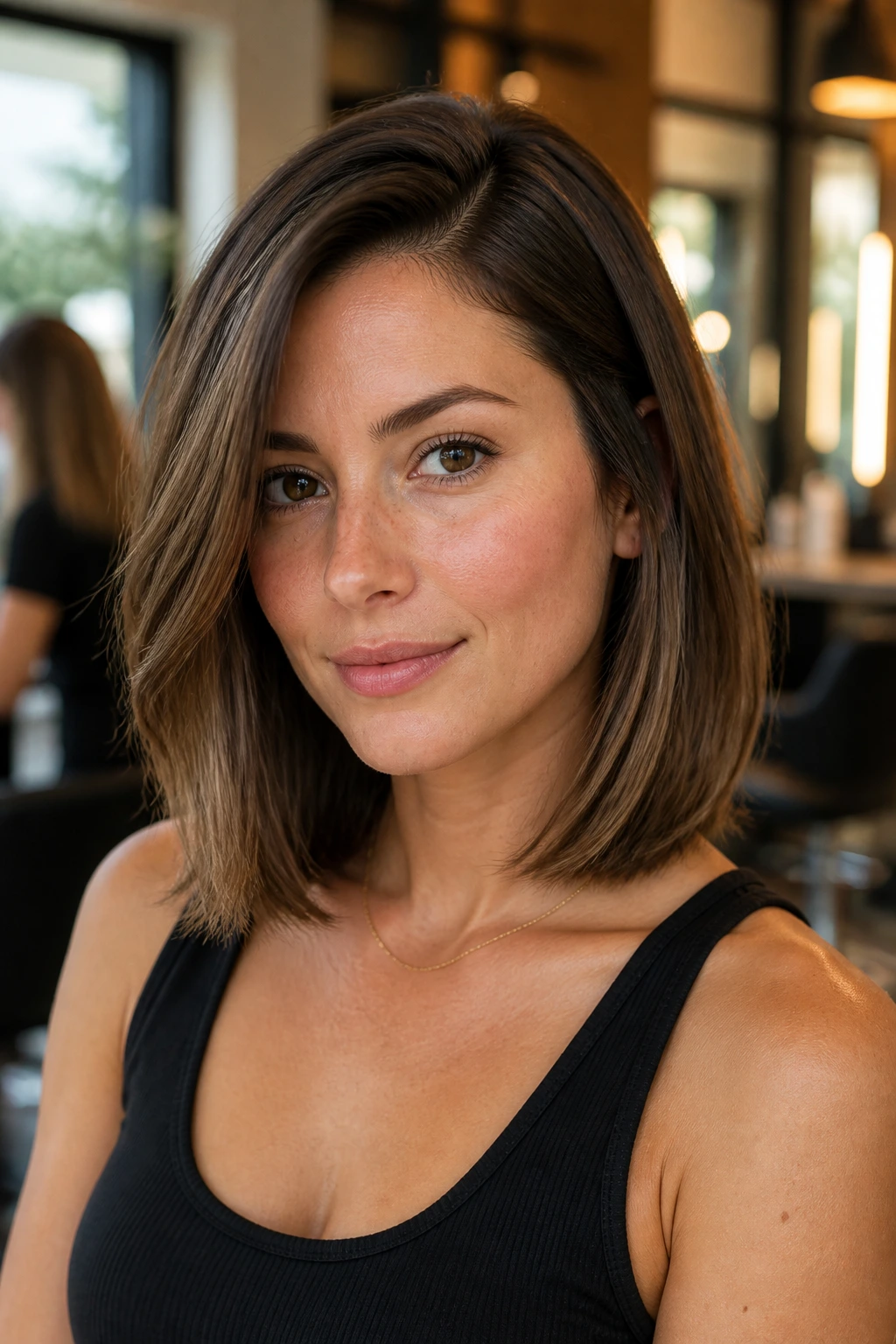
The biggest mistake is placing the length right on the broadest part of the jaw or shoulders and then acting surprised when the cut looks boxy. Hair needs room to fall. If it hits exactly where the face is widest, the effect can be blunt in the wrong way.
Another common one: too much crown volume on a long face. A little lift is good. A tall, teased crown with a center part is not. It stretches the face and makes the rest of the haircut feel disconnected. Keep the volume lower and wider instead.
People also ask for layers but don’t say where they want them. That’s how you end up with a cut that’s layered at the top but heavy at the bottom, or the reverse. Layers need a job. Cheekbone softening, jaw balance, crown lift, movement through the mids. Pick the job.
Fringe mistakes are worth calling out too. Bangs that are too short can make a round face feel wider and a long face feel even longer if the rest of the cut doesn’t support them. Ask for them to be cut slightly longer than you think. Hair springs up, especially when it dries.
Last one: over-thinning thick hair. If a stylist takes too much bulk from the wrong place, the mids can become fuzzy while the ends look stringy. A haircut should remove weight with purpose, not just shear off volume because it’s there.
Variations and Alternative Ways to Wear the Same Cut

The Air-Dry Edit
Keep the same medium shape, but ask for softer internal layering and a little extra weight at the ends. That makes the cut settle nicely when you skip the blow-dryer and let the texture do the work.
The Sleek Office Version
Take almost any of these styles and sharpen the finish: center part, smooth roots, tucked ends, and a tiny drop of serum through the mids. It reads cleaner and more formal without needing a different cut.
The Curly-Friendly Version
For wavy or curly hair, keep the perimeter a touch longer and let the stylist cut with the natural pattern in mind. That keeps the shape from springing too short after it dries.
The Fringe Swap
Curtain bangs, bottleneck bangs, wispy fringe, and side-swept fringe all change the way a medium cut sits on the face. If one fringe style feels too strong, swap the fringe before you throw out the cut itself.
The Low-Maintenance Grow-Out
Ask for softer edges, fewer dramatic layers, and enough length to tuck behind the ear. This version looks good even when it’s not freshly cut, which is a rare and useful thing.
Questions People Ask Before They Book
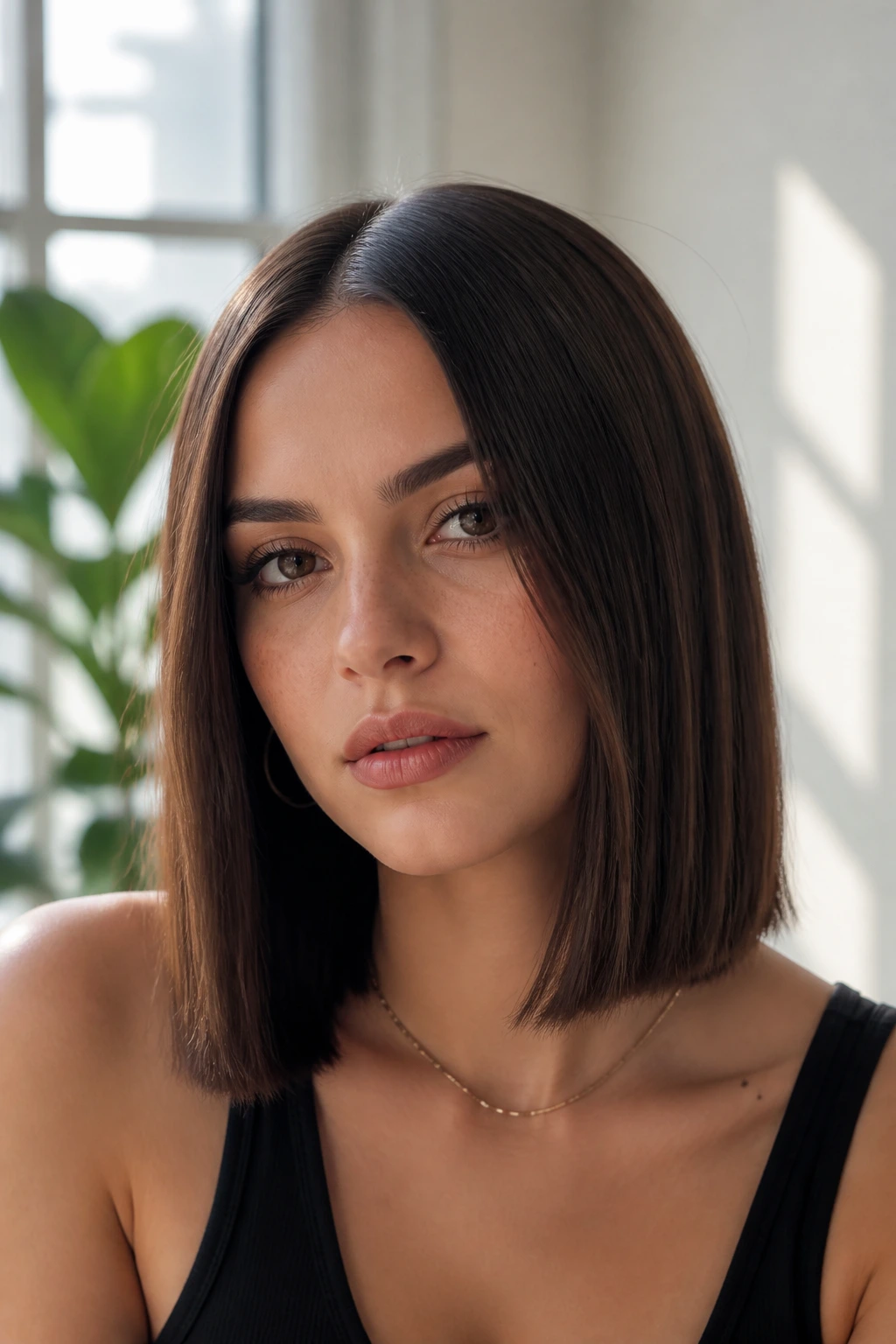
Which medium length haircut is safest if I don’t know my face shape?
A collarbone lob with soft layers is the safest starting point. It can be adjusted with a side part, curtain bangs, or a beveled edge depending on how the hair falls once it’s on your head.
Can medium hair work if my hair is very fine?
Yes, but blunt edges and clean perimeters matter more than heavy layers. Fine hair tends to look thinner when too much is removed from the ends, so ask for shape that keeps density where you need it.
What if my hair is thick and puffs out?
You want controlled weight removal, not aggressive thinning. Invisible layers, beveled ends, or a soft A-line shape can help the haircut sit closer to the head without turning it flat.
Are bangs a bad idea for round faces?
Not automatically. Heavy straight bangs can be tricky, but curtain bangs, bottleneck bangs, and wispy fringe can work well because they break up the width and guide the eye vertically.
How often should I trim a medium cut?
Every 8 to 12 weeks is a solid range for keeping the shape fresh. If your cut has bangs or very clean edges, you may want a light cleanup sooner.
Can I air-dry a medium haircut and still have it look styled?
Yes, if the cut is built for it. Ask for texture that matches your natural pattern, and avoid layers that are too short near the crown, where air-dried hair can puff out.
Should I always avoid a center part?
No. A center part can lengthen the face and sharpen the line of a medium cut. The problem is not the part itself; it’s using it on a cut that already adds too much vertical emphasis.
The Shape That Keeps Working
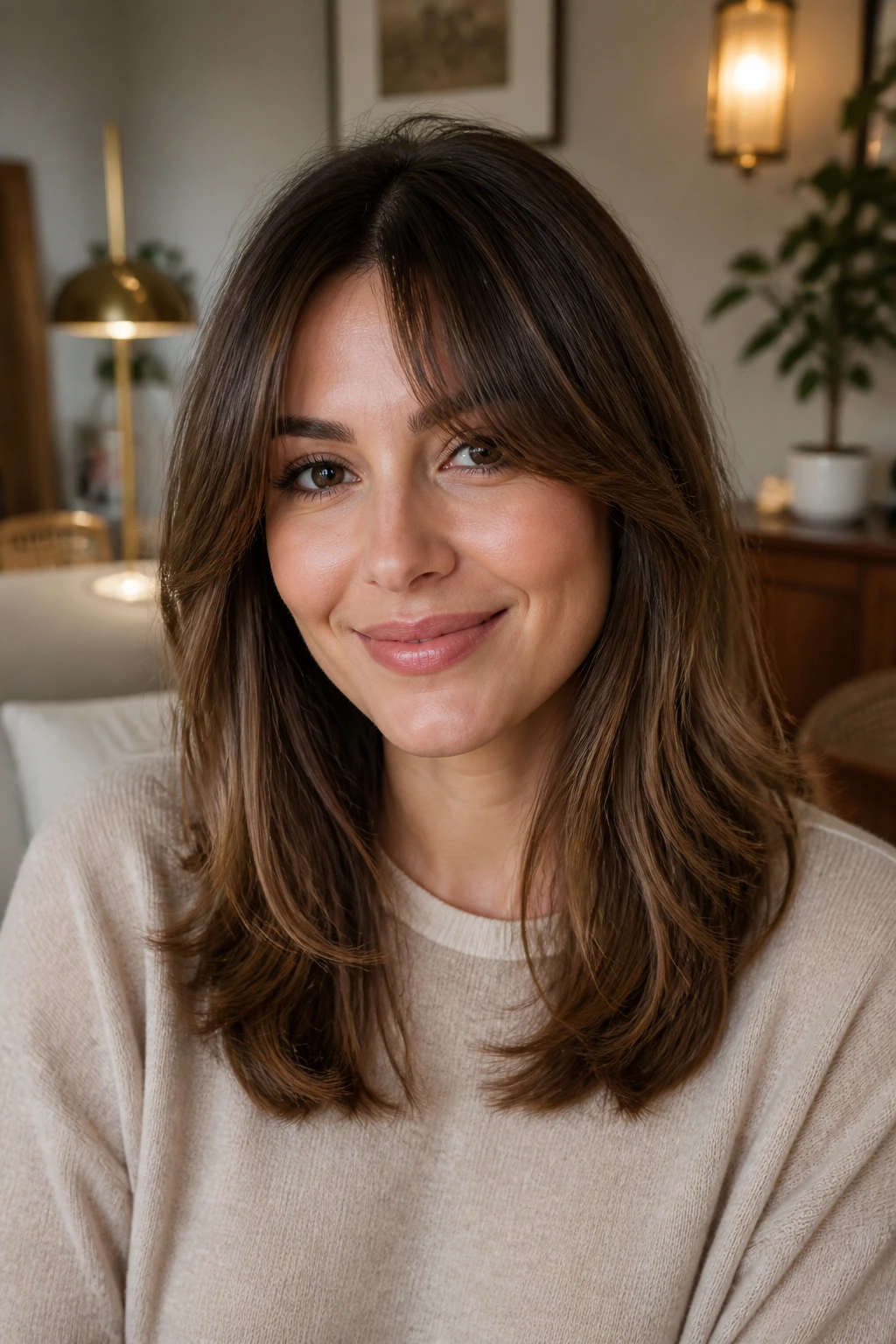
Medium length hairstyles stay useful because they leave room for adjustment. That sounds ordinary, but it is the whole point. A collarbone lob can be softened. A blunt midi can be beveled. Curtain bangs can be widened, shortened, or thinned out a bit. The haircut doesn’t have to be perfect on paper if it’s built to meet the face where it is.
If you want a cut that flatters without boxing you in, medium length gives you the best odds. It’s long enough to move, short enough to shape, and flexible enough to change with one good part or one thoughtful fringe. Book the version that fits your texture first, then tune it to your face shape. That’s where the good hair days start showing up on purpose.
