



Round faces can carry a lot of softness through the cheeks, and the wrong haircut can make that softness feel wider than you want. The right one does the opposite. It pulls the eye down, opens the face in the middle, and keeps the widest part of the hair from sitting right at cheek level.
That’s why long hairstyles for round faces are such a useful lane to stay in. Length gives you room to work with shape instead of fighting it. A center part, a long layer that starts below the chin, a wave that bends under the jaw instead of puffing out beside it — those tiny details matter more than most people think. One inch can change the whole read.
The trick isn’t to hide your face. It’s to build a clean vertical line and control where the bulk lands. Some styles do that with layers. Some use asymmetry. Some rely on crown lift, while others work because the ends taper instead of sitting in one blunt, wide block.
Why These Long Styles Earn Their Keep
- They stretch the eye downward: Hair that drops past the collarbone keeps the viewer’s focus moving vertically, which makes a rounder face look longer and less wide.
- They keep bulk off the cheeks: Styles that start their movement below the jaw stop the hair from flaring out right at the face’s broadest point.
- They work with different textures: Straight, wavy, curly, coily, and braided hair can all be shaped to add length instead of width.
- They grow out in a friendlier way: A long layer or tapered end looks intentional for longer, while a blunt chin-level cut can go boxy fast.
- They can be styled two or three ways: A center part, a side part, or a half-up shape can change the silhouette without a fresh cut.
What Long Hair Needs to Do for a Round Face
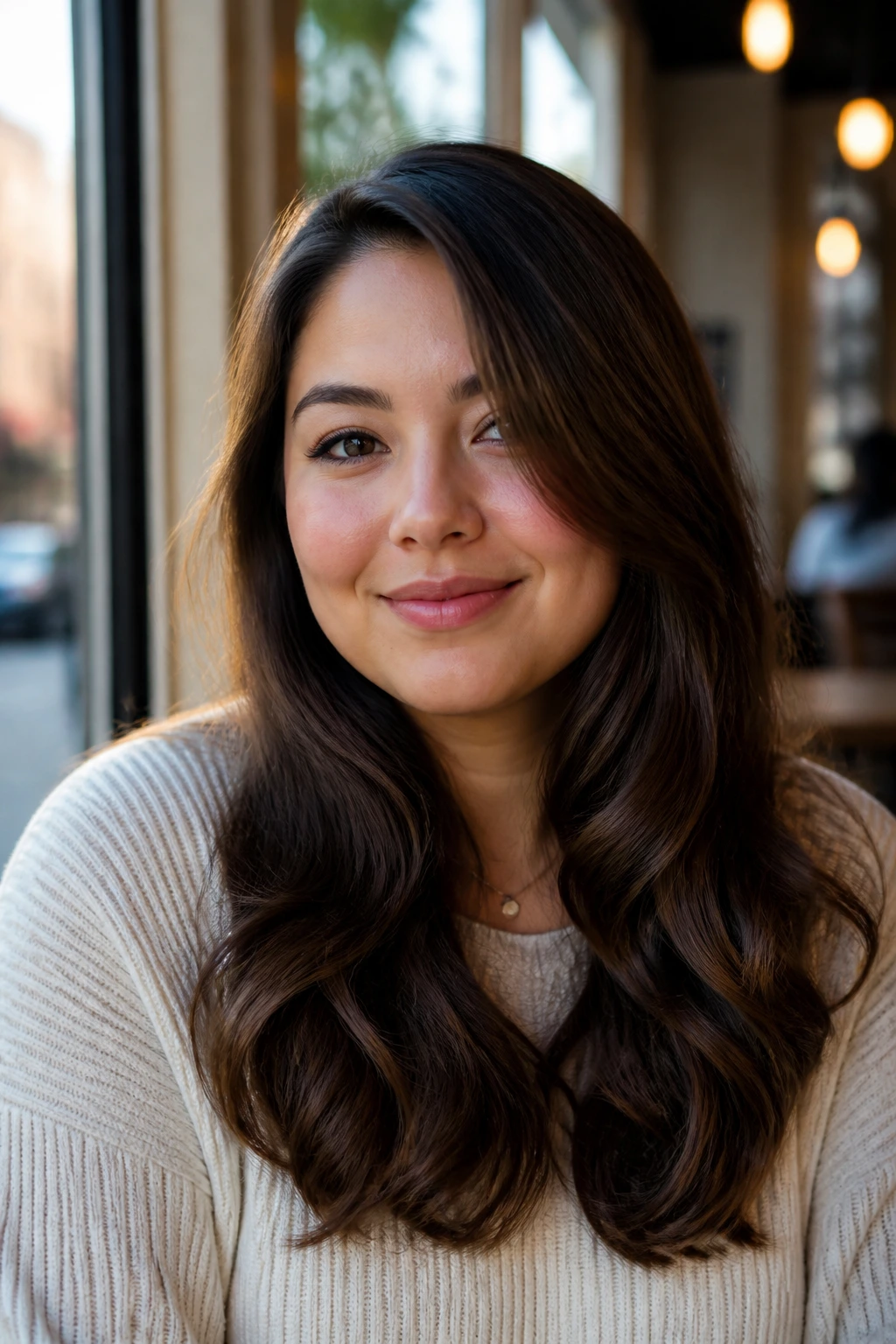
A round face usually reads as broad through the cheeks, with a softer jaw and a face length that feels close to its width. That does not mean you need to chase some dramatic slimming effect. It means the hair has to work with the shape instead of stopping at it. If the widest part of your cut sits right where your face is widest, the silhouette gets louder. If the hair bends lower, the whole thing settles down.
The easiest rule is this: keep the main weight below the chin. A layer that starts at the cheekbone can look cute in a salon mirror and slightly puffy at home. A layer that starts at the mouth, jaw, or collarbone tends to behave better because it frames without crowding. Same with waves. A wave that blooms at the cheeks can widen the middle of the face; a wave that begins lower creates a longer line.
Part placement matters too. A middle part can look sharp and clean on a round face when the hair has movement. A deep side part can add diagonal shape and make the face feel narrower at once. Neither is magic. The part only works if the rest of the style is pulling in the same direction.
1. Center-Parted Layers Past the Collarbone
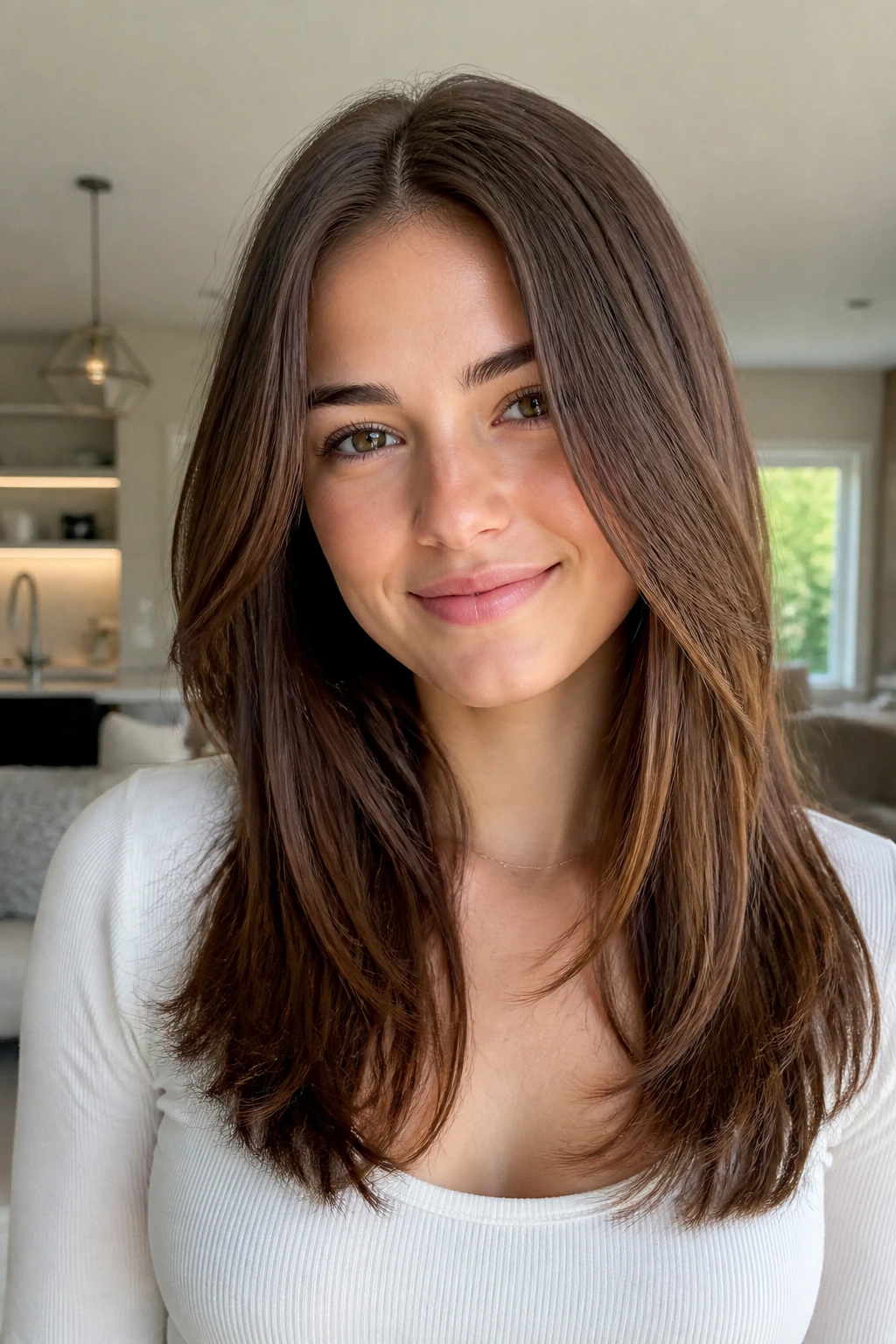
A clean center part can be one of the best long hairstyles for round faces, but only when the layers stay disciplined. If the first bend starts at the cheeks, the whole style feels wide. If the layers begin lower — around the collarbone or just below it — the line drops straight down and the face looks longer without looking overworked.
This is the kind of haircut that looks simple and gets misread as boring. It isn’t. The details are doing the heavy lifting. Ask for soft internal layers rather than chunky, short face-framing pieces. If your hair is fine, that keeps the ends from thinning out too much. If it’s thick, it stops the bottom from turning into a shelf.
Best for: straight, wavy, and lightly textured hair that needs shape without a lot of styling time.
Watch for: layers that hit right at cheek level. Those can flip outward and widen the face fast.
2. Curtain Bangs with Loose, Mid-Length Waves
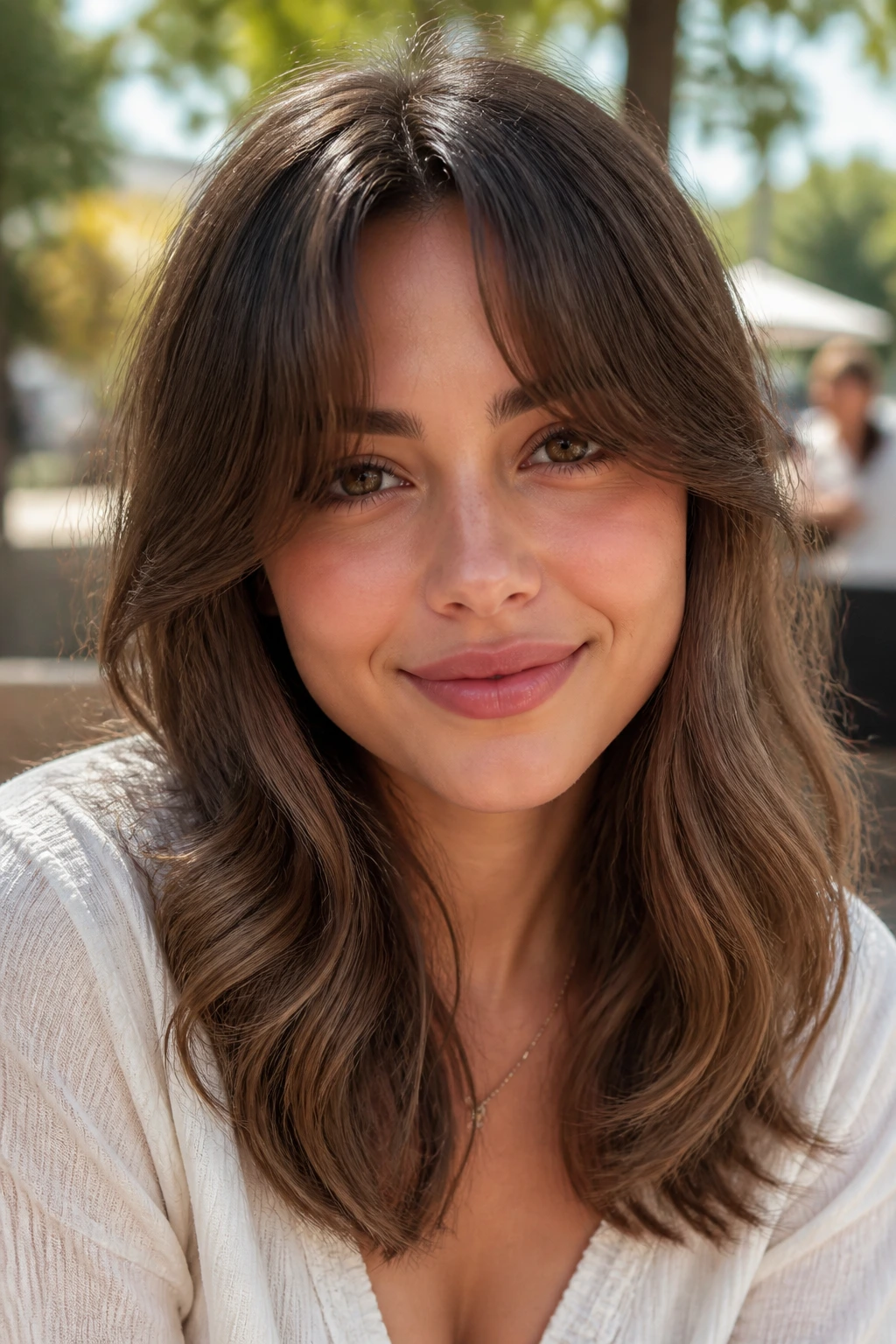
Can curtain bangs work on a round face? Yes — when they open below the brow and melt into waves that start lower than the jaw. The bad version stops too high and sits like a fluffy frame around the cheeks. The good version parts softly at the center, falls away from the face, and leaves the center line open.
What I like here is the balance. You get a little softness around the forehead, which helps if your face shape feels very full in the middle, but you do not give up length. Keep the longest bits of the curtain fringe around the cheek-to-lip zone, not the upper cheek. That one difference matters. The wave should begin below the chin or at least skim the jaw before it bends.
If your hair is thick, ask for lighter curtain pieces so they don’t puff out. If it’s fine, keep the waves loose and smooth rather than over-curled. Too much curl at the side of the face is where this style starts to fight itself.
3. A Deep Side Part That Adds Instant Angle
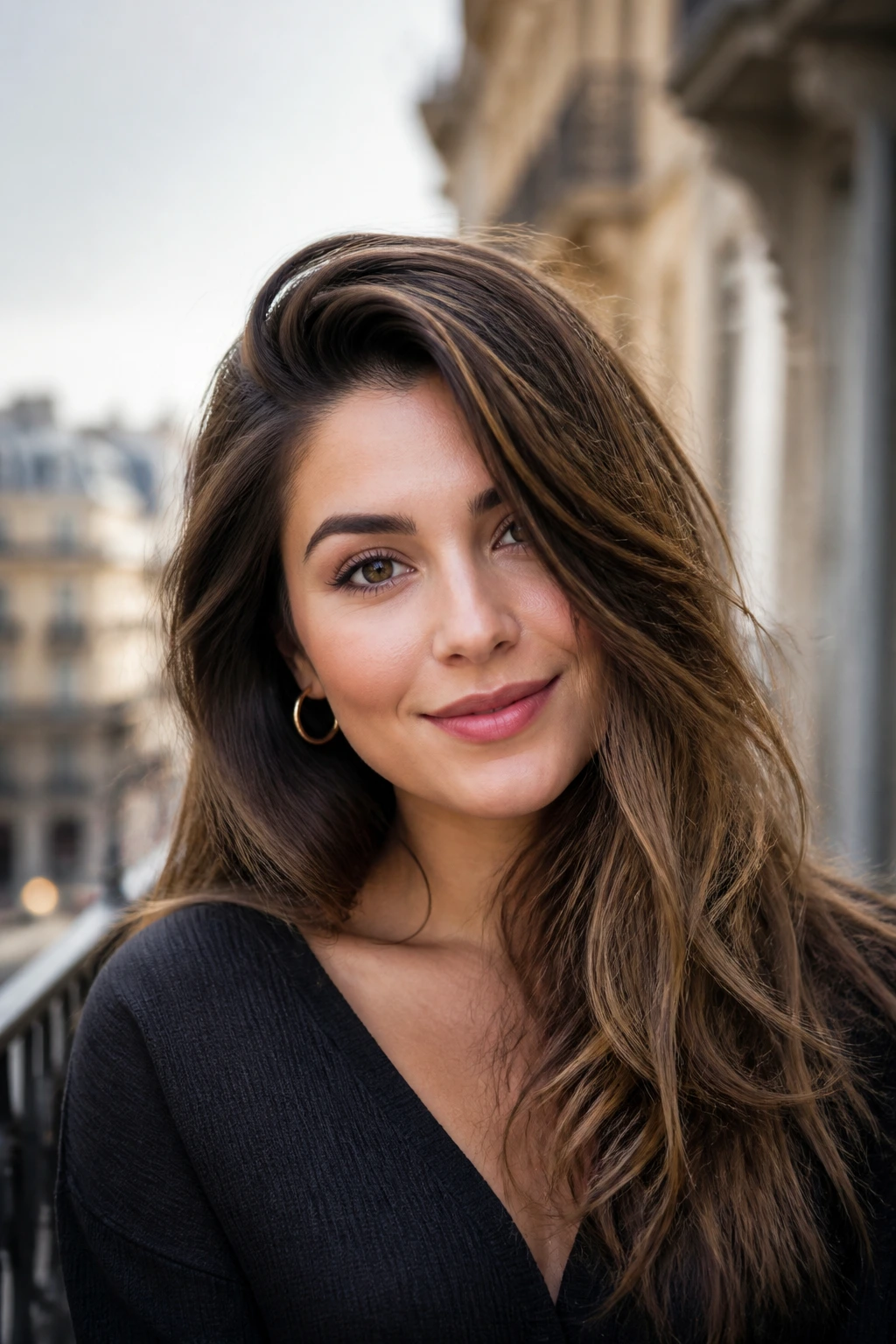
A deep side part is the oldest trick in the book for a reason. It shifts the visual center of the face off-center, and that alone can make a round shape feel leaner. The key is not to drag all the hair over one side and call it done. You still need height at the crown and a bend that falls below the cheekbone.
This style is especially good if your hair is flat at the roots. A little lift at the part line — even half an inch of root volume — changes the outline. Then the hair can sweep across the forehead and down along the side of the face in one long diagonal. That diagonal is the whole point. It interrupts the circle.
Use it on blowout day, or pair it with loose waves if you want something softer. It also plays well with a tucked-behind-one-ear finish. That asymmetry keeps the face from feeling boxed in.
4. U-Shaped Ends That Keep the Bottom Narrow
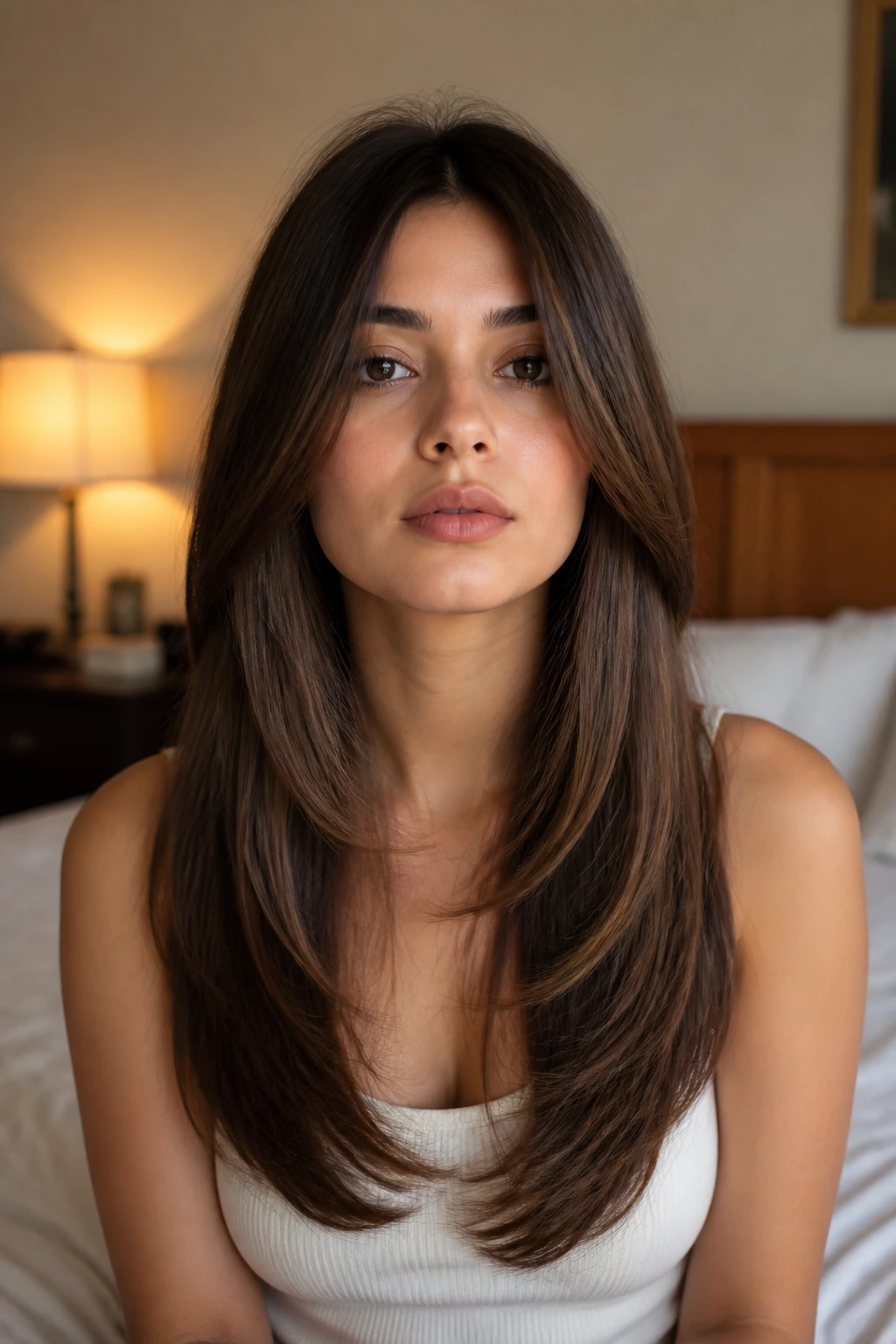
A U-shaped cut is one of those quietly smart shapes that doesn’t scream for attention, but it fixes a lot of problems. The center back stays longest, the sides taper slightly shorter, and the hemline curves rather than cutting straight across. On a round face, that matters because a blunt bottom can make the whole head look wider and shorter.
This cut works particularly well if your hair is thick or heavy. It removes some of the visual mass from the sides without chopping off the length people usually want to keep. The trick is to keep the curve subtle. A severe U can look dated or overly styled. A soft U just feels balanced.
Ask your stylist to keep the front pieces long enough to clear the chin. If they stop at the cheekbone, they can widen the face instead of framing it. If your hair is very fine, keep the taper gentle so you don’t end up with wispy ends.
5. Butterfly Layers with Airy Face Framing
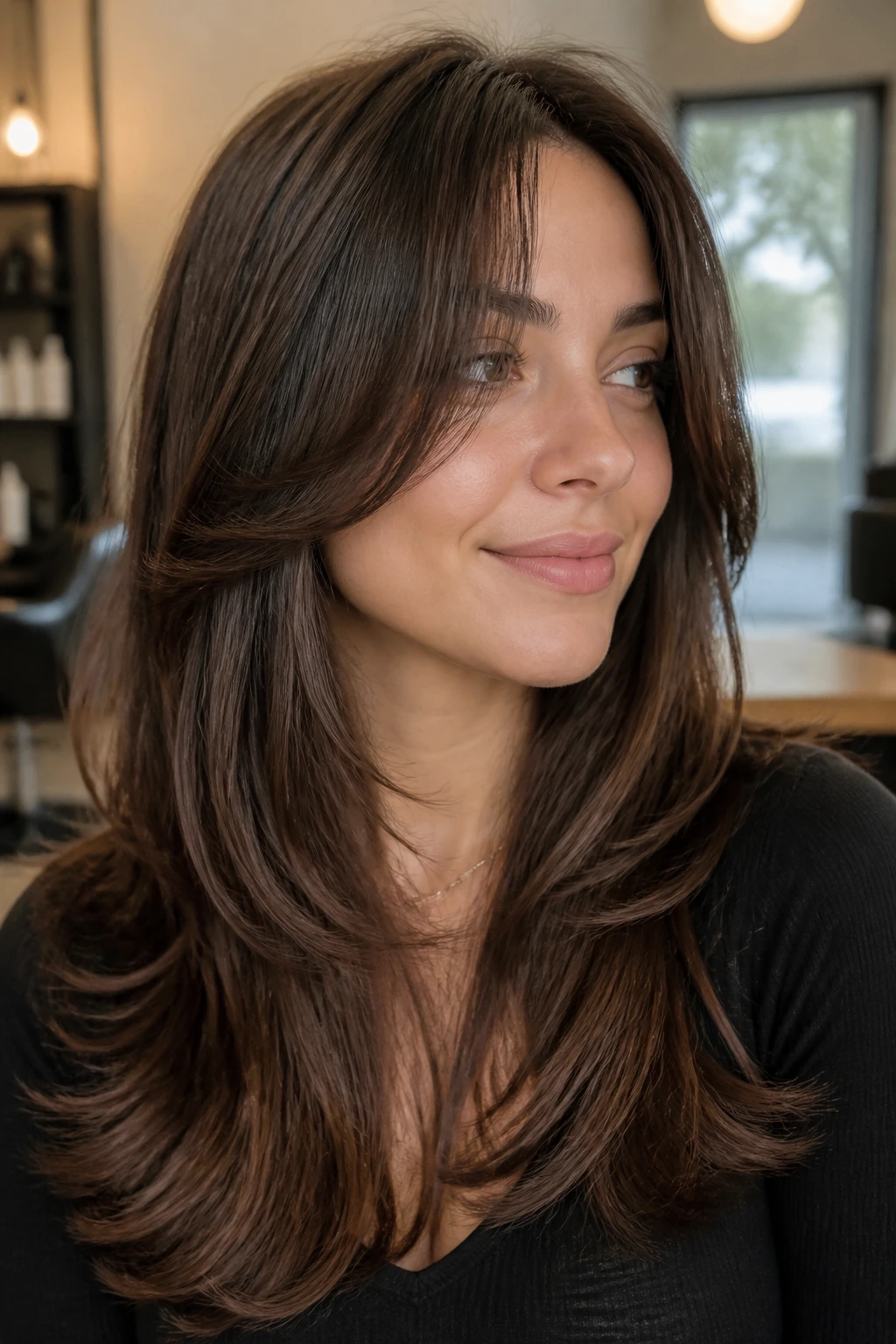
Butterfly layers get their reputation from the big top section and the long, flowing lower section, and that split can be a gift for round faces. The shorter internal layers create movement and lift around the crown, while the longest face-framing pieces stay down where they can lengthen the silhouette. Done right, it looks light without losing the length you wanted in the first place.
Done wrong, it turns fluffy. That usually happens when the shortest pieces are cut too high and land around the cheeks. Skip that. Tell your stylist you want the shortest frame to begin below the cheekbone, then keep the longer lengths around the collarbone and chest. You want the face opening to feel vertical, not circular.
This is a strong choice if your hair gets heavy around the roots. The layers give it shape fast, and a round brush can make the top half float a little without making the sides balloon. It’s one of the better options when you want movement but not a shag.
6. Sleek Straight Length with Soft Inward Tips
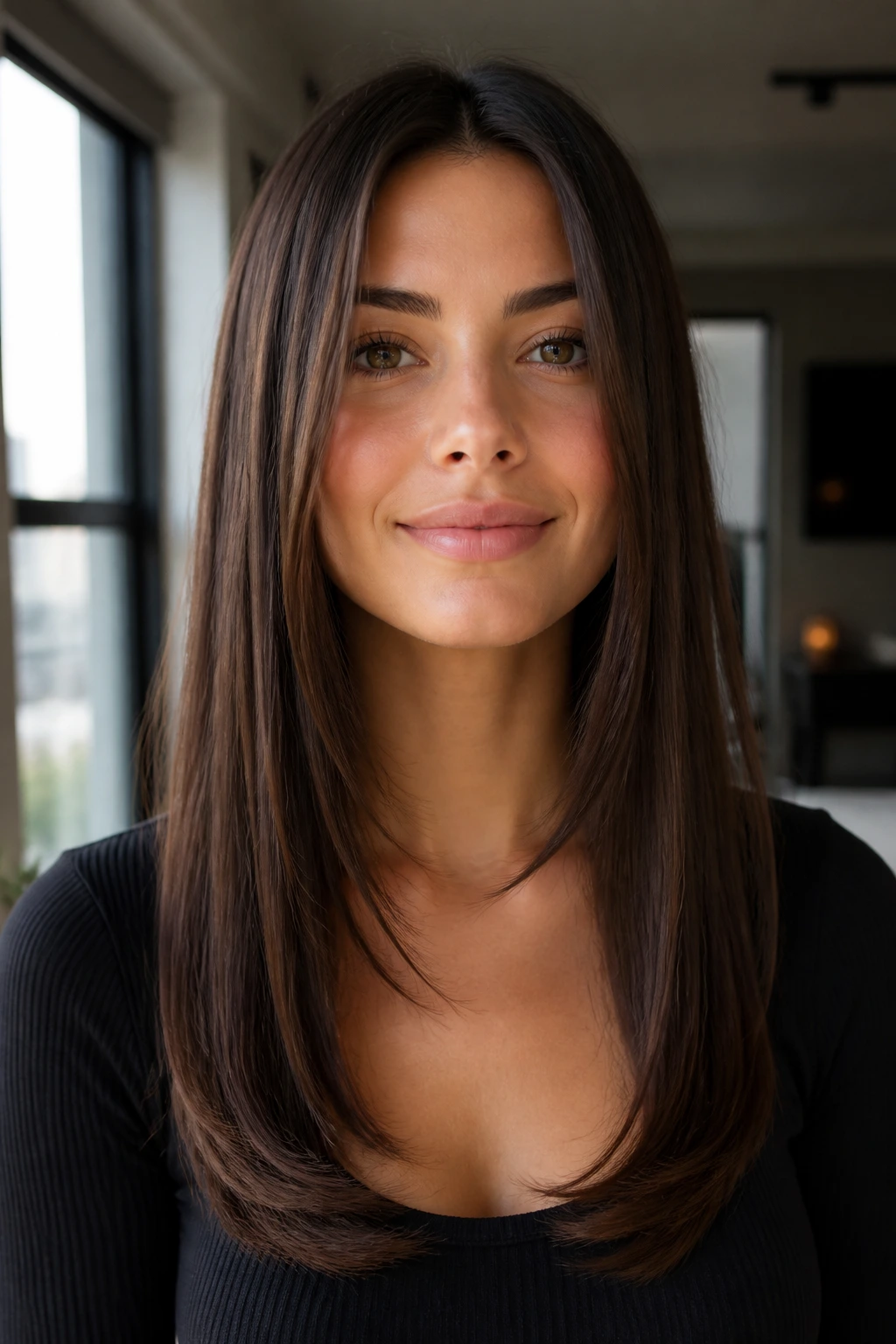
Straight hair on a round face gets unfairly dismissed. It shouldn’t be. When the finish is glossy and the ends curl in just a touch, the look can be sharp in the best way. The face reads longer because there’s no wide wave pushing out at the sides. It’s just a clean line from the part down to the hem.
The one thing to avoid is dead-straight, blunt ends that sit exactly at the jaw. Those can feel heavy. Instead, keep the length well past the collarbone and bend the tips in toward the neck with a flat iron or a round brush. That tiny inward motion softens the bottom edge and keeps the hair from spreading outward.
This style is best when you want something polished, low-fuss, and a little more structured. It’s also kind to fine hair because it doesn’t ask for a lot of layering. A center part works. A side part works too. The real job is to keep the surface smooth and the ends controlled.
7. A Long Shag That Stays Long
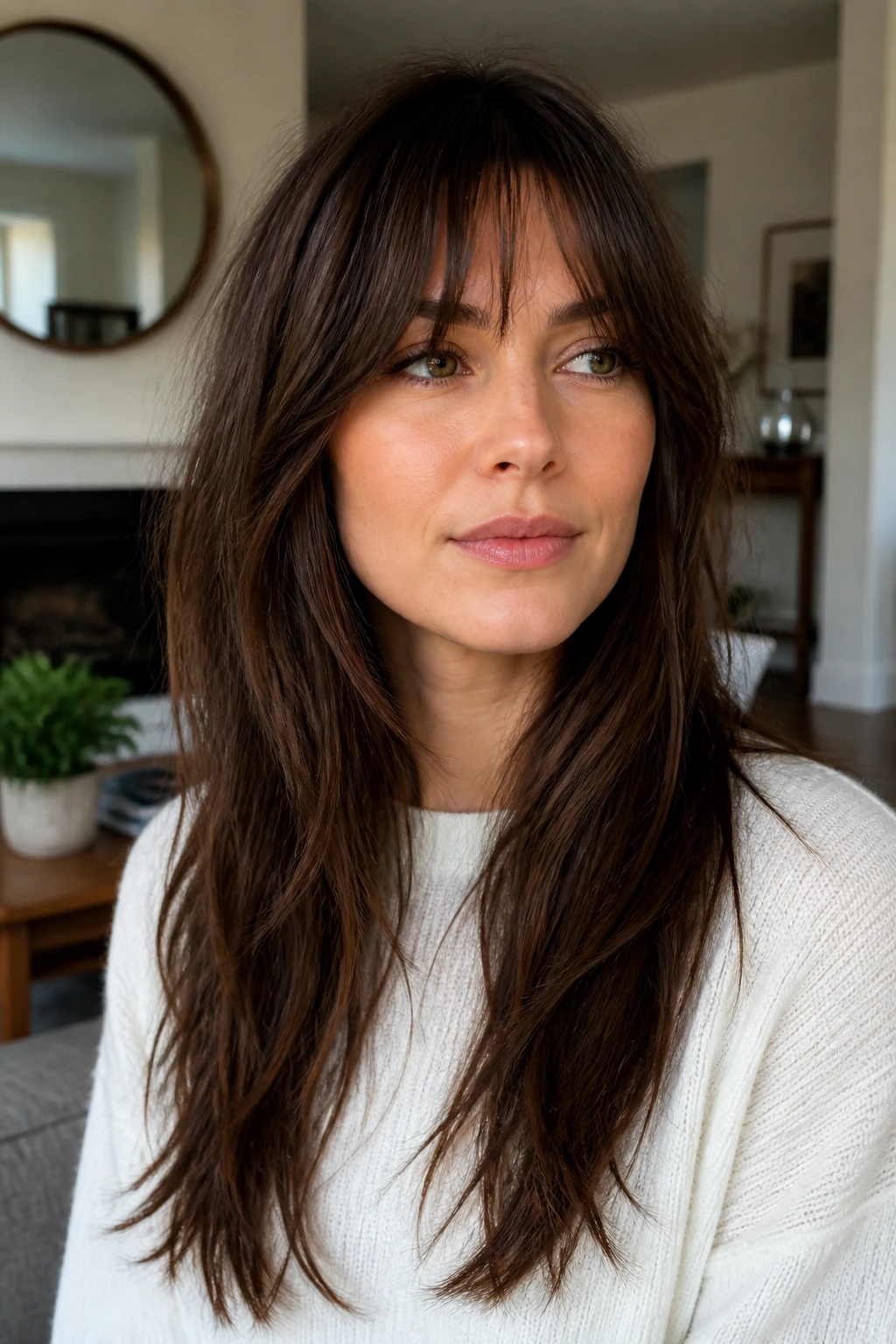
The long shag can work on a round face, but only if it stays long. A too-short shag piles volume around the temples and cheeks, which is the last thing you want. When the layers are kept lower and the fringe is wispy instead of chunky, the cut gives you movement without making the face feel wider.
This one is good for wavy hair that likes to do its own thing. The texture becomes the shape, which means you’re not forcing a round-brush blowout every morning. That said, the layers need discipline. Ask for softness around the face, not a mass of short pieces that stop around the cheekbone.
If you like a slightly undone look, this is one of the more forgiving options. It has edge, but it still respects the face shape. The long perimeter keeps the overall line vertical, while the interior layers stop the style from feeling heavy.
8. Old-Hollywood Waves That Start Below the Jaw
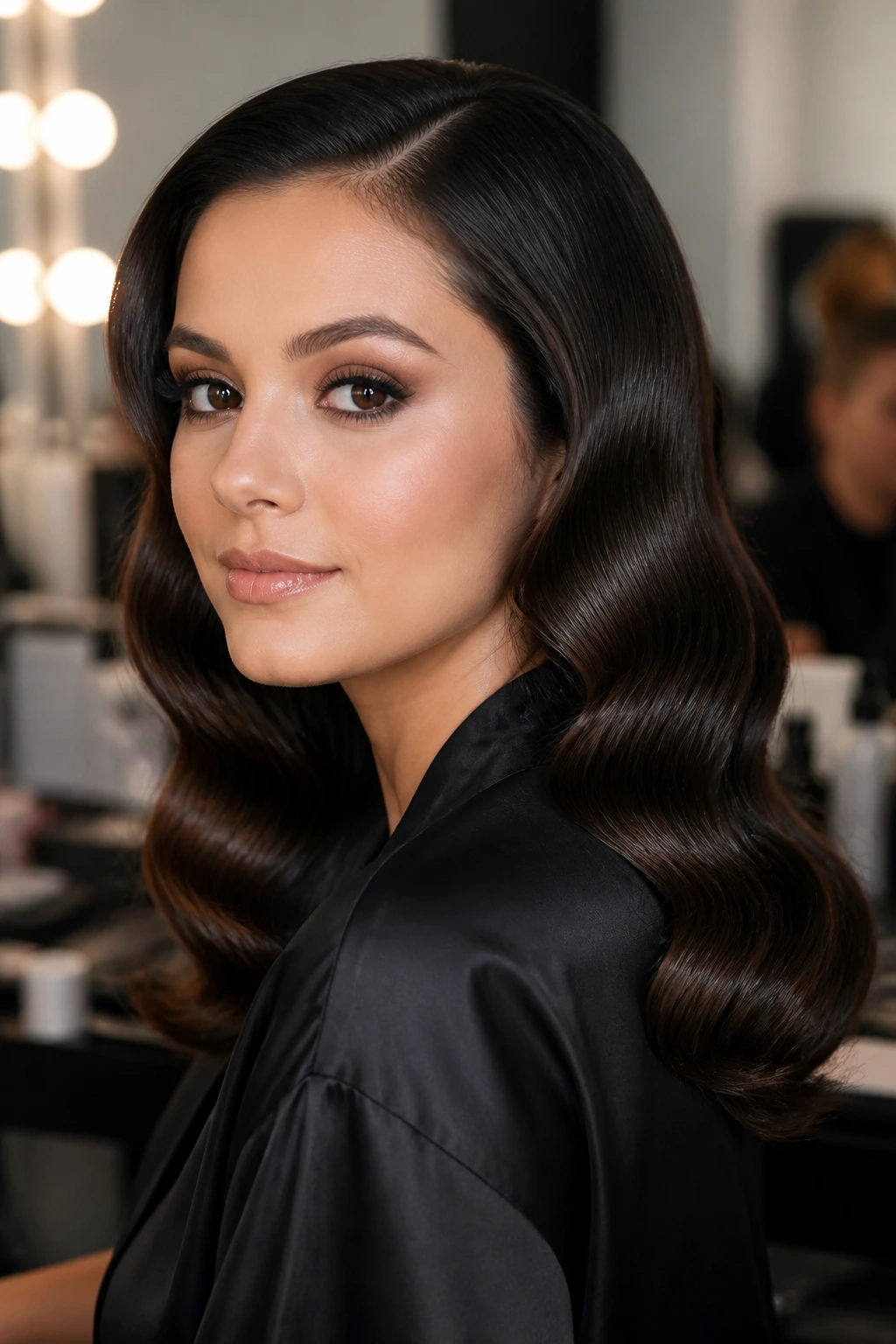
Old-Hollywood waves can be surprisingly flattering on a round face because they don’t have to live at the cheeks. The wave pattern should start lower, around the mouth or jawline, then move in a long S-shape down the hair. That lower start point is what keeps the style from puffing the face outward.
This is a more sculpted version of loose waves. It has better control. The shape feels deliberate, especially if the hair is glossy and the part is clean. It’s a strong choice for thicker hair because the wave pattern holds better and the style has enough weight to fall smoothly.
Skip tight curls near the temples. They make the face look fuller. Let the root stay sleek, then build the wave through the mid-lengths and ends. The result is a long, elegant line that does not fight the cheek width.
9. High Crown Volume With Soft, Dropping Ends
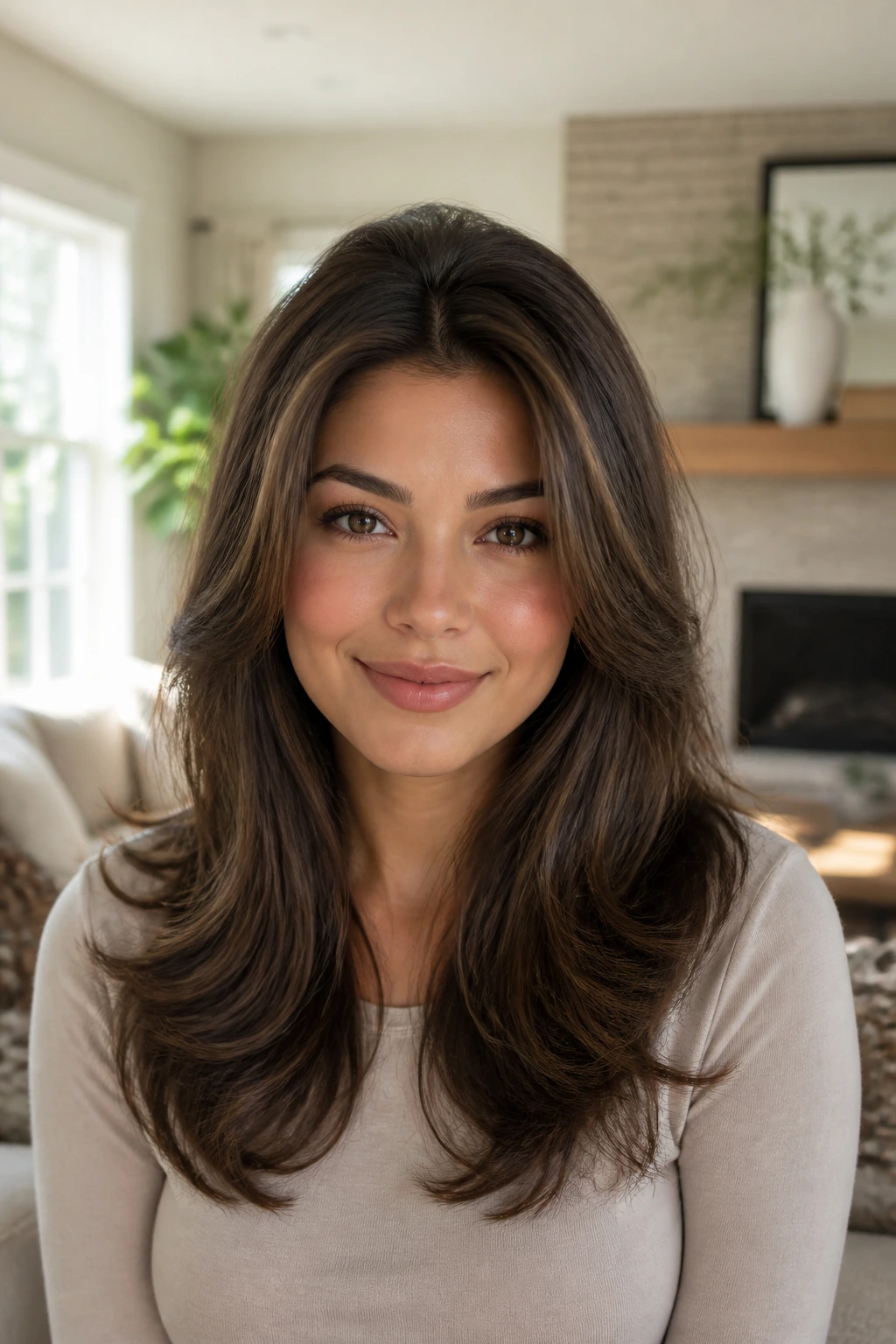
A little height at the crown goes a long way on a round face. Not teased, not stiff — just enough lift to change the silhouette. When the roots rise, the face gains visual length, and the hair stops sitting all on one horizontal plane.
This is the style I reach for when the hair feels flat and the face shape needs a little structure. Use a round brush, direct the roots up as you dry, and keep the ends soft. The bottom half should still fall straight or with a loose bend. If the sides get too round, you lose the benefit.
It’s especially useful for people who wear their hair down most days but want something a little more intentional than air-dried limpness. A root-lifting mousse and a quick clip at the crown can do a lot here. Small effort. Big payoff.
10. Half-Up Length With Height at the Roots
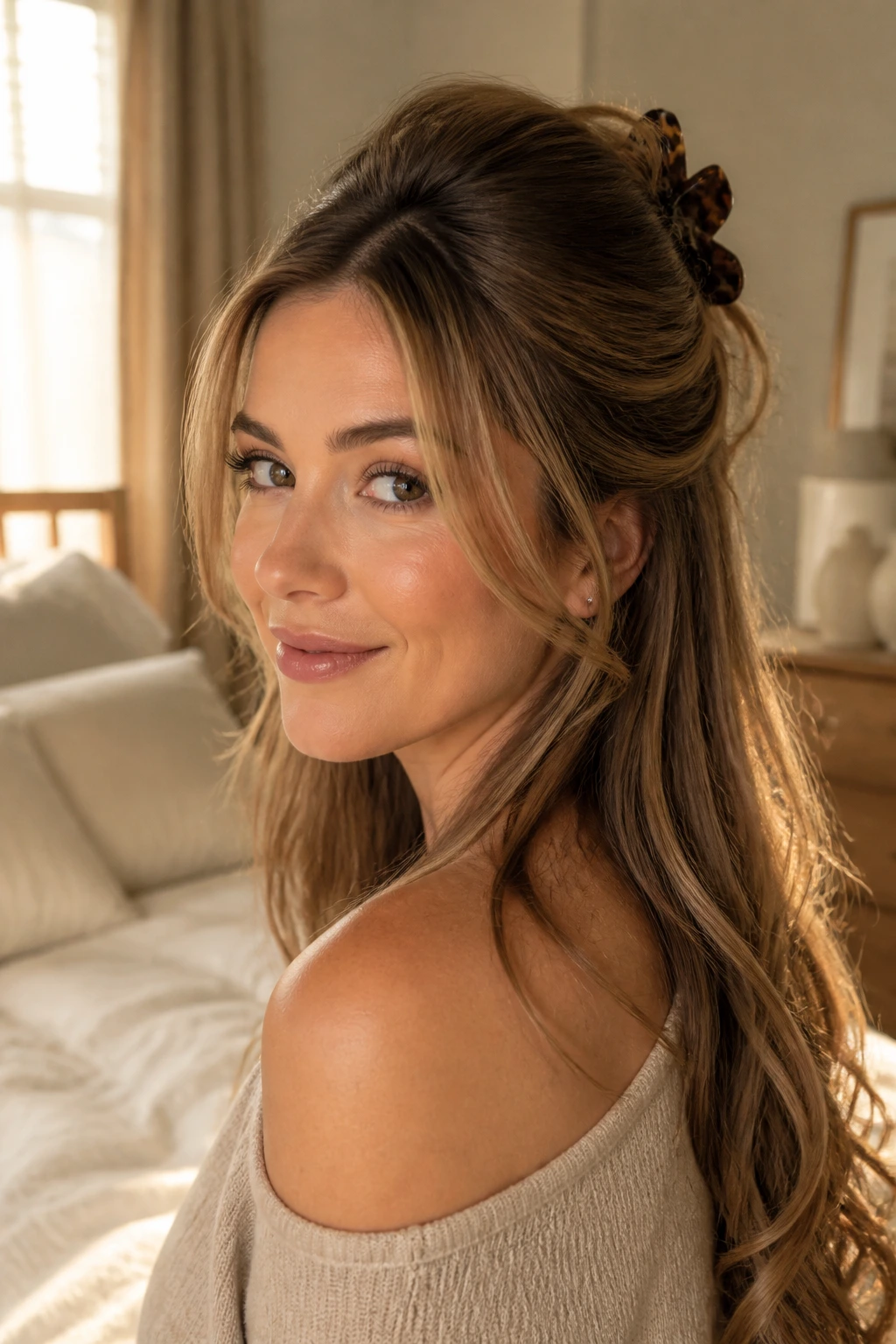
A half-up style is one of the easiest ways to open up a round face without giving up length. The top section lifts the eye upward, the bottom section keeps the face looking long, and the sides stay cleaner than they would in a fully loose style. It’s a nice middle ground when you want polish but don’t want a full updo.
The one thing that makes this style better or worse is where you place the pull-back. If you drag everything tight at the temples, the face can feel wider. If you loosen the top a little and leave the front pieces to fall below the jaw, the shape feels softer and taller. That’s the version to keep.
It works with straight hair, waves, and curls. It also hides second-day roots better than most people expect. A claw clip gives a softer finish. A small elastic gives a neater one. Either way, keep the front pieces long.
11. A Ponytail With Lifted Roots and Long Front Pieces
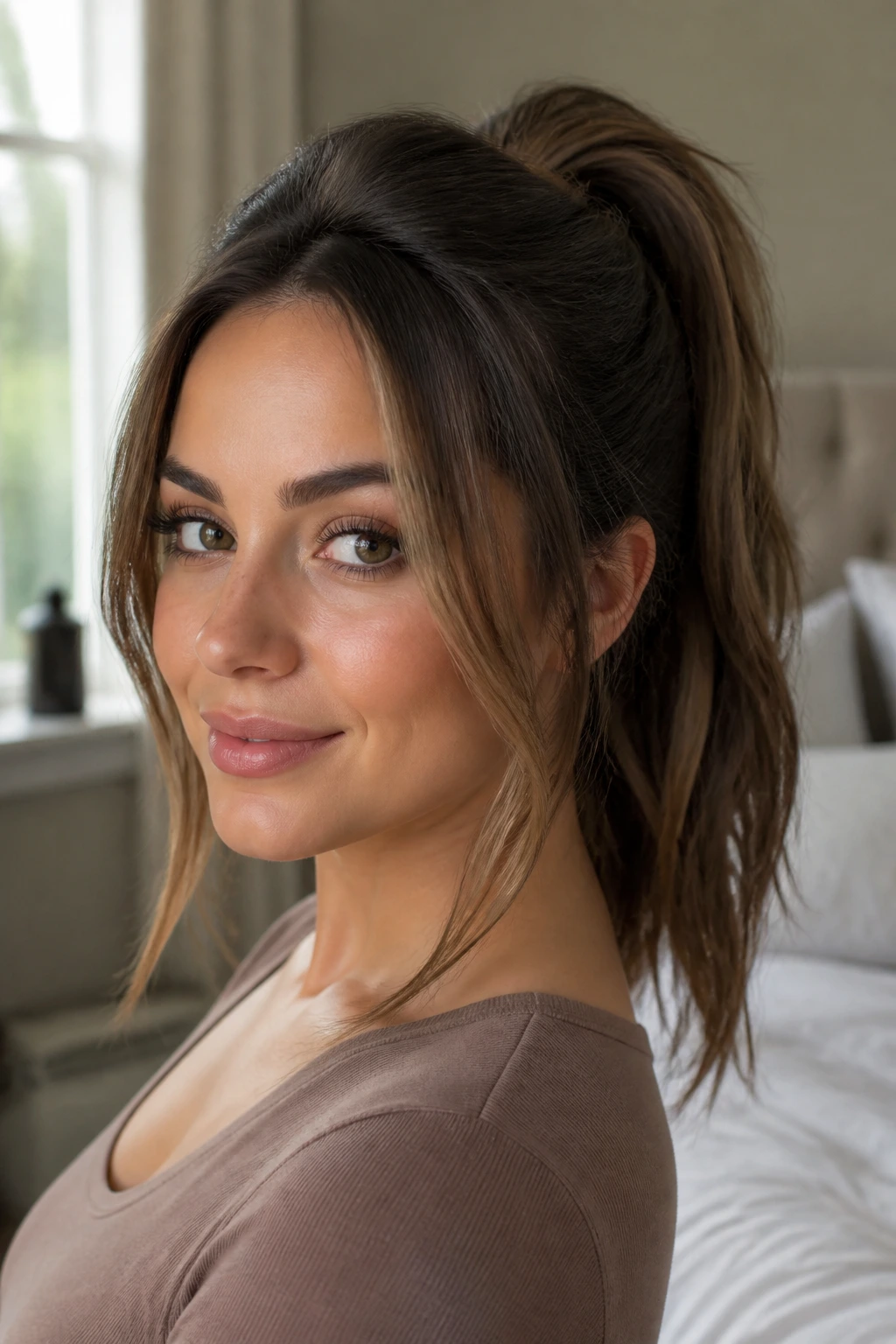
A ponytail can flatter a round face if the crown has a little height and the front isn’t pulled back too hard. The ponytail itself creates a long line, which is useful, but only when the top of the head doesn’t flatten into a helmet. Add a slight bump at the crown, then let two front pieces sit loose around the face.
That detail matters. Those front pieces should be long enough to pass the cheekbone and land closer to the jaw or collarbone. Anything shorter can stop right at the widest part of the face and do the opposite of what you wanted. For a cleaner look, wrap a strand of hair around the elastic. For a softer one, leave the ponytail textured and a little undone.
This style is good on busy days because it gets hair off the neck without sacrificing shape. High ponytail, low ponytail, or mid-high — all three can work. The difference is how much lift you keep at the roots.
12. Long Box Braids With a Narrow Silhouette
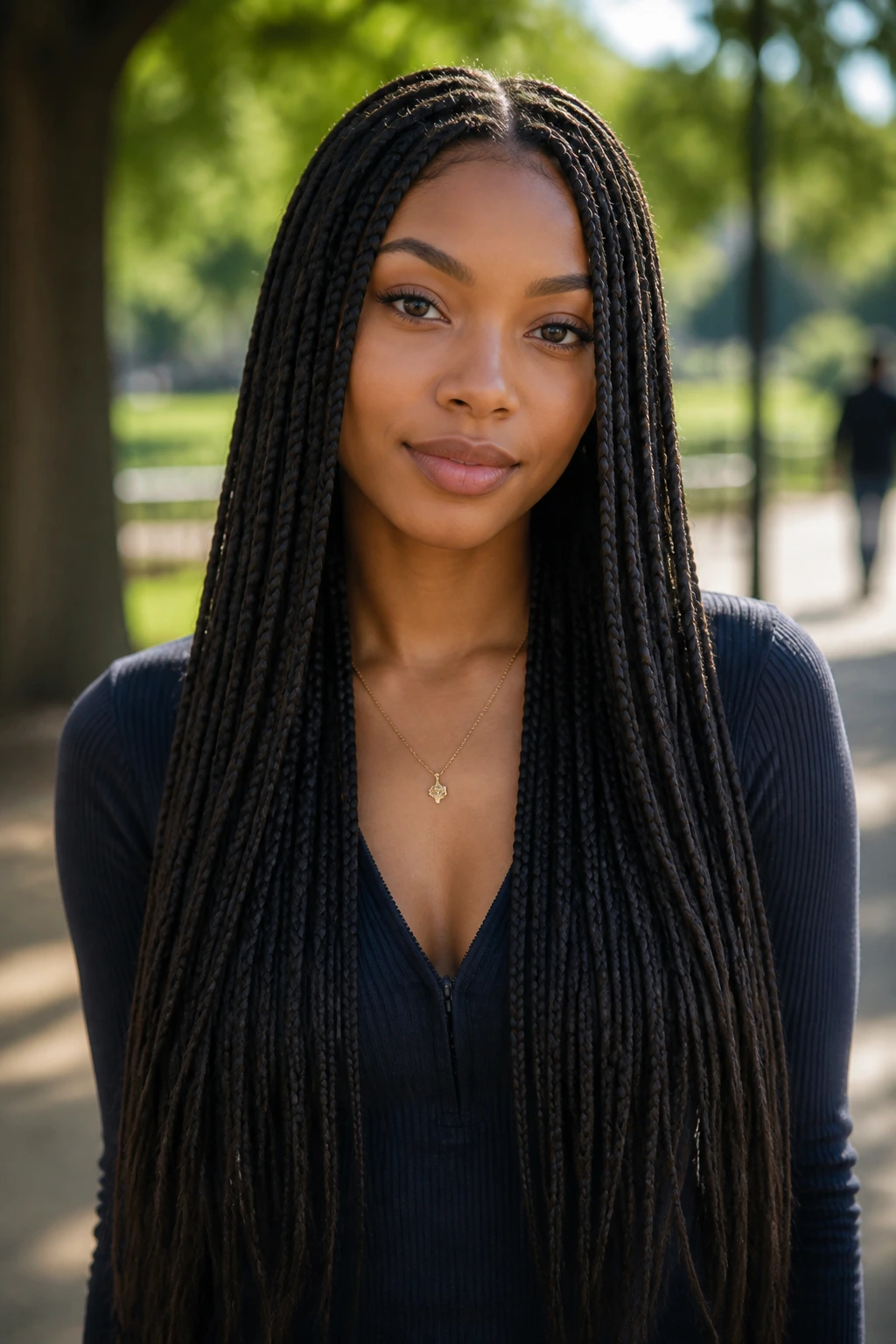
Box braids can be very flattering on a round face when the braid size and parting are chosen with care. Slimmer braids create a more vertical read, and length pulls the eye down in a straight line. If the braids are too chunky at the sides, they can broaden the face; if they’re slimmer and fall evenly, they do the opposite.
A center part is clean, but a soft side part can also work if you want more asymmetry. Keep the front pieces long enough to angle downward, not out. And if you like beads or cuffs, keep them lower on the braid rather than clustered near the temples.
This is one of the most practical protective styles for a round face because it stays neat for a long stretch of wear, and it doesn’t need daily heat. The shape is in the parting and the length. That’s where the visual work happens.
13. Spiral Curls With a Side Sweep
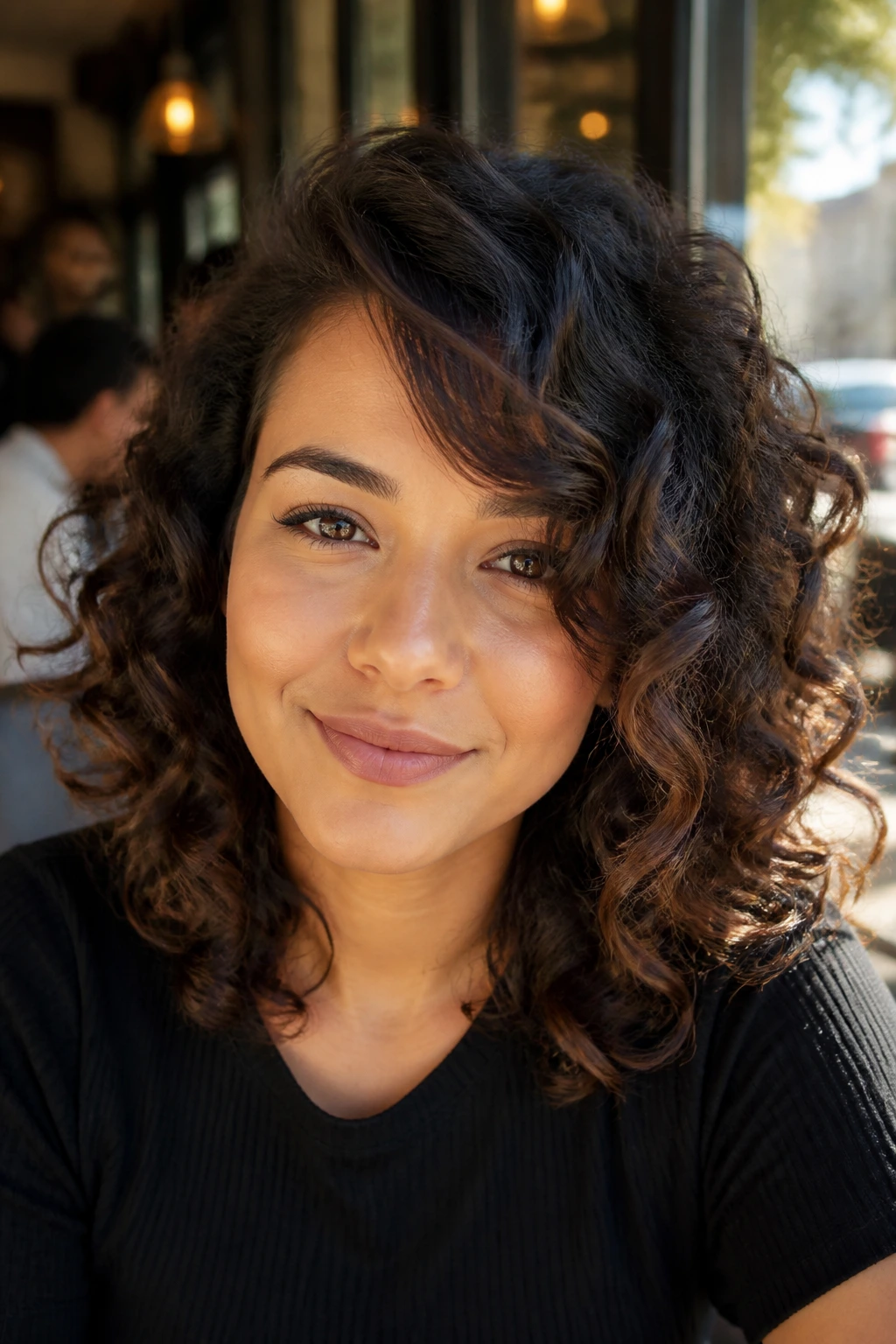
Curly hair doesn’t need to be straightened into submission to flatter a round face. It needs shape. Spiral curls with a side part can give you both movement and vertical length, especially if the curl pattern is allowed to fall below the chin rather than exploding out at the cheeks.
The biggest mistake with curls is over-layering the sides. That can make the face look wider and the hair look rounder than it really is. Keep the top a touch fuller for height, then let the curls drop down with enough weight to stretch the outline. A side sweep at the front adds a diagonal line that breaks up symmetry in a good way.
If your curls are tight, stretch them a little while drying. If they’re looser, a diffuser can help preserve the vertical shape without frizzing out the sides. This style works because it respects the texture instead of flattening it.
14. Invisible Layers for Air-Dried Texture
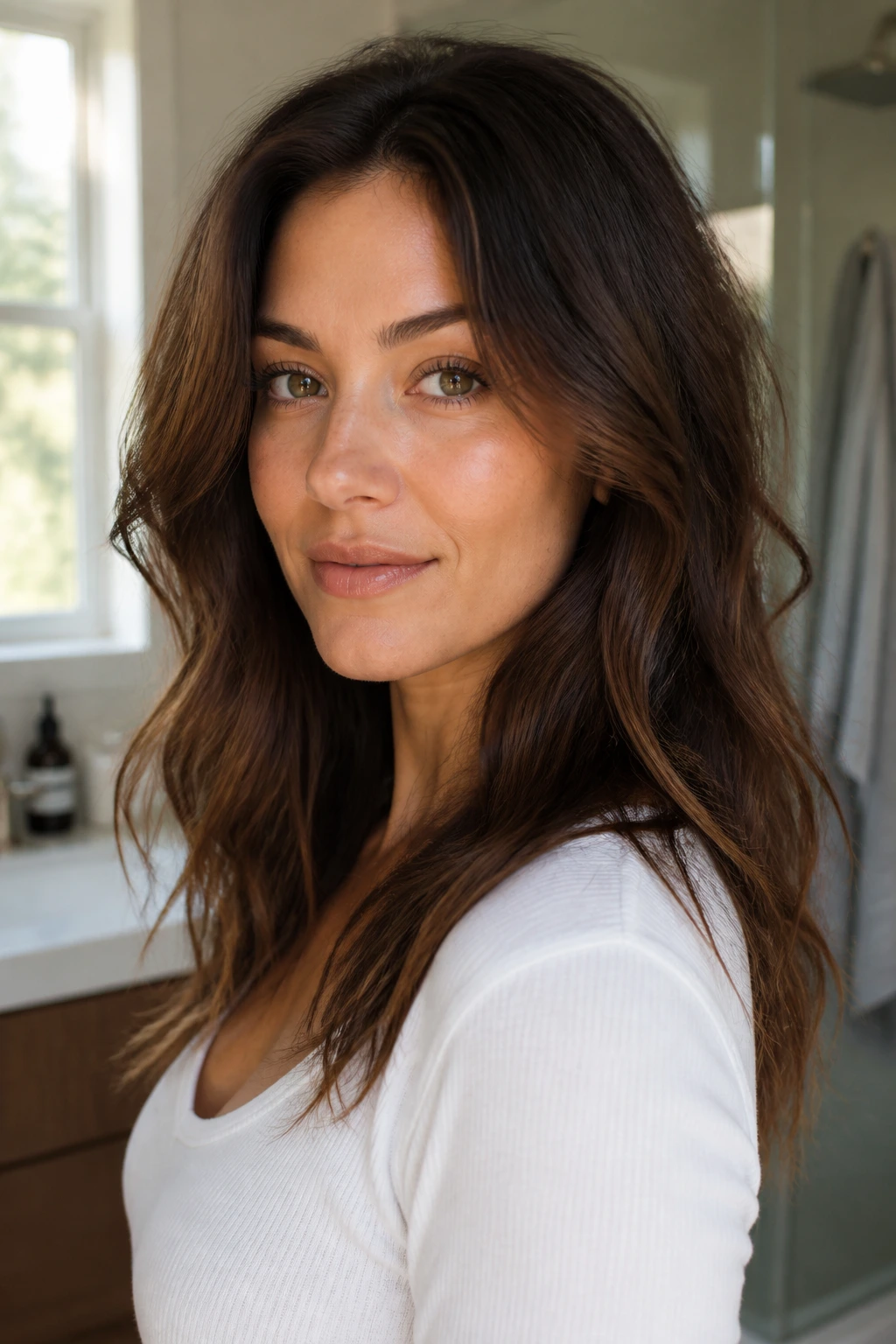
Invisible layers are the hair equivalent of a quiet fix. They remove bulk from inside the shape without chopping up the outside line, which is exactly what a round face often needs. The result looks longer and lighter, but the outline still feels smooth.
This is a strong option if your hair is thick, wavy, or prone to puffing at the sides. When the layers are hidden, the hair can move without building a wide shelf around the face. It also grows out gently, which means you’re not locked into a high-maintenance salon schedule.
Ask for the cut to be done with your natural texture in mind, not just blown straight. That part matters. A style that only works when it’s ironed flat every morning is not a truly good fit. The best versions of this cut make air-drying look deliberate.
15. V-Cut Length With Narrow Ends
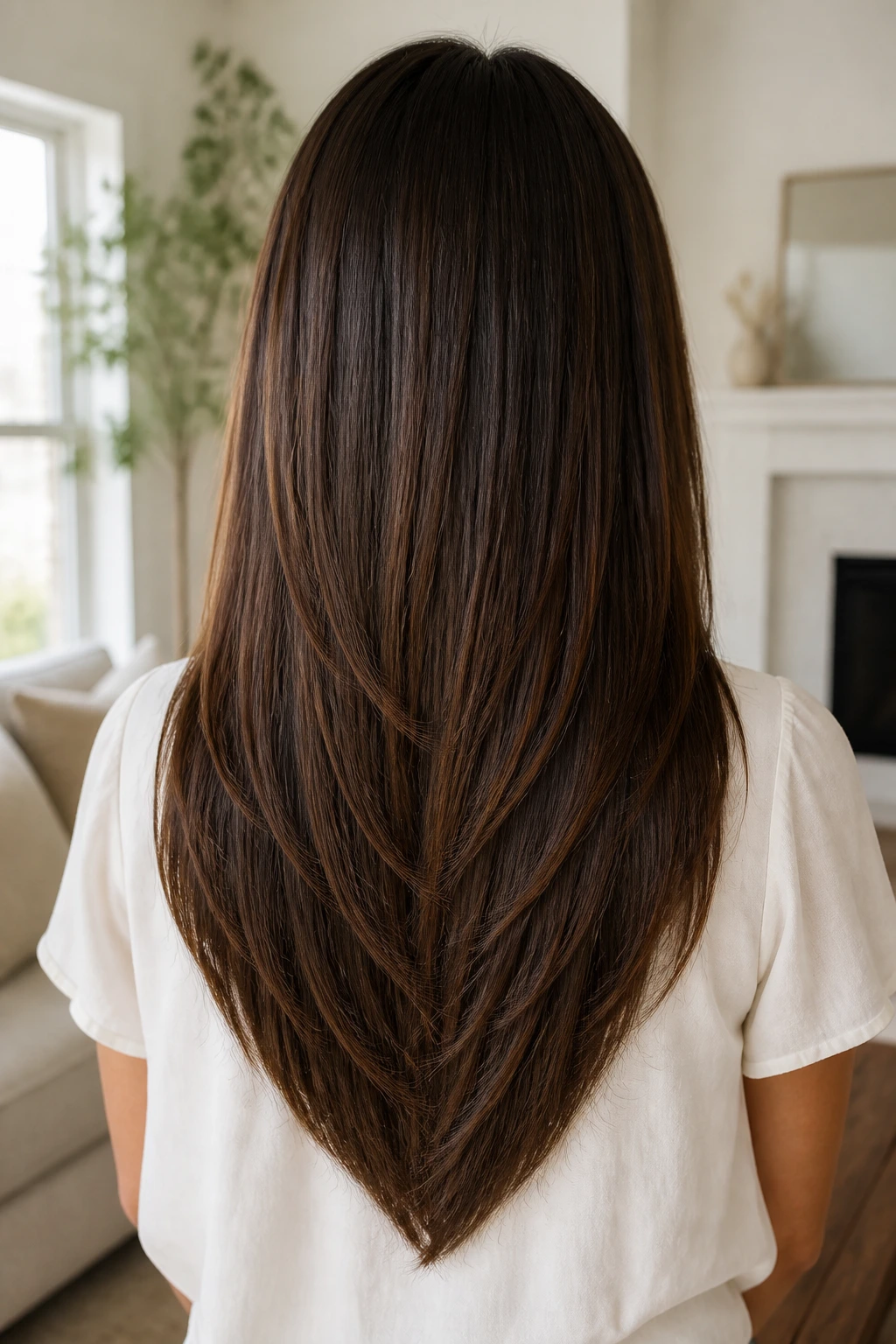
A V-cut creates a point down the back instead of a wide block at the bottom, and that subtle point can help a round face feel longer. It’s especially helpful for thick hair, where the hemline can get heavy fast. The V shape narrows the visual weight without sacrificing length.
The key is to keep the sides long enough that the cut doesn’t flare at the jaw. If the front layers are too short, the shape stops working and starts looking fussy. The longest point should sit down the center back, with the sides tapering in a smooth line. Not dramatic. Just enough to trim off the visual bulk.
This is one of the best choices if you like long hair but hate the feeling of a blunt bottom edge. It moves better. It falls cleaner over the shoulders. And on a round face, that bottom taper matters more than people expect.
16. Long Locs With a Side Part and Tapered Shape
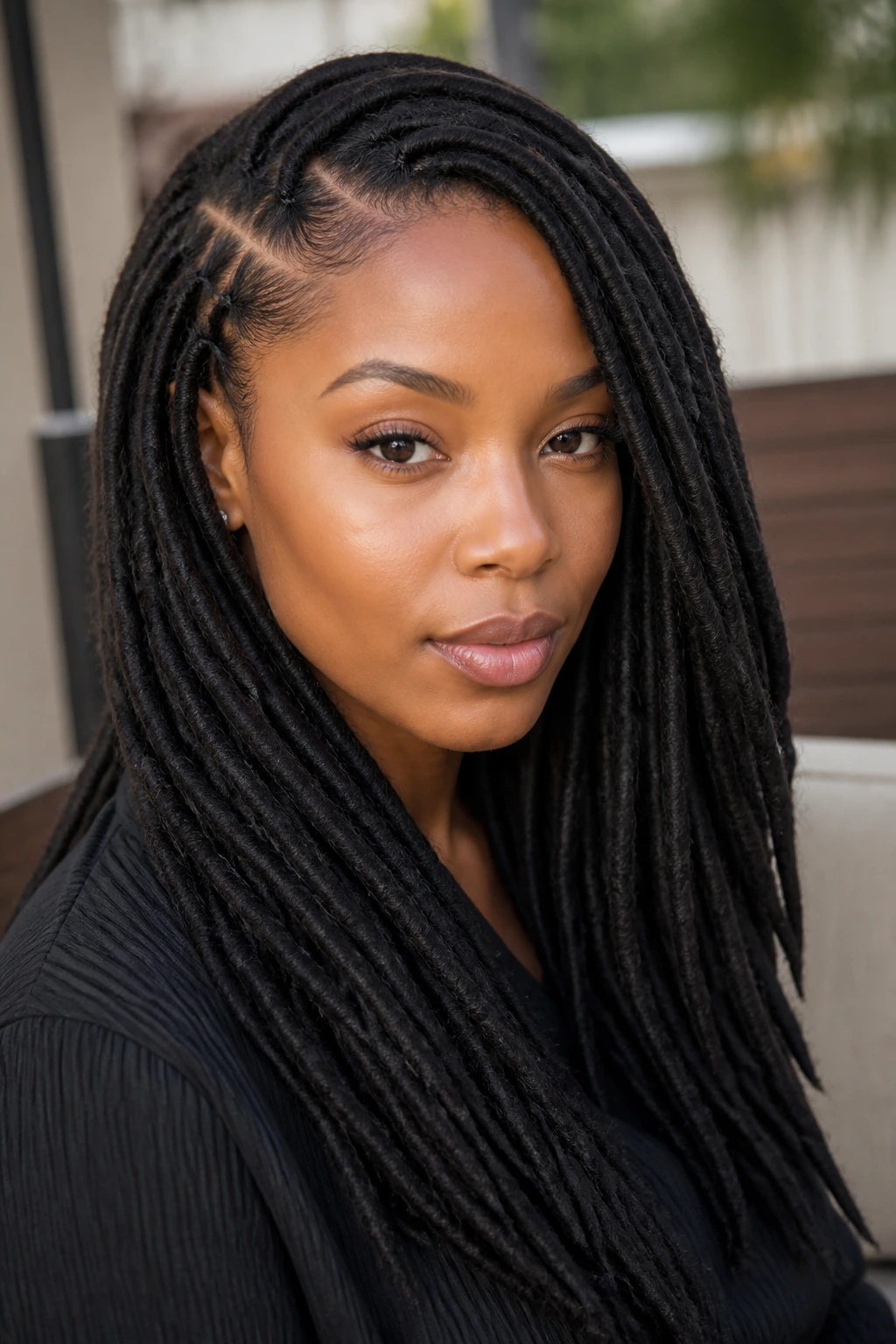
Long locs can absolutely flatter a round face, but the silhouette needs some thought. A side part adds angle, and a tapered outline keeps the width from settling too heavily at the cheeks. If everything is centered and uniformly thick from root to end, the look can feel boxy. A little asymmetry fixes that.
I like a side part here because it gives the face a line to follow. You can also leave a few front locs to fall slightly forward, which helps create a longer frame around the face without crowding it. If your locs are very full, keep the shoulder area from expanding too much. That lower width can cancel out the length you’re trying to build.
This style is protective, practical, and far more versatile than people give it credit for. It can be neat, soft, dramatic, or casual. The shape is what makes it work.
Practical Styling Moves That Make the Whole List Work Better
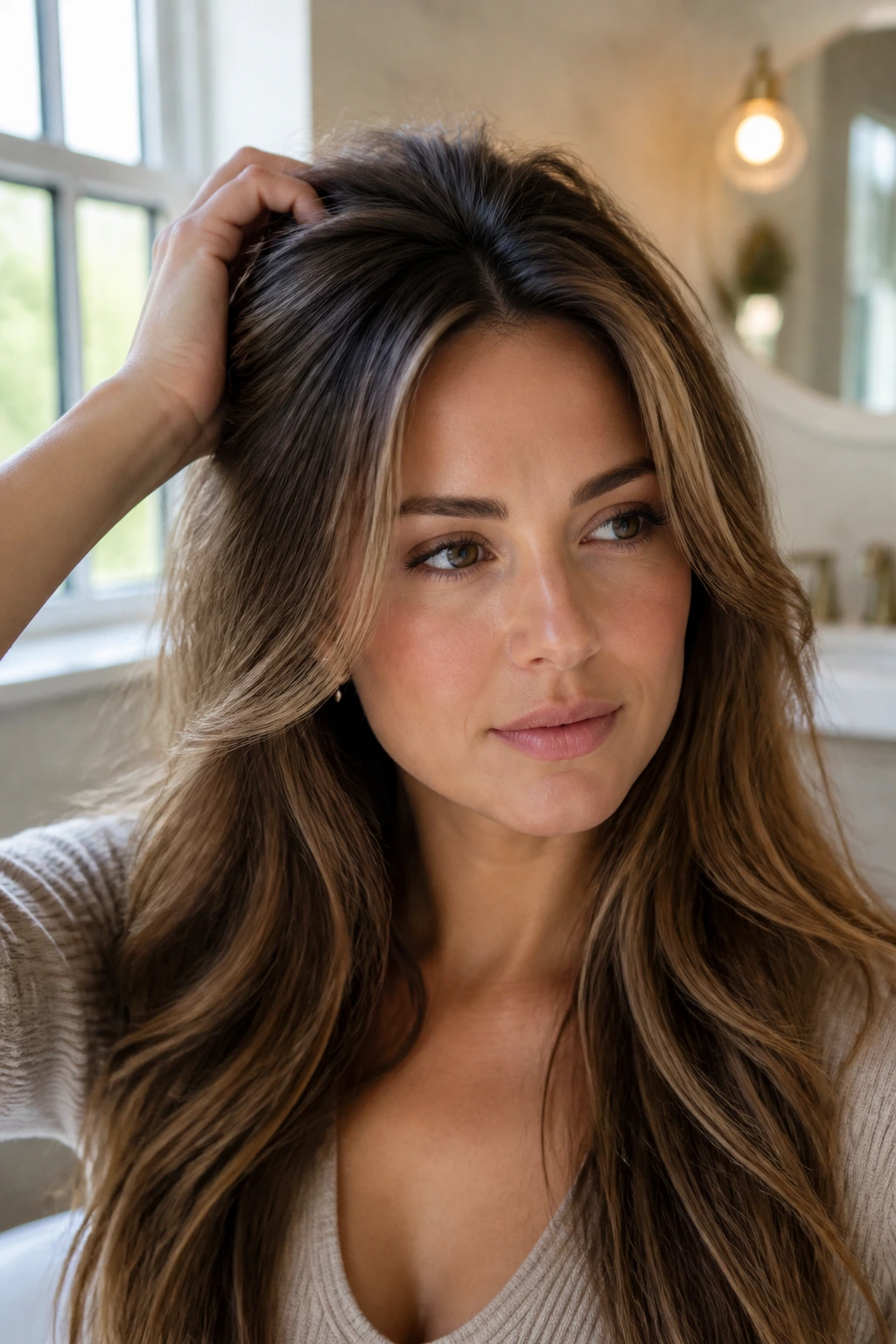
Crown lift matters more than extra width at the sides. If your face feels wide, do not chase volume at ear level. Put the lift at the roots, just behind the part, and let the sides fall with a little control. That one swap changes the whole silhouette.
Start layers lower than you think. A lot of cuts meant to flatter a round face go wrong because the shortest pieces land at the cheekbone. That’s the widest point for many people, so hair there tends to make the face look fuller. Push the shortest useful layer to the mouth, jaw, or collarbone instead.
Use the part as a shape tool. A center part creates clean vertical symmetry. A side part creates a diagonal line. If your face feels especially full, shifting the part just one inch off center can soften the width without changing the haircut.
Pick texture on purpose. Soft bend, loose wave, and controlled curl all read differently. The common thread is that the movement should happen below the jaw. If your styling tool creates a puff at the cheeks, lower the starting point or loosen the curl pattern.
The Common Mistakes That Make a Round Face Look Wider
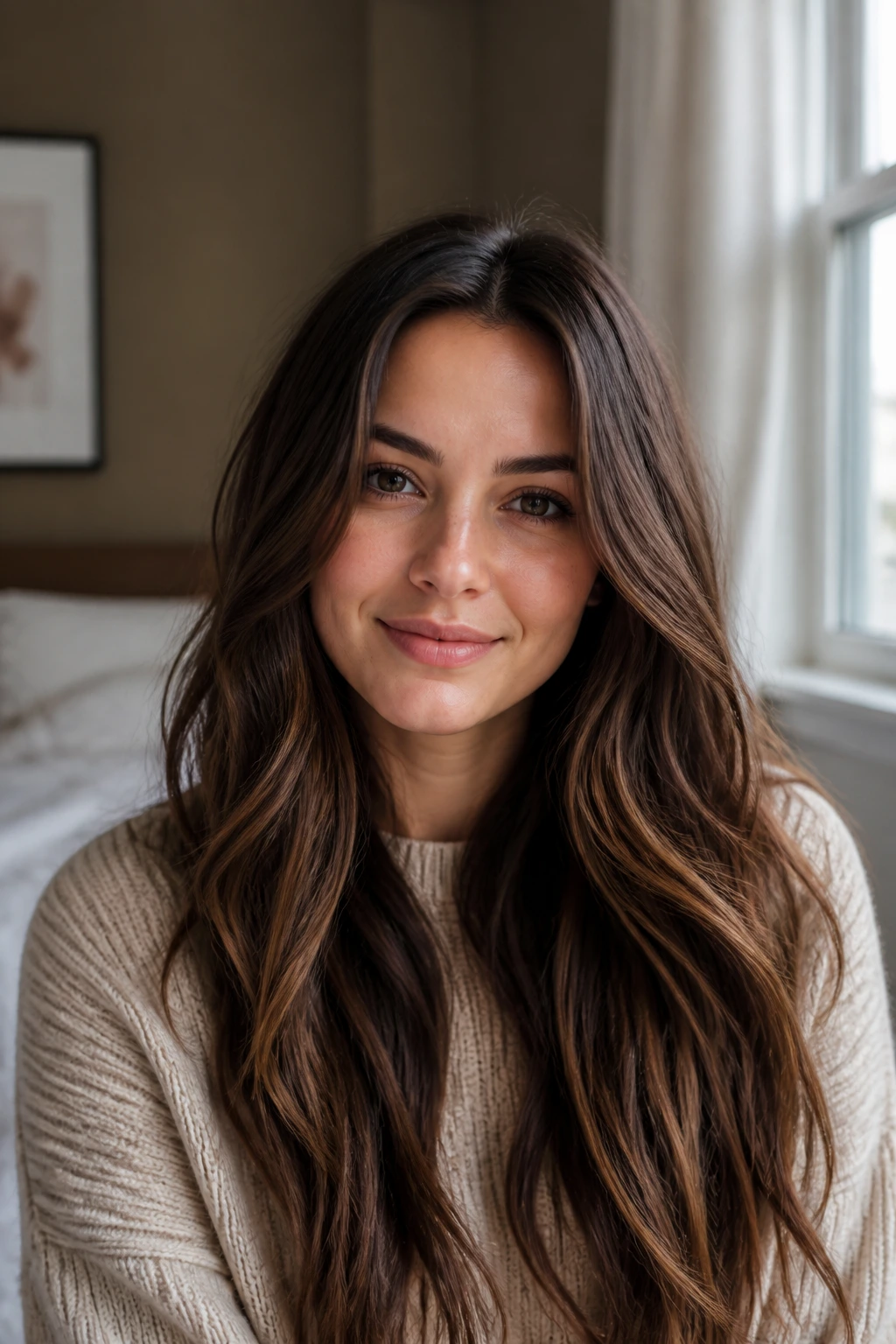
Chopping the first layer too high. The symptom is obvious: the hair blooms around the cheeks and the face looks fuller instead of longer. The fix is to start the shortest face-framing layer lower, usually at or below the chin.
Letting the ends stop at the jawline. A blunt hemline that lands right there tends to flatten the vertical effect. Move the length past the collarbone, or taper the ends so the shape narrows instead of cutting across the face.
Building volume only at the sides. Big side volume can be pretty on the right cut, but on a round face it often reads as width. Put the lift at the crown or lower lengths instead. Keep the sides sleek enough that they don’t balloon out.
Using curls that start too near the temples. That’s a fast way to widen the middle of the face. Begin the wave lower, or brush the top section straighter so the shape opens higher up and falls lower down.
Pulling every front section tight. Slicked hair can look crisp, but if the temples are flattened and the face pieces are too short, the face reads broader. Leave a little softness near the front unless you’re deliberately going for a fully sculpted look.
Variations for Fine, Thick, Curly, and Protective-Style Hair
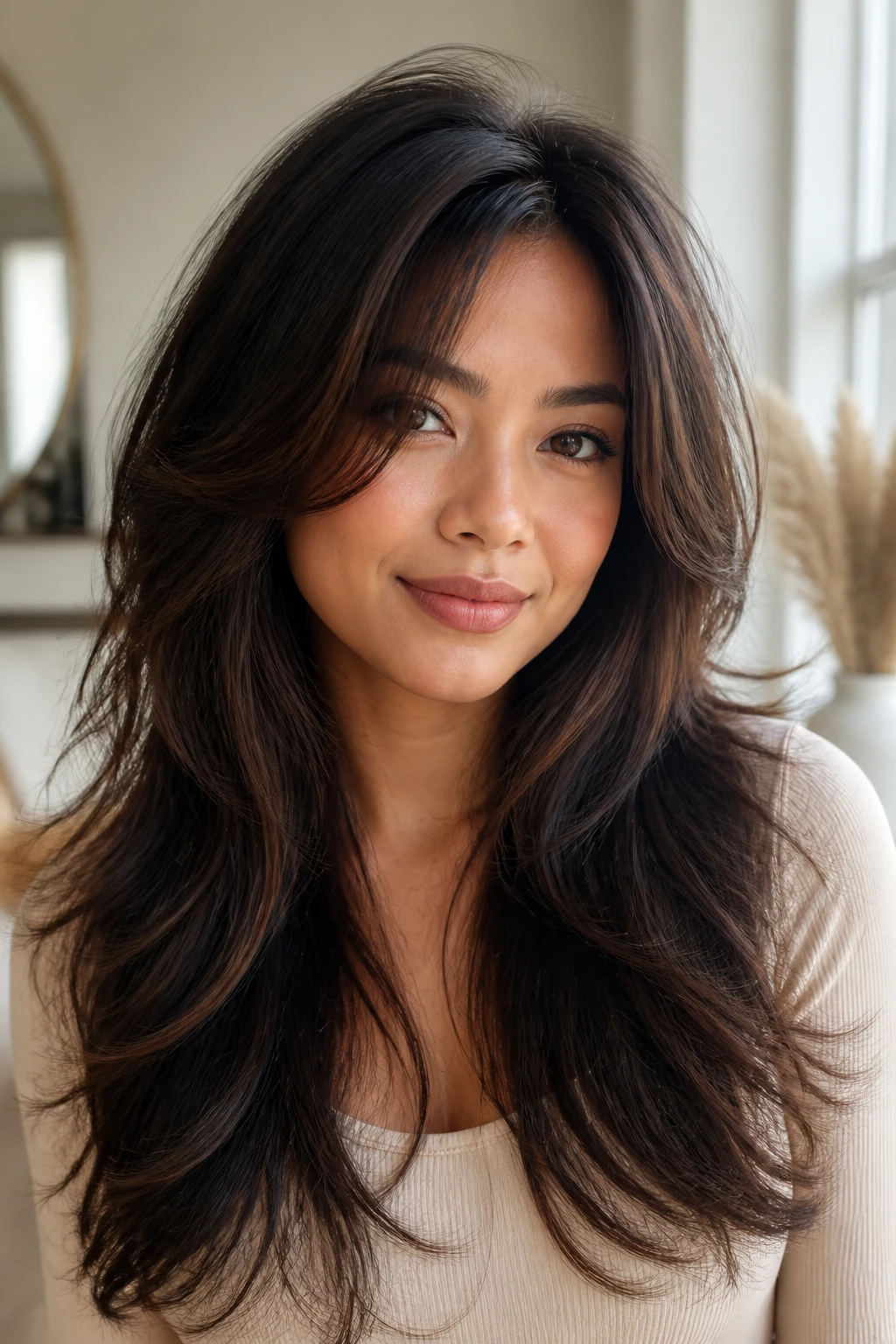
Fine-Hair Lift: Keep the layers long and the ends soft, then add root volume with mousse or a light spray before blow-drying. Fine hair loses shape fast when it gets too many short layers, so the cut should stay clean and airy.
Thick-Hair Control: Choose a U-cut, V-cut, or invisible layers. These remove bulk without turning the sides into a triangle. Thick hair looks best when the outline narrows, not when it gets chopped into too many short pieces.
Curly-Hair Stretch: Use a side part, a lower layer start, and a diffuser or stretch-dry method. You want the curls to drop below the jaw and avoid puffing at the cheeks. The cut should respect shrinkage, which is where many round-face styles go wrong.
Protective-Style Vertical Line: Braids, twists, and locs work best when the parting is clean and the width stays controlled near the temples. Length is your friend here. So is tapering. That’s what keeps the silhouette from feeling too square.
Low-Maintenance Air-Dry Shape: Invisible layers or a long shag with restraint will behave best if you hate heat styling. Keep the shape long, let the texture move on its own, and focus on where the bulk lands rather than chasing a polished finish every morning.
Tools That Make These Long Styles Easier to Wear
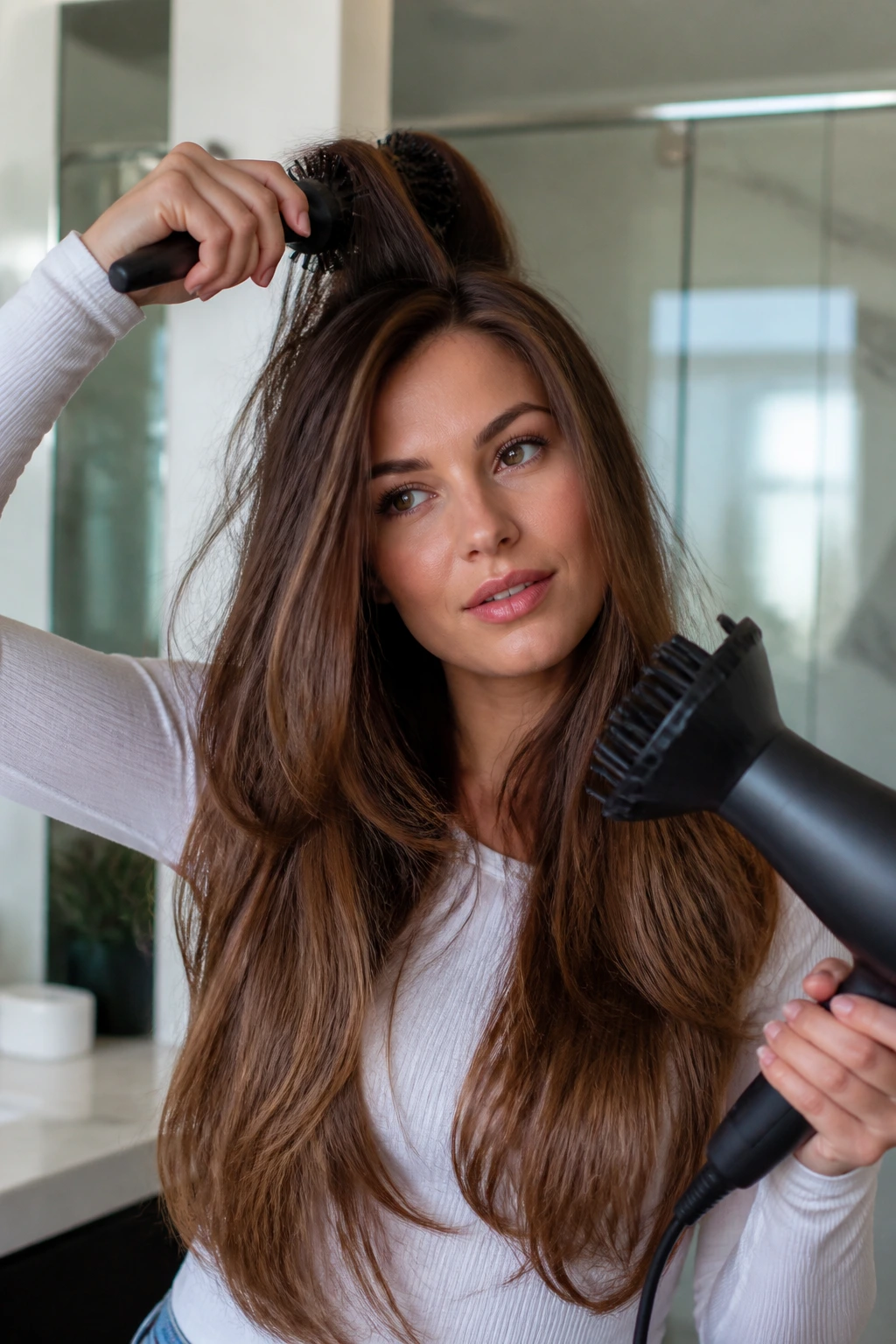
- Blow dryer with a nozzle attachment: Directs airflow down the hair shaft and helps keep the surface smooth, which is useful for center parts, blowouts, and sleek lengths.
- Large round brush: Good for crown lift, soft inward ends, and that slight bend that keeps hair from flaring at the cheeks.
- 1.25-inch curling iron or wand: A safer size for loose waves and long bends; tighter irons often create too much width around the face.
- Flat iron: Best for sleek straight looks, soft inward tips, and polishing the front pieces on a side part.
- Tail comb: Makes clean parts easy, especially for deep side parts, curtain bangs, and braided styles.
- Sectioning clips: Keep long hair out of the way when you’re working through layers or drying the crown.
- Heat protectant: Non-negotiable if you’re using hot tools. It keeps ends from looking fried, which matters even more on long hair.
- Mousse or root-lift spray: Useful for crown volume without making the sides heavy.
- Texturizing spray or light dry shampoo: Helps waves hold shape and keeps flat roots from collapsing.
- Silk scrunchies and clips: Better than rough elastics for ponytails and half-up styles, especially when you want the front to stay smooth.
How to Keep the Shape Fresh Between Trims
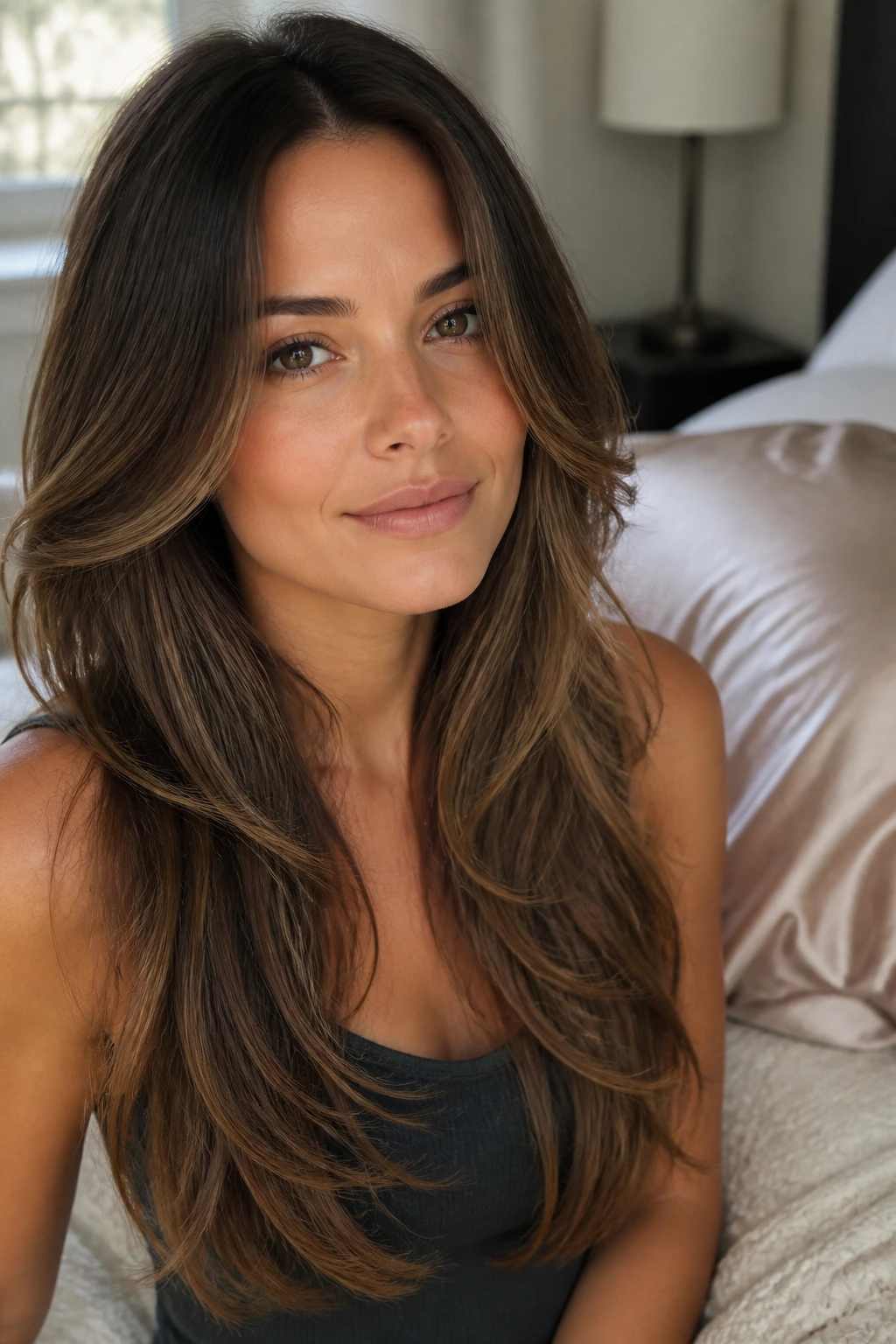
Long styles can go a little lazy if you ignore them. The fix is mostly small, regular habits. Trim the ends every 8 to 12 weeks if you wear layers or face-framing pieces; the shorter the front pieces, the more often they need a cleanup. Blunt long cuts can stretch a little longer, but once they start flipping out unevenly, the shape gets wider.
The way you sleep matters too. A silk pillowcase or loose silk wrap cuts down on friction, which keeps waves from frizzing into a halo around the cheeks. If you wear braids, locs, or twists, keep the scalp clean and moisturized on a schedule that fits the style, not the other way around.
For blowouts and waves, a quick refresh with a round brush or a large iron on the front pieces can keep the face shape intact. Don’t re-curl everything. Focus on the sections that sit closest to the face, because that’s where the silhouette starts to go sideways.
Questions People Ask Before Choosing a Long Cut
Are center parts bad for round faces?
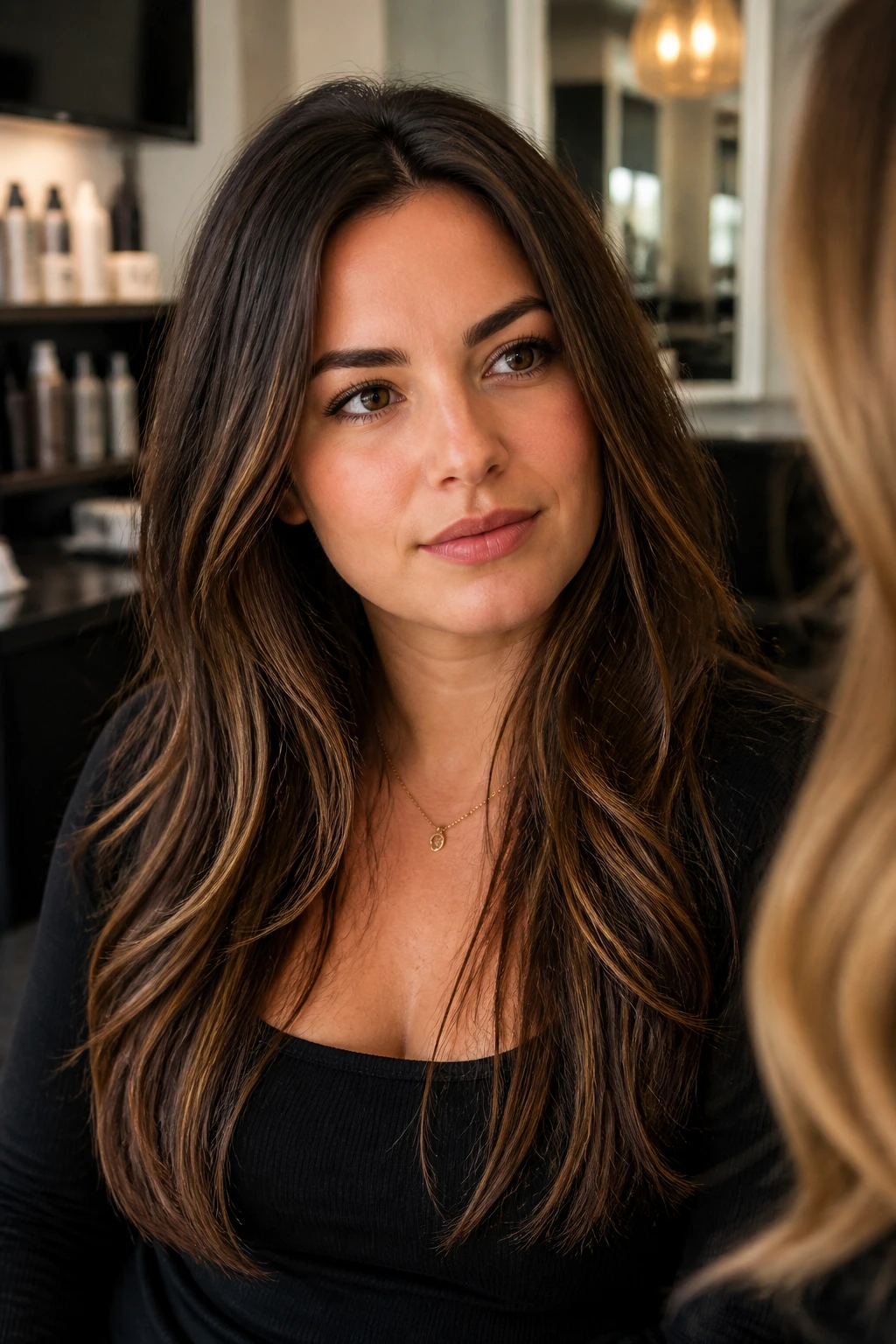
No. A center part can be one of the best choices if the hair has enough length and movement. It works because it creates a vertical line, but the layers still need to sit below the cheeks instead of puffing out at the sides.
Should round faces avoid blunt ends?
Not always, but blunt ends that stop at the jaw can make the face look wider. If you like a clean edge, keep it longer — past the collarbone — or soften the hemline with a U or V shape.
Do curtain bangs actually suit round faces?
They do when they open low and blend into longer layers. The mistake is cutting them too short or too heavy, which can make the middle of the face feel crowded. Soft, airy curtain pieces are a different story.
What if my hair is very thick?
Go for shapes that narrow the bottom, like a U-cut, V-cut, or invisible layers. Thick hair looks best when the sides don’t puff outward. A round face usually benefits more from controlled movement than from big width.
Can curly hair follow these rules too?
Absolutely. Curly hair just needs the shape adjusted for shrinkage. Start the layers lower, keep the top from getting too wide, and let the curls fall in a long line instead of cutting them too short around the cheeks.
How often should I refresh the style?
That depends on the cut, but most long styles look best with a trim every 8 to 12 weeks and a quick styling refresh between washes. If the face-framing pieces hit the cheeks and start flipping outward, it’s time to reset them.
What’s the safest choice if I’m unsure?
A long U-cut with center-parted layers below the collarbone is the least fussy place to start. It’s broad enough to work with straight, wavy, and thicker textures, and it doesn’t lock you into one styling habit.
The Shape That Lengthens Best
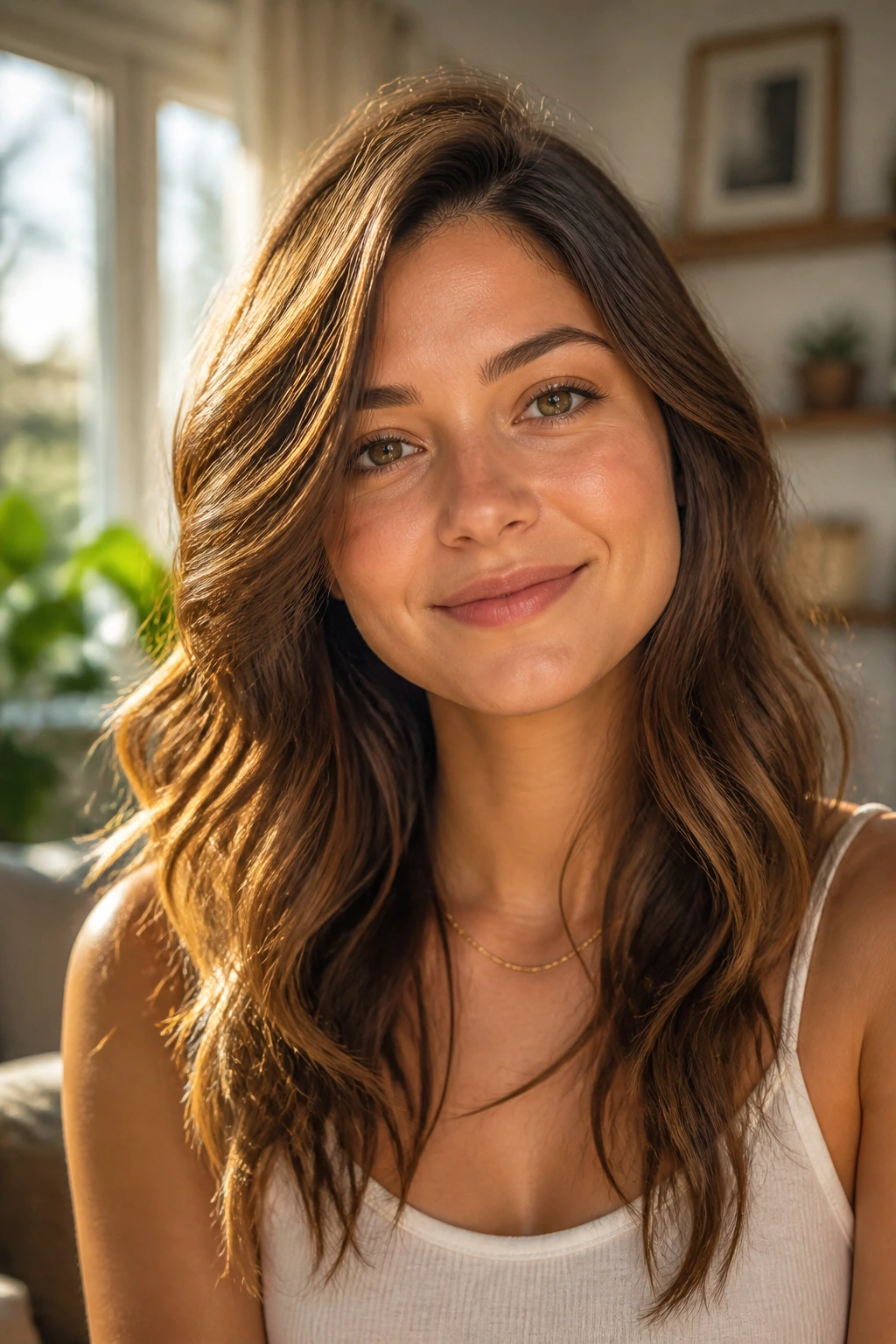
The best long hairstyle for a round face is rarely the loudest one in the room. It’s the one that knows where to place the weight. A layer an inch lower, a part shifted off center, a wave that begins below the jaw — those are the moves that change the whole read.
If you keep one thing in your head, keep this: hair should frame a round face, not sit on top of it. That means length past the chin, softness away from the cheeks, and enough crown lift or asymmetry to keep the shape moving downward. The styles in this list all do that in different ways, which is why they’re worth keeping around.
Pick the one that fits your texture first, then adjust the part, layer height, and finish. That’s where the good results come from.
