



If you’ve ever sat in a salon chair and watched a blunt cut land exactly at the fullest part of your cheeks, you know the feeling. The mirror looks wider than it should. Medium length hairstyles for round faces solve that problem by moving the visual weight somewhere else: below the chin, off to one side, or up at the crown where the eye wants to travel.
That shift sounds small. It isn’t. A collarbone cut with a soft bend can change the whole outline of the face, while a heavy shoulder line can make everything feel boxy. The details matter — where the layers begin, how the part falls, and whether the ends curl inward or kick out at the wrong spot.
My favorite versions here are the cuts that look good on day one and still behave on day three. That means shape first, texture second, and no silly little tricks that only work under salon lights. A good mid-length style should give you a cleaner line, a little lift, and enough movement that the haircut does some of the work for you.
Why These Cuts Work So Well
-
They pull the eye downward: A length that lands around the collarbone gives the face a vertical line instead of stopping at the widest point of the cheeks.
-
They leave room for movement: Medium hair can bend, tuck, wave, and flip without collapsing into a helmet shape.
-
They play nicely with side parts: Even a small shift off center can create a diagonal line that softens fullness through the middle of the face.
-
They grow out with less drama: When the front pieces are cut well, you do not get that awkward “puff at the sides” stage nearly as fast.
-
They work with more textures than people expect: Straight hair, loose waves, tighter curls, and thick hair all have a version that can keep the outline longer and cleaner.
1. The Collarbone Lob That Draws the Eye Down
This is the cut I recommend when someone wants the simplest answer. A collarbone lob lands low enough to skip the widest part of the cheeks, but not so long that it loses shape and hangs flat against the chest. That middle ground matters. It gives the face a longer outline without making the hair feel heavy or limp.
Why It Works on a Round Face
The blunt line sits below the cheekbone, which keeps the widest part of the face from being the focal point. A center part can work here if the hair has a little bend at the ends, but a soft off-center part usually does the better job because it creates a diagonal line through the face. Diagonals help. Straight horizontal lines usually do not.
- Ask for the front pieces to hit the collarbone, not the chin.
- Keep the perimeter blunt or only lightly texturized.
- Add a slight bend with a 1.25-inch iron instead of tight curls.
- Finish with a light spray so the ends move instead of freezing in place.
Best tip: keep the volume at the crown and the movement at the ends, not at cheek level.
2. Curtain Bangs With Soft Shoulder Layers
Curtain bangs are sneaky in the best way. They don’t read as a dramatic change from the back, but they can change the whole balance of the face once the front pieces split and sweep outward. On a round face, that opening is gold because it creates two lines that travel away from the cheeks instead of stopping on them.
The trick is length. If the shortest point of the bang sits too high, the face widens fast. If the bangs start around the cheekbone and open toward the temple, they lengthen the face without looking severe. I like this cut on shoulder-length hair because the layers keep the fringe from sitting on top of the face like a little curtain rod.
Style it with a round brush or a blow-dry brush, but keep the lift soft. You want bend, not a barrel curl. Let the middle fall away from the forehead and keep the sides loose enough to graze the outer cheek. It’s a small detail, but it changes the whole read of the cut.
3. The Deep Side-Part Wave That Cheats a Little Extra Length
What if you want the fastest shape change without giving up length? A deep side part is the move. It shifts the mass of the hair to one side, creates a diagonal line across the top, and gives the face more vertical space without touching the scissors at all.
The nicest thing about this style is that it works on hair that is already medium length. You don’t need a precision cut to make it look intentional. You do need a little lift at the roots near the part, though, or the whole thing collapses into a flat sheet.
How to Wear It
- Create the part about one inch off center.
- Blow-dry the root at the heavy side upward with a round brush.
- Bend the front pieces away from the face with a 1.25-inch iron.
- Tuck the smaller side behind one ear to show the jawline.
It’s a sharp little shift. Very low effort. Very effective.
4. The Angled Lob With Longer Front Pieces
If your hair tends to flip out at the shoulders in a way that feels bulky, an angled lob can clean that up fast. The back sits a touch shorter, the front drops lower, and the whole shape points the eye downward instead of straight across the face. That slant is the point.
The cut works because it creates direction. A round face often benefits from a line that moves from high to low, and this style does that without looking fussy. The longer front pieces frame the face in a way that feels deliberate, not hidden.
- Keep the front 1 to 2 inches longer than the back.
- Ask for the angle to be subtle, not dramatic.
- Style with a smooth blowout or soft bend at the ends.
- Avoid heavy side volume right at the cheekbone.
I like this one on straight or slightly wavy hair. It has enough structure to stay neat, but it still moves when you turn your head.
5. The Jaw-Skimming Shag With Soft Texture
A shag can go wrong on a round face if the layers start too high. Then the sides puff out and the face looks wider. But a softer shag — one that keeps the shortest pieces below the cheekbone — can be excellent. It breaks up the outline of the face and adds a little grit without making the cut look shaggy in the bad sense.
The key is restraint. You want texture, not random volume. A good medium shag on a round face keeps lift at the crown and movement toward the ends, where it reads as shape rather than width. Thick hair benefits a lot here because the layers remove bulk without leaving a blocky shape.
I’m partial to this cut when hair has a natural wave. It air-dries with more personality than a blunt lob, and it still looks fine if you twist it with a bit of mousse and let it go. The whole cut depends on where the layer line starts, though. Too high, and the cheeks get bigger. Lower is safer.
6. The Shoulder-Length Blowout With Crown Lift
This is the polished one. Not stiff. Just polished. Shoulder-length blowout layers give round faces a longer outline because the volume sits up at the crown and the ends turn under or away from the face, not outward at the cheeks. That distribution is the whole trick.
Compared with a one-length cut, this style has more air in it. Compared with a shag, it stays cleaner. That middle ground makes it good for finer hair that needs body but not a lot of frayed edges. It also holds up nicely if you wear it behind the shoulders during the day and then shake it loose at night.
Ask for long layers that start below the mouth, not at the cheekbone. That keeps the blowout from ballooning in the middle of the face. When you style it, use a round brush at the roots and drag the ends through with a little tension. The result should feel smooth and lifted, not glossy in a plastic way.
7. The Invisible-Layer Clavicut
A clavicut is one of those haircuts that looks plain in the salon chair and smarter once you live in it. The perimeter stays close to one length, usually right at the collarbone, but the inside carries subtle layers that move the hair without stealing the line. For round faces, that hidden structure is useful because it keeps the shape from puffing out at the sides.
What Makes It Different
The outer edge gives a clean frame, while the inner layers stop the cut from feeling heavy. That means you get movement without the width that can make a round face feel broader. If your hair is thick, this is one of the better ways to remove bulk without turning the ends wispy.
How to Ask for It
- Say you want a collarbone length with internal layers only.
- Ask the stylist to keep the front pieces long enough to brush the jawline.
- Keep the ends blunt enough that the cut still has a clear edge.
- Style it with a light wave or a smooth bend, depending on texture.
This is a quiet haircut. That’s the point. It does not shout. It just sits well.
8. Soft Ribbon Curls With Face-Framing Pieces
A soft curl pattern can do a lot for a round face if the curls are directed away from the cheeks. That’s the part people skip. They curl everything the same way and end up with a halo of width where they least want it. Ribbon curls, with longer front pieces left loose, solve that problem cleanly.
The shape works because the curls create vertical movement. They stretch the eye downward as the hair falls in separate pieces, instead of forming one big mass around the face. On medium length hair, the trick is to curl from about the cheekbone down and leave the roots smoother.
Pinning each curl to cool for a few minutes helps the shape hold without getting stiff. Use a 1.25-inch curling iron or hot rollers if you want that soft, brushed-out finish. Then finger-comb gently, not aggressively. You want separated waves, not a cloud.
9. The Sleek Lob With One Ear Tucked

Can a straight lob slim a round face without layers? Yes — if the part, tuck, and length are handled well. A sleek lob creates a long, clean line from crown to shoulder, and the single tucked side breaks the symmetry that sometimes makes round faces feel extra broad.
The best version lands below the chin and above the collarbone, with enough length to tuck one side behind the ear without losing the shape. That tucked side exposes more of the jaw and cheek, which sounds counterintuitive, but it actually keeps the face from being framed too evenly. Even framing can make a round face look fuller. Uneven framing usually helps.
How to Wear It
Use a flat iron with rounded edges so the ends do not look chopped off. Add a small amount of serum through the mid-lengths, then keep the roots airy with a side part or a soft off-center part. A matte finish can work too, but the hair should still move when you run your fingers through it.
This is the cut I like for meetings, dinners, and days when you want the hair to look expensive without acting precious.
10. The Flip-Out Cut That Ends Below the Jaw

You know the little outward flick at the ends that reminds you of old-school blowouts? In the right place, it works beautifully. The trick is to keep the flip low, below the jawline, so it adds movement at the ends instead of width at the cheeks.
That detail matters on a round face because an upward kick right at the cheekbone can make the face read wider. A lower flip, though, creates lift and motion without crowding the middle of the face. It also makes mid-length hair look lively when the rest of the cut is pretty simple.
- Blow-dry with a round brush aimed downward first.
- Turn the brush outward only in the last 2 to 3 inches.
- Keep root volume soft, not puffy.
- Use a flexible spray so the ends can move a little.
This is one of those styles that looks especially good when the hair has a little body but not a lot of frizz. Too much frizz and the flip loses its shape. Too little movement and it just looks like the ends are bored.
11. The Bottleneck Bang Lob
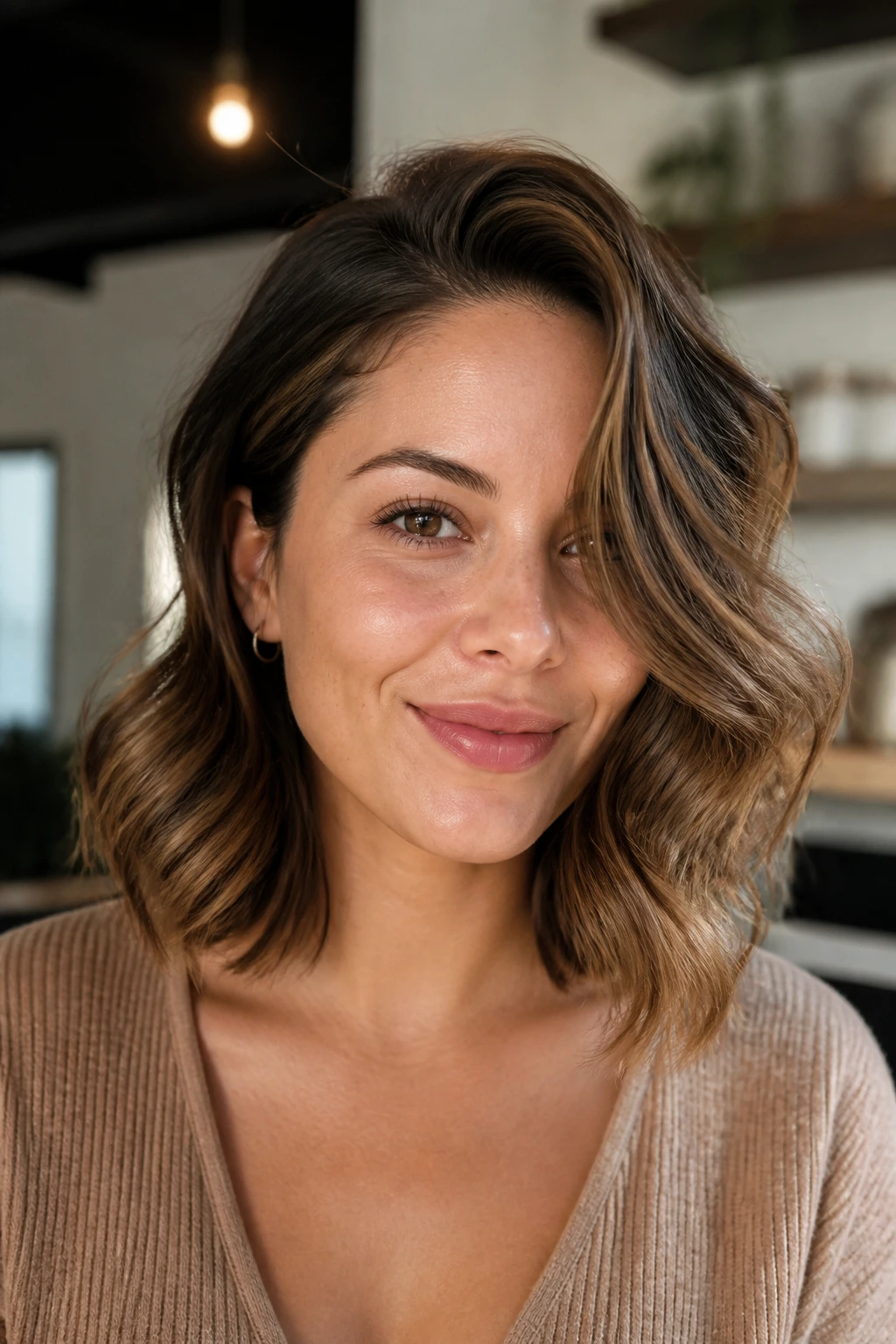
Bottleneck bangs are one of the better bang choices for a round face because they start narrow in the center and open wider as they move outward. That shape creates a little vertical opening at the forehead, then sends the eye outward and down. It’s a smarter bang than the blunt kind, which can box in a round face fast.
The lob underneath gives the bangs a place to land. If the hair below the fringe is too short, the whole cut can feel crowded. At collarbone length, the fringe has room to breathe. The longest pieces can brush the cheek or jaw without sitting right on it.
This style does ask for maintenance. Not constant fussing, but enough trimming that the fringe keeps its shape. If the bangs grow past the opening point, they lose the effect and just become long pieces of hair in your eyes. That is not the same thing.
12. The Wavy Cut With a Soft Undercurve
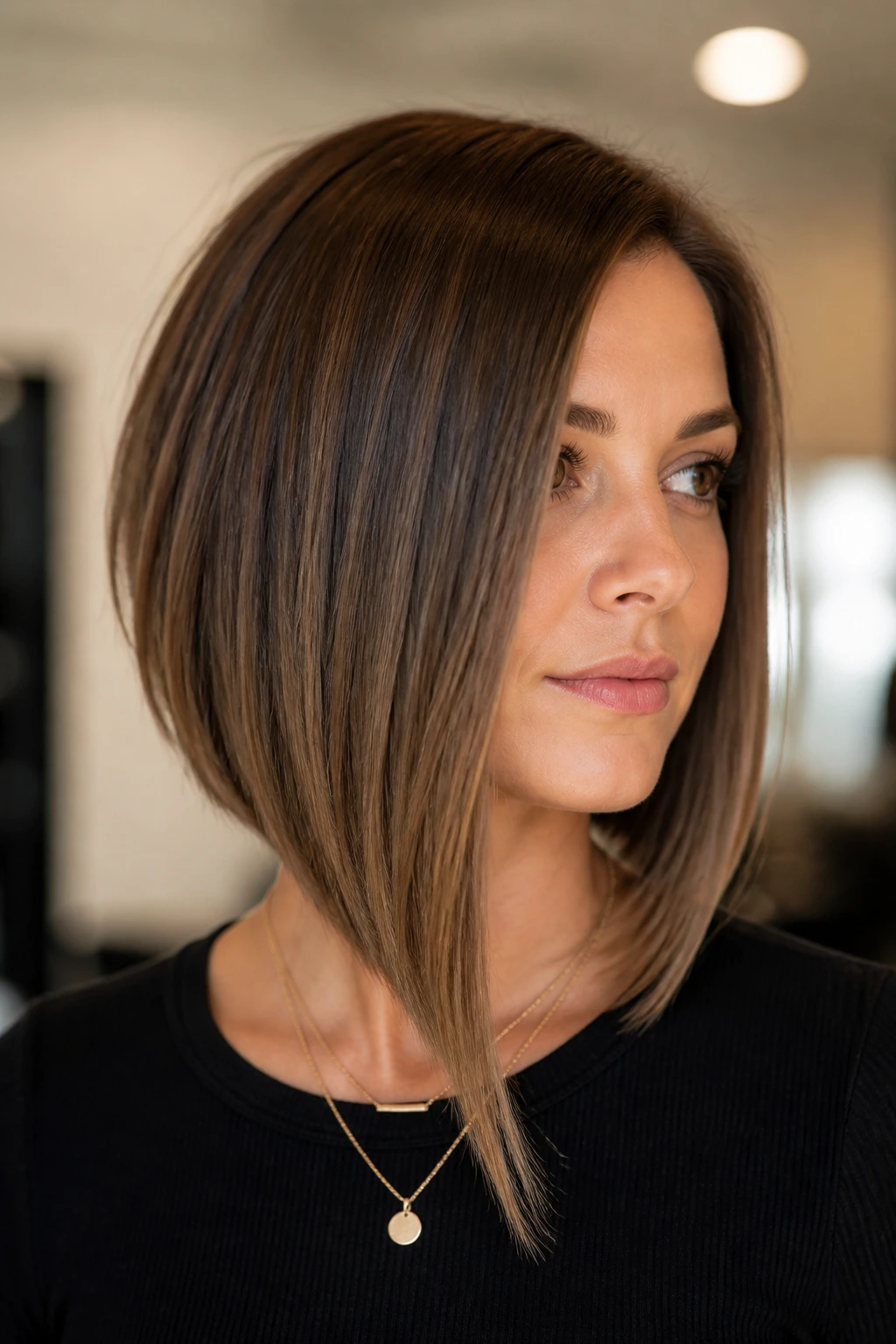
A lot of wavy mid-length haircuts go wrong because the widest part of the wave sits right at the cheeks. That makes a round face look rounder. A soft undercurve fixes the problem by keeping the bend lower, closer to the jaw and collarbone, where the eye wants to move down.
This cut is a nice fit for natural wave because it works with the way the hair already falls. The face-framing pieces should start low and curve inward or under, not balloon out. That one choice changes the whole outline.
I like this look when the hair is medium density and doesn’t need much internal removal. The wave supplies movement on its own. A little mousse through damp hair, a rough dry, and a few bends with an iron can be enough. It’s one of the least fussy styles on this list, which I appreciate more than I should.
13. The Low-Starting Layer Cut

Why do some layered cuts make a round face look wider? Because the layers start too high and create volume at the cheeks. A better layered shape starts lower — below the cheekbone, sometimes closer to the jaw — so the movement happens where it helps instead of where it adds width.
That’s why this cut is so useful on medium length hair. You still get lift and motion, but the silhouette stays longer. The result is softer, not bulky. Thick hair benefits from the weight removal, while finer hair benefits from the cleaner outline.
How to Ask for It
- Keep the shortest face-framing layer below the cheekbone.
- Ask for the bulk to be removed from the interior, not the outer edge.
- Let the front pieces fall toward the collarbone.
- Style with a soft bend away from the cheeks.
If you’ve tried layered cuts before and felt like they puffed outward on the sides, this is the adjustment to ask for. Small change. Big difference.
14. The Asymmetrical Mid-Length Cut
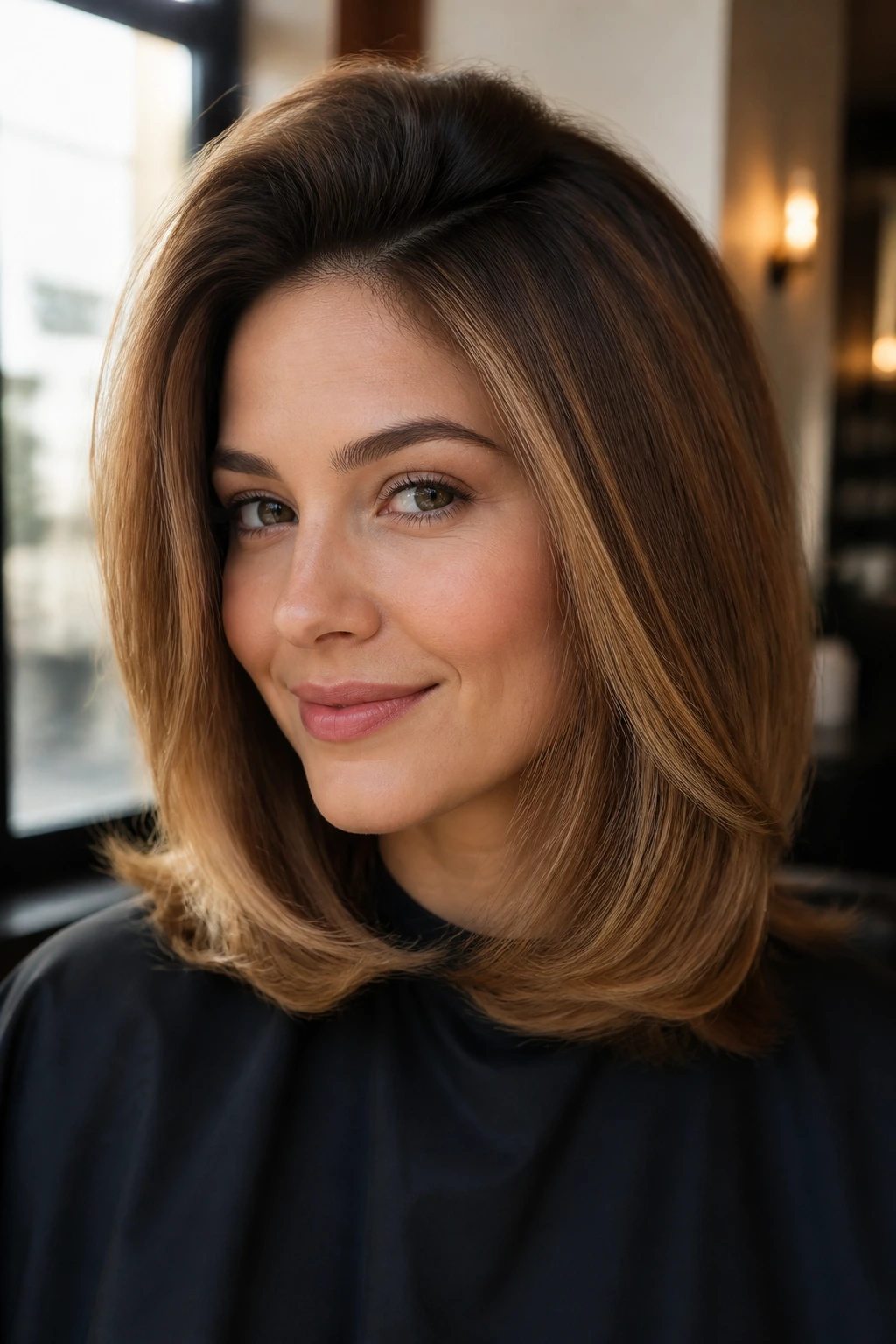
A good asymmetrical cut is not about being loud. It’s about direction. One side sits a bit longer than the other, which gives the face an angle to follow. On a round face, that angle can be enough to change the whole read of the haircut.
The version that works best stays subtle. Think a difference of 1 to 2 inches, not a wild slant. Too much imbalance and the cut starts wearing you. Too little and it loses the point. The best asymmetry looks like the haircut naturally fell that way, even though it was planned that way on purpose.
- Keep the longer side near the collarbone.
- Let the shorter side skim the jaw without ending right on it.
- Wear a side part to support the diagonal line.
- Use smoothing cream if your hair tends to frizz around the cheek.
This is a smart option if you like a modern edge but don’t want short hair that keeps demanding styling time.
15. The Modern Wolf Cut for Round Faces
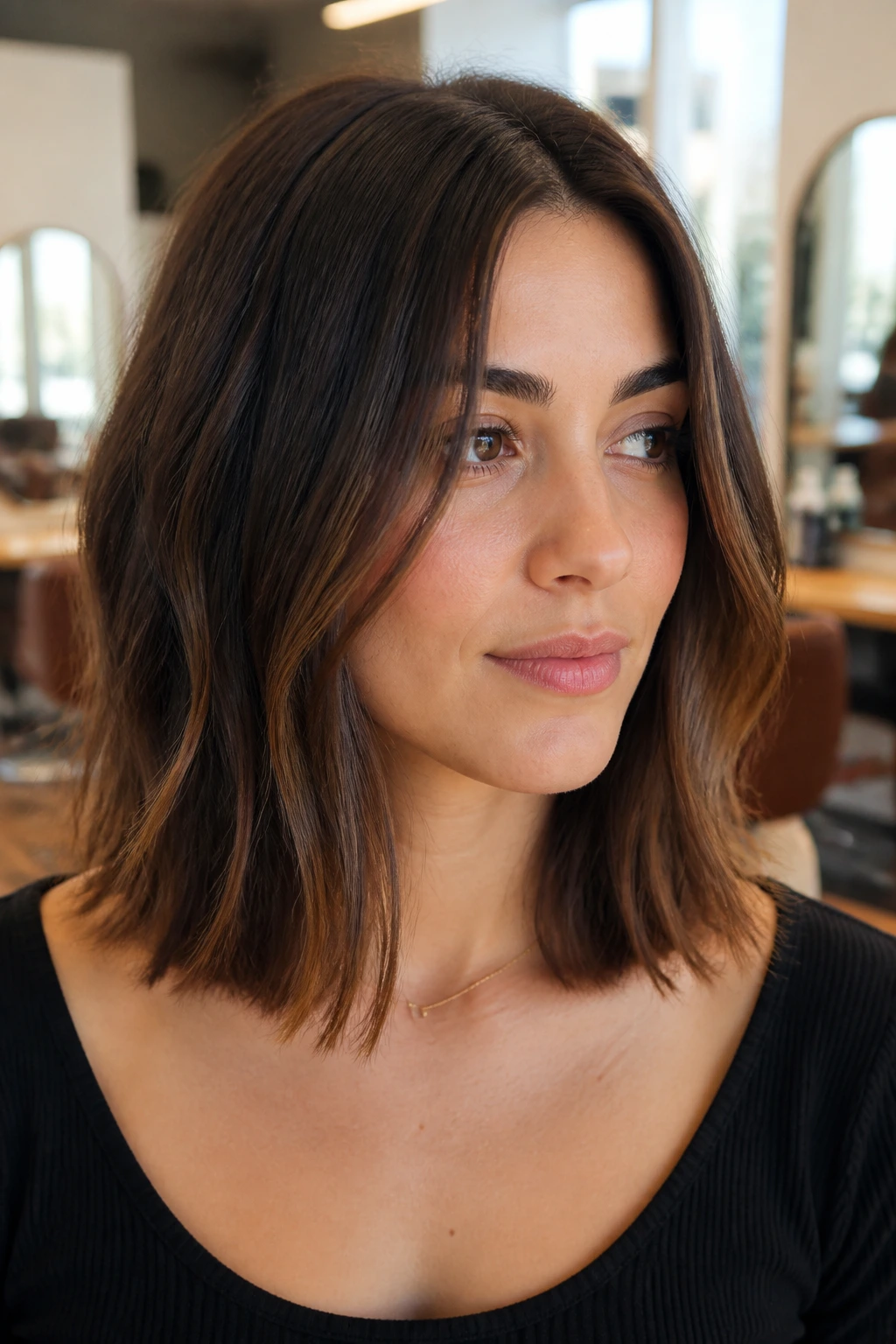
A wolf cut can flatter a round face, but only if the layers are handled with a little restraint. If the crown is too short and the sides puff out at cheek level, the face gets wider. If the top stays lifted and the sides stay longer, the cut gets edge without the bad width.
What I like here is the contrast. The top has a bit of lift, the mid-length layers break up the outline, and the ends still carry enough length to keep the face from feeling boxed in. It’s a looser, less polished look than a classic lob, and that’s the appeal.
This cut tends to work best on wavy or slightly textured hair. Straight hair can wear it too, but it needs a bit of styling to keep the top from falling flat. Thick hair usually gives the best shape because there’s enough density for the layers to show. Keep the shortest pieces away from the cheeks, and the haircut starts making sense.
16. The Texture-First Shoulder-Grazing Cut
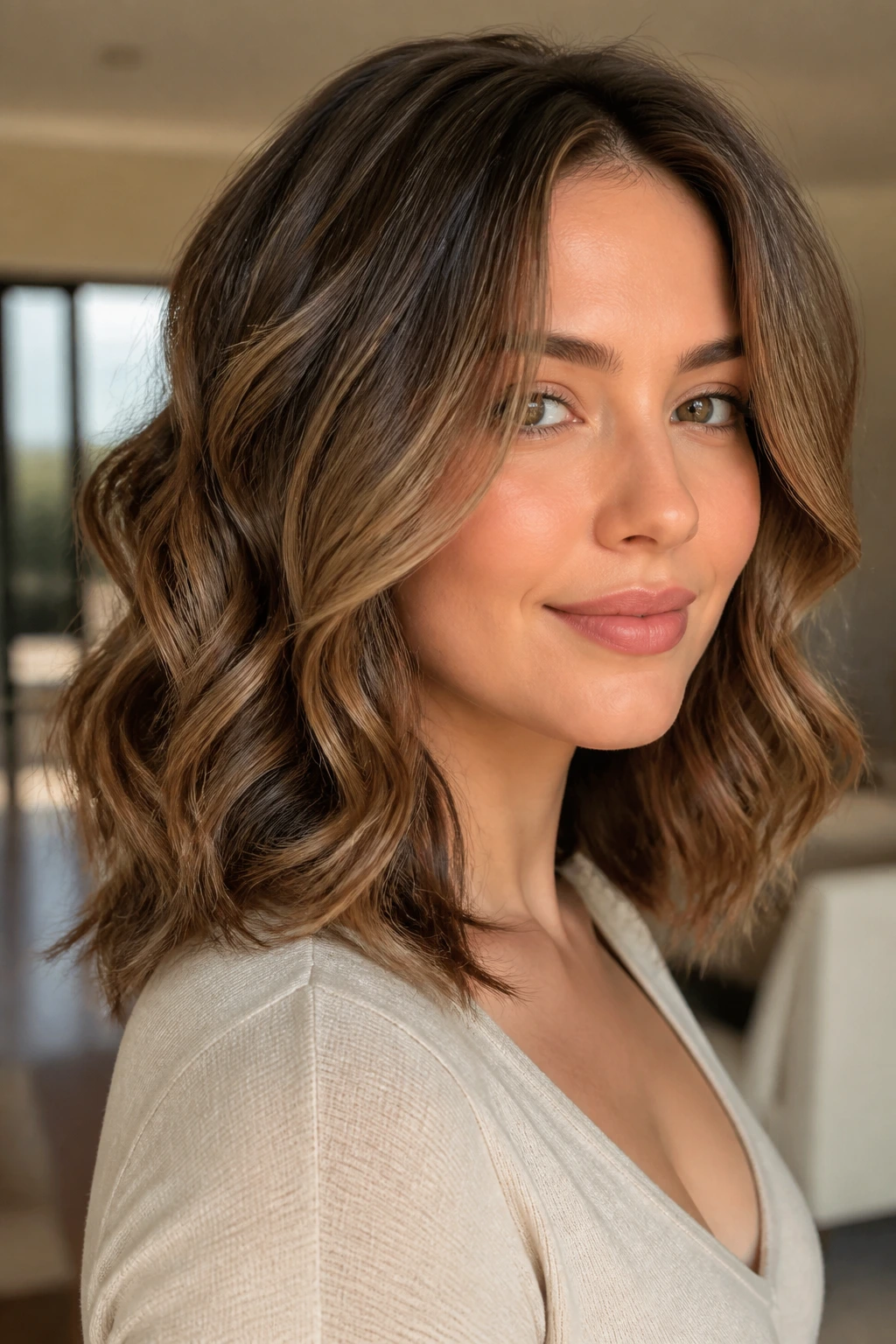
Some cuts are built around line. This one is built around feel. The perimeter hits the shoulders, the ends are point-cut or lightly softened, and the texture does the work instead of a lot of obvious layering. For round faces, that means the silhouette stays long while the hair still looks lived-in.
It’s a good choice for anyone whose hair is too fine for heavy layers or too straight for a shag. The shape stays controlled, but it doesn’t feel rigid. That balance matters because a flat, blunt shoulder cut can make a round face look broader if the hair sits too close to the cheeks.
The best version has a side part or a slight off-center part and just enough bend at the ends to keep the line from feeling boxy. If you want a cut that can air-dry with little drama, this is one to keep in mind. It won’t do all the work for you, but it won’t fight you either.
17. The Half-Up Friendly Layered Lob
If you wear your hair half-up a lot, the layers need to play nicely with that move. Some cuts look good down and then fall apart the second you gather the top section. This one keeps enough length through the front to leave a clean frame around the face, while the back carries the weight for a solid half-up shape.
What Makes It Work
The front layers stay long enough to touch the jaw or collarbone, so they don’t spring out in short little pieces when you pull the hair back. That’s the trap with too many layered cuts. The top section looks cute, but the loose strands around the face turn uneven fast.
- Keep face-framing pieces at least chin-length, often longer.
- Ask for the crown to have enough height to support a half-up style.
- Use a small claw clip or elastic that doesn’t crush the shape.
- Curl the loose pieces away from the face for a cleaner line.
This is the style for people who want options. Down, half-up, clipped, tucked — all of it works if the cut is balanced.
18. The Side-Swept Polished Lob
If you want one hairstyle that looks neat in a meeting and soft at dinner, this is the one I’d pick. A side-swept lob gives a round face a diagonal line across the forehead and cheek area, which keeps the shape from reading too symmetrical. Symmetry can be charming. It can also make fullness more obvious.
The polished finish helps here. A smooth blowout, a gentle bend at the ends, and a deep side part create a controlled look that still has movement. I prefer this cut on medium hair that has enough density to hold the sweep without going flat by noon.
This is also one of the easier styles to dress up. A barrette on the tucked side, a glossy finish, and a little lift at the roots are often enough. Nothing complicated. Just enough shape that the hair frames the face instead of sitting like a curtain across it.
Why the Length Matters More Than the Layer Count
A lot of people ask for layers first and length second, and I think that’s backwards for round faces. The length is what changes the shape of the outline. A blunt shoulder cut, a collarbone lob, or an angled mid-length shape can all narrow the visual width better than a heavily layered cut that stops at the cheeks.
The real goal is simple: keep the strongest visual line below the widest part of the face. That usually means below the cheekbone and often around the collarbone. Once you get that right, layers become a fine-tuning tool instead of the whole answer. Too many short layers can make the sides feel puffy. A well-placed length line does more with less.
Another thing people miss is how much the part changes everything. A center part is not off-limits, but it works best when the hair has some height at the root and a little bend through the ends. A side part can rescue a style that feels too even. Hair is funny that way. Move the part half an inch, and the whole face changes.
The Tools That Keep Mid-Length Hair in Shape
You do not need a crowded bathroom shelf. You do need the right few tools, and they should match the shape you want to keep.
- 1.25-inch curling iron: Small enough to create bend, not tight ringlets, on collarbone-length hair.
- Round brush, 1.5 to 2 inches: Good for blowouts, root lift, and turning the ends under or away.
- Blow dryer with a nozzle: Helps direct airflow so the cut keeps a clean line.
- Heat protectant spray: Worth using every time you add heat; it keeps the ends from drying out and frizzing up.
- Dry shampoo: Useful on day two or three when the roots start to collapse.
- Texturizing spray: Best for shaggy, wavy, and layered looks that need grip without stiffness.
- Flat iron with rounded edges: Better for smooth bends and tucked-under ends than a pin-straight iron.
- Sectioning clips: Small thing, big help. They keep the top out of the way while you work the bottom.
- Wide-tooth comb: Good for curls and waves; less likely to break up the pattern.
- Boar-bristle brush or smoothing brush: Helpful for sleek lobes and side-swept styles.
What to Ask Your Stylist Before the First Snip
Bring photos. Not one photo. Three or four. The front view matters, but the side view matters just as much because that’s where the length line lives. A style can look soft from the front and still sit too high at the cheek if the side profile is wrong.
Use plain words when you talk. Say collarbone, below the cheekbone, long layers, soft side part, and keep the width low. Those phrases are useful because they point to shape, not trend names. If you love a shag but hate poofy sides, say that directly. If your hair gets triangular when it grows, mention that too.
Texture matters more than people think. Fine hair often needs fewer layers and more root lift. Thick hair often needs internal debulking so the sides do not explode outward. Curly hair needs the length mapped out while it’s dry or damp in its natural state, not pulled straight and guessed at. That part gets rushed in salons all the time, and it shows later.
One more thing: ask how the cut will look in six weeks. That question cuts through a lot of bad advice. If the stylist cannot explain the grow-out shape, keep looking.
How to Wear These Cuts From Morning to Night
A mid-length cut should do more than sit there looking good after a salon blowout. The daily version matters. It should be fast enough for busy mornings and still leave you with something you can dress up without rebuilding from scratch.
Workday polish usually means a clean part, smooth roots, and one or two face-framing bends at the front. Keep the sides controlled and the ends moving. A tiny tuck behind one ear can open the jawline and stop the hair from feeling too even.
Off-duty texture is looser. Add dry shampoo at the roots, mist the mid-lengths with a texturizing spray, and rough up the ends with your fingers. If the cut has curtain bangs or long front pieces, bend them away from the face so they don’t sit flat on the cheeks.
Evening dressing-up is mostly about shine and direction. Smooth the surface, sweep more hair to one side, and add a barrette or a narrow clip above the ear. Long earrings help too, because they echo the vertical line you want the hair to create.
Small Tweaks That Make a Big Difference
Crown Lift: A little lift at the roots changes everything. If your hair falls flat, clip the crown while it cools after blow-drying or set a few velcro rollers at the top for 10 to 15 minutes. The extra height keeps the shape from sitting wide through the middle.
Diagonal Part: Move the part half an inch or a full inch off center. It sounds small, and it is, but it shifts the weight of the hair and breaks up the roundness of the face faster than a lot of layer changes.
End Direction: Bend the ends under, out, or away from the cheek depending on the cut. The wrong direction right around the cheekbone can make the face look fuller. The right direction below the jaw pulls the eye down.
Make-It-Yours: Fine hair usually wants fewer layers and more root support. Thick hair often wants more internal removal and a cleaner edge. Curly hair needs the length measured in its natural state, or the whole shape gets misread. Straight hair can handle the sleekest versions here, but it still needs some movement or the line turns severe.
Mistakes That Make a Round Face Look Wider
Ending the cut at the cheekbone: That’s the easiest way to make the face look broader. If the hair stops right where the face is fullest, the eye has nowhere else to go. Move the line lower.
Starting layers too high: High layers puff out around the cheeks and create width where you want length. Ask for the shortest face-framing pieces to begin lower, often around the mouth or below.
Blunt bangs with no opening: Straight-across bangs can shorten the face and make the middle look wider. If you want fringe, curtain or bottleneck shapes are usually easier to live with.
Too much side volume at the cheek: Big curls or flipped-out ends at the wrong level can push the silhouette outward. Keep the body up at the crown or low at the ends instead.
Ignoring texture: A cut that looks clean on straight hair can sit very differently on wavy or curly hair. The same shape needs different layer placement depending on density and curl pattern.
Variations and Alternatives to Try
The Fine-Hair Lift: Keep the length at the collarbone, skip heavy layers, and use a root-lifting spray at the crown. This version works because it keeps the outline long while building height where the eye wants to travel. A center part can work if the roots aren’t flat.
The Thick-Hair Release Valve: Ask for internal removal under the surface and a blunt outer edge. Thick hair can get bulky fast around the shoulders, so this version keeps the shape clean without turning the ends into a triangle.
The Curly Frame: Let the cut follow the curl pattern instead of forcing it straight. Collarbone length with longer face-framing pieces usually works well because the curls can bounce without sitting on the cheeks. Dry cutting helps here.
The Heatless Wave Version: Braid damp hair or set it in foam rollers overnight, then break the waves apart with your fingers in the morning. This is the easiest path if you want movement without a curling iron every day.
The Low-Maintenance Grow-Out: Keep the front pieces long, the layers soft, and the perimeter clean. This version grows better than a choppy cut because the shape stays intact even when the ends start dropping a little.
How to Keep the Cut Fresh Between Appointments
Most medium length styles on round faces stay sharp for about 8 to 10 weeks before the shape starts sliding. Bangs need more attention. Curtain or bottleneck fringe usually wants a trim every 4 to 6 weeks if you like the opening to stay in the right place.
For sleek styles, dry shampoo on day two helps the roots hold a little lift. Use it before the hair gets greasy, not after it has already gone limp. For waves and curls, a light water mist plus a dab of leave-in on the ends is usually enough to wake the shape back up. Don’t soak the whole head unless you want to start over.
Sleep matters too. A silk or satin pillowcase cuts down on friction, which keeps the ends from fraying and the front pieces from kinking overnight. If you wear a blowout, a loose clip at the crown can keep the shape from getting crushed. If you wear curls, pineapple the hair loosely so the crown stays lifted.
When you’re growing the cut out, ask for a dusting instead of a full reset. That keeps the length line where you want it while cleaning up the split ends that make the hair puff.
Questions People Ask Before Choosing a Mid-Length Cut
What length is most flattering for a round face?
The most reliable lengths land between the bottom of the chin and the collarbone, with a lot of strong options right at the collarbone. That range keeps the eye moving downward instead of stopping at the widest part of the face.
Are bangs a bad idea for round faces?
Not at all. The issue is shape, not bangs themselves. Curtain bangs, bottleneck bangs, and long side-swept fringe usually work better than blunt bangs because they create openings and diagonal lines.
Do layers make a round face look bigger?
They can, if they start too high or puff out at the cheeks. Layers placed lower, with the width kept under control, usually do the opposite and help the face look longer.
Is a center part okay?
Yes, if the cut has enough length and movement. A center part on flat, chin-length hair can be unforgiving, but a collarbone cut with bend at the ends can handle it well.
Can curly hair wear these styles?
Absolutely. Curly hair often looks best when the cut is shaped around the curl pattern and kept longer through the front. The exact same cut line will behave differently on curls, so the dry shape matters.
What if my hair is very fine?
Keep the layers lighter and ask for root lift instead of a lot of internal removal. Fine hair can disappear if it gets over-layered, especially at shoulder length.
What if my hair is thick?
Thick hair usually needs more weight removal inside the cut, but not so much that the outline gets frayed. A blunt or slightly angled perimeter helps keep the shape from expanding sideways.
How often should I trim it?
Most of these cuts stay tidy with trims every 8 to 10 weeks. Fringe or short face-framing pieces may need a cleanup sooner, especially if they fall right at the cheekbone.
A Shape That Keeps Doing Its Job
A good mid-length cut does not fight a round face. It gives it a cleaner line, a little lift, and a place for the eye to go besides straight across the cheeks. That’s why these styles keep coming back in some version or another. They’re not flashy. They work.
If you take one thing from this list, make it this: shape beats trend. Get the length line right, keep the volume where it helps, and let the front pieces do some of the framing. The rest is just personal taste — sleek, wavy, shaggy, polished, tucked, or all of the above depending on the day.
