



A round face changes the whole haircut conversation. Not in a difficult way. In a useful way.
The right hairstyles for round faces don’t try to hide your face; they change the line of sight. They pull the eye up, down, or diagonally instead of letting everything stop at the cheeks. That can mean a deep side part, a collarbone-skimming cut, a little lift at the crown, or bangs that split and move instead of sitting like a shelf.
The mistake people make is treating a round face like a problem to erase. I don’t buy that at all. A round face can look sharp, soft, polished, edgy, or expensive-looking with the right shape around it — and no, that doesn’t require waist-length hair or a daily blowout that eats your morning. It requires knowing where the widest part of your face sits and refusing to park the haircut right there.
Why These Hairstyles Work on Round Faces
- They create vertical movement: Styles that add height at the crown or length below the jaw stop the face from reading as wider than it is.
- They break up symmetry: A side part, angled bob, or off-center fringe gives the eye a diagonal path, which is kinder to a round outline than a straight horizontal line.
- They keep the cheek line from getting boxed in: Cuts that end exactly at the cheeks or chin can make the face feel fuller; styles that start above or below that point usually work better.
- They leave room for texture: Waves, bends, and soft layers stop the style from looking like one big circle on top of another circle.
- They work with short hair too: You do not need long hair to lengthen a round face; you need shape, lift, and a little smart asymmetry.
- They give you options for real life: Some days call for a polished blowout, some call for a claw clip. The styles below cover both.
1. Long Layers with a Center Part
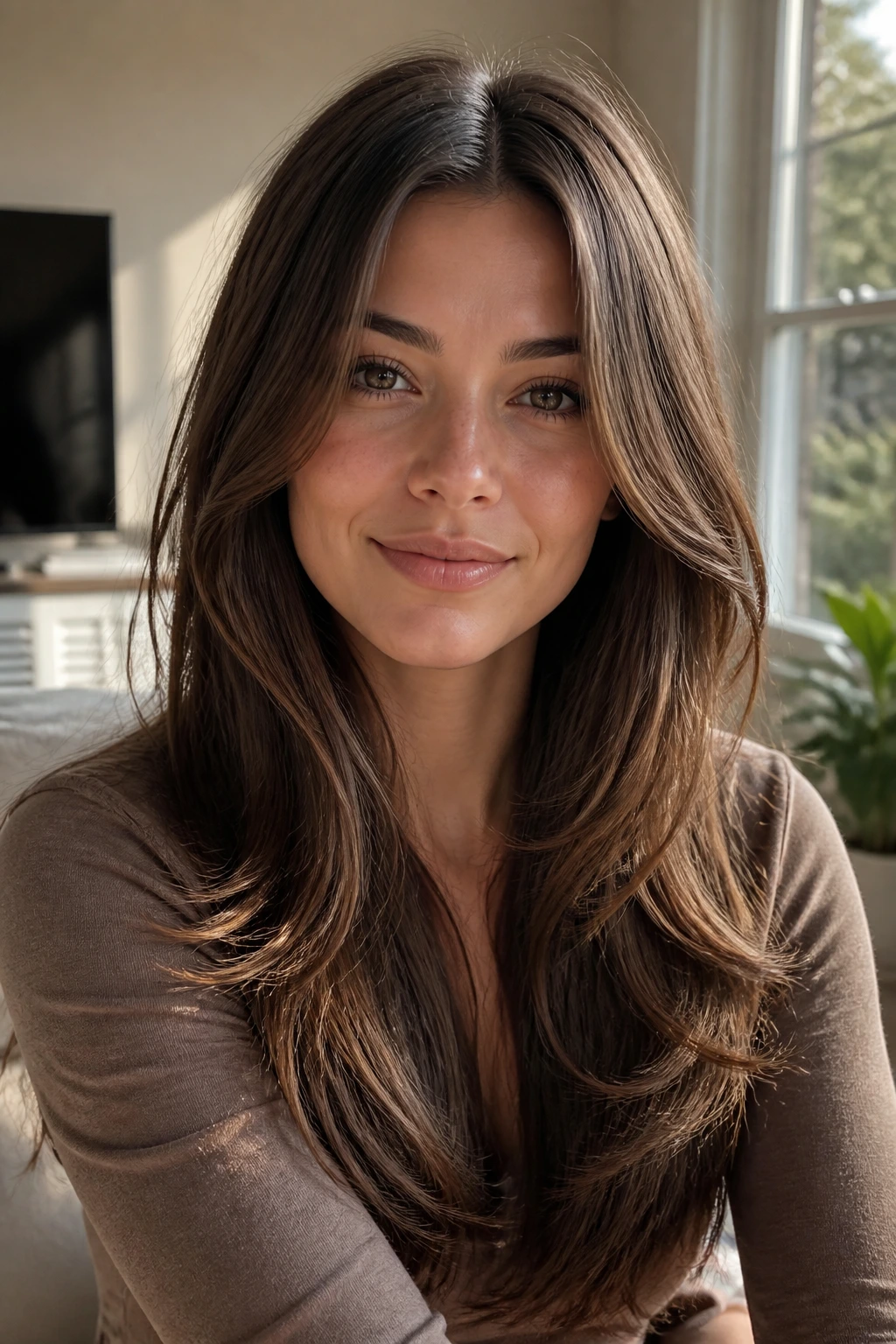
Long layers are the quiet overachiever of round-face haircuts. The length drops below the collarbone, which gives the face a longer frame, and the layers keep the ends from hanging like a heavy curtain. If your hair is thick, this is one of the easiest ways to keep movement without letting the sides puff out too wide.
The center part works here because the hair falls in two clean columns. That makes the face read a little longer, especially when the shortest face-framing pieces start below the cheekbone instead of right at it. I like this best on hair that has some natural bend, because the layers catch a little movement when you walk. Straight hair can wear it too, but it needs a bit of bend at the ends or it can look too severe.
How to style it
Blow-dry with a nozzle attachment and lift the roots at the crown with a round brush. Then bend the front sections away from the face just enough to keep them from sitting flat against the cheeks. That small detail matters more than people think.
A flat, dead-straight finish can make the whole cut feel heavier. A soft turn at the ends fixes that fast.
2. Side-Swept Bangs and Shoulder-Length Waves
Want a fringe without the full commitment of curtain bangs? Side-swept bangs are the old reliable answer. They cut across the forehead on a diagonal, which is one of the easiest ways to soften width at the cheeks without making the face look hidden.
Shoulder-length waves keep the cut from stopping too high on the neck. That’s the part I pay attention to. A wave that lands right at the chin can widen the face; one that drops to the shoulders or just below tends to lengthen it. The trick is not making the wave too tight. Loose bends are better than bouncy curls here.
What makes it work
The bangs should start at the brow and sweep across the face in a soft arc, not a thick block. If your fringe is too heavy, it drags the whole shape sideways. Keep the ends feathered.
Use a 1.25-inch curling iron or a blowout brush, and always curl the front pieces away from the face. It gives the style a little lift without turning it into pageant hair.
3. The Angled Lob That Skims the Jaw
A lob can be excellent on a round face, but only if it has an angle. A blunt, one-length cut that lands right at the widest part of the face? Hard pass from me. An angled lob, with the front pieces a touch longer than the back, gives you a cleaner line and helps the eye travel downward.
This cut is especially good if your hair is fine. The angle creates the illusion of more density at the front without adding weight at the sides. On thicker hair, it removes bulk and keeps the shape from looking boxy. The best version usually lands between the jaw and the collarbone — not exactly on the chin, which is where a lot of round faces get into trouble.
Styling note
Tuck one side behind the ear and leave the other side loose. That tiny asymmetry changes the whole mood. Add a little bend through the ends with a flat iron, not too much curl. You want a soft line, not a ringlet.
4. Textured Pixie with a Side Fringe
Short hair can look fantastic on a round face. Really. The secret is not length; it’s direction. A textured pixie with a side fringe adds height at the top and softness across the forehead, which keeps the face from reading as all width and no line.
The sides should stay close, but not shaved into a hard edge unless that’s the look you want. What matters more is the top. Leave enough length through the crown to create lift, and keep the fringe longer on one side so it falls diagonally across the face. That diagonal is doing a lot of work.
Best for
- Fine hair that needs shape without too much weight
- Straight or slightly wavy hair
- Anyone who likes a cut that dries fast and still looks intentional
Use a matte paste or lightweight styling cream. Rub it between your fingers first, then pinch pieces upward at the crown and through the fringe. If the top lies flat, the whole cut loses its point.
5. Butterfly Cut with Face-Framing Ends
The butterfly cut has become popular for a reason: it gives you layers without hacking off the length. On a round face, it works because the shortest pieces sit around the cheekbone and the longer lengths keep dropping below the shoulders. That creates a layered frame that moves up and down, not just across.
I like this cut on thick hair the most. It removes that bottom-heavy feeling that can make a round face look even rounder. But it also works on medium-density hair if the stylist keeps the top layers soft and avoids over-cutting the crown. The butterfly shape should float, not spike.
Why it suits a round face
The face-framing pieces open up the cheeks without ending exactly there. The longer back maintains a vertical line. That combination gives you lift near the face and length everywhere else, which is the sweet spot.
Blow-dry the face frame with a round brush away from the face, then clip the crown while it cools. That cooling step holds the lift longer than people expect.
6. Deep Side-Part Blowout
This is not a haircut. It’s a styling move that can rescue a lot of cuts. A deep side part instantly breaks the symmetry that often makes a round face look wider. Pair that with a smooth blowout and you get a cleaner silhouette through the top and sides.
The best version has lift at the root, volume at the crown, and ends that curve softly away from the cheeks. No helmet hair. No over-teased crown. Just enough height to shift the balance upward. If your hair falls flat against your head, this style gives you instant structure.
What to ask for at the salon
If you want this to work long term, ask for a cut that can tolerate a deep part on either side. That means face-framing pieces that are not too short and layers that fall gracefully when the part moves. You should be able to switch the part back and forth without the haircut collapsing.
Velcro rollers are useful here. Old-school, yes. Still useful.
7. Soft Shag with Choppy Ends
A shag can be terrific on a round face, but only when it stays soft. I’m not talking about the kind that explodes outward at the sides and turns your head into a sphere with opinions. I mean a layered shag with wispy ends, a little crown lift, and edges that taper instead of stopping bluntly.
The reason it works is simple: irregular lengths interrupt the round outline. Your eye doesn’t lock onto one clean circle. It moves around the cut. That movement is the whole point. Wavy and curly hair take especially well to this shape because the natural texture makes the layers feel deliberate instead of messy.
Styling move
Scrunch in a lightweight mousse, diffuse until about 80 percent dry, then separate the curls with your fingers. Don’t rake through it too much or you’ll blow up the shape. A shag should look lived-in, not frizzy.
8. Chin-Grazing Bob with Internal Layers
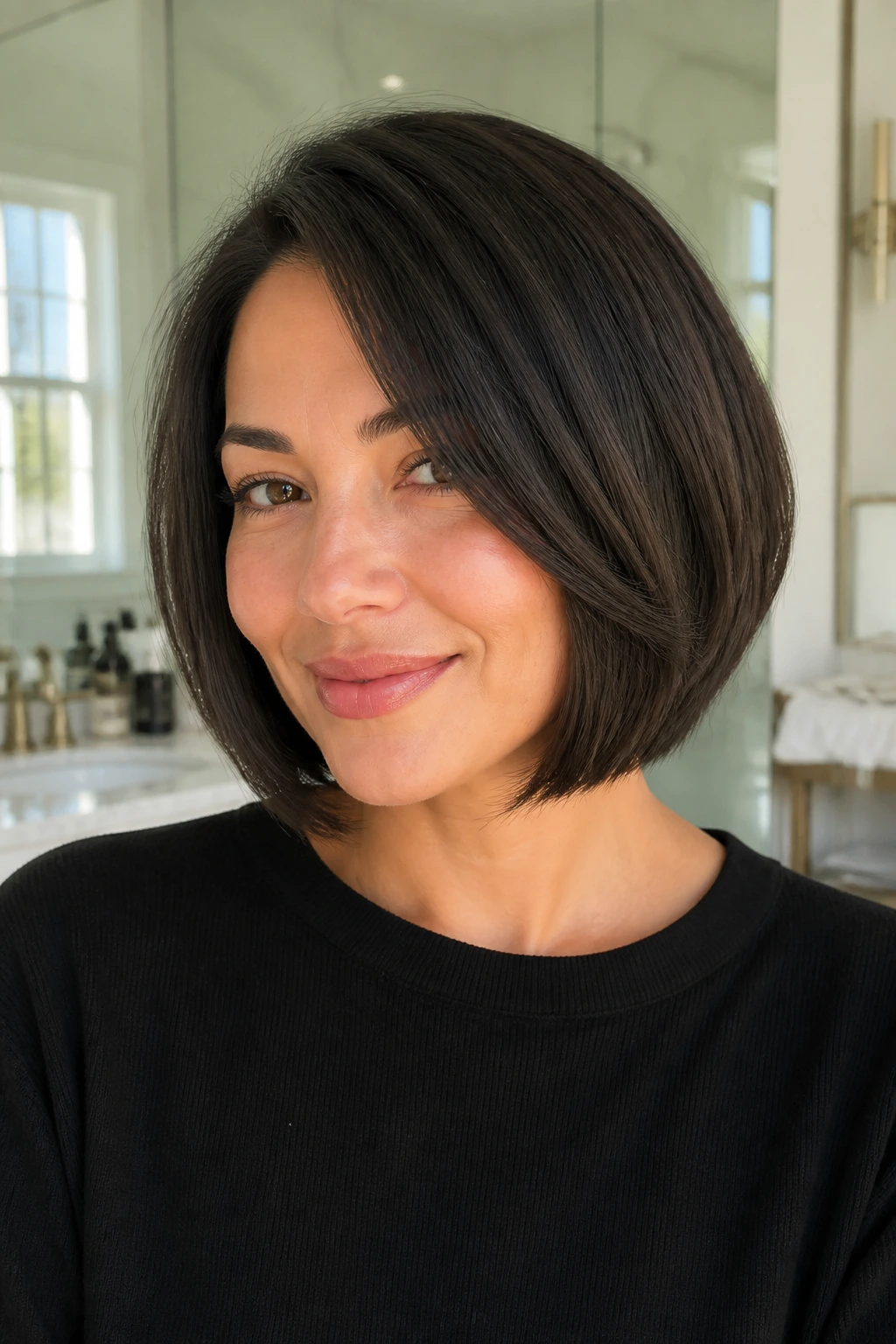
Can a chin-length bob work on a round face? Yes — if it’s cut with restraint. The danger is a blunt line that lands right at the fullest part of the cheeks. The fix is internal layering and a slight angle so the bob doesn’t read as one heavy block.
This version should feel airy, not dense. The back can sit a touch shorter to give lift, while the front drops just past the chin. That tiny difference changes the whole line. If your hair is thick, internal layers keep it from ballooning. If your hair is fine, they stop the bob from going flat and sad by noon.
H3: The part makes or breaks it
A center part can work if the hair has movement, but a side part usually gives this cut more lift and more shape around the face. I prefer a side part with a bob this short because it stops the eye from sitting dead center.
Use a round brush or a flat iron bend at the ends. Keep the curve soft. Too much curl and the bob starts fighting the face instead of framing it.
9. Long Straight Hair with Invisible Layers
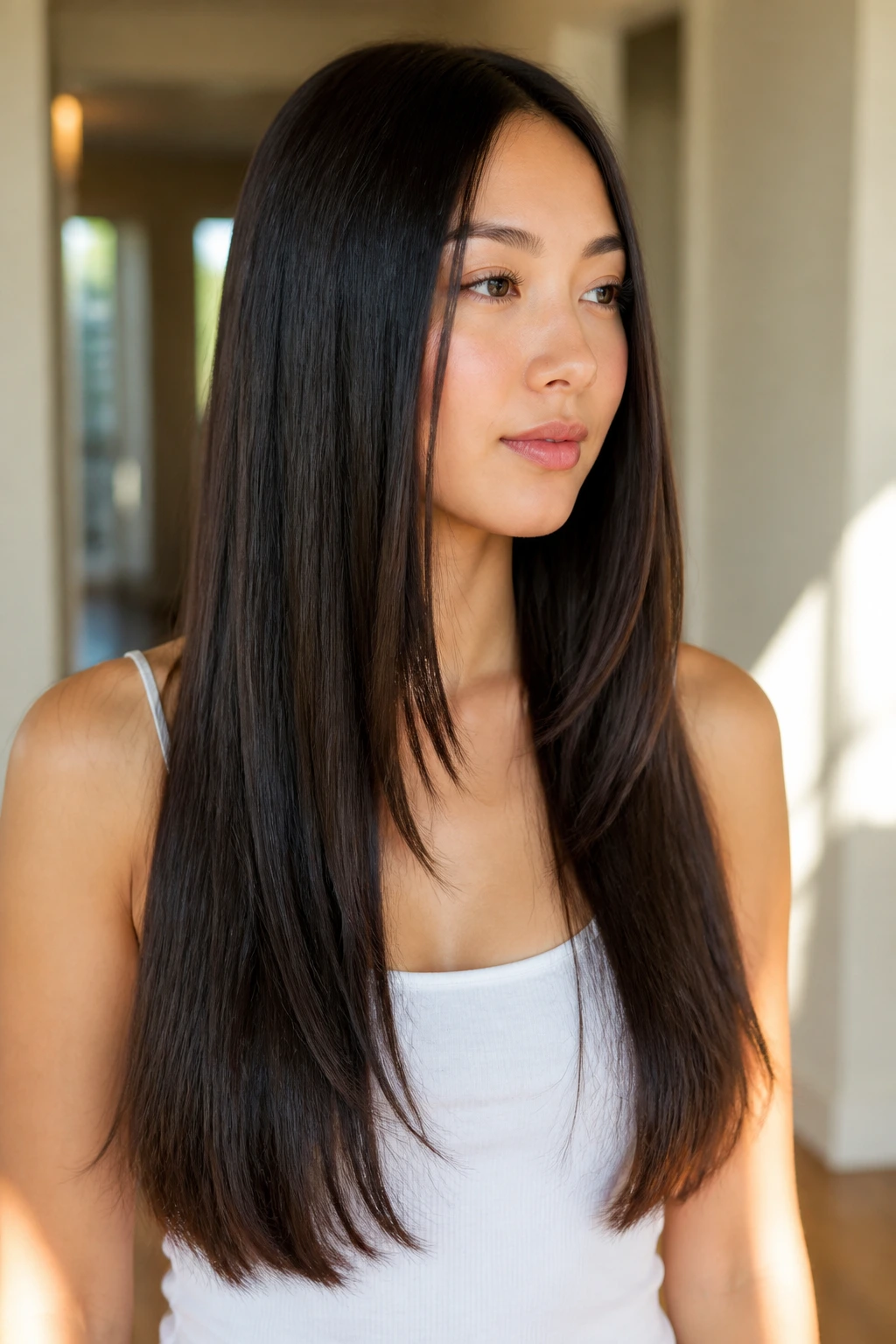
Long, straight hair can look elegant on a round face, but only if it has enough movement to avoid that flat sheet effect. Invisible layers solve that. They take weight out of the interior without announcing themselves from across the room, which means the hair still looks long and smooth, just less heavy.
The key is where the shortest layers start. They should be below the chin, often closer to the collarbone, so they don’t widen the face where it already has width. That’s the part too many cuts get wrong. A short face frame on pin-straight hair can create a shelf. A longer, softer layer gives you shape without the shelf.
This is a good choice if you want low drama and low maintenance. Air-dry with a smoothing cream, or blow it out with a paddle brush and finish the ends with a slight bend inward or outward. Either works.
10. Curtain Bangs and Long Cascading Length
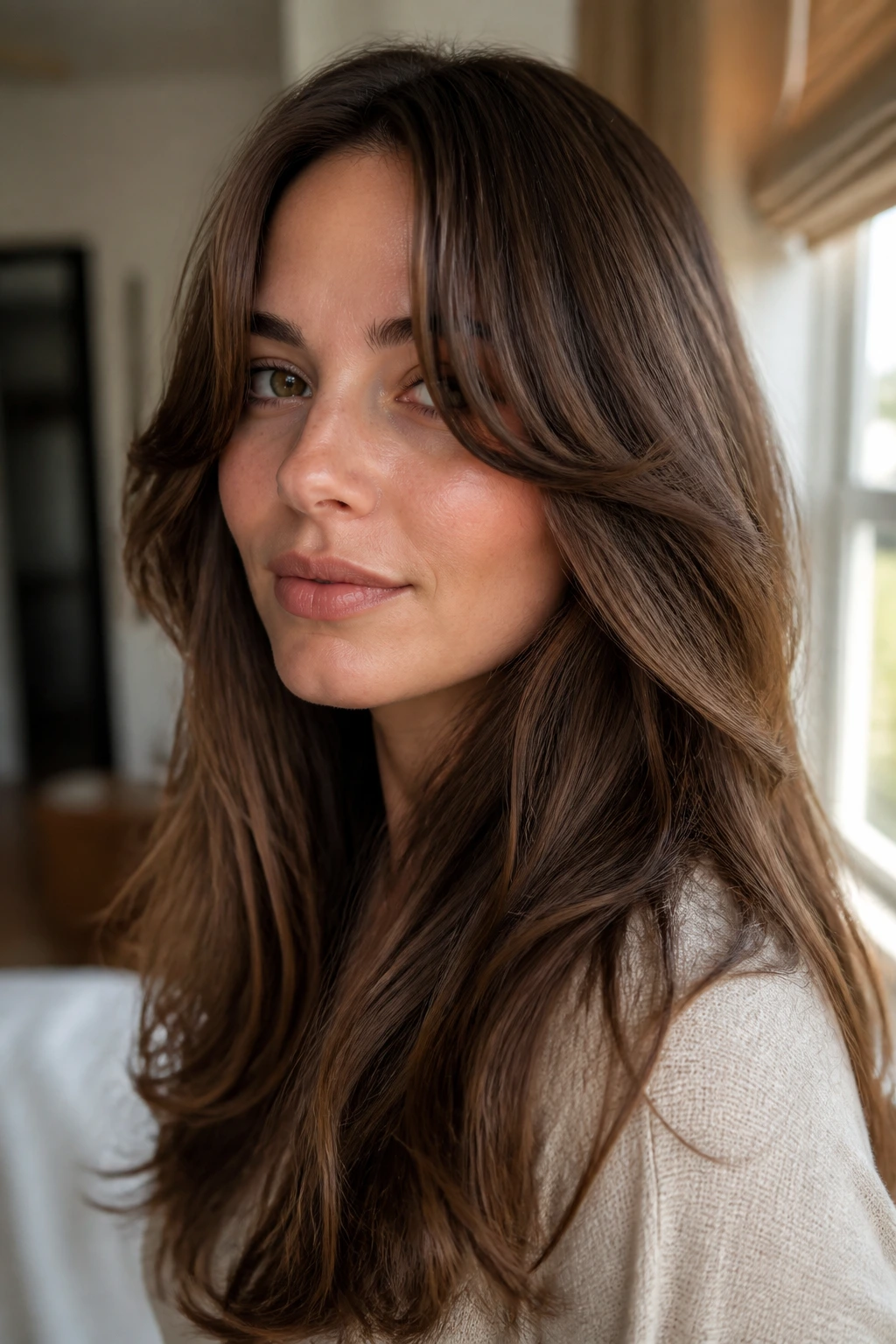
Curtain bangs remain one of the easiest ways to make a round face look longer without going short. The split in the middle opens the face, and the longer sides sweep past the cheekbones instead of stopping on them. That alone makes the shape feel less boxed in.
I’m picky about the length here. Curtain bangs need to be long enough to fold out around the face, not short enough to sit like a curtain rod. On a round face, I like them to start near the brow and taper down toward the cheekbones or even the top of the jaw, depending on hair texture. Curly hair needs even more length because shrinkage can pull the bangs up faster than expected.
How to keep them soft
Blow-dry each side with a small round brush, rolling the hair away from the face and then letting it cool in your hand for a second. That little cooling pause helps the bend hold. If the bangs split too wide, mist a bit of water and reset them before they dry crooked.
11. High Ponytail with Crown Lift
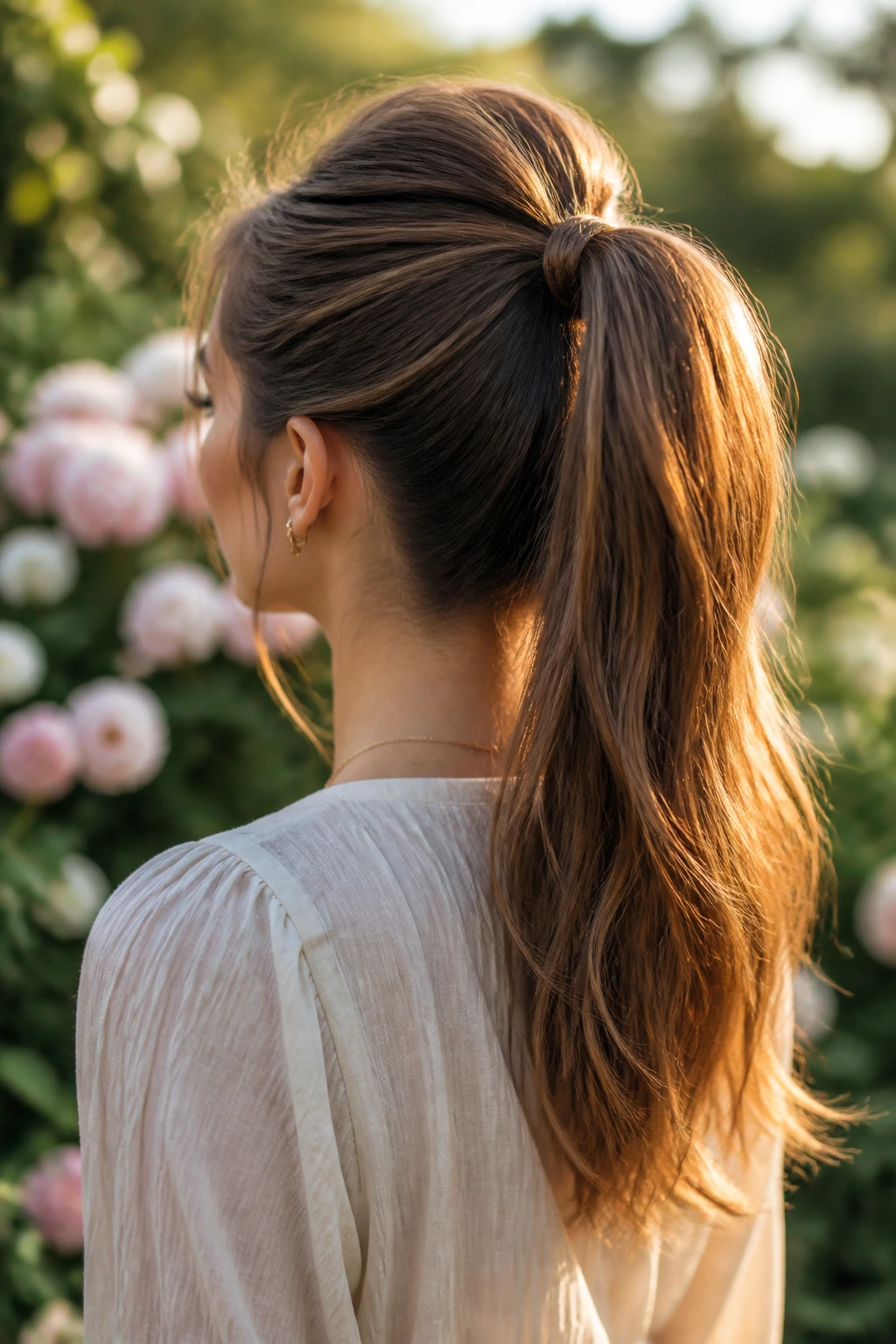
A high ponytail changes the face shape without changing the cut. It pulls the eye up, lifts the profile, and exposes the jawline in a way that can be surprisingly flattering on a round face. The pony needs to sit high enough — crown height, not mid-head.
The reason this works is the same reason a high bun works: vertical movement. Add a little lift at the roots before you gather the hair, and the top of the head gets more presence. That extra height changes the balance of the face. If you slick it back too tightly at the temples, though, you can overexpose the width. Leave some softness or a tiny bit of lift at the front.
Wrap a small piece of hair around the elastic. Always. It finishes the look and keeps the base from feeling utilitarian.
12. Low Bun with Tendrils and Height at the Crown
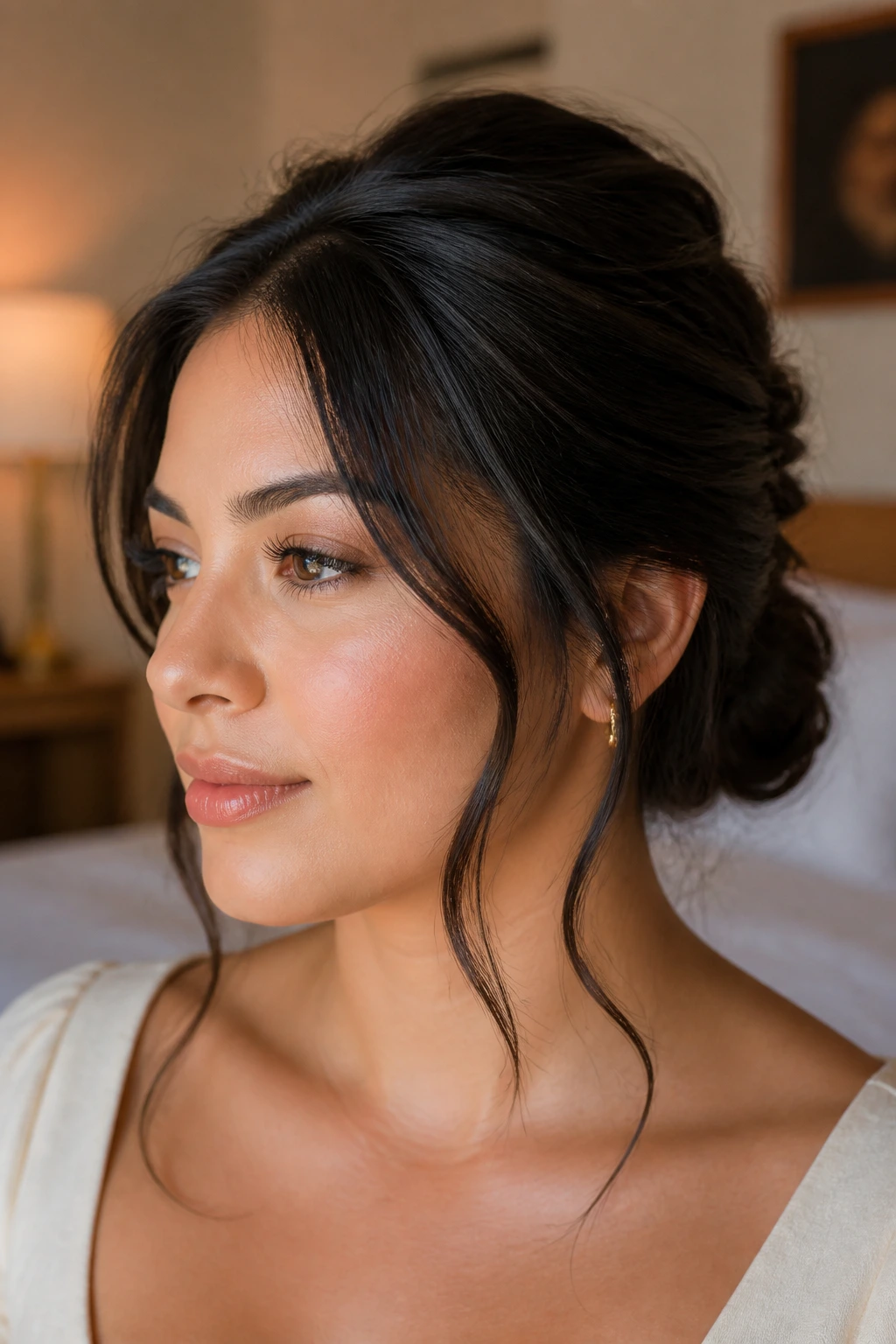
A low bun can absolutely work on a round face, even if people assume all low styles make the face look wider. The trick is leaving a bit of lift at the crown and a few soft pieces around the face so the style doesn’t flatten everything into one line.
I like this look when the bun sits low and slightly off-center, not dead in the middle like a school recital. The front pieces should graze the cheekbone or jaw, not cling to the cheeks. If they’re too short, they widen the face. If they’re too long and limp, they look accidental. There’s a middle ground, and it’s worth finding.
Use a few bobby pins crossed in an X for better hold. It sounds fussy. It isn’t. It keeps the bun from sagging by lunch.
13. Half-Up Half-Down with Volume at the Roots
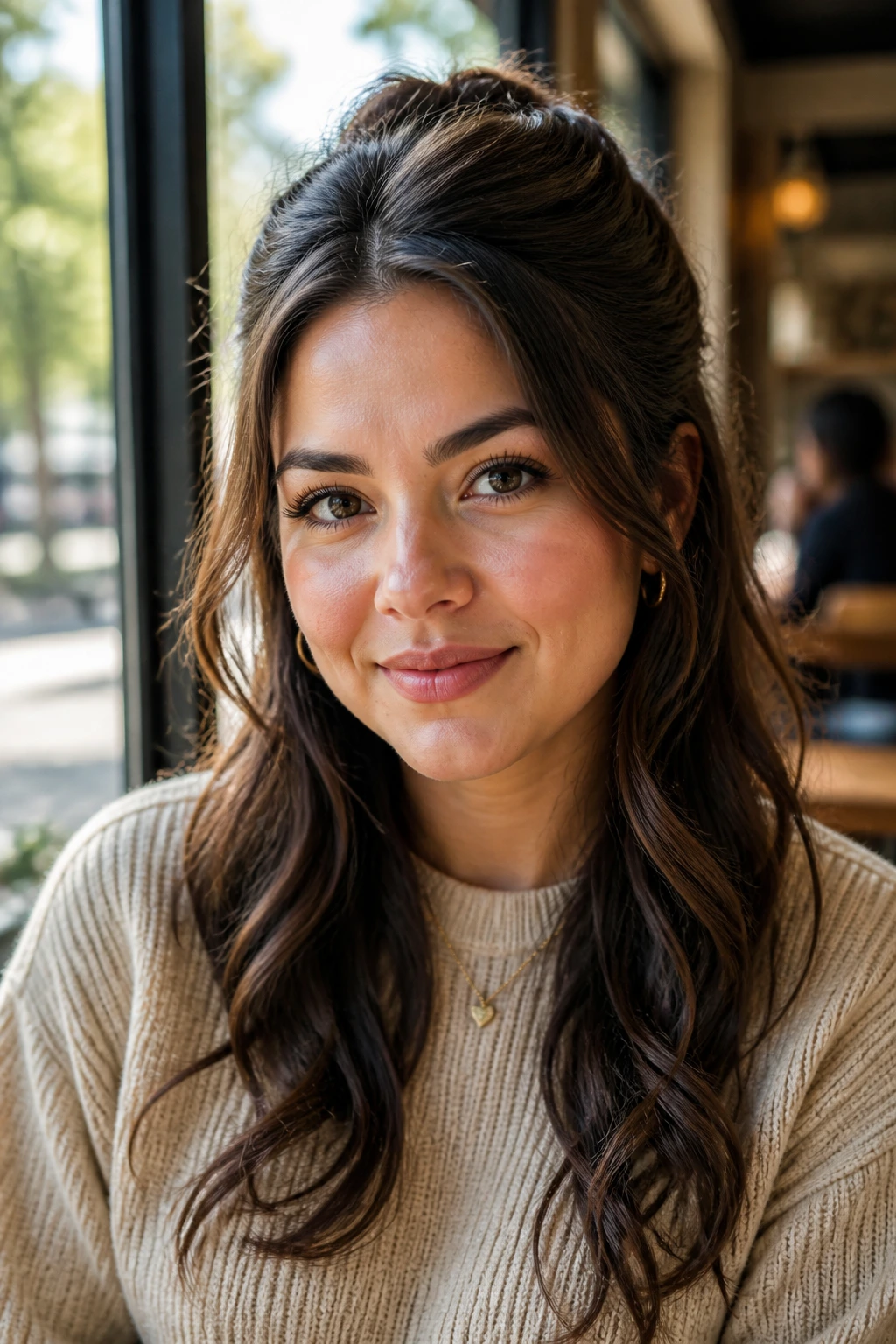
Half-up styles are sneaky good for round faces because they give you two things at once: lift on top and softness around the cheeks. The top half draws the eye upward, while the loose bottom half keeps length around the face. That balance is what makes it work.
The mistake is taking too much hair from the sides and pulling it straight back. That can widen the cheeks. Instead, gather the top section from slightly above the temples and leave the lower sides loose. Tease the crown a little before clipping or tying it up. A quarter inch of volume changes the whole silhouette.
This works especially well with waves and curls. The texture gives the style movement without making it feel overdone. If your hair is straight, bend the front pieces with a large-barrel iron so the style doesn’t look too severe.
14. Loose Curls with a Side Part

Loose curls are one of the simplest ways to soften a round face, provided the curl size stays large and the part isn’t dead center every time. A side part breaks the symmetry, and loose curls keep the face from feeling overwhelmed by volume at the sides.
The curl pattern matters. Tight curls at cheek level can widen the face if they flare outward too much. Loose curls that start below the cheekbone and fall in smooth waves do the opposite. They create length. They also catch light better, which adds shape even before you think about the face shape part of the equation.
H3: Where to place the volume
Keep the fullness slightly lower and a little farther down the hair shaft. Crown volume is fine. Side volume right at the cheeks is the part to watch. Brush the curls out only lightly, or they’ll expand too much.
I prefer a 1.25- to 1.5-inch iron here. Smaller barrels usually make the result too dense for this face shape.
15. Collarbone-Length Flip
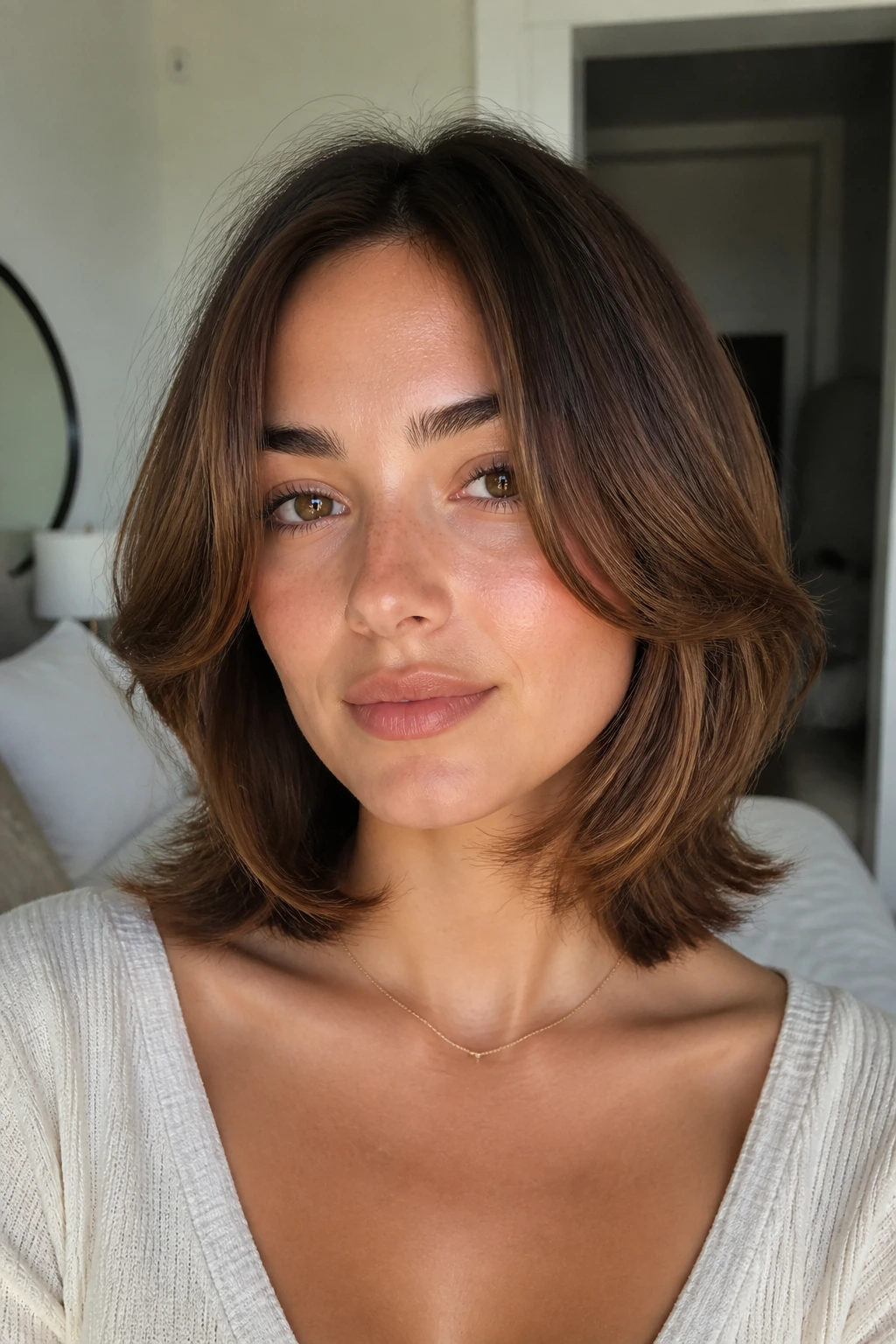
A collarbone-length cut with flipped ends is one of my favorite everyday choices for round faces. Why? Because the collarbone sits below the widest part of the face, and the flipped ends add movement without creating a blunt shelf. It’s simple, but simple in the smart way.
The shape can go inward, outward, or a little both, depending on your hair and your mood. Outward flip feels lighter and more open around the jaw. Inward bend feels more polished. Either way, the hair should skim the collarbone and keep going. Nothing should cut off right at the chin.
This is a nice option if you want a style that looks finished even on a normal day. A medium round brush and a quick blow-dry at the ends are usually enough. If you want more lift, flip the front pieces away from the face and leave the back more neutral.
16. Asymmetrical Bob
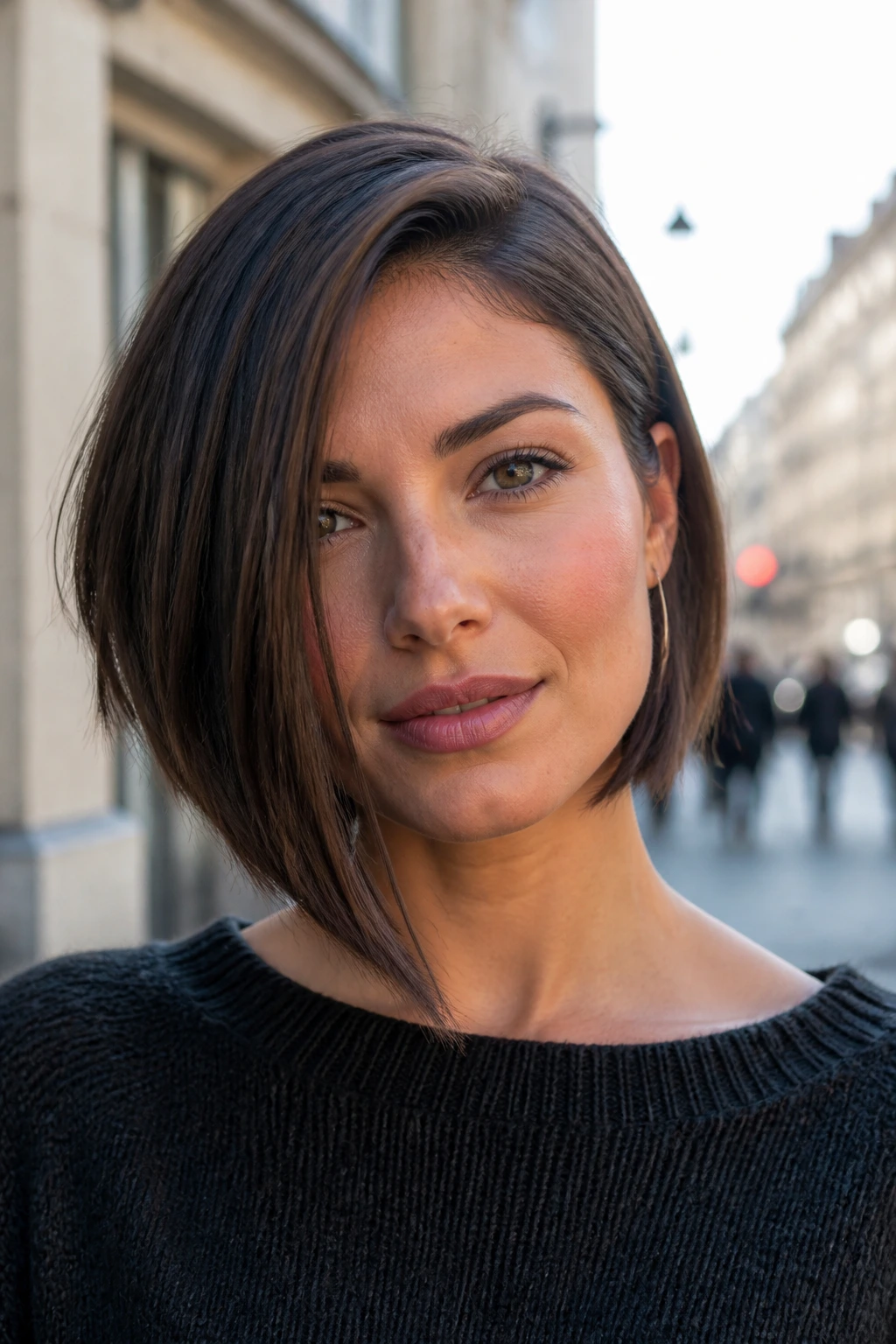
A true asymmetrical bob is not for everyone, and that’s fine. I like it because it adds deliberate imbalance, which is useful on a round face. One side is a touch longer, the line is clearly angled, and the eye has nowhere to sit still. That movement helps the face feel longer and more sculpted.
The cut needs to be clean. If the asymmetry is sloppy, it looks like a mistake instead of a choice. The shorter side should still graze below the cheekbone or ear line, and the longer side can sweep toward the collarbone. This gives the style enough edge without making it hard to wear.
Who should consider it
If you like structure, this is a strong pick. If you want a wash-and-go cut that never asks questions, maybe not. It looks best when it’s either sleek or intentionally tousled — somewhere in between can feel muddy.
17. Braided Crown with Soft Pieces Left Out
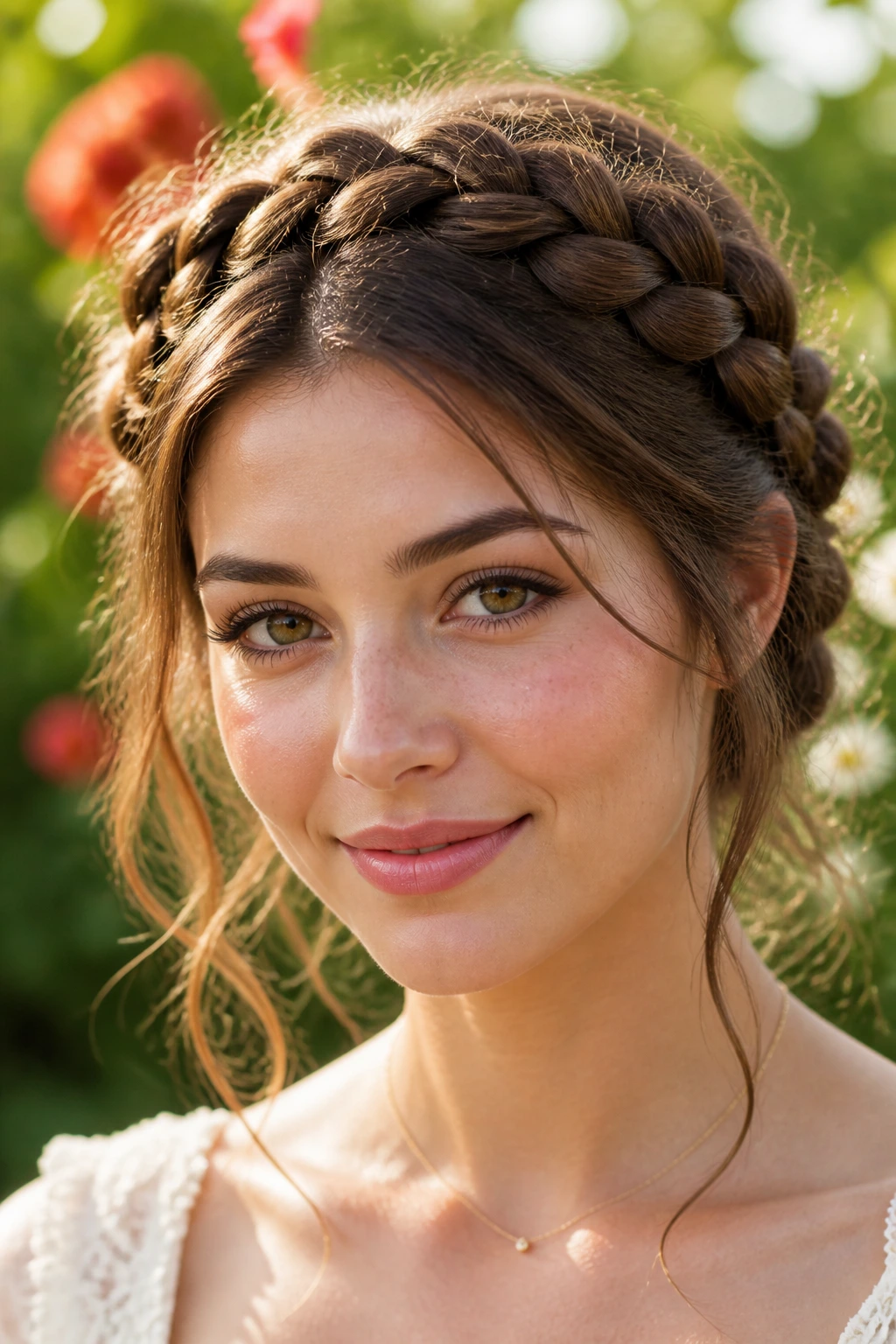
Braids can be surprisingly kind to round faces, especially when the braid sits high or wraps around the head without pinning every strand tight. A braided crown pulls the eye upward and keeps the face open. Leave a few loose pieces at the temples and around the ears, and the style stops looking severe.
I like this for days when you want the hair off your neck but don’t want a plain ponytail. The loose pieces soften the face line, and the braid itself adds shape near the top of the head. Just don’t pull it too tight from the sides. That can flatten the width and make the face seem broader by comparison.
A textured braid holds better than a perfectly smooth one. Spray a little dry texture spray on second-day hair before braiding. It gives the strands enough grip to stay put.
18. The Modern Wolf Cut

The modern wolf cut can work on a round face if it’s cut with restraint. Too much width through the sides, and it loses the plot fast. The version that suits round faces keeps the crown airy, the layers soft, and the longest pieces past the jaw or shoulder line.
This cut has a lot of energy. That’s why people like it. But the energy needs direction. Ask for face-framing layers that start below the cheekbone and shaggy texture that does not puff out at the widest part of the face. The goal is a rough, undone edge that still keeps the silhouette vertical.
A useful warning
If your hair is very fine and very straight, a wolf cut can look thinner than you want. In that case, ask for softer layers and less internal removal. You want movement, not gaps.
19. Shoulder-Length Layers with Outward-Bent Ends
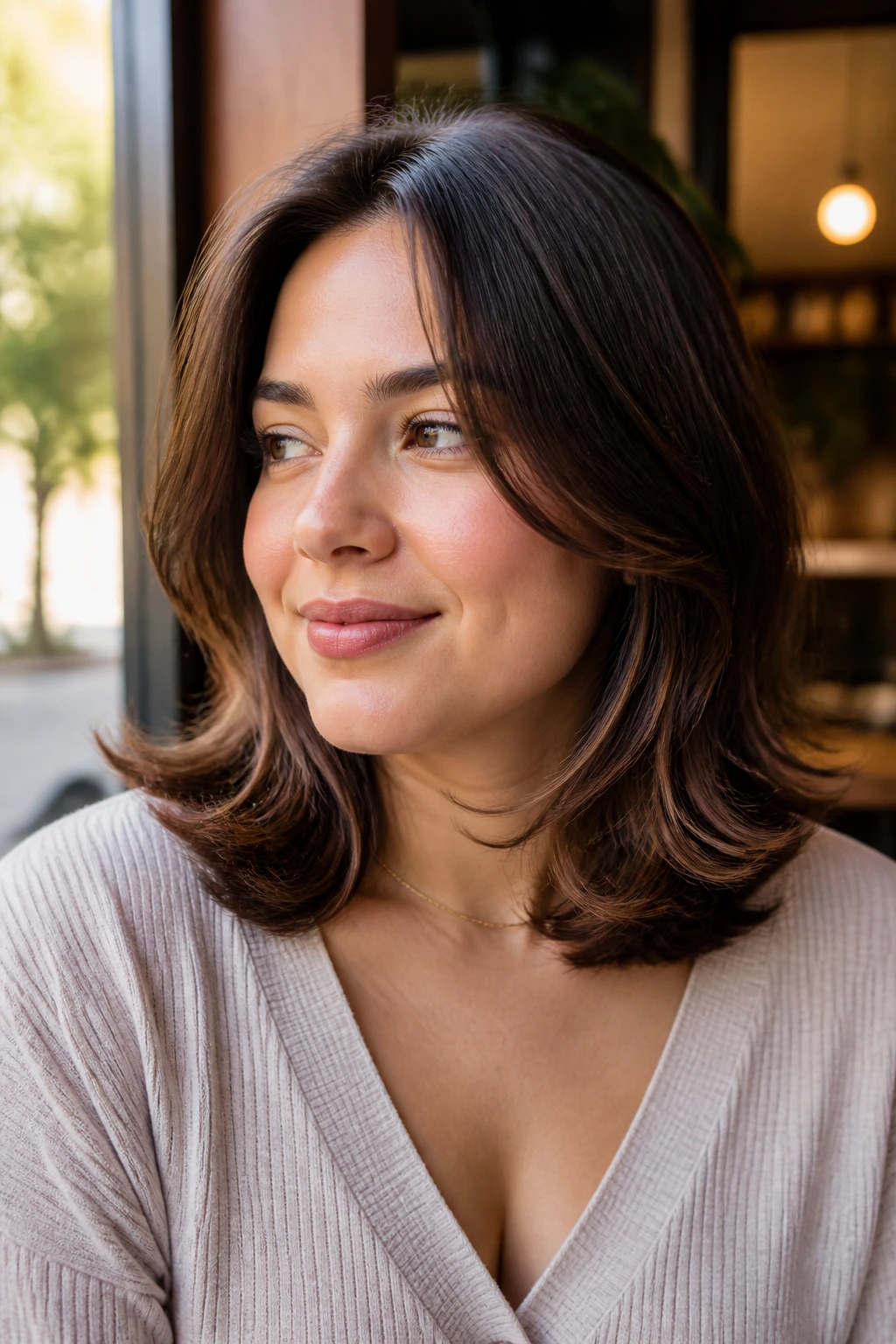
Shoulder-length hair sits in a useful place for round faces because it drops below the chin but doesn’t feel too heavy. Add layers and a slight outward bend at the ends, and the whole shape feels open instead of boxed in.
The outward bend matters more than people think. It moves the ends away from the face, which helps the silhouette breathe. Straight hair can look a little stiff at this length if it’s cut blunt, so those layers and bends keep it from turning into a block. On wavy hair, the shape usually comes more naturally.
This is a good middle path if you’re not ready for long hair or short hair. It gives you enough length to style in different ways, but not so much that it drags.
20. Slick Back with Soft Front Pieces
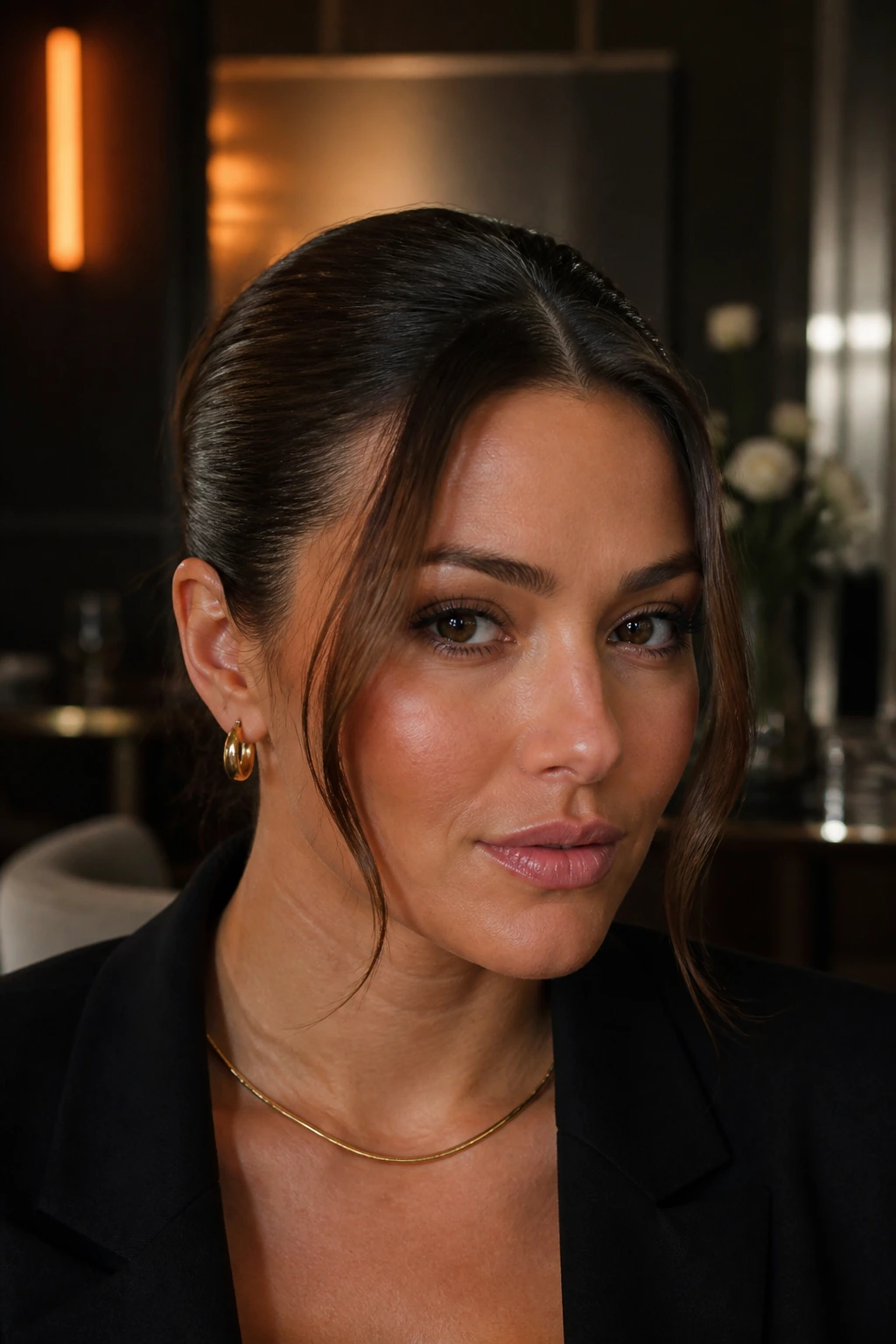
A slicked-back look on a round face can be dramatic in a good way. The slicking pulls the hair off the sides, which exposes the bone structure and gives the face a longer, cleaner line. The soft front pieces keep it from feeling too harsh.
I like this for events, humid days, or any time you want the face to do the talking. Use gel or pomade through the top and sides, but leave two narrow pieces at the front or temples loose if you want a little softness. That contrast is what makes the style work. All slick, no looseness, can feel severe. Too much looseness, and you lose the point.
This is one of those styles that looks more intentional when it is done slightly imperfectly. A tiny bit of texture at the crown keeps it from looking pasted down.
Why Round Faces Need Height, Angles, and a Little Asymmetry
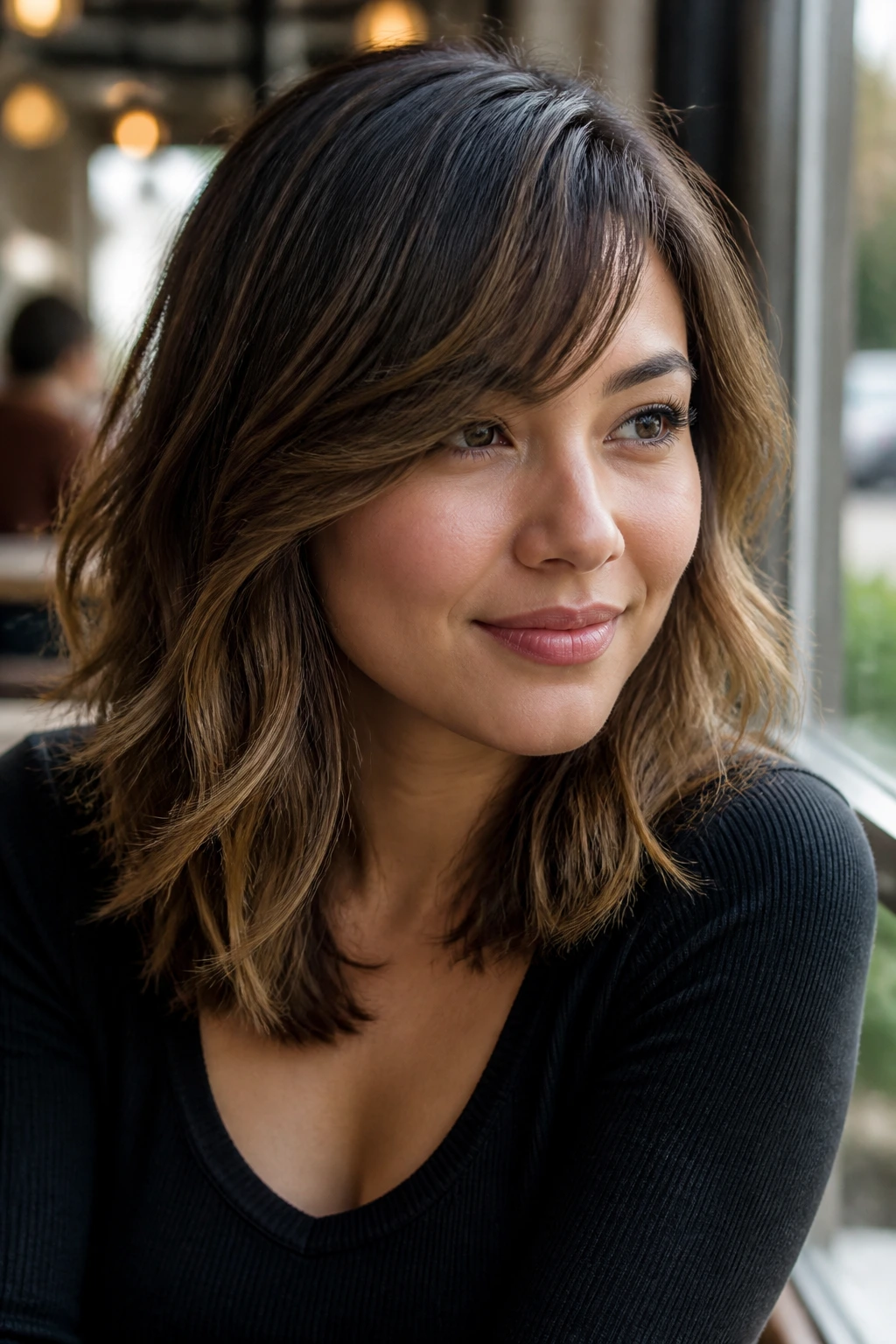
A round face is defined less by size than by balance. The width through the cheeks and the length from forehead to chin often feel close, and that means the haircut has to create a new line somewhere. Height does one job, angles do another, and asymmetry gives the eye a path.
That’s why blunt shapes can be tricky. A hard line at the chin or cheeks can stop the eye right where the face is widest. A side part, a diagonal fringe, or layers that start lower can change that quickly. The face doesn’t need to be hidden. It needs a frame with some movement in it.
Texture matters too. A round face with flat hair can look wider simply because there’s nowhere for the eye to go. Add a bend at the ends or lift at the crown, and the silhouette changes. That’s the whole game.
Essential Tools for These Styles
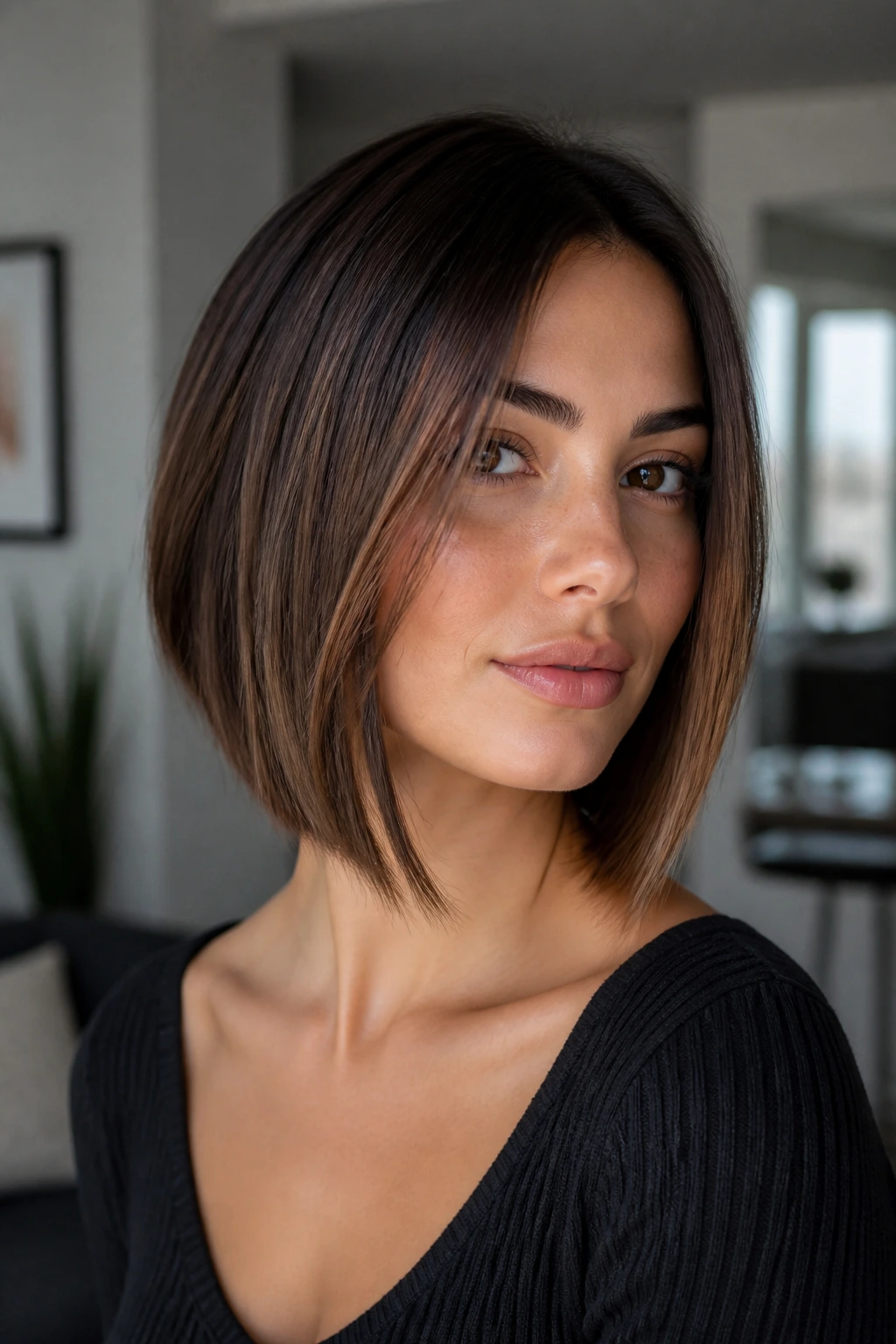
- Blow dryer with a nozzle: The nozzle keeps airflow directed so you can lift roots instead of blasting the hair everywhere.
- Medium round brush: Use this for bobs, lobs, curtain bangs, and soft bend at the ends.
- Large round brush or blowout brush: Helpful for shoulder-length and longer styles that need movement without too much curl.
- Fine-tooth tail comb: Best for clean side parts and sectioning bangs.
- Curling iron or wand, 1.25 to 1.5 inches: A wider barrel gives soft waves that suit round faces better than tight curls.
- Flat iron: Useful for a slight bend on the ends or a polished asymmetrical bob.
- Texturizing spray: Adds grip and a little grit to pixies, shags, and braids.
- Dry shampoo: Saves flat roots and keeps crown volume alive on day two.
- Bobby pins and small elastics: Needed for ponytails, buns, half-up styles, and braid work.
- Heat protectant: Non-negotiable if you’re using heat more than once a week. Thin mist, even coverage, no soaking.
Smart Product and Shopping Tips for Round-Face Hair
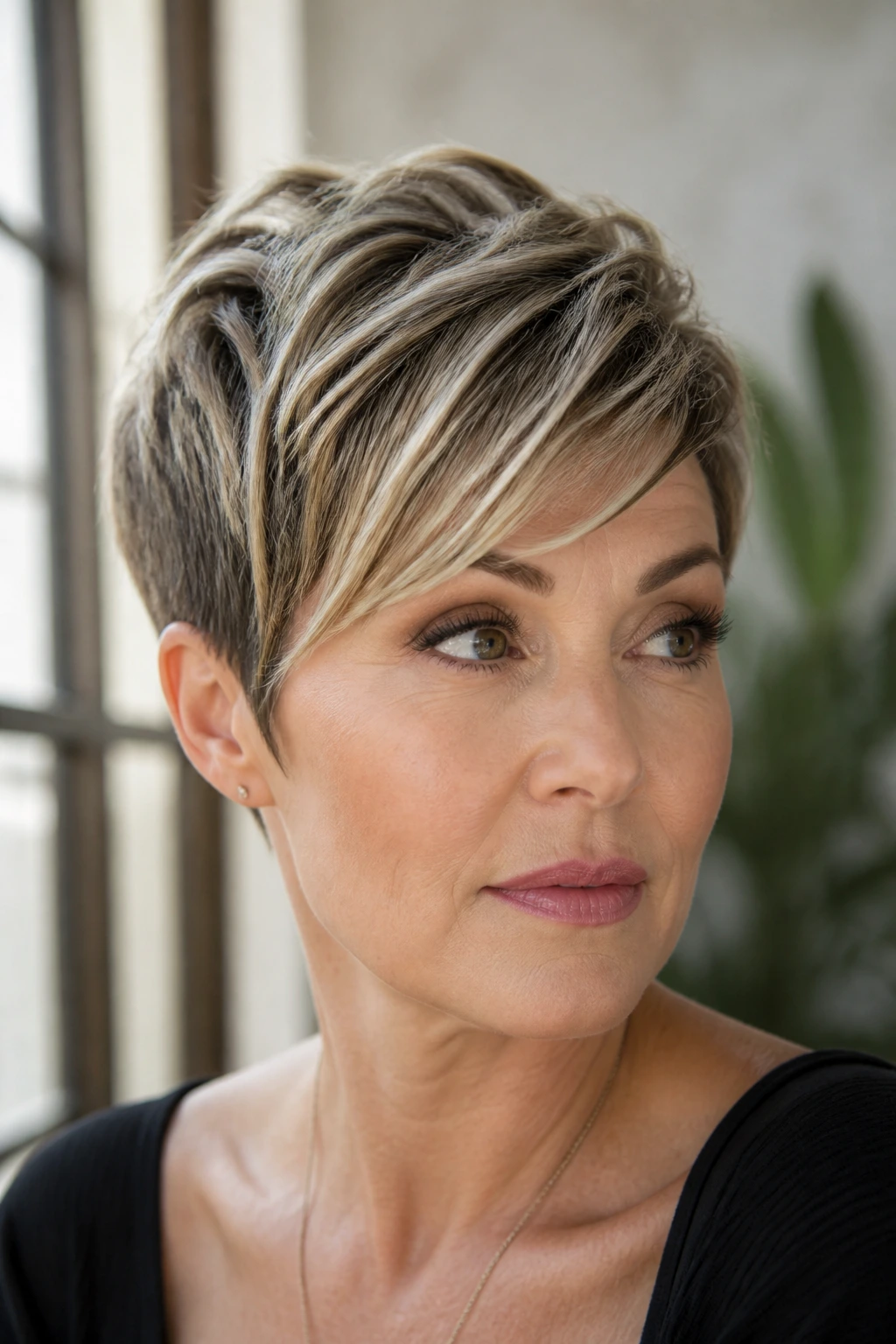
Buy products for the finish you want, not the label on the bottle. “Volumizing” sounds nice, but if your hair is thick and puffy, a strong volumizing mousse can leave it too wide at the sides. In that case, you want a smoothing cream with a light hold and a heat protectant that doesn’t weigh the hair down. Fine hair is the opposite story: root-lift spray, airy mousse, and a dry texture spray will usually help more than rich creams.
When you’re choosing a haircut at the salon, ask where the shortest layer will sit. That’s a more useful question than asking for “face framing,” which can mean almost anything. On a round face, the shortest face-framing layer often works best below the cheekbone. If the stylist wants to bring it up higher, ask them to explain why. Sometimes it works. Sometimes it doesn’t.
Pay attention to your parting habit too. If you always wear a center part, make sure the cut still moves when you shift it. If you love a side part, tell the stylist which side you prefer. Hair lies differently depending on the direction it’s trained, and a cut that ignores that can feel off from day one.
Texture products matter more than most people think. A light mousse can hold a wave without turning it crunchy. A matte paste can keep a pixie from going fluffy. And a flexible hairspray is better than the stiff, shell-like stuff that makes every strand fight for its life. That old-school helmet look does nobody any favors.
How to Wear These Hairstyles in Real Life
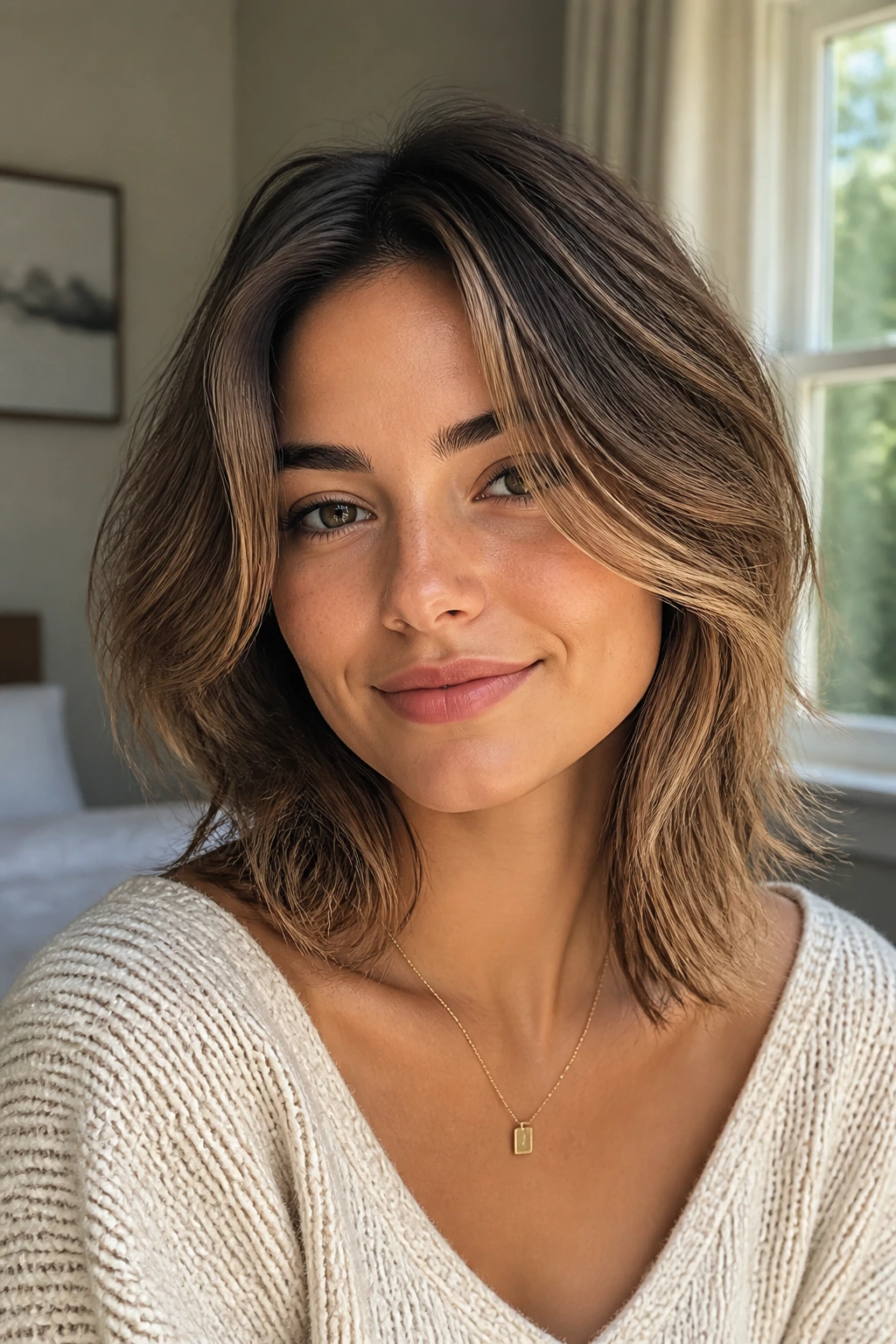
Salon Request: Bring a photo, yes, but also say where the shortest piece should land and how much daily styling you’re willing to do. “I can handle five minutes” is useful information. So is “I never use a curling iron.”
At-Home Styling: Match the cut to the texture you actually have. A round face does not need more work; it needs the right direction. If your hair is wavy, lean into bends and soft layers. If it’s straight, give the ends a tiny curve and add crown lift.
Finish: Round faces usually look best when the style has a little movement near the top and a cleaner edge through the cheeks or jaw. That can mean a polished blowout, or it can mean dry shampoo and a finger-combed wave. Both are valid. The wrong move is too much width in the middle third of the face.
Frequency: If you like bangs, budget for trims more often. If you prefer long layers, keep them trimmed before the shape gets stringy. A good cut can grow out nicely, but only if the initial shape was built with grow-out in mind.
Styling Mistakes That Make a Round Face Look Wider
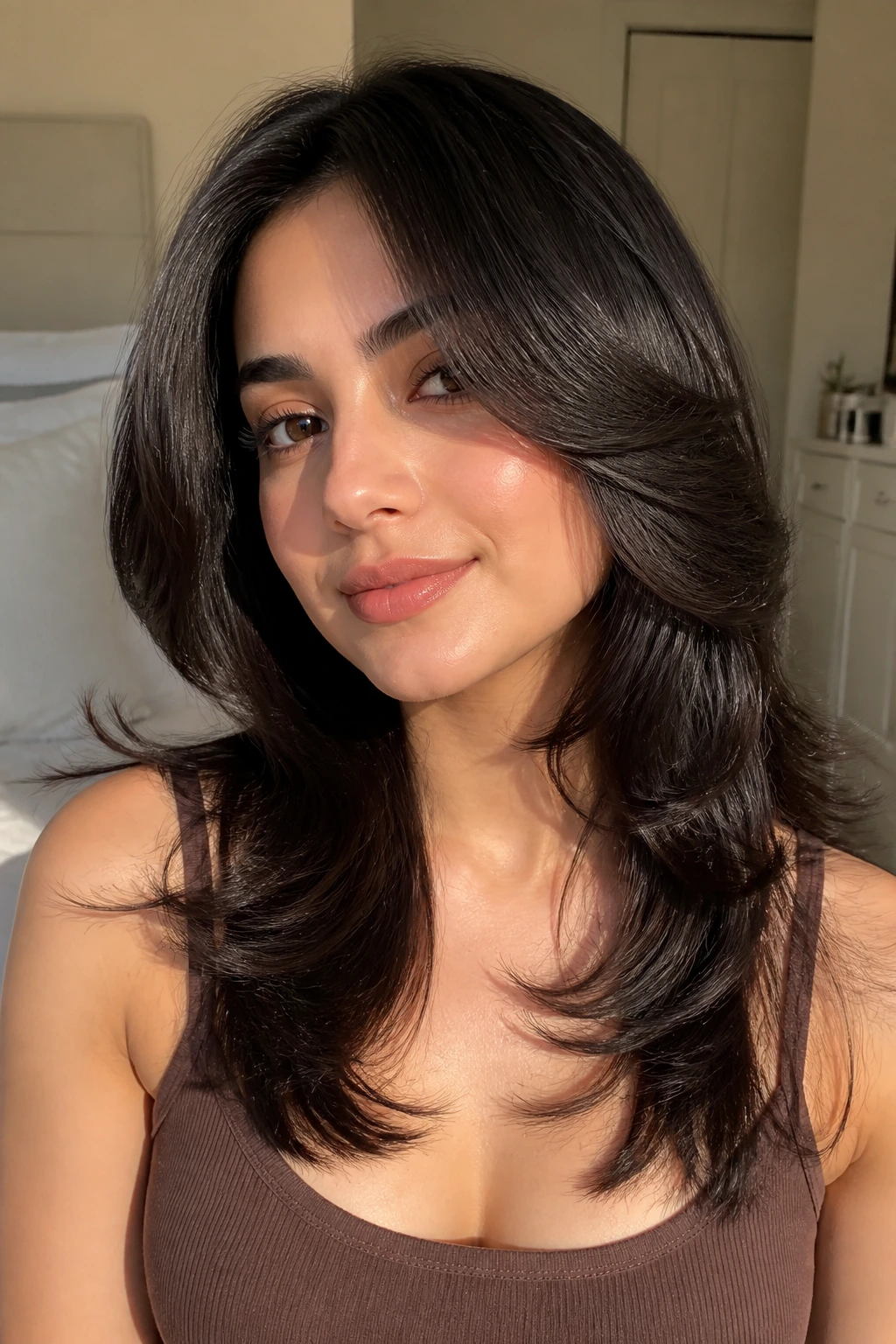
The most common mistake is ending the haircut at the widest part of the face. Chin-length bobs, heavy layers at cheek level, and bangs that stop straight across the forehead can all do this. The fix is simple: move the line up, down, or diagonally. Anywhere but dead center.
Another issue is too much side volume. Big, fluffy width at the cheeks can make the face feel broader than it is. If you like volume, keep it at the crown or through the lower lengths. That gives lift without expanding the face sideways.
Flat roots are sneaky. A style can look great for ten minutes and then collapse into a soft triangle. That’s especially common with medium-length hair and center parts. A little root spray and lift at the crown will save you from that slump.
Bangs can go wrong when they’re cut too short or too dense. Short bangs on a round face can make the forehead look smaller, which makes the lower half of the face feel heavier by comparison. Softer, longer fringe usually does better.
And one more: over-curling. Tight curls right at the cheeks create a wide halo effect. Use larger barrels, brush the curls out a little, and keep the shape loose around the widest part of the face.
Variations and Alternatives to Try
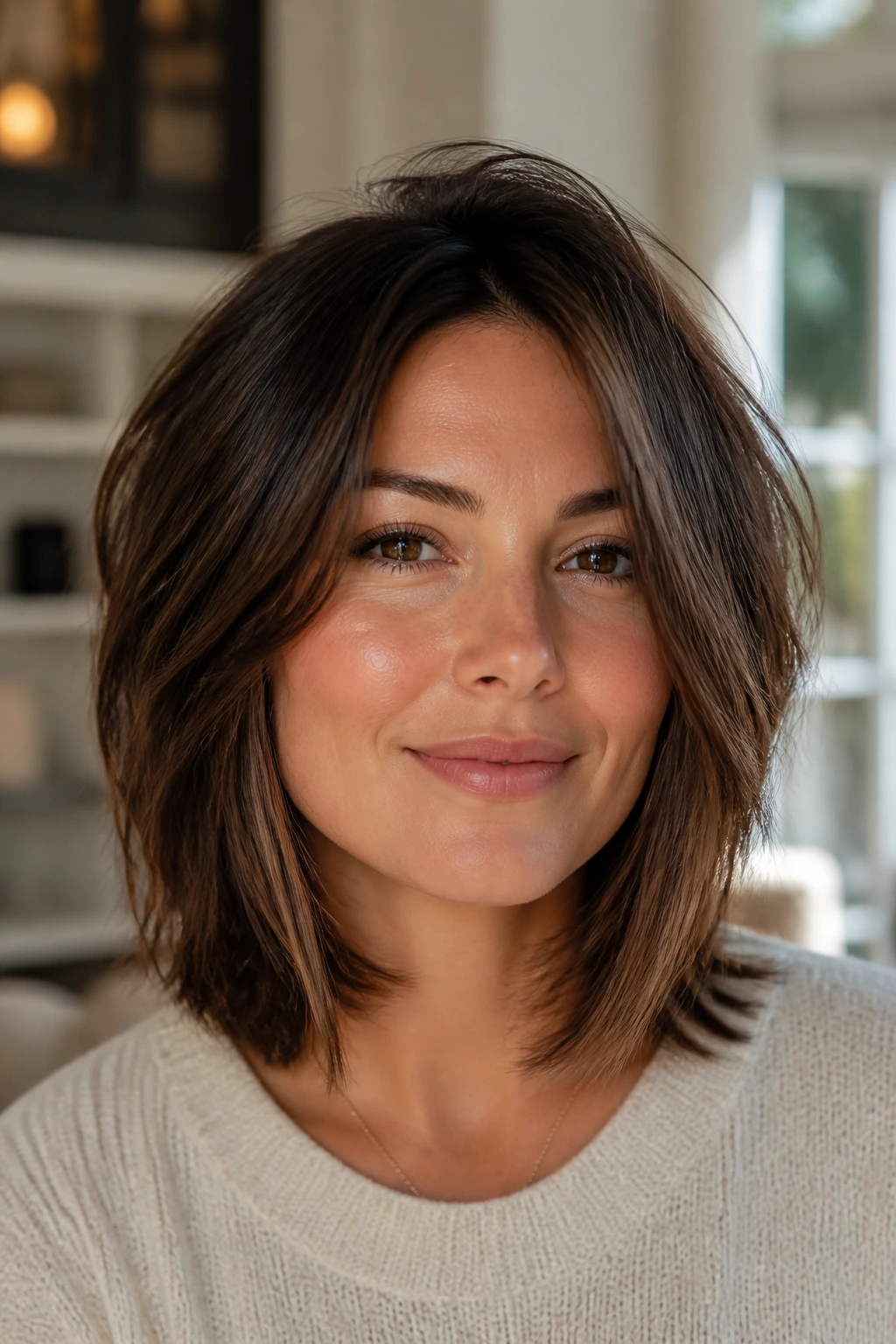
Curly-First Version: If your hair is naturally curly, keep the shortest face-framing pieces longer than you think you need. Curl spring will shorten them, sometimes by an inch or more. Ask for shape, not a bunch of removed length.
Fine-Hair Shortcut: Fine hair often looks best with fewer layers and more strategic lift. A lob, soft bob, or collarbone cut with crown volume usually gives more presence than a heavily layered style that thins out the ends.
Low-Heat Version: If you rarely heat-style your hair, choose cuts that work with air-drying: long layers, soft shags, and curtain bangs that can dry into place. Add a little mousse, twist the front pieces once, and let them go.
Short-Hair Switch: Not every round face needs longer hair. A pixie with a long fringe or an asymmetrical bob can be stronger than long hair if you want definition and less fuss.
Event-Night Version: Take any of the softer styles and add a deep side part, one tucked side, and a polished wave at the front. That small change makes even a simple cut feel dressy.
Keeping the Shape Between Cuts
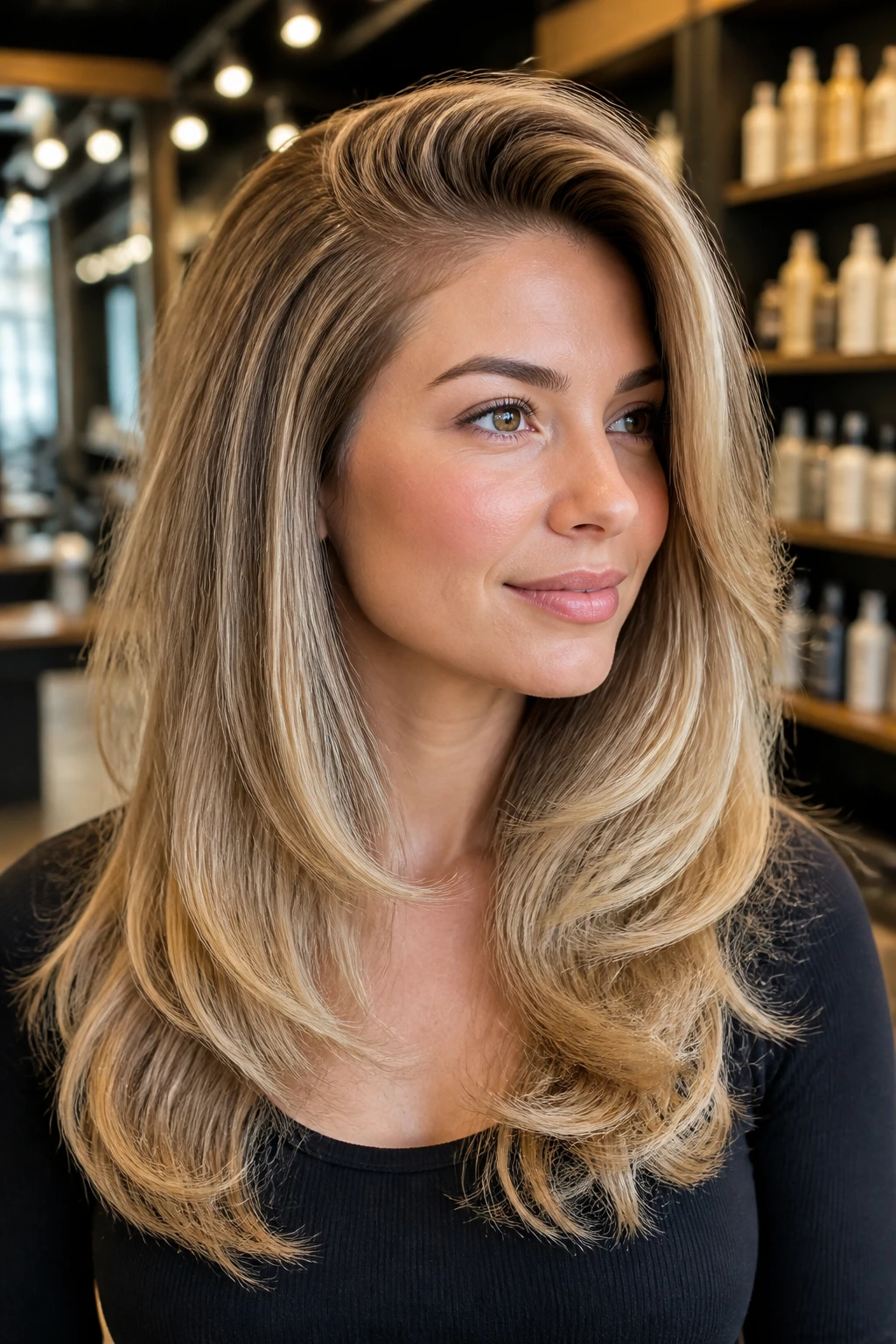
Round-face-friendly styles need maintenance, but not in a fussy way. Pixies and bangs usually need trimming every 4 to 6 weeks if you want the lines to stay sharp. Bobs and lobs can stretch to about 6 to 8 weeks. Long layers tend to hold shape for 8 to 12 weeks, though face-framing pieces may need attention sooner if they fall into the cheeks.
Dry shampoo helps on day two or three, but don’t spray it on soaking wet roots and call it a refresh. Let the roots dry first, then lift sections and spray at the base. That keeps the crown from collapsing.
At night, a loose clip or satin scrunchie can preserve waves and bangs better than sleeping with hair smashed flat under your head. If your hair is curly, a silk bonnet or pineapple wrap keeps the shape from stretching out in all the wrong places. Straight hair usually does fine with a silk pillowcase and a loose braid.
If the front pieces start to drift into the cheeks, don’t wait for the whole cut to go stale. A small trim around the face can revive the style without taking off much length.
Frequently Asked Questions

Can round faces wear bangs?
Absolutely, but the shape of the bang matters. Side-swept bangs and curtain bangs usually work better than a thick, blunt fringe because they break up the width instead of boxing the face in.
Is short hair bad for round faces?
No. A pixie, asymmetrical bob, or textured short cut can look sharper than long hair if the crown has lift and the sides don’t puff out too wide. The cut has to be intentional, though.
Should I avoid a center part?
Not automatically. A center part can work well with long layers, curtain bangs, or face-framing pieces that start below the cheekbone. If the hair falls flat and straight on both sides, a side part may be easier.
What is the safest haircut for a round face if I’m nervous?
A collarbone-length lob with soft layers is probably the easiest place to start. It gives you length below the jaw, room for a side part, and enough movement to style in different ways.
Do curls make a round face look wider?
They can, if the volume sits right at the cheeks and the curls are tight. Loose curls with a side part, or curls that start lower, usually work much better.
How do I ask my stylist for the right shape?
Be specific about where you want the shortest layer to land, how much volume you like at the crown, and whether you prefer a side part or center part. A photo helps, but the placement details matter more.
What if my hair is thick and puffy?
Ask for internal weight removal, not just more layers. Thick hair needs shape inside the cut so it doesn’t spread outward at the sides and widen the face.
What if my hair is fine and flat?
Choose styles that build height at the crown and keep the ends a little lighter. A blunt bob or heavy one-length cut can drag fine hair down and make the face look rounder than it is.
The Cuts That Keep Their Shape
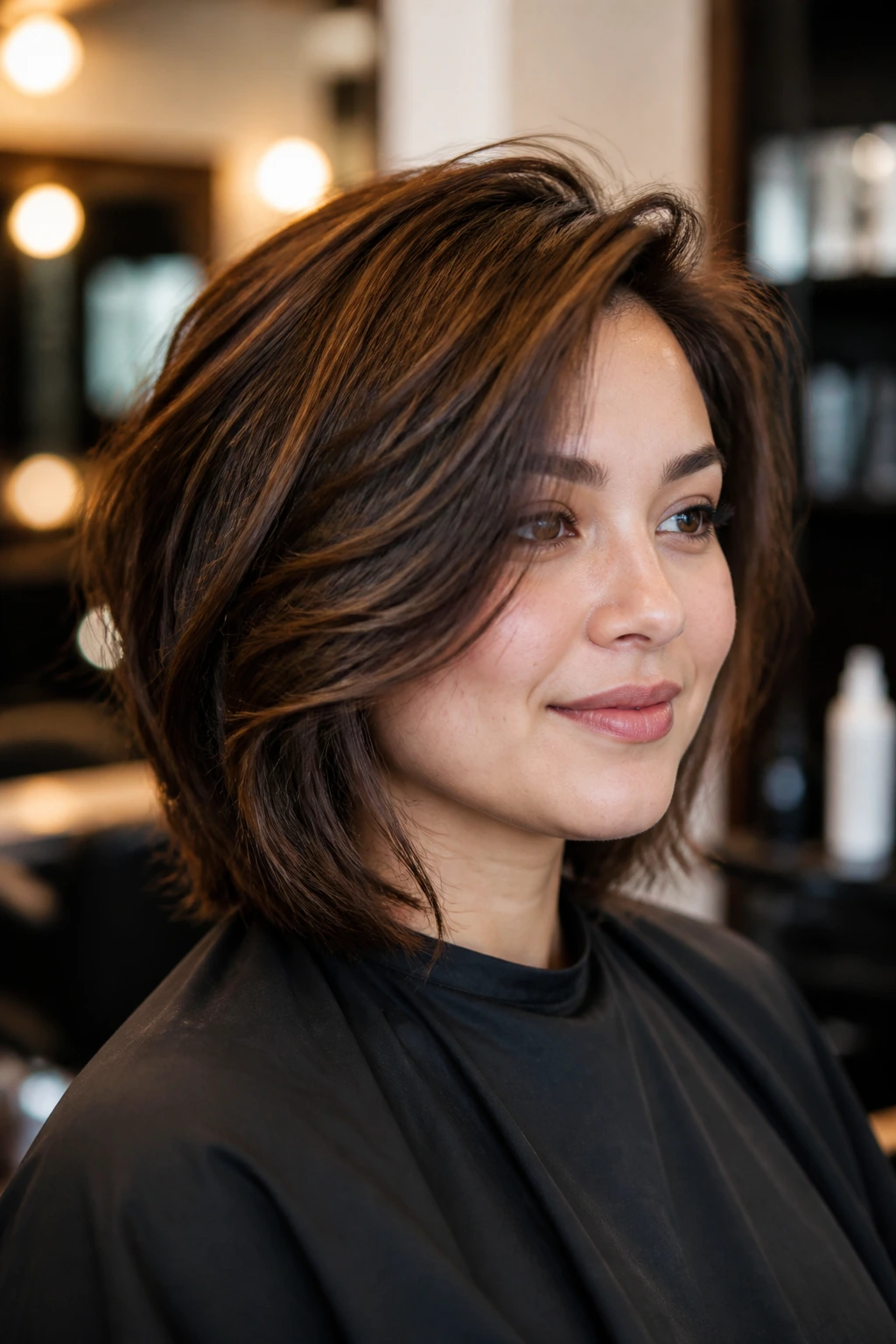
The best hairstyles for round faces do not fight your face. They steer it. That’s the difference, and it changes everything from how a cut grows out to how you feel wearing it on a normal Tuesday.
If you remember one thing, make it this: place the volume where you want the eye to go, not where the face is already widest. Crown lift, diagonal lines, and lengths that move past the jaw are doing quiet work all day long.
Take that idea to your stylist, or test it with a side part and a little bend at home. Once you see how small the shift can be, it’s hard to go back to cuts that sit flat and stop at the wrong spot.
