



A square face gives you structure right away. The jaw reads first. The forehead reads second. That can be a blessing or a headache, depending on the haircut sitting on top of it. If your style keeps ending at the widest part of the face, the angles can feel louder than you want them to.
The best hairstyles for square faces do not hide the shape. They work with it. A side part that lands an inch off center, a layer that starts below the cheekbone, a wave that bends away from the jaw—small choices, big payoff. The wrong cut can sit like a shelf. The right one makes the whole face feel lighter, longer, and a little less squared off.
I’ve watched the same mistake happen over and over in salon chairs: a cut looks fine on a mannequin head, then it dries on a real person and the jaw takes over. So the useful styles are the ones that understand where to add movement and where to leave a clean line alone. Some are short, some are long, some are lazy-easy in the morning, and a few need a round brush and five extra minutes. All of them are here for a reason.
Why These Hairstyles Work So Well on Square Faces
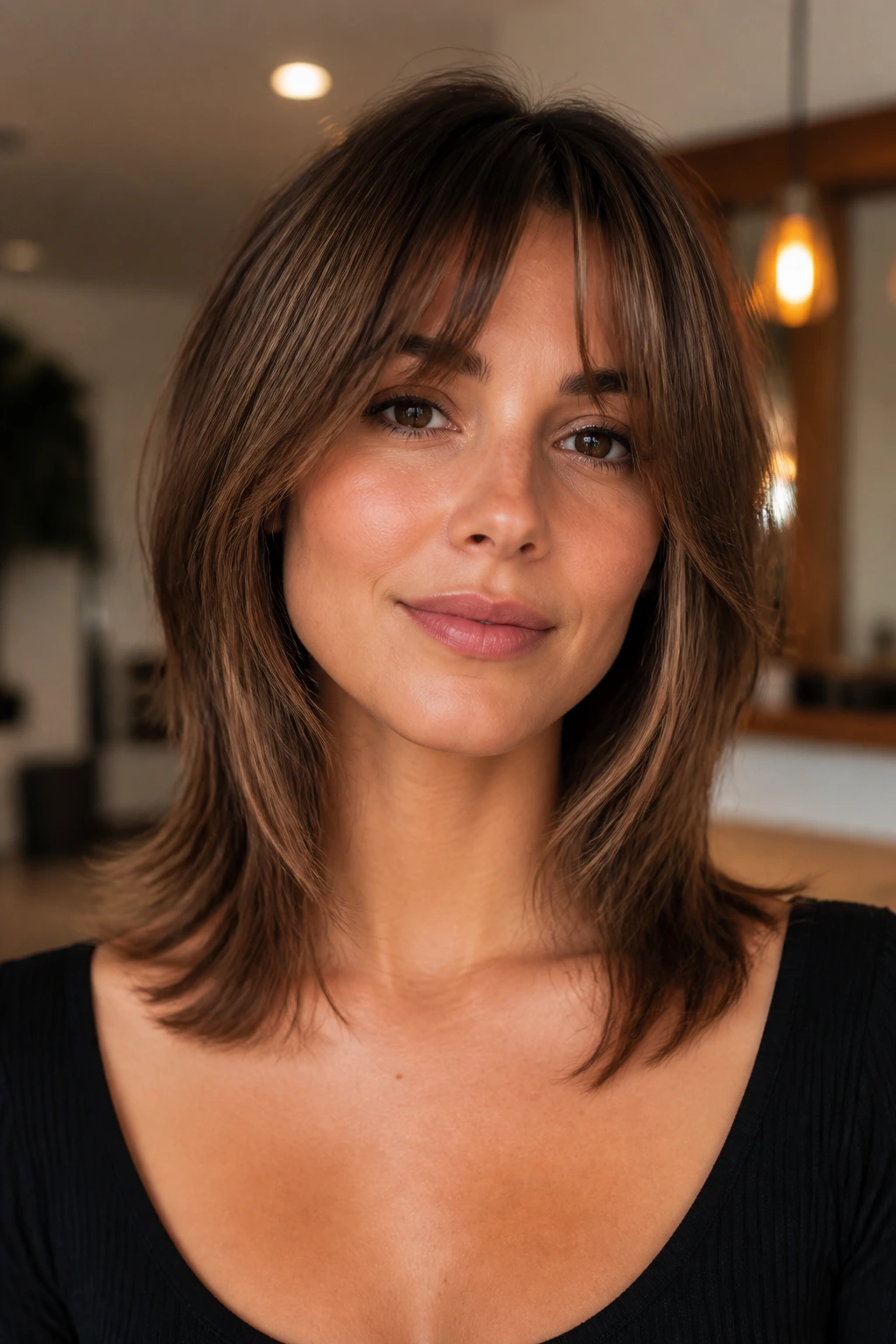
- They break the straight lines: Square faces have strong horizontal lines, so styles with diagonals, bends, or asymmetry stop the face from looking overly boxy.
- They keep weight off the jaw: The shortest layers usually sit below the cheekbone or above the jaw, which keeps hair from landing on the widest part of the face.
- They create height where it helps: A little lift at the crown changes proportions fast. Flat roots do the opposite and make the face look wider.
- They respect texture: A cut that flatters straight hair can look bulky on curls if the shape is the same, so texture-specific choices matter.
- They give you options: Some square faces look best with fringe and movement; others want clean length with only a few face-framing pieces.
- They are practical: None of these styles depends on perfect weather, perfect styling, or a perfect blowout to work. That matters more than people admit.
1. Collarbone Curtain Layers
A collarbone cut is one of the safest places to start because it clears the jaw without disappearing into very long hair. The front pieces open around the cheekbone and taper down toward the collarbone, which gives the face room to breathe.
Why It Flatters Square Faces
- The shortest face-framing layer can start 1 to 2 inches below the cheekbone, which keeps it from sitting right on the jaw.
- The collarbone length adds vertical line, and that vertical line is your friend here.
- Soft curtain bangs or long front layers make the forehead feel less broad without closing off the face.
- A slight bend at the ends looks better than a sharp underflip, which can feel too neat and too blunt.
Best tip: Ask for the ends to be point-cut or lightly feathered. A heavy, crisp hemline at collarbone length can look gorgeous, but on square faces I usually prefer a little movement so the cut does not feel like a ruler.
2. Deep Side-Part Blowout
A deep side part can change the whole face shape in ten seconds. It pulls the eye diagonally, which is exactly what a square face needs when the jaw and forehead are both strong.
The nicest version of this style has lift at the roots and a soft sweep across the forehead, not a hard comb-over. The side with more hair should fall in a loose arc, not a stiff curtain. If the hair is straight, a 1.25-inch round brush and a quick blast at the roots are enough. If it’s wavy, a large Velcro roller at the crown before the rest of the routine sets the height without making the top look puffy.
This is one of those styles that looks more expensive than it is. The trick is the parting line and the root direction. Everything else is supporting cast.
Use it when: you want polish for a dinner, event, interview, or any day when flat roots would make your face look wider than it is.
3. Soft French Bob
Why does a short bob work on a square face when so many chin-length cuts go wrong? Because the French bob keeps the outline soft. The line is usually a little shorter in back, a little longer near the front, and the ends are rarely left razor-straight.
The cut becomes flattering when it skims the cheekbones and leaves a hint of air around the jaw. A blunt edge that lands exactly at the jawline is where trouble starts. A French bob should feel more like a curve than a box.
How to Style It
- Blow-dry with a small round brush, turning the ends inward by about half an inch.
- Leave one side tucked behind the ear for a hint of asymmetry.
- Use a pea-sized amount of light cream, not heavy oil, so the shape stays visible.
- If the hair is thick, ask for internal debulking rather than extra length removal.
4. Layered Shag with Wispy Fringe
A shag is a good answer when hair tends to hang heavy at the sides. The layers kick out the weight, and the fringe breaks up the forehead without drawing a hard line across it.
The version I like for square faces keeps the shortest layers around the cheekbone, not the chin. That matters. Chin-level layering can widen the lower half of the face if the texture is dense. Wispy fringe works better than blunt fringe here because it lets the face show through in pieces, which gives the whole shape more air.
This cut also forgives a rough morning better than a clean, formal shape. A little wave cream, a rough dry, and a pinch of texture spray are enough. The best shags on square faces look touched, not styled to death.
5. Butterfly Cut with Long Face-Framing Pieces
The butterfly cut works because it gives you two jobs at once. It keeps the length long while the shorter top layers lift the crown and pull attention upward. On a square face, that upper movement matters more than people think.
The long face-framing pieces should usually begin around the lip or chin and drift past the jaw without stopping there. That extra length helps the eyes travel vertically instead of crashing into the jawline. If the layers are cut too short, the whole thing can turn chirpy and imprecise. If they’re too long and flat, the cut loses the lift that makes it work in the first place.
I like this one on medium to thick hair, especially if you already use a blow dryer. It gives the hair shape without sacrificing the swing that long-haired people usually want to keep.
6. Asymmetrical Bob with a Longer Front Side
Unlike a blunt bob, an asymmetrical bob gives the face a diagonal line to follow. That one line change is the whole game. A square face already has enough straight edges; this cut gives the eye somewhere else to go.
The longer side should fall a little below the jaw, not at the exact same point as the shorter side. That small drop keeps the lower face from feeling boxed in. I also prefer this cut with a side part rather than a center part, because the part reinforces the diagonal and keeps the look from feeling too severe.
This one suits straight and lightly wavy hair best. On very curly hair, the asymmetry can disappear unless the cut is shaped dry. And that’s worth doing. A curly asymmetrical bob cut wet can lie to you.
7. Long Loose Waves with a Mid-to-Side Part
Long waves are not boring when they are cut and styled with intention. The right wave pattern bends away from the jaw and creates soft movement from the temples down, which gives a square face a much gentler frame.
The part should live somewhere between dead center and a true side part. I like it about ½ to 1 inch off center because that keeps the look balanced while still breaking up symmetry. The wave itself should start below the cheekbone; wave at cheek level can make the face read wider.
A 1-inch curling iron or wand is usually enough. Leave the last inch of the ends out, brush the curls once they cool, and finish with a light mist of flexible hairspray. Heavy spray kills the movement that makes this style work.
8. Side-Swept Pixie with Tapered Sides
A pixie can flatter a square face, but only if it keeps some softness on top. A flat pixie with the same length all over can make the jaw feel louder. A side-swept pixie gives the face a slant, which is the useful part.
The tapered sides keep the haircut close without adding width near the ears. The longer top can be finger-styled across the forehead or lifted slightly at the crown for a sharper line. I prefer a little pieceiness rather than a solid helmet shape. Strong faces can handle short hair. They just do better with motion.
This cut is a good fit if you like low-maintenance styling and you do not mind seeing your face. That sounds obvious, but it’s the honest part. A pixie shows the whole structure, so the shape has to be right.
9. Feathered Lob with Flicked Ends
Want shoulder-length hair without a heavy bottom edge? The feathered lob is the answer. It sits between a bob and a longer cut, which gives you enough length to move the hair away from the jaw while still feeling light.
The feathering should happen mostly through the mid-lengths and around the face. That keeps the shape from turning blunt. I like the ends flicked slightly outward or turned under just enough to show motion. A sharp undercurve can look dated on this shape. A relaxed bend feels better.
This style suits fine to medium hair especially well, because the movement makes the hair look fuller without piling too much volume at the sides. Add dry shampoo at the roots if the top lies flat. Flat roots and full ends are a bad pairing here.
10. Half-Up Style with Crown Lift
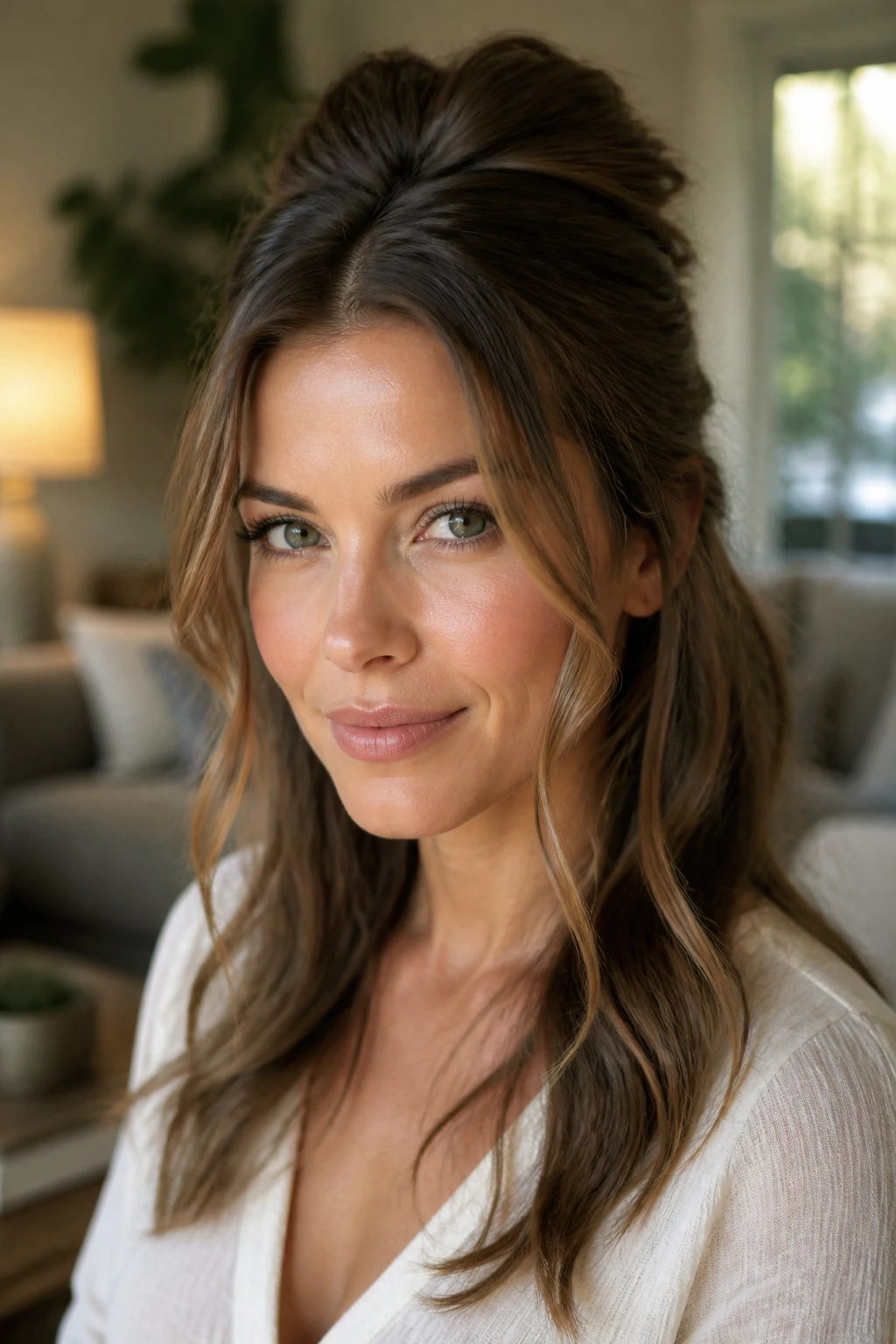
There’s a reason a half-up style keeps showing up in face-shape conversations. It exposes the jaw while giving the top half of the face some lift, which changes the proportions fast. On square faces, that lift matters more than a perfectly sleek finish.
The crown should rise a little before the hair is pinned back. Not a bump. A lift. Two fingers’ worth of height is enough. Too much height starts looking theatrical, and then the hairstyle becomes about the hair instead of the face.
Loose front pieces help here. They should sit around the cheekbone or a touch below, not plastered tight to the temples. That little looseness softens the outer edges and keeps the style from feeling severe.
11. Bottleneck Bangs and Long Layers
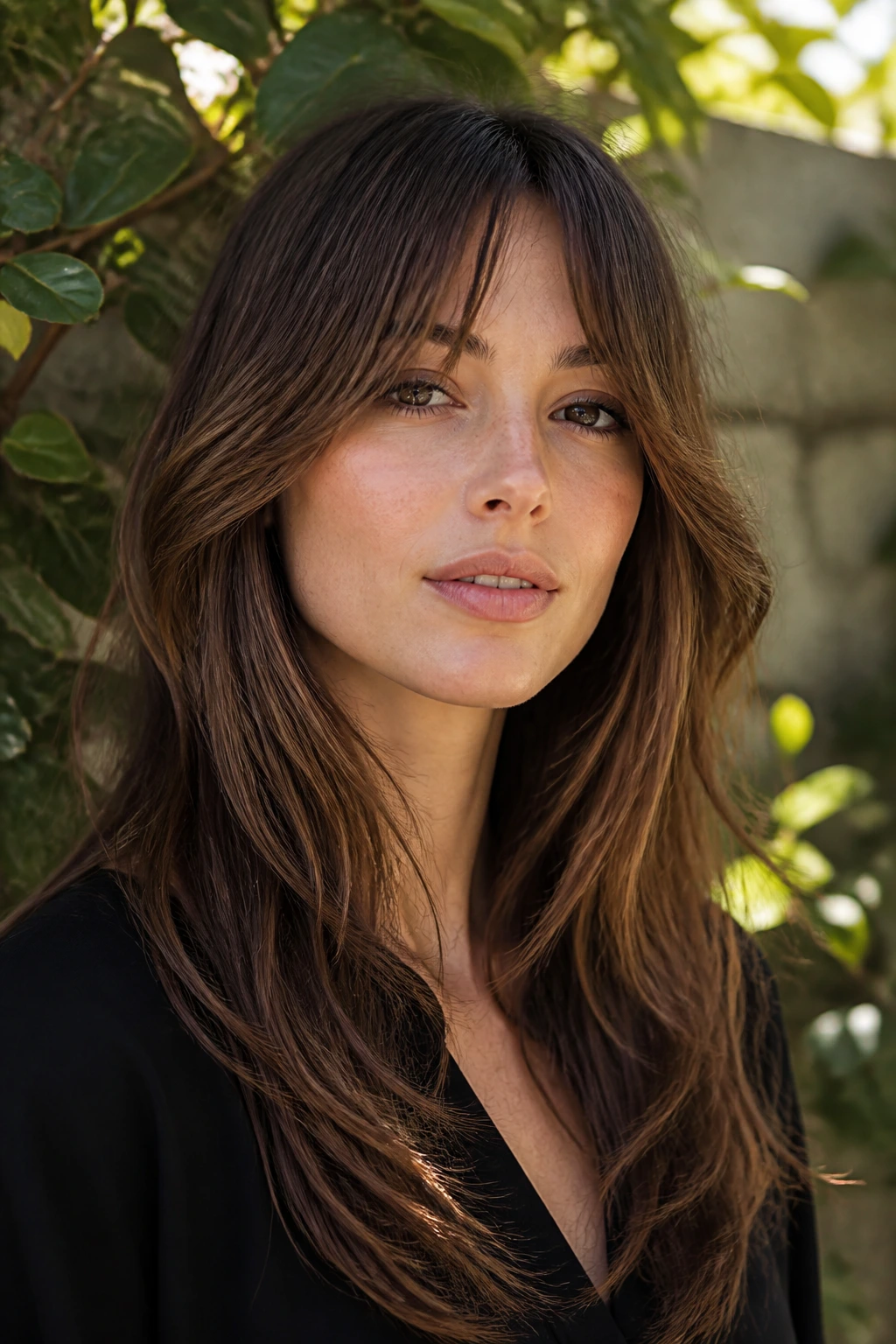
Bottleneck bangs do a neat trick on square faces: they narrow at the center and open out toward the cheekbones. That means they soften the forehead without dropping a hard line straight across it.
The long layers under those bangs keep the face from feeling chopped. I like this combination on medium or thick hair because the bangs need enough density to show shape, but not so much that they sit like a block. The ends of the layers should move, even if it’s only a tiny bend.
This style is one of the better choices if you want fringe without the maintenance of blunt bangs. The grow-out is easier, too. When the bangs get longer, they fold into the layers instead of hanging awkwardly over the eyes.
12. Curly Shag with Rounded Volume
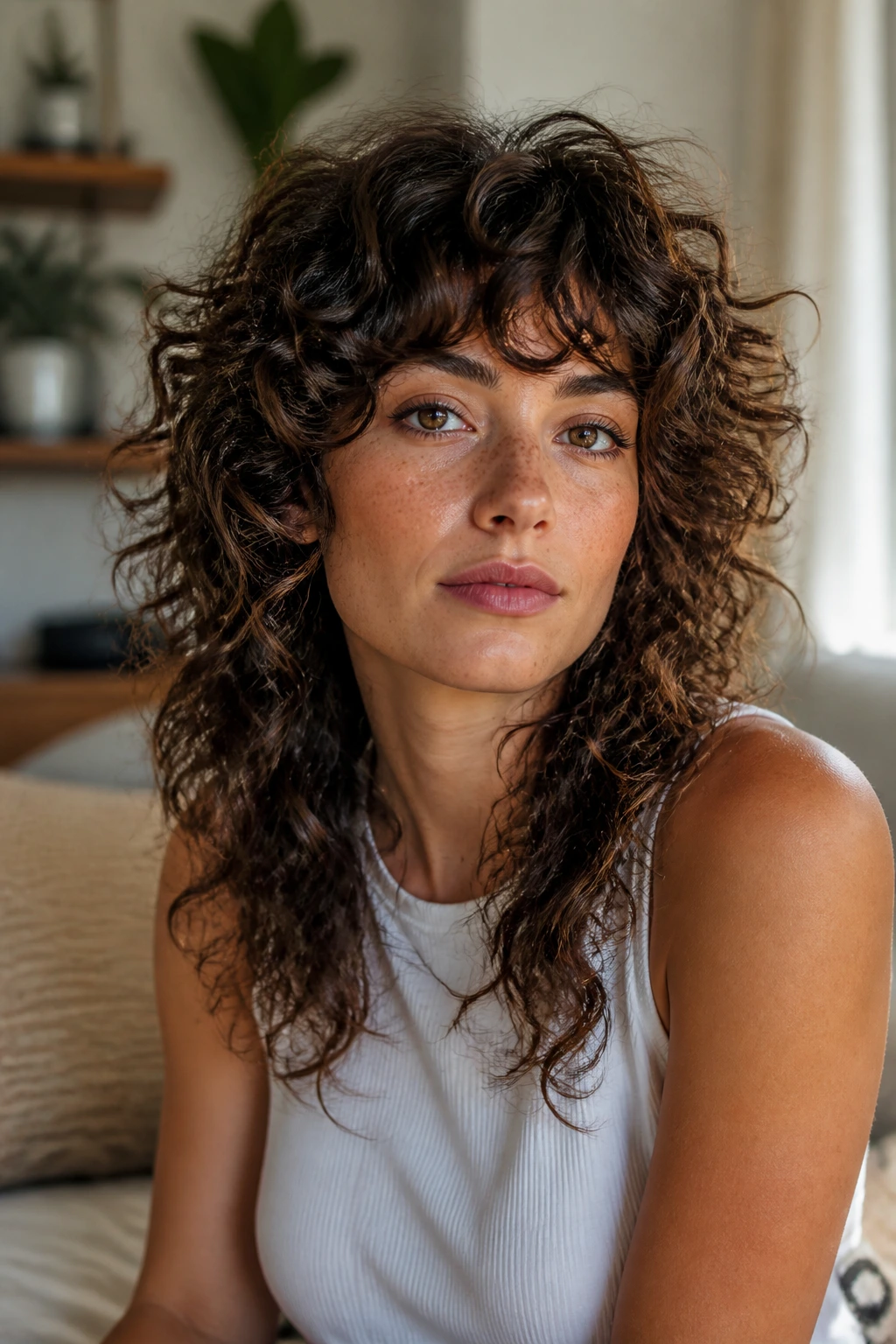
Curly hair and square faces can be a gorgeous pair when the shape is round enough at the right places. The curly shag keeps volume from collecting at the jaw and sends it higher, around the crown and upper sides.
The important thing is not to cut a straight silhouette into curls and call it a day. Curly hair springs differently. Layers have to respect shrinkage, or the haircut lands too high and starts looking puffy. I’d rather see the shortest curl layer around the cheekbone, with the bottom length left to hang and balance the top.
A curl cream plus a diffuser usually gets you there. Scrunching upward from the ends helps, but don’t overhandle the crown. You want roundness, not frizz with ambition.
13. Sleek Low Chignon with Soft Pieces
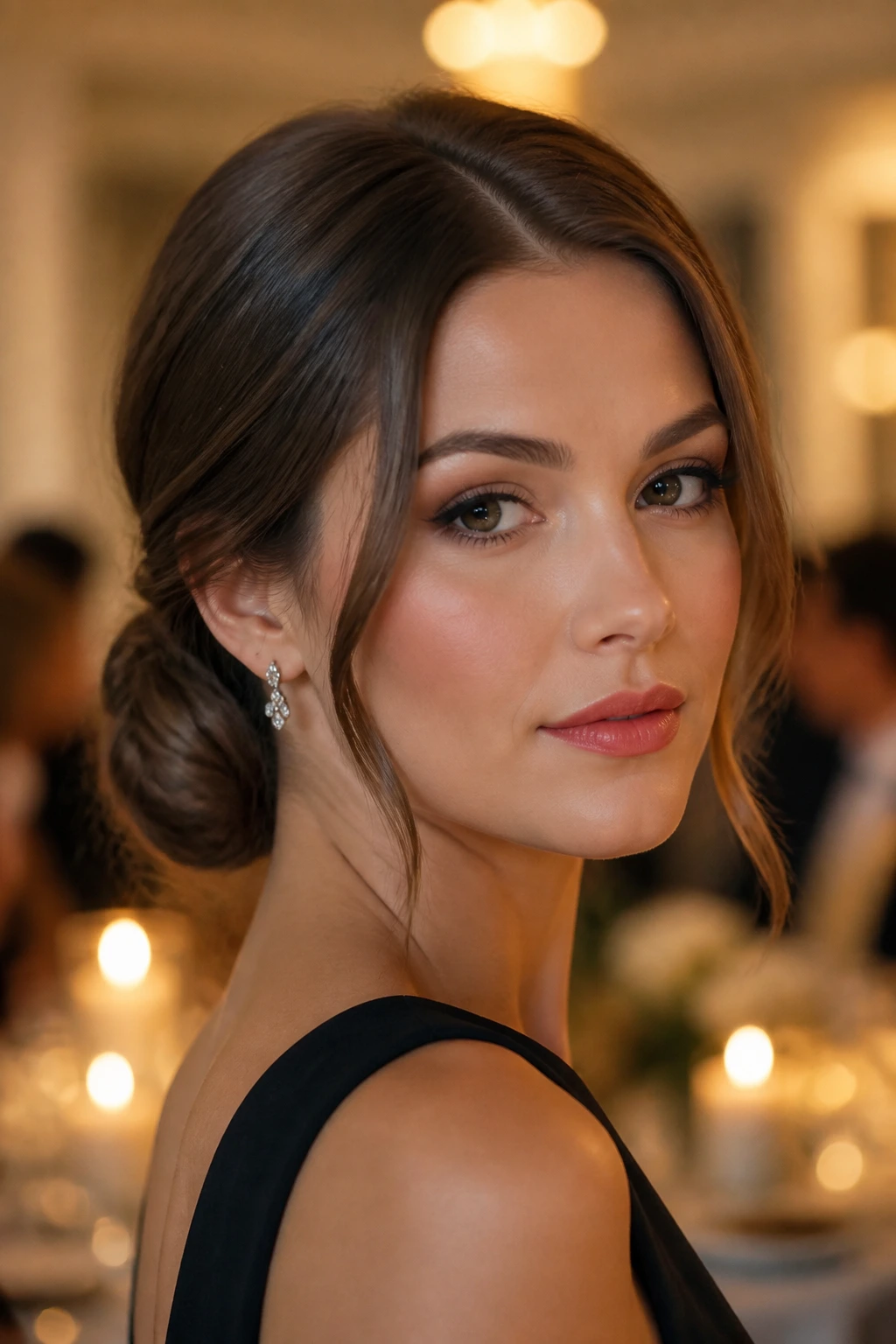
For a formal style, a low chignon works better than a high, tight bun on a square face. The knot sits low, below the jawline, and the soft pieces around the face break up the shape without making it look undone.
What matters most is where the front hair starts to loosen. Let a few strands live near the temples and cheekbones. If they’re too thin, the look can feel accidental. If they’re too thick, they start stealing the clean line from the bun.
This is the kind of style I’d choose for a wedding guest dress or a black-tie event, because it shows the neckline and leaves the face open without sharpening the angles. A tiny bit of shine serum on the top smooths the surface. Keep it light. Greasy roots are the fastest way to ruin a chignon.
14. Textured Shoulder-Length Cut with Bent Ends
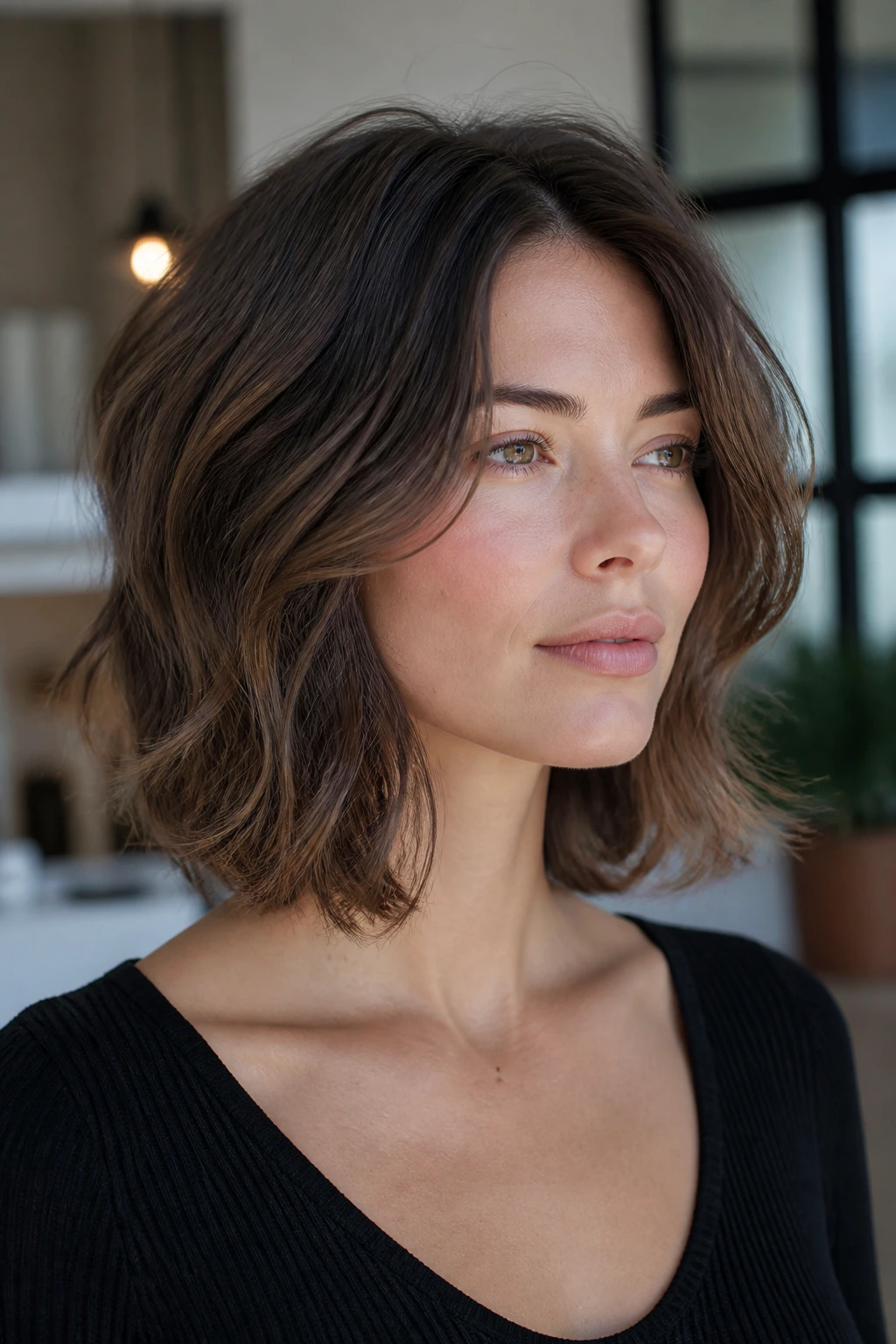
Shoulder length is a sweet spot for square faces when the ends are not left heavy. A textured cut at this length keeps the outline from sitting like a straight wall, and the bent ends create movement right where you need it.
The best version avoids stacking too much bulk beside the jaw. That’s the trap. Instead, the shape should be slightly longer in front and softly layered underneath so the hair can tuck, swing, or bend depending on how you style it. It’s one of those cuts that looks different every day, which is part of the appeal.
I like it because it gives you options. Air-dry it with a wave cream, blow it out with a round brush, or use a flat iron to make a few lazy bends. The haircut will still do some of the work on its own.
15. Side-Swept Wavy Bob
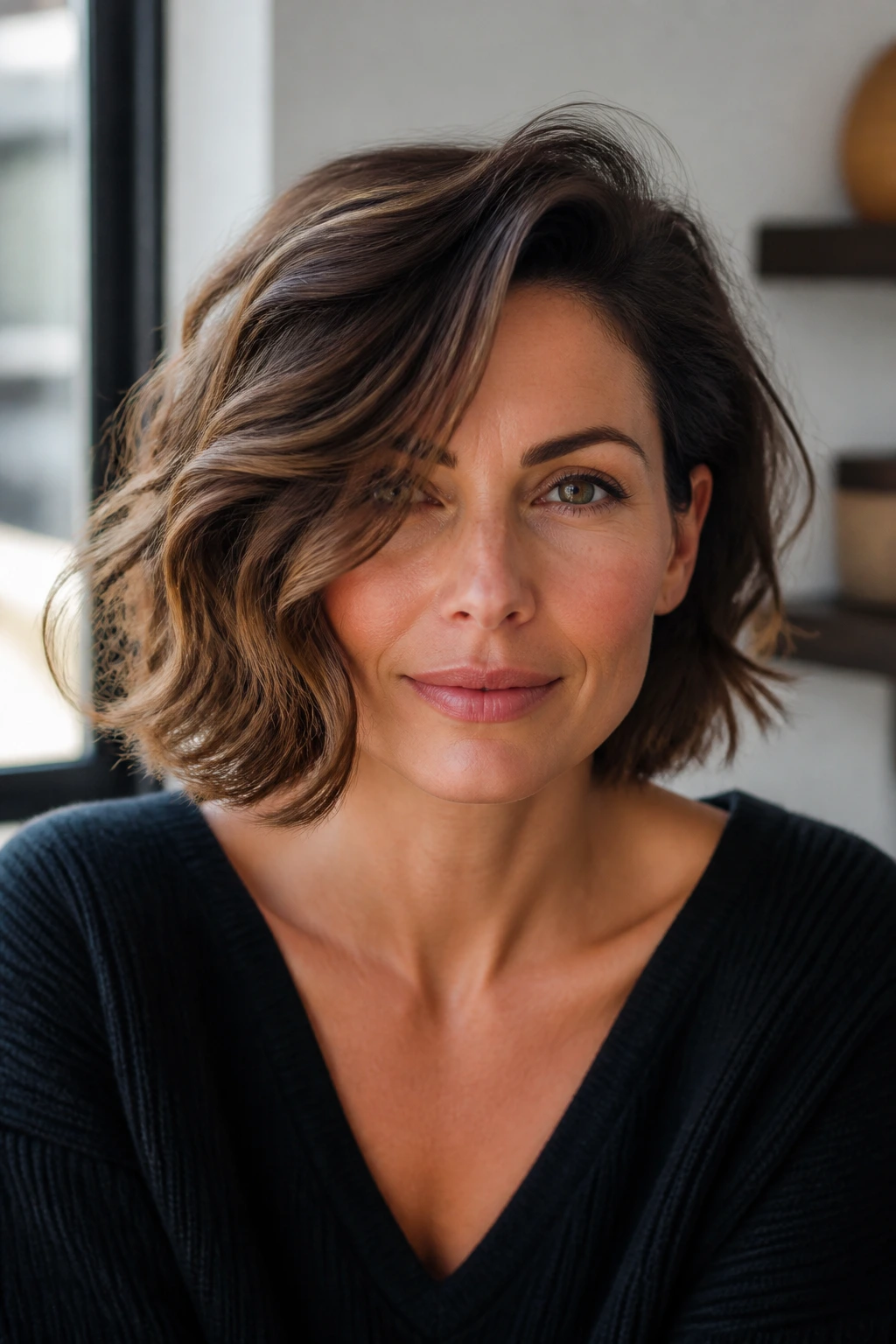
A side-swept bob is a better bet than a perfectly centered, perfectly blunt one. The sweep adds diagonal energy, and square faces need that angle to keep the overall shape from feeling too even.
The bob should end around the cheekbone or a bit below the jaw, with enough softness at the perimeter that the line never looks harsh. On wavy hair, the natural texture helps a lot. On straight hair, a slight bend with a 1-inch iron keeps it from falling flat.
This cut works especially well if your hair is fine and you want some fullness without long styling sessions. Use mousse at the roots, blow-dry with a side part, and stop once the shape is set. Overworking it makes the bob puff in the wrong places.
16. Long Straight Hair with Internal Layers
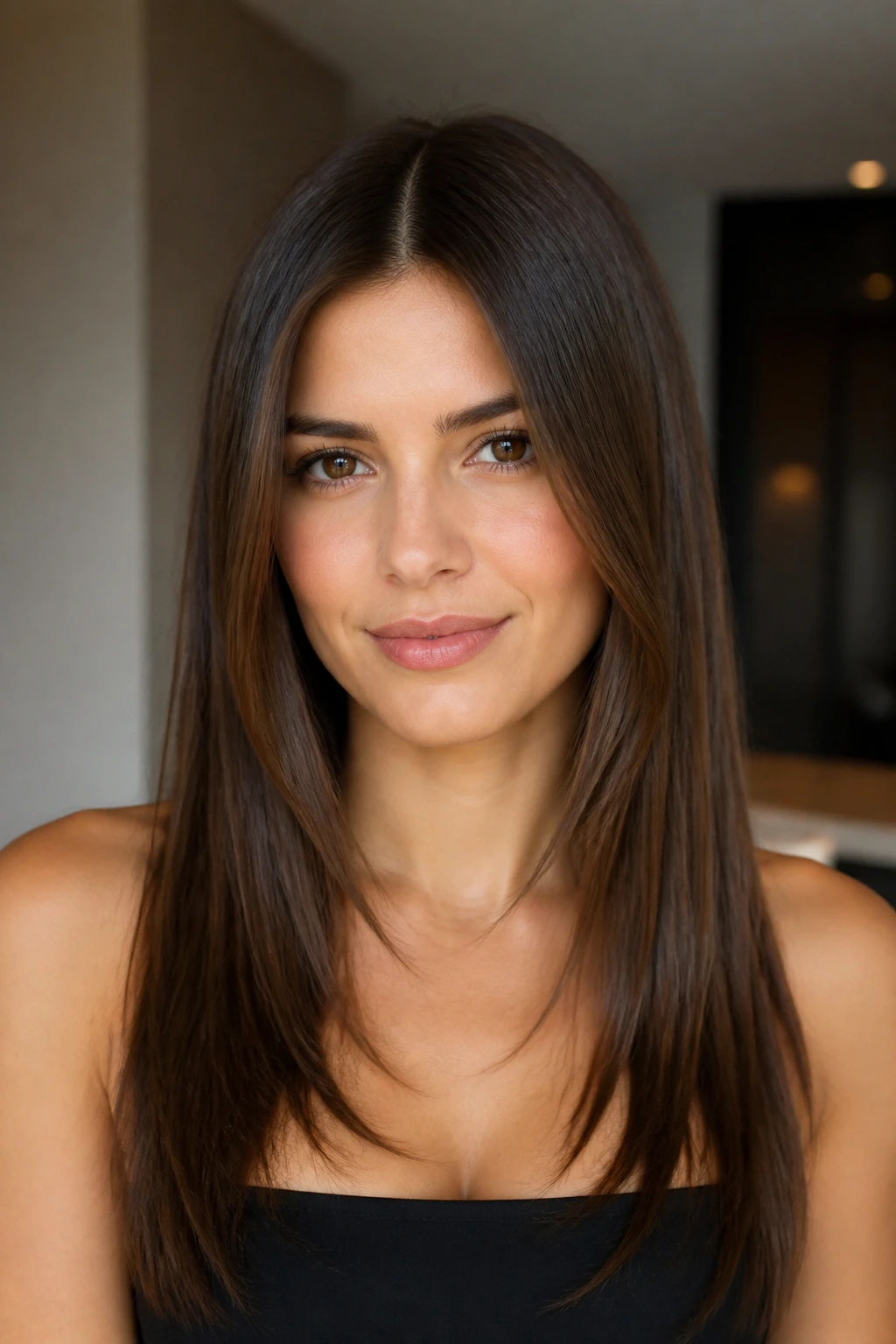
Long straight hair on a square face can look beautiful, but only when the interior has some life. Internal layers remove bulk without destroying the clean length, and that’s the part that keeps the hair from hanging like a curtain.
The layers shouldn’t live right at the jaw. They’re better placed a little lower or higher, depending on density, so the face doesn’t get a hard line beside it. Straight hair can be unforgiving that way. Every edge shows.
What Makes It Work
- A center part can work if the hair falls below the shoulders and the ends are softened.
- A slight face frame around the chin or collarbone helps the shape move.
- A flat iron bend at the ends keeps the cut from looking too severe.
- Glossing serum can make the whole style look polished without making it stiff.
Best for: people who want length, clean edges, and a style that still feels controlled.
17. Messy Top Knot with Loose Face Pieces
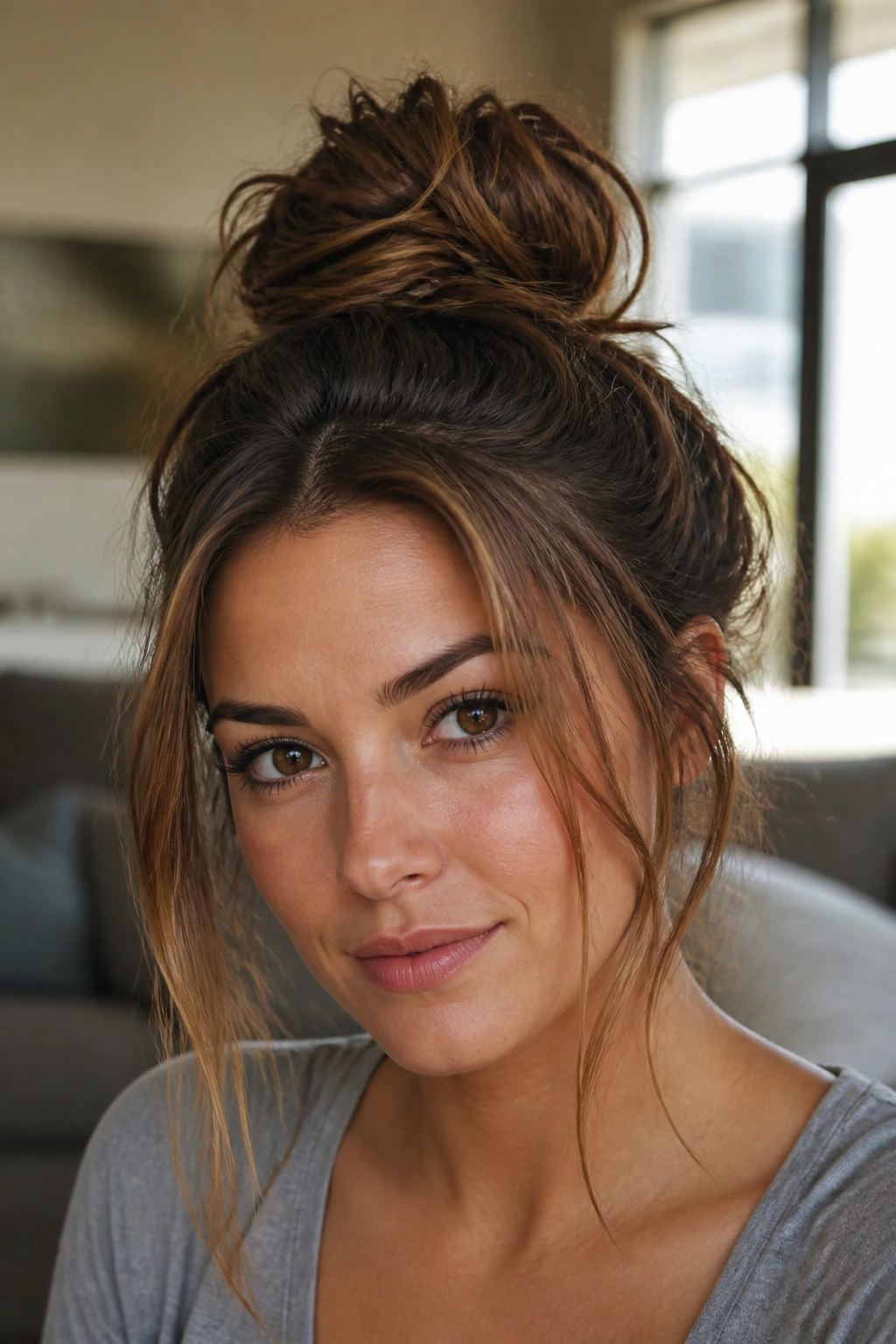
A top knot sits high enough to keep the sides clear, which can be flattering if the face pieces are handled with care. The knot itself should not be tiny and severe; it needs a little width so the whole style doesn’t look like it’s balancing on a pin.
Loose face pieces are what soften the effect. They should be long enough to skim the cheekbones or jaw in broken lines, not short enough to make little hooks around the face. I prefer this style when the hair has a little texture already, because pin-straight hair can make the knot look too neat.
This is a practical style, yes, but it also has to be shaped. A sloppy bun and a deliberate messy knot are not the same thing. The deliberate one wins.
18. Hollywood Waves off a Deep Side Part
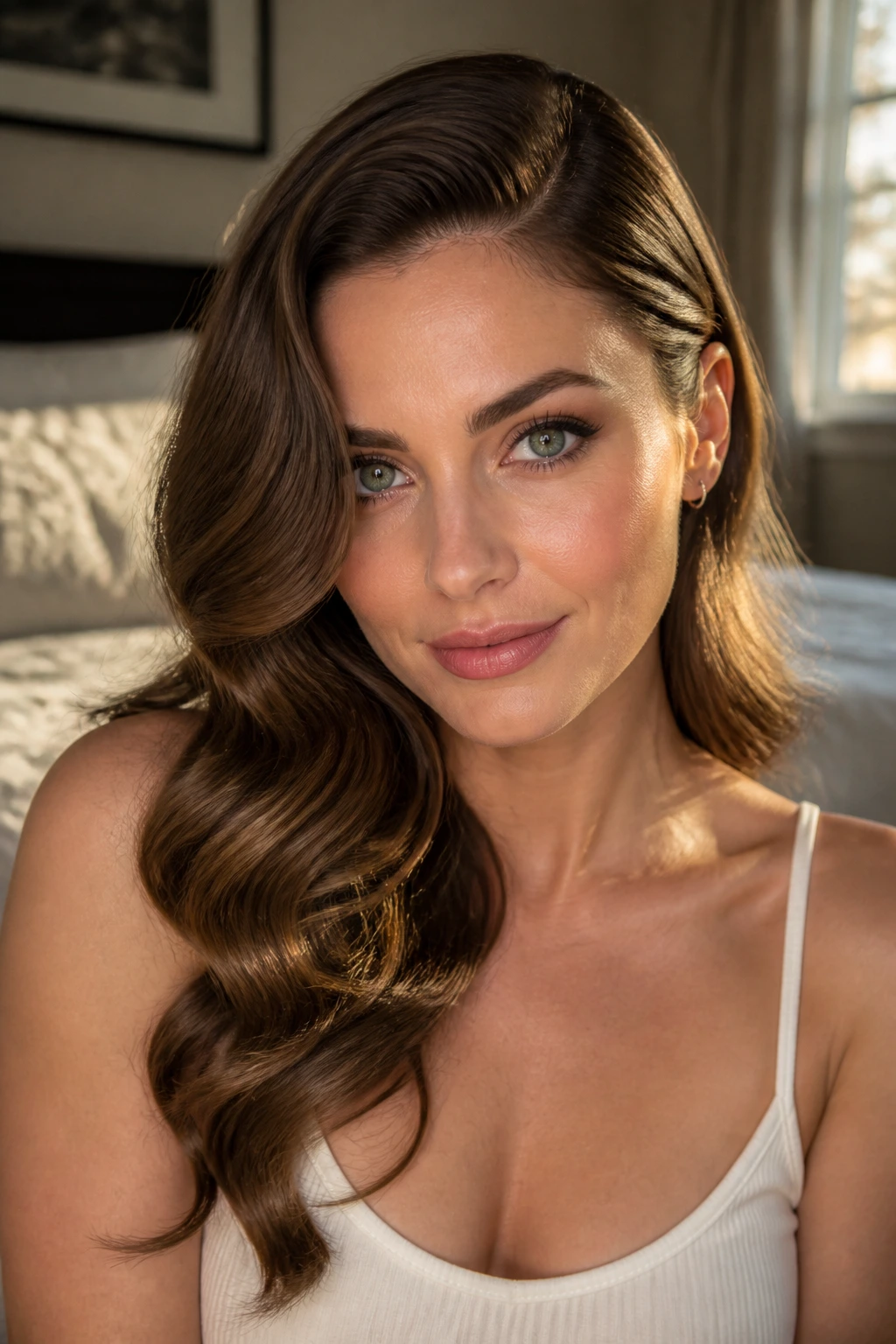
The old-school wave pattern works on square faces because it gives the hair a slow, curved line instead of sharp edges. When the part is deep and the waves sweep over one shoulder, the face feels longer and less square without looking hidden.
The waves should be brushed out after they cool so the shape becomes soft and continuous. That brushed-out finish matters. Tight curls can sit too high and make the style feel busy beside a strong jaw. Hollywood waves are about flow, not volume in the wrong place.
This style is best when you want polish. Not fuss. The side part, the deep bend, the clean shoulder line—those three things do most of the lifting.
19. Chin-Length Bob with Underturned Ends
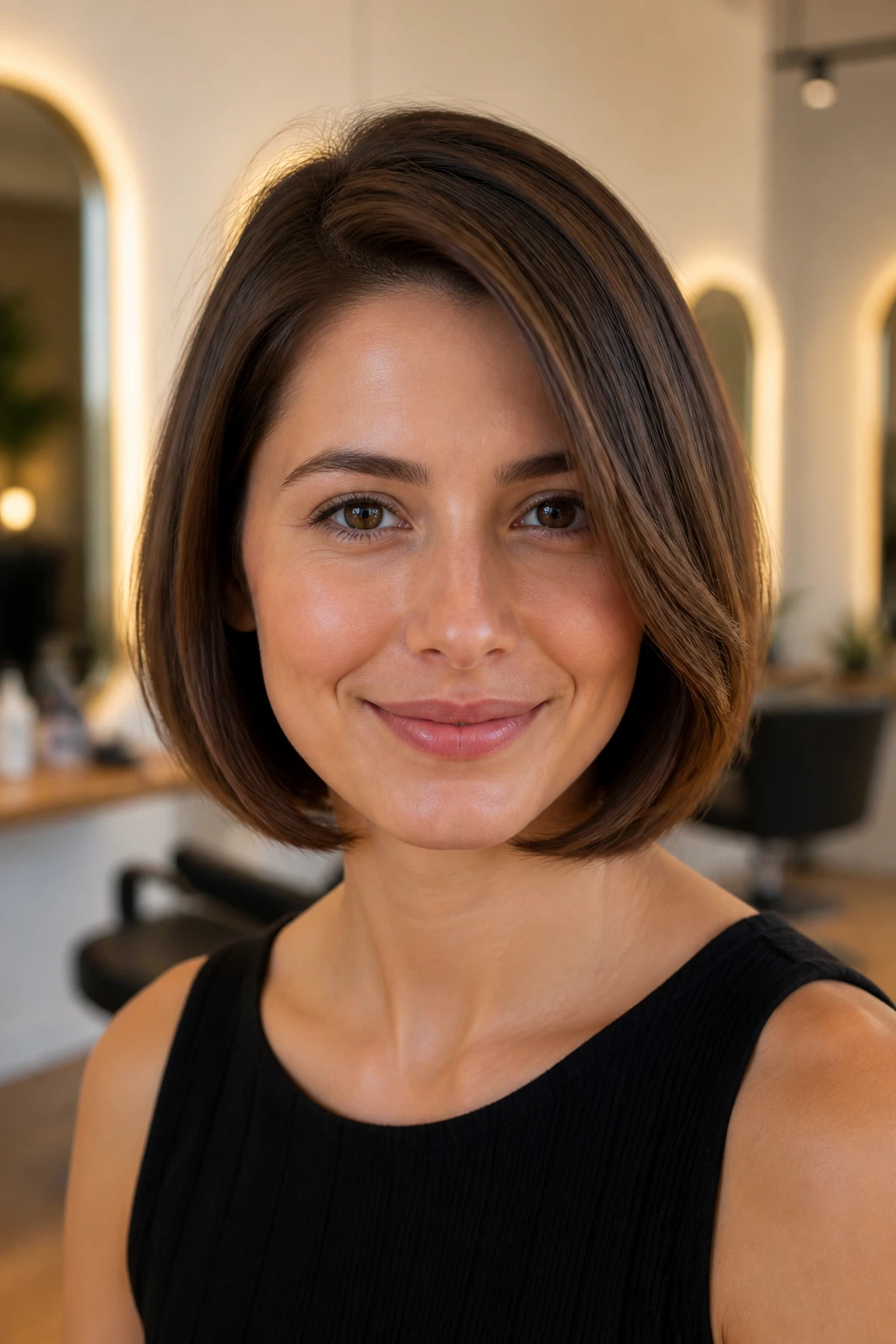
A chin-length bob is risky on a square face, but not impossible. The cut works when the ends turn under slightly and the overall shape stays soft, because the underturn keeps the line close rather than boxy.
The part should usually live off center. If the bob is dead center and perfectly blunt, the jaw gets all the attention. A bit of asymmetry takes the pressure off. I also like a little internal layering here so the bob has movement rather than one blocky edge.
This is a good cut if you like precision. It does need upkeep. Let it grow too long and it loses the shape that makes it flattering; let it get too blunt and it starts to widen the face. That’s the tradeoff.
20. Braided Crown with a Soft Fringe
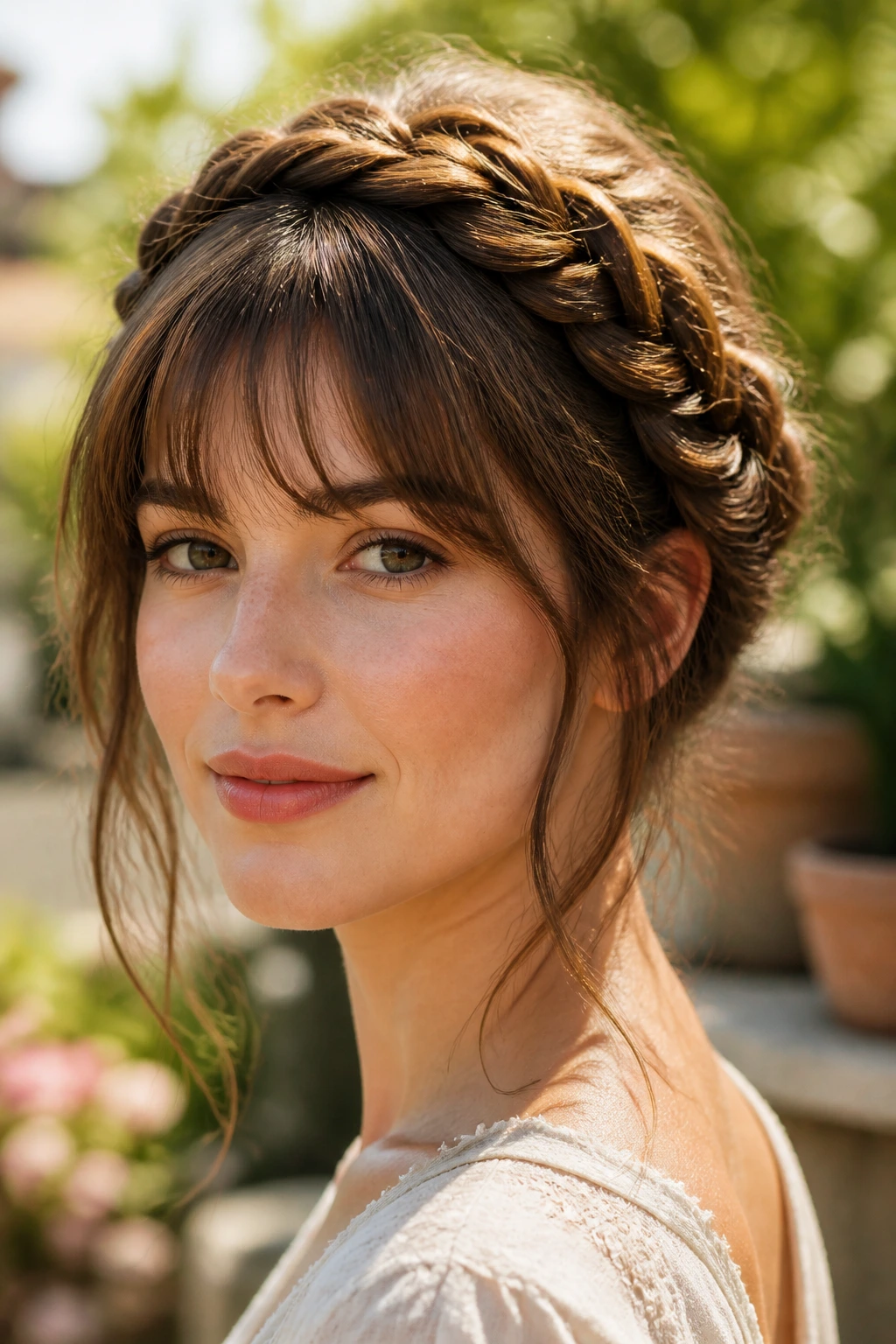
A braided crown sounds formal, but it can be surprisingly kind to square faces because it pulls the hair up and around the head, leaving the jaw open. The soft fringe or loose front pieces stop the look from becoming too severe.
The braid should not be pulled tight to the hairline unless you want a sharper effect. A little looseness creates a softer edge and gives the face more breathing room. I like this on medium to long hair, especially if the braid is pinned low enough at the back that it does not add a ridge at the temples.
This style works for events, yes, but it also solves the “what do I do with my hair when I want it off my neck?” problem. That’s a useful problem to solve.
21. Cropped Pixie with Height at the Crown
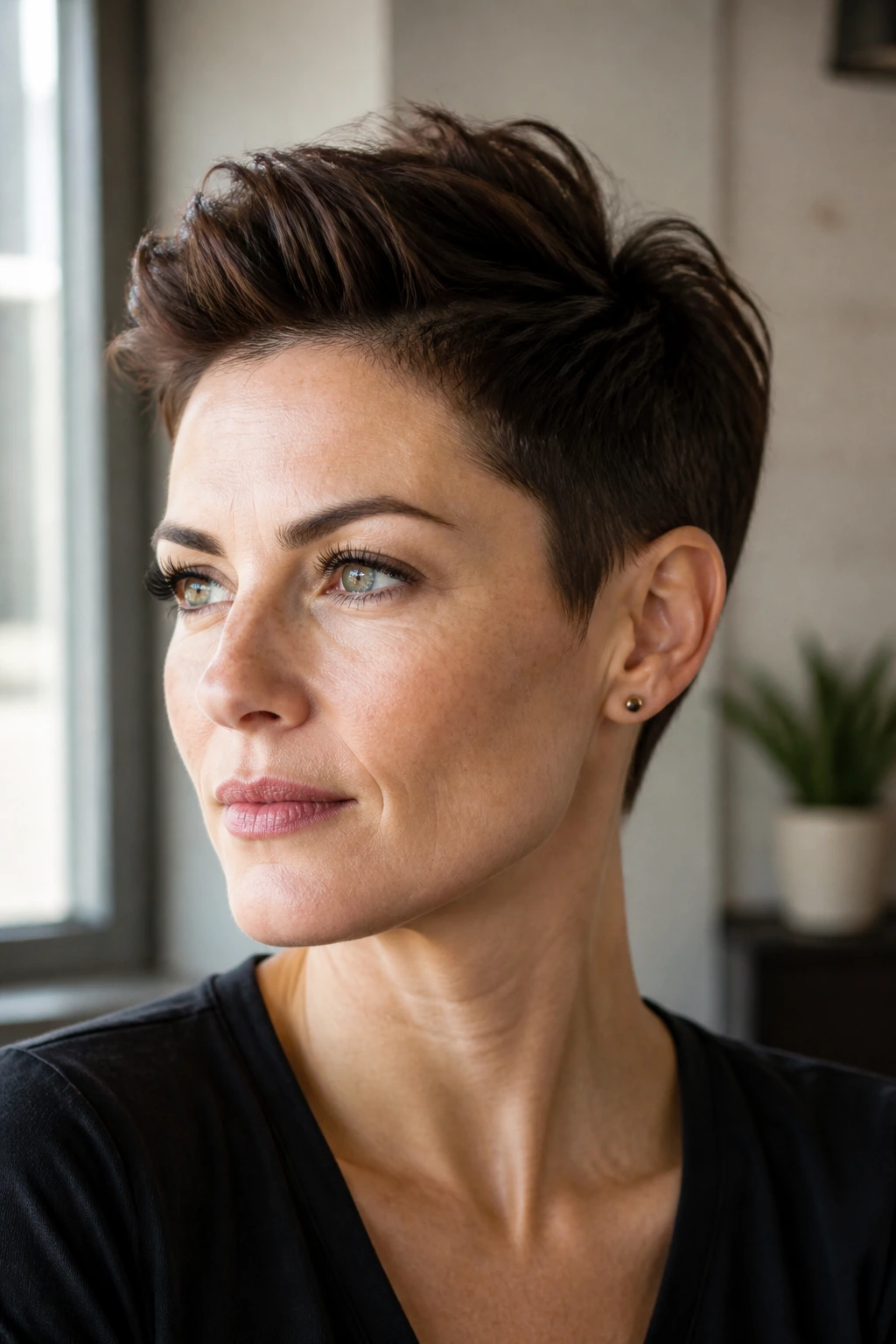
Can a very short cut work on a square face? Absolutely, if the crown has height and the sides stay close. The height changes the proportions faster than length ever could.
The top should be textured, not flat. A little lift at the front and crown draws the eye upward, which helps keep the jaw from dominating the shape. The sides can be tapered or softly clipped, but they should not balloon outward beside the ears. That is the detail that ruins a pixie on this face shape.
This cut suits people who like bold lines and low styling time. A paste or matte cream is usually enough. Push the hair up and slightly to one side. Done.
22. Defined Curls with a Rounded Shape

Defined curls can flatter square faces when the shape is round and the volume is controlled. The goal is not height at the sides. The goal is a halo that sits evenly and curves around the face instead of building at the jaw.
The cut matters here more than the styling product. Curl-by-curl shaping, or at least dry shaping, helps the curls fall in the right places. Layers should release weight without creating a triangle. That triangle shape is the enemy. You can usually spot it from across the room.
Use a cream that gives hold without crunch, then diffuse until the curls set. Once they’re dry, shake the roots lightly. Don’t rake through the ends. The curl pattern is doing enough already.
23. Low Ponytail with Face-Framing S-Curves
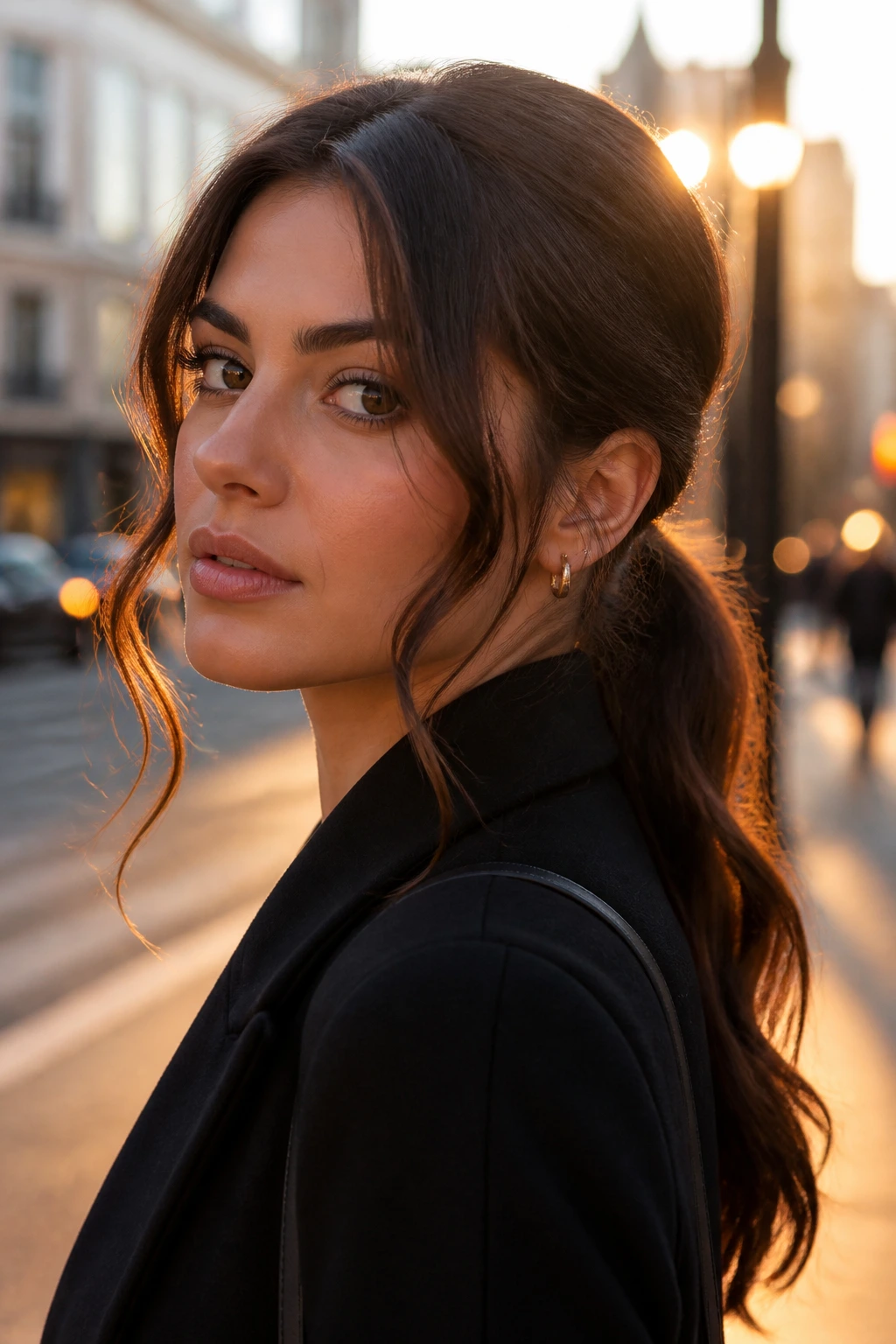
A low ponytail can be plain or it can be quietly flattering. The version that works on square faces usually has a soft side part, a little lift at the crown, and two face-framing pieces that fall in loose S-curves.
Those front pieces matter because they interrupt the clean line from temple to jaw. Without them, a low ponytail can feel too severe, especially if the hair is slicked back tight. With them, the ponytail looks intentional and gentle at the same time.
I like this style when the weather is humid or the hair just won’t behave. It’s fast, but it doesn’t have to look like a compromise. Wrap a small strand around the elastic and pin it underneath. That tiny detail makes a big difference.
24. Rounded Lob with Airy Ends
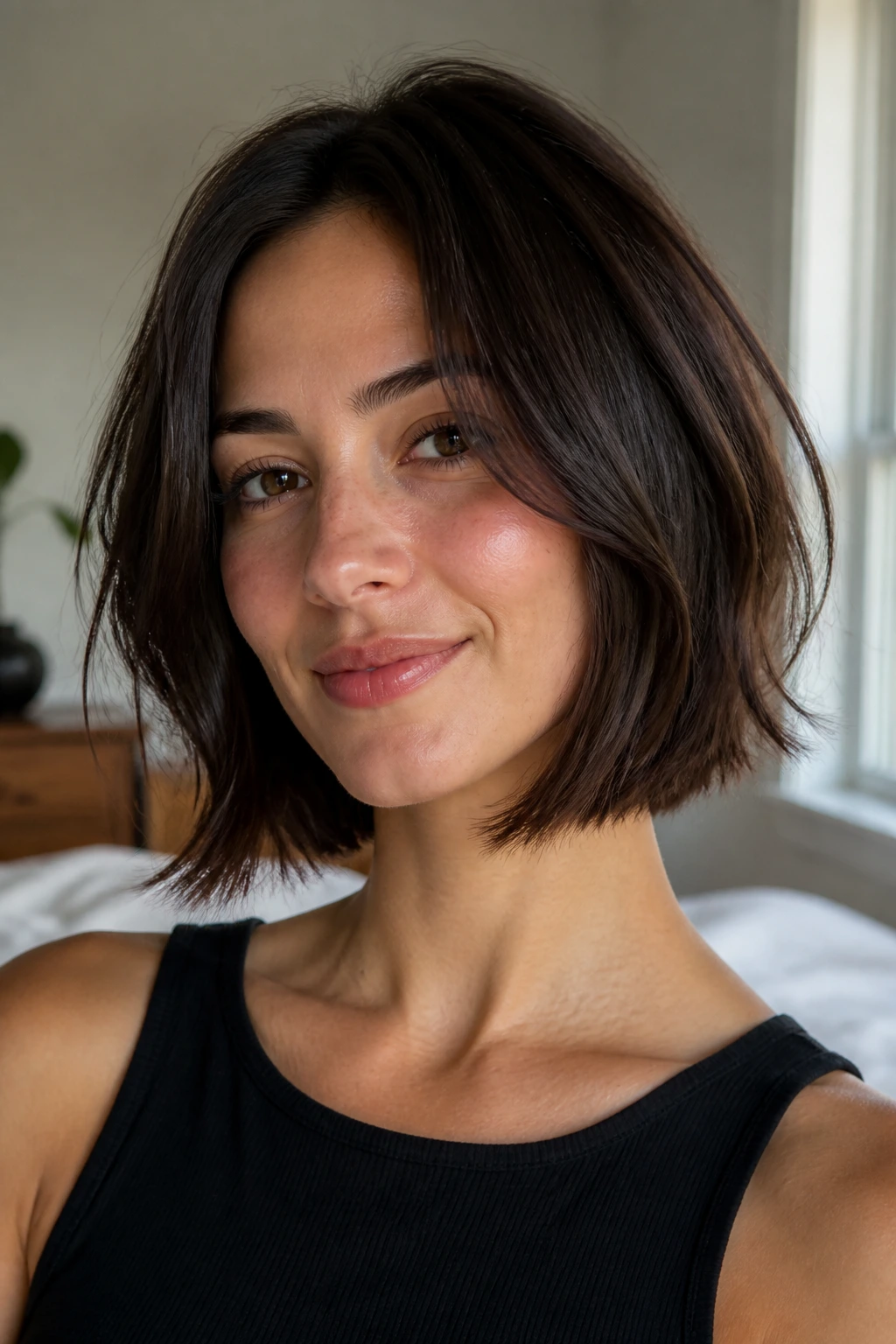
The rounded lob is one of the easiest shapes to live with because it sits between sharp and soft. It gives the face room without stretching the hair so long that it drags everything downward.
The “rounded” part matters. The outline should curve slightly around the head, and the ends should feel airy rather than blunt. If the cut is too flat at the sides, the shape loses the softness that square faces need. A little texture spray at the mid-lengths can keep the lob moving instead of stiff.
This is a strong choice if you want something that can be styled straight on Monday and wavy on Friday without looking like two separate haircuts. It’s forgiving. That’s rare enough to be worth saying plainly.
25. Face-Framing Blowout Layers
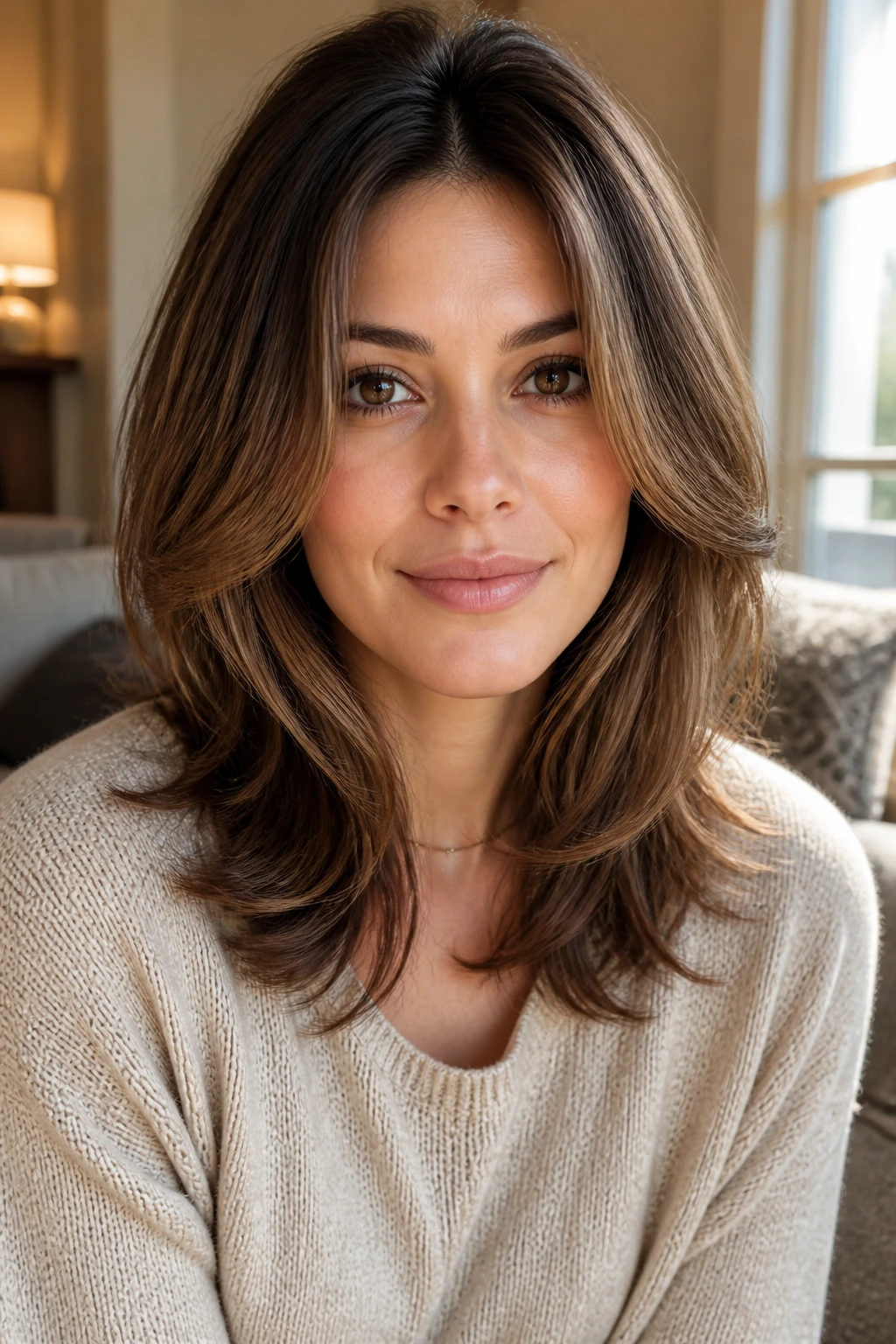
A good blowout is not only about smoothness. On square faces, the layer pattern matters just as much as the styling. The best version sends the front pieces away from the jaw and gives the crown a little lift, so the shape reads open instead of squared off.
The layers should begin around the cheekbone or lower and then feather out toward the ends. That placement lets the blowout roll softly without creating a hard edge at the jawline. If the hair is thick, a round brush with a medium barrel helps control the volume. If it’s fine, keep the brush smaller and the product lighter so the hair does not collapse by noon.
This is the style I’d pick if you want something polished that still feels relaxed. It’s flexible, and it works on shoulder length, long hair, and layered cuts. A good blowout does not hide a square face. It just stops the angles from shouting.
What Square Faces Need at the Hairline, Cheekbones, and Jaw
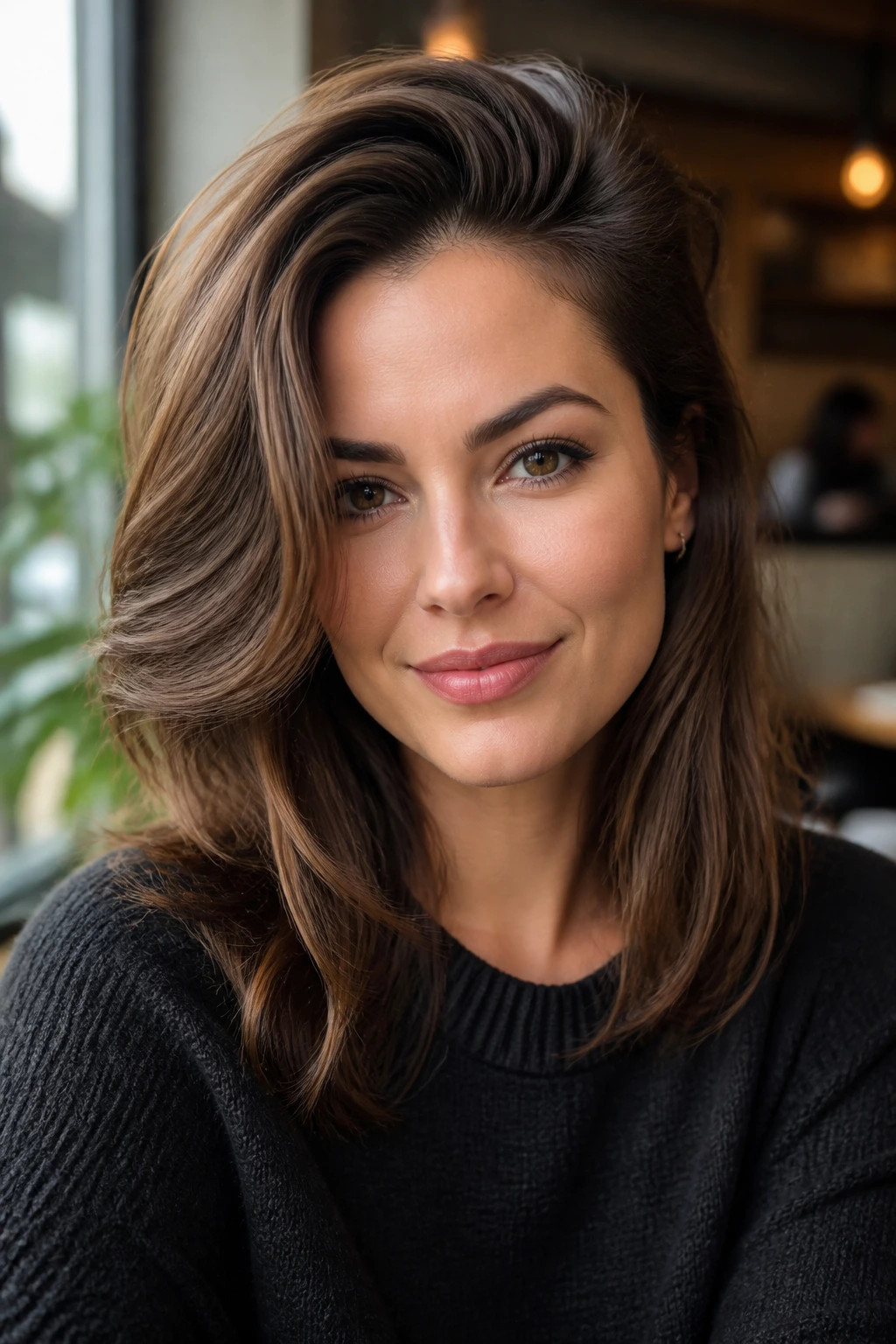
Square faces have one big styling truth: the shape is strongest at the edges. That means the hairline, cheekbones, and jaw all matter more than they do on softer face shapes. If the haircut creates a straight line at any of those points, the face reads even more angular.
The fix is not always “more layers.” Sometimes it’s just better placement. A part that shifts an inch to the side changes the hairline. A face-framing piece that starts below the cheekbone changes the middle of the face. Ends that land below the jaw, or rise above it in a controlled way, change the bottom line. Those are small moves, but they work because they interrupt straight paths.
Crown height also helps, but not in a teased, old-school way. A gentle lift at the top makes the face look longer. Flat roots do the opposite. So if you have a square face and your hair keeps feeling boxy, check the top first, then the sides, then the ends. That order saves a lot of guesswork.
Essential Tools for Styling These Looks
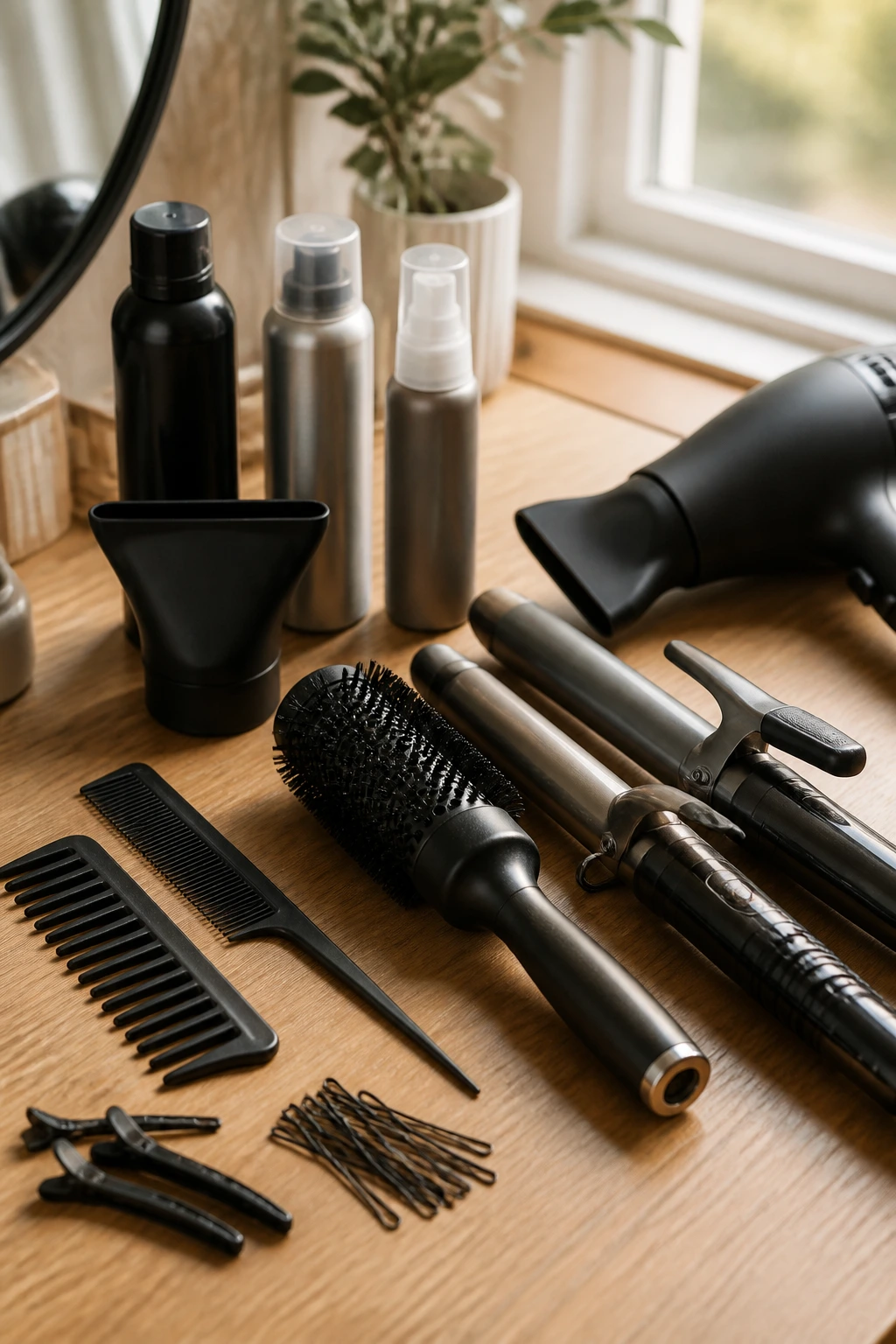
- Tail comb: Useful for clean side parts, off-center parts, and sectioning the front pieces without wrecking the shape.
- Round brush, medium barrel: Best for blowouts, curtain layers, and turning ends under or away from the face.
- 1-inch curling iron or wand: A good size for loose waves, face-framing bends, and brushed-out texture.
- 1.25-inch curling iron: Better for longer hair or looser Hollywood-style waves.
- Blow dryer with nozzle: The nozzle matters. It keeps the airflow directional so the roots dry in the shape you want.
- Sectioning clips: A boring tool, yes, but they stop layers from tangling while you work.
- Light mousse or root lift spray: Helps crown volume stay up without turning the style crunchy.
- Flexible-hold hairspray: Keeps movement alive. Heavy spray can make square-face styles look stiff.
- Texturizing spray: Good for shags, lobs, and pixies that need a little separation.
- Heat protectant: Non-negotiable if you use hot tools more than once a week.
- Bobby pins and small elastics: Needed for half-up styles, low buns, braided crowns, and any updo that needs a clean finish.
- Wide-tooth comb: Handy for curly styles and brushed-out waves when you want shape without frizz.
How to Talk to Your Stylist About Square-Face Haircuts
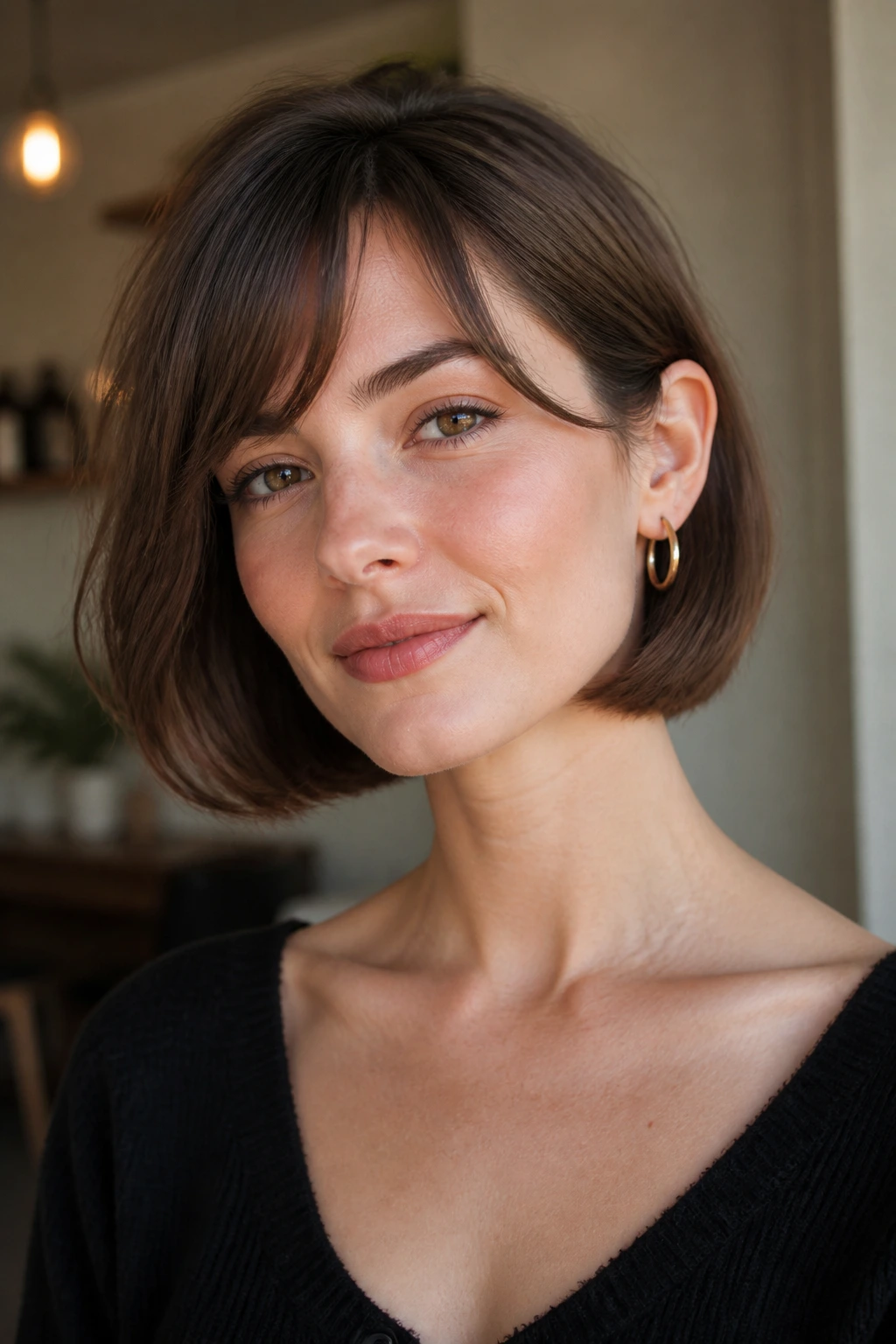
Tell your stylist what you do not want as much as what you do want. “I don’t want the ends to sit right at my jaw” is more useful than “I want something flattering.” So is “I want movement around the face, but not short pieces that stop at my chin.” Those little details are where the haircut gets shaped.
Bring photos from more than one angle if you can. A front view shows the fringe and part. A side view shows whether the ends tuck in or kick out. That second image is the one people skip, and it’s the one that saves the most regret later.
Say how you style your hair at home. If you air-dry, a layered cut that depends on a round brush may disappoint you. If you use a flat iron once a week, a shape with clean movement and fewer short layers might work better. Your routine matters as much as your face shape.
Daily Styling Moves That Soften Strong Angles
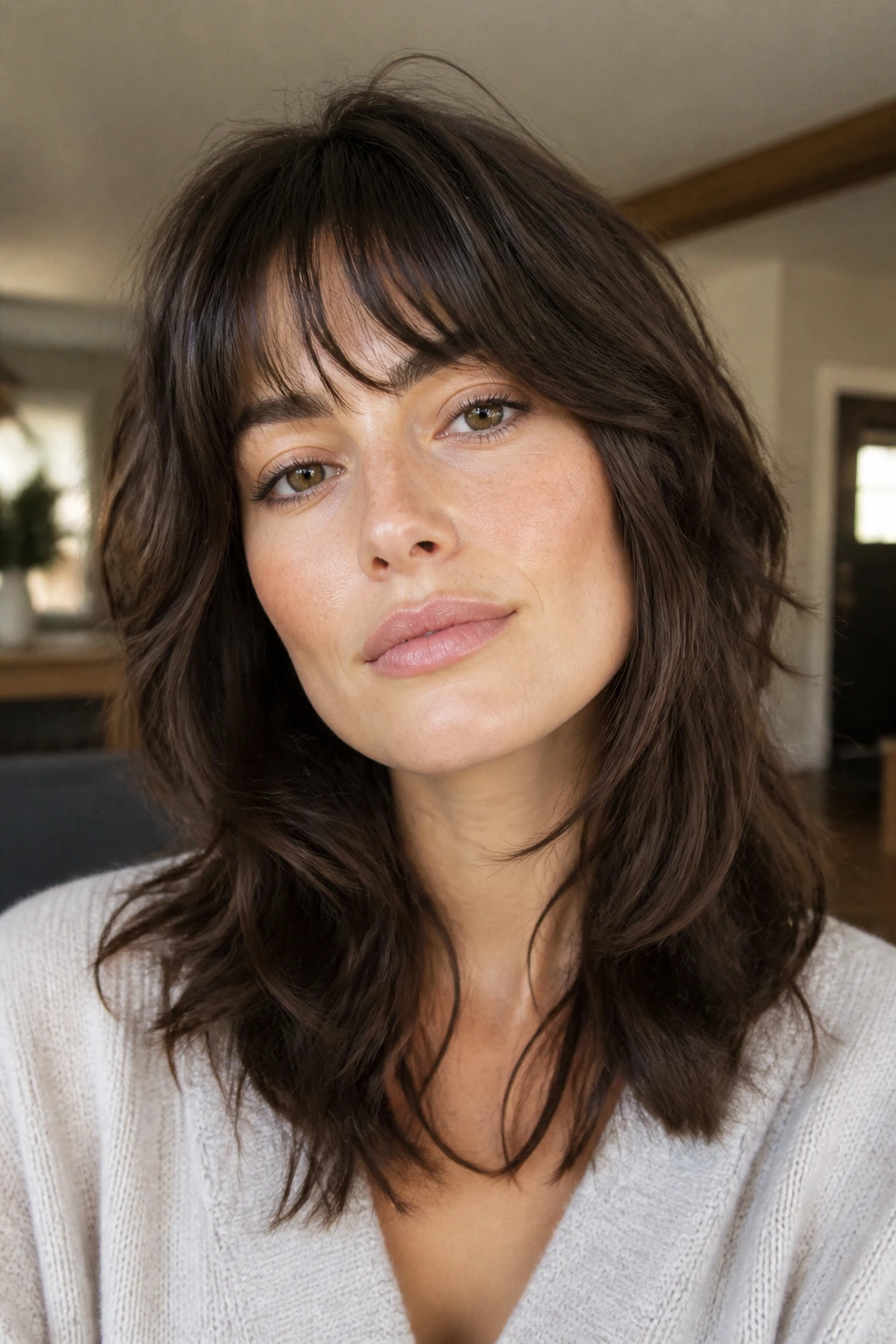
Part first, style second. A square face often looks softer with a part that lands slightly off center rather than dead in the middle. Even a one-inch shift changes where the hair falls at the forehead and jaw.
Lift the roots at the crown. Dry the top section in the opposite direction first, then flip it back. That little trick gives you height without teasing. The lift should be visible, not dramatic.
Curve the hair away from the jaw. Whether you use a round brush or a curling iron, aim the front pieces outward or into a soft bend. Straight-down pieces can sit too hard beside the face.
Keep the sides light. Too much volume at cheek level makes the face feel wider. Put your volume a little higher or lower, and let the middle of the face stay cleaner.
Finish with a touch of movement, not a shell. A flexible spray or a small amount of texture paste can define the ends, but if the hair feels sticky, you’ve gone too far. The point is shape, not stiffness.
Common Mistakes That Make a Square Face Look Wider
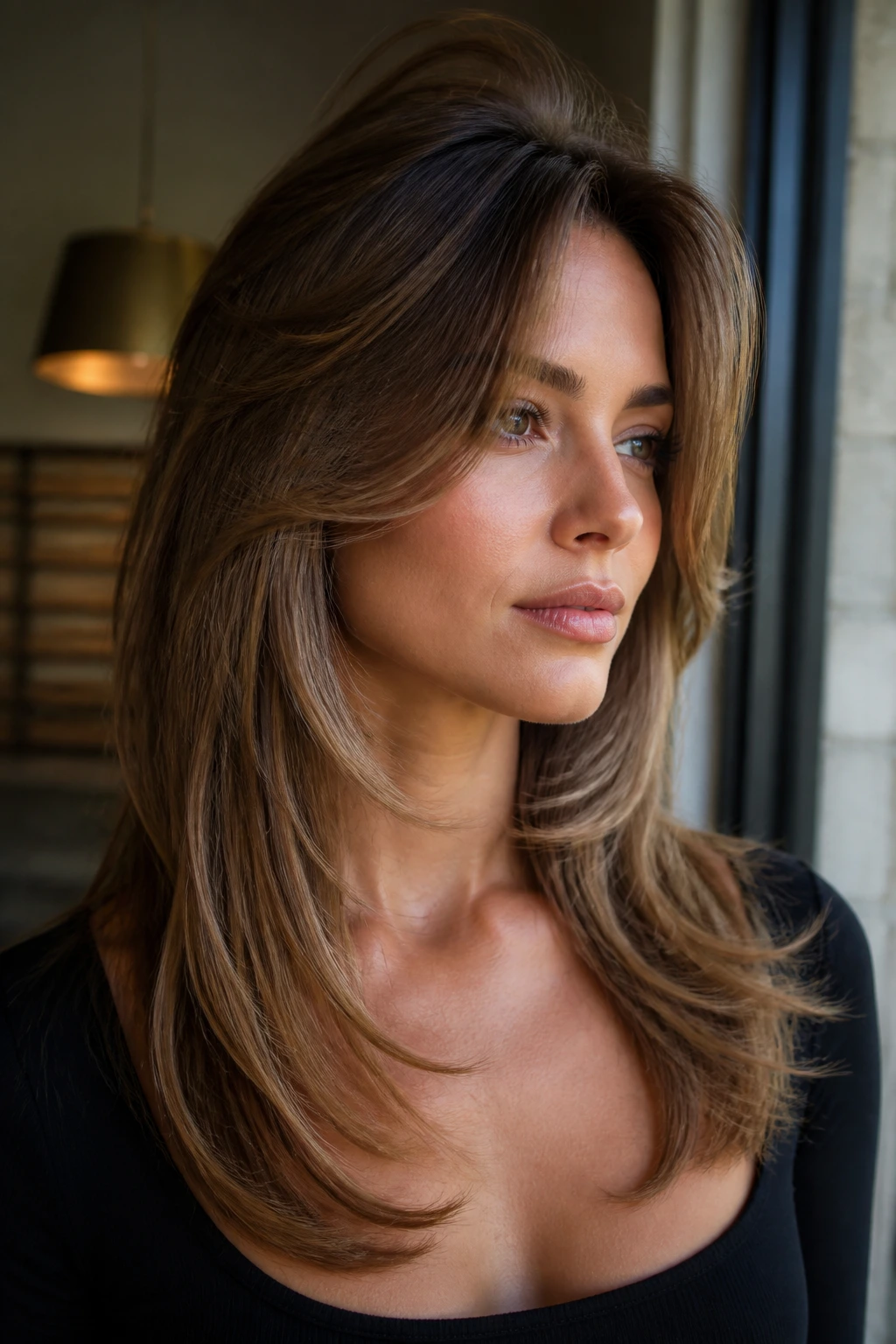
Cutting a blunt line right at the jaw. That’s the classic mistake. The hair stops exactly where the face is widest, so the line feels heavier than it should. The fix is to move the edge above or below the jaw, or soften it with layers or beveling.
Stacking volume at the sides. Big width at the cheekbones can make a square face look broader. If you want volume, keep it at the crown or through the ends, not glued to the middle of the face.
Using a center part on flat hair and calling it balance. A center part can work, but only if the hair has shape around it. Flat roots and no movement make the face read wider and straighter. A side part is often kinder when the cut is simple.
Choosing bangs that are too dense. Heavy, straight bangs can shorten the forehead in a way that makes the lower face feel even more dominant. Wispy, curtain, or bottleneck bangs tend to do better because they show some skin and let the line breathe.
Ignoring texture. A cut that looks airy on straight hair can swell on curls or puff up on thick hair. If the texture is dense, ask for internal removal. If the hair is fine, keep the perimeter stronger so it doesn’t disappear.
Skipping upkeep on short shapes. Pixies, French bobs, and chin-length cuts lose their edge fast. The shape that flatters a square face is often the shape that needs the trim on time.
Variations for Curly, Wavy, Straight, Fine, and Thick Hair
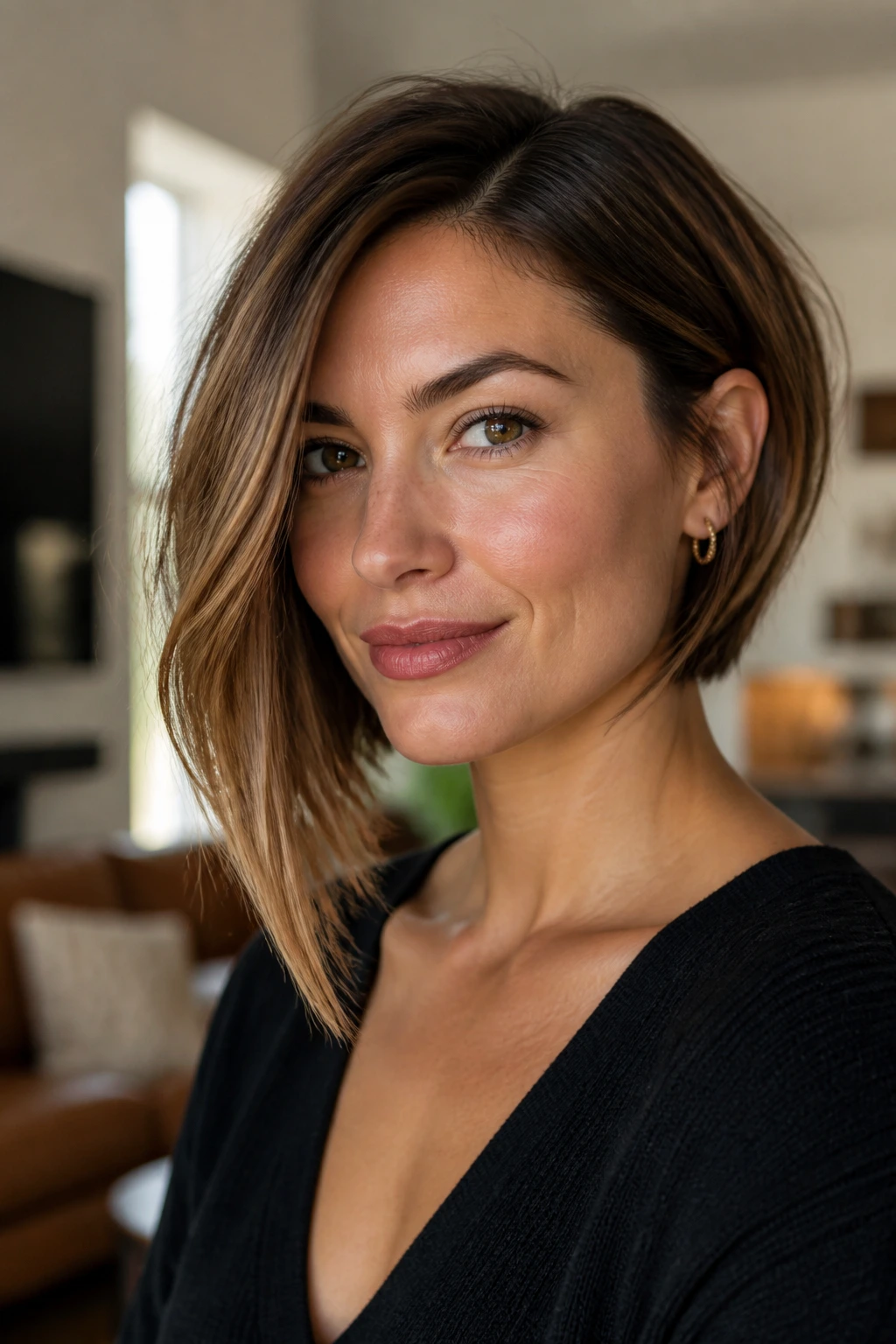
Soft and Curly: Curly hair usually likes more height and roundness, less width at the jaw. Choose shags, rounded lobs, or layered cuts that follow the curl pattern instead of forcing it into a blunt edge. Dry cutting can help, because curls shrink and shift.
Straight and Sleek: Straight hair shows every line, so the best cuts usually have either a strong side part or a soft bend at the ends. Long internal layers, asymmetrical bobs, and blowout layers work especially well because they stop the hair from hanging like a sheet.
Fine Hair: Fine hair does better with shapes that keep the perimeter visible. A feathered lob, a side-swept bob, or curtain layers with controlled length can give movement without too much removal. Too many short layers can make the ends look wispy in a bad way.
Thick Hair: Thick hair needs weight control. Internal layers, shags, and butterfly cuts help, but they need to be placed carefully so the hair doesn’t balloon at the jaw. Ask for bulk removal in the interior rather than letting the stylist thin the ends until they fray.
Low-Maintenance Mornings: If you want minimal styling, stick with cuts that still look shaped after air-drying. The rounded lob, soft shag, and long loose waves are usually the easiest to live with.
Keeping the Cut in Shape Between Salon Visits
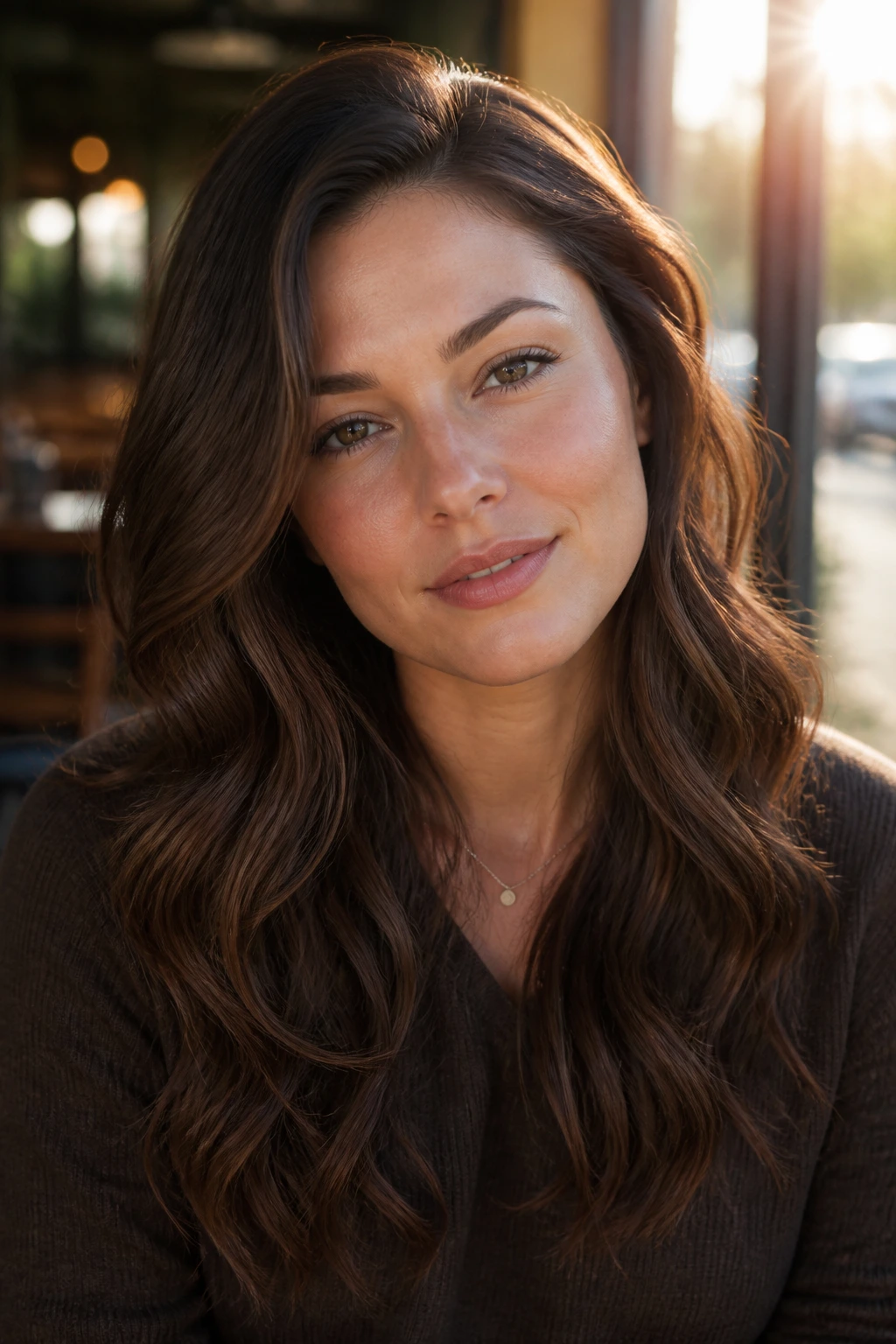
Shorter cuts need trims more often. A pixie or chin-length bob can lose its line in 4 to 6 weeks, sometimes faster if your hair grows quickly or your cowlicks are stubborn. Lobs, shags, and layered long cuts usually hold longer, but they still need the ends cleaned up before the shape falls apart.
The at-home maintenance is simple, but it has to be consistent. Use dry shampoo at the roots if the crown starts collapsing. If the front pieces get oily first, lift them with a fingertip and spray underneath instead of piling on powder. Too much product around the face can make a soft style look muddy.
If you wear bangs, trim timing matters even more. Curtain and bottleneck bangs can usually stretch longer than blunt bangs, but they still need a small refresh before they cover the eyes. For growing-out fringe, pin the shorter pieces back with tiny crossed bobby pins and let the side layers take over for a while. That’s a much better look than forcing a bad shape to behave.
Frequently Asked Questions
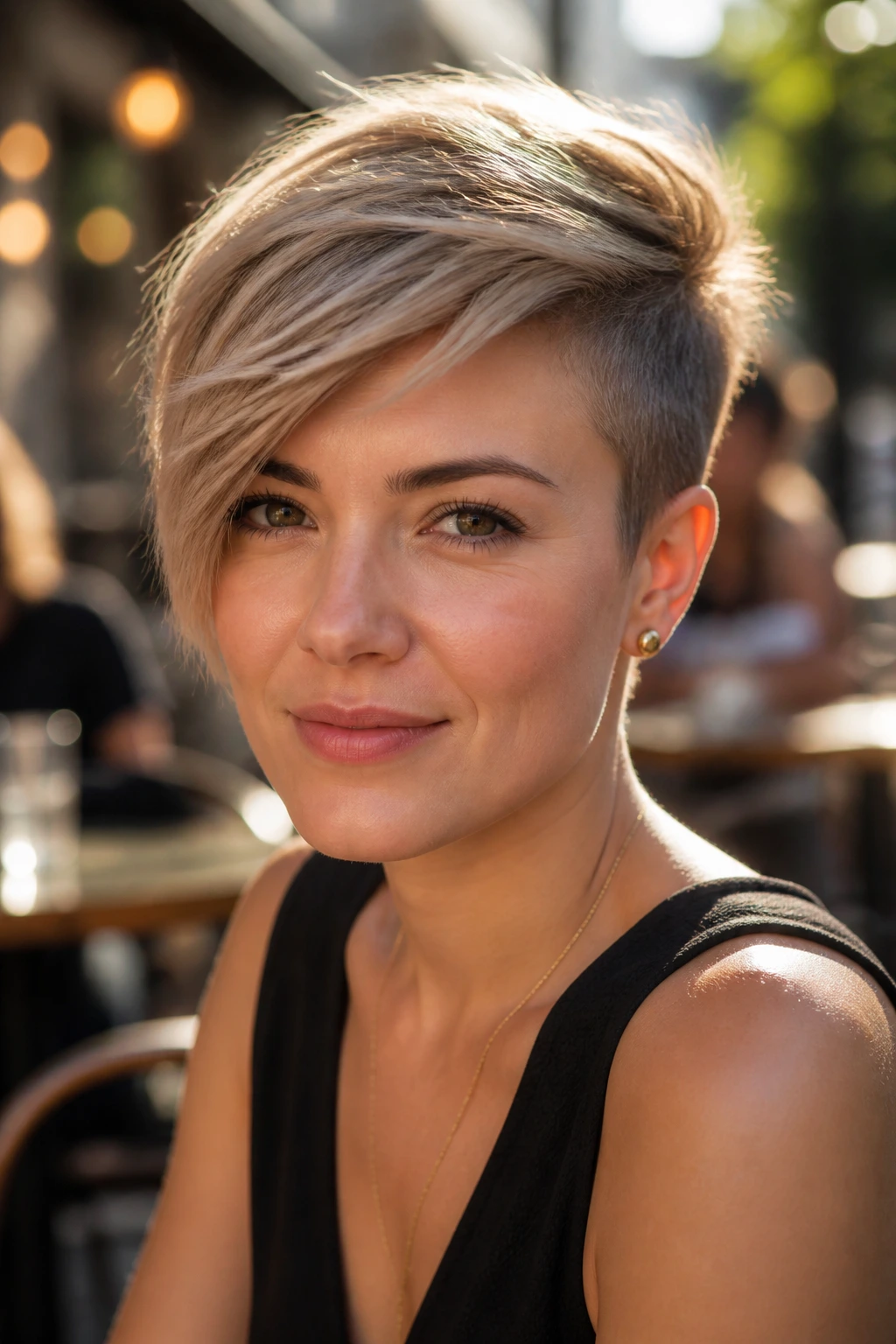
Are square faces better with short hair or long hair?
Neither length wins automatically. Short hair can look sharp and modern if it has height, side movement, or softness around the front. Long hair works well when it has layers, bends, or a part that keeps the face from feeling too even.
Is a middle part bad for square faces?
No, but it needs help. A middle part on flat, one-length hair can emphasize the straight lines of the face. If you want a center part, pair it with waves, long layers, or a cut that starts moving around the cheekbones.
Do bangs work on square faces?
Yes, and some of the best options live here. Curtain bangs, bottleneck bangs, and soft side-swept fringe usually do the most for the shape because they interrupt the forehead line without cutting across it too hard.
Can I wear a blunt bob if I have a square face?
You can, but the details matter. A blunt bob that lands at the jaw can feel heavy, while one that sits above the jaw or just below it with beveled ends usually looks better. Part placement and texture make the difference.
What if my hair is very thick and puffy at the sides?
Ask for internal layers and weight removal away from the jaw. The goal is to let the hair fall instead of spreading outward. A style that looks airy on thick hair is usually cut with that volume in mind, not cut straight across and hoped for.
What if my hair is fine and flat?
Keep the perimeter a little stronger and add lift at the crown. A feathered lob, a side-part blowout, or curtain layers can give shape without stripping the ends bare. Too many short layers will make it look thinner than it is.
Which updos are best for square faces?
Low buns, soft chignons, half-up styles with crown lift, and loose ponytails with face pieces tend to work best. The trick is to avoid pulling everything tight against the temples and jaw, because that can make the face read sharper.
How do I make my jaw look softer without hiding my face?
Use diagonal lines. Side parts, layered fronts, waves that bend away from the jaw, and pieces that start below the cheekbone all soften the edge without covering it. You’re not erasing the jaw. You’re giving it a better frame.
Choosing the Shape That Moves With You
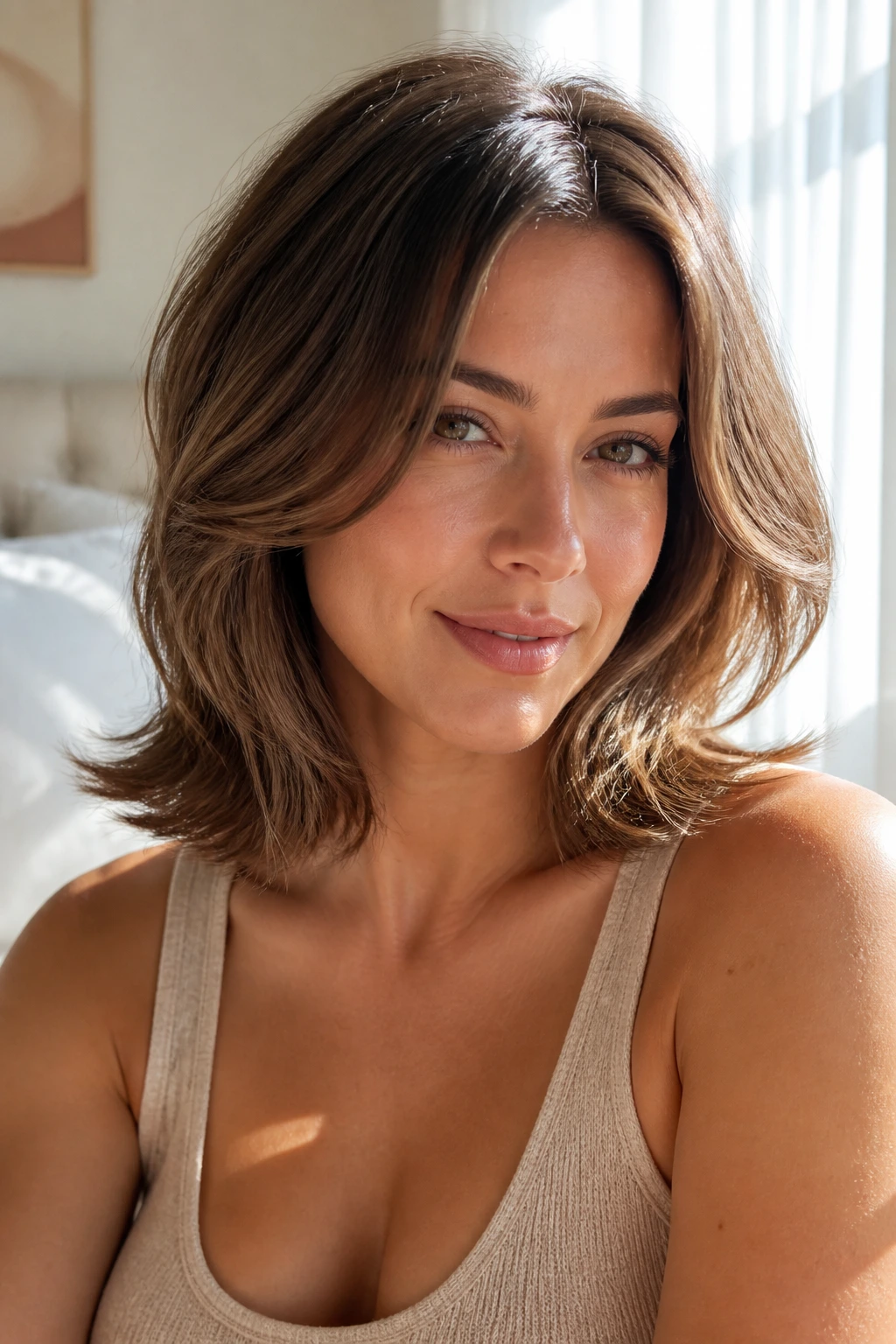
Square faces do not need rescue. They need a haircut that understands angles. That’s a different job. One cut might work because it adds lift, another because it softens the jaw, and another because it simply moves the eye off a straight line.
The best choice is usually the one that fits your texture and your habits at the same time. If you like fast mornings, pick a shape that still looks good a little undone. If you love styling, pick something with enough structure to reward the effort. And if you keep getting cuts that feel too hard around the jaw, start with the part and the layer placement. That’s where the whole thing turns.
