



If your face is longer than it is wide, the wrong haircut can make every inch of it feel louder. Hair that piles too much height on top, drops straight down in one vertical sheet, or disappears into wispy ends tends to stretch the face even more. That’s the pattern.
The better answer is almost always a shape problem, not a hair problem. Hairstyles for long faces work when they add width at the cheekbones, soften the forehead, or break up that long line from hairline to chin. A blunt edge can help. So can curtain bangs. So can waves that sit around the jaw instead of falling like a curtain.
I’ve always thought the old “just add volume” advice gets this face shape wrong. Volume in the wrong place — especially up at the crown — can make a long face feel taller, not more balanced. The styles that do the heavy lifting are the ones that create horizontal movement, not extra lift. That’s where the good ones live.
Why These Styles Earn Their Keep
- They add width where it counts: The best cuts pull attention to the cheekbones and jaw, not just the forehead and chin.
- They shorten the face visually: Bangs, waves, and side parts break up that long vertical line without hiding your features.
- They work with different textures: Straight, wavy, curly, and coily hair can all use these shapes if the layers and parting are handled well.
- They don’t all need a blowout: Some of the strongest options look better with a little bend and grit than with pin-straight polish.
- They give you room to choose length: You do not have to cut everything off to flatter a long face. The trick is in the outline.
- They age well as they grow out: A good long-face cut should still look intentional at week six, not just on day one.
1. Blunt Collarbone Lob With Soft Ends
A collarbone lob is one of the safest bets for a long face, and I mean that in the best way. It lands in that sweet spot where the hair is long enough to feel versatile, but not so long that it drags the eye straight down. When the ends are blunt and the texture is softly bent, the whole shape feels wider through the lower half of the face.
Why It Works on Long Faces
The collarbone is doing a lot here. That length gives your face a visual stop sign before the hair starts falling into the chest area, and the blunt edge keeps the outline from tapering into a point. Soft ends stop it from looking too severe.
This cut also works because it behaves well with a side part or a loose center part. If your hair is fine, keep the line compact. If it’s thick, ask your stylist to remove bulk underneath without thinning the perimeter too much.
Best for: straight to wavy hair, especially if you want something that air-dries decently.
Styling note: A 1.25-inch curling iron, used only on the mid-lengths, keeps the finish from looking helmet-stiff.
Tiny tip: tuck one side behind the ear. That little asymmetry makes a long face look less linear.
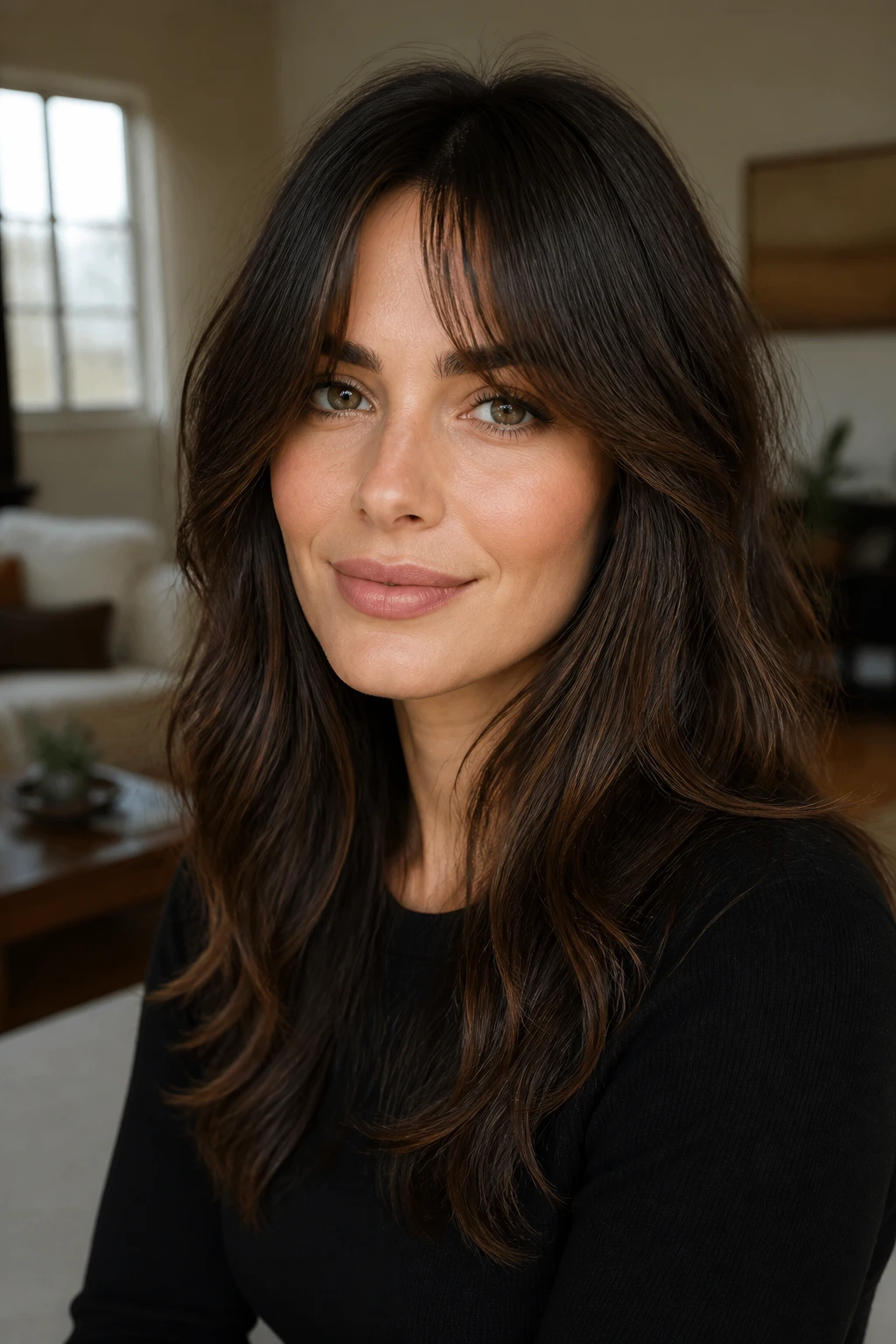
2. Curtain Bangs With Loose Waves
Why do curtain bangs keep showing up in conversations about long faces? Because they split the forehead in a soft way and stop the eye from traveling straight down. That’s the whole trick. The bang opens in the middle, falls away at the cheeks, and gives the face a little width right where it needs it.
Loose waves make that effect even better. The bend should start around the cheekbones, not up at the roots, or you’ll create too much height. Keep the waves relaxed and brushed out so the style looks soft instead of overdone.
How to Wear It
If your hair is fine, ask for curtain bangs that hit around the cheekbone, not the chin. If your hair is thick, the bangs can be longer and a little heavier so they don’t puff out like a triangle.
- Blow-dry the bangs forward first, then sweep them out with a round brush.
- Use a light mousse at the roots and a smoothing cream through the ends.
- Keep the wave pattern loose; tight curls can make the style look busier than it needs to.
This is one of those cuts that can look casual at breakfast and polished by dinner. Handy. No drama.
3. Chin-Length French Bob
A chin-length French bob is blunt, neat, and slightly cheeky — which is exactly why it flatters a long face so well. It stops right at the jaw, so the eye lands there instead of sliding past it. If you’ve spent years wearing longer hair because you thought short hair would make your face look longer, this is the cut that proves the opposite.
The key is the edge. Keep it clean. Keep it full. A chin-length bob with a little bevel under the ends makes the lower face look broader, especially if you add a soft side part or a narrow fringe.
What to Ask For
- Length: right at the chin or just a hair below it.
- Shape: blunt perimeter with minimal layering.
- Finish: a soft bend under the ends, not a flipped-out curl.
- Fringe option: a wispy brow-skimming bang if you want even more balance.
This bob can look too severe if it’s cut too high or too sharp. Give it a tiny bit of softness around the ends, and it gets much easier to wear.
4. Shoulder-Length Shag With Cheekbone Layers
The shag is not about chaos. At least, not when you want it to flatter a long face. The good version builds width through the sides, keeps the crown from getting too tall, and drops layers where the face actually needs them — around the cheekbones and jaw.
This is why a shoulder-length shag can be so useful. It gives movement without turning the top of the head into a tall, puffy triangle. The best version looks piecey, not chopped to bits. The ends should move when you shake your head, not stick out in every direction.
What Makes It Different
A shag with cheekbone layers gives the face a little shelf to sit on. That may sound odd, but it matters. The eye needs somewhere to stop.
If your hair is wavy, this cut comes alive fast. If it’s straight, use a texturizing spray on dry hair and bend just a few random pieces around a wand. Don’t curl every strand. That kills the shape.
A shag is a little more forgiving than a bob, too. It can grow out for weeks and still look on purpose. That’s a nice thing to have.
5. Side-Swept Bangs With Long Layers
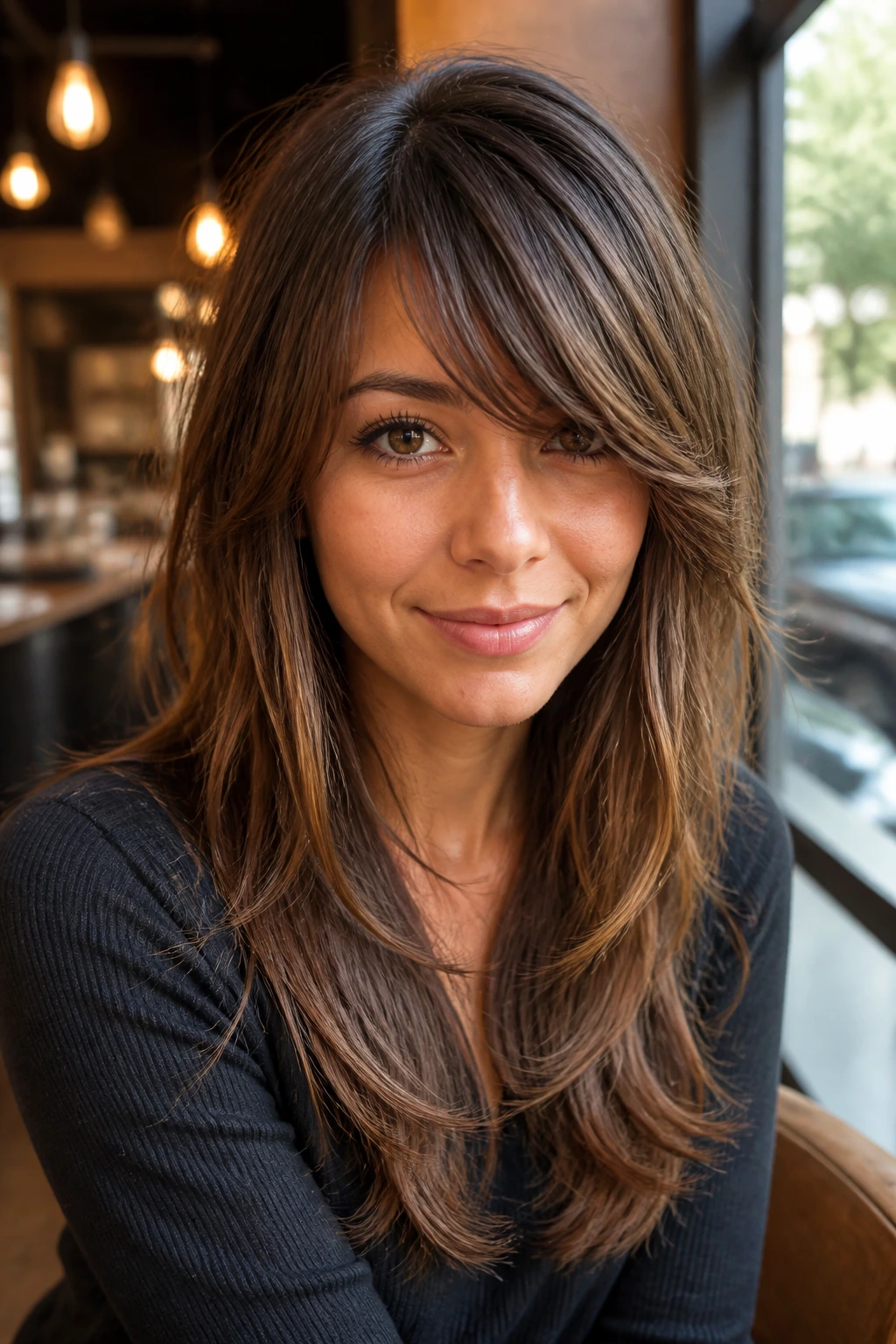
Side-swept bangs are the quiet workhorse of long-face hair. They don’t shout, they don’t demand a complete haircut overhaul, and they take a little length out of the forehead area without boxing the face in. Paired with long layers, they soften the whole front of the head in a way that feels natural.
Unlike a blunt fringe, side-swept bangs are easy to grow out. That matters if you like change but do not want to be stuck in one shape for months. They also work well when your hair is thick enough to hold a bend but not so heavy that it hangs flat.
Why They Beat Straight-Down Length
Straight-down long layers can be a problem on long faces because they keep the eye moving vertically. Side-swept bangs interrupt that line and send the gaze diagonally across the face. Diagonal lines are your friend here.
Keep the longest layer around the cheekbone or just below it. If the layers start too low, the face gets stretched again. That’s the part people miss.
A side part gives this style even more lift at the front without needing volume on top. Subtle. Better than teasing the crown into the ceiling.
6. Textured Pixie With Sweeping Fringe
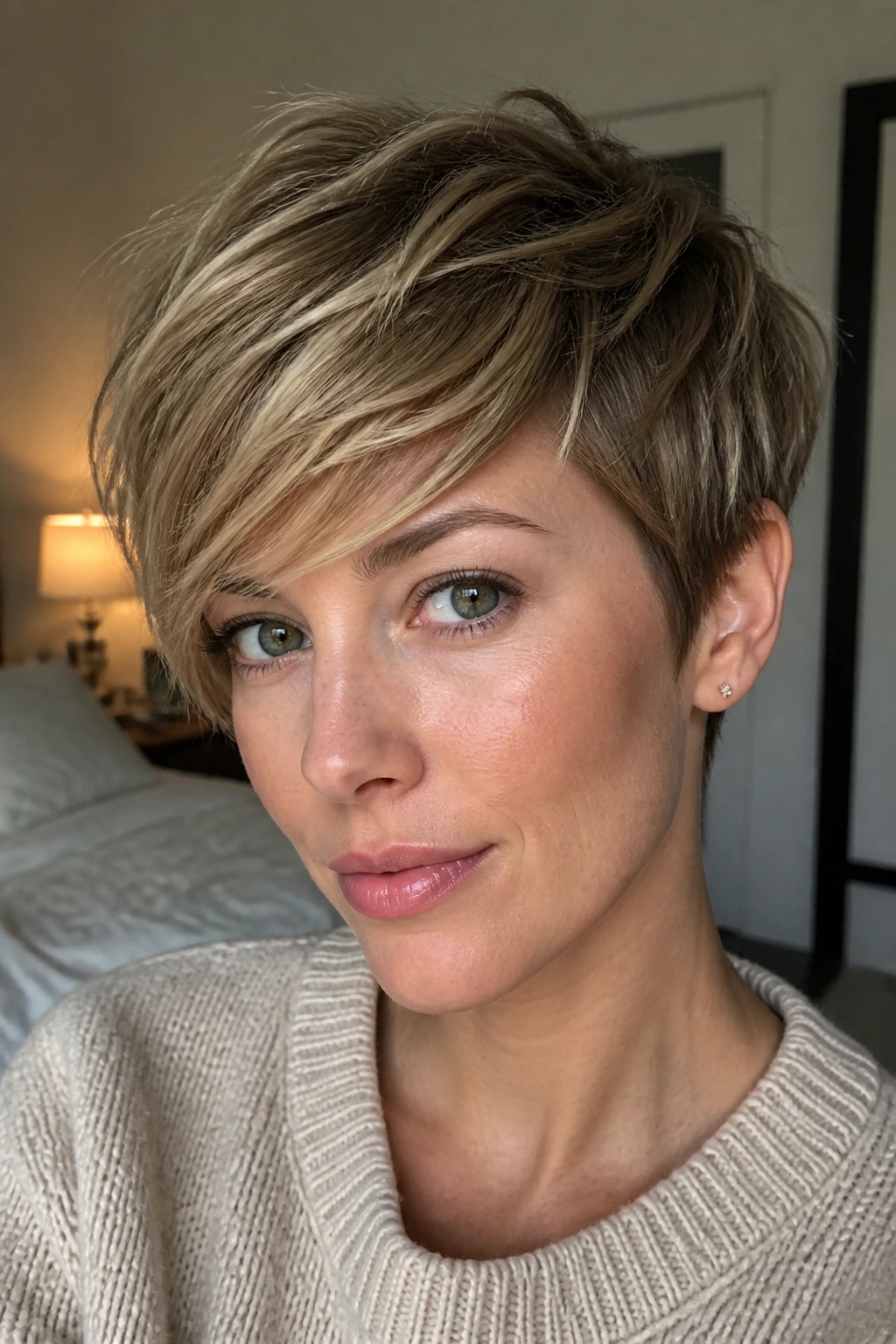
Short hair can be fantastic on a long face, but only if the pixie has the right balance. The mistake is making the top too tall and the sides too tight. That builds a vertical shape you do not want. The fix is a textured pixie with a fringe that sweeps across the forehead instead of standing up at attention.
This cut puts movement near the brow and temple area, which is where a long face benefits from attention. The sideburns can stay a touch fuller too. That small detail changes the silhouette more than people expect.
Best With
- Fine hair that needs a little shape.
- Straight or slightly wavy texture.
- Strong brows, because the fringe opens up the face in a sharp, pretty way.
If you want to keep it playful, ask for soft choppy pieces around the ears. If you want it sleeker, keep the fringe longer and brush it across the forehead with a little cream. Either way, avoid spike-like height at the top. That’s the enemy.
7. Blunt Bob With Full Fringe
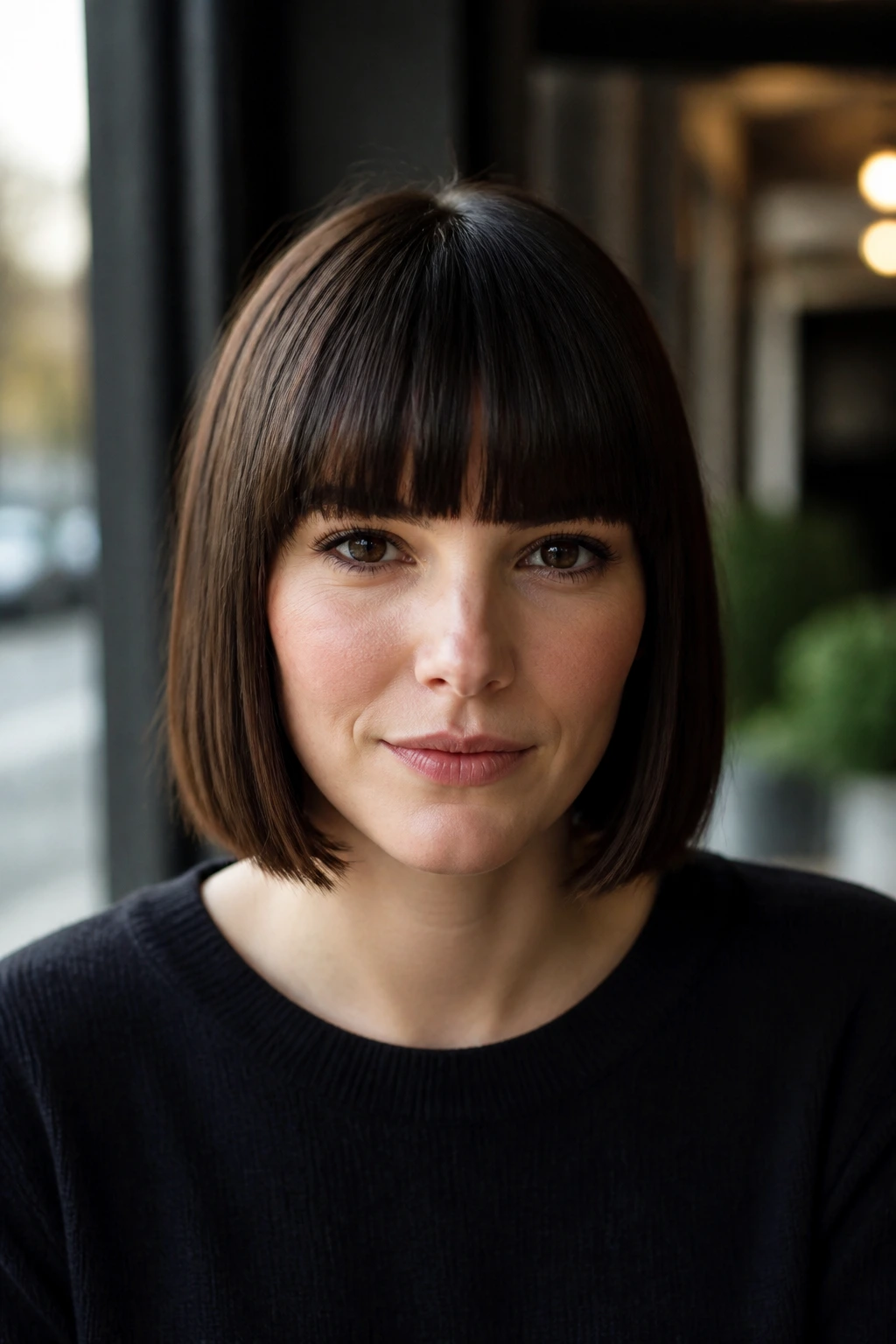
This is the haircut that says, “Enough with the length.” A blunt bob with a full fringe shortens the forehead visually and creates a firm horizontal line around the eyes. For a long face, that can be a lifesaver. The shape feels direct and deliberate, not fussy.
The bob should land somewhere between the jaw and just under the jawline. Full bangs should be cut wide enough to blend into the sides of the haircut, not look like a separate helmet piece dropped on top. That’s the difference between chic and awkward.
A Few Details That Matter
The ends need weight. If they get too wispy, the face starts looking longer again. A light bevel under the bob helps it curve inward a touch.
This style is especially good if your forehead feels long or if your features are delicate and you want more frame. It does need regular fringe trims. That’s the tradeoff. Worth it, in my opinion.
A flat iron can smooth the bangs, but keep the bob itself a little soft. Too much polish and the shape gets stiff.
8. Wavy Lob With a Deep Side Part
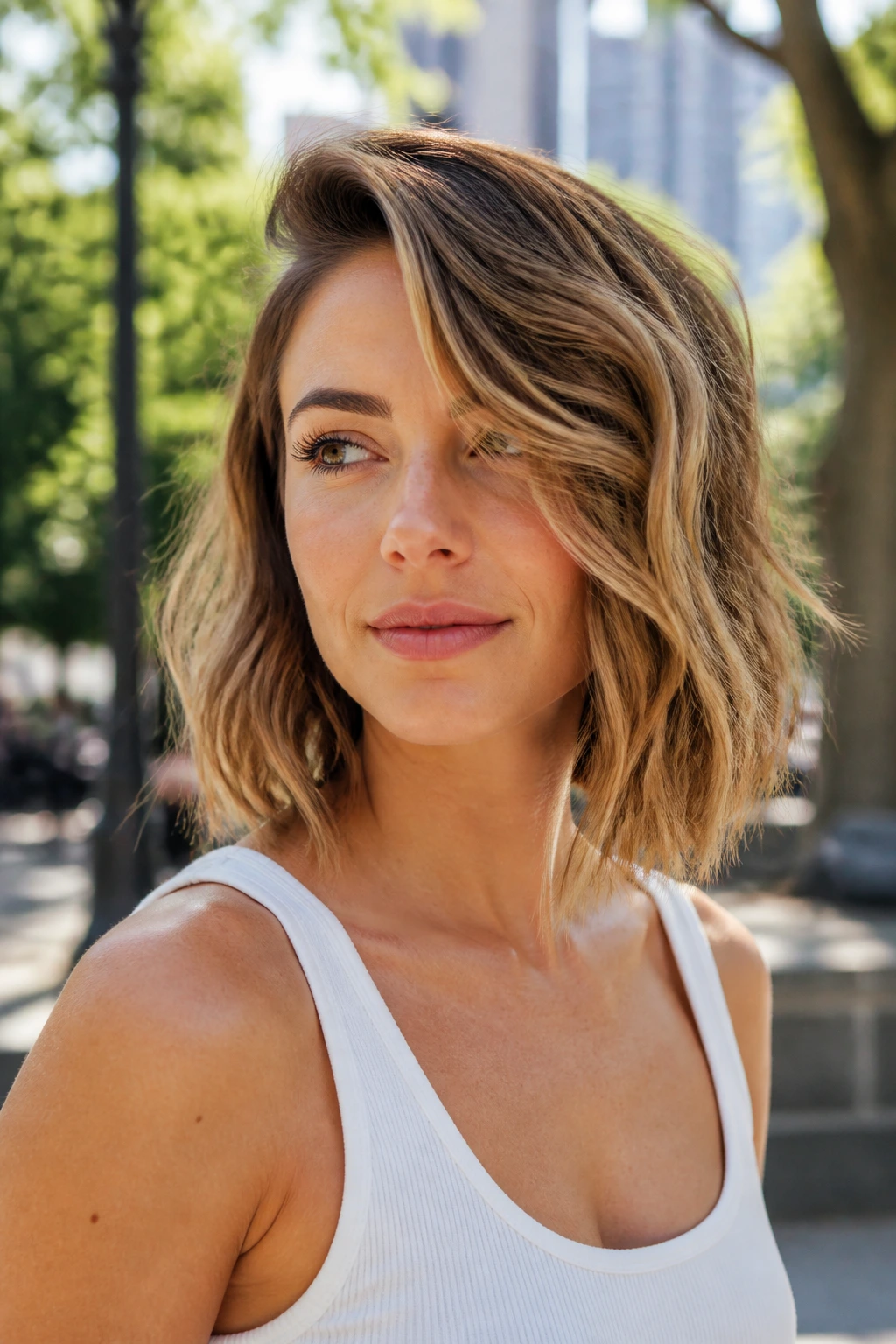
A deep side part can be magic for a long face, provided the rest of the style carries some width. The wavy lob does that job nicely. It gives the face movement near the cheekbones and keeps the hair from falling in one straight vertical panel.
The side part changes the balance right away. One side gets a little lift, the other side drapes across the forehead and temple. That asymmetry makes the face feel shorter and broader in the middle.
How to Make It Work
Use a large-barrel curling iron or wand and bend the hair in alternating directions. Then brush it out. You want broad waves, not tight rings.
- Keep the length between the chin and collarbone.
- Start the wave just below the cheekbone.
- Let one side fall across the forehead a little more than the other.
This is a good style if you want soft glamour without a lot of structure. It also plays nicely with highlights because the movement gives the color somewhere to live.
9. Feathered Mid-Length Cut
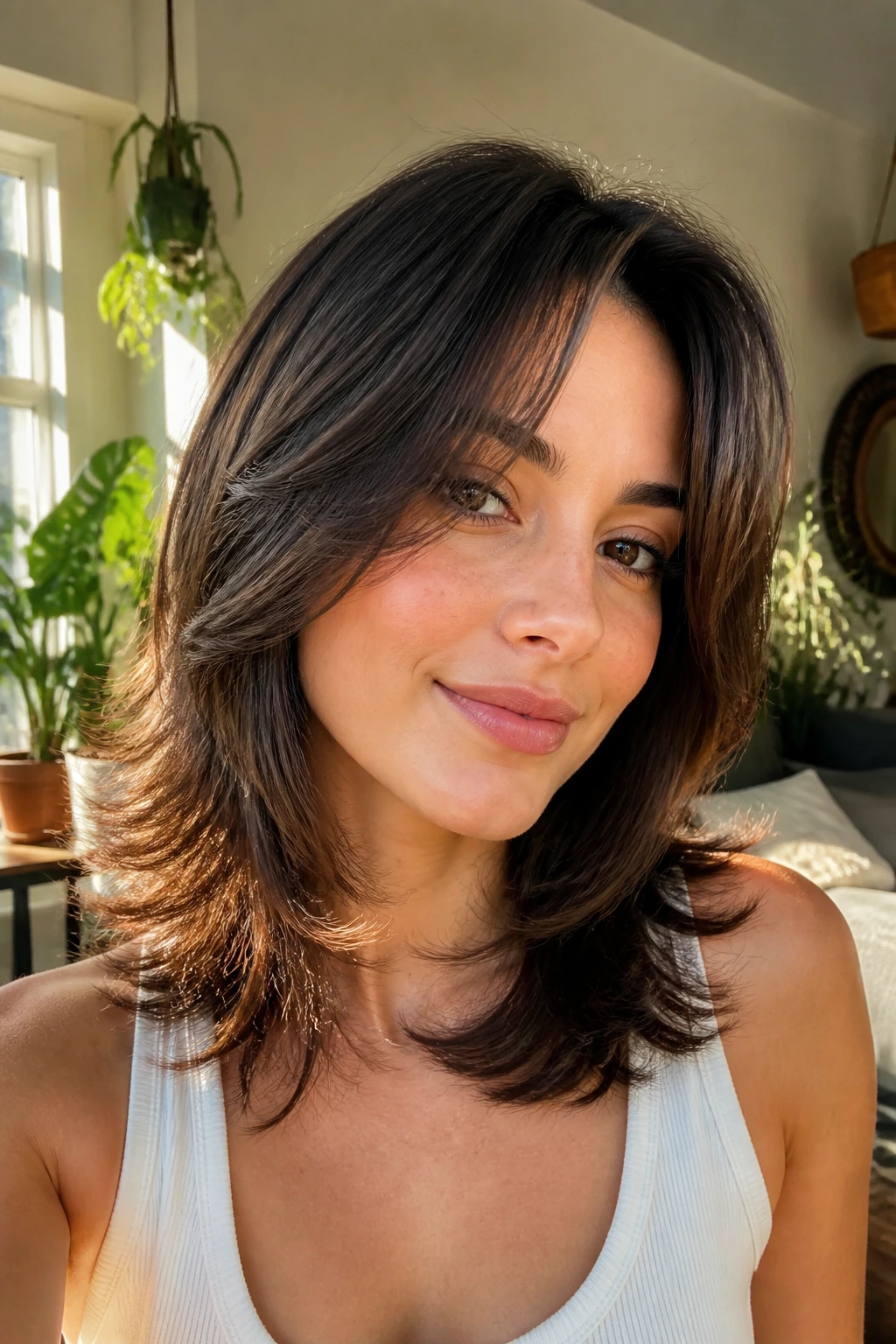
Feathered layers get ignored too often, which is a shame. On a long face, they can add air and width without removing too much hair. The cut tends to sit around the shoulders, with lighter pieces around the face that flick out just enough to soften the outline.
The big advantage is movement. Feathering keeps the mid-lengths from hanging like a curtain, but it doesn’t shred the shape into thin ends. That matters if your hair is medium to thick and you need the cut to breathe.
What It Looks Like in Real Life
The top should stay flatter than you think. The body of the cut belongs around the cheek and jaw area, not at the crown. That keeps the face from feeling even longer.
I like this cut on hair that naturally bends a bit. If your hair is straight, a round brush and a 2-inch iron can give the ends a soft turn without making them look overstyled.
This one is quietly flattering. Not flashy. Just smart.
10. U-Shaped Long Hair With Bottleneck Bangs
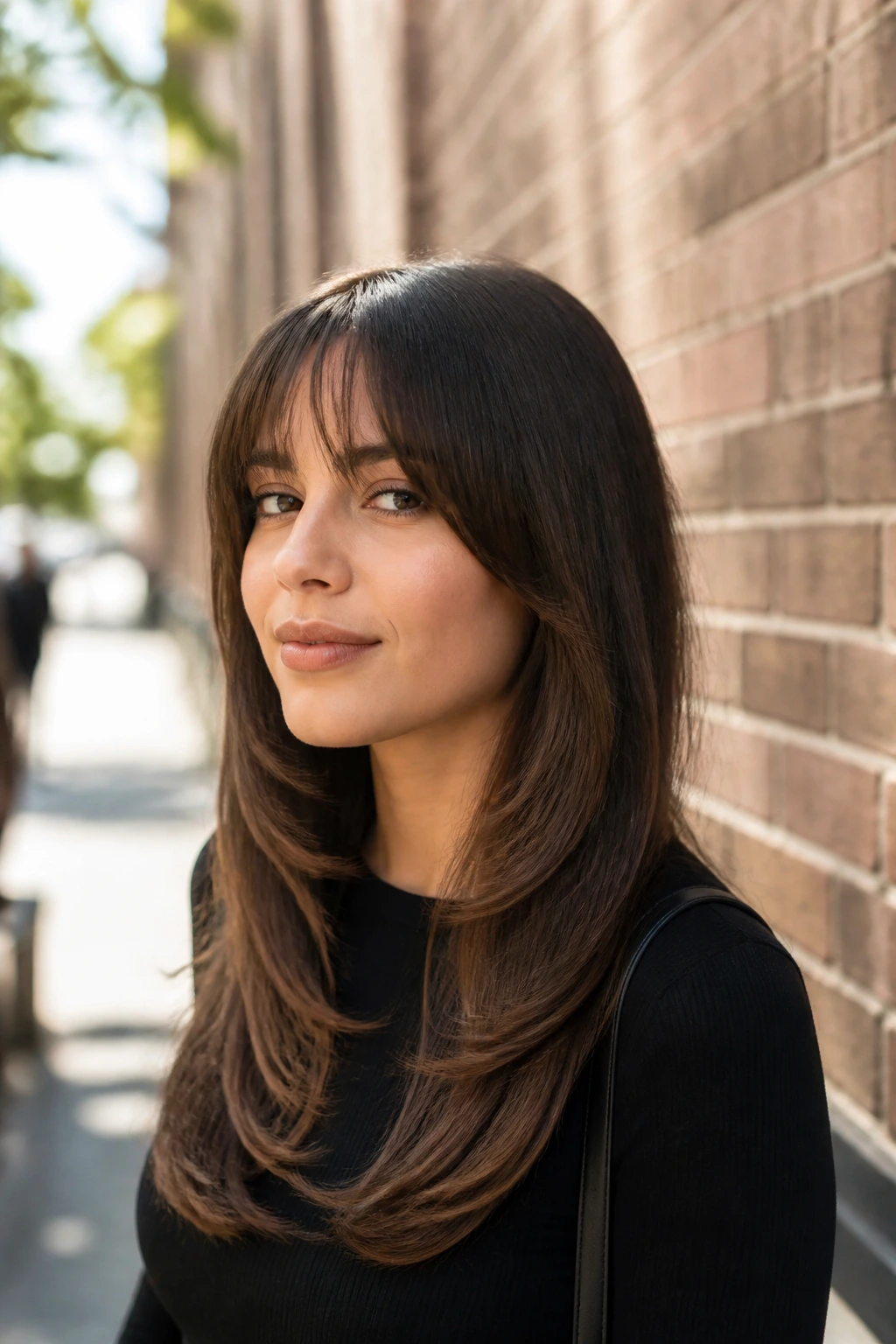
If you love long hair and do not want to give it up, the U-shaped cut is a much better choice for a long face than one-length hair past the chest. The subtle curve in the back keeps the perimeter from forming a hard vertical line, and bottleneck bangs bring the attention back to the center of the face.
Bottleneck bangs are longer in the middle and slightly tapered at the sides. They sit somewhere between curtain bangs and a full fringe. That shape is useful here because it breaks up the forehead without flattening the face.
What to Watch For
Long, one-length hair can drag the face downward if it’s too flat. The U-shape gives the style some contour. You still keep length, but the outline becomes softer and more rounded.
This is a good option if you like braids, ponytails, or loose waves. The bangs do a lot of the balancing work, so the rest of the hair can stay fairly simple.
A little body at the ends helps. Airy roots, not towering roots. That difference matters more than people think.
11. A-Line Bob With A Gentle Angle
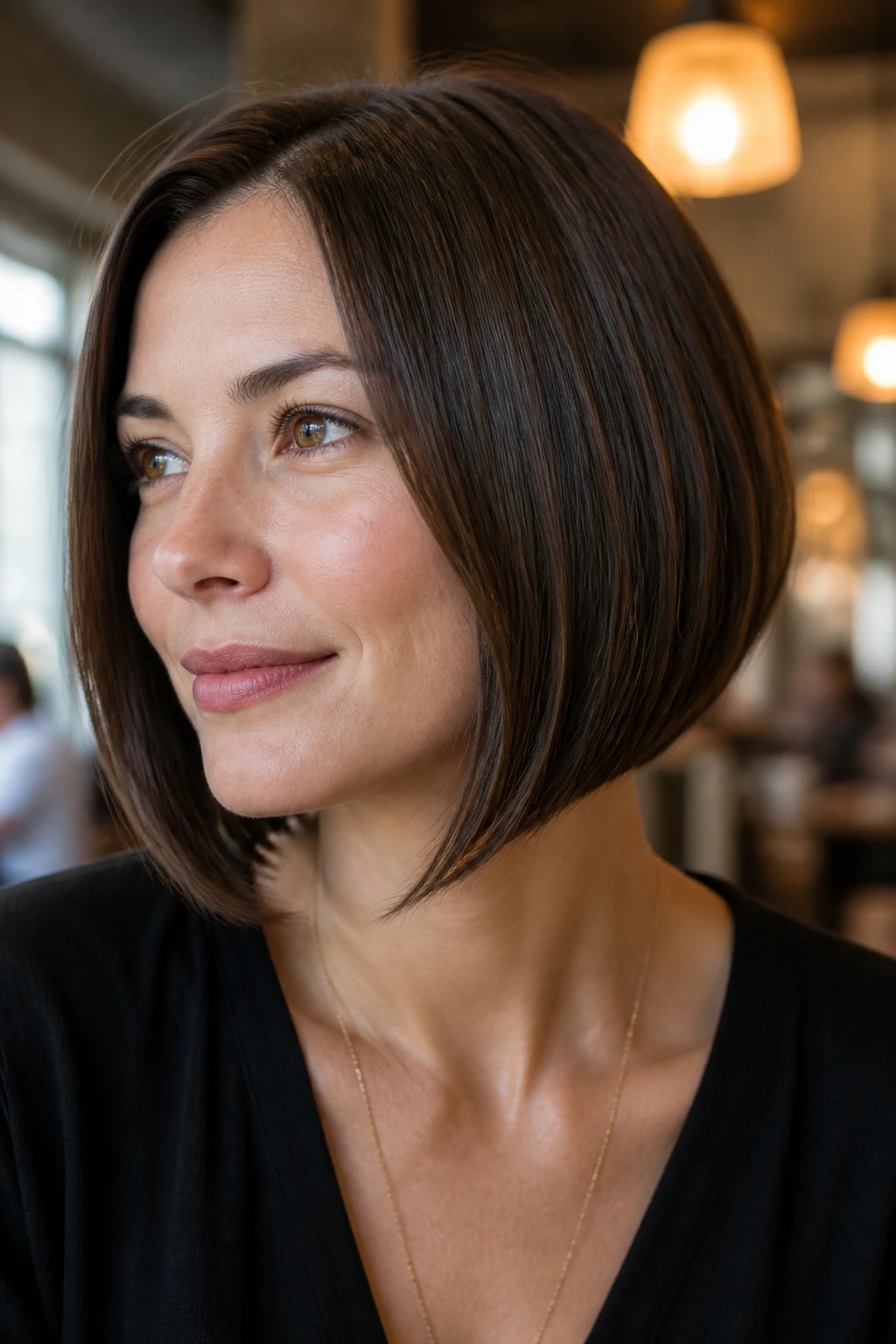
The A-line bob has a reputation for being sharp, but it does not need to be severe. On a long face, the softer version is better: slightly shorter in the back, a touch longer in front, and angled enough to give the jaw some structure without pointing straight at the chin.
The reason it works is simple. The forward angle builds width near the lower face, while the back stays neat and compact. You get shape without too much volume on top.
Best Version for Long Faces
Keep the angle mild. A dramatic A-line can start looking too pointy, especially if the chin is narrow. The front should just graze the jaw or sit a finger-width below it.
This cut also loves a side part. The part adds a little lift at the front, and the angled line carries the eye across the face instead of straight down it.
If your hair is thick, ask for internal weight removal so the front does not puff outward. If it’s fine, keep the perimeter blunt and clean. No extra fraying.
12. Modern Wolf Cut With Airy Crown

A wolf cut can work on a long face, but only when it’s handled with restraint. The modern version keeps the crown airy, not huge, and pushes the layers outward through the sides instead of building a shaggy tower on top. That part is non-negotiable.
The fringe helps too. A soft curtain or bottleneck fringe interrupts the length of the face and keeps the style from feeling too vertical. The body of the cut should feel lived-in, not ragged.
The Detail That Matters
Do not confuse texture with chaos. A good wolf cut still has a shape, and that shape should be wider around the cheekbones than at the top of the head.
This is a strong pick for thick hair, wavy hair, and anyone who likes a little mess in the morning. If your hair is pin-straight and fine, the cut can fall flat unless you style it. A little mousse at the roots and a bend through the front pieces makes a big difference.
It’s a bolder look, sure. But it is also one of the better layered cuts for balancing a long face.
13. Rounded Shoulder-Length Curls
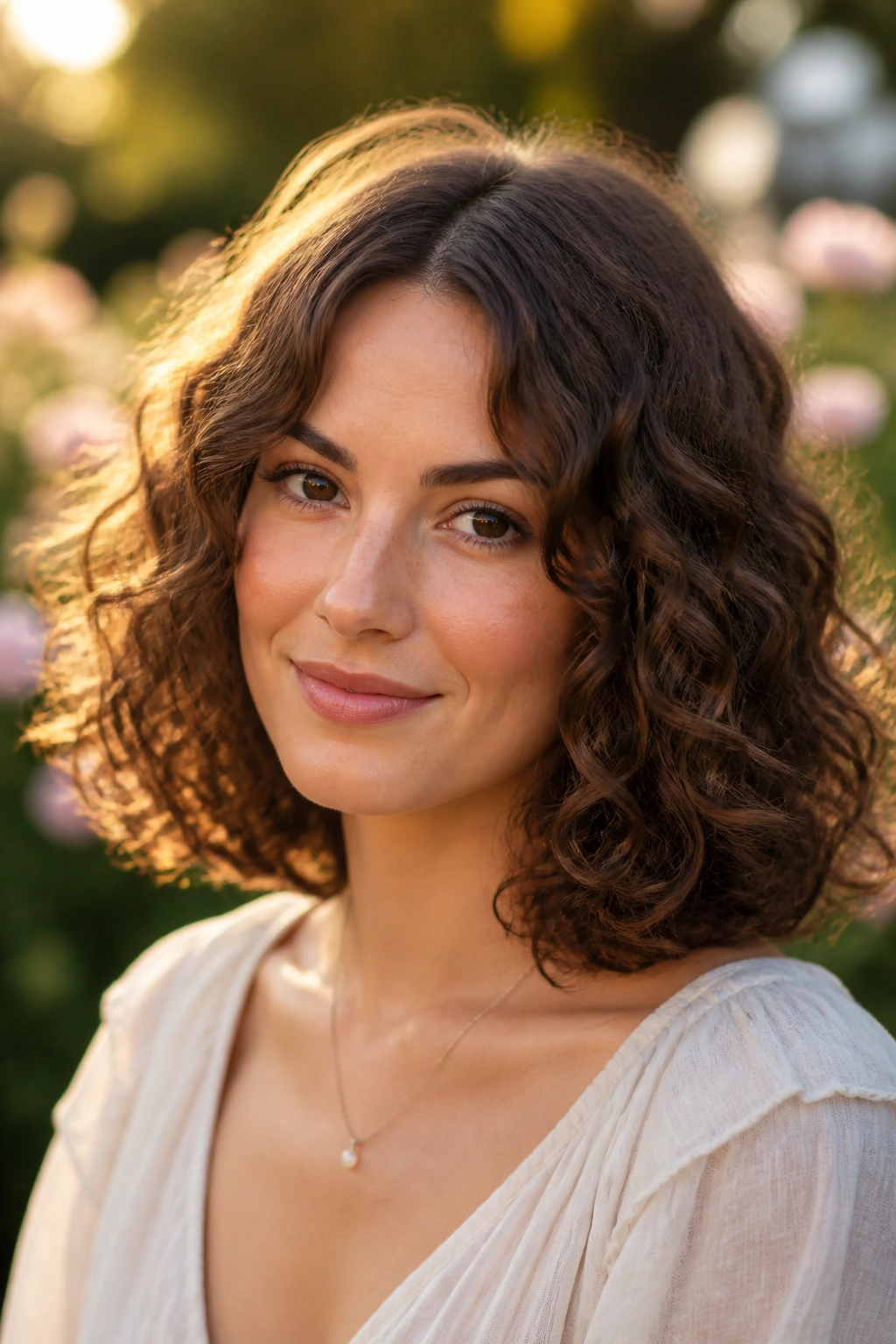
Curls need room to build shape, and shoulder length gives them that. For a long face, the best curly silhouette is rounded rather than tall. You want width at the sides and fullness around the cheekbones, not a pile of height above the forehead.
The beauty of this style is that it creates softness instantly. The curl pattern does the framing for you. If the cut is done right, the face sits in the middle of a fuller shape instead of hanging below a column of hair.
Curly Cut Notes
Ask for layers that are rounded when the curls dry. Dry cutting can help, because curly hair shrinks and moves differently from straight hair. If the face-framing pieces land too high, the shape can get boxy; too low, and you lose the balance.
Use a curl cream that holds the curl without making it crunchy. Then scrunch. Then leave it alone. That last part is harder than it sounds.
A rounded curly cut is one of the best ways to give a long face more visual width without resorting to bangs.
14. Half-Up Style With Face-Framing Pieces
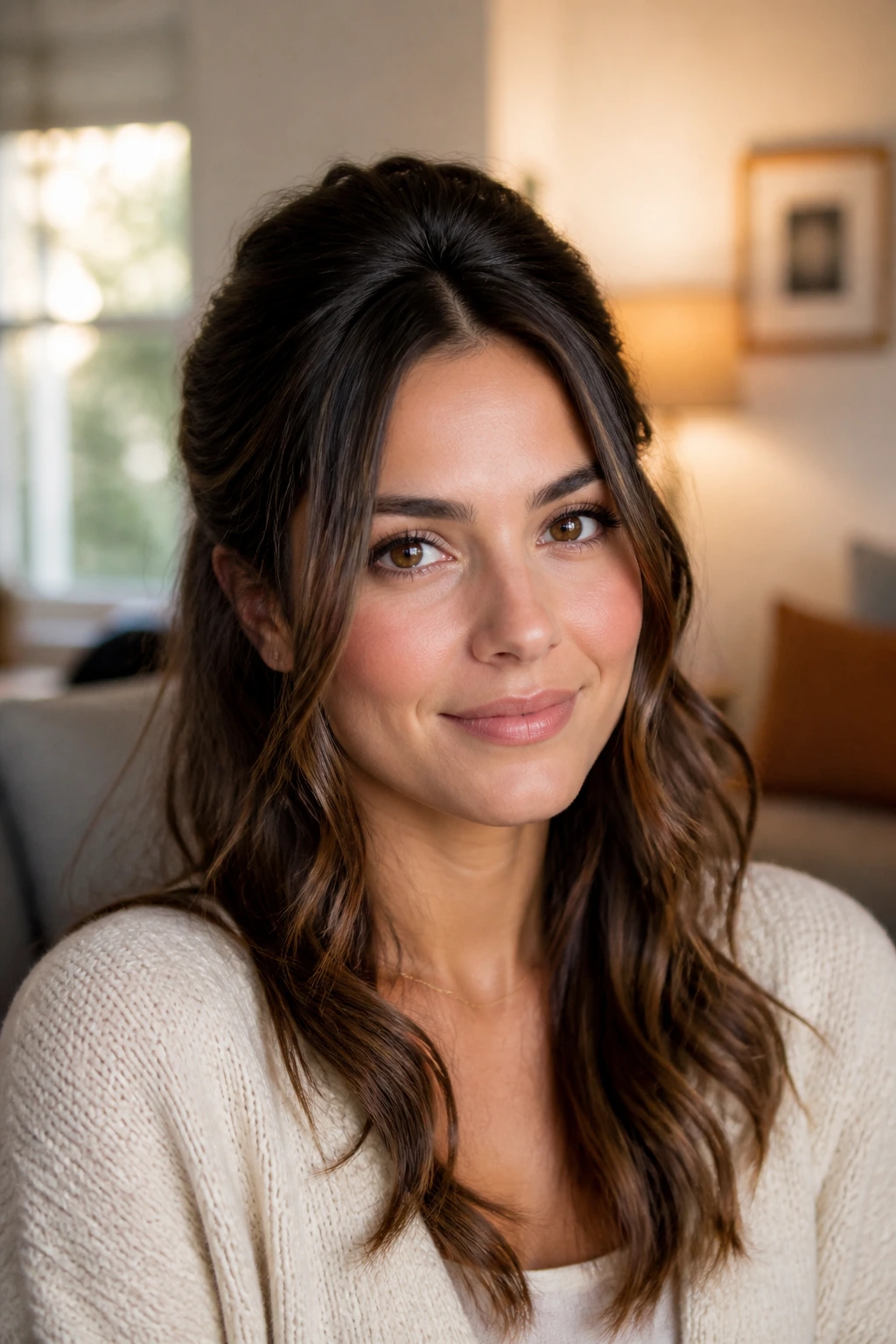
Half-up styles can go wrong on long faces when all the lift sits at the crown. That makes the face look taller. So the trick is to keep the top section low and loose, then leave two or three face-framing pieces around the temples and cheeks.
That small adjustment changes everything. The face gets shape at the sides, and the half-up section keeps the style from feeling plain. It’s a nice middle ground when you want hair off your neck but don’t want a full updo.
How to Keep It Flattering
- Gather the top half from temple to temple, not too high.
- Leave a little slack at the roots.
- Pull out two front pieces and curl them away from the face.
- Keep the finished shape soft, not tight.
This works especially well with waves or second-day texture. If your hair is very sleek, add a little bend to the lower half before pinning the top. Otherwise, the style can look sharp in the wrong way.
15. Low Messy Bun With Side Volume
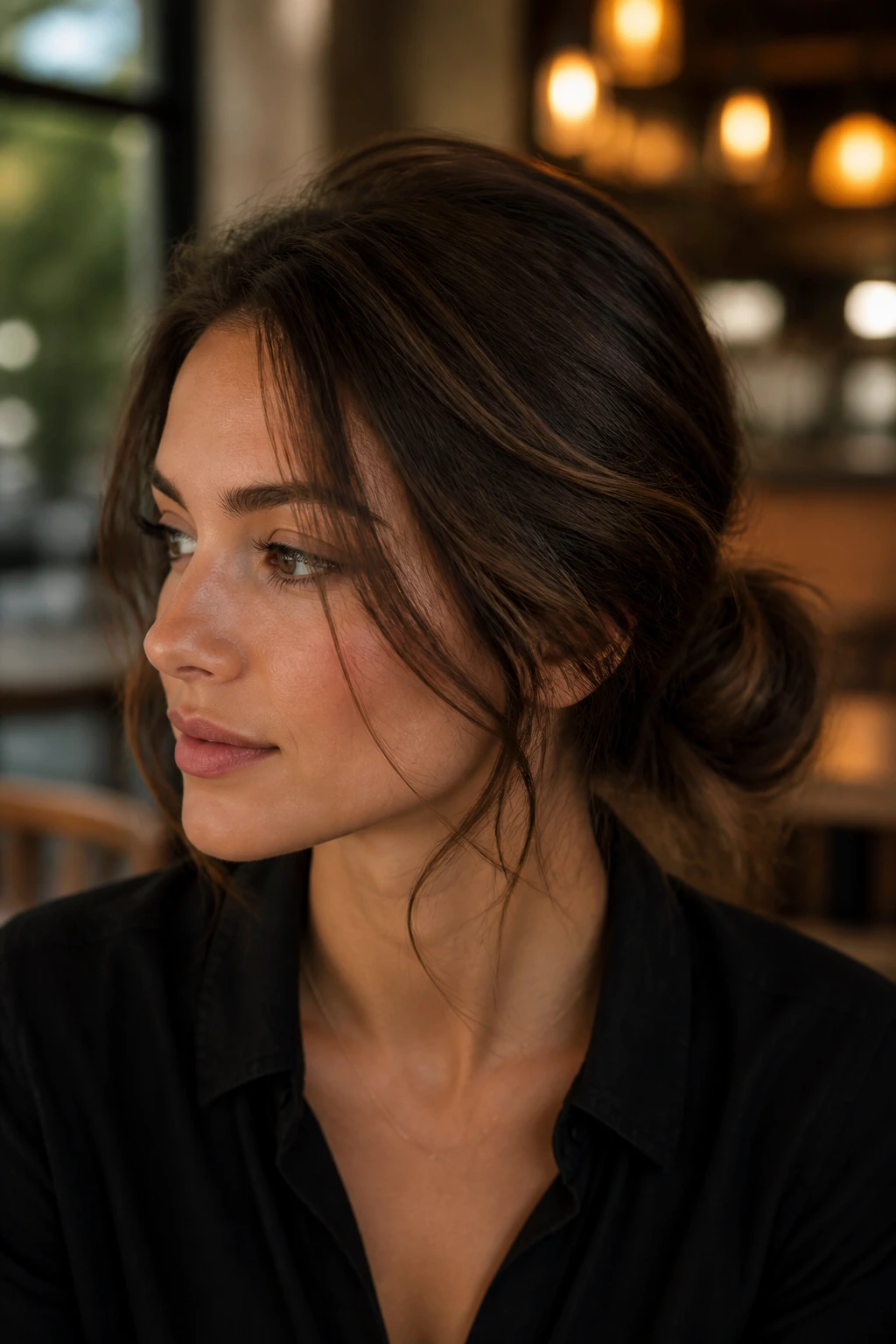
A low messy bun is much kinder to a long face than a high bun. The bun sits at the nape, which keeps the eye moving lower and wider instead of upward. Add a little side volume and you get balance without trying too hard.
The key word is low. Not sloppy. Low. A bun perched halfway up the back of the head can push the face into a longer shape. One anchored close to the neck does the opposite.
Why It Works
The face-framing pieces should be loose enough to soften the jaw, but not so long that they disappear into the bun. A side part helps too, because it shifts the visual weight away from the center line.
I like this style for days when you want your features to do the work. It lets the cheekbones show. It also looks good with a few bent pieces left out near the ears.
A little texture spray at the roots prevents the bun from looking too polished. Clean can be fine. Slick is where it starts going wrong.
16. Soft Low Ponytail With A Loose Part
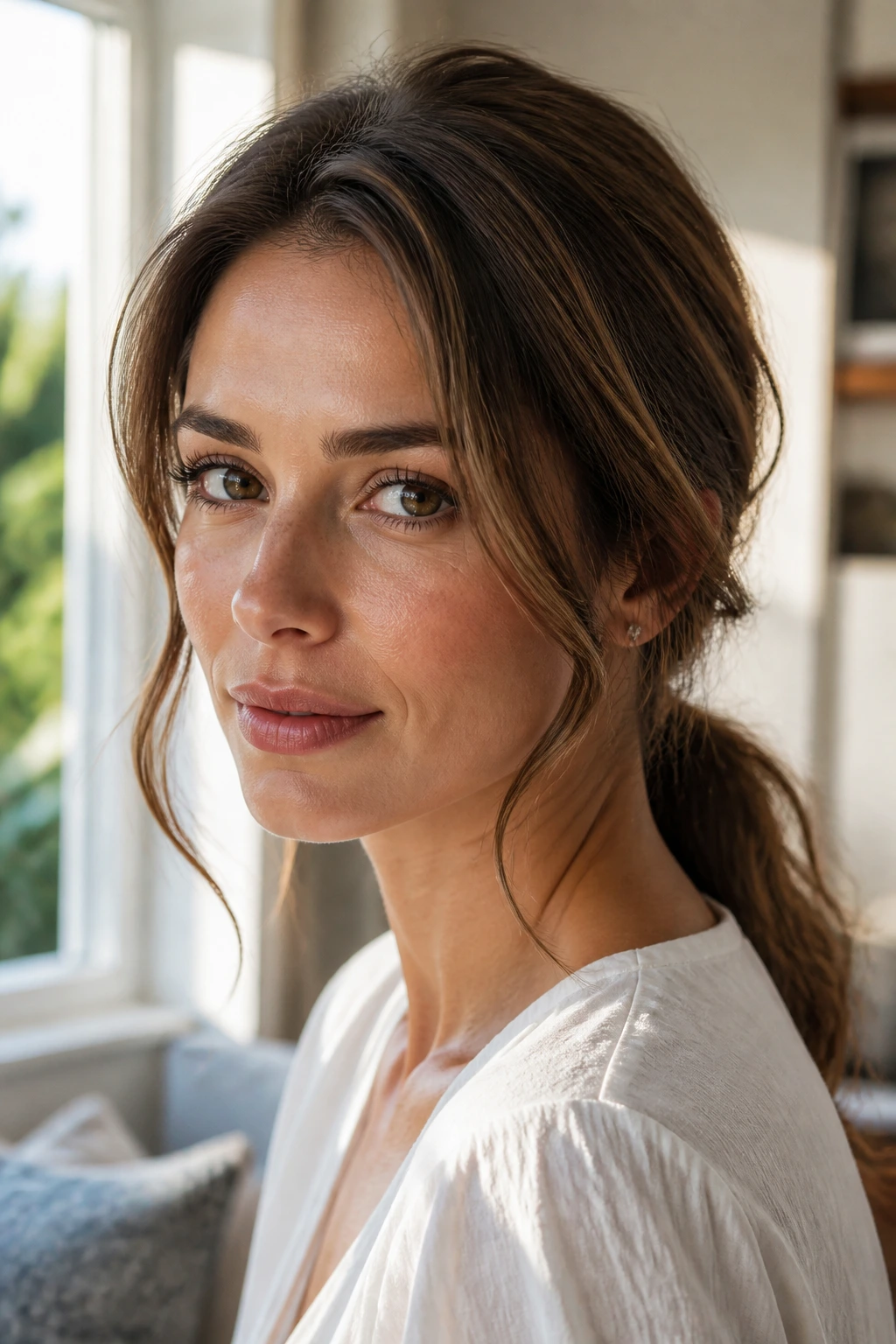
A low ponytail can be flattering on a long face if you stop treating it like a gym hairstyle. The trick is a soft side or off-center part, a little looseness at the crown, and some width near the cheeks. That makes the ponytail feel purposeful instead of stretched back.
The elastic should sit at the nape. Wrap a small strand of hair around it if you want the finish to look polished. Then tug the side sections just enough to create shape around the temples.
Comparison Matters Here
A high ponytail pulls everything upward. That is not what you want. A low ponytail with a soft part stays calm on top and broadens the silhouette lower down.
This style is especially useful if your hair is long and thick. It keeps the weight under control while still giving the face a frame. If your hair is fine, add a little wave before tying it back; otherwise the tail can look too thin.
Simple. But only if the details are right.
17. Side-Part Hollywood Waves
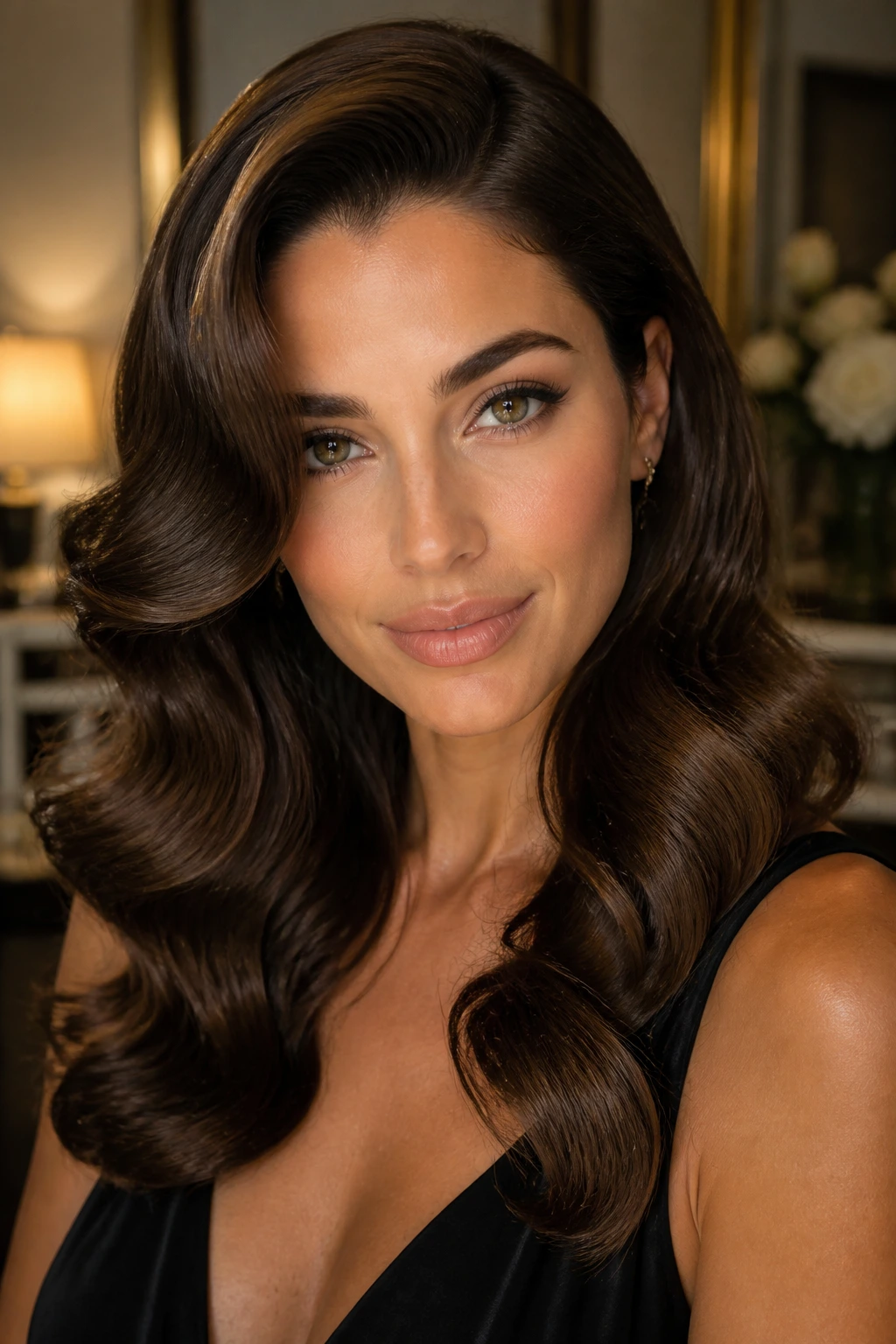
Large, glossy waves with a deep side part can be a very good match for a long face. The style creates width across the forehead and cheekbones, then curves down and out around the jaw. That shape interrupts the straight vertical line in a very elegant way.
The waves should be broad and brushed through. Tight curls make the face look busier and can add too much bounce on top. The goal is that old-school, sweeping shape that falls in a controlled wave instead of a spiral.
Best Styling Cue
Set the hair in sections that are slightly larger than you think. Then brush the curls into one another so the wave looks smooth. Pinning the front section for a few minutes while it cools helps it keep that side-swept shape.
This is a dressier look, but it can also work for a regular night out if you keep the wave soft and the shine modest. It’s a strong reminder that long faces do not need to be hidden — they need lines placed in better spots.
18. Braided Crown With Loose Ends
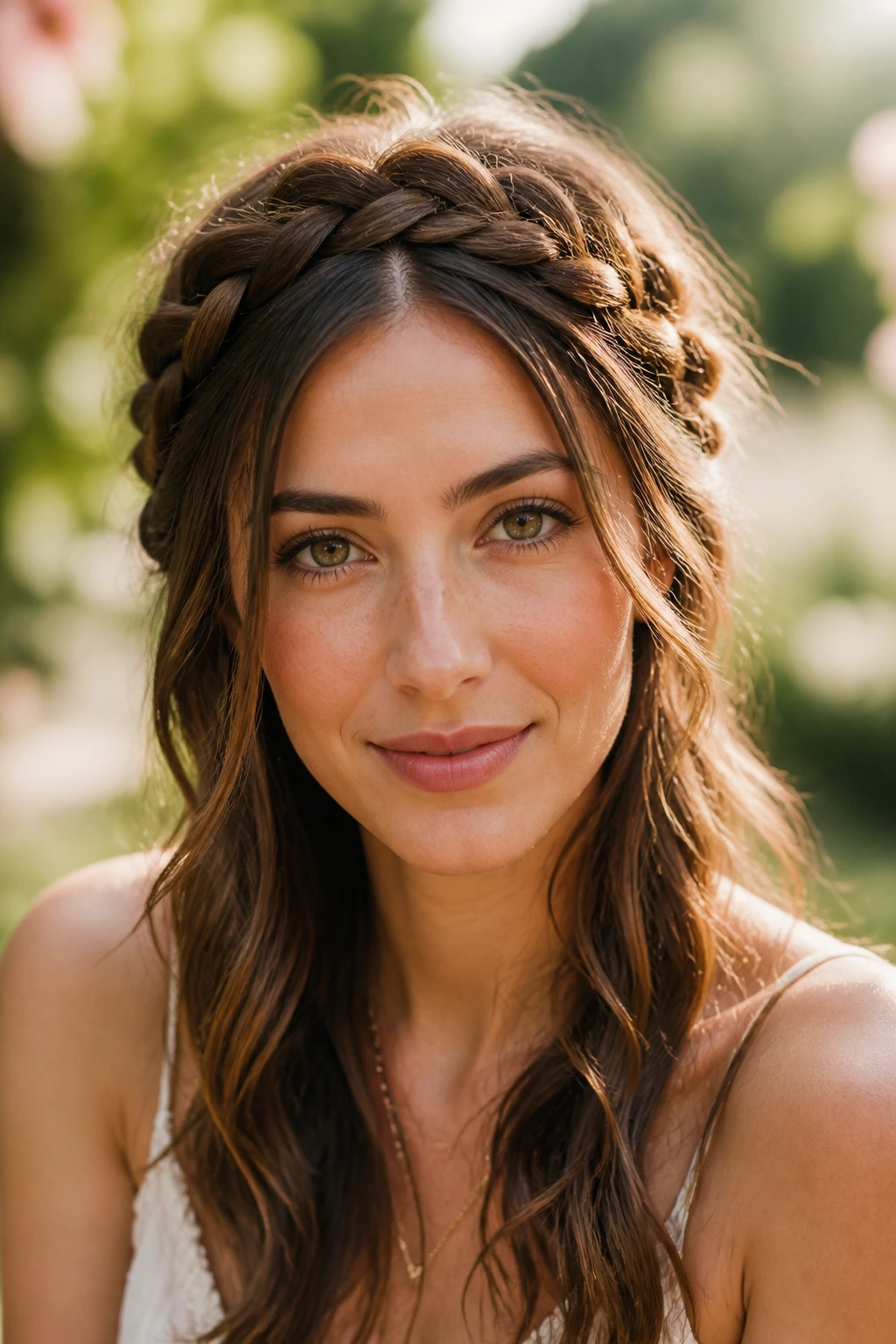
A braided crown can flatter a long face because it draws a horizontal line across the head. That’s useful. The face gets framed from above instead of being left to hang below a tall shape. The catch is that the braid has to stay loose enough to keep the style soft.
Tight crown braids can make the head look narrow. Loose ones, pulled out a little at the edges, add width and texture. Leave some ends hanging or tuck only part of the hair into the braid so the style doesn’t feel severe.
How to Make It Work
- Keep the braid low along the hairline.
- Gently loosen each section after braiding.
- Leave temple pieces out if you want even more softness.
- Pair it with waves underneath if your hair needs extra body.
This is a nice choice for weddings, warm-weather days, or any moment when you want a style that sits off the neck but still gives the face some shape.
19. Flip-Out Layers At The Collarbone
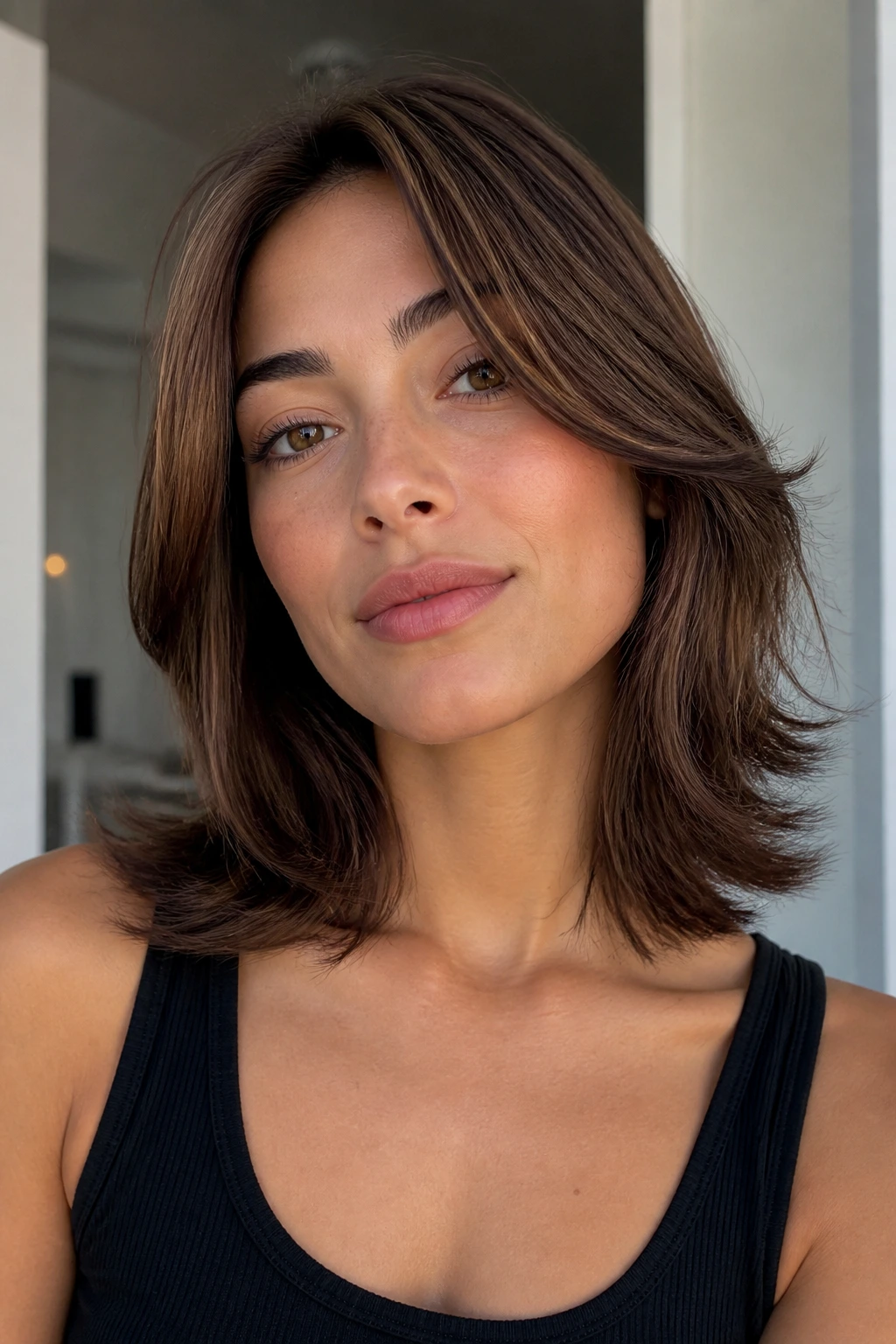
There’s a reason the flipped-out blowout keeps coming back. On a long face, those outward-facing ends create width right around the jaw and shoulders. That horizontal flick changes the silhouette fast.
A collarbone length works especially well because the flipped ends sit close to the lower half of the face, where they can do the most balancing. If the layers are too short, the look gets busy. Too long, and the flip disappears into the rest of the hair.
The Shortcut That Makes It Better
Use a round brush or a flat iron with a gentle wrist turn at the ends. You do not need every piece to flip the same direction. A little unevenness looks more natural and keeps the cut from looking dated.
This style is a good bridge between polished and relaxed. It gives movement without relying on heavy bangs, and it looks especially good if your hair has a little natural bend.
20. Curly Shag With Bangs
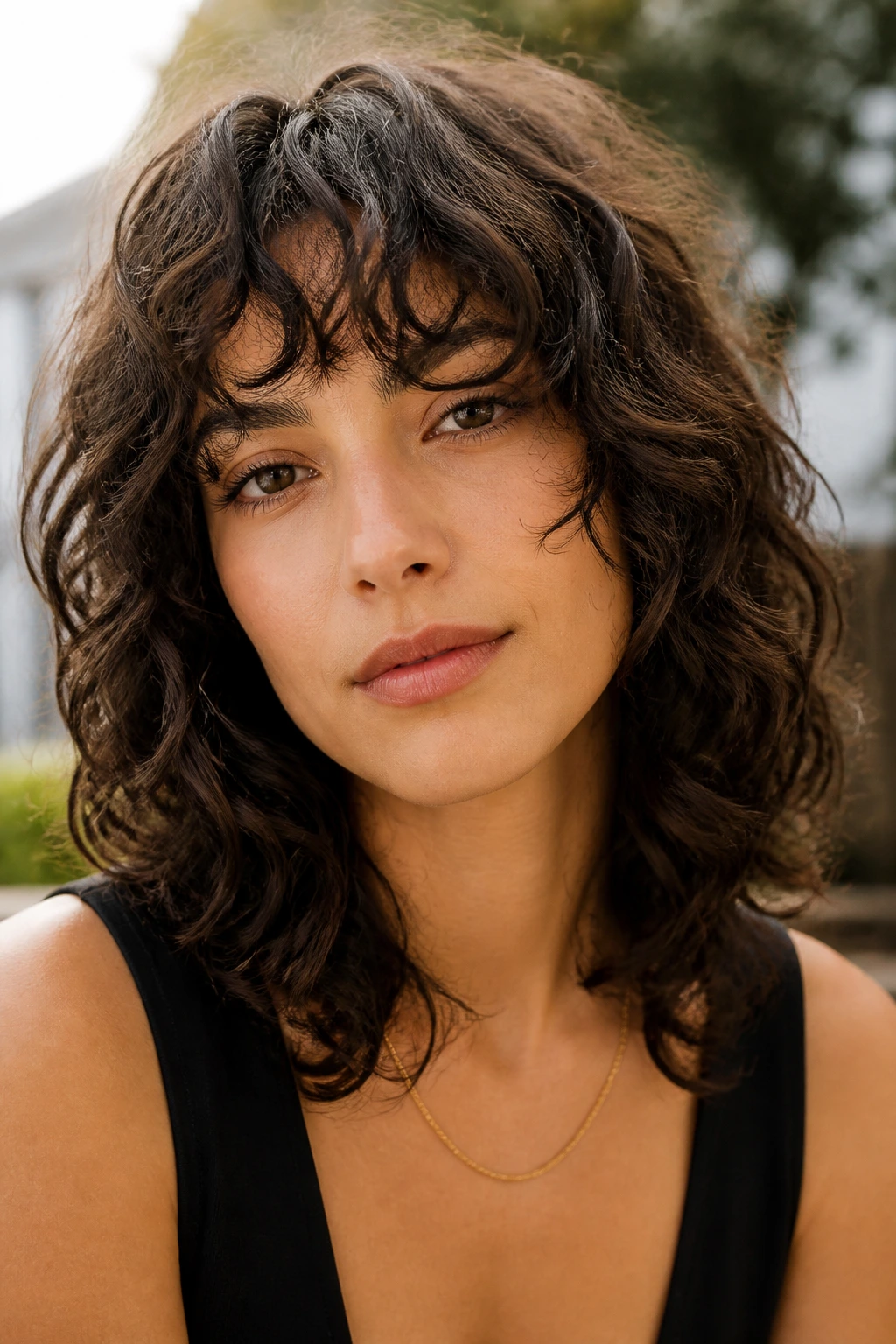
The curly shag can be a knockout on a long face, but only when the curls are shaped with intention. Bangs help break up the forehead, while the shaggy layers spread the curls outward through the sides. That widens the silhouette in a way that feels lively, not forced.
The biggest mistake is cutting the layers too short at the crown. That can turn the whole shape into a tall triangle. Instead, keep the top a little softer and let the curls collect around the temples, cheeks, and jaw.
What to Ask For
A curl-specific cut matters here. Ask for bang length that sits around the brow or slightly below it, and ask for layers that are shaped while the hair is in its natural curl pattern. That keeps the cut from shrinking into a surprise.
A curly shag is one of my favorite answers for a long face because it gives the hair motion in every direction except straight up. That’s the point.
21. Sleek Bob With Tucked Ends And Side Fringe
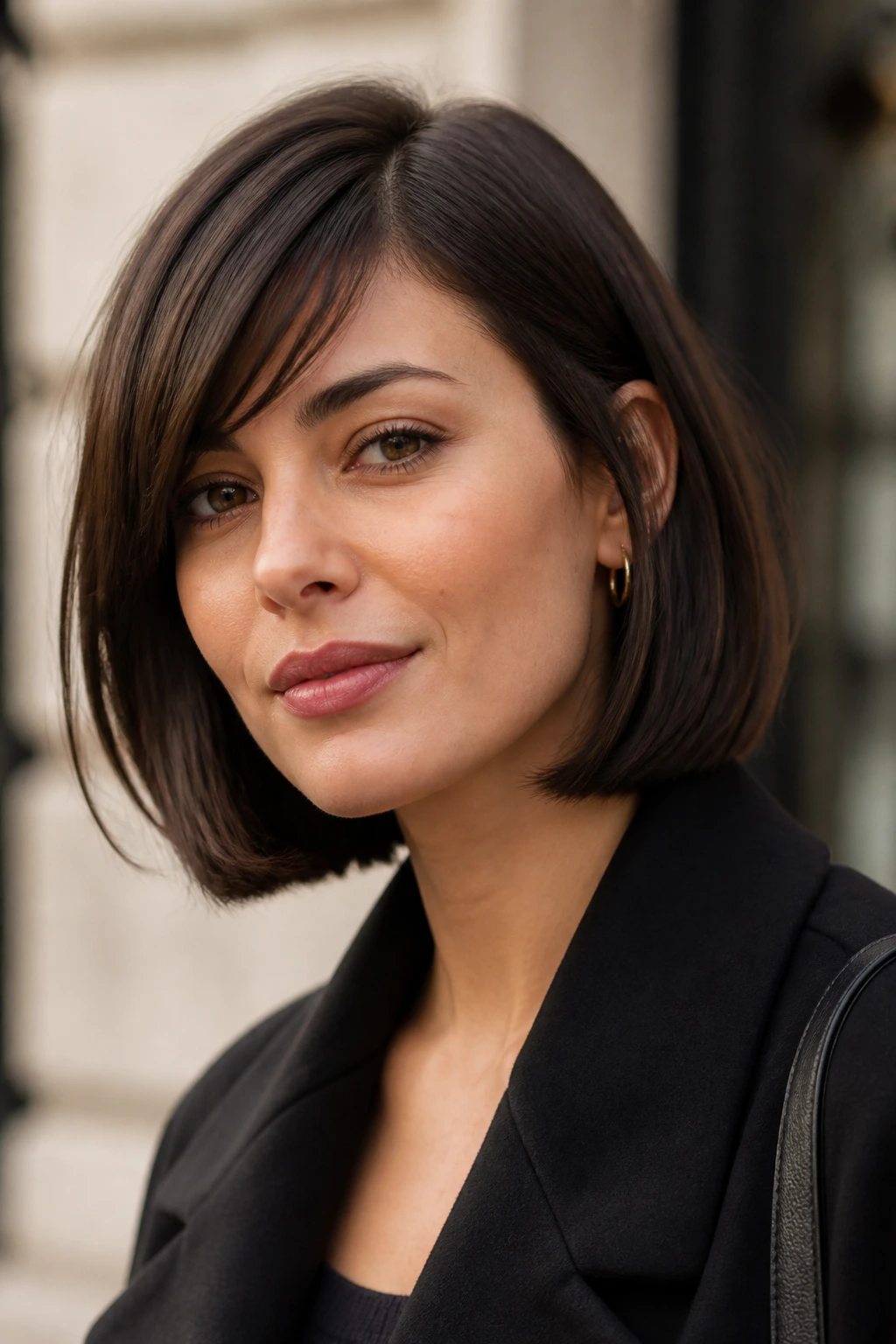
Not every flattering style needs to be full of movement. A sleek bob can work beautifully on a long face if the ends are tucked under and the front has a side fringe to break up the forehead line. The style looks neat, modern, and controlled.
The tucked ends matter because they create a soft curve at the jaw. Straight-down ends can look too sharp, especially if the face is narrow. Add a side fringe and the top half of the face gets some relief.
Best For
- Straight hair that resists curl.
- Fine hair that needs a clean outline.
- Anyone who wants a low-frizz, low-fuss shape.
Keep the bob around the jaw or just below it. If it gets too long, you lose the balance. If it sits too high, it starts to widen the upper face more than you want.
This is a good “clean lines, but not severe” option.
22. Long Hair With Chin-Grazing Layers
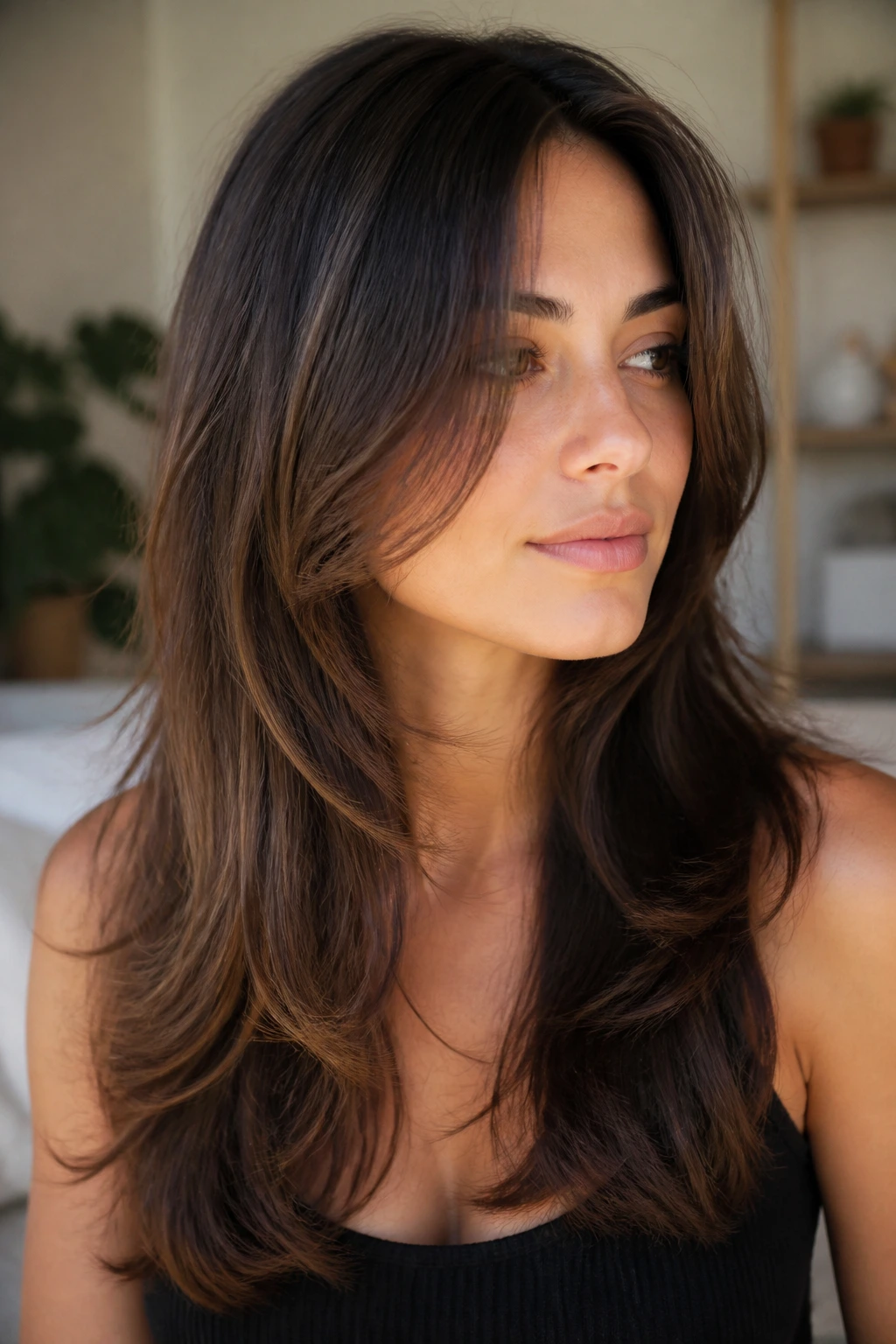
If you love long hair and have no interest in giving it up, keep the length — just add smarter layers. Chin-grazing pieces are the part that matters most. They pull attention back to the center of the face and stop the hair from becoming one long line from scalp to hem.
The rest of the cut should stay fairly full through the ends. Long, thinned-out layers can make the face feel even longer because the hair loses body where it needs it most. A soft U-shape, with the shortest face-framing layer around the chin, is much more useful.
One Good Rule
If the hair falls below the chest, it needs some sort of shape near the face. Bangs help. So do waves. So does a middle section that opens into soft side pieces instead of a flat sheet.
This style works because it respects the length while changing the outline. That’s the real job.
Why Width Beats Height On A Long Face
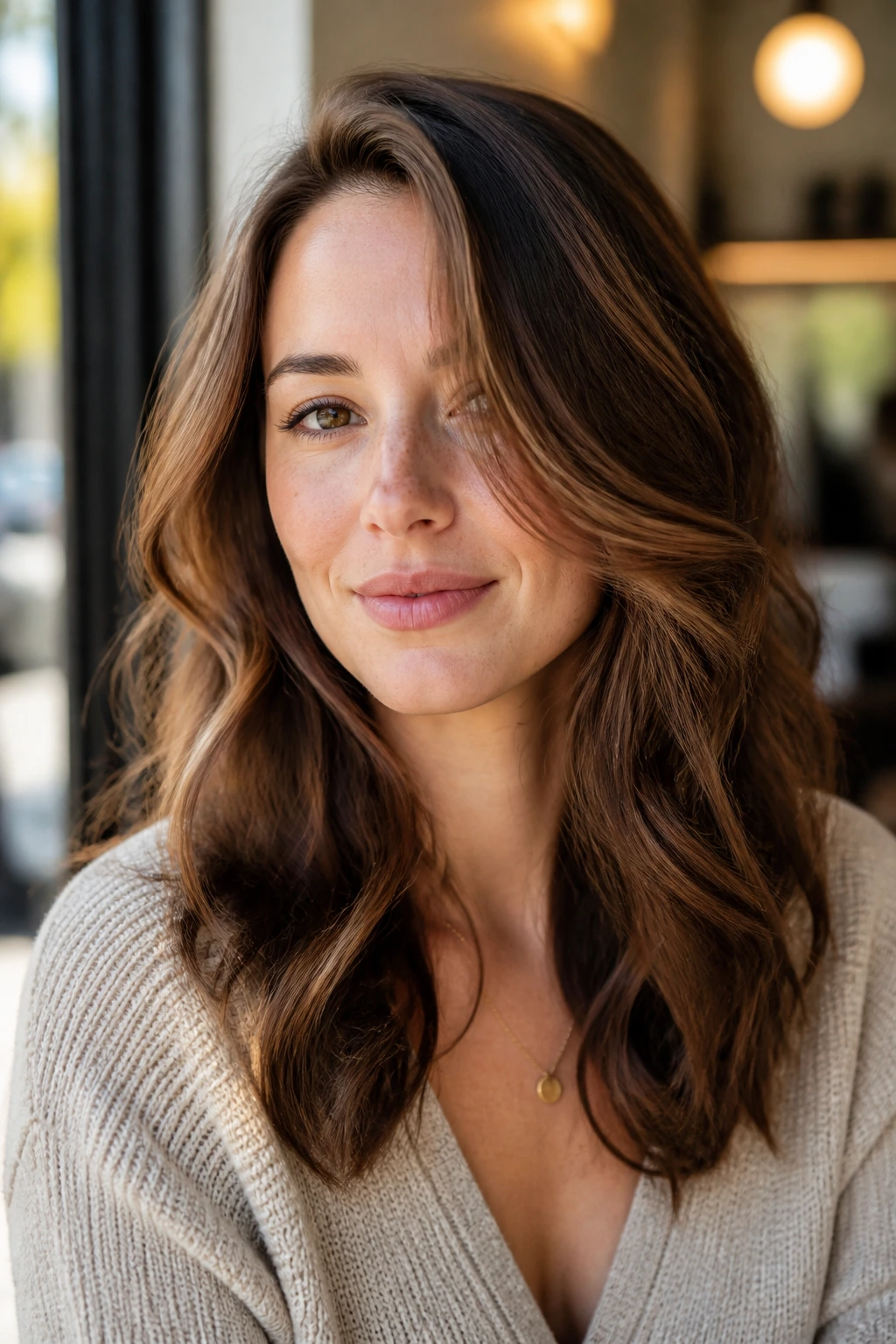
A long face does not need more vertical drama. It already has enough. What it needs is interruption — places where the eye can pause, move sideways, or rest near the cheekbones and jaw instead of running straight from forehead to chin. That’s why bangs, waves, side parts, and jaw-length cuts keep showing up again and again.
The most flattering shapes usually borrow from the same idea: add width where the face is narrowest and keep the crown calm. A little lift at the roots is fine. A skyscraper of volume is not. You want the hair to frame the face, not compete with it.
There’s also a timing issue people miss. A cut can look balanced the day it’s done, then drift into a longer shape as it grows. That’s why blunt ends, fringe, and layered pieces that hit the cheekbone matter so much. They give the haircut a little structure as it ages.
And yes, the details depend on texture. Fine hair needs cleaner lines. Thick hair needs weight control. Curly hair needs the shape cut into the curl, not imposed on top of it. But the goal stays the same.
What To Tell Your Stylist Before The First Snip

Bring photos. Two or three, not twenty-seven. Show the stylist where you like the length to hit on the face, because “short” means very different things to different people. A chin-length bob, a collarbone lob, and a cheekbone fringe all solve different problems.
Say what you want to balance, not just what you want to remove. If your forehead feels long, say that. If the face looks narrow at the jaw, say that. If you hate having height at the crown, say it plainly. Stylists work faster when the goal is concrete.
A few details are worth naming out loud:
- Bang length: brow-skimming, cheekbone, or no bangs at all.
- Parting: center, off-center, or deep side part.
- Length stop: chin, jaw, collarbone, or below the chest.
- Finish: blunt, feathered, curled under, or tousled.
If you wear glasses, mention that too. Bangs and frames need to live together. Same with curly hair, cowlicks, or a swirl at the front hairline. Those things matter more than mood-board talk ever will.
Essential Tools For Styling These Looks
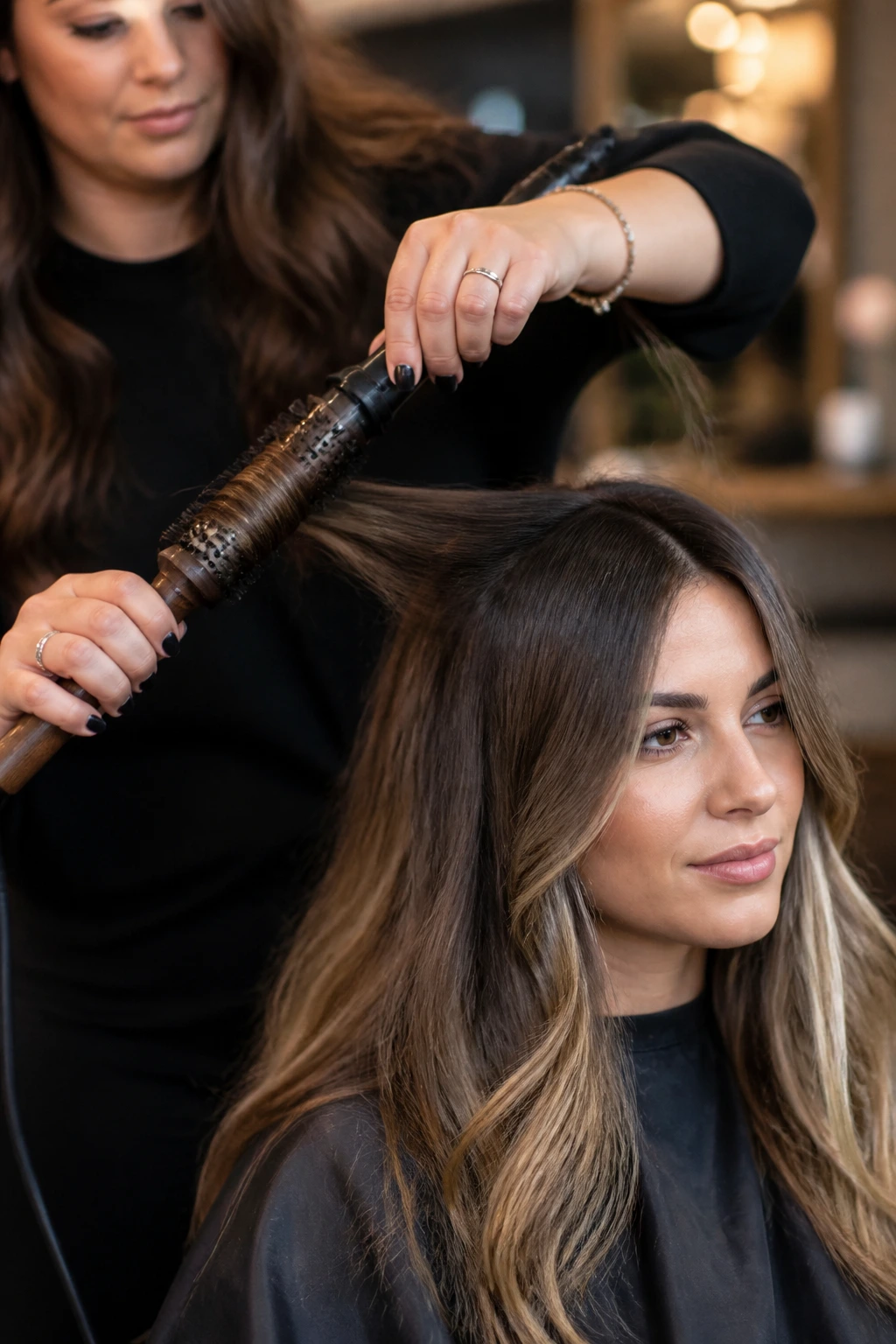
- Tail comb: Useful for clean parts and for directing bangs where you want them to fall.
- 1.25-inch curling iron or wand: The sweet spot for soft waves on lobs, bobs, and mid-length cuts.
- Round brush, 1.5 to 2 inches: Helps you build bend at the ends without making the roots too tall.
- Blow dryer with a nozzle: Gives you control at the crown and around the fringe.
- Sectioning clips: Keep bangs, face-framing layers, and top sections from getting tangled while you style.
- Texturizing spray: Best for shags, wolf cuts, and waved styles that need separation.
- Lightweight mousse: Adds hold near the roots without turning hair sticky.
- Smoothing cream or serum: Useful for sleek bobs, low ponytails, and polished waves.
- Small elastics and bobby pins: Needed for half-up looks, braided crowns, and low buns.
- Dry shampoo: Handy for keeping crown volume under control without washing every day.
How To Wear These Styles On Real Mornings
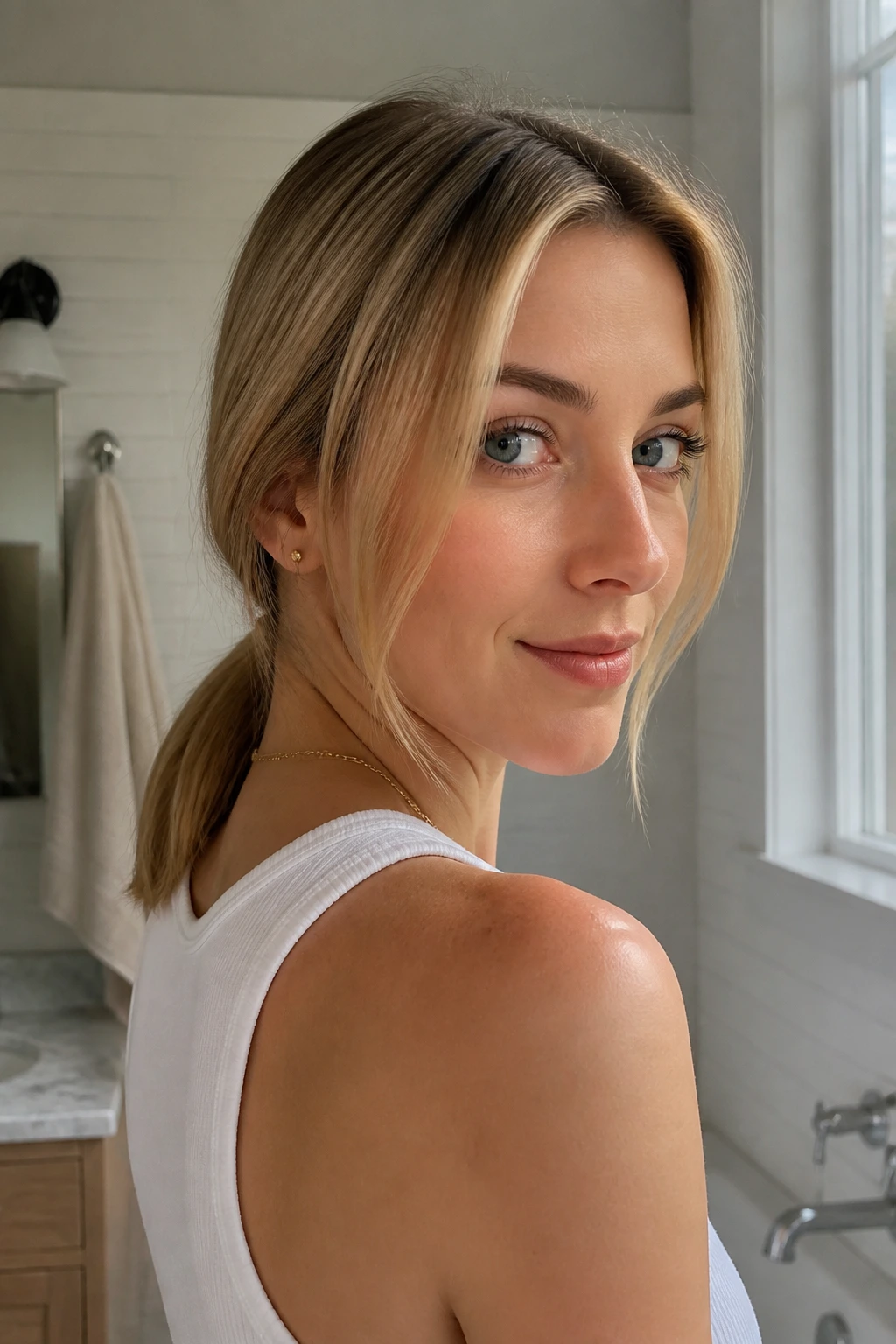
Quick routines: If you’re in a rush, the blunt lob, low ponytail, and soft low bun are the easiest to revive with a few sprays of water and a round brush at the front. A little bend near the face is enough. You do not need a full restyle.
Polished days: Side-part Hollywood waves, the French bob, and the sleek bob with a side fringe all look sharp with a little smoothing cream and a clean part. Keep the crown flat. That’s the piece that makes the difference between balanced and stretched.
Lazy-day texture: Shags, wolf cuts, and curly cuts work best when you let the natural bend stay visible. Scrunch in mousse, then leave the roots alone. If you over-brush these shapes, you flatten the very width that helps the face.
Accessories: Headbands, barrettes, and clips are more useful than people think. A wide barrette placed low near the temple creates a horizontal line that helps a long face. A tight top knot with no pieces left out does the opposite, so choose carefully.
Small Styling Tweaks That Change The Silhouette
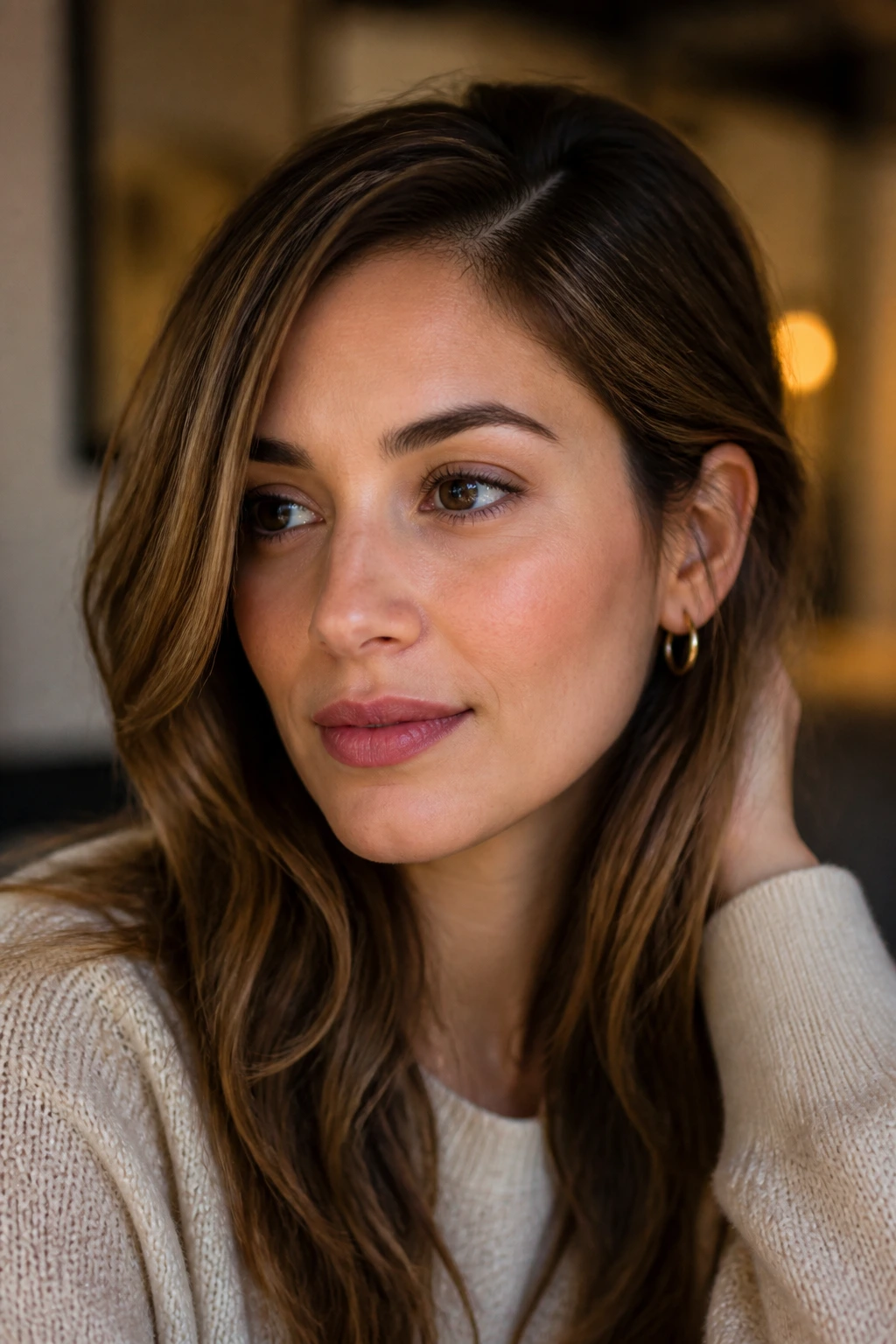
Root control: Lift at the roots is fine near the front, but keep the crown from shooting upward. A flat crown with broader sides usually flatters a long face more than height does.
Face-framing pieces: Keep the shortest pieces around the cheekbone or chin when you want extra width. Pieces that start too high can make the forehead area feel busy without helping the jaw.
Part placement: An off-center or deep side part often softens a long face more than a dead center part. The shift doesn’t need to be dramatic. Even one inch off the center line changes the balance.
Texture choice: Wide waves, soft curls, and brushed-out bends usually work better than tiny, springy curls if the goal is width. The shape matters more than the curl count.
Accessory trick: If a style feels too vertical, add a clip, a side pin, or a tucked ear on one side. That small interruption can make the whole look feel wider and calmer.
Common Mistakes That Make A Long Face Look Longer

The first mistake is too much height at the crown. People love volume there, and I get why, but on a long face it often pushes the eye straight up. The fix is to keep lift lower and wider, especially around the temples and cheekbones.
Second, thin ends are a problem. Long, see-through hair can look elegant in photos and flat in real life. If the ends taper too much, the face gets a longer frame than it needs. A blunt edge or a soft, full perimeter helps.
Third, the wrong fringe length can backfire. Baby bangs or tiny micro fringes can make a long forehead look even more obvious because they draw attention to the contrast. Brow-skimming, curtain, or cheekbone-length bangs are usually safer bets.
Fourth, a flat center part with no side volume is risky. It draws a straight line right down the face. If you like the center part, build some bend at the sides so the shape doesn’t feel rigid.
Fifth, overly tight updos. A top knot pulled high and smooth can lengthen the face in a hurry. Keep buns low, ponytails soft, and front pieces loose when you want a better shape.
Variations For Fine, Thick, Curly, And Coily Hair
Fine-Hair Frame-Up: Choose blunt edges, cheekbone bangs, and short-to-mid-length cuts that keep the perimeter full. Fine hair often loses width when it gets too long, so a collarbone lob or French bob usually holds its shape better than a long, thinned-out style.
Thick-Hair Softener: Ask for internal debulking, not heavy thinning at the ends. Thick hair can turn into a block if the layers sit in the wrong place, so the goal is controlled movement around the jaw and collarbone.
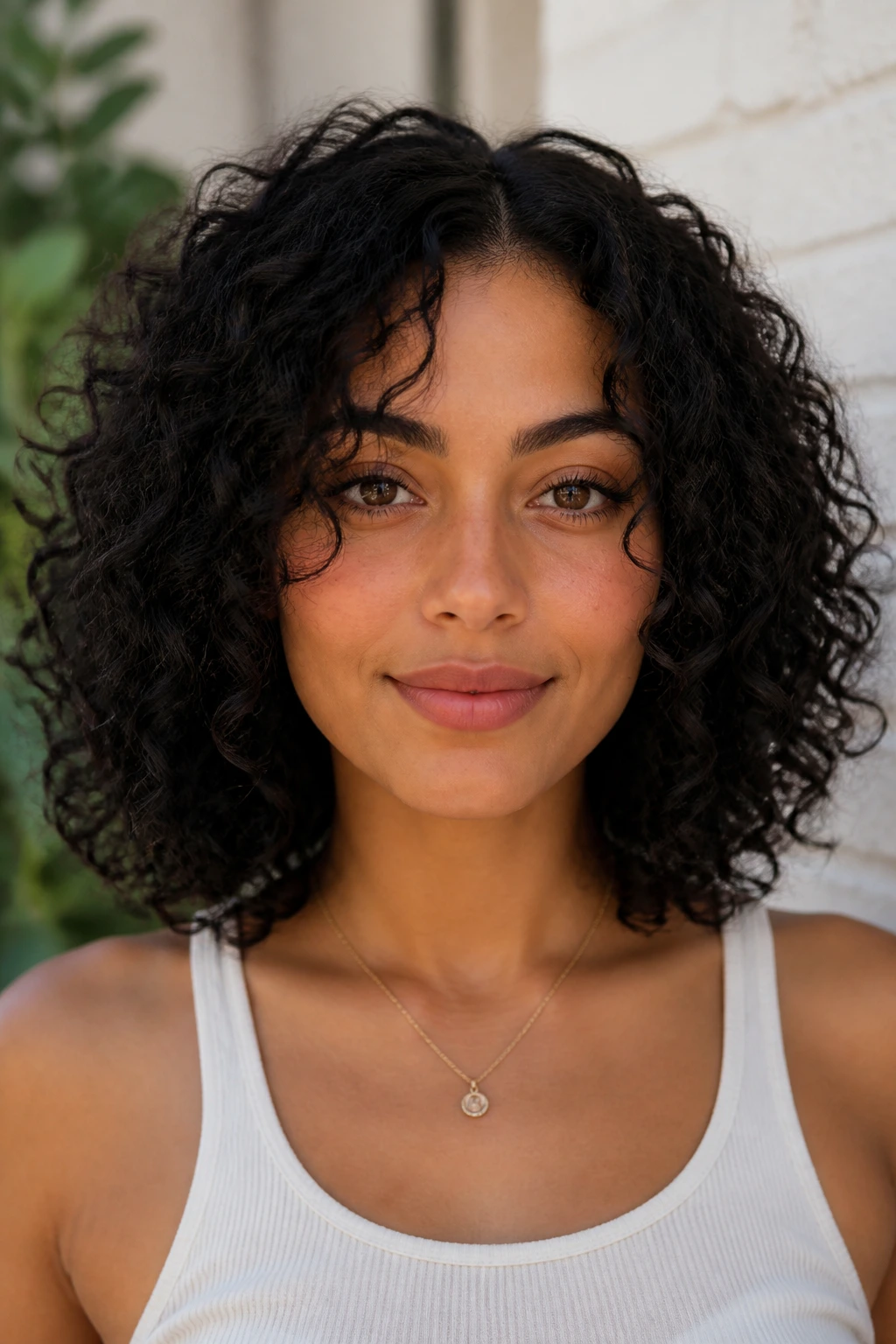
Curl-Friendly Roundness: Curls need rounded silhouettes and a cut that respects shrinkage. The best look is usually shoulder length or a curly shag with bangs, because the shape widens the face without forcing the curls flat.
Coily-Hair Shape Building: Keep the outline balanced with tapered sides, shaped bangs, or a soft afro silhouette that adds width at the cheek line. A skilled dry cut matters here; the shape should look even once the hair has settled.
Low-Maintenance Swap: If you do not want a lot of daily styling, pick a bob, lob, or low updo with face-framing pieces. The less you want to touch your hair every morning, the cleaner the cut should be.
Keeping The Shape Fresh Between Salon Visits
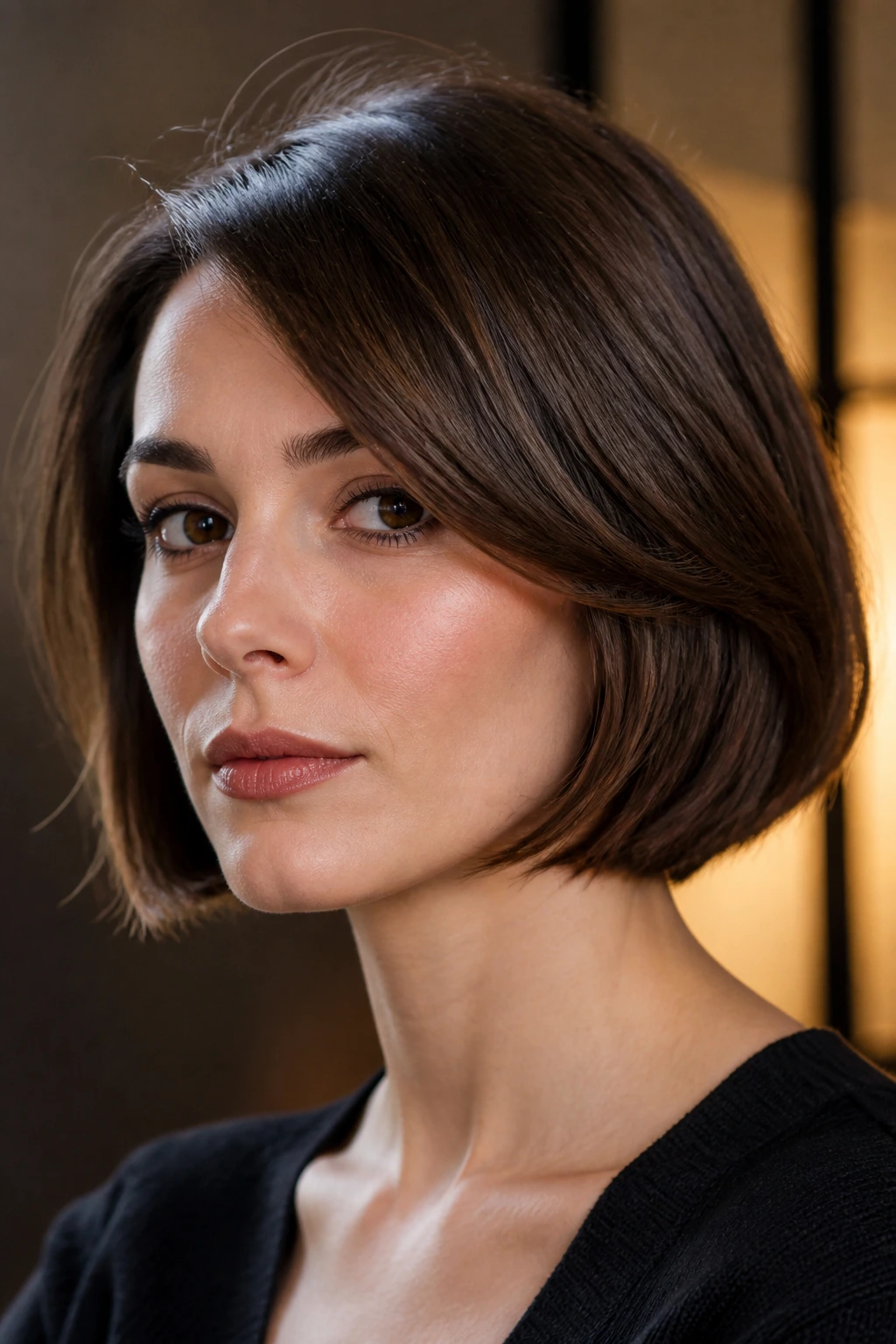
Bobs and pixies need the most frequent clean-up. Every 4 to 6 weeks is a reasonable range if you want the line to stay crisp and the fringe to keep landing in the right place. Lobs and shags can usually stretch to 6 to 8 weeks before they start losing shape.
Long layers and bangs are their own project. Fringe often needs a trim every 2 to 4 weeks, even if the rest of the hair can wait longer. That’s normal. Bangs grow fast, and on a long face, a few extra millimeters can change the whole balance.
At home, sleep care matters more than people admit. A silk pillowcase helps keep bangs and waves from flattening overnight. For curls, a loose pineapple or a pineapple-like clip at the top keeps the shape from being crushed. For sleek styles, a quick pass with dry shampoo at the roots keeps the front from collapsing.
Wash frequency depends on texture, not face shape. What matters here is keeping the front pieces alive enough to frame the face instead of hanging limp by day three. That’s the real maintenance job.
Questions People Ask About Hairstyles For Long Faces
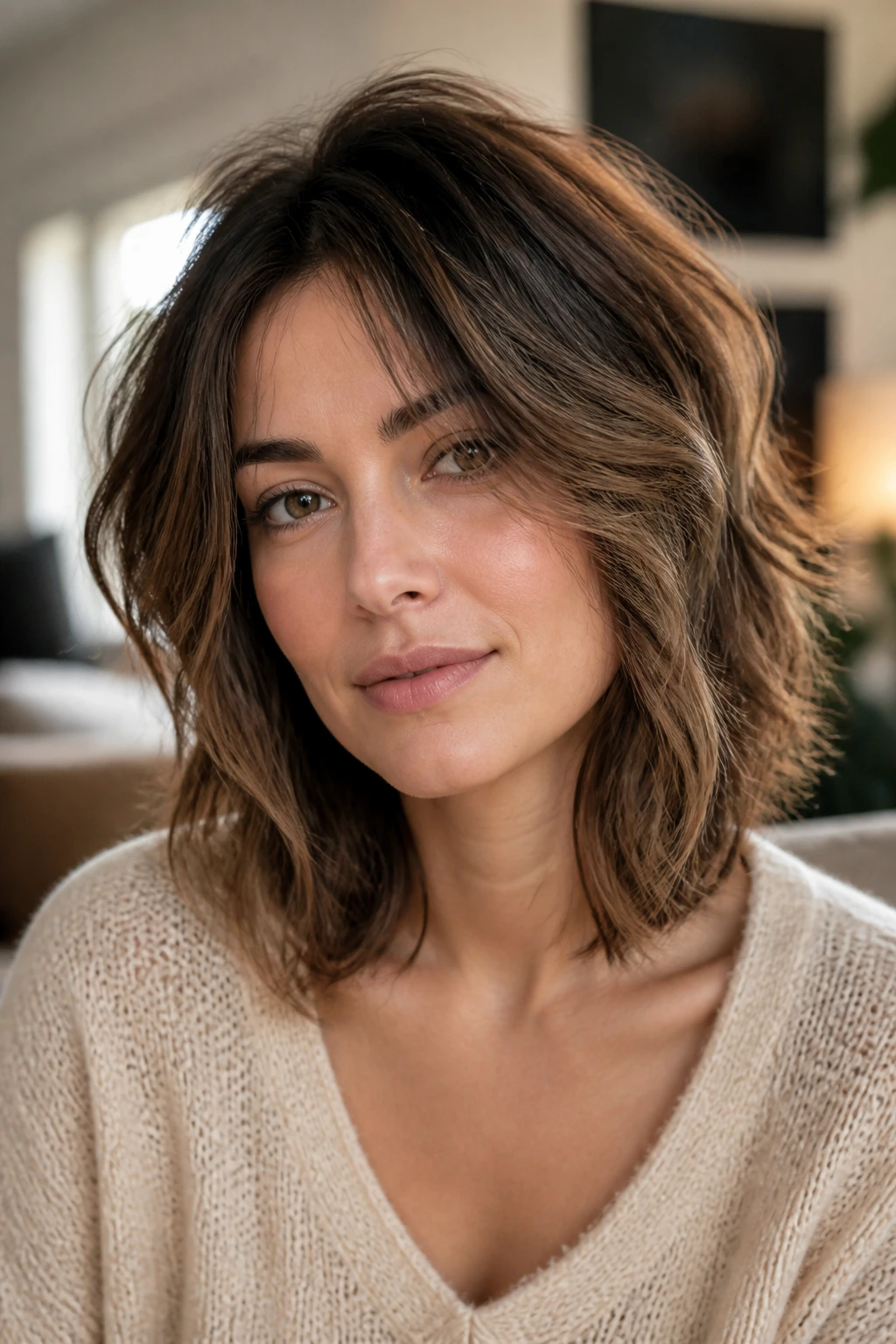
What haircut makes a long face look shorter?
Cuts that add width at the sides usually work best. Think chin-length bobs, collarbone lobs, curtain bangs, and soft waves that start around the cheekbones rather than the crown.
Are bangs good for long faces?
Usually, yes — if the bangs are the right length and shape. Brow-skimming fringe, curtain bangs, and bottleneck bangs break up the forehead and help balance the face, while very short baby bangs can feel too stark.
Is a center part bad for a long face?
Not always, but it needs support. A center part without width at the sides can make the face look longer, so it works better when the hair has waves, fringe, or fullness around the cheekbones.
Can long faces wear long hair?
Absolutely. Long hair works when it has shape near the face. Chin-grazing layers, bottleneck bangs, soft waves, or a U-shaped perimeter keep the length from turning into one straight vertical line.
What should I ask for at the salon?
Ask for length that lands at the jaw, chin, or collarbone, plus face-framing pieces that start around the cheekbone or chin. If you want bangs, say how much forehead you want covered and how much styling you’re willing to do.
What if my hair is fine and flat?
Go blunter. A full bob, lob, or compact fringe usually gives fine hair more structure than long, thinned-out layers. You’ll get a stronger silhouette and less see-through ends.
What if my hair is curly or coily?
Ask for a shape, not just a length. Rounded layers, curl-specific bangs, and a cut done in the hair’s natural state can give the face width without flattening the texture.
Do updos work on long faces?
Yes, as long as they sit low and soft. Low buns, braided crowns, and ponytails with a loose part are far better than tight high styles that pull everything upward.
A Shape That Feels Balanced
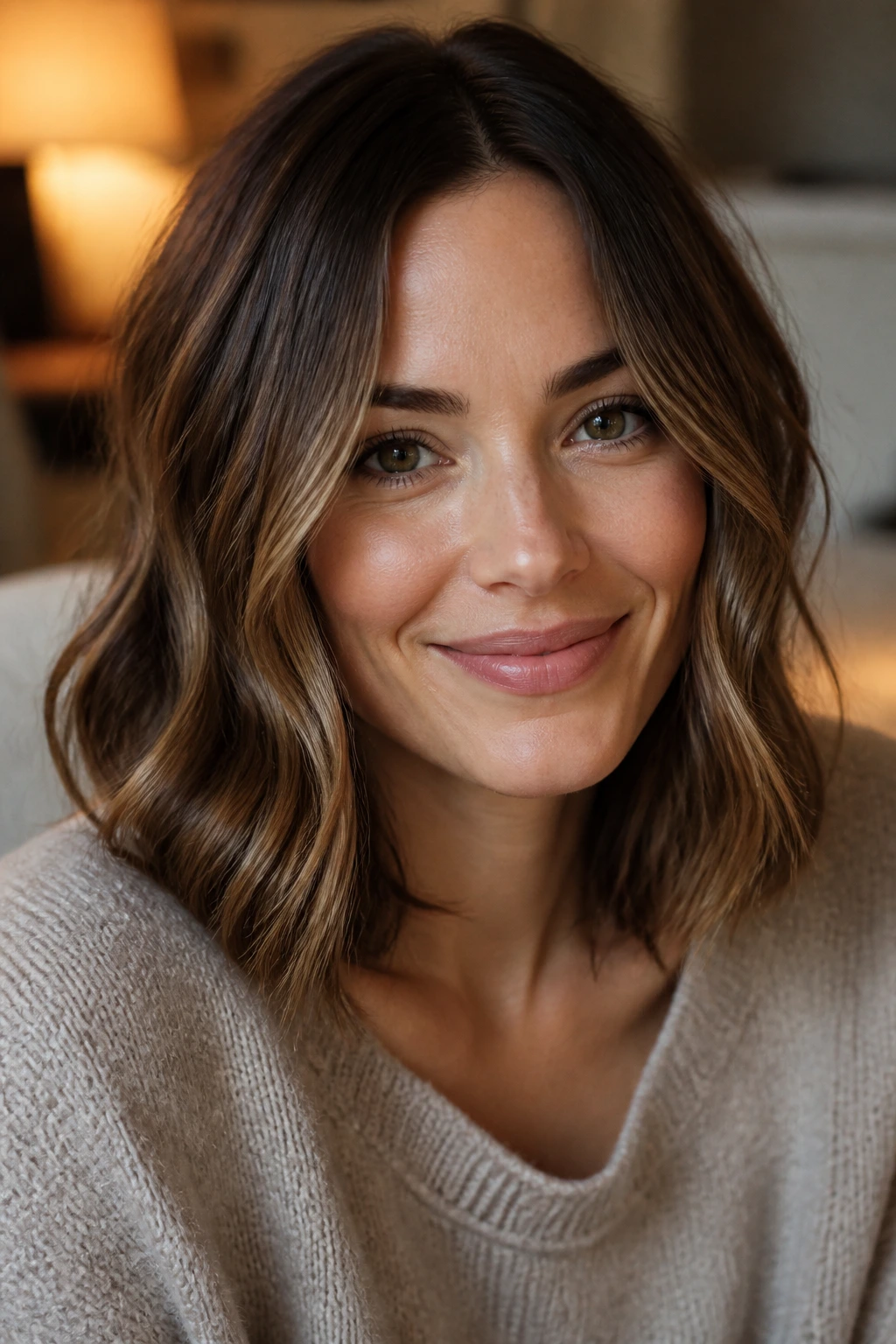
The best hairstyles for long faces do one simple thing over and over: they interrupt the vertical line. Sometimes that happens with bangs. Sometimes it’s a bob that lands at the jaw. Sometimes it’s just a soft wave that starts at the cheekbone and refuses to climb any higher.
What I like most about this set of styles is that none of them asks you to hide your face. They just place the hair where it helps most. That’s a better deal. Cleaner, too.
Pick the shape that gives your cheekbones a little more company and your forehead a little less responsibility. The rest gets easier from there.
