



Medium length wispy haircuts sit in that narrow strip between polished and lived-in. The hair still has enough length to tuck behind an ear, clip up at the nape, or swing over a sweater collar, but the edges move instead of landing in one hard line. That movement is the whole game. Without it, shoulder-grazing hair can start to look like a shelf.
The thing people get wrong is assuming “wispy” means thin or unfinished. It doesn’t. A good wispy cut has shape, just softer edges: point-cut ends, face-framing pieces that bend around the cheekbone, and layers placed where they remove bulk instead of where they destroy the outline. Done well, the haircut looks lighter even when the hair itself is thick, and fuller even when the hair is fine. That’s a better trick than it sounds.
I keep coming back to these cuts because they behave well in real life. They survive air-drying, a rough blowout, a day in a claw clip, and that weird half-flat, half-bent state hair gets after a commute. A wispy medium length cut can look intentional when it’s neat and still look good when it’s not. That’s a rare thing.
Why These Medium-Length Wispy Haircuts Work So Well
Movement Without Losing Length: The shoulder and collarbone zone gives wispy layers enough room to swing, but not so much length that the haircut becomes high-maintenance.
Softening Power Around the Face: A few airy pieces at the cheekbone or jawline can change the whole read of a haircut, especially if your face shape feels sharper than you like.
Better Grow-Out Than a Hard Line: Wispy ends grow past the collarbone without turning into a blunt shelf, which is why these cuts stay wearable longer between trims.
Friendly to Real Texture: Wavy, slightly frizzy, and even straight hair all look less rigid when the perimeter is point-cut or feathered instead of chopped flat.
Lightness Without Collapse: The right kind of internal layering removes bulk where hair wants to puff out, while leaving enough weight at the bottom so the cut does not float away.
Easy to Dress Up or Down: One bend with a round brush or curling iron can make a medium wispy cut look finished; let it air-dry with a little texture cream and it reads softer and more relaxed.
1. Collarbone-Length Wispy Cut with Curtain Bangs
This is the haircut I recommend when someone wants softness without gambling on something too clever. The length lands right around the collarbone, and the curtain bangs open from the center so the face keeps its shape instead of getting boxed in. It has that easy, wind-tossed look that still feels considered.
Why It Flatters So Many Faces
The curtain bang gives you a clean way to soften the forehead and pull the eye inward, especially if the shortest point sits near the cheekbone. The wispy perimeter keeps the cut from looking heavy under the chin, which is where a lot of medium cuts start to feel stuck.
Ask for the bangs to blend into the front layers rather than stop like a separate piece. That detail matters. If the front is cut too bluntly, the whole haircut turns stiff, and the collarbone length loses its swing.
- Best for: Straight, wavy, and lightly textured hair that needs movement around the face.
- Ask for: A soft center part, cheekbone-skimming bang pieces, and point-cut ends at the collarbone.
- Style with: A 1.25-inch round brush or a medium Velcro roller set if you want extra bend.
Best move: Blow-dry the bangs away from the face first, then let them fall back into place. If you skip that step, they often sit flat and split in the wrong spot.
2. Shaggy Wispy Lob with Soft Internal Layers
If your hair feels heavy by lunchtime, this is the cut that pulls its weight. A shaggy wispy lob keeps the perimeter around the shoulders or a touch below, then takes out bulk inside the shape so the whole head moves instead of sitting there. It looks especially good when the ends have a little roughness.
The reason this works is simple: the visible outline stays intact, but the inside gets lighter. That means thick hair loses some of its puff, and medium hair gets the kind of piecey separation that makes it look more alive. The cut is not trying to be sleek. That’s the point.
This is one of those styles that gets better when it is not over-styled. A quick rough-dry with mousse at the roots and a little bend through the mid-lengths usually gives you enough shape. If you make every strand behave, you lose the shag’s charm.
3. Feathered Wispy Shoulder-Length Layers
Feathered layers still have a reputation, and I think that’s unfair. In the right hands, feathering gives shoulder-length hair a lifted, airy edge that makes the ends move instead of hanging like a curtain. It feels especially good on hair that tends to go flat near the jawline.
A feathered wispy cut depends on softness at the ends, not chunkiness in the layers. The upper pieces should blend into one another, with no obvious steps. You want a shape that looks as if it was brushed into place, not carved from a block.
What Makes It Different
Unlike a shag, feathered layers don’t have to look edgy. They can read clean and polished, especially with a round brush and a little smoothing cream on the outer layer. The haircut works because it catches light in different places as you move, which keeps shoulder-length hair from feeling too dense.
- Ask the stylist to keep the shortest face-framing layers around lip or chin length.
- Keep the perimeter soft with point cutting, not a straight blunt line.
- Use a medium round brush and dry the ends under slightly for that classic feathered bend.
A small warning: if the stylist takes too much weight out of the bottom, the style can start to float away. You want lift, not frizzed-out puff.
4. Razor-Cut Wispy Lob with Tapered Ends
Razor cuts are not for every head of hair, and that’s exactly why this one works when done right. A razor-cut wispy lob uses a controlled blade or razor technique to taper the ends so they look soft and broken up, not heavy and square. On dense hair, the difference is obvious the second the hair falls.
The trick is moderation. I like a razor used through the last inch or two of the hair, mostly on the perimeter and the front frame. That keeps the shape airy without shredding the whole cut. If a stylist runs a razor too far up the strand, the ends can look see-through by week two.
This style is best when you want the haircut to feel light immediately, not after six weeks of grow-out. It also takes well to loose bends from a flat iron or wand, because the tapered ends separate into little pieces instead of clumping together.
5. Butterfly Wispy Cut at Shoulder Length
Why does the butterfly cut keep showing up? Because it solves a real problem. You get face-framing pieces that start high enough to create movement around the cheekbone, while the rest of the hair keeps enough length to tie back. On shoulder-length hair, that balance is what makes the style feel practical instead of theatrical.
The top layers are the main event here. They sit shorter, almost like a soft halo around the face, while the lower length keeps the body of the haircut grounded. If you want a little drama without losing the ability to put your hair in a low knot, this is the cut.
How to Keep It from Looking Choppy
The layers should transition gradually. Hard steps make the butterfly shape look disconnected, and that is where the cut starts to feel dated.
- Blow-dry the top pieces away from the face with a medium round brush.
- Leave the bottom length looser and slightly bent, not curled into ringlets.
- Ask for a soft face frame that begins around the cheekbone and tapers into the rest of the cut.
This one looks best when there is a clear difference between the top movement and the bottom length. If everything gets layered equally, the butterfly effect disappears.
6. Side-Part Wispy Lob
A side part changes the entire mood of a lob. It shifts the weight of the hair, breaks up symmetry, and lets the wispy layers fall on a diagonal that feels softer than a center part. If your hair keeps splitting flat in the middle, this is the quick fix before you start blaming the cut.
The side-part wispy lob works especially well for round or square face shapes because the diagonal line pulls the eye upward and across. That little visual trick matters. It keeps the haircut from sitting too evenly on the head, which is a common issue with medium lengths.
You can wear this cut sleek, but I prefer it with a bend through the ends and one side tucked behind the ear. That single tucked section gives the rest of the shape room to breathe. It’s a small move, but it changes the whole balance.
7. Cheekbone-Skimming Wispy Face Frame
This is the cut for anyone who wants the face framed without losing much length elsewhere. The longest pieces skim the cheekbone and fall toward the jawline, while the rest of the medium length stays mostly intact. It’s quiet, but it does a lot of work.
The strength of this style is precision. You are not asking for all-over layers. You are asking for a deliberate front shape that nudges the eye inward and makes the hair around the face feel lighter than the back. That difference keeps the cut from looking busy.
Use this approach when your hair is already fine or only medium density. Too many layers will take away the weight that helps the cut swing. One clean face frame is often enough.
8. Bottleneck Bangs with Airy Layers
Bottleneck bangs sit in that sweet middle ground between curtain bangs and a fuller fringe. They’re narrower at the center and widen as they reach the temples, which makes them a good choice if you want forehead coverage without a heavy bang line. Paired with airy medium-length layers, the whole cut looks soft but not vague.
The reason this pairing works is that the fringe gives a focal point up top, and the wispy layers keep the rest of the shape from getting dense. It’s a tidy balance. You get definition near the eyes and cheeks without the haircut becoming top-heavy.
What to Ask For
Tell the stylist you want the center of the fringe to sit just above the brows, with the sides opening out toward the cheekbone. That shape makes styling easier, because the bangs already want to fall in the right direction.
- Dry the bangs first so they don’t stick to the forehead.
- Use a small round brush or a bent paddle brush to guide the center.
- Keep the rest of the haircut soft, not over-layered, so the fringe stays the star.
If you hate bangs that require constant babysitting, this is one of the safer fringe choices. It grows out in a way that blends into the front layers instead of dropping into your eyes all at once.
9. Soft Wolf Cut with Wispy Medium Length
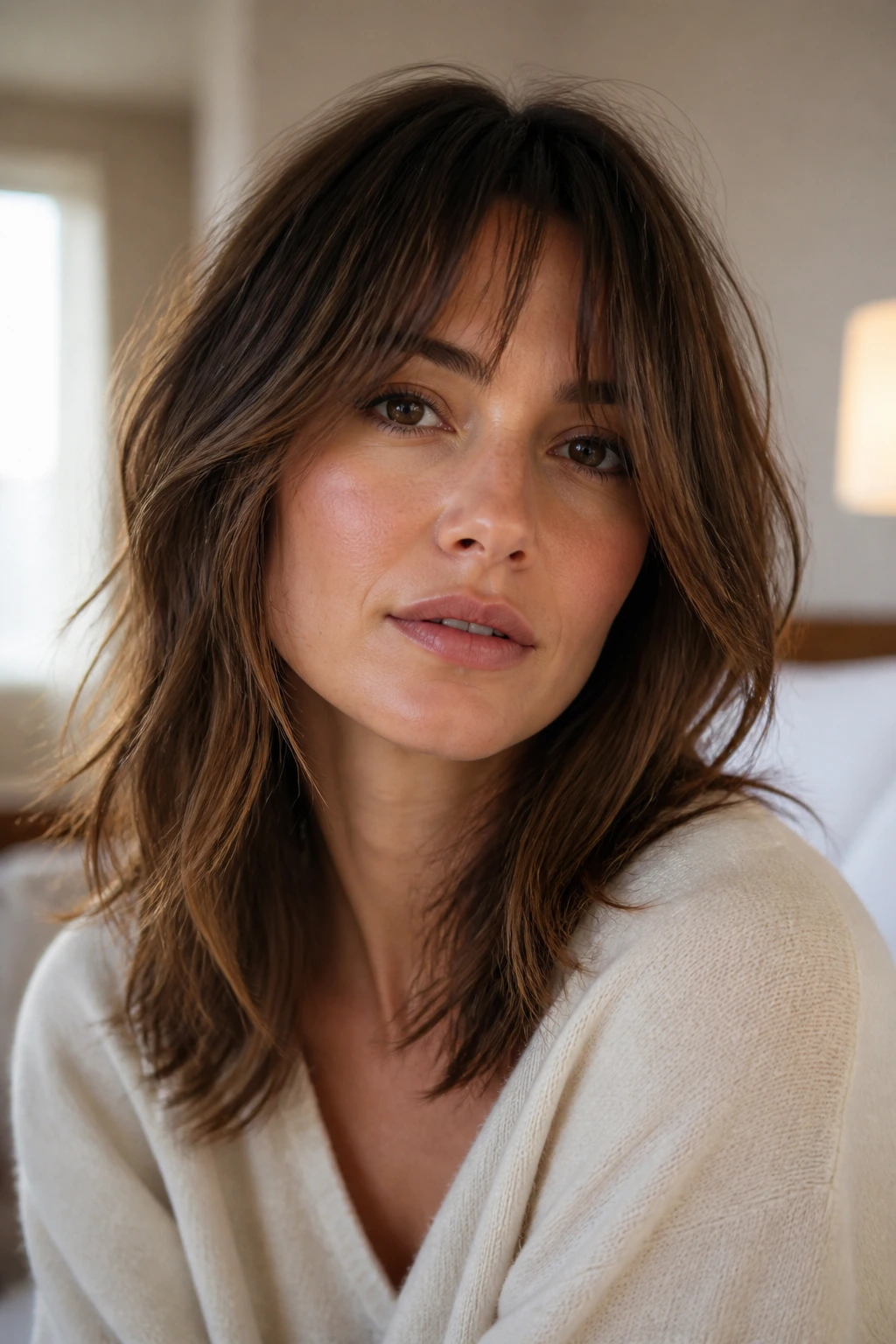
The wolf cut does not have to look wild. In its softer version, it becomes a medium-length haircut with a little crown lift, broken-up layers, and wispy ends that keep the shape from going bulky. I like this version much better than the hard-edged one because it feels more wearable on a Tuesday morning.
This cut works best when the top gets a little lift and the bottom stays slightly shaggy. Too much volume at the crown can make the head look top-heavy, so the layers need restraint. Think of it as a controlled mess, not a costume.
A soft wolf cut is especially good on wavy hair, because the natural bend helps the layers separate. Put a dab of cream through damp hair, scrunch once, and let the ends dry on their own if you want the lived-in version. If you blow it out, keep the ends a little flipped, not pin-straight.
10. U-Shaped Wispy Cut
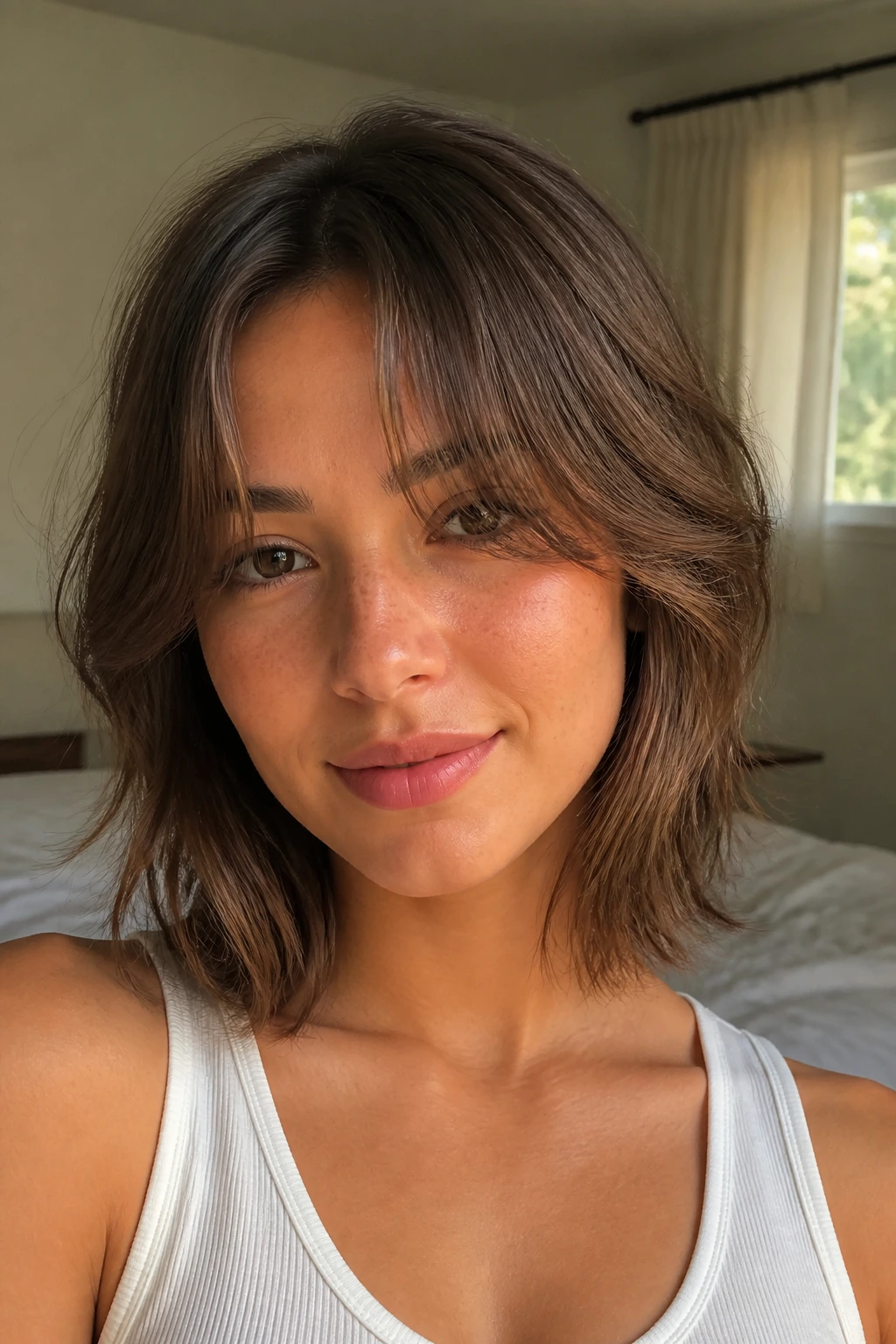
A U shape sounds subtle because it is subtle. The center sits a touch longer, and the sides sweep up slightly toward the face, which creates a soft curve instead of a blunt horizontal edge. On medium length hair, that curve stops the haircut from looking boxy.
This shape is a good fit if you like length but want the ends to feel more fluid. It also behaves well in low ponytails and half-ups, because the back keeps enough length to anchor the style. Straight hair shows the shape clearly, but wavy hair makes it even nicer by softening the line.
Best For
- People who want to keep as much length as possible
- Hair that gets thick through the bottom half
- Anyone who likes a ponytail but hates a harsh blunt edge
The U cut can look flat if it’s cut too strictly. Ask for the corners to be softened and the ends point-cut, not chopped into one flat shelf. That one change keeps the silhouette airy.
11. Wispy Layers for Fine Hair
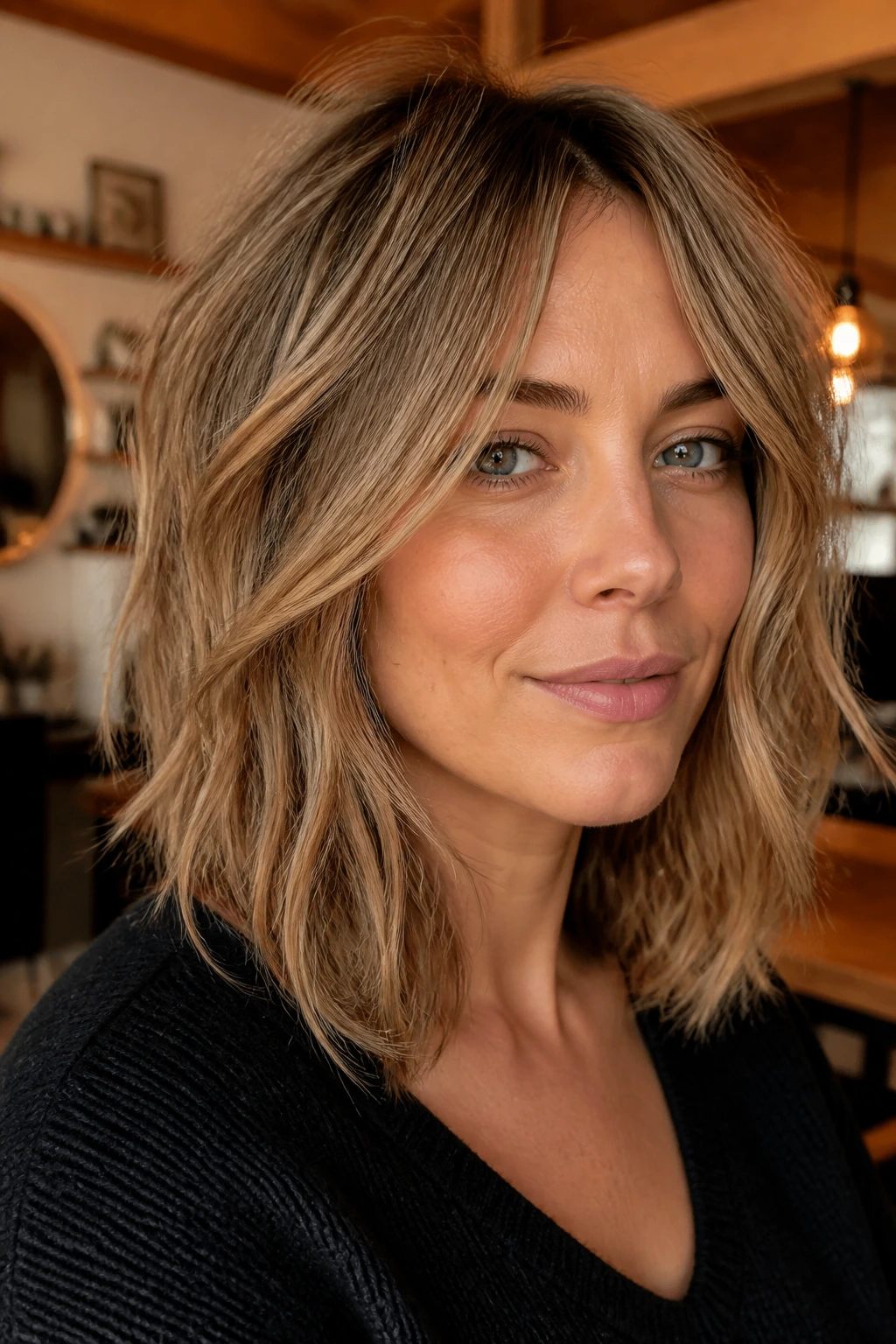
Fine hair needs restraint, not a lot of optimism from the scissors. A wispy cut for fine hair should keep most of the perimeter intact and place only a few soft layers around the face and interior. Too many layers make the ends look scrappy, and that is not the same thing as airy.
The goal is to make the hair look like it has movement, not make it look like it’s missing some. That’s a real difference. If your stylist takes weight out too high, the hair can lose the thickness that makes medium length hair look healthy in the first place.
A little root lift mousse, a round brush at the crown, and a very light texture spray at the ends usually does the rest. Fine hair tends to look best when the wispy effect comes from styling and placement, not from aggressive cutting.
12. Textured Wispy Midi Cut with Choppy Ends
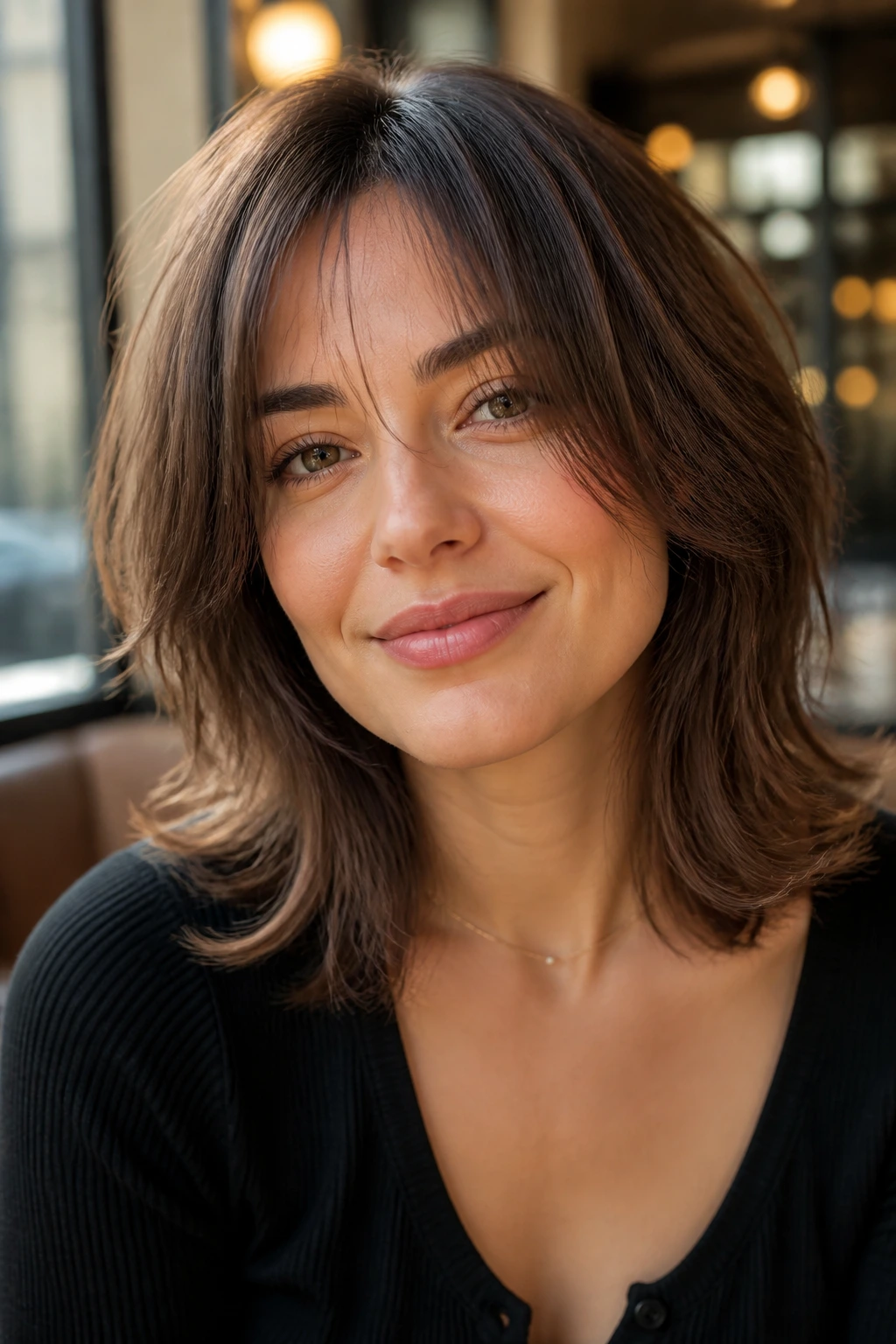
If feathered layers look polished, choppy ends look a little undone. That is the appeal. A textured wispy midi cut breaks up the perimeter so the ends land in small, uneven pieces, which creates movement even when the hair is worn straight.
This cut likes texture. It likes a small bend through the mid-lengths and a touch of dry separation at the bottom. What it does not like is over-smoothing. If you iron the life out of it, the whole point disappears and you’re left with a soft outline that needs more styling than it deserves.
I’d recommend this style to someone whose hair naturally leans wavy or has a bit of grit to it. On very silky hair, you may need a texturizing spray or a lightweight mousse to keep the ends from merging back into one line.
13. Wavy Wispy Cut with Long Bangs
Wavy hair and wispy cuts get along because the bend hides a thousand tiny imperfections. A cut with long bangs lets the waves fall in a loose frame around the face, and the medium length keeps the whole shape from getting too heavy. When it works, it looks effortless in a way that takes a decent amount of planning.
The bangs matter here. They should be long enough to sweep past the brows and then soften into the sides, not short enough to sit like a separate fringe. The rest of the hair can keep a little U or V shape so the waves have room to settle.
Use a curl cream or light mousse on damp hair, scrunch once, and let the wave pattern set on its own. If you touch it too much while drying, the ends puff and the bangs fray. Leave it alone. That helps more than most styling advice.
14. Curly Wispy Layered Cut
Curly hair needs room. That’s the whole thing. A wispy layered cut for curls removes bulk in the right places while keeping enough length for the curls to spring instead of collapsing into a triangle.
A dry cut often works better here because curls lie to you when they’re wet. They stretch, shrink, and shift direction as they dry, so the stylist needs to see the pattern before taking too much off. The wispy effect comes from longer layers and a soft face frame, not from shredding the shape apart.
Best Way to Ask for It
Tell the stylist you want the curls to keep their outline, with the front pieces starting around the cheekbone or lower. If your curls are tighter, keep the shortest layer lower than you think. Short layers can bounce up fast.
- Ask for a dry or mostly dry cut if your curl pattern is unpredictable.
- Keep a little length under the chin and around the shoulders for balance.
- Use a diffuser on low heat if you want the layers to stay separated.
This is one of those cuts that looks better on day two, once the curl has settled and the frizz calmed down.
15. Invisible Wispy Layers at Shoulder Length
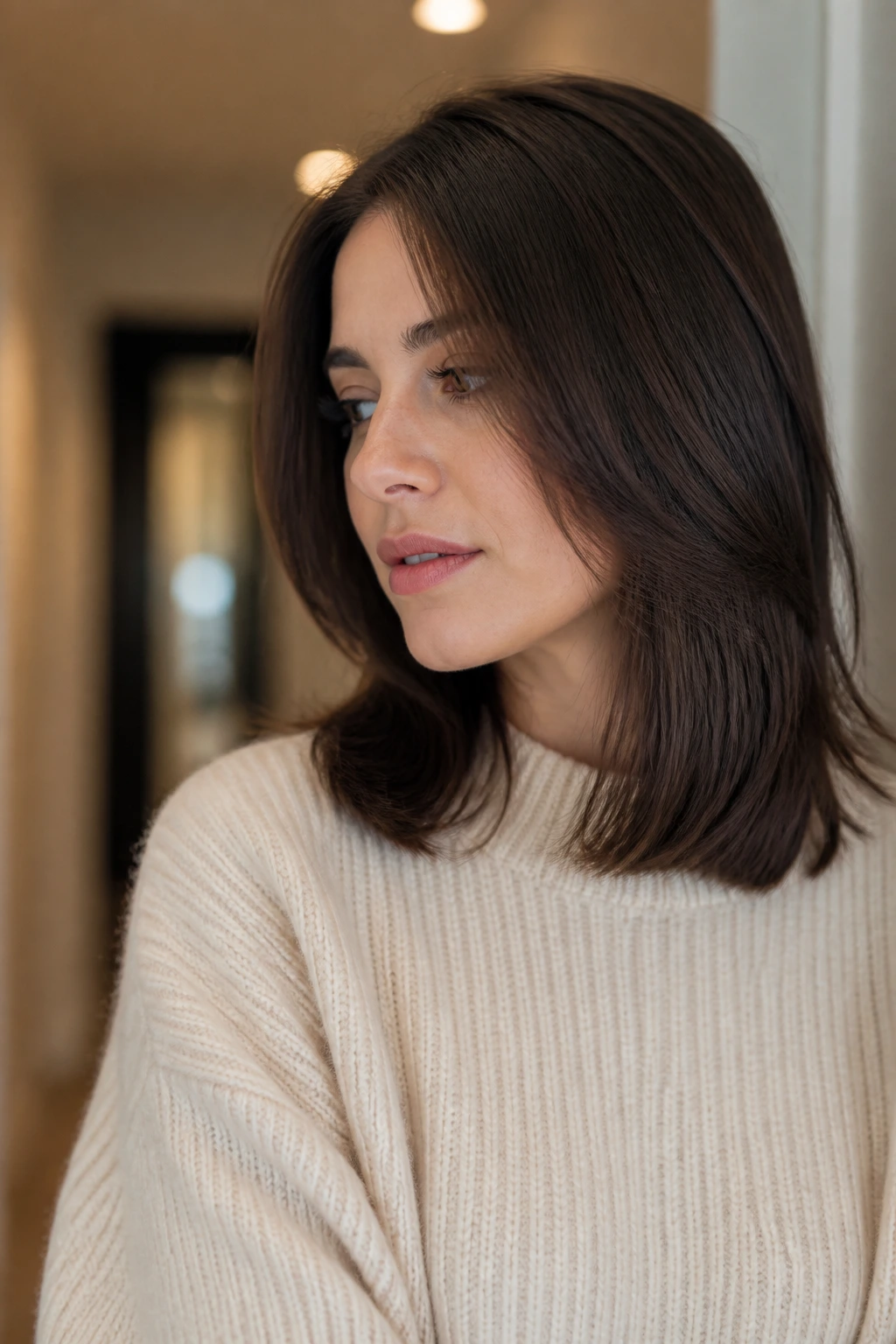
Invisible layers are for people who want movement without announcing it. The cutting happens inside the shape, so the outer line still reads smooth and fairly clean, while the interior loses weight and gains swing. It’s a subtle haircut, and that’s why it’s so useful.
I like this approach for shoulder-length hair that needs a little lift but not a full shag. It can make straight blowouts behave better and give wavy hair less bulk in the center. The haircut looks almost plain at first glance, then starts moving when you turn your head.
This style also grows out kindly. Because the outer line stays intact, you don’t get the obvious “my layers are growing weird” stage as fast. That’s a nice benefit if you hate living on a six-week trim schedule.
16. Asymmetrical Wispy Lob with Airy Ends
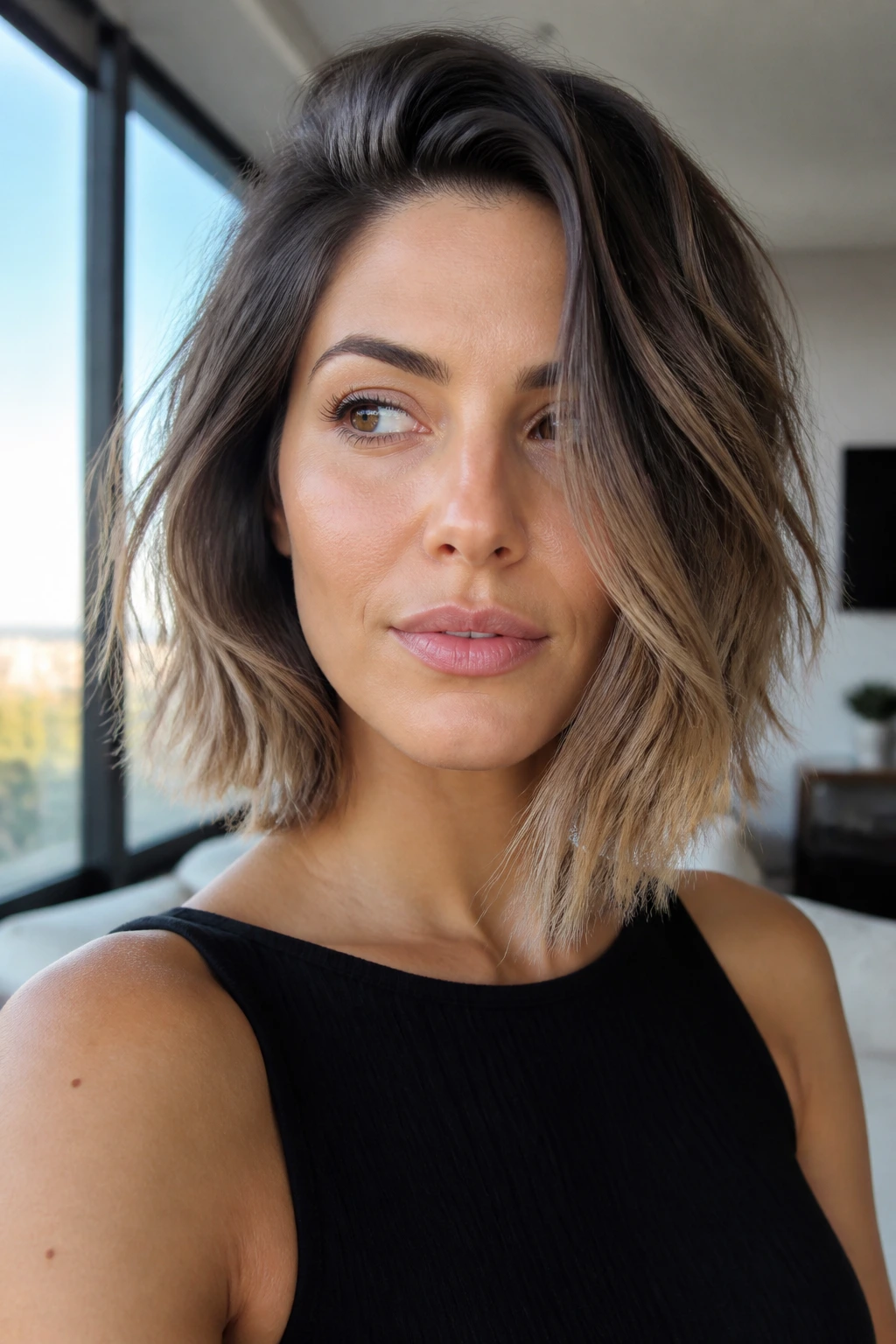
A small asymmetry can do more than a big dramatic chop. Keep one side only about 1 to 1.5 inches longer than the other, and the whole lob suddenly looks sharper while still staying soft at the ends. It’s a useful trick if you want something that reads intentional without shouting.
The airy ends matter here because the asymmetry already gives you structure. If the perimeter is too blunt, the cut can feel severe. Softening the line with point cutting helps the longer side fall more naturally and keeps the shorter side from looking like a mistake.
This is also a smart move if your hair tends to part itself off center. The cut will work with that habit instead of fighting it. Hair that looks slightly imperfect on purpose usually ages better than hair that tries too hard.
17. Rounded Wispy Midi Cut with Soft Flip Ends
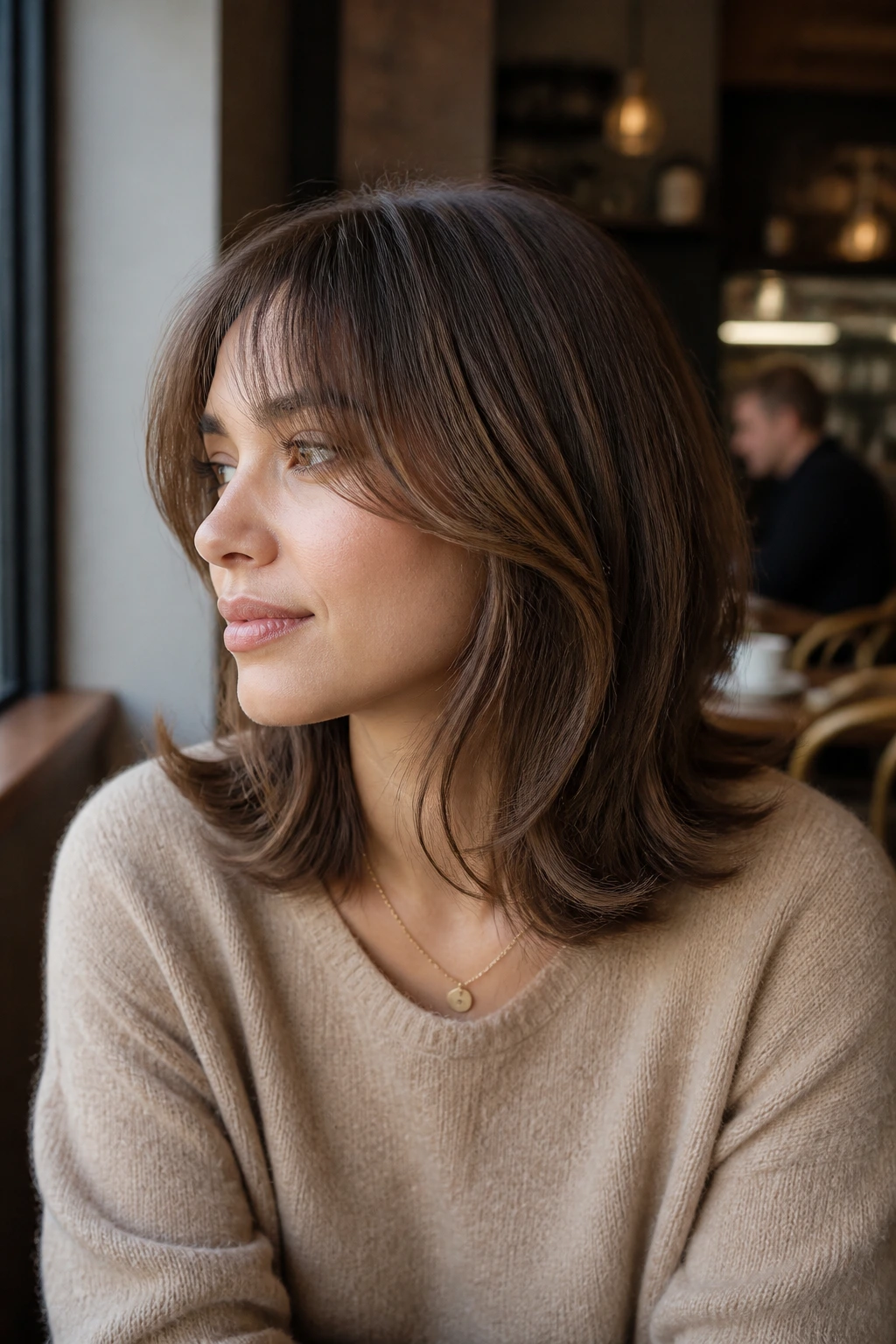
This cut takes the straightness out of medium hair without forcing it into a curl. The silhouette rounds gently around the head, and the ends flip under or out just a little, like they changed their mind halfway through drying. That softness keeps the medium length from feeling severe.
It’s one of my favorites for thicker hair because the rounded outline lets the style keep body while the wispy ends prevent a hard edge. If the bottom line gets too blunt, thick hair can sit like a block. A soft flip takes the edge off that problem.
Styling Note
A medium round brush gives the best result, but a flat brush and a quick bend at the ends can work too. You are not chasing a perfect salon blowout. You are aiming for a shape that falls back into place after a few hours.
- Dry the roots first for lift.
- Bend the last inch of the hair under or out.
- Keep the ends soft with a pea-size serum, not a heavy oil.
18. Blunt Base with Whisper-Soft Layers
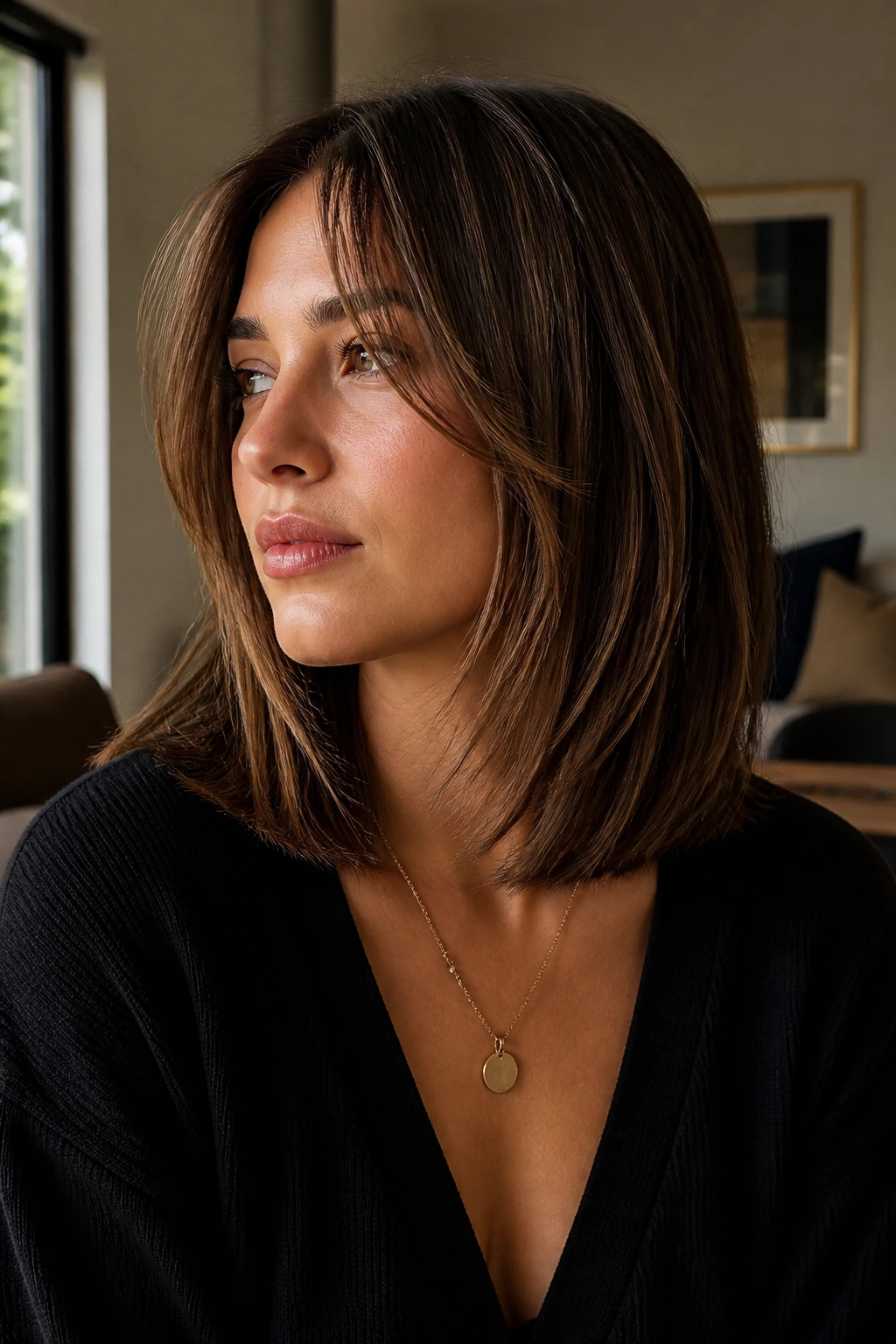
This is the compromise cut, and it’s a good one. The base stays blunt enough to keep weight and polish, but whisper-soft layers are tucked inside and around the face so the haircut still moves. If you’ve been scared of too many layers, start here.
The blunt outline gives medium length hair some authority. The soft layers keep it from getting rigid. That combination works especially well if you want to wear your hair straight some days and loose-bent on others, because the cut can survive both without a fight.
It’s also the easiest of the wispy medium cuts to grow out. The shape doesn’t depend on a lot of short pieces hanging around the top, so the transition between trims stays smooth. Sometimes the boring-looking choice is the smartest one.
How to Explain the Cut So the Stylist Doesn’t Guess
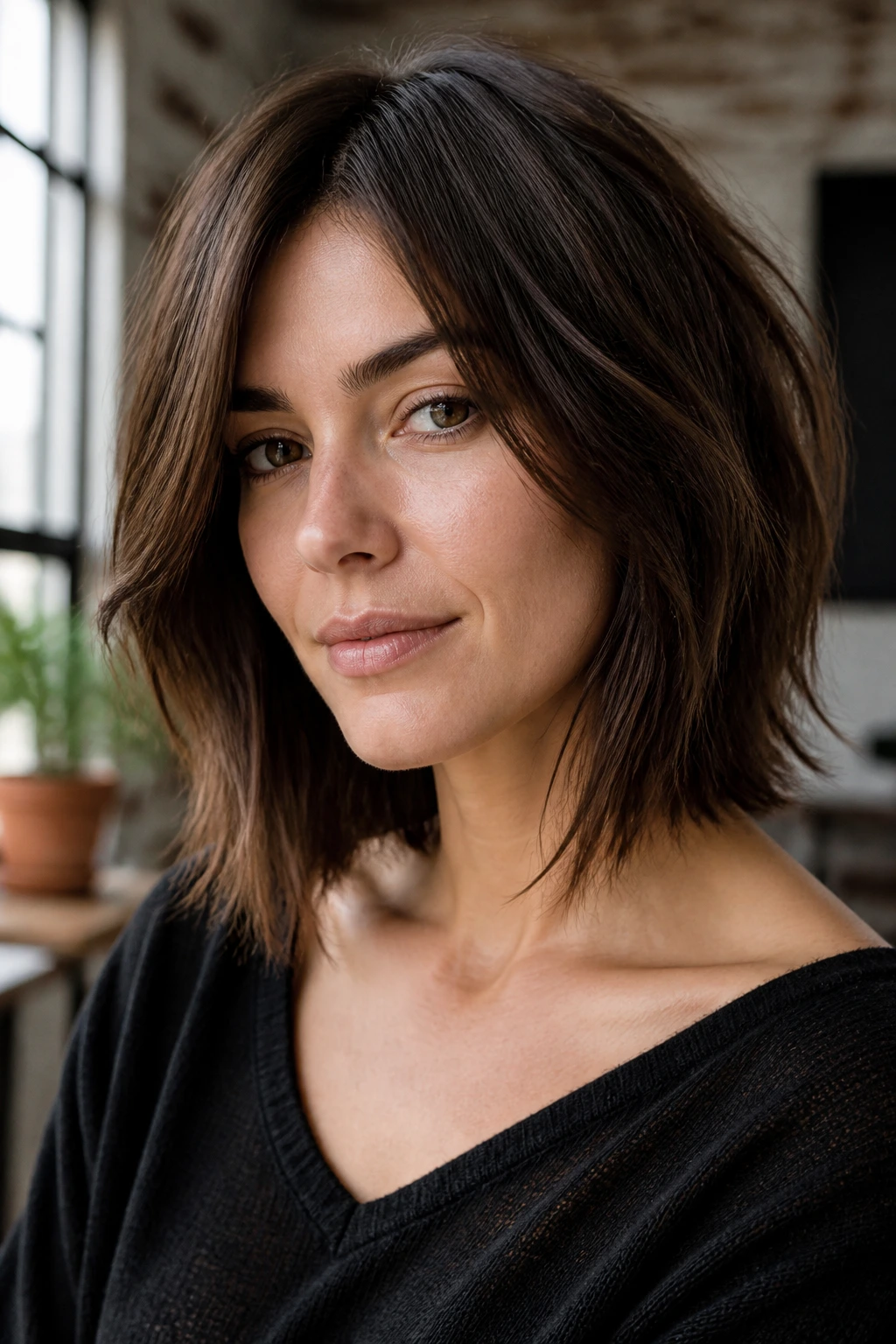
A good reference photo helps, but words matter too. Say where you want the shortest point to land, whether you want the perimeter blunt or softened, and how much forehead you’re willing to show if bangs are involved. That tells the stylist what to protect, not just what to remove.
Bring two photos if you can. One should show the front, and one should show the side. Haircuts are sneaky that way — a style that looks soft from the front can be oddly heavy from the profile if the layers stop in the wrong place.
A few phrases are worth using because they are specific. “Point-cut the ends.” “Keep the interior lighter, not the outline.” “Leave enough weight to tuck it back.” Those requests get you closer to wispy haircuts that actually look like wispy haircuts, instead of a shape that went a little too far with thinning shears.
The Tools That Make Wispy Hair Behave
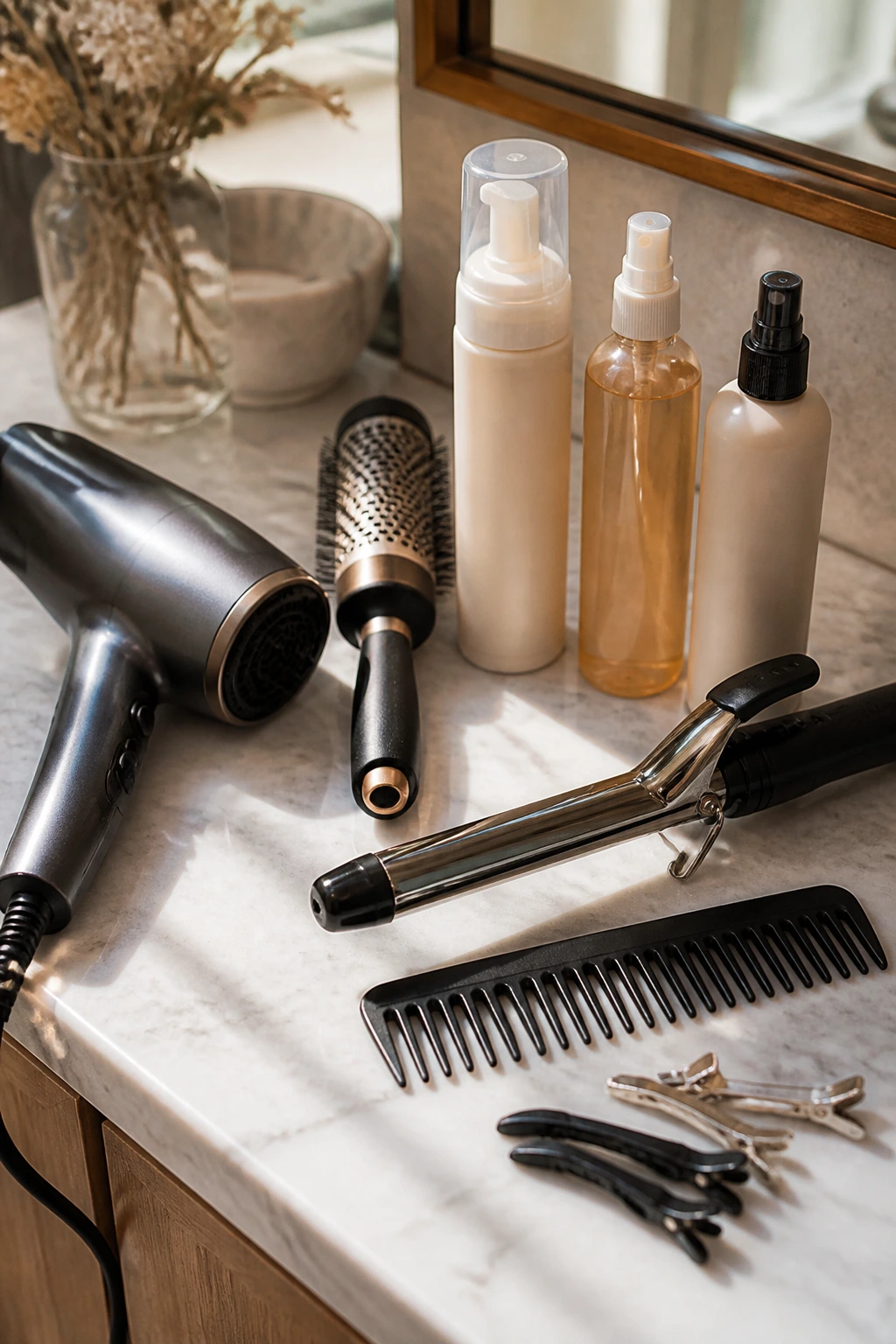
- Blow-dryer with a nozzle attachment: The nozzle keeps the air moving in one direction, which helps the ends stay soft instead of frizzing outward.
- Medium round brush, 1 to 1.5 inches: This is the sweet spot for collarbone and shoulder-length hair; smaller brushes make the shape too tight.
- Lightweight mousse: A golf-ball-sized amount at the roots gives wispy layers some lift without making them stiff.
- Heat protectant spray: Use it every time you reach for a blow-dryer, iron, or wand. Wispy ends are the first part to dry out.
- Texturizing spray: A few short bursts at the mid-lengths and ends can bring back separation on day two.
- 1-inch curling iron or wand: Good for adding a loose bend to the last few inches of hair without making the whole style curly.
- Wide-tooth comb: Better than a brush for distributing conditioner through layered medium hair without pulling the shape apart.
- Clips for sectioning: Not glamorous, but they make blow-drying and curling far less annoying.
- Light serum or cream: Use the tiniest amount on the ends only; wispy cuts go flat fast when overloaded.
Styling Wispy Medium Hair So It Stays Soft, Not Flat

Root Lift: Put mousse or root spray on damp hair at the crown, not halfway down the strand. That’s where the lift belongs, and it keeps the top from collapsing into the face frame by noon.
End Bend: Use a round brush, iron, or wand only on the last 2 to 3 inches of hair. That little bend is enough for the haircut to look finished; curling everything from root to tip usually makes wispy layers lose their airy feel.
Texture Without Crunch: A texture spray should separate the pieces, not freeze them. Spray from about 8 to 10 inches away, then scrunch or twist once with your hands. If the hair feels gritty, you used too much.
Day-Two Reset: Mist the ends lightly with water, add a pea-size dab of leave-in cream, and re-bend the front pieces with a warm iron if they’ve gone flat. A full wash is not always needed.
Heat Control: Keep styling tools lower than you think. Fine or color-treated hair does better around the low-to-mid 300s Fahrenheit, while thicker hair can usually handle a bit more. High heat on wispy ends is a quick route to frayed-looking edges.
Mistakes That Make Wispy Haircuts Look Weak
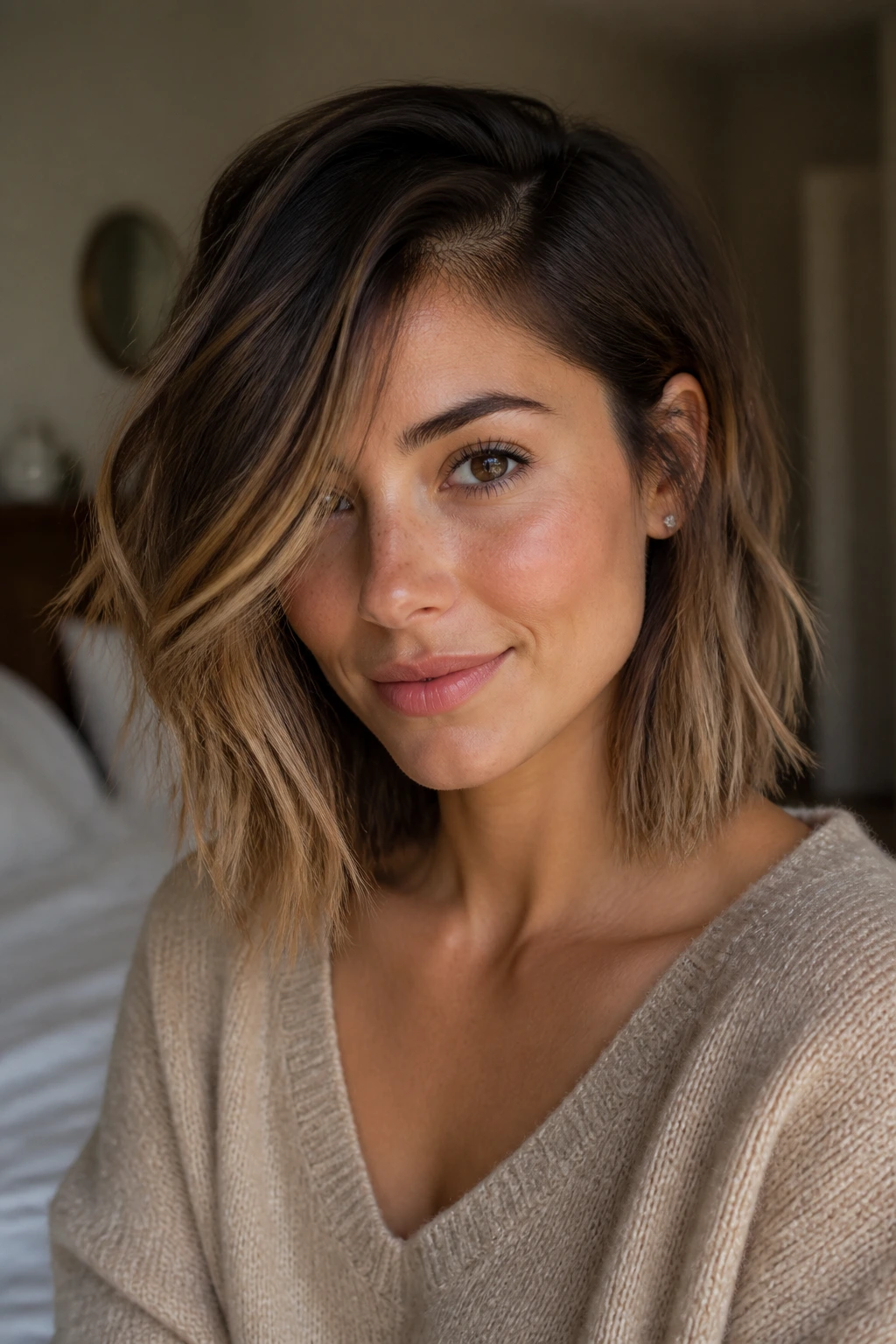
Over-thinning the ends: This is the fastest way to turn a soft cut into a see-through one. If the bottom edge looks stringy in natural light, the stylist removed too much weight. The fix is to keep the perimeter fuller and ask for internal softness instead.
Putting layers too high: Short layers near the crown can make medium hair puff up in odd places and lose its swing. The symptom is a haircut that looks busy at the top and limp at the bottom. Ask for layers that start lower unless you specifically want a shag.
Cutting bangs too blunt for the texture: Straight-across fringe on wavy or cowlick-prone hair can split and fight you all day. A softer curtain, bottleneck, or side-swept shape works better when the hair has a mind of its own.
Using too much smoothing product: Heavy creams and oils flatten the very movement you paid for. If the cut starts looking greasy by lunch, cut the product in half and keep it on the ends only.
Ignoring the hairline and part: A wispy cut can fall apart if the part is wrong for your growth pattern. If the hair keeps pushing left, stop forcing a center line just because it looks tidy in a photo.
Skipping trims for too long: Wispy ends wear out first. They start to look ragged at the collarbone and lose their clean movement. Once that happens, the haircut stops reading as airy and starts looking neglected.
Variations and Alternatives to Try
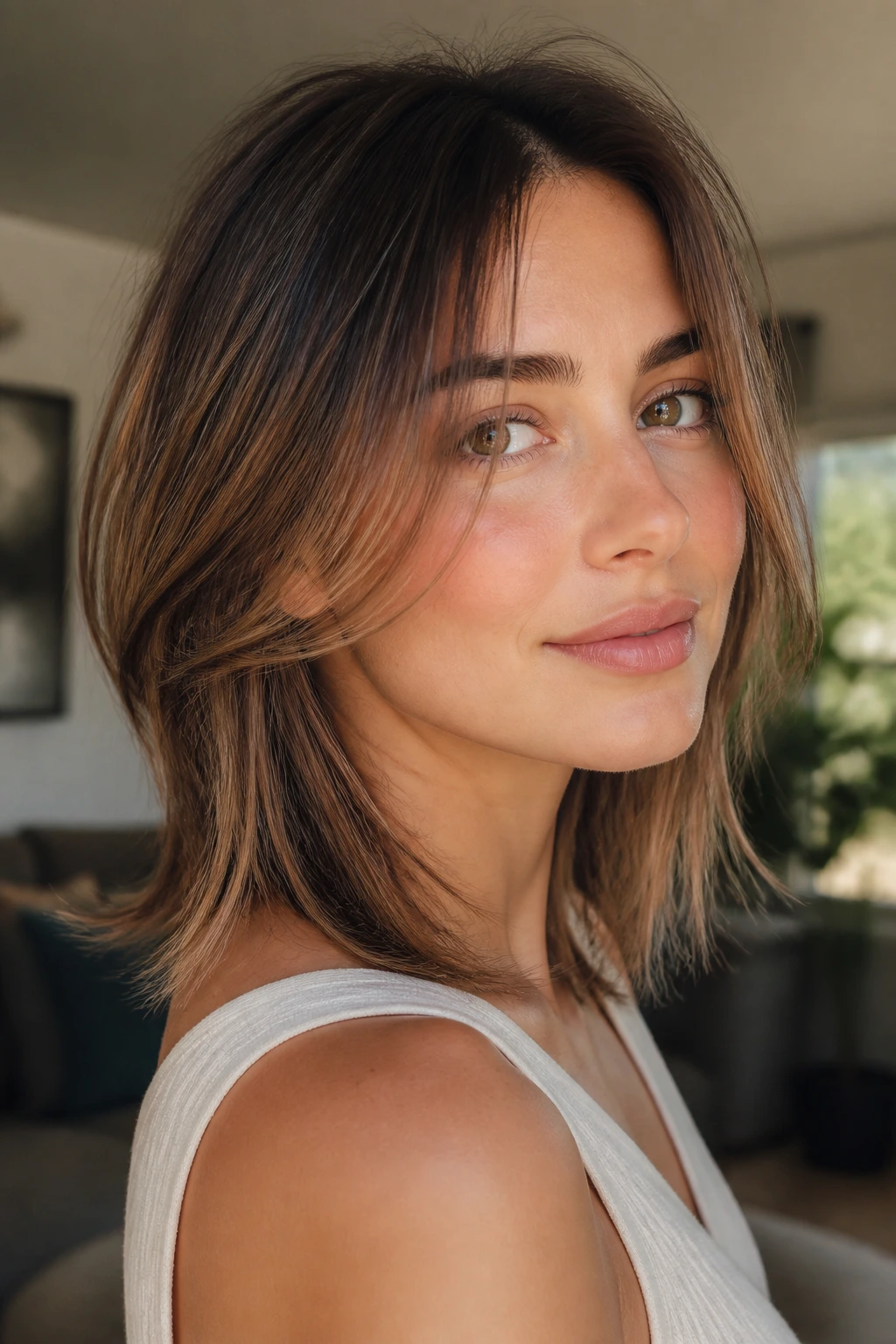
The Fine-Hair Airy Edit: Keep the perimeter fuller, add only a few face-framing pieces, and use root-lifting mousse instead of more layers. This works when you want movement without taking density away from already delicate hair.
The Thick-Hair Weight-Release Version: Ask for interior debulking, longer face-framing pieces, and tapered ends. It keeps the silhouette from ballooning at the bottom while still letting the hair feel soft around the shoulders.
The Curl-Friendly Shape-Up: If your hair is curly or coily, ask for a dry cut with longer layers and a gentle frame around the face. The goal is spring and balance, not a lot of short pieces that bounce up too high.
The Low-Heat Air-Dry Cut: This version keeps the ends wispy but leans on natural texture instead of tools. It’s a smart pick for anyone who wants a haircut that still looks decent when left alone for most of the week.
The Fringe-First Version: If you like a little personality near the face, add curtain bangs, bottleneck bangs, or a side sweep to a simple shoulder-length cut. That tiny bit of fringe changes the whole haircut without forcing a dramatic chop.
Keeping Wispy Layers in Shape Between Haircuts
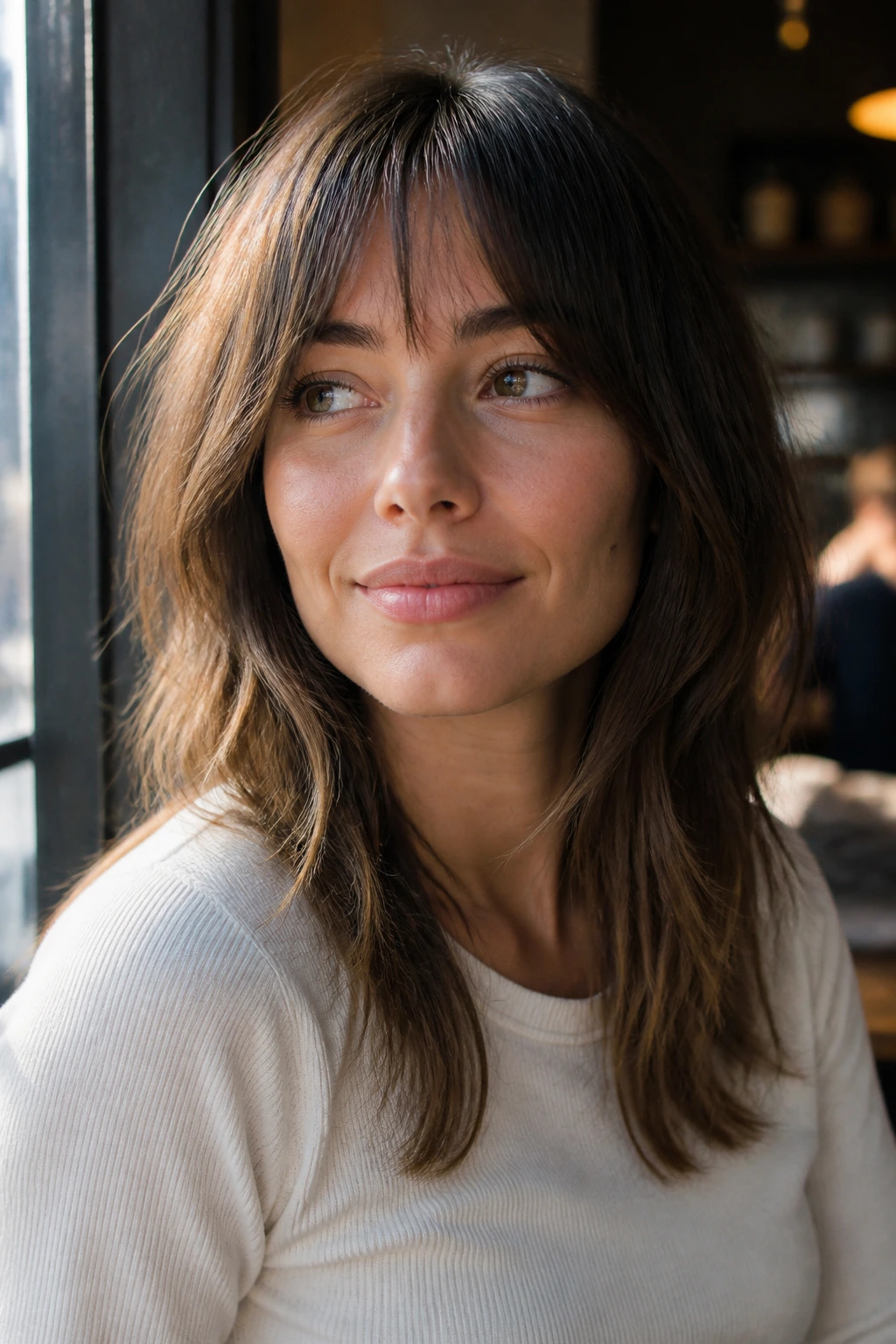
Wispy medium haircuts look best when the ends are fresh. That does not mean you need to race back to the salon every month, but it does mean the shape benefits from regular touch-ups. For most medium-length cuts, an 8-to-10-week trim keeps the perimeter soft before the ends start to fray.
Bangs need more attention. If you wear curtain or bottleneck bangs, a 3-to-5-week fringe cleanup keeps them from falling into your eyes or splitting too far apart. Skip that, and the face frame starts to lose its purpose.
Shape Refresh: If the cut begins to feel heavy at the bottom, ask for a small dusting rather than a full restyle. A quarter-inch taken off the ends can change the way the whole haircut falls.
Product Reset: Once a week, use a gentle clarifying wash if your hair gets coated with dry shampoo, serum, or texturizing spray. Wispy layers go limp when product builds up at the mid-lengths.
Heat Damage Control: Keep hot tools off the same ends every day. Rotate between air-dry days, blow-dry days, and quick touch-up days so the wispy pieces do not dry out and split.
Grow-Out Plan: If you want to keep the cut growing longer, maintain the face frame and let the back build toward the shoulders. That keeps the shape wearable while the length changes.
Questions People Ask Before They Cut the Length
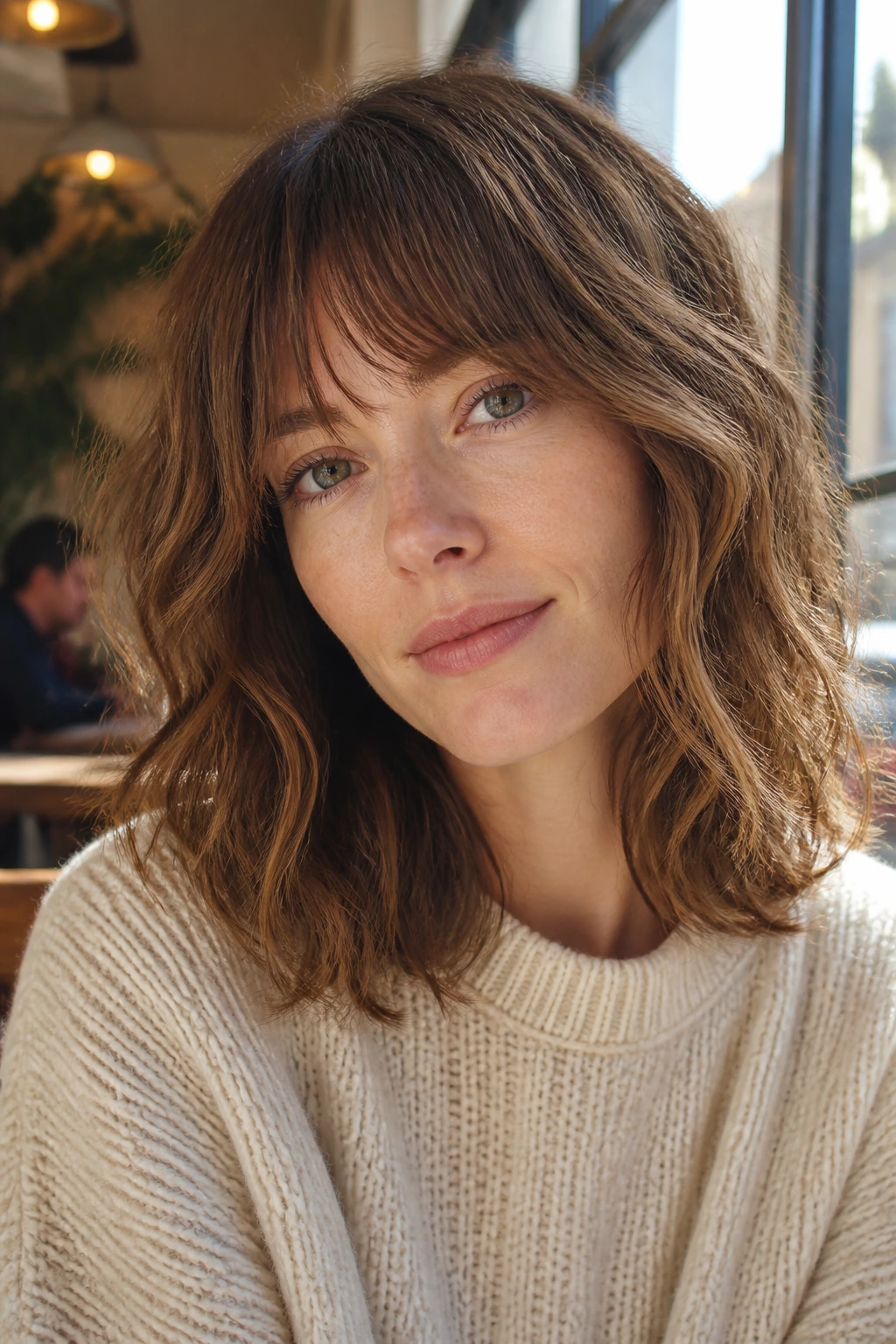
Will a wispy medium haircut make fine hair look thinner?
Not if the layers are kept light and the perimeter stays full enough to hold a line. The danger comes from over-thinning, not from wispy shaping itself. Fine hair usually does best with subtle face-framing and a blunt-ish base.
Do wispy layers work on thick hair?
Yes, and honestly, thick hair often benefits the most. The trick is taking weight out of the inside and the lower sides without shredding the bottom edge. That keeps the haircut airy instead of bulky.
How often should I trim a medium wispy cut?
Most versions look freshest at 8 to 10 weeks, with bangs needing earlier cleanup if you wear them. If the ends start bending in odd directions or the face frame loses its shape, it’s time.
Can I air-dry wispy haircuts and still have them look good?
Absolutely. A little curl cream, mousse, or leave-in spray can set the texture while the hair dries. The result depends on the natural pattern, though, so straight hair may need a light bend from a tool if you want more movement.
What should I tell the stylist if I want softness but not a shag?
Say you want internal softness, a clean outline, and only light face-framing around the cheekbone or jawline. That tells the stylist to preserve the silhouette instead of building a heavily layered cut.
Are wispy medium cuts good for round faces?
They can be, especially with side parts, curtain bangs, or longer face-framing pieces that skim below the cheekbone. The right line can add length visually without making the haircut stiff.
What happens if the cut comes out too choppy?
Usually the problem is too many short layers or too much texturizing at the ends. You can often calm it down with a smoothing blowout, but if the shape is too broken up, a trim to restore weight may be needed.
Can I grow out a wispy haircut without an awkward stage?
Usually, yes. Because the layers are soft rather than extreme, the cut tends to blend as it grows. Keeping the front shape maintained helps the transition feel deliberate instead of accidental.
Soft Edges, Real Movement
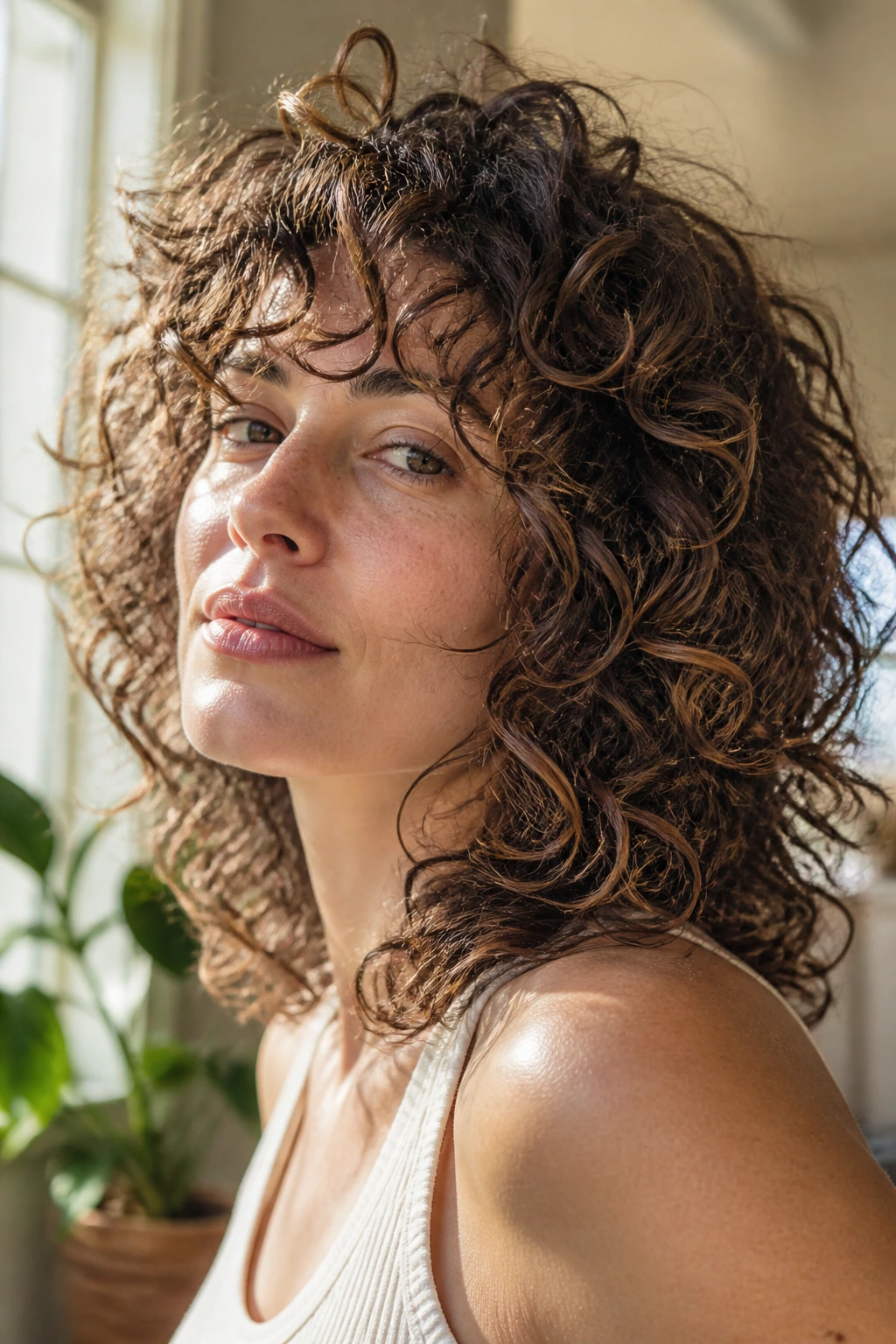
The best medium-length wispy haircuts do one thing well: they keep the outline soft without taking the shape apart. That balance is what makes them useful. They look good with a clean blowout, a scrunched air-dry, or a day when you’ve done almost nothing and still need your hair to cooperate.
If you want a medium haircut that moves when you do, and still behaves when life gets in the way, wispy layers are a smart place to start. Bring a clear reference, say where you want the softness to live, and protect the perimeter from getting thinned into nothing. That’s the difference between a haircut that looks airy and one that just looks sparse.
