



Medium-length hair sits in a sweet spot that people underestimate all the time. It can be blunt and sharp in the morning, then turn soft and swingy by the afternoon. It can take layers without collapsing into fluff, and it can hold a clean line without feeling heavy at the ends. If you’ve been hunting for haircut ideas for women with medium length hair, the real trick is not picking something “pretty.” It’s picking a shape that works with your density, your part, and the amount of styling you actually want to do.
That’s why this length keeps winning. A cut that lands around the collarbone or skims the shoulders gives a stylist room to move weight around instead of hacking it off. That means there’s space for blunt edges, face-framing pieces, curtain bangs, shaggy texture, rounded curls, and those slightly angled shapes that look polished even when you air-dry and leave the house five minutes later. Medium-length hair can behave like a neat bob or a longer cut, depending on how it’s built.
A good cut here does more than change your silhouette. It changes the whole routine. Some styles make fine hair look fuller because the line stays dense. Others make thick hair feel lighter because the interior is carved out without turning the outside fuzzy. The best ones are the ones that still look intentional after a nap, a humid afternoon, or one of those mornings when your brush seems to have a personal grudge.
Why Medium-Length Hair Keeps More Possibilities Than You’d Think
Collarbone length gives you room to work. Hair that falls right around the collarbone can be tucked, curled, waved, clipped, or worn straight without the shape disappearing. It’s long enough to show movement and short enough that the ends still have some bounce.
The outline matters more at this length than most people realize. A blunt perimeter makes hair look thicker. Soft layers make it feel lighter. A tiny change in where the weight sits can change the whole cut, which is exactly why medium-length hair is such a useful canvas.
It grows out better than a very short chop. When a medium cut is designed well, the first few weeks of grow-out usually add softness instead of chaos. The line shifts, sure, but it doesn’t fall apart the way a highly structured pixie or micro bob can.
It works with more textures than people give it credit for. Straight hair reads sleek, wavy hair gets movement, and curls can keep enough length to show their shape without dragging down at the ends.
You can steer the vibe without starting over. Add curtain bangs and the same cut turns softer. Deepen the side part and it gets sharper. Use a round brush and it leans polished; rough-dry it and the same shape looks lived-in.
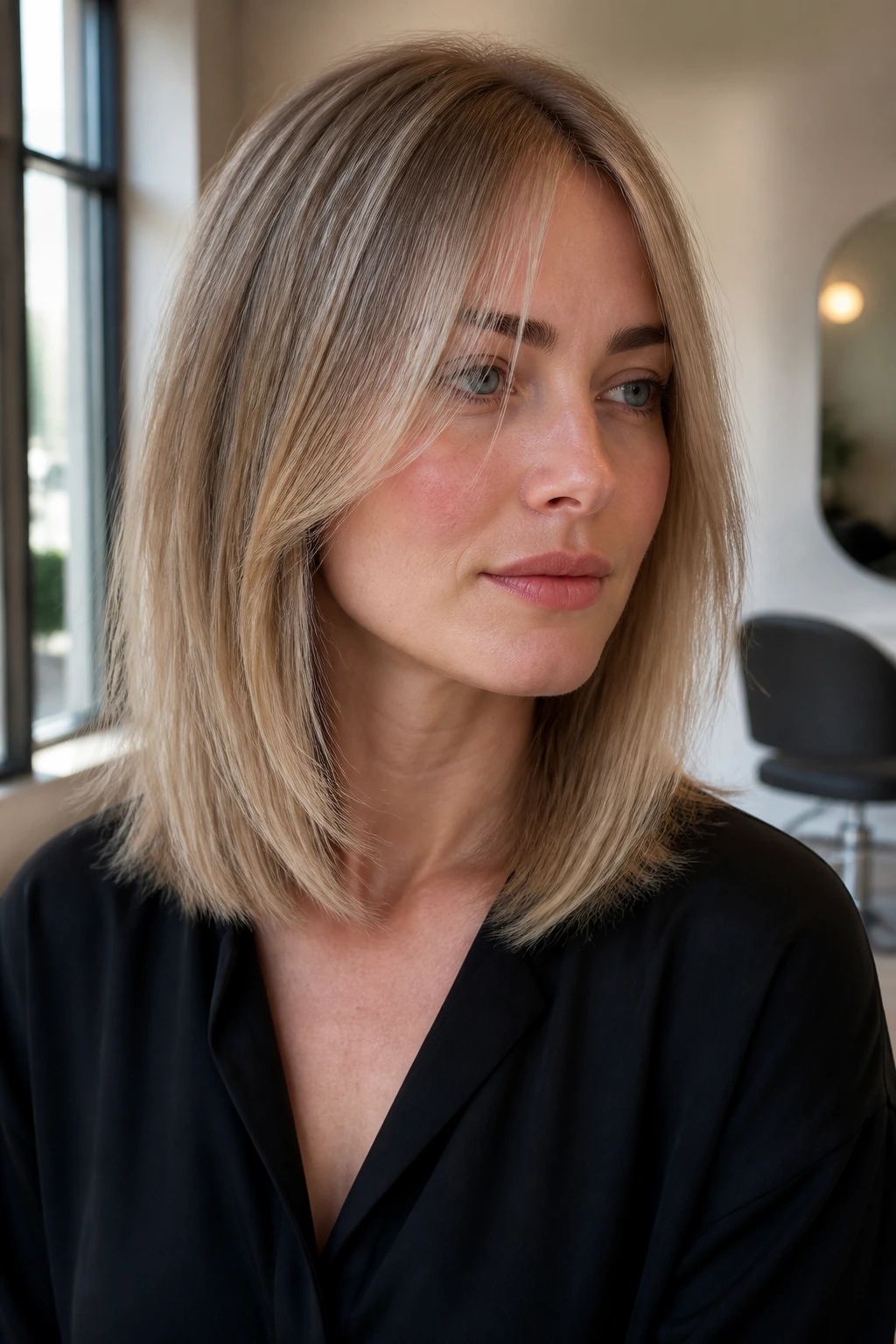
1. The Collarbone Blunt Cut
The collarbone blunt cut is the haircut equivalent of a clean white shirt: simple on paper, hard to mess up when it’s done well. The line lands right at the collarbone or a hair above it, and that placement is doing a lot of work. It gives the ends enough weight to look full, but not so much length that the shape drifts into ordinary long hair.
Why It Feels So Clean
What makes this cut stand out is the perimeter. There’s no busy layering in the back and no jagged thinning at the ends. A strong blunt line sits flat, reads thicker, and makes fine-to-medium hair look denser than it really is. On straight hair, it has that neat swing when you turn your head. On slightly wavy hair, the ends bend just enough to soften the edges without losing the structure.
Ask your stylist to keep the line even and to resist the urge to over-texturize it. If your hair is thick, a tiny bit of internal weight removal can stop the ends from puffing out, but the outside should still look solid. That’s the point.
Best for: straight, slightly wavy, fine-to-medium density hair.
Styling note: a 1-inch round brush and a quick bevel under the ends keep it from looking too severe.
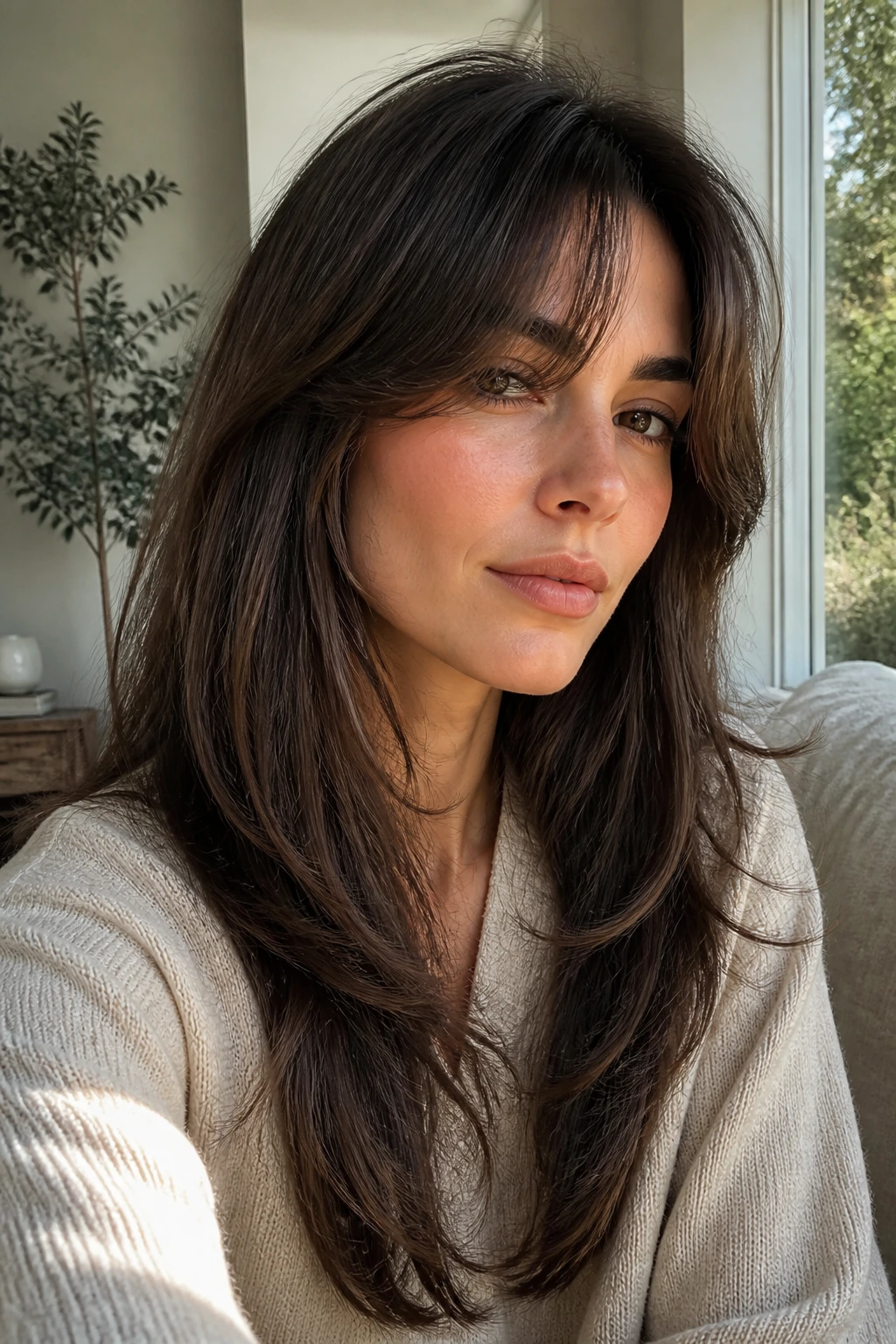
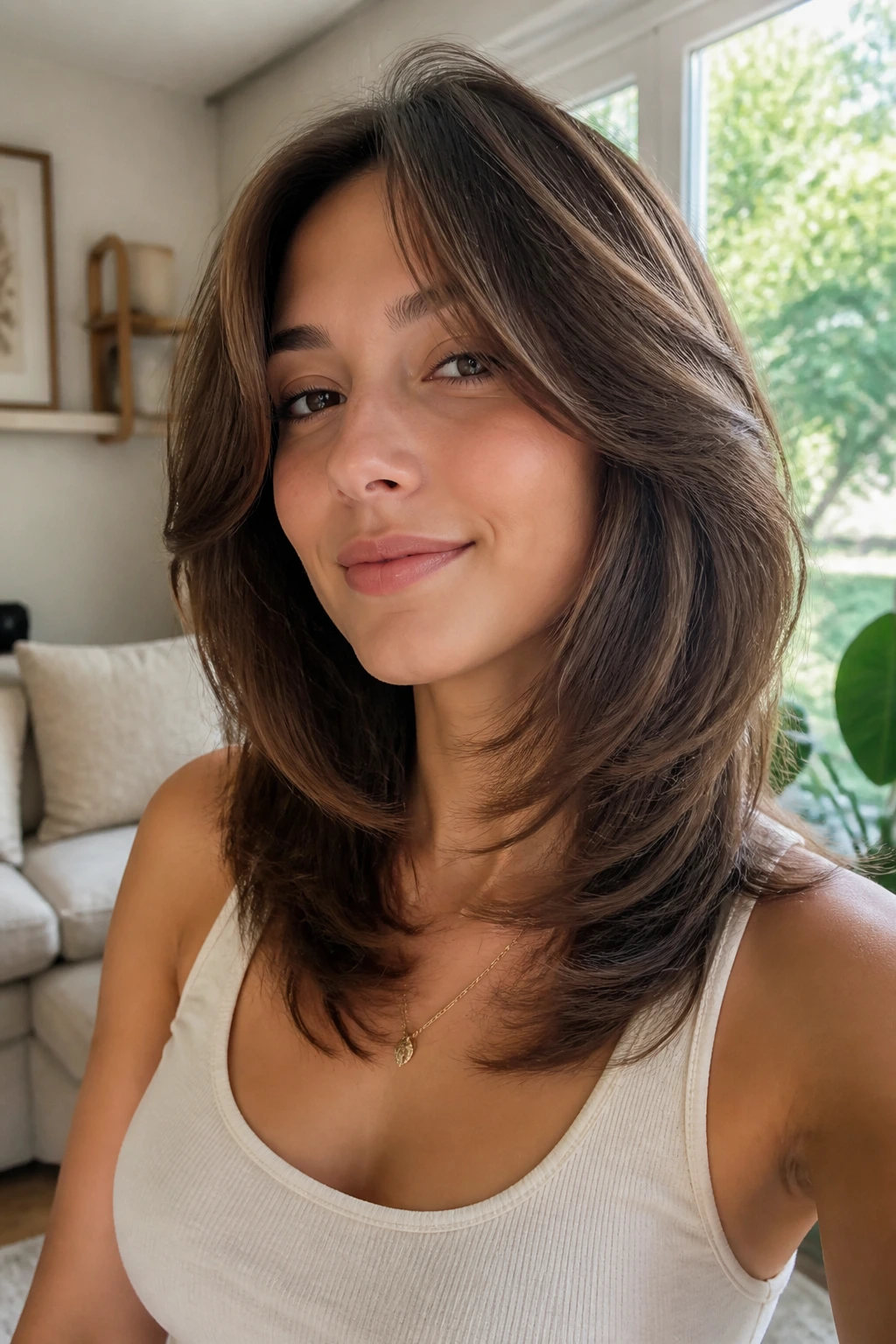
2. Long Layers with Curtain Bangs
Why do some layered cuts feel airy while others look chopped? Because the difference is usually in where the layers start and how the front pieces are handled. Long layers with curtain bangs work so well on medium-length hair because they keep the length, then open the face without taking a giant bite out of the silhouette.
Curtain bangs should usually begin around the cheekbone or just below it, then melt into the sides. That gives you the soft sweep people like, not a blunt fringe that sits there like a helmet. The long layers can begin around the chin or collarbone depending on how much movement you want. Lower starting points keep the shape fuller. Higher points create more bend and air.
How to Ask for It
- Keep the perimeter grazing the shoulders or collarbone.
- Start the first face-framing piece around the cheekbone.
- Ask for long internal layers, not short choppy ones.
- Keep the bangs long enough to split in the middle without fighting your eyebrows.
This cut is especially kind to hair that goes flat at the crown. The front pieces pull attention upward, and the layers keep the whole style from looking heavy around the jaw.
3. The Soft Midi Shag
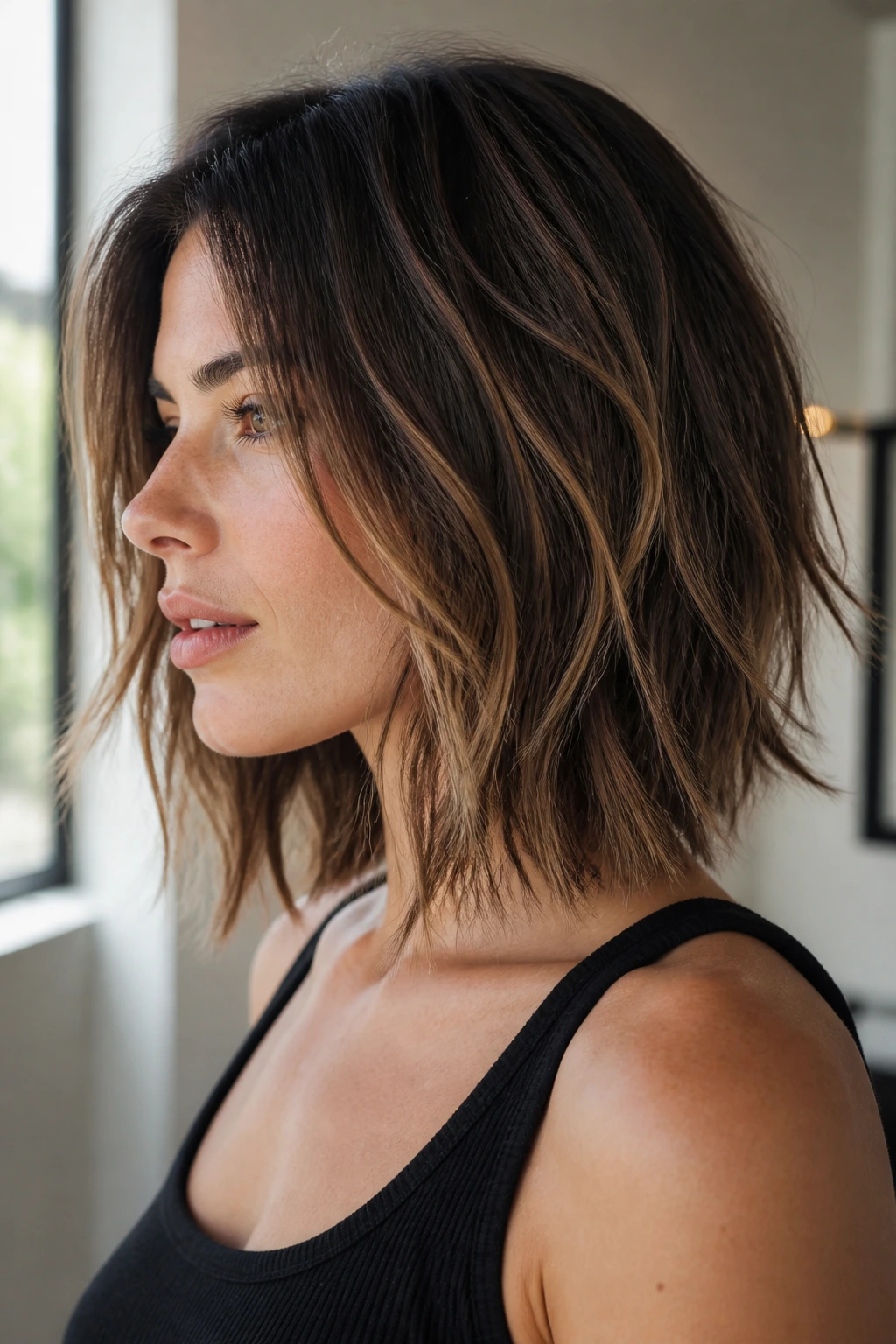
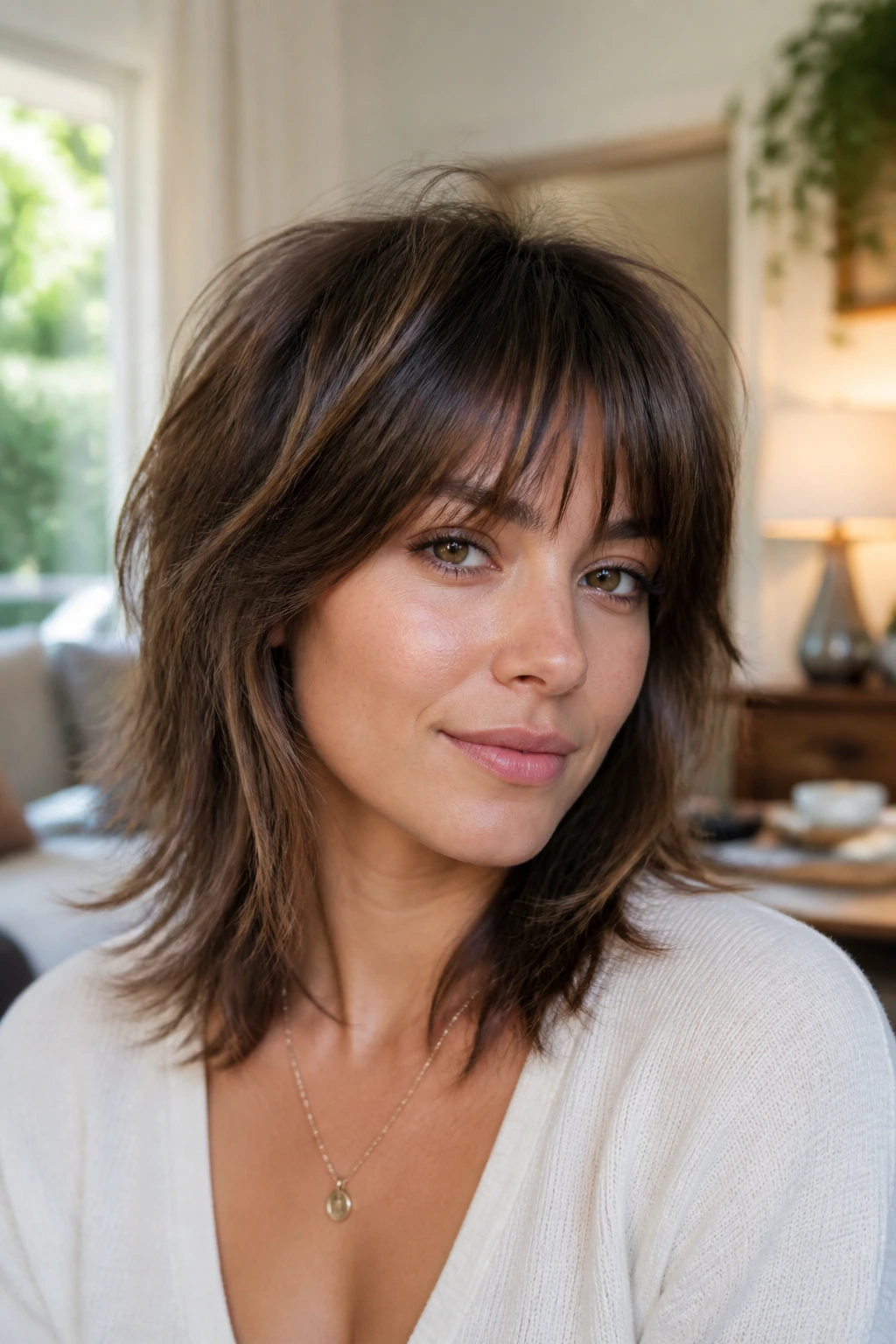
A shag does not have to look wild. The soft midi shag proves that. On medium-length hair, this cut usually keeps the length around the shoulders while adding texture through the crown, sides, and ends. The result has movement, but not the kind that looks like you spent an hour teasing it into place.
The reason it works is balance. The top gets lighter so the hair doesn’t collapse at the roots, while the bottom keeps enough length to hold the overall shape. That’s especially useful if your hair is naturally wavy, a little frizzy, or somewhere between fine and medium density. The cut gives the wave a place to sit instead of dragging it down.
I like this cut most when the fringe is soft and a little irregular. Not messy in a careless way. More like the front line has been loosened on purpose so it doesn’t feel stiff.
If you’re very precise about your hair and hate anything piecey, this one may not be your favorite. But if you want texture that looks better the second day, the soft midi shag earns its keep.
4. Textured Lob with Choppy Ends
There’s a reason the textured lob keeps turning up in salon chairs. It’s easy to wear, easy to explain, and it doesn’t need perfect styling to look finished. The choppy ends break up the line just enough that the cut moves when you walk, but the length still sits in that useful collarbone zone.
Think of this one as the antidote to hair that hangs too neatly. The shape is still controlled, but the ends are point-cut or lightly razored so the edge isn’t blunt from every angle. That little roughness matters. It keeps the lob from feeling heavy, especially if your hair has a lot of body and tends to flip outward at the bottom.
A good textured lob can handle a rough blow-dry and still look deliberate. A bit of mousse at the roots, a loose bend through the mid-lengths, and a small amount of texture spray at the ends usually does it. Nothing fussy. Nothing overworked.
Good to know: if your hair is fine, ask for light texture only. Too much choppy cutting can leave the ends looking thin in daylight, and daylight is the final test that matters.
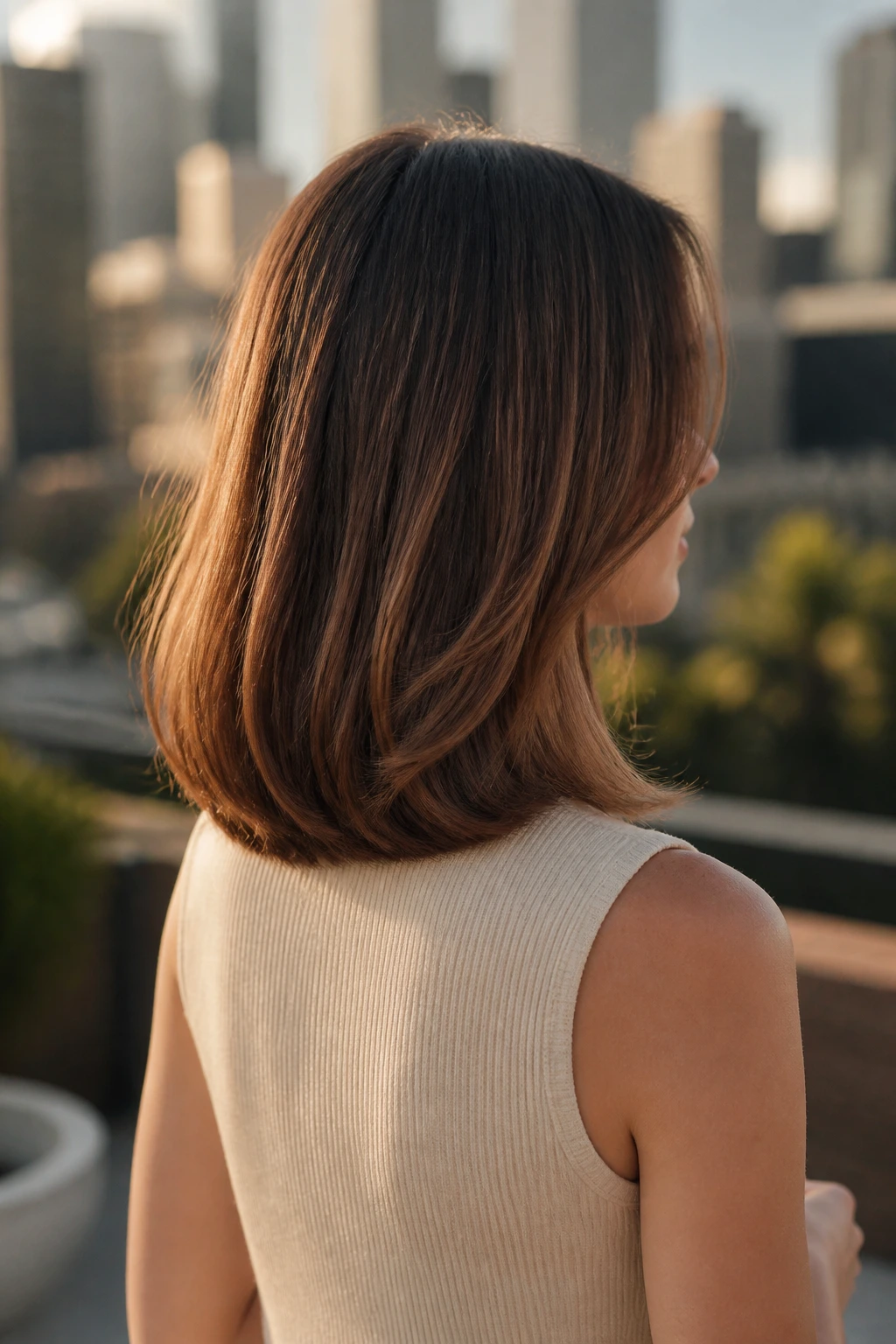
5. The U-Shape Cut
The U-shape cut has a quieter kind of polish. From the back, the length curves gently, with the center slightly longer than the sides. That soft arc makes medium-length hair fall in a way that feels natural instead of sliced flat. It’s one of those cuts that looks simple in the mirror and unexpectedly expensive when the hair moves.
What I like here is the way it keeps length without making the whole head feel boxy. A straight line can sometimes look too hard on thicker hair. A U-shape softens the silhouette while preserving fullness around the perimeter. If you wear your hair down a lot and want it to drape instead of sit stiffly, this shape helps.
It’s also a useful option for people growing out shorter layers. The curve disguises awkward stages better than a blunt line does. And because the sides are slightly shorter, you get a little lift around the front without needing heavy face-framing.
This is not the loudest haircut on the list. That’s the appeal. It’s the one that quietly behaves.
6. Invisible Layers for Fine Hair
Fine hair is where invisible layers earn their name. The cut looks almost one-length from the outside, but the interior has just enough layering to stop the hair from lying limp against the head. You get movement without the see-through ends that too many layered cuts create on finer textures.
The trick is restraint. The stylist should be taking out weight from inside the shape, not chopping the perimeter into little wisps. The outside line still needs to read full. That’s what keeps the cut looking thicker at the ends and not bare.
What to ask for
- Keep the outer line blunt or nearly blunt.
- Ask for subtle internal layers, not short face layers.
- Keep the longest point around the collarbone or just below.
- Avoid aggressive thinning shears unless your hair is unusually dense.
This cut is especially good if you like to air-dry. Fine hair often gets dragged down by too much layering, and this shape keeps the hair from collapsing into a flat sheet. A little root spray and a round brush at the crown can be enough. Clean. Straightforward. No drama.
7. The Butterfly Cut
The butterfly cut has become popular because it gives medium-length hair a strange and useful illusion: the front looks lighter and fuller, while the back still hangs with length. The shorter top layers sit around the cheekbones and jaw, and the longer bottom layers stay intact. That split in the shape creates movement without giving up the feeling of having hair to work with.
This cut shines when you like a blowout. Round-brush the shorter pieces away from the face and the whole style suddenly looks twice as full. Leave it air-dried, and it becomes softer and looser. That flexibility is what makes it so wearable.
It’s also forgiving if your hair is in that middle zone where it’s not quite thick, not quite fine. The butterfly shape lets the top move while the bottom keeps the mass. You get some lift at the crown and some swing around the face, which is a very good trade.
Not everyone wants that much layering. Fair enough. But if you’ve been craving movement without sacrificing length, this cut does the job better than most.
8. The Clavicut with Face-Framing Pieces
The clavicut is the medium-length haircut for people who want their hair to look considered without looking overworked. The length sits right at the collarbone, and the front gets the smallest amount of face-framing, usually starting below the cheekbone so the shape stays clean. It’s a very controlled cut. That’s why it looks good tucked behind the ear, half-up, or worn straight down.
Unlike a more obvious layered style, this one doesn’t rely on a lot of broken ends. The power is in the placement. The collarbone length gives the hair enough swing, and the face-framing pieces soften the line just enough to keep it from feeling severe.
This cut is a favorite if you want to grow your hair longer later but still look polished now. It doesn’t have a strong grow-out problem. The shape just loosens a little and keeps moving forward. That matters more than people think.
Who it flatters
- People who like a neat outline.
- Anyone who wants movement without a shag.
- Hair that is straight, wavy, or dense enough to hold a clean edge.
If you only want one haircut that can dress up or down with almost no effort, this is one of the smartest choices on the list.
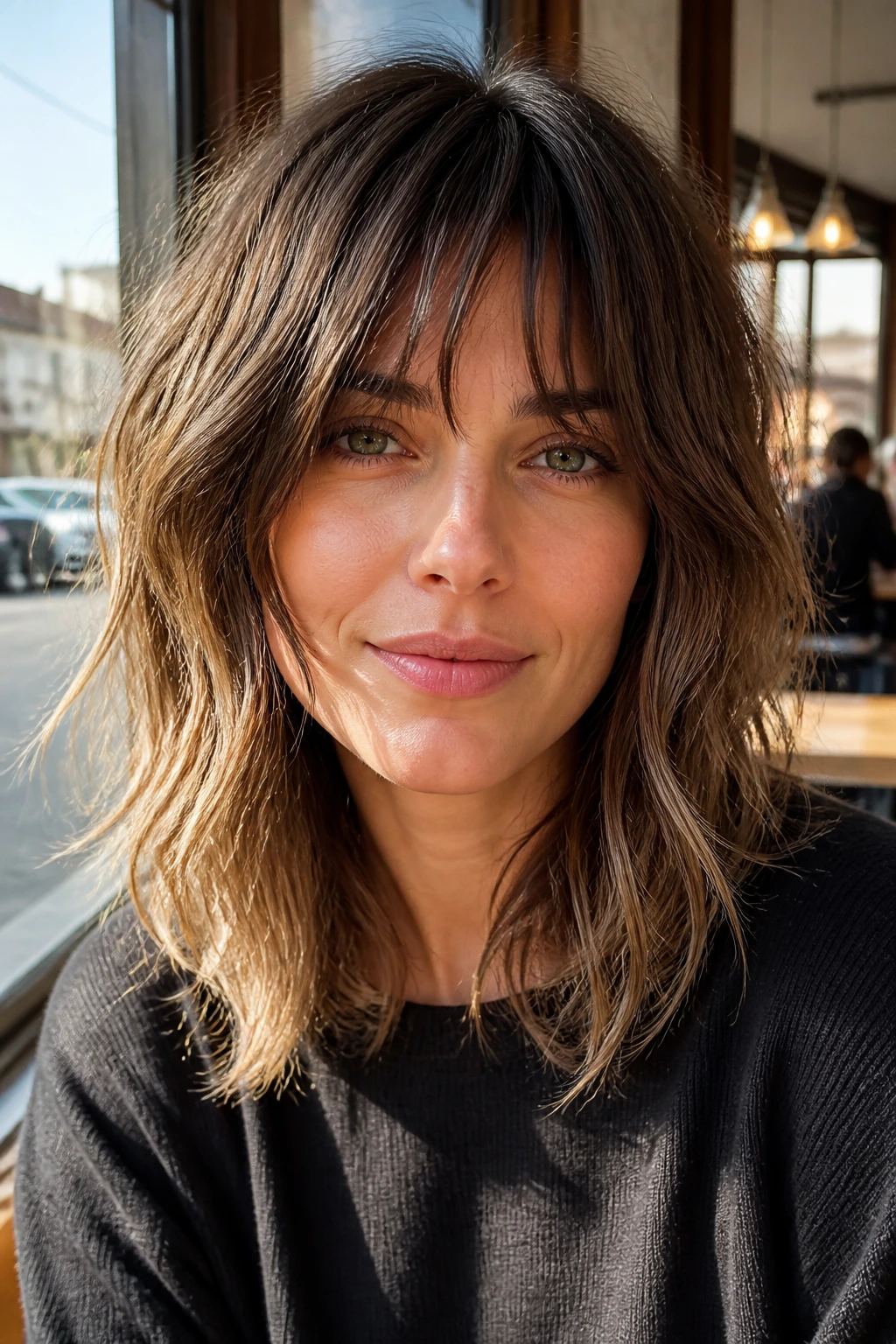
9. The Modern Shag with Soft Fringe
The modern shag is the cousin that shows up with better shoes and a softer attitude. It still has crown layers, texture through the sides, and a fringe of some kind, but the edges are less severe than the old-school shag. On medium-length hair, that matters. You get shape and texture without the haircut taking over your face.
The soft fringe is the anchor here. It can sit just above the brows, skim them, or split into loose curtain pieces depending on your forehead and how much upkeep you want. If the fringe is too short, the whole cut can start to feel theatrical. Too long, and the shag loses its frame. Somewhere in the middle is where it really lives.
This cut works best when you don’t fight it. A little mousse, a diffuser, or a rough dry with your fingers usually gives enough movement. If you try to force it into a sleek blowout every day, it stops looking like a shag and starts looking like a half-hearted layered cut. That’s not the same thing.
10. The A-Line Lob
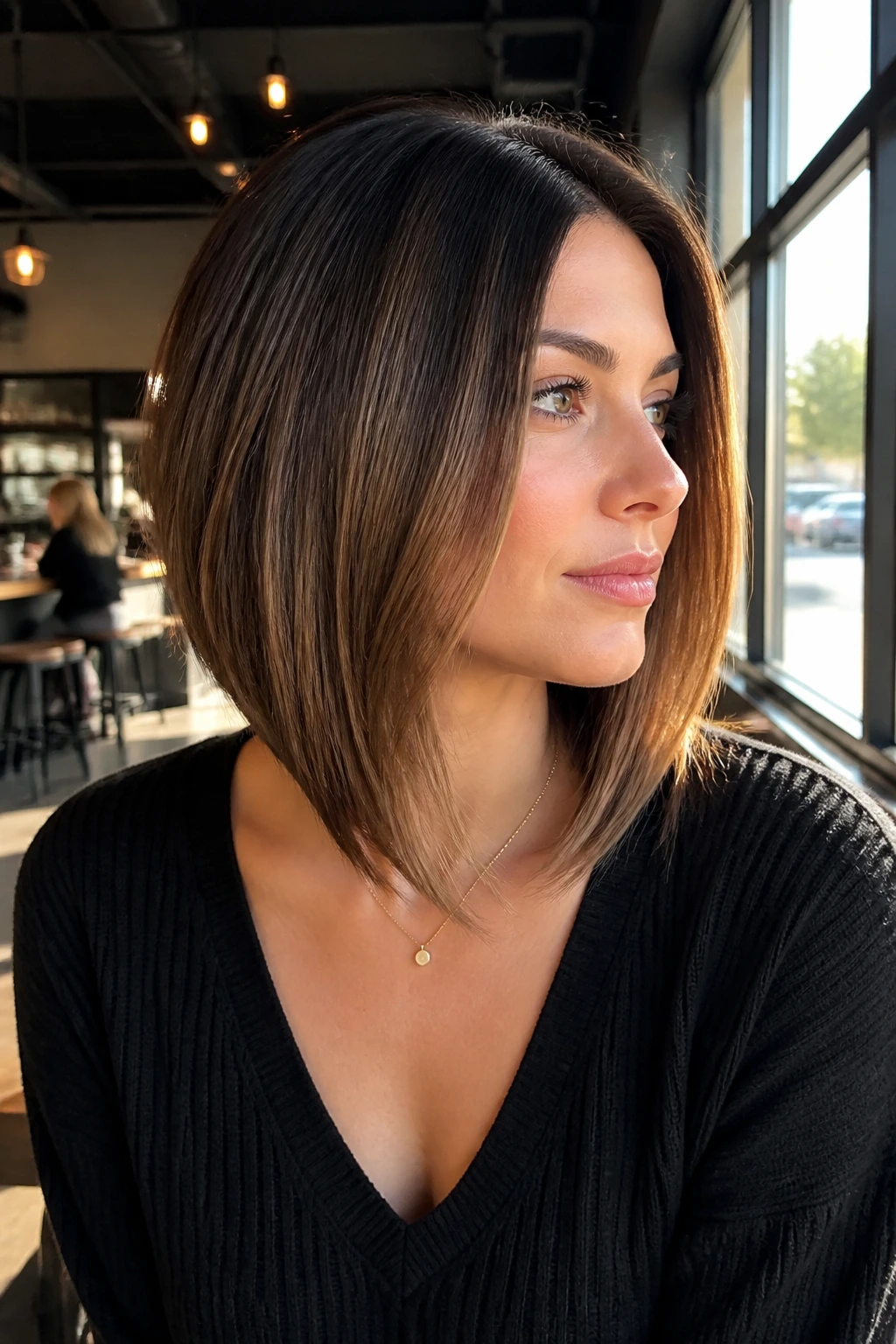
The A-line lob has a very clear shape: slightly shorter in the back, longer in the front, with an angle that makes the face read a little longer and sharper. It’s one of the most flattering medium-length haircuts for straight hair because the line is visible. You can see the design right away.
That angle gives the haircut some edge without making it severe. If the front grazes the collarbone and the back stays just above the nape, the contrast creates a smooth swing when you turn your head. On thicker hair, it removes some heaviness from the back. On finer hair, it gives the illusion of more density at the perimeter.
The A-line lob is a good match for people who like neatness. It doesn’t ask for a lot of styling tricks, but it does look best with a clean blow-dry or a flat iron bend that points the ends slightly inward. If you let it air-dry completely unshaped, the angle can get lost.
Best paired with
- Side part for extra lift.
- Sleek finish for a sharper silhouette.
- Ear tuck on one side to show off the line.
11. Feathered Layers
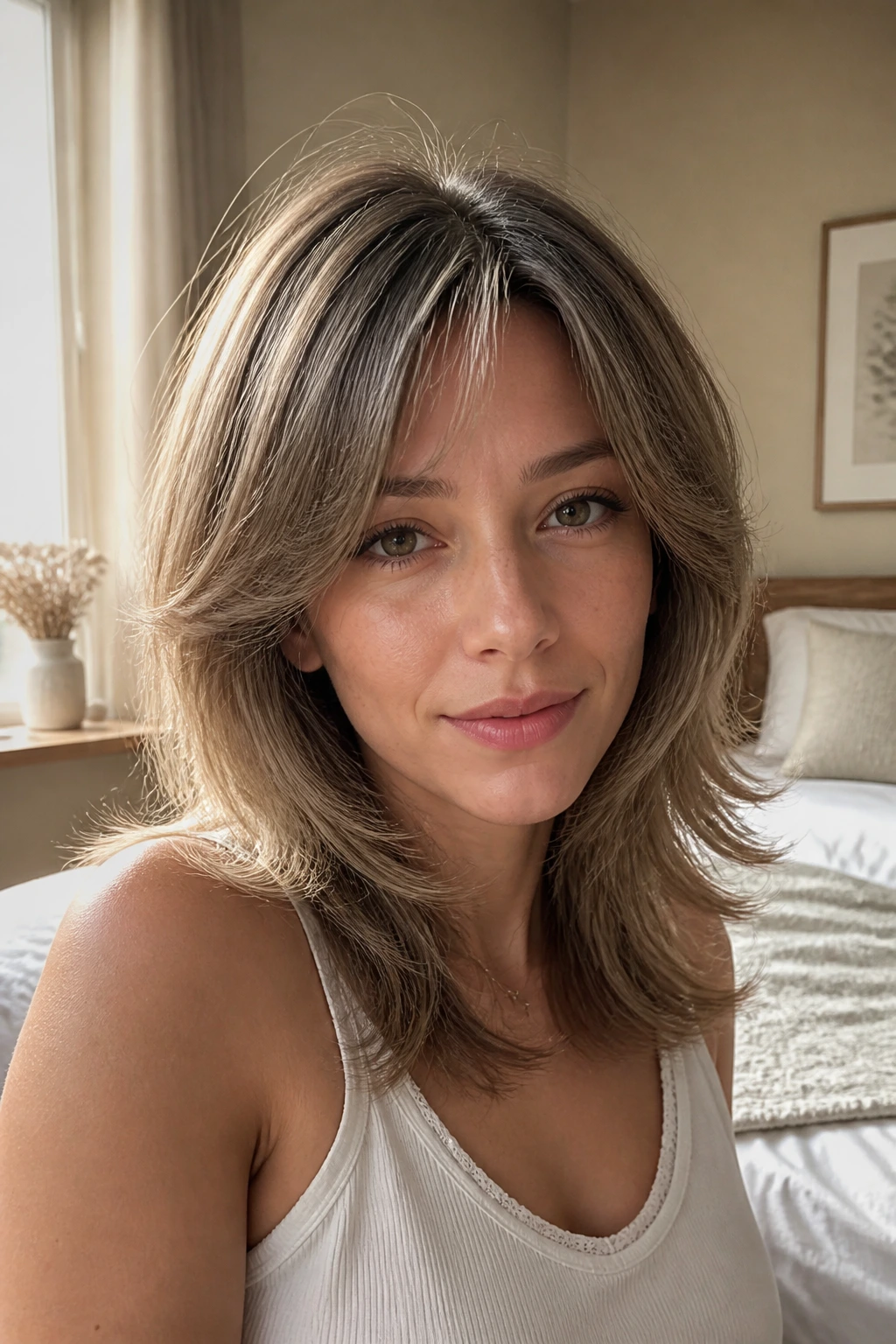
Feathering is one of those techniques that gets dismissed until you see it on the right head of hair. Then it makes sense. Feathered layers soften the surface and give the ends a light, brushed-out finish, which can be a beautiful thing on medium-length hair that needs movement but not a full shag.
This style works especially well when the layers are cut to fan away from the face, not just stacked randomly throughout the head. That gives the hair some bounce around the cheeks and jaw, which is where a lot of medium-length haircuts live or die. A haircut can be technically good and still sit badly around the face. Feathering helps with that.
It does like a round brush. Not a giant, fake-looking blowout, just enough tension to flip the ends and keep the layers from clumping. If you prefer natural texture, use a light cream and let the hair dry with a soft bend.
A blunt cut can look crisp. Feathered layers look airy. Different jobs.
12. The Blunt Cut with Side-Swept Bangs
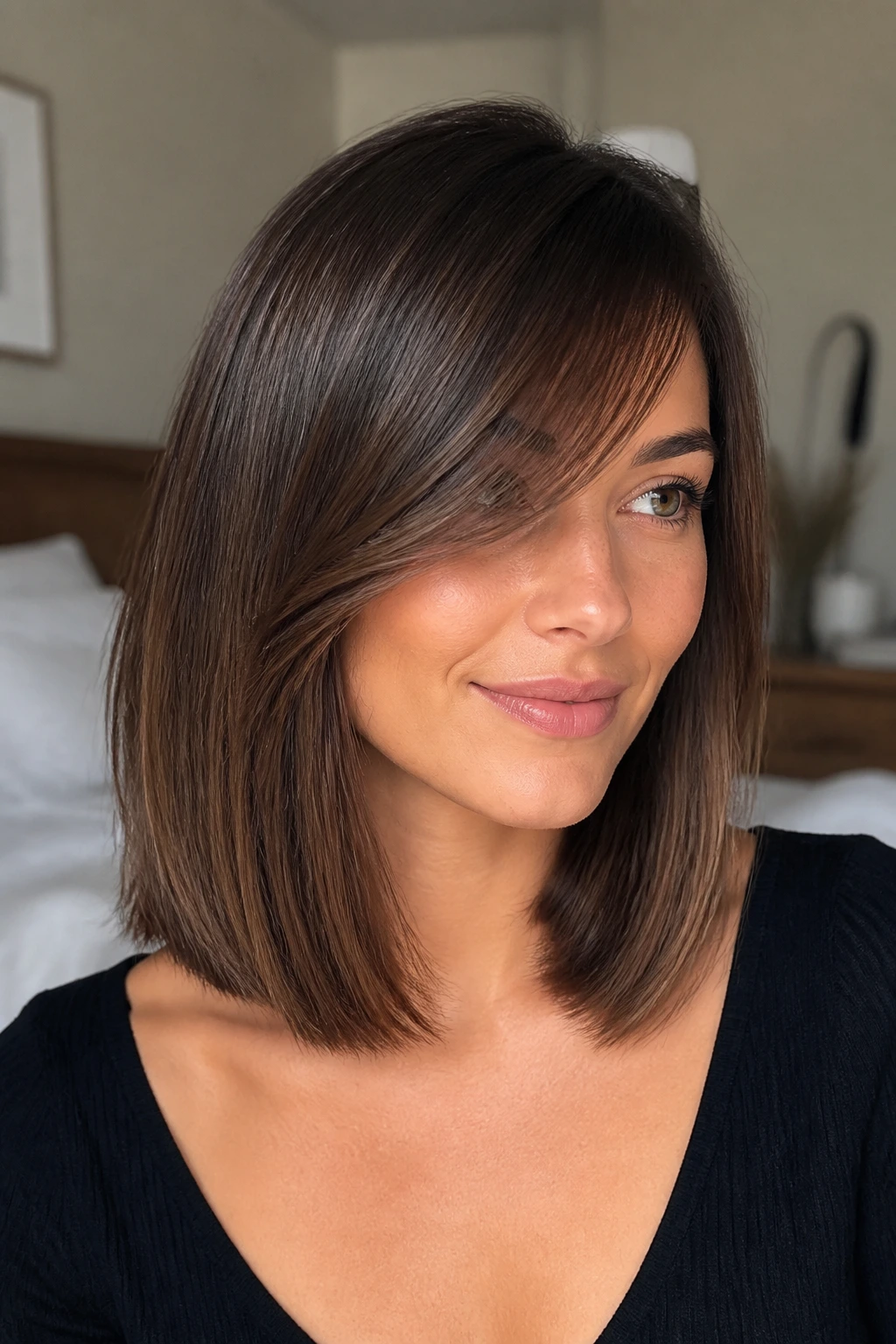
If a full fringe feels like too much and a center-part curtain bang feels too soft, side-swept bangs are the middle road that still looks intentional. Pair them with a blunt medium-length cut and you get structure on the bottom, ease on top. That contrast is the whole point.
The blunt perimeter keeps the ends looking full. The side-swept fringe breaks up the forehead area and gives the face a diagonal line, which is often more flattering than a straight-across bang if you want softness without losing shape. It’s also easier to grow out than a heavy full fringe. A huge point in its favor.
The bangs should be long enough to move, not so short that they spring back into the wrong place after a few hours. Ask for them to skim the cheekbone or the outer corner of the eye when swept across. That keeps the line elegant instead of choppy.
This haircut has an old-money polish to it when styled sleek, and a much more relaxed feel when left a little undone. Same cut. Different mood.
13. The Razor Cut with Piecey Ends
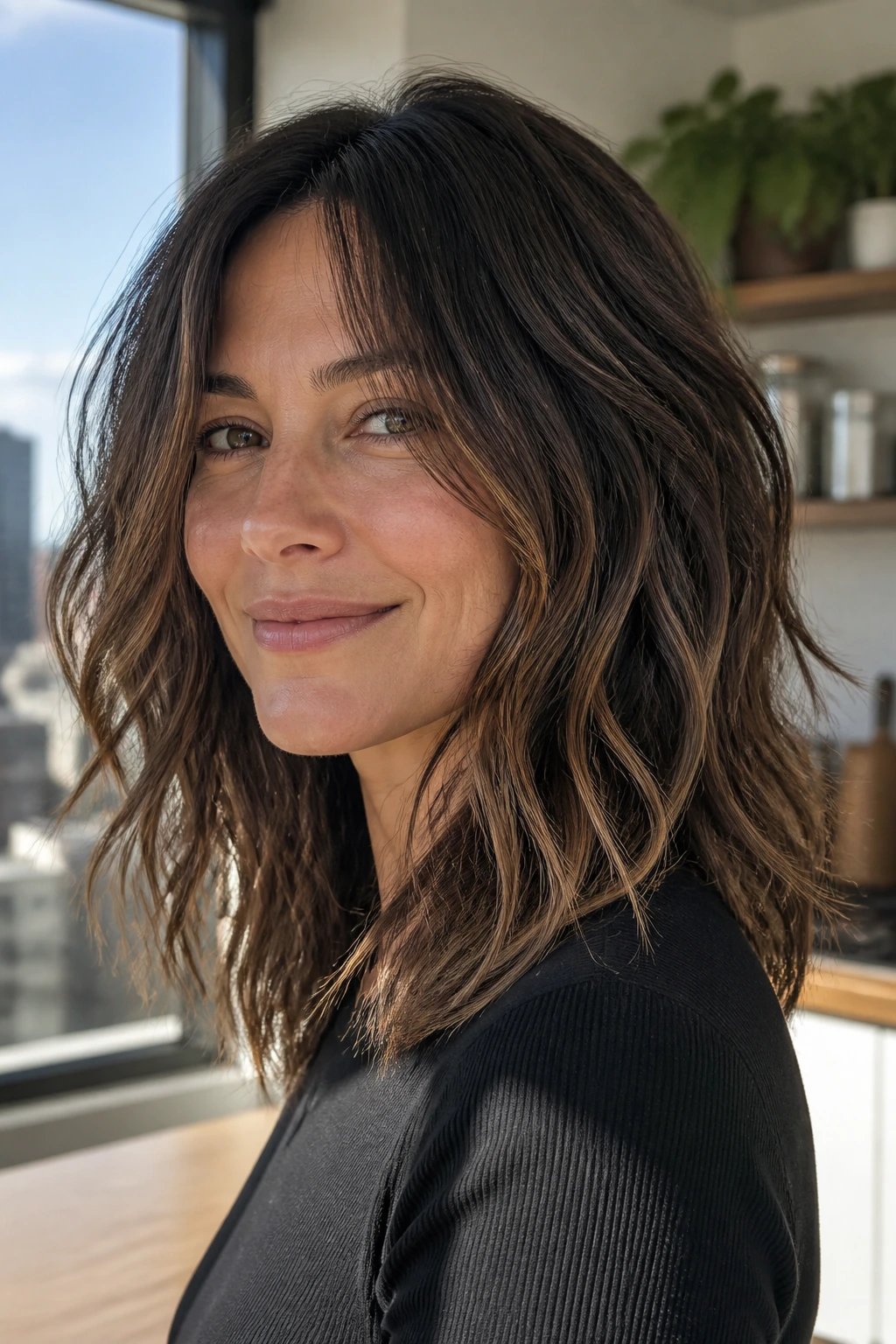
A razor cut is not the same thing as “thinning it out.” That’s where people get nervous, and honestly, they’re not wrong to be cautious. A good razor cut on medium-length hair softens the ends and creates separated, piecey movement. A bad one leaves the hair fuzzy and weak at the bottom.
The cut works best on hair that already has some texture, especially waves or a little natural bend. The razor helps the ends sit in a softer line, which can make the whole style feel lighter and more modern. It’s a nice choice if you want movement without a lot of layers. The shape lives in the ends, not just the internal structure.
Fine hair needs a lighter hand here. Too much razor work and the ends can turn see-through fast. If that’s your texture, ask for point-cutting or a softer slide cut instead. Same airy effect, less risk.
This is the haircut for people who like their hair to look touched rather than overbuilt. That distinction matters.
14. C-Cut Layers
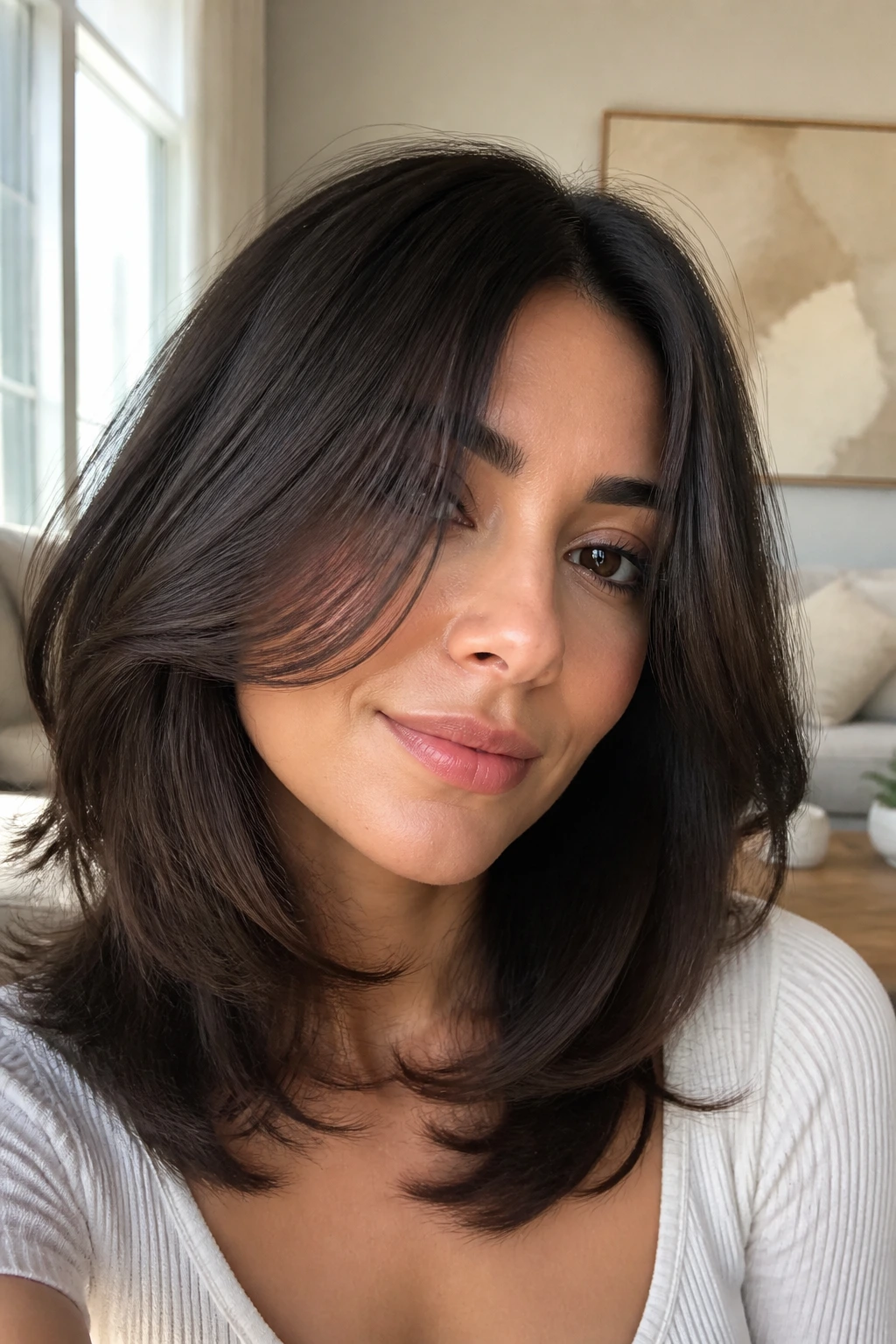
C-cut layers curve inward around the face, almost like a soft arc that frames the cheekbones, jawline, and collarbone. The shape is especially useful on medium-length hair because it gives you a face frame without creating a dramatic shag or a harsh step.
What makes the C-cut appealing is the way it follows the natural curve of the head. The front pieces are often shorter than the back, but the transition is smooth. You don’t get a sudden shelf. You get movement that feels tucked into place.
This is a very good choice if you like blowouts and want the front to bounce away from the face. It also helps hair that sits flat around the cheeks. The curve gives the eye a place to go, and that can make the whole haircut look more lifted.
It’s quieter than a butterfly cut and more sculpted than a U-shape. If those sound like opposite things, that’s because they are. The C-cut sits in the useful middle.
15. The Wavy Lob with Internal Layers
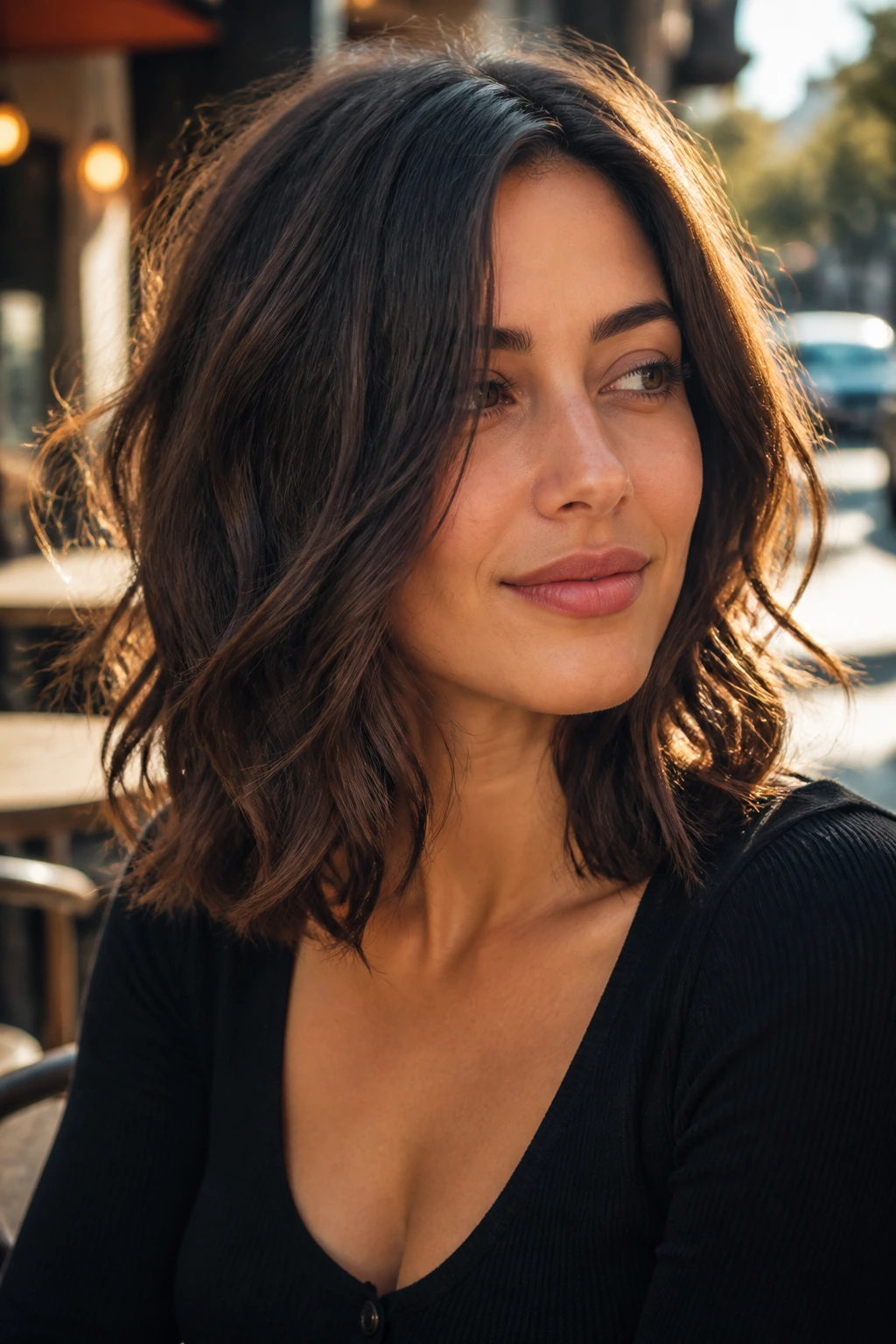
A wavy lob with internal layers is one of the smartest ways to work with natural bend instead of fighting it. On the outside, the cut still reads as a clean lob. Inside, the layers are placed so the wave can expand without making the ends look bulky or triangle-shaped.
That hidden structure matters. Wavy hair often needs support inside the shape, not all over the surface. Too many visible layers and the cut can start to fray. Too few, and the wave collapses into a heavy triangle at the bottom. Internal layers solve a lot of that drama.
What the cut should do
- Let waves move without puffing.
- Keep the outline soft and full.
- Hold shape on day two with minimal restyling.
This is a strong pick if you let your hair dry naturally most of the time. A little curl cream or wave lotion, a quick scrunch, and the layers do most of the work. If your waves are inconsistent from side to side, a good stylist can balance the internal weight so the shape doesn’t kick out in one direction.
16. The Wolf Cut Lite
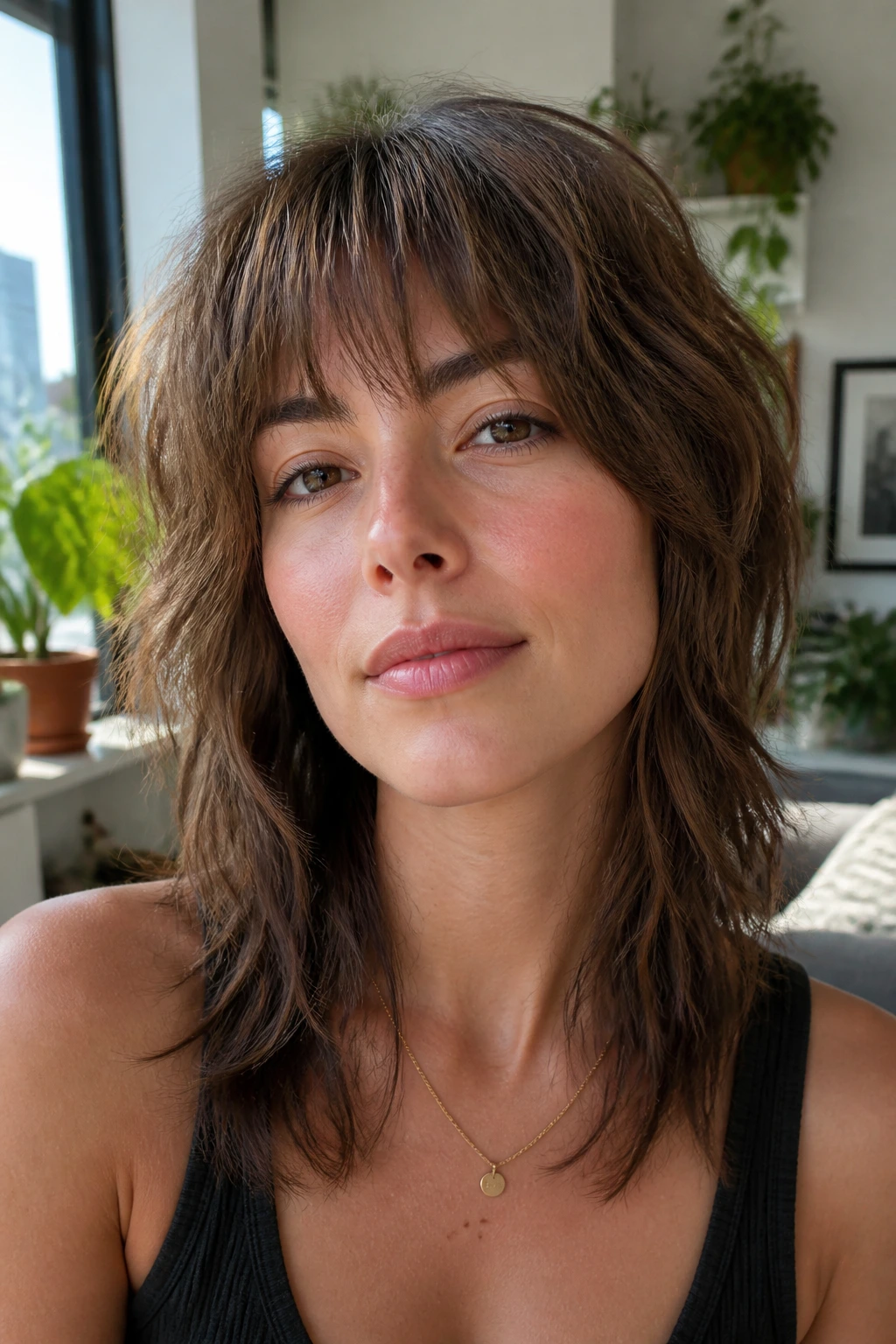
You do not need a full wolf cut to get the energy. The wolf cut lite keeps the spirit of the style but softens the extremes. On medium-length hair, that means a textured crown, some broken-up layers around the face, and a longer perimeter that stops the whole thing from tipping into mullet territory.
The big difference is control. A full wolf cut can be dramatic and a little unruly. The lite version is more wearable for people who want edge but still need the haircut to behave in a ponytail or a clip. It has that lived-in feel, just with fewer sharp transitions.
This shape works best with some natural wave or body. Straight hair can wear it, but it often needs more styling to keep the layers from falling flat. Thick hair, on the other hand, tends to love it because the layers remove weight where the hair usually feels heaviest.
If you want a haircut that looks a little cool even on a lazy day, this one earns its name.
17. The Graduated Midi Bob
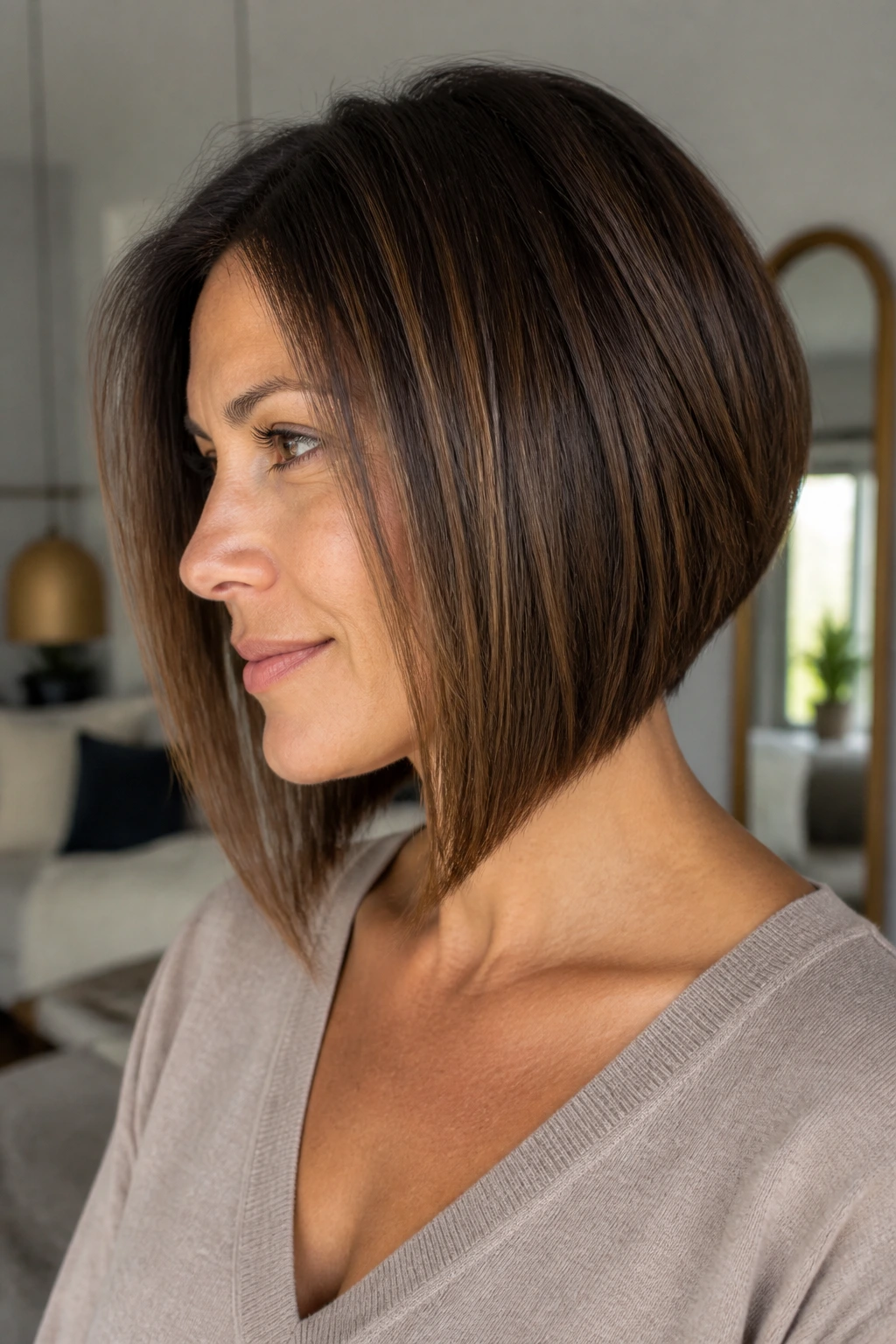
A graduated midi bob is built for lift. The back is stacked or slightly shorter, and the front gradually lengthens toward the jaw or collarbone. That graduation gives the crown more shape and keeps the back from hanging heavy. It’s a lovely option if your hair tends to sit flat at the roots.
Compared with an A-line lob, this cut has more volume through the back of the head. That’s the point. The shape makes the top feel fuller and the neckline cleaner, which can be especially flattering if you wear your hair tucked behind the ears or pinned back often.
It’s polished, but not stiff. With a round brush, it turns into a neat salon finish. With a little texture spray and finger drying, it relaxes into something softer. The cut can do both, which is why it lasts in real life.
If your hair has a habit of collapsing by noon, this is the shape to look at first.
18. Rounded Curly Layers
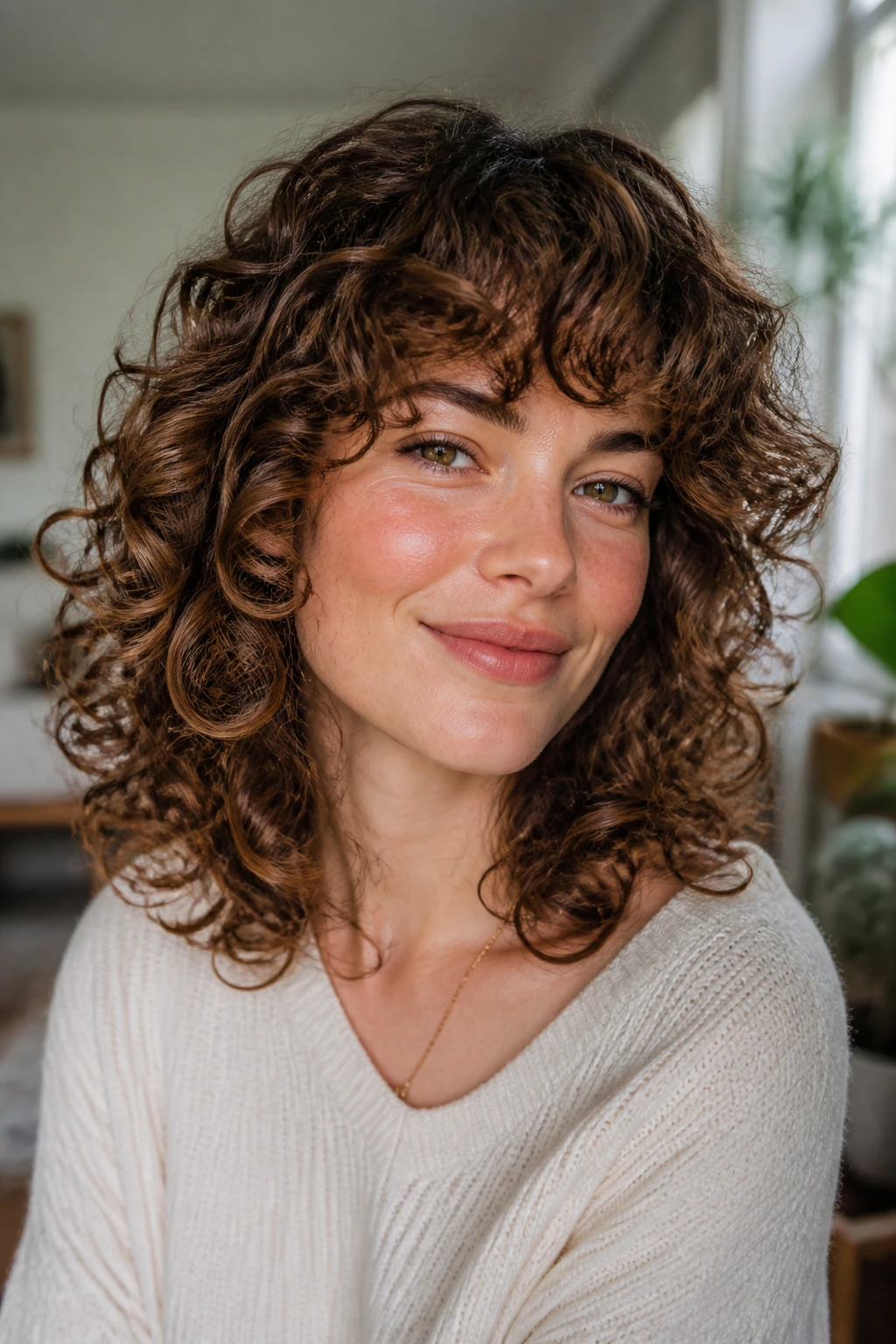
Curly hair and medium length make a very good pair when the layers are shaped with the curl pattern in mind. Rounded curly layers avoid the triangle effect by allowing the curls to stack in a way that matches the head’s curve rather than hanging off it. That gives the style volume where you want it, not just at the bottom.
Dry cutting or curl-by-curl cutting is often the smartest approach here. Wet curls lie. They shrink. They do weird things. A good stylist reads the natural spring of the curl before deciding where the shape should fall. That’s the difference between a cut that lives well and one that turns into a box.
This style is one of the few on the list where the right cut matters even more than the styling product. If the shape is wrong, mousse can’t save it. If the shape is good, a diffuser and a small amount of cream can do the rest.
Curly hair should not be forced into a straight-hair haircut. That road ends badly.
19. The One-Length Cut with a Deep Side Part
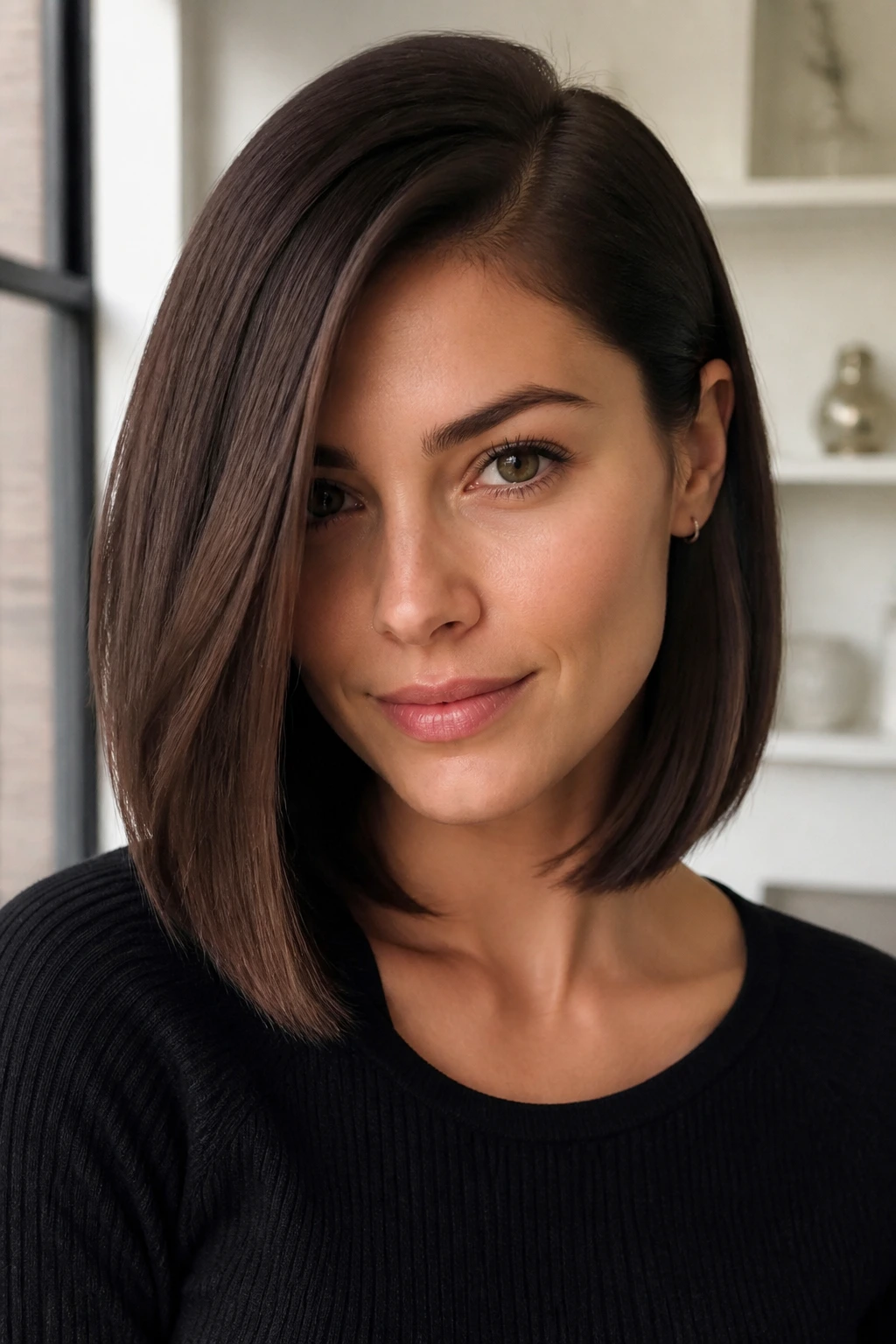
A one-length cut with a deep side part is proof that you do not need layers to make medium-length hair interesting. The cut itself stays clean and even, usually at the collarbone or just below it. Then the side part changes the whole mood. Suddenly there’s lift at the roots, a stronger sweep across the face, and a little drama without the upkeep of bangs.
This is a particularly nice choice for fine hair that needs density at the ends. The one-length line keeps the perimeter full. The deep side part adds volume at the crown and can make the whole haircut feel more deliberate than a center part does. It’s a smart move if your hair naturally falls to one side anyway.
It also plays well with earrings, necklines, and a tucked side. The haircut does not need much help. A smooth blow-dry and a small bend at the ends are enough.
Simple cuts can be the hardest ones to get right. This is one of them.
Why Medium-Length Hair Is Such a Useful Canvas
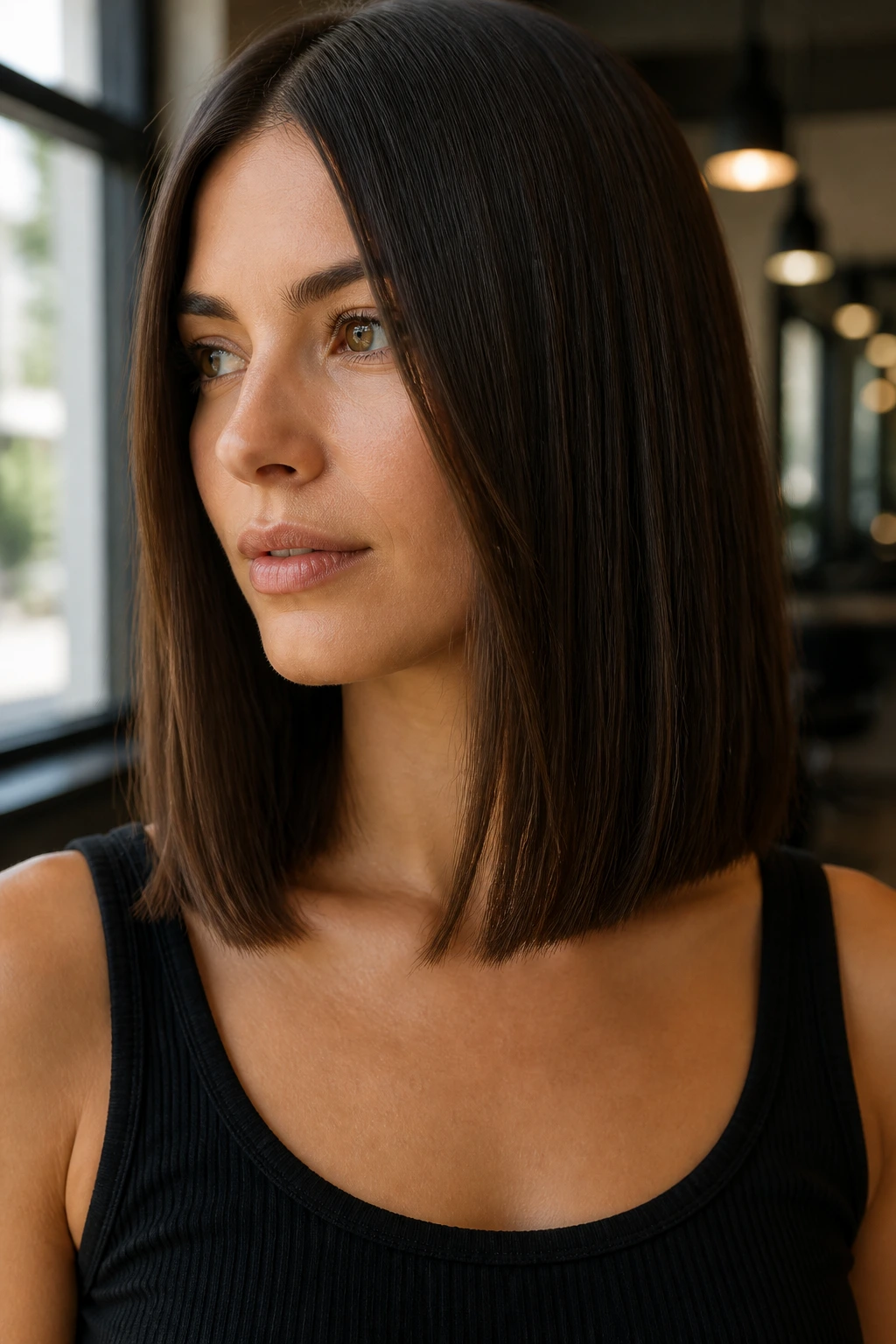
Medium-length hair gives you two things at once: enough length to show shape, and enough lightness to keep the haircut from dragging. That combination is why blunt cuts can look thicker here, why layers can look airier, and why bangs have more room to sit properly without taking over your whole face.
The length also gives a stylist more control over weight. On short hair, a tiny mistake can change the whole outline. On long hair, the silhouette can get lost under its own bulk. Medium length sits right between those extremes. There’s room to shape the perimeter, adjust the interior, and tailor the front so it works with your features instead of fighting them.
That’s the part most people feel after a good cut but don’t always name. The hair behaves differently. It tucks better. It flips better. It dries faster without looking like you rushed it. And if the cut is built well, it still looks like itself when you skip the blow-dryer and throw on a clip.
Essential Tools for Medium-Length Haircuts
- Tail comb: Useful for clean parting, sectioning, and checking whether the cut sits evenly on both sides.
- Sectioning clips: They keep the top layers out of the way when you style curtain bangs or blow out the crown.
- Blow dryer with nozzle attachment: The nozzle helps direct airflow, which matters a lot for blunt cuts and A-line shapes.
- 1-inch curling iron or wand: Best for soft bends, polished waves, and flipping the ends of lobs.
- Round brush: A medium barrel gives lift through the crown and helps feathered layers sit correctly.
- Heat protectant spray: Use it before any hot tool, especially on layered cuts that get styled more often.
- Texture spray: Good for shags, wolf cuts, and choppy ends when you want separation rather than shine.
- Smoothing serum or cream: Helpful for blunt cuts, clavicut shapes, and side parts that need a polished finish.
- Wide-tooth comb: Safer than a fine brush on wavy or curly medium-length hair when it’s wet.
- Microfiber towel or T-shirt: Cuts down frizz and keeps the cut’s shape from getting rough during drying.
Smart Salon Notes for Haircut Ideas for Medium-Length Hair
Bring photos, yes. But bring the right kind of photos. One front view and one side view tell a stylist much more than a filtered portrait from the same angle over and over. The side shot matters because medium-length hair lives and dies by the line from jaw to shoulder. That’s where you can see whether the cut is blunt, angled, rounded, or too heavy.
Say where you want the longest point to land. “Collarbone” is more useful than “medium length.” So is “just below the chin” or “mid-neck in back, longer in front.” A stylist can work with that. Vague words like “something flattering” are too slippery to be helpful.
Tell the truth about your routine. If you air-dry, say it. If you use a round brush twice a week and then give up, say that too. A shag that looks perfect under a salon blowout can turn into a puffball if your real routine is a loose scrunch and a dash out the door.
Mention your natural part, cowlicks, and the way your hair flips at the ends. Those details are not small. They decide where bangs sit, how short the front should be, and whether a blunt line will settle neatly or kick outward by lunch.
How to Style and Wear These Cuts Day to Day
Presentation: Clean lines need a clean finish. Blunt cuts, clavicuts, and A-line lobs usually look best when the ends are smoothed or given a slight inward bend. Shags, wolf cuts, and textured lobs need the opposite: separation, a little bend, and enough roughness to show the layers.
Accessories: Clips and pins are not just decoration here. A deep side tuck shows off an A-line or one-length cut. A half-up clip can lift butterfly layers without hiding the face frame. Small hoops, collars, and scarves change how the hair sits around the jawline, so the haircut reads differently against the rest of the outfit.
Texture: Straight hair should be allowed to look straight on some of these cuts. That sounds obvious, but people fight it all the time. A blunt collarbone cut looks more expensive when it’s smooth and precise. A shag looks more alive when it has a little grit. Match the finish to the shape.
Scale: If your hair is thick, keep the outside line solid and let the internal layers do the weight removal. If it’s fine, keep the layers longer and the shape simpler so the ends stay full. Medium-length hair has enough room to adjust either way, and that flexibility is the real gift.
Styling Tweaks That Make These Cuts Pop
Root Lift: On layered cuts, tip your head forward and dry the roots in the opposite direction of your part for the first few minutes. That tiny change gives the crown more lift than overloading the hair with product ever will.
Soft Bend: Wrap only the mid-lengths and ends around a 1-inch iron, leaving the roots alone. That keeps medium-length hair from looking curled from top to bottom, which can make the shape feel dated fast.
Piecey Separation: A pea-sized amount of styling paste rubbed between the palms and tapped lightly into the ends is enough for shags and wolf cuts. More than that, and the layers start sticking together in clumps.
Gloss or Grit: Blunt cuts and clavicuts usually look better with a smoother finish and a light serum. Textured layers take better to dry shampoo, texture spray, or a matte cream. The cut tells you what it wants if you look at the outline first.
Day-Two Rescue: If the ends start flipping in odd directions, dampen only the bottom inch with a spray bottle, twist the sections briefly, and let them reset. That’s often faster than redoing the whole head.
Common Mistakes to Avoid When Choosing a Medium-Length Cut
- Asking for layers without naming the weight line. The symptom is hair that looks thinner at the bottom than you expected. The fix is to say where you want fullness to stay, then point to the exact spot you want movement.
- Putting face-framing pieces too high. When the shortest layers start above the cheekbone on many face shapes, the cut can puff out or feel trapped around the face. Ask for the first face frame to start lower if you want softness instead of a shelf.
- Over-thinning fine hair. If the ends look wispy in daylight, the cut was taken too aggressively. Fine hair usually needs a stronger perimeter and lighter internal work, not heavy razor action.
- Ignoring your natural part and cowlicks. A side part that keeps splitting open or bangs that separate by noon usually mean the haircut was planned around a fantasy part, not the one your hair actually makes. Work with the growth pattern.
- Treating curly hair like straight hair. Wet curls often lie about their length and bulk. If the cut is done the same way as straight hair, the result can be triangular or too short once it dries.
- Waiting too long for trim maintenance. Blunt and angled cuts lose their shape quietly, then all at once. If the perimeter starts to fray, the line needs a dusting before it turns into a full reshaping job.
Variations and Adaptations to Try
Fine-Hair Softening: Keep the perimeter blunt and let layers stay long and internal. This keeps the ends looking full while still giving the crown a little movement. It’s a better route than slicing a lot of short pieces into fragile hair.
Thick-Hair Weight Relief: Ask for interior debulking and a slightly longer front. That keeps the hair from ballooning around the shoulders and gives the shape a cleaner fall. Thick hair usually benefits from structure more than from more layers.
Curly-First Shape: Choose dry cutting or curl-by-curl shaping, then let the layers follow the spring of the curl pattern. Rounded curly layers and a soft face frame keep the shape from turning square. Product can help, but the cut has to be right first.
Low-Styling Version: Stick to a clavicut, one-length lob, or U-shape cut. These shapes need less heat, less product, and less daily correction. They also grow out in a friendlier way, which matters if you’re not in the mood for maintenance.
Grow-Out Grace: Ask for softer lines and avoid sharp angles if you hate frequent salon visits. Curtain bangs, C-cuts, and feathered layers loosen nicely as they grow, while very hard geometric cuts need more trimming to stay clean.
Keeping the Shape Between Salon Visits
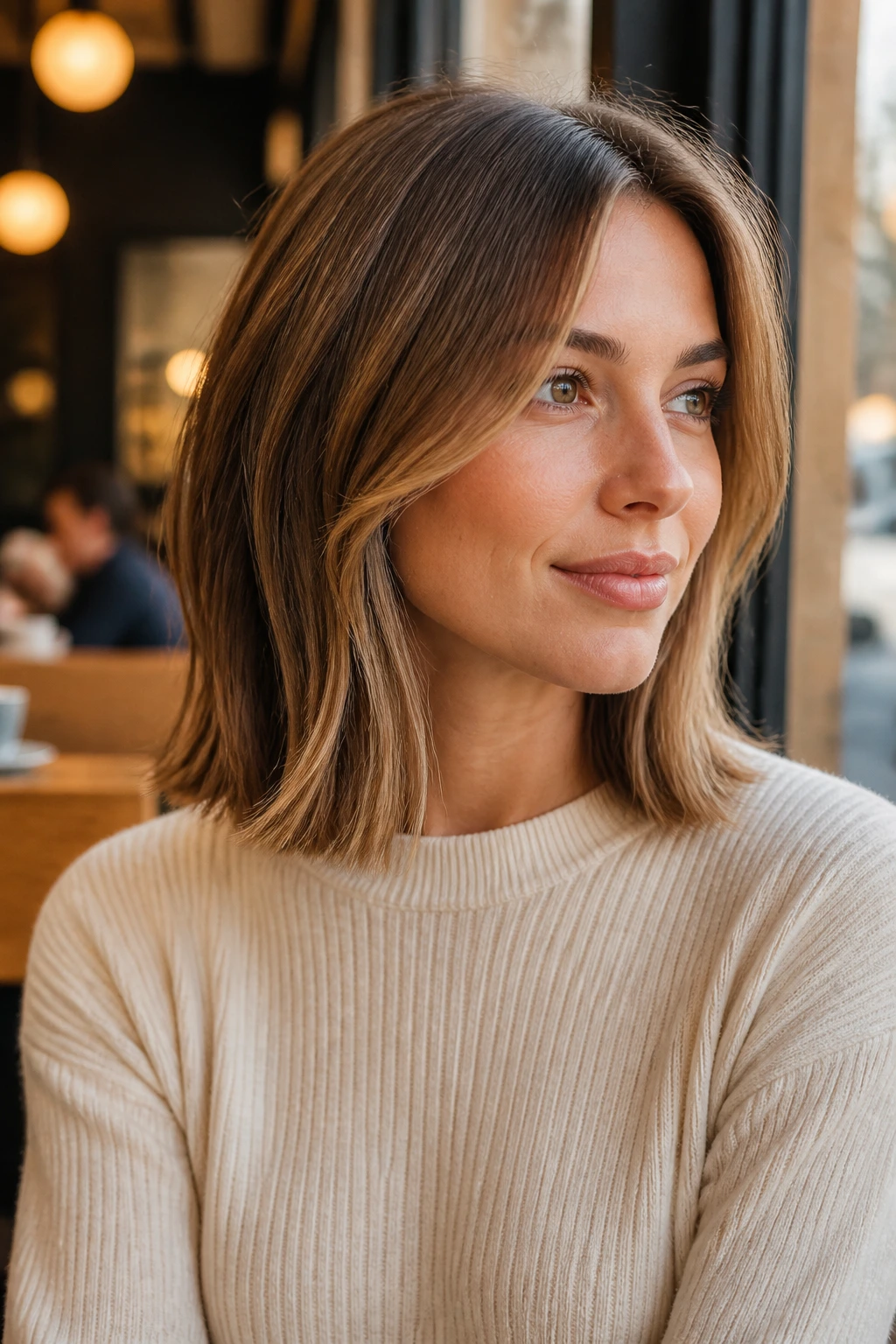
Medium-length haircuts usually hold their best shape for about 8 to 12 weeks, though bangs often need attention sooner. A blunt collarbone cut can go a little longer if the line is still clean. Curtain bangs or side-swept fringe usually want a touch-up every 3 to 4 weeks so they don’t fall into your eyes and get awkward.
Don’t let the ends go ragged and call it “texture.” There’s a difference. Once the perimeter starts flipping unevenly or the cut loses its clean line, a small trim is cheaper and easier than trying to rescue a shape that’s already drifted.
If you heat-style often, use a protectant every single time. If you air-dry, scrunch in a light cream or leave-in while the hair is damp, not dripping. Sleeping on a silk or satin pillowcase can help the ends stay smoother, and a loose clip or scrunchie keeps the shape from getting crushed overnight.
One more practical thing. If you wear curtain bangs, don’t go to bed with them damp and hope for the best. They’ll split, bend weirdly, and wake up with opinions.
Frequently Asked Questions
Which medium-length haircut is best for fine hair?
A blunt collarbone cut, clavicut, or one-length lob usually gives fine hair the fullest-looking ends. If you want movement, keep the layers invisible and long rather than cutting a lot of short pieces into the shape.
What’s the easiest medium-length haircut to grow out?
The U-shape cut and clavicut tend to grow out the cleanest because the line softens gradually instead of breaking apart. Soft curtain bangs also grow out more gracefully than a heavy full fringe.
Can curly hair work with medium-length layers?
Yes, and it often works better than trying to force curls into a straight-hair shape. Rounded curly layers or a dry-cut shag can keep curls from turning triangular and help the shape sit closer to the head.
How often do curtain bangs need trimming?
Usually every 3 to 4 weeks if you want them to keep the same shape. If you let them grow longer, they can blend into the sides, which is fine too, but they stop reading as true curtain bangs.
Is a blunt cut or layered cut better for thick hair?
A blunt cut looks polished and dense, while a layered cut removes weight and helps thick hair move. If your hair feels bulky at the ends, layers usually help more. If you want maximum fullness through the perimeter, go blunt.
What if my hair flips out at the ends?
Ask for the cut to be adjusted so the perimeter sits at a length that works with your natural bend. A tiny bevel, a softer U-shape, or a one-length line can tame that flip better than forcing a cut that fights the way your hair wants to fall.
Do I need to heat-style these cuts every day?
No. Many of them are designed to look good with rough drying, air-drying, or a quick bend at the ends. The more geometric the cut, the more it benefits from a smooth finish; the more textured it is, the more forgiving it tends to be.
Which cut looks the most polished with the least effort?
A collarbone blunt cut or a clavicut usually wins that category. They hold a clean outline, and a quick pass with a brush or flat iron is often enough to make them look finished.
What should I tell my stylist if I want movement but not a shag?
Ask for long layers, a soft face frame, and a strong perimeter. That gives you swing without the disconnected texture that a shag or wolf cut brings.
The Cut That Fits the Routine
The best medium-length haircut is the one that still looks like itself when you stop babying it. That’s the real test. Not the salon mirror. Not the first day. The ordinary Tuesday when the ends have had a few hours to settle and the part is doing whatever it wants.
Medium-length hair gives you room to choose between clean, soft, airy, sharp, rounded, and piecey without losing the shape entirely. That’s why the collarbone blunt cut can feel so different from a wolf cut lite, and why a clavicut can behave so much better than a badly planned layered shape. The length is useful. The cut decides whether that usefulness shows up.
Bring a photo, yes. Bring two if you can. One you love, one you don’t. The second one is often the more helpful one, because it tells the stylist what you refuse to live with — and that’s where the real haircut starts.
